



A good pixie cut doesn’t fight your hair. It works with the way it grows, the way it parts, and the way it behaves when you leave the salon and try to make it look decent on a Tuesday morning. That matters more after 60, not less. Hair can get finer at the crown, drier through the ends, or a little stubborn around the nape and temples. A smart pixie notices all of that and makes it look intentional.
The best pixie cuts for women over 60 are not all the same shape. Some keep softness around the face. Some build lift at the crown. Some go close at the nape and stay longer on top. Some are sleek and silver. Others are choppy and a little undone, which is often the better choice if you want movement instead of helmet hair.
And yes, a pixie exposes more of your face, neck, ears, and hairline. That is exactly why the cut has to be good. There’s nowhere to hide a weak shape. The upside is just as obvious: when the lines are right, a pixie can make earrings stand out, open up the eyes, and make gray hair look crisp instead of tired. The sections below break down 16 pixie cuts with enough detail to help you tell the difference between a haircut that flatters and one that just feels short.
Why These Pixie Cuts Earn Their Keep
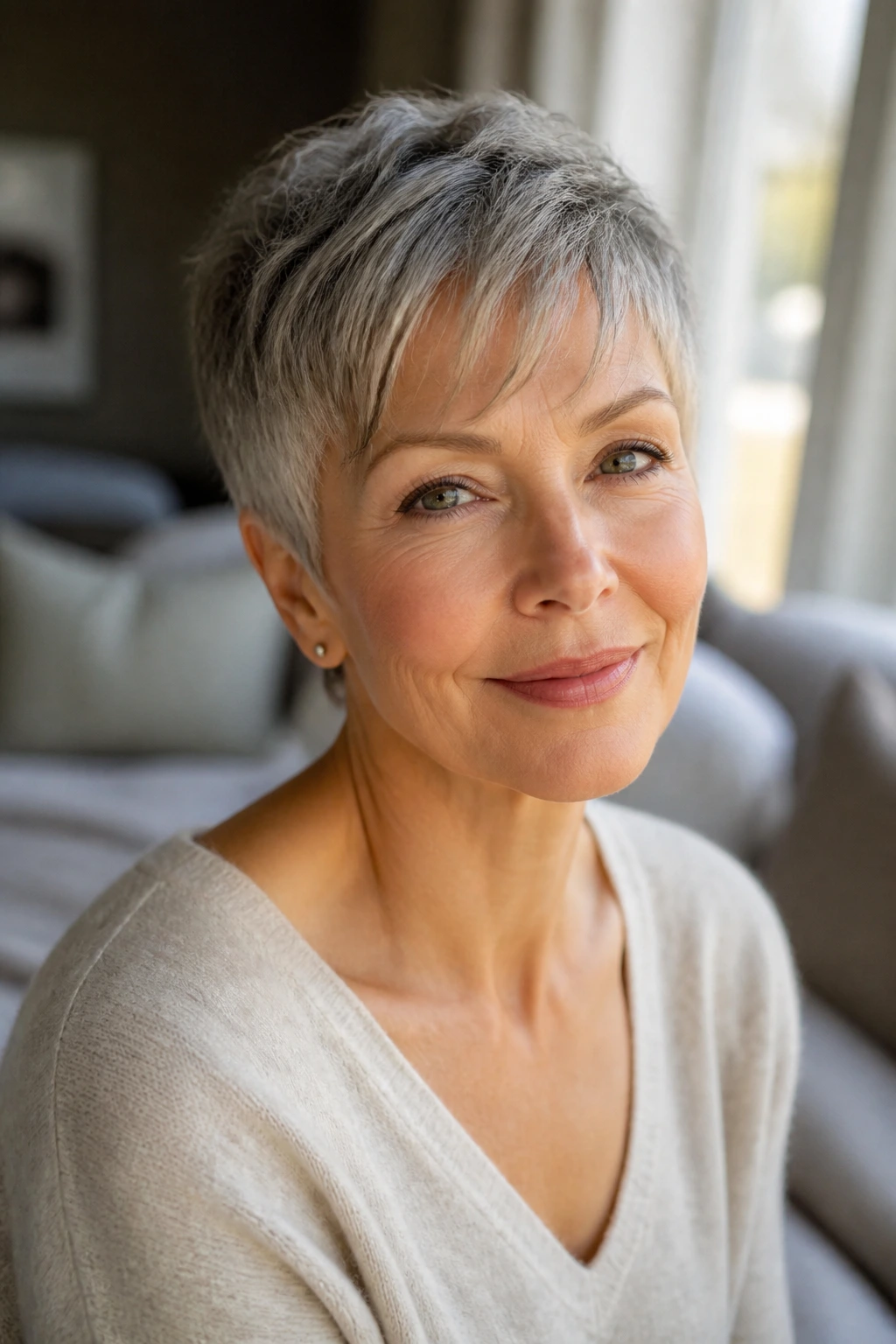
- Soft around the face: These cuts keep movement near the eyes, cheekbones, and temples, so the shape feels lighter than a blunt crop.
- Easy to adapt: Fine, thick, straight, wavy, and curly hair all need slightly different pixie shapes, and the right cut makes those differences work for you.
- Better with gray hair: Silver and salt-and-pepper tones show clean cutting fast, which is why a good pixie can make natural gray look sharper and brighter.
- Less bulk where it counts: A tapered nape and trimmed sides remove the puffy triangle that can make short hair look mushroom-shaped.
- Fast to style: Most of these looks need a root lift, a little paste, or a quick blow-dry, not a long morning routine.
- Friendly with glasses and earrings: A pixie can leave room around the ears and temples, which keeps frames, studs, and hoops from getting swallowed by hair.
1. Soft Feathered Pixie With Side-Swept Fringe
A feathered pixie is the cut I reach for when someone wants softness first. The layers are cut so the ends move instead of sitting in one hard block, and the side-swept fringe gives the forehead a little coverage without hiding the face. On fine hair, that movement matters. It keeps the cut from looking flat or overly neat.
What makes this version work is the fringe. Sweep it across the forehead, not straight down, and the whole haircut feels more relaxed. The nape stays trimmed close so the shape doesn’t balloon at the back. That contrast—soft top, tidy base—is what makes the style feel finished.
A small round brush and a dab of mousse are usually enough. Blow-dry the fringe in the direction you want it to sit, then break the ends apart with your fingers. If the hair starts to look too sprayed or too polished, you’ve gone too far. Feathered pixies look best when the strands still move.
2. Tapered Classic Pixie With Clean Nape
Want a cut that feels crisp without looking severe? This is the one. The tapered classic pixie keeps the sides neat, the nape close, and the top slightly longer so the head still has shape instead of looking shaved down to the scalp. It’s one of the most reliable short hairstyles for older women because it behaves well in ordinary life.
The clean nape makes a bigger difference than most people expect. When the back hugs the neck properly, the haircut looks deliberate even as it grows out. If the line at the nape is left too blunt or too boxy, the cut loses that tidy feel fast. This is a haircut that rewards regular trimming.
It suits straight or lightly wavy hair especially well. You can brush it smooth for a neat finish, or rough it up with a pea-sized amount of styling cream for a softer look. Either way, the shape stays recognizable.
3. Choppy Textured Pixie For Fine Hair
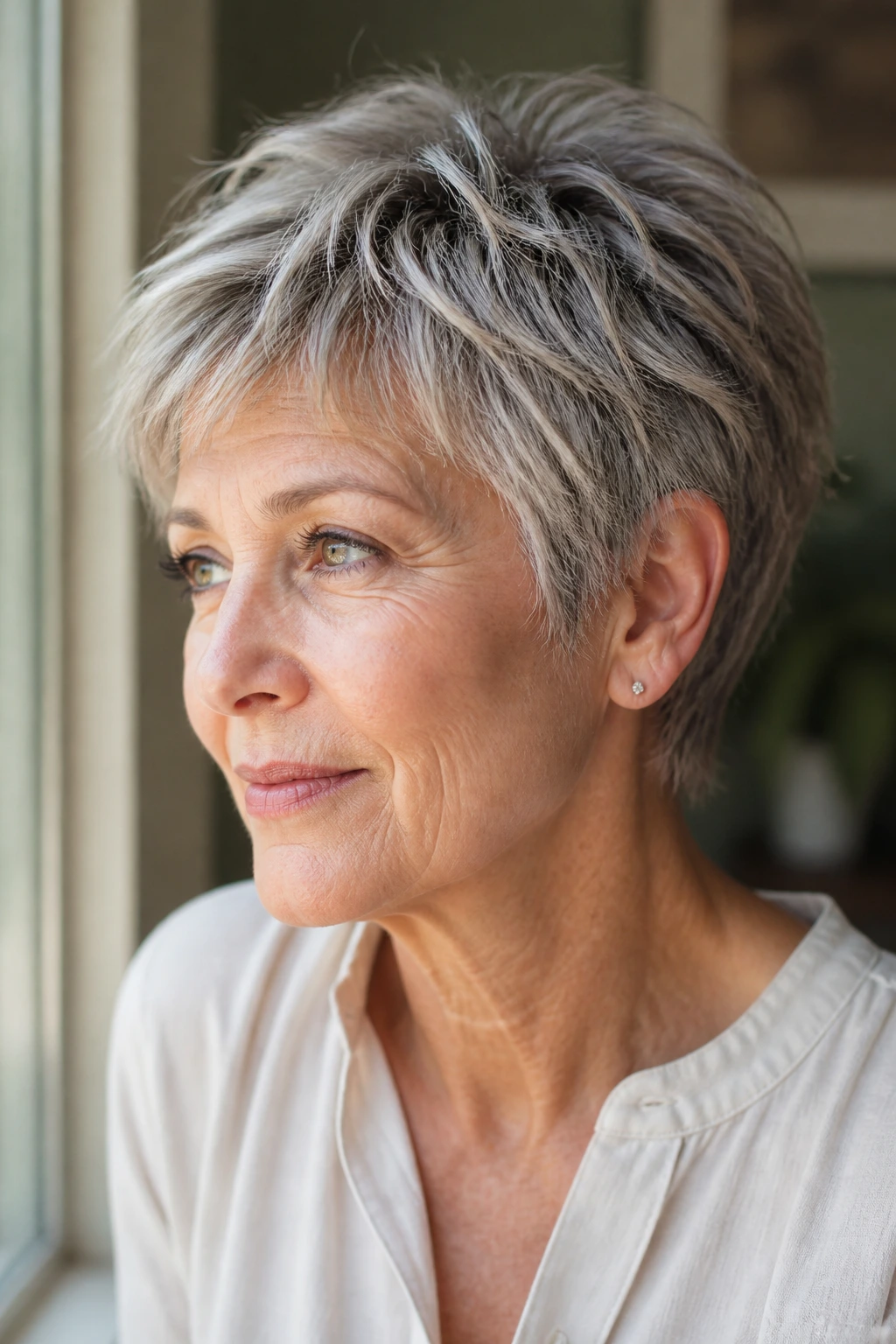
Fine hair usually needs more texture, not more weight. That’s why a choppy pixie can look fuller than a smooth one. The ends are cut in broken layers, often with point-cutting, so the hair stands apart a bit instead of lying in one thin sheet. The result is a little rougher in the best way.
This style is especially useful if your hair goes limp by noon. The choppy edges catch light differently and make the top look thicker. A matte paste works better than a shiny cream here because shine can make fine hair look even finer. A small amount, warmed between the fingers, is enough.
Best match: hair that lies flat at the crown.
Best finish: dry texture, not gloss.
Best trim interval: about every 4 to 6 weeks.
Do not over-thin this one. Fine hair can turn wispy in a hurry if a stylist removes too much bulk. You want airy, not see-through.
4. Long Pixie With Ear-Hugging Sides
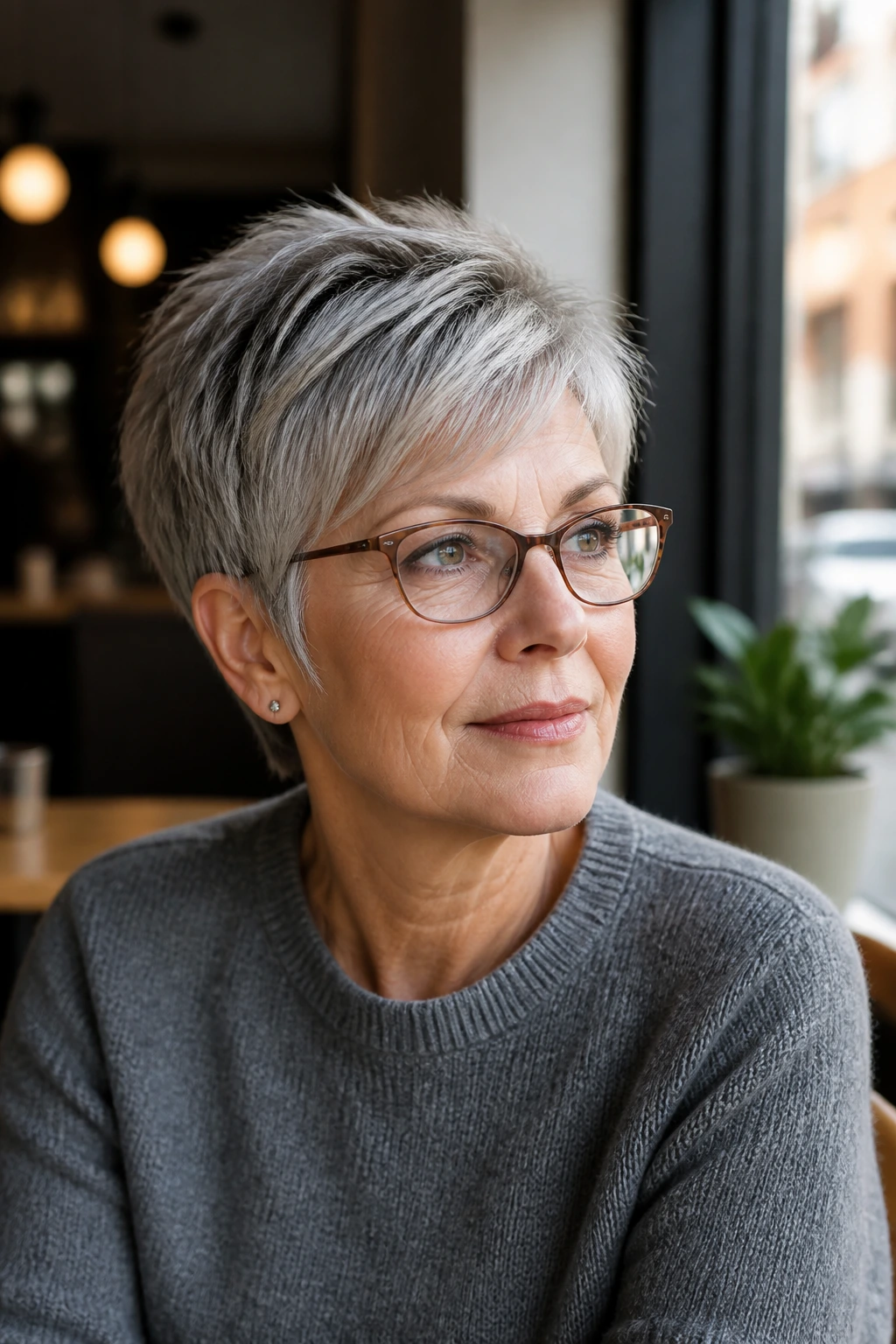
This is the pixie for someone who wants short hair but is not ready for a very tight crop. The sides stay longer and curve around the ears, which keeps the cut softer and a little more forgiving. The top still has lift, but the overall effect is gentler than a close crop.
I like this shape for glasses wearers. The ear area stays neat, the frames have room, and the hair doesn’t keep poking out in odd places. It also flatters cheekbones because the longer side pieces fall right where the face tends to need a bit of framing.
If you tuck one side behind the ear and leave the other side forward, the cut gets a little more shape without much effort. That small asymmetry is often what saves a pixie from looking too plain.
5. Silver Swept-Back Pixie
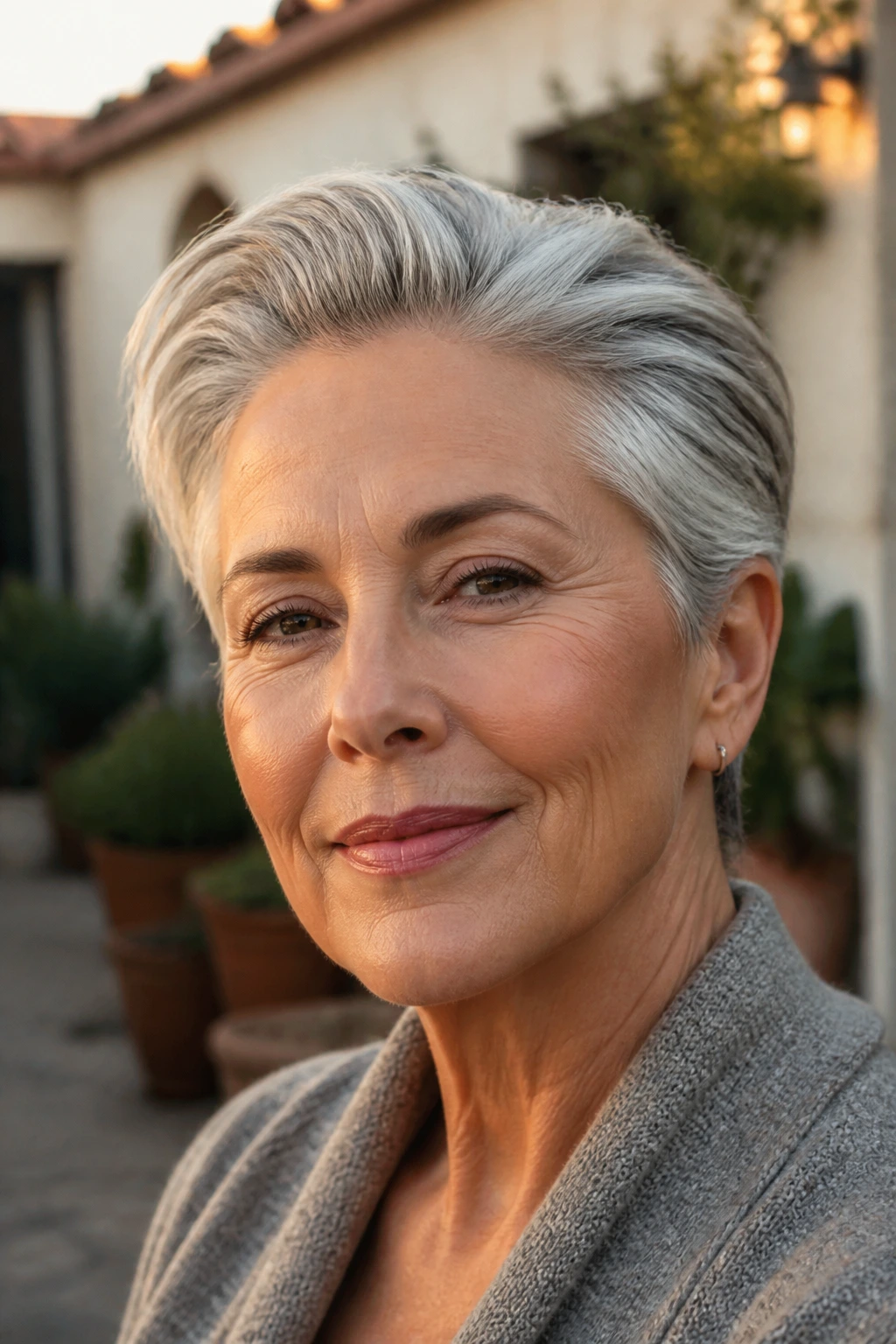
Silver hair has a way of showing cutting lines better than darker hair. That’s not a flaw. It’s useful. A swept-back pixie uses that shine and direction on purpose, brushing the top away from the face so the hair opens up the forehead and temples. The result feels clean, calm, and sharper than a random short crop.
The trick is not to make it stiff. You want direction, not shellac. A lightweight mousse at the roots, then a blow-dry with fingers or a vent brush, gives enough lift without making the hair stand up like a helmet. If the top is too slicked back, the cut loses its softness and starts to look old-fashioned in the wrong way.
This style works especially well when the gray is varied—white strands, silver strands, even a little darker tone underneath. The contrast gives the cut depth. If your hair is uniform in color, a soft side part can add a little break to the shape.
6. Asymmetrical Pixie With Longer Front
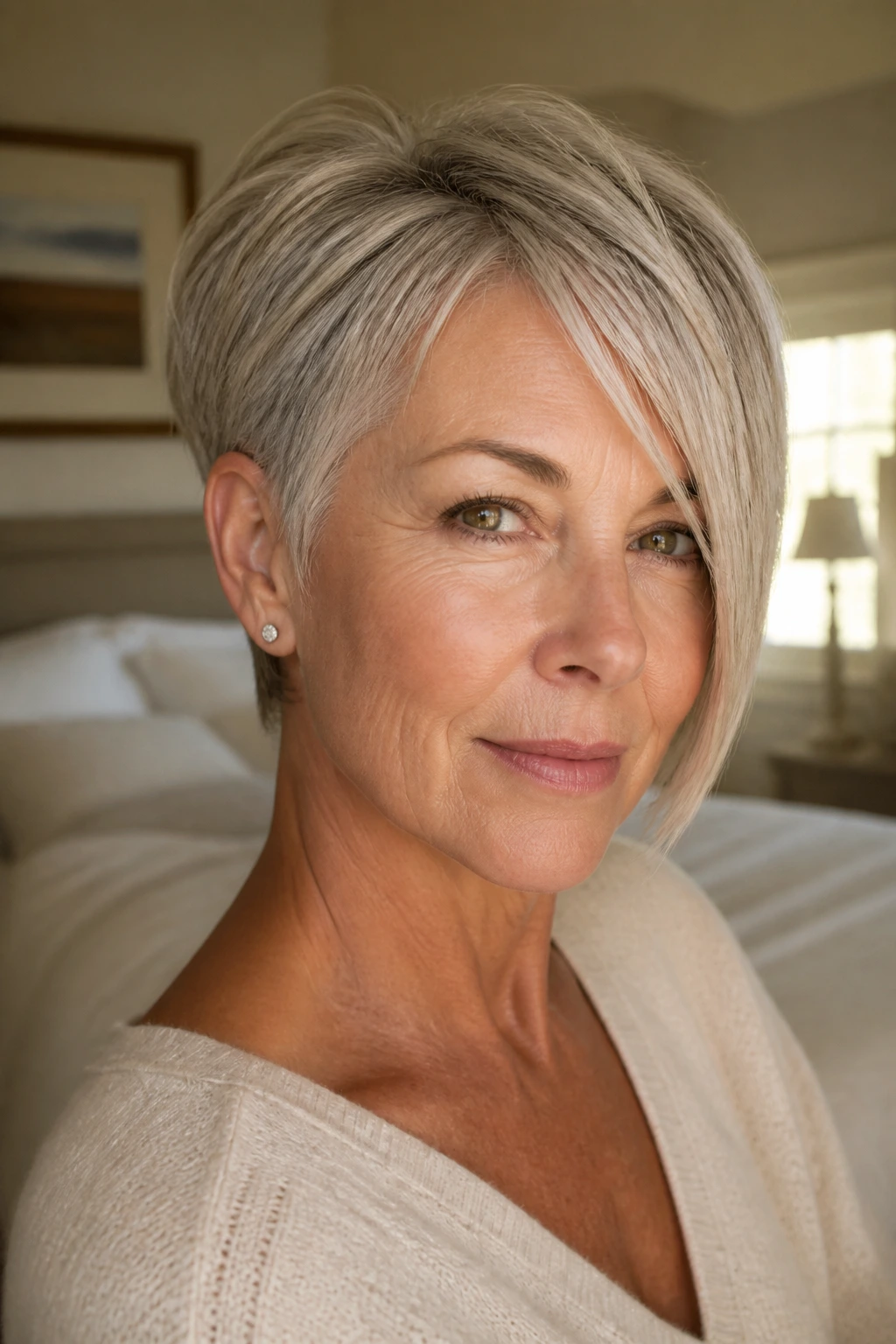
A little imbalance can be a good thing. An asymmetrical pixie keeps one side or one front section longer, usually brushing down toward the cheekbone or jawline. That longer line draws the eye diagonally, which can soften a round face and make a square face feel less boxy.
The key is to keep the difference subtle enough that it reads as stylish, not accidental. One side can tuck neatly behind the ear while the longer side stays forward. That’s enough. You do not need a dramatic swoop unless you enjoy fussing with it every morning.
This cut is one of the better choices if you like a slightly modern edge without going full punk. It gives a short haircut a little attitude, and it photographs well from the side because there’s something for the eye to follow.
7. Curly Pixie That Keeps Shape
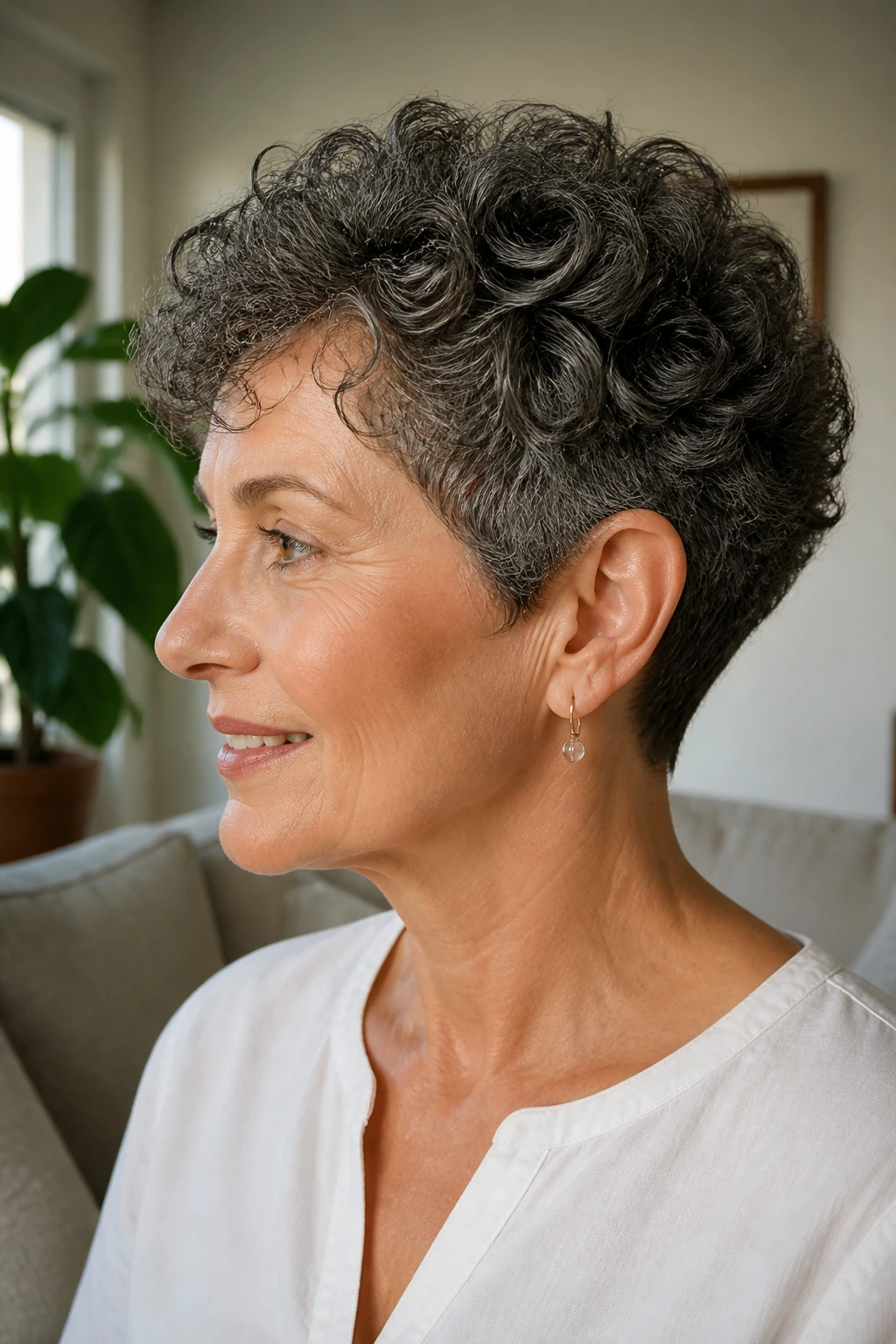
Curly hair and pixies can get along just fine, but the cut has to respect shrinkage. A curl that looks chin-length when wet may sit much shorter once it dries. That’s why a curly pixie should be shaped with the curl pattern in mind, not cut as if it were straight. The right layers keep the curls springy instead of triangular.
Moisture matters here. A curl cream or light leave-in helps the cut hold together without frizzing out by lunch. Diffuse on low heat or let it air-dry, then touch only the ends once the hair is fully dry. Pulling at curls while they’re damp usually breaks the shape.
What makes it work
- The top has enough length for curl definition.
- The sides stay tidy so the shape doesn’t expand too far.
- The nape is trimmed to stop the back from puffing out.
If you’ve spent years thinking your curls “can’t do short,” this cut usually proves otherwise.
8. Undercut Pixie With Soft Top
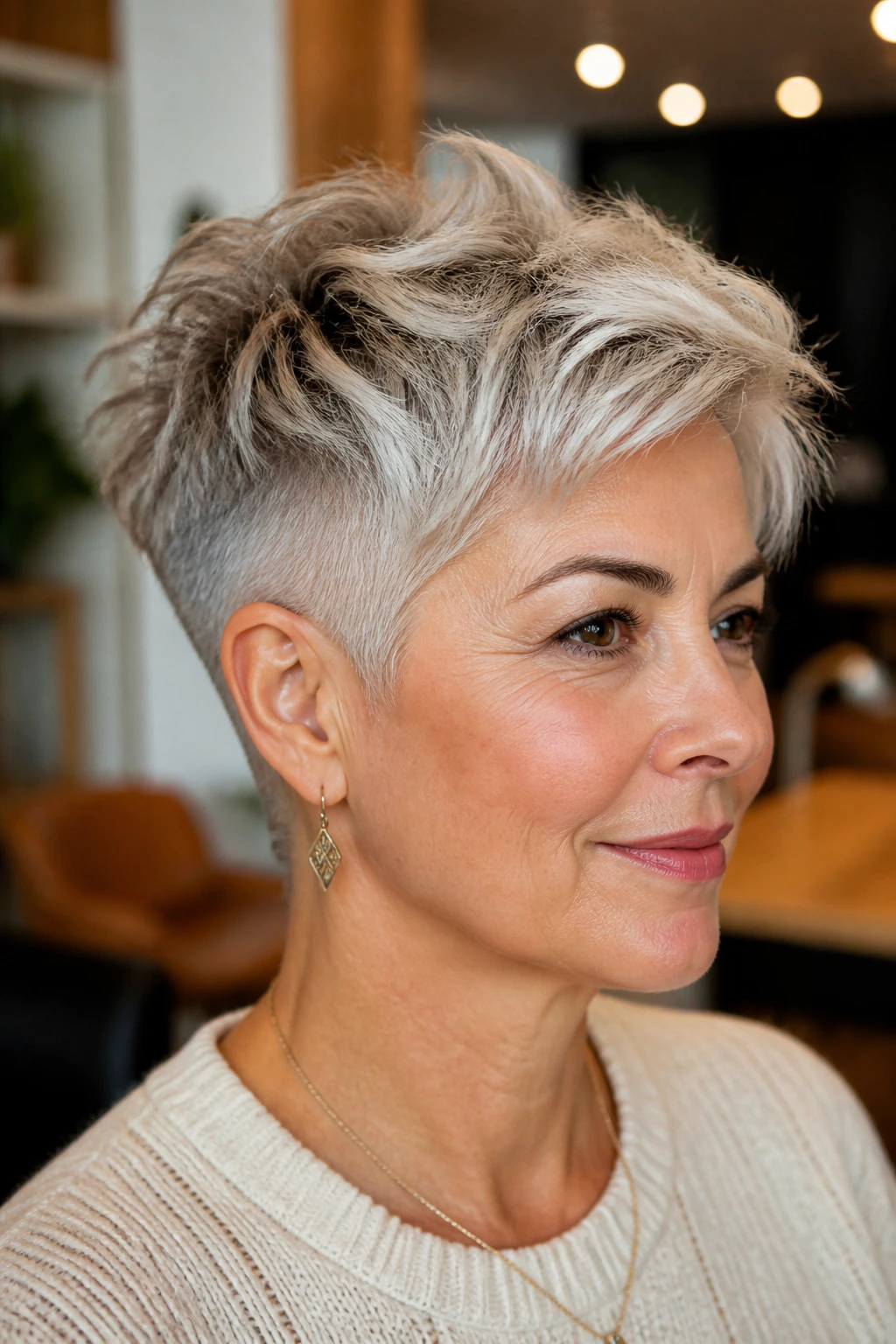
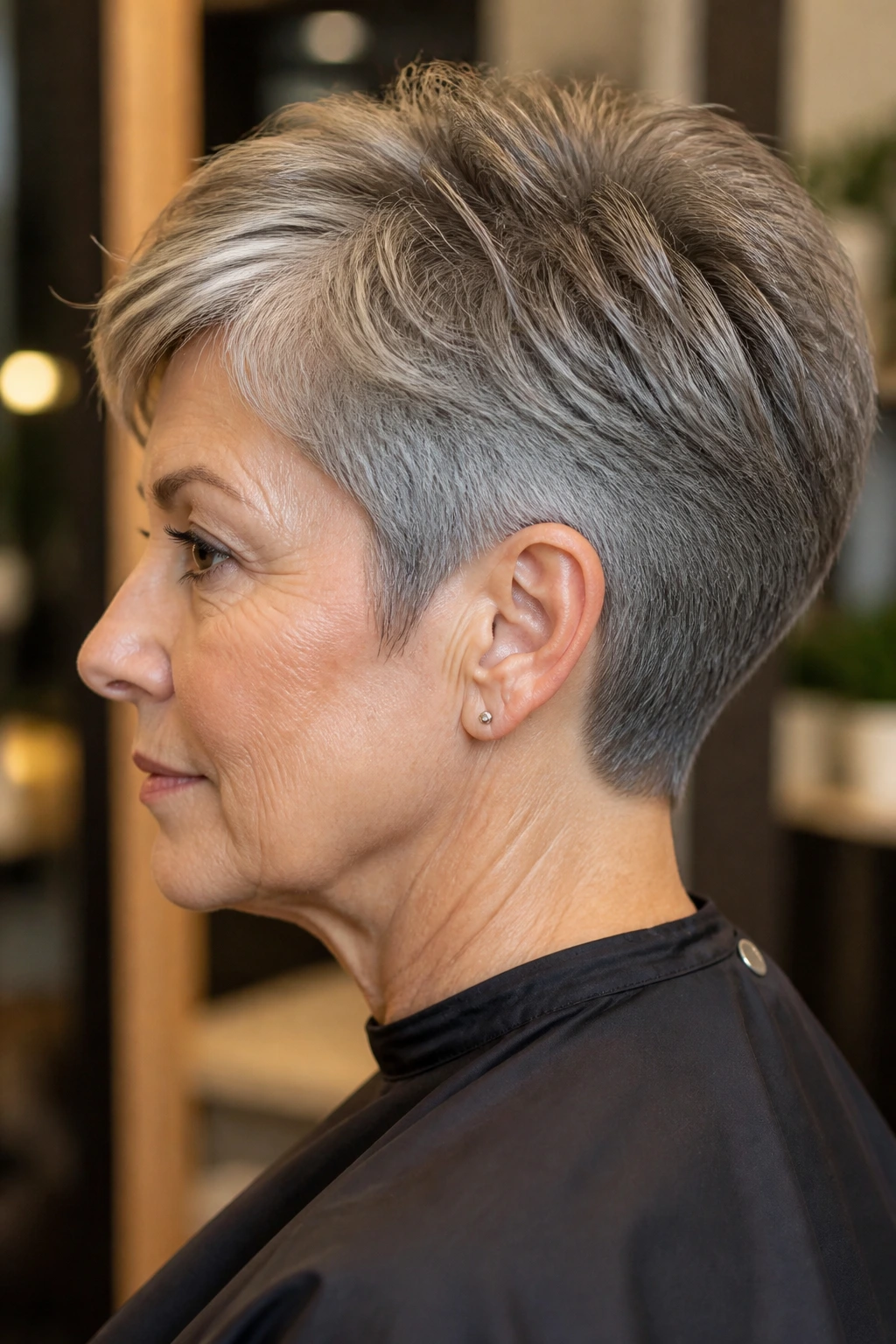
Thick hair can make a pixie look bulky unless the underneath is controlled. An undercut pixie removes some of that bulk at the nape and around the sides, then leaves the top softer and longer so you still get movement. It’s a clean fix for hair that likes to widen at the sides.
The word “undercut” sounds harsher than the cut usually looks. It can be very discreet. A short clipper taper under the top layer is often enough to take the weight off without making the style feel too edgy. If the top is left with a little piecey texture, the whole shape stays feminine and easy to wear.
This is one of the better pixie cuts for women over 60 with thick hair who are tired of heat and bulk. It reduces the amount of hair sitting on the neck, and that alone can make the haircut feel lighter through the day.
9. Layered Crown-Volume Pixie
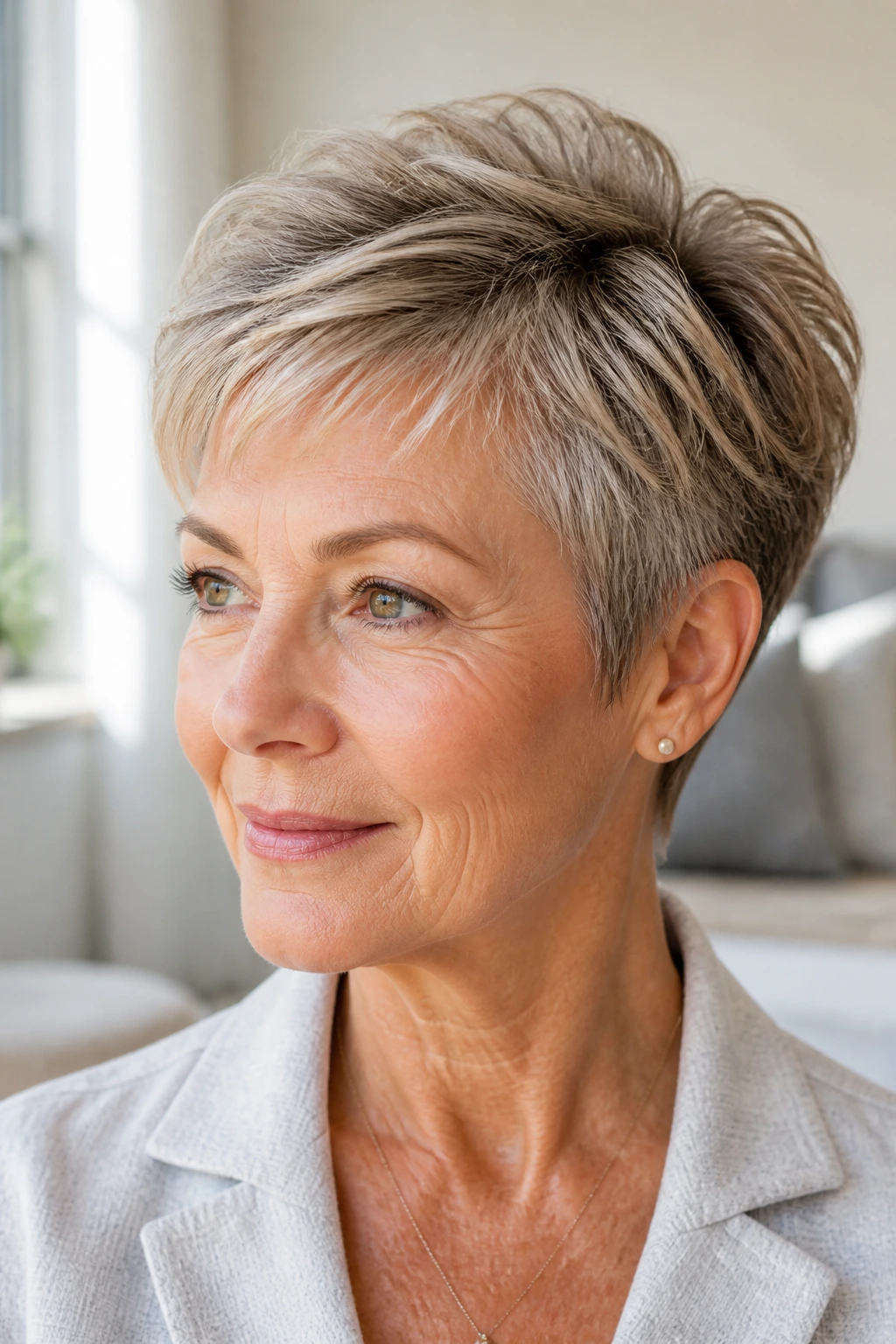
Flat crown? Start here. This pixie builds lift where the head tends to collapse, which is usually at the top and slightly behind the hairline. Shorter layers at the crown create a little bend and height, while the sides stay controlled so the cut doesn’t turn into a pyramid.
The thing to watch is balance. Too much crown volume and the haircut starts to look dated. Too little, and the top sits too close to the scalp. A root-lift spray plus a quick blow-dry with the head tilted forward usually does more than people expect. Sometimes the fix is as plain as moving the part a half inch off center.
This shape works well if you want your face to look lifted without using a heavy fringe. It also plays nicely with earrings because the volume sits above the ears, not over them.
10. Brushed-Forward Pixie With Piecey Bangs
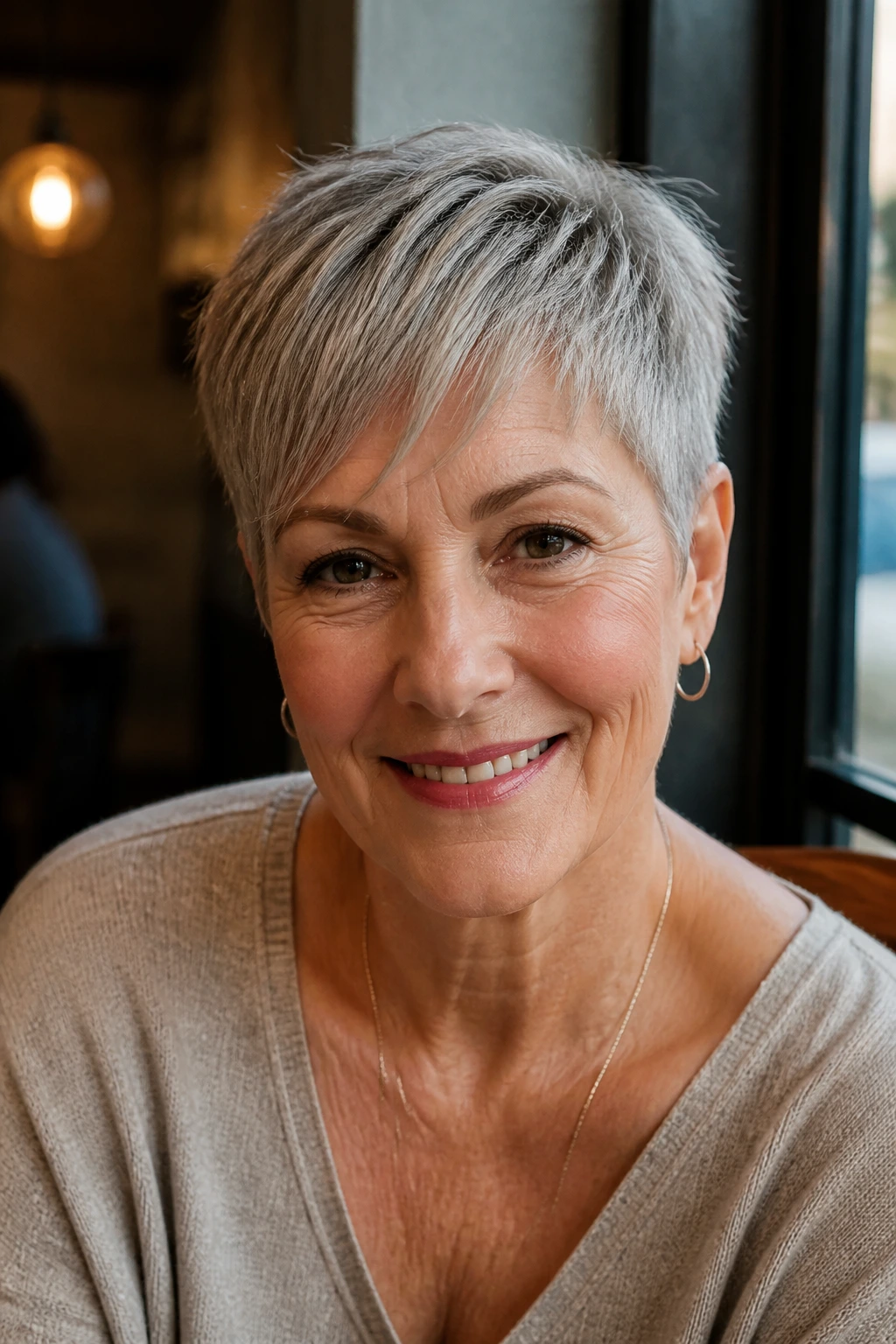
If your forehead is something you’d rather not show in full, a brushed-forward pixie gives you coverage without heaviness. The fringe is kept piecey, not blunt, so it breaks up across the brow instead of forming one solid bar. That matters. Heavy bangs can swallow the face. Piecey ones just frame it.
This cut is particularly good if you like a slightly casual look. It doesn’t need to be perfect. In fact, it looks better when the strands fall in a few directions. A tiny bit of pomade on the ends helps separate them, but only at the tips. If you put product all the way to the roots, the fringe will collapse.
It’s a nice option for anyone who wants some softness around the eyes. The texture keeps the cut from feeling too severe, which is a common problem with very short bangs.
11. Soft Bowl-Inspired Pixie
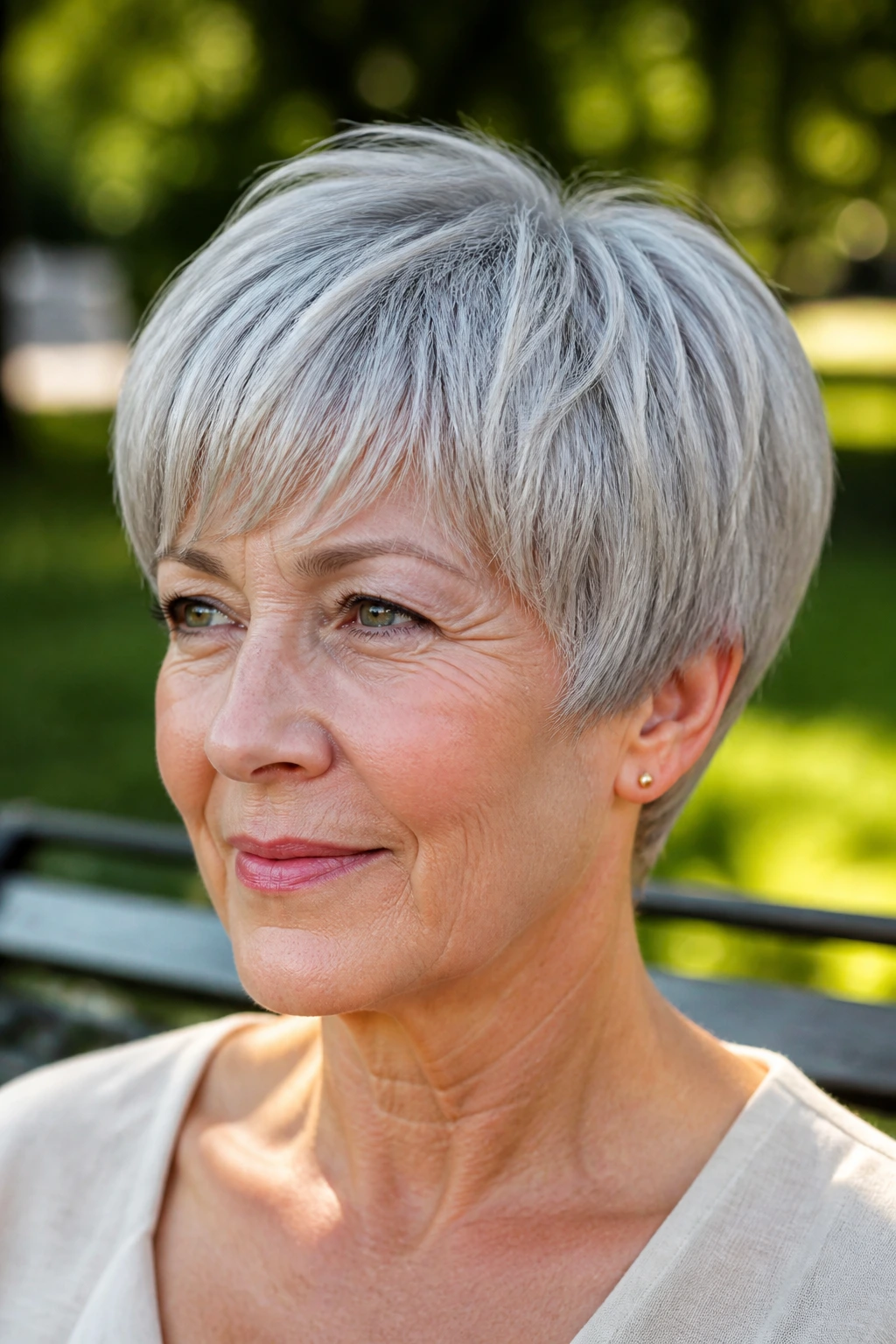
A bowl-inspired pixie sounds more severe than it looks when it’s done well. The trick is to keep the round shape soft, not blunt. The perimeter follows the head a little more closely, and the top has just enough layering to stop the cut from sitting like a cap.
This style suits straight hair best. On very frizzy hair, the rounded outline can get fuzzy fast, which ruins the clean line that makes the shape work. But on smooth hair, especially if it has a bit of natural body, the result is tidy and modern without feeling stiff.
It’s also a useful choice for narrow faces because the width through the sides adds balance. If your face is long or angular, this can soften the overall look without needing more length everywhere.
12. Salt-and-Pepper Tousled Pixie
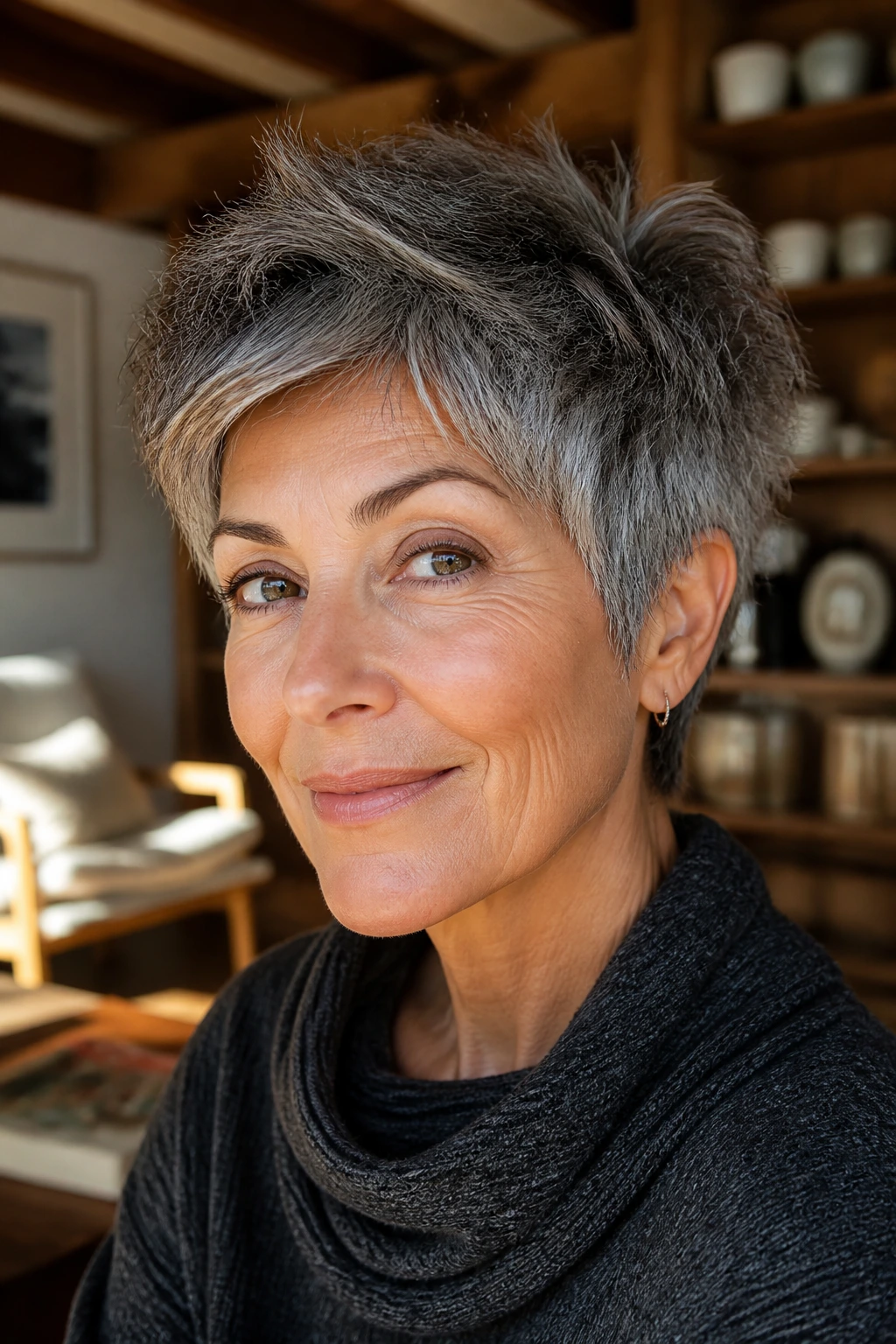
Mixed-color hair has texture built in before you even pick up a styling product. A salt-and-pepper pixie takes advantage of that by keeping the layers loose and the finish a little tousled. The short pieces make the different shades flicker against each other, which gives the cut depth even when the hair is not especially thick.
This is one of my favorite shapes for people who do not want a haircut that feels precious. A quick rub of styling paste through the crown and sides is enough. No careful smoothing. No perfect part. Just enough direction to keep the hair from sticking straight up.
The real appeal here is honesty. The cut looks like hair, not a helmet. If the gray is mixed in naturally, this pixie makes the color shift feel like part of the style instead of something to cover.
13. Side-Part Pixie With Tucked Ear
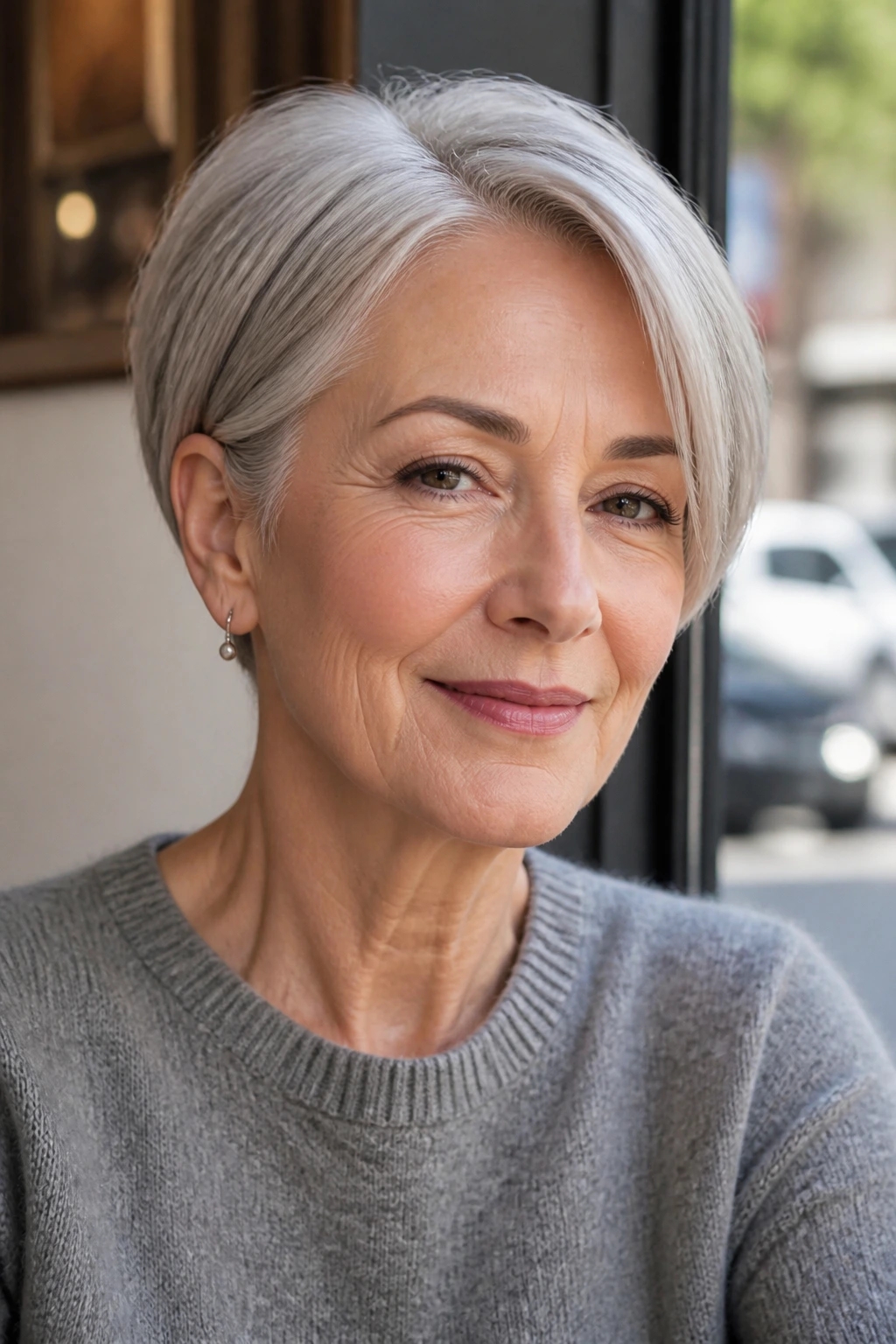
A side part can change a pixie more than a lot of people realize. Move the part over, tuck one side behind the ear, and the face opens up in a way that feels polished without trying too hard. This works especially well if you wear glasses or want one earring to show.
The tucked side should stay neat but not slicked down. If it’s pasted flat, the shape loses depth. If the other side is left a little fuller, the cut gets a quiet asymmetry that looks deliberate. That little contrast is the whole point.
This style is friendly to medium-density hair. Too little hair, and the side tuck can reveal more scalp than you want. Too much bulk, and the tuck turns into a lump. The sweet spot is hair that can be guided with a comb and fingers, then left alone.
14. Rounded Pixie For Narrow Faces
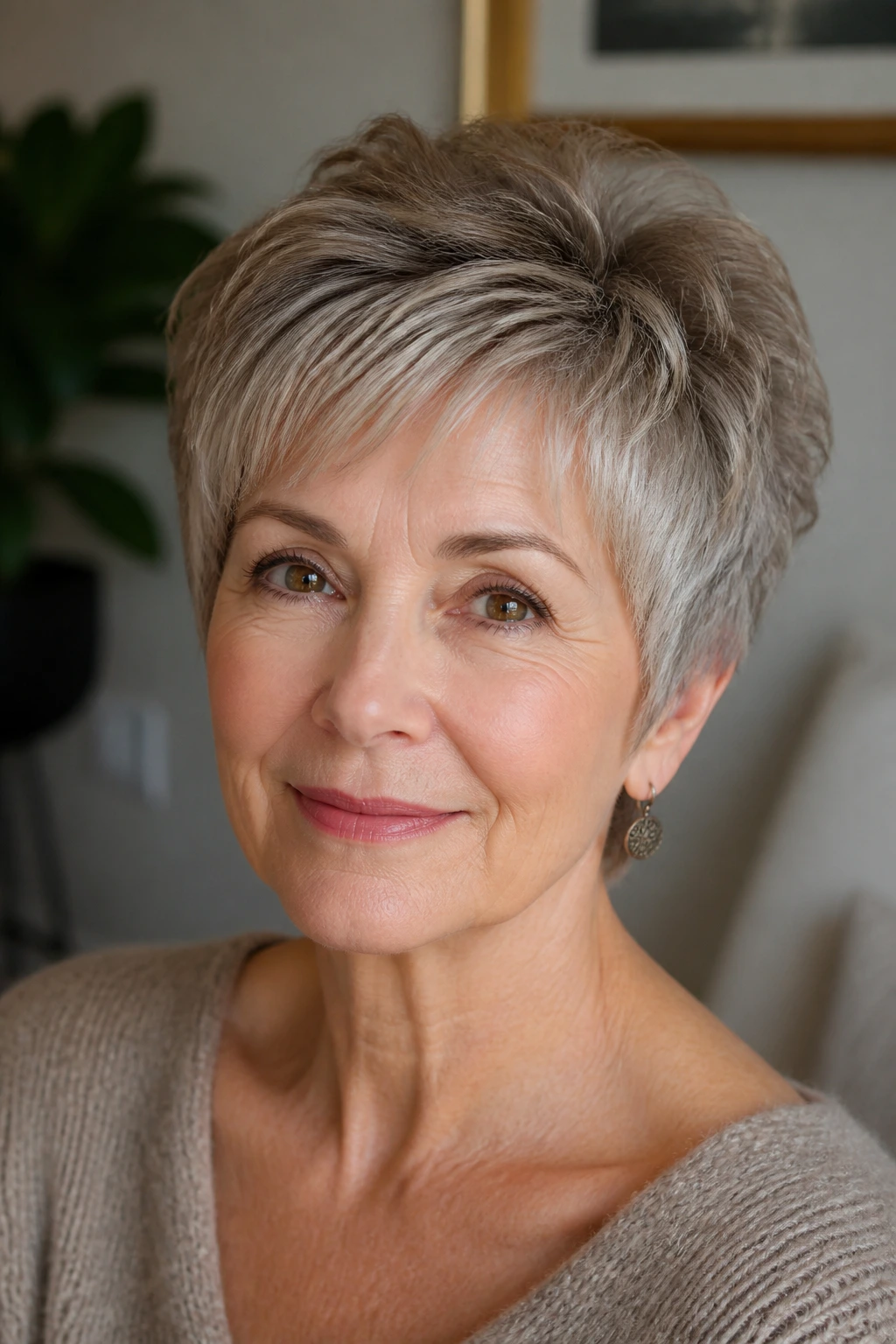
Some pixies are built to narrow the face. This one does the opposite. A rounded pixie keeps a bit more width through the sides and makes the top gentler, so a long or narrow face doesn’t look stretched out. The shape reads soft, not flat.
The hair should curve with the head rather than rise too much at the crown. A few rounded layers around the temples help the style fill space in a flattering way. That sounds technical, but in practice it just means the cut doesn’t cling too close to the scalp.
If your face is more oval or narrow, this is a smart choice because it balances proportions without adding fake volume everywhere. It’s a calm haircut. No hard edges. No sharp corners. Just enough fullness in the right places.
15. Razor-Cut Airy Pixie
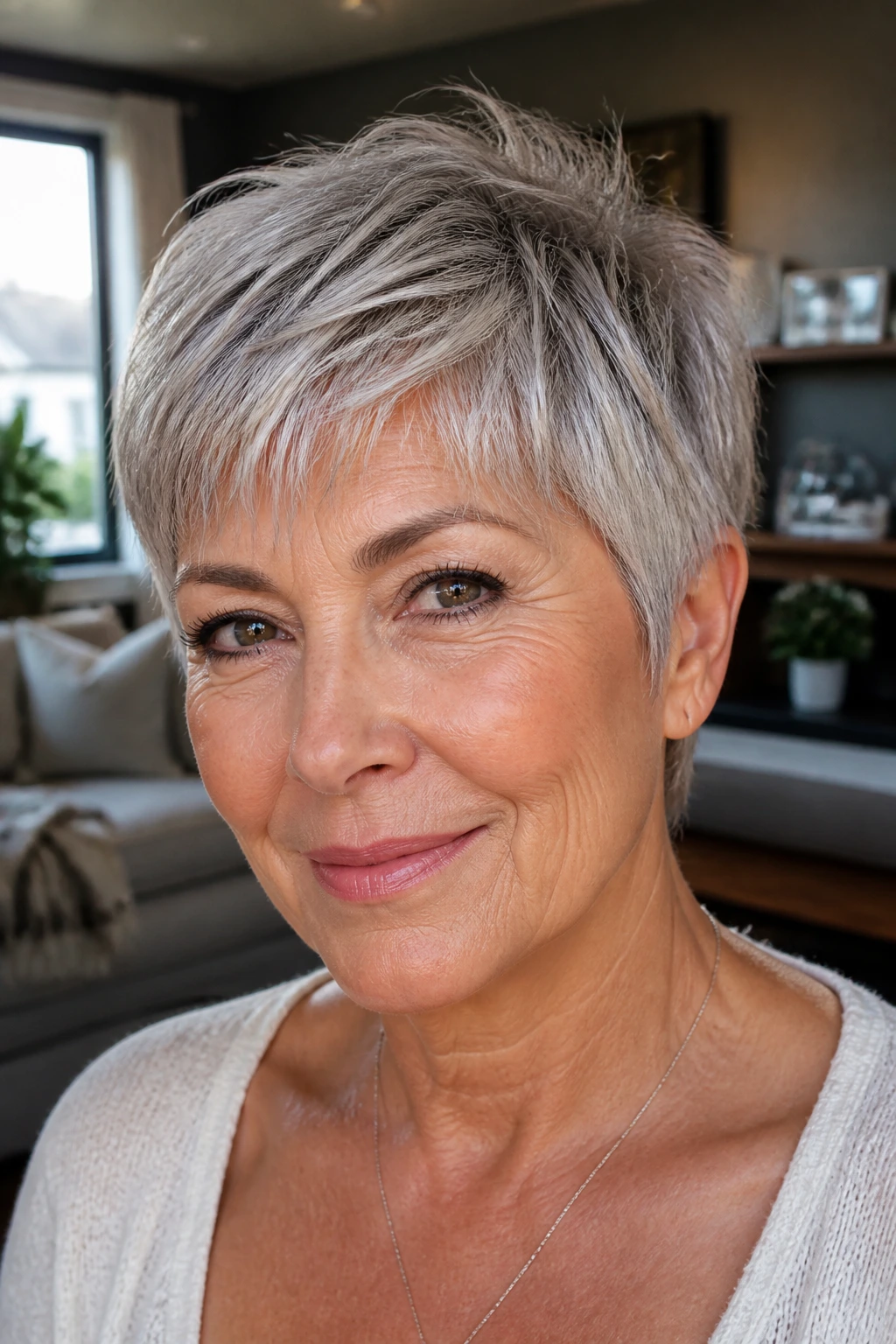
A razor-cut pixie can look almost weightless when it’s done right. The ends are softened with a razor instead of cut bluntly, which leaves them wispy and movable. On straight or gently wavy hair, that can be lovely. The shape feels light and slightly undone, like it never had to work hard.
There’s a catch. Razor cutting can fray hair that is already dry or coarse, so this version needs a stylist who knows when to stop. If the hair is prone to fuzz, scissors may be the better choice. You want airy ends, not broken-looking ones.
This cut is best for people who like texture more than polish. A small amount of cream through the mid-lengths and ends is enough. Too much product crushes the very thing that makes the cut interesting.
16. Elegant Micro-Pixie
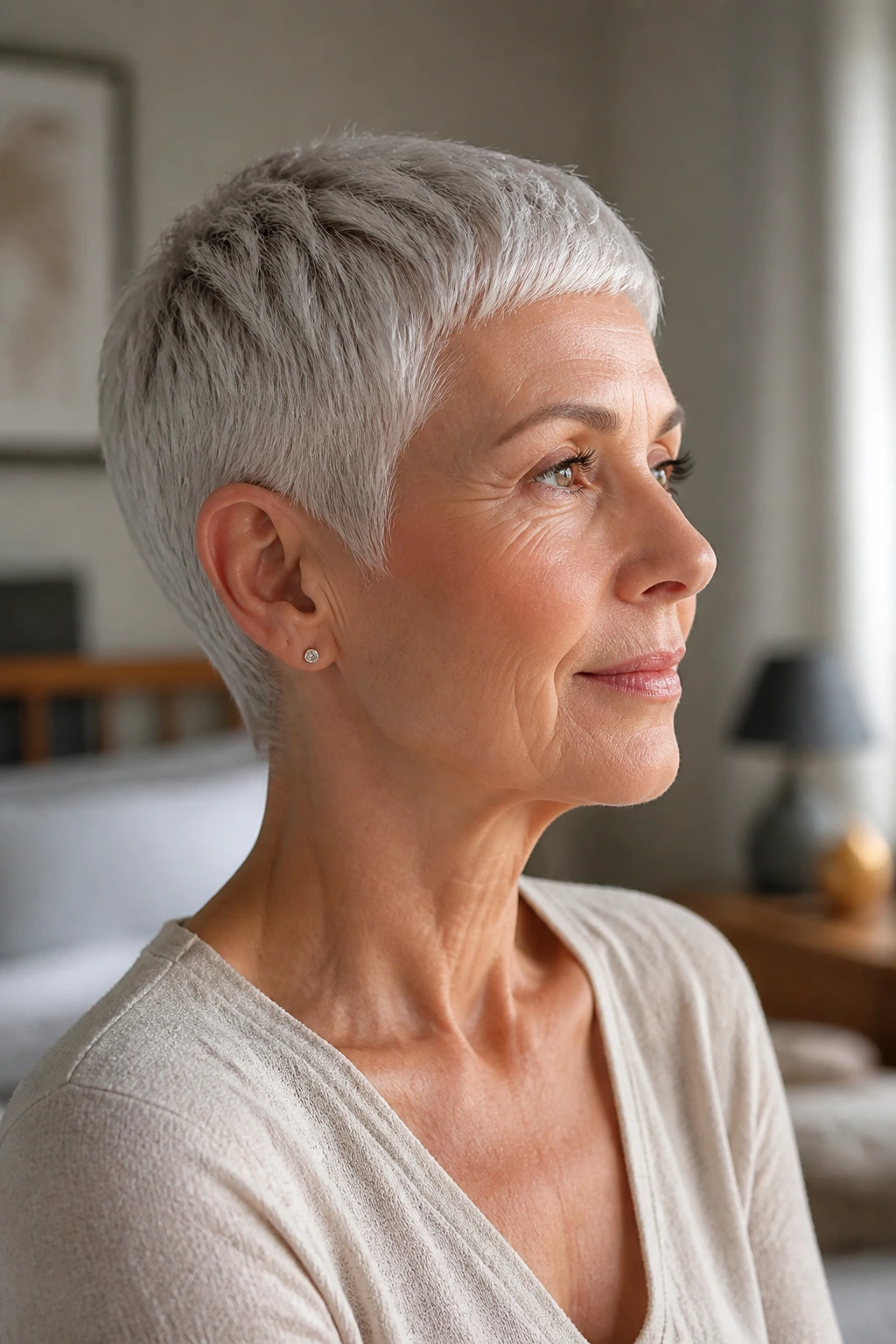
This is the shortest cut in the set, and it is not trying to hide that fact. The micro-pixie keeps the sides and nape very close while leaving only a little softness on top. It can look very sharp on strong features, especially when the eyebrows, cheekbones, or jawline already carry a lot of the visual work.
It’s also the least forgiving if the shape is wrong. The hairline, nape, and sideburns all show, so the cut has to be clean. That means regular trims, thoughtful edging, and a good conversation with the stylist before the first snip. If you like a neat, sculpted look and do not want to spend much time styling, this can be a strong choice.
The tradeoff is plain: it asks for confidence and maintenance. Not vanity. Maintenance. Those are different things.
Why Pixie Cuts Work So Well On Hair That’s Changed With Age
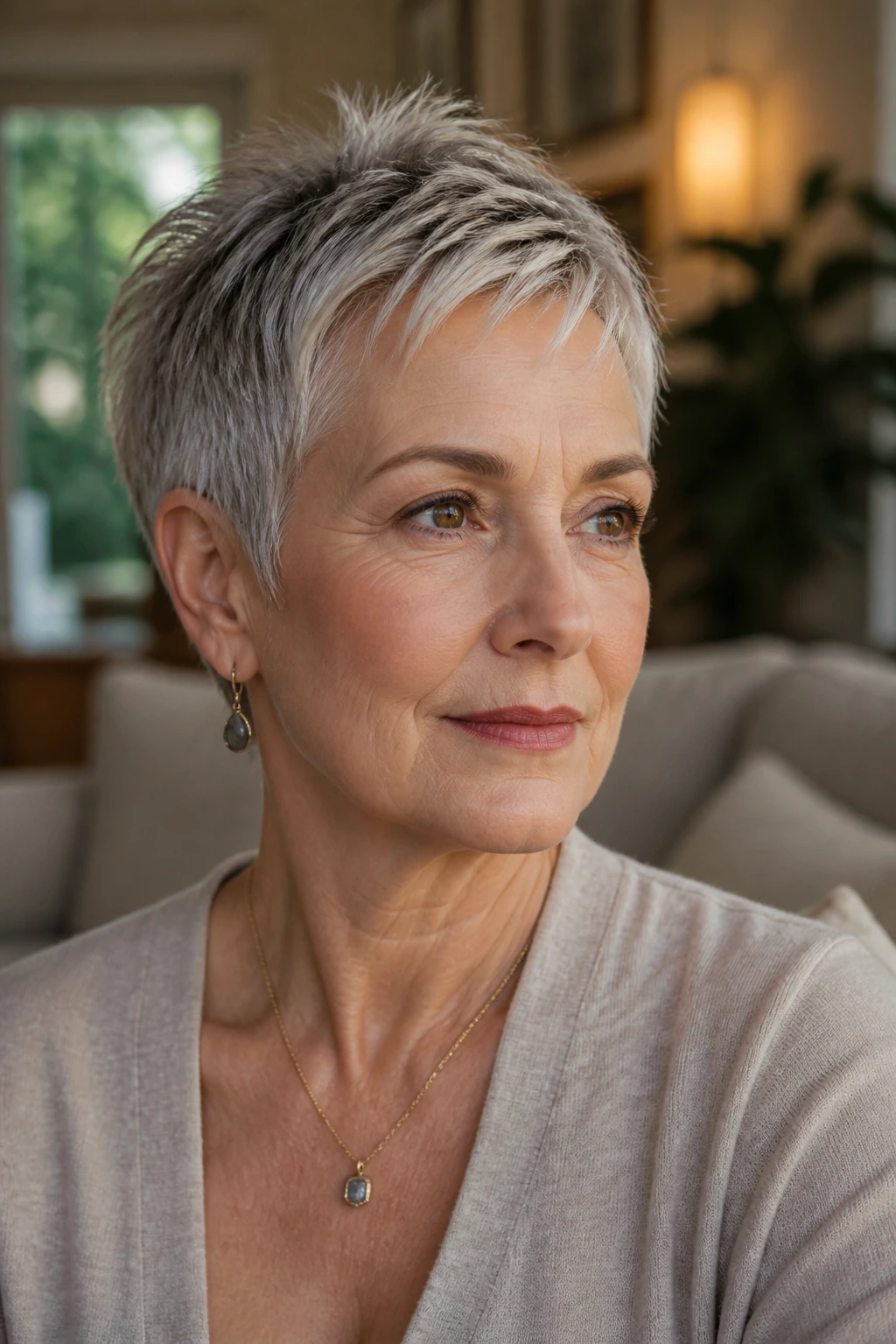
Hair changes. No mystery there. It may get finer at the crown, drier through the lengths, or less dense around the temples. A pixie cut handles those shifts better than a longer style because it removes the extra weight that can drag everything down. The shape sits closer to the head, so the hair stops fighting gravity quite so hard.
There’s another reason pixies hold up well after 60: they expose the structure of the cut. That sounds harsh until you realize structure is what keeps a short haircut looking expensive. A tapered nape, a clean sideburn, and the right amount of movement at the top do more for the face than another inch of length ever will.
And no, short does not automatically mean easy. A bad pixie can be more annoying than shoulder-length hair because every crooked line shows. The good ones are good because they respect growth patterns, cowlicks, and the way hair settles when it dries. That’s why the best pixie cuts for women over 60 feel practical without looking plain.
Essential Tools For Styling A Pixie Cut
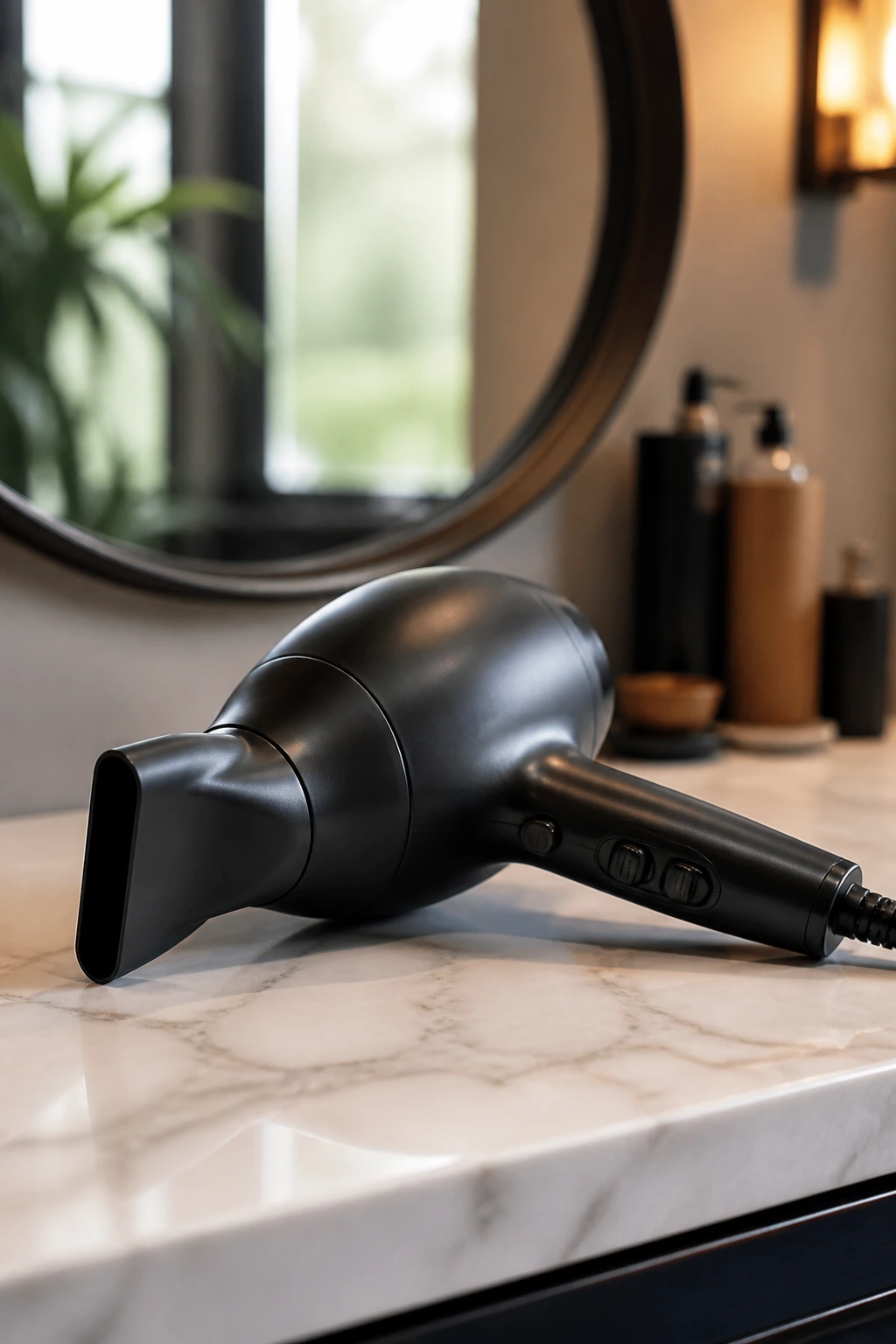
- Blow dryer with a concentrator nozzle: Helps direct the hair where you want it instead of blasting it every which way.
- Small round brush, 1 to 1.5 inches: Good for lifting the crown and giving fringe a bend.
- Vent brush or flat brush: Useful for quick drying when you want speed more than polish.
- Lightweight mousse or root-lift spray: Adds body at the roots without turning the hair sticky.
- Matte paste or styling cream: Best for piecey texture, especially on fine or choppy pixies.
- Fine-tooth comb: Helps set a side part or smooth the fringe.
- Wide-tooth comb: Easier on curly or wavy pixies when detangling after washing.
- Light finishing spray: Keeps the shape in place without making it stiff.
How To Choose The Right Pixie For Your Face Shape And Hair Texture
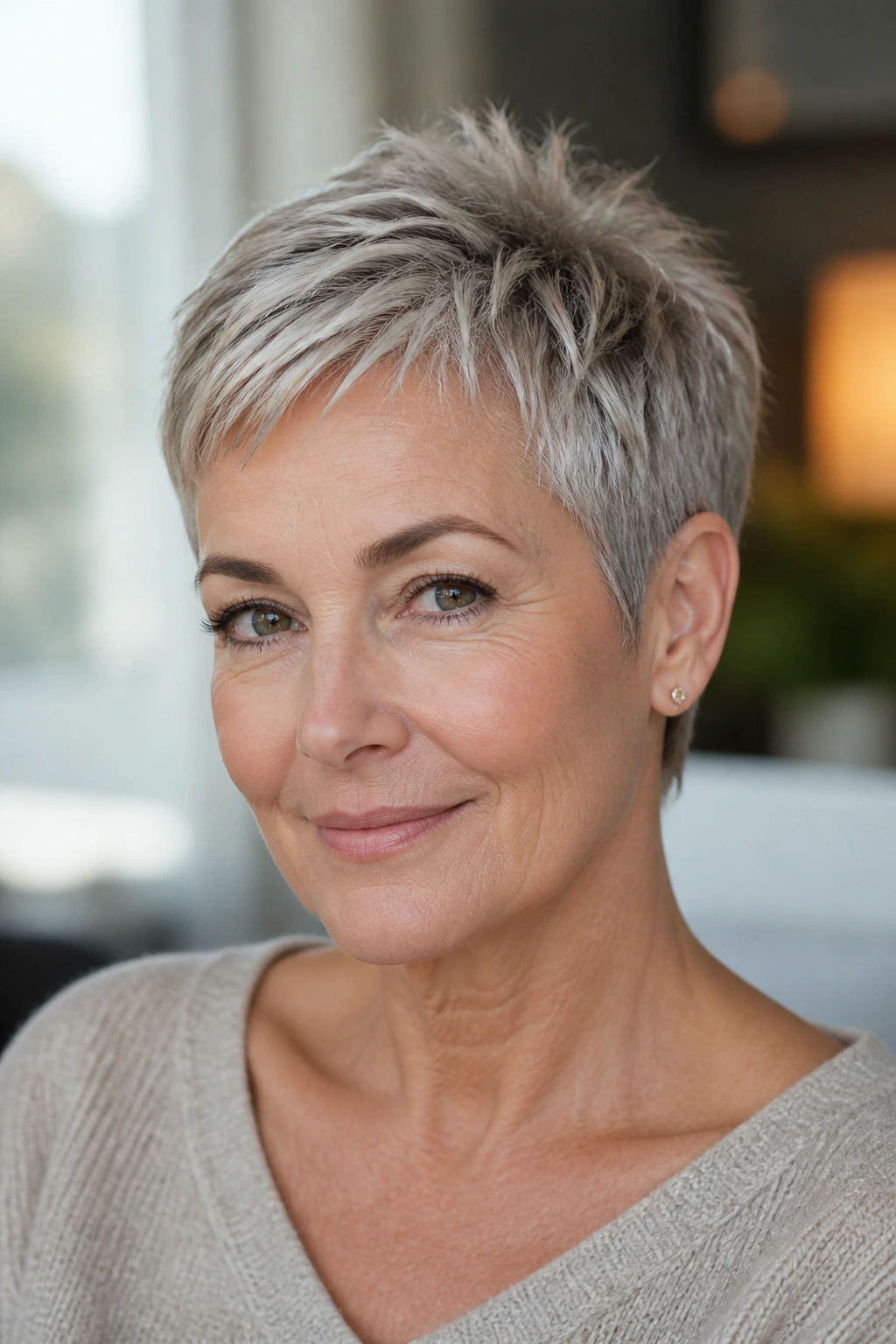
The haircut should answer the hair you already have. That is the part people skip, and it’s why some pixies look fabulous on Pinterest and awkward on real heads. Fine hair usually wants some texture or crown lift. Thick hair often needs debulking at the sides or nape. Curly hair needs room for shrinkage. Straight hair can carry cleaner lines and sharper edges.
Face shape matters too, but not in a rigid rulebook way. Round faces often do well with diagonal lines, side parts, or a little height at the crown. Long faces usually look better with width through the sides or a fringe that shortens the forehead. Square faces often soften when the pixie has feathered edges, side-swept pieces, or a longer top that breaks up the jawline.
Quick matching notes
- Fine hair: choppy, feathered, or layered crown styles
- Thick hair: undercut, tapered, or razor-softened shapes
- Curly hair: rounded curly pixie with moisture and space
- Glasses: long pixie, side-part pixie, or ear-hugging sides
- Strong jawline: asymmetrical or brushed-forward fringe
- Narrow face: rounded pixie with some width through the sides
A good stylist will look at your hairline, cowlicks, and how your hair falls after drying. If they ignore those things, keep talking.
How To Keep The Shape Between Salon Visits
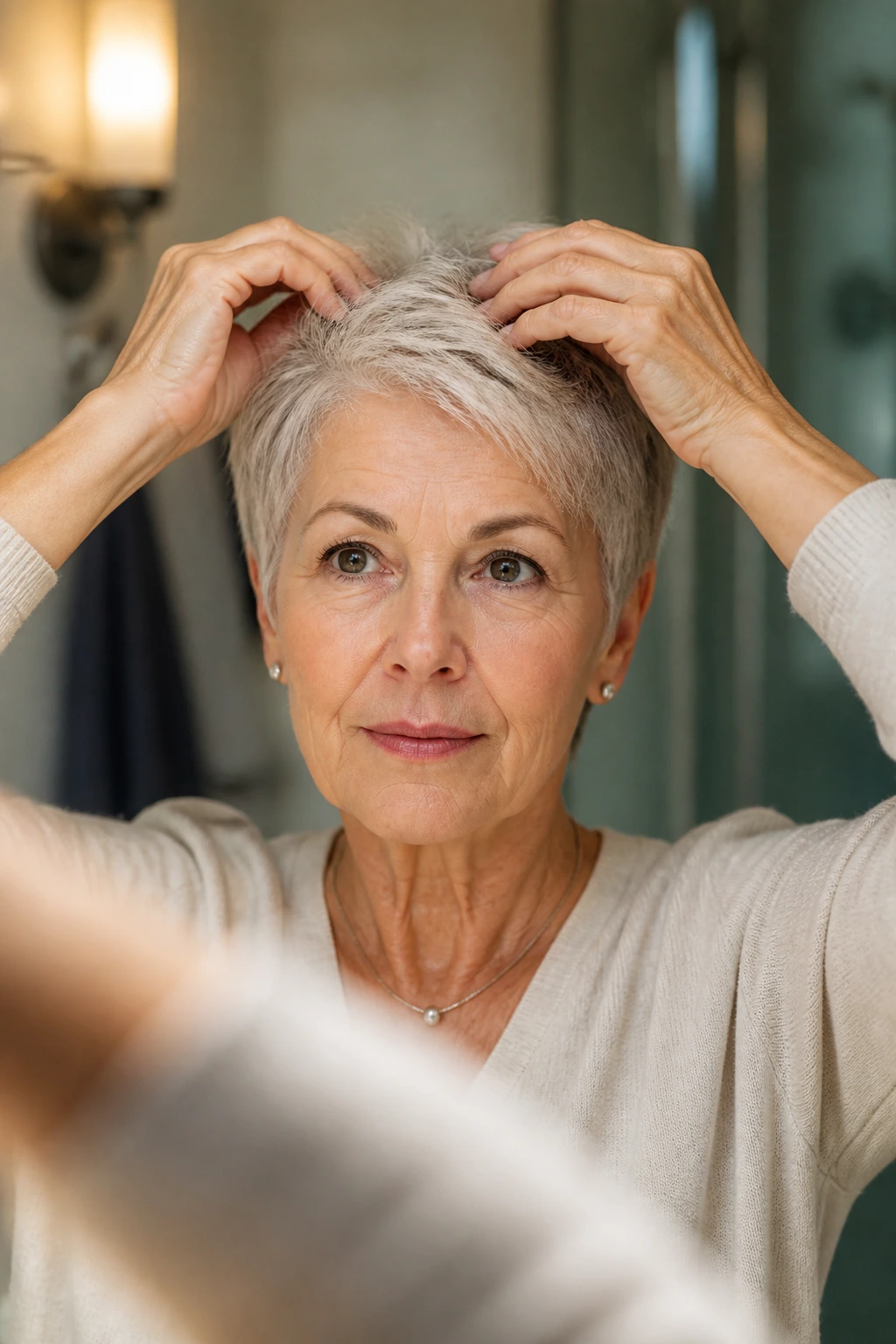
Short hair grows fast in all the wrong places. The nape starts to stick out. The fringe gets in your eyes. The sides lose their clean line around the ears. For a classic pixie, a trim every 4 to 6 weeks is usually the sweet spot. Longer pixies can stretch to 6 to 8 weeks, but only if the shape still reads as intentional.
The nape is the first place I watch. Once it starts to flare, the haircut looks older than it is. Sideburns can do the same thing. If your stylist edges them cleanly, they help frame the face. If they get fuzzy, the whole haircut feels neglected.
Between visits, dry shampoo at the roots can buy you a day or two of lift, especially on fine hair. A little water on the crown and fringe, then a quick blow-dry in the right direction, often resets a pixie better than re-styling the whole head from scratch. That’s the part people don’t always hear. Short hair still needs a reset now and then.
Practical Styling Moves That Make A Pixie Look Intentional
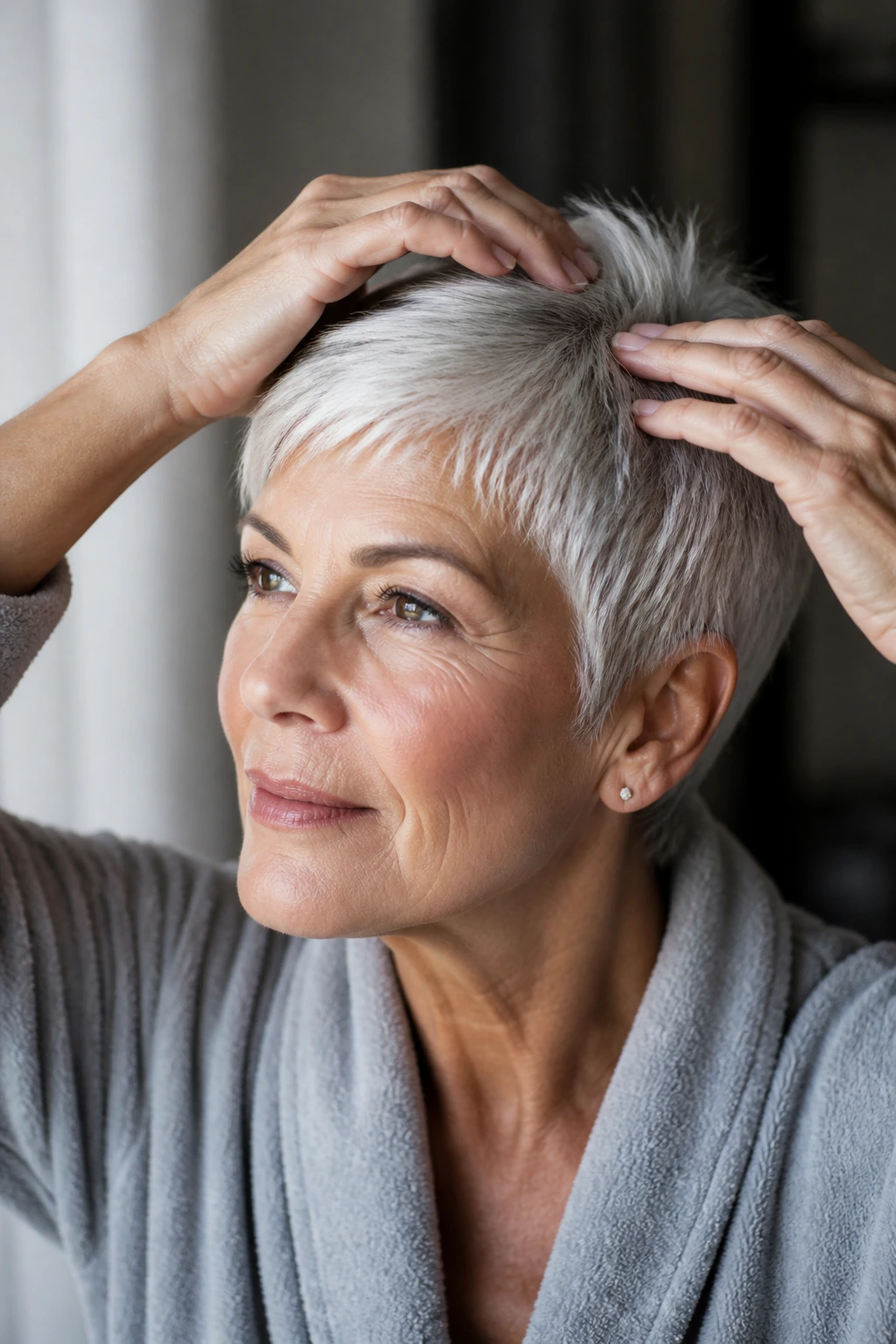
Root lift: Aim the blow dryer at the roots for the first minute, lifting the crown with your fingers or a small brush. That bit of direction matters more than chasing every strand into place.
Product control: Use less than you think. A pea-sized amount of paste can be enough for a pixie. If the hair looks wet or sticky, the cut will collapse before lunch.
Piece separation: Rub a tiny bit of product through the ends only, then pinch a few sections apart. That works especially well on choppy or feathered pixies.
Part placement: Move the part a half inch to the side if the top looks flat. Sometimes that tiny shift gives the haircut a better line than any extra product.
Finish with hands, not tools: Once the shape is dry, stop combing it. Fingers break up the hard edges and make the cut feel lived in instead of overworked.
Common Mistakes That Age A Pixie Instead of Lifting It
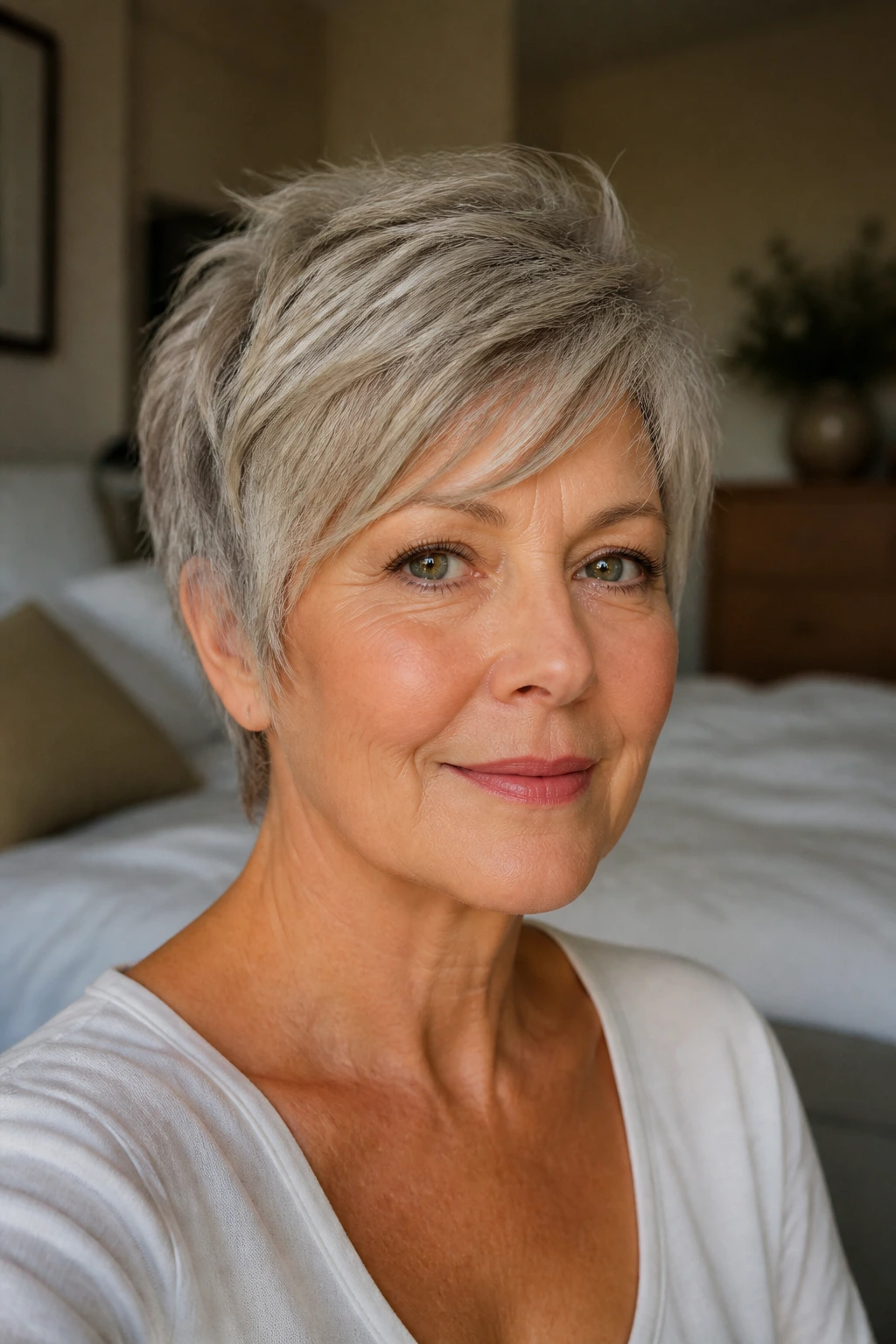
A pixie goes wrong fast when the cut ignores the head it sits on. One common mistake is taking too much off the crown while leaving the sides puffy. The result is a top that lies flat and a shape that widens at the cheeks. The fix is simple: keep some length up top for lift and remove bulk where the head gets widest.
Another problem is over-thinning fine hair. The ends start to look scraggly, and the haircut can expose scalp in odd patches. If your hair is already sparse, ask for texture with restraint. Feathering is one thing. Removing too much density is another.
Heavy product is a big one too. Wax, paste, and cream all have their place, but too much of any of them turns a pixie into a greasy shell. Use tiny amounts and build slowly. If you can feel product sitting on the surface, there’s too much.
Neglecting the nape and sideburns ages a pixie more than almost anything else. Those little edges are the first things people see when the cut grows out. Clean them up regularly, or the whole style starts to look tired.
And one last thing: do not choose a cut that fights your hairline or cowlicks. If your hair insists on lifting at the crown, don’t force it flat. If the nape flips out, plan for a tapered finish. The haircut should solve the problem, not create a new one.
Variations And Personal Twists To Try
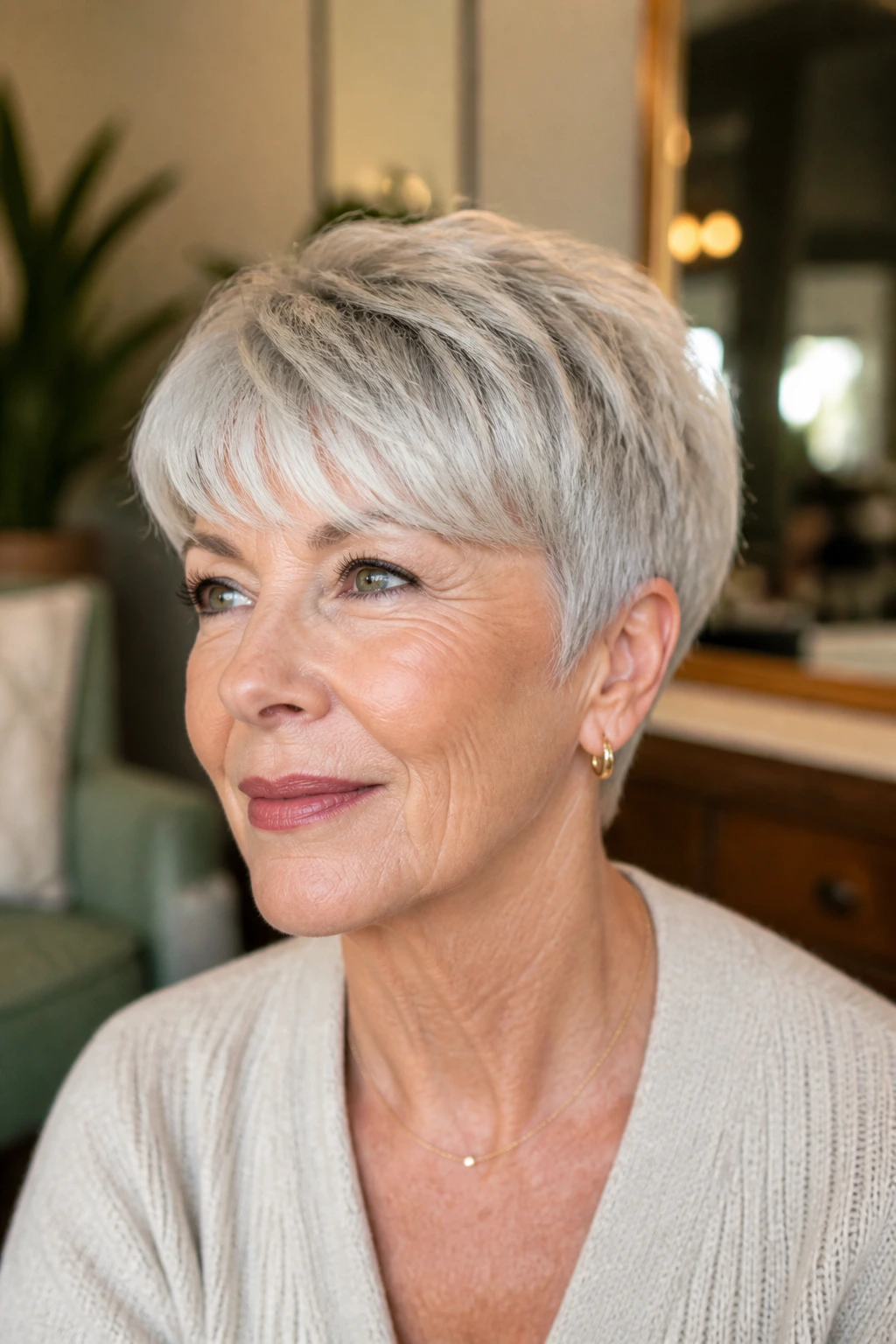
Soft Silver Sweep: Keep the top longer and brush it back with a soft side part. This works well if you want the silver tone to read clean and bright without a lot of styling.
Glasses-Friendly Side Tuck: Leave enough length around one ear to tuck it neatly behind the frame. It keeps the face open and gives the haircut a polished line near the temples.
Wash-and-Go Curl Pixie: Ask for a rounded shape that follows your curl pattern and dries with minimal fuss. Best for anyone who wants to scrunch in a little cream and stop there.
Fringed Texture Pixie: Keep the front broken into light, piecey bits instead of a solid bang. This is a good choice if you want forehead coverage without heaviness.
Tight Nape, Soft Top: Trim the back close and leave the crown and front a touch longer. That contrast works well for thick hair and keeps the shape from spreading out.
Rounded Vintage-Inspired Pixie: Let the sides curve gently without hard edges. It gives a softer outline that suits narrow faces and anyone who likes a calmer silhouette.
Frequently Asked Questions About Pixie Cuts For Women Over 60
Which pixie cut is best for fine hair?
A choppy textured pixie or a layered crown-volume pixie usually works best. Fine hair needs shape, not weight, so broken layers and a little root lift will do more than a blunt crop.
Can a pixie cut work with a round face?
Yes, if the cut adds diagonal movement or height at the crown. Asymmetrical pixies, side-swept fringe, and long pixies with ear-hugging sides tend to soften roundness without making the face look wider.
How often should I trim a pixie cut?
Most pixies need attention every 4 to 6 weeks. If the cut is longer or softer, you can sometimes stretch to 6 to 8 weeks, but the nape and sideburns usually tell you when it’s time.
Does a pixie suit gray hair?
Very much so. Gray hair often shows clean lines and texture beautifully, especially when the cut is tapered or feathered. A pixie can also reduce the amount of coloring and heat styling you need.
What if my hair has cowlicks?
Plan the cut around them instead of trying to force them flat. A good stylist can leave a little length in the problem area, then shape the rest of the cut so the cowlick looks like movement instead of a mistake.
Is a pixie high maintenance?
Styling can be quick, but the cut needs regular trims. That’s the tradeoff. You spend less time each morning, then schedule more frequent salon visits to keep the shape clean.
Can I wear a pixie if I use glasses?
Yes, and some pixies look better with glasses than without them. Long side pieces, ear-hugging sides, and soft fringes keep the frames from competing with the haircut.
Should I ask for layers in a pixie?
Usually, yes, but not always in the same way. Fine hair often needs feathering or light texture, while thick hair may need deeper internal layers to remove bulk. The right kind of layering depends on how your hair sits when it dries.
A Cut That Fits Real Life
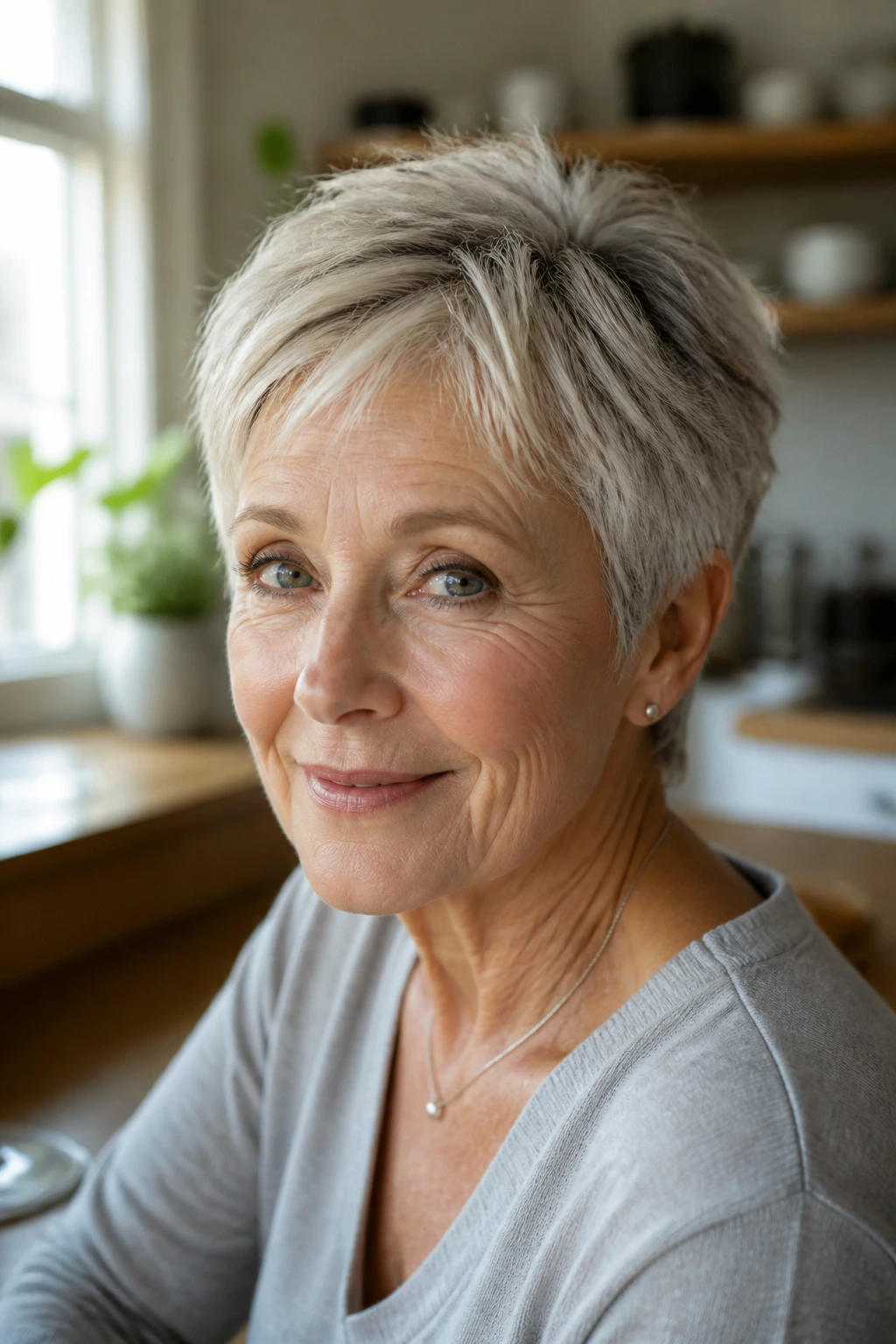
The best pixie cuts for women over 60 don’t try to hide age, and they don’t pretend hair never changes. They give shape to what you already have. That’s the appeal. A good pixie can make silver hair look sharper, fine hair look fuller, and thick hair look lighter without begging for an hour in front of the mirror.
What matters most is fit. Fit for your crown, your hairline, your glasses, your neckline, your morning routine. A pixie that understands those things will keep paying off long after the salon chair has stopped spinning.
Choose the shape that matches your hair instead of arguing with it, and the haircut will do the rest.
