



A choppy pixie cut lives or dies by texture. Not length. Texture.
When the ends are broken up, the crown has movement, and the outline feels a little jagged in the best possible way, short hair stops reading as neat and starts reading as intentional. That’s the trick most people miss. A pixie with too clean a perimeter can look like a helmet by lunch. A pixie with too much thinning can puff up and lose its shape. The sweet spot sits in that scruffy middle, where the pieces fall apart just enough to catch light, show off earrings, and keep the whole cut from sitting flat.
That’s why choppy pixie cuts keep showing up on people who want their hair to say something before they do. The cut can be sharp, soft, undone, punky, polished, or somewhere in between, and a tiny change in the fringe or the nape changes the whole mood. A razor-sliced crop and a feathered pixie are cousins, not twins. So are a curly choppy pixie and a platinum spiky one. Same family. Different attitude.
And yes, the details matter. A lot. The right version depends on your cowlicks, your density, your forehead, your cheekbones, and how many minutes you’ll actually spend in front of the mirror with a paste tin in one hand and a comb in the other. Some cuts love fine hair. Others need thick hair to behave. Some look best roughed up with fingers; others need a deep side part and a little bend at the ends. That’s where the interesting stuff starts.
Why These Cuts Keep Getting Saved
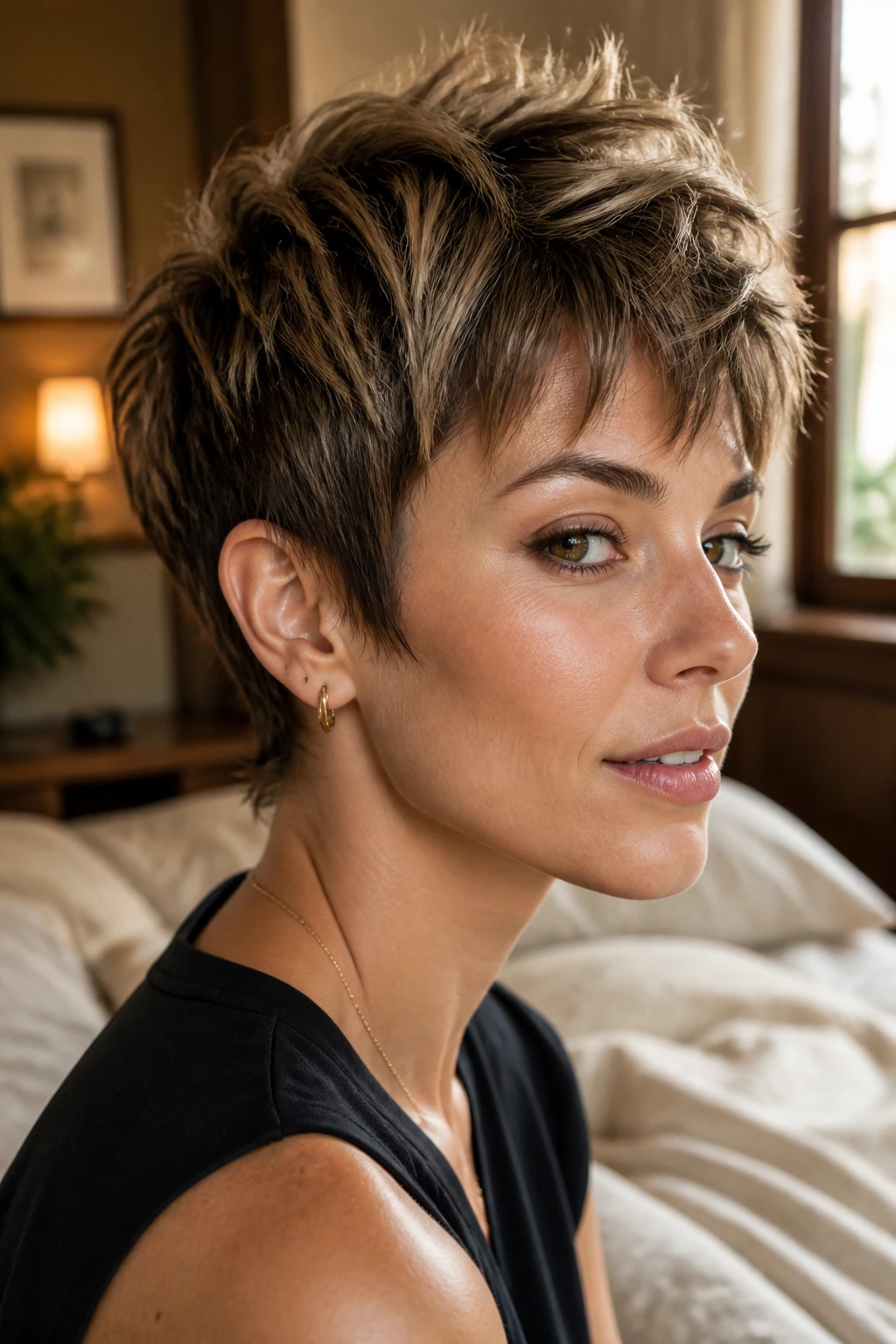
-
Texture does the heavy lifting: Choppy ends keep short hair from collapsing into one solid shape, so the cut moves even when it’s only 2 or 3 inches long.
-
The same cut can read three ways: Change the fringe, the nape, or the crown layers and a pixie can look soft, rebellious, or polished without changing the basic structure.
-
Color shows up harder on short hair: Copper, platinum, silver, and deep brunette all look more dimensional when the perimeter is broken up into pieces.
-
Morning styling stays quick: Most of these cuts only need a pea-sized amount of matte paste, a little mousse, or a quick blast of a blow-dryer to come back to life.
-
Grow-out can look intentional: Uneven lengths blur the line between “freshly cut” and “between appointments,” which is a small mercy if you hate awkward regrowth.
-
They work across textures: Straight hair shows separation, wavy hair gets movement, and curls get shape when the layers are placed with some common sense instead of a one-size-fits-all approach.
1. Razor-Sliced Micro Pixie
This is the one that looks like it was cut with a tiny blade and a lot of nerve. The shape sits close to the head, the top pieces are sliced into short, uneven lengths, and the edges around the ears stay visible instead of being buried under bulk. On straight or slightly wavy hair, that kind of precision makes the haircut feel almost graphic.
Why It Reads Sharper Than a Classic Crop
The secret is the broken outline. A blunt pixie can feel neat in a way that borders on stiff, but the razor-sliced version has tiny shifts in length that keep the shape from looking sealed shut. Ask for point cutting or light razor work if your hair takes texture well.
- Keep the fringe short enough to show the brows.
- Leave the crown pieces around 2 to 3 inches.
- Ask for a soft taper at the nape so the back doesn’t puff out.
Best tip: If your hair swells or frizzes easily, ask for shears instead of a razor. That tiny decision can save you a week of triangle-shaped regret.
2. Crown-Lifted Textured Pixie
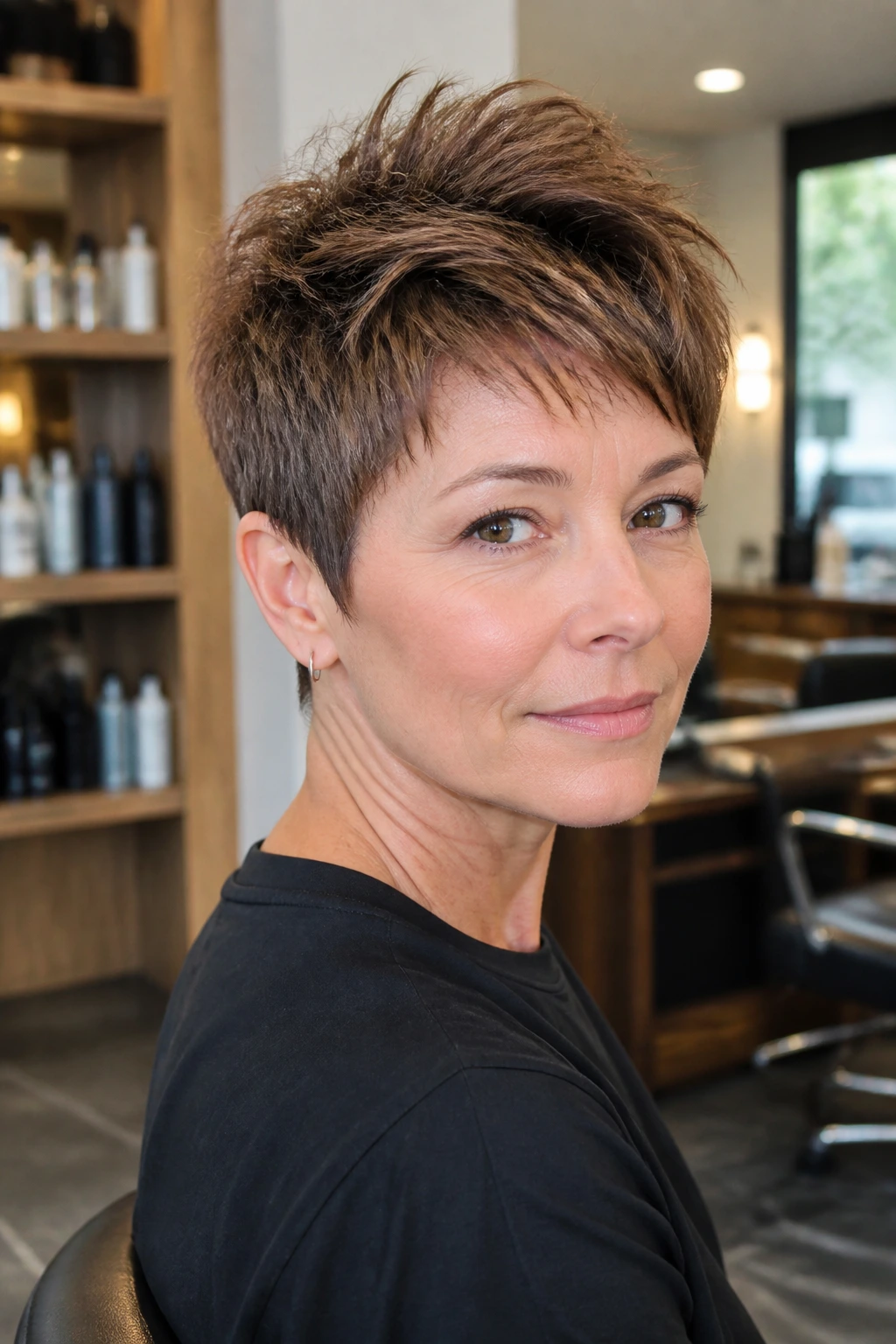
If the top of your head goes flat by lunch, this version fixes that fast. The sides stay clipped close, the crown gets stacked with short layers, and the whole cut is built to stand up a little instead of hugging the scalp. It’s one of the best choppy pixie cuts for fine hair because the height does more visual work than the length ever could.
The styling is plain but effective. Blow-dry the crown upward with a small round brush or your fingers, then pinch in a matte paste once the hair cools. Don’t load product at the roots. That’s how lift disappears. I like this shape on hair that needs a little attitude but not a full punk turn.
3. Deep Side-Part Pixie With a Long Fringe
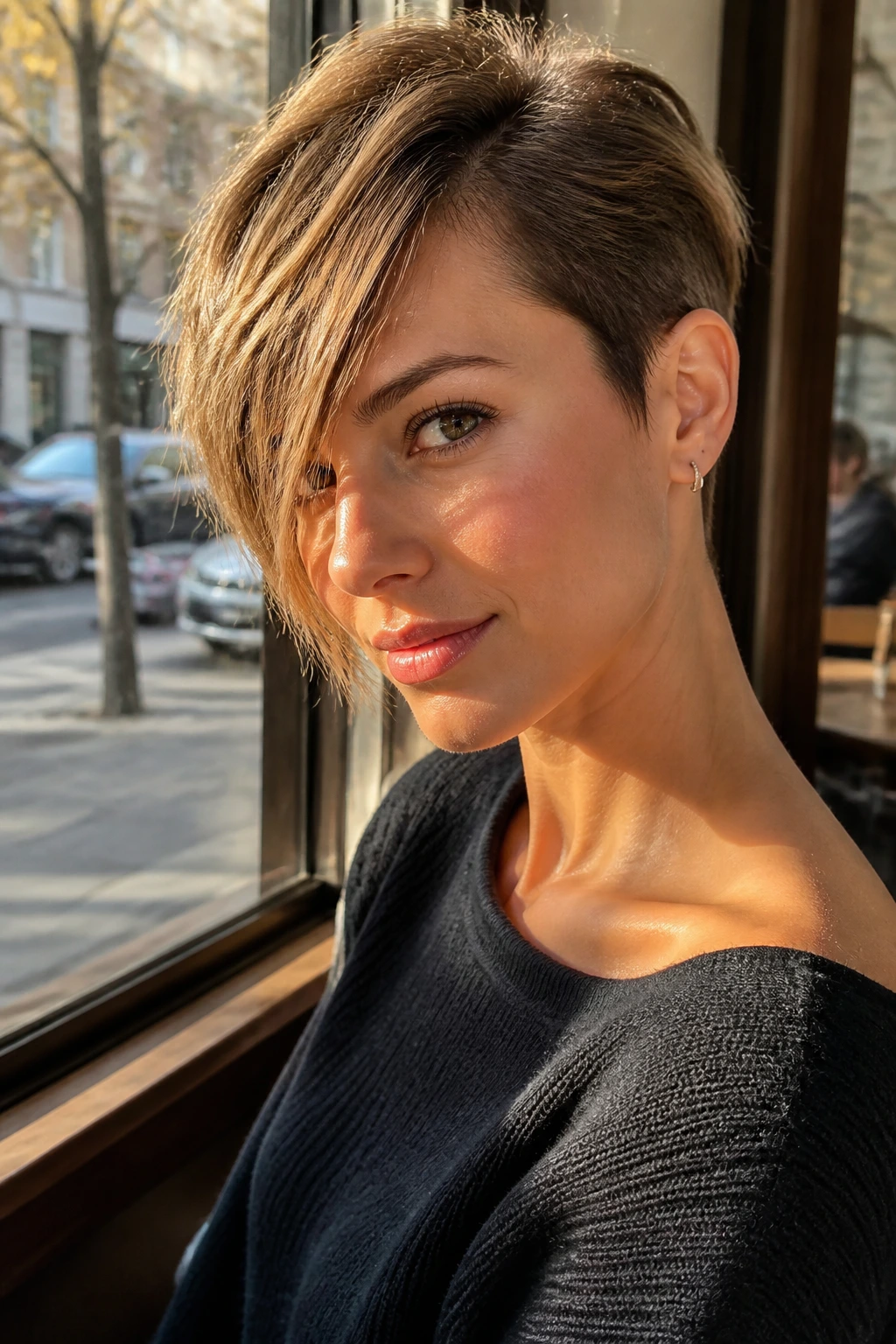
Need softness without losing the edge? Go diagonal. A deep side part with a long, piecey fringe pushes the eye across the face and gives the cut a little sweep instead of a straight-on crop. It’s one of the easiest ways to make a pixie feel less severe.
Who It Flatters
This version does good work on round and square faces because the longer fringe cuts across the width of the face instead of sitting like a little cap. It also plays nicely with glasses, which can get crowded by heavier bangs.
- Leave one front section long enough to skim the cheekbone.
- Bend the ends with a flat iron if you want a more finished line.
- Tuck the shorter side behind the ear for a sharp, clean shape.
If your cowlick pushes hard at the front, this is still possible. You just need to work with the part instead of fighting it every morning.
4. Undercut Rebel Pixie
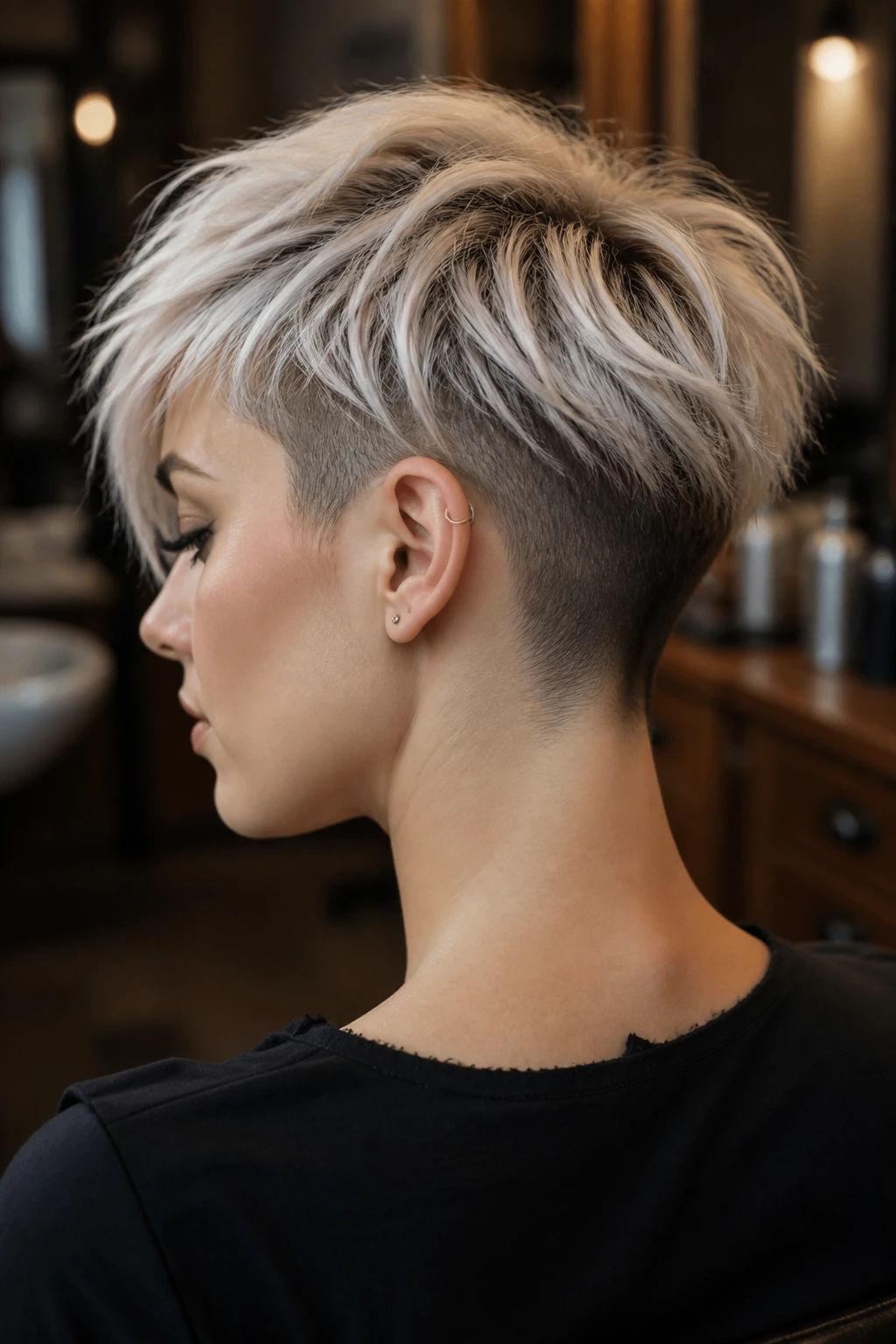
Thick hair turns this cut from cute to controlled. The hidden undercut removes bulk at the nape and around the sides, while the top stays jagged and full of movement. That contrast is what gives the style its bite. Without the undercut, the same pixie can balloon out and lose its shape by the second week.
The nice part is that the shaved section does not have to be obvious. A lot of people like the surprise of it: smooth underneath, choppy on top. It’s a strong move if you wear your hair tucked behind one ear, because the contrast shows up right away.
What to Ask For
- A low undercut at the nape if you want something easier to grow out.
- A disconnected top if you want the upper layers to sit high.
- Shears over razors if your hair frizzes at the ends.
The grow-out is the catch. It comes back with opinions.
5. Curly Coil Pixie

Curly hair changes the whole conversation. The texture is doing half the styling on its own, so the cut needs to respect the curl pattern instead of chopping through it like straight hair. A choppy pixie on curls should leave enough length on top for the curl to spring, with tighter shaping at the sides and nape so the silhouette stays clean.
The biggest mistake here is over-thinning. Don’t let anyone go wild with texturizing shears. Curl clumps need weight in the right places or the shape blows up into a frizzy halo. I like this cut with a curl cream and a gel cast that gets scrunched out once the hair is dry. It’s short, but it still has a soft, touchable finish.
6. Feathered Soft-Edge Pixie
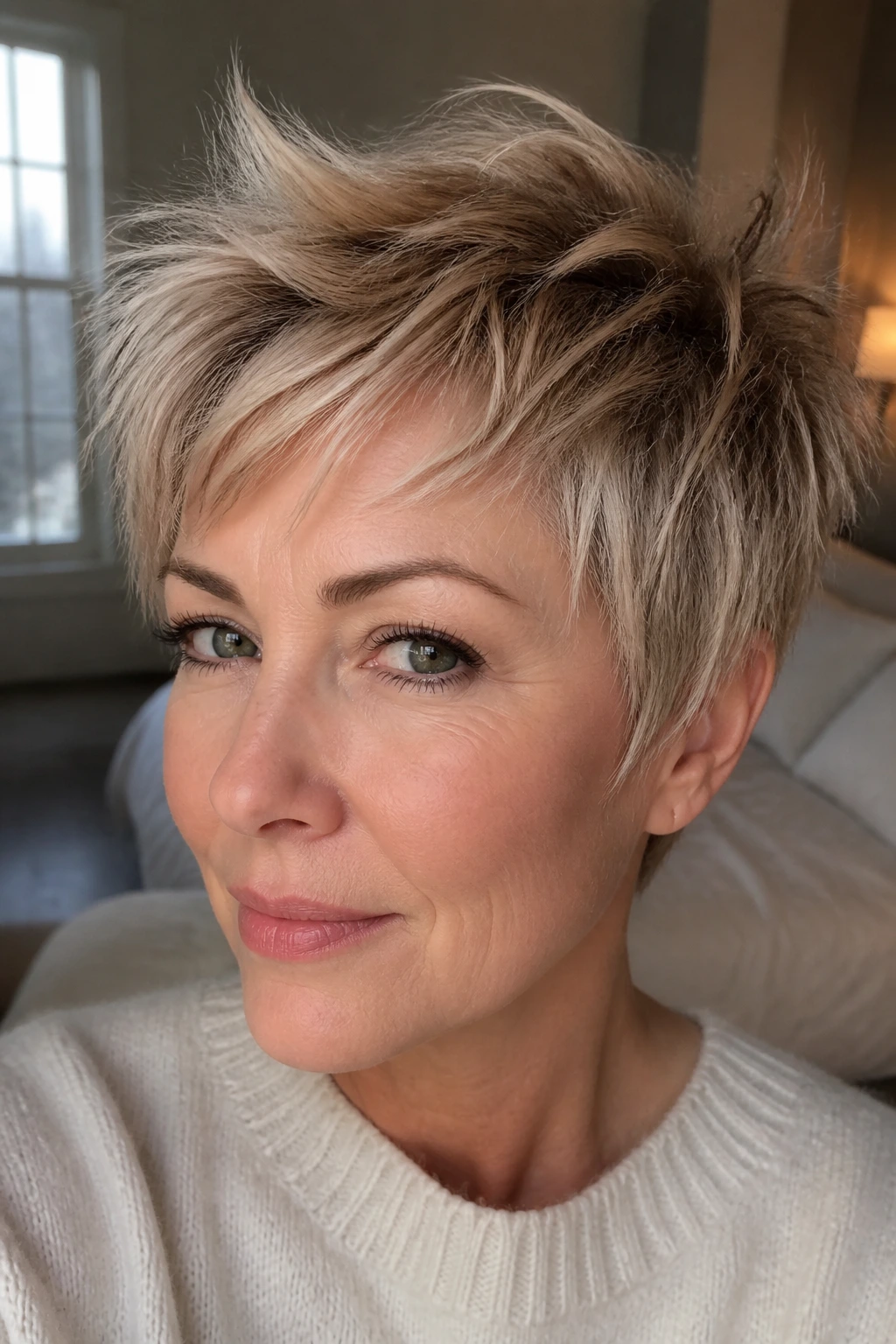
Compared with the spikier cuts above, this one feels airier and a little more grown-up. The layers are feathered, not hacked apart, and the ends sit wispy instead of jagged. You still get movement, but the texture reads softer at the temples and around the fringe.
That makes it a smart first pixie for anyone nervous about going too short. It’s also useful if you wear softer makeup or jewelry and don’t want your haircut to fight the rest of your look. A tiny bit of styling cream through the ends is often enough. Sometimes that’s all the hair wants.
7. Shag-Mullet Pixie

Not everyone wants the neat little pixie shape. This one leans a little rougher, with more length left at the nape and a shaggy top that can fall forward, kick out, or tuck behind the ears depending on the day. It’s the haircut for people who like a bit of rock-and-roll in their mirror.
The reason it works is simple: the uneven lengths make the silhouette feel alive. On wavy hair, that longer back section keeps the cut from puffing into a cube. On straighter hair, a matte paste rubbed through the mid-lengths gives the pieces enough grip to stay separated.
- Best with air-drying or rough blow-drying.
- Keep the perimeter light, not blunt.
- Use a small amount of product only on the ends.
It’s messier than a classic pixie. That’s the point.
8. Asymmetrical Jawline Pixie
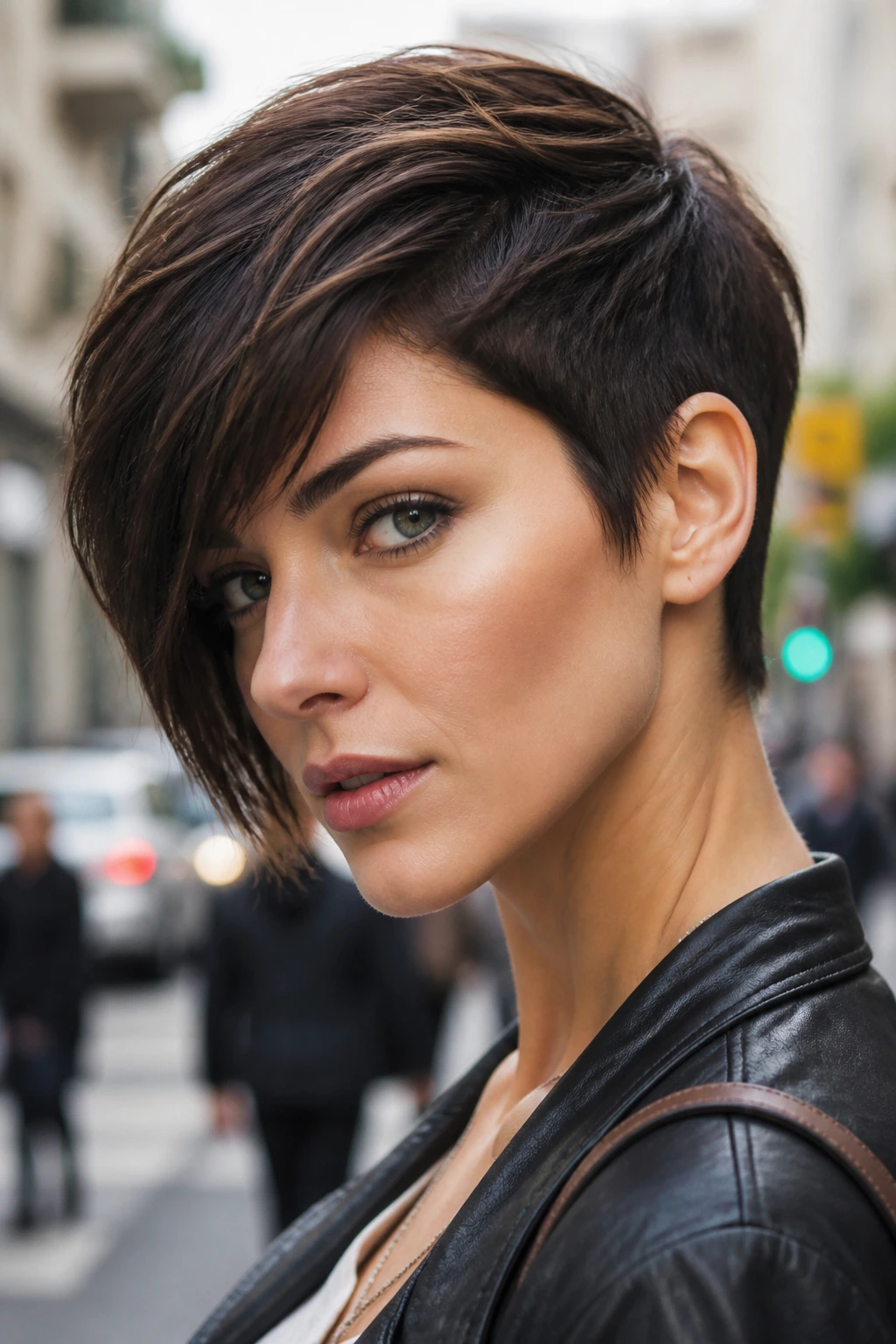
One longer side can do more than a whole contour routine. The asymmetrical pixie cuts a diagonal line across the face, which shifts attention toward the cheekbones and makes the jawline look a little more sculpted. The shorter side keeps the shape crisp; the longer side softens the whole thing.
I like this version when the hair itself is straight or lightly wavy, because the line stays visible. If your texture is very curly, the asymmetry can blur unless it’s cut with enough length difference to survive shrinkage. Ask for one side to stay roughly 1 to 2 inches longer than the other, then style the longer side to skim the cheek instead of flipping away from it.
9. Platinum Spiky Pixie
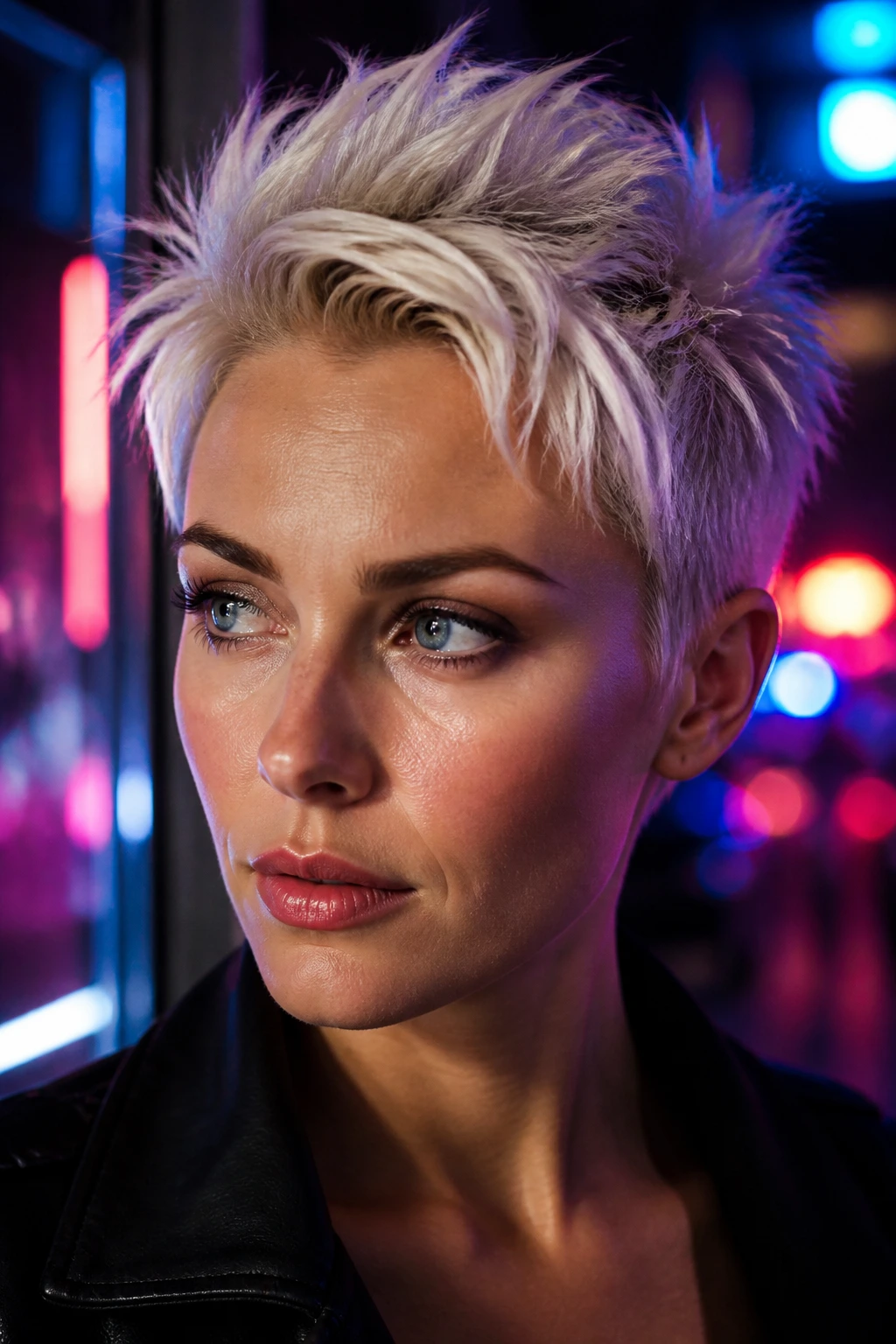
Why does platinum make a choppy pixie look so sharp? Because the pale color shows every bend, break, and little spike. The cut itself doesn’t have to be extreme. The color does part of the talking. That’s why this version lands so hard on straight hair and short, dense textures that can be pushed into separated pieces.
What to Watch For
Bleaching changes the rules. Hair that was easy to rough up before can get dry fast, and dry hair needs less product, not more. A little matte paste goes a long way, especially if the ends have been lightened.
- Use bond-building care if the hair is bleached.
- Tone the color often enough to keep it from going yellow.
- Skip oily finishers unless you want the spikes to fall flat.
This is the cut for someone who likes a little drama in the mirror.
10. Micro-Bang Pixie

If you like your forehead in the conversation, this is the cut. The baby bangs hit well above the brows, which gives the whole pixie a sharper, more fashion-forward edge. The rest of the haircut stays choppy and short, so the fringe becomes the loudest part of the shape.
The trade-off is upkeep. Micro bangs grow fast, and they show every tiny change in direction. A strong cowlick at the front can make them fight back, so this is best for people whose hairline already behaves. I’d keep the top pieces lightly textured and the sides close so the bangs stay the focal point instead of getting lost in extra bulk.
11. Wet-Look Choppy Pixie
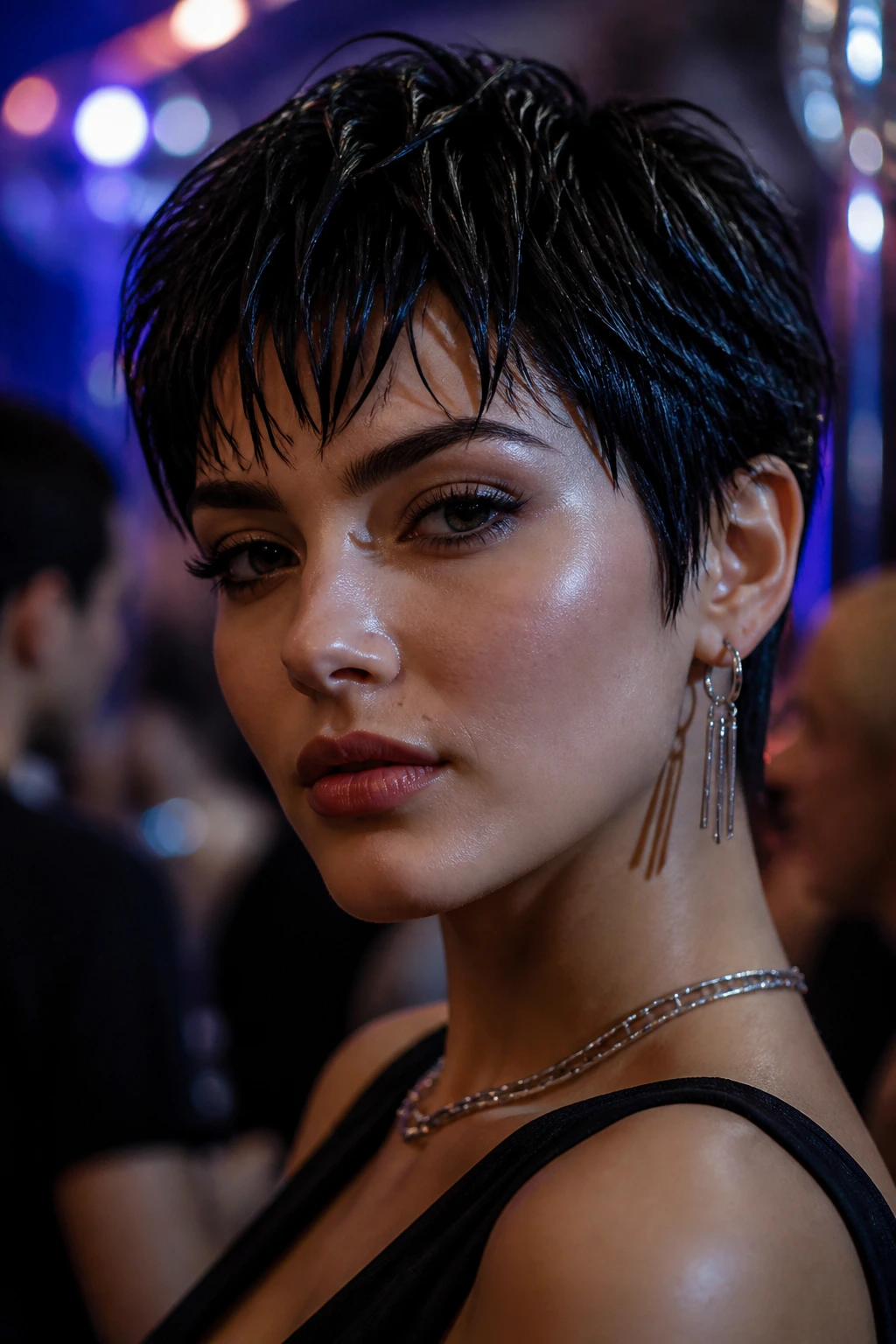
A wet look does not mean no texture. It means the texture is controlled instead of fluffy. The hair is combed into direction while damp, then set with gel or a glossy styling cream so the pieces stay separated and reflective. On a choppy pixie, that turns short layers into crisp little ribbons.
This version is especially good for a night out or a dressier outfit because the shine gives the cut a more finished feel. The trick is restraint. Too much gel can make short hair look greasy, and too little won’t hold the shape. Start small. Add more only where the pieces collapse.
12. Tousled Fine-Hair Pixie
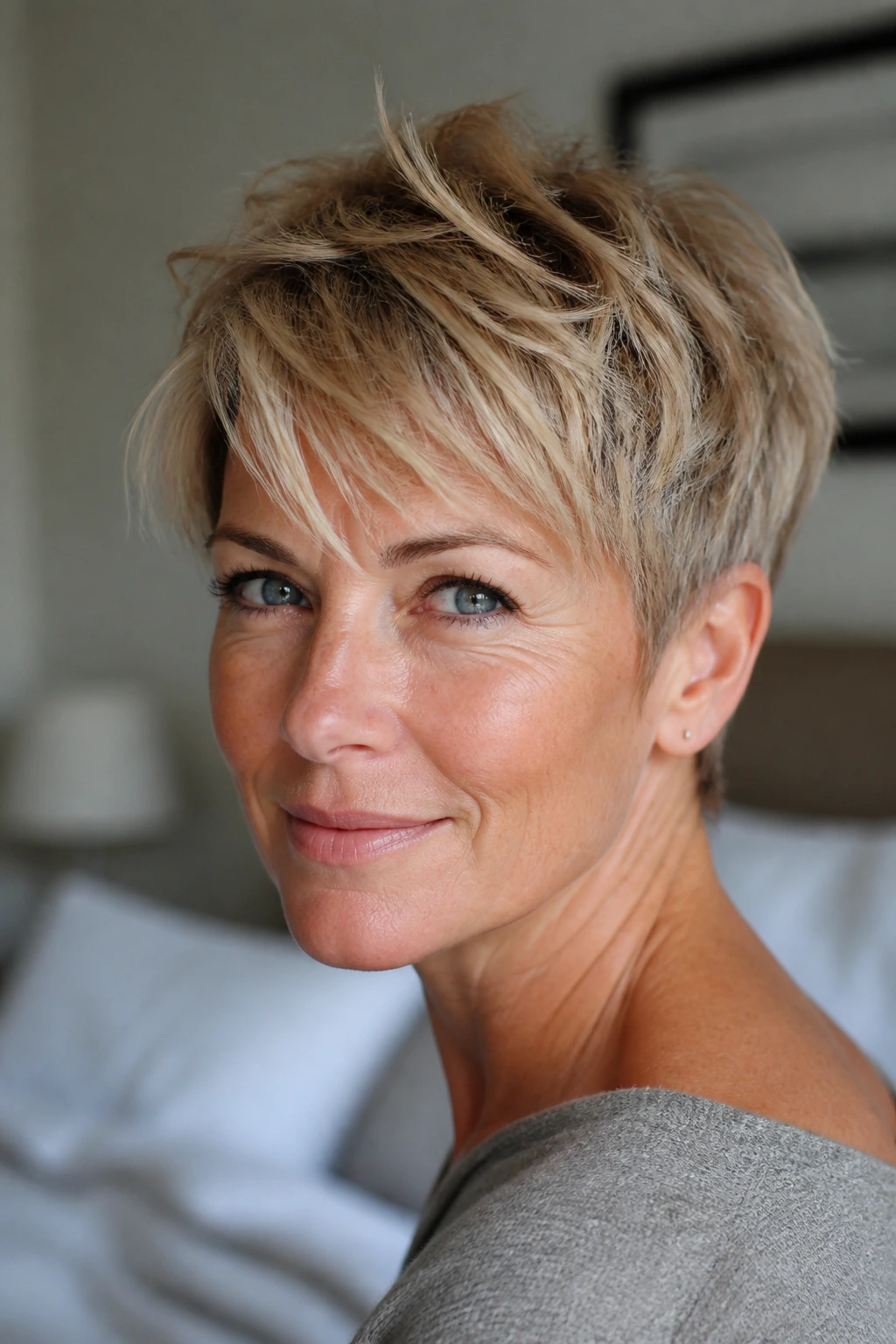
Fine hair often does better with a choppy pixie than people expect. The trick is not to shred it to pieces. You want enough texture to create lift, but you still need a bit of structure at the perimeter so the style doesn’t vanish into fuzz.
A lightweight mousse at the roots, a quick blow-dry, and a touch of dry shampoo at the crown can give fine hair a fuller-looking shape without making it stiff. I’d keep this version a little longer on top than a micro crop, because the extra length gives the hair something to bend and separate into. The result looks fuller than the strand count would suggest. That’s the whole point.
13. Wavy French Pixie

Picture soft bends, a side-swept fringe, and ends that never sit too perfectly. That’s the charm here. The cut borrows from that loose, Parisian kind of hair people pretend not to style, even though there is definitely some careful cutting happening underneath.
This is one of the easiest choppy pixie cuts to wear if your hair already has a little wave. Air-dry it with a cream, push the fringe where you want it, and let the ends fall a bit imperfectly. If you need more shape, a small flat iron bend at the front works better than curling the whole head. Over-styling would kill the point.
14. Sideburn-Framed Pixie
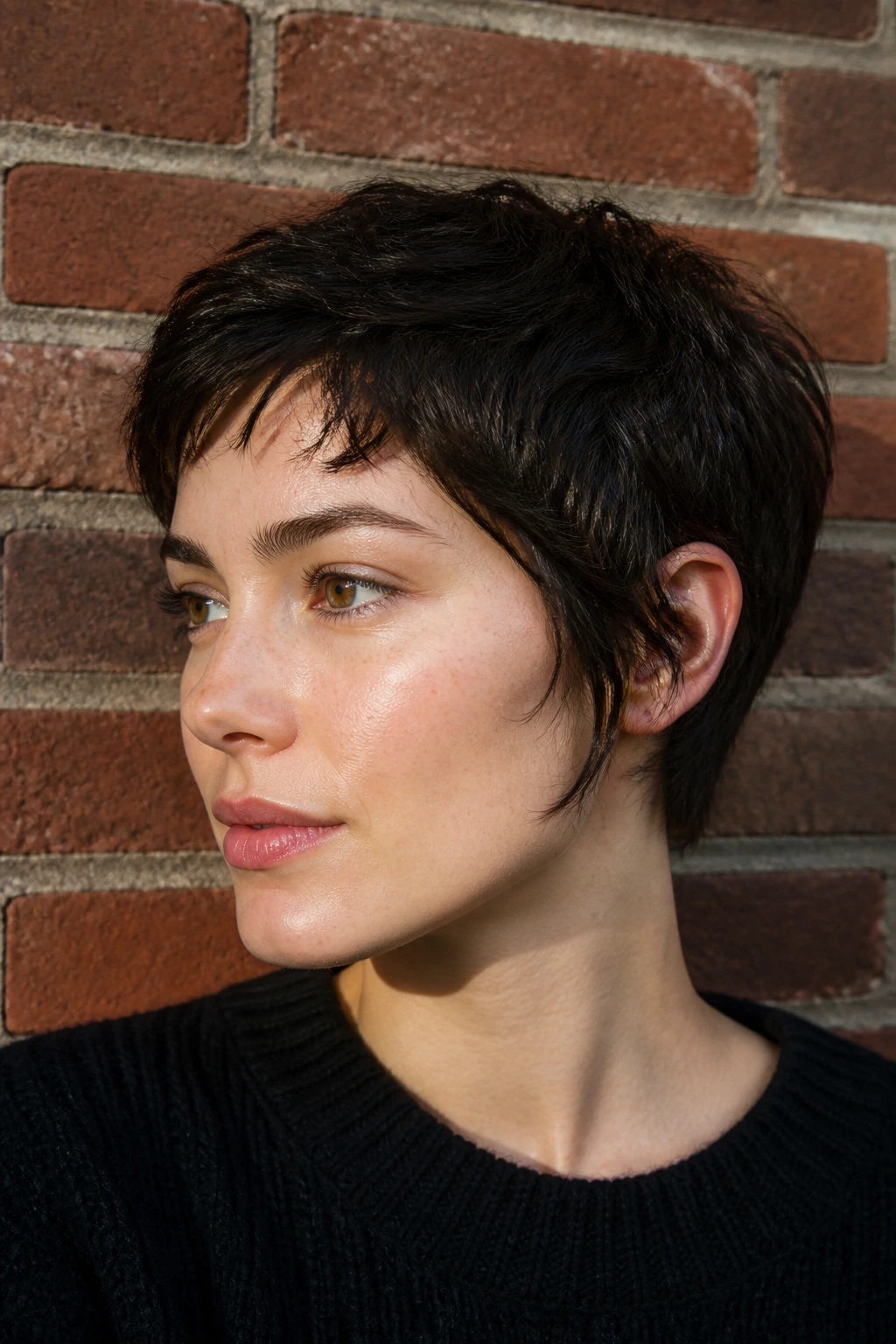
Longer sideburn pieces change the whole mood. They soften the edges around the face, make earrings stand out, and give a pixie a slightly sleeker profile without asking for much extra length elsewhere. It’s a small detail, but it matters more than people think.
This version is a strong pick for heart-shaped or diamond faces because the side pieces fill in that area around the temples. It also keeps the look from feeling too open around the ears. If you like tucking hair back but hate losing all your frame, this is the compromise. I’d keep the sideburns a little piecey, not blunt. Blunt sideburns can look severe fast.
15. Long-Top, Short-Sides Pixie
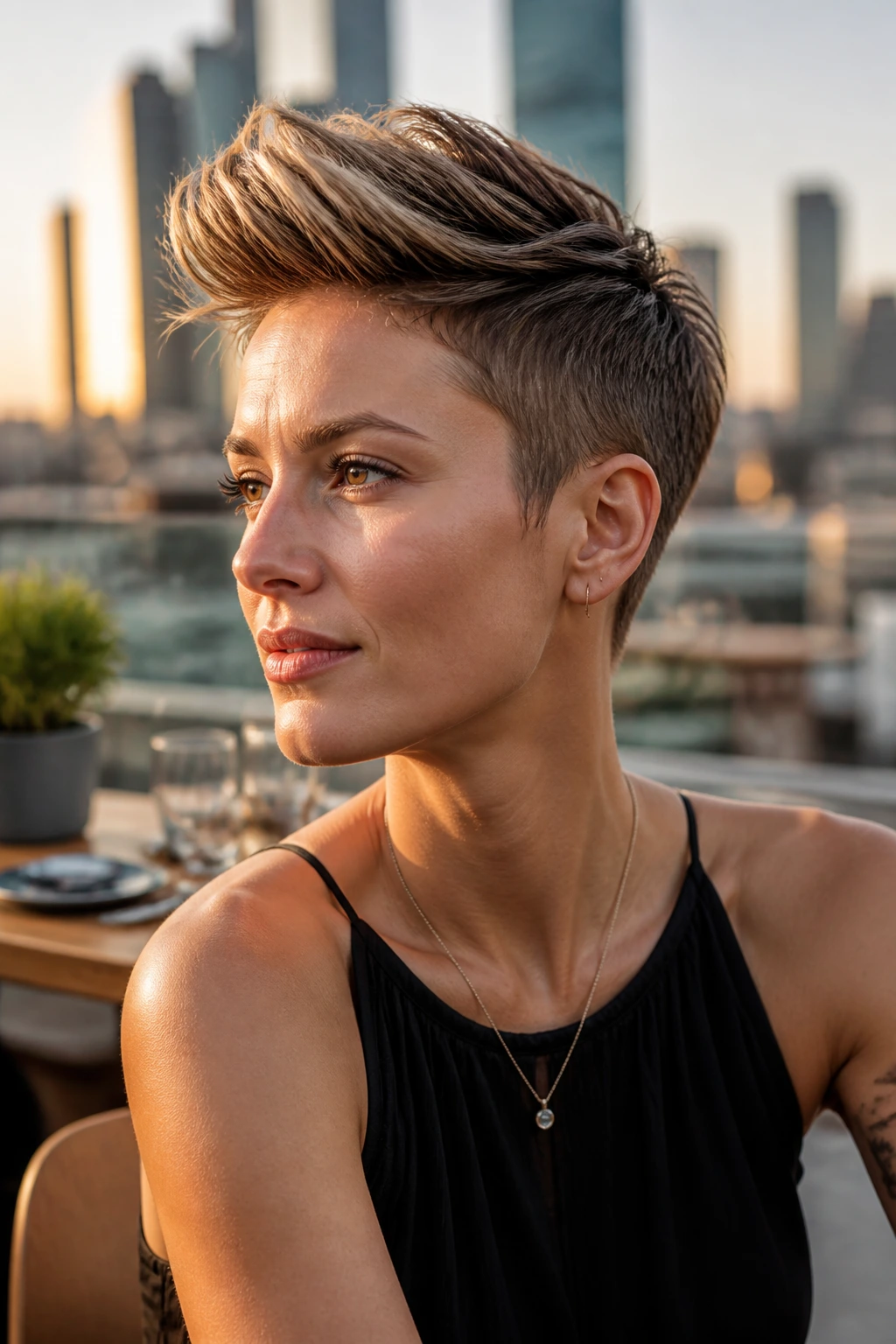
This is the closest thing to a mini quiff without leaving pixie territory. The top stays longer and fuller, the sides are clipped close, and the shape rises a little at the front before tapering back toward the crown. It has more structure than the shaggy versions, which is handy if you like a clean outline.
Compared with the undercut pixie, this one feels less hidden and more sculpted. It’s a good call for thick hair because the short sides remove weight, but it also works on straight hair that needs a little extra height. A blow-dryer and matte paste are enough on most days. The top just needs direction. Not a lot of fuss.
16. Silver Layered Pixie
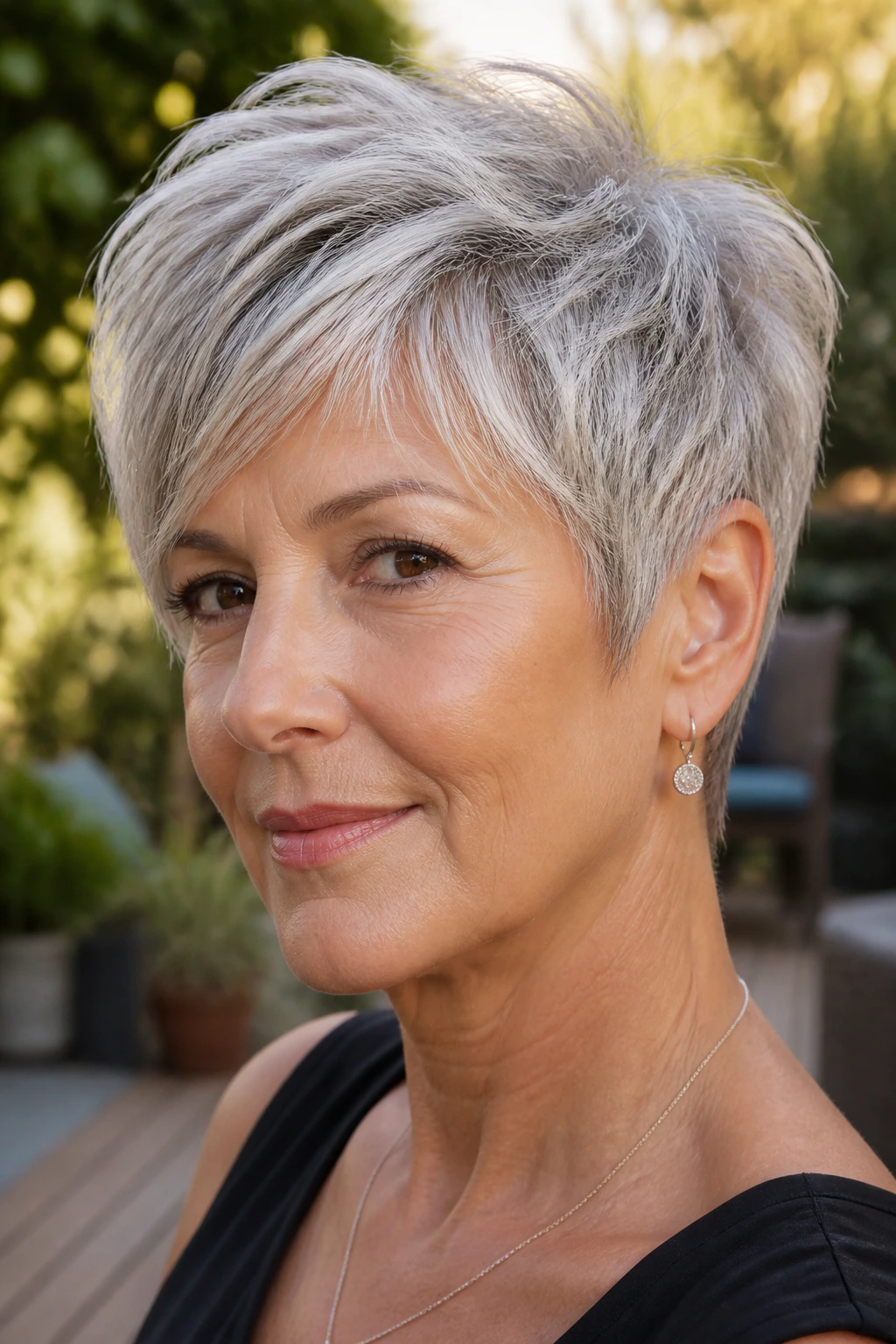
Gray and silver hair show every cut line, which is exactly why this shape works. When the layers are placed well, the shine bounces off the different lengths and the whole haircut gets a soft, metallic movement. On dull gray hair, that texture can make the color look alive instead of flat.
I like this cut with a slightly tapered nape and airy layers through the crown. It keeps the shape crisp while giving the top enough lift to avoid helmet syndrome. If the hair is coarse, a smoothing cream on the ends helps tame frizz without killing the texture. Silver hair has a way of showing everything. That can be a problem. Or a gift.
17. Copper Piecey Pixie
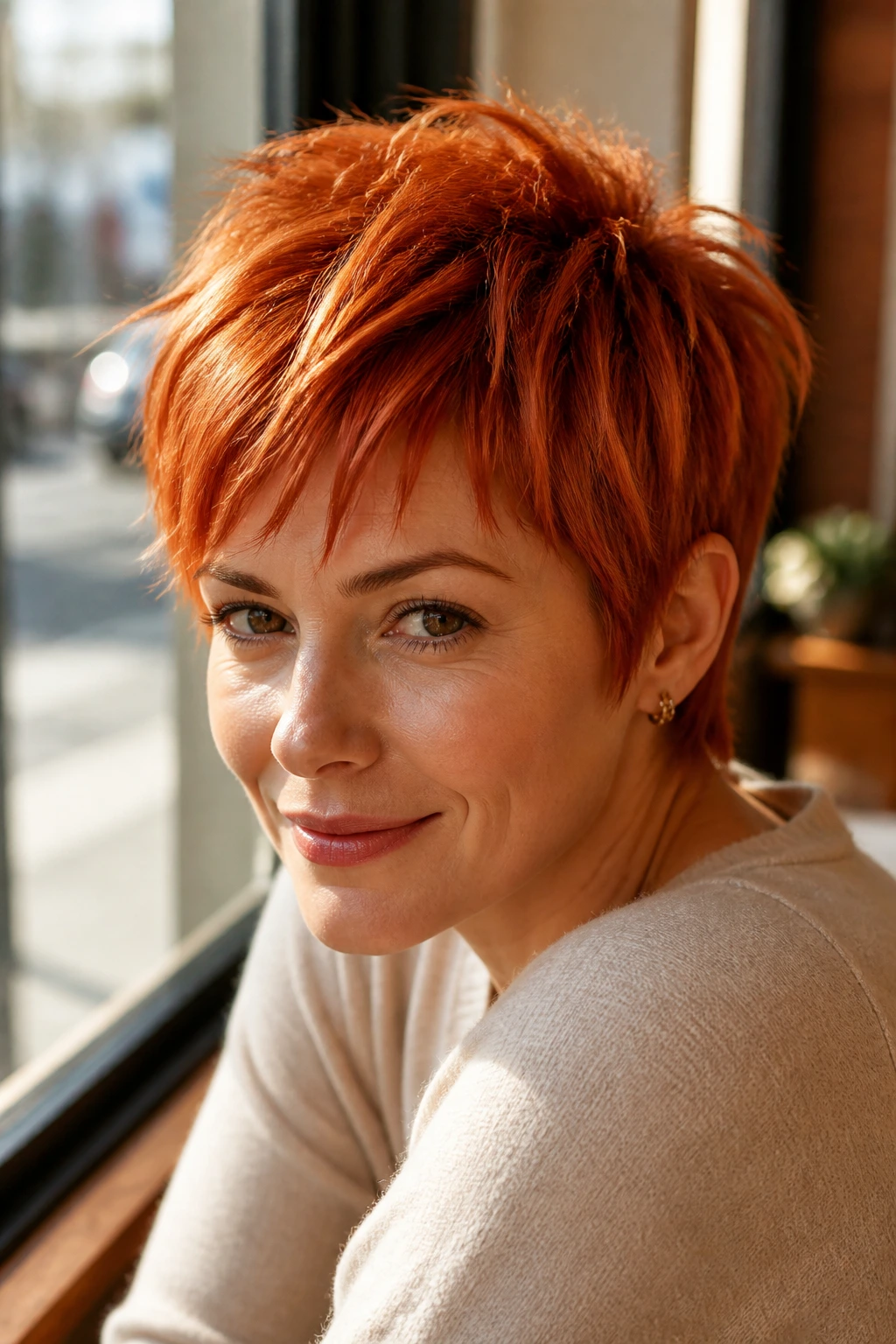
Warm color and choppy texture feed each other. Copper, auburn, and strawberry tones look richer when the ends are separated, because the little breaks in the cut let the color show in slices instead of one flat block. The result feels lively even on a simple shape.
This version suits people who want the cut to feel softer than a spiky platinum crop but more expressive than a neat pixie. A gloss or shine spray can keep the color from looking dusty, and a touch of pomade at the ends helps define the pieces. You do not need much. A dab is enough if the cut was done well.
18. Grown-Out Transitional Pixie
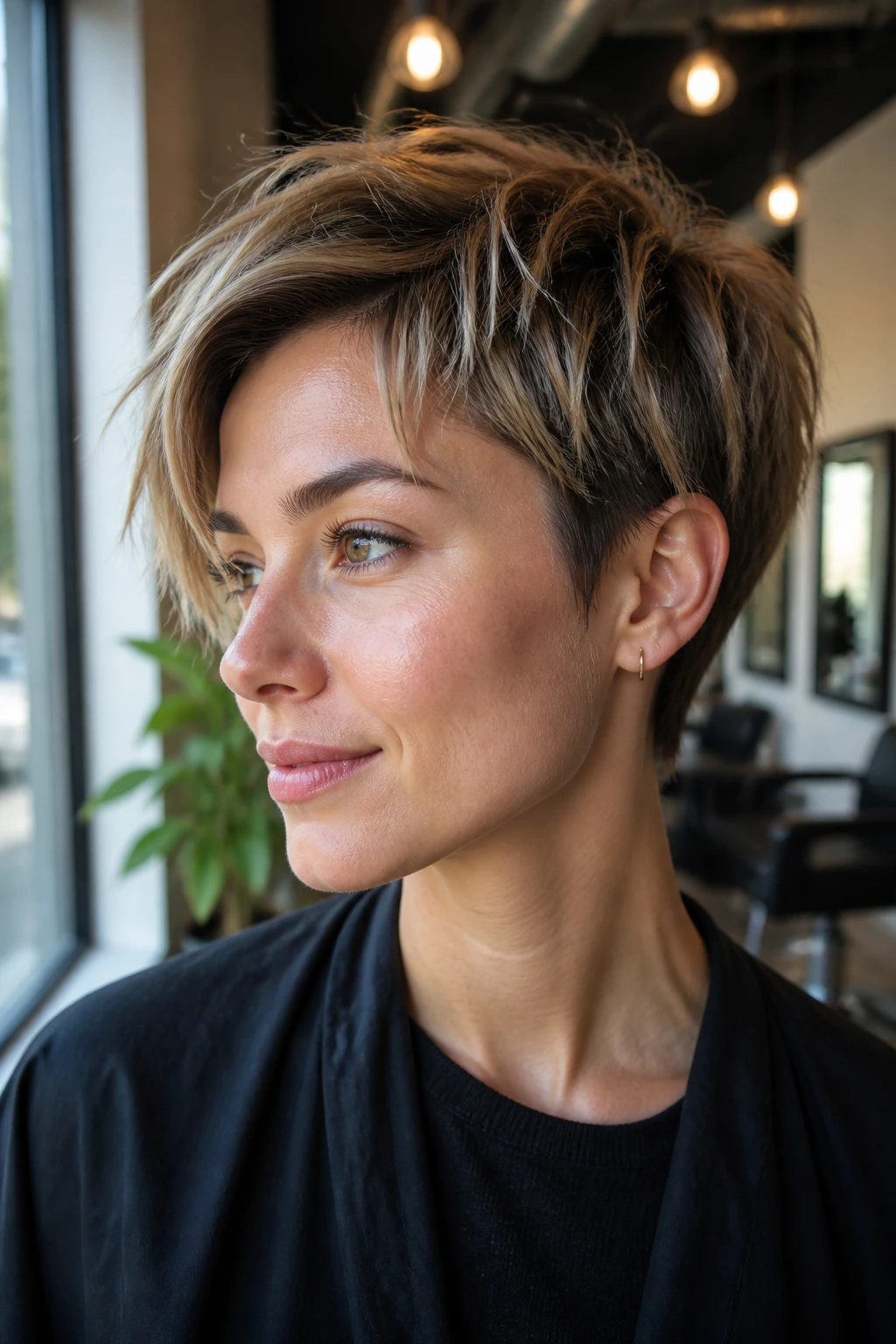
Growing a pixie out does not have to look accidental. A transitional version keeps the crown textured, the sides tidy, and the nape tapered so the shape still feels deliberate while the length starts to shift toward a bob or a shaggy crop.
How to Keep the Awkward Stage from Taking Over
- Clean up the neck every 4 to 5 weeks.
- Keep the top piecey so it falls forward instead of mushrooming out.
- Use a side part or a small clip when the front starts getting in your eyes.
- Ask for soft layers, not one hard line, if you know you’re growing it out soon.
This is the haircut for patience with a plan. Not resignation.
What Makes Choppy Texture Look Sharp Instead of Scruffy
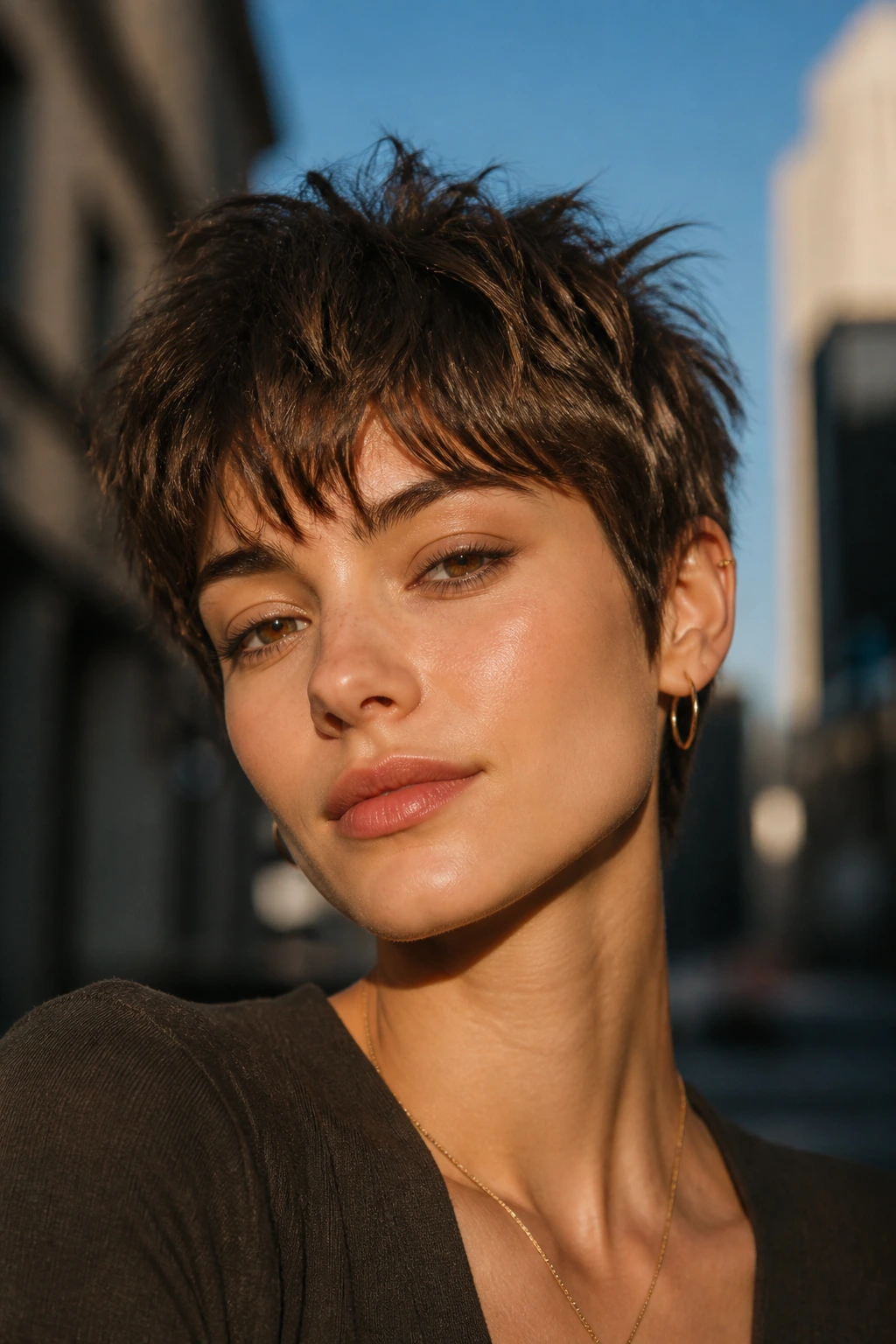
A choppy pixie cut is not just a short haircut with some random snips thrown in. The texture has a job. It needs to break up the outline without destroying the shape underneath. That’s the difference between edgy and unfinished.
The best textured pixies keep weight in a few anchor spots: a little through the crown for lift, enough at the fringe to frame the face, and a clean nape so the back doesn’t billow. When those three areas are handled well, the cut can be messy on purpose and still look expensive in the plain sense of the word — like somebody thought about it.
Point Cutting, Razor Work, and Why They Don’t Mean the Same Thing
Point cutting removes tiny bites of length with scissors, which makes the ends softer and more irregular. Razor work slices the hair and can create a more broken finish, but it’s not for every texture. Coarse, frizz-prone, or very curly hair may puff if the razor is used too aggressively.
That’s why a good stylist changes tools based on the hair, not the trend photo. A choppy pixie on straight hair can take a razor. A choppy pixie on dense curls often needs shears, patience, and less drama.
Crown Volume Changes Everything
A flat crown can sink the whole cut. One or two inches of extra lift at the top can make the shape feel intentional instead of helmet-like. That lift can come from layering, blow-drying, or just leaving a bit more length where the head starts to curve.
I care more about this than people expect. The crown is where a pixie either comes alive or falls asleep.
The Tools That Make Styling Easier
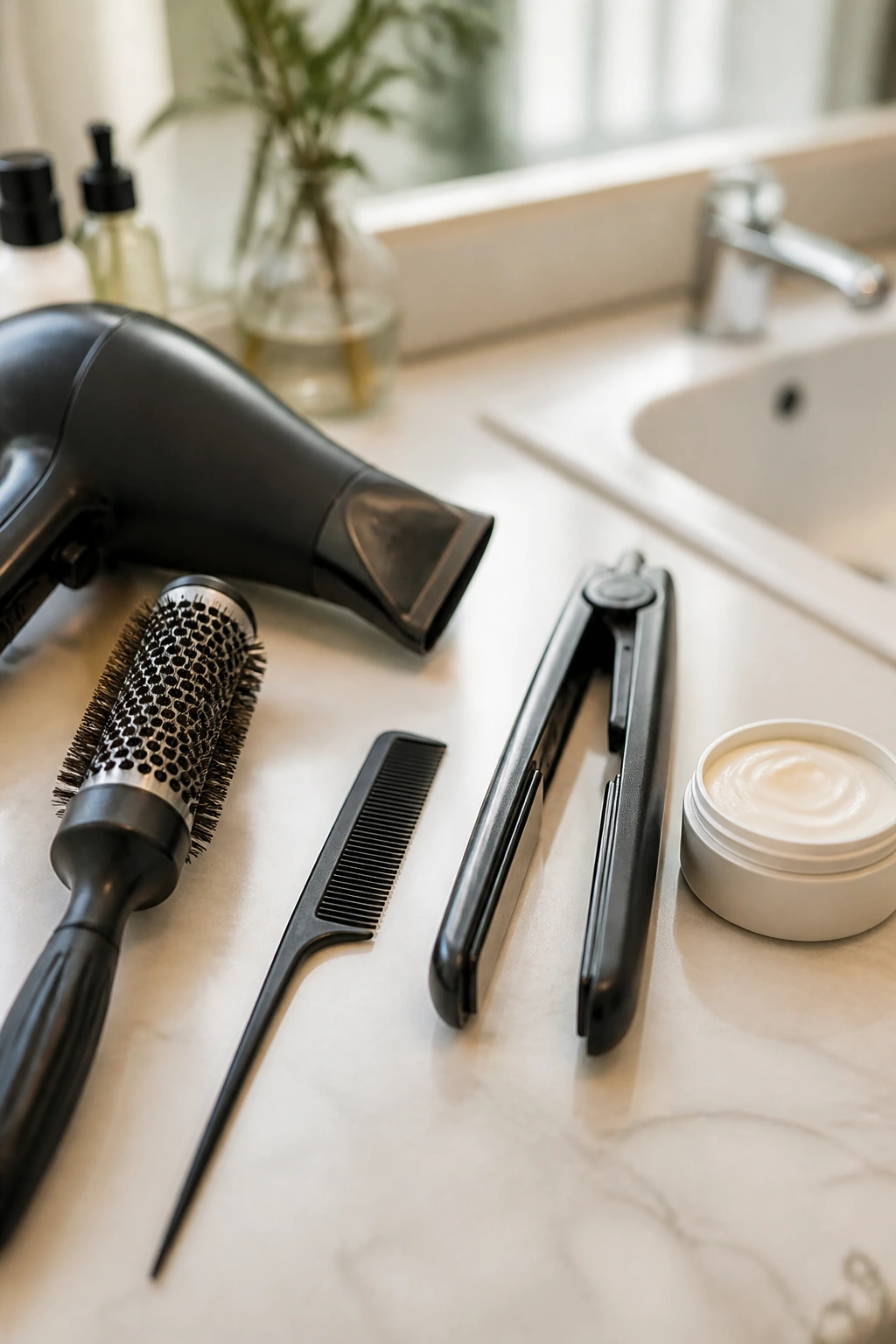
A short, textured cut is mercifully simple to style, but the right tools make the difference between “I tried” and “this looks like it was meant to do that.”
- Blow dryer with a nozzle: Directs air at the roots so the crown can lift instead of frizz.
- Small round brush: Helps bend the fringe and add a bit of shape at the top.
- Tail comb: Good for clean parts, controlled lift, and tiny sectioning jobs.
- 1-inch flat iron: Useful for flipping a fringe, bending a side section, or smoothing one stubborn piece.
- Matte paste or fiber cream: Best for piecey separation on dry hair.
- Lightweight mousse: Gives root lift and grit without the heavy feel of a cream.
- Texturizing spray: Adds a dry, airy finish, especially on second-day hair.
- Diffuser: A must for curls if you want shape without a puffball effect.
- Hair clips: Keep the front out of the way while you dry the crown in sections.
How to Talk to a Stylist Before the First Snip
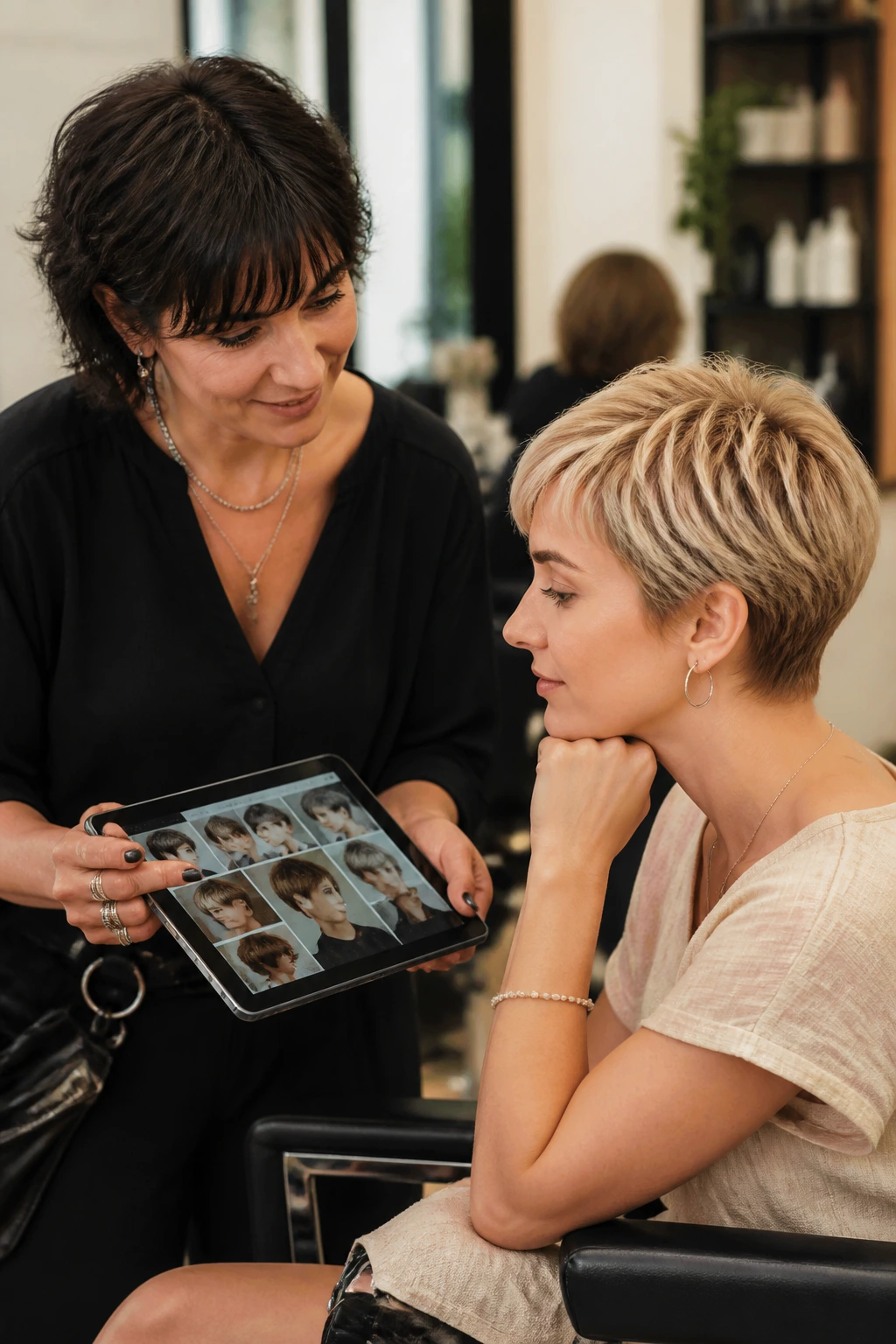
Bring photos. More than one. Front, side, and back if you can find them. A pixie is all about proportion, and one angle can lie to you in a way the next angle does not.
Say what you want the cut to do, not just what you want it to look like. “I need lift at the crown,” “I want my ears mostly exposed,” or “I need the fringe to sit to the right because of a cowlick” tells a stylist more than “something edgy” ever will. Mention how often you style your hair, whether you air-dry, and whether your hair is fine, thick, curly, or stubborn. Stubborn counts.
If you’re nervous about the wrong kind of choppiness, ask these things directly:
- How much length will stay on top?
- Will the texture be point-cut or razor-cut?
- How will the nape grow out?
- Can the fringe be adjusted later if it gets in my eyes?
Those four questions save more bad haircuts than any inspirational photo board ever could.
How to Wear These Cuts in Real Life
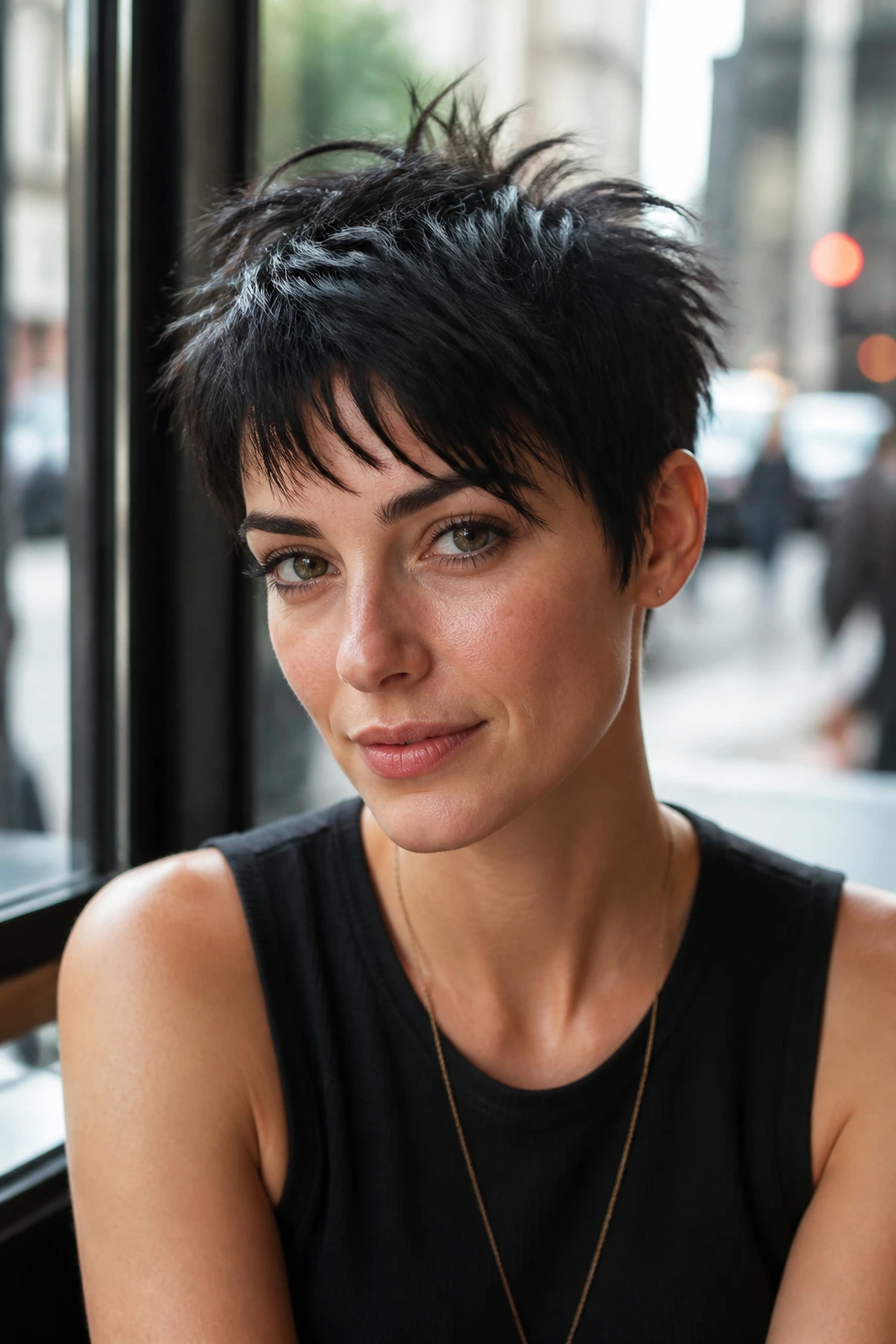
Shape: Let the haircut decide the silhouette first. If the top has height, keep the sides tighter. If the fringe is long, let it sweep instead of forcing it straight down.
Texture: Matte paste makes a pixie look modern and broken up. Shine products push the same cut in a sleeker direction. That single decision changes the whole mood.
Pairings: Short hair shows off necklines, collars, earrings, and glasses, so think about the parts of your face and outfit that sit next to the haircut. Hoops, studs, a clean turtleneck, or a sharp collar can all pull the look together without much effort.
When it shines: This is the haircut that looks best when it has a little confidence around it. A bare face can be gorgeous with a pixie. So can a strong brow, a red lip, or a jacket with a good shoulder line. The cut gives you room.
Additional Tips and Texture Boosters
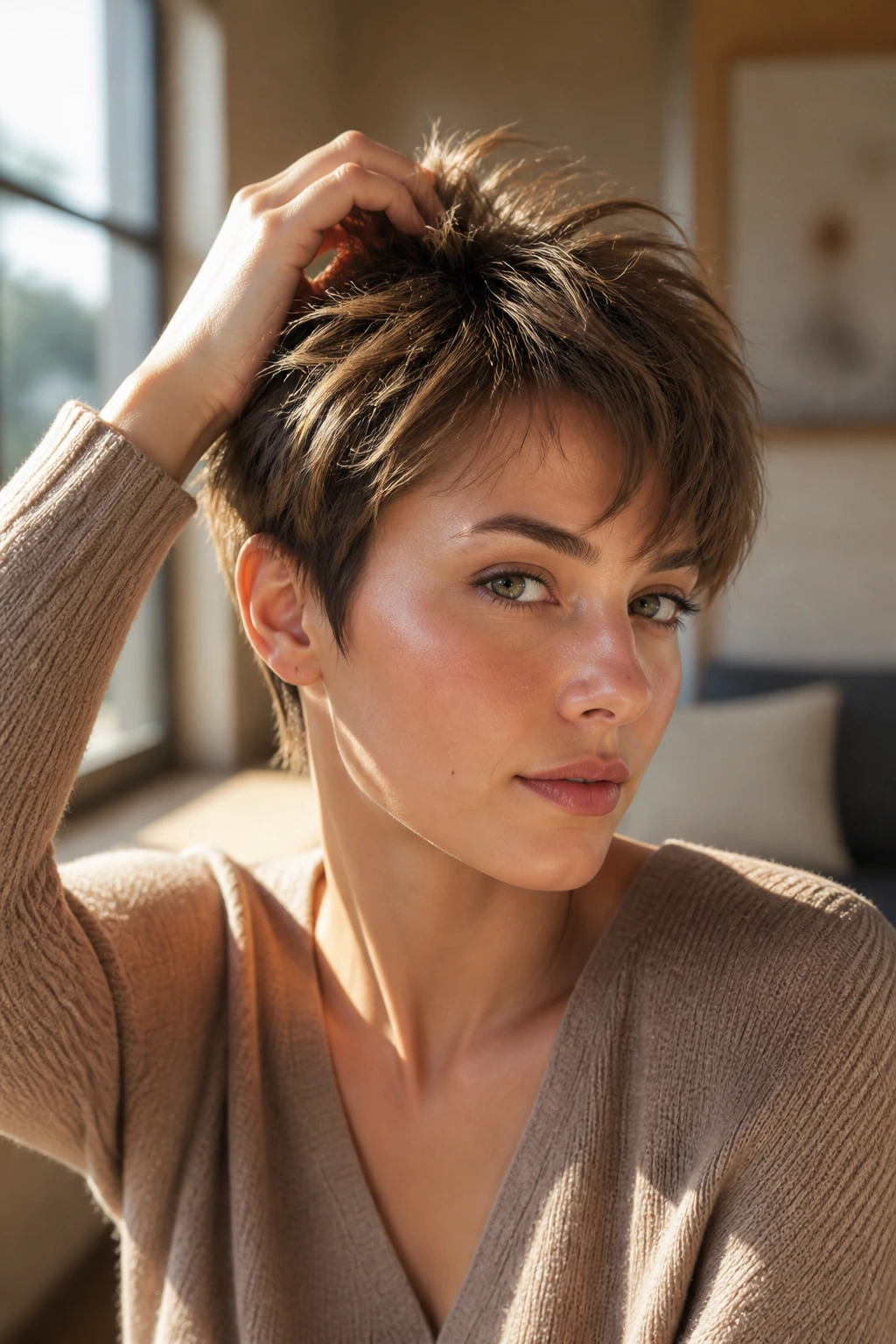
Root Lift: Blow-dry the crown in the opposite direction first, then flip it back where you want it. That little detour gives the roots more memory and stops the top from lying limp after an hour.
Second-Day Fix: Mix a spray bottle of water with a tiny bit of leave-in or simply mist the hair lightly, then pinch in a fresh touch of paste. You’re waking the cut back up, not starting over.
Color Contrast: Highlights, lowlights, or a subtle gloss can make the texture pop because choppy ends catch light in little pieces. Even a natural brunette pixie can look more dimensional with a few ribbons of lighter tone.
Serving Suggestion: Tuck one side behind the ear, leave the other side loose, and let the fringe break a little across the forehead. Perfect symmetry can make a pixie feel stiff. A touch of asymmetry gives it life.
Make-It-Yours: If you want less edge, ask for softer feathering at the temples. If you want more attitude, keep the nape cleaner and the top more separated. The same haircut can move in either direction.
Mistakes That Make a Choppy Pixie Fall Flat
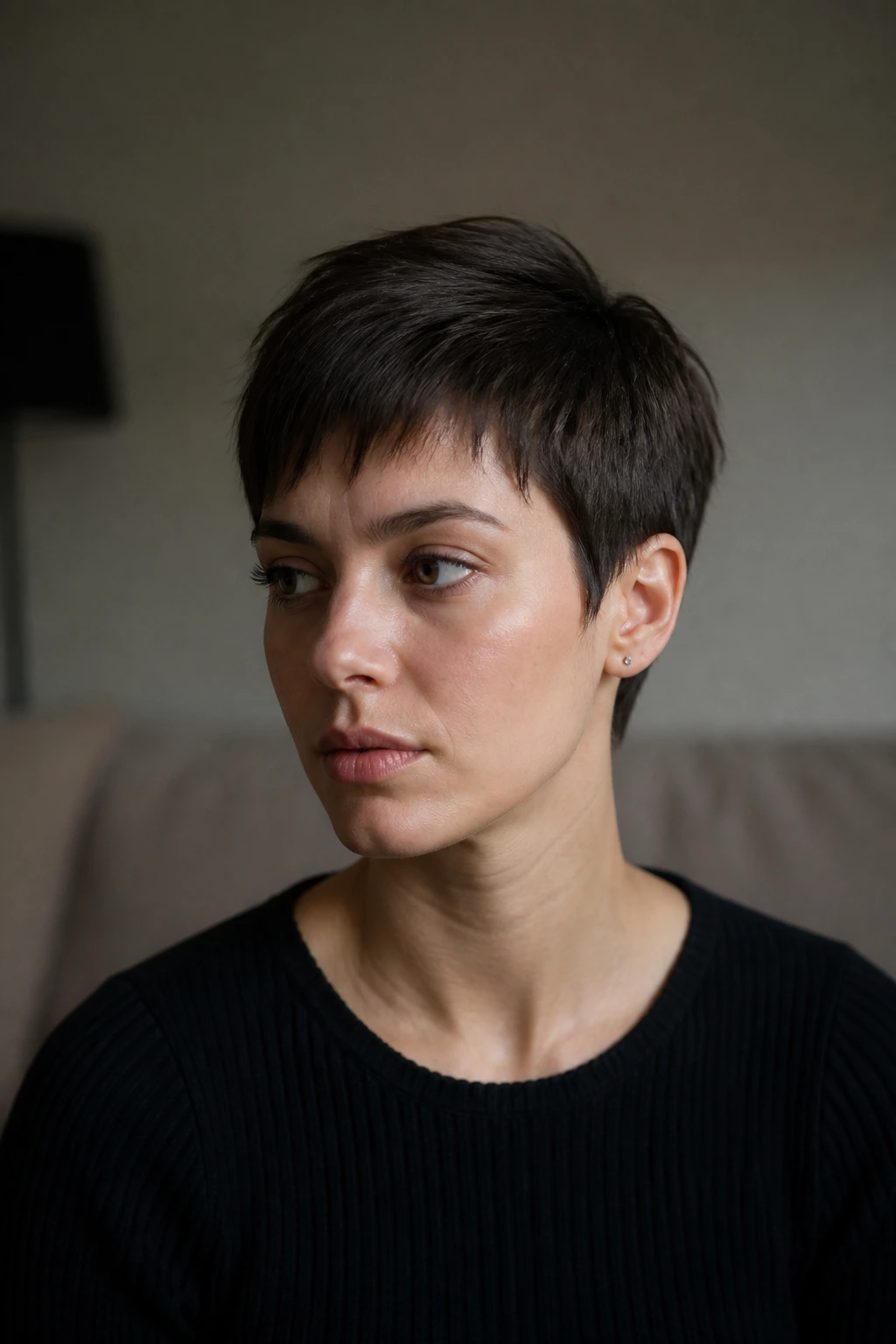
The first mistake is asking for texture without talking about shape. A stylist can chop the ends all day, but if the crown is heavy and the nape is loose, the haircut still sits wrong. The fix is to talk about the silhouette first and the texture second.
The second mistake is piling on heavy product. Short hair needs very little. A big swipe of cream or wax can turn piecey movement into sticky clumps that separate in the wrong places. Start with a pea-sized amount. Add more only if the hair still looks dry.
Another common problem is thinning the hair too much, especially on curls or coarse strands. That can leave the ends frizzy and the top puffed out, which is the opposite of edgy. Ask for controlled point cutting instead of aggressive debulking if your hair already has volume.
Cowlicks get ignored at people’s peril. A fringe that fights the front hairline will never sit the same way twice. If your hair pushes forward or swirls hard at the crown, the cut should be adjusted around that pattern instead of pretending it does not exist.
And yes, the nape matters. If it grows out into a fuzzy shelf, the whole haircut starts to look tired fast. A small clean-up there keeps the shape crisp.
Variations and Adaptations to Try
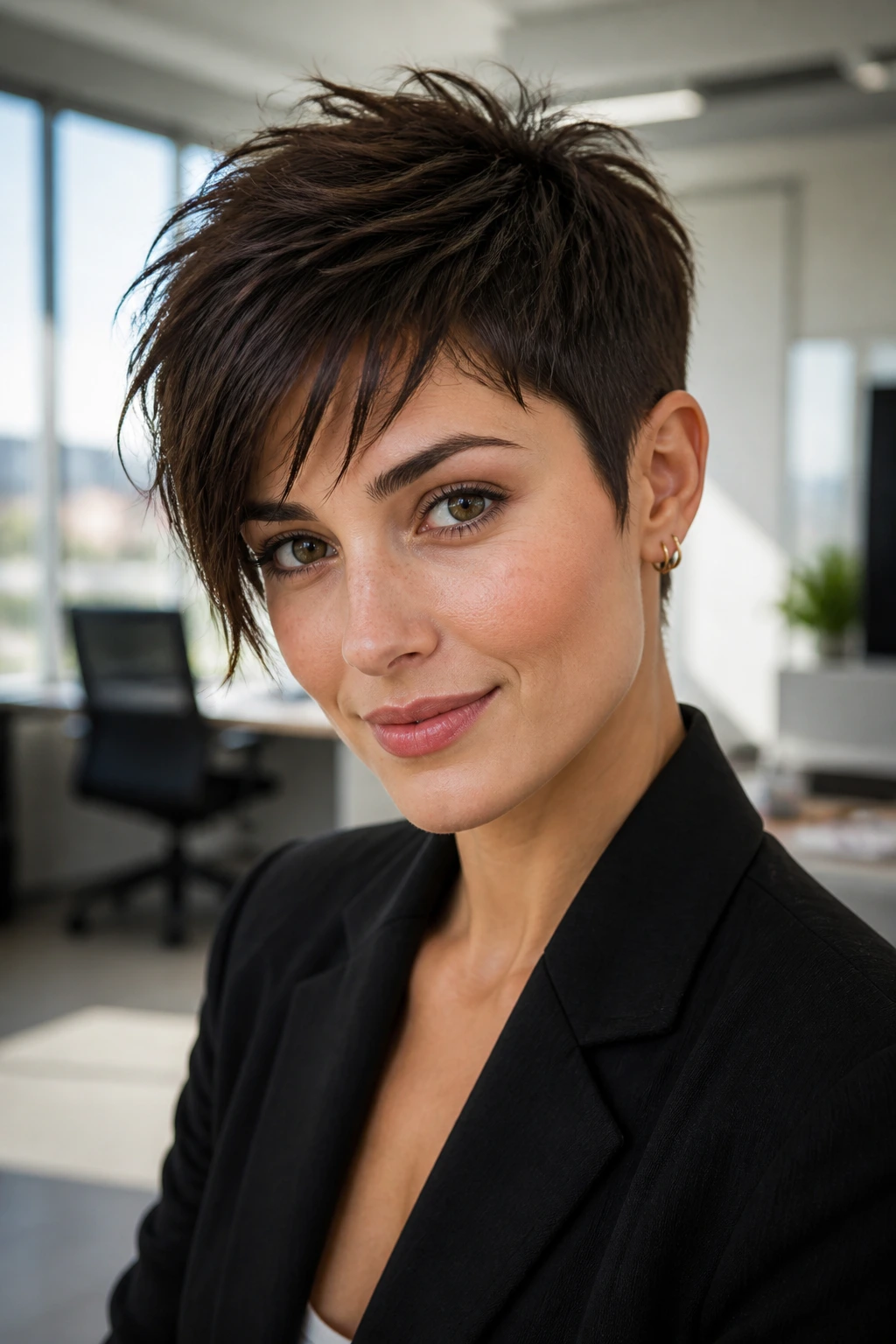
Soft-Office Pixie: Keep the crown choppy but leave the fringe a little longer and the sideburns a touch softer. It still has texture, but it won’t shout across a conference table.
Curly-Friendly Crop: Leave more length on top, avoid over-thinning, and shape the sides with the curl pattern instead of fighting it. This version holds its form when air-dried with cream and gel.
Fine-Hair Density Trick: Ask for a slightly stronger perimeter and lighter texture through the crown. Fine hair often looks fuller when it has a bit of structure at the edges instead of being heavily thinned.
Bold Color Pairing: Platinum, copper, or silver can make the same choppy pixie look louder without changing the cut. Color turns the texture into part of the statement.
Low-Maintenance Grow-Out: Leave the fringe a little longer and taper the nape softly so the haircut keeps some shape while it grows. If you know you’re tired of trims, this is the route that forgives the most.
Keeping the Shape Between Appointments
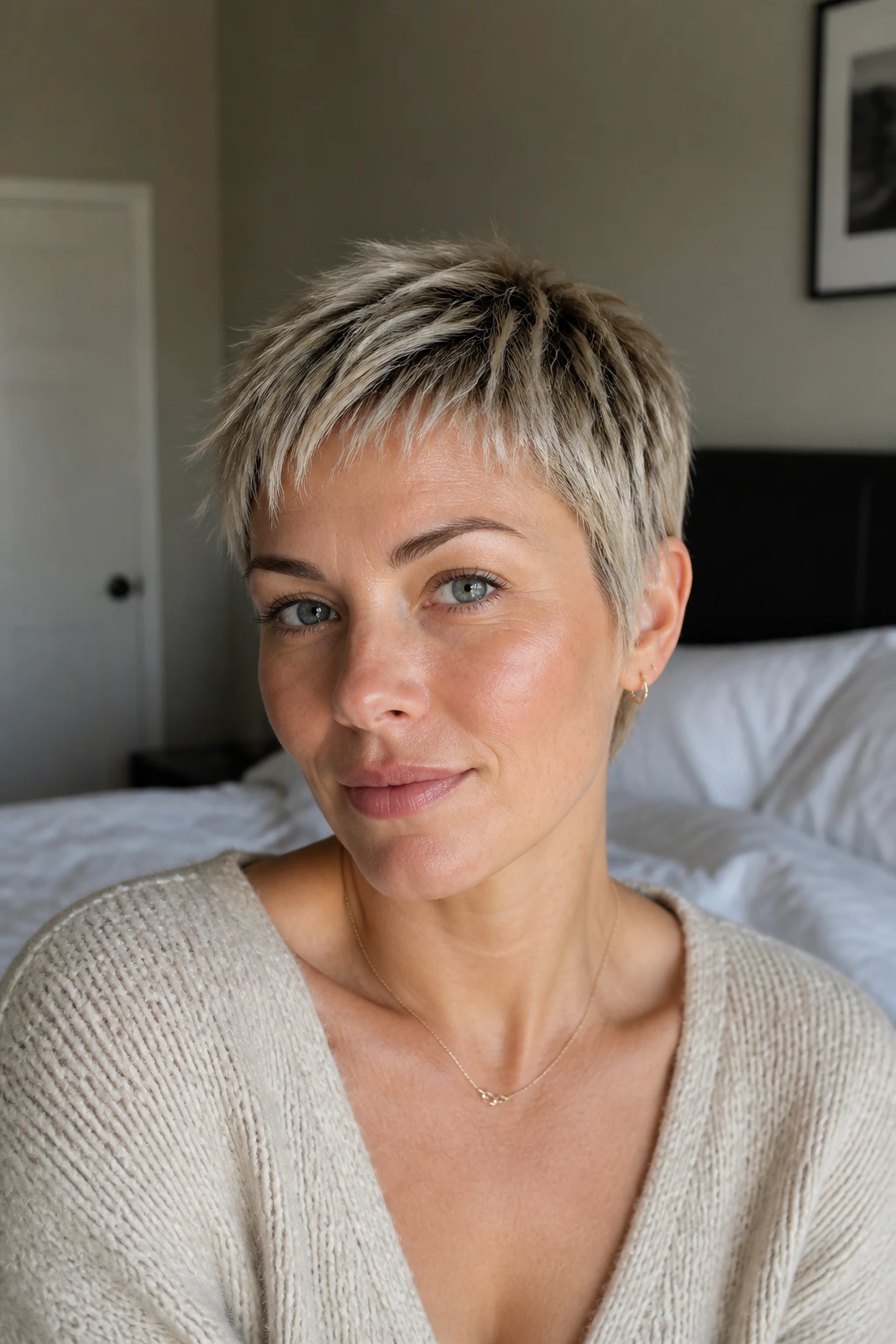
Pixies do not forgive neglect for long. The good news is that they also don’t demand much day-to-day if the cut was done properly. A quick refresh in the morning, a trim schedule that respects the nape, and a few product habits are usually enough.
Most choppy pixie cuts want a trim every 4 to 6 weeks. If the fringe is short, or if the nape grows fast, the shorter end of that range is better. By 6 weeks, the shape can start to lose its line, especially around the ears and neck.
Washing depends on product and texture. Fine hair that’s styled with mousse or paste may need more frequent washing. Coarser or curlier hair can often go a little longer, especially if you refresh with water and a small amount of leave-in. A clarifying wash every couple of weeks helps if the hair starts feeling coated.
At night, a satin pillowcase helps short hair keep its pieces from fraying and flipping in odd directions. In the morning, don’t drench the whole head unless you need to reset the shape. Focus on the crown, the fringe, and any flat spots, then warm the product between your fingers before you touch the ends.
Frequently Asked Questions
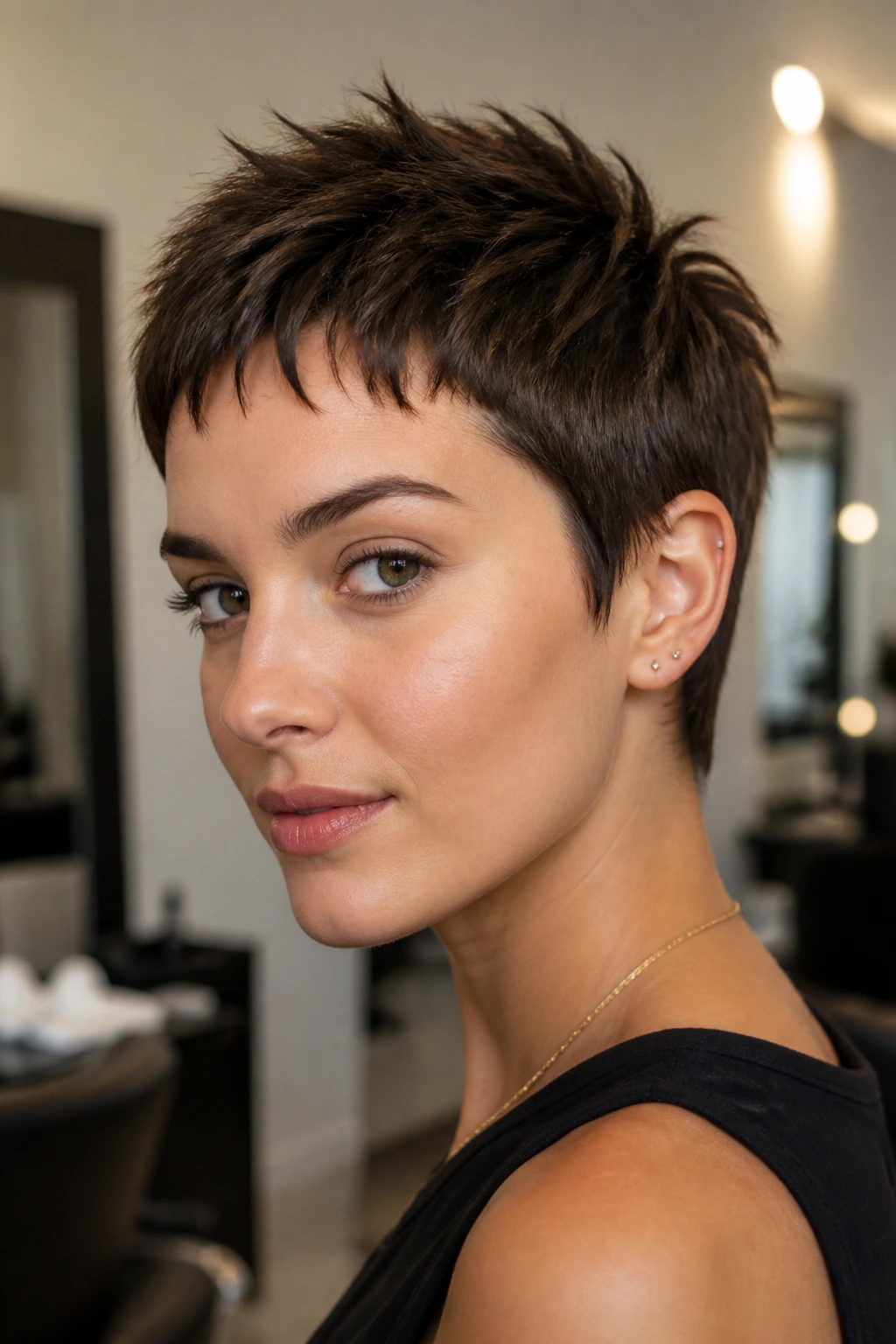
Will a choppy pixie cut work on fine hair?
Yes, as long as the cut keeps some structure at the perimeter. Fine hair often looks fuller with short, broken-up layers and a bit of root lift, but it can turn wispy if it’s thinned too much.
Can curly hair wear a choppy pixie cut?
Absolutely. The trick is to respect the curl pattern and leave enough length for shrinkage. Curly pixies usually look best with softer layering, not heavy razor work.
How do I ask for one without getting a mushroom shape?
Say you want the crown lifted and the nape tapered. Those two points matter more than the word “choppy” alone, because the word texture does not tell a stylist where the weight should sit.
What if my cowlick fights the fringe?
Adjust the fringe to the cowlick instead of forcing a straight line. Sometimes a side-swept bang, a deeper part, or a slightly longer front section solves the problem without any drama.
How often should I trim a pixie like this?
Every 4 to 6 weeks is the sweet spot for most people. If you want the nape and fringe to stay crisp, closer to 4 weeks is safer.
Can I style these cuts without heat?
Yes, especially if your hair has natural wave or texture. Air-drying with mousse, cream, or a little paste can work well, though a blow-dryer helps if you want a cleaner crown.
Which product should I buy first?
A matte paste or a lightweight mousse, depending on your hair type. Paste is better for piecey separation; mousse is better if you need lift and airy texture at the roots.
What if the cut looks too short after the first wash?
That usually means the styling product or the direction is off, not necessarily the haircut. Try changing the part, lifting the crown, or switching to a softer finish before you judge the shape.
The Pixie That Keeps Its Bite
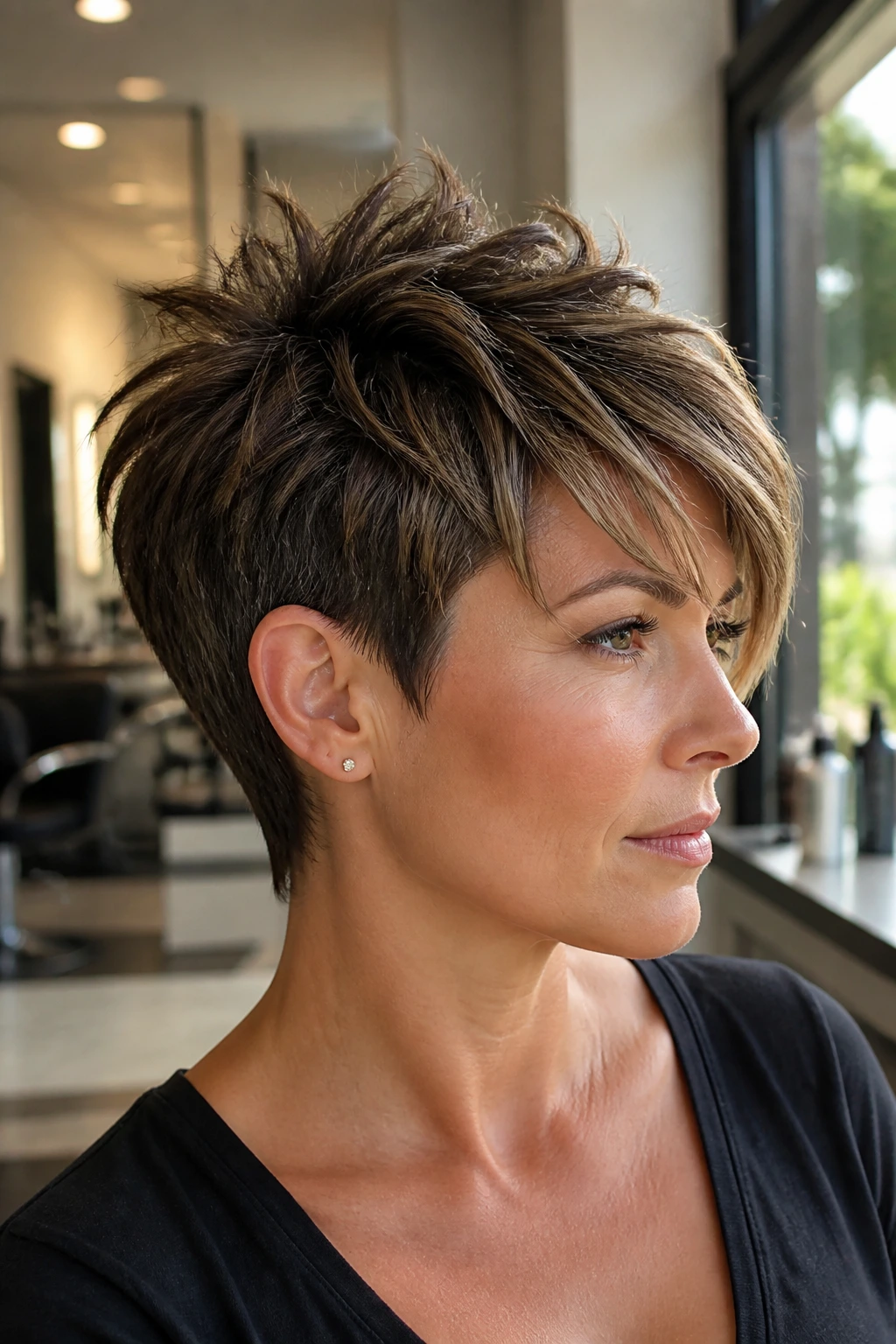
The best choppy pixie cuts do one thing especially well: they keep short hair from going dull. A clean line can be pretty. A little irregularity gives the cut life. That’s why the right amount of texture matters more than chasing some perfect short-hair formula.
What I like most about this family of cuts is how much it changes with small decisions. A longer fringe. A cleaner nape. A little more lift at the crown. Suddenly the same haircut reads softer, sharper, moodier, or more polished. Tiny changes. Big result.
Pick the version that fits your hair’s habits, not just the picture on your screen, and the cut will keep its edge long after the salon chair is empty.
