



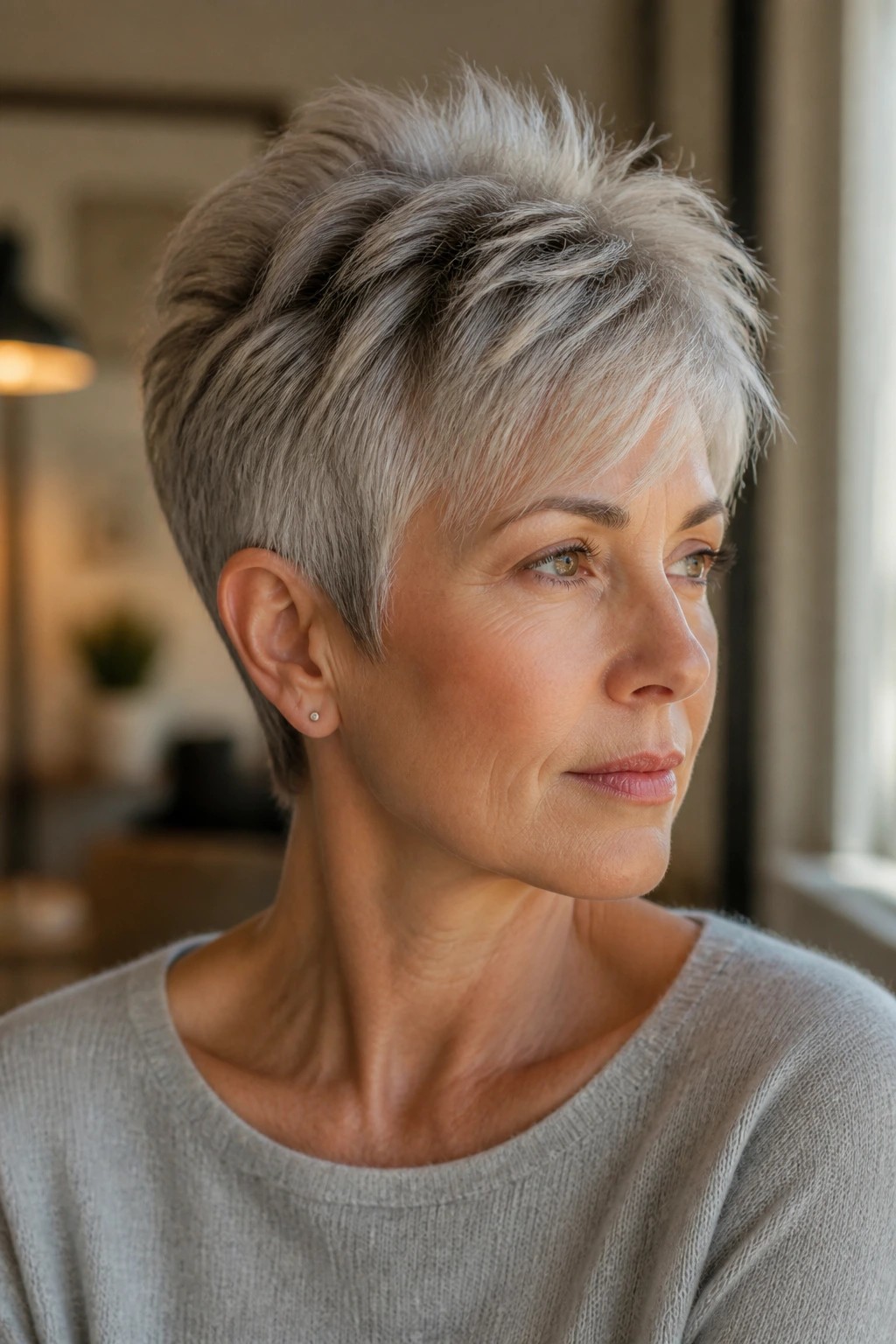
A gray pixie cut has a way of clearing the noise off a face. The ears show. The cheekbones do some work. The neckline stops hiding and starts shaping the whole look. That’s why silver hair can feel so striking in short form: there’s nowhere for a bad cut to hide.
And the cut matters more than people think. A gray pixie with soft layers reads polished and airy; the same color on a blunt, boxy shape can look helmet-like in a hurry. Tiny choices do the heavy lifting here — a half-inch at the nape, a little extra length through the fringe, a feathered crown that breaks up the surface and keeps the silver from going flat.
Gray hair has texture built into it, whether it’s natural salt-and-pepper or salon silver. The right pixie works with that texture instead of fighting it. That’s the difference between a cut that looks expensive and one that just looks short.
Why These Gray Pixie Cuts Work So Well
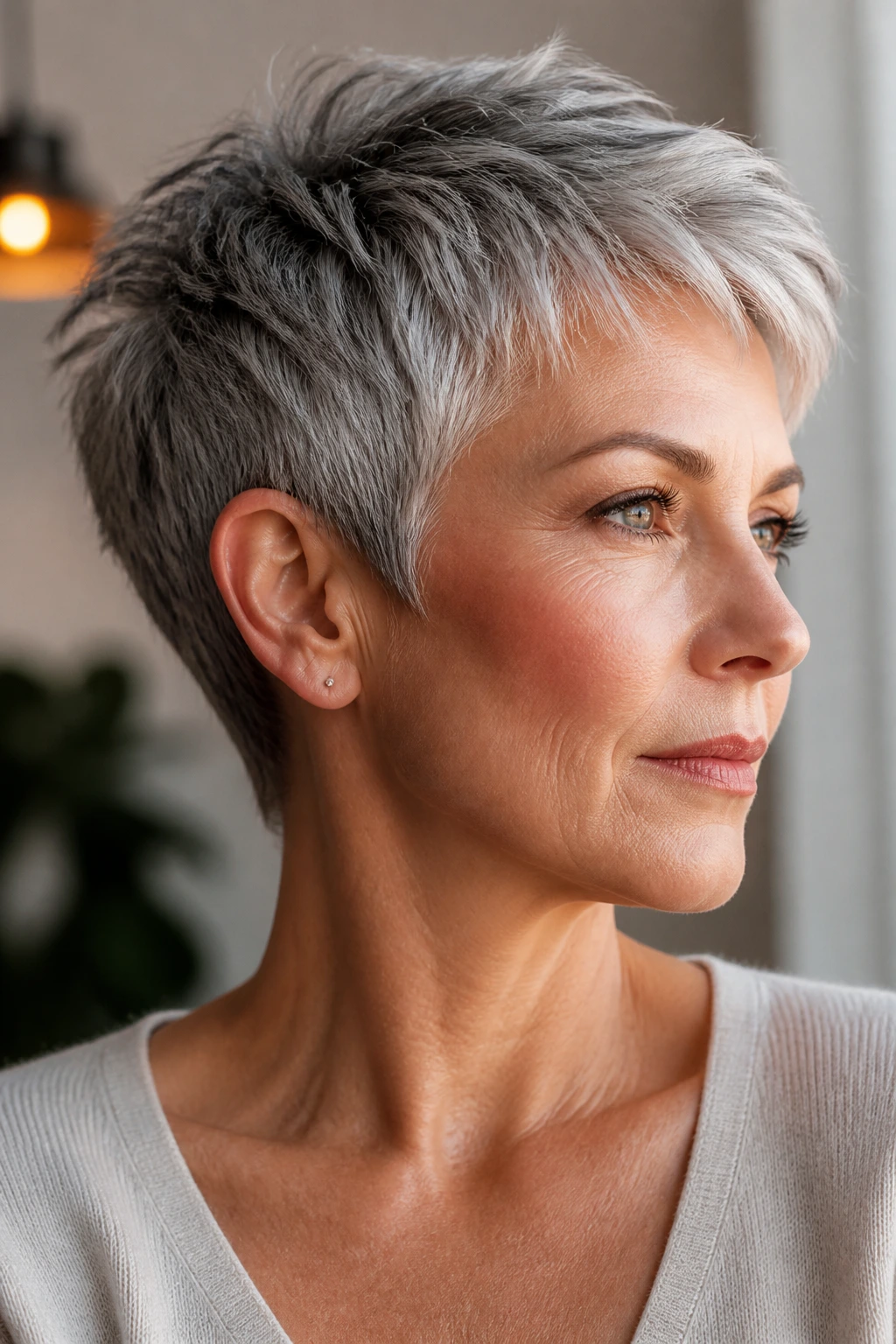
- The shape does the styling: Short gray hair looks sharper when the outline is clean at the nape and around the ears, because the eye immediately notices the silhouette.
- Silver color shows detail: Cool gray and silver tones catch every layer, bend, and piecey edge, so a well-cut pixie looks more dimensional than a longer style with the same color.
- They suit different textures: Fine hair gets lift from crown layers, thick hair loses bulk with undercutting, and curly hair gets room to move instead of puffing out.
- They grow out with some grace: A pixie with a soft fringe or tapered sides can stretch a few extra weeks before the whole thing turns shaggy.
- They make accessories matter: Earrings, glasses, collars, and neckline shape all come forward when the hair is short, which is one reason silver pixies feel so crisp.
- They can be soft or sharp: You can go feathered and feminine, or choppy and graphic, without leaving the gray color family.
1. Soft Silver Crop with a Tapered Nape
This is the pixie I recommend to people who want silver hair that still feels gentle around the edges. The crown stays modest, the sides hug the head, and the nape tapers cleanly so the whole cut sits close without looking severe.
Why it works
The tapered nape keeps the back tidy, which matters more than most people realize with gray hair. Silver shades can expose every line of a cut, so a soft graduation at the neckline makes the style look intentional rather than grown-out. It also plays well with fine to medium hair, because the shape stays light instead of collapsing into a flat block.
Best for
- Oval and heart-shaped faces
- Hair that gets puffy at the back
- People who want a polished look with a small amount of daily styling
A pea-sized dab of lightweight styling cream is enough here. Warm it between your palms, push it through the top, and leave the ends a little piecey. Too much product will darken the silver and make the cut look busier than it should.
2. Deep Side-Part Pixie with Frosted Fringe
A deep side part changes the whole attitude of gray hair. It gives the fringe a diagonal sweep, throws a little shadow across one eye, and makes silver tones look more expensive than a blunt center part ever will.
The frosted fringe is the part that sells it. Keep it long enough to skim the brow, not cover it completely. That extra length gives the front movement, and movement matters with short gray hair because stillness can look a little stiff.
If your face is round or your forehead feels wide, this shape is a smart move. The diagonal line narrows the top half of the face, while the shorter side keeps the profile neat. Blow-dry the fringe in the direction you want it to fall, then finish with a touch of flexible-hold spray so it stays in place without turning crunchy.
3. Feathered Gray Pixie with Crown Volume
Fine hair loves this one. So does anyone whose crown tends to lie down by noon and stay there out of sheer stubbornness.
Feathering through the top breaks up the surface and gives the gray different speeds of light, which is a fancy way of saying the silver looks less flat. Ask for short, airy layers at the crown and slightly longer pieces around the front. That keeps the shape lifted without building too much width at the sides.
Styling note
Use a root-lifting mousse on damp hair, then rough-dry with your fingers until the crown is almost dry before you switch to a round brush. That extra bit of lift at the root is what keeps this cut from collapsing into the scalp. A heavy wax will kill the movement. Skip it.
4. Choppy Salt-and-Pepper Crop
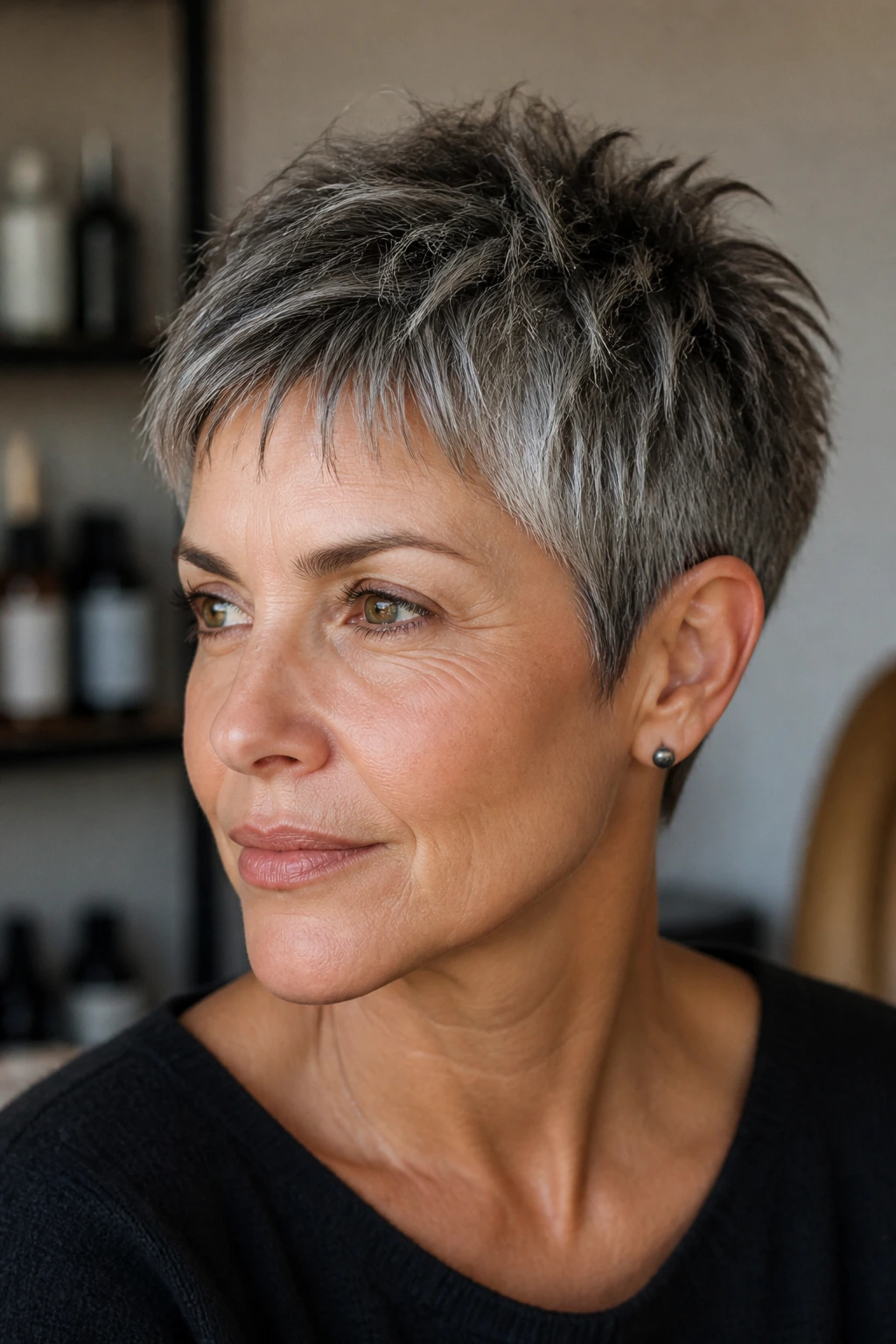
This is the cut for hair that has attitude built in already. Salt-and-pepper color has a rougher, more honest look than bright silver, and a choppy crop leans into that instead of trying to smooth it away.
The secret is irregularity. Slightly uneven ends, a broken fringe, a few shorter slices through the top — those details give the cut grit. A polished finish would almost be the wrong move here. Matte paste is better than shine, and finger styling beats a comb every time.
This shape is especially good if your hair is thick. The texture through the ends removes bulk, so the crop sits close without puffing out. If your hair is straight, a quick twist with your fingers while blow-drying will keep the finish from looking too orderly.
5. Sleek Micro Pixie in Cool Silver
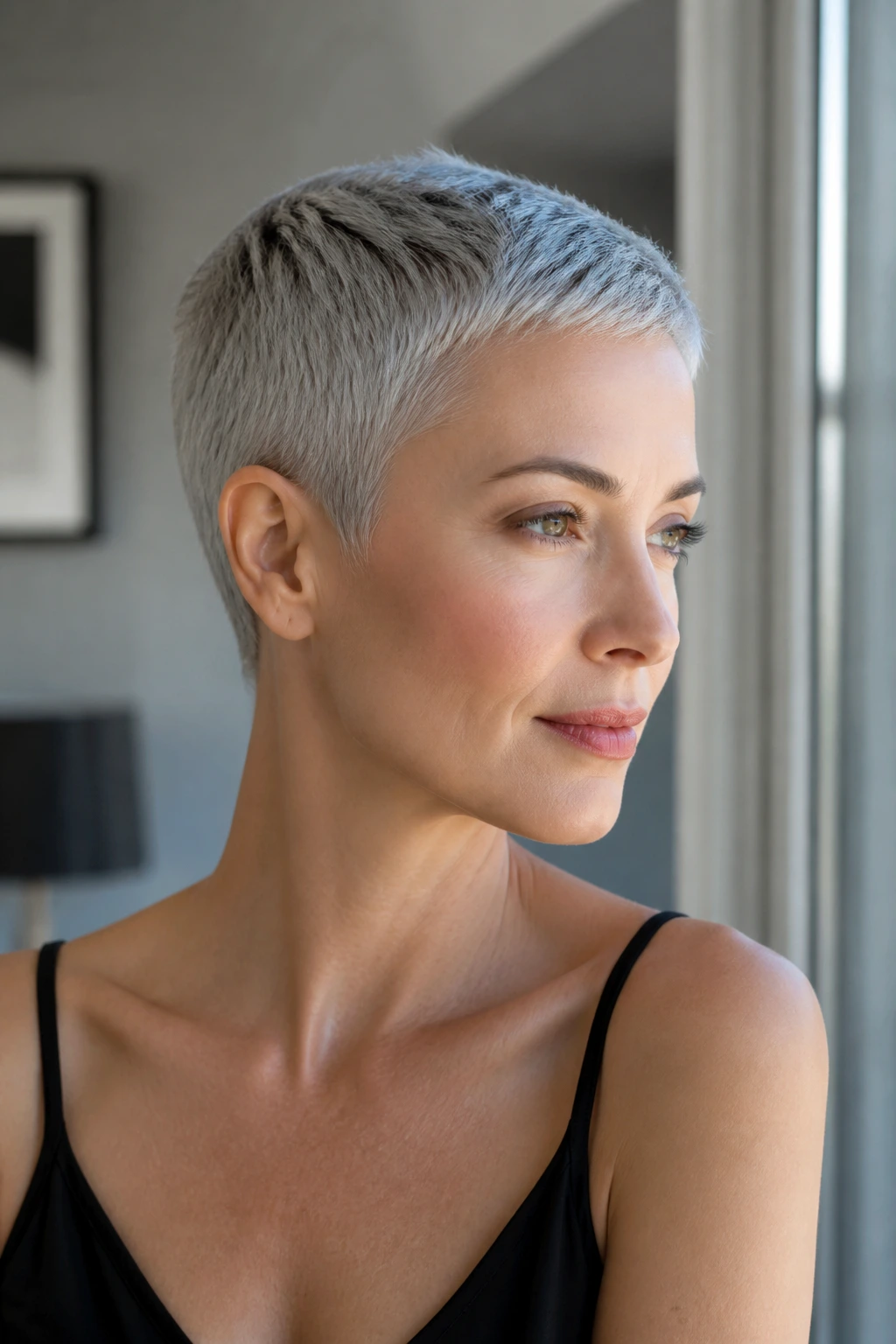
Shorter than most people think they can wear. That’s the truth of a micro pixie: the cut is tiny, but the effect is strong.
This version keeps the sides close and the top cropped, with just enough length to separate the hairline from the scalp. Cool silver makes the shape read crisp, almost metallic, which is why this look photographs as sharp as it does in person. There’s not much fluff here. Good.
It flatters strong brows, defined cheekbones, and anyone who likes a clean neck and minimal daily fuss. But it is not forgiving if your head shape or growth pattern pulls the hair in strange directions, so a good consultation matters. Ask your stylist how your crown swirls and cowlicks will sit when the hair is this short.
6. Long Top Pixie with Swept-Over Bangs
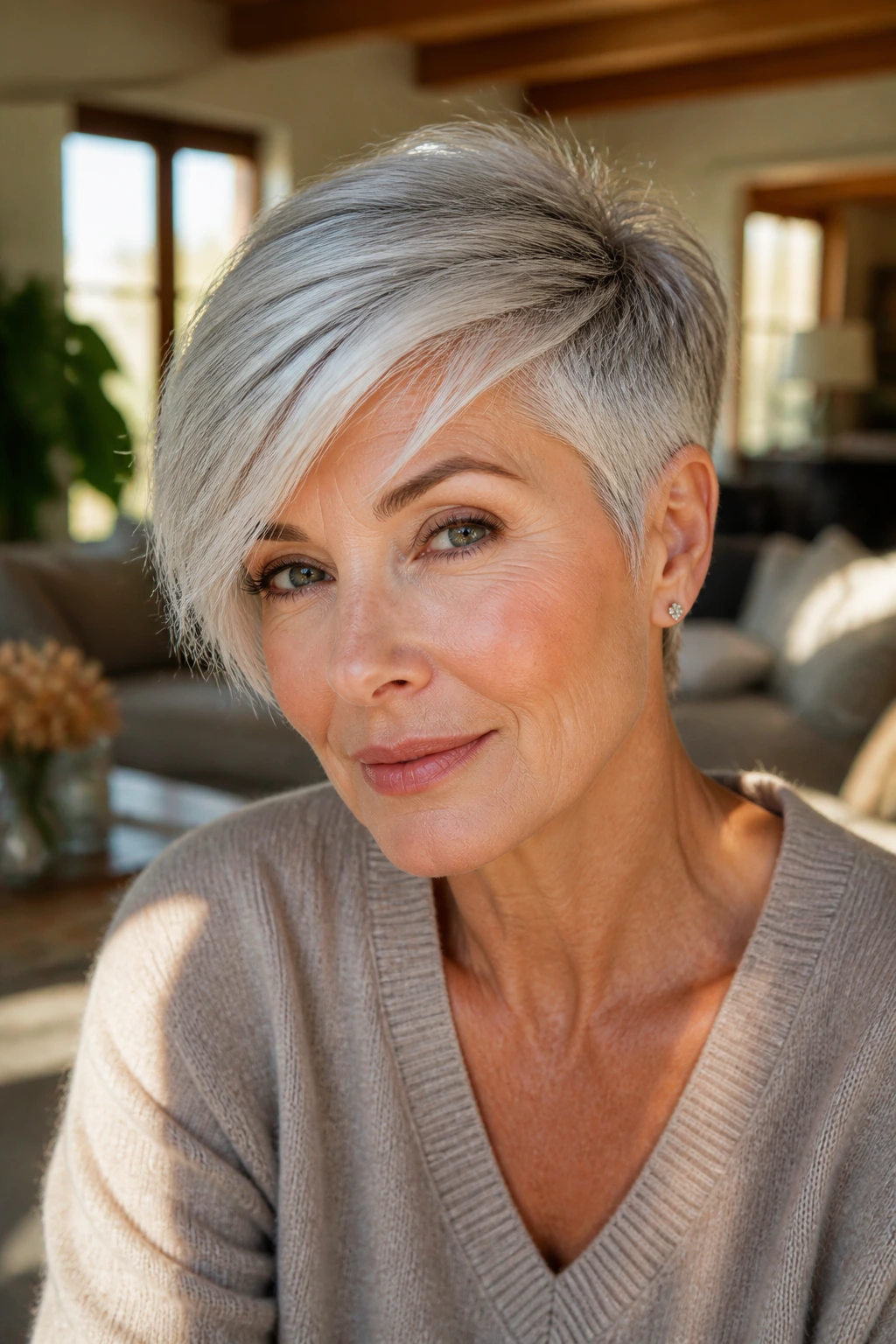
This is the easy entry point if you want a gray pixie but don’t want to lose the comfort of having some hair to move around. The top stays longer, the bangs sweep across the forehead, and the sides are kept neat enough that the shape still reads as pixie, not bob.
The long top gives you options. You can push it back with cream for a more open face, or drag it forward on tired mornings and let the fringe do the work. Silver hair likes that kind of versatility because it shows the difference between sleek and tousled more clearly than darker shades do.
If you’ve got a square jaw, the soft sweep can take some edge off the face. If your forehead is a little larger than you like, the fringe helps balance the top half without burying your features. A light blow-dry with a vent brush is usually enough.
7. Undercut Pixie with Platinum Panels
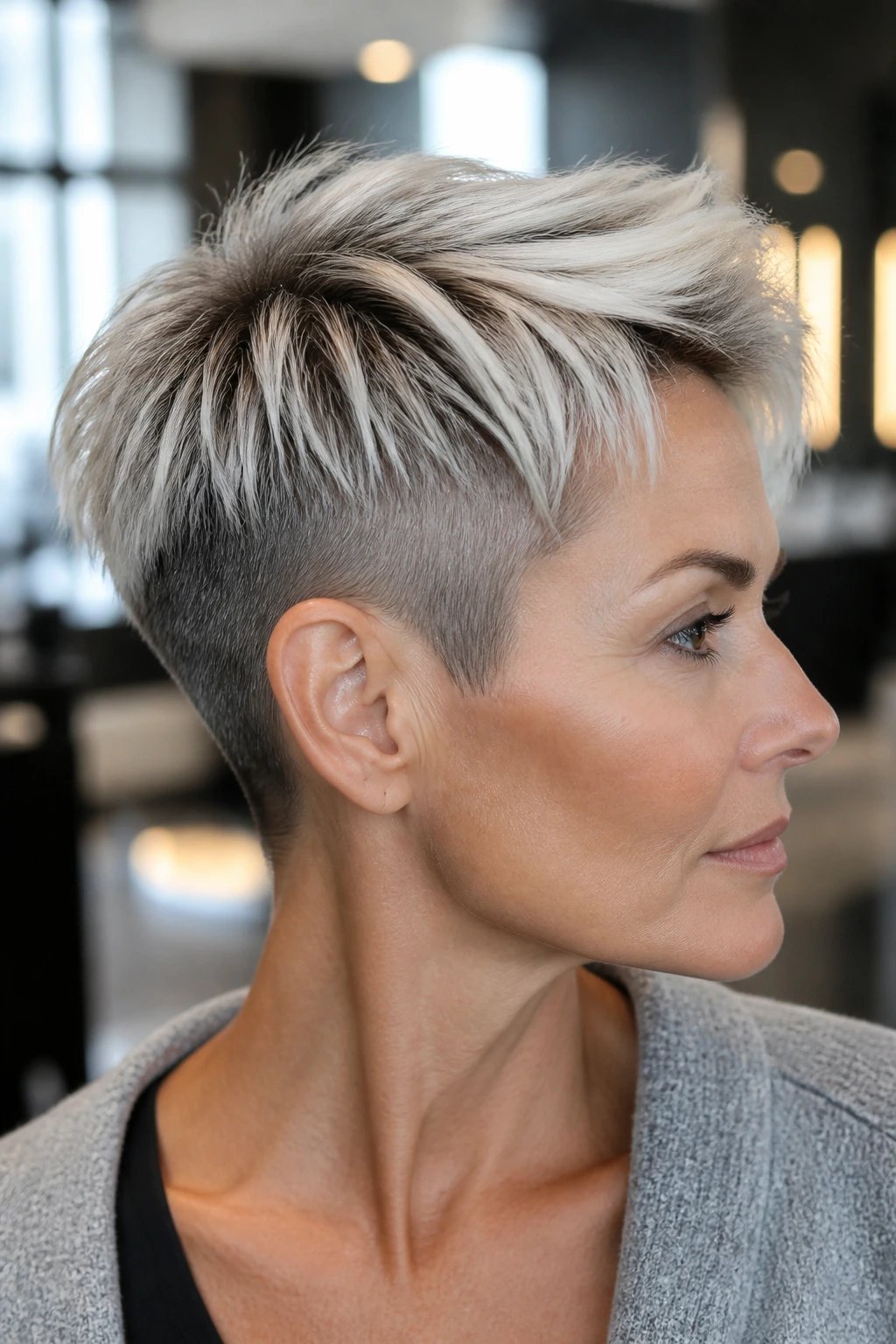
This one is for dense hair that refuses to sit down. An undercut removes weight from the lower layers, and platinum panels on top bring the silver into sharper focus. The contrast is the point.
The cut feels modern because the shape is practical. Less bulk underneath means the crown can sit closer and the top can be styled with a little height instead of a lot of product. If you’ve ever had thick gray hair swell out around the ears by lunchtime, this is the fix.
It’s also the kind of cut that looks deliberate when it grows out by a few weeks, which is useful. Keep the undercut clean every 3 to 4 weeks if you want the lines crisp, or let it soften if you prefer a rougher edge. Either way, this is not a timid style.
8. Curly Gray Pixie with Airy Texture
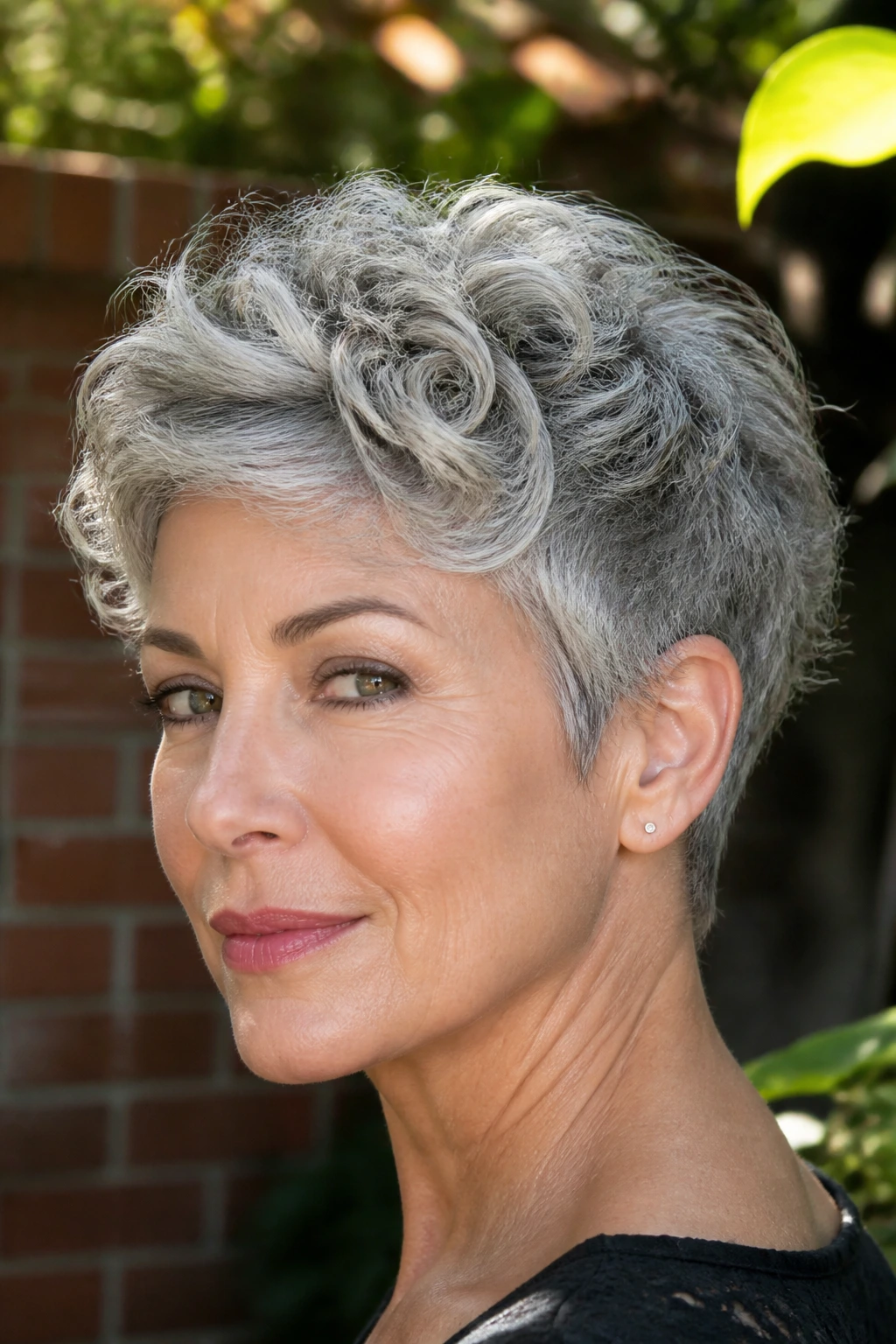
Curly gray hair can be gorgeous in a pixie, but only if the cut leaves enough room for the curl pattern to do its thing. Too short and the curls spring up like corkscrews in every direction. Too long and the shape loses its lift. There’s a narrow sweet spot.
Ask for soft layers and a bit of room around the ears so the curls don’t pile up. The silver color catches the bends in the curl, which makes the texture look even more alive. I like this version with a little air dried finish and a diffuser for the front if the curl pattern needs encouragement.
What to avoid
Don’t brush it dry. That’s the quickest way to turn a clean pixie into a puffball. Use curl cream, scrunch once, and leave a few ends imperfect.
9. Piecey Razor-Cut Pixie
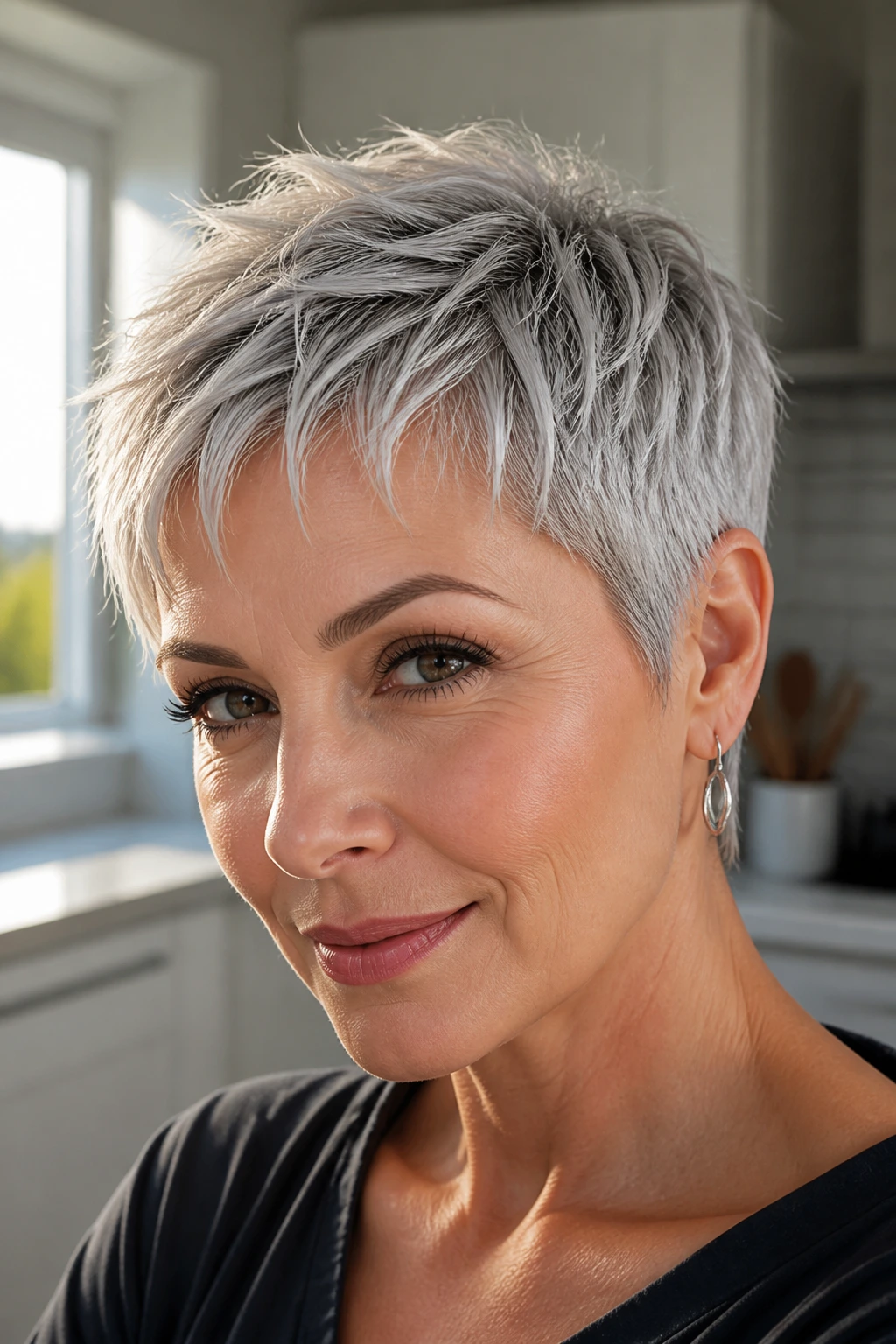
A razor-cut pixie gives the silver strands a softer edge than scissor-cut layers usually do. The ends look broken up, not heavy, and that’s useful when the goal is movement rather than perfection.
This cut works especially well on straight hair, where the pieces can fall in little directional shards instead of clumping together. It also does nice things for glasses wearers, because the broken fringe avoids crowding the frames. The overall feel is light, but not wispy in a sad way. There’s a difference.
Use a matte paste or a dry styling cream here, not a glossy pomade. The razor texture needs a finish that matches it. A shine-heavy product can make the ends stick together and erase the point of the cut.
10. Rounded Gray Pixie with a Curved Fringe
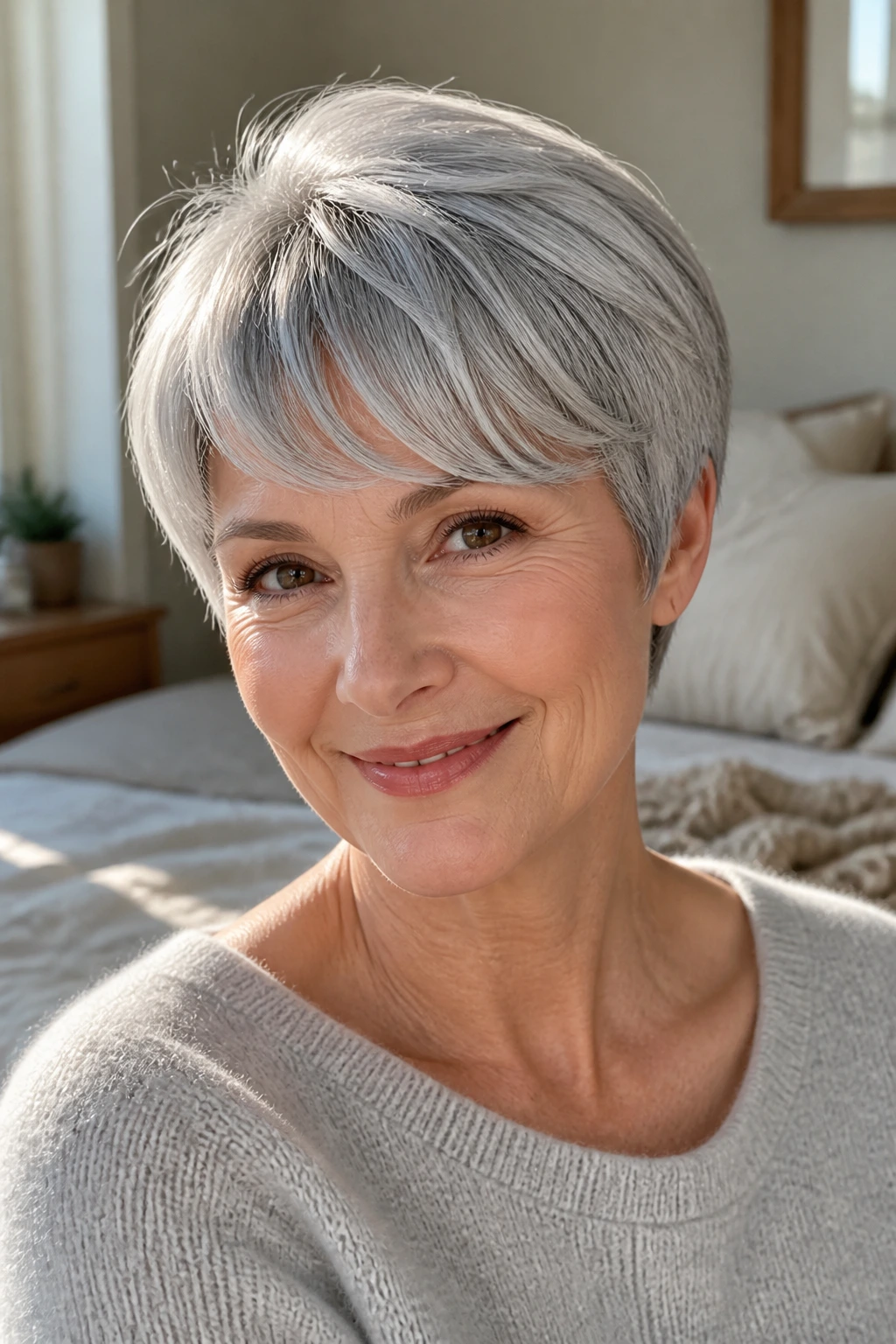
Some silver pixies look sharp and angular. This one doesn’t. The rounded outline gives the haircut a softer dome around the crown, and the curved fringe keeps the front from feeling severe.
It’s a smart shape for anyone who wants gray hair to feel feminine without fussing over curls or waves. The curve around the forehead softens straight lines, and the rounded crown keeps the top from sitting flat against the head. On a petite face, that little bit of shape can matter a lot.
The trick is not to make it too bubble-like. You want rounded, not helmeted. Ask your stylist to leave texture through the top so the curve has movement. A small round brush during blow-drying is enough to create that bend.
11. Asymmetrical Silver Pixie
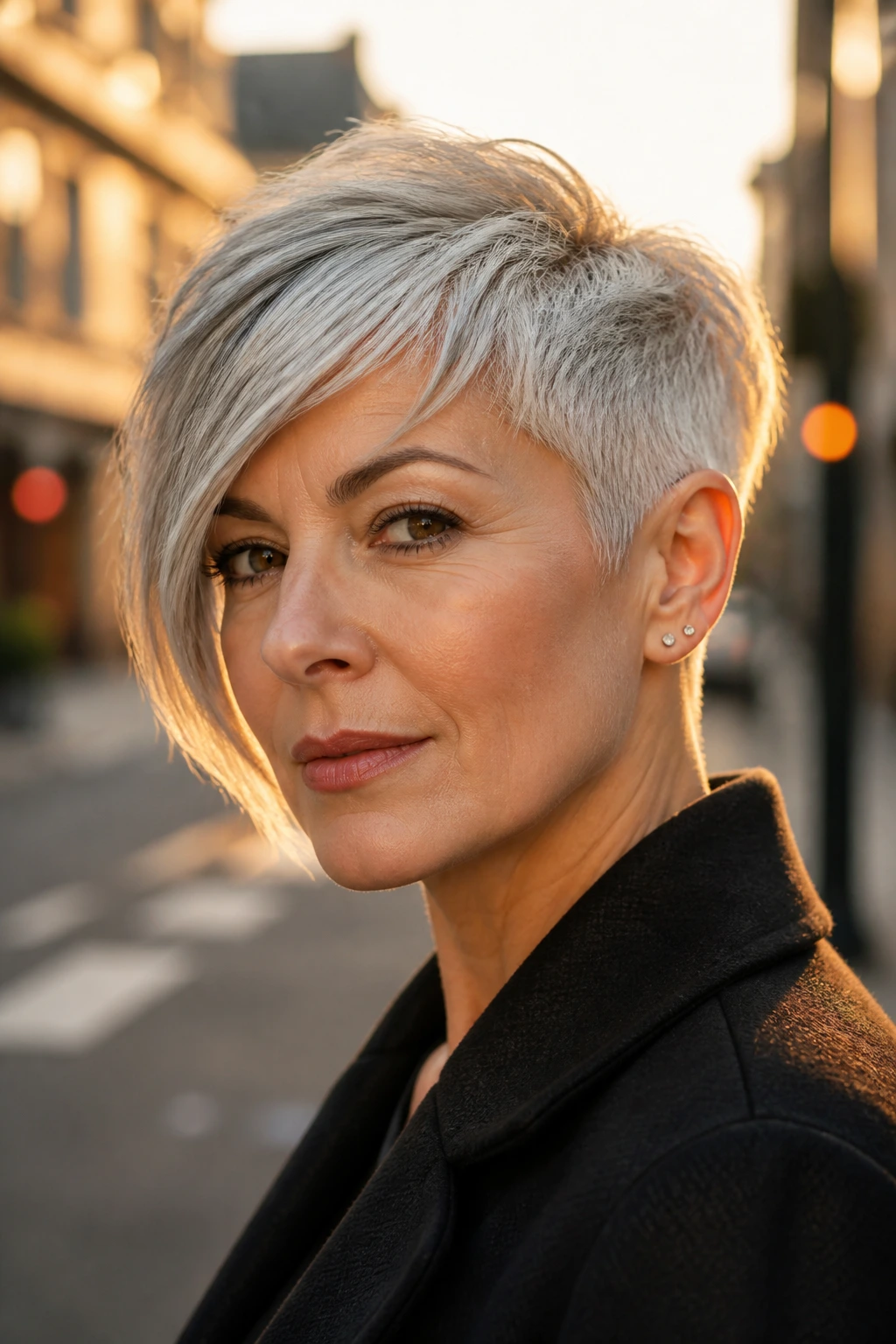
One side longer. One side cleaner. That’s the whole conversation, and it works because the asymmetry gives the eye something to follow.
This cut is useful if you like structure but don’t want a severe geometric shape. The longer side can skim the cheekbone, while the shorter side opens the face and gives the haircut some bite. Silver tones make the difference between the two sides more obvious, which is half the fun.
It also plays well with statement earrings. The longer side creates a frame; the shorter side leaves space. If you want the look to feel polished, tuck the longer section behind the ear and let the lines show. If you want it messier, separate the front with your fingers and leave the ends a little rough.
12. Boyish Short Crop with Soft Edges
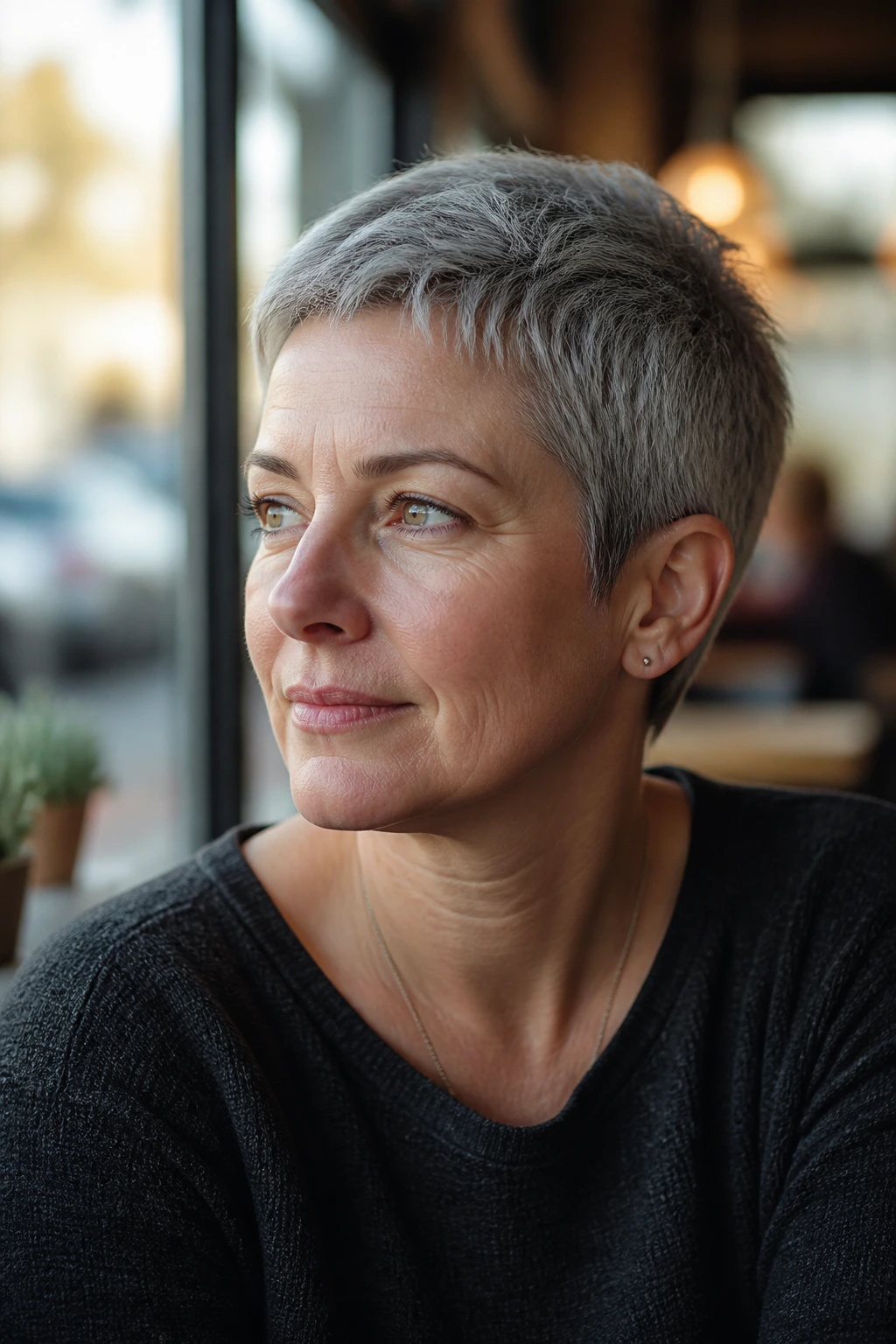
This is the closest thing to a no-drama gray pixie. It’s cropped short, but the edges stay soft enough that it doesn’t drift into severe territory.
The appeal is practical. Less length means less daily styling, less chance of the crown going weird in humidity, and less product overall. But the cut still needs a little softness around the hairline; otherwise it can look harsh, especially in silver, where every line reads more clearly.
This works well if you like your hair off your face and off your neck. It also suits strong glasses, bold brows, and earrings that you want people to notice. A tiny bit of paste at the top is all it needs. Seriously, a tiny bit.
13. Wavy Gray Pixie with Loose Movement

If your hair has a little bend in it, use it. Don’t fight it into a flat shape just because the cut is short.
A wavy pixie needs slightly longer top pieces so the movement shows, plus sides that are trimmed close enough to keep the outline neat. The silver color makes the waves look fuller than they are, which is handy if your hair is fine but not pin-straight. A light salt spray can help, but go easy. Too much and the hair starts to feel gritty.
How to style it
Squeeze in a pea-sized amount of leave-in conditioner, then scrunch the top with your hands while it air-dries halfway. Finish with a diffuser on low heat if you want more bend. If you brush it out later, you’ll lose the wave and gain volume in all the wrong places.
14. Silver Pixie with Tucked-Behind-Ear Sides
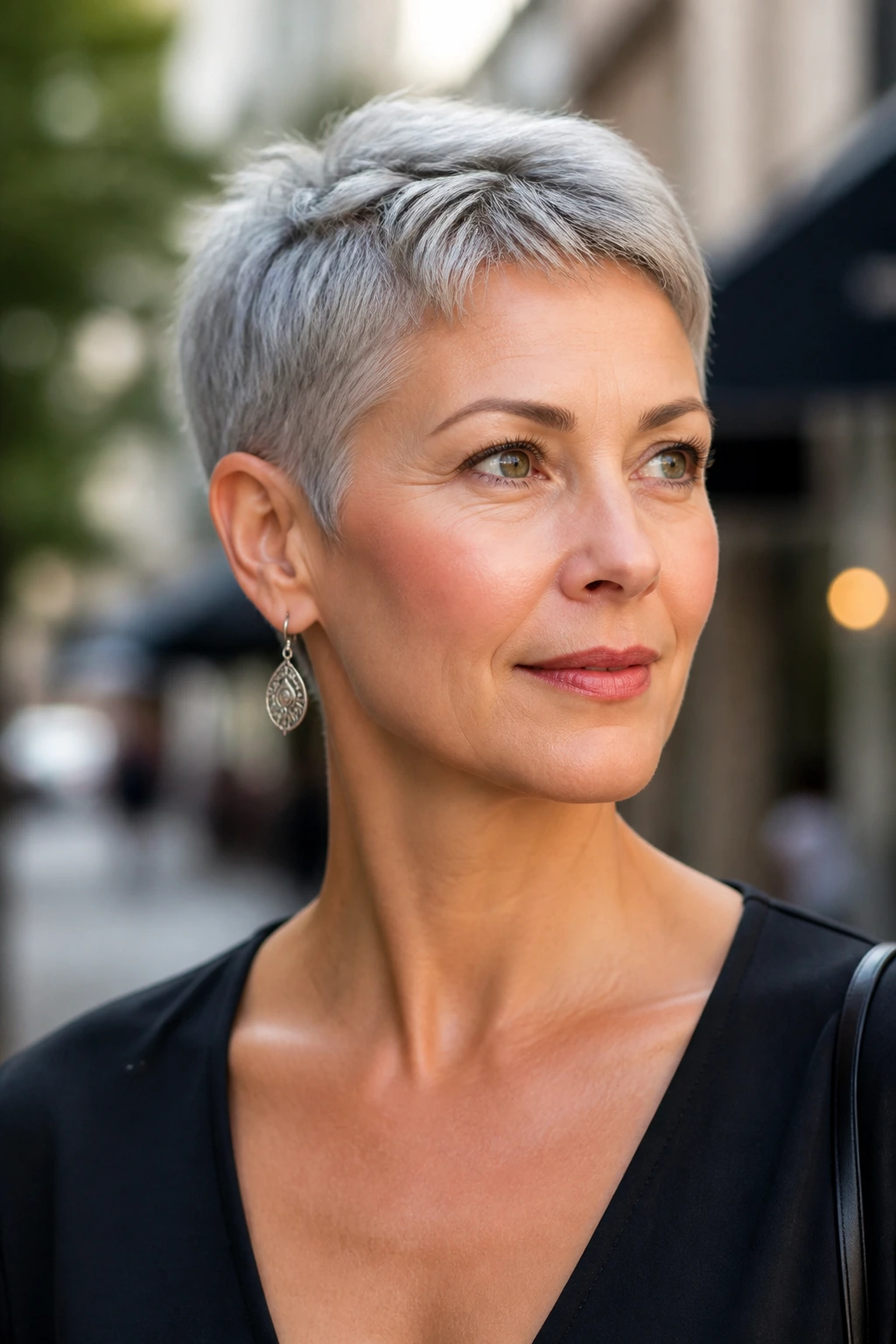
This version is about showing the face rather than hiding it. The sides are long enough to tuck neatly behind the ears, which gives the cut a cleaner line and makes jewelry and cheekbones part of the look.
It’s a nice choice if you wear earrings often or if you want the pixie to feel a little more open. The tucked sides also help the silver catch light near the temples, which can be flattering around the eyes. If the sides are shaved too close, you lose that softness. If they’re too long, the tuck becomes fussy. The middle ground is the sweet spot.
A fine-tooth comb can help train the sides into place after washing, but once they’re dry, I’d leave them alone. Over-touching makes this style collapse faster than you’d think.
15. Brushed-Forward Fringe Pixie
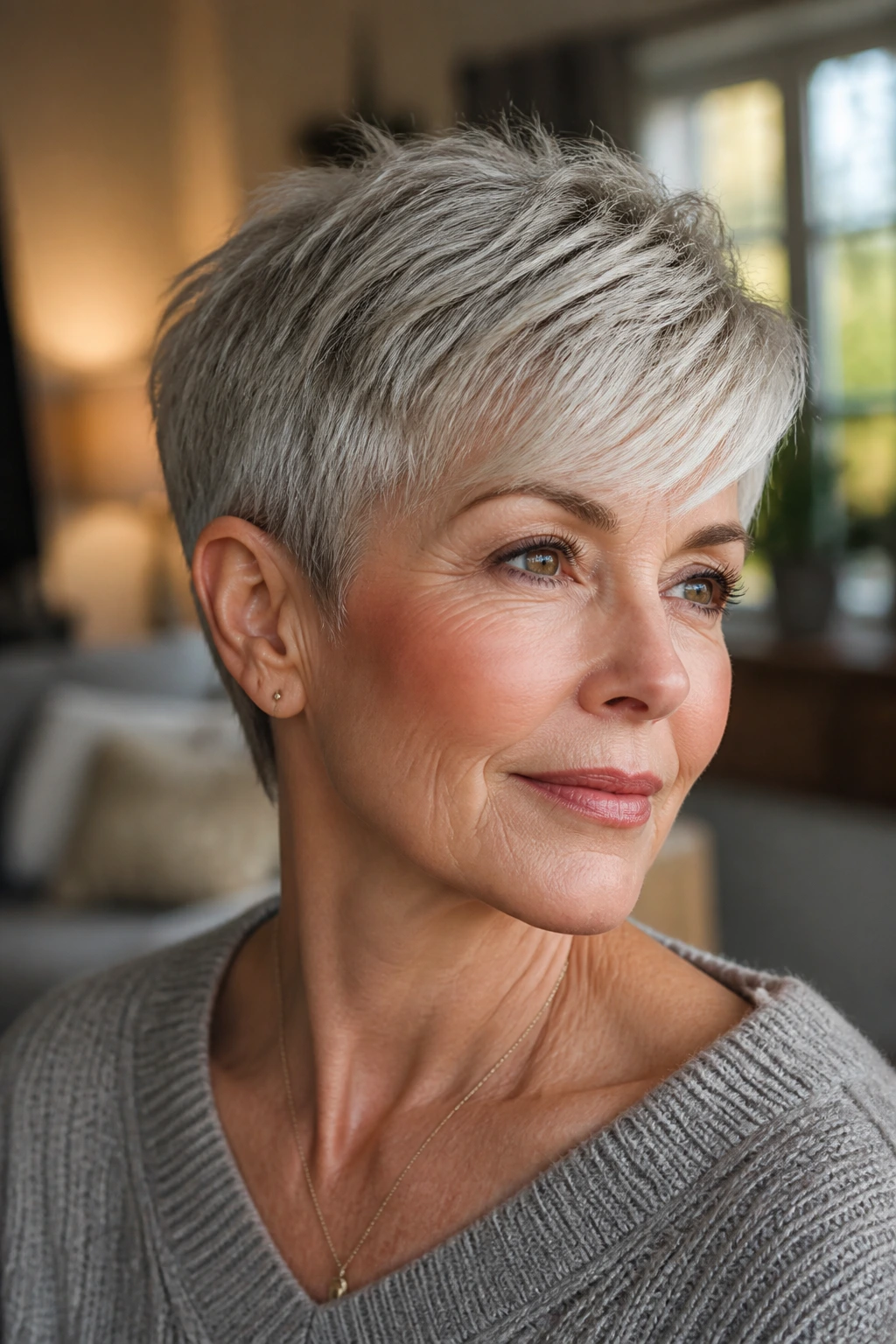
A forward fringe is one of the easiest ways to make a short gray cut feel younger without turning it childish. The hair moves toward the face instead of away from it, which softens the forehead and gives the style a little motion.
This shape can be a lifesaver for cowlicks. A crown that insists on splitting or lifting in odd directions often settles better when the fringe is trained forward. Keep the fringe light, though. Heavy bangs with gray hair can land in helmet territory fast.
Use a touch of smoothing cream before blow-drying, then direct the front straight down and slightly to one side. The goal is touchable softness, not a flat sheet. The best version of this cut looks like the hair fell there on purpose.
16. Shadow-Root Silver Pixie
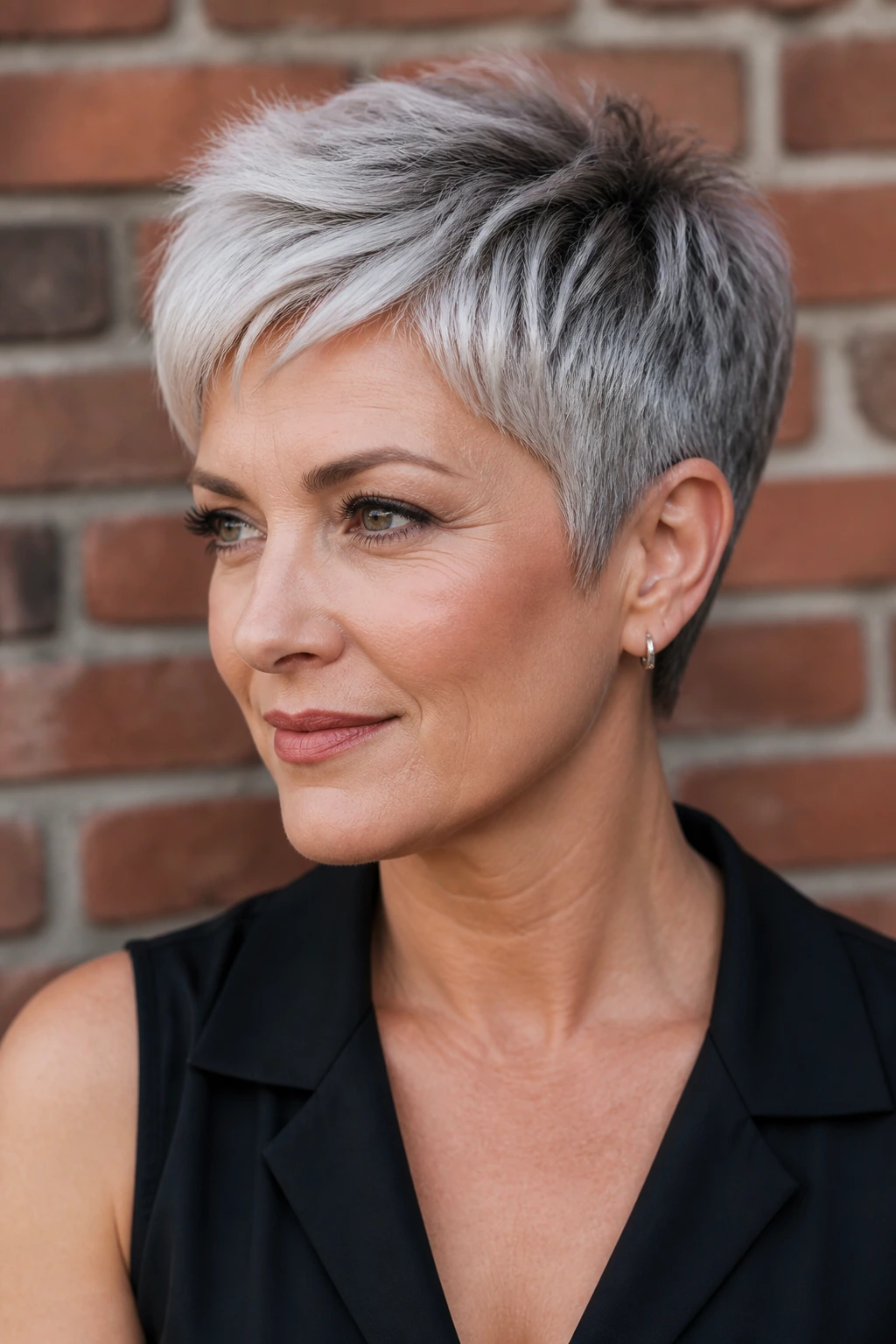
A shadow root isn’t just a color trick. On a pixie, it gives the cut depth at the base and makes the silver feel less stark.
This is the version I like for anyone who wants a little maintenance relief. Darker roots blended into gray or silver mean you don’t get a hard line of regrowth every few weeks. The cut itself can stay pretty clean — tapered sides, a lightly textured top, maybe a soft fringe — because the color is doing part of the visual work.
It’s also a smart choice if your natural hair is darker and you’re going gray through the transition. The blend buys you time. No need to chase every millimeter of root.
17. Spiky Textured Pixie
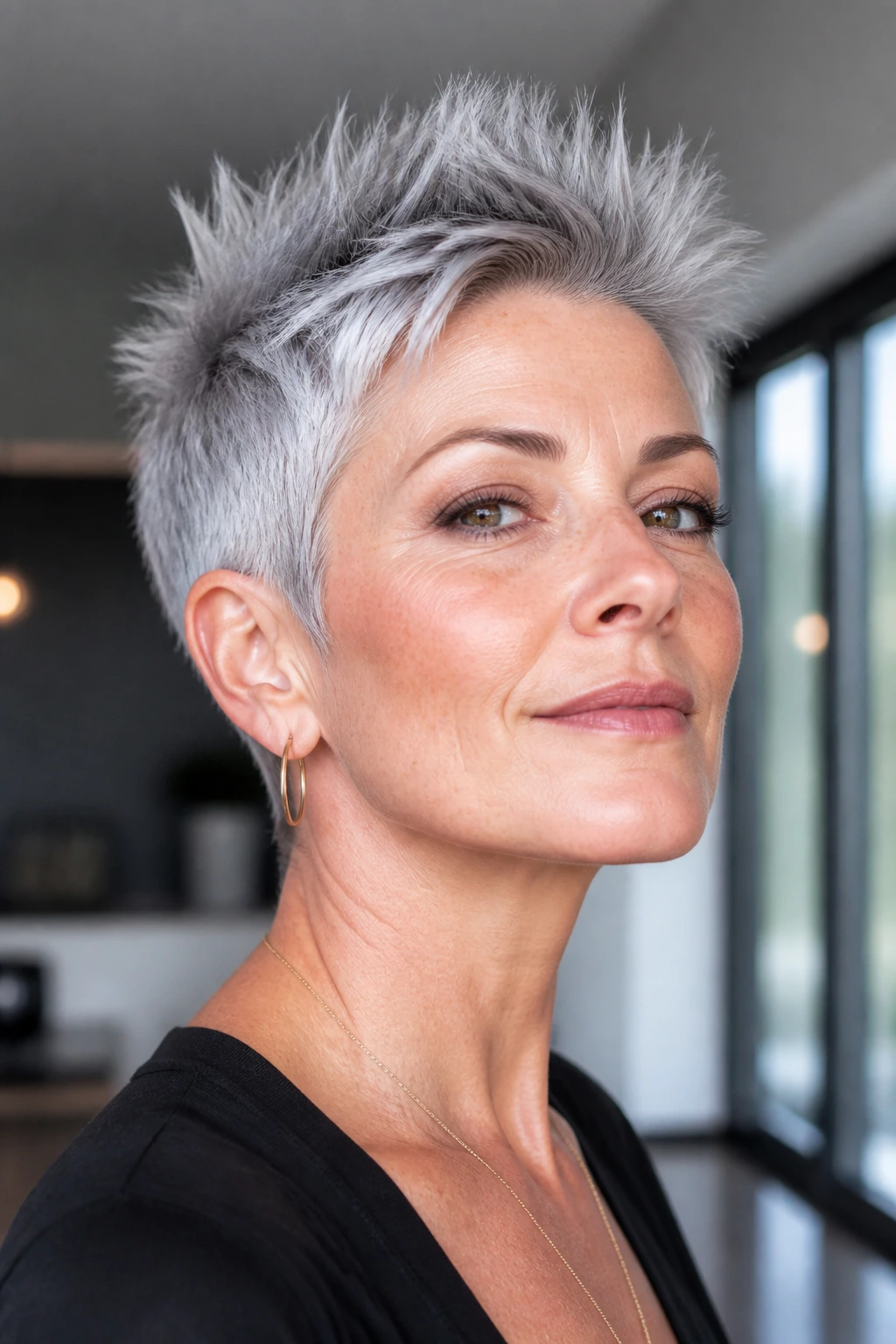
This is the gray pixie with some attitude. The top is cut short enough to stand up in little spikes or lifted pieces, and the sides stay neat so the texture has a frame.
It works best when the hair is thick enough to hold shape, but fine hair can handle it too if you use the right product. A small amount of paste warmed in the hands and pushed upward at the crown is enough. Don’t slick it down. That would waste the whole point.
The silver shade makes the spikes look more defined because light hits the tips and edges first. If you want the style to read edgy instead of messy, keep the nape and sideburns clean. That contrast is what keeps it sharp.
18. Long Gray Pixie-Bob Hybrid
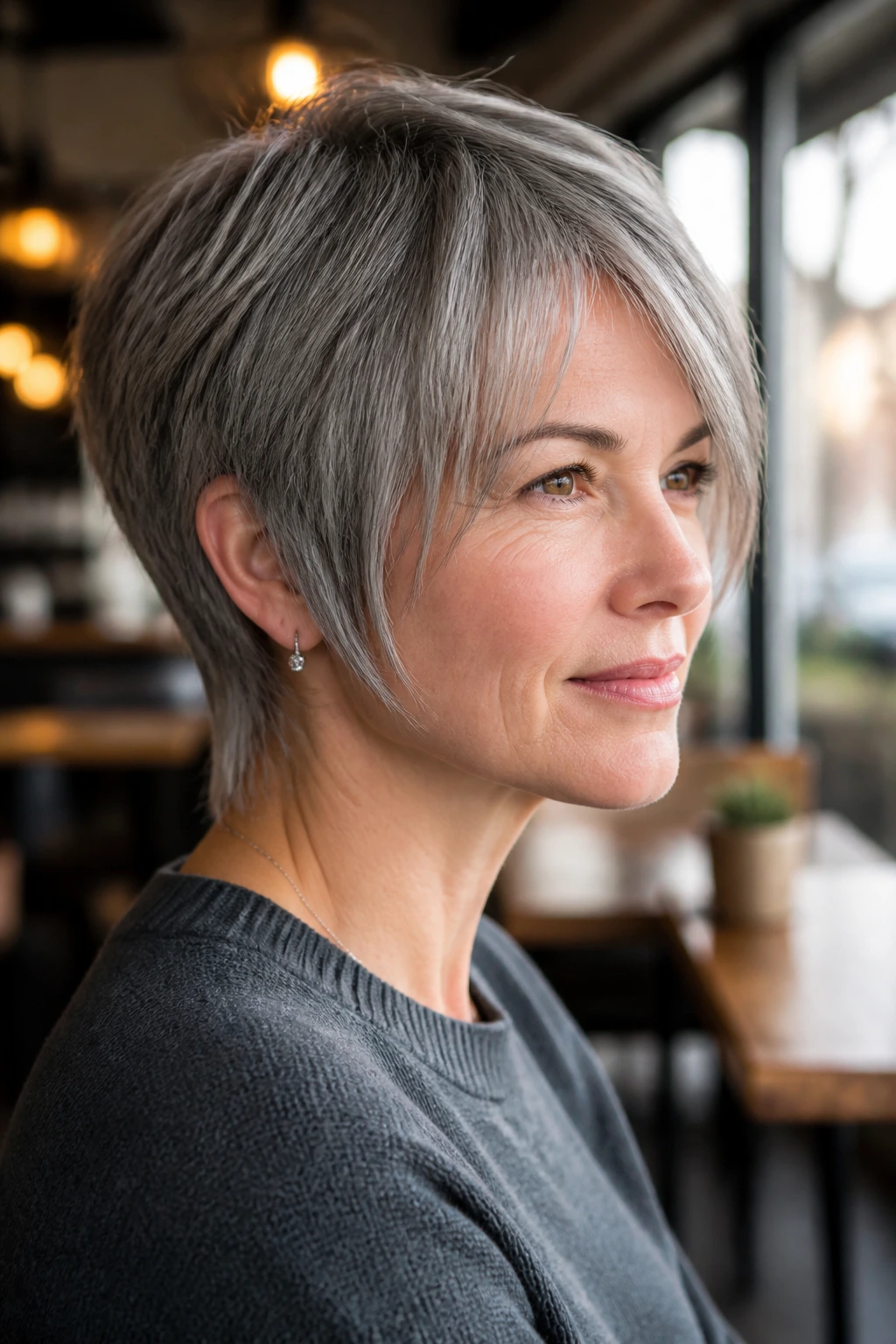
Not everyone wants to go all the way short. This cut leaves a little more length through the front and nape, so it sits somewhere between a pixie and a tiny bob.
That extra length makes the style friendlier for people growing out a shorter crop. It also helps if you want to tuck pieces behind the ear one day and let them fall the next. The gray color gives the longer shape a polished feel, because silver reflects the movement of the ends instead of swallowing it.
If your hair is very thick, ask for internal layering so the shape doesn’t turn bulky at the sides. If it’s fine, keep the perimeter soft and the top a touch lighter so the cut doesn’t drag the face down.
19. Layered Gray Pixie for Fine Hair
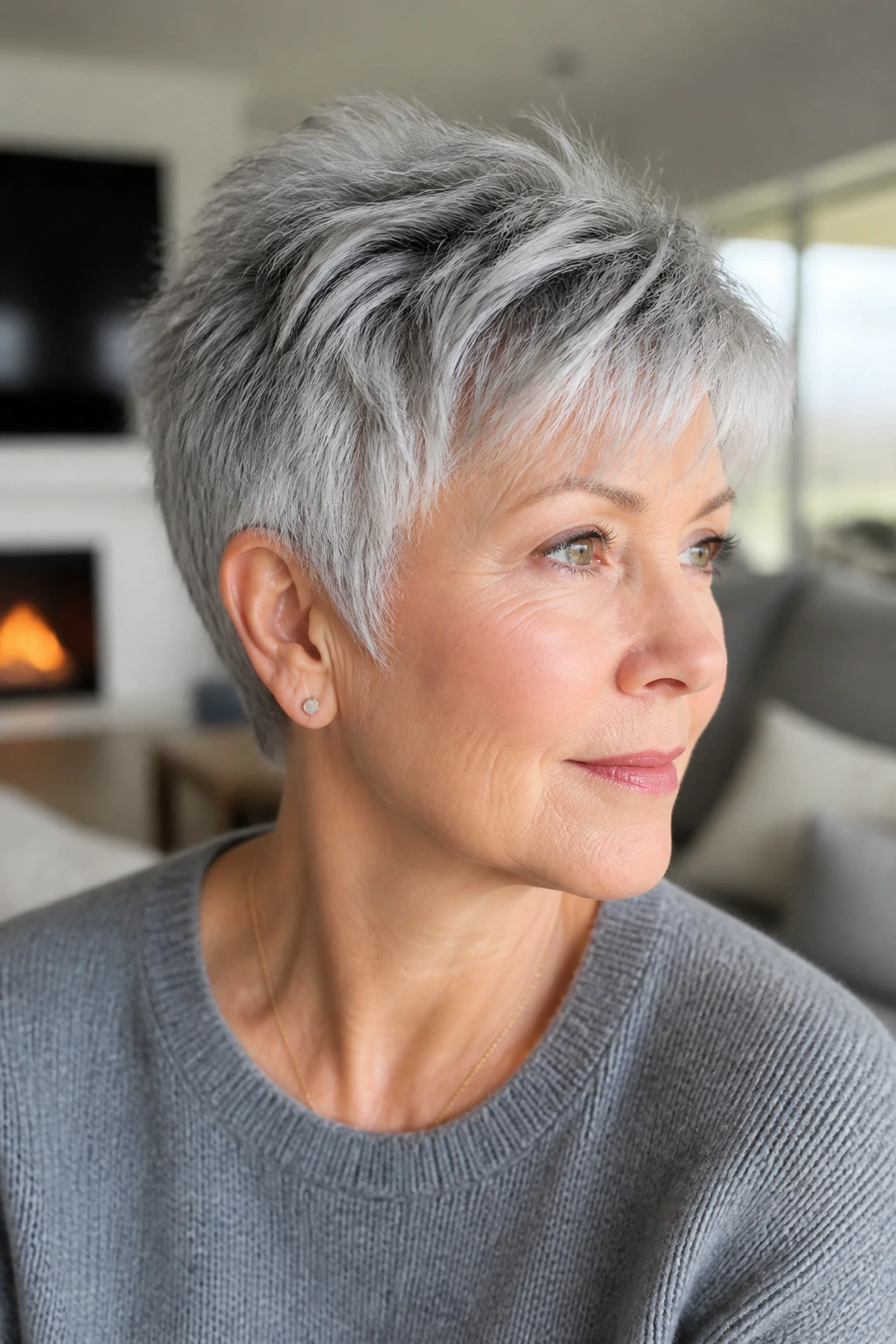
Fine hair needs a little engineering, and this cut gives it some. The layers are placed where the hair can actually use them — through the crown, around the temples, and at the fringe — so the top doesn’t lie flat like paper.
The biggest mistake with fine gray hair is leaving too much weight at the bottom. That makes the head look narrow on top and wide at the base. Short internal layers fix that. They also let the silver tone catch across more surfaces, which makes the hair look fuller than it really is.
A root spray or light mousse can help, but the cut is doing most of the work. Keep the product light so the hair stays airy. Heavy cream will collapse the structure by lunch.
20. Graphic Razor Pixie with Silver Smoke Ends
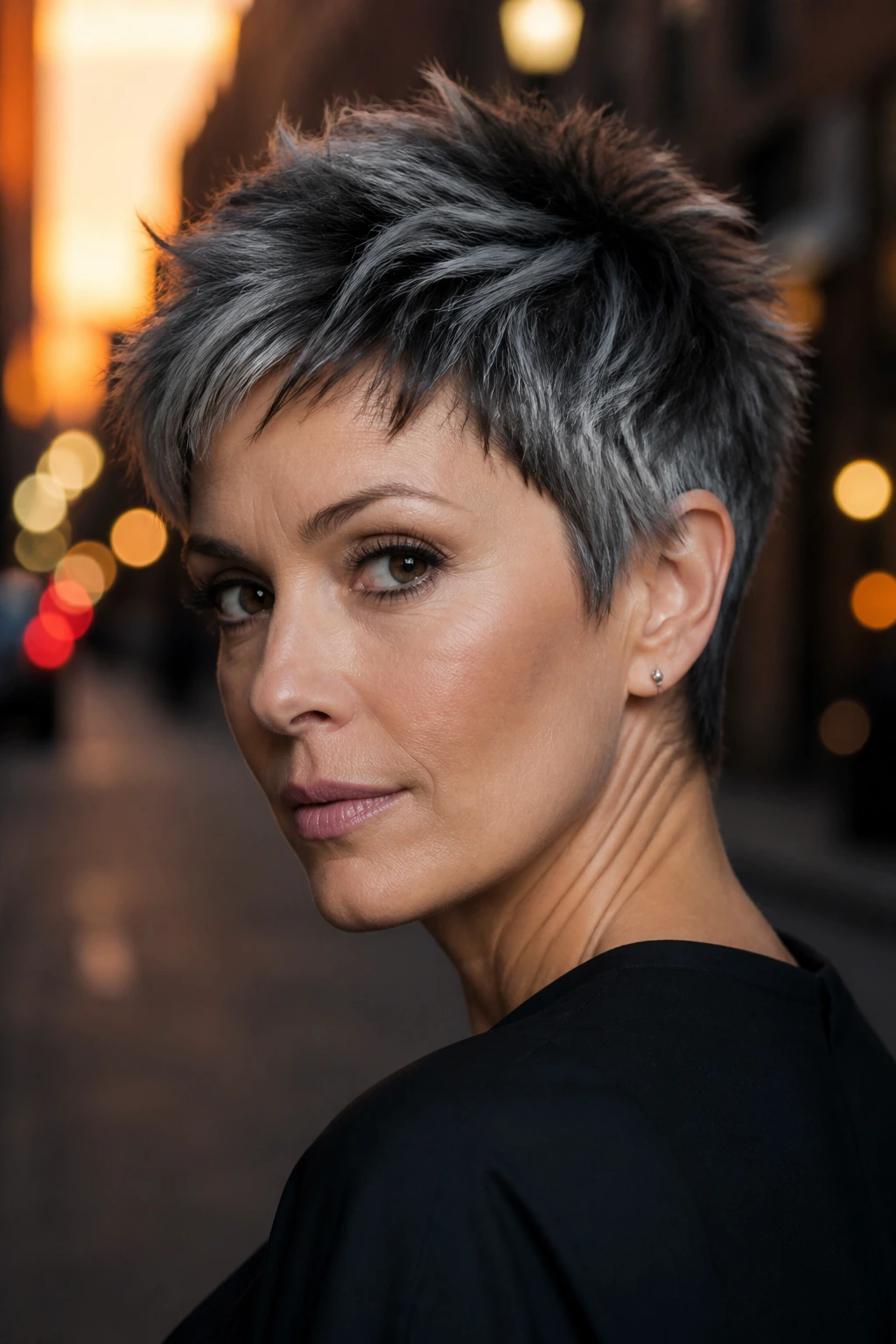
This is the bold one. The lines are cleaner, the texture is more deliberate, and the silver plays into a smoky gradient at the ends that feels crisp rather than soft.
The graphic edge comes from the contrast: neat sides, a sharper fringe line, and razor-soft ends that break up the silhouette. It’s a good option if you like a pixie that looks styled even on a low-effort day. Silver hair and graphic cutting get along well because the color exposes the shape so clearly.
If you wear a lot of black, leather, or structured jackets, this cut fits that wardrobe without trying too hard. If you lean softer in clothes, it still works — just keep the styling a little looser and let the ends move instead of forcing them into a hard line.
What Makes a Gray Pixie Cut Look Sharp Instead of Flat
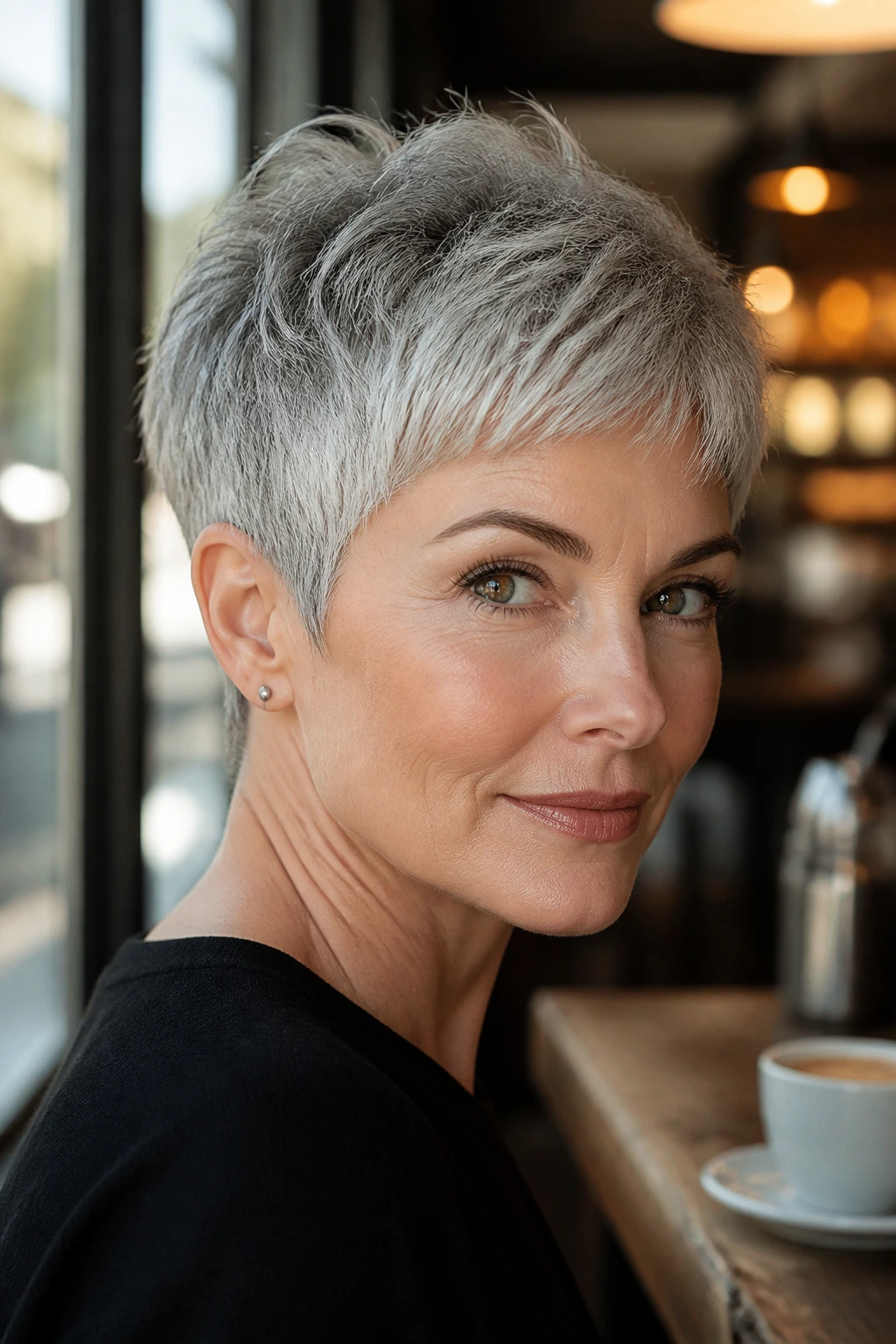
The short answer is shape. Gray hair can handle a little roughness, but it needs intention around the edges or it turns dull fast. A tapered nape, a textured crown, and a fringe that does something specific will always beat a one-length crop with no movement.
The other piece is light. Silver and gray show shadow more easily than darker hair, which is why a tiny lift at the root can change the whole haircut. You do not need huge volume. You need enough separation for the strands to catch light at different angles.
Face shape matters, but not in the rigid, old-school way people sometimes talk about it. If your face is round, a side-swept fringe can lengthen it. If your jaw is sharp, a little softness around the temple can keep the cut from feeling severe. If your hair is thick, bulk removal is the story. If it’s fine, crown layering is.
The Brushes, Sprays, and Creams That Actually Help
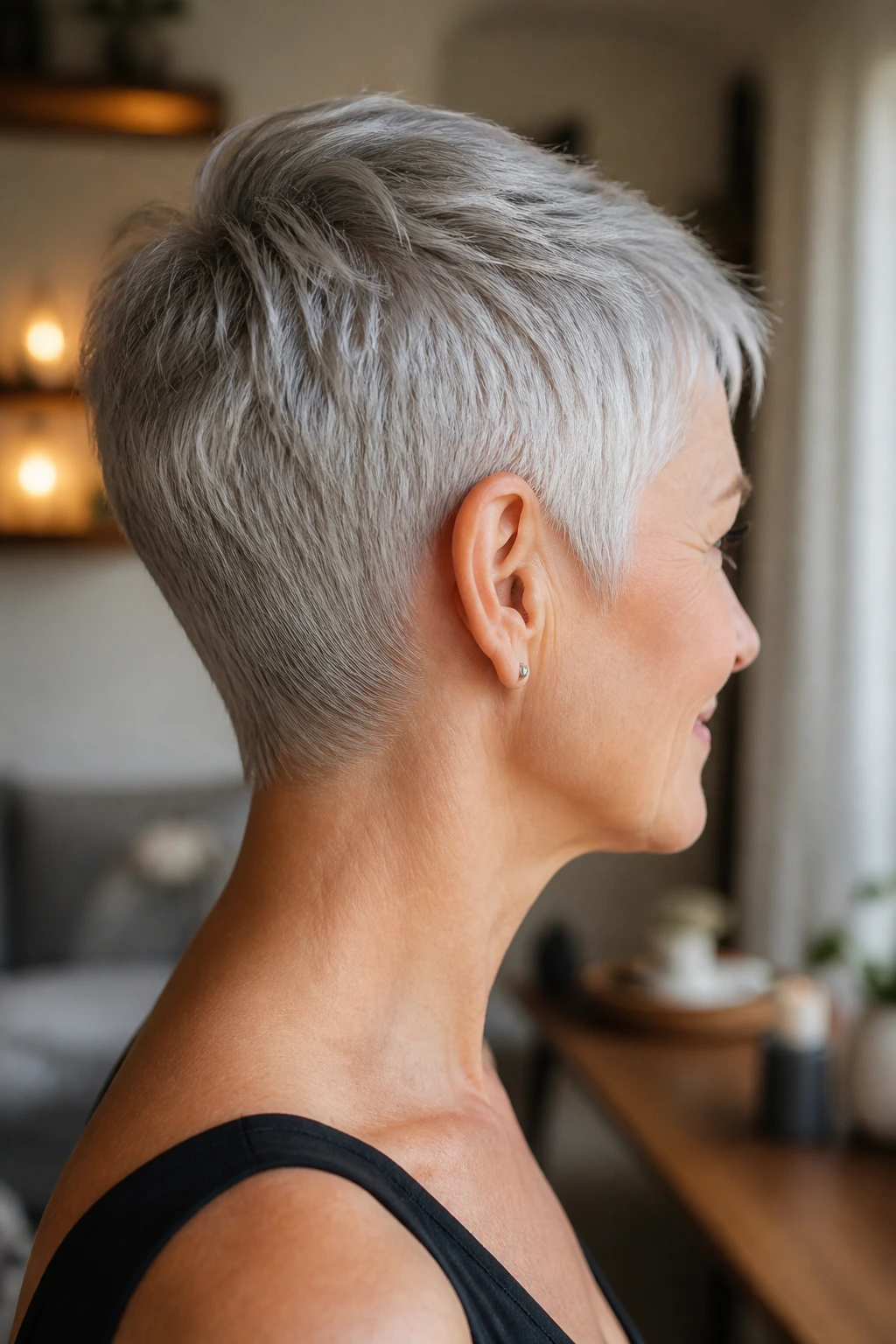
A gray pixie doesn’t ask for a drawer full of styling junk. It asks for the right few things, used lightly.
- A small vent brush: Good for quick blow-drying the fringe and crown without flattening the shape.
- A narrow round brush: Useful when you want bend at the front or a little lift where the crown starts.
- Texturizing paste: Best for piecey, choppy, or spiky pixies; use it sparingly or the hair gets sticky and dark.
- Light mousse or root spray: The fix for fine hair that collapses at the scalp.
- Purple shampoo: Helps keep silver hair from yellowing, but once a week is usually enough.
- Sulfate-free conditioner: Keeps the hair softer between washes without stripping the tone.
- Flat iron with small plates: Handy for smoothing a fringe or flipping one side of an asymmetrical cut.
- Fine-tooth comb and tail comb: Great for making clean parts and guiding the fringe into place.
I’d skip anything too oily unless the hair is coarse and dry. Gray pixie cuts look best when the finish is touchable, not greasy.
How to Pick the Right Gray Pixie for Your Face and Hair
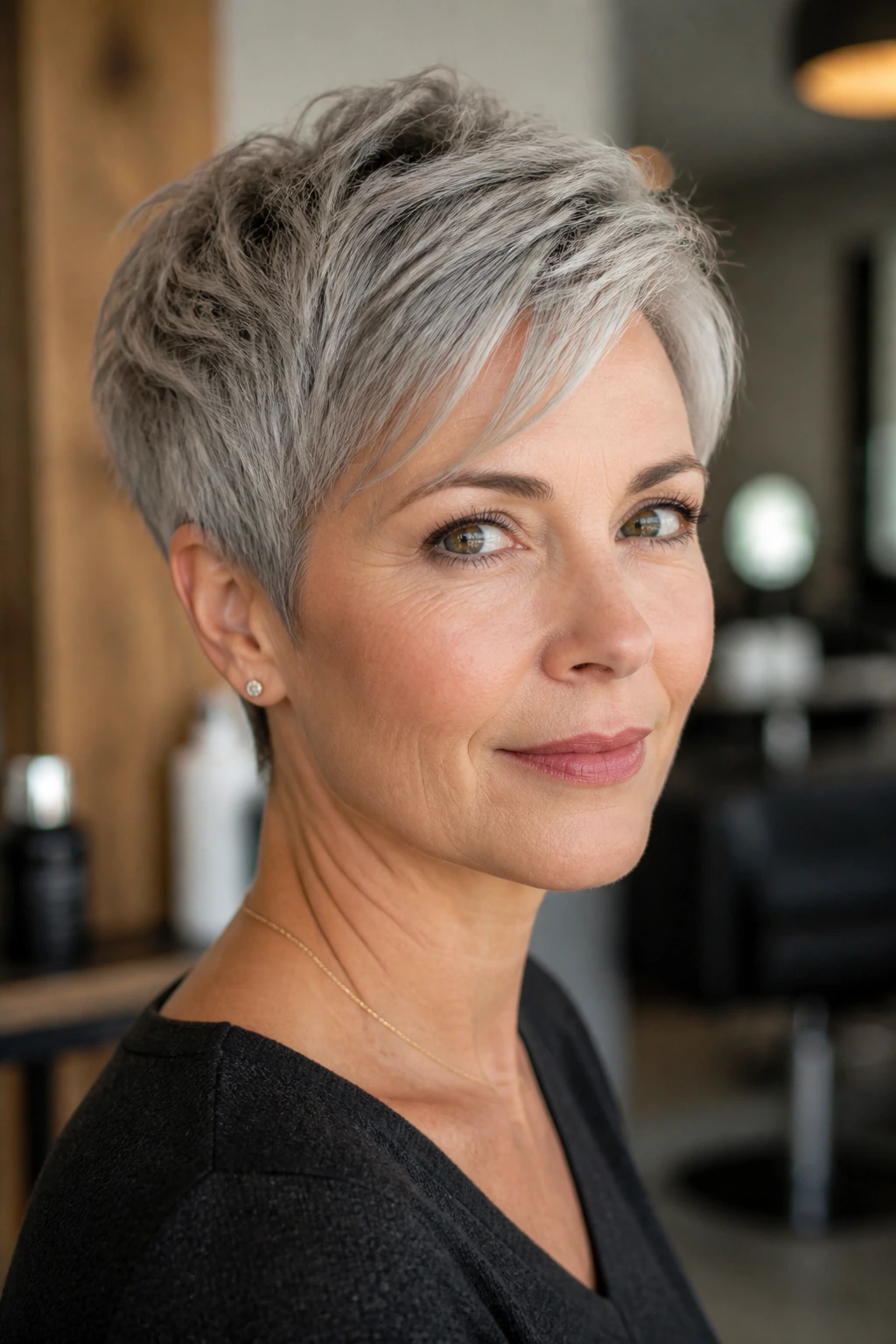
Start with your texture, not the Pinterest picture. Fine hair usually needs layers at the crown and a shape that doesn’t depend on a ton of product. Thick hair needs internal weight removal or the sides will puff out. Curly hair wants length left in the right spots so the curl pattern can live.
Then look at where your face holds width or length. A deep side part softens a round face. A brushed-forward fringe can shorten a longer forehead. A tucked-behind-ear shape opens the cheekbones. An asymmetrical cut gives structure if your features are balanced and you want something less expected.
Also, be honest about upkeep. A micro pixie or a graphic razor pixie looks clean fastest, but it also shows every growth spurt. A longer top with soft layers can buy you a little time between trims. That trade-off matters more than people admit.
Practical Ways to Keep the Style Looking Fresh
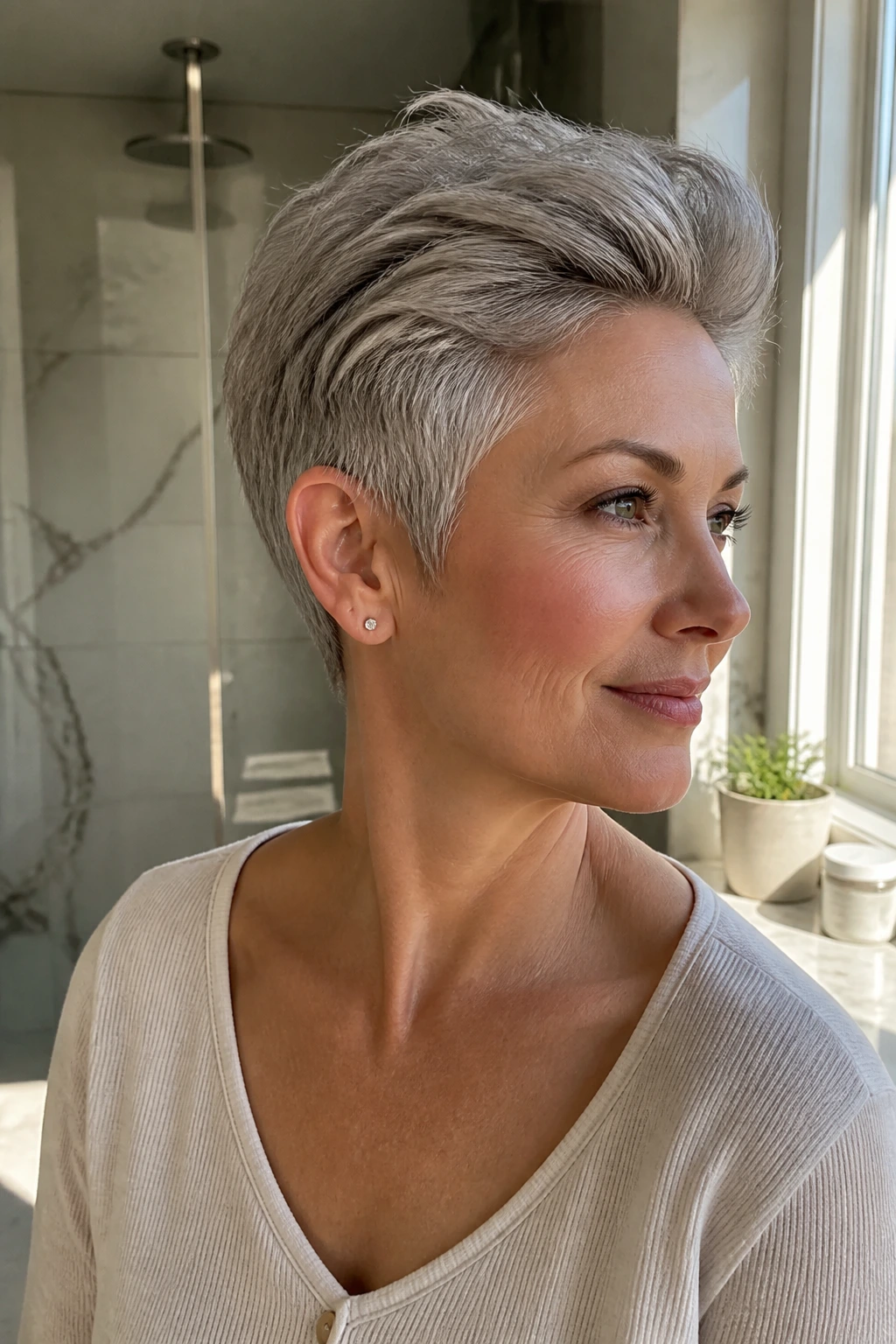
Root lift first, product second: If the hair is flat at the root, pile on product and you’ve already lost. Blow-dry the crown up and away from the scalp before you add paste or cream.
Keep the neckline clean: Even a beautiful pixie starts to look unkempt when the nape grows in. A quick clean-up every 3 to 5 weeks makes the whole style look intentional.
Use less purple shampoo than the bottle suggests: Gray and silver hair can take on a lavender cast if you overdo it. Start small and increase only if yellow tones keep creeping in.
Work in daylight once in a while: Indoor bathroom lighting lies. Natural light shows whether the silver reads cool, greenish, or a little muddy.
Don’t force shine onto every cut: Some gray pixies want matte texture. Some want a sleek finish. The wrong sheen can flatten the whole thing.
Common Mistakes That Make Silver Pixies Look Tired
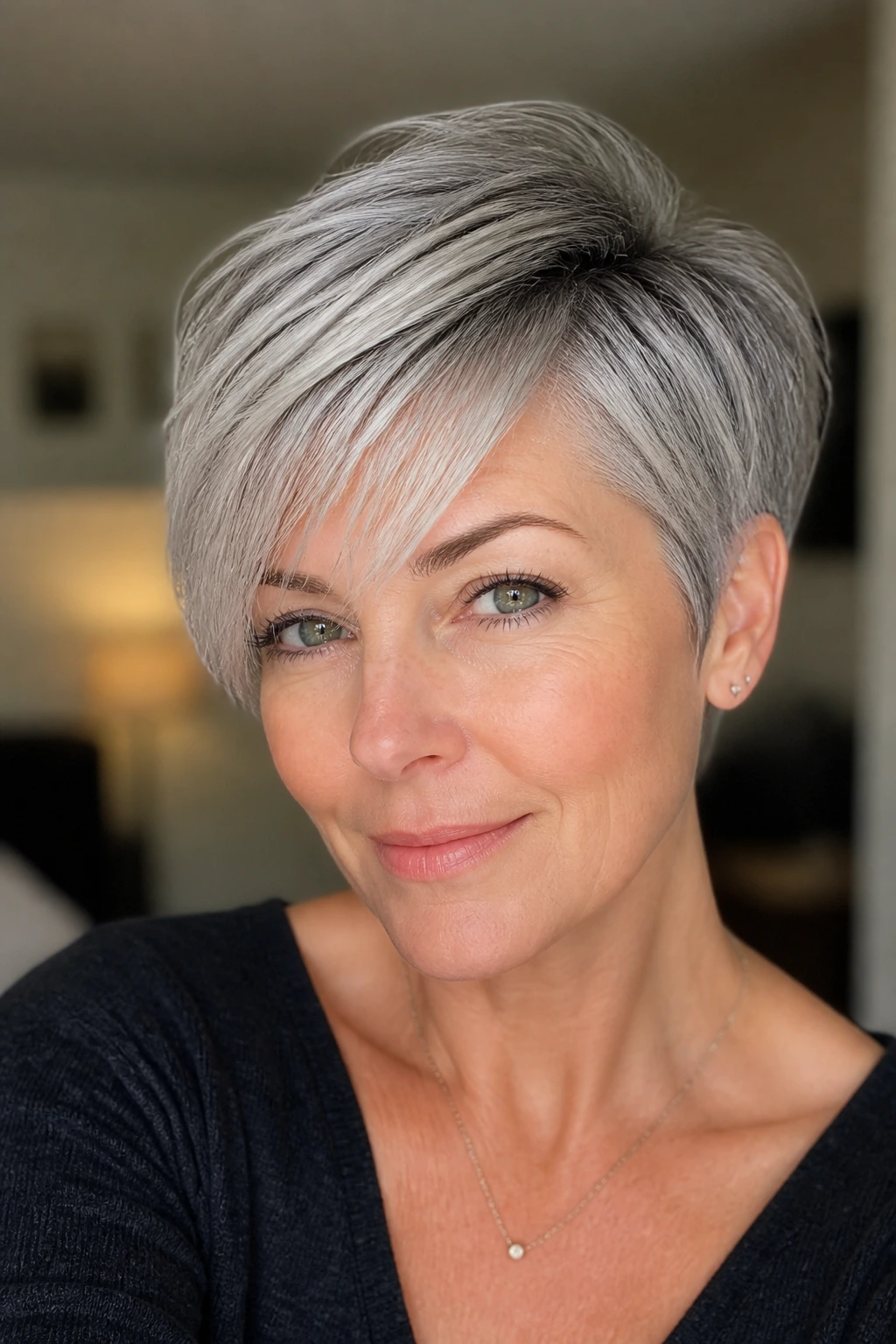
The first mistake is letting the crown go too flat. Silver hair with no root lift can look tired even when it’s freshly washed. The fix is simple: dry the top in the opposite direction first, then lay it back into place.
Another one is over-thinning the ends. I see this a lot with people who want the hair “light,” but they end up with wispy little strings around the face. That makes a gray pixie look dry and fragile, not airy. Texture should come from layering and shape, not from stripping the hair of all substance.
Too much purple shampoo can be a mess, too. The hair starts to look dull or slightly violet, especially on porous ends. If that happens, wash with a gentle cleanser and use the toner less often.
And then there’s the grow-out problem. A pixie can tolerate a little length, but the nape and sideburns show age first. If you wait too long between trims, the cut stops reading as deliberate and starts reading as neglected. There’s a difference, and it’s obvious.
Variations Worth Asking Your Stylist For
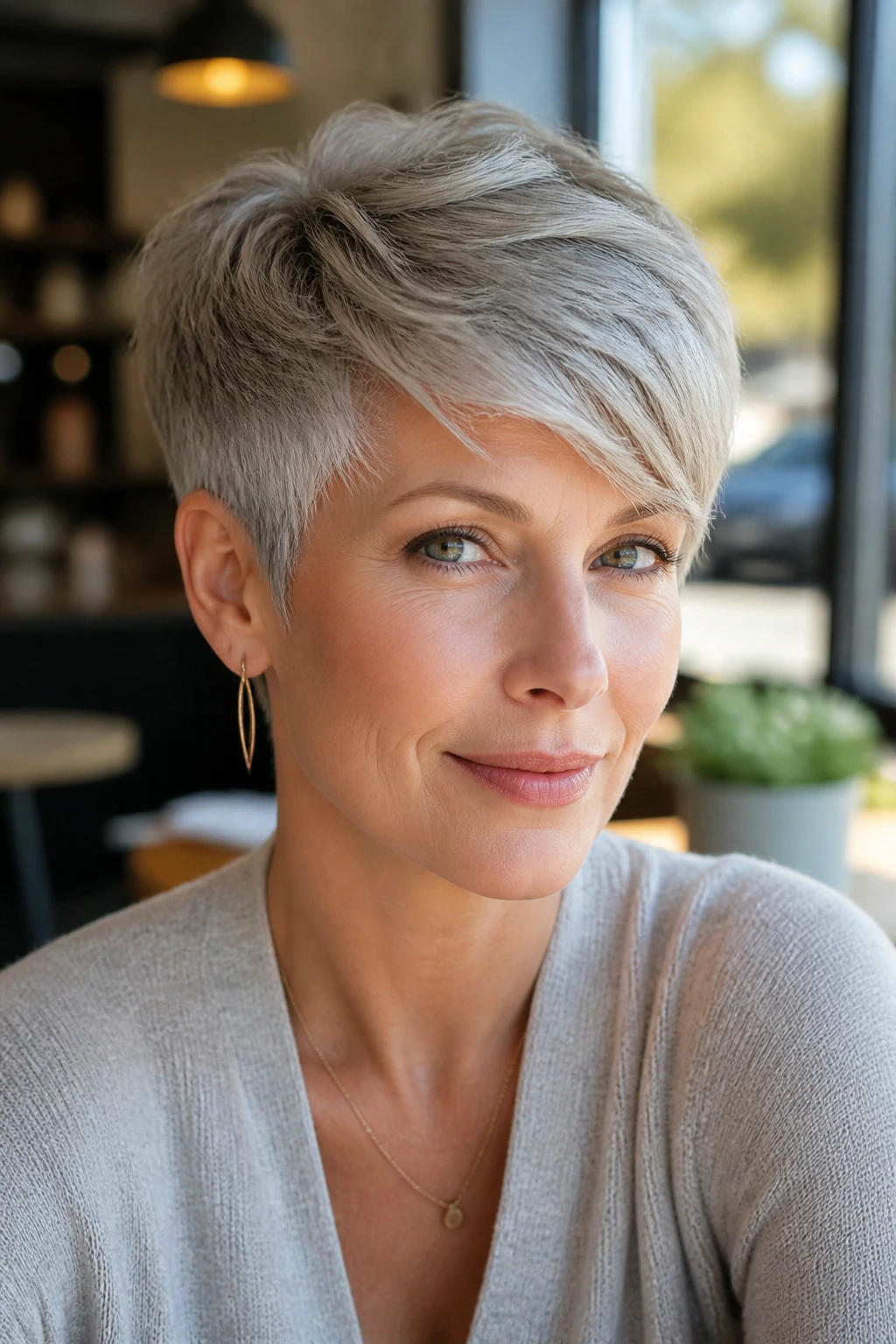
Soft-Side Sweep: Keep the fringe longer and angle it across the forehead. This is a smart choice if you want more movement without committing to a very short cut.
Silver Undercut: Shave or clip the lower layers short and leave the top fuller. It removes bulk from dense hair and gives the silver more contrast.
Curly Crown Crop: Leave enough length up top for your curl pattern to spring properly. Great for natural texture that needs room instead of control.
Shadow-Root Blend: Add depth at the roots so the gray grows out softly. Helpful if you color your hair silver and do not want hard regrowth lines.
Graphic Fringe Pixie: Keep the front line sharper and the sides neat. This one reads polished and modern, but it does need regular trims to stay crisp.
Keeping a Gray Pixie Crisp Between Salon Visits
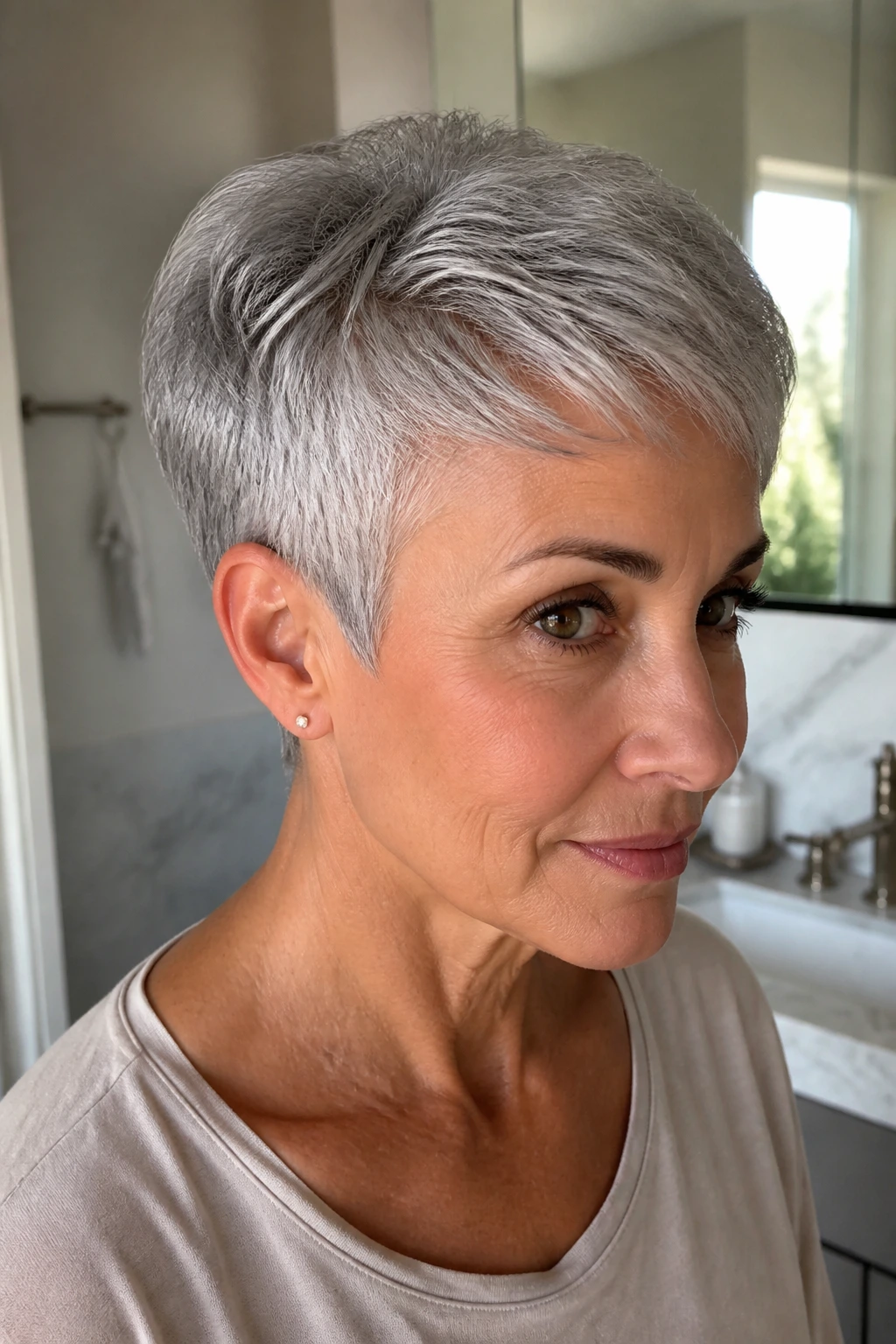
A gray pixie has a shorter life cycle than longer hair. That’s not a flaw. It’s the deal.
Plan on a trim every 4 to 6 weeks if you want the outline to stay clean, and a nape or sideburn tidy-up around the 3-week mark if your hair grows fast. If your style depends on a precise undercut or a micro fringe, you’ll feel the difference even sooner. The cut either sits right or it doesn’t.
Color care is a separate job. Use purple shampoo only as needed, usually once a week or every other wash, and follow it with conditioner so the hair doesn’t get brittle. If your silver is salon-colored, ask whether a gloss or toner refresh makes sense between appointments. It often does, especially if your hair pulls yellow at the ends.
Sleep matters more than people think. A silk or satin pillowcase cuts down on friction, which helps the fringe stay smoother and keeps the crown from getting snagged into odd directions overnight. If you wake up with a weird bend, mist the hair lightly with water, reshape the top with your fingers, and let it dry for a few minutes before you reach for heat.
Questions People Actually Ask About Gray Pixie Cuts
Which gray pixie cut is best for fine hair?
A layered pixie with crown lift is usually the safest bet. Fine hair needs structure where it can get it, and short internal layers stop the top from lying flat against the scalp.
Can gray pixie cuts work on thick hair?
Yes, but the cut has to remove bulk in the right places. An undercut, tapered nape, or razor-soft layers keep thick hair from ballooning around the ears.
How often should a gray pixie be trimmed?
Most short gray cuts look their best with a trim every 4 to 6 weeks. If the shape depends on a very short fringe or a sharp neckline, a touch-up sooner keeps it crisp.
Does a pixie make gray hair look thinner?
Not if the cut is built well. A flat, one-length pixie can make hair look sparse, but layered crowns and soft texture usually make silver hair look fuller.
What keeps silver hair from turning yellow?
Purple shampoo helps, but don’t overuse it. Hard water, heat styling, and too much sun can also dull the tone, so a shower filter and heat protectant are worth the trouble.
Can you grow out a gray pixie gracefully?
Yes, if the top is left a little longer and the nape is cleaned up on schedule. A pixie-bob transition is usually the easiest path.
What if I want a gray pixie but still want some softness around my face?
Choose a long-top pixie, a side-swept fringe, or a rounded shape. Those versions keep the face open without making the haircut feel severe.
What product gives the best piecey finish?
A matte paste or light styling cream usually works better than glossy pomade. You want separation, not shine that glues the strands together.
A Shape That Keeps Silver Interesting
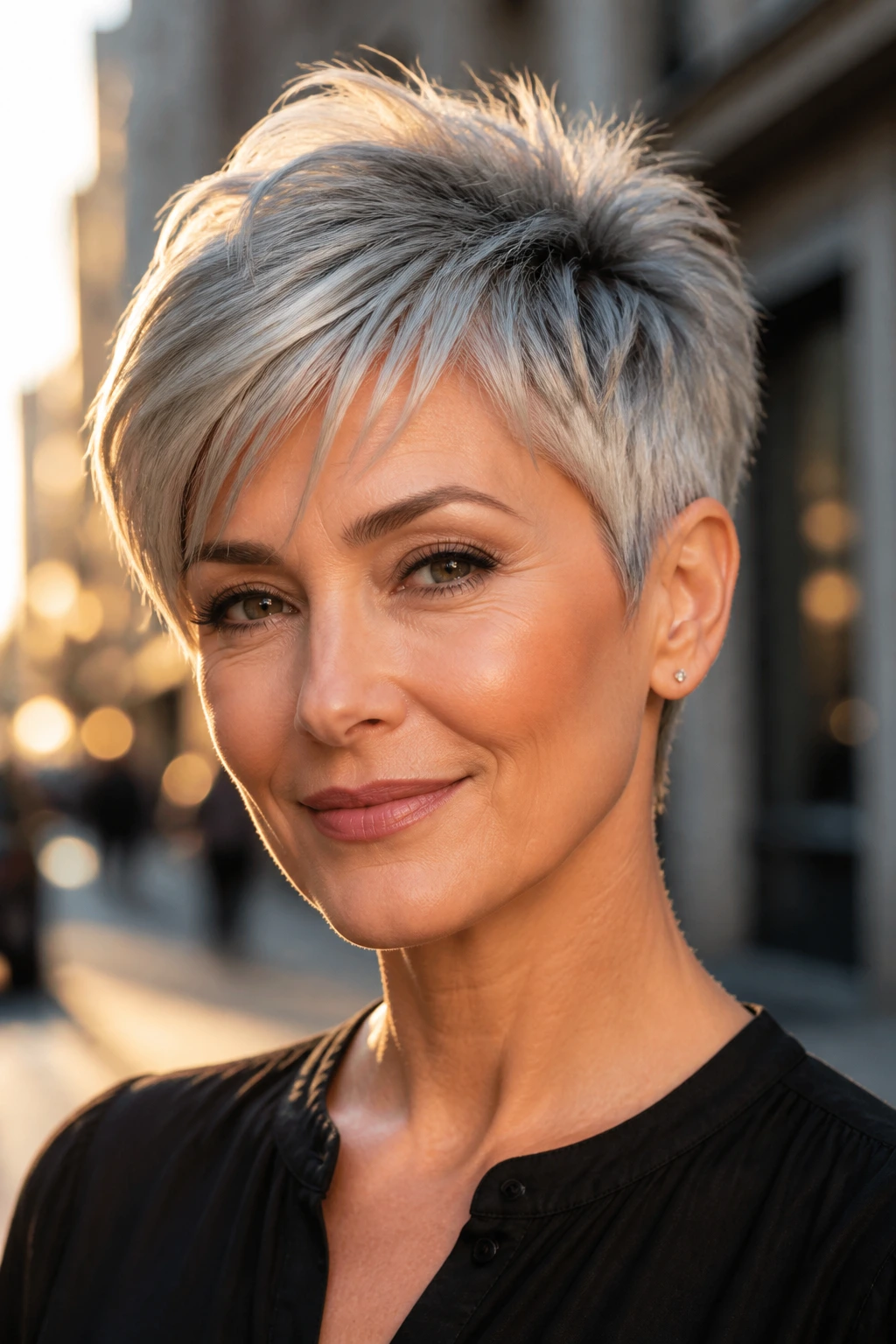
Gray pixie cuts work because they take a color people often think of as passive and give it structure. The right cut can make silver hair look lean, bright, and deliberate instead of flat or accidental. That’s the whole trick, really. Shape first. Shine second.
If you’re thinking about going shorter, start with the version that fits your texture and your upkeep tolerance, not the boldest one in the room. A soft crop, a swept fringe, or a layered crown can give you all the silver impact without making your mornings miserable. And once the cut sits right, the color starts doing the fun part on its own.
