



Pixie cuts for women over 50 work best when they do more than look neat. They should lift the face a little, tidy the neckline, and make hair behave without turning every morning into a styling session. A good pixie can take weight off dense hair, wake up fine hair, and make silver strands look sharp instead of fuzzy.
That shape matters. A lot. A close crop with a soft fringe sends a different message than a choppy, lifted top with exposed ears. Gray hair changes how light hits the cut. Cowlicks change where the crown wants to split. Even the glasses you wear can change the balance of the whole thing.
The 20 pixie cuts below work because they treat those details as part of the haircut, not problems to hide. Some keep length on top so the cut can be brushed forward or up. Some use tapering around the ears and nape to remove bulk. Some lean into curls, silver strands, or a little asymmetry so the hair looks intentional the day you leave the salon and the day before your next trim.
Why These Pixies Earn Their Keep
-
They create lift where hair usually falls flat: A little extra length at the crown gives the top of the head some height, which matters when hair starts to collapse at the temples.
-
They make gray and silver hair look deliberate: Clean edges and soft texture keep white or salt-and-pepper hair from reading as unfinished or puffy.
-
They work with glasses instead of fighting them: Shorter side layers, open temples, and tidy sideburns keep frames from getting buried in hair.
-
They can hide, soften, or sharpen a face shape on purpose: A side-swept fringe softens the forehead, while a tighter nape and longer top can sharpen the jaw.
-
They save time without forcing a helmet look: The best pixies still move. They do not sit there like a cap glued to your head.
-
They grow out better than people expect: When the perimeter is tapered and the top has a little room, the cut can stretch a few weeks without looking sloppy.
1. Feathered Pixie with Soft Crown Lift
This is the pixie for anyone who wants movement, not stiffness. The ends are chipped and feathered, the crown keeps a little extra length, and the whole cut sits lightly around the face instead of boxing it in. It looks especially good when the hair has a bit of natural bend, because the feathering breaks up that older-hair habit of lying flat in one heavy sheet.
Why It Works
Feathering softens the outline, which matters when hair thins at the temples or around the part. The crown lift gives the top some air, so the cut doesn’t collapse after lunch. That little bit of height changes the whole face line.
Ask for point-cut ends and a gentle taper at the nape. If the sides are too blunt, the cut turns boxy fast. If the top is left a touch longer, you can rough it up with a pea-sized amount of matte paste and still keep it airy.
Good For
- Fine to medium hair that needs more body
- Faces that look better with softness around the forehead
- Women who want a pixie that doesn’t feel severe
2. Tapered Crop with a Longer Crown
If your hair grows wide at the sides, this cut is the clean answer. The nape and around the ears are tapered close, while the top stays long enough to brush forward or back. It gives the head a tidier shape from every angle, which is a bigger deal than people think.
The trick is the contrast. Short sides make thick hair sit closer to the scalp, and the longer crown keeps the cut from looking flat or too sporty. I like this one on women whose hair gets puffy in humid air, because the taper removes the bulk that usually swells first.
A little root spray and a quick blow-dry with a vent brush are enough. No heavy cream. That would just flatten the lift you paid for.
3. Side-Swept Pixie with a Long Fringe
Why does this one flatter so many faces? Because the fringe does half the work. A side-swept front draws the eye diagonally, which softens forehead lines, balances a stronger chin, and keeps the cut from reading too cropped or too blunt.
The front should move, not hang. Tell your stylist you want a fringe that can tuck behind one ear or fall across the brow without needing a fight with the comb. That tiny bit of length at the front makes a big difference on days when you want the haircut to look done with almost no effort.
Styling Note
Use a light mousse at the roots, then blow-dry the fringe in the direction you want it to live. Finish with one bend from a small flat iron if the front flips the wrong way. That’s enough. More heat usually just makes it stiff.
4. Choppy Textured Pixie
This cut has attitude, but not the loud kind. The texture comes from uneven ends, short layers stacked through the top, and a perimeter that never feels overly polished. It’s the sort of pixie that looks best when it’s been finger-styled and left alone before it gets fussy.
The real strength here is how forgiving it is. If your hair has one side that sticks out, or a crown that won’t sit flat, the choppy finish turns those quirks into part of the shape. That’s a lot better than trying to iron everything into place.
A texturizing spray at the roots and a dab of paste at the ends are enough. Keep the product off the scalp if your hair is fine; otherwise the cut can separate into little stringy pieces that look tired by noon.
5. Classic Short Pixie with Clean Edges
Some people want soft and airy. Some want sharp and tidy. This is the latter, and there’s nothing wrong with that. A classic short pixie keeps the outline clean around the ears, close at the nape, and neat through the sideburns, with just enough length on top to give the cut shape.
It works because it’s disciplined. There’s no extra frill to hide behind, so the haircut has to be well cut from the start. That’s the version I trust most on straight hair, especially when the hair is fine and tends to lose its shape quickly.
This one asks for regular trims. Every 4 to 6 weeks is the sweet spot. Skip too many appointments and the clean line turns fuzzy in a hurry.
6. Undercut Pixie for Thick Hair
Thick hair can look lush, then suddenly too wide for its own good. An undercut pixie takes the bulk out from underneath and leaves the top more manageable, so the whole cut sits closer to the head without losing personality.
This is not a shy haircut. It works best when you want the sides and nape to feel lighter, maybe even a little edgy, while the top still gives you room to style. The contrast makes dense hair easier to dry and easier to refresh the next morning.
Be honest with your stylist about how much weight you want removed. Too much undercutting can leave a gap that grows out awkwardly. Too little, and the haircut still feels heavy.
7. Curly Pixie with a Soft Round Shape
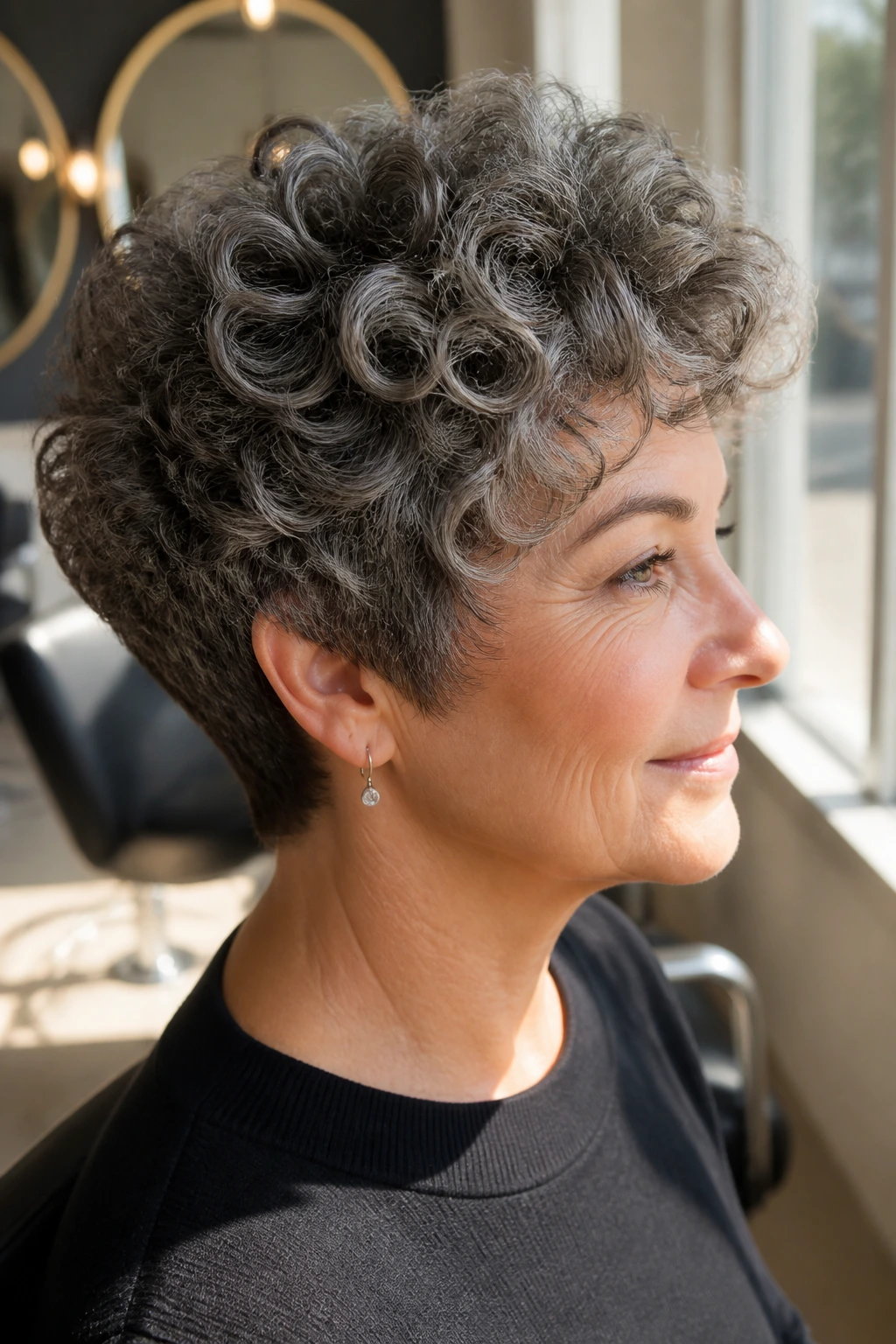
Curly hair changes the whole conversation. A good curly pixie leaves enough length for the curls to spring instead of puffing out into a triangle. The shape should feel rounded and controlled, with the tightest taper at the nape and a little breathing room up top.
Drying matters here. Curly pixies often look best when the curls are cut with their spring pattern in mind, then shaped with a diffuser or air-dried with leave-in cream. If the ends are too short, the curl can shoot up and expose more scalp than you wanted.
What to Ask For
- A dry or curl-specific cut
- Soft layering, not choppy slicing everywhere
- A nape that stays neat while the crown keeps bounce
8. Silver Pixie with Shine and Separation
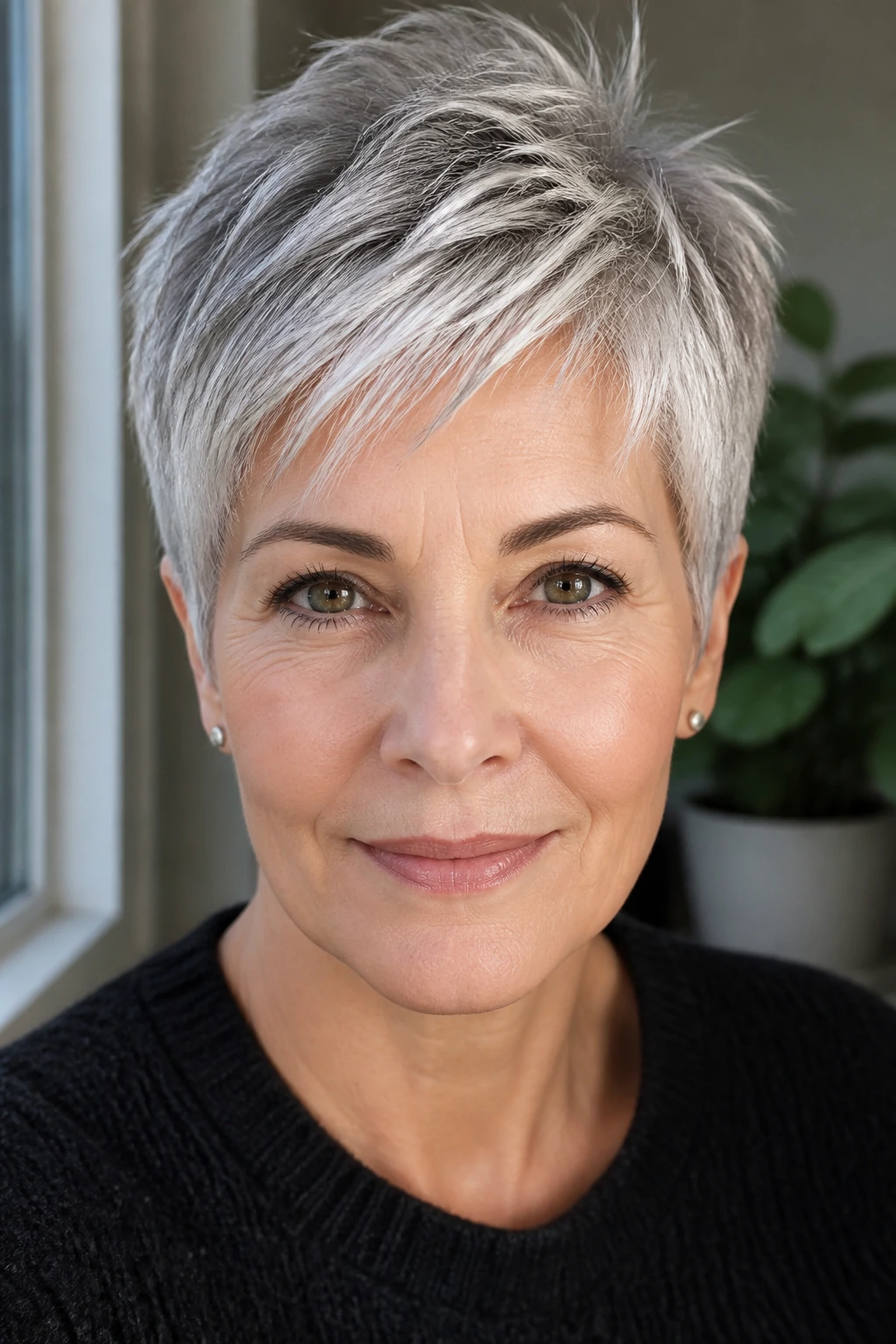
Gray and silver hair can be gorgeous in a pixie, but the cut has to respect the texture. The best silver pixies are crisp at the edges and soft through the top, which keeps the color from looking flat. Silver strands show shape fast. They also show product buildup fast, so lightness matters.
I like a little separation on this one. A touch of styling cream or a drop of pomade at the ends gives the hair definition without dulling the shine. Purple shampoo can help if the silver has a yellow cast, though overuse will make the hair feel dry and chalky.
A silver pixie looks its best when the cut is honest about the hairline. Let the natural growth pattern show a bit. Fighting every silver swirl is how you end up with a puffball.
9. Brushed-Up Pixie with a Lifted Front
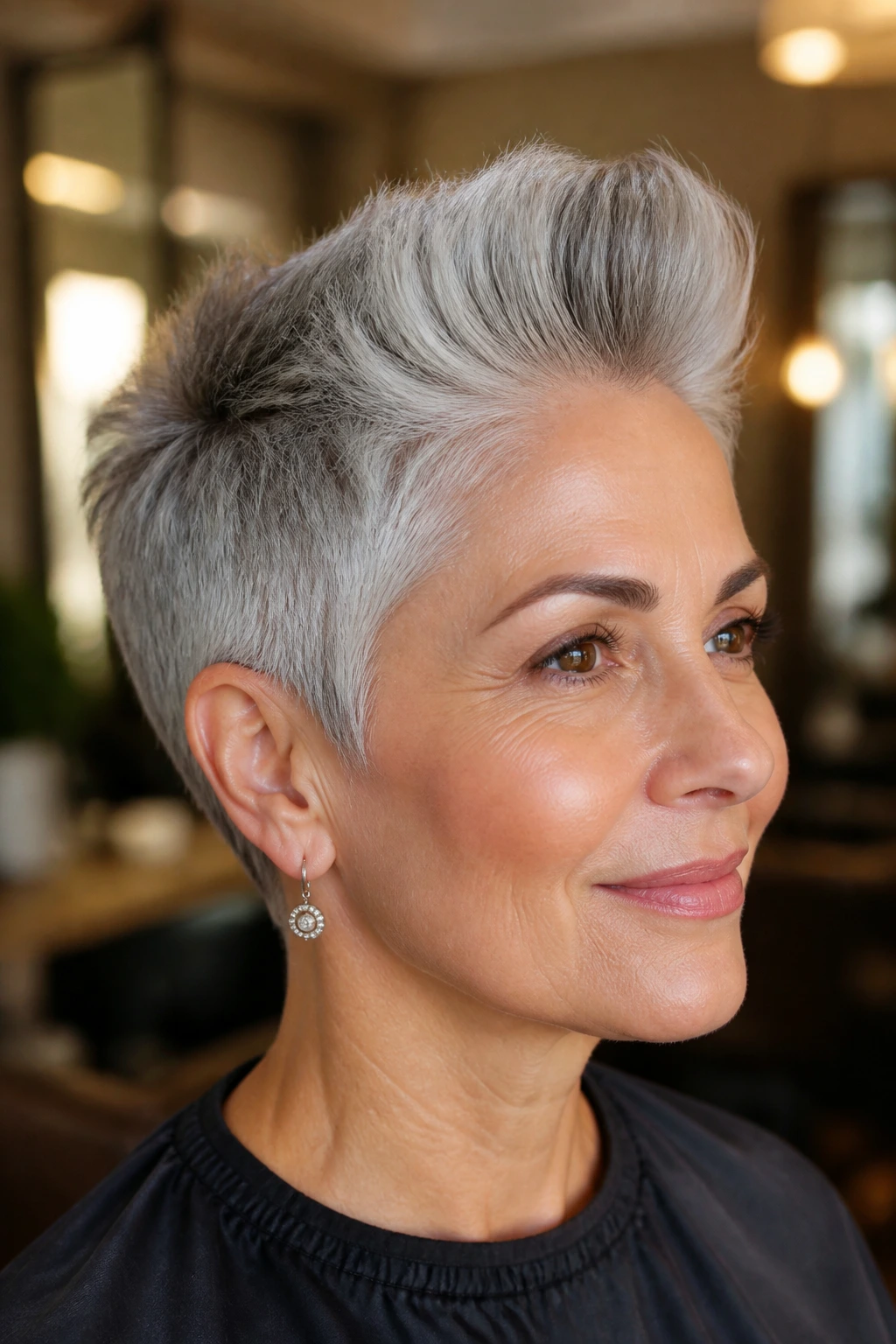
This is the cut that makes a crown work harder. The front is brushed upward or slightly back, and the top stays long enough to hold that lift without going stiff. It reads polished without becoming helmet-like, which is a common fail point with lifted short hair.
It suits women who like a little height and don’t mind a more styled finish. The shape is especially useful if the forehead feels a touch short or if you want the face to look a little longer. Just keep the sides close enough that the volume stays on top where it belongs.
A round brush and a blow dryer make the biggest difference here. Blow the roots up, not out. That one detail keeps the cut from turning into a puff.
10. Long-Top Pixie with Tucked Sides
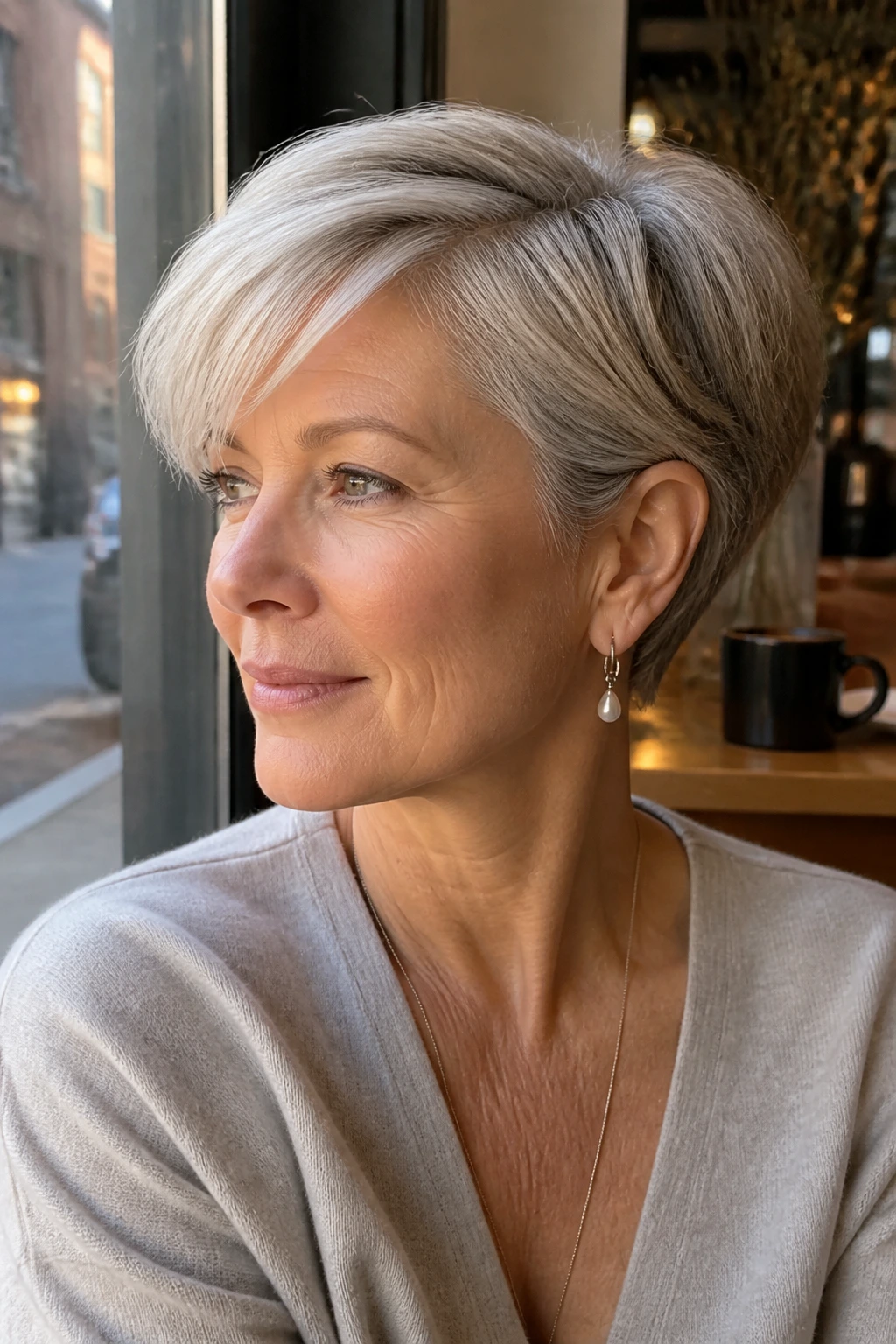
Why keep the top longer? Because it gives you options. You can sweep it forward, pinch it upward, or let it drape slightly over the forehead. The short sides keep the shape clean, but the longer top prevents the haircut from feeling pinned down.
This version does well on straight hair and on hair that has one stubborn cowlick at the front. That extra length gives the front enough weight to stay where you put it. It also plays nicely with glasses, since the top carries the style while the sides stay neat.
If you only want one styling product, make it a light paste. Work it between your palms first. Then tap it into the top instead of rubbing it all through the sides.
11. Ear-Tucked Pixie with Open Temples
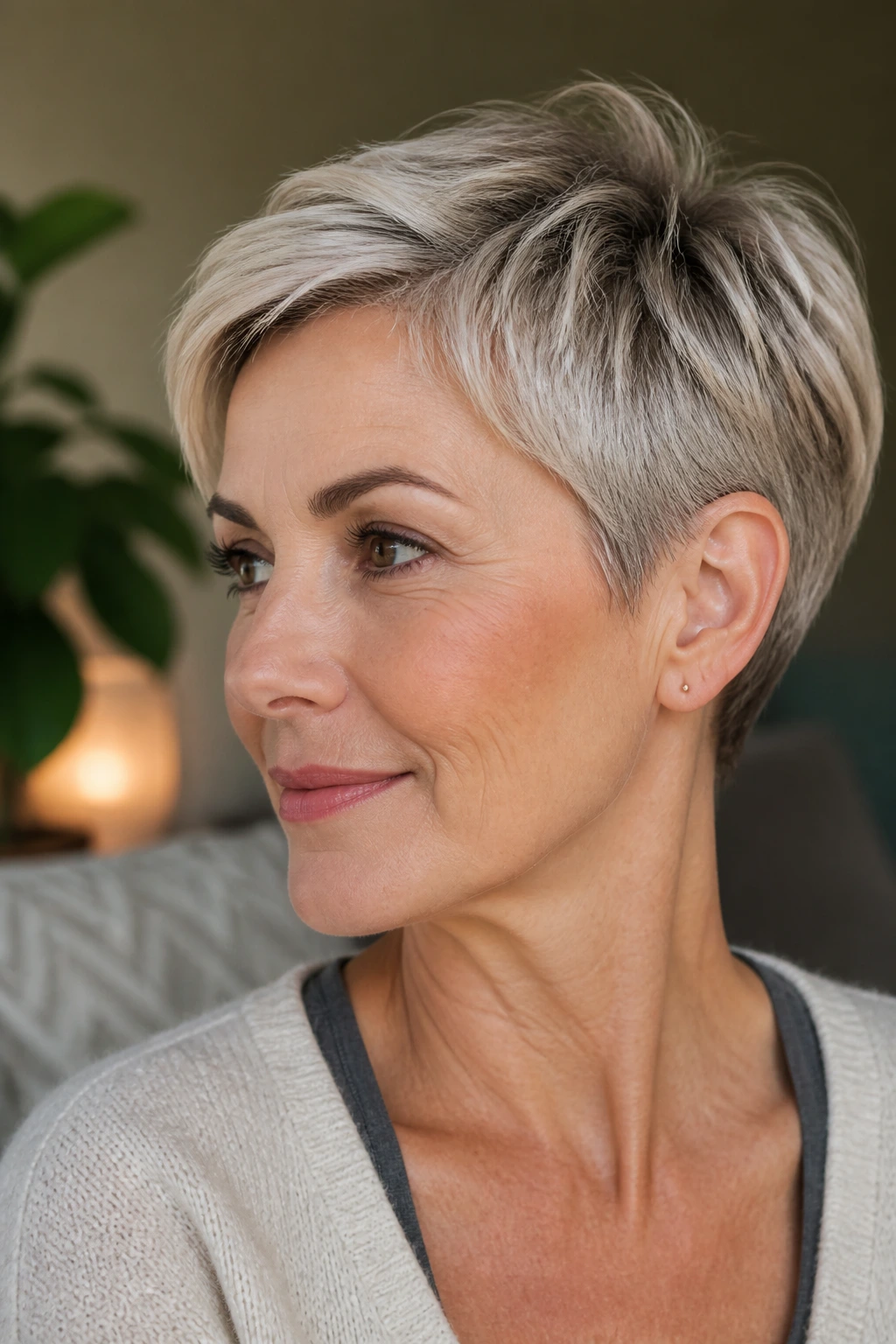
This is a smart cut when you wear earrings, glasses, or both. The sides stay short enough to tuck behind the ears cleanly, and the temples are open rather than bulky. That small change makes the face feel more visible and the haircut feel less crowded.
It’s especially good for women who don’t want a lot of hair touching the neck. The shape keeps the ears visible and the neckline tidy, which helps if the hair is thick around the side panels. There’s also a useful side effect: it looks tidy even when the rest of the style gets a little tousled.
If you like this shape, ask for sideburns that taper softly instead of stopping in a hard line. Hard lines around the ear can make the whole cut feel abrupt.
12. Wispy Fringe Pixie
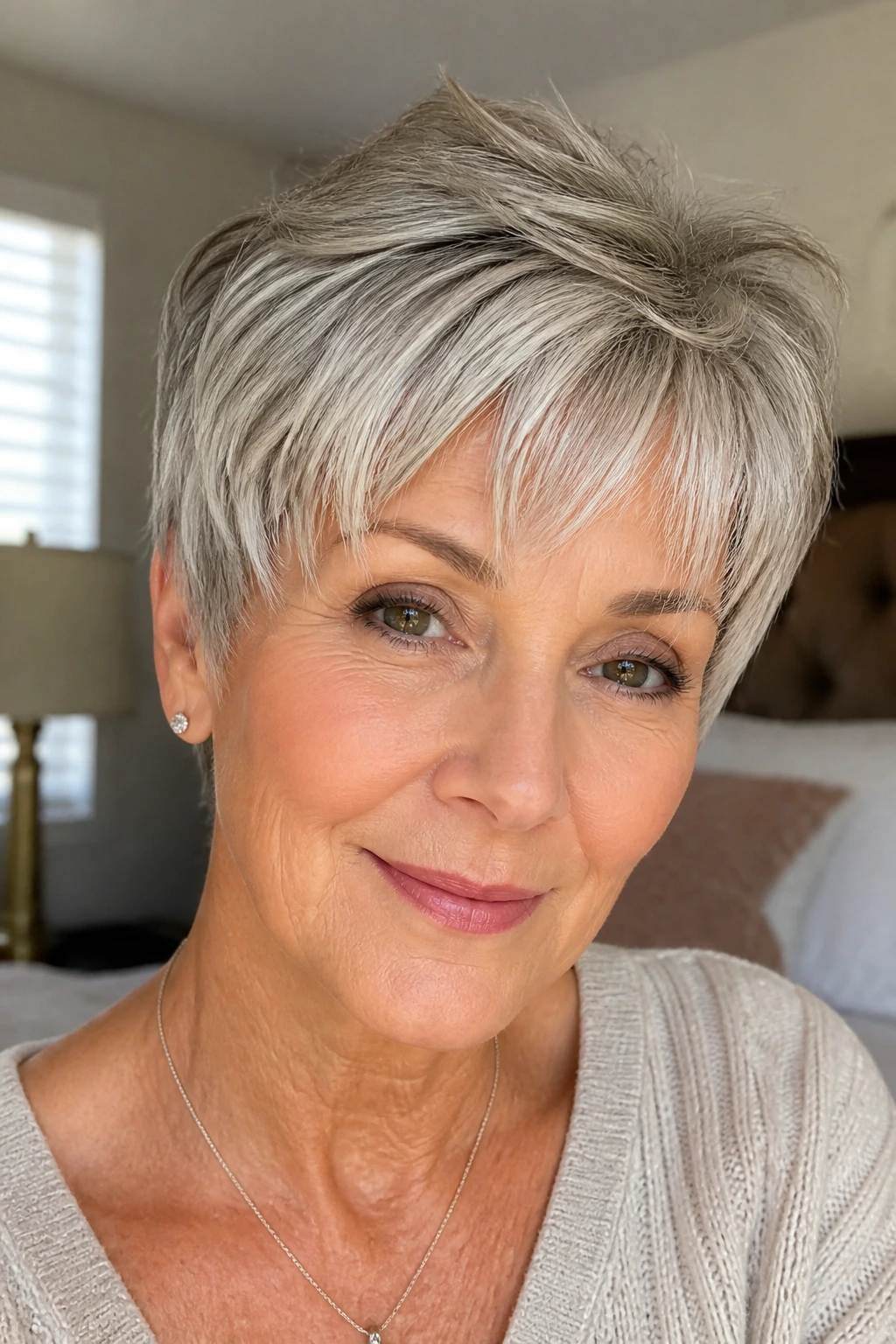
A wispy fringe is not the same thing as heavy bangs. It’s lighter, softer, and easier to move around if you’re wearing the cut with glasses or if your forehead lines bother you a little. The fringe should skim, not sit there in a blunt strip.
This shape works because it breaks up the front of the face without closing it off. A dense fringe can drag a pixie down fast, especially on fine hair. Wispy pieces keep air in the cut and let the eyes stay open.
A tiny flat iron bend at the ends can help if the fringe wants to split. Keep it subtle. The point is softness, not precision for its own sake.
13. Layered Pixie-Bob Hybrid
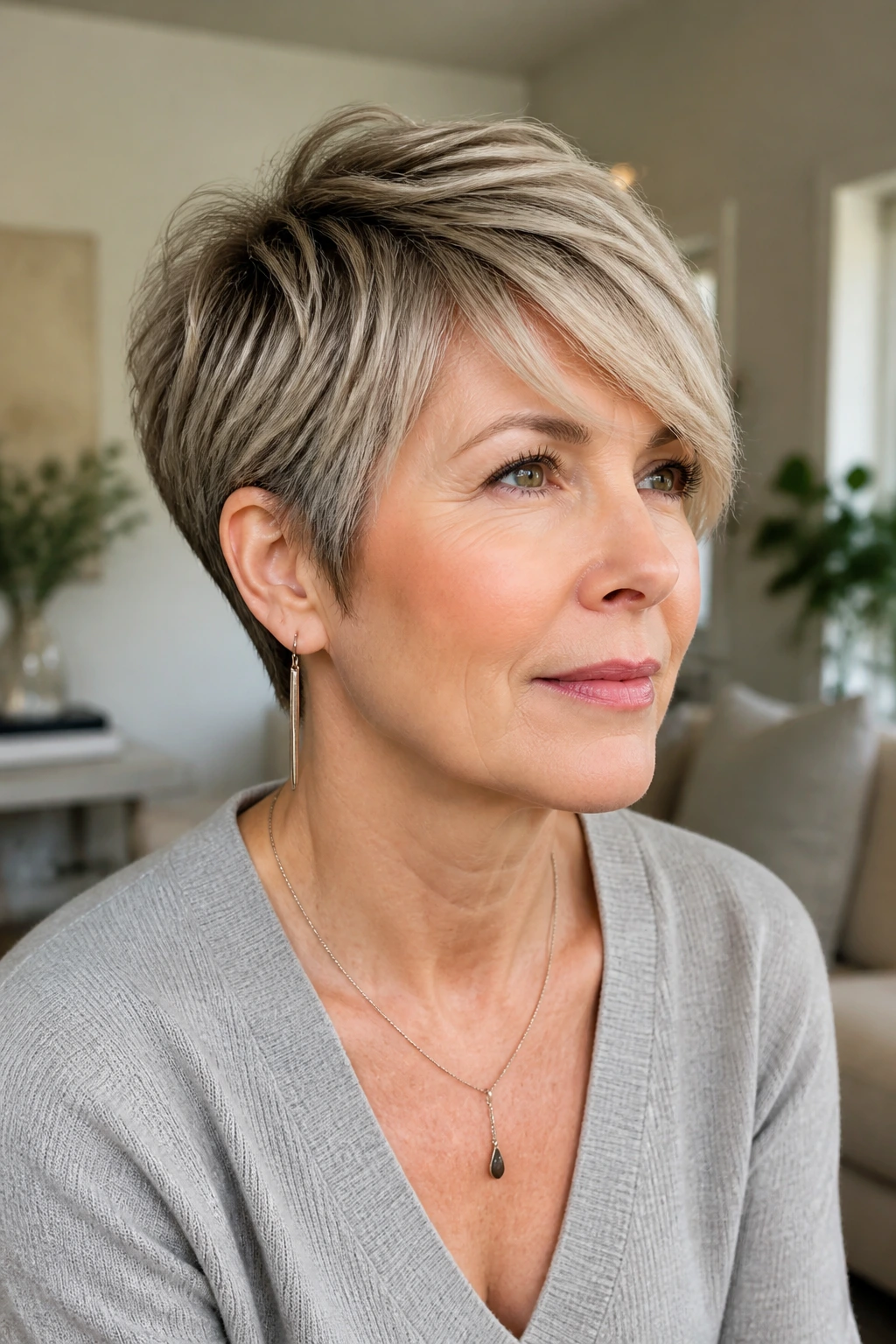
If you’re not ready to go all the way short, this is the compromise that doesn’t look like one. The back stays short enough to count as a pixie, but the front and sides carry a bit more length, almost like a cropped bob that got trimmed into shape. It’s a strong choice for anyone easing into shorter hair.
The extra length around the face gives softness, while the stacked layers in the back keep the silhouette neat. That balance helps if you want to keep some movement around the jaw without having hair sit on your shoulders. It also grows out with less drama than a razor-sharp pixie.
This cut likes a round brush at the crown and a quick bend at the ends. Too much layering through the front can make it flip oddly, so the cut should stay controlled.
14. Faux-Hawk Pixie with Lift Through the Center
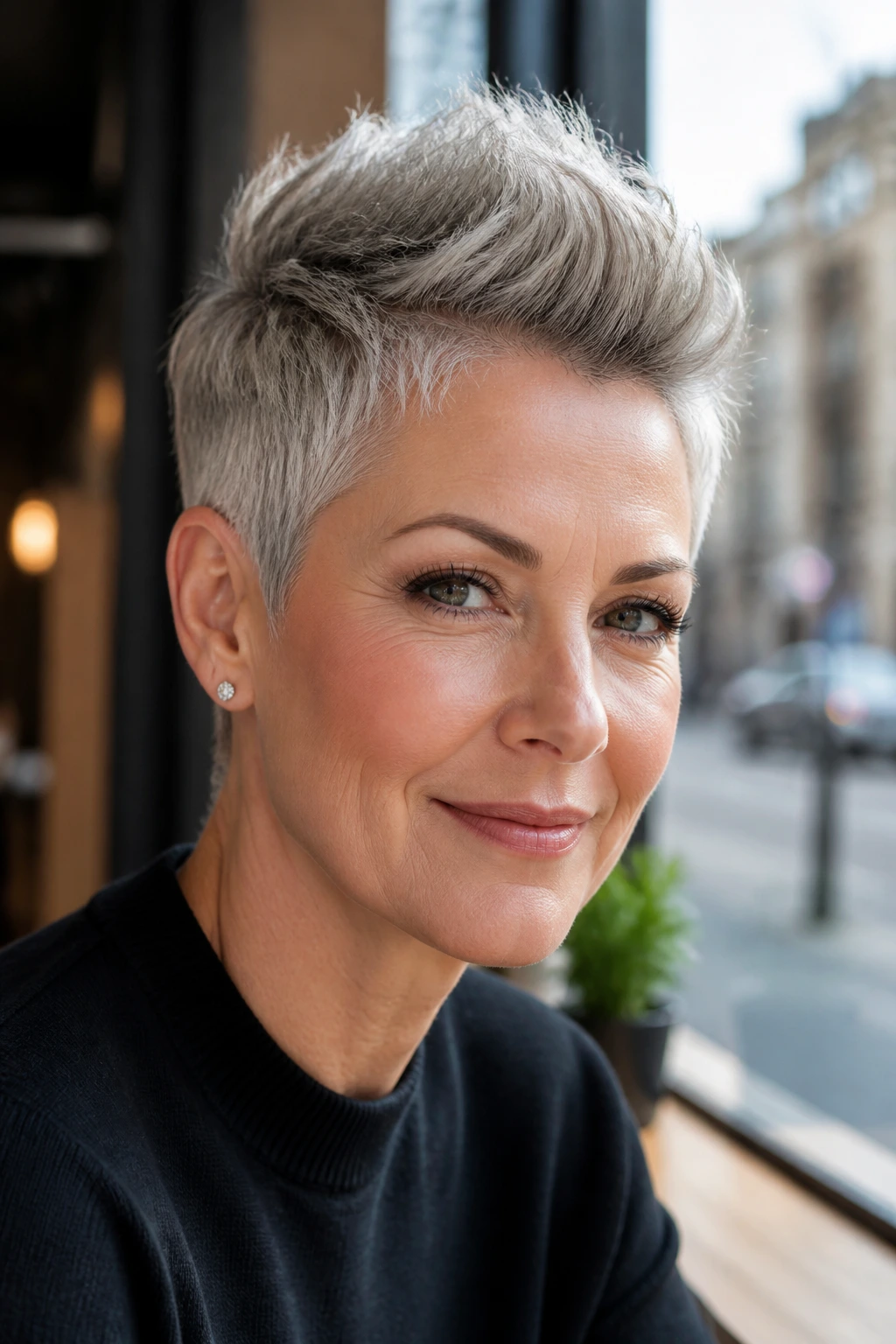
A faux-hawk pixie sounds bolder than it often looks. The center strip is kept longer, the sides are tight, and the styling pushes the middle up and slightly forward. It has energy, but the version that works after 50 usually leans more chic than punk.
The reason it works is shape. By concentrating the height in the middle, the cut elongates the face and makes the cheekbones look more pronounced. Thick hair handles this especially well, because the center has enough body to stand up without collapsing.
Best When You Want
- A sharper silhouette
- More lift through the crown
- A cut that looks deliberately styled in under 10 minutes
15. Rounded Soft Pixie
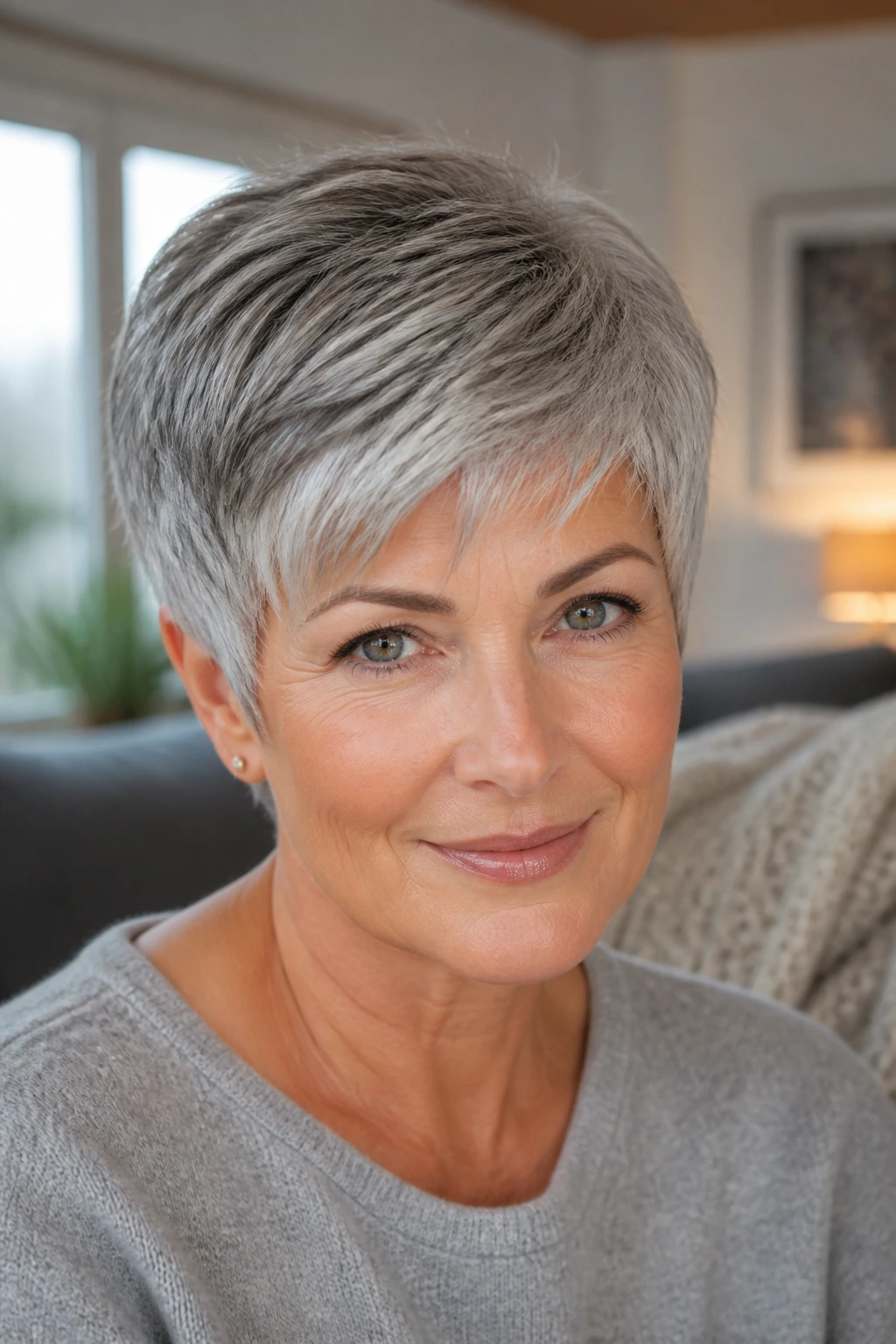
Not every pixie needs edge. A rounded soft pixie keeps the perimeter curved at the sides and gently tapered at the nape, so the cut feels smooth instead of spiky. It’s a lovely shape if you prefer a calmer line around the face.
This one flatters softer features and works well with hair that has a little wave. The rounded shape keeps the cut from sticking out at the crown, which can happen when too many short layers are stacked too high. It also sits nicely under hats and scarves because there isn’t a sharp ridge to press into.
If you’re asking for this cut, say you want softness around the temples and a smooth silhouette around the ears. Stylist shorthand helps, but a plain sentence works too.
16. Shaggy Pixie with Messy Ends
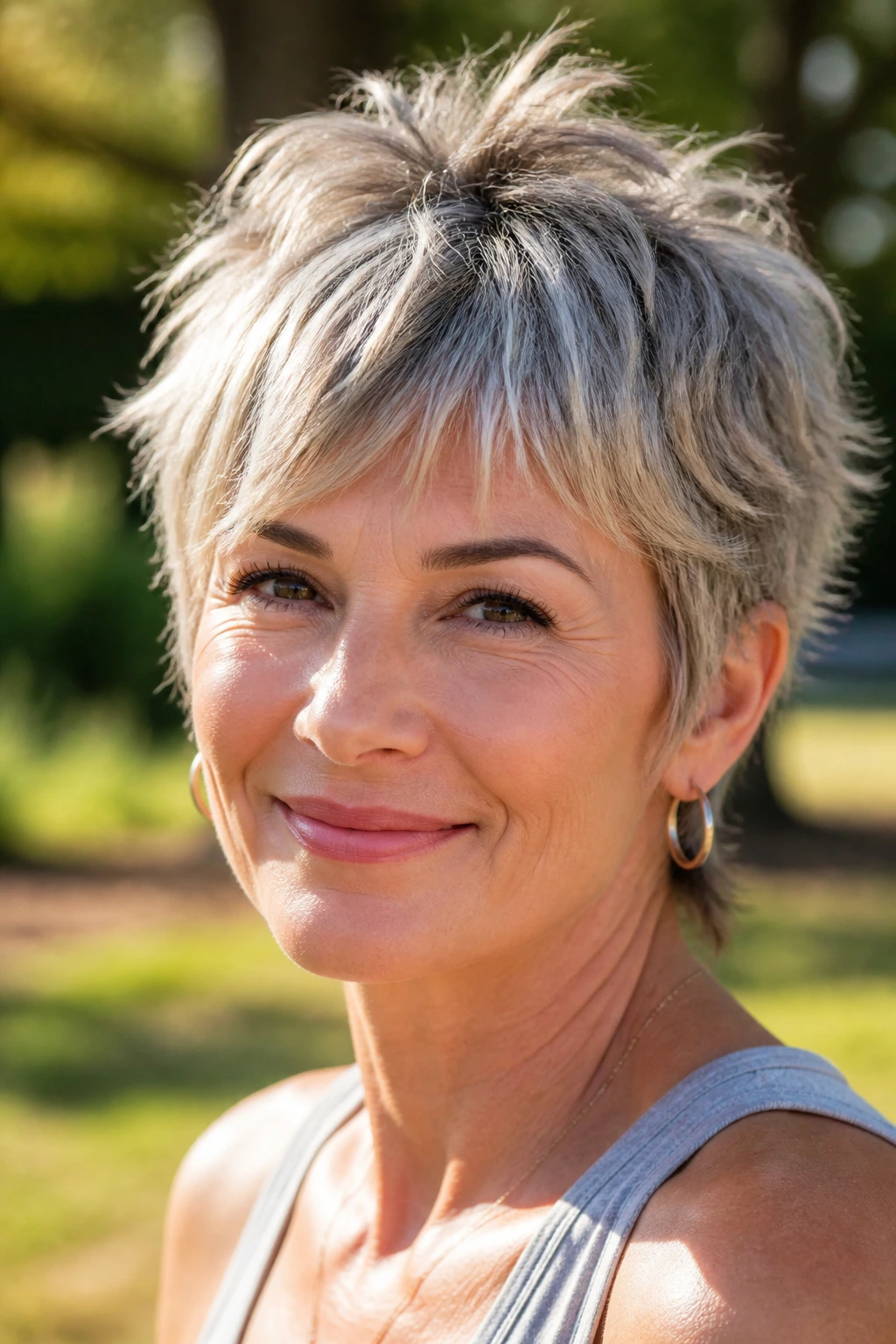
This is the pixie for people who hate the idea of hair behaving like a doorman at a fancy hotel. The ends are rougher, the crown is broken up with layers, and the whole thing is meant to look lived in. It has more grit than the feathered version, and that’s the point.
It works best on wavy or slightly thick hair. Air-drying is often enough if the cut is done well, which makes this one a real morning saver. A little sea salt spray at the roots can bring out the texture, but too much will make the hair feel crispy.
What Helps Here
- Point-cut ends keep the texture soft
- A diffuser adds lift without flattening waves
- Dry shampoo can revive day-two shape fast
17. Slicked-Back Pixie with Shine
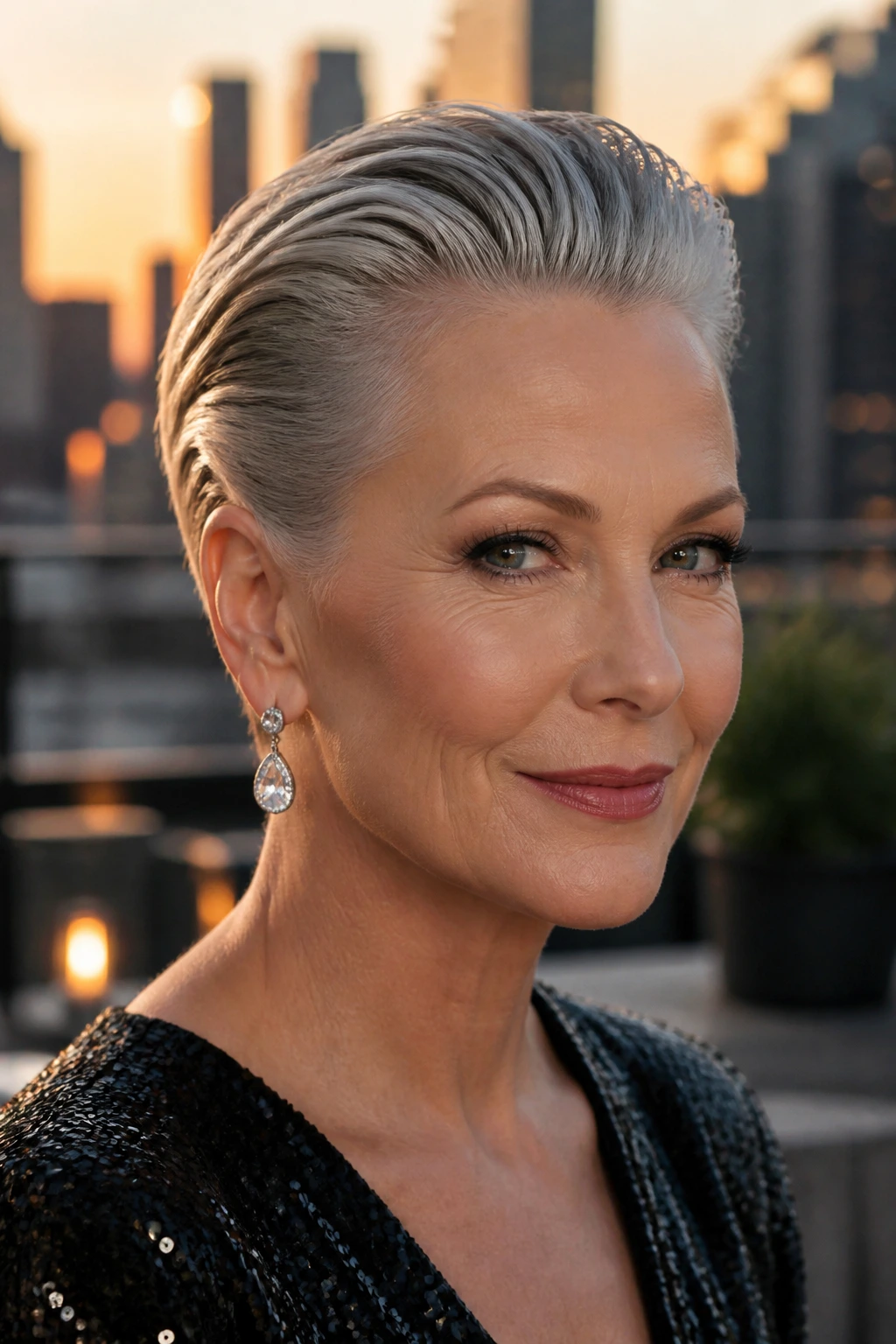
Some short hair looks best with a bit of polish. The slicked-back pixie sweeps the top away from the face, keeps the sides close, and uses shine to show off the shape of the head. It’s clean. Sharp. A little dramatic.
I like this one for evenings, photos, and any time you want the haircut to frame the face instead of hiding it. It also makes good cheekbones and strong brows do more work, which is often the whole point. The key is control: use a light gel or styling cream, comb it back while the hair is damp, and stop before it gets crunchy.
A tiny bit of shine spray can finish it. Too much, and the hair starts looking wet in a way that belongs on a swim deck, not in real life.
18. Asymmetrical Pixie with One Longer Side
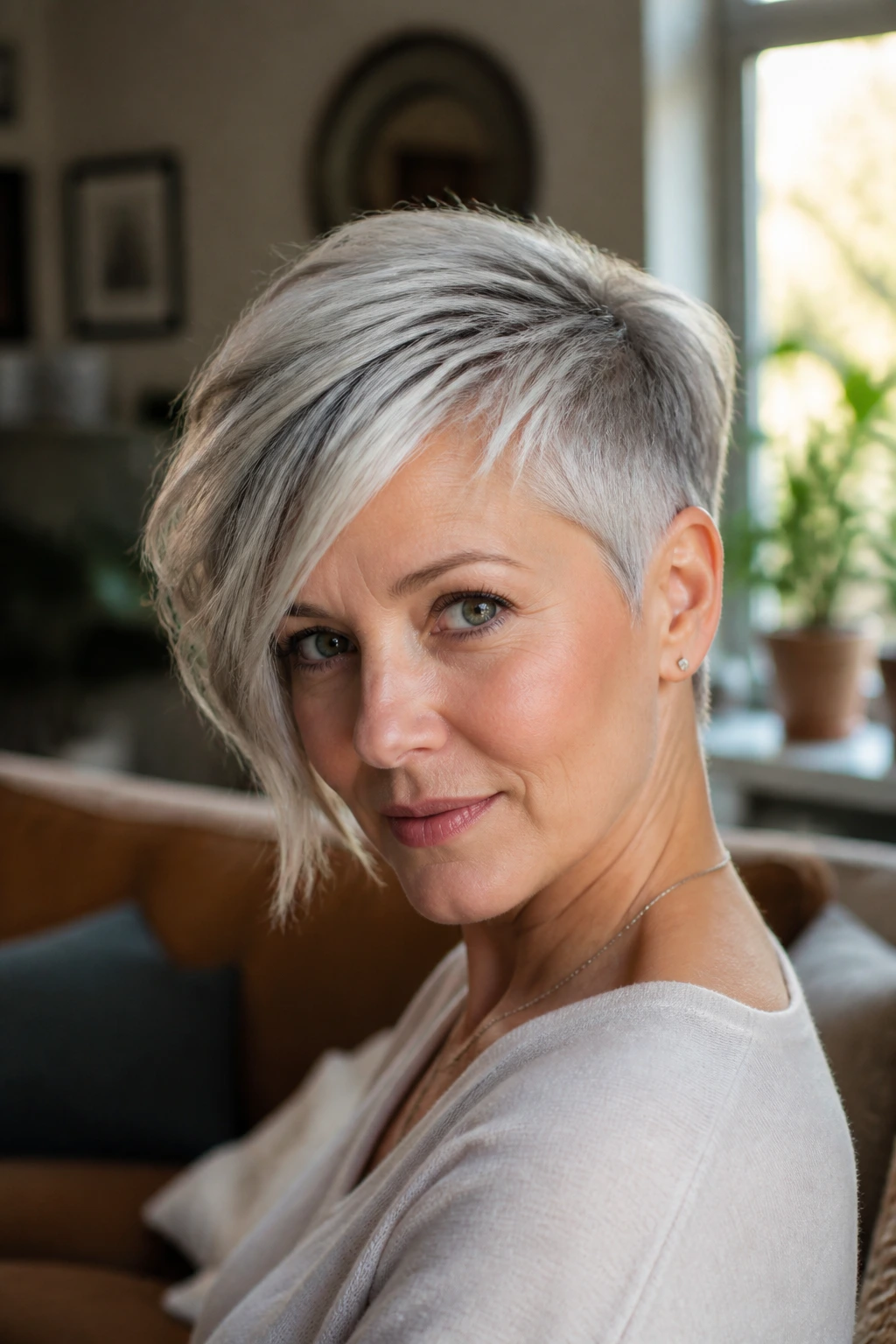
This is the cut that keeps one eye on drama and the other on practicality. One side is slightly longer, the other side is shorter and cleaner, and the difference creates movement without needing much styling. It’s a useful trick if you want a pixie that doesn’t look too symmetrical or severe.
The asymmetry can soften a round face or add interest to a face that already has strong lines. It also helps if one side of your hair falls flatter than the other, because the uneven shape makes that natural difference look intentional. That’s the nice part. Hair that wants to misbehave can be turned into design.
Just know it needs more frequent trimming than a softer pixie. Uneven lengths show growth faster, and once the balance shifts, the haircut loses its point.
19. Wash-and-Go Pixie with Soft Texture
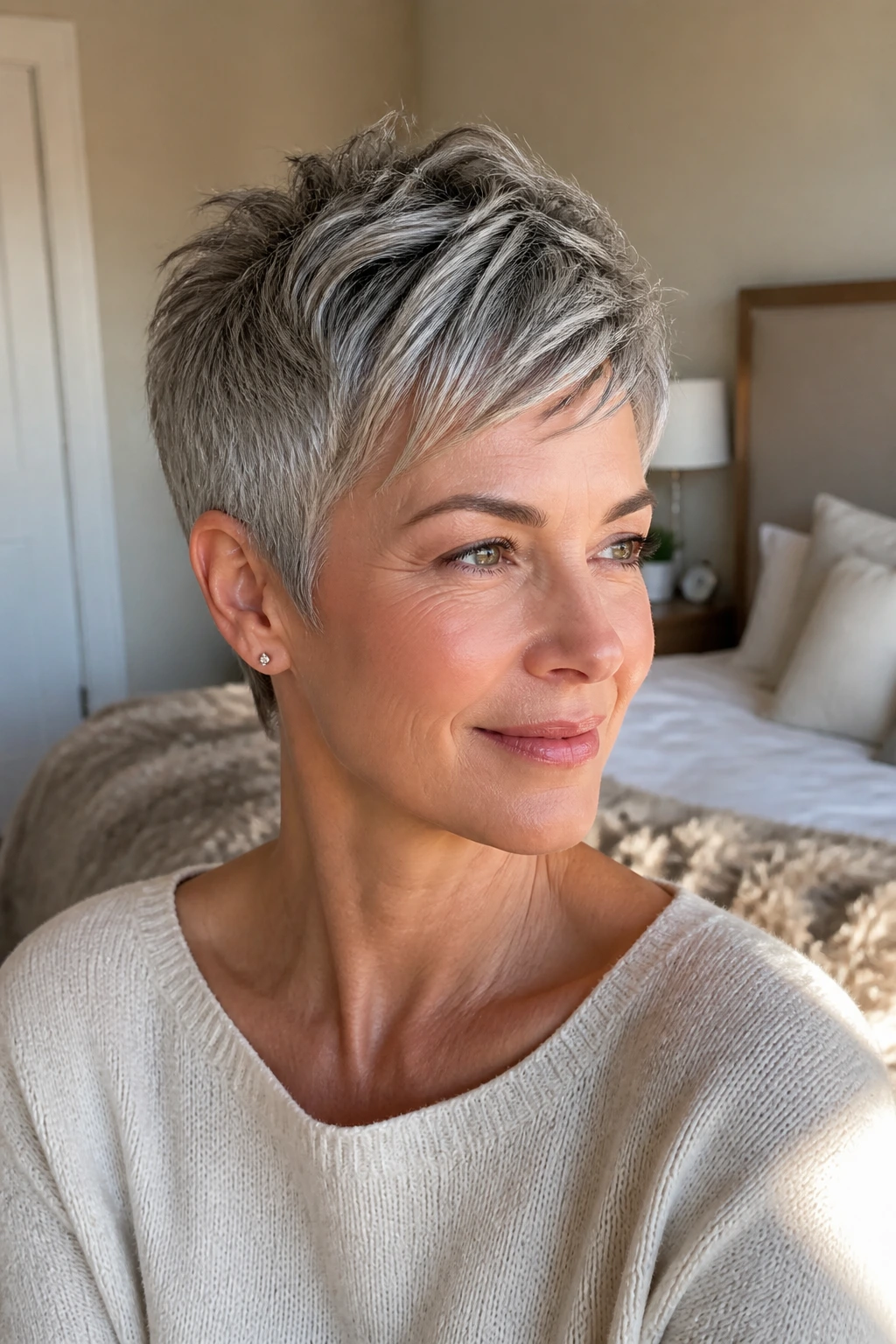
If your patience for styling tools is thin, this is the one to look at. A true wash-and-go pixie still needs a good cut, but it’s shaped so the hair falls into place with a little finger work and a towel dry. The texture should be soft enough to move, not so layered that it sticks up in every direction.
This cut works when the stylist leaves enough shape through the top and keeps the sides clean. A tiny bit of leave-in conditioner or foam is enough for most hair types. The mistake is asking for “easy” and ending up with a cut that has no structure at all. Easy only works when the shape is there first.
No heavy paste. No shiny wax. Let the hair do most of the work.
20. Salt-and-Pepper Sculpted Pixie
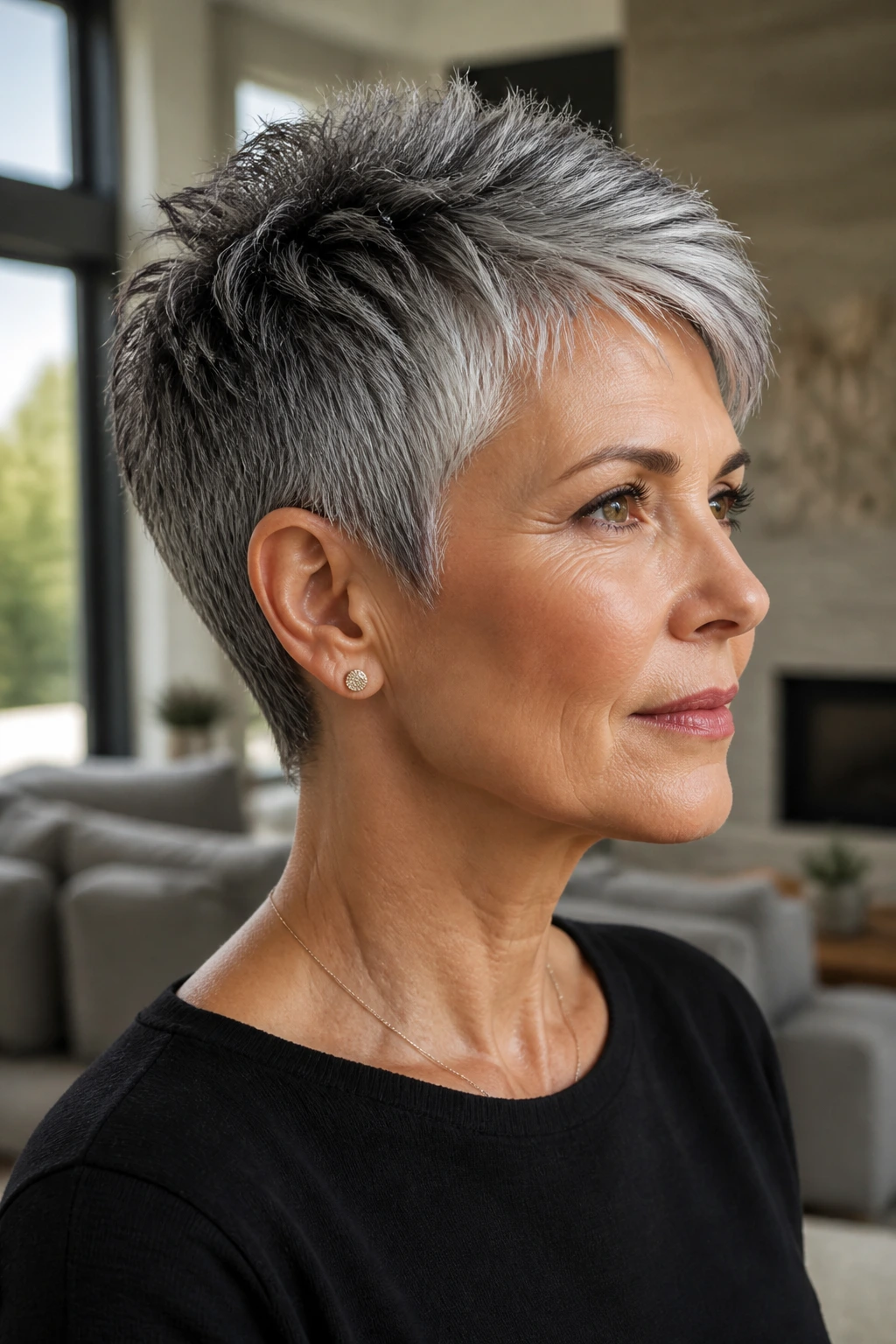
Salt-and-pepper hair has a depth that flat brown or blonde hair can’t fake. A sculpted pixie shows that off by keeping the outline tidy and the interior layers controlled, so the mix of silver and darker strands reads as dimension instead of patchiness. It’s one of the few short cuts that can look both crisp and soft at the same time.
The reason it looks so good is contrast. The darker strands give the shape definition, and the silver catches light on the edges and crown. If the cut is too loose, that contrast gets messy. If it’s too tight, the color can look harsh. The sweet spot sits right between those two.
This is a strong choice if you want your natural color pattern to do some of the styling for you. It asks for a clean neckline, a thoughtful crown, and a little respect for what your hair is already doing on its own.
Why Pixie Cuts Make So Much Sense After 50
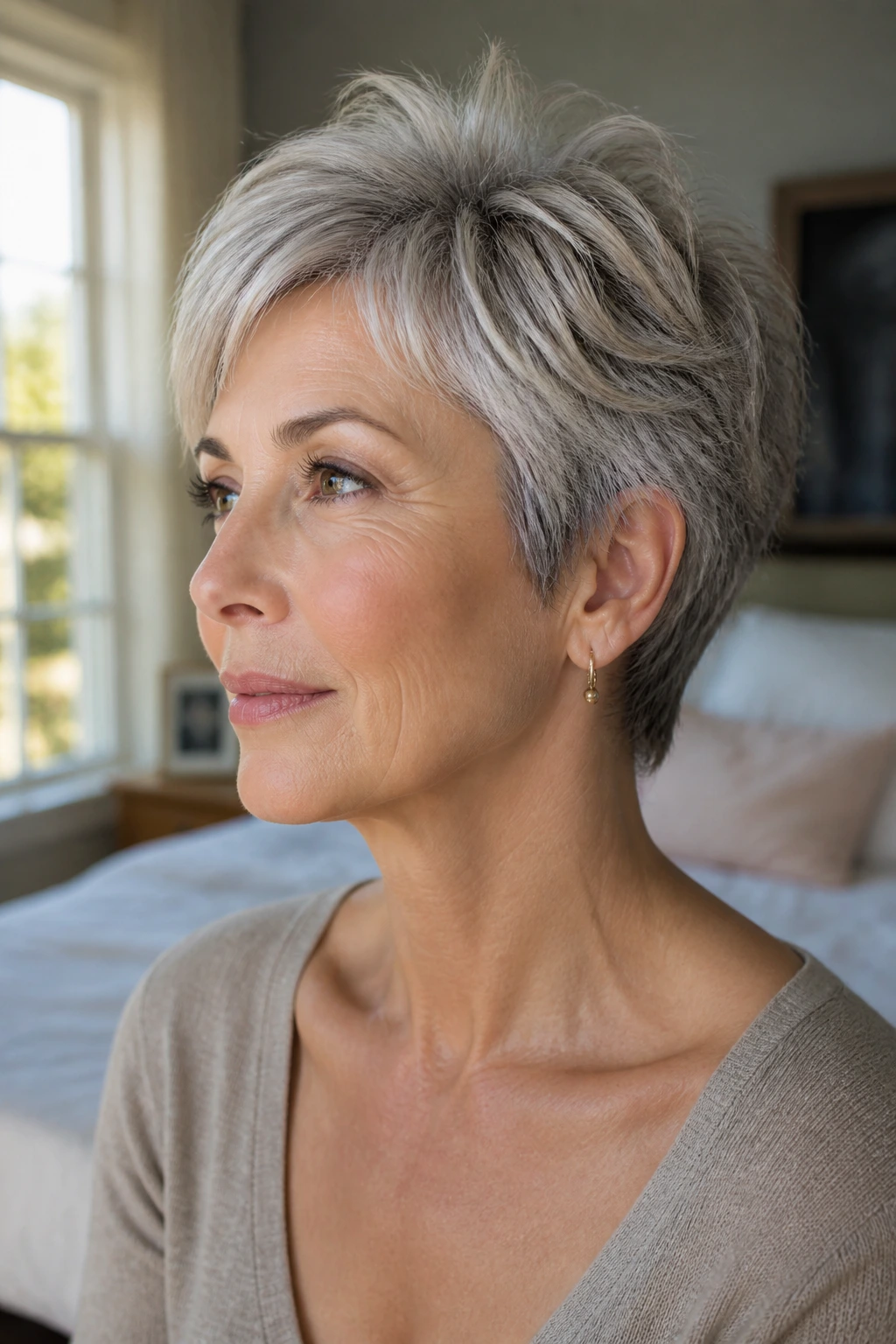
Hair changes. That sounds obvious, but the way it changes matters more than the fact that it changes at all. Density often shifts around the temples and crown, gray strands can feel coarser or wirier, and the old long layers that used to fall nicely can start hanging in the wrong places. A pixie cut solves those problems by removing weight where it causes trouble and putting shape where the eye needs it.
The best short cuts also give back something long hair often steals: the face. A pixie opens the neck, shows the jawline, and lets the brows, glasses, earrings, and cheekbones do their work. That does not mean every pixie should be severe. Some of the prettiest ones have soft fringe and feathered edges that keep the cut from looking hard.
What makes these pixies especially useful is how they behave between appointments. A strong outline at the nape, a little lift at the crown, and clean sides around the ears can keep a haircut looking intentional for weeks. Once that shape is gone, the whole style starts to look like a compromise. The haircut is supposed to help you, not ask for a bribe every morning.
Tools That Keep a Pixie Looking Intentional
-
Small round brush: Best for lifting the crown and smoothing the top without flattening the sides.
-
Vent brush: Dries short hair fast and gives enough control to shape the front without overworking it.
-
Blow dryer with a narrow nozzle: Directs air at the roots, which matters when you want height instead of puff.
-
Light mousse or root-lifting spray: Adds body at the base without leaving the hair sticky.
-
Matte paste or styling cream: Good for separation, fringe control, and soft definition through the ends.
-
Lightweight pomade: Use a tiny amount for shine on slicked-back or silver styles.
-
Fine-tooth tail comb: Helps place the part, clean up the fringe, and separate sections when the hair is damp.
-
Flat iron with narrow plates: Handy for a fringe that flips or a side-swept front that needs one bend.
-
Texturizing spray: Gives choppy and shaggy pixies a bit of grit without the weight of wax.
-
Purple shampoo: Useful for silver and gray hair when you want to knock back yellow tones.
-
Deep conditioner or mask: Helps dry or color-treated short hair stay soft, since short cuts show rough ends fast.
-
Silk or satin pillowcase: Reduces friction, which helps the shape hold overnight instead of frizzing at the nape.
What to Tell Your Stylist Before the First Snip
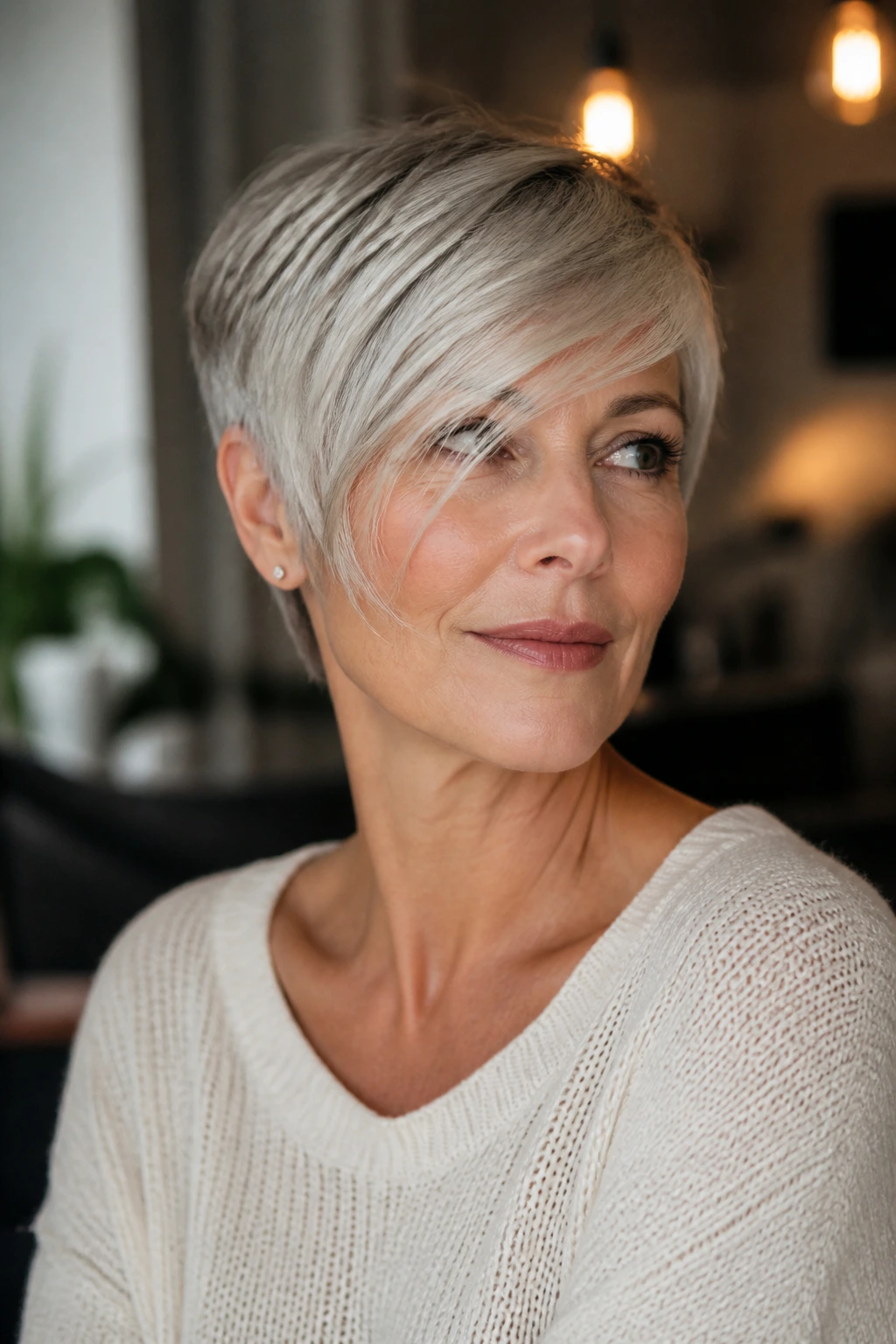
Bring photos, but do not bring only photos. That’s the easy part. The useful part is explaining how your hair behaves when it’s clean, dirty, dry, humid, or skipped for two days. A stylist can cut around the truth, but only if you say it out loud.
Talk about your crown. If it splits, lifts, or sticks up in one corner, say so. Mention cowlicks at the front hairline and behind the ears, because those details change how short the sides can go. If you wear glasses, say that too. The frame arms can steal space behind the ears and make a neat pixie feel crowded.
Be specific about maintenance. If you want to visit the salon every 4 weeks, say it. If you want something that can grow to 6 or 7 weeks without looking ragged, say that instead. A pixie is not only a shape; it’s a schedule. The best cut is one that fits your actual life, not the life you imagine on a perfect Wednesday.
How to Style These Cuts in Ten Minutes or Less
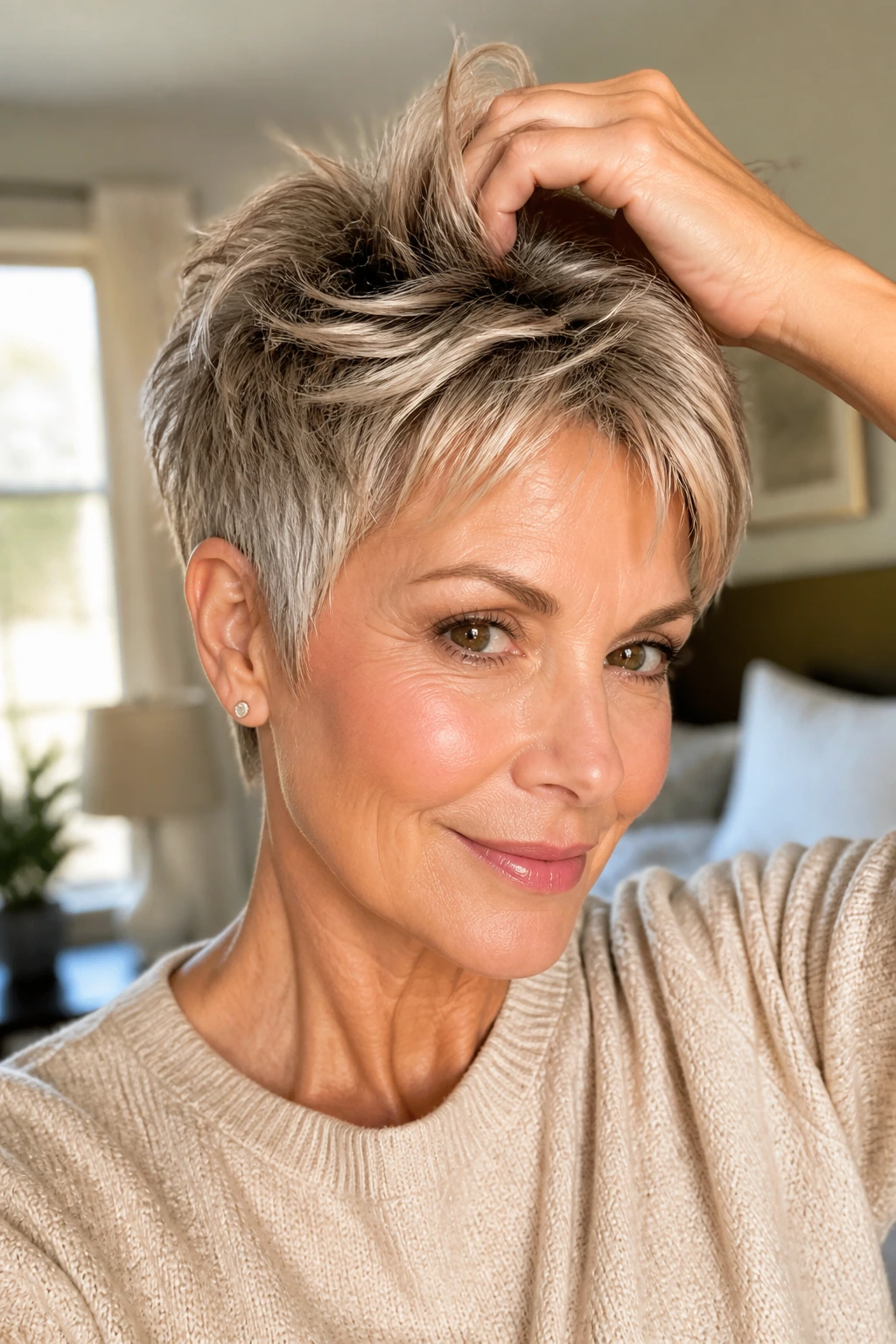
Lift: Start with damp hair and aim the dryer at the roots, not the ends. If the crown needs height, lift sections with your fingers and dry them upward for a few seconds before letting them fall.
Texture: Use a pea-sized amount of paste or cream, warm it between your hands, and press it into the ends. Rubbing the product through the whole head usually kills the shape.
Smoothness: For a cleaner look, chase the front with a small flat iron and tuck the sides close to the head. Keep the motion slow and short. Short hair doesn’t need a long pass.
Finish: Stop before the hair looks coated. A little movement is better than a shiny shell. If the style looks too dry, use a mist of finishing spray from a distance, not a heavy blast at the crown.
Glasses and earrings: Keep the sides neat and the temples open so your accessories don’t fight the haircut. That small adjustment changes the whole balance.
Small Tweaks That Change the Whole Cut
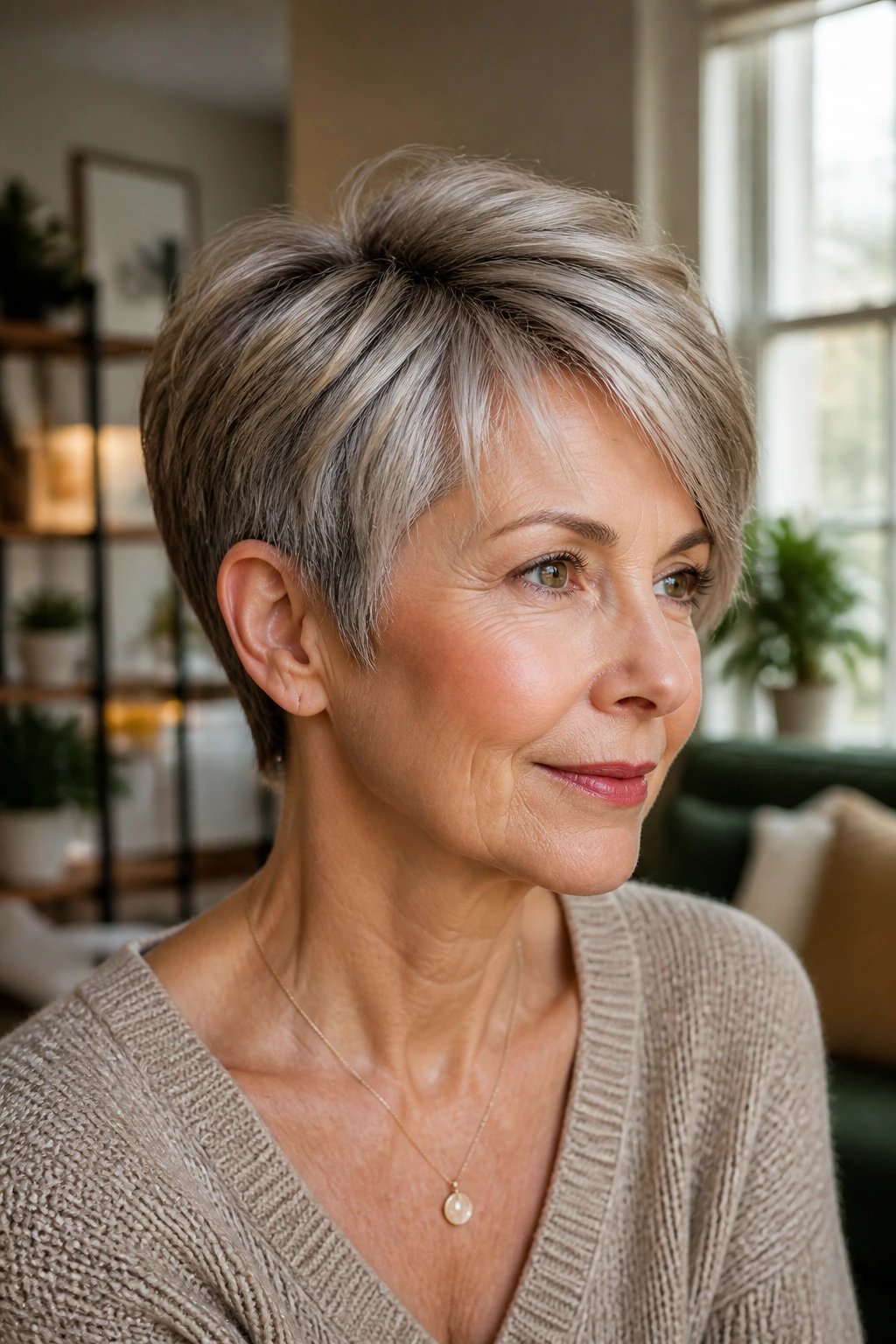
Root Direction: Blow-drying the roots against their natural fall adds a little lift at the crown and keeps fine hair from lying flat by noon.
Part Placement: A slightly off-center part softens a pixie fast. A hard middle part can make the face look longer and the cut feel stricter.
Nape Clean-Up: A tidy nape line matters more than people think. Even a soft pixie looks sharper when the neckline is clean.
Fringe Weight: Keep the fringe lighter than you think you need. Heavy bangs tend to swallow the face and make short hair feel boxy.
Color Contrast: Silver streaks, lowlights, or subtle highlights can show the layers better than a single flat color. The cut and the color should help each other.
Common Mistakes That Age a Pixie Fast
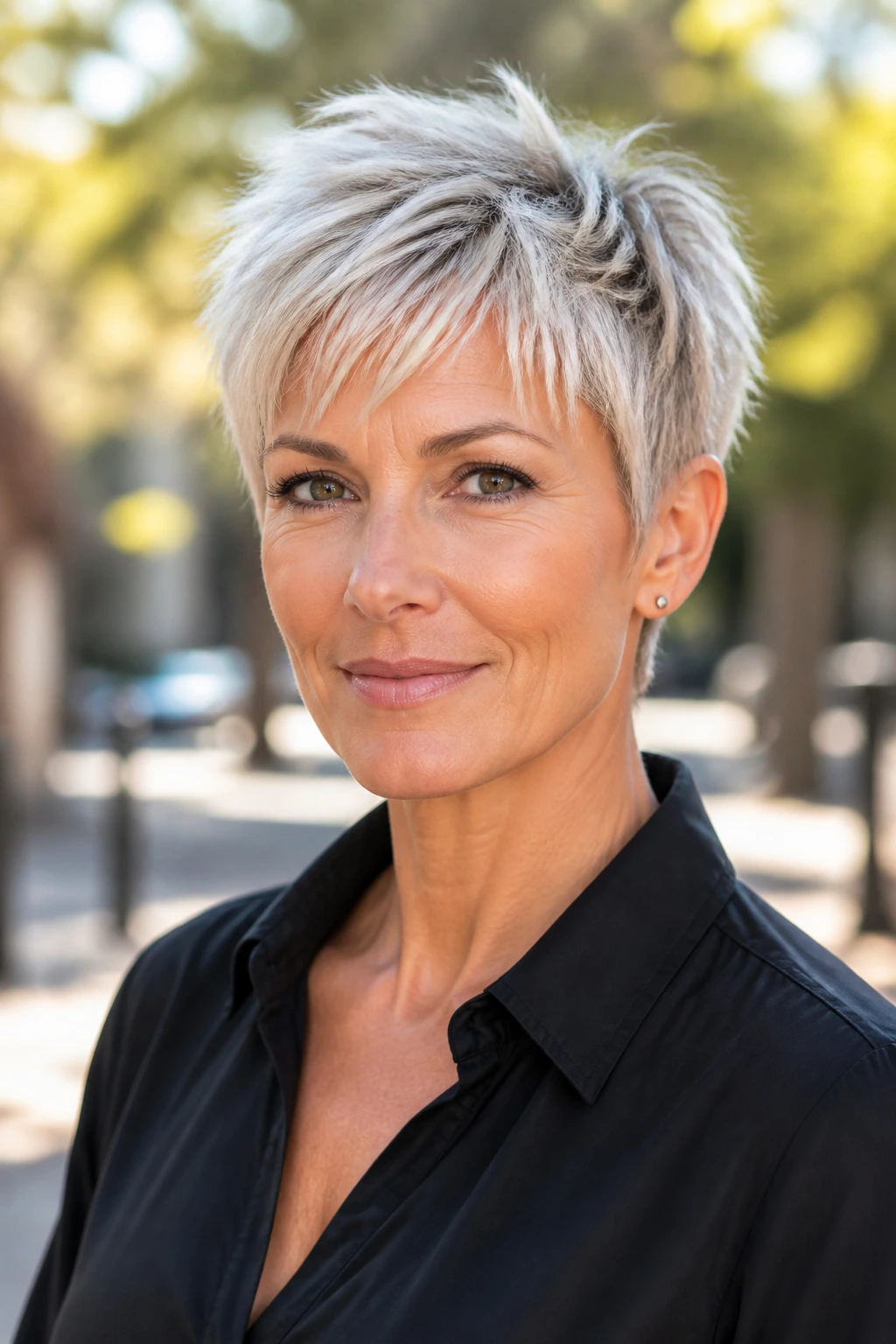
The first mistake is going too short all at once. A very short pixie can look chic on paper and harsh in real life if your hairline, crown, or face shape needs some softness. The fix is simple: leave more length on top and taper the sides gradually.
The second mistake is using heavy product to force the shape. Thick cream, greasy balm, or too much pomade will flatten fine hair and make thick hair look helmet-like. Use less than you think. If you can feel product sitting on the ends, you’ve already used too much.
The third mistake is ignoring your cowlicks. A pixie that fights the crown every morning becomes a chore fast, and the problem usually started in the chair. Tell your stylist where the hair splits and where it kicks up, then cut around that pattern instead of pretending it will behave.
The fourth mistake is a fringe that’s too dense. Heavy bangs shorten the face and make the whole cut look older or harder than it needs to. Wispy or side-swept fringe usually gives a better result because it leaves room around the eyes.
The fifth mistake is waiting too long between trims. Short hair grows outward, not gracefully downward. Once the perimeter gets fuzzy at the neck and ears, the shape is gone.
Variations and Alternatives to Try
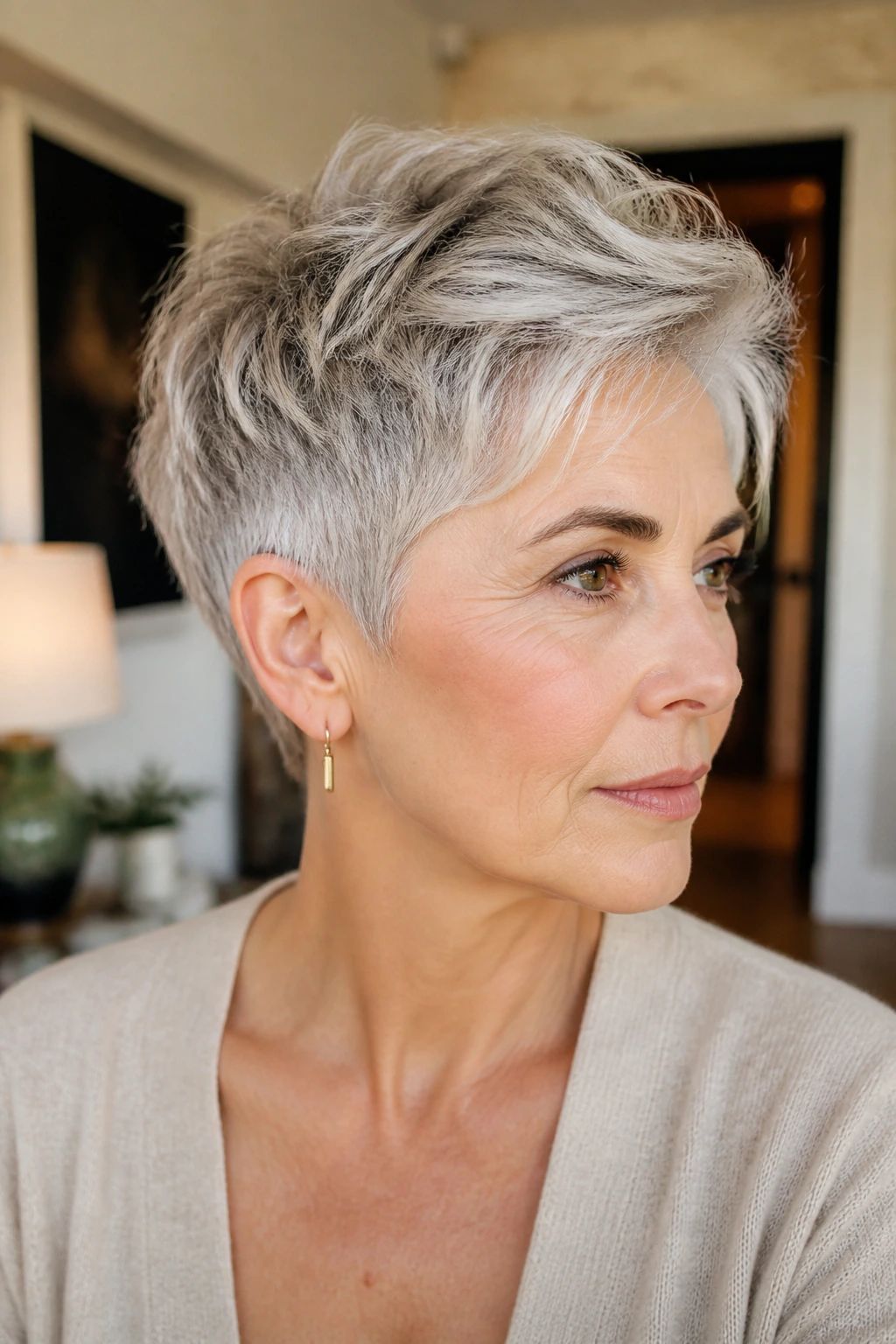
The Fine-Hair Feather: Keep the top longer, the ends soft, and the products light. This version gives fine hair movement without making it look sparse or overstyled.
The Thick-Hair Taper: Ask for stronger tapering through the nape and sides, with a little more length on top. It removes bulk where thick hair tends to balloon and keeps the style close to the head.
The Curly Crown Pixie: Leave enough length for curls to spring at the crown while keeping the sides neat. This version works best when the curl pattern is respected instead of combed into submission.
The Glasses-First Pixie: Open the temples, taper the sideburns, and avoid heavy fringe that sits on the frame. The haircut should frame the glasses, not compete with them.
The Grow-Out Pixie-Bob: Keep the front and sides a touch longer so the haircut can slide toward a bob later. Good for anyone who wants short hair now but doesn’t want a dramatic grow-out phase.
The Silver-Glow Pixie: Pair a sculpted cut with a gloss or toner that keeps the gray looking bright rather than dull. The shape does the work; the color finishes the job.
Keeping the Shape Between Salon Visits
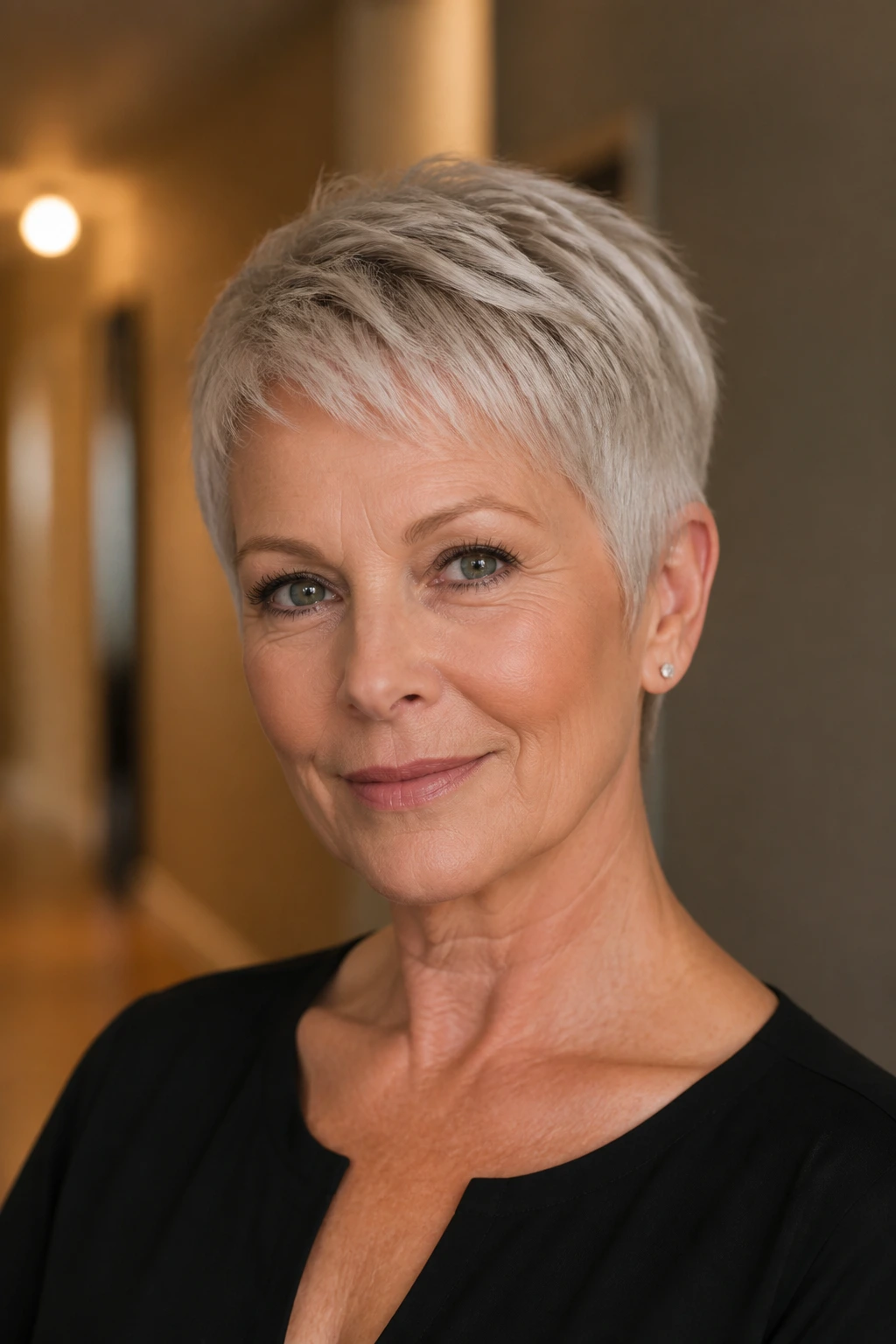
Short hair asks for upkeep, but not the kind people imagine. You do not need a full morning routine. You need a few good habits and a realistic trim schedule. Most pixies stay in shape best with salon visits every 4 to 6 weeks. If you go longer than that, the nape gets fuzzy first, then the sides lose their line, and the whole cut starts to feel accidental.
Washing habits matter too. Fine hair often looks better on day two, once the roots are a little less slippery. Thick or coarse hair may need more moisture, especially if you color it. A lightweight conditioner on the ends is usually enough; short hair gets weighed down fast, so heavy masks should stay on the shelf unless your hair is dry enough to need them.
Sleep changes the shape more than people admit. A silk pillowcase or satin bonnet reduces friction at the crown and nape, which helps the cut keep its edges. If the front flips weird in the morning, dampen just the fringe, then reshape it with your fingers and a quick blast of warm air. Ten seconds can fix what twenty minutes of fiddling makes worse.
Purple shampoo can help silver and gray hair once a week or every other week, depending on how bright the color is. Overuse will leave the hair feeling chalky, so watch the texture more than the calendar. If the strands start to feel rough, back off.
Frequently Asked Questions
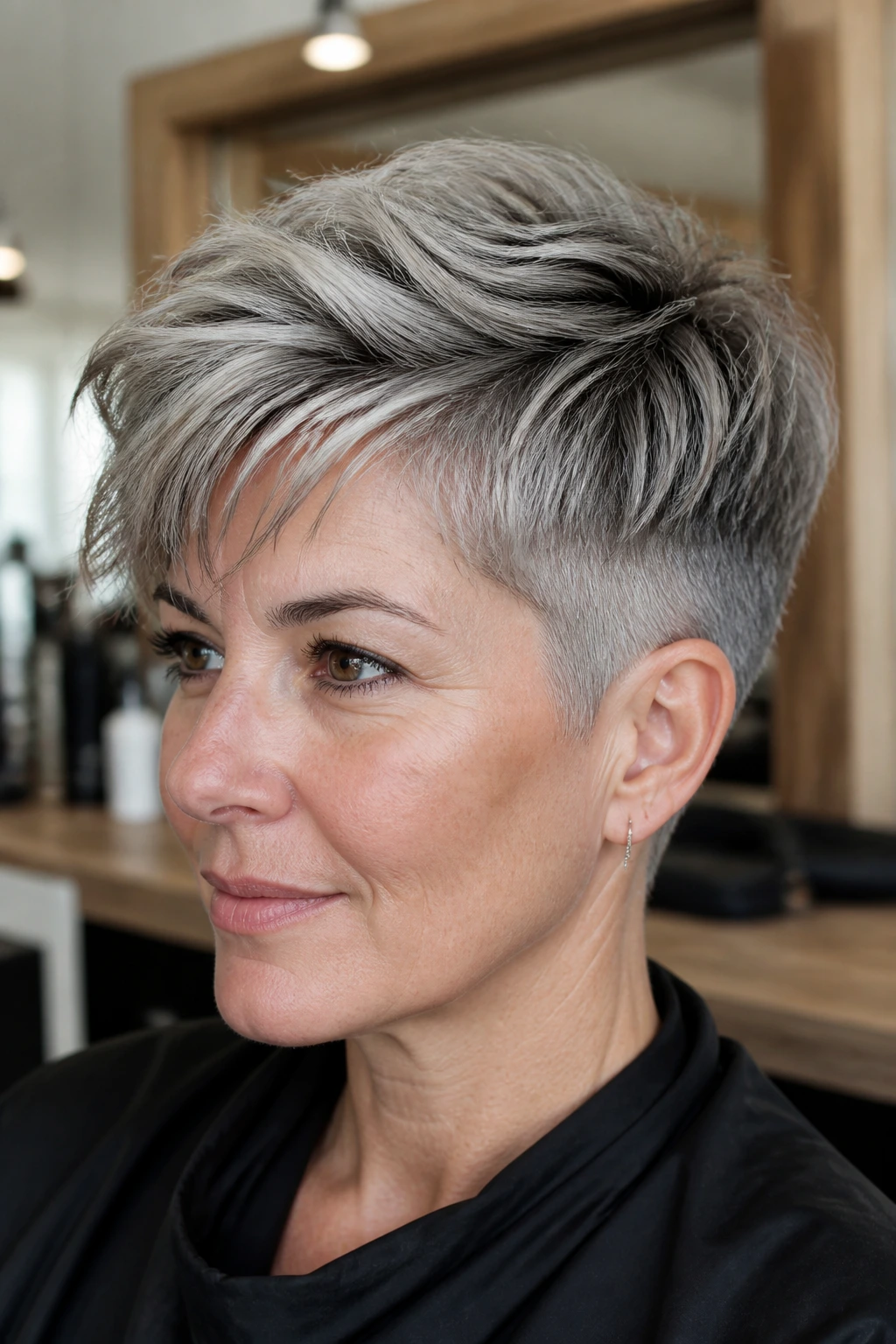
Which pixie cut is best for fine hair?
A feathered pixie, a long-top pixie, or a soft layered crop usually gives fine hair the most lift without making it look sparse. The key is to avoid over-thinning the ends, because too much texture can leave the hair see-through.
Will a pixie cut make my face look older?
Only if the shape is too harsh, too short everywhere, or cut without considering your forehead, jawline, and hairline. A soft fringe, a little length on top, and clean edges around the ears usually do the opposite.
How often does a pixie need trimming?
Most pixies need a trim every 4 to 6 weeks. If you prefer a very clean outline or an asymmetrical shape, you may want to go closer to 4 weeks so the cut keeps its balance.
Can I wear a pixie if I have curly hair?
Yes, but the cut should respect the curl pattern. Curly pixies work best when the top is left long enough for the curls to spring and the sides are tapered without being chopped too short.
What if I have a strong cowlick at the crown?
Do not fight it with a cut that is too short at the crown. Leave more length in that area so the cowlick has weight, and style the roots in the direction they naturally want to go.
Is a pixie hard to grow out?
It can be, if the cut is very short and blunt. A longer-top pixie or pixie-bob hybrid grows out more smoothly because the front and sides keep enough length to pass through awkward stages.
Can I keep wearing glasses with a pixie?
Absolutely. A good pixie actually makes glasses easier to wear because the sides can sit cleanly around the frames instead of piling up behind them. Ask for open temples and tidy sideburns.
Do silver and salt-and-pepper hair need a different pixie shape?
Usually, yes. Gray hair often shows texture and density changes more clearly, so a clean outline with soft movement tends to look better than a heavy, blunt shape. The cut should let the color show off, not fight it.
The Cut That Grows Well
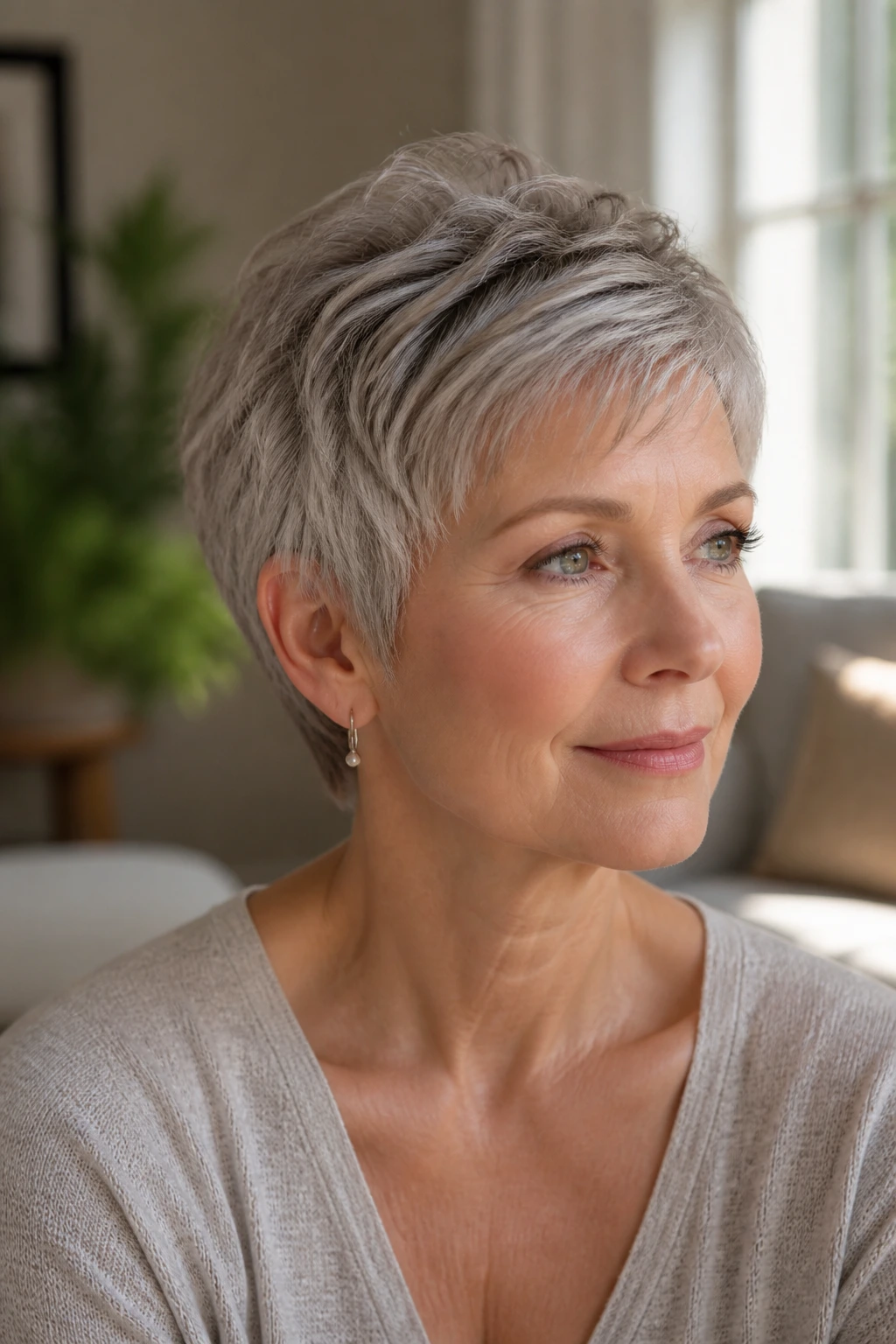
The best pixie cuts for women over 50 are the ones that still look like they belong to you after a few weeks of growth. That sounds small. It isn’t. A haircut that can move from crisp to relaxed without losing its shape saves time, saves frustration, and saves you from living at the mercy of the mirror every morning.
Pick the version that fits your hair’s habits, not the one that looks toughest in a photo. If your crown lifts, leave room there. If your hair is thick, take out bulk where it swells. If your silver strands shine on their own, let the cut stay clean enough to show them off.
A good pixie keeps working long after the salon chair. That’s the one worth asking for.
