



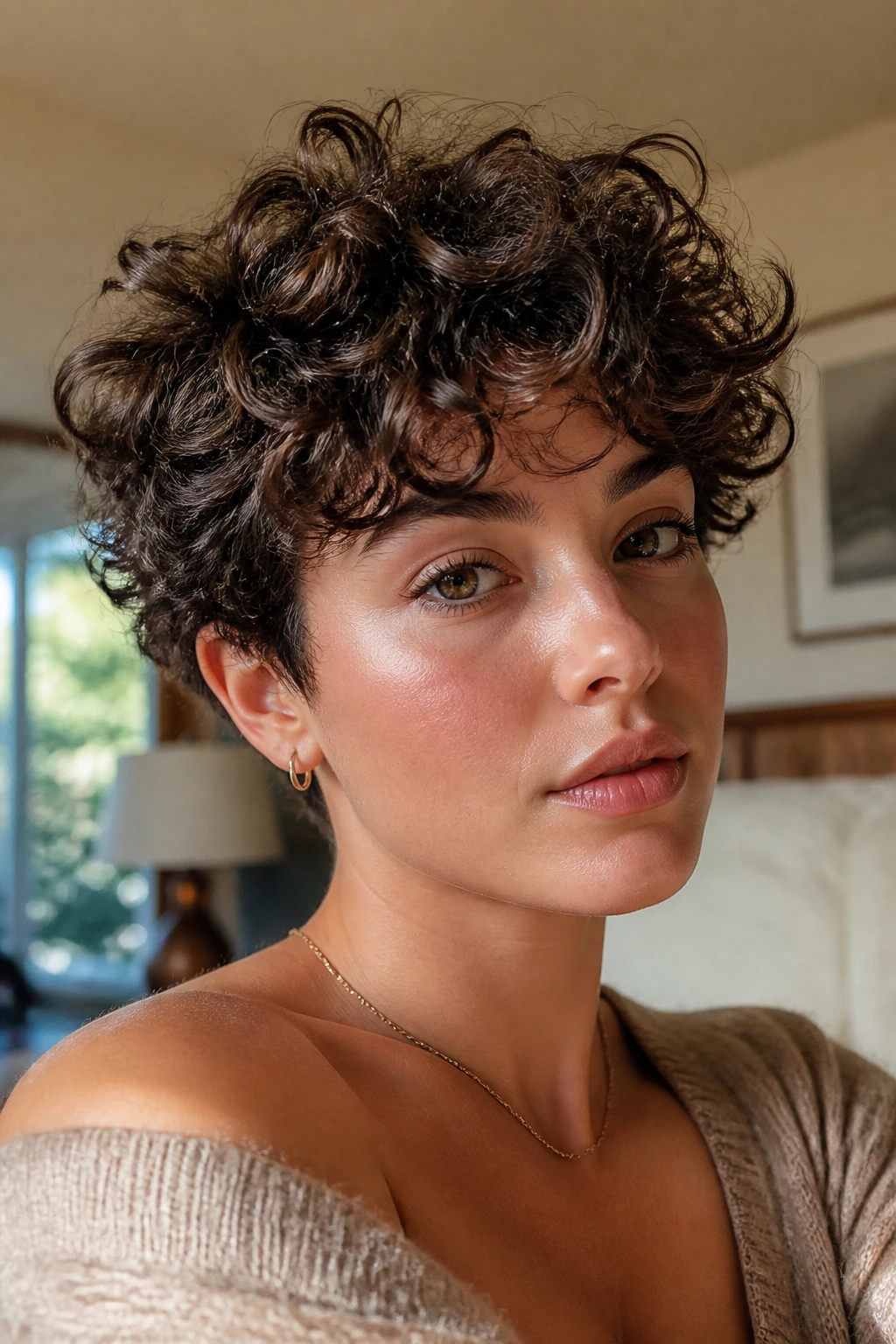
A curly pixie cut lives or dies by shape, not courage. Chop a straight line across a springy curl pattern and the hair can balloon at the sides, collapse at the crown, or hook out around the ears in a way that feels accidental instead of styled. A good pixie cut for curly hair works with the bend of the curl, not against it, and that one detail changes everything.
The best short cuts do not try to flatten curls into obedience. They keep a little more weight where the curl needs it, taper the nape so the neckline stays clean, and leave enough softness at the front that the cut still moves when you turn your head. I’ve seen the difference between a curly pixie that looks sharp for six weeks and one that looks fuzzy in ten days, and the split usually comes down to where the layers landed.
Thirty-three versions gives room for all the small decisions that matter: fringe length, crown height, side taper, ear exposure, and how much shrinkage you want to leave room for. Some of these feel polished. Some feel playful. A few are gloriously low-maintenance. The right one is the one that matches your curl pattern, your density, and how much styling you’re willing to do before coffee.
Why These Curly Pixie Cuts Earn Their Keep
-
Shrinkage-friendly shapes: Curly hair can lose an inch or two as it dries, so the best pixies leave space for that contraction instead of fighting it. That keeps the outline intentional, not surprised.
-
Tapered edges matter: A tighter nape and cleaner sideburn area stop the cut from spreading outward like a triangle. That’s the difference between “short curly cut” and “actual pixie.”
-
The front does the heavy lifting: A little extra length at the fringe or temples gives you something to style when the rest is cropped close. One inch can change the whole mood.
-
Curl pattern gets to show off: Short hair makes texture visible. You see the ringlets, the coils, the bends, the little zigzags. That’s the fun of it.
-
Grow-out can stay neat: A good curly pixie grows into a soft cropped shape instead of a random in-between mess. That matters more than people think.
-
It saves morning arguments: Less length means less detangling, fewer knots around the nape, and far less time wrestling the back of your head in a mirror that lies to you.
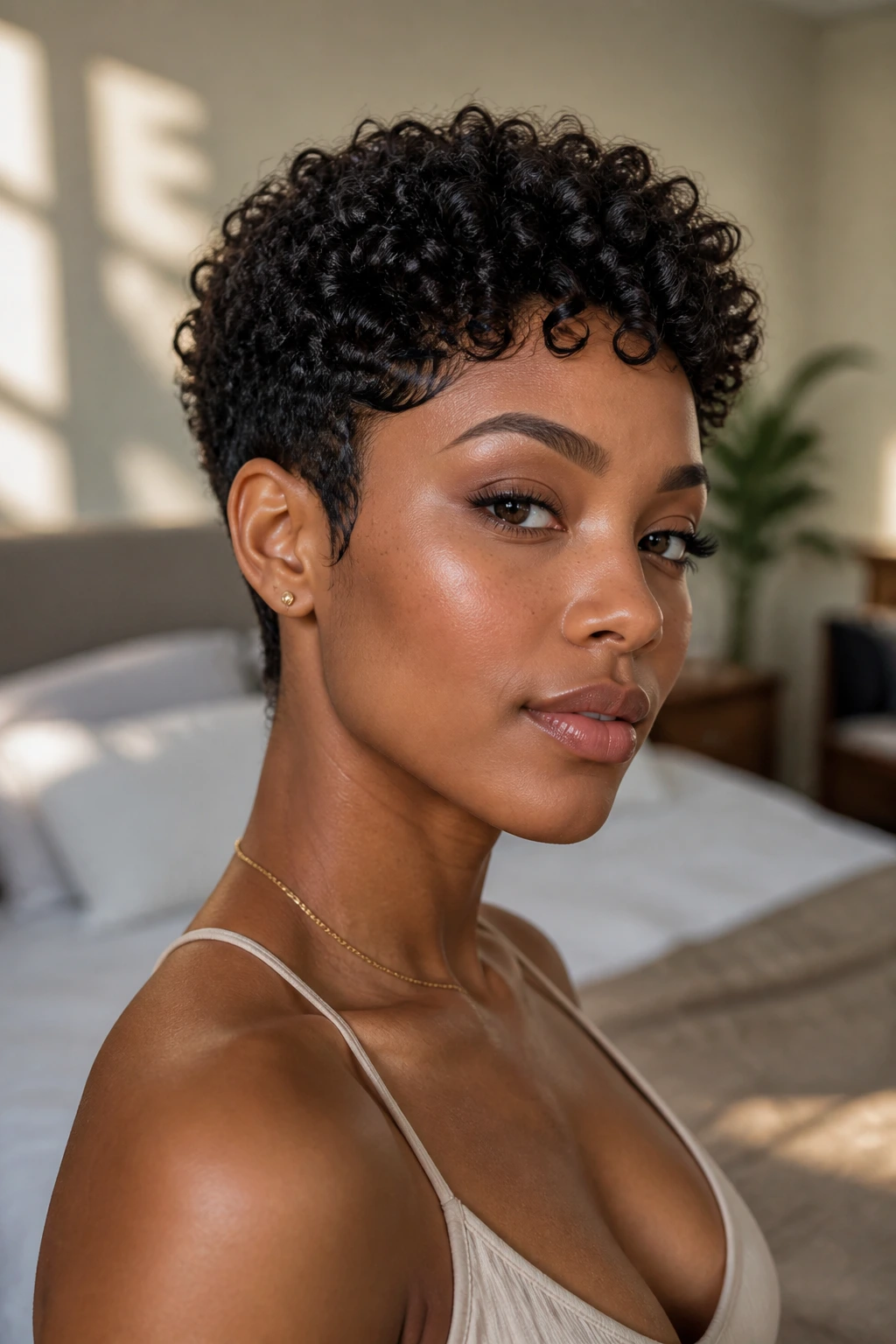
1. Tapered Curly Pixie
A tapered curly pixie is the cleanest place to start if you want short hair that still looks like curls, not helmet padding. The sides and nape stay close, while the crown keeps enough length for the curl pattern to lift and move. On tighter 3B to 4A textures, that taper keeps the silhouette from blowing outward.
Ask for the cut dry or mostly dry so the stylist can see how much each coil shrinks. The top should be point-cut rather than hacked blunt across the ends. No hard shelf at the back. No bulky corners at the temples.
This version needs a little upkeep every four to six weeks if you want the taper to stay crisp. It’s worth it. When the neckline is clean, the curls on top look bigger and more deliberate.
2. Rounded Halo Pixie
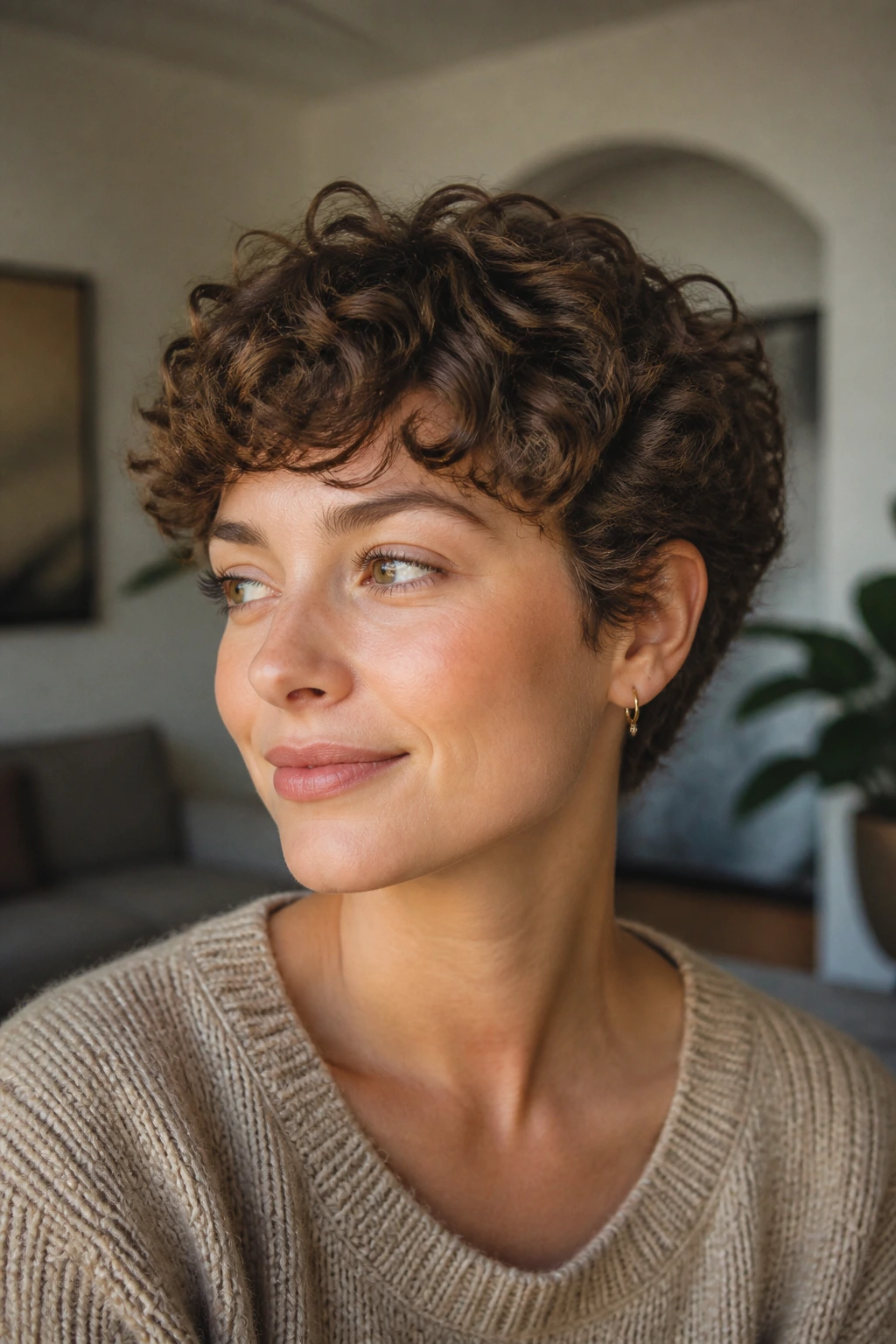
What if you want softness instead of edge? The rounded halo pixie gives you that. The cut wraps around the head in a gentle curve, which makes springy curls look full without turning the sides into a puffed-out box.
This shape suits looser 2C and 3A curls especially well because those patterns can hold a round outline without looking too bulky. It also plays nicely with oval and heart-shaped faces. Keep the crown balanced. If the top gets too tall, the halo starts reading more like a mushroom.
I like this cut with a light mousse and a diffuser set on low heat. Let the curls clump on their own, then separate them with your fingertips once they’re dry. Don’t over-pick the shape. The curve is the point.
3. Side-Swept Fringe Pixie

A side-swept fringe changes the whole face of a curly pixie. Instead of opening straight across the forehead, the hair falls diagonally, which softens strong brows and gives a little movement when the rest of the cut is kept short. It’s one of the easiest ways to make a pixie feel less severe.
The fringe should be cut with the curl’s natural bend in mind, not pushed flat and then guessed at. If your front pieces have a loose wave and your crown is tighter, let the fringe keep a little extra length. That way it settles instead of springing up like a bad surprise.
This one is forgiving on days when you want less styling. A dab of leave-in cream, a finger comb through the front, and you’re done. If the fringe starts hanging into the eye, trim the longest point before it overwhelms the shape.
4. Asymmetrical Curly Pixie
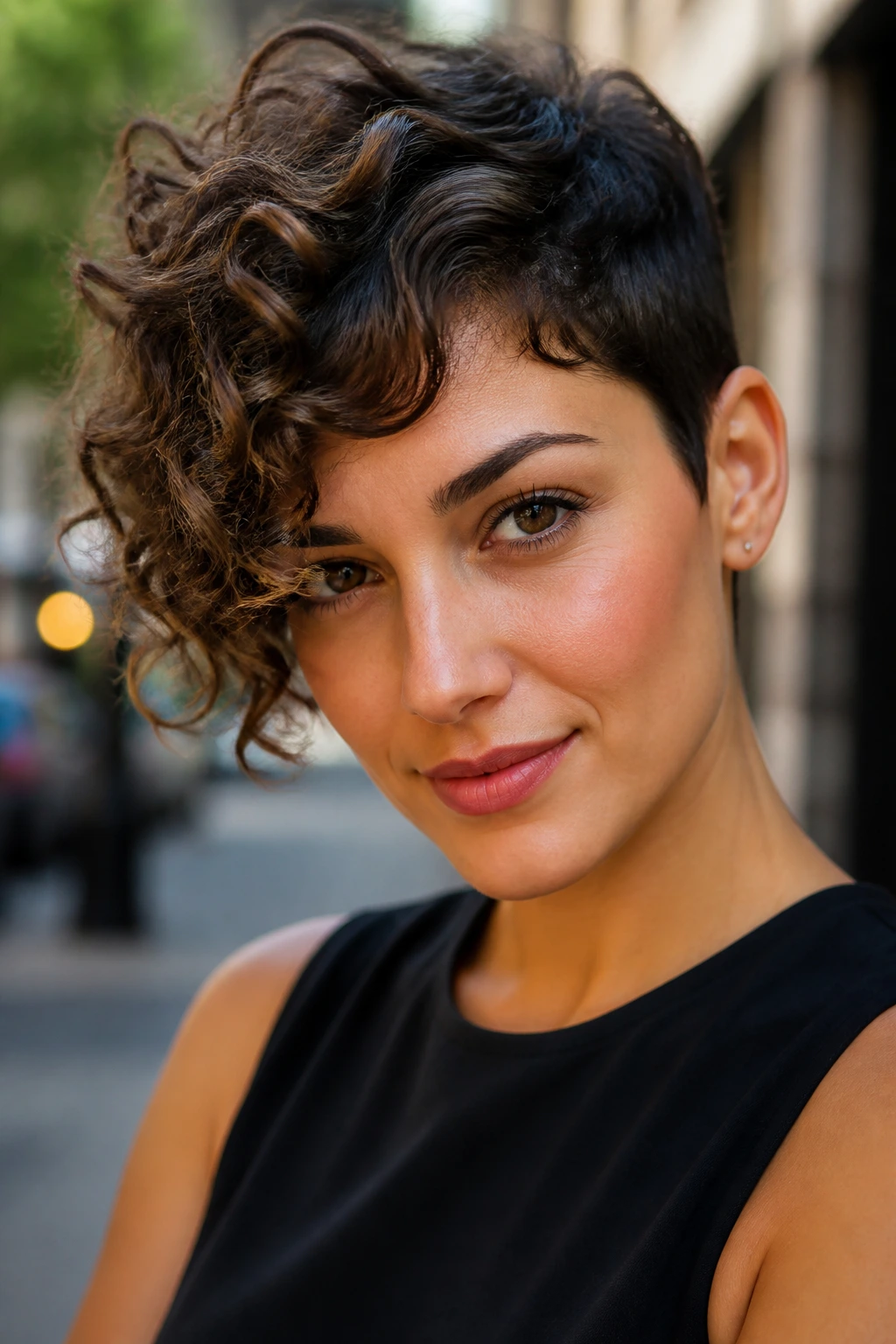
An asymmetrical curly pixie is for people who like a cut that looks deliberate from the first glance. One side stays a little longer, the other side is cropped tighter, and the whole shape leans in one direction with purpose. Curly texture makes that contrast look richer, not harsher.
This cut works especially well if one side of your curl pattern grows looser than the other. That happens more often than people admit. The asymmetry lets the stylist build around the difference instead of pretending both sides behave the same way.
Keep the longer side just long enough to tuck behind the ear if you want a clean profile. That small move keeps the cut useful, not theatrical. It also gives you a quick switch when you want one day to feel sharper than the next.
5. Micro-Bang Curly Pixie
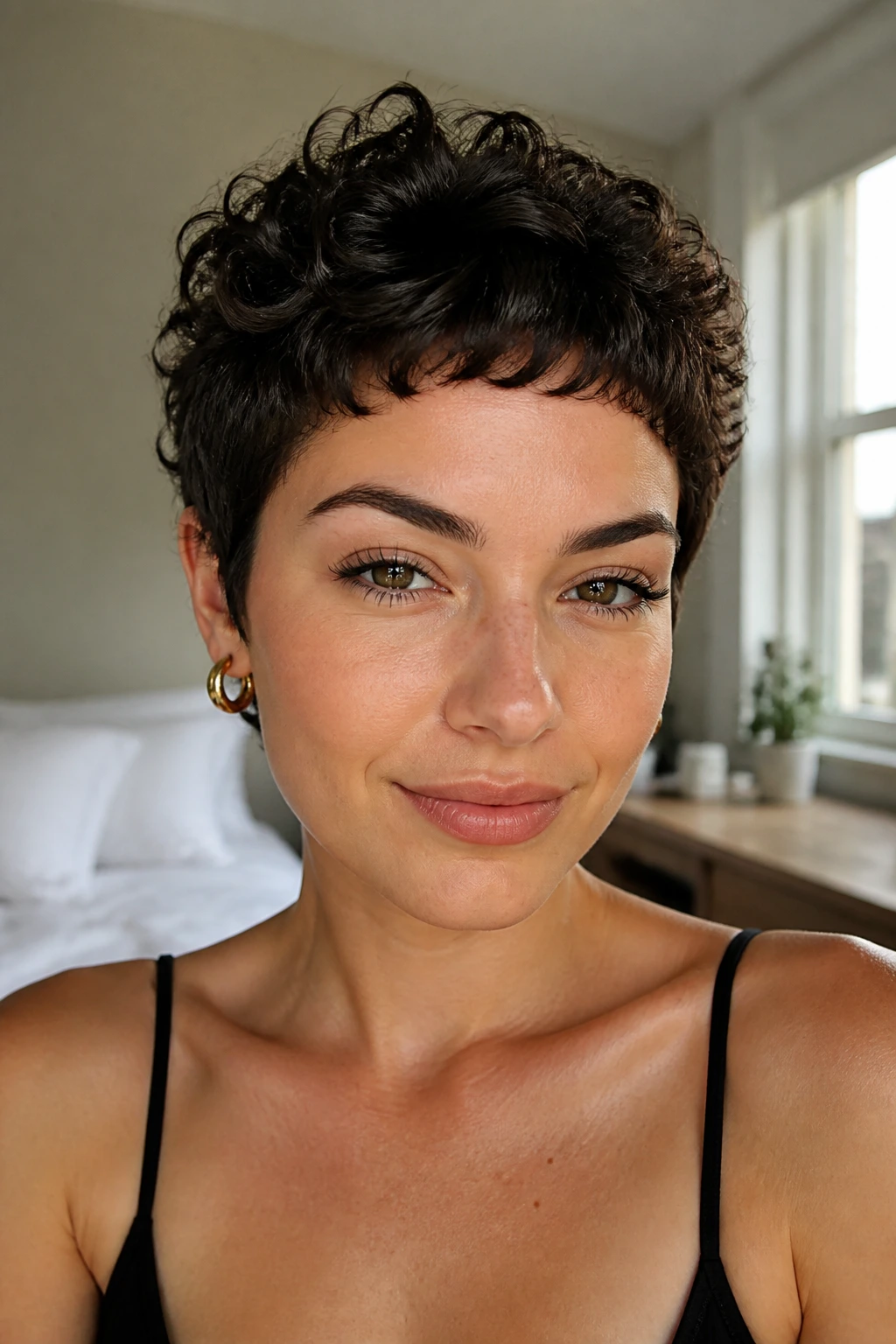
Micro bangs on curly hair are not shy. They sit high on the forehead, letting the curl pattern turn into the headline instead of the afterthought. The look is crisp, a little daring, and much more wearable when the rest of the cut is kept close and neat.
This shape works best on defined curls that spring back into their own form after drying. If your front section is wildly different from the rest of your head, the bangs can misbehave fast. Keep them slightly longer than you think at the first trim. Curly bangs always look shorter once they dry.
I’d call this a high-maintenance fringe with a big payoff. It needs trims more often than the other styles here, but the payoff is a face-framing line that makes cheekbones and eyes stand out without much else going on.
6. Undercut Curly Pixie
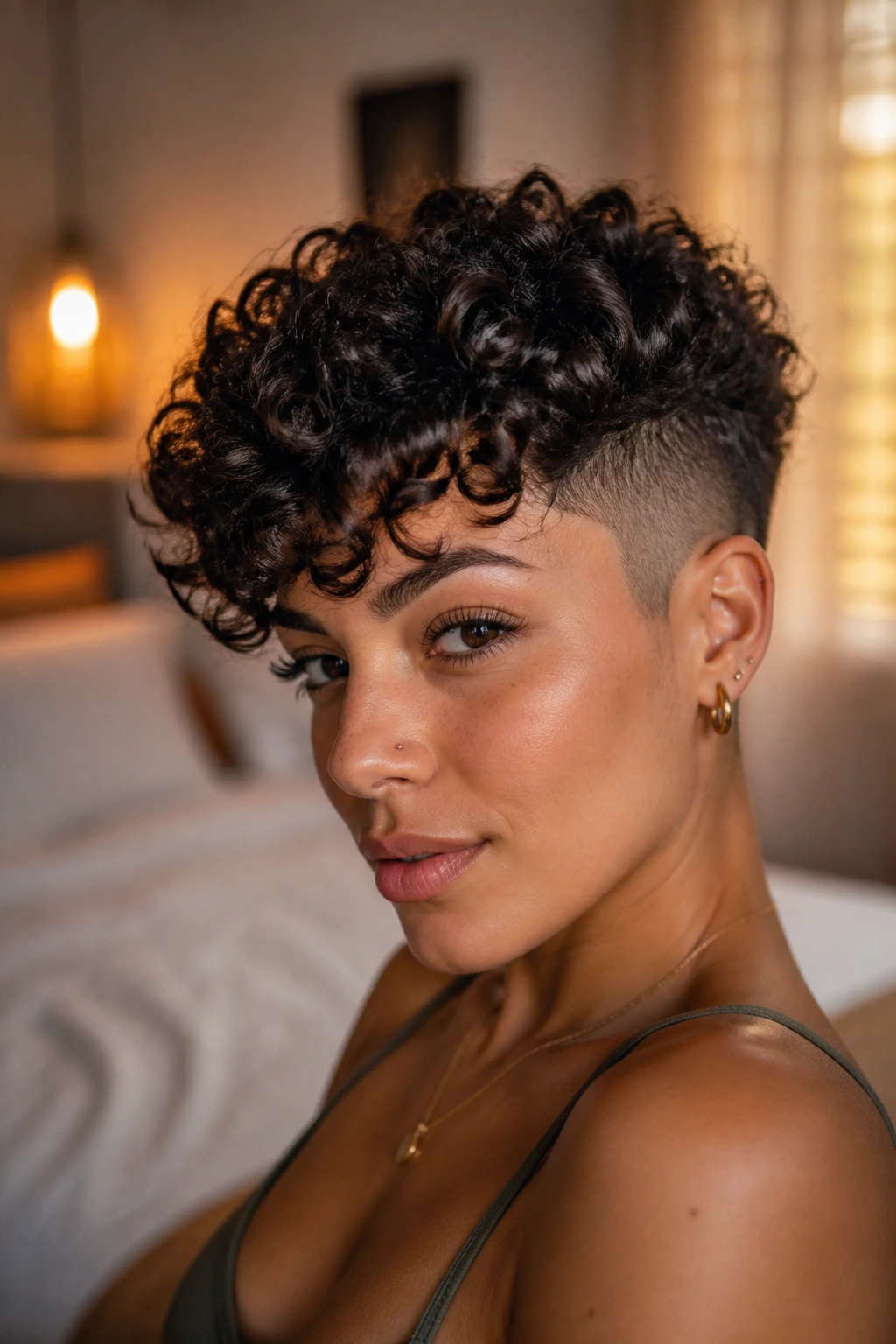
A curly undercut pixie is the bluntest answer to heavy hair. Shave or clip the sides and nape close, leave the top full, and suddenly the bulk disappears where it usually turns into a puff. That contrast can be gorgeous on dense 3C and 4A curls.
The trick is restraint. If the undercut climbs too high at the temples, the top can start floating in a way that feels disconnected instead of clean. Keep the shaved section low enough that the upper curls still have something to sit on.
This is one of the better pixie cuts for warm weather and fast styling. The top can be scrunched with gel, finger-coiled in a few front sections, or left fluffy and free. The undercut keeps the shape from getting wide, and that’s the whole game.
7. Long-On-Top Curly Pixie
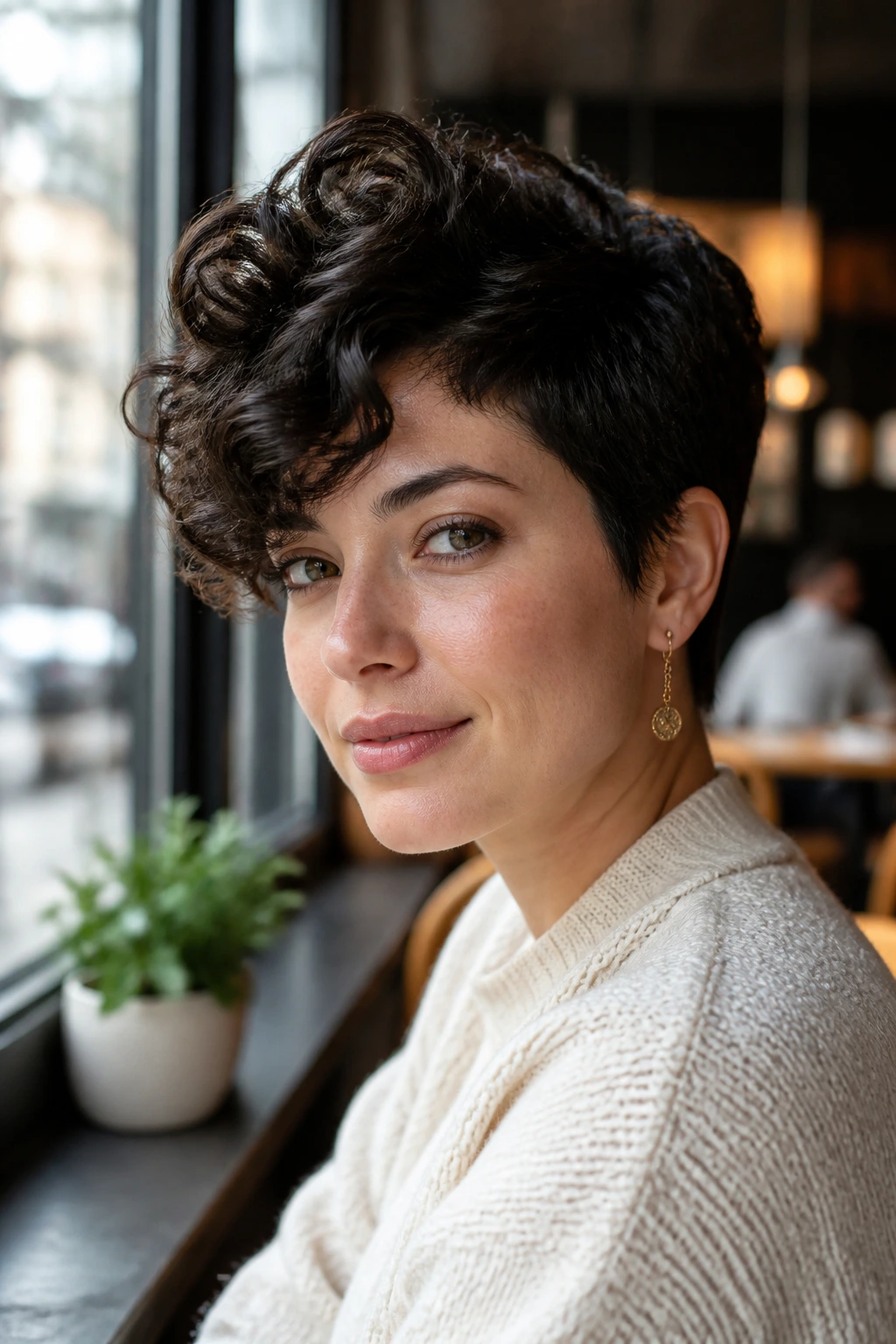
A longer top gives you options. That’s the real appeal here. With two to four inches left at the crown and a tighter side finish, the cut can be worn swept forward, pushed up, or turned slightly to one side when you want the shape to feel less exact.
This is a smart choice if you’re nervous about going too short. The longer top gives you room to play, and it also makes grow-out less awkward. If the curls are loose, a little length helps the pattern show. If the curls are tighter, the top creates lift without looking over-styled.
I like this version for people who want a short cut but still need one section of hair to do the visual work. The front can change the whole read of the cut. Tiny move. Big effect.
8. Soft Layered Curly Pixie
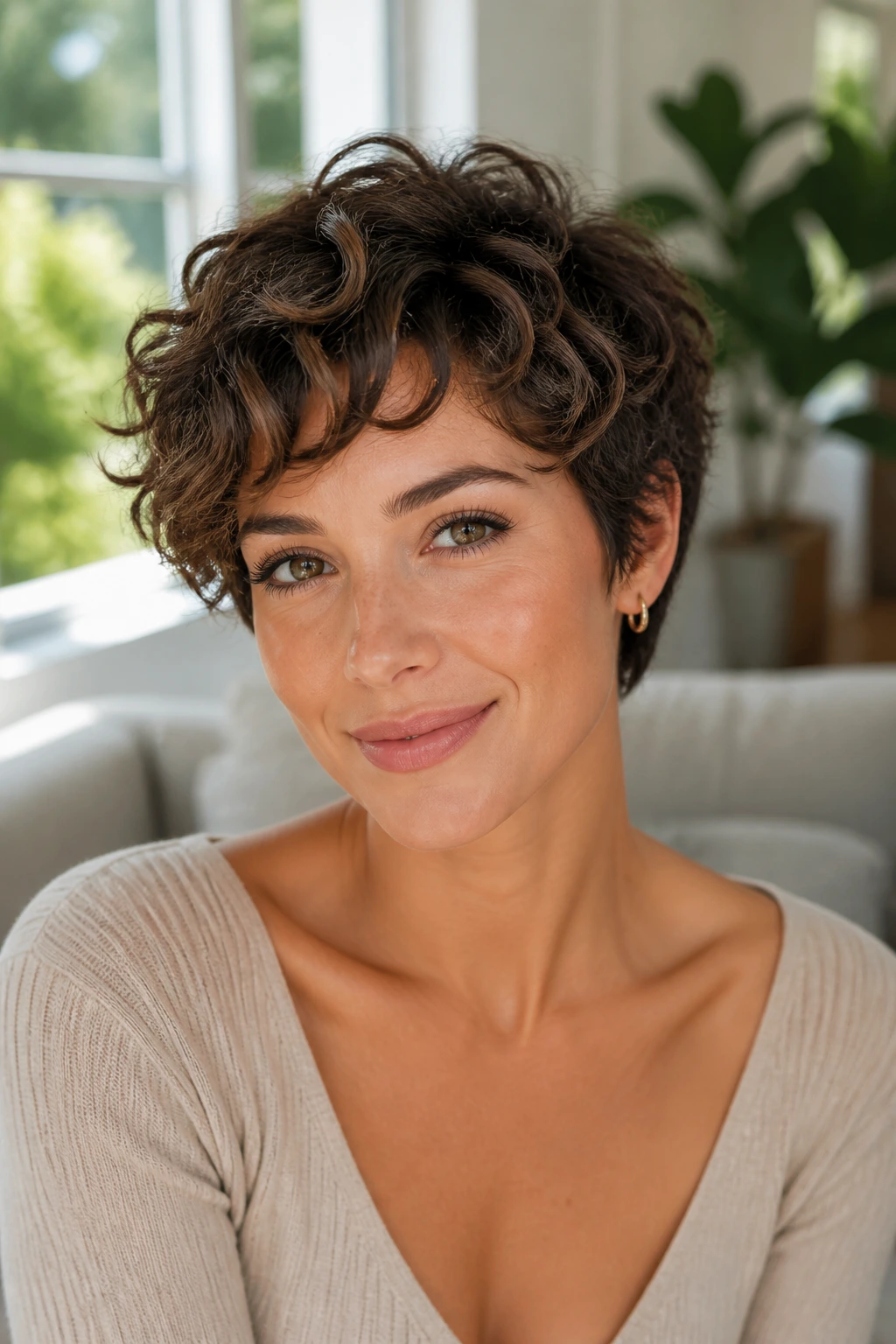
Soft layers are the quiet hero of curly pixies. Instead of carving the hair into hard steps, the stylist removes bulk in a way that lets the curls sit on each other without bulky corners. The result looks airy, not choppy.
This cut is especially good for dense hair that grows outward fast. Too many blunt ends can turn short curls into a block. Soft layering reduces that weight, but only if it’s done with control. Ask for point cutting or gentle internal shaping, not aggressive thinning.
A soft layered pixie needs a light hand at styling too. Cream at the ends. A little mousse at the roots. Not much else. When the cut is already doing the shape work, you don’t need to pile product on just to make it behave.
9. Curly Bixie
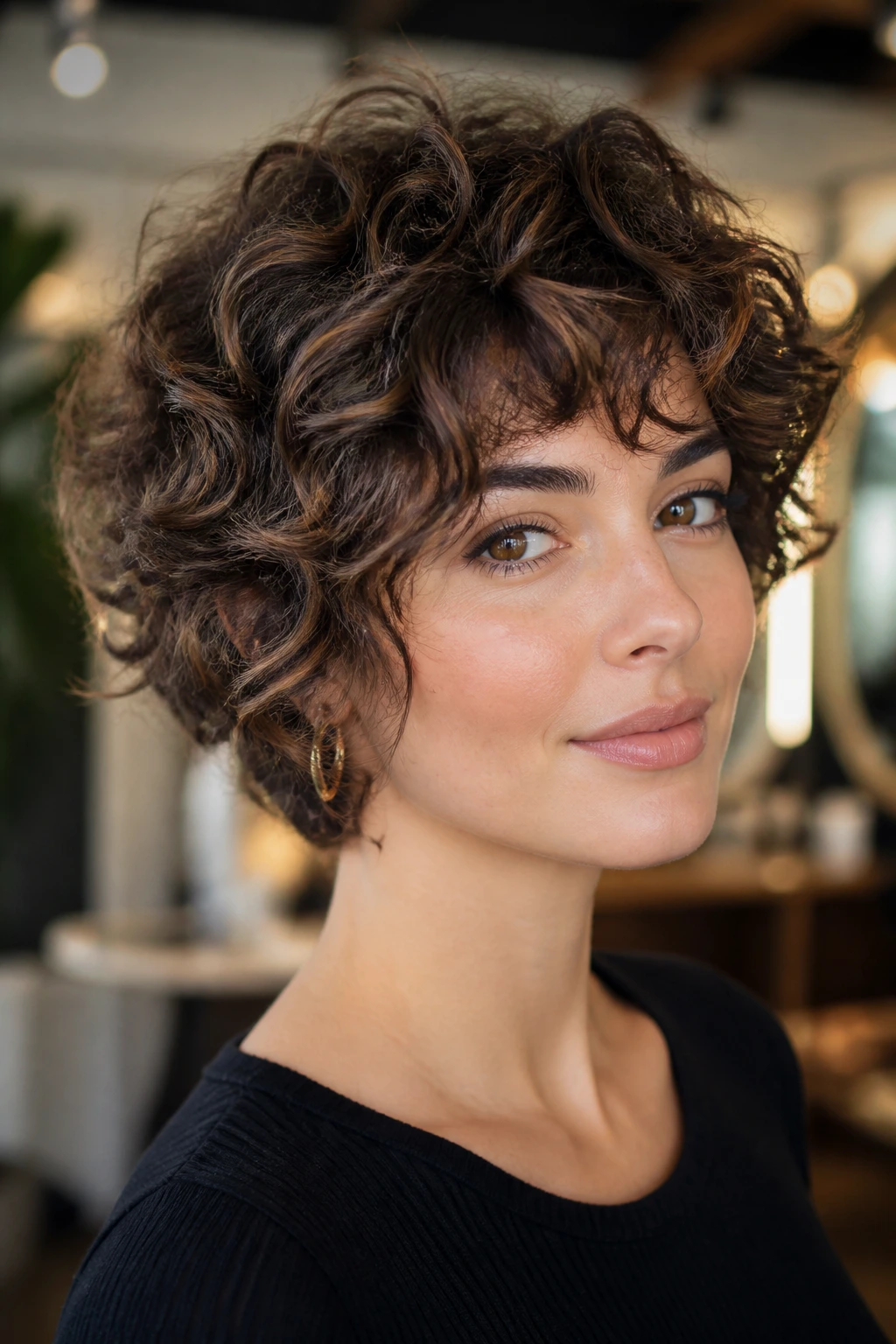
The bixie sits between a pixie and a bob, and curly hair gives that middle ground a lot of charm. You keep the cropped ease of a pixie, but there’s enough length around the ears and jaw to soften the outline. It’s a good bridge if you’re not ready for a true crop.
This shape suits people who want their curls to fall rather than stand all the way up. On looser textures, the bixie can read polished and soft. On tighter curls, it gives you a little more room before the shape gets too compact.
If you want a low-risk short cut, start here. It grows out gracefully, feels feminine or sharp depending on styling, and doesn’t demand the same precision as a very close pixie. That matters on busy mornings.
10. Pixie Bob with Curls
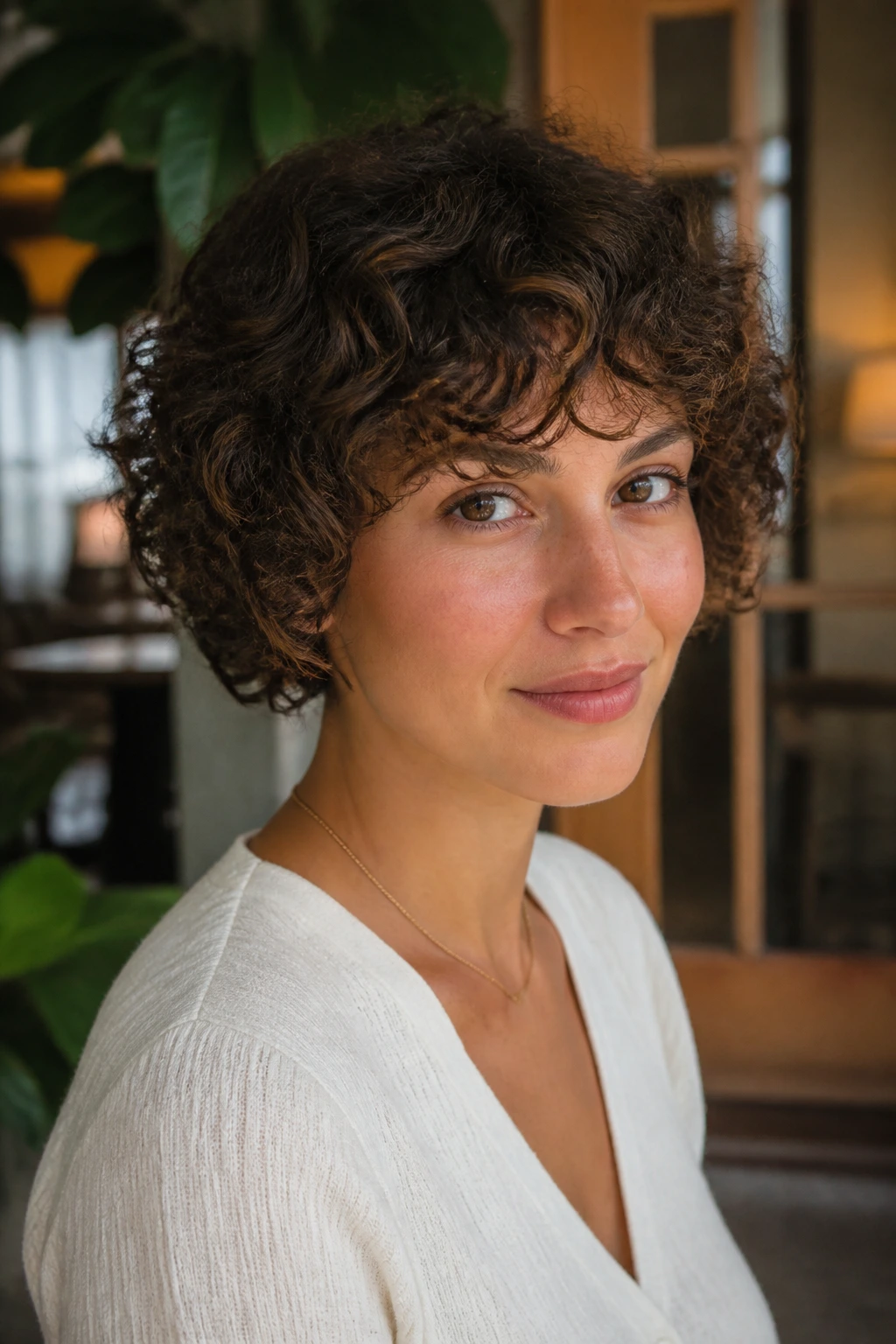
A curly pixie bob keeps a little more length than the bixie and leans into jaw-skimming pieces. It’s the version for someone who likes short hair but still wants the swish of a bob when the head turns. Curly texture makes the line feel lively instead of heavy.
This cut works well when the curls are looser or the hair is fine enough that extra length does not become a triangle. The stylist should keep the ends clean and the top controlled. Too much volume at the corners turns the whole shape into a miniature pyramid.
The best part is flexibility. You can tuck one side, part it deeper, or let the front pieces land around the cheekbone. That little extra length gives the cut room to change its mood from day to day.
11. TWA Pixie Cut
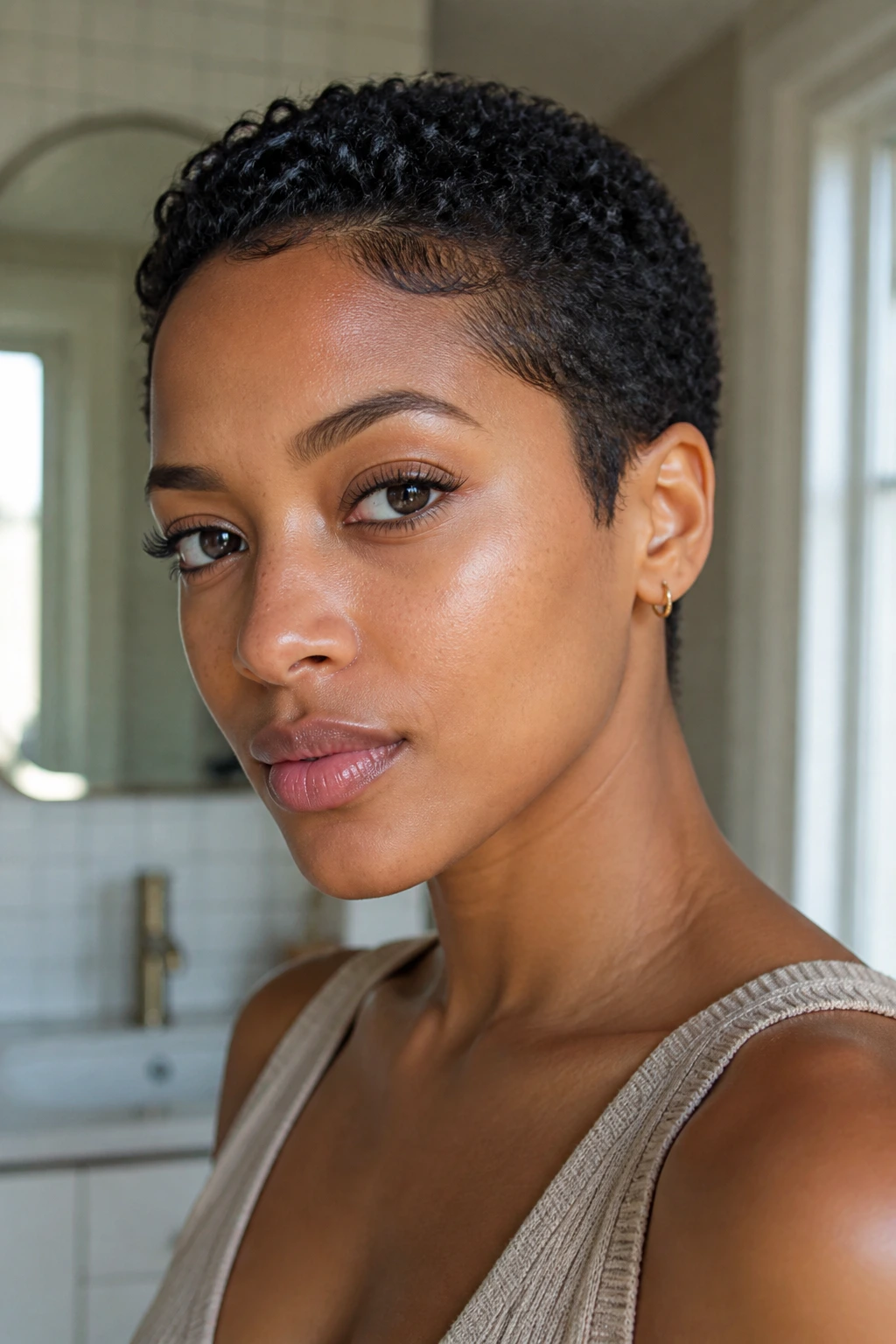
A TWA-style pixie is short in the smartest possible way. The shape is close to the head, the curls are visible, and the texture becomes the main event. On coily hair, this can look beautifully sculpted when the outline is even and the edges are tidy.
The cut depends on clean shaping around the hairline and nape. If the perimeter is uneven, the style starts to read unfinished fast. Ask for soft shaping rather than a hard square line unless that graphic look is exactly what you want.
I like this cut because it refuses fake volume. It lets the curl pattern sit where it wants to sit. That honesty is part of the charm, and it also makes mornings simple. Moisturize, define, go.
12. Shaggy Curly Pixie
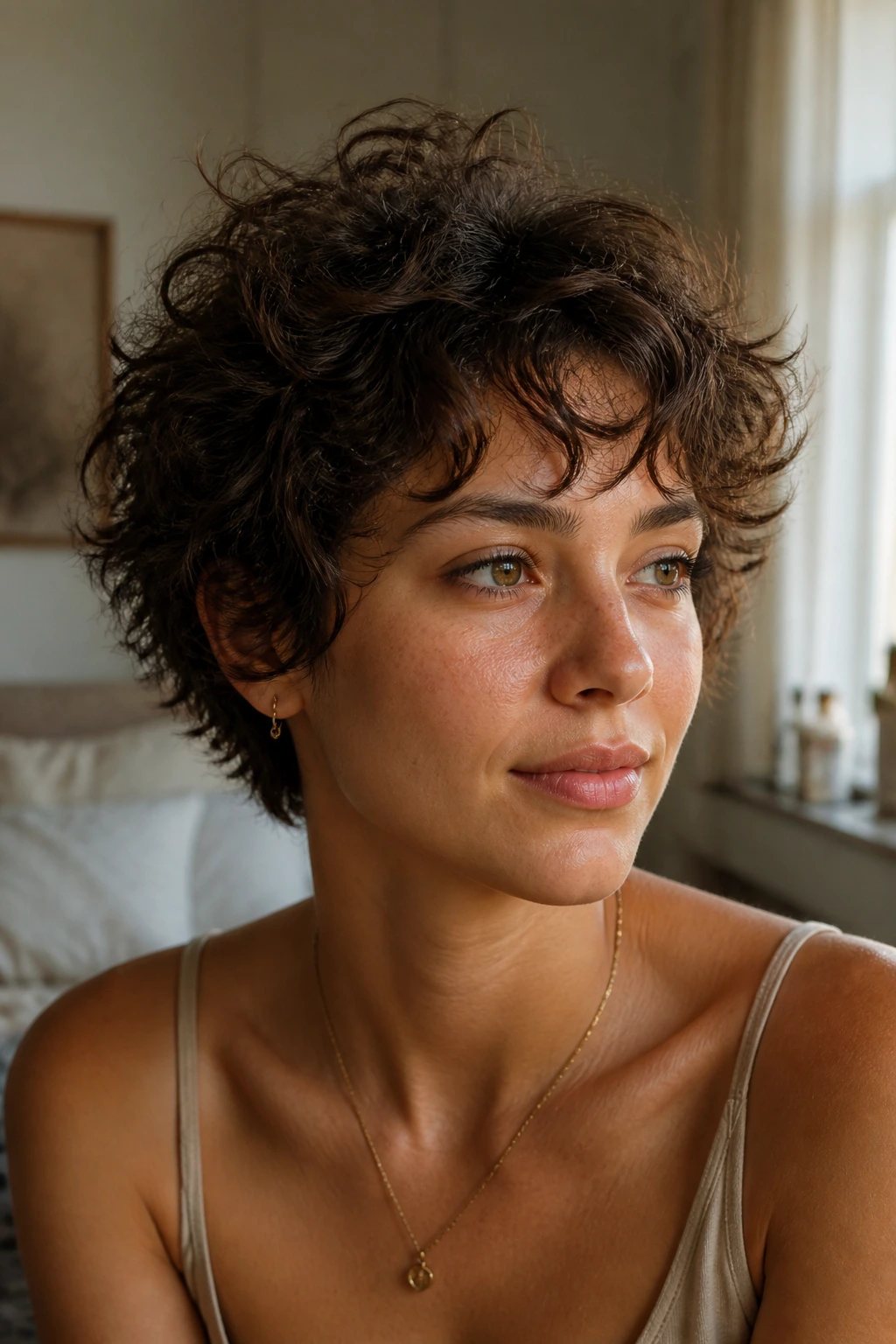
Shaggy sounds messy, but on curly hair it usually means playful layers and a little wildness around the edges. A shaggy pixie keeps the crown textured, the fringe piecey, and the overall outline loose enough that the curls can move instead of sitting in one frozen shape.
This is a good choice if your curl pattern has a lot of personality and you do not want it flattened into a formal crop. The trick is keeping the layers uneven in a controlled way. Random is not the goal. Airy is.
A touch of cream and a few scrunches with a microfiber towel are usually enough. If you like a lived-in finish, this cut gives it to you on day one. It’s one of the easier pixies to make look casual without looking sloppy.
13. Tapered Sides Curly Pixie
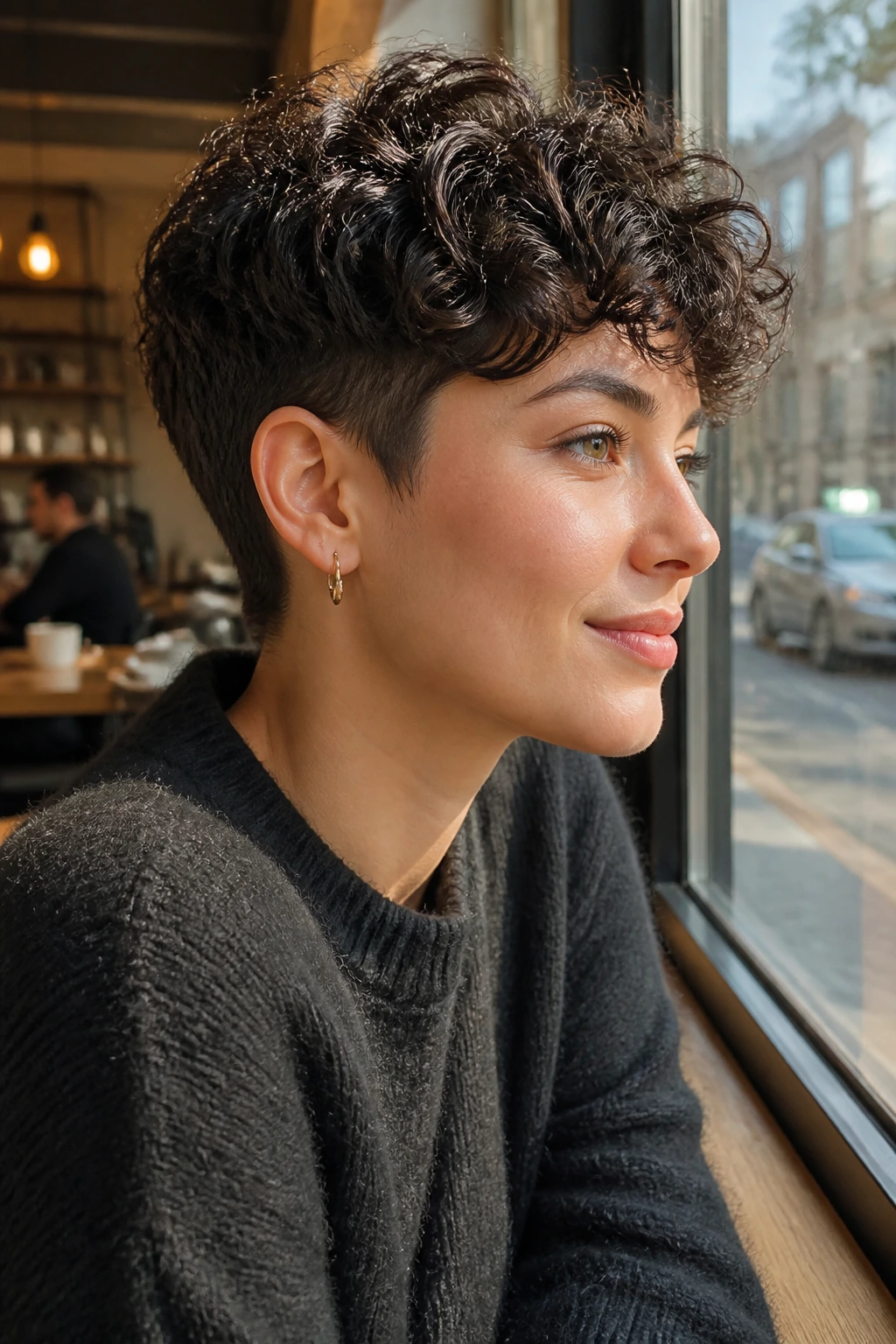
Tapered sides change how short hair sits on the head. Instead of dropping straight down at the temples, the hair gets progressively shorter toward the ears, which keeps the silhouette from widening. On curly hair, that taper is worth its weight in gold.
This cut is especially useful when your curls are denser at the sides than the crown. It lets the top stay expressive while the sides stay neat. Ask the stylist to blend the sideburn area gently so the cut does not end in a visible shelf.
A tapered side can make glasses, earrings, and strong cheekbones stand out a bit more. The hair stops competing with your face. That’s the quiet power of a well-shaped crop.
14. Deep Side-Part Curly Pixie
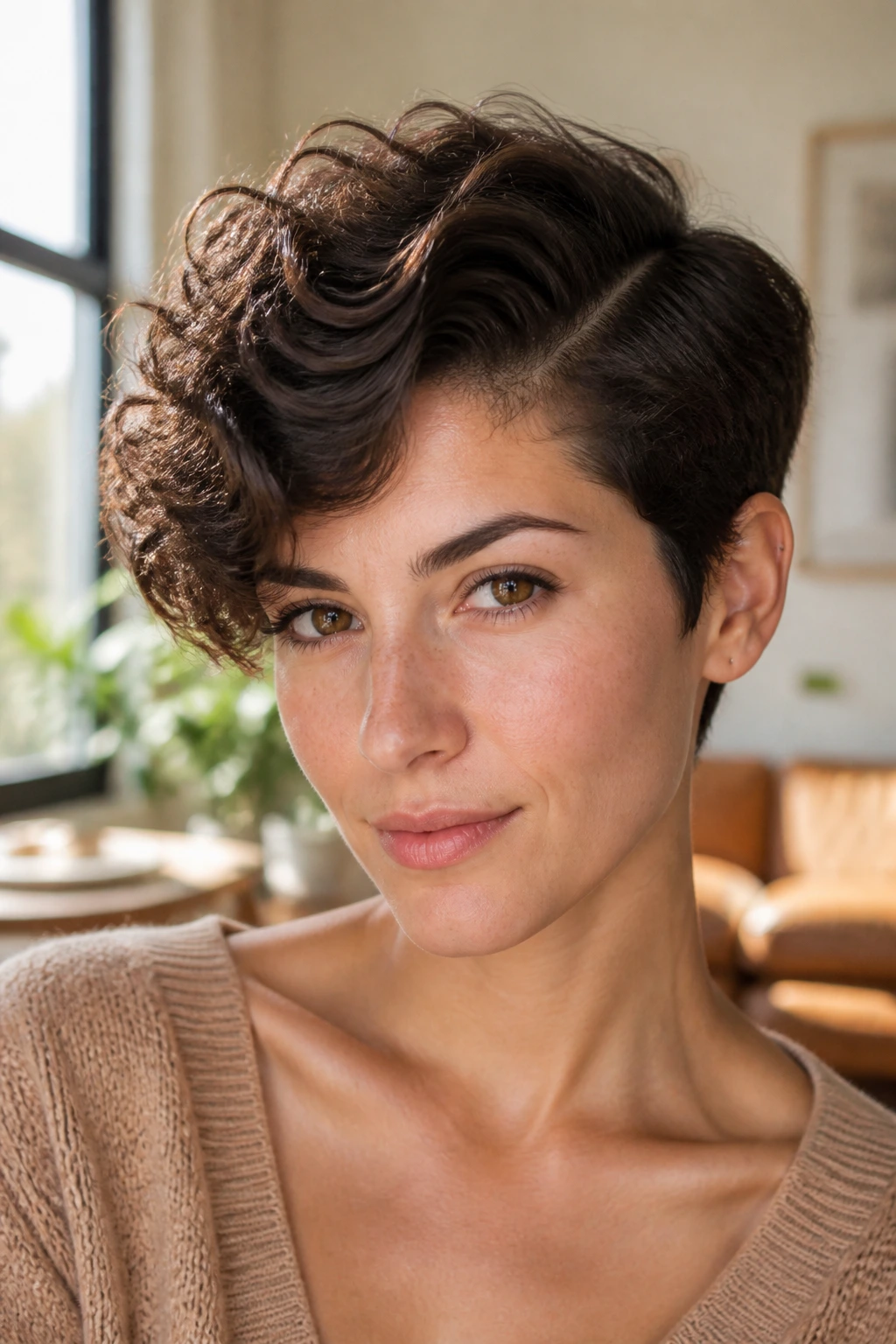
A deep side-part pixie leans into drama without needing extra length. The part sends the curls across the forehead, which creates a sweeping line and shifts volume to one side. That can be especially useful if your face needs a little asymmetry to feel balanced.
The part should be set while the hair is damp enough to hold direction, then refined once the curls dry. Don’t force the root flat with too much product. You want the bend, not a helmet.
This style is excellent for people who like to change the mood of a cut without actually changing the cut. One deeper part, one quick clip at the temple, and the whole head reads differently. Small trick. Big payoff.
15. Curly Mohawk Pixie
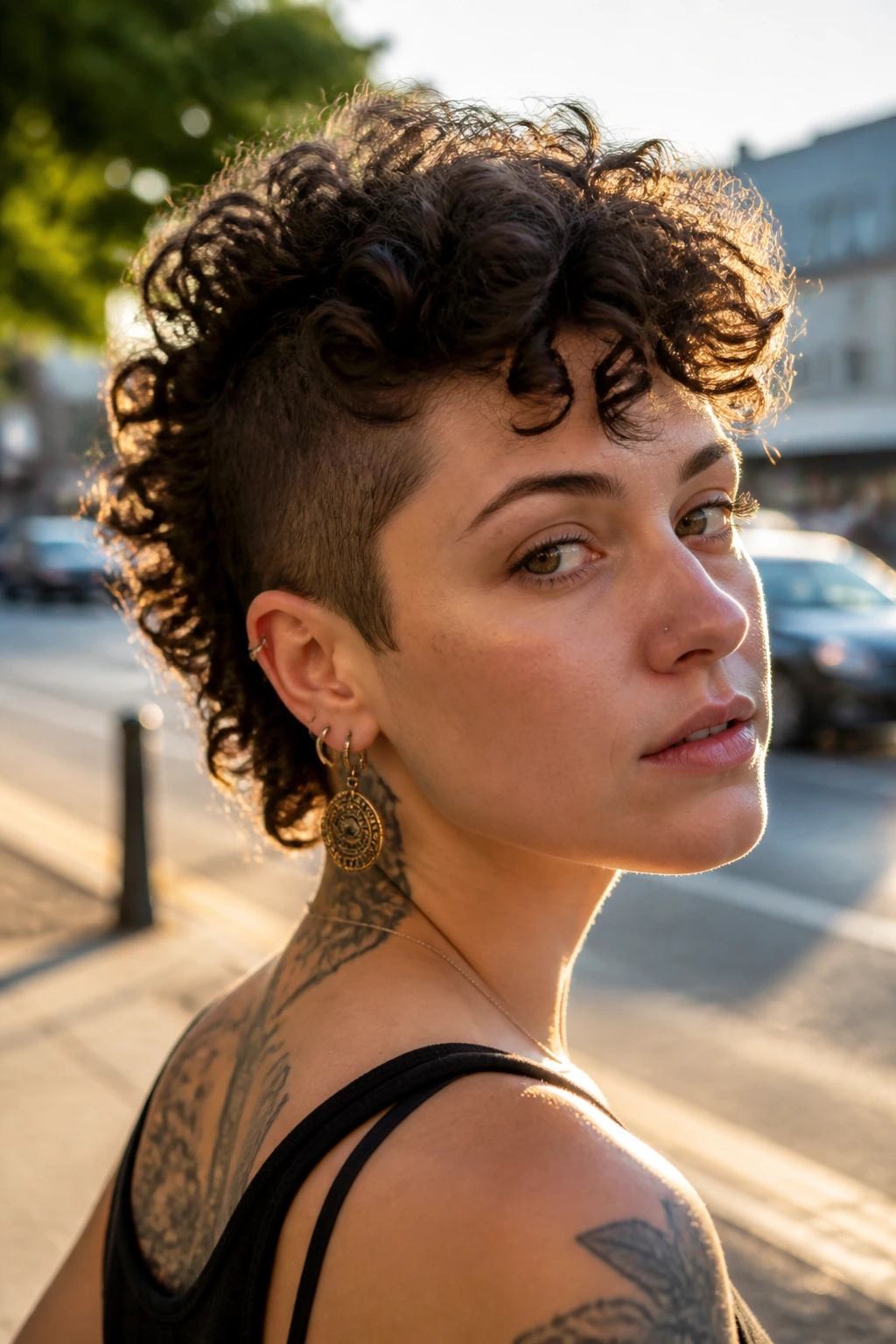
A curly mohawk pixie keeps the center section longer and tighter on the sides, which turns the crown into a ridge of texture. It’s bold, sure, but it can also be surprisingly wearable when the curls are soft and the sides are blurred instead of shaved into a harsh line.
This shape works best when the top has enough density to stand up on its own. Fine curls can do it too, though they may need root clips or a bit of mousse. The sides should blend low so the strip down the middle feels intentional, not costume-like.
It’s one of my favorite cuts for people who want structure without losing movement. The mohawk line gives direction. The curls keep it from feeling stiff.
16. Tousled Crown Pixie
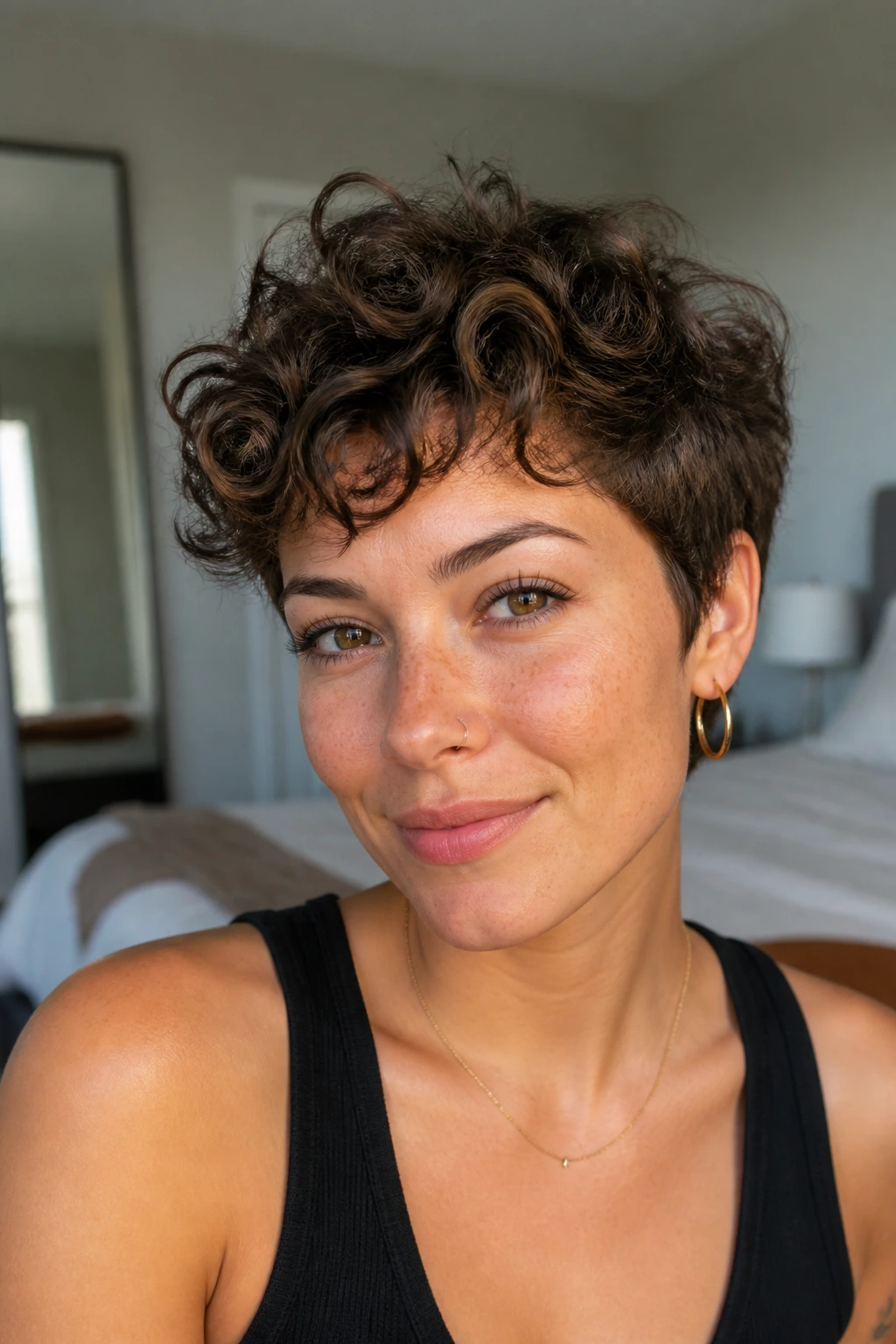
A tousled crown pixie leaves the top loose and a little messy in the best way. The crown gets enough length to lift, while the sides stay trimmed down so the texture appears to rise from the head instead of spreading out from it. That lift matters.
This cut is a strong match for curls that naturally spring at the roots. If your hair likes volume on top but flattens at the sides, the shape can look full without much effort. A diffuser and a root clip or two usually do the job.
Do not over-smooth this one. The whole point is that slightly undone crown. If it starts looking too polished, the charm leaks out fast.
17. Wash-and-Go Curly Pixie
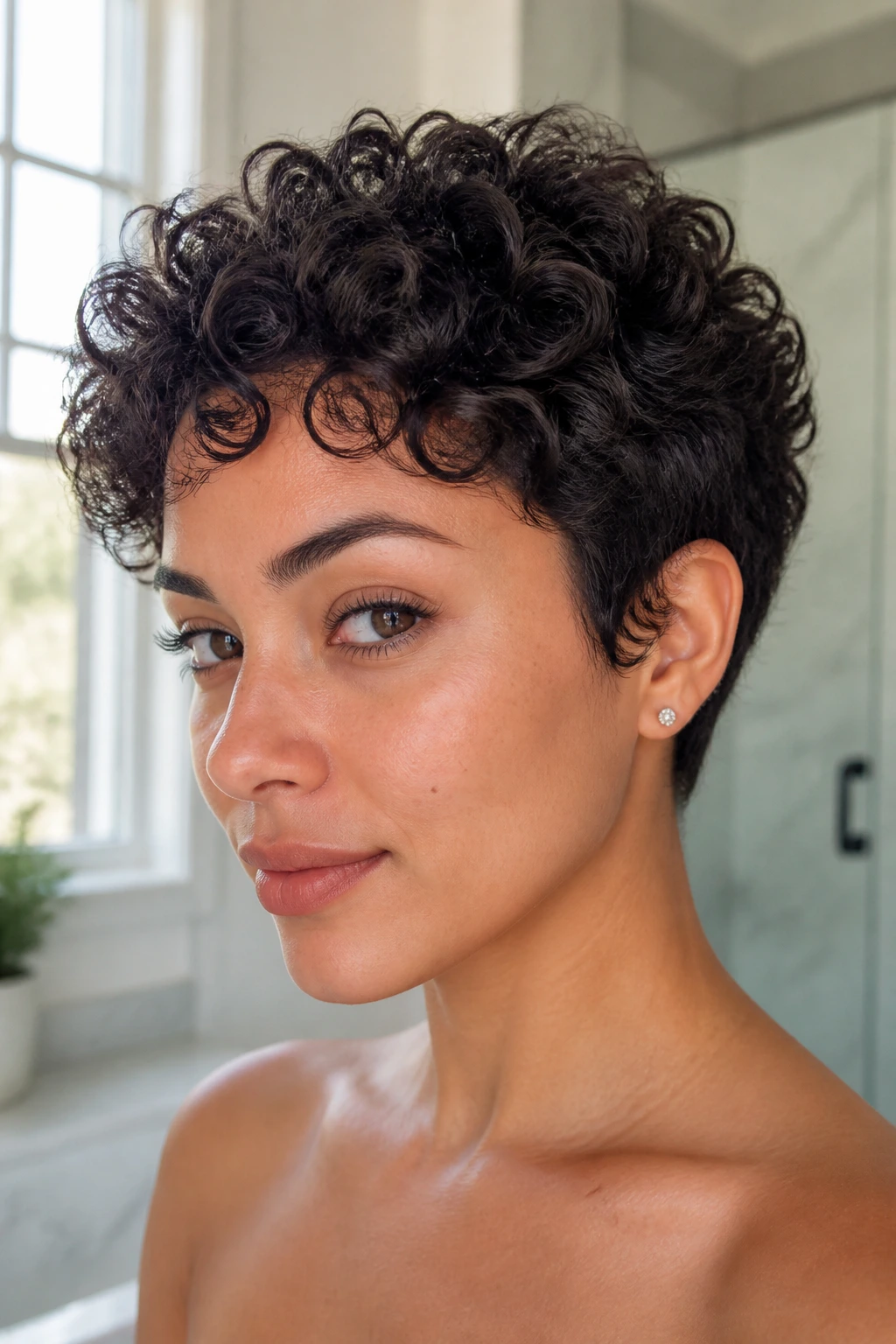
This is the practical cut in the group. A wash-and-go pixie should look good with minimal fuss: cleanse, condition, scrunch, dry. No long styling ritual. No complicated brush work. Just shape that holds its own.
To get there, the cut needs enough layering to let the curls settle without clumping into one heavy mass. It also needs the nape clean enough that you can skip extra styling there. If the back is too bulky, the “wash-and-go” promise falls apart.
I’d choose this one for people who style the same way every day and want the haircut to do the work. It’s honest. It’s low-drama. And if done well, it looks better on day two than a cut that depends on perfect salon styling.
18. Face-Framing Curly Pixie
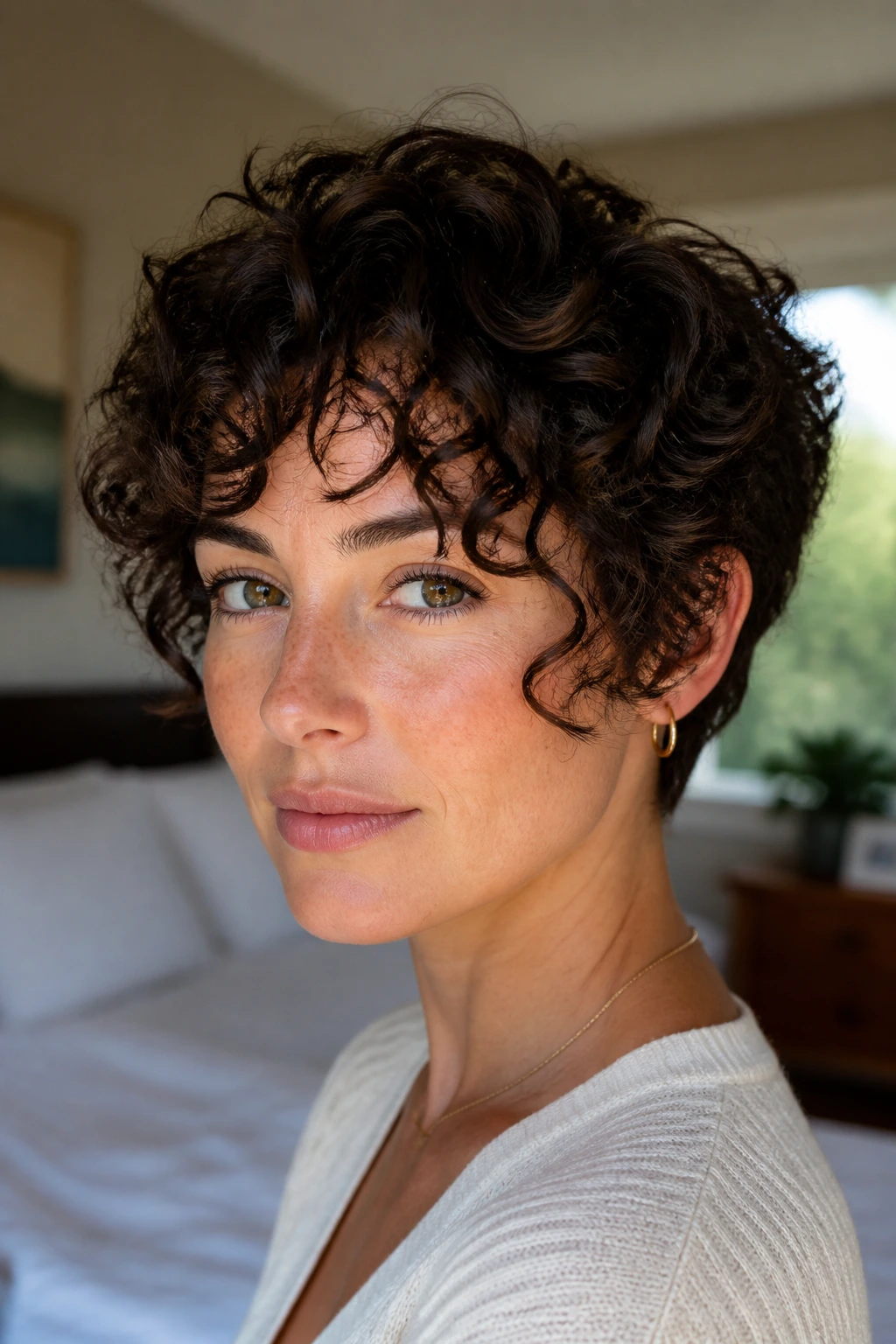
Face-framing pieces can soften a pixie fast. A few longer curls near the cheekbones and temples help the cut feel less cropped and give the face some movement around the eyes. That’s especially useful if you want short hair but not a hard edge.
This shape works well with oval, square, and heart-shaped faces because those front pieces can be placed where balance is needed. Keep the frame pieces longer than the rest of the top if you want the face to stay the focus. If they’re too short, they stop framing and start poking.
The cut is easy to style with fingers and a tiny bit of cream. Sweep the pieces forward when damp, then let them land where they want. Don’t over-direct them. Soft is better here.
19. Choppy-Ends Pixie
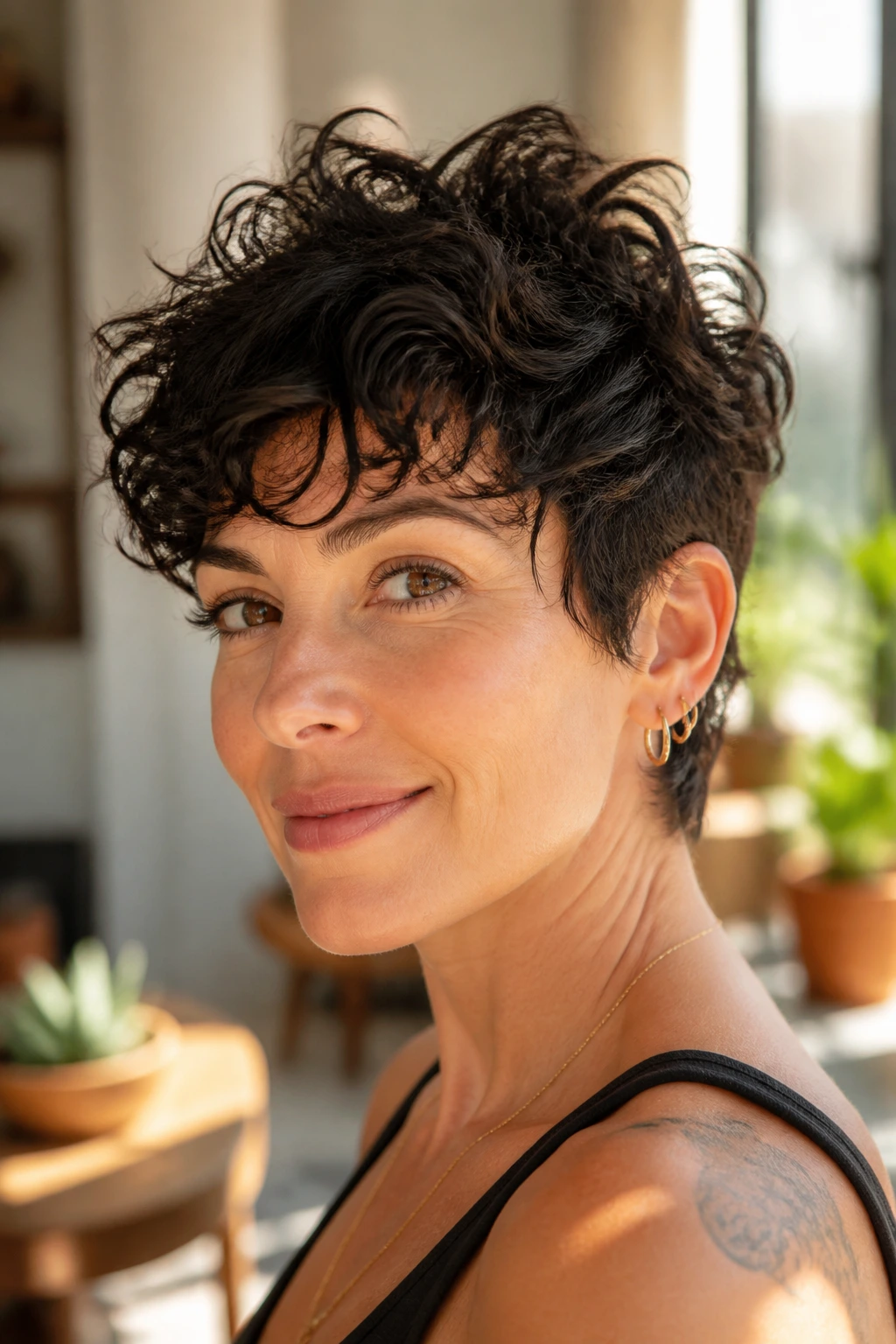
Choppy ends create texture you can actually see. Instead of a smooth outline, the cut has little broken edges that give the curls a lived-in feel. On curly hair, that can look fresh and modern, especially if the curl pattern is loose enough to separate.
The danger is overdoing the chopping. Too much can make the ends look frayed instead of textured. Ask for controlled point cutting, and keep the interior shape balanced so the cut still has a clean overall line.
This style loves a bit of matte paste or lightweight cream at the tips. Pinch a few pieces together. Let the rest stay soft. You want pieces, not chaos.
20. Sculpted Oval Pixie
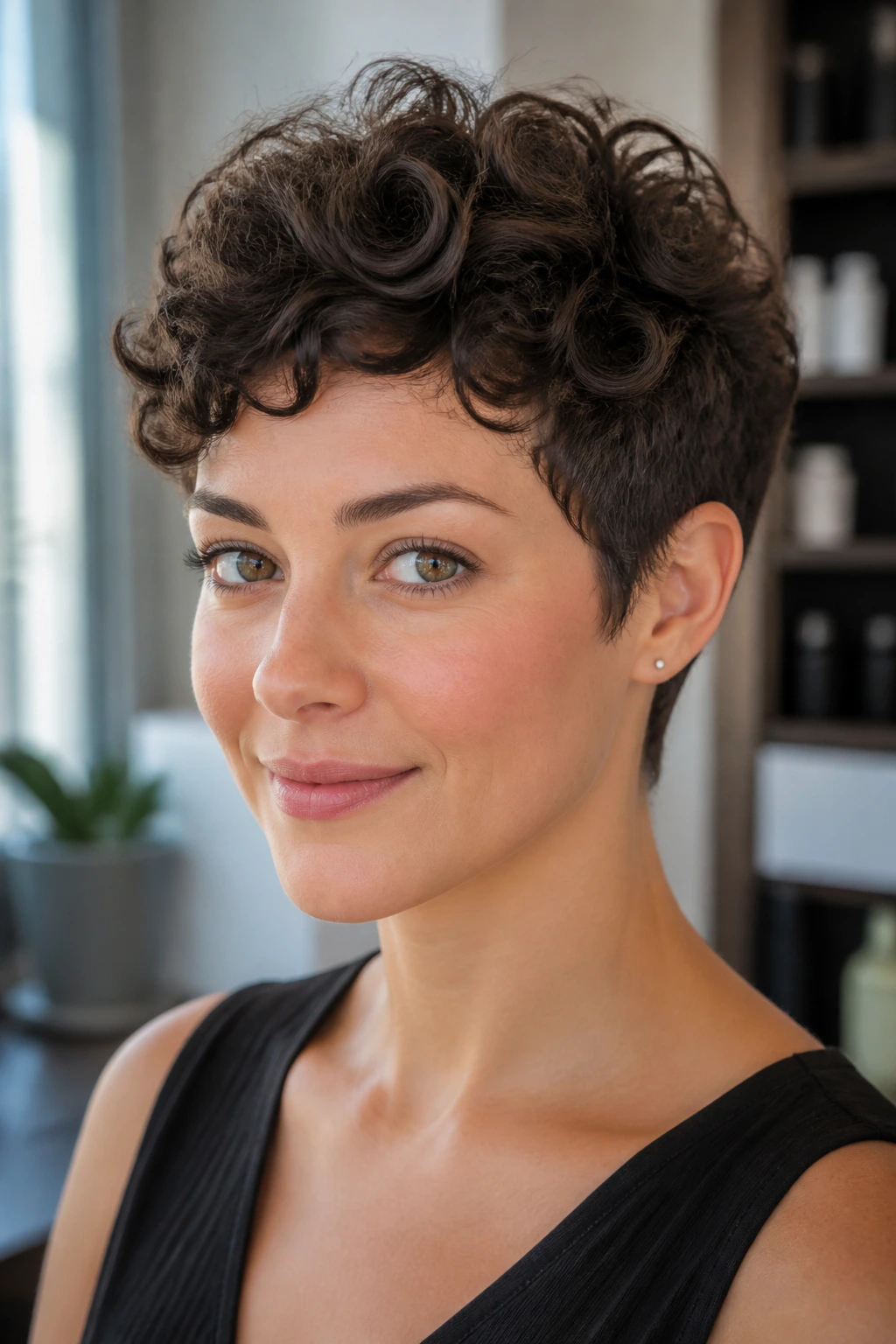
A sculpted oval pixie follows the shape of the head instead of fighting it. The outline is rounded and smooth, with enough structure that the curls sit in a neat frame. It’s a strong option if you like hair that looks deliberately shaped from every angle.
This cut tends to flatter people who want a polished finish without a lot of length. The sides should stay snug, the crown should rise only as much as the curl pattern allows, and the back should curve gently rather than stack. Think contour, not bulk.
It’s one of the more elegant short options here, though “elegant” sounds fancier than the work behind it. What really matters is balance. When the oval is right, the whole head looks quieter and more expensive-looking, even if no one says that part out loud.
21. Feathered Curly Pixie
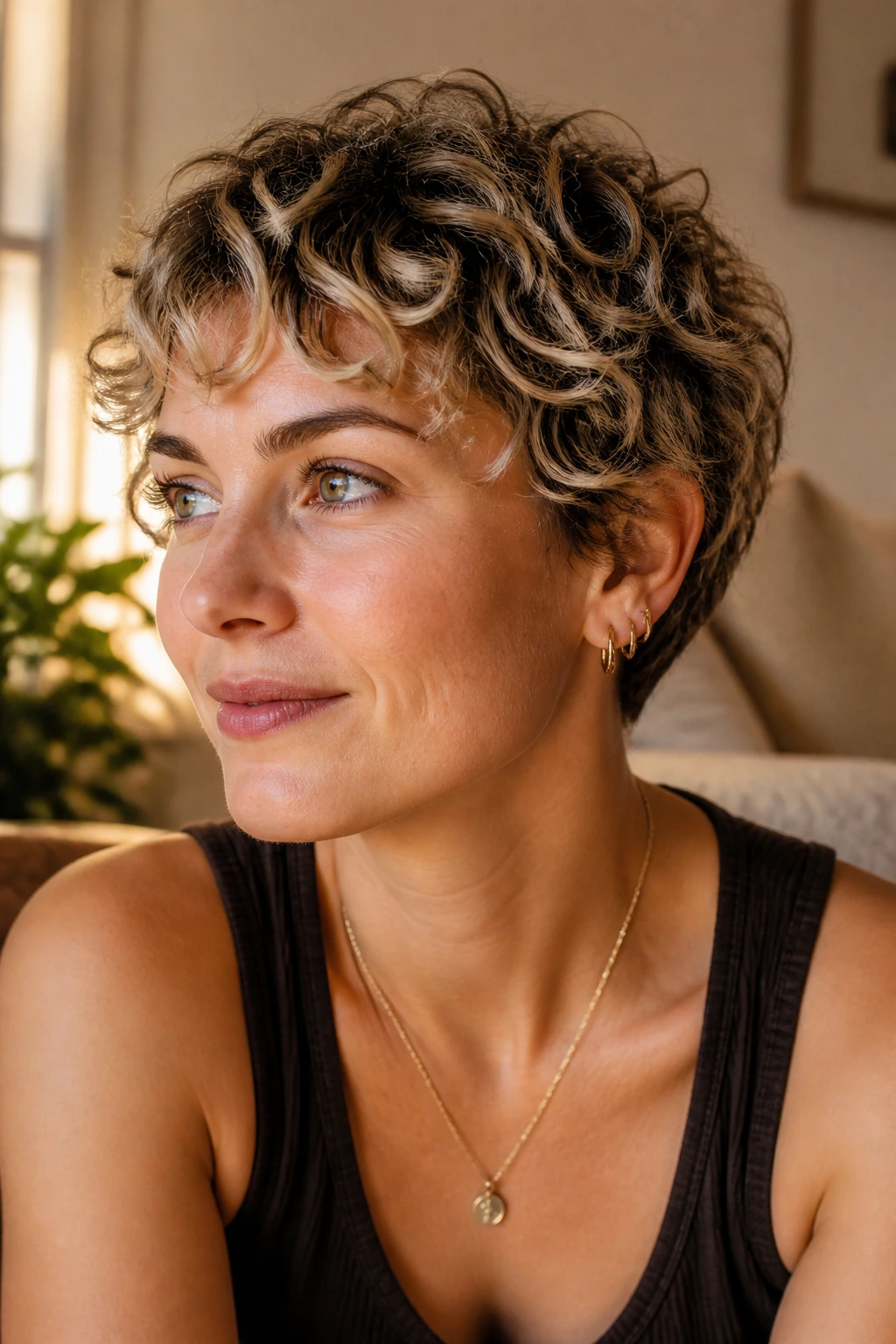
Feathering softens the ends so the cut does not sit as one heavy block. On curly hair, that can make a huge difference. The outline looks lighter, the curls move more freely, and the transition from top to sides feels smoother.
This cut is a nice choice for medium-density curls that need a little softness but not a full shag. If the hair is very fine, too much feathering can make it look wispy. If it is very dense, feathering removes weight without stealing shape.
The finish works well with a light diffuser and a little separation at the ends. Run your fingers through only when the hair is nearly dry. That keeps the feathered pieces from disappearing into frizz.
22. Nape-Detail Pixie
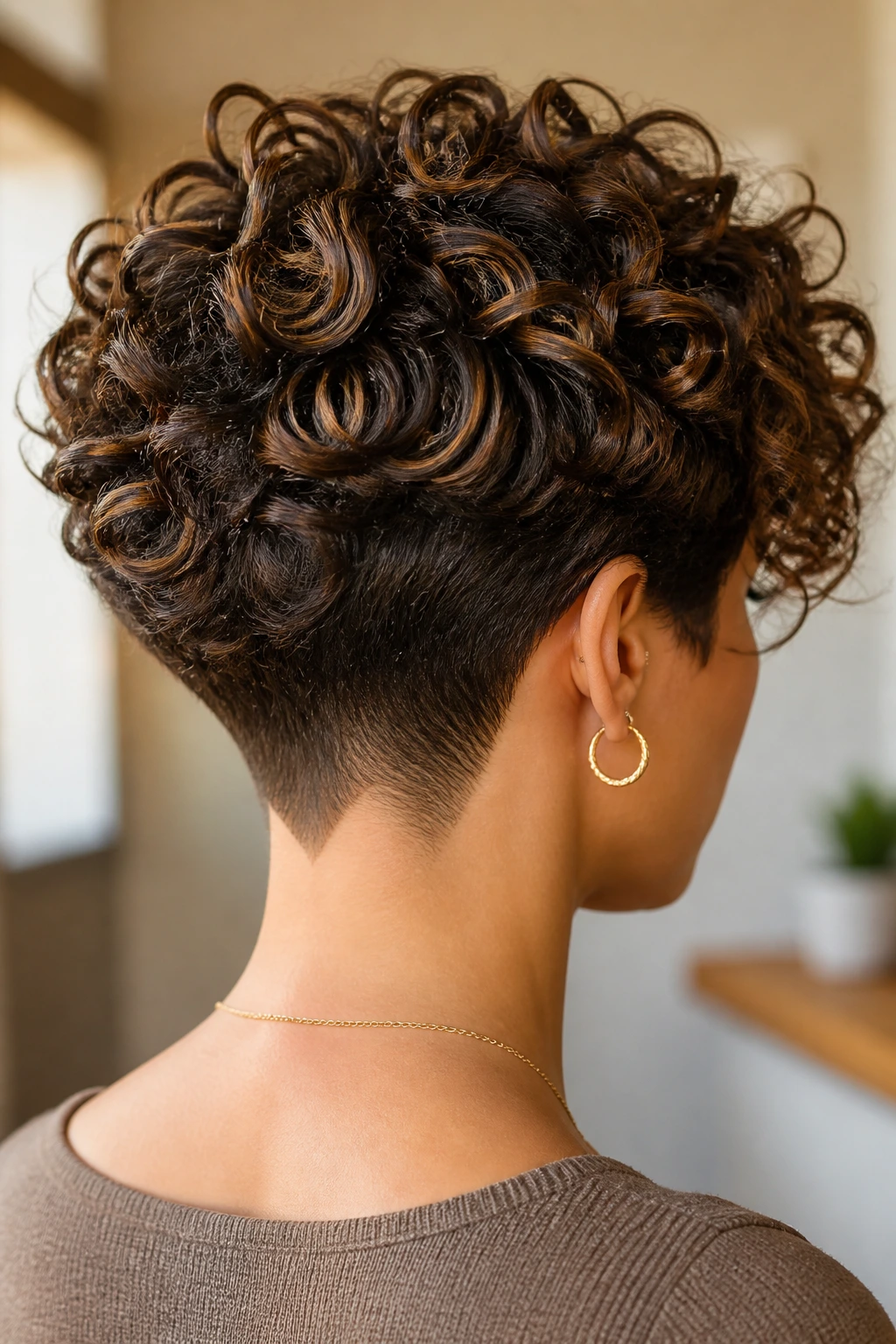
A nape-detail pixie is all about the back. The front can be simple, but the neckline gets a clean carve, a soft taper, or even a subtle design line if that suits your style. On short curly hair, the back view matters more than people admit.
This cut is excellent if you wear your hair up on one side, tuck it behind the ears, or spend a lot of time with your neck visible. A crisp nape makes the whole style feel finished. A sloppy nape makes even the best curls look half done.
If you like detail work, this is a fun place to spend it. The curls on top stay playful, while the neckline keeps the cut grounded. That contrast is what makes it interesting.
23. Retro Finger-Wave Pixie
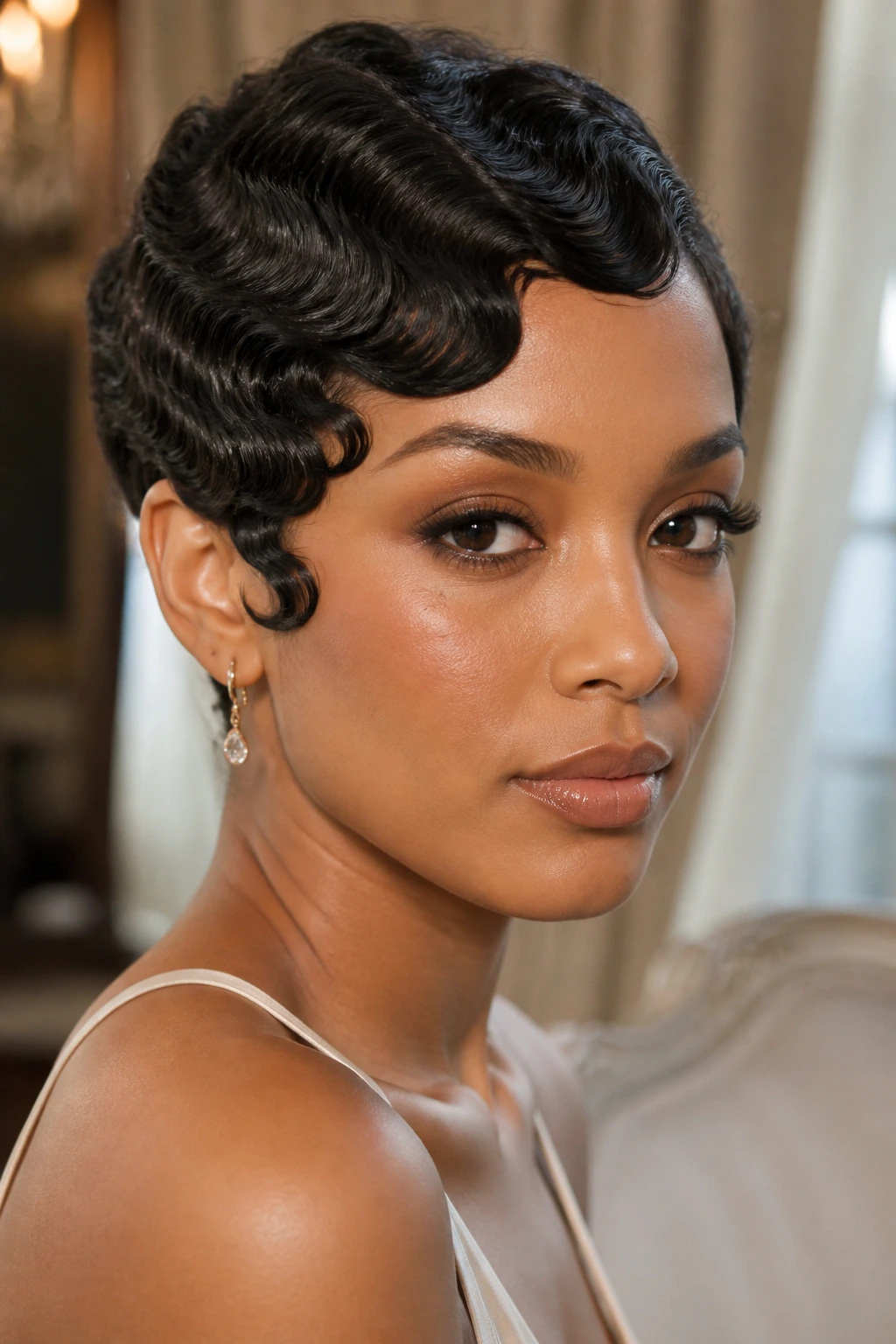
A finger-wave-inspired pixie takes curly hair in a more polished direction. Instead of free movement everywhere, the front and sides are guided into smooth, sculpted curves. It’s the kind of cut that can look glamorous without needing length.
This works best when the curls are cooperative or when the hair is styled with a bit of setting lotion or gel. You are not trying to erase texture. You’re shaping it. That distinction matters, because the best version still has some softness, not a shellacked finish.
I like this cut for formal events, photos, or any day you want your hair to feel more dressed up than casual. It asks for a little more effort, but not in a fussy way. The payoff is a front line that looks clean and deliberate.
24. Voluminous Crown Pixie
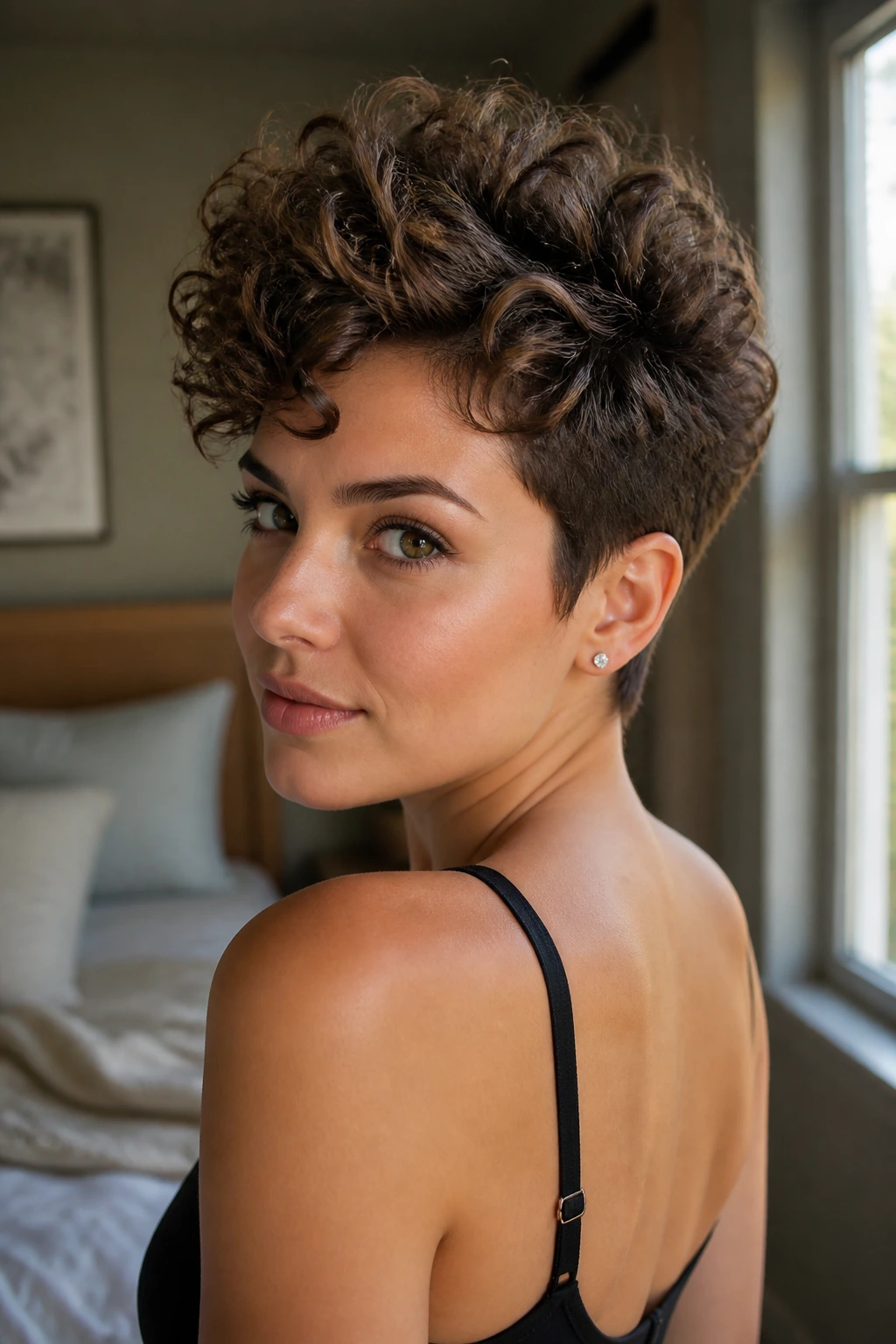
A voluminous crown pixie pushes height upward instead of outward. The sides stay controlled, the back stays neat, and the crown gets just enough length to lift. On curly hair, that kind of balance can be beautiful because it keeps the profile lively.
This cut works well when the head shape benefits from a little top height or when the curls are fine enough to flatten without help. Use clips at the roots while drying, then remove them once the crown is set. A touch of mousse at the base helps too.
Do not overbuild the height. You want lift, not a tower. If the crown starts looking separate from the rest of the head, the shape loses its grace.
25. Disconnected Curly Pixie
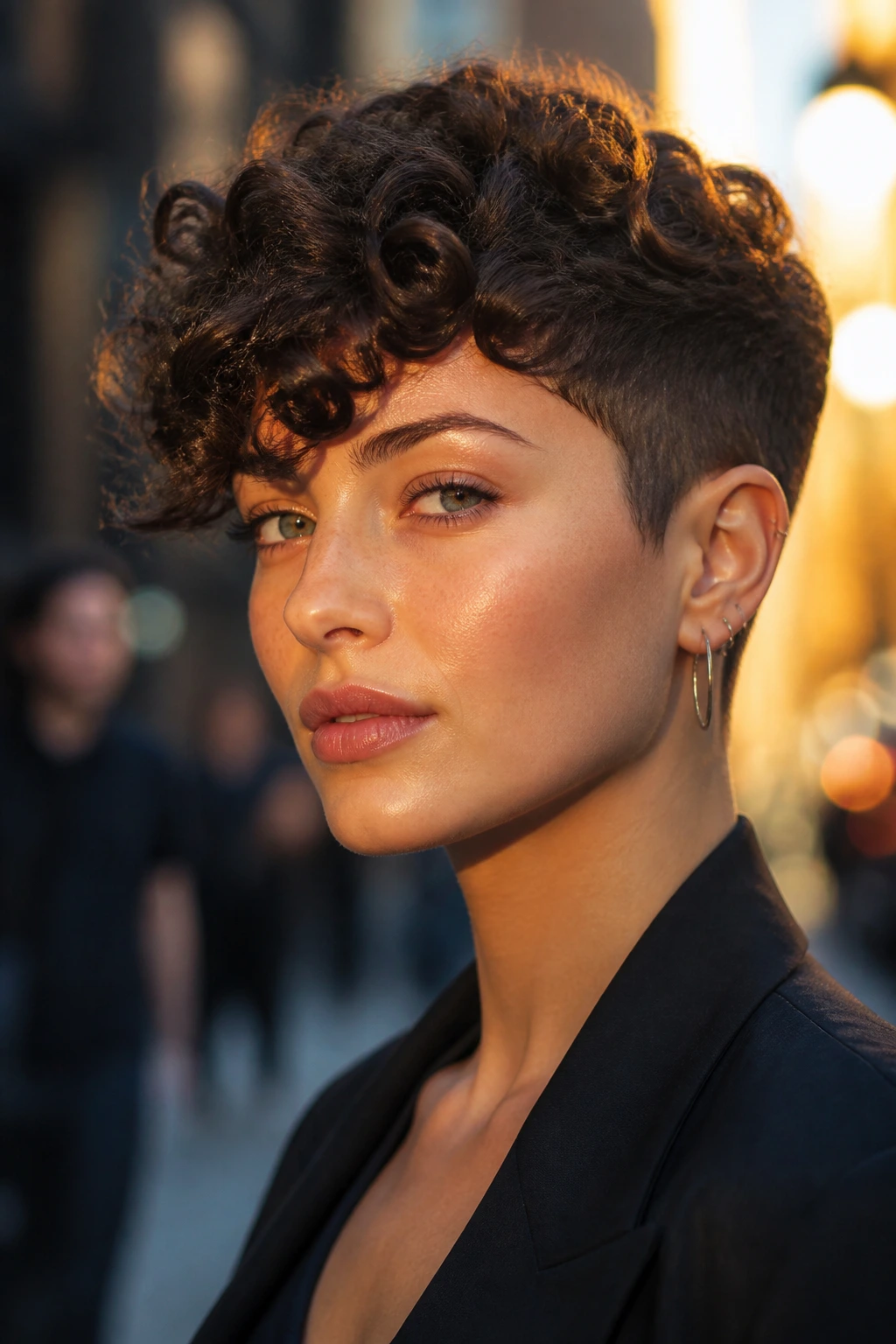
A disconnected pixie makes the contrast obvious: short sides, a longer top, and very little blending between them. On curls, that disconnect can look sharp and modern because the texture itself softens the line. It’s a good fit if you like structure with attitude.
The top needs enough length to show the disconnect on purpose. If it’s too short, the whole thing just looks unfinished. Ask the stylist to keep the transition clean and visible. That’s the point.
This cut often suits people who want to tuck the top behind one ear one day and push it forward the next. The contrast gives you styling choices. It also makes grow-out interesting, which is more than some short cuts can say.
26. Ear-Tucked Pixie
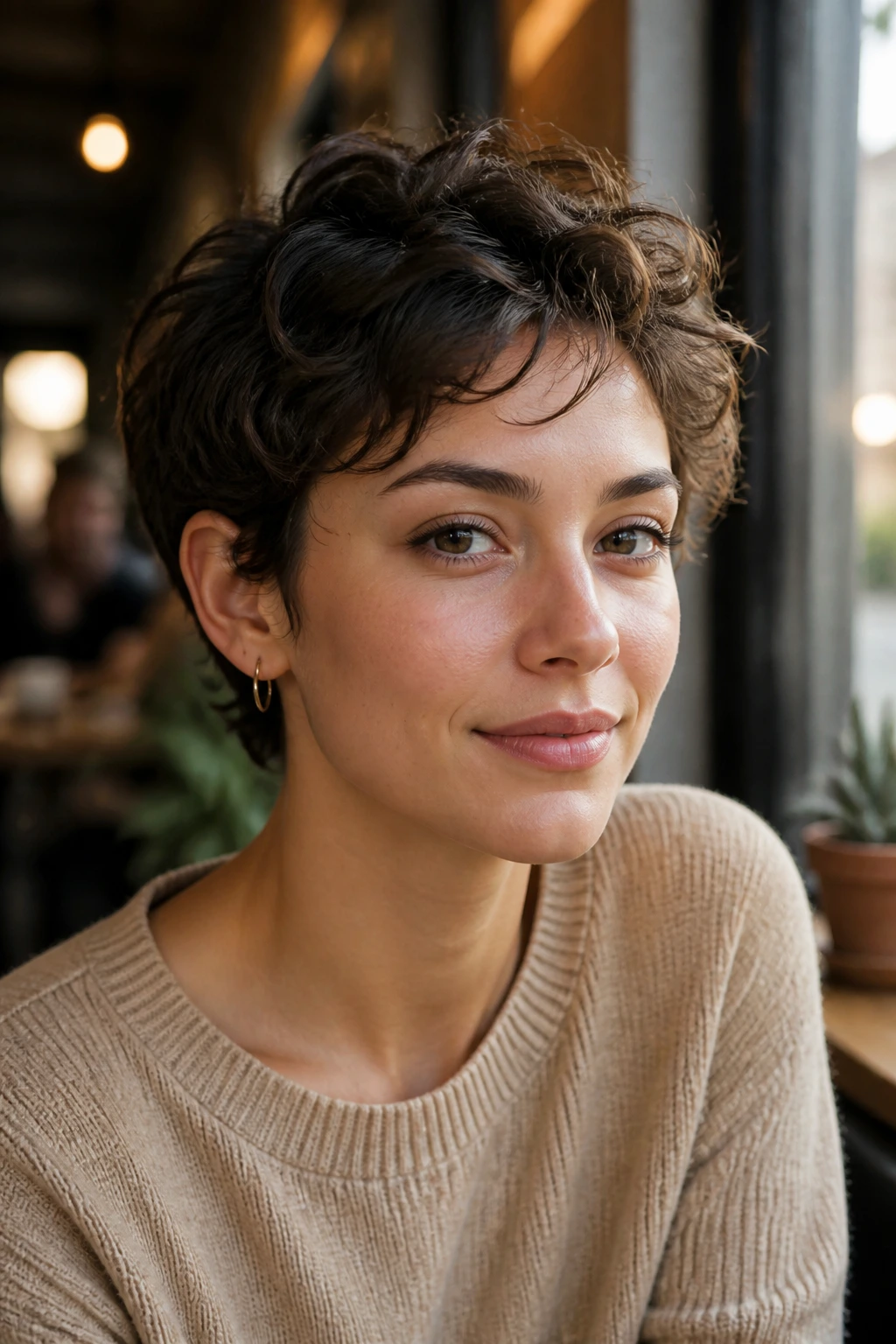
An ear-tucked pixie keeps the front and sides just long enough to slide behind the ears, which changes the whole feel of the cut. One minute it’s soft. Next minute it’s neat and sharp. Curly hair makes that little movement look almost theatrical.
This is a nice choice if you wear glasses or like a clear view of the cheekbones. The tucked shape opens the face without needing a heavy fringe. The curls near the temples should be light enough to move, but not so long that they collapse.
What I like most is the everyday practicality. You can wear it loose, tuck one side, clip it back, or leave it messy. Four moods. One cut.
27. Bowl-Inspired Curly Pixie
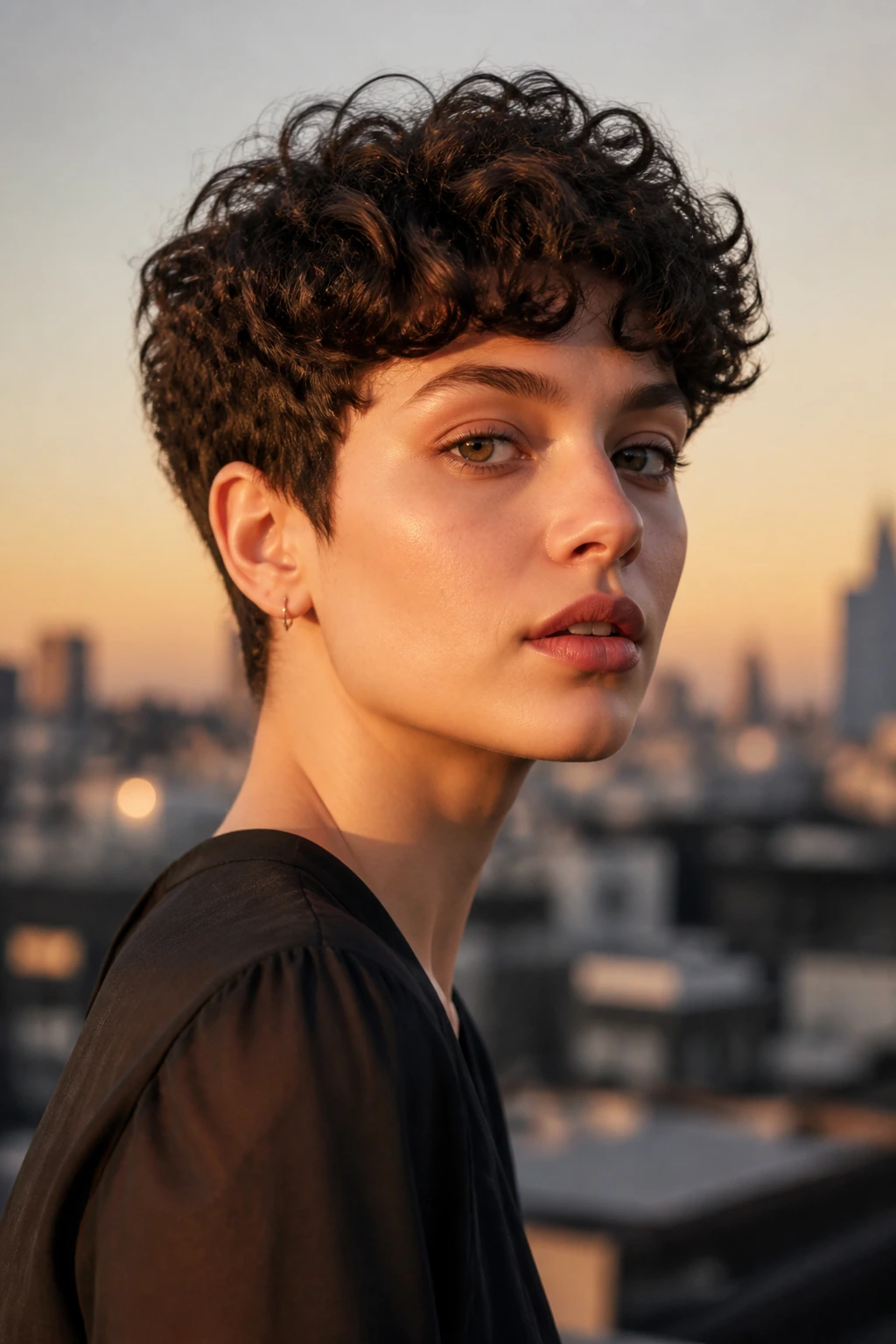
A bowl-inspired curly pixie sounds odd until you see it on the right head. The curve around the forehead and crown creates a rounded outline that curls can soften in a way straight hair often cannot. It feels fashion-forward without being costume-y.
The danger here is over-rounding the sides. The cut should hug the head, yes, but still leave some air around the ears and temples. Otherwise the shape starts to look heavy. Curly texture helps break that up, which is why this version can work better on curls than people expect.
I’d call this a strong choice for someone who likes bold shapes and does not mind being noticed. It is not the quietest pixie in the room. That is part of the charm.
28. Curved Bangs Pixie
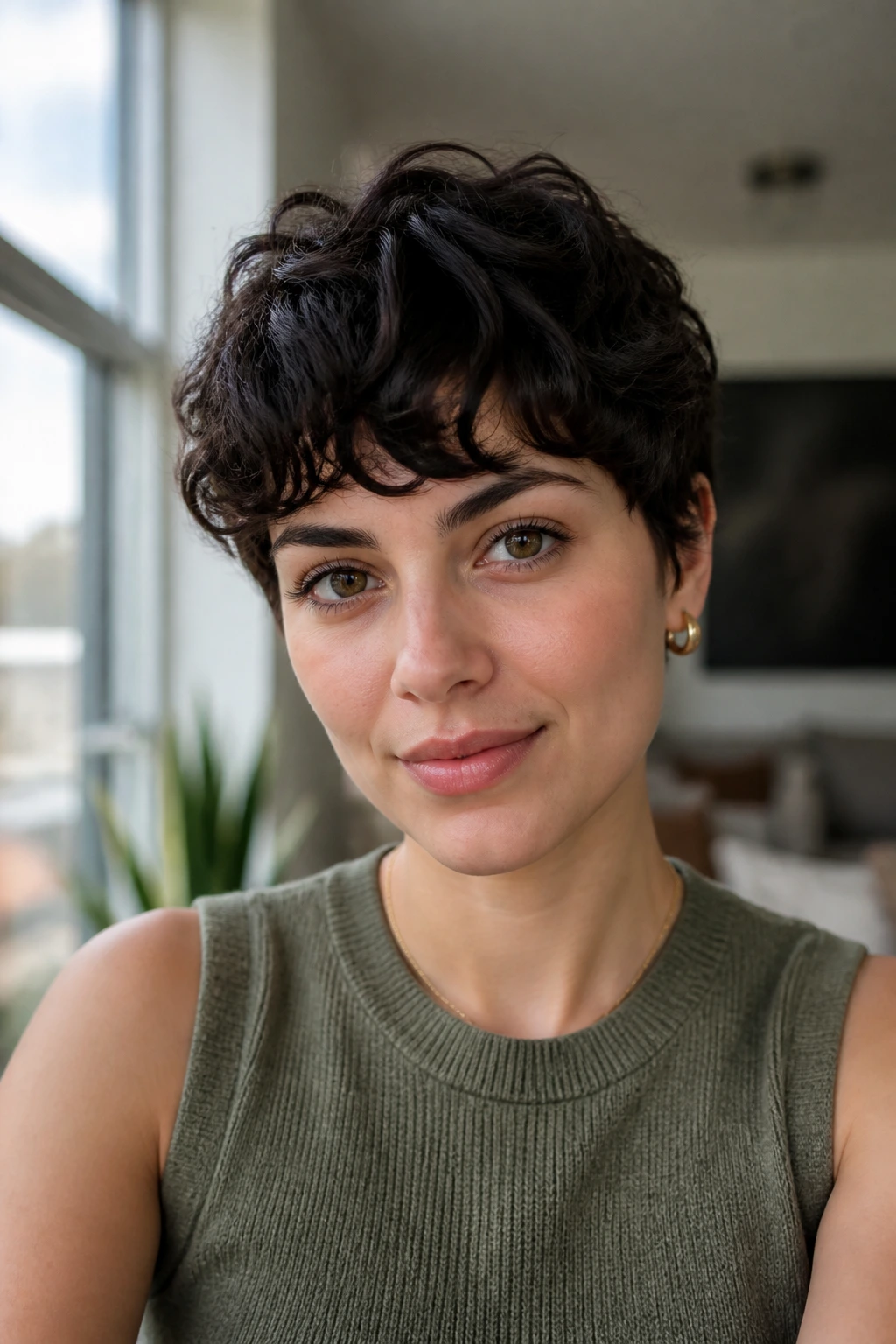
Curved bangs follow the brow line instead of chopping straight across it. On curly hair, that arc helps the front feel softer and more natural because the curl pattern already wants to bend. It’s an easy way to make a pixie feel less severe.
This cut works especially well when the fringe is left a touch longer in the center and slightly shorter at the sides. That gives the bangs a gentle sweep rather than a flat shelf. It also helps the curls settle when dry.
If your forehead feels like the first thing everyone notices, curved bangs can shift the attention without hiding the face completely. They’re subtle. Not boring. That’s a nice place to be.
29. Close-Cropped Curly Pixie
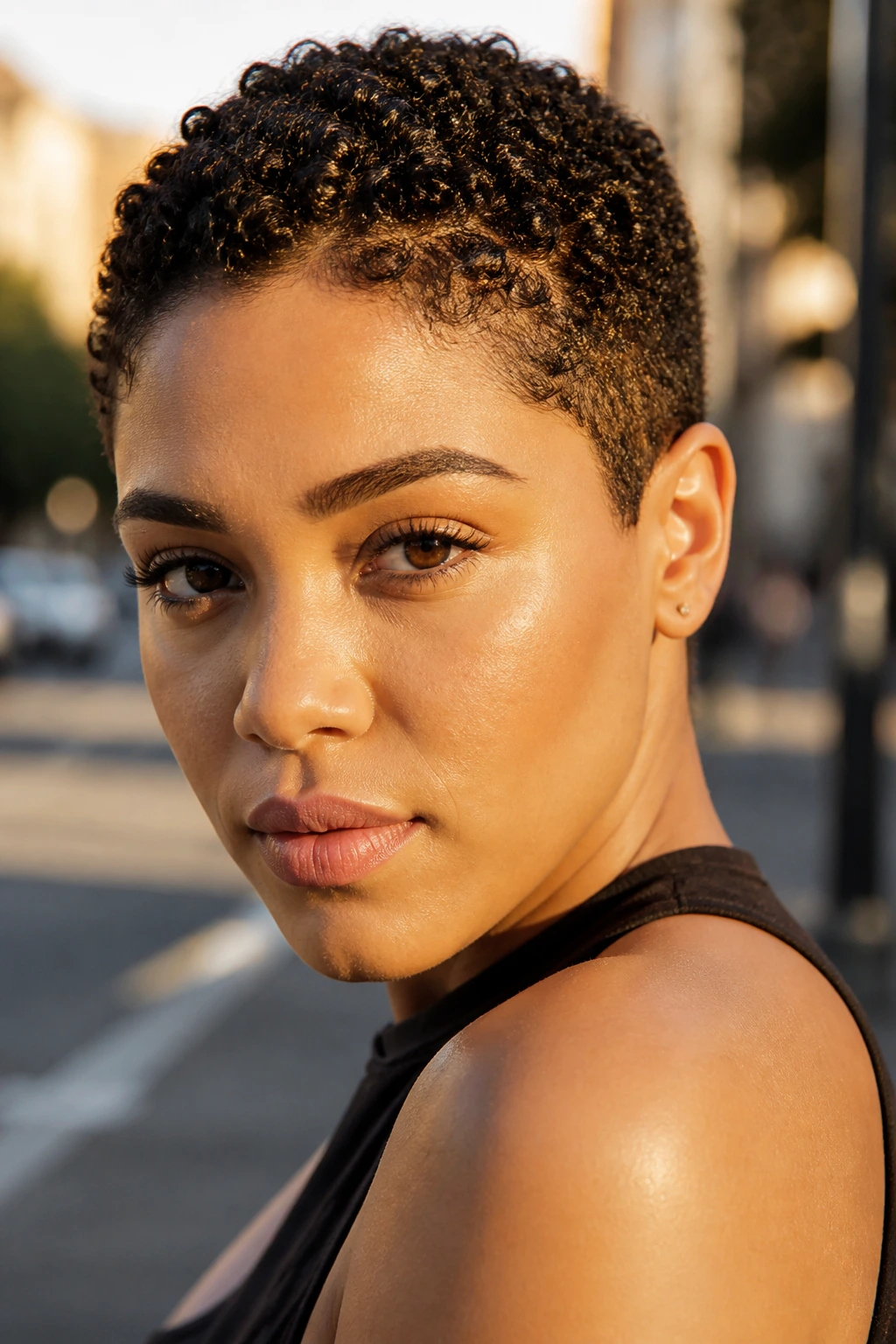
A close-cropped curly pixie strips the shape down to the essentials. The hair is short enough that the curl pattern becomes texture on the scalp, not loose length around the face. The result can be bold, clean, and oddly freeing.
This cut needs careful shaping around the hairline because there is nowhere for a bad line to hide. The perimeter should be even, and the top should stay slightly longer than the sides so the texture still has a point of view. If everything is the same length, the head can look flat.
It suits people who like minimal styling and strong features. It also works well if you are tired of chasing volume. Sometimes less hair is just easier. No drama. No extra weight.
30. Grow-Out-Friendly Pixie
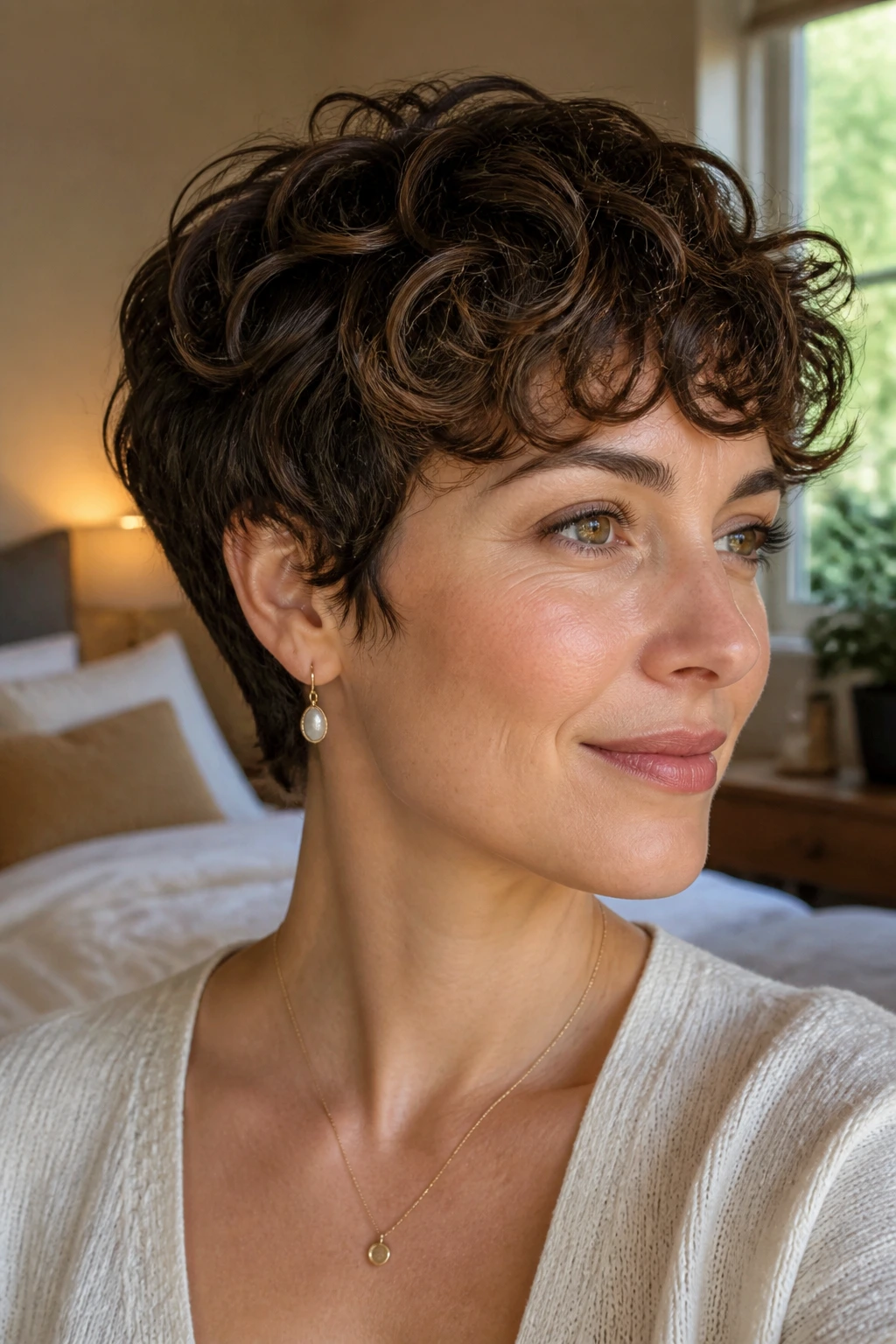
A grow-out-friendly pixie is built with the future in mind. That means leaving a little extra length at the fringe, softening the nape instead of shaving it to the skin, and shaping the sides so they can slide into a bob later. It is short hair with an exit plan.
This is the smart choice if you know you like change but do not want to feel trapped by it. The curls can shift around as the cut gets longer, but the outline stays usable. That is harder to do than it sounds.
I prefer this version for first-timers who are nervous about losing too much length. It still feels like a pixie. It just gives you more room to breathe after the first month.
31. Color-Accented Curly Pixie
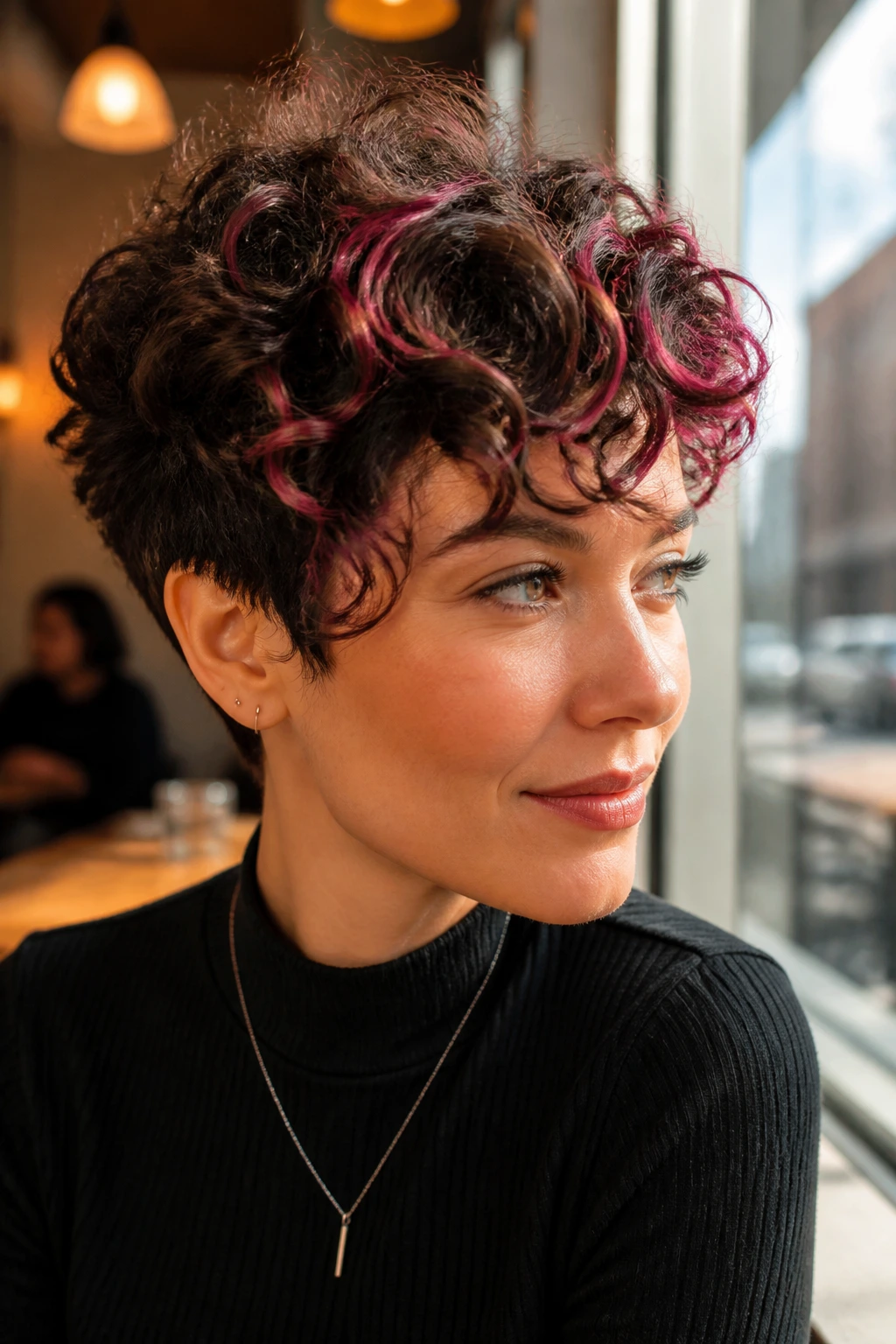
A color-accented pixie uses highlights, lowlights, or a bold panel of color to make the curl pattern stand out. Short curls catch light differently than longer hair, so even a subtle color shift can change how the texture reads. That can make the cut look richer without changing the shape.
The best versions use color to trace the movement of the curls. Lighter ends can show the twist. Darker roots can make the crown look fuller. You do not need an extreme color job to get the effect.
This is a smart choice if your cut is already good but feels a little flat visually. Color adds depth. Shape does the rest. The two together are where the style starts to sing.
32. Protective Textured Pixie
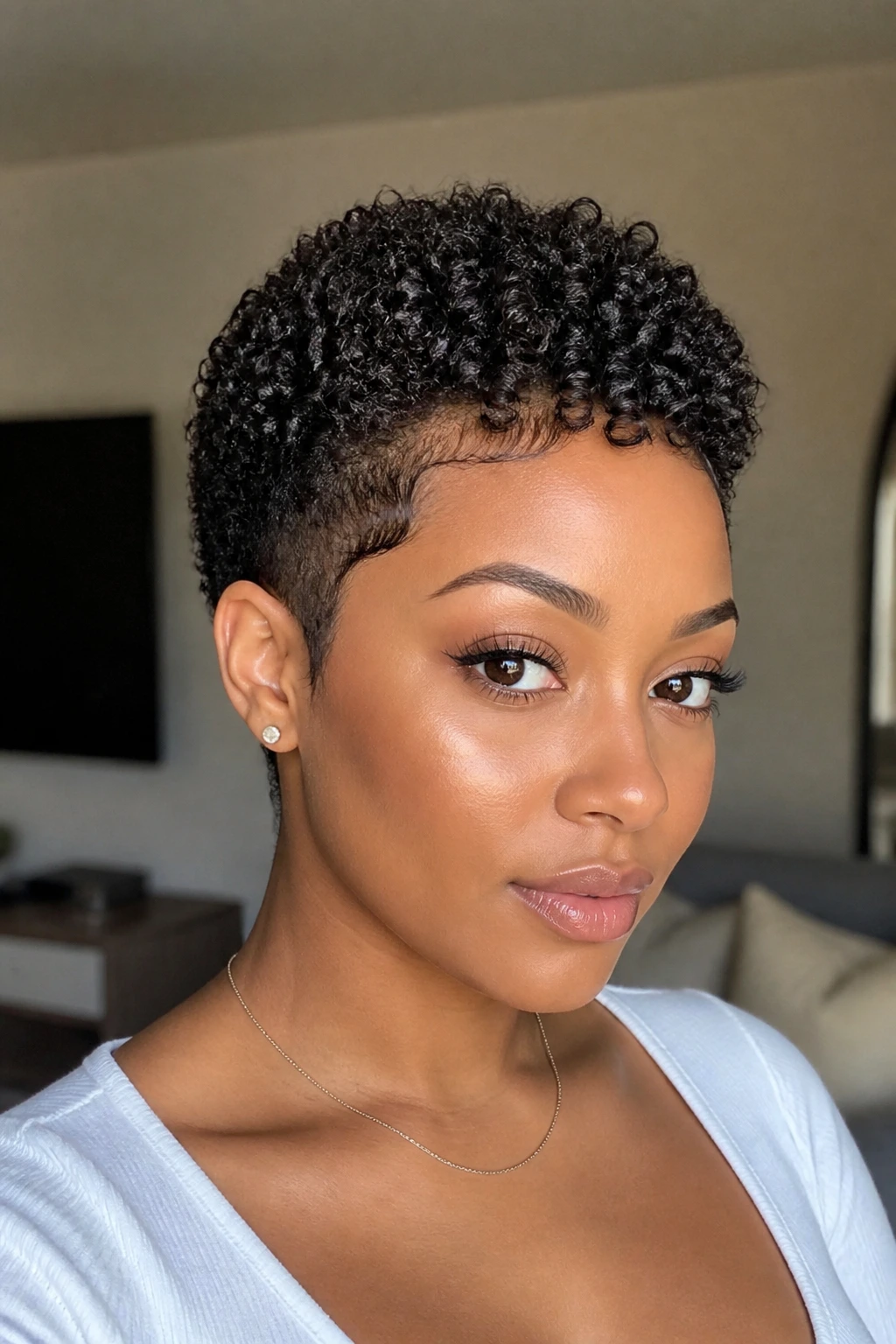
A protective textured pixie is built for low manipulation and careful edges. The shape stays short enough to be easy, but the curl pattern is respected so the hair does not have to be brushed, stretched, and reset every day. That matters if your curls are fragile or prone to breakage.
This version works best when the perimeter is neat and the top is left with enough room for the natural texture to stay intact. Lightweight moisturizers and a satin bonnet at night help keep the shape from getting rough. Avoid constant combing. It steals definition and can snag short ends.
I like this cut for people who want the freedom of short hair without roughing up the curl pattern. It is practical, but not plain. That balance is rare.
33. Event-Ready Curly Pixie
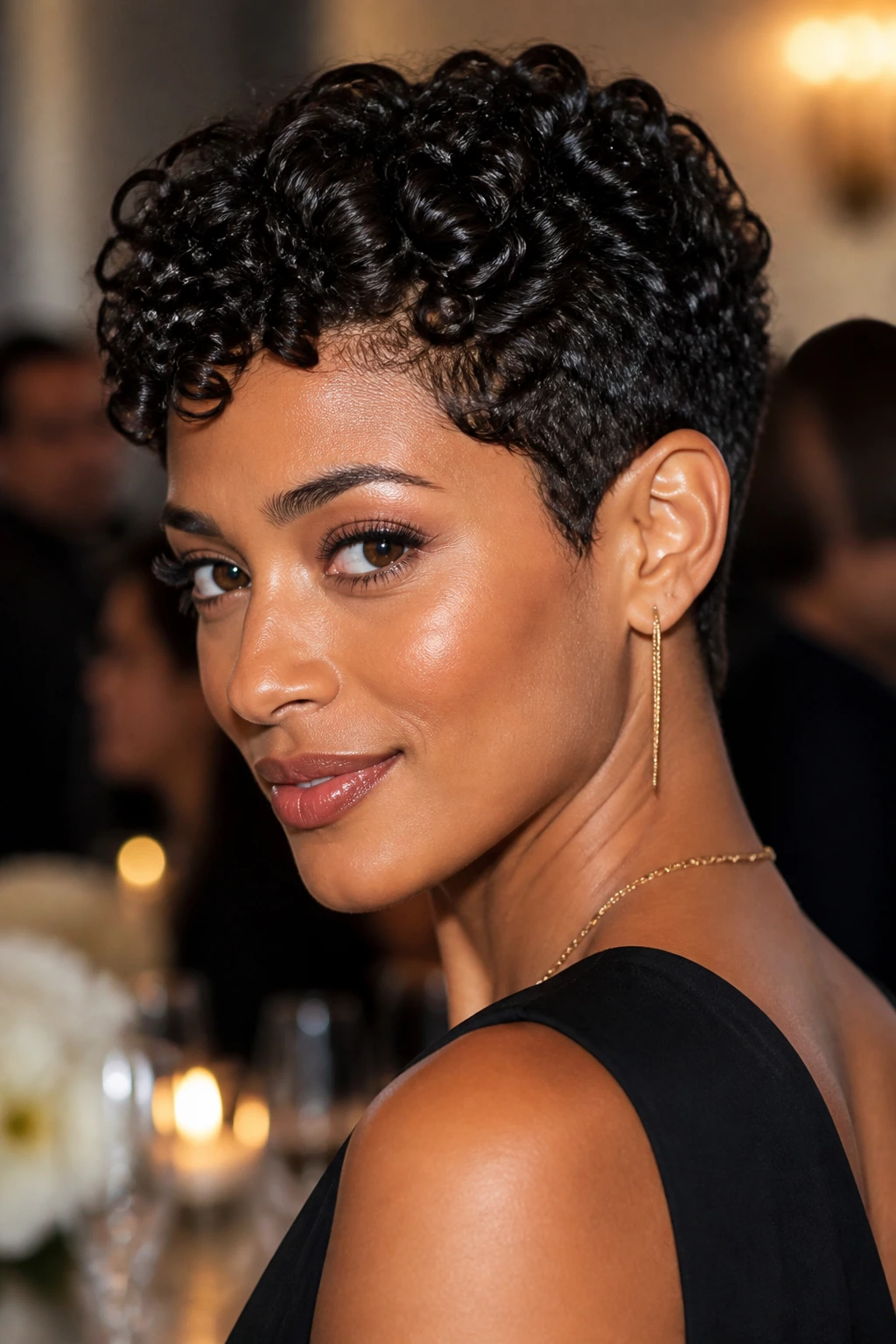
An event-ready curly pixie is the polished one in the room. The shape is trimmed close enough to stay neat, but the top keeps enough length for definition, shine, and a little styling drama. It’s the cut I’d choose when the hair needs to hold its own next to a good outfit.
Set the crown with mousse, smooth the sides with a tiny bit of gel, and let the front curl where it wants. A deep side part or a tucked ear can shift the mood fast. The style should look deliberate, not lacquered.
This cut is proof that short curly hair can still look dressed up without losing texture. It does not need to be big to be memorable. It just needs a clean line and curls that know where they’re going.
Why Curly Pixie Cuts Work When the Shape Is Right
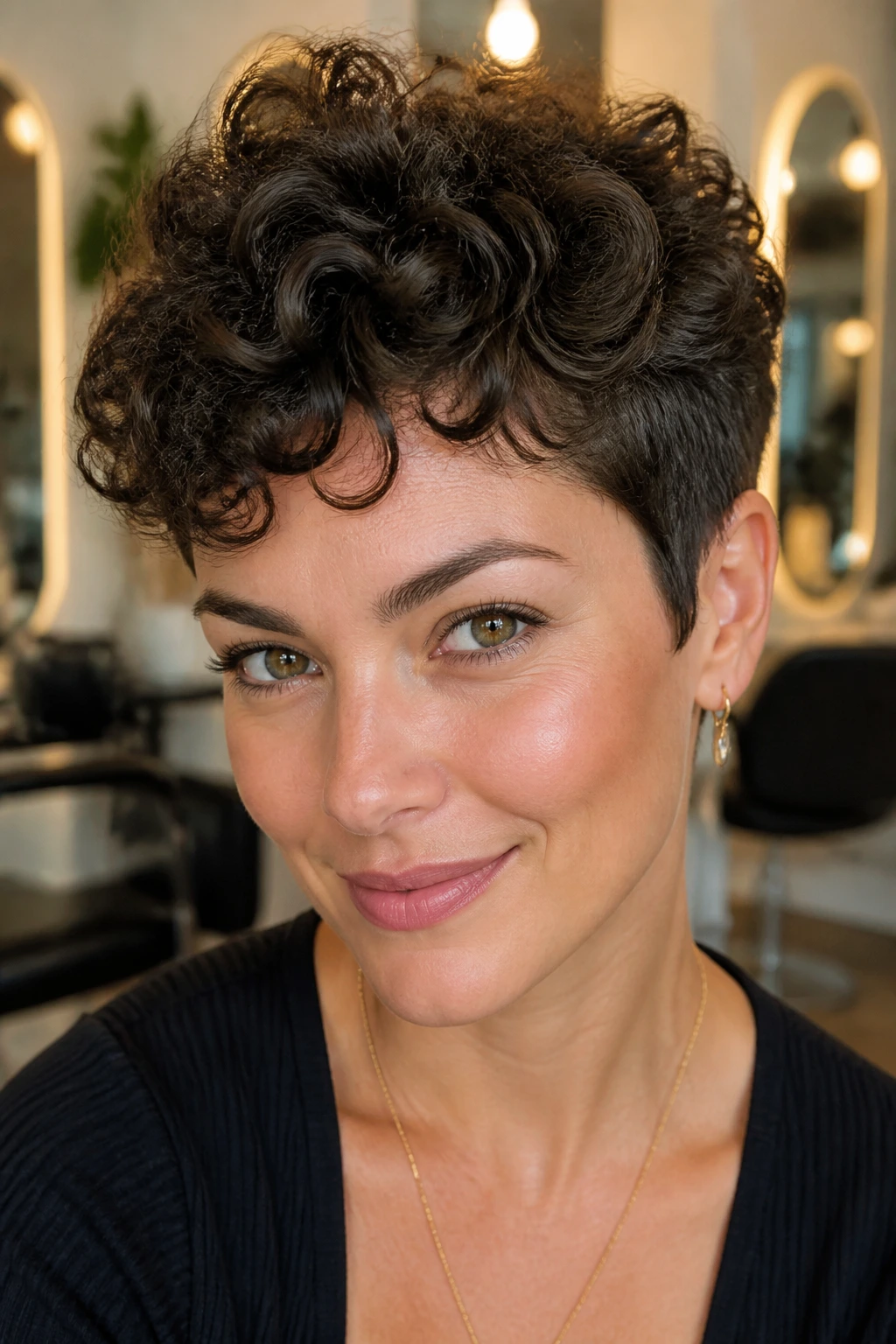
Curly pixie cuts look their best when the cut is built around shrinkage, not despite it. That sounds obvious until you sit in a chair and realize how often short hair gets cut as if every strand falls straight. Curly hair does not do that. It bends, lifts, and shifts as it dries, and the shape has to leave room for all three.
The other reason these cuts work is simple: short length makes texture visible. A pixie puts the curl pattern up front, which is why a clean taper or a careful fringe matters so much. If the sides are too bulky, the eye goes to the bulk. If the nape is sloppy, the whole cut looks unfinished. Small areas. Big consequences.
There is also a practical side people forget. Short curls are easier to refresh, easier to dry, and easier to keep from tangling at the back of the neck. You still need a good cut. You just do not need the same daily wrestling match you would with shoulder-length curls.
Essential Tools for Styling Short Curly Hair
-
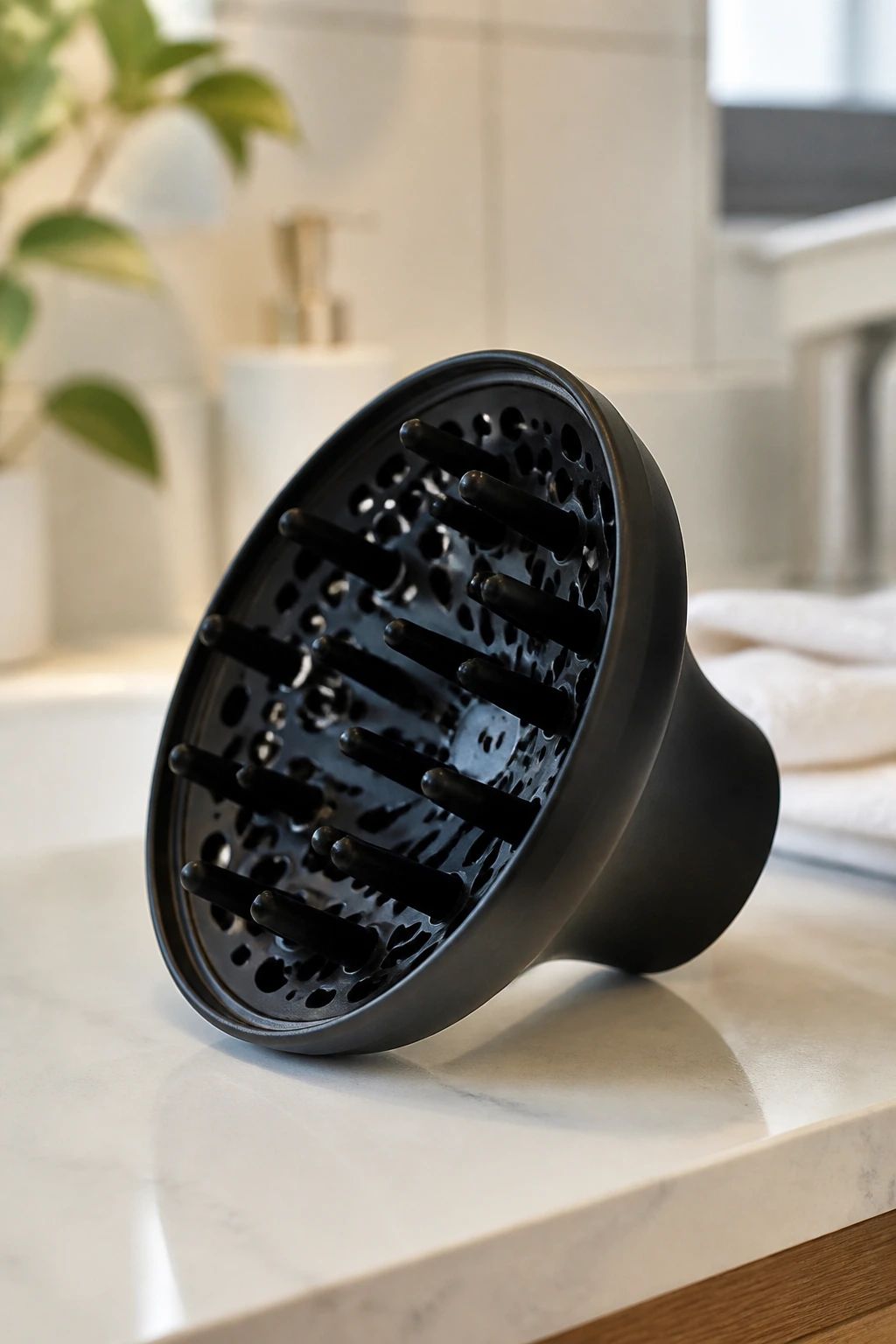
Diffuser attachment: Helps dry curls with less frizz and gives the crown more lift without blasting the pattern apart.
-
Microfiber towel or cotton T-shirt: Cuts down on roughing up the ends after washing, which matters more on short hair because every inch shows.
-
Spray bottle: Useful for refreshing the front and crown on day two or three without fully rewashing.
-
Wide-tooth comb: Best for detangling in the shower or on soaking-wet hair before product goes in.
-
Curl cream or leave-in conditioner: Gives softer definition on loose curls and keeps short coils from feeling dry at the ends.
-
Light mousse or foam: Good when you want the top to stay airy instead of heavy with product.
-
Small clips: Root clips at the crown can give a flatter pixie some lift while it dries.
-
Satin bonnet or pillowcase: Helps the shape last overnight instead of getting crushed into a weird flat patch at the back.
-
Tail comb: Handy for clean parts and quick sectioning when you want a side sweep or a more sculpted finish.
How to Ask for the Right Pixie for Your Curl Pattern
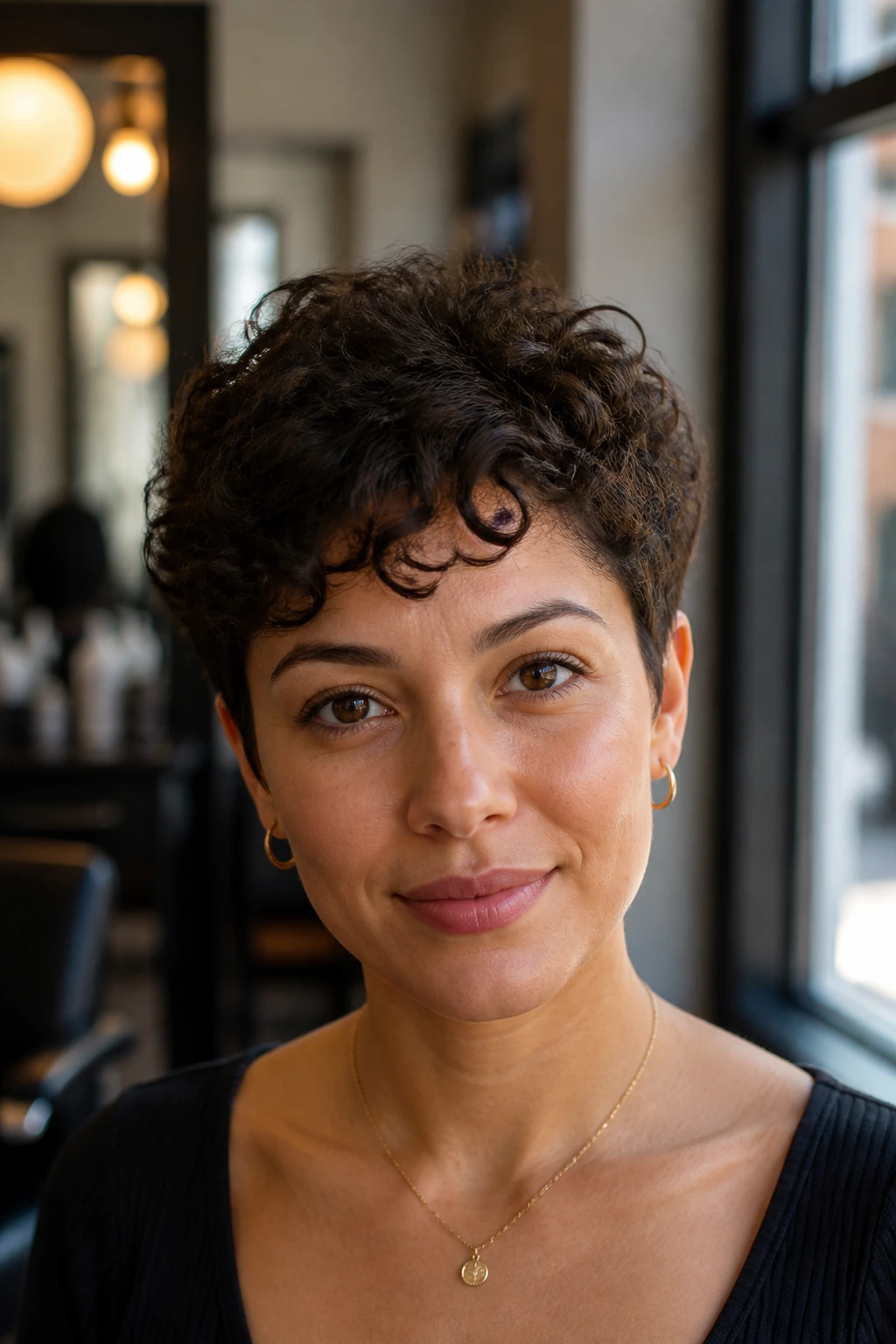
The salon chair is where a lot of curly pixie cuts go sideways. Bring photos, yes, but bring the right kind of photos. One image of the front is not enough. You want a front view, a side view, and, if possible, the back. Curly cuts live in the round.
Tell the stylist how your curls behave when dry, not just how they look after washing. If your hair shrinks hard, say so. If one temple lays flatter than the other, say that too. Those little notes help the cut match the way your head actually grows hair, which matters more than any inspiration shot.
Ask directly whether the cut will be done dry or mostly dry. That is not a small detail. Dry cutting lets the stylist see the curl’s real length and shape. If the hair is dense, ask how they plan to remove bulk without making the ends wispy. I would rather hear “we’ll shape it carefully” than “we’ll just thin it out.” The second one makes me nervous.
How to Wear and Style These Cuts
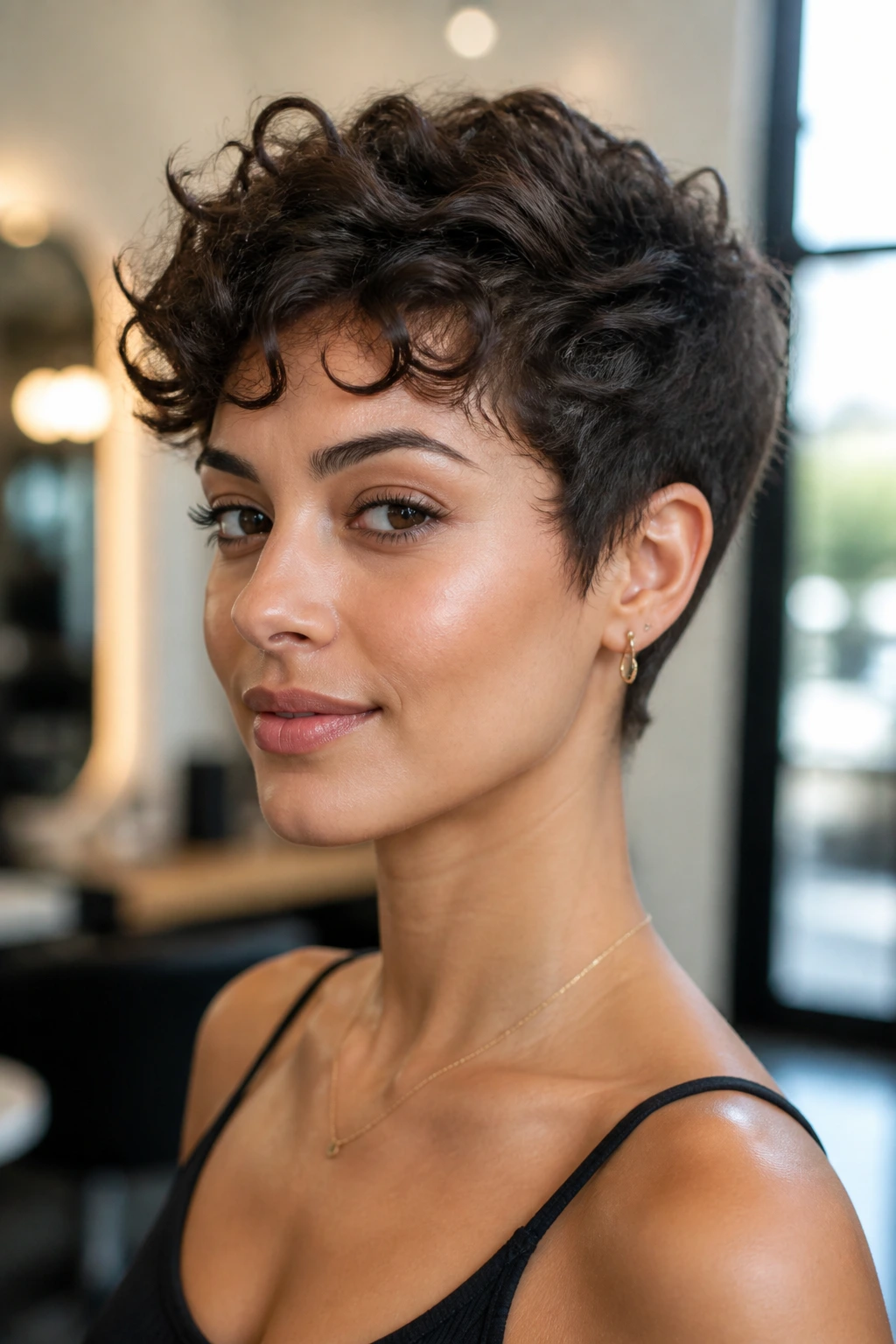
Presentation: Keep the front a touch more defined than the crown if you want the cut to look crisp. Let the top curl live a little more naturally, then smooth only the places that frame your face. That contrast keeps the cut from reading flat.
Accessories: Small hoops, studs, and narrow frames all work well with short curls because they do not fight the shape. High necklines and stiff collars can make a pixie feel boxy, while open necklines let the nape line show off properly.
Proportions: If your face is round, leave a bit more height at the crown. If your forehead runs high, a side sweep or curved fringe usually helps. Short curls are honest about proportion. They do not hide much.
Best wear: A little shine serum on the ends and a quick finger-fluff at the root can move the same cut from casual to polished in under two minutes. That is the beauty of short texture. You can change the mood fast.
Extra Tips for Shine, Definition, and Lift
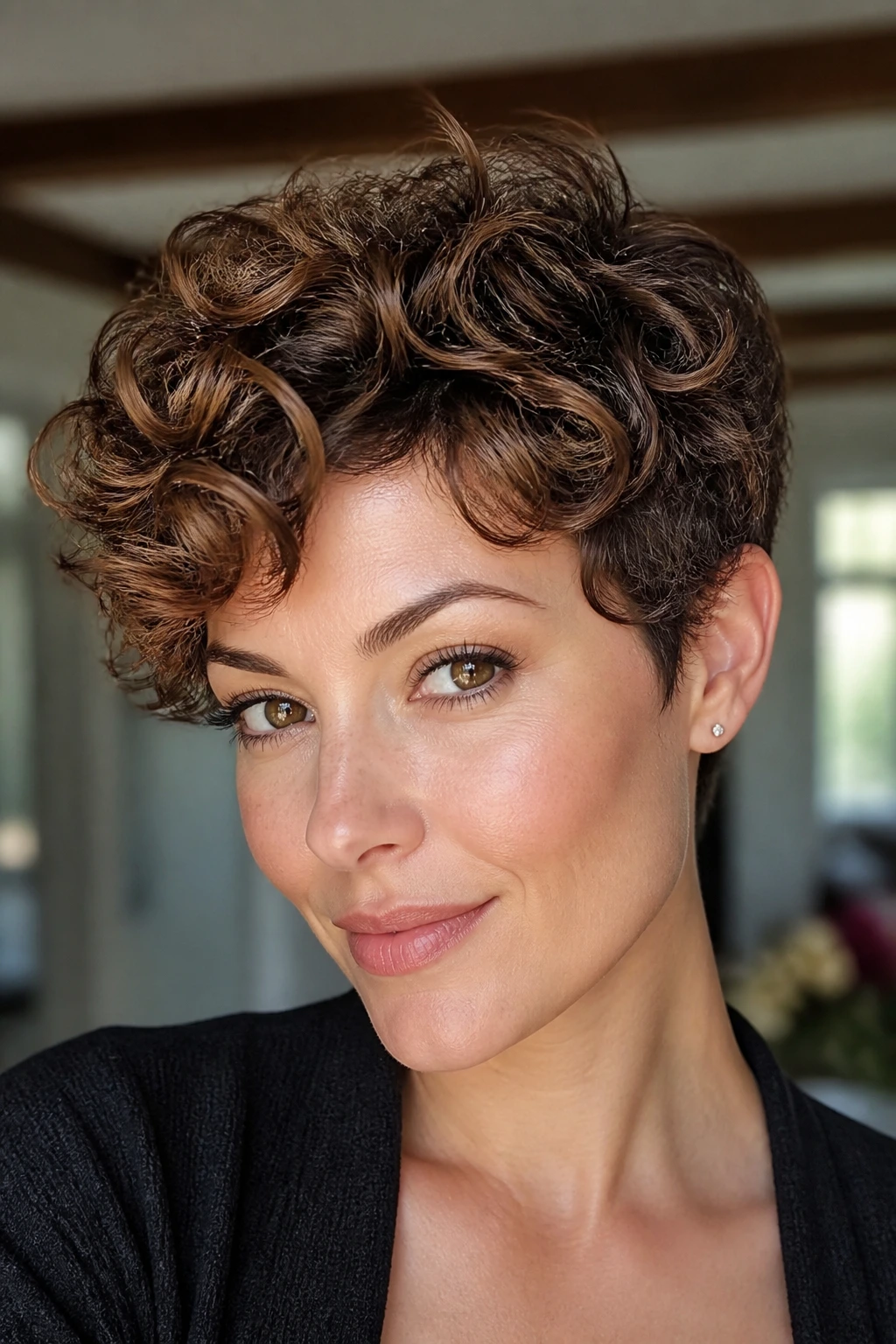
Texture Boost: Work product into soaking-wet hair, not damp hair. That one habit usually gives better curl clumps and less frizz around the fringe. Short cuts show every dry patch, so even coverage matters.
Root Lift: Clip the crown while it dries if the top tends to sit too flat. Two or three small clips can keep the roots from drying glued to the scalp. Remove them only when the hair is nearly dry.
Shape Control: Smooth the sides with wet hands and leave the crown a little rougher. That gives the cut a cleaner outline without making the curls look overmanaged. I like that contrast on pixies; it keeps the shape alive.
Make-It-Yours: If you prefer softer texture, use cream. If you want more lift, swap to mousse or a light foam. Fine curls usually want less cream than people think, because too much weight pulls the top down fast.
Common Mistakes That Flatten the Shape
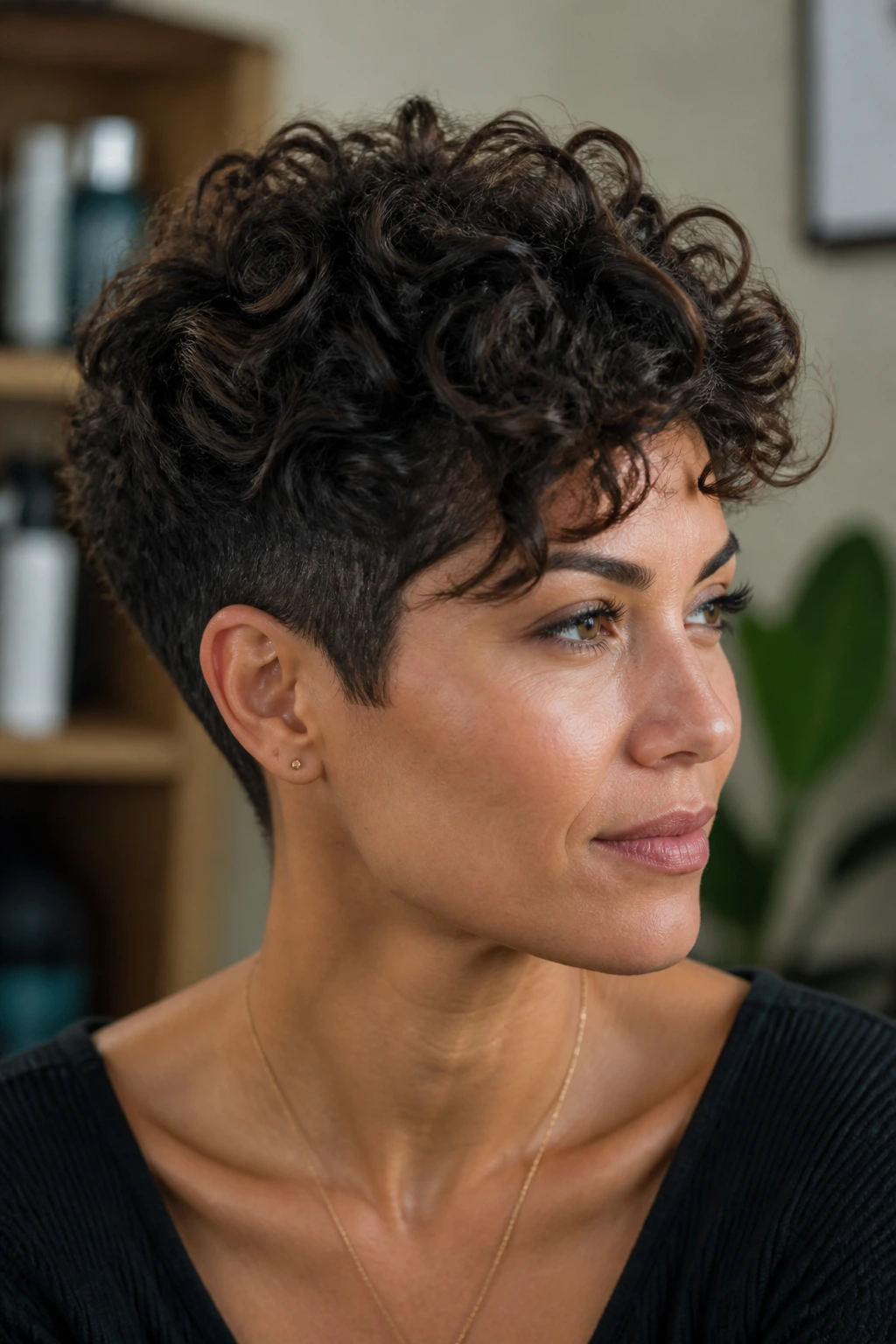
The first mistake is cutting curly hair as if it were straight. That sounds basic, but it still happens. The symptom is always the same: the cut looks fine for an hour, then shrinks into a shape nobody planned. The fix is a dry or mostly dry cut with curl-by-curl attention.
The second mistake is over-thinning. Short curls do not need to be attacked with thinning shears until they whisper. They need weight removed in the right places. If the ends go fuzzy and the crown starts floating away from the head, the cut was thinned too hard.
Skipping the nape is another one. A messy neckline makes even a beautiful top look unfinished. The fix is a clean taper or a soft carve at the back so the silhouette closes properly.
And then there is product overload. Heavy butter, oily creams, and too much gel can flatten the top or make the curls separate in greasy-looking clumps. Start small. Add more only if the hair actually needs it.
Variations and Adaptations Worth Trying
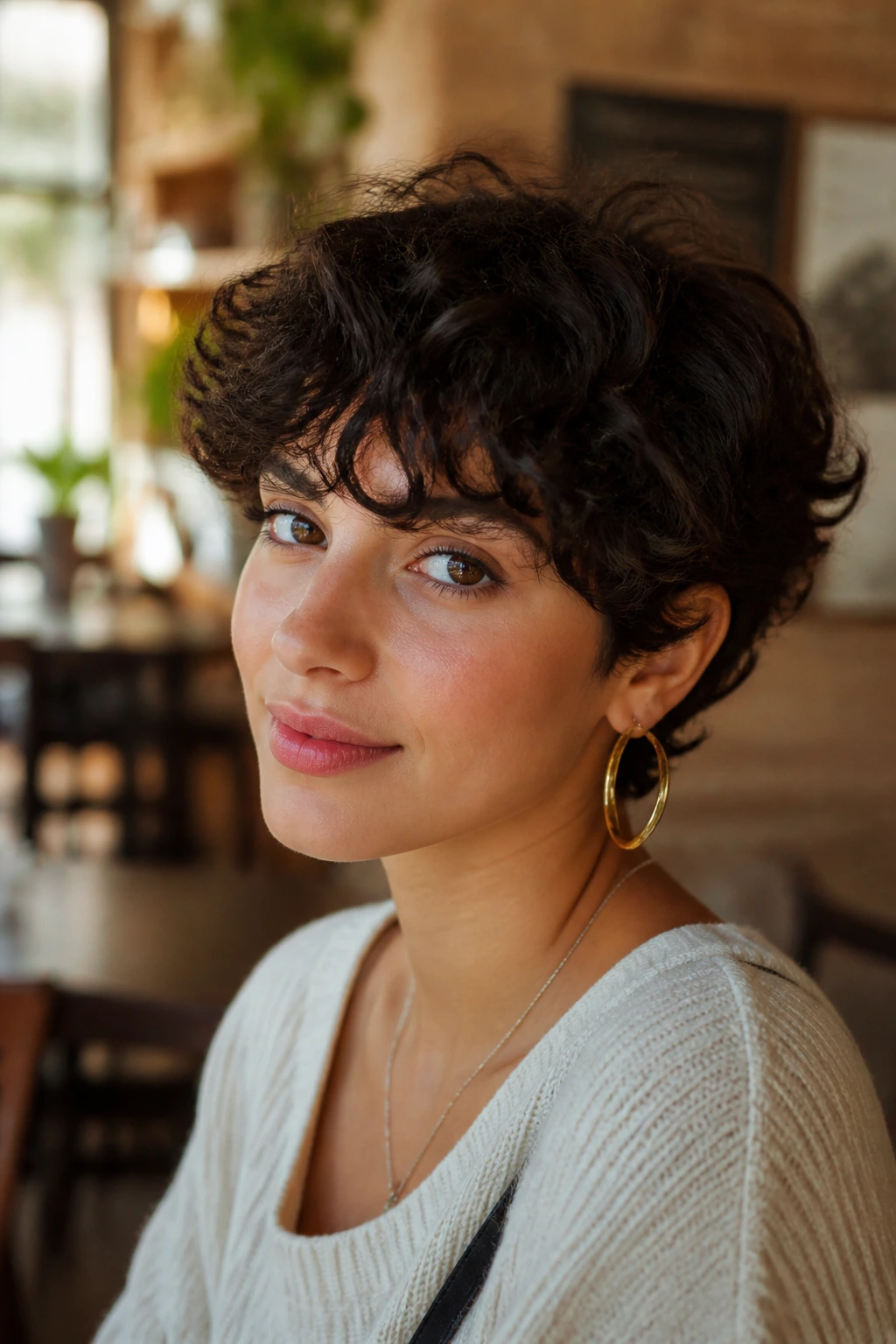
Soft Grow-Out Version: Leave an extra half-inch at the fringe and around the ears. That gives you more room before the style tips into awkward territory. It is a smart choice if you want a pixie now and a bob later.
Extra-Tight Taper: Keep the sides and nape much shorter, with a stronger contrast at the crown. This sharpens the outline and works especially well on dense curls that like to puff at the edges.
Bang-Heavy Version: Let the fringe do more of the visual work. This suits people who want the forehead softened and the eyes emphasized. The bangs need frequent trims, but the payoff is a cut with real personality.
High-Volume Crown Version: Build the lift at the top and keep the sides neat. This is useful if your face likes height or your curls flatten at the root by noon.
Low-Definition Air-Dry Version: Use less styling cream, more mousse, and let the curls dry with a looser finish. The shape stays soft and a little undone, which is perfect for people who do not want crisp ringlets every single day.
Keeping the Cut Fresh Between Trims
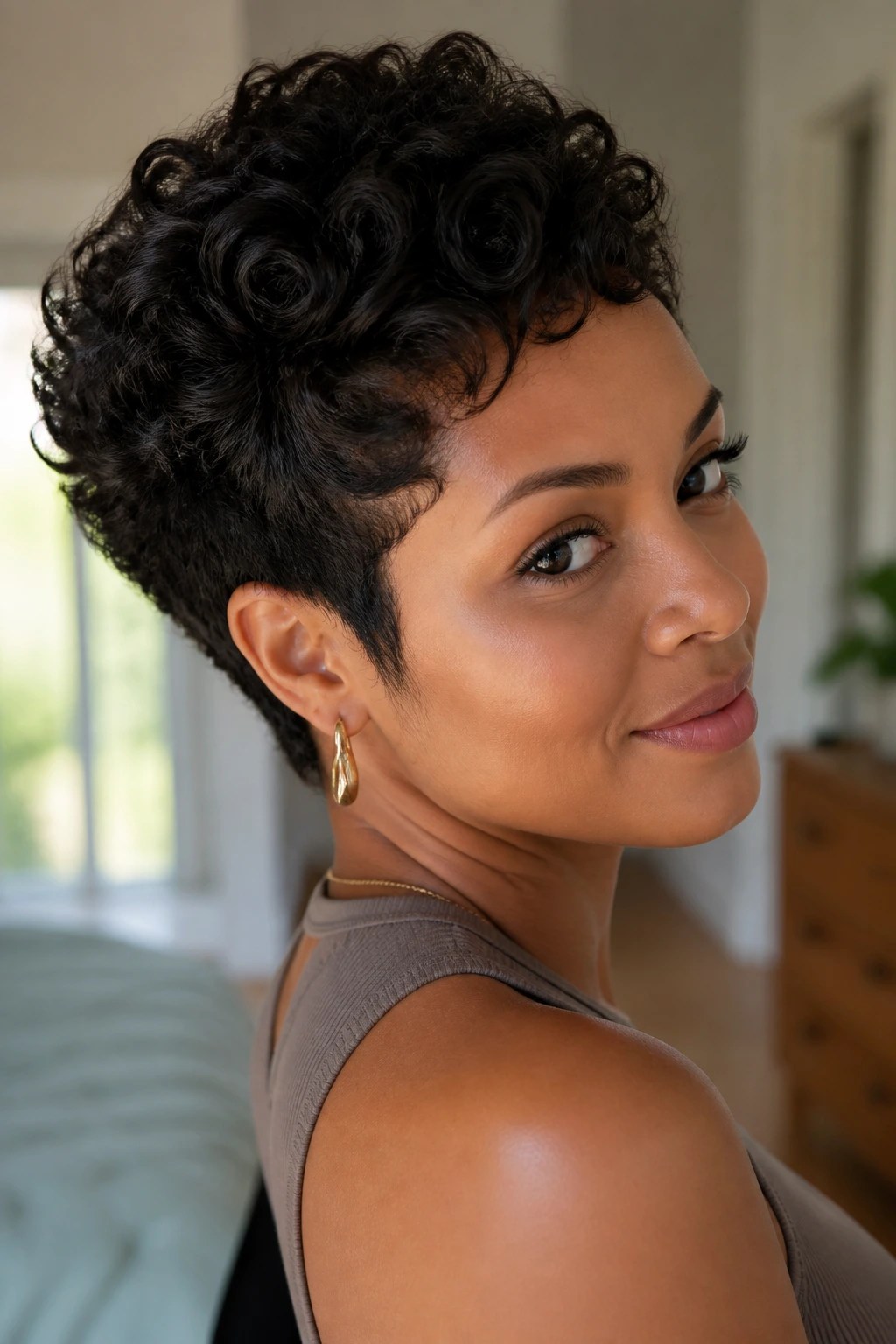
Short curly hair grows fast in the places that matter most: the nape, the ears, and the fringe. A curly pixie can look sharp for four weeks and suddenly feel bulky in week six. That is not failure. It is just gravity doing its thing.
For most of these cuts, a trim every four to six weeks keeps the shape alive. If the style has an undercut or very short sides, you may want a touch-up closer to three or four weeks. If the cut is built to grow out softly, six to eight weeks can still work. The longer you wait, the more the sides spread.
Refreshing at home is simpler than people think. Mist the front and crown lightly, add a pea-sized amount of leave-in or curl cream, then use your fingers to push the curls back into the cut’s original direction. If the crown goes flat, clip it for ten minutes while it dries. At night, use a satin bonnet or pillowcase. That one habit saves a lot of morning grumbling.
Curly Pixie Questions People Ask Before They Cut It
Will a pixie cut make my curly hair look bigger?
Usually, yes. Short length removes weight, so the curl pattern springs up more. If your hair already has a lot of density, ask for tapering at the sides so the shape does not spread outward.
Should curly pixies be cut wet or dry?
Dry or mostly dry is safer. Curly hair changes length as it dries, and a wet cut can trick even a skilled stylist. If the cut is done wet, it should still be refined once the curls are visible.
Can fine curly hair wear a pixie?
Absolutely, but the cut needs to stay soft and not too heavily layered. Fine curls can look sparse if too much bulk is removed. A little length at the crown usually helps.
How often do these cuts need trims?
Most short curly cuts need shaping every four to six weeks. Very short sides or a clean taper may need sooner attention. Longer pixie-bob hybrids can stretch a little farther.
What if one side of my curl pattern is looser?
That is normal. Ask the stylist to shape the tighter side and the looser side separately instead of forcing symmetry. A slightly asymmetrical cut often makes the difference look intentional.
Do I need a lot of product?
Not usually. Short curls often do better with less product than people expect. Start with a small amount of leave-in, cream, or mousse, and add only if the hair drinks it up.
Can I wear a pixie if I hate styling?
Yes, but choose a shape built for wash-and-go life: cleaner taper, soft layers, and a fringe that sits without constant brushing. A bad choice here is a cut that depends on daily heat styling.
How do I grow it out without looking awkward?
Leave the front slightly longer, keep the nape neat, and trim the sides before they start sticking out too much. A grow-out-friendly pixie is planned, not accidental.
The Short Cut That Still Feels Like You

A curly pixie does not have to mean sacrificing softness, movement, or personality. In the right shape, it can make curls look clearer, cleaner, and more alive than they ever did at longer lengths. That is the part people miss when they worry about going short. The texture is still there. In some cuts, it shows better.
The smartest version is the one that respects your curl pattern, your shrinkage, and your patience level. Choose the nape shape carefully. Leave the front enough room to frame your face. Then let the curls do what they already want to do. That is where the good haircuts stop fighting and start working.
