



Short curly hairstyles have one job: keep the curl pattern alive instead of fighting it. When the cut is right, the hair lifts at the root, the ends curl in or out with purpose, and the whole shape looks like it has air inside it.
The tricky part is that “short” does not mean one thing on curls. A tapered pixie, a chin-length bob, and a shag with a fringe can all sit in the same family, but they behave very differently once the hair dries. A cut that flatters loose waves can leave tight coils looking boxy. A cut that frees up a dense curl pattern can make fine curls look sparse if the layers are too aggressive.
That’s why the best short curly hairstyles for natural bounce are built with shape first and length second. They respect shrinkage. They use weight where it helps and remove it where it drags. And they do something I always appreciate in a curly cut: they make the morning routine shorter without flattening the hair into a polite little cap.
Why These 16 Cuts Hold Their Shape
- Bounce comes from balance: Short curls need enough length to spring, but not so much weight that the curl gets pulled flat at the crown.
- Layers do the heavy lifting: A well-placed layer can stop the sides from puffing out while giving the top room to lift.
- Shrinkage is part of the design: Curly hair can shrink 20% to 50% depending on texture, so the best cuts are planned with the dry shape in mind.
- The silhouette matters more than the length: A jaw-length bob can look sharper than a shoulder-skimming cut if the perimeter is clean and the interior is light.
- These styles refresh fast: Shorter curls usually bounce back with water, a little leave-in, and a quick diffused blast at the roots.
- They work across curl types: Loose 2C waves, springy 3A curls, tight 3C ringlets, and coily 4B shapes all need different handling, but the same basic idea still holds: remove drag, keep spring.
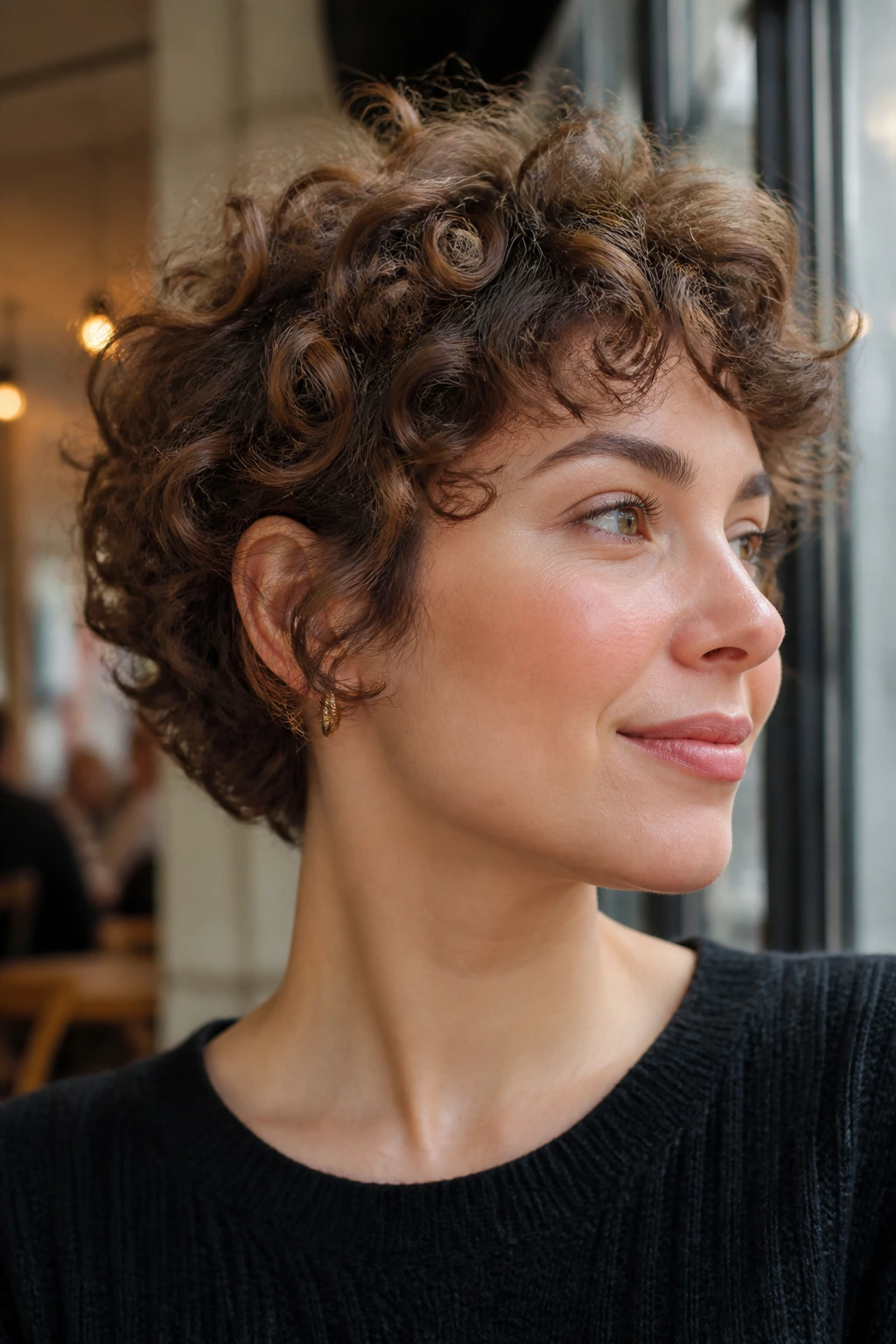
1. The Tapered Curly Pixie
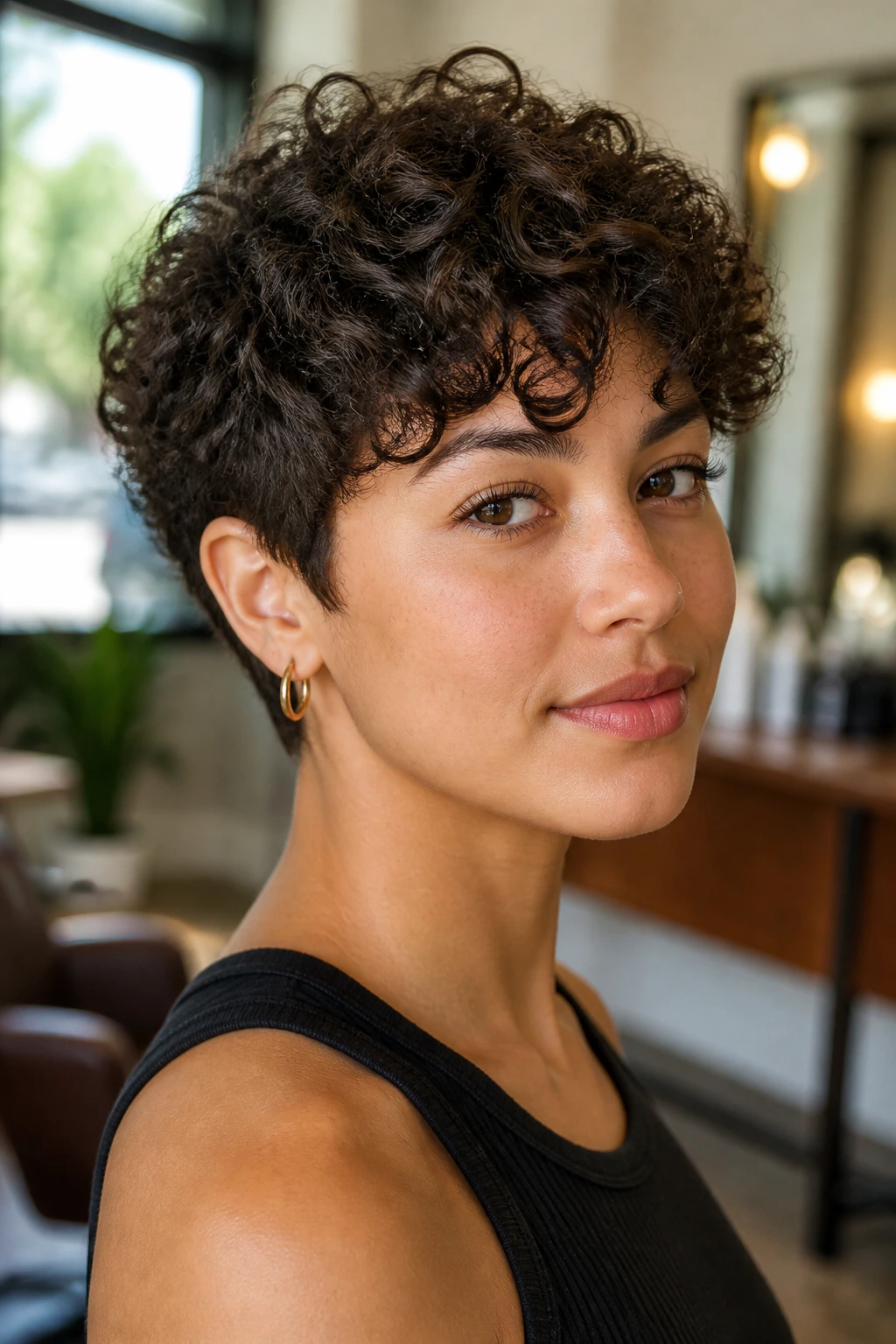
The tapered curly pixie is all about contrast. The sides sit close to the head, the nape stays neat, and the crown keeps enough length to fluff up into a soft little cloud. Done well, it never looks stiff. It looks awake.
Why it bounces so well
The taper takes weight off the perimeter, which is exactly where short curls get gummy and heavy. That leaves the top free to rise when you scrunch in product and diffuse for 5 to 8 minutes at the roots.
Ask for the top to stay longer than you think. A pixie that’s cut too close all over loses the curl’s spring and starts to read flat, almost helmet-like. I’d rather see a little extra length at the crown and a cleaner nape than the other way around.
Best for: tighter ringlets, springy curls, and dense hair that wants shape without bulk.
Stylist note: ask for a dry cut if your curls shrink a lot.
Daily reality: this is a style that looks polished even when the finish is a bit messy.
What to tell your stylist
Keep the perimeter soft, not blunt. You want the curls to sit in tiny stacks, not in one block. If your hair grows wide at the sides, ask for subtle tapering around the ears so the silhouette stays narrow without turning severe.
2. The Rounded Curly Bob
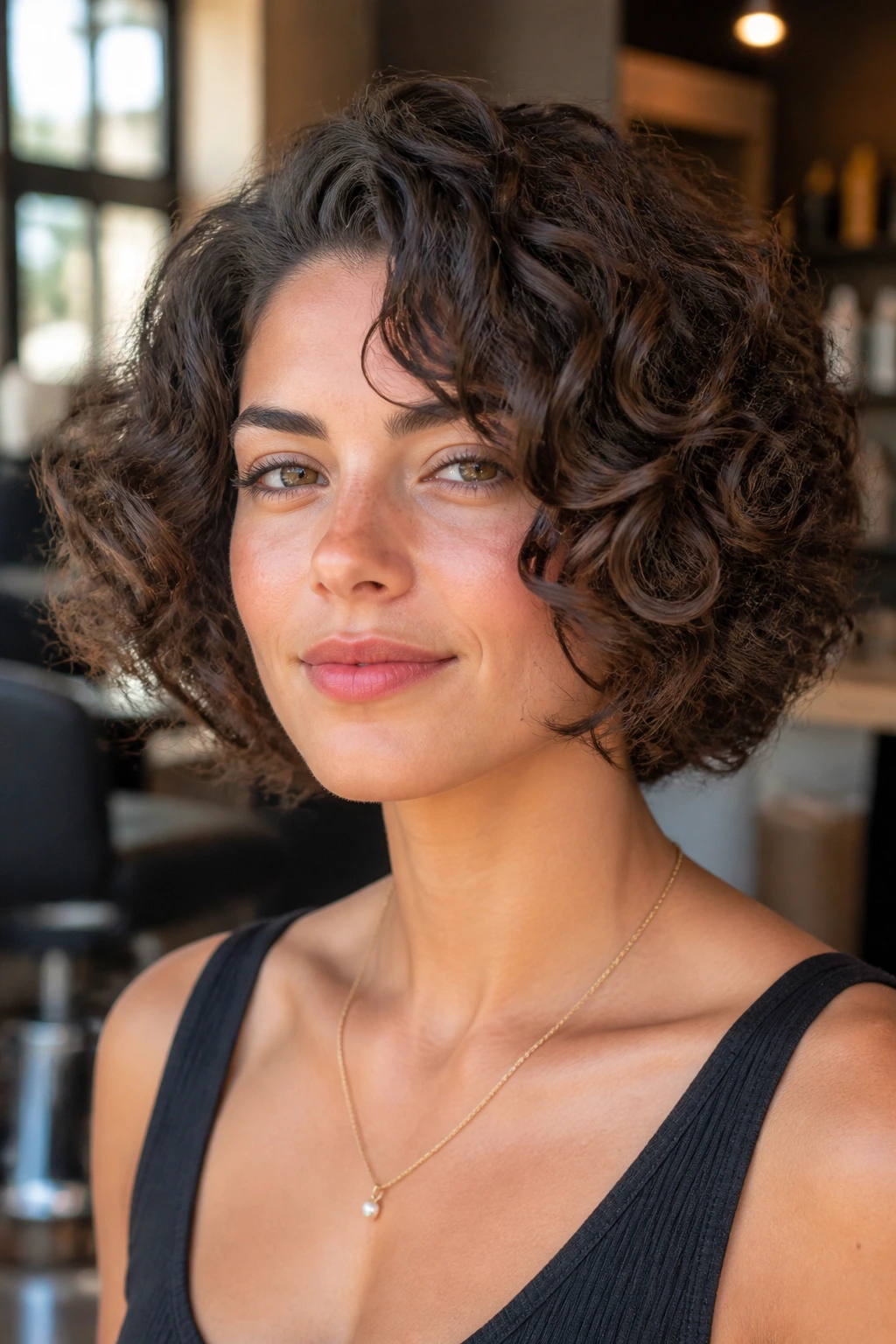
This is the cut I recommend to people who want short curly hairstyles with the least drama and the most payoff. A rounded bob sits around the jawline or slightly below it, and the shape curves inward instead of flaring out.
The magic is in the outline. A good rounded bob gives the eye one clear shape to follow, so the curls look fuller even when the actual length is modest. That’s the opposite of a blunt, square bob, which can make curls look like they were cut with a ruler and then forgotten.
I like this best when the hair has a little density. The curl pattern fills the curve. If the hair is fine, the shape still works, but the layers need to stay light so the ends do not thin out into wisps.
A side part makes this cut feel softer. A center part makes it more graphic. Both work.
3. The Curly Shag With Side Part
Why do shag cuts keep showing up in curly circles? Because curls love a little controlled chaos.
The side part breaks the head shape in a good way. One side lifts higher, the other falls a touch lower, and the layers do their job by removing bulk where the hair would otherwise swell outward. On thick curls, that can be the difference between “round” and “puffy.”
What makes it different
A curly shag is not a generic layer job. The best version has shorter pieces around the crown, medium pieces through the sides, and a bit of length left at the back so the silhouette stays soft. The result is movement from every angle, not just around the face.
If you like a scrunched, airy finish, this is your friend. If you prefer every curl to sit in one perfect row, this cut will probably annoy you. It wants motion. That is the whole point.
How to wear it:
- Part it while the hair is wet, then let the curls fall into the shape they want.
- Use a light mousse at the crown and a firmer gel through the outer layer.
- Diffuse just until the roots stop looking damp. Leave a little softness in the ends.
4. The Curly French Bob
A curly French bob sits just at the jaw or a touch above it, and it lives or dies by the front pieces. If the curl line grazes the cheekbone, the whole cut gets this lively, slightly cheeky look that feels sharper than a standard bob.
The charm here is restraint. The cut is short enough to show the face, but not so short that it loses the curl’s little spring. Add a soft fringe or a few face-framing curls, and the style takes on that slightly undone finish that curly hair does so well when it is not being bullied.
I prefer this version on people whose curls form neat clumps rather than huge, fluffy sections. That said, a strong curl pattern can wear it too. The trick is keeping the bottom line clean while letting the top move.
It looks best when the curls are not overloaded with cream. A small amount of leave-in and a gel with decent hold usually beats a heavy cocktail of ten products. Less slime. More bounce.
5. The Layered Crop With Micro Fringe
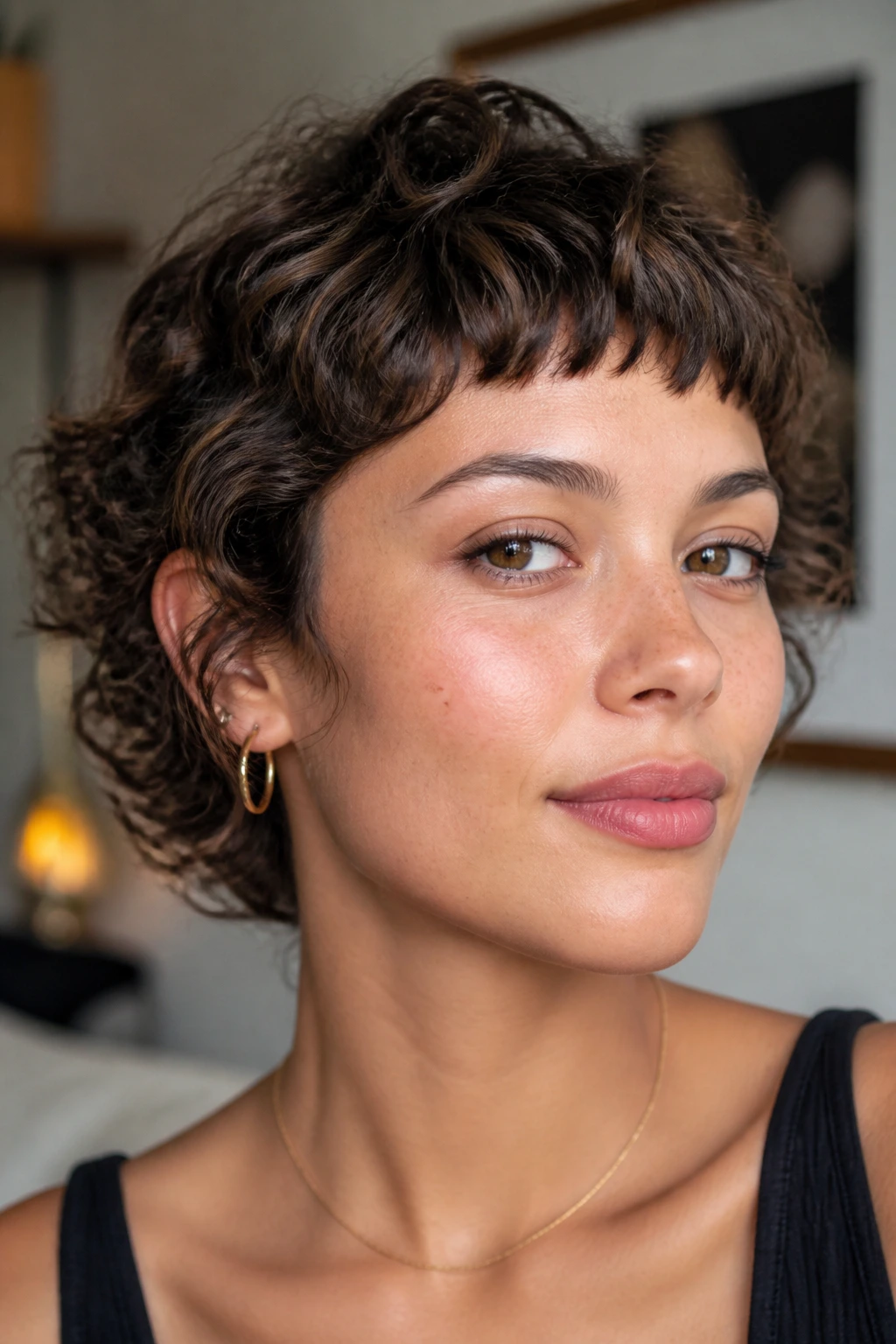
Micro fringe on curls is a bold choice, and I mean that in the best way. It turns a short crop from “cute” into something with a little bite.
The crop itself stays close to the head, but the layers are cut to keep the crown from collapsing. Then the tiny fringe lands high on the forehead, where the curl pattern can spring up rather than hang down. On the right person, the effect is sharp, modern, and a little mischievous.
The catch is maintenance. A micro fringe on curly hair can swing from perfect to awkward fast if the pattern changes or if the hair shrinks more than expected. It needs regular shaping, and it usually looks best when the fringe is cut dry so the stylist can see where each curl actually lands.
I’d steer this toward people who like their hair with personality. It is not a background cut. It gets noticed.
6. The Jaw-Grazing Curly Bob With Face-Framing Layers
This is one of the best short curly hairstyles for natural bounce because it lets the curl pattern move without inviting a triangle. The jaw length gives the ends enough room to curl inward or outward, while the face-framing layers soften the front so the shape feels lifted instead of heavy.
Think of it as a bob with better manners. The perimeter stays tidy, but the front pieces are cut with enough angle to keep the hair from ballooning out at the cheeks. That matters more than most people think. One or two well-placed curls near the face can change the whole read of the cut.
Who it flatters most
- Round faces that need a little vertical line
- Heart-shaped faces that want softness at the chin
- Thick curls that need a cleaner outline
- Fine curls that can handle light internal layering
If you wear glasses, this cut plays nicely with frames. The front pieces can sit just above or just below the arms, which keeps the whole thing from feeling crowded.
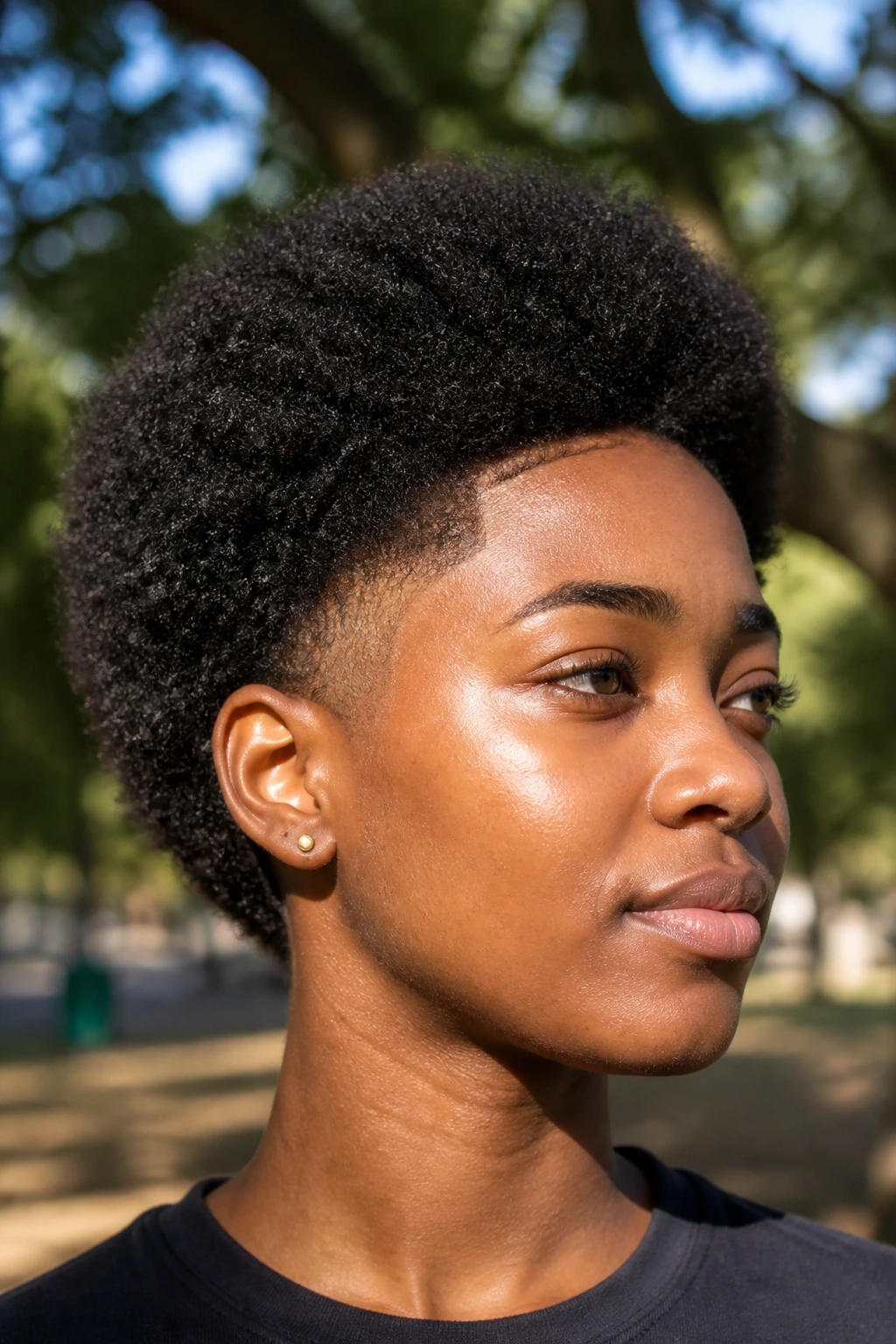
7. The Tapered Afro
A tapered afro is a masterclass in shape. The sides are clean, the top stays rounded, and the silhouette rises instead of spreading.
The reason it works so well is simple: you are not trying to hide the curl pattern. You are framing it. The taper removes bulk at the edges, which lets the hair sit closer to the head around the ears and neckline while keeping a full, sculpted crown.
What to ask for
- Clean taper at the temples and nape
- Rounded top, not flattened
- Enough length at the crown to pick and shape
- Soft edges around the hairline unless you want a sharper finish
This cut is especially strong on coily textures that have a lot of density. It also holds up well between wash days because the shape is already built into the haircut. You do not need to fight it every morning. A little water, a little oil on the ends, and a pick at the roots are usually enough.
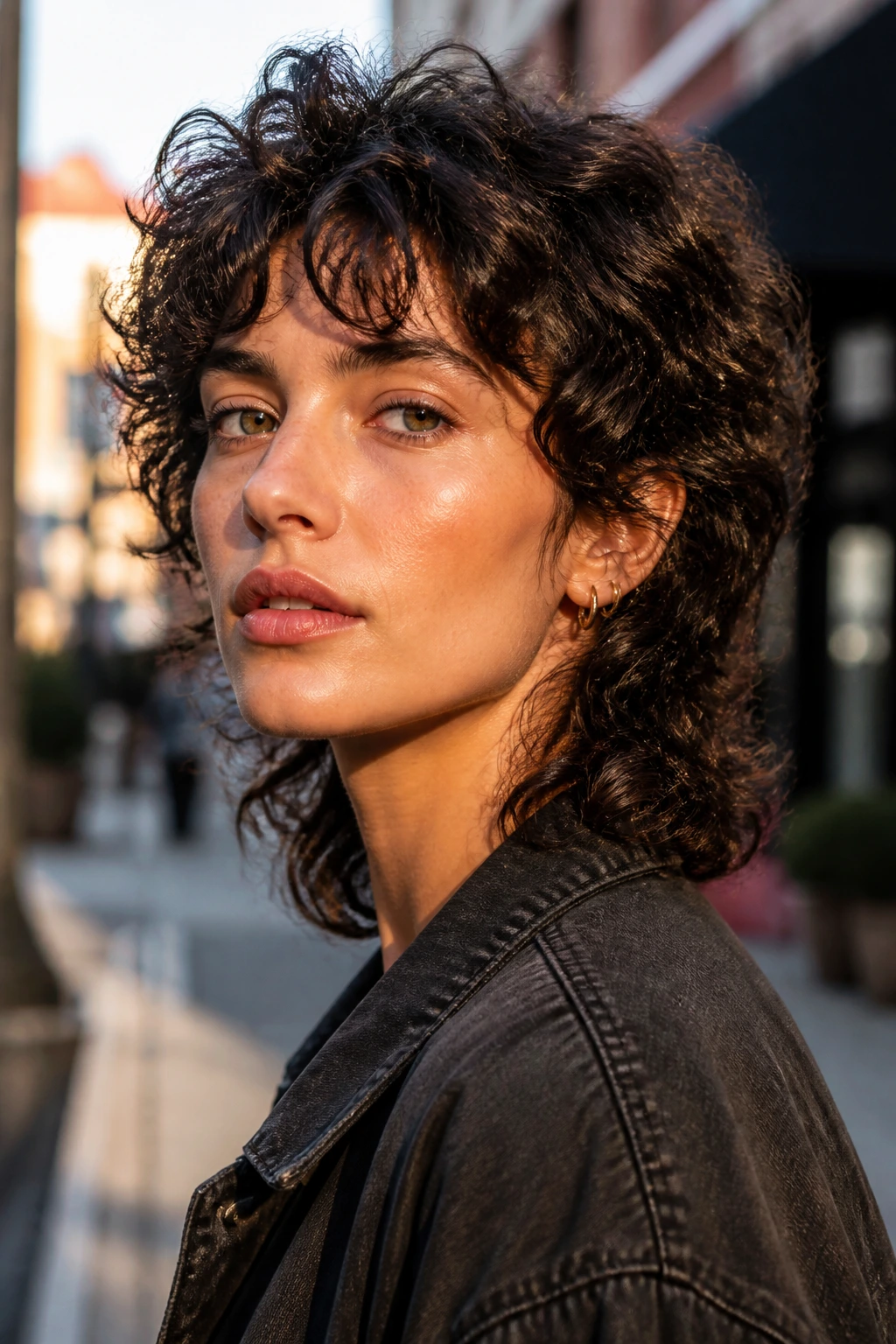
8. The Curly Wolf Cut
The curly wolf cut is what happens when a shag and a mullet decide to be friends. The crown is shorter, the sides stay broken up, and the back keeps a bit more length so the whole cut feels wild in a controlled way.
It’s one of the easiest ways to get movement without sacrificing too much shape. The shorter top encourages lift. The longer back keeps the haircut from turning into a puffball. On curls that tend to expand outward, that back length is not a flaw. It’s the balance.
I like this cut on people who do not want their curls to look too neat. It has texture baked into it. When the curls dry with a few pieces flipping out at the edges, that is part of the appeal.
A wolf cut needs a stylist who understands curl shrinkage. If the layers are too short, the top can jump up and leave the lower shape disconnected. That’s a fast way to get a haircut that looks like it was surprised by your own hair.
9. The Ear-Length Curly Crop
Can hair this short still feel soft? Absolutely. In fact, ear-length curls often look more alive because there is less weight pulling them down.
The cut sits close around the ears and nape, then leaves just enough length on top for the curls to spring up and away. It creates this neat, lifted frame around the face that feels crisp without being severe. On tighter textures, it can read almost sculptural. On looser curls, it becomes breezy and light.
This is one of those cuts that rewards clean styling. The curl clumps need a little encouragement, usually with a leave-in and a gel, because the shorter length can show frizz faster than longer styles. But the payoff is strong: the shape stays clear, and the hair dries fast.
If your mornings are busy, this is a practical one. If your hair shrinks a lot and you like to stretch it, leave a touch more length than the bare minimum. That tiny cushion matters.
10. The Asymmetrical Curly Bob
An asymmetrical bob is for someone who likes a little edge without going fully dramatic. One side sits lower, the other sits higher, and the imbalance makes the curls look deliberate instead of symmetrical and safe.
The cut works best when the shape is unmistakable. A barely-there asymmetry can look accidental. A clear difference in length looks like design. That difference does not have to be huge — even an inch or two can be enough if the part is placed well and the curls have enough definition to show it.
This is also a smart fix for hair that grows differently on each side. Instead of fighting the imbalance, you make it part of the haircut. I appreciate that kind of honesty in a style.
If you want the cut to stay strong, keep the styling simple. A deep side part, a little root lift, and a touch of shine on the outer layer usually beat over-manipulating the curls into submission.
11. The Curly Bixie
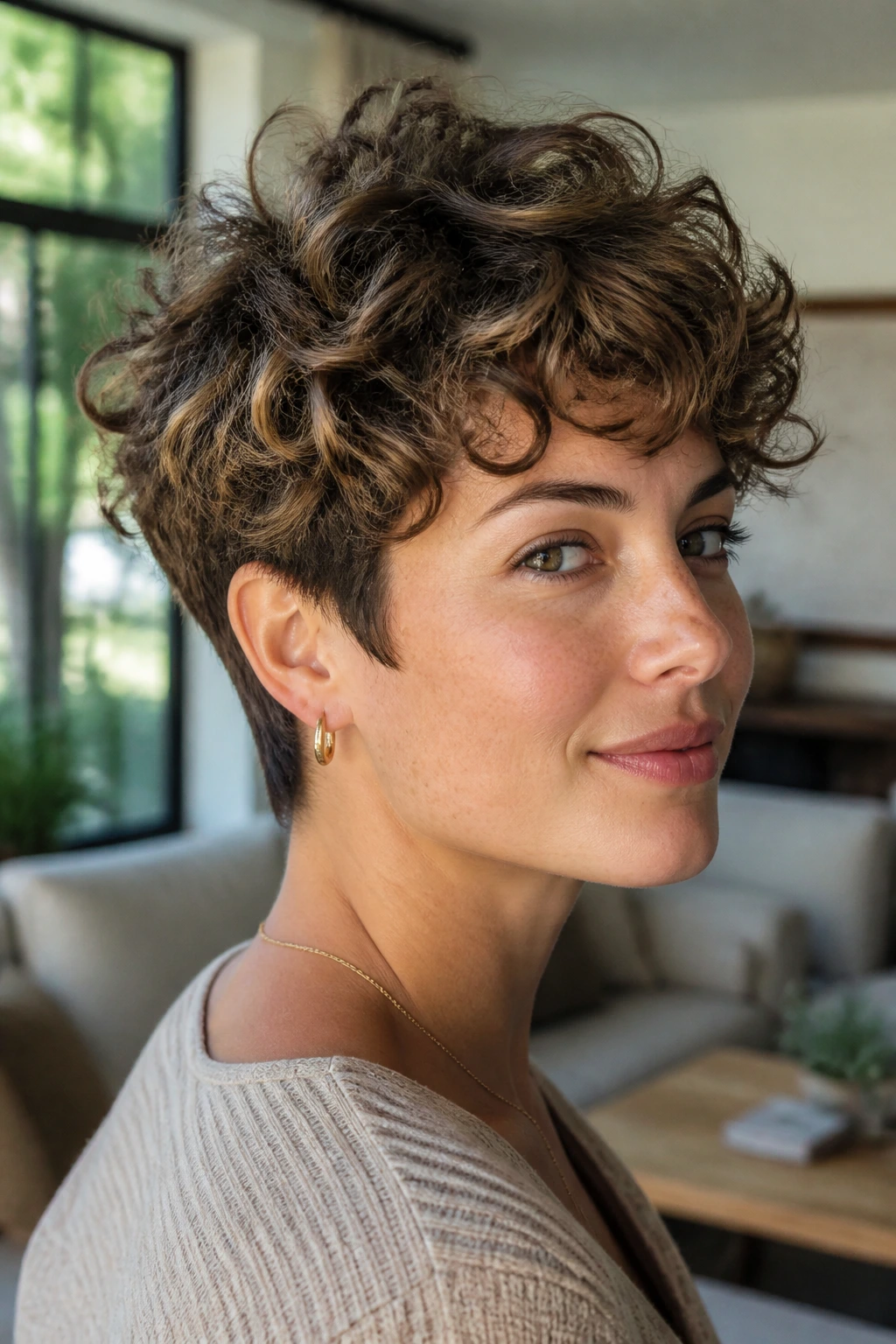
The bixie lives in the space between a bob and a pixie, and on curls that middle ground can be gold. It is short enough to feel fresh, but long enough to keep the curl pattern visible.
Why it works
The bixie keeps some softness at the sides and back while letting the top hold more shape. That gives the cut a lifted crown and a slightly feathered perimeter. It tends to suit people who want short hair without the commitment of a full pixie.
Ask for the top to stay piecey. If the crown is over-thinned, the style loses its bounce and starts to feel patchy. The better version has little pockets of curl rather than one even blanket of texture.
Good match for: loose curls, springy ringlets, and anyone growing out a shorter cut.
Best styling move: scrunch in mousse, then diffuse with your head tipped to the side for 30 to 60 seconds at a time.
Avoid: loading the roots with heavy cream. It drags the whole thing down fast.
12. The Deep Side-Part Crop
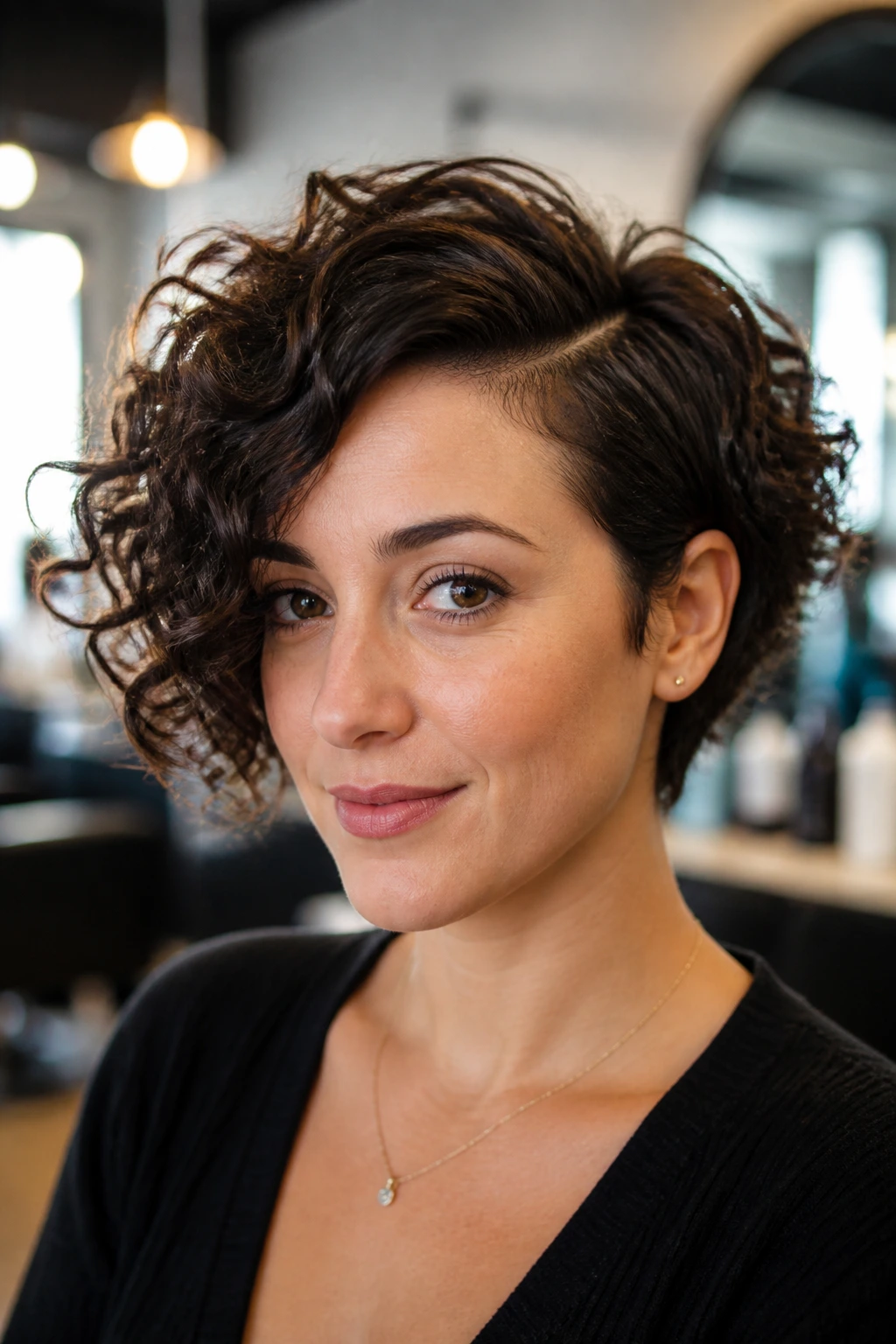
A deep side part can change short curls more than a whole haircut. It gives height to one side of the crown, opens the face, and lets the curls fall with a little drama instead of sitting in the middle like a helmet.
This crop is especially useful for finer curls or wavy textures that need a little lift. The part creates a natural ridge at the roots, and that ridge helps the hair stand up during drying. That means more volume with less product. Which, frankly, is how I like it.
What to watch for
If the part is too deep and the hair is very dense, the heavier side can swamp the face. In that case, keep the cut a little shorter on the fuller side so the shape stays balanced.
A rat-tail comb helps set the part cleanly while the hair is wet. After that, do not fuss with it too much. The whole point is to let the curls fall in a way that looks slightly accidental but not sloppy.
13. The Curly Bob With Curtain Bangs
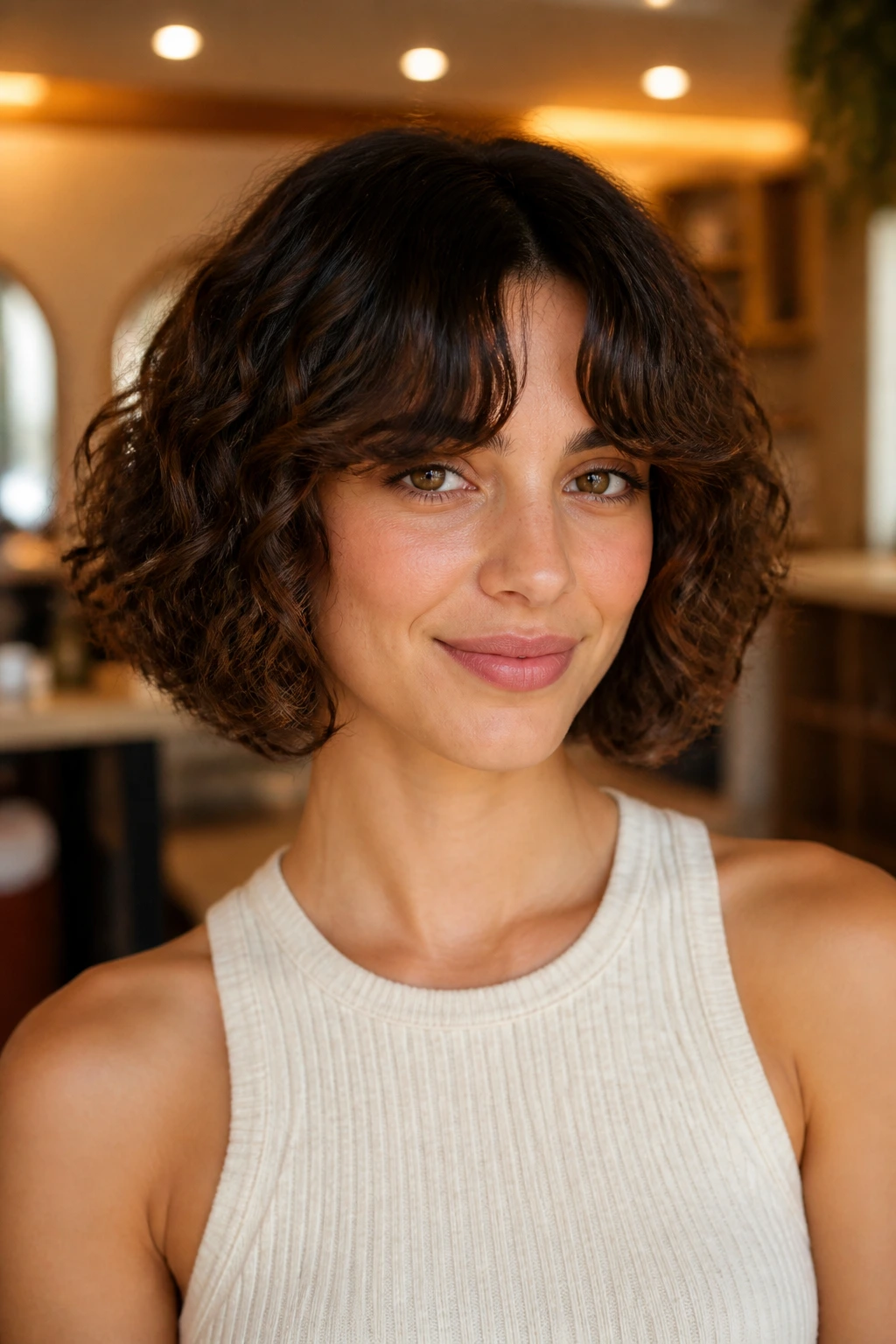
Curtain bangs on curls are a lovely thing when they are cut with restraint. Too short, and they spring straight up. Too long, and they hide the eyes and drag the whole front down.
The sweet spot is usually somewhere between cheekbone and lip length when stretched, depending on shrinkage. That gives the fringe enough room to split and frame the face without sitting like a solid wall. The bob beneath it keeps the silhouette compact, so the bangs do not feel floaty and disconnected.
I like this style when the curls have a soft bend rather than a tight zigzag. The center part opens the face, and the front pieces fall away from the eyes in a way that feels easy. It’s one of the few curly fringe looks that can still air-dry well if the shape is cut properly.
A small round brush or a Denman brush can help direct the bangs during drying. Not to straighten them — just to guide them where you want them before they spring back.
14. The Frohawk
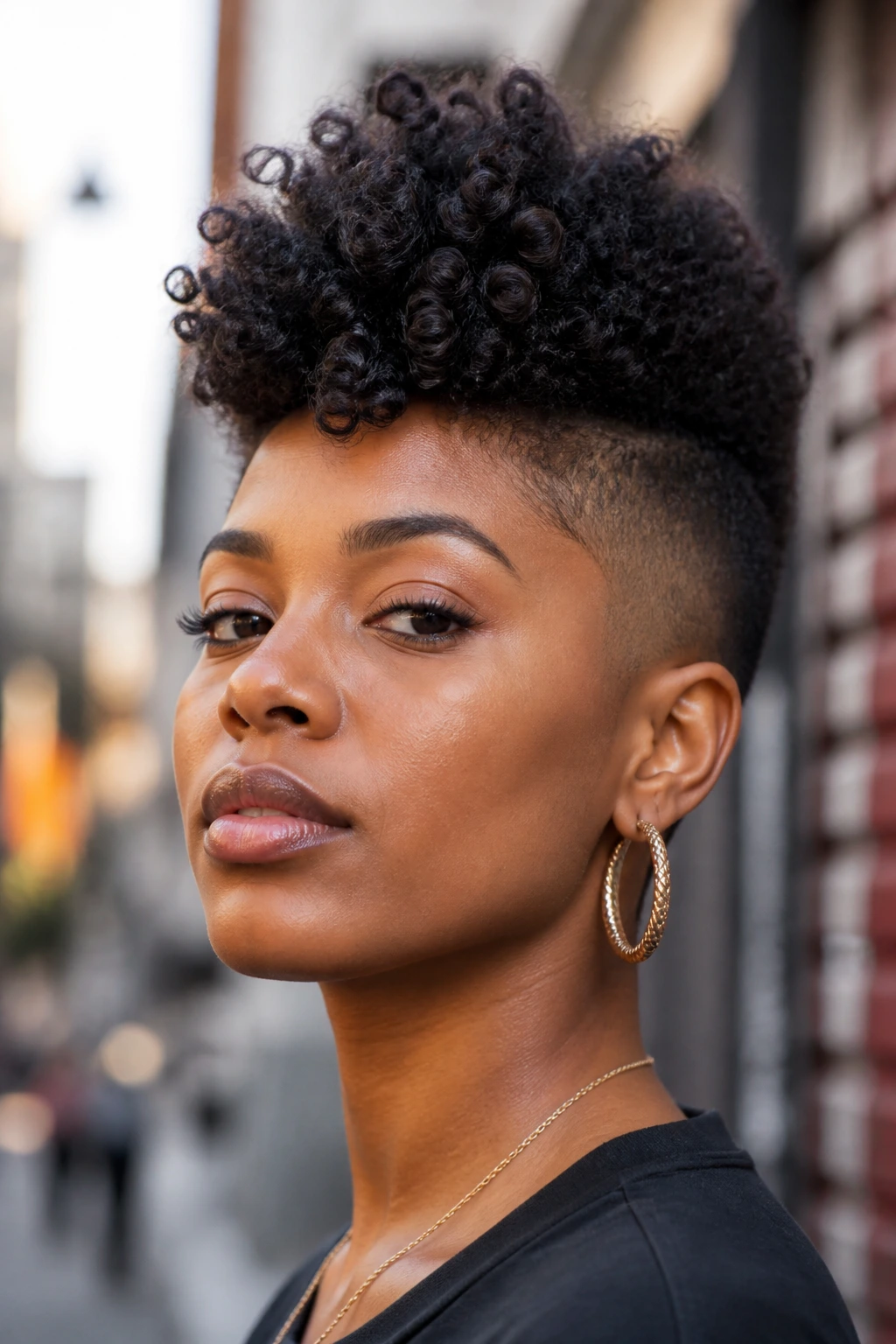
The frohawk is pure attitude, but it is more wearable than people think. The sides are clipped or tapered close, and the center strip stays fuller so the curls rise in a line from forehead to nape.
Why does that work? Because curls gather height when they are not competing with width. The sides lose bulk, the center gets all the visual attention, and the whole style becomes tall instead of wide. That can be a gift if your curls naturally spread out.
You can wear this cut clean and sharp, or you can keep the top soft and fluffy. Both versions work. The clean version needs more edge-up maintenance, while the softer one can go a little longer between trims.
It is also one of the few short curly hairstyles that looks intentional even when the curl pattern goes slightly off. A rogue curl on a frohawk reads as texture. On a more structured cut, it can look like a mistake. Small difference. Big effect.
15. The Finger-Coil Crop
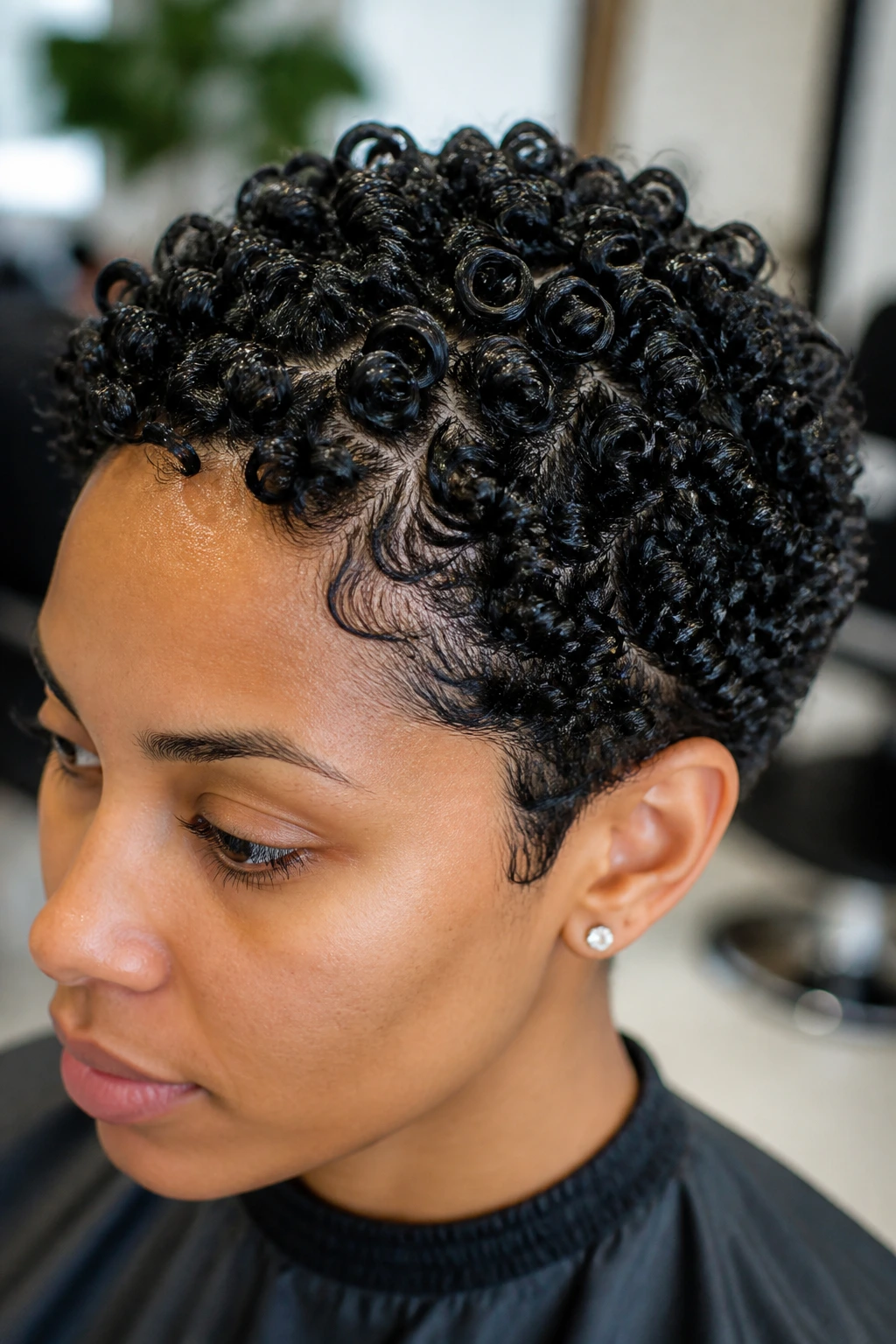
A finger-coil crop is for curls that want definition more than volume. The hair is cut short enough to sit close to the head, then finger-coiled section by section so each curl lands with a clear shape.
How it differs from a wash-and-go
A wash-and-go relies on the curl pattern doing the work naturally. A finger-coil crop shapes the pattern by hand. That means you get more control over direction, spacing, and the overall outline.
It’s especially good when the curl pattern is uneven or when some sections sit flatter than others. Coiling gives each piece its own job. The result can look polished without looking stiff, which is harder to do than it sounds.
- Best for coils and springy curls that clump well
- Works on short lengths where each curl can be seen
- Needs a gel or mousse with enough hold to keep the coils from unraveling
- Refreshes well with a mist bottle and a quick twirl around the finger
If you like tidy definition and do not mind spending a little more time on styling, this one gives back.
16. The Short Curly Mixie
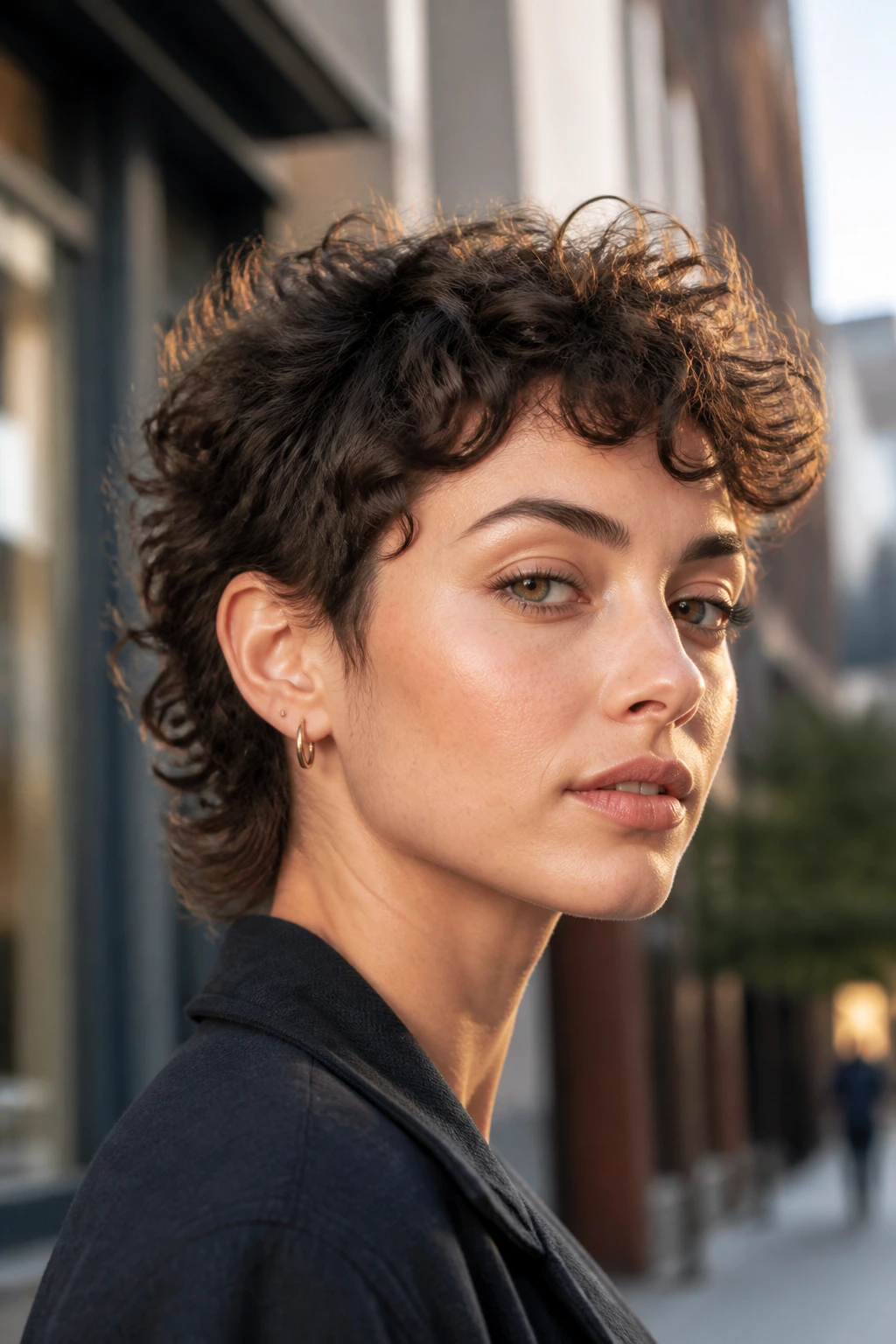
The mixie is the haircut for people who want their curls to look a little unruly on purpose. It borrows from the pixie at the front and sides, then keeps a touch more length through the back, which gives the whole shape a playful, slightly rebellious line.
That longer nape is the part that saves it. Without it, the cut can feel too chopped up. With it, the curls have somewhere to fall, and the contrast between short and longer pieces becomes the style itself.
This one suits people who like texture and do not need every piece to sit in perfect order. It looks especially good when the front is a bit piecey and the crown has lift. A bit of tuck behind the ear helps. So does a styling paste if you want the ends to separate a little.
A mixie is not the cleanest haircut in the bunch. That is the point. It has movement, edge, and a little mess in the right places.
Why Short Curly Hairstyles Keep Their Bounce
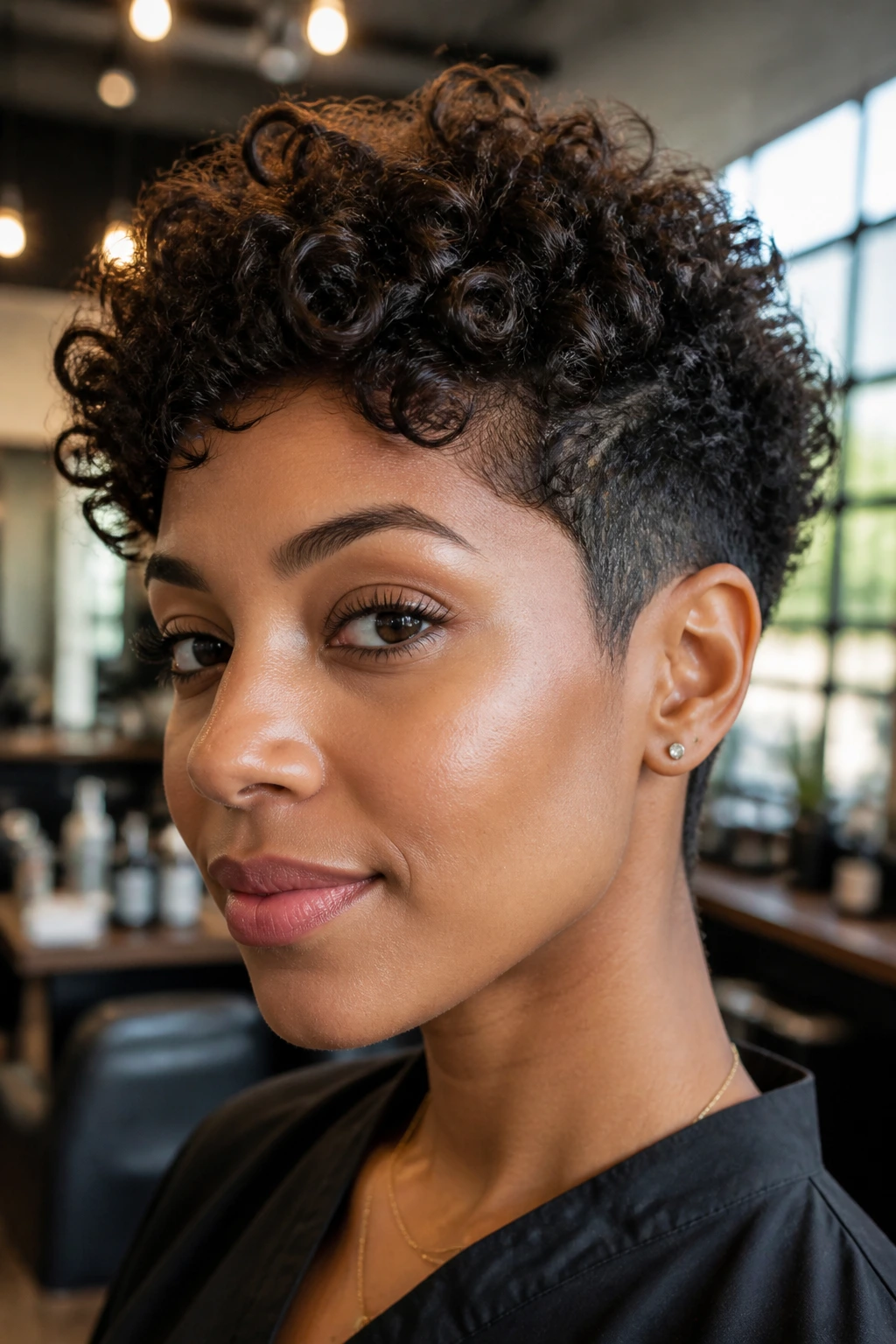
Short curly hair bounces when it is allowed to move. That sounds obvious, but plenty of bad curly cuts forget it. They leave too much weight in the wrong places, or they cut the layers so evenly that the hair loses its shape and falls into a round, flat mass.
The best short curly hairstyles start with dry shape awareness. Curls do not sit where straight hair sits. They shrink, swing, stack, and sometimes surprise you by springing up half an inch more on one side than the other. A good cut respects that. A great cut uses it.
Dry cutting is one reason curly specialists swear by better results on textured hair. When the stylist sees the curl in its natural state, they can place the line where the curl actually lives, not where it would live if it were stretched straight. That matters on a jaw-length bob. It matters even more on a pixie or micro fringe.
The shape comes first
A short curly cut should have one clear visual job. Maybe it narrows the sides. Maybe it lifts the crown. Maybe it frames the chin. If it tries to do all three without a plan, the shape gets mushy fast.
The secret is controlling the perimeter. A blunt edge can work, but only if the curl pattern is strong enough to break up the line. Otherwise you get a dense block. Internal layers help, but only when they remove bulk from the right spots. That’s the difference between airy and frizzy.
Why short lengths refresh so well
Short curls usually spring back with less work because there is less hair to re-wet, re-clump, and dry. A light mist of water, a small amount of leave-in, and a diffuser on low to medium heat can revive most of these cuts in minutes. Longer curls can do this too, but short shapes respond faster and lose less definition while sleeping.
Essential Equipment for These Styles
- Wide-tooth comb: Good for detangling in the shower without breaking curl clumps apart.
- Spray bottle: A fine mist helps reactivate product on day two or three without soaking the whole head.
- Microfiber towel or cotton T-shirt: Better than a bath towel, which roughs up the outer layer and can puff the cut out.
- Diffuser attachment: Helps dry the roots while preserving the curl pattern; use low or medium heat.
- Duckbill clips or sectioning clips: Useful for setting a side part, separating bangs, or drying the crown with lift.
- Denman brush or curl-defining brush: Optional, but handy if you want more uniform curl clumps around the face.
- Rat-tail comb: Clean parting matters on bob and pixie shapes, and this tool makes it easier.
- Satin bonnet or pillowcase: Keeps the shape from getting crushed while you sleep.
- Lightweight mousse, leave-in conditioner, and gel: These are the core styling products for most short curly cuts.
- Small pick or root comb: Best for lifting the crown on tapered afros, bixies, and crops without disturbing the ends.
Picking Products by Curl Density, Porosity, and Hold
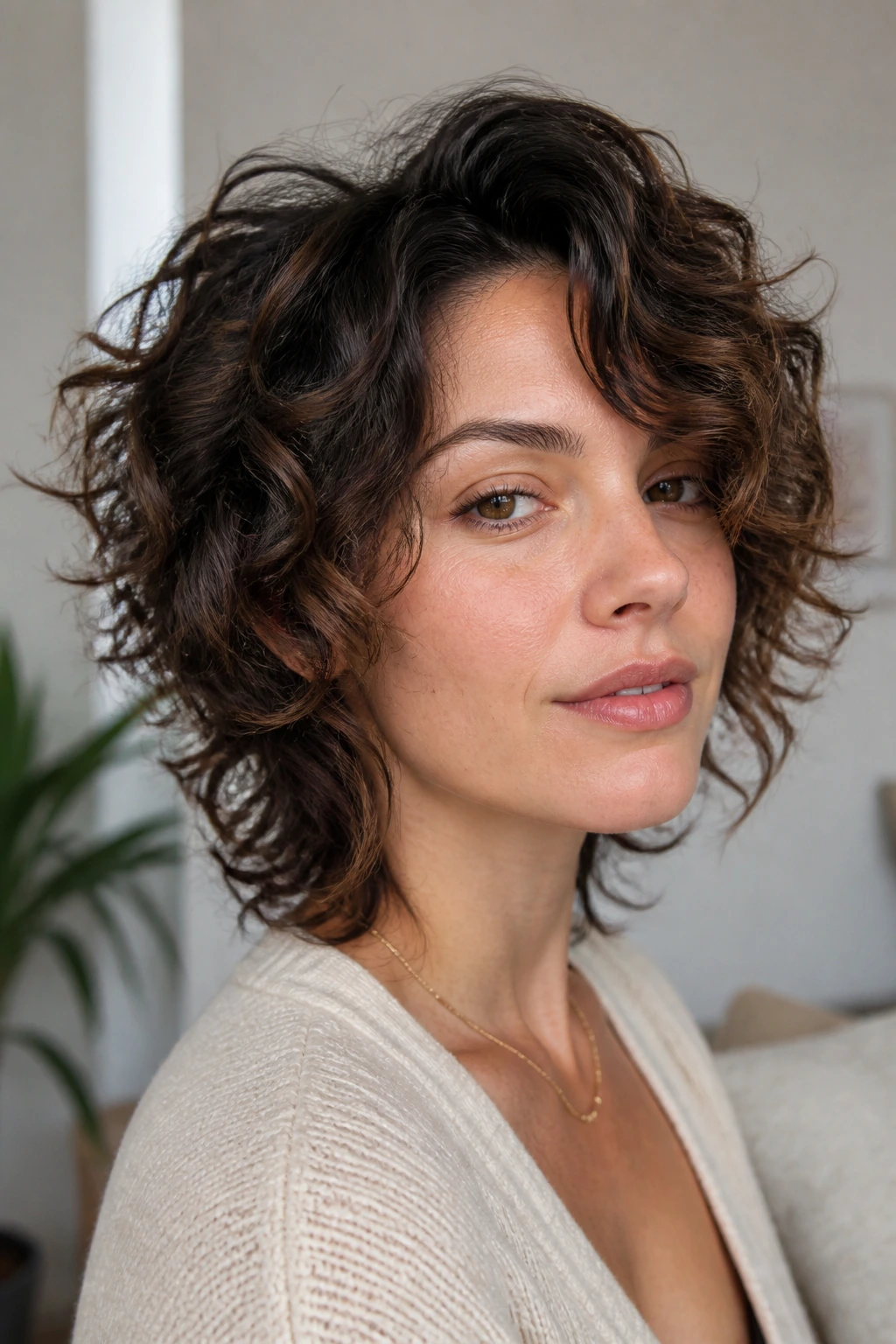
Short curls are picky about product. Not dramatic. Picky. There’s a difference. If you pile on the wrong cream, the hair goes limp at the root and gummy at the ends. If you go too light, the shape expands into frizz by lunch.
For fine curls or loose waves, a foam mousse or airy leave-in usually gives enough slip without coating the hair. Fine strands get weighed down fast, and a heavy butter can erase bounce before the hair is fully dry. I’d rather use a smaller amount of product with a stronger hold gel than chase volume with cream.
Dense curls and coils often need more structure. Look for a gel that dries with a firm cast, then scrunch it out once the hair is fully dry. A cast sounds fussy, but it gives the style a backbone. Without it, a short curly bob can balloon at the sides or lose its definition by the time you get in the car.
Porosity matters too. High-porosity curls tend to drink product and lose moisture fast, so leave-ins with humectants like aloe or panthenol can help. Low-porosity curls often do better with lighter layers and less butter-heavy product, especially if the weather is humid.
How to Wear Them for Different Face Shapes and Curl Patterns
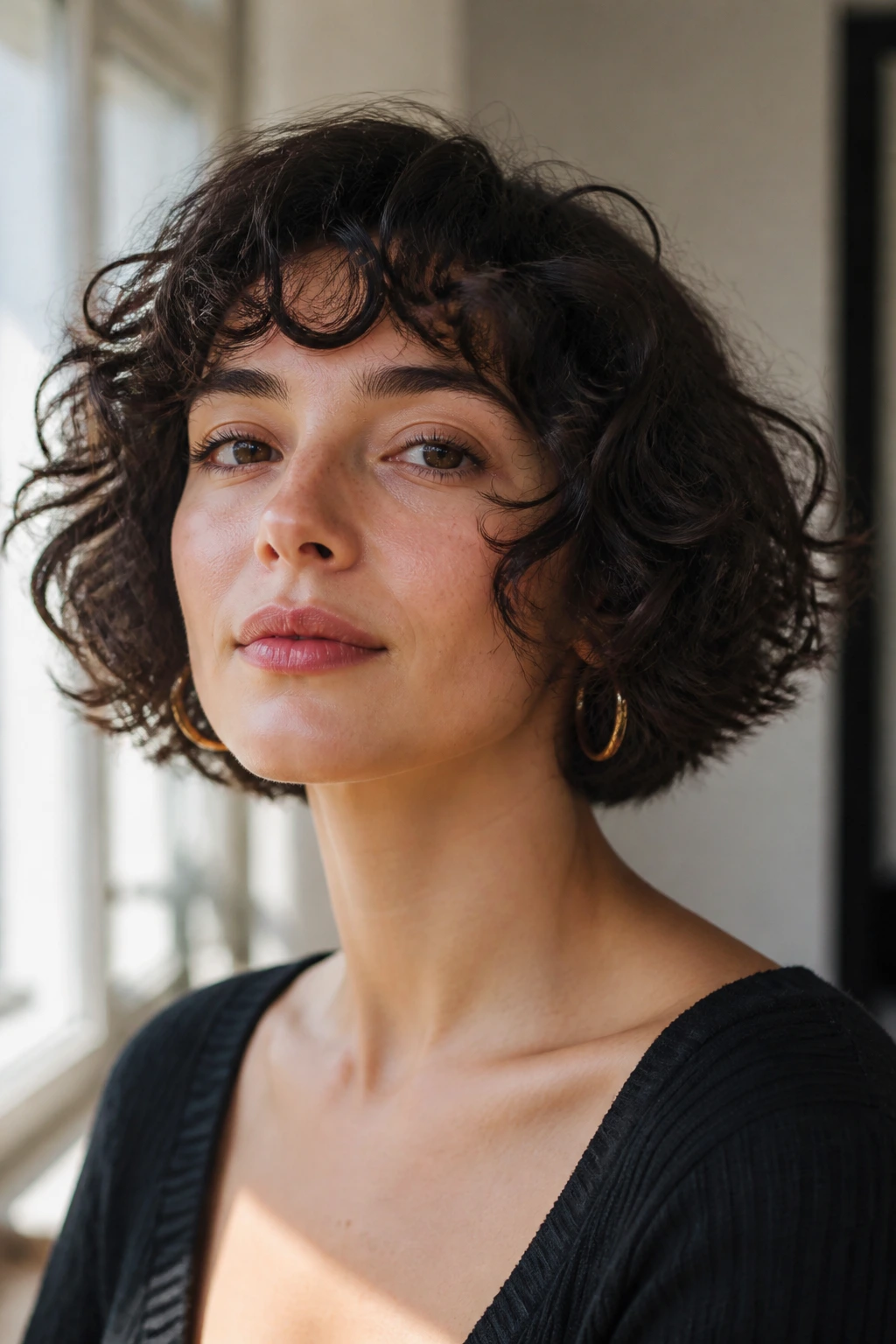
Round faces: choose styles that build height at the crown or length at the cheeks. A deep side-part crop, a tapered pixie, or a curly shag with longer front pieces can add that useful vertical line.
Square faces: soft fringe, rounded bob shapes, and curved face-framing layers help break up a strong jawline. A French bob or curtain-bang bob usually works better than a hard-edged crop.
Heart-shaped faces: keep some fullness near the chin. A jaw-grazing bob or an asymmetrical bob balances a wider forehead without crowding the lower half of the face.
Long faces: avoid cuts that are all height and no width. A rounded bob, curly French bob, or layered crop with side part gives enough side volume to keep the face from looking stretched.
Loose waves: go easy on heavy layering. Waves need enough line to show their bend. Too many short layers can make them flip in odd places.
Tight coils: ask for shape and perimeter control. Coils can handle shorter length and stronger structure, but they need room at the top to keep the bounce from turning into a flat cap.
Extra Lift and Finish Tricks
Root Lift: Clip the crown while the hair dries, especially on pixies, bixies, and side-part crops. A little lift at the base changes the whole silhouette.
Definition: Smooth product onto soaking-wet hair, then scrunch once before drying. If you keep touching the ends while they dry, the curls separate and frizz sooner.
Humidity Control: Choose a firmer gel on damp days and keep the cream light. Soft creams feel nice on the hands and do nothing by noon if the air is heavy.
Finish Line: A drop of lightweight oil on the ends can tame halo frizz, but use it sparingly. One or two drops. Not a pour.
Accessory Game: Small hoops, a bold clip, or a tucked-behind-the-ear moment can make a short curly cut look styled without adding much time. I like this especially on a bob or mixie, where one ear exposed changes the balance fast.
Wash-Day, Refresh Day, and Sleep Protection
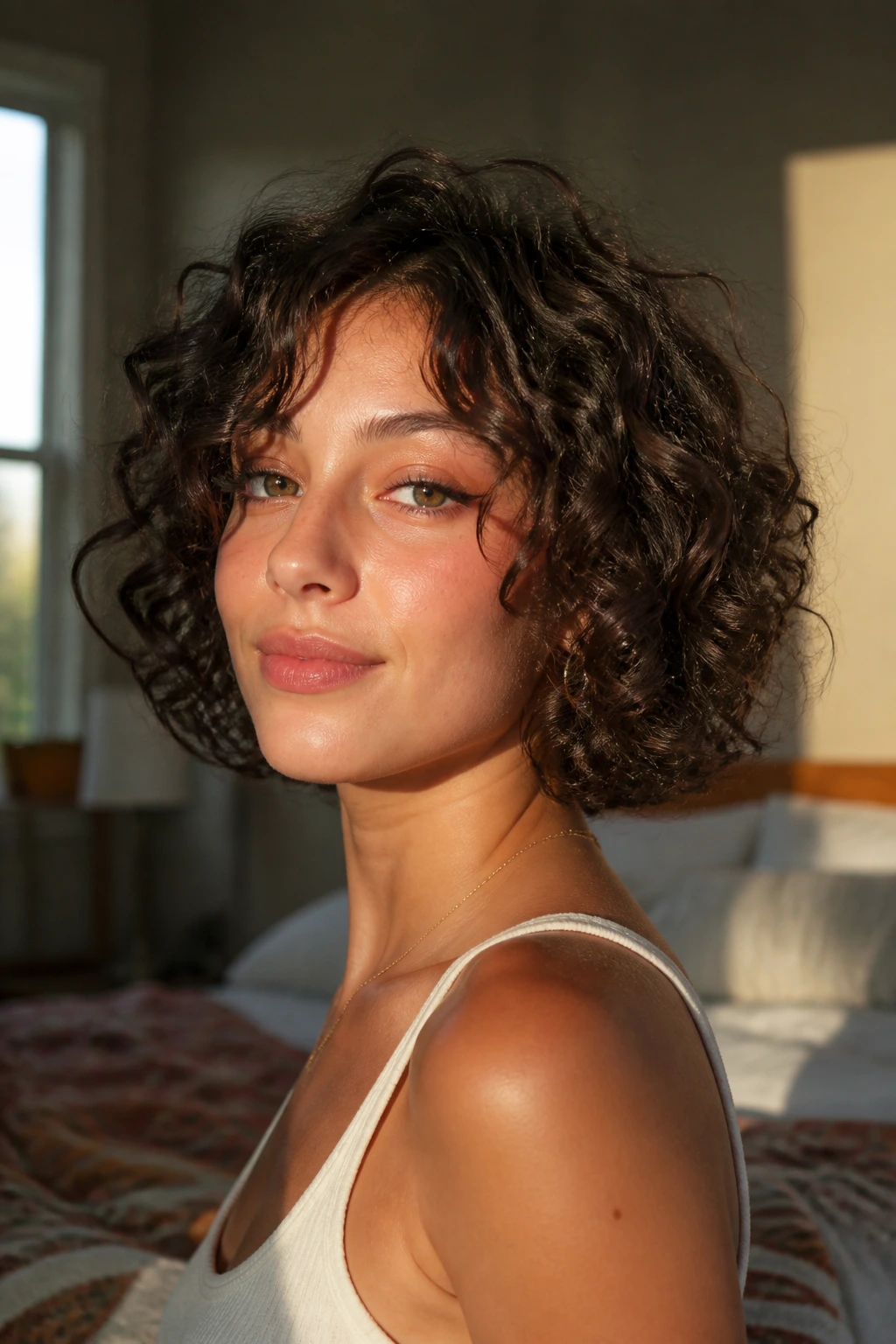
Most short curly hairstyles behave best on day one and day two. By day three, you’re usually refreshing the roots and waking up the front pieces. By day four, the style can still work, but only if the sleep routine was kind.
The easiest protection is a satin pillowcase or bonnet. Satin cuts down on friction, which means less frizz and fewer flattened curls at the crown. A pineapple works on longer pixies and bobs; a very short crop may do better just being wrapped loosely in a bonnet.
For a refresh, mist the hair lightly with water, then add a pea-sized amount of leave-in or a bit of mousse only where the curl has gone slack. Diffuse for 2 to 4 minutes on low heat if you need the shape back fast. If the ends are still good but the roots are sleepy, clip the crown and let the rest air-dry.
A good short curly cut can stretch to 3 or 4 days with care. Tighter coils and stronger gels often go a little longer. Fine curls may need more frequent reactivation because they lose shape quicker once the product cast breaks.
Common Mistakes That Flatten Short Curly Hairstyles
The most common mistake is cutting too much weight off the wrong spot. The haircut may look lighter in the salon, then puff sideways at home. The fix is a better perimeter plan: keep enough length where the curl needs to stack and remove bulk only where the head shape needs breathing room.
Another problem is using too much cream and not enough hold. The hair feels soft for an hour, then the curl pattern slackens and the whole style collapses. If your short curls droop by midday, switch one layer of product from cream to mousse or gel.
Over-diffusing is a sneaky one. Hot, long drying sessions can make curls frizz while the inside stays damp. Short bursts on low or medium heat work better. Stop when the roots are dry and the outer layer has a cast, then let the rest finish on its own.
People also forget about shrinkage. They ask for a pixie or fringe based on stretched length, then the curls spring up and the cut lands much shorter than expected. A dry cut helps, and so does talking in inches at the salon instead of vague words like “a little shorter.”
Lastly, sleeping on the shape without protection will undo even a good cut. One rough night can flatten a crown or bend a fringe in a bad direction. Satin is not glamorous. It is useful. Big difference.
Variations and Adaptations to Try
Fine-Curl Volume Boost: keep the cut shorter at the sides but leave a touch more length on top. Use mousse instead of heavy cream so the crown stays light enough to lift.
Coil-Forward Shape: for tighter textures, ask for a rounded outline with minimal thinning and a clean taper at the nape. This keeps the silhouette strong and avoids the fluffy triangle that can happen when too much is removed from the sides.
Humidity Shield Version: swap soft creams for a firmer gel and finish with a small amount of anti-frizz serum only on the outer layer. This works best when the air feels sticky and the curls tend to swell.
Soft Fringe Swap: if you like the look of bangs but do not want a micro fringe, keep the front pieces longer and split them at the center. That gives you face framing without the upkeep of a short fringe.
Grow-Out Friendly Cut: choose a bixie, mixie, or layered bob with some length left at the nape. These shapes keep looking intentional as they grow, which is handy if you are not planning to trim every few weeks.
Frequently Asked Questions
Which short curly hairstyle is easiest to maintain?
Usually the rounded curly bob or the tapered pixie. Both have a clear shape, and both refresh quickly with a spray bottle and a little product at the roots. If you want the fewest moving parts, avoid cuts that depend on perfect fringe placement every day.
Can short curly hair still look feminine and soft?
Absolutely. Softness comes from the outline and the finish, not the length. A rounded bob, curtain bangs, or a lightly layered crop can look gentler than a longer cut with harsh lines.
What should I ask for if my curls shrink a lot?
Ask for the haircut to be shaped dry or cut with shrinkage in mind. Tell the stylist how much your hair typically springs up once it dries, and be specific about the longest point you want to keep. “Jaw length when dry” is a better instruction than “short but not too short.”
Do short curly hairstyles work on fine hair?
Yes, but the layers need to be careful. Fine curls lose body quickly if too much is removed from the crown, so ask for internal shaping rather than aggressive thinning. A little mousse and a diffuser help a lot.
How do I keep short curls from looking wide?
Narrow the sides with a taper or a cleaner perimeter, then build the lift at the crown. A side part can also break up width, especially on bobs and shags.
Can I wear a fringe with short curly hair?
You can, but the fringe needs extra thought. Curl shrinkage changes the length more than people expect, so a stylist should cut it with the natural bend in mind. Curtain bangs are easier to live with than very short blunt bangs.
What if my curls flatten overnight?
Mist the crown lightly, clip the roots for a few minutes, and diffuse just enough to reset the shape. If the ends still look good, leave them alone. The goal is to wake up the cut, not start over.
Is a diffused finish better than air-drying for these styles?
For most short cuts, yes — at least at the roots. Air-drying keeps the ends soft, but a diffuser helps lock in lift at the crown, which is where short curly hairstyles gain their shape. You do not need to dry everything. Just the parts that collapse first.
A Few Last Words on Shape
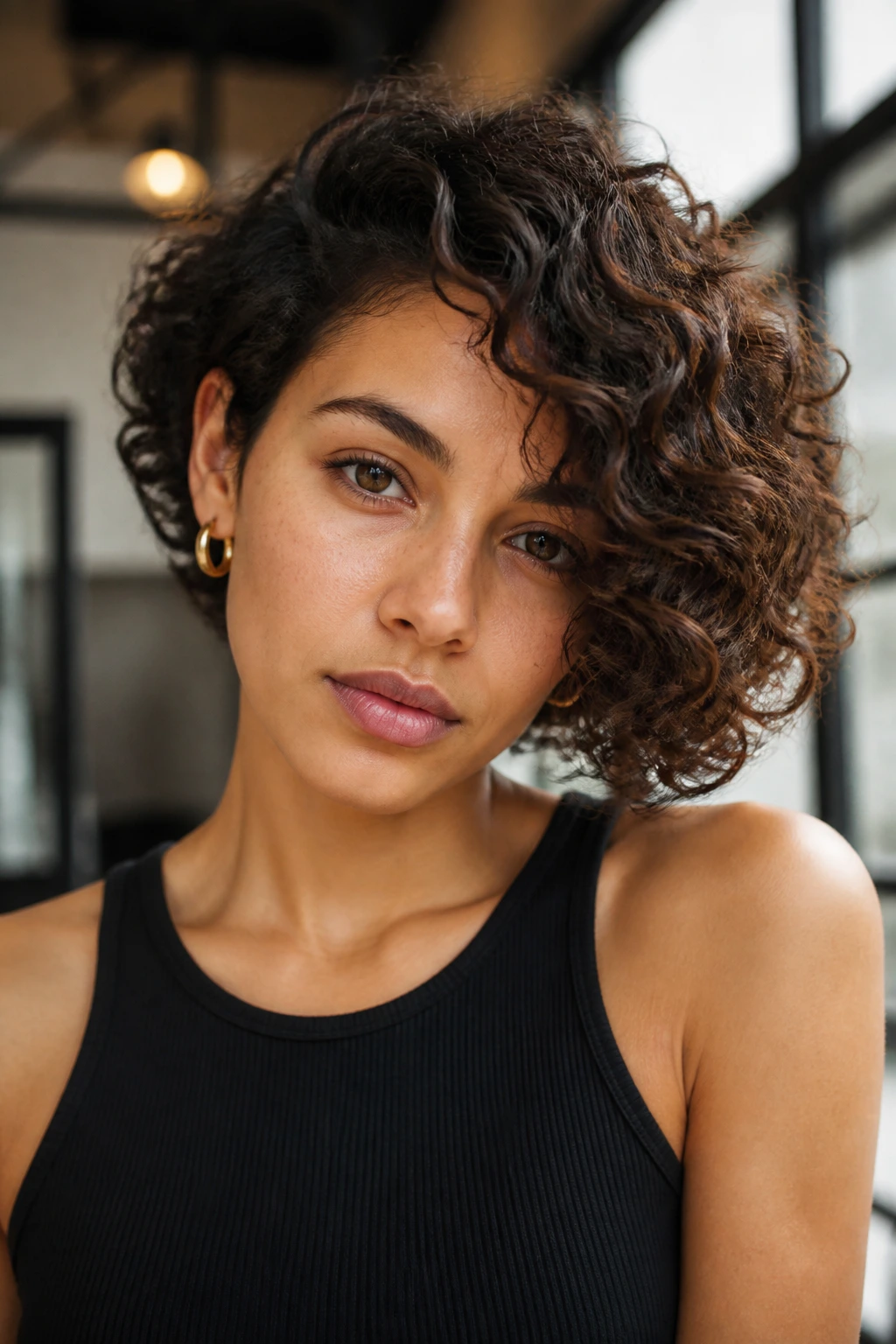
The nicest thing about short curly hairstyles is that they stop pretending curls need to be tamed to look put together. A smart cut lets the pattern do what it already wants to do — spring, bend, puff a little, settle, then spring again the next morning.
That’s the real advantage of short length on curls. Less drag. More lift. And, when the cut is built well, a shape that still looks good after a quick mist, a few scrunches, and a five-minute fight with the diffuser.
