



Short curls on a round face live or die by shape. If the silhouette balloons at the cheeks, the face reads wider; if the cut sends the eye upward, the whole look snaps into place. The phrase super short curly haircuts for round faces sounds simple, but the difference between “cute” and “why does this feel off?” is often half an inch at the temples and a better crown line.
That’s why I keep coming back to short cuts that do one of three things: build height, carve out the sides, or break up the front with a diagonal line. A curl that sits just above the eyebrow can change the whole face. So can a tapered nape that lets the neck show. These details sound small on paper. On hair, they are the whole story.
The styles below cover loose spirals, springy ringlets, and tight coils, because round faces aren’t limited to one texture or one vibe. Some cuts are soft and airy; some are clipped tight and sharp. None of them relies on length to do the work, which is exactly why they stay interesting when the hair is dry, shrunk, and doing its own thing.
Why These Super Short Curly Haircuts Stand Out on a Round Face
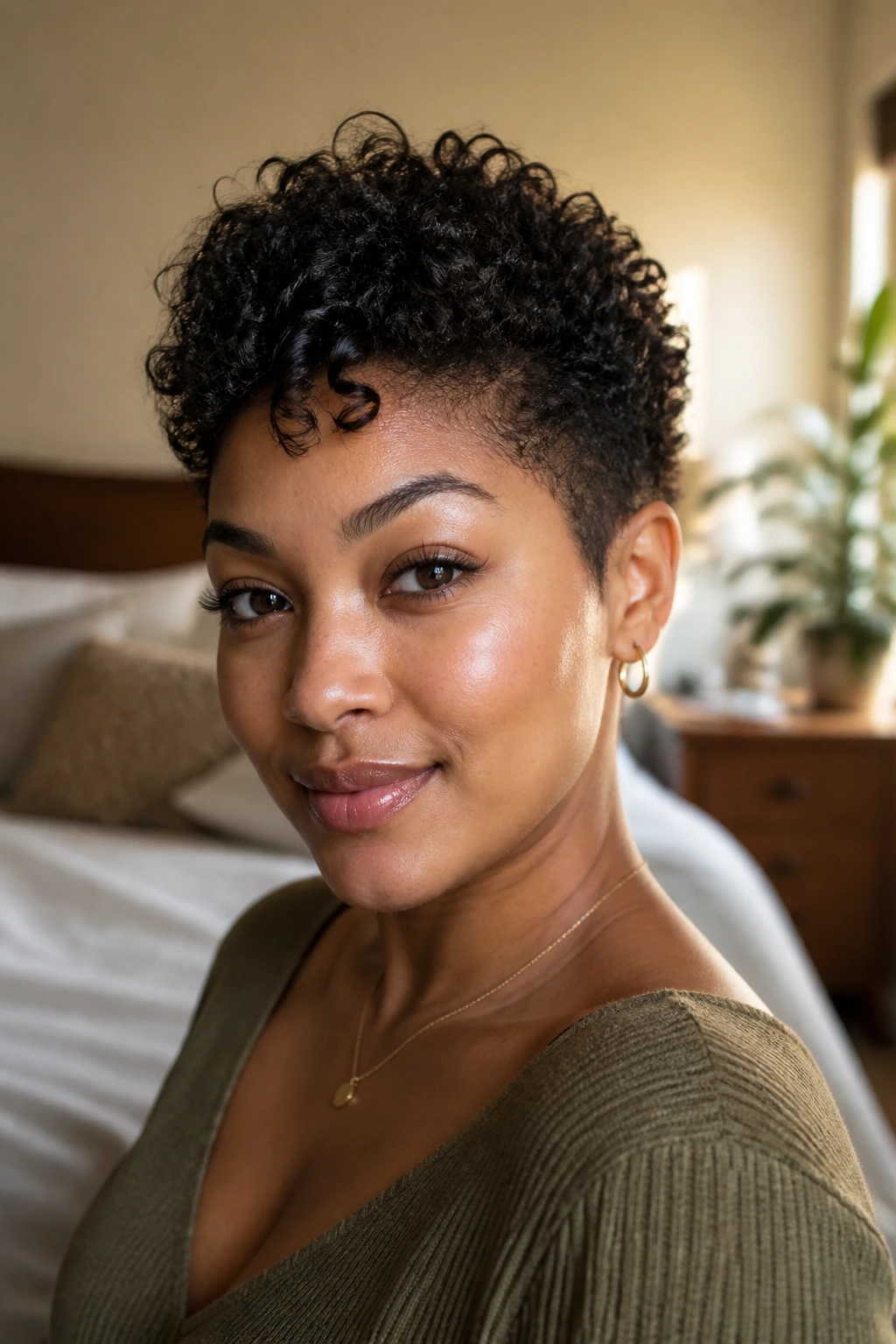
They add height where round faces need it. A little lift at the crown pulls the eye upward; a flat top does the opposite and spreads the width across the cheeks. That one detail changes the whole balance.
They keep the temples and nape clean. A tapered edge opens space around the face and stops the silhouette from turning into one big circle. I’m suspicious of any short curly cut that ignores the sides.
They use diagonals instead of straight lines. Side sweeps, broken fringes, and asymmetry cut across fullness instead of echoing it. That makes the face read a touch longer without making the hair look stiff.
They work with shrinkage, not against it. Curls spring up after drying, and a short cut has to be shaped for the dry finish, not the wet one. If the cut only looks good when it’s soaking, it’s the wrong cut.
They’re easier to reset between trims. When the outline is already tight, a quick diffuser pass or a bit of gel can bring it back without a full restyle. That matters more than people admit.
They leave room for personality. You can go neat, soft, edgy, sculpted, or a little messy. Short curly hair doesn’t have to mean one look. It just has to be shaped with some sense.
What Super Short Curly Haircuts for Round Faces Need to Get Right
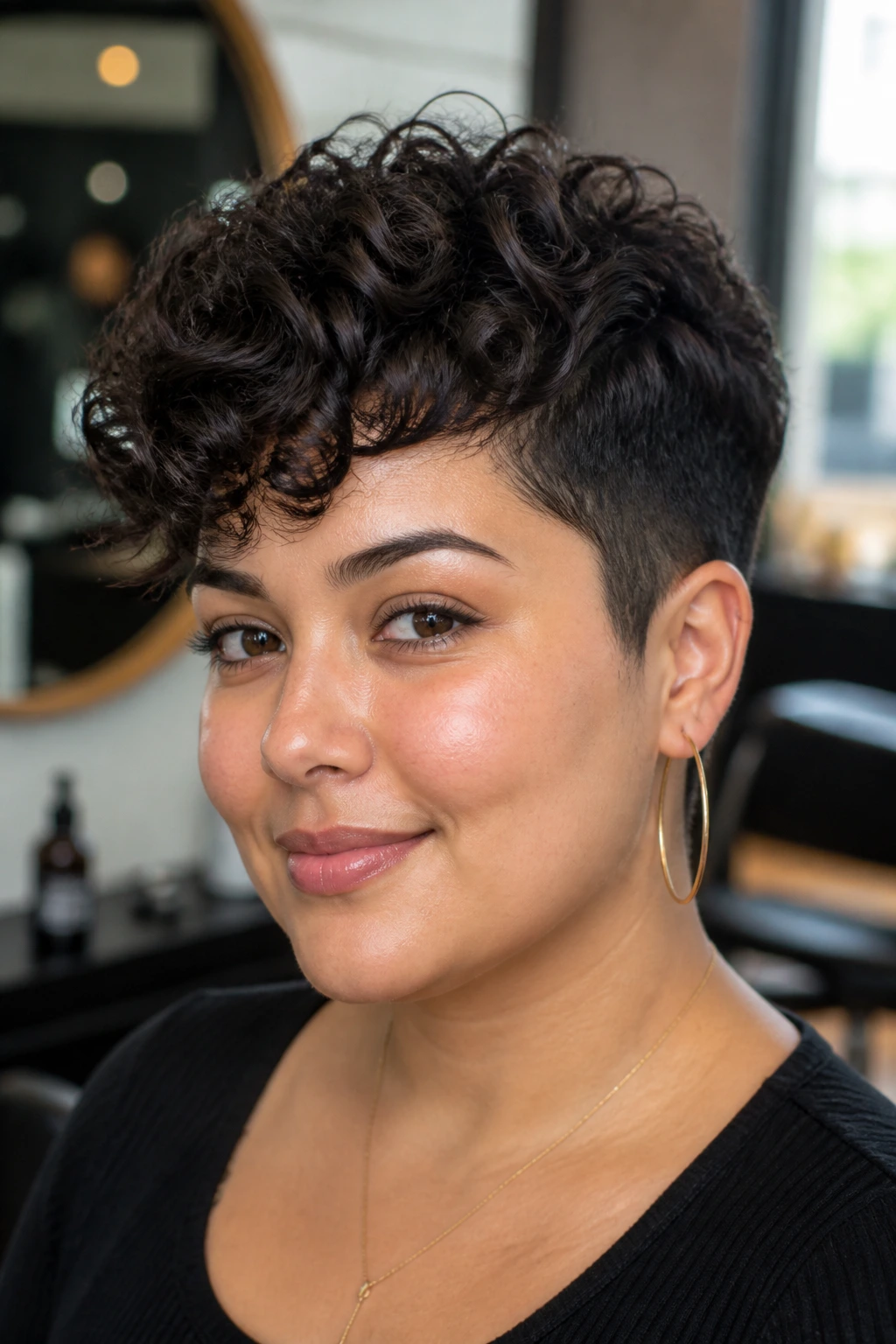
A round face doesn’t need to be hidden. It needs a cut that stops the widest part of the hair from sitting right at cheek level. That’s the trap. A lot of short curly haircuts fail because they add volume exactly where the face already has it.
The safest shapes build visual height above the temples and keep the outline narrower through the sides. That can mean a fade, a taper, a deep side part, or a fringe that falls diagonally instead of straight across. A tiny shift in where the hair sits makes a bigger difference than people expect.
Keep the bulk off the cheeks
When the curls get dense around the middle of the face, the whole cut starts to read rounder. I like cuts that move the bulk either up toward the crown or down toward the nape. The cheek zone needs air. Not a curtain.
Treat the fringe like a shape tool
A fringe on a round face can work beautifully, but it can’t be heavy and blunt. Broken edges, soft side-sweeps, and small gaps between curl groups keep the front from becoming a shelf. That shelf effect is what shortens the face.
Cut for the dry silhouette
Curly hair shrinks. A lot. Sometimes a little over an inch, sometimes more if the coil pattern is tight. Cutting dry, or at least checking the finished outline dry, is the only honest way to see what the face is actually going to get.
1. Curly Pixie with Crown Lift
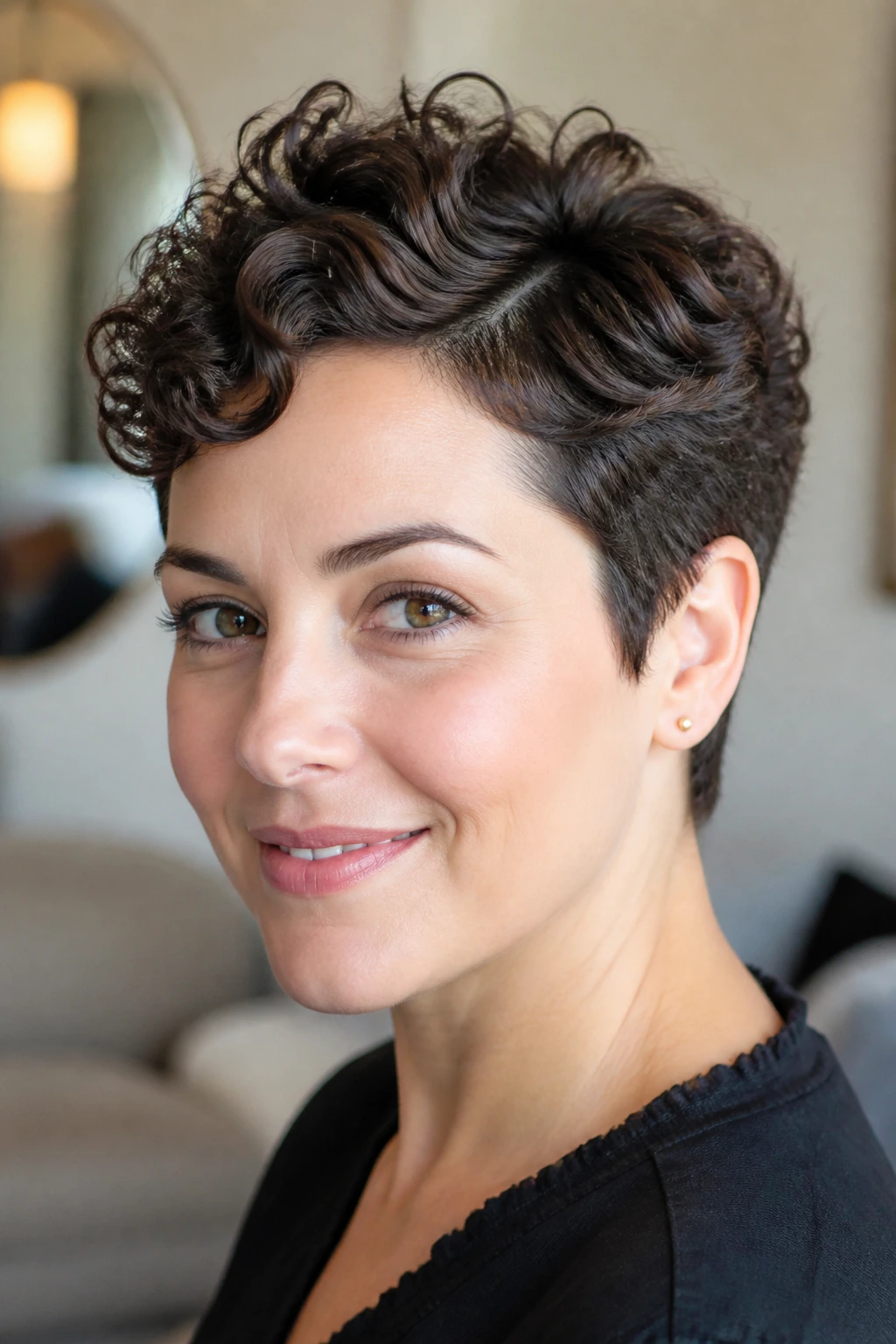
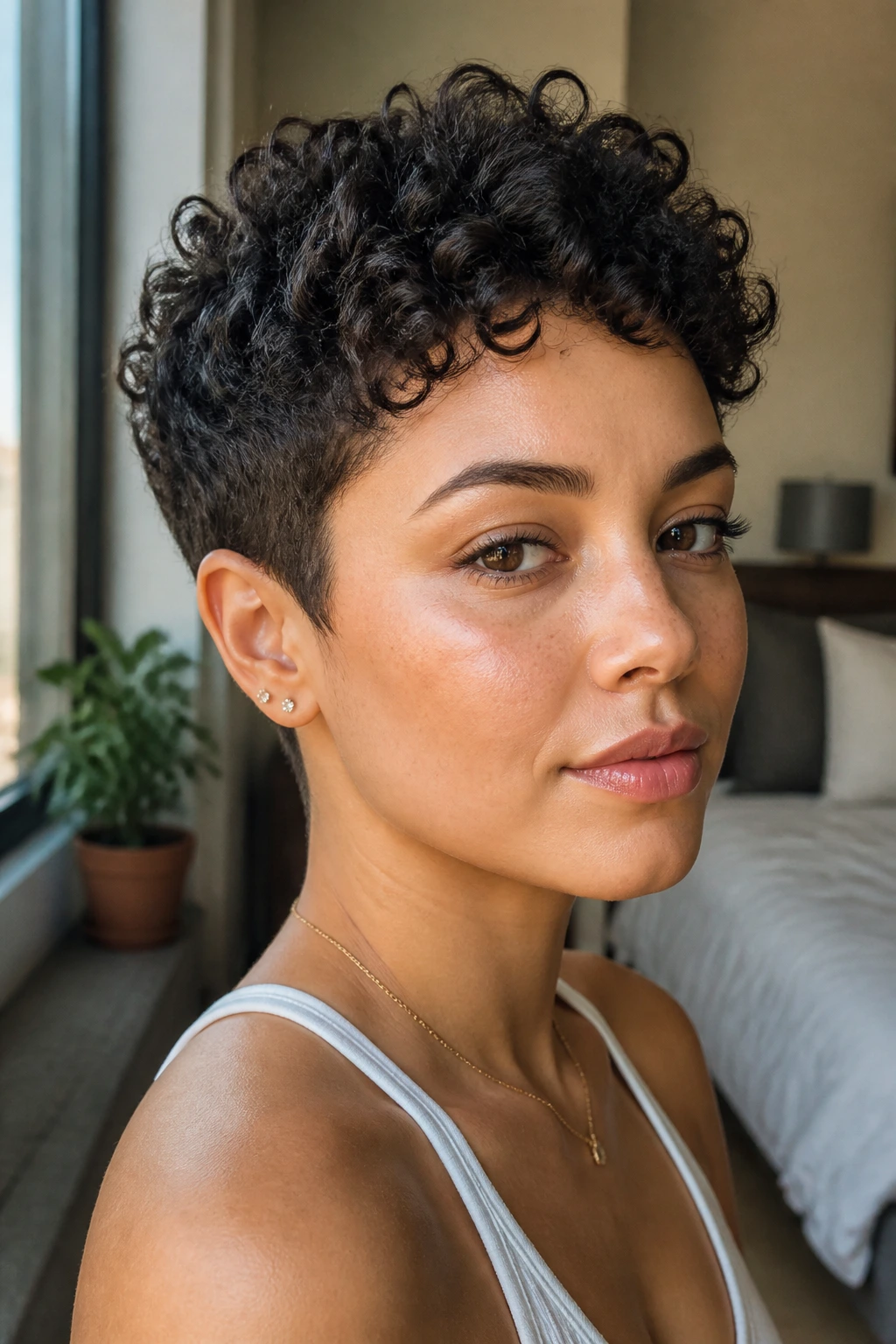
This is the short curly cut I recommend most often when someone wants the easiest entry point. The top stays long enough for the curls to rise, while the temples and nape stay neat enough to keep the face open. It’s a clean shape, not a helmet.
Why the crown lift works
The crown is where this cut earns its keep. A little extra length up top gives the curl room to spring vertically instead of puffing sideways at cheek level. Ask for about 1.5 to 2.5 inches on the top, with the sides tapered down softly so the shape narrows as it moves toward the ears.
I like this best on loose spirals and medium curls that collapse if they’re cut too short. A side part helps even more. So does point-cutting the ends instead of leaving them blunt.
Styling note: Use a lightweight mousse at the roots, then a small amount of gel through the top. If the crown lies flat, clip it up while drying for 10 to 15 minutes.
2. Tapered Coily Crop with Soft Edges
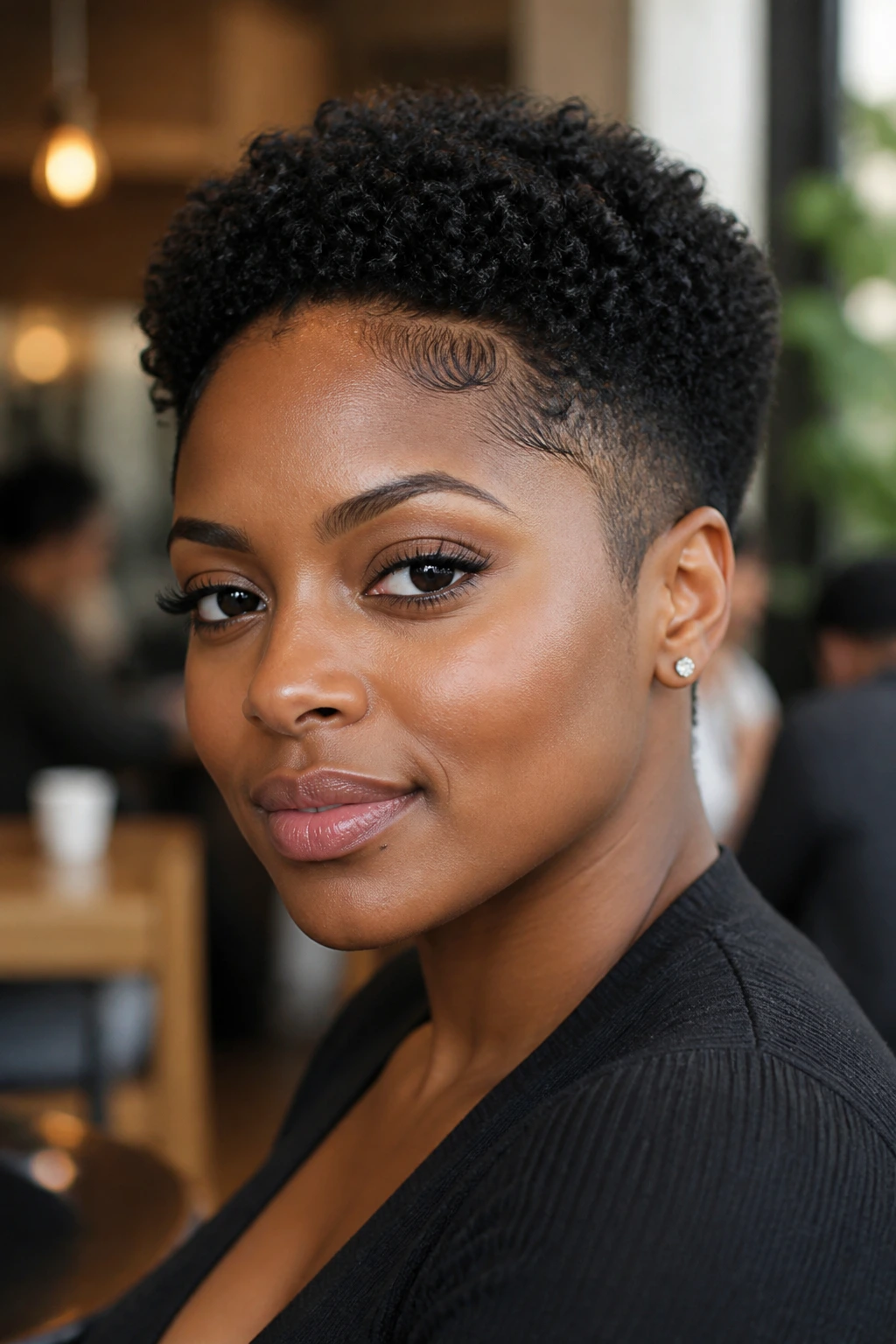
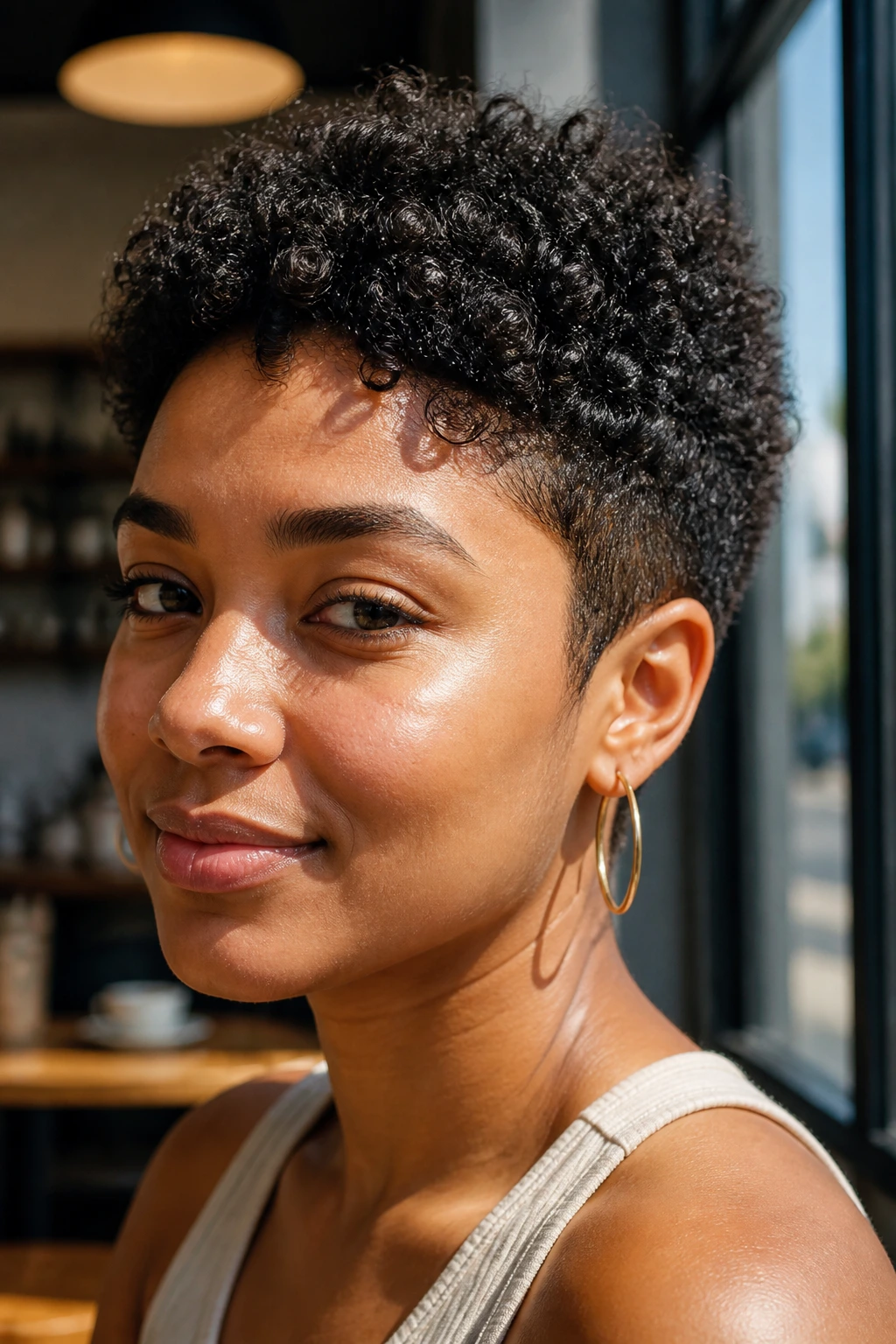
Tight coils look fantastic in a short crop when the perimeter is cleaned up. The taper matters here. Without it, the hair can balloon at the temples and turn the whole head into a round cloud.
This cut keeps the top slightly taller than the sides, but not in a flashy way. The point is control. A soft edge at the hairline, a close nape, and a bit of lift through the center create a shape that feels balanced instead of boxy.
It works especially well if your coils shrink a lot after washing. Ask for the final shape to be checked dry. That’s the part many people skip, and it’s why they leave the salon with something that looks right for five minutes and then changes size.
3. Asymmetrical Curly Crop
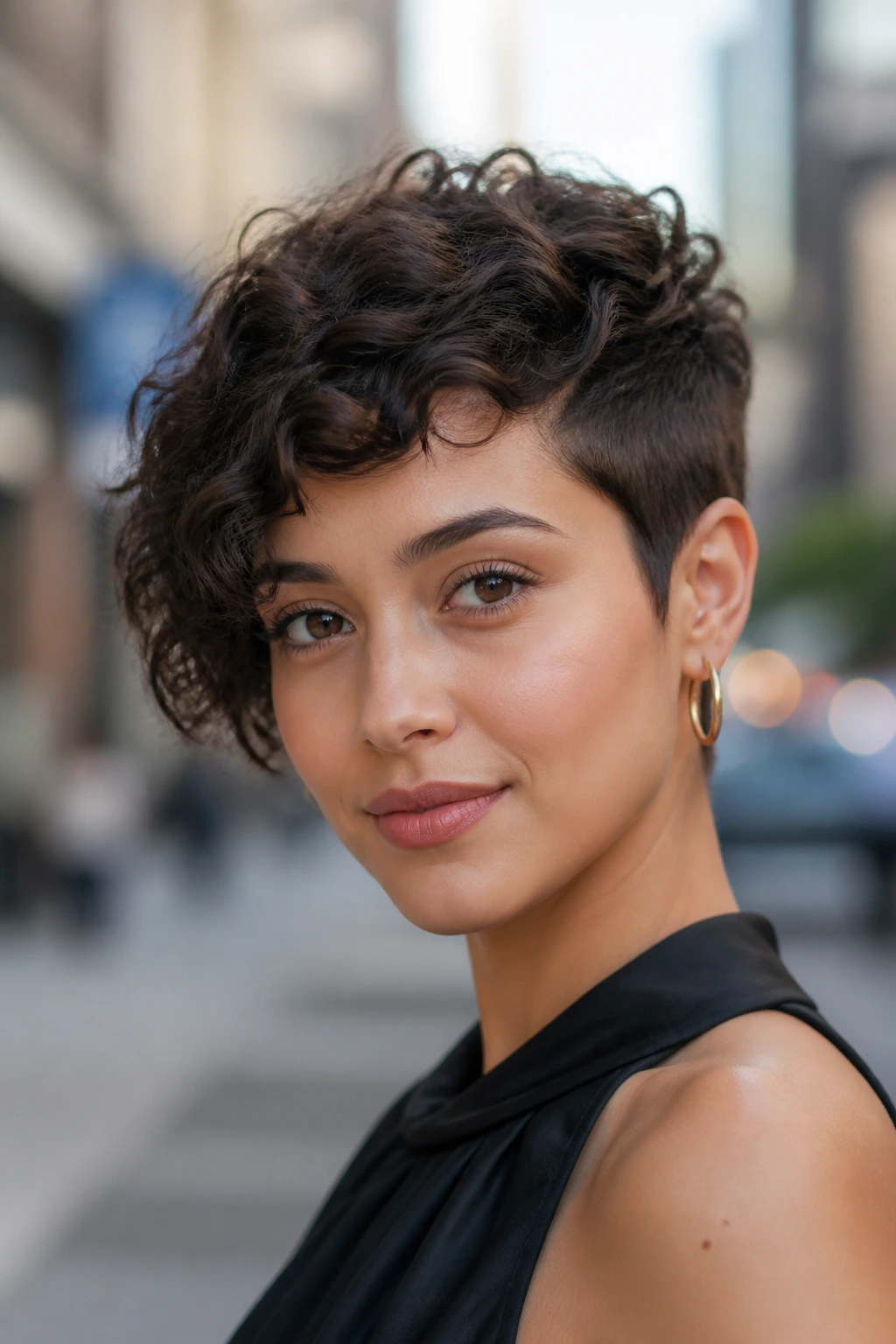
A little imbalance is a good thing here. One side sits slightly longer, the other side gets trimmed tighter, and suddenly the face doesn’t read as broad. That diagonal movement does a lot of heavy lifting.
What I like most about an asymmetrical crop is that it feels deliberate. It isn’t trying to fake length with extra bulk. It just gives the eye somewhere to go besides straight across the cheeks.
If your curls naturally lean to one side, this is an easy cut to make work. Keep the longer side around the brow or just below the temple, not all the way down into bob territory. A half-inch can be enough to change the read.
Ask for: a deeper side part, a tighter nape taper, and point-cut ends on the longer side so it doesn’t form a blunt curtain.
4. Side-Swept Bixie

The bixie sits between a pixie and a bob, and that middle ground can be very kind to a round face when the fringe sweeps sideways. You get a little more length around the front without losing the crispness at the back.
The side sweep matters because it breaks the horizontal line. A straight fringe can make the face look shorter. A side-swept one angles the whole haircut upward and away from the cheeks.
I’d choose this for loose curls or soft ringlets that want to fall in pieces. It also works if you’re nervous about going very short. The bixie gives you enough hair to tuck one side behind the ear, which I love for showing off cheekbones.
5. Curly French Crop
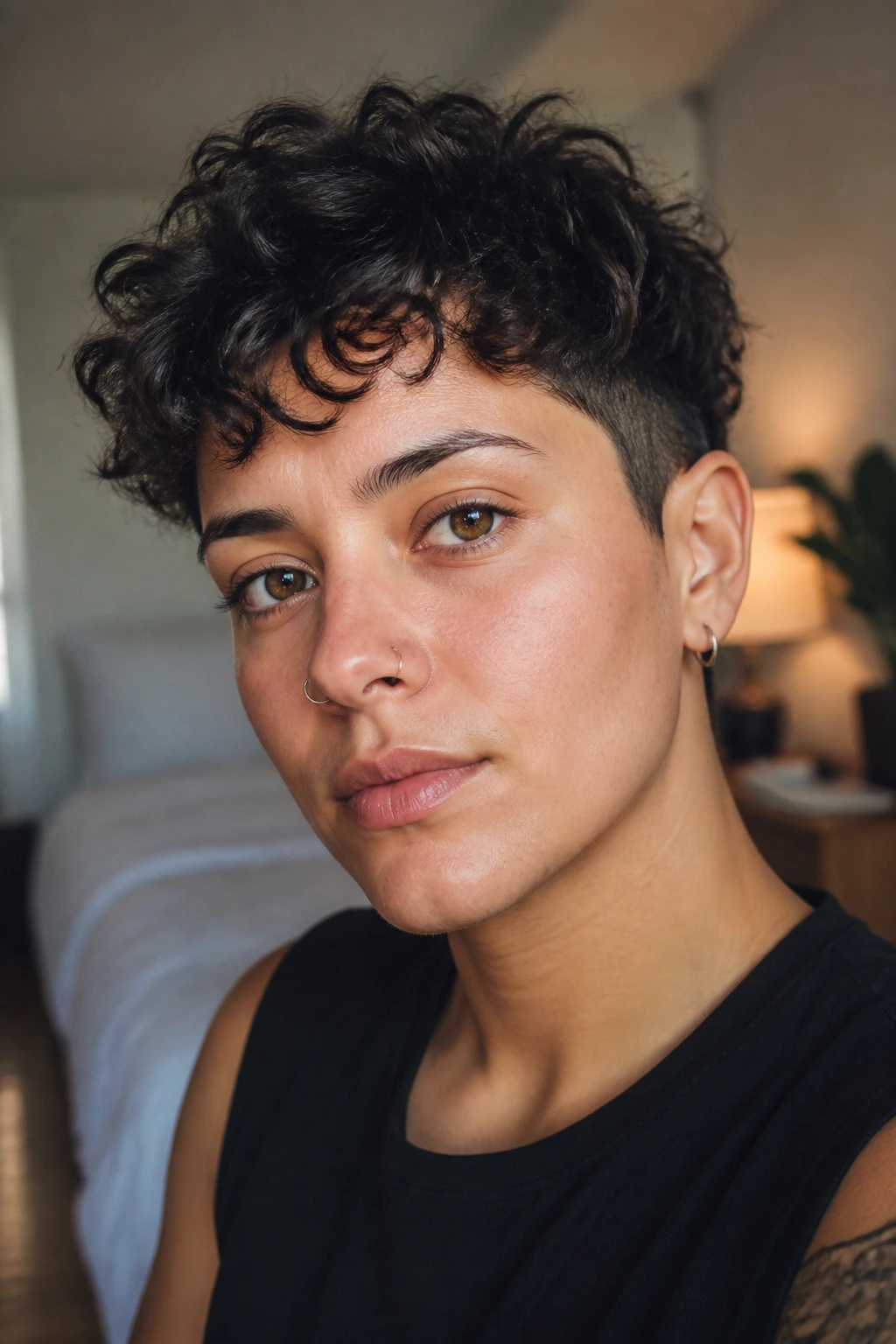
A curly French crop can look fantastic on a round face, but only if the fringe is broken up. A hard, blunt line across the forehead is the thing to avoid. It drags the eye sideways and can make the face feel shorter.
What saves this cut is texture. The top stays short and slightly forward-moving, while the curls are chipped into small sections so they don’t sit like one solid block. Keep the sides tapered, and keep the top full enough to rise instead of flatten.
This is a good choice if you like a tidy shape that doesn’t demand a lot of styling time. It reads sharp, but not severe. And when the top is point-cut well, it grows out cleanly instead of turning into a messy shelf.
6. Temple-Fade Finger Coils
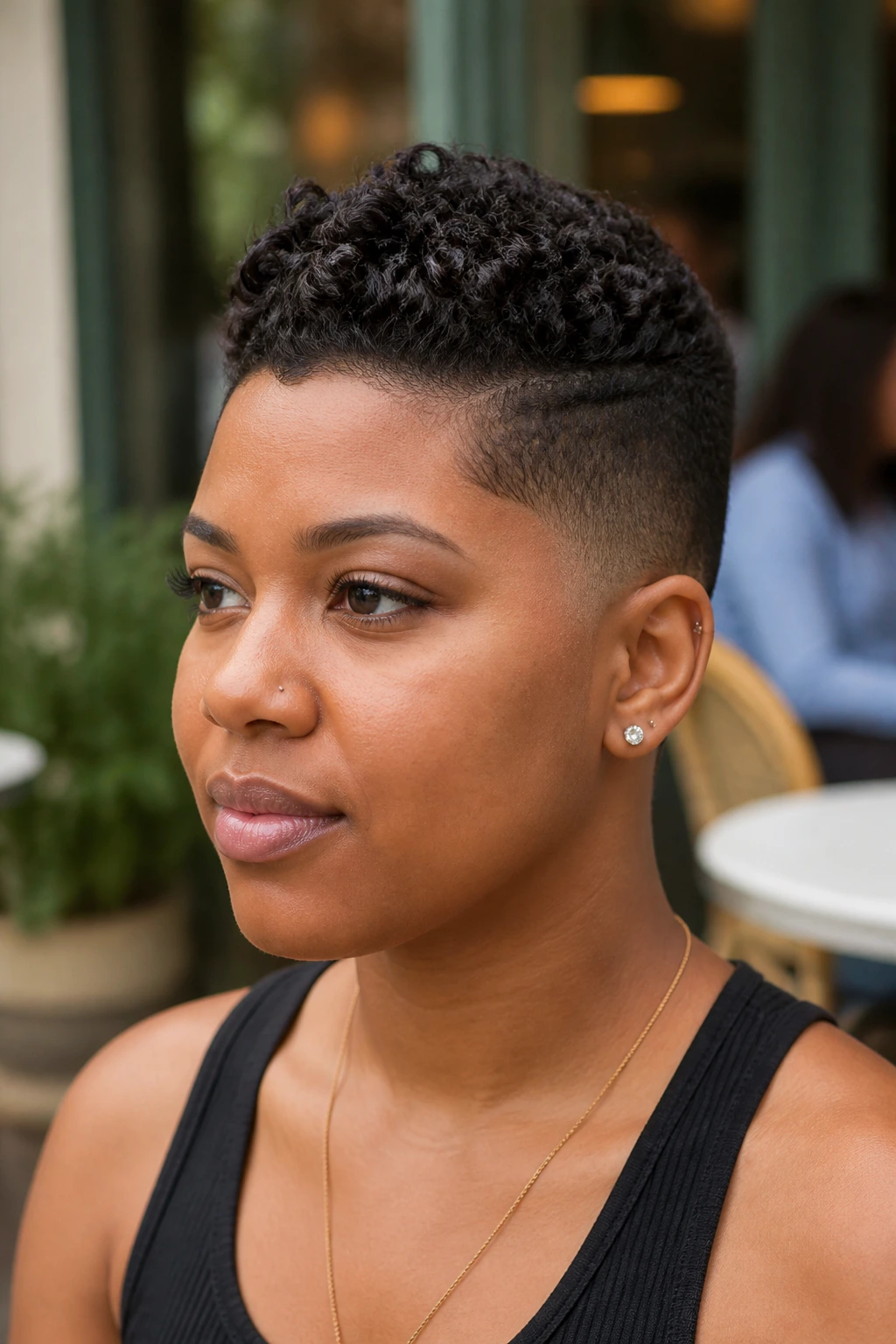
If you want something sculpted, this one has real presence. The temples get faded down tight, and the top is styled into finger coils or small defined twists. That contrast narrows the face and adds a clean vertical line.
The beauty of this cut is how precise it feels. The sides disappear, the top does the talking, and the curl pattern becomes a design element rather than an afterthought. It’s one of the best choices for tighter textures that hold shape well.
A finger-coil top also gives you control over where the weight sits. Keep the coils slightly taller at the center and a bit softer at the front. That tiny bit of lift keeps the whole look from sitting flat against the forehead.
7. Curly Mohawk Fade
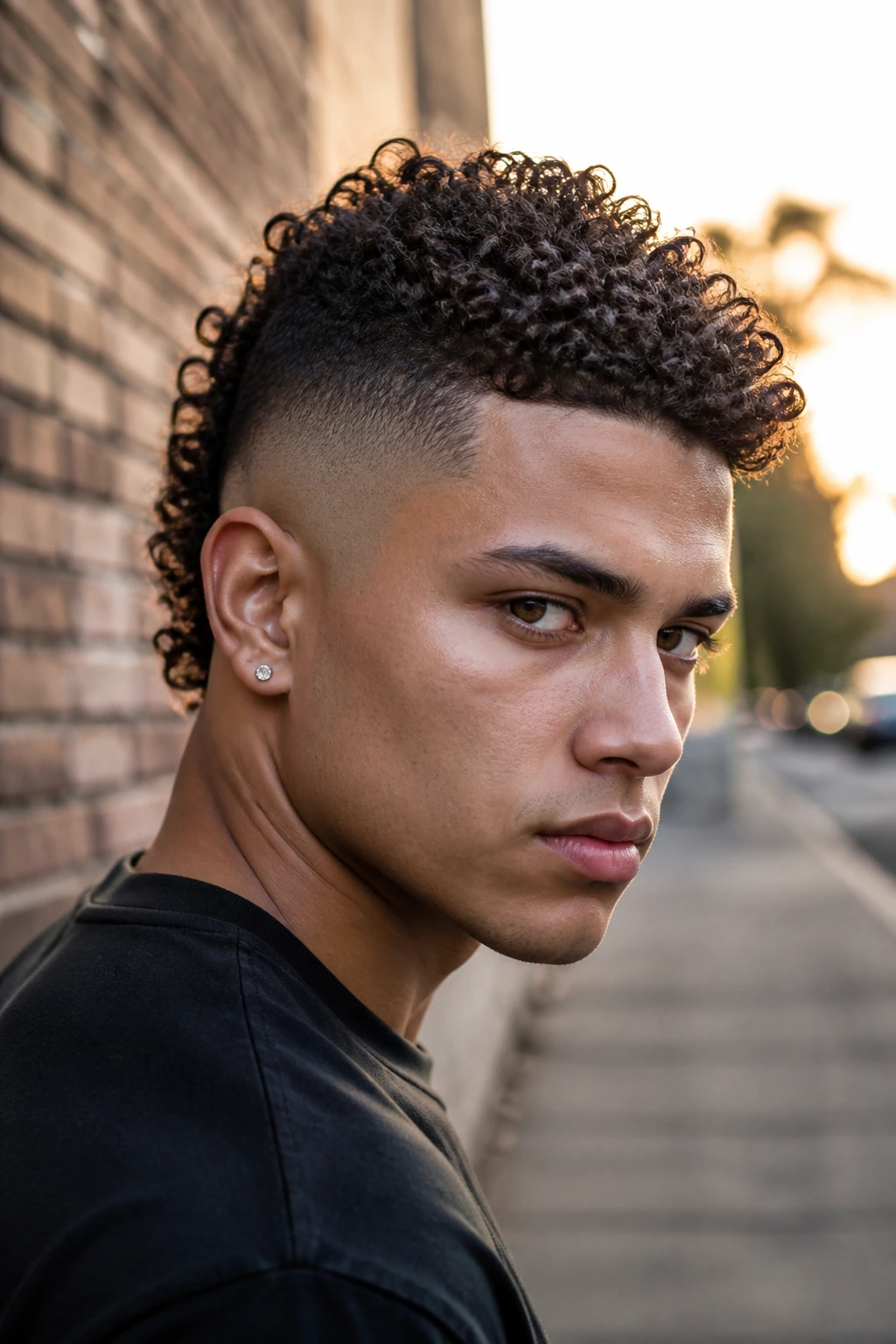
This is the bold one. The sides are faded close, and the curls stay concentrated down the center strip of the head, which creates a strong vertical line right through the middle of a round face. It’s a smart shape disguised as attitude.
A lot of people think a mohawk makes the face look too severe. Not this version. When the curls are soft and the fade is blended low, the cut feels athletic and sharp without getting cartoonish. It’s especially good for dense curls that need someplace to go.
If you like a stronger outline, this one delivers. Use a curl cream for softness and a light gel to keep the ridge clean. The contrast between the short sides and the taller top is what gives it that face-lengthening effect.
8. Mini Shag Pixie
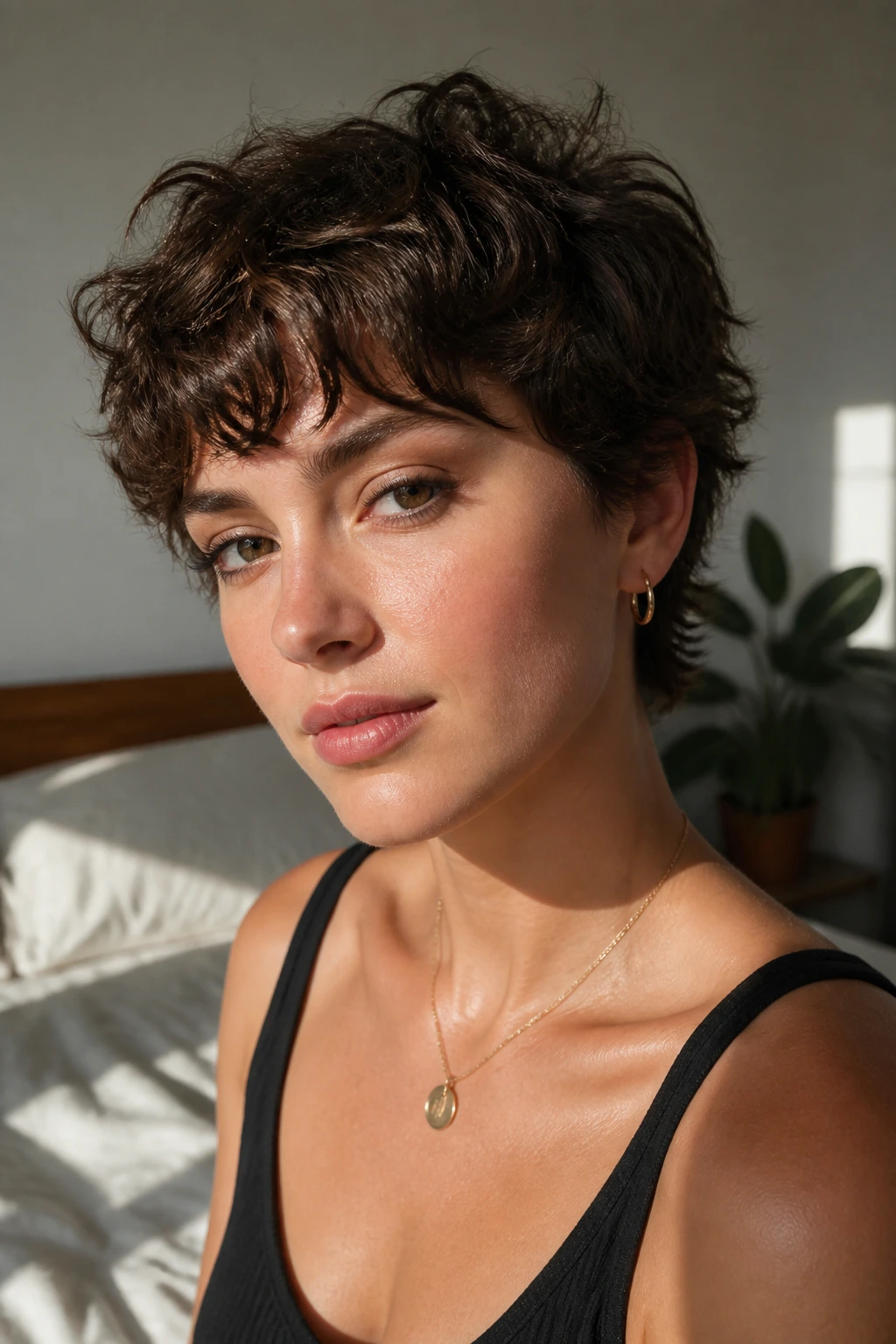
This is the cut for someone who wants movement more than polish. A mini shag pixie uses short, broken layers to keep the curls from stacking into one round puff. The result looks airy, slightly messy, and much more alive than a one-length crop.
The best version keeps the top choppy and the sides softly feathered. Nothing should feel too neat. That little bit of roughness is the point. It keeps the shape from clinging too tightly to the face.
I like this on curls that need help breaking up their own density. If your hair tends to swell when it dries, the mini shag gives it room to move without turning triangular. It’s a good reminder that not every flattering short cut has to be sleek.
9. Undercut Curly Pixie
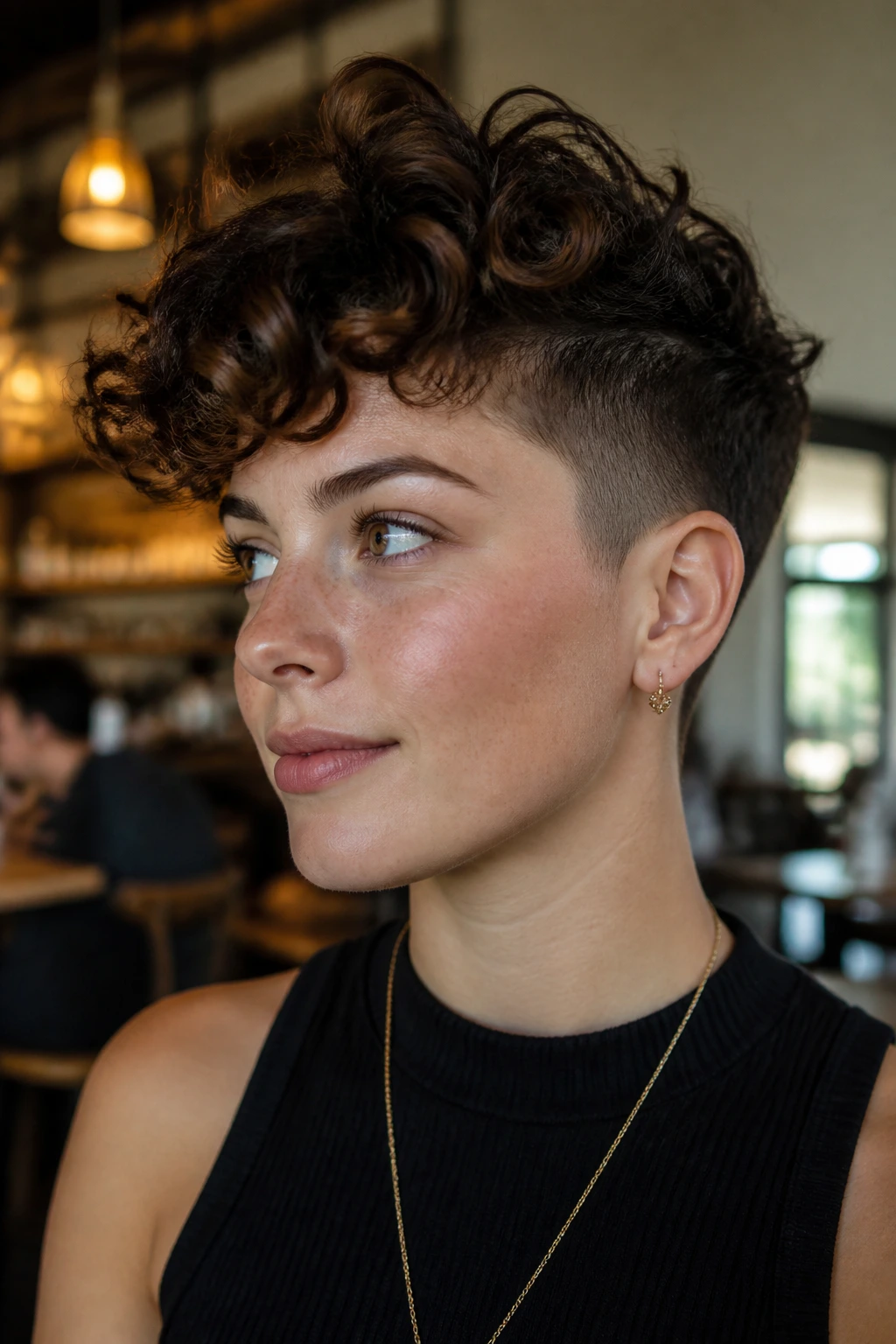
This is the one I’d send to anyone with thick curls who hates bulk. The undercut clears weight from underneath, while the top stays long enough to keep the texture visible. You get less puff at the sides and more shape where you want it.
The important part is not taking the undercut too high. Go too high and the top can sit like a cap. Keep it low enough to remove the hidden bulk, especially around the nape and behind the ears, and the whole haircut starts to breathe.
This cut looks particularly good when the top is finger-styled with a little separation. It doesn’t need a lot of product. A small amount of gel or cream is enough if the shape itself is good.
10. Long-Sideburn Curly Crop

Sideburns are underrated. On a round face, a little extra length there can create a narrow vertical frame that runs beside the cheeks instead of across them. It’s a small move, but it changes the whole outline.
I like this crop when the top is kept short and fluffy, while the sideburns are left just long enough to graze the jaw hinge. That’s the sweet spot. Too short and the face opens too much in a flat way. Too long and the crop starts drifting into bob territory.
If you wear glasses, this cut is especially useful. The sideburn length softens the visual edge of the frames and keeps the face from looking crowded.
11. Soft Curly Bowl with Internal Layers
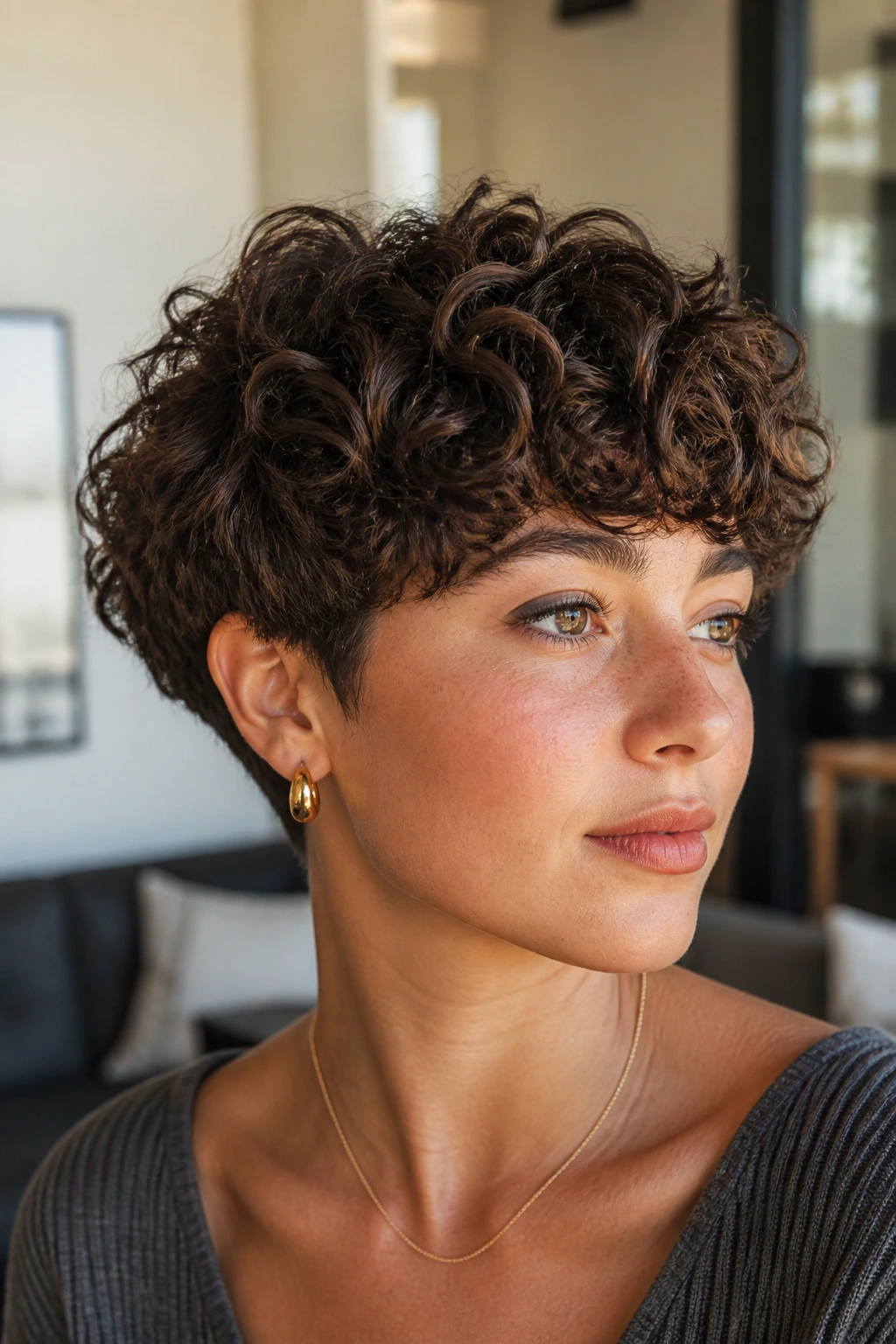
A bowl cut on a round face sounds risky until you see it done with actual restraint. The trick is internal layering and a broken outer line. Without those, the cut turns into a perfect circle, and nobody needs that.
When it’s done right, the top sits rounded but lifted, and the edges are light enough that the hair doesn’t form a hard ring around the face. Keep the nape tighter than the front, and don’t let the sides become too full at cheek level. That’s the whole game.
This one is more fashion-forward than safe. I like it for curl patterns that form clear, springy shapes and for people who want a graphic cut that still feels soft at the edges. It’s not for everyone. That’s part of the charm.
12. Broken-Fringe Curly Caesar
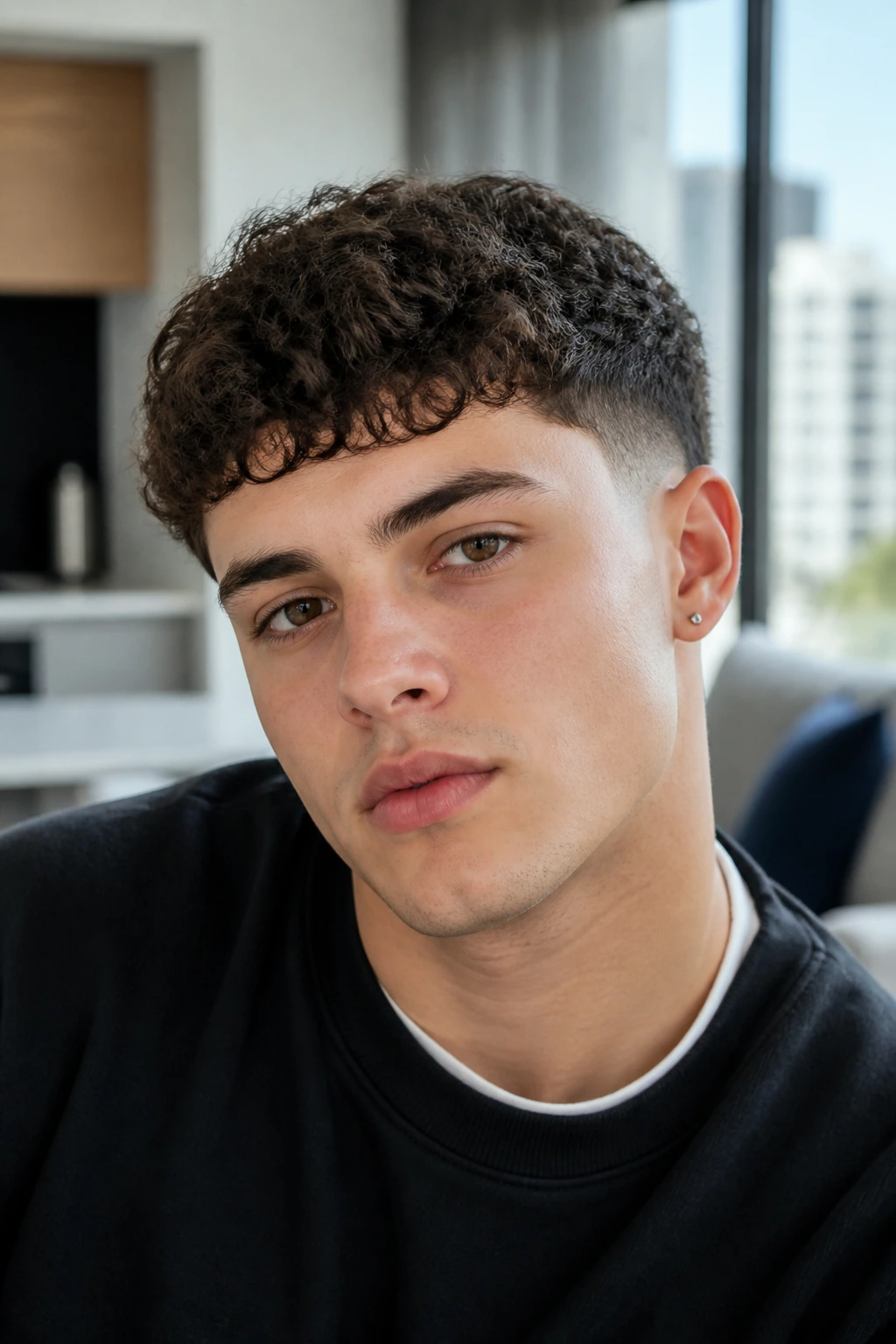
Do you want fringe without the bluntness? This is the answer. A curly Caesar keeps the front short, but the line is broken into small pieces so it doesn’t create that heavy horizontal bar across the forehead.
The key is texture. The curls should appear slightly irregular, almost chipped by hand, with the sides kept tight so the front doesn’t compete with the cheeks. It’s a strong look, but one that stays friendly on a round face because it doesn’t pile width across the front.
This cut works well if you like hair out of your eyes and still want something with shape. It can read sporty, sharp, or minimal depending on how much shine and separation you put in it.
13. High-Top Coil Crop
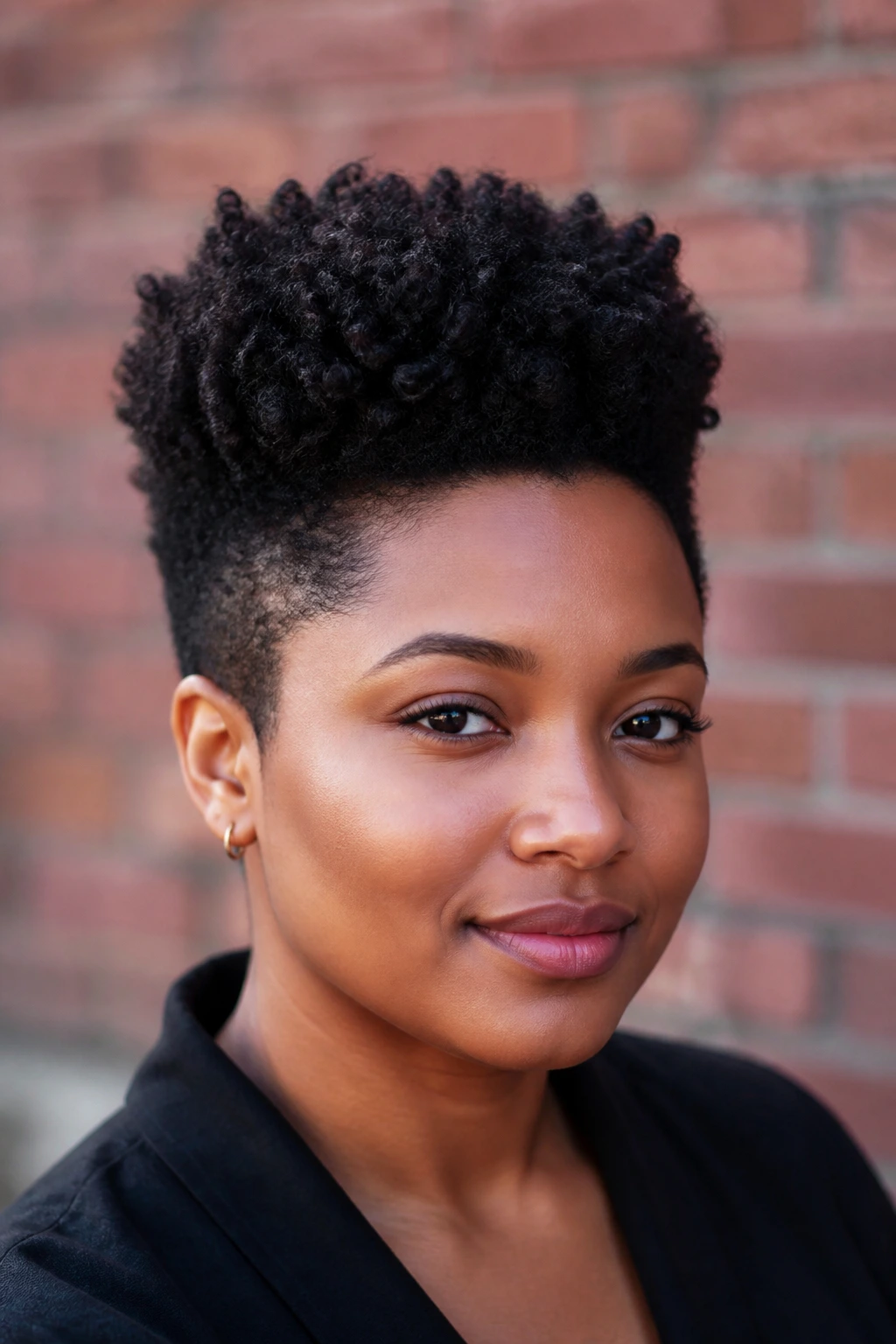
A high-top coil crop is one of the most face-lengthening short styles you can choose for tighter curls. The sides stay short and neat, while the top rises upward enough to create a real vertical line.
The silhouette matters more than anything here. You want the center to feel taller than the perimeter, not wider. If the sides creep out too much, the cut starts to lose its shape fast. That’s why a good taper at the temples and nape is so important.
This is a strong pick for coily hair that holds a defined outline. It also looks good with minimal styling, which I appreciate. A light moisturizer, a pick at the roots, and a little shape at the crown can be enough.
14. Deep-Side-Part Textured Crop
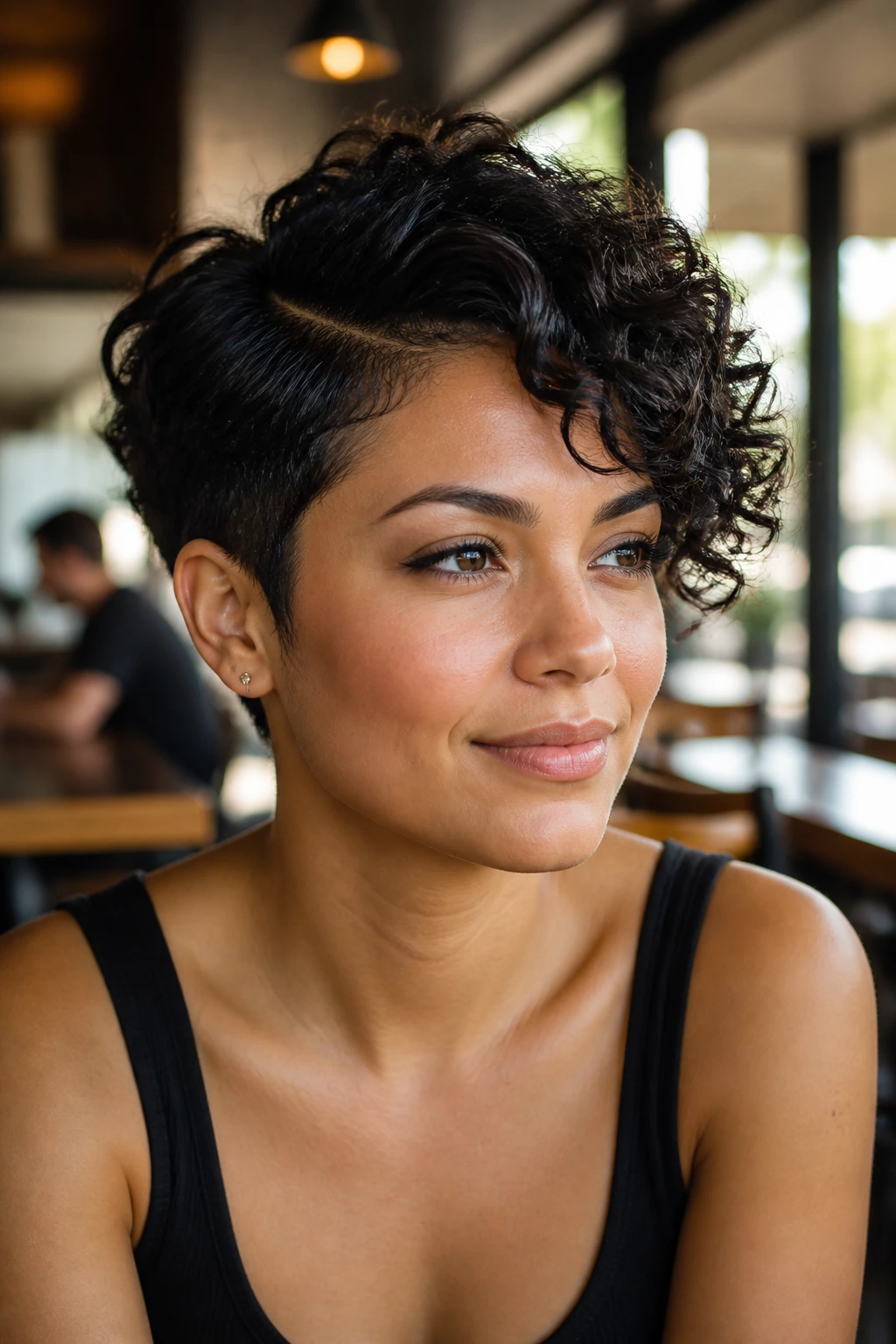
A deep side part changes the whole conversation. It shifts the bulk off the center of the face and creates a diagonal line that makes a round face look longer without trying too hard.
What I like here is the ease. You’re not depending on dramatic height or a heavy fade. The shape comes from placement. One side gets a little more weight, the other sits closer, and the curls fall in a way that feels relaxed but intentional.
This is one of the most wearable short curly styles in the bunch. It works with ringlets, loose spirals, and softer coils. If you want something that can survive a windy day and still look decent by lunch, start here.
15. Micro Mullet Pixie
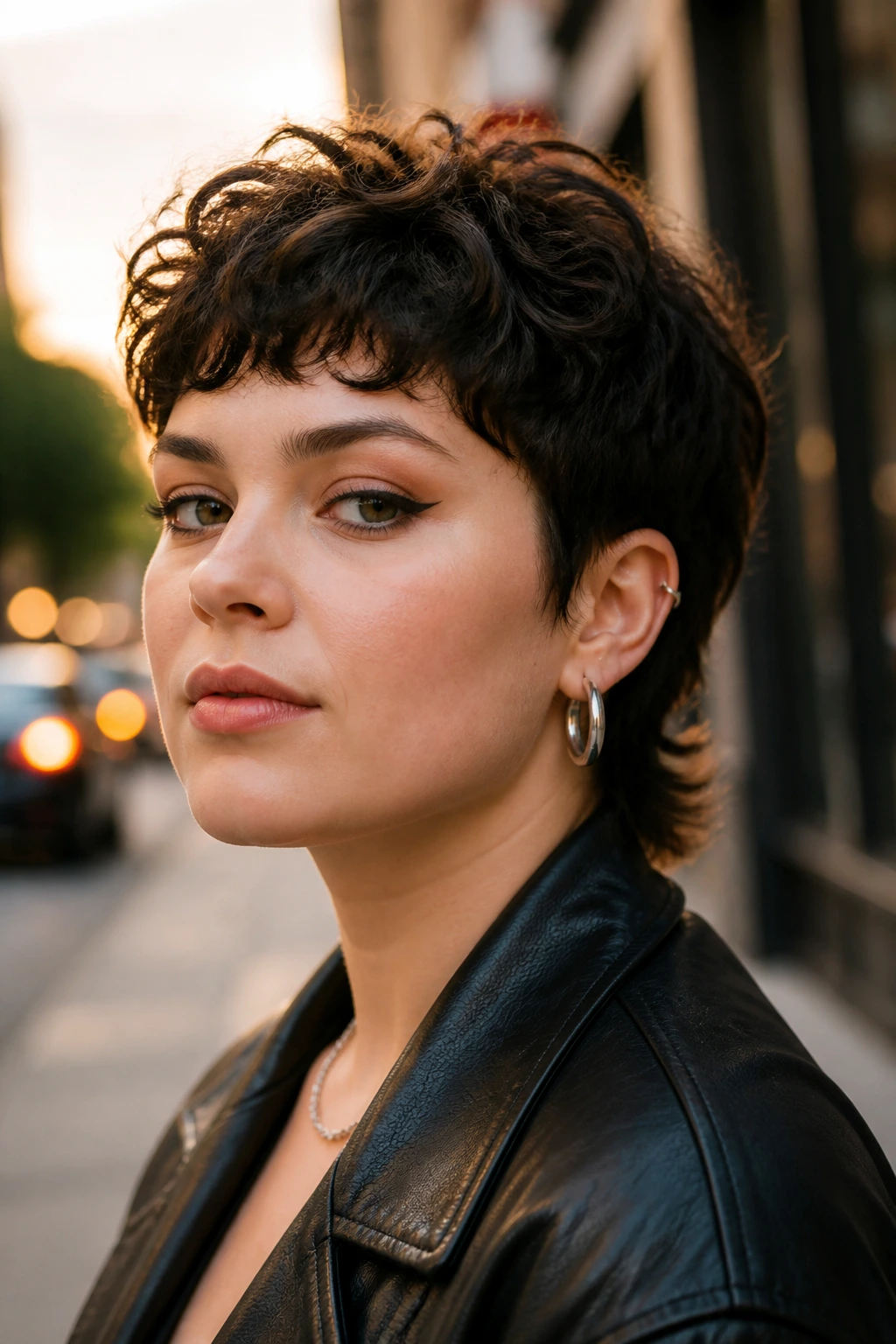
This is for the person who doesn’t mind a little edge. The top stays short and lifted, the sides are tidy, and the nape keeps a touch more length than a standard pixie. That back length pulls the eye down and away from the cheeks.
I know the word mullet makes people twitch. Fair. But the micro version is more about shape than shock. Done well, it’s soft at the top, lean at the sides, and slightly longer behind the ears. That combination flatters a round face better than a lot of safer cuts do.
It’s a good choice if you want short hair that still has motion. The shape grows out in a way that can look cool for a while before it needs a cleanup. Not forever. Just a while.
16. Wispy Fringe Curly Crop
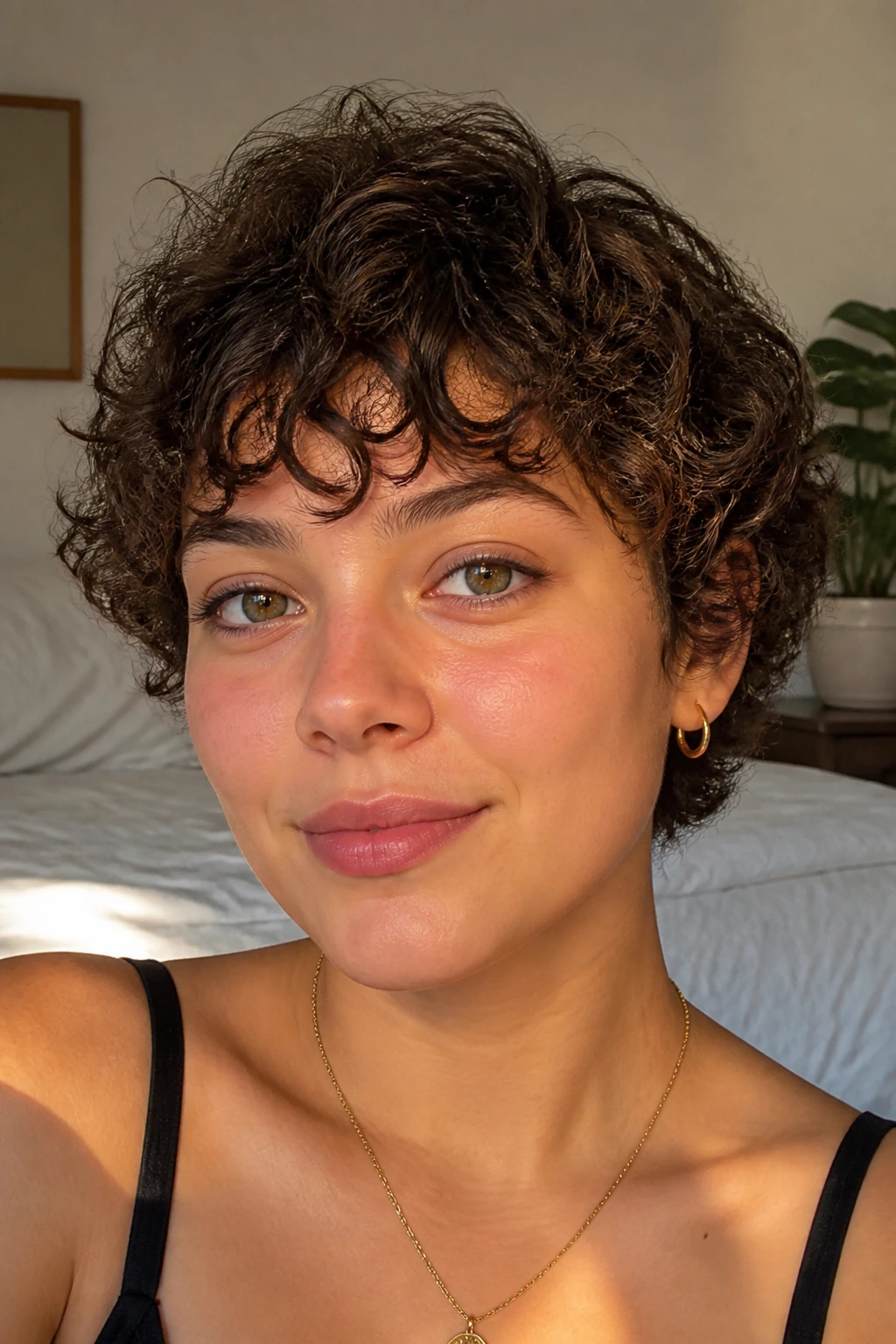
A wispy fringe can soften a round face without boxing it in. The trick is keeping the fringe broken and light, not dense. You want little curl pieces, not a thick sheet.
This crop works beautifully on finer curls that might look too flat in a heavier cut. A bit of fringe helps balance the forehead, while the short sides stop the shape from spreading outward. The line should feel soft all the way around.
I’d keep the top a touch longer than the fringe so the front doesn’t become the widest point. That one detail keeps the cut from looking stuck to the forehead. Tiny difference. Big payoff.
17. Rounded Undercut Pixie
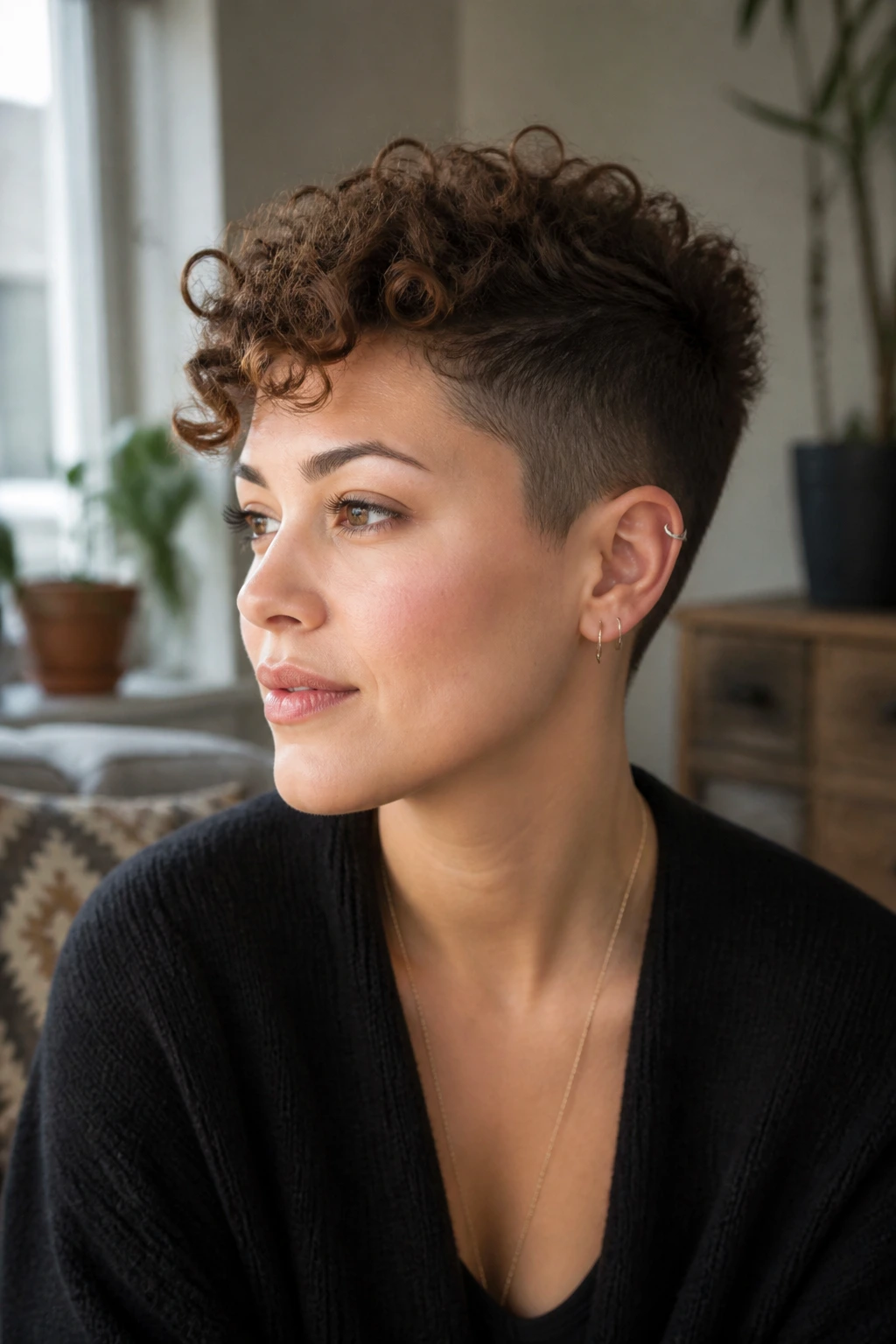
The name sounds contradictory, and that’s exactly why it works. The top keeps a softly rounded shape, while the undercut removes weight underneath so the sides don’t puff out over the cheeks.
This is a good option if you like a feminine curve on top but don’t want the whole haircut to feel broad. The undercut gives the top a little lift, and the curve stays controlled instead of turning into a full halo.
A round face can wear rounded shapes as long as the width is managed. That’s the rule here. Keep the perimeter neat and the top slightly taller, and the shape stays flattering instead of mimicking the face shape too closely.
18. Choppy Crop with Crown Length
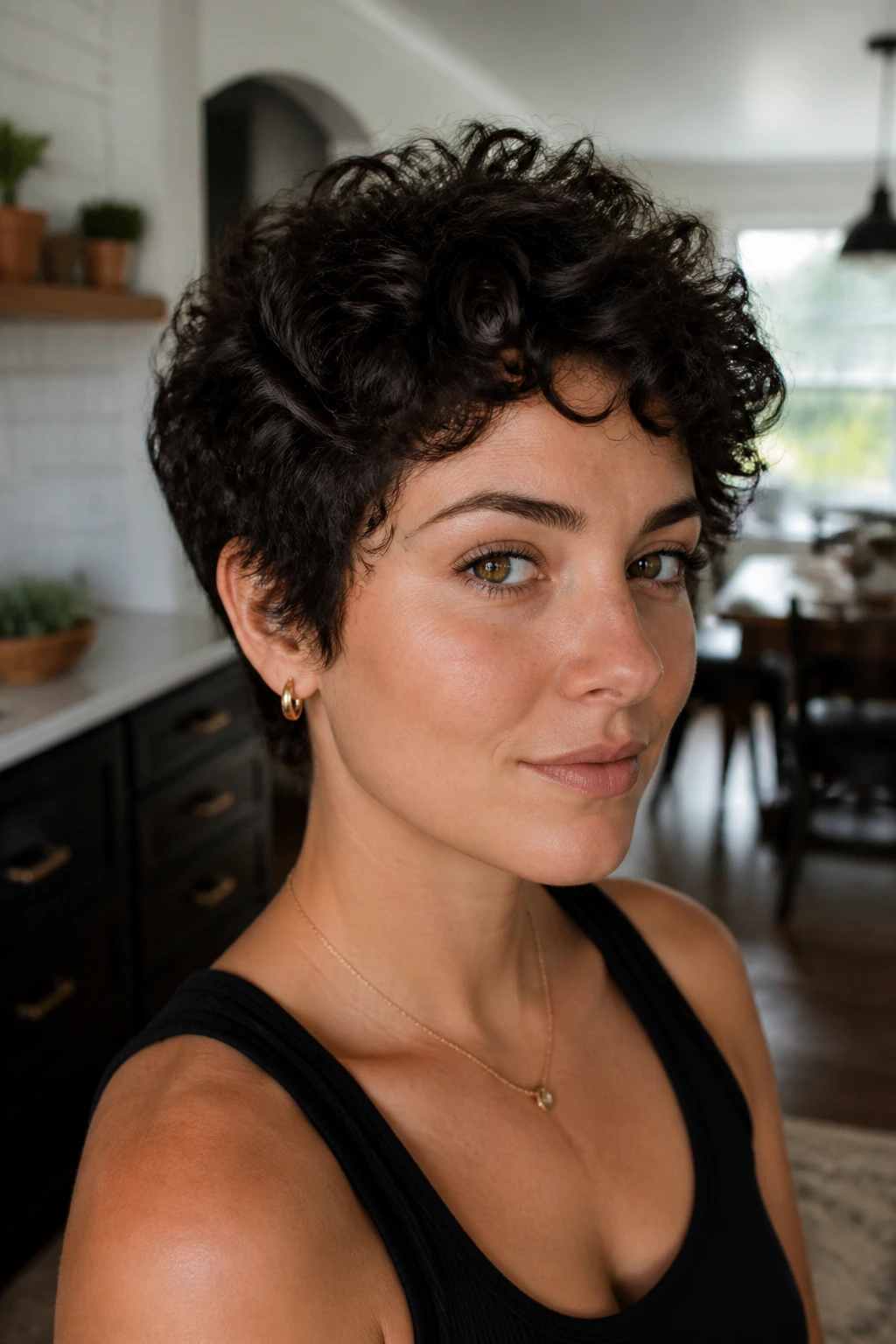
A choppy crop works when the pieces on top are left a little longer and cut in uneven layers. The irregularity helps curly hair move instead of forming one block. That movement is what keeps the face from looking wider.
I like this style because it doesn’t need a fancy finish. You can scrunch it, diffuse it, or let it air-dry with some separation. The crown length gives you vertical line, and the choppy edges keep the cut from reading too polished.
If your curls are thick, this is a smart way to remove visual weight without sacrificing shape. Ask for point-cut ends and a soft taper around the ears. It’s the kind of cut that looks better a little lived-in.
19. Curly Quiff Pixie
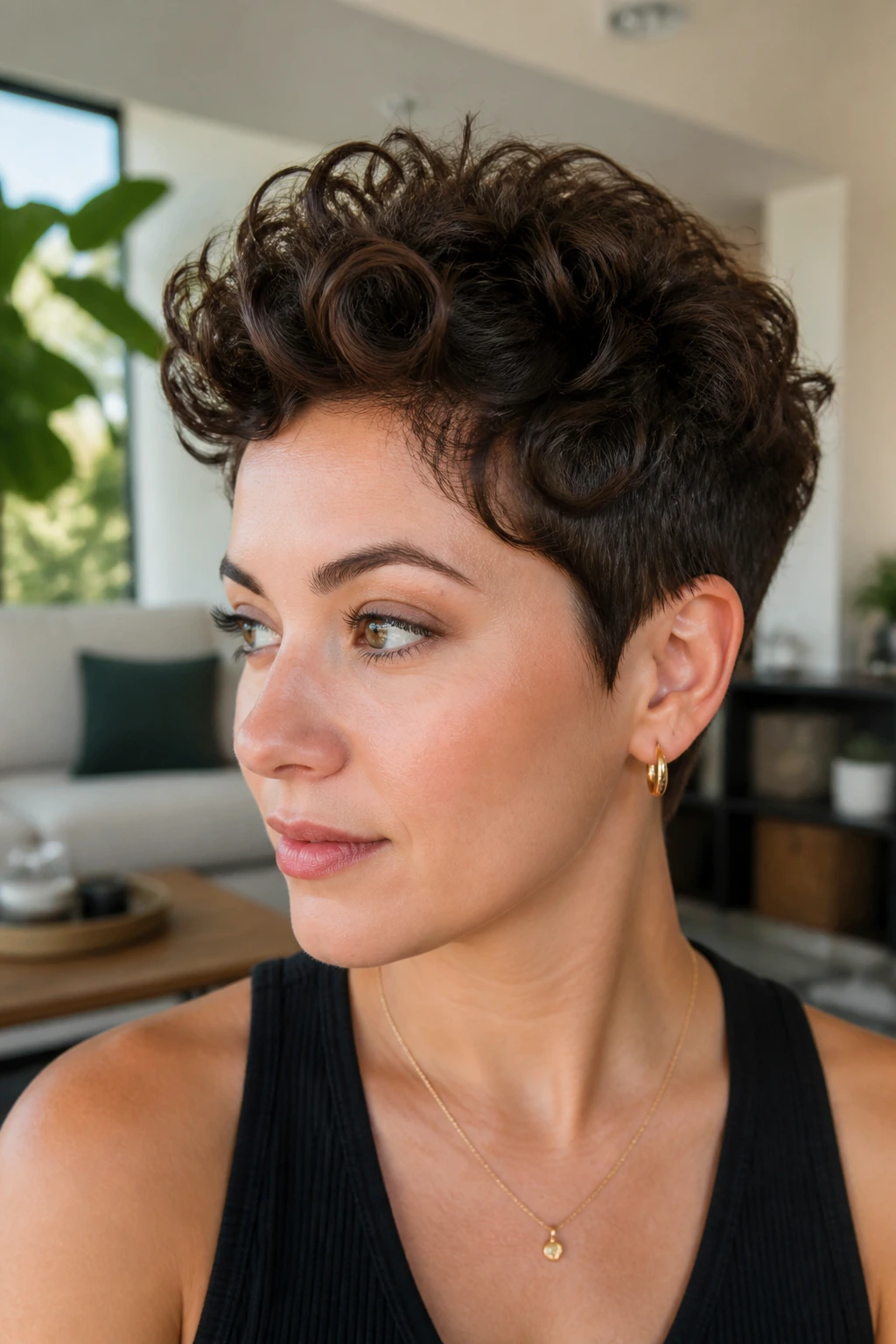
If you like a bit of lift in the front, the curly quiff pixie is hard to beat. The front section gets styled up and slightly back, which creates a strong vertical line right over the forehead.
That forward lift pulls the eye up and away from the cheeks. It’s a flattering trick, and a practical one, because the quiff can be styled fast with mousse and a diffuser. The sides stay short, so the volume is focused where it helps the most.
This cut has personality. It reads confident without needing a lot of length. If you’re tired of fringe sitting flat against your face, try this shape instead.
20. Low Fade Coil Top
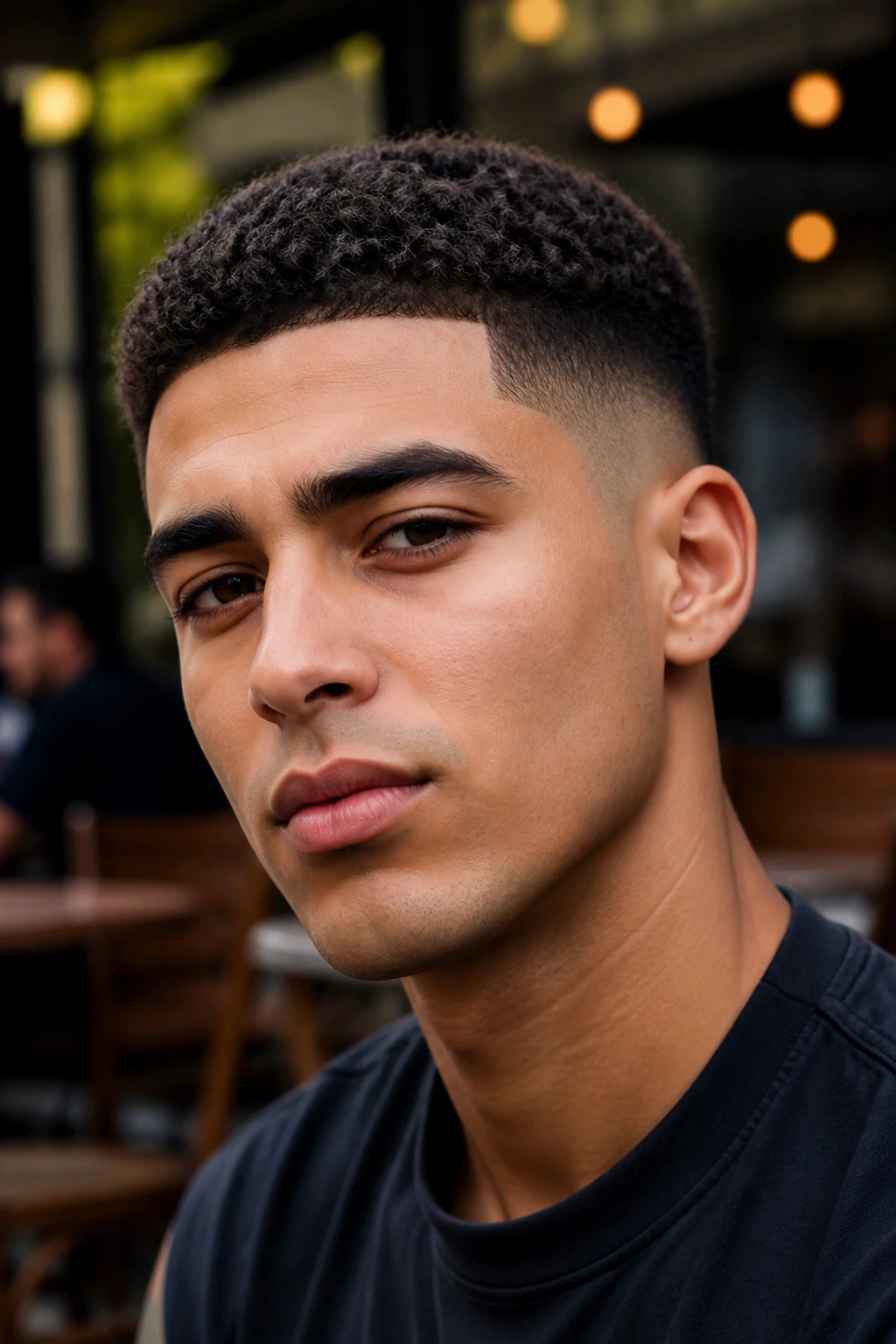
A low fade gives you a clean edge without going too hard on contrast. The curls stay on top, the sides get blended close near the temples and nape, and the whole cut feels tidy from every angle.
This is a smart choice if you want the face to look longer but still want a cut that’s easy to maintain. The low fade doesn’t shout the way a high fade can. It just quietly sharpens the outline.
Keep the top shaped into a small ridge or dome, not a wide cloud. That matters. The cut works because the top has presence while the sides stay calm.
21. Ear-Grazing Curly Crop
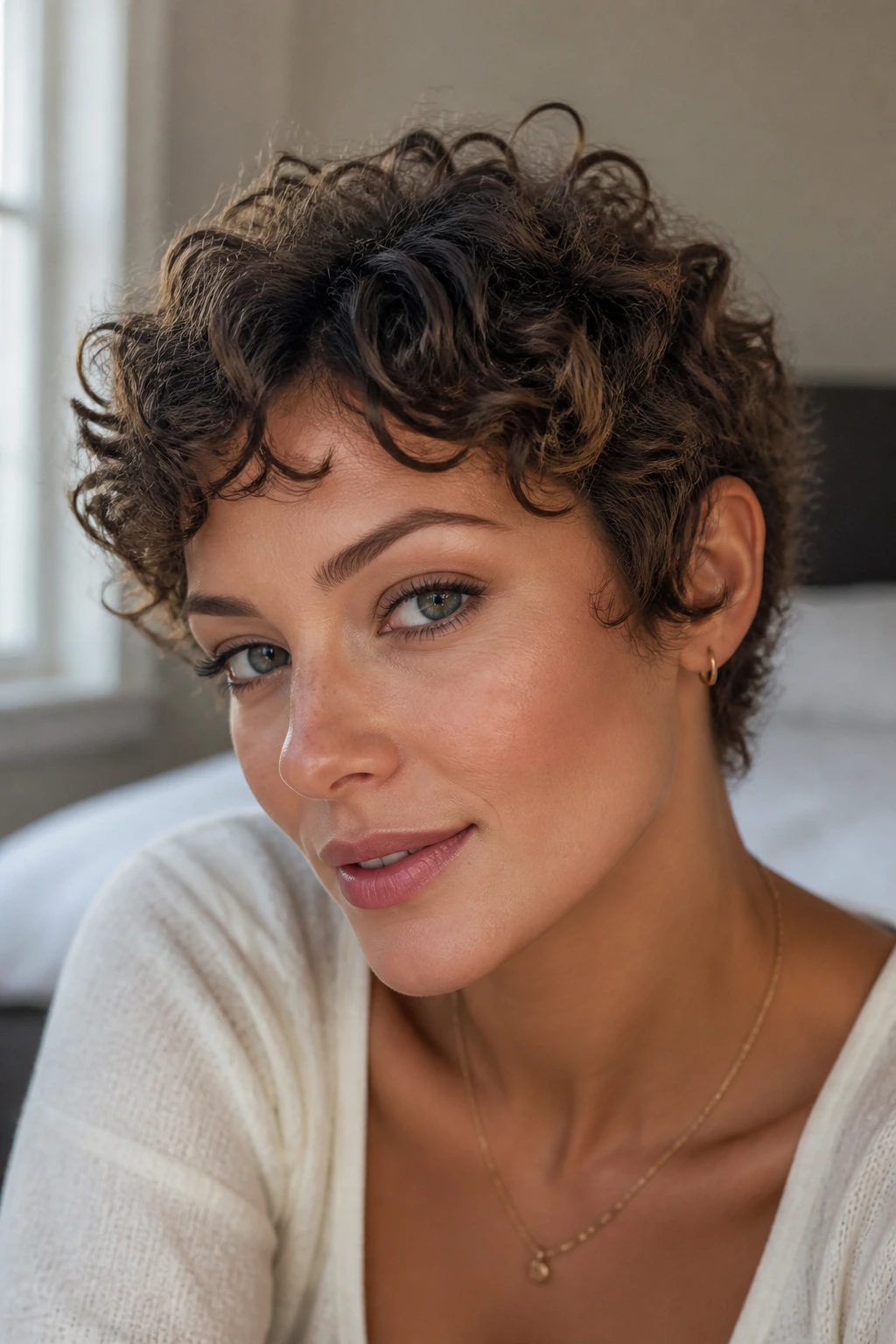
There’s something nice about a short crop that just brushes the ears. It creates softness around the face without letting the width take over. The curls can sit in small, loose shapes, and the ears stay partly visible, which usually helps a round face look less enclosed.
This style is especially good if you want something a little more romantic than a fade or undercut. It’s still short. It just isn’t severe. Keep the top light and the fringe airy so the front doesn’t become too dense.
A tiny tuck behind one ear can make this cut feel even better. That single move opens the face and gives the style a bit of asymmetry. Simple. Effective.
22. Sculpted Finger-Coil Pixie
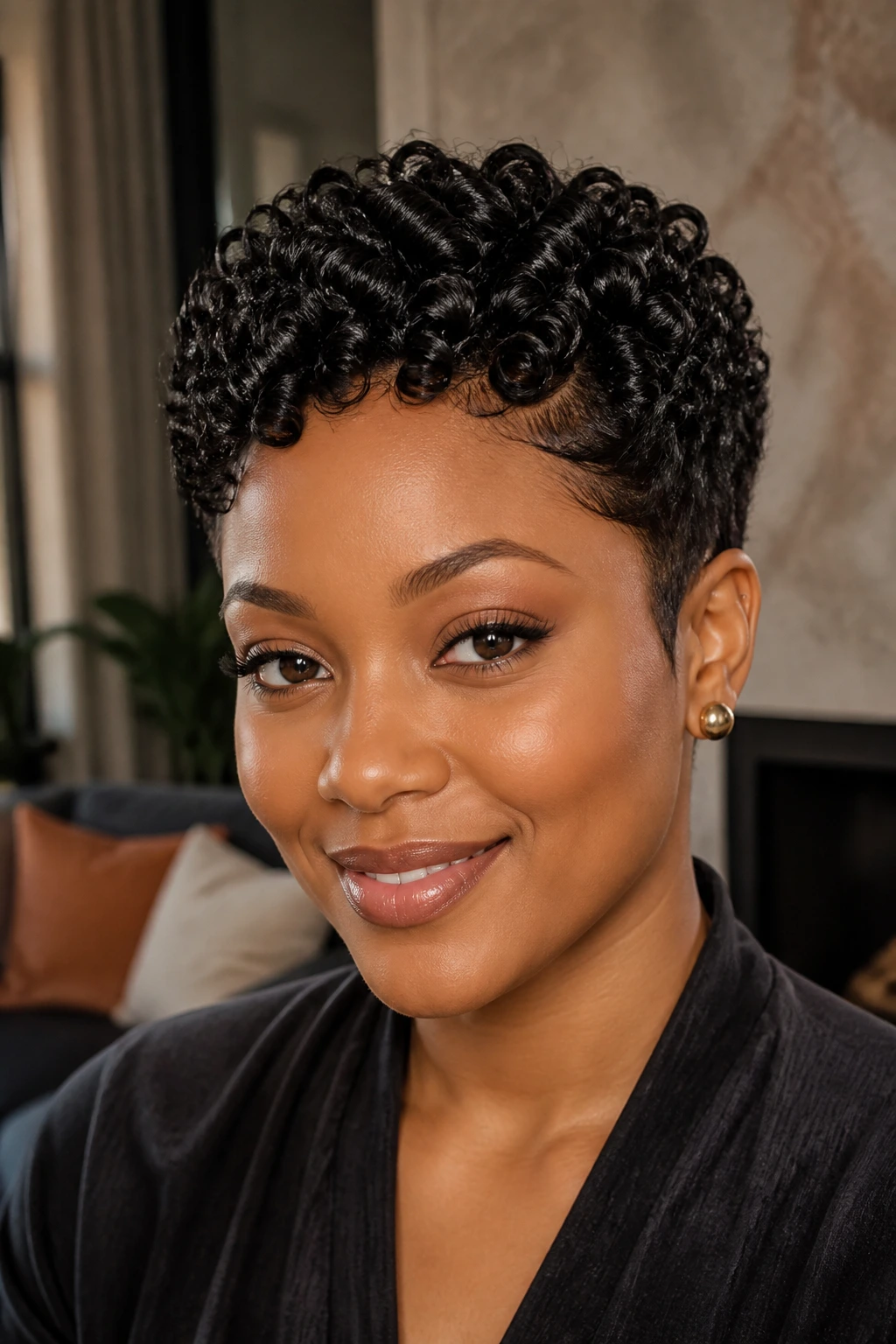
This is the polished option. Finger coils give short curls a deliberate shape, and when the pixie is cut to support them, the result looks neat without feeling rigid. It’s especially nice for coils that like to hold their own little springy form.
The trick is balance. The coils need enough room on top to stand up a bit, while the sides stay slim and tucked in. Too much width at the temples ruins the whole thing. Keep the outline narrow there.
I like this cut for days when you want the hair to look planned. It does take more styling time than a wash-and-go crop, but the payoff is crisp. Every coil has a place.
23. Tight Taper with Defined Top
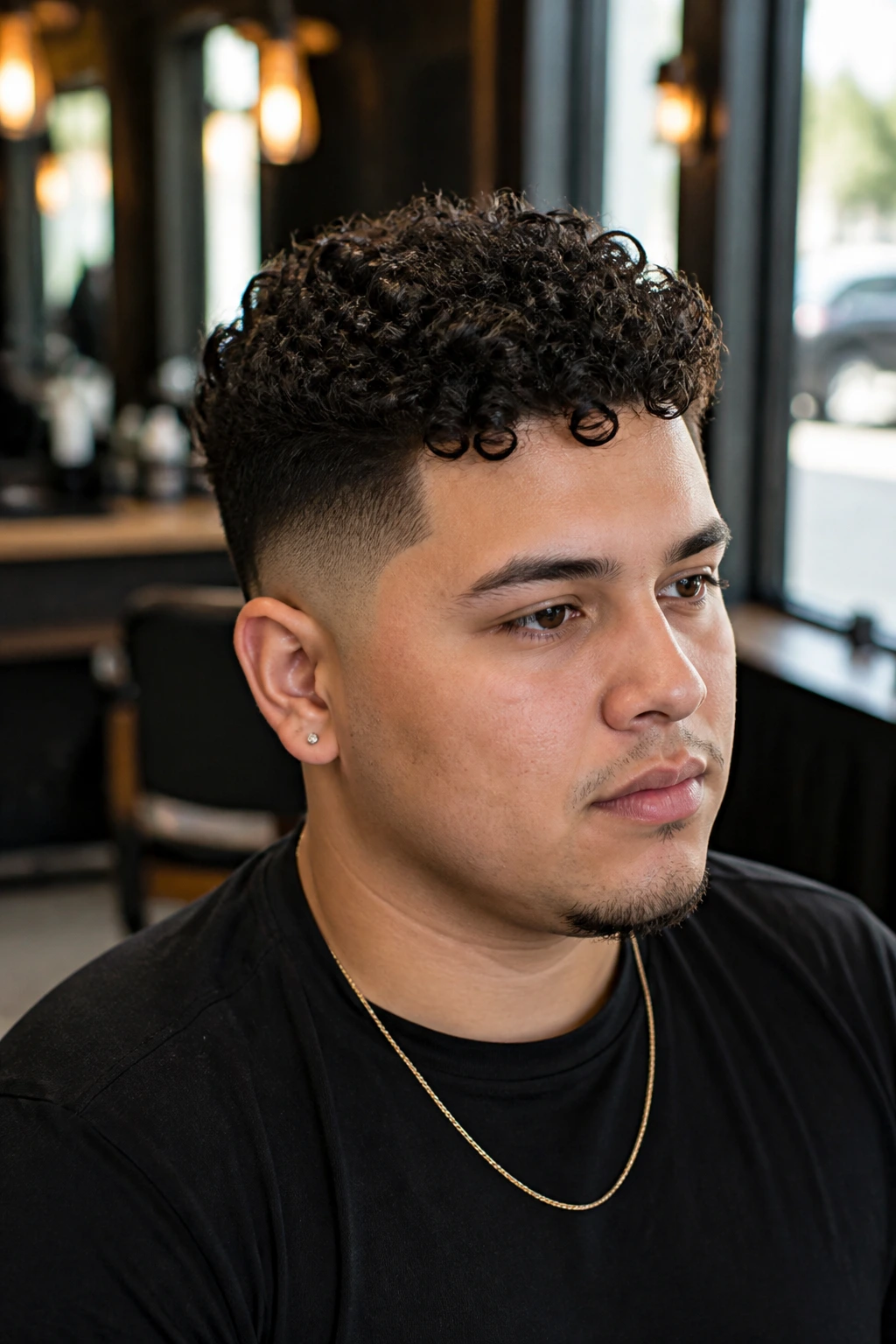
A tight taper can be one of the cleanest ways to wear short curls on a round face. The taper removes width from the sides and back, while the top stays defined enough to create a little height.
This cut is good when you want something athletic, tidy, and easy to reset. The shape looks strongest when the top has enough length to show the curl pattern, not just fuzz. Think of the top as the feature and the taper as the frame.
I’d ask for the taper to stay soft near the temples rather than carved too hard unless you want a sharper look. There’s a fine line between clean and too severe. This cut sits right on that line, which is part of why it works.
24. Diagonal Fringe Crop
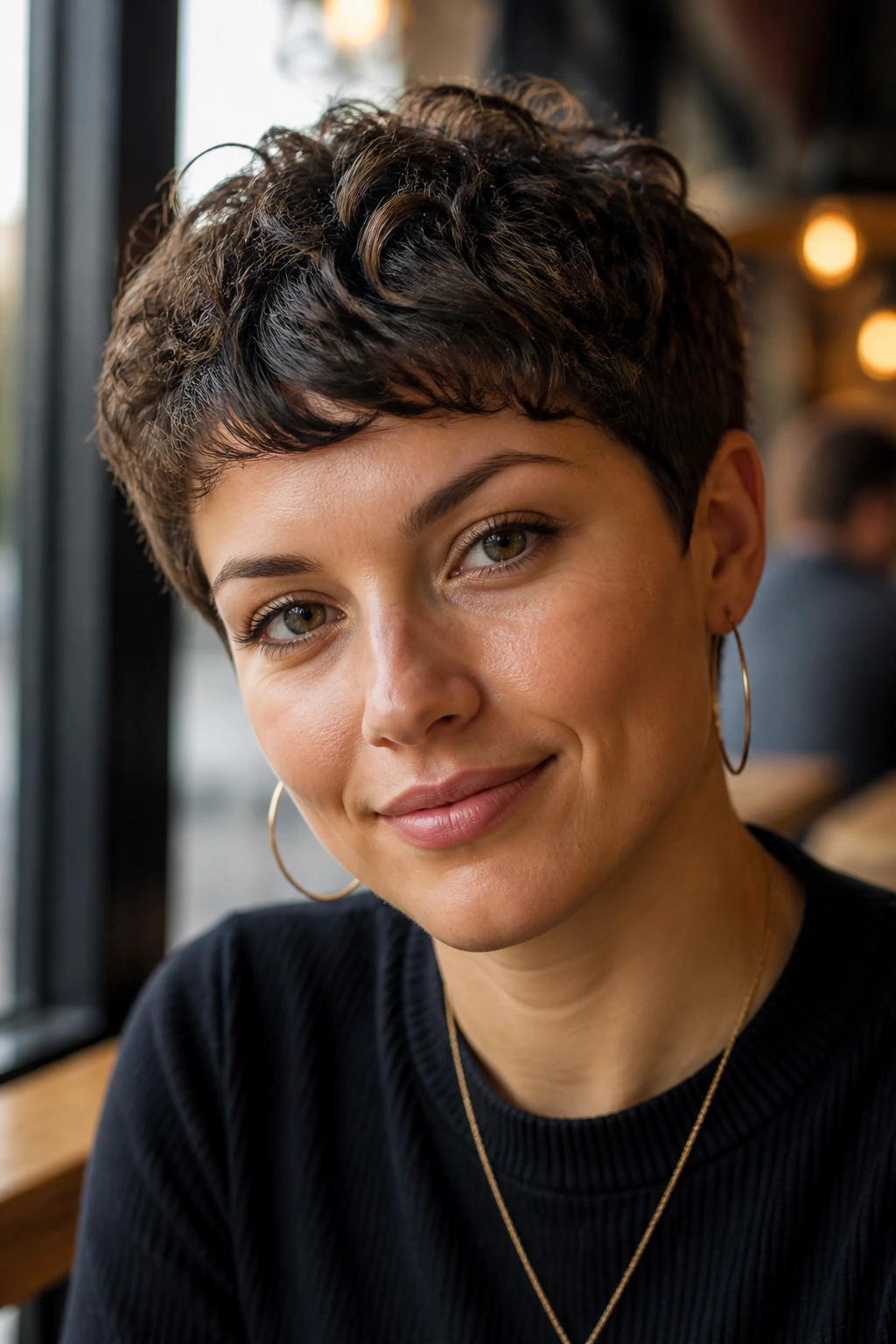
A diagonal fringe is one of the simplest tools for a round face. The line moves from one side of the forehead toward the other, which breaks the face’s natural symmetry and keeps the eye moving.
The rest of the crop can stay very short. That’s the nice part. You don’t need a lot of length if the front line already does the face-slimming work. Keep the fringe airy and let the curls separate a little so it doesn’t become a solid curtain.
If you’ve always wanted bangs but worried about heaviness, start here. It gives you the softness of fringe without the blunt line that can shorten the face. Clean, but not flat.
25. Buzzed Sides with Soft Top
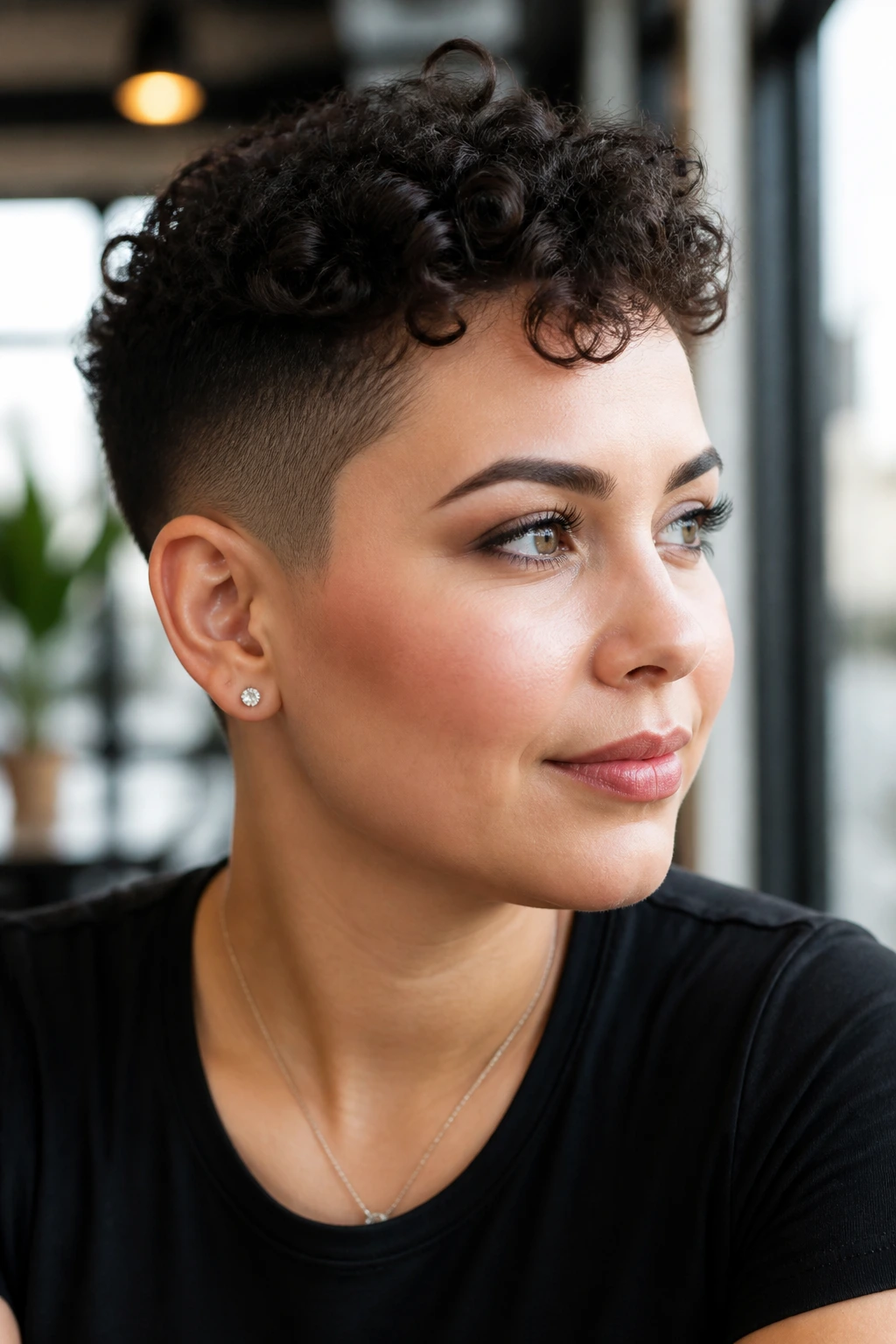
This is the sharpest contrast in the bunch. Buzzed sides strip away width almost completely, while the top stays soft, curly, and touchable. That difference creates a strong vertical emphasis.
It’s a bold look, sure, but it’s also practical. The buzzed sides mean less bulk around the face and less styling time where you don’t want it. The top can be worn loose, finger-combed, or lightly defined with product.
I’d only choose this if you’re okay with showing the scalp and keeping the top well-shaped. When it’s done lazily, it can look unfinished. When it’s done well, it looks clean, modern, and very deliberate.
26. Wash-and-Go Coil Cut
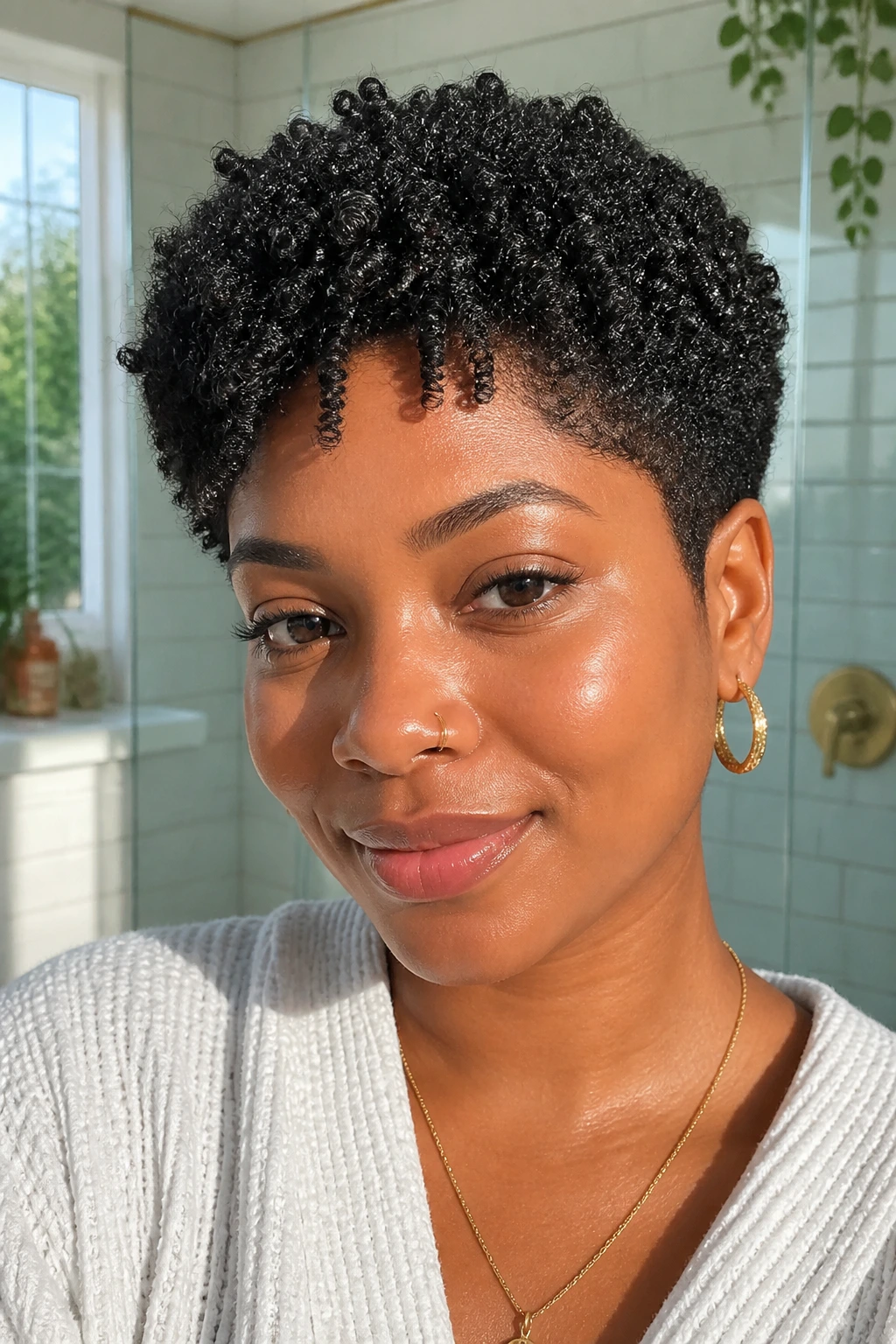
This is the cut for someone who wants the hair to fall into place with almost no daily negotiation. The shape is built around the way the coils actually dry, which means fewer surprises and less fluff at the sides.
The best wash-and-go coil cuts are dry-shaped or at least checked dry before the final snip. That matters because coils can shrink a lot. If the stylist cuts to wet length alone, the finished shape can rise too high and read too round.
I like this style because it respects the texture instead of trying to tame it into something else. It keeps the top compact, the edges clean, and the silhouette easy to refresh with a little water and gel.
27. Soft Faux-Hawk Pixie
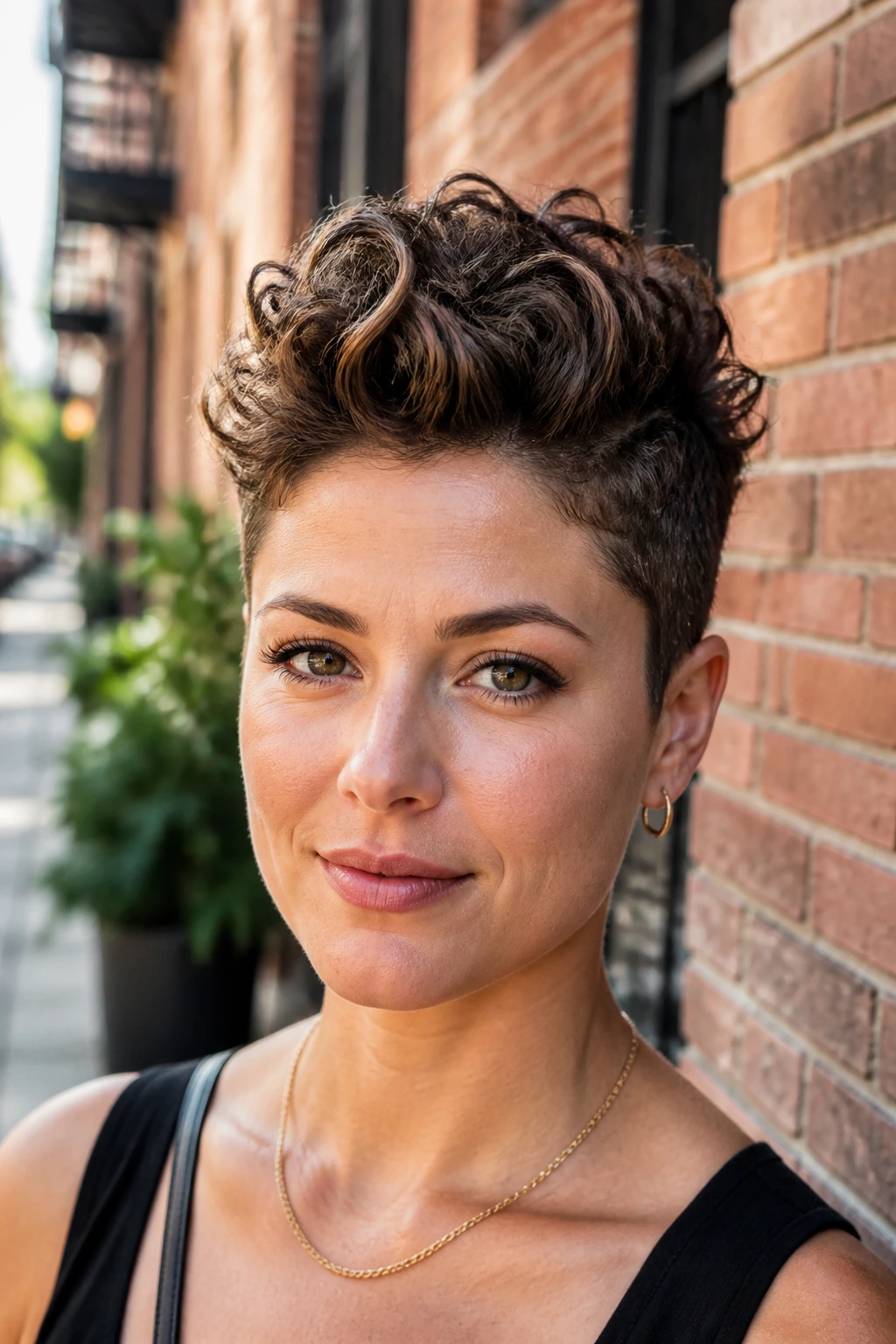
If the mohawk feels too aggressive, the soft faux-hawk pixie is the gentler answer. The center section stays taller, the sides stay narrow, and the top has enough curl to feel soft rather than spiky.
This cut gives you the lengthening effect of a mohawk without making the whole head look shaved down. That’s useful if you want height but don’t want hard edges. It also works well when the curl pattern naturally wants to rise at the center.
I’d finish this with a diffuser and a small amount of gel or foam. Keep the ridge a little messy. A perfect faux-hawk can look overworked; a slightly loose one looks better and is easier to wear.
Why the Shape of the Cut Matters More Than the Curl Pattern
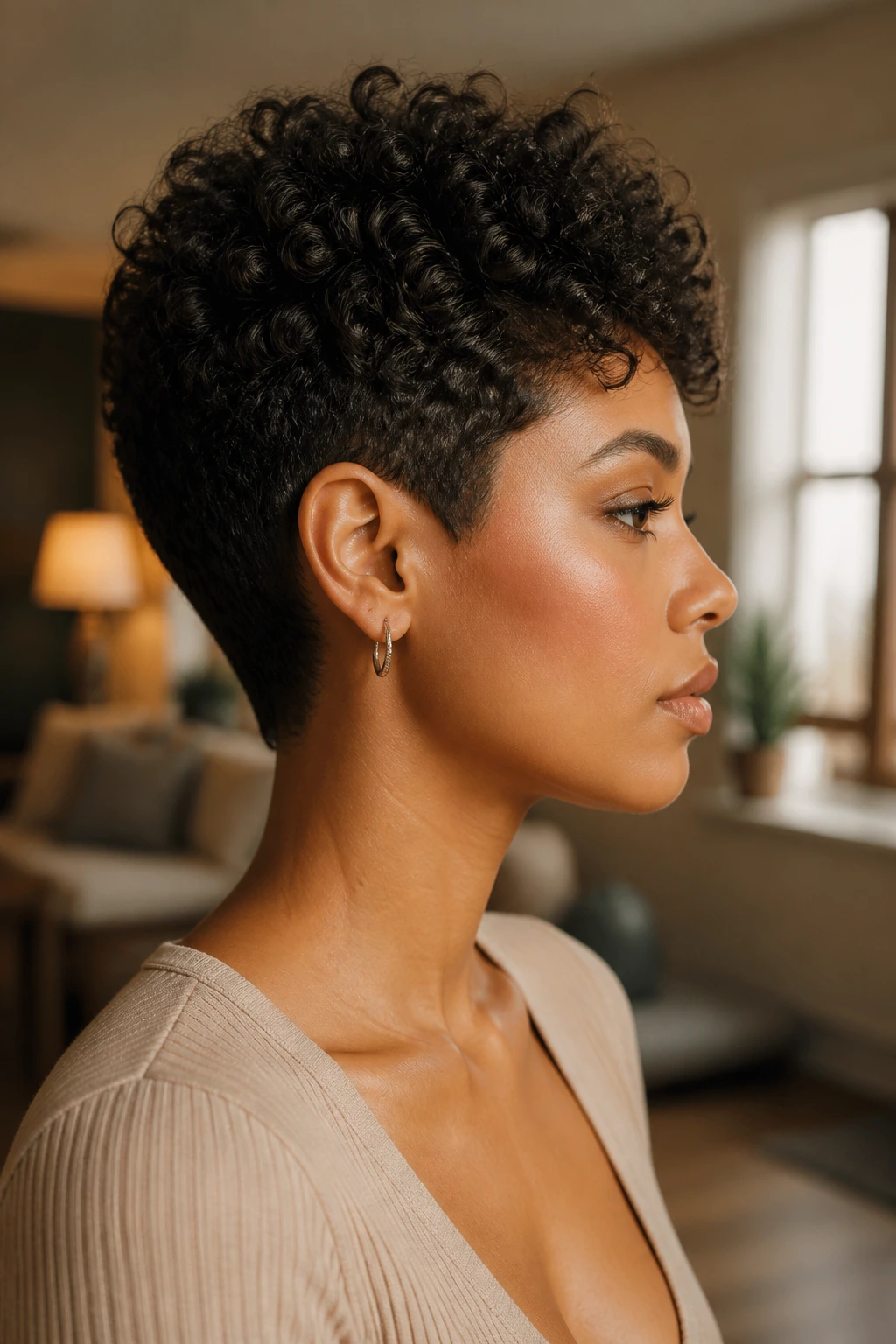
A round face does not care whether your curls are loose, tight, or somewhere in between. The face cares about where the volume lands. That’s the blunt truth.
I’ve seen soft ringlets look wide because the haircut was one flat circle, and I’ve seen tight coils look elegant in a super short crop because the sides were cleaned up and the top was left to stand. Same face shape. Very different result. The curl pattern matters, yes, but the silhouette matters more.
Think in terms of lines, not length
A short curly haircut can be two inches long and still look lengthening if the lines are smart. Diagonal fringe. Taller crown. Narrow temples. Soft nape. Those are the shape notes that do the real work.
Keep one zone from doing all the talking
If the top is tall, let the sides relax. If the fringe is the star, keep the crown from puffing too wide. If the sides are faded, leave the top with enough texture to balance the contrast. One strong area is good. Three competing ones are chaos.
The Tools That Make Short Curly Hair Behave
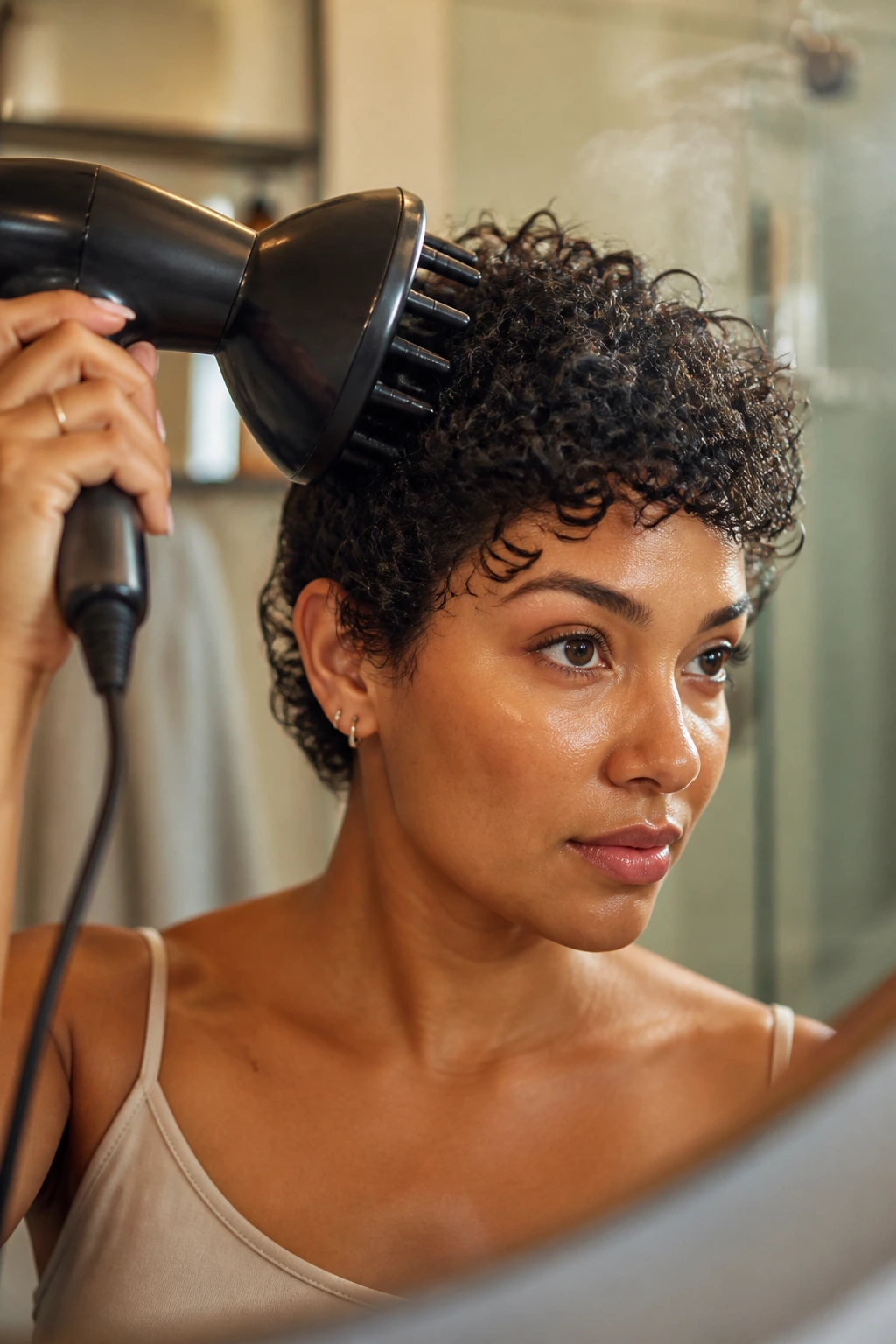
- Diffuser attachment: A diffuser on low heat and low speed keeps curl clumps together and helps the crown dry with lift instead of frizzing outward.
- Lightweight mousse: Best for fine curls or any cut that needs root lift without weight; a golf-ball amount can be enough on short hair.
- Strong-hold gel: Useful when you want the outline to stay crisp, especially on fades, quiffs, and finger coils.
- Curl cream: Better for dry, coarse textures that need softness and slip; use a small amount so the cut doesn’t collapse.
- Wide-tooth comb: Helps distribute product without breaking up curl groups too early.
- Rat-tail comb: Good for clean parts, side sweeps, and placing fringe where you want it.
- Duckbill clips or small claw clips: Handy for clipping the crown up while drying.
- Hand mirror: Essential if you’re checking the nape and temple taper at home.
- Satin pillowcase or bonnet: Keeps the top from getting smashed flat overnight.
- Small trimmer or maintenance clippers: Useful if you’re keeping a fade tight between appointments.
What to Ask for in the Chair and What to Buy for the Shelf
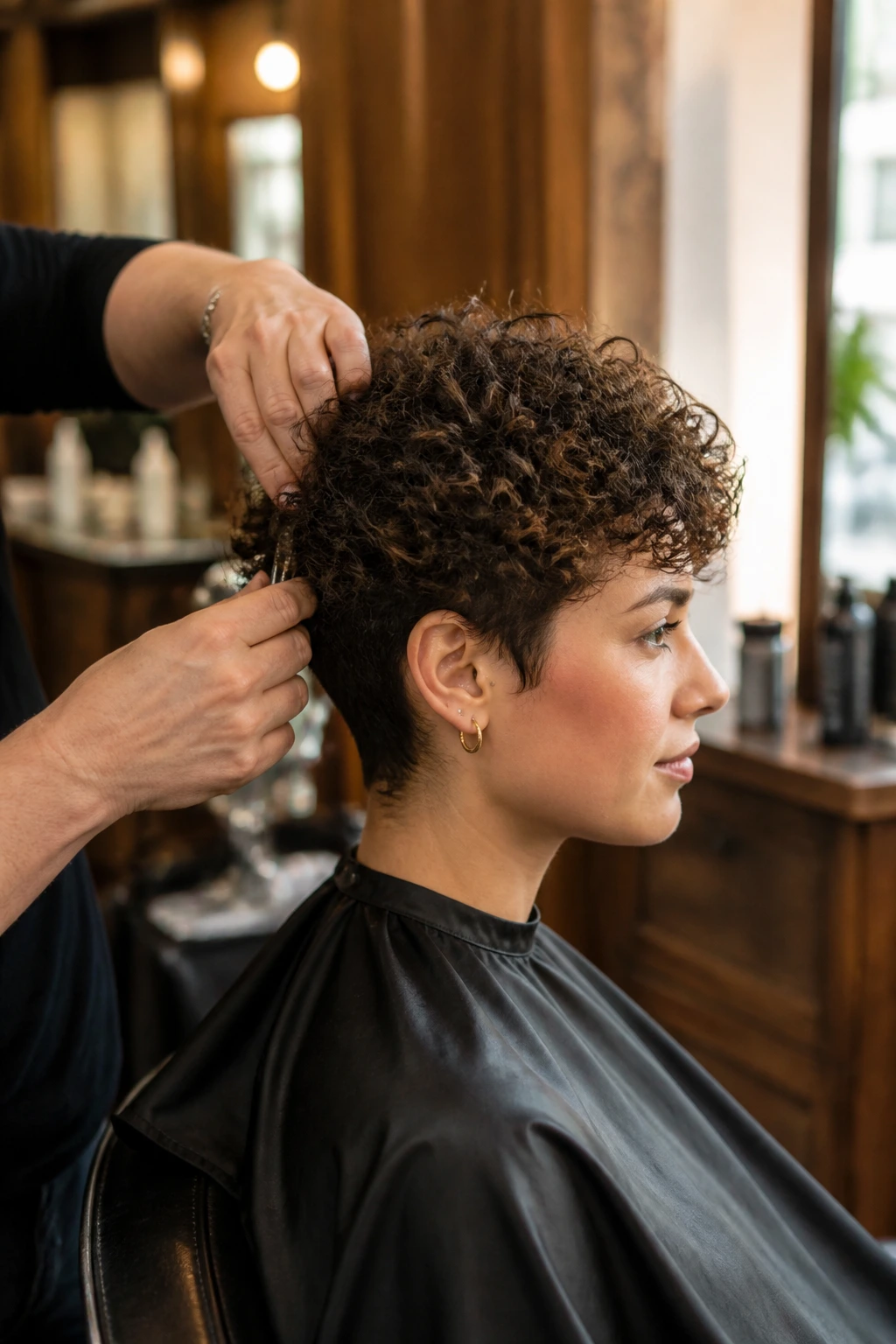
In the salon chair
Bring photos that show the side and back, not just the front. That’s where most curly haircut misunderstandings happen. A cut can look short from the front and bulky from the profile, and a round face pays for that mistake fast.
Ask for the shape to be checked dry, or at least partially dry, before the final outline is set. Curly hair lies to you when it’s wet. It lies politely, which is worse. If the stylist cuts based only on wet length, the finished crop can shrink into something too round or too short.
Say where you want the weight to live: crown, top, or back. That sentence alone saves a lot of bad haircuts.
On the product shelf
Fine curls usually do better with mousse or foam plus a small gel finish. Thick curls and coils often need a cream under the gel so they stay soft. If your hair puffs in humidity, choose a stronger hold and keep the leave-in light.
If you want definition, read the label for hold, not just moisture. Moisture without structure turns short curls into a fluff cloud by lunch. On the flip side, if your hair feels crunchy and dry, you’re probably using too much hard-hold product or not breaking the cast gently enough once it sets.
How to Wear These Cuts From Wash Day to Night Out
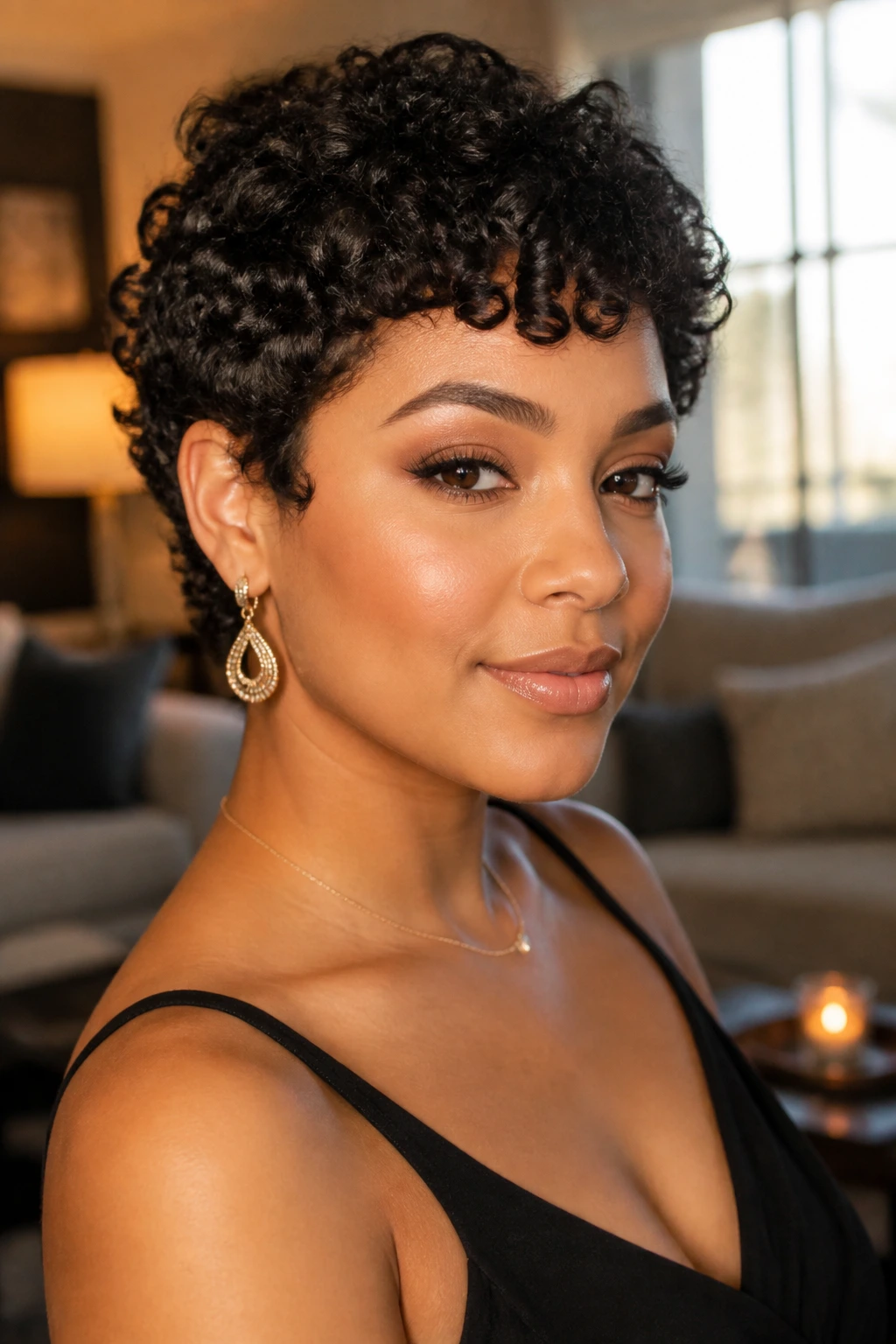
Wash Day: Start with a clean curl cream or mousse combo, then diffuse the roots first so the crown gets lift before the sides dry heavy. Short curly cuts look best when the top sets early.
Second Day: Mist the hair lightly, add a drop of gel to any frizzy sections, and reshape the fringe with your fingers. Don’t soak the whole head. You’ll erase the shape you just built.
With Glasses: Keep the sideburns or temple area slightly narrower so the frames don’t compete with the haircut. Side-swept or asymmetrical cuts tend to sit better than blunt fronts.
For Dressier Looks: Define just the top and leave the edges softer. A little shine at the crown and a clean part can make a short crop look more deliberate without making it stiff.
For Windy or Active Days: Use a stronger gel cast and let it set completely before you leave. A soft style is lovely. A soft style in a strong wind is a mess.
Small Shape Tweaks That Change the Whole Cut

Root Lift: Clip the crown while it dries or diffuse the roots upside down for a few minutes. A short curly cut can lose its whole face-slimming effect if the top lies flat.
Side Part Placement: Move the part slightly off the high point of the eyebrow instead of dead center. That tiny shift creates a diagonal line that feels kinder to a round face.
Fringe Control: If you want bangs, keep them broken and narrow. A heavy fringe stretches straight across the face and steals the vertical space you want.
Color Placement: A few lighter pieces on top and slightly deeper tone at the sides can make the silhouette read taller. Not stripes. Just subtle placement.
Nape Cleanup: A clean nape makes the whole haircut look intentional. Even if the top is soft and messy, the back should still have some discipline.
Mistakes That Make Short Curls Read Wider
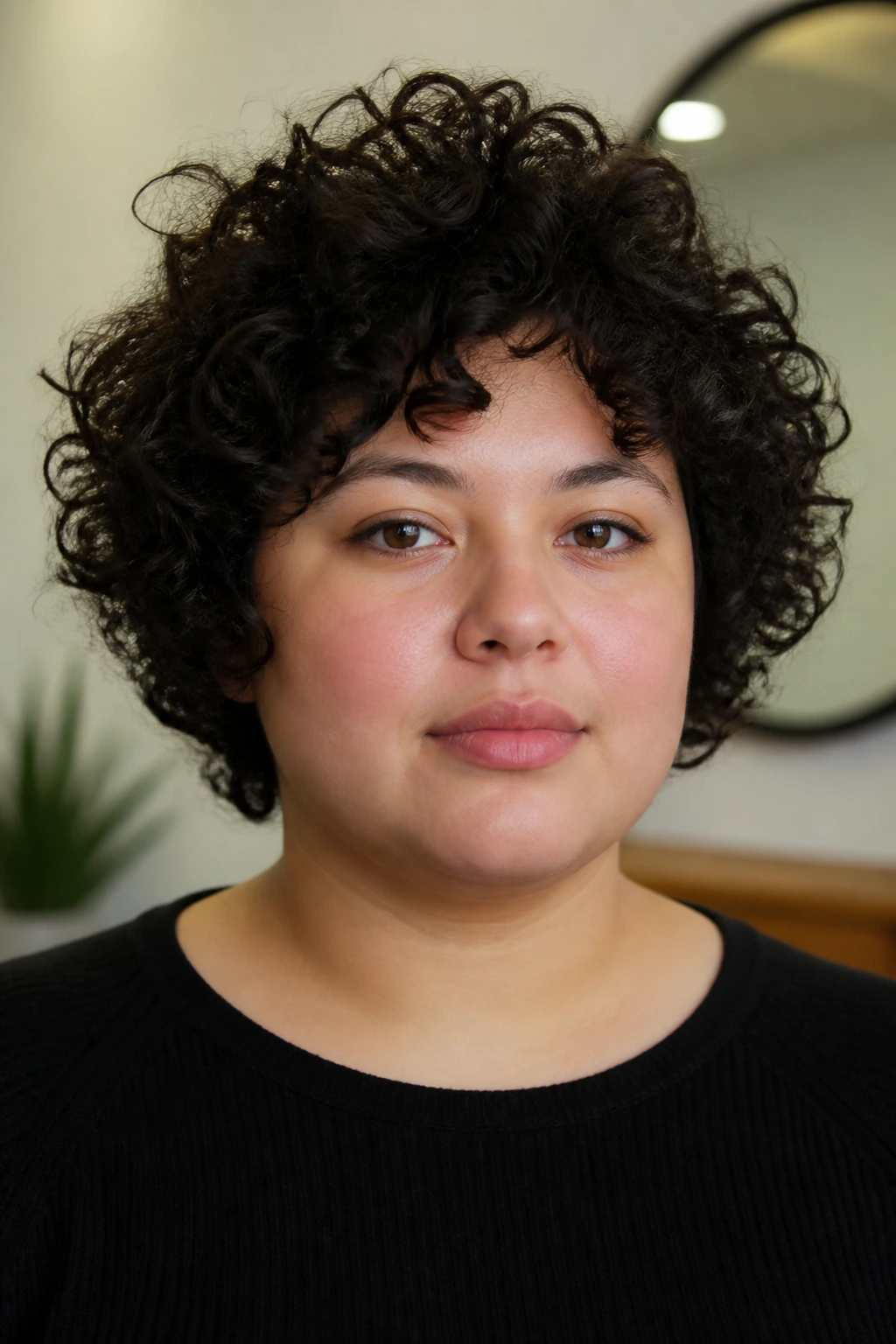
- Letting the bulk sit at cheek level. The symptom is a puffed-out middle that makes the face look fuller than it is. The fix is a taper at the temples or a style that builds volume higher up.
- Using a blunt, heavy fringe. If the front looks like a shelf, the face gets visually shorter. Break the fringe into pieces or sweep it diagonally.
- Overloading the hair with cream. Short curls need less product than long ones. Too much cream weighs the top down and swells the sides.
- Leaving the nape boxy. A square back makes the whole head look heavy from behind and often widens the profile. Ask for a cleaner taper.
- Skipping the dry check. Curly hair changes shape after it dries. If the final outline isn’t checked dry, the haircut can surprise you in a bad way.
Variations and Adaptations Worth Trying
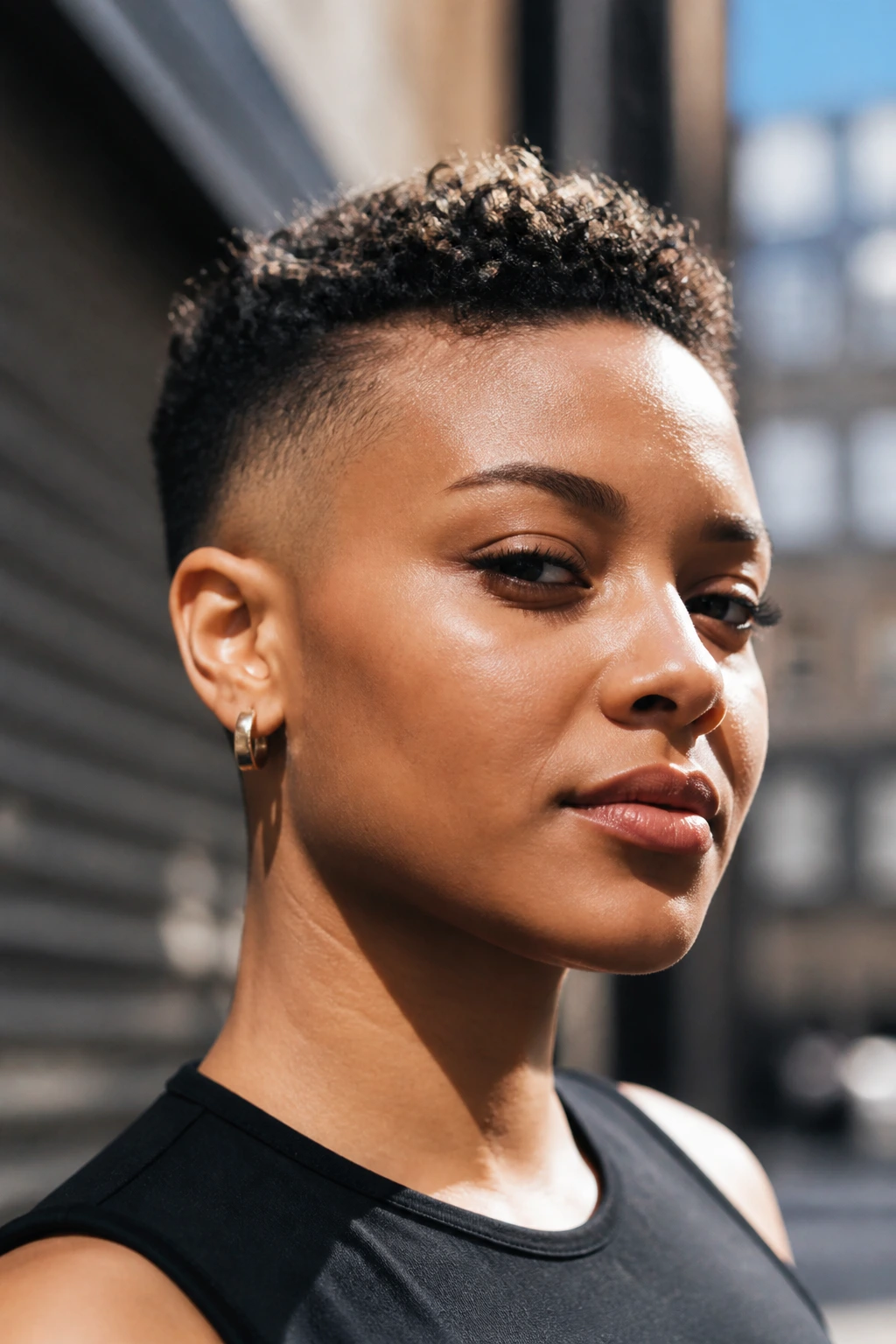
Fine Curl Featherweight: If your curls are delicate and don’t hold much shape, choose a bixie, wispy fringe crop, or short pixie with a light mousse. Too many internal layers can make fine hair look sparse at the edges.
Thick Coil Control: Thick, dense coils usually need an undercut, low fade, or tight taper to remove hidden bulk. If the sides stay too full, the shape gets wide fast.
Glasses-Friendly Frame: Side-swept bixies, long-sideburn crops, and deep-side-part styles sit well with frames because they keep the temples clean. The haircut and the glasses stop competing for the same space.
Low-Maintenance Wash-and-Go: A wash-and-go coil cut or a tapered coily crop works if you want the hair to hold its shape with little daily fuss. Ask for a shape that still looks right after a full shrinkage cycle.
Bold Fade Remix: If you want more edge, lean into the mohawk fade, buzzed sides with a soft top, or high-top coil crop. These styles give the strongest vertical line and the cleanest cheek opening.
Grow-Out-Friendly Bixie: If you hate awkward grow-out stages, keep the crown longer and the fringe broken. The shape can drift toward a soft crop or short bob without turning into a triangle.
Keeping the Shape Between Salon Visits
The first week is about the outline
Right after a fresh cut, let the haircut settle before you judge it too hard. Curly hair often loosens or tightens a touch after the first two washes. What matters is whether the top still rises above the sides and whether the cheek area stays clear.
Weeks two to four are about control
Once the nape starts growing, the silhouette can widen faster than you expect. That’s the point where a quick trim around the temple, neckline, or sideburns can save the whole cut. If you wear a fade, don’t wait too long. The clean edge is part of the shape, not an optional extra.
Night care matters more on short hair than people think
A satin pillowcase helps, but so does how you dry the hair before bed. Sleeping on damp curls usually gives you a flattened crown and a fuzzy front. If the cut depends on height, let it dry before you hit the pillow.
Trim on the shape, not the calendar alone
Pixies and fades usually need more frequent cleanup than a shaggy crop or bixie. Short coily cuts can often go a little longer if the outline still reads narrow. The moment the sides start expanding into the cheek zone, it’s time.
Questions People Ask Before Going Very Short
Will a super short curly haircut make my round face look wider?
Only if the bulk sits where your cheeks already are. A good short curly cut keeps the sides tapered and the crown lifted, which does the opposite. Shape beats length every time.
What’s the safest short curly haircut for a round face?
A side-swept bixie, curly pixie with crown lift, or deep-side-part crop is usually the easiest place to start. Those cuts add height or diagonal movement without going too extreme.
Can tight coils wear super short styles without looking boxy?
Yes, but the taper has to be done well. Tight coils look best when the sides are slim and the top is shaped dry so the final silhouette is visible before the shrinkage hits.
Are bangs a bad idea on a round face?
Not if they’re broken, side-swept, or narrow. Blunt bangs are the problem because they draw one hard line across the face. Soft fringe can actually help.
How often do I need a trim?
Fades and buzzed sides often need cleanup every 3 to 4 weeks. Pixies and bixies can usually stretch a bit longer, closer to 5 to 7 weeks, depending on how fast your hair grows and how much shape you want to keep.
Do I need a diffuser?
No, but it helps. A diffuser keeps the crown from flattening and lets the curls set without blasting them apart. If you air-dry, clipping the roots can help, but it takes longer.
Which styles work best with glasses?
Side-swept bixies, long-sideburn crops, and ear-grazing cuts usually play nicest with frames. They leave room around the temples so the glasses don’t compete with the hair.
What if my curls shrink a lot more than I expect?
Ask for the cut to be checked dry or nearly dry before the final snip. If the stylist only works from wet length, the finished cut can end up much shorter and rounder than planned.
The Shape That Does the Heavy Lifting
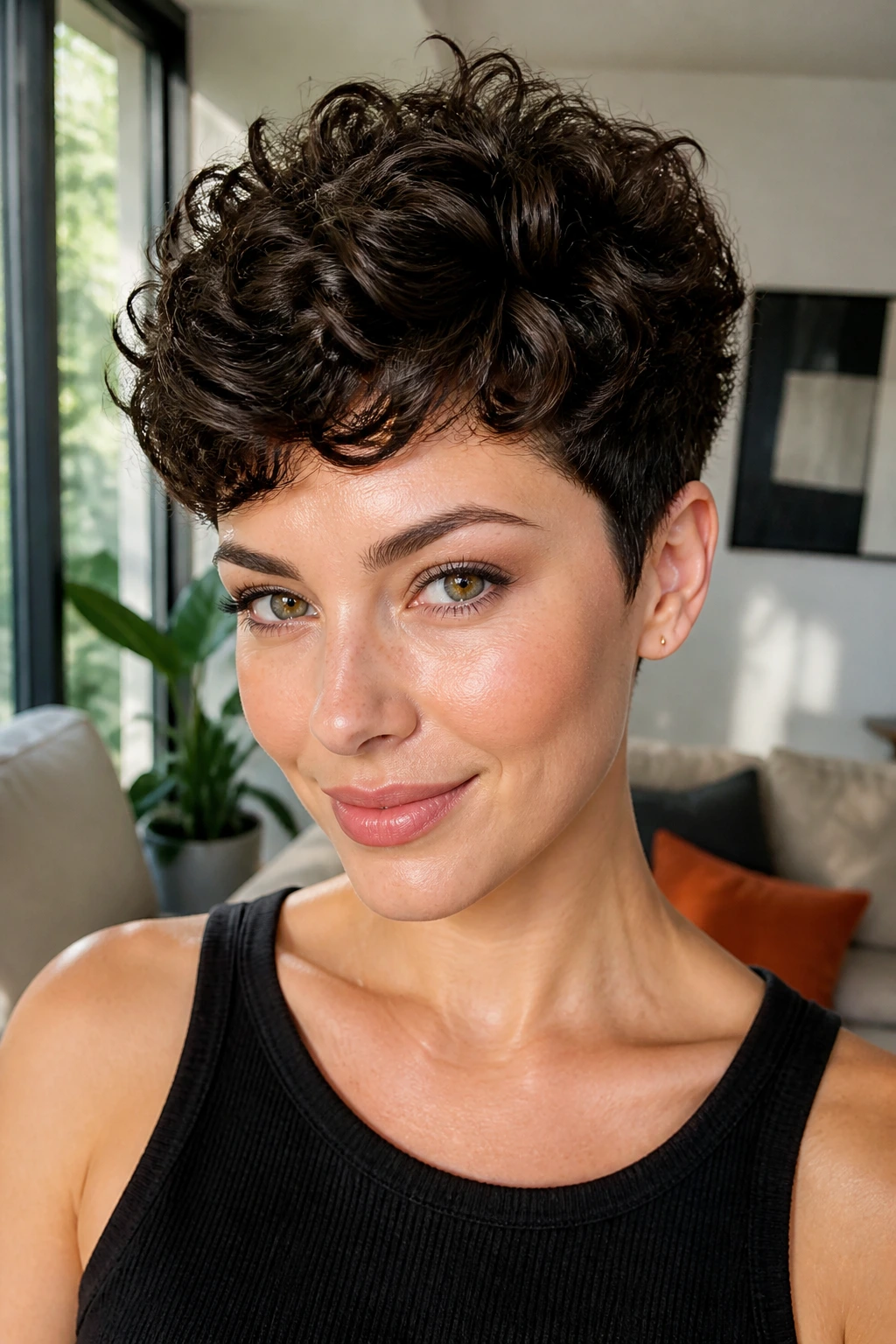
The best short curly cut for a round face is rarely the shortest one. It’s the one that gives the hair a job: lift the crown, narrow the sides, break the fringe, or keep the nape clean enough that the whole shape reads intentional. That can look soft, sharp, edgy, or neatly sculpted. It just can’t be lazy.
If you’re picking one place to start, go with the shape that matches how much styling you’ll actually do. A curly pixie with crown lift is forgiving. A mohawk fade or buzzed-sides crop asks for more confidence and a sharper maintenance rhythm. Either way, the face looks better when the curls are placed with a little thought instead of piled on by habit.
A good short curly cut should feel like it belongs to your face the second it dries. When it does, you stop fighting the shape and start wearing it.
