



Thin curls can look full for exactly one good hour. Then the crown settles, the ends separate, and the whole shape starts telling on the wrong haircut. Too many layers and the hair turns see-through. Too much length and it drags itself flat. Too much thinning and you’re left with airy ends that flutter around your face like they’re apologizing for being there.
That’s why curly haircuts for volume on thin hair are such a specific beast. They are not about piling on more layers and hoping for the best. They’re about placing weight in the right spots, protecting the perimeter, and letting curls stack in a way that makes the eye read thickness where the hair actually needs it most.
A lot of people use “fine” and “thin” as if they mean the same thing, but they don’t. Fine hair refers to the width of each strand. Thin hair usually refers to density, meaning fewer strands per square inch. You can have fine strands with decent density, or dense curls that still feel wispy because the shape has been chopped into oblivion. That distinction matters a lot more than most salon conversations admit.
Why These Curly Cuts Earn Their Keep
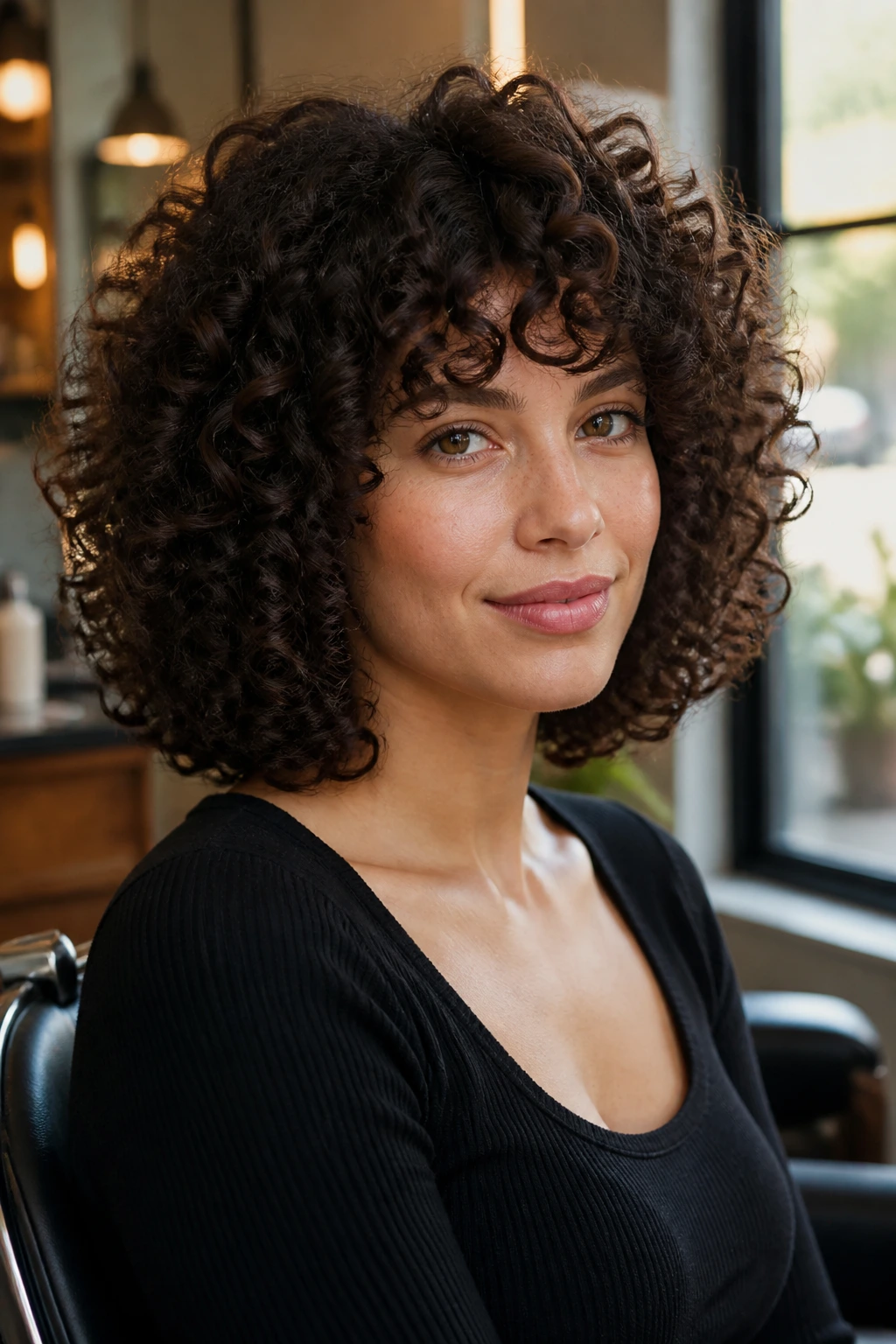
-
Perimeter power: A blunt or softly blunt edge makes thin curls look denser because the eye sees a solid line instead of see-through ends.
-
Weight control: The best cuts remove bulk inside the shape, not from the outer shell, so the curl can bounce without turning stringy.
-
Lift in the right place: Crown volume helps only when it sits where the head naturally rounds; a frizz halo on top is not the same thing.
-
Shrinkage respect: Curly hair can spring up 1 to 3 inches, sometimes more, so the cut has to be planned around how it looks dry, not how it hangs wet.
-
Growth-friendly shape: The strongest cuts keep looking intentional after 6 to 10 weeks, which matters when you do not want a trim every other minute.
-
Less styling drama: A smart shape does half the work before mousse, gel, or a diffuser ever enters the picture.
1. Chin-Length Curly Bob With a Soft Round Line
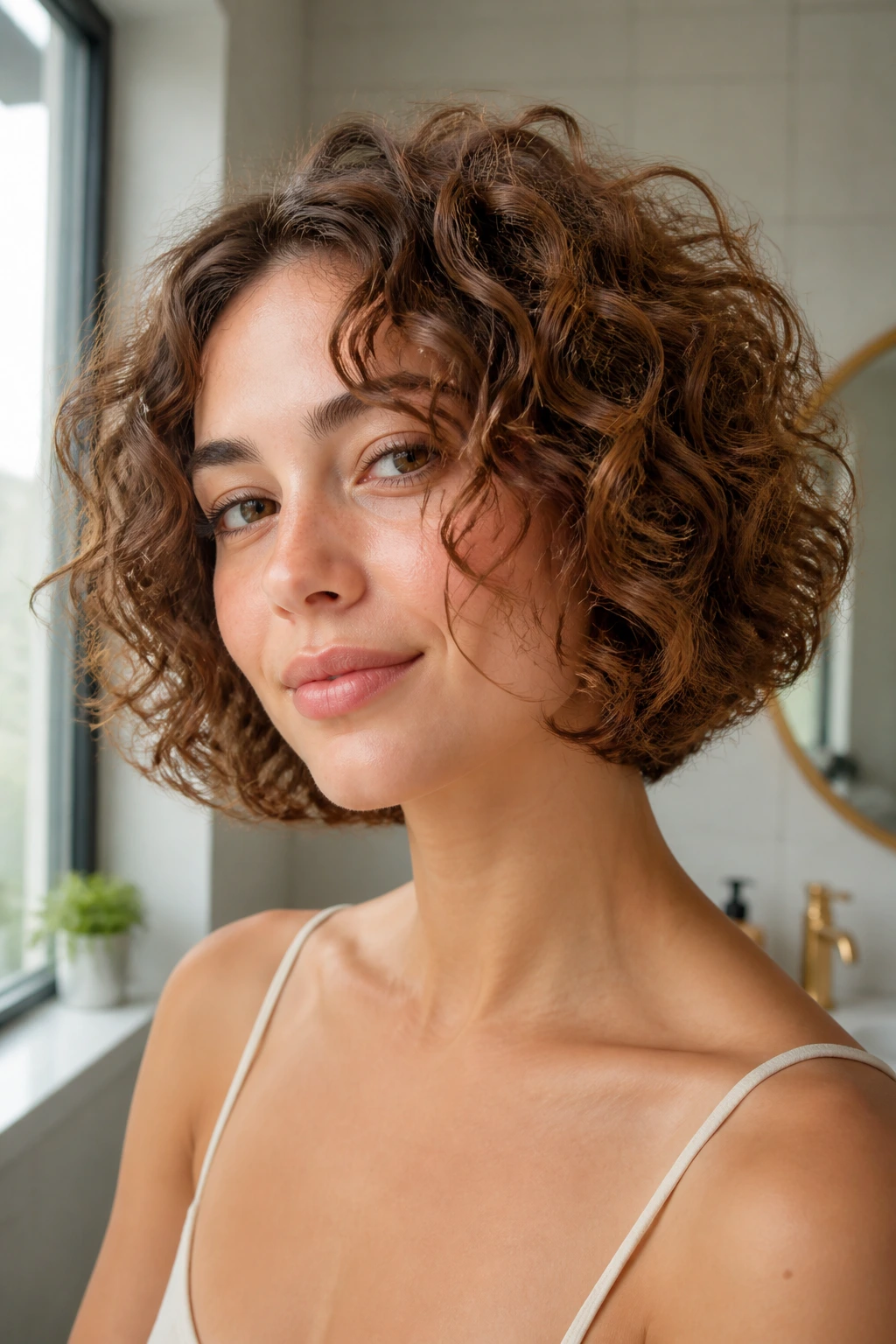
This is the first cut I’d hand to someone who wants more body without getting fancy about it. Chin length keeps the curls close enough to the face that they read as dense, and the soft round line stops the shape from turning boxy. On thin hair, that roundness matters. It gives the illusion that there’s more hair sitting across the jaw, which is where people tend to notice thinning first.
Ask for a bob that lands right at the chin with only a whisper of internal layering. If your stylist reaches for thinning shears at the ends, I’d get nervous. You want the outer edge to stay clean. The cut looks best when curls bounce away from the jaw instead of hanging below it like limp ribbons.
This one suits loose curls and medium curls especially well. It’s also a good option if your hair gets flatter at the back and puffier around the face, because the shorter outline evens that out. Give it a diffuser and a small amount of mousse, and it wakes up fast.
2. Collarbone Lob With Long Internal Layers

A collarbone lob is the safest “I want volume, but I’m not ready to go short” haircut in the whole bunch. The length is long enough to tuck behind an ear or clip up, but short enough that the curl pattern still has some lift left in it. The trick is the internal layering. Not the outer shell. The inside.
That’s where the weight comes out. Long internal layers reduce the drag that pulls thin curls toward the shoulders, but they don’t leave you with those translucent ends that some layered cuts create. When the lowest layer lives below the chin and the perimeter stays mostly solid, the hair keeps its shape even when it stretches out during the day.
I like this cut on people whose curls go flat under jackets, scarves, and high collars. It still works with a side part, and it grows out without a panic moment. If you only remember one thing, remember this: the shortest layer should not start near the cheekbone unless you want a much shorter look.
3. Curly Pixie With a Lifted Crown
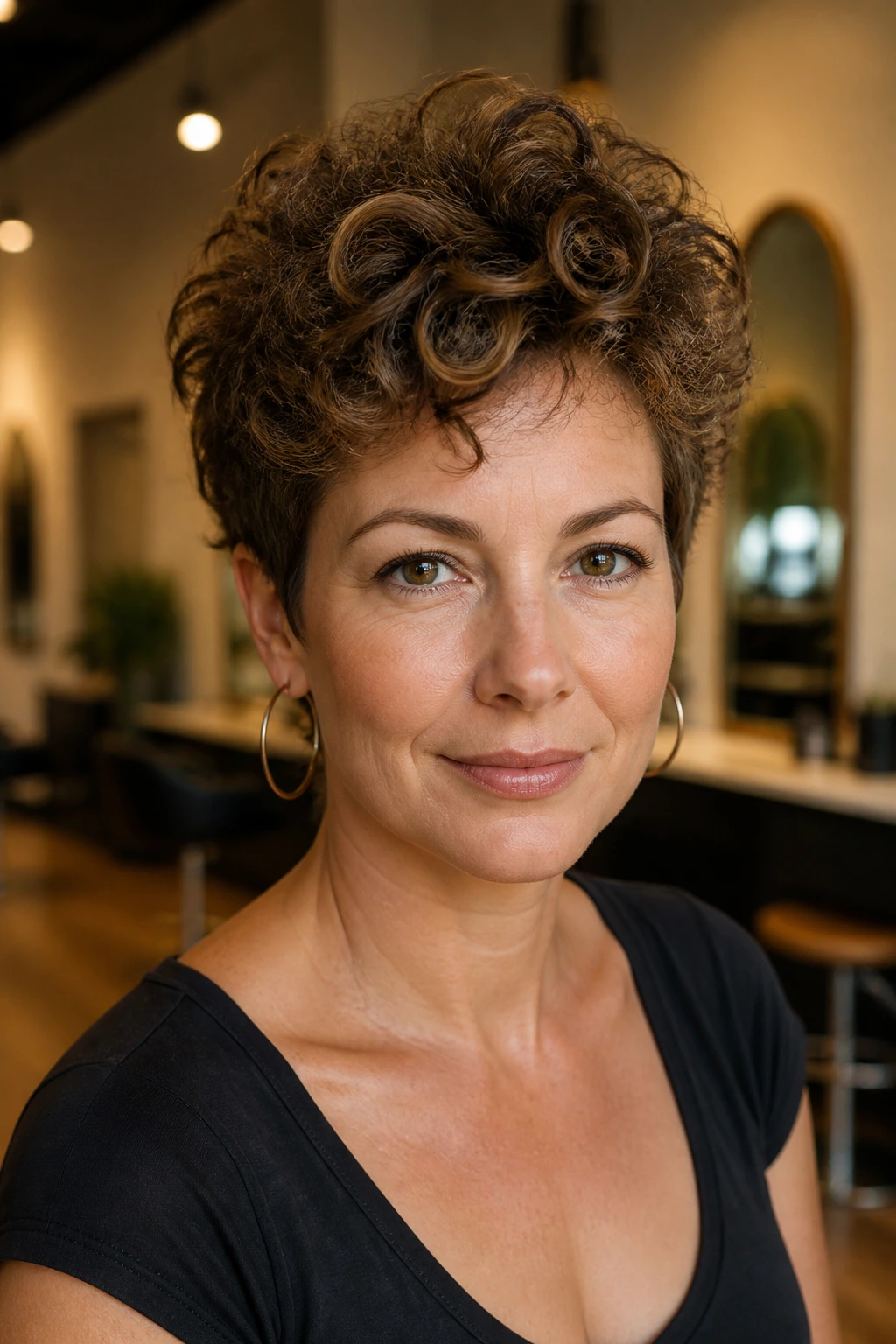
Short hair can be the easiest way to fake thickness, and this is the proof. A curly pixie with a lifted crown uses height instead of length to create volume, which is a smart trade if your hair lies close to the scalp. The top stays long enough for the curls to stack and the sides stay snug enough that the head shape looks clean, not puffed out.
This cut needs confidence, yes, but it also needs restraint. The crown should be lifted, not shredded. The fringe can be left a little longer so it falls softly across the forehead, which keeps the cut from feeling severe. If the top is cut too short, you lose the very thing that gives thin curls their body.
It’s also a maintenance cut. Plan on shaping it every 4 to 6 weeks, because the difference between “sharp and airy” and “grown out and awkward” shows fast on a pixie. A dime-size amount of mousse is usually enough. More than that and you’re just weighing down the joke before it gets a chance to land.
4. Tapered Curly Crop With a Clean Nape
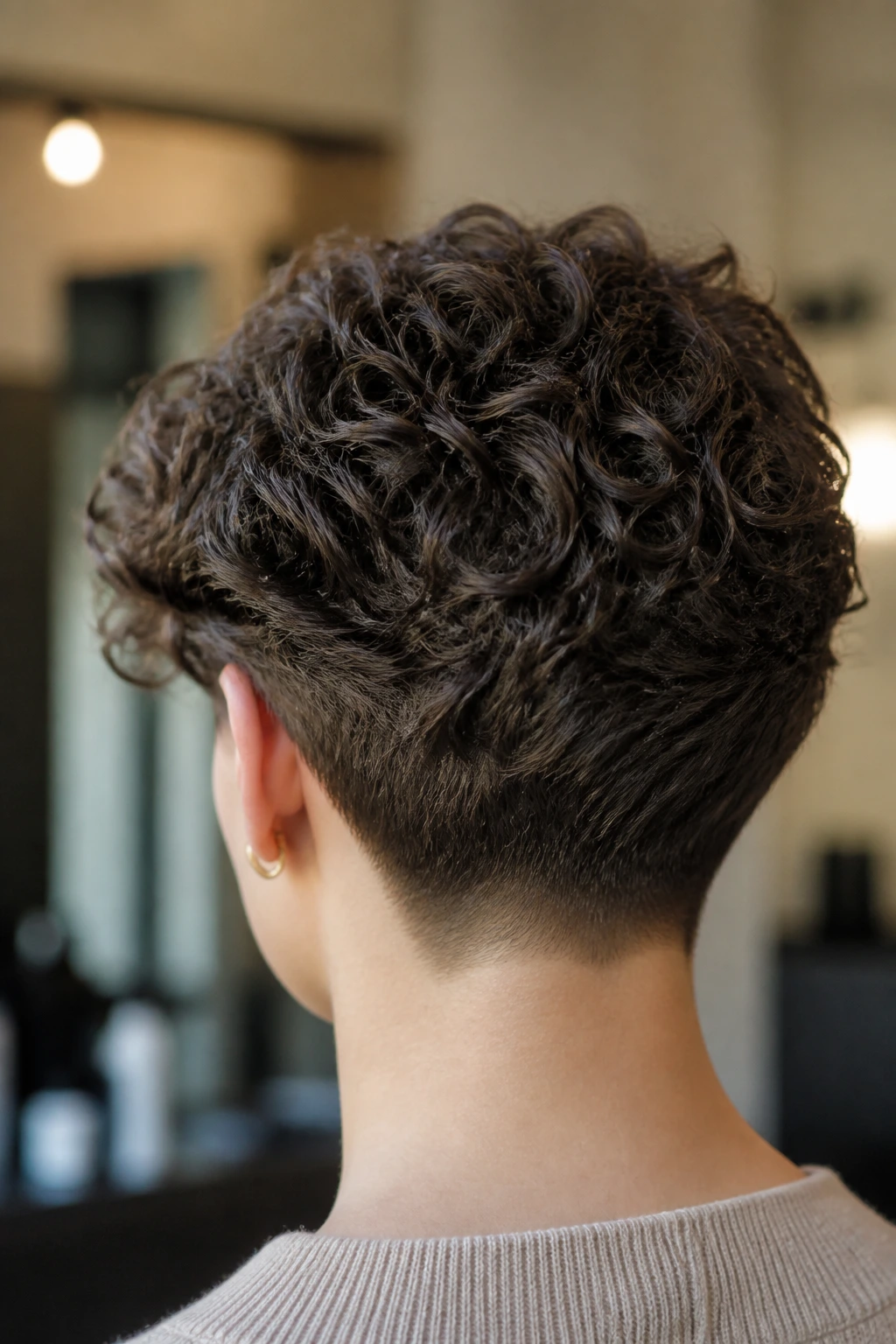
A tapered crop does something lovely for thin curls: it removes the visual drag at the back of the head. The nape is kept close, the sides stay neat, and the top is left with enough length to stand up and breathe. That contrast makes the crown look fuller than it really is.
This is especially strong on coily hair and tighter curl patterns, where a lot of bulk can disappear under the wrong shape. A clean taper also keeps the haircut from blooming into a triangle. You know the triangle. Everyone has seen the triangle. Nobody wants the triangle.
Ask for a taper, not a hard undercut, unless you’re ready for a bolder look. A softer taper grows out better and leaves you with fewer awkward weeks between trims. It’s a cut that likes a bit of edge control at the hairline and a little fluff at the top. Simple. Clean. No drama.
5. Rounded Curly Shag
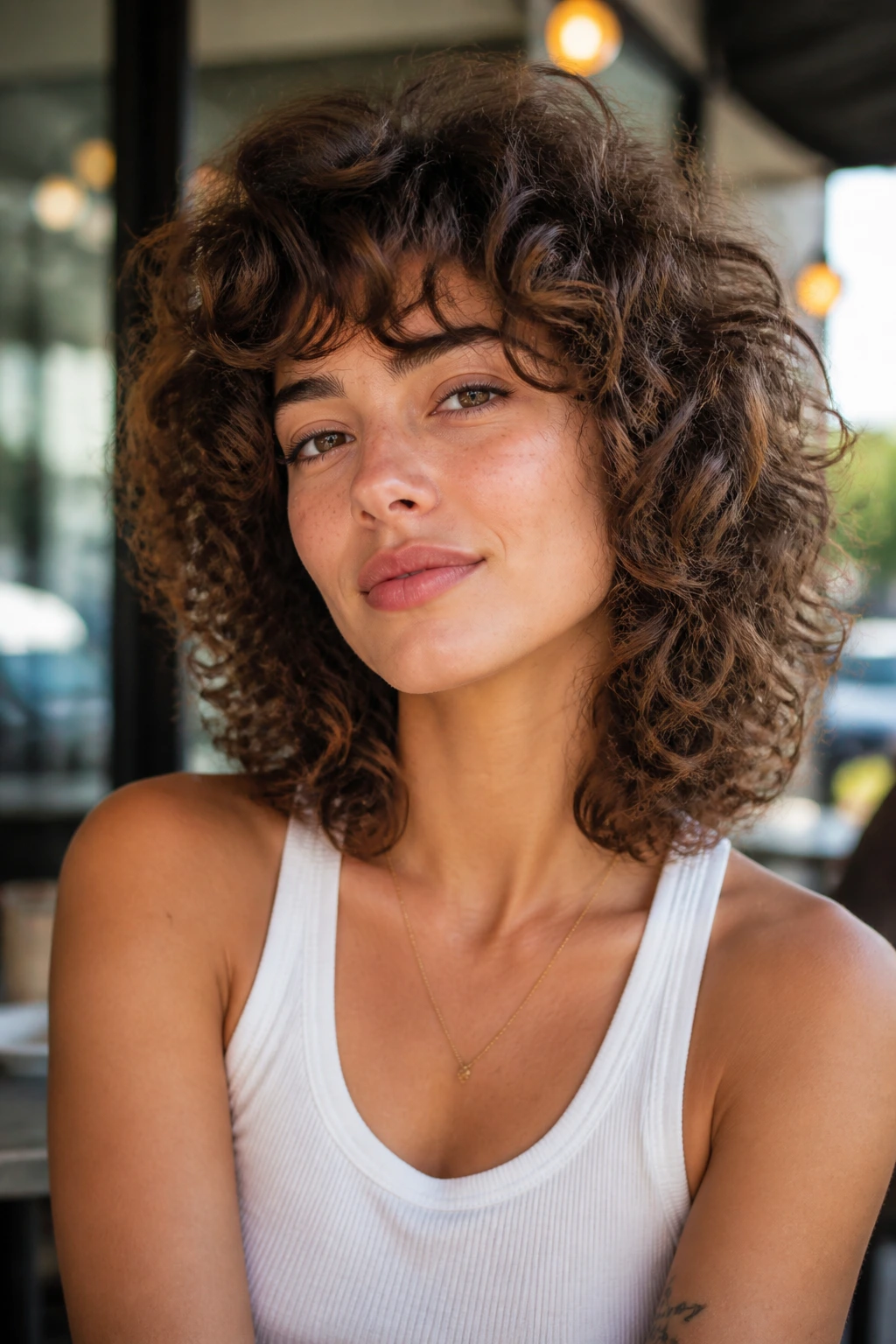
The rounded shag is what happens when volume and movement stop arguing with each other. Instead of stacking all the lift at the top, the cut keeps a curved outline while adding layers that encourage curls to spring outward in different directions. Thin hair often needs that roundness. Flat shapes make density look worse than it is.
The thing to watch here is over-layering. A shag on thin curls should feel light, not hollow. The shortest layers should still have enough length to curl, which usually means keeping them well below the crown unless your hair is denser than it looks. If the top gets stripped too short, the shape starts looking airy in a bad way.
This cut has a soft, lived-in feel without needing much effort. Scrunch in a lightweight mousse, diffuse until the roots are dry, and leave some imperfect texture alone. That little bit of disorder is part of the charm.
6. Soft Wolf Cut for Loose and Medium Curls

The wolf cut gets talked about like it’s one big rebellious shape, but on thin curls it works best when it’s softened down. You want the top and front to feel light and a little shaggy, while the back keeps enough length to anchor the whole cut. Too much contrast and the hair starts looking split in two. Too little and it loses the point.
This version is good for people whose curls need motion more than fullness at the ends. It gives the crown a little lift and keeps the face pieces from hanging like wet noodles. Ask for texture, yes, but ask for it with limits. A stylist who can say “no” to over-thinning is your friend here.
I like this shape on loose curls that fall flat when they get too long. It also pairs well with a messy side part, which helps the top puff a little without teasing. If you want something that looks a touch undone but still has a plan, this is your cut.
7. Deva Cut With Dry-Sculpted Layers
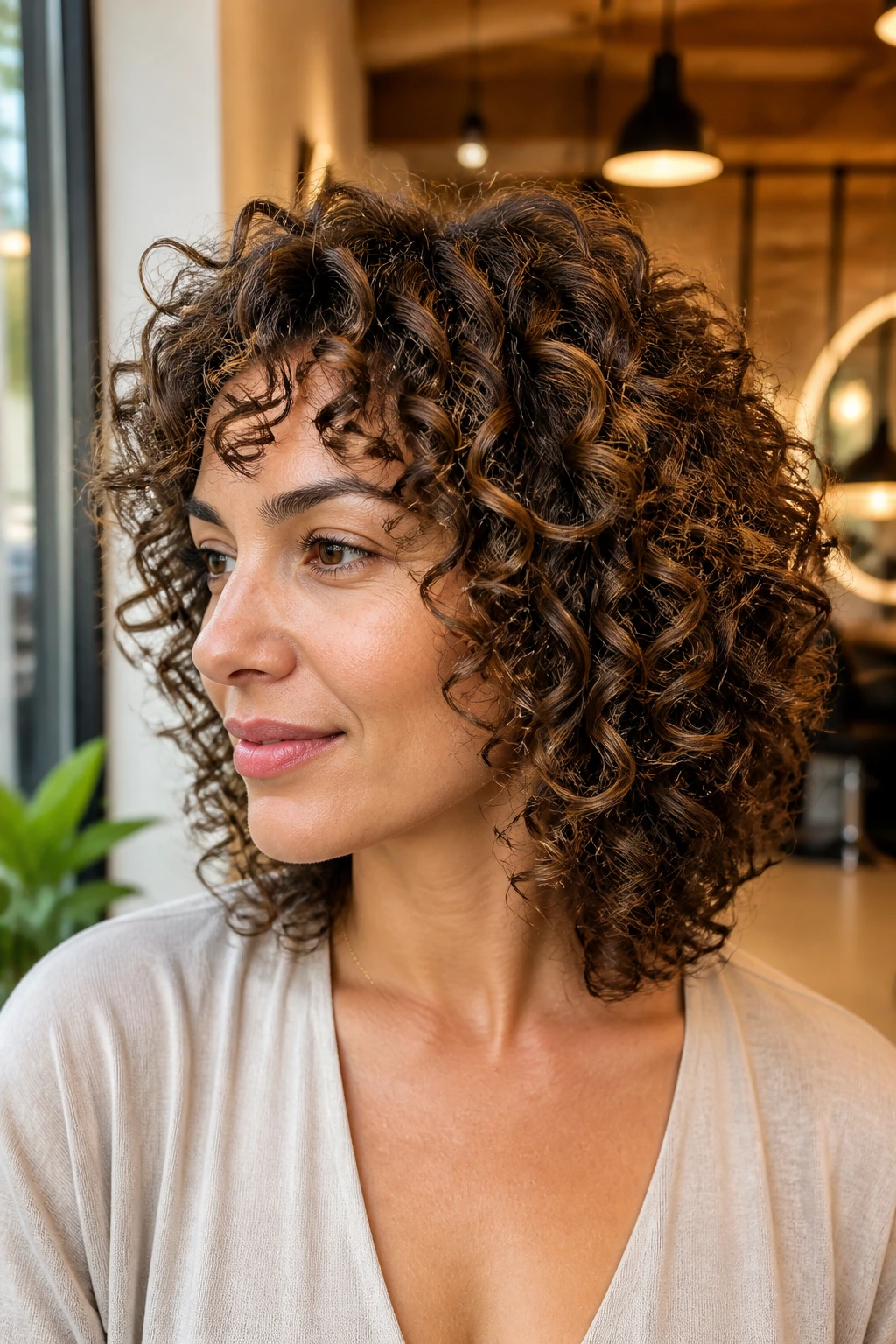
A Deva-style cut is less about a single shape and more about a method, and thin curly hair benefits from that precision. The hair is cut dry, curl by curl, so the stylist can see exactly where each bend lands. That matters because wet curls lie. They lie a lot. A curl that hangs two inches longer wet can spring up hard enough to ruin a plan.
Dry sculpting helps the stylist place layers where they support volume instead of stealing it. It’s especially helpful when your curl pattern changes from one side of the head to the other, which happens more often than people admit. One side may be tighter, the other looser, and a dry cut lets the shape follow the hair instead of fighting it.
If you’ve ever left a salon with a cut that looked fine while damp and weird the moment it dried, this technique is worth asking about. It’s not magic. It’s just honest. And curly hair, thin or not, responds well to honesty.
8. French Bob With a Curly Fringe
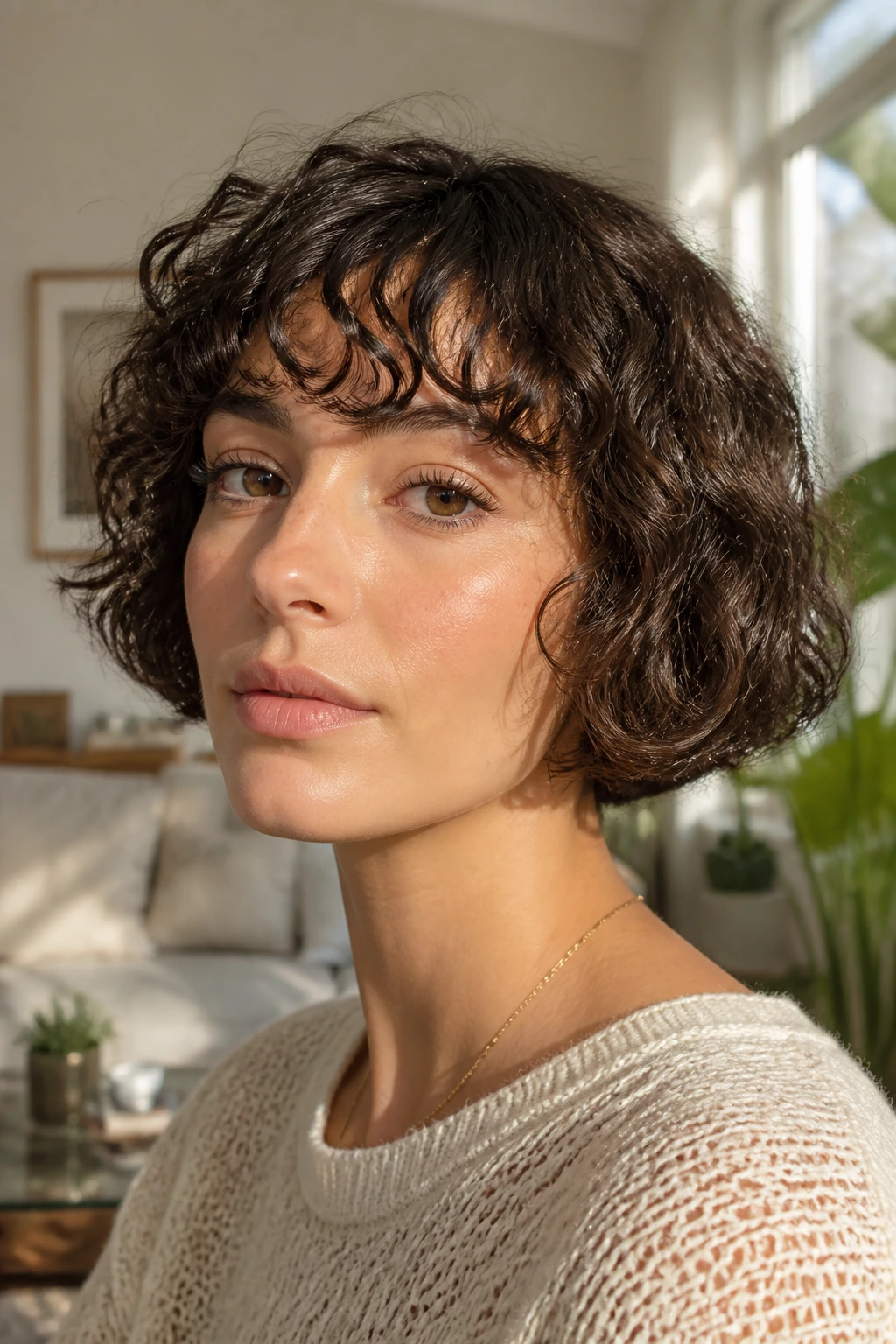
A French bob with a curly fringe has a little attitude, but not the kind that requires perfect styling. It sits around the jaw, often a touch above it, with fringe that falls across the forehead in a soft bend instead of a stiff block. On thin curls, the short length helps density read stronger, and the fringe gives the face some movement up top where the eye wants to go.
The key is keeping the fringe light enough to separate. Heavy bangs on thin curls can turn into a flat curtain. A curly fringe should look like a few intentional pieces, not a helmet. I’d ask for it to graze the brows or land just above them, depending on how much shrinkage you get.
This cut is sharp when it’s clean and charming when it’s a little messy. That’s a useful combination. A curl cream plus a touch of gel can give the fringe enough definition without making the rest of the bob stiff.
9. A-Line Bob That Stays Longer in Front
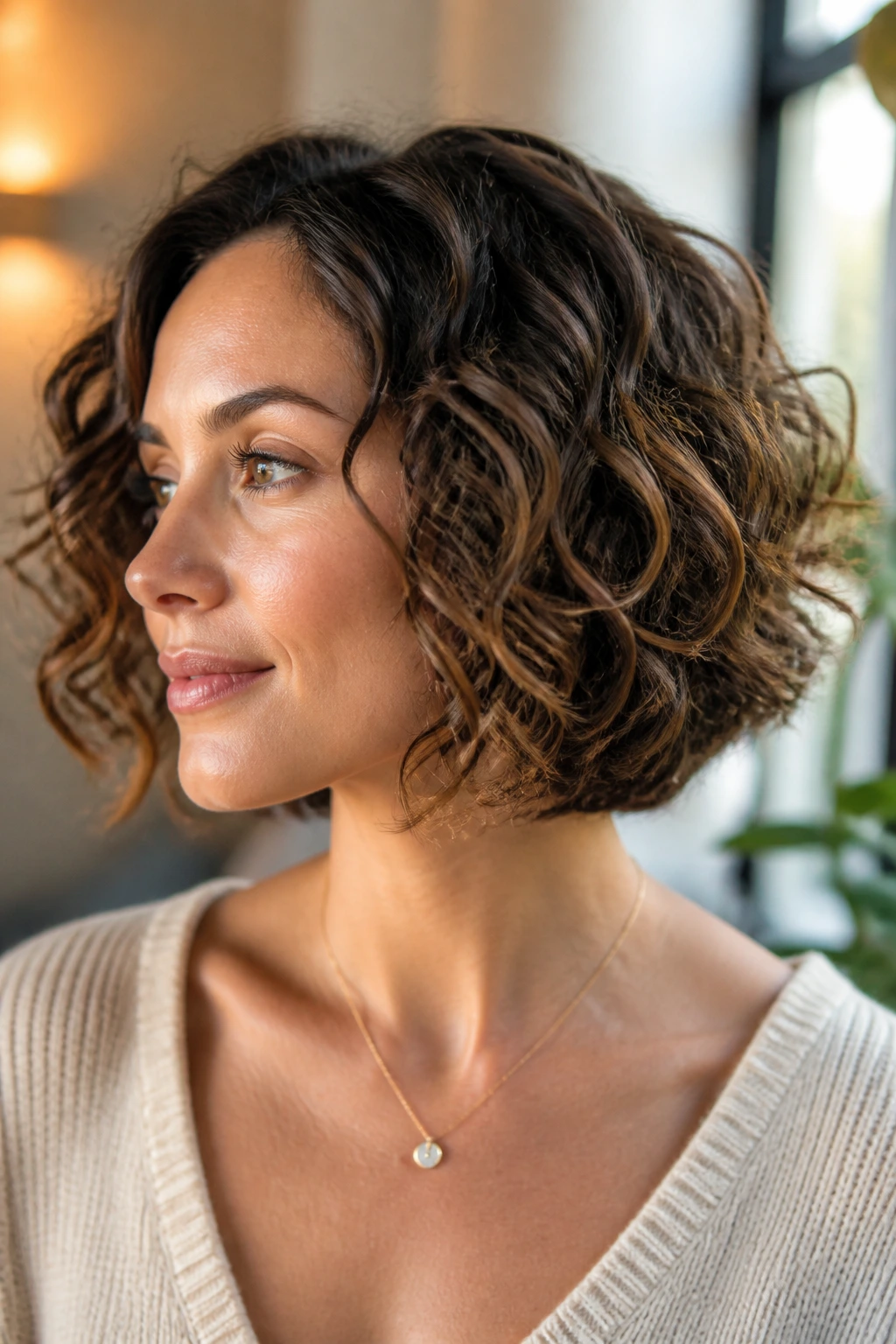
The A-line bob earns volume by changing the line of sight. Shorter in the back, longer in the front, it pushes the shape forward and makes the hair feel fuller around the jaw and cheeks. Thin hair often looks best when it has a little directional movement instead of hanging straight down.
This works because the eye reads the diagonal as structure. Even if the actual density isn’t huge, the haircut creates the sense that there’s more going on. Keep the angle subtle. A dramatic A-line can look sharp on paper and fussy in real life, especially when curls spring up unevenly on different sides.
Ask for the back to stay stacked just enough to support the shape, not so much that the crown gets a shelf. On wavy curls, this cut can look almost polished. On tighter curls, it becomes a little more sculptural. Either way, it’s one of the better choices if your hair gets flat at the back and wider at the bottom.
10. Stacked Bob With Hidden Lift in Back

A stacked bob is not subtle, and that’s part of the fun. The graduation in the back builds a little internal lift, so the crown doesn’t collapse under its own weight. On thin curls, though, the stack has to be quiet. If the layers are too aggressive, you get a shape that looks narrow in one spot and fluffy in another.
The best version of this cut keeps the outside line smooth while the inside does the heavy lifting. You want the back to sit up, not stick out. That means the shortest lengths should be carefully placed and the outer curls left long enough to cover the structure underneath. It sounds fussy, but it matters.
This is a good option for someone who likes neat hair with visible shape. It’s also a good answer when the back of the head always falls flat no matter what products you buy. Products can help. They cannot invent architecture.
11. Blunt Bob With Tiny Surface Layers
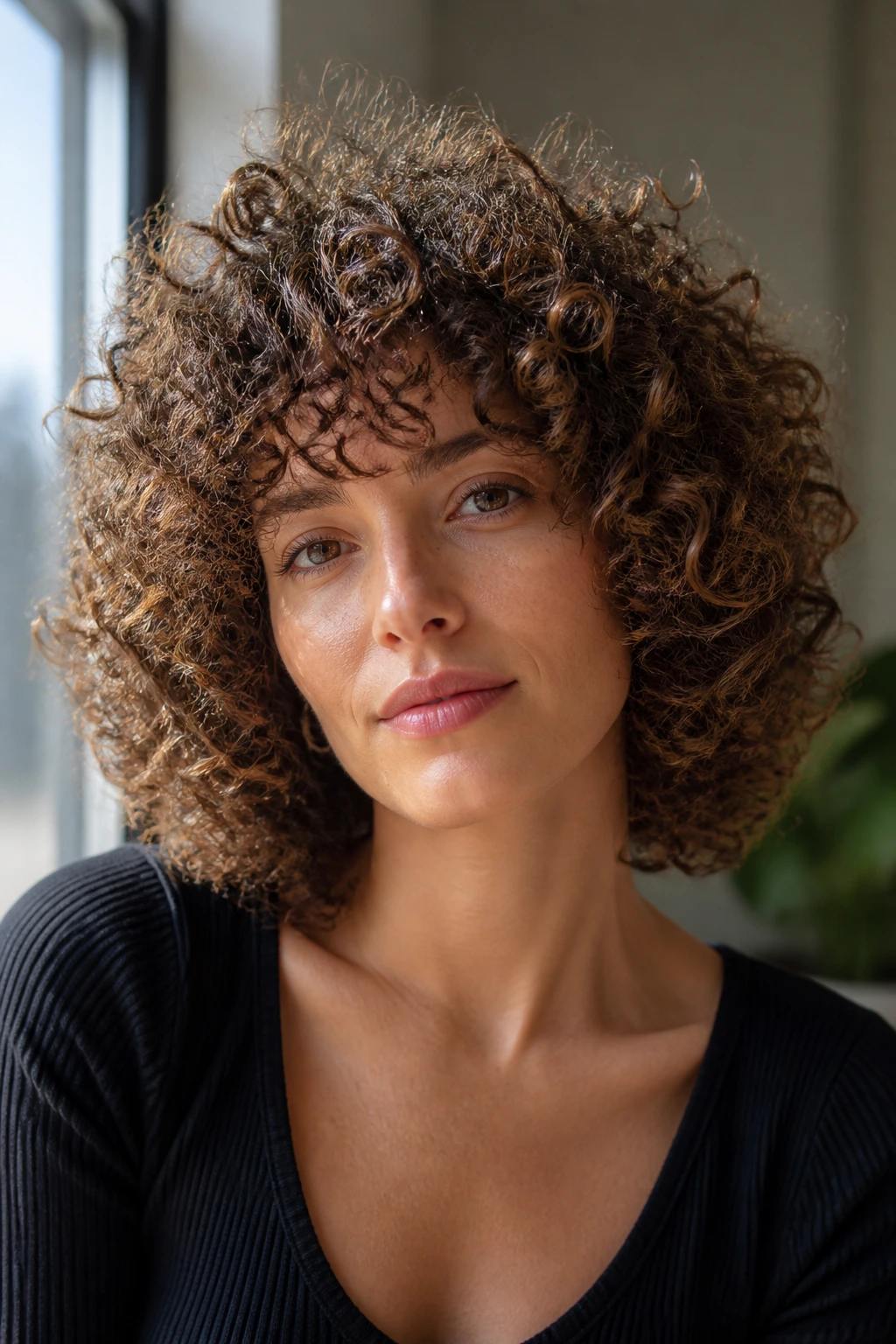
A blunt bob is one of the oldest tricks in the book for making thin hair look thicker, and it still works because the eye loves a strong line. Curly hair complicates that a little, which is why a few tiny surface layers can keep the cut from feeling boxy while the perimeter stays dense. That outside edge is the whole point.
This cut is especially good when your curls are loose enough to clump. A loose curl pattern lets the blunt edge show through. If the hair is very springy, the line gets lost faster, and you’ll want a slightly longer version so the curls can settle into place.
I’m a fan of this shape when someone wants low-maintenance styling. It air-dries well, it doesn’t need heroic diffuser work, and it still looks like a haircut after day two. Use a lightweight gel to hold the curl clumps together. Skip the heavy cream. It usually drags the shape down.
12. Shoulder-Length Cut With Curtain Bangs
Curtain bangs give shoulder-length curls a little lift right where many thin-haired people need it most: around the face. They open the forehead, break up the length, and stop the haircut from feeling like one long hanging sheet. The shoulder-length body gives enough weight for the curls to move, but not enough to flatten them into submission.
The bangs need to start long. That’s the part most people get wrong. If curtain bangs are cut too short on curly hair, they bounce up and sit awkwardly above the eyes. Better to let them begin around the cheekbone or even the lip, then let the curls settle where they want.
This is a soft, flattering choice if you like wearing hair loose and still want some shape at the top. It also works when you want to pull the rest back into a clip and leave the bangs out. That little detail can make thin hair look much fuller than it is.
13. Side-Swept Bangs and a Mid-Length Shape

A side-swept bang gives thin curls a sneaky volume boost because it creates a diagonal line across the forehead. That diagonal pulls the eye sideways and upward, which makes the root area look less flat. It’s a small move, but on thin hair small moves are often the ones that matter most.
The mid-length shape keeps enough weight in the body that the bangs don’t overpower the haircut. If the rest of the hair is too short, the bangs start carrying all the visual load and the cut can feel lopsided. Ask for the bangs to blend into the side rather than cut like a separate piece. That keeps the front soft.
This is a solid choice if your temples are a little sparse or your crown tends to settle. It’s also more forgiving than full bangs on mornings when you do not want to fight your hair. A quick mist of water and a finger-coiled front section can rescue it fast.
14. Face-Framing Layers That Start at the Cheekbones
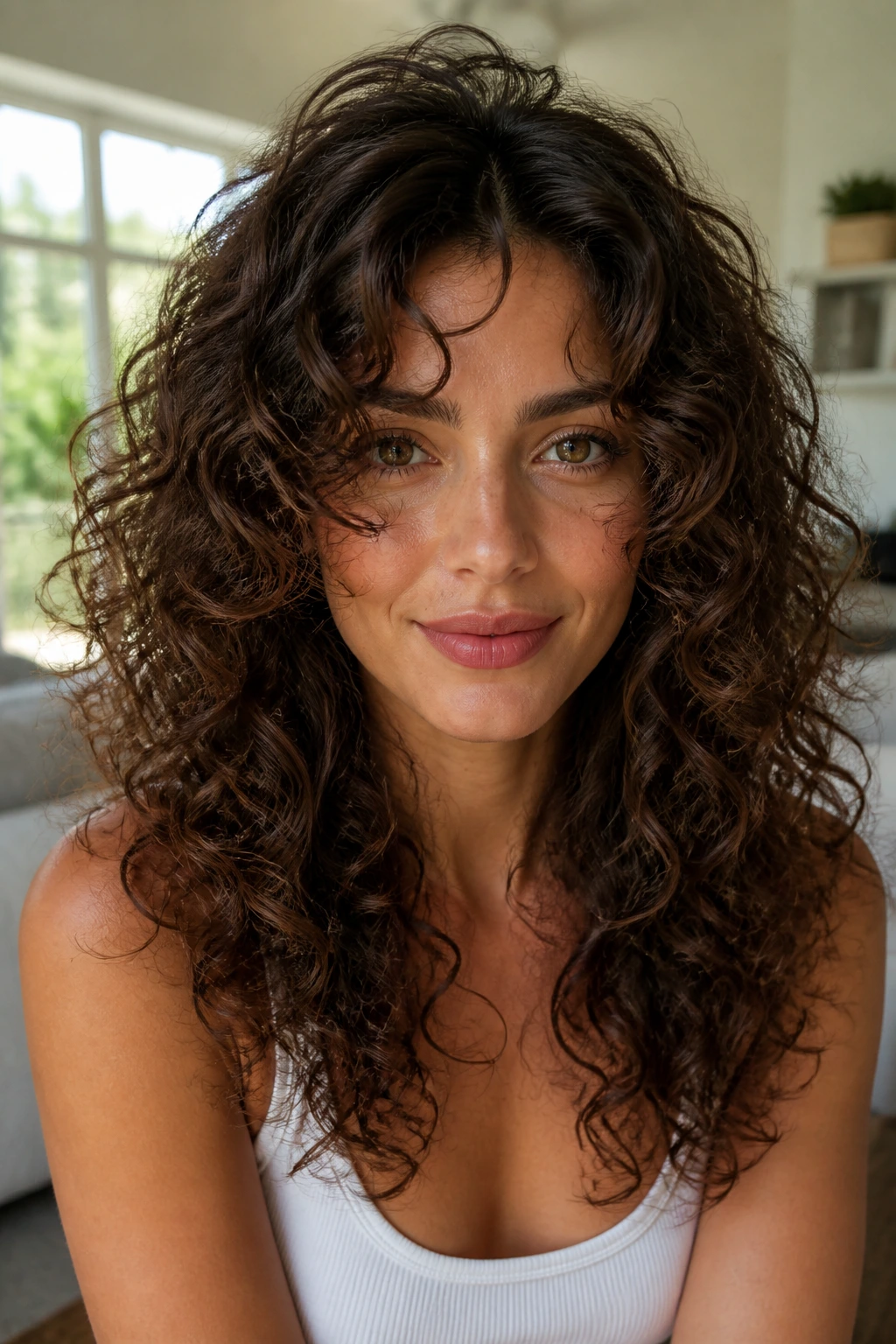
Cheekbone-starting layers are one of my favorite ways to add shape without stripping away density. The shortest pieces begin high enough to frame the face, but low enough that the top of the head keeps its support. Thin curls tend to look best when the volume lives around the face and upper sides, not when it’s chopped into a dozen little pieces all over.
This cut works especially well if you wear glasses, because the layers make room for the frames instead of fighting them. It also gives the cheekbones a little spotlight, which is nice when the hair itself is the main feature and you don’t want the cut to disappear into the background.
Tell the stylist to keep the layering long and connected. No choppy staircase. The ends should still read as part of the same haircut, just with more movement around the face. That’s the difference between flattering and overworked.
15. U-Shaped Long Cut With Light Ends

Long hair can still have volume on thin curls, but only if the shape is doing some of the work. A U-shaped cut keeps the front pieces slightly shorter than the back, which helps the curls fall into a softer outline instead of a flat curtain. The curve at the bottom also makes the ends look fuller than a blunt straight line on long, sparse hair.
The danger with long thin curls is stringiness. Too much length pulls the curl pattern down, and the ends start looking tired. A U-shape helps by keeping some lift around the sides while allowing the back to carry the length. It’s a compromise, but a good one.
This cut is for people who love their length and refuse to cut it all off. Fair enough. Just know that the shorter the hair gets at the lower edge, the more body it tends to keep. Past a certain point, length is not a gift. It’s a brake.
16. Rounded Afro Shape With a Crisp Outline
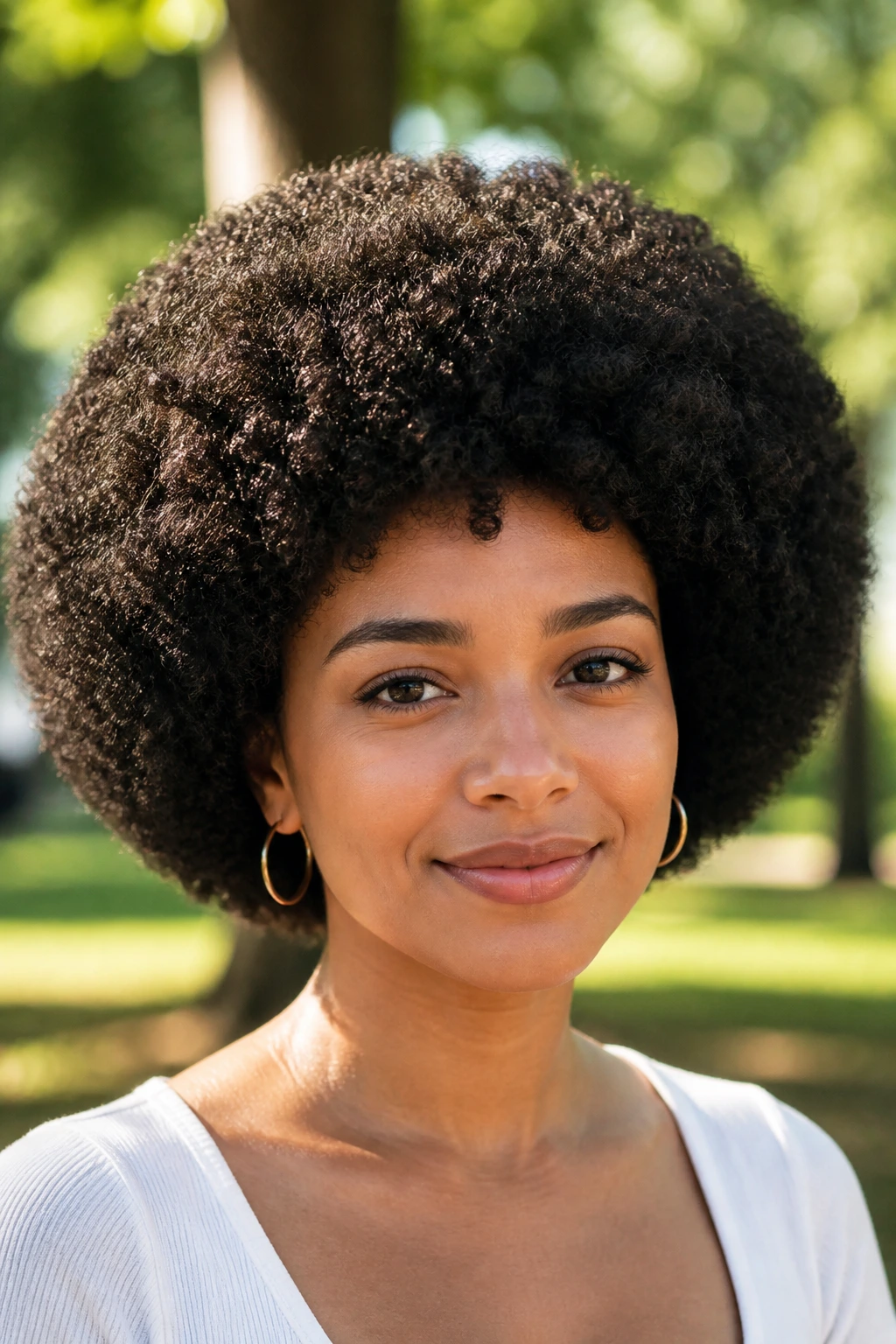
For coily hair, a rounded afro shape can create more apparent volume than almost anything else. The reason is simple: the outline matters as much as the density. A crisp perimeter gives the eye a clear boundary, and the rounded top keeps the silhouette from falling into a flat block.
This cut works because it respects the natural growth pattern. Instead of fighting the hair into a stretched shape, it celebrates height and balance. On thin coily hair, that can make the whole head look fuller without piling on product. Shape beats weight here.
Ask your stylist to shape the sides and top with the silhouette in mind, not just by trimming evenly all around. Uniform trimming can leave the head looking squat. A rounded outline keeps the cut buoyant. It’s a strong, clean look, and it ages well between trims.
17. Tapered Afro With Full Crown
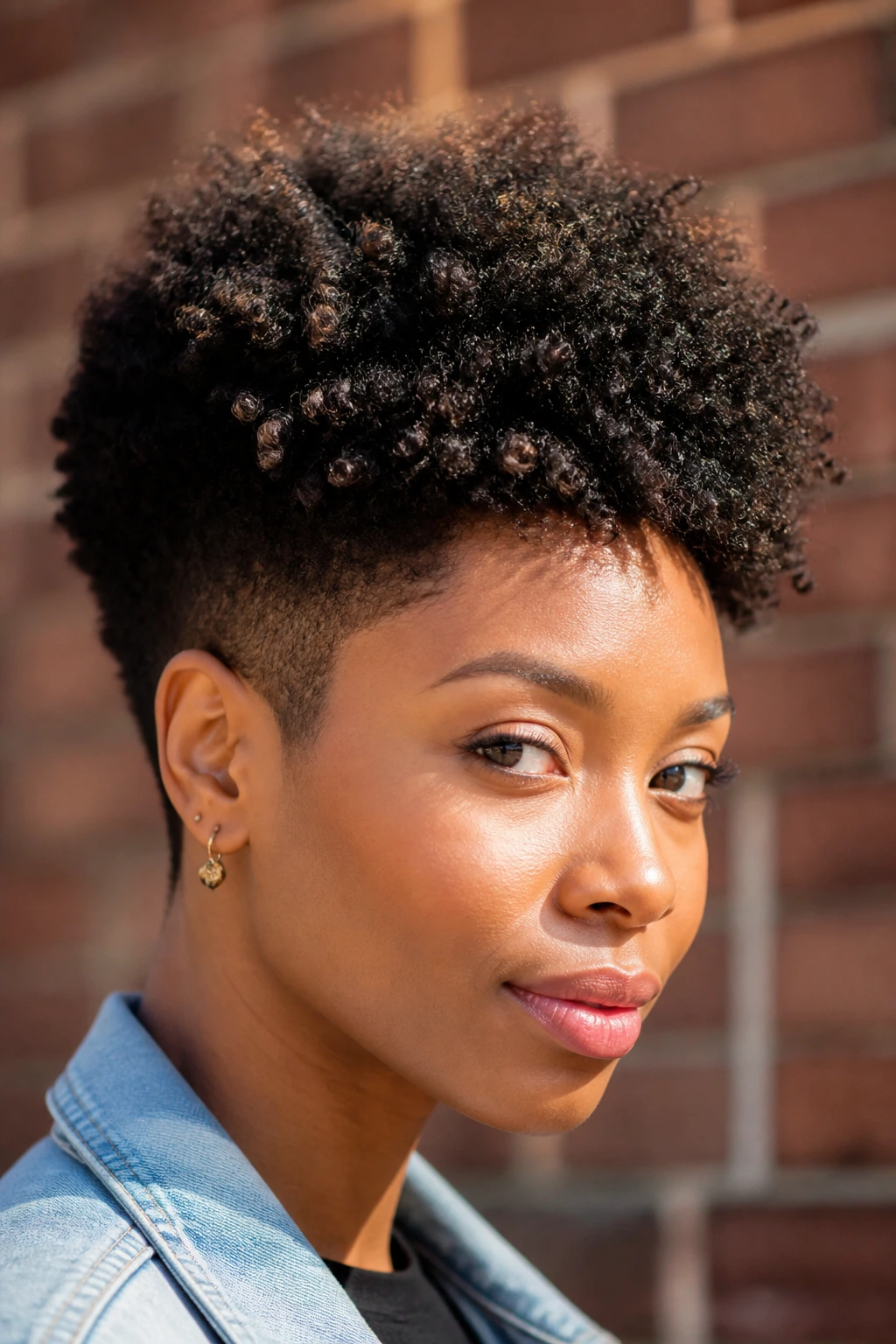
If the rounded afro is about balance, the tapered afro is about lift. The sides and nape are kept shorter, while the crown gets the room it needs to rise. On thin hair, that design helps attention gather upward, which makes the top feel denser and more alive.
This is a smart choice when the sides look sparse or when the hairline needs a little cleanup. It also handles shrinkage well, because the shorter sides keep the shape from exploding outward in every direction. The crown becomes the star, and that’s where you want the volume anyway.
It does need regular shaping. The taper loses its crispness faster than a long layered cut, so staying on a 4- to 6-week schedule helps. If you let it go too long, the outline starts wandering and the lift disappears into fuzz.
18. Curly Mullet With Soft Edges
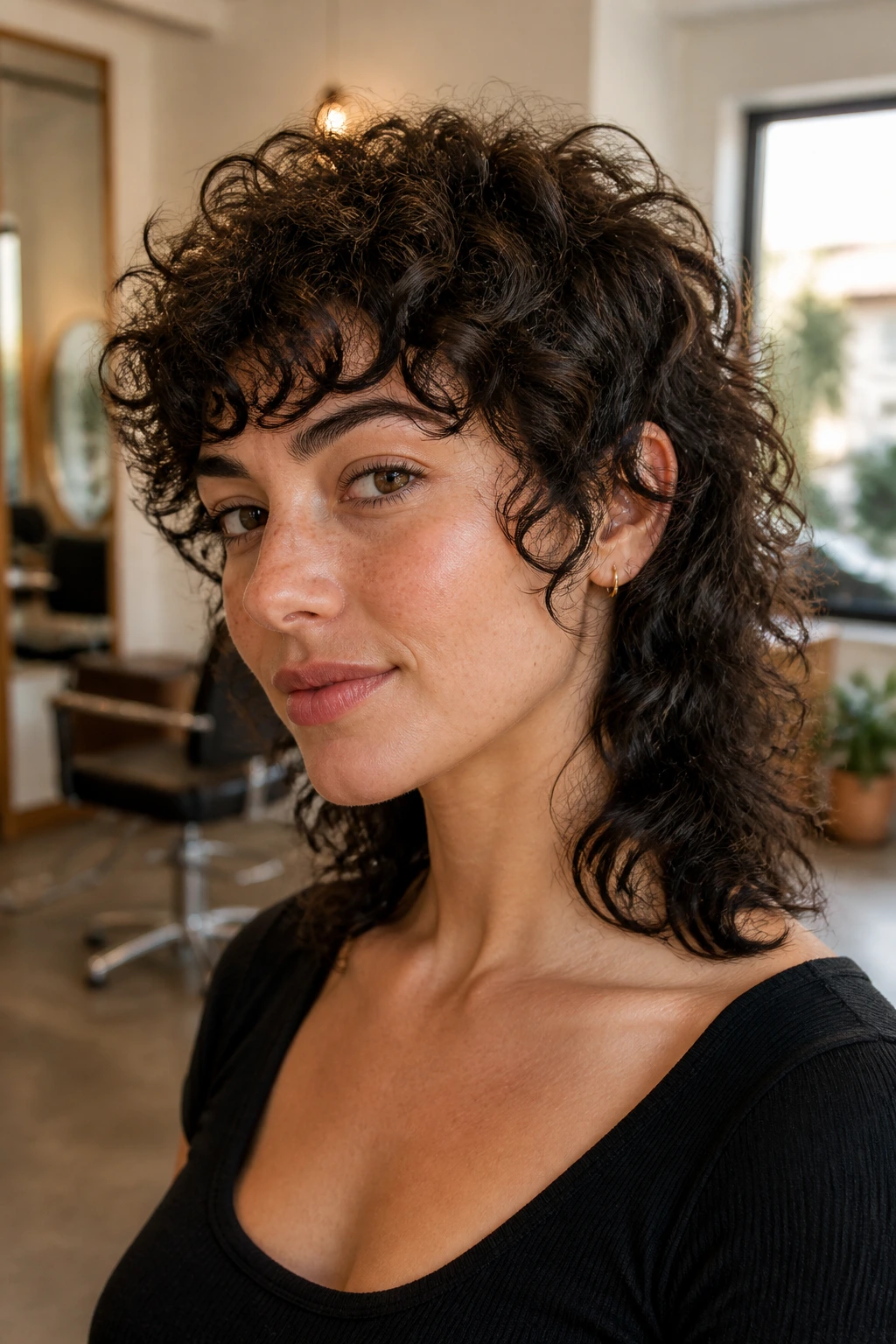
The curly mullet sounds louder than it usually looks. On thin curls, a soft mullet can be surprisingly wearable because it moves volume to the crown and front while leaving the back a touch longer. That combination keeps the top from falling flat and gives the cut a little swagger.
The secret is softness. A harsh mullet with razor-cut ends can make thin hair look stripped. A softer version keeps the transitions gentle so the haircut still feels like one shape. You want the layers to whisper, not shout.
This is the pick for somebody who likes a bit of edge and doesn’t mind a haircut with personality. It’s also useful if your curls naturally flatten at the front and puff at the nape. The mullet flips that problem around and uses it. There’s something satisfying about that.
19. Bixie That Splits the Difference
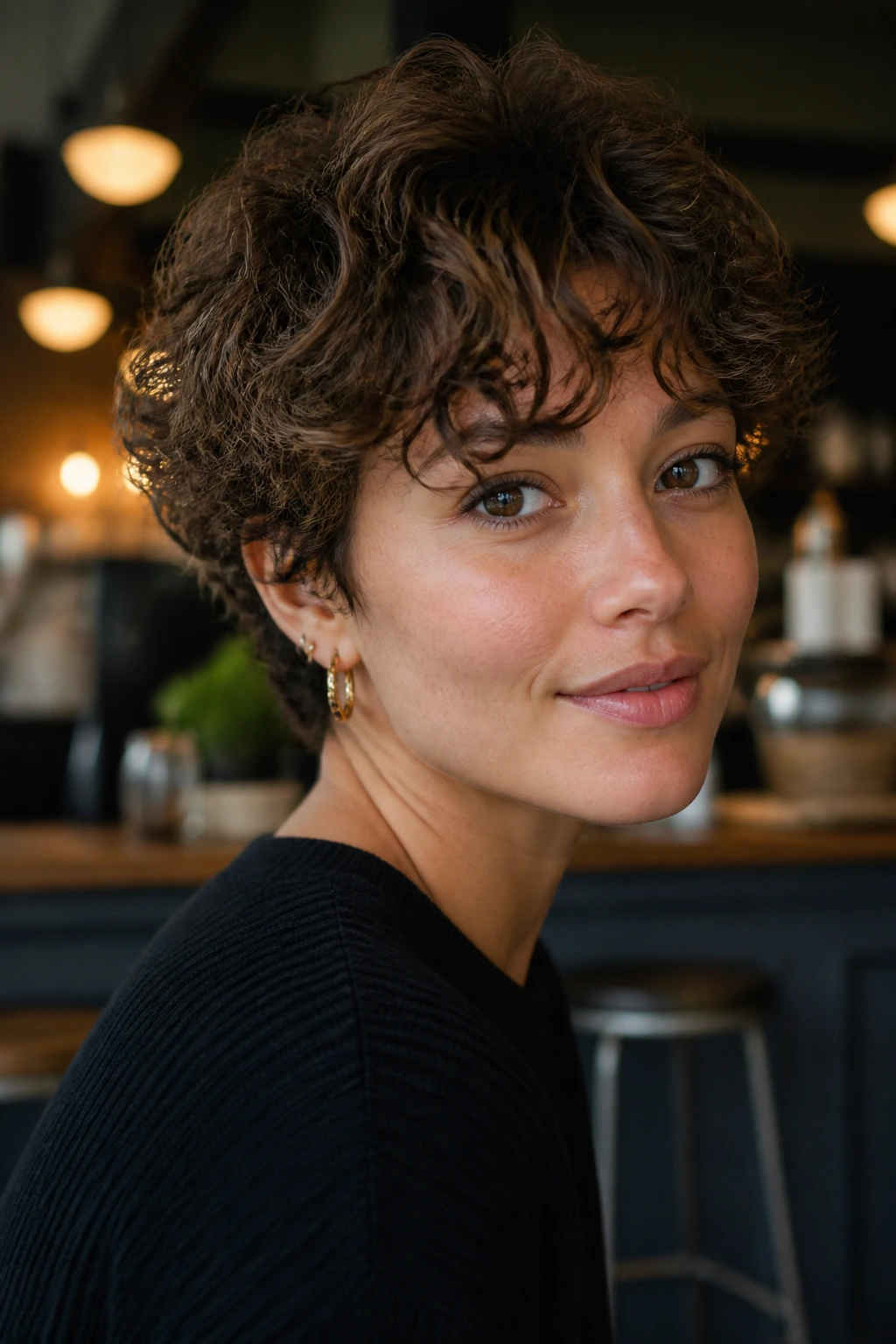
A bixie sits between a bob and a pixie, which is exactly why thin curls like it. You get the airy lift of a shorter cut without exposing as much scalp as a full pixie. The shape usually keeps some fringe, some side length, and a cropped back, which creates movement without too much weight.
This is a very good transitional haircut for people easing into shorter hair. It also works if your curls are fine but plentiful enough to hold a little shape. The bixie doesn’t need a lot of styling. It needs a little texture and a clear outline.
Ask for the top to stay long enough to curl, not so short that it stands straight up. That balance is the whole cut. Too short and it gets spiky. Too long and it starts acting like a bad bob. Somewhere in the middle is where it shines.
20. Asymmetrical Curly Bob
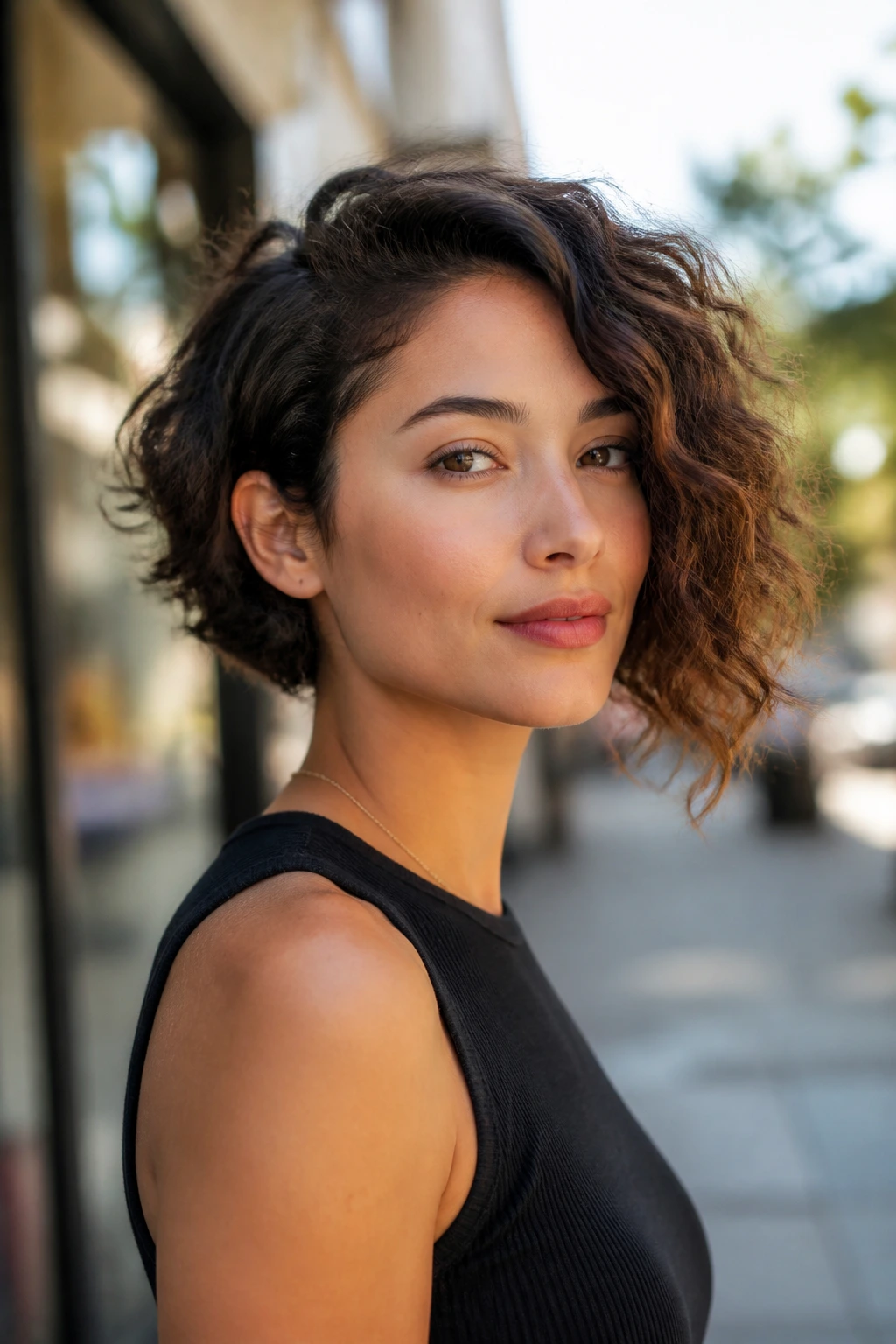
Asymmetry can be a gift when your hair is thin, because it tricks the eye into reading more movement and more density. One side slightly longer than the other creates a diagonal line that feels intentional instead of apologetic. That diagonal matters. Straight-across shapes are honest, sometimes too honest.
This cut works best when the difference is subtle, maybe an inch or so, not a dramatic lopsided statement. The goal is movement, not novelty. If one side naturally falls flatter, the asymmetry can also help balance the head shape without adding a lot of styling work.
I like this on side-part wearers because the part and the length can work together instead of fighting. The hair feels alive. And when fine curls feel alive, they tend to read as fuller.
21. Jaw-Length Crop With a Tiny Fringe

A jaw-length crop is blunt enough to make thin hair look stronger, but short enough to give the curls room to spring upward. Add a tiny fringe and the whole cut gets a little edge without losing density. It’s a sharp shape, but not a severe one.
The fringe has to stay tiny. Not heavy. Not chunky. Tiny means the curl pattern can separate and soften the line. If you cut the front too deep, the bangs steal volume from the rest of the haircut. That’s not the trade you want.
This cut is best on people whose curls hold their shape fairly well and who don’t mind a haircut that sits close to the face. It’s also one of the easiest short cuts to keep looking intentional if you air-dry and go. The crop does the work for you.
22. Halo Layers for 3A to 3C Curls
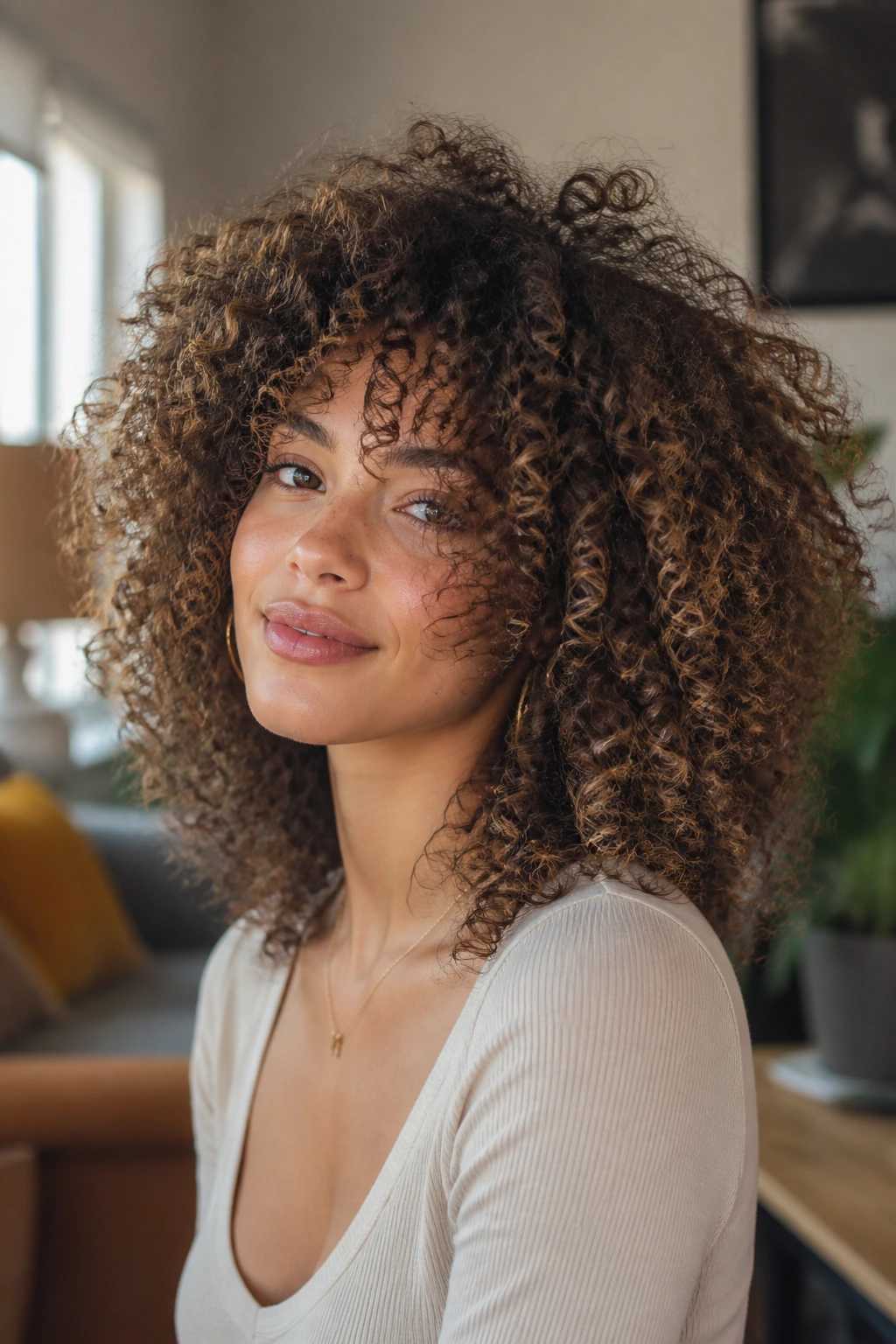
Halo layers are cut in a way that lets curls fall around the head like a light ring, with the upper sections shaped to give lift while the bottom keeps enough length to support the whole look. On thin 3A to 3C curls, that can create a very nice “full but not bulky” effect.
The key is keeping the layers connected and rounded. You do not want short pieces floating above a long shell. You want the curls to nest into one another. When that happens, the head looks fuller from every angle, especially in profile, which is where many thin cuts fail first.
This shape also grows out well if the stylist respects the curl pattern. If they overcut the crown, the halo can turn into a frizzy crown. That’s why this one usually benefits from a dry cut or at least a careful check while the hair is fully dry.
23. Shoulder Cut With Invisible Interior Removal

This is the cut for people who want movement but cannot stand seeing their ends get too light. The perimeter stays nearly blunt at shoulder length, while the stylist removes weight inside the shape where it won’t show. That’s the useful part. The haircut looks fuller from the outside because the visual shell stays intact.
It’s a quiet cut. No drama at the ends. No obvious layers. But on thin curly hair, quiet often works better than clever. The curls have enough internal space to move, yet the outer edge still reads as a complete line.
I reach for this idea when someone says, “My hair flattens, but I don’t want it short.” That’s a fair request, and this cut answers it without turning the whole head into fragments. It also tends to grow out gracefully, which is rare enough to be worth praising.
24. Deep Side-Part Cut With a Leaning Shape
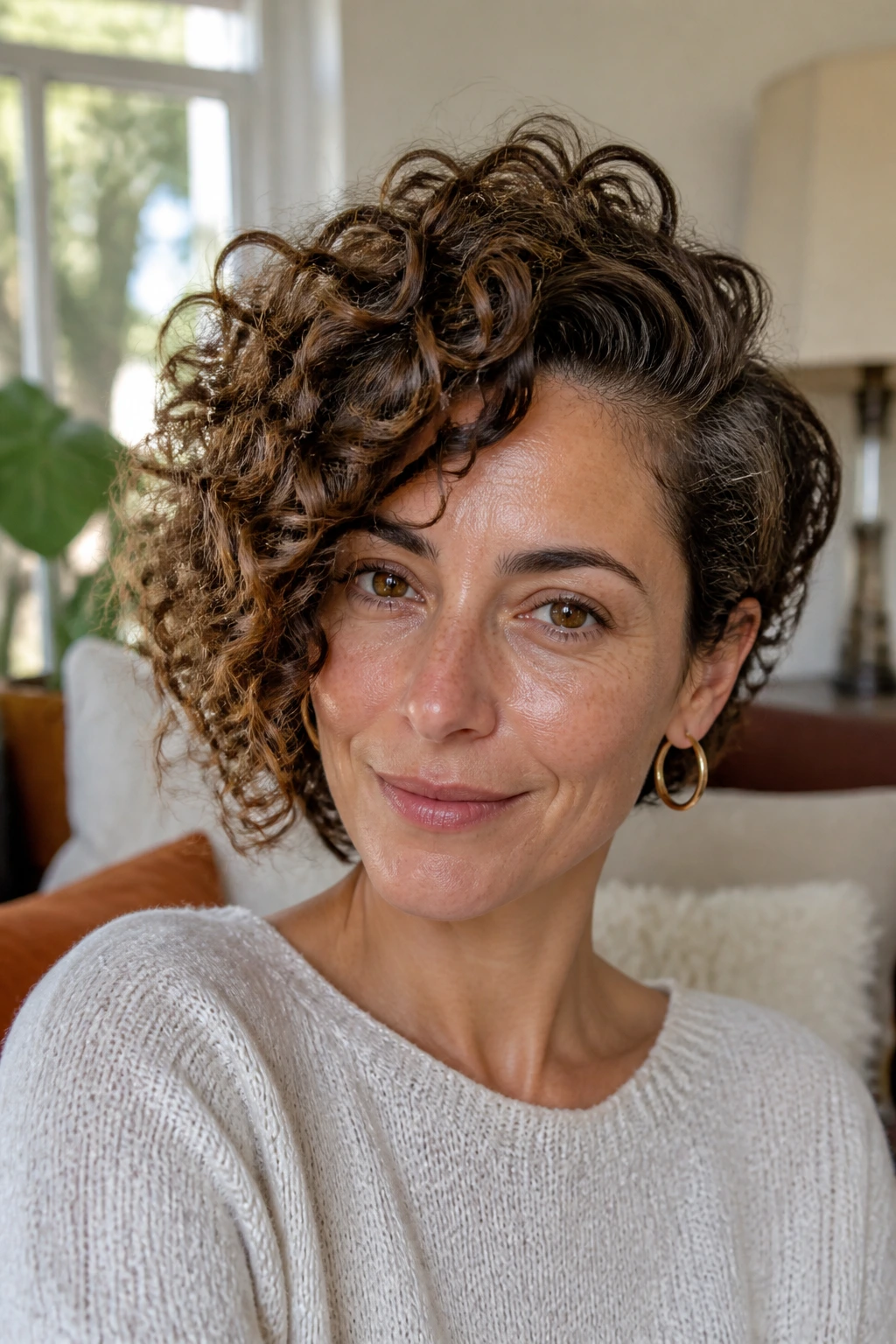
Sometimes the fastest route to volume is changing the direction of the haircut. A deep side part shifts the weight of the curls so one side lifts at the root and the other side falls with more body. That leaning shape creates instant fullness without asking the hair to be thicker than it is.
The cut itself should support the part. If the layers are symmetrical but the styling always lives on one side, the hair can look unbalanced. A stylist who understands the part you wear most days can build that into the shape, and the result looks much better than trying to force a neutral cut to behave.
This is also a nice fix for a flat crown. A little root clipping at the side part while the hair dries can give the top just enough lift to matter. Not huge. Just enough. Thin curls usually respond better to small wins than to heavy-handed tricks.
25. Curly Shaggy Lob With Piecey Ends
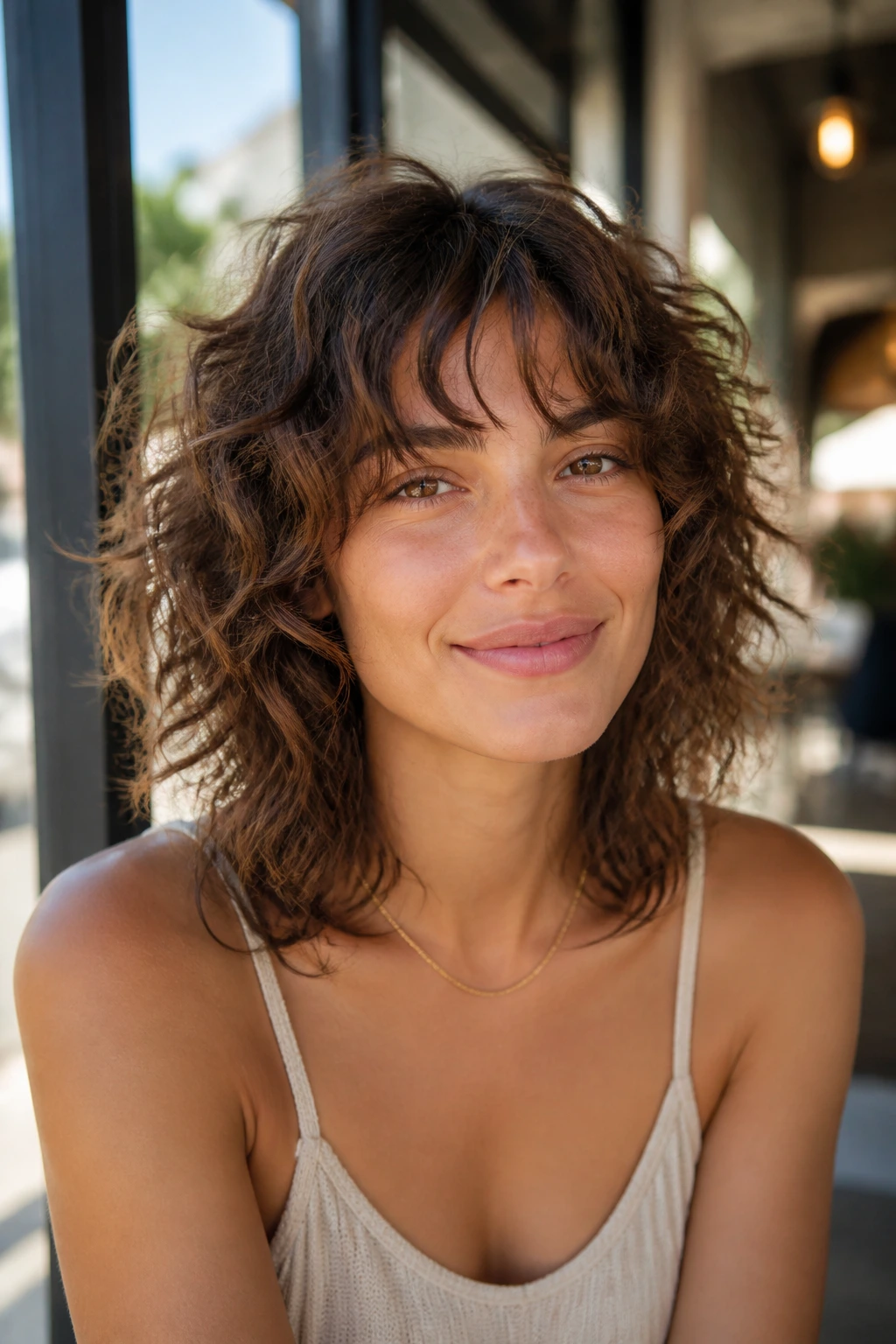
A shaggy lob can be a sweet spot for thin curls because it keeps length around the collarbone while letting the ends separate in a controlled way. The shape feels relaxed, but not lazy. The curls have space to move, and the overall outline still looks thick enough to hold its own.
The piecey ends are part of the appeal. Thin hair often looks worse when every curl is trying to merge into one flat sheet. A little separation at the bottom makes the style feel airy without turning see-through. The important part is that the lob stays long enough to keep weight in the perimeter.
I’d choose this when you want something low-key that can handle a wash-and-go life. It looks good with a middle part, an off-center part, or one side tucked back. It’s the sort of haircut that still makes sense on day three, which is useful because hair does not care about your schedule.
26. Growth-Friendly Transitional Cut

If you’re growing out a short cut, a bad layer pattern, or a cut that got too enthusiastic, this is the one that saves your sanity. A growth-friendly transitional cut keeps the outline clean while letting the interior lengths catch up. That means fewer odd corners, fewer awkward shelves, and less temptation to chop everything off again out of frustration.
Thin curly hair needs this kind of patience-friendly shape because it can go patchy fast when it’s growing unevenly. The transition cut smooths the journey. A little structure at the bottom keeps the hair from looking broken apart, while longer pieces inside gradually blend into the new shape.
This is not a glamorous category. It’s the sensible one. And sensible haircuts deserve more credit than they get. They make it possible to survive the in-between stage without hating your reflection every morning.
27. Undercut Pixie With Long Top Curls
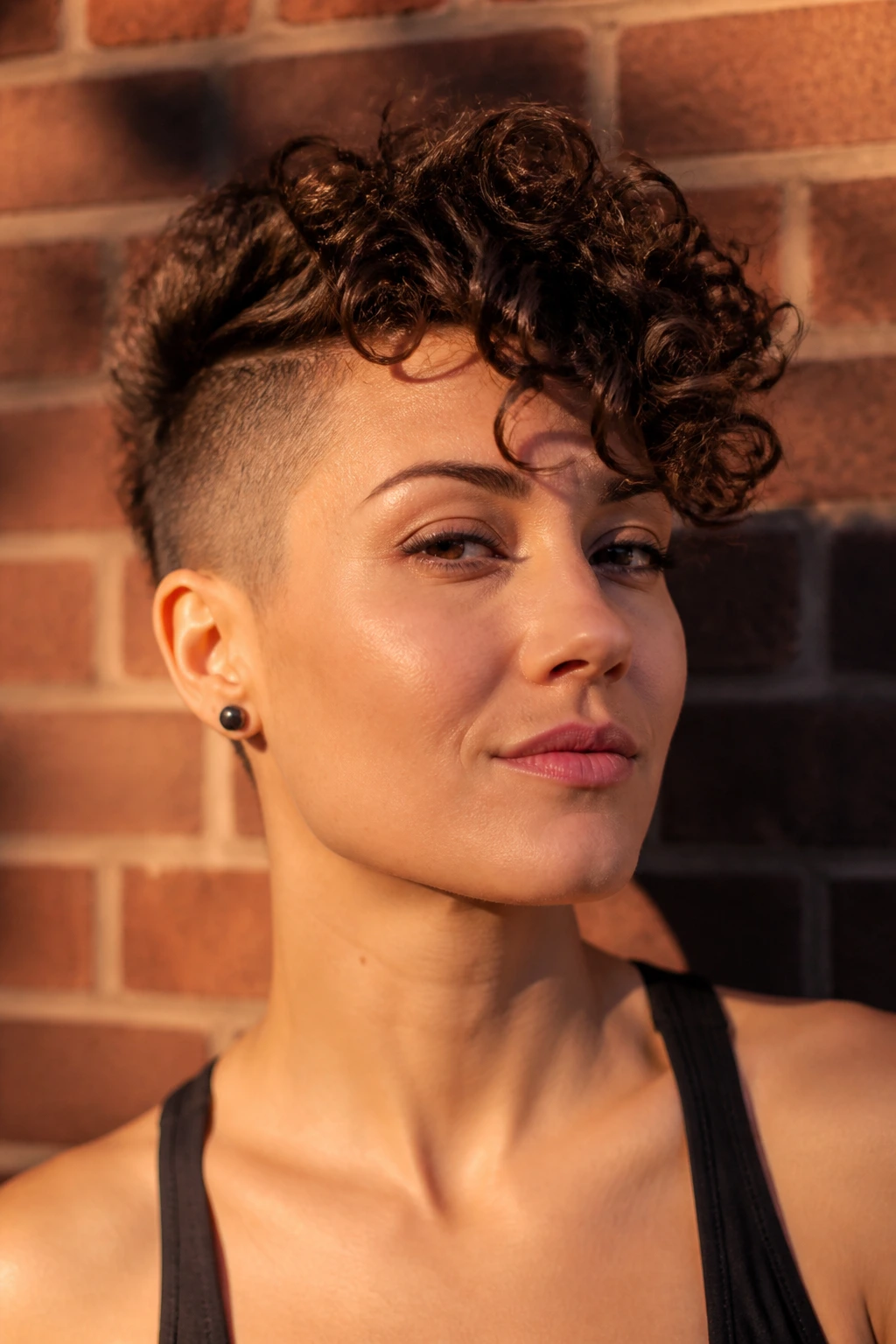
This is the boldest move on the list, and for some thin curly heads, it’s also the smartest. An undercut pixie removes bulk underneath so the top curls can rise instead of being dragged down by their own weight. The result is height, shape, and a little edge.
It works best when you want volume to come from above rather than around the sides. If your hair is so fine or so sparse that traditional layering just makes it look thinner, the undercut gives the top a cleaner stage. The contrast between the tight sides and the longer curls up top can be dramatic in a good way.
You do need to like regular upkeep. The undercut grows fast enough to blur the shape, and once the edges lose their crispness, the whole point weakens. But when it’s fresh, there’s nothing timid about it. Thin curls finally get to stand tall.
How These Cuts Create Lift Without Overloading Fine Curls
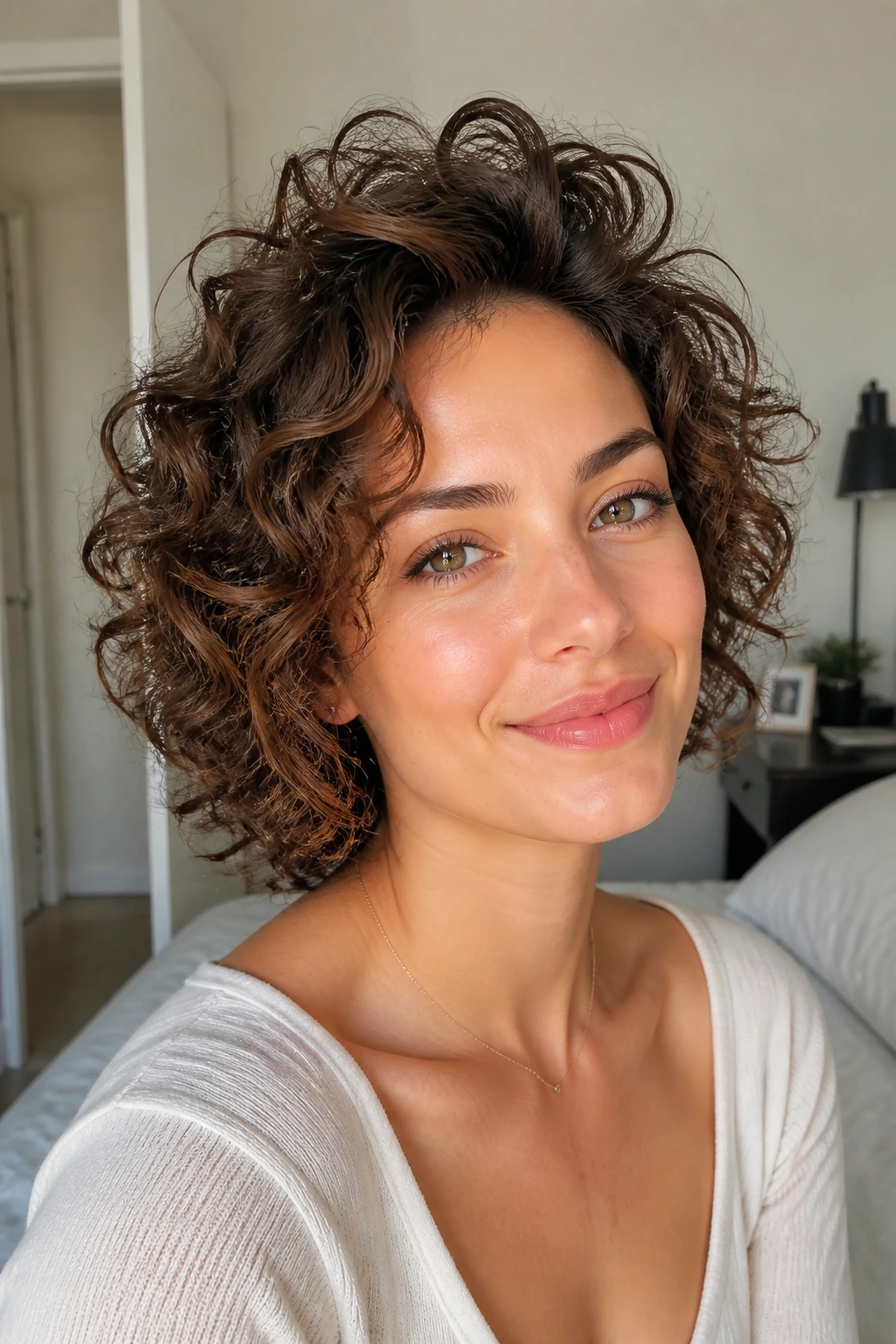
The basic trick behind curly haircuts for volume on thin hair is not magic. It’s geometry. Thin curls need a shape that keeps the perimeter solid enough to look dense, while removing weight from the places where the hair drags itself down. That’s why blunt edges, rounded outlines, and carefully placed internal layers show up again and again.
A lot of curl problems start with over-layering. Stylists sometimes chase “movement” by carving away too much of the shell. On thick hair, that can look airy. On thin hair, it can look see-through. I prefer cuts that leave the outside line intact and do their weight removal on the inside, where the curl can still spring without exposing every gap.
Dry cutting matters too. Wet curls lie about length. They stretch, sag, and pretend to be calmer than they are. Once they dry, they rebound in ways that can destroy a careful bob or turn a layered shape into a lopsided mess. A dry cut or at least a dry check lets the stylist see where the curl really lives.
One more thing that gets ignored: thin curly hair usually needs a cut that can survive day two and day three. If the shape only looks good in the salon mirror, it’s too fussy. The best cuts keep the crown from collapsing, keep the ends from whispering, and make air-drying look intentional instead of accidental.
What to Ask for at the Salon
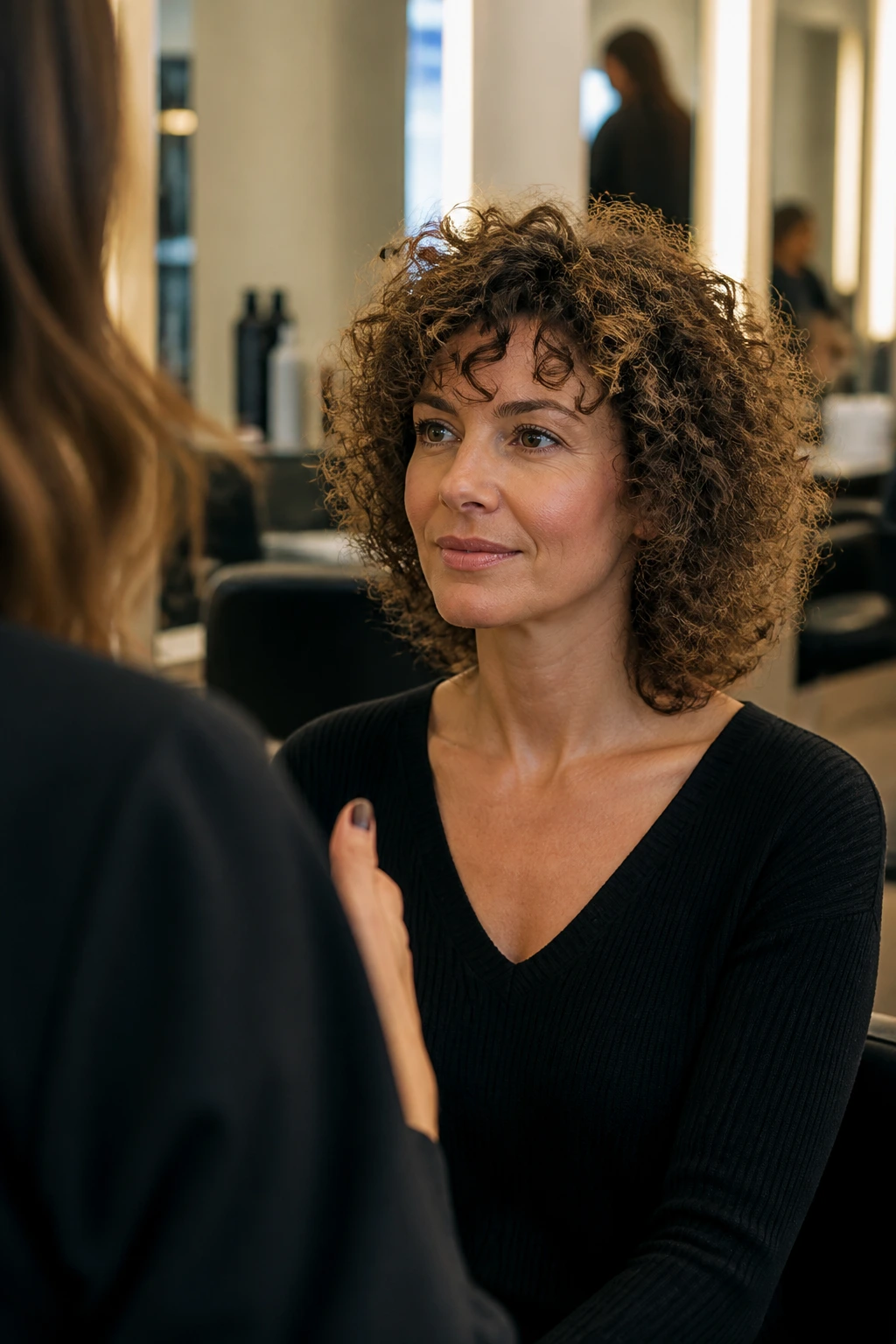
Bring pictures, yes, but bring words too. A photo shows the silhouette you want. The words tell the stylist what you’re trying to protect.
Ask for a blunt or softly blunt perimeter if you want your hair to look denser at the ends. That line is doing a lot of heavy lifting.
Tell them not to over-thin the ends. Thinning shears and razors can be useful in the right hands, but on sparse curls they often create frayed tips that never really come back.
Ask where the shortest layer will sit when the hair is dry. If it starts too high, the top can get patchy fast. Cheekbone, jaw, and collarbone are safer reference points than the crown for many thin curl patterns.
Request weight removal inside the shape, not all over the surface. That keeps movement without exposing the scalp or breaking the outer line.
If your curls shrink a lot, say that clearly. Say how much, if you know. “It shrinks about two inches” is useful. “It shrinks a lot” is not. A good curly cut depends on real information, not polite guesswork.
Tools and Styling Gear That Keep Thin Curls Honest
-
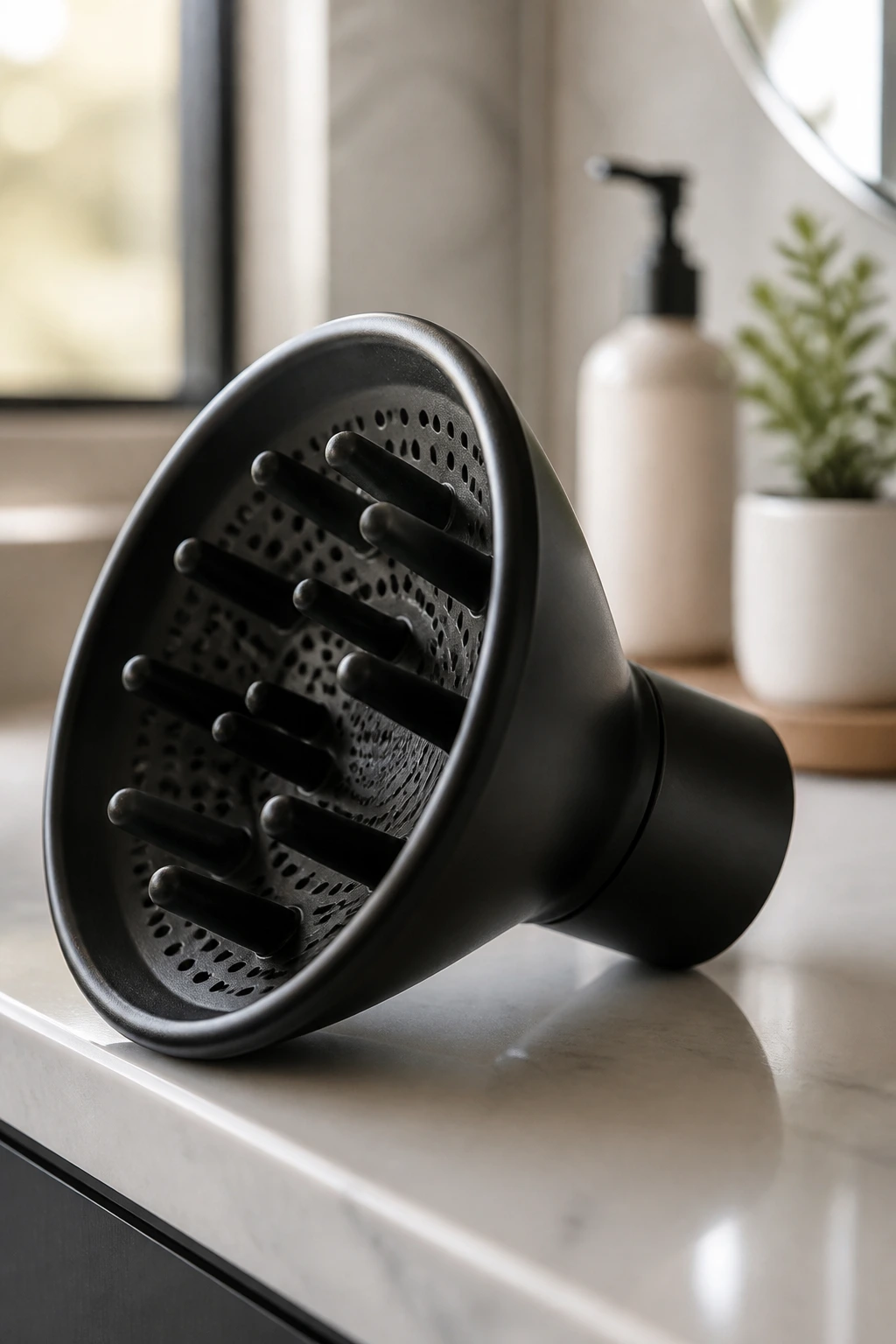
Diffuser attachment: Drying curls with a diffuser lets you keep the shape lifted at the roots instead of blasting it flat with direct heat.
-
Microfiber towel or cotton T-shirt: Both are gentler than a rough bath towel and help cut down on frizz while preserving curl clumps.
-
Wide-tooth comb: Use it only when the hair is damp and coated with conditioner or leave-in. On dry curls, it can spread things apart too much.
-
Duckbill or root clips: These are useful for setting the crown while the hair dries, especially on bob, lob, and shag shapes.
-
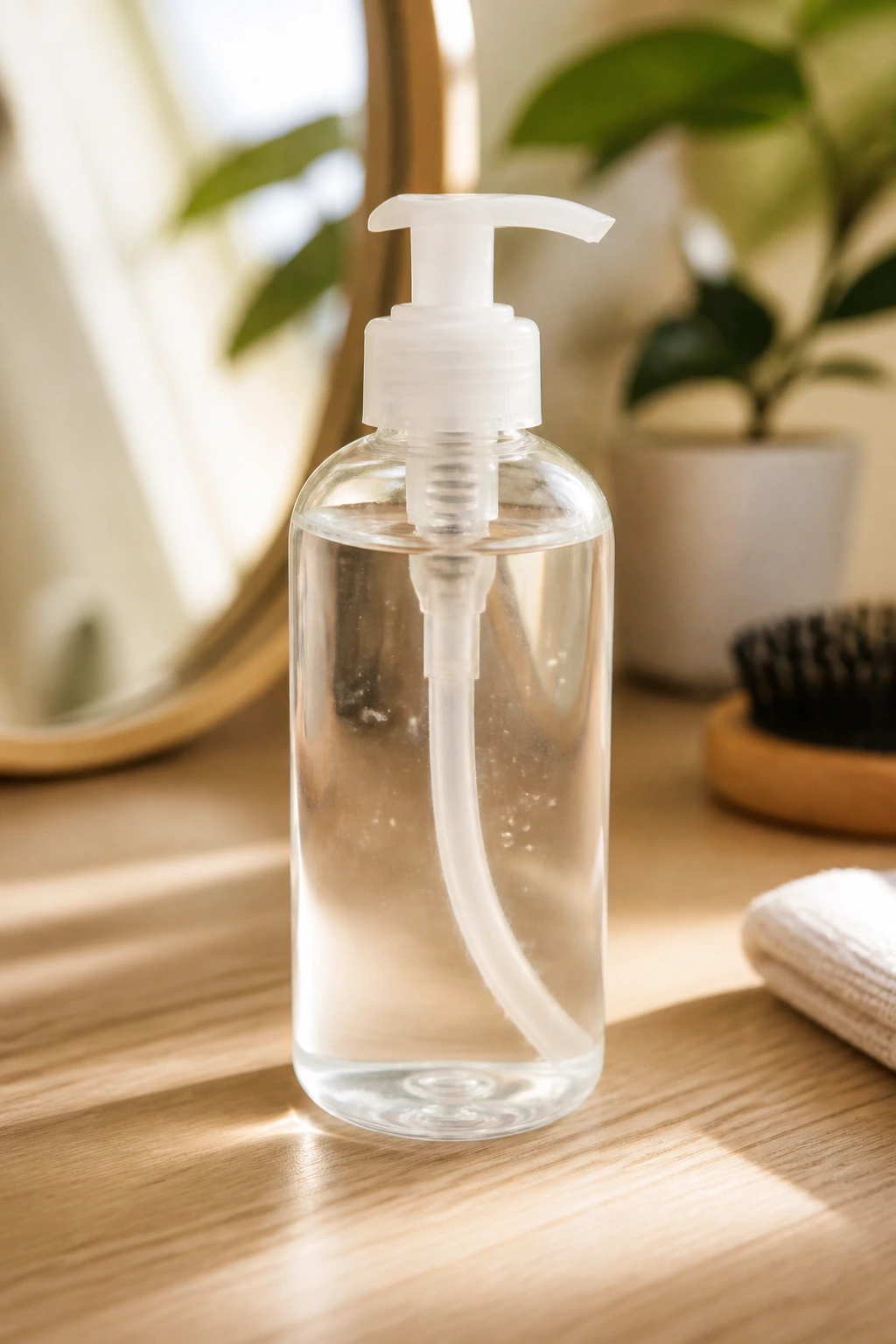
Spray bottle: A little water on day two can wake the curl pattern back up without flooding the whole head.
-
Light mousse: Mousse gives fine curls lift at the roots and a bit of grip without the weight of a heavy cream.
-
Light gel: If your curls frizz quickly, gel helps keep the clumps together and preserves the cut’s outline longer.
-
Satin pillowcase or bonnet: This is not fancy fluff. It keeps thin curls from getting roughed up overnight and helps the cut hold its shape.
Smart Product Choices for Fine Curly Hair
Thin curls usually do better with lighter products than people expect. Heavy creams can feel nice for about five minutes, then the hair droops and starts separating at the ends. A lighter leave-in, a small amount of mousse, and a gel that dries without turning flaky often work better than one big rich cream layered on top of another.
Clarifying shampoo matters too. Curly hair tends to be drier because the natural oil from the scalp has a harder time sliding down the bends in the strand. That’s part of why product buildup shows up so fast on thin curls. If the roots start looking sleepy and the curl clumps stop holding, a gentle clarifying wash every couple of weeks can bring the shape back.
Conditioner should be used, but not in a flood. Focus it from mid-length to ends, then rinse well enough that the curls still feel hydrated but not slick. If your fingers slide through the hair like it’s coated in lotion, you probably used too much. Fine curls want slip, not grease.
Common Mistakes That Flatten Thin Curly Hair
Cutting the layers too high. The symptom is obvious: see-through tops, wispy ends, and a shape that gets smaller every time the hair dries. The fix is to keep the shortest layer lower and let the top hold its strength.
Overusing thinning shears. This creates soft-looking ends at first, then the haircut starts to fray and lose density. On thin hair, a blunt or scissor-finished edge usually works better.
Ignoring shrinkage. A bob that looks perfect wet can jump up and expose the nape when it dries. The fix is simple, though not always easy: cut curls where they actually live, not where they hang in the sink.
Choosing heavy styling products. If the roots go limp by lunchtime, the product is too rich. Fine curls need lift and hold, not a coating that slides the shape downward.
Letting the cut grow past its shape. A gorgeous rounded bob can turn into a tired triangle in a few months. That’s not a personality flaw. It’s a trim schedule problem.
Using one part forever. The same part every day can flatten one side and make the other side sit awkwardly. Shifting the part even an inch can save the cut from looking tired.
Variations and Alternatives to Try
The Soft Office Bob: Keep the chin-to-collarbone range, but reduce the drama in the layers. This version is tidy enough for conservative settings and still gives thin curls a little bounce around the face.
The Low-Maintenance Wash-and-Go Shape: Choose a blunt bob, rounded shag, or shoulder-length interior-layer cut. These are the cuts that can be misted, scrunched, and sent out the door without a full styling session.
The Edgier Statement Cut: Reach for the wolf cut, curly mullet, or undercut pixie. These work best if you want the haircut itself to do the talking and don’t mind a little attitude.
The Grow-Out Rescue: Go with the transitional cut or the shoulder-length invisible-layer version. Both keep the outline calm while old layers catch up, which saves you from an awkward in-between stage.
The Coily Shape-Up: Rounded afro, tapered afro, or halo layers give coily hair a stronger silhouette. These cuts make thin coils look intentional rather than sparse.
The Fine-Strand Fix: Blunt bob, jaw crop, or A-line bob. If your strands are very fine, the strongest move is often the simplest shape with the least surface distress.
How to Keep the Shape Between Trims
Short cuts need more frequent cleanup. Pixies, bixies, and tapered crops usually behave best with trims every 4 to 6 weeks. Bobs and shags can usually stretch to 6 to 8 weeks. Longer lobs and layered shoulder cuts often hold for 8 to 12 weeks if the outline is still doing its job.
Overnight care matters more than most people think. Satin or silk helps, sure, but so does the way you sleep. A loose pineapple, a soft clip, or just placing the curls up and away from the pillow can keep the crown from going dead flat. Thin curls do not have a lot of extra bulk to lose, so every little bit of protection helps.
On refresh days, do not soak the whole head unless you have to. Mist the flattened sections, add a tiny bit of mousse or gel to the roots and outer layer, then diffuse for 5 to 10 minutes until the curl pattern wakes up. If the cut is good, you should not need to rebuild the whole head from scratch. You just need to remind it who it is.
Frequently Asked Questions
Which haircut gives the most volume for thin curly hair?
The shortest answer is usually a chin-length bob, a pixie with a lifted crown, or a rounded shag. Those shapes keep the weight close to the head, which helps the curls stack instead of sagging. If you want the most volume with the least styling, a blunt-ish bob is hard to beat.
Is a blunt cut or layered cut better for thin curls?
Blunt edges usually make thin curls look thicker, but a few well-placed internal layers can stop the shape from feeling heavy. The sweet spot is often a blunt perimeter with interior weight removal. Too many visible layers can make the ends look sparse fast.
Should curly hair be cut dry?
For most thin curly heads, yes, or at least partly dry. Cutting dry lets the stylist see shrinkage and place the shape where the curls actually land. Wet curls can hide problems until the first wash day, and that’s a rude surprise nobody needs.
Will bangs make thin curly hair look flatter?
Heavy bangs can, but soft curtain bangs, side-swept bangs, or a tiny fringe can add lift around the face. The key is keeping them light enough to separate. Curly bangs should move. They should not sit there like a wall.
How often should these cuts be trimmed?
Pixies and cropped shapes usually need a cleanup every 4 to 6 weeks. Bobs and shags can often go 6 to 8 weeks. Longer layered cuts may stretch to 8 to 12 weeks, but only if the perimeter still looks strong.
Can I get a shag if my hair is fine?
Yes, but it should be a soft shag, not a shredded one. Fine hair can handle movement, but it does not usually tolerate heavy texturizing. Keep the layers long enough to curl and leave the ends with some weight.
What if one side of my curls is flatter than the other?
That’s normal. A good stylist can build the cut around the weaker side, and a deep side part can help at home. You can also clip the flatter side at the root while it dries to train a little lift into it.
How do I keep volume from collapsing by midday?
Start with a lighter product load, especially at the roots. Then dry the hair enough at the scalp that it does not stay damp and heavy. If the cut is right, a quick root refresh with a spray bottle and diffuser should be enough to bring the shape back.
The Shape That Makes Curls Look Denser
Thin curly hair is not asking for miracles. It’s asking for the right outline. Once the perimeter is strong, the internal layers are honest, and the shrinkage is respected, the hair stops looking like it’s trying to survive and starts looking like it has a plan.
That’s the real trick behind the best curly haircuts for volume on thin hair. They do not fight the texture. They arrange it. And when the shape is doing that well, even the smallest curl pattern can look fuller, brighter, and a lot more intentional than most people expect.
