



Straight choppy bob haircuts have a way of making hair look intentional in the best possible sense. Not stiff. Not overworked. Just clean, edged, and a little bit defiant — the kind of cut that keeps its shape even when the rest of your morning is messy.
What makes this shape so satisfying is the tension inside it. A bob already has structure. Add choppy ends, and the line stops reading as flat or helmet-like. The perimeter still looks sharp, but the finish has enough broken texture to catch the eye in motion. On straight hair, that matters even more, because every line shows. Every corner shows. Every tiny bit of weight removal shows.
And that’s the fun part. A straight choppy bob can look sleek and expensive, or it can feel slightly cool and offhand, or it can go full editorial with a brutal little fringe and a razor-soft edge. The length, the part, the amount of internal texture — they all change the mood. So do the details your stylist uses, because straight hair is unforgiving in the best way. It tells on bad cutting fast.
Why These Cuts Earn Their Keep
-
The line stays visible: Straight hair shows the actual cut, not a blur of curl or wave, so a choppy bob looks crisp instead of vague.
-
The ends move without looking shaggy: A little point-cutting or razor work breaks up the edge just enough to keep the bob from feeling boxy.
-
Short lengths sit with purpose: Chin-length and jaw-length versions expose the neckline and cheekbones, which gives the whole cut a sharper read.
-
The grow-out is cleaner than people expect: When the chop is placed well, the shape softens in a good way instead of collapsing into a triangle.
-
It works with heat styling or a quick air-dry: You can smooth it flat for a neat finish or rough it up with a touch of texture spray and still keep the outline intact.
-
It gives fine and thick hair different advantages: Fine hair gets lift from the broken ends; thick hair gets relief from the weight line.
1. The Jawline Razor Bob
This is the version that walks in with a straight spine and leaves a little attitude on the floor. The length sits right at the jaw, where the cut can underline bone structure instead of hiding it, and the ends are broken up just enough to keep the shape from feeling severe. On straight hair, that tiny bit of irregularity matters. It keeps the bob looking deliberate, not blocky.
Why It Reads So Clean
The magic here is in the perimeter. A good jawline bob should still look solid when you turn your head, but the last half-inch can be point-cut so the edge doesn’t look like a ruler. That little softening gives the cut a sharper finish, oddly enough.
Best For
- Oval faces that can carry a shorter line
- Heart-shaped faces that want a stronger lower edge
- Hair that’s naturally straight and not too puffy at the crown
Ask for a chin-to-jaw length with light point cutting at the ends, not a lot of layering through the top. One blunt idea, a little texture at the edge. That’s the whole game.
2. Blunt Bob With Frayed Ends
If you like the idea of a blunt bob but hate the hard, blocky feel that sometimes comes with it, this is your move. The silhouette stays square and polished, yet the tips look faintly torn, like the line got trimmed with intention and then softened by hand. It’s subtle. That’s why it works.
The trick is restraint. Too much texture and the bob stops looking clean. Too little and it starts to feel like a helmet. The fray should live only at the ends, where the eye catches it when light hits the hair from the side.
I like this shape on finer straight hair because the blunt perimeter creates the illusion of density. The frayed finish keeps it from looking heavy at the jaw, which is the point where blunt cuts can go a little dull. When it’s done well, the whole thing looks expensive without being precious.
3. Angled A-Line Choppy Bob
A slight angle changes everything. The back sits a touch shorter, the front drops a little longer, and suddenly the whole cut looks more active even before you style it. On straight hair, an A-line bob gets a clean line through the cheek and jaw, then lets the front pieces swing forward with a neat little flick.
The angle is especially useful if your hair tends to collapse at the nape. Shorter back sections remove that weight, so the crown doesn’t have to fight gravity all day. The chop should stay light, though. If the front gets over-layered, the angle starts to feel accidental instead of sharp.
Ask Your Stylist For
- A slightly shorter nape
- Longer front pieces that graze the jaw or collarbone
- Point-cut ends, not shredded layers
- A clean neckline that stays close to the head
This is the cut for people who like shape you can see from the side. It has a bit of swing, and that swing is the whole point.
4. Center-Part Collarbone Bob
Longer doesn’t mean softer in a bad way. A collarbone bob with choppy ends can look almost severe in the best sense — sleek through the body, clean through the center part, and just broken enough at the bottom to keep the length from feeling flat. Straight hair loves this one because the part creates a long vertical line right down the face.
It’s a good choice if you want the sharpness of a bob without giving up the security of a little extra length. The ends usually skim the collarbone, which means the cut still brushes a shirt collar or sweater without turning bulky. Those broken tips matter here because a full, blunt longer bob can start to feel heavy fast.
This is one of those cuts that looks expensive with almost no fuss. A quick blow-dry, a center part, a drop of serum on the ends. Done.
5. Side-Part Swing Bob
A deep side part gives straight hair a built-in lift that a center part can’t always deliver. The heavier side creates a soft sweep across the forehead, while the lighter side opens the face and lets the bob swing with a little asymmetry. It’s not dramatic in a loud way. It just looks very considered.
Why the Part Changes the Whole Mood
A side part shifts weight, and weight is the real story in any bob. Move the part a couple inches off center, and the cut suddenly sits with more personality. The choppy ends keep it from looking too polished, which is exactly what keeps it modern.
This shape works well if your face feels a little too symmetrical with a dead-center part. It also helps if the front of your hair wants to lie flat against the scalp. A side part gives the roots somewhere to go. A small lift. A cleaner line. Less fuss.
The best version stays smooth through the mid-lengths and only gets piecey right at the perimeter. That contrast is what makes it sharp.
6. French Bob With Piecey Fringe
There’s a reason this cut keeps coming back. The French bob sits short, usually around the cheekbone or just below it, and the fringe makes the whole style feel finished in one move. On straight hair, the fringe can be soft and split slightly in the middle, or blunt and full across the brow. Either way, the bob underneath should have a clean edge with a few choppy tips so it doesn’t read like a block.
The fringe is the part people overthink. Don’t. The best one falls with a little separation, not a perfect curtain. If it’s too dense, the cut can feel heavy fast. If it’s too wispy, you lose the point of the shape. Aim for balance and a bit of bite.
This haircut loves a bare neck, a strong earring, and a blunt lip color. Not required, obviously. But it does have that kind of frame-the-face energy.
7. Micro Bob With Cropped Texture
Short. Honest. No hiding.
A micro bob sits above the jawline, sometimes close to the earlobe, and the whole effect depends on how clean the shape is. Straight hair makes this cut look almost architectural, which is exactly why the choppy ends have to be handled carefully. You want enough texture to soften the edge, not so much that it starts looking like a bad grow-out.
This is the bob for someone who likes the line of the haircut to be the whole point. There isn’t much curtain to hide behind here. The neck shows. The cheekbones show. The line of the jaw does a lot of work. That’s also why this cut can be so flattering when it’s placed well.
It’s not a low-visibility haircut. It’s a statement. A very clean one.
8. Invisible-Layer Bob
Can a bob move without looking layered? Absolutely. That’s what invisible layers are for. From the front, the cut can still read as a neat, crisp bob. Inside the shape, though, a stylist removes a little bulk so the hair bends and settles better. Straight, dense hair especially benefits from this because the perimeter stops pushing outward.
What Makes It Different
Invisible layers sit inside the shape, not on the surface. That means the bob doesn’t get stair-stepped or choppy all over. It keeps a clean line, but the underneath has room to breathe. For thick hair, that makes a huge difference at the nape and around the ears.
This version is a good compromise if you want movement but don’t want the ends to look shredded. You still get the straight, sharp outline, just with less weight. It’s a quiet cut, which is probably why it ages so well between salon visits.
9. Razor-Cut Feather Bob
Razor cutting can be gorgeous on straight hair when the stylist knows exactly where to stop. The effect is lighter, softer, and more separated than scissor-cut texture, which makes the bob look almost feathered at the ends. It’s not fluffy. It’s airy.
This works best on hair that holds a clean line but feels dense at the bottom. A razor can remove enough bulk to stop the ends from kicking out like a shelf. The shape still needs a strong perimeter, though. Otherwise the cut loses its edge and just starts to look thin.
A razor-cut bob looks especially good when you tuck one side behind the ear and let the other side fall loose. That tiny asymmetry makes the texture visible. Without it, the softness can get lost.
10. Boxy Bob With Chopped Corners
Here’s the bold one. A boxy bob keeps more width through the bottom, which gives the cut a square, graphic finish, but the corners are lightly chopped so the outline doesn’t become too rigid. It has a sharper mood than a soft rounded bob and a more fashion-forward read than an ordinary blunt cut.
The shape is all about edges. You want the front to land cleanly, the sides to hold their line, and the very ends to look slightly broken instead of shaved into a perfect block. That contrast is what keeps the cut wearable.
This one is especially good if your hair is straight and naturally obedient. If your hair has a mind of its own, the boxy shape can get stubborn fast. But when it sits well, it has a kind of quiet authority that a softer bob just doesn’t have.
11. Tucked-Ear Bob
Some cuts are designed to be seen both ways — loose and tucked. This is one of them. A tucked-ear bob usually sits at chin length or a touch below, with enough length at the front to sweep behind the ear without popping back out immediately. The choppiness stays near the ends, so the shape looks neat when it’s down and a little more casual when you tuck it.
That’s the charm. One side can stay flat and clean, while the other side gets a soft bend or a bit of ear action. It gives straight hair a little life without asking for much styling.
It’s also a smart choice if you wear glasses. The tucked side keeps the frames from fighting the hair, and the cut still looks purposeful when you take the glasses off. Small detail. Big difference.
12. Curved-Under Choppy Bob
Do you want the ends to flick under instead of out? Then the line has to be built for that from the start. A curved-under bob uses a clean perimeter with just enough choppy finishing at the tips to keep the shape from looking stiff. When you blow-dry it with a round brush or bend it gently with a flat iron, the ends roll under in a neat, controlled way.
This is the most polished cut in the bunch, but it still has texture. That texture matters because a totally smooth curve can look dated fast. The broken ends keep it from becoming too sweet or too tidy.
How to Wear It
- Smooth the roots first so the curve starts clean
- Bend the last inch inward, not the full length
- Keep the ends lightly separated with serum or a touch of cream
- Let the nape stay compact so the shape doesn’t puff out
It’s a clean line with a little grit at the edge. That’s the whole appeal.
13. Full Fringe Choppy Bob
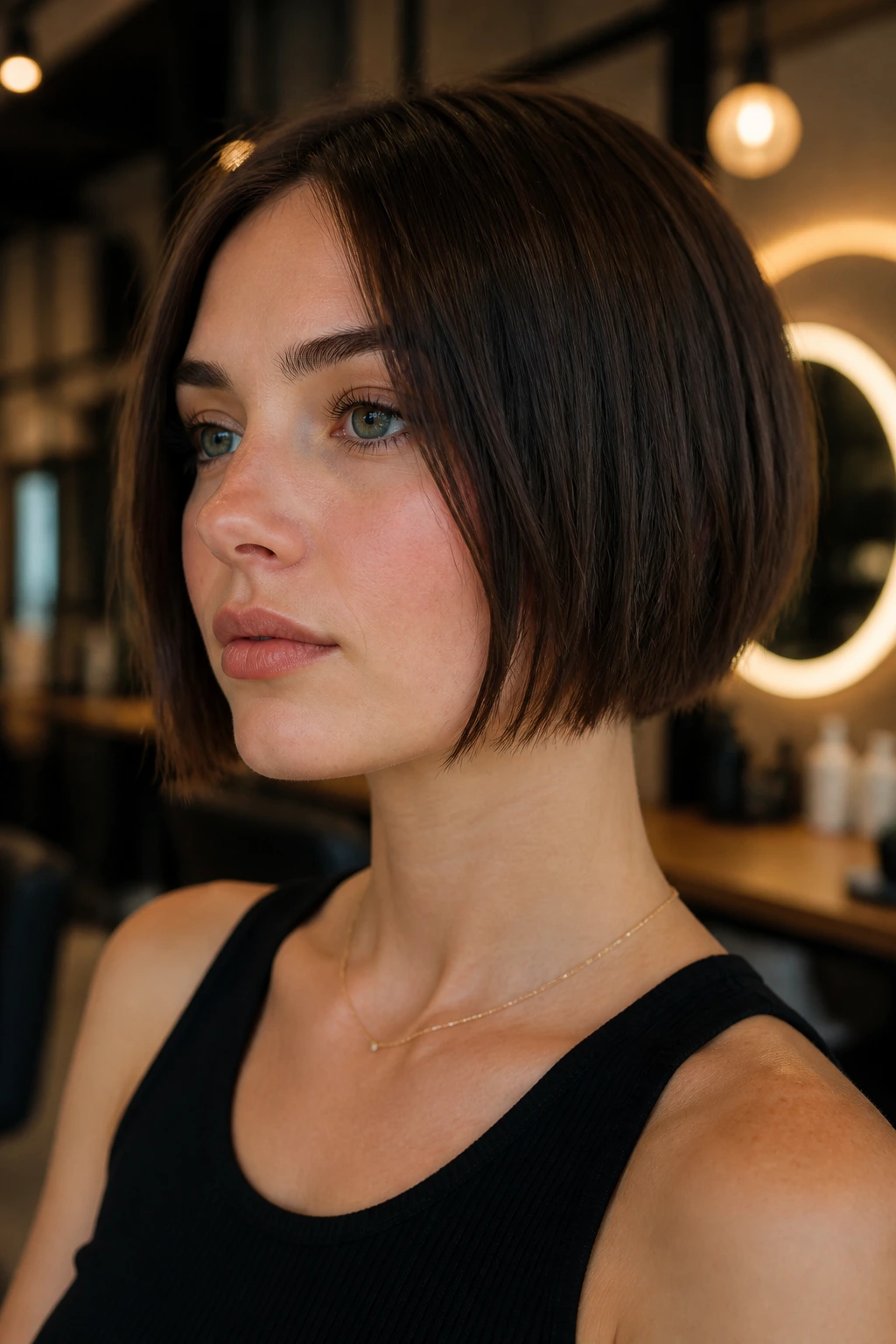
A strong fringe changes the whole geometry of a bob. Full bangs shorten the face visually, pull attention to the eyes, and make the haircut feel more finished even on days when the rest of your styling is bare minimum. Pair that with a straight choppy bob, and the result is blunt in the front, broken at the hem, and surprisingly wearable.
The fringe should not be too shredded. That’s the mistake people make. If the bangs are too thin, they disappear into the haircut and you lose the point of having them. Better to keep them dense enough to sit on their own, then soften the bob’s ends so the overall look doesn’t get too heavy.
This is a strong choice for a long forehead or for anyone who likes a face-framing cut that does more than sit there. It has presence.
14. The Soft Undercut Bob
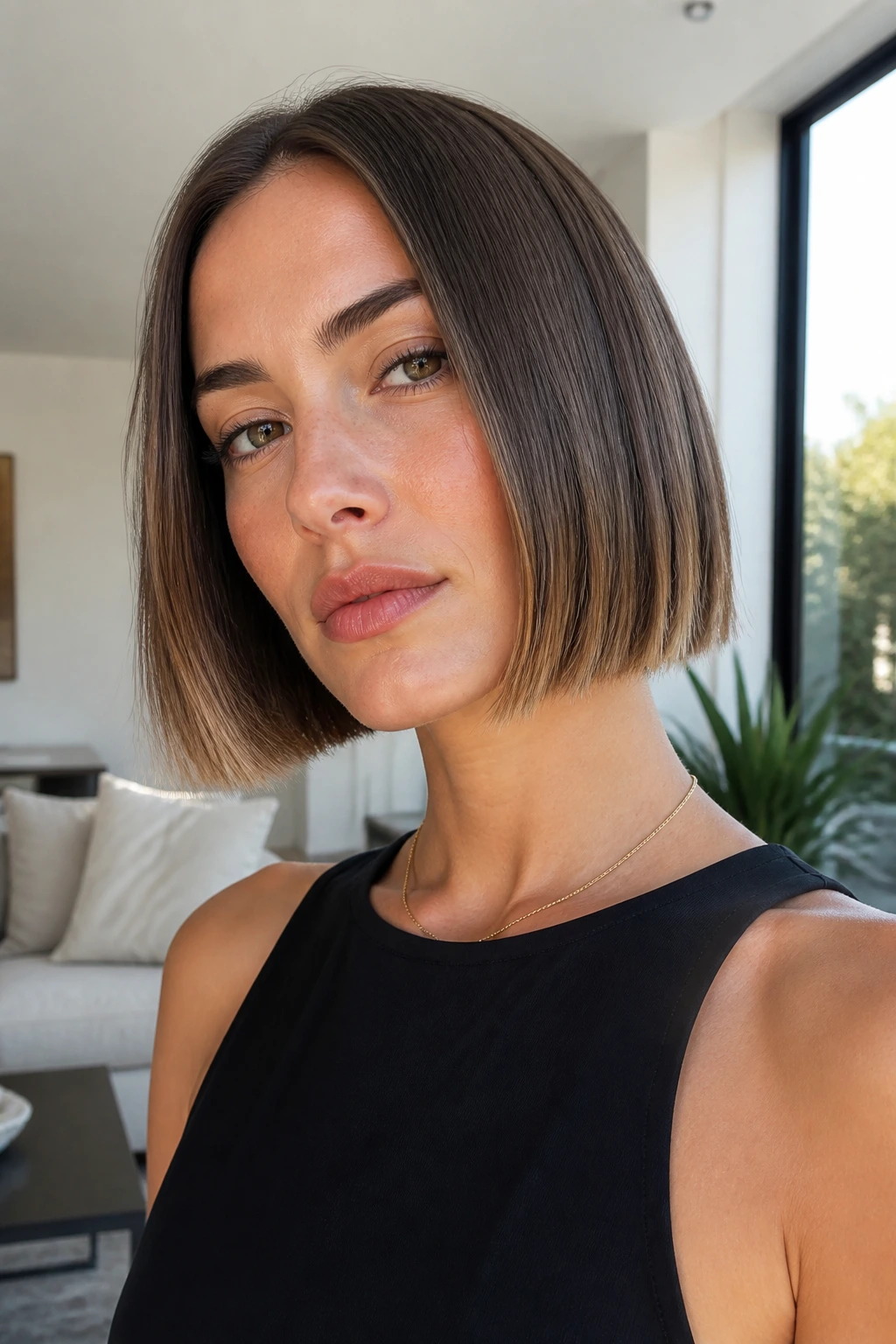
Thick hair can turn a bob into a bell shape if nobody removes the right amount of bulk. A soft undercut at the nape solves that without making the haircut look shaved or extreme. From the outside, it still reads as a straight choppy bob. Underneath, though, some hidden weight is gone, so the hair lies flatter and the top layer can move.
Why It Helps
The undercut cuts down on that heavy, bulky kick that dense straight hair loves to throw at the neck. You get a cleaner line, less puff at the bottom, and faster drying time. That alone is worth it if your hair takes forever to air-dry.
This version needs maintenance more often than a standard bob, because the nape grows out first. Still, if your hair is thick enough to fight every haircut you’ve ever had, this is usually the smartest answer.
15. Off-Center Part Lob Bob

Center parts get all the attention, but an off-center part can be far more flattering on straight hair. It gives the face a little movement without committing to full side-part drama, and on a lob-length bob it keeps the cut from looking too symmetrical or too severe. The choppy ends stop the longer shape from reading flat.
This is the cut I’d point people toward if they want something calm but not boring. The line sits below the chin, often around the collarbone, which gives you more flexibility with styling and a little more room for grow-out. The off-center part breaks the surface just enough that the bob still feels fresh.
It’s a smart shape for people who live in blazers, crewneck sweaters, and a lot of “I need my hair to behave” mornings. Clean, not fussy.
16. Grown-Out Choppy Bob
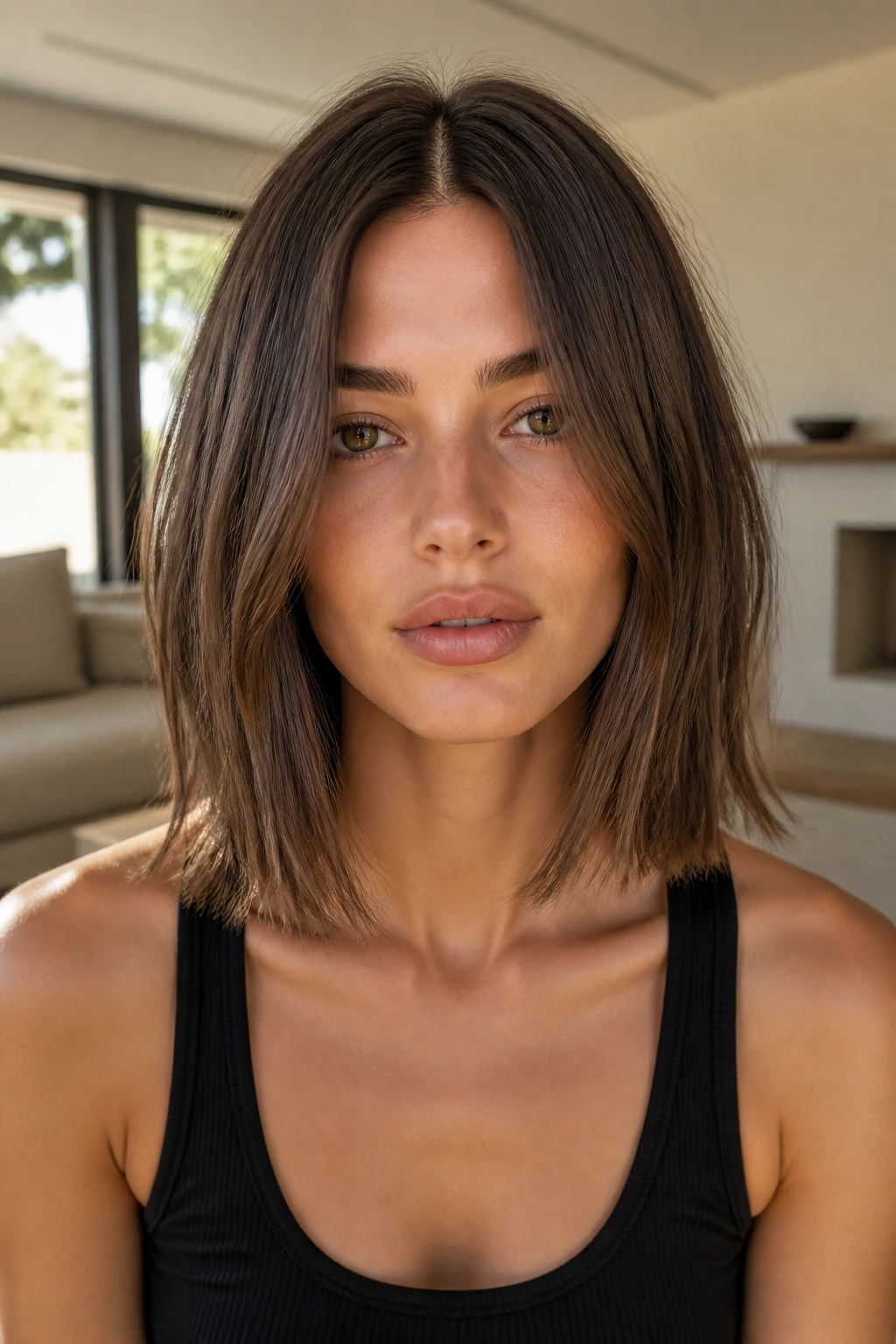
Some cuts look best on day one. This is not that kind of cut. A grown-out choppy bob is built so it still has shape two, three, even four weeks later, when the edges have softened and the length has started to shift. On straight hair, that matters because the wrong bob can go floppy fast.
The trick is to keep the perimeter clean enough that the grow-out looks intentional. A little choppiness near the ends helps the shape move with the extra length instead of collapsing into a dull rectangle. If you hate running back to the salon every month, this is the one to ask for.
Good Signs This Will Work for You
- You’re fine with a slightly softer line after a few weeks
- You want a bob that can be tucked, blown smooth, or air-dried
- You prefer shape over precision-perfect sharpness
A grown-out bob is a practical haircut, but not a boring one. That’s rare.
Why Straight Choppy Bob Haircuts Stay Crisp Instead of Boxy
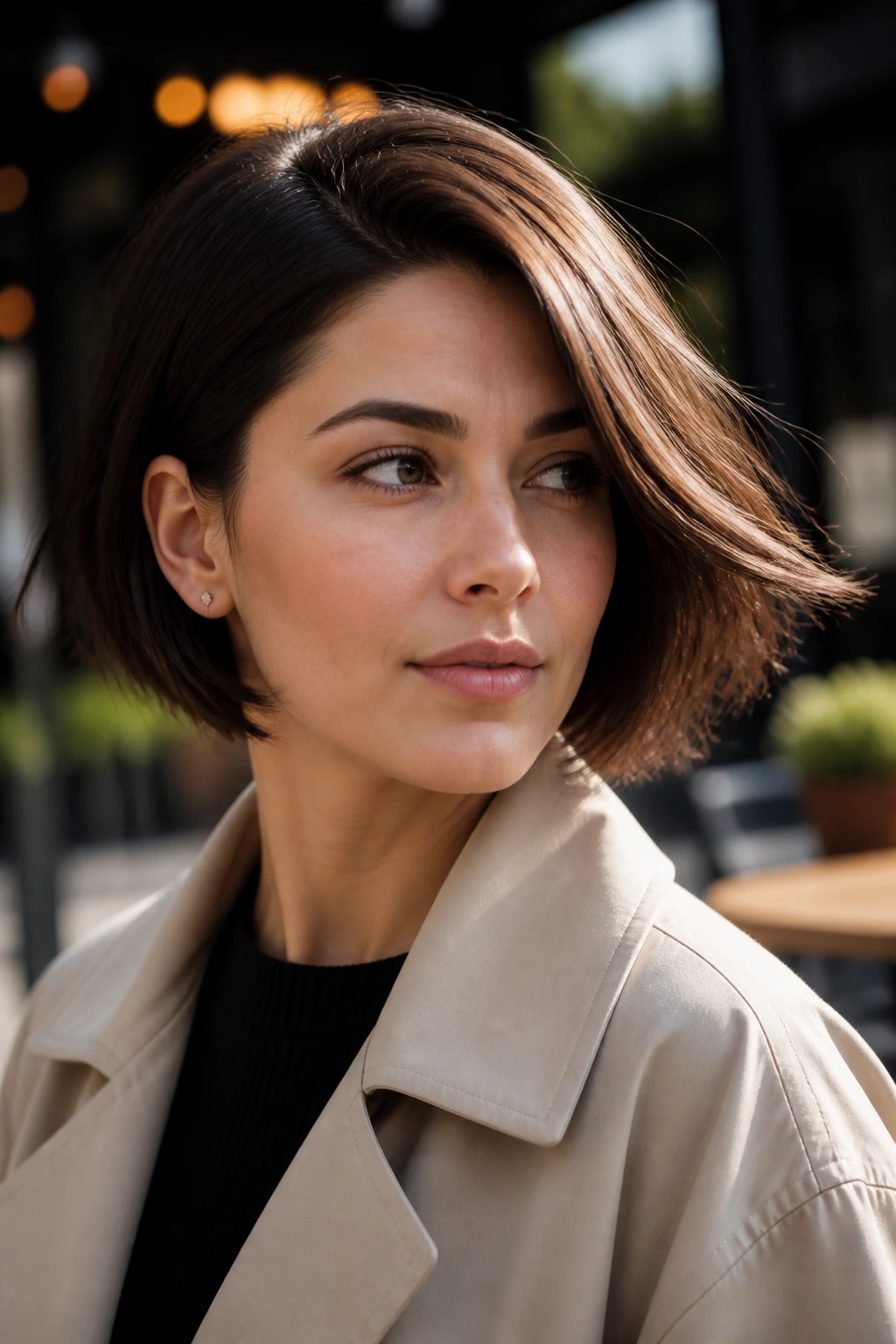
Straight hair tells the truth. That’s why this haircut family either looks brilliant or looks like a blunt mushroom that got left in the rain. The difference is where the weight sits and how the ends are finished. A strong perimeter gives the bob its structure, and the choppy edge keeps it from going rigid.
The best versions use texture with restraint. Point cutting softens the last line of the cut. Razor work can remove bulk without stacking obvious layers. Internal removal helps the shape bend inward instead of puffing out at the sides. None of that should be visible as a gimmick. You should see the result, not the technique.
That’s what makes straight choppy bob haircuts so useful. They’re not about making hair look messy. They’re about giving a precise shape a little air. The line still matters. Maybe that’s the whole point.
A bob that’s too blunt can feel harsh on some faces and heavy on some hair types. A bob that’s too layered can lose its edge altogether. The choppy bob sits in the middle, where the cut still has a spine but doesn’t wear a suit to bed.
Tools That Keep the Finish Clean
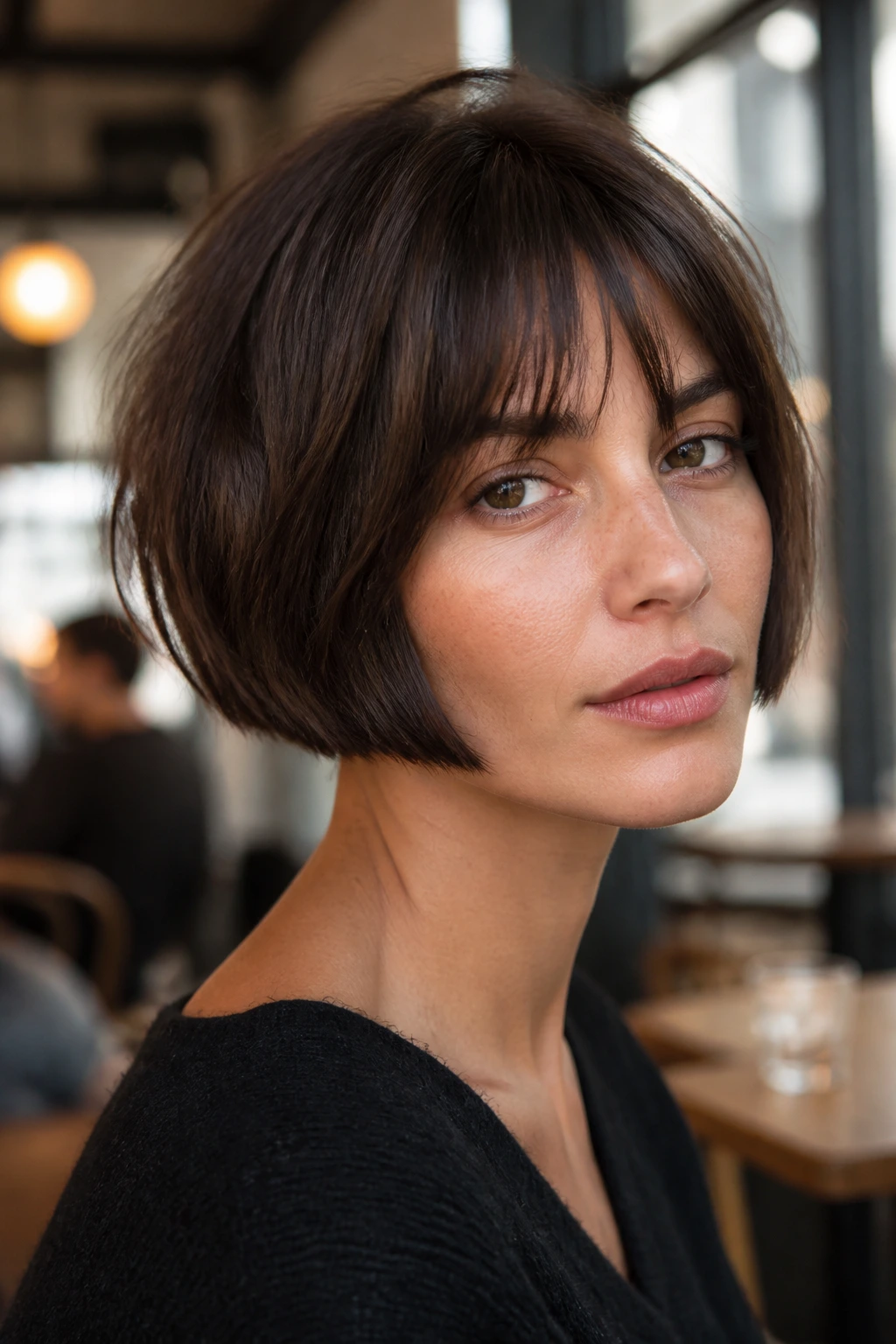
-
Flat iron with adjustable heat — A slim iron around 1 inch wide is easiest for smoothing the ends without flattening the whole head.
-
Blow dryer with a nozzle — The nozzle directs airflow so the cut dries in the direction you want instead of puffing sideways.
-
Paddle brush or small round brush — A paddle brush gives a cleaner straight finish; a small round brush adds a slight bend under the ends.
-
Heat protectant spray — Straight bobs show dry ends fast, so this is not optional if you use hot tools.
-
Lightweight serum — One pea-sized amount on the mid-lengths and ends keeps the chop from looking dusty.
-
Texturizing spray — A few spritzes at the ends can bring back separation after the flat iron smooths everything down.
-
Tail comb — Clean parts matter with this haircut. A tail comb gives a neat center or off-center line.
-
Sectioning clips — These make smoothing the bob easier, especially if your hair is thick or slightly uneven in texture.
How to Ask for Straight Choppy Bob Haircuts at the Salon
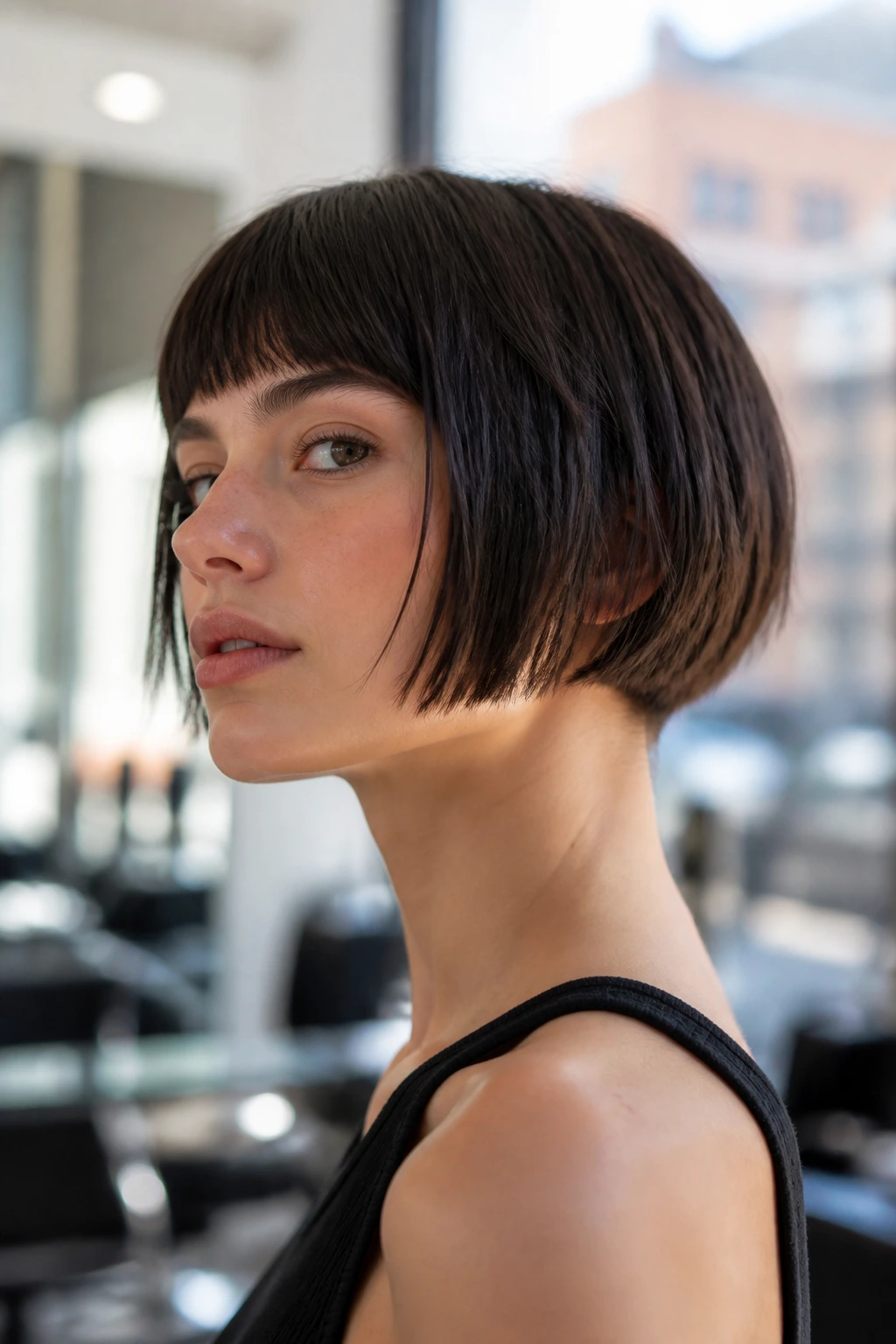
Bring photos, yes, but don’t stop there. Photos show the mood. Words tell the stylist where the actual line should sit, and that’s the part that gets people into trouble. “Choppy bob” can mean six different things in six different chairs. One stylist hears soft point cutting. Another hears heavy layering. Those are not the same haircut.
Tell them where you want the perimeter: jaw, chin, cheekbone, or collarbone. Then say whether you want the edge to stay blunt and only lightly broken up, or whether you want more visible texture through the ends. If your hair is thick, ask how much weight they plan to remove around the nape. If your hair is fine, ask them to keep the top from getting over-thinned.
A good line to use is this: “I want the bob to look sharp when it’s straight, but I don’t want the ends to look chunky or puffed out.” That sentence does a lot of work. It tells them you want precision, not random texture.
If your hair lies very flat, ask whether a slight A-line or internal layer would help the shape keep movement. If your hair flips up at the ends, say that out loud. That one detail changes the cut more than people think.
How to Style These Bobs Without Losing the Edge
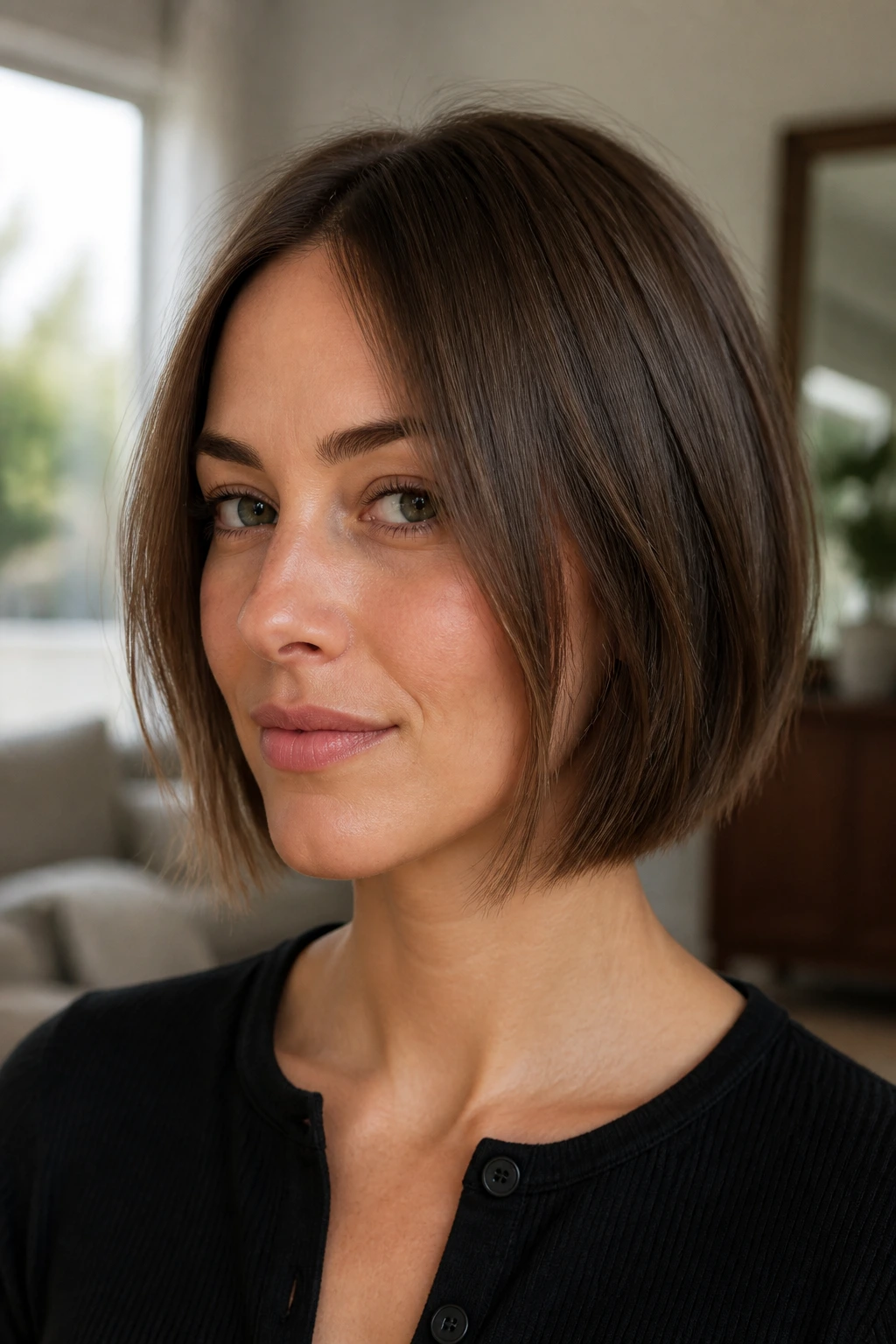
Polish: Start with a quick blow-dry until the hair is about 90% dry, then use a flat brush or paddle brush to smooth the surface. The goal is not glassy perfection. You want the bob to lie flat enough that the shape is readable.
Texture: If the ends look too neat, twist the last inch of hair once or twice with a flat iron on low-to-medium heat, around 300°F to 330°F for most hair types. That gives the chop a little separation without creating a bend that looks obvious.
Part: A center part makes the shape feel spare and modern. A side or off-center part adds lift and changes the whole mood. Shift it a half inch and you’ll see the cut differently in the mirror.
Finish: Work a tiny bit of serum through the last two inches only, then mist texturizing spray from underneath if you want the ends to show their texture. Skip heavy cream near the roots. It steals the edge.
Small Adjustments That Change the Mood
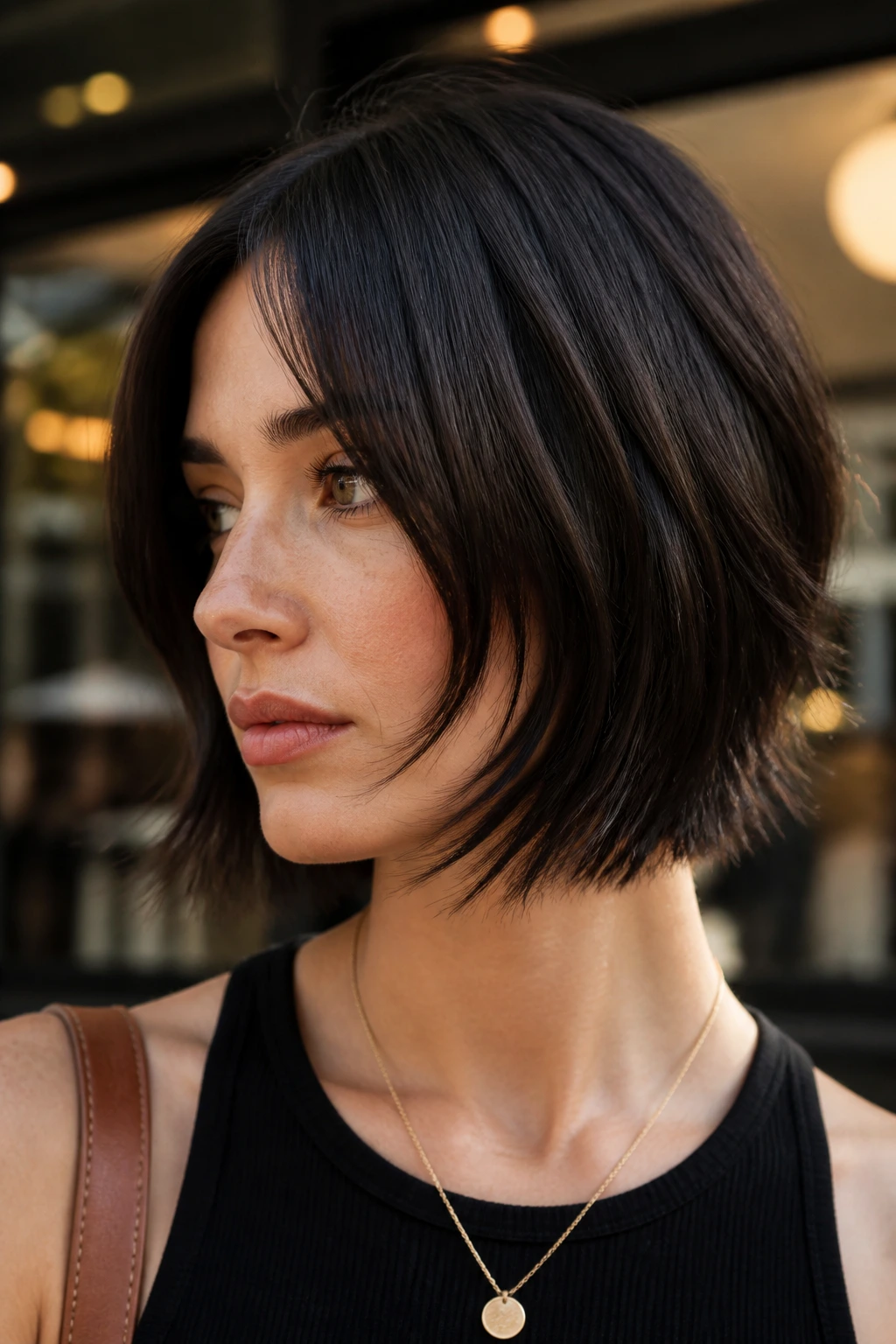
Texture Boost: If the bob feels too neat, rub a little dry shampoo at the roots even on clean hair. That gives the crown a touch of lift and keeps the ends from looking like they’ve been ironed into submission.
Face-Framing: Moving the front pieces a half inch longer near the cheekbones can soften a strong jaw without losing the bob’s shape. Tiny changes like that matter more than people expect.
Gloss: One drop of serum on the very ends makes the haircut look finished. More than that, and the choppy texture starts to clump. That’s the line to watch.
Make-It-Yours: If you wear glasses, keep the temple area a touch lighter so the frame and hair don’t compete. If you love earrings, go shorter at the nape so the neckline stays visible. If you want less styling, keep the layers internal and the perimeter clean.
Common Mistakes That Make a Choppy Bob Look Cheap
-
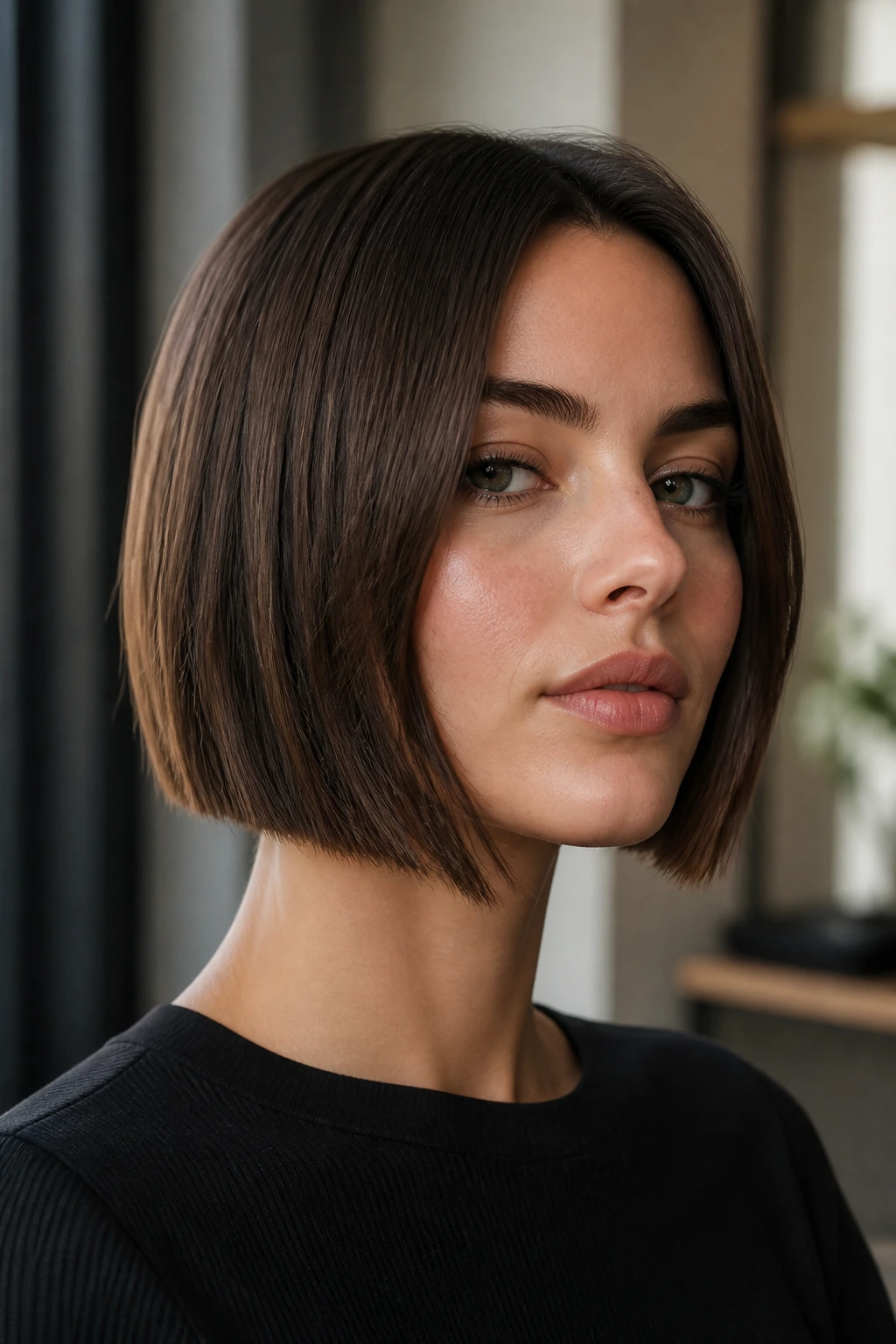
Too much thinning at the ends: The symptom is stringy, see-through tips that fray instead of move. The fix is to keep the texture light and concentrated near the perimeter, not scattered through the whole head.
-
Letting the nape get bulky: If the back puffs out, the bob starts to look triangular from the side. Ask for weight removal where the hair stacks up under the occipital bone, especially if your hair is thick.
-
Over-straightening every ounce of texture: A pin-flat finish can erase the point of the chop and make the cut look harsh. Leave a slight bend at the ends so the line still has life.
-
Choosing a length that lands at the widest part of the jaw: That can make the face look broader, not sharper. A slightly higher or lower placement usually solves it.
-
Using too much product: Heavy cream or oil makes the broken ends stick together. The haircut loses that piecey separation and starts to look greasy fast.
Variations and Adaptations to Try

Fine-Hair Frame: Keep the perimeter blunt and let the chop live only at the tips. That preserves density while still giving the ends some movement.
Thick-Hair Release: Ask for internal weight removal or a soft undercut at the nape. The shape will dry faster, sit flatter, and stop flipping outward at the bottom.
Round-Face Lift: Move the part off center and let the front pieces drop a little lower than the back. That creates a longer vertical line and keeps the bob from feeling too wide.
Long-Lob Version: Extend the length to the collarbone and keep the ends lightly broken up. This version gives you more styling room and a slower grow-out.
Fringe First: Add a full fringe or a soft, eyebrow-skimming bang if you want the cut to feel stronger right away. The bangs do a lot of the visual work, so the bob underneath can stay cleaner.
Low-Heat Version: If you barely use hot tools, ask for a cut that already sits neatly when air-dried. That means less razor work through the surface and more attention to the perimeter shape.
Keeping the Shape Between Salon Visits
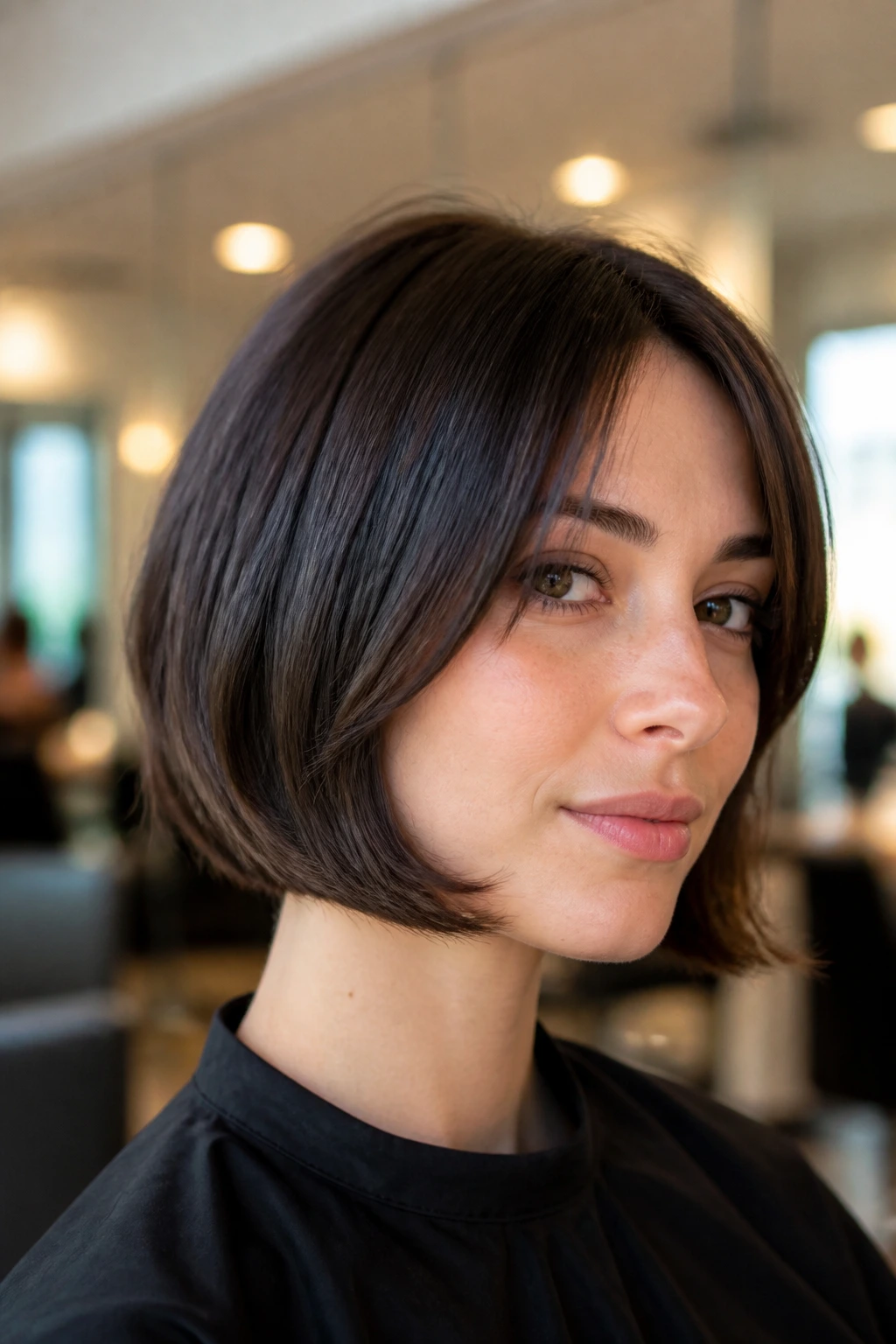
A straight choppy bob looks best when the outline stays clean, so timing matters. Most people need a trim every 6 to 8 weeks to keep the line from drooping, especially if the cut is chin length or shorter. If you have a fringe, that part may want attention every 3 to 4 weeks because bangs show growth faster than the rest.
Night care helps more than people admit. A silk or satin pillowcase cuts down on the little bends and kinks that make the ends kick out in the morning. If your hair is prone to flattening, loosely clipping the sides back before bed can help preserve the part line. Don’t twist the whole bob into a tight bun; that usually leaves a weird crease right where the jawline should look sharp.
Between washes, a pea-sized amount of serum on dry ends and a quick pass with a flat iron on the front pieces can bring the shape back fast. If the bob starts to look dull, dry shampoo at the roots does more than people think. It keeps the crown lifted so the bottom doesn’t have to do all the visual work.
And if the back starts to curl under too much or flip out at the neck, that’s your sign. The cut is asking for a tidy-up, not a complete reinvention.
Questions People Ask Before Getting a Choppy Bob
Will straight choppy bob haircuts work on fine hair?
Yes, if the chop is light and the perimeter stays fairly blunt. Fine hair usually looks better with a strong outline and only a little texture at the ends, because too much thinning can make it look sparse.
What if my hair is thick and straight?
Then the cut should remove bulk from the inside, not just trim the bottom. A soft undercut or invisible layers can stop the bob from puffing out at the neck and make the whole shape sit closer to the head.
Does a choppy bob need hot tools every day?
No, but it does need some kind of direction. Even a quick blow-dry with a paddle brush or a rough dry with a smoothing cream can keep the line from going fuzzy. If you air-dry only, ask for a shape that still collapses neatly on its own.
Can I wear this cut with a center part?
Absolutely. A center part gives the bob a cleaner, more graphic read. It works especially well with collarbone lengths, blunt ends, and jaw-grazing shapes.
What face shape suits a short choppy bob best?
Oval and heart-shaped faces take to it easily, but that doesn’t mean others should skip it. The length placement matters more than the label. Move the bob higher, lower, or off-center and the effect changes fast.
How do I stop the ends from flipping out?
Keep some weight in the perimeter and use a round brush or flat iron to bend the last inch inward. If the cut is too layered or the nape is too bulky, the flip will keep coming back.
Is this a good grow-out cut?
If the shape is cut with a clean line, yes. The trick is to avoid over-layering, because that’s what makes a growing bob look muddy instead of soft.
Can I ask for this if I usually wear my hair behind my ears?
That’s actually a useful detail to share. A tucked-ear bob needs slightly different length at the front so it doesn’t pop loose awkwardly, and your stylist can build that into the shape.
Sharp Ends, Clean Lines
A good straight choppy bob doesn’t shout. It cuts a clear line, lets a little air into the ends, and leaves you with hair that looks thought through even when you haven’t spent much time on it. That’s the appeal, really. Structure with a pulse.
The best version for you won’t be the shortest or the trendiest one. It’ll be the one that lands in the right place on your face, keeps the neck clean, and grows out without turning into a square. That’s why the details above matter more than the name on the mood board.
If you’re taking this to a salon, go in with a length in mind, a parting preference, and one honest sentence about how much styling you’ll actually do. That usually tells the stylist more than ten vague compliments ever could.
