



Thin hair can look plush in one salon mirror and flat the moment you get home and tuck it behind your ear. That’s the annoying part. The cut was fine. The shape just didn’t survive real life.
The smartest bob haircuts for thin hair don’t fight the hair you have. They work with perimeter, weight, and line. A clean blunt edge can make ends look denser. A tiny bit of graduation can lift the crown. A well-placed side part can do more than a mountain of teasing ever will.
I’ve always thought the worst thing thin hair can be given is too much enthusiasm from a scissors hand. Aggressive thinning shears. Over-softened ends. Layers cut so high they leave the bottom looking see-through by the second shampoo. A good bob does the opposite. It keeps its shape, keeps its edge, and makes the whole head of hair read as intentional instead of apologetic.
Why These Bob Haircuts Stand Up to Thin Hair
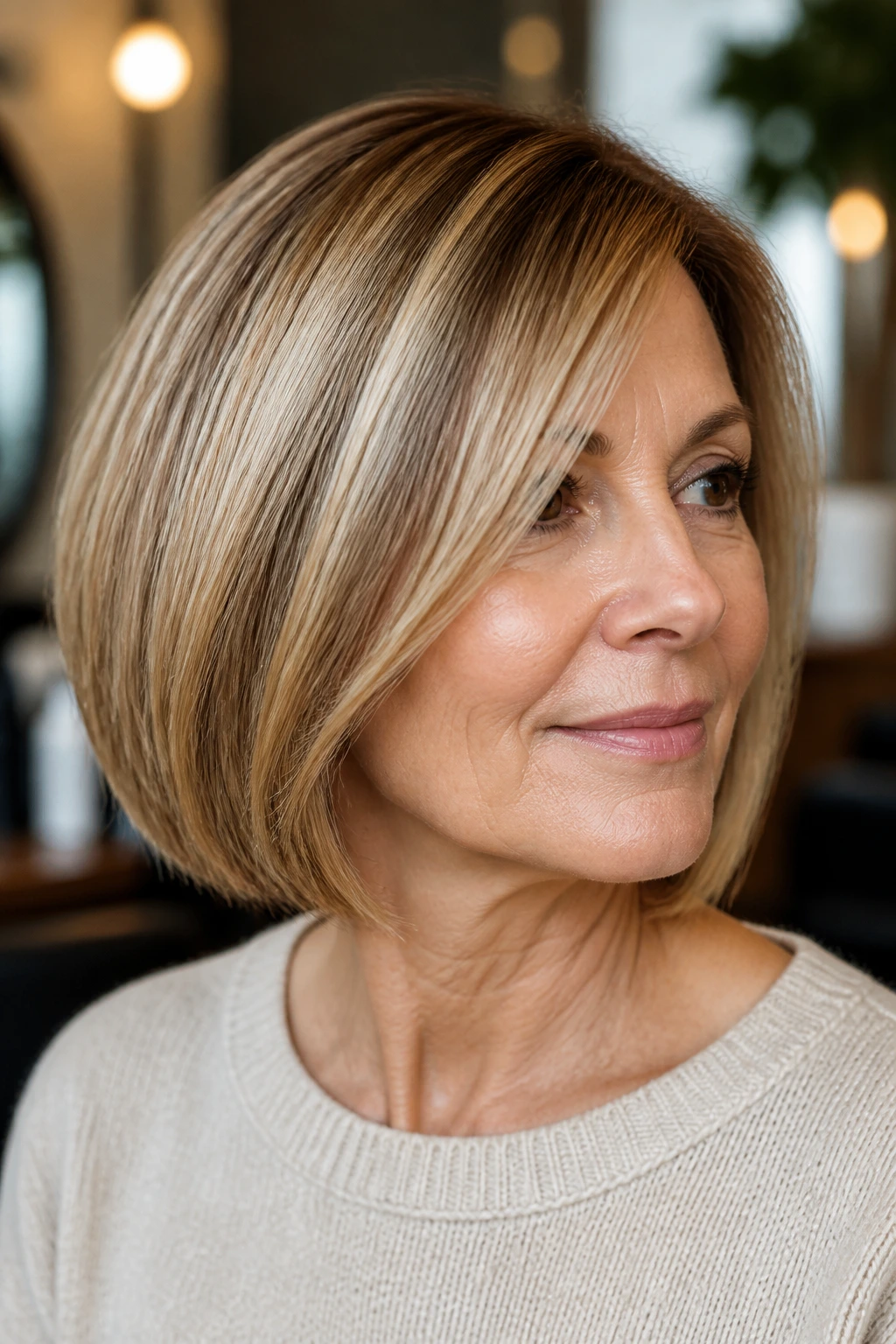
-
A stronger perimeter makes more hair appear to exist. When the ends land in one line, the eye reads them as denser, even if the actual number of strands never changes.
-
Smart graduation lifts the crown without shredding the bottom. A little built-in shape at the back gives the cut a body map, which matters a lot when the top collapses fast.
-
Length is not always your friend. Hair that hangs past the collarbone can pull fine strands flat and separate the ends. A shorter bob often keeps the outline cleaner.
-
Parting changes the whole mood. A deep side part creates lift at the root, while a center part can make a blunt bob look sharp and balanced.
-
The right bob styles fast. Thin hair usually sets quickly with a round brush, a flat iron bend, or a few velcro rollers. No need for ten products and a prayer.
What Thin Hair Actually Needs From a Bob
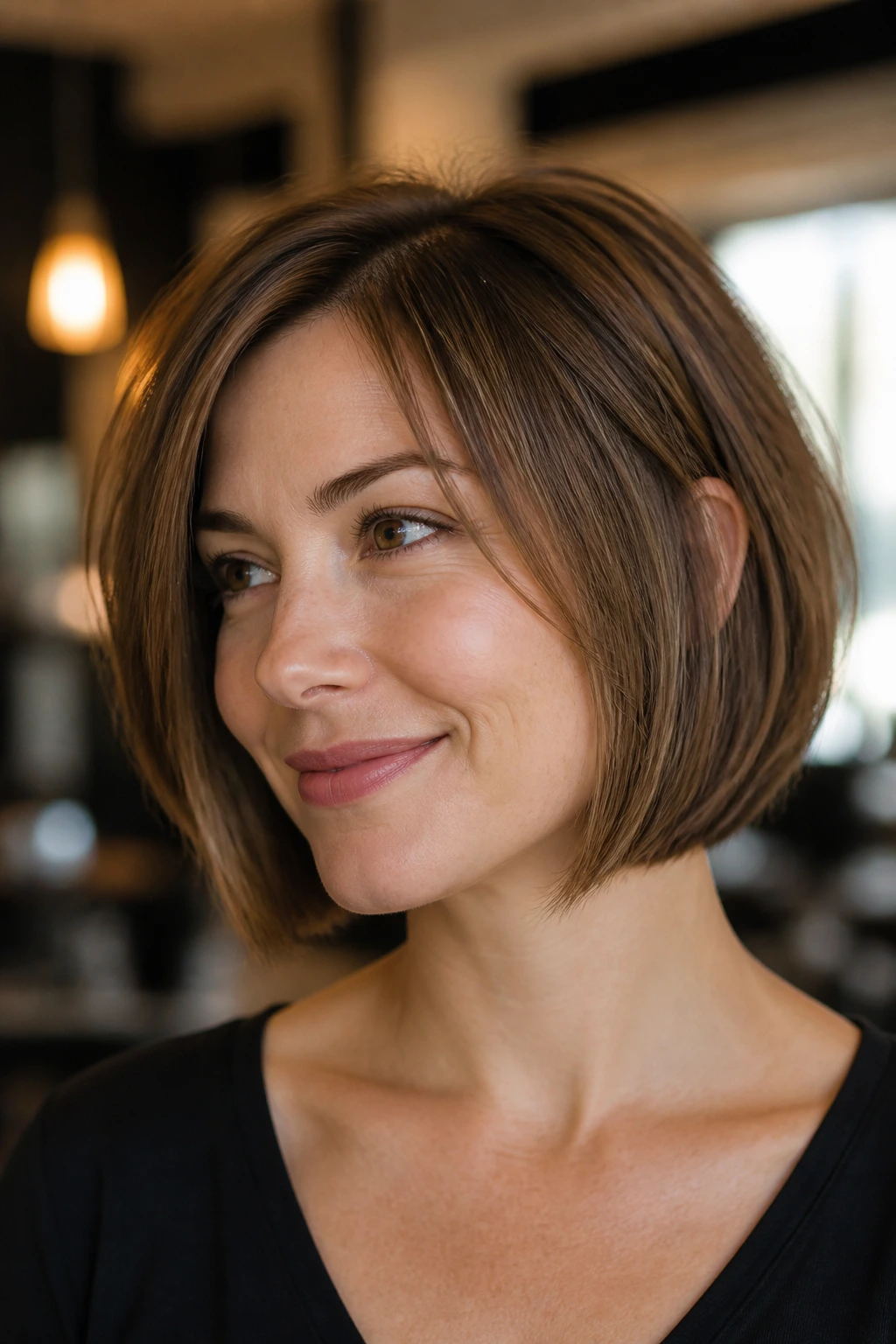
Thin hair and fine hair are not the same thing, though they show up together often enough that people use the words interchangeably. Fine hair means the individual strands are small in diameter. Thin hair means there are fewer strands on the head. A cut that flatters one can be wrong for the other, so it helps to know which problem you’re solving.
For low-density hair, the main job is to keep the outline solid. That usually means protecting the ends from looking frayed and avoiding over-layering near the bottom. For fine but dense hair, you can sometimes take a little more texture around the interior, because there’s still enough hair to support the shape. One-size-fits-all advice fails here. Hair does not care about slogans.
The good bobs in this lineup all do one of three things: they create a crisp edge, they build lift where the head wants to go flat, or they redirect the eye with angle, fringe, or parting. That is the real trick. Not volume in the abstract. Visible structure.
1. Blunt Chin-Length Bob
A blunt chin-length bob is the haircut I reach for when thin hair needs a clean reset. The line sits right around the jaw, which means the ends read as fuller than they would at shoulder length. There’s no raggedy taper at the bottom, no foggy edge. Just a sharp, even finish that gives the whole head more presence.
This cut works because it keeps almost every strand in play. Ask for minimal internal layering and a precise perimeter, then style it with a slight bend under or straight down, depending on how polished you want it. If your hair has a habit of splitting into see-through wisps, this is the shape that stops that from happening so fast.
I like this best on hair that falls flat at the crown but still has enough body to hold a line. It’s especially good if you want the haircut itself to do most of the work.
One blunt edge beats five fussy tricks.
2. French Bob With Soft Fringe
The French bob has that short, cheeky look that makes thin hair seem lighter on purpose instead of lighter by accident. The fringe usually sits soft and a little piecey, not helmet-straight. That bit of movement up front pulls attention to the face and away from any density concerns at the back.
What makes this cut useful is the balance between short length and soft texture. It avoids the heavy curtain that can drag thin hair down, but it still leaves enough mass around the ears and cheekbones to feel full. A round brush and a quick pass of texture spray are usually enough.
If you wear glasses or like a sharper brow line, this one can look wonderfully put-together without feeling stiff. It’s not the bob for someone who wants to wash and disappear. It asks for a little attitude. Not much. Just enough.
3. Italian Bob
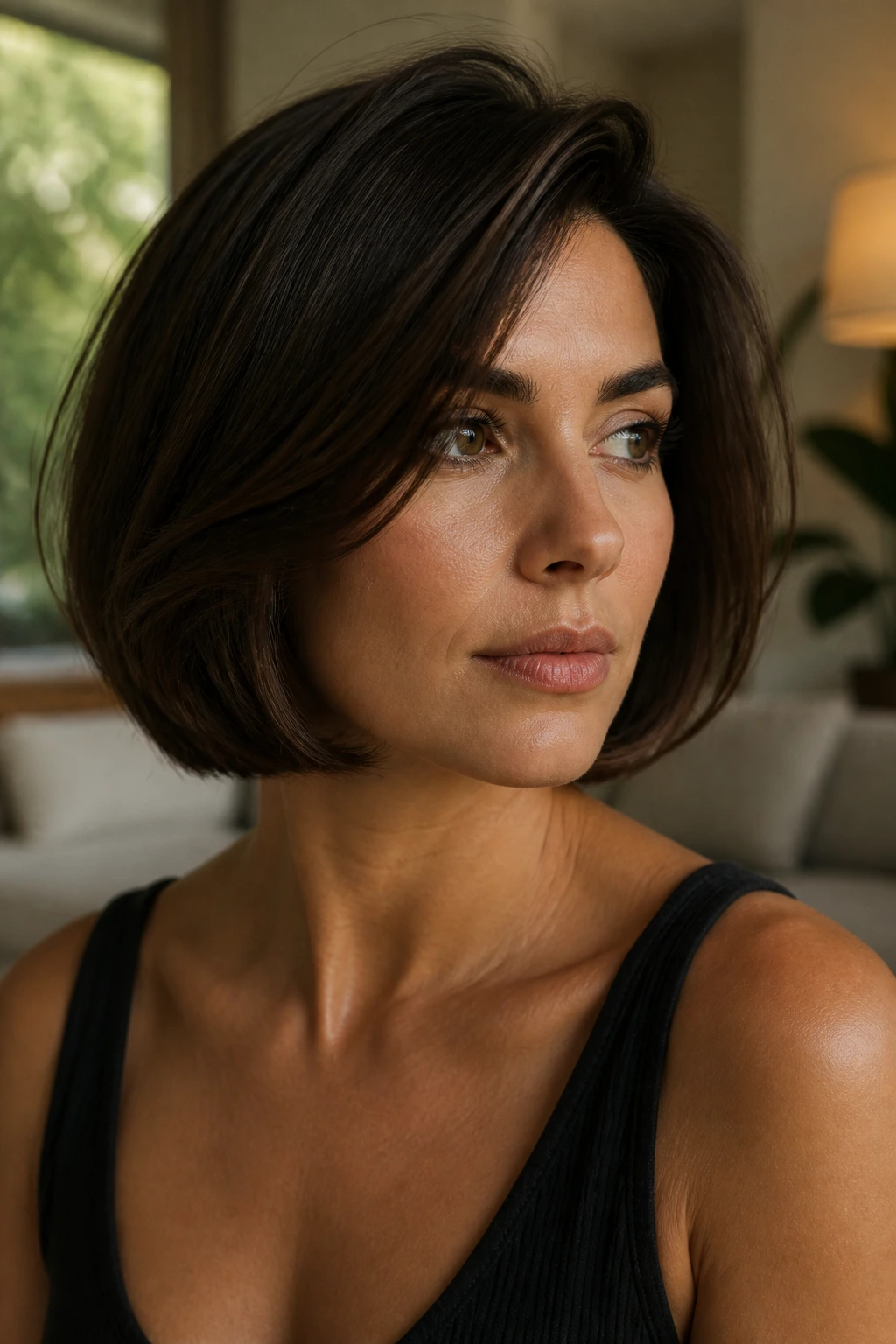
The Italian bob is fuller through the body and usually a touch longer than a classic chin cut, which is why it suits thin hair so well. It tends to sit around the jaw or just below it, with ends that feel plush rather than wispy. The shape has a little old-money swagger to it. Fairly quiet swagger, but still swagger.
Thin hair likes this because the cut keeps weight where it belongs. Too many layers would break the silhouette, but the Italian bob stays broad through the outline and often wears a deep side part or a soft side sweep. That makes the top look lifted and the sides feel thick.
I’d ask for softness at the ends, not thinning. If your stylist starts reaching for the razor, pause them. This is a haircut that gets its best results from restraint.
4. A-Line Bob
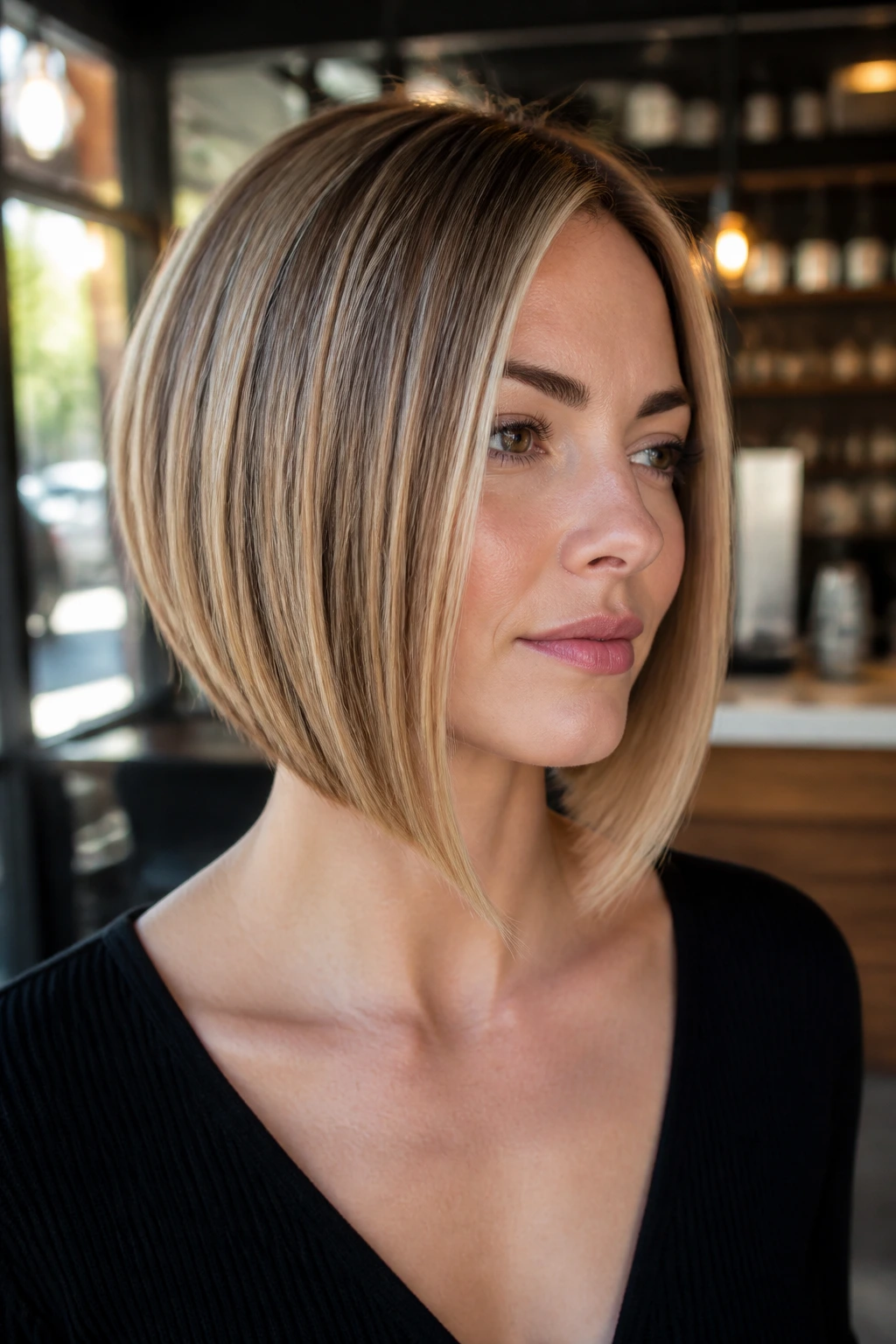
An A-line bob gives you longer pieces in front and a shorter back, which is a handy trick when thin hair needs a little shape theater. The forward angle makes the front feel more dramatic, while the shorter nape keeps the back from dragging. It is one of the easiest ways to make a bob look designed rather than simply cut.
The benefit for thin hair is pretty practical: the line draws the eye down and forward, so even modest density feels more deliberate. The angle also stops the ends from looking stringy, because the front pieces are long enough to bend and tuck, while the back stays controlled.
This cut is especially good if you want to frame the jaw or soften a round face. Keep the angle gentle if your hair is very fine; a harsh A-line can look too sharp and expose the difference between the front and back too much.
5. Collarbone Lob
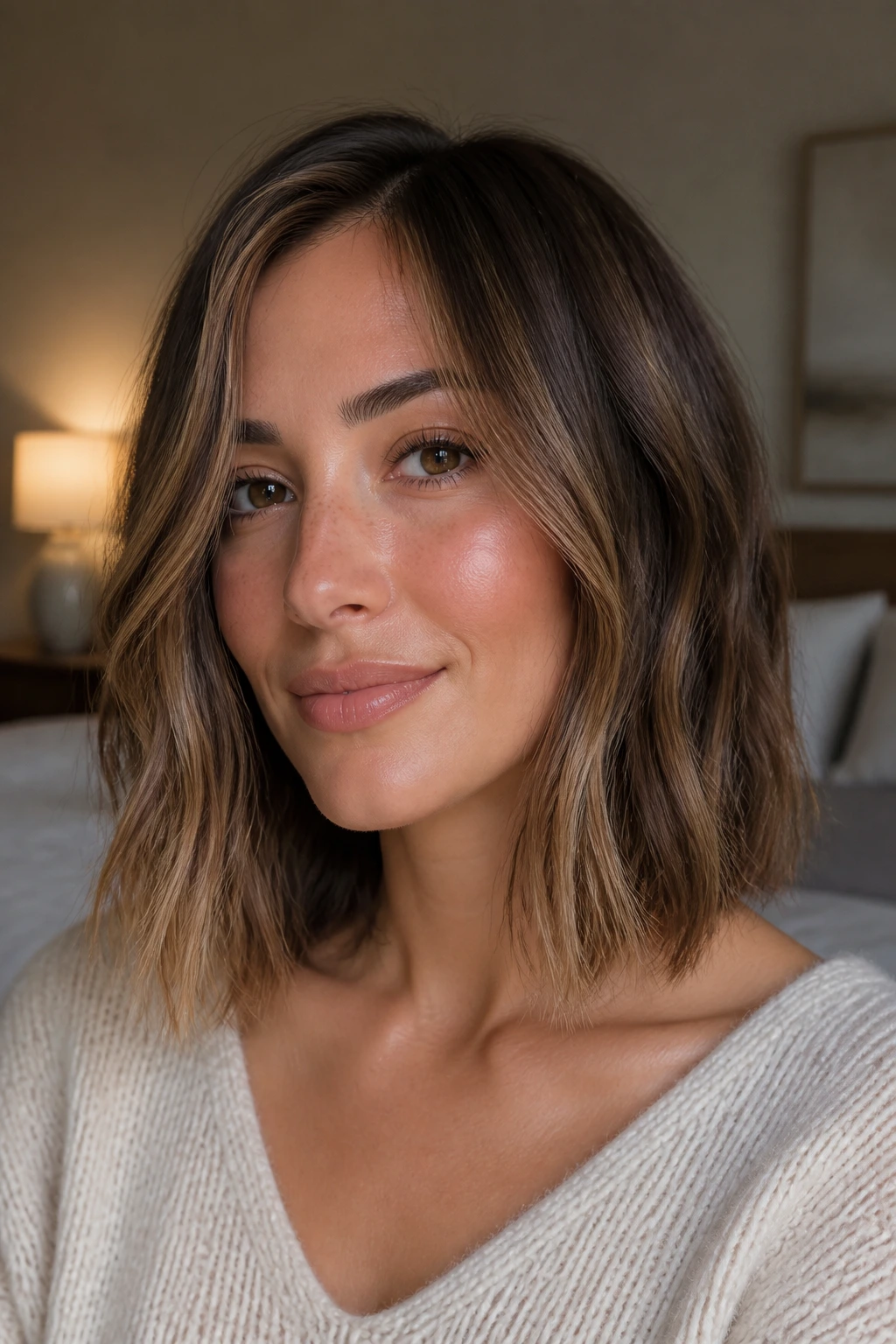
A collarbone lob is the safe, smart answer for anyone who isn’t ready to go short-short. It sits right at the collarbone, which gives thin hair a little more swing than a true bob but doesn’t let it fall so long that the ends look sparse. That length is hard to argue with.
The reason it helps is simple: shoulder-skimming hair can get dragged down by gravity. Move it up a few inches, and the shape usually wakes up. A lob also lets you add a subtle bend through the mid-lengths without turning the ends into a puffball, which is a nice bonus.
If you wear your hair up half the time and down the other half, this is the cut that gives you the most options. It is not dramatic. It is useful. Sometimes that is the better bargain.
6. Stacked Bob
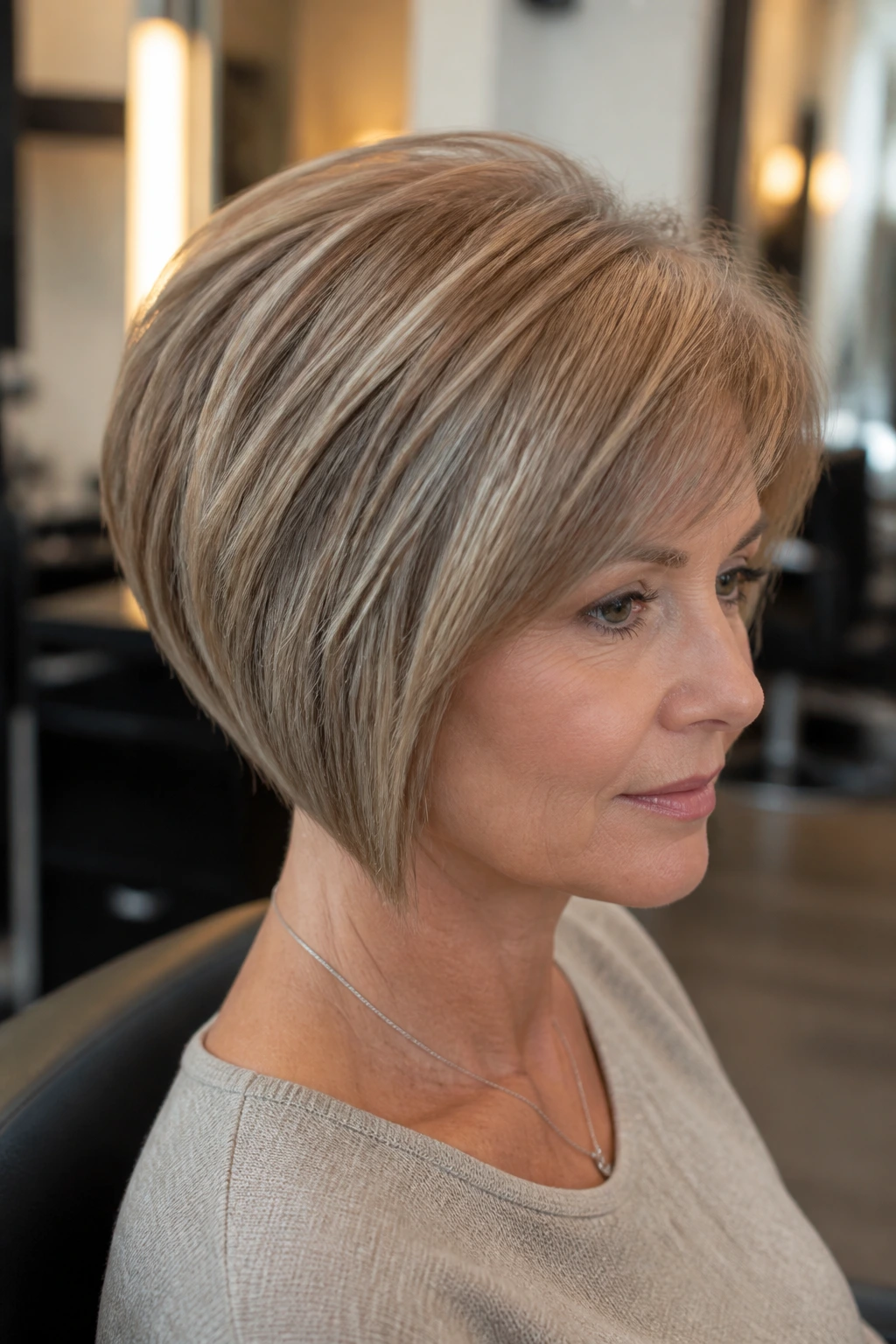
A stacked bob is one of the best shapes for thin hair when the crown goes limp no matter what you do. Shorter layers at the back build a small shelf of volume, and that graduation gives the cut lift from the inside out. The nape usually hugs close to the neck, which keeps the silhouette neat.
The important part is balance. If the stack is too steep, the back can look hollow. If it’s cut softly, though, you get height where thin hair usually needs it most. Blow-drying with a round brush and lifting the roots at the crown will make the shape obvious fast.
This is a haircut with opinions. It knows where it wants to sit. If you like airy, undone hair, this may feel a little more styled than you want. If you like a cut that does half the work for you, it earns its keep immediately.
7. Deep Side-Part Bob
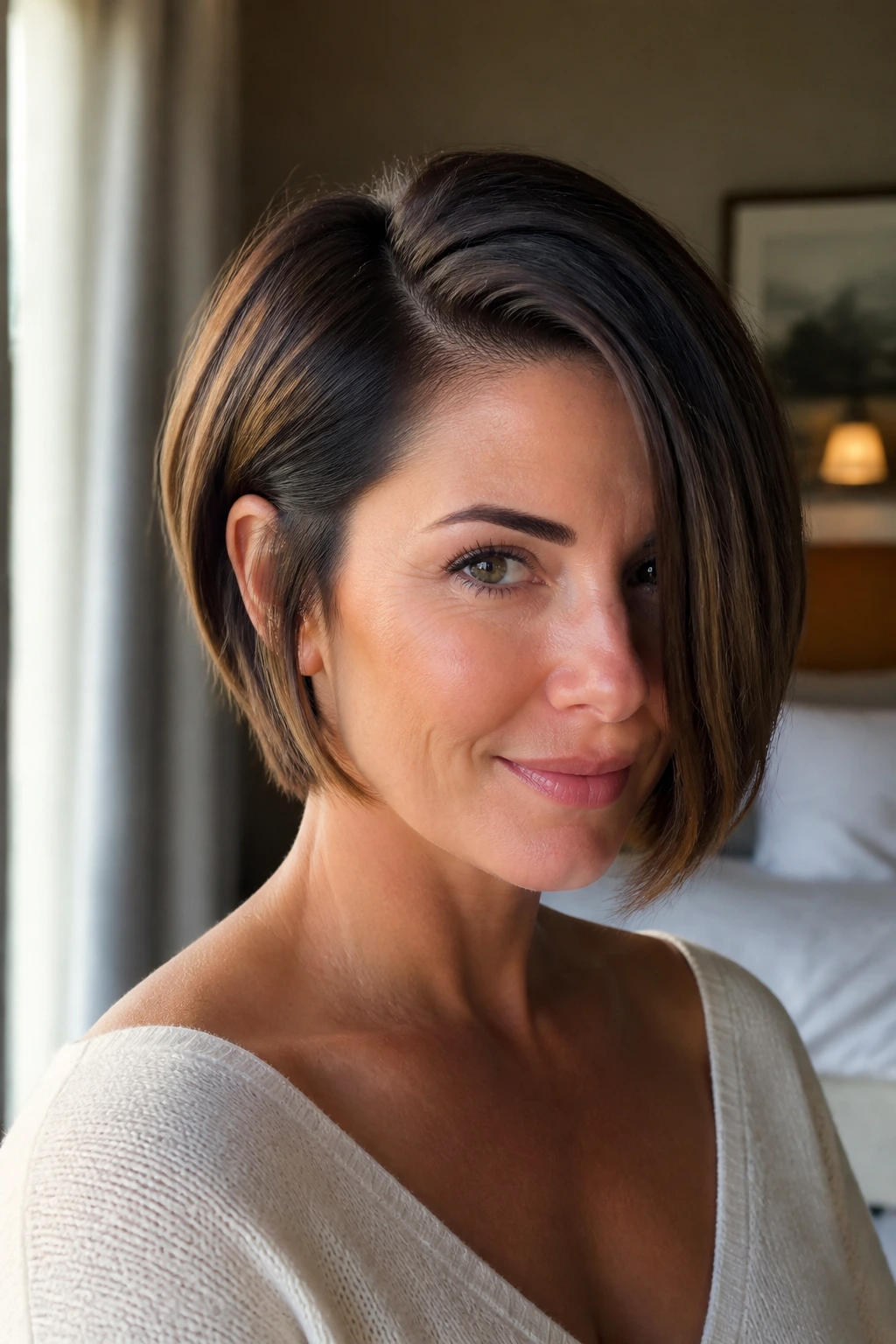
A deep side-part bob is almost unfair to flat hair. The part shifts weight to one side, which creates instant lift at the root and a stronger visual line across the forehead. Thin hair often looks fuller the moment it stops behaving symmetrically.
What I like here is how simple it is. You are not changing the haircut into something unrecognizable. You’re just changing where it lives on the head. The result is more body at the crown and a little sweep across the face, which can soften features and make the whole cut feel richer.
This works best when the bob itself has enough length to tuck one side behind the ear or curve slightly under the jaw. A side part plus a blunt edge is a strong combination. A side part plus a wispy bottom can look unfinished.
8. Inverted Bob
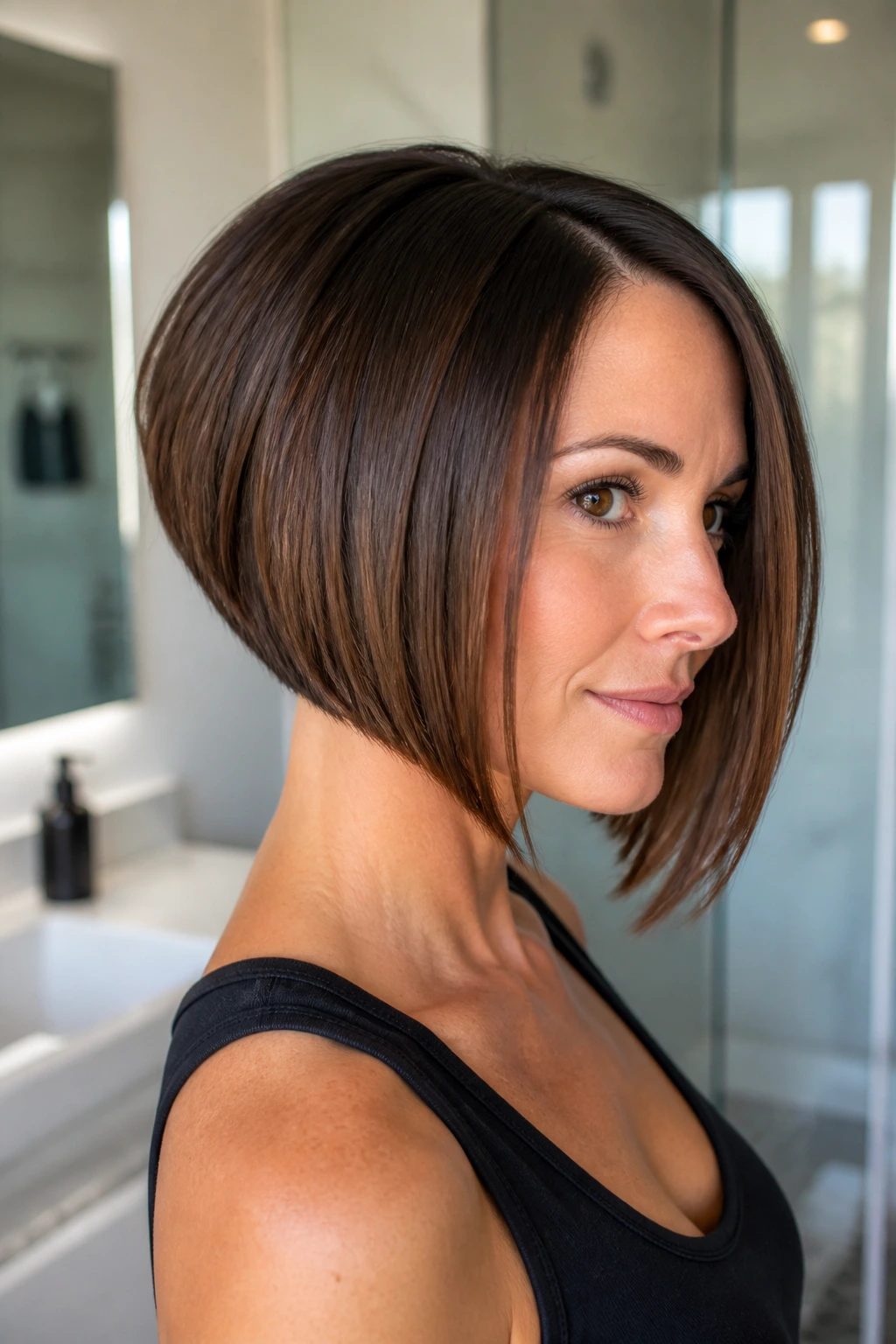
The inverted bob leans shorter in the back and longer in the front, but with more drama than a mild A-line. Thin hair benefits because the front length creates shape while the back can be lifted just enough to keep the crown from drooping. It gives you that angled profile people notice across a room.
This cut needs a careful hand. Too much graduation in a low-density head can make the back look overbuilt and the front too sparse. The sweet spot is a smooth transition, so the shape feels sleek rather than spiky. When it’s done right, the hair seems to glide forward on its own.
I think this one suits someone who likes a cleaner, sharper line and is willing to blow-dry with intent. It is not a lazy haircut. But it pays you back every time you turn your head and the front pieces still hold their shape.
9. Micro Bob
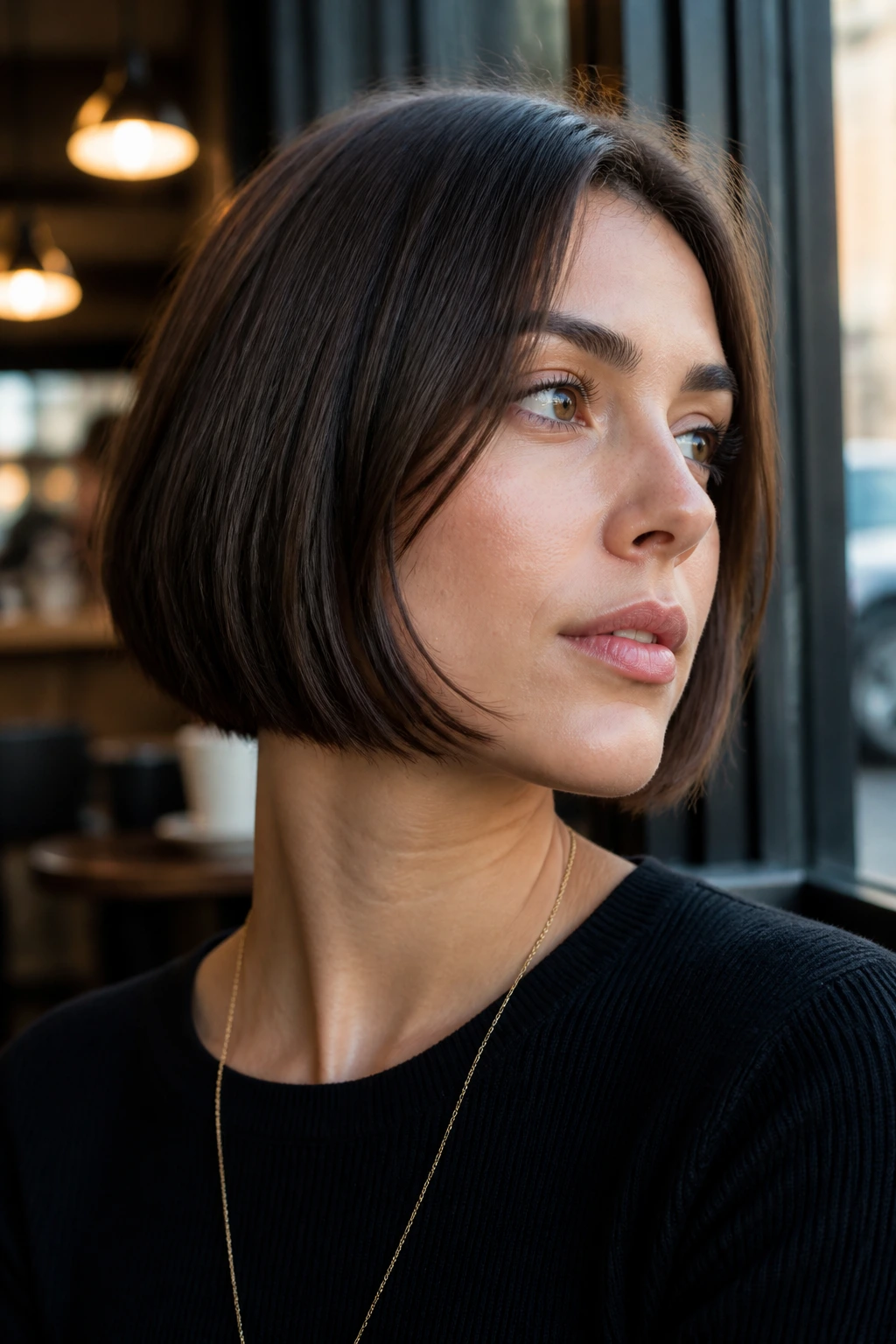
A micro bob sits high, often around the jaw or a touch above it, and that short length can be a gift for thin hair. Less length means less drag. Less drag means the roots don’t have to carry so much weight. The result can look surprisingly full, especially when the cut is precise.
There’s a boldness to a micro bob that helps thin hair in a roundabout way. Because the cut is so short, it stops reading as “trying to be long” and starts reading as a deliberate style choice. That makes the density issue feel less important, which, honestly, is half the battle.
Ask for a clean perimeter and avoid too much razoring near the ends. A micro bob lives or dies on its line. If the finish gets too airy, the whole point disappears.
10. Textured Bob With Hidden Layers
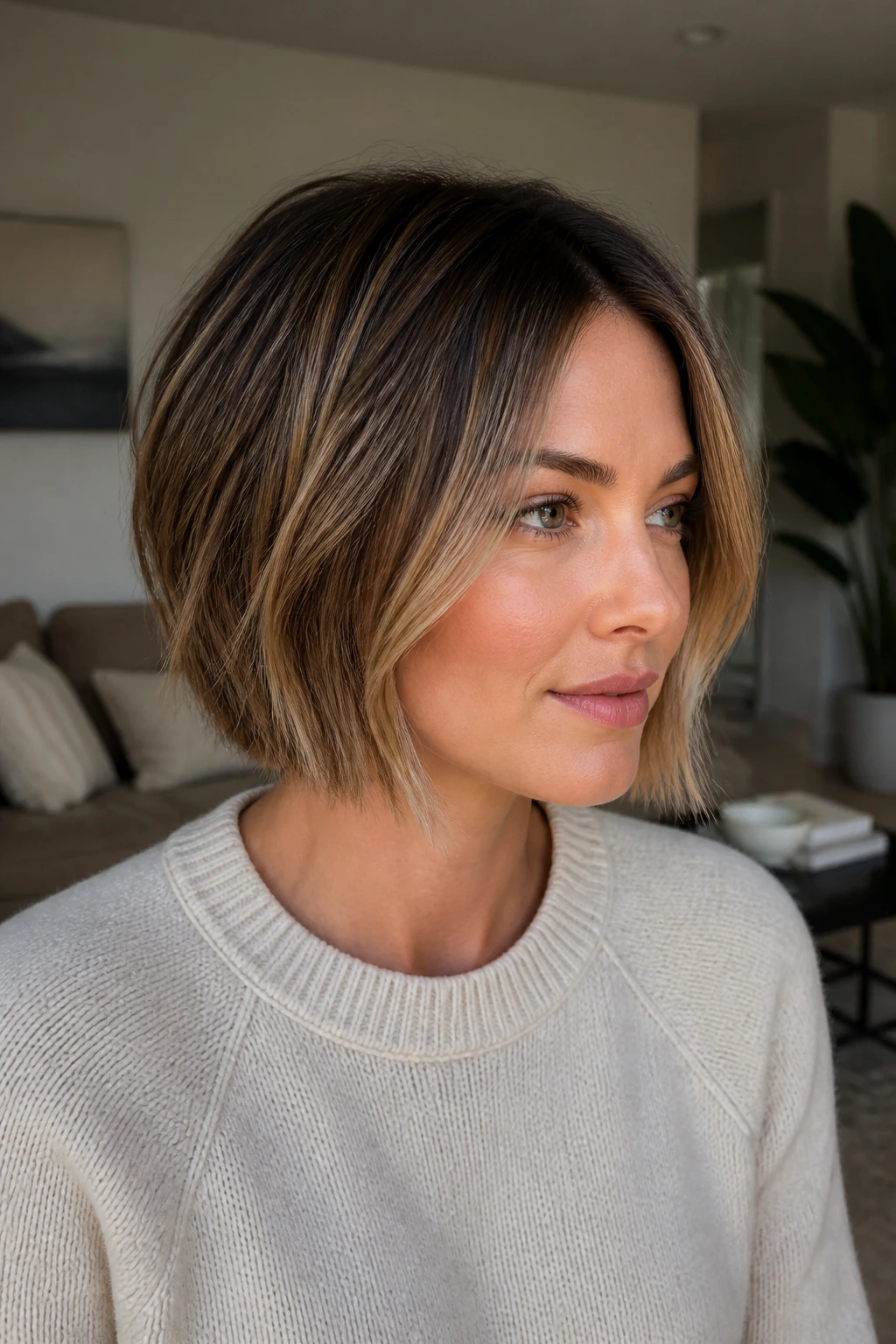
A textured bob with hidden layers is the cut I suggest when someone wants movement but fears looking see-through. The layers stay tucked inside the shape, so the perimeter still looks solid. You get bend and swing without that obvious chopped-up edge that can make thin hair look sparse.
The trick is control. Hidden layers are there to remove a little bulk in the right places, usually through the crown or mid-lengths, but they do not break the outside line. That means the haircut can move when you shake it out, yet still look full when it settles.
I’m a fan of this on straight or slightly wavy hair that tends to lie too flat in one sheet. It’s a more forgiving option than heavy texturizing, and it behaves better after a simple blow-dry. The cut should feel breathable, not shredded.
11. Jaw-Length Bob With Curtain Bangs

Jaw-length with curtain bangs is a smart way to make thin hair look wider at the face without adding bulk everywhere. The bangs open in the middle and sweep to the sides, which creates width across the cheekbones and gives the haircut a softer frame. It is flattering in a very specific, practical way.
What works here is the balance between the short bob and the longer fringe. The fringe keeps the front from feeling bare, while the jaw-length base keeps the outline compact. Thin hair often needs that kind of targeted density—not more hair everywhere, just more hair where the eye lands first.
If your forehead feels long or your features look sharper with a little softness around them, this cut helps. It does ask for styling. Curtain bangs without a bend can fall into your eyes in a sad little curtain. A quick blow-dry with a round brush fixes that.
12. Sleek Center-Part Bob
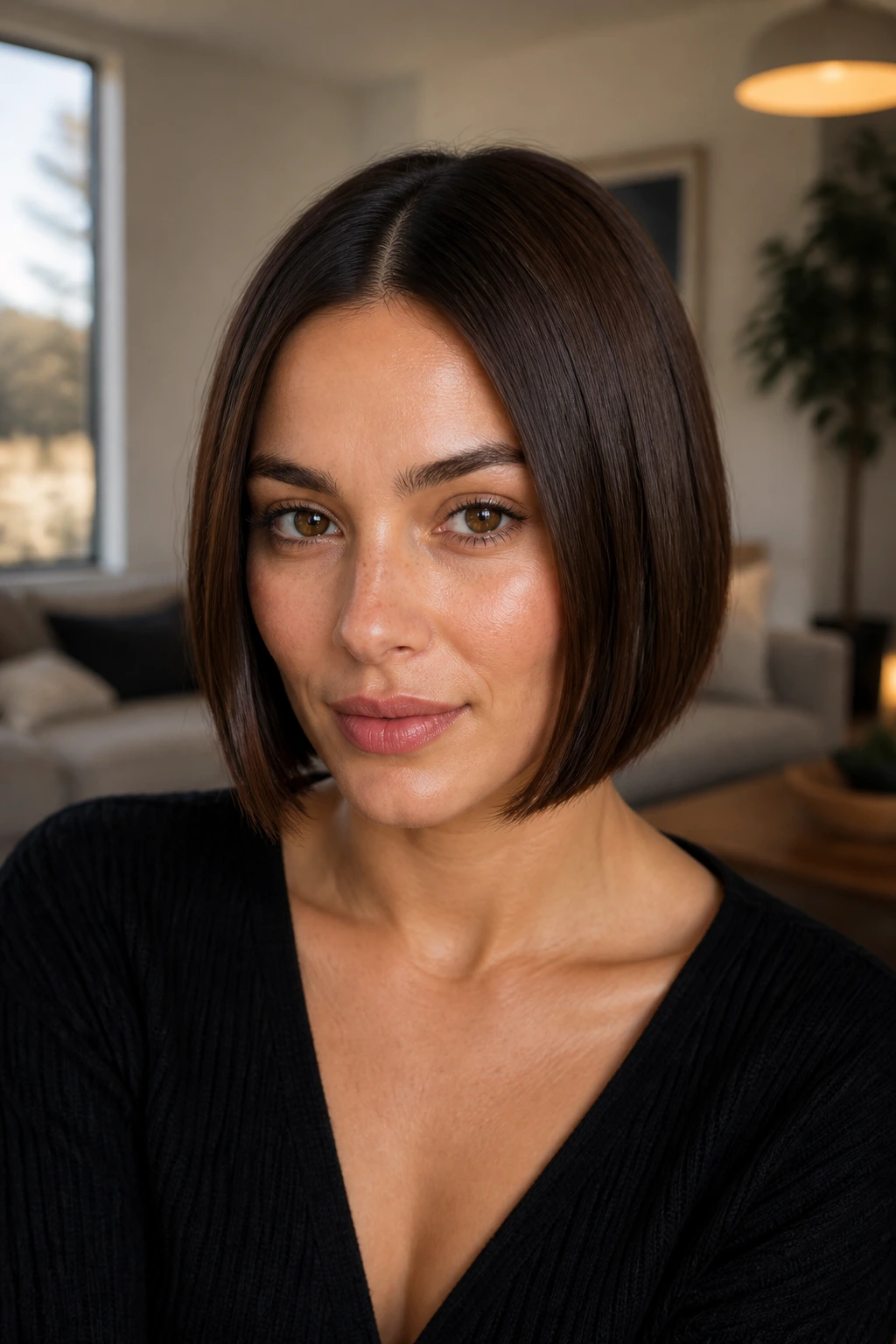
A sleek center-part bob can be one of the sharpest options for thin hair because symmetry gives the cut a calm, dense look. The middle part creates two clean panels of hair, and if the ends are blunt enough, the whole style looks intentional and polished. No need to force volume where the shape already carries it.
This cut is particularly good on hair that lays flat but stays smooth. Thin hair often looks best when it’s not fighting frizz or puffiness, and the center part plays into that. A flat iron pass near the ends, or a blow-dry with a paddle brush, is usually enough.
I like this when the hair is fine but glossy. If the hair is very sparse at the temples, a center part may expose that more than you’d like, so a subtle off-center shift can be kinder. The line matters. Always.
13. Soft Wavy Bob

A soft wavy bob gives thin hair a little air between the strands, and that space makes the overall shape look larger. The bend adds texture, but the softness keeps it from turning into a pouf. Think of it as width without heaviness.
This is a nice choice if your hair naturally bends a bit or if you’re happy using a one-inch iron or flat iron to put in a loose wave. The movement makes the bob feel fuller because the eye stops reading it as a single flat sheet. It reads as body. That’s the whole point.
Don’t overdo the wave pattern. Too many tight curls will separate thin hair and make the ends look frayed. A loose S-bend, brushed out once, usually looks much better. Cleaner. Less fussy.
14. Face-Framing Layer Bob
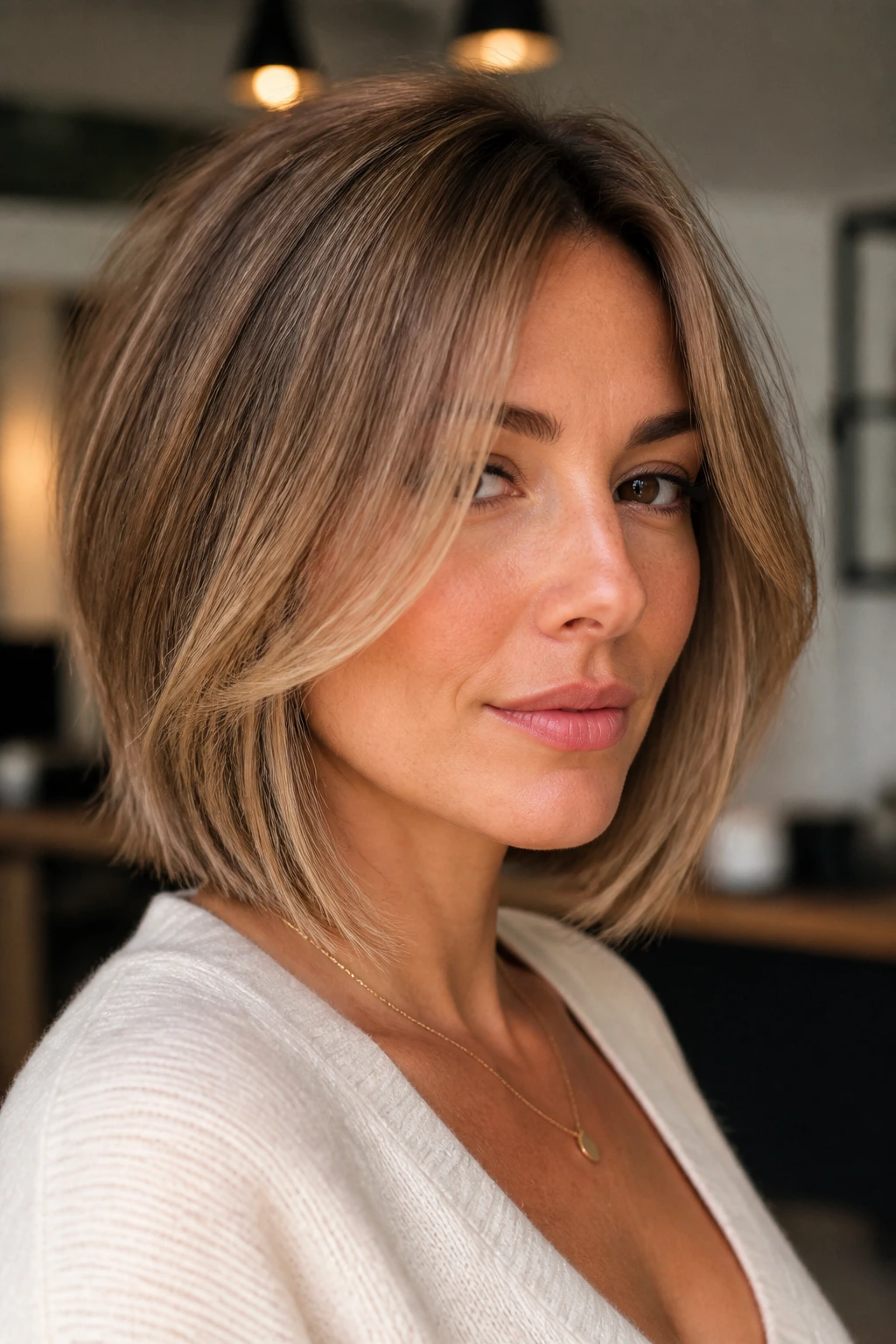
Face-framing layers are one of the few kinds of layering I trust on thin hair when they’re placed well. Starting the pieces near the cheekbone or just below the jaw keeps the perimeter intact while giving the face some movement. It avoids the sad effect of layers beginning too high and leaving the ends depleted.
The haircut works because the eye follows the front pieces first. If those pieces curve neatly, the whole style feels fuller, even when the back is simpler. This is a good compromise for anyone who wants shape but fears a boxy result.
Ask your stylist to keep the layers long and blended, not choppy. A tiny swing at the front is enough. You do not need a staircase.
15. Rounded Bob
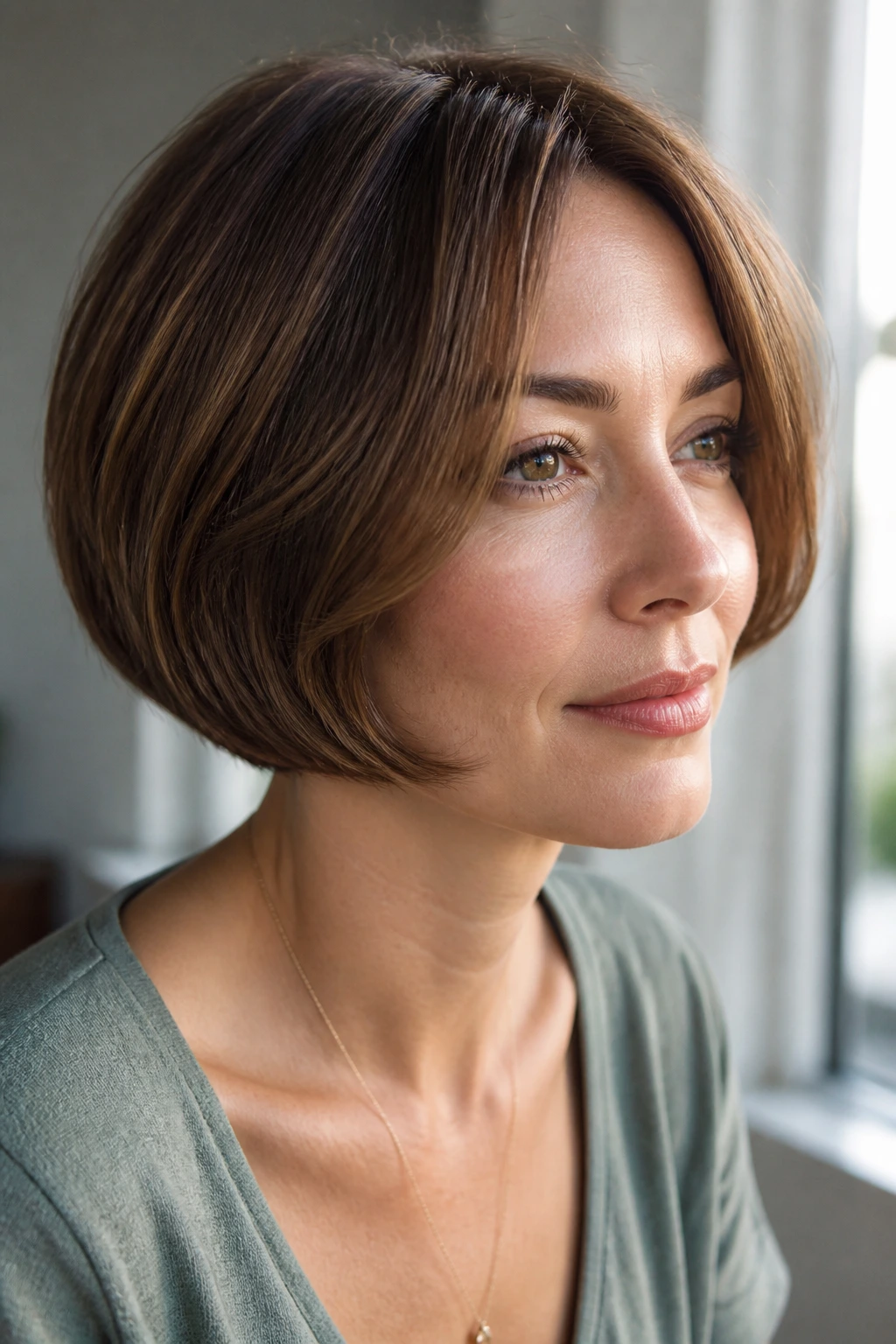
A rounded bob curves in gently around the head, which is useful when thin hair needs a little extra body without obvious teasing. The shape gives the illusion of density because the silhouette feels broader and more cushioned. It is softer than a blunt line, but not loose.
This cut tends to work well when the hair naturally wants to turn under or when you don’t mind helping it with a brush. A round brush and a quick set at the crown can make the curve hold. That curve is what helps the style look fuller in profile.
I’m fond of rounded bobs for people who dislike hard edges. There’s a quiet elegance to them, but more to the point, they hide sparse areas well because the shape itself is doing the padding. That matters more than any label.
16. Feathered Bob
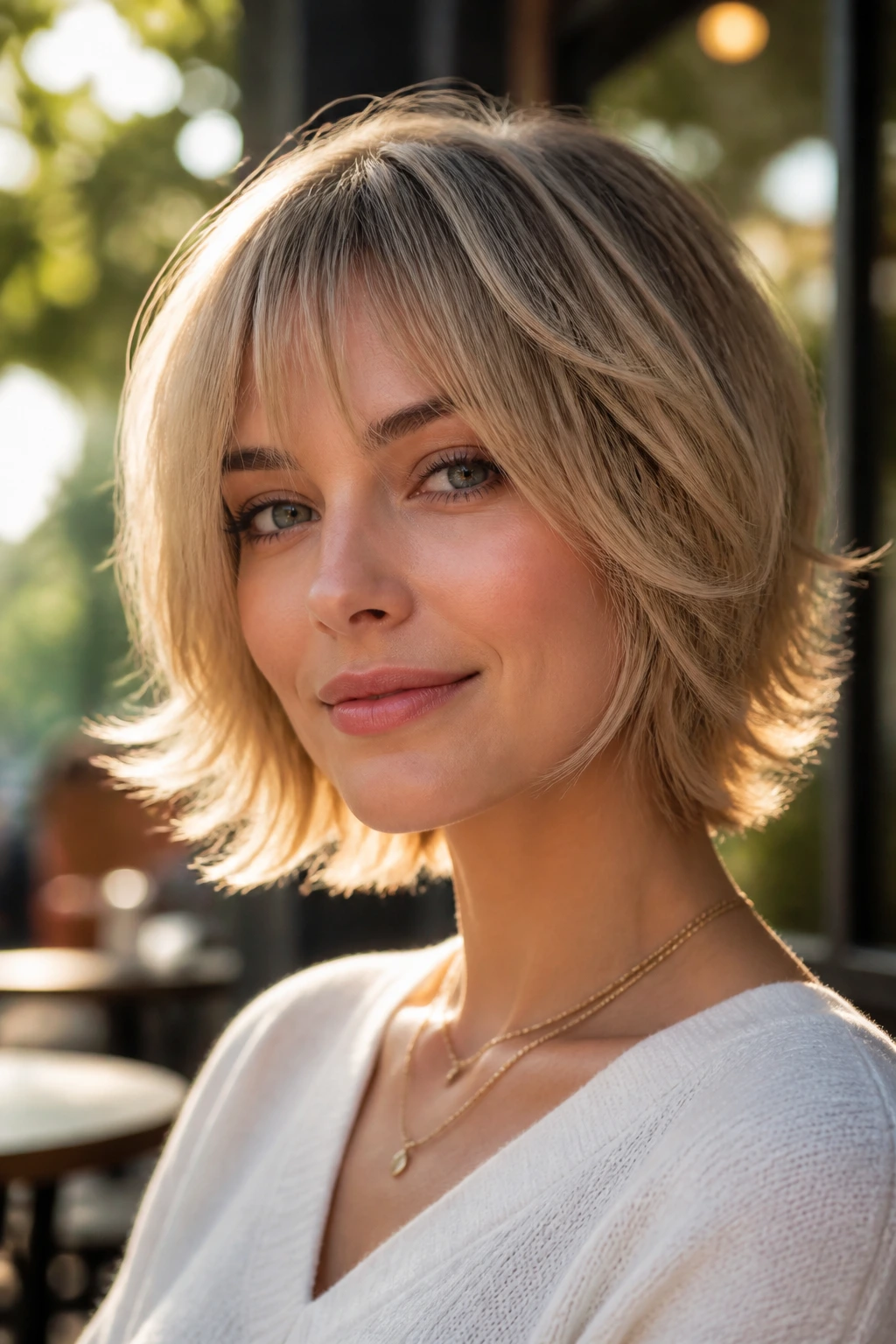
A feathered bob can be lovely on thin hair, but only when the feathering stays light. The idea is to soften the ends and let the hair move, not to strip away the bottom so much that the cut loses its body. Done carefully, it gives a nice breeze through the shape.
The reason this works is that a little softness around the face and crown keeps the haircut from looking carved too hard. Fine strands can look stiff if every edge is blunt, so controlled feathering helps them move. Too much, though, and you get airy ends that go see-through fast. That’s the tradeoff.
This is the cut for someone who wants a more delicate finish. I would not ask for aggressive feathering if the hair is already sparse at the bottom. A small amount goes a long way.
17. Asymmetrical Bob
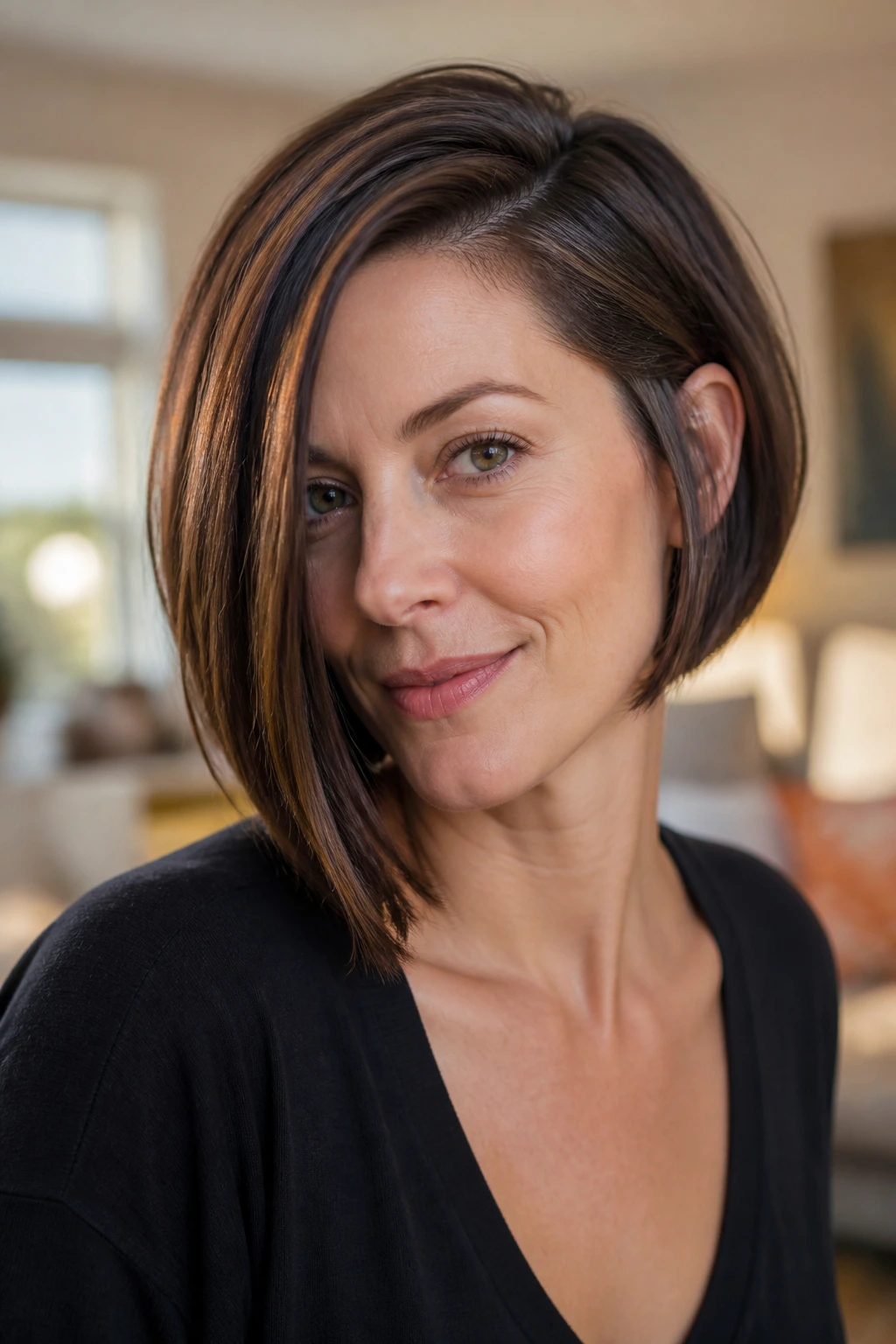
An asymmetrical bob puts one side slightly longer than the other, which gives thin hair a visual trick to work with. The uneven line draws the eye forward and down, so the haircut feels intentional and a little more dimensional. It’s a nice escape from the usual neat little box people assume a bob has to be.
The asymmetry also helps with parting. If one side naturally lies flatter, the longer side can carry more of the shape while the shorter side keeps the neck open and light. That means the haircut can look fuller without having to bulk up everywhere.
I like this for straight hair especially. It gives that crisp, modern feel without needing much daily styling. If your hair already has a strong wave, the asymmetry can get lost unless the cut is kept clean.
18. One-Length Bob With Tucked Fronts

A one-length bob with tucked fronts has an easy, tidy look that flat hair often benefits from. The perimeter stays even all the way around, which keeps the ends looking thick. Then the front is cut in a way that tucks neatly behind the ears or skims the cheekbones without collapsing.
That tucked effect matters more than it sounds. Thin hair often goes limp right where people want to see shape, around the temples and jaw. If those front pieces are long enough to tuck but not so long that they drag, the whole cut feels cleaner and fuller.
This is a strong choice for anyone who likes minimal styling. It’s not trying to be cute. It just sits well, and that is a rare gift.
19. Choppy Bob With Piecey Ends
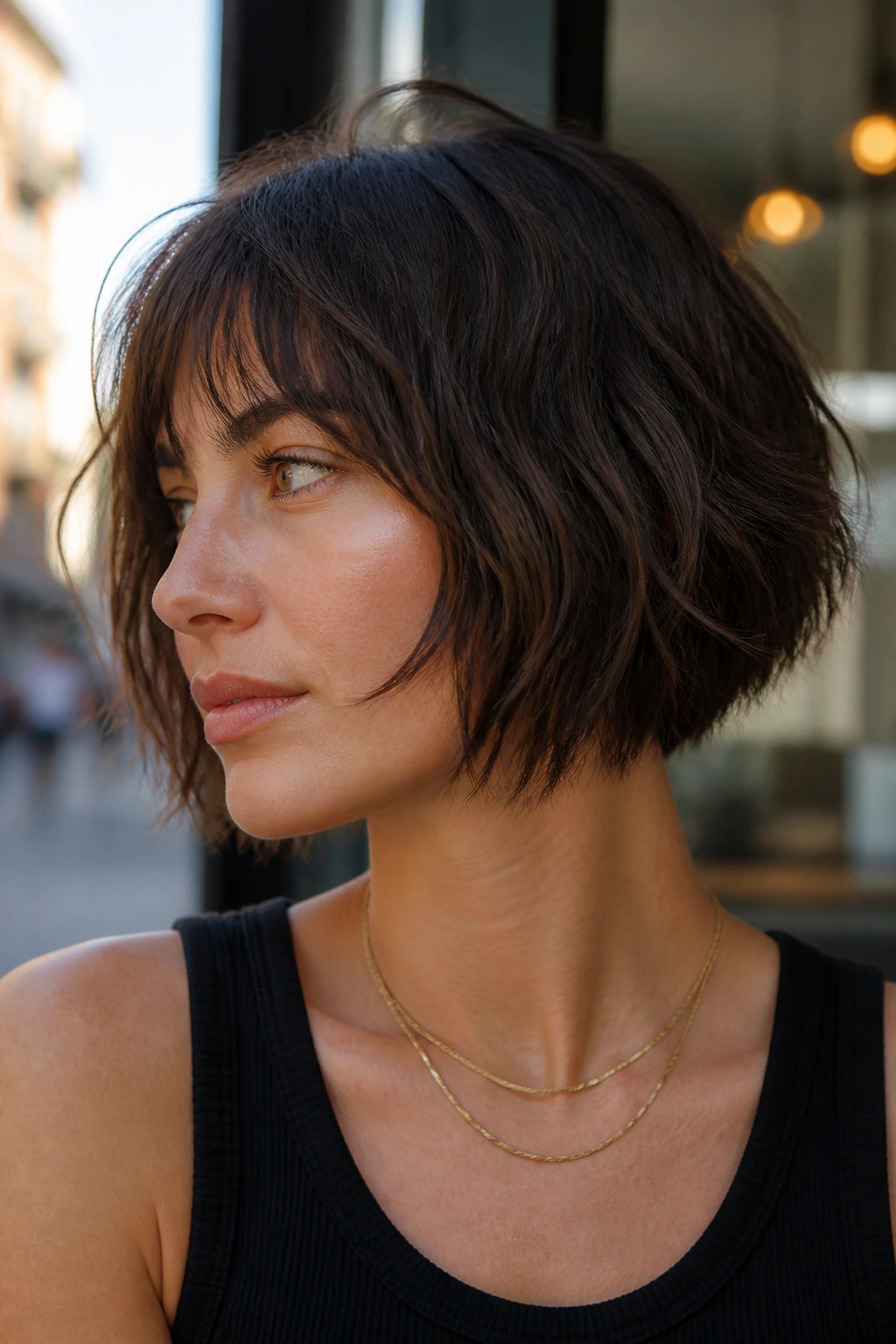
A choppy bob with piecey ends has energy, but it needs a careful touch on thin hair. Too much chop and the ends start to separate. A little pieceiness, though, can make the haircut feel lighter and more modern without destroying the perimeter.
What makes it work is restraint. You want defined ends, not shredded ones. The choppiness should live mostly in the styling—some bend, a little separation, maybe a touch of paste at the tips—not in an aggressively thinned cut. That distinction matters a lot.
I’d save this for hair that has at least a little natural texture or for someone who likes a messier finish. It looks best when the pieces are deliberate, not accidental. There’s a difference.
20. Wispy Bang Bob
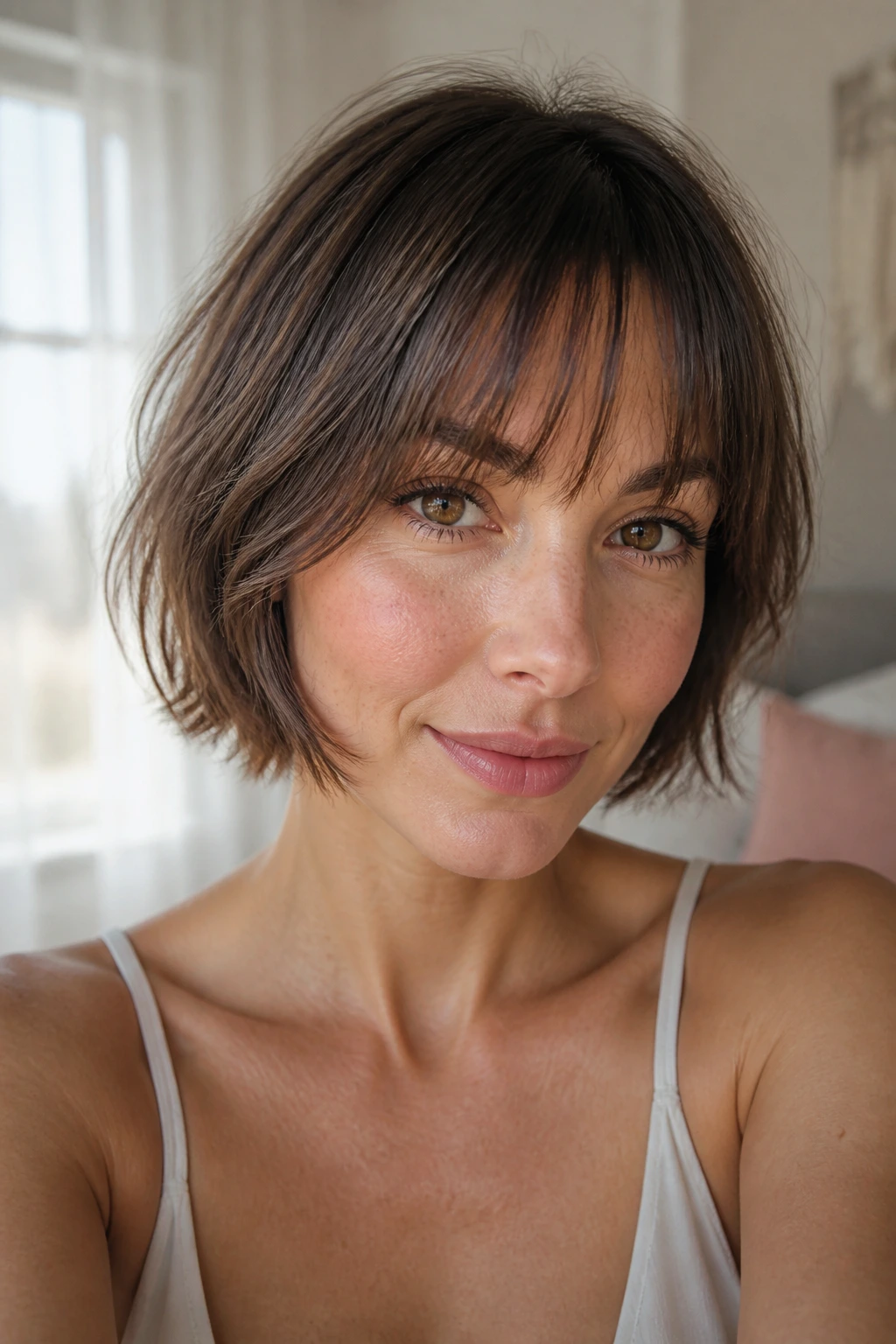
Wispy bangs can be a smart move when thin hair needs softness up front but not heaviness. The fringe gives the forehead some coverage, yet the airy finish keeps it from swallowing the face. Paired with a bob, it creates a gentle frame that feels light instead of dense.
The nice thing about this cut is that it redirects attention upward. A thin crown can feel less obvious when the face has some movement around it. The bangs also make the bob feel a little more styled, which helps on days when the rest of the hair is doing its usual flat thing.
Keep the bangs sparse enough to separate easily. If they get too thick, they can split and look stringy by midday. Light is the word here.
21. Curly Bob for Fine Curls

Fine curls need a bob that respects the spring pattern. If the cut is too long, the curls can stretch out and look limp. If it’s too short and too layered, the shape can puff in weird places. A good curly bob lands somewhere in the middle and lets the curl pattern build its own body.
For thin hair, the key is shaping curl by curl, or at least curl section by curl section. The outline should follow where the curls actually live when they dry, not where they looked wet in the chair. That means the bob may end up a little different on each side. Good. Hair is not a stamp.
This cut is best when it dries naturally or with a diffuser. A little cream through the mid-lengths is enough. Heavy product can weigh the curl down and flatten the top, which defeats the whole point.
22. Wedge Bob
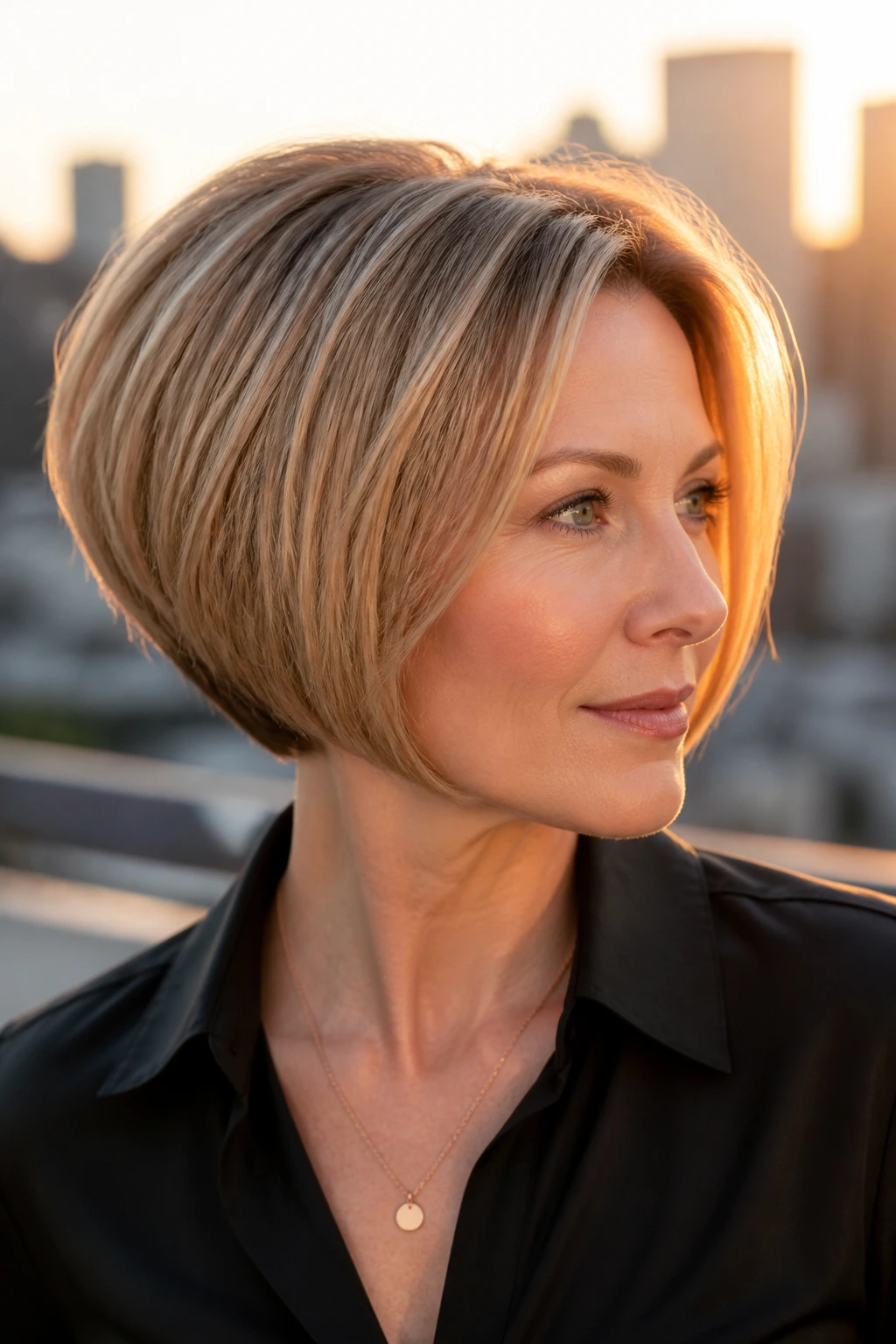
The wedge bob has a built-in lift at the back, and thin hair often needs exactly that. The nape sits close, then the shape rises into the crown, giving the head a rounded, supported profile. It feels structured, which is why it has lasted so long as a cut.
What I like about the wedge is that it creates bulk where hair naturally tends to collapse. Instead of asking the front to do all the work, it uses graduation and angle to make the whole style feel more substantial. The result can look very neat, almost architectural.
It is not the softest option on the list. That’s fine. Some hair wants a clean shape, not a romantic one. If your hair is fine and your jawline is strong, this can look excellent.
23. Long-Layered Lob
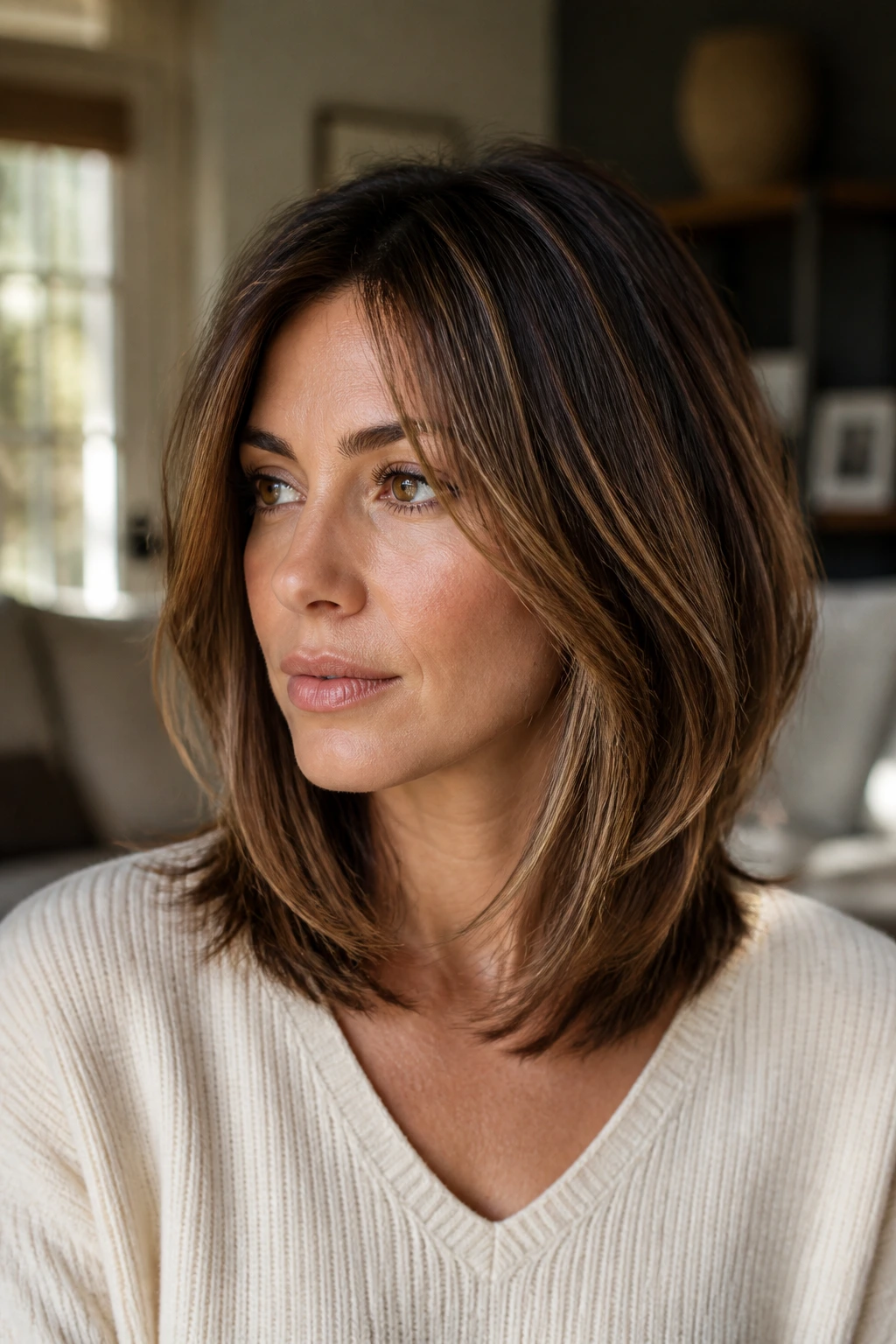
A long-layered lob is the compromise haircut for people who want movement but are nervous about losing length. It sits around the collarbone and uses long, soft layers to keep the ends from looking heavy. On thin hair, that balance matters because too much length can flatten everything below the shoulders.
The right version keeps the layers long enough that the ends still look full. You want motion, not holes. A blowout with a medium round brush works well here because it gives the layers a soft curve without separating them too much.
This cut is useful if you wear your hair tucked into coats, sweaters, or scarves a lot. It survives that kind of daily friction better than a shorter, more delicate bob. Practical matters.
24. Tucked-Behind-Ears Bob

A tucked-behind-ears bob is less about one dramatic cut line and more about a shape that behaves well when you tuck it. The front pieces should be cut so they curve neatly around the cheekbones and don’t explode into little spikes the moment they hit the ear. That sounds minor. It isn’t.
Thin hair benefits because tucking the sides exposes the jaw and gives the back of the haircut a cleaner outline. The silhouette reads as sharper and more controlled, which can make the hair seem thicker by contrast. The trick is leaving enough length in front to soften the tuck.
I’d especially recommend this for people who like simple styling and wear glasses often. The ear tuck and the frames play nicely together. No extra effort needed.
25. Glass Hair Bob
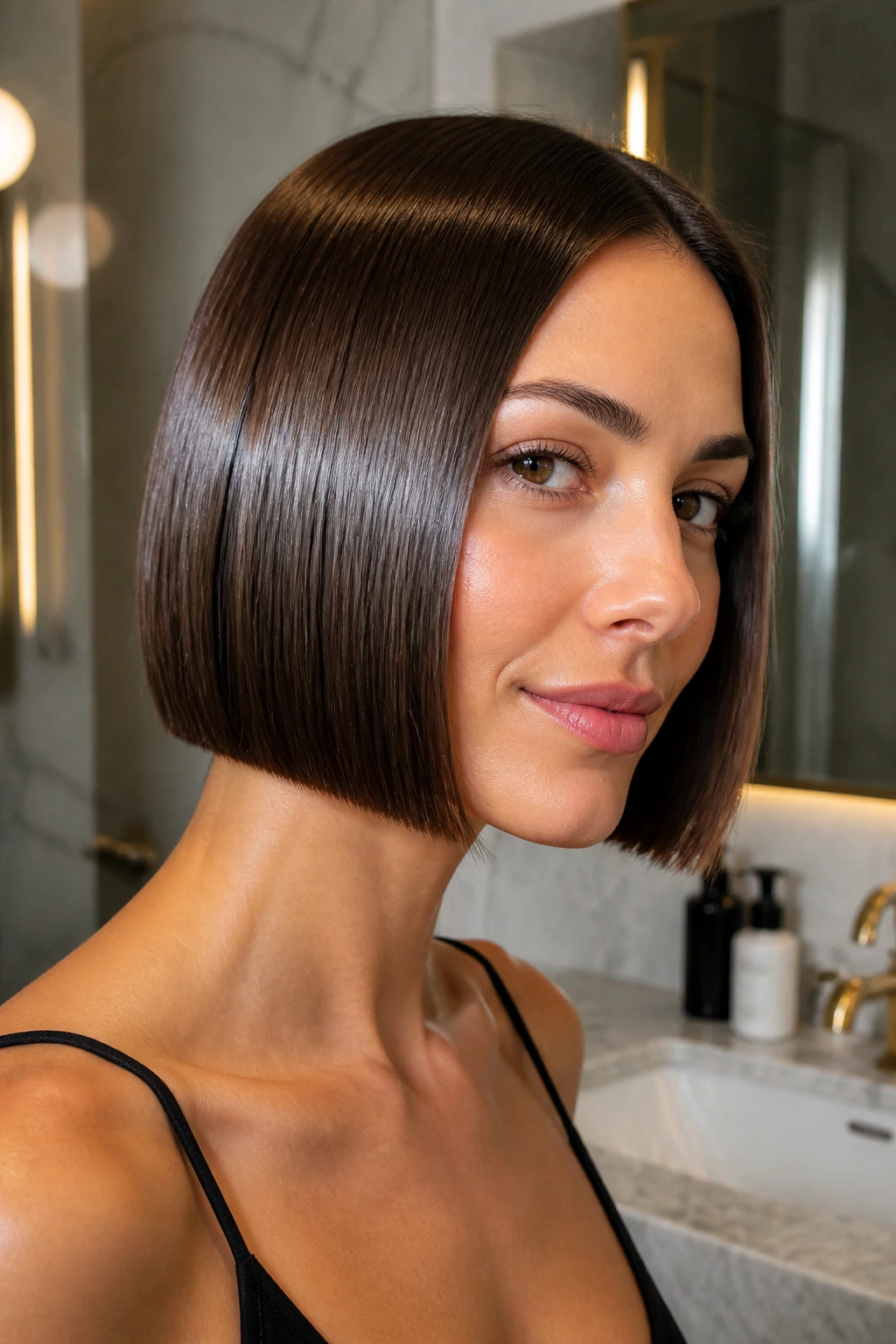
Glass hair is all about shine, smoothness, and a cut that can carry a mirror-like finish. On thin hair, that sleekness can be a gift. A blunt bob with a glossy surface reads as deliberate and dense, even if the actual amount of hair is modest.
The shape should be clean and the ends should be even. Then the styling does the rest: heat protectant, a smoothing blow-dry, maybe a flat iron pass on low to medium heat, and a lightweight serum on the last inch only. Too much oil near the roots will flatten the whole thing. Fast.
This look is good when you want polish more than movement. It’s not the easiest style if your hair frizzes or bends badly, but on smooth hair it can look expensive without trying too hard.
26. Undone Wave Bob

An undone wave bob keeps the structure of a bob but loosens the finish so thin hair doesn’t look pressed down. The wave pattern should be soft and broken, not curled into perfect loops. That little mess gives the illusion of more strands because the hair no longer sits in one flat plane.
What matters here is the cut underneath. If the bob is too heavily layered, the undone wave can expose those gaps. If the base is strong, the texture just adds body. I’d rather see a simple cut with good wave than a fancy cut that falls apart once it dries.
This is one of the easiest bobs to live with if your hair has a natural bend. Air-dry it with a bit of mousse, scrunch gently, and leave some ends straighter than others. Uniformity is the enemy here.
27. Bottleneck Bang Bob

Bottleneck bangs start narrow near the forehead and widen toward the cheekbones, which is a nice visual trick for thin hair. The shape gives the face movement without burying it under too much fringe. Paired with a bob, it adds softness right where the eye lands first.
The bob underneath can stay fairly simple. That’s part of the charm. The bangs do the work up top, and the rest of the hair can stay clean and compact. If your hair tends to separate at the front, this kind of fringe can disguise it better than a blunt bang, which usually shows every gap.
I like this cut for people who want bangs but don’t want constant trimming drama. Bottleneck bangs grow out more gracefully than a heavy straight fringe. That alone makes them worth considering.
28. Clean Tapered-Nape Bob
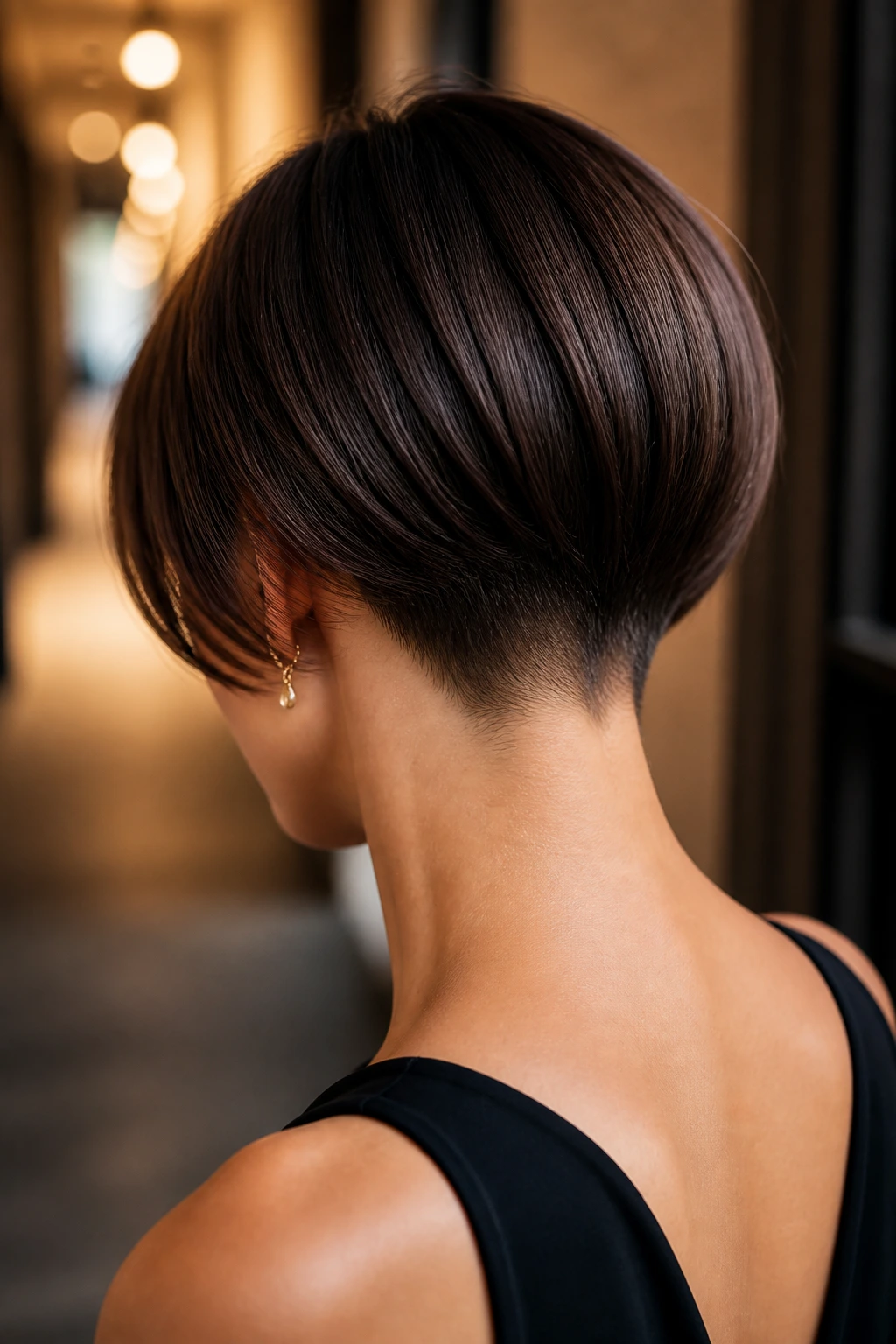
A clean tapered nape gives the back of a bob a tidy finish without making the cut look bulky. That matters for thin hair, especially if the hair at the neckline grows in uneven or flat. The taper keeps the neck area neat, which makes the rest of the bob look more deliberate.
The shape is useful when you want the front to appear fuller. A narrow, polished back can create contrast that makes the sides feel denser. It is a subtle trick, but subtle tricks are often the good ones with thin hair.
This is a nice option if you work in settings where your hair needs to look neat all day. It stays close to the head and doesn’t puff up much. Clean is the whole point.
29. Shoulder-Skimming Bob

A shoulder-skimming bob gives you the feeling of a bob without the commitment of going short. The length lands right at the shoulders, which can be risky if the cut is too blunt in the wrong place, but with the right shaping it creates enough weight to stay smooth. For thin hair, that can be a smart middle road.
The haircut works best when the ends are not too layered. A little shaping around the face helps, but the bottom line should stay fairly full. Too much movement at this length and the hair starts to look uneven very quickly.
I recommend this to anyone growing out a shorter cut or someone who needs hair long enough to tie back but short enough to keep from going limp. It is practical. Plain and simple.
30. Graduated Crown-Lift Bob
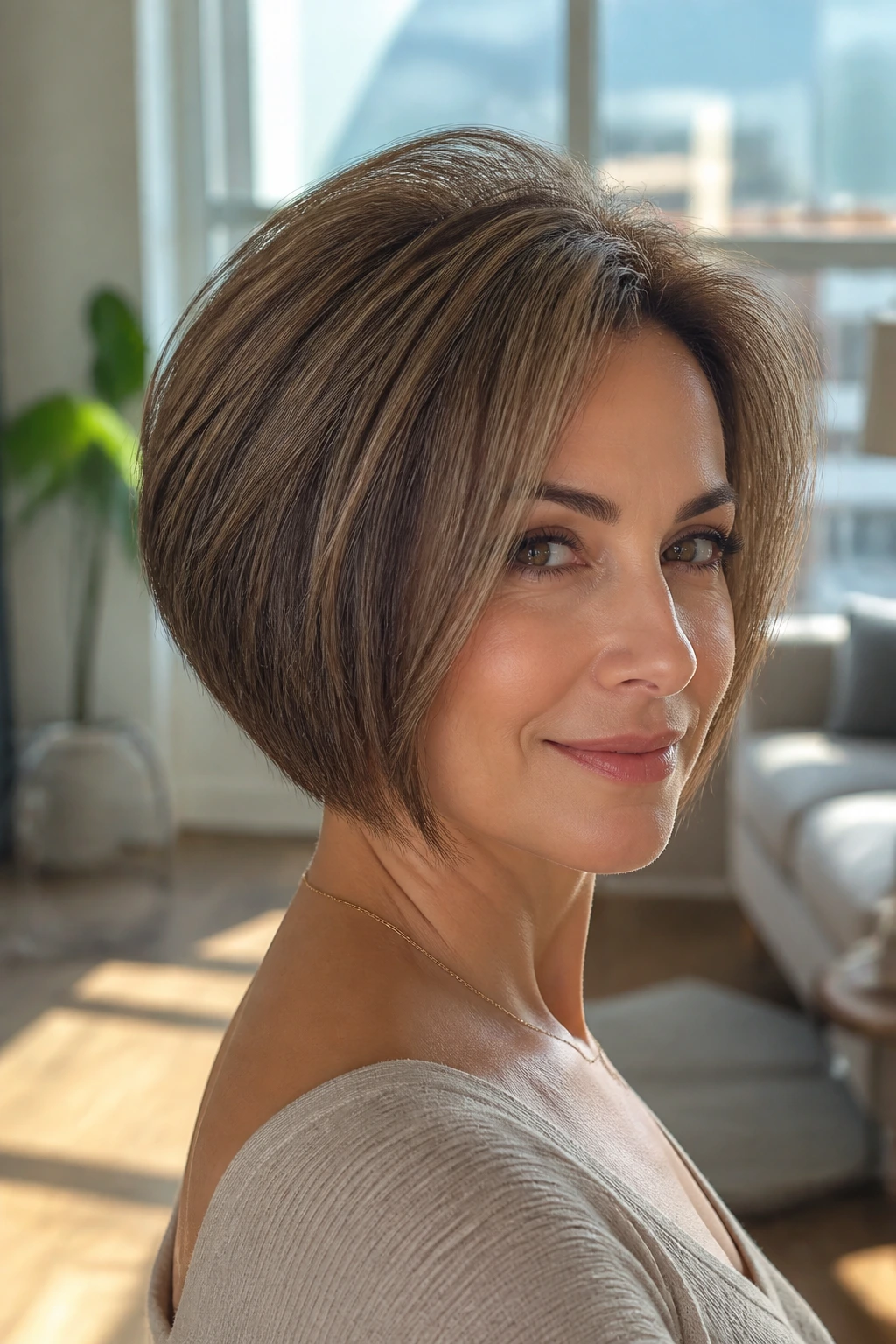
A graduated crown-lift bob puts the emphasis on height at the back of the head, which is exactly where many thin heads need help. The graduation gives the crown some structure, and that structure creates the illusion of thicker roots. The silhouette looks lifted even before you touch a brush.
This cut sits somewhere between a stacked bob and a softer rounded shape. It is not about drama. It is about making the scalp area less obvious by building a little support underneath. That’s a better use of layering than chopping the ends to bits.
If your hair collapses as soon as humidity shows up, this is a strong contender. It keeps its shape better than more fragile, over-textured cuts. A root-lifting spray at the crown helps, but the cut already does a lot of the work.
31. Soft Shag Bob

A soft shag bob can work on thin hair, but only if the shag part stays soft. The layers add movement and a little lift, which is lovely when the hair has enough density to support them. If the layers get too short or too many, the ends start looking transparent. Fast.
The version I like keeps the top light, the sides blended, and the perimeter visible. That means you get a little attitude and texture without losing the haircut’s backbone. If you want a bob that feels more relaxed than polished, this is the lane.
It’s better on hair that has a natural bend or wave. Straight, sparse hair can turn it into a fluffy little problem. The texture has to be there already, or the cut has too much work to do.
32. Air-Dried Natural Bob

An air-dried natural bob is for people who do not want their hair to be a hobby. The cut is shaped to look good when it dries with minimal help, which makes thin hair easier to live with day to day. The ends usually stay a little blunt, with just enough internal shaping to avoid stiffness.
This works best when the hair has some movement on its own. The cut should encourage the pattern rather than fight it. That might mean a soft side part, a slightly longer front, or a gentle bend through the mid-lengths. The goal is to let the hair settle into itself.
If you hate round brushes, this one deserves a look. A bit of mousse and a careful scrunch or finger-twist is usually enough. Not every bob needs a salon blowout to make sense.
33. Old-Hollywood Wave Bob
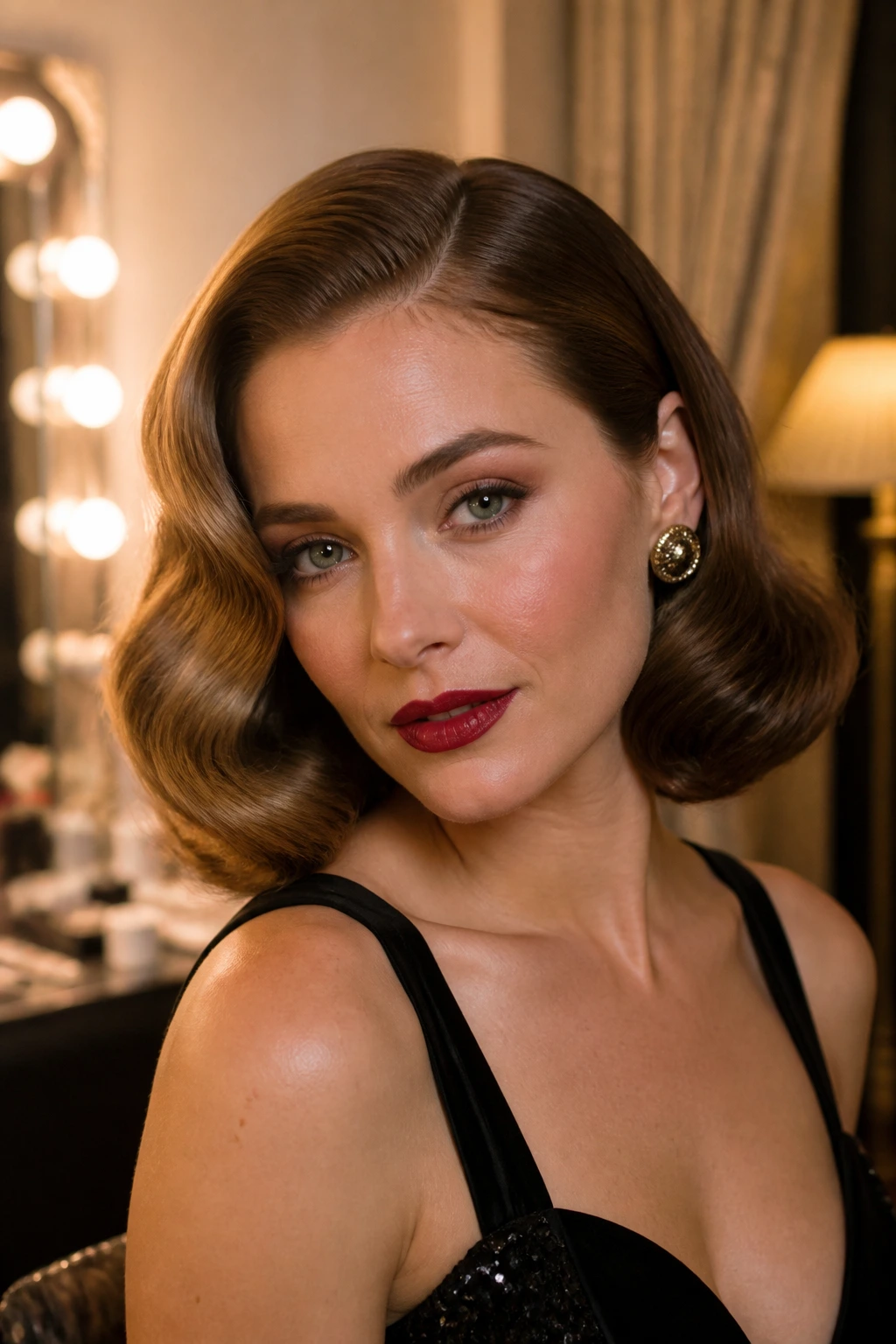
The Old-Hollywood wave bob is all about brushed-out curves and a strong side part. Thin hair likes this because the wave creates the look of fullness without depending on raw density. The style is smooth, glam, and more forgiving than it appears.
The cut underneath should support the wave pattern with enough length to hold a bend, but not so much that the style drops. The finish matters most here. Brush the wave into place, pin it while it cools, then loosen it gently. That cooling time is not optional if you want the shape to last.
I’d use this for events or any day you want your hair to look deliberately dressed. It’s a little more effort than the rest of the list, but the payoff is obvious. The hair looks like it knows where it’s going.
34. Face-Lifting Bob With Long Front Pieces
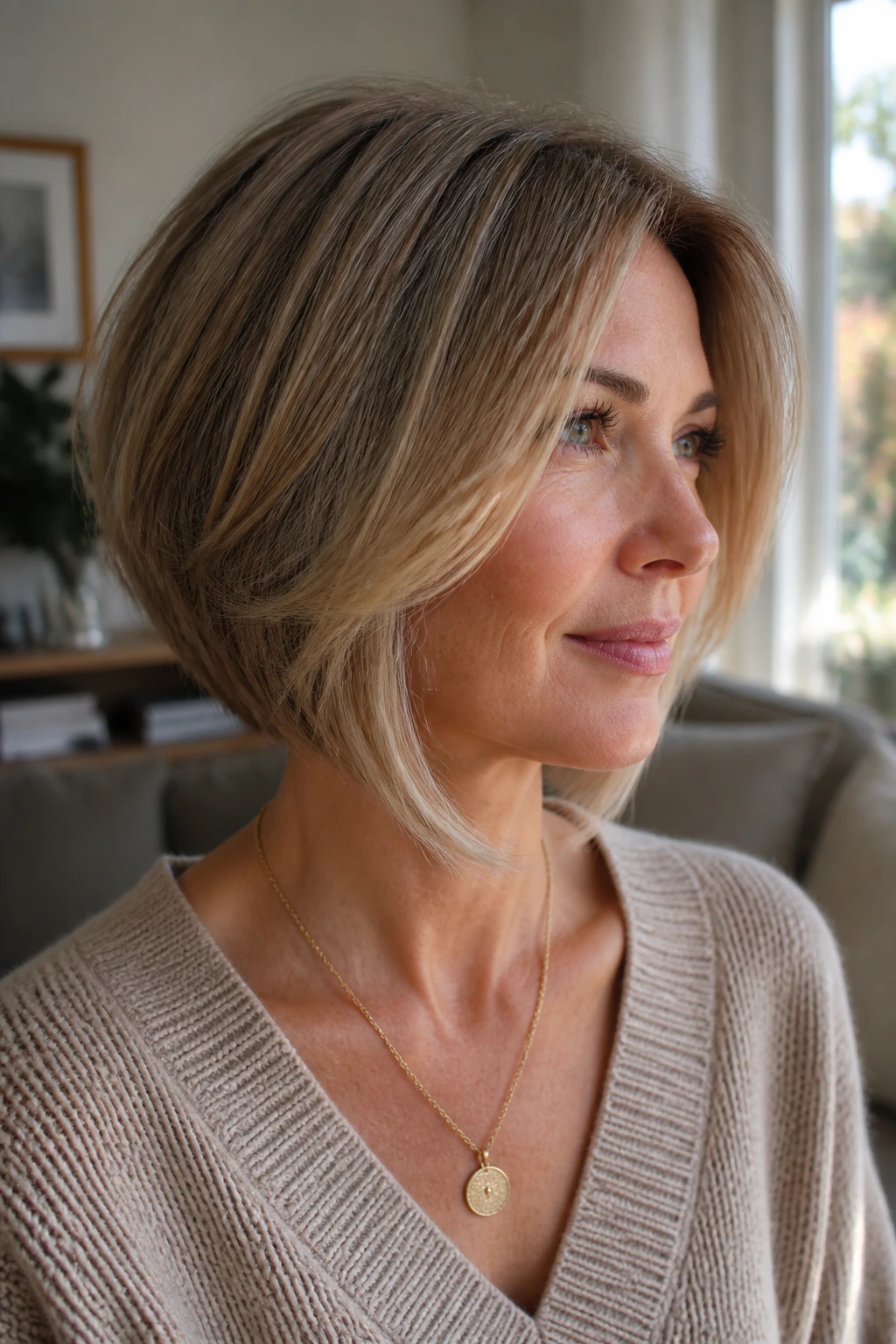
Long front pieces can do a lot for thin hair when the rest of the bob stays clean. The longer front sweeps the eye upward and outward, which gives the face a lifted look and helps the hair feel fuller around the cheekbones. It’s one of those cuts that looks soft but does a lot of structural work.
The key is keeping the back compact. If the front is long and the rest of the cut is also long, the whole style can lose shape. A strong back with length only where it helps most gives the cut a better outline.
This one is useful if you want to soften a strong jaw or balance a long face. It does not demand heavy styling. A bend at the front and a smooth finish through the rest of the bob usually does the job.
35. Blended Layer Bob
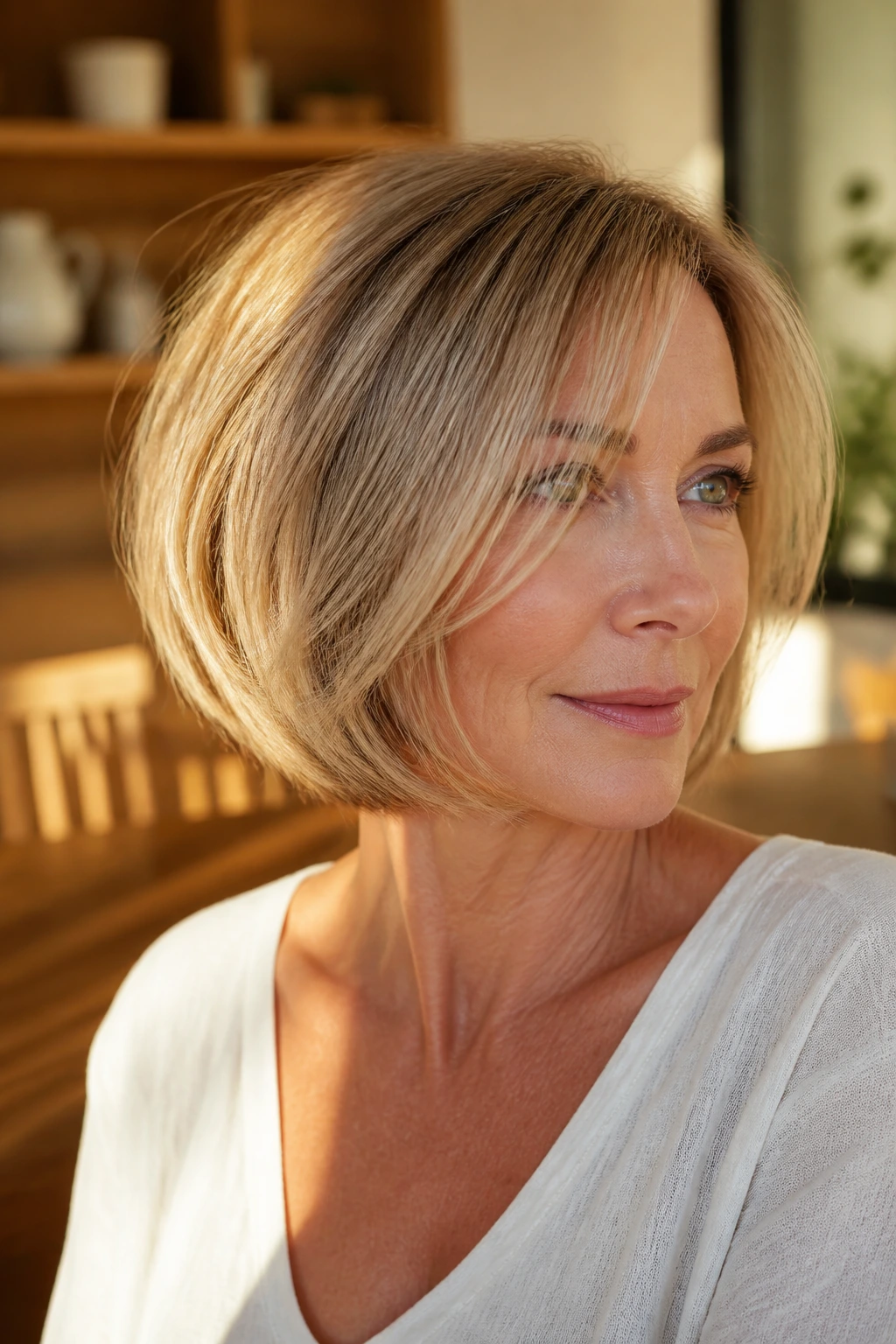
Blended layers are the polite version of layering for thin hair. They remove just enough weight to keep the cut from feeling blocky, but they don’t create obvious gaps. The transition from one length to the next is smooth, which means the eye sees one shape instead of a chopped-up stack of pieces.
That matters a lot. Harsh layers on thin hair can look busy in the chair and sparse a week later. Blending keeps the haircut calmer. It also grows out more quietly, which is useful when you’re not racing back to the salon every month.
I like this for people who want movement but are wary of a bob looking too severe. It gives the ends a little swing and keeps the top from lying dead flat. Nice middle ground.
36. Box Bob
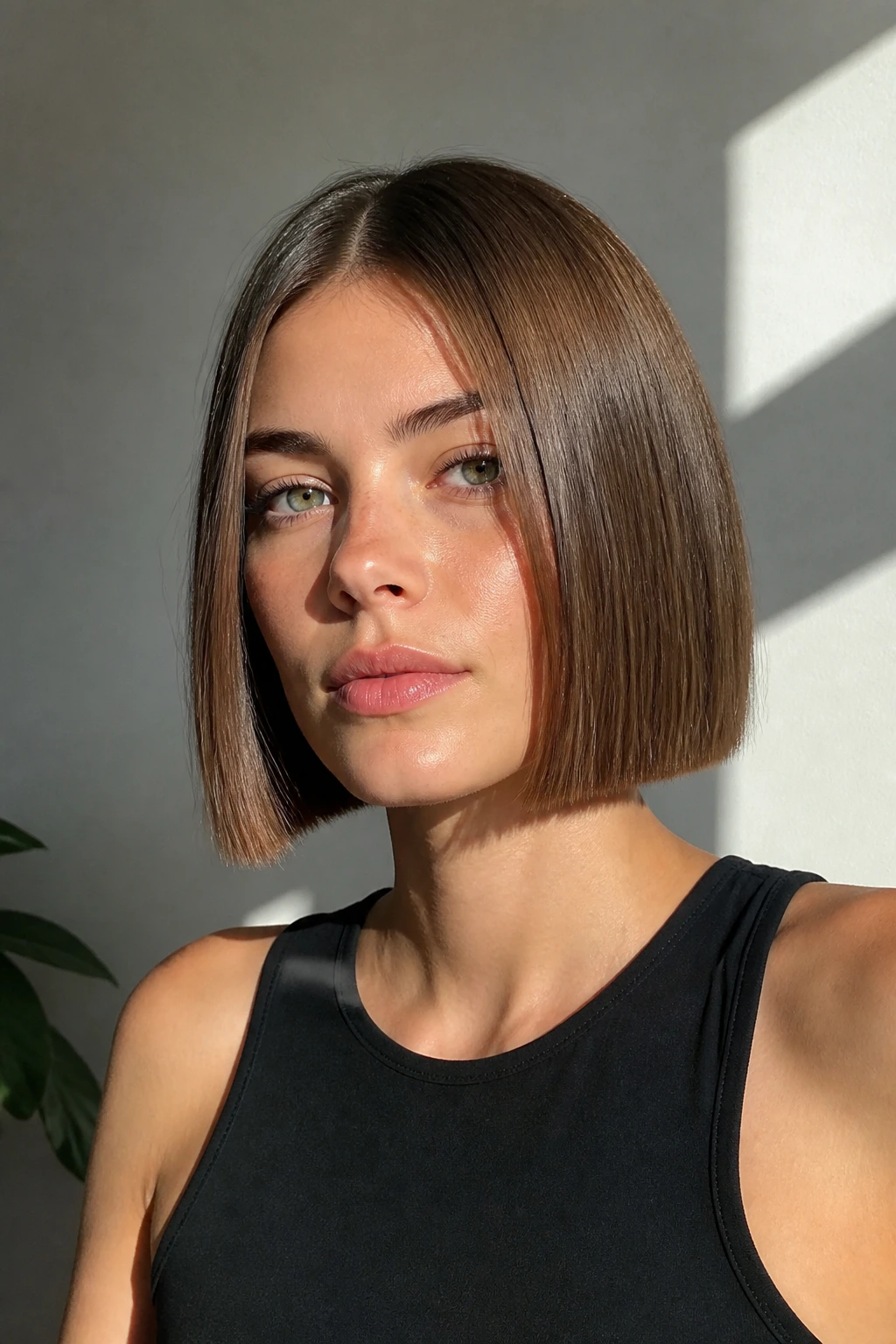
A box bob has a straighter, squarer outline that can make thin hair look denser simply because the shape is so strong. The perimeter feels fuller when the sides and bottom land in a more level line. It’s almost geometric, which sounds cold until you see how much body it can create.
This cut is a good answer for hair that tends to fluff out at the wrong spots if it’s layered too much. The box shape keeps everything contained. If you have a narrow face, it can add some width; if you have a wider face, ask for a softer edge around the jaw so it doesn’t feel too severe.
I’m partial to this shape on straight hair. It loves a crisp blow-dry and doesn’t need much else. Let the line do the talking.
37. Flipped-End Bob
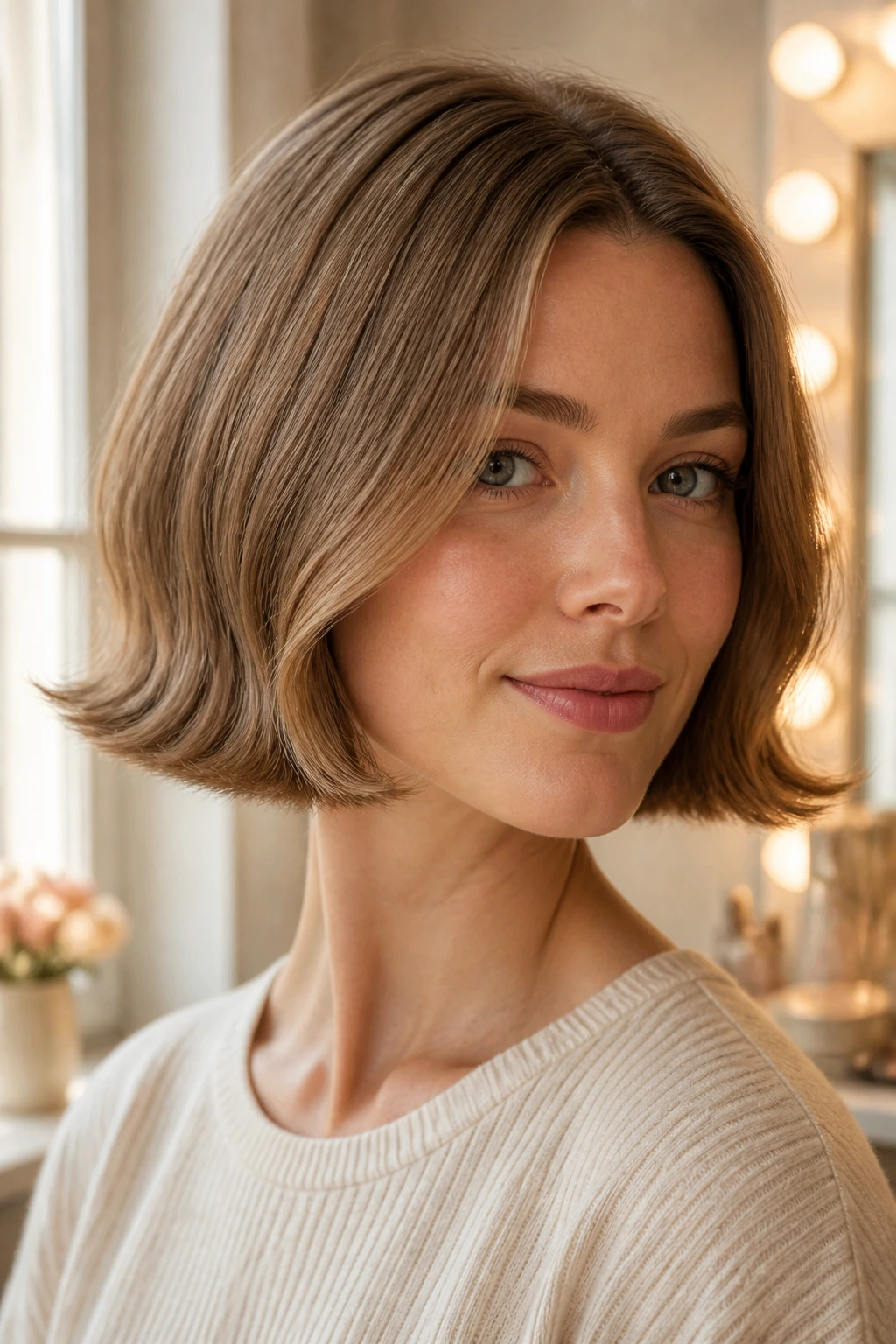
Flipped ends add a little outward kick that can make thin hair seem broader at the bottom. The style has a retro feel, but the reason it works is practical: the outward turn creates visual width. That keeps the haircut from collapsing into a narrow strip.
You can cut for this effect or style it in after the fact with a round brush or a small flat iron bend. I like the version where the ends are only slightly flipped, because heavy flip can look costume-like. A little goes a long way.
This is a fun choice if straight-down hair feels too flat or serious. It gives movement right at the edge of the cut, where thin hair usually needs help most. Small detail. Big difference.
38. Polished Deep Side Bob
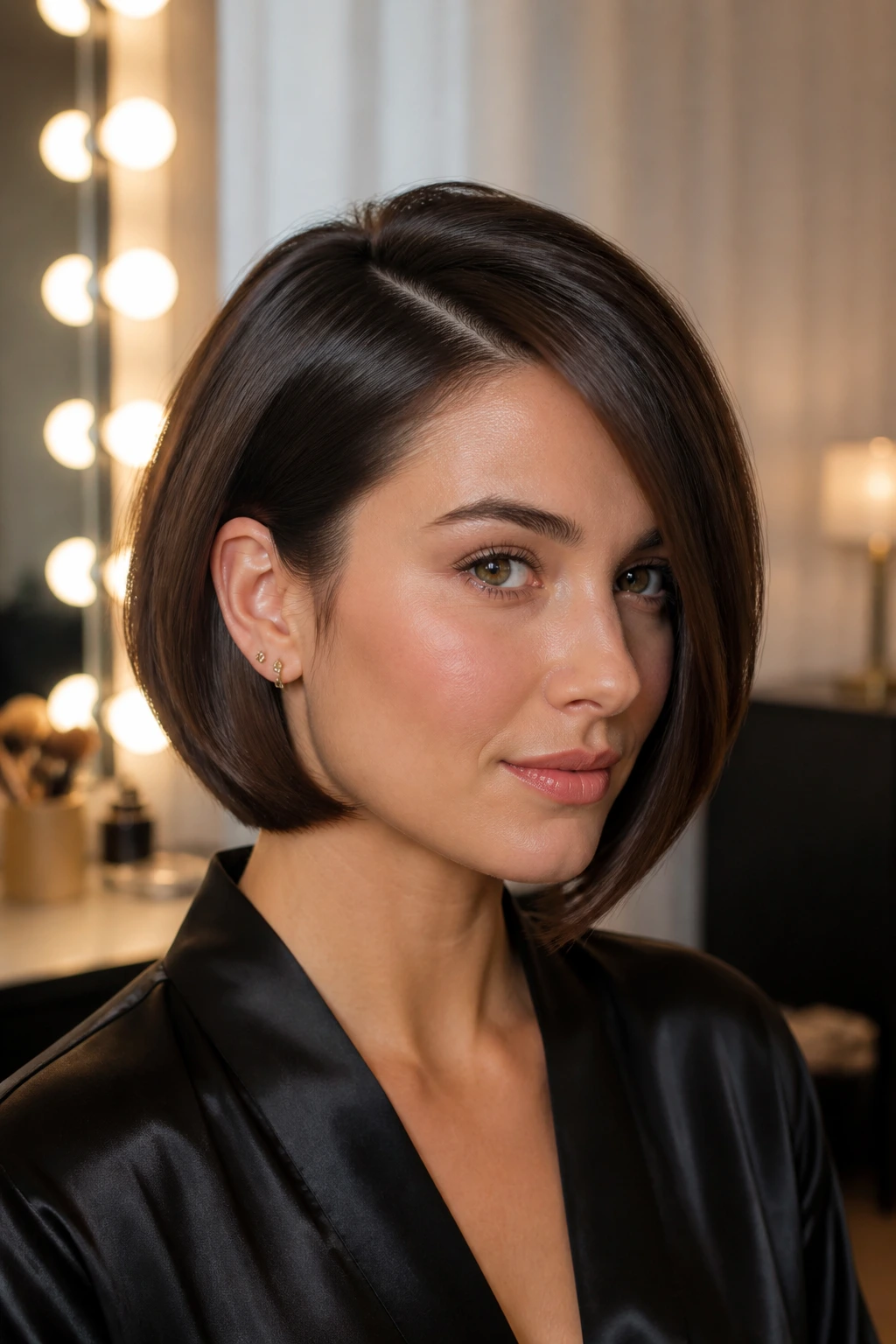
A polished deep side bob closes the list because it’s one of the most reliable ways to make thin hair look fuller and more deliberate at the same time. The deep part creates lift, the polish keeps the finish smooth, and the bob shape keeps the ends from drifting into wisps. Simple ingredients. Good result.
The haircut can be blunt, softly layered, or slightly angled, but the side part is the anchor. It changes the balance of the whole head and gives the root a chance to stand up a little. If your hair tends to stick flat against the scalp, this is a useful trick.
I like this best when you want the bob to feel a little dressed up without being fussy. It works for workdays, dinners, and bad-hair mornings that need rescuing fast. Hard to argue with that.
How to Style Bob Haircuts for Thin Hair Without Flattening Them
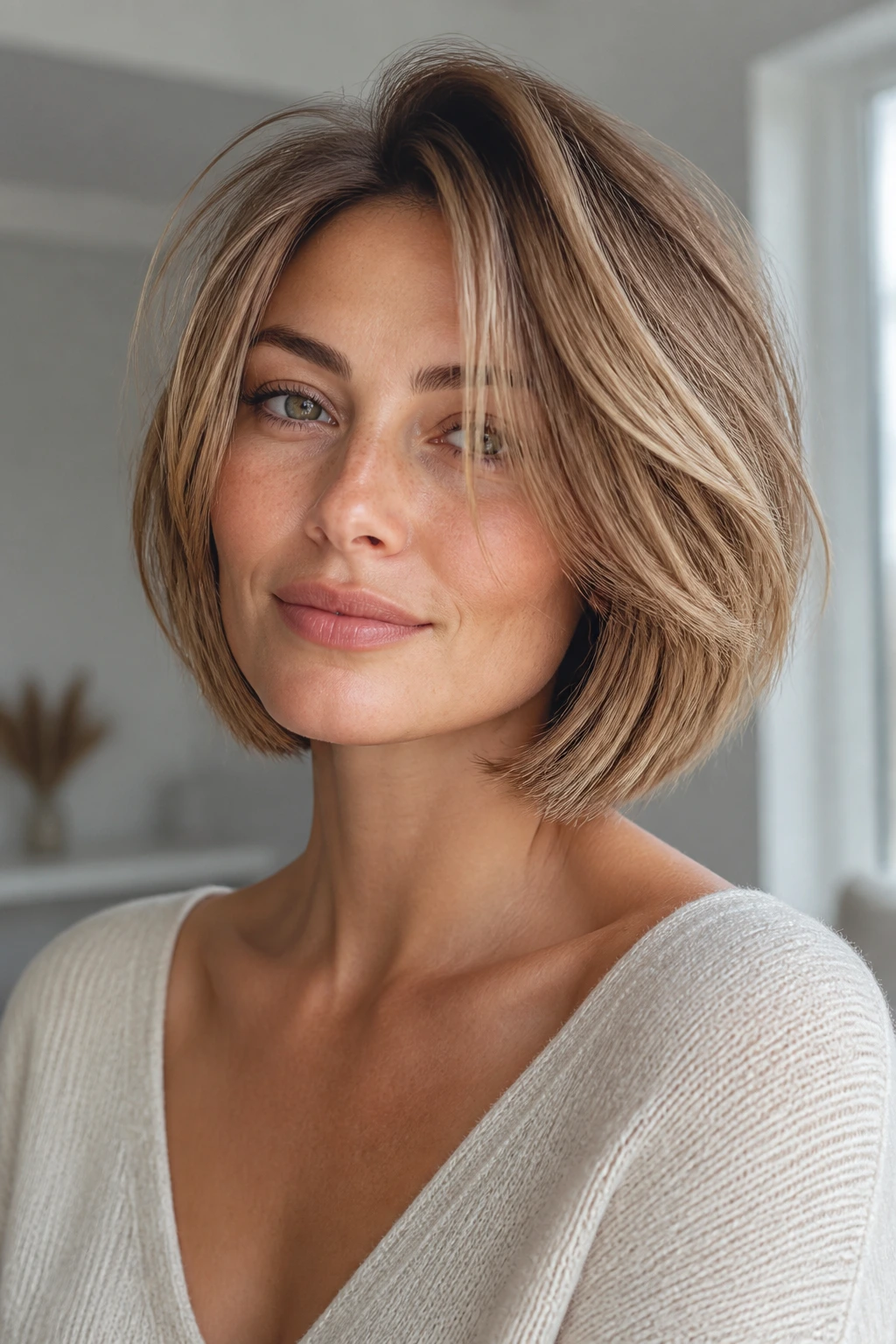
The best styling for thin hair starts before the blow-dryer ever turns on. Use a lightweight shampoo, then keep conditioner from the roots down. If you pile a heavy conditioner on the crown, the hair will collapse before it leaves the bathroom. That’s just how fine strands behave.
A root-lifting mousse or spray at the crown helps more than most people expect. Work it in while the hair is damp, then blow-dry the roots in the opposite direction of how they’ll fall. That little bit of “wrong-way” drying builds memory into the shape. You can smooth it back into place later.
Round brushes are useful, but a large brush can flatten thin hair if you stretch too hard. A medium brush usually gives a better bend at the ends without pulling everything straight. If you want extra lift, set the crown with two or three velcro rollers for ten minutes while you do makeup or get dressed. Cheap trick. Works.
Finish with texture only where you need it. Dry shampoo at the roots on day two, texturizing spray through the mid-lengths if the cut needs separation, and a tiny bit of serum on the ends if they look dry. Skip the urge to coat the whole head. Thin hair does not need a bath of product. It needs a few well-placed moves.
Mistakes That Make Thin Hair Look Even Thinner
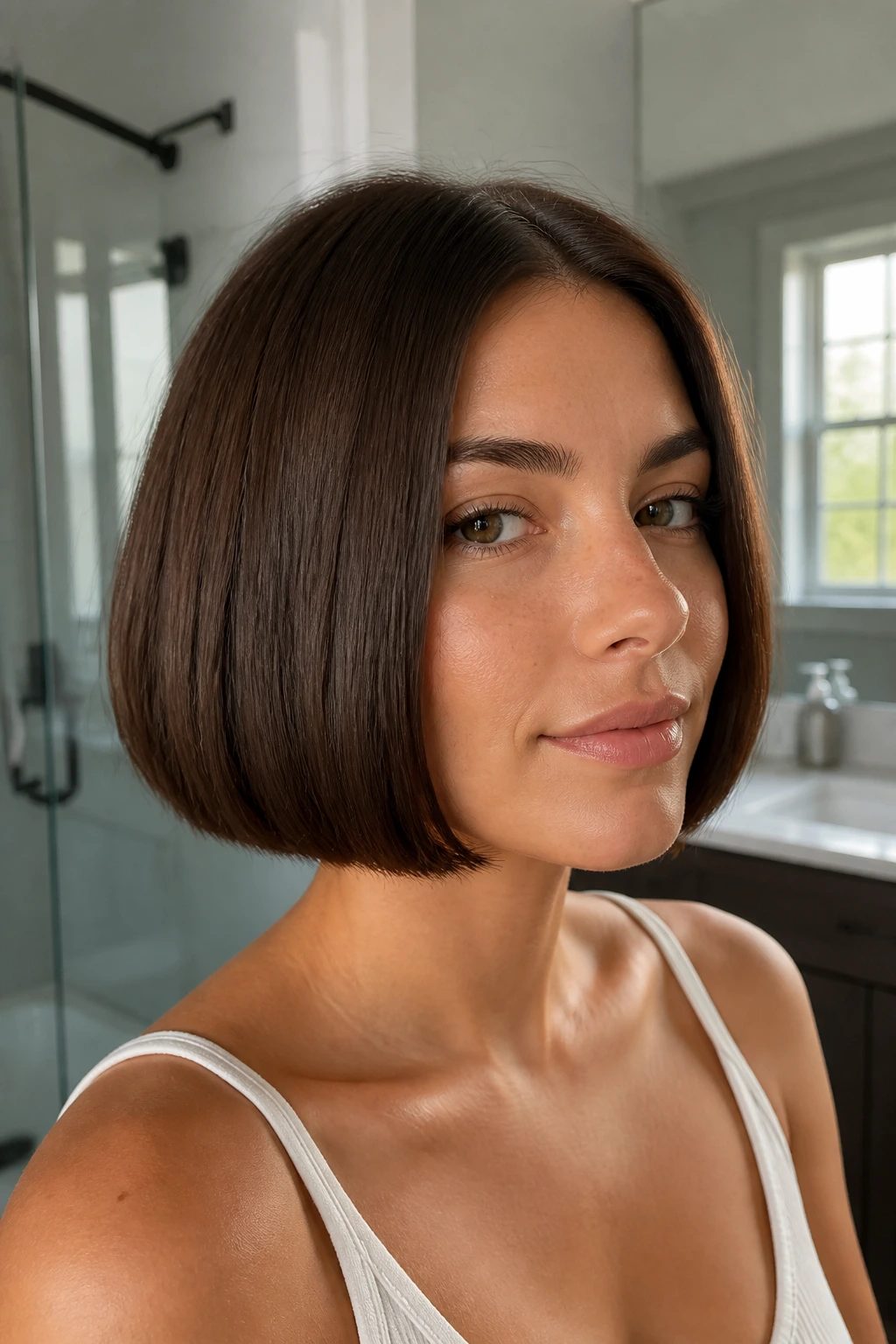
Over-layering is the biggest trap. The symptom is a bob that looks full in the chair and hollow by the next wash. The fix is simple: keep the perimeter stronger and ask for longer, blended layers instead of short ones that carve away the bottom.
Too much texturizing can fray the ends. If the tips look see-through or ragged, the haircut has lost its edge. Ask for point cutting only where needed, and skip aggressive thinning shears unless your hair is truly dense underneath.
Heavy products at the roots flatten everything fast. Creams, oils, and rich masks belong on the mid-lengths and ends, not the scalp. Thin hair shows product buildup quickly, so use less than you think and keep clarifying shampoo in the rotation.
The wrong part can sabotage the whole shape. A stubborn center part on sparse temples can expose more scalp than you want. Try a slight off-center part or a deep side part and watch what happens at the crown. It’s often the easiest fix in the room.
Letting the cut grow too long changes the math. A bob that was full at the jaw can turn stringy at the shoulders. Trim before the line drops too far. Once the ends start to drift, the cut stops doing its job.
Variations and Alternatives for Different Routines
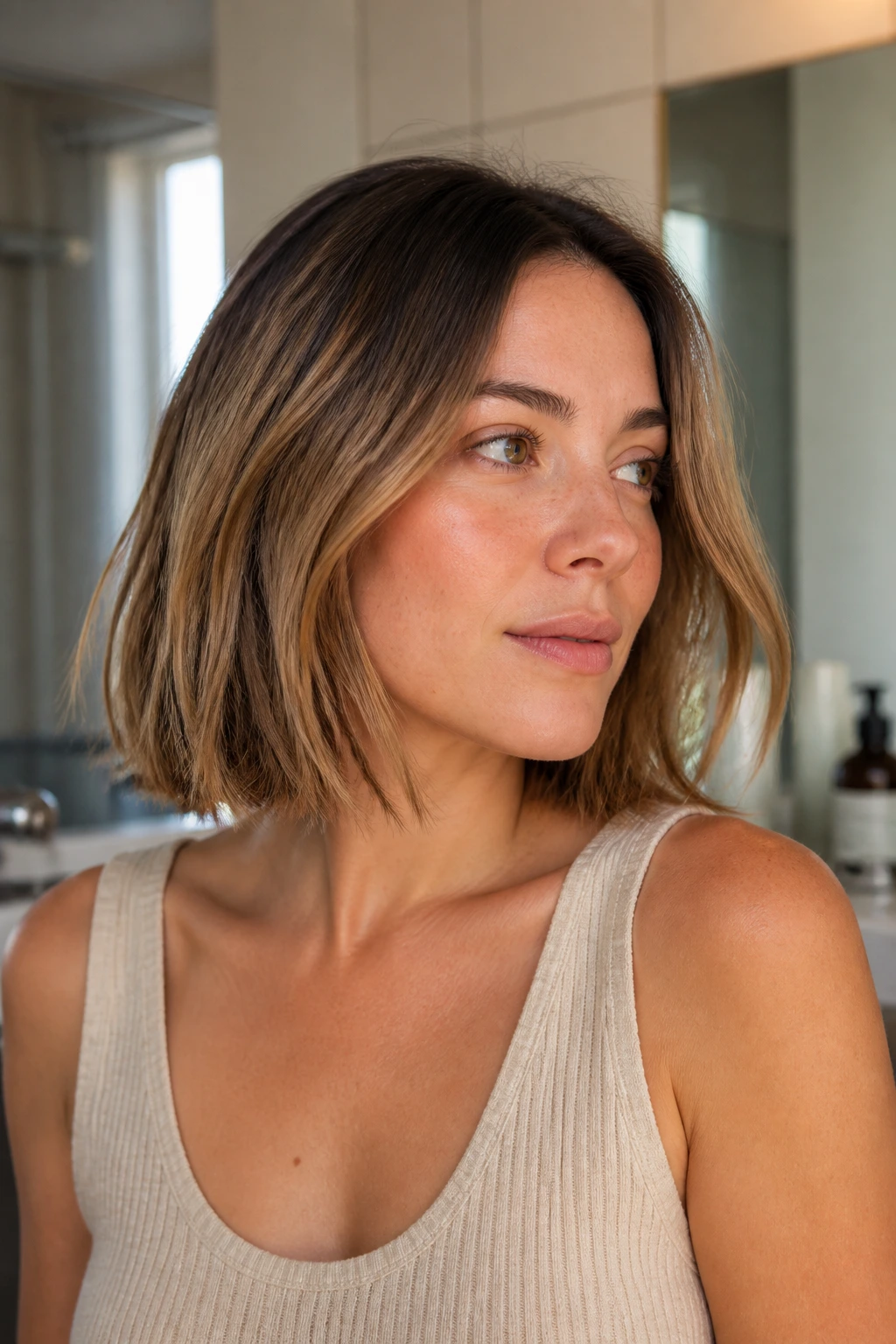
The Low-Fuss Air-Dry Version: Ask for a blunt or softly layered bob that keeps its shape even when you skip heat. It’s best if your hair has a little natural bend and you want a cut that behaves with mousse and a finger comb.
The Office-Smooth Version: Choose a sleek center part, blunt edges, and a polished finish. This works when you want hair that looks controlled all day and you don’t mind a quick blow-dry with a paddle brush.
The Texture-Lover’s Version: Go with a soft wave bob, a choppy bob, or a gentle shag bob. The goal is movement, not mess, so keep the bottom line visible even if the interior has some bend.
The Bangs-First Version: If your face feels unfinished without fringe, try French bangs, wispy bangs, or bottleneck bangs. They shift attention upward and can make thin hair feel styled even when the rest is simple.
The Grow-Out Friendly Version: A collarbone lob or shoulder-skimming bob gives you more room between trims. It’s the version I’d pick for someone who hates the salon but still wants shape.
Tools, Brushes, and Products That Earn Their Space
-
Medium round brush: Better than an oversized brush for thin hair; it gives lift without flattening the roots.
-
Paddle brush: Good for smoothing blunt bobs and center parts when you want a cleaner finish.
-
Blow-dryer with a nozzle: The nozzle directs air and helps the cut sit in one direction instead of frizzing out.
-
Root-lifting mousse or spray: Use at the crown on damp hair; a little goes a long way.
-
Heat protectant: Thin hair burns and frays faster than people expect, so this is not optional if you use hot tools.
-
Dry shampoo: Best on day two or three, especially at the roots where flatness shows first.
-
Texturizing spray: Use on the mid-lengths and ends to create separation without making the roots chalky.
-
Velcro rollers: Handy for setting crown lift or curling under the ends while you get dressed.
-
Tail comb: Useful for clean parts and sectioning, especially when you’re trying to keep a bob symmetrical.
-
Sharp salon shears: For trims, this matters more than most people think; dull blades chew thin ends.
How to Keep the Shape Between Salon Visits

Thin hair tends to show every millimeter of growth, so bob maintenance is not something to postpone until the ends look sad. For most bob lengths, a trim every 6 to 8 weeks keeps the outline solid. If you wear bangs, plan on trimming those every 2 to 3 weeks, because fringe grows into your eyes faster than you want.
At home, the goal is to protect the edge of the cut. That means not frying the ends every morning, not loading the crown with oil, and not sleeping on a wet bob unless you want a crooked shape in the morning. A silk or satin pillowcase helps reduce friction, which matters more when the cut is short and the ends are exposed.
If the bob starts to lose its body, do not assume the answer is more layers. Usually the better fix is simpler: a cleaner blow-dry, a lighter conditioner, or a trim to restore the perimeter. Thin hair often looks thicker when the line is honest. Keep that line honest and the haircut will behave much better.
Frequently Asked Questions

Which bob haircut makes thin hair look thickest?
A blunt chin-length bob or a box bob usually creates the strongest density illusion because the edge lands in one clear line. If your hair is very flat at the crown, a stacked or graduated version can help even more by lifting the back.
Should thin hair have layers or stay one length?
It depends on where the hair is losing shape. Fine but dense hair can handle longer, blended layers; truly low-density hair usually looks better with a stronger one-length perimeter and only a little internal shaping. Too many short layers are where the trouble starts.
Is a lob better than a short bob for thin hair?
A lob is better if you want more styling options or if you’re nervous about going too short. A shorter bob is better when the ends look scraggly and the hair needs less drag. The cut that keeps a clean outline is the right one.
Can thin hair wear bangs?
Yes, but the bang style matters. Wispy bangs, bottleneck bangs, and soft curtain bangs tend to work better than heavy blunt bangs because they don’t steal too much hair from the rest of the cut. If your fringe gets too thick, the sides can look even thinner.
What if my bob falls flat by noon?
Start at the crown. That’s usually where the cut, the part, or the product is failing. A root-lifting spray, a quick reset with a round brush, or a part change will often do more than a completely different haircut.
How often should I trim a bob on thin hair?
Every 6 to 8 weeks is a good range for keeping the line clean. If you want a sharper shape, especially with a blunt edge or bangs, stay closer to 6 weeks. Once the ends start to feather out, the bob loses its strongest trick.
Does a deep side part help thin hair?
Yes. It creates lift on one side and gives the hair a little asymmetry, which makes the crown look less flat. If your temples are sparse, a soft side part can also be kinder than a strict center part.
Can curly thin hair pull off a bob?
Absolutely, but the cut needs to follow the curl pattern when it dries. A curly bob should be shaped so the curls spring into a balanced outline, not forced into a straight wet cut that turns wonky later. Diffusing helps, but the haircut itself does the real work.
What should I tell my stylist if I want volume but not frizz?
Ask for a strong perimeter, minimal thinning at the ends, and internal shaping only where lift is needed. Those words matter. You want density preserved on the outside and controlled movement underneath, not a shredded finish.
The Bob That Makes Thin Hair Look Intentional
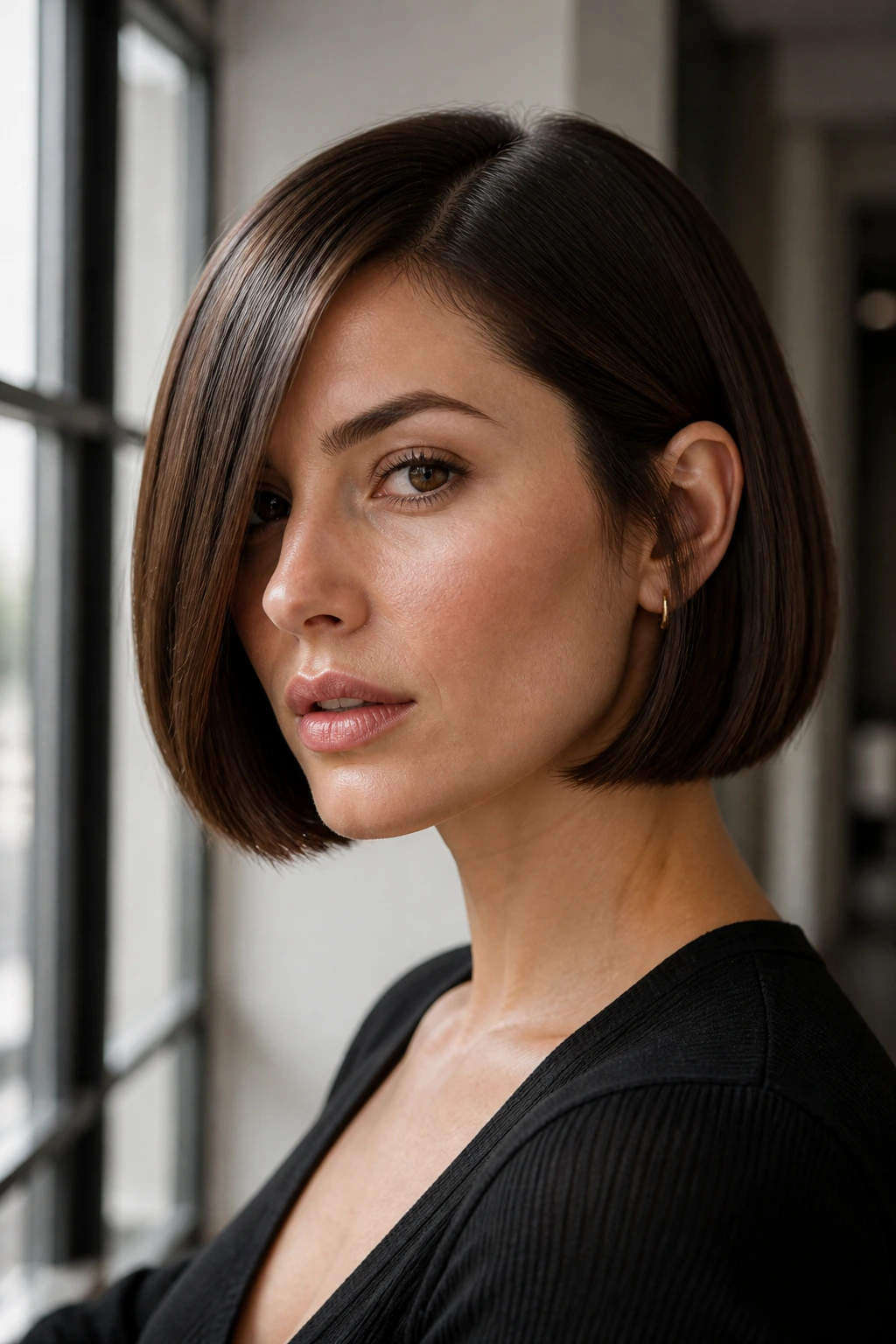
The best bob for thin hair is the one that protects the edge first and chases trendiness second. That sounds blunt because it is. Hair that lacks density needs structure more than novelty, and the smartest cuts on this list know that.
A good bob can make thin hair look cleaner, sharper, and fuller without a long styling battle every morning. Once the perimeter is right, the rest becomes easier: a side part here, a little bend there, a quick root lift when you need it. The haircut starts doing part of the job for you, which is exactly the point.
If your hair has been looking flat, stringy, or too soft at the bottom, a stronger bob shape is worth asking for. Bring the silhouette you want, be picky about the ends, and do not let anyone thin the life out of it just to make it feel “light.”
