



A bob can do two opposite things on a heart-shaped face: it can sharpen the chin and leave the forehead feeling even wider, or it can pull the eye down, soften the top half, and make the whole face look calmer. The difference is usually not dramatic. It’s a few inches of length, a part line, and whether the ends sit softly at the jaw or stop right on the widest point of the cheeks.
That’s why bob haircuts for heart shaped faces are such a good study in small decisions. Heart-shaped faces tend to carry width through the forehead and temples, then taper through the lower face. A cut that crowds the crown or flares at the cheekbones can make that top-heavy feeling more obvious. A cut that lands with a little movement around the jaw, or a fringe that eases the forehead visually, tends to look more settled and flattering.
I’ve always liked heart-shaped faces for bob inspiration because they can wear shape, but they don’t want clutter. The best versions look tidy from the front, airy at the ends, and deliberate around the cheekbones. Nothing puffy. Nothing helmet-like. Just the right amount of bend, weight, and softness in the right places.
Why These Bobs Work So Well on Heart-Shaped Faces

- They redirect width away from the forehead: A side part, curtain fringe, or soft fringe breaks up the upper third so the face doesn’t feel front-heavy.
- They build visual balance at the jaw: Bobs that sit at the chin, just below it, or at the collarbone add a little visual weight where heart-shaped faces often need it.
- They avoid harsh shelf lines at the cheeks: The cleaner cuts here are the ones with bevel, texture, or a soft angle instead of a blunt line that hits the widest point.
- They let the eyes focus lower: A bob with movement around the mouth and jaw pulls attention down from the temples and forehead.
- They work with straight, wavy, and curly hair: The trick is not the texture itself. It’s where the cut lands and how the outline is handled.
- They are easier to grow out than people think: The right bob on a heart-shaped face doesn’t have to be frozen in place; it just needs a shape that still makes sense at week six.
1. The Chin-Skimming French Bob
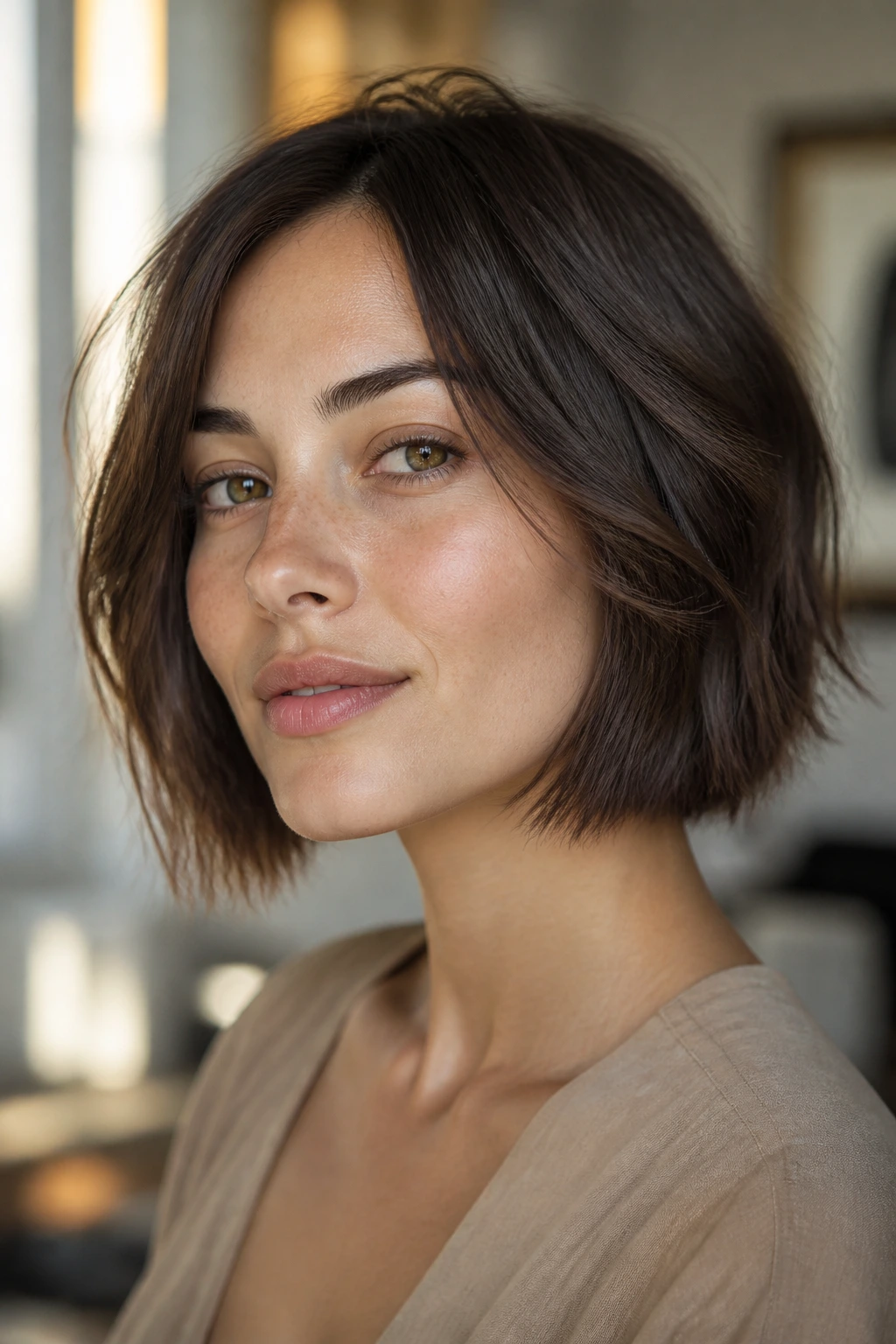
This is the cut I reach for when someone wants something crisp but not severe. A French bob that skims the chin gives a heart-shaped face a clean lower frame, and the shorter length keeps the hair from hanging all the weight at the temples. Add a soft, airy fringe and the forehead stops feeling like the loudest part of the face.
Why It Lands So Well
The chin is a useful stopping point because it creates a visual base right where heart-shaped faces narrow. When the hem sits a touch below the jaw, the whole face reads more even. I like this version best with a tiny bit of bend at the ends, not a poker-straight outline.
If your hair is naturally straight, this cut looks sharp with just a slight undercurve from a round brush. If your hair waves, even better. The texture keeps the bob from looking too exact, which is often the problem with shorter cuts on this face shape.
Best for: Medium to fine hair, anyone who likes a neat shape, and faces that want forehead softness without hiding it completely.
Ask for this: A chin-length bob with light internal texture and a fringe that sits just above the brows or brushes them softly. Keep the sides slightly longer if your chin is narrow.
Watch for: A blunt line that ends exactly at the widest cheek point. That can make the middle of the face feel boxy.
2. The Collarbone Lob with Curtain Bangs
A collarbone lob is the safe bet that isn’t boring, which is a rare thing in haircut land. It gives heart-shaped faces enough length to soften the upper half while still keeping shape and movement around the face. Curtain bangs do a lot of the heavy lifting here, splitting the forehead visually and sliding toward the cheekbones instead of cutting across them.
I like this cut because it behaves well on days when you do almost nothing to it. The length is forgiving. If you tuck one side behind the ear, the face opens up; if you wear it loose, the bangs keep the forehead from feeling broad. There’s a reason stylists keep coming back to this shape.
The best version has a little bend through the mid-lengths and ends that don’t flip out too hard. Too much flip can drag the eye back up toward the temples, which is the opposite of what you want.
3. The Angled A-Line Bob
Do you want a little structure without the hard edge of a classic blunt bob? The angled A-line is your answer. It’s shorter at the back and longer toward the front, which creates a diagonal line that naturally narrows the forehead and draws attention down toward the jaw.
How It Changes the Face
The angle matters more than people think. A gentle A-line feels elegant and balanced; a steep one can start looking overbuilt. For heart-shaped faces, I prefer the softer range: enough forward length to frame the lower face, not so much that the cut turns into a dramatic wedge.
This one looks especially good on straight and slightly wavy hair. The front pieces can graze the jaw or sit just below it, which gives the chin a little extra presence without making it look pointy. If your face is more angular, this is one of the few bobs that can add definition without hardening your features.
How to ask for it
Tell your stylist you want a bob that angles forward just enough to frame the chin, with softness through the sides and no bulky volume at the crown. If your hair is thick, ask for interior debulking so the front doesn’t puff out.
4. The Textured Jawline Bob
A heart-shaped face does not need every strand to obey. That’s where this bob earns its keep. The textured jawline bob keeps the length close to the jaw, then breaks up the outline with choppy ends so the face feels less top-heavy and more relaxed.
A tiny bit of roughness at the ends helps here. Not frizz. Not neglect. Just pieces that move when you turn your head. The result is a cut that frames the lower face in a way a sharp, blunt line never quite can.
I especially like this on hair that tends to puff when cut too cleanly. Thick hair can get a triangular look if it’s not shaped properly, and texture solves that faster than people expect. A razor or point-cut finish can help, but only in skilled hands. The goal is airy, not shredded.
If you wear glasses, this style plays nicely with frames because the line around the jaw stays interesting without competing with the face.
5. The Deep Side-Part Blunt Bob
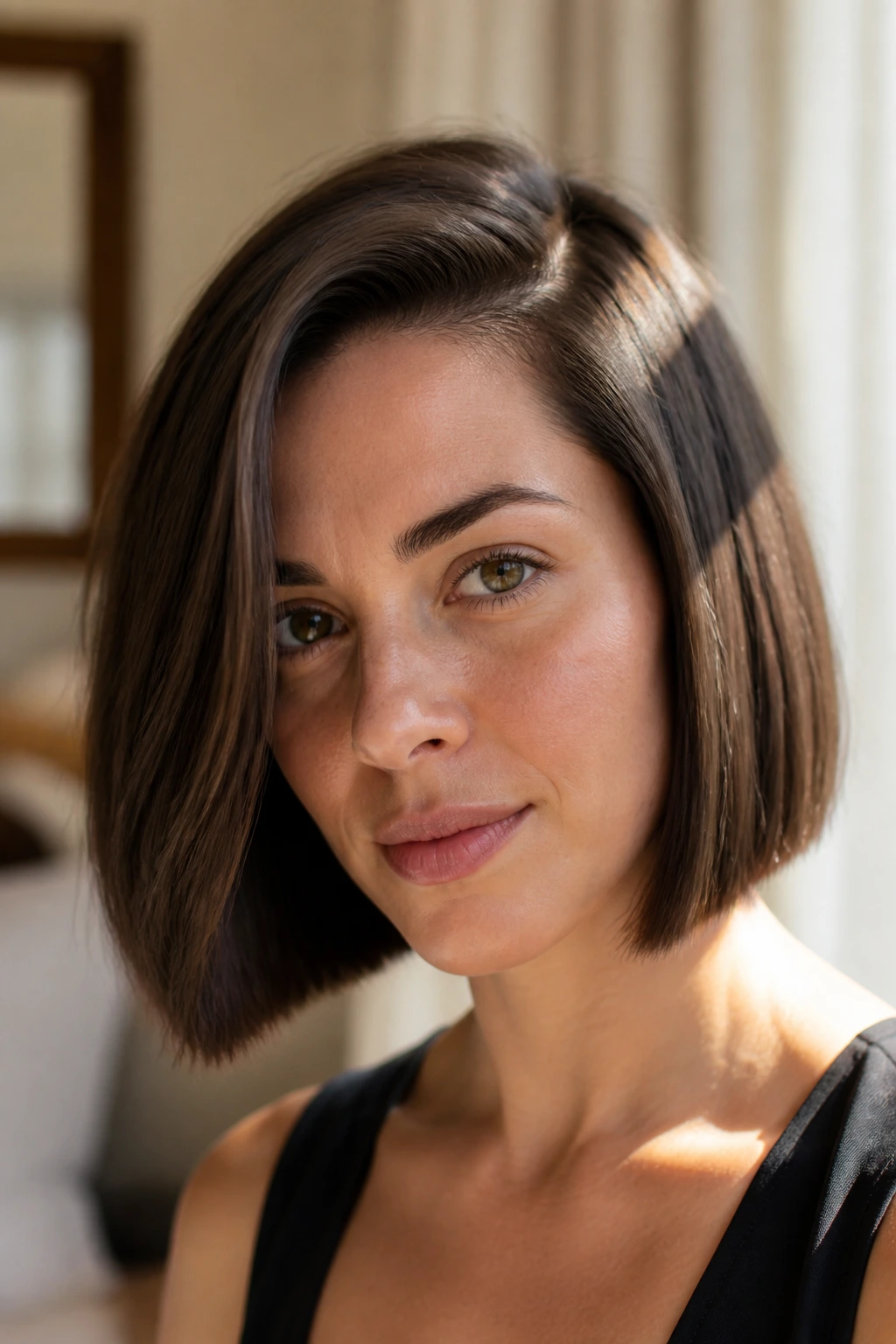
Here’s the blunt bob people often think heart-shaped faces should avoid. I disagree. If it sits below the chin and gets a deep side part, the cut stops feeling blocky and starts looking polished in a good, blunt way. The part is the key. It shifts the eye off the forehead and gives the face some asymmetry, which softens the upper width.
The hem should feel deliberate. Clean. Maybe even a little stern. That’s fine, as long as the length is generous enough to keep it from stopping right at the cheeks. A line that hits lower than the chin tends to flatter this face shape much better than a short boxy bob.
This is the bob for someone who likes structure, hates fuss, and wants hair that falls into place with minimal styling. If your hair is fine, a blunt line can make it look fuller. If your hair is thick, a good internal thinning at the right spots keeps it from ballooning out.
6. The Wavy Bob with Long Face-Framing Pieces
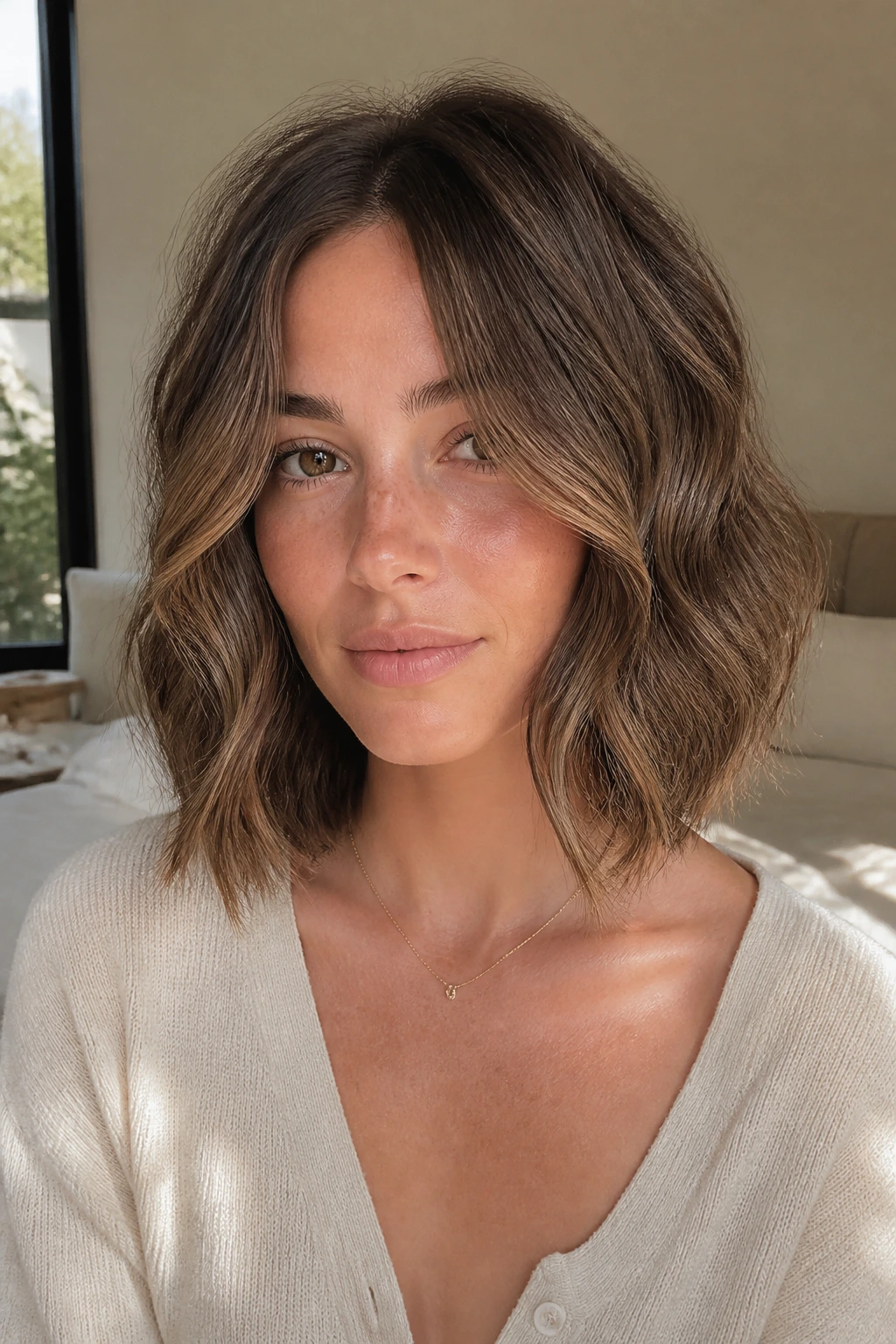
If your hair bends even a little, this one is a gift. The wavy bob with long face-framing pieces gives heart-shaped faces softness around the forehead while keeping the lower half of the face anchored. The front pieces should start near the cheekbone and drift toward the jaw, not stop in a hard line.
This cut works because it behaves like a curtain, but a loose one. The waves create movement, and the longer pieces prevent the bob from sitting too high on the face. It’s also one of the easier cuts to grow out, which matters if you dislike strict maintenance.
I like this version with a middle part for a clean, open look, or a slight off-center part if the forehead feels broad. Sea-salt spray can help, but don’t overdo it; too much grit makes the ends fray instead of bend.
7. The Layered Lob with Internal Movement
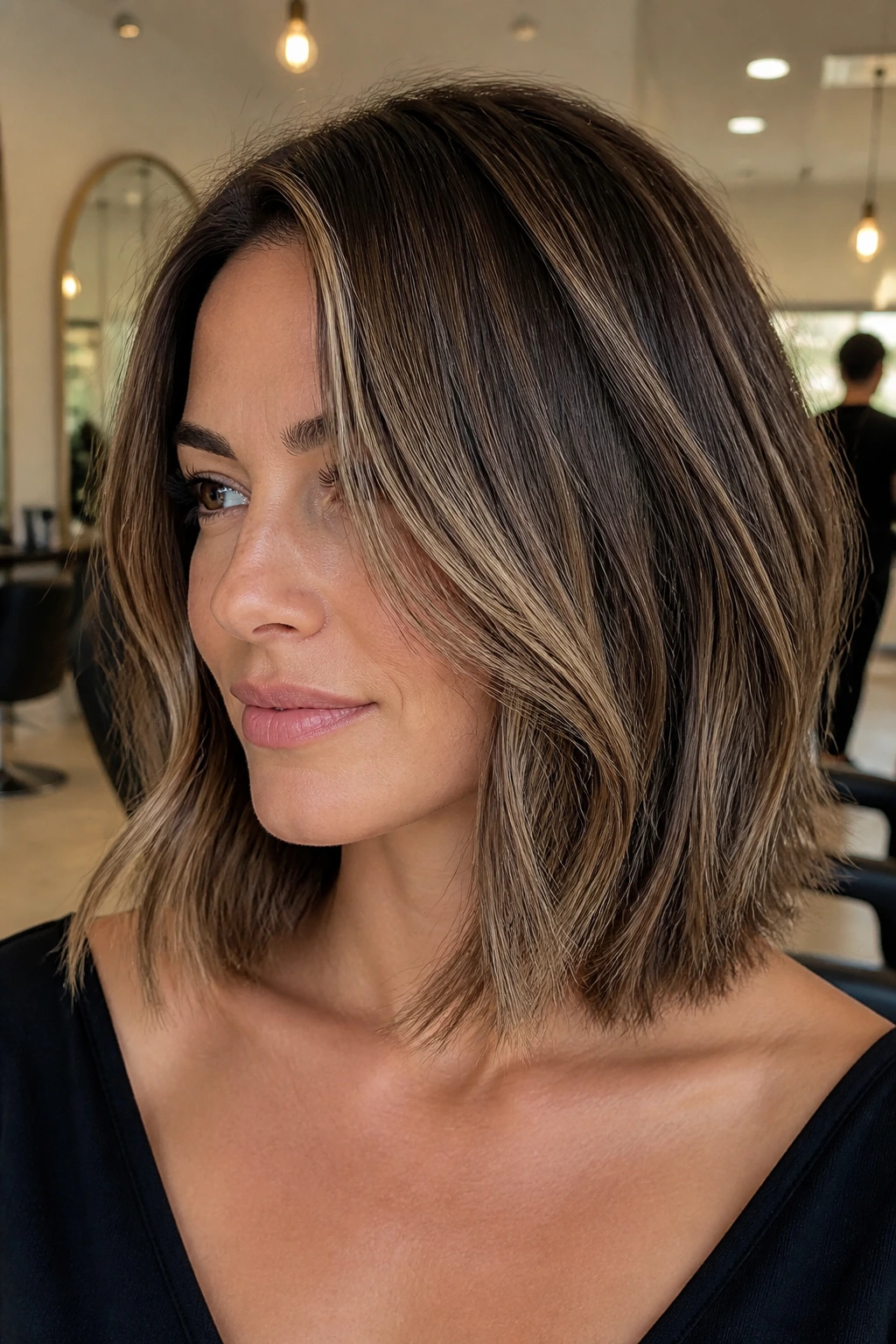
Some bobs need surface texture. This one needs hidden structure. A layered lob with internal movement keeps the outline soft and the bulk controlled, which is useful if your hair is thick, heavy, or prone to sitting flat at the roots and puffy at the ends. Heart-shaped faces do well with this because the cut doesn’t add width where the face is already strongest.
The layers should live inside the shape, not all over the surface. That distinction matters. Surface layers can make the front look too piecey and thin, while internal layers let the hair swing without exploding outward. The length can sit at the collarbone or just above it.
This is a good salon choice if you want your hair to move when you turn your head but still fall back into place without a lot of styling. It’s one of those cuts that looks expensive when it’s done well, mostly because the shape is controlled rather than fussy.
8. The Rounded Bob with a Soft Bevel
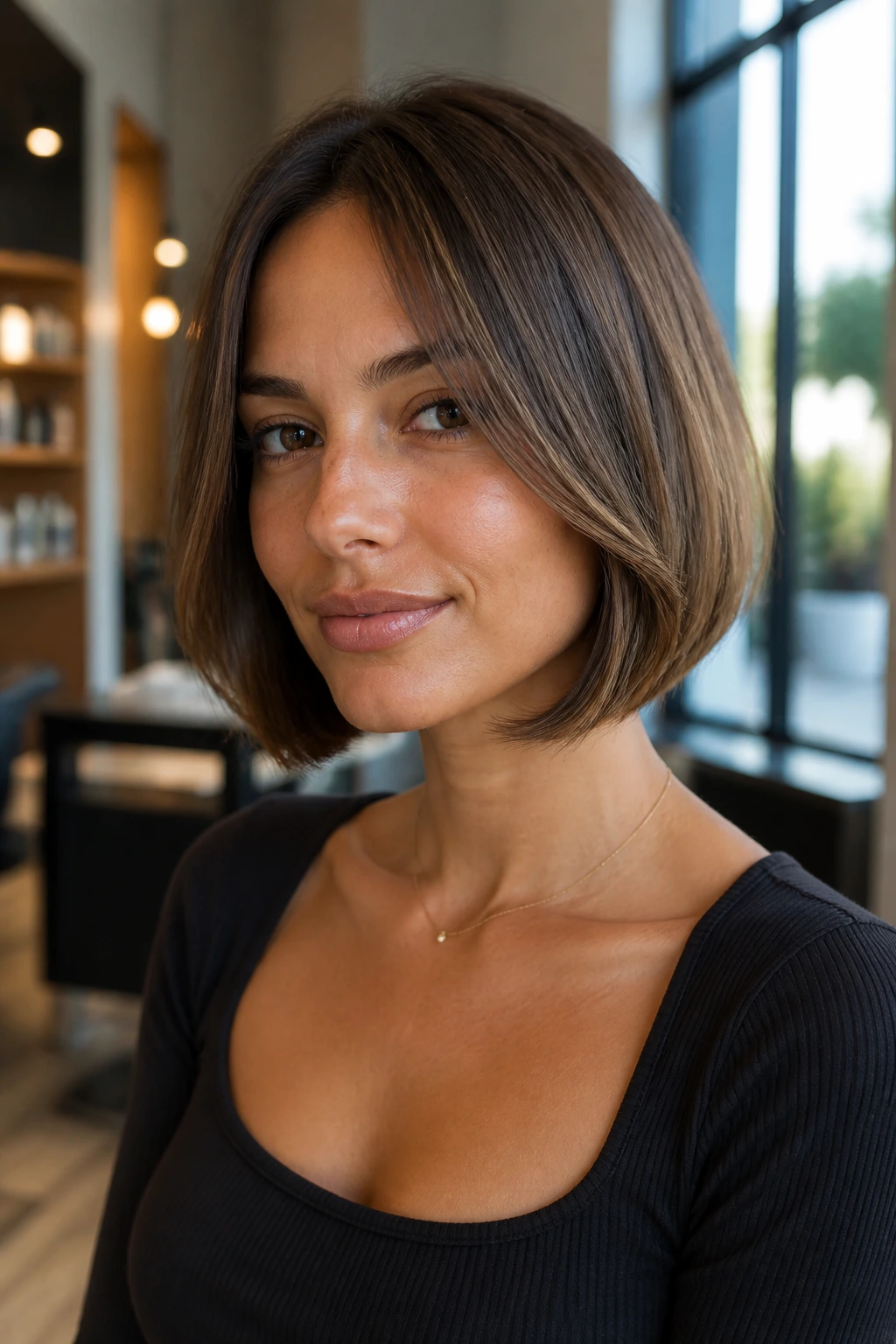
A rounded bob sounds old-school until you see it on a heart-shaped face that needs a little softness at the lower edge. The bevel means the ends curve inward just enough to hug the jawline or skim below it, which helps balance a narrower chin. It also keeps the cut from flaring wide at the sides.
This is a nice option if you like a polished shape but don’t want a razor-straight perimeter. The curve at the bottom acts like a frame. Not a heavy one. Just enough to pull the eye down and out of the forehead zone.
I like this one for straight or lightly textured hair, because the shape shows up best when the ends behave. Ask your stylist to avoid over-rounding the crown. Too much height up top can make a heart-shaped face look longer than it is, and that defeats the point.
9. The Asymmetrical Bob
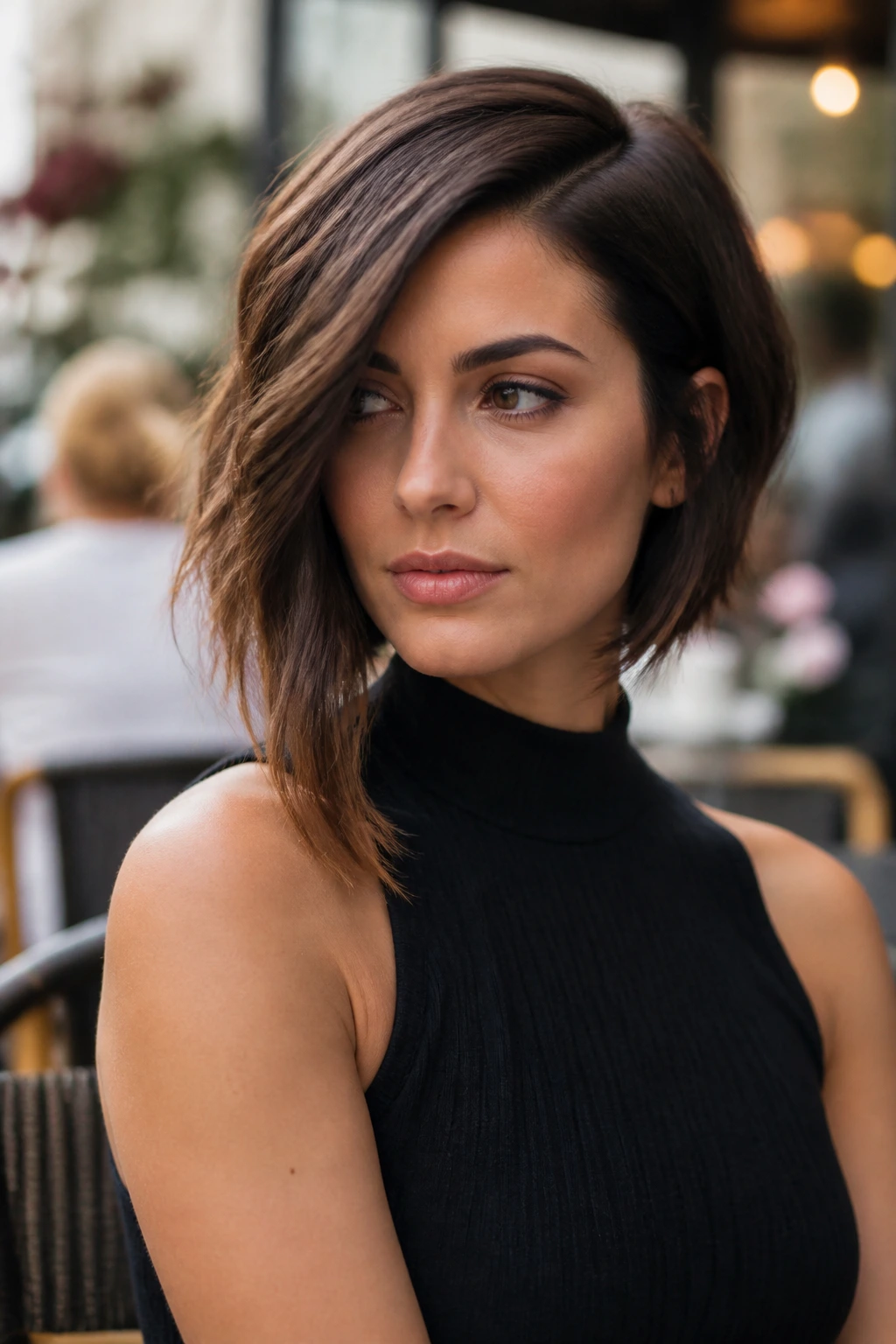
An asymmetrical bob brings movement before you even style it. One side sits a little longer than the other, and that off-balance line helps heart-shaped faces by breaking up the broadness at the forehead. It’s especially useful if your features are sharp and you want the haircut to look a little less symmetrical, a little less formal.
The beauty of this cut is that it can be subtle or obvious. I prefer subtle for most people. A half-inch to an inch of difference is often enough to change the whole feel. If you push it too far, the haircut starts wearing you instead of the other way around.
This one works well with a deep side part or a soft wave. Both help the longer side fall in a way that narrows the upper face and opens up the jaw. It’s not the easiest maintenance cut, but it does make a plain outfit look intentional without much effort.
10. The Curly Chin-Length Bob

Curly hair and heart-shaped faces are a good match when the cut respects the curl pattern instead of fighting it. A chin-length curly bob can be excellent because it creates width lower on the face, right where heart-shaped shapes need it. The key is shape. Not triangle. Shape.
The best curly bob for this face type usually has a little longer front and a rounded silhouette that follows the curl’s natural spring. If the cut is too short at the cheekbones, the curls can puff exactly where you don’t want them. If it’s too long, you lose the balance. That middle zone is the sweet spot.
This cut also looks better with a dry cut or a curl-specific shaping method. Wet curls lie. They always do. A stylist who understands shrinkage will leave you with a bob that lands in the right place once it dries, not three inches higher.
11. The French Bob with Bottleneck Bangs

Bottleneck bangs are one of those small styling decisions that change the whole face. On a French bob, they soften the forehead without creating a heavy curtain, and they taper nicely into the sides of the cut. For heart-shaped faces, that taper matters because it keeps the upper half from feeling too broad or too boxed in.
This version sits a little shorter, usually around the cheekbone to jawline range, and it wears best with a bit of bend. I’d avoid making it too perfect. The French bob should feel slightly undone, like it fell into place after a ten-minute style, even if you spent twenty.
The bang shape also helps if your forehead is the widest part of your face. It breaks up that width without making the face look shorter. The trick is not to go too dense. Bottleneck bangs should feather out at the temples, not sit like a solid wall.
12. The Collarbone Bob with Invisible Layers
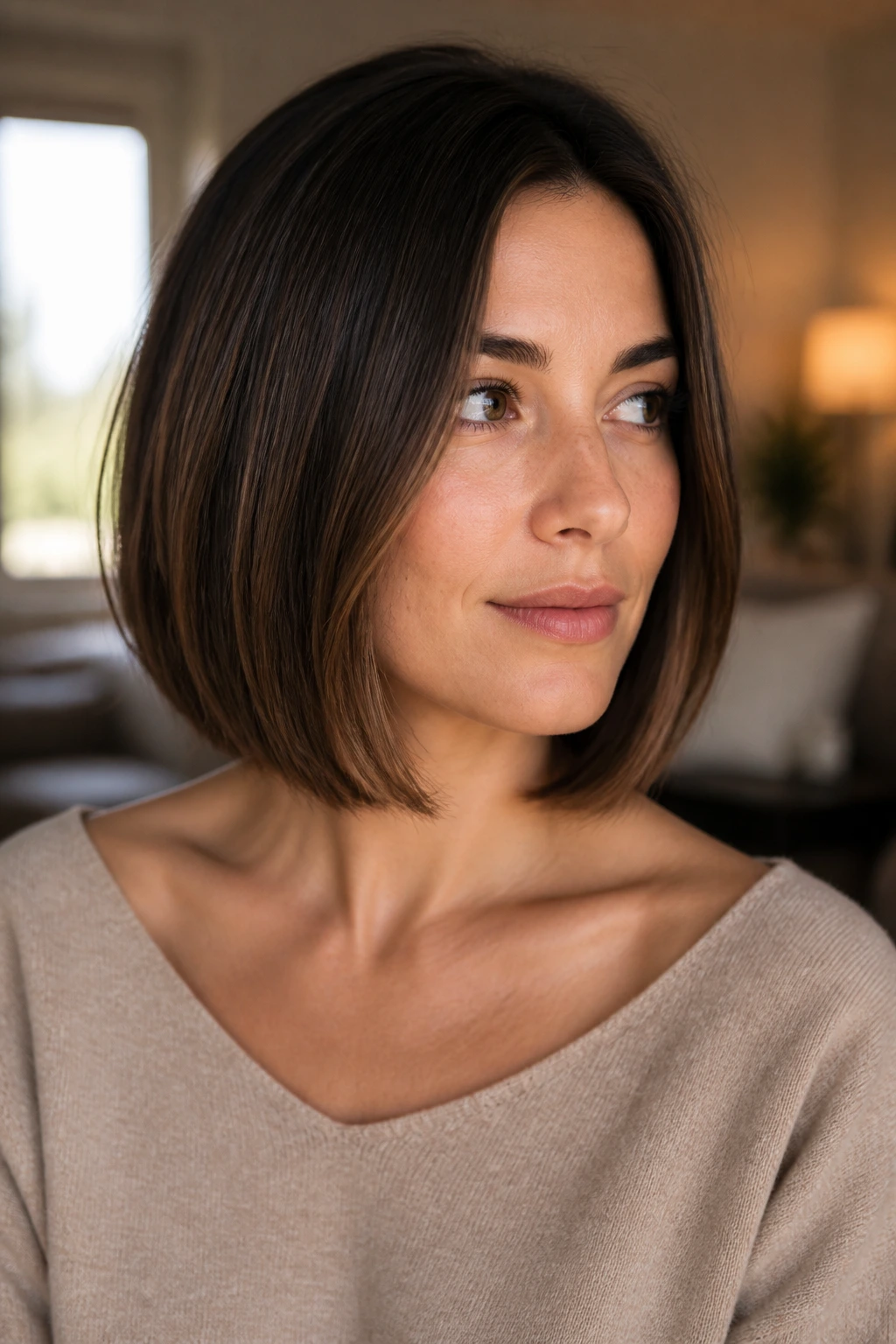
This cut is for people who say they want a blunt bob, but they do not actually want bluntness. Invisible layers remove bulk from the inside while keeping the outline clean. On a heart-shaped face, that means the hair can swing around the lower face without becoming too fluffy around the temples.
The collarbone length is doing useful work here. It gives the cut enough length to soften the taper of the chin, and it gives you room to tuck, wave, or straighten the hair depending on your mood. I think this is one of the most practical choices in the bunch because it moves from polished to casual without a haircut change.
Ask for the ends to stay visually solid. If the layers are too obvious, the outline loses its strength. The whole point is movement that doesn’t announce itself.
13. The Shaggy Bob with Cheekbone Framing
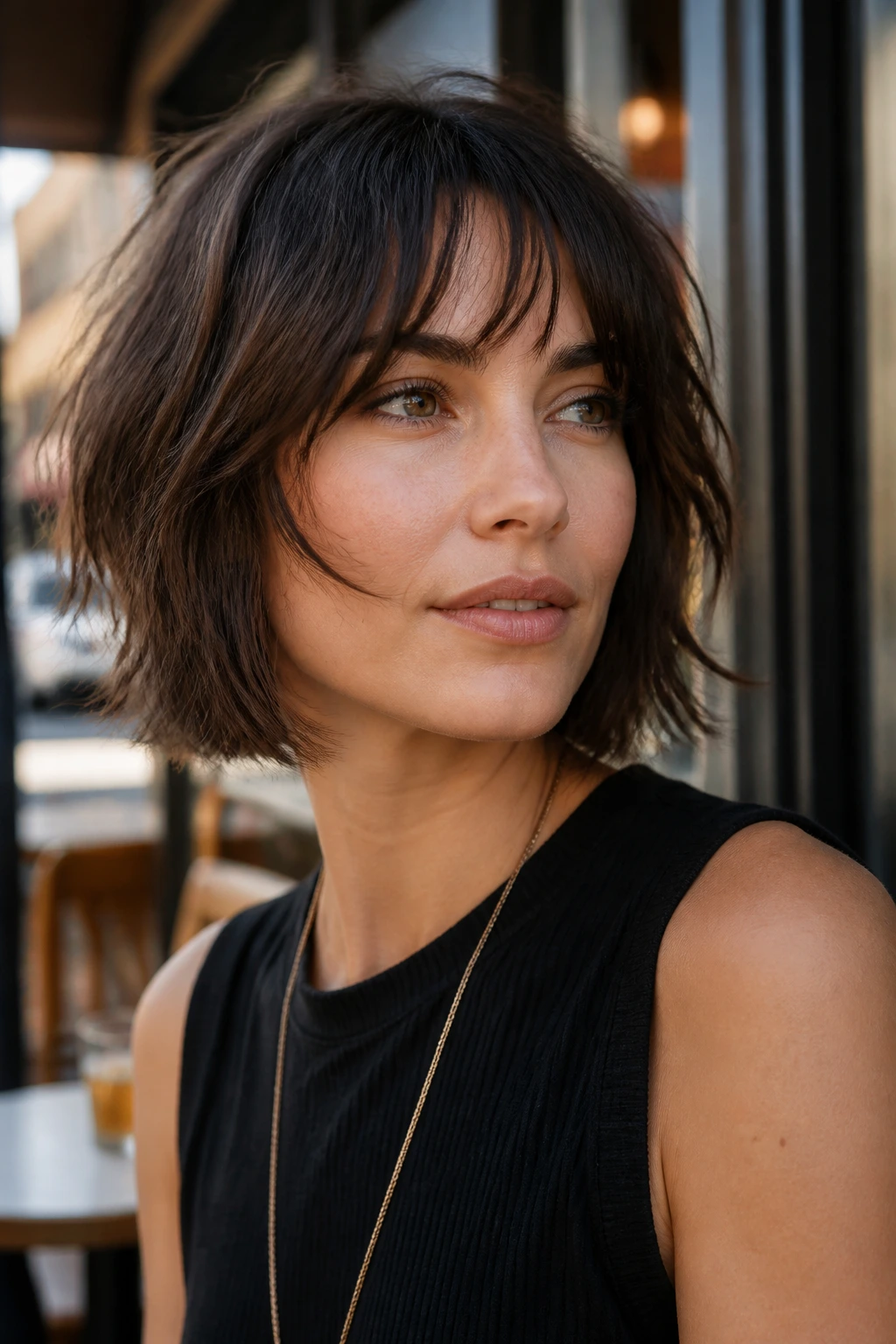
A shaggy bob can be a smart move for heart-shaped faces if the shape is controlled. The cheery messiness of a shag is useful only when the face-framing pieces are placed with purpose. You want movement near the cheekbones and jaw, not random flipping everywhere.
This cut softens a wider forehead because the texture keeps the eye moving. It also works on thicker hair that needs some relief around the sides. If the bob is too blunt, thick hair can sit like a bell. A shaggy finish loosens that up fast.
I like this one with a side part or a deep middle part, depending on the face. The bangs, if there are any, should be soft and broken, not heavy. A little dryness in the texture is part of the charm. Clean but not precious.
14. The Tucked-In Sleek Bob

There’s a specific kind of sleek bob that flatters heart-shaped faces beautifully: one that sits just below the chin and tucks inward at the ends. It gives polish without adding width at the temples, and the inward bend helps the lower face look fuller. A heart-shaped face often benefits from that little inward curve.
This is a smart cut if you wear crisp clothes, structured jackets, or earrings that you want to show off. The hair stays close to the neck and cheek line, so the face does the talking. And because the silhouette is neat, it doesn’t fight with makeup, glasses, or bold lipstick.
The danger is making it too flat at the crown. Then the face can look long and sharp. A little root lift is enough. Not a bouffant. Just enough life to keep the style from looking pressed to the head.
15. The Inverted Bob with Long Front Pieces
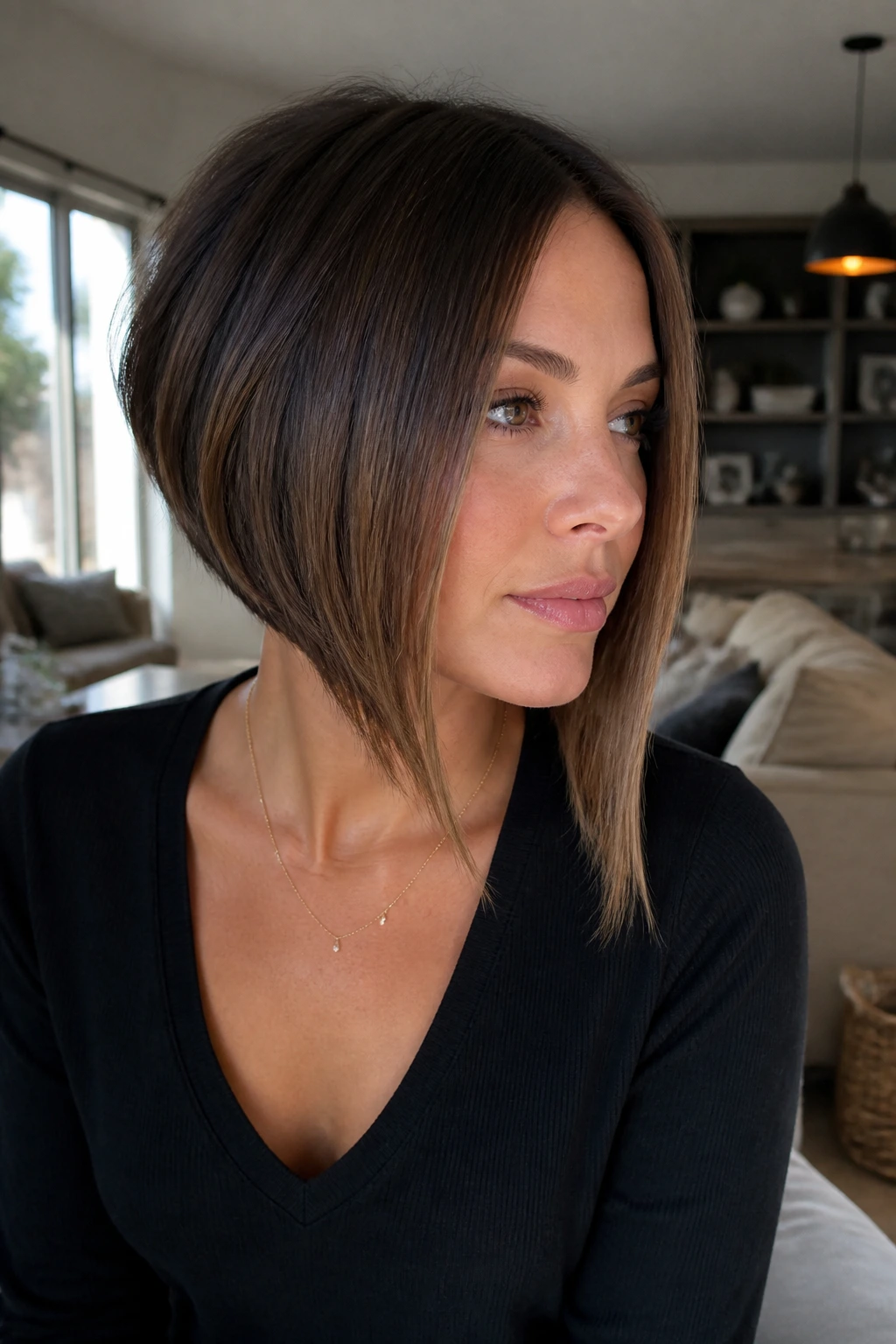
An inverted bob is the more dramatic cousin of the A-line, and it can work well on heart-shaped faces when the front pieces are long enough to soften the chin. The stacked back gives a clean shape, while the forward angle draws the eye down and away from the forehead.
What I like about this cut is the built-in lift at the nape. It makes the hair feel lighter and gives thick hair a proper shape. If your hair lies flat at the back of the head, the inverted bob solves that problem without needing extra styling.
The front length matters a lot. Too short and the face feels top-heavy. Too long and you lose the neat architectural line that makes the cut worth getting in the first place. Aim for a version that feels decisive but not severe.
16. The Soft Chin-Length Bob with Side-Swept Bangs

Side-swept bangs are underrated, probably because they don’t scream for attention. On a heart-shaped face, though, they do useful work. They skim across the forehead, soften the width, and blend into a chin-length bob that keeps the lower face from disappearing.
This is one of my favorite recommendations for someone who wants bangs but fears commitment. The sweep is easy to grow out, and it doesn’t box the face in the way a thick straight fringe can. The bob itself stays clean at the jaw, which gives the whole cut a little more calm.
If your hair is fine, this style can look airy and polished. If it’s thick, the bangs need to be thinned with care so they don’t fall into your eyes like a curtain you have to keep pushing aside.
17. The Blunt Bob with Soft Ends

You can make a blunt bob soft without ruining the shape. That’s the whole trick here. A heart-shaped face can absolutely wear a blunt line if the ends are lightened just enough to avoid a hard shelf and if the length sits below the chin. The result feels neat, not boxy.
I like this version when someone wants low-fuss styling but still wants the haircut to look deliberate. The clean edge gives strength, and the slight softening at the ends keeps the lower face from looking narrower than it is. It’s a smart compromise.
This cut is especially good if your hair is naturally straight and tends to frizz less around the perimeter. It doesn’t need much. A pass with a flat iron and a touch of smoothing cream can be enough. Easy hair, but not dull hair.
18. The Air-Dry Bob for Natural Texture

Not every good bob needs a blowout. A heart-shaped face can look great in an air-dry bob when the length is chosen well and the texture is allowed to do what it already wants to do. The shape usually lands somewhere between the chin and collarbone, with soft face-framing pieces to keep the upper half from feeling too broad.
This is the cut for people who hate fighting their hair. A little wave, a little bend, a little irregularity—fine. Better than fine, actually. Natural movement makes the face look less rigid, and heart-shaped faces often look best when the hair isn’t trying too hard.
The only real rule is placement. If the air-dry bob sits too short at the cheeks, it can puff. If it sits too long and straight, it can drag the face down. Find the middle ground and let a leave-in cream or curl cream do the rest.
What a Heart-Shaped Face Actually Needs From a Bob

A heart-shaped face is usually wider at the forehead, narrower at the chin, and a little sharper through the lower face. That means the best bob haircuts do one of two jobs: they create balance at the bottom, or they soften the top. The best ones usually do both.
A bob that ends exactly at the widest part of the cheeks can make the face look wider than it is. That’s why so many stylists nudge the length either a little below the chin or a little above it with movement built in. The placement matters more than the label. A blunt bob, a French bob, a lob—they can all work if the line sits in the right place.
I’d also pay attention to the crown. Too much lift up top can make the forehead feel more prominent. A little lift is fine. A lot of height is where the cut starts arguing with the face.
How to Choose the Right Bob Length for Your Jawline

Length is the thing people underestimate. Chin-length, jaw-length, and collarbone-length bobs all behave differently on a heart-shaped face. Chin length creates a neat frame and can soften a pointy chin. Collarbone length gives more balance and is usually the safest bet if you are unsure.
Jaw-length bobs are trickier. They can be gorgeous, but they need movement or a side part so they do not sit like a hard line across the middle of the face. If your jaw is delicate, that line can be beautiful. If your forehead is broad and your chin narrow, a jaw-length cut without softness may feel too boxy.
I usually recommend choosing the length based on what you want the eye to notice. Want the lower face to feel fuller? Stay around the chin or just below it. Want more openness and less maintenance? Move toward the collarbone. That one decision changes the whole haircut.
The Styling Tricks That Make These Cuts Work
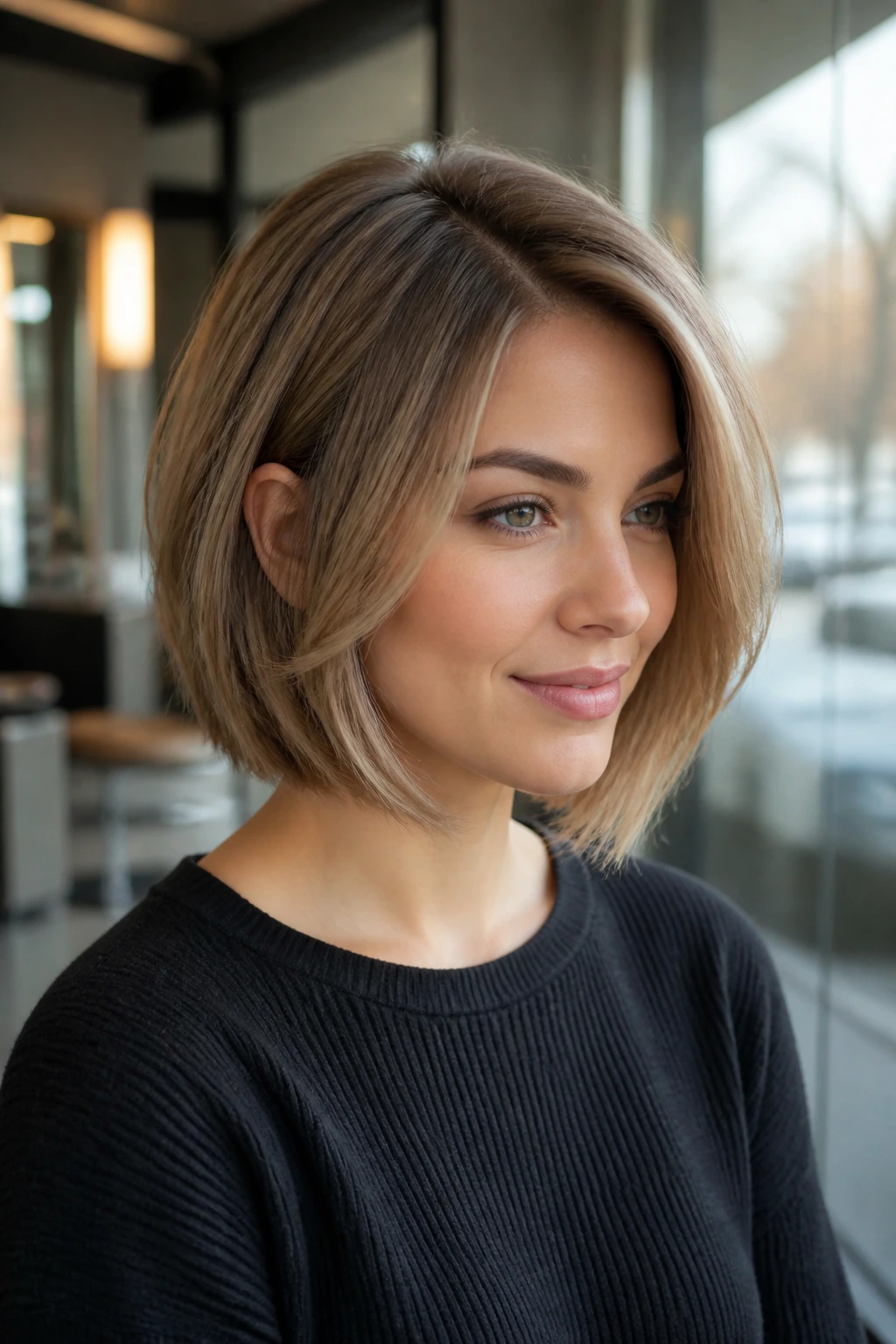
The haircut matters. So does the way you wear it.
- Use a side part when the forehead feels wide: Even a small shift off-center changes the balance and makes the face look less top-heavy.
- Keep root volume moderate: A little lift helps, but too much height at the crown works against heart-shaped faces.
- Curve the ends inward or outward on purpose: A soft bevel at the jaw is flattering; random flipping isn’t.
- Use face-framing pieces with a reason: The pieces should land where the face needs help—usually the cheekbones or jaw—not just anywhere.
- Choose bangs that taper: Curtain, bottleneck, and side-swept bangs all soften the forehead without boxing it in.
If you only remember one thing, remember this: the bob should feel like it is finishing the face, not cutting it in half.
Common Mistakes That Make the Cut Work Against You

The easiest mistake is cutting the bob too high at the widest part of the cheeks. The hair ends up shouting the same shape as the face, and the forehead-to-chin balance gets worse instead of better.
Another one: too much volume on top. A round brush can be your friend, but not if you turn the crown into a helmet. Heart-shaped faces usually look better when the lift stays subtle and the movement lives lower.
The last one is forgetting the fringe. If the forehead is the widest part of the face and the bob has no part shift, no softness, and no bangs, the haircut can feel unfinished. Not bad. Just unfinished.
Four Ways to Twist the Same Bob Without Losing Balance

The Soft Fringe Version: Keep the bob classic and add a wispy fringe that breaks up the forehead. This works best if you want something gentle and easy to grow out.
The Polished Sleek Version: Straighten the cut, keep the ends tucked, and let the line stay clean below the chin. Good for straight hair and sharper features.
The Tousled Texture Version: Add wave and texture spray to loosen the outline. Best for hair that needs movement and for faces that look better with a little softness.
The Bangs-Forward Version: Use curtain or bottleneck bangs to control forehead width, then keep the bob around chin to collarbone length. This is the most face-balancing route if the forehead is the widest point.
Essential Tools for Styling These Cuts
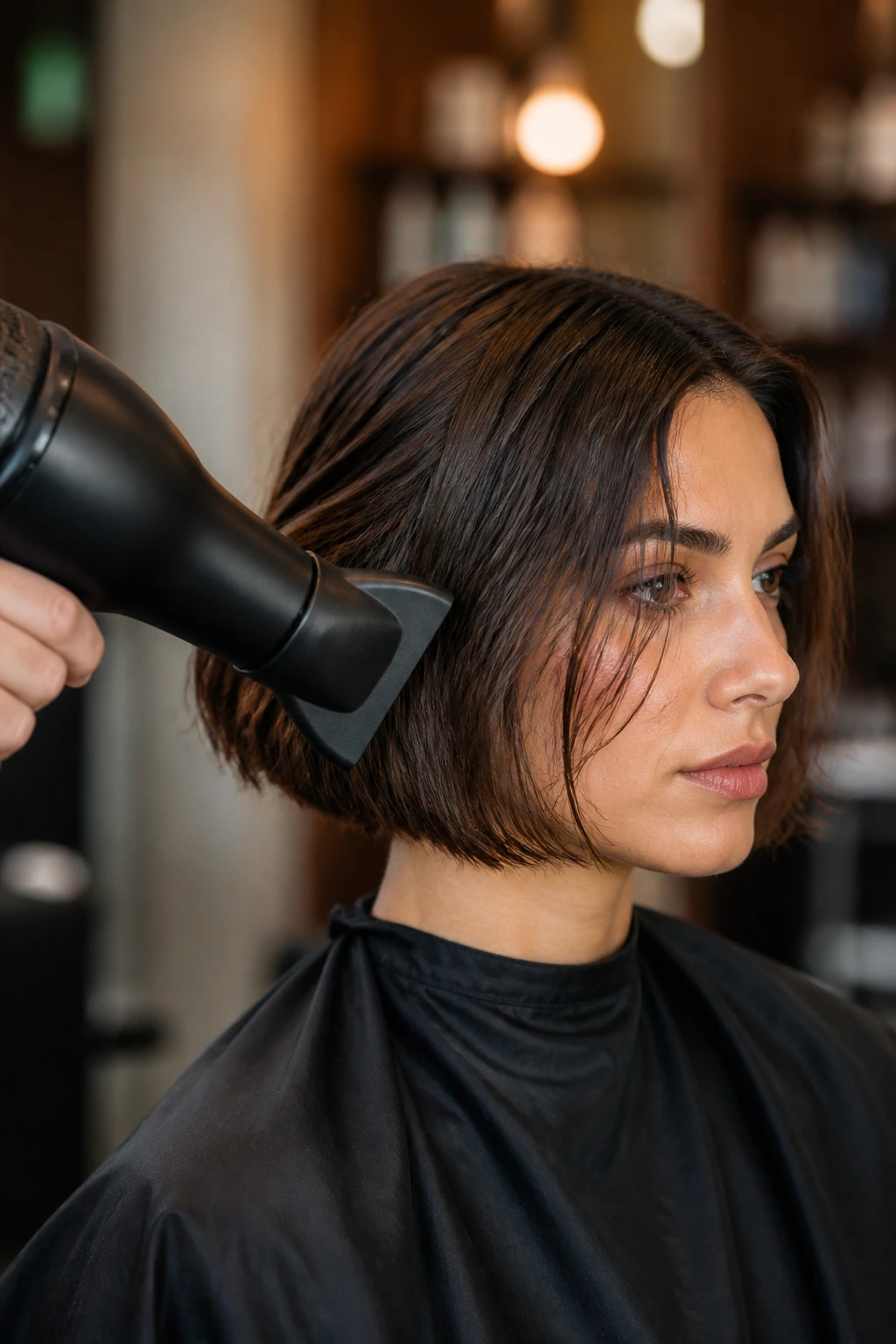
- Blow dryer with a concentrator nozzle: Helps direct the hair where you want it instead of puffing it all over the place.
- Medium round brush: Useful for bending the ends inward on chin-length bobs and lobs.
- Flat iron: Good for sleek shapes, soft waves, and smoothing the perimeter.
- Wide-tooth comb: Safer than a brush for detangling curls and waves without wrecking the shape.
- Texturizing spray: Adds lift and grit to softer bobs, especially French and shaggy versions.
- Heat protectant: Non-negotiable if you use hot tools more than once a week.
- Duckbill clips or sectioning clips: Make it much easier to dry and style the front pieces cleanly.
- Diffuser attachment: Worth having if your bob is curly or wavy and you want the shape to dry with less frizz.
How to Keep the Shape Between Salon Visits
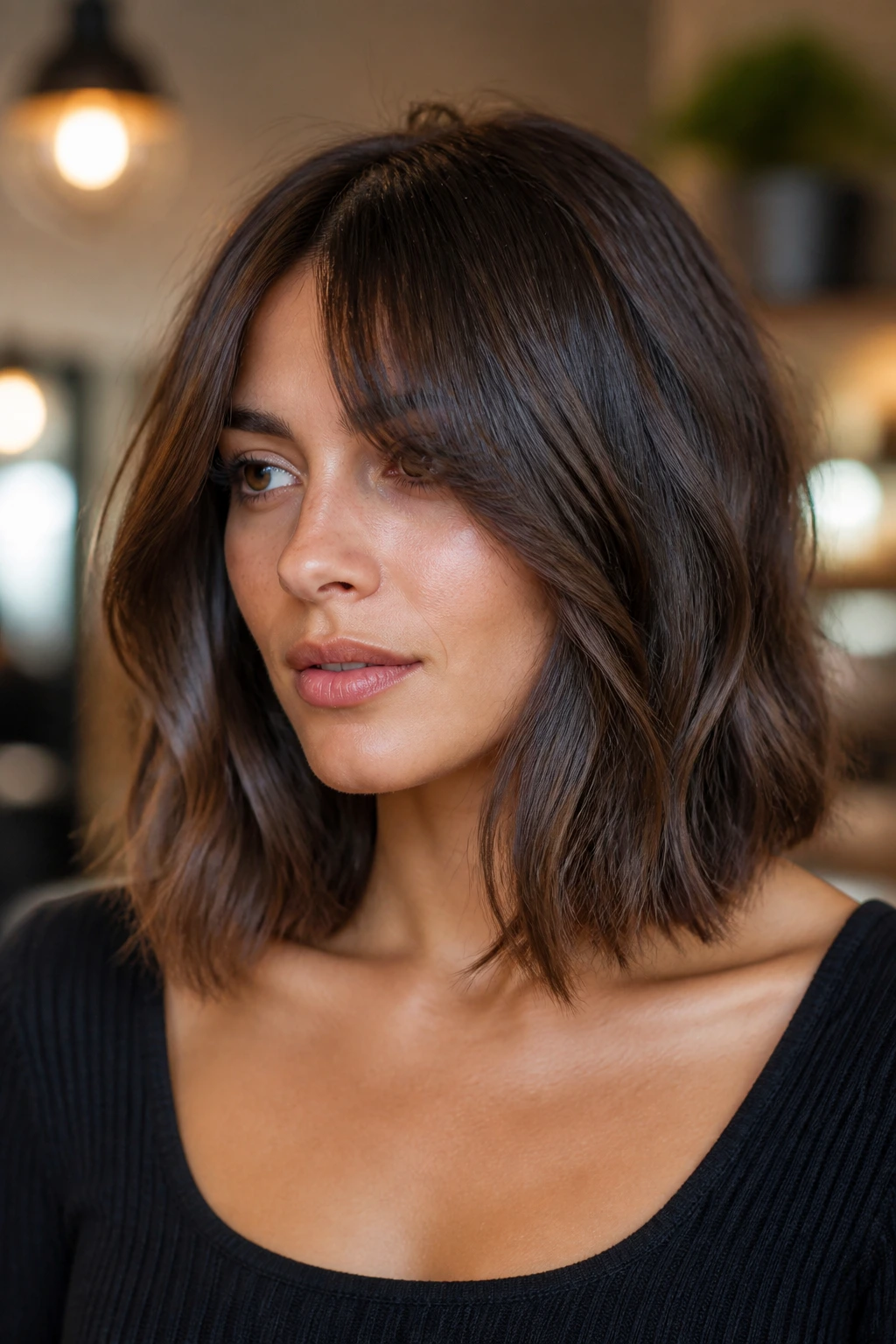
Short bobs usually need a trim every 5 to 7 weeks if you want the line to stay crisp. Lobs can stretch longer, often 8 to 10 weeks, because the longer length grows out more gracefully. If your hair grows quickly or the fringe starts falling into your eyes, don’t wait until the shape is gone.
Dry shampoo helps at the roots, but use it with restraint. Too much product at the crown can make the face look top-heavy again, which is the exact problem you were trying to avoid. A light mist at the roots, then a few minutes to settle, is usually enough.
For curly and wavy bobs, refresh with a spray bottle, a dab of leave-in, or a little curl cream on the mid-lengths. The ends should still move. If they start sticking out like little shelves, it’s time for a trim.
Practical Tips for Getting the Most Out of the Cut
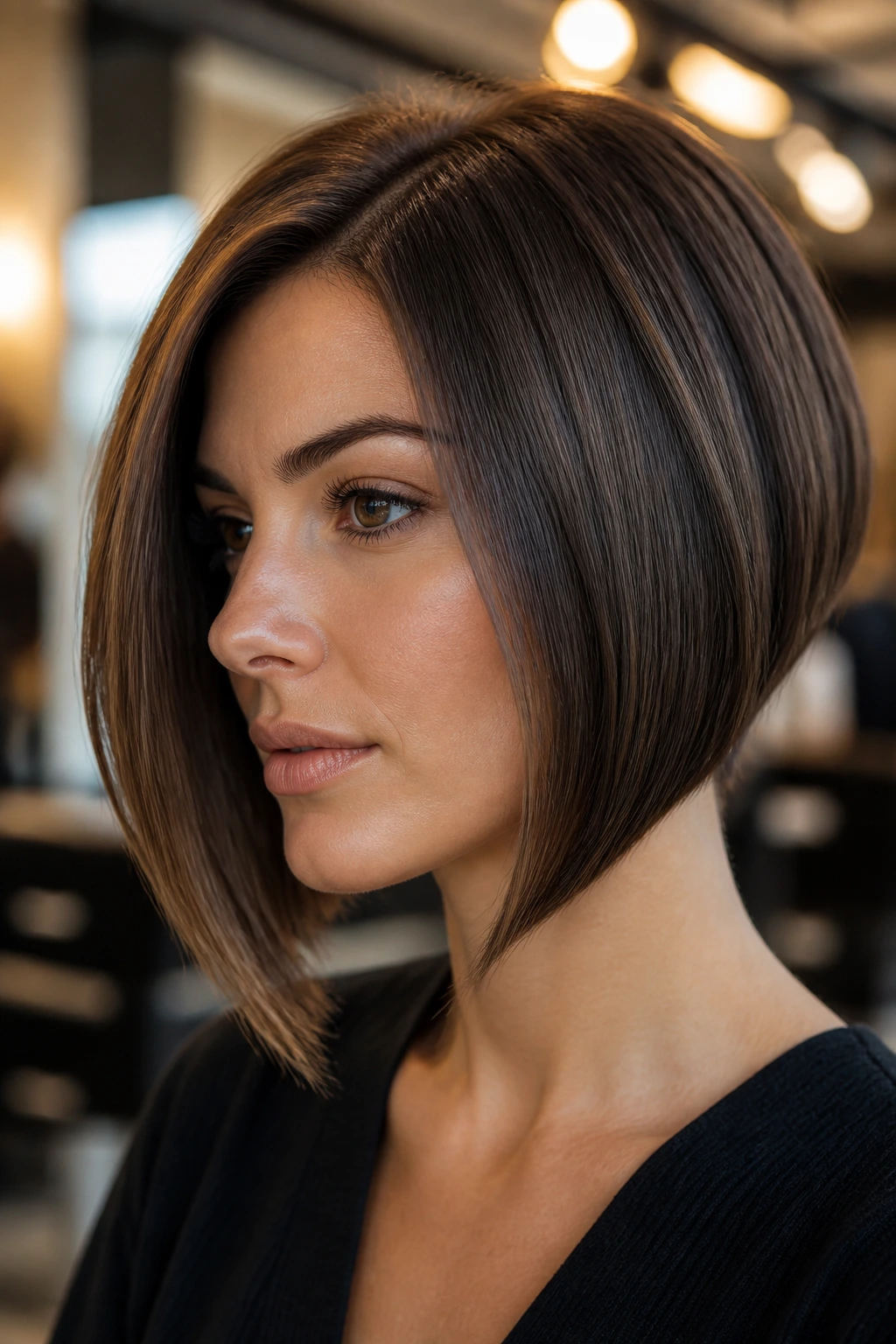
- Bring two photos, not ten: One should show the front, one the side. That gives your stylist a real sense of where the length lands around the jaw.
- Say where your forehead feels widest: That detail helps the stylist choose the right fringe or parting.
- Ask for softness only where you need it: Too much texturizing can make fine hair look thin and thick hair look frayed.
- Style the front first: The face-framing pieces matter more than the back on this face shape. Get those right and the rest usually behaves.
- Check the cut in natural light: A bob can look different at the salon than it does by a window at home.
- Be honest about styling effort: If you won’t blow-dry it, don’t ask for a cut that only looks good with a perfect round brush finish.
Frequently Asked Questions
What bob length is most flattering for a heart-shaped face?
Usually chin-to-collarbone length works best because it adds balance near the lower face. Chin length can be excellent if it has softness, while collarbone length gives you more flexibility and a less dramatic grow-out.
Are blunt bobs good for heart-shaped faces?
Yes, if they sit below the chin and avoid a hard stop at the cheekbones. A blunt line can add structure, but it needs the right length and a side part or fringe if the forehead feels wide.
Do bangs help a heart-shaped face?
They often do. Curtain bangs, bottleneck bangs, and side-swept bangs all soften the forehead without boxing the face in. A heavy straight fringe can work too, but it needs the rest of the cut to stay light.
What if I have a small chin and a wide forehead?
Pick a bob that adds some visual weight around the jaw, such as a chin-length French bob, a textured lob, or an angled bob with longer front pieces. Avoid short cuts that end high on the cheeks, because they can make the chin look even smaller.
Can curly hair wear a bob on a heart-shaped face?
Absolutely. The best curly bob usually keeps enough length to create balance near the jaw and uses curl-specific shaping so the silhouette doesn’t flare at the sides. Dry cutting is often the safer choice for a clean result.
How do I ask for the right bob at the salon?
Describe your face shape, say whether you want the forehead softened or the jaw emphasized, and point to the exact length you want the cut to land. The best salon conversation is specific: “I want it to sit just below my chin, with soft movement around the jaw and not too much height at the crown.”
Which part is best for a heart-shaped face?
A side part is usually the easiest win because it breaks up forehead width. A middle part can still work, especially with curtain bangs or long face-framing pieces, but it needs softness to keep the upper half from looking too broad.
How often should I trim a bob like this?
Shorter versions usually need trimming every 5 to 7 weeks. Longer bobs and lobs can go a bit longer, but once the ends start drifting past the shape you wanted, the haircut loses its balance fast.
The Shape That Does the Work for You

The best bob for a heart-shaped face is not the loudest one. It’s the one that quietly fixes balance while still looking like a real haircut, not a geometry exercise. Length below the chin, softness where the forehead needs it, and enough movement around the jaw to keep the face from tapering too hard—that’s the formula I keep coming back to.
If you’re choosing between styles, start with the one that matches how much effort you actually want to spend. A French bob has charm. A collarbone lob has range. A textured jawline bob has attitude. Pick the shape that fits your hair texture and your daily routine, and the face-shaping part tends to take care of itself.
