



A wavy bob haircut has a useful trick that straight, one-length cuts can’t quite manage: it makes the ends look softer, lighter, and more alive without asking for a lot of length. The wave bends the line just enough to keep the shape from turning into a helmet. That matters more than people think.
Length does the heavy lifting here. A bob that stops at the jaw sits differently from one that kisses the collarbone, and a shift of half an inch can change whether your hair flips, hugs, or puffs out at the sides. I’ve seen the same basic cut look sleek on one person and fuzzy on another simply because the weight line landed in the wrong place.
That’s why wavy bob haircuts can be so satisfying when they’re done well. They let texture do the work, but only after the cut gives it somewhere to land. The good versions feel intentional without looking stiff, and that’s a harder balance than it sounds.
Why These Wavy Bob Haircuts Work So Well
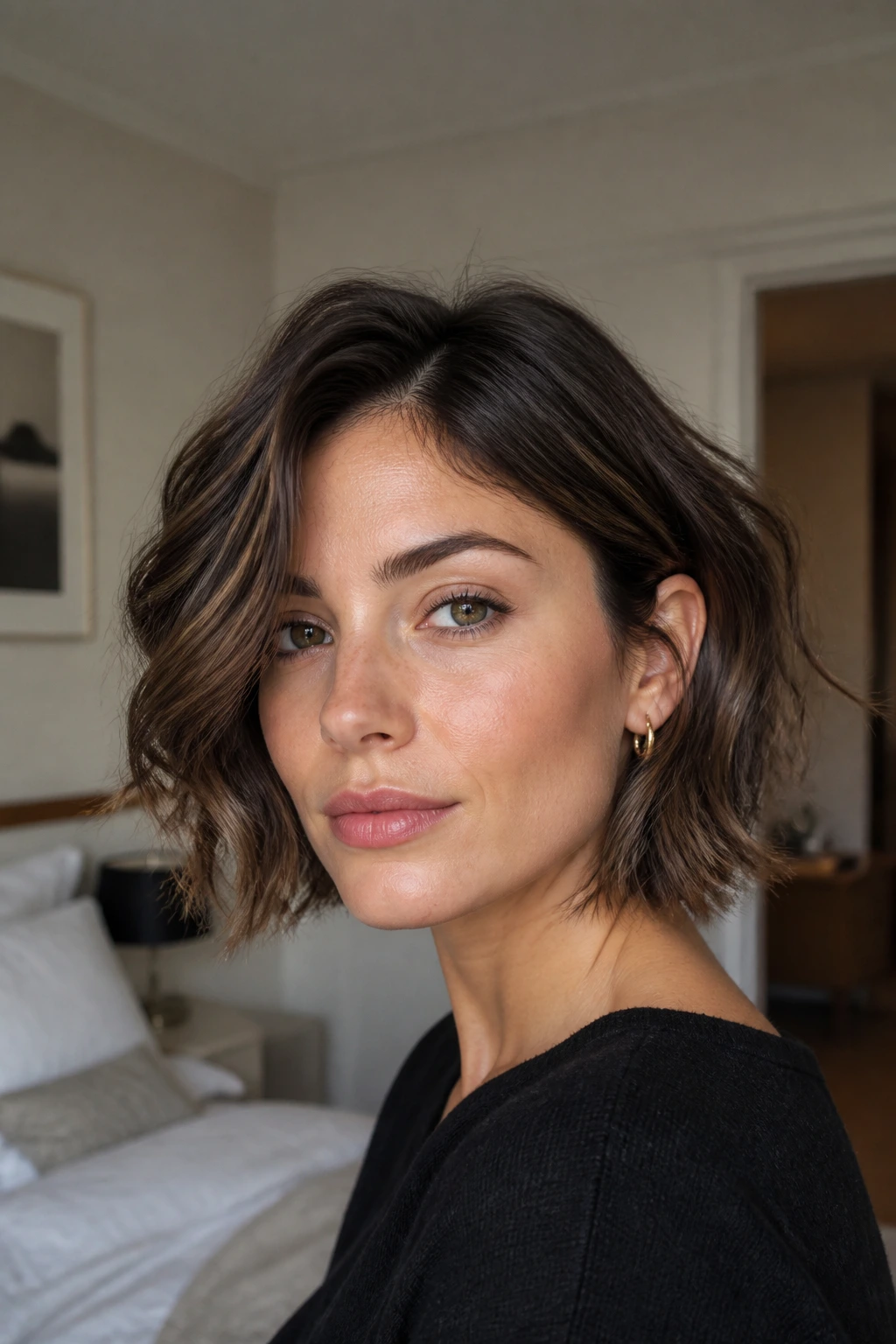
- Soft movement: The wave breaks up a hard perimeter, so the bob reads airy instead of boxy.
- Face framing: A small shift from chin length to collarbone length can sharpen cheekbones or soften the jaw without a dramatic change.
- Low-effort styling: Most of these cuts only need a bit of mousse, a diffuser, or a 1-inch iron to look finished.
- Shape control: Layers can remove bulk from thick hair or give fine hair a little lift without wrecking the outline.
- Easy grow-out: The right bob keeps looking like a haircut even after it grows an inch or two.
- Bang-friendly: Curtain bangs, soft fringes, and face-framing pieces sit naturally with wave, which saves the style from looking severe.
1. Chin-Grazing Waves With a Textured Edge
A chin-length wavy bob has a very specific charm: it puts your bone structure in charge. When the ends land right at the jaw, the wave lifts just enough to make the whole cut feel light, not heavy. It’s a sharp shape on paper, but in motion it reads soft because the texture keeps the line from looking rigid.
Why It Reads Soft
The trick is in the ends. Ask for point-cutting or a little internal texturing so the perimeter doesn’t sit like a shelf. On wavy hair, that tiny bit of irregularity helps the curve fall naturally instead of bouncing outward in one hard flip.
This length works best when the front pieces graze the chin and the back stays only slightly shorter. That small difference keeps the shape from feeling too blocky. It also gives you a place to tuck one side behind the ear, which changes the whole mood fast.
- Best for oval and heart-shaped faces.
- Looks clean with a center part or a slight off-center part.
- Style with a 1-inch wand and leave the last 1/2 inch out.
- Use a light mousse, not a heavy cream, or the ends can droop.
Tip: If your hair grows wide at the sides, ask for the perimeter to sit just below the chin rather than right on it.
2. Collarbone-Length Waves That Grow Out Gracefully
If you hate that awkward in-between stage, this is the safer starting point. A collarbone-grazing bob keeps the bob shape, but it leaves enough length that the hair can bend instead of springing out. The result feels a little softer, a little less fussy, and much easier to live with if you are not married to weekly styling.
This version is especially kind to hair that has a loose natural wave. The extra inch or two at the front lets the wave fall into a curve instead of flipping into a blunt corner. It also gives you more room for clips, barrettes, or a low half-tuck when you want the cut to behave.
I like this length on people who want movement but do not want to spend the morning fighting their hair. It’s the kind of bob that still looks like a haircut on day four, which is not something every short style can say.
3. French Bob With a Brow-Skimming Fringe
Why does a short bob with fringe feel softer than a plain, straight-edged bob? Because the bangs interrupt the line before it gets severe. A French bob sits short—often around the lips or cheekbones—and the fringe adds a little blur right where the eye lands first.
The key is not to make the fringe too heavy. Brow-skimming bangs should look a bit broken up, not like a ruler drawn across the forehead. A tiny amount of texture spray, a quick bend with a small round brush, or even finger-drying the fringe can keep it from looking blocky.
How to Wear It
This cut works best when the waves are loose and the crown has a little lift. If the hair lays flat, the fringe can look heavier than intended. A root-lift mousse at the top and a light wave through the sides keeps the whole thing balanced.
It is also one of the easiest ways to make a wavy bob feel French without turning it into costume hair. The mood is softer, a little art-school, a little undone. And yes, the right fringe can save a plain bob from feeling too blunt.
4. Blunt Bobs With Invisible Layers
Blunt sounds sharp. On wavy hair, though, a blunt bob can look plush if the interior is handled properly. The outside line stays clean, which gives the haircut structure, but the hidden layers underneath stop the waves from bulking up at the midline.
That’s the move I like most for people who want their hair to look tidy even when it air-dries. The silhouette stays crisp, and the texture does not have to fight the cut. You get the visual weight of a neat bob without the puffy triangle that can happen when wavy hair is cut too one-note.
Key Details to Ask For
- A clean perimeter at the bottom.
- Internal point-cutting instead of aggressive layering.
- Slightly longer front pieces if your waves kick outward.
- A dry-cut check, because wavy hair often shrinks more than people expect.
The beauty of this one is that it can look polished with almost no styling. It just needs enough internal movement to keep the line from getting stiff.
5. Deep Side-Part Waves With Old-School Lift
A deep side part changes everything. Seriously. The same bob can go from flat to sculpted with one shift in where the hair falls, and wavy texture takes that side sweep especially well because the bend gives the lifted side something to stand on.
This cut has a little glamour in it, but not the overdone kind. The heavier side creates root lift, the lighter side falls closer to the cheek, and the whole shape feels angled in a way that flatters most faces. If your hair tends to collapse at the crown, this is one of the easiest fixes.
The style also loves a round brush at the roots and loose waves through the lengths. Keep the wave direction a little irregular. If every piece bends the same way, it starts to look too neat, and that’s not the point here.
6. Curtain Bangs With a Soft Wavy Bob
Curtain bangs can make a bob feel softer without shrinking the face. They split the front hair into two curved panels, which means the eye sees movement instead of a hard line across the forehead. On wavy hair, that bend looks almost effortless, even when it took a few minutes of attention.
This is the cut I’d point to if someone wants a bob that feels flattering without seeming severe. The bangs should open around the cheekbones, not sit heavy on the brow. And the rest of the bob needs enough texture that the fringe doesn’t look disconnected from the length.
What Makes It Work
Curtain bangs need a little lightness at the ends, or they can turn into a bulky curtain in the bad sense. Ask for the shortest pieces to hit around the cheekbone, then let the sides taper into the bob. That creates a clean lane from fringe to length.
The whole shape is especially good when you want to soften a broad forehead or add more focus near the eyes. It’s a smart cut. Not complicated. Just well placed.
7. Shaggy Bob With Choppy, Piecey Ends
A shaggy wavy bob is for people who like their hair to move a little more freely. The layers are choppier, the ends are lighter, and the whole shape feels less formal than a traditional bob. It is the opposite of shellacked.
What makes this version work is restraint. Too many short layers and the haircut loses its bob shape. Too few, and the shag reads heavy. The sweet spot is a perimeter that still says “bob,” with enough interior texture that the waves separate into visible pieces.
Use a lightweight cream or mousse, then scrunch the hair as it dries. Once it’s dry, break up the ends with your fingers and maybe a bit of texturizing spray. A brush is not your friend here. Fingers are.
Good If You Want
- A cut that looks slightly tousled on purpose.
- More movement around the crown and sides.
- A style that forgives imperfect styling.
- A shape that works with natural bend instead of fighting it.
8. Inverted Waves With a Tucked-In Nape
The inverted bob is one of those cuts that can look too architectural if it is too sharp. Add wave, though, and the whole thing relaxes. The back sits a little shorter, the front falls a little longer, and the angle becomes obvious without looking severe.
This is especially nice if you want the neck area to feel lighter. The shorter nape keeps the shape off the collar, while the longer front pieces soften the front view. It has more direction than a one-length bob, which helps if your hair is thick and stubborn at the back.
I prefer this version with loose bends instead of tight curls. Tight curls fight the angle. Loose bends show it off. That’s the difference.
9. Rounded Bobs That Hug the Jaw
A rounded wavy bob is for someone who wants the haircut to sit close without feeling flat. The curve matters here. Instead of a straight edge, the cut arcs gently around the face, which makes the texture look deliberate and a little softer than a square shape.
This is one of the better choices for people who dislike hard lines around the chin. The rounded outline melts into the jaw rather than stopping abruptly at it. That makes the whole haircut feel kinder, if that makes sense. Less box. More bend.
The styling is straightforward: blow-dry the roots in the direction you want the curve to fall, then add a soft wave through the mids and ends. Don’t overbuild volume at the sides. The roundness should come from the cut, not from puffing the hair outward.
10. Asymmetrical Bobs With a Soft Bend
What if you want one side a little longer without looking dramatic about it? An asymmetrical wavy bob handles that better than most cuts. The length difference gives the hair a subtle diagonal line, and the wave keeps that line from feeling blunt or severe.
This style has a nice tension to it. One side can skim the jaw while the other sits closer to the collarbone, and the bend through the lengths keeps the shape from reading like a mistake. On straight hair, asymmetry can look rigid fast. On wavy hair, it softens almost immediately.
Who It Suits Best
- People who want a little edge without losing wearability.
- Faces that benefit from a diagonal line across the cheek.
- Hair that naturally bends more on one side than the other.
- Anyone bored of a perfectly even bob.
It is not a loud haircut. It is a quiet one with a twist.
11. Money-Piece Bobs That Frame the Face
A few lighter front pieces can change the whole feel of a wavy bob. They pull the eye forward, brighten the face, and make the movement around the front more obvious, even when the haircut itself stays simple. You do not need dramatic color here. A subtle face frame does the job.
This works especially well when the bob is cut with soft layers around the front. The lighter pieces catch the wave and make the bend easier to see. If the rest of the hair is a shade deeper, those front strands read even more clearly. The result is not high drama. It is just enough contrast to keep the haircut from disappearing.
If you want the style to feel softer, keep the light pieces fine and feathered. Thick panels can look stripey. Thin ones look blended and move better.
12. Thick-Hair Bobs With Interior Debulking
Thick hair can make a bob look great—or turn it into a triangle if the weight is wrong. The goal here is not to remove all the bulk. That usually backfires. The goal is to take enough weight out of the interior that the outside line can fall close to the head.
I like this approach when someone wants a short shape but hates the puff that thick hair sometimes throws at the sides. Interior debulking, long layers, and a slightly longer perimeter can make the bob sit flatter without taking away the natural body. The wave gets room to move, and the cut stops fighting itself.
What Helps Most
- Point-cut ends instead of blunt, heavy tips.
- Longer layers under the crown.
- A smoothing cream on the mids and ends.
- A root-dry first, then a light bend through the front.
Skip the temptation to thin out everything. That can make the hair frizzy and stringy in the same haircut. Not a good trade.
13. Fine-Hair Bobs That Stay Airy
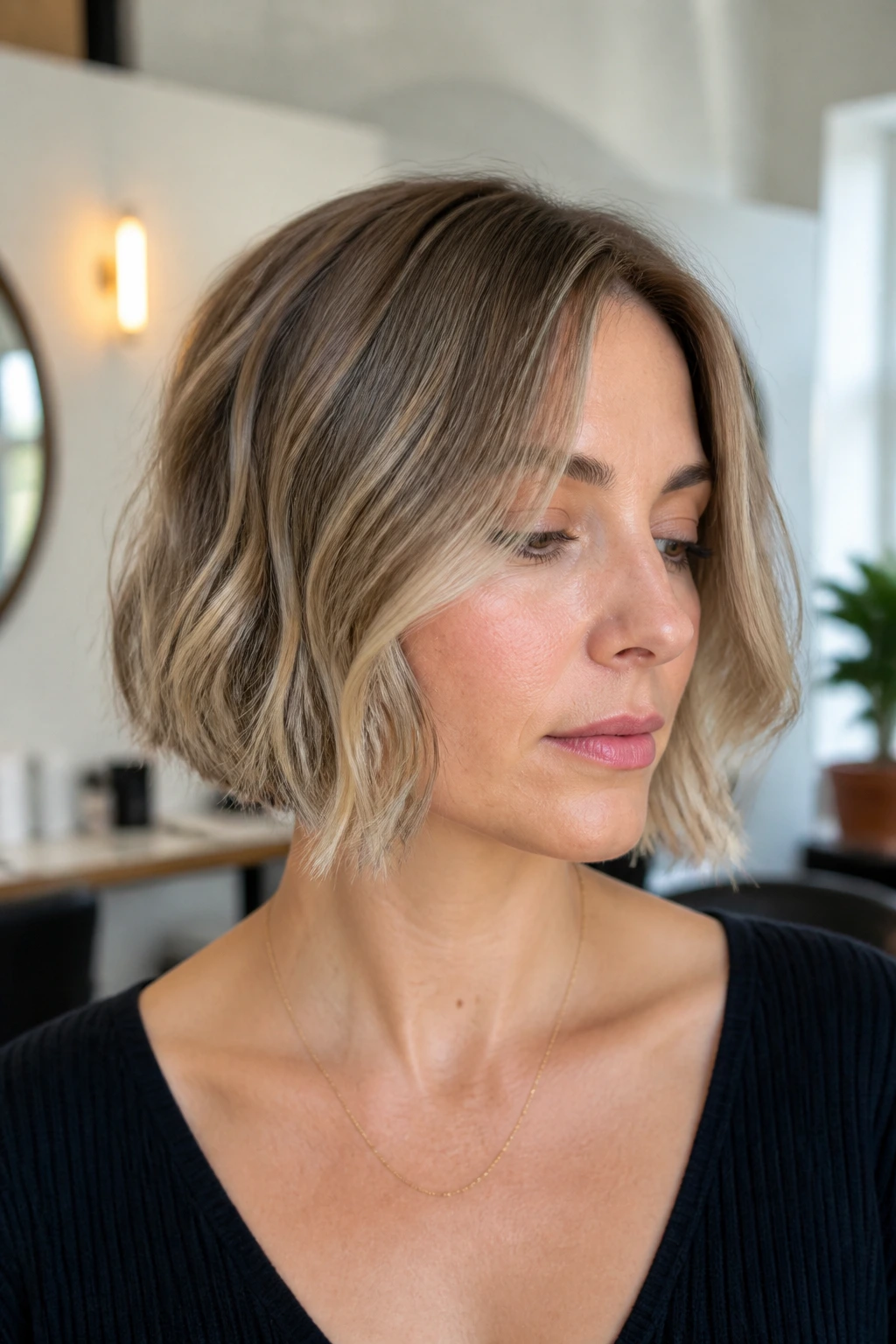
Fine hair needs a different kind of softness. Too many layers and the bob can go wispy fast. Too much length and it can collapse. The sweet spot is a cut that keeps enough density at the bottom to look full, while still leaving a little room for the wave to show up.
This is where shorter lengths often win. A fine-haired bob that stops around the chin or just above the shoulder can hold its shape better than one that tries to be both bob and lob. The hair has less distance to fall, so the bend stays visible longer.
Use a volumizing mousse at the roots and a light texturizing spray through the ends. Heavy oils and thick creams will flatten the shape in a hurry. Fine hair usually wants less product than people think.
14. Stacked-Crown Bobs With Quiet Lift
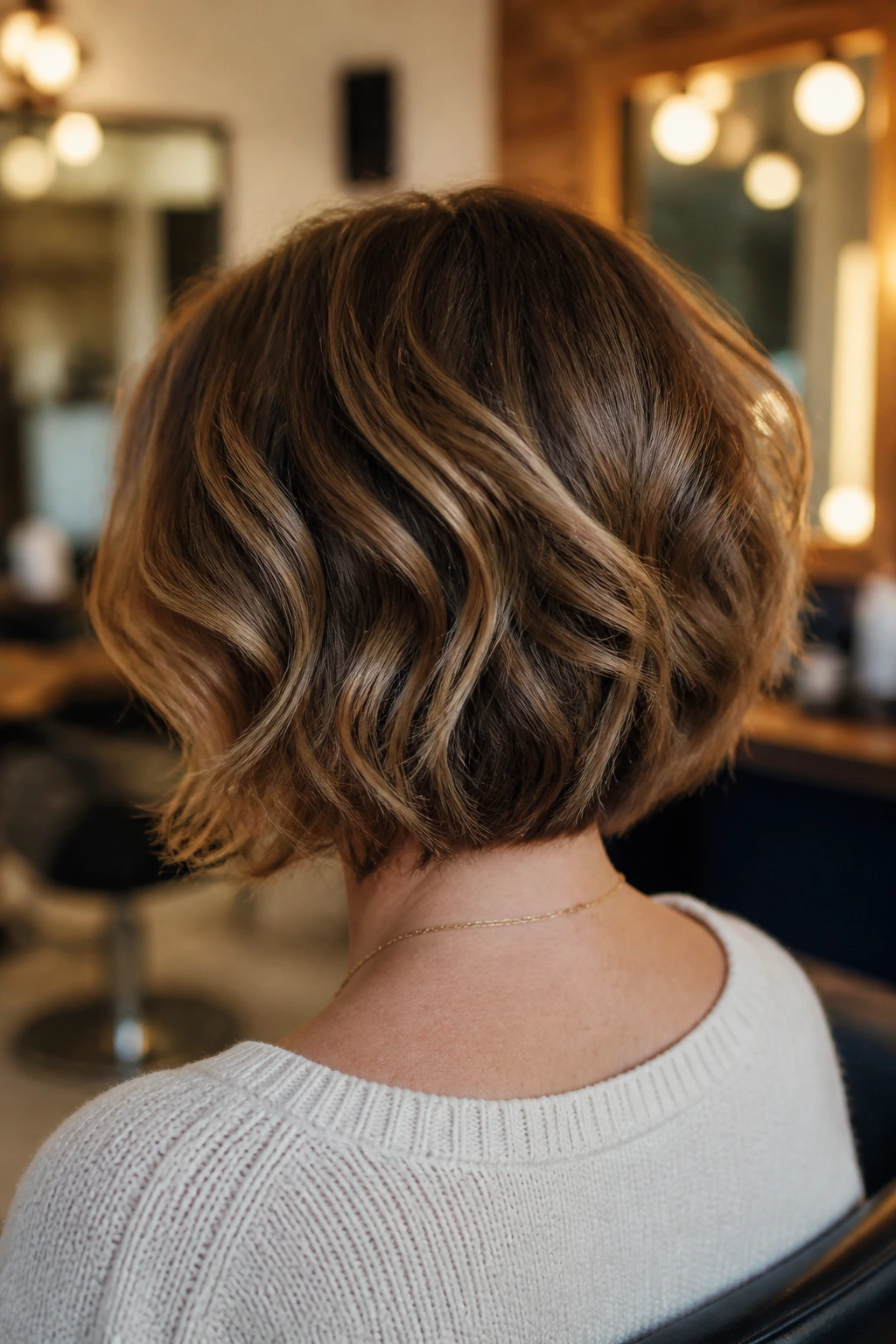
A stacked bob can look too retro if the crown is overbuilt. But with wavy texture and a softer hand, the stack becomes a subtle lift at the back instead of a hard bump. That extra height helps the bob sit neatly and keeps the nape from looking bulky.
This style works well when the hair tends to lie flat at the crown but puff around the ears. The stacking removes weight where it’s needed, and the wave softens the transition. You get a little shape in the back, a little swing in the front, and no need for a huge round brush session.
It is a clean option for people who like hair that stays off the neck. The trick is moderation. Too much stacking, and the bob turns boxy. Just enough, and the silhouette looks lifted in a way that seems natural.
15. Air-Dried Beach Bobs With Loose Ends

A beachy wavy bob does not have to look salty and overdone. The good versions are soft at the root, loose through the mids, and a touch separated at the ends. They look like hair that dried well, not hair that was worked on for an hour.
The easiest way to get there is a mousse or wave cream on damp hair, a quick scrunch, and then hands off. If you diffuse, keep the air low and stop before the hair is 100 percent dry. A little dampness left in the strands helps the wave settle without getting crunchy.
This cut loves a bit of inconsistency. One side can bend more than the other. A few straighter pieces in the front keep it from looking too styled. That unevenness is part of the charm.
16. Longline Bobs That Grow Without Losing Shape

A longline bob sits in that useful space between bob and lob. It still has the clean outline of a shorter cut, but the extra length keeps the wave soft and gives you more options on days when you want to tie it back or tuck it behind the shoulders.
This is the one I’d pick for someone nervous about going too short. The collarbone area is forgiving. Waves settle there nicely, and the haircut can grow for a while before it starts to lose its outline. If you like the bob look but need a little more flexibility, this is the safest bet.
The best longline version keeps the front slightly longer and the layers minimal. That preserves the smooth curve of the cut. A tiny amount of face framing helps, but too much layering can make it drift into shag territory fast.
What Makes a Wavy Bob Look Soft Instead of Boxy

A soft wavy bob is not an accident. It usually comes down to four things: where the length lands, how much weight the cut keeps, how the ends are finished, and how the wave is encouraged to fall. Miss one of those and the haircut can turn square, triangle-shaped, or weirdly puffed at the sides.
The perimeter is the first clue. A hard one-length line can look chic on straight hair, but on wave it sometimes acts like a wall. A tiny bit of point-cutting or internal texture changes how the ends sit, which is why a good bob often looks light even when it is dense. The outline stays clear. The texture just keeps it from looking stern.
Then there’s the weight line. If the bob is cut too high for the hair’s natural bend, the wave has nowhere to go except outward. If it sits too low, the shape starts to lose the bob feeling altogether. That balance point is different for fine hair, thick hair, and anyone with a strong natural bend. A good stylist watches how the hair falls dry, not just wet.
One more thing. Soft does not mean shapeless. A wavy bob should still have a silhouette you can recognize from across the room. The softness comes from movement inside the line, not from blur everywhere.
Tools That Make Styling a Wavy Bob Easier

- 1-inch curling iron or wand: The most flexible size for creating loose bends without making the hair look curled in a formal way.
- Blow dryer with a nozzle: Helps direct the roots and keep the top smoother when you want shape, not frizz.
- Diffuser: Best for airier wave patterns and low-heat drying on natural texture.
- Heat protectant spray: Use it every time you touch the hair with hot tools; the ends of a bob get hit first.
- Lightweight mousse: Adds root lift and helps waves keep their shape without coating the hair.
- Texturizing spray: Useful when the wave needs separation and a bit of grit.
- Wide-tooth comb: Better than a brush for keeping wave pattern intact on damp hair.
- Duckbill clips: Handy for pinning the crown while it cools, which helps the shape stay put.
- Microfiber towel or cotton T-shirt: Blots water without roughing up the wave.
- Flat iron: Optional, but useful for a few soft bends around the face or polishing a stubborn section.
How to Ask for the Cut at the Salon
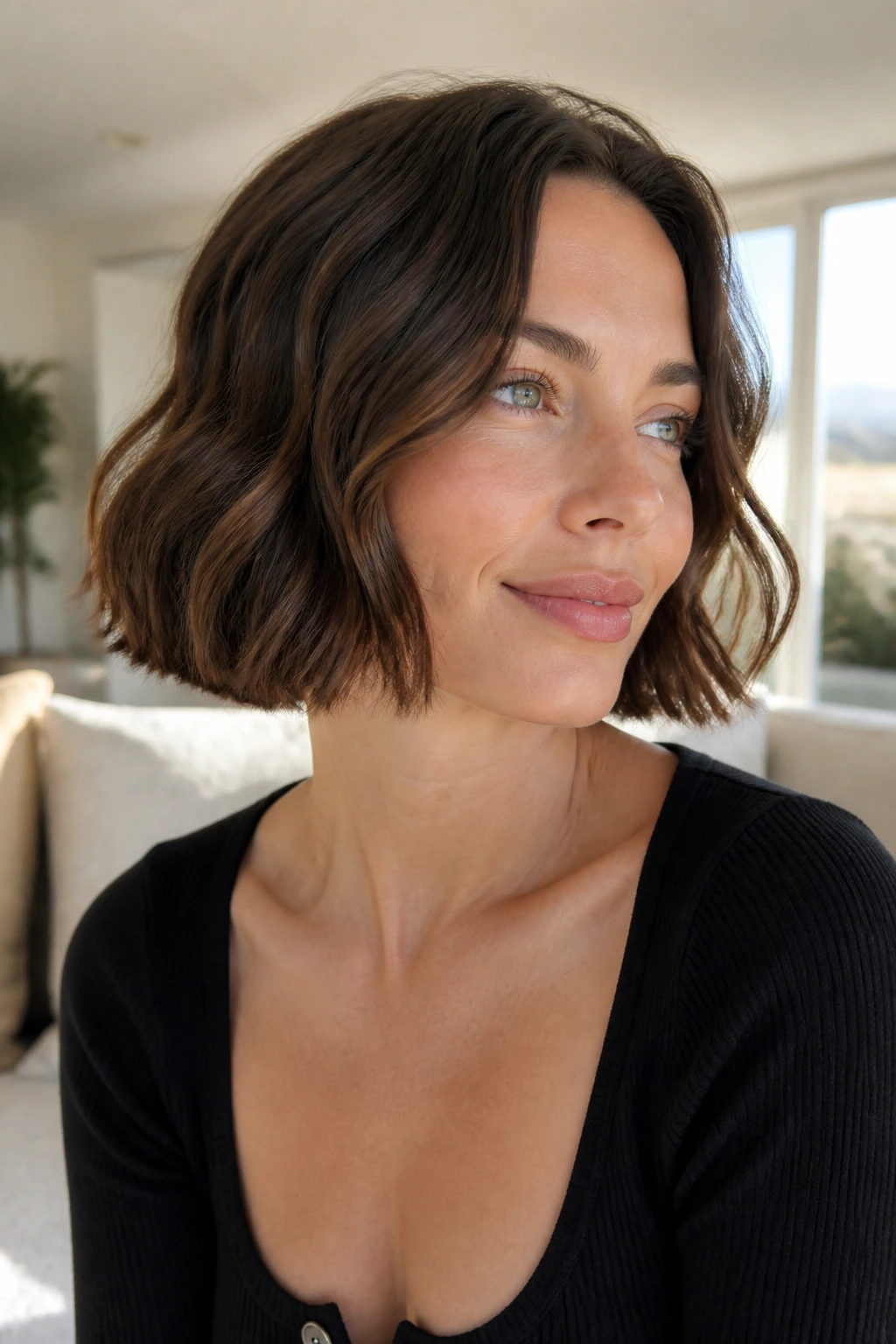
Bring photos. Not one photo. Two or three. One should show the front length, one the side view, and one the kind of texture you want when the hair is dry. A wavy bob can mean six different things to six different stylists, so pictures keep the conversation honest.
Be specific about where you want the ends to fall. Say chin, jaw, collarbone, or just below the shoulders. If you know your hair flips out at the bottom, say that too. If your crown goes flat, mention it. Those tiny details change where the stylist places the weight line.
Ask whether the cut will be done dry, wet, or with a dry check after the initial shape. Wavy hair often needs that dry confirmation, because a cut that looks balanced when wet can spring into a different shape once it dries. If your hair is thick, ask about internal debulking rather than a lot of short layers. If it is fine, ask them to keep density at the ends so the bob does not disappear.
And if you want bangs, say what kind. Curtain bangs, a soft fringe, or no fringe at all. That choice changes the whole haircut more than people expect.
Product Choices That Keep Waves Light
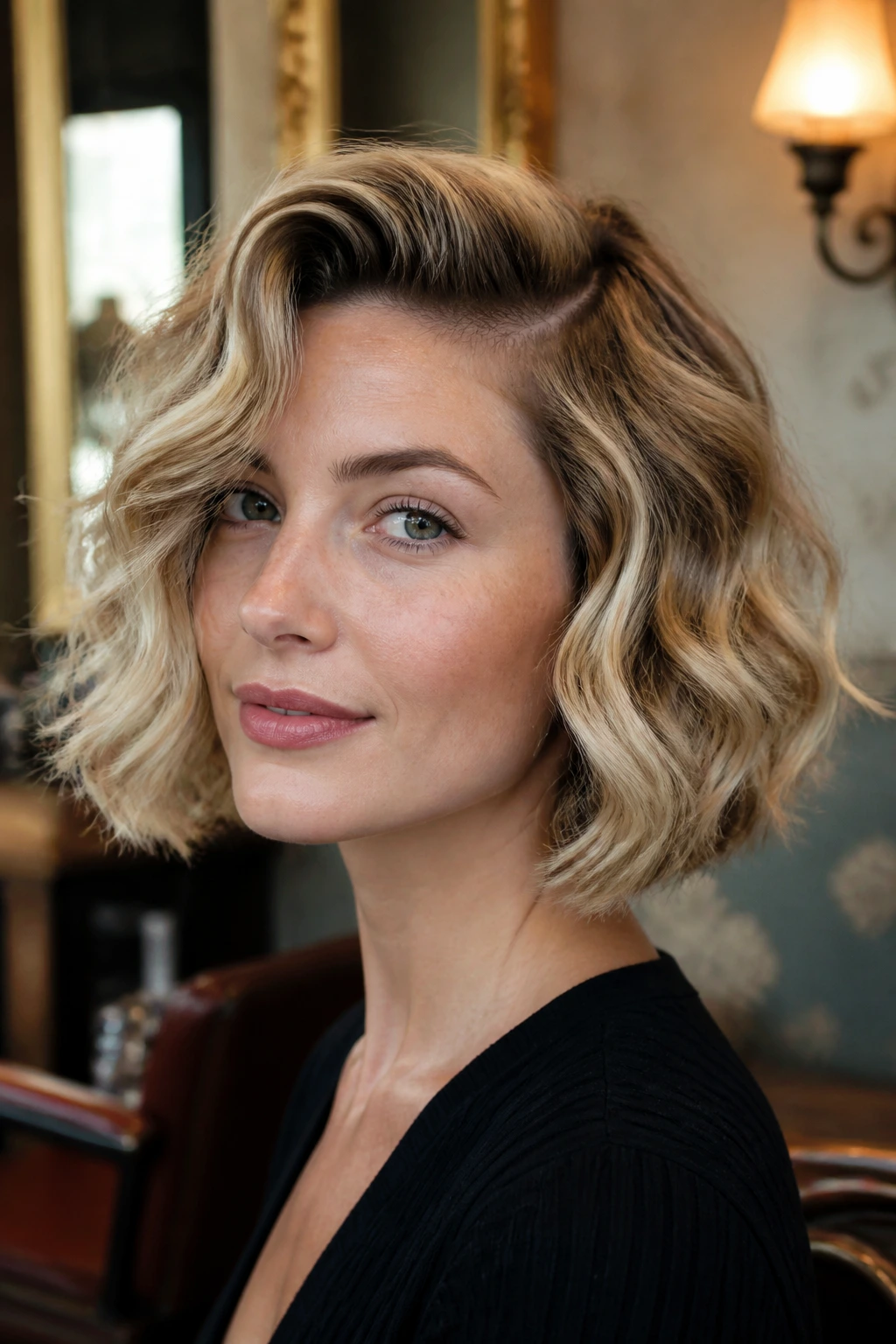
The right product does more for a wavy bob than a heavy-handed styling routine ever will. Fine hair usually likes a mousse at the roots, a little texture spray at the ends, and not much else. Thick hair often needs a light smoothing cream on the mids and ends before any wave work starts, or the finished shape can feel bulky. The product is there to support the cut, not hide it.
If you use heat, a heat protectant is not optional. The ends of a bob are the oldest part of the hair and the first place to get dry or rough. A few sprays before curling or blow-drying can keep the surface smoother, which matters because rough ends make waves look fuzzy instead of soft. That tiny detail shows.
When you want a bend rather than a curl, use less product than you think. A golf-ball amount of mousse is enough for most medium-length bobs. A pea-sized amount of cream is often plenty for the ends. Too much product makes the hair separate in odd clumps, and that can kill the airy look you were after.
Styling a Wavy Bob on Busy Mornings
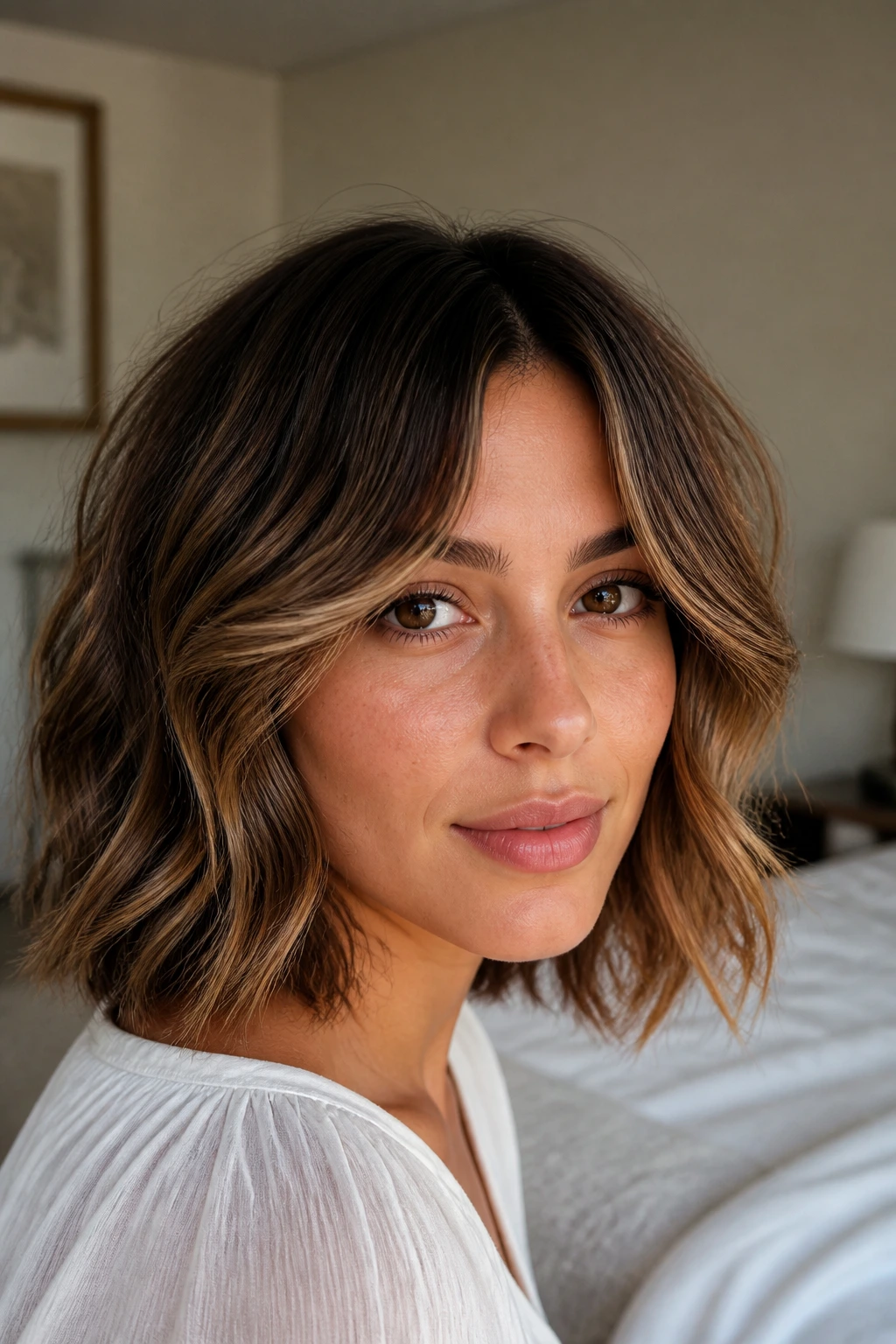
Air-drying is the easiest path if your wave pattern is already decent. Scrunch a little mousse into damp hair, twist two or three front sections around your fingers, and leave the rest alone. Don’t touch it while it dries. The more you keep messing with it, the more frizz you get.
If you prefer a faster, more polished finish, diffuse for five to eight minutes on low heat, then let the rest dry naturally. Lift the roots a little while the hair is still warm, then stop. You’re trying to encourage movement, not bake the wave into place. A bob can turn puffy fast if it gets too much heat at the sides.
Hot tools work too, but only if you keep the bend loose. Wrap one-inch sections away from the face, leave the ends out, and alternate the direction of the waves. That stops the style from looking like a uniform set. Finish by shaking the hair out with your fingers instead of brushing it smooth.
Day two is usually easier than day one. A quick mist of water, a dab of mousse, and a little scrunching at the front can wake the shape right back up.
Texture Boosters and Finishing Moves

Root Lift: Clip the crown while the hair cools, or point the dryer at the roots for a minute after styling. That small lift stops the bob from sitting flat on top.
Softness: Rub one drop of serum between your palms and tap it lightly onto the ends only. The key word is lightly. Too much serum makes the wave sag.
Separation: Pinch a few pieces around the face with texturizing spray if you want the hair to look piecey rather than blended. That’s especially useful on shaggy bobs or curtain-bang cuts.
For Fine Hair: Keep the finish airy. A little dry shampoo at the roots and a spray on the mid-lengths often works better than a creamy finish that weighs everything down.
For Thick Hair: Smooth the outer layer first, then add bend where you want movement. If you start with the ends and ignore the surface, the haircut can balloon.
Finishing Touch: Tuck one side behind the ear and leave the other loose. It sounds small. It changes the entire read of the cut.
Keeping the Shape Between Trims
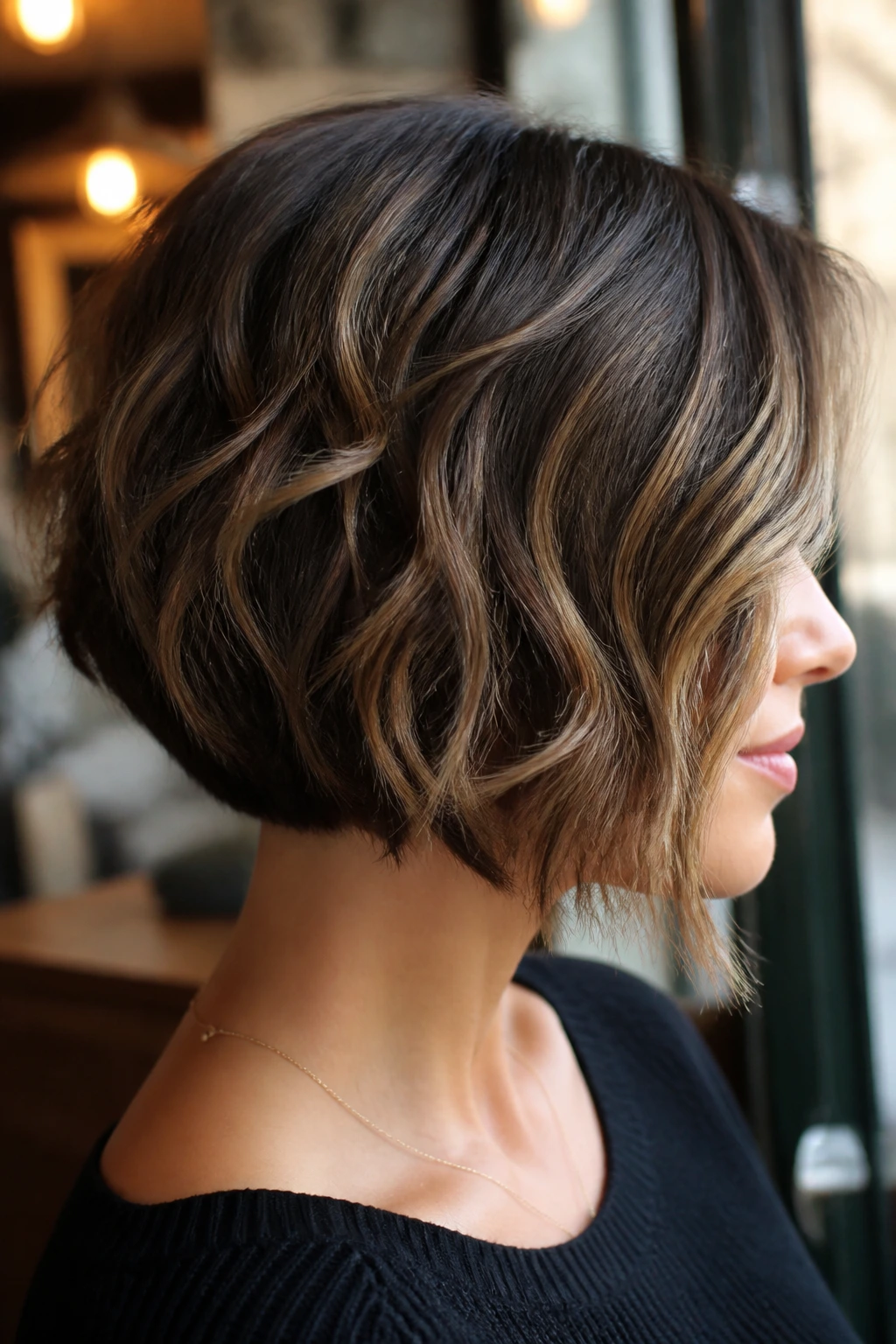
Shorter bobs tend to lose their line sooner than longer ones, so the trim schedule matters. A chin-length or French bob usually wants a refresh every 6 to 8 weeks. A longer wavy bob can usually go 8 to 10 weeks before the outline starts feeling fuzzy. If the ends flip hard or the front loses its swing, that’s your sign.
At home, sleep matters more than most people admit. A satin pillowcase cuts down on friction, and a loose clip at the crown can keep the wave from getting mashed flat overnight. If the hair wakes up bent in the wrong direction, mist it lightly and re-form the front with your fingers. No need to start from scratch.
Wash frequency depends on the product load, but many wavy bobs look better after one day of settling. If the hair gets coated too fast, use less cream and more mousse or spray. If it feels dry at the ends, add a touch of leave-in conditioner only from the mid-lengths down. Too much on the root area will collapse the shape.
Common Mistakes That Flatten the Wave

The first mistake is cutting the bob too blunt for the hair’s density. On thick or very wavy hair, a hard perimeter can sit wide at the sides and give you that helmet shape nobody asked for. The fix is a little internal removal and a longer front line.
Another trap is over-layering fine hair. A few too many short layers and the bob goes stringy at the bottom while the crown falls flat. That can make the haircut look thinner than it is. Keep the ends denser and let the wave provide the movement instead of piling on layers.
Heavy creams are another quiet problem. They can make a bob lose lift by lunchtime, especially if your hair is on the finer side. If the wave disappears as soon as the product goes in, switch to mousse or a lighter spray.
Curling every section in the same direction can also make the haircut look overly staged. Alternate directions and leave the ends a bit straighter. The bend should feel casual, not rigid.
Finally, don’t ignore the part. A center part, side part, or deep side part changes where the bob sits and how the wave falls. Same cut. Different face shape. Different mood.
Variations Worth Trying

The Air-Dry Bob: Use a soft mousse, scrunch the ends, and let the wave dry on its own. This suits people who want movement without daily hot tools, and it works best when the cut keeps enough density at the perimeter.
The Polished Workday Bob: Ask for a clean outline, subtle internal texture, and a side part. It looks smoother at the roots and a little more controlled through the mids, which helps if you need the haircut to read neat all day.
The Beachy Weekend Bob: Add a salt spray or texture spray and create loose bends with a wand. Leave the ends slightly straighter so the finish stays soft rather than curly.
The Thick-Hair Control Bob: Keep the length a touch longer and remove weight from the interior only. This version is made to sit close to the head instead of puffing out at the sides.
The Fine-Hair Lift Bob: Keep layers light, shorten the perimeter slightly, and use mousse at the roots. The goal is to make the hair look fuller without making it look overworked.
Frequently Asked Questions
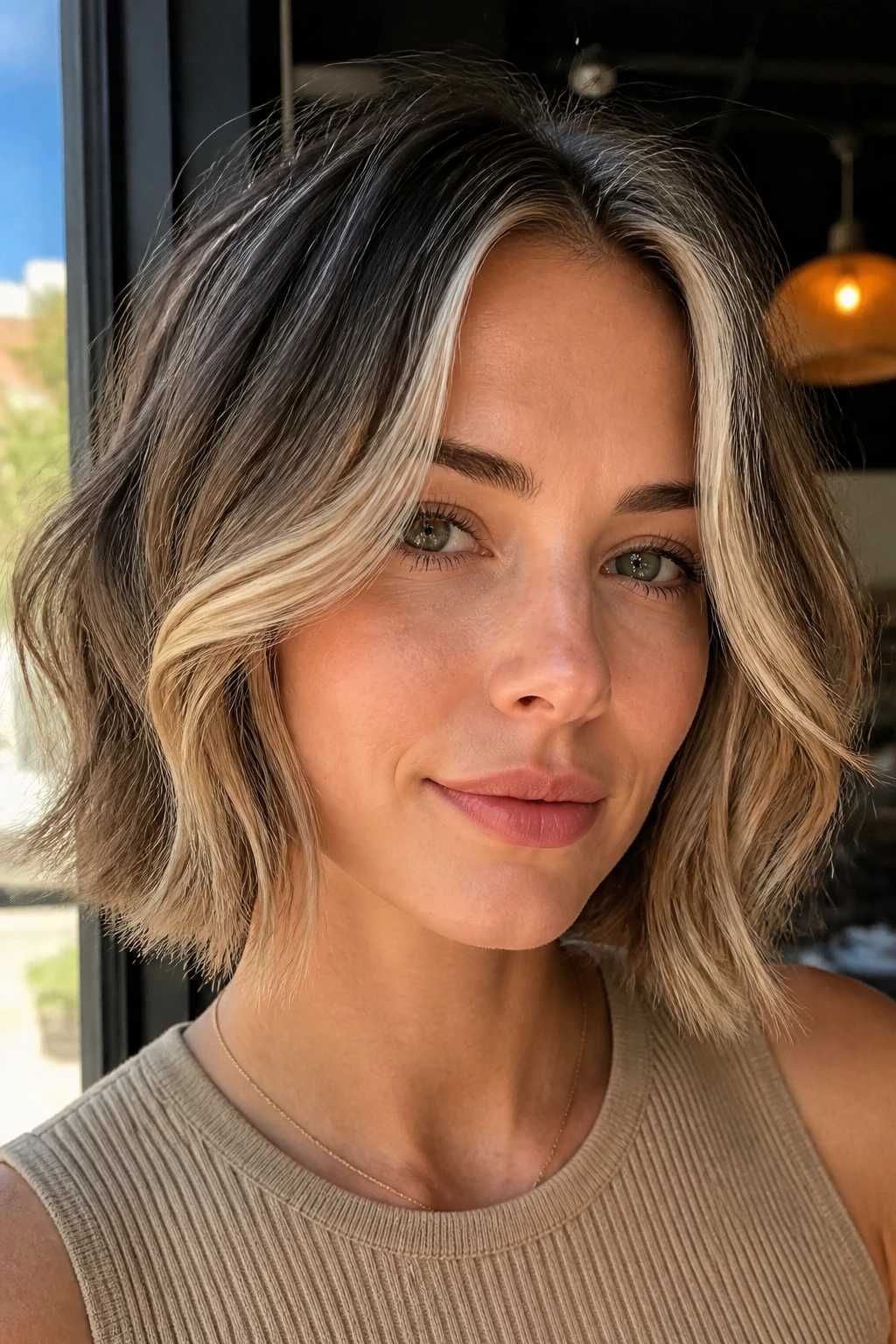
What face shape works best with a wavy bob haircut?
Most face shapes can wear one, but the length and fringe make the real difference. Chin-length cuts sharpen the jaw, collarbone lengths soften everything, and curtain bangs help balance a longer forehead.
Is a wavy bob high maintenance?
Not if the cut matches the wave pattern. A good wavy bob can air-dry nicely and still look shaped, which makes it easier than a bob that needs perfect blowout work every day.
Will a wavy bob make my hair look puffier?
It can, if the cut is too blunt for your hair density or the product is too heavy. Interior texturing, the right perimeter length, and light styling products usually keep the shape controlled.
Can I wear a wavy bob if my hair is fine?
Yes, but the cut should keep density at the bottom and avoid too many short layers. Fine hair tends to do better with lighter styling products and a slightly shorter length that supports the wave.
What if my waves are uneven or frizzy?
That’s common. Uneven waves often look better when the haircut has subtle face-framing layers and the styling uses fingers or a diffuser instead of a brush. Frizz usually gets worse when the hair is over-handled.
How often should I trim a wavy bob?
Shorter versions usually need a trim every 6 to 8 weeks. Longer bobs can go a little longer, but once the front loses its swing or the ends start flipping awkwardly, it is time.
Can I get this cut if I never use hot tools?
Absolutely. Ask for a shape that works with your natural bend and keep the interior texture soft. Air-dry bobs often look better when the cut is built for that from the start.
Should I choose a center part or a side part?
Both work, but they change the haircut a lot. A center part makes the shape look more balanced and modern, while a side part adds lift and softness at the front.
A Soft Finish That Keeps Its Shape
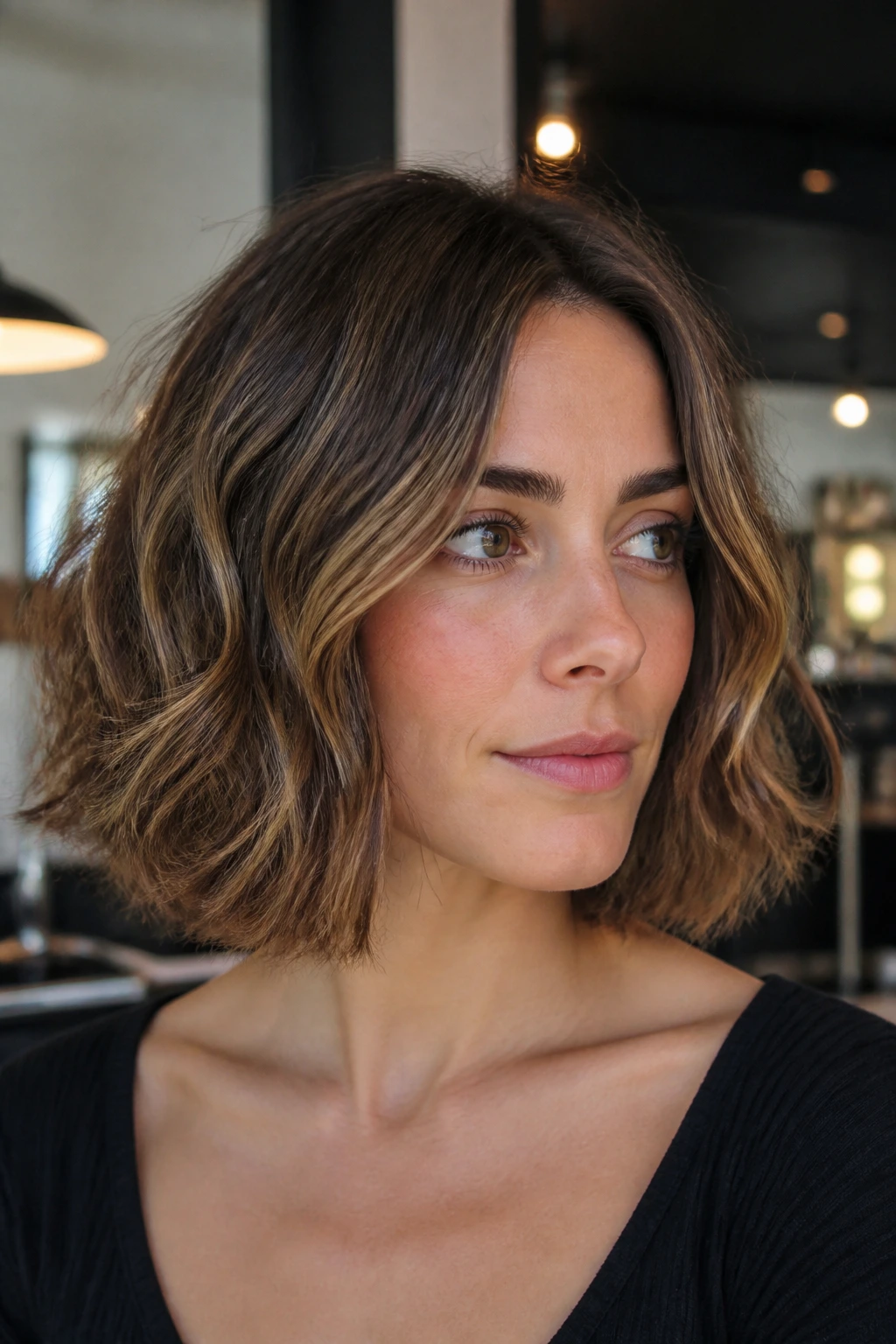
The best wavy bob haircuts do something a little rare: they look relaxed without giving up structure. That’s the sweet spot. Not too neat, not too shaggy, and not so heavily layered that the cut disappears once it dries.
If you’re choosing between lengths, I’d usually lean a touch longer than your first instinct. Wavy hair shrinks, bends, and changes direction in ways straight hair does not, and a little extra room gives the shape time to settle. The right bob should move when you move. That’s the whole point.
And if you find yourself staring at photos trying to decide between chin, jaw, or collarbone, start with the length that matches how much effort you want to spend in the morning. The haircut will do a lot of the work for you.
