



A sharp blunt bob has a way of making everything else look tidier. The shoulders sit straighter, the neck looks longer, the jaw gets a cleaner frame. There’s something almost rude about a good one in the best possible way — no wispy apology at the ends, no soft excuse, just a straight edge that lands exactly where it should. Sharp blunt bob cuts for women work because they commit.
That commitment is also why they’re easy to get wrong. Too many layers and the line goes fuzzy. Too much thinning and the ends start to look hungry. Cut it a half-inch too high on the wrong face shape and the whole thing can feel boxy instead of polished. But when the perimeter is right, the cut does half the work for you. It sits. It reflects light. It makes even a plain T-shirt look considered.
The fun part is how much range lives inside one basic silhouette. A jaw-grazing center part feels cool and graphic. A collarbone-length blunt lob feels easier, less severe. Add a fringe, tuck one side behind the ear, curve the ends under, or let the texture stay a little imperfect, and the mood changes fast. The line stays blunt. Everything else moves.
Why These Blunt Bobs Earn Their Keep
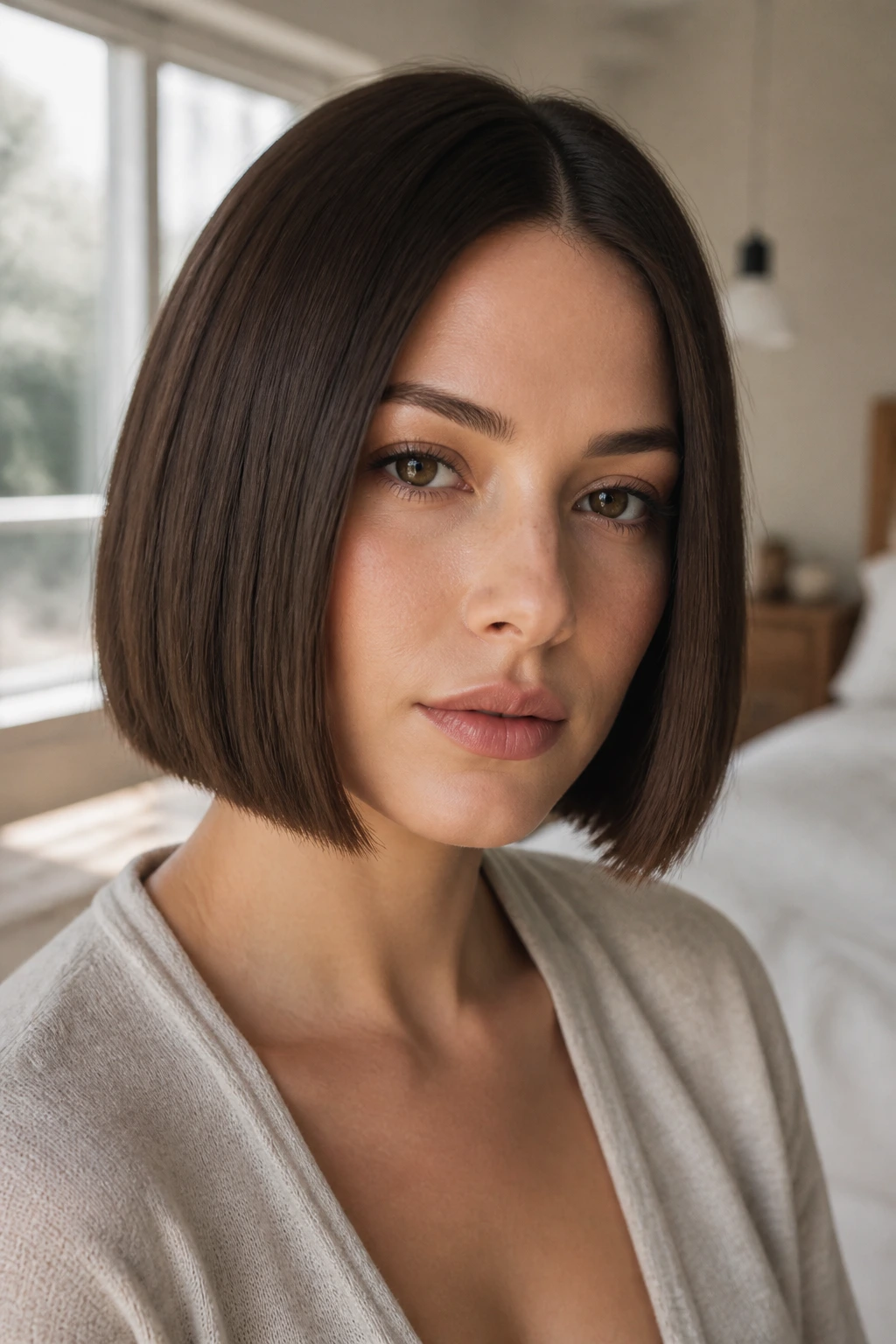
- Dense Ends: A one-length perimeter makes hair look fuller at the bottom, which is especially useful if your ends tend to go see-through after a few weeks.
- Face Framing: Moving the length from jaw to chin to collarbone changes where the eye lands, so the same cut can sharpen a jawline or soften a wider cheek area.
- Fast Styling: Most of these shapes only need a clean blow-dry, a round brush, or a single pass of a flat iron, not a long curl routine.
- Easy to Read: A blunt edge looks clear in daylight, office light, and bathroom mirrors with bad bulbs. The cut doesn’t rely on fancy styling to make sense.
- Grow-Out Friendly: A collarbone or shoulder-skimming blunt bob can stretch longer between trims without losing its shape the way a heavily layered cut does.
1. Jaw-Grazing Center-Part Bob
This is the blunt bob in its most direct form. The line lands right around the jaw, the part splits the hair evenly, and the whole cut looks like it was measured with a ruler. It’s a strong shape for straight hair because the ends sit together instead of scattering.
Best for: hair that falls flat at the sides and faces that want a little more structure around the jaw. Ask for no visible layering through the outline, and have the stylist check the cut dry so the line doesn’t shift once the hair settles. A tiny bevel at the very end can keep it from feeling stiff.
2. Deep Side-Part Bob
A deep side part changes the whole personality of a blunt bob. One side gets lift at the crown, the other side drops into a longer sweep, and that small shift makes the cut feel less severe without giving up the clean edge. It’s a good answer if your hair usually collapses on one side by lunchtime.
The side part also gives you a little more room to show off earrings or makeup without making the haircut loud. Keep the perimeter crisp and ask for the front pieces to be long enough to tuck behind the ear without popping loose every five minutes.
3. Glass-Hair Precision Bob
This one is all about shine and control. The surface is smooth enough to catch light, the part is tidy, and the ends are pressed so neatly that the cut reads almost reflective. If you like a sharper finish, this is the version that makes a simple black top look expensive without trying too hard.
What to ask for: a blunt outline with minimal texture, then a blow-dry that’s directed downward with a nozzle. Finish with a flat iron at a low-to-medium setting and keep the passes slow and clean. If you see split-looking ends, stop. A little serum on the palms is enough; too much and the shape separates.
4. French Bob with Short Fringe
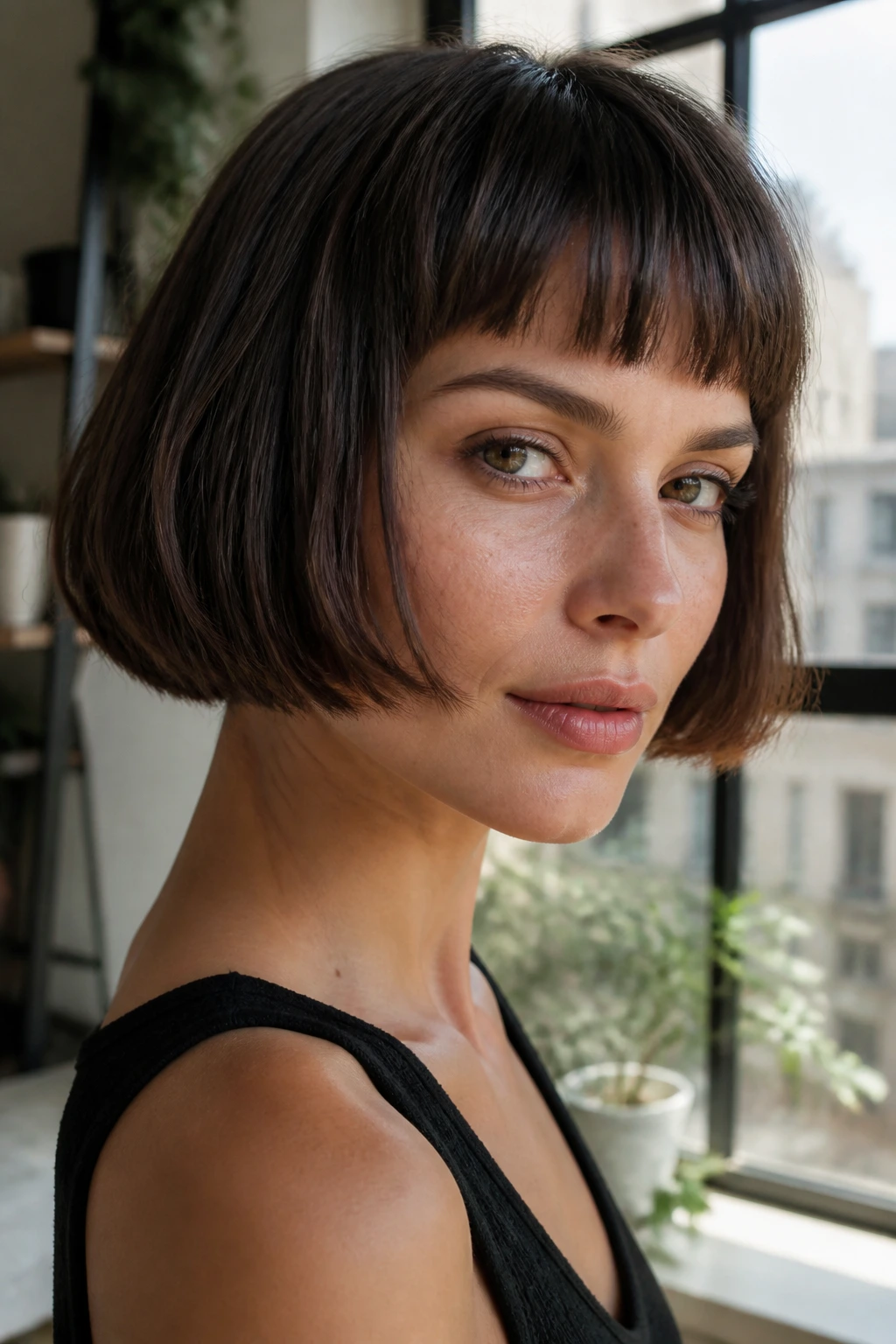
Short fringe changes everything. It pulls attention to the eyes, opens the cheekbones, and gives the blunt bob a slightly undone feel even when the line at the bottom is dead straight. The cut usually sits around the cheekbone or just below the ear, so it feels compact and airy at the same time.
This is one of the few blunt bobs that can look better with a tiny bit of movement in the fringe. The edges do not need to be perfect. In fact, a fringe that breaks slightly in the middle or softens at the temples keeps the whole thing from feeling too stiff.
5. Micro Bob with a Clean Nape
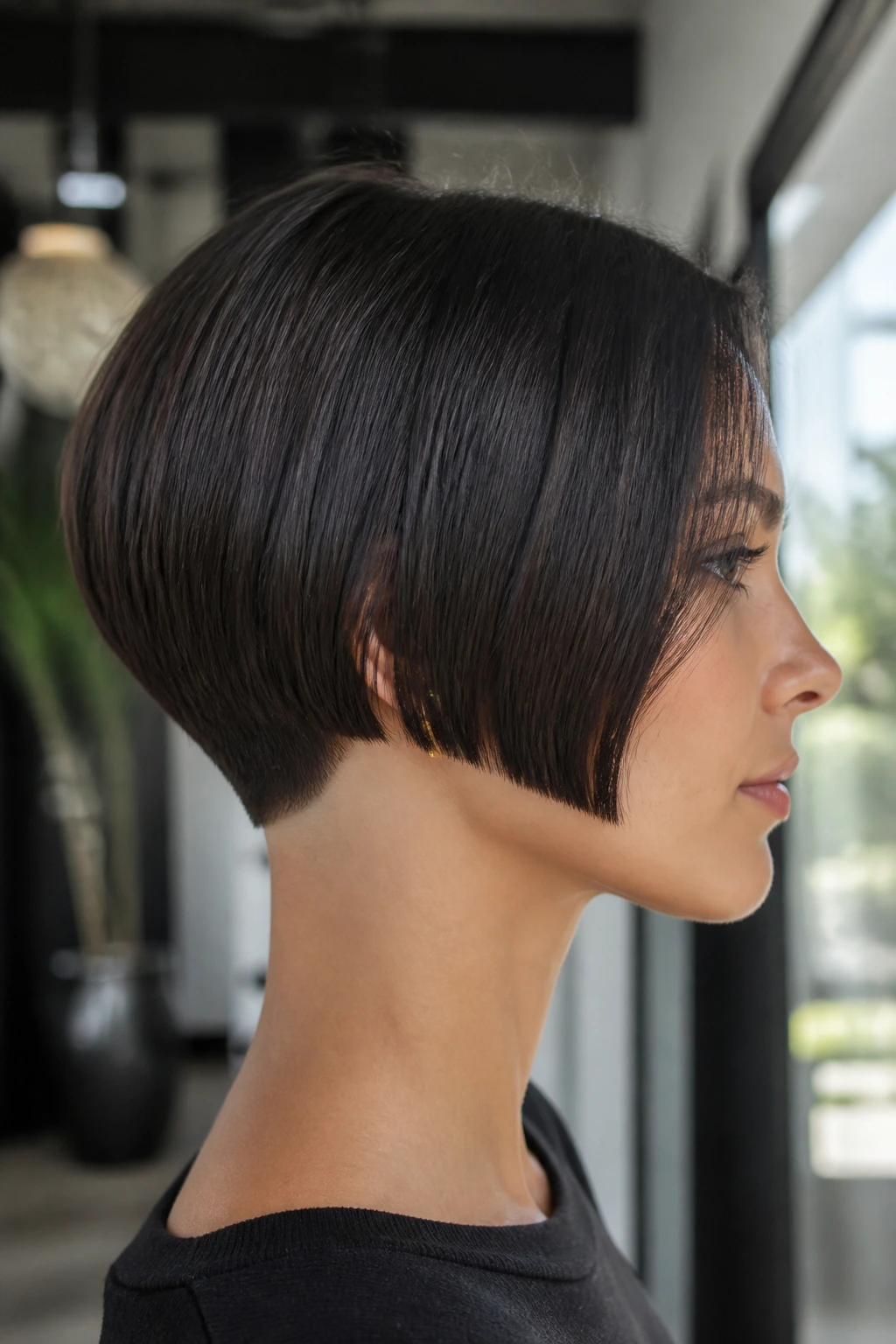
Short. Clean. No hiding. A micro bob sits higher than most people expect, often near the cheekbone or just under the ear, and the nape is trimmed so neatly that the neck looks longer the moment you turn sideways. It has a sharp little bite to it.
This cut rewards confidence and a good neckline trim. If your hair grows fast at the back, you’ll notice the shape soften sooner than a longer bob. That’s the trade-off. The upside is a haircut that looks crisp under collars, earrings, and bare necklines.
6. Collarbone Blunt Lob
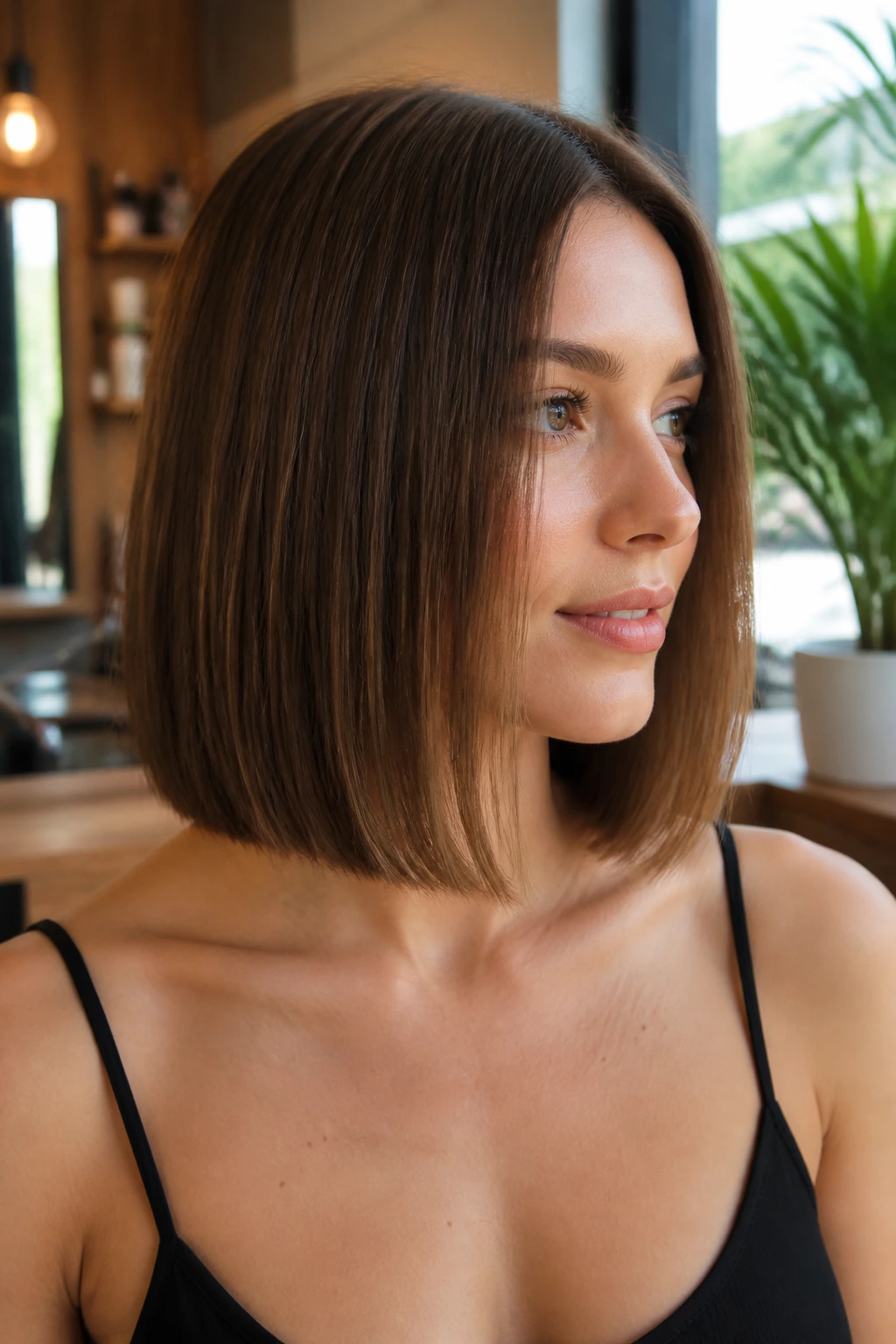
Not every blunt bob has to stop at the chin. A collarbone-length lob keeps the same hard edge but gives you a little more swing, a little more ponytail potential, and a lot more breathing room if you’re nervous about short hair. It’s the easiest place to start if you want the blunt look without committing to a shorter crop.
Because the length is longer, the cut can tolerate soft bends or a loose wave without losing its line. Ask the stylist to keep the ends heavy and even, then decide later whether you want to wear it smooth, tucked, or barely bent under.
7. Rounded Under-Curve Bob
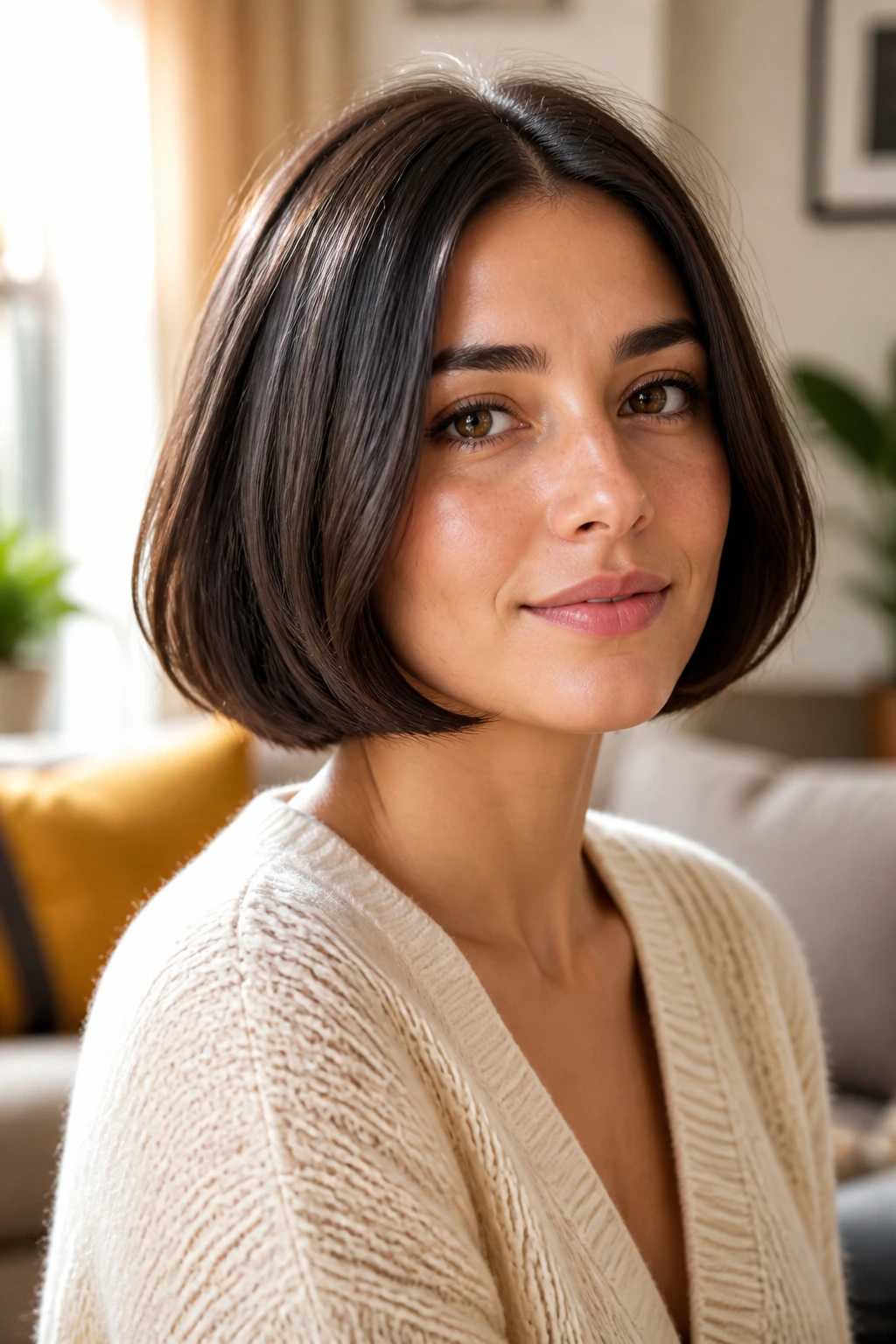
This is what happens when a blunt bob gets a neat little finish under the edge. The outline stays one length, but the ends curve inward just enough to keep the shape from looking boxy. It’s a nice option if your hair naturally flips out at the bottom and you want a calmer result.
The trick is restraint. The curve should show up only in the last half-inch or so. Too much round-brushing turns the bob into a helmet, and nobody needs that. A soft under-curve also plays nicely with thick hair because it keeps the perimeter clean while the bulk stays controlled inside.
8. One-Length Bob with Baby Bangs
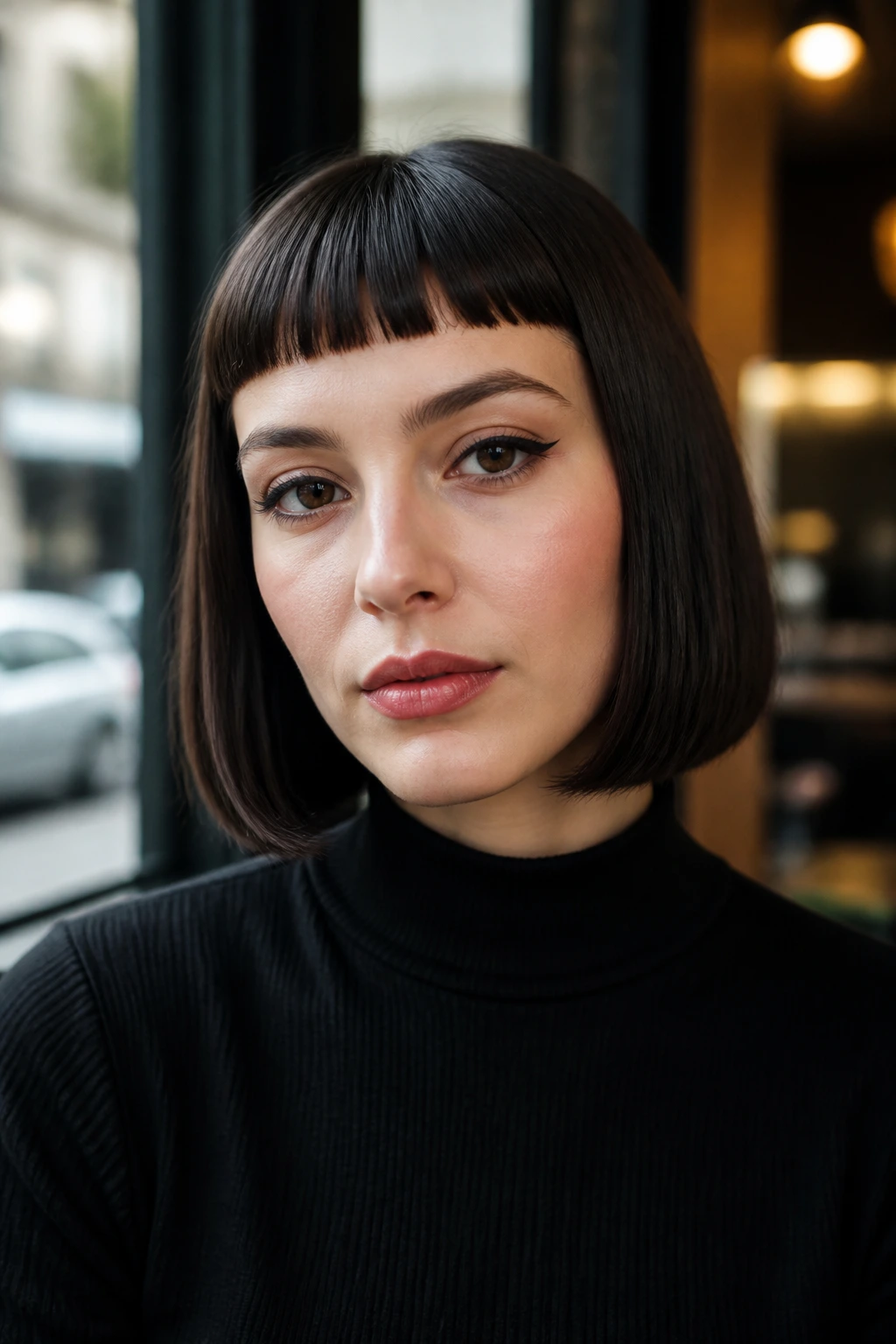
This one is graphic in the best way. The bob stays one length all around, and the baby bangs sit high enough on the forehead to make the whole cut feel bold without needing extra layers or movement. It has a sharp little editorial mood that works especially well with strong brows and clean makeup.
The key is balance. Because the bangs are short, the rest of the haircut should stay disciplined and even. If the outline gets too fractured, the whole thing loses its punch. Ask for the fringe to be cut with scissors, not over-thinned, so it lands with enough weight to match the rest of the bob.
9. Tucked-Behind-Ears Bob
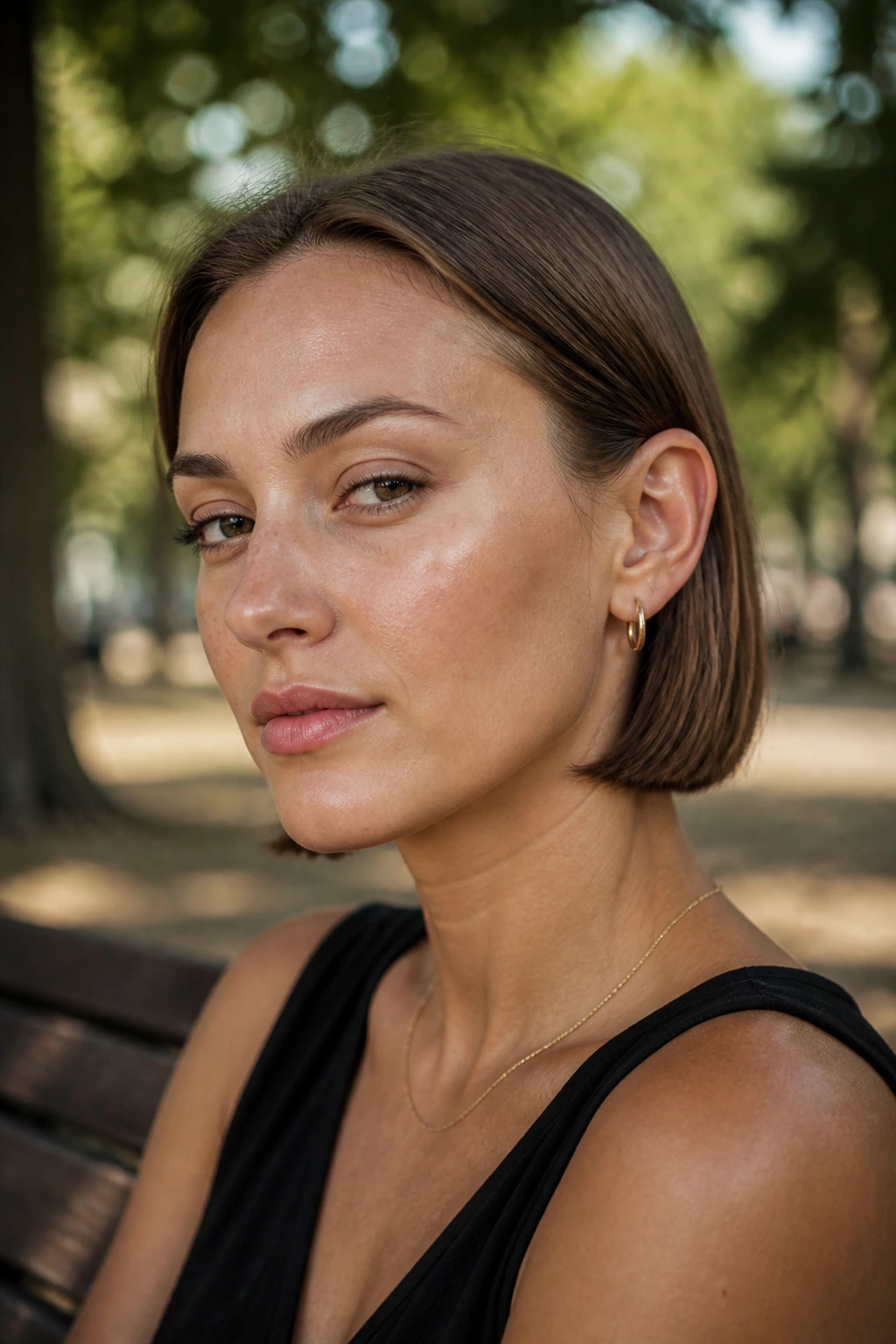
Some cuts change in the mirror the second you tuck the hair behind the ears. This is one of them. The perimeter still needs to be blunt, but the front should be long enough to sit neatly behind the ear without exposing an awkward chunk of side length. That slight tuck shows off the jaw and ears in a clean, almost tailored way.
It’s a smart choice if you wear glasses, hoops, or small studs and want the haircut to cooperate. The neatest version uses a smooth finish at the front with just enough length to stay put, not so much that the tuck feels bulky.
10. Hidden-Texture Bob
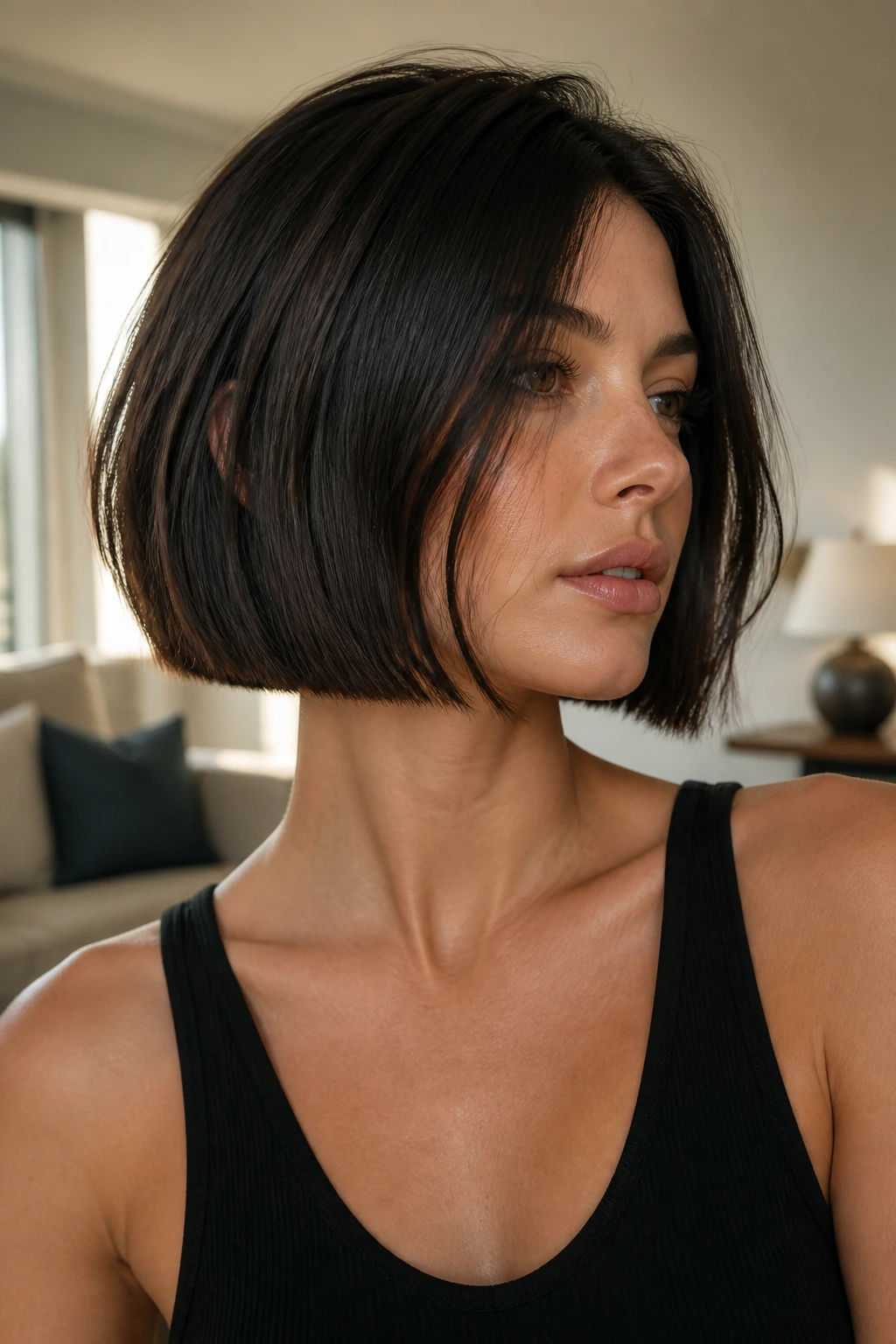
If you love a blunt edge but hate hair that hangs like a flat sheet, this is the answer. The outside stays strong and straight, while the inside gets a touch of movement that helps the haircut breathe. You still see the line, but you don’t get that stiff, blocky look some one-length cuts can have.
The request to make here is specific: keep the perimeter blunt, then soften the interior without destroying the outline. That usually means a careful, invisible texture pass rather than obvious layers. On fine hair, go light. On thick hair, this can save the shape from ballooning out at the sides.
11. Inward Blowout Bob
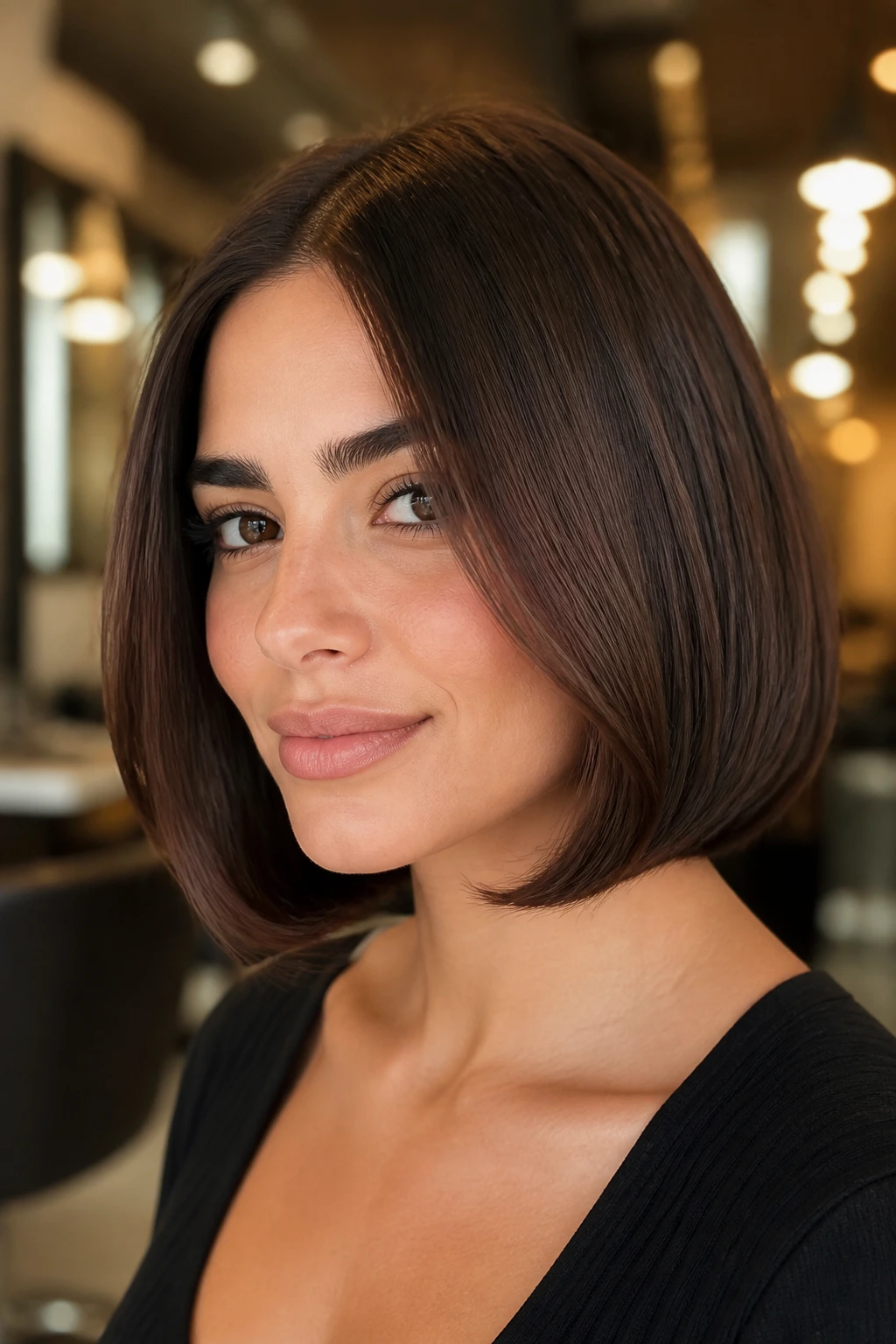
This is the salon blowout version of a blunt bob. The crown has a little lift, the ends bend under, and the whole haircut looks like it was finished with a round brush and ten extra minutes. It’s polished without feeling frozen in place.
The shape works because the blunt line is still visible underneath the movement. You can wear it with a side part or center part, but the inward bend at the ends gives the cut a controlled, almost cushioned feel. If your hair flips out on its own, this is the version that helps keep it in line.
12. Curtain Bang Bob
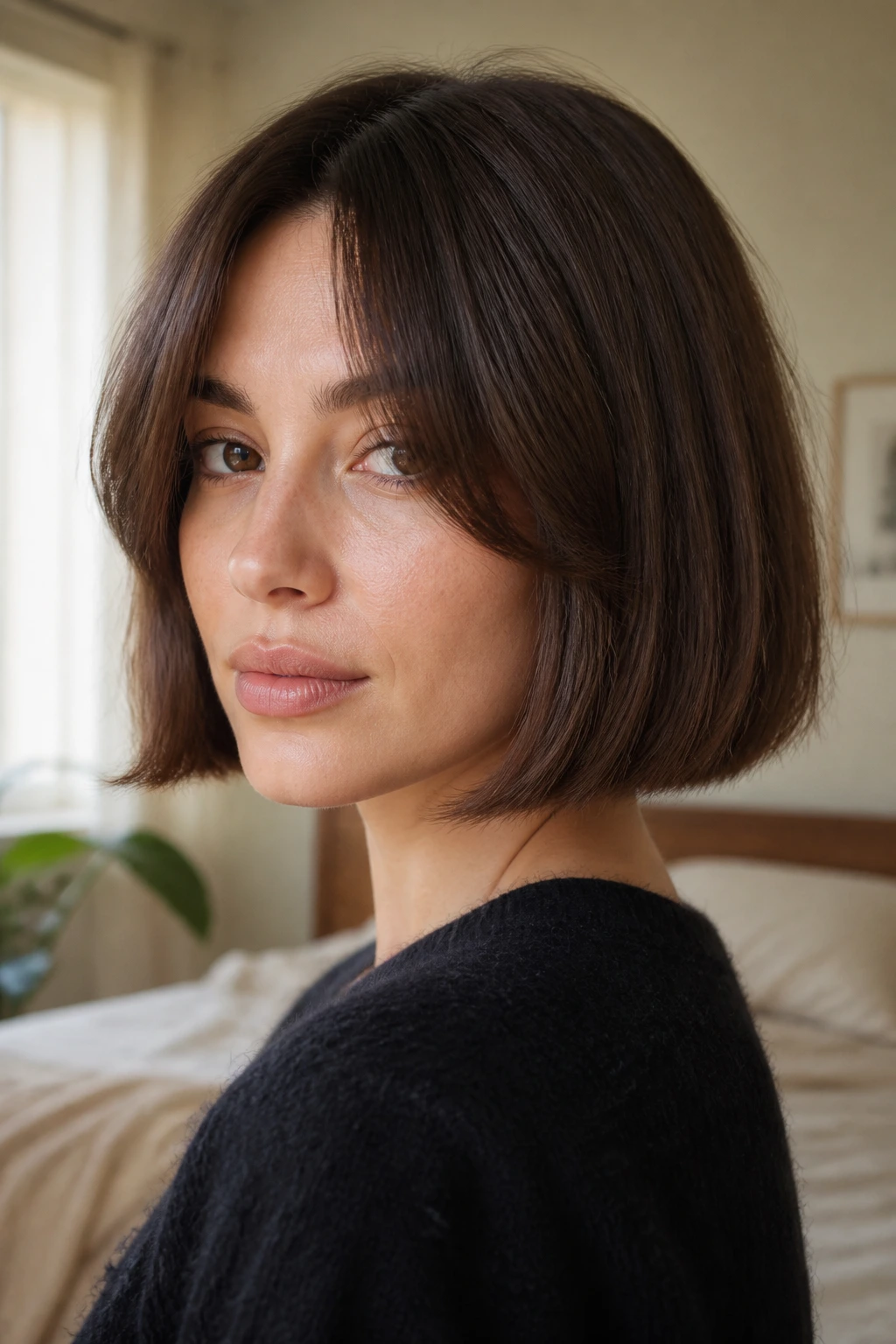
Curtain bangs soften a blunt bob without making it vague. They split through the center, skim the cheekbones, and let the perimeter do the heavy work. The result feels a little less formal than a bob with a hard fringe, but it still reads as sharp.
This cut works especially well when the bangs are long enough to blend into the sides without turning into face-framing layers everywhere. That’s the line to watch. You want the front open, not shredded. A light blow-dry with a round brush at the bangs is usually enough.
13. Air-Dried Natural-Texture Bob
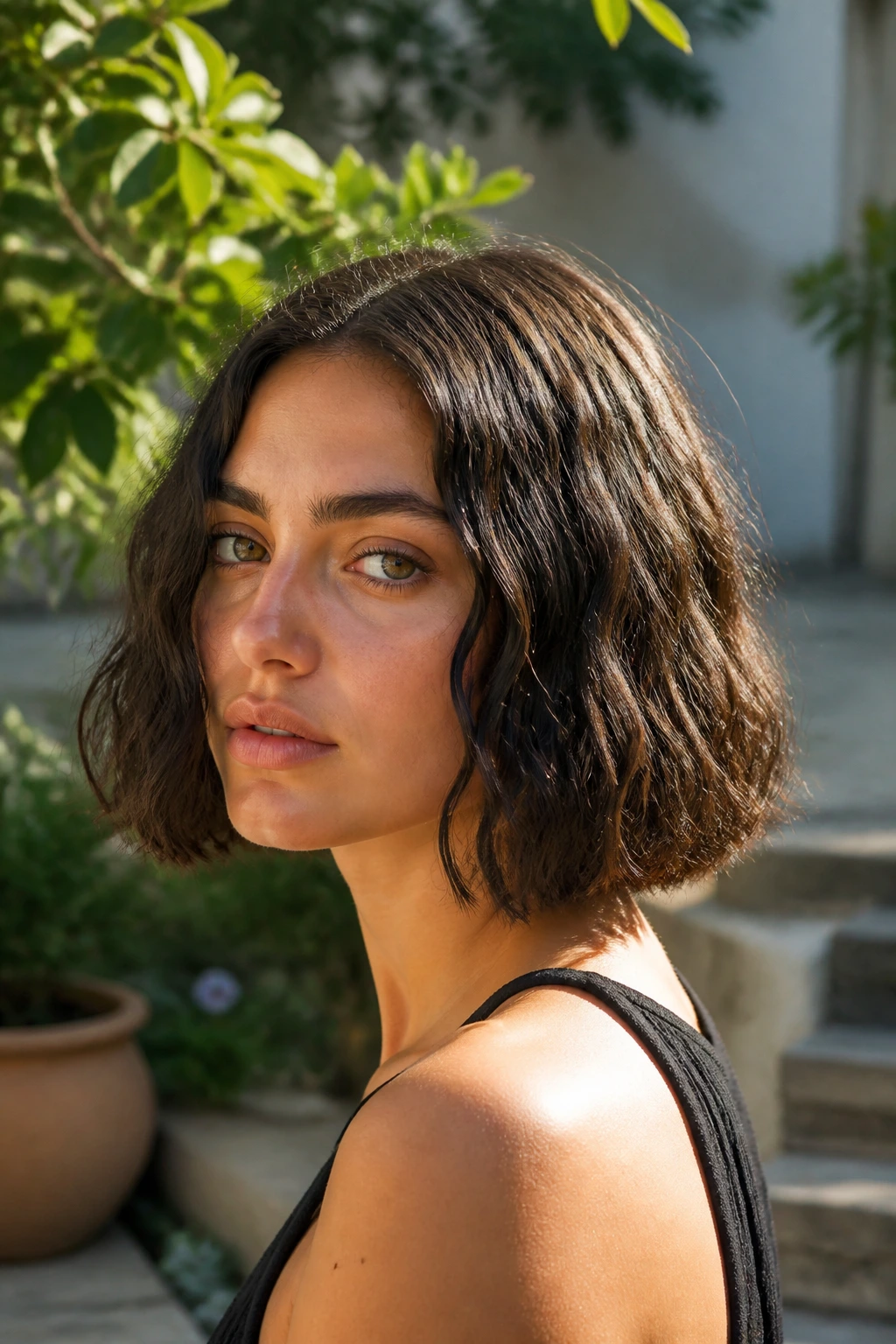
A blunt bob does not have to live under a flat iron. If your hair has a wave or loose curl, this version lets the texture show while keeping the outline strong enough to read as a bob. It’s less about forcing the hair straight and more about giving the natural shape a clean border.
The cut needs to respect shrinkage. That means checking where the hair sits dry, not only wet, and keeping enough length that the ends don’t pop up higher than you planned. A little leave-in conditioner or curl cream can help the texture clump neatly so the line still looks intentional.
14. Platinum Precision Bob
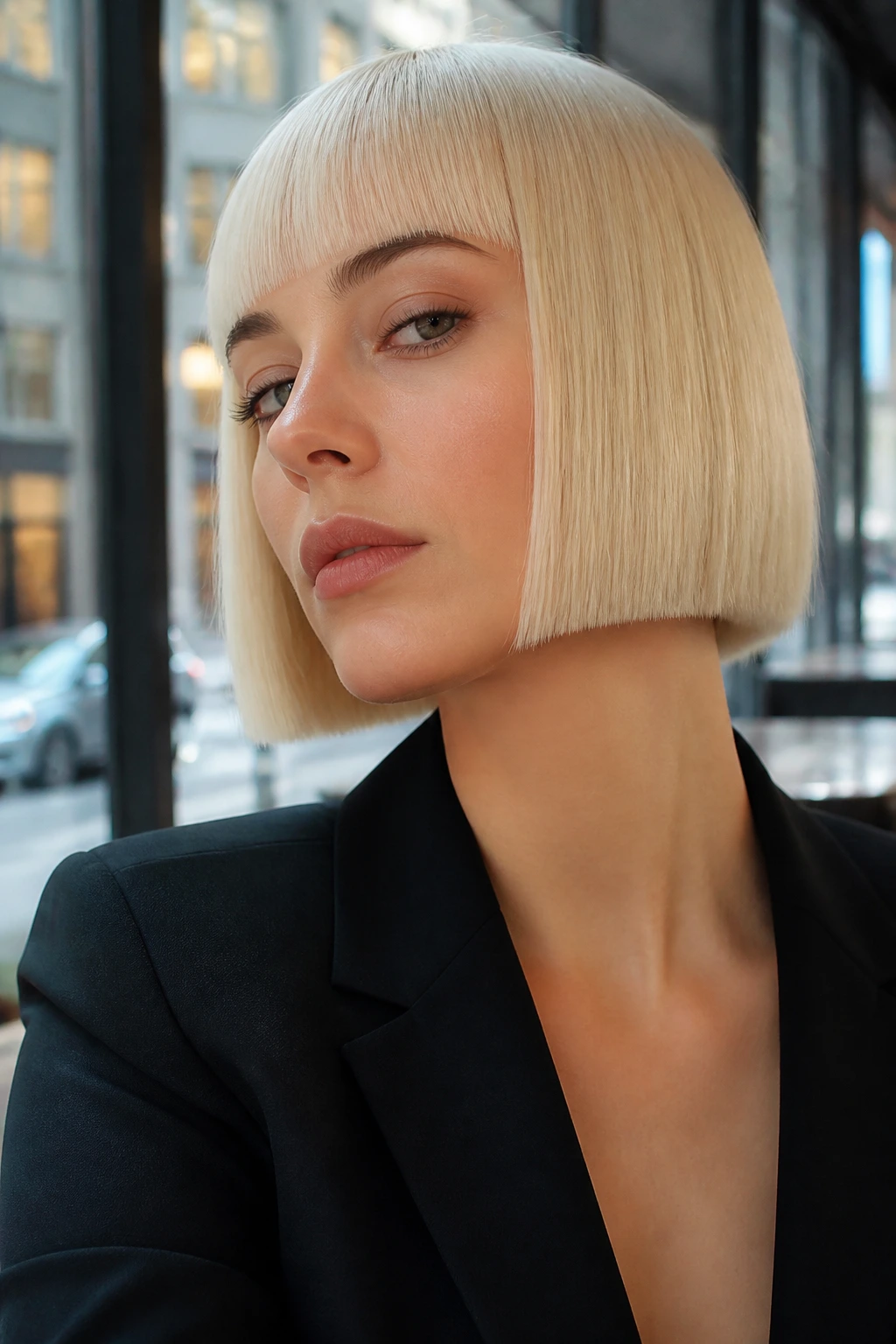
Light color makes every edge louder. A platinum blond blunt bob shows off the perimeter, the part, and the neckline in a way darker shades sometimes hide. It can look icy and dramatic, which is part of the appeal, but the cut has to be clean because the eye goes straight to the outline.
If you wear this version, maintenance matters on two fronts: the color and the shape. Even a tiny unevenness at the bottom gets obvious fast. A gloss or toner helps keep the blonde from going dull, and a blunt trim keeps the ends from looking frayed against such a bright shade.
15. Invisible-Layer Density Bob
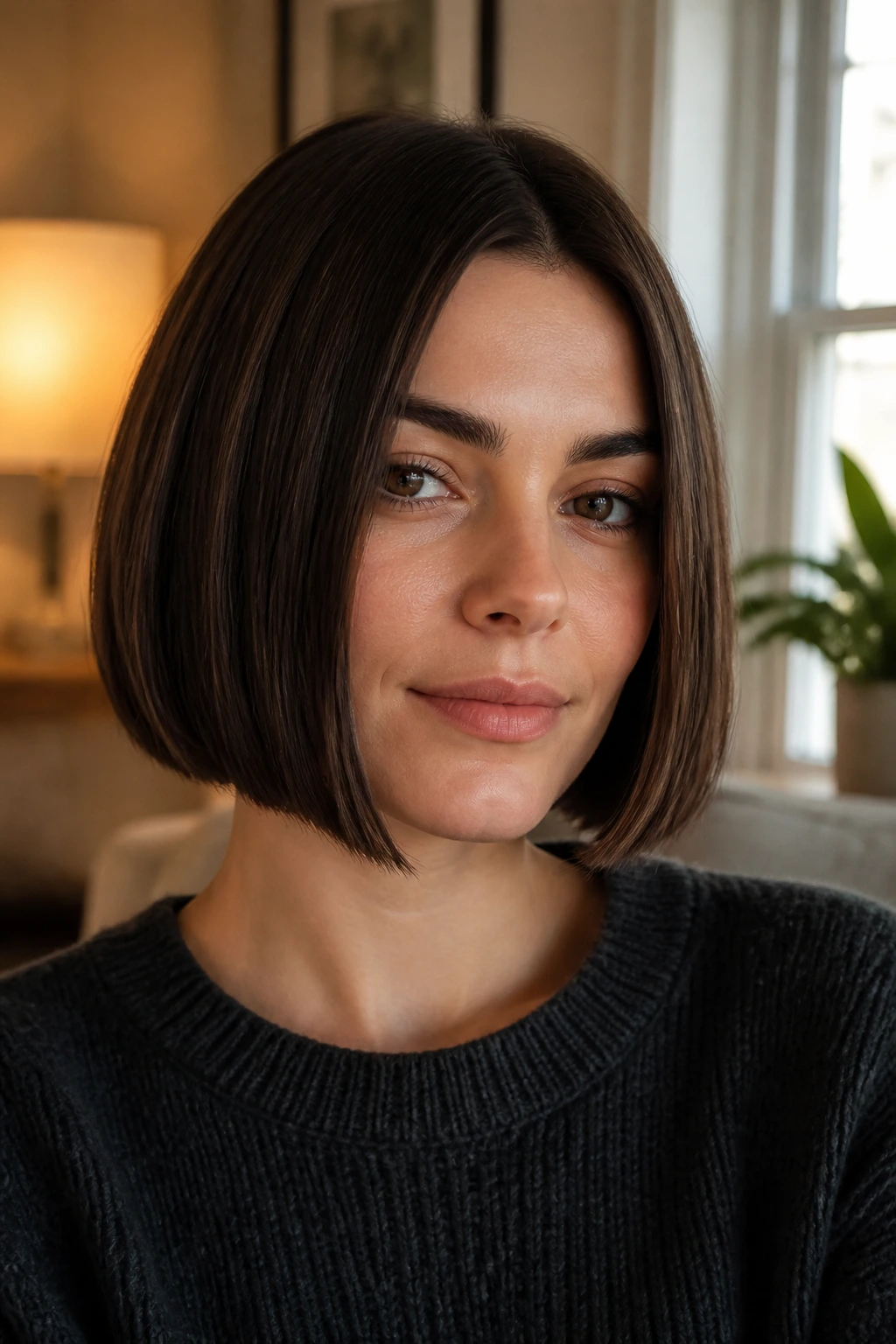
Thick hair often needs a smarter cut, not a lighter one. This version keeps the perimeter blunt and full while removing some bulk inside the shape so the bob sits closer to the head. It avoids the heavy triangle that can happen when thick hair is left too wide at the sides.
The important part is where the weight comes out. You want internal control, not a choppy outline. A good stylist will remove enough inside to help the bob move, but not so much that the ends become stringy. The edge should still feel solid when you run your hands through it.
16. Heavy Fringe Statement Bob
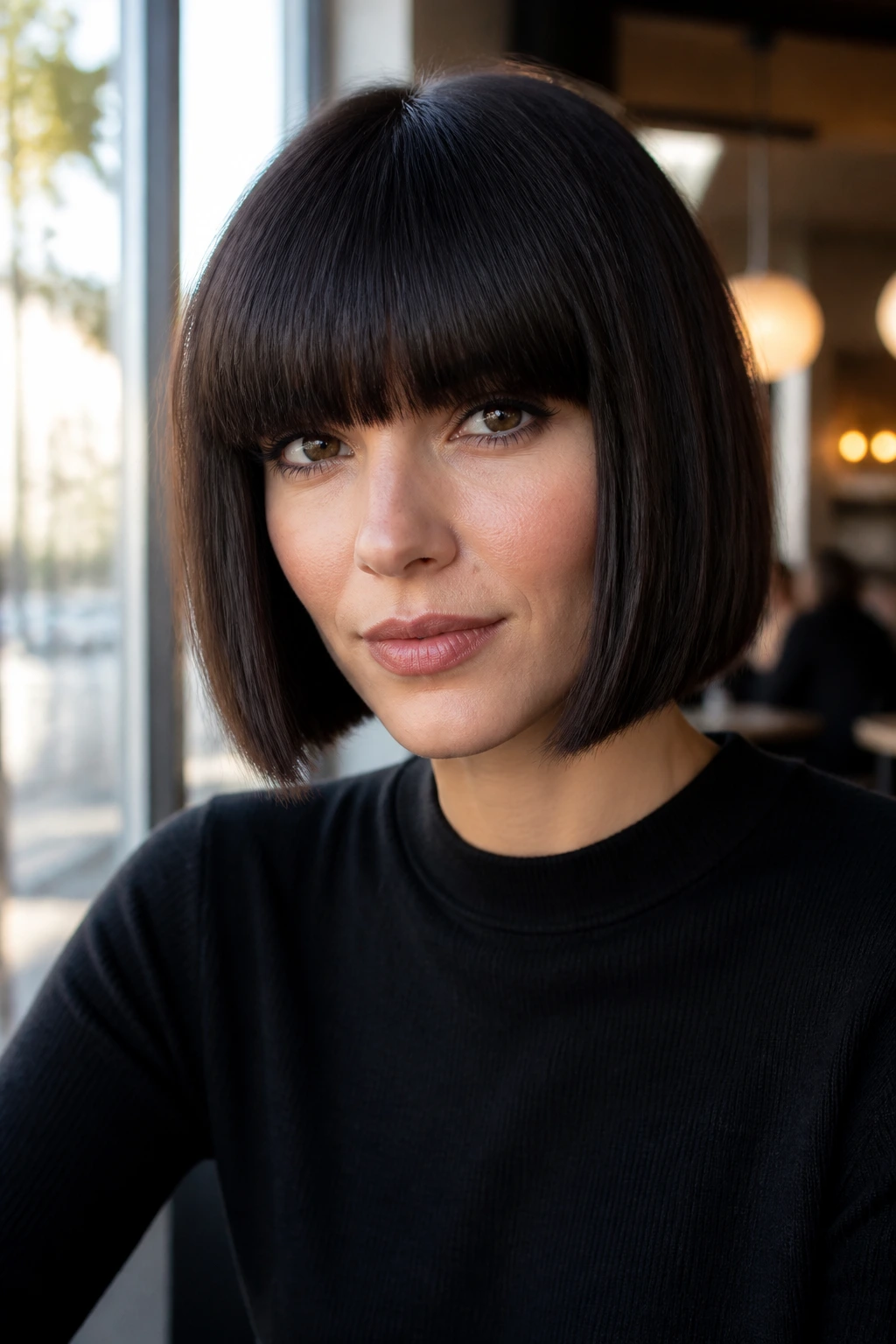
A full fringe gives a blunt bob a stronger frame. It pulls the eye upward, puts more emphasis on the eyes, and makes the whole haircut feel deliberate. The front can be shorter or chin length, but the fringe is what gives it its bite.
This is a good choice if your forehead is something you like to balance, or if you want the cut to look finished even on days when the rest of your hair is doing very little. The fringe should be thick enough to read as a single shape. If it gets too wispy, the whole haircut loses that clean edge.
17. Flat-Iron Wave Bob
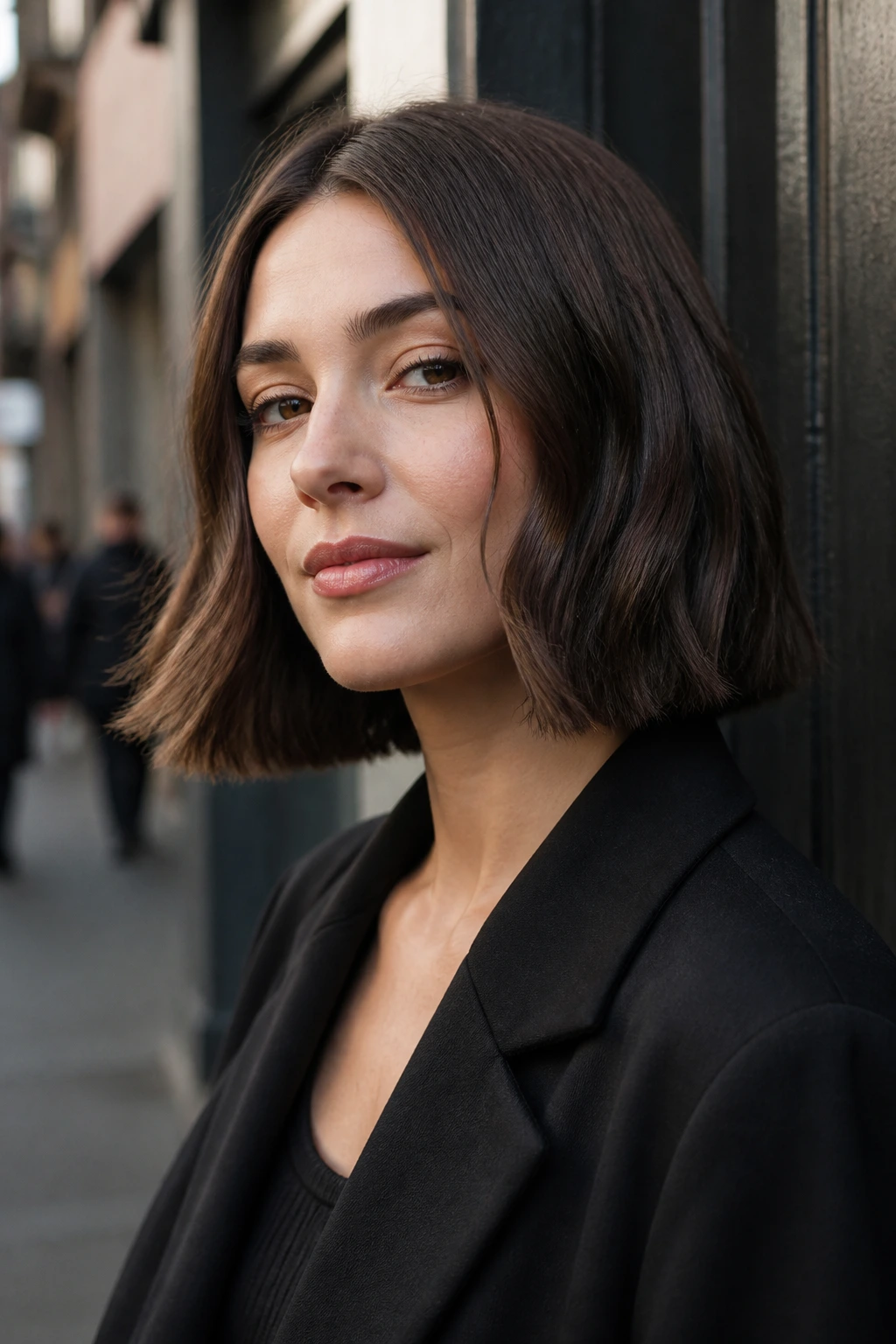
Think of this as a blunt bob with a little bend, not a curl. The ends get one or two soft passes with a flat iron so the line stays visible while the surface doesn’t look stiff. It’s a nice middle ground if you want movement without giving up the sharp shape.
The best version keeps the bends loose and irregular, almost like the hair naturally settled that way after being tucked behind the ears or bent around a scarf. Overdoing the wave makes the bob feel dated fast. A light hand is the whole trick.
18. A-Line Precision Bob
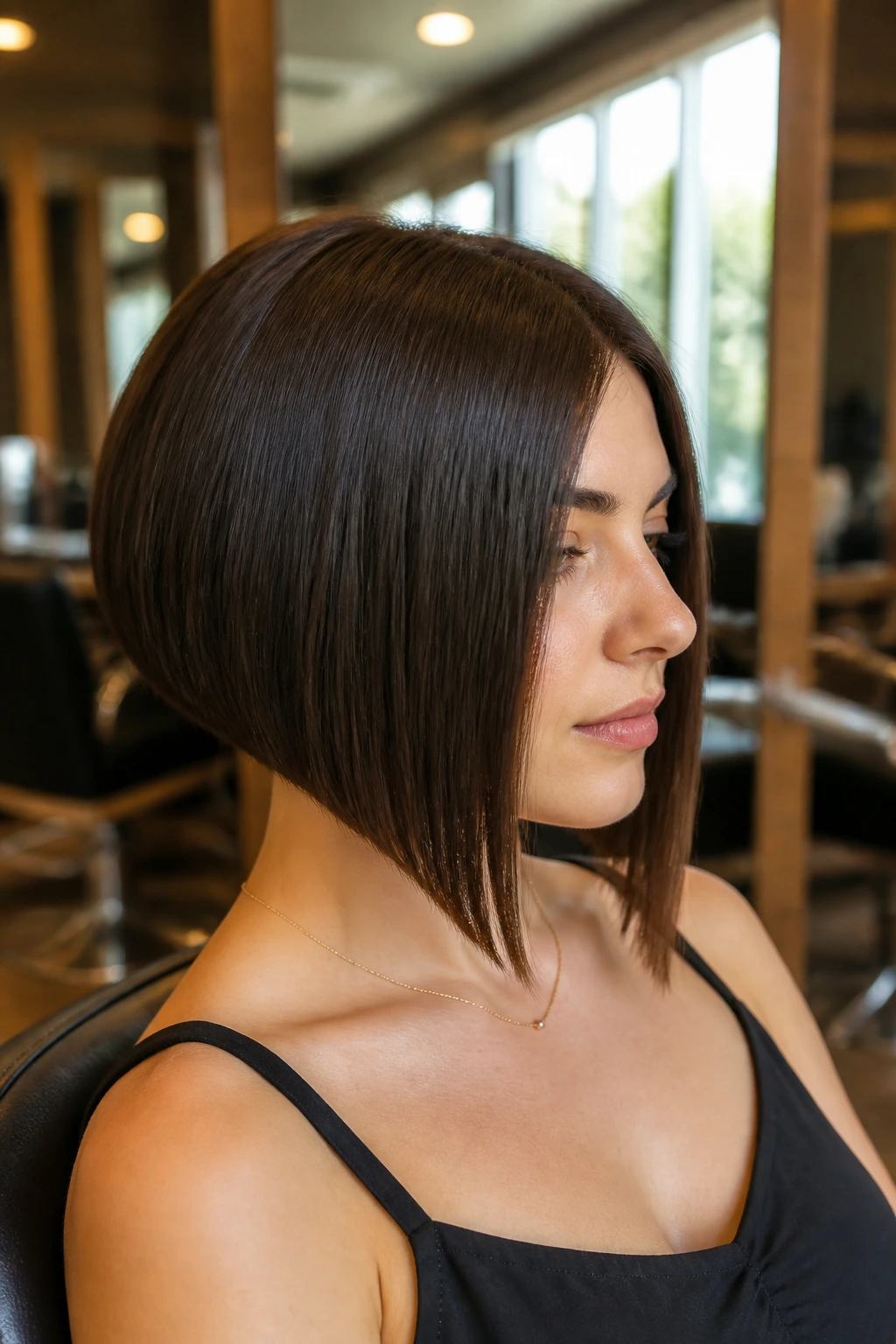
An A-line bob is longer in the front and shorter in the back, but the bottom edge still stays clean. That slight angle gives the cut motion and helps it sit nicely around the face, especially if you want a little visual slimming along the jaw.
It’s a good compromise if a straight chin-length cut feels too blunt for you. The back can stay close and neat, while the front pieces graze lower and soften the profile. The line is still sharp. It just moves a little when you turn your head.
19. Tapered Nape Bob
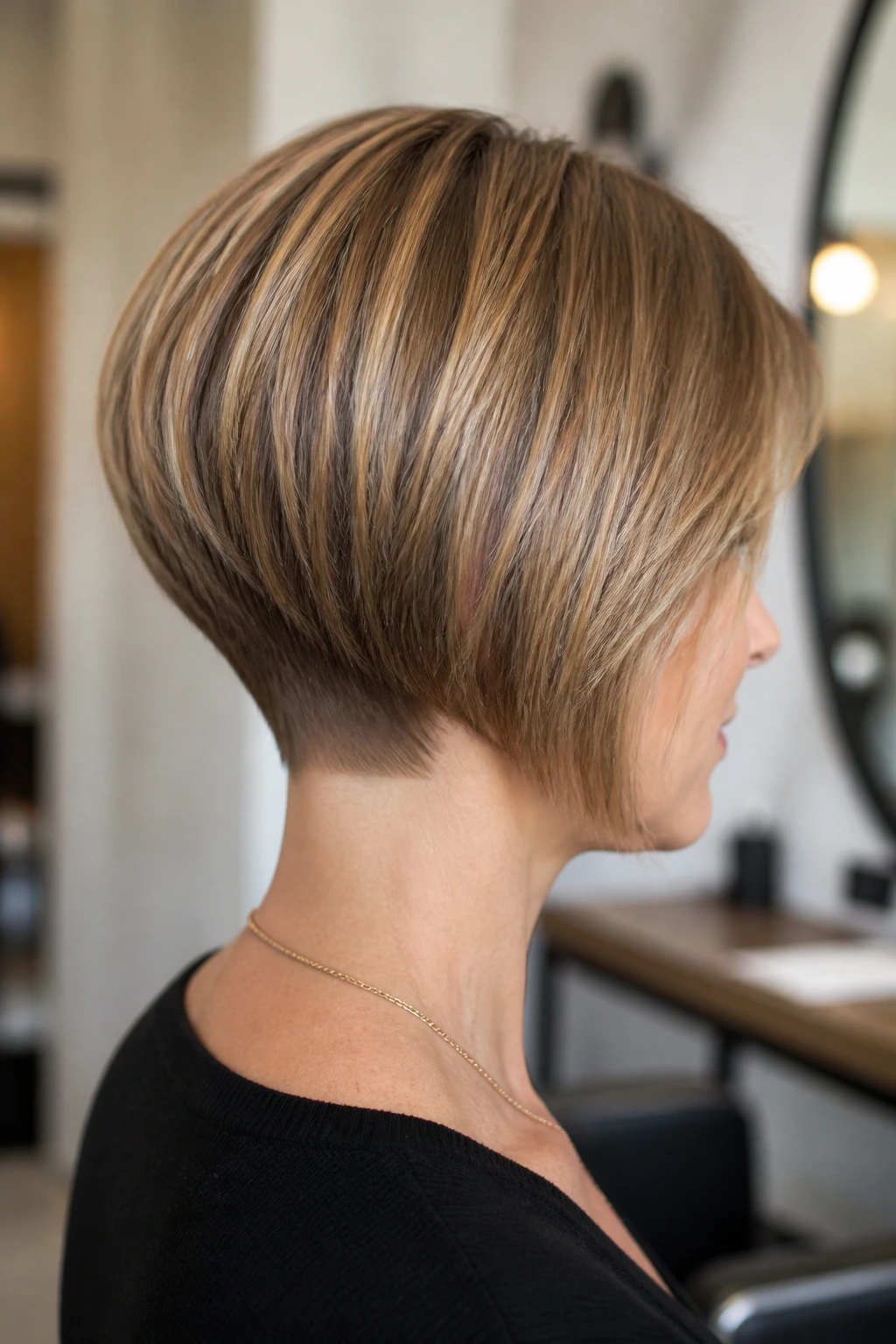
This one does its best work from the back. The nape is cut clean and close, which makes the neckline look neat, and the front can stay a touch longer for balance. It’s a very tidy shape, the kind that looks especially good with collared shirts and bare necklines.
Because the back is so exposed, this cut needs regular neck cleanups. You’ll notice growth sooner here than you do at the front. That’s not a flaw; it’s the nature of a crisp nape. If you like the back of your haircut to look as finished as the front, this is a strong choice.
20. Fine-Hair Fuller Bob
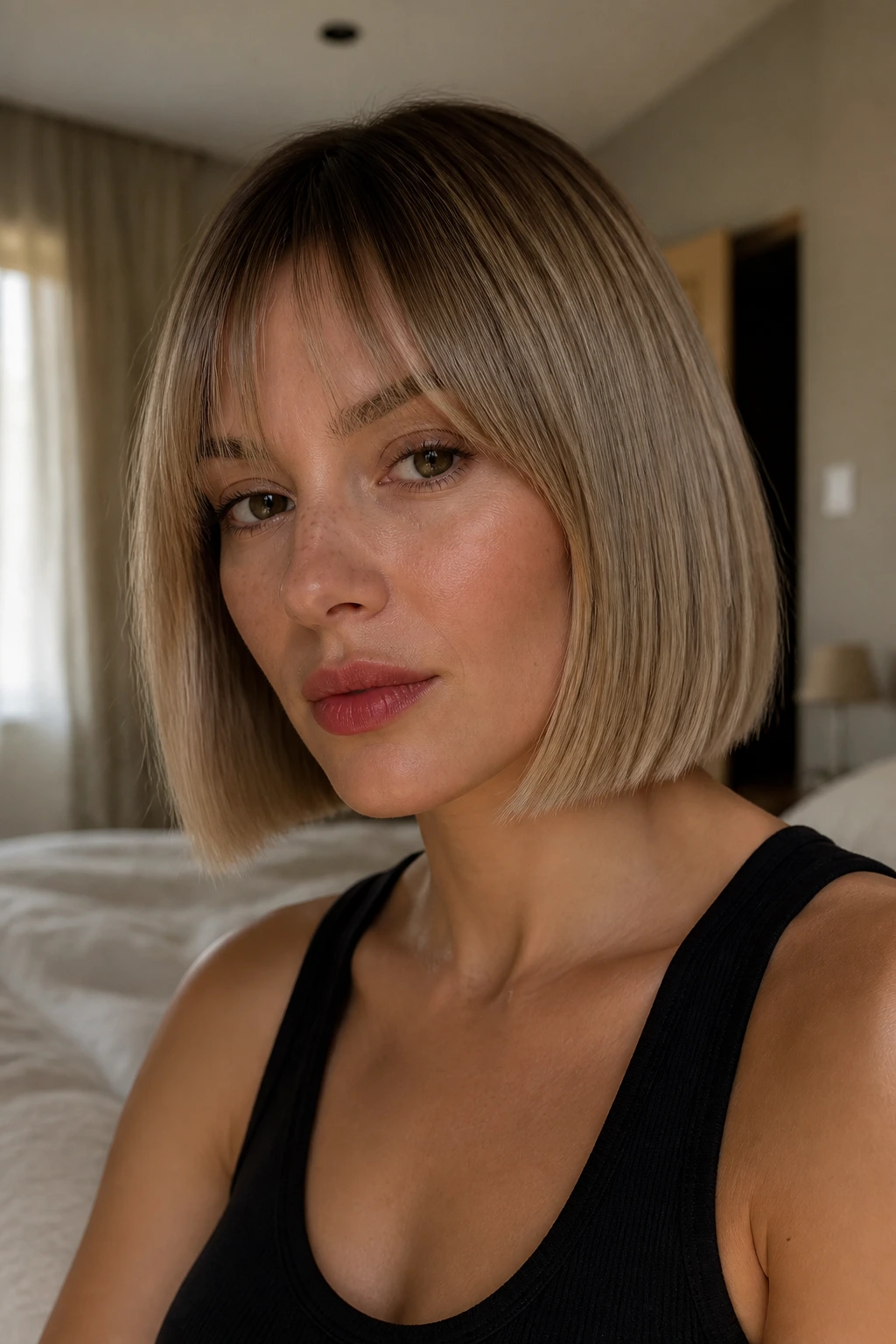
Fine hair loves a blunt edge because it gives the ends somewhere to land. Layers can make fine hair look thinner than it is, but a strong one-length bob keeps more visual weight at the bottom. The result is a fuller-looking line that doesn’t depend on teasing or heavy product.
The cut should stay simple. Too much texturizing at the ends can make the perimeter look see-through, and then the whole point of the bob is gone. A light blow-dry with a paddle brush or small round brush can give the roots a lift without disturbing the edge.
21. Thick-Hair Controlled Bob
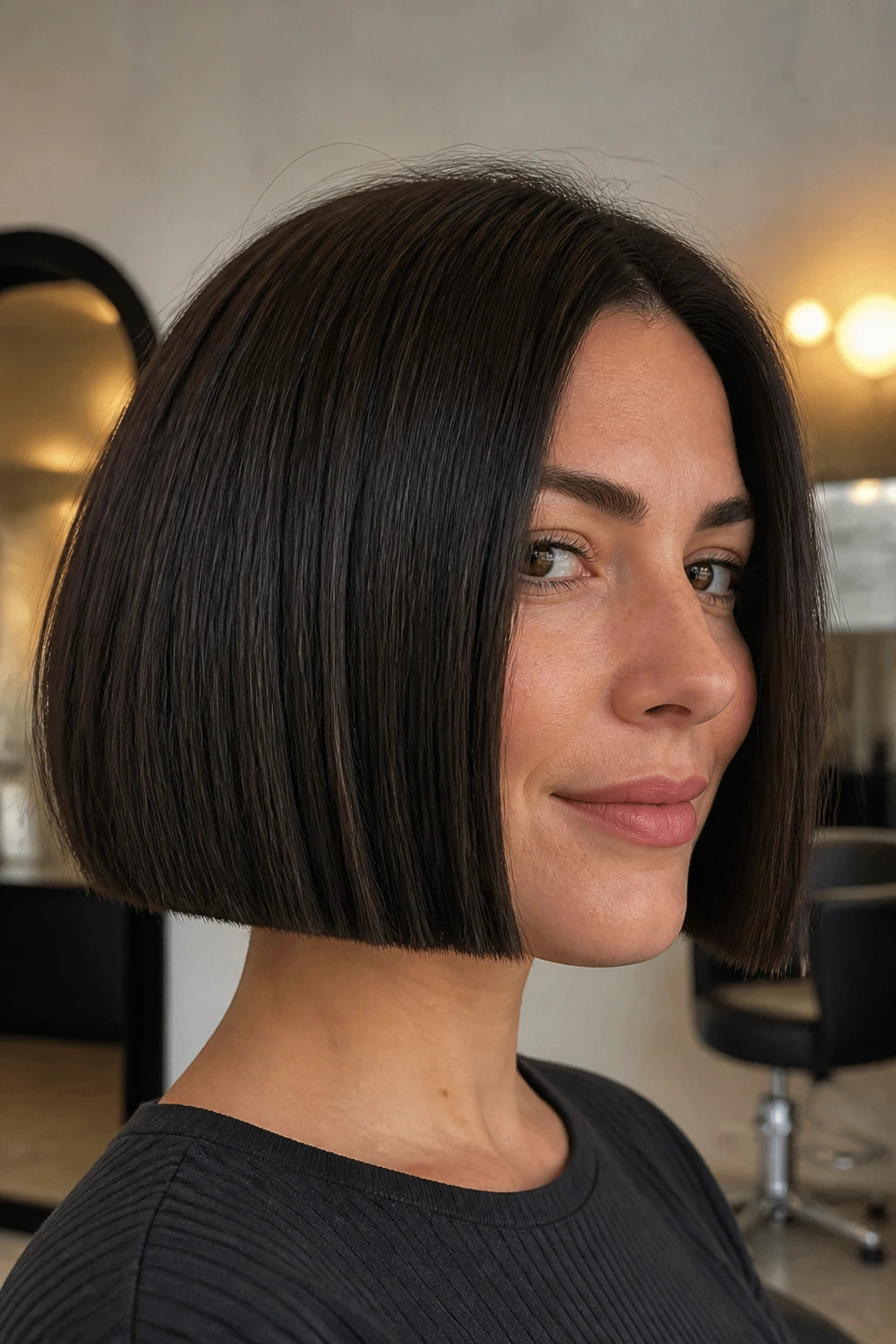
Thick hair needs control more than it needs subtraction. A blunt bob can look fantastic on dense hair when the stylist keeps the perimeter heavy and removes bulk only where the shape starts to puff out. That gives you the clean line without the mushroom effect.
The hard part is resisting over-thinning. If too much weight is removed at the ends, the bob starts to fray instead of sitting with authority. Ask for bulk reduction inside the shape and a careful cross-check around the bottom so the edge stays even from every angle.
22. Curly Perimeter Bob
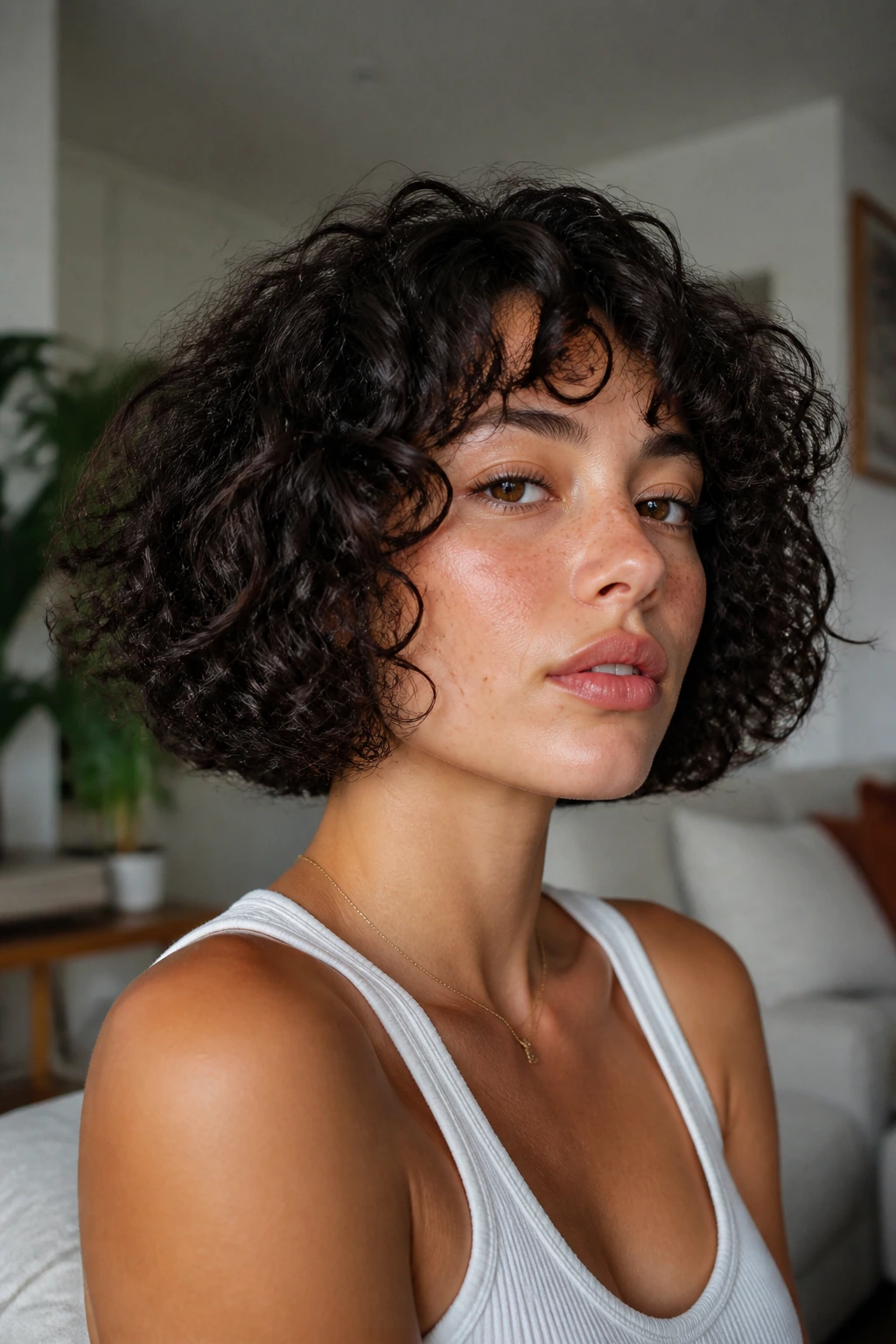
A curly blunt bob works when the cut respects the curl pattern instead of fighting it. The perimeter can still read as blunt, but the actual cutting usually needs to account for shrinkage and curl bounce. Dry cutting or a curl-by-curl check helps the stylist see where the true length lands.
The shape can look beautifully full when it’s handled right. Keep the ends hydrated, use a diffuser if you want more definition, and avoid piling on heavy oils that make the curls separate at the bottom. The line is there. It just lives inside the texture.
23. Asymmetrical Sharp Bob
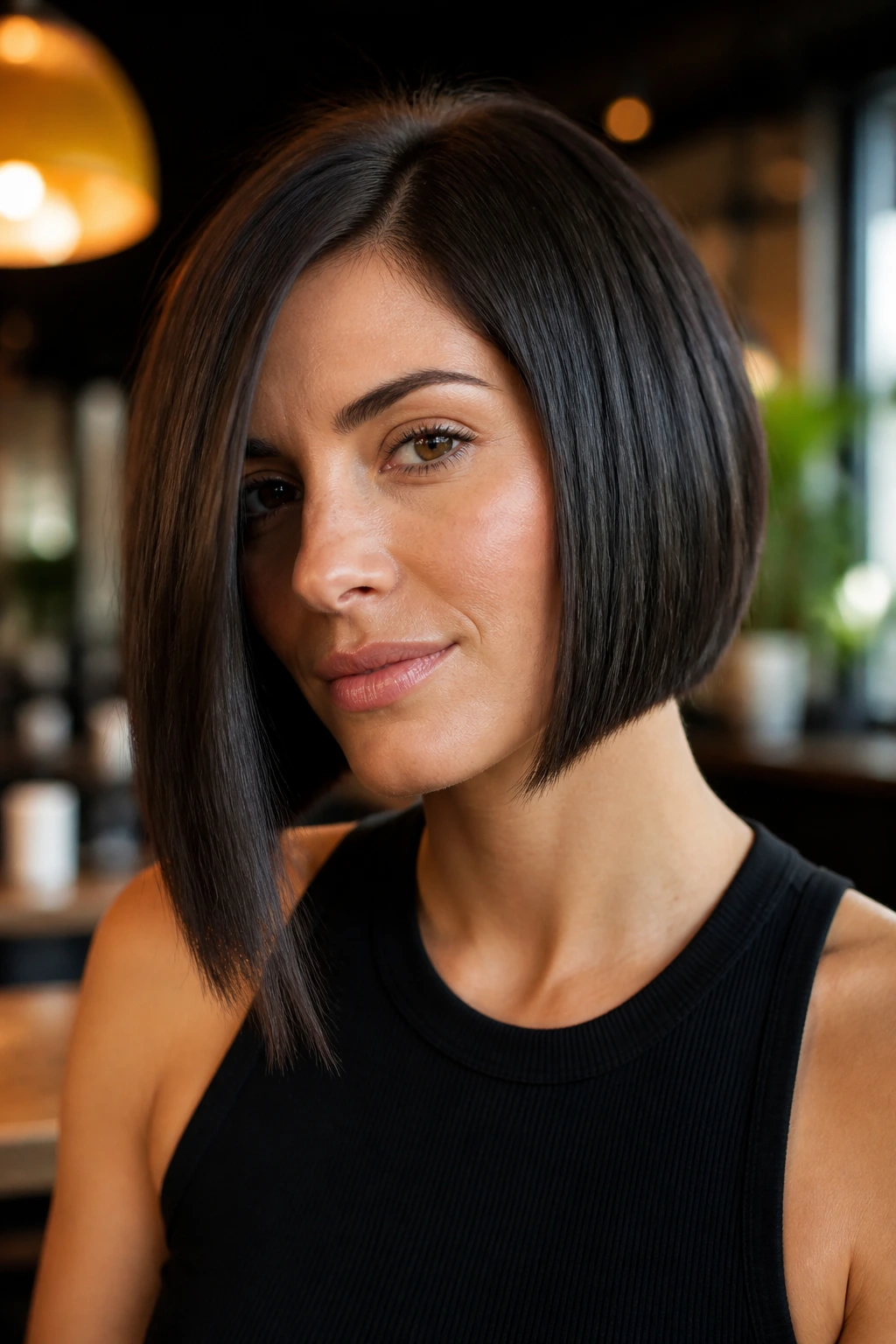
A tiny asymmetry can make a blunt bob feel less expected without turning it into a trendy mess. One side runs a little longer than the other, and the angle creates motion while the ends stay clean. It’s a small change, but you feel it every time you look in the mirror.
This version works best when the difference is subtle enough to read as purposeful, not uneven. If the asymmetry gets too dramatic, the blunt mood disappears. Keep the perimeter polished, and let the imbalance do the talking.
24. Wet-Look Evening Bob
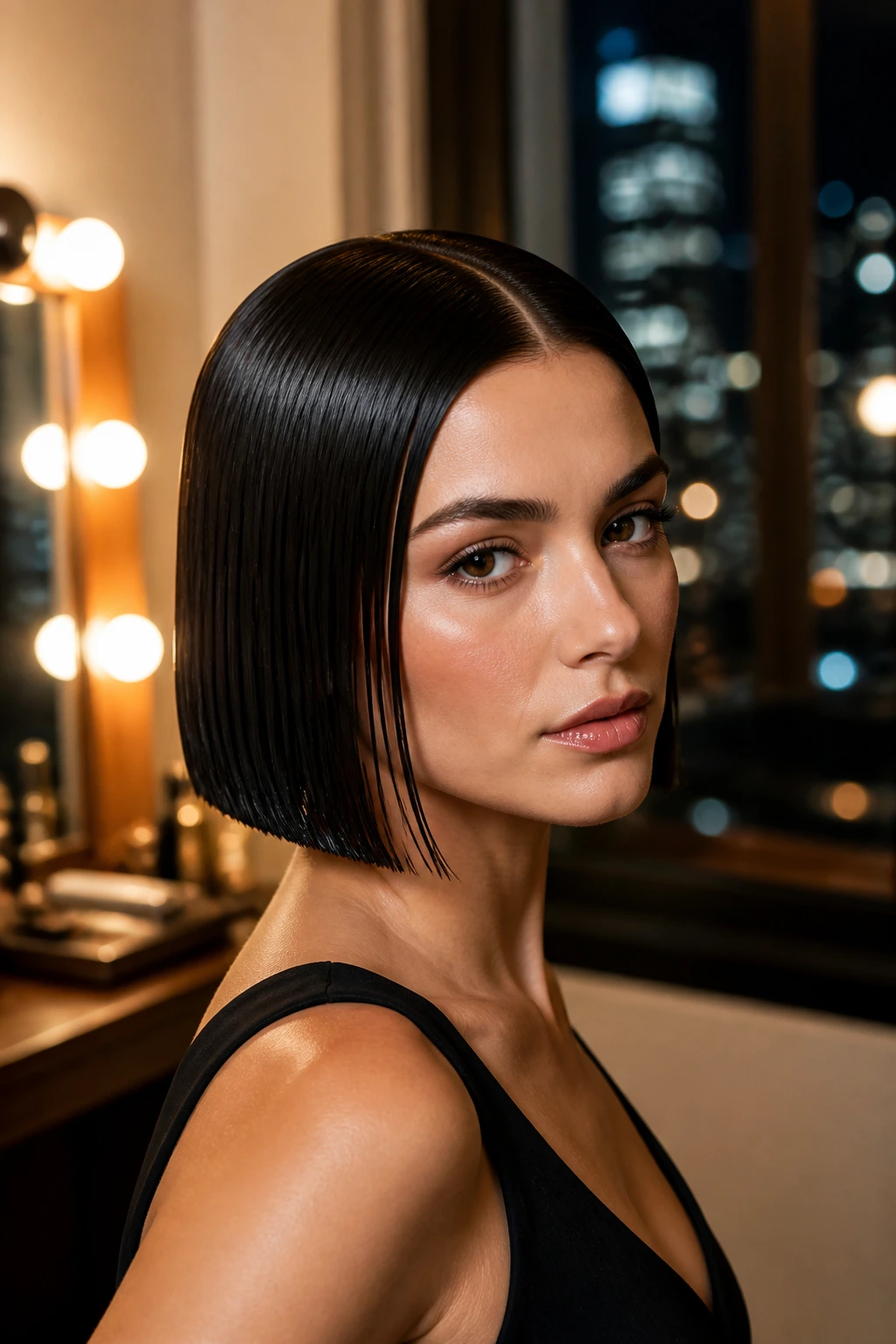
This is the sleek, dressed-up version. The hair is combed into a smooth finish with gel or cream, the part is precise, and the ends sit close enough to look architectural. It’s a nice choice for evening looks, sharp tailoring, or any outfit that needs the hair to stay quiet and deliberate.
The key here is restraint with product. You want the shine and the separation, not a crunchy helmet. A comb, a little patience, and a light hand around the hairline make a bigger difference than piling on more product ever will.
25. Pixie-Bob Hybrid
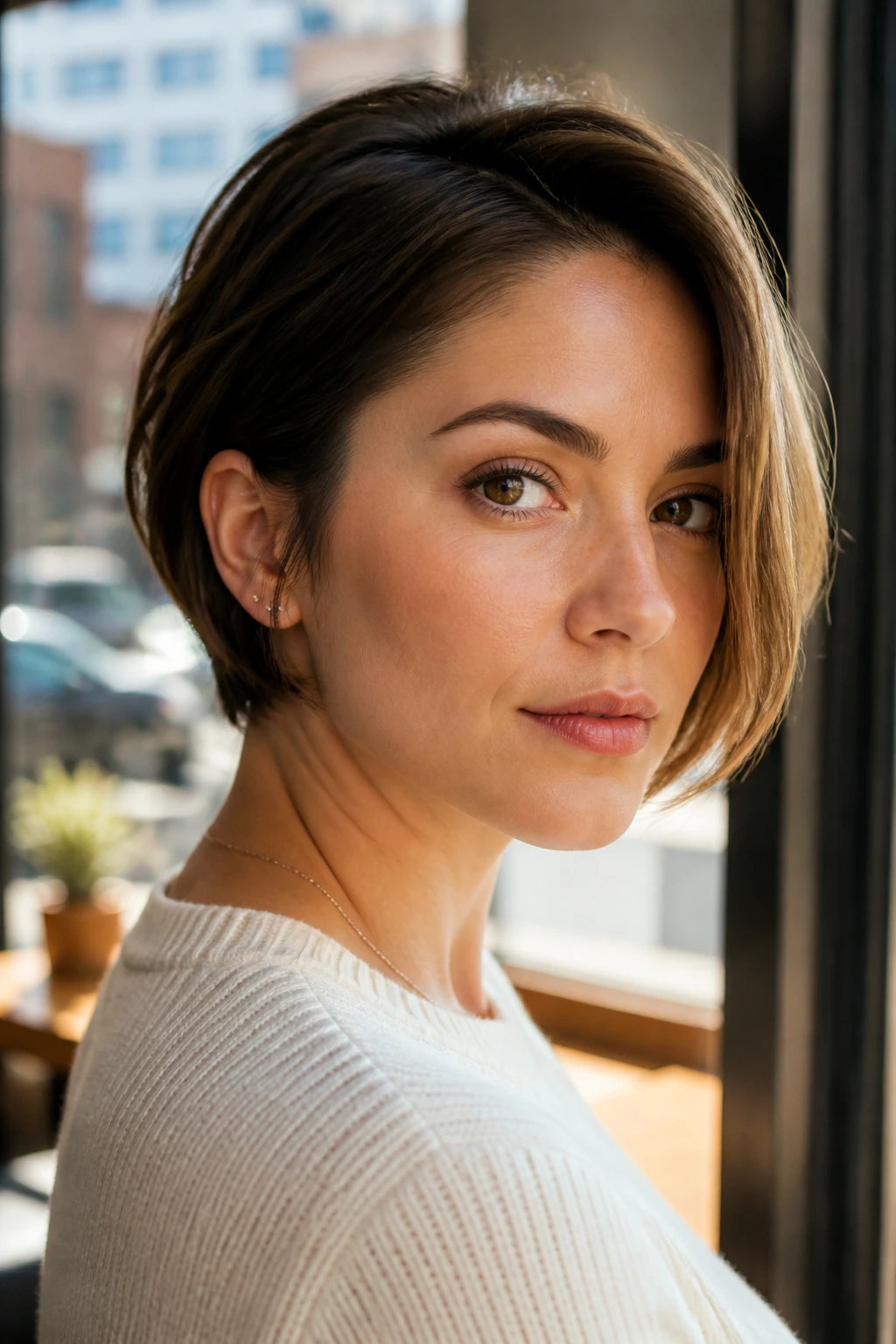
This cut lives between a cropped bob and a grown-out pixie. The back and sides stay short and neat, while the front keeps enough length to read as a bob from the front. It’s a good choice if you want less hair around the neck but still like a bit of swing at the sides.
Because the shape is compact, the neckline matters a lot. Keep the back tidy, and ask for enough front length that the haircut doesn’t turn into a true pixie the moment it dries. It should feel light, not severe.
26. Shoulder-Skimming Lob
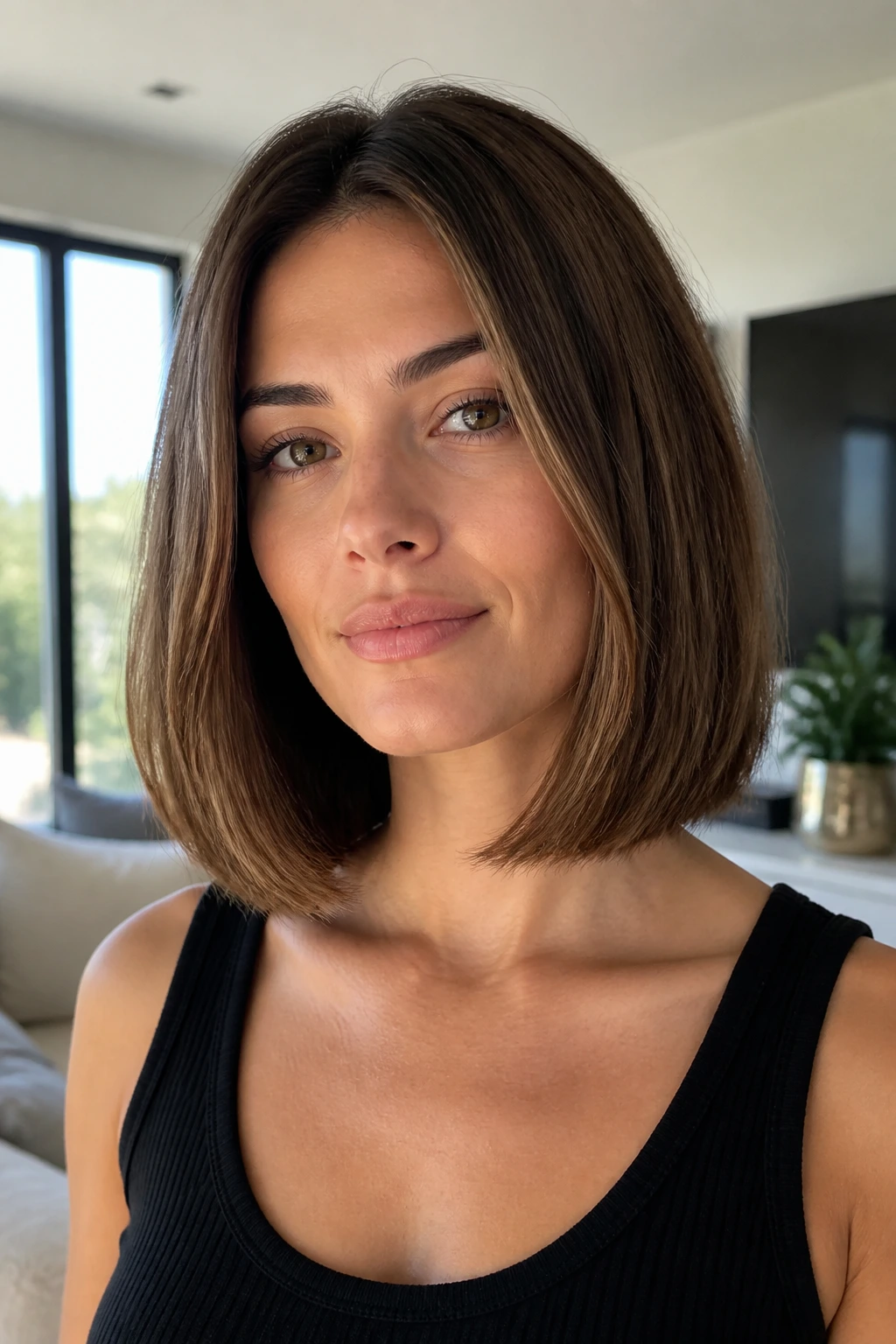
A shoulder-skimming blunt lob is probably the most forgiving version in this whole set. It still gives you the straight bottom edge, but the extra length softens the mood and makes the cut easier to wear up, tuck, or bend loosely. It’s a good meeting point between bob and long hair.
The line around the shoulders needs attention because that’s where hair starts to kick out and flip. A slight inward bend at the ends helps. If your shoulders tend to catch the hair and push it outward, ask for the front to sit just above or just below that point rather than exactly on it.
27. Copper Gloss Lob
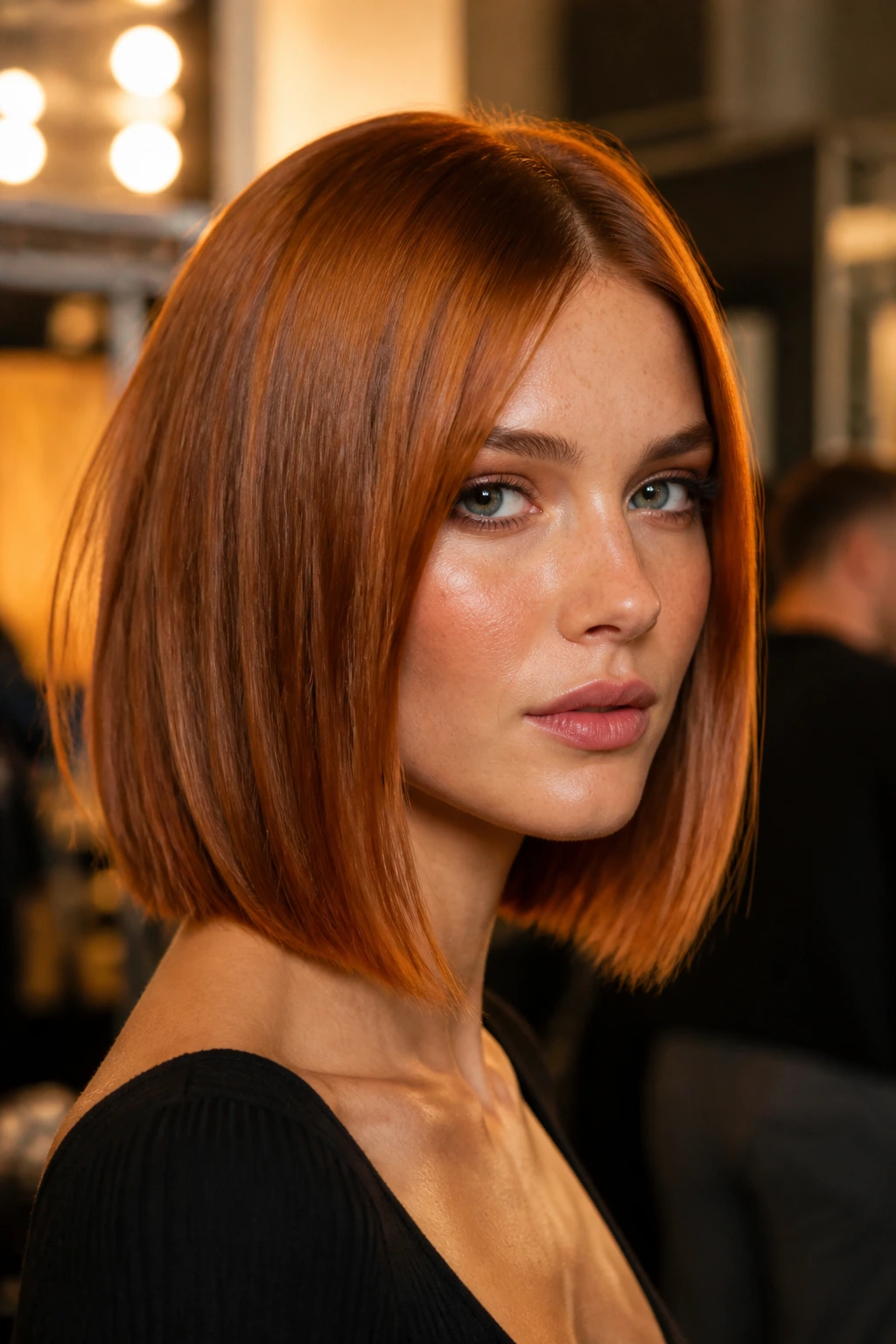
Warm color makes a blunt line glow a little more. Copper, auburn, or a glossy warm brunette can give a shoulder-length blunt cut extra richness, because the light catches the ends and makes the perimeter look even cleaner. The line and the color work together here.
This one looks especially good when the finish is smooth and reflective. A dull copper can make the cut feel flat, but a fresh gloss or shine treatment keeps it looking alive. If you want warmth without a lot of styling fuss, this is a smart direction.
28. Minimalist Chin-Length Bob
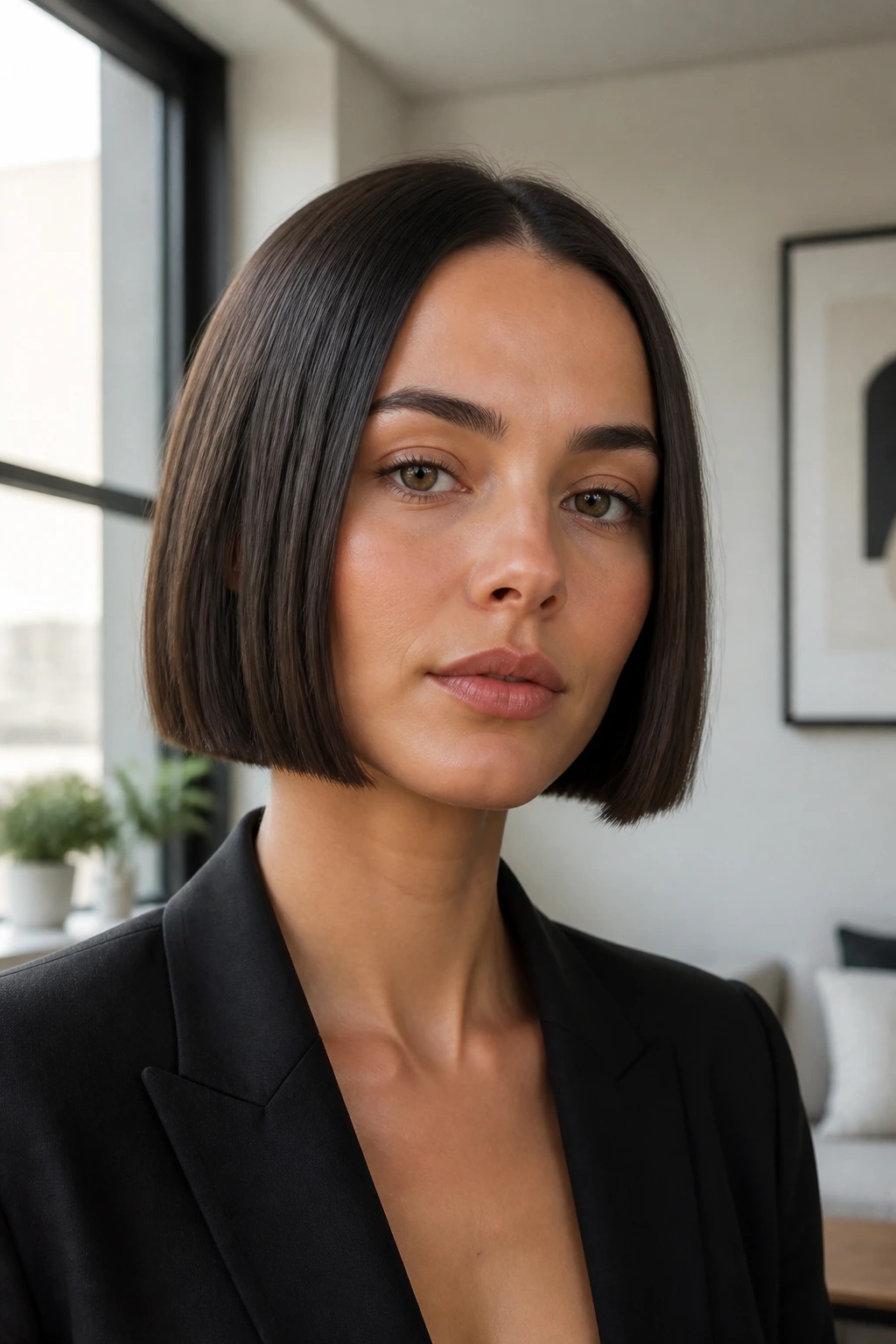
This is the purest blunt bob in the group. No extra layers, no dramatic fringe, no built-in curve. Just a clean chin-length line that lands where the jaw wants it and leaves everything else alone. It’s simple, but not boring. Clean shapes rarely are.
The appeal is in the honesty. You can wear it with a center part, flip it to one side, tuck it behind the ears, or leave it to dry with barely any help. If you like a haircut that looks calm on a busy morning and sharp with a blazer, this is the version that earns its place.
How to Ask for the Line Before the Scissors Open
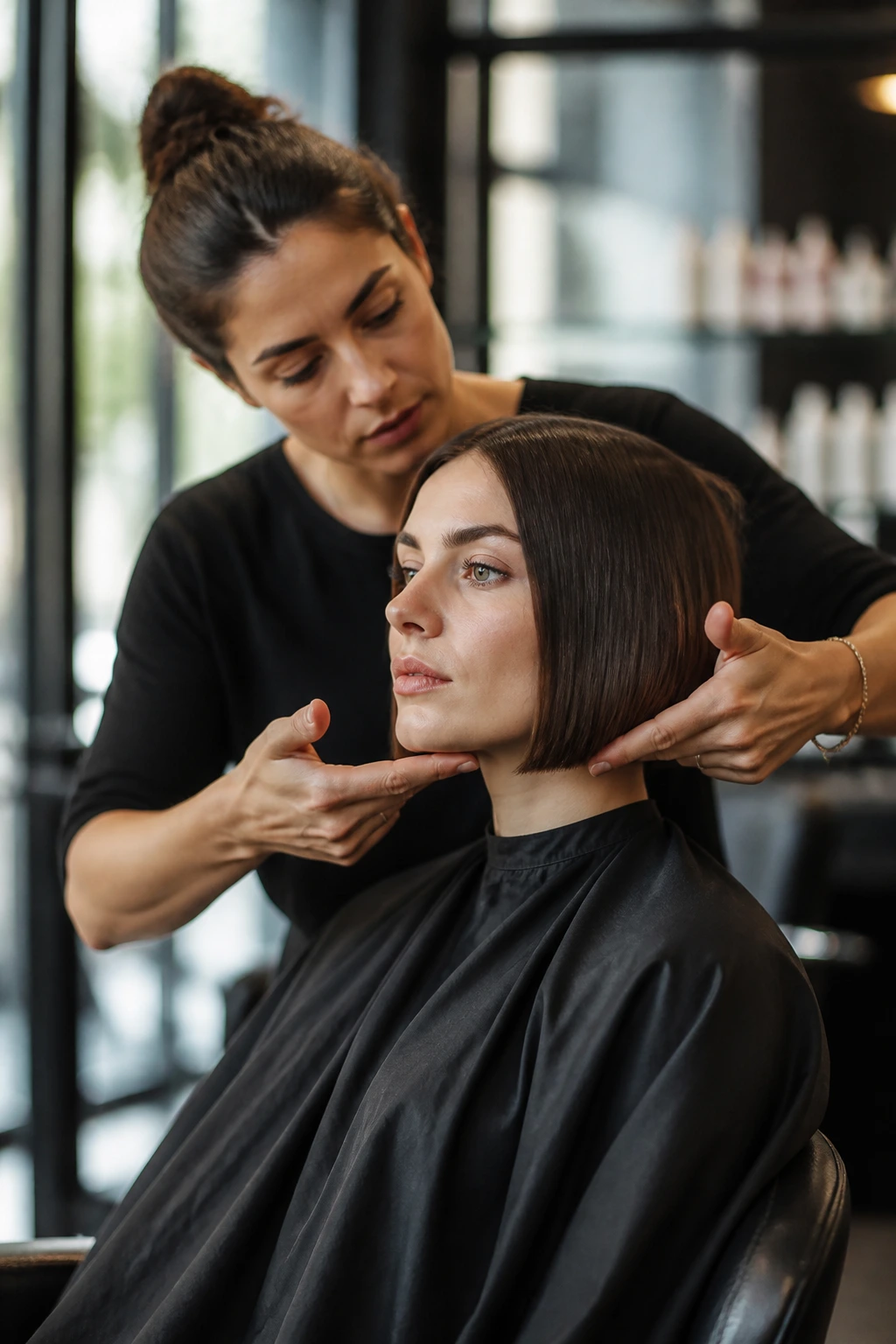
A blunt bob looks simple only after a good consultation. The words matter. Say where you want the perimeter to land — jaw, chin, bottom lip, collarbone — instead of asking for “short bob” and hoping the stylist reads your mind. One inch can change the whole feeling.
- Bring Two Photos: One photo should show the length from the front, and another should show the neckline or side profile.
- Name the Part: Center part, deep side part, or a little off-center makes the haircut behave differently.
- Talk About Weight: Say whether you want the outline heavy and solid or slightly softened inside.
- Describe Your Finish: Straight, tucked, curved under, air-dried, or wave-bent all call for different cutting choices.
- Be Honest About Trims: If you won’t come back for regular cleanup, a collarbone or shoulder-skimming blunt lob is safer than a micro bob.
One useful sentence to say out loud is this: “I want the perimeter to stay blunt, but I don’t want the sides to puff out.” That tells the stylist you care about shape, not just length. And if you have a cowlick, a stubborn flip, or a part that refuses to sit still, mention it before the cape goes on.
Tools That Keep a Blunt Bob Looking Intentional
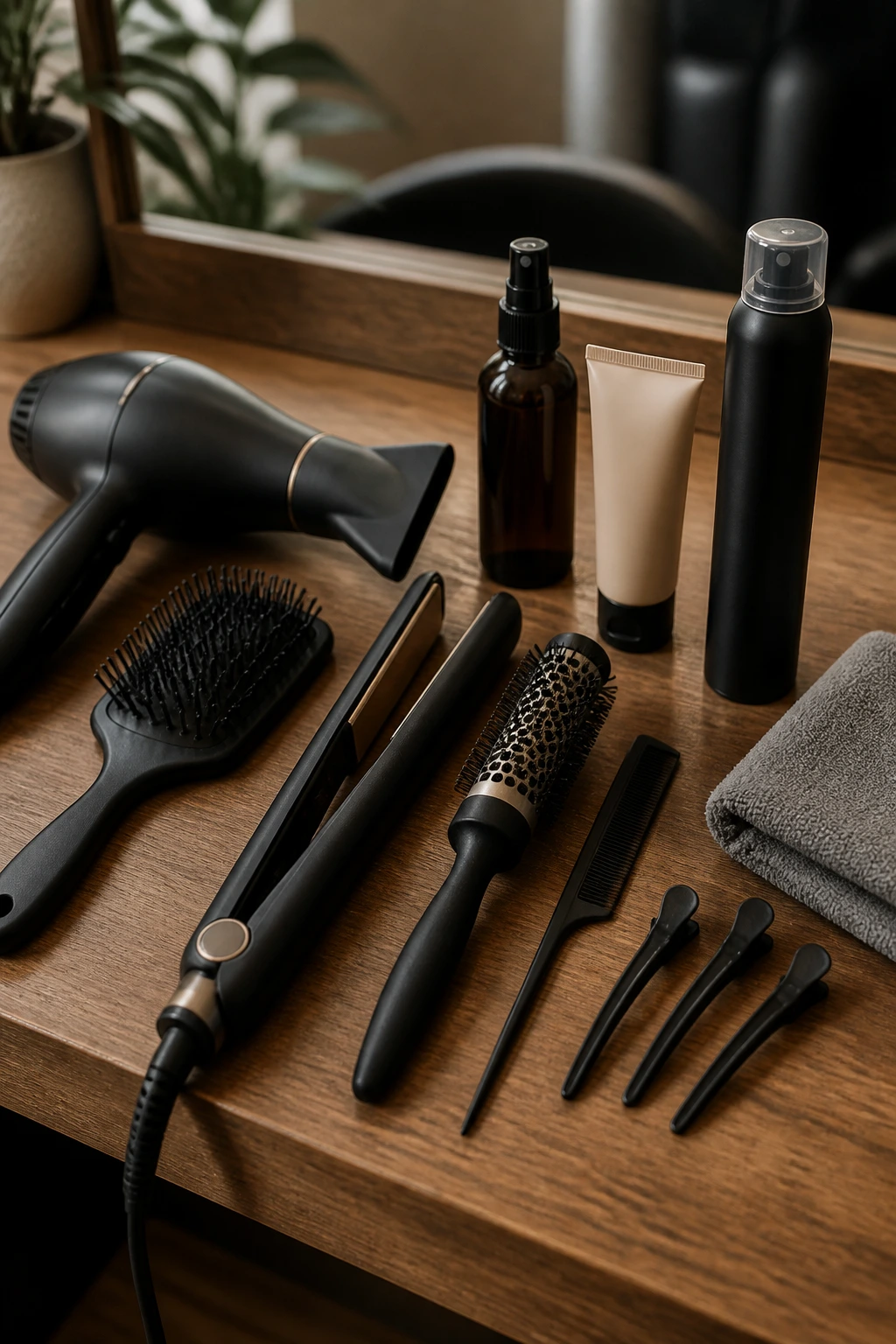
- Blow Dryer with a Nozzle: Directs the hair downward so the ends dry smooth instead of frizzy.
- Paddle Brush: Good for straightening the surface on longer bobs and lobs without building too much curve.
- 1-Inch Flat Iron: Handy for refining the ends, especially on chin-length and jaw-length cuts.
- Round Brush, 1.25 to 1.5 Inches: Helps create that slight inward bend on bobs that need a softer finish.
- Tail Comb: Useful for clean parting, sectioning, and checking whether one side is sitting unevenly.
- Sectioning Clips: Keep hair controlled while you dry each quadrant instead of chasing stray pieces.
- Heat Protectant Spray: Worth using before any blow-dryer or iron work; it keeps the ends from looking tired too early.
- Smoothing Cream or Light Serum: A tiny amount helps the perimeter look polished without separating the ends.
- Dry Shampoo: Best at the roots on day two or three, not on the bottom edge where it can make hair look dusty.
- Microfiber Towel or Soft T-Shirt: Cuts down on roughness after washing, which matters if you wear the hair sleek.
How to Keep the Edge Clean Between Visits
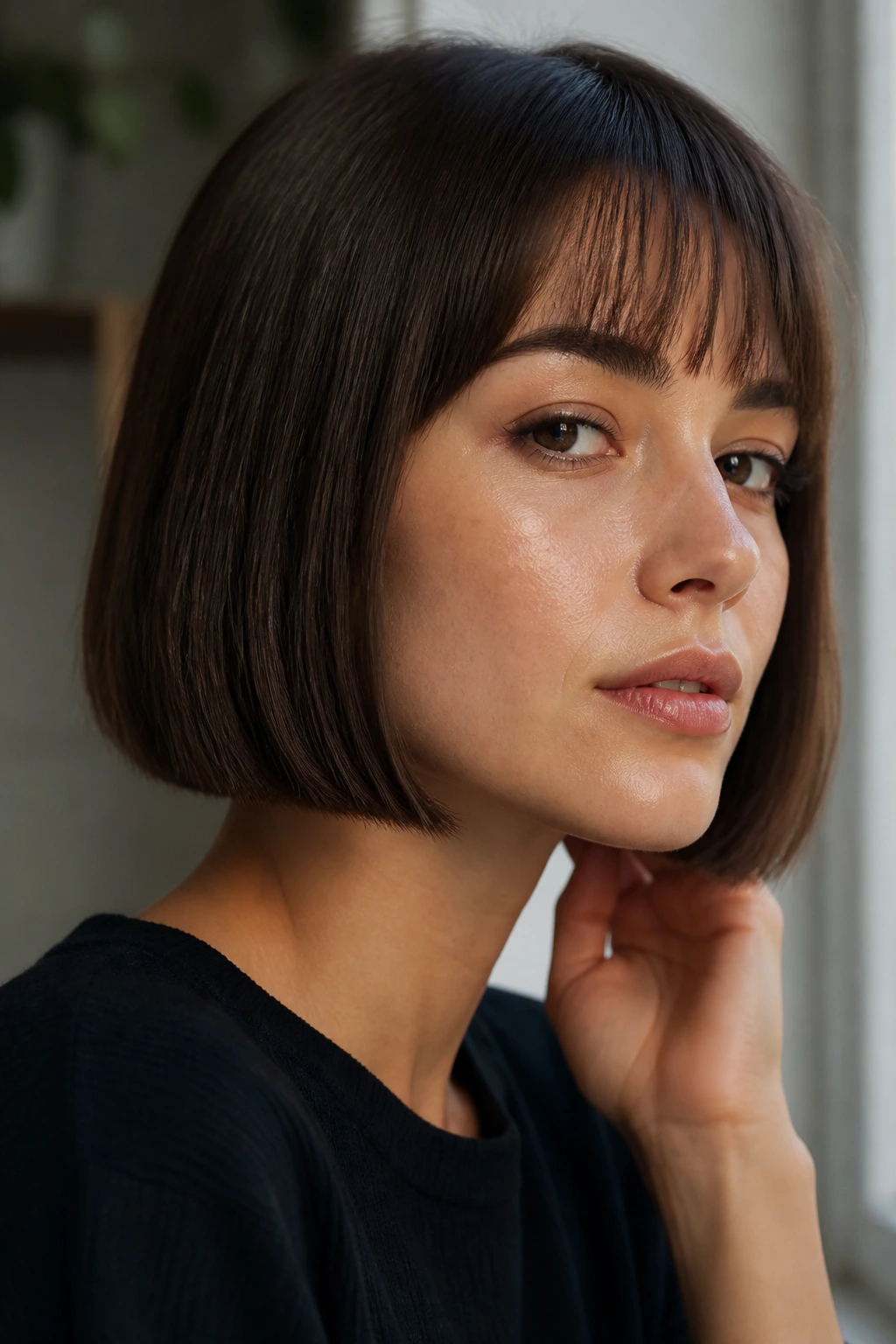
A blunt bob starts losing its shape sooner than people expect. Fine hair shows it at the ends. Thick hair shows it in the bulk. Shorter versions need a trim roughly every 4 to 6 weeks if you want the line to stay crisp. Longer lobs can usually go 6 to 10 weeks before the edge starts looking soft.
On Wash Day
Use a gentle shampoo at the scalp and keep conditioner mostly from the mid-lengths down. If you load conditioner on the perimeter, the ends can separate and stop reading as blunt. After washing, blot with a towel instead of rubbing. Rubbing roughs up the ends fast.
Between Washes
A little dry shampoo at the roots helps the bob keep lift, but the bottom edge should stay clean. If the ends look dull, add the tiniest touch of serum — one drop rubbed between your palms is often enough. More than that and the line starts to slip.
When You Heat Style
Keep the iron moderate and the passes slow. A blunt bob does not need 430-degree drama. Around 300 to 350°F is usually enough for smoothing, and lower is better if your hair is fine or color-treated. If the ends start to look stiff, you’ve gone too hot or too slow.
At Night
Sleep on a satin pillowcase if you can. It keeps the ends from catching and sticking up weirdly in the morning. For shorter bobs, a loose tuck behind the ears for a few minutes after drying can help teach the line to sit flatter. It sounds silly. It works.
Ways to Change the Mood Without Losing the Shape
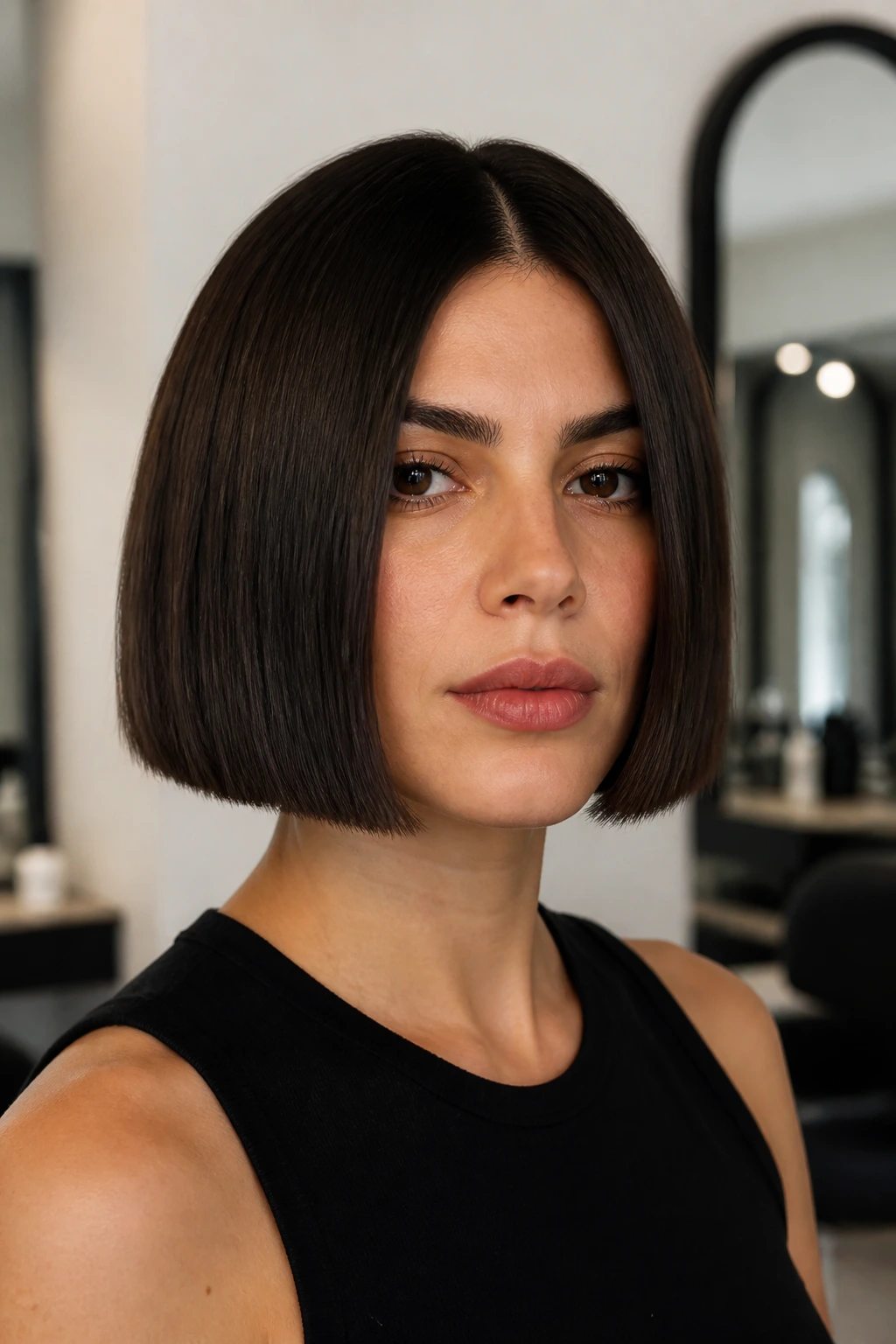
- Soft-Textured Version: Keep the perimeter blunt, but ask for gentle internal texture so the bob moves instead of sitting like a block.
- Curly-Respect Version: Let the stylist cut to the curl pattern, then check the shape dry so shrinkage doesn’t surprise you.
- Longer Lob Swap: Move the line to the collarbone if you love the blunt look but want easier grow-out and less neck exposure.
- Fringe Switch: Add curtain bangs, baby bangs, or a full fringe depending on whether you want the face open or framed.
- Color-First Version: A gloss, a strong brunette shine, or a bright blond tone can make the cut look cleaner even if the styling stays simple.
- Low-Heat Version: If you hate iron work, choose a blunt lob that looks good air-dried and only needs a quick bend at the ends.
Common Mistakes That Blur a Blunt Bob
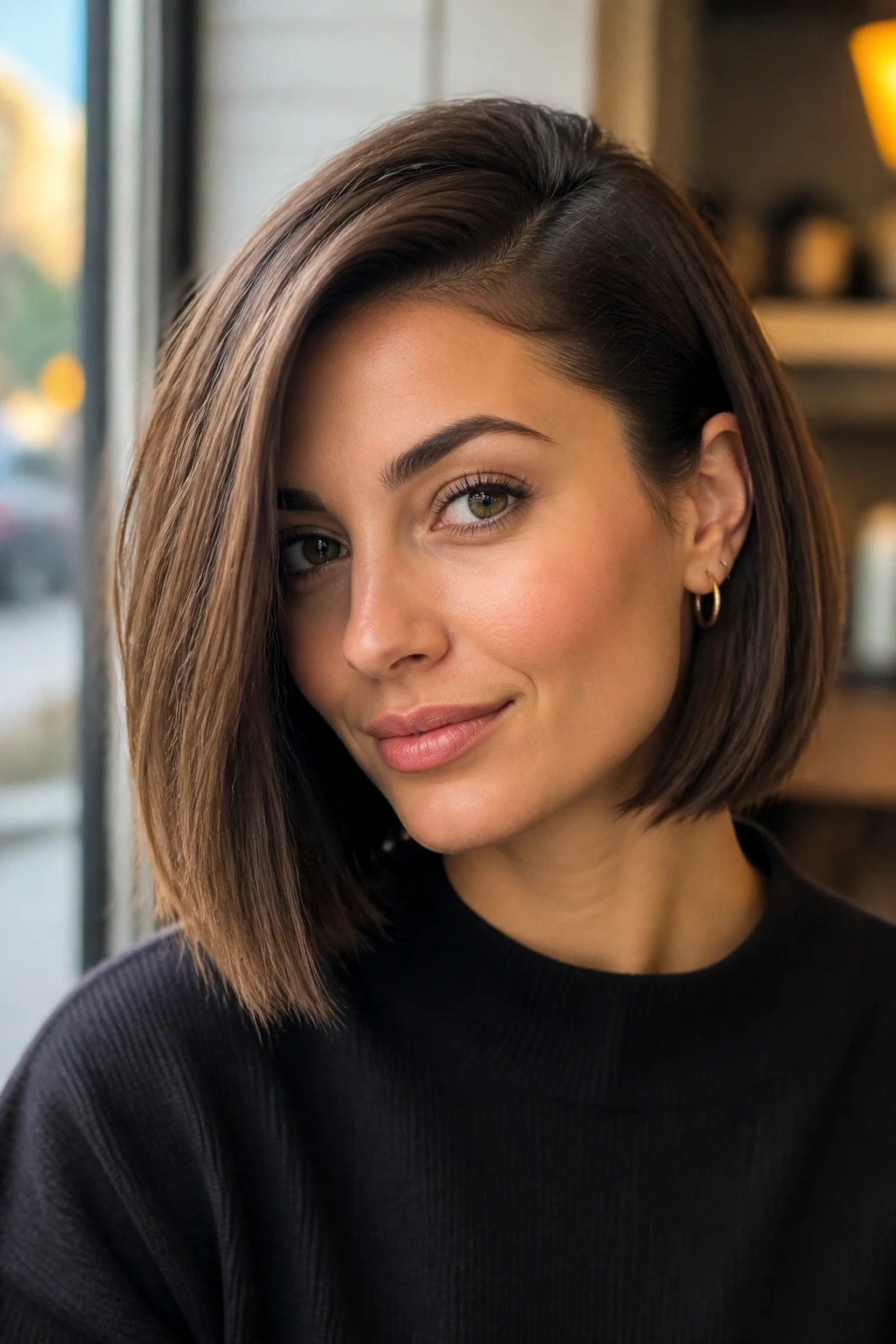
- Over-Thinning the Ends: The haircut starts looking sparse instead of full. Fix it by asking for internal bulk removal, not a choppy outline or aggressive texturizing at the perimeter.
- Choosing the Wrong Landing Point: A bob that ends at the widest part of the jaw or cheek can feel boxy. Move the line slightly above or below that point so the eye has somewhere cleaner to land.
- Ignoring the Natural Part and Whorl: If your hair always splits a certain way, forcing a different part can make the front fight you all day. Work with the cowlick instead of pretending it doesn’t exist.
- Using Too Much Oil: Ends separate fast when they’re coated in serum. Keep the product amount tiny and focus it on the very ends, not through the whole outline.
- Cutting Curly Hair Only When It’s Soaked: Curl shrinkage can pull a blunt bob much shorter than planned. A dry check or curl-by-curl adjustment helps keep the shape honest.
- Skipping Neck Cleanups on Short Bobs: The back loses its edge first. If the neckline fuzzes out, the whole haircut looks older than it is.
Questions People Ask Before They Book the Cut
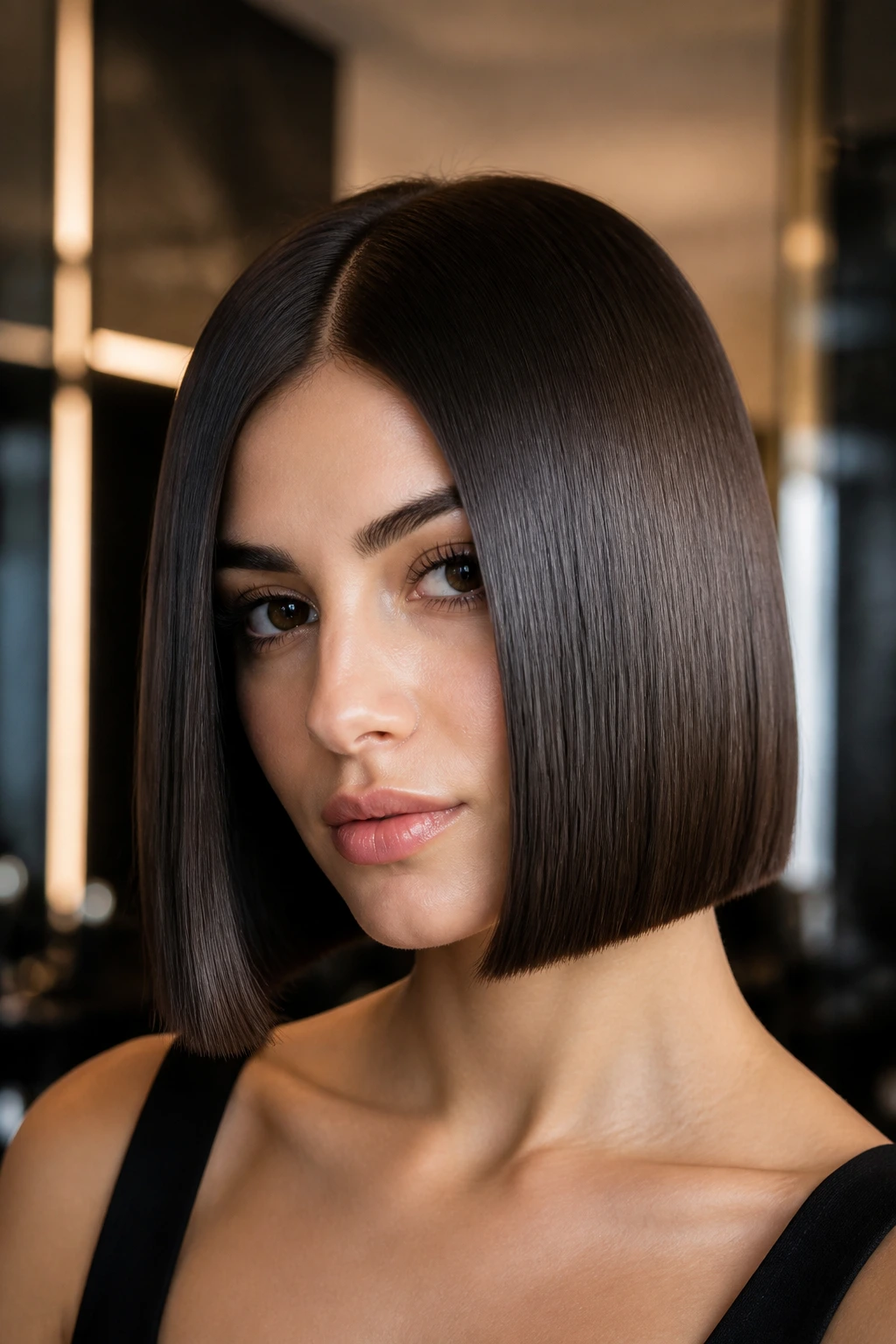
Will a blunt bob work on fine hair?
Yes, and often better than a layered cut. A clean perimeter gives fine hair a fuller-looking bottom edge, which makes the whole style read denser. Keep the layers minimal and avoid heavy texturizing at the ends.
Can curly hair wear a sharp blunt bob?
Absolutely, but the cut has to respect shrinkage. A dry cut or careful curl check helps the stylist see the true length, and the perimeter should be placed with the curl pattern in mind instead of against it.
How often does a blunt bob need trimming?
Shorter versions usually need a cleanup every 4 to 6 weeks if you want the line to stay crisp. Lobs can stretch longer, often 6 to 10 weeks, depending on how fast your hair grows and how precise you want the edge to look.
Does a blunt bob make the face look wider?
It can if the length lands at the widest point of the cheeks or jaw. Moving the cut slightly higher or lower often fixes that, and a side part or a bit of inward bend can change the read without changing the length much.
What’s the difference between a blunt bob and a layered bob?
A blunt bob keeps the bottom edge one length, so the line looks solid and heavy. A layered bob removes length in sections, which creates more movement but also a softer outline.
Can I still tuck my hair behind my ears?
Yes, and a lot of people do. If that’s how you wear it, tell the stylist so the front pieces are long enough to tuck cleanly without making the bob look lopsided.
What if my bob flips out at the ends?
That usually means the hair is sitting on the shoulder line, or the ends were cut in a way that encourages the flip. A slight adjustment in length, plus a quick inward bend with a round brush or flat iron, usually solves it.
Is a blunt bob hard to style every day?
Not really, but it does ask for a cleaner finish than a shaggy cut. A nozzle, a brush, and a small amount of smoothing product go a long way. The more exact the cut, the less work the styling usually needs.
A Clean Line Has Staying Power
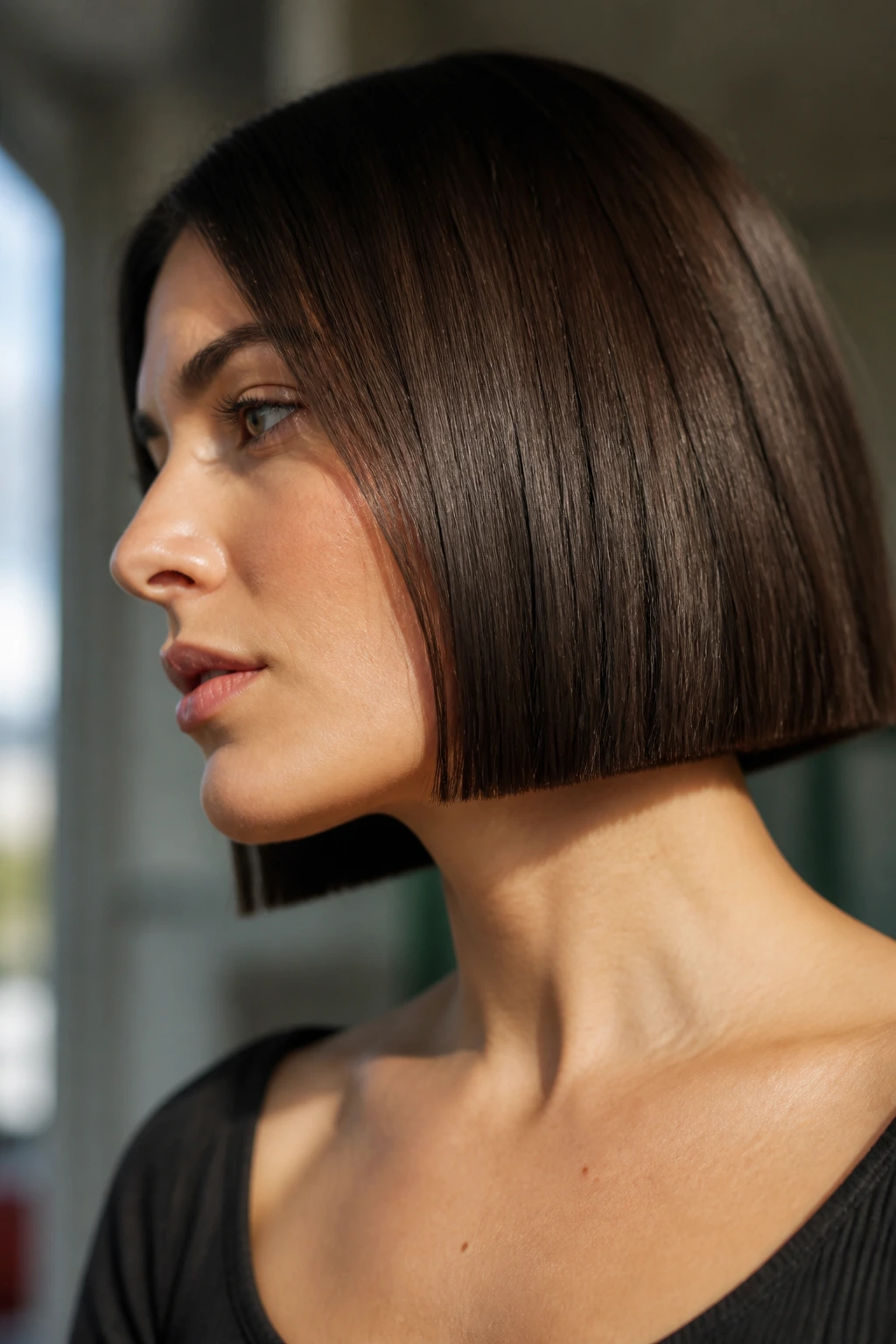
The reason blunt bobs keep coming back is simple: they do a lot with a small shape. A clean edge can sharpen the jaw, slim the profile, or just make the hair look fuller at the bottom without piling on extras. That’s a useful haircut. Not loud. Useful.
If you’re torn between versions, start with the length you’ll actually maintain. A collarbone lob or jaw-grazing bob gives you a clear line without forcing you into a trim schedule you’ll resent. The best sharp blunt bob is the one that still looks deliberate after a workday, a damp morning, and a wash-and-go that didn’t quite go.
