



Thick hair can wear a blunt bob better than almost any other cut—if the line is clean and the interior isn’t chewed up with too much thinning. That’s the part people miss. They ask for “less bulk,” the scissors get aggressive, and what should have been a strong bob turns soft, frizzy, and oddly boxy at the same time. A good blunt perimeter does the opposite. It gives dense hair a place to land.
The nicest blunt bob cuts for thick hair don’t fight the hair’s weight; they use it. A jaw-grazing line can look razor-sharp because the hair has enough body to hold the shape. A collarbone bob can feel lighter without looking wispy. And a shorter cut can be all attitude, all edge, all clean geometry—no fluff required.
What matters most is length, density, and where your hair wants to kick out. Thick hair at the collarbone behaves differently from thick hair at the chin. Thick, coarse strands need a different approach than thick but fine strands. That’s why the same “bob” can either sit like a sleek helmet or float in the nicest possible way. The shape is doing the work here.
Why These Blunt Bobs Work So Well on Thick Hair

- The edge stays visible: Dense hair keeps a blunt line from disappearing into frizz or flyaways, so the cut still reads clean after a day of moving around.
- Weight works in your favor: Thick hair naturally holds a perimeter, which means a straight bottom line often looks fuller and better balanced than a heavily layered bob.
- You can choose your level of polish: Some of these cuts want a flat iron and shine spray; others look best with a rough blow-dry and a soft bend at the ends.
- The length changes the whole silhouette: A chin-length bob makes the jaw look sharper, while a collarbone or lob version gives you more swing and a little less daily styling drama.
- Maintenance is predictable: Blunt lines tell on themselves when they grow out, which sounds fussy, but it also means you know exactly when it’s time for a trim.
- The cut does not have to be severe: A blunt bob can be soft at the surface, beveled at the ends, or paired with fringe without losing that crisp outline.
1. Jaw-Grazing Glass-Line Bob
A jaw-grazing blunt bob is the cut that makes thick hair look expensive without trying too hard. The line sits right where the jaw starts to turn, so the hair frames the face instead of swallowing it. On dense hair, that’s a gift. The weight lands exactly where it should, and the ends look deliberate instead of bulky.
Why it works on thick hair
The short length keeps the shape compact, which matters when your hair has enough body to puff at the sides. If the cut is kept one length with only a tiny bevel at the ends, it lays like a neat shelf. I like this bob best on hair that can be blow-dried smooth in ten minutes and left alone after that. It’s clean, bold, and not the least bit shy.
Styling note
Use a heat protectant, a nozzle on the dryer, and a 1.25-inch flat iron if you want that glossy, almost reflective finish. Don’t overwork the ends. Two slow passes are usually enough.
2. Chin-Length Center-Part Bob
This is the blunt bob for someone who wants symmetry to do the heavy lifting. A center part on thick hair can be gorgeous when the cut is precise, because the hair falls in two even panels and shows off the density instead of fighting it. Chin length keeps the style from getting too severe, which is useful if your face already has strong angles.
The trick is keeping the perimeter heavy enough to avoid frayed ends. Too much internal thinning here ruins the whole point. You want the hair to swing, not explode. A little bevel at the tips helps the bob tuck inward, especially if your hair wants to kick out around the jawline.
If you wear earrings, this cut has a nice little trick up its sleeve. One side tucked behind the ear, one side left loose, and the whole thing suddenly looks styled. No circus-level effort needed.
3. Collarbone Blunt Bob
Want a bob that still gives you a ponytail on lazy days? This is the one. A collarbone blunt bob is long enough to feel forgiving, but the straight edge still gives it shape. On thick hair, that length is smart because it lets the weight settle instead of ballooning out at the sides.
The collarbone can be a tricky landing zone, though. If the ends hit exactly on the bone, thick hair may flip out and rub against clothing all day. I prefer this cut just above the collarbone or just below it. Those tiny differences matter more than most people think. Half an inch can change the whole mood.
It’s also one of the easier blunt bob haircuts to grow out. If you’re nervous about going short, start here. The line remains clear, but the styling pressure drops a little.
4. Rounded Bevel Bob
A beveled bob is still blunt. That’s the part I wish more people understood. The perimeter stays strong, but the ends are nudged under with a round brush so the shape feels rounded instead of boxy. On thick hair, that soft undercurve can be the difference between “polished” and “too much hair.”
What makes it different
The bevel is subtle. You’re not carving layers through the whole cut, and you’re not trying to thin the bulk away. You’re only convincing the bottom inch to fold inward. That’s it.
For styling, aim the dryer down the hair shaft and use a medium round brush—about 2 inches if your bob is chin to jaw length. If the ends still kick out, let them cool around the brush for a few seconds before releasing. That tiny pause holds the shape longer than another blast of heat ever will.
5. French Blunt Bob With Fringe
A French bob with fringe has attitude built in. The cut sits short, often around the cheekbones or just below the ears, and the bangs carry part of the style. On thick hair, that means the fringe needs to be cut with discipline. Too much hair in the bangs and they look like a curtain you forgot to open.
The best version keeps the fringe slightly longer at the temples so it blends into the sides instead of forming a hard shelf. That little detail saves the whole haircut. Thick hair is generous with volume, but bangs can turn into a wall if they’re not cut thoughtfully.
This cut works best when you like a bit of mess around the face but still want the outline to stay crisp. It’s not a timid style. It’s the kind of bob that looks especially good with a strong lip, a black sweater, and hair that’s just a little bit imperfect on purpose.
6. Deep Side-Part Blunt Bob
A deep side part is the fastest way to change the mood of a blunt bob without changing the cut itself. On thick hair, it breaks up the width and sends the hair diagonally across the face, which can be flattering if you feel like a center part makes you look too square. The bob still reads clean, but it has movement and a touch of drama.
This version is especially useful if one side of your hair is denser or tends to sit flatter. The side part creates lift at the roots, which thick hair can hold without a lot of product. A root spray at the crown and a quick lift with the dryer are usually enough.
I like this cut on people who wear their hair tucked behind one ear often. The asymmetry makes the bob feel intentional, not accidental. Small detail. Big payoff.
7. Curtain-Bang Bob
Curtain bangs are the civilized cousin of a full fringe. They split the difference. You get face-framing softness in front, but the blunt line at the bottom stays intact. Thick hair handles this combo well because the bangs have enough body to sit properly without looking stringy.
The key is length. Curtain bangs on thick hair should usually start long enough to graze the cheekbones or lips, not stop high on the forehead. Short curtain bangs can puff and separate in odd ways. Longer pieces blend better and give you room to push them aside on days you want less face coverage.
How to wear it
Blow the bangs first, while they’re still damp, and direct them away from the face with a small round brush. If they cool too close to the forehead, they’ll stay there. Hair is annoyingly literal like that.
8. Tucked-Behind-The-Ear Bob
This is the bob for people who like a clean neckline and a little air around the face. Thick hair can get heavy around the ears, so a tucked bob works best when the cut leaves just enough length to slide behind the ear without building a hump. A blunt edge keeps it looking sharp even when one side is tucked and the other is free.
There’s something nice about a bob that lets jewelry show. A tucked side opens the face, shows off a collar, and makes the haircut feel less bulky in profile. If your hair tends to feel too “there” around your cheeks, this is a very practical fix.
The styling move is simple: smooth a tiny amount of cream or serum over the top layer, then tuck one side while it’s still warm from the dryer. Don’t force it. Thick hair does not like being bullied into place; it prefers a gentle nudge.
9. Hidden-Weight Stack Bob
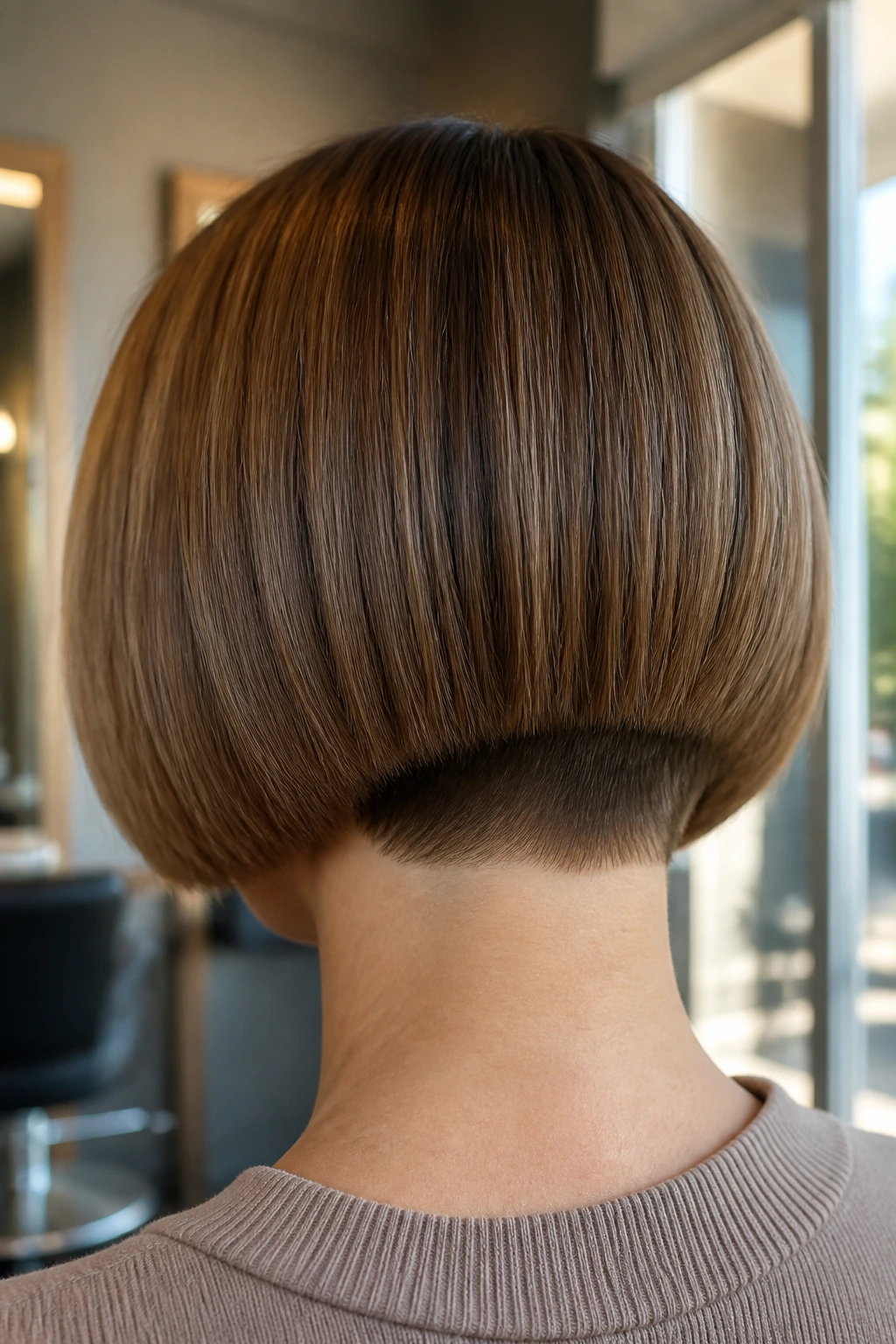
A hidden-weight stack bob gives you the shape of a blunt cut with a little extra help in the back. The outside line stays clean, but the interior has subtle graduation near the nape so thick hair does not balloon where it meets the neck. That hidden structure can be the difference between a bob that sits flat and one that sticks out like a bell.
The important part is restraint. If the stack is too obvious, the cut stops feeling blunt and starts looking dated. A good stylist will remove just enough bulk to keep the nape neat while preserving a solid perimeter around the jaw.
This one makes sense if your hair is dense at the back of the head or if your nape area grows heavy faster than the sides. It’s a practical cut. Not flashy. Very useful.
10. Micro Blunt Bob
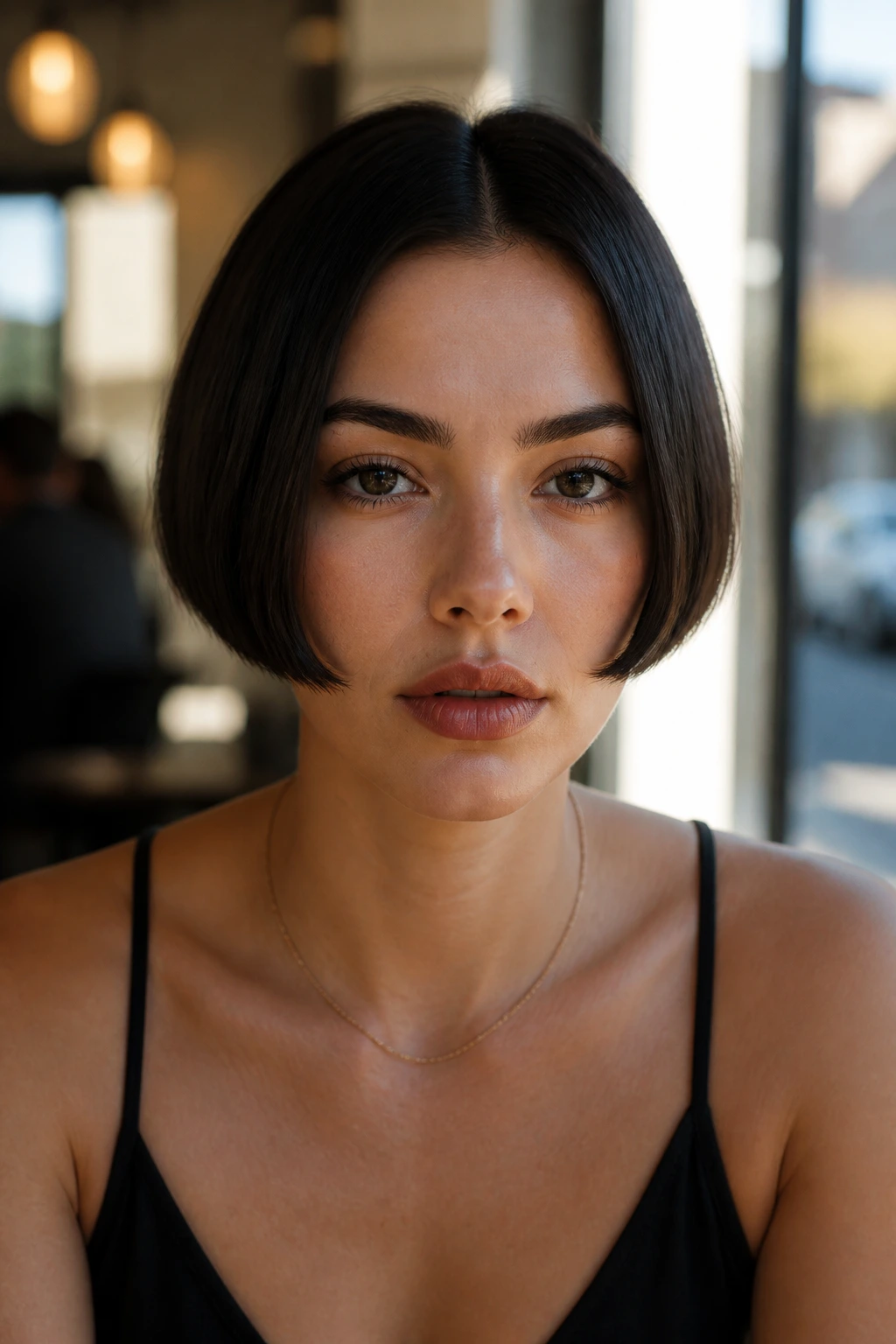
A micro bob sits above the jaw and lands with serious confidence. On thick hair, it looks architectural in the best way because the density supports the shape instead of collapsing it. The line is short enough that every inch matters, which is why this cut needs a precise hand and frequent trims.
It’s not the easiest option, and that’s part of the appeal. The shorter the bob, the more obvious the cut becomes. If the ends are blunt and even, the whole style feels expensive. If they’re uneven, you notice immediately.
This is the one I’d choose for straight or very lightly wavy thick hair that likes to stay put. It pairs beautifully with strong brows, sharp glasses, and a wardrobe that can handle a little edge.
11. Wavy Underlayer Bob

Can thick wavy hair wear a blunt bob without puffing out at the sides? Yes, if the cut respects the wave instead of trying to erase it. A wavy underlayer bob keeps the top edge blunt while quietly removing bulk underneath, usually around the back and behind the ears. The result is less triangle, more shape.
The hair still looks full. It just stops fighting itself.
What to ask for
Ask for a one-length perimeter with minimal internal debulking, not a stack of obvious layers. If the stylist understands thick wavy hair, they’ll know where the hair is overbuilding and where it should be left alone. The goal is movement at the surface, not wispy ends.
This cut air-dries well if you scrunch in a light cream and leave it alone. The more you poke at it, the frizzier it gets. Thick waves have opinions.
12. Cheekbone-Framed Blunt Bob
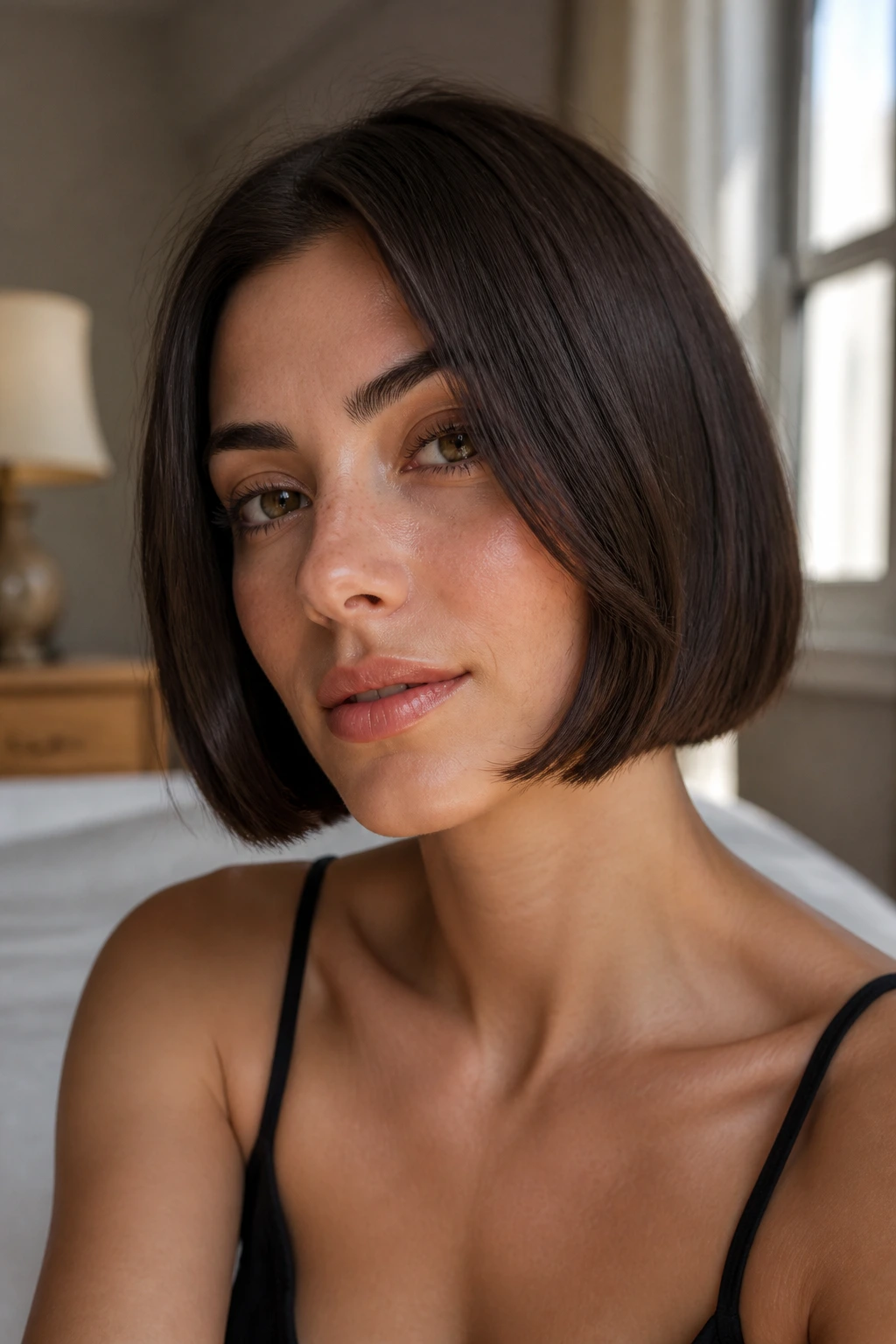
A cheekbone-framed bob uses a blunt bottom line and a few carefully placed front pieces to pull the eye upward. Thick hair gets a nice lift from that front framing, especially if the cut hits just under the cheekbones. It can sharpen a softer face or balance a stronger jaw without turning into a layered shag.
The face-framing pieces should be deliberate, not excessive. If they creep too far into the length, the bob stops reading as blunt. I like this style when the front stays honest and the longest point is only a little longer than the back.
There’s a subtle glamour to it. The whole haircut seems to sit at cheek level, which is why it photographs well in real life—not because it’s “flattering,” but because the shape gives the face a defined border.
13. U-Line Bob
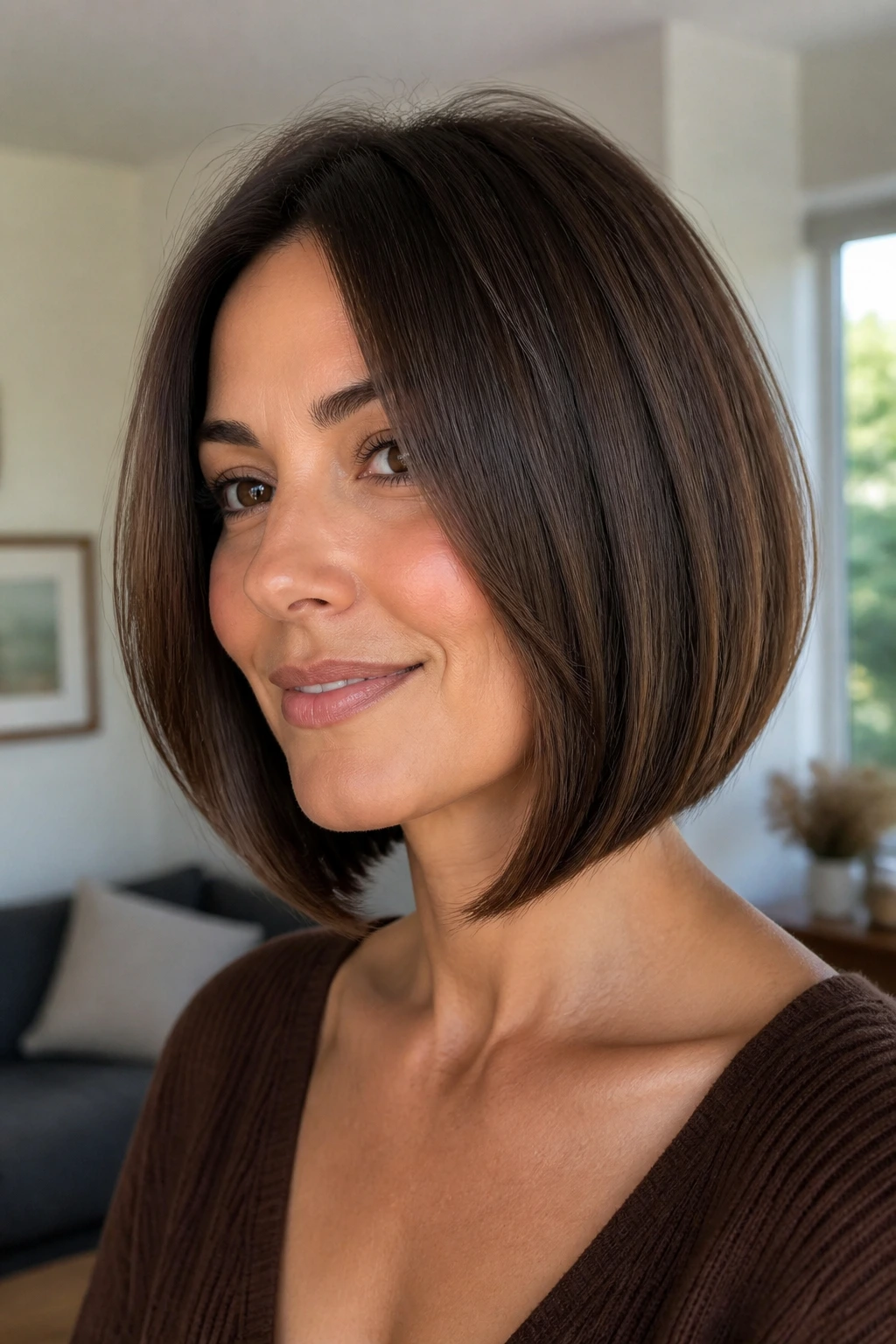
A U-line bob is just curved enough to soften a straight-across edge. The back is slightly shorter, the front slightly longer, and the overall perimeter still feels blunt. On thick hair, that curve helps the front pieces lie closer to the face instead of springing outward.
This is a smart choice if you want movement without losing the disciplined outline of a blunt bob haircut. The U shape can make thick hair look smoother because the front has a little more length to fall with. It’s especially nice if your hair tends to puff at the jaw but settle at the crown.
A center part or soft off-center part both work here. I’d avoid over-styling the front pieces into a hard inward curl. The curve should be subtle, not a pageant flip.
14. Blunt Lob
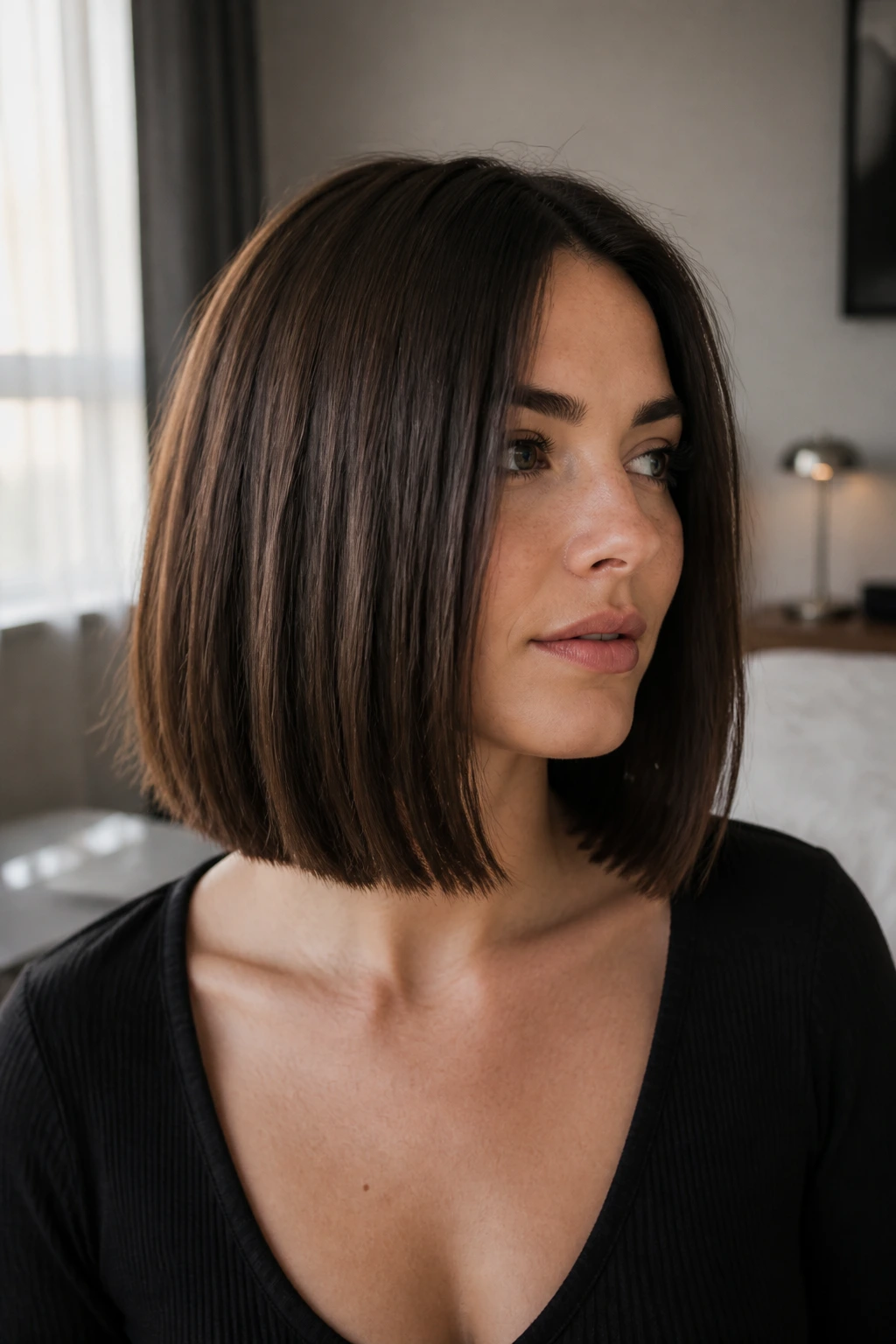
The blunt lob is the most forgiving shape in this group. It lands between the chin and collarbone, which gives thick hair room to move without crowding the face. It’s also the easiest to grow out if you’re coming from long hair and don’t want a dramatic jump.
Here’s the part that matters: a lob that stops exactly on the shoulders often flips in the worst possible way. Thick hair likes to catch on that line and kick out, especially when the ends are blunt. So I’d rather see it just above the shoulder or clearly below it. That tiny difference saves a lot of styling grief.
This cut is a good fit if you want the blunt-bob look but need some length for clips, ponytails, or workdays when you cannot be bothered to fully style your hair. Fair enough.
15. Brow-Bang Bob
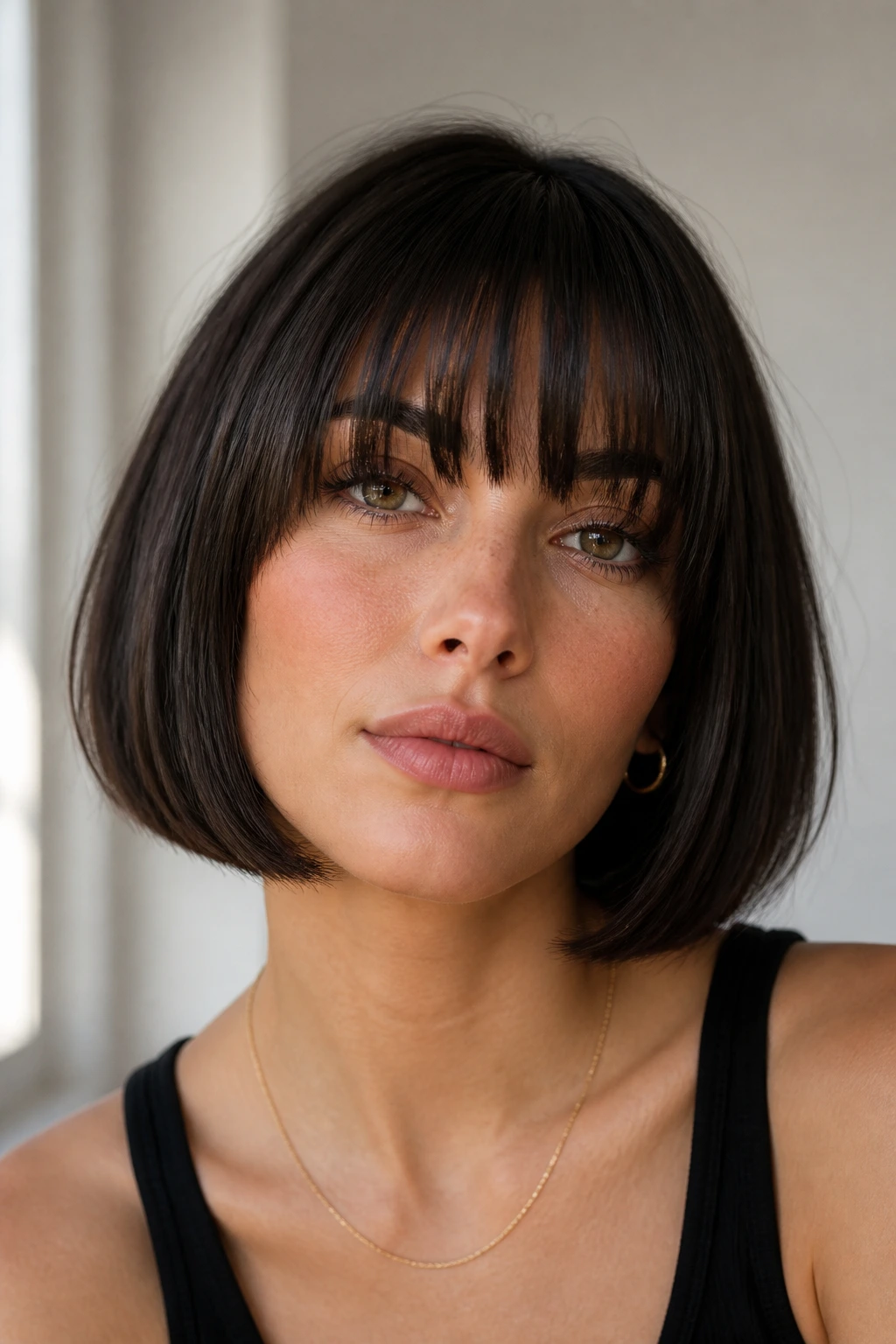
Full bangs and a blunt bob can look incredible on thick hair, but only if the fringe is cut with real control. Brow-grazing bangs carry a lot of weight, so the line at the bottom has to stay simple. Otherwise the haircut becomes too busy around the face.
The best version keeps the bangs slightly longer in the center and softens the outer corners so they don’t jam into the temples. Thick hair can make bangs feel heavy fast, so a tiny amount of internal removal helps—but not too much. You still want the fringe to look dense.
This style is the most face-forward of the bunch. It draws attention immediately, which is great if you like a strong silhouette and do not mind spending a few extra minutes with a dryer every morning. Bangs and thick hair are a relationship, not a fling.
16. Air-Dried Texture Bob
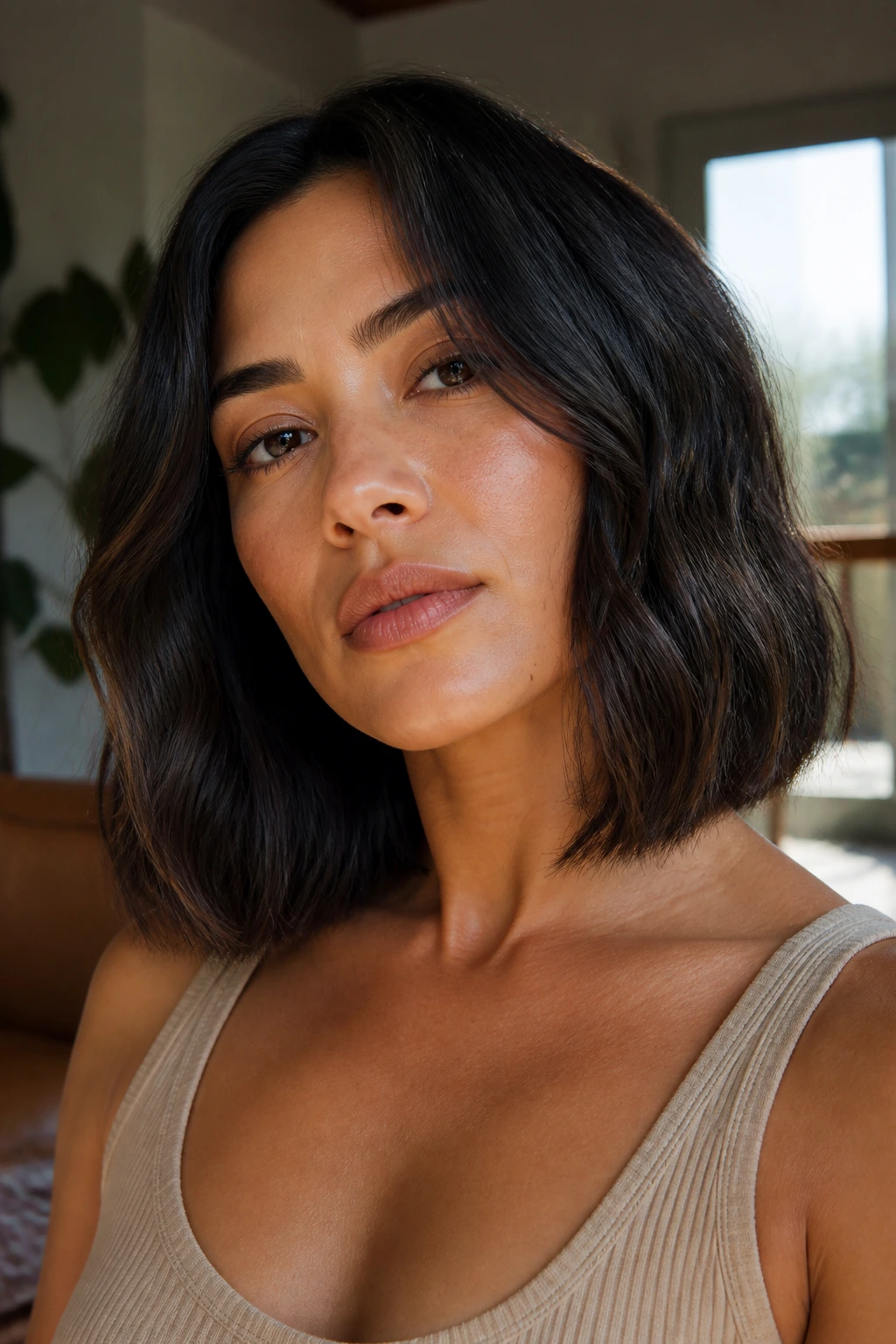
Not every blunt bob needs a polished finish. A slightly longer, air-dried version works well when thick hair has natural bend or a loose wave pattern. The line stays blunt, but the ends are cut with enough softness that the hair can dry without exploding into a shelf.
The trick is leaving the cut long enough to account for shrinkage if your hair bends or curls. Too short, and the bob bounces up higher than you planned. Too long, and the shape loses its bite. This is where a stylist who knows your dry pattern matters more than one who only loves a blowout.
I’d call this the most lived-in of the collection. It still looks intentional. It just doesn’t look precious.
17. Sharp Angled Bob
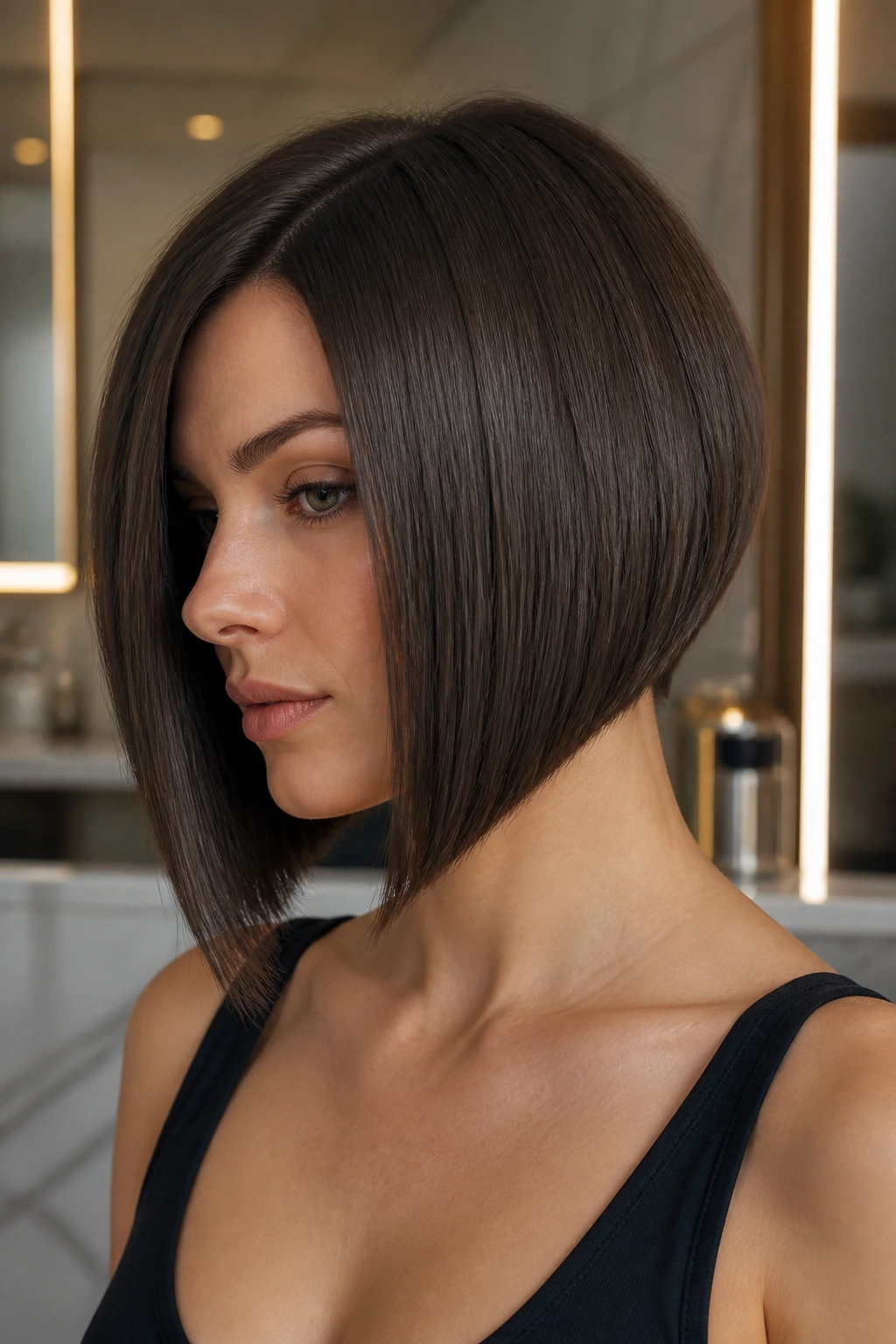
A sharp angled bob brings the front forward and keeps the back tighter, which is useful when thick hair feels too square around the neck. The diagonal line narrows the silhouette and gives the face a little length. It’s cleaner than a heavily layered cut and more dramatic than a standard one-length bob.
This cut needs precision. If the angle is too steep, it can look dated or costume-like. The best version is subtle enough that the line feels sleek from the side and blunt from the front. That blend is the whole point.
If your hair is especially dense at the nape, the angle helps the back sit closer to the head. It also works nicely with a smooth blowout, because the front pieces naturally drape instead of jutting outward.
18. Undercut Bob
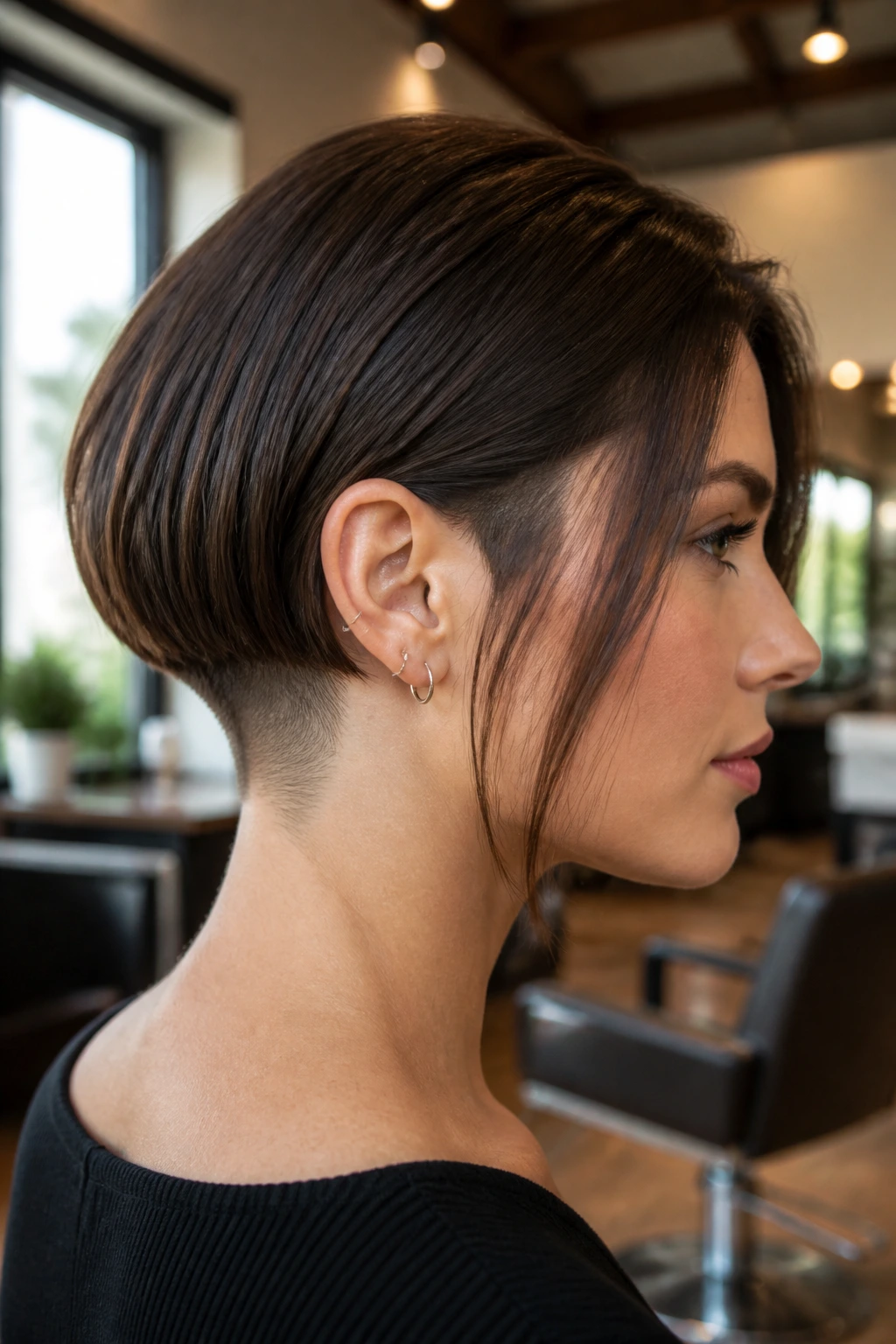
A hidden undercut is the blunt bob’s secret weapon for extremely thick hair. The outer layer stays long enough to keep the bob’s shape, while the underlayer is trimmed or clipped shorter at the nape to remove bulk. Most people will never see the undercut. They’ll just notice that the bob lies flatter and feels lighter.
That said, this is not the cut for everyone. If you like to wear your hair up a lot, you’ll need the undercut to be very clean so it doesn’t peek through. And if your hair is only moderately thick, you may not need this much help at all.
When it works, though, it works. The bob stops fighting the neck. The bottom line stays blunt. The whole style becomes easier to dry.
19. Solid-Line Bob
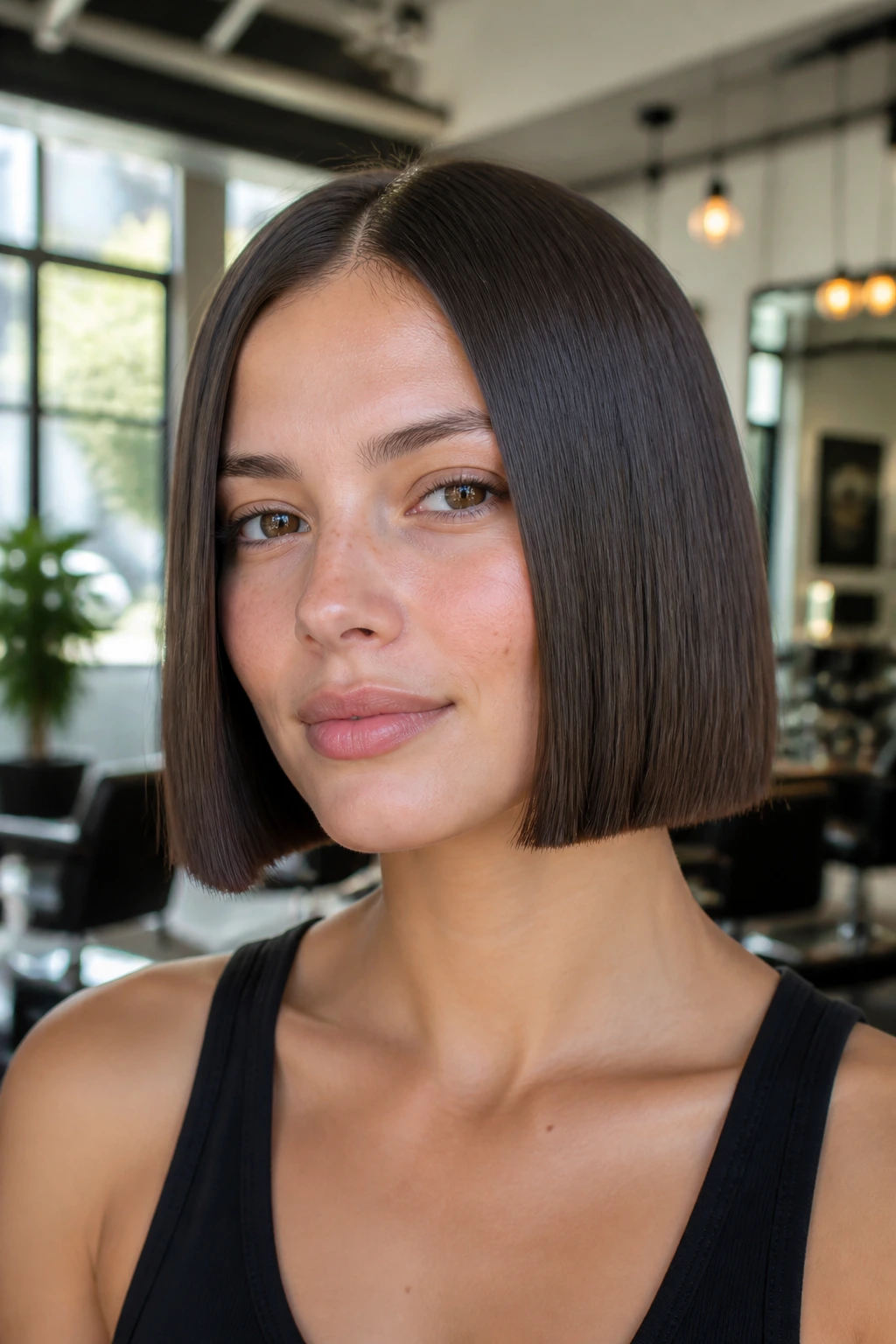
A solid-line bob is the purest version of the blunt bob idea: one length, clean edge, no decorative nonsense. Thick hair makes this shape look bold because the perimeter has enough weight to read from across the room. It’s the cut that says you wanted shape, not softness for softness’s sake.
This style is best when your hair already has a decent amount of natural straightness or a wave that can be smoothed with a dryer. The line wants to stay honest. If you over-texturize it, the whole point disappears. I’d especially recommend this version if you love simple clothes, sharp collars, or a style that looks finished with almost no accessory work.
It’s blunt. That’s the charm. No apology required.
Why Thick Hair Loves a Clean Bob Line
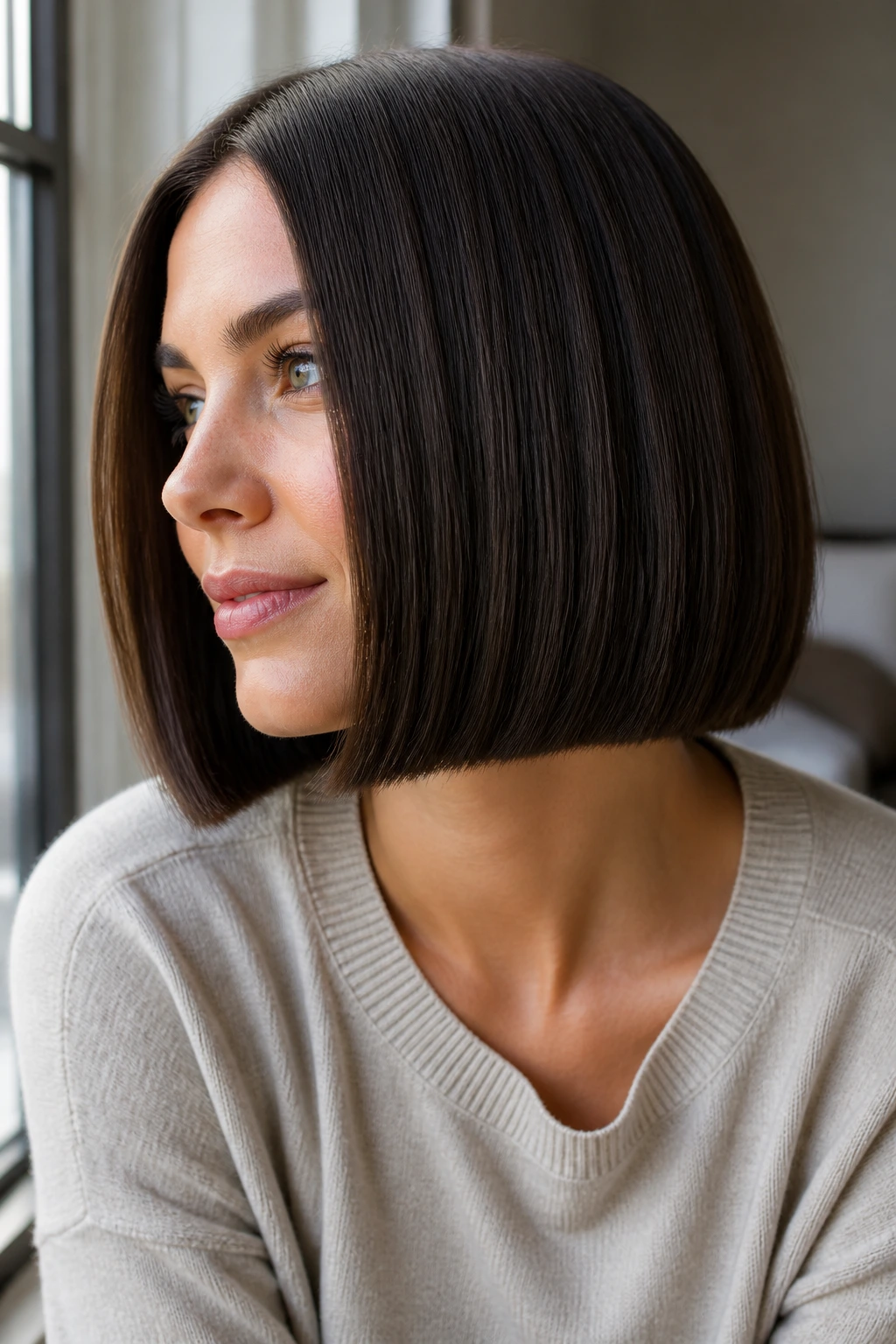
Thick hair has two jobs in a blunt bob: hold shape and reveal shape. A clean perimeter does both at once. The ends line up, the edge shows, and the weight sits where it can be seen. That’s why dense hair often looks better in a blunt cut than in a heavily layered one. Layers can be useful, sure, but too many of them turn the silhouette fuzzy and remove the very weight that makes a bob feel intentional.
There’s also a big difference between density and strand thickness, and that distinction matters more than people admit. You can have fine strands with a lot of them, or coarse strands with a medium amount of hair overall. Dense but fine hair can usually tolerate a shorter blunt bob. Coarse, dense hair often needs a bit more length or hidden debulking so it doesn’t stand away from the head like a helmet.
A blunt bob also makes shine easier to notice. When the ends are aligned, the light hits in a cleaner band. That’s why a precise blow-dry can look polished even when the rest of your styling is simple. The haircut is doing half the work before the products ever show up.
How to Choose the Right Length for Your Face and Density
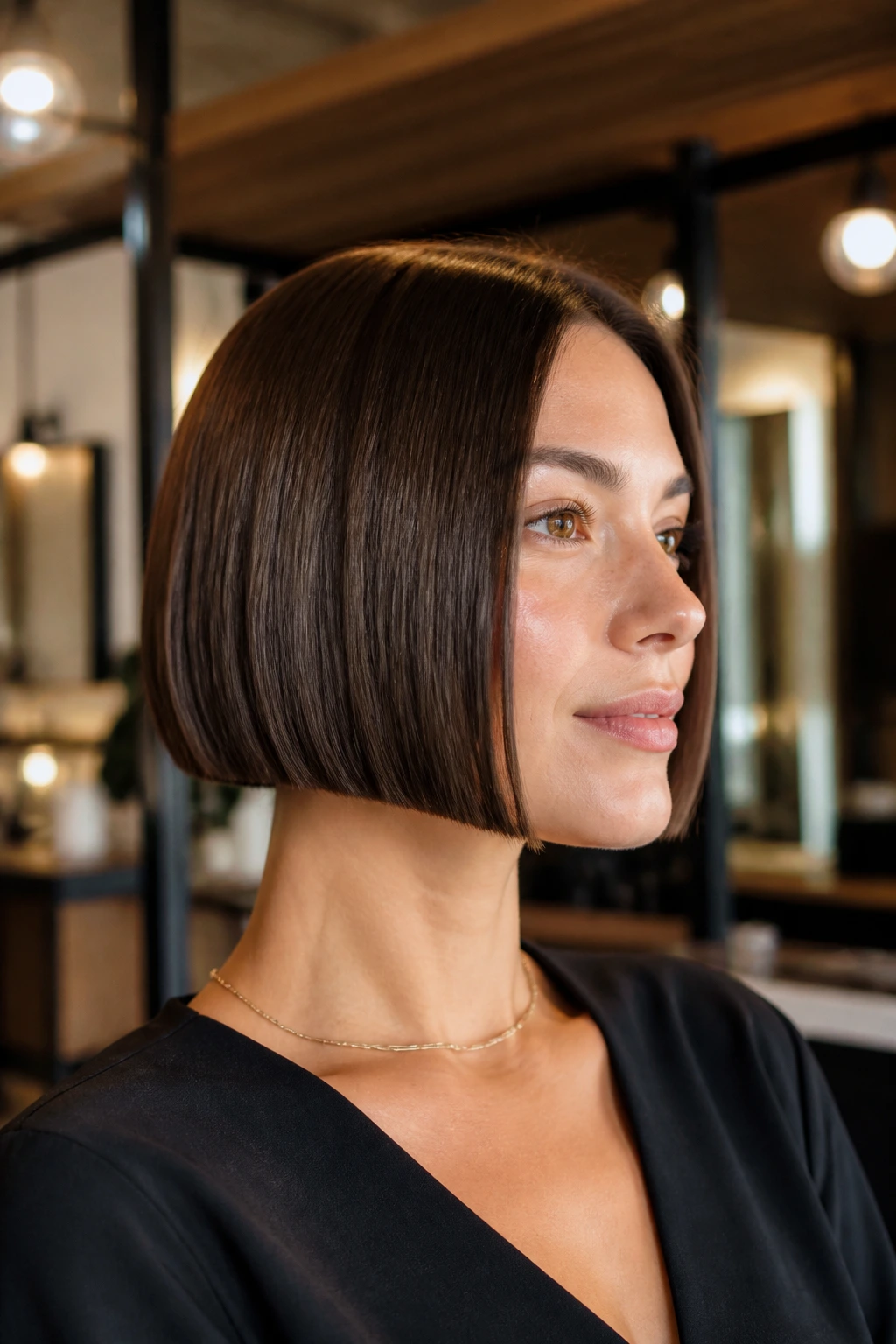
If your thick hair tends to expand at the sides, length choice matters more than shape names. A jaw-length bob gives you drama and crispness, but it can feel wide if your jaw is already strong or your hair is coarse. A chin-length cut sharpens the outline and works well if you want the face to stay open. A collarbone bob is softer and easier to grow, but it needs careful placement so it doesn’t sit right on the shoulder and flip.
Shoulder-grazing lengths are the sneaky troublemakers. Thick hair often catches on the shoulder line and kicks out at the ends, which can ruin an otherwise clean blunt cut. Go a touch above the shoulder or a touch below it. Don’t park the whole shape right on top of that seam unless you enjoy wrestling with the blow-dryer.
Face shape still matters, but density matters more. A narrow face can handle a fuller bob. A broader face may like a longer front or a side part to break up the width. The best blunt bob for thick hair is the one that keeps the ends under control first and flatters the face second.
How to Style a Blunt Bob Without the Puff
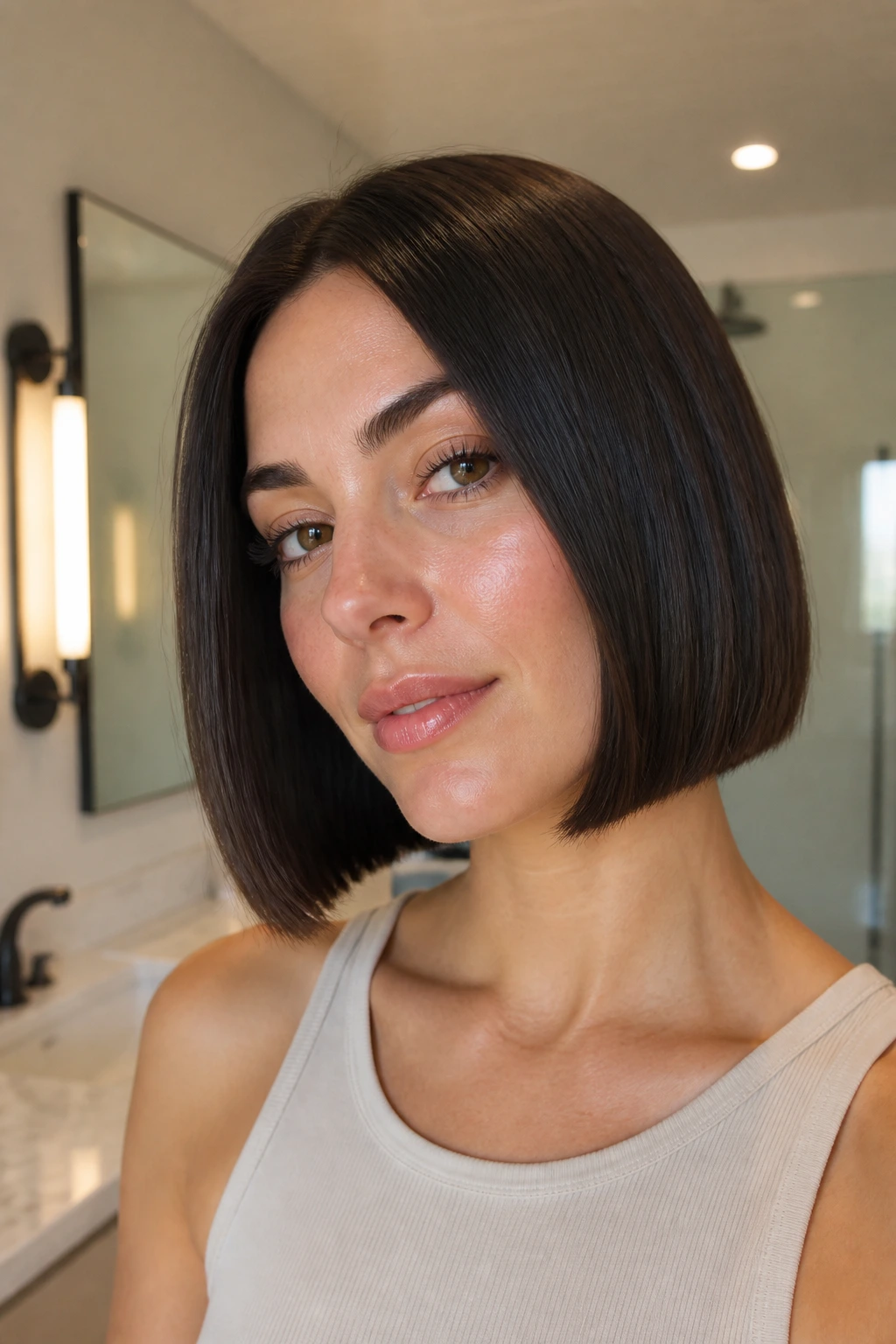
The styling trick is not more product. It’s better direction. Thick hair usually needs the roots dried with intention and the ends smoothed just enough to keep their line. Start with towel-blotted hair, then work in a heat protectant and a small amount of mousse or blow-dry cream, depending on whether your hair is straight or wavy. Too much cream makes thick hair greasy at the crown. Too little leaves the ends rough.
Use the dryer nozzle. Seriously. That concentrated airflow matters because it keeps the cuticle pointed the same direction, which is why the hair looks smoother after the blow-dry. Direct the air from root to tip, then shape the ends with a round brush or paddle brush depending on the length. For shorter bobs, a small to medium round brush gives you a softer bend. For a lob, a paddle brush plus a slight wrist turn at the ends is often enough.
Flat iron only what needs smoothing. If you chase every piece, the bob can look too stiff and can expose split ends. Two or three sections around the face and the top layer are usually enough. Finish with a light serum on the last inch of hair, not the roots, and you’ll keep the blunt line clean without turning the style greasy by noon.
Tools and Products That Make the Cut Easier

- Sharp hair-cutting shears: A blunt bob lives or dies on a clean edge; dull scissors crush thick ends and make them look frayed.
- Fine-tooth comb: Useful for precise sectioning and for checking whether the perimeter is even from side to side.
- Sectioning clips: Thick hair behaves better when you keep the top and bottom pieces separated during cutting or styling.
- Blow dryer with a nozzle attachment: The nozzle narrows the airflow and helps the hair lay flatter along the bob line.
- Round brush, 1.5 to 2 inches: Smaller brushes give chin-length bobs more bend; larger brushes work better for lobs.
- Heat protectant spray or cream: Thick hair can handle heat, but the ends still need protection from roughness and split ends.
- Lightweight smoothing cream: Good for controlling puff without collapsing the cut.
- Flat iron with adjustable heat: Lets you smooth the perimeter without blasting everything at one temperature.
- Dry shampoo: Keeps the crown from going flat and oily, which matters because a blunt bob shows root buildup fast.
- Shine serum: A tiny amount on the ends can make the line look cleaner, but too much will kill the shape.
Smart Salon Phrases That Get You the Right Bob
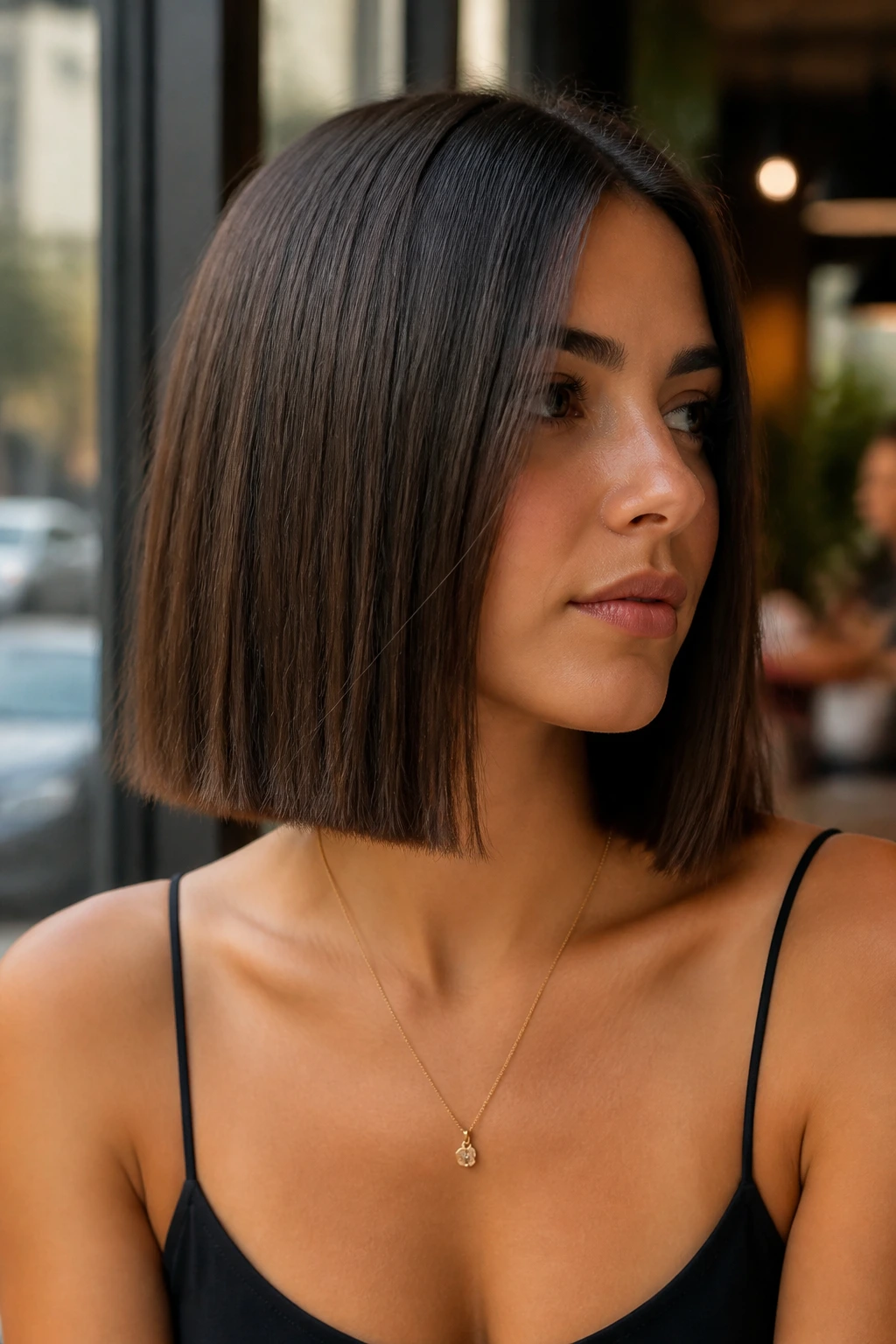
The easiest way to end up with a blunt bob that suits thick hair is to be annoyingly specific at the salon. Say you want a blunt perimeter with minimal internal layering, not a heavily textured bob. Those words tell the stylist you care about the edge as much as the overall shape. If you say “take weight out,” some stylists hear “thin it aggressively,” which is not what you want.
Tell them where your hair usually misbehaves. Does it flip at the collarbone? Puff at the nape? Sit flat at the crown and explode at the sides? That information matters more than a photo that only looks good on someone with different density.
Good phrases to use:
- “Keep the bottom line blunt and only remove bulk where it sits too heavy.”
- “I want the shape to stay full at the ends, not wispy.”
- “Please avoid heavy thinning shears through the perimeter.”
- “If you need to debulk, do it internally and keep the edge clean.”
- “I’d like the length to sit above or below the shoulders, not right on them.”
That last one saves a surprising number of bad bobs.
How to Keep the Shape Between Trims
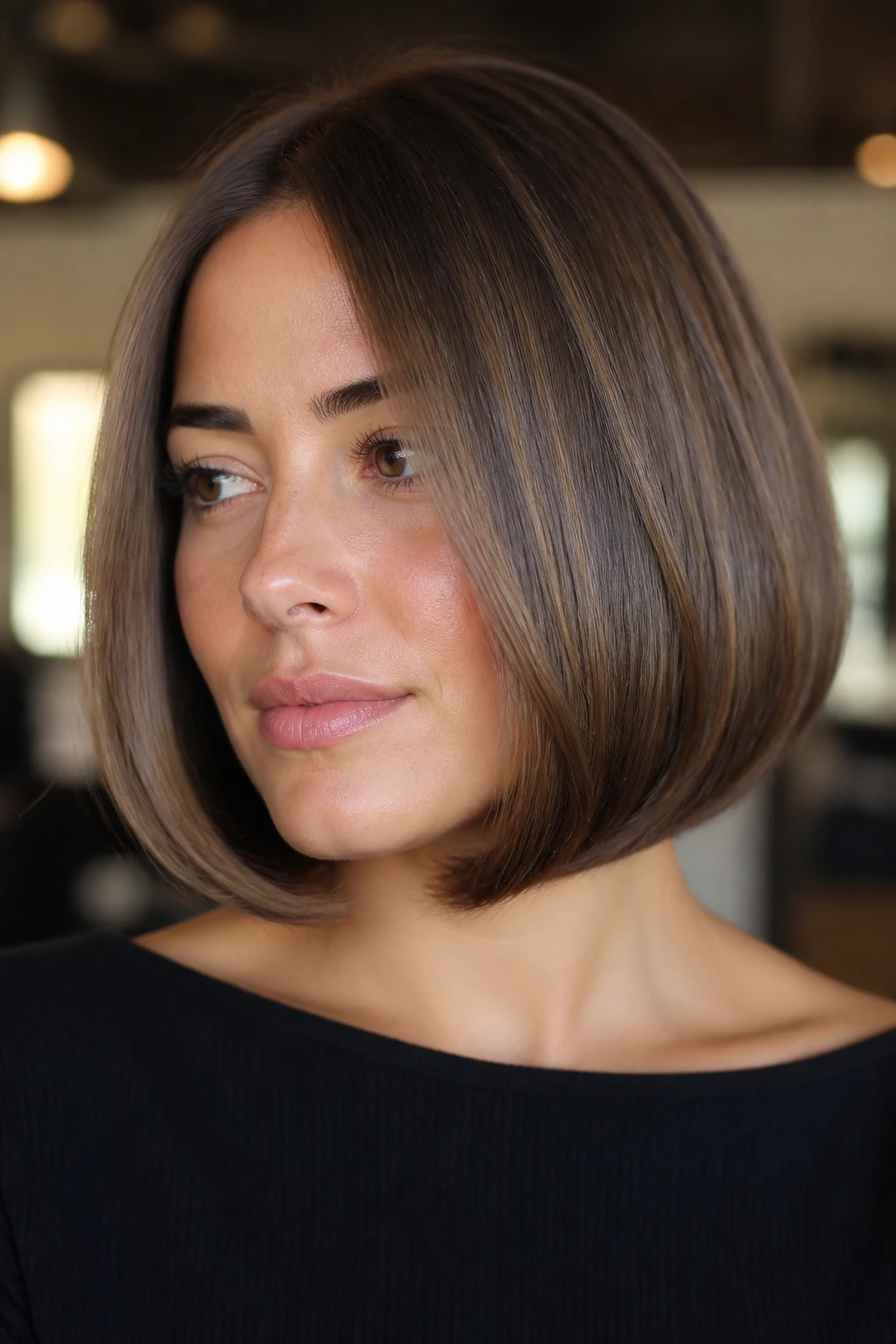
A blunt bob needs trims more often than a long layered cut because the whole appeal is the line. Once the ends start splitting or the outline gets fuzzy, the haircut loses its edge fast. For shorter bobs, plan on a trim every 6 to 8 weeks. Lobs can stretch to 8 to 10 weeks if the shape still sits properly and your hair grows at a slower pace.
At home, don’t let the crown go limp. Thick hair can drag the whole bob down if the roots get oily or compressed. Dry shampoo at the roots on day two helps, but use it before the hair looks greasy, not after. A little proactive spray goes further than a rescue mission.
Night care matters too. Sleep on a smooth pillowcase or loosely clip the hair low at the back so the ends don’t fold and kink. If one side keeps flipping, a quick morning pass with a dryer and brush will reset it in under 3 minutes. That’s usually enough. You do not need a full styling session every morning unless you want one.
Common Mistakes That Flatten a Blunt Bob
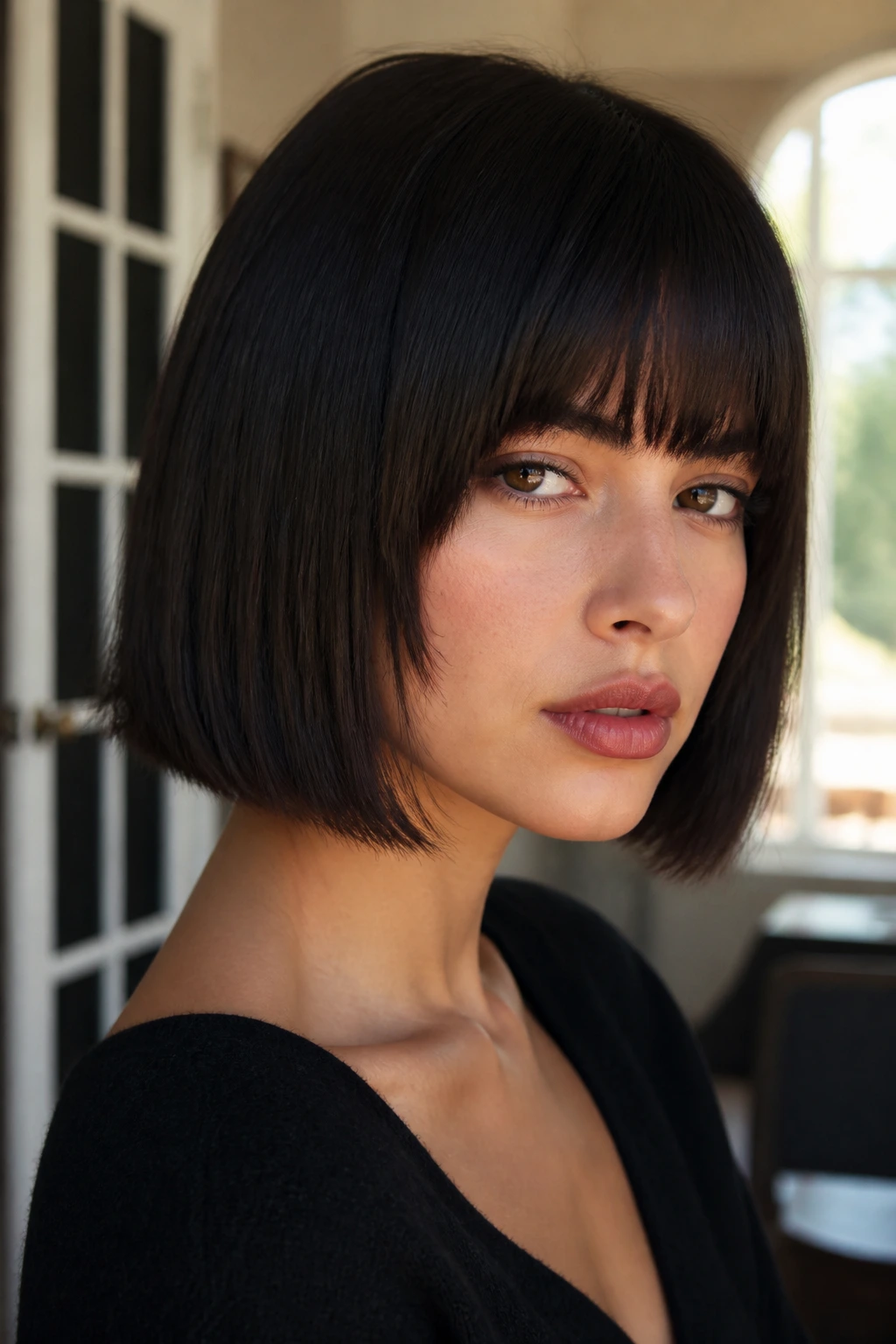
- Over-thinning the interior: The hair starts looking see-through at the ends, and the bob loses that solid edge. Fix it by asking for minimal debulking and avoiding aggressive thinning shears through the perimeter.
- Cutting right on the shoulders: Thick hair catches the shoulder seam and flips out, especially after a few weeks of growth. Fix it by choosing a length clearly above or below that line.
- Making the bangs too heavy: Dense fringe can swallow the face and make the haircut feel top-heavy. Fix it with longer, softer bangs or curtain fringe instead of a thick wall.
- Flat-ironing every strand to death: The bob ends up stiff and the tips start to look fried. Fix it by smoothing only the outer layer and leaving a little bend near the ends.
- Ignoring the nape’s growth pattern: Cowlicks and stubborn hairlines can kick the cut outward. Fix it with directional blow-drying and, if needed, a tiny bit more length in the back.
- Choosing a too-short bob for your texture: On coarse or very dense hair, micro lengths can look square faster than expected. Fix it by leaving a bit more length so the weight has somewhere to settle.
Variations and Adaptations to Try
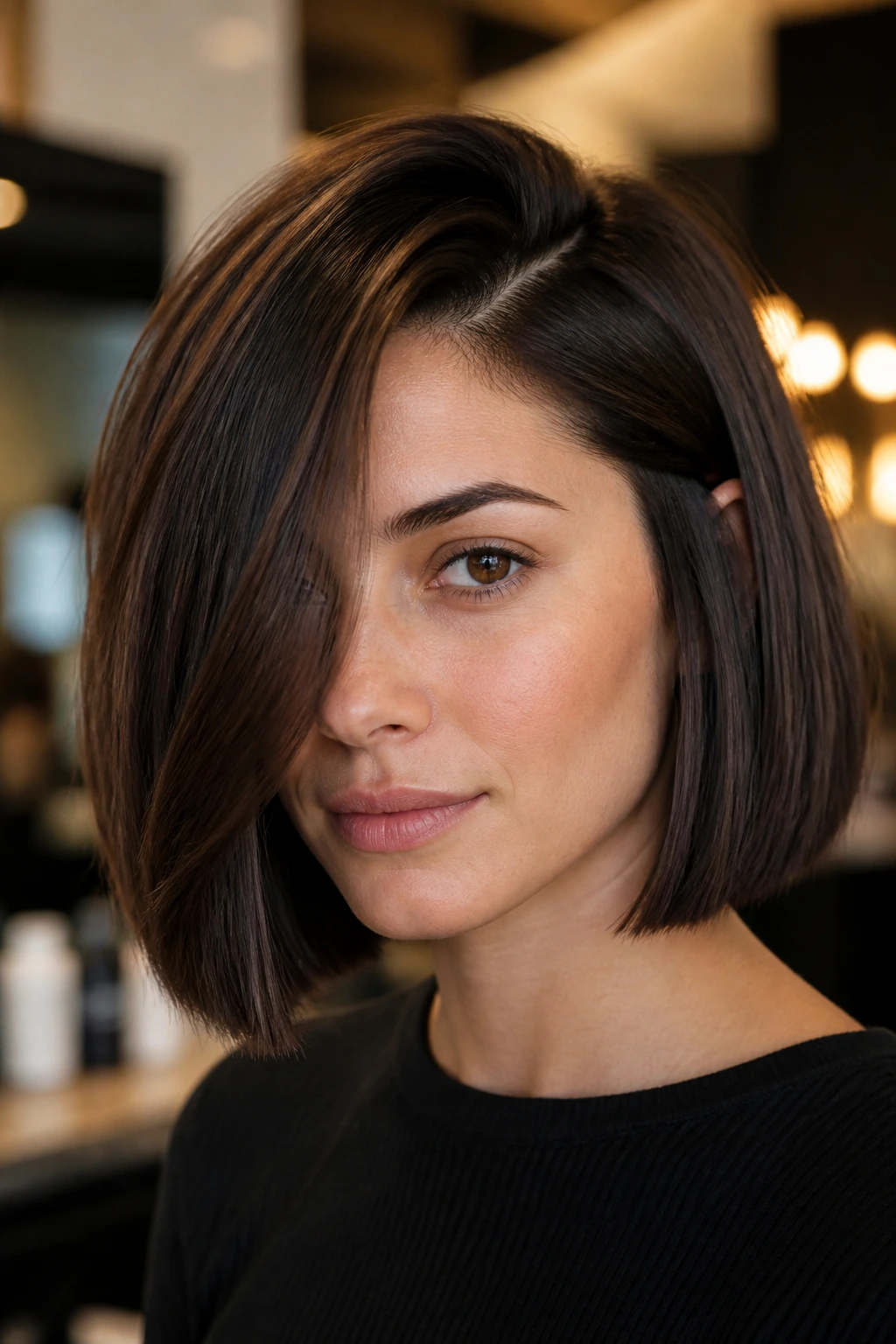
Soft-Edge Blunt Bob
Keep the perimeter blunt, then soften only the last quarter inch with a little point cutting. This is useful if you want the line to feel less severe but don’t want to give up the crisp outline. It’s a nice compromise for thick hair that can look too hard when cut perfectly straight.
Air-Dry Bob
Ask for a blunt cut that’s slightly longer than your ideal finished length, especially if your hair bends or shrinks as it dries. This version works best when you like texture and do not want to heat-style every day. A little leave-in cream and a hands-off dry-down are usually enough.
Fringe-Forward Bob
Pair the blunt perimeter with either full bangs or curtain bangs. This puts more visual weight at the front and can balance a wide jaw or broad forehead. It also keeps the cut from feeling too heavy at the sides, which thick hair can do on its own.
Density-Shedding Bob
This is the version with hidden undercutting or internal debulking at the nape. Use it when your hair is so thick that a standard blunt bob sits like a shelf. The outside still reads blunt; the inside just stops fighting your neck.
Longer Grow-Out Bob
Start at the collarbone with a blunt edge and trim it in small steps as you get comfortable. This is the easiest route if you’re moving from long hair and want to test the waters before going shorter. It still gives you the clean line, but it forgives grow-out and low-maintenance weeks.
Frequently Asked Questions
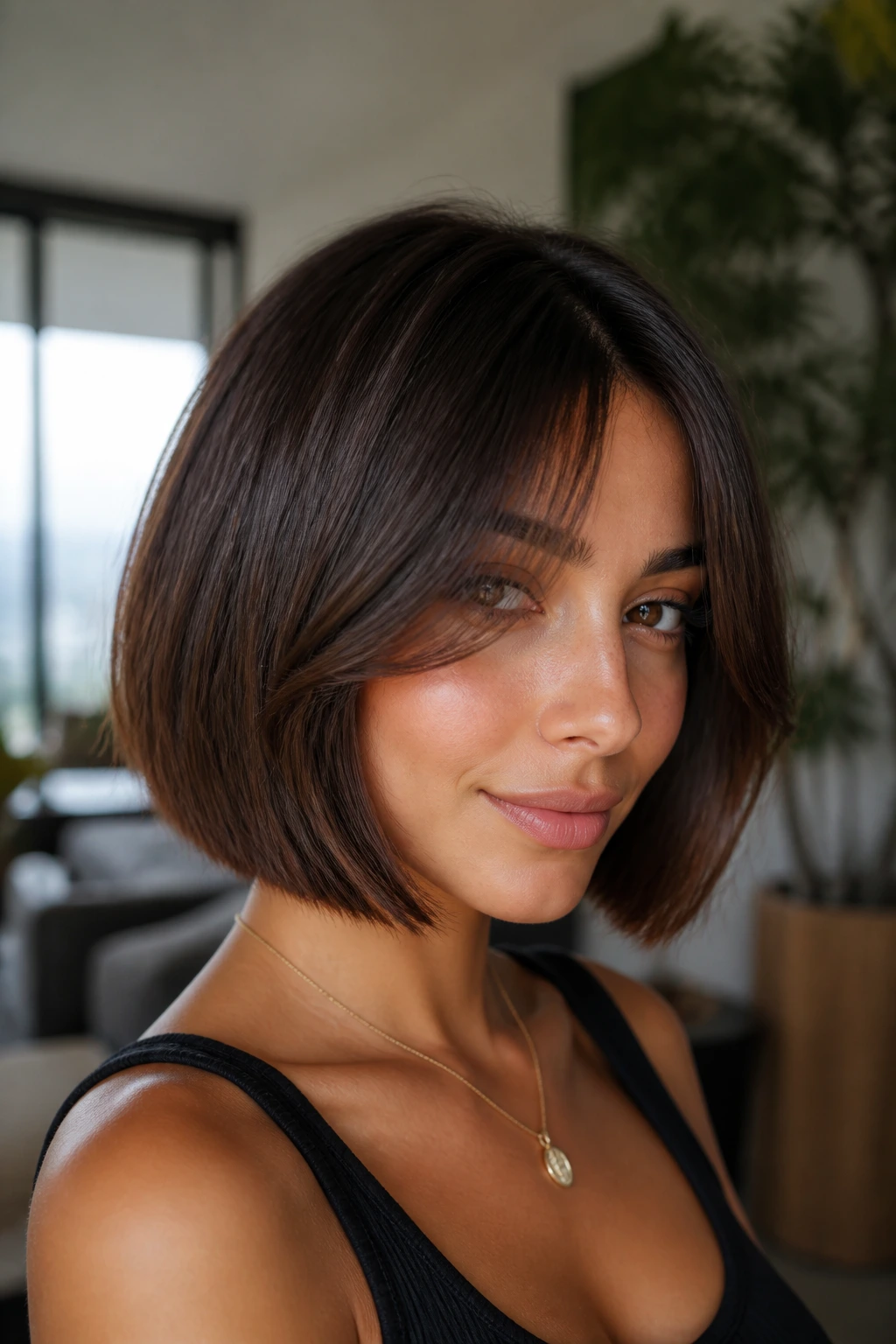
Which blunt bob is best for very thick hair?
The safest starting point is a collarbone or jaw-grazing blunt bob with minimal internal layering. Those lengths keep the weight controlled without making the cut too short to manage. If your hair is extremely dense, a hidden undercut or subtle debulking at the nape can make a huge difference.
Will a blunt bob make thick hair look bigger?
It can, if the cut is too short or the interior is thinned the wrong way. A good blunt bob keeps the perimeter solid so the hair looks controlled, not puffy. The line should create structure, not add width in the wrong place.
Can thick wavy hair pull off a blunt bob?
Yes, but the cut needs to respect your wave pattern. A blunt perimeter with a little hidden internal removal usually works better than a heavy stack of layers. That lets the waves move without turning the ends into a frizzy triangle.
How often should I trim a blunt bob?
Short blunt bobs usually need shape-ups every 6 to 8 weeks. Longer blunt lobs can go a bit longer, often 8 to 10 weeks, before the line starts to blur. If the ends split or the side pieces start kicking out, that’s your cue.
Should I ask for layers with a blunt bob?
Not through the perimeter. If your hair is thick, ask for minimal internal layering or debulking only where the bulk sits heavy. The outside line should stay blunt if you want the cut to read as a blunt bob.
What if my bob flips out at the ends?
That usually means the length is landing on a stubborn point, often the shoulder or collarbone. You can fix it by changing the length slightly, using a round brush to set the bend inward, or smoothing the last inch with a flat iron. Sometimes half an inch is the whole problem.
Can I air-dry a blunt bob and still look polished?
Yes, especially if the cut is a little longer and shaped with your natural texture in mind. Thick hair often dries with enough body on its own, but it needs a leave-in cream or light curl product to keep the ends from frizzing out. A polished air-dry is more about the cut than the product.
Is a center part or side part better for thick hair?
A center part gives a blunt bob a cleaner, more graphic look. A side part breaks up width and can soften a strong jaw or broad forehead. If your hair grows flatter on one side, that side part may be the easier everyday choice.
The Line That Holds
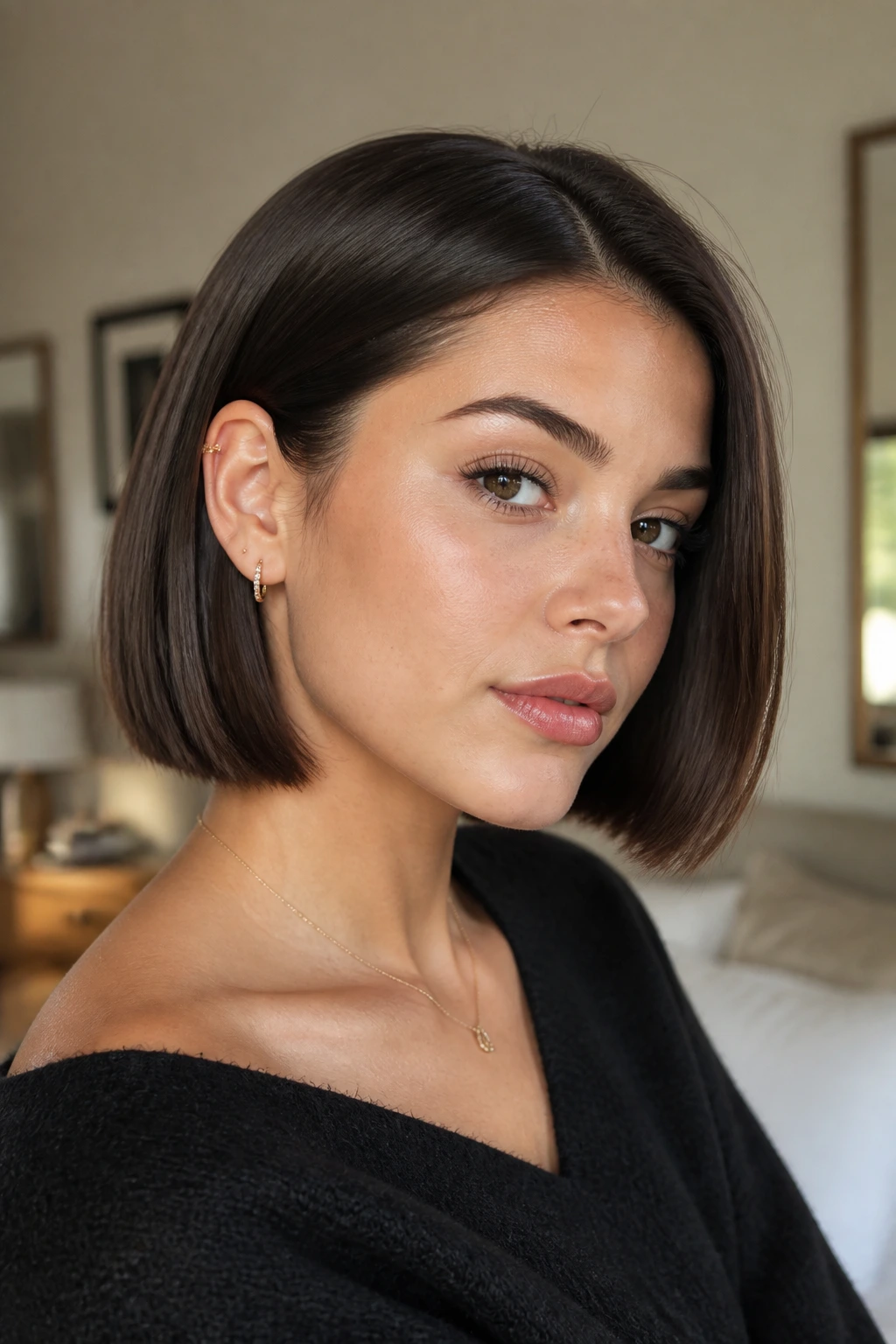
A blunt bob on thick hair works because it respects what the hair already does well: hold shape, carry weight, and show off a clean edge when the cut is honest. The wrong version gets too thinned, too short at the shoulder, or too crowded with layers. The right one looks like it was meant for your hair from the start.
That’s the part worth remembering. Thick hair does not need to be wrestled into submission. It needs a line strong enough to contain it.
Take that to the salon, and the haircut gets easier from there.
