



Bob haircuts for thick hair on older women can be either a brilliant reset or a square, puffy disappointment. The difference usually comes down to weight placement. Leave too much bulk at the ends and the whole shape can balloon out. Remove too much from the wrong places and the cut turns wispy in the crown while the bottom still feels heavy. Thick hair is generous like that. It gives you body, shine, and shape — then it asks for a smarter cut in return.
What makes a good bob on thick hair isn’t drama. It’s control. The best versions keep the outline clean, soften the right corners, and let the hair move without turning into a triangle by noon. For older women, that matters even more, because the goal is usually not to chase a youth fantasy or pretend hair never changed. The goal is a cut that works with the hair you actually have, sits well with glasses and earrings, and still looks intentional when you’ve only run a brush through it.
The nice surprise is that thick hair gives you options most people envy. You can wear it blunt and sharp, airy and feathered, jaw-skimming or shoulder-grazing, sleek or piecey. The trick is matching the shape to your face, your neck, and your patience for styling. The right bob should feel like a good jacket: flattering, familiar, and easy to grab without thinking too hard.
Why These Bob Haircuts Make Thick Hair Easier to Wear
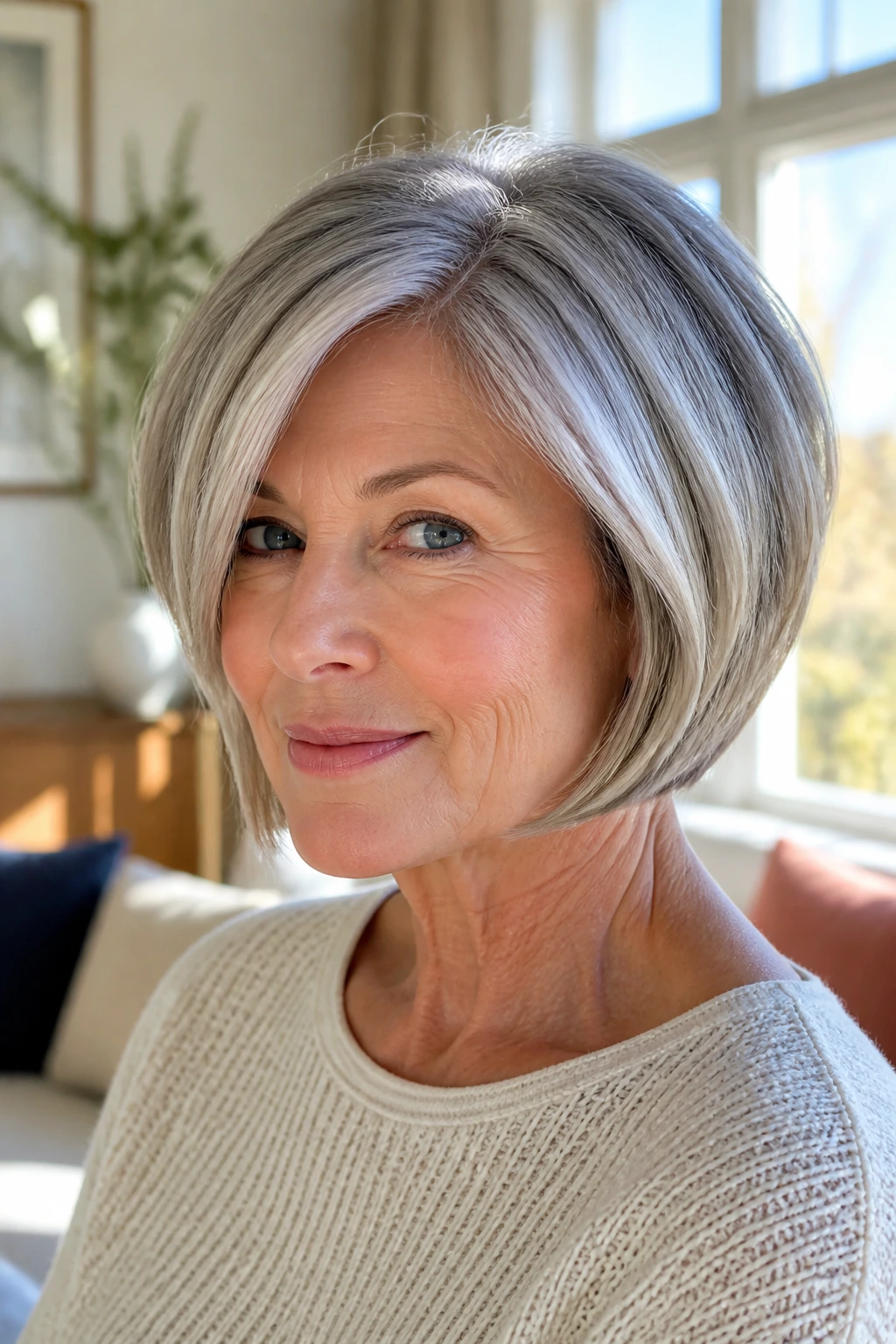
-
Weight control matters more than length: A well-cut bob takes the heaviness out of the middle and lower sections so the ends do not stick out like a shelf.
-
Shape beats thinning: The best versions remove bulk with internal layering or careful graduation, not aggressive texturizing that leaves thick hair frayed at the edges.
-
The neckline changes everything: A bob that ends just below the jaw or at the collarbone can make thick hair feel lighter without sacrificing the body that makes it look full.
-
Older features like softness around the eyes and jaw: Slightly longer front pieces, side parts, and curved lines can lift the face without trying too hard.
-
A good bob saves time in the morning: Thick hair already gives you natural shape. Once the cut is balanced, you usually need less round-brush work than people with fine hair.
-
Silver strands look sharper in a clean cut: Gray and white hair often show shine best when the perimeter is neat and the layers are controlled.
1. Soft Blunt Chin-Length Bob
A blunt chin-length bob sounds severe on paper, but on thick hair it can be surprisingly gentle if the ends are softened just enough. The clean line gives the hair a strong shape, while a little point-cutting through the very bottom keeps it from looking like a helmet. If your hair is dense and tends to puff at the sides, this is one of the easiest ways to keep it looking polished without over-layering it.
The real trick is where the cut lands. Chin length gives the hair a chance to swing, but it does not drag the face down the way a longer, heavy bob sometimes can. I like this shape on women who wear glasses or small earrings, because it leaves the jawline clear and frames the eyes without crowding the neck.
What makes it work
A blunt perimeter keeps thick hair from losing its shape by lunchtime. A soft edge keeps it from looking too hard around the mouth and jaw. That little bit of softness matters.
2. Layered Collarbone Bob
Why does this one work so well? Because collarbone length gives thick hair room to move without piling all its weight at the chin. The layers are there, but they should be quiet — think invisible support, not choppy texture shouting from across the room.
This is the cut I reach for when someone wants a bob but is nervous about going too short. The collarbone length keeps the neck looking long, which is useful if you feel more comfortable with some hair around the shoulders. It also plays nicely with blowouts. A 1.25-inch round brush and a little tension at the ends are usually enough to make the whole shape sit softly.
Best for
- Thick hair that feels too bulky at jaw length
- Women who want a little ponytail-able length
- Faces that need softening around the lower half
A collarbone bob can look expensive without trying to. That’s the appeal.
3. Stacked Bob with a Tapered Nape
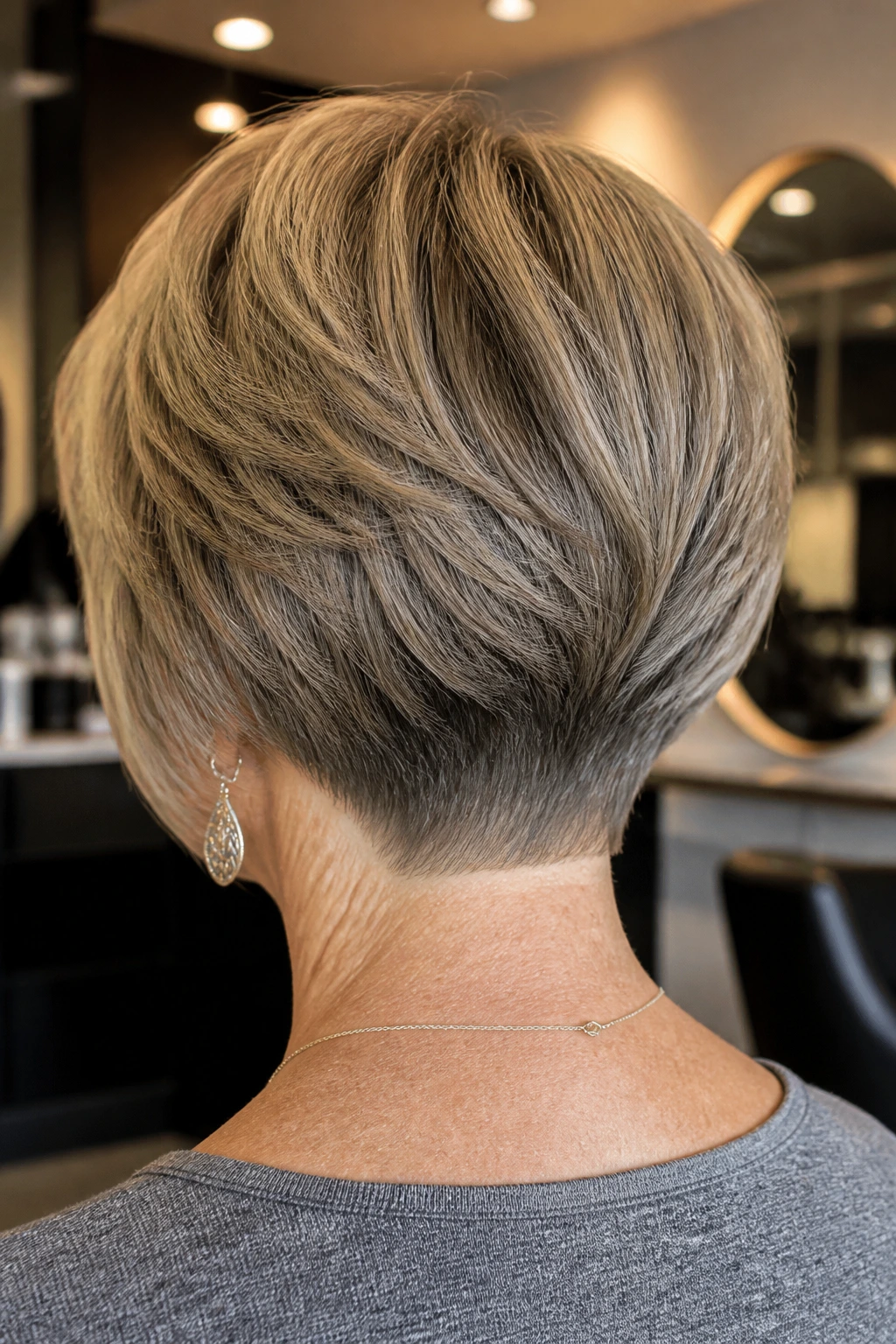
A stacked bob is the haircut people ask for when they want lift at the back and a cleaner neckline. On thick hair, it can be a lifesaver, because the graduation in the back removes weight where it usually builds up most. If you have hair that mushrooms at the nape, this cut changes the whole silhouette.
But the stack needs restraint. Too much graduation and the back gets puffy. Too little and you lose the shape that makes this bob worth wearing. The cut should sit close enough to the head at the nape to feel neat, then open up gradually toward the crown and sides. That creates a curve instead of a box.
This is also one of the better bob haircuts for older women who want their hair off the collar but do not want a pixie. It feels tidy under a coat, at the gym, or with a high-neck sweater. Small thing. Big difference.
4. A-Line Bob with Longer Front Pieces
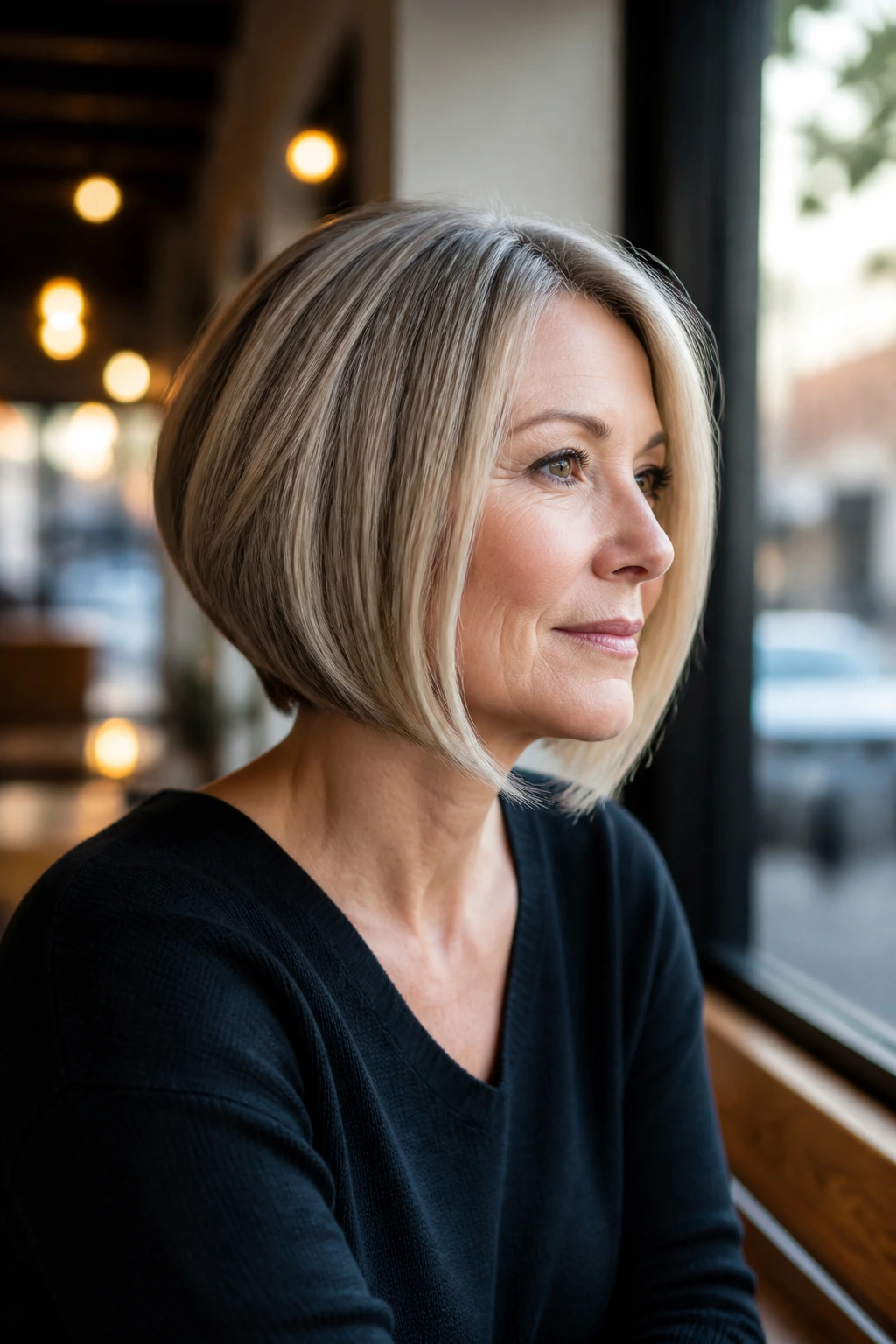
The A-line bob is a quiet cheat code for thick hair. Shorter in the back, longer in the front, it gives you the feeling of length without all the bulk that usually comes with it. The front pieces can skim the jaw or land just below it, which helps lengthen the neck and balance a wider face.
I especially like this cut when hair tends to flip outward at the sides. The forward angle gives the hair a reason to fall the way it should. Straight hair shows the line cleanly, while slightly wavy hair gets a softer bend that looks effortless in a real-life way, not a salon-ad-photo way.
If you want this shape to behave, keep the front long enough to tuck behind the ears. That small practical detail matters more than people think. It keeps the cut from feeling too fixed or too perfect.
5. Feathered Side-Part Bob
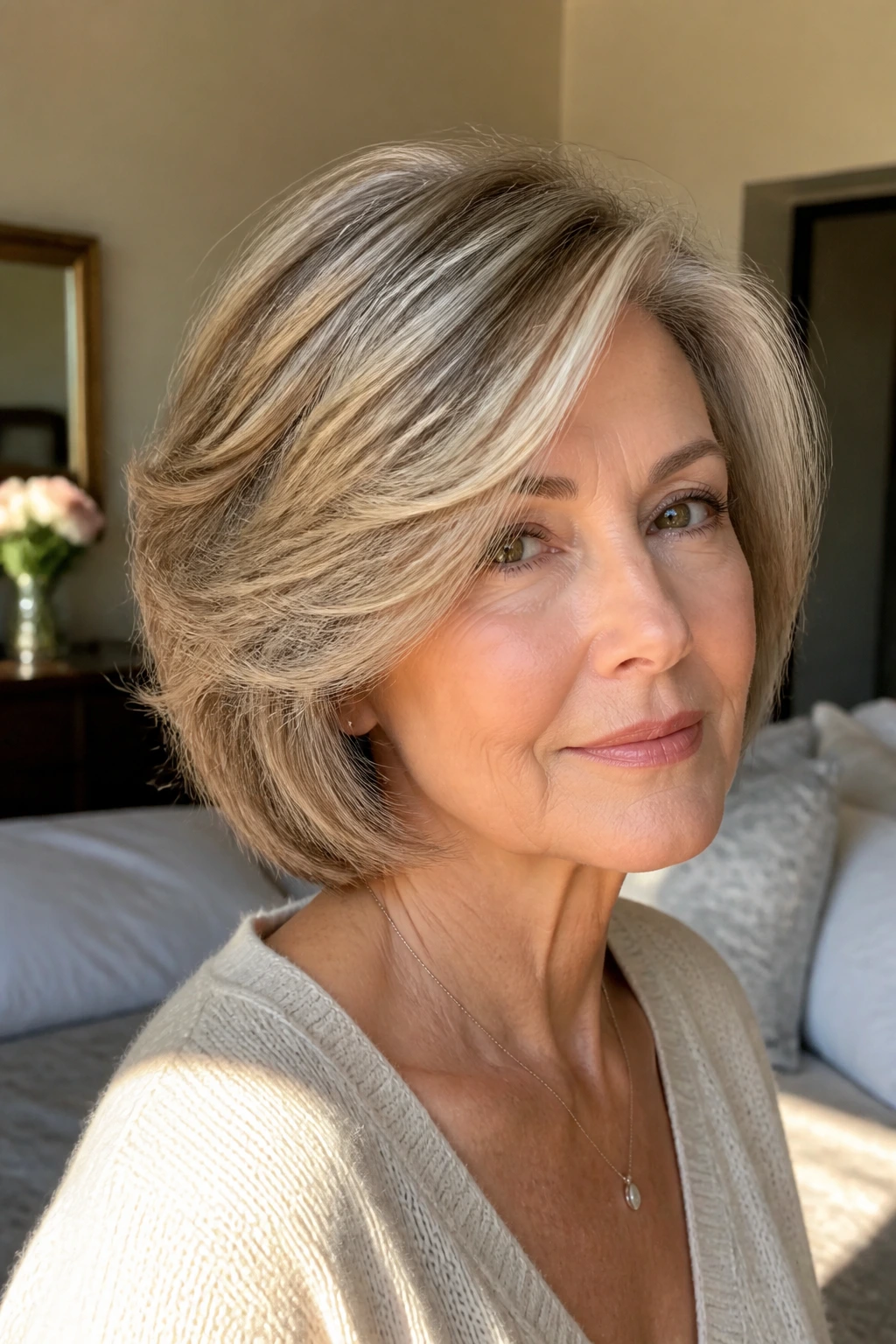
Can thick hair feel light without looking thin? Yes — if the feathering is done with a careful hand. A side-part bob with soft feathering around the temples and cheekbones gives the hair movement where it helps most, especially if your face needs a little lift near the outer eye area.
The side part is doing more work than most people realize. It breaks up fullness at the top and lets one side drape a little longer, which is flattering if you’ve got one side of your face you prefer. Feathered ends also stop the bob from ending in a hard line, which can be unforgiving on dense hair.
Why it flatters thick hair
- The side part reduces width at the center of the head.
- Feathering softens bulk near the cheeks.
- The shape still has enough body to feel full, not flimsy.
This is a strong choice if you like a softer, brushed style rather than a sleek one.
6. Shaggy Bob with Piecey Ends
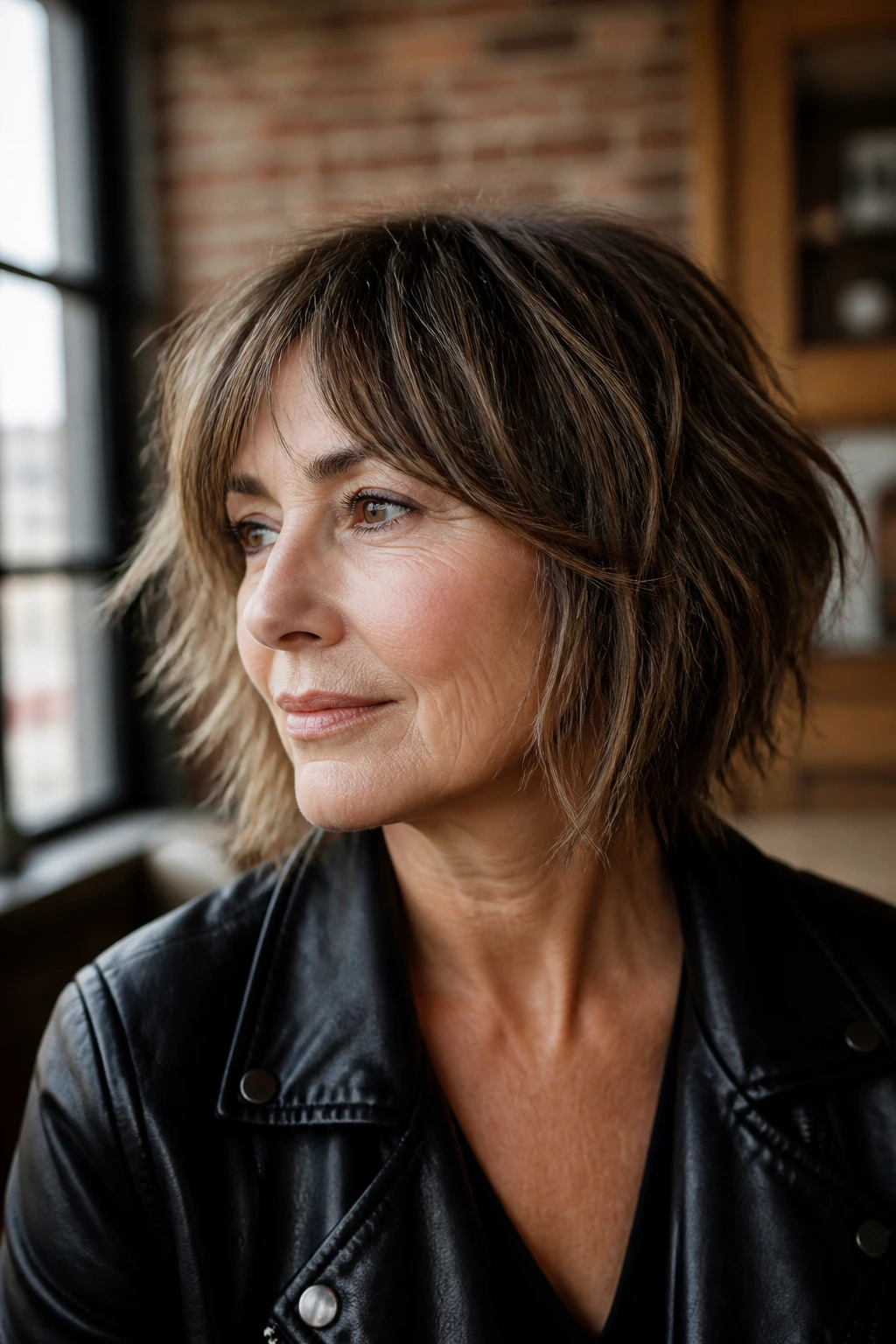
The shaggy bob is the loosest, most relaxed version in this group. It works because thick hair naturally carries texture, so you’re not fighting the material. You’re giving it a shape that can absorb a little chaos and still look finished. That matters on days when you don’t feel like wrestling a round brush for 20 minutes.
This cut usually looks best when the ends are lightly razored or point-cut and the top is left a little airier. Not thin. Airier. There’s a difference. You want broken-up pieces that move, not sparse ends that look overcut. If your hair is wavy, this bob often looks better with a diffuser than with a flat iron.
It’s also one of the easiest cuts to wear with a modern wardrobe. Leather jacket? Works. Cashmere sweater? Works. Linen shirt and no makeup? Still works. The shape carries its own attitude.
7. French Bob with a Soft Fringe
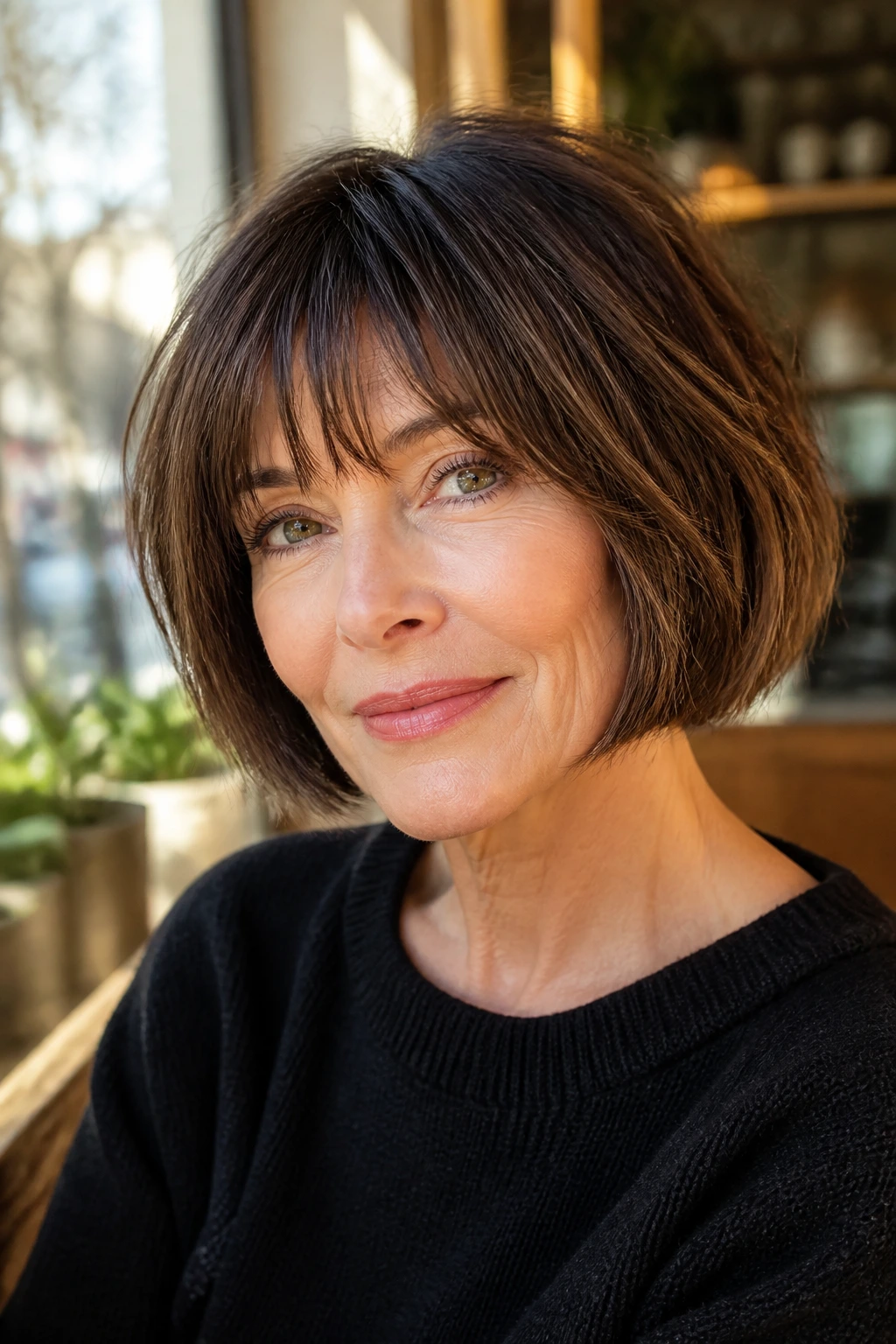
A French bob can be a sharp look on thick hair, but older women usually benefit from a softer version than the ultra-short, blunt, fashion-magazine version. Keep it around lip to chin length, and let the fringe land wispy or side-swept rather than heavy across the forehead. That keeps the face open.
The charm here is the compact shape. Thick hair gets trimmed into a neat little frame that sits close to the head instead of flaring outward. If you have strong cheekbones or a defined jaw, this cut can be gorgeous because it draws attention upward and keeps the neck looking long. It also behaves well under glasses because it doesn’t swarm the frames.
If you’ve got cowlicks at the front, do not force a rigid fringe. Let the stylist cut the bangs to follow the natural fall. Fighting a cowlick with thick hair is a losing afternoon.
8. Rounded Bob with Curved Under Ends
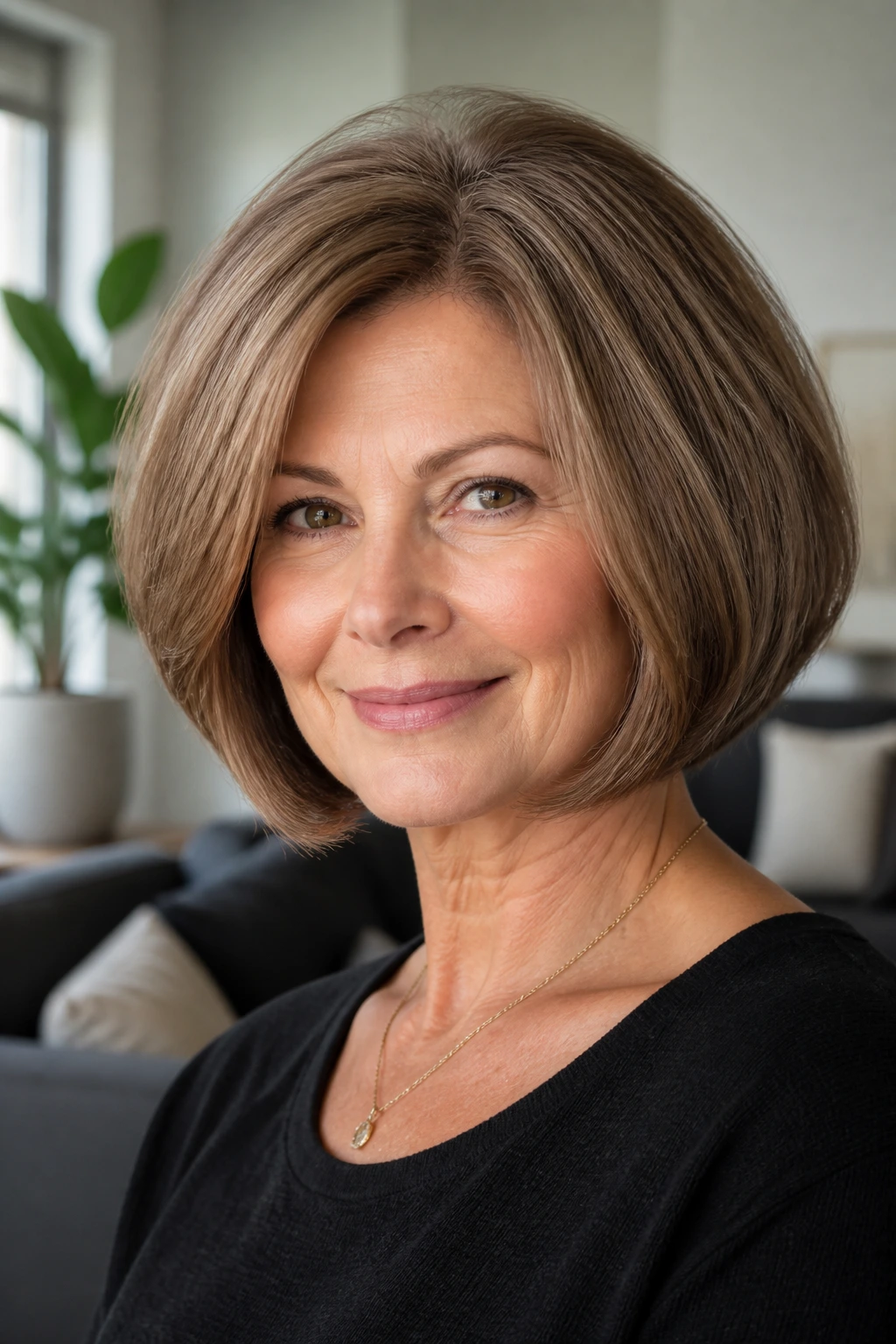
A rounded bob is the tailor-made answer for thick hair that wants to expand sideways. The curve under at the ends guides the hair back toward the face and neck, which keeps the whole cut looking soft and controlled. It’s especially useful if your hair has a lot of body at the sides and not much lift at the crown.
This shape has a slightly old-school feel, but that’s part of the appeal. It doesn’t chase trend lines. It frames the face with a clean arc and leaves the ends sitting where they should, not flicking out in random directions. Blow-drying with a medium round brush helps, and a small pass of a flat iron at the very tips can make the curve look crisp without flattening the whole head.
A rounded bob also plays nicely with silver and salt-and-pepper color. The shape is simple enough that the color gets room to show.
9. Long Bob with Invisible Layers
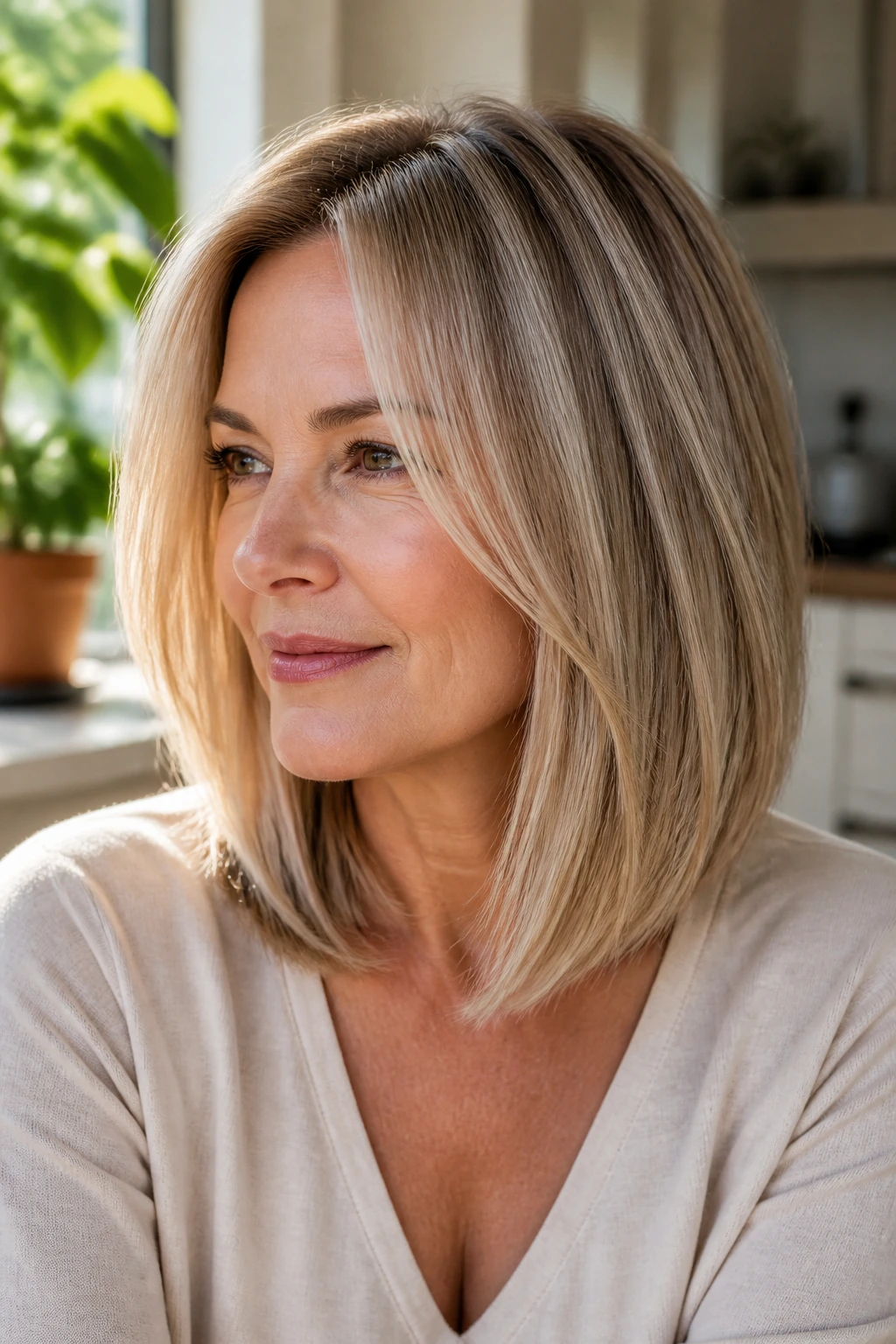
The long bob, or lob, is often the safest starting point for thick hair, and safe is not an insult here. It gives you room to see how the hair behaves before you commit to something shorter. Invisible layers keep the bulk under control while leaving the outside line smooth enough to feel full.
This is a smart cut for women who want movement but hate obvious layers. The internal cutting helps the hair fold into itself instead of sticking straight out. That matters when your hair is dense through the middle and heavy at the nape. The surface still looks even, which keeps the style elegant rather than chopped-up.
A lob also gives you more styling options than a shorter bob. You can tuck it, wave it, curl it under, or wear it straight with a clean center part. That flexibility is useful if your hair changes texture with humidity or if you simply do not want a haircut that demands the same styling every single day.
10. Asymmetrical Bob with a Deep Side Part
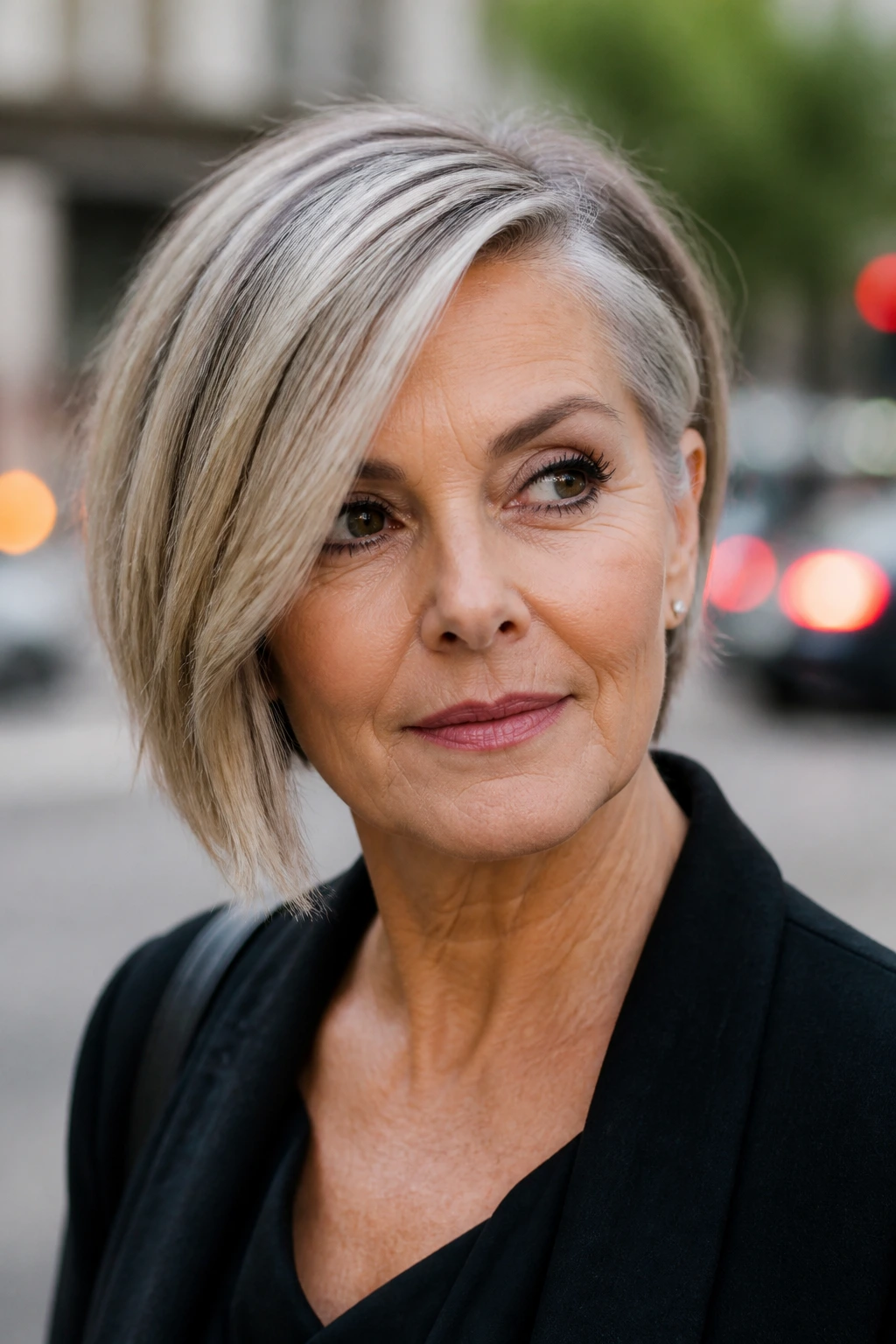
A little asymmetry can go a long way on thick hair. One side longer than the other creates movement and breaks up the blocky feel that dense hair sometimes gets. Pair that with a deep side part, and the haircut immediately feels more deliberate. More confident, too.
This shape is especially good if one side of your face feels stronger or if you like the idea of a cut that quietly draws the eye downward and across instead of straight across. The difference does not need to be dramatic. Even an inch or two of length variation can shift the whole look.
Use it when you want:
- A bob that feels modern without looking edgy for the sake of it
- More softness around one cheek or jawline
- A cut that looks good both tucked and untucked
The asymmetry should be subtle enough that it feels wearable, not theatrical. That’s the sweet spot.
11. Choppy Razored Bob
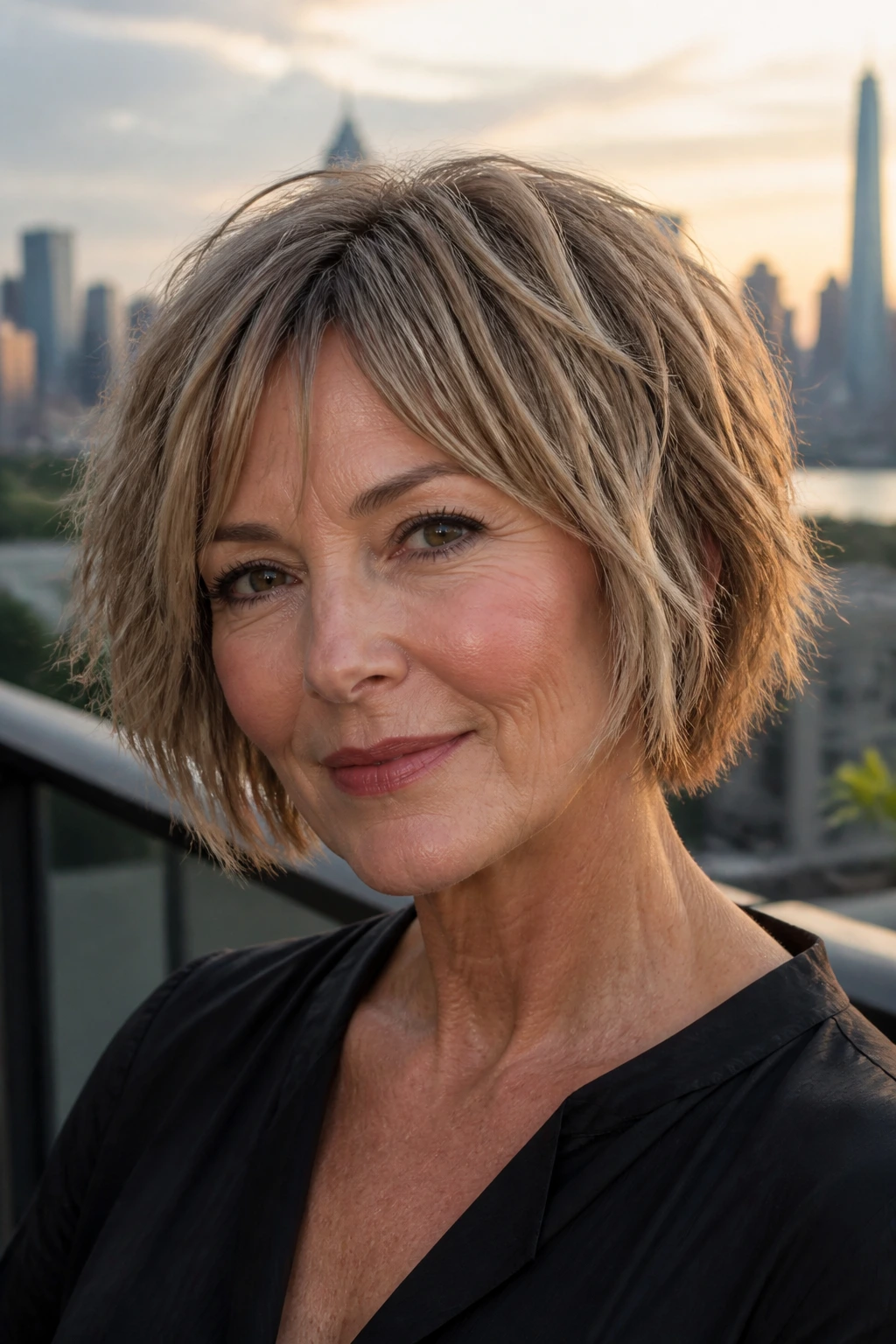
A choppy razored bob can work on thick hair, but it needs a careful hand. The goal is not to shred the ends until they look hollow. The goal is to break up the outline so dense hair stops behaving like one solid shape. On the right head of hair, this gives you a cool, airy finish that moves when you turn.
I like this cut best on hair with some natural wave or bend. Straight, coarse hair can sometimes show razor texture in a rough way, especially around the ends. If that’s your hair, ask for choppy internal layers with softer point-cutting rather than a heavy razor pass.
This bob has a casual feel that suits women who do not want a fussy style. It looks good when it’s not over-styled, which is half the point. A little texture cream, a rough dry, maybe a bend with a flat iron on the front pieces — that’s enough.
12. Inverted Bob for Lift at the Crown
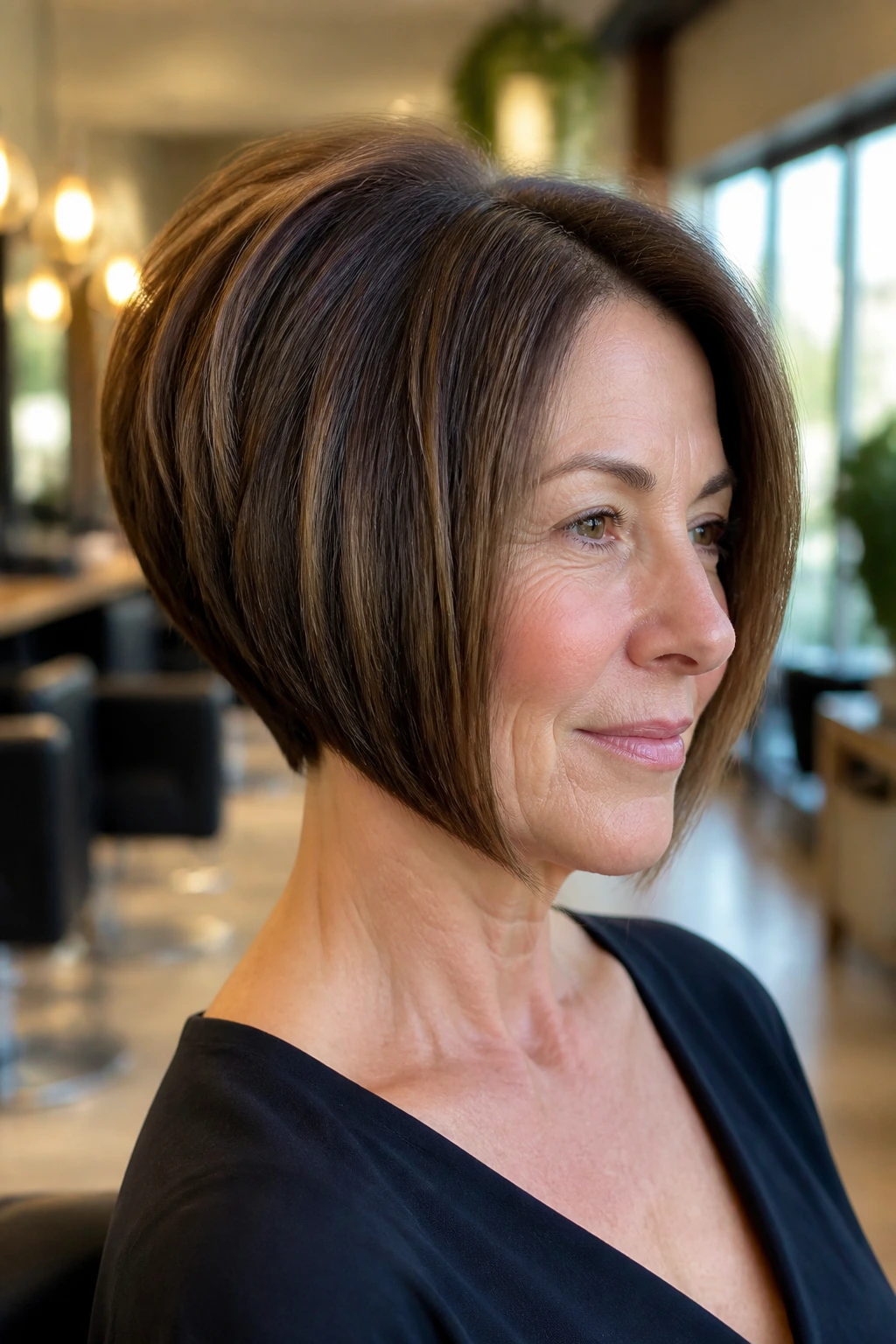
The inverted bob gives you visible shape fast. Shorter in the back and longer in front, it lifts the crown and keeps thick hair from collapsing into a triangle. If your hair is dense at the nape and flat at the roots, this cut can feel like it was designed for you.
It’s a more sculpted shape than a basic A-line. The back rises a little higher, which creates a rounder profile at the crown. That lift is useful if your hair tends to sit low or if you’ve noticed the top of your style losing energy by midday. The front stays long enough to soften the face, so the cut still feels feminine and polished.
This shape needs upkeep. It grows out with a sense of humor, and not in a good way. If you wear an inverted bob, plan on trims every 6 to 8 weeks to keep the angle from going soft and blurry.
13. Curly Bob That Lets Texture Lead
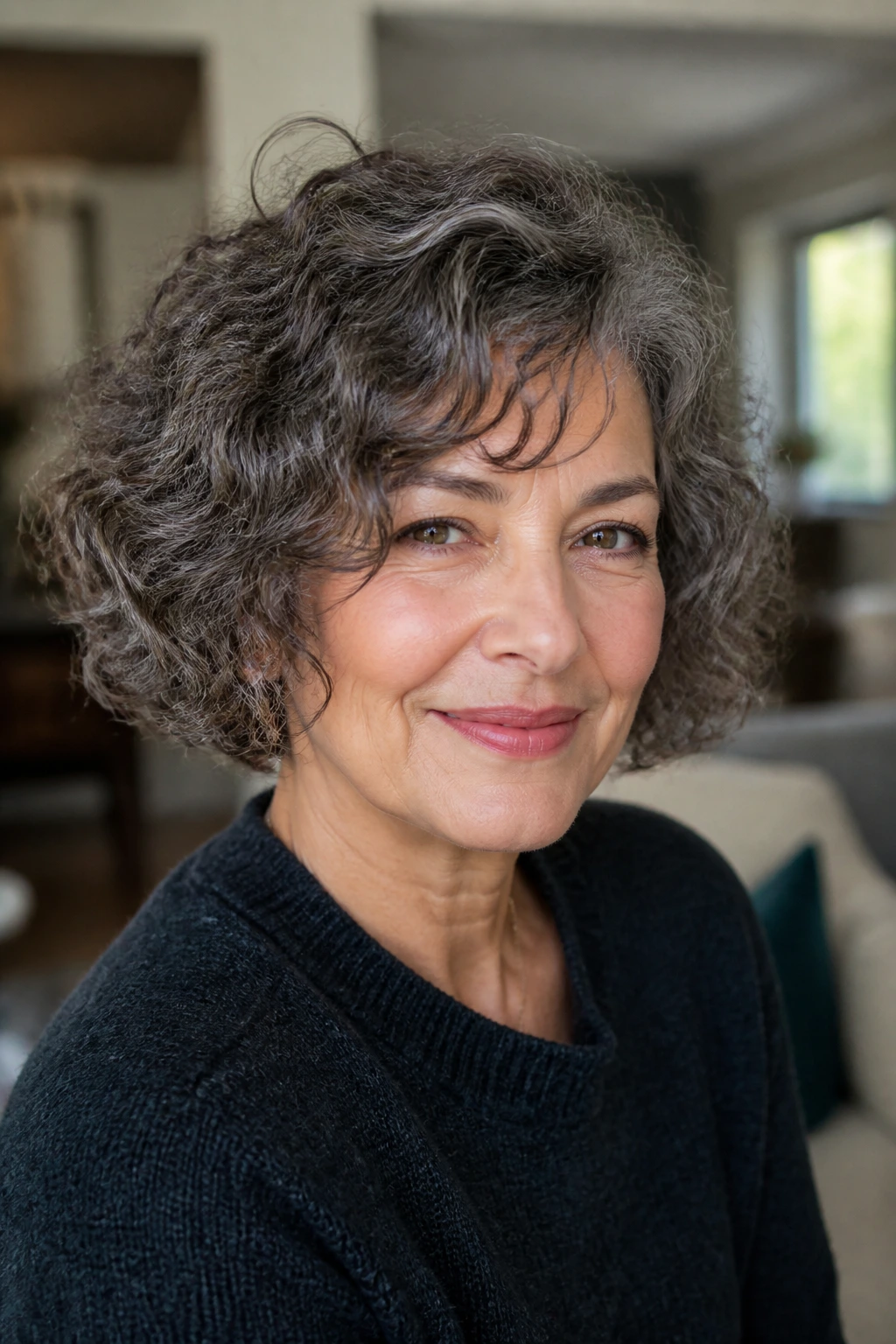
Why fight curls in a bob when they can do half the work? Thick, curly hair looks especially good in a bob when the cut is done dry or with the curl pattern in mind. The shape should support the curl, not flatten it into a different personality.
The key is balance. Leave enough length for the curl to spring up, because curly thick hair can shrink more than people expect. A bob that looks chin-length when wet may sit closer to the cheeks once it dries. A good stylist will cut it with that in mind and avoid over-thinning the ends.
This style works beautifully with a curl cream or light gel scrunched into damp hair. Then leave it alone. That’s the part many people skip. Curling, scrunching, re-touching, diffusing, re-touching again — all that fuss often makes the cut less clean, not more. One decent product application and a patient dry are usually enough.
14. Wavy Bob with Face-Framing Layers

Waves and thick hair get along almost too well, which is why this cut needs shape around the face. Face-framing layers keep the front from hanging like a curtain and give your cheekbones a little room to show up. The bob can sit at the jaw or just below it, depending on how much bounce your wave pattern has.
This cut is one of the easiest to live with because it does not ask for perfect styling. A bit of sea-salt spray or a light mousse, a quick scrunch, and a diffuser if you want more polish. The layers should begin near the cheekbones or lips, not too high, or you risk making the cut look thinner than it really is.
If your wave pattern gets puffier in humidity, keep the layers longer and the perimeter a little heavier. That keeps the bob from exploding outward in warm air.
15. Sleek Glass Bob
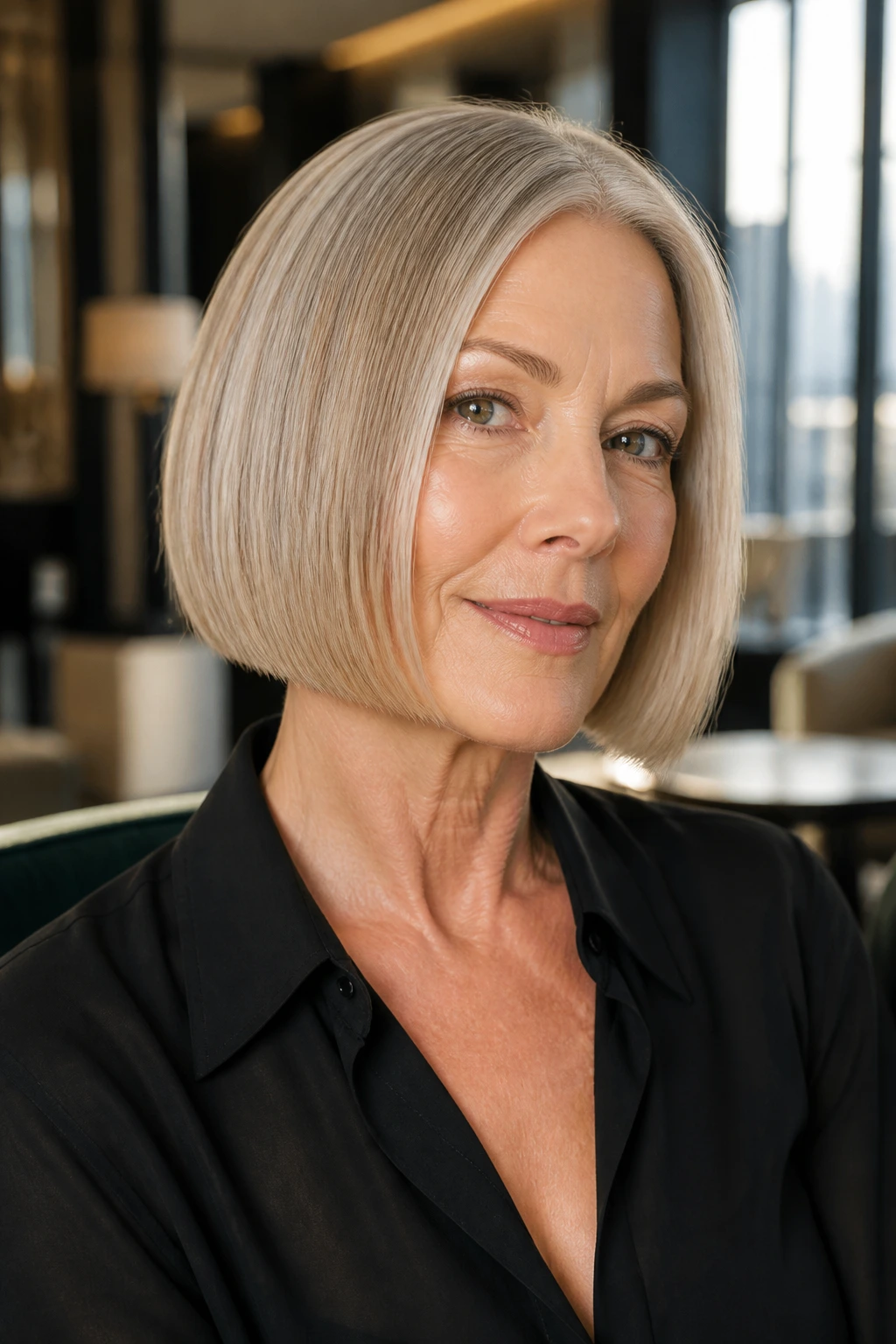
A sleek glass bob is the cleanest possible answer for thick hair when you want shine and polish. The cut must be precise. The hair needs enough weight at the perimeter to lie flat, and the ends have to be trimmed cleanly so they don’t kick out. When it works, the result is glossy and sharp in a way that thick hair can wear better than fine hair ever could.
This is not the easiest bob to maintain, and I’d rather be honest about that. If your hair has a lot of bend or frizz, you’ll need a smoothing cream, a nozzle on the blow-dryer, and probably a flat iron for the last inch or two at the ends. That said, thick hair often holds this shape better than thin hair because there’s enough substance to keep the line full.
It’s a strong choice for women who like tailored clothes, bold earrings, or a crisp lipstick. The haircut has presence.
16. Graduated Bob with Soft Volume
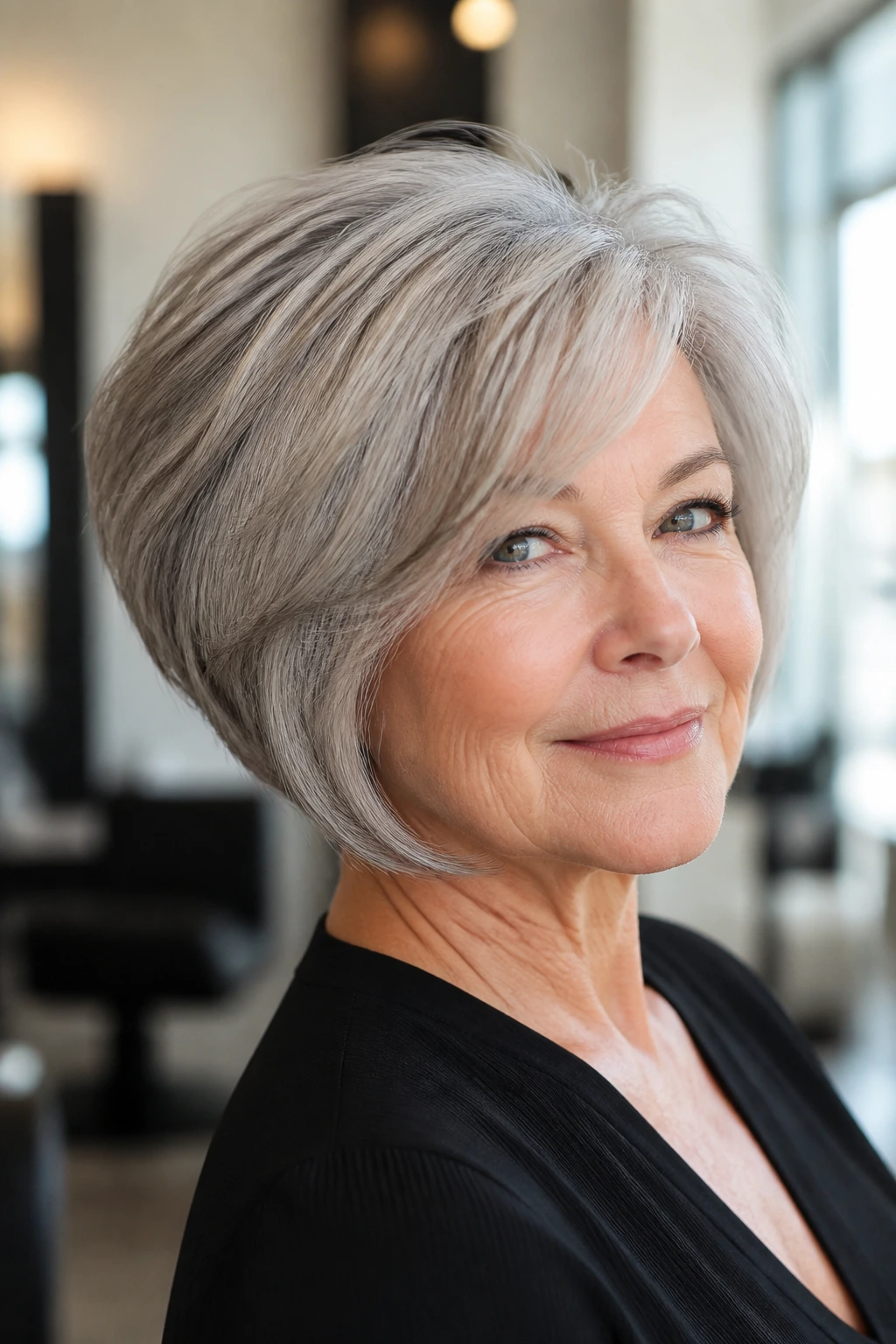
A graduated bob is the middle ground between stacked and blunt. The back is lifted enough to keep the crown from drooping, but the graduation is softer, so it doesn’t look overly engineered. On thick hair, that balance is useful. You get shape without looking overcut.
This style is flattering when you want some fullness around the back of the head but do not want a severe edge at the nape. It suits women who like their hair to feel neat but not tiny. The line should curve gently toward the face, and the top should keep enough lift to avoid helmet syndrome.
Best if you want:
- A salon finish that still looks natural
- Fullness in the right places
- Less maintenance than a sharply stacked bob
This is one of those cuts that quietly does its job. No drama. Just structure.
17. Shoulder-Skimming Bob with Curtain Bangs

The shoulder-skimming bob sits in a sweet spot for thick hair because it gives movement without trapping the hair too high on the head. Add curtain bangs, and the whole shape softens. The bangs break up forehead space and help the cut feel lighter around the face.
This is a flattering choice if you’ve got a broad forehead, strong cheekbones, or a face that benefits from vertical movement in the front. Curtain bangs also grow out more gracefully than blunt ones, which matters if you do not want to be back in the salon every three weeks. The length should graze the cheekbones, then blend into the sides without a hard disconnect.
The cut works especially well with a center part or a slightly off-center part. It’s a useful bob when you want something that still feels like “hair” and not just a fixed shape.
18. Silver-Sheen Bob with a Soft Side Part
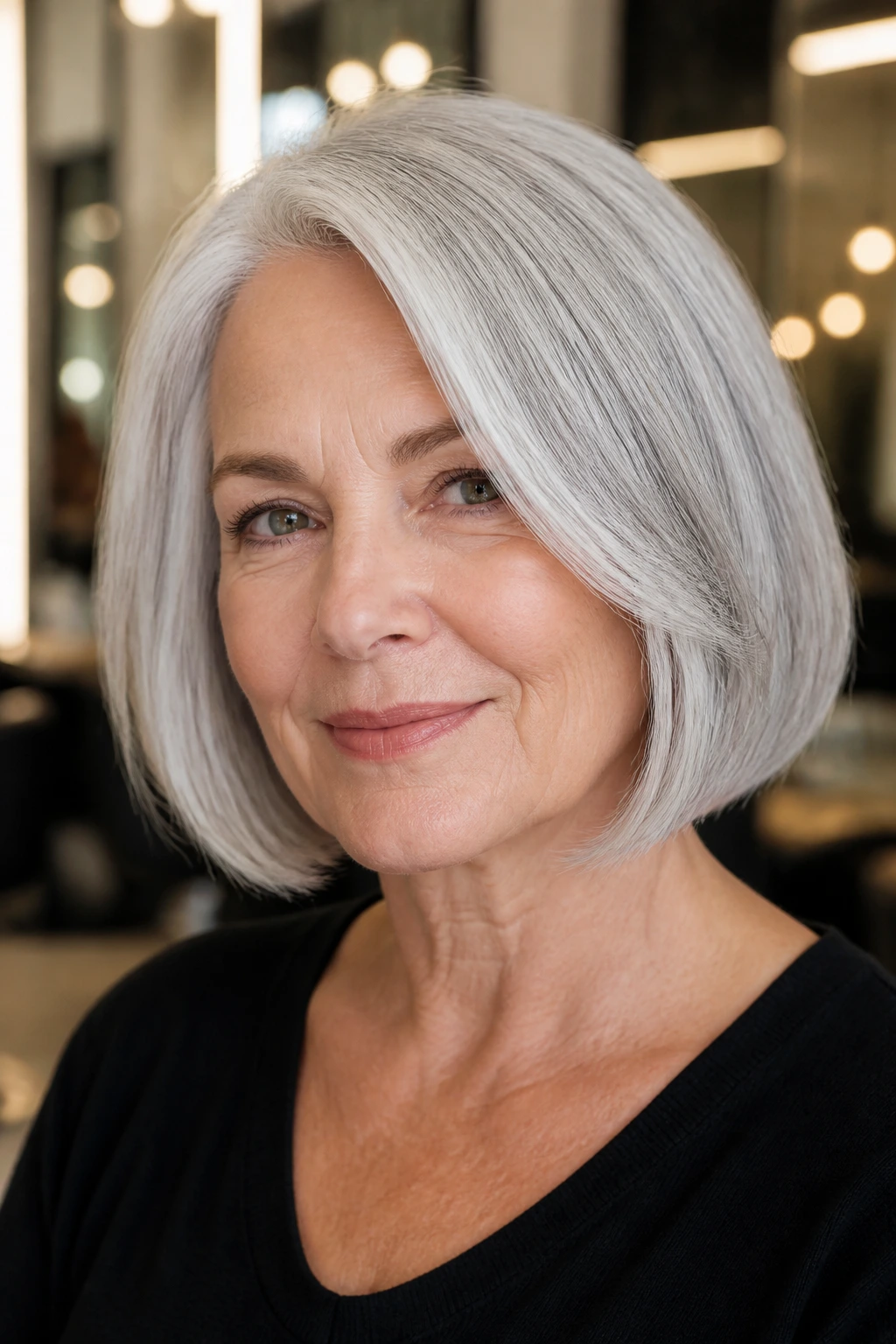
Gray hair can look stunning in a bob, but only when the cut lets the shine show. A soft side part and a clean, controlled outline keep silver and white strands from puffing up into fuzz. Thick gray hair can hold its own shape beautifully; it just needs enough structure to keep the finish neat.
This bob is less about a dramatic silhouette and more about showing off healthy movement. The side part gives a little lift at the roots, while the perimeter keeps the shape compact. If your silver hair is coarse, ask for gentle texturizing near the interior only, not through the ends. Coarse gray hair tends to fray when over-thinned.
The beauty of this style is that it looks deliberate even on low-styling days. A little shine spray on the mid-lengths and ends is enough to make the color pop.
19. Airy Layered Bob with Wispy Bangs
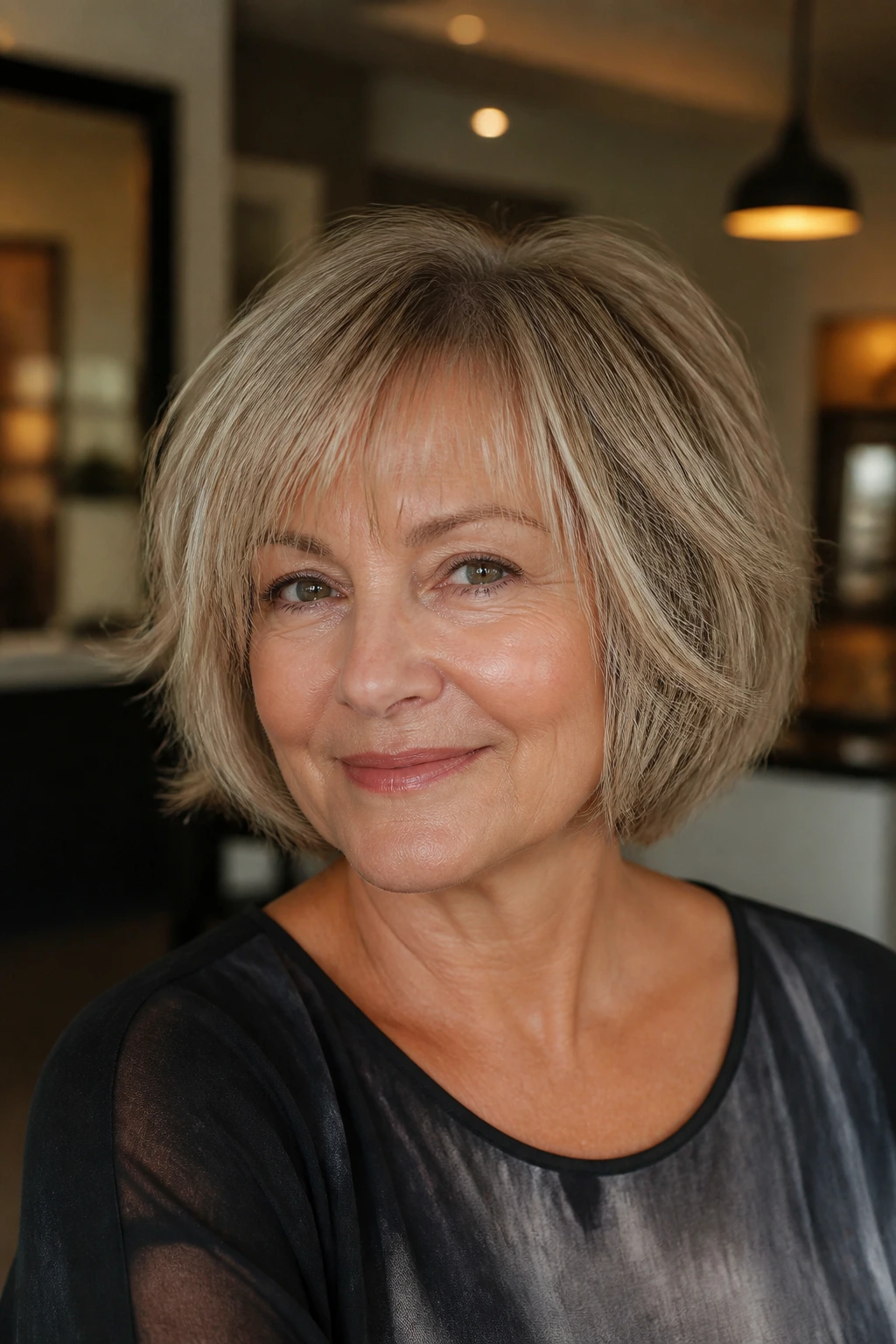
Can a bob be light without losing fullness? Absolutely, if the layering is done with a light hand. This cut uses airy internal layers to take the bulk out of thick hair while keeping the outer line intact. Wispy bangs soften the forehead and keep the front from feeling too heavy.
I like this one on women whose hair tends to sit flat at the crown but puff at the sides. The layers encourage movement through the middle, which helps the bob bend instead of bulge. Wispy bangs are more forgiving than blunt ones, too. They can be swept aside on bad hair days, and they don’t demand laser precision every morning.
The look is especially nice with a blow-dry that bends the bangs slightly off the face. It has a lived-in softness that feels easy, not styled to death.
20. Tucked-Behind-the-Ear Bob with Clean Edges
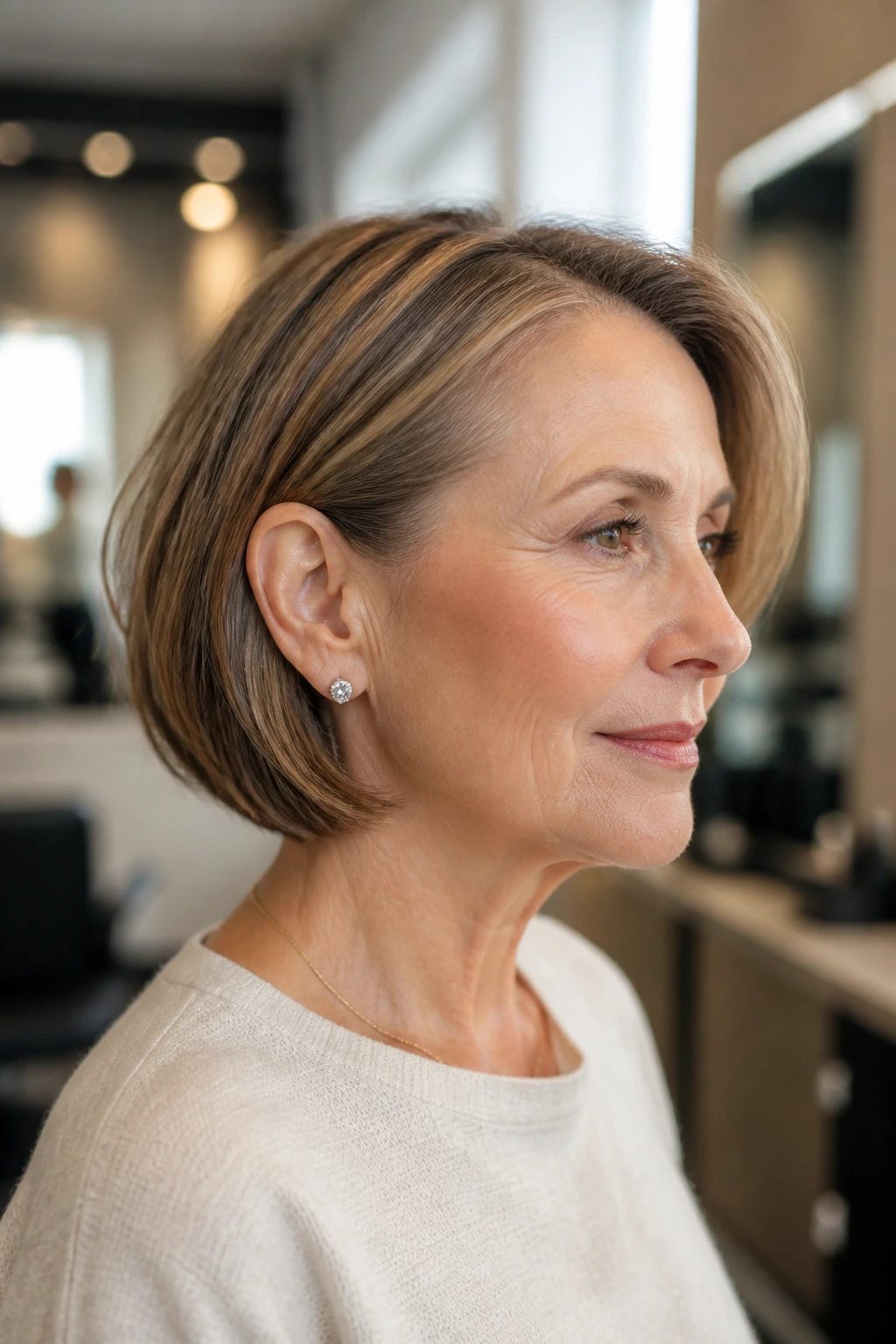
A bob that looks good tucked behind the ears has one huge advantage: it works with your life. Thick hair can turn into a lot of volume around the cheeks, so a cut that still looks polished when tucked gives you control without making you commit to one styling pattern. Clean edges around the jaw and temple keep the shape crisp.
This is a strong choice if you wear glasses, small hoops, or statement earrings. The ears become part of the style, not something the hair hides. The cut should be short enough that the tucked version looks intentional, but long enough that the hair still falls forward naturally when you want it down.
It’s a practical haircut, which sounds boring until you realize how often practicality is what keeps a style in the drawer. This one stays out of the drawer.
21. Classic Rounded Bob with a Full Side Fringe
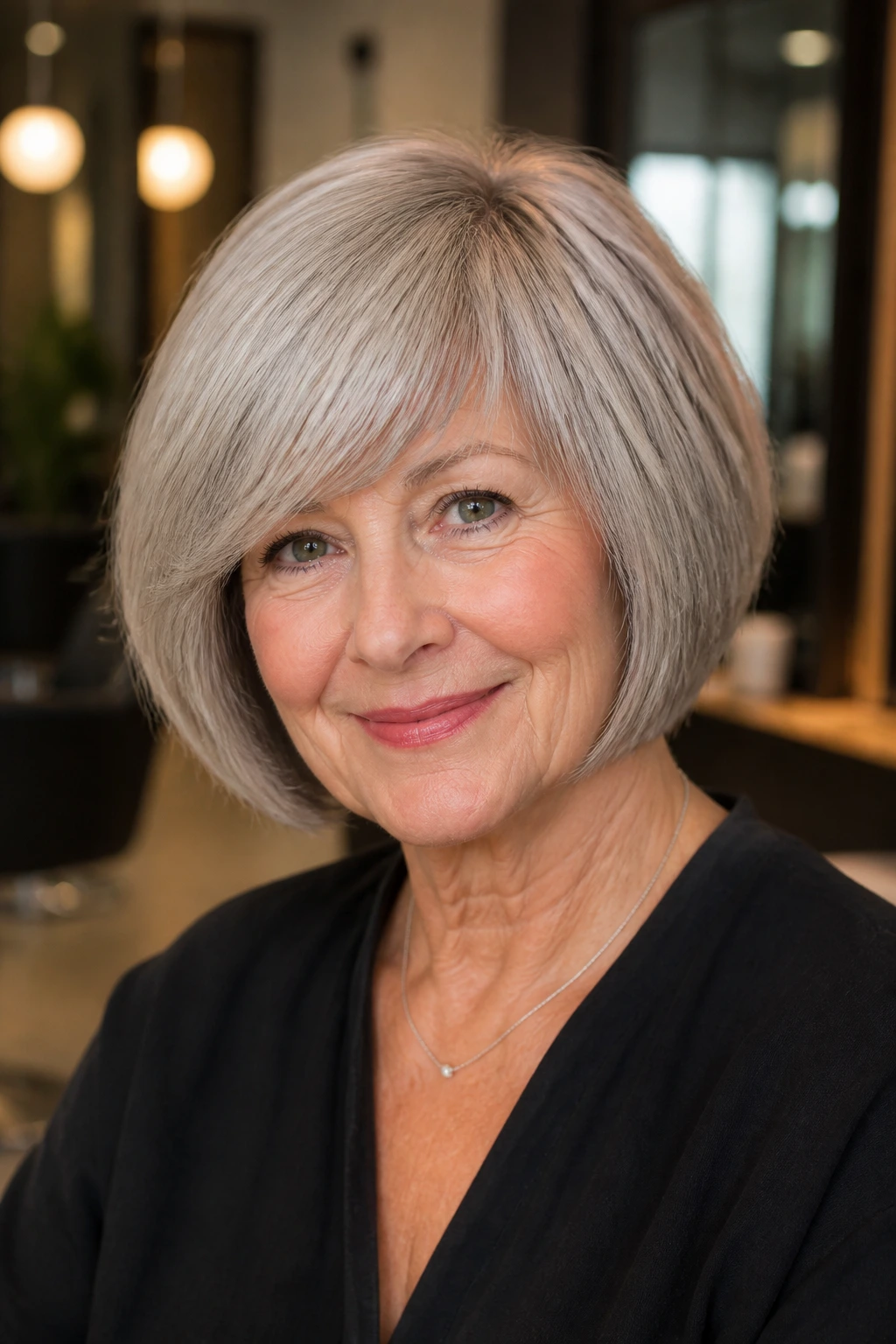
A classic rounded bob is the sort of haircut that comes back because it works. On thick hair, the rounded shape reins in the sides and creates a neat frame that sits close to the face. Add a full side fringe, and you soften the forehead while keeping the overall look balanced.
The side fringe does a lot here. It gives you movement at the front without the bluntness of a straight-across bang. It also helps if your hairline has changed a bit or if you want more softness around the eyes. Keep the fringe long enough to sweep rather than stick up. That makes styling easier and gives the cut a gentler finish.
This is a good final answer for someone who wants a dependable bob that still looks like it was chosen on purpose. Which, honestly, is the point.
What Thick Hair Needs From a Bob
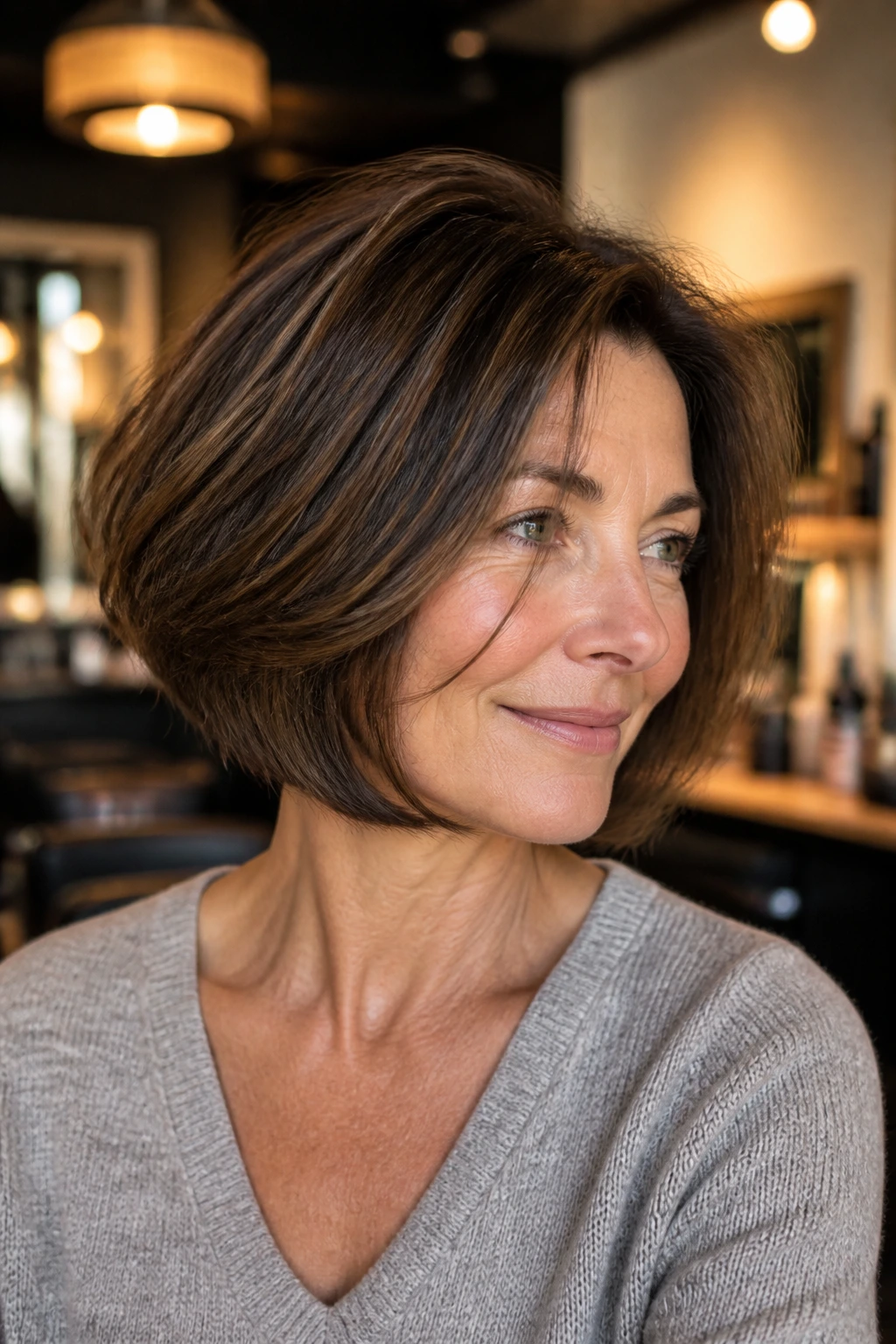
Thick hair does not need to be punished into submission. It needs a plan. The bob works when the stylist decides exactly where the weight should stay and where it should be reduced. Without that, the haircut can flip outward at the bottom and swell at the sides, which is why so many people think they “cannot wear short hair.”
They can. They’ve just worn the wrong short hair.
The cleanest thick-hair bobs usually use one of three ideas: graduation, invisible layering, or perimeter control. Graduation adds lift at the back. Invisible layering removes bulk without showing obvious steps. Perimeter control keeps the line smooth and stops the cut from turning fuzzy around the edges. Sometimes the best cuts use all three, just in different amounts.
For older women, the sweet spot is often a bob that gives shape near the jaw and softness around the face. Too much bluntness can feel hard. Too much layering can feel flimsy. The best bob for thick hair sits between those extremes and keeps doing so after a normal wash-and-dry, not only when a stylist has spent 45 minutes with a brush and two different products.
Essential Tools for Cutting and Styling These Bobs
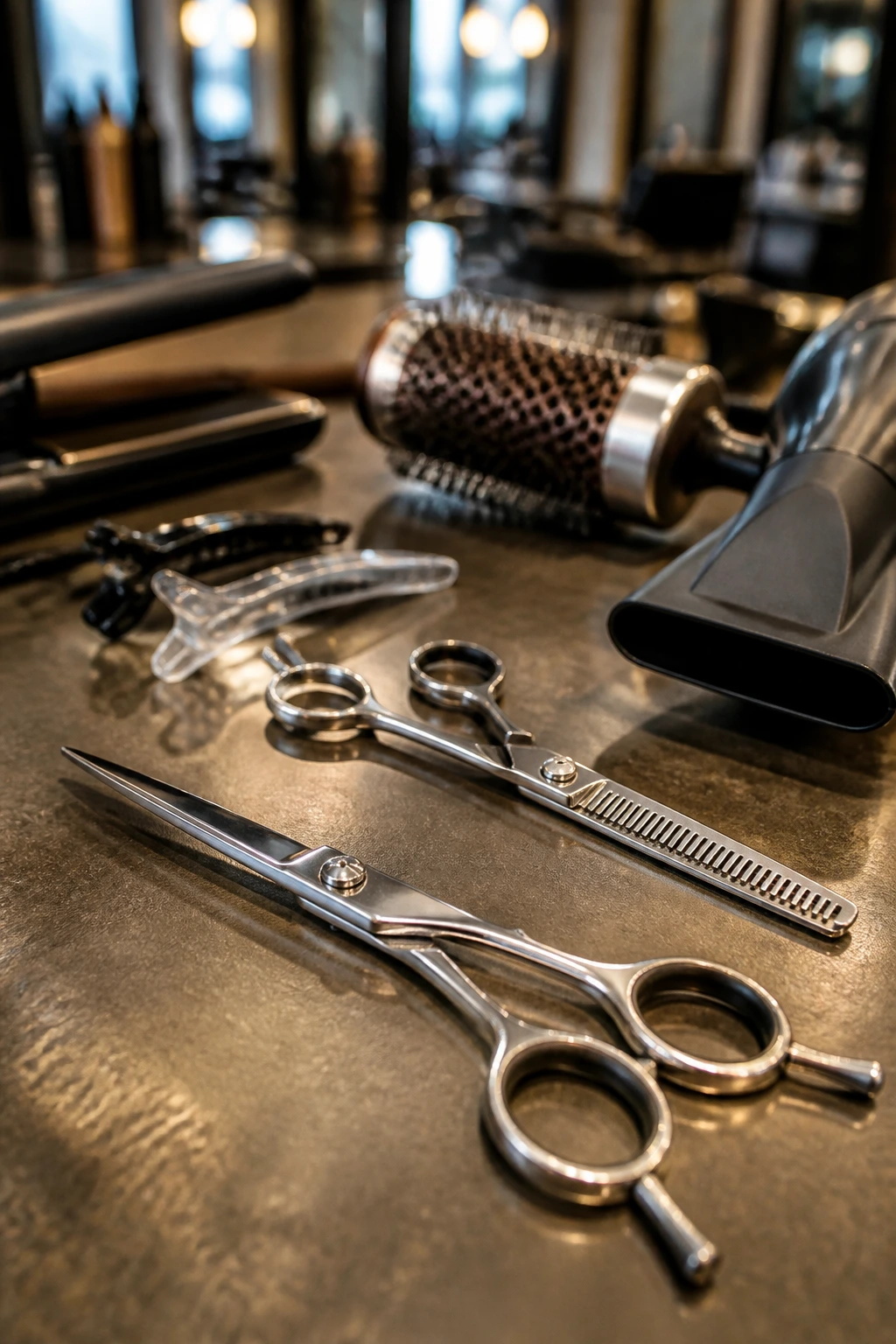
- Hair-cutting shears: Real shears matter if you’re trimming at home; kitchen scissors will chew the ends.
- Thinning or texturizing shears: Best left to a pro or used lightly, because thick hair can get frizzy if over-thinned.
- 1.25-inch round brush: A dependable size for shaping ends under or adding bend without huge curls.
- Blow-dryer with a nozzle attachment: The nozzle directs airflow, which helps keep thick hair smooth and less puffy.
- Flat iron: Useful for a sleek bob or for turning just the last inch of the ends inward.
- Sectioning clips: Thick hair needs control in small panels, not one giant clip that slips out.
- Heat protectant spray: Worth using every time if you’re going near a blow-dryer or iron.
- Smoothing cream or mousse: Cream for sleek styles, mousse for lift and body.
- Wide-tooth comb: Better than yanking through wet thick hair with a fine comb.
- Light shine spray: Handy for gray, silver, or coarse hair that needs a little polish.
How to Ask for the Right Bob at the Salon
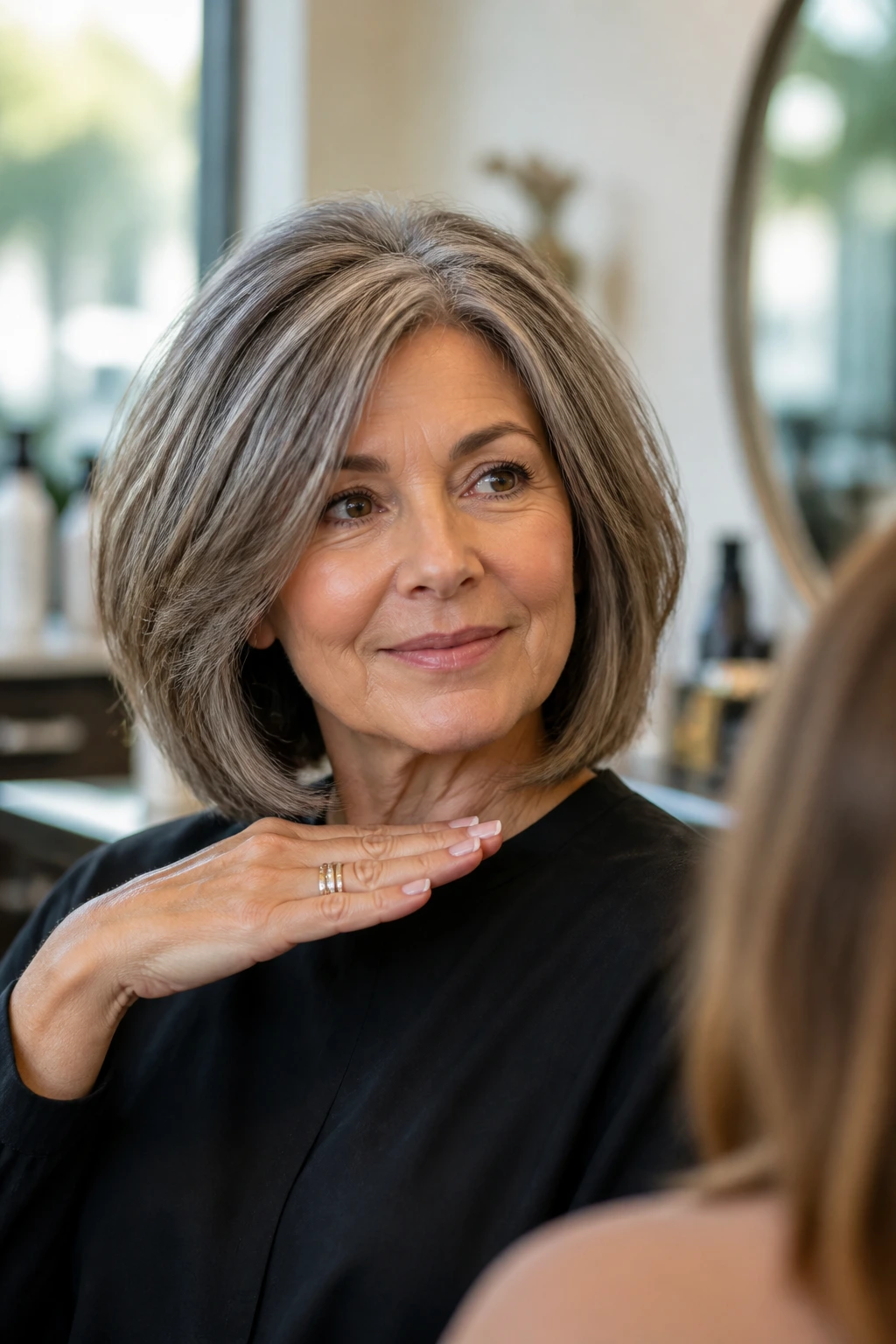
Most bob disappointments start with vague language. “I want it shorter” is not enough. Show the stylist where you want the length to hit — jaw, chin, lip, collarbone — and say how much weight you want removed. Thick hair needs that conversation, because the wrong kind of thinning can make the cut frizz while the outer line still looks heavy.
Bring more than one photo if you can. One should show the shape from the front. Another should show the side. A third, if possible, should show the back. Haircuts live in three dimensions, and the back of a bob is often where the real decision gets made. If you have a cowlick, wear glasses, or like to tuck your hair behind your ears, say so out loud. Those little details affect the shape more than most people realize.
Tell your stylist this, not that
- Say “I want the bulk removed internally, but I want the outline to stay full.”
- Say “I do not want the ends thinned out so much that they look wispy.”
- Say “I usually air-dry, so the cut has to work without a lot of brushing.”
That language gets you a better haircut than asking for “something flattering.” Flattering is too vague to cut.
Daily Styling Moves That Keep Thick Hair in Shape
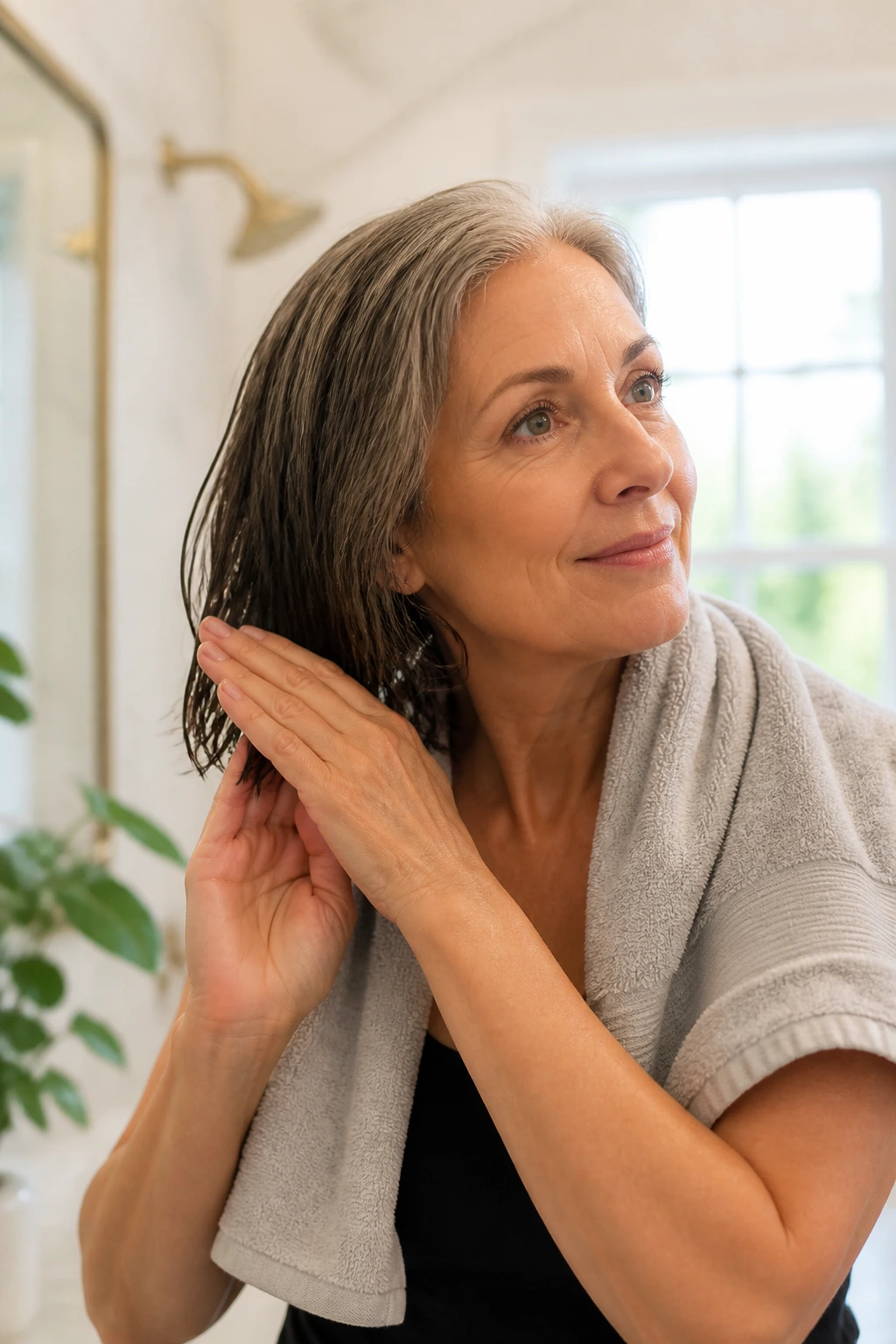
A good thick-hair bob should not demand a full salon routine every morning. Start with a towel blot, not a rough rub. Thick hair already has enough cuticle stress from heat and friction; rubbing it hard with a towel can rough up the surface and make the ends puff.
If you blow-dry, use the nozzle and aim the air downward along the hair shaft. That one habit makes a bigger difference than most products. Finish the ends with a round brush or a short pass of a flat iron, depending on the shape. For a rounded bob, wrap just the last 1 to 2 inches under. For a blunt or glassy bob, keep the iron moving so the line stays smooth instead of crimped.
Air-drying works too, especially on shaggy, wavy, or curly bobs. Use a small amount of cream or mousse, then leave the hair alone for a while. Hands in and out. Constant touching wakes up frizz.
Common Mistakes That Make Thick Hair Fight the Cut
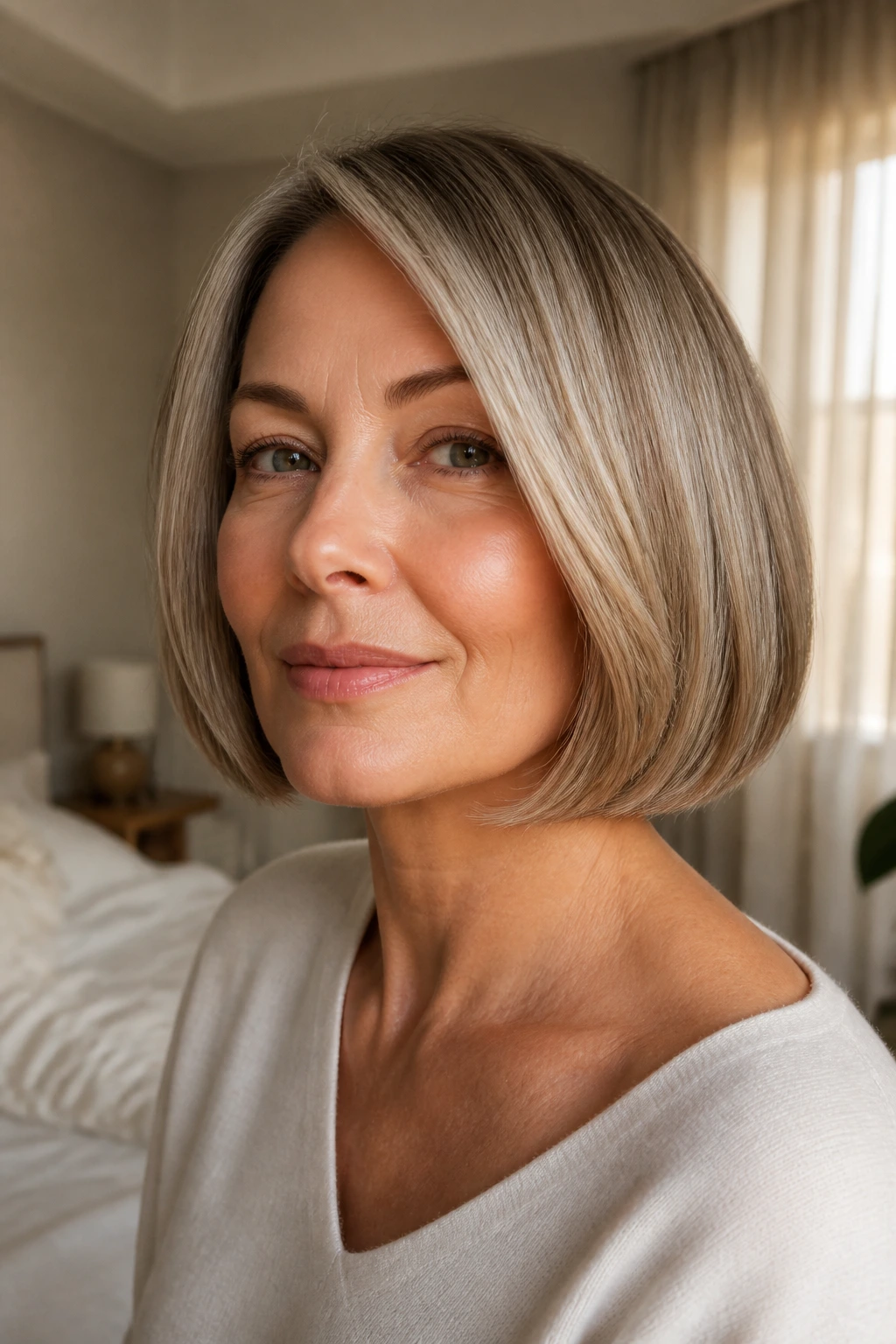
A thick bob usually goes wrong in the same handful of ways, and each one leaves a clue. Too much bulk left in the ends makes the haircut swing outward like a bell. The fix is not more product; it’s better interior cutting and a cleaner perimeter.
Over-thinning the ends is another big one. Hair can look light for one day, then dry, see-through, and fuzzy after the next wash. The symptom is a bob that appears hollow near the bottom. Ask for weight removal inside the shape, not through the outer edges, unless your hair is so dense that the stylist really knows what they’re doing.
Cutting the bob too short at the back can create a mushroom silhouette if the crown is full. That’s a common problem with stacked cuts on thick hair. The answer is a softer graduation, not a higher stack.
Ignoring the natural bend also causes trouble. If your hair flips outward at the jaw, the stylist has to account for that. Otherwise the bob will look shorter and wider than planned. Thick hair tells on you. It doesn’t hide mistakes for long.
Variations and Adjustments to Try
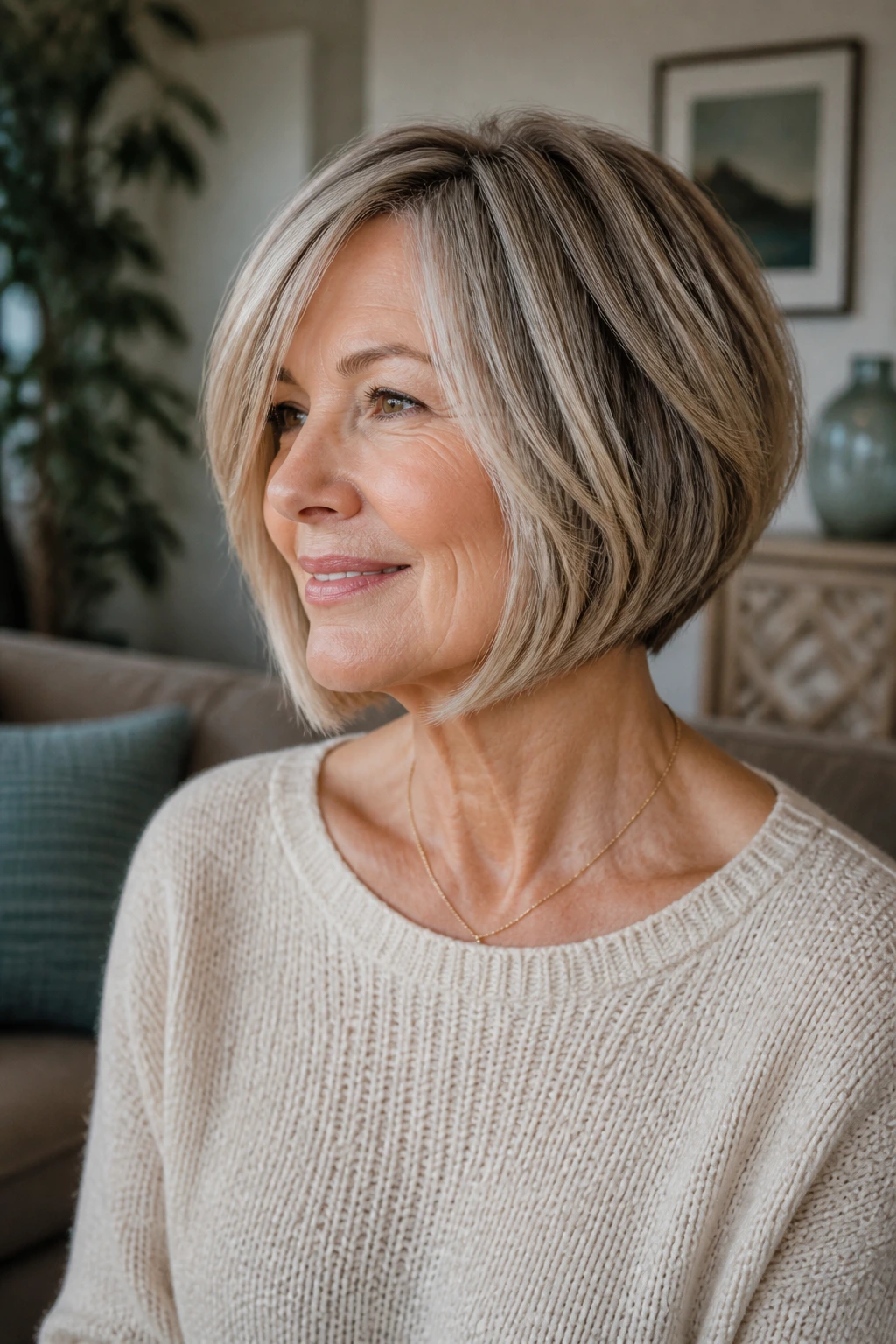
The Softer Jawline Version
Keep the bob at chin length or slightly below, then soften the front with longer pieces that brush the jaw. This is a nice choice if you want structure without a hard stop at the face.
The Collarbone Drift
Let the bob grow into a lob and keep the layers invisible. It’s the easiest switch if you’re not ready for shorter hair but still want the body of a bob.
The Lifted Crown Edit
Add a little more graduation in the back and keep the top shorter enough to encourage root lift. This helps when thick hair tends to flatten on top and bulk out below.
The Fringe-Free Clean Line
Skip bangs altogether and let the shape do the work. This is a smart option if your forehead hairline changes or if you dislike fringe maintenance.
The Curl-First Cut
For natural curls or waves, cut the bob to the curl pattern instead of forcing a straight outline. The result looks softer and usually grows out better, too.
Maintenance, Trims, and At-Home Care

A thick bob holds its shape better than many styles, but it still needs regular trimming if you want the silhouette to stay clean. Most bob shapes look best with a trim every 6 to 8 weeks. Shorter, more structured bobs — stacked, inverted, sharp A-line — need the tighter end of that range. Longer, softer bobs can stretch a little farther.
At home, use a hydrating shampoo and a conditioner that won’t make the roots slippery. Thick hair can handle moisture, but the wrong conditioner near the scalp can collapse the style. If your bob gets fuzzy, a leave-in cream on the mid-lengths and ends often helps more than piling on serum.
Color care matters too, especially for gray, silver, or highlighted bobs. Thick hair can hold shine, but dull ends ruin the effect. A weekly glossing treatment or even just a good rinse-out conditioner with a little slip can keep the cut from looking dry at the perimeter. And if you heat-style often, use protectant every single time. Thick hair may look tough. It still burns.
Frequently Asked Questions
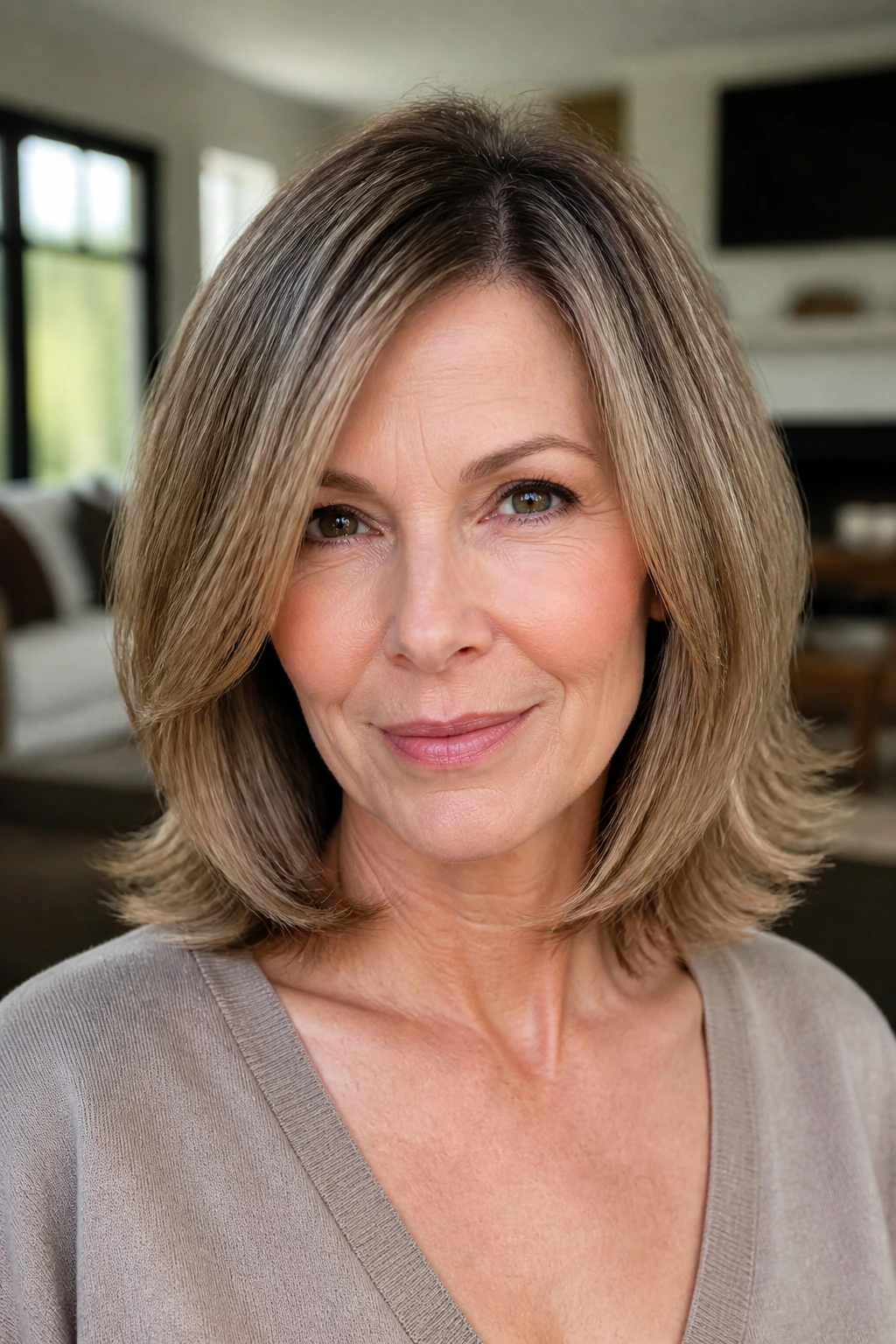
Which bob length is most flattering for thick hair on older women?
Jaw length and collarbone length are the easiest places to start. Jaw length gives clean shape and keeps the ends from feeling heavy, while collarbone length lets thick hair move without the cut ballooning outward. If you’re unsure, collarbone length is the safer first step.
Should thick hair be layered or blunt in a bob?
Usually, a mix works best. A blunt outline keeps the shape strong, while internal layers or graduation remove bulk from inside the haircut. Too many visible layers can make thick hair look frayed, especially at the ends.
Can thick hair wear a bob without daily heat styling?
Yes, if the cut respects your natural texture. Wavy and curly bobs often look better air-dried with a cream or mousse than they do blown straight every day. Straight, dense hair may still need a quick round-brush pass at the ends, but it does not need a full production.
What if my bob turns puffy at the sides?
That usually means the bulk sits too low in the shape or the perimeter is too blunt for your hair density. Ask for more internal weight removal and a slightly longer front. A side part can also help break up width.
Are bangs a good idea with thick bob haircuts?
Sometimes, but they need to be chosen carefully. Side fringe and curtain bangs are easier to live with than heavy blunt bangs, which can feel dense on dense hair. If your forehead swirls or cowlicks, keep the fringe soft and flexible.
Can a bob work if my hair is coarse and gray?
Absolutely. Coarse gray hair often has enough strength to hold a neat bob really well. The key is a clean perimeter and careful texturizing, because over-thinning gray hair can make it look fuzzy fast.
How do I stop my bob from flipping out at the ends?
First, check the cut. If the bob is too short at the jaw or the ends are too blunt for your hair texture, it will flip. A quick pass with a round brush or flat iron can help day to day, but the long-term fix is a better cut line.
A Shape That Works With Thick Hair
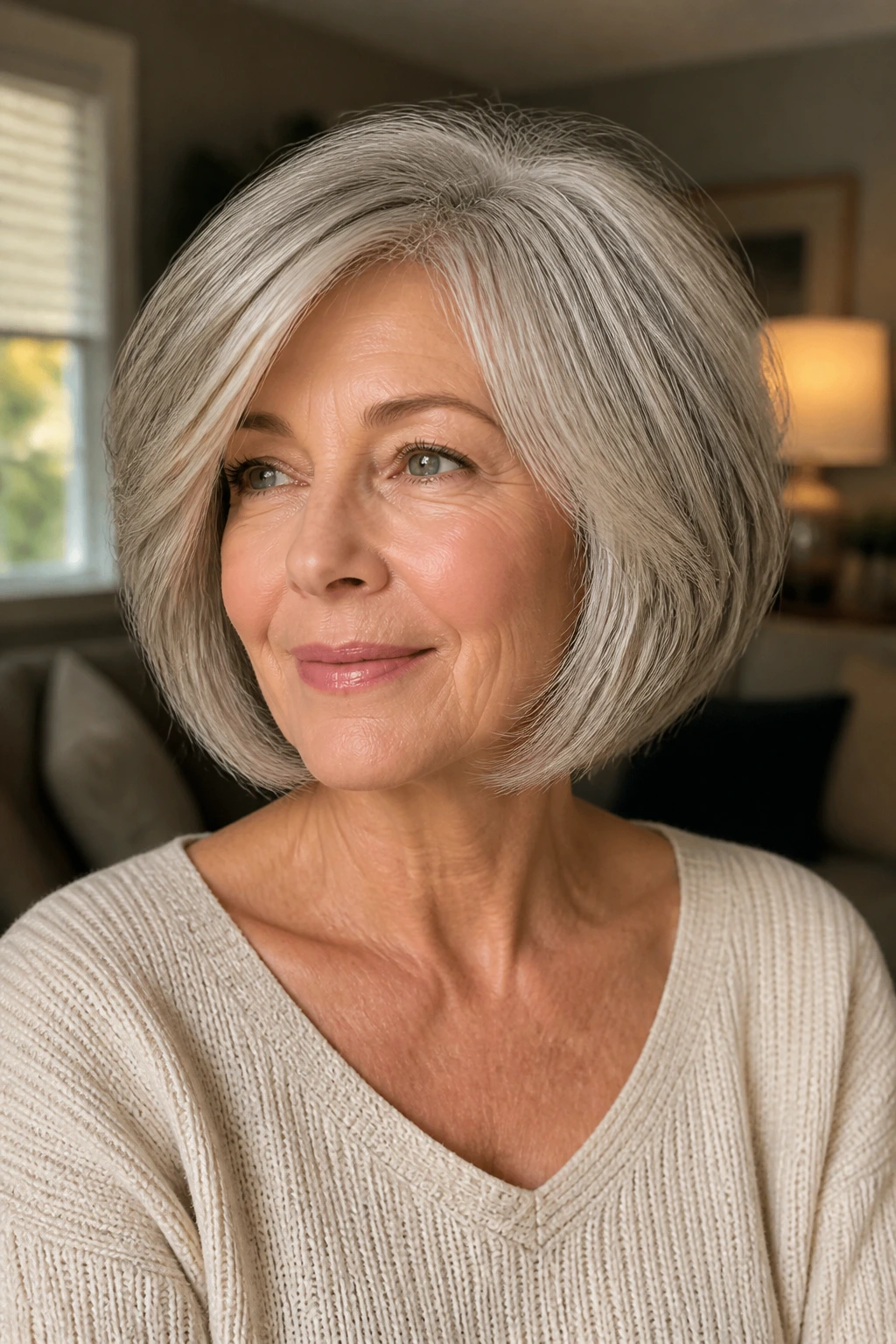
The best bob haircuts for thick hair on older women do not try to erase the hair’s natural strength. They steer it. They give the bulk a place to go, leave the face room to breathe, and make the style look intentional even when you’ve done almost nothing to it that morning.
That’s why the right bob can feel so satisfying. It cuts the fuss, not the personality. If thick hair has been sitting on your shoulders like a stubborn shape for too long, one of these bobs may be the reset that makes it useful again — and a lot more fun to wear.
