



The best summer blonde hair color ideas do one thing especially well: they make hair look like it spent a week near bright windows and salt air, even if the only sun it saw came through a car windshield. The trick is not just going lighter. It’s choosing the right temperature, the right amount of root depth, and the right kind of shine so the color still looks expensive when it starts to grow out.
That’s where a lot of blonde inspiration falls apart. A pale blonde can look silky on a photo feed and then turn harsh, yellow, or chalky in real life, especially if the base was lifted too fast or the toner was picked without thinking about undertone. I’ve always liked blondes that keep a little dimension. Flat, single-note blonde reads like bleach. Dimension reads like hair.
And summer is the perfect excuse to be picky. Bright light shows everything: brass, banding, porous ends, patchy tone, the whole mess. Good blonding hides the effort. Better blonding looks easy because the effort was done in the right places.
Why You’ll Love This Collection
-
Built for real sunlight: These shades are chosen to hold up in bright, outdoor light, where plain yellow or flat platinum can look strained and overdone.
-
There’s a level for every starting point: Some of these looks need only a gloss and a few foils; others work best with a slow, careful lift on darker hair.
-
Low-maintenance options are included: If you do not want to book root touch-ups every six weeks, there are rooty, lived-in blondes that grow out cleanly.
-
Warm and cool tones are both covered: Honey, beige, pearl, and icy shades all make an appearance, so you can match the blonde to your undertone instead of fighting it.
-
Each shade comes with a practical angle: Along with the color name, you’ll get the placement style, tone family, and upkeep reality, which is the part most inspiration boards skip.
-
These ideas work beyond straight hair: Waves, curls, bobs, and long layers all change how blonde reads, and a few of these looks lean into that movement instead of flattening it.
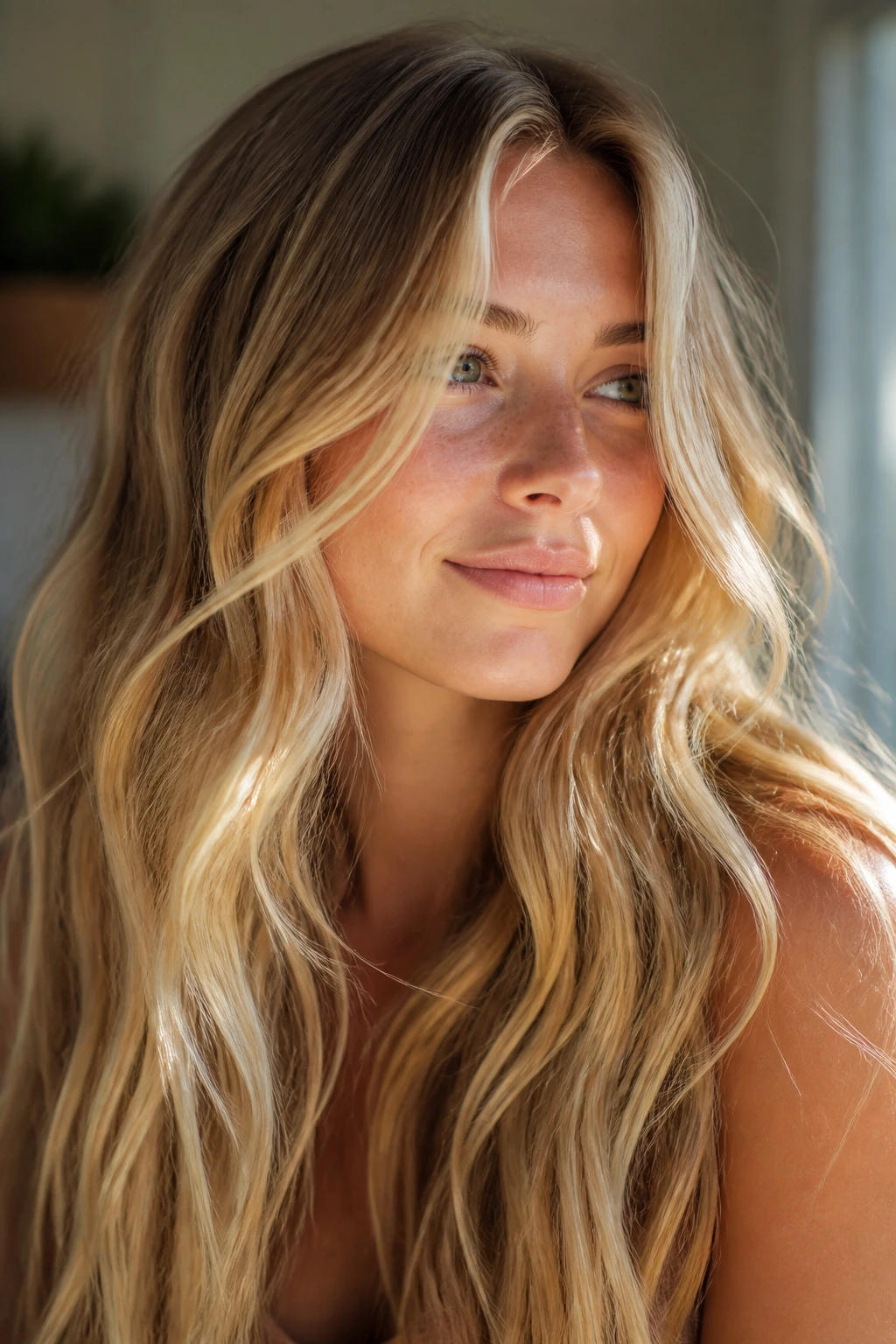
1. Sunlit Honey Blonde
Honey blonde is the shade I reach for when someone wants warmth without going full gold coin. It sits in that sweet spot between beige and gold, so the hair glows in daylight instead of flashing yellow under every light bulb. On shoulder-length layers, it can look almost syrupy when the waves hit the light.
Why It Works
Honey tones are forgiving on a lot of bases, especially hair that already sits around a level 7 or 8. A colorist can weave in fine highlights, then finish with a warm beige-gold gloss so the result looks soft rather than stripey. That little gloss step matters. Without it, honey can skew brassy after a few washes.
What to Ask For
- Fine babylights around the face and crown
- A level 8 to 9 honey-beige toner
- Soft root depth, not a hard line
- A warm gloss if your hair tends to pull ash
I like this shade on medium to olive skin tones because it gives the face a little warmth back. The best version looks sunlit, not orange. If your stylist says “golden beige,” that’s the right neighborhood.
2. Beige Blonde With a Soft Root Melt
Beige blonde is the quiet overachiever of summer blondes. It does not scream for attention, and that’s why it keeps working long after flashier shades start looking tired. The soft root melt keeps the color grounded, which means you can let it grow for a while without staring at a harsh demarcation line in the mirror.
Why It Works
A root melt keeps the top area one to two levels deeper than the lighter mids and ends, so the color has a built-in shadow. That shadow does a lot of heavy lifting. It gives the eye a place to rest and makes the blonde look thicker at the root. On fine hair, that matters more than people think.
Best For
- Natural brunettes who want a softer blonde
- Anyone who hates obvious regrowth
- Hair that lifts evenly to a pale yellow or light gold
- People who want beige, not icy
This is one of those shades that looks polished in a bun and even better in loose waves. If you prefer a blonde that doesn’t demand a fresh toner every minute, start here.
3. Champagne Blonde
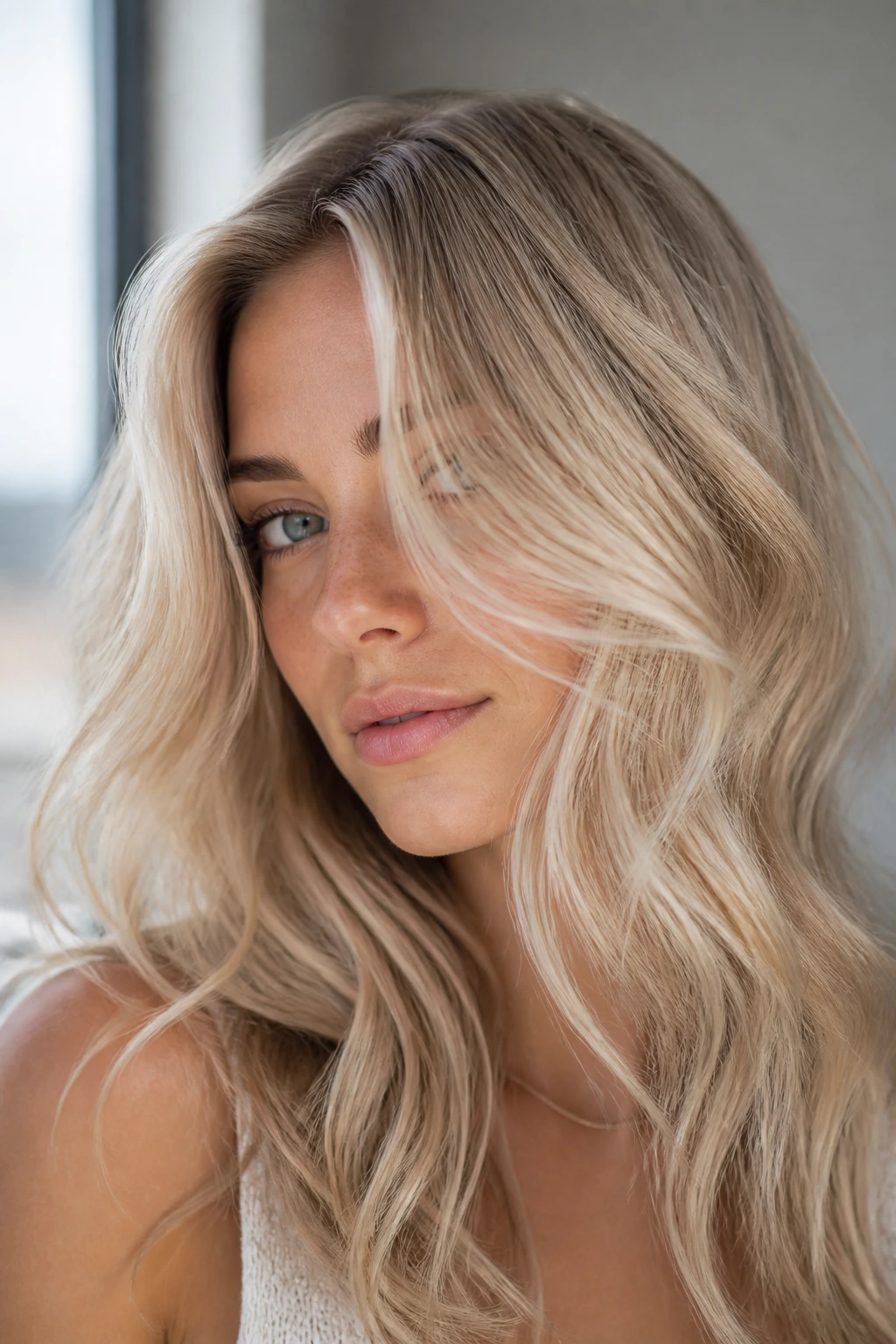
Champagne blonde has a pale sparkle to it that feels clean without looking sterile. Think pale beige with a cool glint, like the color caught somewhere between pearl and gold. On layered cuts, it can look expensive in a way that plain platinum often misses.
Why It Works
The reason champagne blonde works is balance. Too much gold and it gets buttery; too much ash and it goes flat. The good version sits at that middle point, usually on hair lifted to a very light level 9, then toned with a mix that keeps the warmth soft and the finish bright. The slightest pink-beige undertone can make it look more natural on skin with cool or neutral undertones.
What to Watch For
- Over-toning can make it look gray
- Under-toning leaves a yellow cast near the roots
- It needs even lift, or the ends show patchiness fast
I like champagne blonde on mid-length cuts with movement. It catches light in thin ribbons rather than all at once, which is where the magic lives.
4. Vanilla Cream Blonde
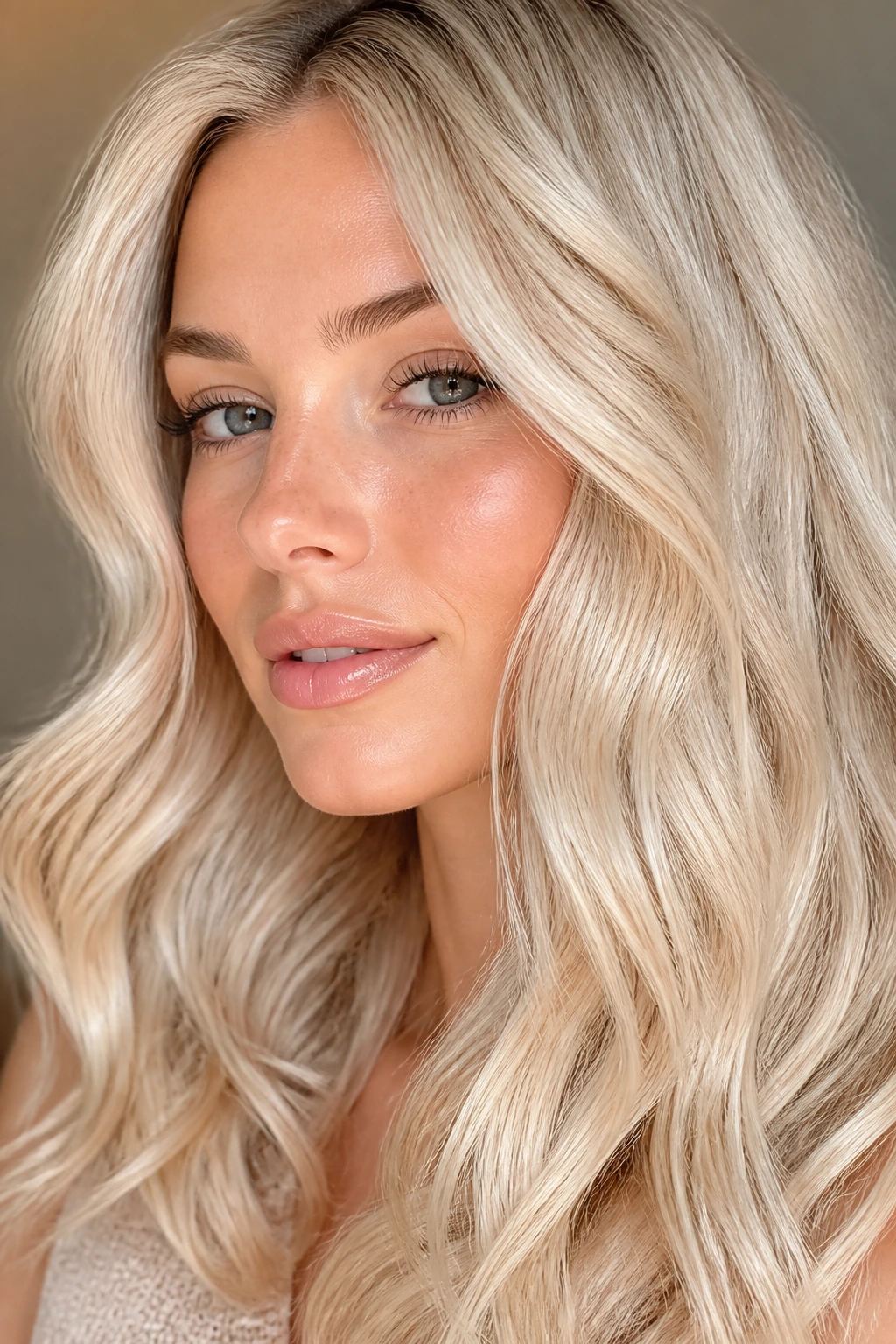
Vanilla cream blonde is one of those shades that sounds sweet and actually looks softer than the name suggests. It’s a creamy pale blonde with very little harsh contrast, which makes it especially nice on hair that’s already pre-lightened and in decent condition. The color reads smooth, not frosty.
Why It Works
This look depends on a clean, even canvas. If the hair is lifted to a pale yellow and toned with a creamy beige formula, the result can look buttery without turning brassy. It’s also one of the better choices for someone who wants blonde that still feels touchable. The shine is half the effect.
How to Wear It
- On long layers, it looks plush and soft
- On a blunt lob, it reads sleek and modern
- With curtain bangs, it can frame the face without looking severe
I’d avoid this if your hair is very porous or over-processed, because the creamy tone can grab unevenly. On healthier hair, though, it is one of the prettiest softer blondes around.
5. Buttery Balayage Blonde
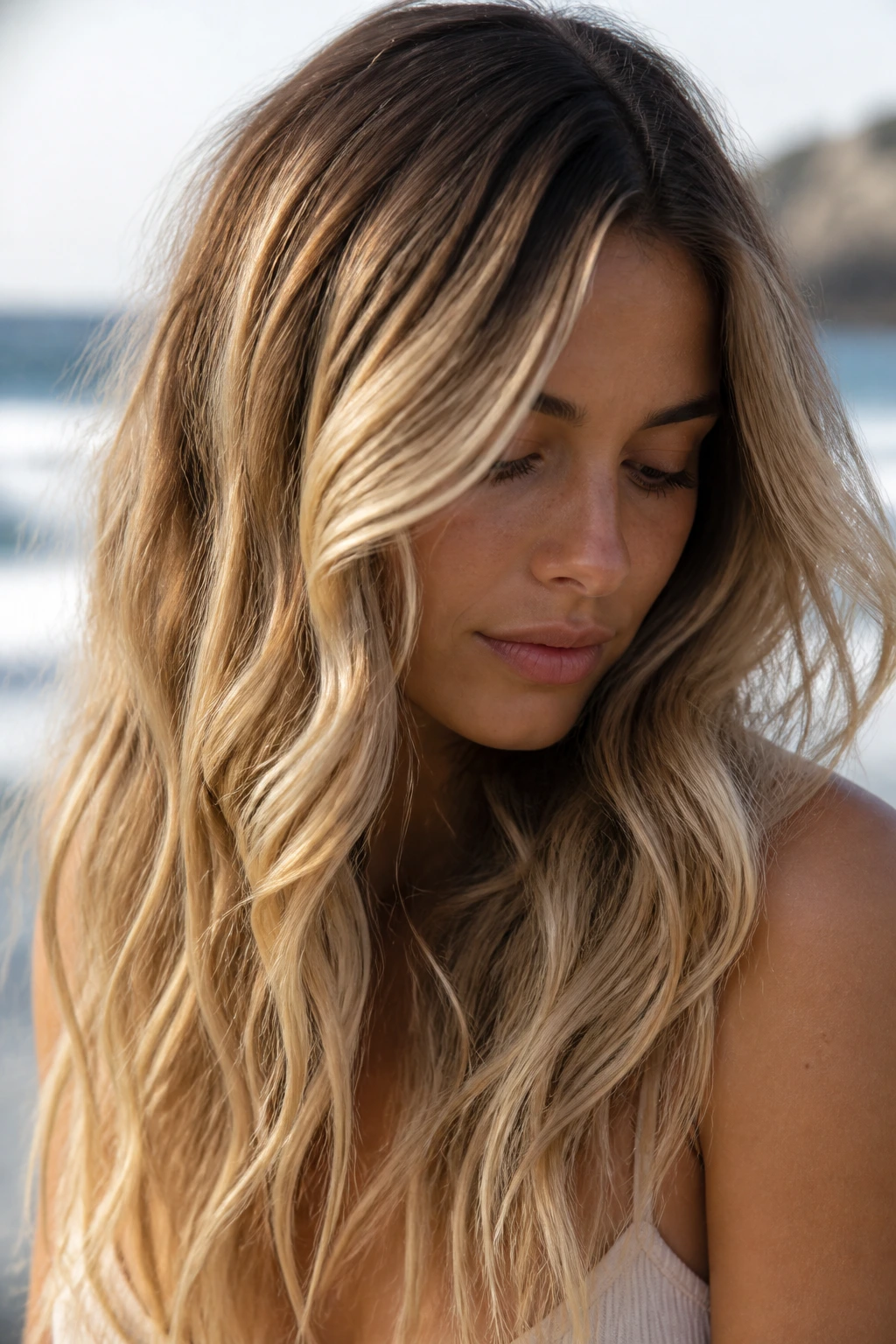
Buttery balayage is the kind of blonde that looks like it was painted by someone who knows exactly where the sun would hit. The brightness sits in ribbons through the mids and ends, while the root keeps a little depth. That contrast is why it holds up so well in summer.
Why It Works
Balayage lets the lightest pieces land where the hair naturally moves, which makes the shade feel organic instead of sliced into the head. Butter tones are warm, but not cartoon yellow. They live in the level 8 to 9 zone, and that makes them easy to soften with a beige gloss if the warmth starts to push too far.
Who It Suits
- Medium to dark blondes wanting more glow
- Brunettes who want a blonde finish without full saturation
- Wavy and curly textures, because the ribbons show through movement
- People who prefer lower-maintenance grow-out
My bias: this is one of the smartest summer blondes for real life. It keeps looking like a choice even when the roots come back.
6. Sand Blonde With Grown-Out Depth
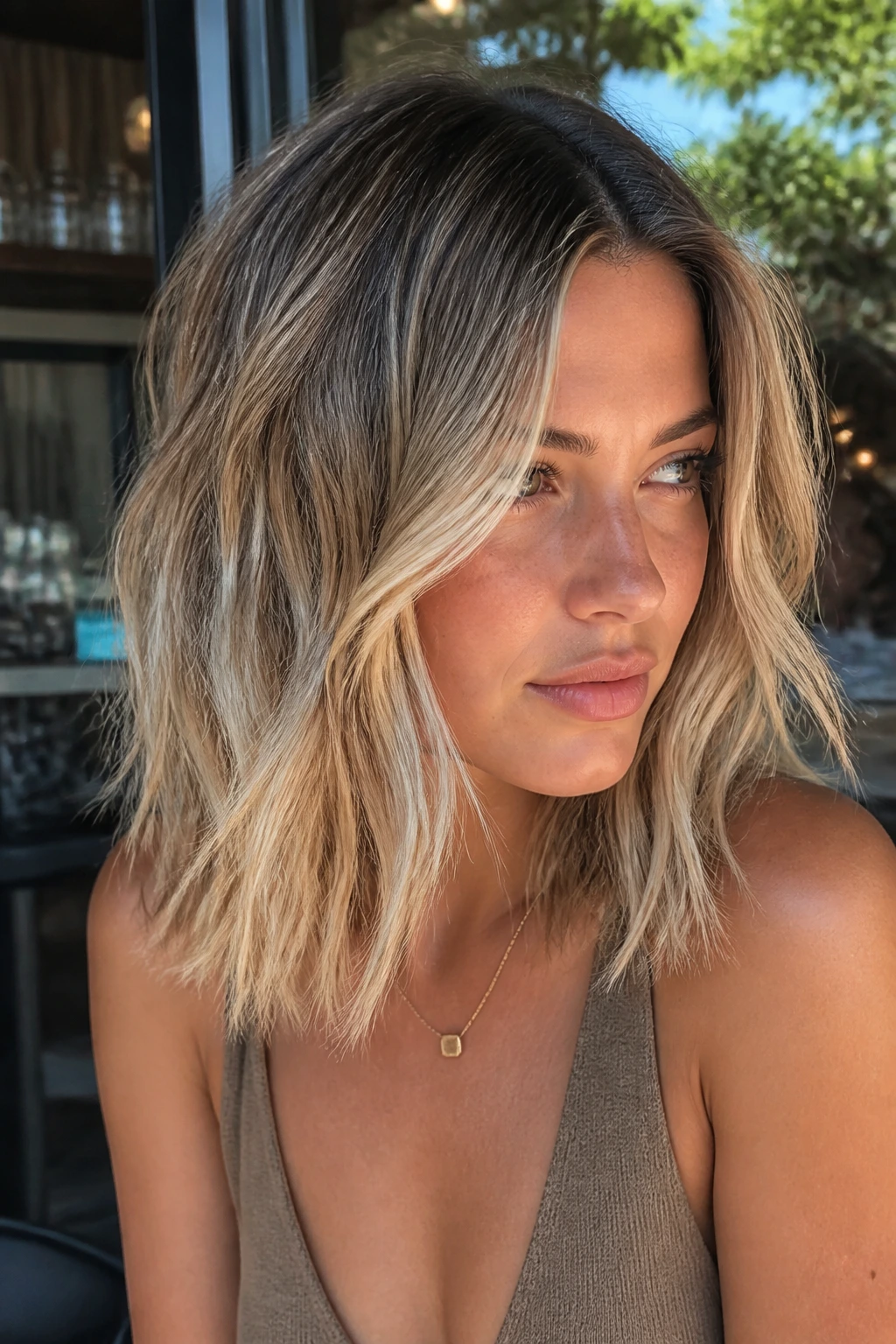
Sand blonde is what happens when beige and cool warmth stop arguing. It has a muted, sun-bleached feel, but the grown-out depth keeps it from looking dry or flat. I like it on haircuts with texture because the shade looks more interesting when pieces fall forward and back.
Why It Works
A good sand blonde usually starts with lighter highlights on a level 7 or 8 base, then gets softened with a neutral-beige toner and a slightly deeper root. That deeper root makes the blonde feel lived in from day one. It also means the color won’t look shouty in bright light, which is a real advantage if you do not live for purple shampoo.
Quick Notes
- Best on shoulder-length cuts and long shags
- Works well with a matte finish instead of glossy shine
- Needs less maintenance than platinum or icy blonde
- Can be paired with lowlights for extra dimension
This is the shade for people who like their blonde a little undone. Not messy. Just a little breezy.
7. Pearl Blonde
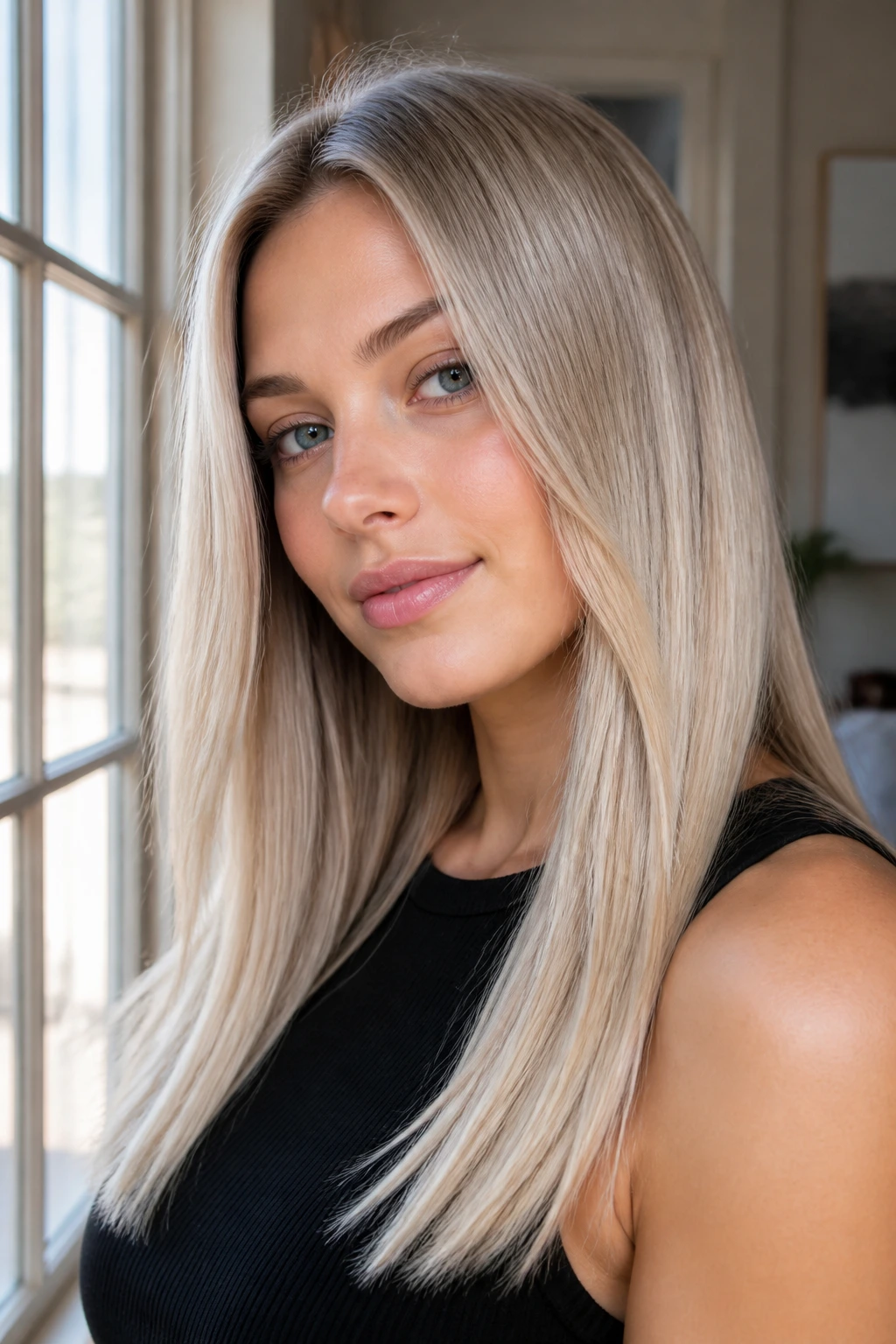
Pearl blonde has a cool, luminous edge that never quite turns silver and never stays yellow. It’s a cleaner, more polished look than beige, but softer than full icy blonde. If you want a blonde that looks crisp in daylight, this one sits high on the list.
Why It Works
Pearl blonde usually needs a very even lift, because any patchy warmth will show through the cooler toner. That’s the trade-off. The pay-off is that the color reflects light in a smooth way, especially on straight hair or smooth blowouts. A violet-beige toner can keep the finish bright without making it look gray.
A Small Caveat
It’s not a forgiving shade on damaged hair. Porous ends can soak up cool pigment and turn dull fast. If the ends are fried, a stylist may need to gloss only the lighter pieces and leave a touch more warmth in the lower section so the whole head still moves.
Pearl blonde looks lovely with soft makeup, but it also works when you’re bare-faced and the hair has enough shine. That’s the nice thing about a shade like this. It does part of the work for you.
8. Strawberry Champagne Blonde
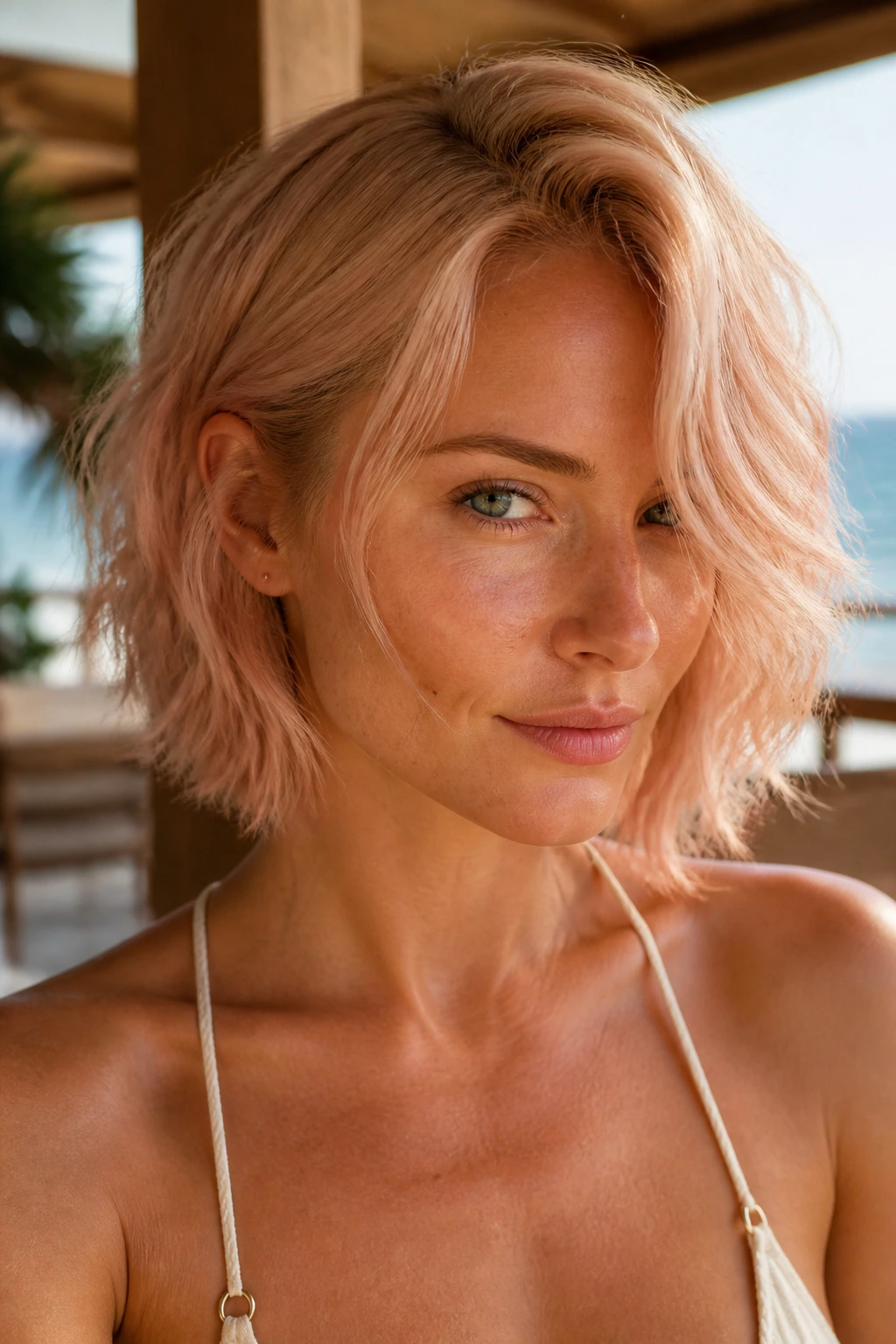
Strawberry champagne blonde is the pretty little troublemaker of the group. It takes the pale brightness of champagne and slips in a blush-peach note, so the hair feels warm, playful, and a bit less expected. The color is subtle enough to wear, but different enough that people notice.
Why It Works
The blush tone sits on top of a light blonde base, usually level 9 or 10, and it fades gracefully if the formula is done right. That matters, because peach-based blondes can look muddy when they wash out. A good version fades toward soft beige rather than orange. That’s the entire trick.
How to Wear It
- On short bobs, it looks clean and graphic
- On beachy waves, it has a soft, romantic feel
- On pale or neutral skin, it can brighten the face fast
If you like blonde but find straight ash tones a little cold, this is a smart switch. It still reads blonde. It just has more personality.
9. Caramel-Dipped Blonde
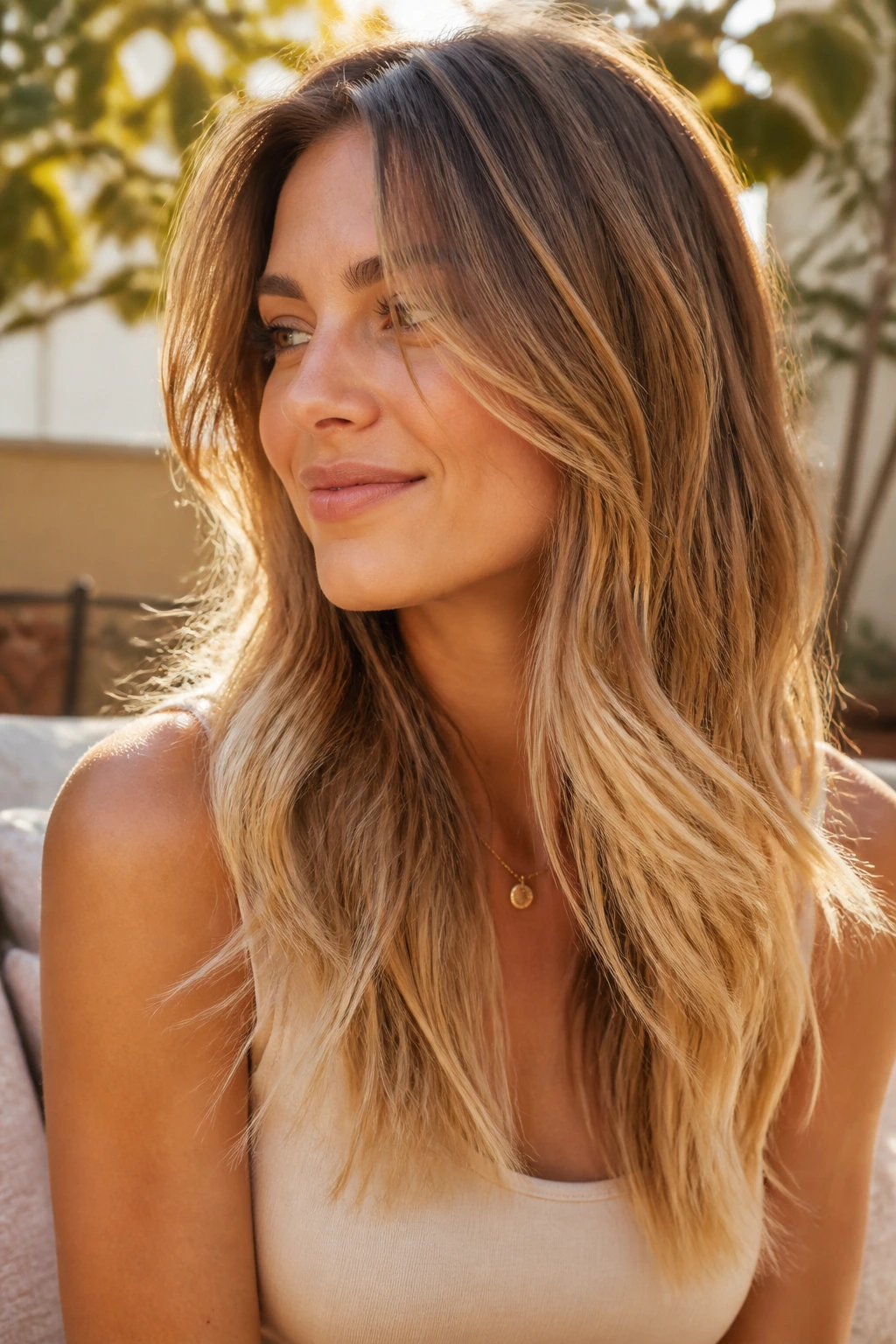
Caramel-dipped blonde works best when the ends are lighter and the midlengths carry the warm, amber thread. It is less about all-over blonding and more about creating that golden dip at the bottom of the hair. The result feels rich, not heavy.
Why It Works
This shade leans on contrast. The caramel pieces prevent the blonde from looking too airy, while the light ends keep the whole thing from reading brunette. On layered cuts, the transition looks especially good because each level catches light differently. A stylist might use balayage and a soft shadow root to keep the fade believable.
What Makes It Different
Unlike cooler blondes, caramel-dipped color can look gorgeous when it starts to grow out. The deeper tone near the root buys you time. It also hides less-than-perfect lift better than a stark platinum would, which is why I’d call it one of the most forgiving warm blondes on this list.
This is a nice fit for medium brunettes who want blonde movement without the commitment of full lightness.
10. Icy Cream Soda Blonde
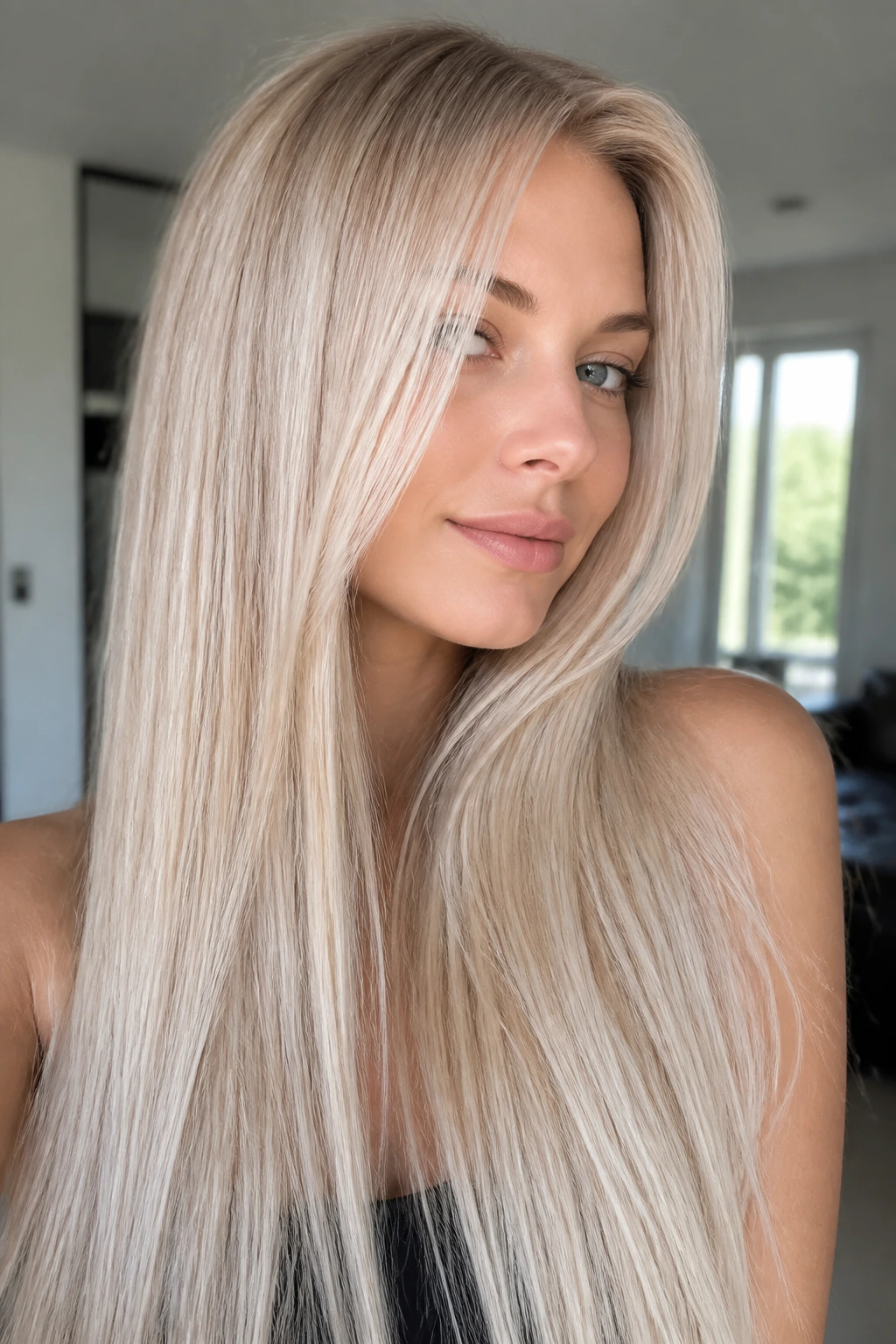
Icy cream soda blonde sounds playful, but the color itself is cooler and cleaner than the name suggests. It mixes a pale blonde base with silvery-beige ribbons, so the finish feels crisp rather than flat. On hair with a smooth blowout, it can look almost glassy.
Why It Works
This shade needs discipline. The lift has to be even, and the toner has to be chosen with care because any leftover gold will fight the cool finish. When it works, though, it reads sharp in sunlight and polished indoors. The contrast between cool brightness and soft beige keeps it from looking like white paint.
Best For
- People who like a very clean blonde
- Natural blondes or highlighted hair that already lifts well
- Straight or softly waved styles
- Anyone willing to use purple shampoo with restraint
A little restraint is key. Overusing purple shampoo can push icy blondes into a dull lilac-gray zone, and that is not the same thing. Keep the tone cool, not chalky.
11. Golden Ribbon Highlights
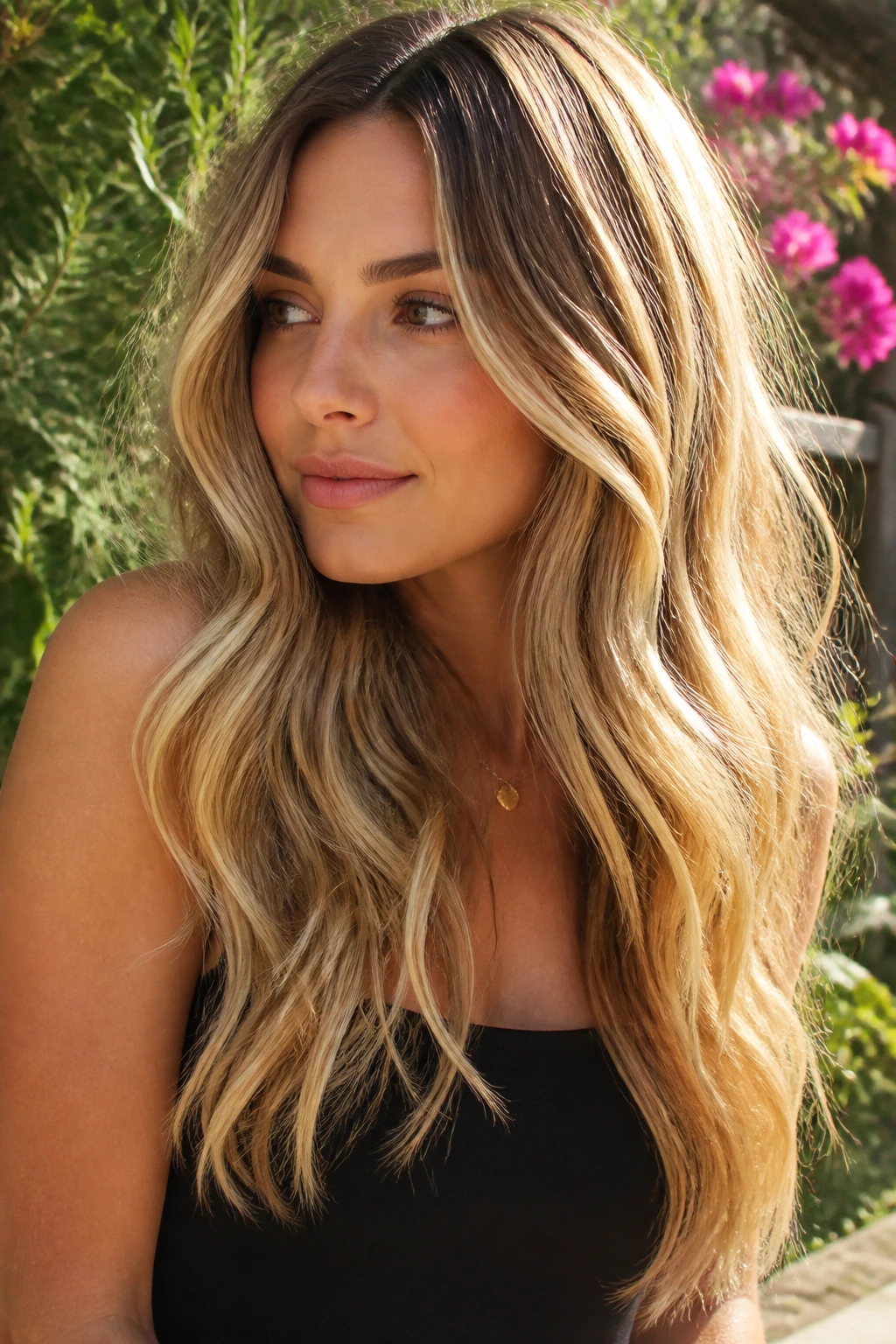
Golden ribbon highlights are for people who want dimension first and lightness second. Instead of bleaching everything into a pale sheet, the colorist paints brighter golden bands through the hair so the result moves in chunks and ribbons. It looks especially good on thick hair, where highlights can get swallowed if they’re too fine.
Why It Works
Golden ribbons add brightness where the eye naturally lands: around the face, over the crown, and through the top layers. The rest of the hair keeps some depth, which keeps the whole style from looking overprocessed. If you’ve ever seen blonde that looks “done” in a bad way, it’s often because the contrast was too low. This fixes that.
What to Ask For
- Medium-width highlights, not micro-fine all over
- Golden-beige toner, not orange-gold
- A bit of depth underneath for movement
- Extra brightness at the part line and around the temples
I like this one on long hair that gets worn in loose bends. The ribbons show up when the hair moves, which is half the point.
12. Face-Framing Money Piece Blonde
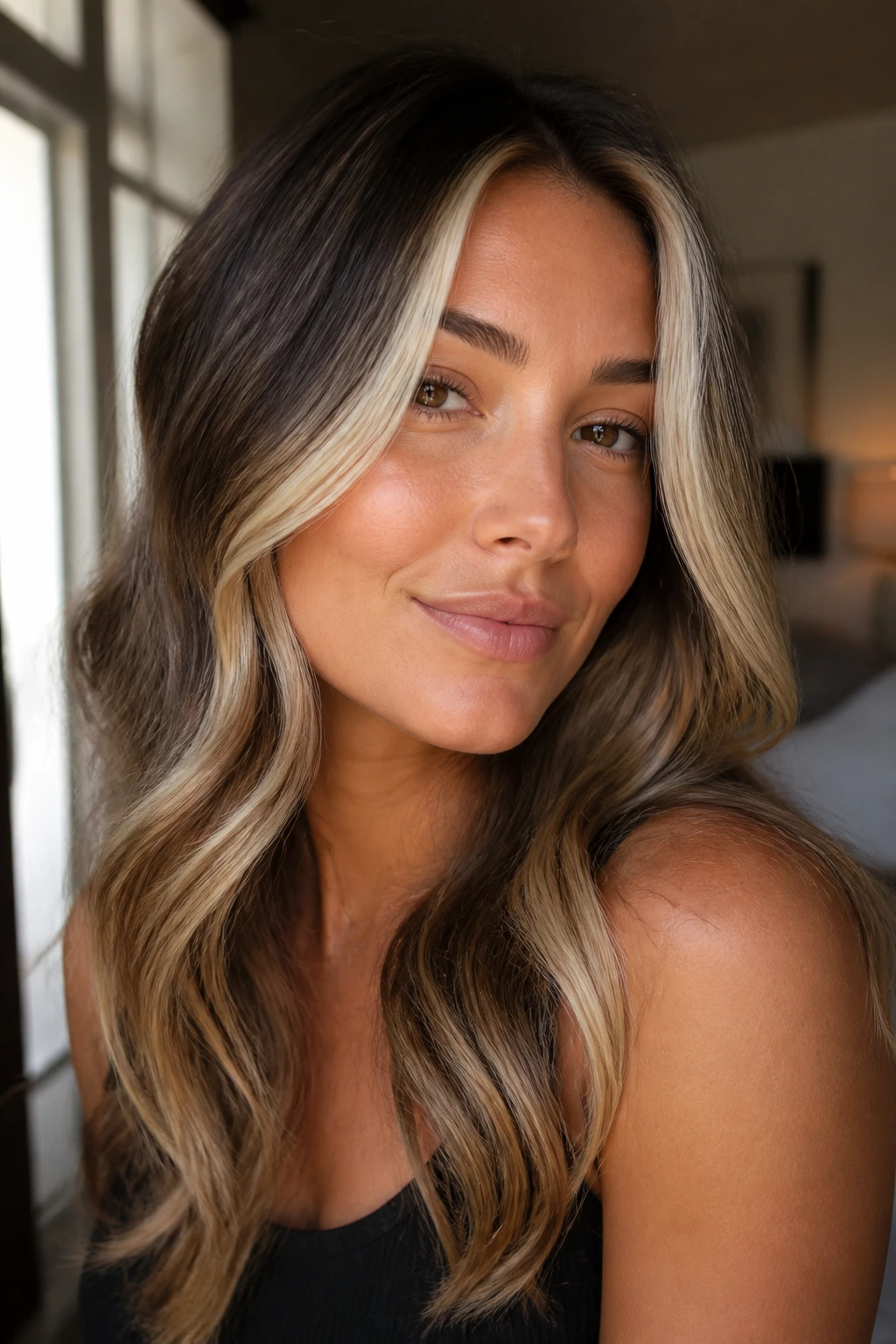
The money piece is still popular for a reason: it makes a dramatic difference without forcing a full color overhaul. Bright blonde around the face can wake up a haircut fast, especially if the rest of the hair stays deeper or more softly highlighted. It’s a smart move for anyone who wants summer brightness but not the salon bill that comes with a complete blonde transformation.
Why It Works
A high-contrast front section catches light at the exact place people look first. That means you can use fewer blonde pieces overall and still get a noticeable effect. The key is to keep the money piece bright enough to stand out, but not so light that it starts looking striped. Usually, that means fine foiling with a toner that matches the rest of the blonde family.
Good Pairings
- Darker roots and lighter ends
- Curtain bangs
- High ponytails and clipped-back styles
- Shoulder-length cuts that frame the face
The funny thing about this look is how much it changes simple hairstyles. A low bun can go from plain to sharp in ten seconds.
13. Bronde With Blonde Ends
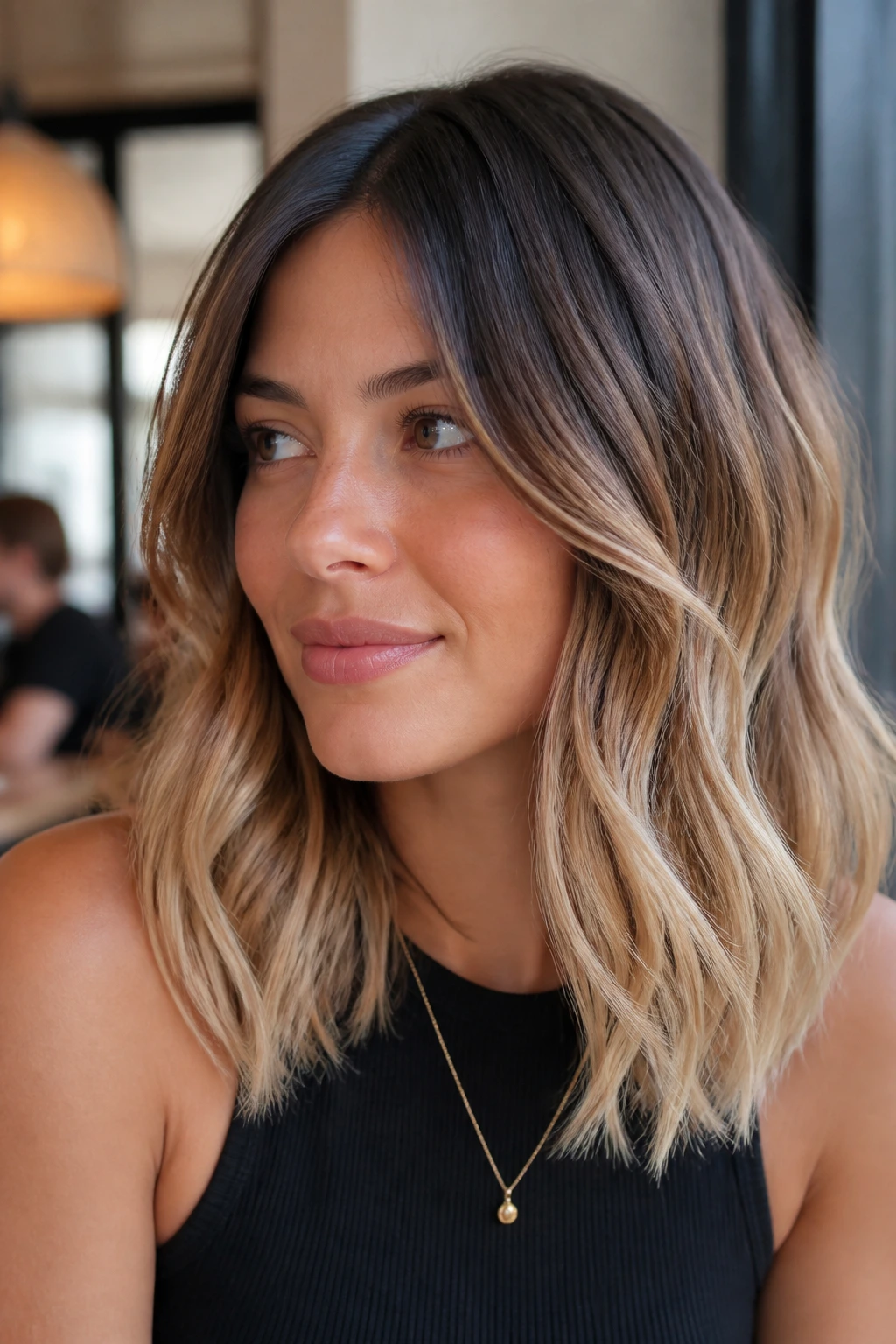
Bronde with blonde ends is the sweet spot for people who keep flirting with blonde but do not want to jump off the brunette cliff. The top stays brown or deep beige, and the ends lighten into soft blonde. It gives the impression of sun-faded hair after a long stretch outdoors.
Why It Works
The darker top keeps the grow-out soft, while the lighter ends keep the whole look from feeling heavy. That balance is why bronde works so well on people with medium to dark natural bases. You are not forcing the whole head to be blonde; you’re letting the lower half carry the brightness.
Who It’s Best For
- Brunnette-to-blonde transition seekers
- Long hair that can show color fade
- Wavy textures
- Anyone who wants blonde presence without a full commitment
This shade also plays nicely with layered cuts, because the ends are where the movement lives. A blunt cut can work too, but the style reads more deliberate and a little less lived-in.
14. Mushroom Blonde
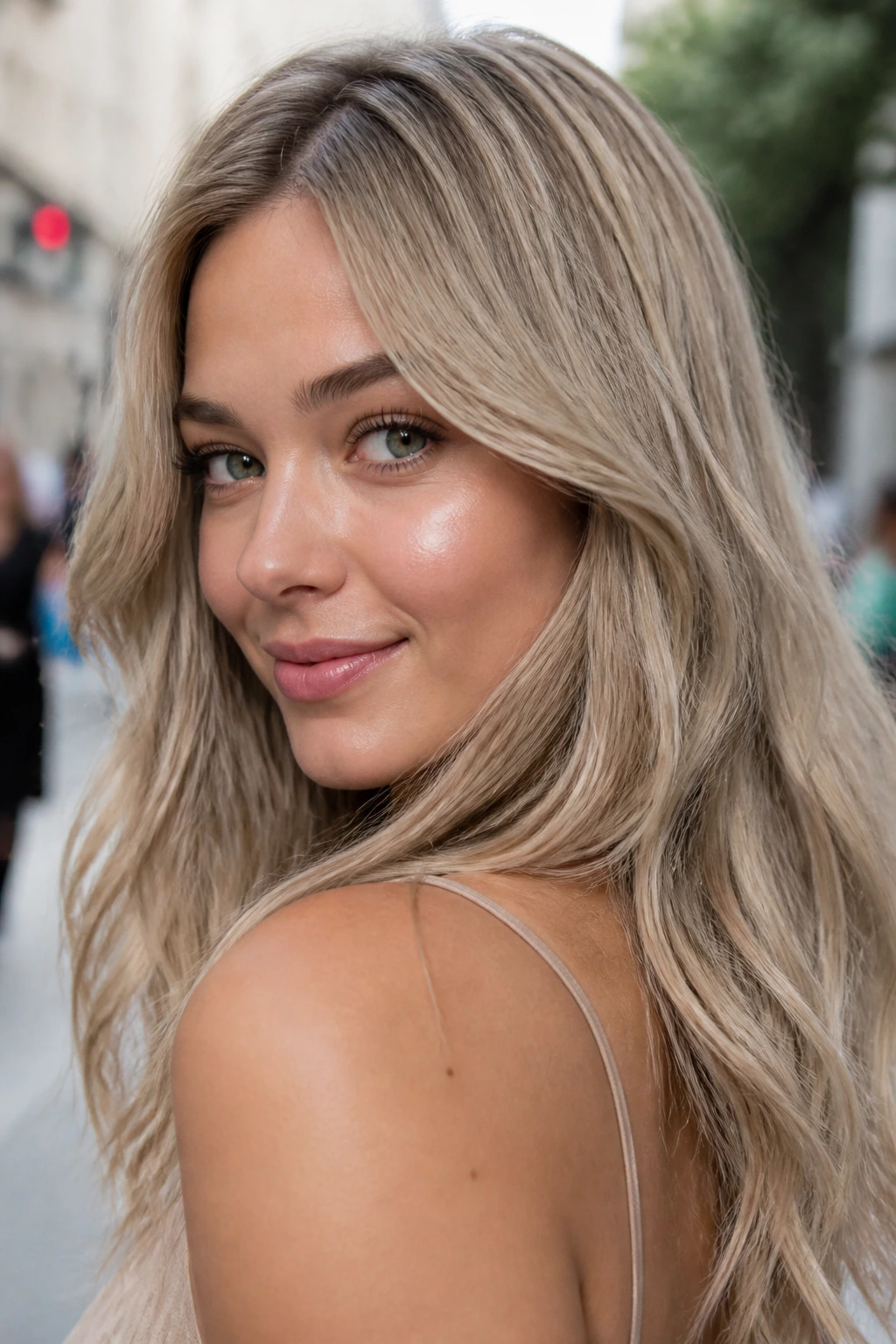
Mushroom blonde is the cooler, smoky cousin in the family. It has a taupe-beige cast that keeps the blonde from going too warm or too bright, and the result can look wonderfully expensive on the right base. It’s a favorite of mine when someone says, “I want blonde, but I hate yellow.”
Why It Works
Mushroom tones sit in the neutral-to-cool zone, often with a touch of brown-gray that softens the overall look. The shade works best when there’s still enough lightness for the blonde to register; otherwise, it just reads muddy. On a clean level 8 or 9 base, though, it can look sleek and modern without turning icy.
A Useful Detail
This color loves a good root shadow. A slightly deeper root gives the mushroom tones somewhere to anchor, and it helps the blonde look intentional instead of dusty. If you wear a lot of black, charcoal, or cream clothing, this shade tends to look especially sharp.
It is not loud. That’s the point.
15. Peachy Blonde
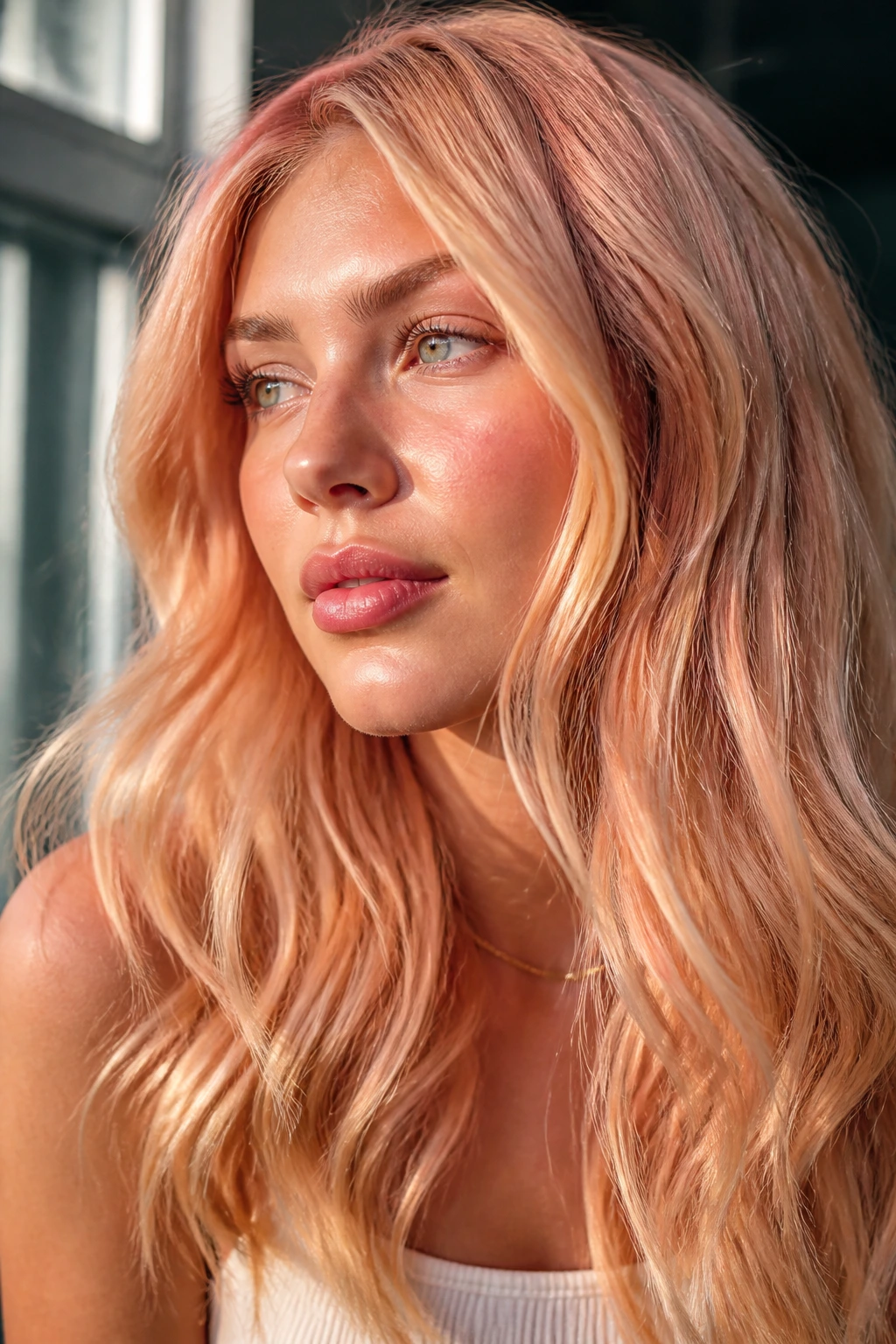
Peachy blonde is a small risk with a big payoff. The color is soft, warm, and a little unexpected, especially if your usual instinct is to stay in beige or gold. It’s one of the most fun blonde ideas here, but it still feels wearable when the peach is kept translucent.
Why It Works
The peach lives best over a very light blonde base, where it can tint the hair without covering it. That means the underlying brightness still shines through. If the formula is too heavy, the color turns coppery. If it’s too thin, you’ll barely see it. The sweet spot sits right in the middle, which is why a gloss or demi-permanent finish usually makes more sense than a strong permanent color.
How It Wears
- Softens blondes that feel too stark
- Flatters warm and neutral undertones
- Looks especially good on curls and waves
- Fades into a pale peach-beige rather than a hard line
I like this best on shorter cuts or layered hair, where the playful tone can move around a little. It keeps the blonde from feeling precious.
16. Baby Blonde Bob
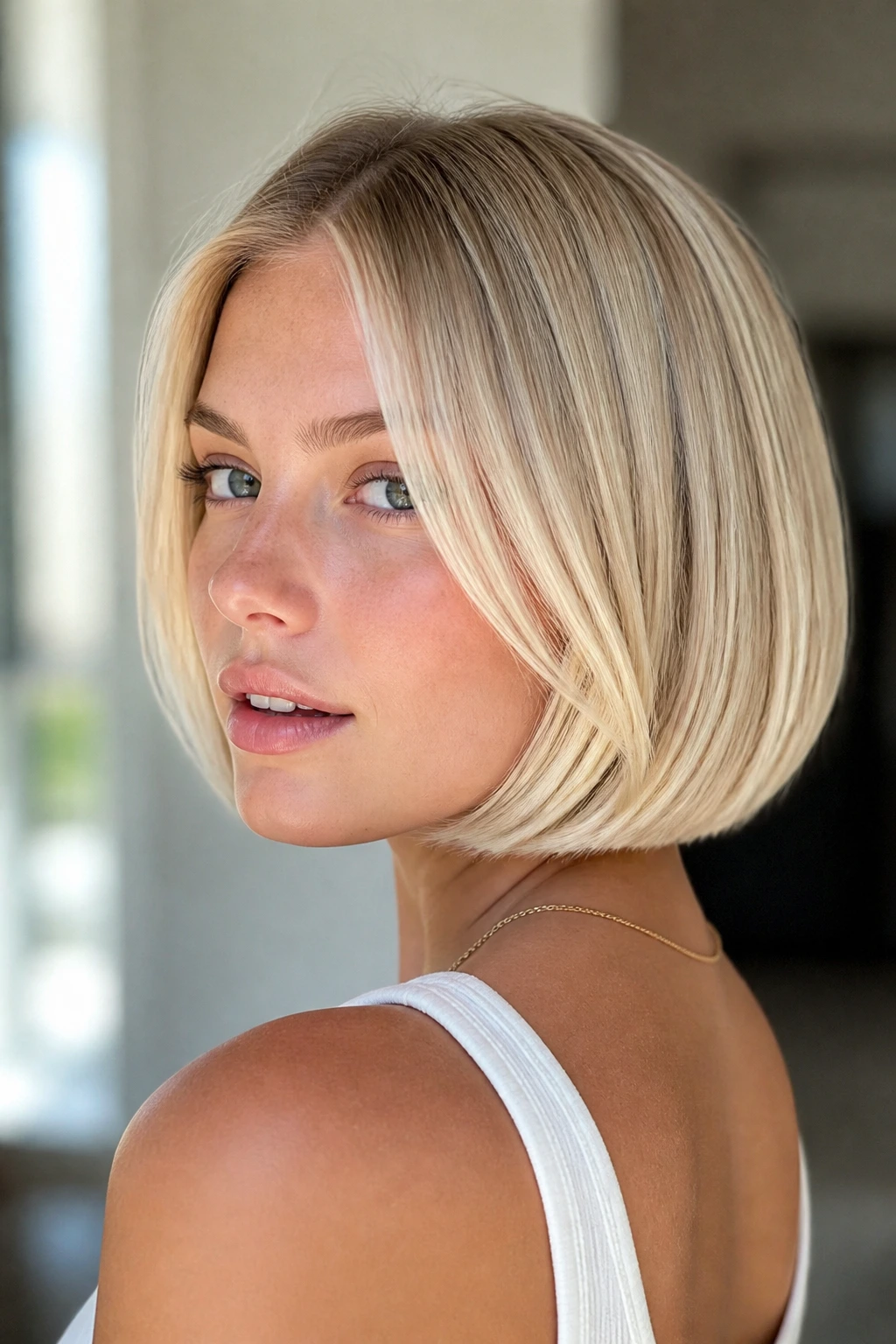
A baby blonde bob is sharp, airy, and a little bit editorial without becoming fussy. The cut matters as much as the color here. When a short bob gets fine babylights and a clean, pale blonde tone, the whole shape looks crisp from every angle.
Why It Works
Short hair does not need as much color contrast to feel dimensional. Tiny highlights and a pale toner can be enough, because the shape of the cut already gives the eye something to read. That means the blonde can stay delicate instead of chunky. It also means the grow-out is less annoying than on a longer, one-tone blonde.
Why I Like It
The bob keeps the color looking fresh. Long blonde hair can start to show every patch of brass and every dry end; a shorter cut trims the drama away. If you want to go lighter for summer without turning your whole routine upside down, this is a clean solution.
It’s tidy. It’s bright. And it does not need much decoration.
17. Butterscotch Blonde Lob
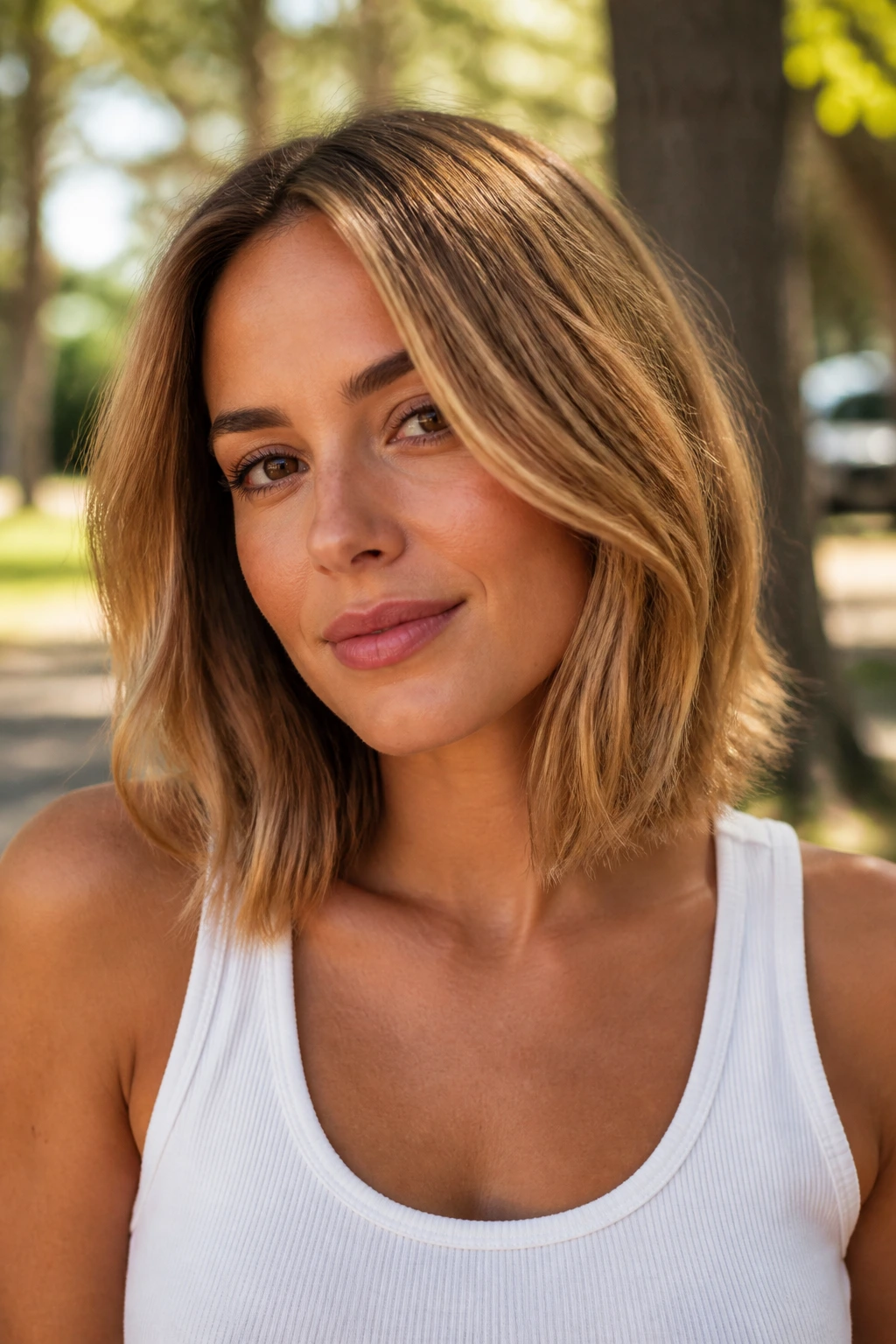
Butterscotch blonde sits deeper than honey and warmer than beige, which makes it ideal if you want a rich blonde rather than a pale one. On a lob, the warmth looks polished and soft, especially when the ends curl under or flip out a little at the shoulders.
Why It Works
The shade usually combines golden lowlights, lighter ribbons, and a warm gloss. That layering gives the hair depth, so it doesn’t turn flat when the sun hits it. Because the base remains a bit deeper, the color also survives grow-out more gracefully than a pale platinum would.
Best For
- Medium brunettes moving lighter
- Skin tones that like warmth near the face
- Thick hair that can carry color depth
- People who like shine more than icy contrast
A butterscotch lob can look expensive in a very straightforward way. No tricks. Just a good tone, a clean cut, and enough dimension to keep it from reading like a block of color.
18. Scandi Blonde
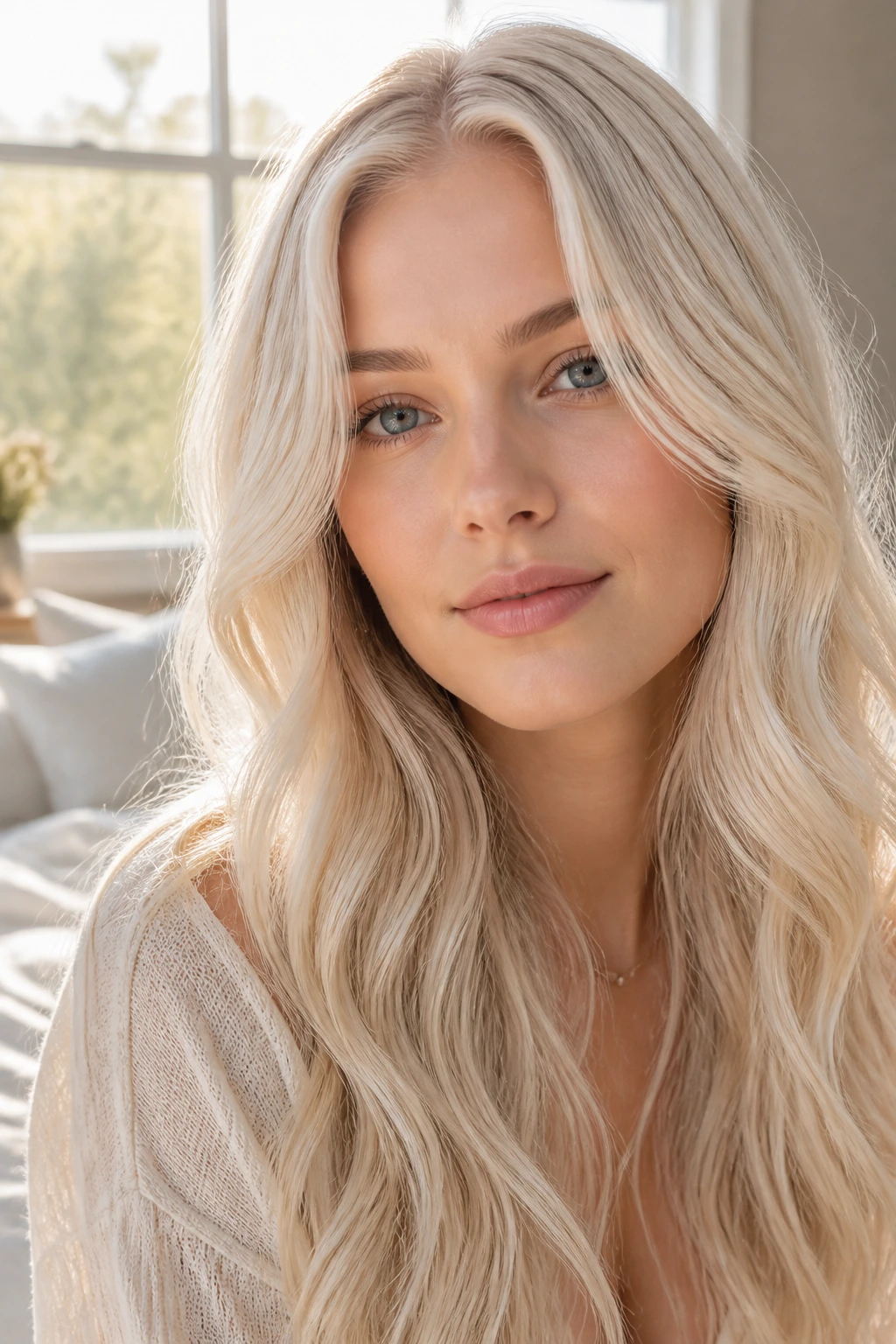
Scandi blonde is the pale, clean blonde that runs as light as the hair will safely go without losing all shape. It has that airy, almost bare quality, but the best versions still hold a whisper of beige or pale gold so they don’t look flat white. It’s a high-commitment shade, and I’d rather be honest about that.
Why It Works
This look usually requires a very strong lift on an already cooperative base. There’s no way around that. Once the hair reaches a near-platinum level, the toner can be adjusted to keep the result bright and soft instead of stark. On very dark hair, this is rarely a one-session situation worth rushing.
A Straight Answer
If you love purple shampoo, this can be your shade. If you hate maintenance, keep walking. Scandi blonde looks best when the wearer is willing to keep the tone clean, the ends hydrated, and the root area touched up before it gets too obvious.
It’s a sharp, bright summer blonde. It just comes with chores.
19. Toasted Coconut Blonde
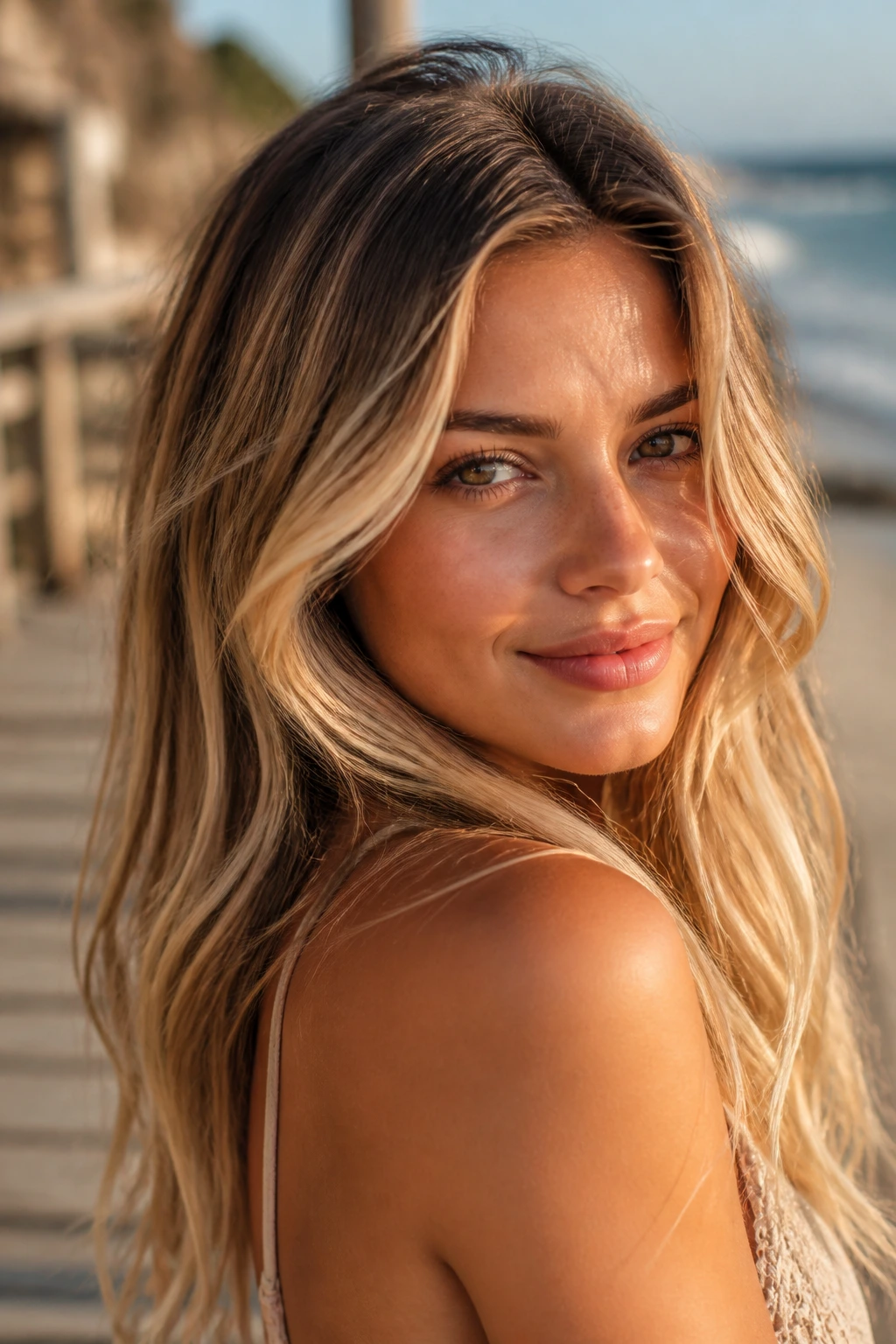
Toasted coconut blonde is one of the best examples of contrast done right. The root and top layers stay darker, almost toasted, while the mids and ends lighten into creamy blonde. The result looks beachy without being literal about it, which I appreciate.
Why It Works
The darker root gives the blonde shape. The lighter ends keep it from feeling heavy. And the beige-gold toner sits between the two so the transition feels smooth rather than split. On wavy hair, the different tones stack beautifully as the hair bends, which is why this shade looks especially good in motion.
What to Ask For
- A deeper root smudge
- Creamy blonde through the lower half
- Beige-gold toner, not brass
- Lived-in blending around the part and temples
This is a smart choice for people who want blonde but also want to keep a bit of their natural color in the story. It feels grounded. That’s the thing.
20. Dimensional Wheat Blonde
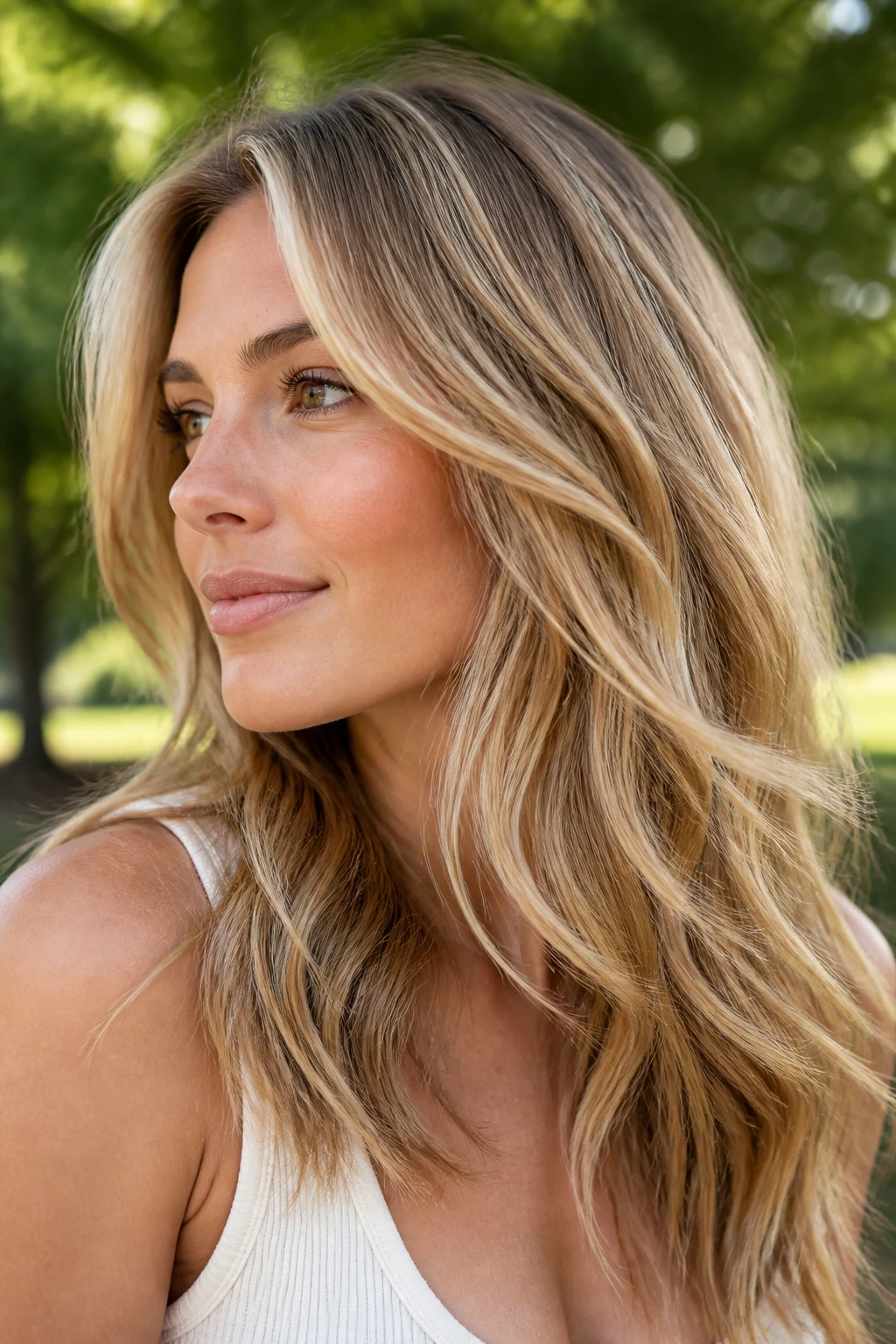
Dimensional wheat blonde has a soft, sun-dried feel that sits somewhere between beige, pale gold, and the lightest touch of ash. It is not a flat blonde, and that’s why it stays interesting. The different ribbons keep the color moving, even when the hair is worn straight.
Why It Works
Wheat blonde keeps enough neutral tone to avoid looking yellow, but not so much ash that the color goes chalky. That middle path is harder to get than it sounds. A stylist usually builds it with fine highlights, a couple of slightly deeper lowlights, and a gloss that evens the finish without erasing the contrast.
Who It Flatters
- People with neutral undertones
- Hair that needs depth, not just lift
- Long layers, shags, and soft bobs
- Anyone who wants blonde without the high-drama upkeep of platinum
This shade has a calm, wearable quality. It looks like hair that has seen the sun, not a color job that’s begging for a follow-up appointment.
What Makes Summer Blonde Look Bright Instead of Brass
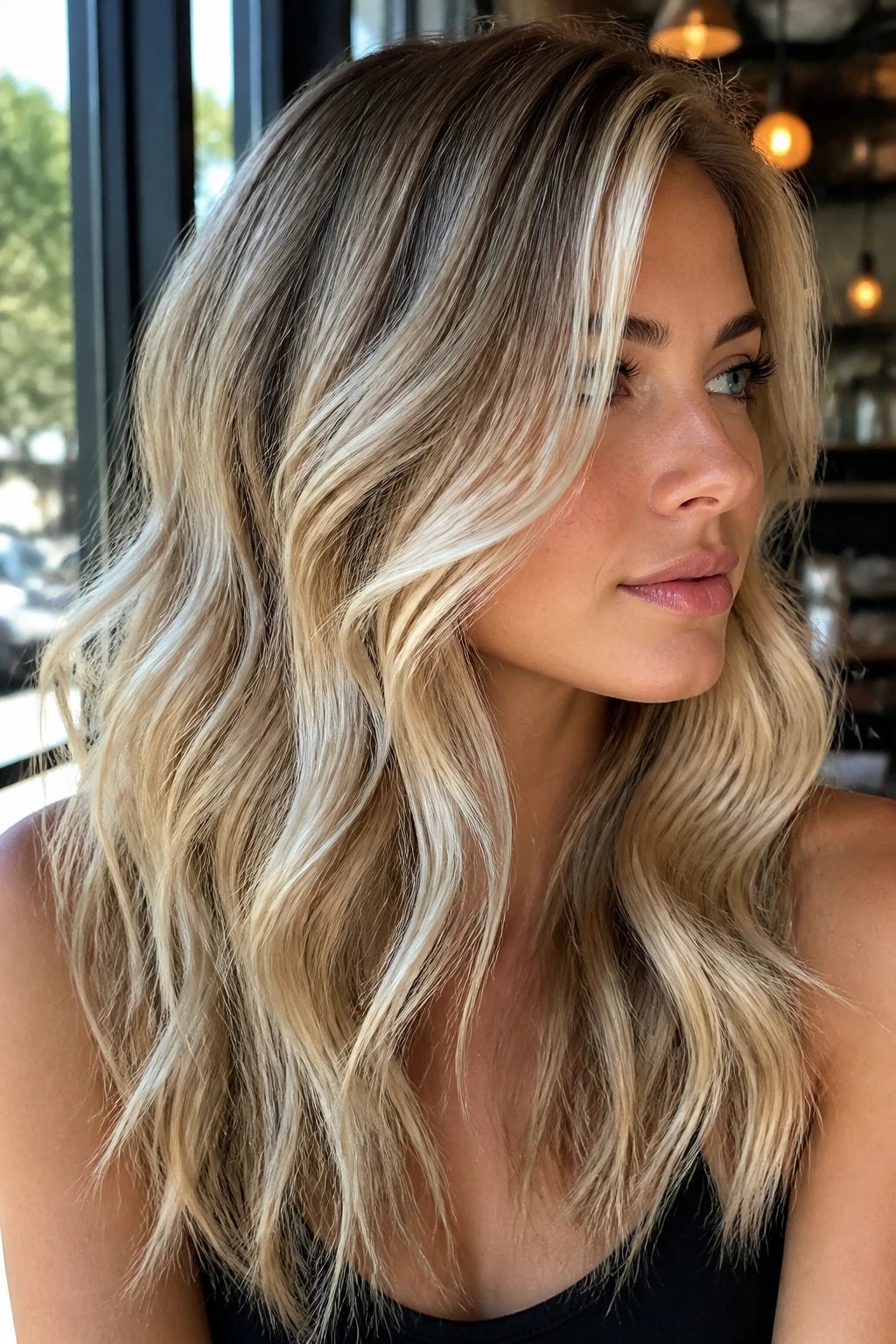
A blonde can be light and still look cheap. That’s the unpleasant truth most mood boards ignore. The difference usually comes down to tone control, contrast, and shine, not just how pale the hair got.
The color that reads best in bright weather usually has one thing in common: it isn’t all one note. A root that sits one or two levels deeper, a soft beige gloss, or a few lowlights under the top layer gives the eye somewhere to go. Without that, blonde can flatten out in daylight and show every patch of leftover gold.
Tone Does the Heavy Lifting
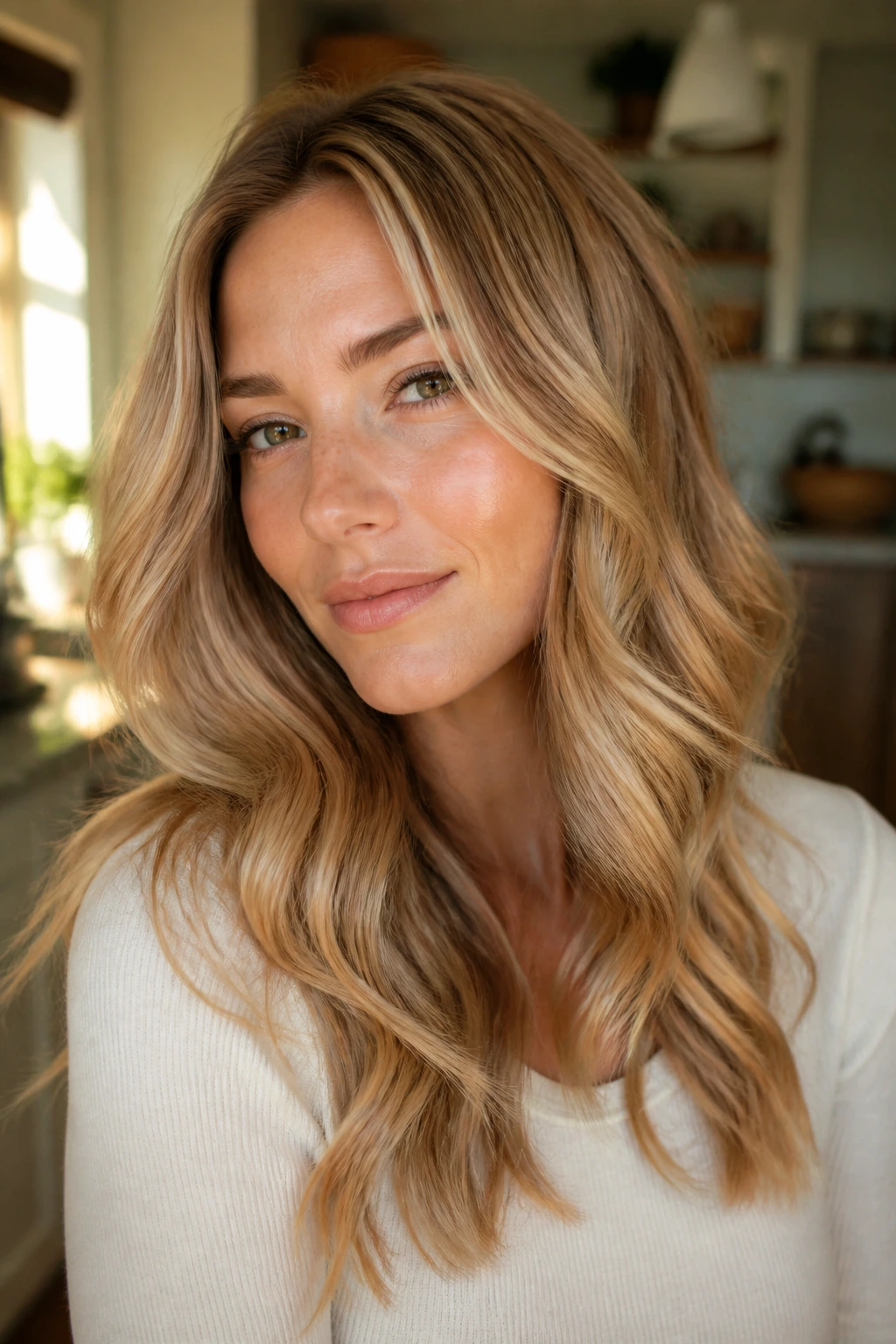
Warm blondes need beige or neutral glossing so they stay soft instead of orange. Cool blondes need enough violet or pearl tone to stay crisp without turning gray. And root depth matters for both. A root that is too light makes the color look sparse, while a root that is too dark can make the blonde feel disconnected.
Shine Beats Over-Processing
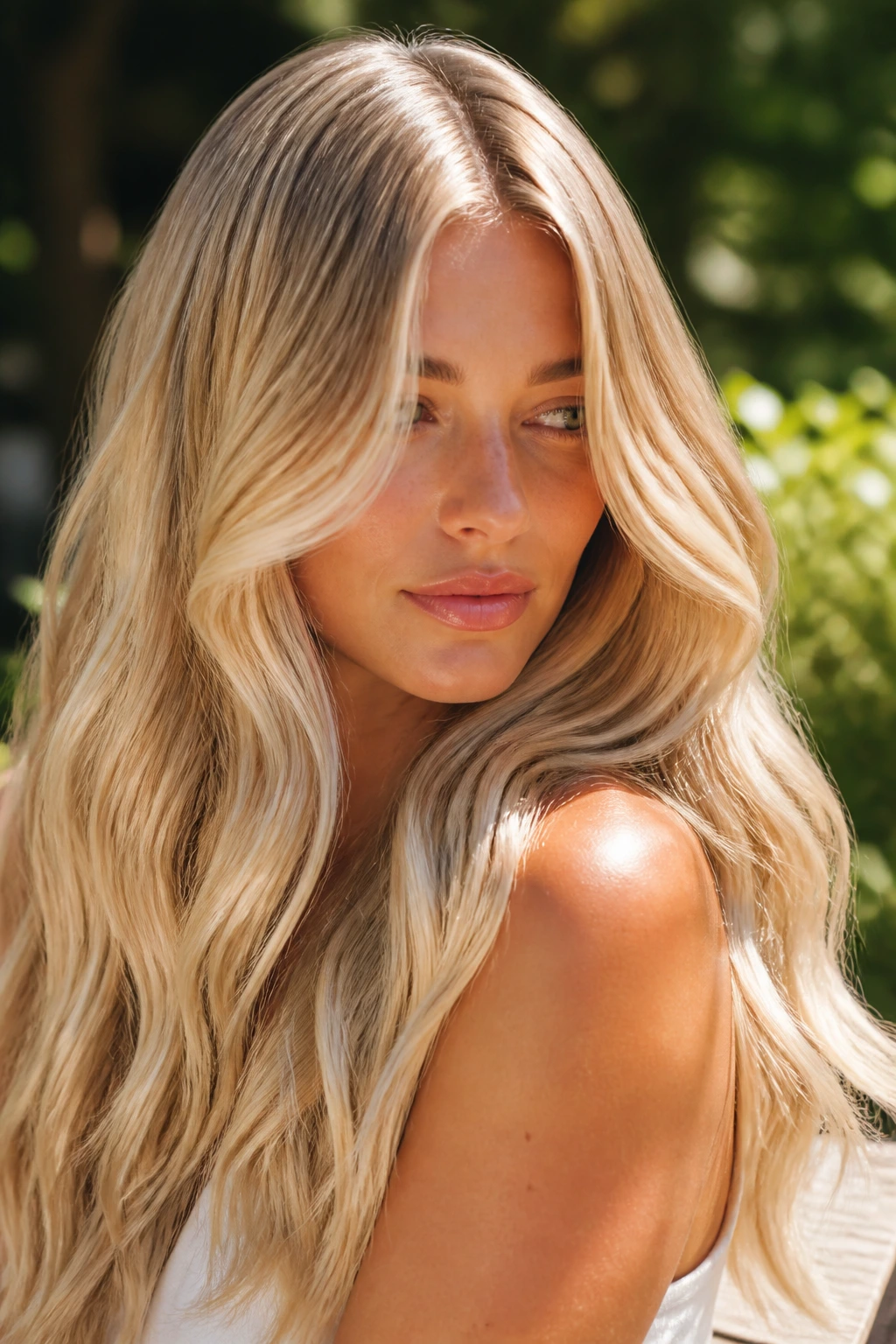
Dry blonde is the fastest way to lose the effect. If the cuticle is rough, the light bounces around in odd ways and the hair starts looking frayed, even if the color itself is pretty. That’s why a gloss, leave-in conditioner, and heat protection matter so much. They don’t just protect the hair. They keep the color reading as one smooth finish.
Essential Tools for Blonding and Maintenance
-
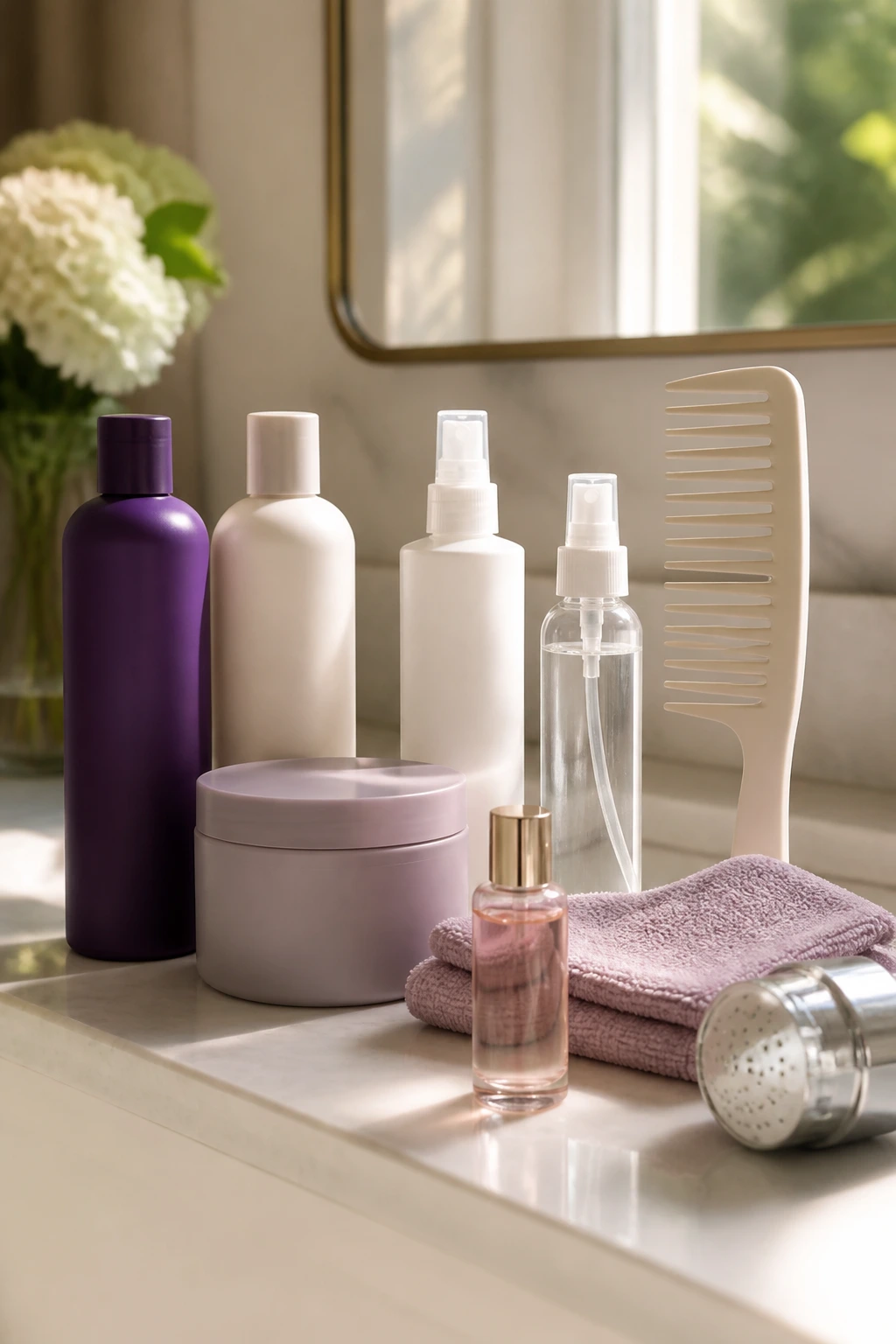
Purple shampoo: Useful for cool, pearl, and icy blondes, but use it sparingly so the color does not go dull or lilac.
-
Color-safe shampoo: A sulfate-free formula helps keep toner from rinsing out too fast, especially if your hair is porous.
-
Deep conditioner or mask: Blonde hair dries faster than darker hair, and a weekly mask helps the ends stay smooth.
-
Leave-in conditioner: Good on midlengths and ends after every wash; it reduces tangles and keeps the blonde from feeling brittle.
-
Heat protectant: Non-negotiable if you blow-dry, curl, or straighten. Blonde ends scorch faster than people think.
-
Wide-tooth comb: Better than yanking a brush through damp lightened hair.
-
Microfiber towel or soft T-shirt: Helps reduce roughing up the cuticle right after washing.
-
Salon toner or gloss service: Optional at home, essential in the chair if you want the shade to stay clean.
-
Shower filter: Not required, but worth it if your water runs heavy with minerals that leave blonde hair looking dingy.
How to Pick the Right Shade for Your Starting Level and Undertone
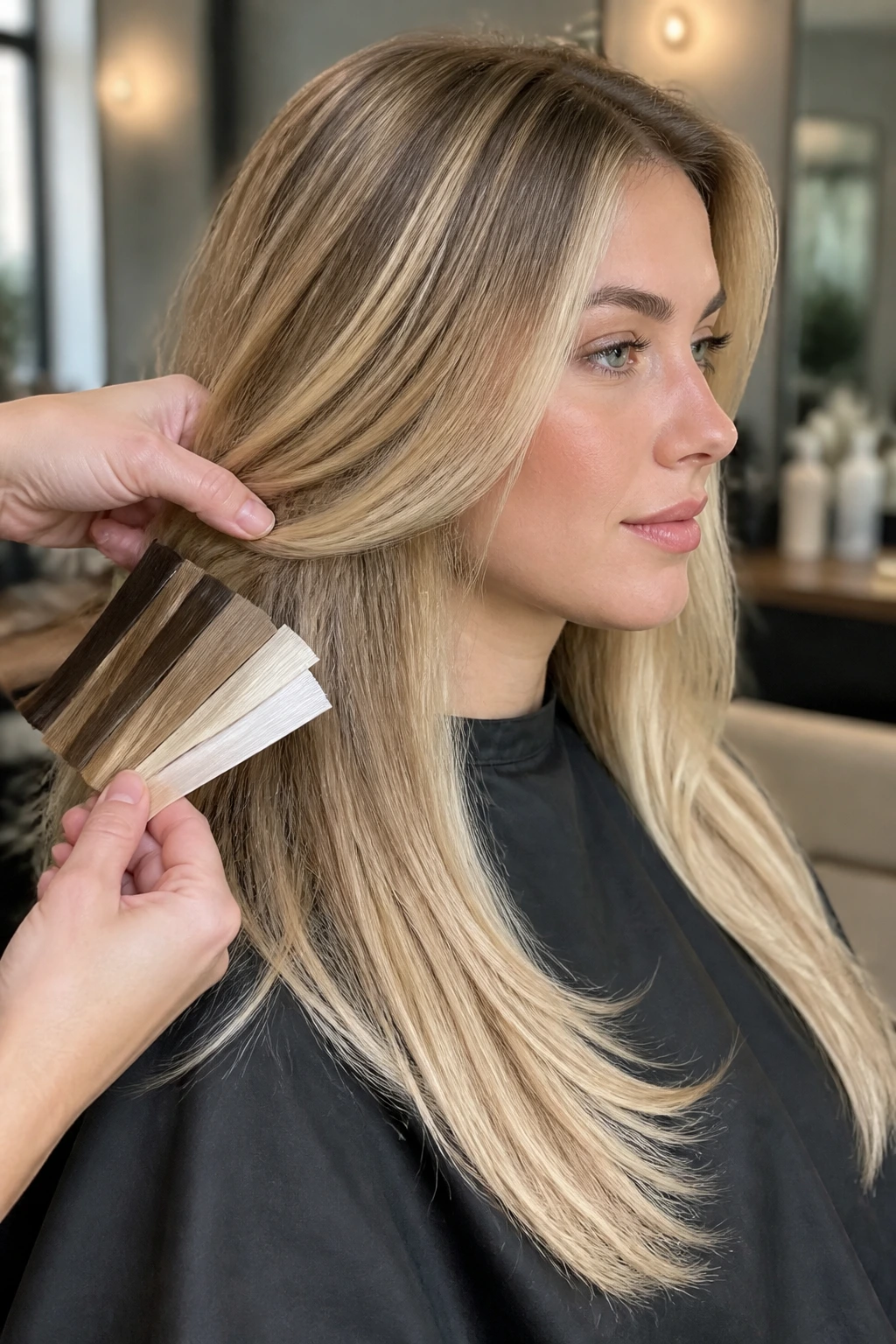
Choosing a blonde by photo alone is risky. Hair history matters more than the picture. If your base is a dark brown and the inspiration shot is a pale beige blonde, that shade may still be possible — just not in one appointment, and not without a plan.
If Your Hair Starts Dark
Natural level 4, 5, or 6 hair usually needs a slower lift to reach a clean summer blonde. Balayage, bronding, and rooty blondes tend to look more believable than a solid platinum finish on that base. If your hair has old box dye, say so before the color begins. That detail changes the whole conversation.
If Your Hair Is Already Light
Level 7, 8, or 9 hair has more room to play with toner and placement. You can move toward beige, pearl, vanilla cream, or champagne without forcing the hair into a hard bleach job. That is where summer blonde gets fun. The canvas is already there.
Match Tone to Undertone, Not Just Mood
Warm or olive skin often looks lively with honey, butterscotch, or soft golden ribbons. Cool or pink-toned skin often prefers pearl, champagne, or mushroom blonde. Neutral undertones can wear almost anything if the root depth and brightness are balanced well. The important part is not chasing a color because it looks pretty on someone else’s face.
How to Keep Summer Blonde Hair Bright Between Appointments
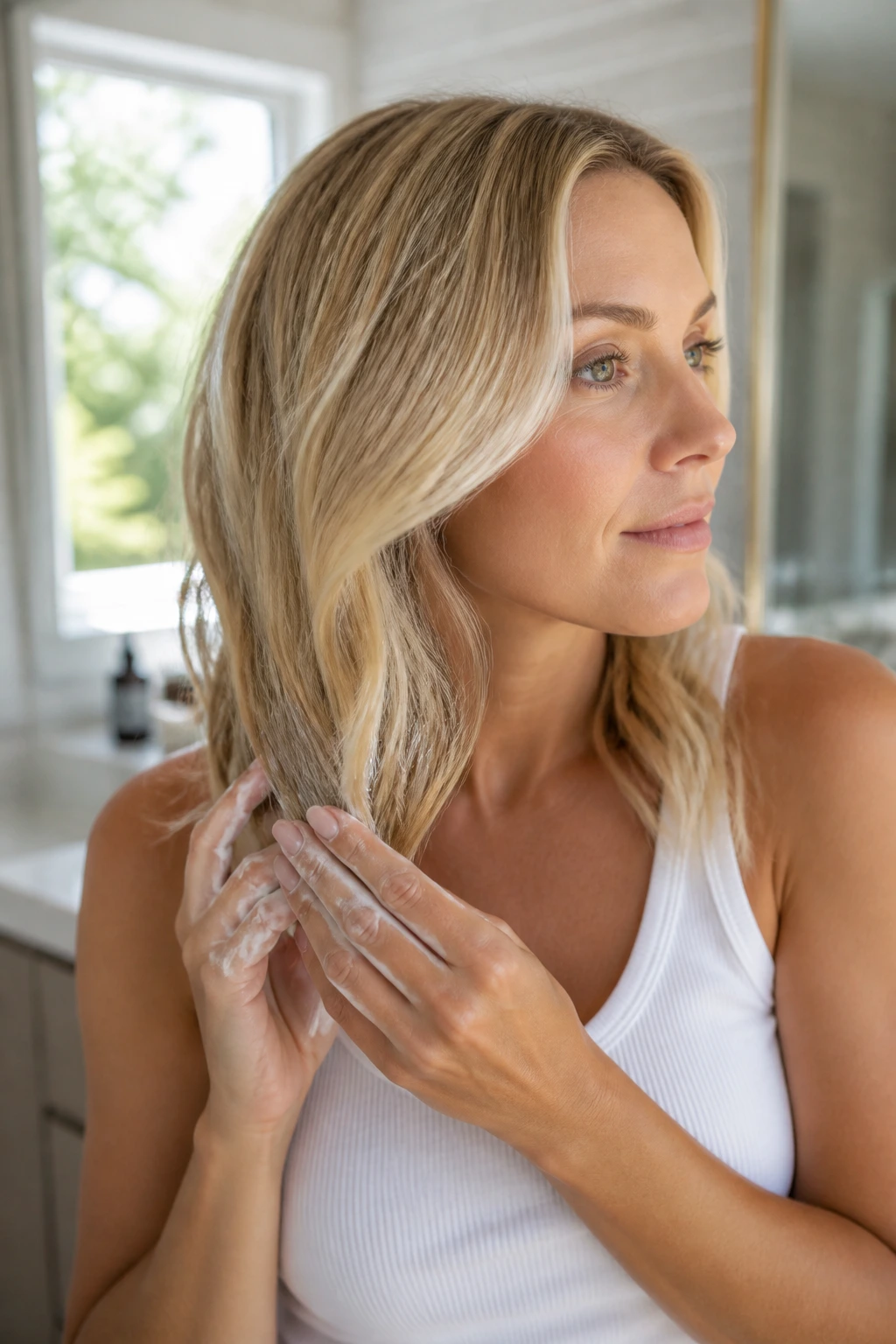
Blonde maintenance is not glamorous, but it is simpler when you build a rhythm. The biggest mistake is waiting until the color looks exhausted. By then, toner has already faded and the ends have already dried out.
Wash Less Often
Two to three washes a week is a sweet spot for most blondes. Frequent washing strips toner faster, and hot water makes the hair swell, which is rough on the cuticle. Cool or lukewarm water helps the finish last longer and keeps the ends from feeling like straw.
Use Toning Products With a Light Hand
Purple shampoo belongs in the rotation, not on every wash. Once a week is enough for many cool blondes. Warm blondes often do better with a color-depositing mask or a gloss that keeps the gold soft instead of dulling it down.
Protect the Ends
The oldest blonde pieces are usually the driest. Put leave-in conditioner on the lower half after every wash, and use heat protectant before any hot tool goes near the head. If the ends start snapping, the color will look tired even if the tone is still nice.
Book Refreshes Before the Fade Gets Ugly
Glosses and toners often need refreshing every 6 to 8 weeks. Root touch-ups depend on the look; a soft balayage can stretch much longer than a high-contrast platinum. If your blonde has a shadow root, let it do its job. There is no prize for touching it up too early.
Practical Tips for Better Tone and Less Damage
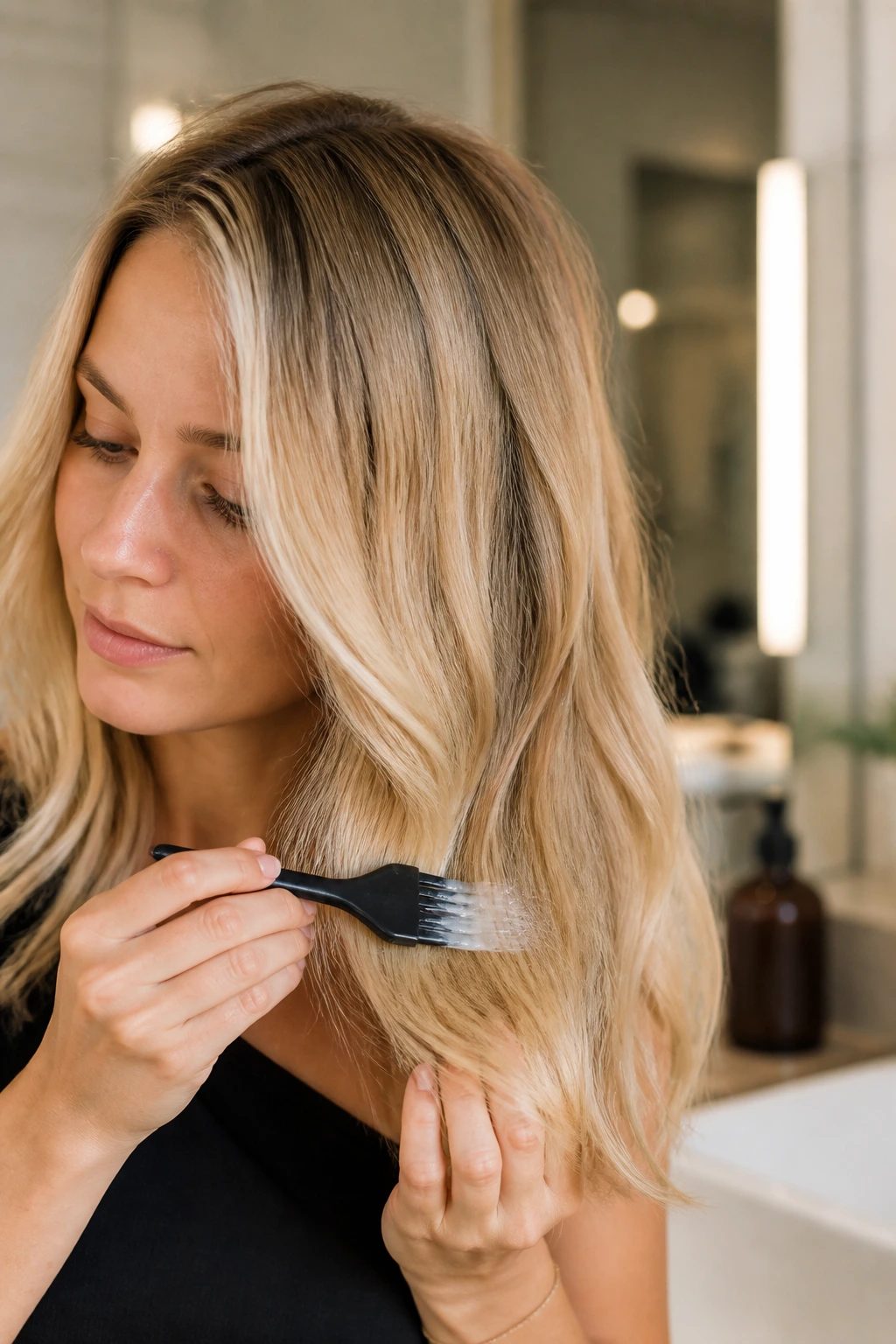
Toner Timing: If your stylist lifts the hair to a pale yellow and tones immediately, that’s the cleanest path for beige, pearl, and champagne shades. Waiting too long lets the warmth settle in, and then the toner has to fight harder.
Heat Control: Keep hot tools around 300°F to 350°F for lightened hair unless the texture is very coarse. High heat on porous blonde ends is how you get that dry, crunchy feel that no gloss can hide.
Shower Water Matters: If your water leaves a chalky film on glass, it’s probably doing something similar to your blonde. A filter can help, and so can an occasional clarifying wash followed by a rich conditioner.
Ask for Dimension, Not Just Lightness: A couple of lowlights or a deeper root shadow can make a blonde look fuller. That extra depth matters more than another half-level of lift.
Common Mistakes That Ruin Blonde Color
-
Lifting too far, too fast: The hair may look light at the chair, but it often turns hollow and rough afterward. Slower lifting with stronger hair integrity usually gives a better color result.
-
Using purple shampoo like a daily cleanser: The symptom is dull, gray, or lilac-leaning hair with no shine. Use it once a week or less unless your stylist tells you otherwise.
-
Skipping toner on a warm lift: Bleached hair without a toner often looks yellow in daylight and flatter under indoor light. A gloss is not optional if you want a finished blonde.
-
Ignoring old color at the ends: Box dye, henna, and faded dark color can grab unevenly. If those ends are not addressed first, the blonde can turn muddy or patchy.
-
Blowing out porous ends on full heat: The hair may feel clean for five minutes and then look frizzy and thirsty. Lower the heat, use protection, and stop frying the last two inches.
Variations and Adaptations for Different Hair Histories
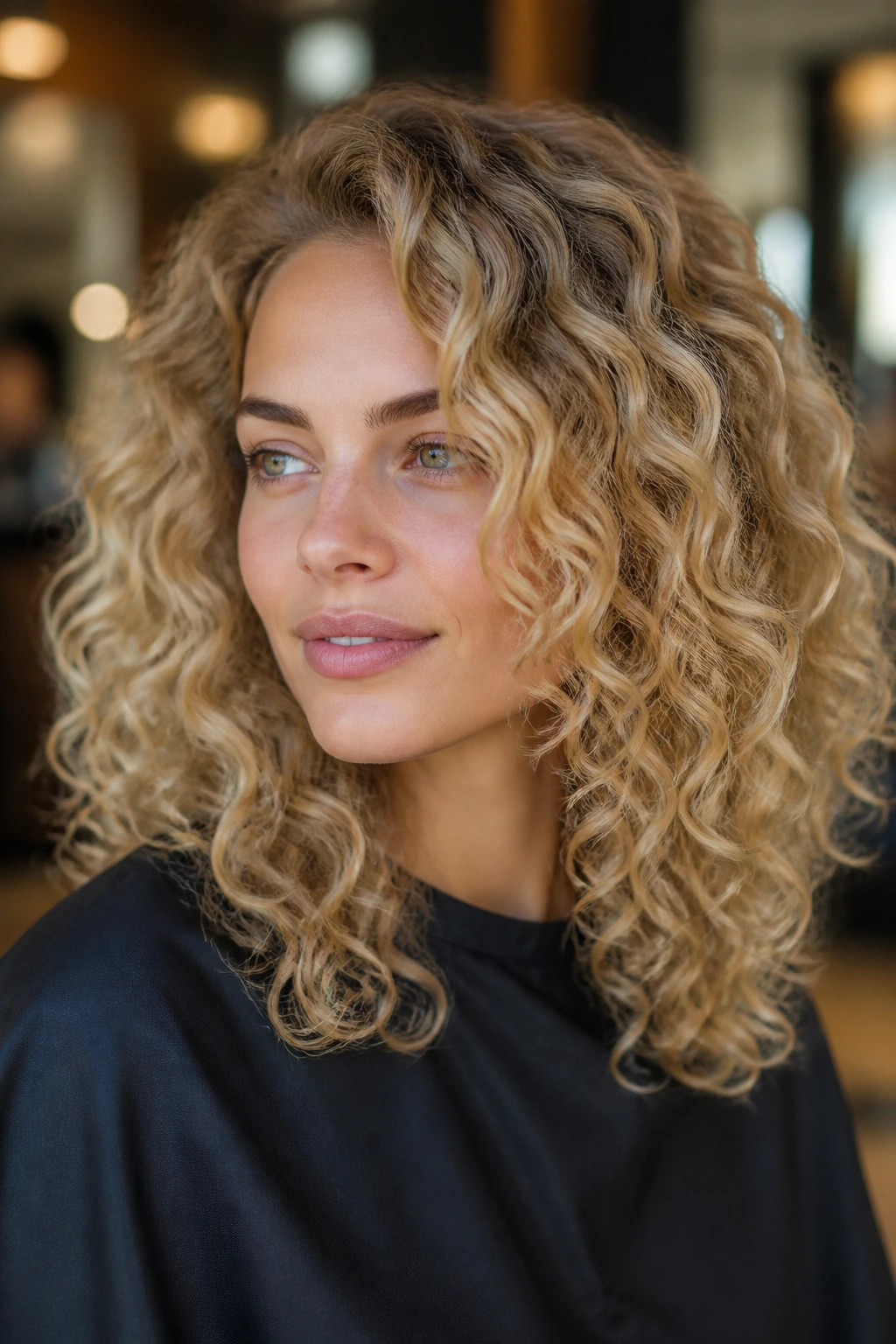
Curly Blonde Dimension: Curly hair needs blonde placed where the curl pattern opens up, not just where the surface is easiest to foil. Fine ribbons and a soft root shadow keep the curl shape visible instead of turning the whole head into a bright puff.
Dark-Base Balayage Blonde: If your starting point is dark brown, balayage gives you more believable summer blonde than a full-head foil job. The brightness stays in the top layer and ends, so the grow-out remains soft and the hair takes less punishment.
Gray-Blending Blonde: Adding blonde around silver roots can soften the line between natural gray and colored hair. Beige and champagne tones work especially well here because they don’t fight the coolness of gray; they blend into it.
Low-Commitment Gloss Blonde: If you want a hint of blonde without heavy lift, a gloss over existing highlights or a few face-framing foils can be enough. It won’t create a dramatic transformation, but it can refresh old color and make the hair look sunnier in five minutes.
High-Contrast Summer Blonde: For people who love a sharper look, keep the roots deeper and the pieces around the face brighter. This suits bobs, blunt cuts, and strong wave patterns, because the contrast gives the shape more edge.
Frequently Asked Questions
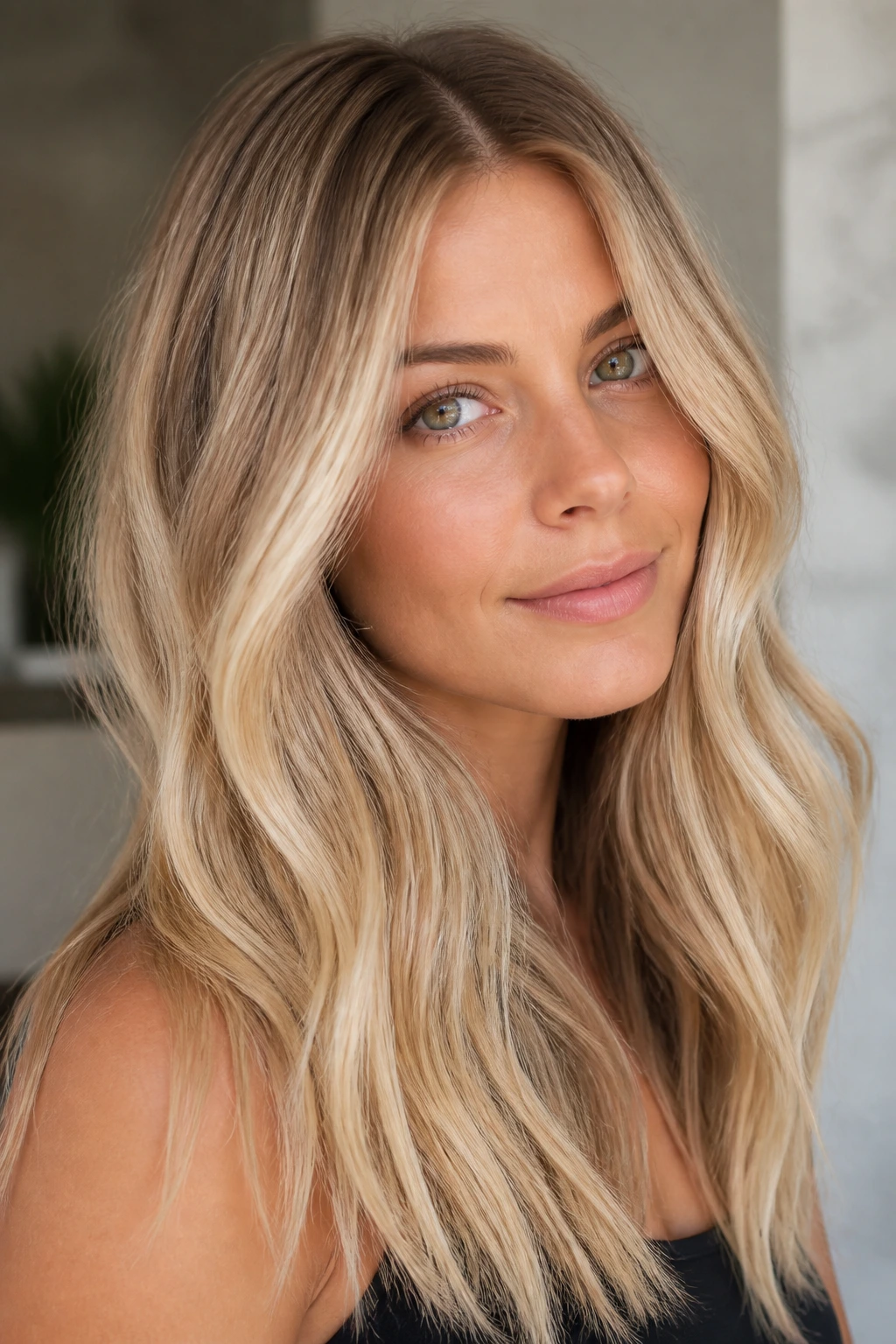
What is the easiest summer blonde to maintain?
Beige blonde with a soft root melt is usually the easiest to live with. The root depth disguises grow-out, and the beige tone is less likely to scream brass between appointments.
Can brunettes go blonde without destroying their hair?
They can, but usually not in one smooth leap. Balayage, bronde, and dimensional blonde are easier on the hair than pushing everything to a pale platinum in one session.
How often should blonde hair be toned?
Most blondes need a gloss or toner refresh every 6 to 8 weeks. If the color starts looking yellow or washed-out before then, tone sooner rather than piling on purple shampoo.
Does purple shampoo work on warm blondes?
Not usually in the way people expect. Purple shampoo is better for cool and icy blondes; warm blondes often do better with a beige or golden gloss so the tone stays soft, not muted.
What if my blonde turns brassy fast?
That usually means the toner faded, the hair is porous, or hard water and heat are working against you. A clarifying wash, a fresh gloss, and less hot water can help, but if the brass keeps returning, the formula may need a stronger cool or neutral base.
What’s the difference between balayage and highlights for blonde?
Balayage is painted freehand for a softer, more grown-out effect. Traditional highlights use foils and can look brighter and more uniform, which is useful if you want a more noticeable blonde shift.
Will these blonde shades work on curly hair?
Yes, but placement matters a lot. Curly hair looks best when blonde follows the curl pattern instead of sitting in rigid stripes, so babylights and hand-painted ribbons usually read better than heavy, blocky foils.
How do I keep blonde hair from feeling dry?
Use a leave-in conditioner after every wash, a mask once a week, and heat protection every time you style. Dryness shows up fast on lightened hair, and the ends usually need more moisture than the roots.
The Shades That Stay Soft in Bright Light
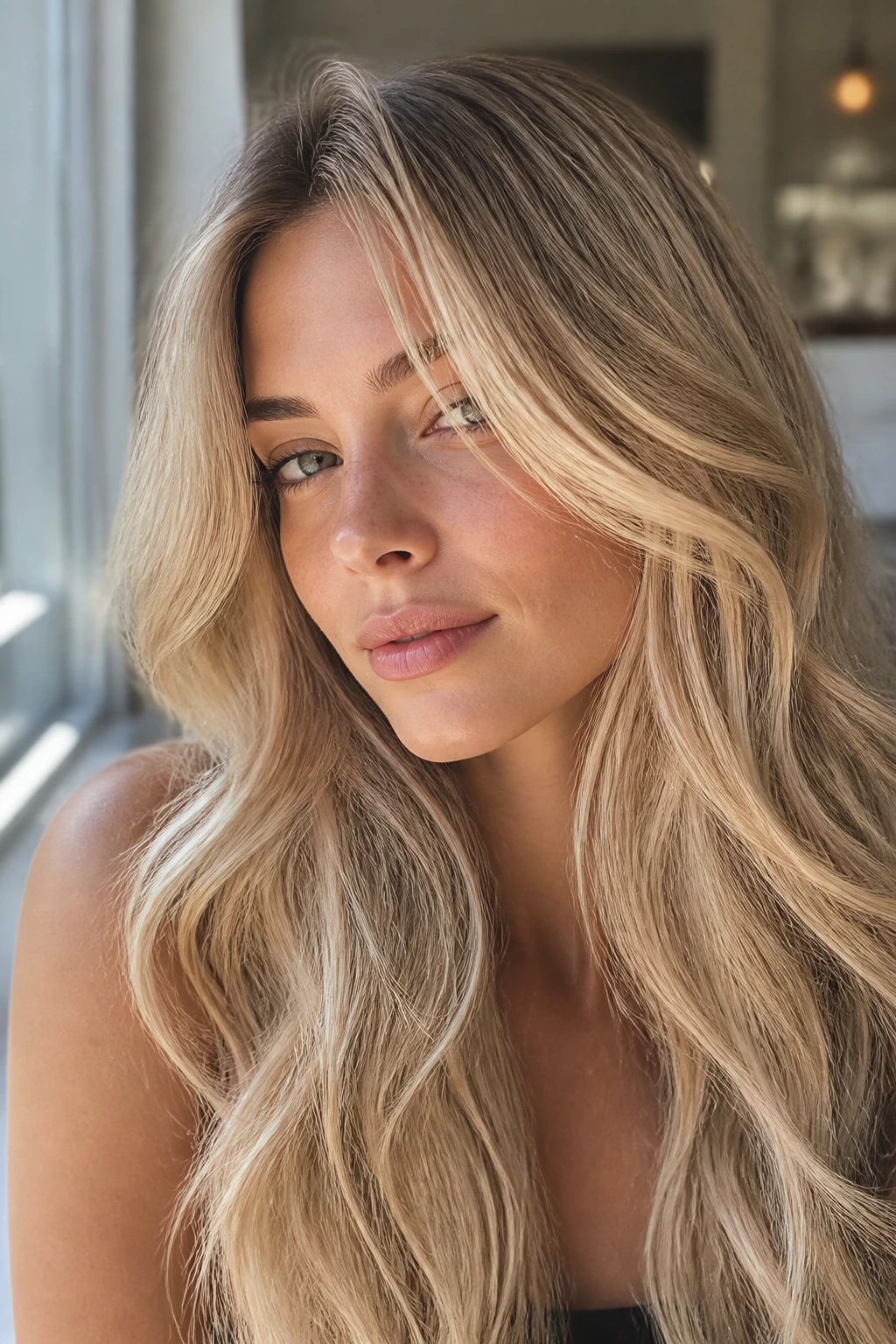
Summer blonde works best when it looks like part of the haircut, not a layer of paint sitting on top of it. That means a smarter mix of tone, lift, and shadow than most inspiration photos bother to show. Honey, beige, pearl, mushroom, buttery ribbons, and rooty brondes all earn their place because they keep moving when the light changes.
The shade you pick should fit your hair history first and your mood second. If the starting point is dark, a lived-in blonde with depth will usually beat a rushed pale lift. If the hair is already light and healthy, champagne, vanilla cream, or pearl can give you that bright, airy finish without wrecking the cuticle.
Pick the version that still looks good when you catch your reflection in a parking lot window. That’s the real test, and the best summer blonde hair color ideas pass it without trying too hard.
