

Brunette hair does not need to go pale to look new. The nicest dark blonde hair color ideas for brunettes live in that level-6-to-level-7 band where brown still looks rich at the root, but the mids and ends move a little more when the light changes or the hair bends.
That middle zone matters more than most people think. A few beige ribbons can stop thick brunette hair from reading like one solid block; a rooty ombré can make long hair look lighter without turning the grow-out into a weekly project; ashier tones can cool down orange pigment that shows up the second darker hair gets lifted.
I keep coming back to dark blonde on brunettes because it solves a very specific problem: you get brightness without losing the depth that makes brown hair look expensive in the first place. The trick is not chasing the palest blonde in the room. It is choosing the right undertone, the right placement, and the right amount of lift for the base you already have.
Why These Shades Earn Their Spot on Brunette Hair
- The grow-out stays soft: Dark blonde ribbons on brown hair blur better than pale blonde highlights, so you can stretch salon visits without a blunt root line.
- Undertone does the heavy lifting: Beige, honey, ash, taupe, and mushroom all live in the same family, but they change the mood of brunette hair in very different ways.
- Placement matters more than brightness: A face frame, a money piece, or a few scattered babylights can change the whole haircut without repainting the whole head.
- It works with movement: Waves, bends, curls, and layers make dark blonde pieces show their shape instead of disappearing into the brown base.
- Damage stays more manageable: Keeping some brunette depth means less time chasing high lift and fewer ends that feel crispy after one too many lightening sessions.
1. Mocha Balayage with Beige Ends
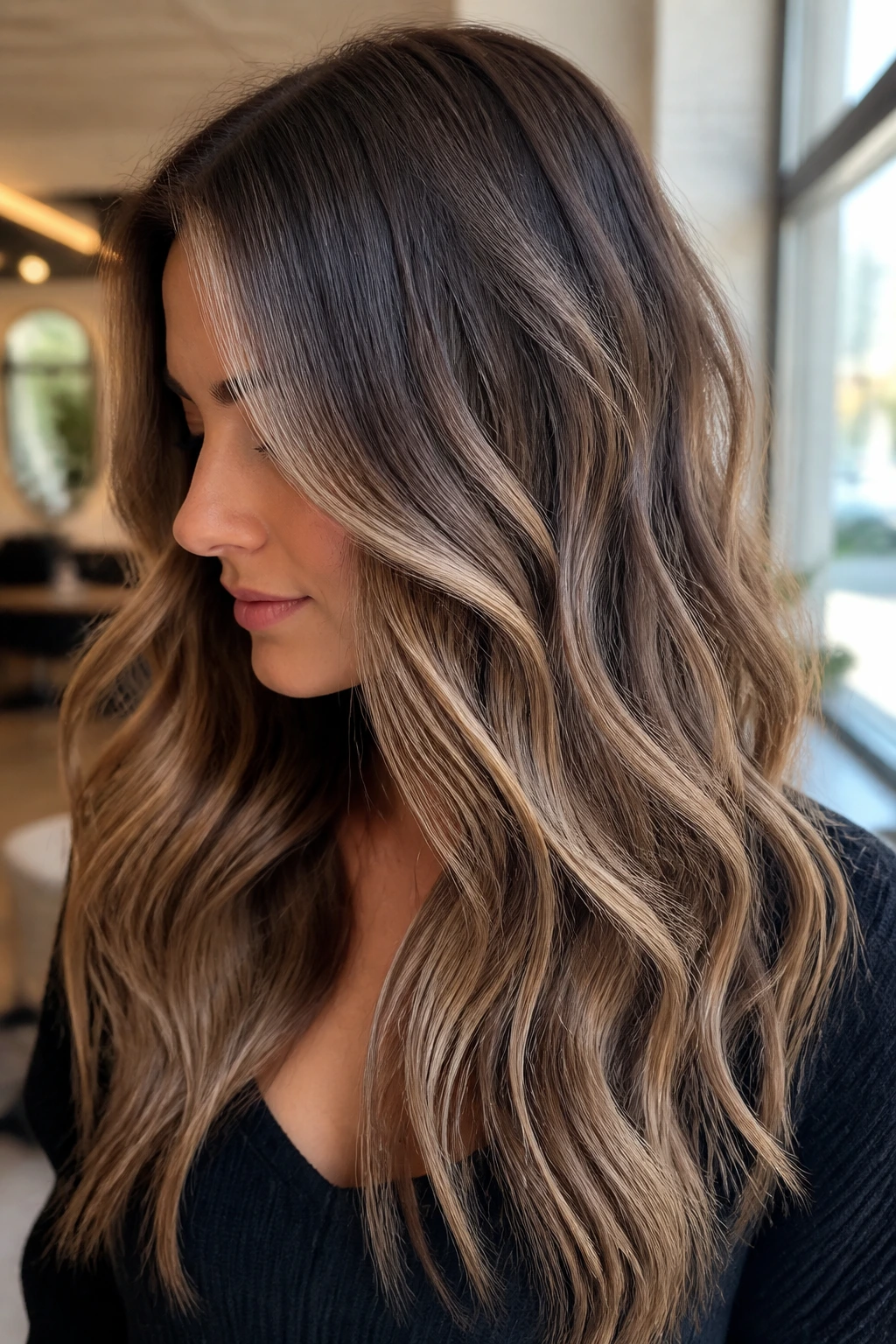
Mocha balayage with beige ends is the look I reach for when brunette hair feels dense at the bottom. The root stays chocolatey, the mid-lengths carry hand-painted ribbons, and the ends lift into a soft beige dark blonde that reads as movement instead of a stripe.
Why It Flatters Brown Hair
This works best on layered hair, especially cuts that swing a little when you move. Ask for ribbons about 1/4 to 1/2 inch wide through the surface, then let the very ends go a shade lighter than the rest so the color tapers instead of stopping abruptly.
- Best on: Shoulder-length cuts, long layers, and loose waves.
- Ask for: Beige toner over hand-painted mocha ribbons, not a chunky all-over lift.
- Skip if: You want a cool, smoky result; beige will still hold a little warmth.
- Maintenance: Every 8 to 10 weeks if you want the ends to stay clean.
One small note: If your brunette base pulls red, beige is safer than gold. Gold can slide straight into brass.
2. Mushroom Bronde with Cool Ash Ribbons
Mushroom bronde with cool ash ribbons is the answer when brown hair keeps warming up on its own. The color sits in a smoky lane—more taupe than tan—with just enough dark blonde to soften the edges of a dark base.
It looks strongest on cool skin tones, but I’ve seen it work on warm brunettes too when the ash is kept to the ribbons and not pushed through the whole head. The key is restraint. Too much ash on porous hair can go muddy, so I’d rather see a colorist lift a little less and tone a little cleaner.
3. Honey Ribbon Highlights Around the Face
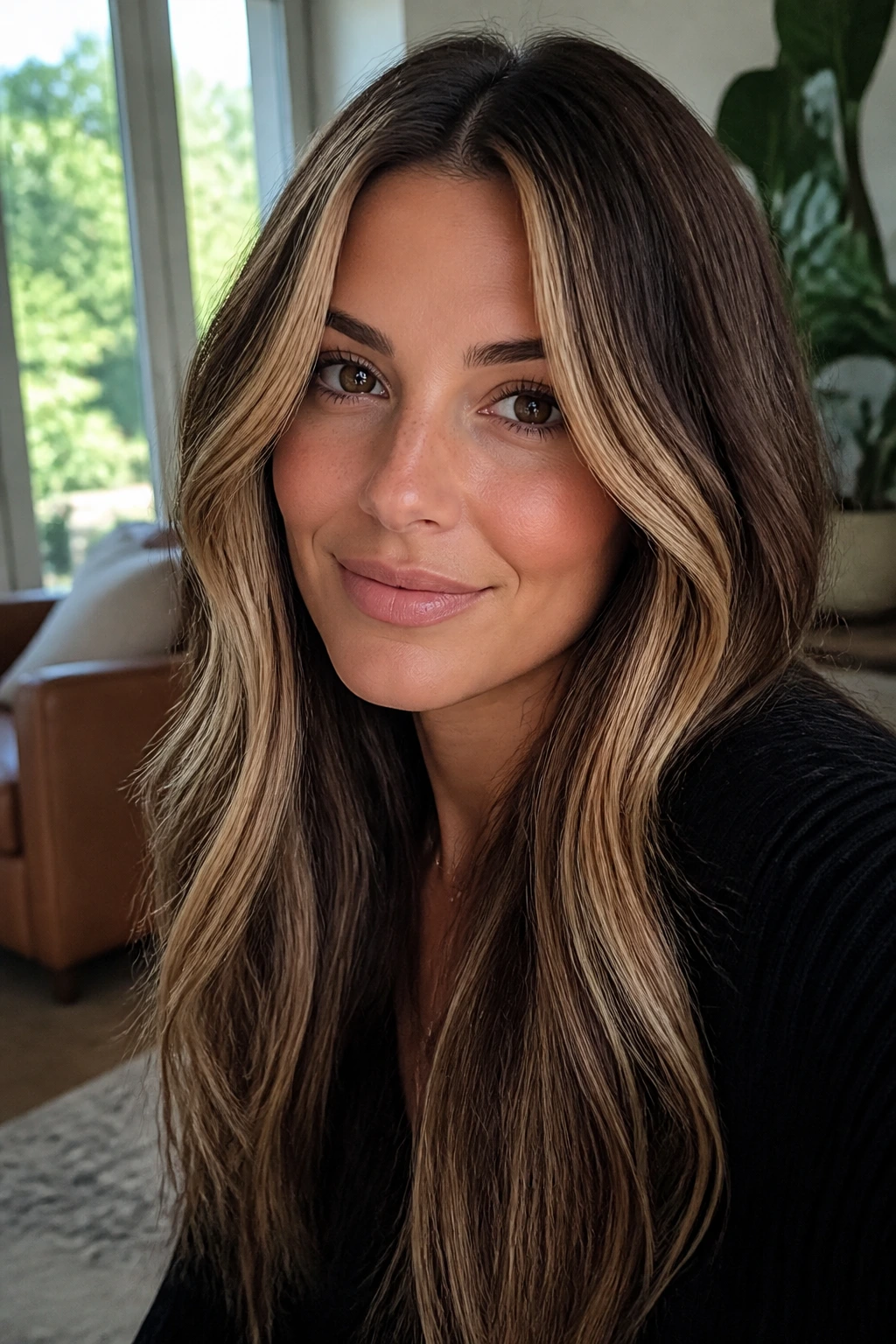
Why does a small bright front section change the whole cut? Because the eye goes there first, and honey-dark-blonde ribbons around the temples lift the face without making the whole head lighter.
Where to Place the Ribbons
Keep the brightest pieces close to the hairline if you want a visible change in photos or a softer frame for a blunt bob. On longer cuts, I like the face frame to start just below the part and taper into darker brown by the cheekbone.
Use this idea when you want the front to wake up but the back to stay grounded. It is also smart for people who wear their hair half-up a lot, because those front sections do most of the talking.
4. Rooty Beige Ombré for Long Brown Hair
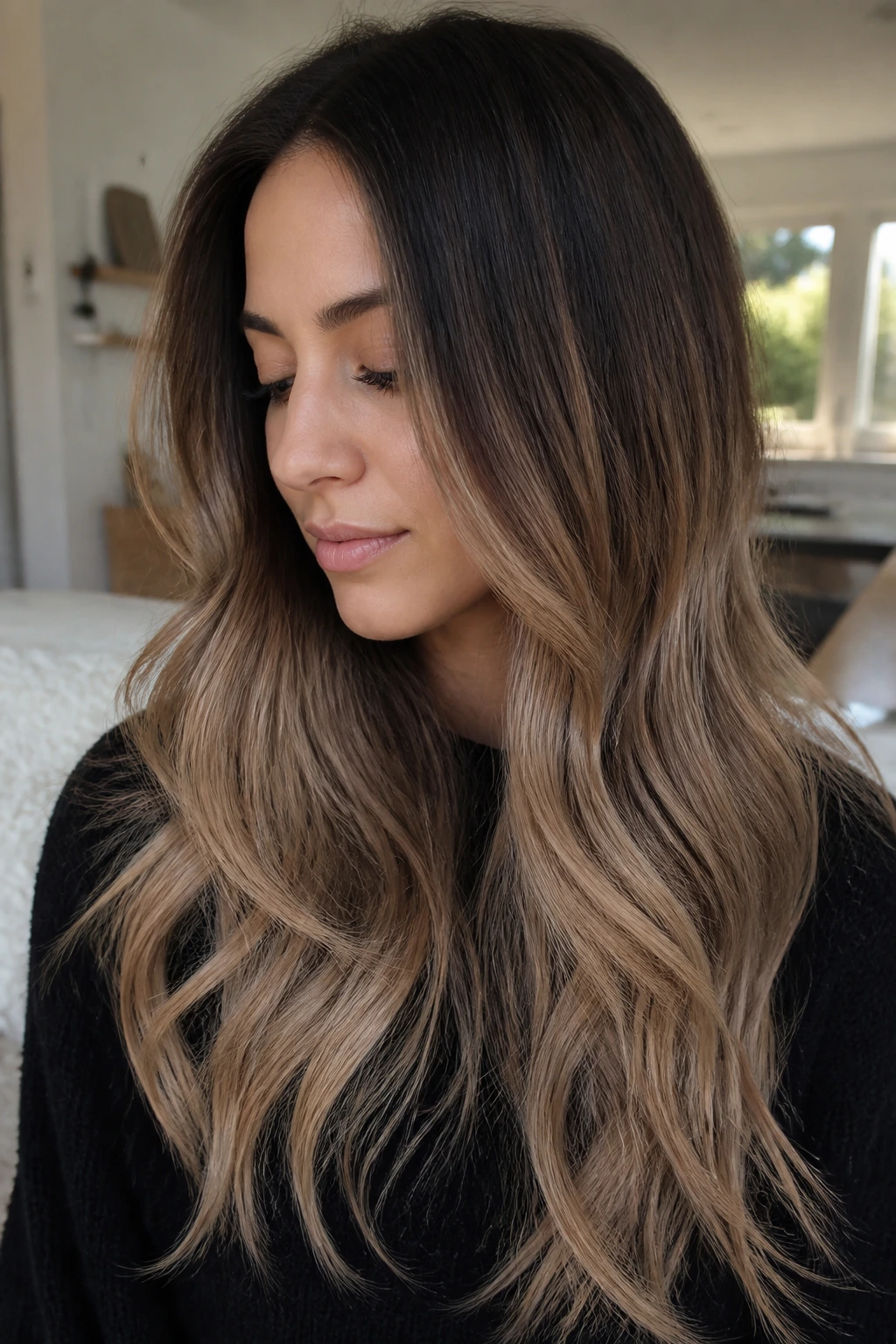
A rooty beige ombré is the most forgiving option on long brunette hair. Leave the first 4 to 5 inches alone, blur the transition around the mid-lengths, then let the ends drift into a clean beige dark blonde.
That long fade matters. When the shift is gradual, the color looks like it belongs to the haircut instead of sitting on top of it. I like this on thick hair because the deeper root keeps the head from going too light too fast, and the beige ends keep the length from looking heavy.
5. Caramel Money Piece with Dark Blonde Ends
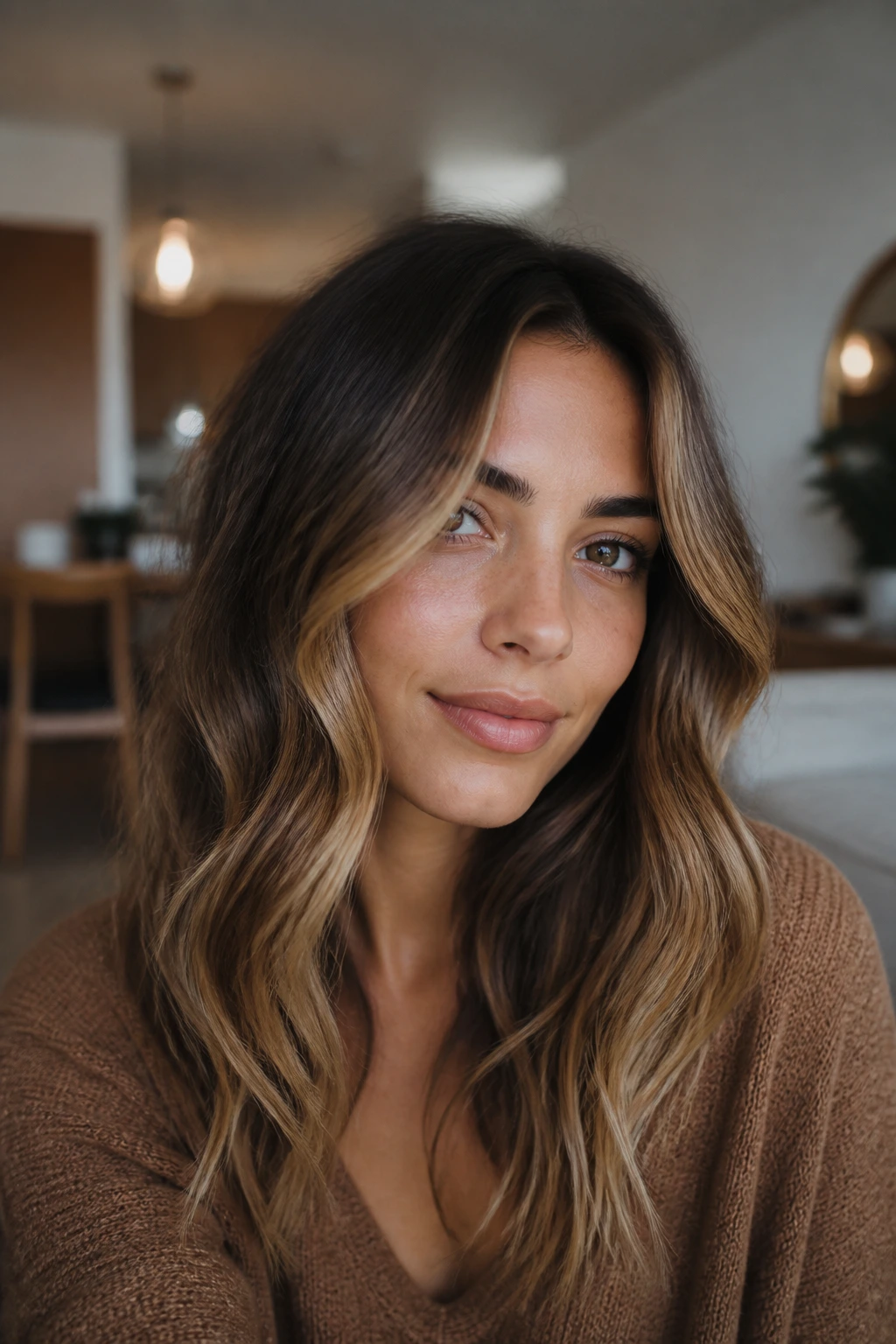
Caramel money piece with dark blonde ends is for the person who wants a visible change without bleaching the whole head. The front slices brighten the face, and the ends pick up just enough lift to keep the rest of the hair from feeling flat.
It is a good choice if you wear your hair straight more often than waved. The front pieces still show, even when the rest of the cut is smooth, and caramel sits in a flattering middle zone for most brunette bases. I’d keep the money piece fine if your hair is very thick; otherwise it can take over fast.
6. Soft Wheat Babylights Through Mid-Lengths
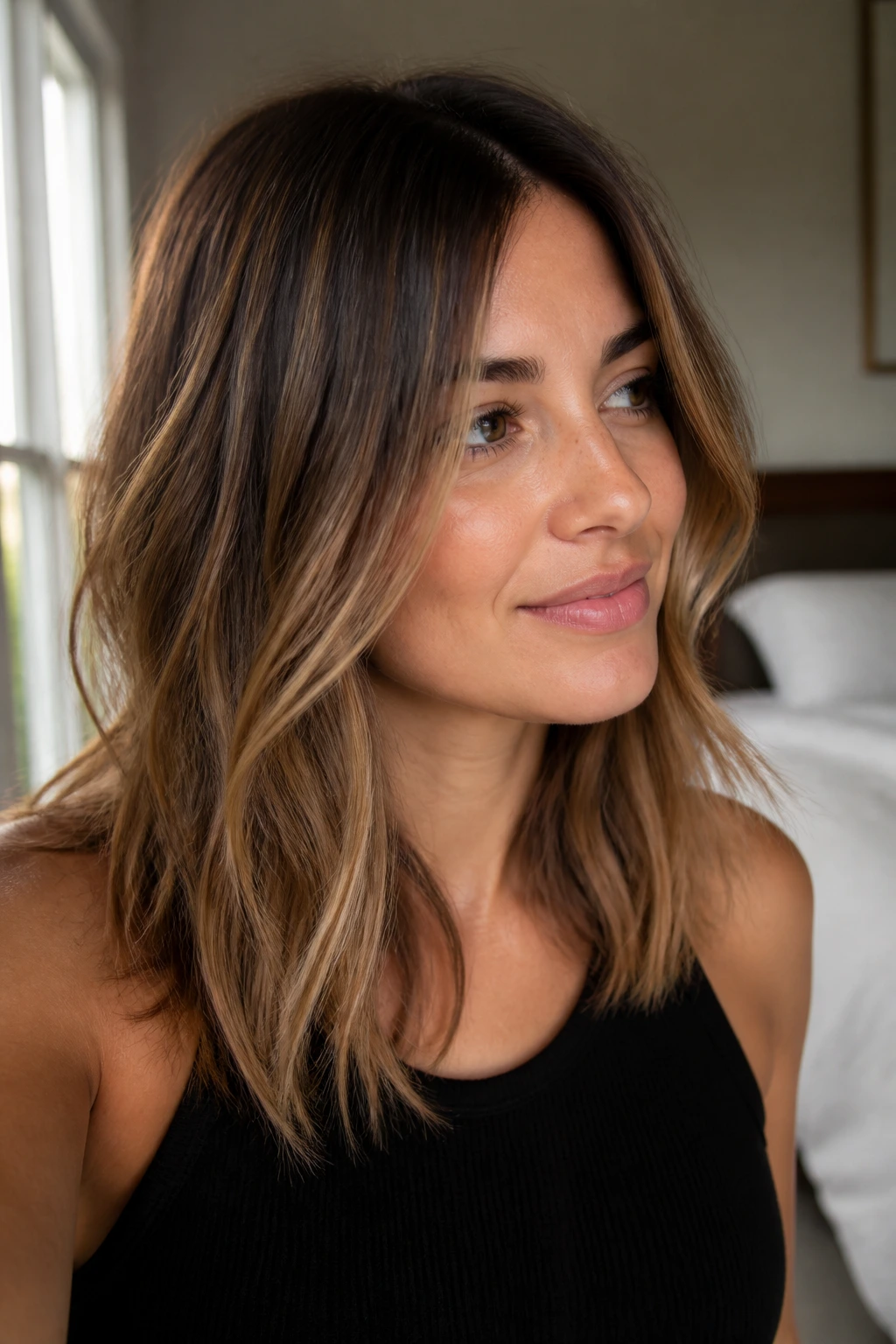
Soft wheat babylights through the mid-lengths look whisper-thin in the bowl and surprisingly full once the hair moves. That is the appeal. The color is less about a big blonde statement and more about breaking up a brunette sheet so it feels airy.
Why This Reads Subtle, Not Stripey
Babylights work because they mimic the tiny, natural weave of sun-faded hair, only with a little more control. On straight or fine hair, they add texture without adding bulk. On curly hair, they show up as tiny bright threads between coils.
- Best on: Fine to medium hair that needs dimension.
- Ask for: Very fine foils, placed closer together through the top than the bottom.
- Tone: Wheat, beige, or soft champagne—not yellow.
- Maintenance: Gloss every 4 to 6 weeks keeps the tone from going flat.
7. Toasted Almond Foilyage on Thick Brunette Hair
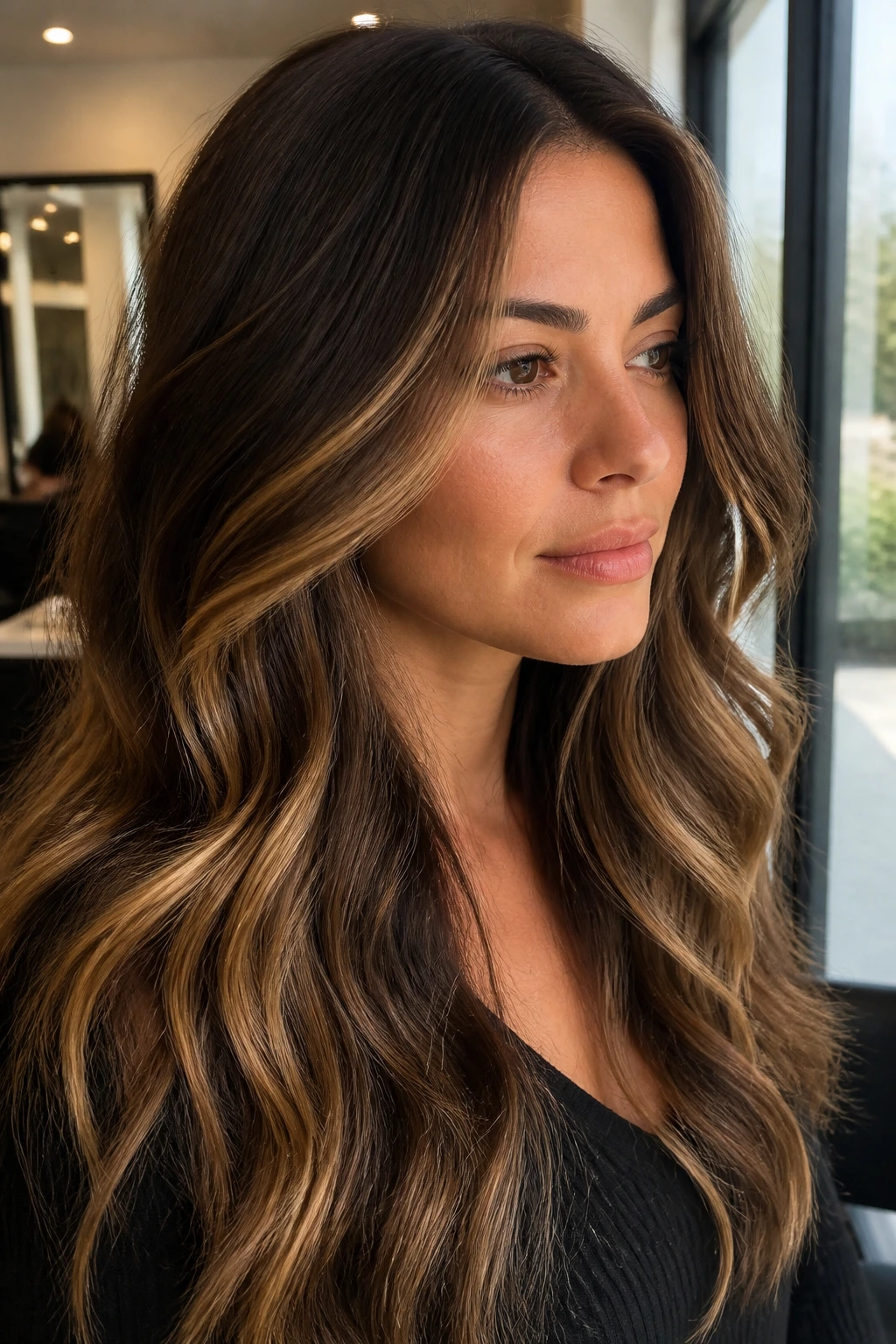
Thick brunette hair can swallow delicate color. Foilyage fixes that by giving you enough lift for the lighter pieces to show, then softening the result so it still looks painted rather than striped.
This is one of my favorite dark blonde hair color ideas for brunettes with a lot of hair because the ribboning gives you shape where volume alone can look heavy. Ask for toasted almond through the mids and ends, with a deeper root left intact for contrast. The result reads richer than a pale blonde and more alive than a single brown shade.
8. Sandy Bronde with a Shadow Root
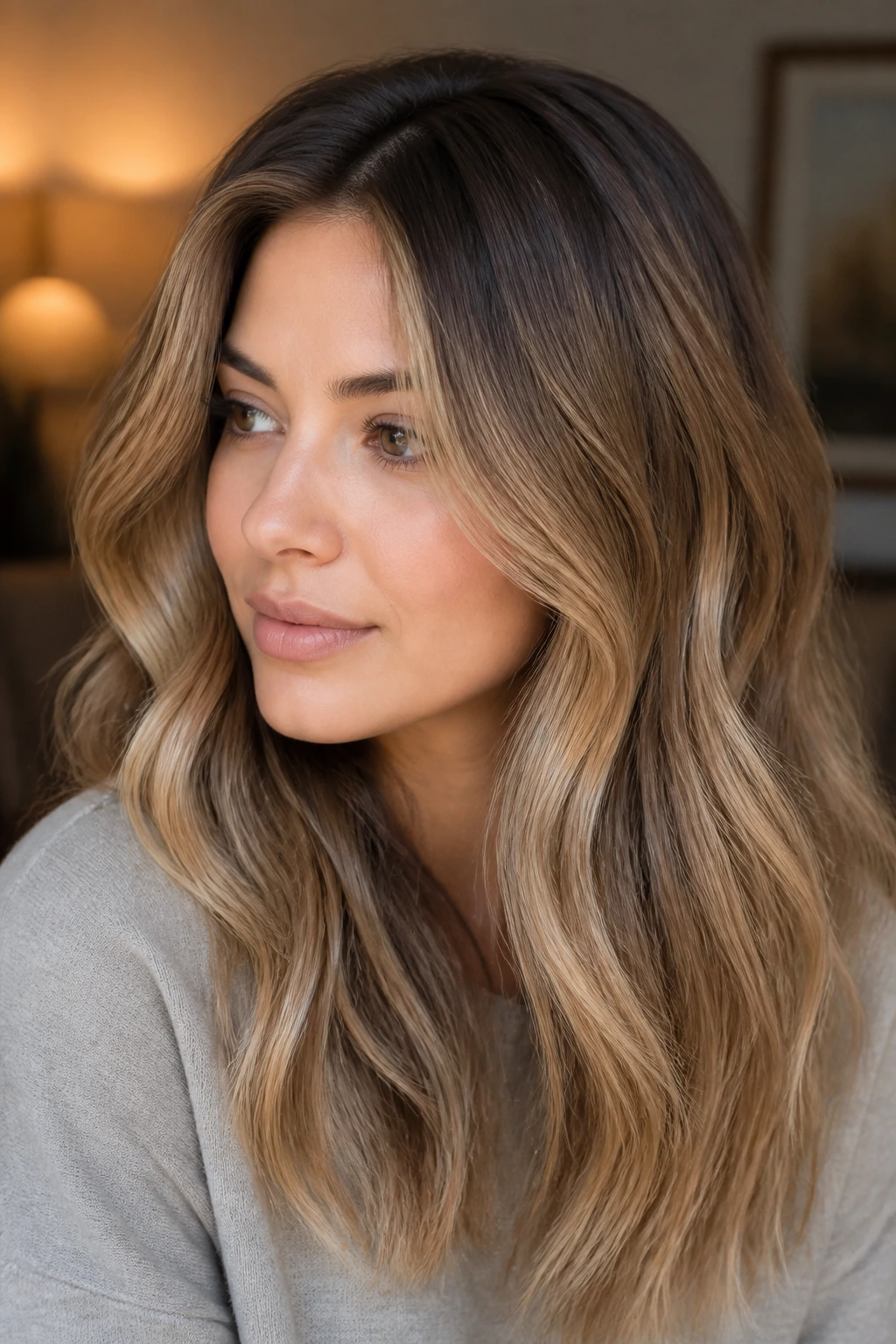
Want the easiest grow-out in the whole group? Sandy bronde with a shadow root gets you there. The root stays brunette, the lift sits around level 6 to 7, and the sandy tone keeps the whole thing feeling soft instead of harsh.
Best Way to Ask for It
Tell your colorist you want the root melted first, then the lighter pieces painted through the mids and ends. That order matters. If the root is too light, the whole look can turn obvious fast; if the melt is right, you can go months without the color line yelling at you.
This is the shade I’d hand to someone who hates sitting in a chair every few weeks.
9. Cinnamon-Beige Face Frame
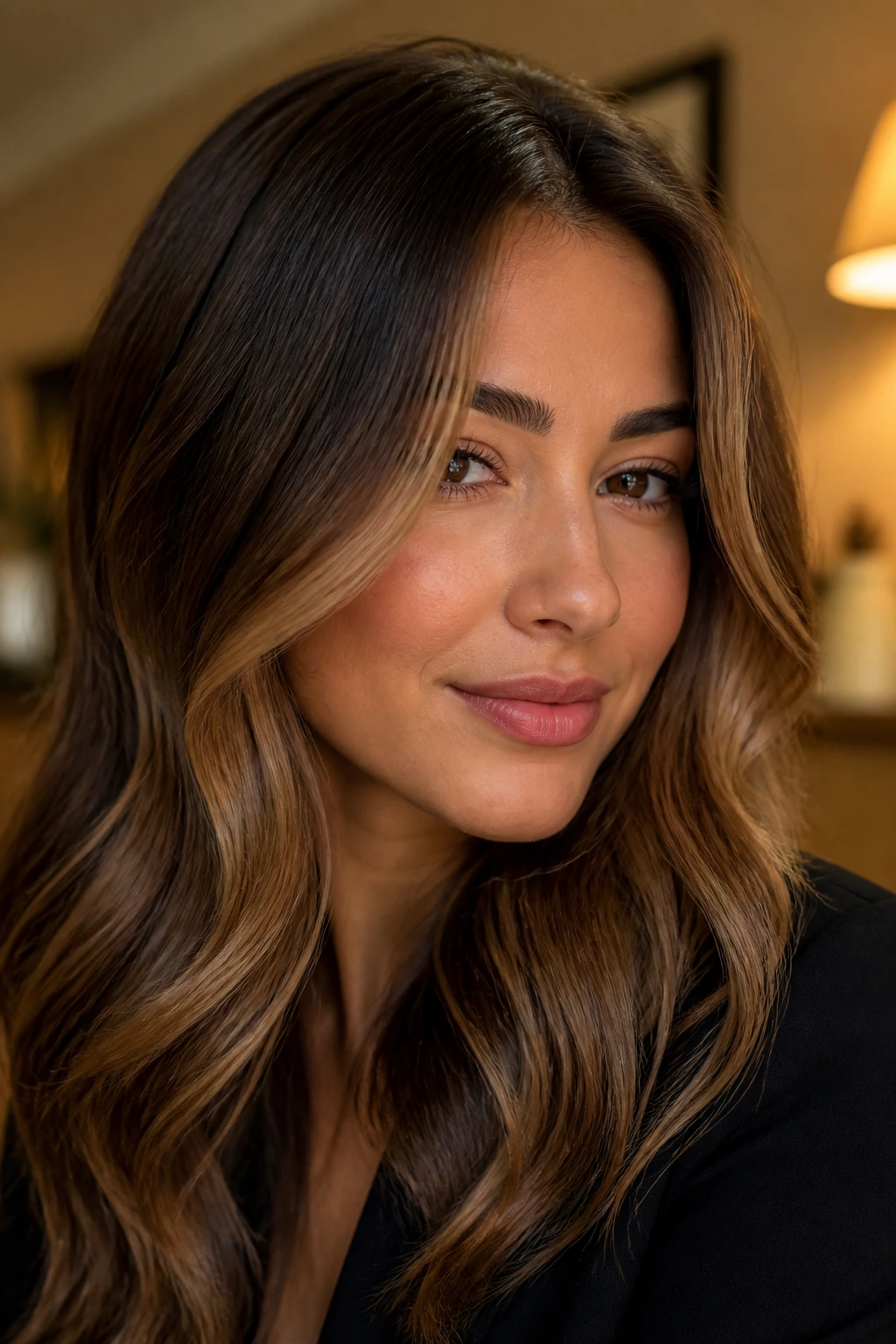
A cinnamon-beige face frame adds warmth without turning brunette hair orange. The front pieces carry enough lift to show around the cheekbones, but the tone stays muted enough that the color still feels believable.
It is especially nice on mid-length cuts and collarbone bobs, where the front is doing a lot of visual work. Keep the back deeper, keep the face frame narrow, and let the color taper below the jaw. You get brightness where it matters and none of the helmet effect.
10. Smoky Champagne Highlights
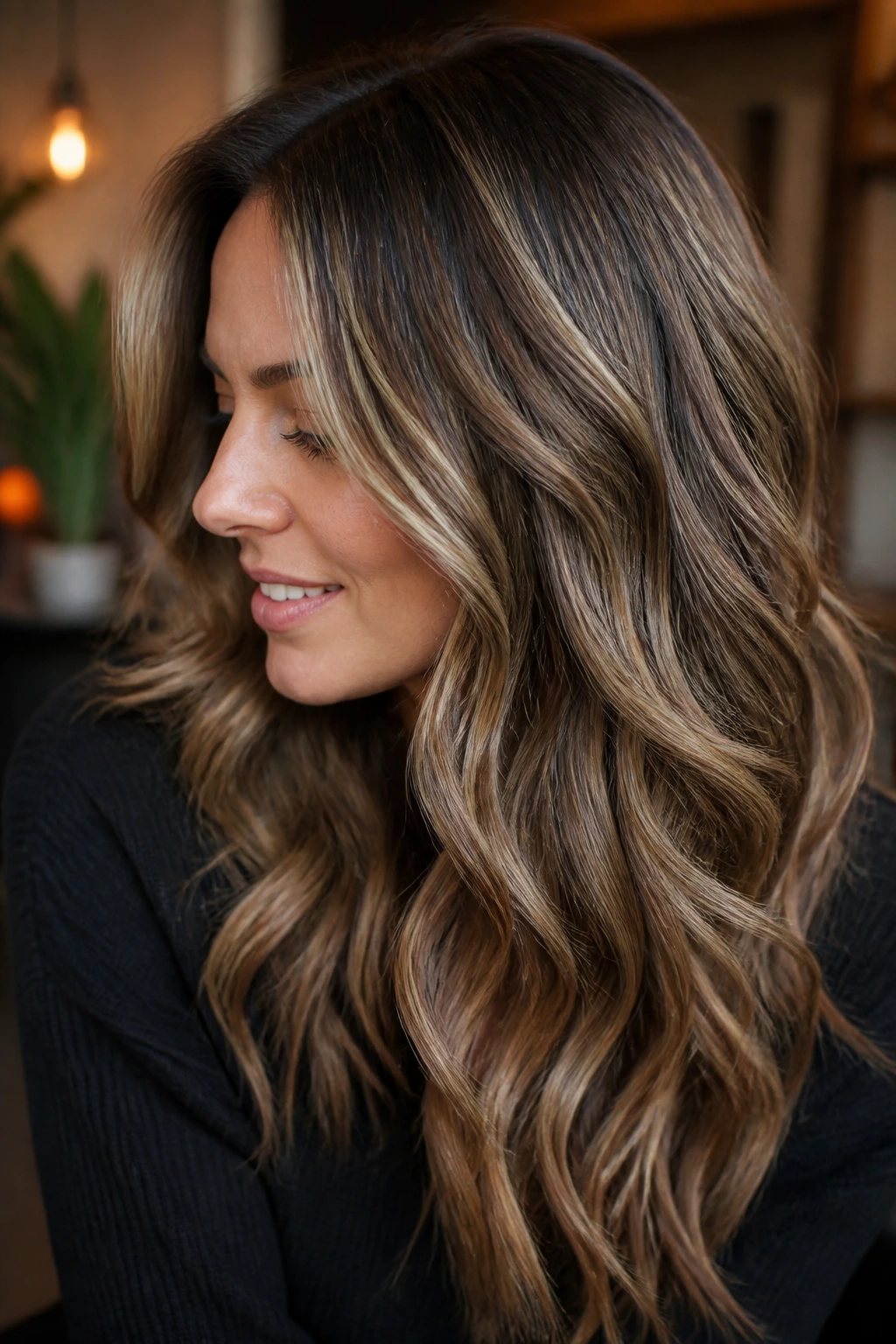
Smoky champagne highlights are the closest thing to “lightened, not blonded” brunette color. The tone sits between beige and cool gold, with a faint silvery edge that keeps it from going too sweet.
On brunettes with a bit of natural red underneath, this shade is safer than a pure ash. It gives you lightness without the flat gray cast that can happen when cooler toner sits too long on porous hair. I like it on layered cuts because the champagne pieces show every bend in the hair.
11. Buttercream Ends on Chestnut Hair
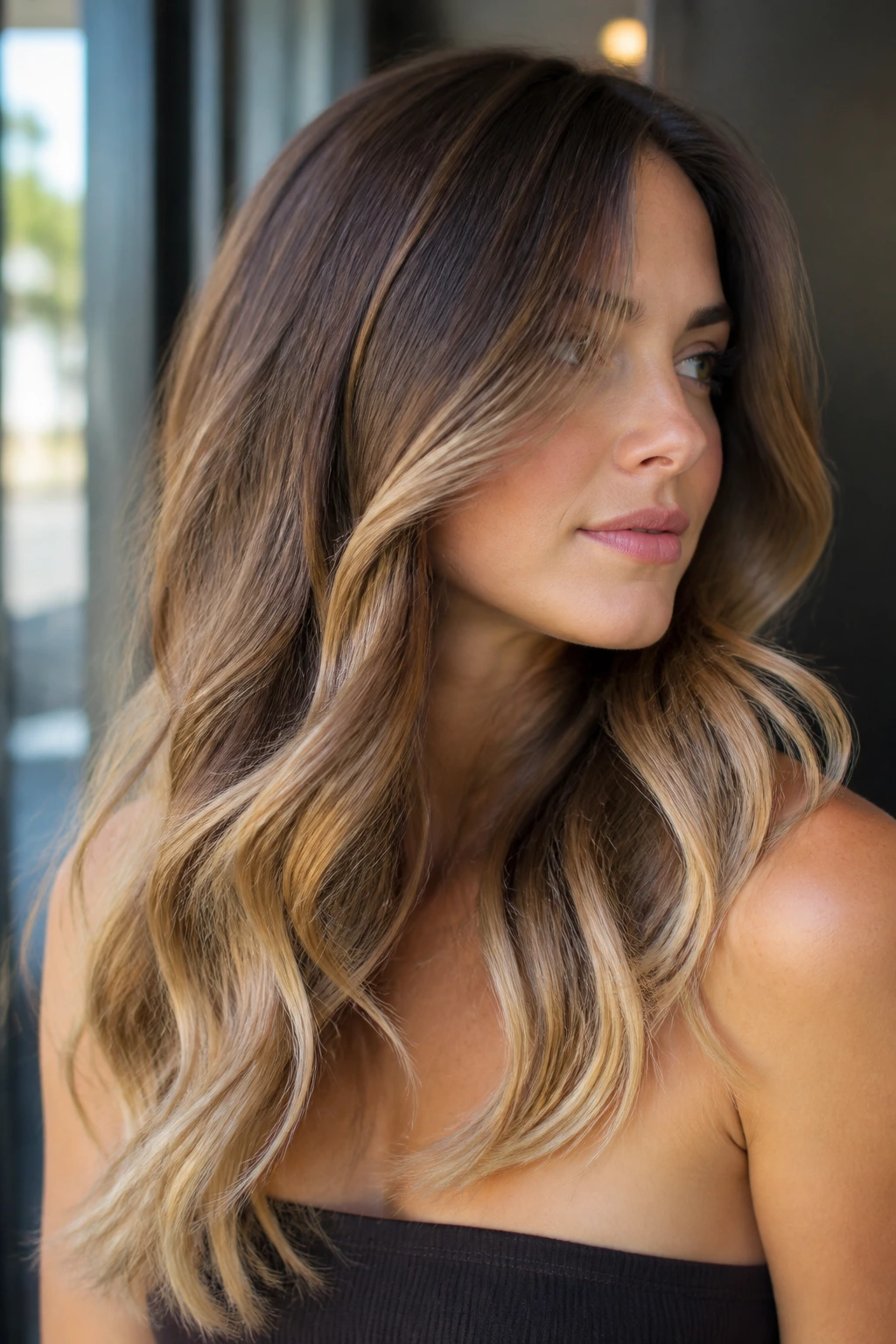
Buttercream ends on chestnut hair are warmer and softer than a classic blonde finish. The chestnut base keeps the crown rich, while the ends lighten just enough to make the whole cut feel airier.
Why It Works on Warm Brunettes
Chestnut hair already carries red and gold, so the buttercream finish doesn’t fight the base. It slides with it. That means less correction, fewer muddy patches, and a better chance that the color will still look clean after a few washes.
- Best on: Warm brunettes who want a softer glow.
- Ask for: Chestnut root, warm beige ends, and a very gentle blend.
- Styling note: Loose bends show the light ends better than pin-straight hair.
- Caution: Too much ash will kill the warmth and make the color look dull.
12. Taupe Blonde Melt
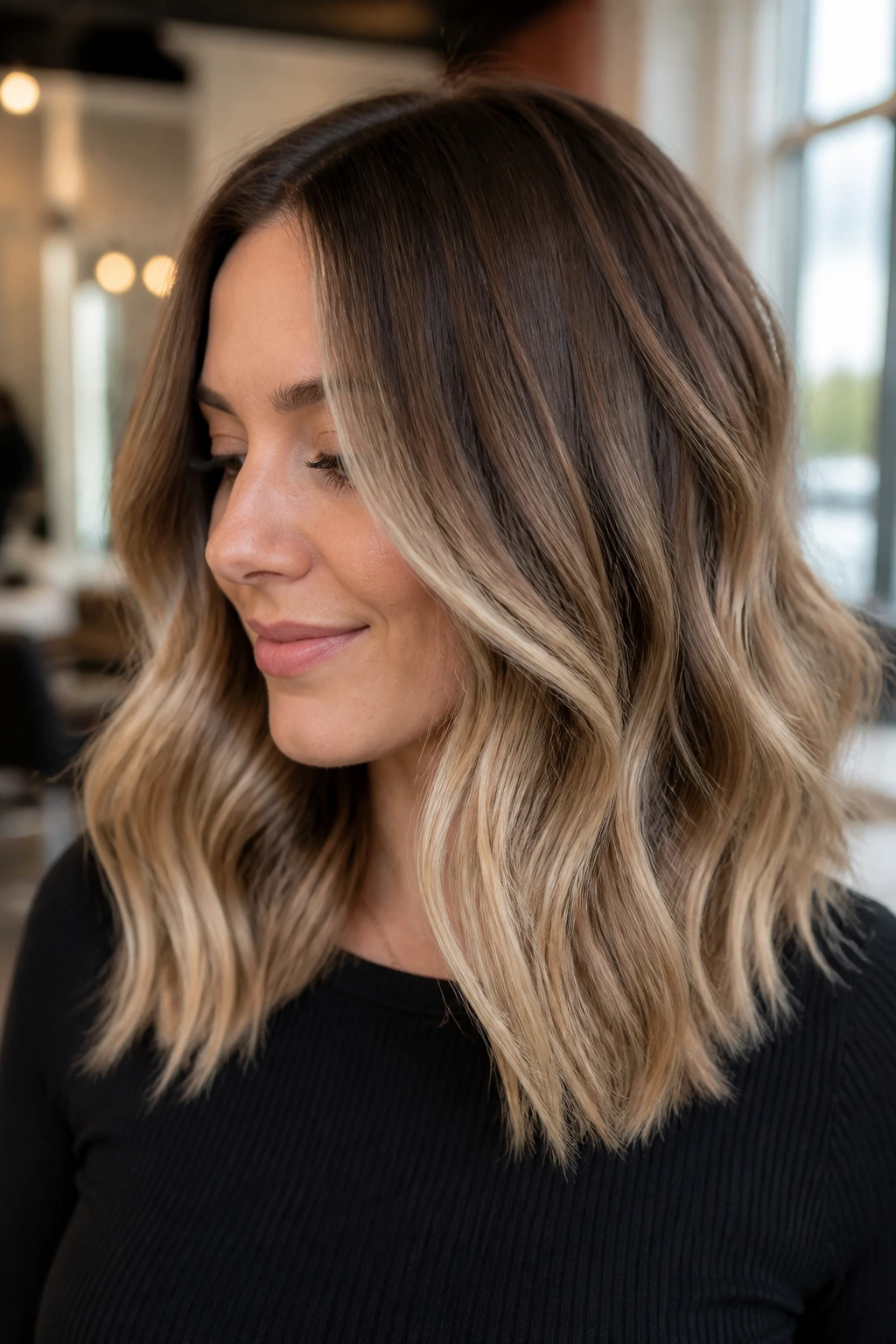
Taupe blonde is the quiet one in the room, and that is why it works. It sits between ash and beige, with enough softness to flatter brunette hair that pulls orange but not so much coolness that it turns chalky.
The melt version is especially nice if you want a polished finish around the crown and more brightness as the eye moves down. It keeps the top grounded and the ends softer. That shape makes the haircut look deliberate, which matters more than people admit.
13. Espresso Lowlights with Dark Blonde Ribbons
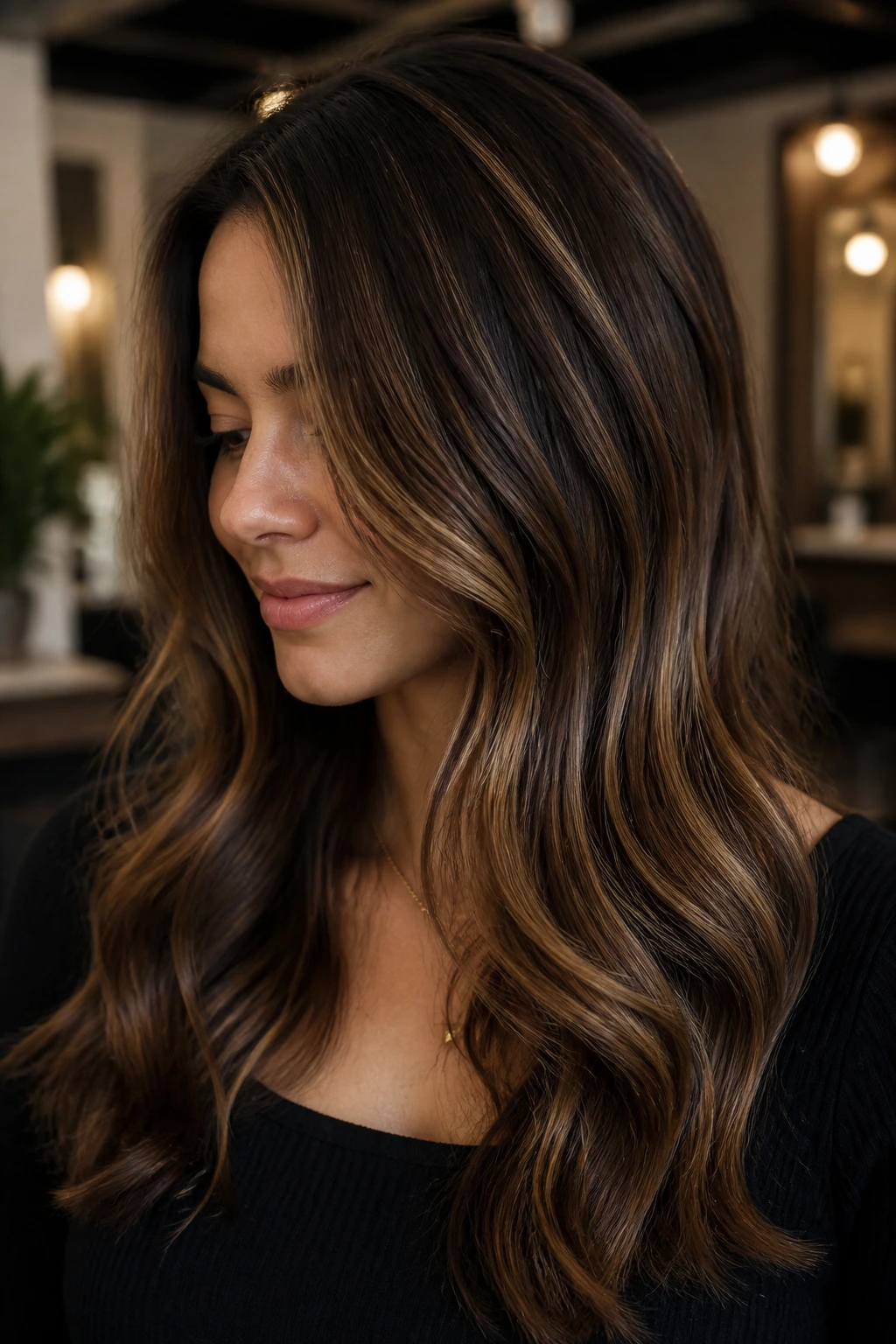
Why brighten brunette hair by adding darker strands? Because espresso lowlights can make dark blonde ribbons look cleaner, richer, and more expensive-looking without pushing the whole head lighter.
How to Wear It
This is the one to choose if your hair already has some lightened pieces and they feel too flat on their own. The lowlights rebuild contrast, then the dark blonde ribbons sit on top with more depth. It works best when the colors are woven through in fine sections instead of painted in big blocks.
On medium to thick hair, the result gives you dimension from every angle. That is the point.
14. Maple Latte Balayage
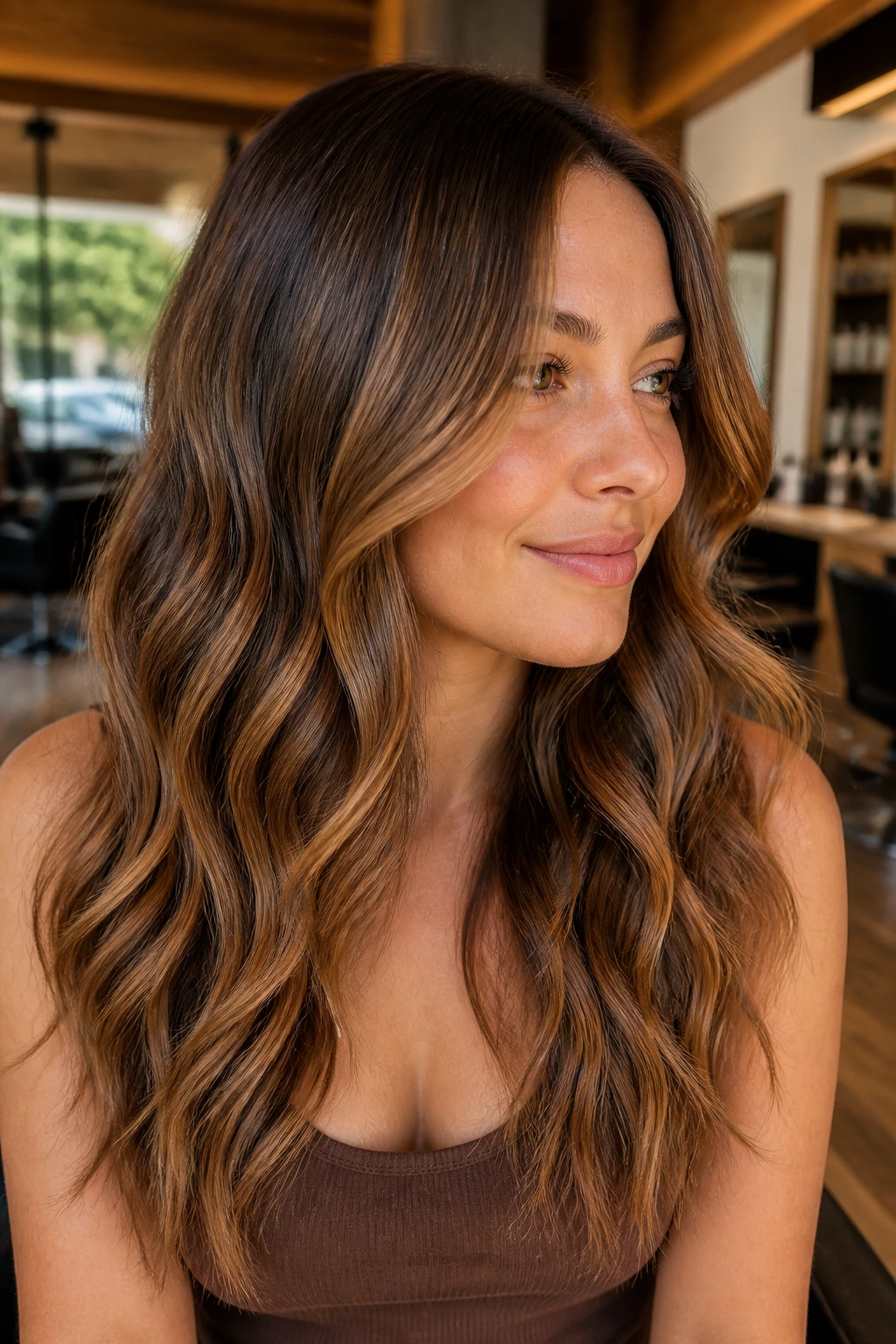
Maple latte balayage has a warmer pull than beige, but it stops short of brass. The color sits in that toasted, creamy middle ground that flatters brown hair without making it look orange or too golden.
I like this when a brunette wants lighter pieces but still wants the hair to look cozy and grounded. It is especially good on layered cuts because the warm ribbons catch the bends and make the hair look fuller. If your skin has golden undertones, this shade can do a lot with very little effort.
15. Ash Beige Contour Highlights
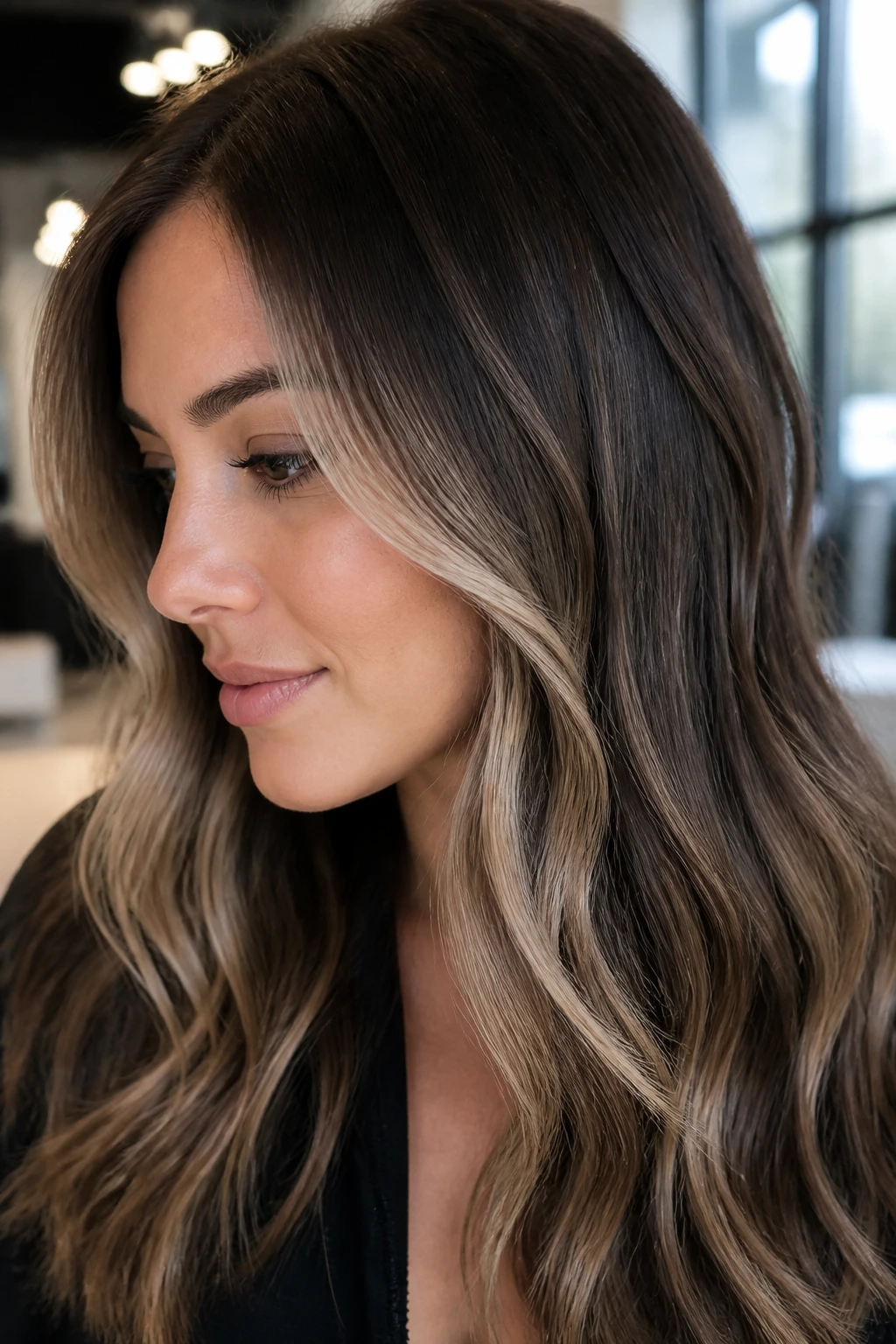
Ash beige contour highlights are built around the face shape, not just the color. The lighter pieces sit where the light naturally lands—around the temple, cheekbone, and jawline—while the rest of the hair stays deeper and more brunette.
That contouring effect is useful if your haircut is simple. A blunt lob, a straight cut, or a long one-length style can all look more finished when the front is softly lifted. Keep the ash beige clean, not icy. The whole point is shape, not frost.
16. Golden Oat Scattered Highlights
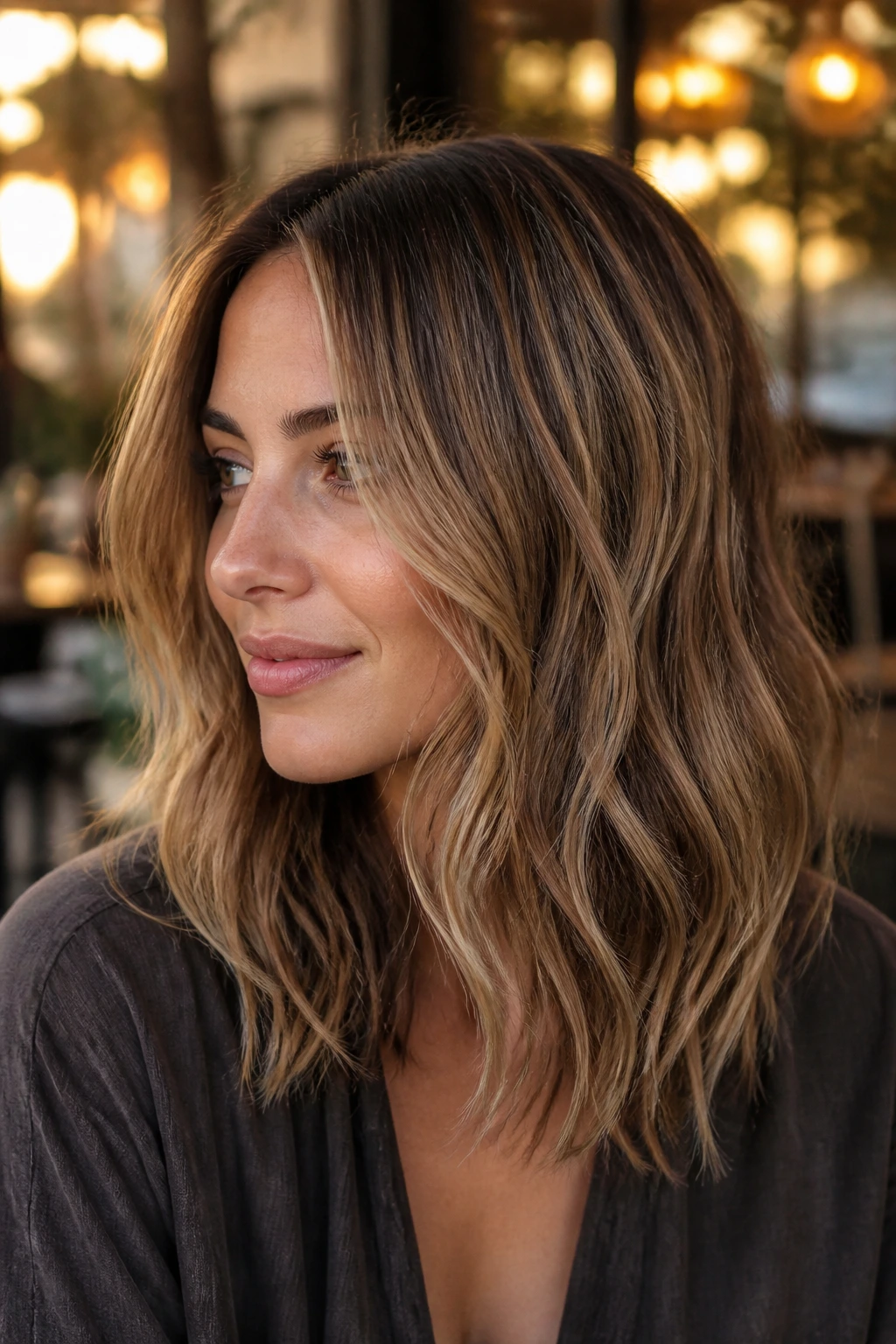
Golden oat scattered highlights look casual in the best way. They are not packed in tight, and they are not meant to turn the whole head light. Instead, a few well-placed ribbons through the crown and mids make the brunette base look less static.
Why Scattered Placement Matters
This style is useful when you want dimension but do not want obvious highlight lines. Spacing the light pieces out lets the darker hair do some of the visual work, so the result feels more believable. On wavy hair, the contrast is enough to show texture without screaming for attention.
- Best on: Medium-length cuts, especially with loose bends.
- Ask for: Fine woven highlights with room between each panel.
- Tone: Golden oat, not yellow corn.
- Maintenance: Refresh the gloss before the ends start looking dusty.
17. Vanilla Smoke Balayage
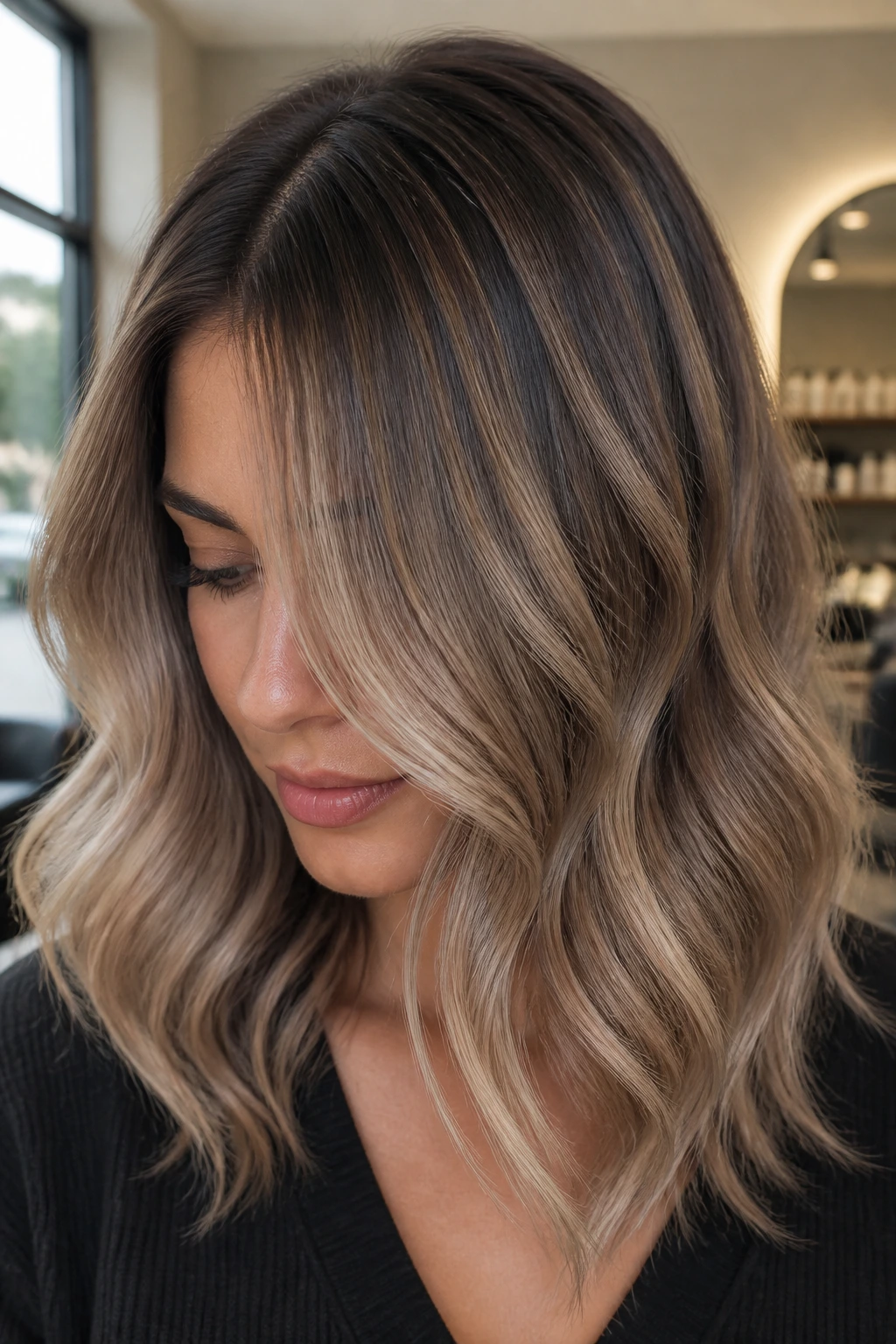
Vanilla smoke balayage is for brunettes who want brightness with a cooler edge. The vanilla part softens the lift; the smoke part keeps it from turning sugary or brassy.
This look is good on hair that has been colored before, because the tonal blend can hide a little patchiness better than a stark blonde. I would call it a low-contrast blonde for brunettes who still want to see themselves as brunette in the mirror. The grow-out stays gentle if the root is left a shade deeper than the mids.
18. Biscotti Bronde Blend
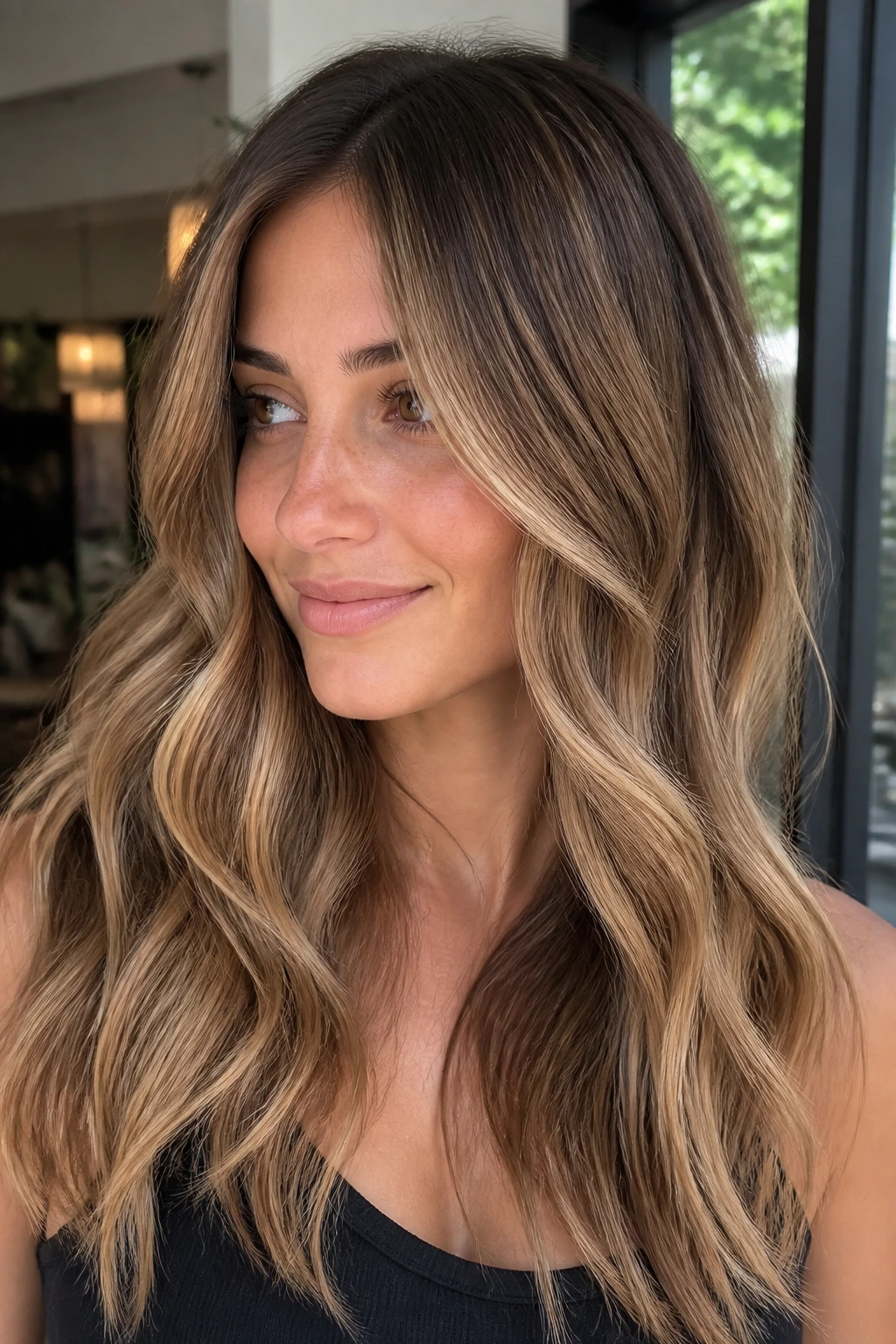
Can a brunette go lighter without losing the brown identity? Biscotti bronde is the yes answer. The brown stays visible, but the lighter ribbons are thick enough to read on purpose, especially around waves and layered ends.
What Makes It Different
Biscotti bronde sits between a soft balayage and a full dimensional color job. It is less about one perfect ribbon and more about a mix of beige, warm brown, and pale biscuit tones that sit close together. That closeness keeps the color from looking chopped up.
It suits people who want a fuller color change than babylights but not a full blonde reset.
19. Toffee Ribbon Lights
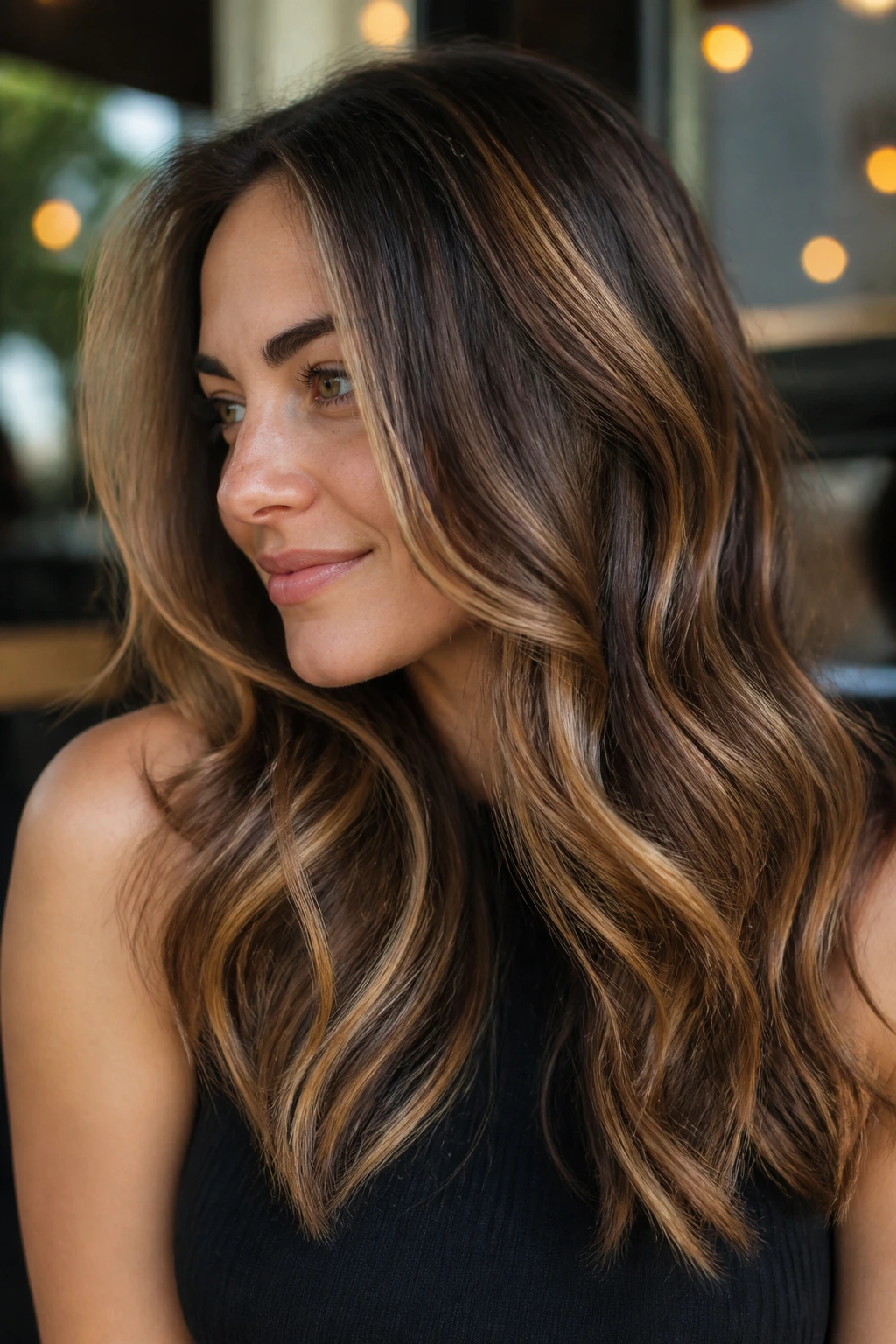
Toffee ribbon lights give brunette hair more depth than a simple highlight package. The ribbons should be wider than babylights, thinner than chunky stripes, and placed so the hair still has darker sections between them.
That spacing is what keeps the look from going busy. Toffee has enough warmth to flatter most brown bases, and the ribboning keeps the color from turning flat once it settles. On layered cuts, the effect is especially good because every bend picks up a slightly different tone.
20. Champagne Beige Money Piece
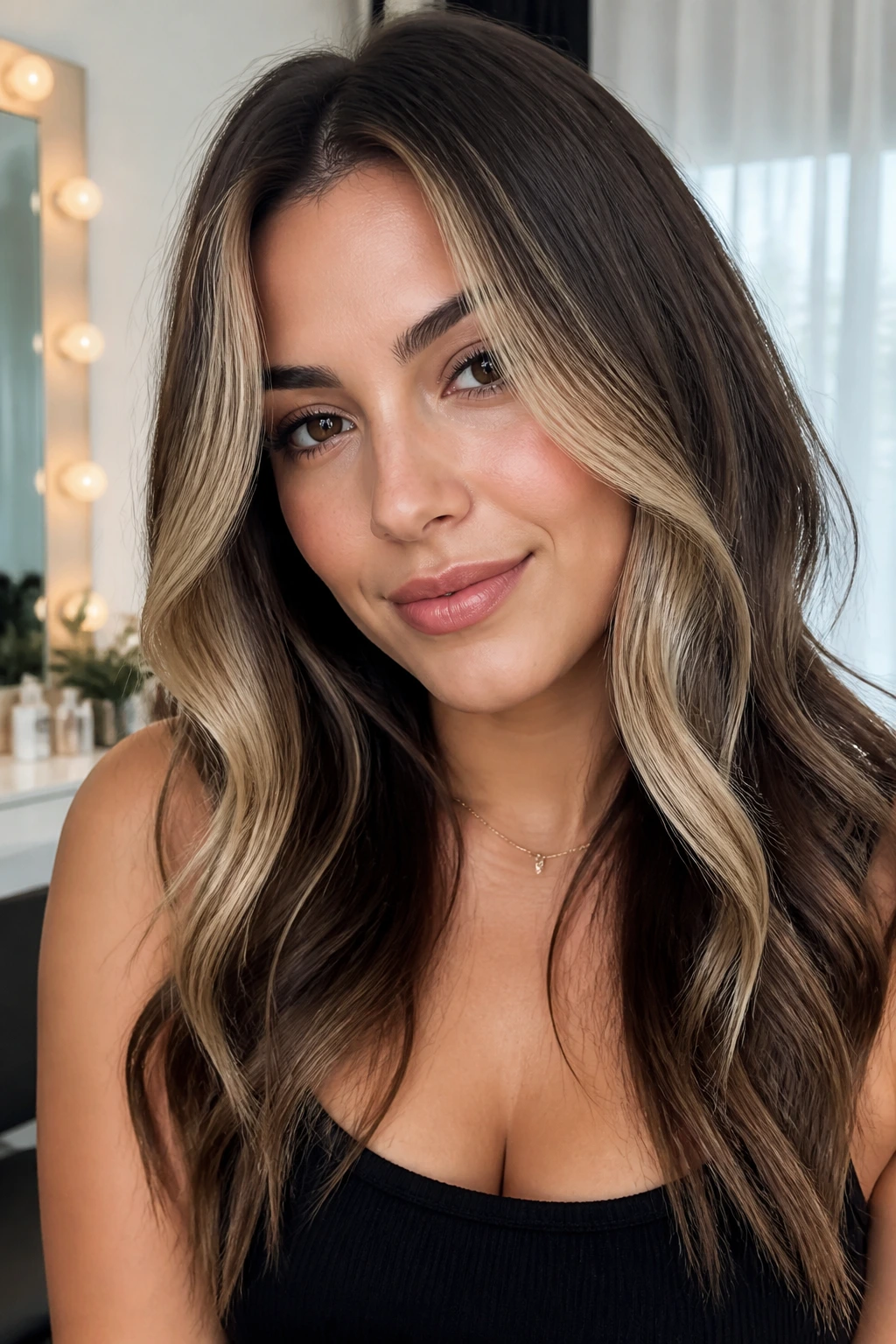
A champagne beige money piece is one of the fastest ways to change your face frame without changing the whole head. The front sections are lifted brighter, then toned to a soft champagne beige so they do not lean yellow or icy.
It works especially well with center parts and curtain bangs because those pieces sit right where the eye starts. Keep the money piece broad enough to read, but not so wide that it takes over the haircut. A tight little front chunk is easy to overdo. This one looks better when it breathes.
21. Cool Caramel Slices
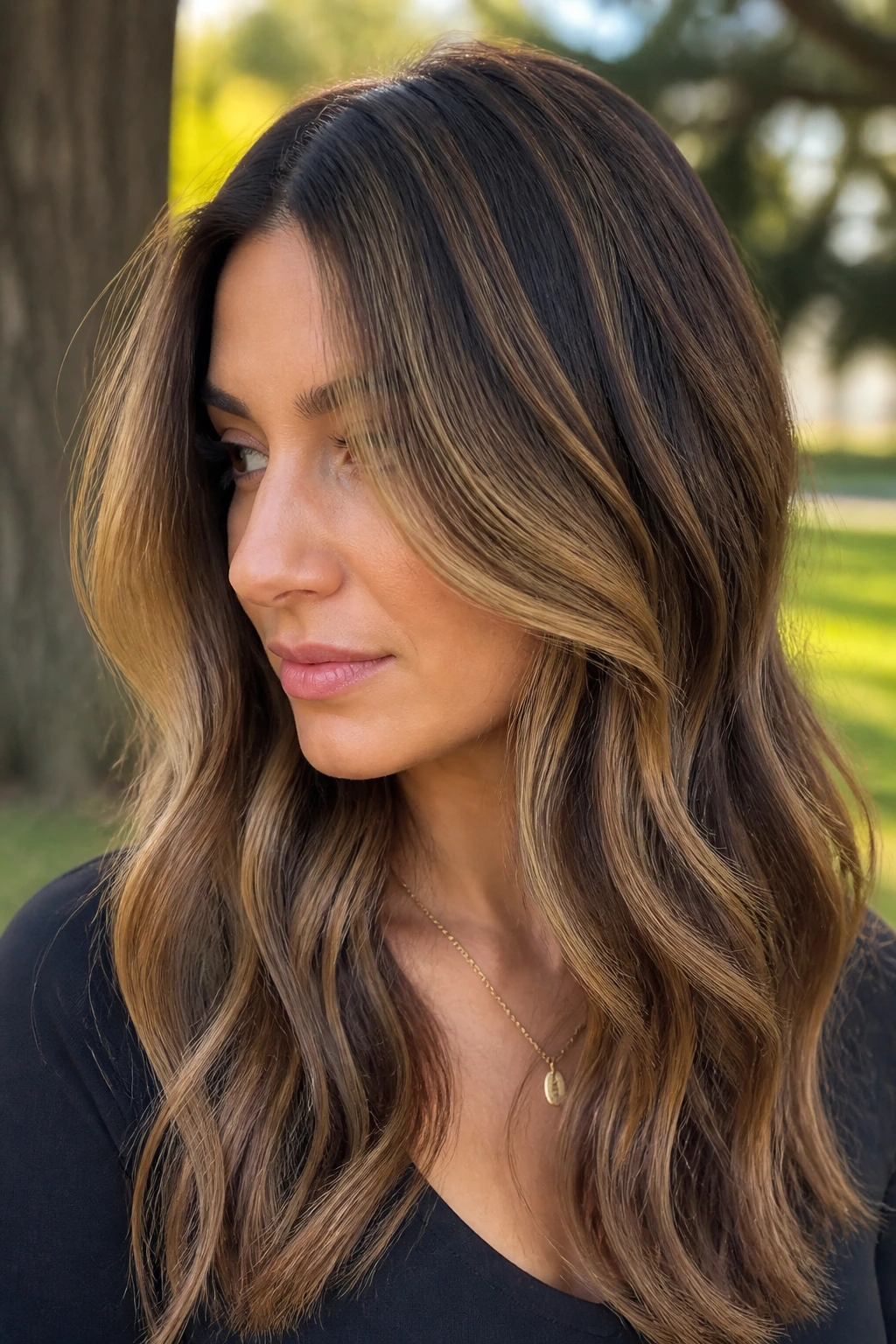
Cool caramel slices sound contradictory, and that is exactly why they work. The caramel brings warmth, the cool undertone keeps it from slipping into orange, and the slice placement gives the color more structure than scattered ribbons.
Why Slices Beat Random Highlights Here
Slices are larger than baby highlights, so they show up clearly on medium or thick brunette hair. When the slices are placed with some room between them, they create defined bands of dark blonde that still feel soft because the edges are feathered. That is a useful middle road if you hate both stripes and whisper-fine color.
- Best on: Thick, layered brunettes.
- Ask for: Medium slices with a soft beige-caramel toner.
- Styling note: Best with a bend or wave, not a pin-straight finish.
- Watch out: Too many slices too close together can erase the brunette depth.
22. Suede Blonde Gloss
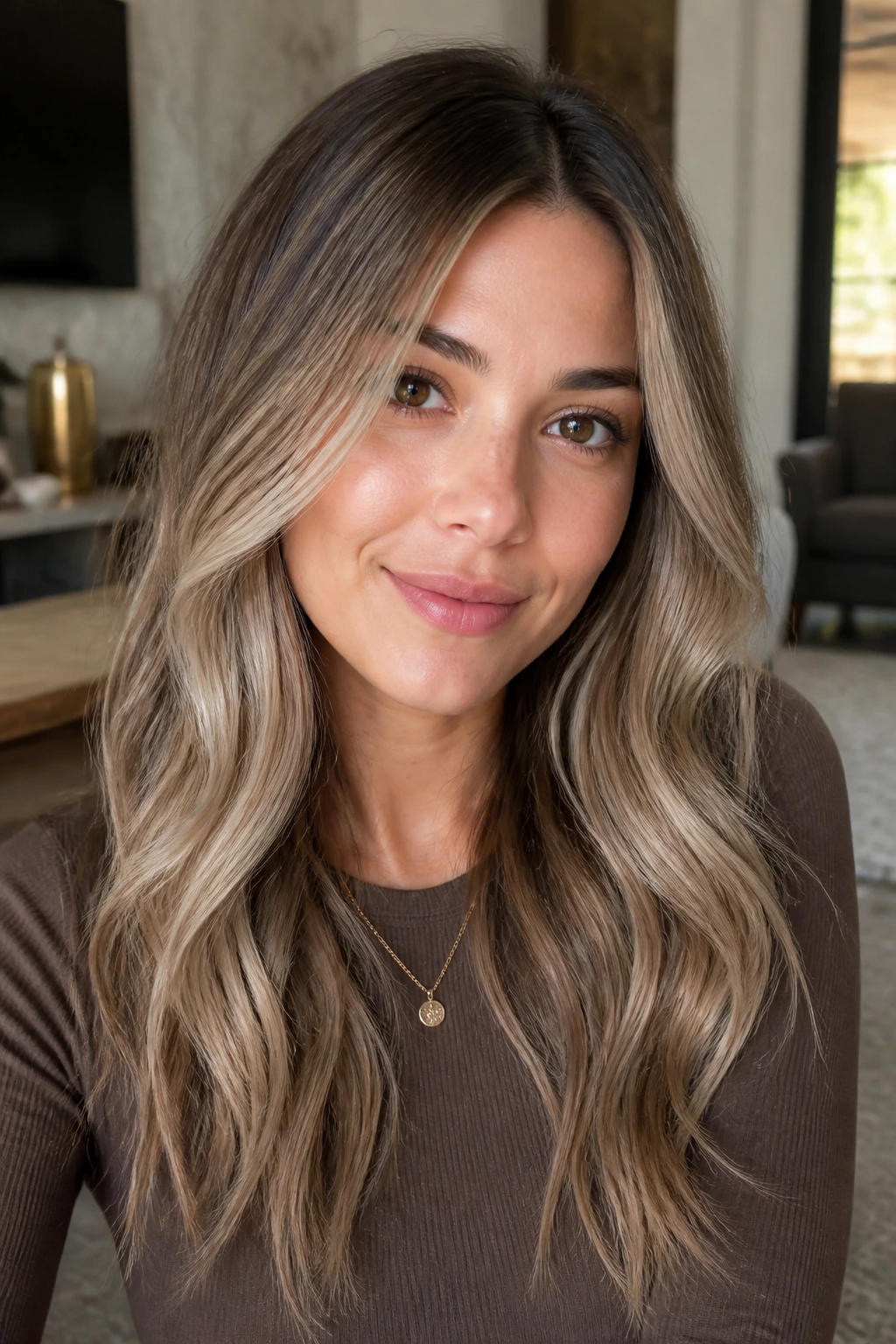
Suede blonde gloss is the fastest route to a softer brunette-blonde blend. It does not pretend to be a dramatic lightening job. Instead, it smooths the existing color, adds a muted beige tone, and makes the lighter pieces look less raw.
This is the idea I’d choose when the hair has already been highlighted and needs better tone more than more lift. The suede finish softens the shine, which sounds odd until you see it on hair that was too yellow or too bright before. A good gloss can pull the whole head back into balance.
23. Honey Ash Blend
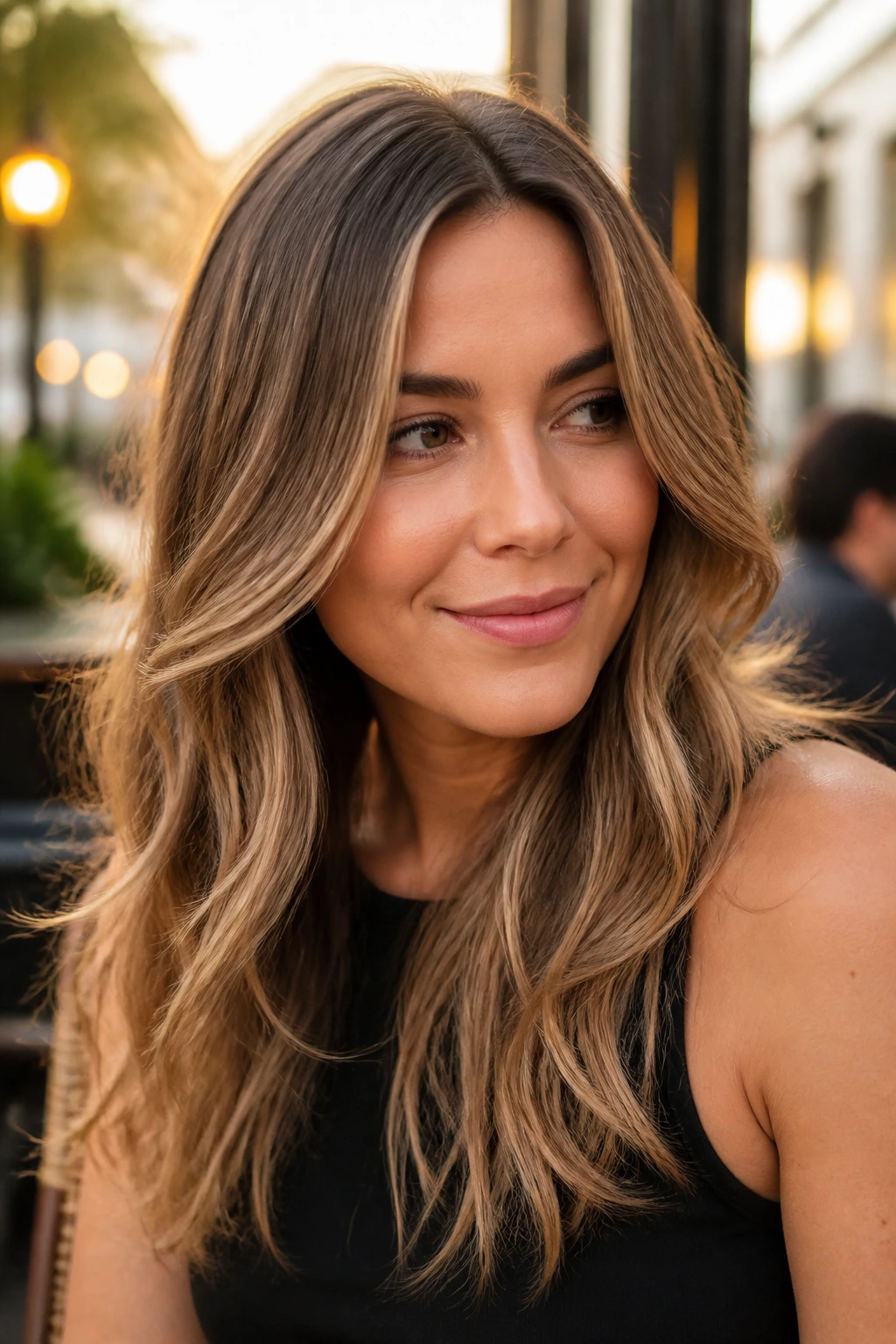
What happens when warm and cool stop fighting? You get honey ash, a hybrid that works better on brunettes than either tone alone. The honey brings softness, the ash keeps the warmth from running gold, and the final result sits in a very wearable dark blonde lane.
How to Read This Color
This is not a dramatic shade. It is a balance shade. On the right base, it makes brunette hair look fuller because the two tones play off each other instead of blending into a single flat brown. It is a smart choice for people who like warmth but hate brass.
The secret is keeping the ash just strong enough to quiet the gold, not so strong that the hair goes dull.
24. Mushroom Beige Ombré
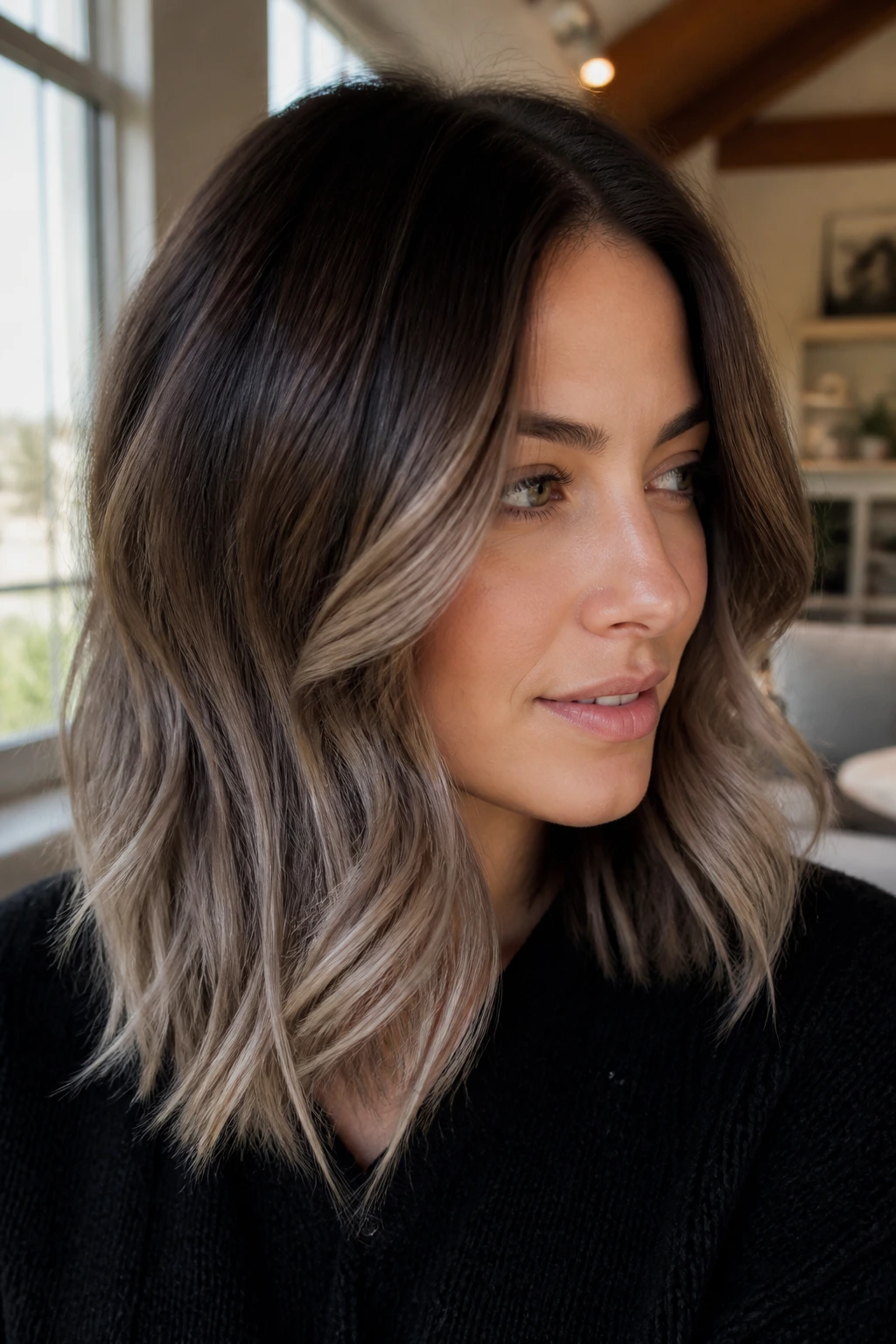
Mushroom beige ombré is for anyone who wants a deeper root with a smoky, creamy finish at the bottom. The shift is gentle, but the tone is specific: muted beige, cool enough to avoid orange, warm enough to stay soft.
I like this look on longer hair because the gradient needs room. On shorter hair, the fade can feel cramped. On longer cuts, it has space to breathe, and that is where mushroom beige really earns its keep. The best versions look like the brunette base simply lightened itself at the ends over time.
25. Soft Sand Highlights on Dark Brown Hair
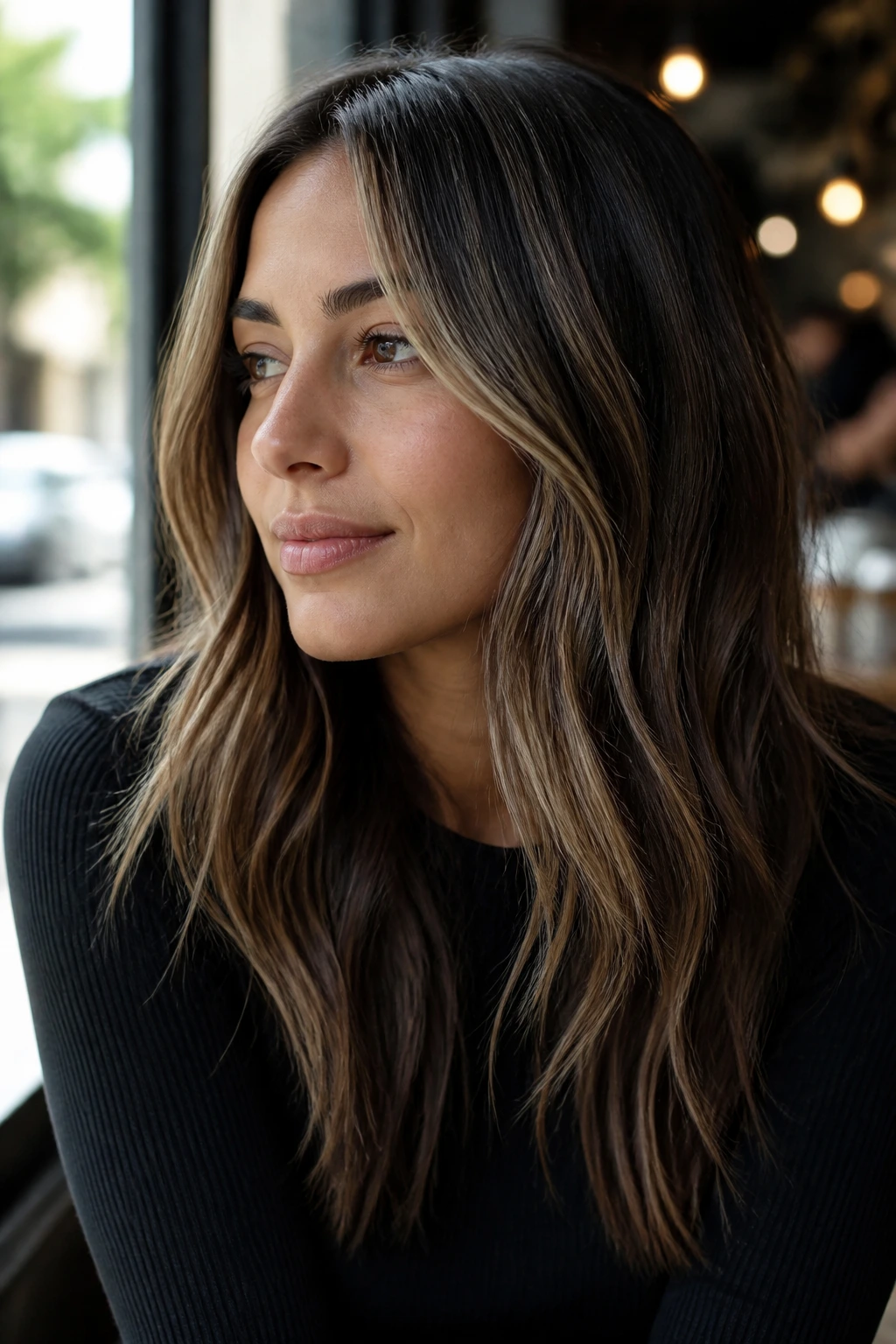
Soft sand highlights can save dark brown hair from looking too heavy, especially when the cut is one length. The color should not jump out. It should lighten the surface just enough that the hair feels more textured when you move.
This is a good place to stop if you want a visible shift but not a full transformation. Ask for a soft sand tone rather than a creamy blonde, and keep the placement airy through the top. The result is understated in a way that still changes the haircut.
26. Pecan Bronde with Dimensional Ends
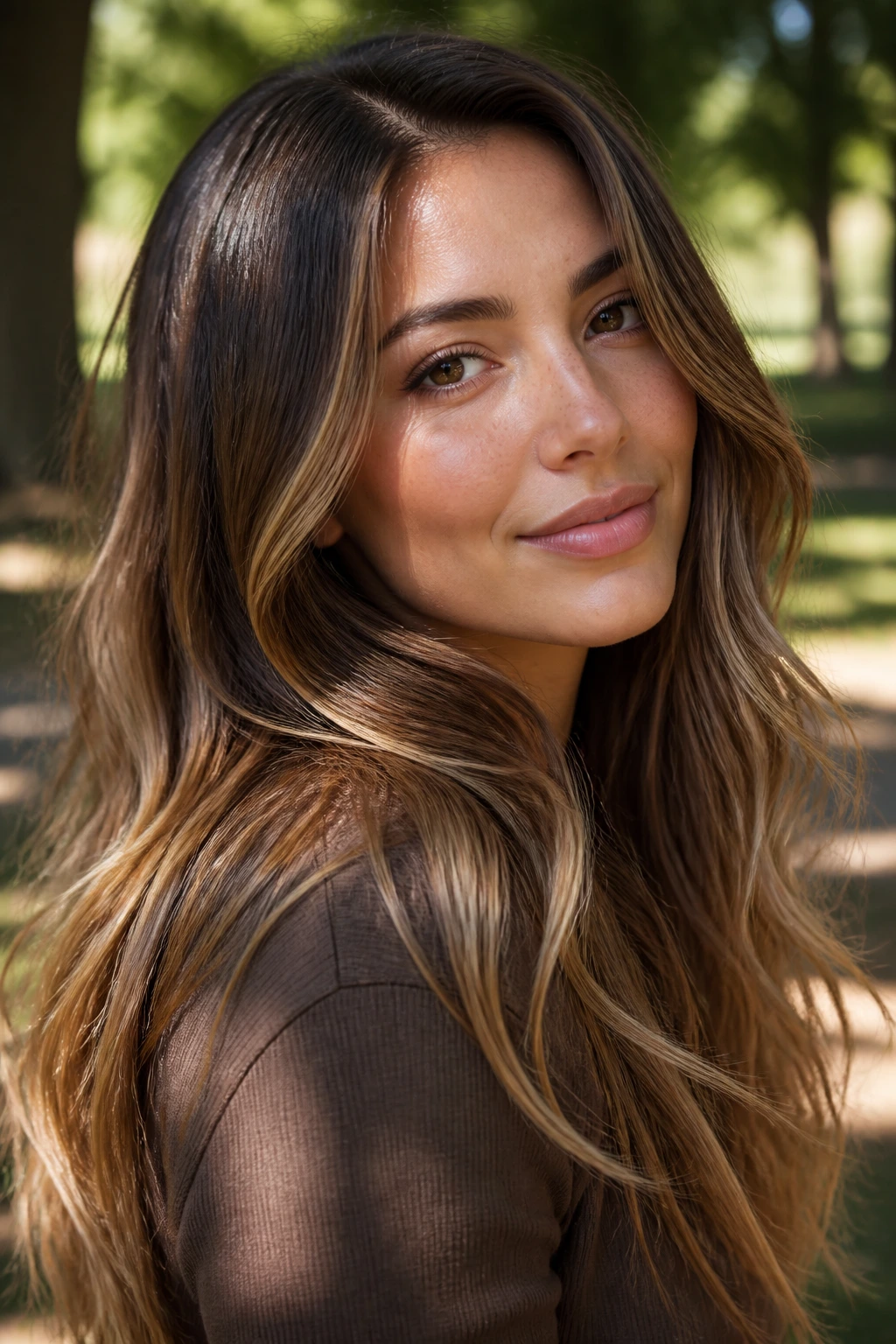
Pecan bronde with dimensional ends works because the root and mids stay close enough to brunette that the lighter ends never look pasted on. The pecan tone sits in a nutty, warm-neutral lane that makes brown hair look deeper by contrast.
Best on Hair That Needs More Shape
If your hair is long and straight, this is a smarter choice than an all-over lift. The dimensional ends keep the bottom from disappearing into one flat line, which is a problem on heavy brunette hair. On waves, the lighter ends give the movement a clearer shape.
- Best on: Long layers or hair that falls straight by default.
- Ask for: Pecan beige through the ends, with a soft root shadow.
- Toner note: Neutral-beige keeps the pecan tone from going too orange.
- Benefit: The brunette base still does the anchoring.
27. Creamy Beige Peekaboo Panels
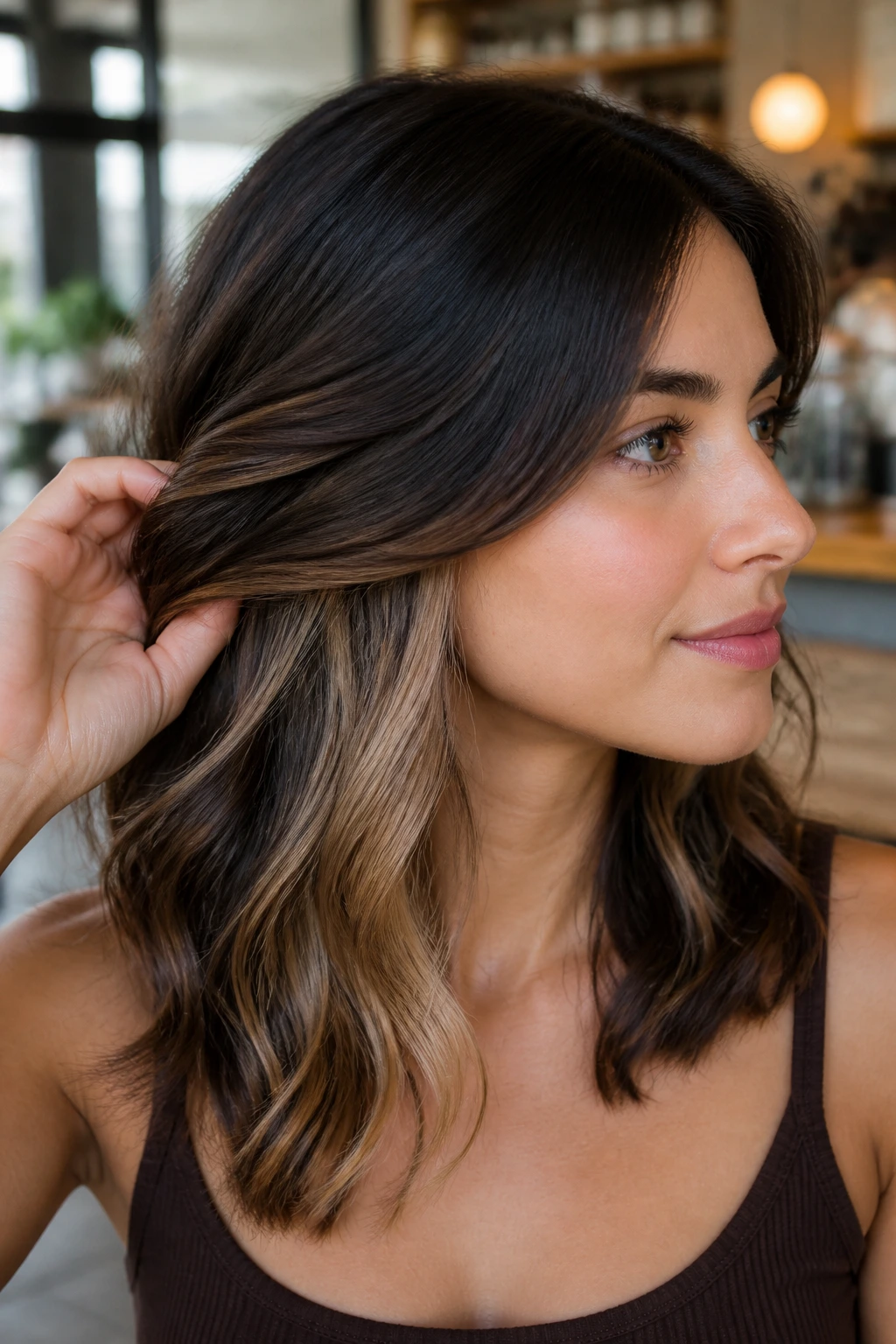
Creamy beige peekaboo panels are for the brunette who wants a little surprise, not a full lightening job. The panels sit under the top layer, so the brightness appears when the hair moves, flips, or gets tucked behind the ears.
That hidden placement gives you more contrast than you’d think, especially on straight hair. The top layer stays dark enough to keep the look grounded, and the beige underneath adds a soft flash without taking over. I like this for people who work in conservative settings but still want color with some personality.
28. Warm Biscuit Balayage
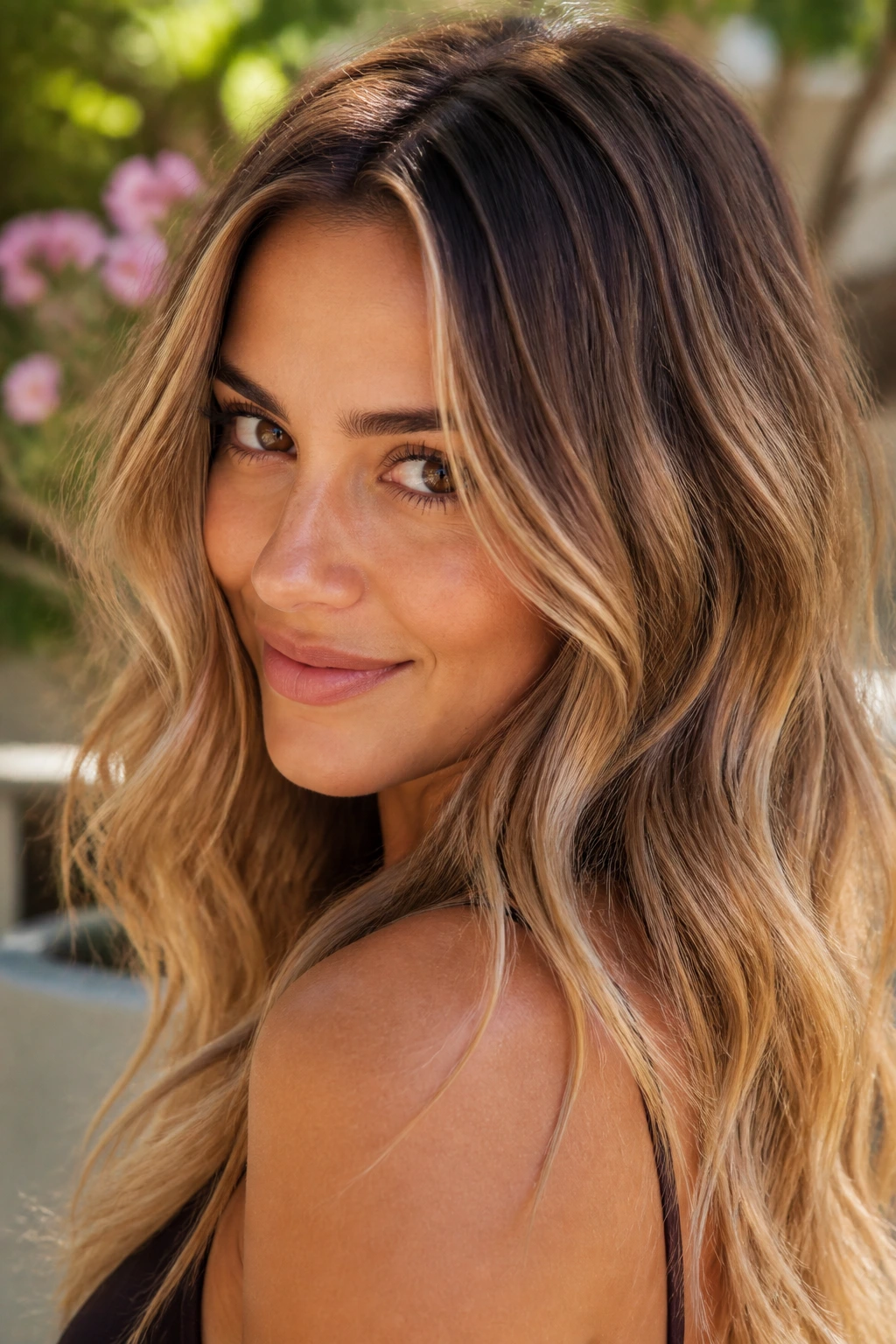
Warm biscuit balayage is one of those shades that looks simple until you try to explain why it works. The biscuit tone sits between tan and blonde, and the balayage placement keeps the color from running into the roots too hard.
When Warm Wins
Choose this when your brunette base already has some gold in it and you do not want to fight it. A warm biscuit finish feels more natural on hair that likes to pull sunlit rather than smoky. It is especially good on wavy cuts where the lighter pieces can sit on the surface and the darker base can stay underneath.
The important part is keeping the lift soft. Too much brightness and it loses the biscuit effect.
29. Silvered Beige for Cool Brunettes
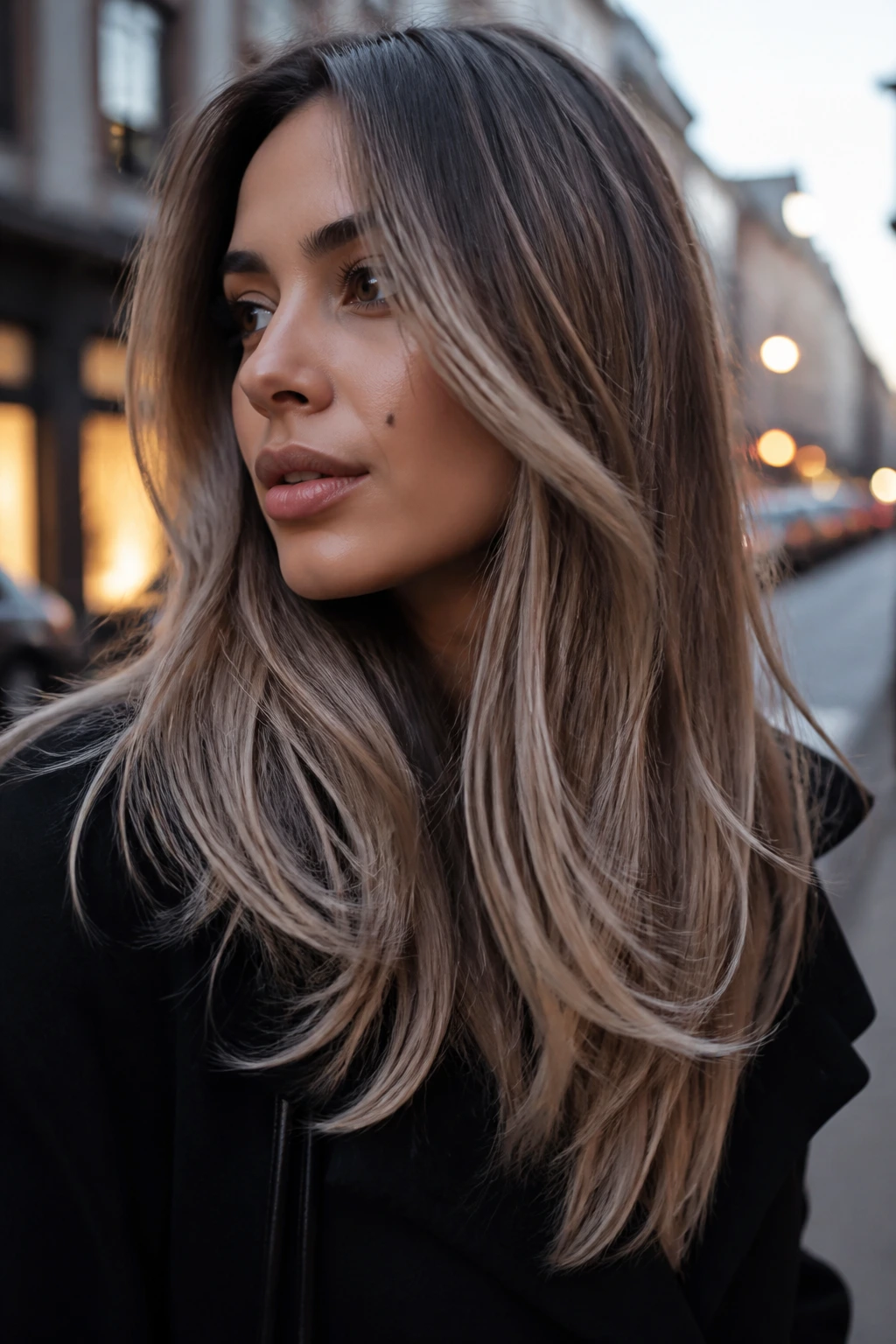
Silvered beige for cool brunettes is the clean, slightly cool answer to dark blonde. It does not go full ash. It does not go gold. It lands in a pale beige lane with just a whisper of silver so the color looks clean against darker roots.
This look is strongest when the haircut has movement. A blunt cut can make the cool tone feel heavy if the placement is too dense, but a layered style lets the lighter pieces break up the shape. If your natural hair pulls a little warm after coloring, this is one way to keep the tone controlled without making the hair look flat.
30. Burnished Oat Highlights
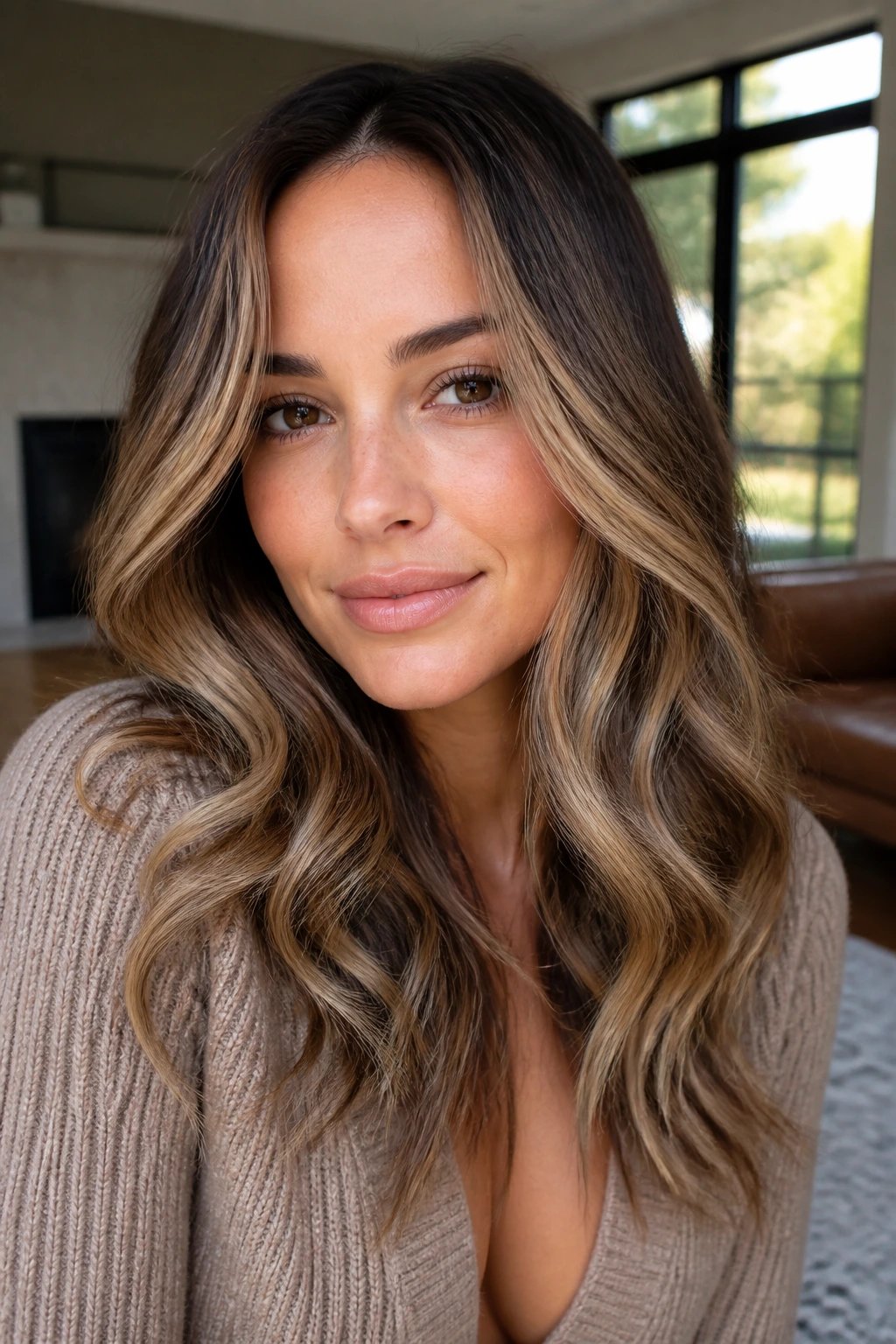
Burnished oat highlights lean earthy rather than sweet. The oat tone is soft and beige, while the burnished edge gives the color a little weight so it still belongs on a brunette base.
I like this on medium brunettes who want lighter pieces but do not want anything too bright around the face. It works well with loose curls, where the color can move in and out of view. The look is calm, grounded, and easier to maintain than a high-contrast blonde.
31. Neutral Bronde Melt
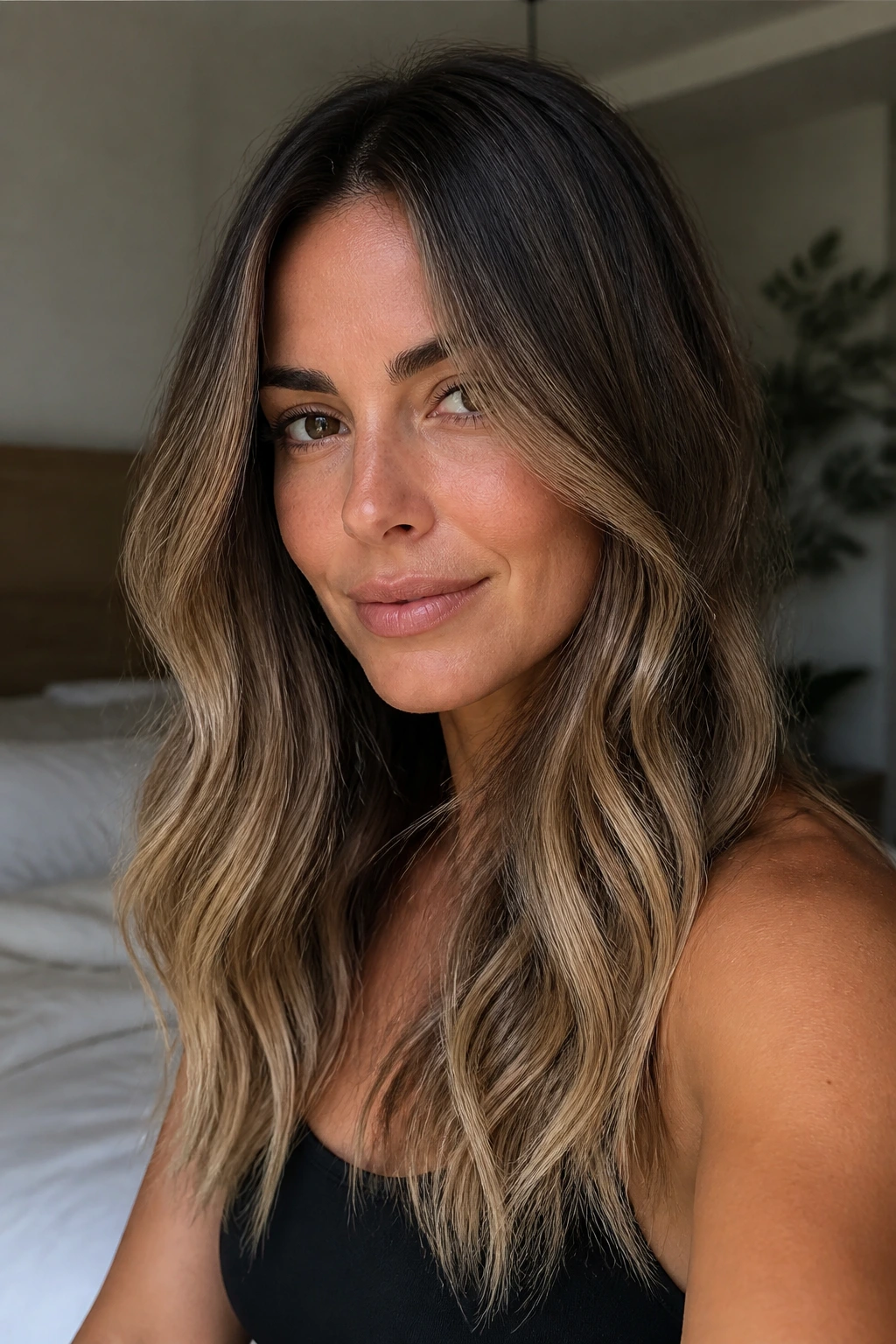
Neutral bronde melt is the safe middle ground for brunettes who cannot decide between warm and cool. The root stays brown, the mids soften into neutral dark blonde, and the ends finish a shade lighter without pushing into one clear tone family.
Why Neutral Usually Wins
Neutral tones are useful when your skin shifts between warm and cool depending on the light, or when you hate color that looks too yellow in one room and too gray in another. The melt makes the transition seamless across the head, which matters more on long hair than people realize. It is one of the easiest shades to wear with minimal styling.
If you want something flexible, start here.
32. Soft Gold Dusting
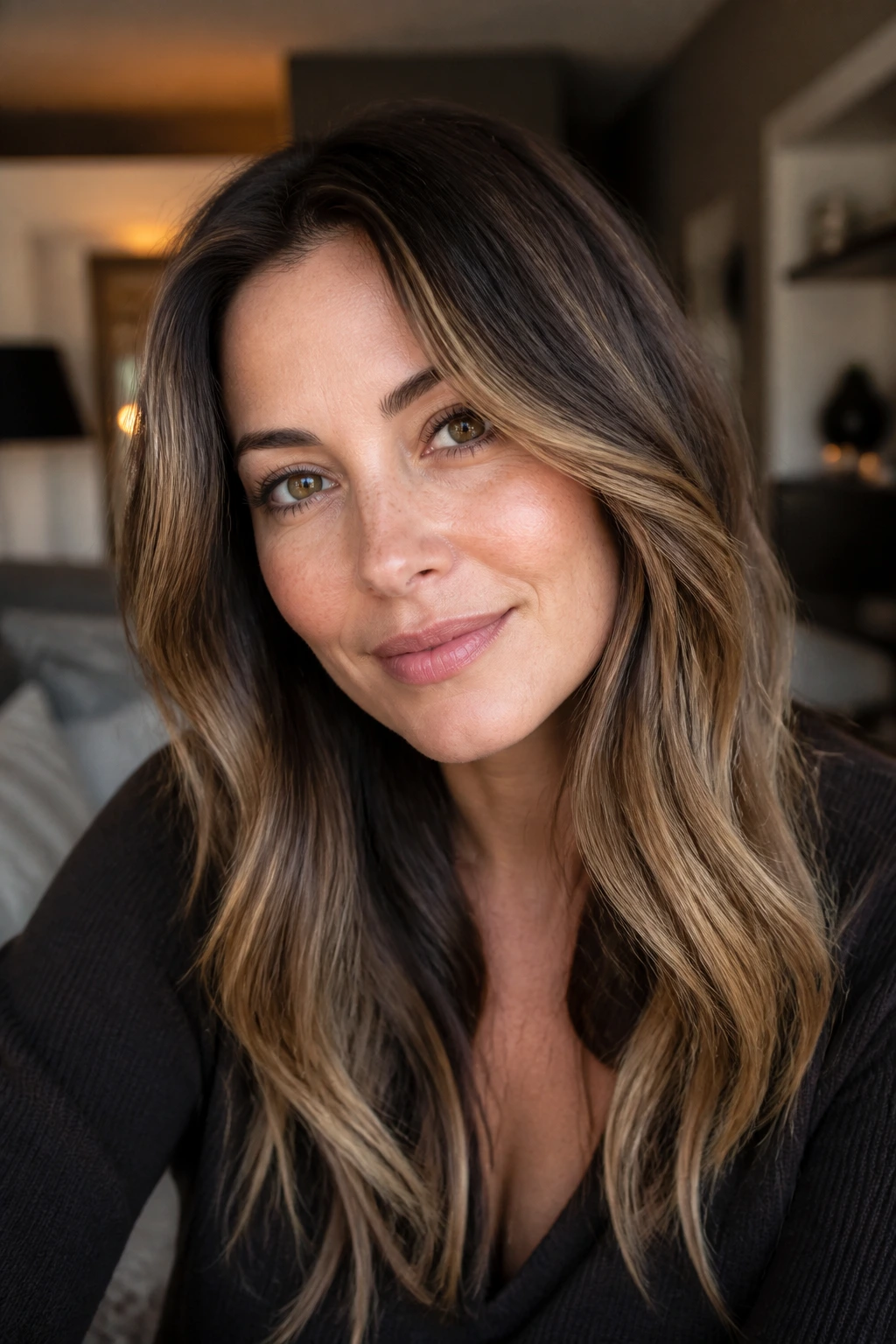
Soft gold dusting is the lightest touch in the whole lineup, and that is exactly why it belongs here. The brunette base stays dominant, while a fine veil of gold-dark-blonde pieces sits on top just enough to warm the hair without changing its identity.
This is the one I’d choose for someone who says, “I want lighter hair, but I do not want my friends to think I became a blonde overnight.” The effect is subtle, but it gives you a fresher edge around the face and through the ends. On short cuts, the dusting can be enough on its own. On longer hair, it works best when paired with a soft gloss.
How to Choose the Right Level, Tone, and Placement
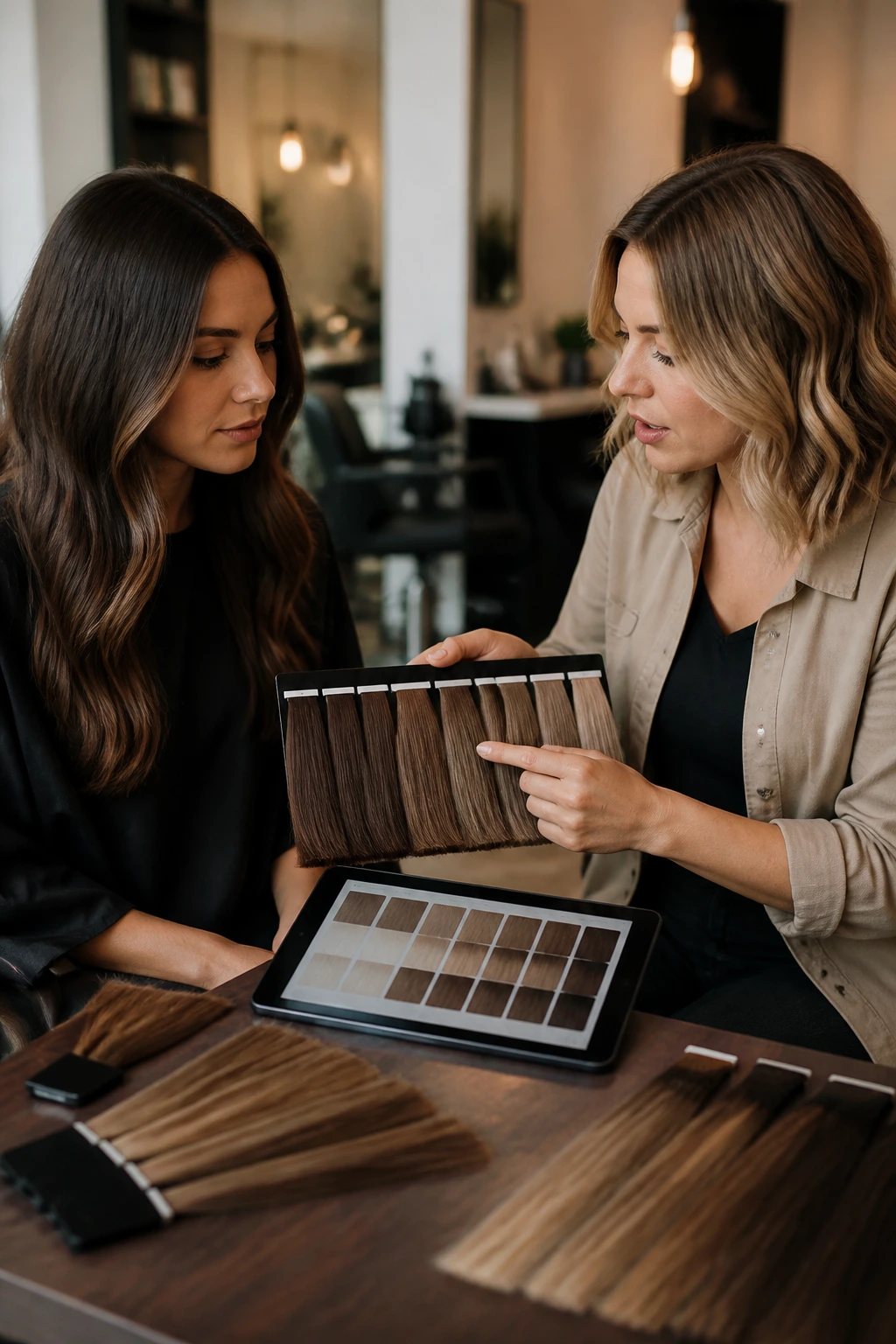
Picking a brunette-to-dark-blonde look gets easier when you separate three things: how light you want the hair, how warm or cool you want it to feel, and where you want the brightness to sit.
Start with your base level. If your hair is deep brown, a soft face frame or scattered ribbons usually looks more believable than an all-over lightening job. If your base is already medium brunette, you can handle more beige or caramel through the mids without the color feeling disconnected.
Match the undertone to the pigment in your hair. Hair that pulls red or orange usually behaves better with beige, mushroom, or neutral tones. Hair that already feels cool can wear ash, taupe, or silvered beige without going dull. If you push ash too hard on warm porous hair, the result can go muddy fast.
Choose the placement that fits your haircut. Straight, one-length hair often needs more structure—slices, money pieces, or a root melt. Layers and waves can carry babylights, ribbons, or scattered highlights more easily because the movement breaks them up.
Plan for upkeep honestly. If you want the least salon maintenance, keep the root deeper and ask for a softer melt. If you do not mind more frequent glosses, brighter face-framing pieces can give you more payoff without lightening the whole head.
The Color Mistakes That Make Brunette-to-Dark-Blonde Work Look Stripey
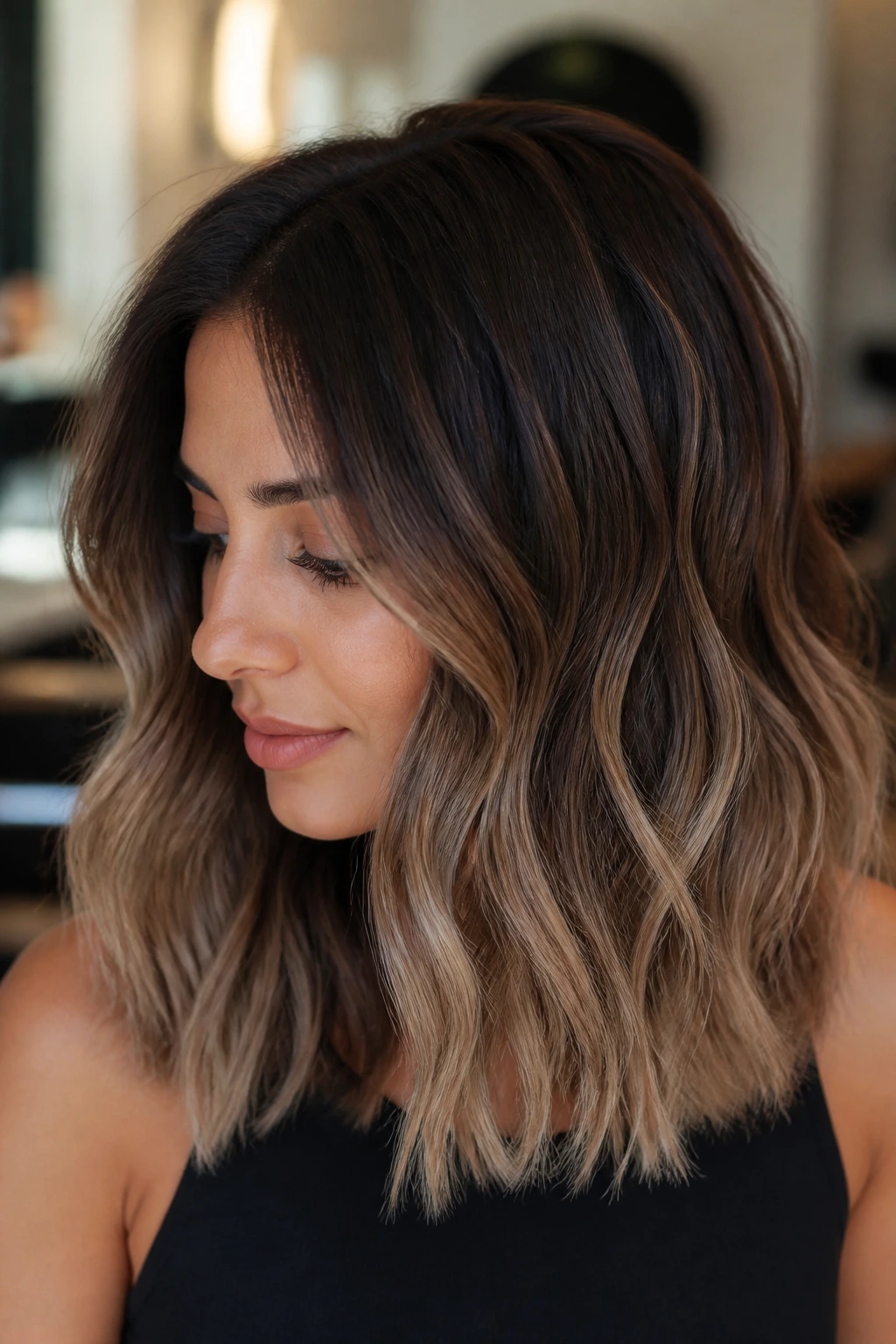
Stripey color usually comes from one of five things, and all five are fixable.
- Too much contrast at once: If the root is left very dark while the ends jump too light, the hair can look separated in blocks. The fix is a softer mid-tone between the two.
- Undertone mismatch: Ash on warm, porous hair can go flat or greenish; gold on a red base can drift brassier than expected. A cleaner beige toner often solves more than extra lift.
- Panels that are too wide: Big bright sections can look chunky on fine hair. Narrower ribbons or finer foils give the hair more motion.
- Ignoring porosity: Damaged ends grab toner fast and can darken too much, which makes the lighter pieces look patchy. A colorist needs to watch processing time closely on the ends.
- Overusing purple shampoo: It is useful on ashier shades, but too much can dull beige and honey tones. Once a week is enough for most heads; more than that often turns the hair dusty.
Other Dark Blonde Directions If You Want Warmer, Cooler, or Quieter
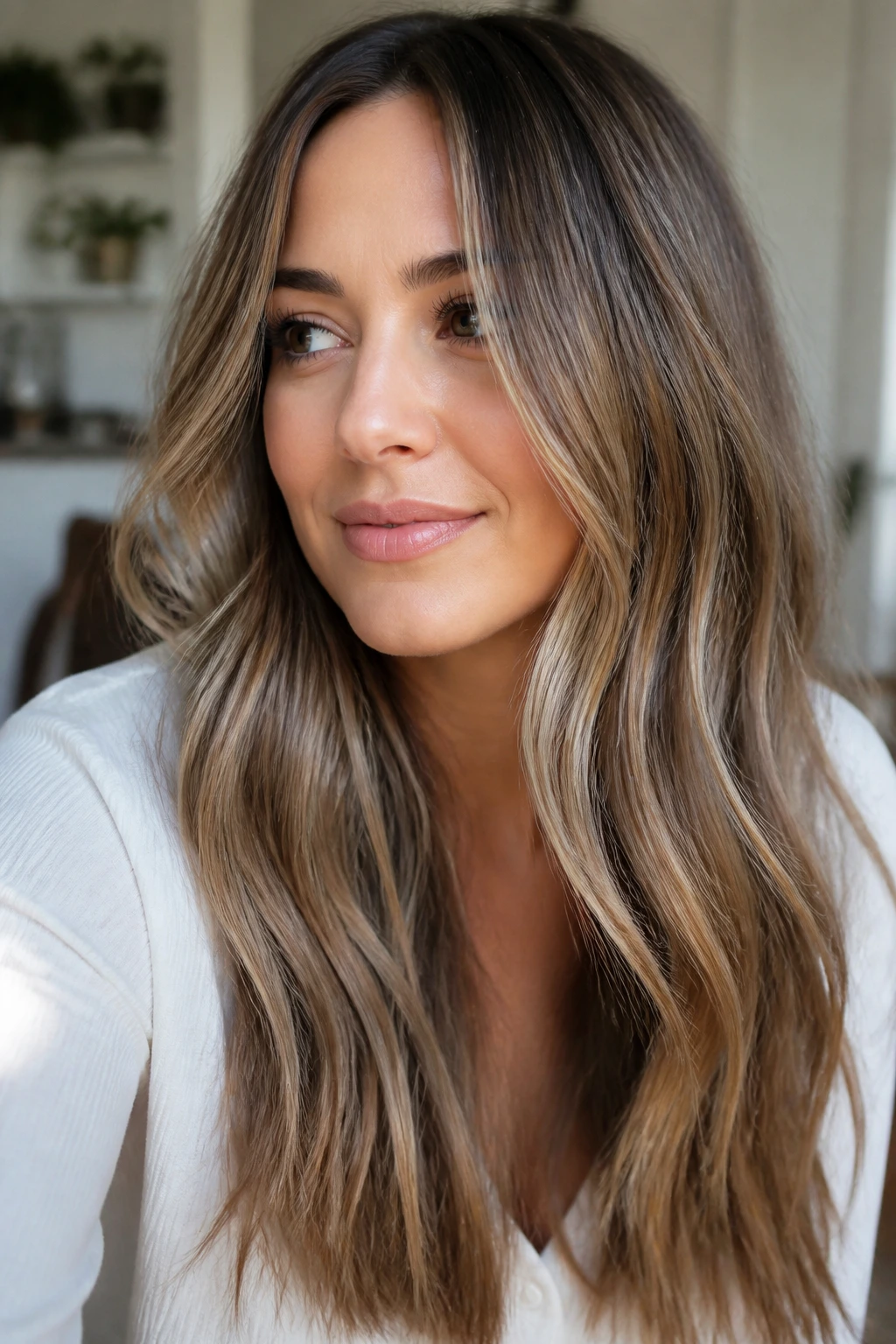
Warm Caramel Route: Swap beige and taupe for caramel, maple, or toffee. This version works best on brunette hair with natural gold or red undertones, and it feels softer than cool blonde because the warmth blends into the base instead of fighting it.
Cool Smoke Route: Use mushroom, ash beige, silvered beige, or taupe blonde. That lane is the cleanest choice for brunettes who hate brass and want the color to read a little quieter. It needs toner upkeep more often, but the finish stays sharp.
Low-Maintenance Rooty Route: Keep the crown darker with a shadow root, then let the dark blonde live through the mids and ends. This is the easiest version to grow out, and it is the one I’d choose if you only want to visit the salon a few times a year.
Bright Front Route: Put the emphasis on a money piece or face-framing highlights. The rest of the head can stay deeper, which means the color change shows where it matters most and does not take over the whole haircut.
Curly Ribbon Route: Use painted ribbons or soft foilyage instead of fine babylights. Curly hair needs larger pieces that can be seen when the curl pattern closes up.
Tools That Help Build and Maintain These Shades
- Lightener or lifting powder: Needed when brunette hair must be lifted before toner can land in the dark blonde range.
- 10-volume and 20-volume developer: Lower volume for deposit and gloss work; 20-volume for controlled lift on finer sections.
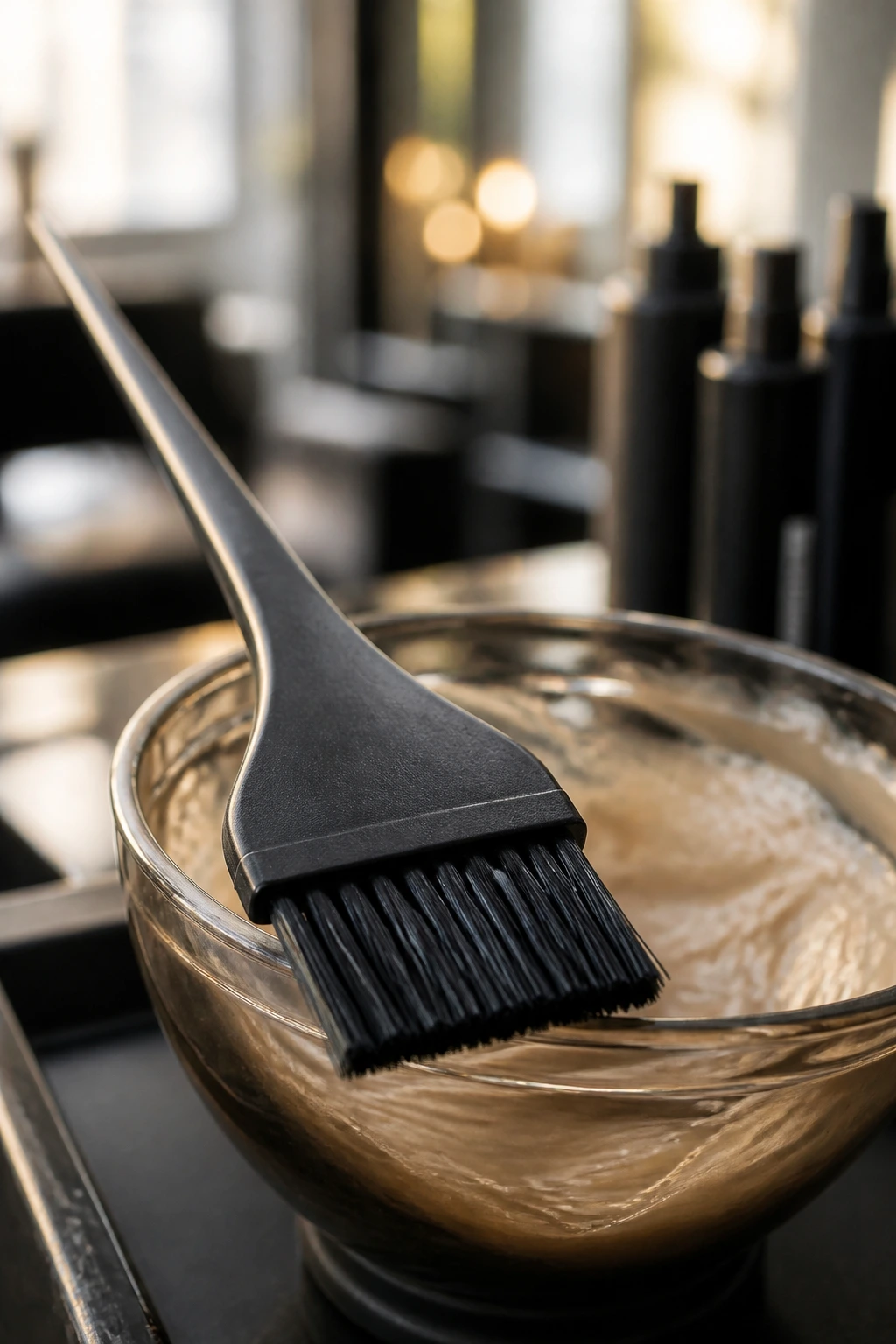
- Tint bowl and color brush: Lets a colorist place toner or gloss evenly through the mids and ends.
- Foils: Useful for brighter ribbons, money pieces, or babylights that need more lift.
- Balayage board or paddle: Helps paint soft, feathered pieces that sit naturally on brunette hair.
- Tail comb and sectioning clips: These keep placement clean, which matters more than people think when you want dimension instead of stripes.
- Demi-permanent toner or gloss: Refines beige, ash, champagne, or taupe without harsh lifting.
- Color-safe shampoo: Slows down fade and keeps the brunette base from looking muddy after washing.
- Heat protectant: Non-negotiable if you blow-dry or curl; lifted pieces show damage faster.
- Purple shampoo, used lightly: Helpful for ash or silvered beige shades, but too much will mute beige and honey.
Keeping Dark Blonde Pieces Fresh Between Appointments
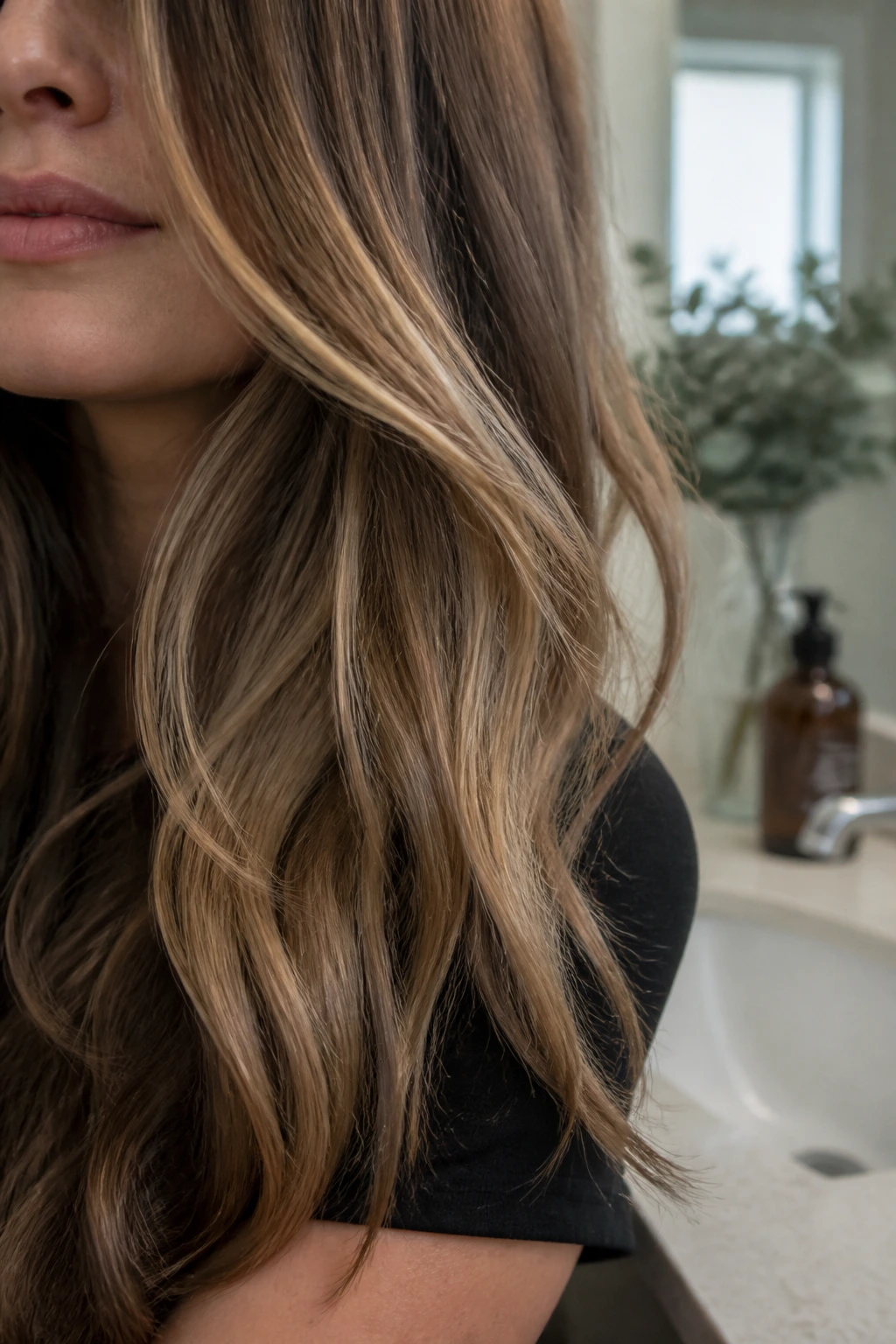
A good brunette-to-dark-blonde color should not fall apart after three washes. The first rule is simple: wash less often if you can, and use a color-safe shampoo when you do. Dark blonde pieces lose their tone faster than the brunette root loses its depth, so the lighter sections usually need more attention than the base.
Right After the Appointment
If your service ended with toner or gloss, give the color a little breathing room before you shampoo hard. Even one gentler wash can help the tone settle, especially on porous ends. Heat styling right away is fine if you use protectant, but blasting the hair dry with no barrier is a fast way to rough up the cuticle.
Weekly Care at Home
Use a deep conditioner on the mids and ends once a week, then follow with a lighter leave-in if your hair tends to feel rough. For ash, taupe, or mushroom shades, a violet shampoo once every 1 to 2 weeks is usually enough. For beige, honey, or caramel, I’d skip the violet most weeks and lean on a gloss instead.
When to Book Touch-Ups
Shadow roots and soft balayage can often go 8 to 12 weeks before a partial refresh. Money pieces and bright face-framing highlights usually want a cleaner touch-up sooner if you like the contrast sharp. Glosses can be repeated every 4 to 6 weeks when the tone starts to fade warm or flat.
Questions People Ask Before Going Dark Blonde
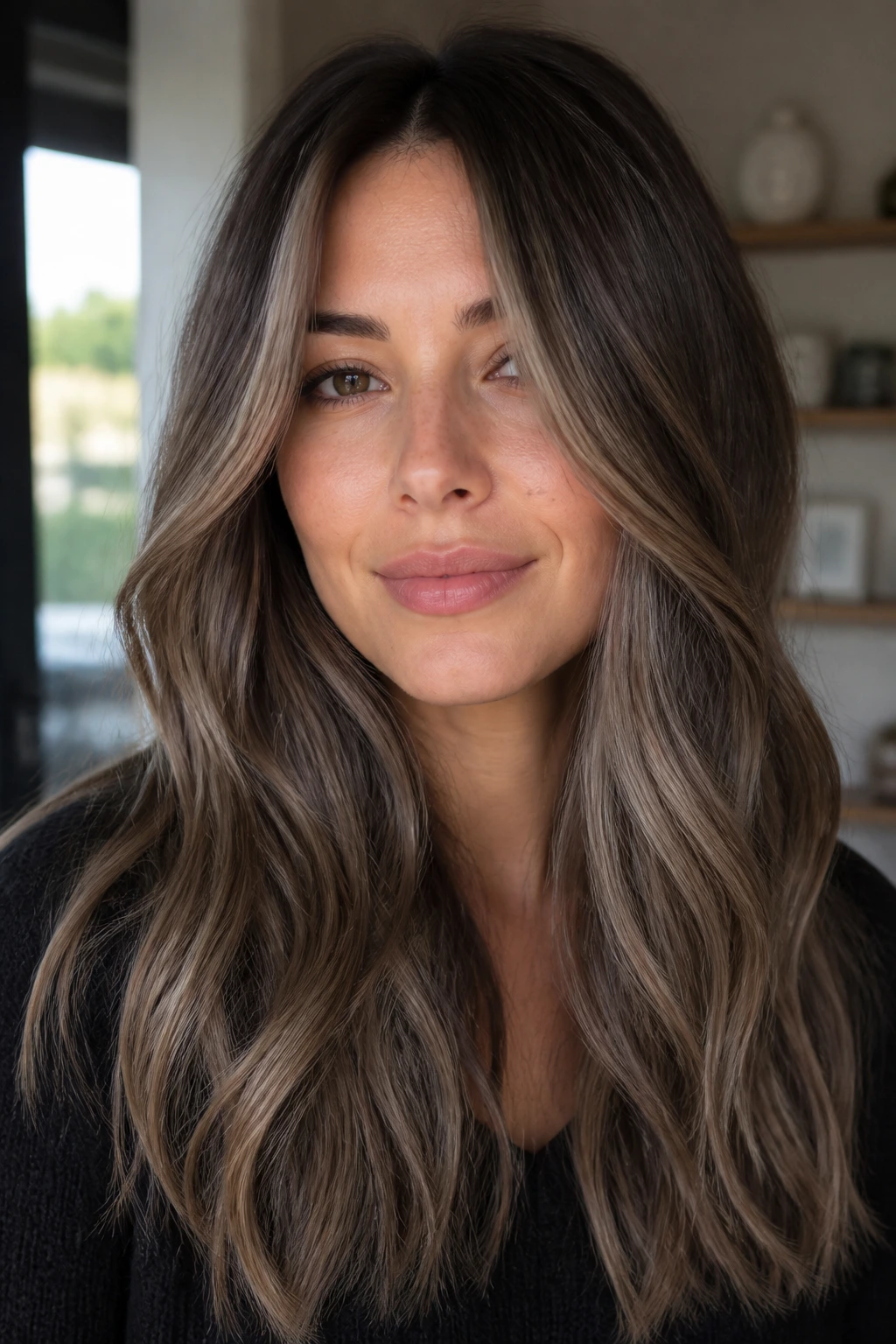
Will dark blonde work on very dark brown hair?
Yes, but the placement matters. On very deep brown hair, a full dark blonde result usually takes more than one session or relies on partial lightening, because the hair needs enough lift for the tone to show.
Can I get dark blonde without bleach?
Sometimes, if your brunette base is already light enough or has been colored before. True dark blonde usually needs some lift, though a gloss or high-lift color can fake a softer version on medium brunettes.
What is the difference between bronde and dark blonde?
Bronde is the broader blend of brown and blonde. Dark blonde is a little lighter and more defined, so it tends to read clearer than a neutral bronde melt.
How do I stop my highlights from turning orange?
Start with a cleaner beige or ash-based toner instead of chasing extra lightness. Orange usually means the underlying pigment still needs to be controlled, not that you need a blonder result.
What is the lowest-maintenance option here?
A shadow root with scattered ribbons or a soft ombré. Both keep the root deeper, which means the grow-out line stays softer and the salon timeline stretches out.
Can curly hair wear these colors well?
Absolutely. Curly hair often looks better with painted ribbons, foilyage, or wider placements because the curl pattern hides fine foils and makes the dimension show in pieces instead of stripes.
How do I explain this to a colorist?
Bring photos that show both tone and placement, then say how often you want to come back. “Soft beige ribbons with a deeper root” says more than “make me blonde,” and it gives the colorist room to match your maintenance level.
What if the color feels too light after the first wash?
That usually means the tone is fine but the contrast is stronger than you expected. A softer gloss, a deeper root shadow, or a few added lowlights can pull it back toward brunette without starting over.
The Brunette-to-Blonde Middle Ground
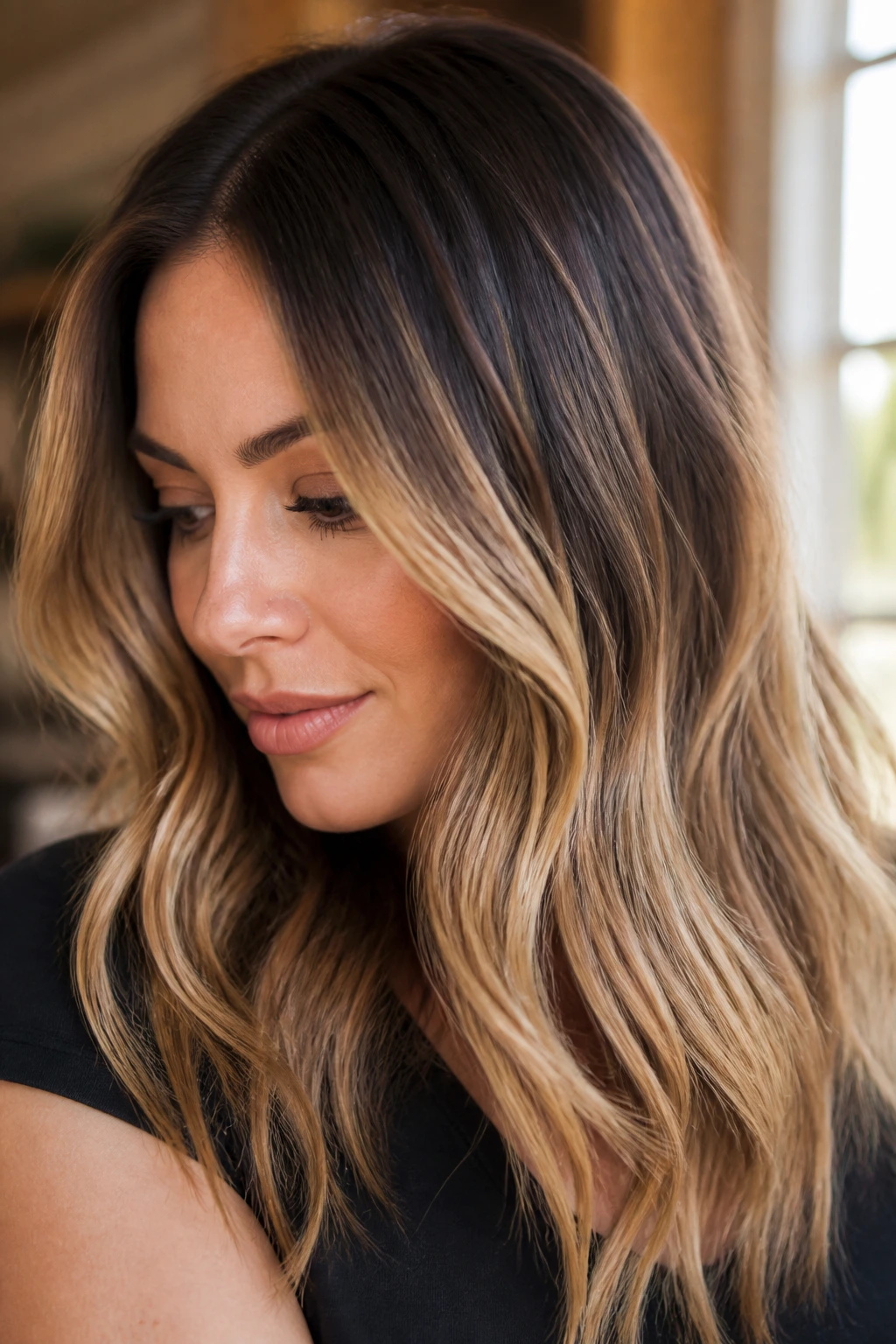
The best dark blonde looks on brunettes do one thing well: they keep the brown hair visible. That depth is the part people often try to erase too early, and it is usually the part that makes the color feel believable once the appointment is over.
If you want the prettiest result, choose the version that fits your haircut, your undertone, and your patience for upkeep. A soft beige ribbon job, a smoky mushroom melt, and a bright money piece all live in the same family, but they behave very differently once they hit real hair and real daylight.
That is the range I’d take to a salon chair: enough lift to wake up the face, enough brunette left underneath to keep the whole thing grounded, and enough tone control to stop the color from going brassy before it has had a chance to settle.