



Medium-length hair gives red color a place to breathe. The shade has enough space to show depth at the roots, movement through the mids, and that little flash of brightness at the ends that makes people turn their heads twice. The best red hair looks for medium length hair don’t rely on sheer volume; they rely on shape, tone, and a cut that lets the color move.
Red is a tricky color in the best possible way. Copper can look sunlit and soft on a shoulder-skimming lob, while cherry or burgundy can turn the same length into something smoky and expensive-looking. The difference usually comes down to how much dimension you leave in, where the lightest pieces sit, and whether the cut has enough texture to keep the color from sitting flat.
That’s why medium length is such a useful canvas. There’s enough hair for balayage, money pieces, glosses, and root shadows to do their job, but not so much length that the red gets swallowed up or turns into a maintenance headache you have to babysit every two weeks. A smart red on medium hair can look polished, lived-in, bold, or softly romantic. Sometimes all four at once.
Why These Red Shades Stay Interesting on Medium-Length Hair
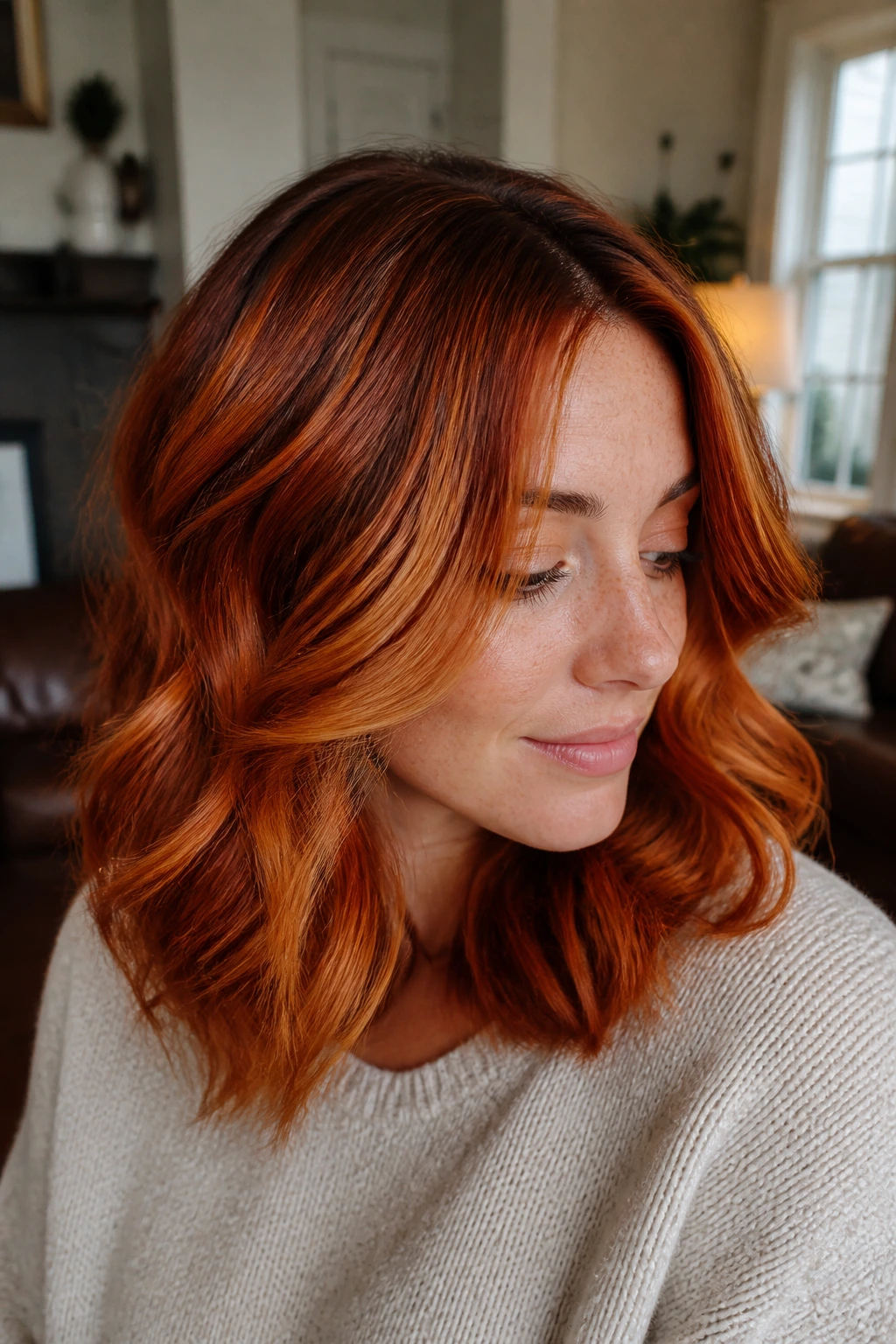
- The color reads from root to end: On medium hair, a copper melt or cherry balayage has room to show depth without disappearing into extra-long layers.
- Grow-out looks cleaner: A shadow root or root smudge is easier to keep believable when the hair ends around the collarbone or shoulders.
- Texture matters more than length: Loose waves, bends, and curls show off red dimension better than a flat sheet of hair ever will.
- You can go bright or deep: Medium length handles vivid scarlet and moody merlot just as well, which gives you more room to match the shade to your skin tone.
- Styling stays practical: A 1-inch wand, a round brush, or a quick blowout can change the whole mood of the color without adding more length to manage.
Why Red Hair and Medium-Length Cuts Work So Well Together
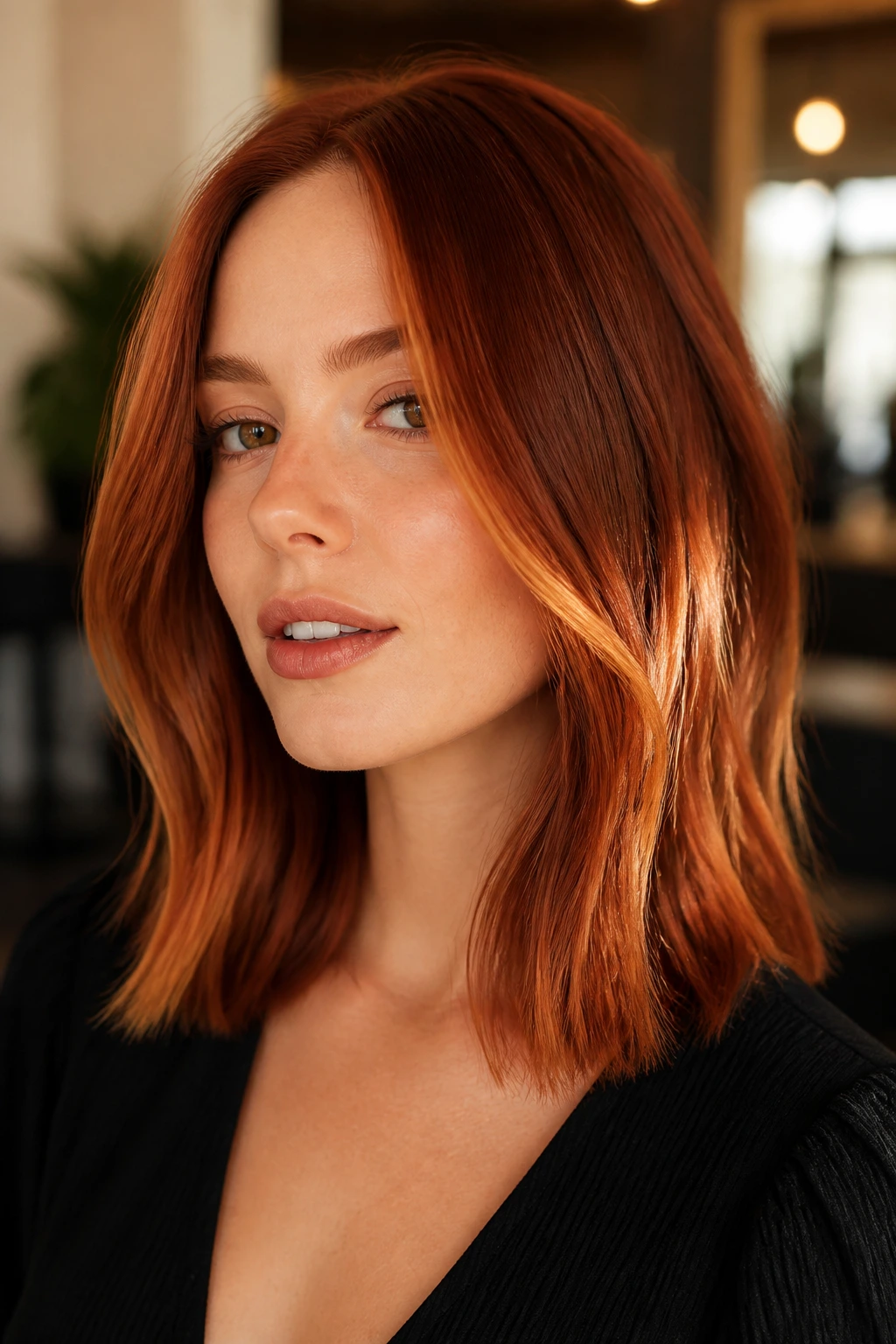
Red color tends to look richest when it has something to wrap around. Medium-length hair gives it that structure. A blunt lob makes a fiery shade look sharper. A layered cut breaks up copper so it flashes instead of sitting as one flat block. Even a simple shoulder-grazing cut can make a glaze or gloss look more expensive because the color has enough surface area to catch light at the face, the mid-shaft, and the ends.
There’s also a maintenance angle that people ignore until they live with red for a while. Longer hair makes fade lines harder to hide. Medium length gives you a cleaner grow-out, easier trims, and fewer awkward months where the color looks tired but the hair is still too long to cut off without regret. That matters.
Red is not shy. If the cut is all one note, the color can start to look heavy. If the cut has movement, the same dye job suddenly looks intentional. That’s the sweet spot. Not loud for the sake of being loud. Just rich, dimensional, and a little bit dangerous in the best way.
1. Copper Melt Lob
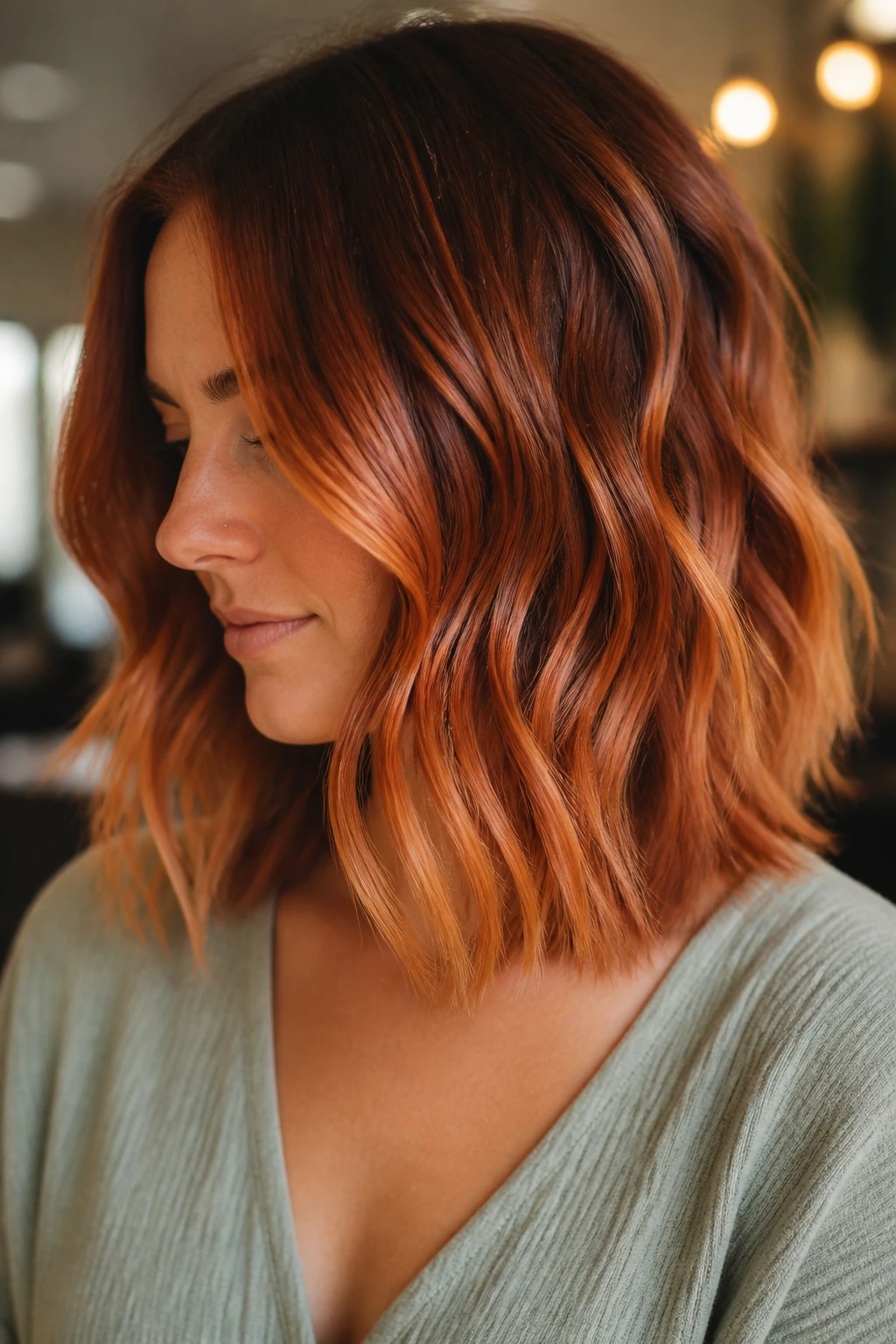
Copper melt is the red look I reach for when someone wants warmth without going full bright orange. On a collarbone lob, it starts with a deeper root and eases into a bright copper mid-shaft, then lands on a softer gold-tinged end. The whole thing looks seamless when the hair is bent into loose waves.
Ask for a level 6 or 7 copper with a soft root shadow if your natural base is medium brown. The grow-out stays civilized, which is more useful than a perfect color that falls apart in three washes. A gloss every 4 to 6 weeks keeps the copper from going dull.
- Best on: Wavy or lightly layered lobs
- Ask for: Shadow root, copper mids, softer golden ends
- Style with: A 1¼-inch curling wand and a light shine spray
2. Cherry Cola Waves
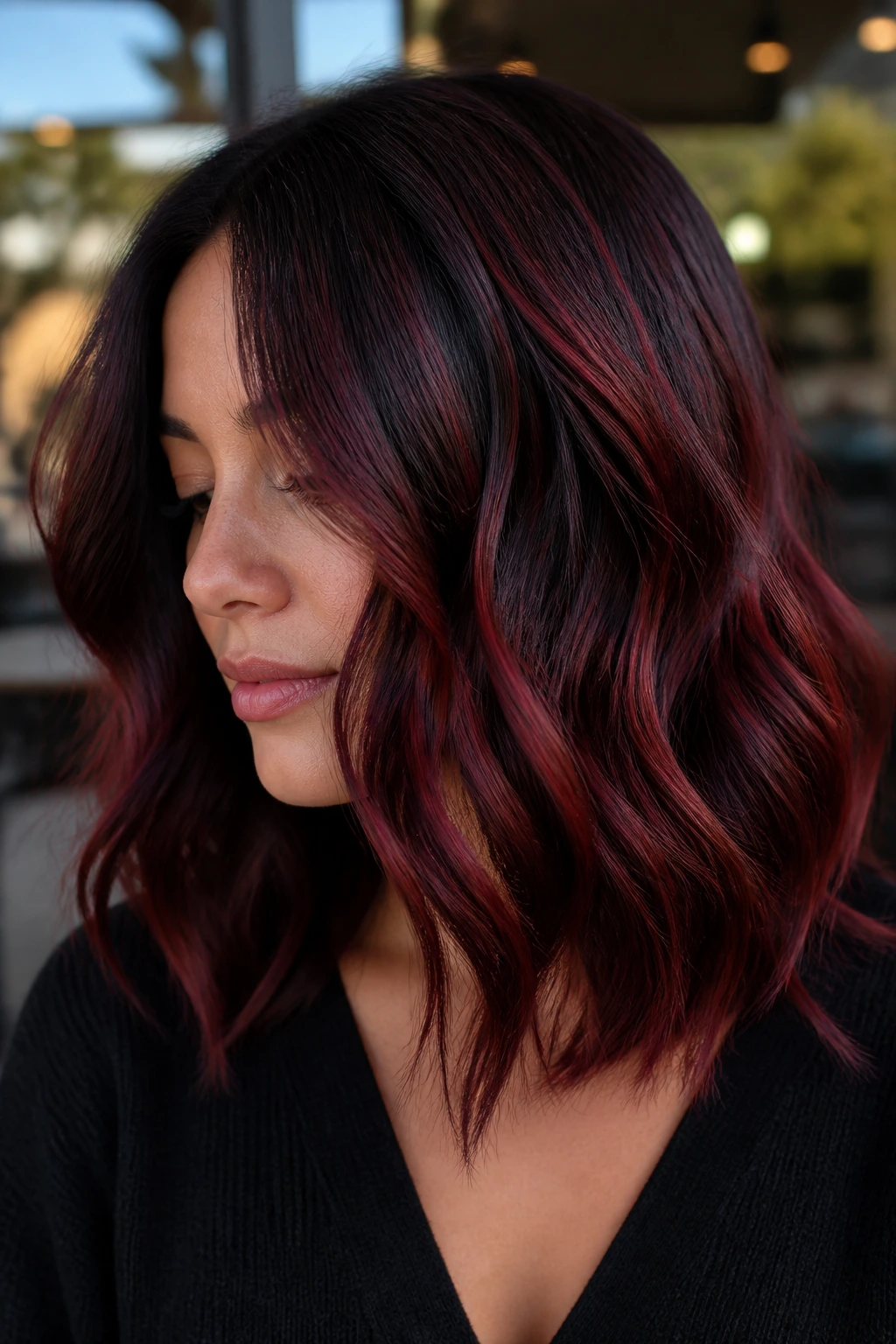
Cherry cola is the moody cousin in this group. It looks dark from a distance, then flashes red wine, black cherry, and soft brown when the light hits it at the right angle. On medium length hair, that shift happens fast enough to keep the color interesting but not so fast that it feels busy.
This one works especially well if you like low-light depth and a glossy finish. A level 4 or 5 base with cherry-toned ribbons gives the hair that cola effect without turning it into a flat black-red block. I like it on soft S-waves because the bends catch the color line by line.
3. Soft Auburn Curtain Layers
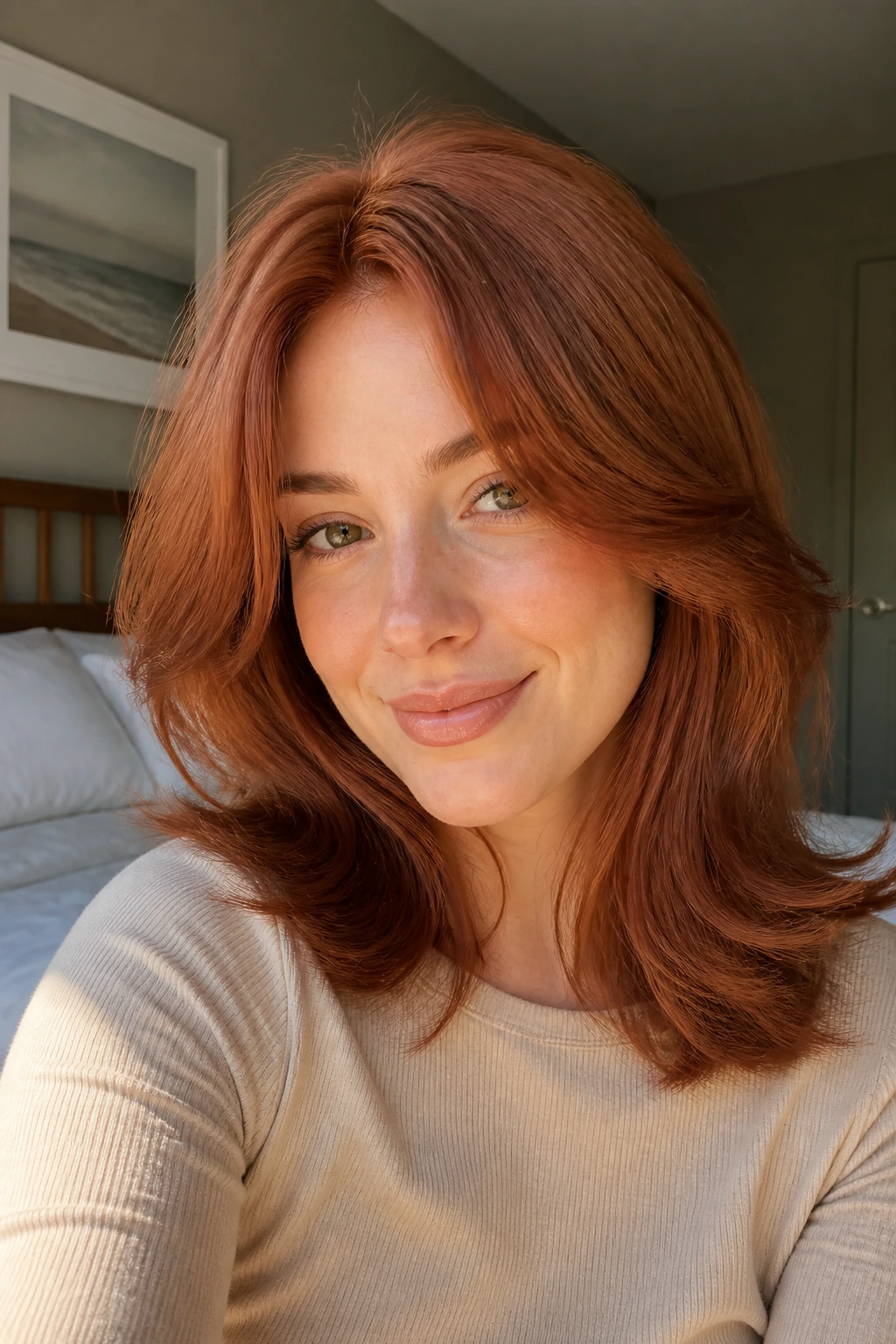
Soft auburn is the polite red, but I mean that as praise. It’s the version that looks like it belongs on a person who wants warmth, not a costume. Curtain layers make it better because they lift the color around the face and let the rest sit a touch deeper.
This shade is especially good on medium hair that needs movement without a big chop. A warm auburn gloss over a level 6 base can read as natural in daylight and richer indoors. If you wear bangs or face-framing pieces, this one gives them something to do.
4. Cinnamon Ribbon Balayage
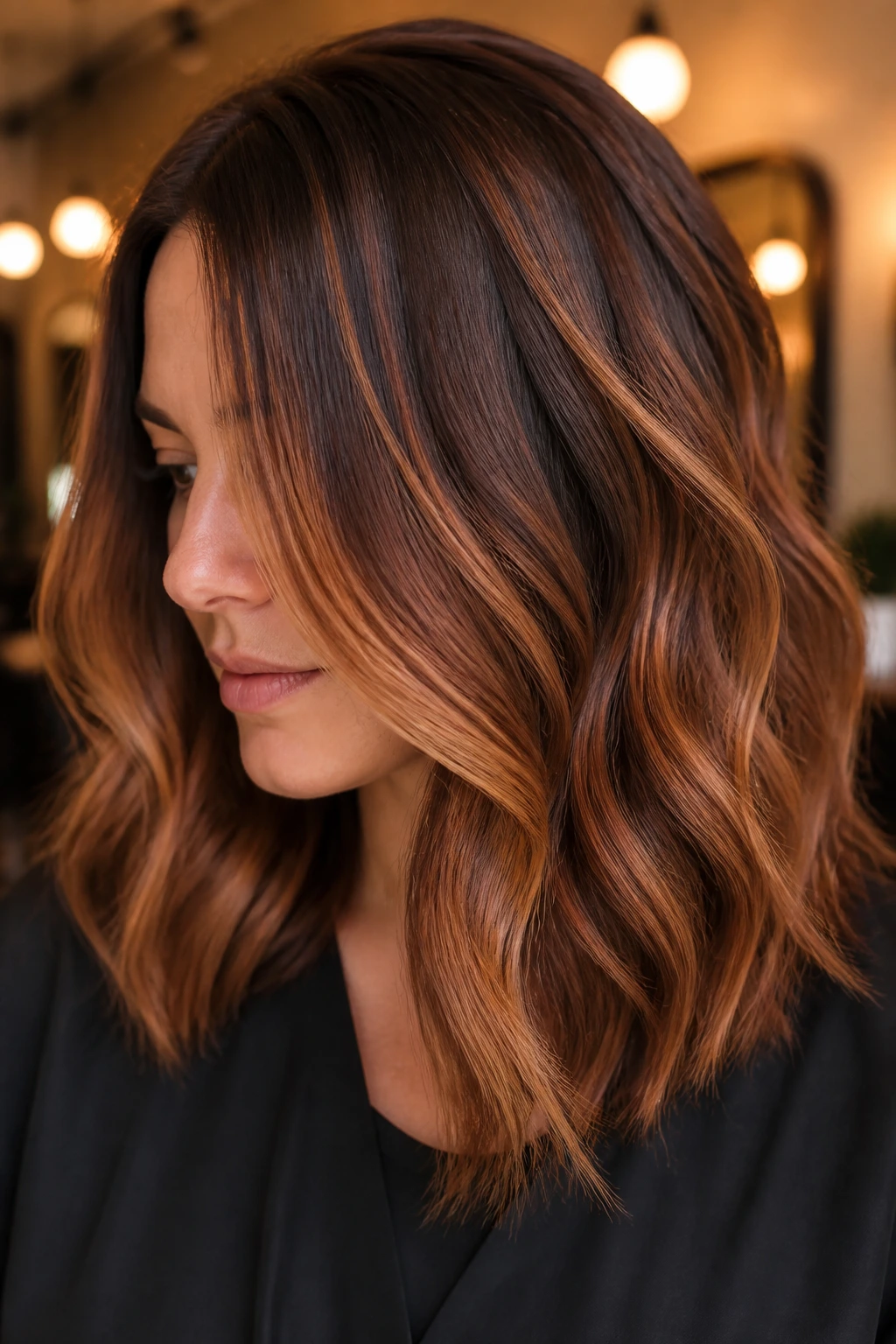
Cinnamon ribbon balayage has that hand-painted feel that keeps red from becoming too solid. You see the darker base first, then the cinnamon pieces, then a brighter thread or two near the front. On medium-length hair, that ribboning looks clean because the strands are long enough to show each shift without dragging the color down.
This is one of the easiest ways to make red feel wearable. Ask for ribbons that are one to two levels lighter than your base, not five. That keeps the whole look warm and dimensional instead of stripy. It also grows out better than a high-contrast foil pattern, which matters if you do not want to live in a salon chair.
5. Rose Copper Blowout
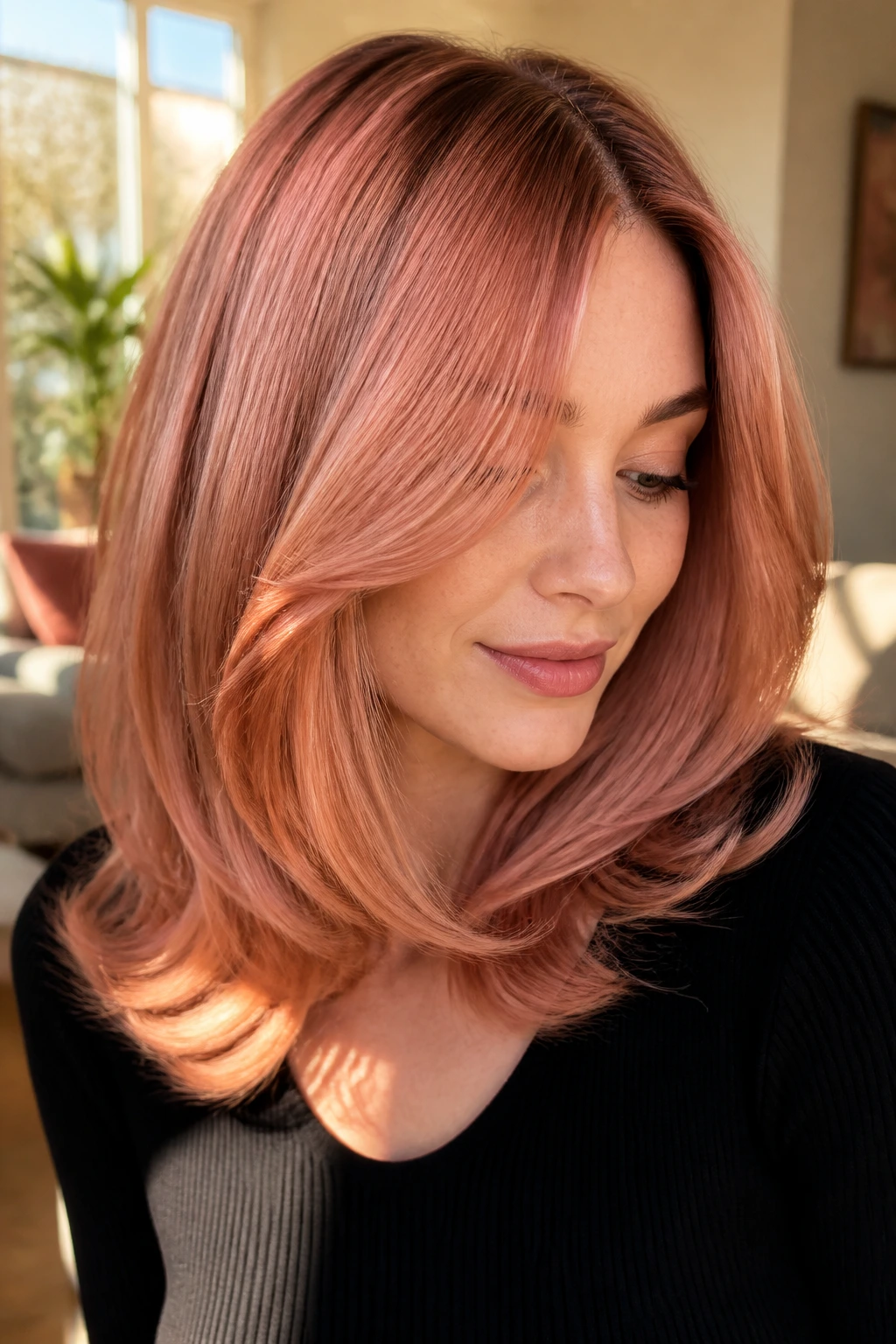
Rose copper has a pinkish warmth that reads soft, not sugary, when it’s done right. Pair it with a round-brushed blowout on medium hair and you get a finish that feels glossy, airy, and a little bit dressy without looking stiff. The color sits somewhere between copper and blush, which is why it flatters so many skin tones.
I like this look best on hair that already has a smooth bend. The color needs a clean surface to show the rose note. If your hair is very porous, ask for a glaze rather than a heavy dye job; the shade stays cleaner and fades more evenly.
6. Mahogany Sleek Lob
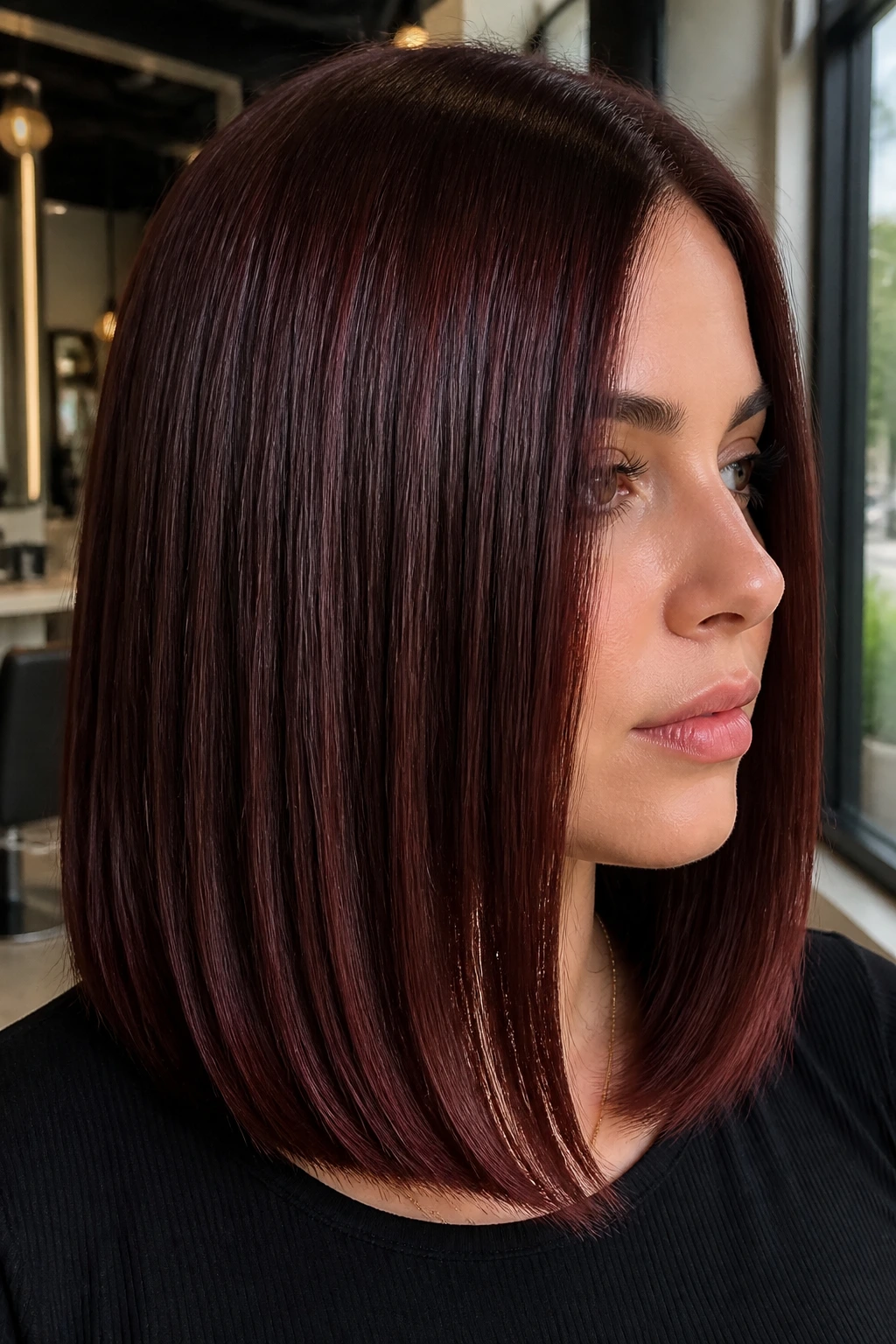
Mahogany is for people who want red to whisper from across the room instead of shouting. On a sleek lob, the dark brown-red base looks refined and slightly severe in a way I actually love. Straight ends make the shade look expensive because there’s nowhere for the color to hide.
The trick here is shine. A smoothing cream, a heat protectant, and a flat iron pass that stays under 375°F give mahogany that polished finish without frying the ends. If your hair is thick, this is one of the best red looks for medium length hair because the cut can hold its shape while the color does the heavy lifting.
7. Ginger Shag

A ginger shag is messy on purpose, which is half the charm. The layers keep the red moving, and the shag texture lets every short piece catch light like it was made to be slightly uneven. On medium length hair, this cut gives ginger some attitude.
- Best on: Natural waves, coarse hair, or anyone who likes texture spray
- Ask for: Choppy layers, soft fringe, and a brighter ginger glaze
- Style with: Diffuser heat or a rough dry and a little matte texture product
It looks even better the second day, which is one of the few things I’ll say about a shag without hesitation.
8. Ruby Red Curls
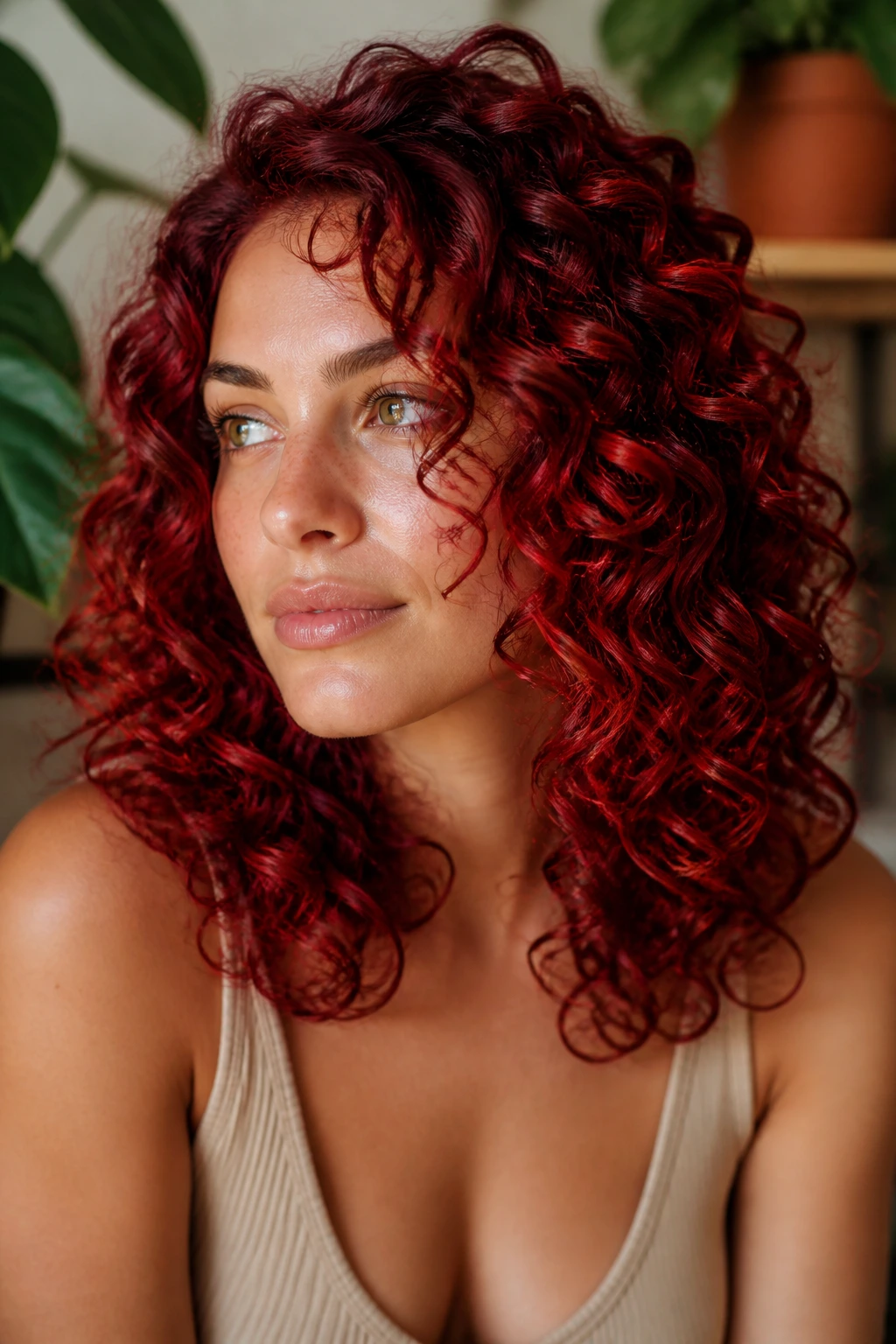
Ruby red is vivid, saturated, and happiest when the curls are defined. Ringlets, loose spirals, even a brushed-out wave pattern all show the ruby tone differently, but the key is keeping the curl pattern intact enough for the red to flicker through it. On medium length hair, that movement stops the shade from reading as one solid block.
If your hair is naturally curly, this one can look outstanding with less styling than you’d expect. A curl cream, a diffuser, and a color-depositing conditioner in a red tone can keep the color lively between appointments. The finish should look plush, not crunchy.
9. Strawberry Blonde Money Piece
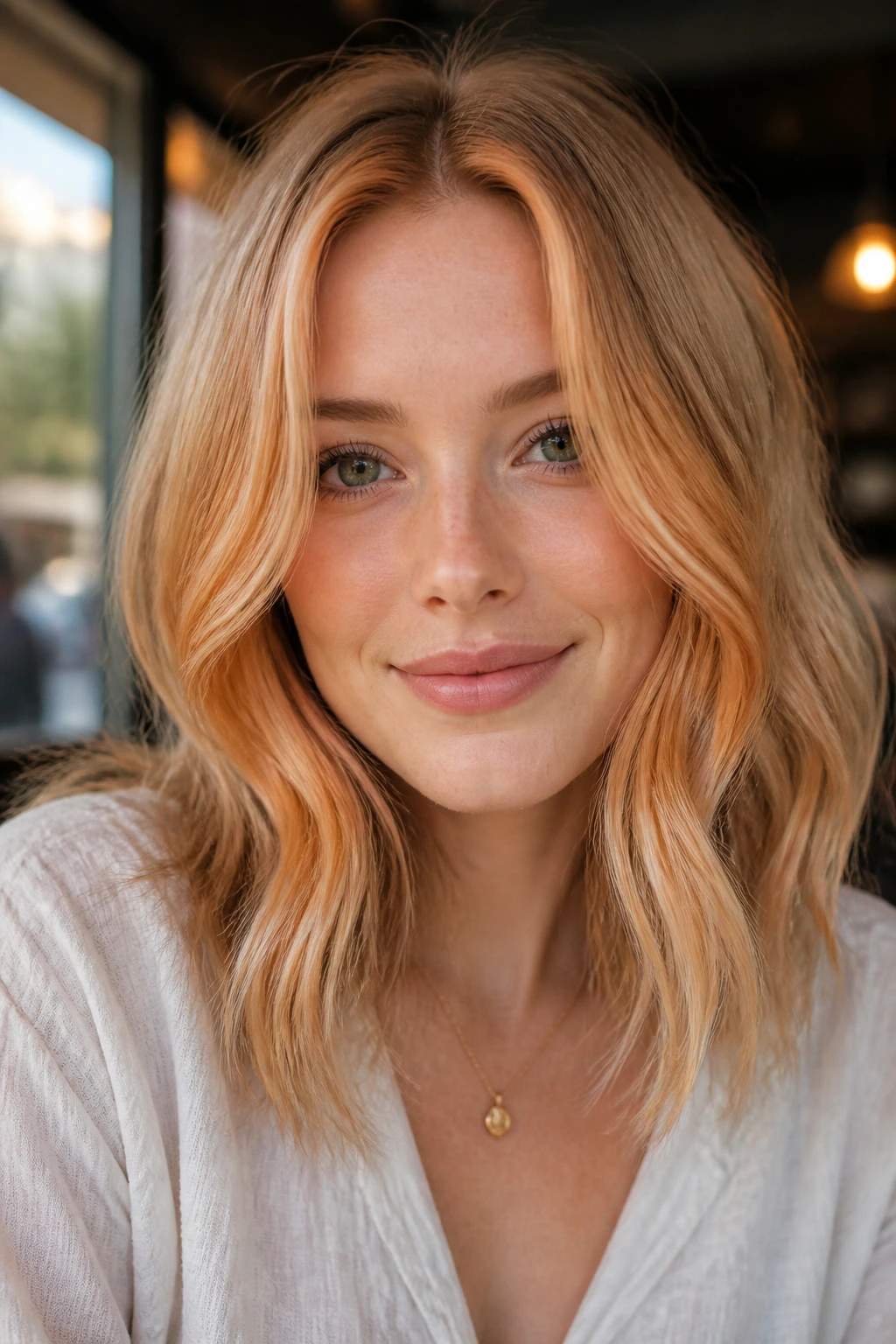
This is the softest red in the bunch, and that’s exactly why it works. A strawberry blonde money piece around the face gives medium-length hair a bright focal point without committing the whole head to a louder shade. The rest of the hair can stay warm blonde, beige, or light copper.
It’s a smart choice if you want red but worry about it taking over your features. Ask for a slightly brighter front section and a softer glaze through the mids so the money piece doesn’t look pasted on. Around curtain bangs, it can look especially good because the color frames the eyes before the rest of the cut even comes into view.
10. Black Cherry Layers
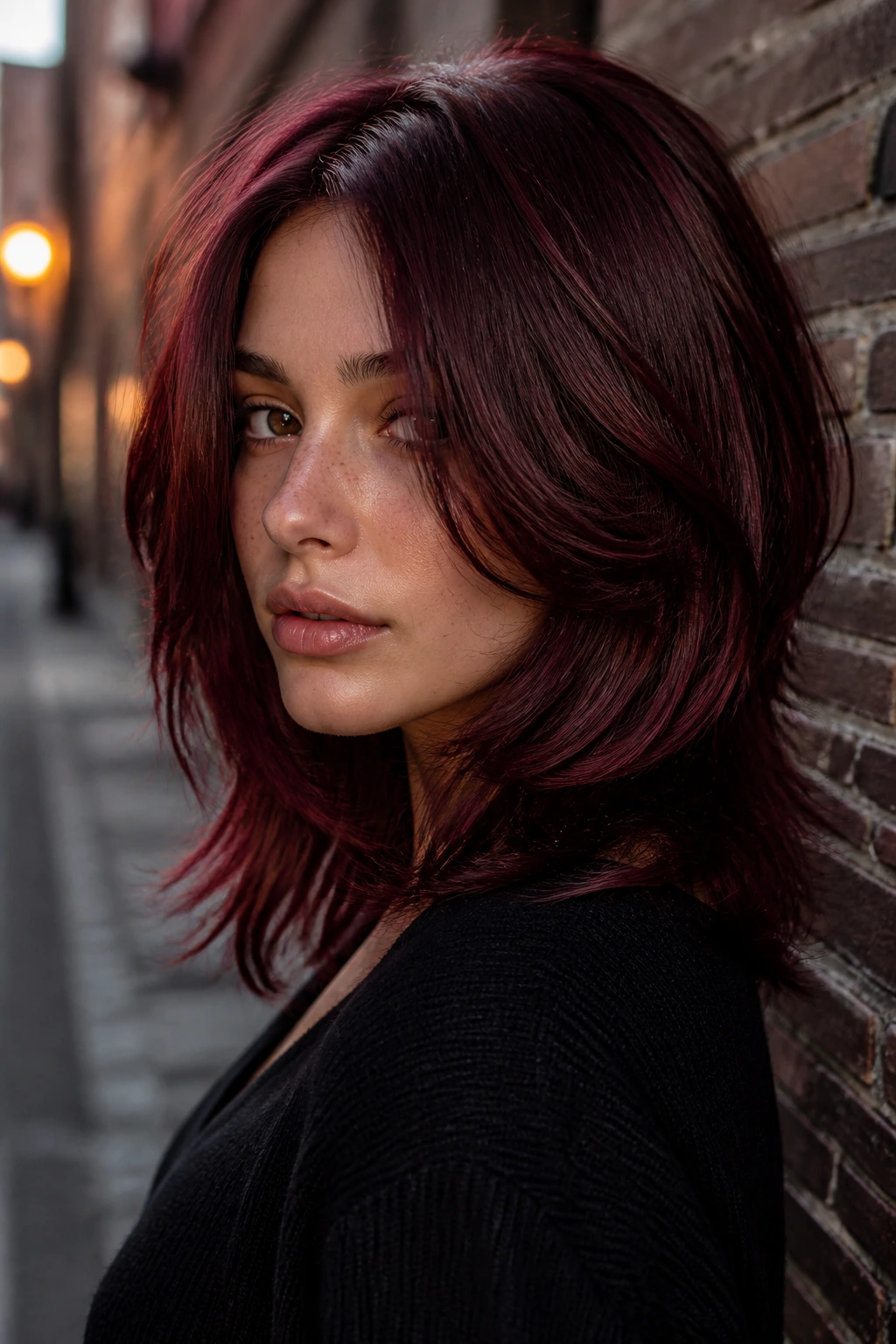
Black cherry is one of those colors that looks nearly black until light hits it, then it throws off deep red and plum. On layered medium-length hair, that hidden color payoff is the whole reason to wear it. The layers keep the shade from becoming one flat dark sheet.
This look is a strong choice if you want red with some edge. It feels moody, polished, and less obvious than brighter copper shades. If you keep the finish glossy and tuck a few pieces behind the ears, the red becomes more noticeable right where you want it.
11. Burnt Copper Blunt Cut
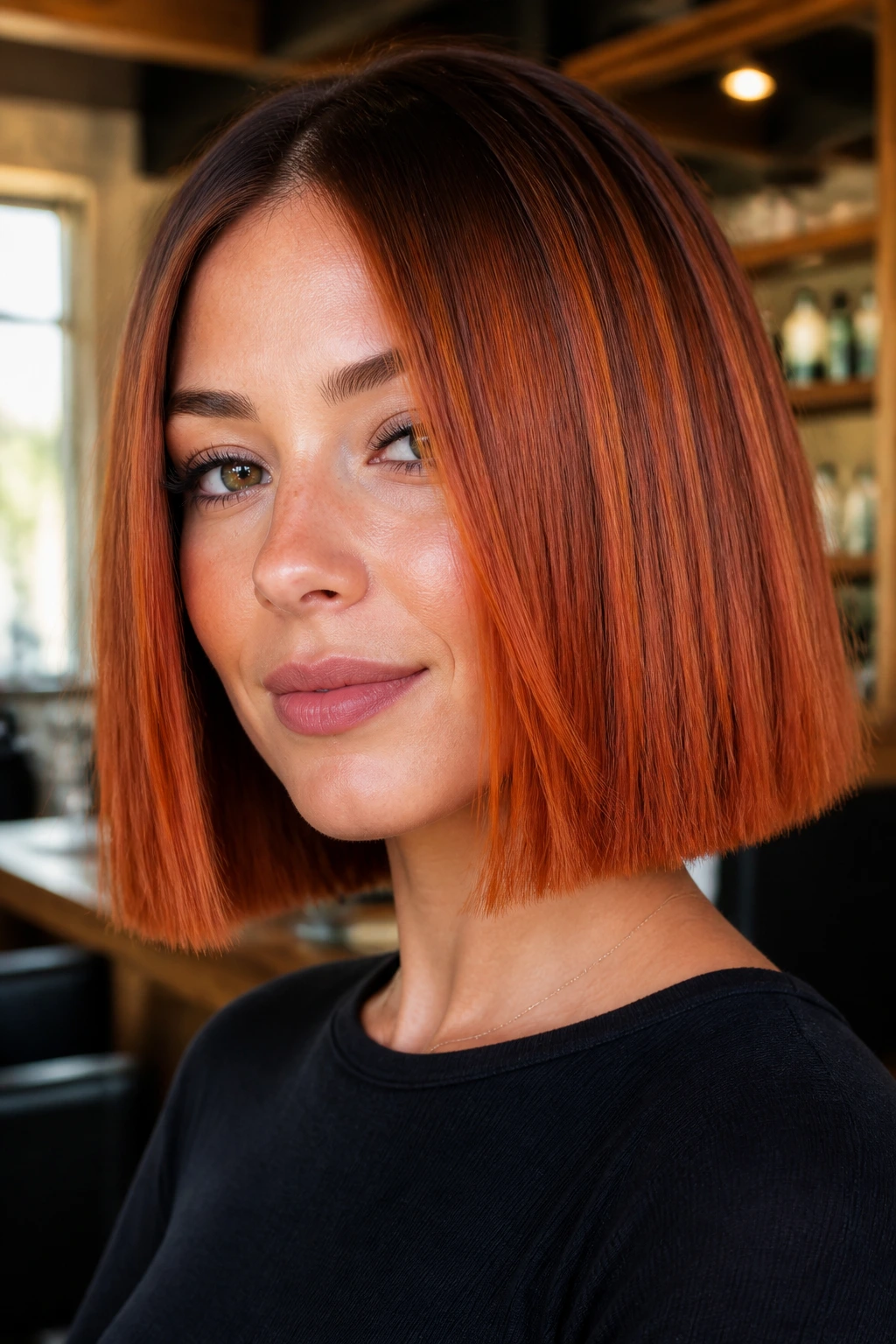
A blunt cut and burnt copper go together because both like structure. The sharp edge of the medium-length line makes the warm red-orange shade look deliberate instead of soft. There’s something satisfying about the way the color stops and starts at a clean perimeter.
This is a good option if your hair is fine and you want the ends to look thicker. A blunt finish makes the whole shape feel denser, and burnt copper gives it warmth without needing lots of layers. Keep the tone one step deeper at the roots so the line doesn’t look too flat.
12. Burgundy Soft Waves
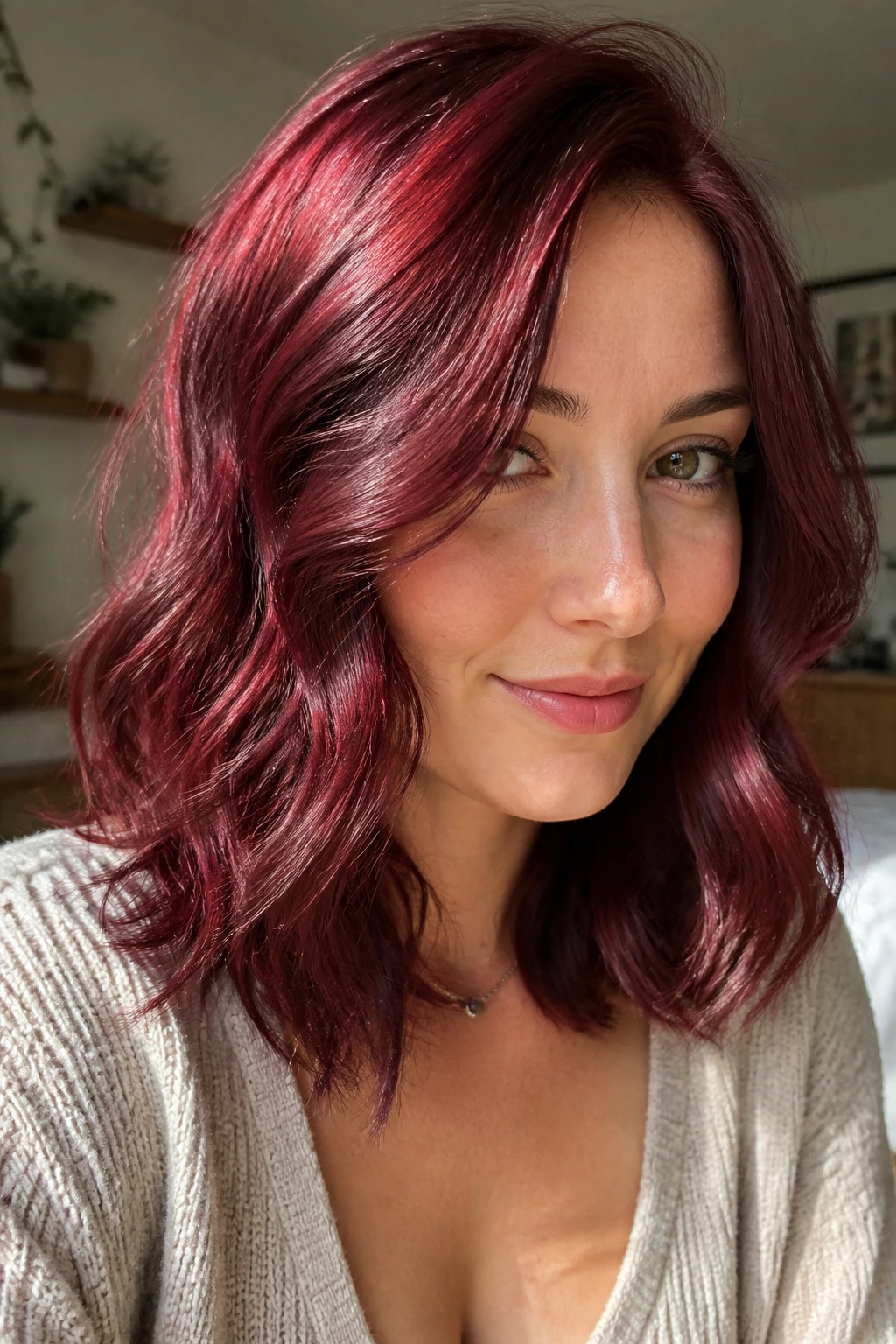
Burgundy soft waves sit in that wine-colored zone where red becomes richer instead of brighter. The waves matter because they pull the shade through different depths, so the hair doesn’t read as one even block. Medium length gives burgundy enough movement to stay interesting.
I like this look on cool or neutral skin tones, especially if the hair is naturally dark. It does not need a huge amount of lift to work. A glossy finish and a loose bend are enough. If you like colors that look expensive in dim light and even richer in sunlight, this is a strong pick.
13. Apricot Copper Face Frame
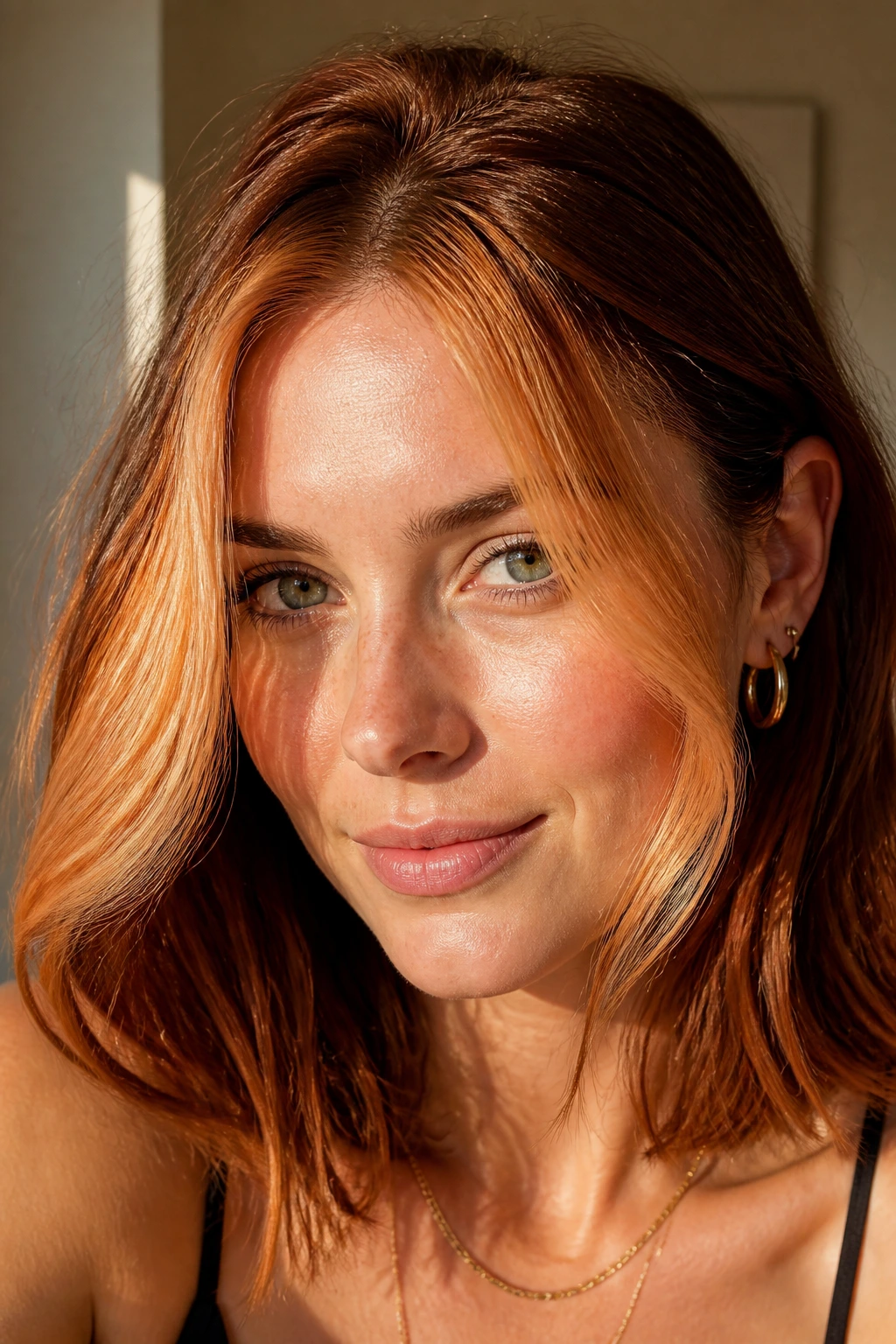
A bright apricot copper face frame can wake up medium-length hair fast. The front pieces carry the lightest, peachiest tone, while the rest of the hair stays a little deeper and warmer. That contrast gives the cut shape without needing a dramatic all-over color shift.
- Best on: Layered cuts, curtain bangs, or side parts
- Ask for: Two lighter front pieces and a softer copper base through the rest
- Works well when: You want brightness without redoing the whole head
The effect is especially good if you wear your hair tucked behind one ear. The face frame becomes the whole point.
14. Merlot Mid-Length Layers
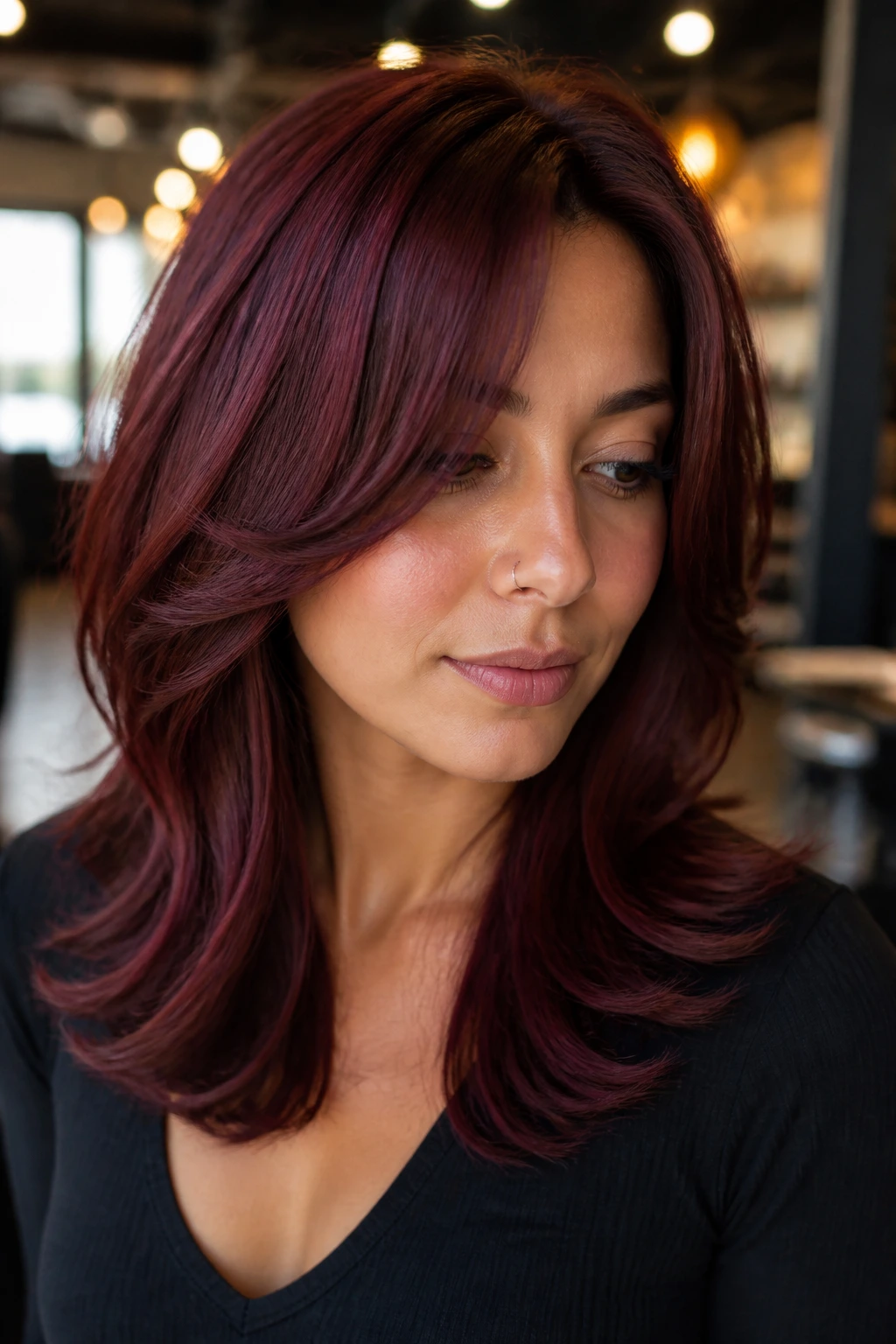
Merlot is a cool wine red with more depth than sparkle. On mid-length layers, it looks lush without trying too hard. The layered ends keep the shade from getting heavy, which can happen when a deep red sits on a thick, one-length cut.
This is one of my favorite choices for people who like dark lipstick but don’t want hair that screams for attention. It has presence. It also gives medium hair a smoother silhouette because the color visually knits the layers together. A satin blowout makes it look especially rich.
15. Rusted Copper Texture
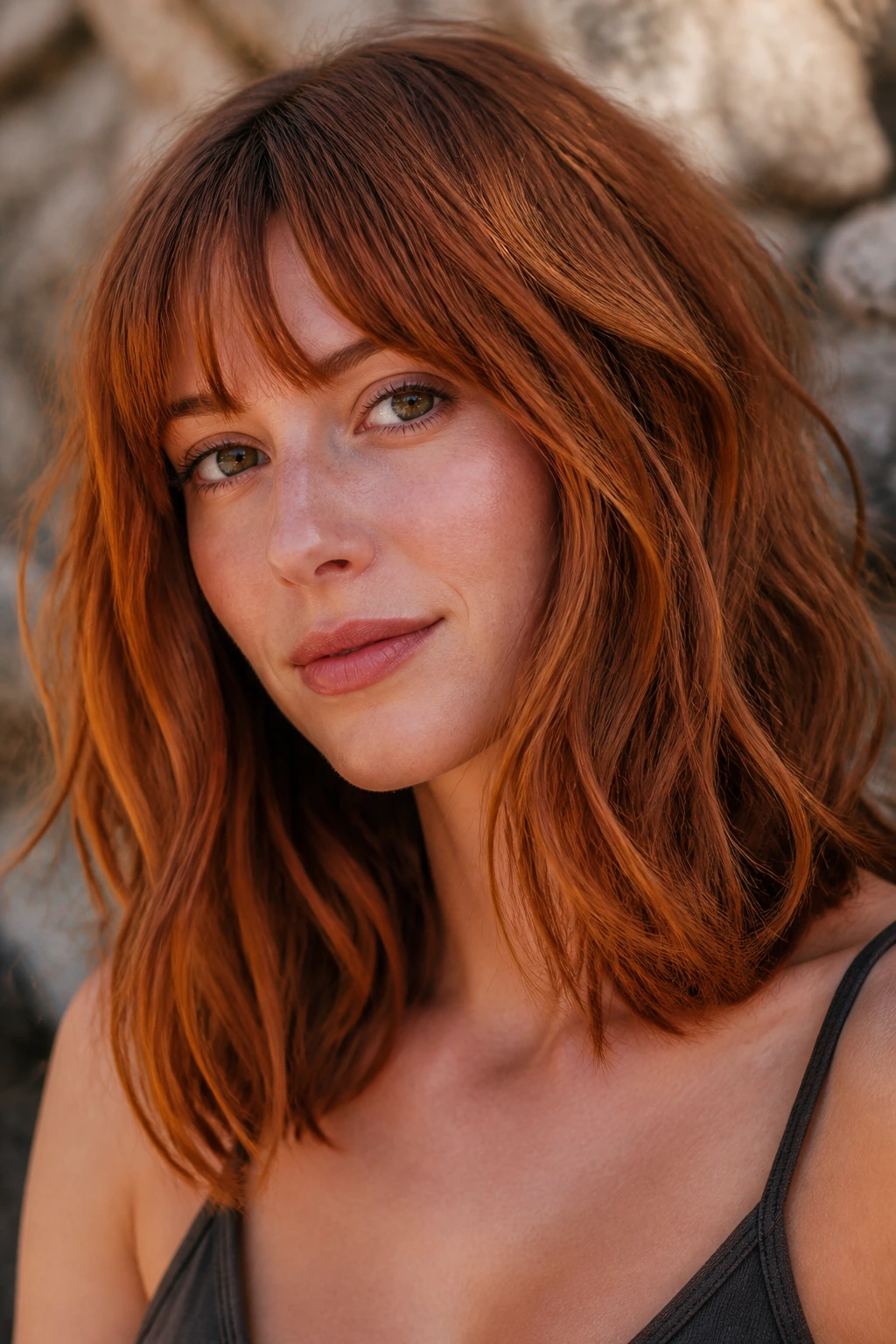
Rusted copper is for anyone who likes a red that feels a little earthy. It has orange-brown depth, less gloss than rose copper, and more grit than strawberry blonde. On textured medium hair, it looks lived-in in a way that feels honest instead of messy.
This shade comes alive when the styling is a little undone. Air-dry it, scrunch it, or rough it up with texture spray. The color works because it doesn’t look too precious. If you hate babysitting your hair, this is a useful place to land.
16. Crimson Wet-Look Lob
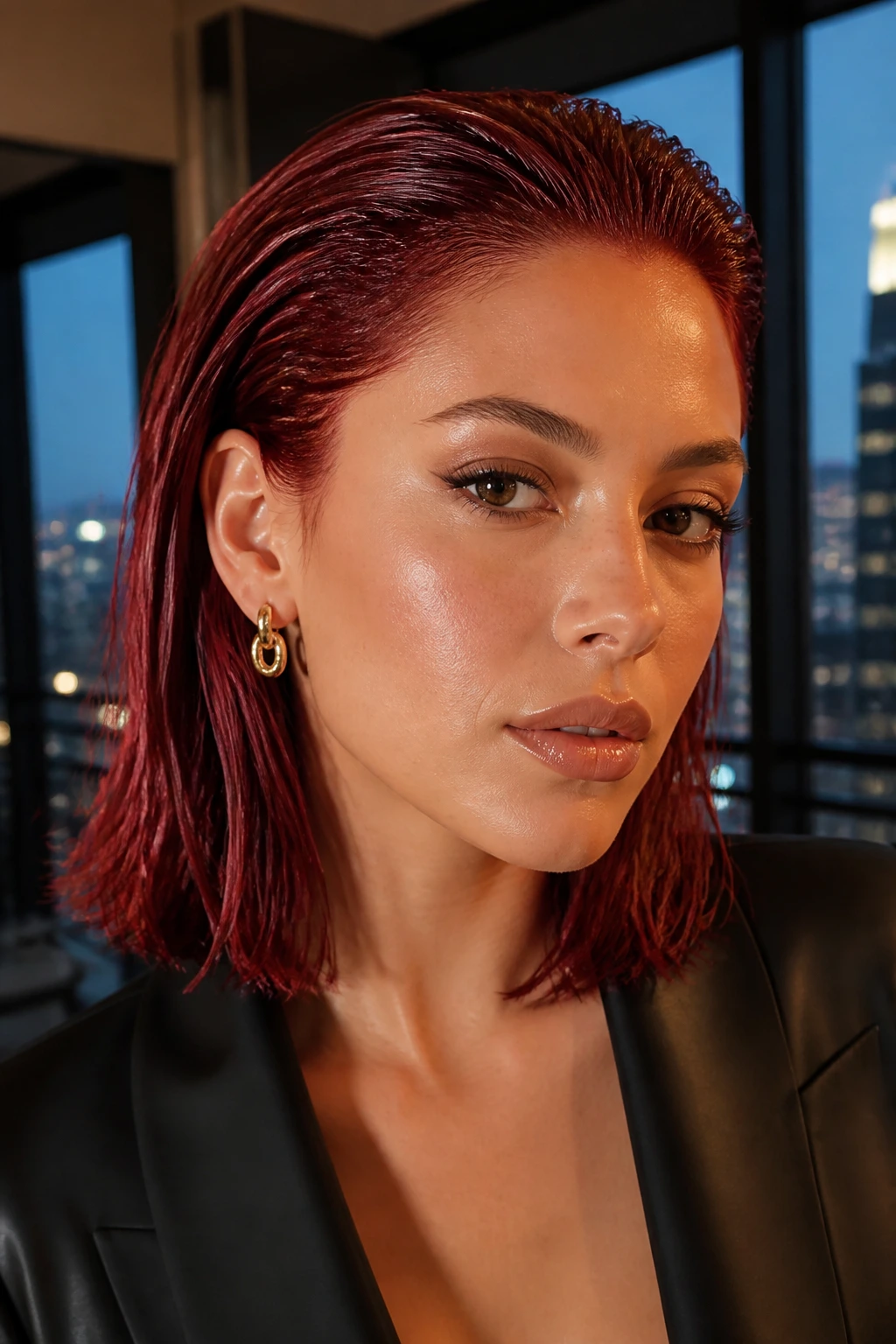
Crimson with a wet-look finish is unapologetic. The color itself is bright and clean, while the styling gives it that editorial sheen that makes the hair look freshly painted. On medium length hair, the lob shape keeps it from becoming too much.
This one works best when the strands are smooth and the finish is slicked back or tucked behind the ears. A shine gel and a fine-tooth comb can make the color read almost lacquered. It is not the easiest everyday style, but for a night out or a sharp photo moment, it does exactly what it should.
17. Pumpkin Spice Flip Ends
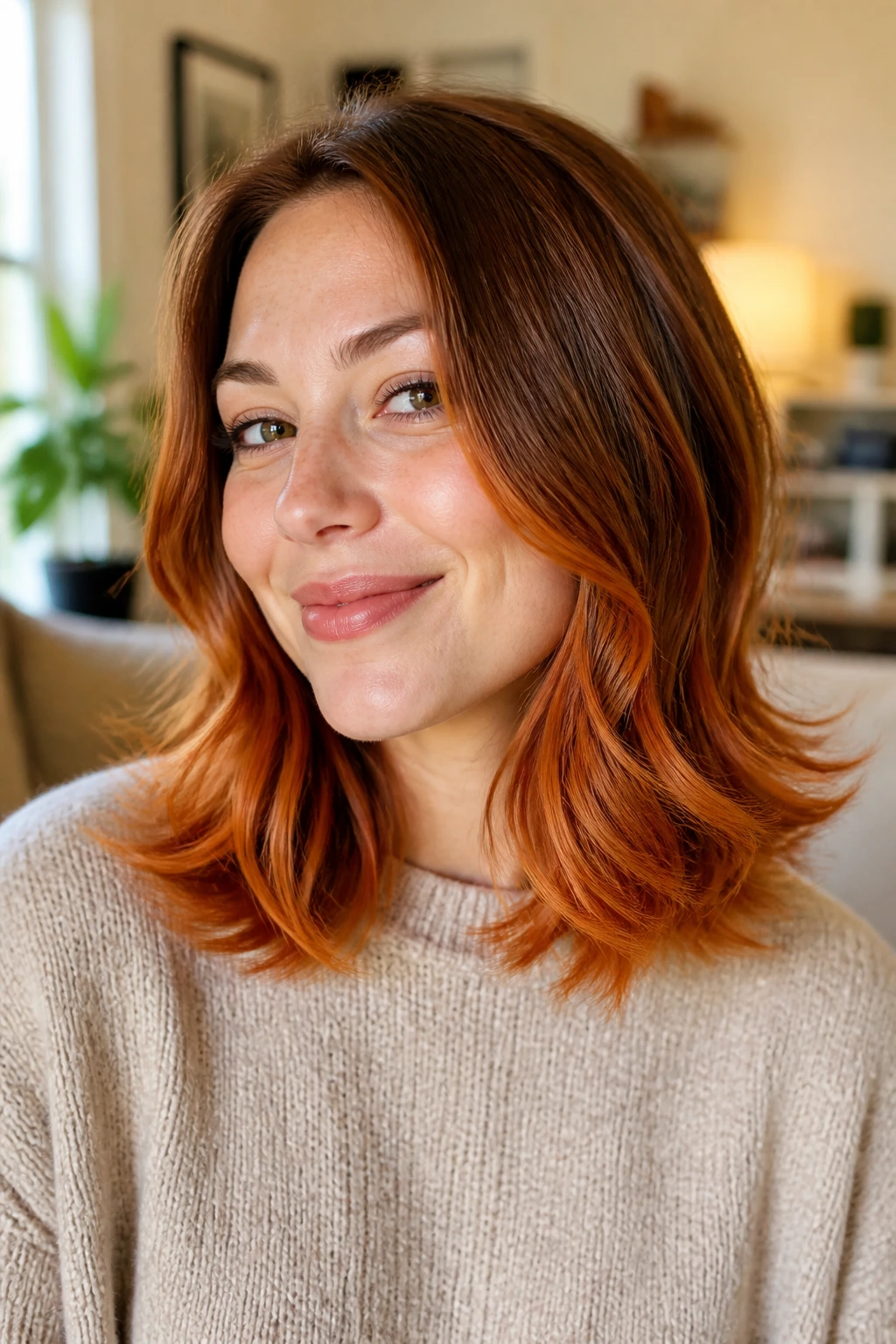
Pumpkin spice flip ends bring some movement back to a medium cut that might otherwise feel too neat. The warm orange-red tone shows up strongest at the ends, where the flip-out shape gives the color a little kick. It has a playful edge without tipping into cartoonish territory.
This look is especially good if your hair falls just past the shoulders and you like a 1960s-inspired bend. A round brush or a flat iron flick at the ends does the trick. Keep the roots a shade deeper so the flipped pieces pop instead of blending away.
18. Rosewood Balayage
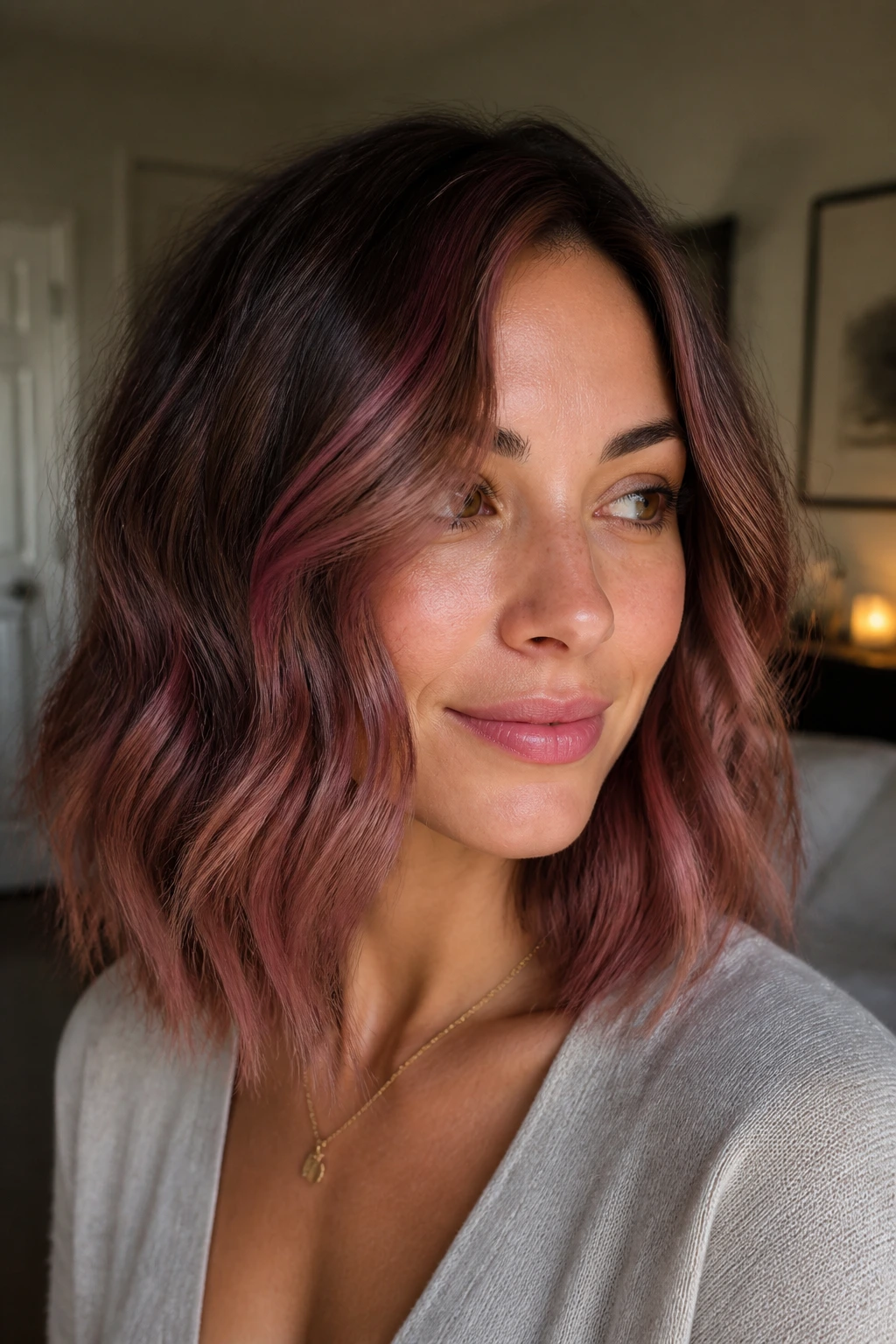
Rosewood is one of those shades that sits quietly until you notice how much detail it has. It carries dusty pink, brown, and red in one sweep, which makes it a smart choice for medium hair with some wave. The balayage placement softens the whole thing.
If you want red without an obvious “I dyed my hair red” moment, this is one of the best options. The darker base keeps the look grounded, and the rosewood pieces around the face or mids give it enough life to matter. It’s subtle, but not forgettable.
19. Spiced Peach Copper
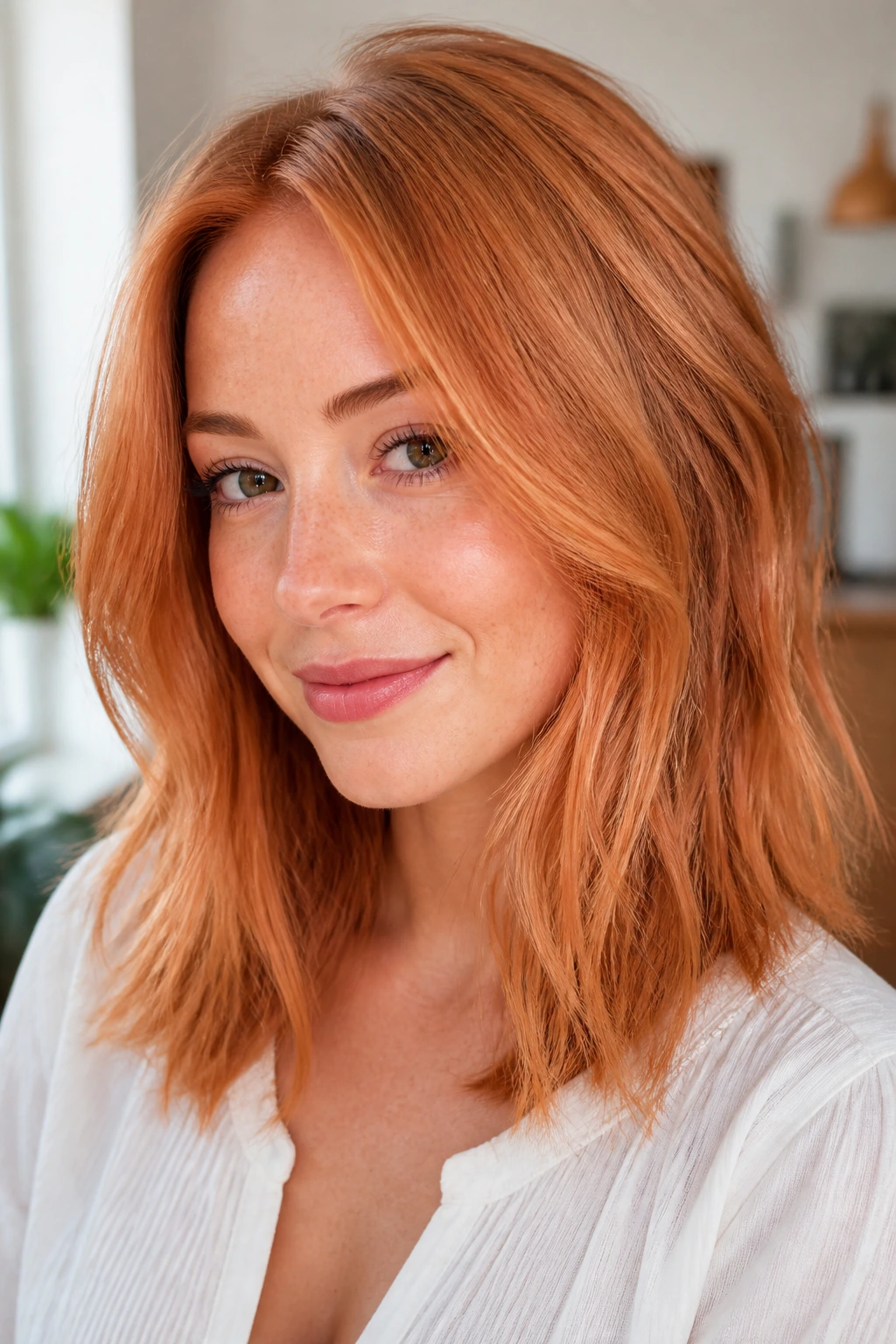
Spiced peach copper looks almost edible in the right light. The peach note keeps the copper from becoming too orange, and the warmth gives medium-length hair a soft glow that feels bright without being harsh. It’s especially nice on slightly layered cuts where the ends can catch the light.
Use this shade if you like warmth but don’t want something deep or moody. A lighter base level helps it stay airy. I’d avoid overly heavy styling here; loose bends or a simple blowout let the peach-copper tone stay fresh.
20. Cherry Bomb Blunt Lob
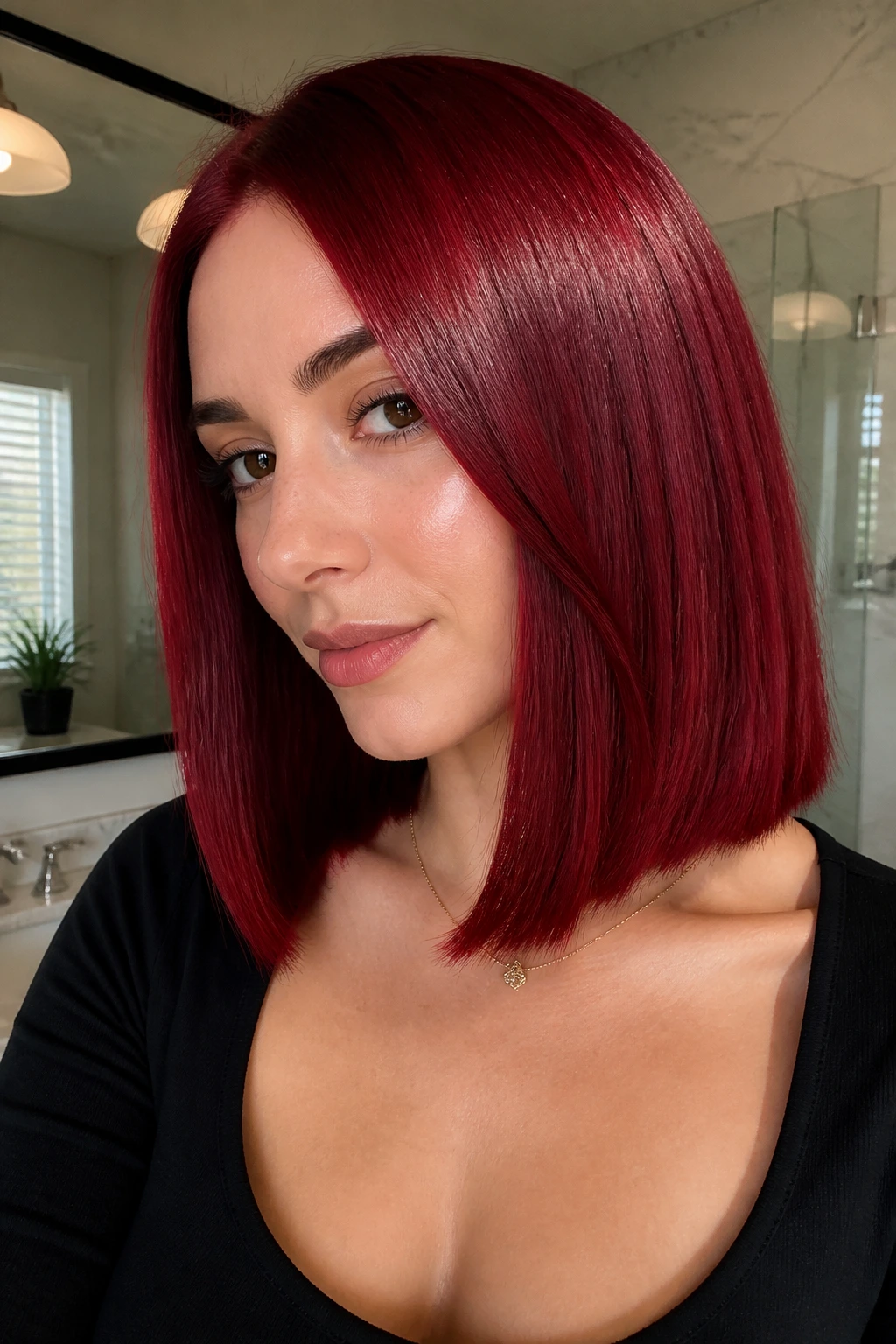
Cherry bomb on a blunt lob is bold because the color and the cut both have strong lines. There’s no hiding place, which is exactly why it works. The vivid red sits cleanly against the straight edge, and the overall look feels sharp from every angle.
This one is for the person who wants the hair to be the outfit. Keep the finish smooth and use a gloss or shine mist so the cherry tone doesn’t go matte. On medium length hair, that blunt edge helps the red look denser and more saturated.
21. Fiery Copper Curls
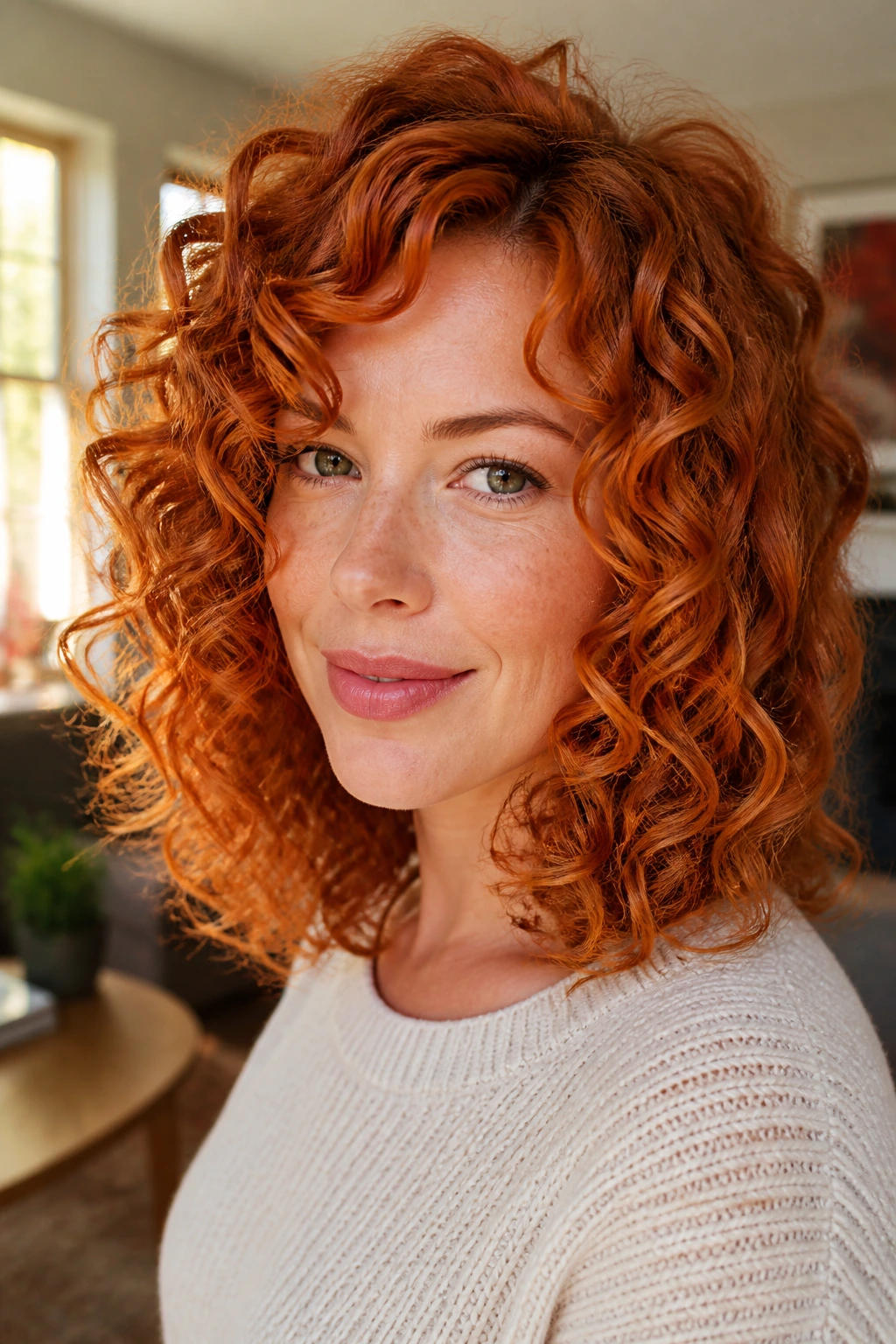
Fiery copper curls make a case for curly hair stealing the show. The copper tone moves through the curl pattern, so every spiral looks a little different. That variation is what keeps the color from flattening out. Medium length helps because the curls have enough weight to hang, but not so much that they collapse.
- Best on: Loose curls, corkscrews, or styled spirals
- Ask for: A bright copper base with slightly lighter ends
- Style with: Curl cream, diffuser, and a light oil on the tips only
If your curls drink up color fast, a tinted conditioner can make a real difference between salon visits.
22. Maroon Glam Waves
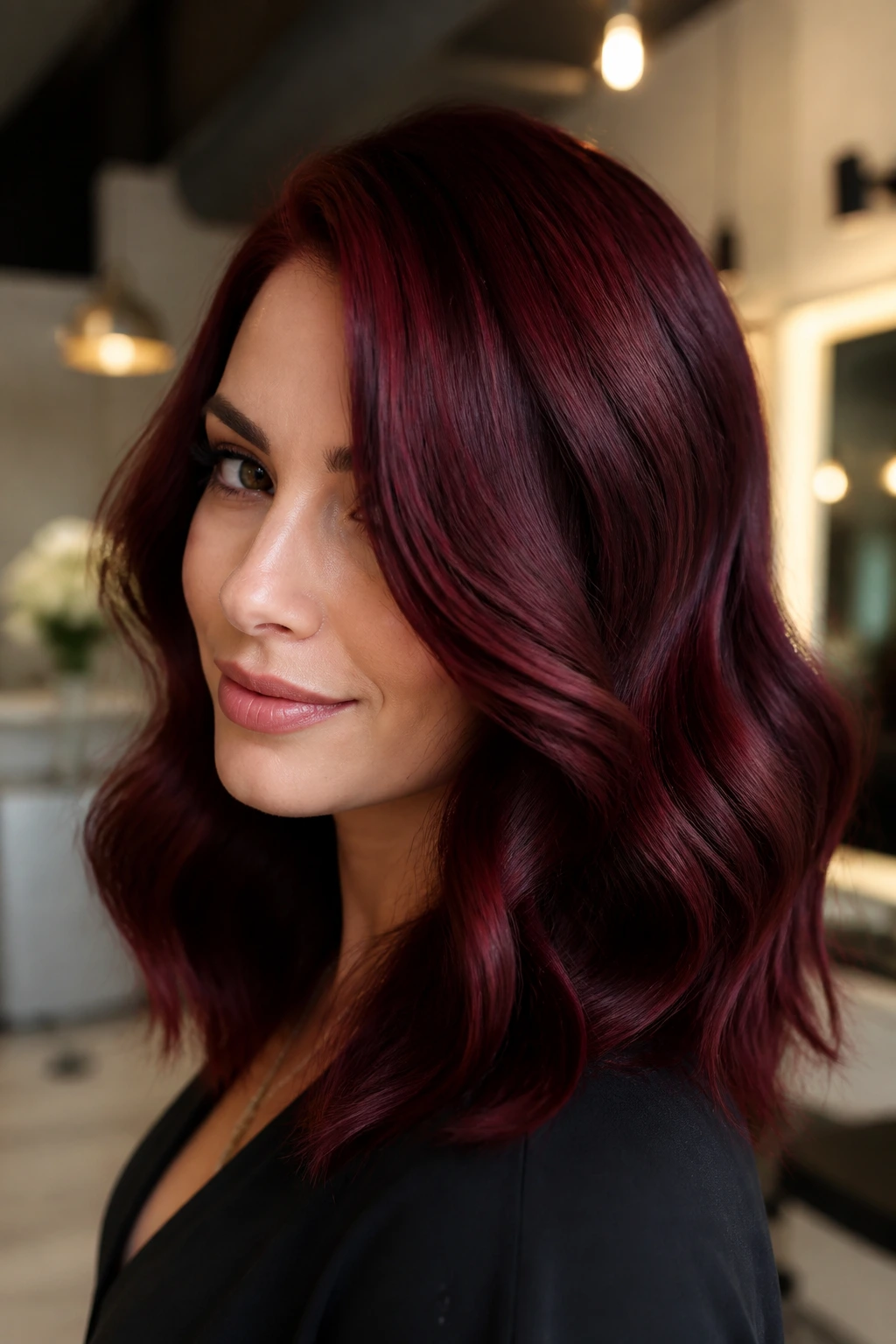
Maroon glamour is all about depth and polish. The shade leans darker than burgundy and wears best when the waves are smooth and brushed out, not crunchy or overdefined. On medium-length hair, the shape stays elegant without feeling severe.
This is the red I’d choose for an evening look that still works during the day. It feels a little formal, a little expensive, and far less fragile than lighter reds. A side part can help the maroon catch light across the top layer, which makes the whole color look fuller.
23. Tangerine Copper Shag
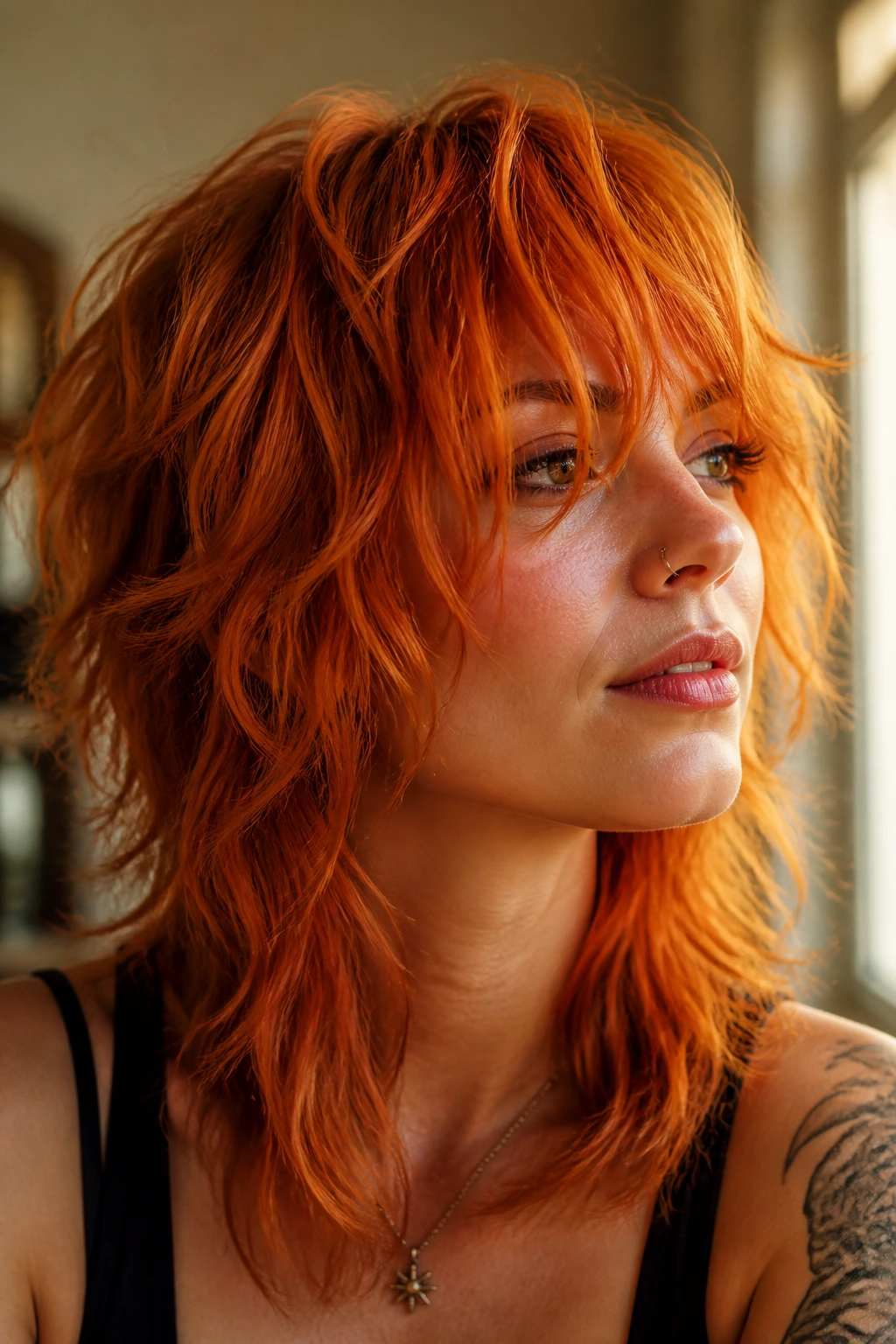
Tangerine copper is brighter and more orange-leaning than most people expect, and the shag cut keeps it from becoming too polished. The layers create movement, and the brighter tone makes the texture obvious even when the hair is only rough dried. That’s useful.
This one suits someone who likes color that announces itself. Medium hair gives the shag enough body, while the copper-orange tone adds heat around the face and ends. If you want a red that feels youthful and a little chaotic, this is the one.
24. Cranberry Gloss Lob
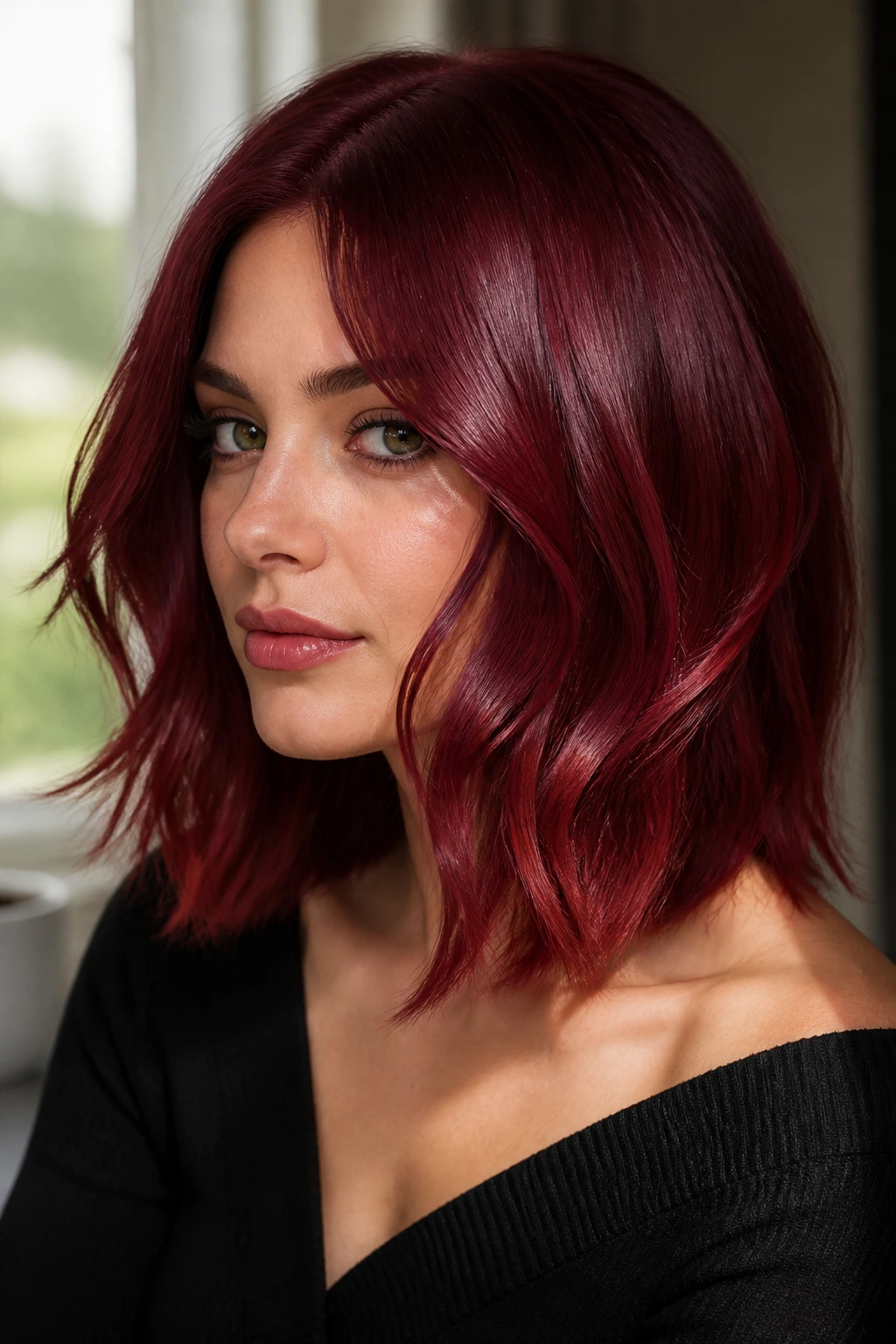
Cranberry gloss is a clean, shiny red that lands somewhere between berry and wine. On a lob, the gloss finish makes the color look freshly done even when it’s a few weeks old. The medium length keeps the shade from feeling too heavy, which can happen on longer hair.
This is a smart choice if you like deep red but still want it to read as red, not brown, in daytime. A gloss every month or so keeps the cranberry note clear. Wear it with a side tuck or soft bend and it starts looking polished fast.
25. Cinnamon Auburn S-Curve Bob
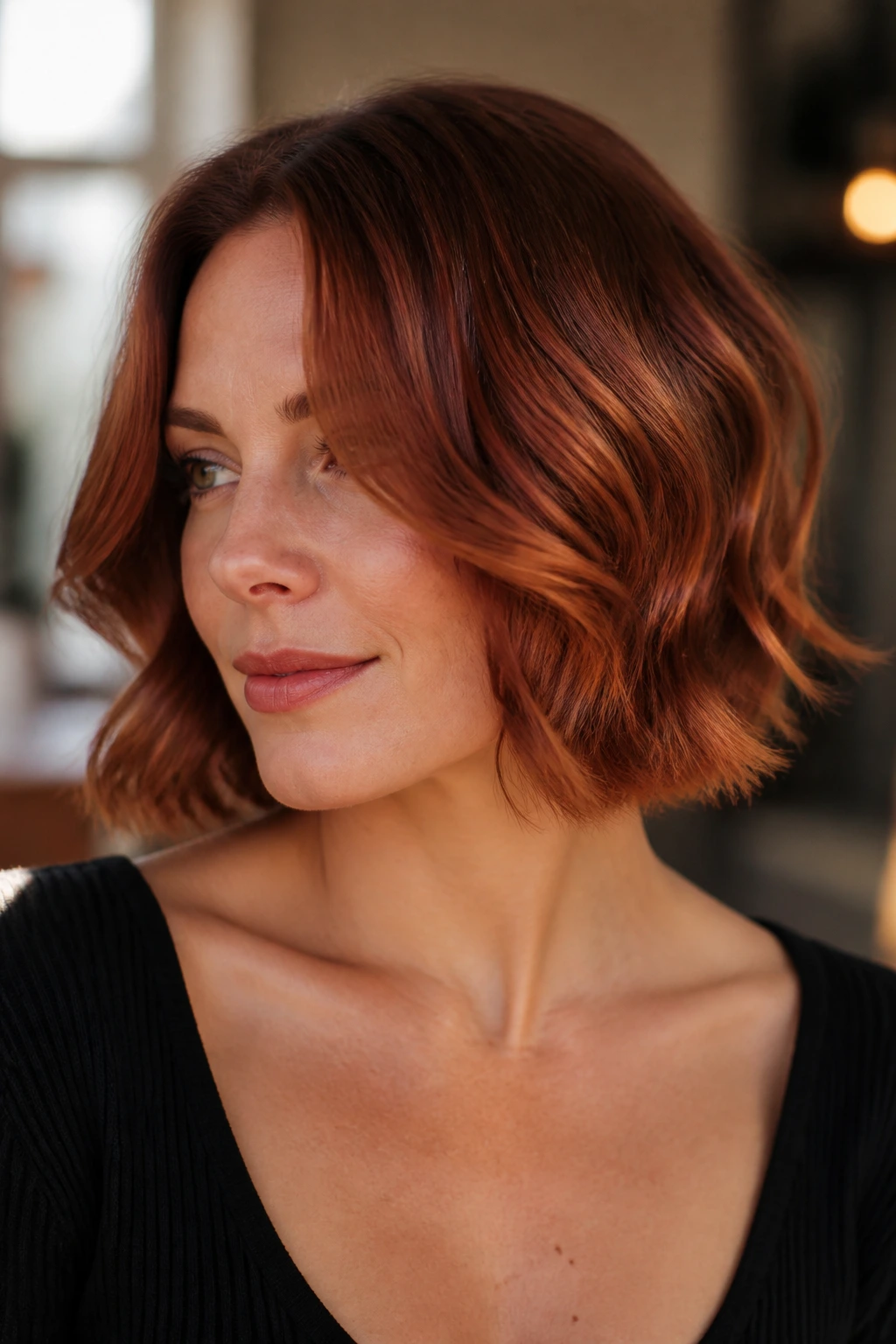
An S-curve bob with cinnamon auburn color is one of those looks that makes hair seem more expensive than it probably was. The bends are soft, almost lazy, and the auburn tone sits in the warm middle ground between red and brown. That middle ground is where a lot of people look best.
This cut is especially kind to fine hair because the S-wave adds movement without taking away too much density. The shade stays wearable in low light and still reads as red in sun. It’s a very good “I want red, but not red-red” option.
26. Scarlet Straight Lob
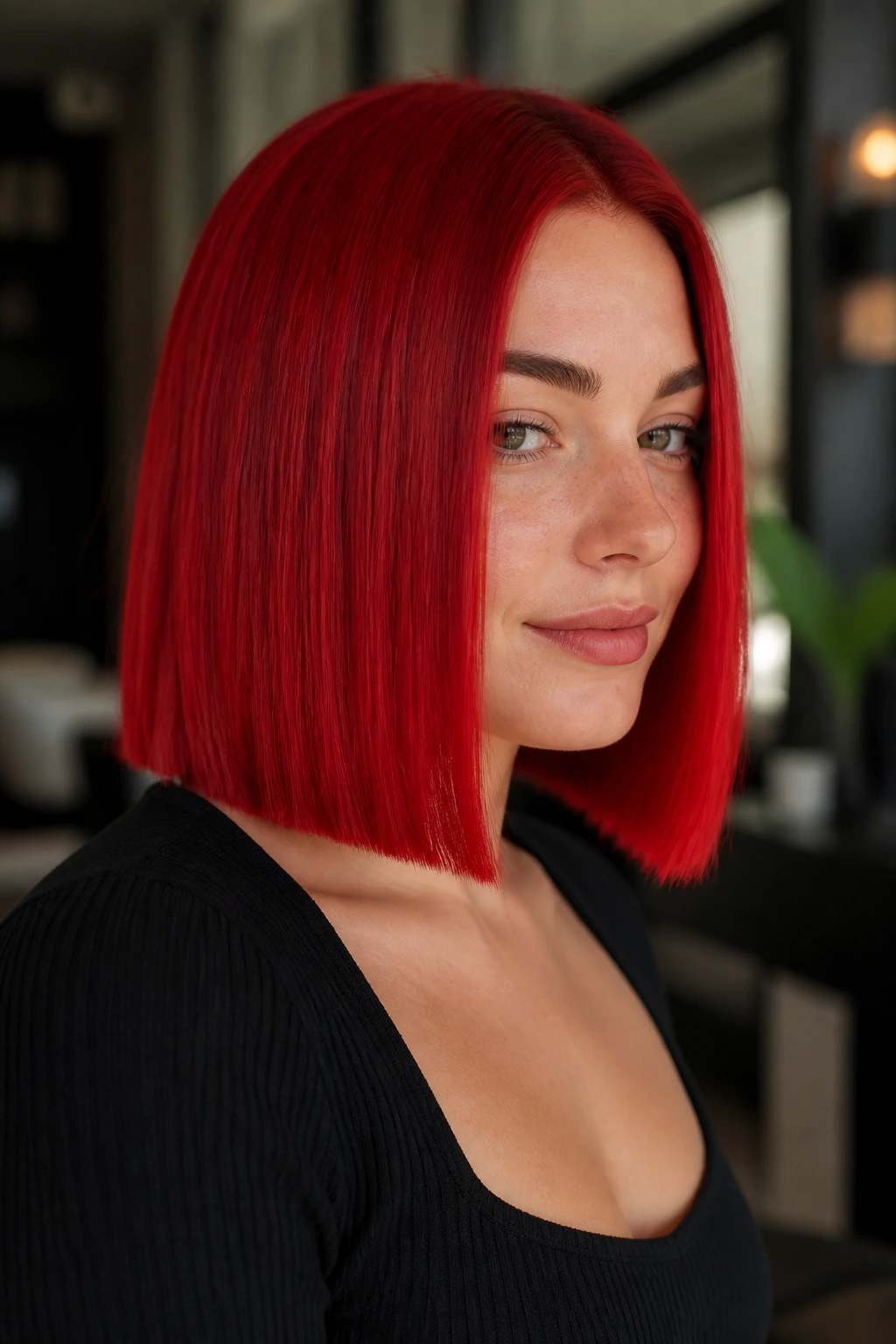
Scarlet straight and blunt is pure graphic color. The straight finish lets the scarlet sit cleanly on the hair instead of breaking up into too many pieces. On medium length hair, the line of the cut becomes part of the look, not just a backdrop.
This is the version to choose if you like precision. It needs regular trims to keep the edge sharp, and it benefits from a heat protectant that leaves the hair smooth rather than greasy. The red itself should feel vivid and even from root to tip.
27. Golden Copper Butterfly Layers
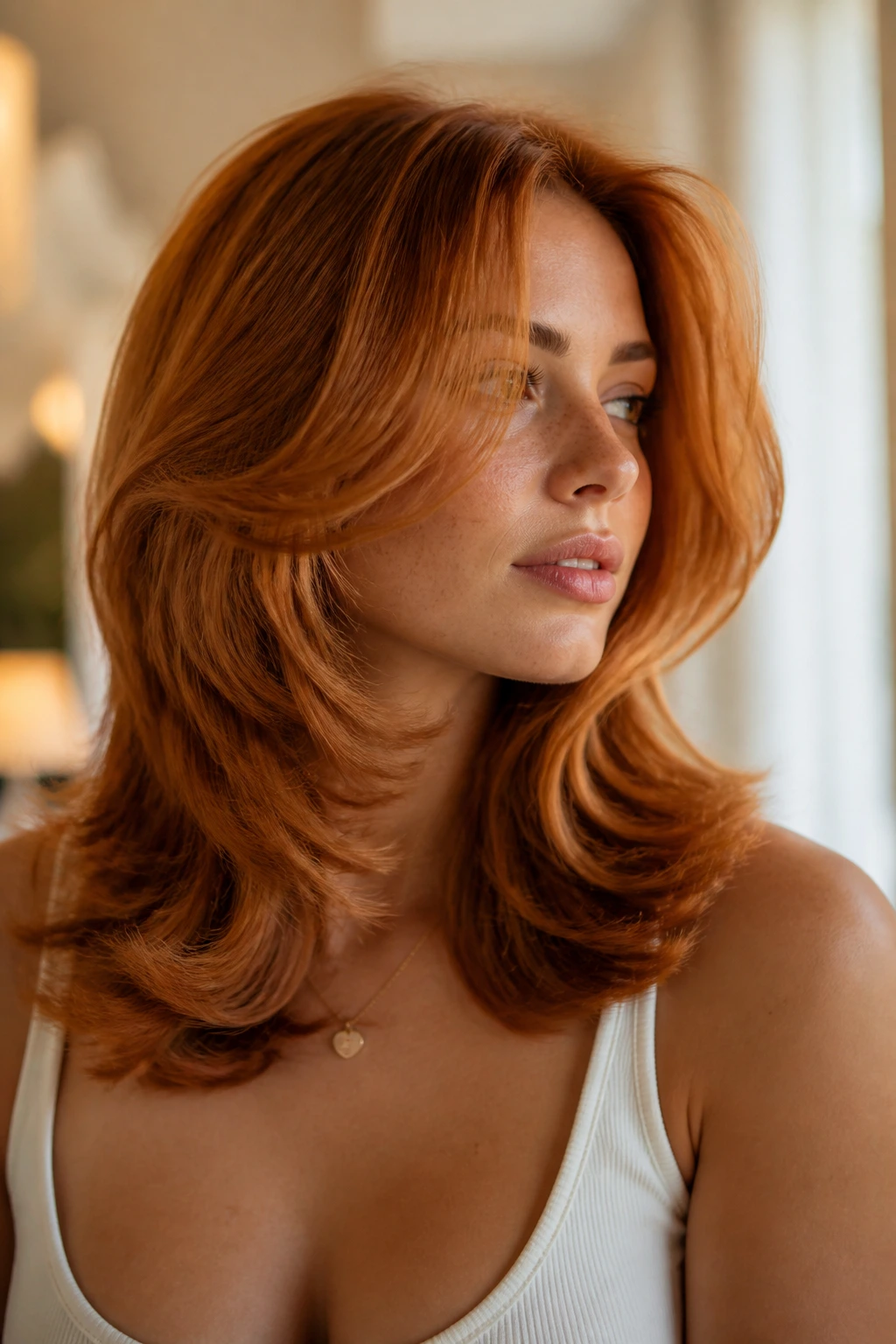
Golden copper with butterfly layers gives you movement first and color second, which is exactly why it works. The layered face pieces lift the warmth around the cheekbones, while the longer bits keep the color grounded. On medium hair, the shape looks airy instead of overloaded.
The best part is the way the layers shift when you turn your head. The color changes with them. If you like volume and warmth, this look gives you both without needing dramatic styling every day. A round brush helps, but it is not mandatory.
28. Garnet Half-Up Waves
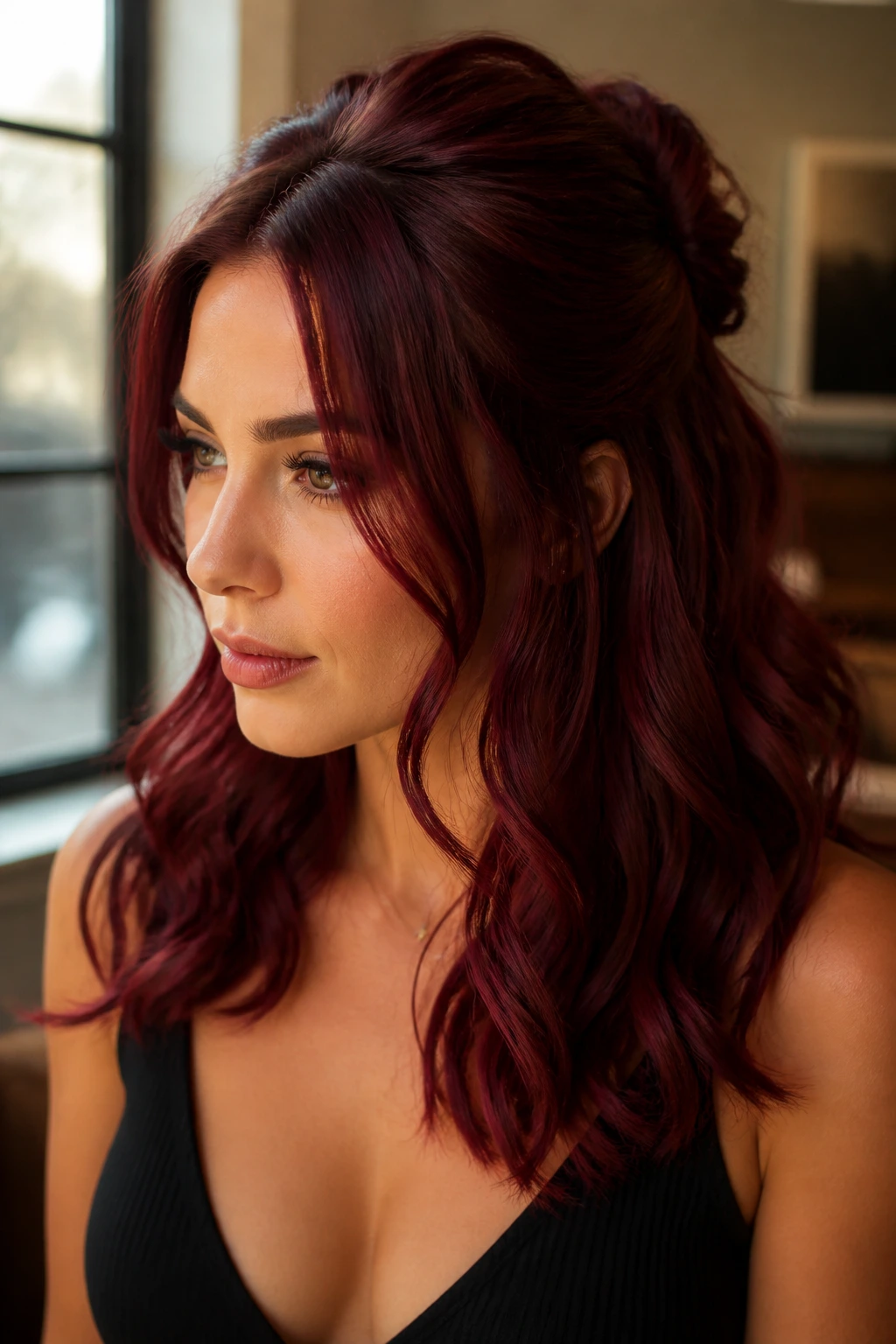
Garnet is a deep, jewel-toned red that feels richer when it’s paired with a half-up style. The pull-back gives the front pieces a lift, which makes the garnet tone show more clearly around the face and crown. Medium hair is the right length for that because the top section still has enough weight to look full.
This is one of those styles that can read romantic or sleek depending on how tight the half-up section is. Leave a few face pieces out if you want it softer. Pin it tighter if you want the garnet color to look cleaner and more dramatic.
29. Ember Red Mid-Length Shag
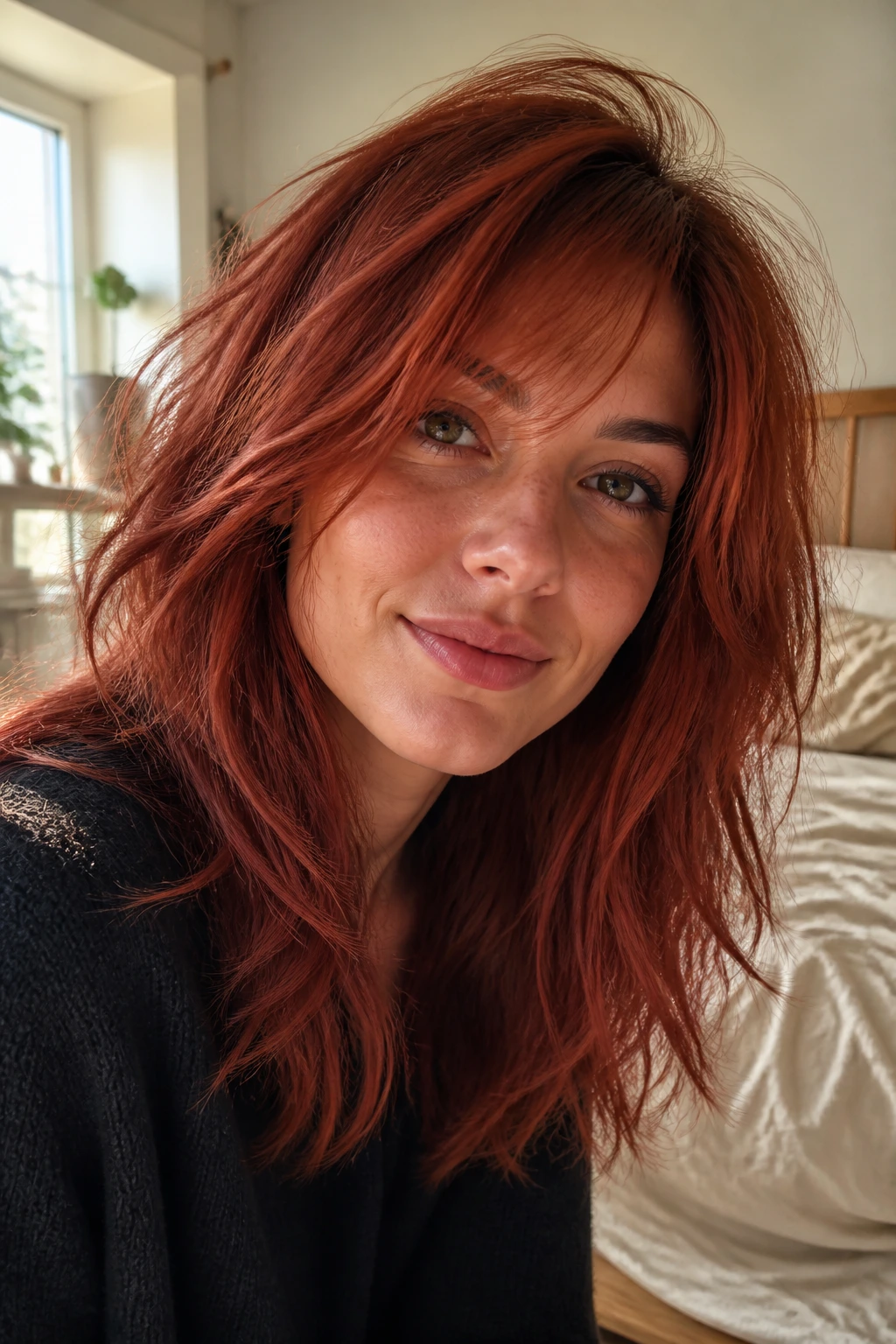
Ember red feels smoky, warm, and a little rough around the edges. On a mid-length shag, the layers keep the color from becoming too glossy or too neat. The result is red with texture, which is a much more interesting thing than red with perfection.
This look does well when the styling is intentionally imperfect. Use a little mousse, rough-dry the roots, and let the ends stay separated. The ember shade works especially well if you have natural wave or a cut that already has piecey movement built in.
30. Berry Red Feathered Cut
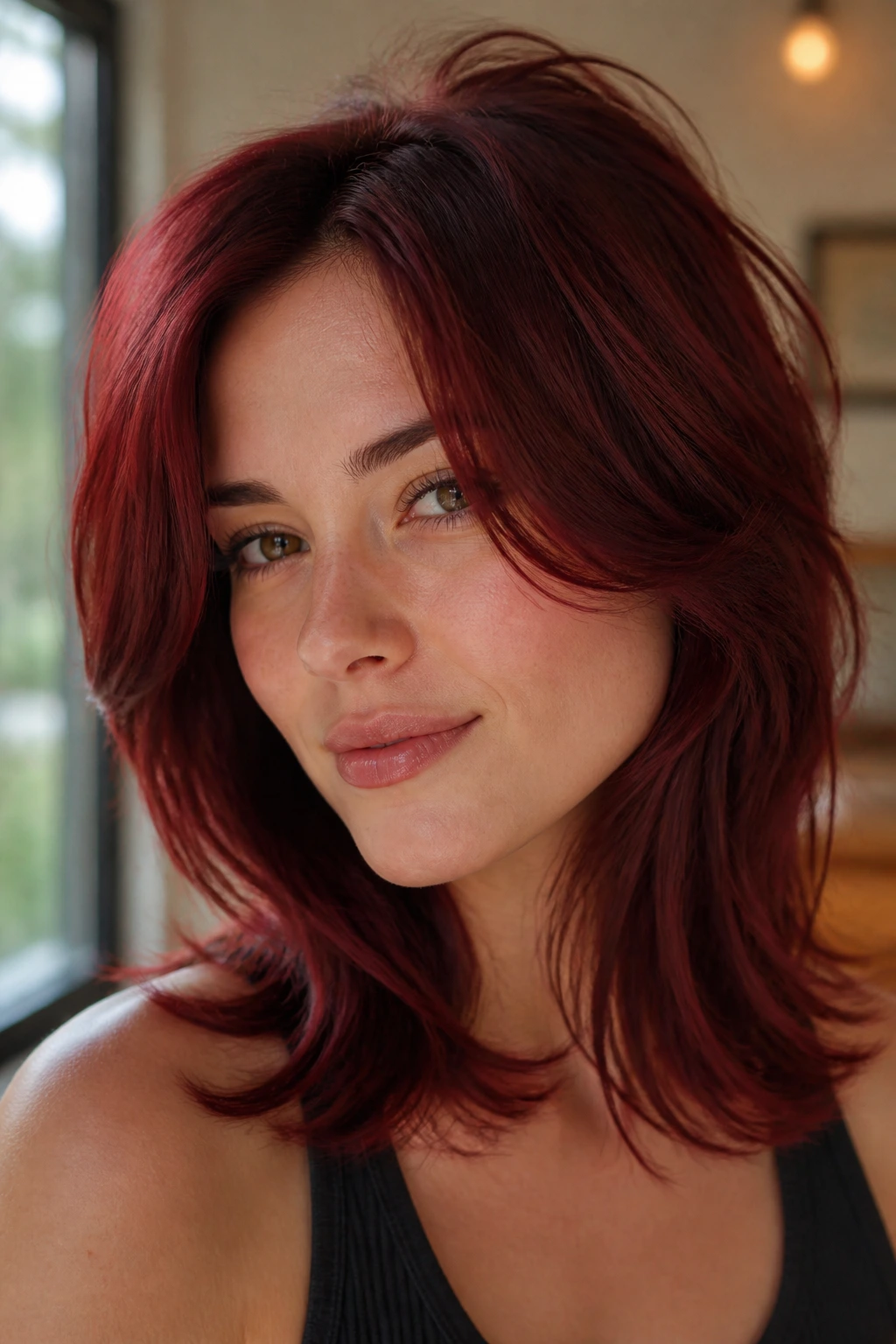
Berry red is softer than cherry and less dark than merlot, which makes it a nice middle lane. Feathered ends keep the color airy on medium hair, so the whole cut moves more easily. There’s a softness to it that suits people who want red without a hard edge.
I like this shade on medium hair that needs lightness around the perimeter. Feathering keeps the ends from looking blunt or thick, and berry red gives the finish a fresher feel than brown-based red. It’s a good pick if you want dimension without a lot of contrast.
31. Copper-To-Red Ombré
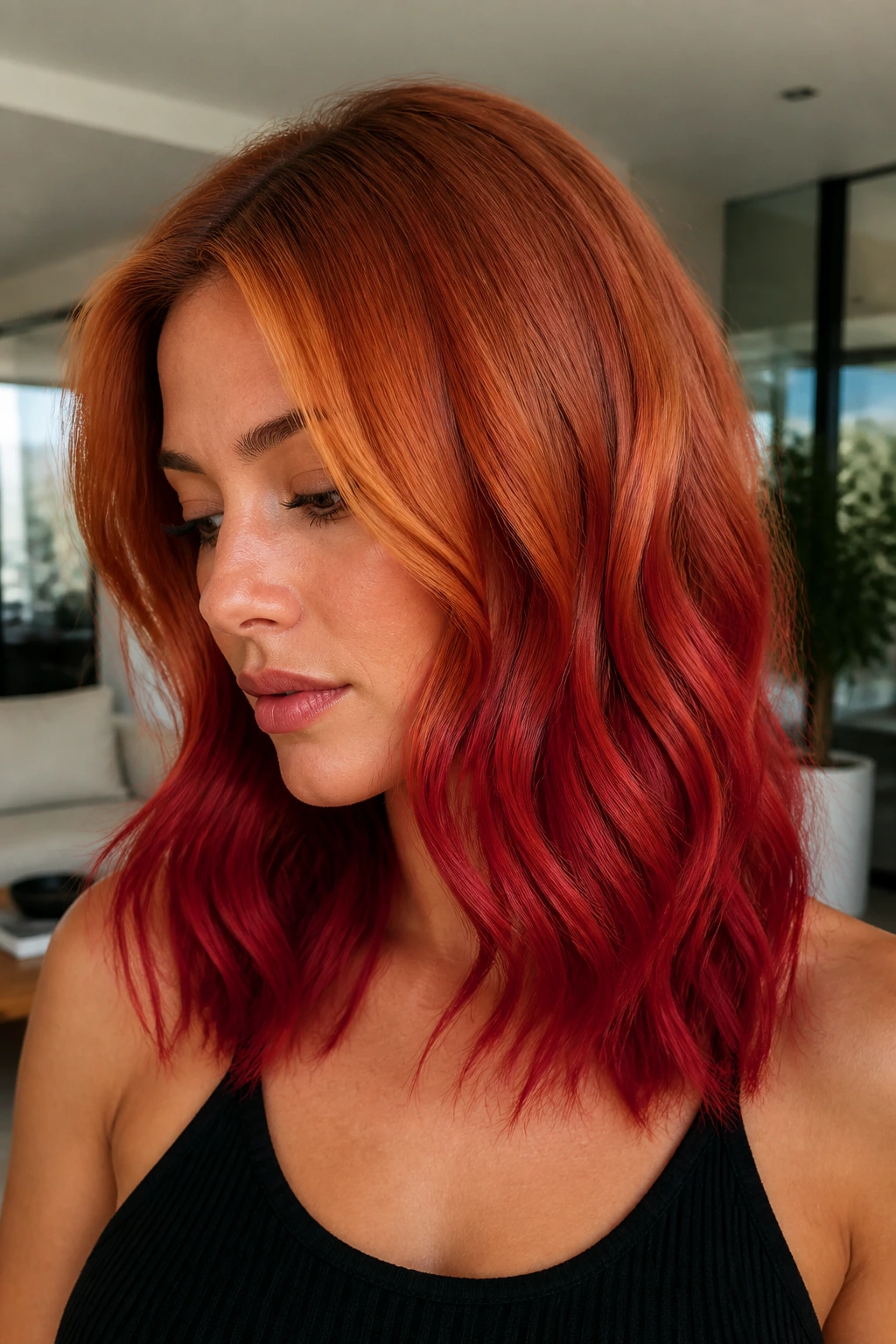
Copper-to-red ombré is one of the easiest ways to grow out a brighter red. The roots stay warmer and softer, while the mids and ends deepen into a truer red. On medium-length hair, that gradient shows clearly without getting too stretched out.
- Best on: People who want less obvious root regrowth
- Ask for: A copper base that shifts gradually into red through the ends
- Works well with: Waves, because the bend helps the gradient show
This look has range. It can be low-key in a ponytail and much bolder when the hair is down.
32. Wine-Stained Layers
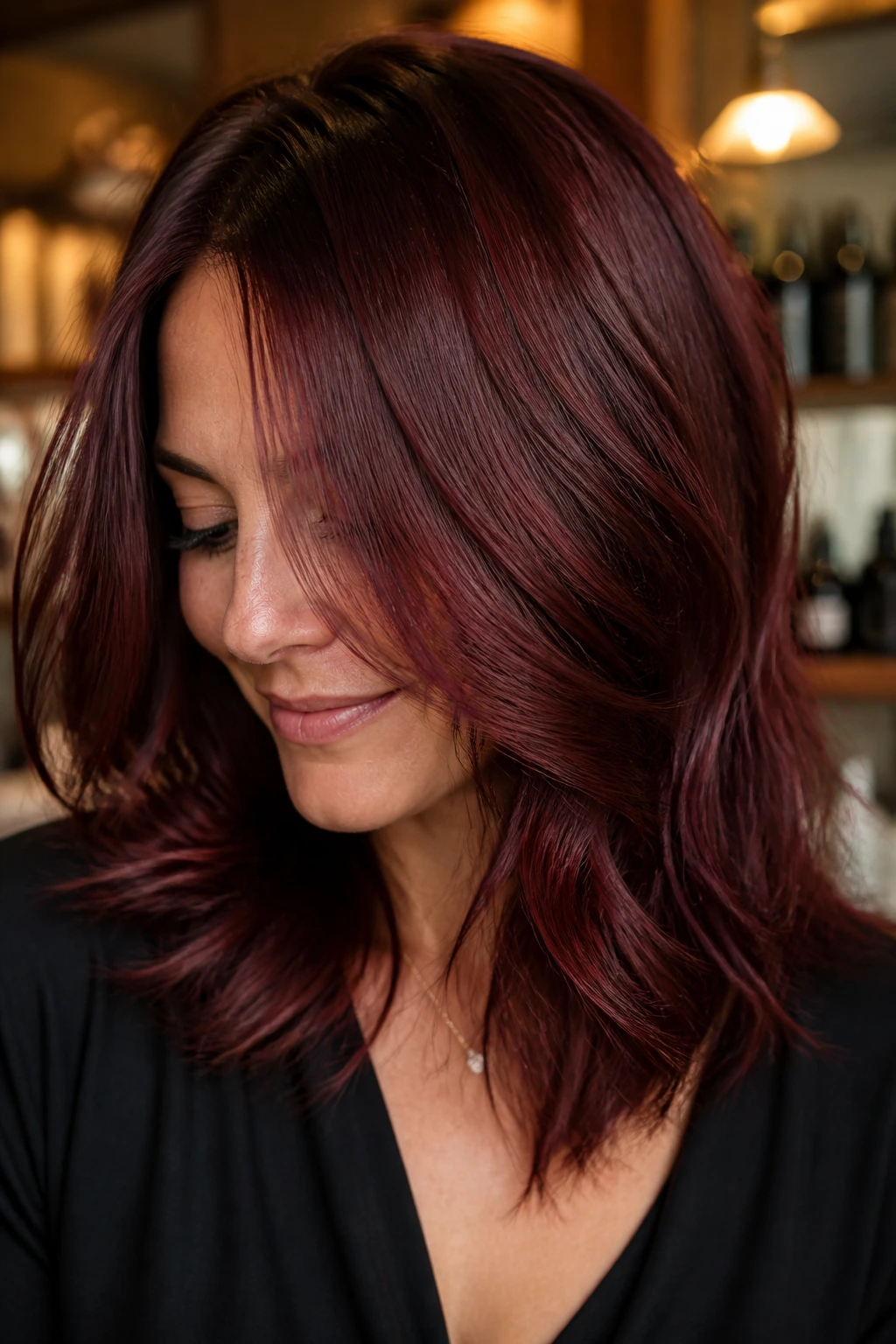
Wine-stained layers are dark, rich, and a little mysterious without leaning too hard into black. The layered cut lets the color break up around the ends, so the red shows through in motion. Medium hair is enough to carry that depth without making it feel heavy.
This shade is especially flattering on thick hair because the dark tone helps control the visual bulk. A little shine serum on the mids is enough; too much oil will flatten the red and make it read darker than it is. Keep the layers soft, not choppy.
33. Peachy Red Textured Waves
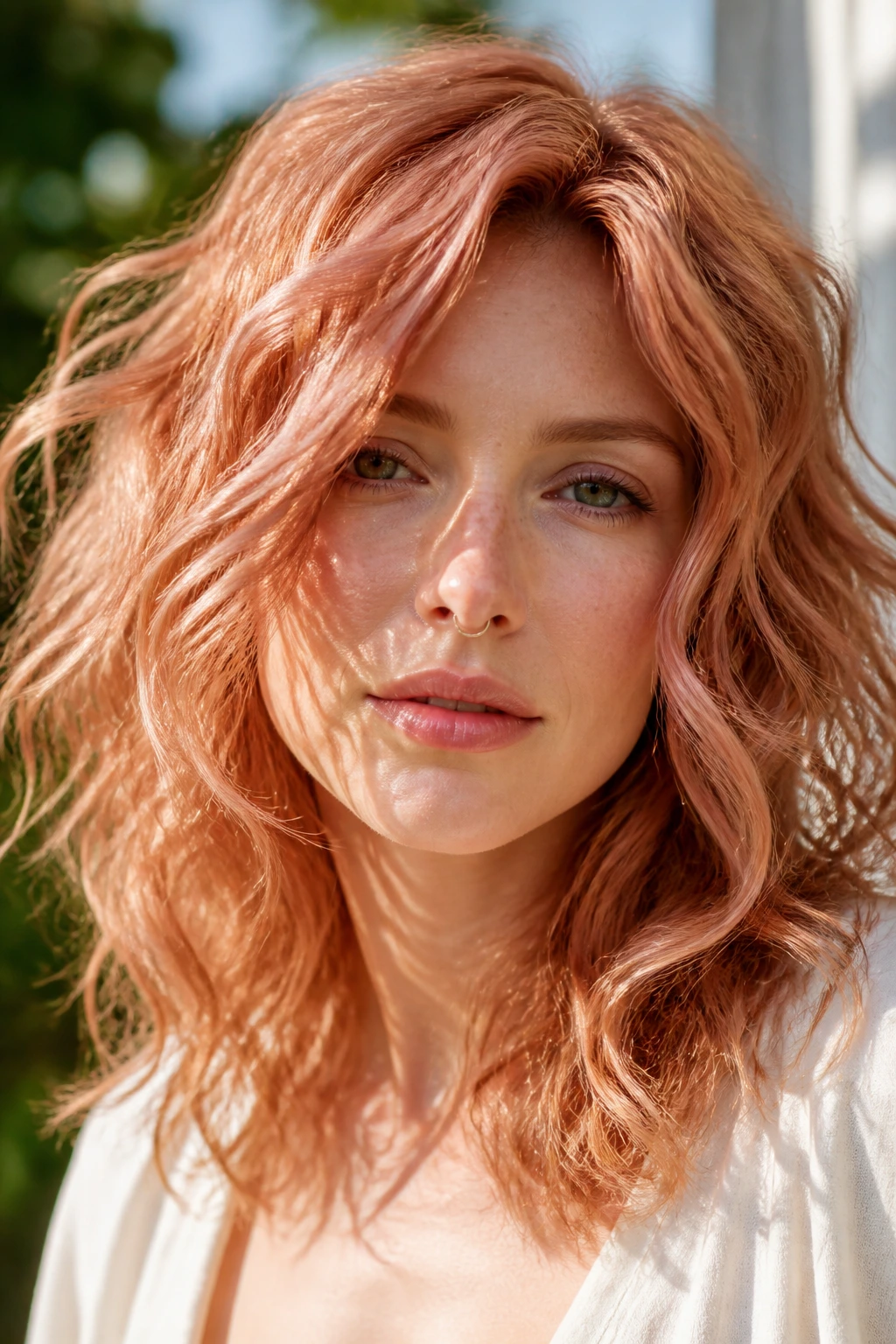
Peachy red textured waves sit at the lighter, airier end of the red spectrum. The peach tone softens the red, and the waves keep it from becoming overly sweet. On medium-length hair, the combination feels easy and fresh, not frothy.
This look works well on lighter bases or hair that already has some warm lift. A texturizing spray through the mids gives the waves enough separation to show the color shifts. If you want something playful but not loud, this is a very good place to land.
34. Smoked Paprika Lob
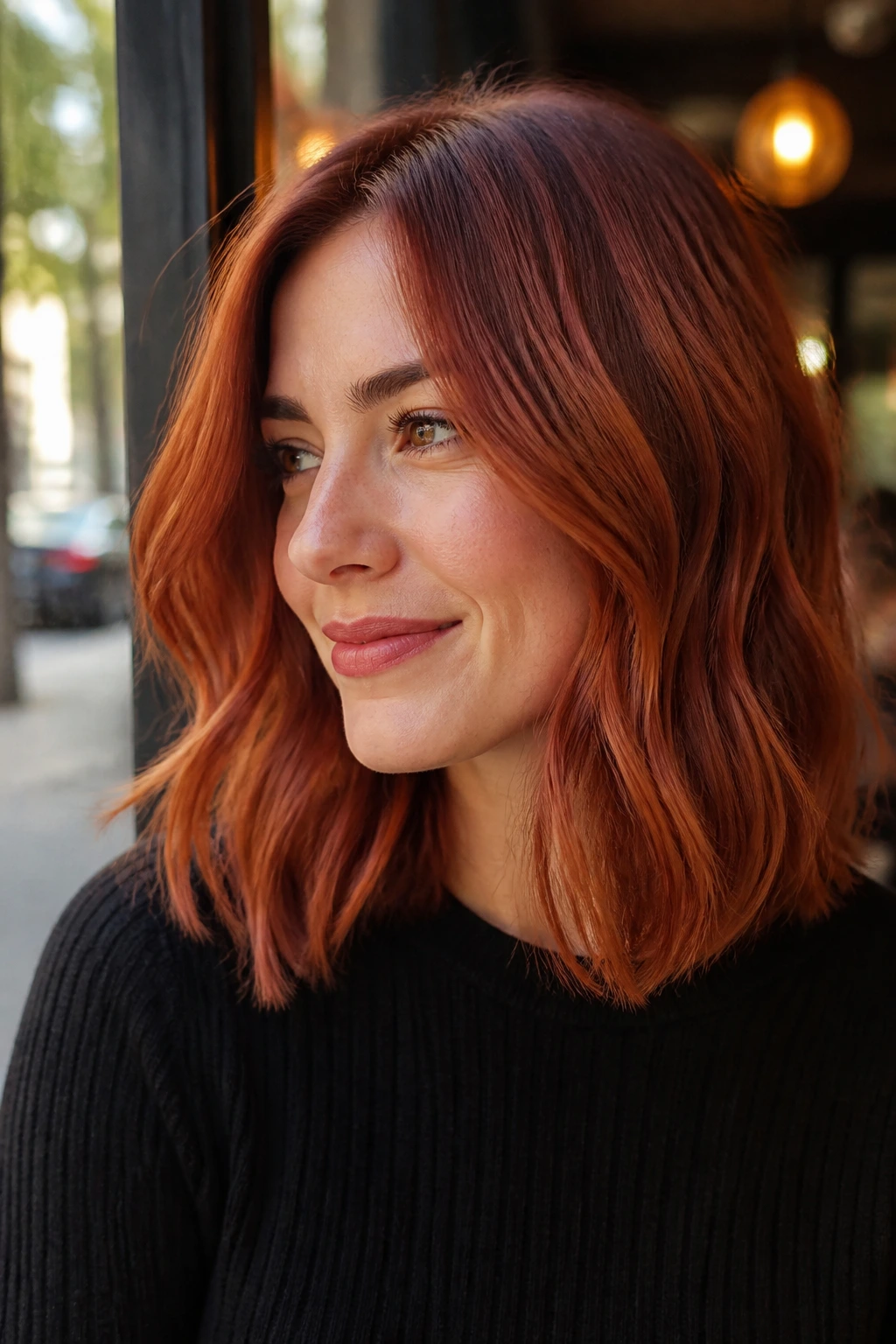
Smoked paprika is a muted red-orange that feels grounded rather than flashy. On a lob, the shade looks especially good because the clean cut balances the warmth. It has enough spice to read as red, but the smoky note keeps it wearable in everyday light.
This is a useful shade if you work in a setting where brighter reds might feel like too much. It still has personality. It just doesn’t shout. Soft bends or an air-dry finish keep the paprika tone from looking too polished.
35. Cherry Sliced Layers
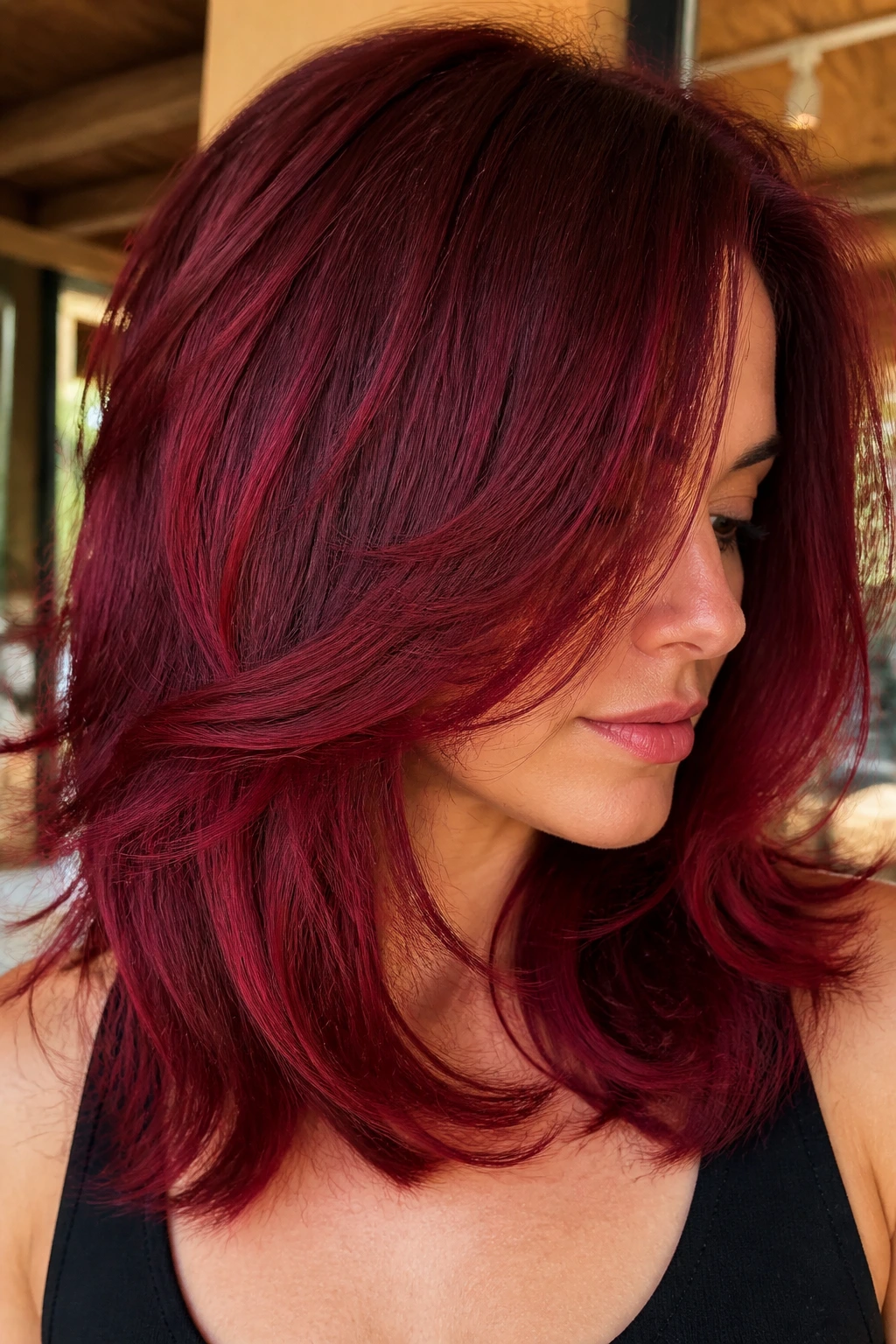
Cherry sliced layers are all about keeping the color bright while the cut stays light. Slicing removes bulk, which lets the cherry red move through the hair instead of sitting in thick panels. Medium-length hair benefits a lot from that because the shape stays clean.
This is one of the best options if you want visible red without a heavy silhouette. The sliced ends help the color flicker at the bottom, and the cherry tone keeps the look crisp. If you love volume but hate heaviness, this is the sweet spot.
36. Rusty Red Airy Waves
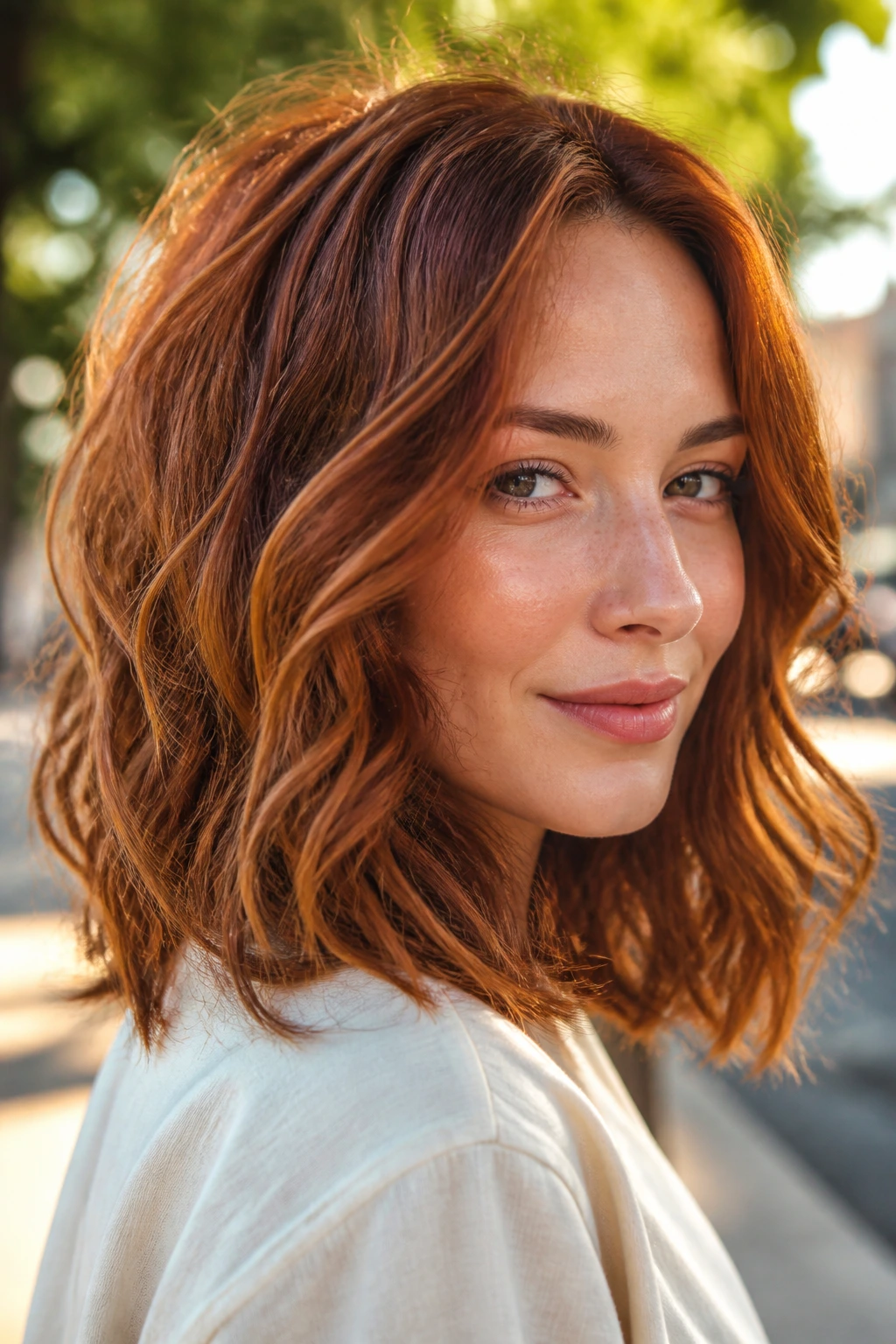
Rusty red airy waves feel lived-in in a way that works surprisingly well on medium hair. The color leans earthy, with brown and copper notes sitting closer together. The waves keep the whole thing from looking too matte or too dense.
This look works for people who want red that behaves like a neutral most days and a statement when the light changes. It’s relaxed, not precious. A little salt spray or a loose wave pattern is enough to make the rusty tone feel intentional.
37. Velvet Copper Fringe
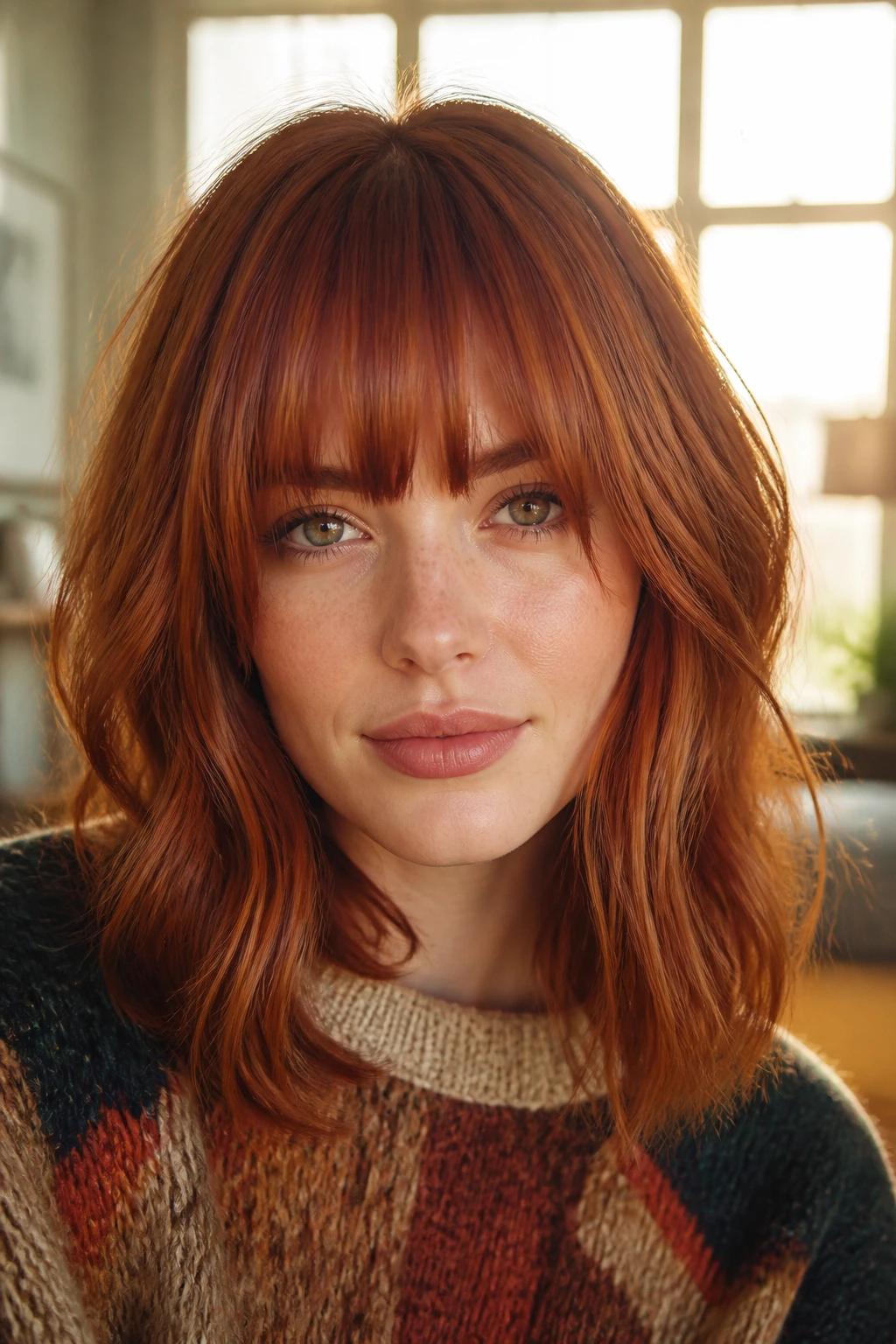
Velvet copper fringe is one of the strongest combinations on medium hair because the fringe gives the color a frame. The bangs catch brightness first, then the rest of the copper settles into the lengths. That contrast makes the face area feel vivid even when the rest of the style is simple.
- Best on: Curtain bangs, bottleneck fringe, or soft full bangs
- Ask for: A rich copper glaze with enough depth at the roots
- Style with: A round brush at the fringe and a gloss mist through the lengths
If you have a forehead shape you like to soften, this is a very good move.
38. Red Velvet Curls
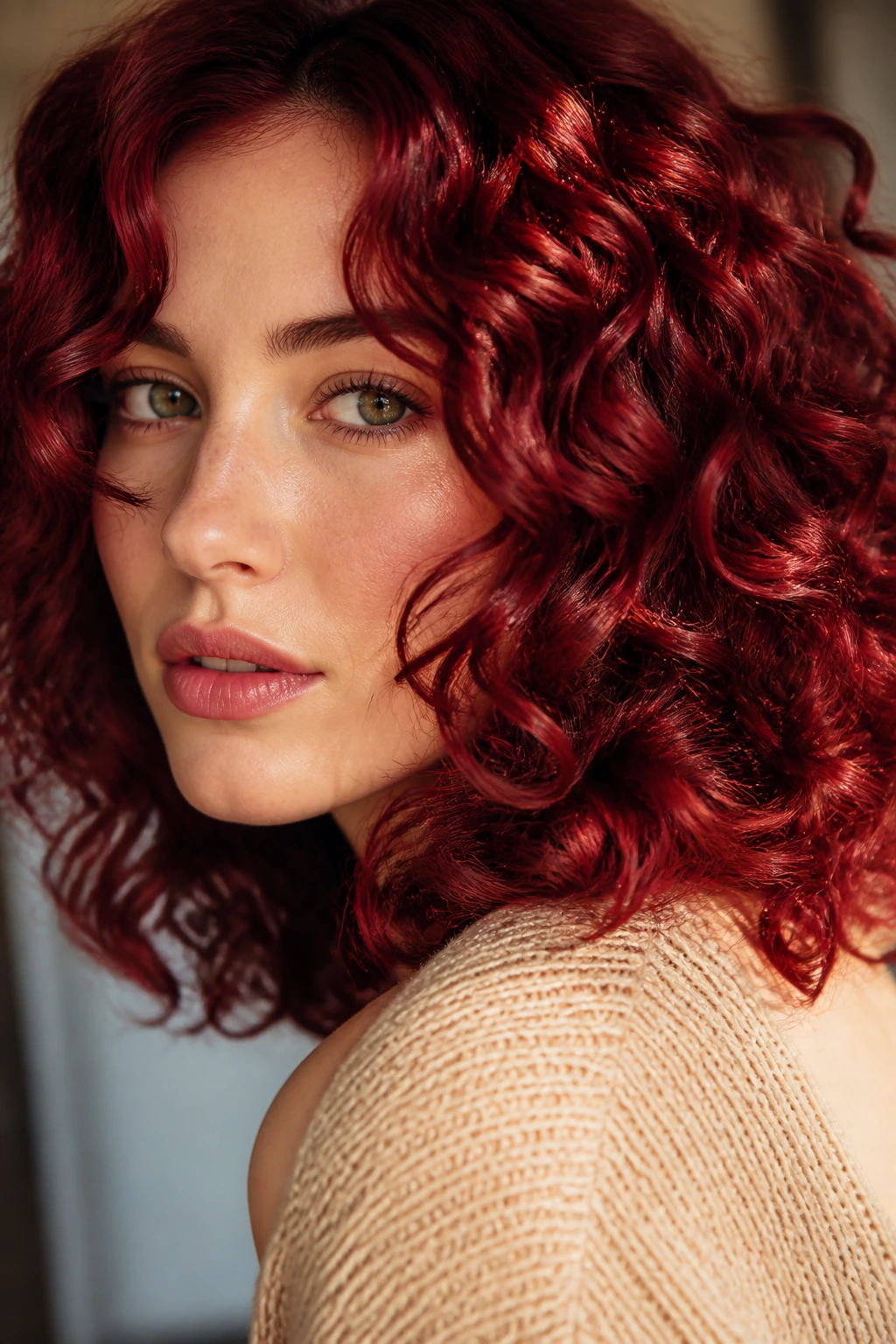
Red velvet curls finish the list with the richest note of all. The shade sits deep enough to feel plush, but the curl pattern keeps it from disappearing into one dark mass. On medium-length hair, that balance is exactly right.
This look does best when the curls are moisturized and defined, not weighed down. A curl cream, a little gel, and a touch of shine oil on the ends are usually enough. The color should look smooth and saturated, like fabric under bright light.
How to Choose the Right Red for Your Base and Undertone
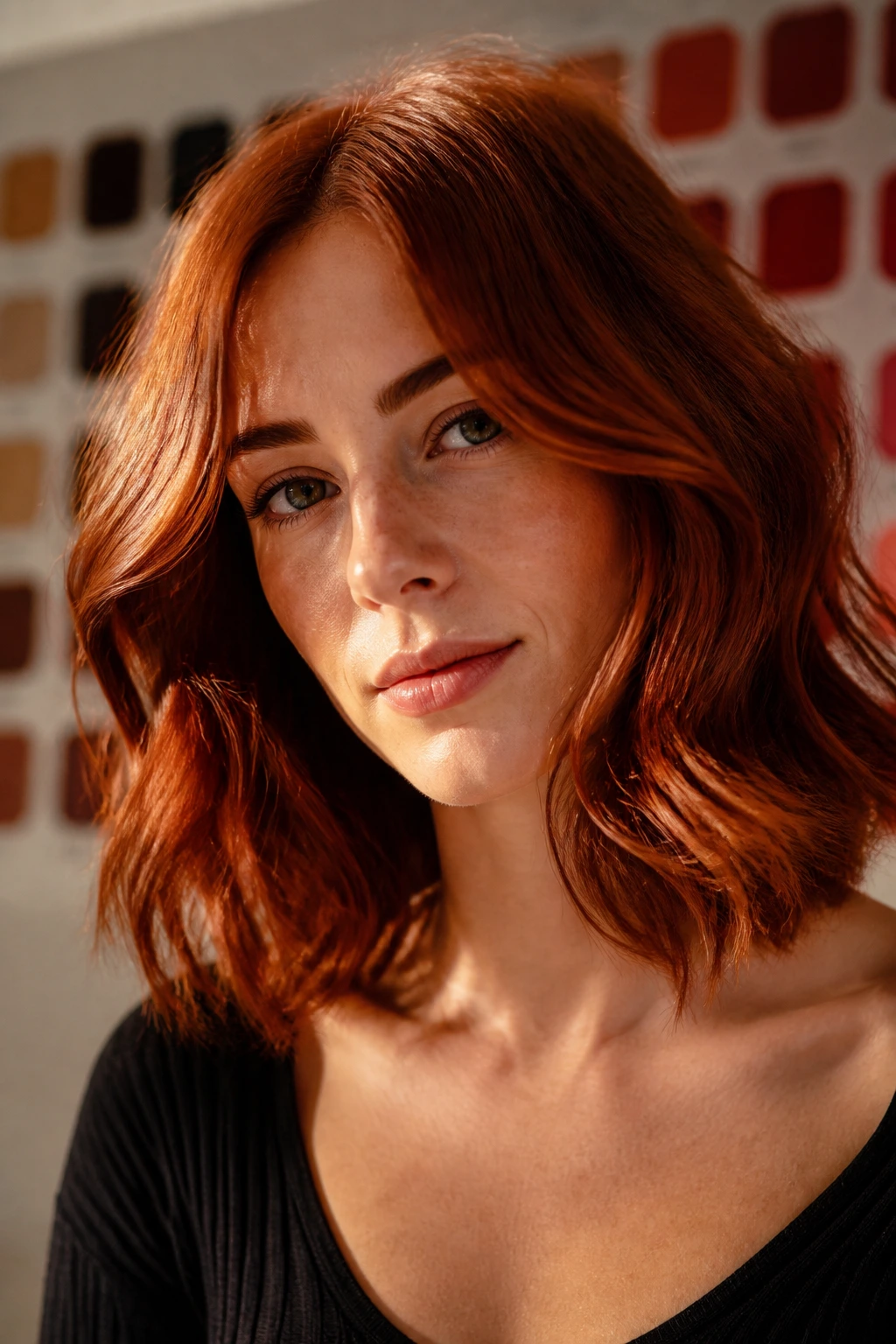
Base color matters more than people want it to. If your natural hair is level 4 or 5, deeper shades like cherry cola, black cherry, merlot, and wine-stained red usually land more cleanly than bright copper or peach. If your hair sits closer to level 6 or 7, copper melt, auburn, cinnamon ribbon balayage, and rusted red make more sense because they can show up without a heavy lift.
Undertone matters too. Warm undertones usually play nicely with copper, ginger, pumpkin spice, apricot, and spicy peach shades. Cool undertones tend to look better in burgundy, maroon, cranberry, black cherry, and merlot. Neutral skin can wear most of the range, which sounds boring until you realize it gives you room to choose based on wardrobe and maintenance instead of undertone rules alone.
Porosity changes the result more than a lot of people expect. Very porous hair grabs red fast, then lets it go fast. Smooth, low-porosity hair can resist the first color application and still hold the gloss for a decent stretch once it takes. If the hair is already lightened, a transparent glaze or soft deposit often looks cleaner than piling on opaque pigment.
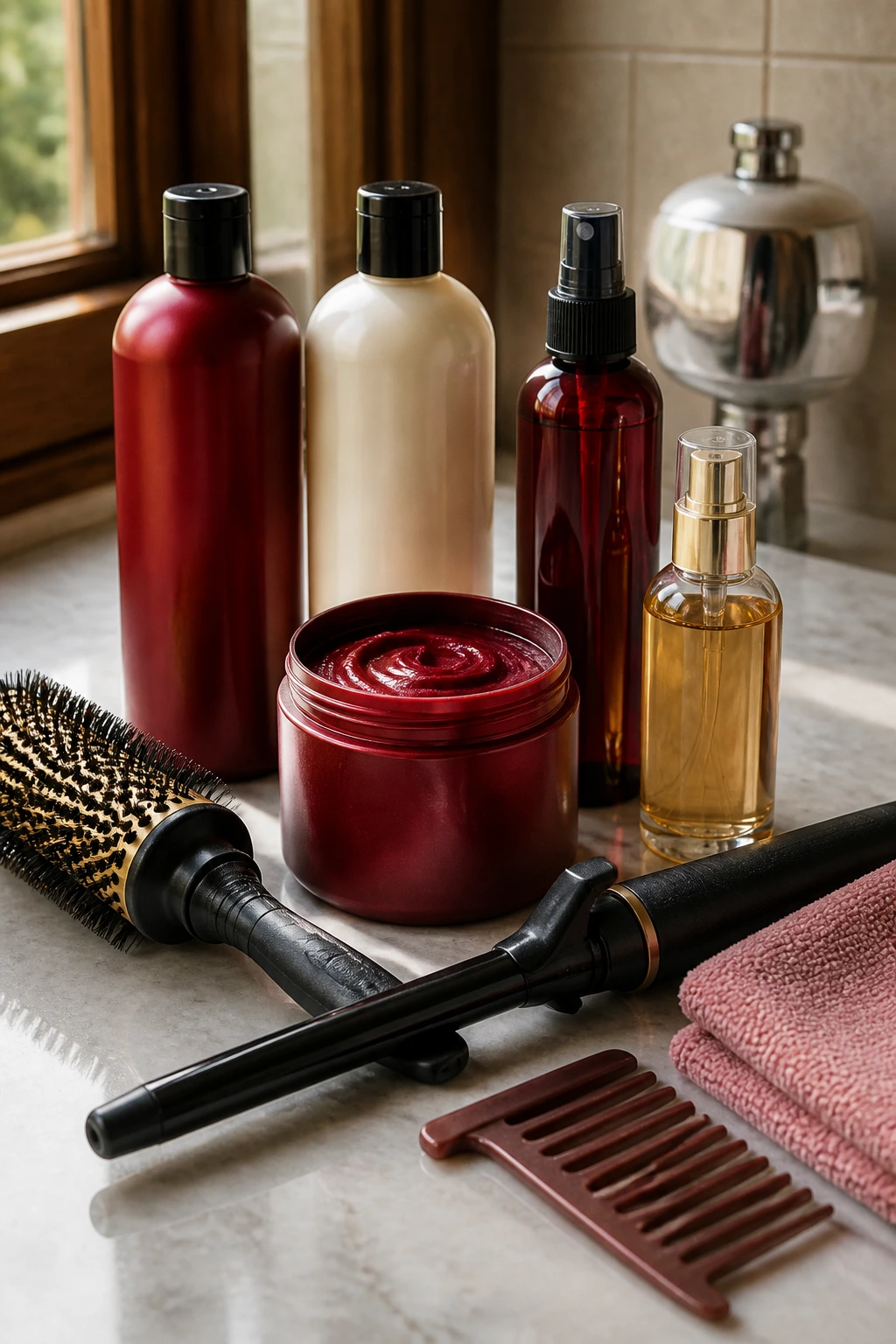
Essential Tools for Styling and Color Care
- Color-safe shampoo: Choose a gentle formula that does not strip the red out every time you wash.
- Color-safe conditioner: A smoothing conditioner helps the cuticle lie flatter, which keeps the color looking richer.
- Red or copper color-depositing mask: Useful for refreshing faded warmth between salon visits, especially on copper and auburn shades.
- Heat protectant spray: Keep this on hand any time you use a wand, iron, or blow dryer.
- 1-inch or 1¼-inch curling wand: Medium hair tends to show red dimension best in loose bends, not tiny curls.
- Round brush: Great for blowouts, curtain layers, and rose copper or mahogany styles.
- Wide-tooth comb: Less breakage, less frizz, less color stress when hair is wet.
- Microfiber towel or old cotton T-shirt: Better than rough terry cloth for keeping curls and waves intact.
- Glossing spray or serum: A tiny amount adds shine without dragging the color down.
- Shower filter, if water is hard: Helpful if your water leaves the hair feeling rough or makes red fade unevenly.
How to Wear These Shades Straight, Wavy, or Curly
Loose waves: This is the easiest way to show off dimension. A red balayage, copper melt, or cherry cola shade always looks more expensive when the mids and ends bend a little, because the highlights and lowlights stop fighting each other.
Straight and glossy: Best for scarlet, mahogany, burgundy, and cherry bomb looks. The straight finish turns the color into one clean statement, which is useful if you like graphic lines and don’t want the hair to feel too casual.
Curly and coily: Ruby red, fiery copper, garnet, and red velvet shades look especially strong here. Curl definition makes each strand take on a different angle of light, so the color feels deeper and more alive. Dry the roots first, then finish the mids and ends so the curl pattern stays intact.
Half-up or pinned back: Good for fringe-heavy cuts and face-frame colors. If you have copper money pieces, apricot front sections, or a velvet fringe, pulling the sides back will show the color sooner than wearing everything down.
Extra Tips That Keep Red Hair Looking Rich
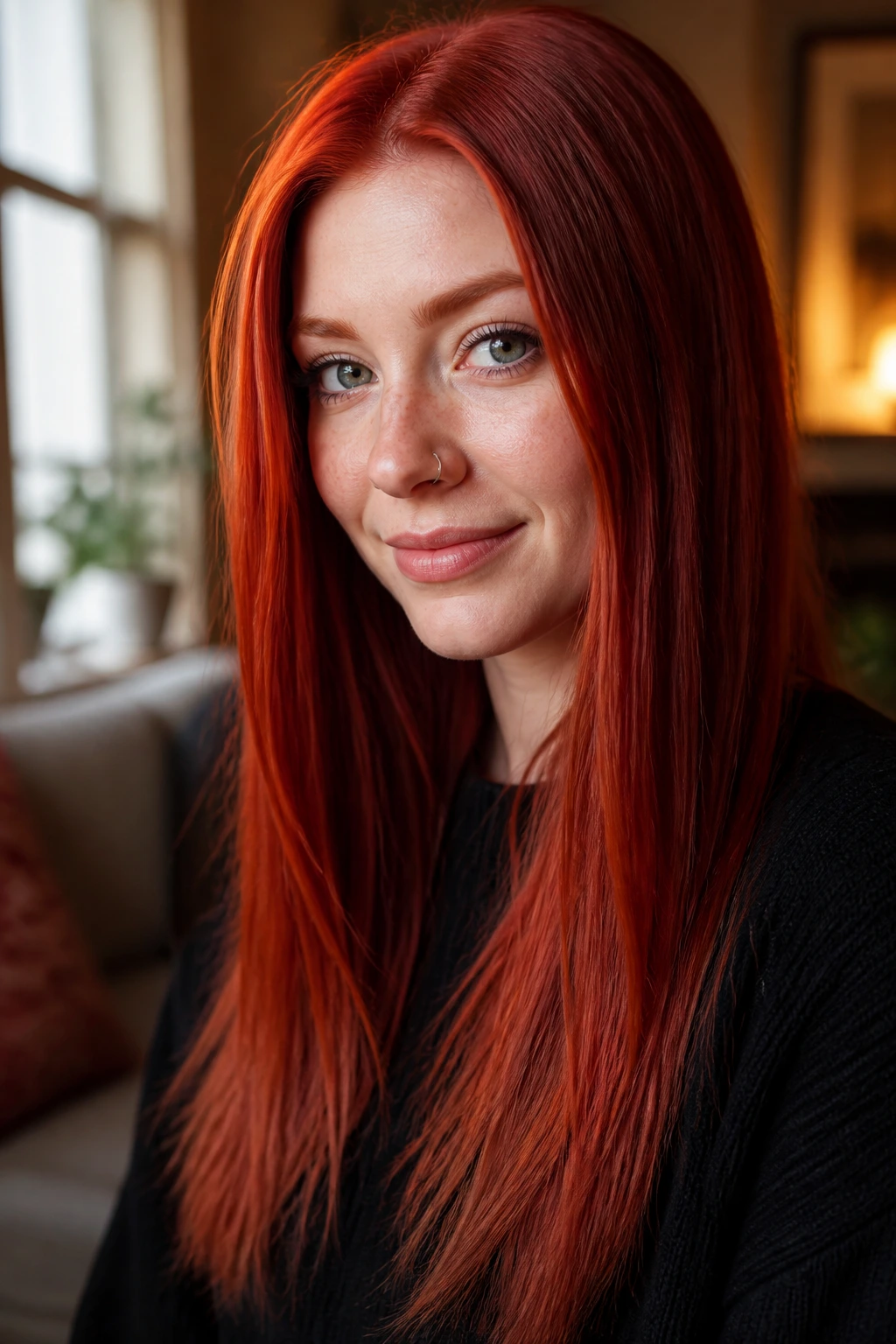
Color Boost: A tinted gloss every 4 to 6 weeks keeps copper, auburn, and cherry shades from looking washed out. For darker reds like merlot or black cherry, a clear gloss can help just as much as a tinted one because the shine is what keeps the tone readable.
Heat Habit: Keep hot tools on the lower side, usually around 325°F to 375°F. Red fades faster when the cuticle gets hammered open over and over, and medium-length hair usually needs fewer passes than longer hair anyway.
Water Habit: Rinse with cooler water when you can stand it. I do not mean icy water. Just cooler than the kind that fogs up the mirror and sends steam across the bathroom. Hot water strips red faster than almost anything else.
Finish Habit: Use a tiny amount of serum on the ends, not the roots. Red looks dull when the hair is coated in too much oil near the scalp, but the ends often need the slip.
Salon Habit: If your color is red-heavy, ask for a gloss or toner between full refreshes. That one move can keep the shade from turning muddy before it starts to fade.
Common Mistakes That Make Red Fade or Look Flat
Going too dark too fast: A red that is two shades deeper than the hair’s natural base can look like brown in indoor light. The fix is dimension—shadow roots, lighter ribbons, or a gloss with more warmth.
Washing with hot water every time: The hair cuticle swells, color slips, and the red goes dull faster than you expected. Switch to cooler water for most washes and save hot showers for the rest of your body, not your ends.
Skipping heat protection: Flat irons and curling wands can make red look tired fast, especially on porous hair. Use protectant every time, and avoid dragging the tool over the same section three or four times.
Choosing a tone that fights your undertone: A cool burgundy on very warm skin can look disconnected, and a bright copper on someone who needs a deeper red can feel too orange. Match the tone to your base or ask for a softer gloss.
Over-layering fine hair: Too many short pieces can make red look patchy because the color falls across too many surfaces. If your hair is fine, keep some weight in the cut so the shade has a clean line to sit on.
Variations and Adaptations to Try
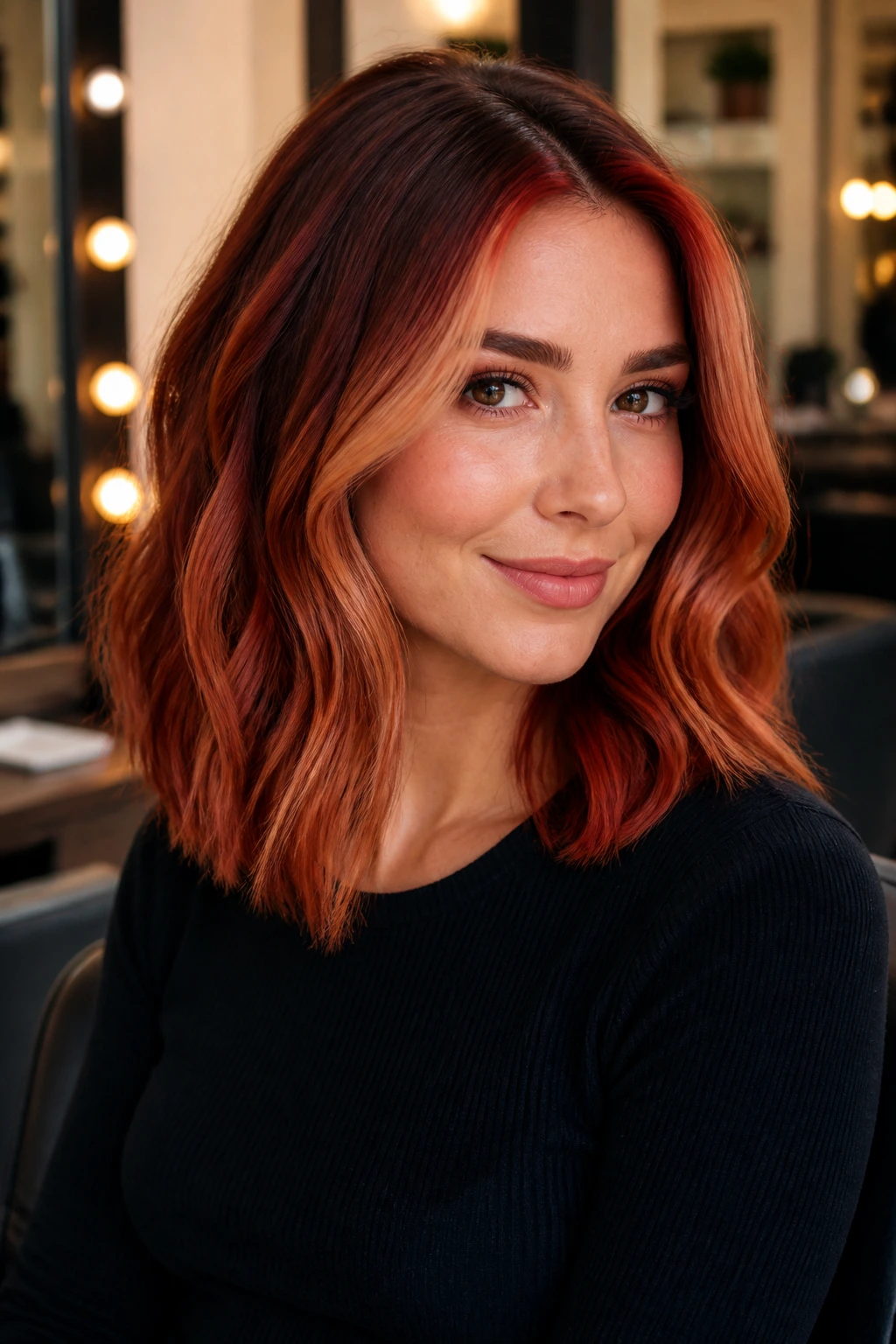
The Low-Maintenance Shadow Root: Keep the root a half-step deeper than the mids on almost any shade here. Copper melt, cherry cola, and rosewood all benefit from this because regrowth looks softer and less obvious.
The Bright Face-Frame Edit: Add lighter money pieces or apricot front sections to any deeper red. It gives the cut a little lift without making the whole head lighter, which is handy if you want a brighter face without more upkeep.
The Curly-Hair Copper Halo: Keep the roots slightly deeper and let the curls carry the lighter red through the outer ring of the hair. Ruby, fiery copper, and garnet all work well because curl pattern creates its own dimension.
The Office-Friendly Version: Choose smoked paprika, auburn, mahogany, rosewood, or cranberry gloss. These shades keep the red note but stay grounded enough that they do not scream from across a conference table.
The High-Contrast Version: Pick scarlet, cherry bomb, crimson, or tangerine copper and keep the styling smooth. That sharp finish makes the color feel intentional instead of accidental.
Keeping Red Hair Bright Between Appointments
Red fades. That is the deal. The trick is making the fade graceful instead of dusty. Wash two to three times a week if your scalp can handle it, and keep the water cooler than you would for a regular shampoo. If you can stretch washes farther with dry shampoo, even better.
A color-depositing mask or gloss every few weeks helps copper and cherry shades stay readable. For deeper reds like merlot, burgundy, and black cherry, a clear gloss may matter more than a tinted one because shine keeps the depth visible. If your hair is lightened underneath, watch for orange drift around the ends and refresh those areas first.
Touch-up timing depends on the look. A strong all-over scarlet or cherry bomb shade usually needs attention around 4 to 6 weeks. A shadow-root copper melt or balayage can often go 6 to 8 weeks, sometimes longer if the grow-out is soft. Trim the ends every 8 to 10 weeks so the color does not get stuck on ragged tips.
Sun, chlorine, and hard water can all dull red faster. A hat, UV spray, or a quick rinse before swimming does more for your color than most expensive products ever will.
Frequently Asked Questions
Which red shade is easiest to maintain on medium-length hair?
Copper melt, auburn, rosewood, and smoked paprika are usually the easiest because they can grow out with a soft root. The darker, cooler reds tend to fade into a nice brown-red instead of a bright orange edge.
Can I go red without bleaching my hair?
Sometimes, yes. If your hair is already medium brown or lighter, deeper shades like cherry cola, mahogany, burgundy, and black cherry can show well without much lift. Bright copper, apricot, or scarlet usually need more light underneath to look true.
Will red make medium-length hair look thinner?
Not if the cut has some shape. A blunt lob, layered shag, or feathered ends can make red look fuller because the color sits across a clean outline. Flat, over-thinned hair is the real problem, not the red itself.
How often should I gloss red hair?
Most red shades look better with a gloss every 4 to 6 weeks. If the hair is porous or the shade is vivid copper, you may want a refresh sooner. Deep burgundy or merlot can often last a little longer.
What if my red turns too orange?
That usually means the color faded warmer than you wanted. A cooler gloss, a deeper red toner, or a salon glaze with more brown or berry in it can pull the orange back down without making the whole look darker.
Is balayage better than all-over red for medium-length hair?
Balayage is easier to grow out and usually easier to live with. All-over red gives more punch and more uniform depth, which is useful if you want the color to read strongly in every light. The better choice depends on how often you want to touch it up.
Can curly hair wear these red looks well?
Absolutely. Ruby, fiery copper, garnet, and red velvet shades can look especially good on curls because the pattern creates its own dimension. The trick is keeping the hair hydrated so the curl shape does not frizz the color apart.
Does box dye work for these shades?
It can, but it is blunt. Box dye often deposits a heavy, opaque red that can be hard to correct later, especially if you want copper ribbons or a soft shadow root. If you want one of the more dimensional looks here, a salon formula or a carefully mixed at-home color is safer.
The Shade That Grows Out Cleanly
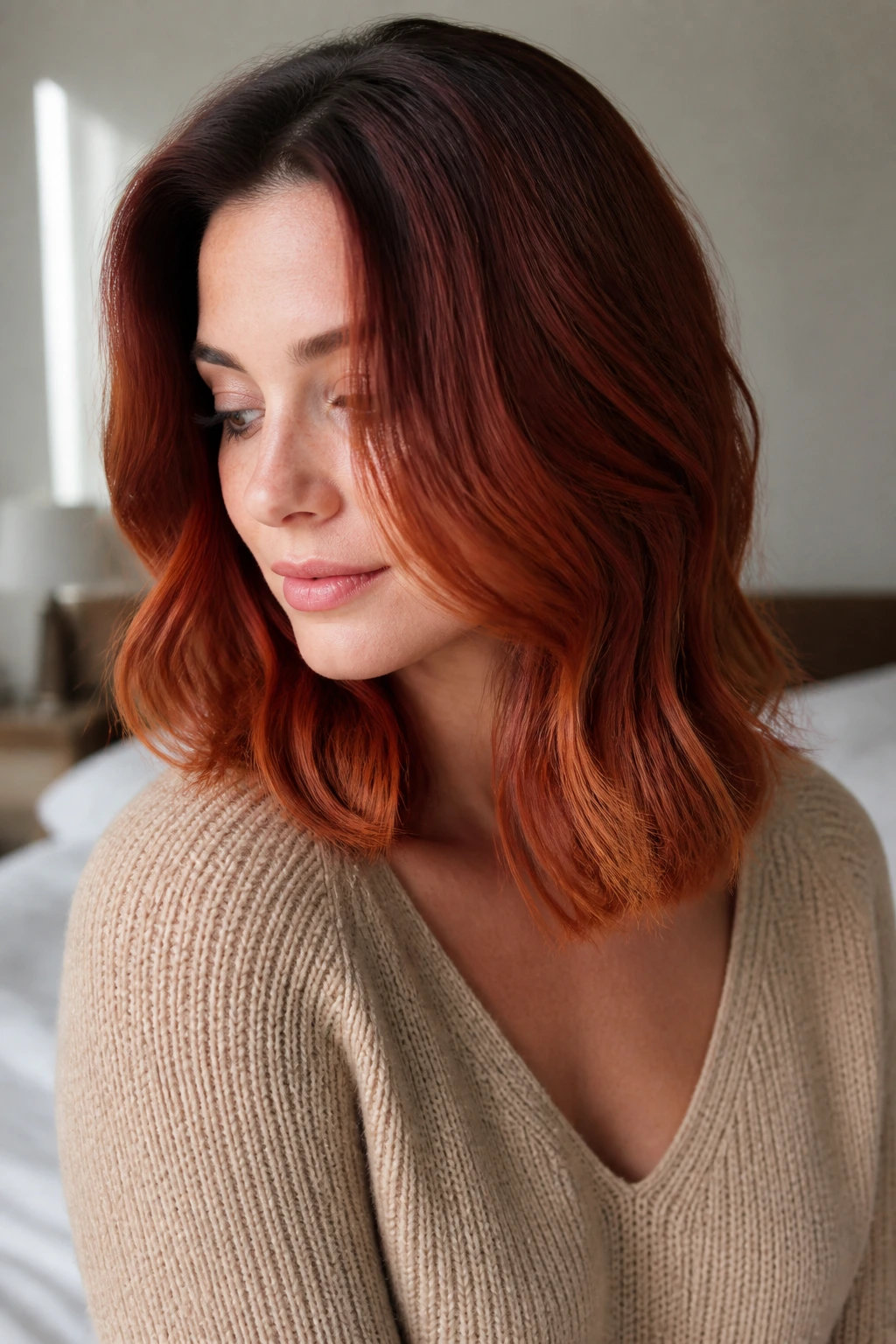
The best part of red on medium-length hair is that it can be bold without becoming fussy. A collarbone lob gives copper room to glow, a layered mid-length cut keeps burgundy from going flat, and a shag or curtain layer can make even a softer auburn feel more alive than it has any right to.
Pick the tone that matches the kind of attention you want. Bright scarlet if you want the hair to speak first. Mahogany or rosewood if you want a quieter edge. Copper or cherry if you want the middle ground where warmth and shape do most of the work.
One good cut, one solid tone, and a finish that shows off movement. That’s usually enough.
