



Thick curls get unfairly blamed for being “too much,” but the real problem is usually the haircut. Put a blunt line on a dense head of curls and you can end up with a bell shape at the bottom, a bulky shelf at the sides, or that awkward triangle that seems to widen the second your hair dries. Choppy curly haircuts for thick hair solve the shape problem by moving weight around instead of simply taking length off and hoping for the best.
That’s why curl-friendly cuts behave so differently from straight-hair cuts. A curl that sits at the chin when wet can spring up to the cheekbone when dry, and a layer that looks harmless in the salon chair can change the whole outline once your hair has air-dried for an hour. The smart cuts respect shrinkage, keep the perimeter from turning into a brick wall, and leave enough interior movement that the curls can stack without swallowing your face.
Some of these looks are short and edgy. Some keep the length. Some depend on a side part, some on bangs, and some on that deliciously messy crown lift that thick curls do so well when they’re not overloaded with bulk. The common thread is shape. Not thinness. Shape.
Why These Choppy Cuts Earn Their Keep
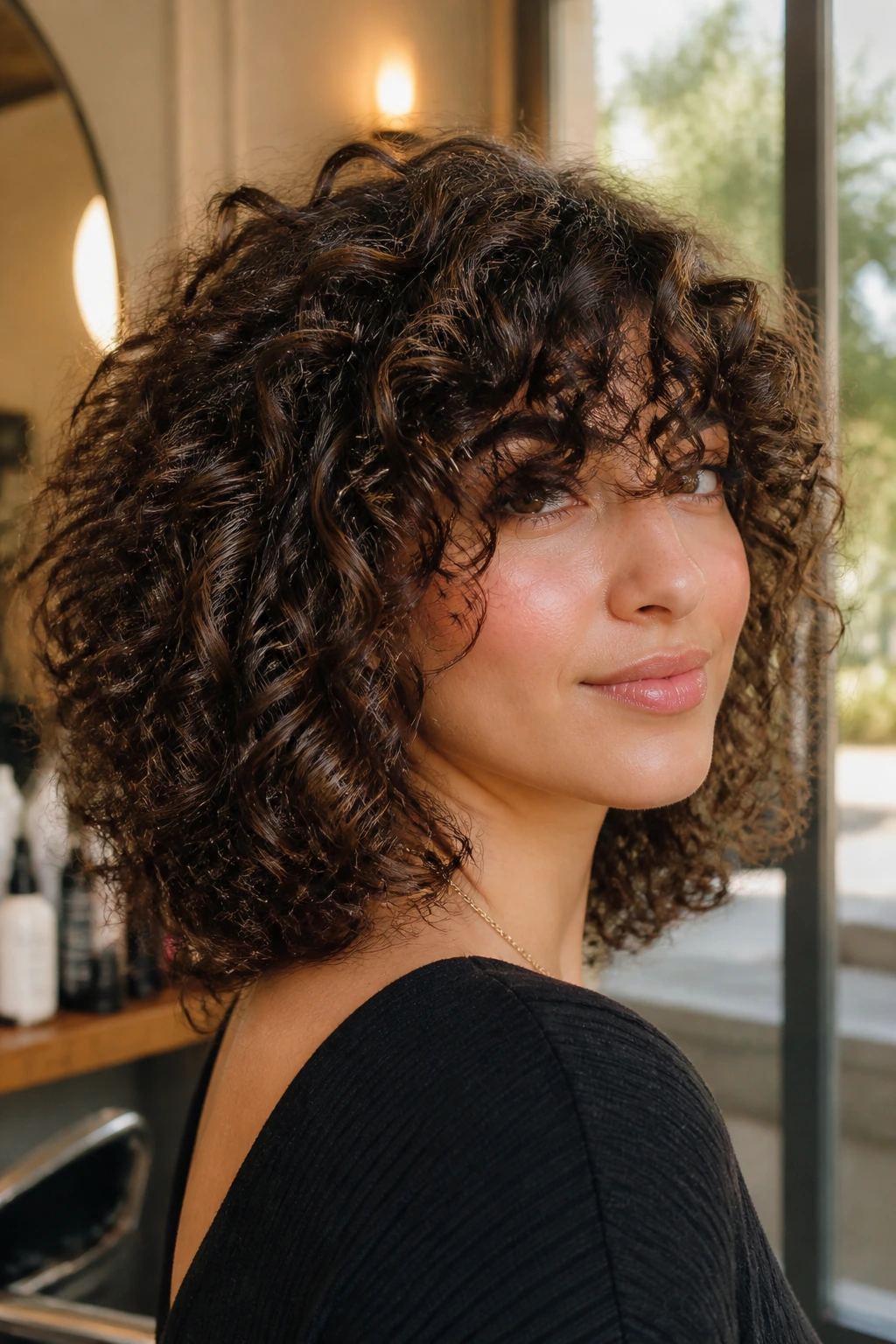
Less bulk, more movement: Choppy layering breaks up the heavy curtain effect that thick curls often create, especially around the sides and the nape.
Shrinkage gets accounted for: These cuts work because they’re planned around how curls dry, not how they look right after a comb and a spritz of water.
The face gets room to show up: Face-framing pieces, crown layers, and staggered ends keep thick curls from swallowing cheekbones and jawlines.
They grow out with less drama: A good choppy cut usually looks intentional even when it’s getting long, which is a blessing when salon visits are spaced out.
Short, midlength, and long all work: You don’t need to go short to get shape; interior layers can do the heavy lifting while you keep the length you like.
1. Rounded Curly Shag With Crown Lift

A rounded curly shag is the haircut I reach for when thick curls need air more than they need length. The crown gets trimmed enough to rise, the sides stay soft, and the ends fall in a loose curve instead of a block. The result is lived-in, but not sloppy. There’s a difference.
Why it works
A shag takes weight off the top where dense curls can puff outward and flatten down at the same time. With thick hair, that top-heavy feeling is usually the real culprit behind the triangle shape. A rounded outline fixes that by keeping the silhouette curved all the way around, so the curls don’t build one hard line at the bottom.
On tighter 3B to 4A patterns, this shape also helps the curl clump stay smaller and springier. You get lift at the roots and a little breathing room between sections, which makes the whole head look lighter without losing density.
Best for: people who want volume at the crown and softness at the jaw.
Watch for: too-short layers around the temples, which can make the sides stick out.
One rule: keep the longest layer below the chin if you still want some weight in the outline.
2. Shoulder-Length Wolf Cut for Dense Curls
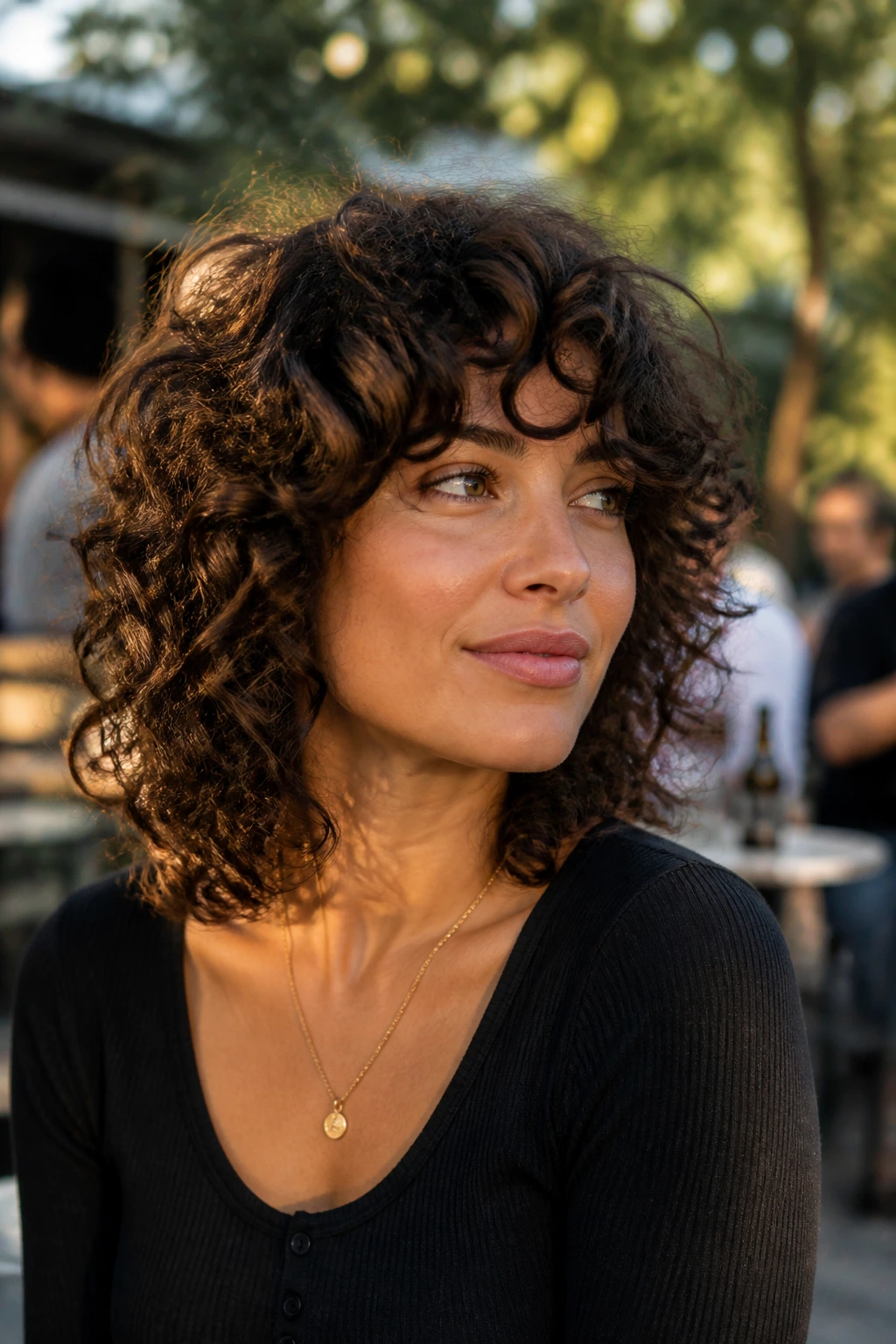
A curly wolf cut has attitude, but on thick hair it also has a practical side. The top stays shorter, the lower layers get broken up, and the whole cut looks like it’s moving even when you’re standing still. If your curls tend to feel heavy at the roots and stubborn at the ends, this shape gives both areas some room.
Why it stands out
The wolf cut is basically a shag with a little more edge in the back and around the fringe. On thick curls, that extra separation matters. It stops the ends from forming a solid mound and keeps the top from collapsing under its own weight.
I like this cut on people who air-dry and don’t want to spend twenty minutes shaping every curl by hand. It has enough structure to look styled with minimal effort, but it’s not precious about being neat. That matters.
Wear it if: you want a cut that looks better with a bit of frizz and a little mess.
Skip it if: you hate shorter layers near the crown.
A light mousse at the roots and a gel on the ends usually gives this shape the grit it needs.
3. Curly Pixie With Choppy Top
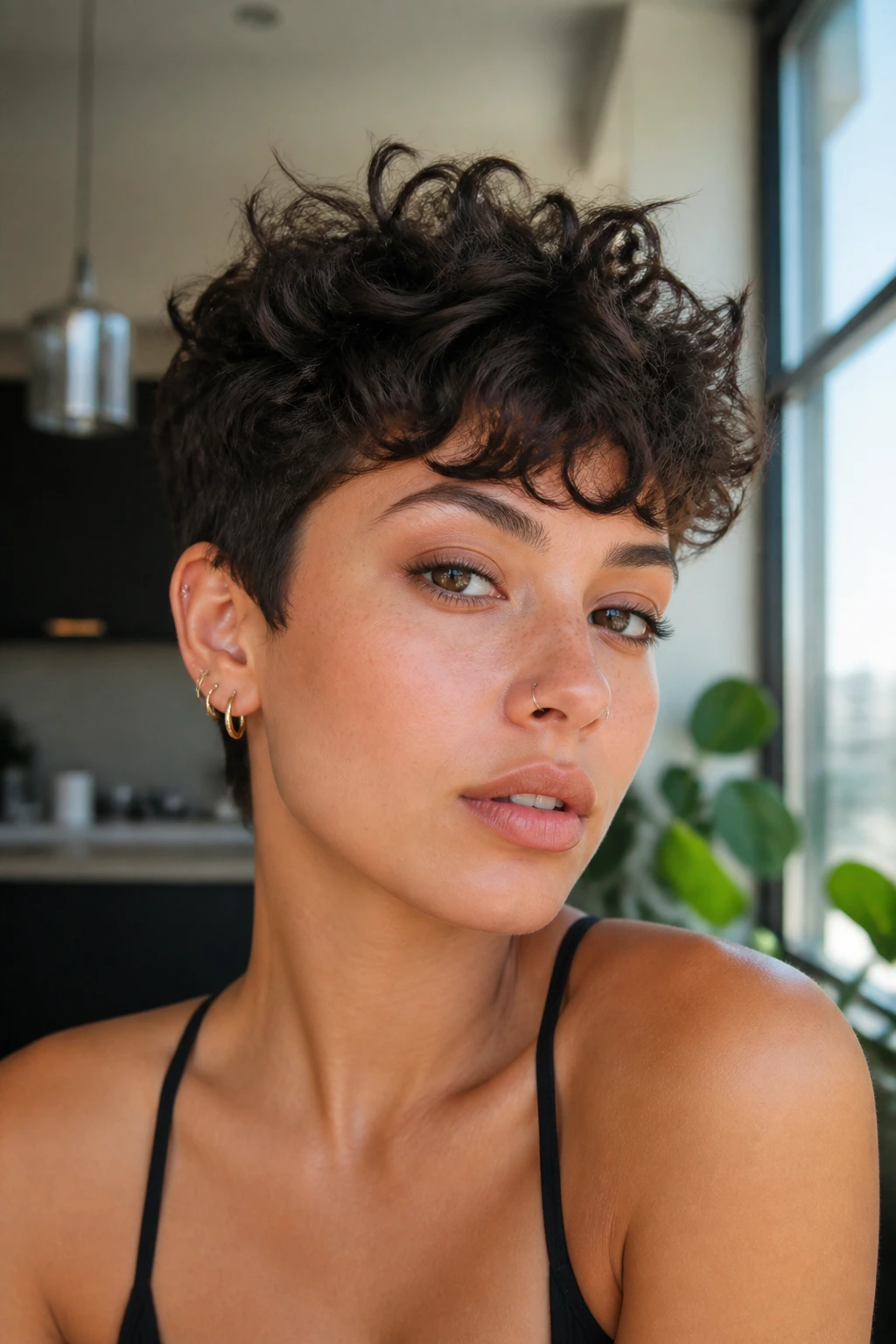
Can thick curls work in a pixie without turning into a puffball? Absolutely, but only if the top is carved with purpose. A choppy curly pixie keeps the back and sides tighter while leaving enough length on top for the curl pattern to show off. It’s bold, yes. It’s also one of the best ways to remove bulk fast.
How to wear it
The key is contrast. The nape should sit close enough to the head that the shape doesn’t look boxy, while the top needs enough length — usually around 3 to 5 inches, depending on shrinkage — to let the curl sit in its own little coil or bend. If the top is cut too short, thick curls can stand up like springs and lose their shape entirely.
This cut loves a defined side sweep or a piecey fringe. It also benefits from a tiny amount of product; too much cream and the top collapses, too much gel and you get a hard shell.
Best for: dense curls that need neck exposure and less daily styling.
Not ideal for: anyone who wants to keep all weight off the crown.
A quick diffusing session at the roots keeps the top from lying flat against the scalp.
4. Long Curly Layers With Face-Framing Pieces
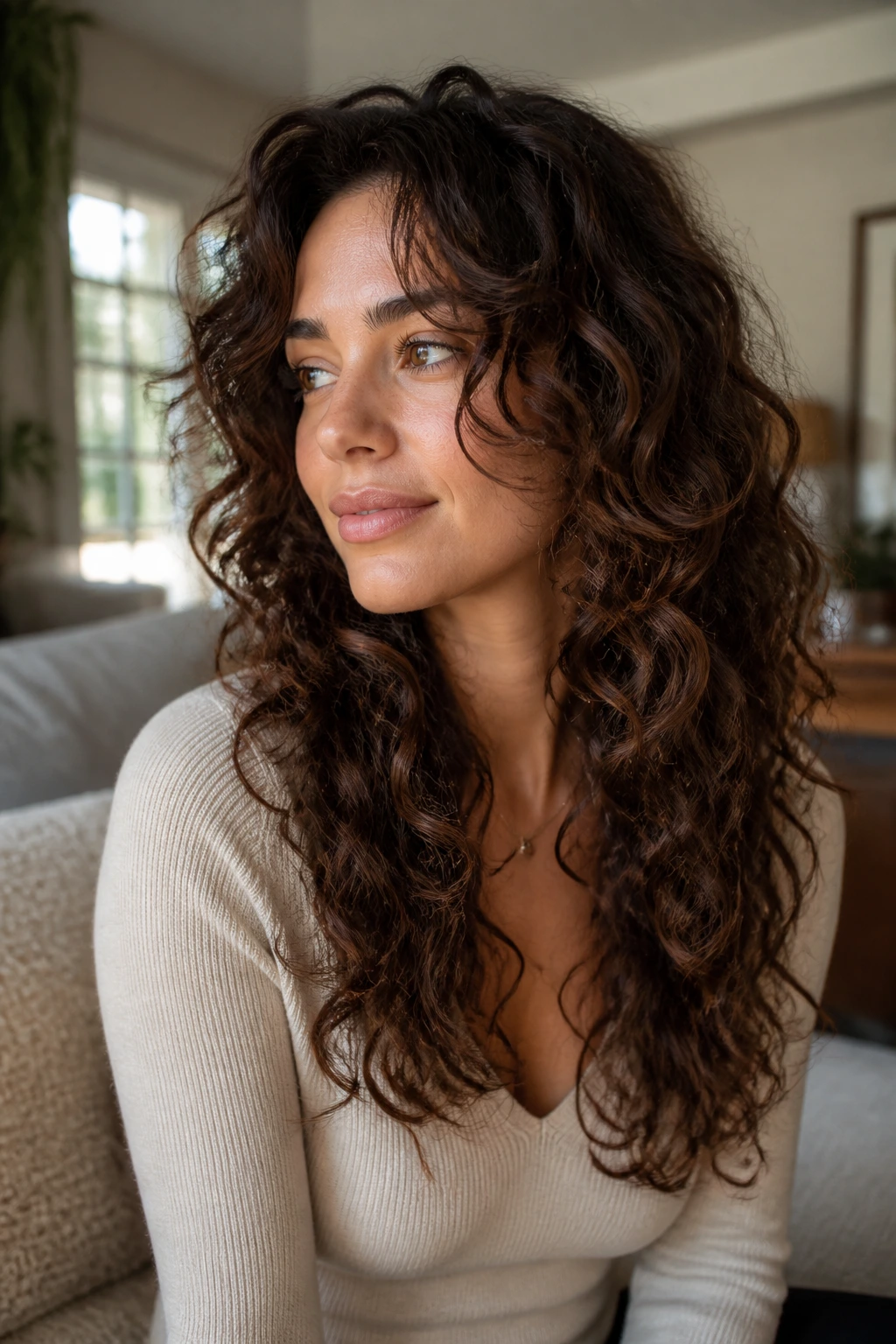
If you like your hair long, don’t let anyone tell you thickness means you have to lose that length. Long curly layers can work beautifully on dense hair when the face-framing pieces start high enough to matter and the interior layers quietly remove bulk from underneath.
The face pieces are doing a lot here. If they begin around the cheekbone or just under the chin, they pull the eye downward and stop the front from feeling like one heavy sheet. The rest of the cut can stay long, which keeps that satisfying cascade when the curls are dry.
Details worth asking for
- Layering that starts inside the shape, not only at the ends
- Face-framing pieces that follow your shrinkage, not your wet length
- A soft U or rounded perimeter instead of a straight hem
This cut is a good choice if you want the curls to swing instead of bunch. It also works well when your hair is thick enough that you don’t need the ends to be chopped for volume.
Tip: ask your stylist where the layers will land when your hair is fully dry. That answer matters more than the mirror demo.
5. Midlength Curly Bob With Stacked Back
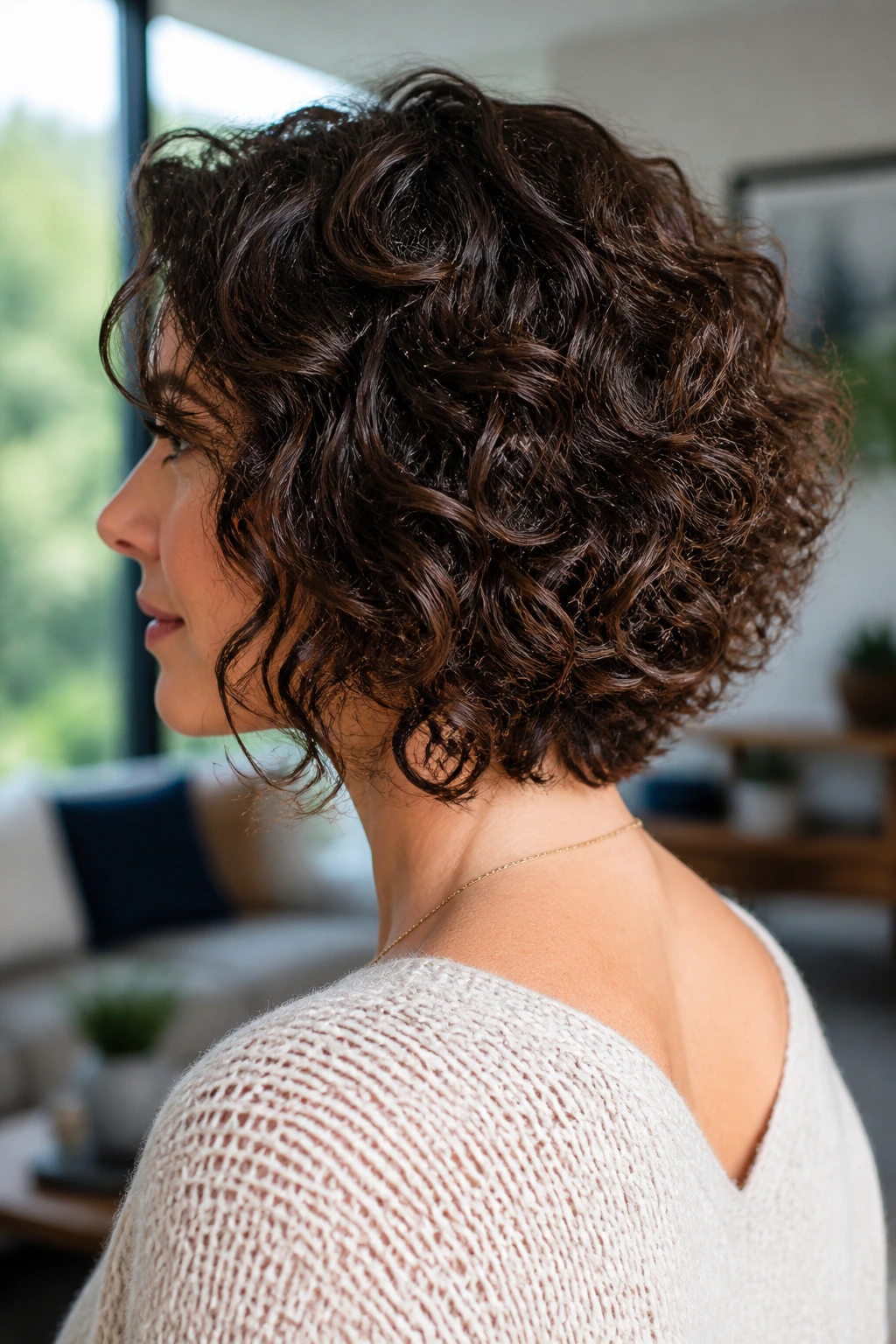
A midlength bob on thick curls can look heavy fast, so the stacked-back version earns its place. The back is cut a touch shorter to lift the silhouette, while the front stays longer and softer. The whole cut feels shaped, not chopped.
Why it’s different
A standard curly bob can sit like a helmet if the weight line is too blunt. Stacking the back changes the geometry. It lets the curls pile upward instead of hanging in one dense block, and it gives the neckline a cleaner finish. On thick hair, that tiny shift makes the whole cut feel lighter.
This is one of those styles that looks especially good when the curls are not all doing the same thing. Some bend more tightly, some spring wider, and the stack keeps the difference from looking messy.
Best for: people who want a polished outline without losing the bounce.
Watch for: over-stacking, which can make the back look narrow and the front too full.
A side part can make this cut even better because it redirects some of the volume away from the center line.
6. Curly Mullet With Soft Edges
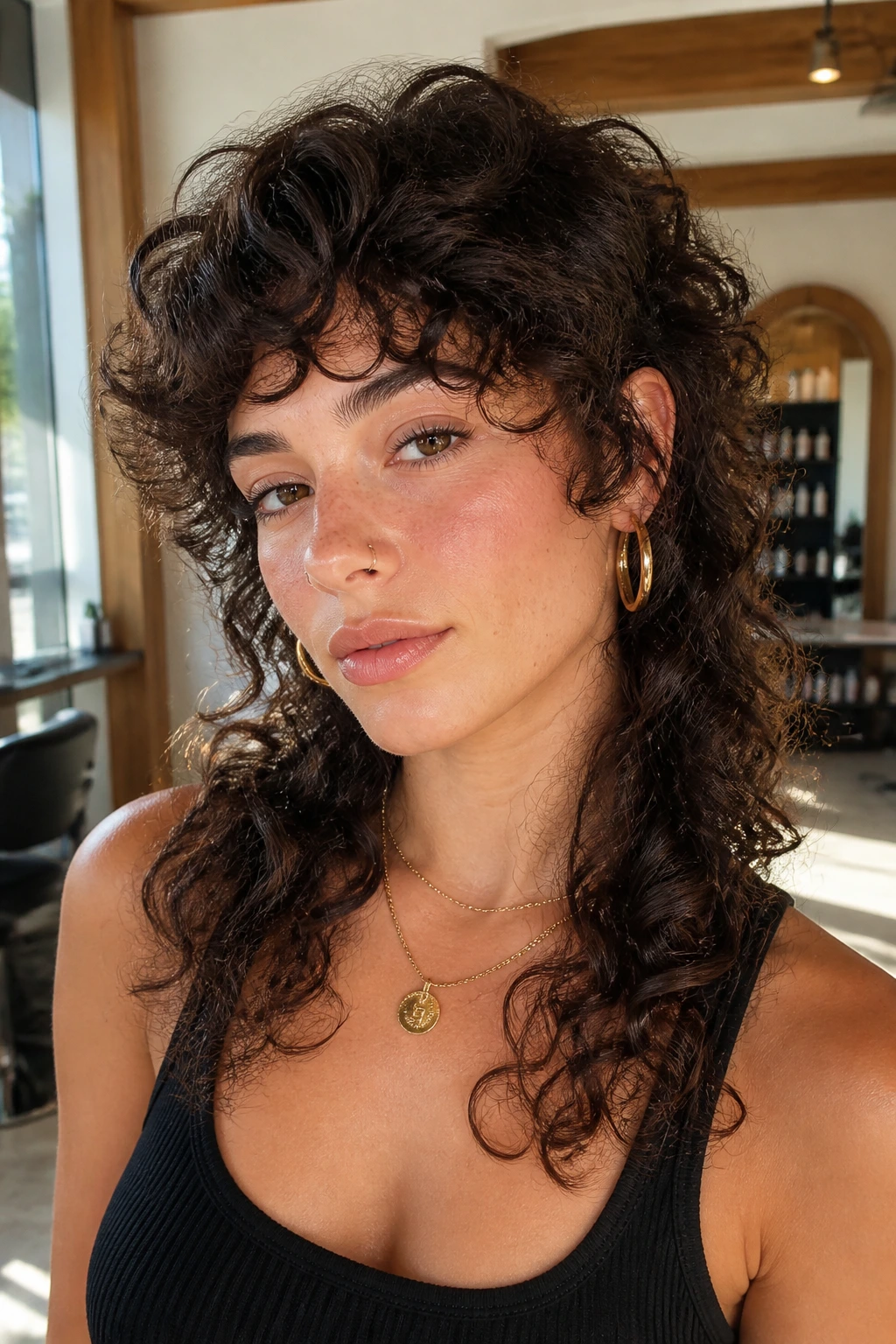
The curly mullet sounds louder than it looks. On thick curls, a soft-edged version can be one of the easiest ways to keep movement at the crown and length in the back without turning the sides into a balloon. It has shape. It has personality. And it doesn’t need to scream to do either job.
The trick is moderation. The front and crown are shorter, the back hangs longer, and the sides should be chipped enough to avoid a square outline. If the transition is too sharp, the look tips from modern into costume. Keep the edges soft and the curls do the rest.
This cut works especially well when thick curls refuse to lie flat at the crown. Instead of fighting that lift, the mullet shape uses it. The back gives you length to play with, while the top stays light enough to spring.
Best for: people who like a little edge and don’t mind a cut that looks better when it’s not overstyled.
Not for: anyone who wants a clean, traditional silhouette.
7. Deva-Cut Style Shape With Interior Layers
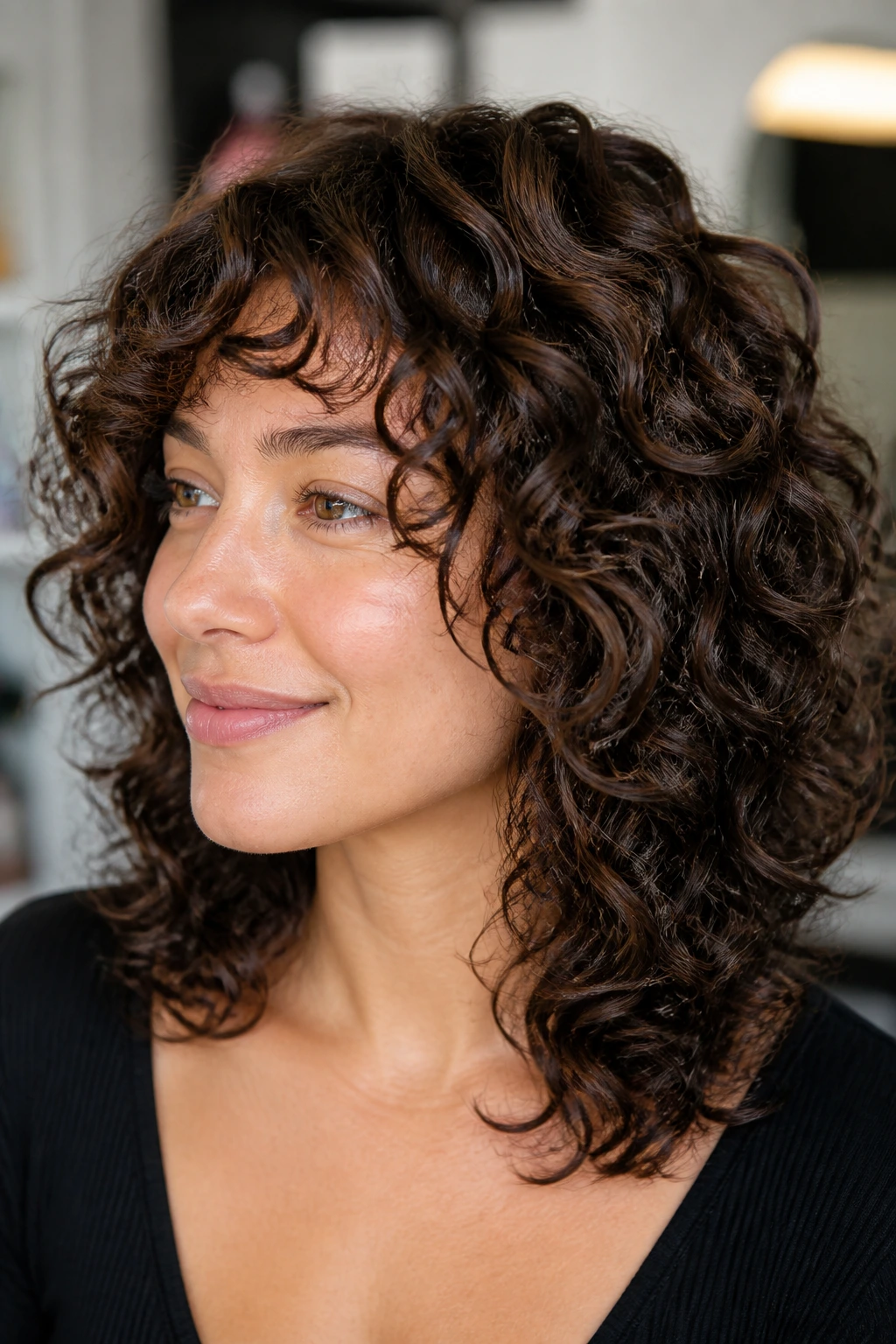
A Deva-cut style shape is less about a trend and more about a method: cut curl by curl, usually with the hair dry or mostly dry, so the final shape follows the natural bend. Thick curls benefit from that approach because dense hair hides mistakes when it’s wet and reveals them later, usually in the worst way.
What makes it worth asking for
The interior layers are where the real work happens. They remove mass from inside the shape, so the outside still looks full but does not feel like a block. That’s a huge deal for thick hair, especially if your curls clump into large sections that hold onto water for hours.
A dry cut also gives the stylist a clearer view of where each curl wants to live. If one side grows tighter or springs higher, they can adjust on the spot. That kind of detail is hard to get with a quick wet trim.
Best for: people with unpredictable shrinkage or a lot of density under the surface.
Ask for: a curl-by-curl consultation before the first snip.
8. Collarbone Cut With Invisible Layers
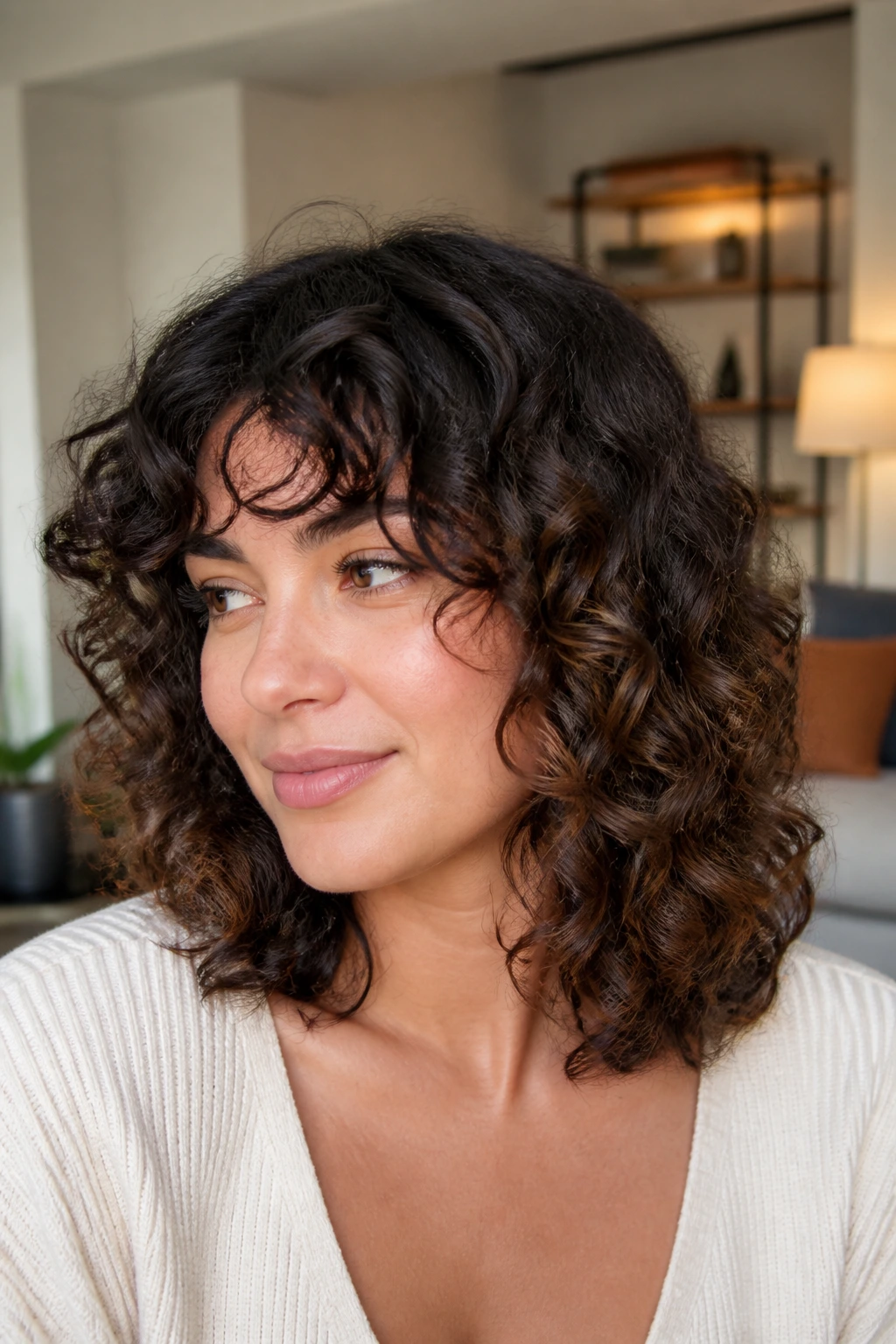
A collarbone cut sounds simple until you put curls into it. On thick hair, the difference between “simple” and “heavy” is often a few well-placed invisible layers. These layers don’t scream for attention, which is exactly why they work.
The perimeter stays near the collarbone, but the inside is lightened just enough so the curls don’t sit in a single dense shelf. That means you keep the length and lose the bluntness. Nice trade.
How it behaves
This shape is the quieter cousin of a shag. It won’t give you aggressive crown lift, but it will stop the ends from acting like a curtain. If your hair is thick but you want to keep the mood more polished than shaggy, this is the one.
Good for: office days, low-key styling, and people who want movement without obvious layers.
Better with: a deep side part or a soft off-center part, which keeps the weight line from sitting too evenly.
If your hair is very dense at the bottom, ask for the interior layers to begin above the collarbone so the shape opens up early.
9. Tapered Afro With Choppy Crown
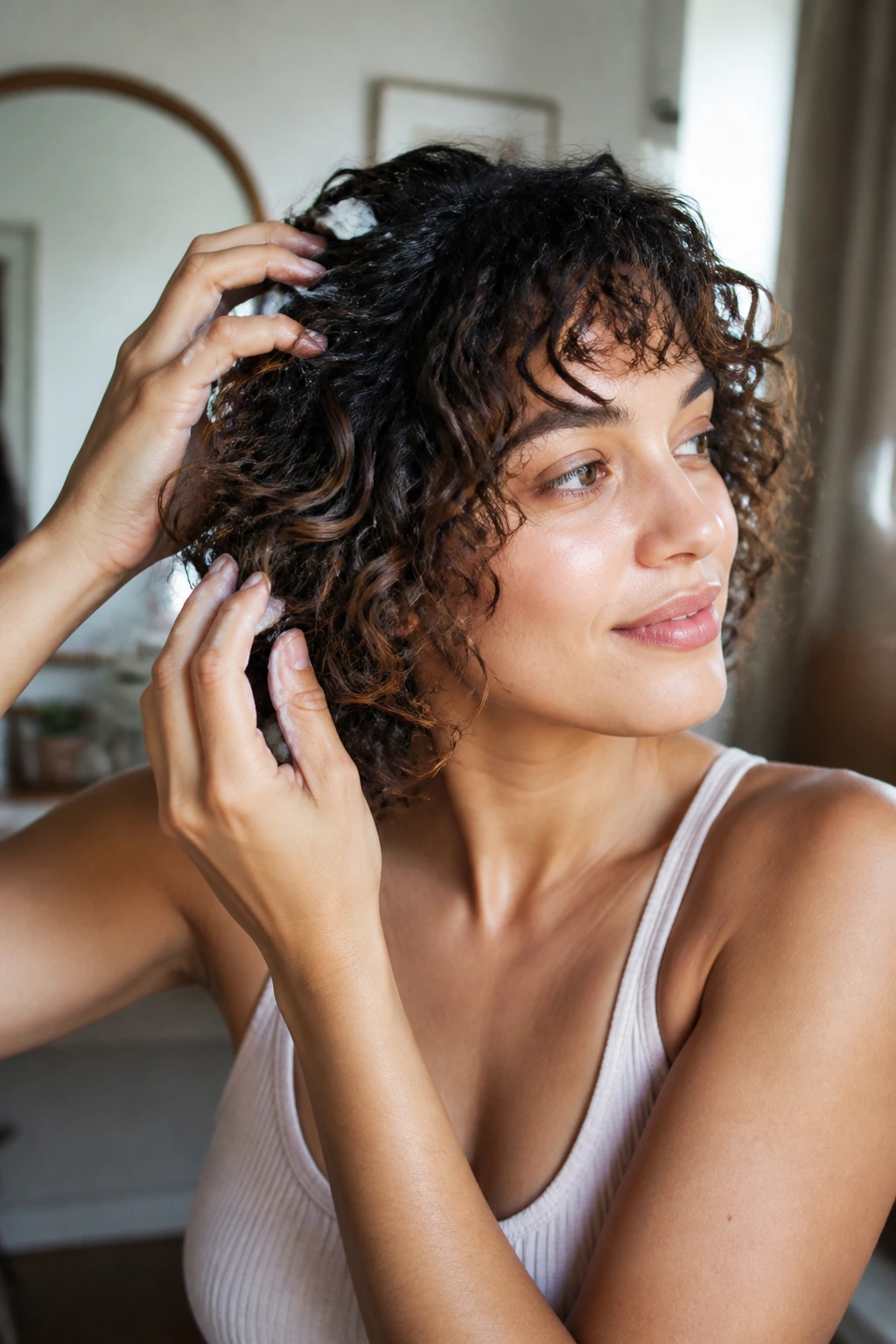
A tapered afro is one of the smartest cuts for thick coily hair because it respects density instead of trying to flatten it. The sides and back are tapered close enough to keep the outline clean, while the crown stays fuller and a little choppy so the texture can rise.
This shape is all about silhouette. A heavy crown without taper can feel round in the wrong way; tapering the sides gives the face room and makes the top feel intentional. The choppiness up top keeps the hair from becoming a single solid dome.
It’s also a cut that wears well between wash days, which matters more than people admit. Thick coily hair can hold shape for days when the cut itself is doing the right work.
Best for: 4A to 4C textures, especially if you want shape with less daily effort.
Try this: leave a little extra length at the hairline if your shrinkage is dramatic.
10. Curly Crop With Piecey Fringe
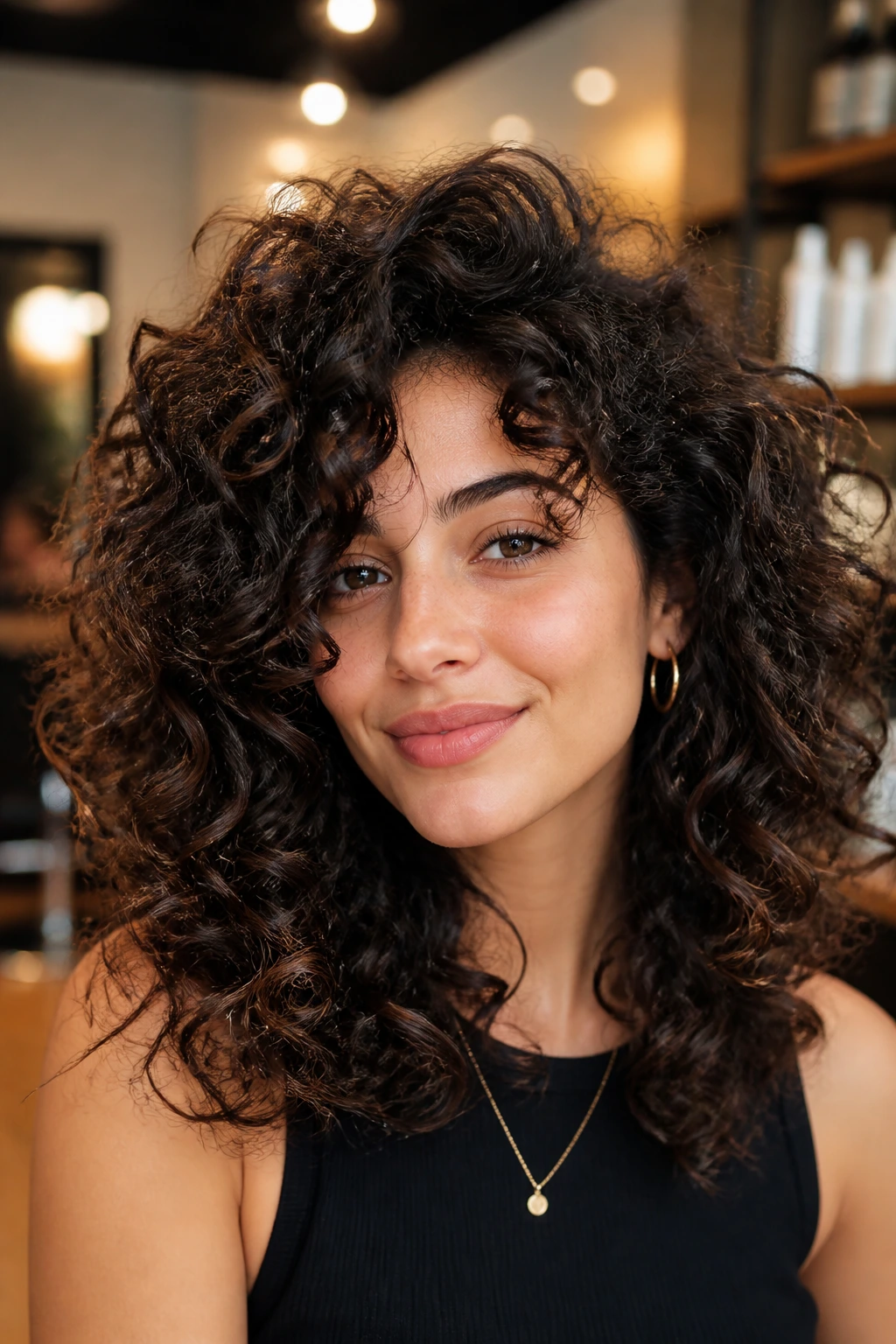
A curly crop can be a little dangerous if the fringe is cut as one solid line. Thick curls need the front broken up so the bangs don’t sit like a curtain. A piecey fringe solves that problem and gives the crop some movement around the eyes.
The overall length stays short, but the front is lightly separated into chunks instead of one heavy block. That makes the cut feel airy, even when the hair itself is dense. It’s a small adjustment with a big payoff.
Best way to style it
Use a tiny amount of styling cream on wet hair, then separate a few front curls with your fingers once they’re halfway dry. Don’t over-pick the fringe. If you separate every coil, you lose the clean piecey effect and get frizz instead.
This cut works best when the fringe is allowed to shrink a bit; cutting it too short while wet is how people end up with bangs that sit halfway up the forehead.
Best for: people who want a short shape without committing to blunt bangs.
Watch for: over-thinning at the front, which can make the fringe look sparse.
11. Layered Lob With Airy Ends
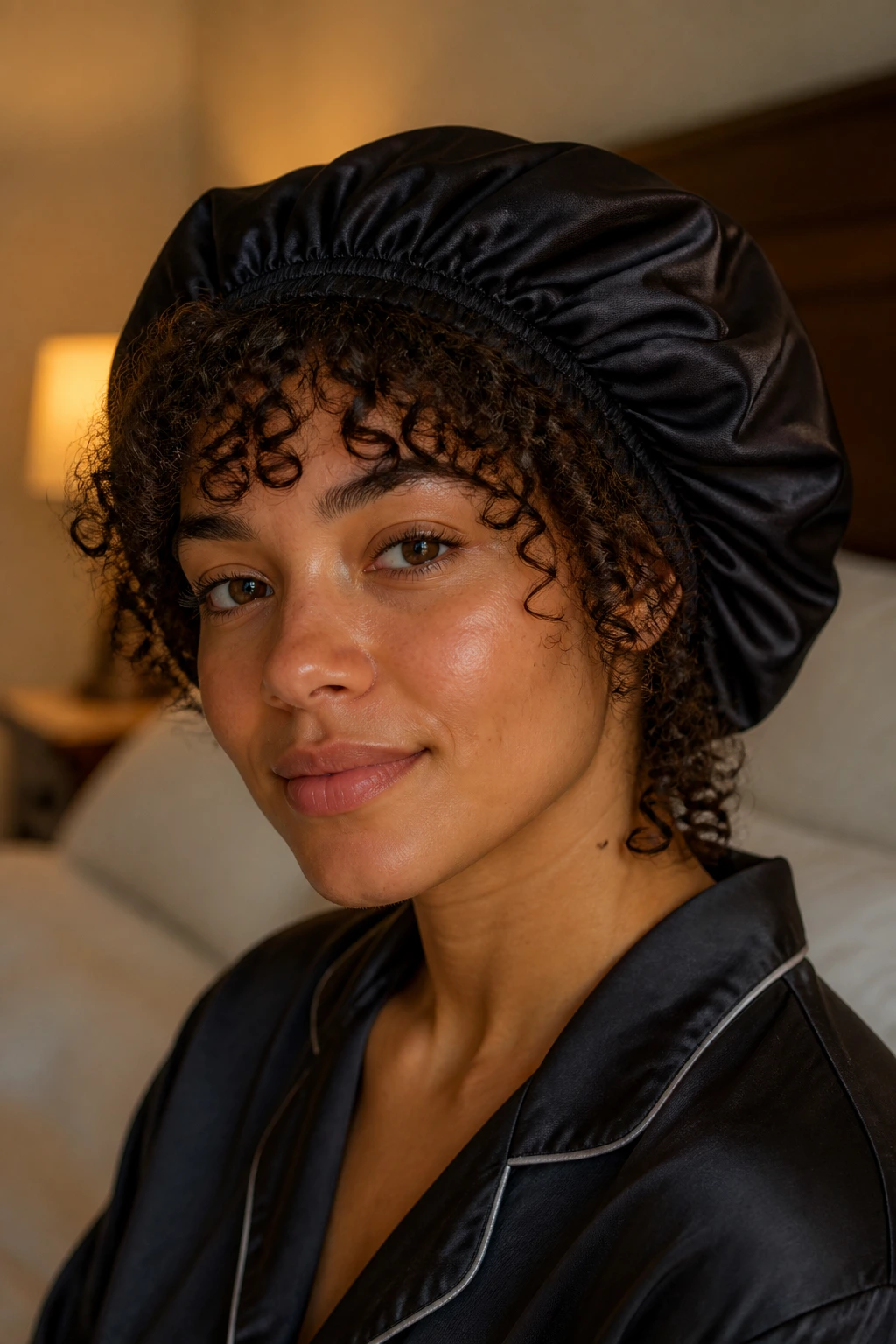
A layered lob is the curly answer to “I want length, but I’m tired of the triangle.” It hits around the shoulders or collarbone, and the ends are broken up just enough to keep the outline from feeling dense. Thick curls love a lob when the layers are placed with restraint.
The mistake with a lob is cutting the bottom too blunt. Thick curls need the perimeter softened so the shape can bend inward or out without looking like a shelf. Airy ends do that. They take the blunt edge off the haircut while keeping the overall line tidy.
This is a good choice if you style your hair in a hurry and still want it to look deliberate. A lob dries fairly evenly, and the layers make it easy for the curls to settle without much correction.
Best for: people who want shoulder-grazing length with less bulk at the ends.
Tip: if your hair is very thick, ask for the ends to be point-cut rather than sliced into a razor-soft finish.
12. Butterfly Layers on Thick Curls

Butterfly layers are dramatic on long curls, but they earn their keep when thick hair has too much mass at the bottom. The top layers are shorter and create lift around the face, while the bottom keeps the length and the drama. It’s a cut that gives movement without sacrificing the long silhouette.
Why thick curls like it
Thick curls tend to bunch where the length starts to feel heavy. Butterfly layers break that weight apart in sections, so the hair doesn’t collapse into one huge shape. The top layers lift the face, the lower layers keep the cascade, and the whole cut feels lighter once dry.
This style also works nicely if you wear your hair half-up. The shorter front pieces create shape even when the back is tied away, which is one reason so many people end up liking it more than they expected.
Best for: long curl patterns that need visible layering near the front.
Caution: too many short pieces can make the front frizzy if your curls are very fine within the thick mass.
13. Soft Curly Shag With Bottleneck Bangs
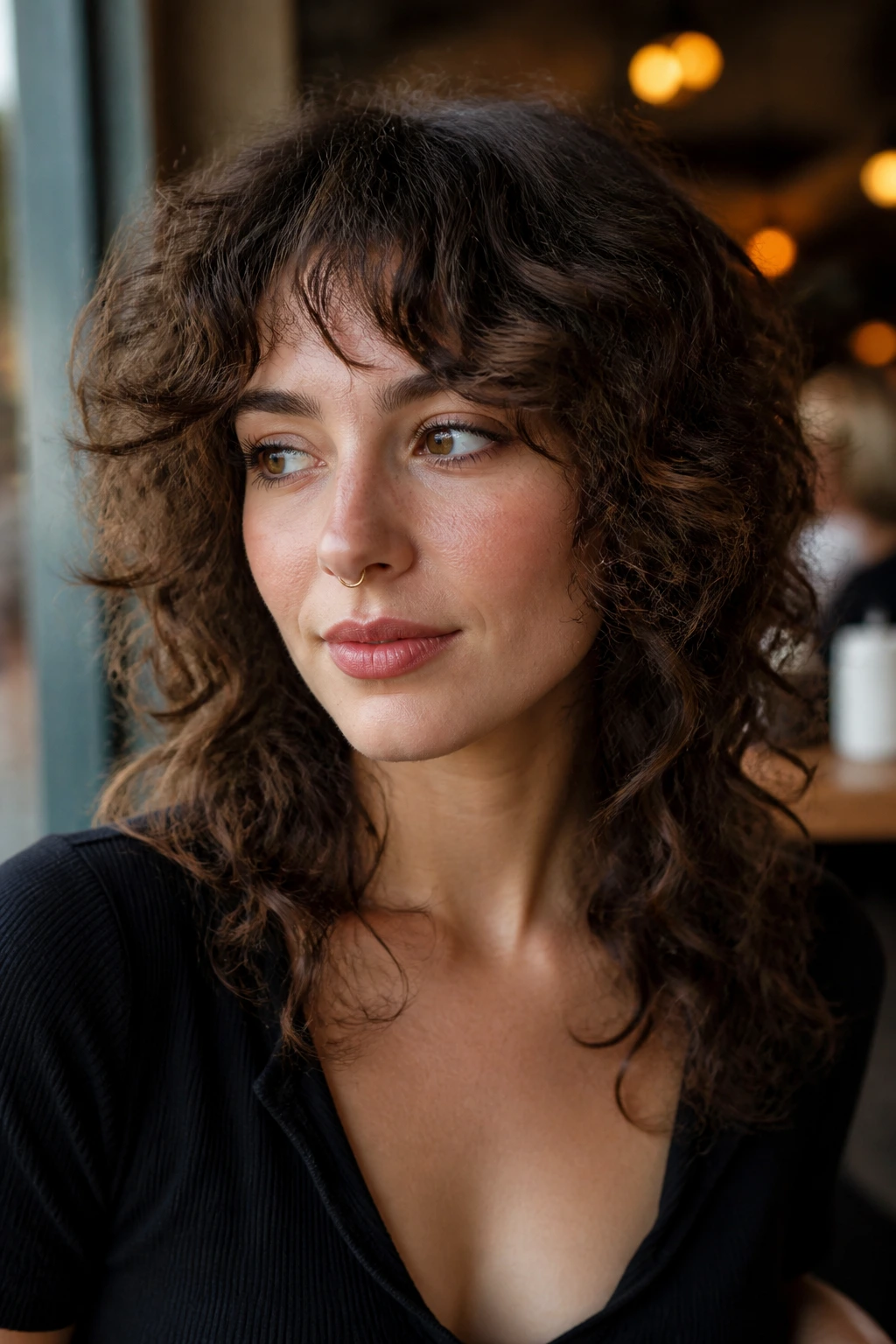
Bottleneck bangs are one of the better fringe choices for thick curly hair because they stay lighter at the center and soften out toward the sides. Pair them with a shag and you get a cut that feels built for movement instead of control.
The bangs are the focal point here. They should not be cut as a solid curtain. Instead, the center sits a bit shorter and the sides taper longer, which helps the fringe blend into the shag layers around the face. That small shift keeps the front from feeling too blunt.
How it wears
This style looks especially good when the curls are allowed to separate naturally. A curl cream and a light gel are usually enough. Heavy butters tend to weigh the fringe down, and then the bangs lose the airy shape that makes them work.
Best for: people who want a soft, face-opening front without cutting straight-across bangs.
Skip if: your curls shrink hard and unpredictably at the forehead; that can make the bangs land too short.
A tiny diffuser pass at the roots helps the fringe sit away from the skin instead of sticking flat.
14. Angled Curly Bob With Extra Weight Removed
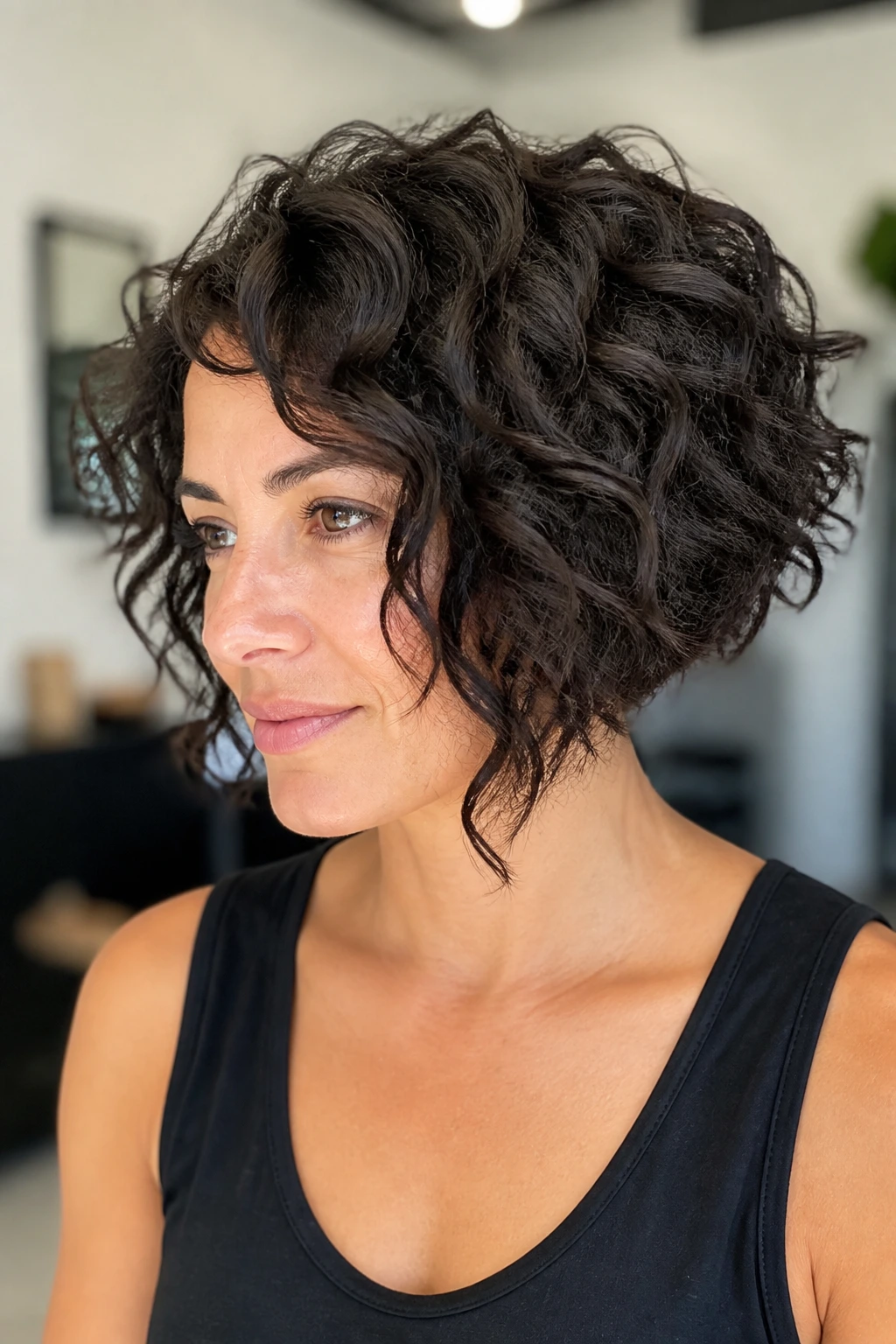
An angled bob is a clean answer for thick curls that need a little polish. The front stays longer than the back, which subtly pulls the eye forward and prevents the shape from getting too wide at the sides. Add extra weight removal through the interior, and the haircut starts to breathe.
This one works because it gives thick curls a direction. Instead of expanding evenly all around the head, the shape leans forward. That makes the whole cut feel slimmer without actually thinning the hair to pieces, which is the wrong fix and usually a bad one.
The best angled bob is the one nobody notices as “angled” until they see it from the side. It should feel natural, not sharp.
Best for: people who like crisp structure and still want curl movement.
Ask for: soft point-cut ends rather than a harsh blade line.
15. Chin-Length Curly Bob With Round Shape
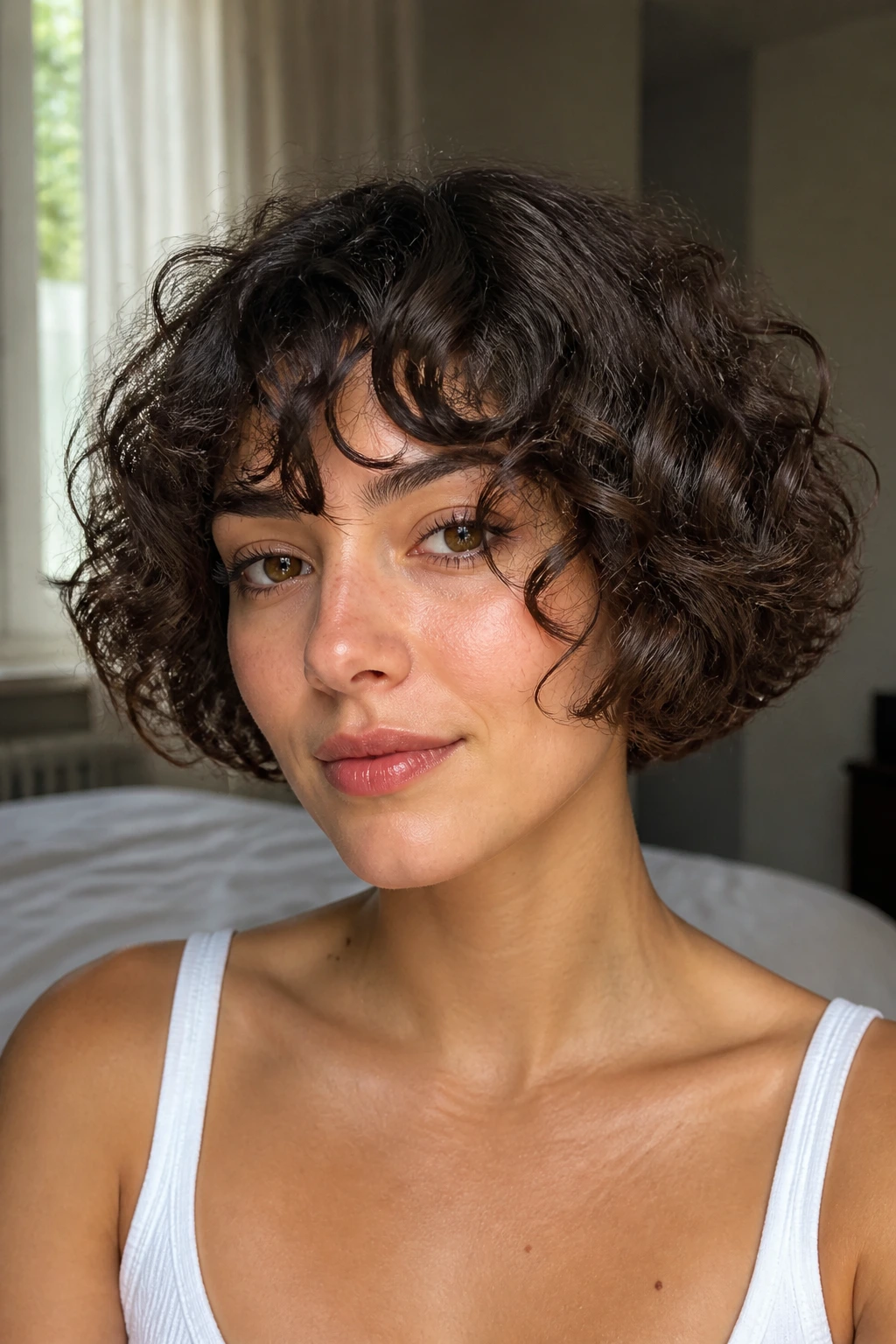
A chin-length curly bob can look adorable or boxy, and the difference is often in the shape line. On thick hair, a round shape keeps the sides from puffing outward like a cube. It also keeps the chin area open, which is where a lot of curly bobs either succeed or fail.
The cut should hug the head just enough to feel contained. If the layers are cut too aggressively at the sides, you lose the roundness and get little wings near the cheekbones. If they’re too blunt, you get a solid helmet. The sweet spot is somewhere in between.
This is a strong option if you want short hair that still feels soft. It’s also one of the easiest styles to dress up with a side part or a tucked-behind-one-ear finish.
Best for: dense curls that need a neat perimeter.
Watch for: cutting it too wet, especially if your curls shrink much shorter than expected.
16. Long Curly Cut With Heavy Fringe
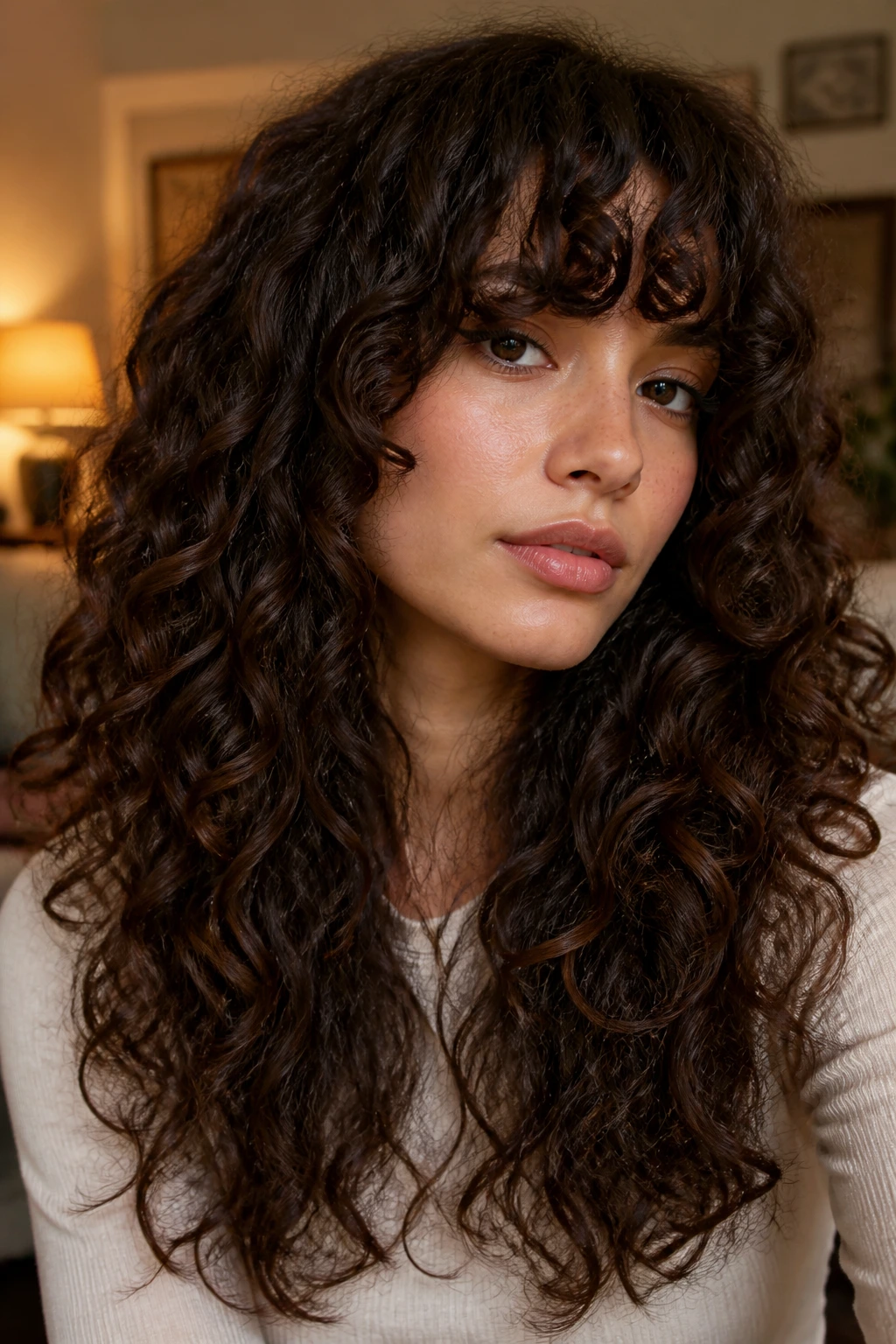
A heavy fringe on thick curls can look fantastic when the rest of the cut is long and the body is layered enough to stop the front from feeling like a curtain. The fringe gives weight and drama up top, while the length keeps the whole look from going too short or too playful.
This is a cut for people who like presence around the face. The fringe should be full, yes, but not blunt like a straight-hair bang. It needs a little separation so the curls sit as chunks, not one dense bar. The long body then balances the front and keeps the haircut from leaning too far into bangs-only territory.
If your curls are springy, cut the fringe with more length than you think you need. It will shrink. A lot.
Best for: thick, loose curls that can handle a bold front line.
Tip: shape the fringe while dry if your forehead shrinkage is extreme.
17. Side-Part Curly Layered Cut
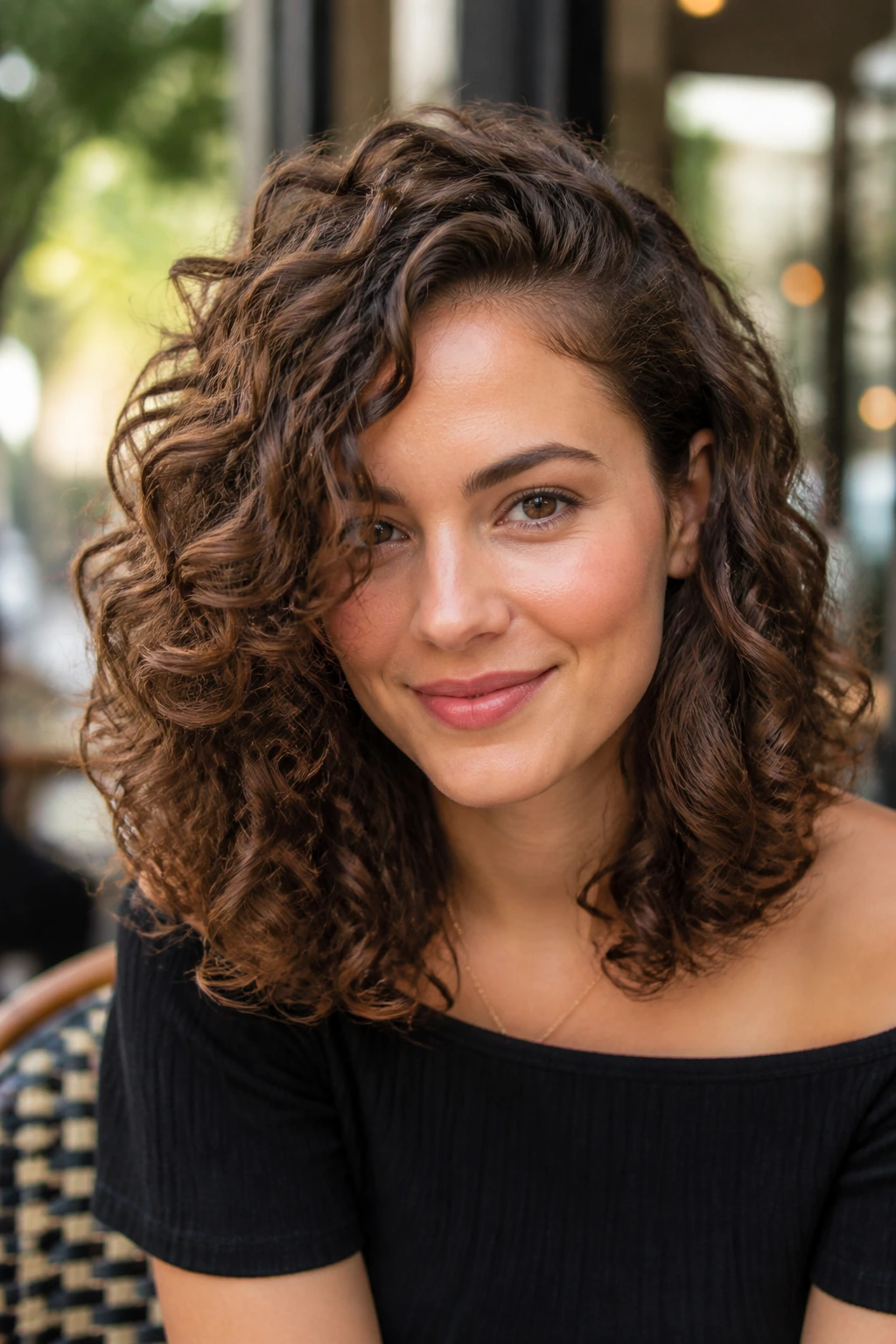
A side part can change a choppy cut more than people expect. On thick curls, it shifts weight away from the center and creates a softer, less puffed outline. A layered cut with a deep side part often feels easier to wear because the volume stops sitting directly on top of the head.
This cut is especially useful when one side of your hair is denser than the other. The side part lets the heavier side fall a little more naturally, while the layers keep the overall shape from getting too flat on the lighter side.
Why I like it
It’s one of the least fussy ways to deal with asymmetrical growth patterns and stubborn cowlicks. You’re not fighting your hairline. You’re working around it, which is usually smarter.
Best for: thick curls that puff at the crown or flatten in the middle.
Pro move: place the part when hair is damp, then leave it alone until dry.
A little root clipping at the part line adds lift without turning the style into a blowout.
18. Curly Octopus Cut
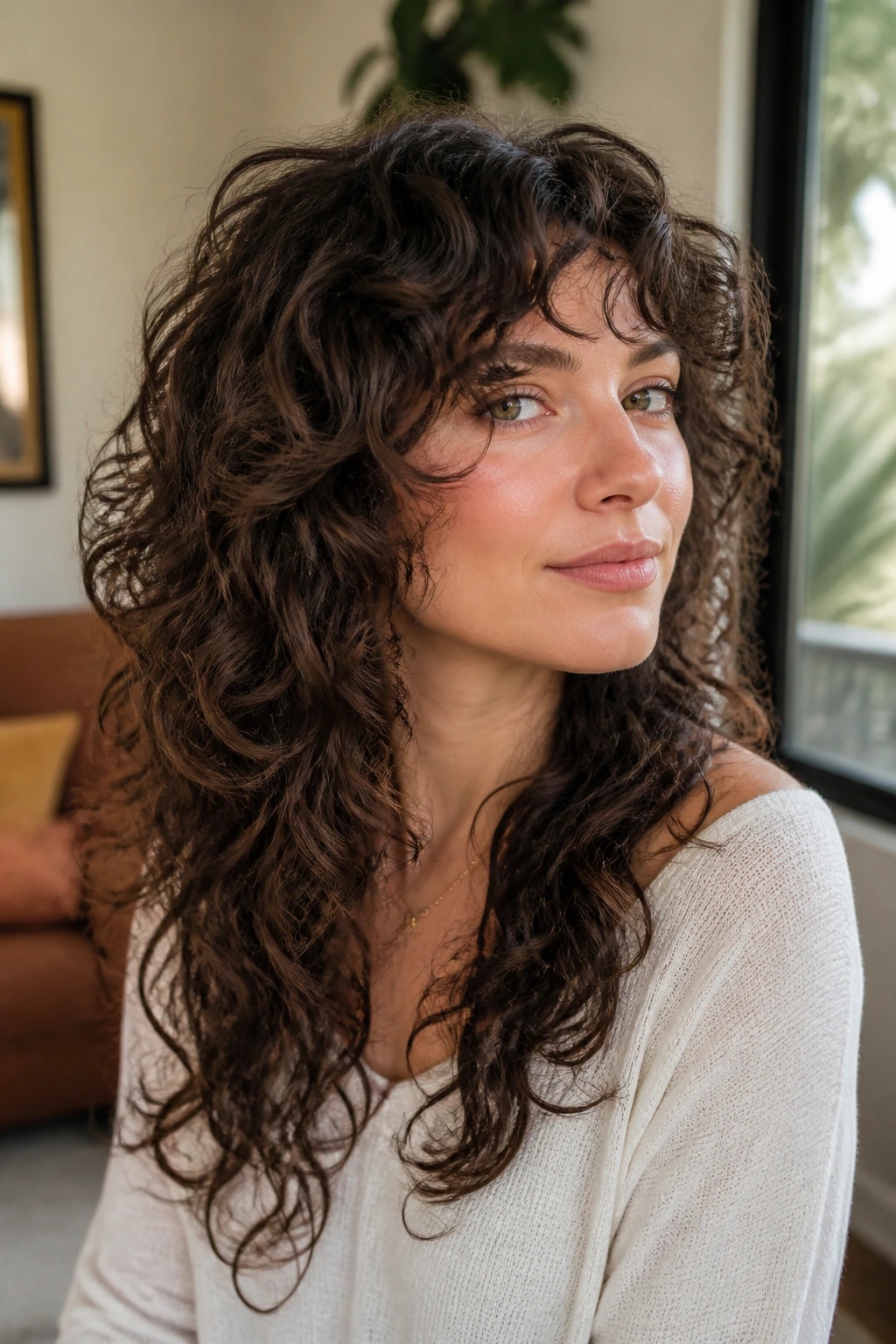
The octopus cut sounds odd until you see it on thick curls. The top and midlength layers are broken up and airy, while the bottom hangs longer and looser, like the shape of a bell with movement. It’s a cut that makes dense hair feel lighter without giving up the dramatic ends.
The whole point is contrast. The top should not look too perfect. The lower section should not look too blunt. When both pieces are handled well, the cut gets that tentacle-like motion people talk about without becoming a costume.
It’s a strong option if your curls are thick at the roots but you still want the ends to swing.
Best for: medium to long lengths with strong curl memory.
Watch for: over-layering the bottom, which can make the shape frizzy instead of floaty.
19. Face-Framing Curly Layers With Curtain Bangs
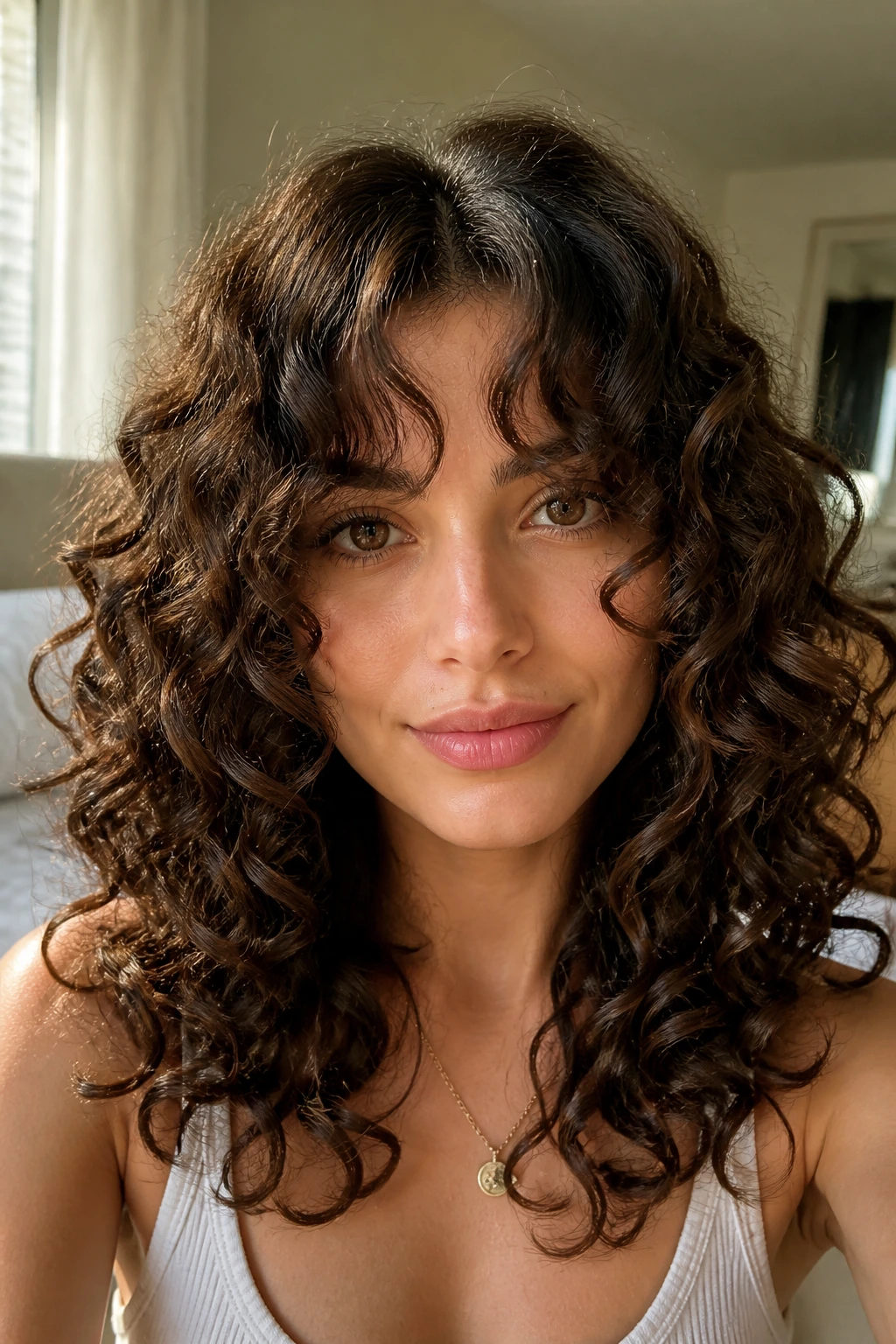
Curtain bangs and thick curls can be a very good match if the layers around the face are cut to flow rather than fall like a wall. The middle stays a little shorter, the sides blend into the cheekbones, and the rest of the cut keeps its weight in the body.
This cut helps thick hair because it opens the front without sacrificing the overall fullness. The curls around the face get a chance to bounce on their own terms, while the rest of the hair stays long enough to balance the shape. That matters if your hair tends to eat your jawline in photos.
A center part usually shows the curtain effect best, but a soft side part can work too.
Best for: people who want movement around the eyes and cheekbones.
Tip: ask for the bangs to be cut in their natural curl state, not stretched straight.
20. Short Curly Cut With Nape Taper
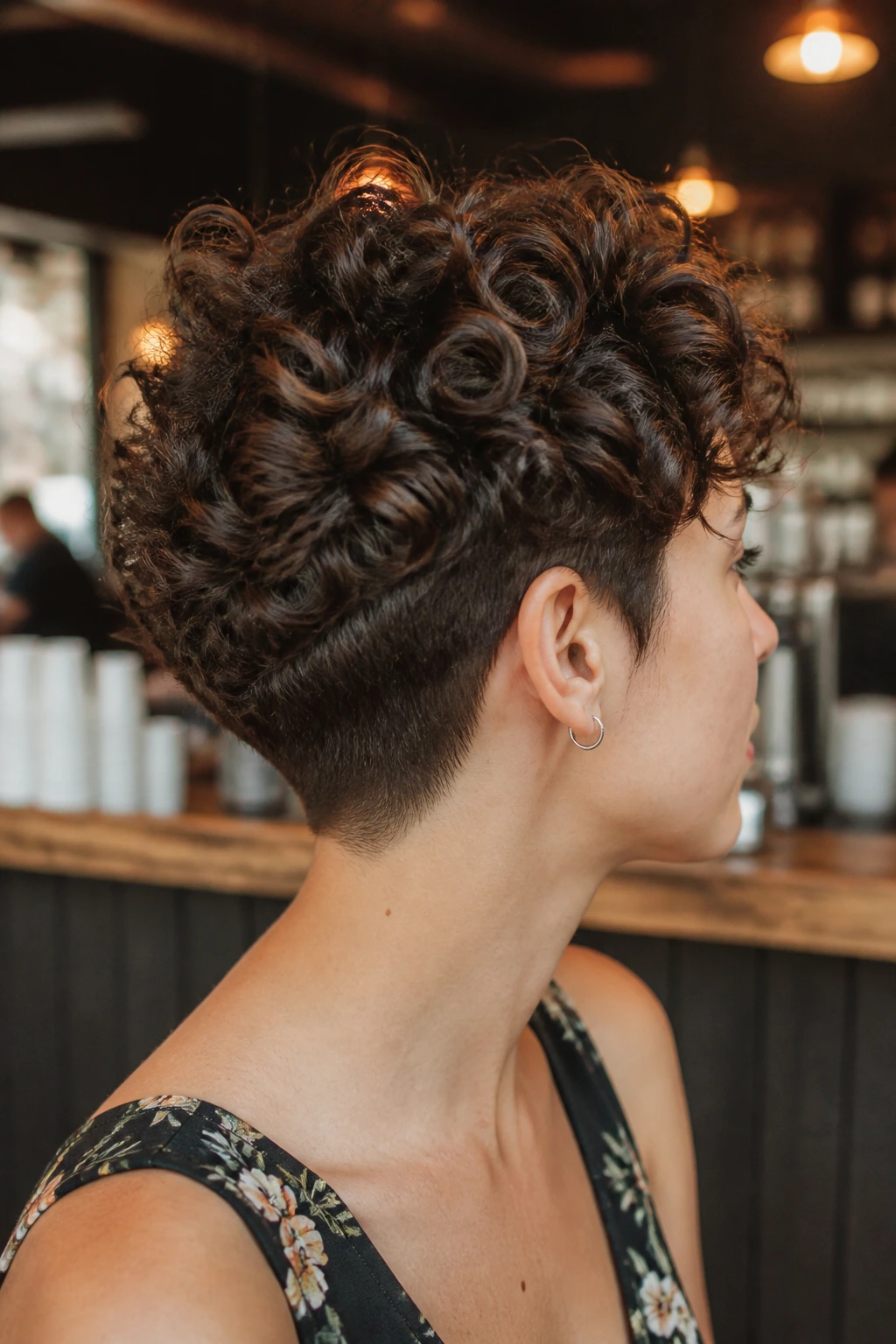
A short curly cut with a nape taper is one of the cleanest ways to manage thick curls in the back of the head. The nape sits close and tidy, which keeps the lower part from flaring out, while the top retains enough length to hold shape.
This cut is practical in a way that doesn’t feel boring. You get a crisp neckline, less tangling at the collar, and a shape that doesn’t rely on a lot of styling to look deliberate. If your thick curls grow in dense at the nape, a taper can make the whole head feel lighter.
It works especially well on people who dislike hair brushing their neck all day. That sounds small until you live with it.
Best for: short-haired curl wearers who want cleaner edges.
Watch for: taking the taper too high, which can make the back look narrow and overexposed.
21. Midlength Curly Cut With Razor-Soft Ends

Razor-soft ends can be gorgeous on some curly cuts, but they’re not for everyone. On thick curls, a midlength shape with soft, broken-up ends can keep the line from looking stiff while still letting the curls fall as a curtain of separate pieces.
The reason this works is that the ends stop acting like a single weight line. Instead of dropping in one heavy strip, the curls move a little more freely. That creates a softer outline and a bit of swing when you turn your head.
This cut is a good match for people whose hair feels bulky even after layering. It won’t remove as much weight as a shag, but it changes the texture of the edge, and that can be enough.
Best for: medium-thick curls with a lot of density at the ends.
Caution: if your hair is already frizzy or fragile, ask for point-cutting instead of a true razor finish.
22. High-Volume Layered Curls With Sides Kept Full
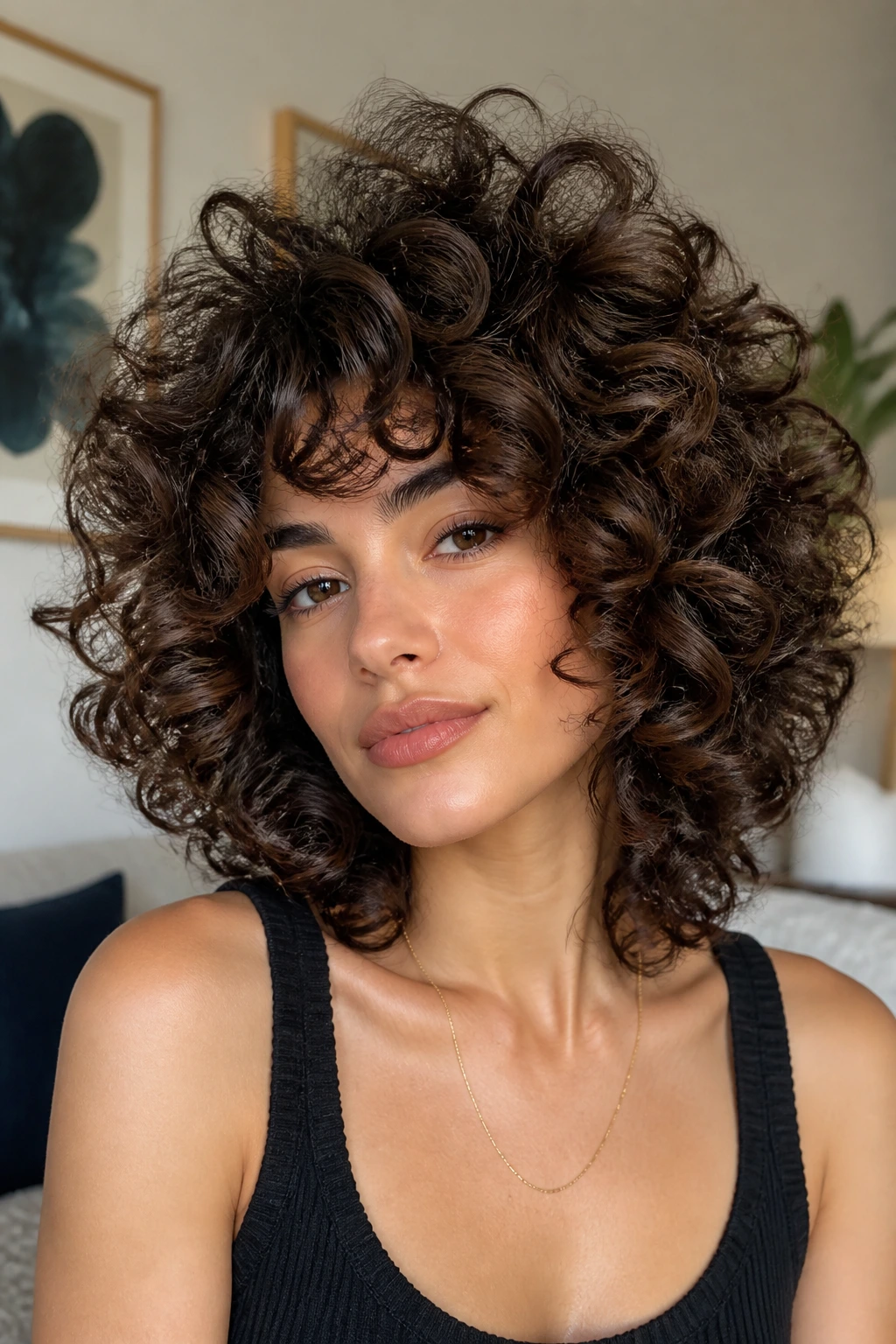
Not every choppy cut needs to slim the sides. Sometimes thick curls look best when the sides stay full and the crown gets the main shaping work. High-volume layered curls are built for people who like big hair and want it to look deliberate rather than accidental.
The sides remain strong, which preserves that gorgeous cloud of curls around the face. The layers up top prevent the shape from becoming too tall or top-heavy. It’s a balancing act, and when it lands, it’s satisfying. The whole head looks dense in the best way.
This is one of my favorite cuts for people with naturally expansive curls who don’t want to “tame” them. You’re not shrinking the silhouette. You’re shaping it.
Best for: anyone who likes width and presence.
Skip if: you want a narrow profile or a sleeker line at the cheeks.
23. Curly Shag Mullet
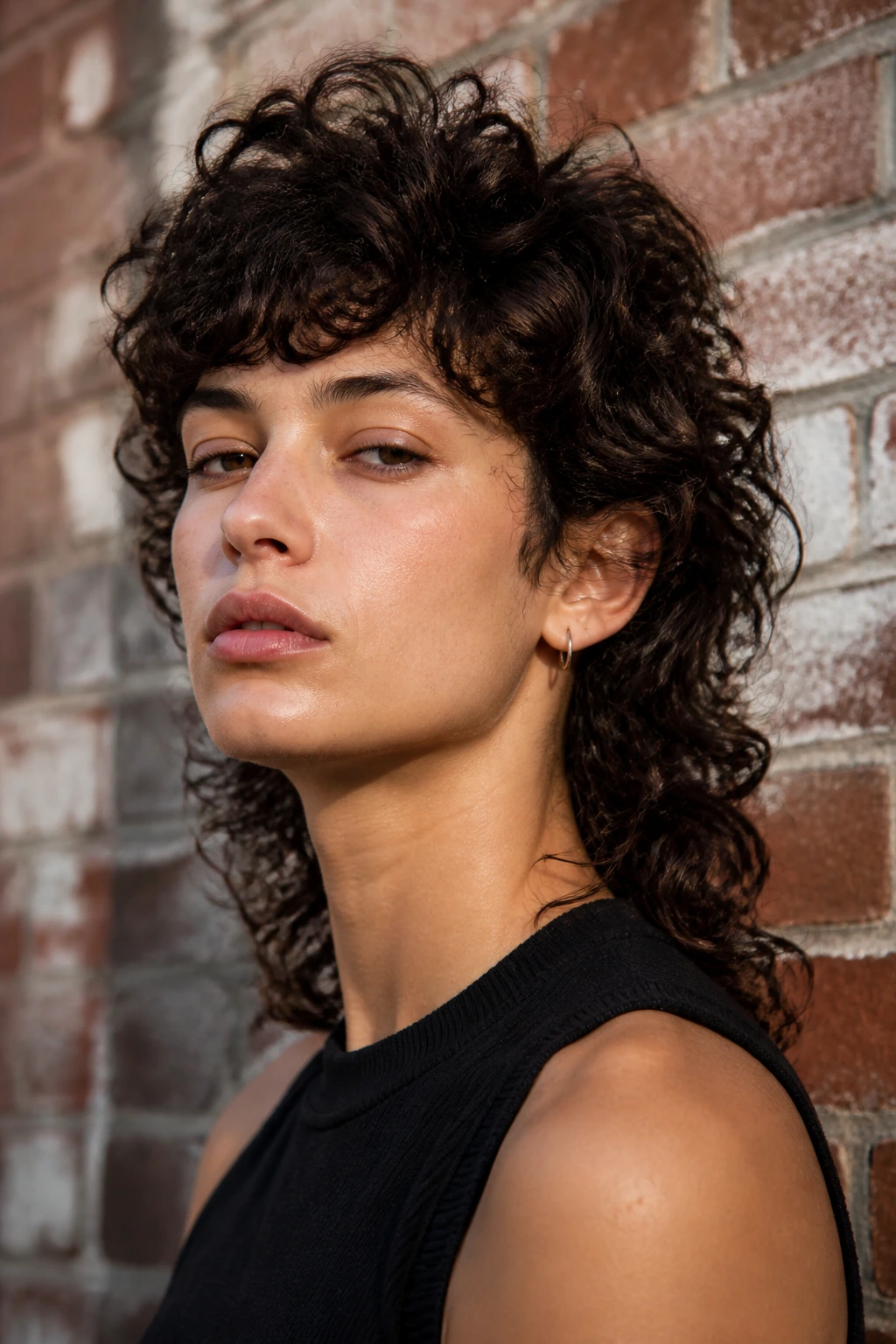
The curly shag mullet is exactly what it sounds like: a shag with more length in the back and a touch more attitude through the top and sides. Thick curls make this shape easier to wear than straight hair does, because the texture softens the transition and keeps it from looking hard-edged.
The front stays lively, the crown gets lift, and the back keeps enough length to swing. On dense curls, that combination can be incredibly practical because it removes bulk where the hair tends to puff and leaves the parts you want to show off. It’s a little rebellious, sure, but it’s also well behaved when the cut is good.
A light fringe or a few broken-up pieces around the face usually help it sit better.
Best for: people who want movement and aren’t afraid of a more defined shape.
Tip: keep the back long enough that it still reads curly, not choppy in a jagged way.
24. Thick Ringlet Layers With Center Part
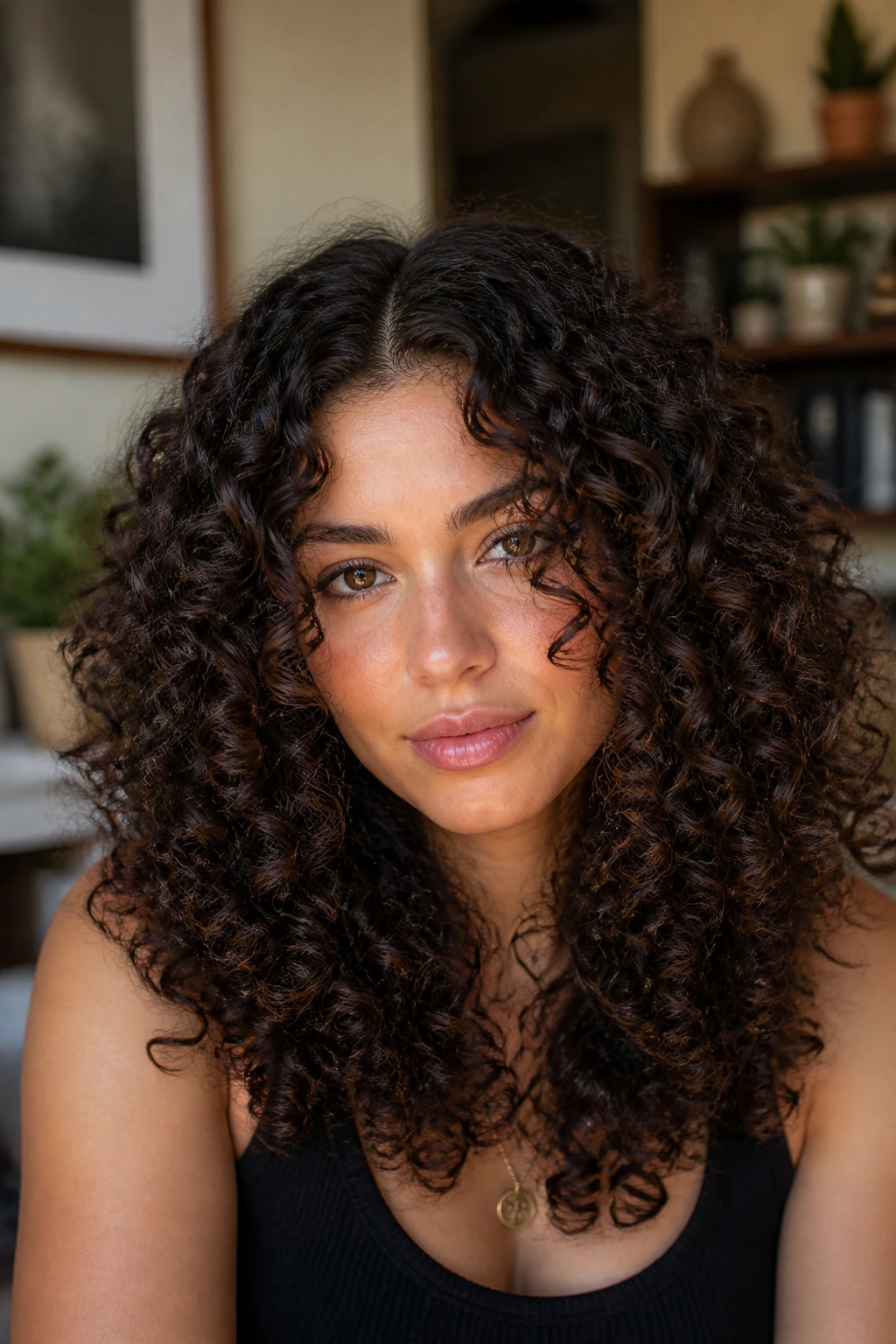
A center part on thick ringlets can look sharp in a good way when the layers are placed carefully. The key is symmetry at the part and motion everywhere else. You want the curls to fall evenly without the middle becoming a flat line that splits the head in two.
The layers should begin where the density is heaviest, usually around the cheekbones or lower. That removes some of the visual weight from the front while leaving the ringlets free to spring. The center part then frames the face in a way that feels balanced, especially if your curls form clean coils.
This cut is strongest when the ringlets have enough length to hang rather than explode. Shorter ringlets can still work, but they need more controlled layering.
Best for: people with defined ringlets and a symmetrical face frame.
Watch for: too much layering near the part, which can make the scalp area look sparse.
25. Sculpted Curly Bob With Underlayers Removed
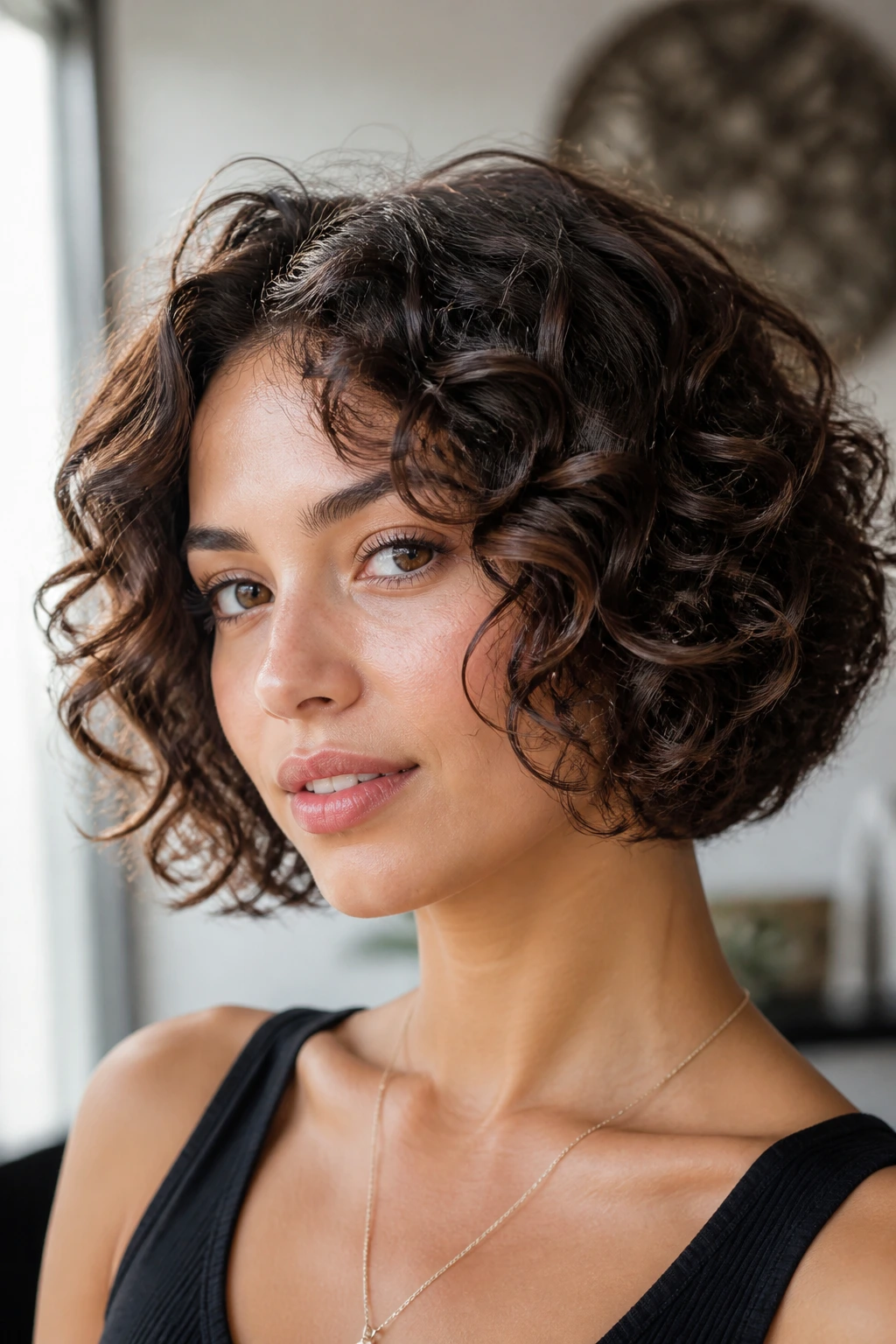
A sculpted curly bob is basically what happens when someone decides a bob should be shaped from the inside out. The outside still looks full and rounded, but the underlayers are reduced so the haircut doesn’t sit heavy at the bottom.
This is a smart choice for thick curls that grow downward and outward at the same time. Removing underlayers keeps the bob from ballooning. It also helps the curls sit with more clarity, because there’s less hidden bulk pushing the shape apart from beneath.
I like this cut when someone wants a bob that feels tailored rather than fluffy. It has structure. It can still be soft, but it knows where it wants to go.
Best for: dense curls that need a cleaner outline around the jaw and neck.
Ask for: interior debulking, not aggressive thinning at the ends.
26. U-Shaped Long Cut With Choppy Ends
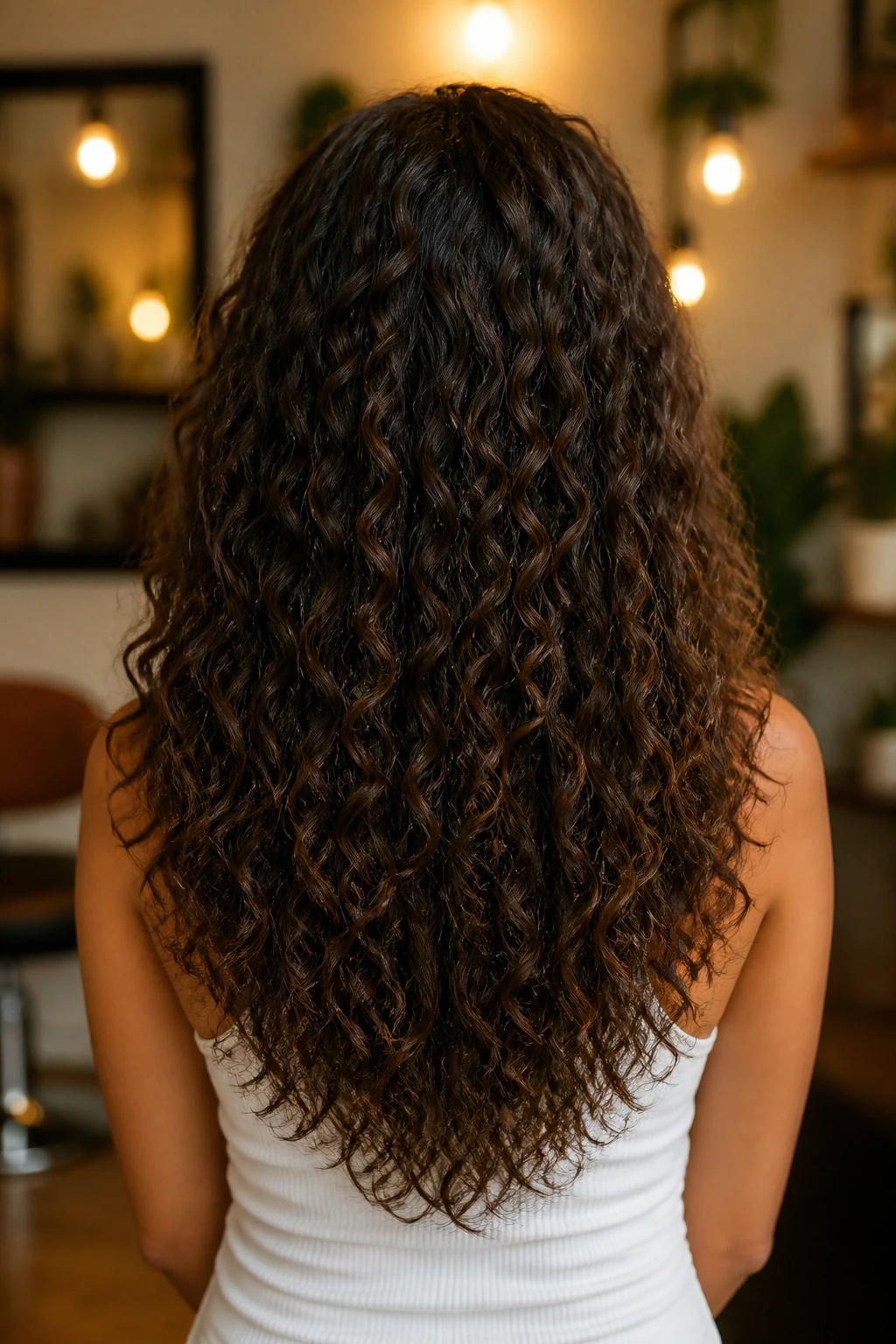
A U-shaped cut keeps the perimeter longer in the center and a little shorter toward the sides, which sounds subtle until thick curls settle into it. That shape helps the hair fall with a gentle curve instead of a hard shelf. Add choppy ends and the bottom starts to move.
This is a good compromise if you love long hair but hate when it looks too rectangular. The U shape softens the silhouette from behind, and the choppiness keeps the ends from stacking into one heavy line. It’s simple, but not boring.
The best versions of this cut are cut with enough restraint that the outline stays readable. If the ends are chopped too hard, the U disappears and you’re left with frizz that feels random.
Best for: people who want length with better shape at the bottom.
Tip: have the stylist check the shape from the back before finishing.
27. Curly Crop With Long Top and Tight Sides
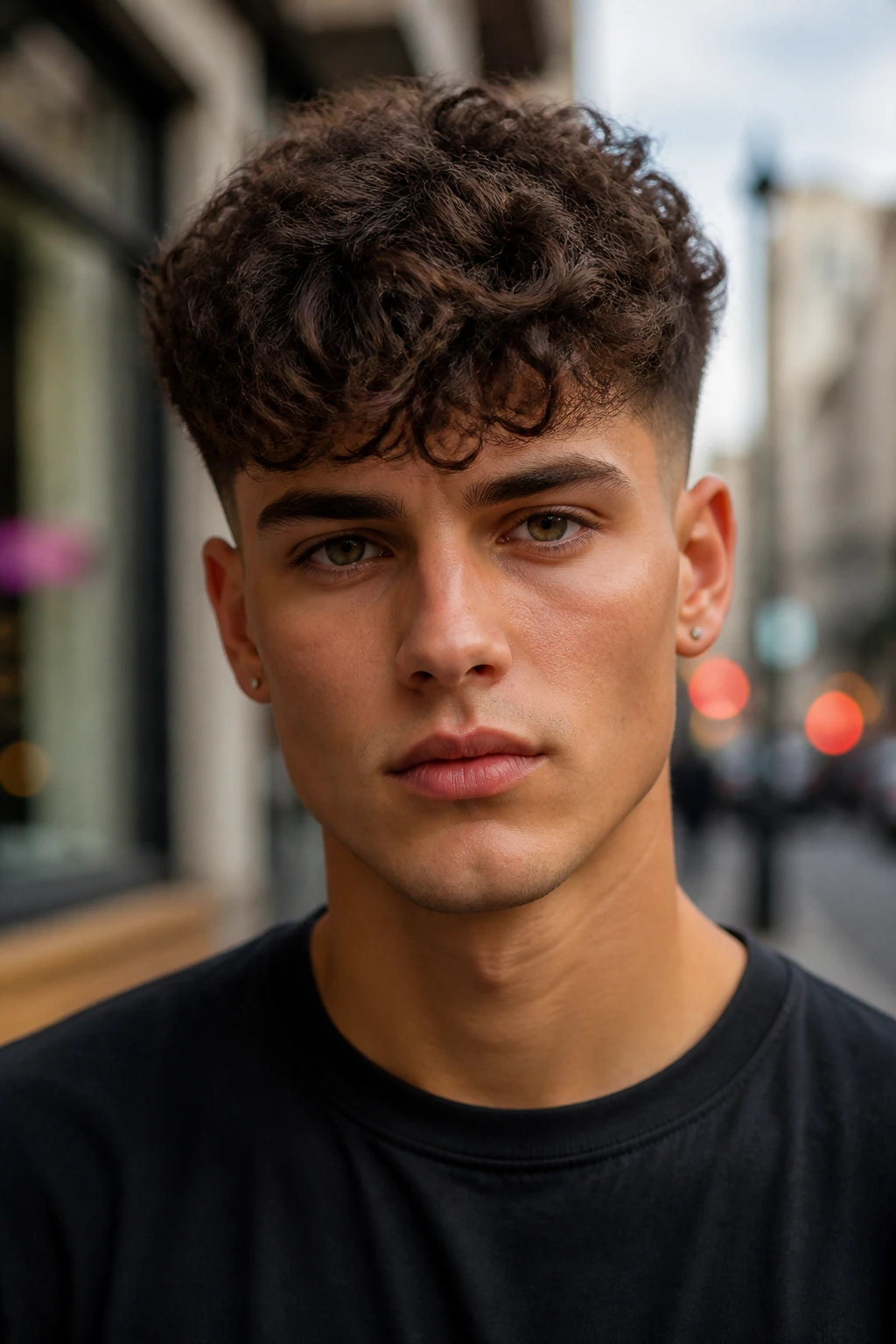
A curly crop with long top and tight sides is the shortest way to keep curls on display while taming a lot of bulk at once. The sides stay close, the top stays expressive, and the contrast makes the shape feel intentional rather than overgrown.
This cut suits thick curls that build too much width at the temples and ears. Tight sides clear out that bulk fast. The longer top gives the curl pattern room to do its thing, which is what keeps the haircut from feeling overly severe.
It’s also a good choice if you’re tired of hair brushing your glasses, earrings, or collar. Small annoyances, yes. But they add up.
Best for: people who want a neat outline with texture on top.
Watch for: cutting the top too short; curls need length to show their bend.
28. Airy Shoulder-Length Cut With Internal Debulking

An airy shoulder-length cut is one of the most useful options for thick curls because it doesn’t ask you to choose between length and comfort. The shoulder line gives enough weight to keep the shape grounded, and the internal debulking keeps it from becoming a curtain.
Why this version works
Internal debulking means the stylist removes mass from inside the haircut instead of shaving the surface into thin wisps. That matters. Thick curly hair often needs the bulk removed where the strands overlap, not on the visible edge. When that’s done well, the haircut feels lighter but still looks full.
This cut is a strong middle ground for people who dislike dramatic shapes. It’s not a shag. It’s not a bob. It’s a controlled shoulder-length shape that behaves on wash day and still looks decent on day three.
Best for: anyone who wants an easy grow-out.
Tip: ask how the cut will behave once it’s stretched by weight and once it shrinks fully dry.
29. Freeform Layered Cut for Coily Thick Hair
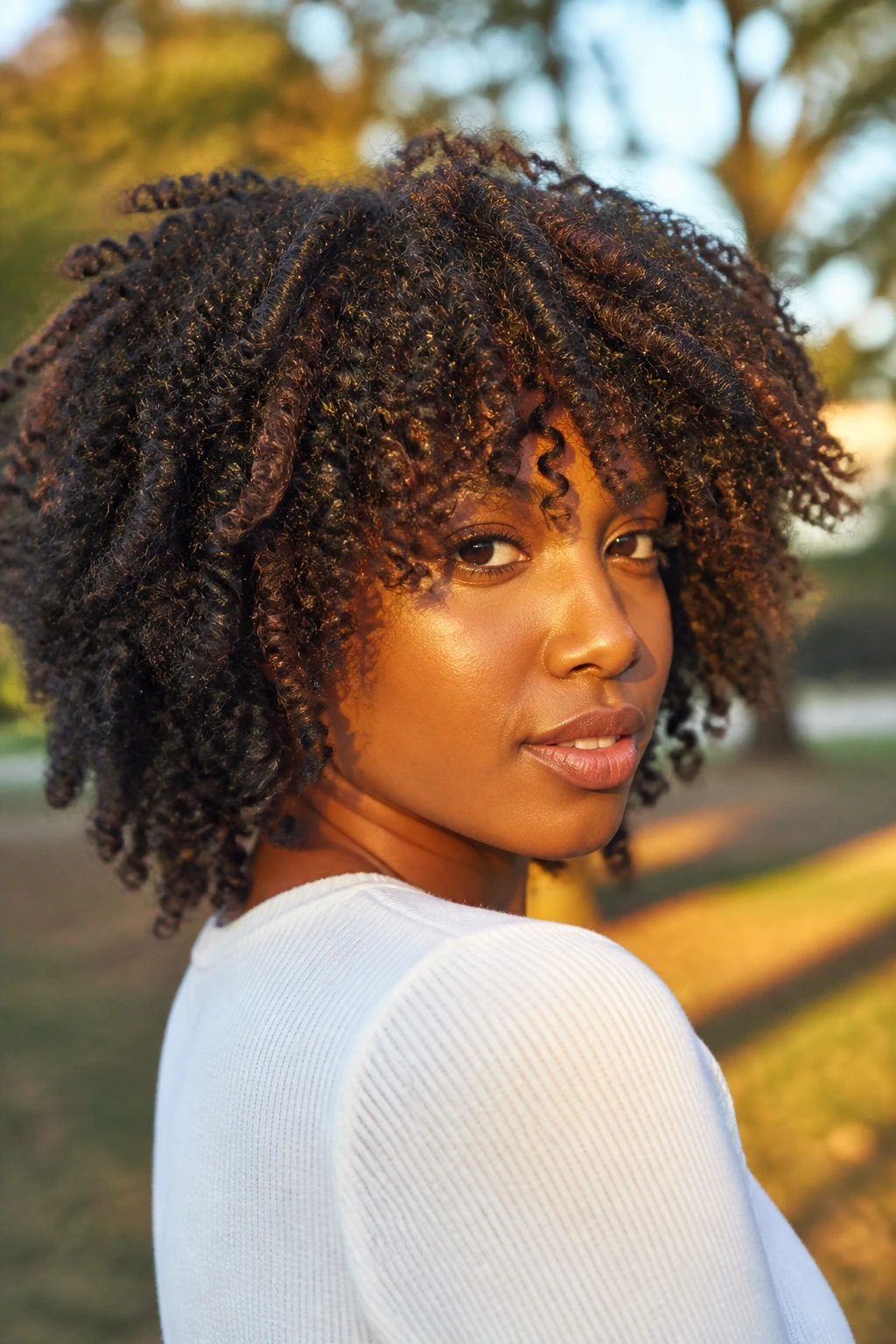
Freeform layering suits coily hair that grows thick in all directions and doesn’t want to be boxed into one hard line. The cut should respect the natural coil pattern, leaving enough unevenness for the hair to settle without forcing symmetry where it doesn’t belong.
This shape works because coily hair often looks fuller when it’s allowed to move in sections. A little irregularity around the top and sides can make the whole head feel lighter. The goal is not to erase density. It’s to make density look intentional.
This is a cut that benefits from a stylist who understands shrinkage on tighter textures. If they cut only to the stretched length, the result can come back too short and too blunt.
Best for: 4A to 4C hair with a lot of density and shrinkage.
Helpful note: leave extra length at the perimeter if you want room for future shaping.
30. Soft Curly Bowl Cut With Broken-Up Edge
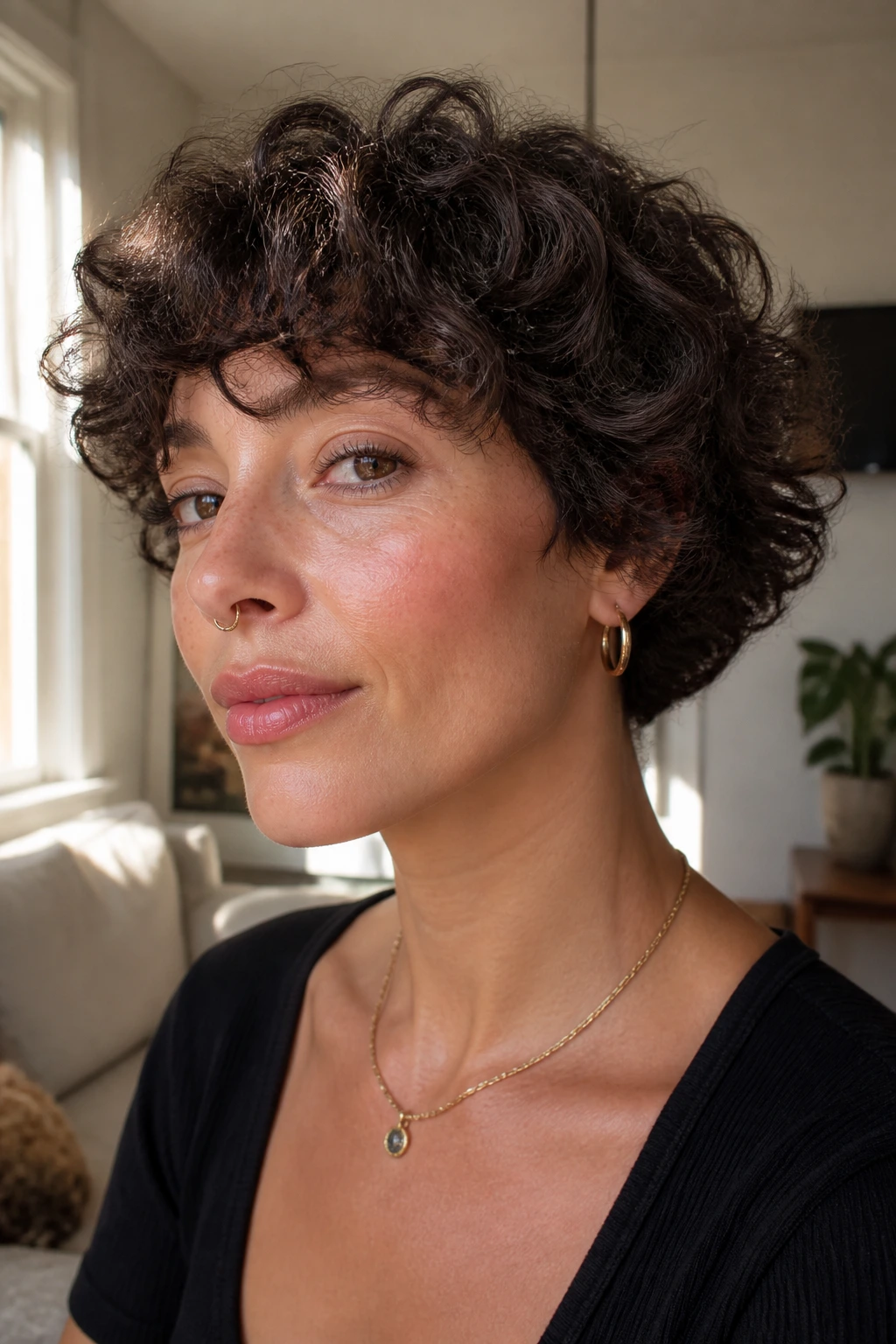
A bowl cut sounds risky on thick curls, and in straight hair it often is. But a soft, broken-up version can be surprisingly good on curls because the texture keeps it from reading as a hard helmet. The edge is the whole trick.
The perimeter should not be one single clean line. It needs to be chipped and separated so the curls sit in little variations instead of forming a rigid arc. That keeps the cut fresh rather than childish. Done right, it feels fashion-forward and still wearable.
I’d call this a cut for people who are comfortable being noticed. It has shape on purpose. It asks for a little confidence.
Best for: dense curls with a strong curl pattern and good definition.
Skip if: you dislike a distinct outline around the forehead and sides.
31. Asymmetrical Curly Bob

An asymmetrical curly bob gives thick hair a clear direction, which is useful when both sides want to puff differently. One side sits a touch longer, and that small imbalance changes how the curls fall. It feels modern without being fussy.
The asymmetry should be subtle enough that the haircut still looks balanced in motion. If the difference is too big, it starts reading as a mistake rather than a choice. The beauty of this shape is in the quiet tilt, not the shout.
This cut can make the face look longer and the jawline softer, especially when the longer side falls below the chin. It’s also a good fix for a side that naturally grows heavier.
Best for: people who want a bob with a little edge and less roundness.
Tip: dry the hair in the direction of the longer side so the shape settles correctly.
32. Long Layers With Flip-Friendly Ends
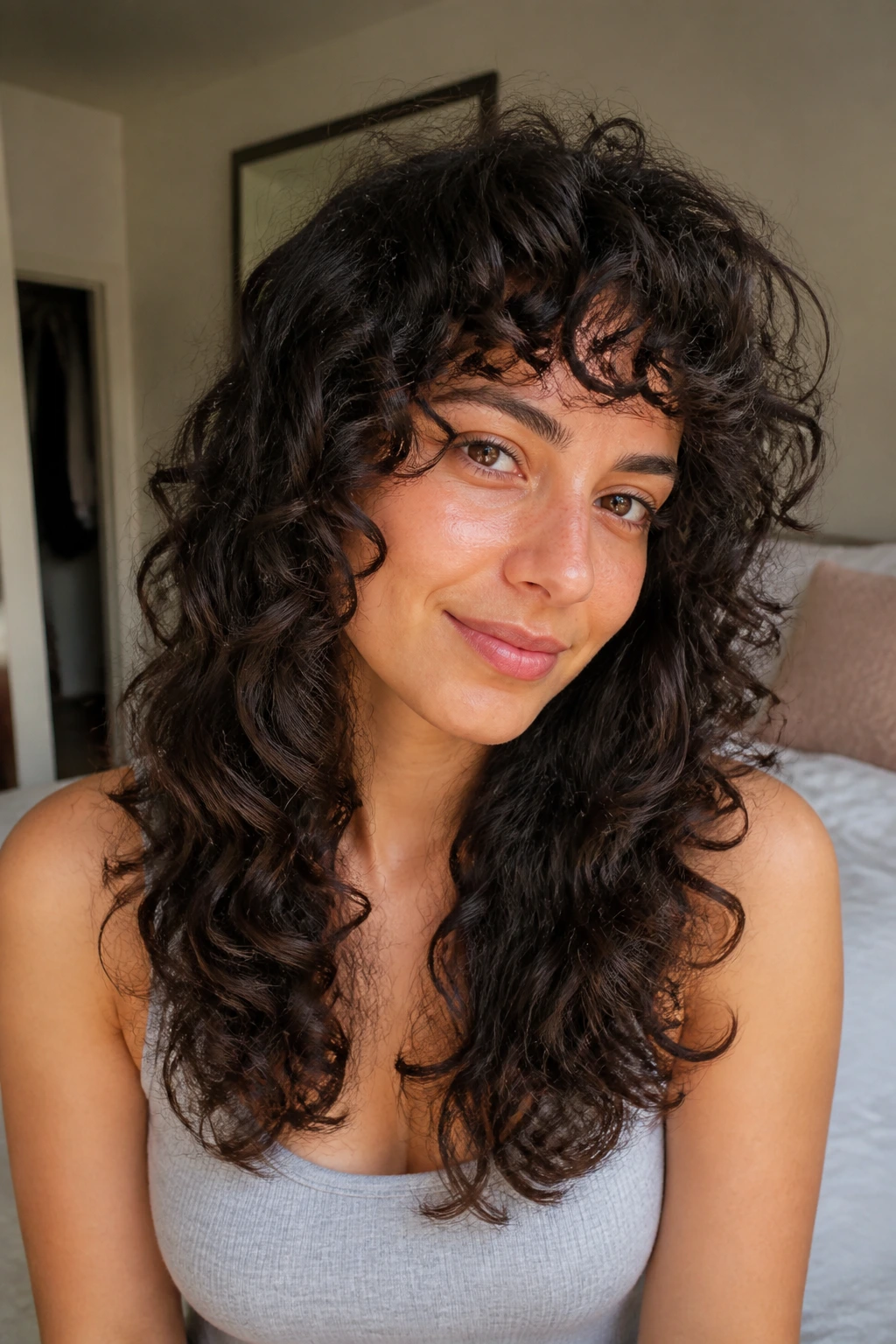
Long layers with flip-friendly ends give thick curls a little lift at the bottom without turning the whole cut into a shag. The layers start low enough to keep the length, but the ends are broken up so the curls can flick outward or inward depending on how they dry.
This is a subtle cut, and I like that. Not every good curly haircut needs a dramatic front piece or a heavy fringe. Sometimes all thick curls need is a bit of movement at the end so they don’t sit like a blanket.
The flip-friendly finish makes this especially good for people who wear their hair behind one shoulder or tuck one side back. The ends still move. The shape still breathes.
Best for: long hair that needs a softer bottom line.
Watch for: layers that start too high, which can make the ends look thin instead of lively.
33. Retro Curly Shag With Short Crown Layers
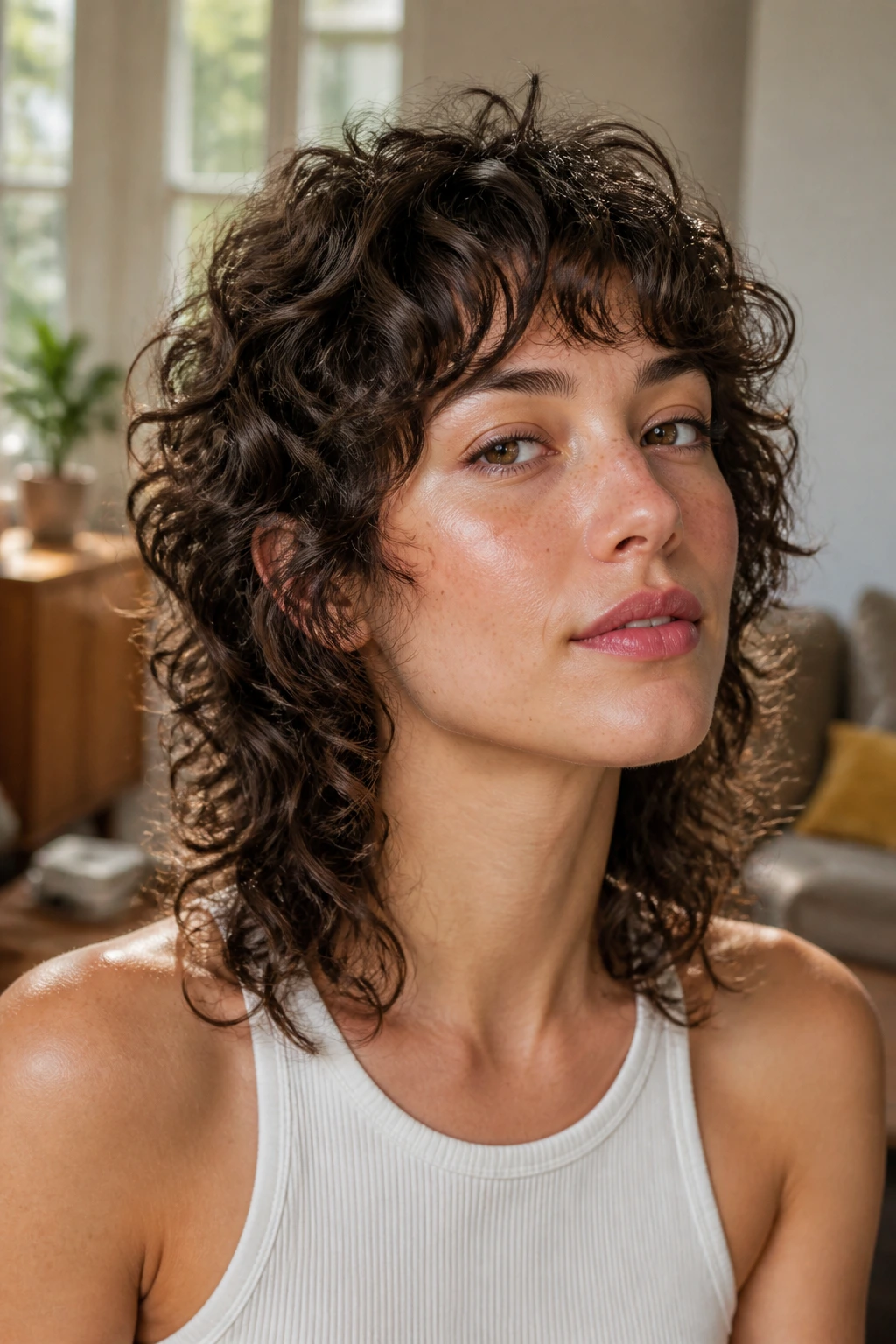
A retro shag on thick curls leans into height, piecey texture, and a little cheekbone drama. The short crown layers are what give it that lifted, almost old-school edge, while the rest of the cut stays broken up enough to keep the curl pattern visible.
This is a good cut if your hair tends to flatten on top. Shorter crown layers encourage the opposite. They create air at the roots and separate the curls before they gather too much weight. The result can look almost feathered, but with more curl movement and less polish.
It’s a shape that loves volume products, not heavy creams. Mousse, a soft gel, and a good diffuser give it the texture it wants.
Best for: thick curls that need top lift and face-framing movement.
Tip: keep the layers around the temples soft so the cut doesn’t get harsh.
34. Tapered Shoulder Cut With Rounded Perimeter

A tapered shoulder cut sits in a nice middle zone: enough length to tuck, enough taper to stay light. The rounded perimeter prevents the bottom from turning into a flat shelf, while the taper keeps the sides from ballooning.
This cut is especially useful for people whose thick curls collect volume at the widest point of the head. The taper narrows that spot just enough to keep the outline clean. The rounded bottom then gives the cut a soft finish that feels more natural than blunt.
I’d choose this shape for someone who wants a haircut that behaves at work and still looks good when it air-dries. It’s tidy without being stiff.
Best for: shoulder-length curl wearers who need a cleaner frame around the jaw.
Ask for: tapering through the sides, not just at the very ends.
35. Low-Maintenance Curly Mixie
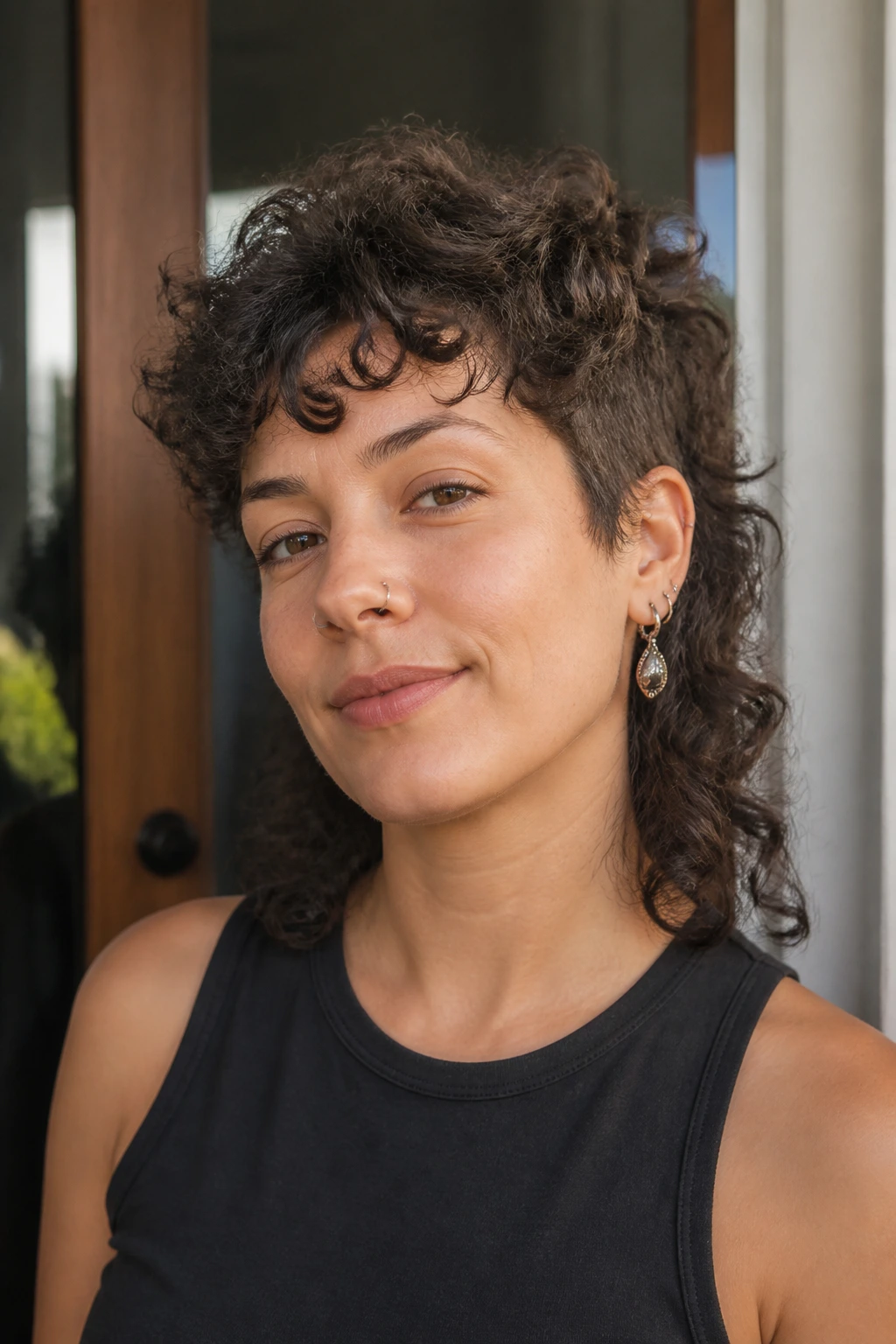
A mixie — part mullet, part pixie — is one of the more practical short shapes for thick curls if you want movement without a lot of styling time. The crown stays short and textured, the sides are close, and the back hangs a little longer so the cut doesn’t feel abrupt.
What makes the mixie work is balance. The short pieces remove bulk where thick curls can crowd the head, and the slightly longer back keeps the silhouette from going too severe. It’s light, quick, and a little rebellious in a way that still feels wearable.
This is the kind of cut that looks better after you scrunch in a bit of product and leave it alone. If you like fussy styling, it may not be your favorite. If you want a fast routine, it earns its place.
Best for: thick curls that need a shorter, shape-heavy option.
Caution: the top can shrink more than expected, so don’t let the crown get overcut.
Why Choppy Curly Haircuts for Thick Hair Work So Well
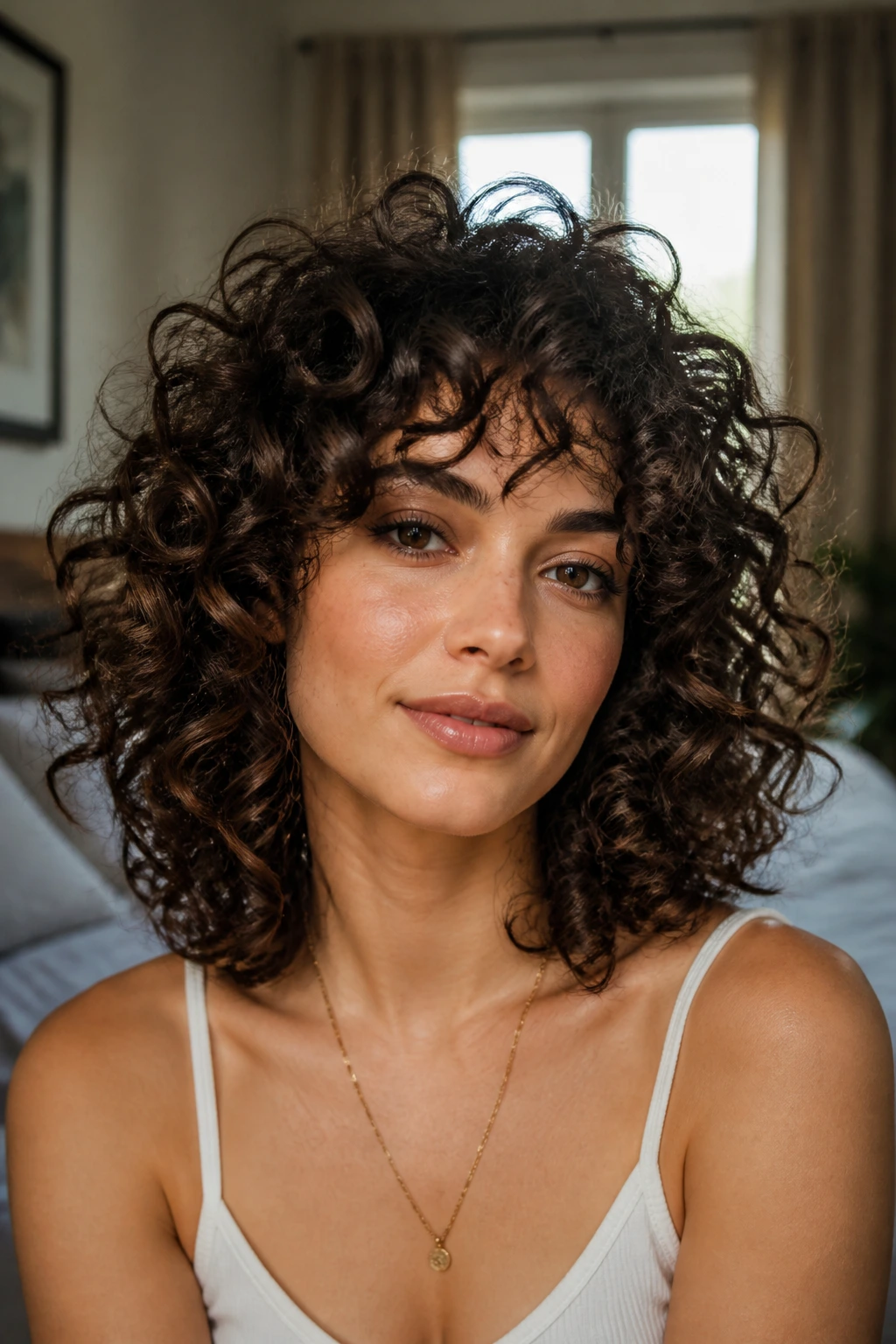
Thick curly hair usually fails for one boring reason: the weight lands in the wrong place. A choppy cut fixes that by moving the bulk around the head instead of just taking off length from the bottom and calling it done. Once the weight line is broken up, the curls can stack, spring, and separate in a way that looks intentional.
There’s also the shrinkage problem, and it’s a big one. Thick curls do not behave like straight hair with a little bend at the ends. They compress. A lot. That means a layer that seems harmless when wet can land right at the cheekbone dry, and a fringe can shrink into a completely different shape by lunch. Good choppy cuts account for that from the start.
Dry cutting, curl-by-curl shaping, and interior debulking are the tools that make the whole thing work. Not every stylist uses all three, and not every head needs all three. But the logic is the same: let the curls keep their spring, and remove bulk where the curls are fighting each other.
What to Tell Your Stylist Before the First Snip
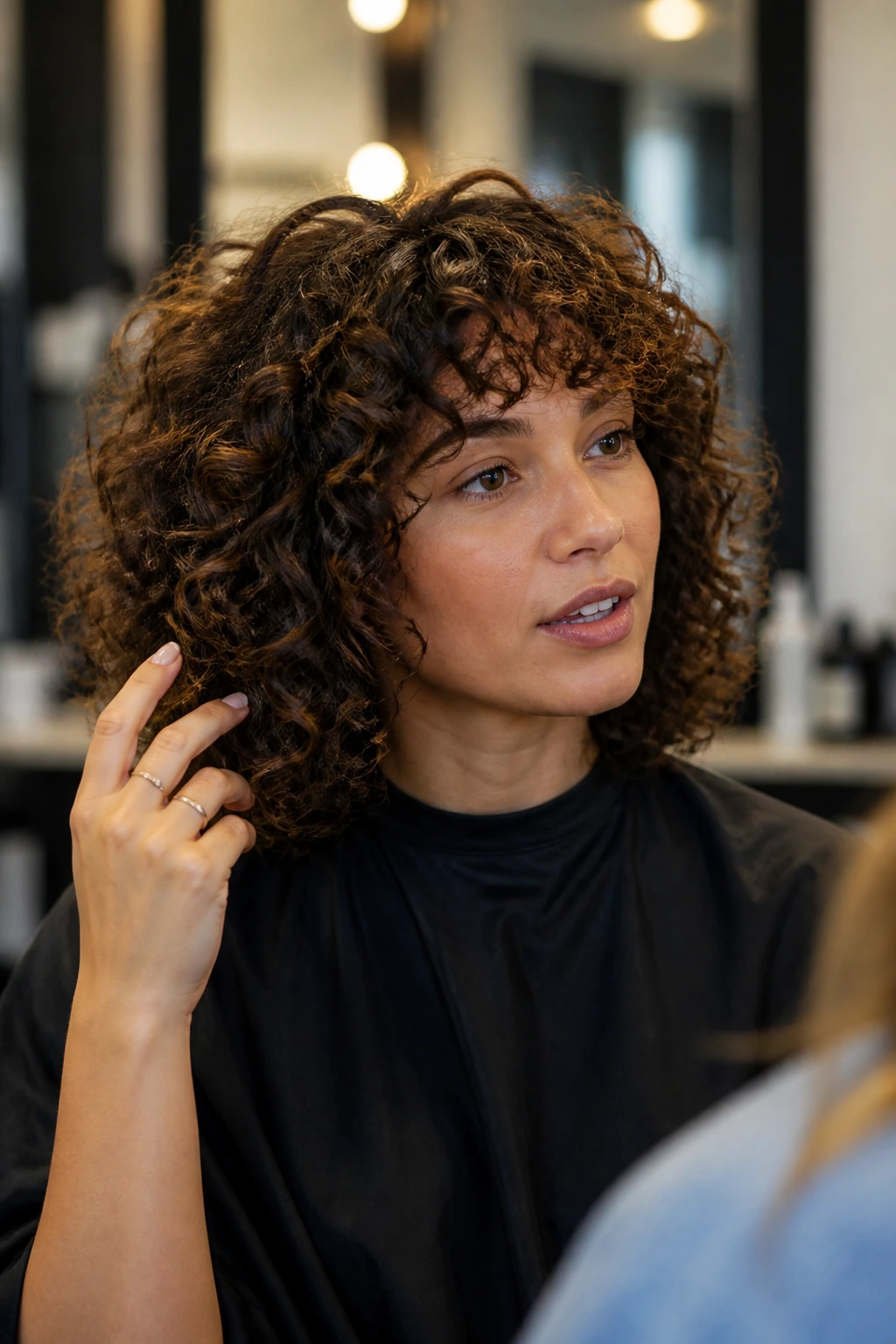
Start with the part of your hair that gives you the most trouble. Maybe the crown goes flat. Maybe the sides flare. Maybe the back turns into a mop by day two. Say that out loud. Stylists can work with specifics. They can’t guess which part of your head annoys you the most.
Bring photos, but bring the right ones. One front view, one side view, one back view if you can find it. And make sure the model has a similar curl pattern and density. A choppy bob on fine curls is not a useful reference for thick ringlets. The outline may look the same in a picture, but the behavior will not.
Ask whether the cut will be done dry, wet, or in stages. For a lot of thick curls, a dry finish or at least a curl-by-curl check is worth asking about. If your hair shrinks fast, say so before the scissors come out. That single sentence can save you from bangs that live halfway up your forehead.
The Tools That Make These Cuts Behave
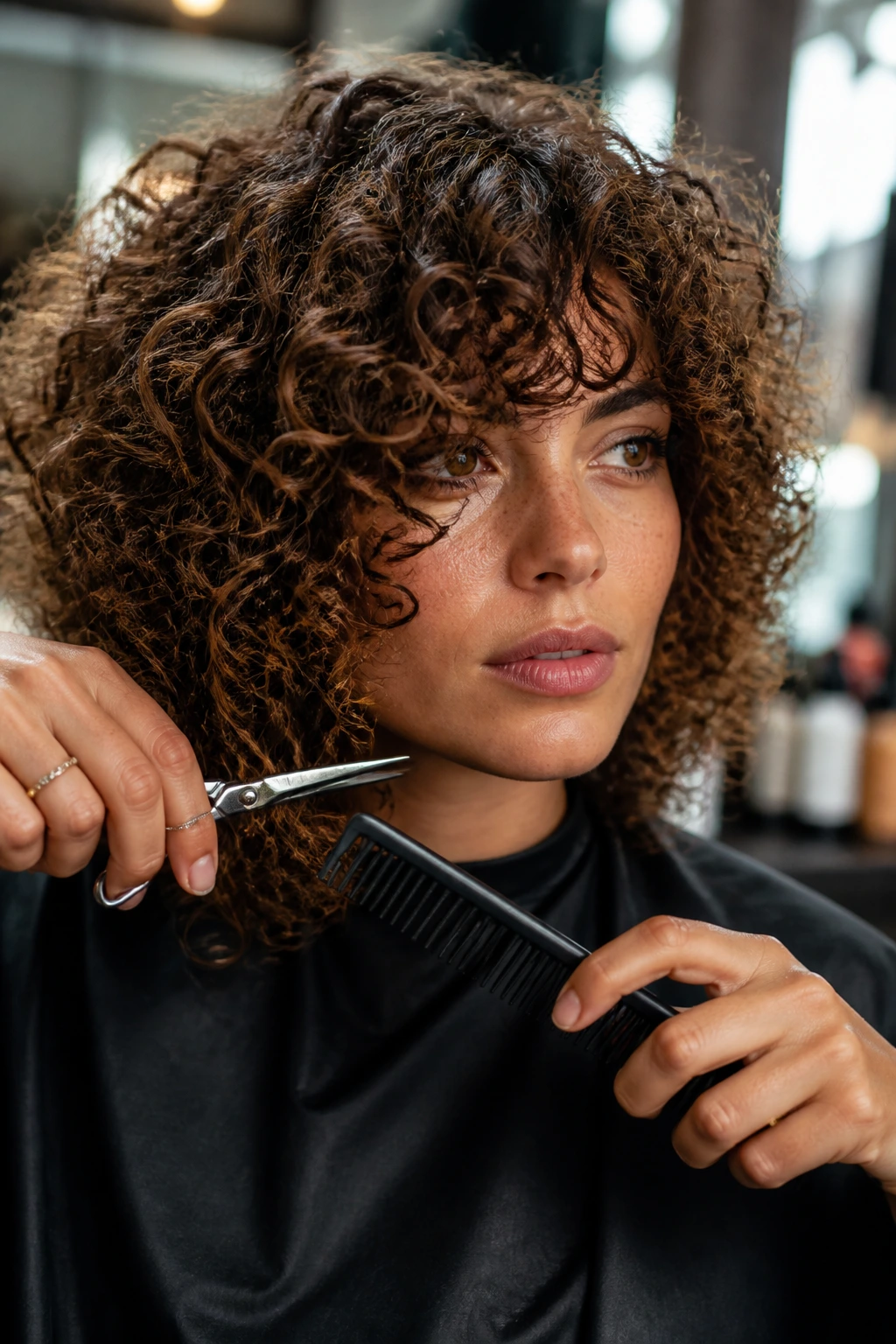
- Sharp haircutting shears: Dull shears chew the ends and create frizz, especially on thick curls.
- Sectioning clips: Thick hair needs clean sections or the cut gets uneven fast.
- Spray bottle with water: Useful for reactivating curls during shaping and refreshing day-two bends.
- Wide-tooth comb: Better than a fine comb for detangling without ripping through dense curls.
- Microfiber towel or cotton T-shirt: Helps remove water without roughing up the cuticle.
- Diffuser attachment: A must if you want the crown to lift and the layers to hold shape.
- Curl cream or leave-in conditioner: Use a light hand; thick hair can still get weighed down.
- Mousse or foam: Especially useful for shag, wolf, and layered bob shapes that need root support.
- Flexible-hold gel: Good for keeping choppy ends defined without turning them stiff.
- Hand mirror: Handy for checking the back and nape once the cut is dry.
- Satin bonnet or pillowcase: Keeps the outline from getting crushed overnight.
How to Choose the Right Cut for Your Curl Pattern
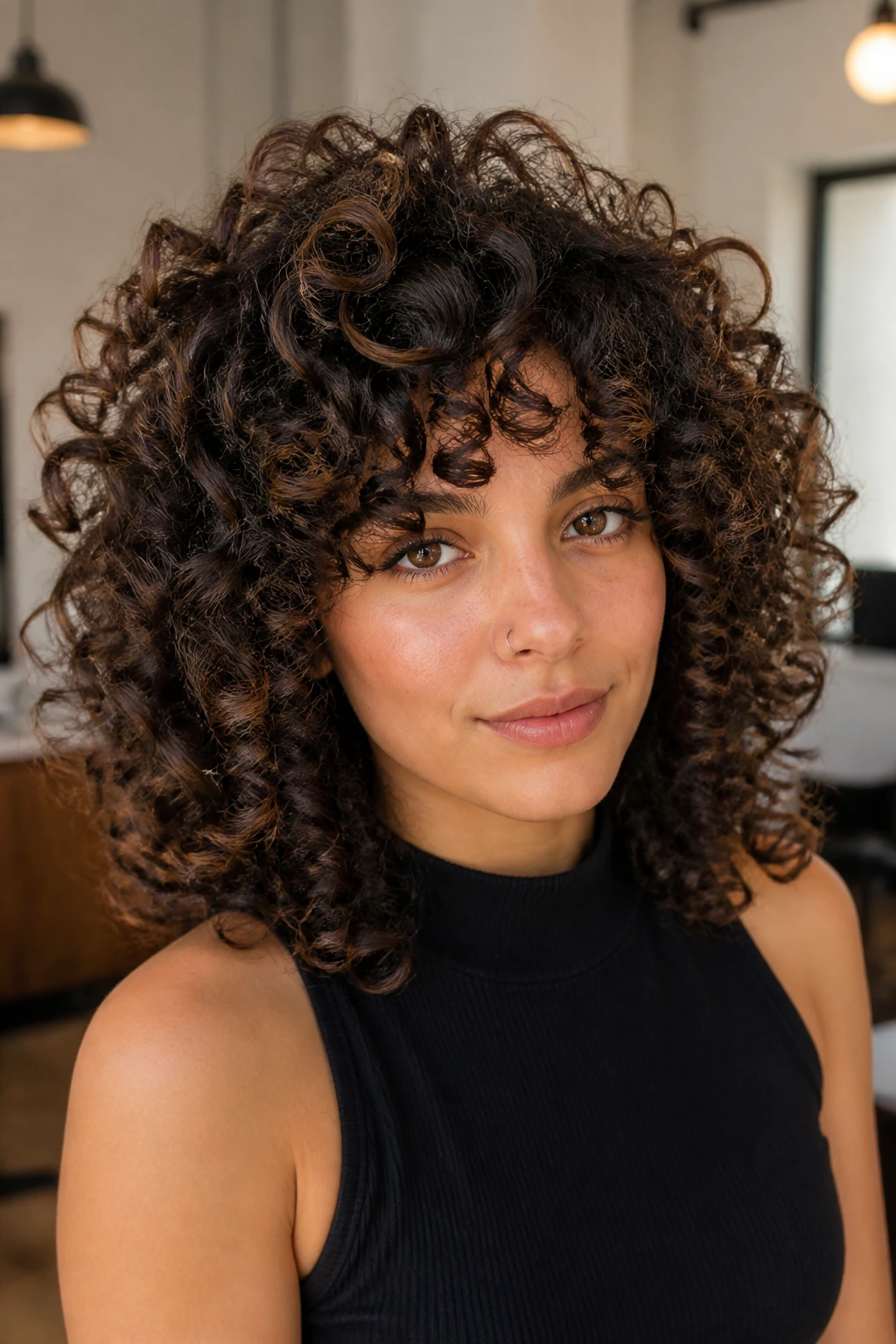
The curl pattern matters, but density matters just as much. Two heads can both be labeled 3B and behave like completely different animals if one is fine and the other is thick. Start with the amount of bulk you’re actually carrying, then decide how much shape you want to remove.
Loose, thick curls often do well with longer layers, angled bobs, and shag-adjacent shapes. Tighter, dense curls usually need more internal removal, because the width builds quickly even when the length looks manageable. Coily textures tend to reward tapering, rounded outlines, and dry shaping that respects shrinkage.
Face shape helps, but I’d put it second to density and shrinkage. If your hair swells a lot, a cut that looks balanced at the salon chair can still become wide at home. Ask your stylist to show you where the cut will sit once the hair is fully dry. That’s the version you actually live with.
How to Style Choppy Curly Haircuts Without Fighting the Shape
Wet hair is easier to shape, but overhandling wet curls is also how a lot of volume gets lost before the day even starts. Start with leave-in conditioner or curl cream, then layer on mousse or gel depending on how much hold your cut needs. Thick hair usually likes a little more product at the roots than people expect.
Diffuse in sections if you want the layers to show. Low heat, low speed, and patience. High heat can rough up the surface and make the choppy bits look fuzzy instead of separated. If you air-dry, resist the urge to keep touching the curls while they set. That’s how definition disappears.
A little root clipping near the crown can lift shaggy and layered cuts without changing the shape too much. If the cut is bobbed or tapered, use your hands less and your diffuser more. And if your fringe is part of the look, dry it first. Bangs decide the whole mood of the haircut.
Practical Tips for Better Shape and Faster Mornings
Shape Boost: Ask for the heaviest layers to start where your hair actually piles up — for many thick curl patterns, that’s not at the ends, but around the midlengths and crown.
Time Saver: Choose a cut that still looks good with one styling product and a diffuser. If it only works after forty minutes of finger-coiling, the haircut is doing too much work.
Frizz Control: Use a microfiber towel to press out water before product goes on. Rubbing thick curls with a regular bath towel is a fast way to wreck the cut’s clean edges.
Salon Shortcut: Bring a photo taken from the side. Side views show weight lines better than front-facing selfies, and weight lines are the whole game with choppy curly cuts.
Finish Touch: If the ends look too airy after drying, smooth a drop of serum on the last two inches only. Don’t drag it through the whole head. You’ll flatten the top.
Common Mistakes That Make Thick Curly Hair Look Bigger Instead of Better
Cutting it too blunt. Thick curls love shape, not a solid shelf. If the ends are all one line, the hair can look heavier and wider. The fix is soft layering or point-cutting that breaks up the edge.
Going too short at the crown. Short crown layers can be helpful, but if they’re overdone the top can stand up and puff around the face. Ask for a gradual change in length rather than a hard step.
Thinning with the wrong tools. Texturizing shears can be useful in the right hands, but on dense curls they can also leave fuzzy ends that expand at the wrong spots. If your hair already frizzes, be cautious.
Ignoring shrinkage. A layer that looks safe wet may end up much shorter dry. The fix is simple: cut with shrinkage in mind, and if your curls are dramatic, check the length dry before the final trim.
Using heavy creams on choppy cuts. Thick hair can take richer products, but if the cut depends on lift, too much cream collapses the shape. Use lighter stylers for shag and pixie shapes, heavier ones only where the cut can support them.
Skipping maintenance on the neckline and fringe. Shorter shapes lose their edge fast if the nape and front grow out unevenly. Those areas need more frequent trims than the rest.
Variations and Adaptations to Try
The Softer Office Version: Keep the perimeter cleaner, trim the fringe longer, and reduce the most dramatic crown layers. You still get movement, but the silhouette stays calmer and easier to tuck behind the ears.
The Big-Volume Version: Ask for shorter crown layers, a lifted part line, and more separation through the sides. This is the one for curls that want to make a statement before you even touch a brush.
The Length-Preserving Version: Keep the outer line long and do most of the shaping inside the cut. It’s the best route if you like your length but hate the heavy-block feeling at the bottom.
The Coily Taper Version: Focus on tapered sides, a rounded top, and careful dry shaping around the ears and nape. This keeps density in check without flattening the natural coil pattern.
The Low-Styling Version: Choose layers that air-dry in place, skip razor-soft ends, and avoid a fringe that needs daily coaxing. If your routine needs to stay under ten minutes, this is the version to ask for.
Maintenance, Trims, and Night Care
Short choppy cuts usually need a trim every 6 to 8 weeks if you want the shape to stay crisp. Midlength and long layered cuts can often go 8 to 12 weeks, though the fringe and nape may need attention sooner. Thick curls hide growth for a while, then the outline suddenly goes a little heavy. That’s your cue.
At night, a satin bonnet or pillowcase keeps the choppy ends from getting crushed. If your curls are long enough, a loose pineapple can save the crown and keep the layers from rubbing flat. For bobs and pixies, a tiny mist of water in the morning is usually enough to wake the shape back up.
Deep-condition when the ends start feeling rough, not on autopilot. Thick curls can hold a lot of moisture, but they also show dryness at the edges first. Once the ends start looking fuzzy all the time, the haircut can’t carry the whole load. The products have to do their share.
Frequently Asked Questions
Can thick curly hair really handle a choppy cut without turning into frizz?
Yes, if the cut is shaped for your curl pattern and not hacked into randomly. Choppy layers should remove bulk where the hair stacks, not attack the surface with thinning shears. The frizz usually comes from a bad cut or too much rough handling after the cut.
Should thick curls be cut wet or dry?
Dry or mostly dry is often safer, especially for highly textured hair and dramatic shrinkage. Wet cutting can still work, but the stylist needs to know how much the hair contracts and where it tends to puff. A dry check at the end is a good compromise if a full dry cut isn’t used.
How often do choppy curly haircuts need trimming?
Short shapes usually need attention sooner, sometimes every 6 to 8 weeks. Shoulder-length and longer layered cuts can stretch to 8 to 12 weeks if the shape is still holding and the fringe isn’t getting in your eyes.
What if my hair gets huge when it dries?
That usually means the weight is sitting in the wrong places or the cut is too blunt at the ends. Ask for internal layers, a softer perimeter, or a tapered side shape so the bulk is redistributed instead of just shortened.
Can I keep length and still get choppy movement?
Absolutely. Long curly layers, butterfly layers, U-shaped cuts, and internal debulking all let you keep length while changing the silhouette. You do not need a short haircut to get shape.
Will layers make my curls lose definition?
Not when they’re placed well. Good layers help curls clump more cleanly because they stop the hair from stacking into one heavy sheet. Bad layers, or too many thin wisps at the ends, are what blur the shape.
What should I ask for if I don’t want the haircut to look too mullet-like?
Ask for softer transitions through the sides and a rounded perimeter. You can still keep a choppy crown or a bit of lift in the back without making the overall shape feel edgy or disconnected.
How do I refresh the cut on day two?
Mist the hair lightly, add a small amount of gel or foam to the areas that lost shape, and scrunch only where needed. If the roots are flat, clip them for a short stretch while they dry again. Don’t soak the whole head unless you want to start over.
A Shape That Keeps Its Edge
The best thing about choppy curly haircuts for thick hair is that they stop asking your hair to behave like someone else’s. They work with shrinkage, volume, and texture instead of sanding everything down to one flat idea of “manageable.” That’s a much better bargain.
If your curls feel heavy, wide, or stubborn at the ends, the answer usually isn’t less curl. It’s better placement of the weight. Bring that mindset to the salon, keep an eye on the outline as your hair dries, and the cut will start working with you instead of against you.
