



Long curly hair has a funny way of telling the truth. Give it the wrong shape, and it goes limp at the crown, puffs at the sides, and hangs on the shoulders like it’s carrying groceries. Give it the right cut, and suddenly the curls stack, spring, and move with that lived-in fullness that flat hair people spend half their lives trying to fake.
For older women, that difference matters even more. Hair often changes texture over time — silver strands can feel wirier, color-treated curls can lose some slip, and density at the crown or temples may shift. A blunt cut that looked fine ten years ago can start feeling heavy, while a well-placed layer can pull the whole face upward without sacrificing length. That’s why long curly haircuts for older women are less about “going shorter” and more about getting smarter with shape.
Dry cutting, curl-by-curl shaping, face-framing layers, and perimeter lines all play different jobs here. Some cuts remove bulk. Some keep the length but let the curls breathe. Some make a jawline look cleaner; others soften a forehead or give the crown a lift where it’s gone a little flat. The best part? You do not need one “right” answer. You need the right answer for your curl pattern, density, and the way you actually wear your hair.
Why These Cuts Work for Real Curls
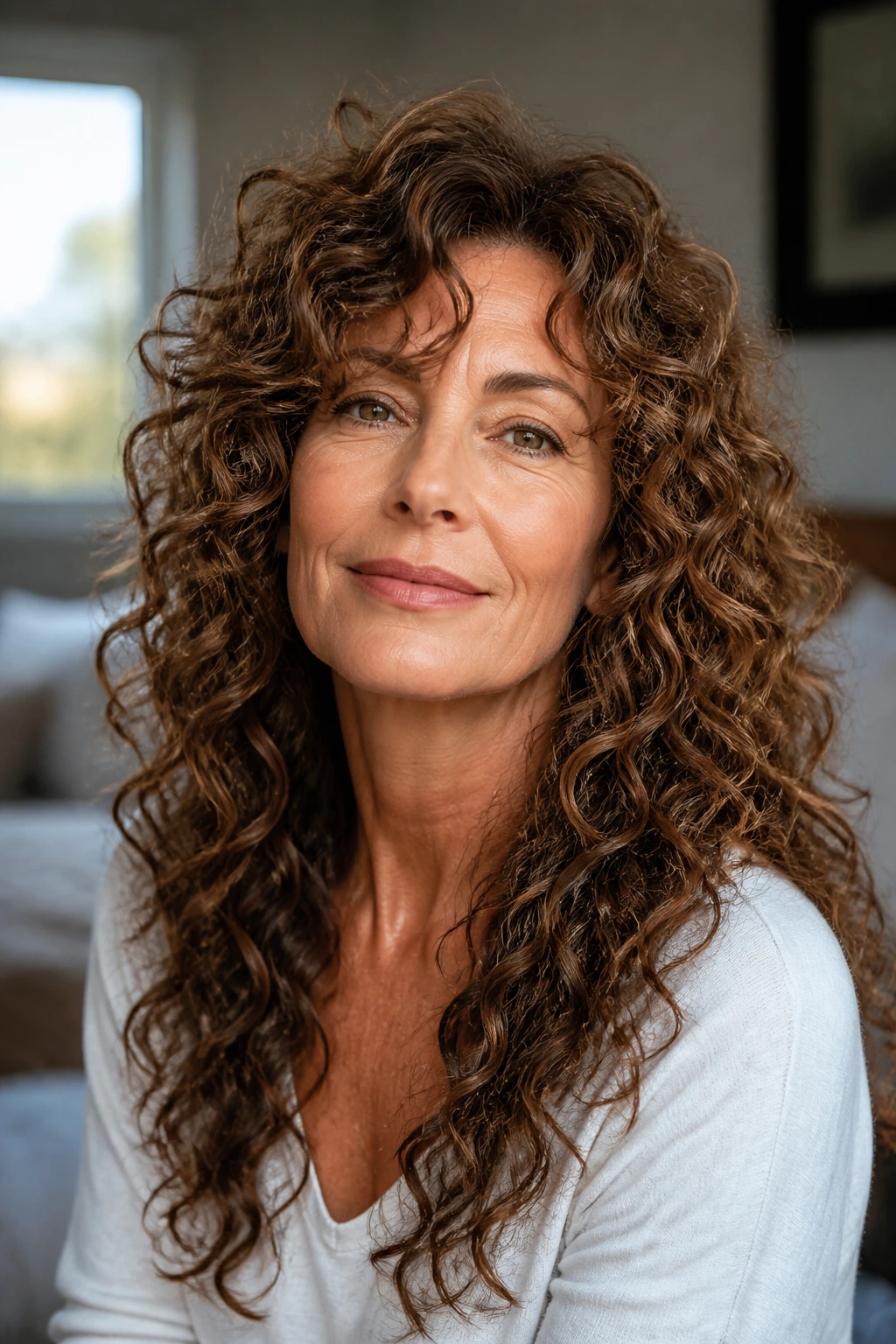
- Shape beats length. A long curtain of curls can look elegant, but only if the cut prevents the bottom from turning into a heavy triangle.
- Face-framing changes everything. Layers that start near the cheekbone or lip line soften stronger features and keep curls from swallowing the face.
- Curl-by-curl cutting respects shrinkage. A stylist who cuts curls dry can see where each bend lands instead of guessing.
- Silver hair needs cleaner edges. Gray and white strands can look crisp, wiry, or frizzy when the cut is too blunt; softer shaping usually fixes that.
- The right cut saves styling time. When the layers are placed well, your curls fall into place faster and need less coaxing after wash day.
- Density decides the finish. Fine curls, thick curls, and mixed-texture curls all need different weight removal, even if they’re the same length on paper.
1. Soft Long Layers with Rounded Ends
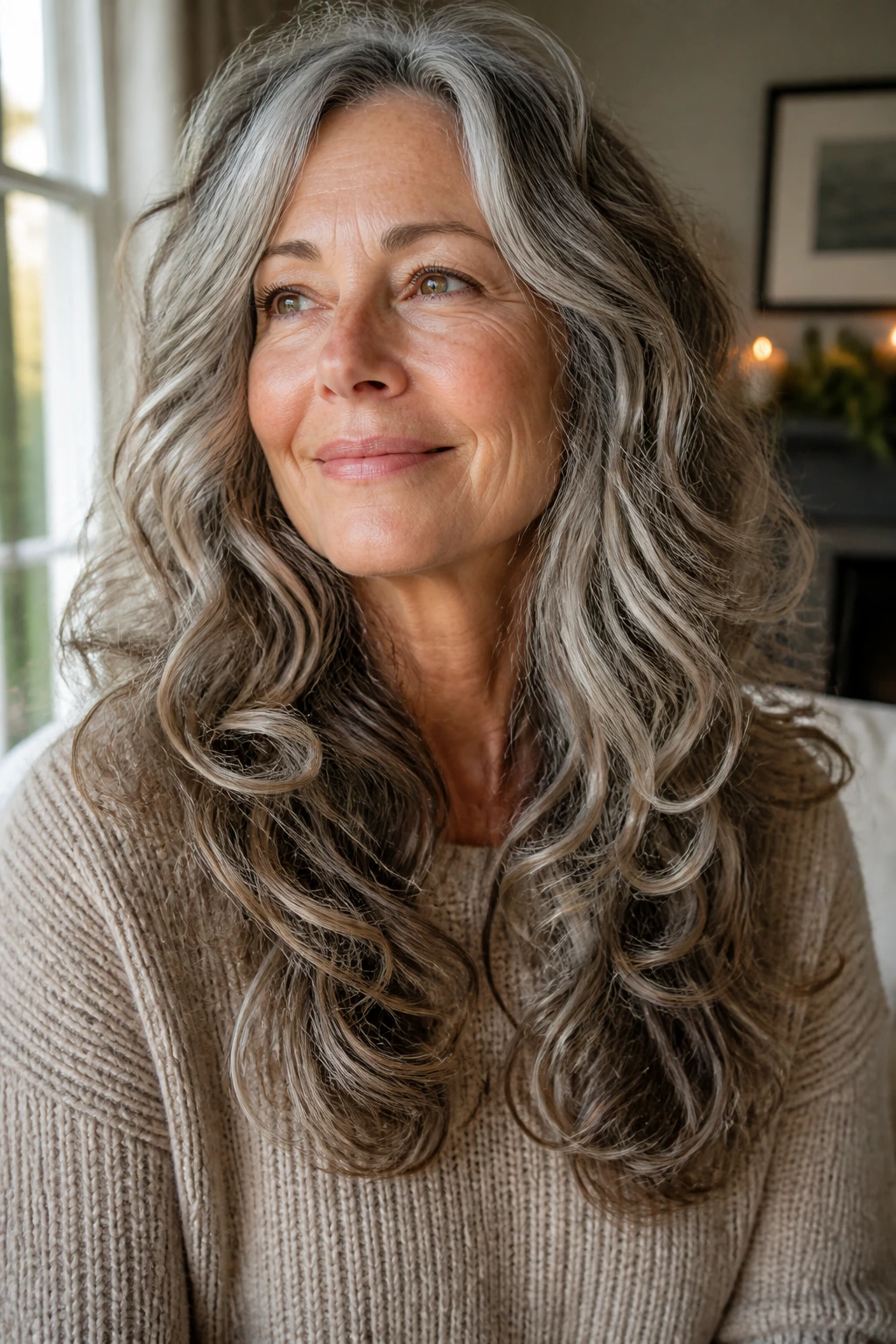
Soft long layers are the easiest place to start because they don’t fight the curl pattern. The ends stay rounded instead of chopping off abruptly, so the hair keeps a sense of length while still getting movement through the mid-lengths. On older women, that matters. A cut like this can make the face feel less pulled down without making the whole style look too trendy or too styled.
Why It Works:
The rounded perimeter helps curls sit in a soft arc instead of a heavy block. If your hair has enough density to hold length but not so much that it turns into a shelf, this cut gives you shape without drama. Ask for layers that begin below the chin if you want to preserve fullness around the face.
How to Wear It:
Diffusing this cut for 70 to 80 percent dry usually gives the best finish. Once the curls are mostly set, scrunch in a light serum at the ends and leave the top alone. Too much touching at the crown flattens the roundness you paid for.
2. Face-Framing Curtain Layers
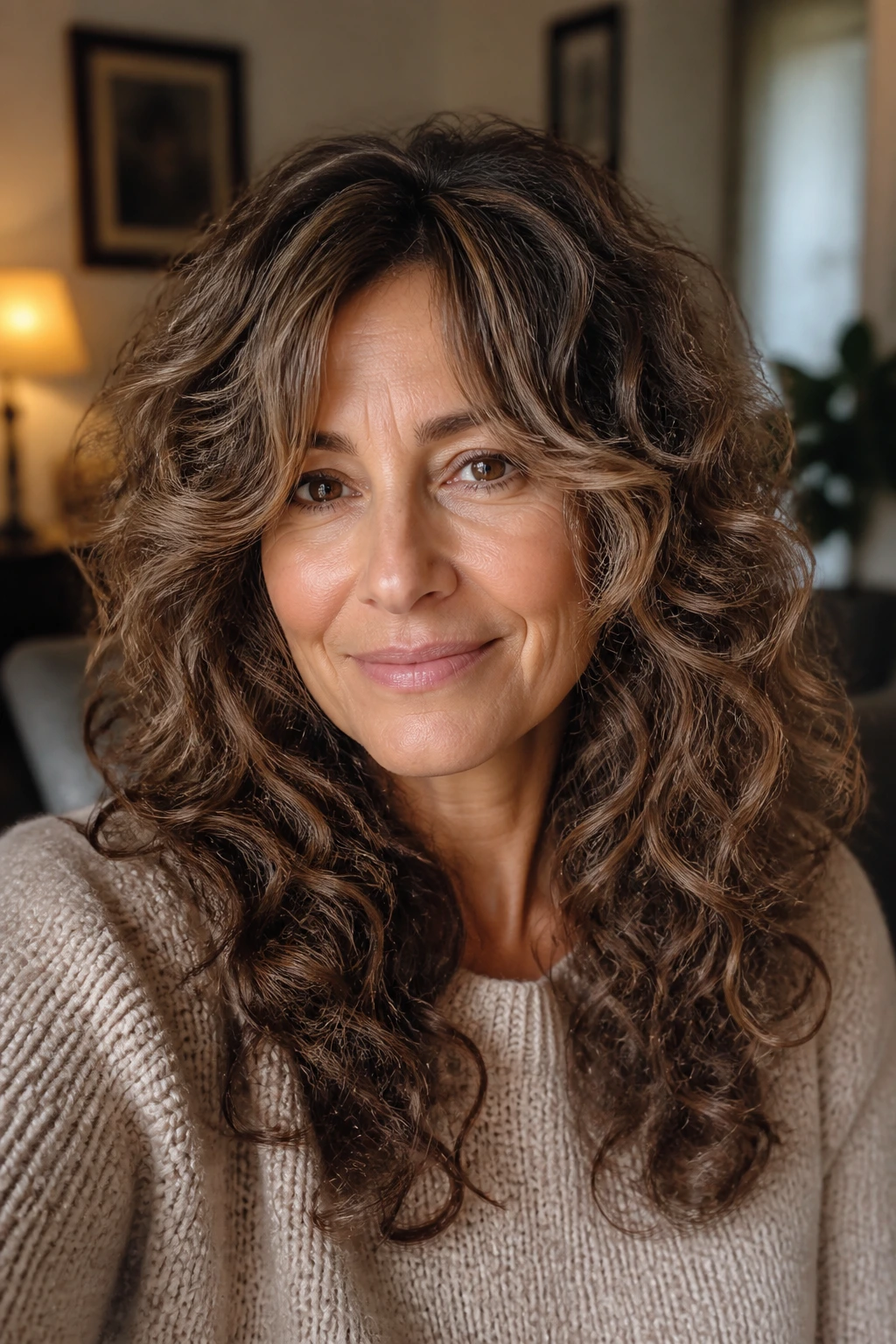
Do curtain layers work on curly hair? Absolutely — if they’re cut with the curl pattern in mind and not borrowed blindly from straight-hair trends. The trick is keeping the shortest pieces long enough to swing, not so short that they spring up to the cheekbones and stay there like little springs.
What Makes It Different:
Curtain layers open the center of the face and pull attention to the eyes and cheekbones. That’s a gift if your jawline feels heavier than it used to or if you wear glasses and want the frame of the hair to play nicely with the frame on your face. Ask for the shortest curl to land around the nose or mouth when dry, because curls can bounce up more than you think.
Best For:
This cut suits medium to dense curls and anyone who likes a little romance around the face without committing to bangs. It’s especially good if you tuck hair behind one ear now and then; the cut still looks deliberate when you do it.
3. Curly Shag with Cheekbone Lift
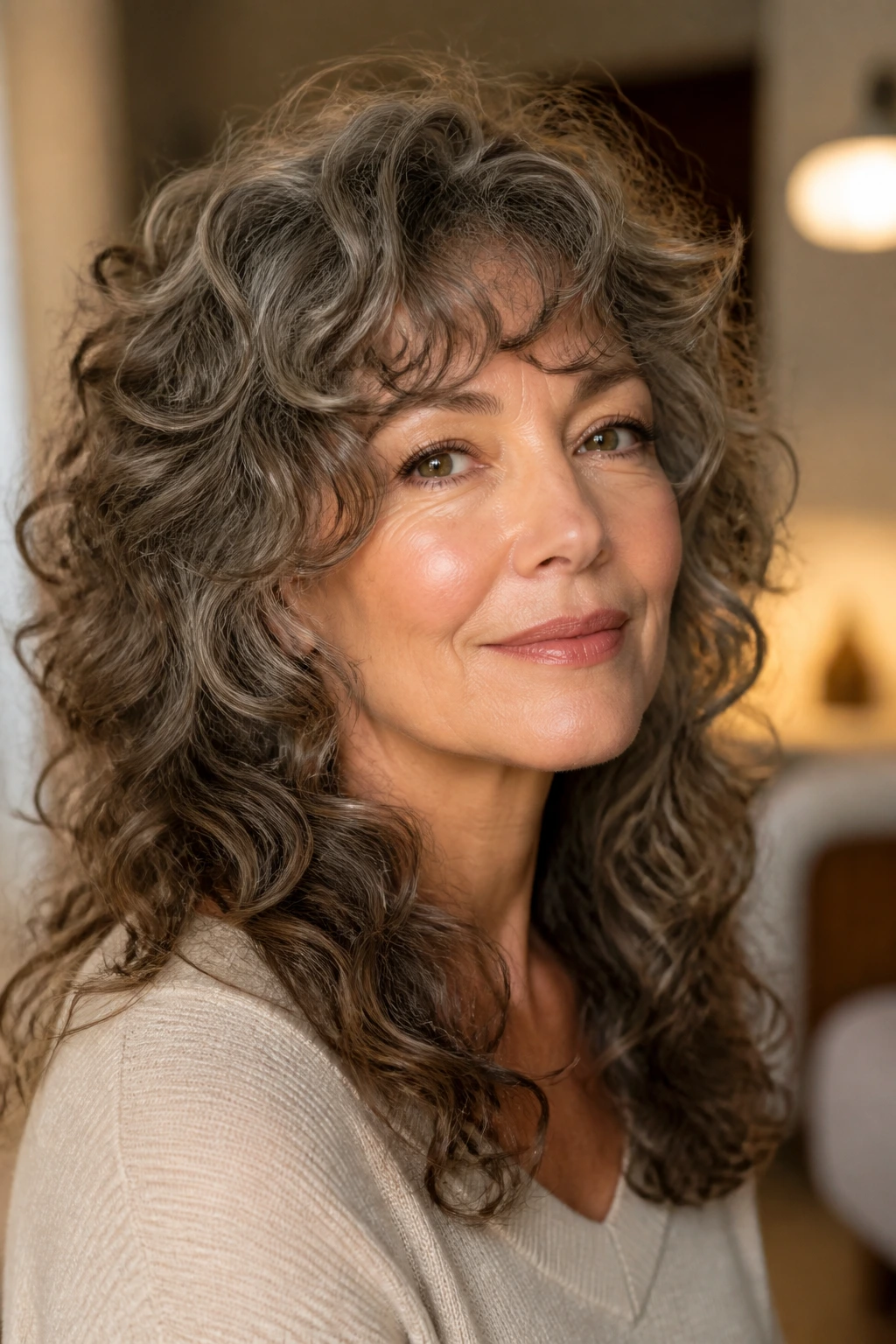
The shag is not just for the young and hyper-textured. On mature curls, it can look sharp in the best way — airy at the top, full through the sides, and a little rebellious without turning into a mess. The key is softness. You want lift, not jaggedness.
Why It Works
A curly shag removes weight high enough to give the crown some attitude, which is useful if your curls fall flat by noon. The cheekbone layers create movement right where the face wants it most. I like this cut on women who wear natural texture proudly and do not mind a little piecey definition.
Styling Cue
Use a curl cream first, then a small amount of mousse at the roots. That combo keeps the crown from collapsing while the ends still look flexible. If you go too heavy on butter-based creams, the shag loses its bounce and starts acting tired.
4. Butterfly Layers for Fuller Motion
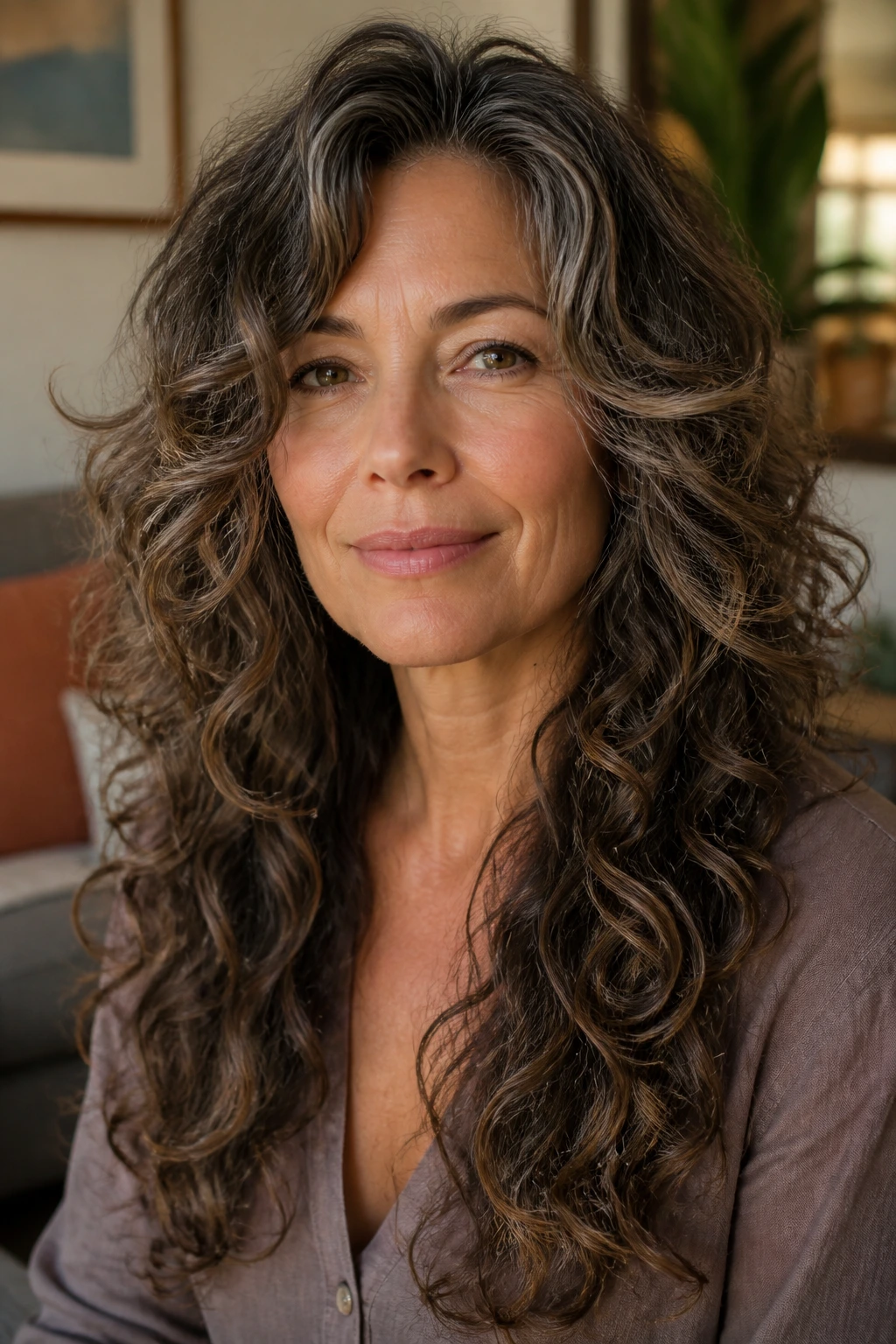
Butterfly layers can sound like a salon buzzword, but the shape makes sense on long curls. The upper layers are shorter, so they lift away from the head, while the lower length stays long and intact. You get the impression of fullness without losing the long line that many women want to keep.
Why It Matters:
This is one of the better long curly haircuts for older women who feel like their hair looks flat on top but still want to keep the drama of length. The top layers create movement around the crown and temples, which is where age-related thinning often shows first. The bottom stays long enough to keep the style elegant.
A butterfly cut does best when the stylist dry-checks the shape after cutting. If they don’t, the shorter layers can pop too far and make the silhouette choppy. You want the top to float, not poke.
5. U-Shaped Length for Big Curls
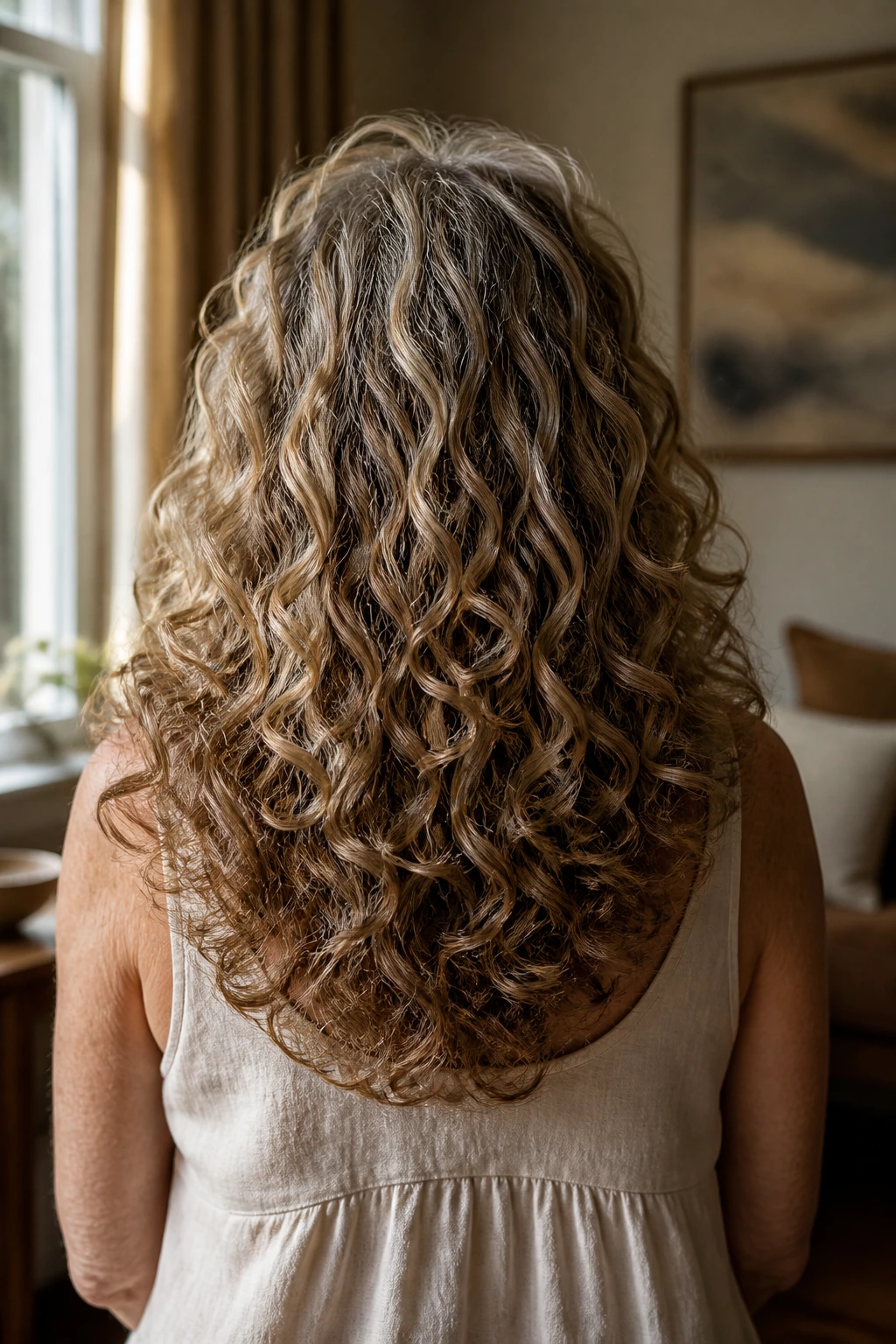
A U-shape is calm. That’s the appeal. The perimeter curves down gently in the back, which keeps the longest curls from looking harsh or boxy. On thick curls, this shape can be a lifesaver because it keeps the length dramatic while still giving the eye a line to follow.
Why It Works:
Unlike a blunt cut, the U-shape doesn’t stop the curls at one hard line. The curve lets the bottom layers stack naturally, which helps the ends look full instead of stringy. If your hair tends to spread outward at the sides, this shape can rein it in without flattening it.
Stylist Note:
Ask for the longest points to stay well below the shoulder blades if you want a real long-hair effect. The curve should be visible even when the curls shrink. Otherwise, the whole thing can look accidental.
6. V-Shaped Length for Dense Hair
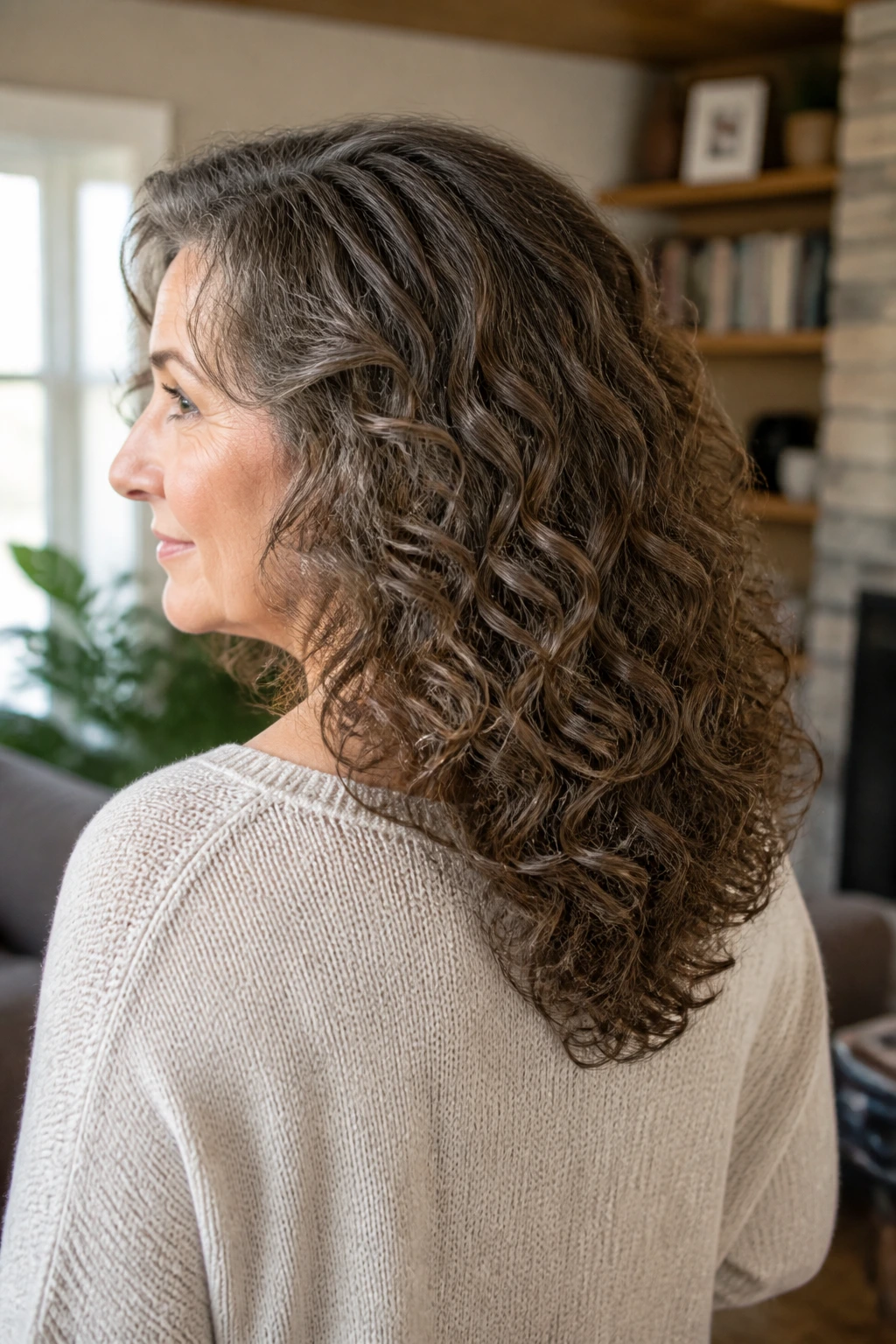
A V-shape does a different job. It narrows the silhouette at the back, which is helpful when the hair has a lot of density and starts to feel wide instead of long. I like this cut on women whose curls are abundant and who want the movement to fall downward, not outward.
The point of the V is not to make the hair edgy. It is to give the heavy back section a clear shape so it stops ballooning under sweaters, scarves, and collars. If your curls are thick and your neck feels buried in hair, this shape can bring the whole look back under control.
7. Long Invisible Layers
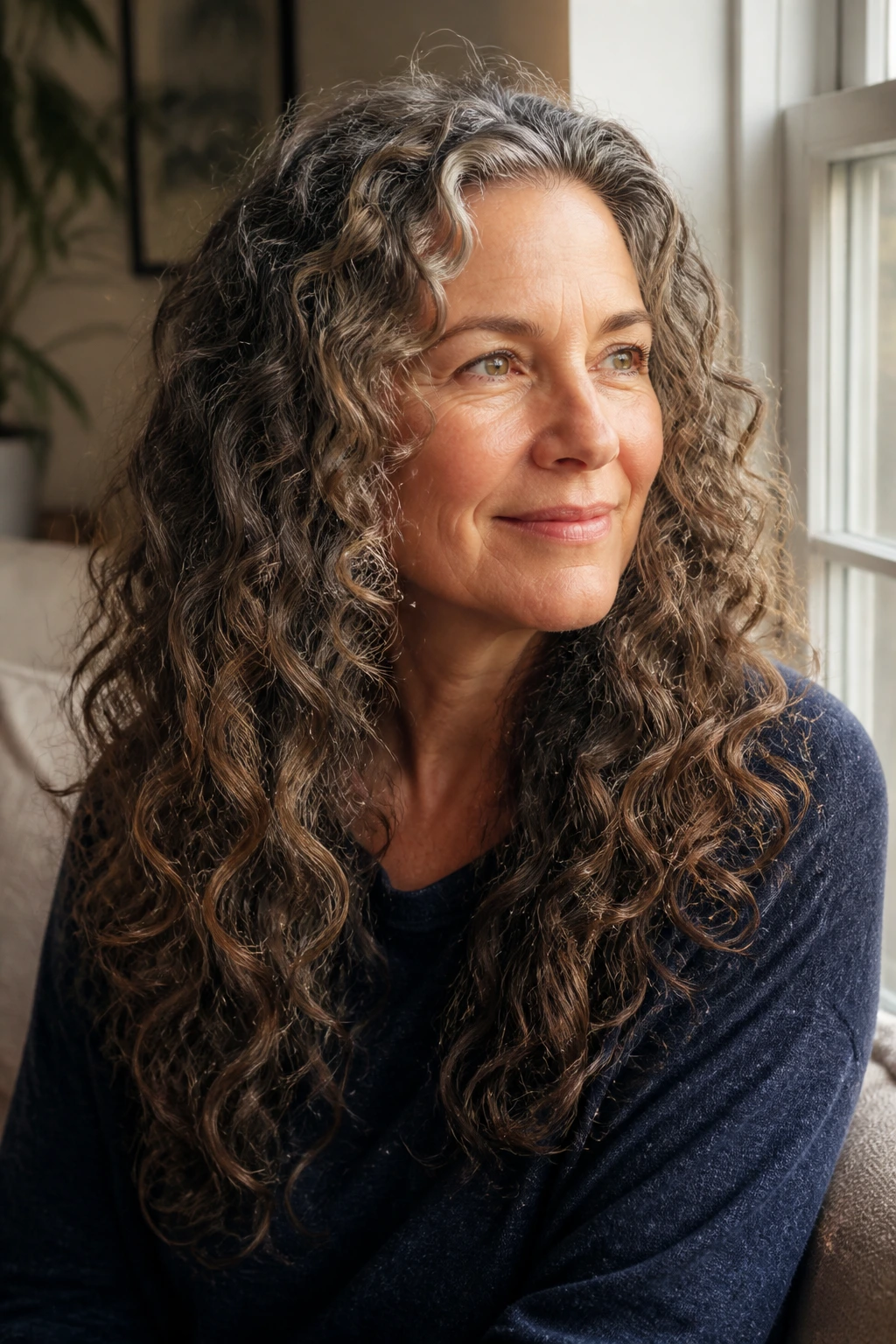
Invisible layers are the quiet workhorse of long curly haircuts for older women. You do not see the layers much when the hair is down, but you feel them when the curls move. The shape keeps the length intact while removing enough internal weight to stop the ends from dragging.
What to Ask For
Ask your stylist for interior layering, not short exterior steps. The outer line should still read as long and fluid. If the layers are too obvious, the style can start looking frayed instead of polished.
Best For
This cut is ideal if you want long curly hair that behaves in a ponytail, a half-up style, or loose around the shoulders. It’s also a smart choice if you prefer low-key hair and hate seeing obvious layer lines.
8. Curly Cut with Side-Swept Bangs
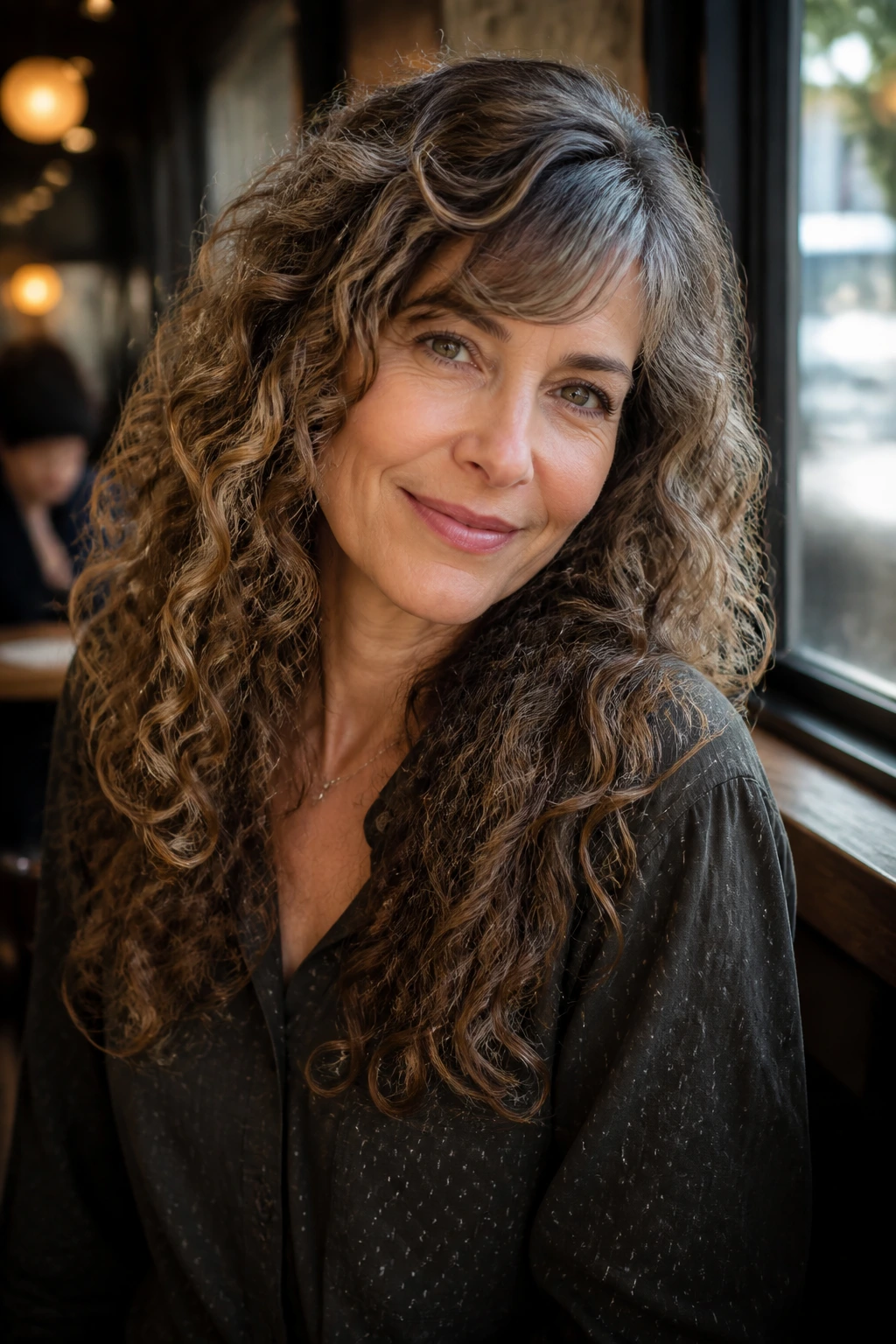
Side-swept bangs have a lot of range. They soften the forehead, hide uneven growth at the hairline, and blend into long curls without screaming “I got bangs.” That last part matters. Most women who try bangs with curls want change, not a constant maintenance project.
A side-swept fringe works best when the shortest curl can tuck across the forehead but still collapse into the side layers. If the bang is cut too short, it springs upward and can look more like a puff than a fringe. Ask for a longer starting point and trim gradually.
9. Deva Cut for Defined Ringlets
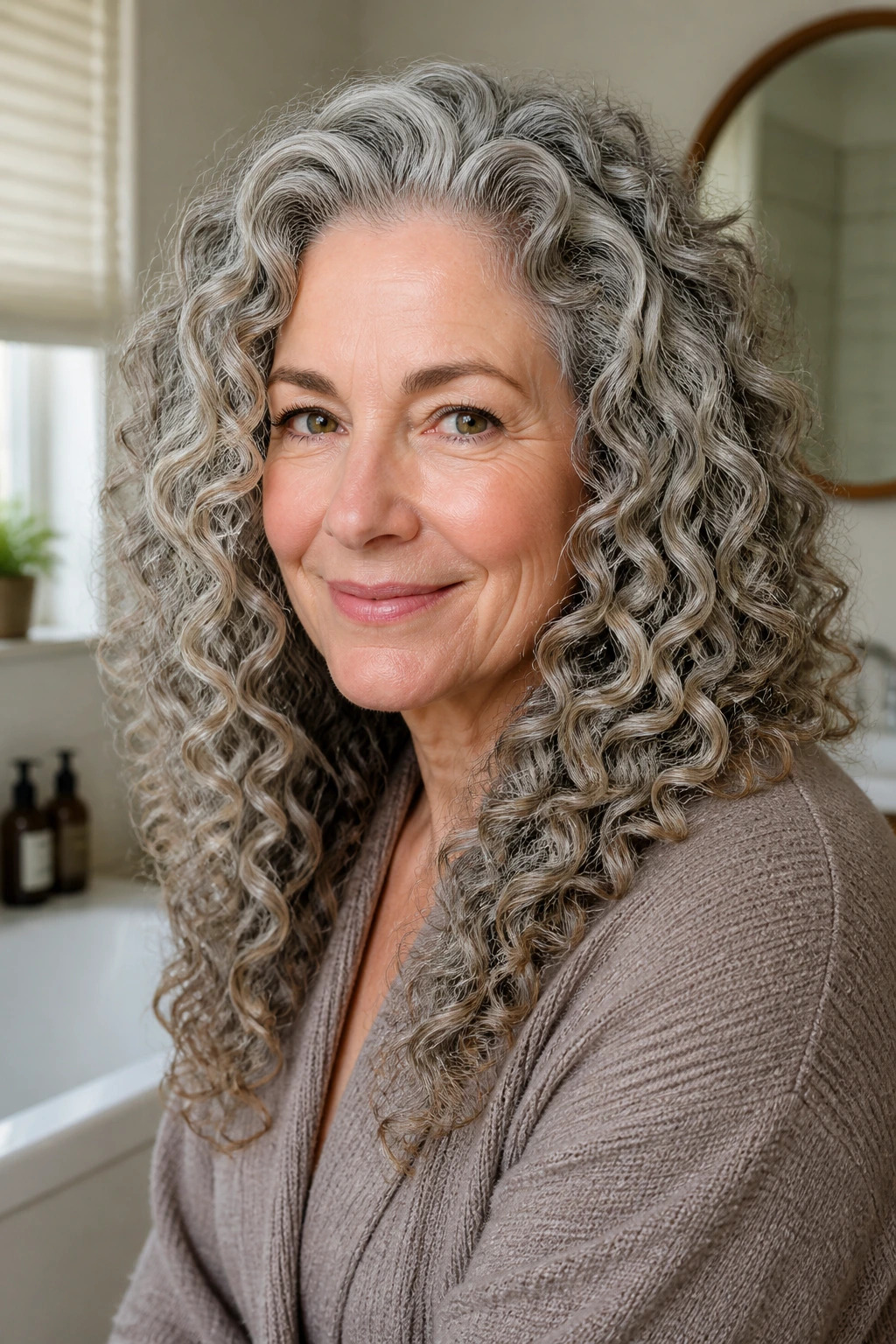
A Deva cut is not just a name people toss around. It means the stylist shapes curls in their natural dry state, often curl by curl, so the pattern is visible while the scissors are working. For women with defined ringlets, it can be the difference between “pretty good” and “why does my hair suddenly have a shape?”
The reason it works is simple: each curl has its own spring and bend. A wet cut guesses. A dry cut watches. If your curls are uneven from side to side or one front section is more stubborn than the other, this method handles that better than a straight-across approach.
10. Long Wolf Cut with Softer Edges
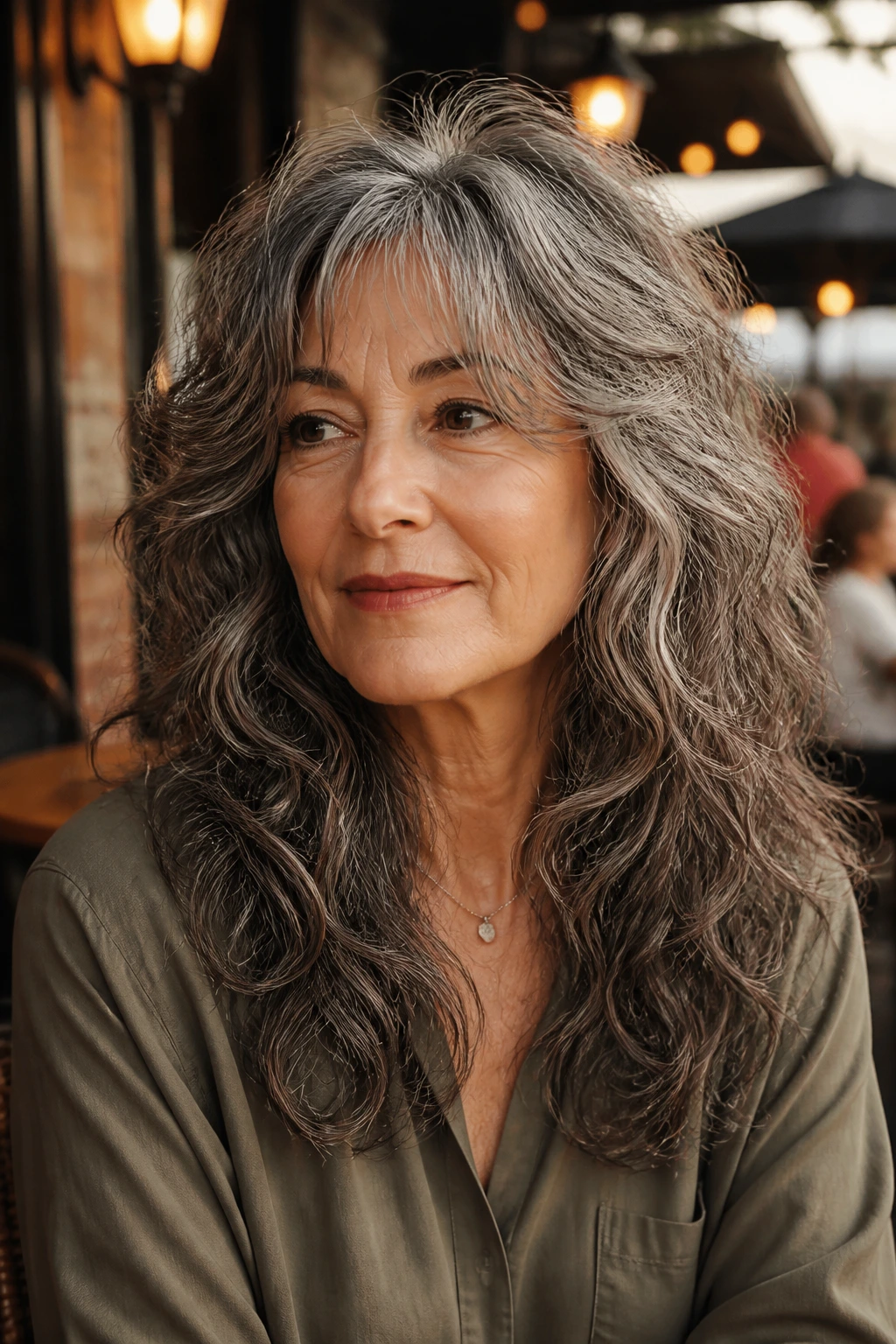
A wolf cut can be too much if it’s done aggressively on older hair. But softened, it becomes a smart, textured shape with lift at the top and a looser finish through the ends. Think of it as a shag’s slightly edgier cousin — less tidy, more movement.
The magic is in the blend. You want the top to feel lighter, but the bottom should not turn into a ragged fringe of curls. Ask for the perimeter to stay soft and for the shortest pieces to sit below the cheekbone. That keeps the whole look wearable instead of costume-y.
11. Waterfall Layers Around the Jaw
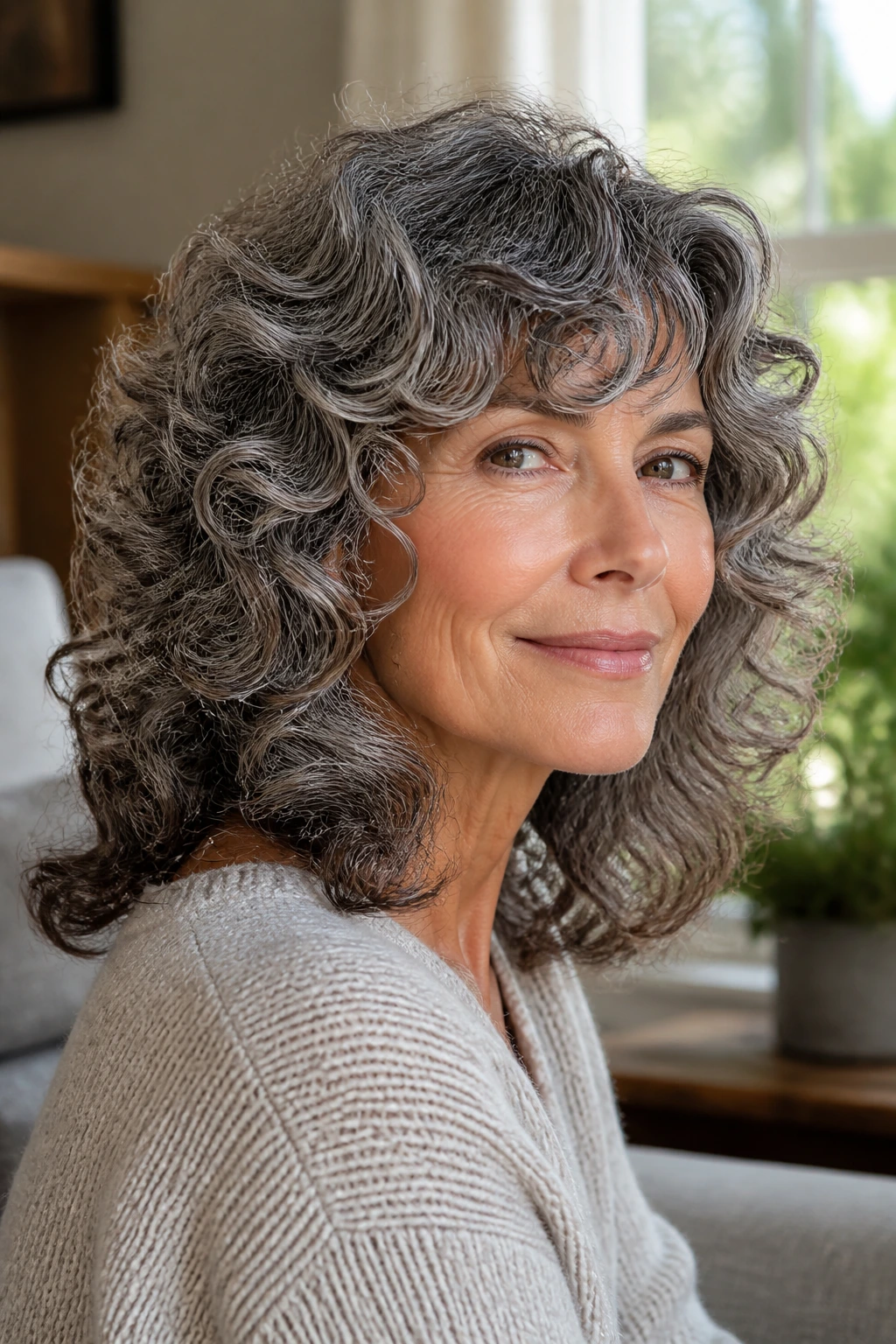
Waterfall layers move away from the face in a gentle cascade, which gives the jawline a cleaner line. That’s why I like them on women who want their curls to frame the face without crowding it. The shape creates motion right where the hair meets the cheeks and chin.
If your curls tend to puff at the sides, this cut can break that blocky look. It’s also useful when the lower half of the face feels stronger than it used to; the falling layers soften the contour without hiding your features. That balance is hard to beat.
12. Long Rounded Halo Cut
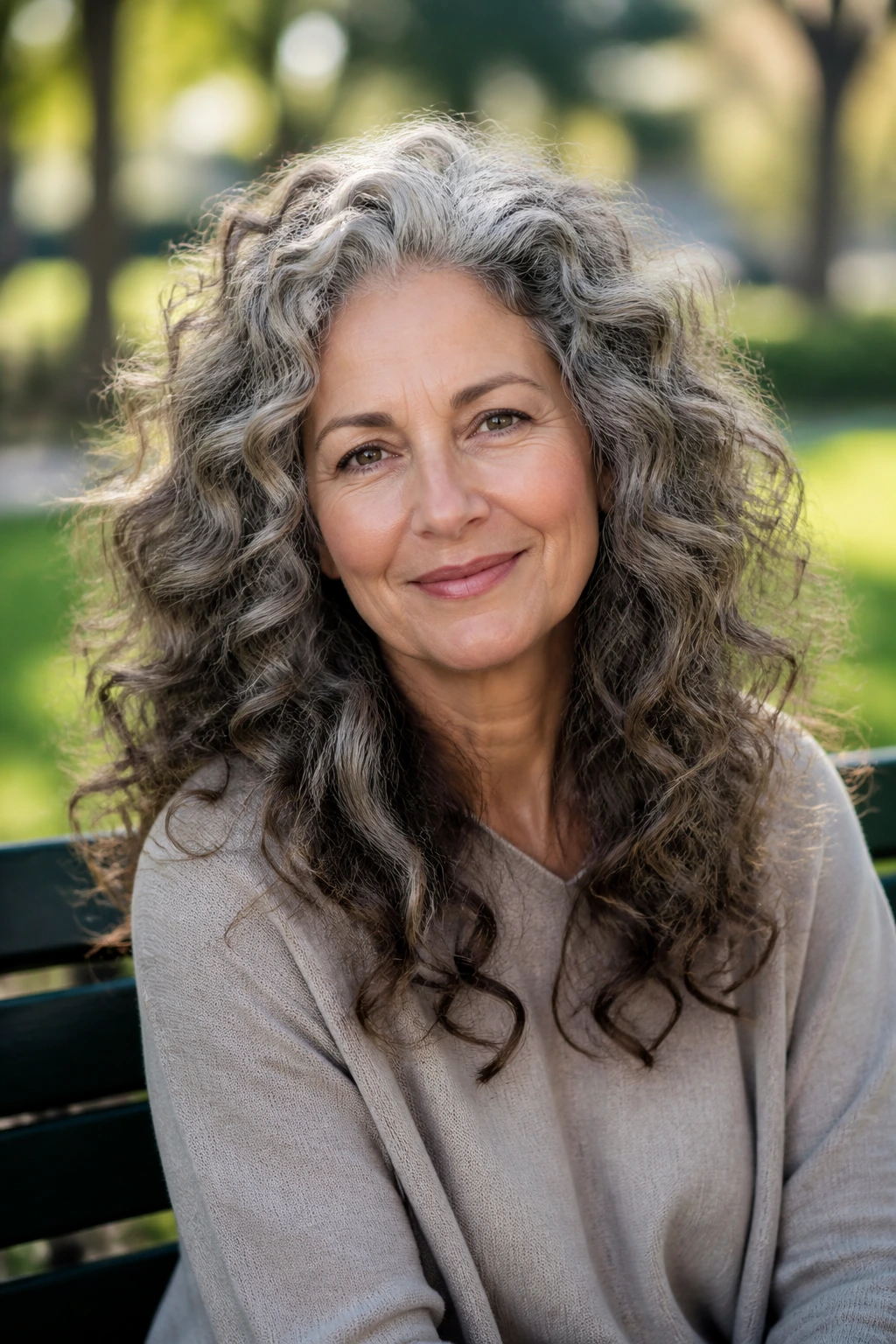
A halo cut circles the head with a soft, rounded shape instead of letting the hair hang straight down from the top. On curly hair, that means lift around the crown and a gentle fullness around the temples. It’s polished without being stiff.
Best For
This one flatters oval, heart, and slightly round faces because it keeps the silhouette soft. If you wear your hair mostly loose and like a bit of shape near the top, the halo effect can make the whole style feel lighter.
Watch the Crown
The crown layers should not be too short, or the shape turns fuzzy. Long curly haircuts for older women need enough length at the top to avoid a helmet look. That’s the line you’re walking here — rounded, not puffy.
13. Tapered Ends for Heavy Hair
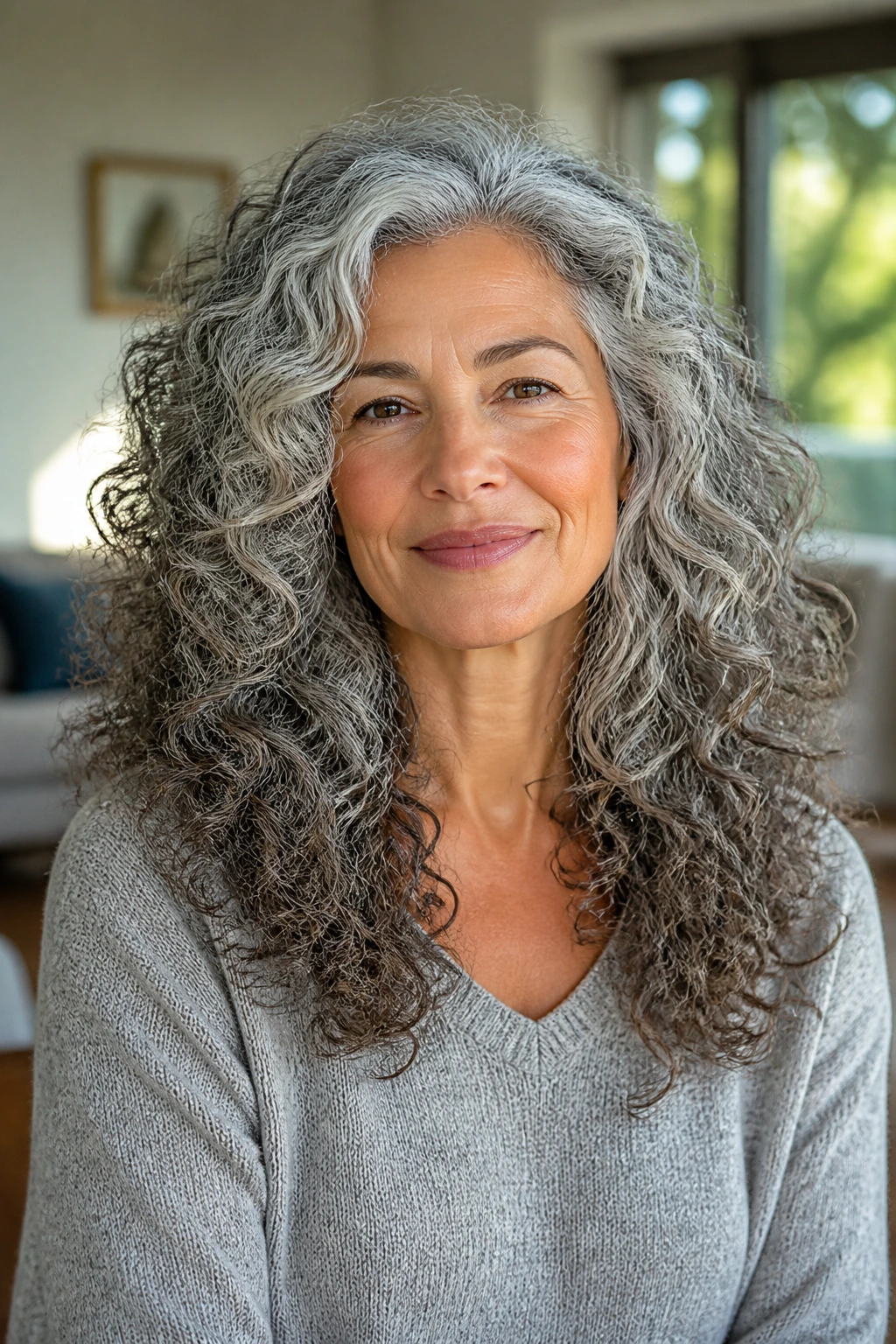
Tapered ends help when the hair is thick enough to feel like a blanket. Instead of a blunt mass at the bottom, the ends narrow slightly so the curls stack with more air between them. It’s a practical move, not a flashy one, and I respect that.
The upside is instant: the hair looks lighter on the shoulders and dries with less of that heavy, wet-dog droop some dense curls get. The downside is obvious if the taper goes too far — the ends can look thin. Ask for a soft taper, not a severe one.
14. Long Layers with Bottleneck Bangs
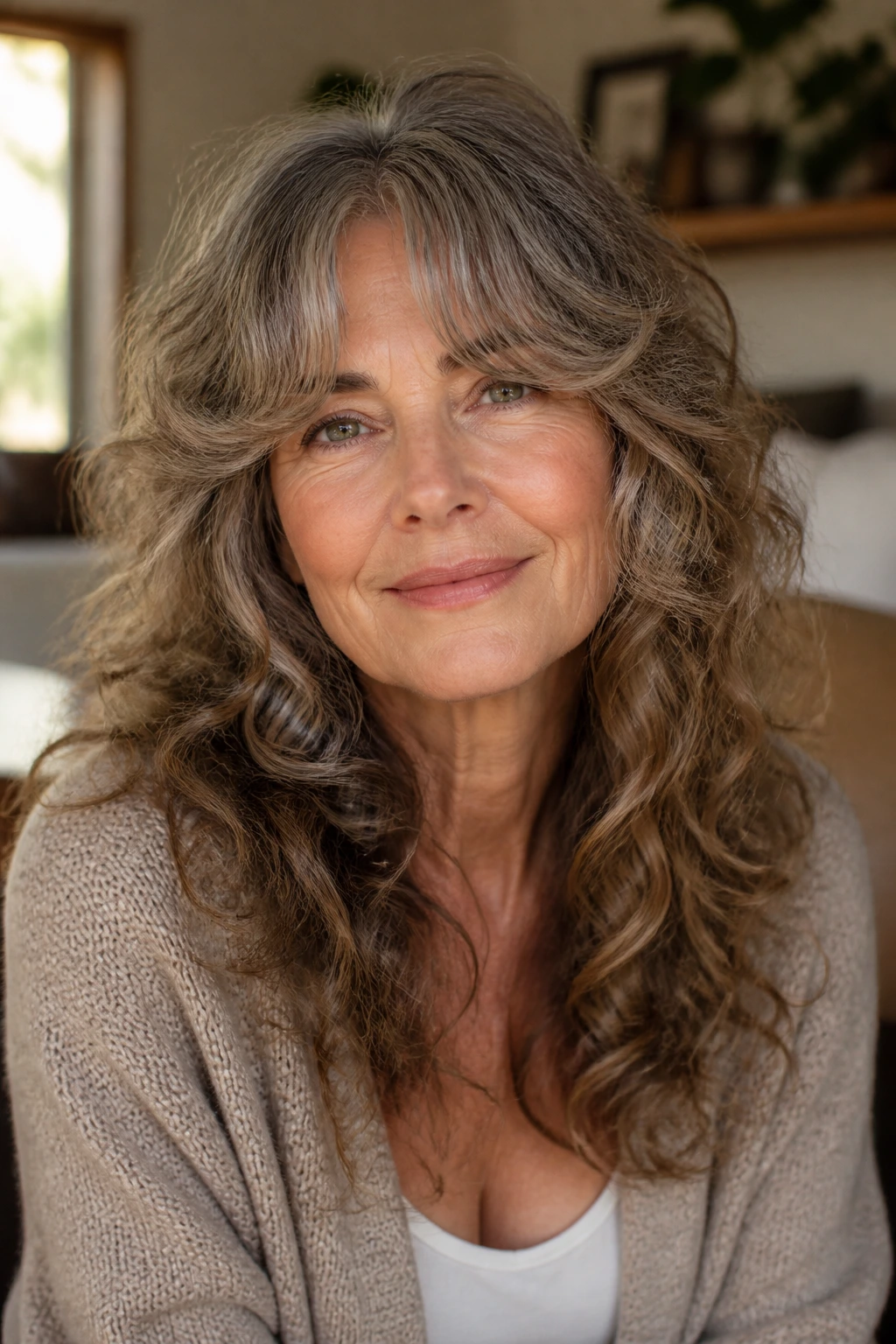
Bottleneck bangs are a smart compromise. They open in the middle and soften at the sides, which gives you the effect of fringe without the hard line of classic bangs. On curls, they can be especially flattering because the shape can follow the hair’s natural bend instead of fighting it.
The layers should start high enough to support the fringe but not so high that the whole style becomes top-heavy. This cut works well when you want a fresh shape around the eyes and still want to pull the rest of the hair back on busy days. It’s a good “I want change, but not a makeover” cut.
15. Deep Side Part and Sweep
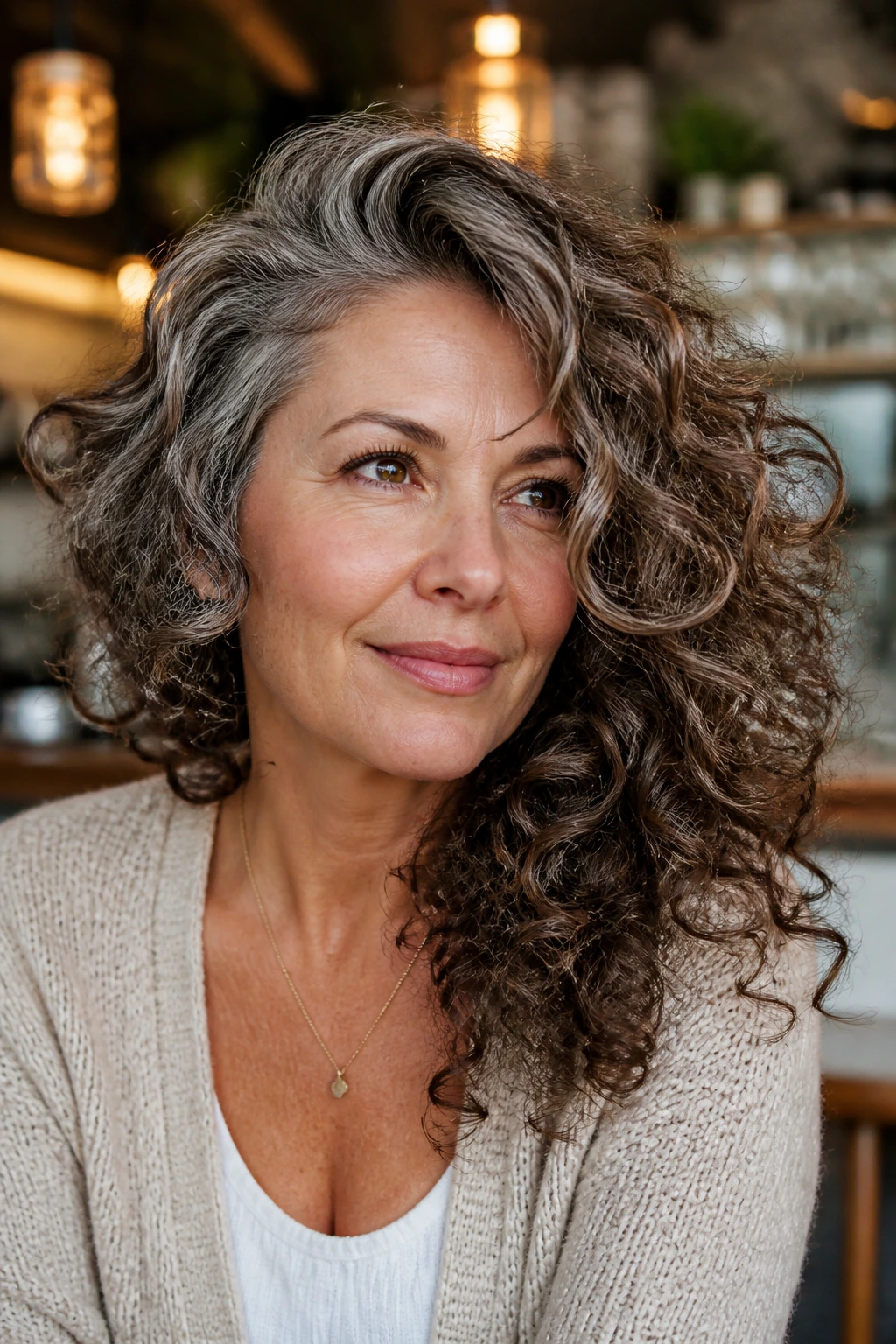
Sometimes the haircut stays the same and the part does the heavy lifting. A deep side part changes where the curls fall, creates instant lift at the root, and gives the face a diagonal line that can be surprisingly flattering. It’s one of the cheapest shape changes you can make.
Use this with a layered long cut or even a simple rounded shape. The side sweep is especially nice if one side of your hair lays flatter than the other. A clean side part also helps break up symmetry, which can make the whole style feel more alive.
16. Long Spiral Layers for Fine Curls
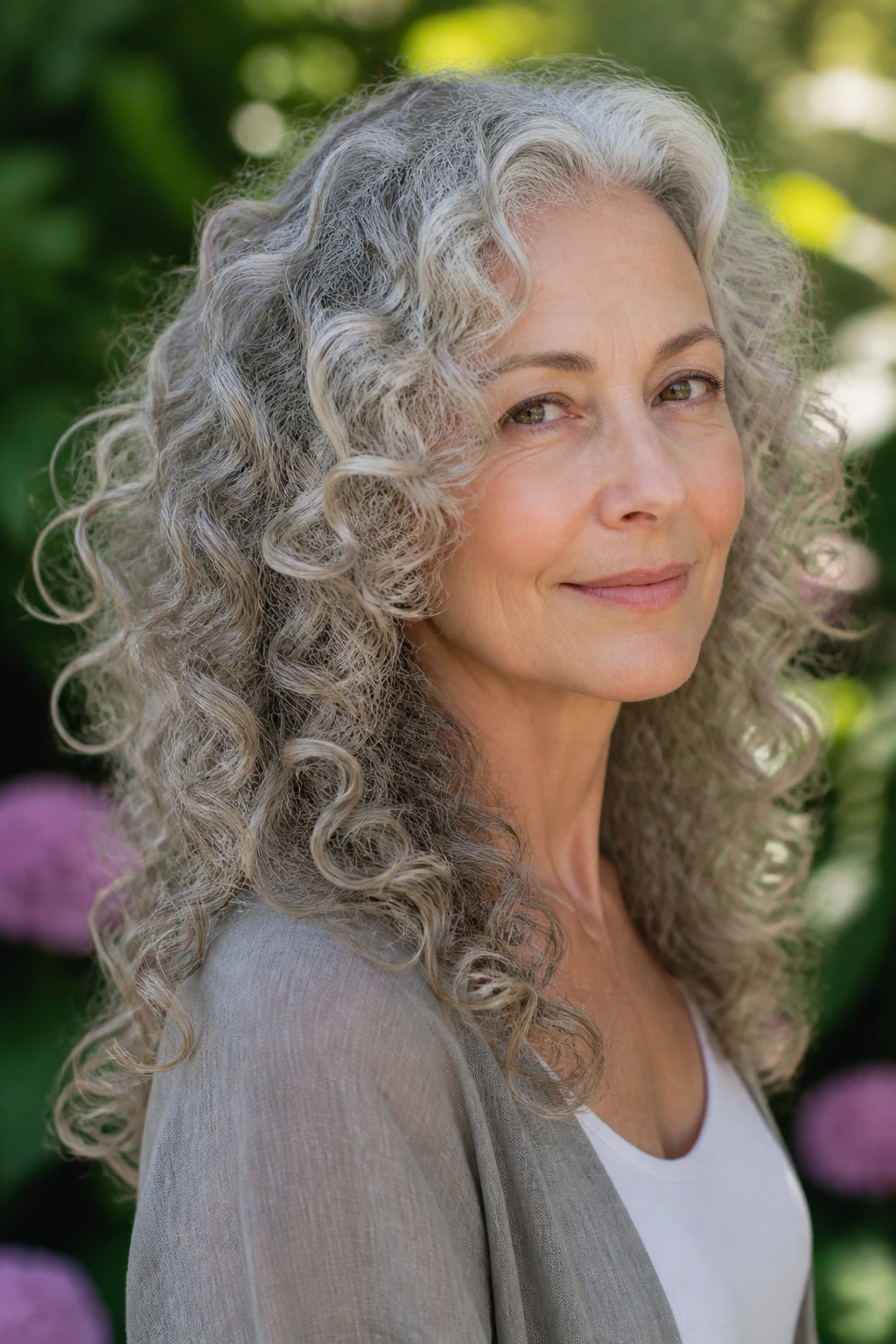
Fine curls need a careful hand. Too many layers and the ends go wispy. Too little and the hair hangs like it forgot what it’s supposed to do. Spiral layers solve that by keeping the shape moving in a soft rotation down the length.
Why It Works
The cut keeps the overall line long while giving the curls enough space to spring. That matters if your hair is fine but plentiful, or fine and a little fragile at the ends. I’d rather see a few strategic layers than a heavily shredded shape that needs constant fixing.
How to Wear It
Use a lightweight leave-in and skip heavy butters. Fine curls lose their shape quickly when overloaded, and a spiral cut only looks good when the hair can actually move.
17. Silver-Highlight Layered Cut
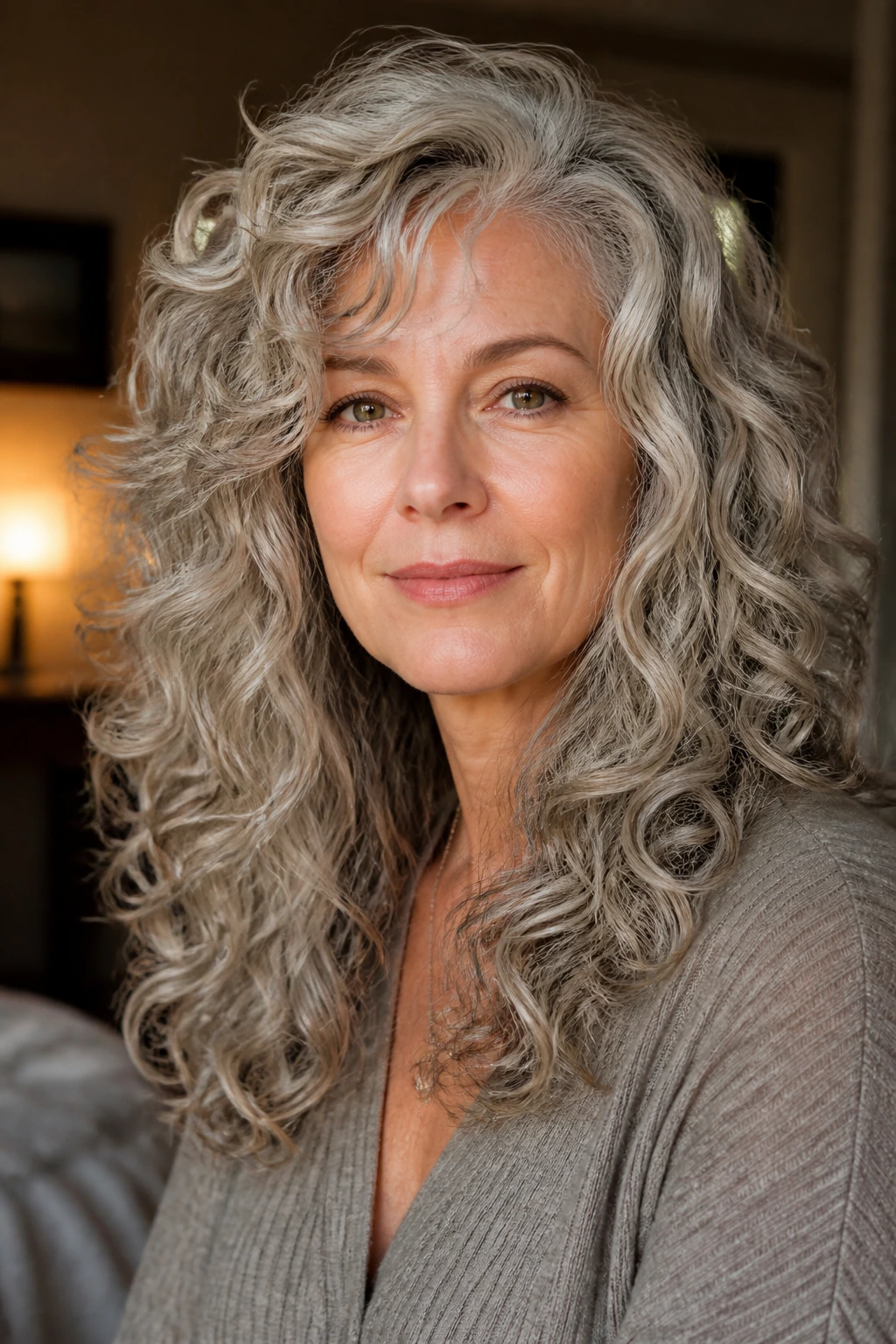
Gray and silver curls have a specific look — crisp, bright, and a little reflective. A layered cut can play that up by creating movement where the light catches. The result is less about covering age and more about making texture and color work together.
I love this on women who wear their silver proudly. The layers keep the hair from reading as one solid mass, and the lighter strands can show dimension in the curl pattern. If your silver hair is coarse, softer layers around the front can stop it from feeling too bristly.
18. Long Cut with a Soft Fringe
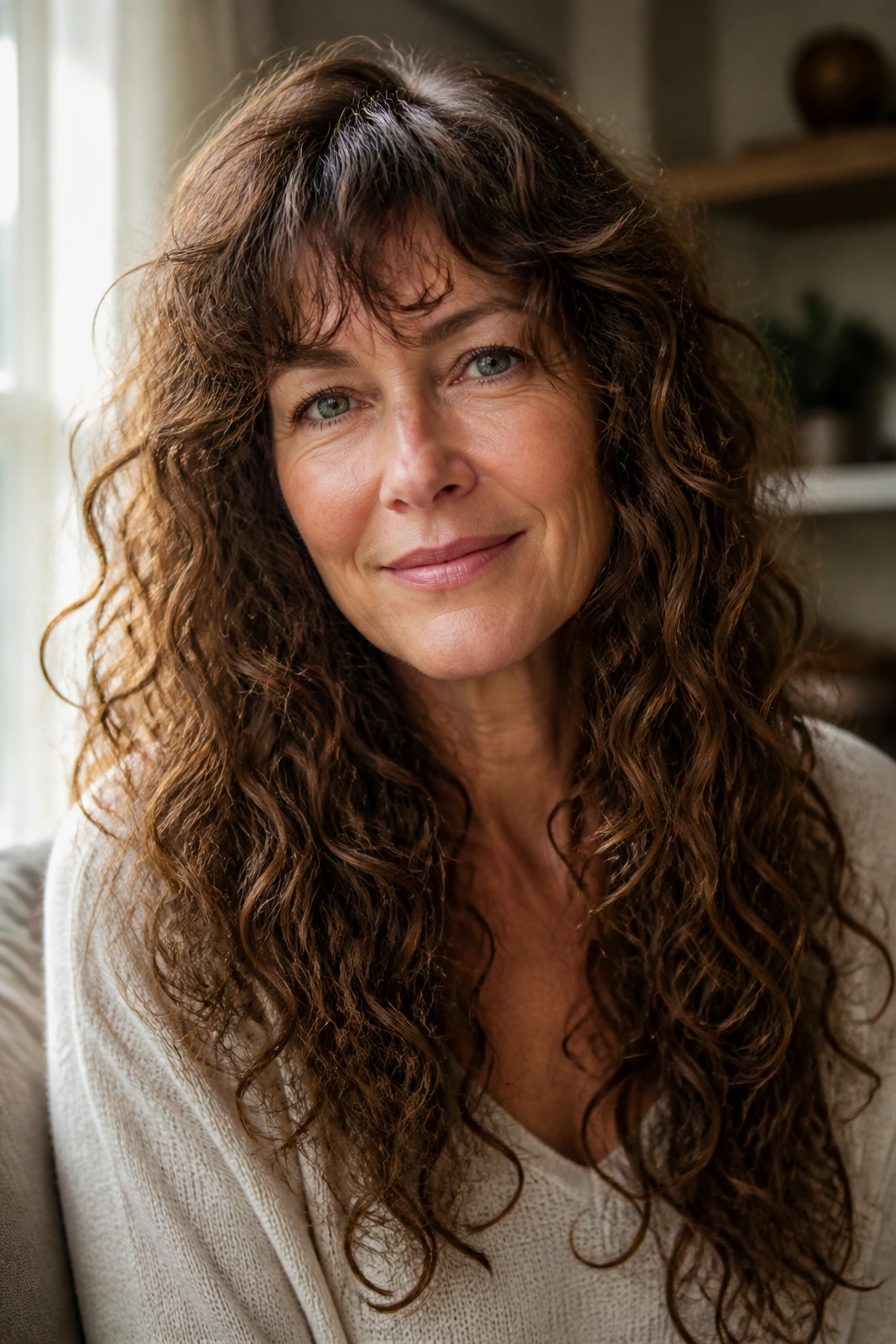
A soft fringe sits somewhere between bangs and face-framing layers. It’s lighter than a straight bang and more forgiving when you want forehead coverage without daily styling battles. The fringe should blend, not sit there like a separate object.
This is a good cut if you like your forehead softened but do not want the commitment of a heavier fringe. Keep the shortest curls a touch longer than you think, because curl spring can steal length overnight. A little extra length at the start makes the fringe wearable.
19. Full-Length Shape with Crown Lift
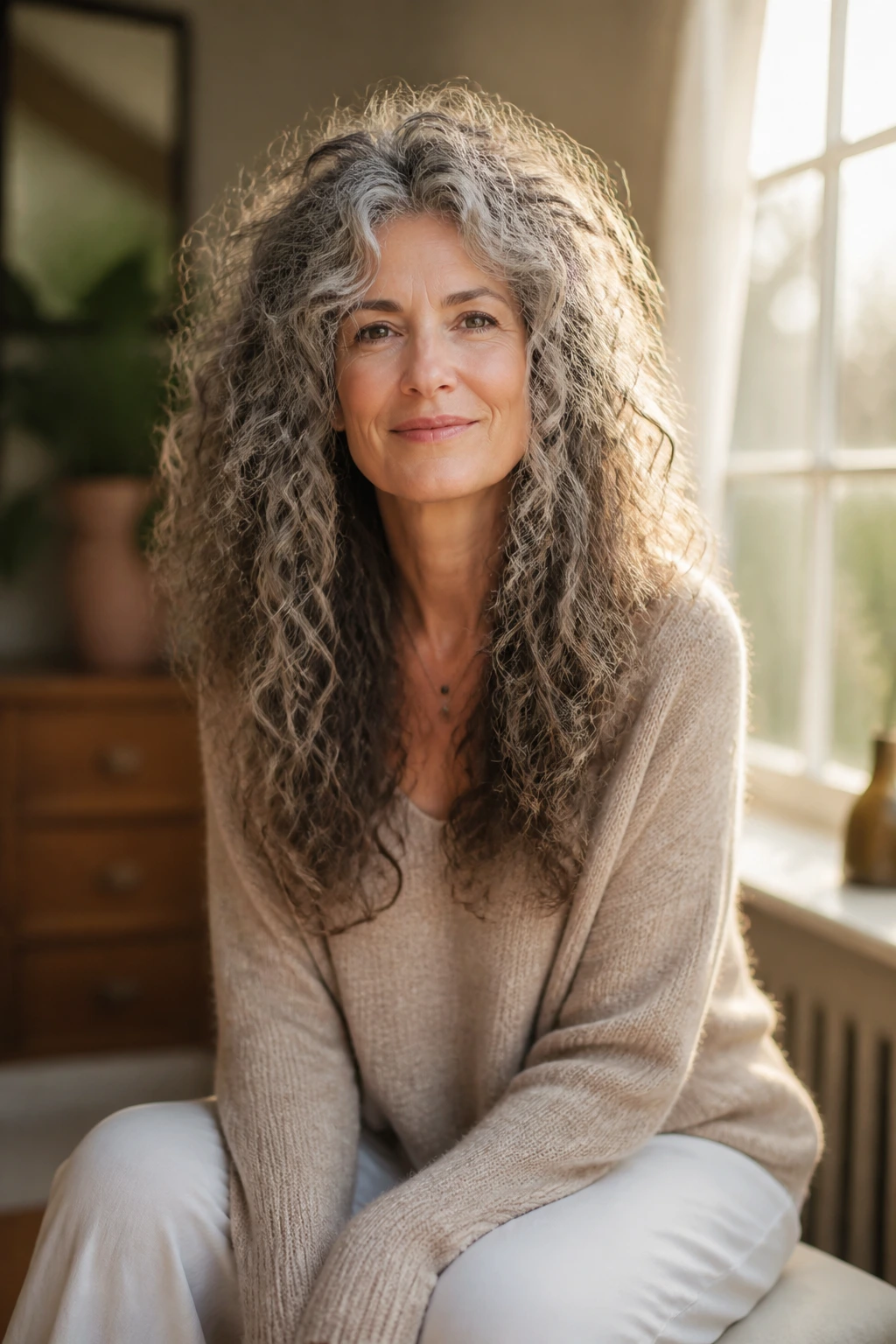
Flat crown? This one’s for you. A full-length shape with crown lift keeps the perimeter long and builds enough body at the top to stop the hair from lying flat against the scalp. That’s a common problem with mature curls, especially when density has thinned near the roots.
The lift should be subtle, not spiky. Think buoyancy, not volume for its own sake. If the top is too short, the hair can turn into a mushroom shape, and nobody wants that.
20. Long Cut with Internal Layers
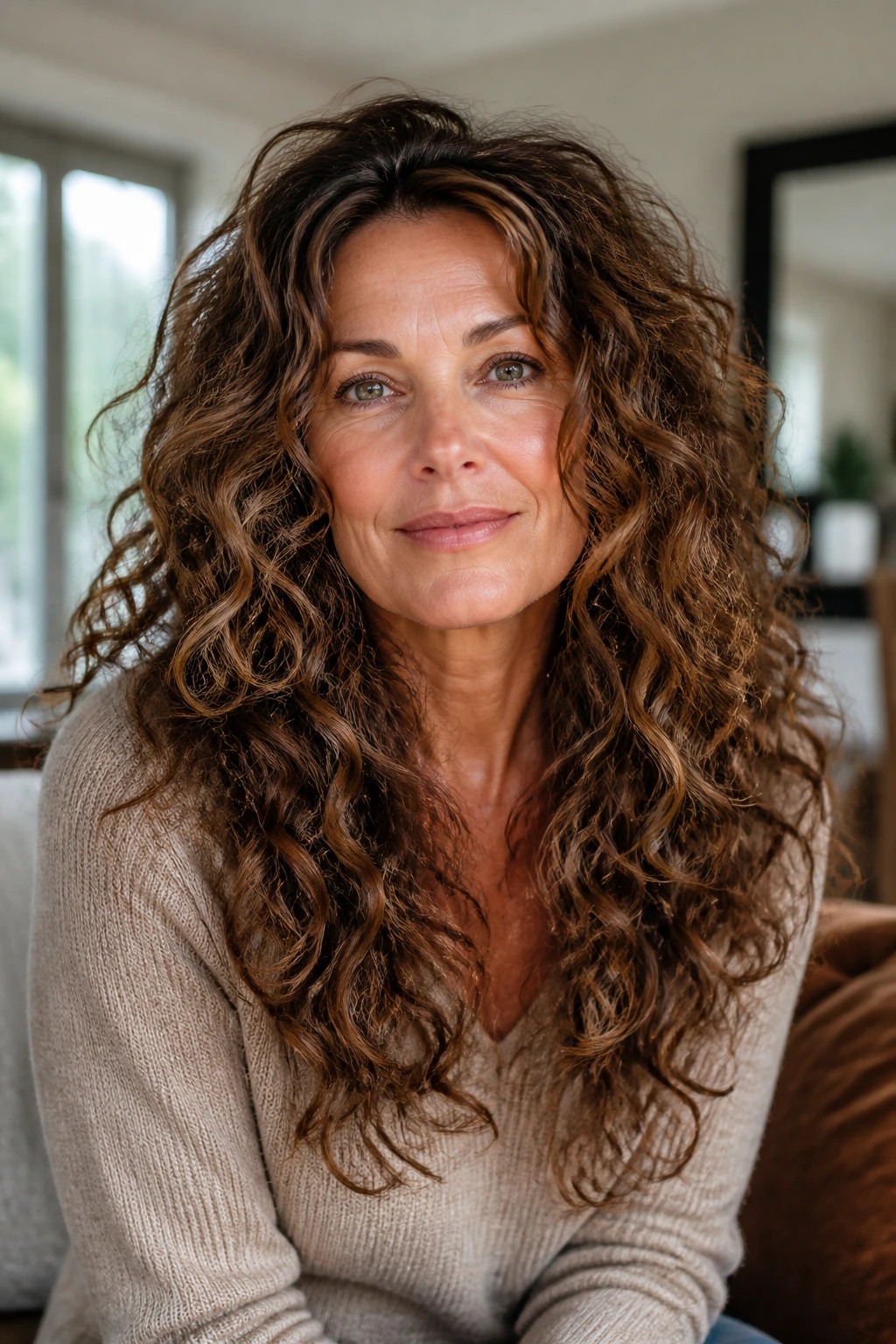
Internal layers are the secret weapon when you want to keep the outside line smooth. They take weight out from the inside of the cut, which helps curls stack and move without showing obvious steps. This is one of my favorite options for women who like polish.
It’s especially good if the ends feel heavy but you do not want layers all around your face. The cut still moves, but the shape stays calm. That makes it easier to wear with glasses, earrings, scarves, and all the things that can tangle with a highly layered style.
21. Loose Glam Layers for Big Waves
Loose glam layers are for women whose curls lean more wave than ringlet. The shape keeps the hair long and flowing, while the layers encourage those larger bends to fall in a clean cascade. It has a little red-carpet energy, only less fussy.
The trick is to avoid over-layering the lower half. Big waves need some weight to keep their pattern. Strip too much out and the hair loses that soft sweep that makes the style feel expensive in the best way — not flashy, just well-shaped.
22. Length-Retaining Cut for Low Maintenance
Not everyone wants drama. Some people want long curls that look good on day one and still look fine on day three. A length-retaining cut keeps most of the hair’s weight and shape while adding only enough layers to prevent the ends from dragging.
This is the sensible choice if you air-dry often or rarely want to restyle. It gives you enough structure to avoid the triangle effect, but it doesn’t ask for daily fuss. If your life is already full, this cut respects that.
23. Layered Cut with Tucked-Behind-Ears Shape
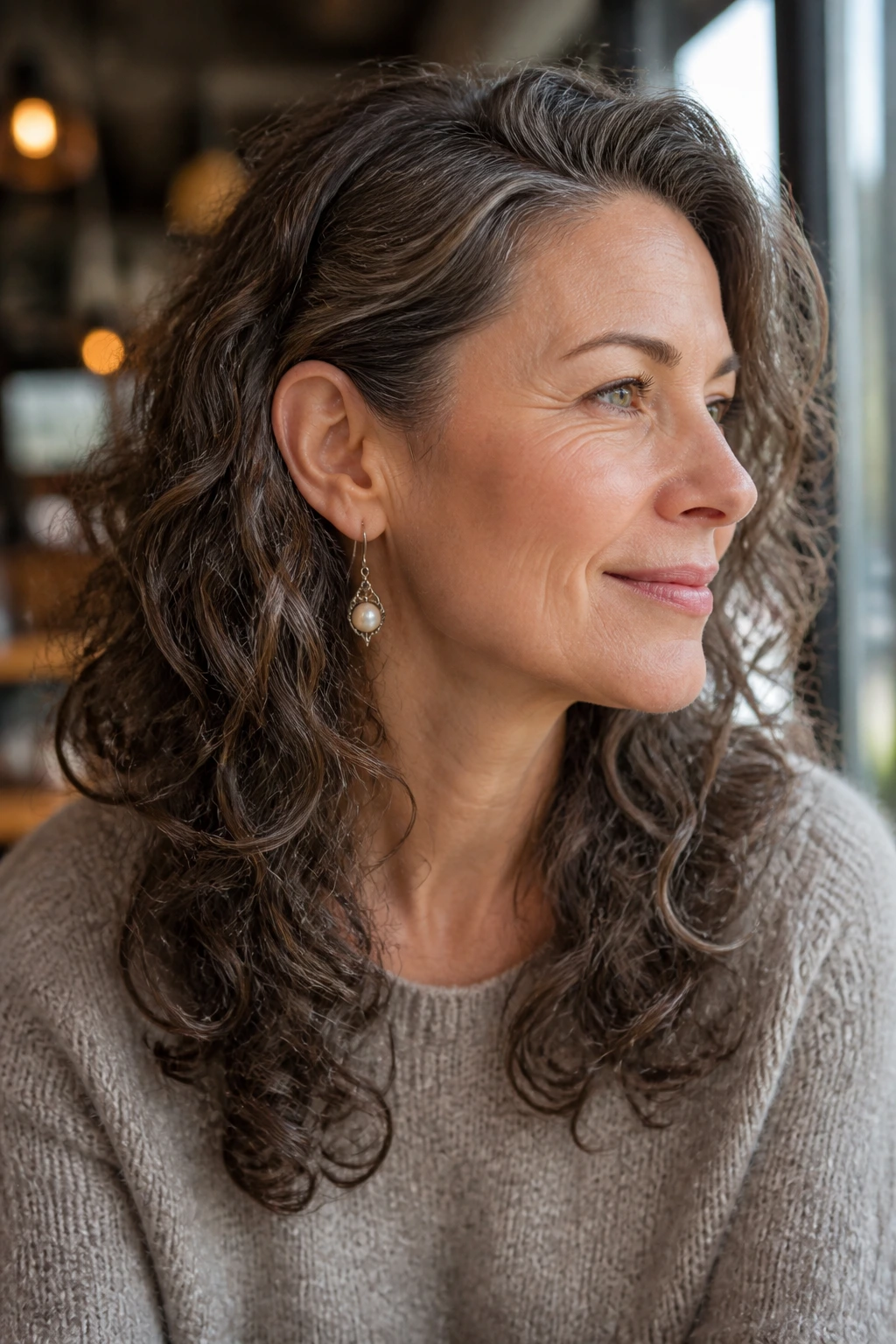
This cut is built for the way many women actually wear their hair — tucked behind one ear, clipped back on one side, or swept off the face when they’re working. The layers around the ears and jaw are shaped to look intentional in that tucked position.
The payoff is subtle but real. A lot of long curly cuts look fine only when the hair is hanging untouched. This one still looks styled when you move it around. That’s worth something.
24. Long Curl-by-Curl Sculpted Cut
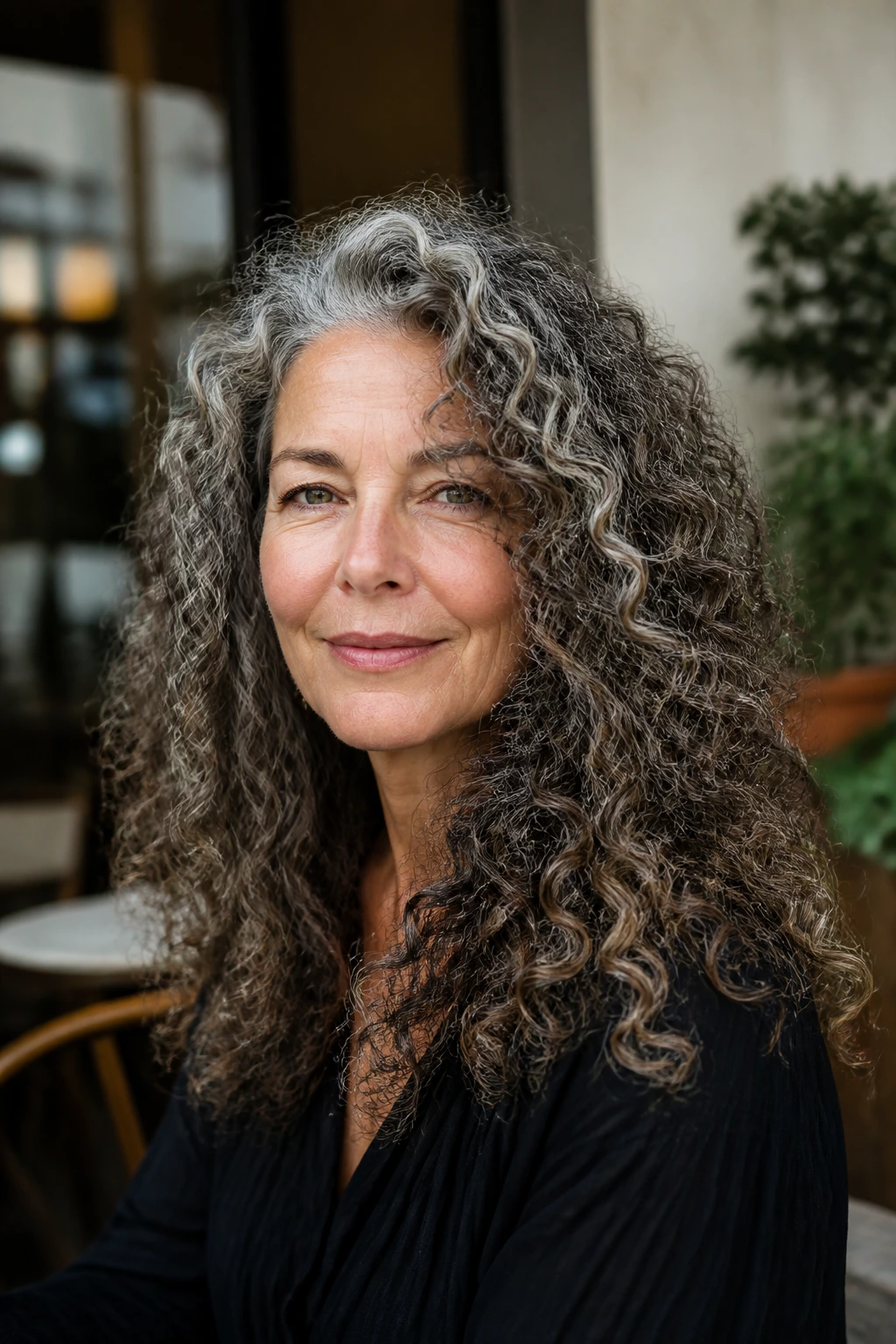
This is the meticulous option. A curl-by-curl sculpted cut treats each section like it has its own job, which is useful if your curl pattern changes from the front to the back or if one side has a stronger bend. The result can look incredibly natural because it follows the hair you actually have.
Best If You Have Mixed Texture
If the top is looser, the sides are tighter, or the front grows in a different pattern than the crown, this style handles those transitions without forcing symmetry. It’s not the cheapest or quickest salon service, but the shape often lasts because it was built around the curls, not around a ruler.
25. Long Cut for Thick Coils and Mixed Texture
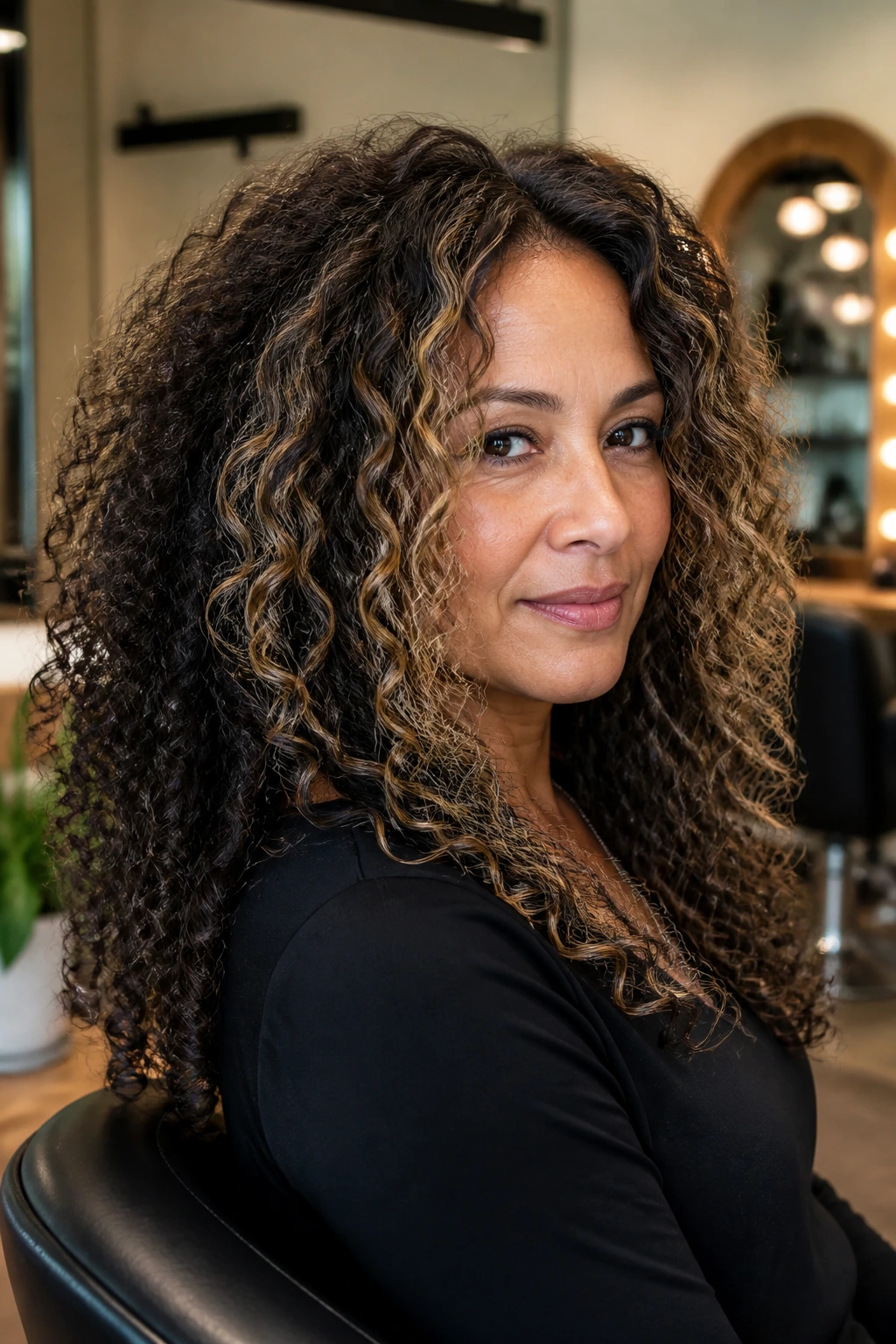
Mixed texture is common, and it can be a pain. One section frizzes, another section clumps, and the back behaves like a different head of hair entirely. A long cut for thick coils and mixed texture takes that messiness seriously and gives each zone enough room.
The goal is not to make every curl uniform. It is to let the tighter pieces sit with confidence while the looser pieces don’t get dragged down. Ask for a stylist who is comfortable with density and shrinkage, because this kind of hair punishes lazy cutting fast.
26. Long Curly Cut with a Polished Finish
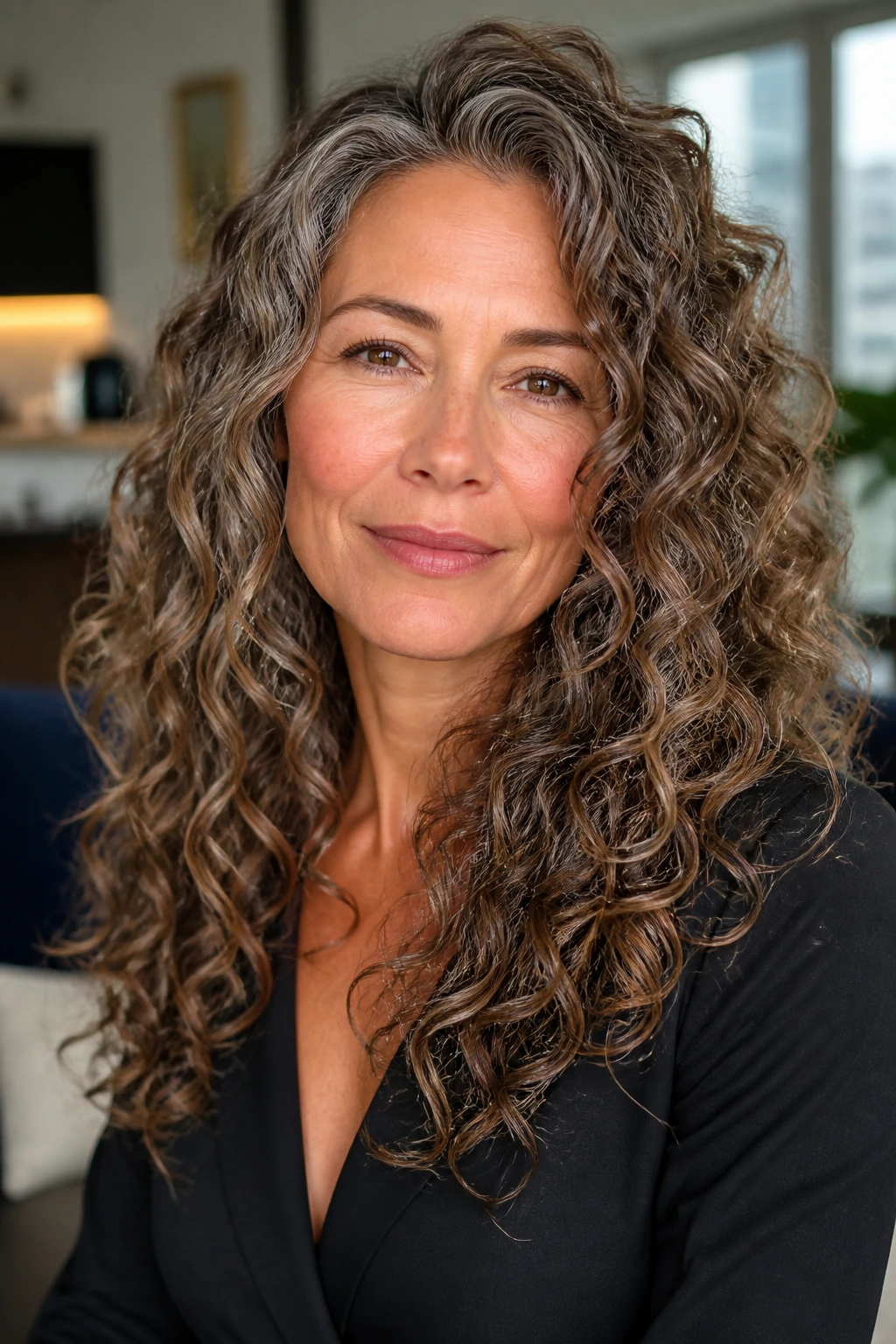
Some curls want softness. Others want shine and control. A polished finish keeps the layers smooth, the ends tidy, and the overall shape a little more refined than shaggy. I like this on women who wear tailored clothes, defined earrings, or a strong lip color — the hair should match the rest of the look.
The cut itself can be layered, but the edges need to stay clean. Too many choppy pieces and the style loses that finished feel. A little shine cream on the outer layer helps the shape read as deliberate.
27. Soft Long Curls with Minimal Layers
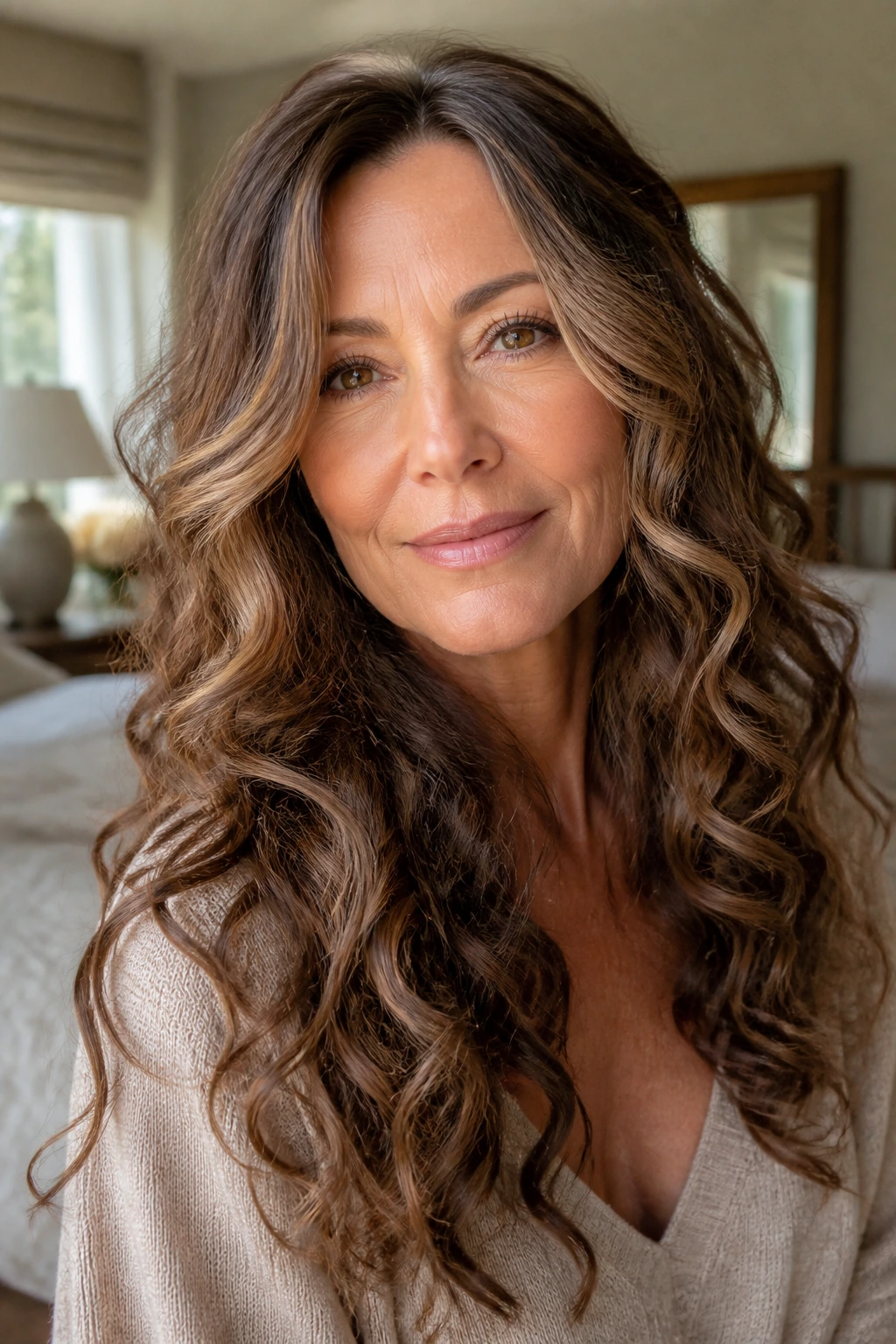
If you love length more than anything, do not apologize for it. Soft long curls with minimal layers keep the perimeter intact and only remove enough bulk to stop the bottom from looking heavy. This is the “I want my hair to be long and obviously long” option.
It works best when the curls have enough natural bounce to keep the ends from collapsing. The key is restraint. A few face-framing pieces, a careful trim, and no aggressive layering — that’s often all you need.
How to Choose a Long Curly Haircut for Older Women
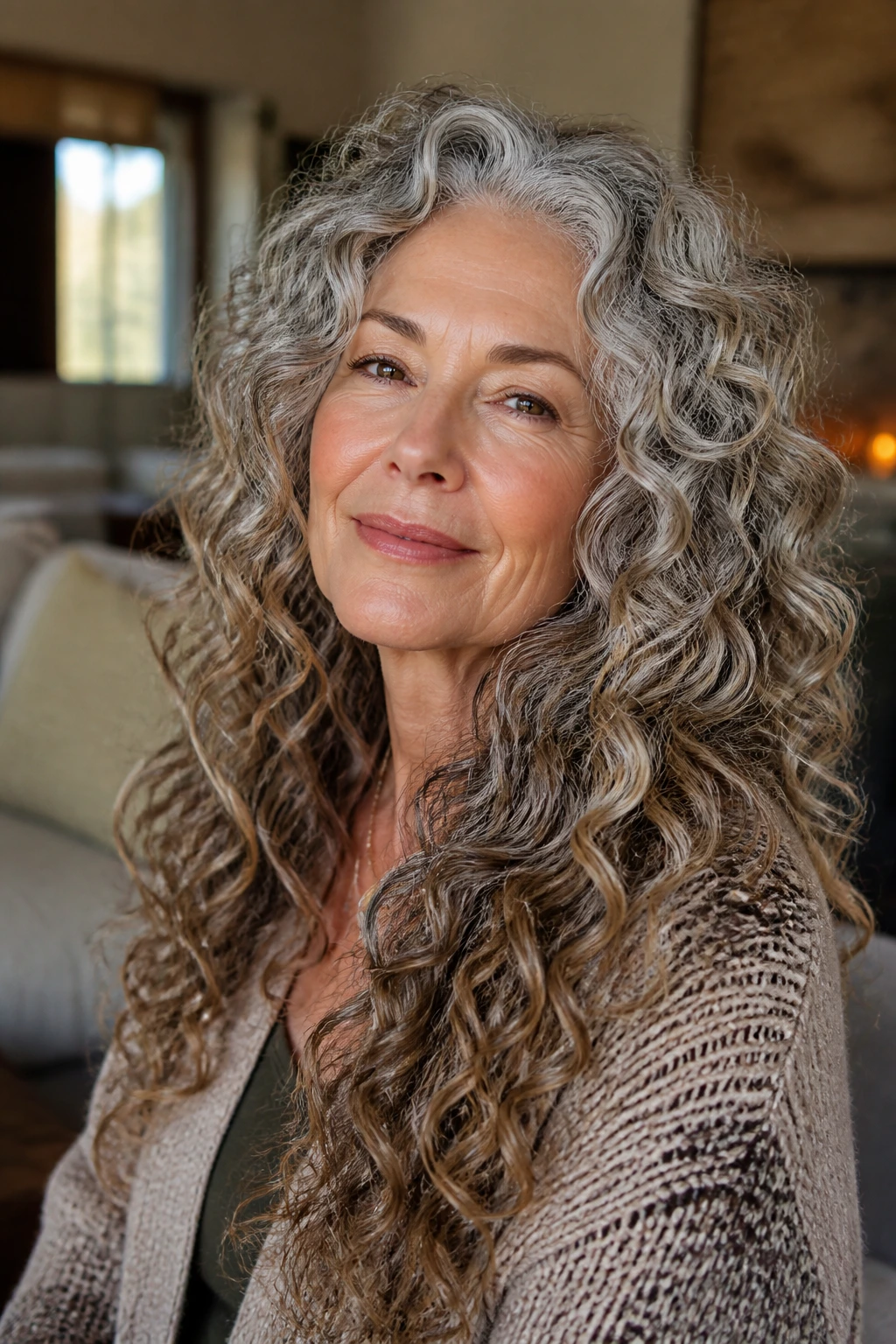
The right cut starts with density, not age. If your hair is fine, too many layers can make the ends look threadbare. If your hair is thick, leaving it all one length usually creates the triangular bell shape that makes long curls feel bulky instead of beautiful.
Face shape matters too, but not in the rigid way salon diagrams like to suggest. A round face may benefit from vertical movement and longer face-framing pieces. A long face often likes width around the sides. A square jaw usually softens nicely with curve and layers that begin below the cheekbone. The trick is to use the cut to guide the eye, not trap it.
Curl pattern changes the story again. Loose waves can carry more weight at the bottom. Tight ringlets often need careful layer placement so the top does not disappear. Coarse silver curls need softness around the edges because they can flare outward when they’re cut too bluntly. If your hair has multiple textures on one head — and plenty of people do — ask the stylist to cut to the strongest pattern first, then balance the weaker sections around it.
The Tools and Products That Help These Cuts Hold Their Shape
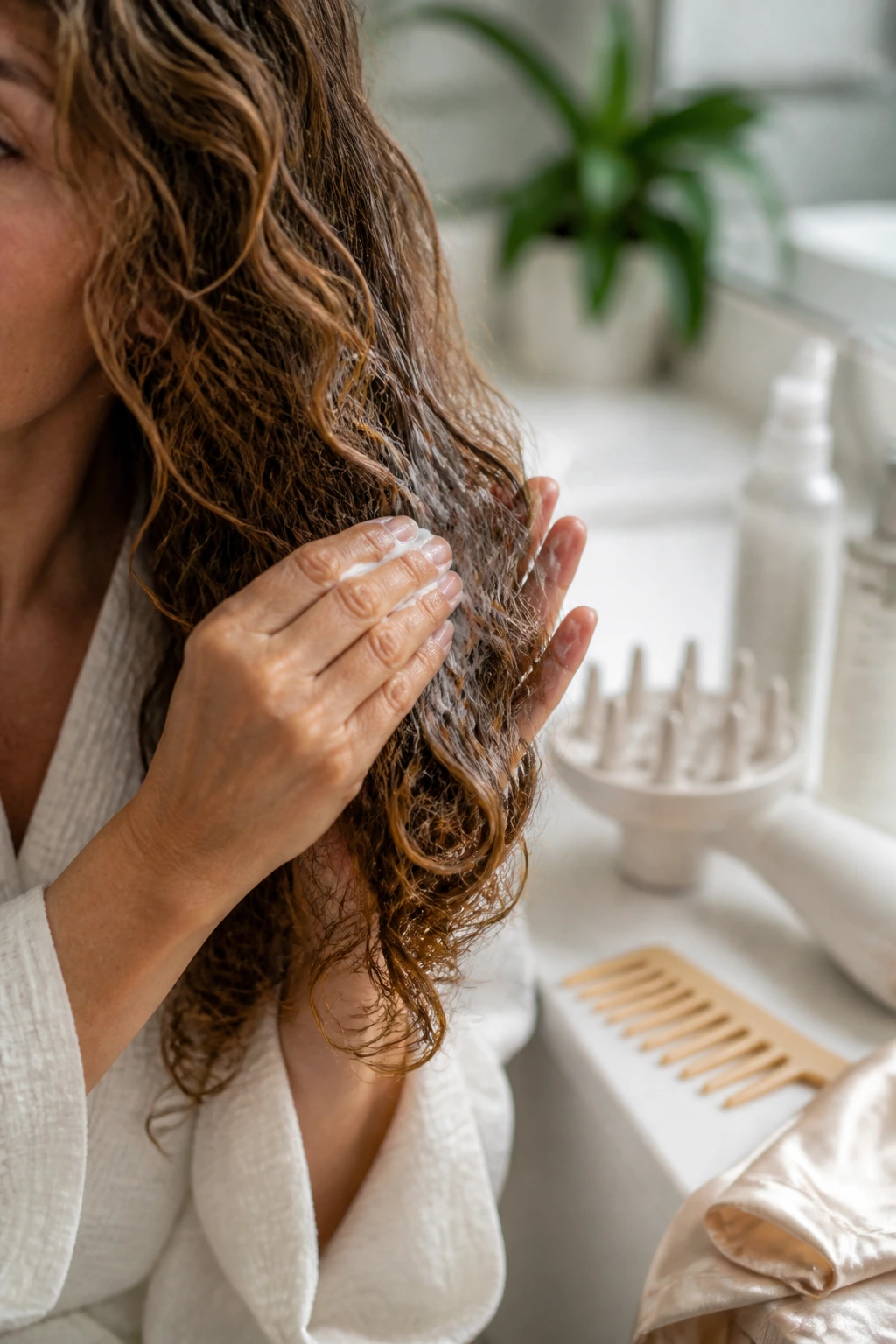
- Wide-tooth comb: Detangles wet curls without tearing apart clumps that help the shape.
- Microfiber towel or cotton T-shirt: Cuts down on rough friction that makes the cut frizz out before it dries.
- Diffuser attachment: Lifts the crown and keeps the layers from drying flat against the head.
- Curl cream: Gives the hair slip and a little hold, especially useful on layered cuts.
- Light mousse or foam: Helps fine curls and crown lift without weighing the hair down.
- Leave-in conditioner: Keeps silver or coarse curls from looking dry at the ends.
- Hair shears, not kitchen scissors: If you trim at home, use real shears. Dull blades chew up curly ends fast.
- Duckbill clips: Handy for pinning sections while you dry the top and keep the shape clean.
- Satin pillowcase or bonnet: Reduces overnight frizz and helps the cut keep its line.
How to Keep Long Curly Hair Shaped Between Salon Visits
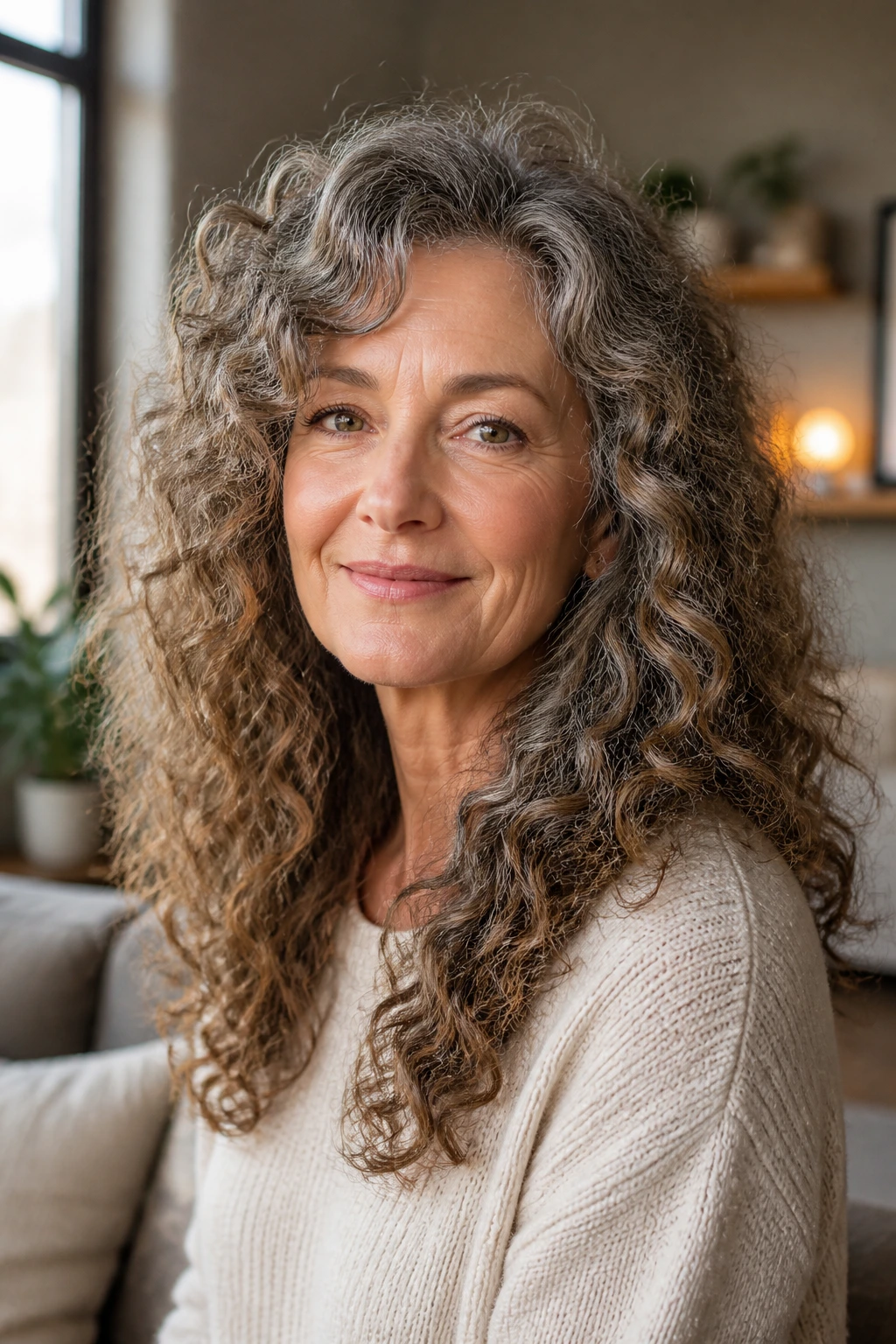
Long curly hair does not need daily obedience. It does need a little routine. If you sleep on a cotton pillowcase, the cut will look different by morning — wider, drier, and a little more tired. Satin or silk reduces that rough-up effect, and a loose pineapple at the top of the head keeps the curls from crushing each other.
Wash frequency depends on how much product you use, but many curly heads do well with a 5- to 7-day rhythm. Refresh the mid-lengths with a spray bottle of water and a few drops of leave-in, then scrunch only the sections that have gone limp. If the crown collapses, clip the roots for 10 to 15 minutes while the hair air-dries or diffuses.
Trims matter more than people think. Every 8 to 12 weeks is a solid range for long curly cuts, especially if you want the layers to stay visible and the ends to stay neat. Stretch that too far and the bottom starts to fray, even when the hair is healthy. A small trim is better than waiting until the shape has disappeared.
Extra Styling Tweaks That Make Long Curls Look Intentional
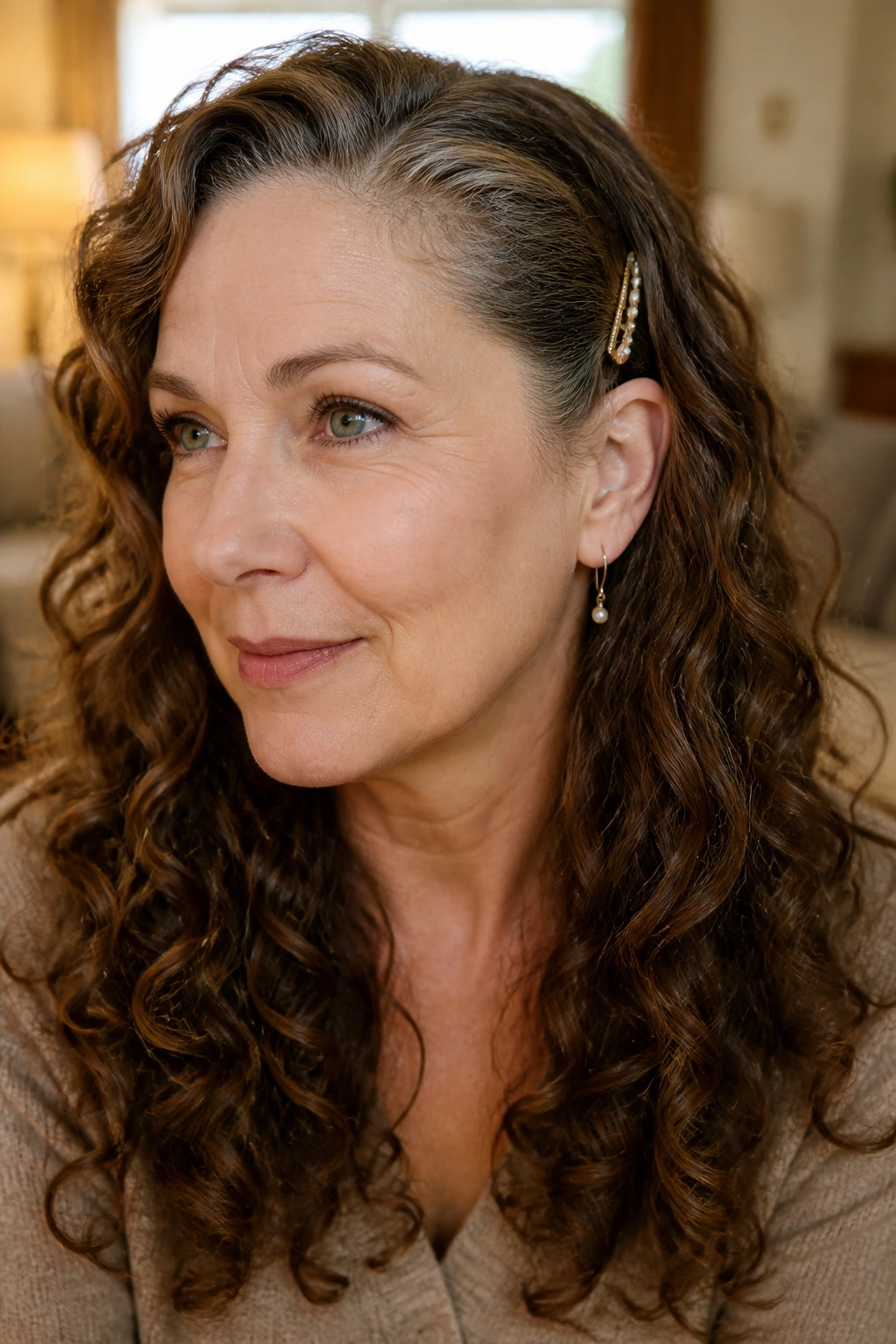
Flavor Enhancement: A tiny dab of shine serum on the outer layer can calm silver frizz and give rounded layers a cleaner finish. Use less than you think you need — one pump warmed between the palms is often enough for the top half.
Customization: If your face feels too open with face-framing layers, pin one front curl back with a slim clip and leave the other side loose. That uneven balance can feel softer than a full center part, especially with glasses or statement earrings.
Serving Suggestions: Yes, hair has serving suggestions in my book. A deep side part, one tucked-behind-ear side, or a half-up twist can show off the structure of the cut instead of hiding it. Those small choices change the whole read of the haircut.
Make-It-Yours: Fine hair usually wants lighter layers and mousse. Thick hair usually wants stronger internal shaping and a diffuser. Silver hair often likes a touch more leave-in and a more frequent glossing or conditioning mask because the texture can go wiry at the ends.
Common Mistakes That Age Long Curly Haircuts Fast
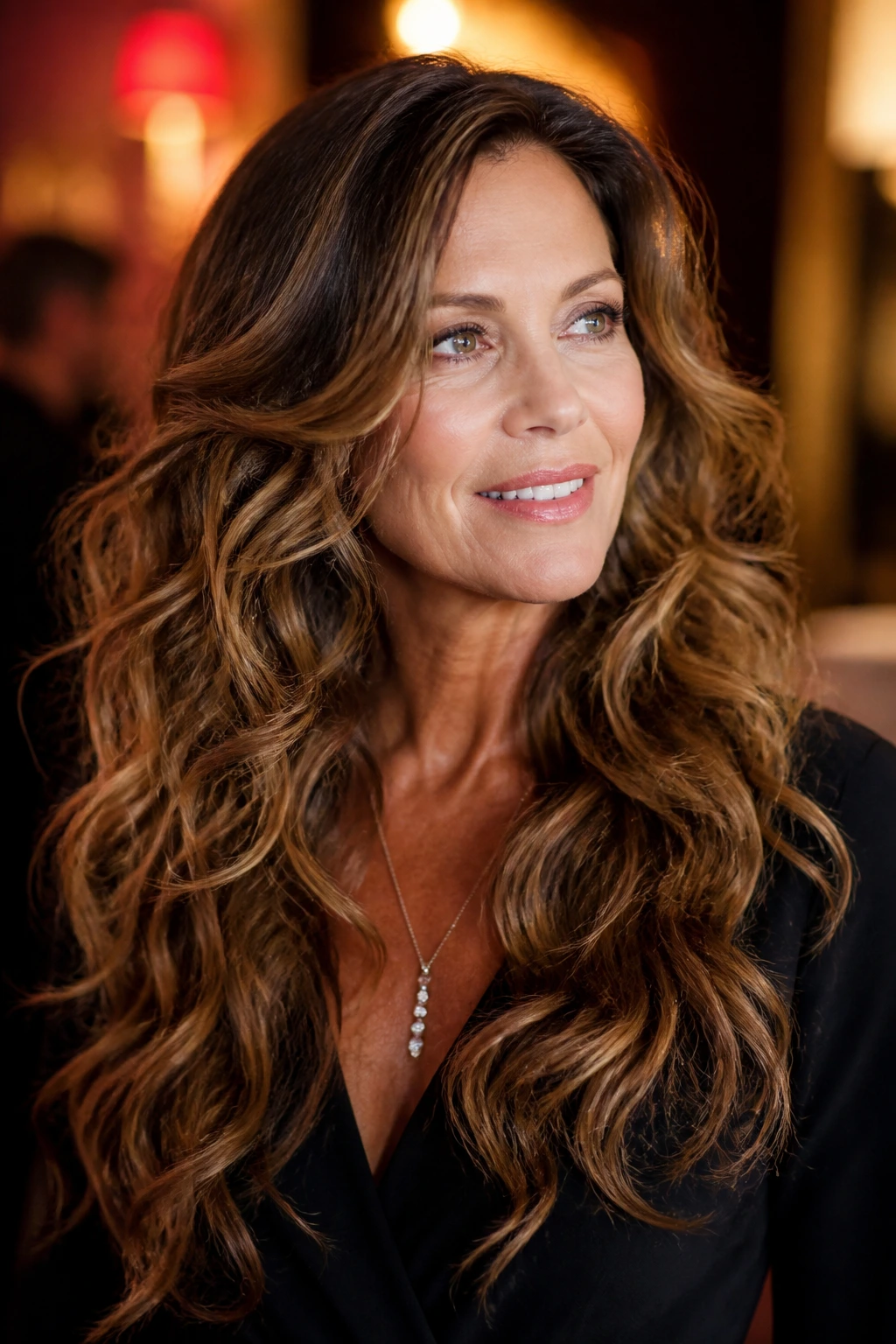
The first mistake is cutting curls too blunt at the bottom. The symptom is a heavy wall that hangs around the shoulders and makes the hair look dense in the wrong way. The fix is soft tapering, U-shaping, or a rounded perimeter that lets the curls fall with air between them.
Another one: too many short layers near the face. The curls spring up, sit at cheek level, and start behaving like the haircut is wearing you. Ask for longer face-framing pieces and let the shortest curls be trimmed slowly, not all at once.
Skipping the dry check is a big one. Wet curls lie. They shrink, twist, and change direction as they dry, which means a wet cut can look fine in the chair and strange at home. A stylist who rechecks the shape dry is doing the important part.
And then there’s over-thinning coarse or silver hair. On paper, removing bulk sounds helpful. In real life, too much thinning can make the ends look scraggly and the frizz worse. You want weight removal, not a shredded outline.
Best Variations for Fine, Thick, and Silver Hair
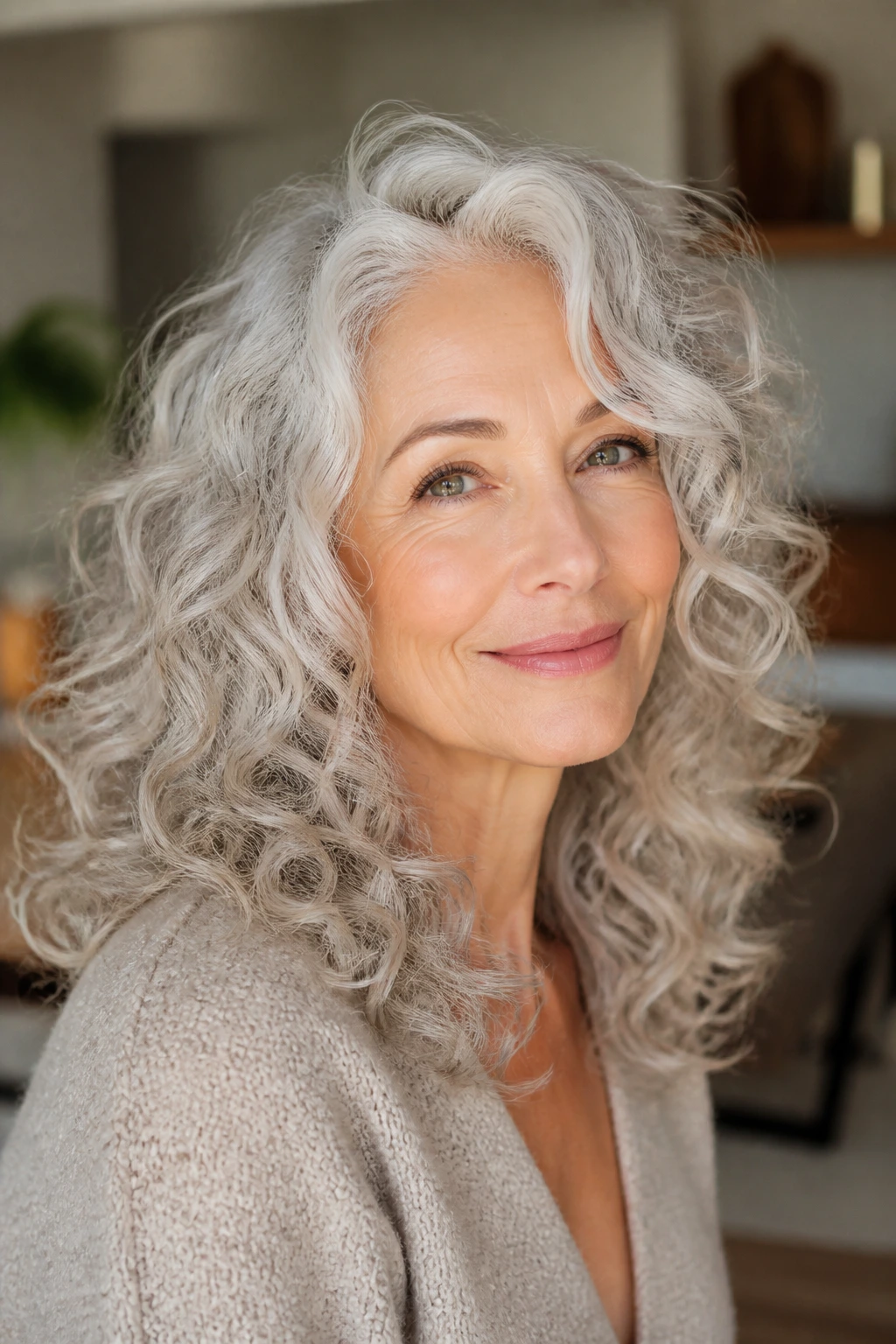
The Feather-Light Version: Best for fine curls that need body without bulk. Keep the layers long, use a light mousse at the roots, and avoid heavy creams that collapse the shape by lunch.
The Dense-Hair Edit: Built for thick hair that loves volume but hates heaviness. Ask for interior layers, a soft V or U perimeter, and a stylist who knows how to remove weight without turning the ends ragged.
The Silver-Glow Cut: Made for gray or white curls that can feel coarse. Softer layers around the face and a cleaner perimeter help the color read bright instead of fuzzy.
The Low-Fuss Weekend Cut: Good for women who air-dry and don’t want daily styling. It keeps the length, trims only the bulky zones, and relies on the curl pattern to do most of the work.
The Polished Lift Cut: For anyone who likes sleek clothes, earrings, or a more put-together finish. It uses clearer lines, a deep side part, and controlled face-framing so the hair looks dressed even when it’s loose.
Frequently Asked Questions About Long Curly Haircuts for Older Women
Are long curly haircuts flattering as women get older?
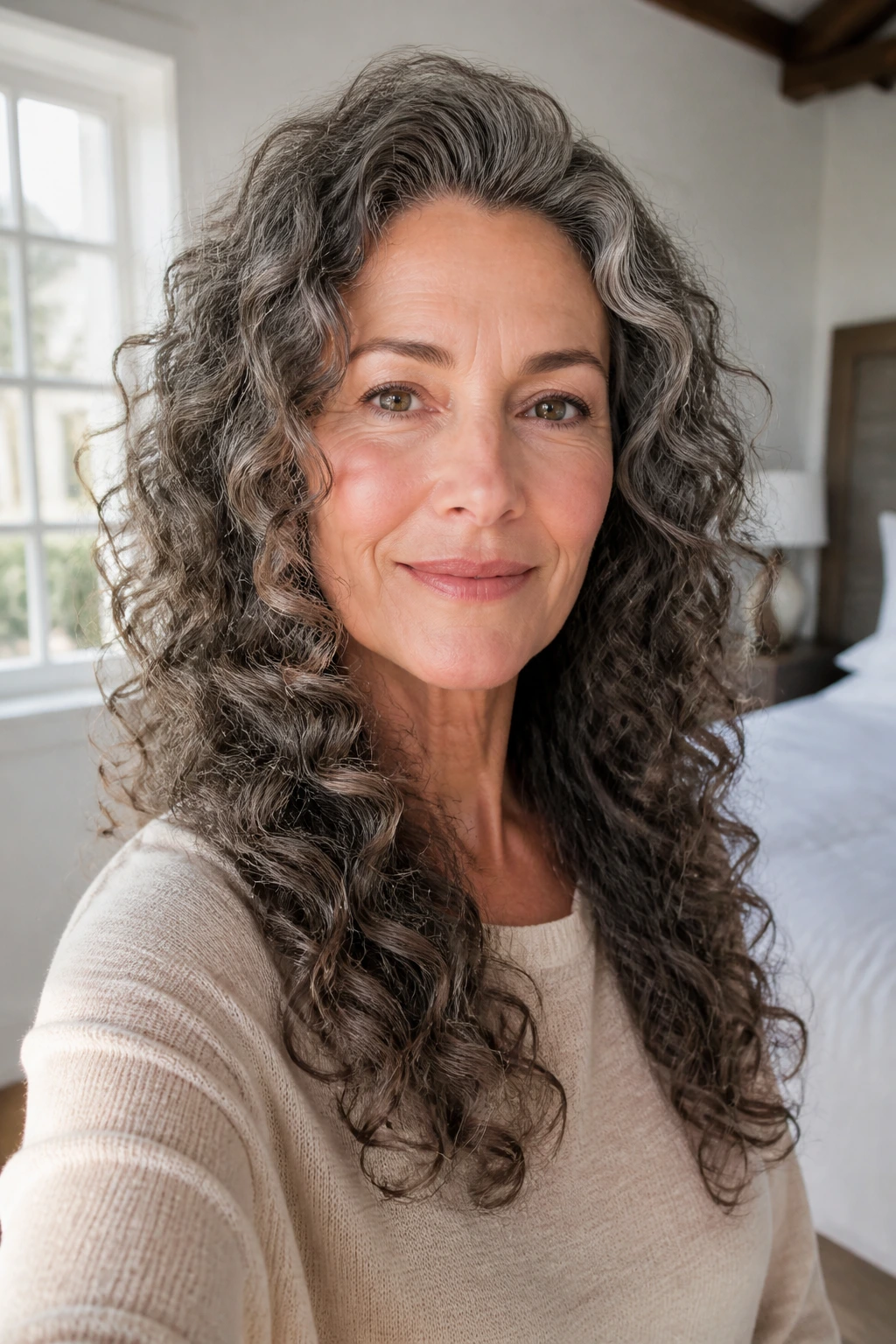
Yes, when the cut has shape. Length alone can drag the face down, but layers, crown lift, and face framing can pull the eye upward and keep the curls from turning into one heavy block.
Should older women keep layers or go blunt?
Layers usually win on curly hair because curls need room to stack and move. A blunt line can work on some dense patterns, but it often looks too boxy unless the hair is very full and the curl pattern is strong.
What is the best long haircut for thinning curly hair?
A soft long-layered cut with minimal weight removal is usually the safest start. It preserves the perimeter, adds a little root lift, and avoids chopping the ends so much that they look sparse.
Can gray curly hair handle a lot of layers?
It can, but silver hair often looks better with softer shaping than with aggressive razoring. Coarse gray strands can frizz when they’re thinned too hard, so a gentler hand tends to age better.
Is dry cutting really necessary?
For many curly heads, yes. Dry cutting shows the real spring of the curl, which matters when the difference between chin length and cheekbone length can be half an inch of shrinkage.
How often should long curly hair be trimmed?
A trim every 8 to 12 weeks keeps the ends from fraying and helps the layers stay in place. If you wear a more structured shape like a shag or butterfly cut, leaning closer to the 8-week side is smarter.
What if my curls are different from side to side?
That’s normal. Ask the stylist to balance the stronger side to the weaker one while the hair is dry. A good cut should account for asymmetry instead of pretending it does not exist.
Can I keep my length and still get movement?
Yes. Long invisible layers, internal shaping, and soft face framing can give you movement without sacrificing the overall length. That’s often the sweet spot for women who love long hair but hate heaviness.
A Shape That Still Feels Like You
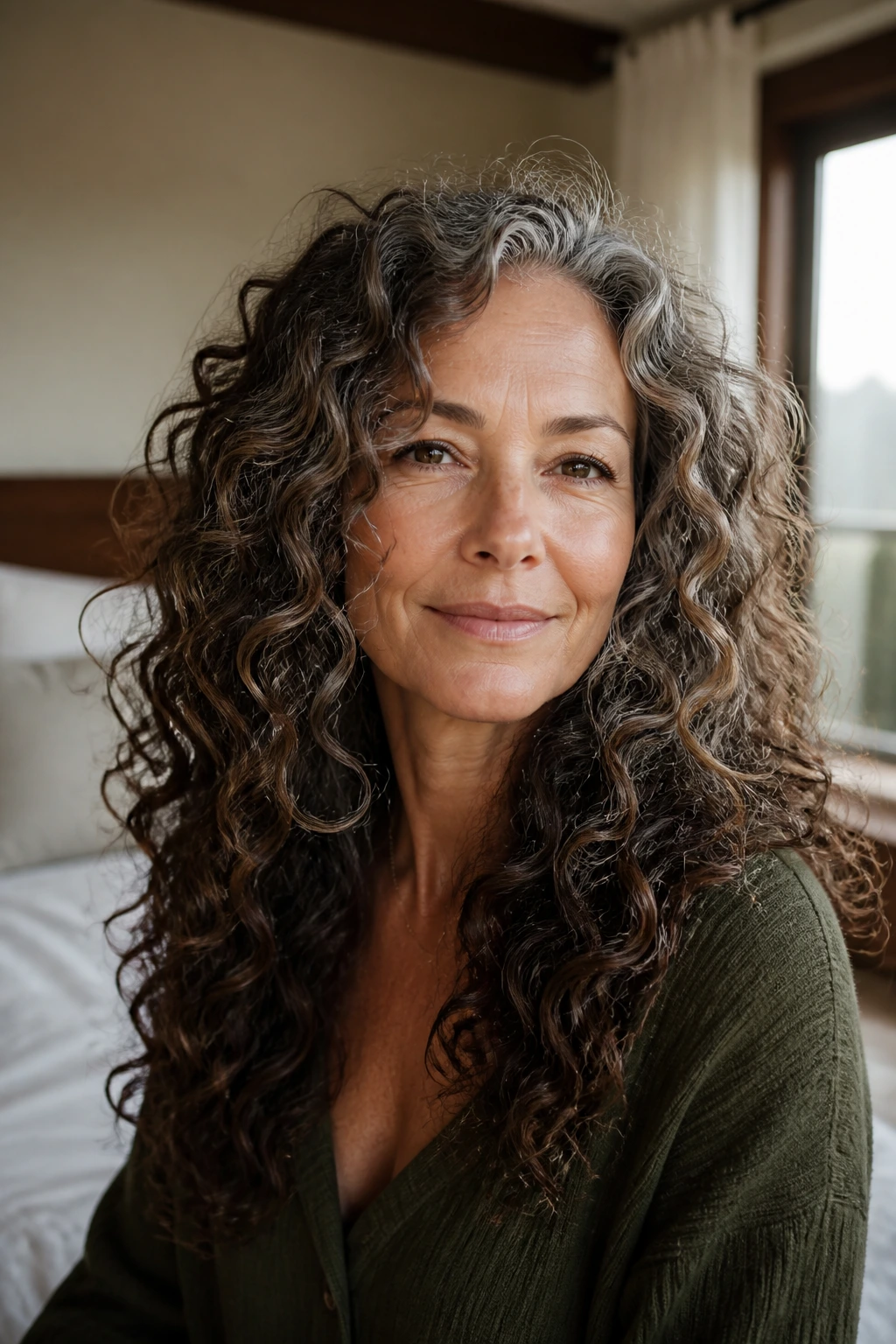
The best long curly haircuts for older women do one thing very well: they make the hair feel like it belongs on the head it grew from. Not younger. Not forced. Just well-shaped, responsive, and a little more alive than a straight, heavy cut ever could be.
If you’re holding onto length, you do not need to give it up to get polish. A rounded layer, a dry-cut fringe, a softer shag, or even just a smarter part can change the whole conversation. And once the curls start moving the way they should, the rest gets easier — styling, dressing, even the way you look in the mirror before coffee.
Try one shape that respects your curl pattern instead of fighting it. The difference shows up fast.
