



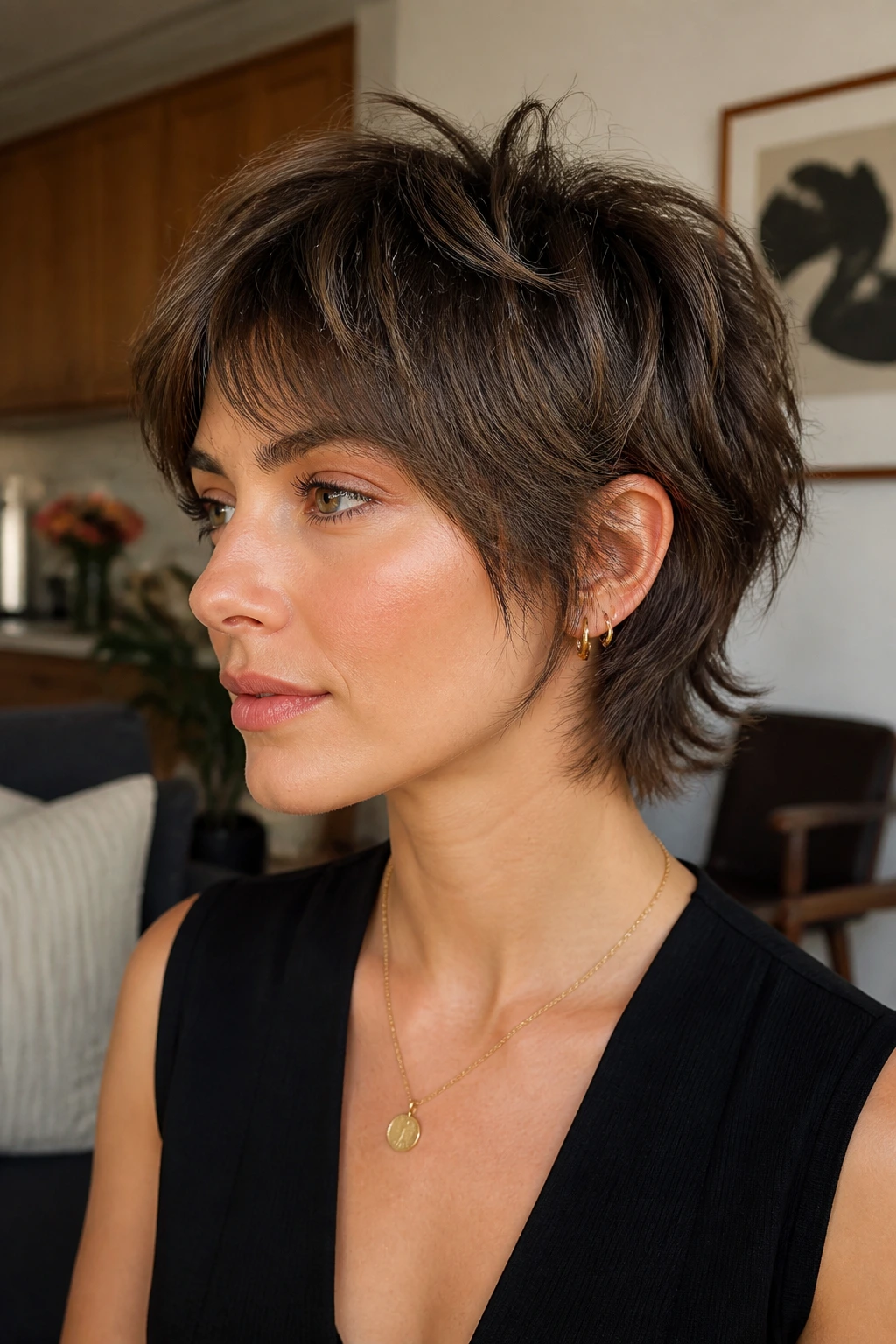
Short shag haircuts have a very specific kind of swagger. They don’t sit still, and that’s the point. On short hair, a shag can make a blunt shape feel lighter, give fine hair a little lift at the crown, and stop thick hair from turning into a round helmet by lunch.
The best short shag haircut doesn’t just add layers. It changes the way the whole cut moves around your face, your ears, your neckline, even the way a fringe falls when you tuck hair behind one ear. A good one looks casual, but it isn’t random. The layers are placed with purpose, usually with some point-cutting or razor work to keep the ends soft instead of heavy.
And here’s the part I love: short shags can be tailored in a dozen directions without losing the attitude. You can go soft and French, sharp and mullet-leaning, curly and airy, or cropped and piecey enough to look like you ran your fingers through it and stopped there. The list below is built to help you spot the difference between a shag that flatters your hair and one that just looks like it lost a fight with scissors.
Why These 28 Short Shags Keep Showing Up in Good Salons
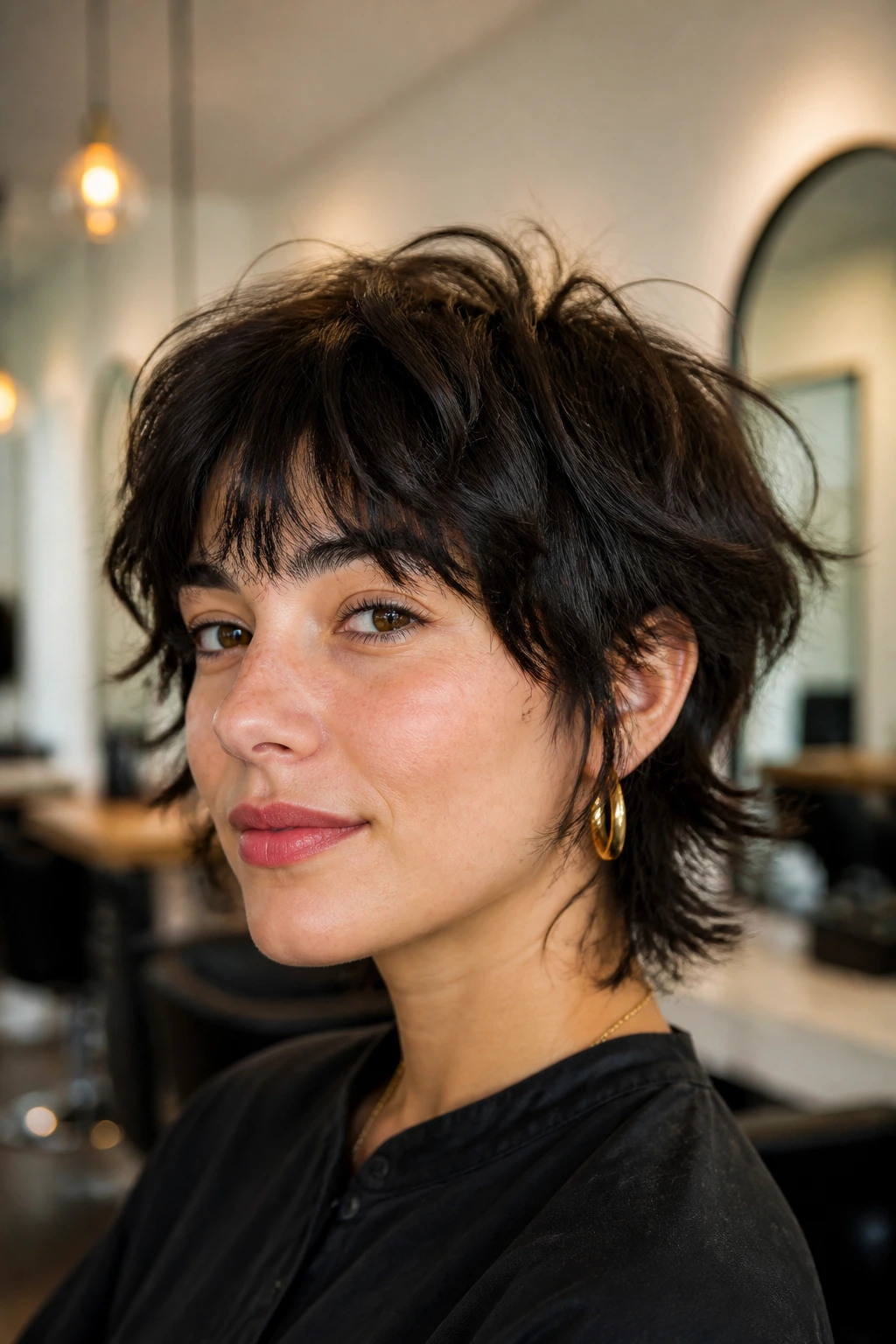
- They build movement into the cut: Short hair can look boxy fast, and layers keep the outline from freezing into one solid shape.
- They play well with bangs: Curtain fringe, bottleneck fringe, micro bangs, and side-swept pieces all change the mood without adding length.
- They suit different textures: Fine hair gets lift, thick hair gets release, and wavy hair gets a shape that follows the bend instead of resisting it.
- They make grow-out less awkward: A shag softens that in-between stage when the bob starts getting too long to feel fresh but too short to tie up.
- They can be styled two ways: A rough air-dry with texture spray gives one result; a quick round-brush bend gives another.
- They hide a little imperfection: Cowlicks, slight asymmetry, and uneven density read like design choices when the layer pattern is right.
1. Chin-Length Shag with Curtain Fringe
This is the safe place to start if you want movement but don’t want your hair to feel chopped to bits. The length still kisses the jaw, which means the cut keeps some weight at the bottom, while the curtain fringe opens the face and keeps the top from feeling flat.
Why It Works on Short Hair
The chin-length perimeter gives the haircut a base. Without that anchor, a shag can drift too far into pixie territory, and not everyone wants that kind of commitment.
What I like here is the balance: soft layers around the cheekbones, enough fringe to frame the eyes, and a little separation at the ends so the shape doesn’t stick to the neck. Ask for the fringe to start a bit longer than you think you need. On short hair, bangs always bounce up more than expected once they dry.
- Best for: Straight, wavy, and lightly curly hair that needs shape, not bulk.
- Ask for: Curtain bangs that hit around the cheekbone, plus soft internal layers.
- Styling note: A quick bend with a 1-inch round brush keeps the fringe from sitting flat.
- Watch out for: Over-thinning the bottom line; that’s how the cut starts looking wispy instead of airy.
My favorite version keeps the ends slightly blunt at the perimeter. That little bit of structure makes the whole haircut look intentional.
2. Bixie Shag with Soft Sides
If you want short hair that still feels touchable, this is the safest rebellious haircut. The bixie shag sits between a bob and a pixie, which means you get ear-skimming sides, a little lift on top, and enough length in the fringe to keep the face from going too stark.
Unlike a strict pixie, this cut doesn’t demand that every piece behave. The layers can be feathered at the crown and softened around the temples, so the shape looks lived-in rather than severe.
It’s especially useful if you’ve been thinking about a pixie but don’t want to lose all your perimeter at once. The bixie shag lets you keep a bit of hair around the face, which makes the grow-out easier too.
The trick is the nape. Keep it neat, or the whole cut starts looking fuzzy from behind. A clean neckline gives the messier top something to lean against.
3. Curly Crown Shag with Lifted Roots

Can a short shag work on curls without turning into a puffball? Yes, if the crown is layered carefully and the ends are left long enough to curl back on themselves.
The biggest mistake with curly short shags is slicing too much volume out of the wrong place. A stylist who understands curls will remove bulk where it stacks, not where the curl actually needs structure. That often means keeping the lower layers a little longer and shaping the top so the curl pattern springs upward instead of outward.
How to Wear It
Use a diffuser on low heat and stop touching the hair once the curl clumps form. If you keep scrunching while it’s half-dry, the top can separate in a frizzy way that destroys the shape.
A curl cream with a light mousse over it usually works better than a heavy butter. Heavy product drags short curls down, and then the whole cut looks shorter than it is.
The best curly shag reads airy at the crown, full at the sides, and soft at the edges. That’s a good sign. It means the curl pattern is doing the work, not fighting the cut.
4. Micro Shag with Piecey Ends
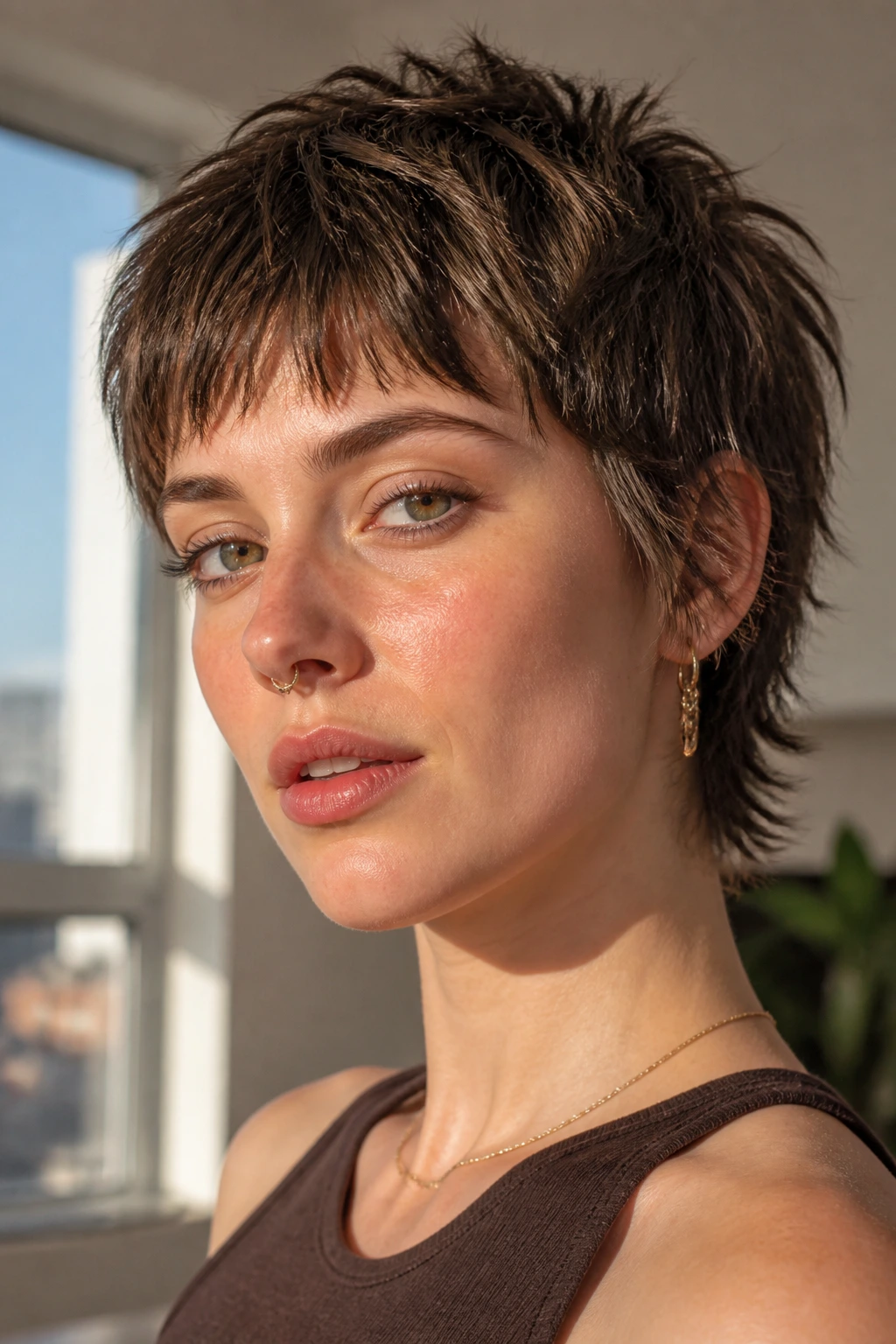
A micro shag is what happens when you want short hair that still has attitude even after the last inch comes off. The length stays cropped, often around ear or cheek level, but the ends are broken up enough to keep the outline from feeling hard.
Think of this as a sharper cousin to the bixie. There’s less softness, more detail, and a bigger payoff if you like hair that looks better a little imperfect.
The important part is restraint. Too much razor work on a micro shag can make fine hair look thin at the edges, which is not the same as piecey. Piecey means separation. Thin means you can see too much scalp and too much daylight through the ends.
A dab of paste or light pomade, worked only through the tips, is enough. Don’t smear it through the roots unless you want the whole shape to collapse into a sticky cap.
5. Short Wolf Cut

A short wolf cut lives on the edge of a shag and a mullet, and I mean that in the best possible way. It keeps a fuller crown, tapered sides, and a little more length in the back, which gives the haircut that slightly feral swing people keep trying to fake with styling spray.
The beauty of this cut is that it looks better with texture than with polish. If you flat-iron every strand straight, the whole thing loses its point. Let the layers breathe a little. Let the ends kick out. That’s the personality.
It’s a solid choice if you want height at the crown and don’t mind a shape that leans edgy. It’s not the friendliest option for someone who wants a neat outline every day. The back will always want to look a bit wild, and that is the point.
If your stylist knows how to use a razor without overdoing it, this cut can look expensive in a rough, undone way. If they don’t, it can look choppy in the wrong place. Big difference.
6. French Bob Shag with Airy Bangs
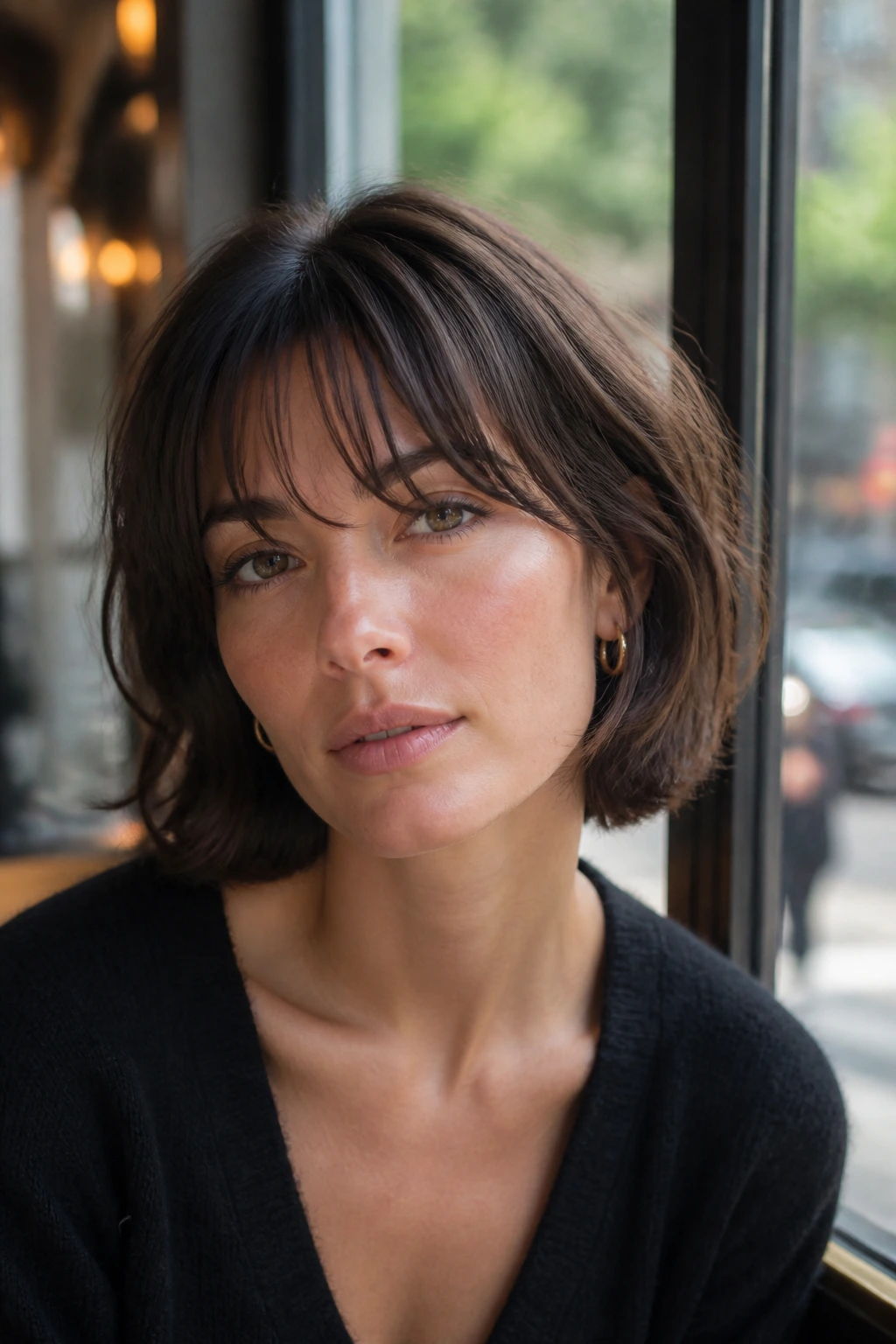
A French bob has a clean, cheeky line. Add shag layers, and it stops acting like a tidy bob and starts moving like hair that has somewhere to be.
The mix works because the bob keeps enough mass around the jaw to frame the face, while the shagging breaks up the interior so the shape doesn’t go stiff. The airy bangs are the detail that makes it feel soft rather than severe.
Unlike a classic French bob, this version doesn’t need a glassy blowout to make sense. A rough-dry with a bend through the ends can look better, especially if your hair has a natural wave. The bangs should skim, not sit like a shelf.
This is one of those haircuts that can look polished at breakfast and a little mussed by dinner without needing much help. That’s not laziness. That’s good structure.
7. Layered Pixie Shag
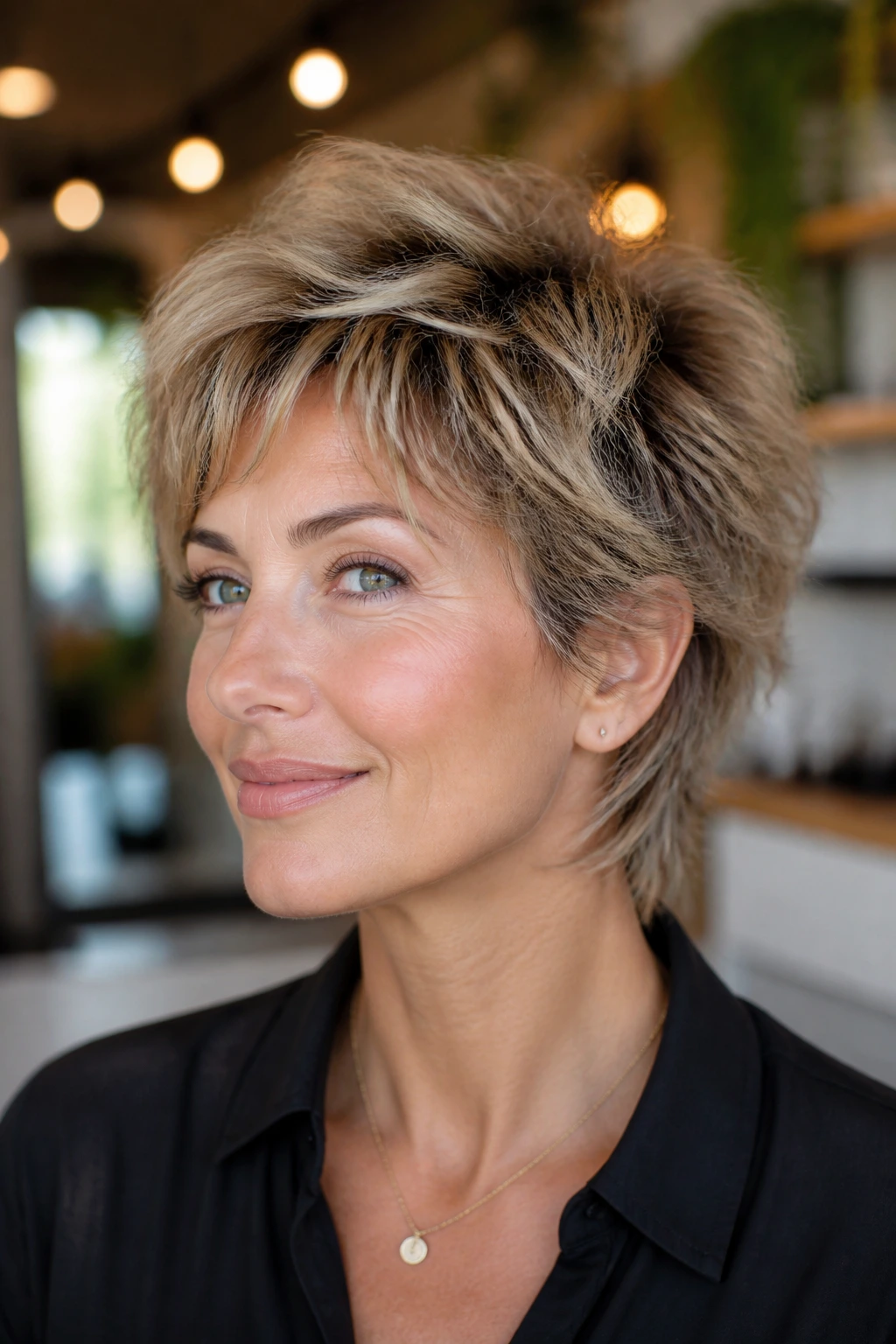
This is for someone who wants the shortness of a pixie but hates the idea of one flat silhouette. The layers are cut to keep movement on top, a little feathering around the crown, and enough softness near the temples to stop the shape from getting hard.
A layered pixie shag gives you the shortest haircut in this list, but it doesn’t have to look severe. In fact, the whole point is to keep some air in it. If the top is too compressed, it turns into a standard pixie. If it’s too blown out, it starts looking like a bad grow-out.
I like this cut on people with fine to medium hair because the layers can make the top feel fuller without adding bulk at the sides. It also works well if you want to show off earrings or a strong jawline.
The only real rule: keep the fringe and crown connected. Break them apart too much, and the haircut starts reading as two different haircuts in one.
8. Razor Bob Shag
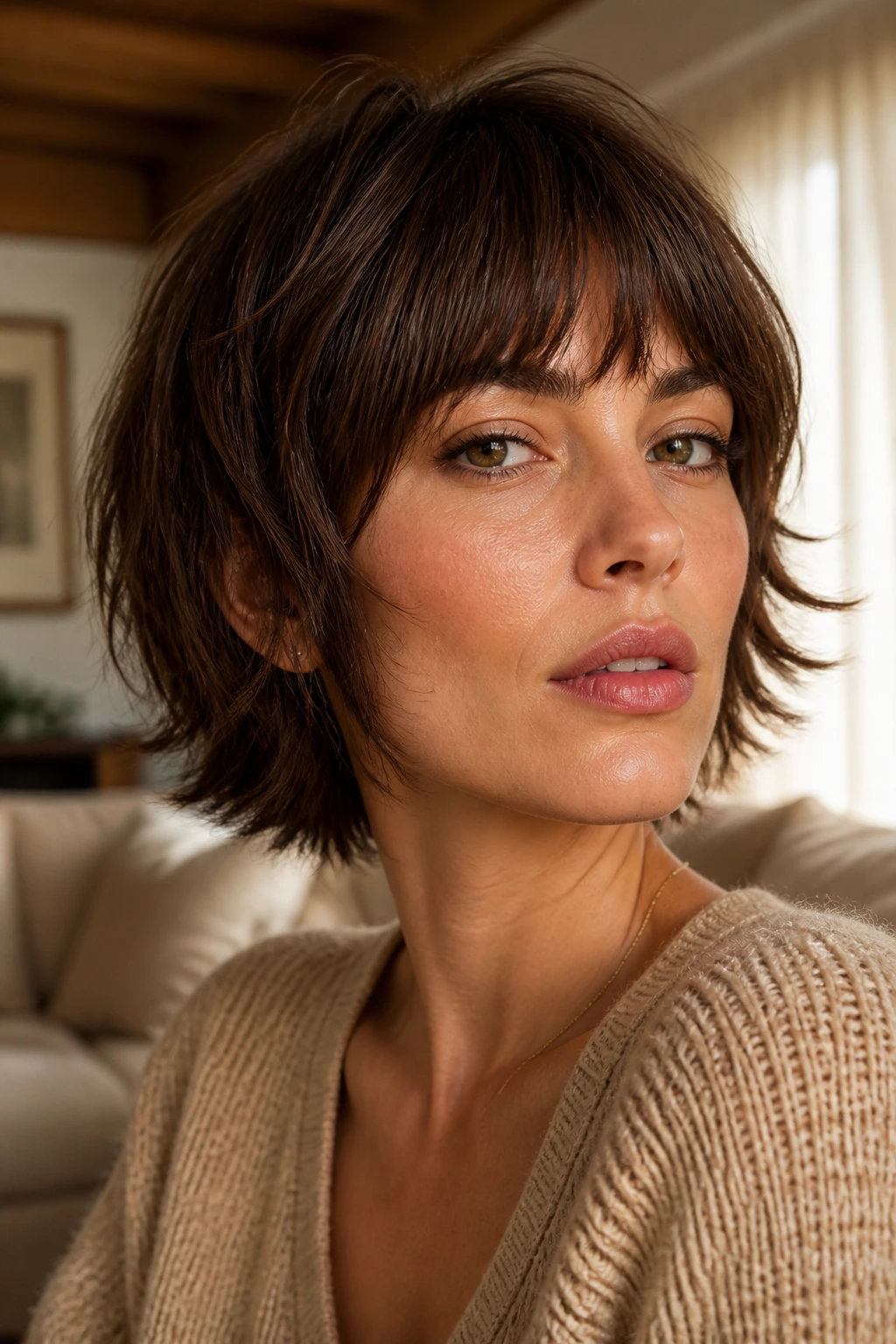
A razor bob shag has a looser, softer edge than scissors alone can usually give. The ends are thinned and feathered enough to move, but the overall shape still reads like a bob first and a shag second.
That matters if you want the haircut to feel light without looking shredded. A razor can create lovely separation on medium-density hair, especially around the cheekbones and through the lower layers. On fine hair, though, it needs a light touch. Too much razoring and the ends can look see-through by the second week.
What to Ask For
- A bob length that sits between the jaw and the collarbone.
- Razored ends only through the interior, not across the whole perimeter.
- A soft face frame that starts near the mouth or cheekbone.
- Enough weight left at the bottom so the shape doesn’t disappear.
A tiny bit of styling cream at the ends gives this cut a softer finish than mousse alone. If you want the hair to swing, not spike, that extra slip matters.
9. Jaw-Length Wavy Shag

This is the haircut I’d point to if someone says, “My hair has a wave, but it’s never been interesting.” Jaw-length is short enough to feel fresh, but long enough for the wave pattern to show up in the layers instead of collapsing into a puff.
The secret is where the layers sit. If the shortest pieces start too high, the wave can spring up and shorten the haircut even more than planned. If they start too low, you lose the whole shag effect and end up with a bob that just happens to be uneven.
Keep the front pieces a touch longer than the rest. That lets the wave fall around the face in a way that looks deliberate. A sea-salt spray on damp hair can help, but don’t drown the hair in it. A little grit is fine. A crust is not.
This cut has one job: make natural bend look like a feature instead of something you apologize for.
10. Bottleneck Bang Shag

Bottleneck bangs are the quieter cousin of curtain bangs, and they make a short shag feel polished without turning it formal. The fringe starts narrow between the brows, then widens as it drops toward the cheekbones, which gives the face a soft frame and keeps the top from looking heavy.
The best thing about this shape is that it plays well with short hair that needs a little sophistication. A shag can go punk fast. Bottleneck bangs keep it from tipping too far into rough territory.
This version works especially well if your forehead is on the shorter side or if you don’t want a wide, sweeping fringe. The center stays lighter, which means there’s less chance of the bangs swallowing the face.
Keep the longest fringe pieces around cheek level. That little length gives you room to tuck, part, or sweep them over if the weather starts doing unpleasant things to your hair.
11. Textured Crop Shag

A textured crop shag is compact, punchy, and blunt enough to feel modern without losing the soft edges that make shag cuts so useful. The length is short everywhere, but the texture keeps it from becoming a helmet.
This cut is good when you want your hair off your neck and off your face, yet still want some shape in the top layers. It’s especially handy for active days, humid days, or anyone who cannot be bothered with a brush every morning.
The danger here is over-texturizing. When a crop gets too shredded, it starts to look hungry at the edges. The better approach is to leave enough density in the crown and use small, deliberate snips or point cutting to add movement only where the hair needs it.
A matte paste can make this cut look separated and cool. Work it into the ends, then leave the roots alone unless you want a flatter profile.
12. Mullet-Inspired Shag
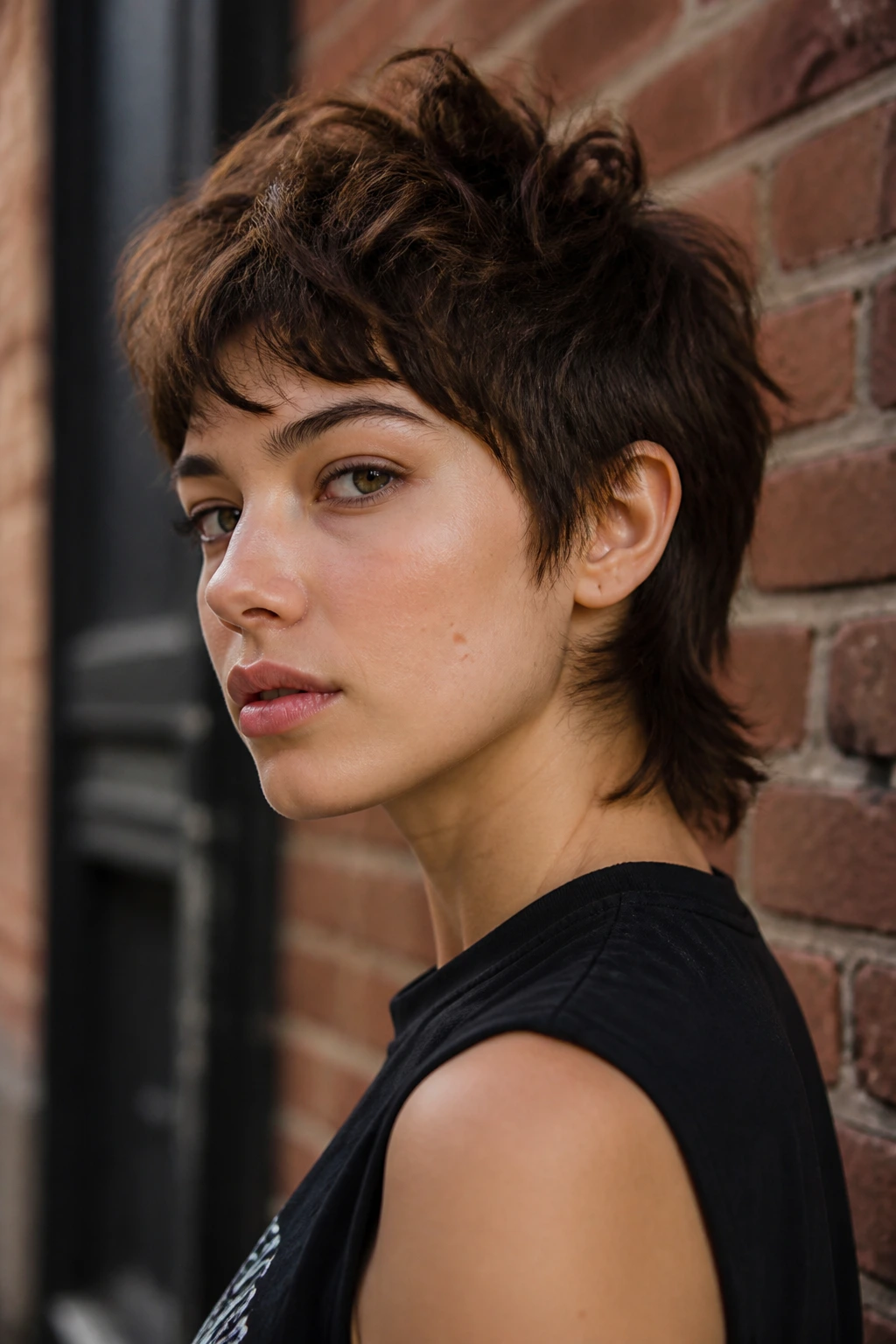
A short mullet-inspired shag is what happens when a shag decides it wants a little more edge in the back. The crown stays lifted, the sides stay compact, and the nape gets a touch more length so the outline has a kick when you turn your head.
It sounds dramatic, but it can be surprisingly wearable. The difference between stylish and costume-like is subtle: keep the back soft, not stringy, and make sure the side layers still connect to the front. Disconnected mullets are a choice. This is not that.
I like this on people who want a haircut that reads as fashion, not fuss. It tends to look best when it’s a little mussed, especially with a finger-dried finish or a few bends from a small iron.
If you’re nervous, ask for the mullet energy in the silhouette, not the name. That usually gets you the right haircut and avoids a lecture.
13. Soft Round Shag for Fine Hair
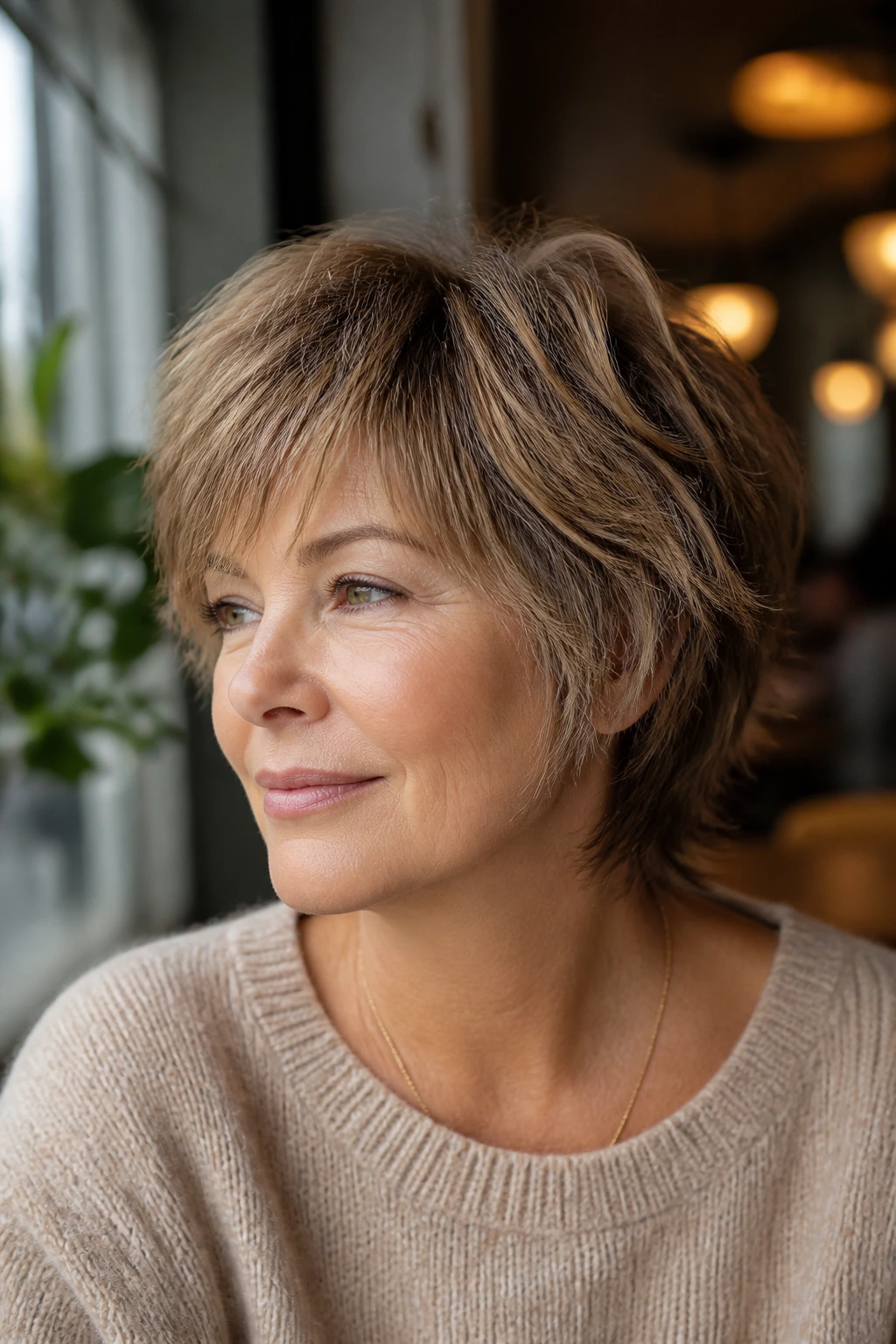
Fine hair needs a shag with manners. Not no character—just manners. A soft round shag gives you lift at the crown and around the head without stripping out so much weight that the ends start to disappear.
The roundness matters because fine hair can look sparse if the layer pattern is too aggressive. Instead of cutting huge chunks away, the shape should be built with subtle graduation and soft fringe pieces that keep the whole thing looking full.
Best Bits to Request
Ask for light interior layering, not heavy thinning. Ask for a soft face frame, not severe chops. And ask the stylist to leave the perimeter dense enough to support the rest of the cut.
A volumizing mousse at the roots can help, but don’t pile on cream. Fine hair usually needs lift more than slip. If it feels too silky, it tends to collapse by midday.
This is one of those cuts where half an inch matters. A tiny adjustment around the crown can change the whole mood.
14. Debulked Shag for Thick Hair
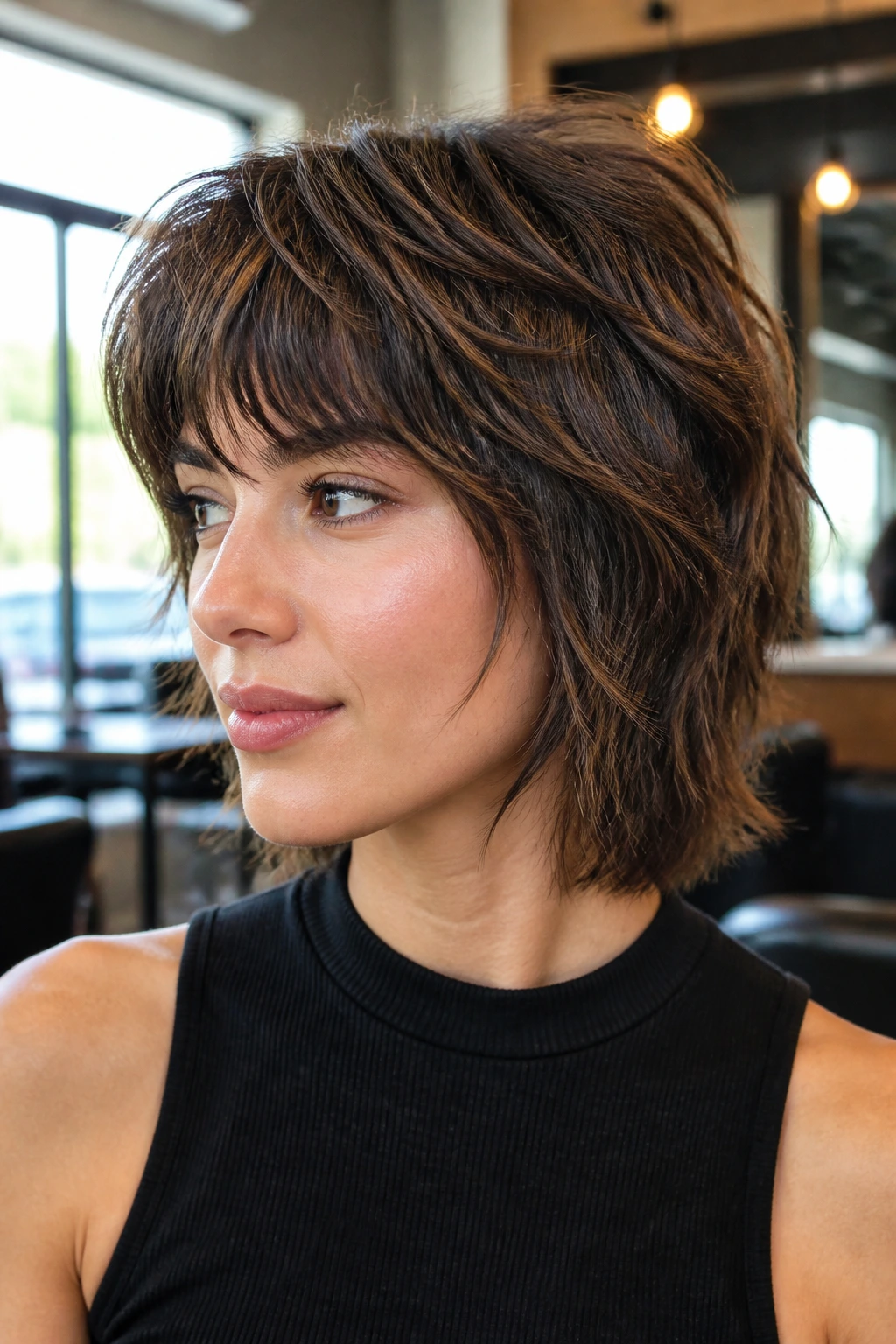
Thick hair and shag haircuts get along when the layers are placed to remove weight, not just to add shape. If the bulk stays stacked at the bottom, the haircut swells into a triangle. Nobody wants that.
What works here is interior debulking around the crown and mid-lengths, while the perimeter keeps enough length to hold the outline together. The stylist should think in slices, not chunks. A clean point-cut finish helps too, because blunt ends on thick hair can sit heavy and dense.
This version often looks better the day after washing. Thick hair tends to settle overnight, and the layers open up a little without needing extra product. That’s a nice problem to have.
Just don’t go after it with too much thinning shears work. That can leave thick hair frizzy at the ends and weirdly flat at the root, which is the opposite of what a shag is supposed to do.
15. Cowlick-Friendly Shag
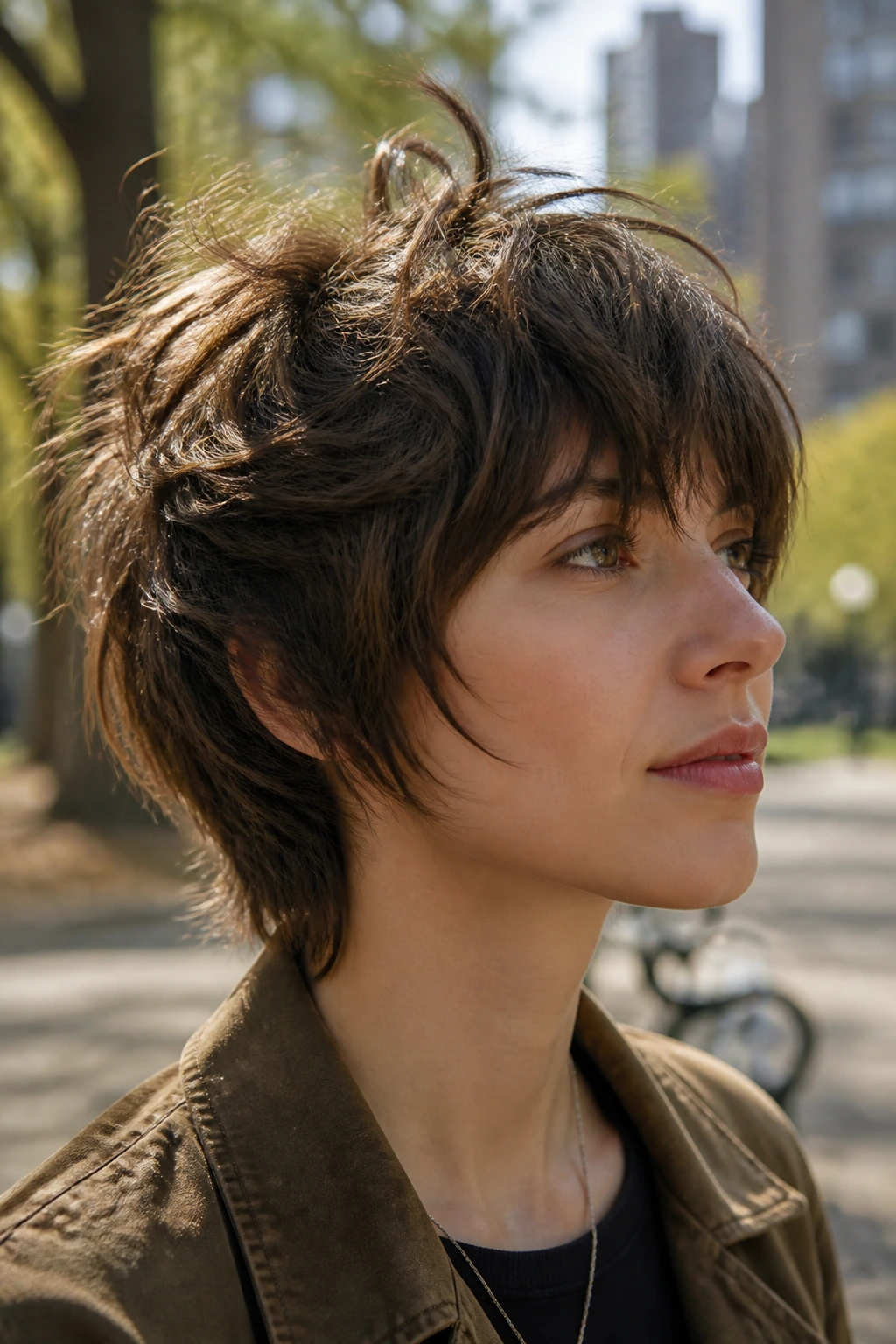
Your cowlick is not the enemy. It’s the map. A cowlick-friendly shag uses that natural lift instead of fighting it with heavy, over-direct layering.
The key is cutting around the growth pattern, not against it. If a section at the crown kicks to one side, the shag can be built so that side becomes part of the shape. That’s especially useful with short hair, where even a small swirl can change the whole silhouette.
I’d keep the fringe a bit longer if you know your front pieces split. Short bangs and strong cowlicks have a habit of arguing with each other every morning. Longer fringe can be trained more easily, or at least tucked aside without drama.
Use a vent brush or your fingers to dry the cowlick in the direction you want it to live. Then cool it there. Heat sets the bend; cool air makes it stay.
16. Asymmetrical Shag Bob

An asymmetrical shag bob has one side a touch longer than the other, and that tiny imbalance gives the cut a lot of energy. It’s a clean way to make short hair feel less predictable without going full avant-garde.
The asymmetry shouldn’t be obvious enough to look accidental. A half-inch to an inch of difference is often enough. The rest of the haircut should still feel balanced through the layers, or the whole thing gets lopsided in a bad way.
This cut works especially well if you part your hair the same way every day. The longer side can follow the natural fall of the part, while the shorter side keeps the neckline open and neat.
Keep the finish soft. If you polish an asymmetrical shag too hard, you lose the casual edge that makes it interesting in the first place.
17. Air-Dry Fringe Shag
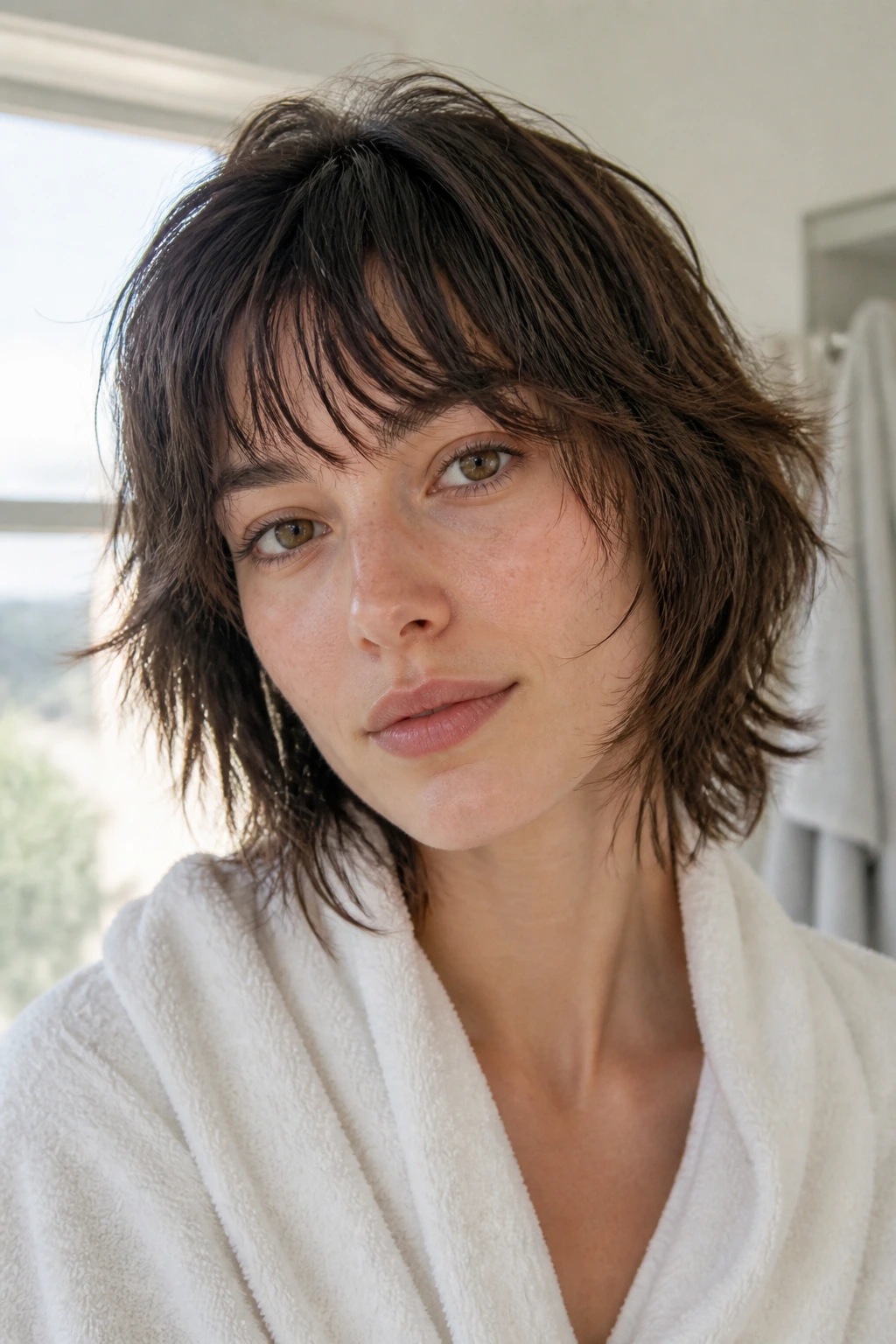
If you hate heat tools, this is the shag to watch. The cut is designed so the fringe and the top layers settle into place after a towel squeeze, a little product, and some patience.
The trick is to leave enough length in the bangs that they can move while drying. Too short, and they kick up in odd directions. Too long, and they fall into your eyes. The sweet spot is usually just below the brow or grazing the lashes, depending on how much spring your hair has.
A lightweight mousse or foam works better than a thick cream here. Scrunch it through the crown and fringe, then leave the hair alone until it’s about 80 percent dry. Touching it too early is how you get weird frizz and broken clumps.
This is a cut for people who like a soft finish and don’t need every piece placed by hand. It has to be cut well, though. Lazy layering will not air-dry into style.
18. Choppy Shag for Straight Hair
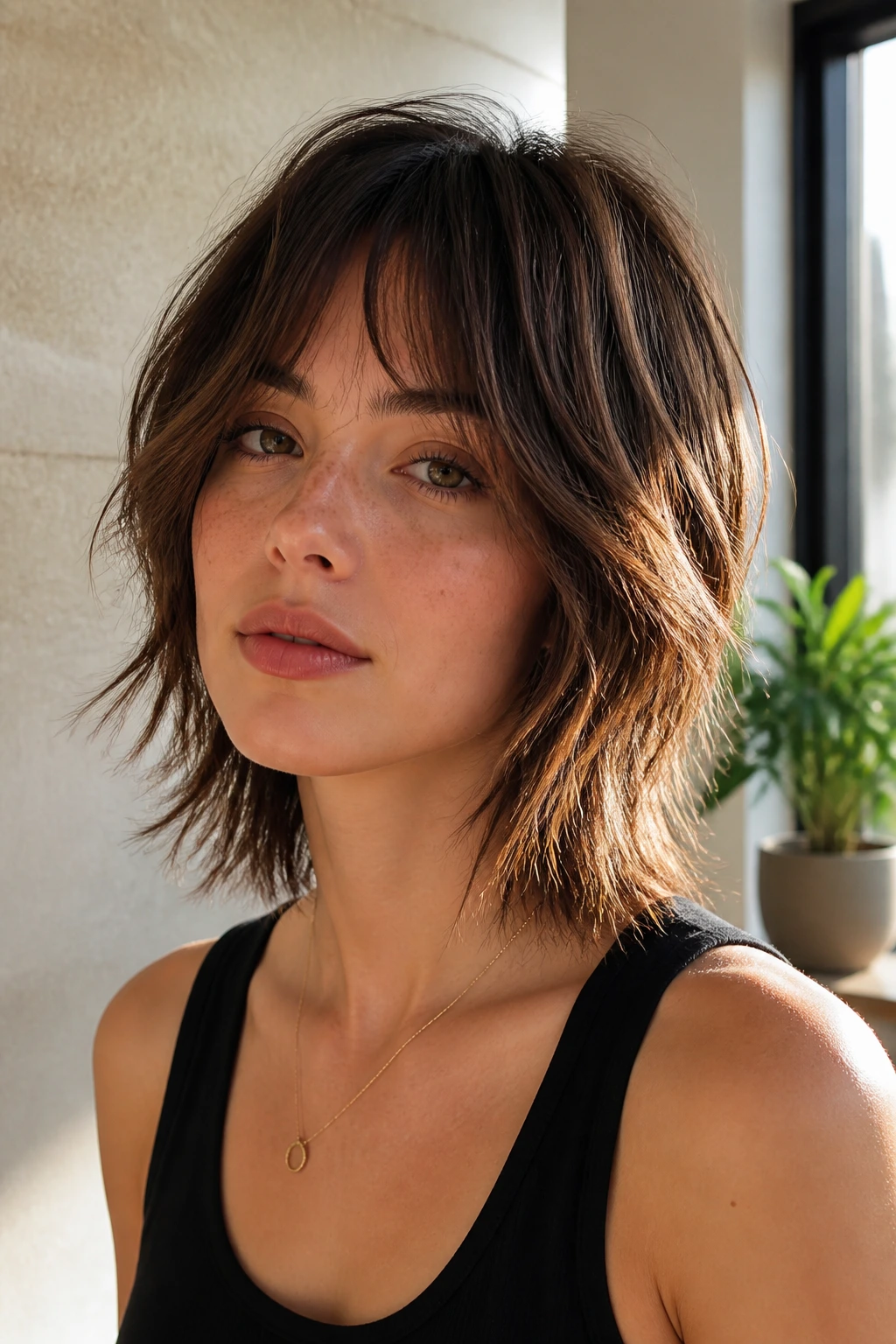
Straight hair can make a shag look flat if the layers are too subtle. The choppy version solves that by creating visible separation through the ends, which gives the hair a little grit and keeps it from lying like a sheet.
That separation has to be earned. Straight hair doesn’t hide bad cutting. If the layers are too even, the haircut can slide into a boring bob. If they’re too jagged, the ends look hacked. The sweet spot is small, staggered layers with a softly broken perimeter.
I like this shape with a bit of texture spray or a quick pass of a small iron just on the ends. You’re not trying to curl the hair. You’re trying to give it a bend so the choppy layers can show themselves.
Straight hair often benefits from one or two face-framing pieces that are a little longer than the rest. That keeps the front from looking too blunt and gives the whole cut some movement.
19. Curtain-Bang Bixie

This version is pure balance. You get the cropped ease of a bixie, but the curtain bangs soften the face and stop the cut from feeling too short, too fast.
The bangs matter more here than people think. Because the sides are shorter, the fringe becomes the main framing device. If it’s cut too narrow, the face can look pinched. If it’s too wide, the front swallows the rest of the cut. A good curtain bang should open in the middle and feather toward the cheekbones.
This is a useful option if you want short hair but still want to tuck one side behind the ear without losing your shape. It gives you a bit of styling freedom, which is rare in very short cuts.
A quick blow-dry with a small brush at the roots of the fringe makes a huge difference. Air-drying the bangs alone can leave them splitting in the middle like they have a mind of their own.
20. Tapered Nape Shag
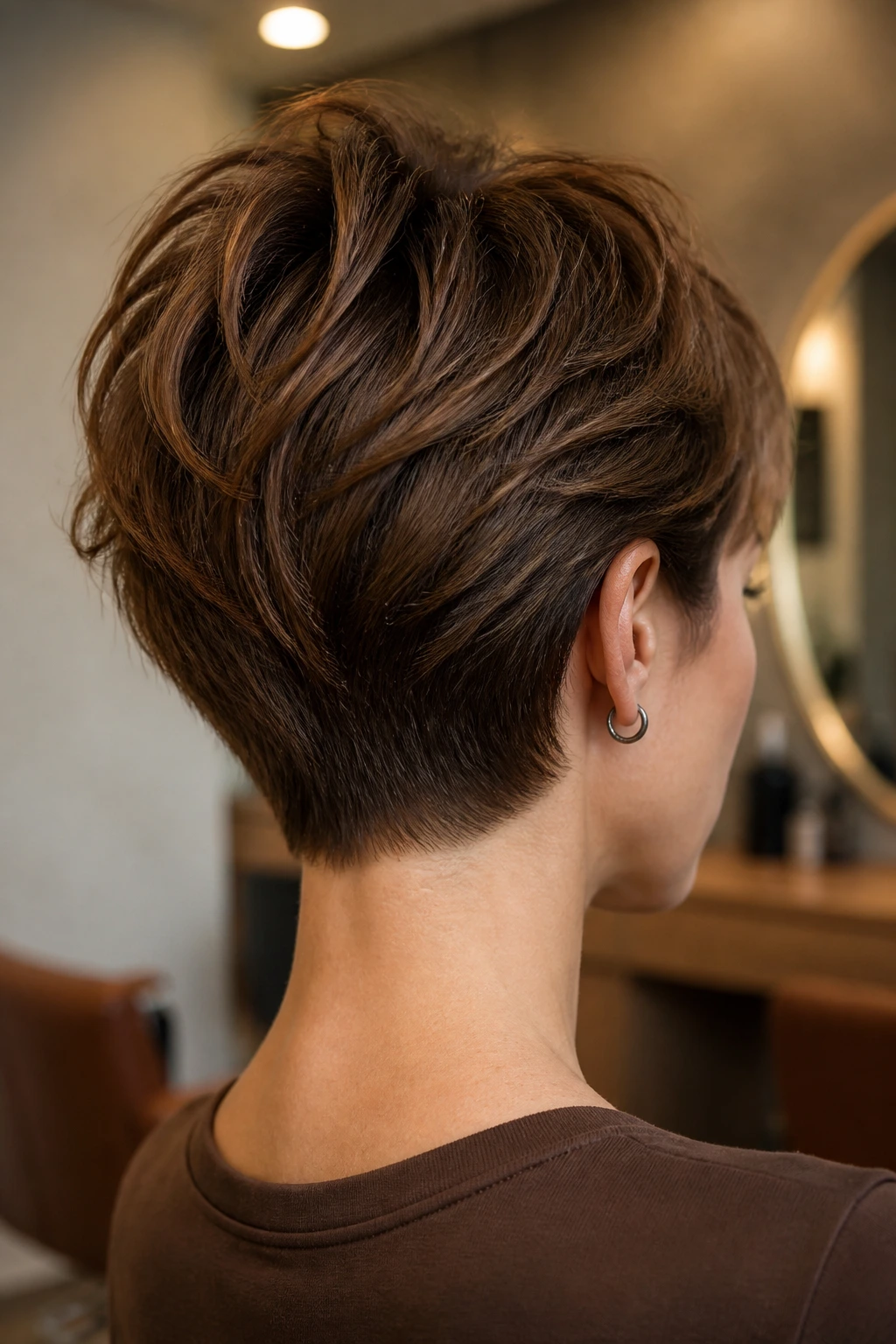
A tapered nape shag keeps the back neat and gives the crown more room to move. That contrast is the whole appeal. The top can be tousled and layered while the neckline stays close and clean.
It’s a smart choice if you want your haircut to feel lighter from behind without losing too much length around the face. The tapered nape also helps the shape last longer between cuts because the base stays controlled while the top grows out.
This cut works well on both thick and fine hair, but the detail has to be different. Thick hair needs a clean, snug taper to remove bulk. Fine hair needs a softer nape so the back doesn’t look empty.
If your hair grows fast at the neckline, this is one of the better short shags to maintain. The grow-out is less obvious when the nape is already designed to sit tight.
21. Feathered Shag with Temple Softening
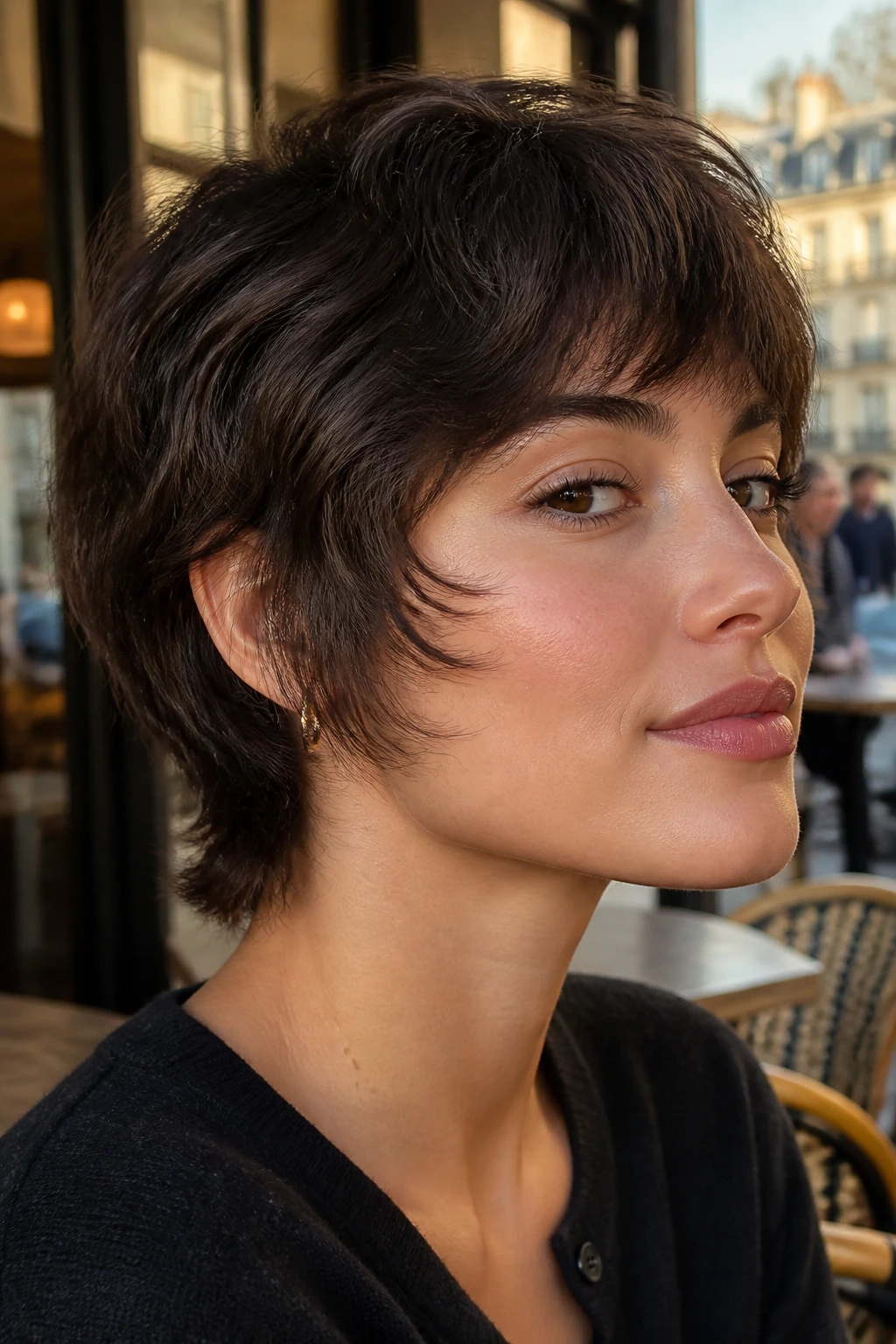
Some short shag haircuts are about edge. This one is about softness. Feathering around the temples and cheekbones takes the emphasis off the sides and lets the face breathe a little more.
It’s a good move if you want short hair but don’t want the cut to feel severe near the jaw. The feathering should be subtle, not wispy in a dated way. Think light, broken-up strands that move when you turn your head, not feathered helmet hair from an old yearbook photo.
The temple area is where this cut earns its keep. A soft sweep there can make a strong jaw feel less boxy, and it can help a narrow face look a little fuller. Small change. Big visual payoff.
Keep the styling light. A soft brush-through and a touch of texture spray often beats a lot of blow-drying here. Too much heat can flatten the feathering into nothing.
22. Oval-Face Balancing Shag
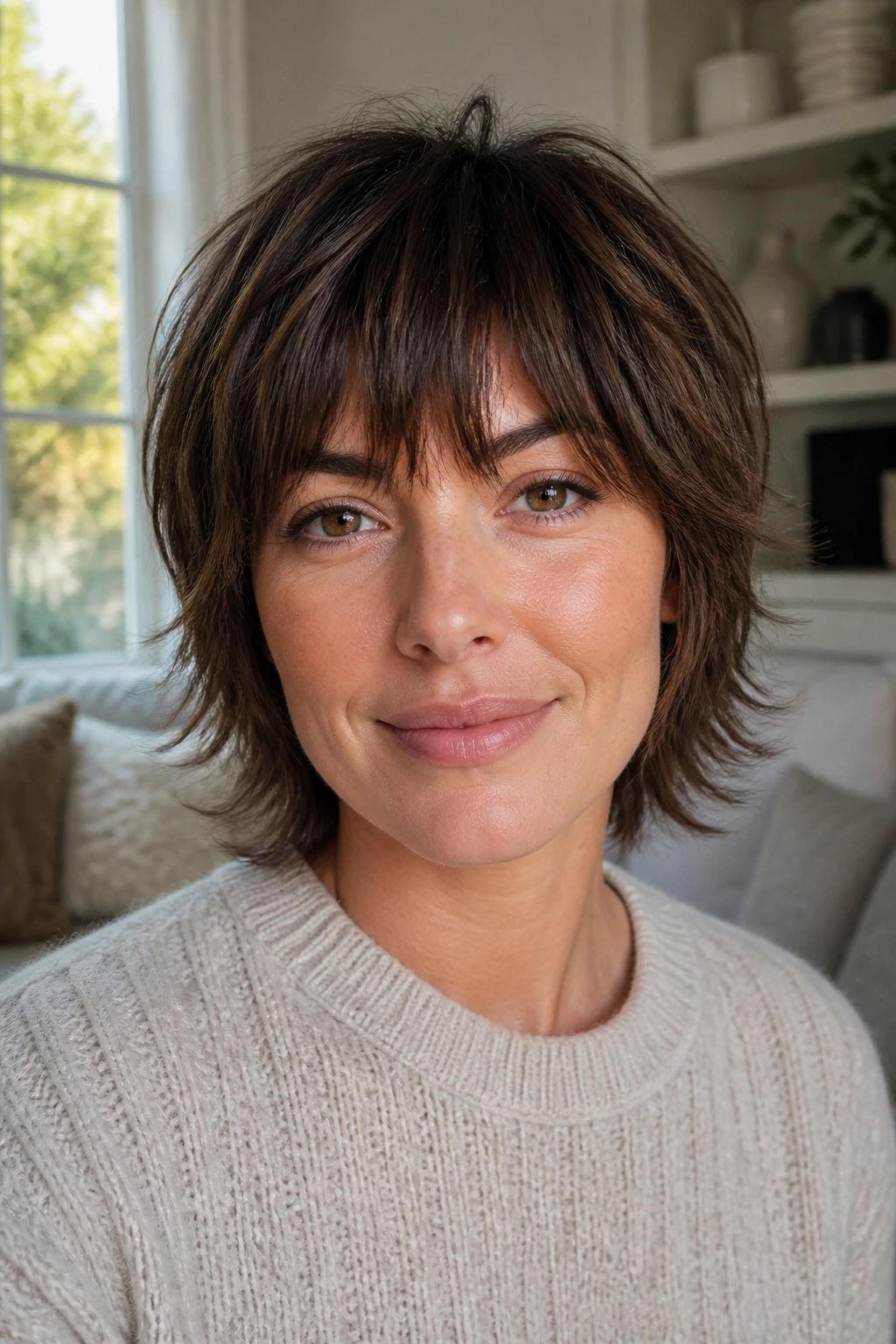
Oval faces can wear a lot of haircuts, which is both a blessing and a trap. The wrong shag can disappear into generic short hair. The right one keeps the face centered and gives the layers something to do.
This version usually keeps the fringe a touch longer and the side pieces balanced so the face doesn’t get stretched or narrowed. That matters because short hair has less length to correct itself. Every line reads faster.
A balanced shag on an oval face often looks best with moderate volume at the crown and some softness around the cheekbones. You don’t need a huge top lift. You need clean movement that doesn’t fight the face shape.
If your hair falls too flat, a tiny root lift at the front can keep the cut from collapsing. If it puffs too much, a smoother finish at the sides reins it back in.
23. Jaw-Sharpening Piecey Shag
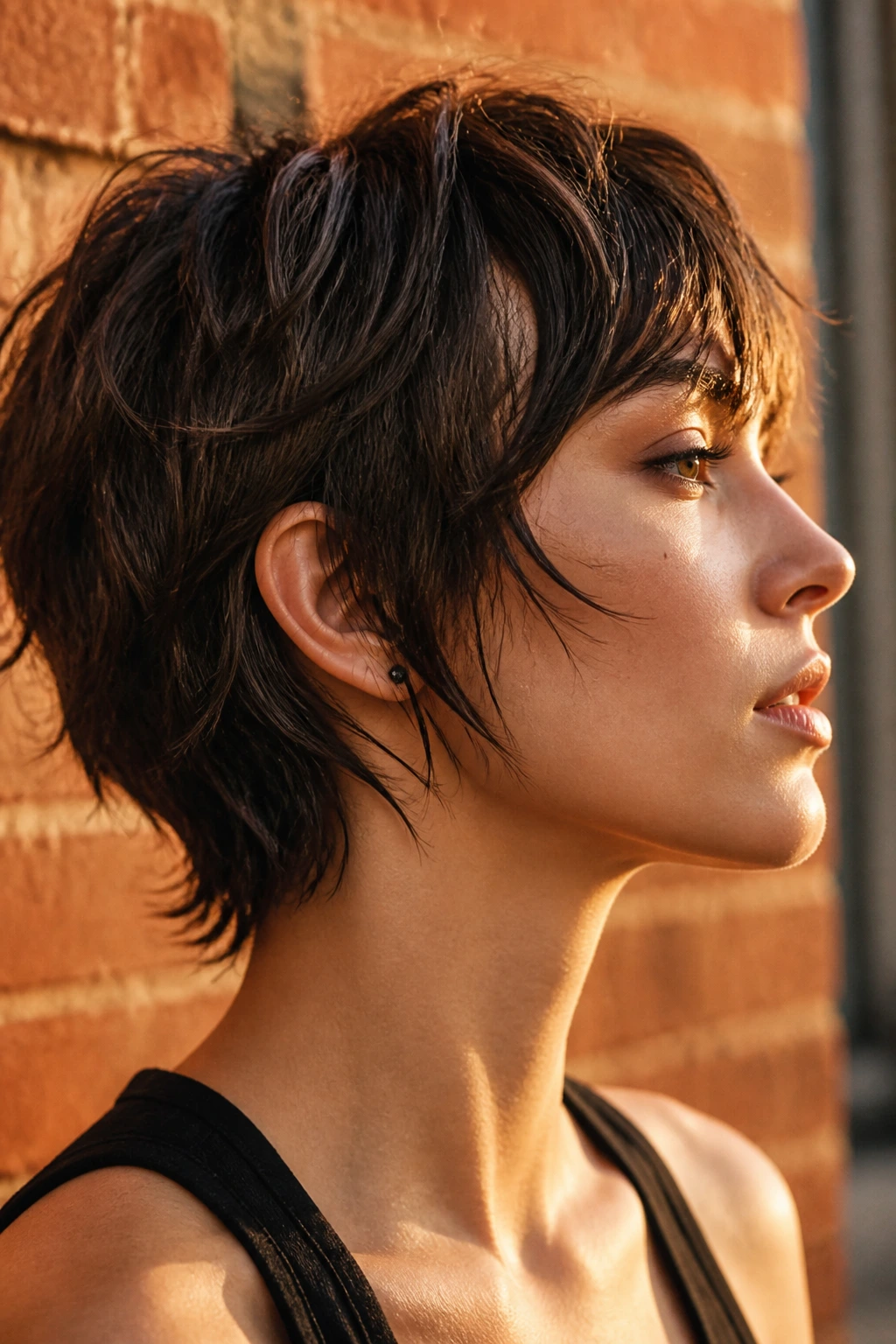
This one uses short pieces around the jaw to create a sharper outline. It’s a little bolder than the soft versions, and it can make the whole face look more angular.
The piecey finish matters. You don’t want a heavy, blocky perimeter sitting at the jaw. You want separated strands that flick out or sit with a bit of broken texture. That’s what gives the cut its edge.
It works especially well with strong cheekbones or a jawline you want to emphasize. If your face is already angular, this cut will lean into that. If your features are softer, it can add a little structure without needing any makeup trickery.
Use a small amount of paste just on the lower layers. Too much product near the jaw can make the haircut look greasy instead of deliberate. Small amount. Clean hands. Done.
24. Underlayer Bob Shag
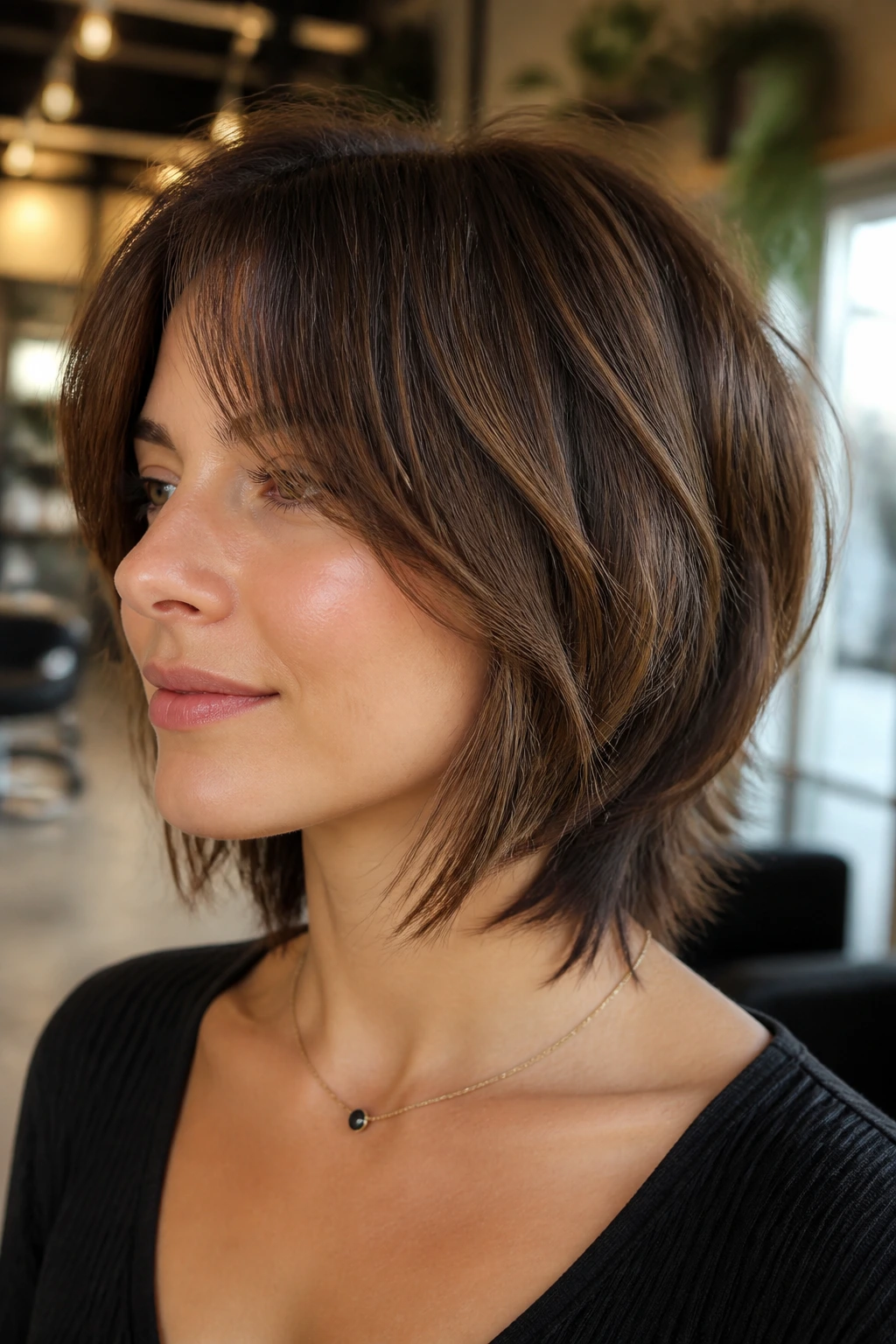
An underlayer bob shag keeps the top smooth enough to feel manageable while the hidden layers underneath do the work. It’s the low-key version of a shag for people who want movement but don’t want to look obviously layered.
That hidden structure is what makes it interesting. The top layer can still fall like a neat bob, but the underneath pieces prevent the cut from stacking into a stiff shape. When you move, the layers show themselves a little. Not too much. Just enough.
This is a good choice if you work somewhere that prefers polished hair but you still want personality. It reads tidy at first glance and textured when you look closer, which is a useful trick.
Ask the stylist not to remove too much from the top layer. If the exterior gets too thin, the underlayer shape starts shouting instead of whispering.
25. Micro-Bang Shag

Micro bangs on a short shag are not subtle. That’s part of the charm. The fringe sits high on the forehead, which puts all the attention on the eyes and the texture around the rest of the haircut.
The thing to know is that micro bangs change the whole face framing equation. Once the fringe is that short, the side pieces and the crown layers need to do more of the balancing work. If the rest of the haircut is flat, the bangs look like they belong to another person.
This style works best when the shag itself has plenty of movement. Think piecey sides, a little crown lift, and an outline that doesn’t sit too heavy against the neck. The fringe should be blunt enough to read clean, but not so thick that it looks like a block.
I’d only do this cut if you’re comfortable with maintenance. Micro bangs grow out fast. They ask for regular trims, and they do not pretend otherwise.
26. Razor Crop Shag
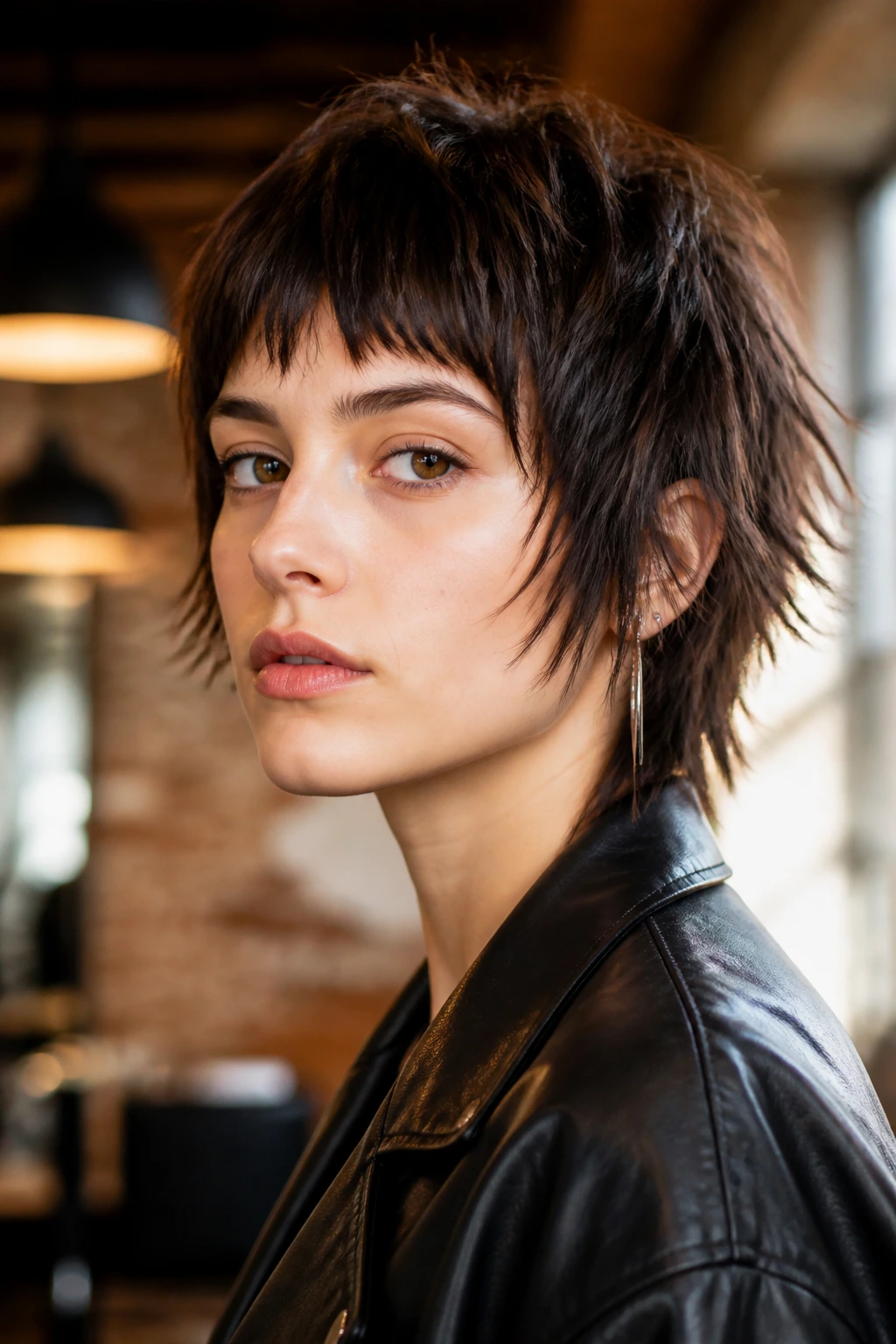
A razor crop shag is the sharpest version in the bunch. The ends are cut to look fragmented and airy, and the overall effect is more graphic than soft.
It’s a good pick if you like a haircut that looks strong even when it’s a little messy. The razor makes the layers lighter, which can be brilliant on dense hair and risky on fine hair. If the hair is too thin already, the ends can start looking ragged instead of textured.
The key is control. A good stylist uses the razor to soften the shape, not shred it. The layer map should still make sense when the hair is clean and brushed through. If it only looks good when it’s tousled, that’s a sign the structure isn’t doing enough.
A matte finish suits this cut. Shine can work against the sharp edges and make the layer work less visible.
27. Wash-and-Go Shag
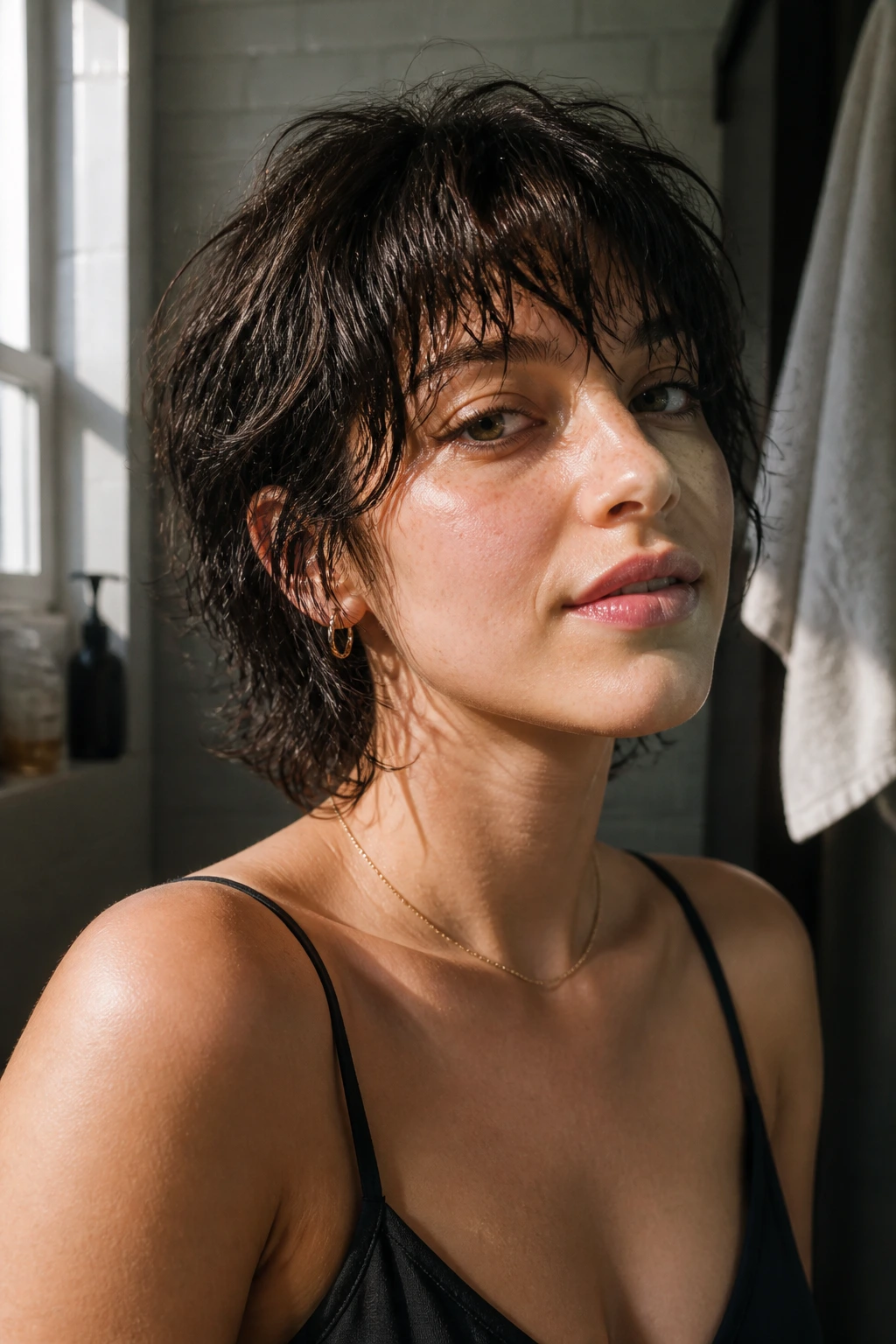
This is the short shag for people who want to leave the house with damp hair and still look finished an hour later. The whole cut is built around movement that appears as the hair dries, not movement that has to be forced into place.
The best wash-and-go versions keep the fringe and crown layers light, but not flimsy. The hair needs enough structure to fall into shape on its own. That usually means a soft mousse at the roots, a small amount of cream through the ends, and a towel blot instead of a rough rub.
If your hair has a slight wave, this cut can be a gift. If your hair is stick-straight, you may need a little bend from your fingers or a quick twist around a brush while the hair is still warm.
This is not the cut for someone who wants perfectly uniform hair every day. It’s for someone who likes a little movement and doesn’t want to negotiate with it for 40 minutes.
28. Grow-Out Friendly Shag

A grow-out friendly shag is the one I recommend to anyone who likes short hair but knows they won’t book a trim at the first sign of regrowth. The layers are arranged so the haircut still looks intentional when the top starts getting longer.
That means the fringe isn’t cut too severe, the crown isn’t over-layered, and the nape doesn’t get taken so short that it turns awkward in two weeks. The goal is to keep the silhouette soft enough that a little growth only makes it look fuller.
This cut is especially smart if you’re moving from a pixie toward a bob, or from a bob toward something longer but don’t want the in-between stage to feel clunky. The shag does the translation work.
Leave the face-framing pieces a touch longer than feels necessary. They’ll be the first pieces to grow into something useful, and they save you from that awkward moment when everything seems to hit at the wrong length at once.
Why a Short Shag Has More Shape Than It First Appears
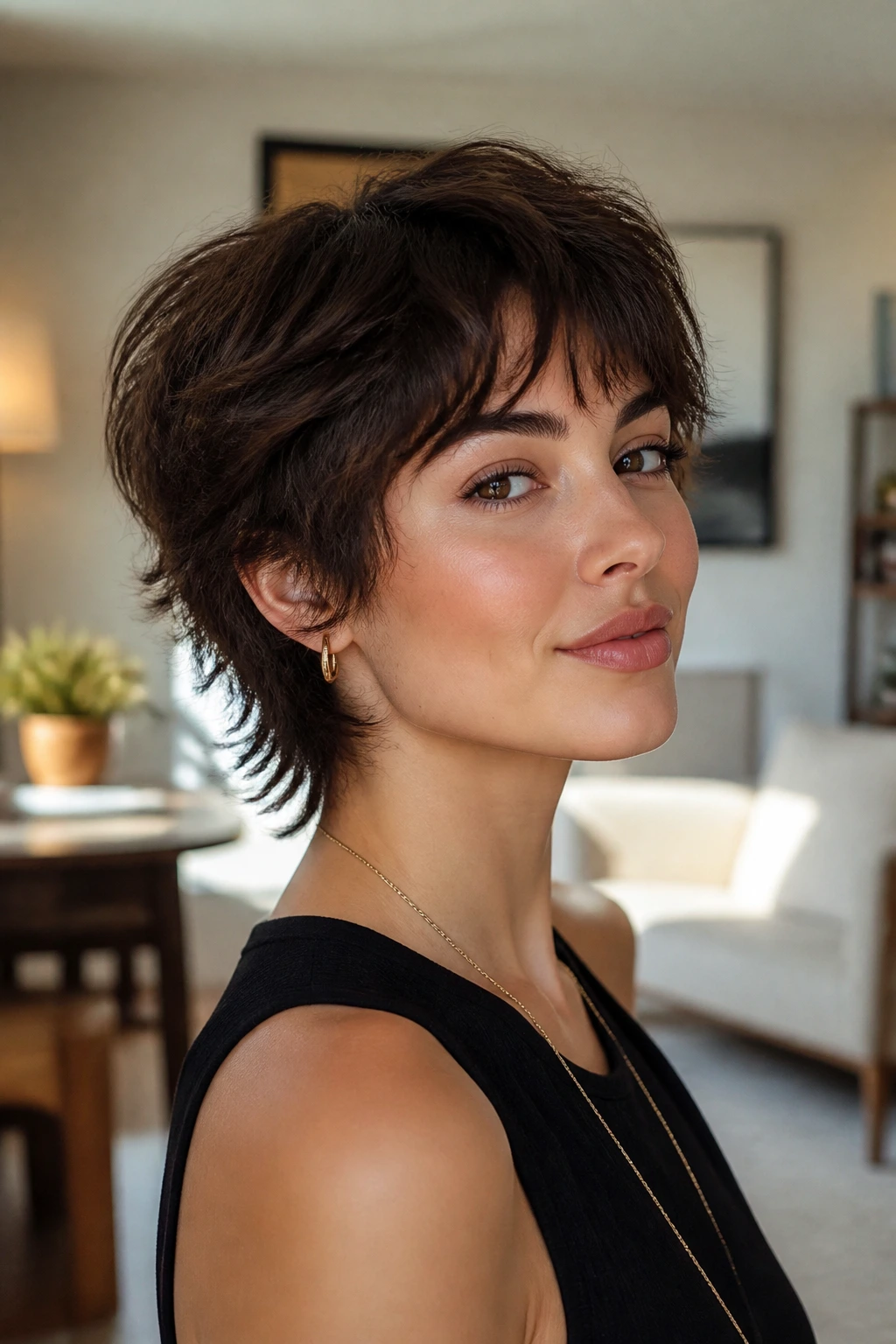
The reason short shag haircuts work is simple: they change how weight sits in the cut. A blunt bob drops all its weight into one line. A shag removes some of that weight, then redistributes it through the crown, sides, and fringe so the haircut has places to bend and move.
That redistribution matters even more on short hair than on long hair. There isn’t much length to hide poor layering, and there also isn’t much weight to drag the hair back into place if a cut is off. Short shags need precision, especially around the front. If the layers are too short, the shape can puff. If they’re too long, the haircut can go limp.
Dry cutting is common for a reason. Hair falls differently when it’s dry, especially if it has wave, cowlicks, or uneven density. A good stylist will often check the outline in the mirror while the hair is moving, not just when it’s wet and obedient. That’s not fussiness. It’s how you avoid surprises.
The other thing a shag does well is disguise the ordinary. A tiny bend at the cheekbone, a few broken ends at the jaw, a soft crown lift—those little changes are enough to make short hair feel edited instead of accidental.
The Tools That Actually Help a Short Shag Behave
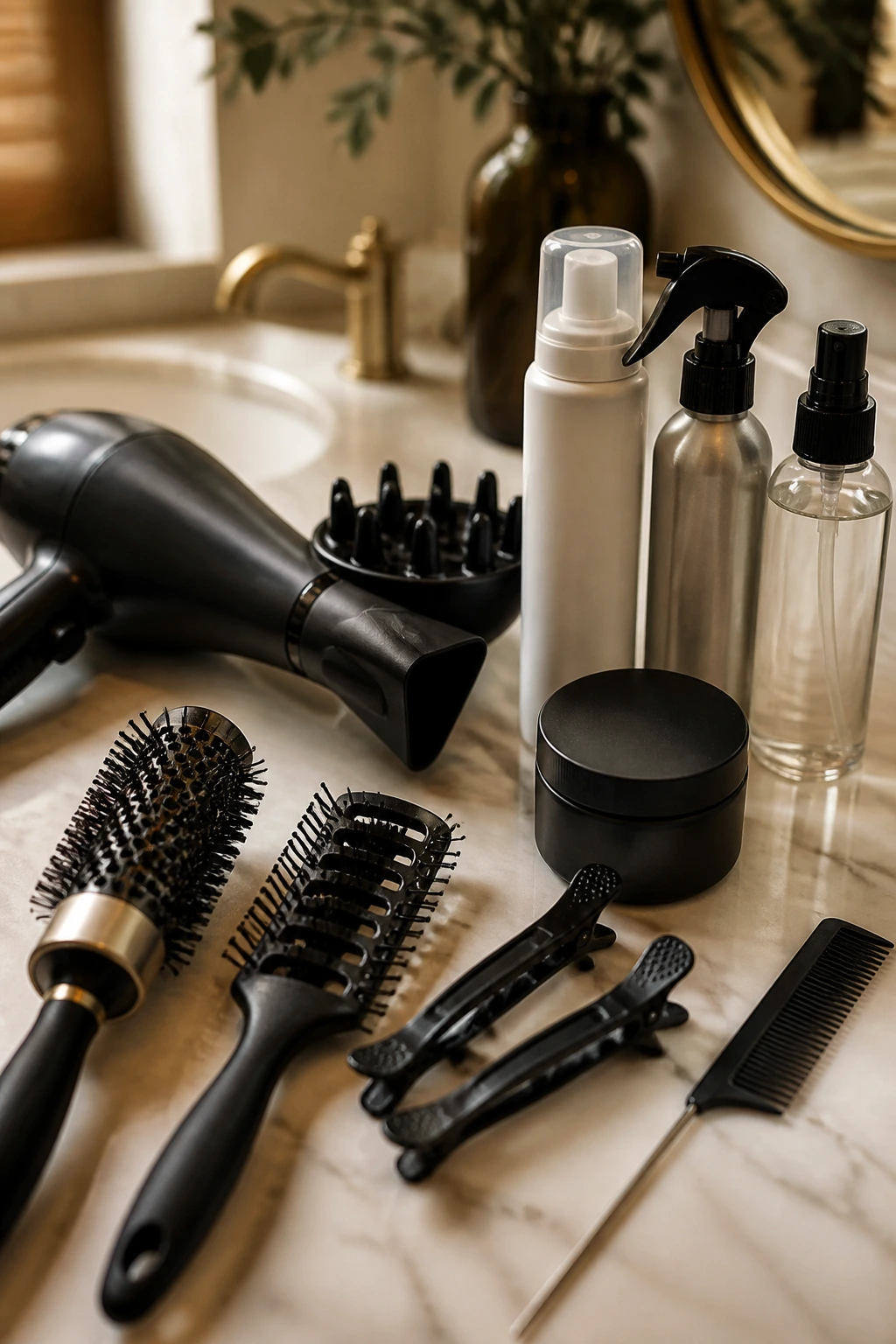
- Blow dryer with a nozzle: Directs airflow at the roots so the top doesn’t puff in every direction.
- Diffuser: Useful for curly or wavy shags when you want the bend to stay intact instead of blowing apart.
- 1-inch round brush: Good for giving bangs and face-framing pieces a slight curve without turning them into curls.
- Vent brush: Quick for rough-drying short hair and lifting the crown fast.
- Duckbill clips: Handy for setting a fringe or pinning the top while it cools.
- Light mousse or foam: Gives short layers some memory without making them stiff.
- Texturizing spray: Adds separation to the ends; a little goes a long way on short hair.
- Matte paste or cream: Best for piecey finishes and defining the tips.
- Heat protectant: Worth using if you touch the hair with an iron, even briefly.
- Tail comb: Good for clean parts and for lifting small sections at the roots.
How to Pick the Right Short Shag for Your Hair Texture

Fine hair, thick hair, curls, and straight hair all want different things from a shag. That’s the part people skip when they bring in a photo from the internet. The shape might look similar in the picture, but the cutting logic underneath has to change.
Fine hair usually does better with a soft round shape, a bit of crown lift, and layers that aren’t too aggressive. Too much thinning and the haircut loses its body. You want movement, not see-through ends.
Thick hair wants release. Interior layers, a controlled perimeter, and careful debulking keep it from ballooning. If the stylist leaves the bottom line too heavy, the haircut gets wide fast.
Curly hair needs length left in the right places so the curl can spring back. Straight hair needs more visible texture because it won’t create its own movement. And if you have a cowlick, don’t pretend it isn’t there. Build around it. Hair always tells on you eventually.
How to Style a Short Shag Without Flattening It
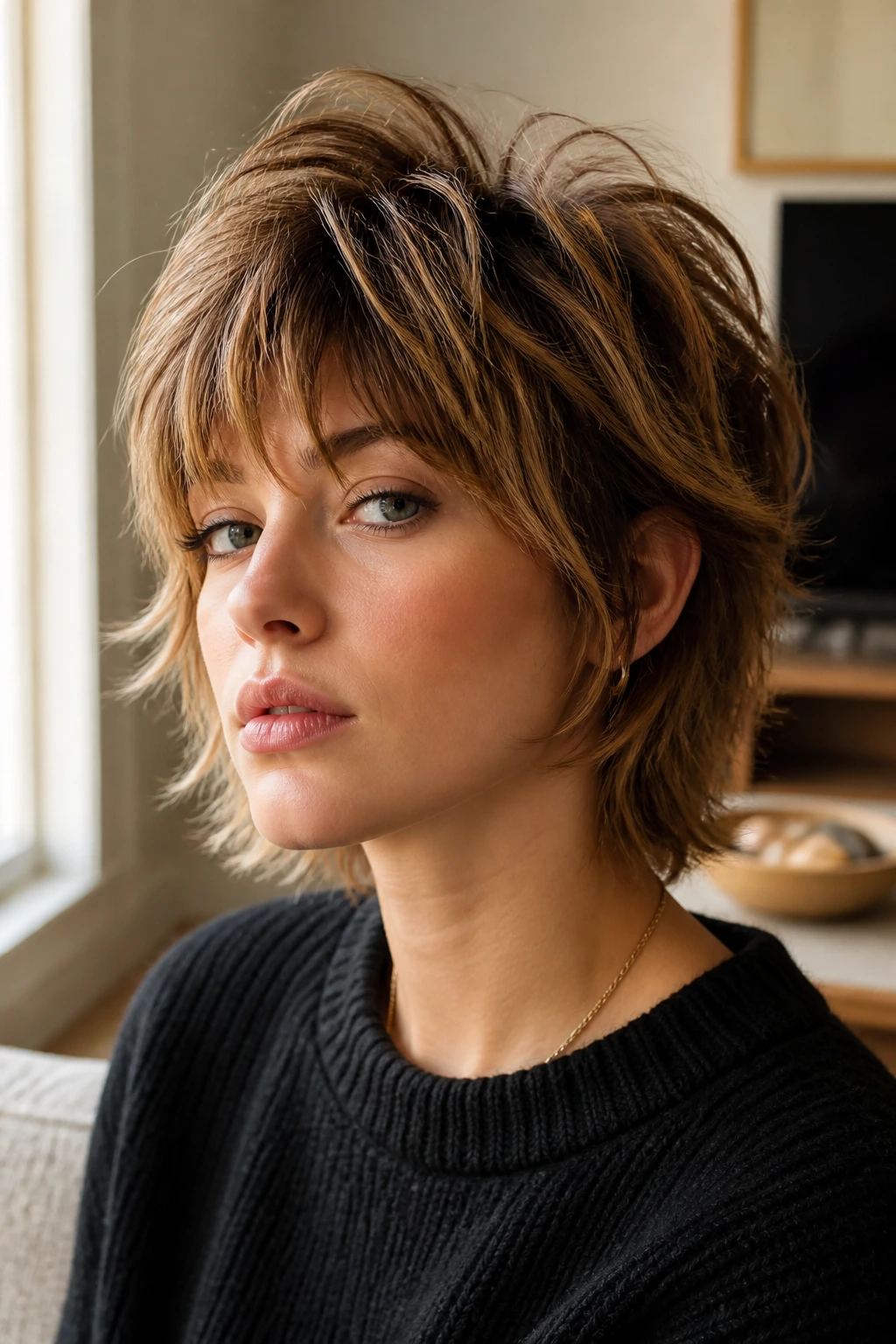
Start with towel-damp hair, not dripping hair. Too much water stretches short layers down and makes it harder to judge the shape. A small amount of mousse at the roots is enough for most shags; work it in with your fingers, then comb only if you need a cleaner part.
For an air-dry finish, scrunch the ends once or twice and stop. Repeated touching breaks up the clumps and can leave the hair frizzy before it has a chance to settle. If you want more lift, clip the crown up while it dries. Two duckbill clips can change the whole top line.
For a smoother finish, use a round brush or vent brush on the fringe and the front pieces, then leave the rest slightly undone. That contrast is what makes a shag look alive. If every strand is polished, the haircut can lose its edge.
A tiny bit of paste on the ends gives you separation. A little texturizing spray near the crown gives you lift. Heavy oils? I’d skip them unless your hair is very dry and very coarse. On most short shags, oil makes the shape fall faster than you want.
Little Moves That Make a Short Shag Look Better
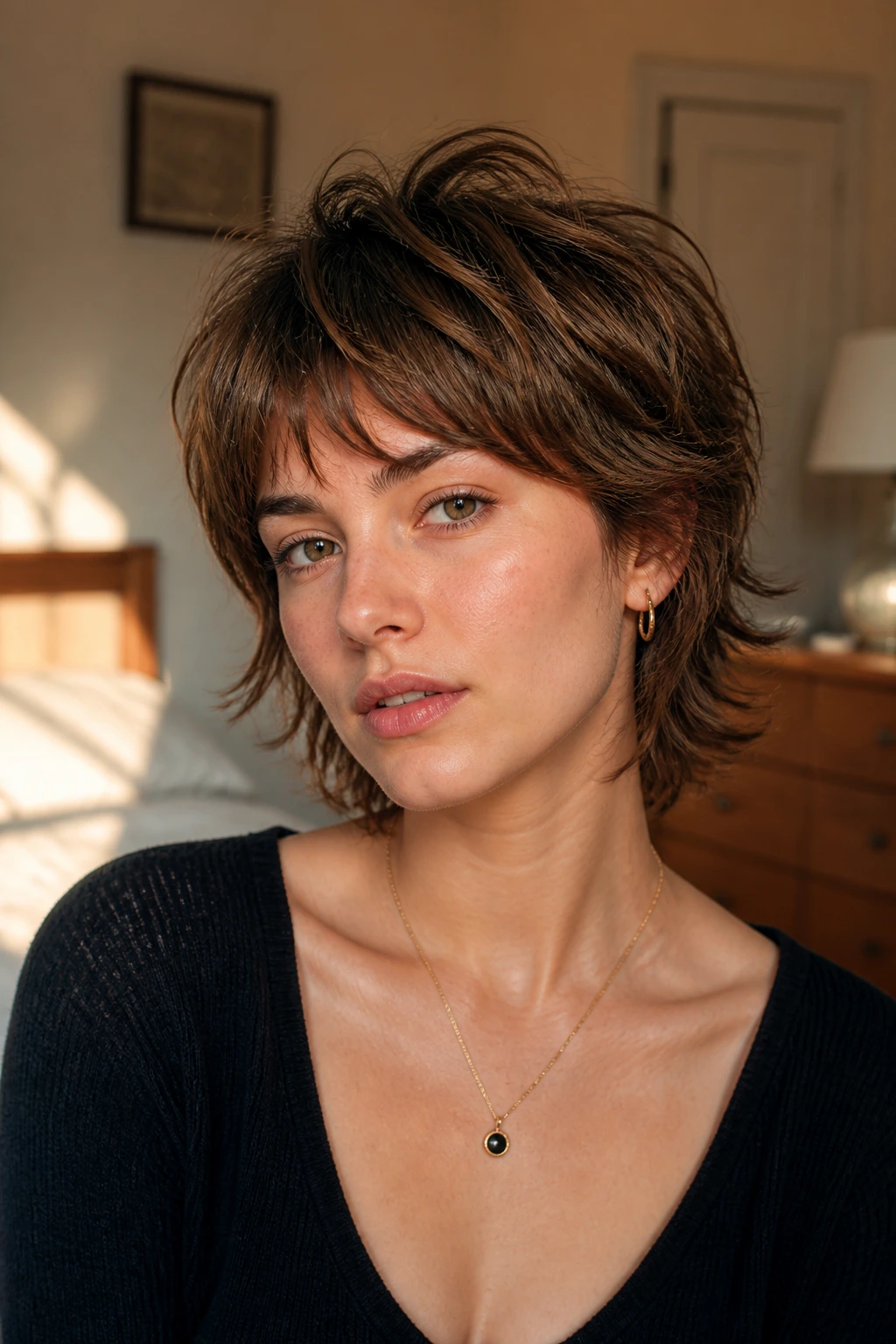
Root lift at the right time: Clip the crown while the hair cools. That’s one of the easiest ways to hold height without teasing.
Face-framing control: Put your energy into the front pieces. If the fringe and cheek layers look good, the rest of the cut can be a little imperfect and still read well.
Dry product, not wet product, for second-day hair: A mist of dry shampoo at the roots often refreshes the lift faster than adding more cream.
Keep the ends broken up: A short shag needs a little texture at the perimeter. If the ends look too blunt, the whole haircut starts feeling heavy again.
Common Mistakes That Flatten a Short Shag
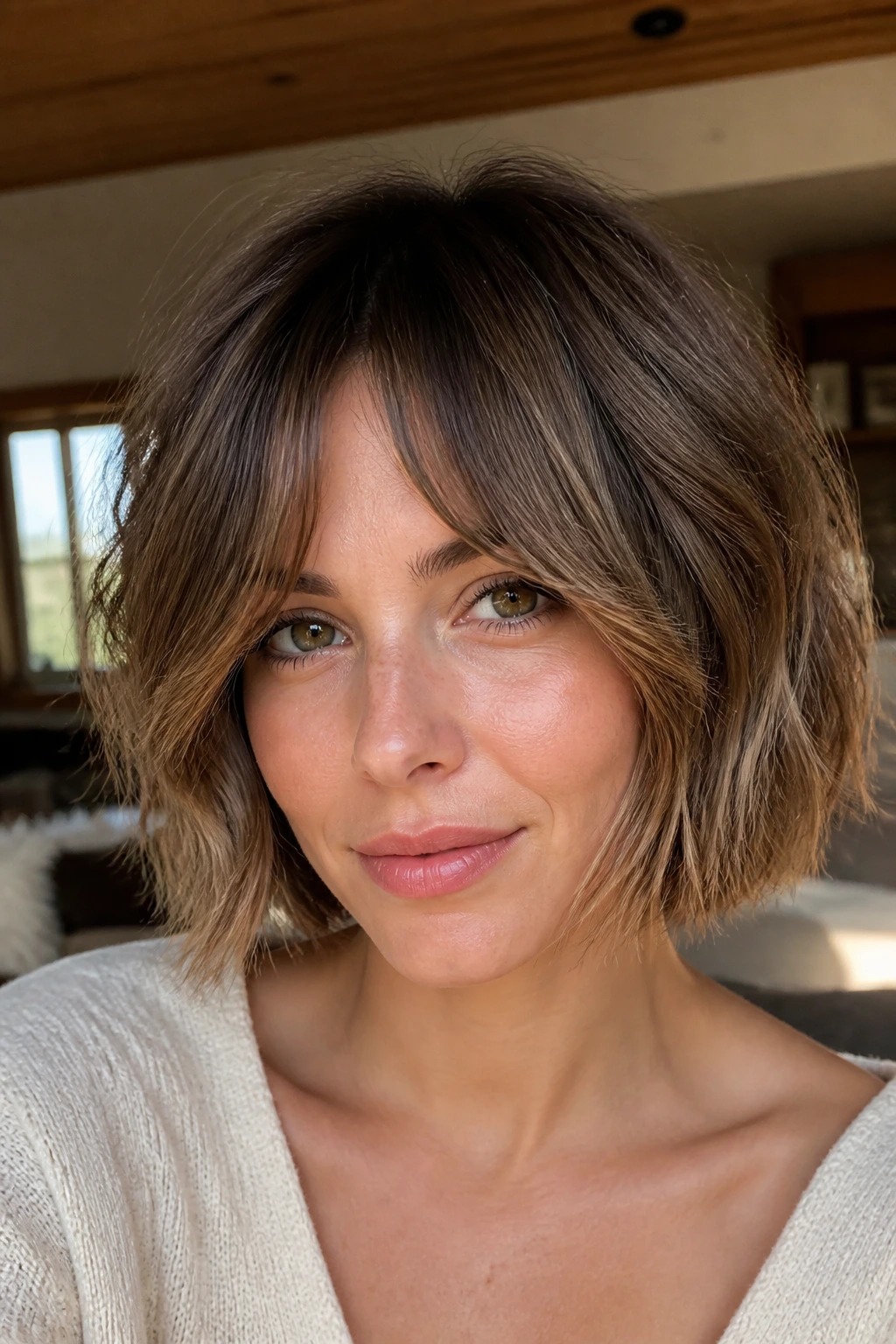
- Cutting the fringe too short on the first appointment: Short bangs bounce up after drying, and a fringe that looks fine wet can end up several millimeters too high. Ask for longer than you think you want, then adjust.
- Over-thinning fine hair: Symptom: the ends look wispy and weak after one wash. Fix: keep more density at the perimeter and use soft layering instead of aggressive texturizing.
- Loading on heavy cream or oil: Symptom: the crown collapses and the layers stick together. Fix: switch to mousse, foam, or a light paste applied only to the ends.
- Ignoring the nape: Symptom: the back starts looking fuzzy while the front still looks cute. Fix: keep the neckline cleaned up with trims or ask for a tapered finish.
- Forcing straight hair to behave like waves: Symptom: the shag looks flat by midday. Fix: build in more visible texture with a bend from a brush or iron on selected pieces.
Variations and Adaptations Worth Trying
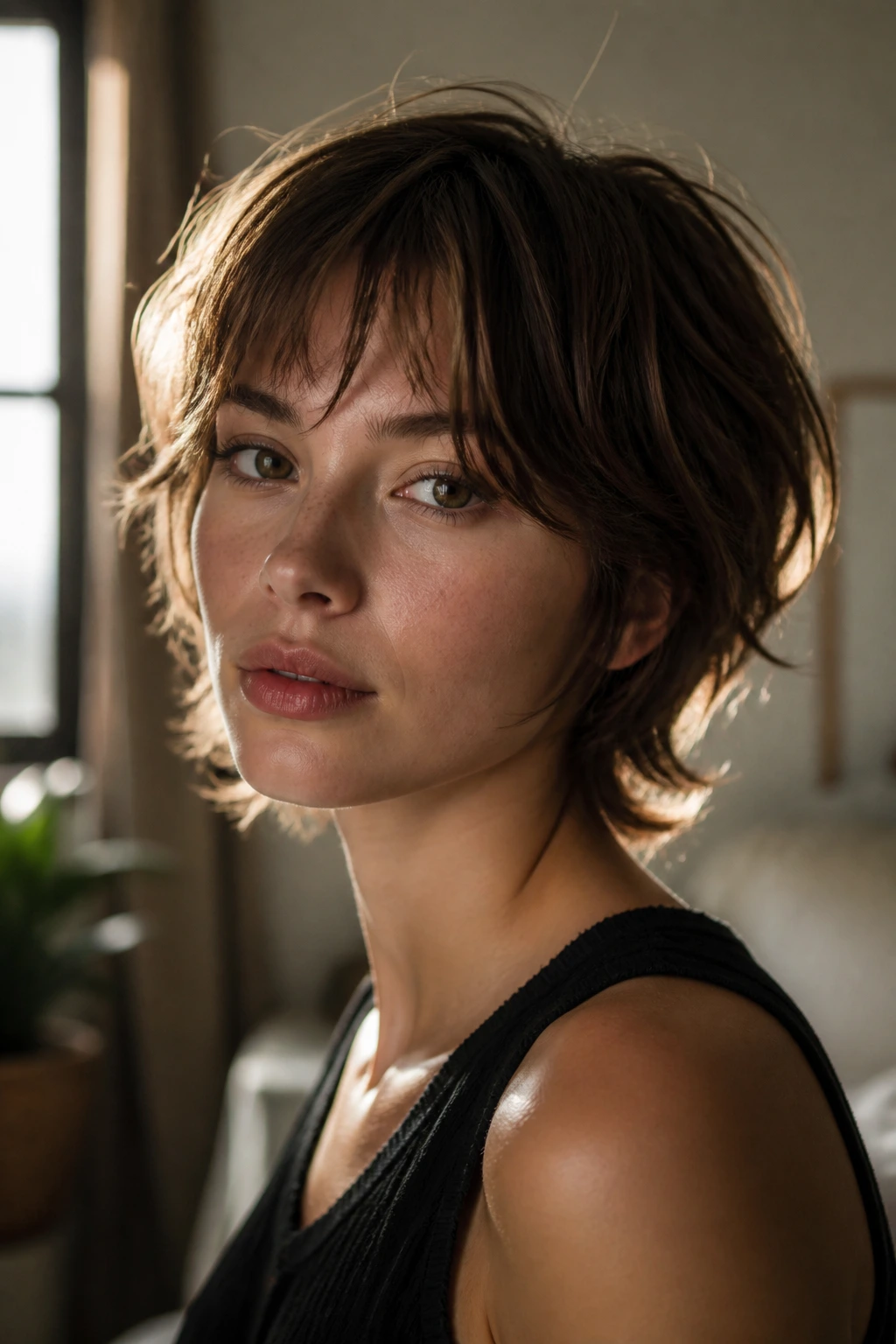
The Soft-Texture Version: This keeps the layers gentle and the ends a little fuller. It’s the one to pick if you want movement but don’t want the haircut to look deliberately edgy.
The Razor-Edge Version: This leans more fragmented, with visible separation and a sharper outline. It suits thicker hair or anyone who wants the cut to read bolder.
The Curly-Control Version: Here, the crown is shaped to let curls spring without puffing out sideways. It’s a strong choice for wavy and curly patterns that need lift plus control.
The Low-Styling Version: This version relies on a forgiving fringe and a cut that falls into place after a rough dry. It’s the one for busy mornings and minimal tool use.
The Polished Version: Keep the fringe smoother, the sides a little cleaner, and the ends softly bent under. It still has shag structure, but it plays nicer in more formal settings.
How to Keep a Short Shag Looking Intentional

A short shag doesn’t stay sharp forever. The fringe grows, the nape softens, and the crown starts to lose that neat little lift. A trim every 6 to 8 weeks keeps the shape in the lane it was cut for. If you wear micro bangs, you may want fringe cleanup every 3 to 4 weeks, because short fringe changes the fastest.
Night care matters more than people think. Short shags can get flattened by a rough pillow. A satin or silk pillowcase helps, and so does sleeping with the fringe pinned loosely back if it tends to split. You don’t need a full bedtime ritual. Just stop the crown from getting mashed into one side all night.
Between washes, a dry shampoo at the roots usually works better than rewetting the whole head. On the second day, a little texture spray and a finger-comb can revive the layers fast. If the ends start looking stringy, skip more product and give them a quick pass with clean fingers or a touch of paste only at the tips.
Questions People Ask Before They Cut Their Hair This Short
Will a short shag work if my hair is fine?
Yes, but the cut has to keep enough density at the perimeter. Fine hair usually looks better with soft layering and crown lift than with heavy razoring.
Can curly hair handle a shag without turning into a halo?
It can, if the layering follows the curl pattern. The goal is to reduce bulk in the right places, not slice the curl apart.
What should I ask my stylist for?
Bring reference photos, then ask for the fringe length, the length at the jaw or nape, and whether you want soft, piecey, or more razored texture. Those details matter more than the word shag alone.
Is a shag hard to style every day?
Not if the cut matches your hair texture. A good short shag usually needs less daily work than a blunt cut because it already has movement built in.
What if my bangs split in the middle?
That usually means the fringe is too short, too light, or drying in the wrong direction. Try drying them from side to side first, then set them where you want them with cool air.
Can I grow out a shag into a bob?
Yes, and that’s one of its best qualities. Keep the nape tidy and the front pieces a little longer, and the grow-out usually lands in a softer bob instead of a lumpy halfway stage.
Does a shag suit a round face?
It can, especially when the fringe opens at the center and the face-framing pieces fall below the cheekbones. That vertical movement helps lengthen the look.
The Short Shag Sweet Spot

The best short shag haircuts do one thing well: they make short hair feel like it has air in it. That might sound simple, but it’s the whole game. Layers that are placed with care can give you movement at the crown, softness around the face, and a shape that still looks good when the styling gets lazy.
The biggest mistake is thinking a shag means “messy” and leaving it there. On short hair, mess needs a blueprint. When the bangs, crown, and perimeter all work together, the cut stops looking accidental and starts looking like the person wearing it knew exactly what they were after.
Pick the version that fits your texture, your maintenance habits, and how much edge you want near your face. Then keep the shape fresh enough that the layers can keep doing their job.
