



Fine curly hair can be brutally honest about a haircut. Leave too much weight at the bottom, and the shape slumps into a narrow bell. Take out too much in the wrong place, and the ends turn wispy fast, especially once the curls dry and tighten. That’s the tightrope.
The sweet spot is a short cut that respects curl spring instead of fighting it. A bob, crop, or pixie can make fine curls look fuller, but only when the outline is planned for dry hair, not just snipped into place while wet. A curl that drops to chin length when damp may bounce up two inches or more by the time it’s fully dry, which is why the best short curly haircuts for fine hair usually keep the top a touch longer and the lower edge a little softer.
There’s another piece people miss: fine hair is about strand diameter, not density. You can have a lot of fine curls and still need a cut that removes bulk in the right spots without thinning out the perimeter. That’s where this collection earns its keep. Some shapes build lift at the crown. Others widen the silhouette at the cheekbones. A few make a tiny amount of hair look deliberate instead of sparse, and that matters more than length ever will.
Why These 28 Cuts Work Better on Fine Curls
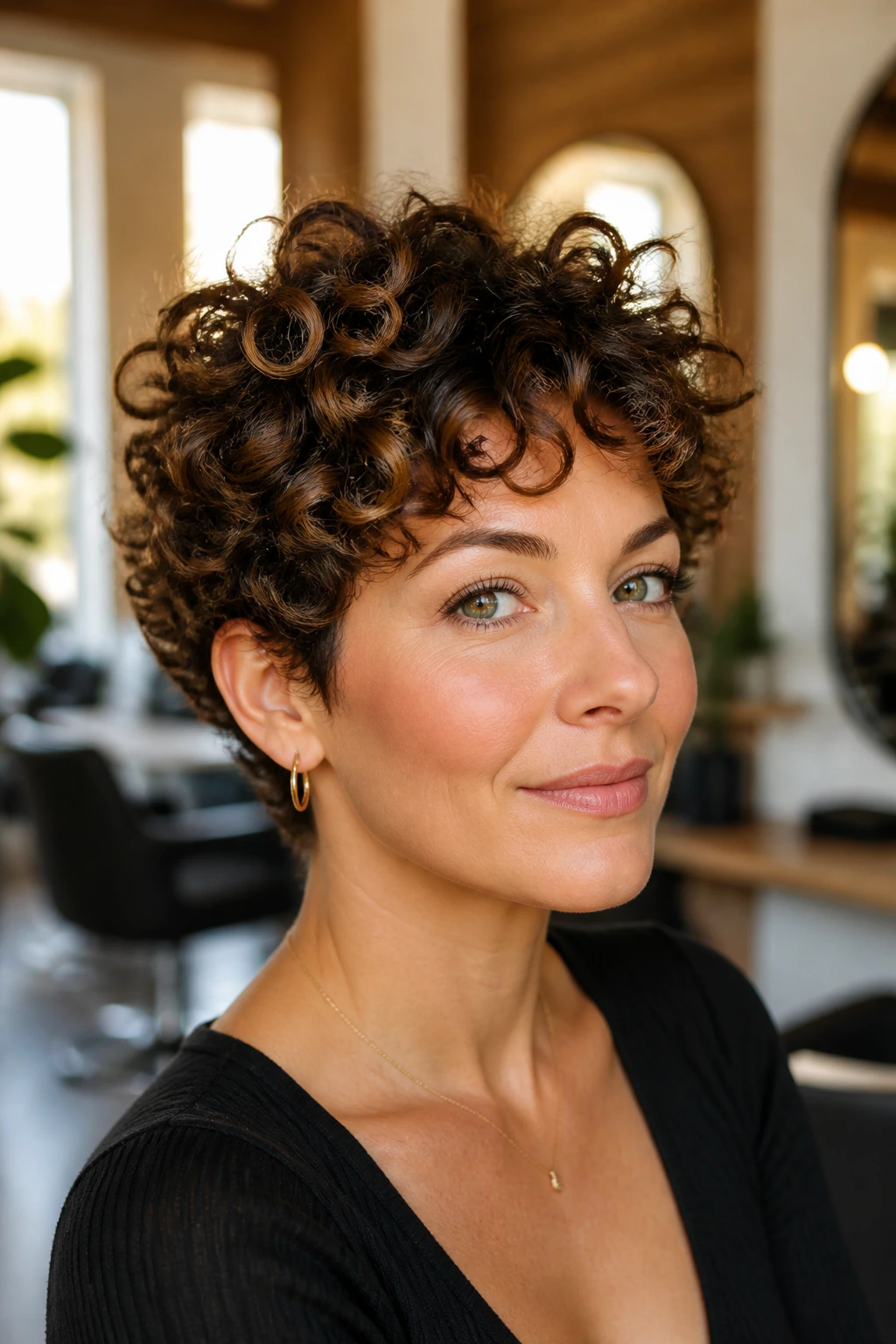
- They reduce drag at the ends: Shorter lengths stop delicate curl strands from hanging straight under their own weight, so the pattern reads fuller instead of stringy.
- They keep the top from collapsing: Cuts with crown lift, internal layers, or a side part stop the top section from lying flat against the scalp.
- They make shrinkage work for you: A good short cut expects curls to bounce up once they dry, which keeps the final shape from turning boxy or uneven.
- They give the face more shape: Chin lines, jaw lines, and cheekbone openings matter more on fine curls because the haircut has to create structure the hair itself won’t naturally supply.
- They style fast: A lot of these shapes need only water, a light mousse, and a diffuser or air-dry session, which is a relief when the hair is too delicate for heavy layering and endless product.
How to Read Your Curl Pattern Before You Book
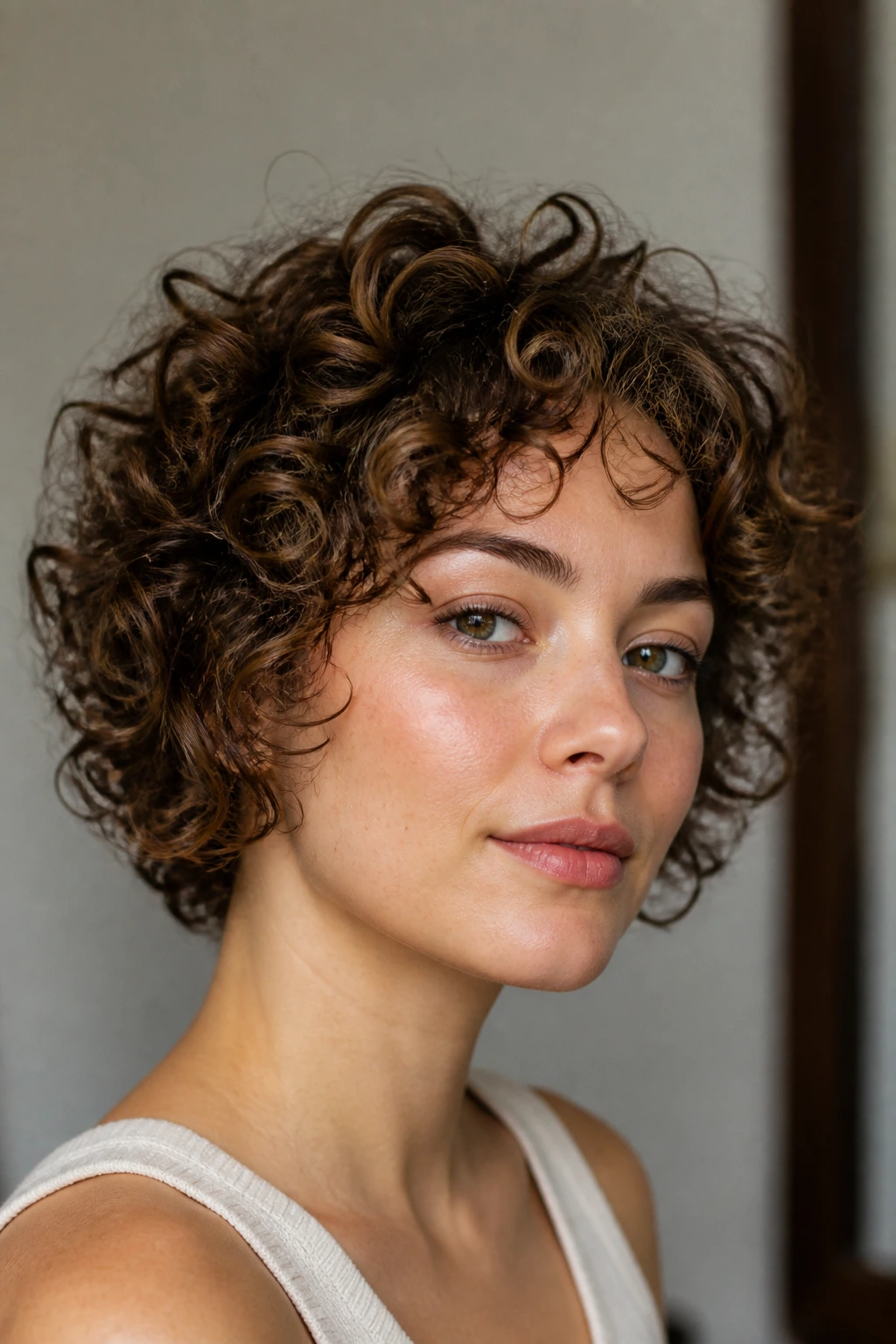
Fine curls do not all behave the same way, and that’s where a lot of haircut disappointments begin. Some heads have loose spirals that stretch into waves under their own weight. Others have tighter ringlets that shrink hard around the ears but relax near the nape. The same cut can look airy on one and oddly sparse on another.
Watch what happens when your hair is half dry. If the roots still lie flat but the mids puff first, you need more lift through the crown and less length dragging at the bottom. If the ends disappear into frizz the moment they lose moisture, the cut needs a cleaner perimeter and fewer shredded layers. That distinction sounds small. It isn’t.
Density matters, too. Fine hair can be thick in amount, and thick in amount can still need a feather-light touch at the ends. A stylist who treats every curly head as if it needs massive layering is usually the one who leaves you with a triangle, or with a halo and no shape underneath. The best short curly haircut for fine hair works with the way your curls actually dry, not the way they look when freshly wet and combed out.
What to Tell Your Stylist So the Cut Lands Right
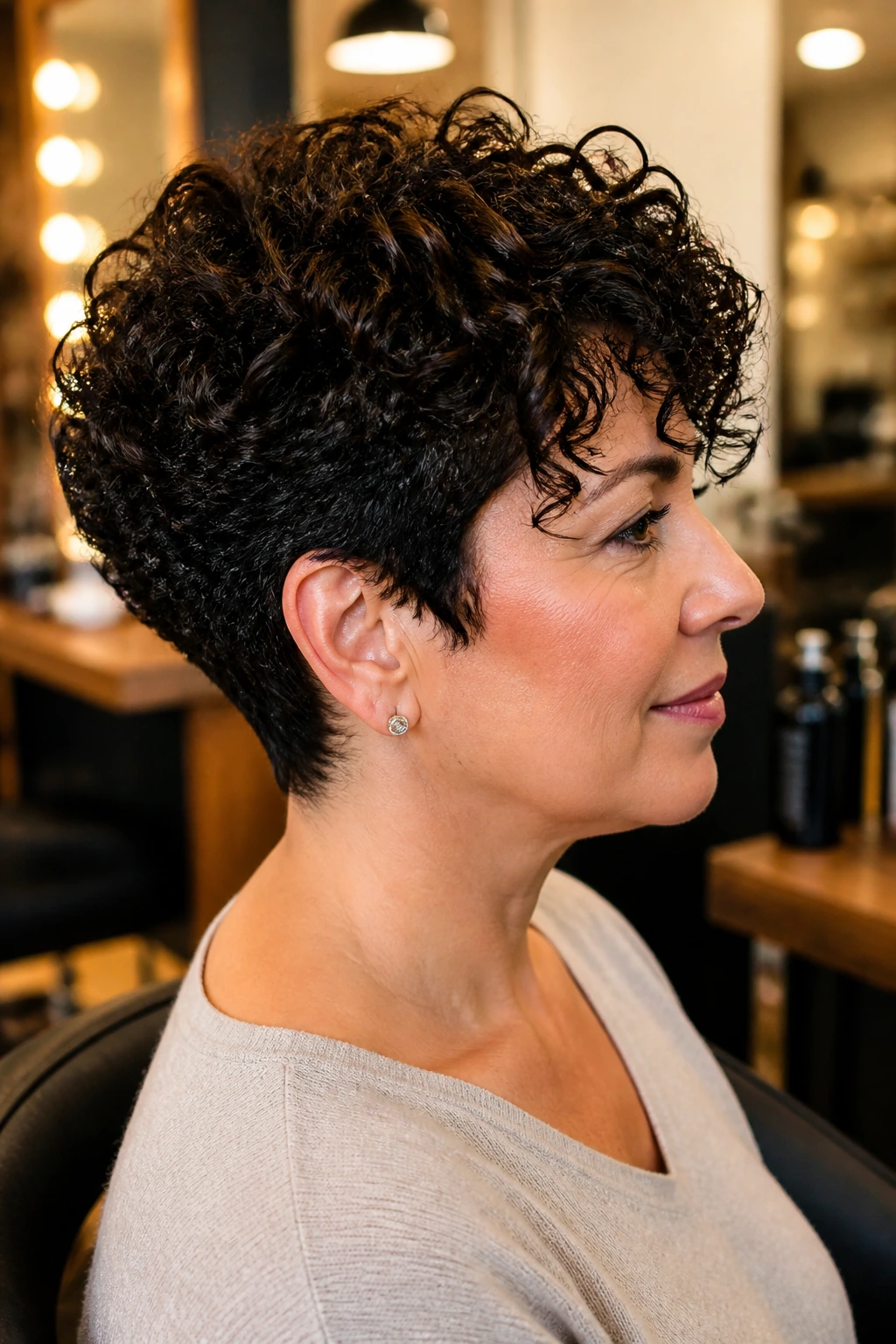
Bring photos, yes, but bring the right ones. You want examples of the haircut on hair that looks like yours in density, curl size, and shrinkage. A gorgeous pixie on coarse 3C coils won’t tell you much if your own hair is a loose, fine 2C bend that collapses at the roots.
Say this part out loud: “I want shape when it dries, not just when it’s wet.” That one sentence changes the whole conversation. Ask for a dry check, or at least a dry finish check after the main cutting is done. Fine curls often look obedient when damp and then go their own way once the water leaves.
A few more useful phrases help:
- “Keep the perimeter full.” That tells the stylist not to thin the outline into wisps.
- “Avoid heavy texturizing on the ends.” Fine hair can go see-through fast.
- “Leave enough length on top for curl spring.” Short doesn’t mean shaved.
- “I style with light product only.” That matters because a cut that relies on cream-heavy styling will feel limp on day two.
And if you have a strong part, say so. A center part versus a deep side part can change the whole read of a short curly haircut for fine hair.
1. Curly Pixie with Crown Lift
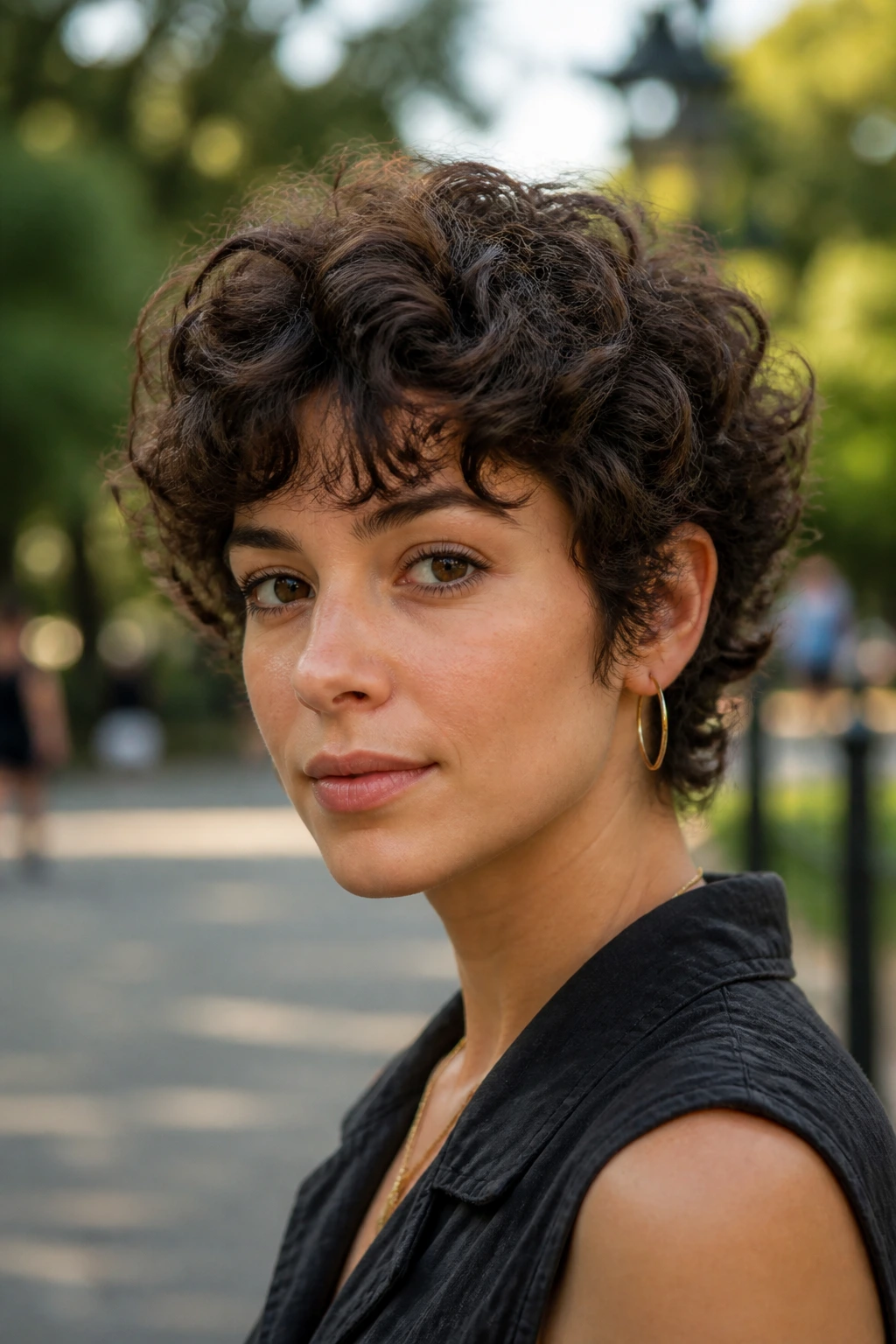
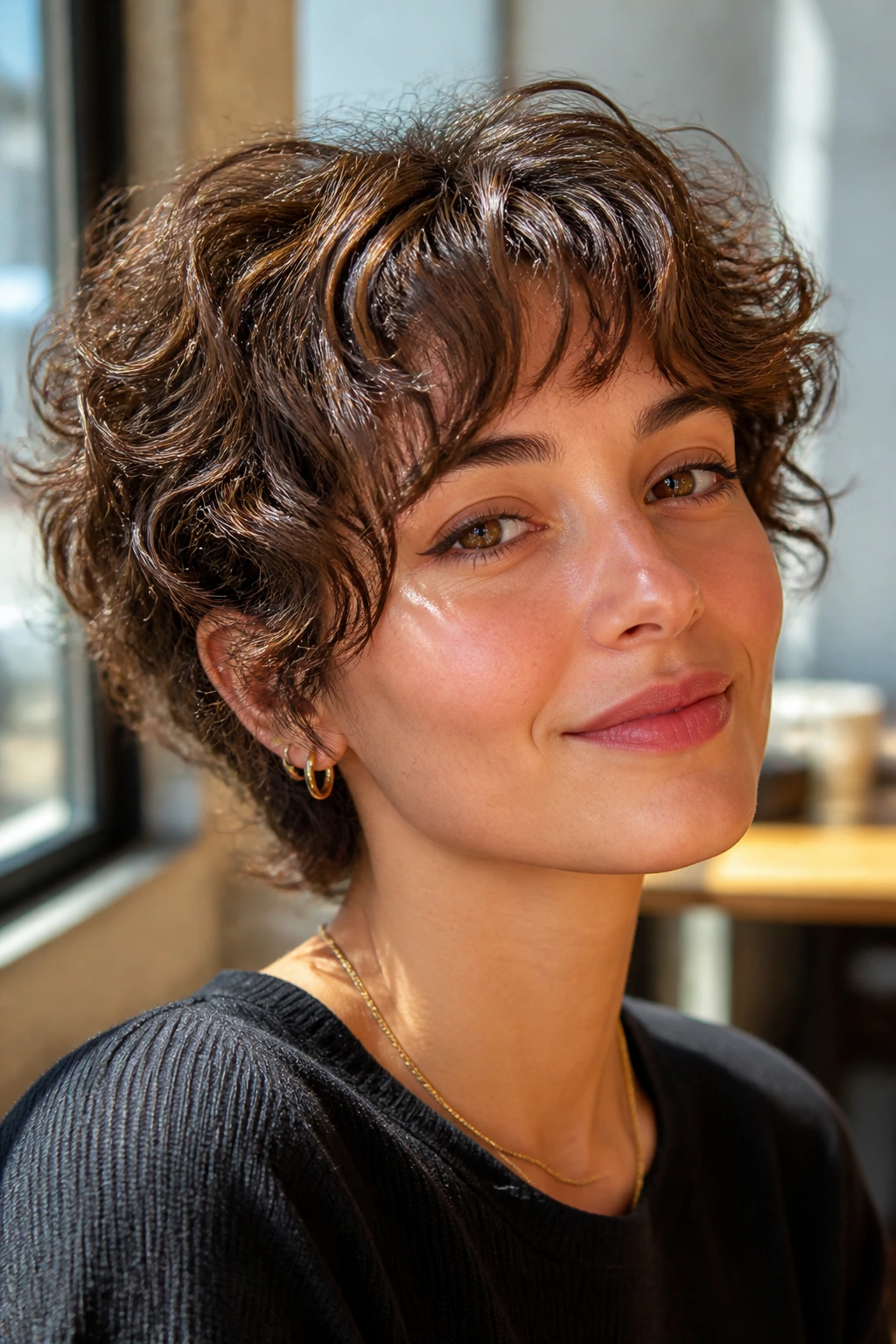
A curly pixie can be tiny and still look full if the crown is left just long enough for the curls to stack. The best version isn’t a buzzed helmet. It’s softer, with tapered sides and a top that has room to move. On fine hair, that extra inch at the crown keeps the cut from lying flat by noon.
Ask for the nape to be clean and the top to be point-cut, not chopped blunt. Point-cutting softens the edges so the curls don’t spike outward. I like this shape when someone wants air around the neck and ears without losing the curl pattern entirely.
Styling note: a pea-size foam at the roots, then diffuser on low until the roots are about 80% dry. Stop early. Overdrying fine curls often makes them puff, then collapse.
2. Tapered Curly Crop
Want short hair with a little edge and a lot less bulk? The tapered crop does that job. The sides narrow gently toward the ear, while the top stays loose enough to show curl texture. On fine curls, that taper creates the illusion of thickness because the eye sees a stronger shape.
A deep side part can make this cut look fuller at the front, which is handy if your hair tends to be flat where it meets the forehead. Keep the top section soft and avoid razor-heavy thinning through the ends.
- Best for: people who want a neat outline with a bit of movement.
- Ask for: a tapered perimeter and soft internal shaping, not a lot of debulking.
- Avoid: too much clipping at the crown, which can leave the top too short to curl well.
3. Chin-Length Curly Bob with Side Part
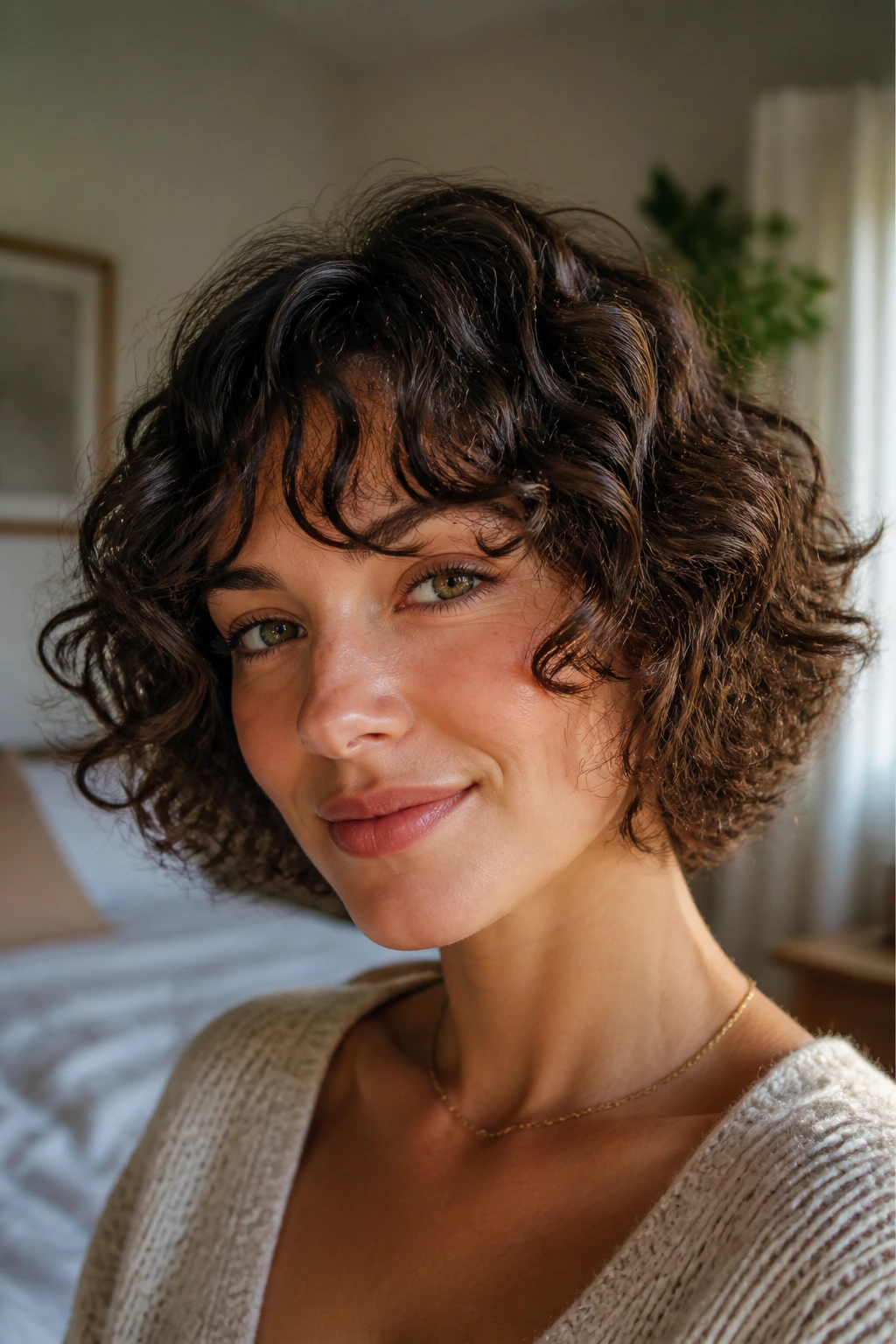
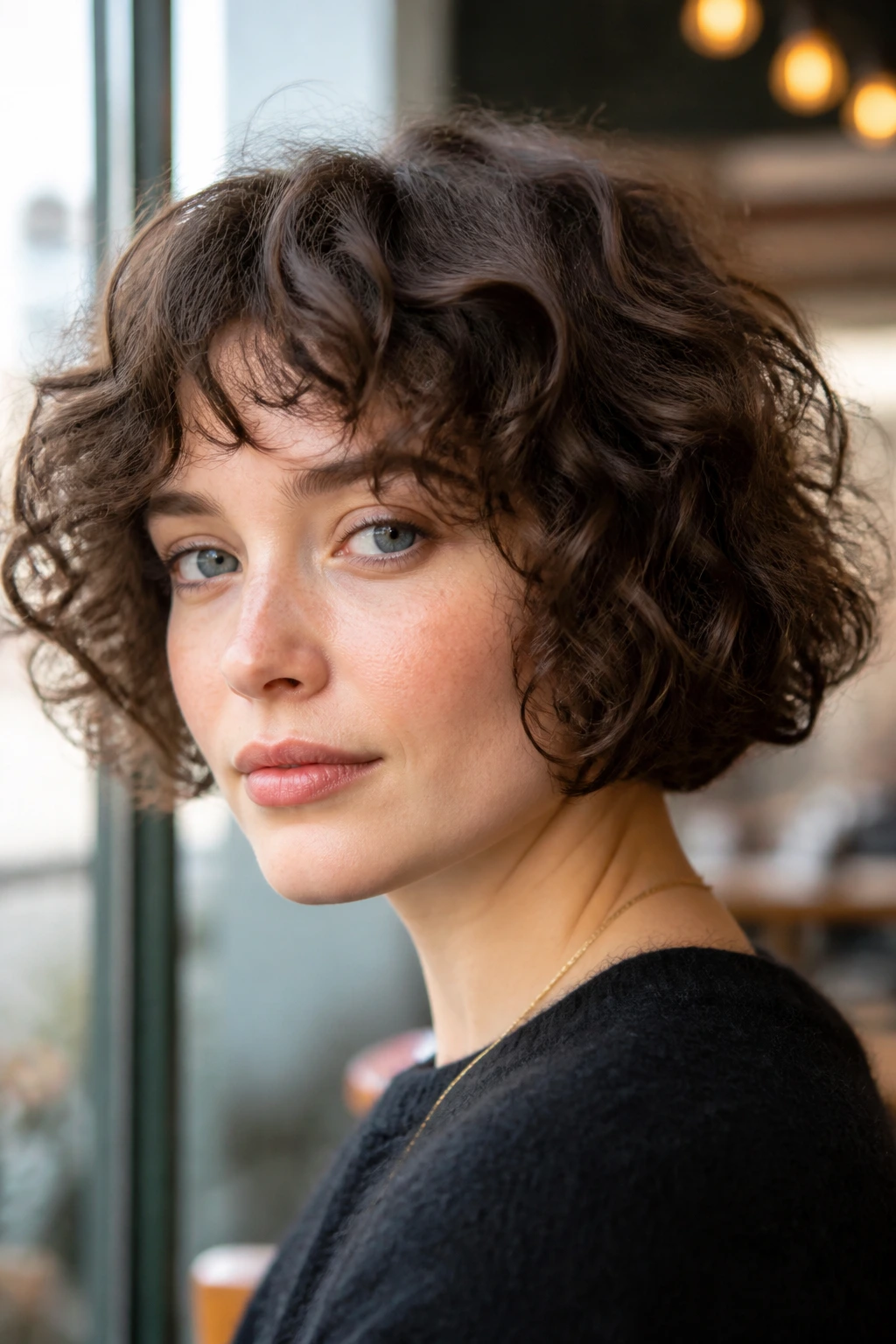
A chin-length curly bob hits a sweet spot for fine hair because it gives the curls enough length to form proper bends while still staying light around the face. When the edge lands right at the jaw, it can make the whole head look denser than a longer bob that drags downward.
A side part helps here, especially if your root area tends to lie flat. It breaks up the symmetry and lifts one side enough to create shape. Keep the ends slightly blunt, with only a touch of internal layering, or the bottom starts to look thin.
This is one of those cuts that looks polished even with very little styling. A mist of water, a small squeeze of mousse, and a scrunch is usually enough.
4. Soft Curly Bob with Invisible Layers
This is the cut for people who hate the word “layered” because they picture chopped-up ends. Invisible layers are different. They remove weight from inside the shape while leaving the outside line fuller, which is exactly what fine curly hair needs when it wants movement but not fray.
The result is a bob that swings a little instead of sitting like a block. It’s especially useful if your curls clump unevenly. The haircut gives the clumps a place to sit without exposing too much scalp at the bottom.
If your hair looks puffy at the top and see-through at the ends, this cut is a good fix. It keeps the perimeter strong while making the bulk disappear from places only your stylist needs to know about.
5. French Bob with Micro-Layers
The French bob sits short, cheeky, and a little cool, but on fine curls it needs restraint. Micro-layers are the trick. They let the curls breathe without breaking the shape into a million short pieces.
This cut usually lands somewhere between the cheekbone and jawline. That makes it a strong choice for faces that need a little width near the middle rather than at the bottom. A tiny fringe or soft forward pieces can keep the front from feeling too severe.
You do not want this cut over-thinned. Fine curls can lose their body in a hurry if the stylist gets enthusiastic with the scissors. Ask for soft shaping and a perimeter that still reads as a line when dry.
6. Shaggy Curly Crop
A short shag is one of the easiest ways to make fine curls look like they have more going on than they really do. The trick is not chaos. It’s controlled unevenness: shorter pieces around the crown, slightly longer ones around the face, and enough length left in the mids so the curls can overlap.
This cut works best if your curl pattern has some spring and a little attitude. If your hair is very loose, the shag can start to look separated instead of full. But with the right amount of curl, it gives that nice, tousled outline that never feels too stiff.
Use a diffuser if you want the layers to pop. Air-drying can work, too, but you’ll need to scrunch the crown while it’s damp so the top doesn’t flatten.
7. Bixie with Wispy Fringe
The bixie sits between a bob and a pixie, which is exactly why it flatters fine curls. It keeps enough length to show curl texture while trimming away the floppy weight that makes fine hair collapse. Add a wispy fringe, and the face gets a soft frame instead of a heavy curtain.
This cut is especially good if you want short hair but aren’t ready for a full pixie. The fringe helps balance a narrow forehead or a longer face, and the extra length in front gives you room to play with parting.
- What makes it work: the top stays movable, the sides stay close, and the fringe softens the whole outline.
- Watch for: too much layering under the fringe. That’s how it turns stringy fast.
8. Rounded Curly Bob
A rounded bob is all about silhouette. Instead of falling straight down, it arcs gently around the head, which makes fine curls look fuller from every angle. It’s a nice option when the hair at the nape is softer than the top because the shape keeps the back from disappearing.
This cut loves consistency. If your curls dry in mixed sizes, the rounded outline can help them read as one shape rather than a pile of separate pieces. Keep the ends softly blunt and let the curl pattern do the work.
A side part can make the top look taller, but a center part can also work if your crown has decent lift. The key is not letting the bottom line get too narrow.
9. Undercut Curly Pixie
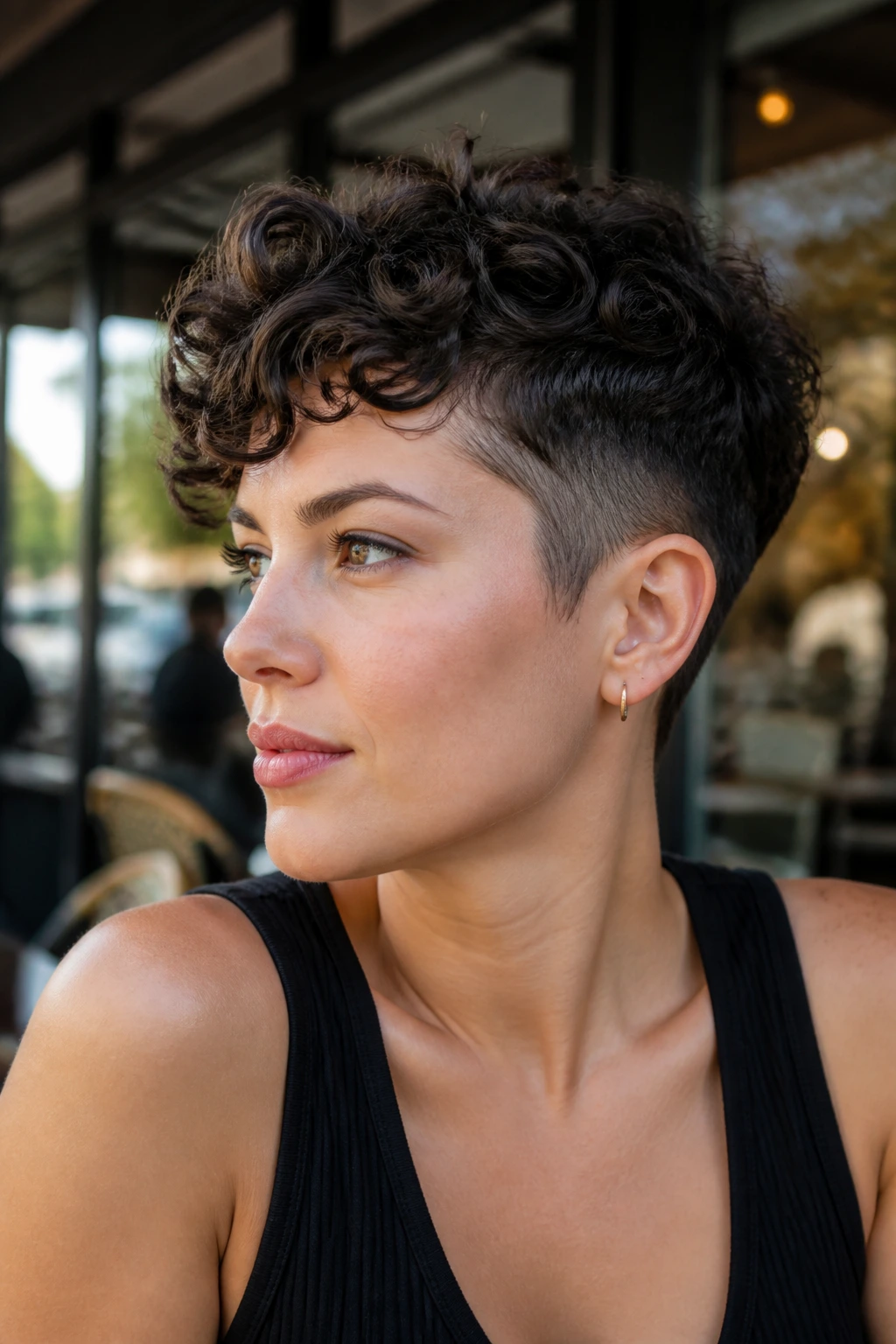
The undercut pixie is for people who want more lift on top and less bulk underneath. Fine curls can go flat when the lower sections are too long, so removing weight at the nape and lower sides helps the top appear fuller. It also cuts drying time, which is a real bonus when every minute of heat matters.
This is a stronger look, not a shy one. The top should be long enough to show the curl pattern, while the underside stays cropped close. That contrast makes the whole cut feel intentional.
If you live in a humid climate, this shape can be easier to maintain than a longer bob. There’s less hair for the moisture to drag down.
10. Asymmetrical Curly Bob
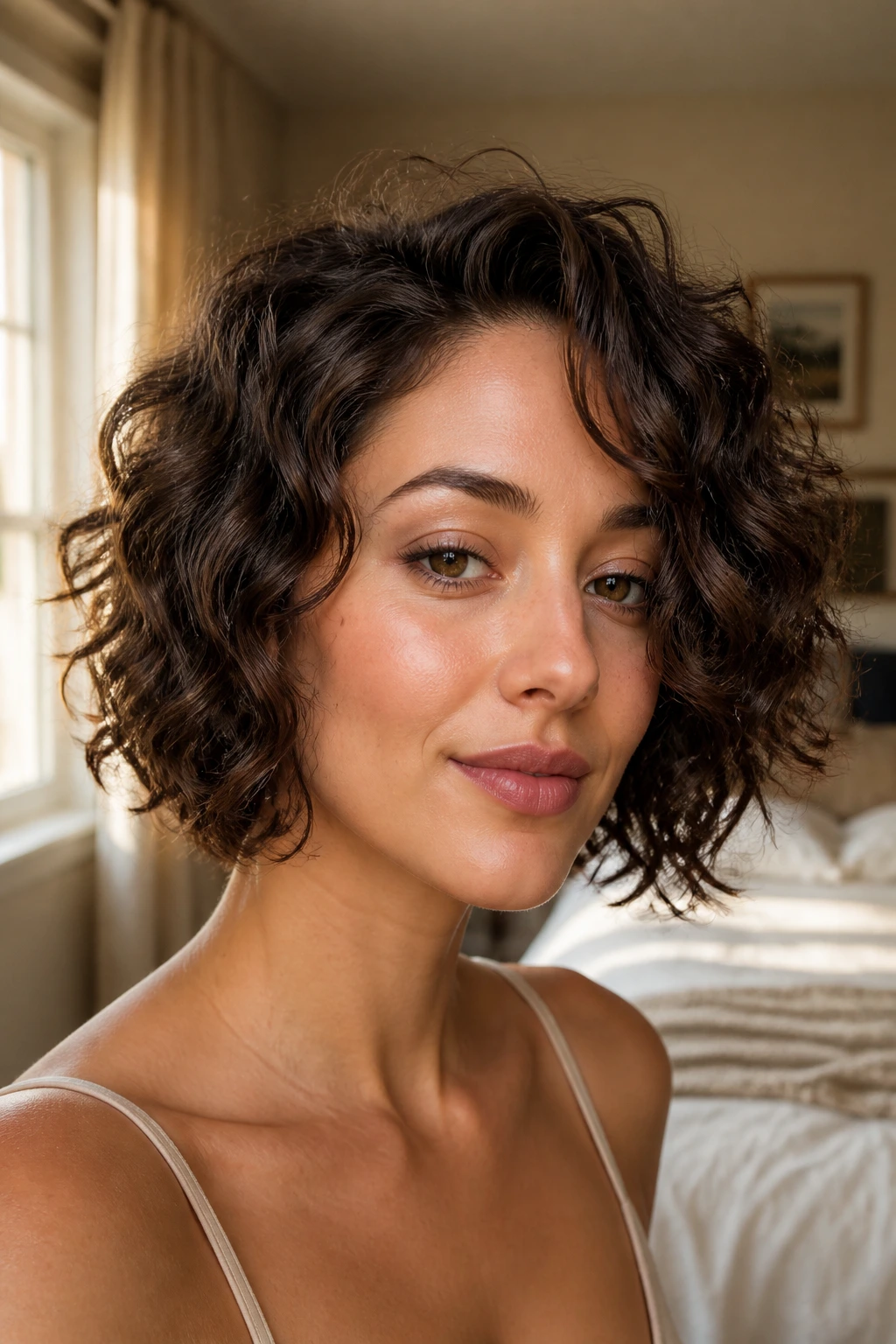
A slightly uneven bob creates movement even before the curls do anything. One side sits a little longer, which keeps the eye moving and makes fine hair seem thicker than it is. It’s a useful trick when the hair naturally parts in one spot and refuses to cooperate anywhere else.
The asymmetry should be subtle, not dramatic enough to look like a mistake. A one- to two-inch difference is usually enough. Keep the ends full so the shape doesn’t turn wispy under the chin.
This cut is one of my favorites for people who get bored easily. It looks styled even on a low-effort day, and that’s worth a lot when the hair itself is delicate.
11. Jaw-Length Curly Cut with Face-Framing Pieces

Jaw length is a smart place for fine curls because it gives the hair enough room to form a proper bend without dragging past the point where it starts to look sparse. Face-framing pieces at the front soften the line and keep the cut from feeling boxy.
This style works best when the front pieces are cut to match the curl spring, not stretched flat in the chair. If your face is round, the front can be left a little longer. If your face is heart-shaped, a few shorter pieces near the cheekbones can help bring the shape inward.
A light mousse at the roots and a touch of gel on the front pieces will hold the frame without making it crunchy. Fine curls need restraint.
12. Layered Mushroom Cut
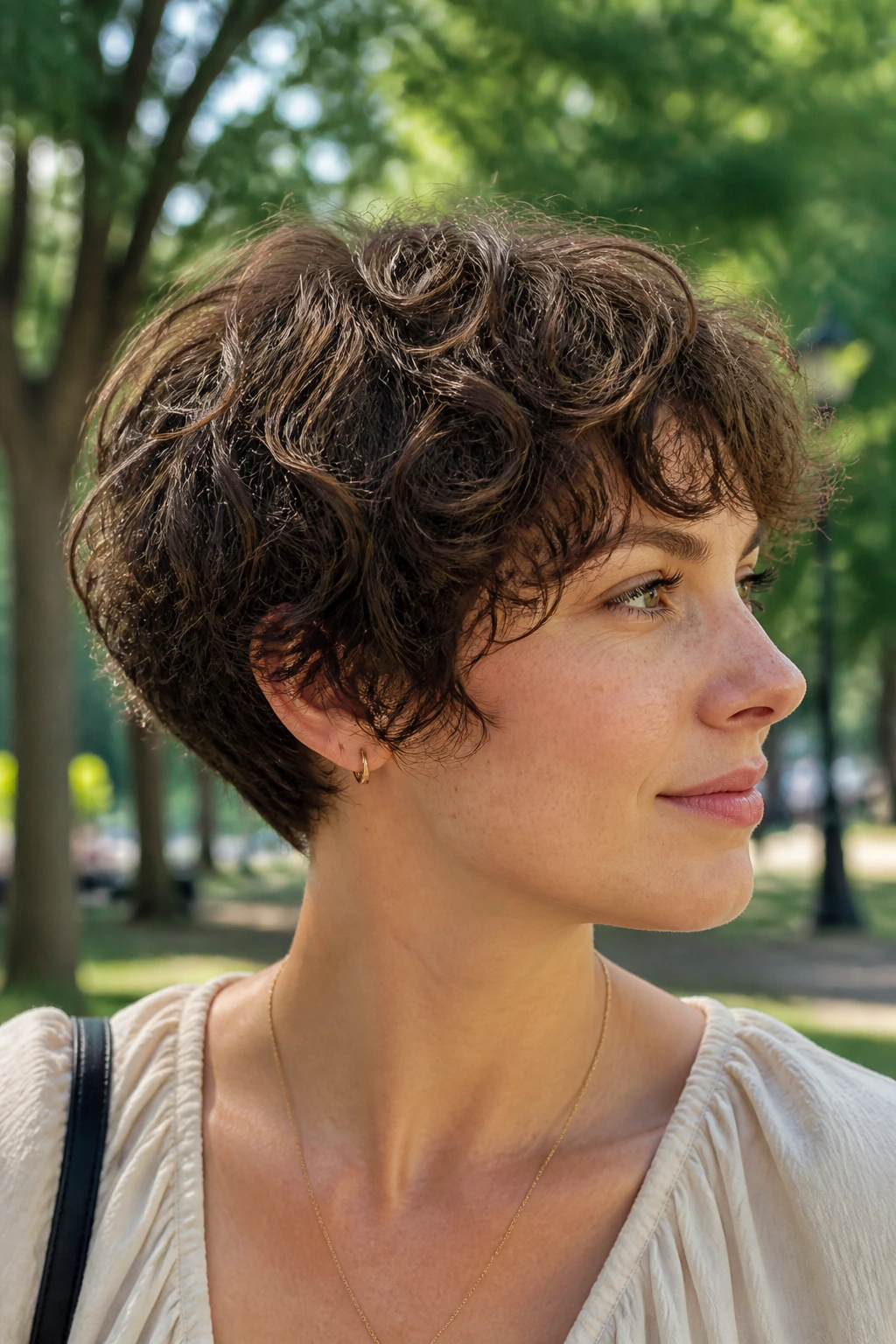
The mushroom cut has a rounded outline that can look surprisingly flattering on fine curls when it’s done softly. The top sits a bit fuller, and the bottom curves in rather than flaring out. That shape can make the hair feel denser because it keeps the silhouette compact.
This is not the old-school helmet version. It needs soft graduation and a careful hand with the crown. Too much weight on the top and the cut goes flat; too much removal underneath and it loses the whole mushroom shape.
I like this one for people who want something a little quirky but still wearable. It gives personality without needing daily styling gymnastics.
13. Short Curly Wolf Cut
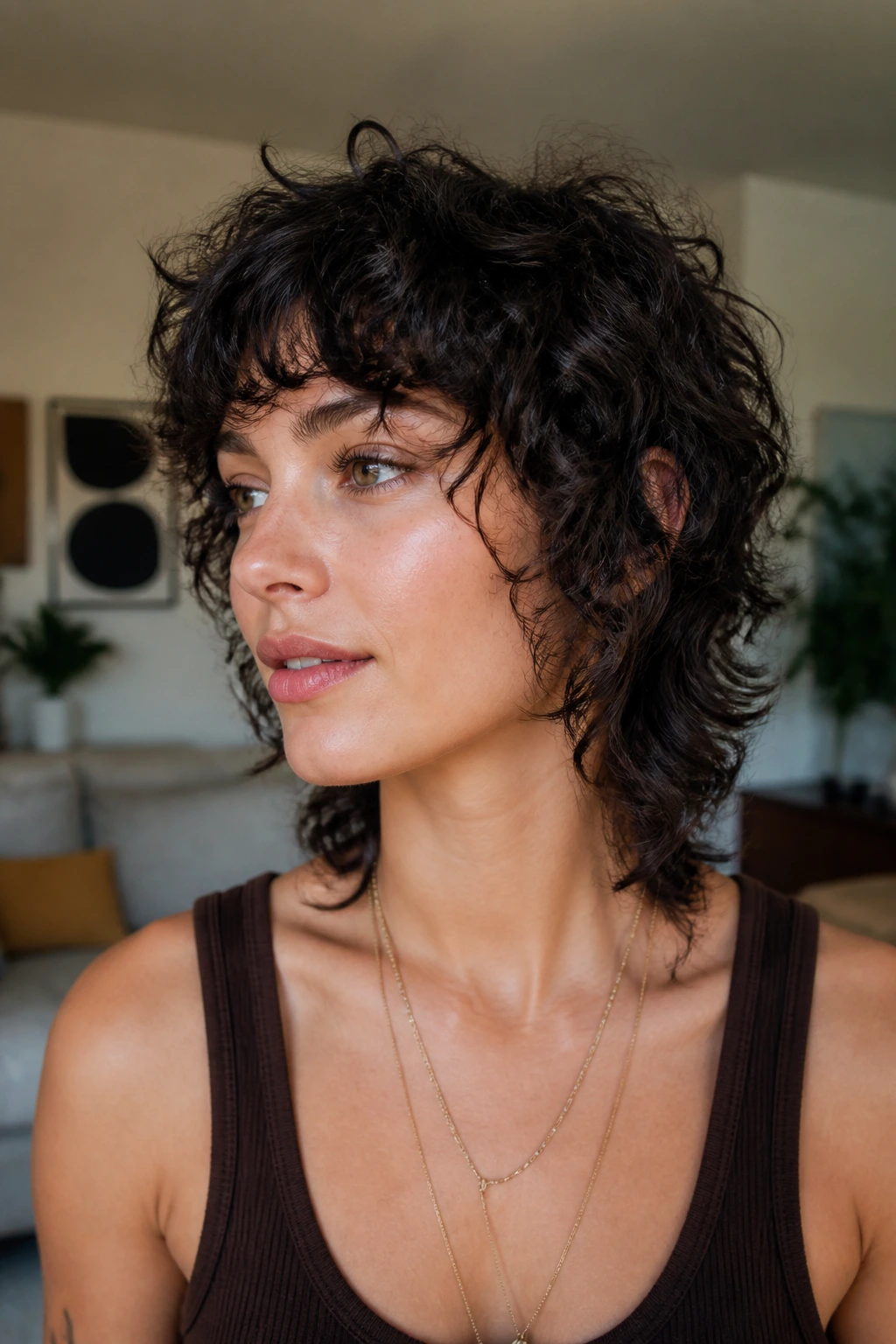
A short wolf cut is basically controlled rebellion. The top and crown are shorter, the ends are a touch longer, and the whole thing gets a shaggy outline that makes fine curls look fuller than a neat, severe shape would. Because the layers are uneven on purpose, the cut reads as textured rather than thin.
The danger is overdoing it. On fine hair, a wolf cut needs enough body left in the perimeter to hold the shape. If the stylist goes too hard with thinning shears, the ends can vanish.
This works especially well if your curls already have some bend and bounce. It gives them a messy, lived-in look without asking for much polish.
14. Curly Crop with Curved Bangs

Curved bangs can make a short cut feel soft instead of severe, and that matters on fine curly hair. Straight-across bangs are harder to manage when the strands are delicate; they can split and look sparse. A curved fringe follows the face and leaves enough room for curl spring.
The rest of the crop should stay compact. Think clean around the ears, soft at the crown, and just enough length in front to make the bangs part naturally if they decide to. They often do.
- Good if you want: forehead coverage without a dense, heavy fringe.
- Tell the stylist: keep the bangs piecey and dry-check them before taking more length off.
- Skip if: your curls are very tight and shrink dramatically at the front; the bangs may jump shorter than expected.
15. Deep Side-Part Curly Bob
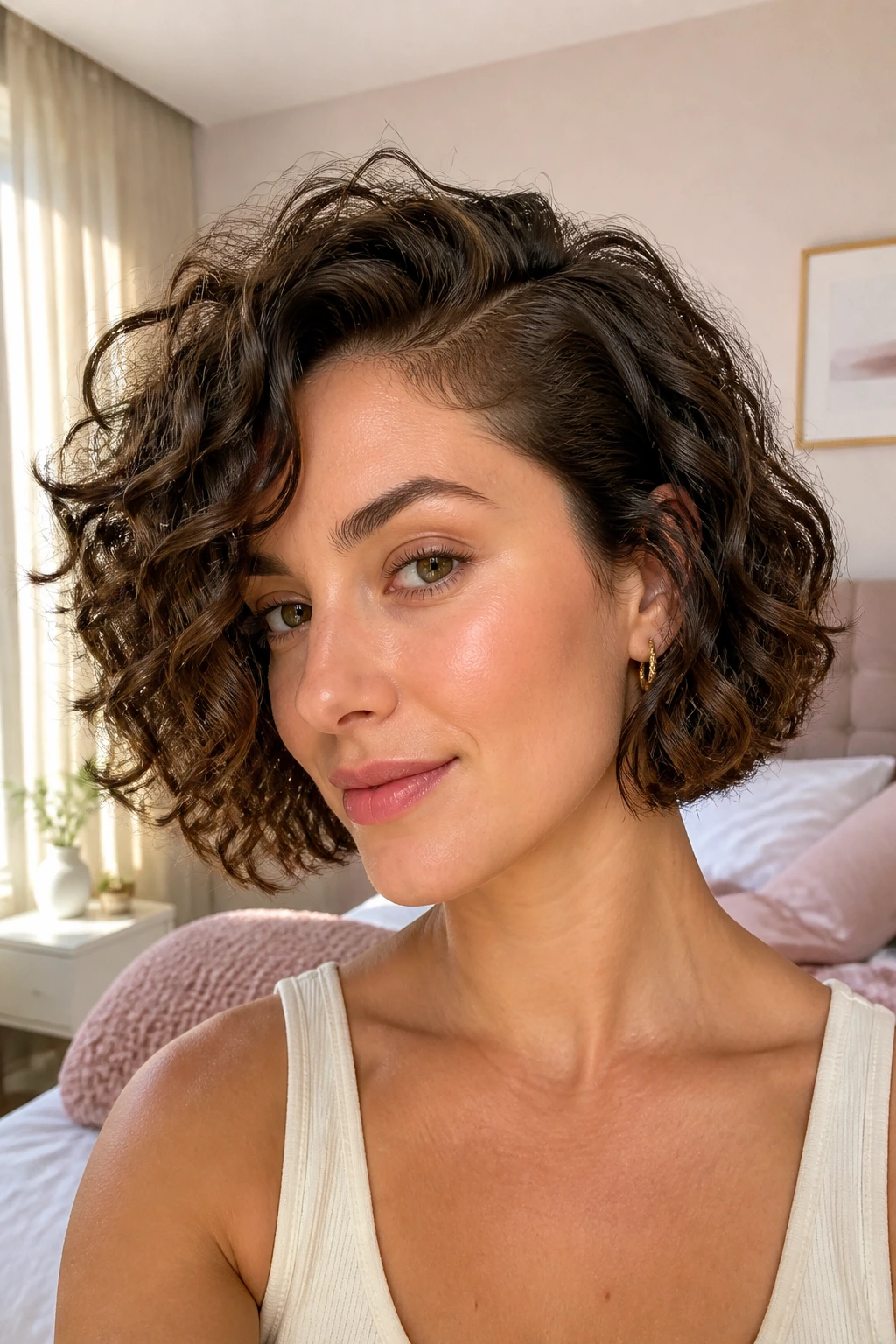
A deep side part is one of the easiest volume tricks in the book, and on fine curls it earns its place. The part lifts the root section on one side and gives the cut a little diagonal energy, which makes the whole bob read fuller. It’s an especially nice fix for hair that lies flat right along the part line.
The bob itself can be chin length or a touch longer. Keep the perimeter soft but not shredded. Too much texture at the bottom can make the ends look airy in a bad way, not a flattering one.
This is a low-drama cut with a good return. Change the part, scrunch once, and the whole shape wakes up.
16. Ear-Length Curly Cut
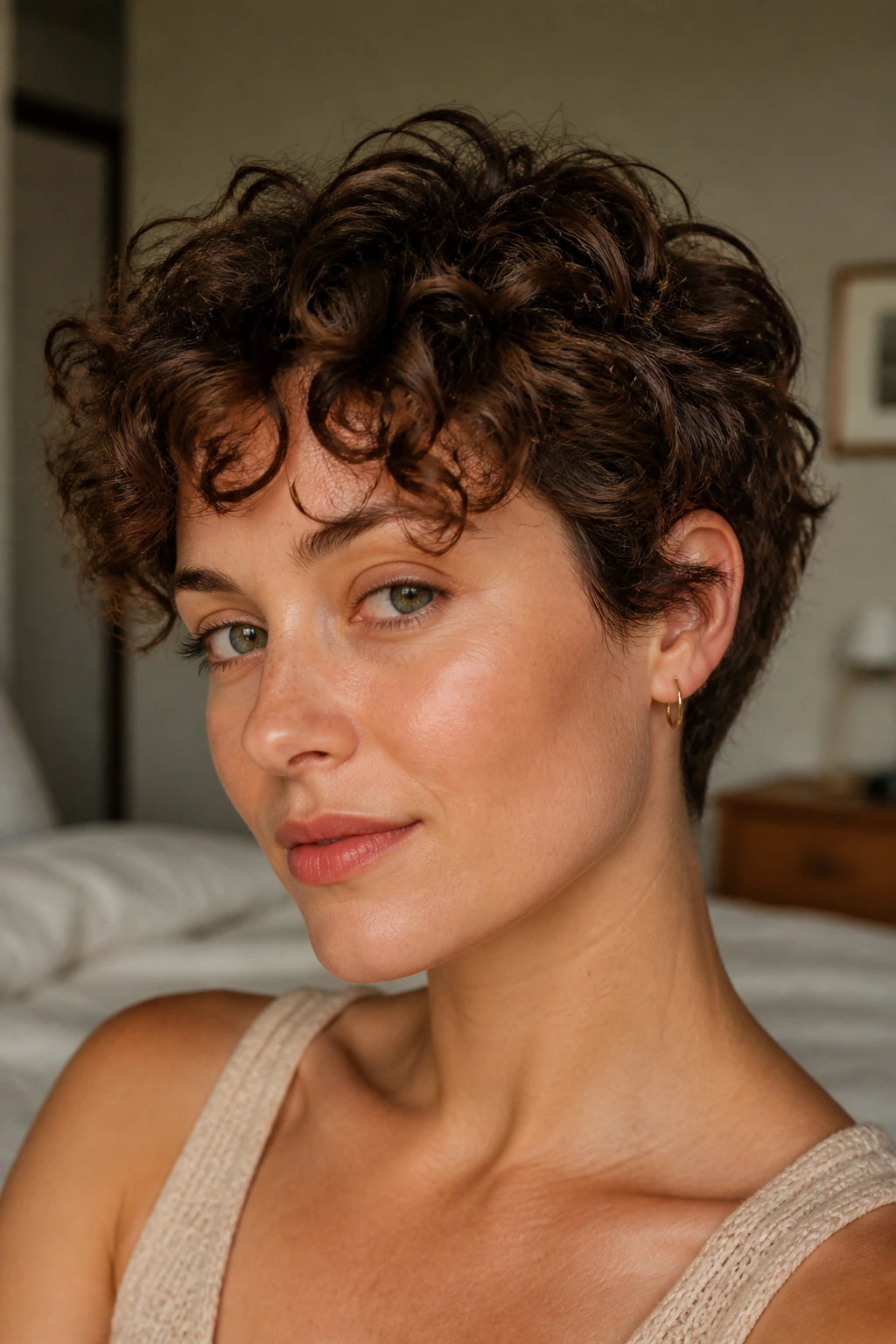
Ear-length sounds daring because it is. But on fine curls, a very short cut can actually look fuller than a longer one if the shape is carefully built. The curls have less length to sag, the roots get less drag, and the overall profile stays compact.
The key is softness around the ears and enough length on top to avoid a spiky finish. If the top is cut too short, the curls can stand up in odd directions. If it’s too long, the whole thing loses the cropped effect.
This cut is for someone who likes the face exposed and the styling routine short. It is not fussy. It does need trims on schedule, though, or the shape blurs fast.
17. Sculpted Curly Taper with Nape Clean-Up
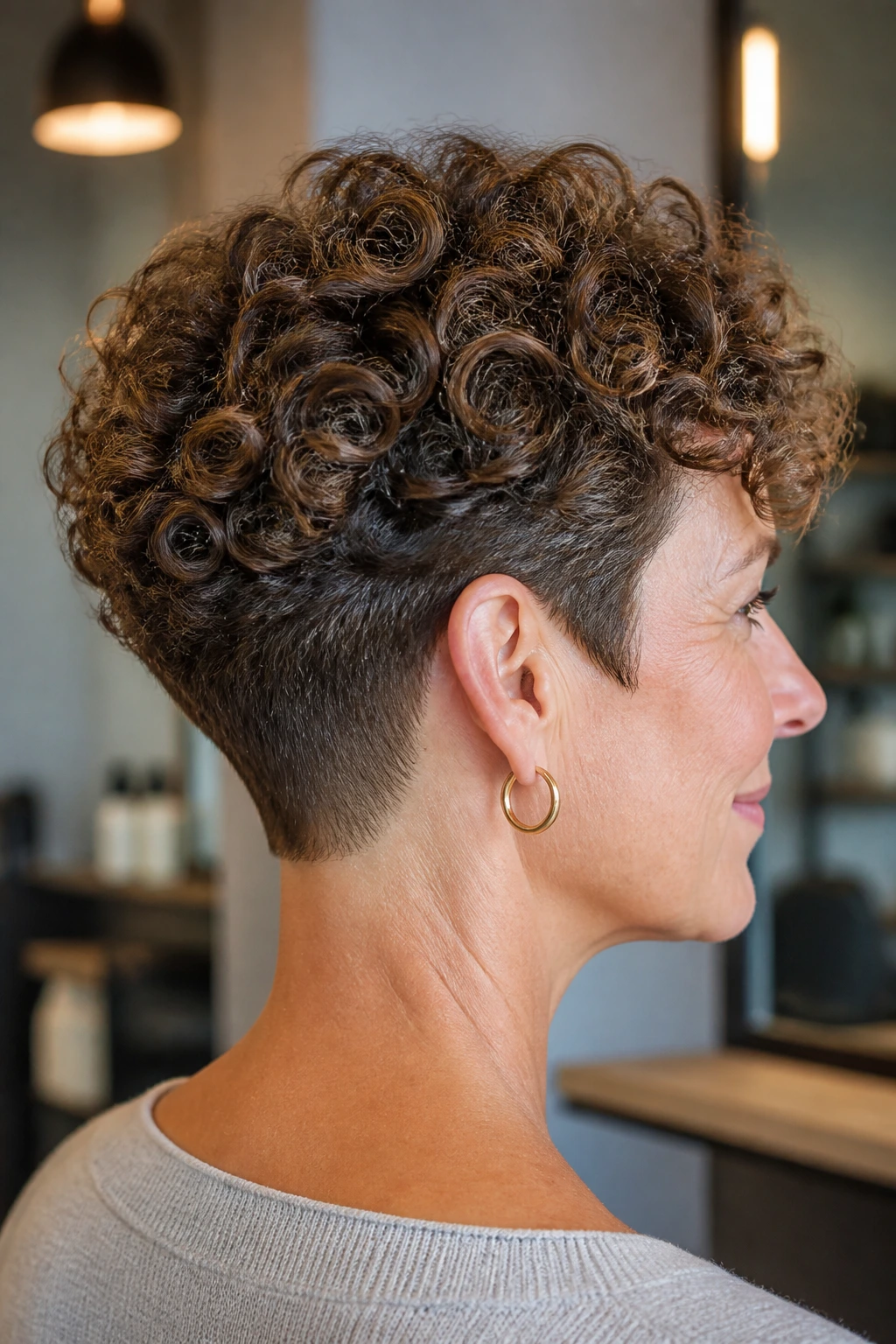
A sculpted taper keeps the hair close at the nape and sides while leaving the top more buoyant. On fine curls, that contrast helps the crown look richer because the lower sections aren’t dragging everything down. It’s a neat cut, but not a stiff one.
The nape clean-up matters more than people think. When the back is tidy, the silhouette looks sharper from the side, and short fine curls stop looking like they’re just “growing out.” That clean edge makes a slim amount of hair appear more deliberate.
If you wear glasses, this shape can work especially well because it keeps the temples light. Nothing gets crowded near the ears.
18. Curly Razor Cut with Airy Ends
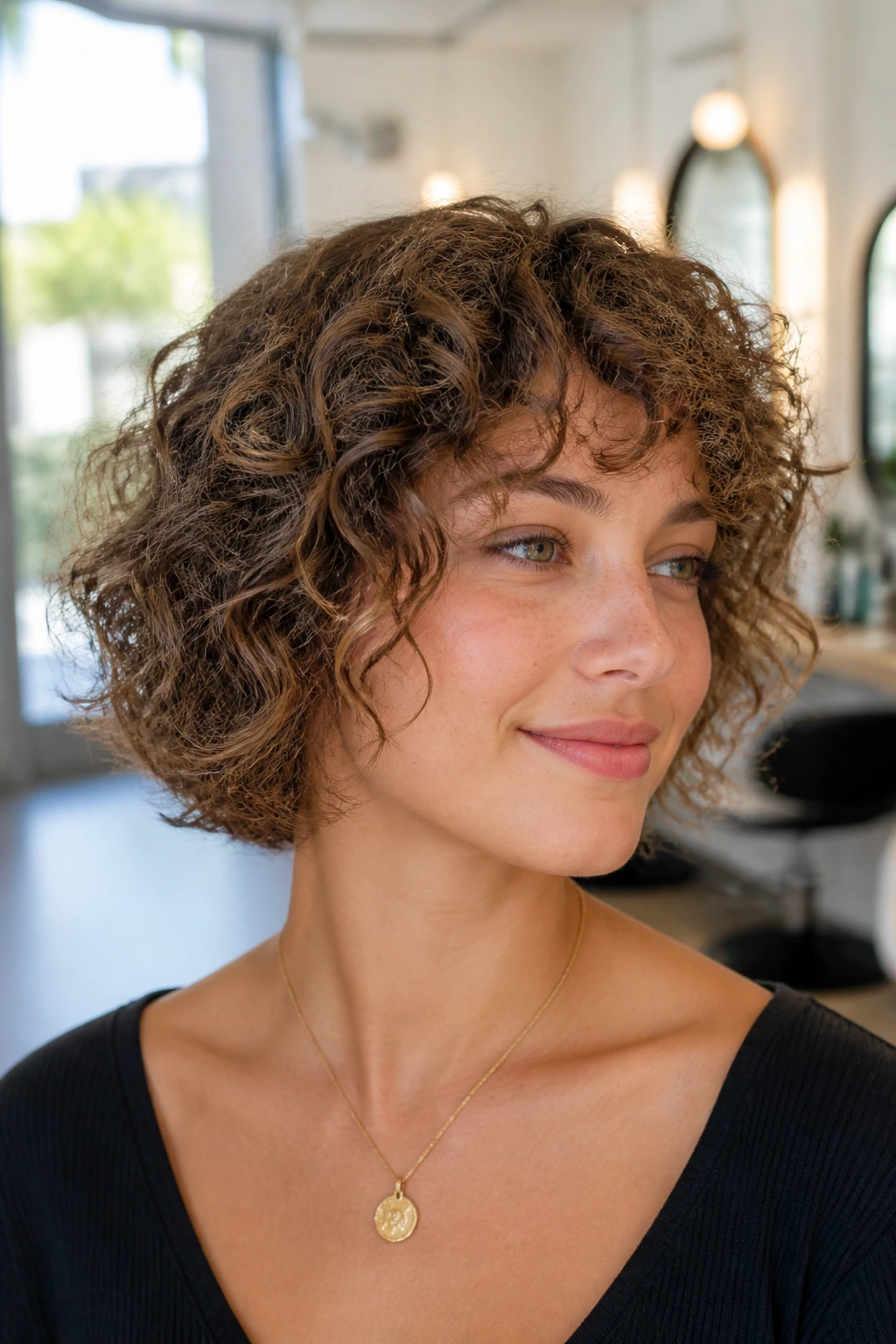
A razor cut can be lovely on fine curls, but only when the stylist handles it carefully. Done well, it makes the ends feel light and airy instead of blunt and heavy. Done badly, it frays the hair and leaves the perimeter looking thirsty.
Use this cut if your curls are soft, not overly fragile, and your stylist knows how to keep the blade from over-thinning the tips. It’s best when the goal is movement, not a dense, solid edge.
The finish looks especially good on looser curl patterns that want to separate a little. If your hair already sheds at the ends, ask for scissors instead. No point inviting extra frizz.
19. Stacked Curly Bob
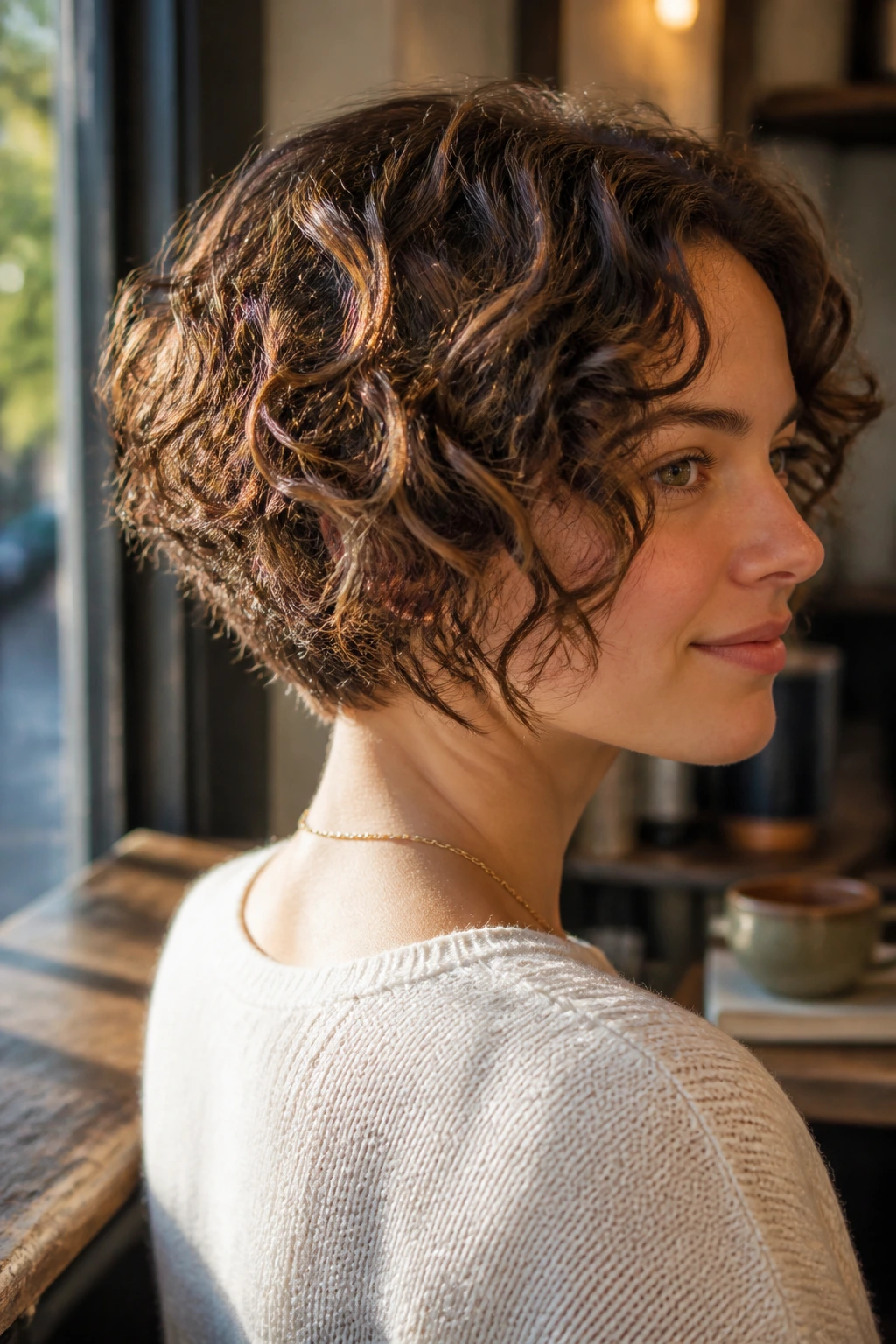
Stacking at the back gives fine curls a built-in boost. The shorter layers in the nape push the hair upward, while the front stays a little longer and softer. That makes the head shape look rounder and fuller, which is exactly what many fine textures need.
The trick is moderation. Too much stacking and the back starts to puff while the front falls flat. A modest stack, especially on chin-length hair, usually gives the most believable fullness.
This cut tends to work nicely with a side part because it stops the top from lying too close to the scalp. If your curls flatten at the crown, this shape can fix a lot with a single snip.
20. Curly Pageboy Revival

A modern pageboy on fine curls can be quietly brilliant. The shape is rounded, the ends curve inward, and the line stays neat without feeling severe. It looks especially good when the curls are loose enough to bend into the shape instead of fighting it.
A pageboy revival should not feel stiff or dated. Keep the edges soft, maybe with a tiny bit of internal layering, and let the curve around the jaw do the work. If you like a polished look with minimal product, this is a strong choice.
- Best feature: the rounded outline makes the hair seem denser at the sides.
- Watch out for: cutting the back too short; that can make the front hang oddly.
- Style with: a little mousse at the root and finger-combing, not heavy cream.
21. Short Curly Cut with Long Top Layers
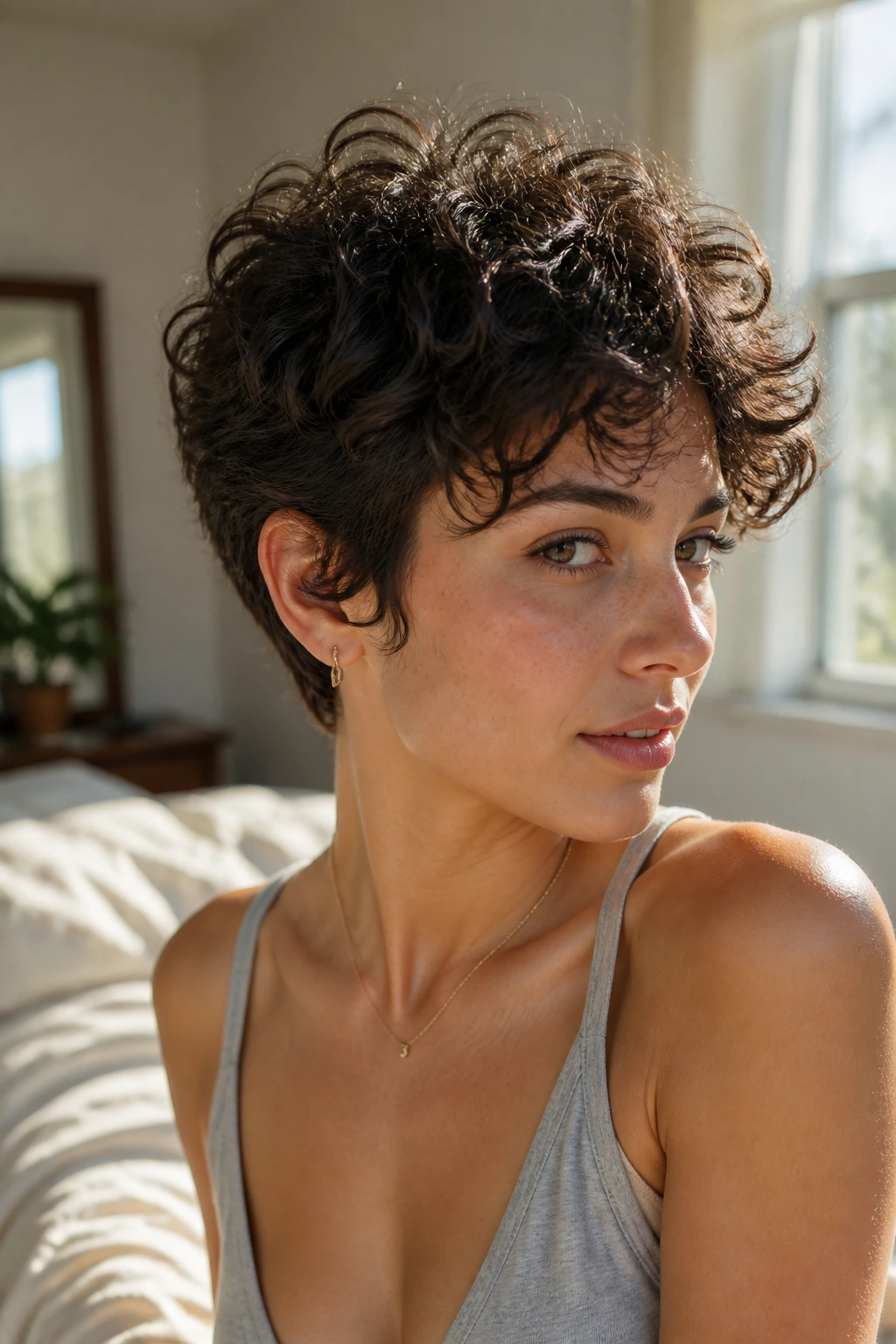
Leaving the top a little longer while trimming the sides shorter is one of the simplest ways to create lift in fine curls. The top layers catch the eye first, and the cut feels fuller because the crown has room to stack. It also gives you styling options on days when you want a little height.
This is a smart cut if your roots are weaker than your ends. The longer top helps the shape stay alive between wash days. Without it, a short curly cut can start to feel too close to the scalp.
The outline should stay soft around the ears. That contrast between compact sides and a bit of lift on top is what makes the cut work.
22. Curly Mullet Lite
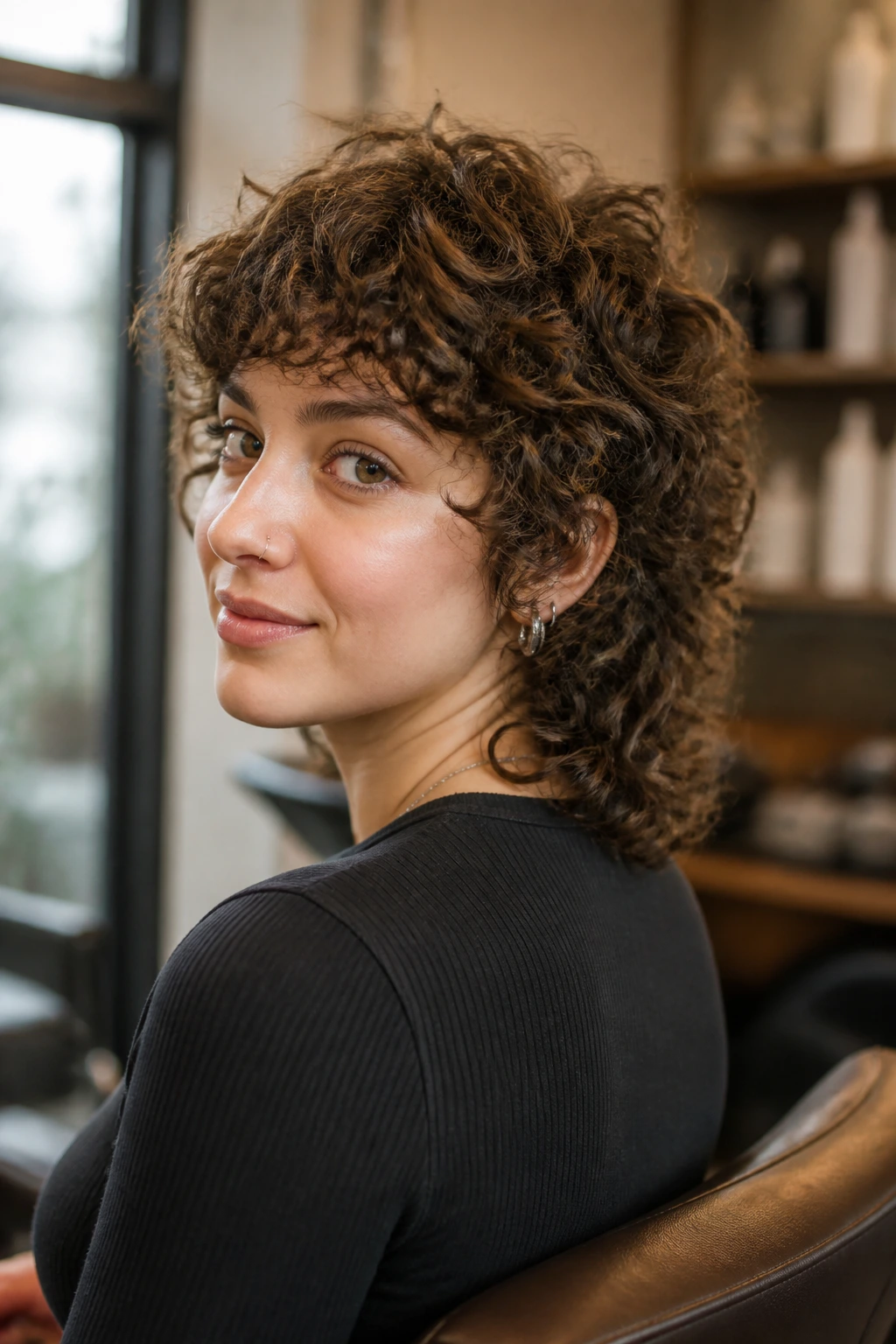
A mullet-lite cut keeps the back a touch longer while the top and sides stay shorter and more textured. On fine curls, that can be a nice way to make the hair look fuller without losing the little bit of length that gives movement. It’s edgy, but not cartoonish.
The “lite” part matters. You want enough length in the back to keep the shape connected, not so much that it turns into a flat tail. The top should be softly layered so the curls rise instead of drooping.
If your hair grows flat at the temples, this can be a good fix. It adds shape where the eye wants it and keeps the nape from feeling too heavy.
23. Neck-Length Curly Cut with Soft Underlayers
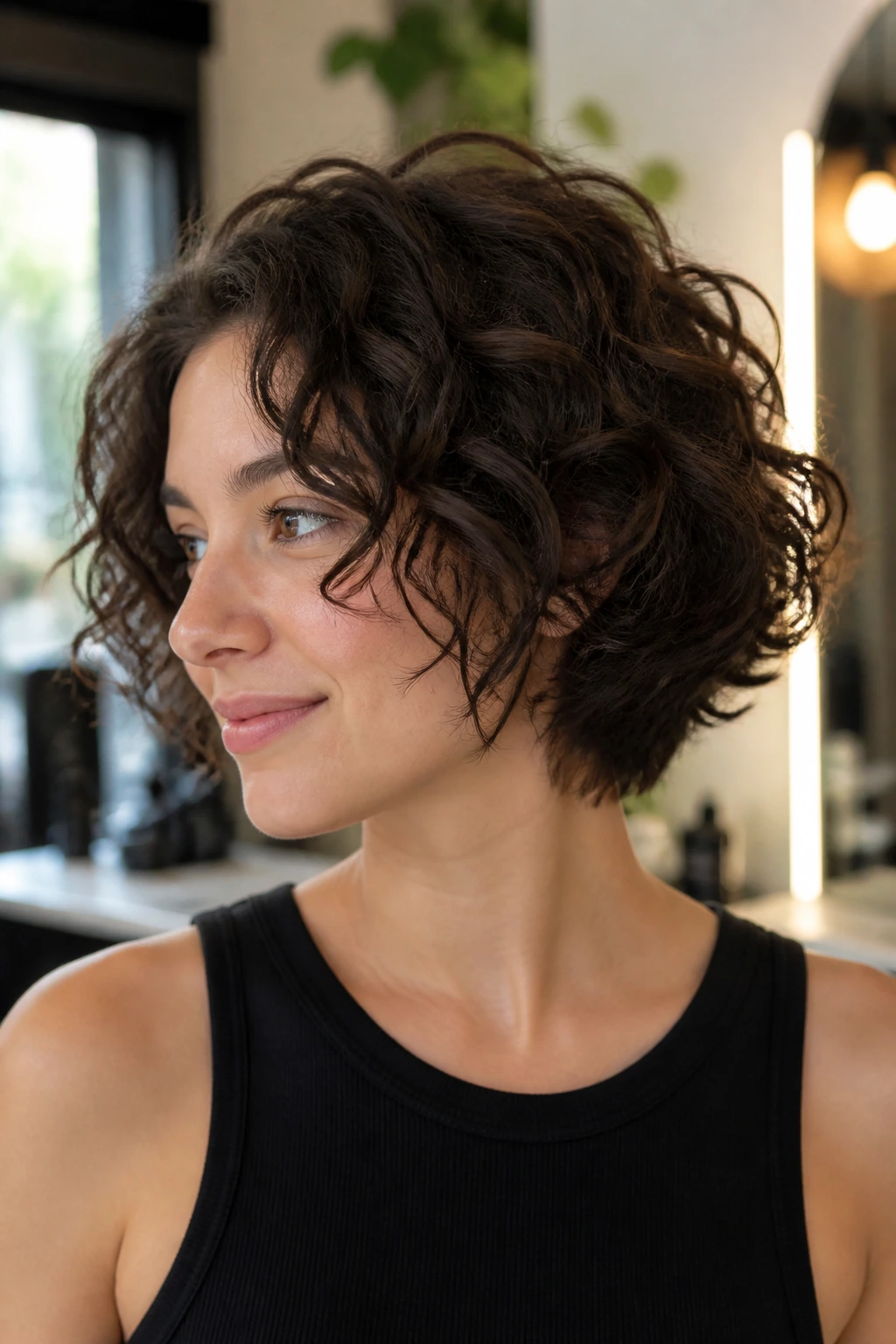
Neck-length can be a sweet compromise for anyone who wants a shorter look without going fully cropped. On fine curls, the length is short enough to avoid dragging the root flat, but long enough to show a good amount of curl pattern. Soft underlayers keep the shape from turning boxy.
This cut is nice when you need versatility. You can tuck it behind the ears, push it off the face, or let the curls sit loose around the jaw and neck. The underlayers should be gentle, though. Hard layering at this length can expose the ends too much.
A side part or deep side part gives it more lift. Center parts can work, but they need a stronger crown to keep the top from looking narrow.
24. Mini Fro with Shape-Up
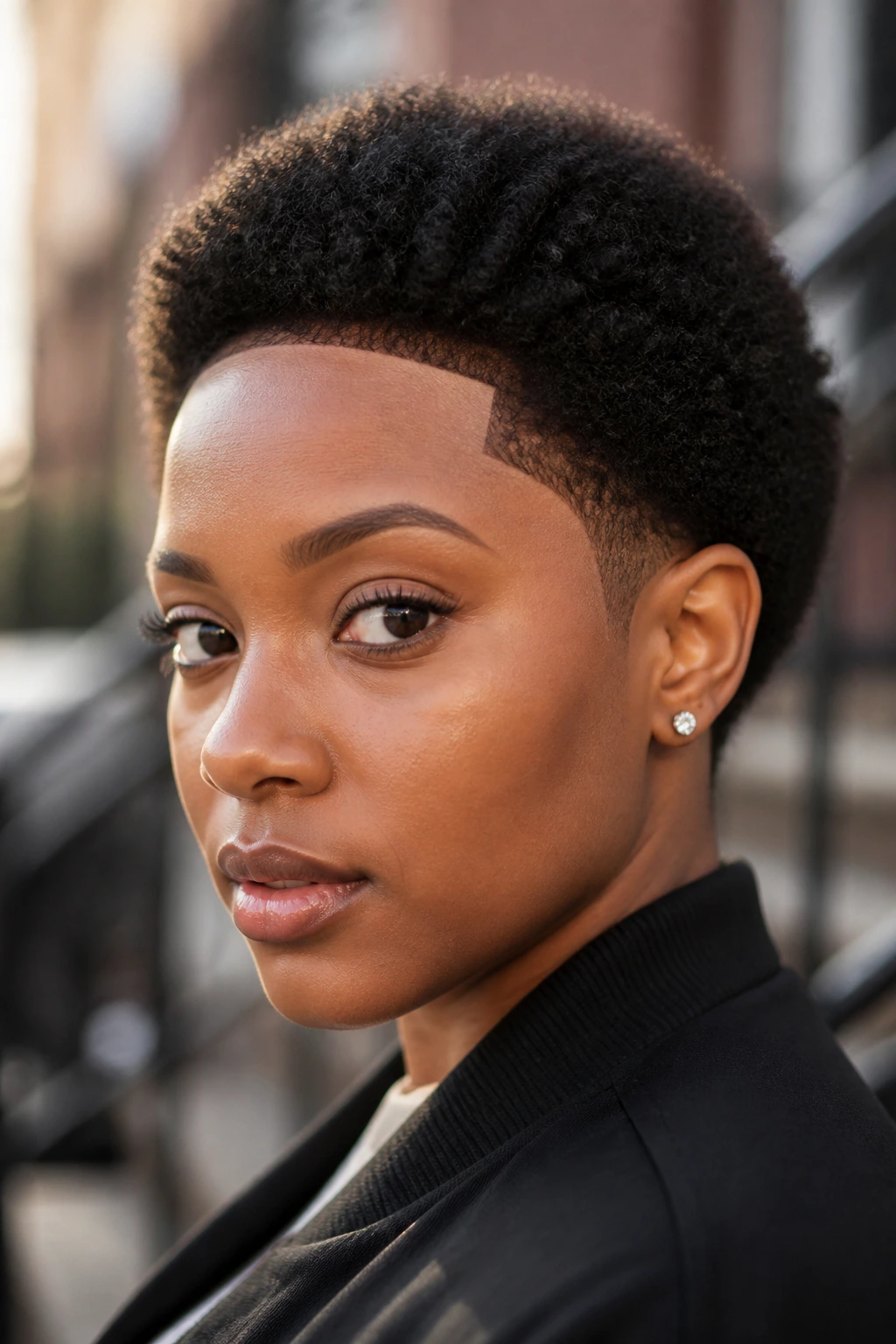
A mini fro is a beautiful answer when fine curls or coils want fullness without a lot of length. The shape-up around the hairline gives the outline clarity, while the top stays soft and rounded. On fine hair, that rounded shape can make the whole head look denser than a flat, stretched cut ever could.
This is less about hiding the texture and more about letting it stand up a little. Keep the sides shaped carefully so the cut doesn’t drift into a square outline. The best version looks balanced from the front and the profile.
It pairs well with a light leave-in spray and a gentle pick at the roots, used only where you need lift. Don’t over-comb it. Fine strands don’t like that.
25. Curly Shag Bob

A shag bob combines the movement of a shag with the stability of a bob, and that mix is kind to fine curls. You get some crown lift, some cheekbone framing, and enough length at the bottom to avoid a sparse finish. It’s one of the most forgiving short curly haircuts for fine hair.
The layers should be soft and purposeful. If they’re too short or too aggressive, the bob loses its body. If they’re too long, you may as well just have a plain bob. The middle path is where the shape comes alive.
This cut looks good with a little mess in it. In fact, a perfectly smooth finish can make it look less full than a slightly tousled one.
26. Rounded Pixie Bob
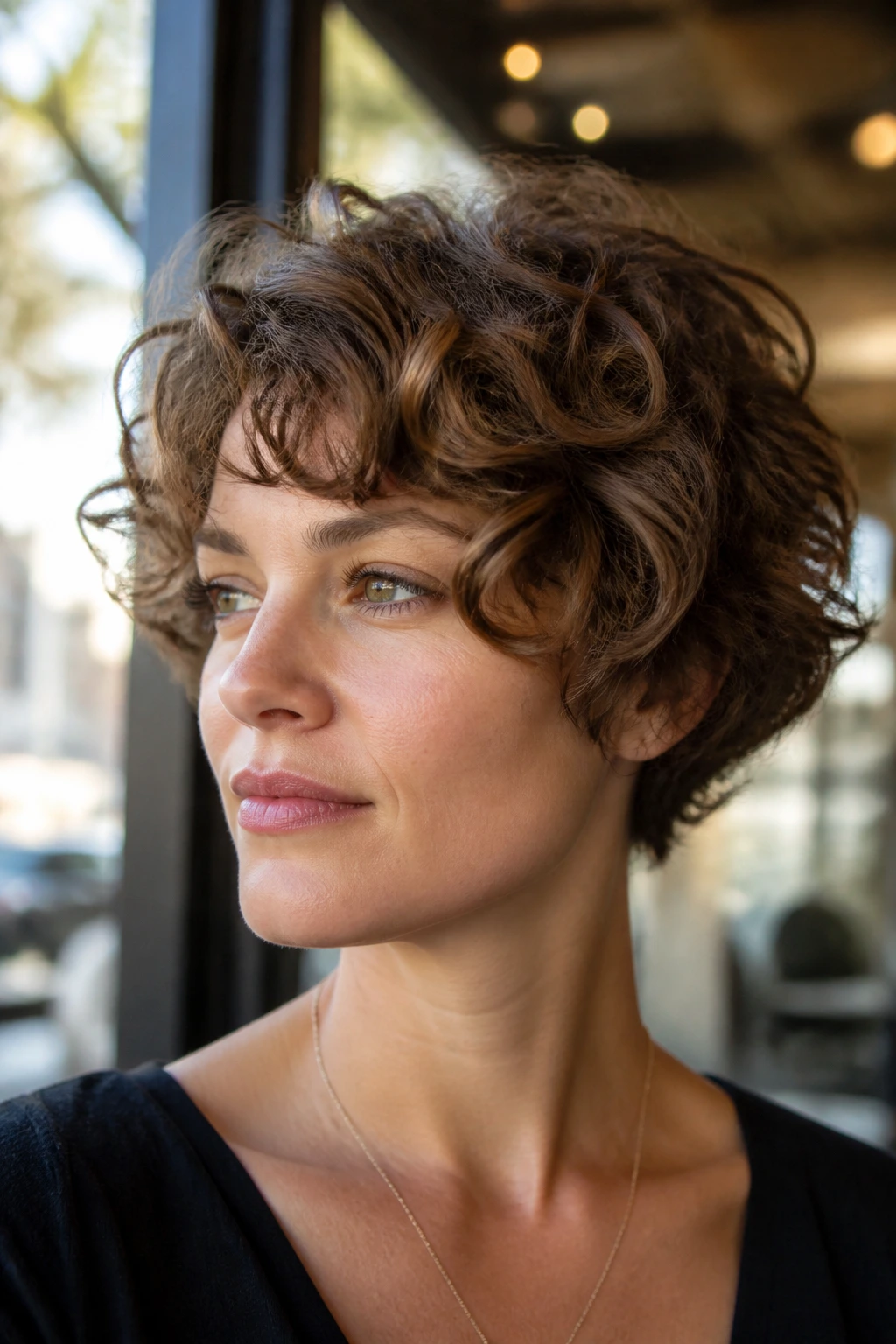
The pixie bob sits between a cropped pixie and a small bob, which gives fine curls a useful amount of structure. The rounded finish keeps the silhouette soft, while the slightly longer top and front preserve enough curl to feel feminine without tipping into flatness.
I like this cut for anyone growing out a pixie but not wanting to wait forever for shape. It also works if you want the ease of short hair but don’t like the feel of exposed ears all the time.
- What to keep: a gentle curve around the head and enough top length for curl spring.
- What to avoid: too much thinning through the sides.
- Best styling move: clip the crown at the roots while it dries, then release the clips once the hair is cool.
27. Side-Swept Curly Crop
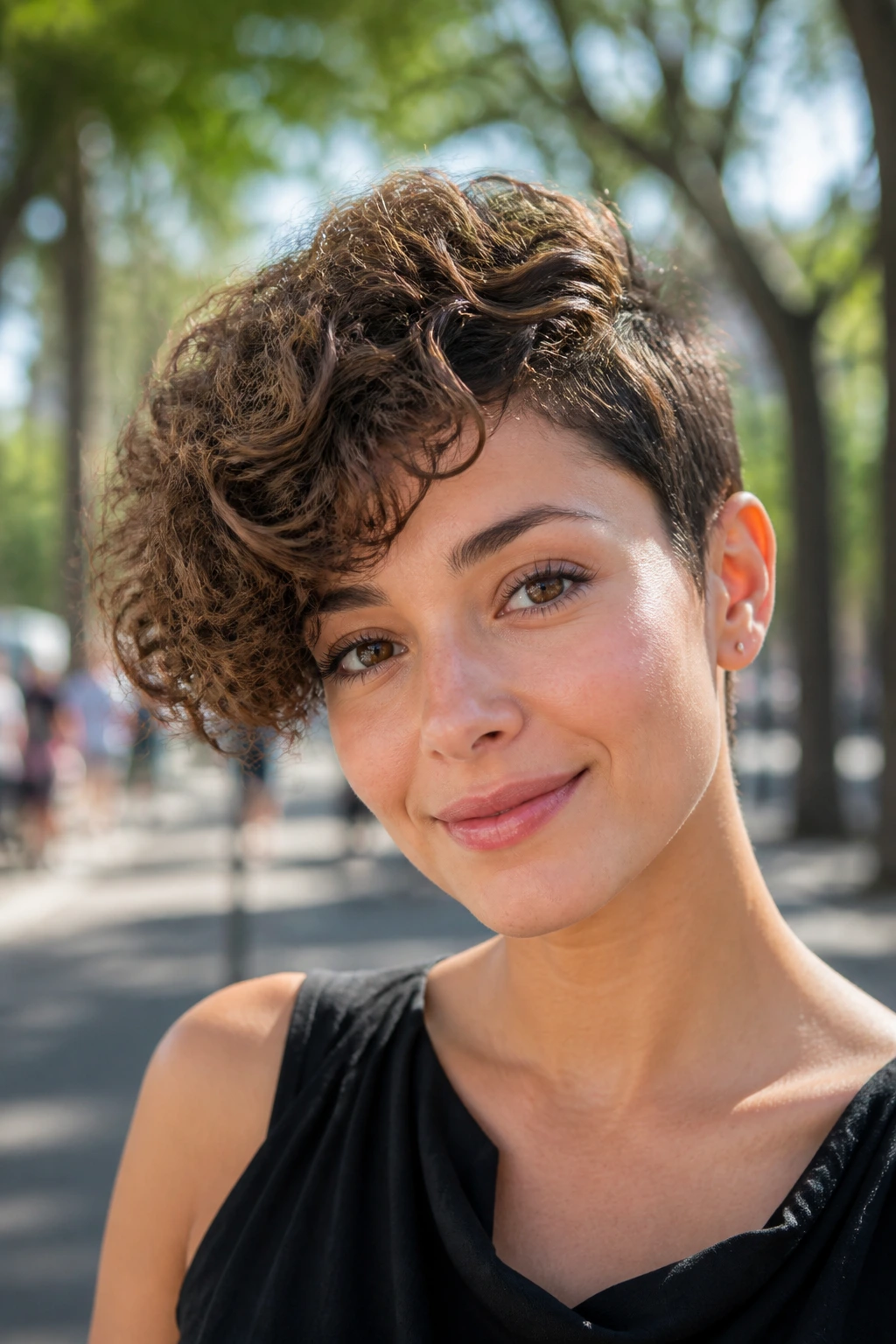
A side-swept crop gives fine curls a built-in direction. Instead of sitting evenly all around the head, the curls are encouraged to fall across the forehead and into one side, which creates lift and motion. It’s a flattering trick when the front tends to lie flat.
The sweep should look soft, not forced. Ask for a little extra length where the hair crosses the forehead so the curls can actually bend there. If the front is cut too short, the side-sweep falls apart and the shape gets choppy.
This is one of the easier styles to live with on busy mornings. Water, a bit of foam, finger-comb, done.
28. Clavicle-Length Curly Lob with Soft Ends
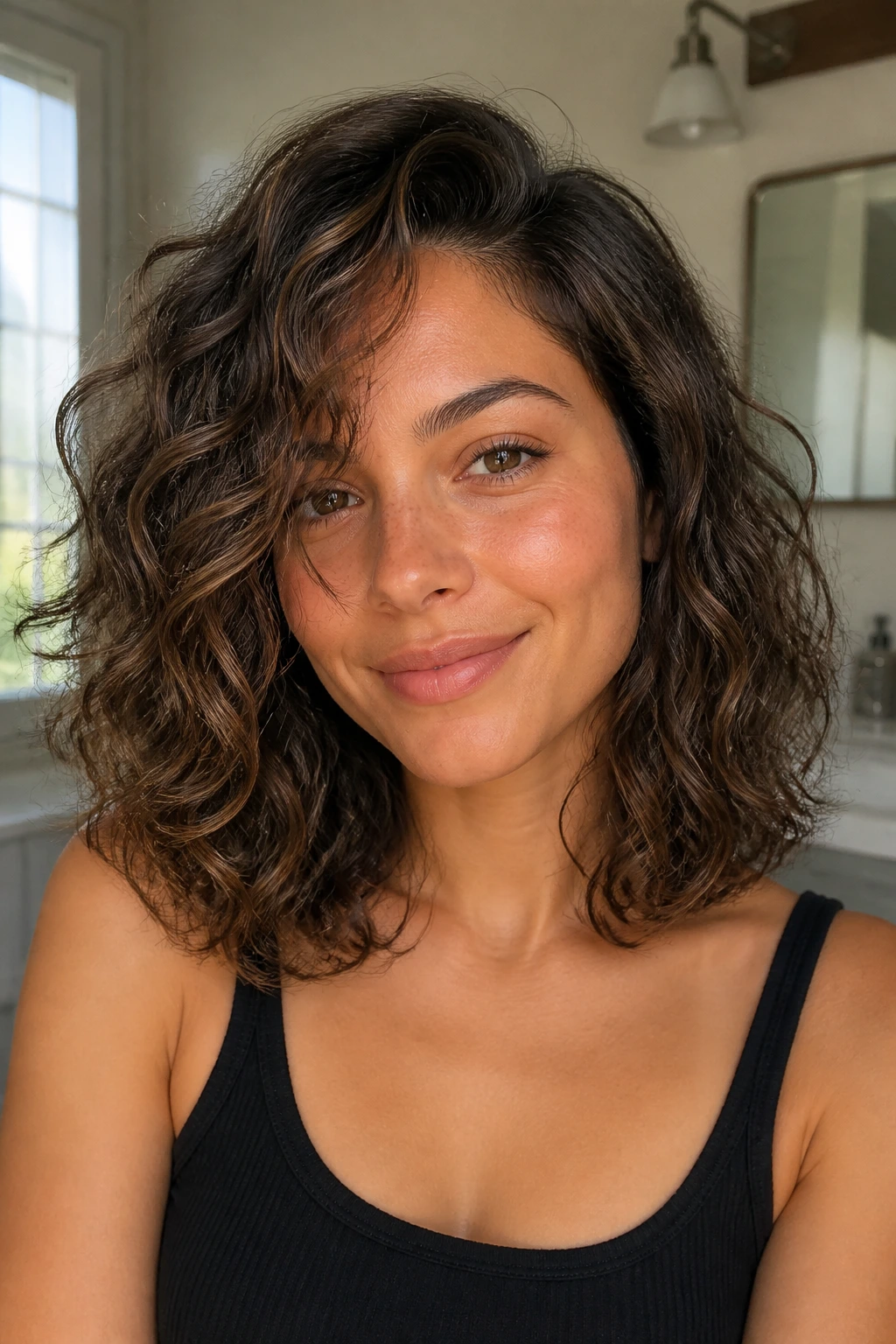
A clavicle-length lob is the longest cut here, but it still counts as a smart short option when your curls need room to live without becoming weighed down. The key is keeping the ends soft and the layers subtle, so the hair doesn’t lose its body as it drops past the shoulders.
This length is useful if you’re nervous about going truly short. It gives you a chance to test how fine curls behave with less weight while still keeping enough length to tie back or tuck. A side part helps the roots stay lifted, and the soft ends stop the shape from looking too heavy.
If your curls are loose and your hair is very fine, this may be the most forgiving “short” cut in the whole set.
Why Short Curly Haircuts Can Make Fine Hair Look Full
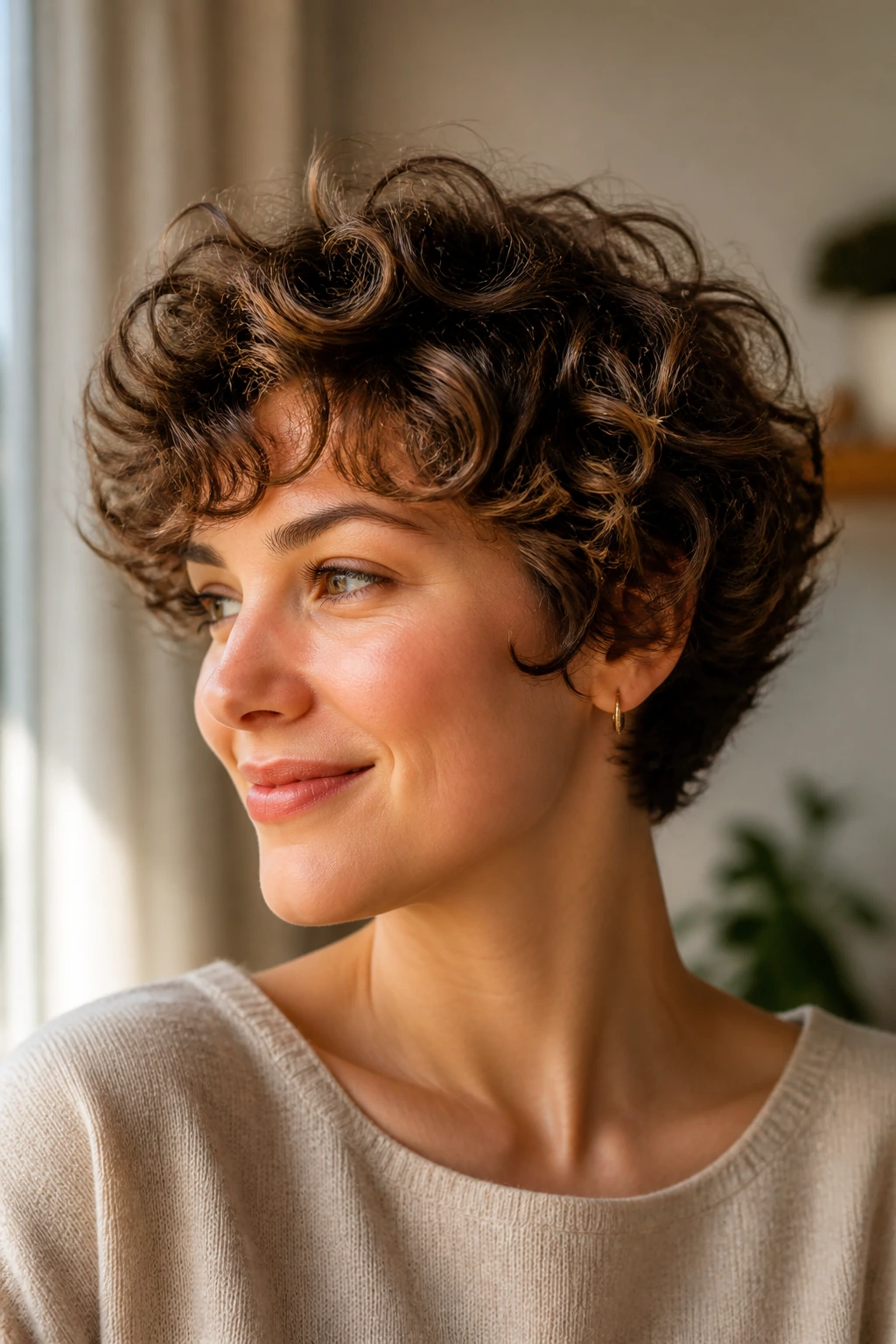
Short curls are not magic. They just solve two problems at once: they remove drag and they give the curl pattern room to bounce. That’s why a blunt, shoulder-length cut can sometimes look thinner than a chin-length crop, even when you’ve got the same number of strands on your head.
The shape matters more than the number on the tape measure. A good short cut can widen the silhouette at the cheekbones, lift the crown, and keep the bottom from turning see-through. A bad one does the opposite. It leaves fine curls stretched, floppy, and oddly separated.
The best results tend to come from cuts that keep a little weight where the curls need support and remove it where the hair is collapsing. That balance is the whole game.
Essential Tools for Styling These Cuts
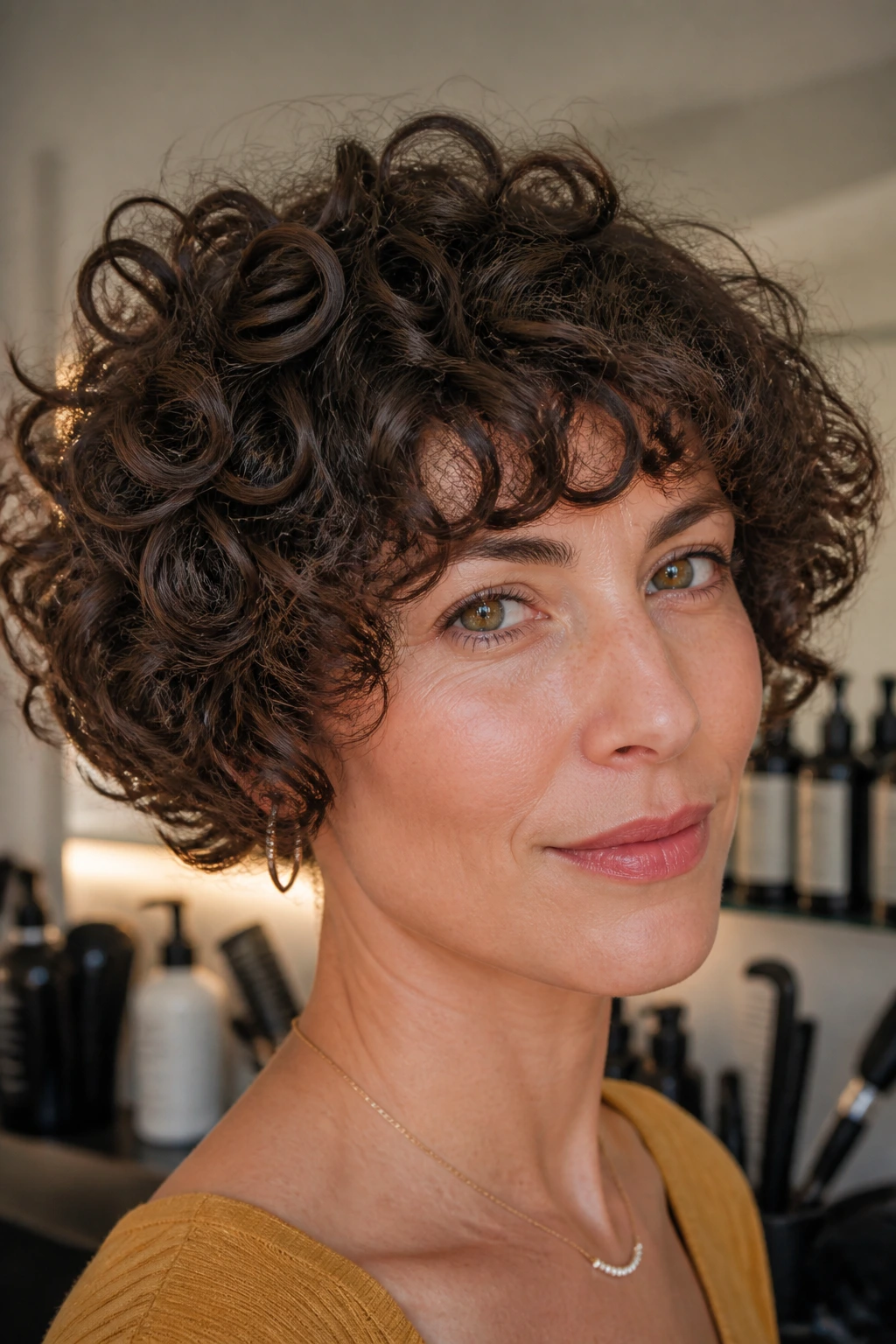
- Diffuser attachment: Helps fine curls dry with lift instead of blasting them flat.
- Spray bottle: Useful for rewetting only the pieces that need encouragement on day two.
- Microfiber towel or soft T-shirt: Cuts down on roughness when you scrunch out water.
- Wide-tooth comb: Good for distributing product without tearing apart delicate curl clumps.
- Duckbill clips: Handy for pinning roots at the crown while the hair sets.
- Lightweight mousse or foam: Gives hold without the heavy feel that can sink fine curls.
- Curl cream, used sparingly: A tiny amount can soften frizz, but too much will flatten the shape fast.
- Hand mirror: Worth keeping around so you can check the back and nape without guessing.
How to Keep the Shape From Falling Flat
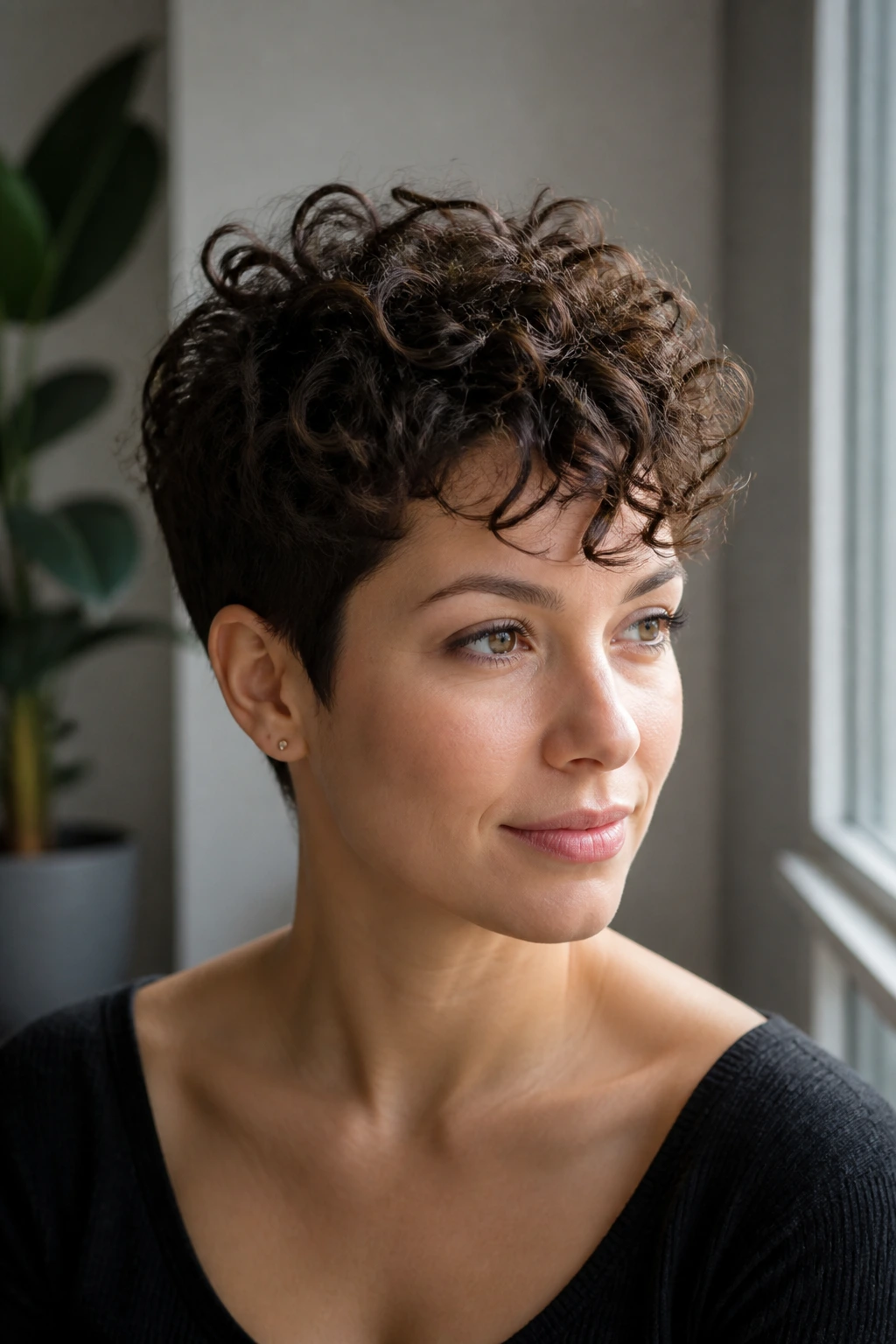
Short curly haircuts for fine hair need a little maintenance, but not the exhausting kind. The aim is to keep the cut lively, not polished into obedience. A light mist of water is often enough to wake up flat pieces, especially at the crown and around the part.
Day two is where many fine curls get into trouble. People reach for more cream, more oil, more everything. That usually backfires. Start with water, then add a touch of foam or mousse to the roots if they’re limp. Scrunch, let the hair sit for a minute, and only diffuse the sections that still look stubborn. Less product, more patience.
Sleep matters, too. A satin pillowcase or a loose bonnet keeps the cut from getting crushed at the nape. For pixies and crops, even a soft pillowcase can make a big difference because the back is so short that friction shows fast.
What to Tell Your Stylist Before the First Snip
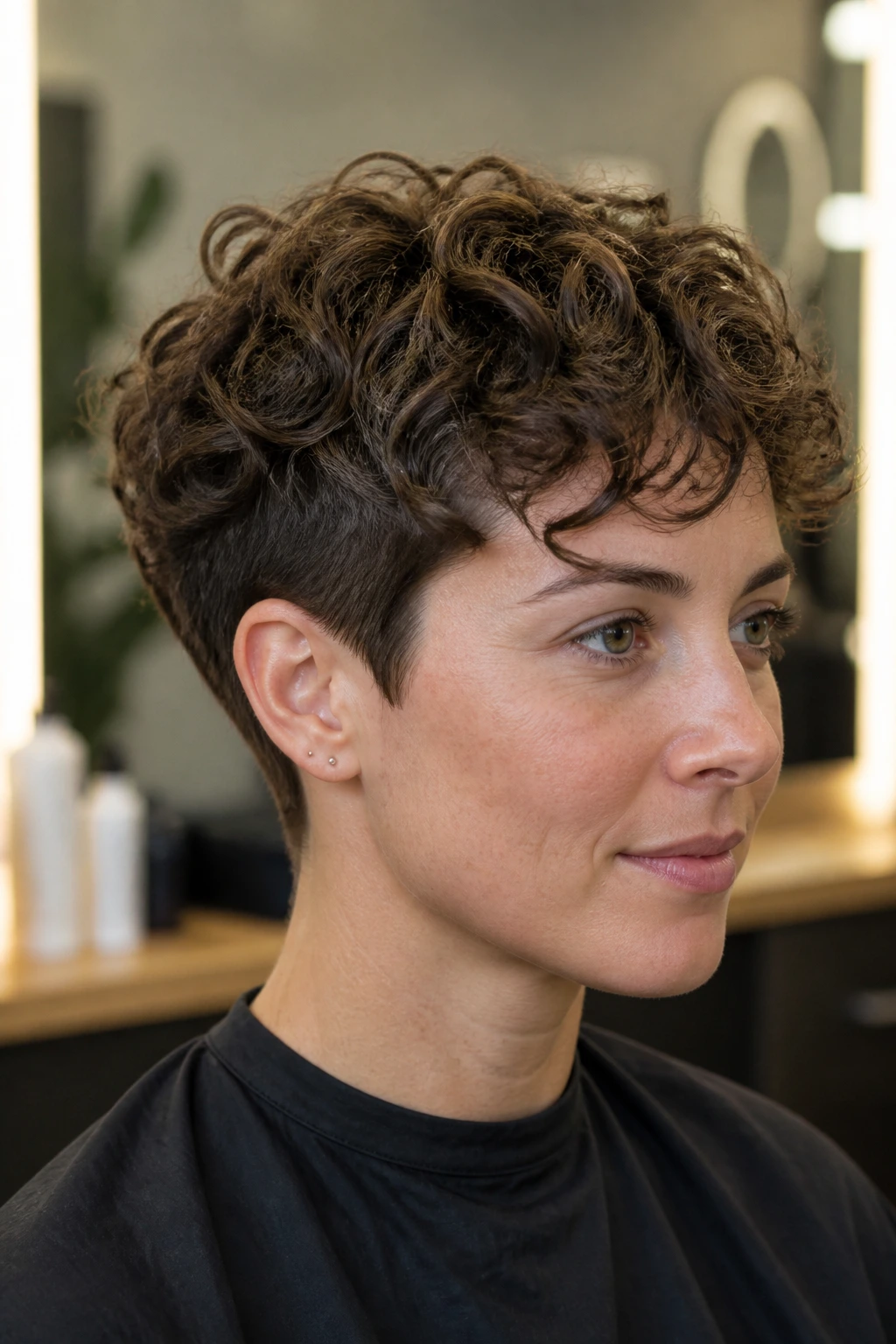
Do not walk in and say “just make it shorter.” That phrase invites guesswork, and fine curly hair punishes guesswork. You want to talk about shape, not just length. Say whether you want more lift at the crown, more room around the jaw, or a softer line at the nape.
Tell them how you wear your part. Tell them whether you air-dry, diffuse, or both. Tell them whether your curls spring hard after washing or relax into waves by the afternoon. A good stylist can work with all of that, but only if they know what they’re looking at.
If you have a hairline you like to cover, say that. If your hair frizzes near the temples but stays flatter through the back, say that too. Those tiny details decide whether a short cut feels flattering or just short.
Additional Tips and Lift Boosters
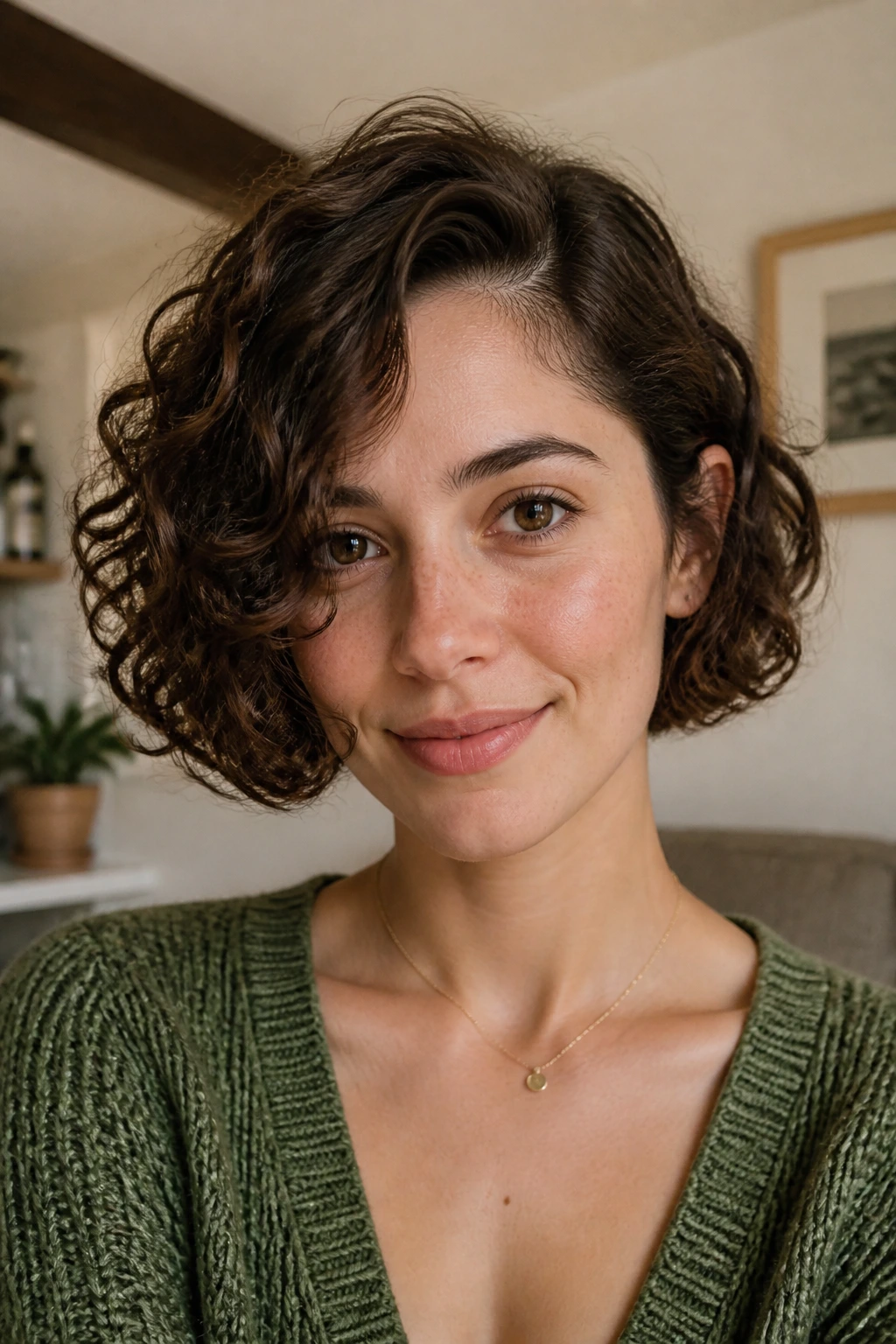
Root Lift: Clip the crown at the roots while the hair dries, then take the clips out once the curls are cool. It’s a small trick, but on fine hair it can add enough height to change the whole silhouette.
Texture Control: Use mousse at the roots and a pea-size amount of curl cream only on the mids and ends. Fine curls often do better with hold first and softness second.
Parting Trick: A zigzag or slightly off-center part can stop the scalp line from looking too wide. It’s not flashy. It works.
Make-It-Yours: If you like a softer look, ask for rounded edges. If you want more edge, add an undercut or a stronger side sweep. If you need the cut to grow out gracefully, keep the perimeter a little longer than you think you need.
Common Mistakes to Avoid
Cutting it too wet and trusting the length. Wet curls lie. A cut that looks chin length in the chair can end up near the ear once it dries. The fix is a dry check or a very cautious finish cut.
Removing too much from the ends. Fine hair can look fuller when the perimeter holds some weight. If the bottom turns stringy, the haircut has gone too far with thinning or razor work.
Using heavy styling products. Rich creams and oils can sink the roots and make the hair feel greasy by noon. Fine curls usually prefer foam, light gel, or a small amount of cream only where needed.
Skipping the crown. A flat top ruins a short curly cut faster than almost anything else. Use clips, mousse, or a side part to keep lift where the eye notices it first.
Choosing bangs that are too dense. Thick fringe on fine curls can split and look patchy. Softer, piecey bangs usually behave better.
Waiting too long for trims. Once the shape drops, fine curls start to read as limp rather than lived-in. Tight cuts need regular maintenance to keep their structure.
Variations and Adaptations to Try
Softest Version: Keep the perimeter a little longer and ask for interior shaping only. This works when you want fullness but not a dramatic change.
More Lift Up Top: Shorten the crown slightly and keep the sides closer to the head. Good for hair that flattens right at the roots.
Face-Framing Version: Leave the front pieces longer around the cheekbones or jaw. This helps if you want the cut to feel softer on a round or heart-shaped face.
Grow-Out Friendly Version: Avoid hard lines and keep the nape and sideburns soft. The haircut will look decent as it grows instead of turning awkward after three weeks.
Low-Styling Version: Choose a shape with a strong perimeter and minimal layering. It’s the best fit if you want to wash, scrunch, and leave.
More Edge: Add an undercut, a side-swept front, or a slight asymmetry. That gives the cut attitude without asking fine hair to carry too much weight.
Maintenance, Refreshing, and Trim Timing
Short curly cuts need more frequent trims than longer ones because the shape changes faster. Pixies and crops usually want a trim every 5 to 7 weeks. Bobs and lobs can often stretch to 8 or 10, depending on how fast your curls spring and how tidy you like the outline.
Between washes, refresh the roots first. That’s where fine hair loses shape fastest. A light mist of water at the crown, a tiny bit of mousse, and a quick diffuse on low heat often does more than a full restyle with heavy product. If the ends still look good, leave them alone. Chasing every piece usually makes the whole head frizzier.
At night, keep friction low. A satin pillowcase helps, and a loose bonnet is even better if your hair is cropped very short. If you wake up with a flattened side, dampen that section only and clip it away from the face for 10 minutes while you get dressed.
Frequently Asked Questions
Should fine curly hair be cut dry or wet?
Dry cutting gives the clearest read on curl spring, especially for pixies, crops, and short bobs. Wet cutting can still work if the stylist knows your shrinkage pattern and finishes with a dry check before taking off more length.
Are layers good for fine curly hair?
Yes, but only if they’re placed with restraint. Internal layers and soft crown shaping help create lift, while too many short layers can make the ends look thin and scattered.
What short haircut makes fine curly hair look thicker?
Chin-length bobs, tapered crops, stacked bobs, and rounded pixie bobs usually help most because they keep the shape compact and remove drag from the ends. The fuller look comes from outline and weight control, not from leaving the hair long.
How often should I trim a short curly cut?
Pixies and very short crops usually need shape maintenance every 5 to 7 weeks. Short bobs and lobs can go longer, but once the crown starts to collapse or the outline gets fuzzy, it’s time.
Can I have bangs with fine curly hair?
Yes, but softer bangs tend to work better than thick straight fringe. Wispy, curved, or side-swept bangs usually keep enough movement to avoid that sparse, chopped look.
What if my curls shrink more than I expected?
That usually means the cut was judged only while wet. Bring it back with a dry assessment next time, and ask the stylist to leave a little extra length in the front, crown, or fringe area so the final shape lands where you want it.
Is a pixie too short for fine curly hair?
Not if the top is left long enough to curl. A pixie can look fuller than a longer cut because the hair doesn’t have the weight of extra inches pulling it down.
How do I keep a short curly cut from looking flat by day two?
Start with water at the roots, add a light foam or mousse, and clip the crown if needed while it dries. Fine curls usually need lift first, not more cream.
Soft Shape, Less Guesswork

The nicest thing about short curly haircuts for fine hair is that they stop asking your hair to do work it was never built to do. Long, heavy lengths can be pretty, sure, but they can also drag down a delicate curl pattern until the whole style feels tired. Shorter cuts fix that by making the curl itself the point.
The right shape gives you lift at the crown, body around the face, and ends that still look like they belong there. That’s the whole trick. Pick the version that matches your curl spring, your tolerance for styling, and your appetite for change, then let the cut do the heavy lifting for once.
