



A buzz cut on Black hair is never just “short hair.” The clippers may only leave a few millimeters behind, but the shape you choose changes everything: the way the hairline reads, how the fade wraps the head, how the beard connects, even how much of the crown swirl shows when the light hits it. That’s why the same basic cut can look military, polished, sharp, or outright loud depending on the guard, the taper, and the edge work.
Coily and tightly curled hair makes the buzz cut more interesting, not less. Short length reveals the bones of the haircut. You see the head shape. You see the barber’s hand. You see whether the neckline was cleaned up five days ago or five weeks ago. That honesty is part of the appeal, and it’s also why details matter more here than on a longer cut.
The good versions are clean in a way that feels deliberate, not bare. A tight lineup at the forehead, a soft taper at the temple, a beard that meets the sideburns without a hard jump — those little moves change the whole read of the haircut. Some guys want the shortest possible crop. Others want a little shadow, a little fade, maybe a design line or color. All of those choices count, and they all live in the buzz cut family.
Why This Collection Feels Bigger Than One Haircut
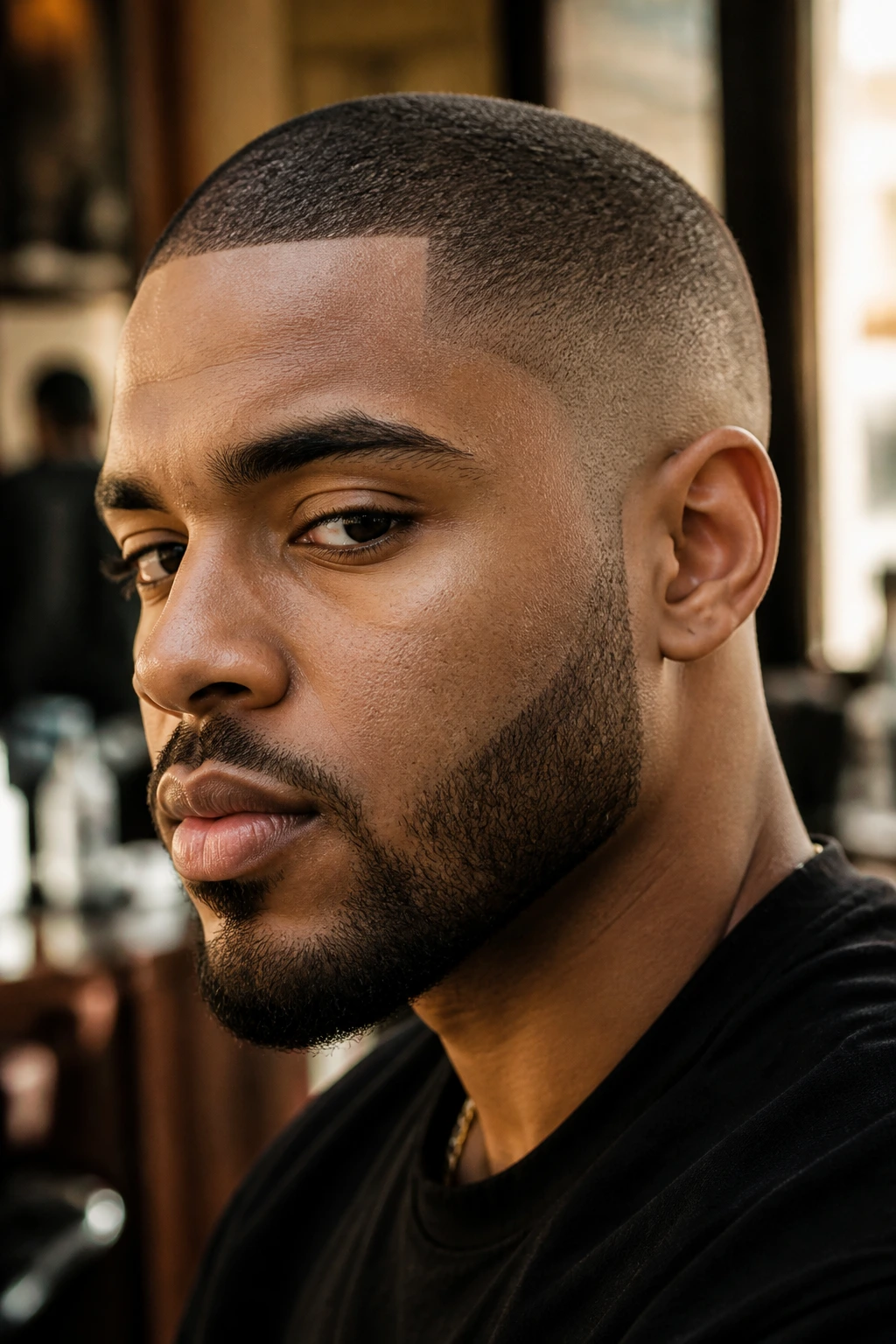
- Length changes the mood fast: A #0.5, a #1, and a #2 all sit in the same buzz cut lane, but each one shows a different amount of scalp and texture.
- Lineups do heavy lifting: On short curls, a straight hairline or a rounded one can make the haircut look tailored instead of accidental.
- Fades matter more than most people think: A low taper says something very different from a skin fade, even when the top length stays the same.
- Beards shift the balance: A clean buzz with a full beard reads strong and grounded; the same cut with a goatee feels lighter and more angular.
- Texture still shows at short length: Coarse coils don’t disappear under clippers. They turn the cut into a soft shadow, which is part of what makes buzz cuts on Black men look so good.
- The upkeep is honest: If you like clean edges, this is a haircut that asks for touch-ups. Not daily fuss. Just regular attention.
1. Induction Cut
The induction cut is the shortest of the short. On Black hair, it sits so close to the scalp that every line has to be right, because there’s nowhere for mistakes to hide. I like this cut when the goal is bare, neat, and disciplined. It looks strongest with a crisp lineup and a clean beard edge, or with no beard at all if you want the whole face to stay open.
The trick is restraint. Don’t ask for extra detailing on top; the whole point is that the cut already is the detail. A lot of barbers will leave the hair at no guard or a razor-close finish and clean the perimeter with a trimmer. If your hairline pushes back a little at the corners, a soft, natural outline usually looks better than a boxy attempt to force symmetry.
2. Burr Cut
A burr cut gives you a shade more softness than an induction cut, and that small change matters. You still get the close-cropped look, but the scalp doesn’t feel quite as exposed, which can be a relief if you like short hair but do not want the fully bare effect. On tightly curled hair, the burr cut leaves a faint velvet texture that reads clean even from across the room.
Ask for a guard that lands around #1, then decide whether you want the hairline squared off or left a touch round. If your head shape has a strong crown swirl, this length often hides it better than going any shorter. It’s one of those cuts that looks plain in a photo and better in real life.
3. Guard #1 Buzz
The #1 buzz is where the haircut starts to feel like a style instead of a nearly shaved head. You can still see the scalp in bright light, but the texture sits up enough to catch shape. That’s useful if you want low maintenance without looking stripped down.
For Black men with denser coils, this length often gives the nicest balance between softness and structure. It’s short enough to stay tidy for weeks, yet long enough that a fresh lineup actually shows. If your beard is thicker than your hair, this is one of the easiest lengths to keep from looking top-heavy. The face stays balanced.
4. Guard #2 Buzz
A #2 buzz has more body, and that body works well when you want the cut to look intentional from every angle. The texture is more visible, the scalp is less exposed, and the overall shape softens the head a bit. I reach for this length when someone wants a buzz cut but does not want the “I just shaved everything off” feeling.
It’s also a smart choice if your hair grows fast or your crown is strong. The extra length helps the cut hold its shape for a few more days before the edges need attention. If you like a low fade or a taper, the #2 top gives the barber something to blend into instead of rushing straight to skin.
5. Brush Cut Buzz
The brush cut buzz is a little longer at the top, usually with a subtle forward or upward direction. On coily hair, that tiny bit of length turns the top into a soft ridge instead of a flat patch. It’s a good option for men who want the buzz cut feel but still want to keep some movement in the hair.
Why it works
A brush cut buzz can help if your hairline is uneven or if you want to keep the front from looking too severe. Ask for a guard around #2 or #2.5 on top, then let the barber taper the sides slightly shorter. The contrast stays gentle, which is the whole point here.
Best detail to request: keep the front line natural if your edges don’t grow straight. Forced corners can make the cut look tougher than it needs to.
6. Caesar Buzz
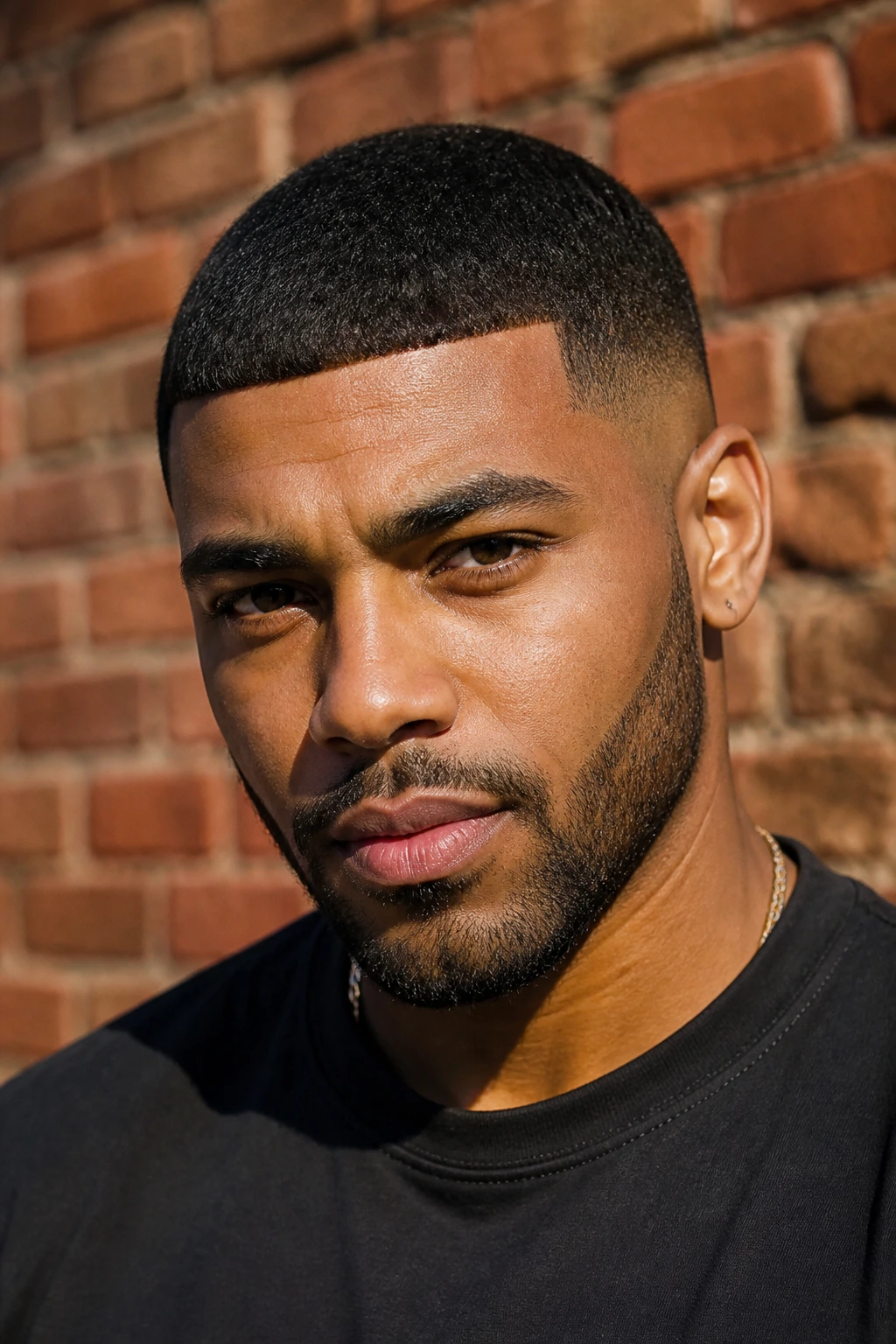
The Caesar buzz has that short, blunt fringe in front, and it can be a clever move for Black men who want to bring the eye down toward the face instead of up toward the crown. The front line is kept short and neat, often with the top brushed slightly forward. It’s compact, tidy, and a little old-school in the best way.
This cut is especially useful when the temples are a touch weak. A short fringe can make the hairline feel more even without pretending the corners are something they’re not. The haircut looks strongest when the front is cut cleanly and the rest of the top stays short enough to read as one shape.
7. High and Tight
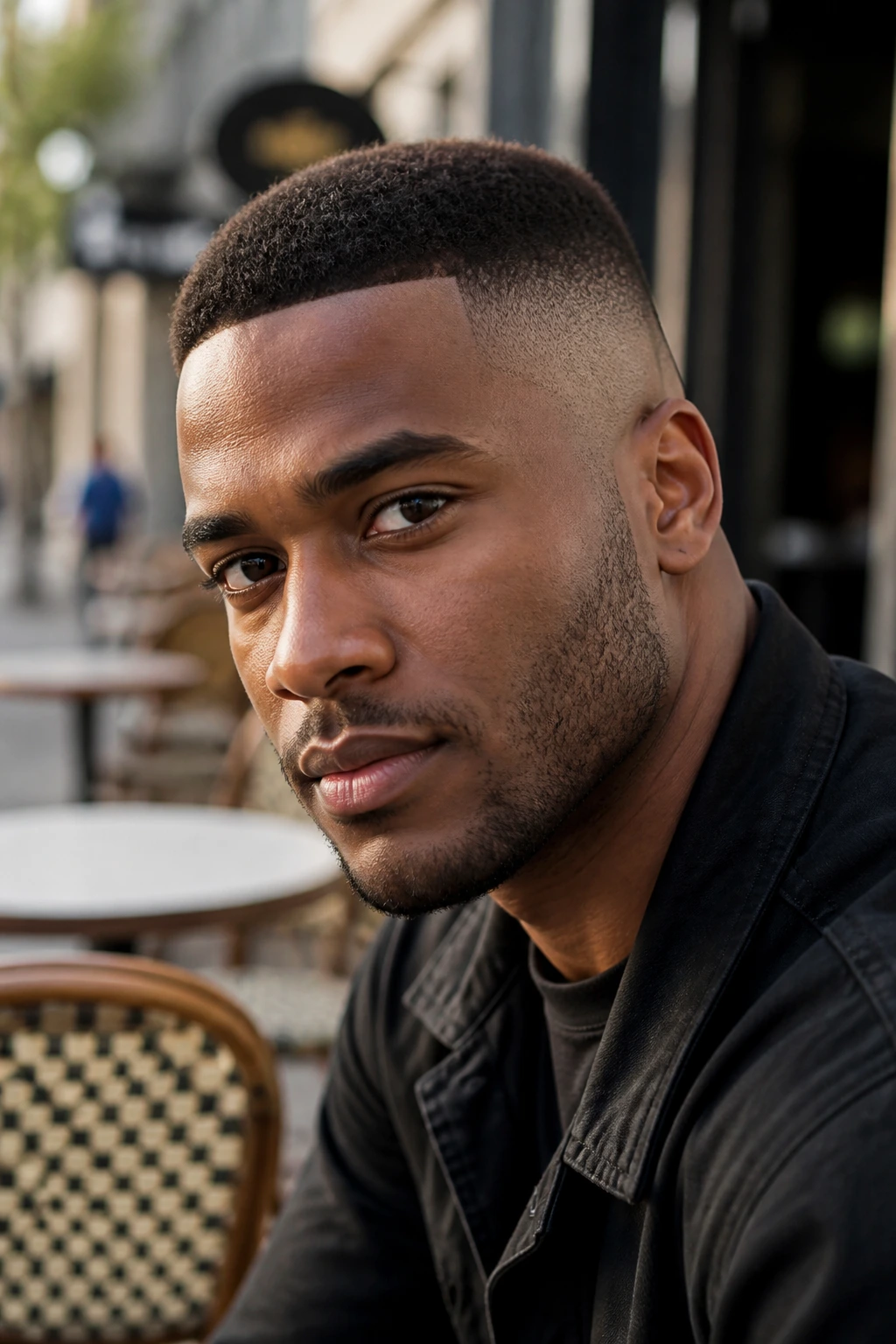
The high and tight is blunt, fast, and honest. The sides go very short, the top stays cropped, and the whole haircut sits close to the head with no wasted space. On Black hair, it draws attention to the bone structure and the jaw, which is why it looks so sharp on men who want a no-nonsense profile.
What to ask for
- Top left around a #1 or #1.5.
- Sides taken very short, often with a tight fade or near-skin finish.
- A clean neckline that doesn’t flare outward.
- Sideburns squared or tapered, depending on how hard you want the cut to read.
If you want the haircut to look deliberate, not just short, the line between top and sides has to be crisp. That’s where this style lives or dies.
8. High and Tight Fade
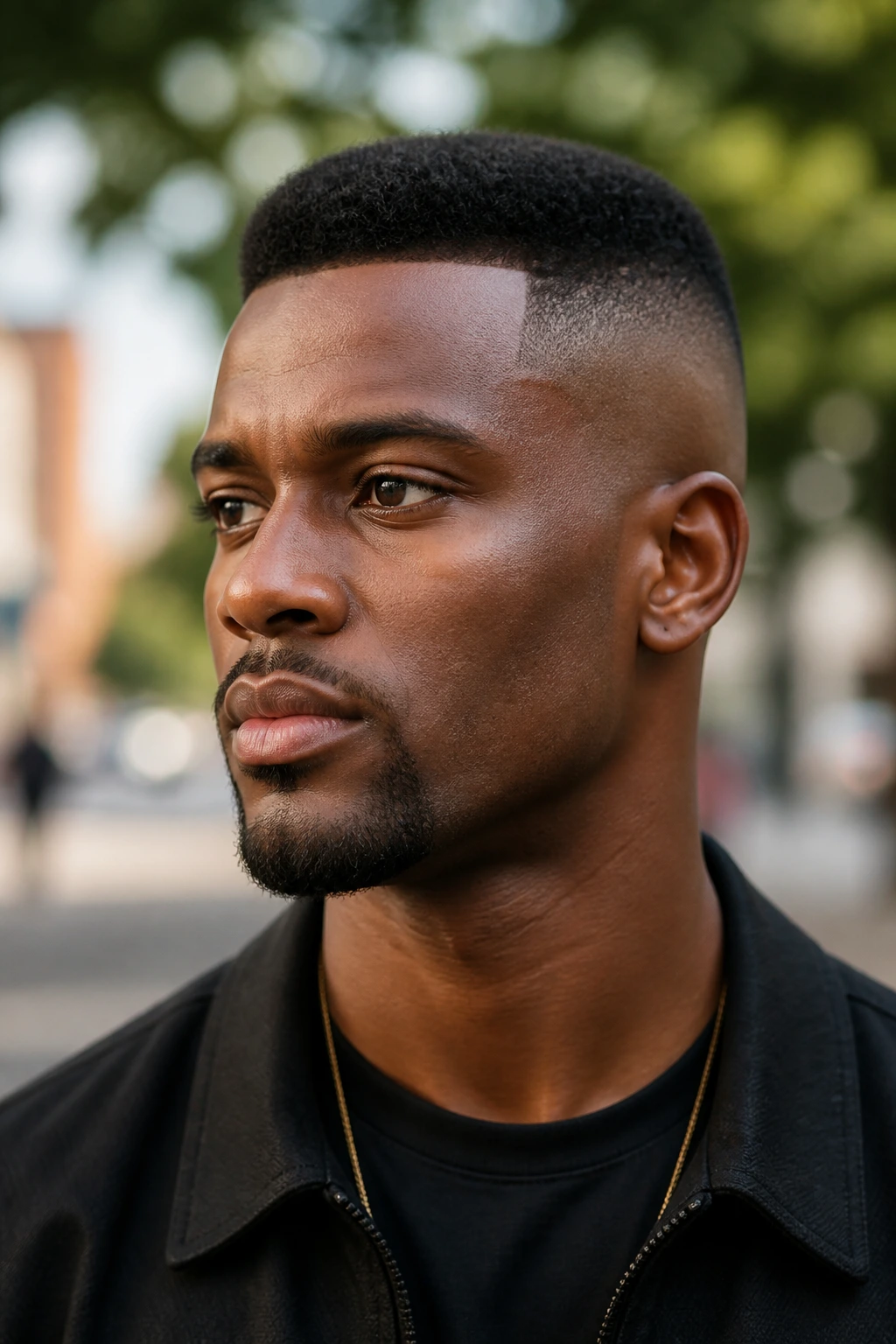
This is the cleaner, more modern cousin of the classic high and tight. The fade takes the sides down with a smooth gradient, so the transition feels less abrupt and a little more polished. It’s a good choice if you want the military shape but not the harsh blocky edge.
The fade also helps if your head shape changes from temple to crown. Instead of one hard shelf of hair, you get a softer wrap around the sides. That matters more than people think. On tightly curled hair, a good fade keeps the haircut from looking like a helmet and gives the top room to stand on its own.
9. Low Fade Buzz
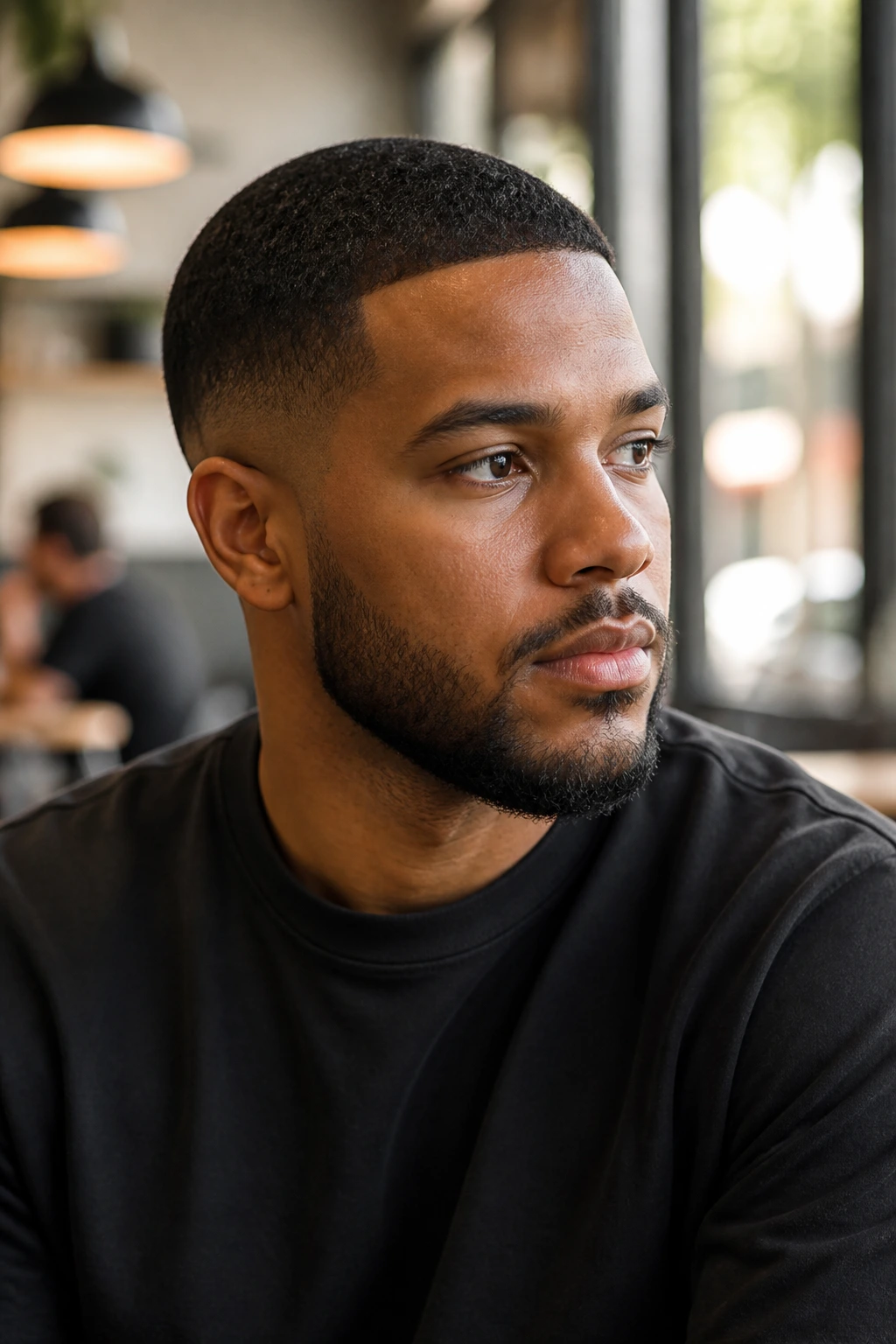
A low fade buzz keeps the drama near the bottom of the head. The fade begins low around the ears and neckline, which leaves the top looking fuller without making the overall cut too loud. It’s one of the easiest buzz cut styles to live with if you want something neat for work, family events, and everything in between.
The low fade is also forgiving on the grow-out. Even when the edges soften, the cut still holds some shape because the transition starts so close to the bottom. If you want the easiest entry point into buzz cuts, this is probably it. Clean, not severe.
10. Mid Fade Buzz
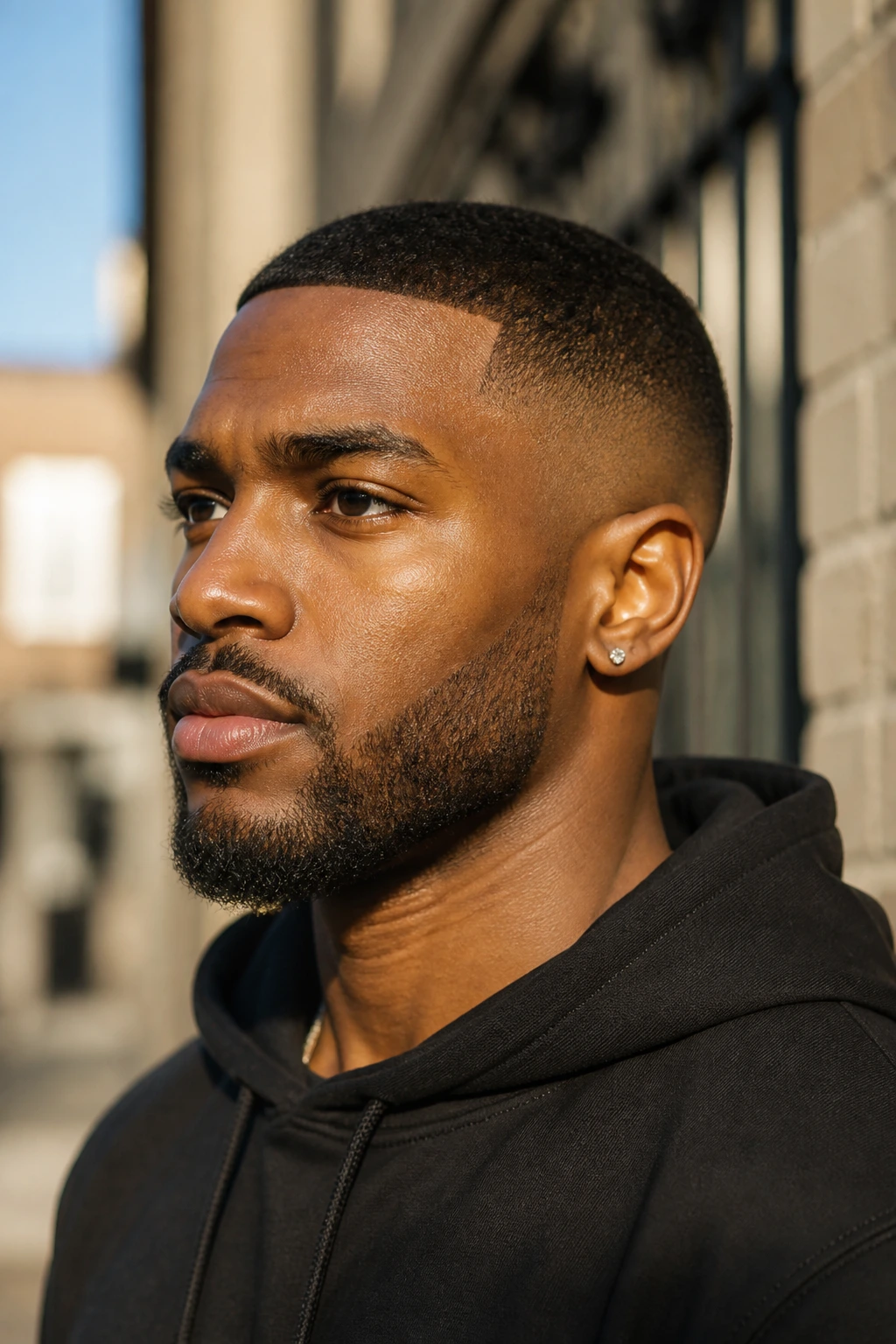
The mid fade buzz sits in the middle for a reason. It gives you more contrast than a low fade, but it doesn’t climb as aggressively as a high fade. That balance works well on Black men who want the haircut to show up from the front and the side without turning into a hard graphic statement.
The sweet spot
The best mid fade buzz has a top length around #1.5 to #2, with the fade starting roughly at the temple area. That keeps the shape visible while leaving enough hair up top to avoid scalp glare. If your beard is medium to full, this cut connects well because the fade can flow into the facial hair without a big jump.
11. High Fade Buzz
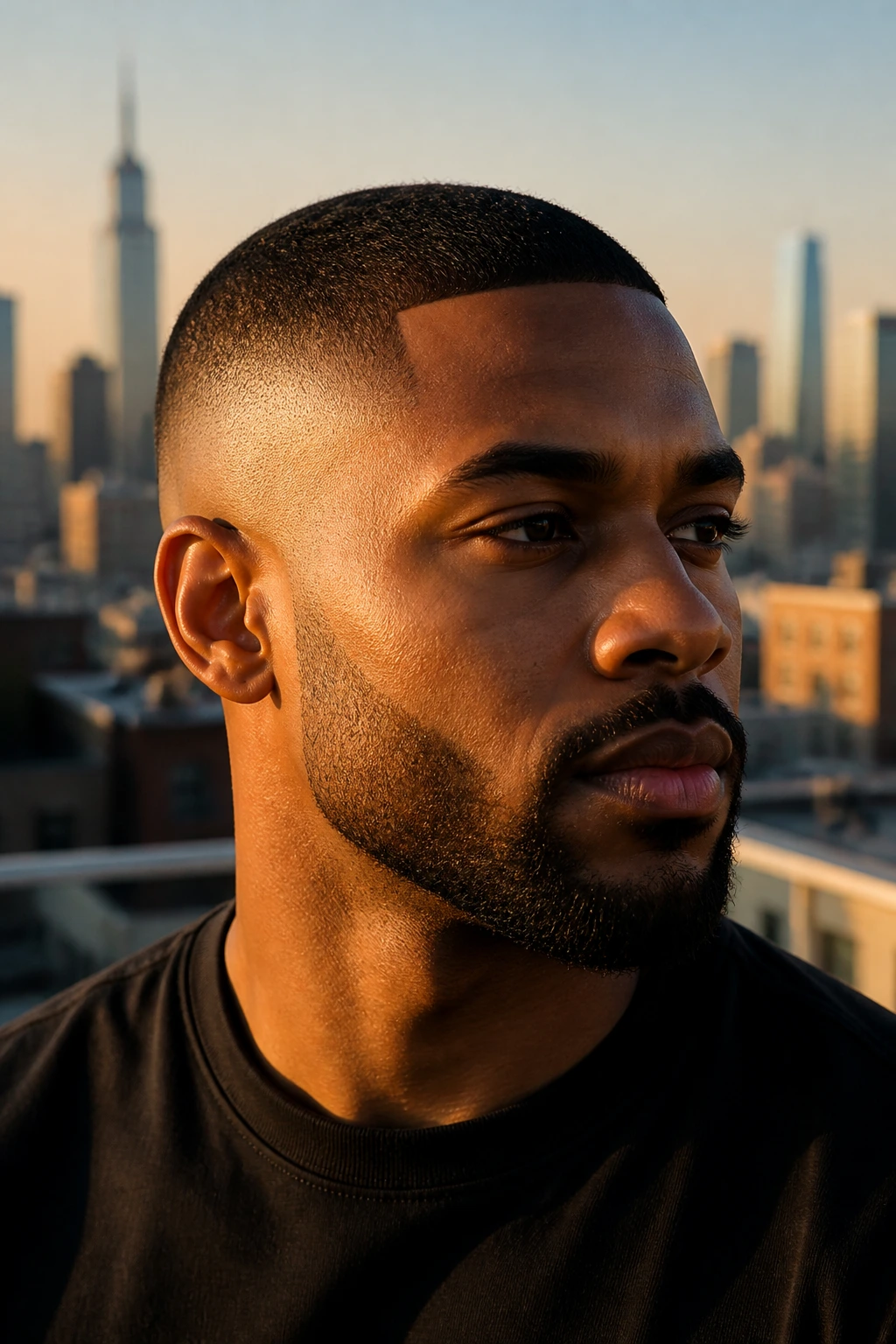
A high fade buzz is not shy. The sides disappear fast, which throws all the attention to the short top and whatever lineup the barber gives you. I like this style on men who want sharp contrast and do not mind rebooking sooner, because the fade loses its punch faster than a low one.
The upside is the profile. From the side, the haircut looks lean and deliberate, especially if the temple area is squared up. If your hairline is strong and your beard is full, this cut can look almost architectural. If your hairline needs a little mercy, go a touch softer at the corners.
12. Temple Fade Buzz
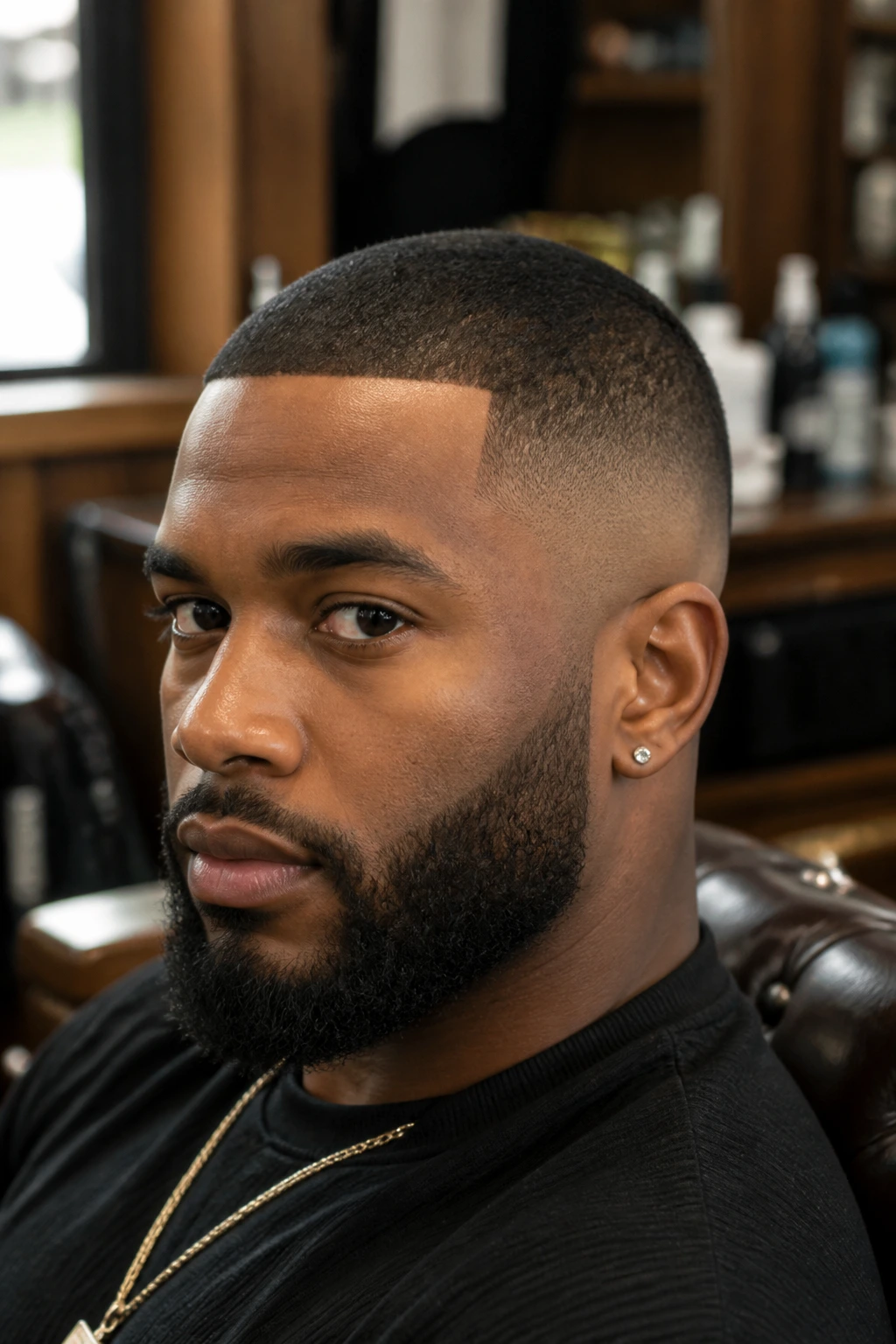
The temple fade buzz is one of the smartest buzz cut styles for Black men, mostly because it works with the places where the haircut naturally needs help. The fade lives at the temples and sideburns, which keeps the perimeter neat without pushing the whole head down to skin. It’s subtle when it should be and clean when it counts.
This style pairs well with a beard because the temple area can drop into the beard line smoothly. If you wear glasses, the temple fade helps keep the whole face from looking crowded. The haircut stays short, but it doesn’t feel bare, and that’s the appeal.
13. Drop Fade Buzz
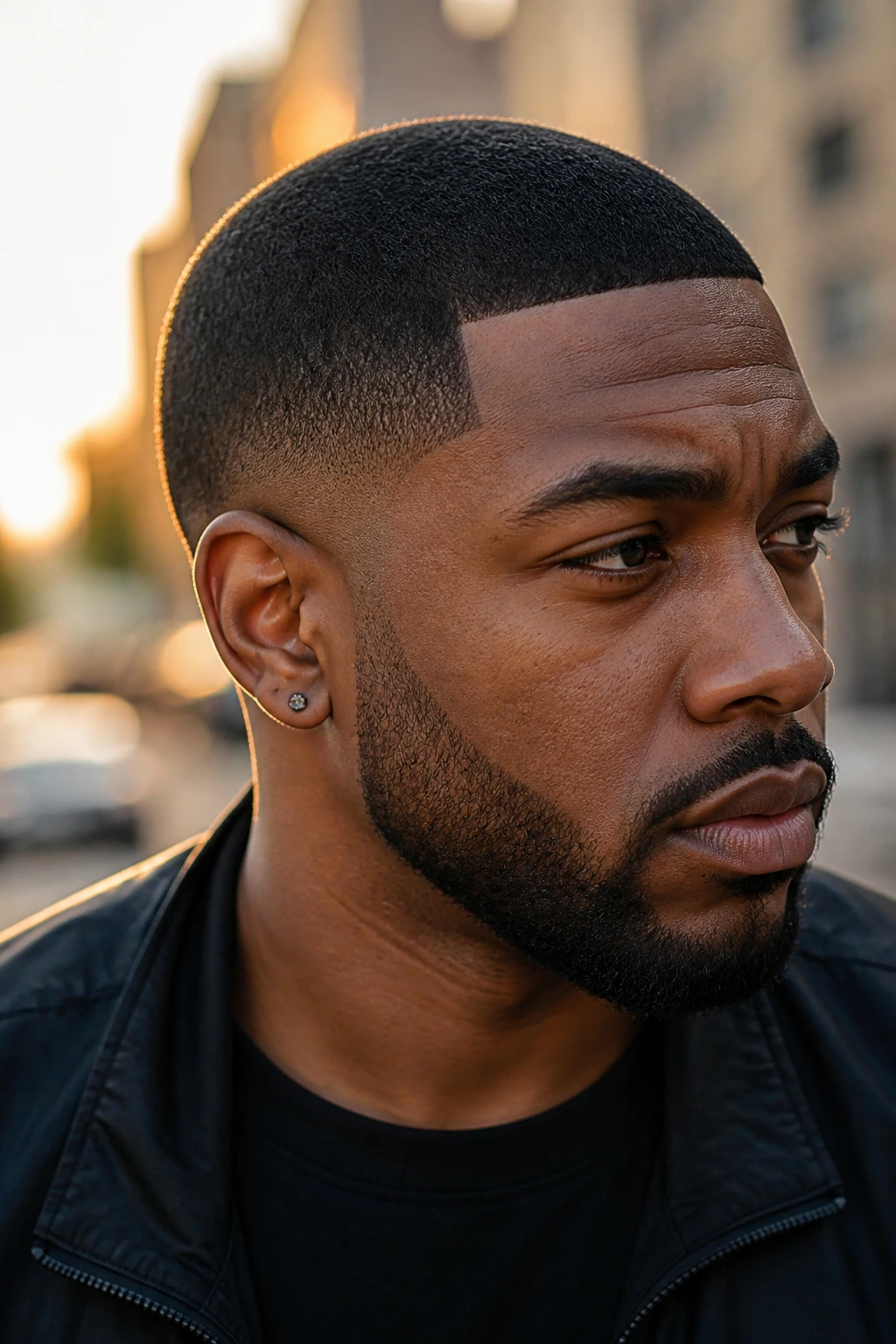
A drop fade buzz follows the curve of the head and dips a little behind the ear. That small drop changes the entire silhouette. Instead of a straight band around the sides, you get a shape that feels tailored to the skull, which is especially good if your head is rounder or if you want a softer read.
Why barbers like this shape
The drop fade keeps the top isolated without making the sides look blunt. It also gives the barber room to blend around the crown more naturally. Ask for the fade to drop cleanly and keep the neckline tight; if the back is fuzzy, the whole effect falls apart.
14. Burst Fade Buzz
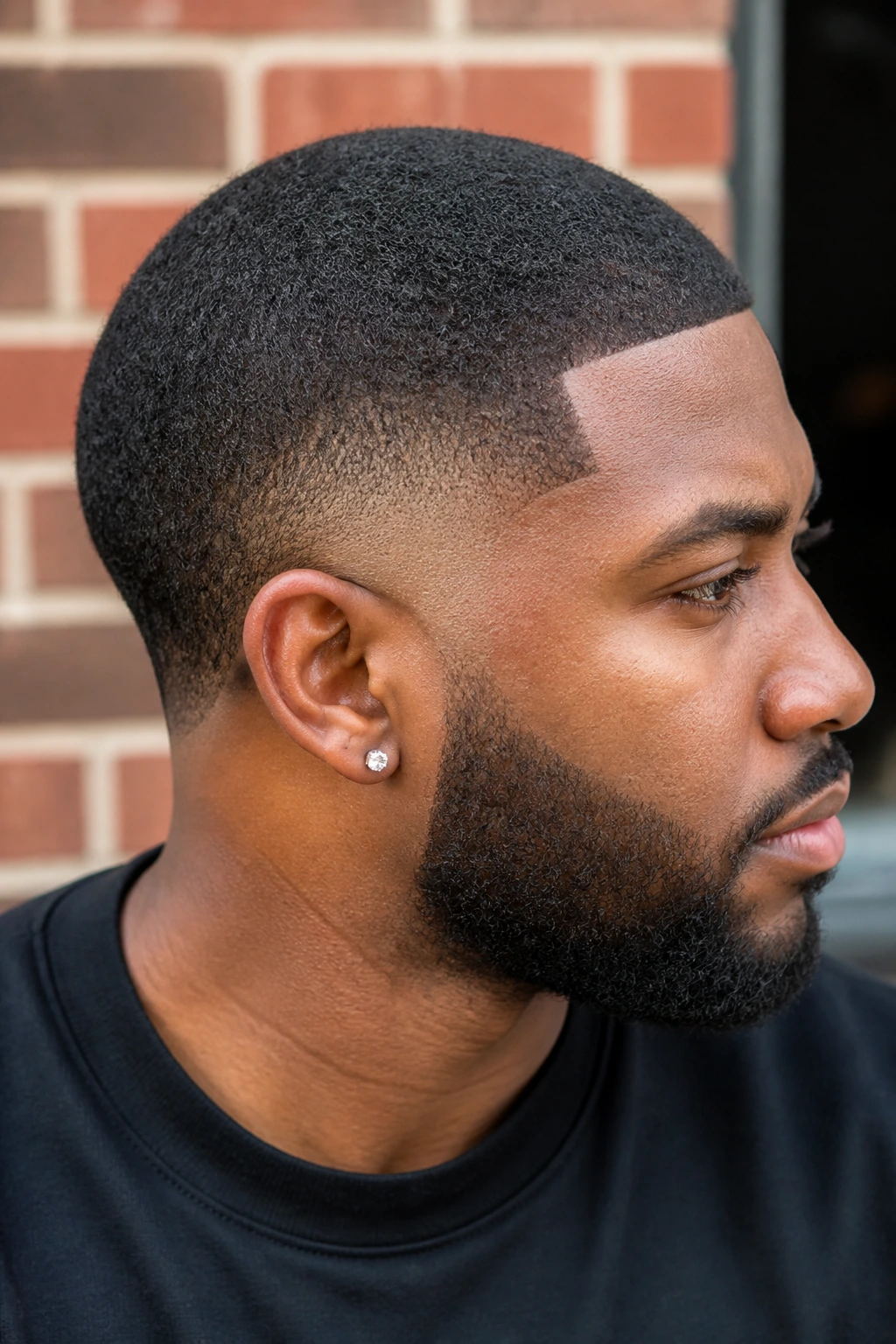
The burst fade wraps around the ear like a little halo of clean skin or very short stubble. On a buzz cut, that creates a sharp focal point on the side of the head. It’s one of the bolder looks in this group, and it works especially well if you like a beard, because the beard can anchor the face while the burst adds shape up top.
This cut tends to read best when the top is kept simple. No extra design is needed unless you want it. The burst itself already gives the haircut motion, and on coily hair that motion looks crisp instead of fussy.
15. Skin Fade Buzz
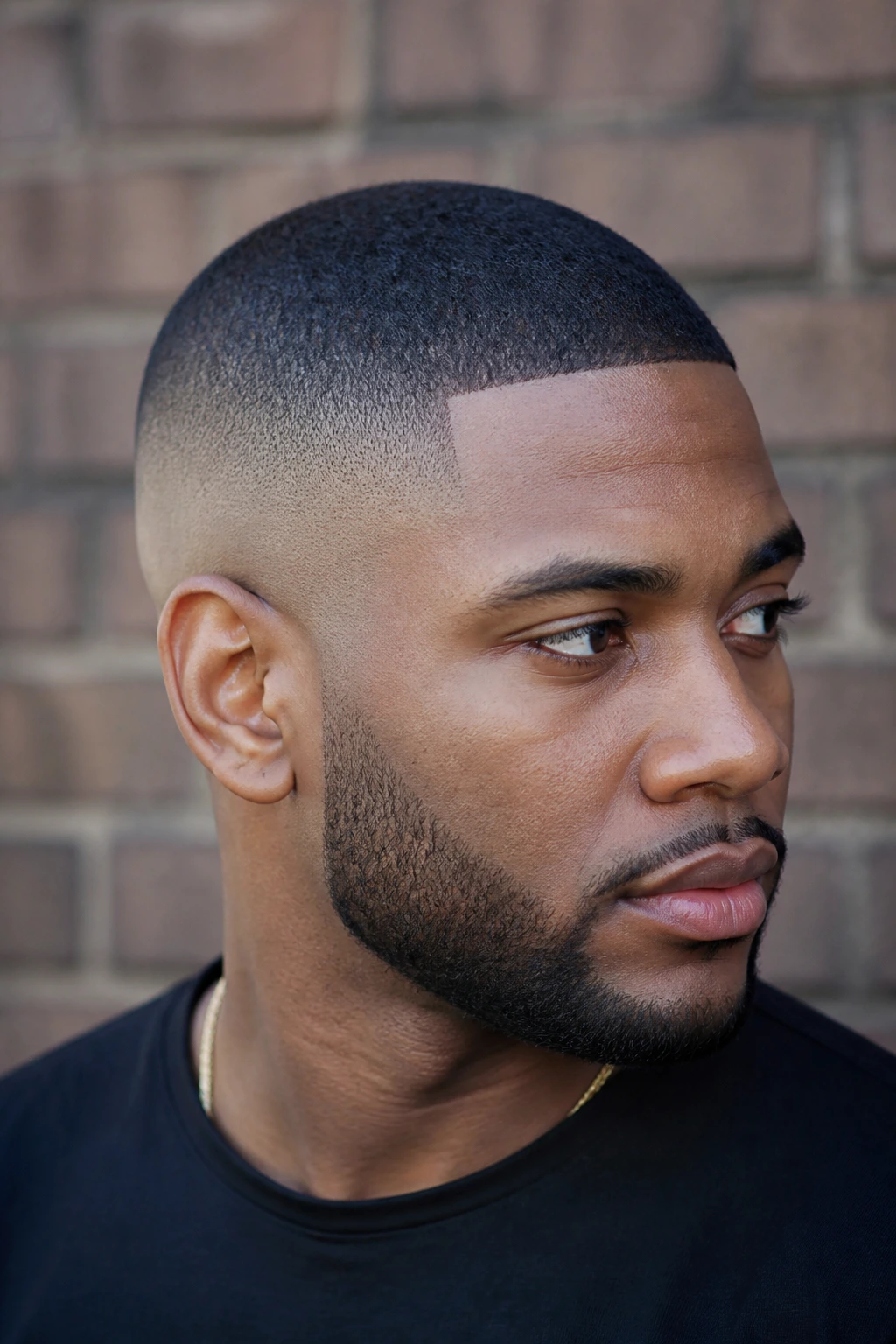
A skin fade buzz is high contrast, plain and simple. The sides disappear all the way down, and the short top sits like a clean cap above that bare fade. It looks especially sharp on Black hair because the texture on top stands against the smooth skin at the sides.
It also asks for better care. If your scalp is dry or prone to bumps, a skin fade will show that faster than a taper. Keep the scalp moisturized with a light balm or lotion, and don’t let the barber press too hard with the razor on sensitive spots. Sharp is good. Irritated is not.
16. Taper Fade Buzz
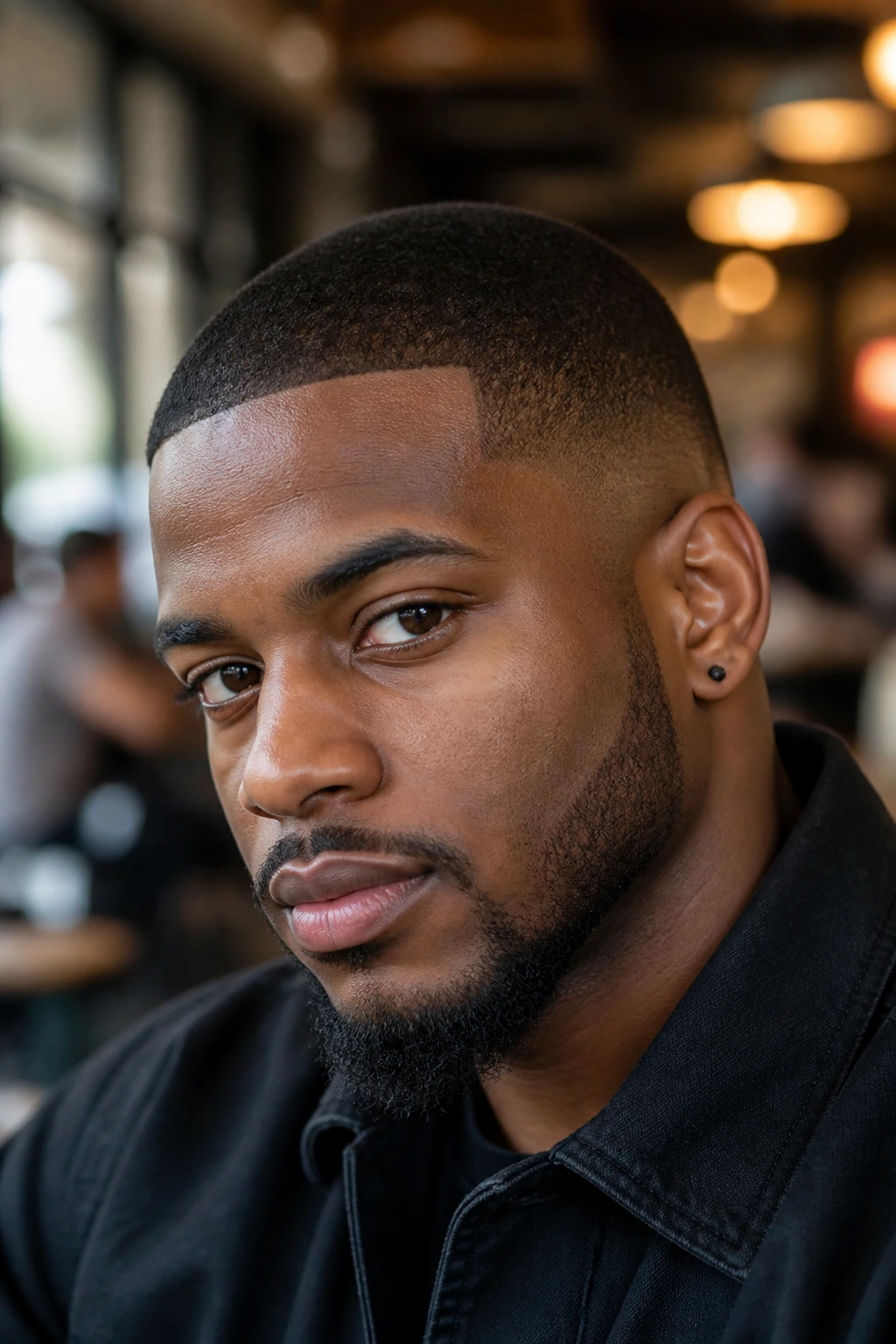
The taper fade buzz is the one I’d hand to a guy who wants neat edges without the full fade drama. The haircut keeps more hair at the sides and back while cleaning the neckline and sideburns. That makes it easy to wear, easy to grow out, and easy to keep looking intentional.
Good reasons to choose it
- The grow-out stays softer than a skin fade.
- The haircut looks professional without being stiff.
- It works well with shorter beards and clean cheek lines.
- It’s easier on the scalp if you dislike razor work.
If you’re new to buzz cuts, start here. It gives you the shape without the shock.
17. Buzz Cut with Sharp Lineup
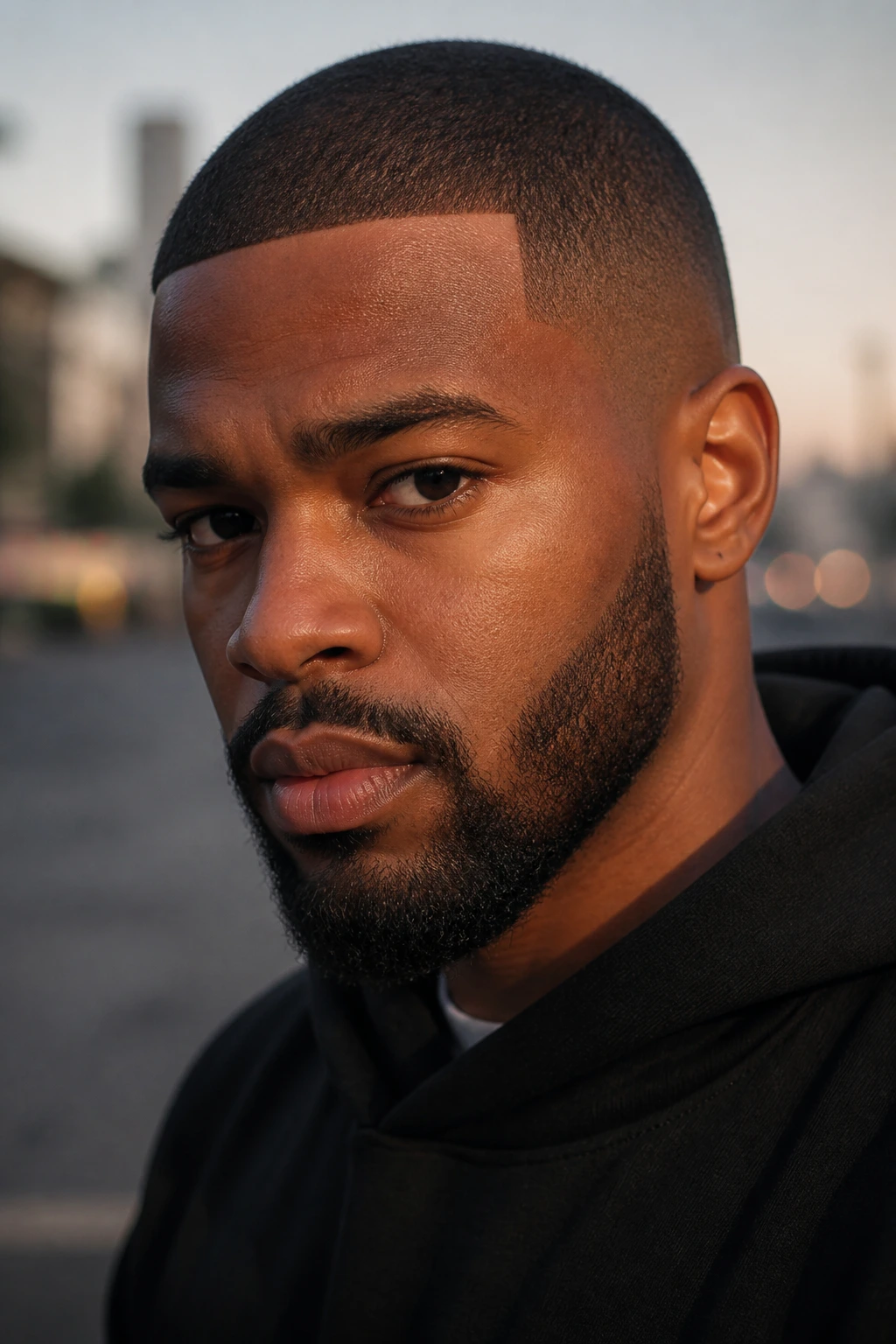
A sharp lineup changes everything. The top can be plain as a sidewalk, but if the barber squares the forehead line and cleans the temples, the haircut suddenly reads as precise. On short coily hair, that edge work is doing more visual labor than the hair itself.
I like this style when the beard is also edged cleanly. That front line and the beard line talk to each other. If one is crisp and the other is shaggy, the whole look loses its balance. Keep the line sharp, but not cartoonish. There’s a difference.
18. Buzz Cut with Rounded Hairline
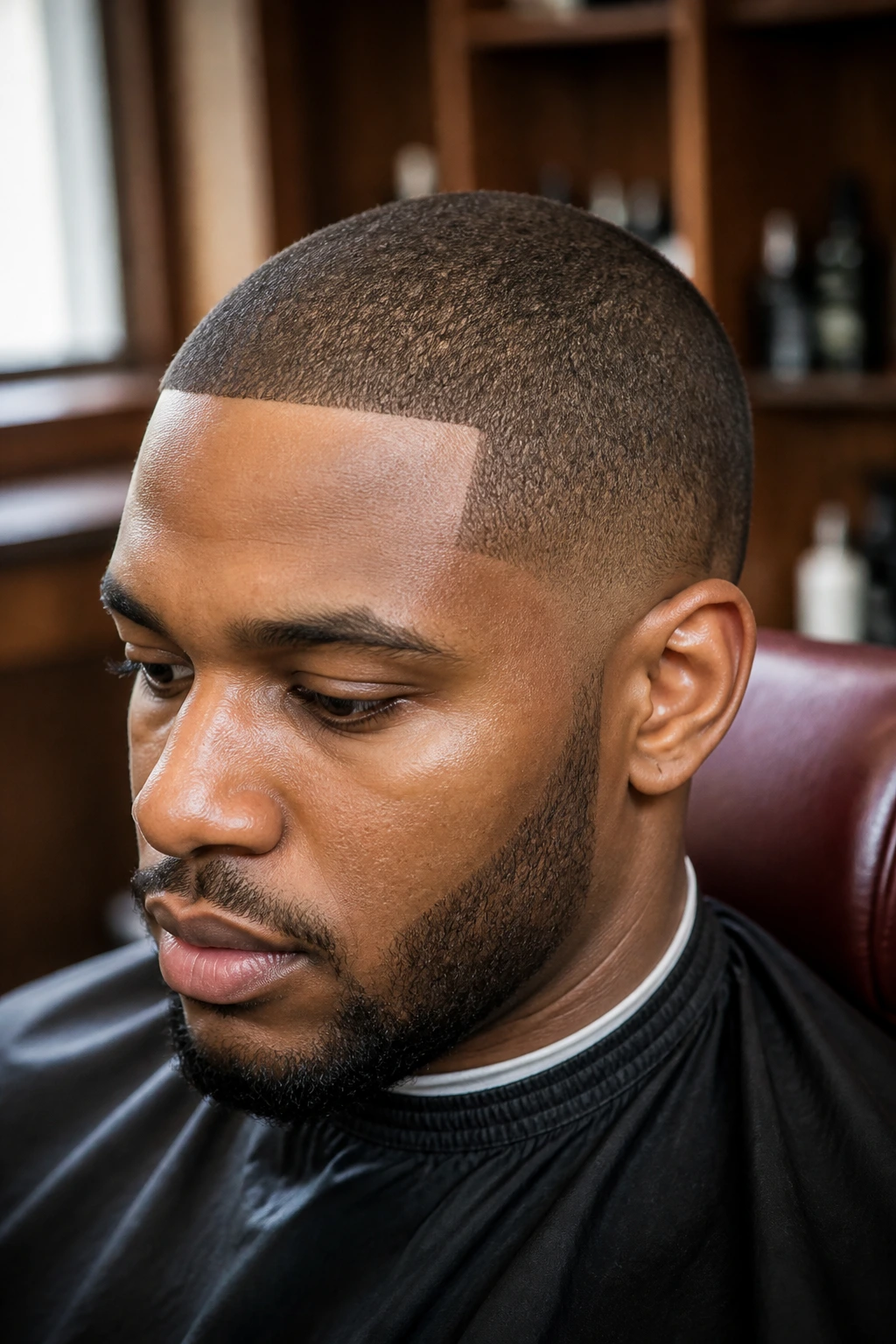
Not every buzz cut needs a hard, straight front. A rounded hairline can look better when the corners are naturally lighter or the growth pattern is uneven. Instead of boxing the forehead, the barber follows the actual shape a little more closely. That can make the haircut feel more honest and less forced.
This is a useful option for men with receding temples or a strong widow’s peak. The rounded edge softens the transition and keeps the cut from drawing attention to spots you don’t want highlighted. It’s clean, but it doesn’t try too hard.
19. Buzz Cut with Beard Blend
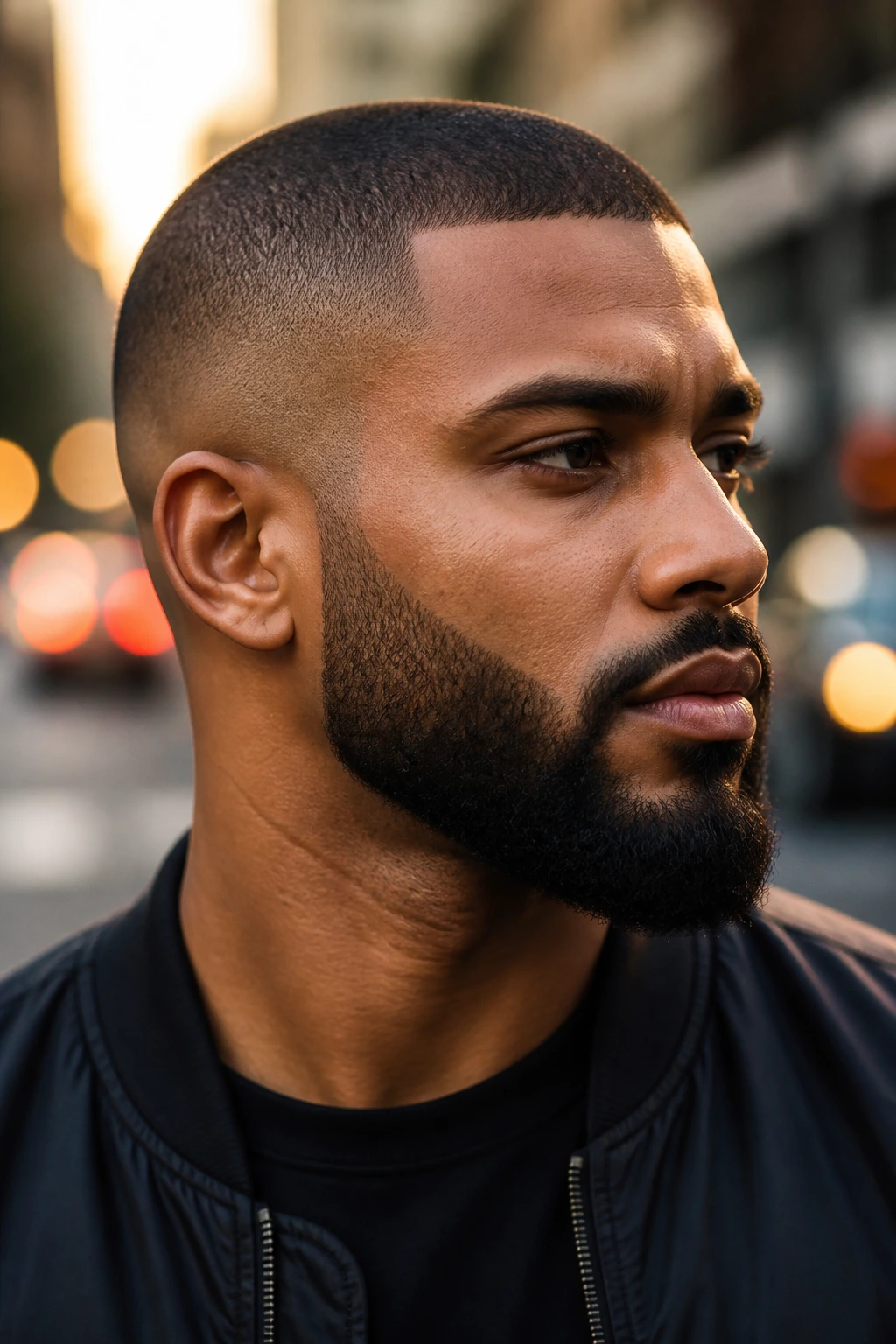
The beard blend is one of the smartest moves in the whole lineup. The barber fades the sideburn area into the beard so the haircut and facial hair feel connected instead of separate. On a short buzz cut, that transition can make the face look longer, sharper, and better balanced.
How the blend should sit
The fade should move gradually from the temple into the sideburn and then into the beard. No hard shelf. No sudden dark patch. If your beard is thick, keep the cheek line controlled so the overall shape doesn’t get bulky. A clean buzz plus a blended beard is one of those combinations that looks expensive even when the haircut itself is simple.
20. Buzz Cut with Full Beard
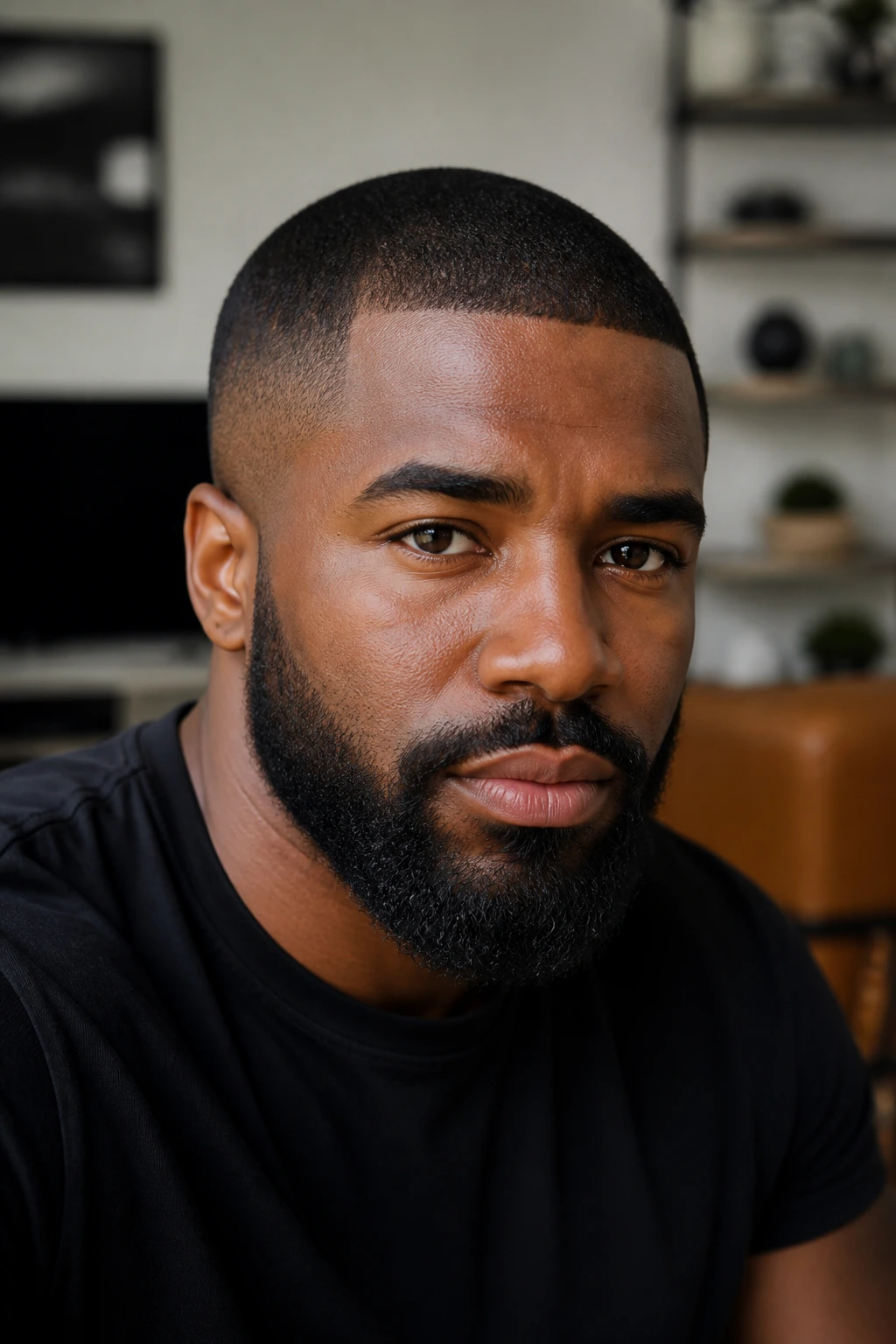
Short hair and a full beard is a classic pairing for a reason: the face stays grounded. The top doesn’t compete with the beard, so the beard gets to do the heavy lifting. That can be especially useful if your hairline is lighter or your crown is busy, because the beard pulls focus downward.
The best version keeps the haircut tight and the beard edged with care. If the top is clipped to a #1 or #1.5, I’d avoid letting the beard go wild. Shape the cheeks, keep the neckline low enough to look natural, and let the contrast do its job. The whole look depends on discipline.
21. Buzz Cut with Goatee
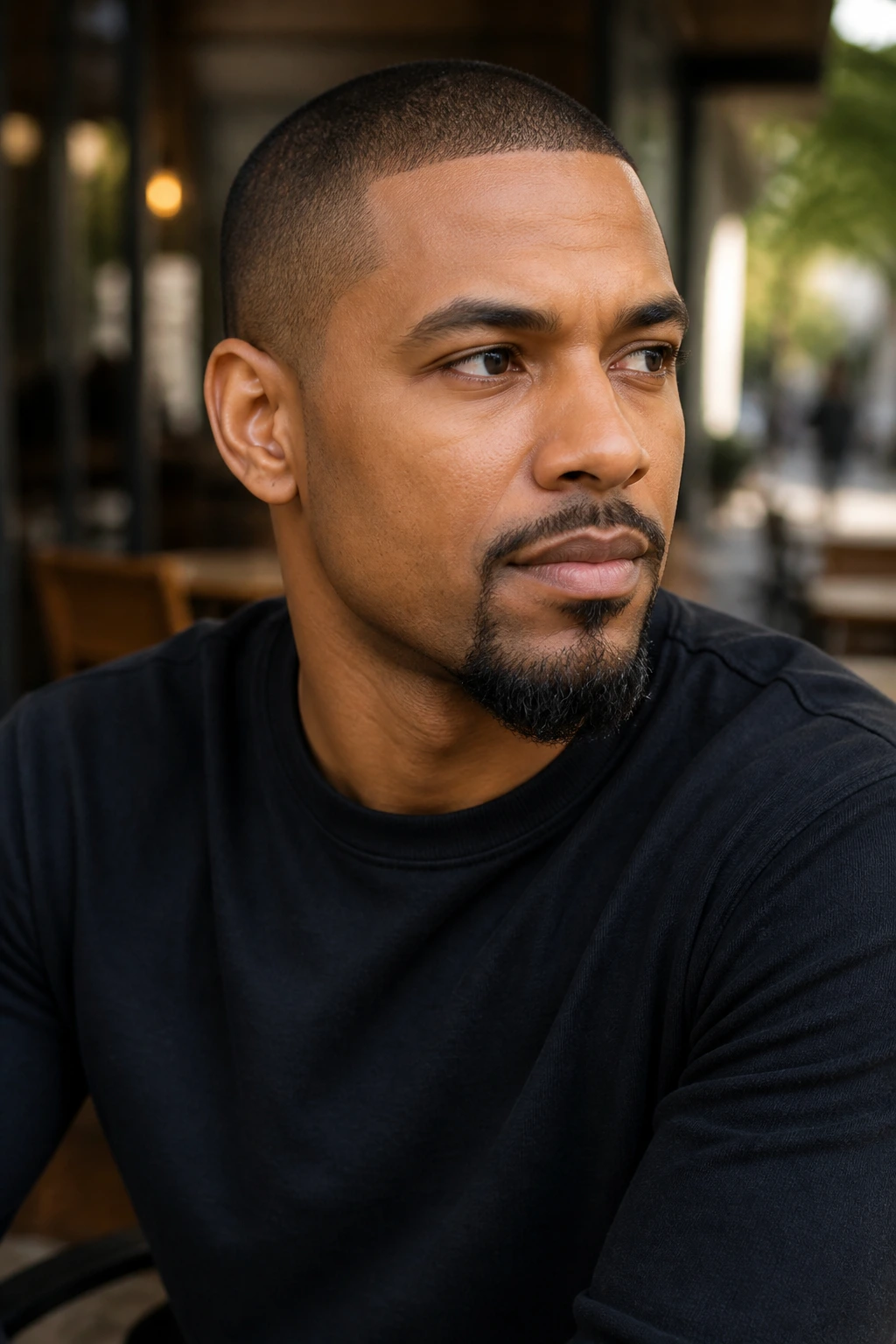
A goatee gives a buzz cut a different kind of energy. Instead of widening the lower face with full beard volume, it points the eye toward the chin and mouth. That can work well if the cheeks are patchier or if you want the haircut to feel lighter.
The trick is proportion. Keep the buzz short and even, then let the goatee stay neatly outlined so it doesn’t float on the face. If the goatee is too large, the cut starts to feel disconnected. Short hair, tight edges, one clear focal point.
22. Textured Shadow Buzz
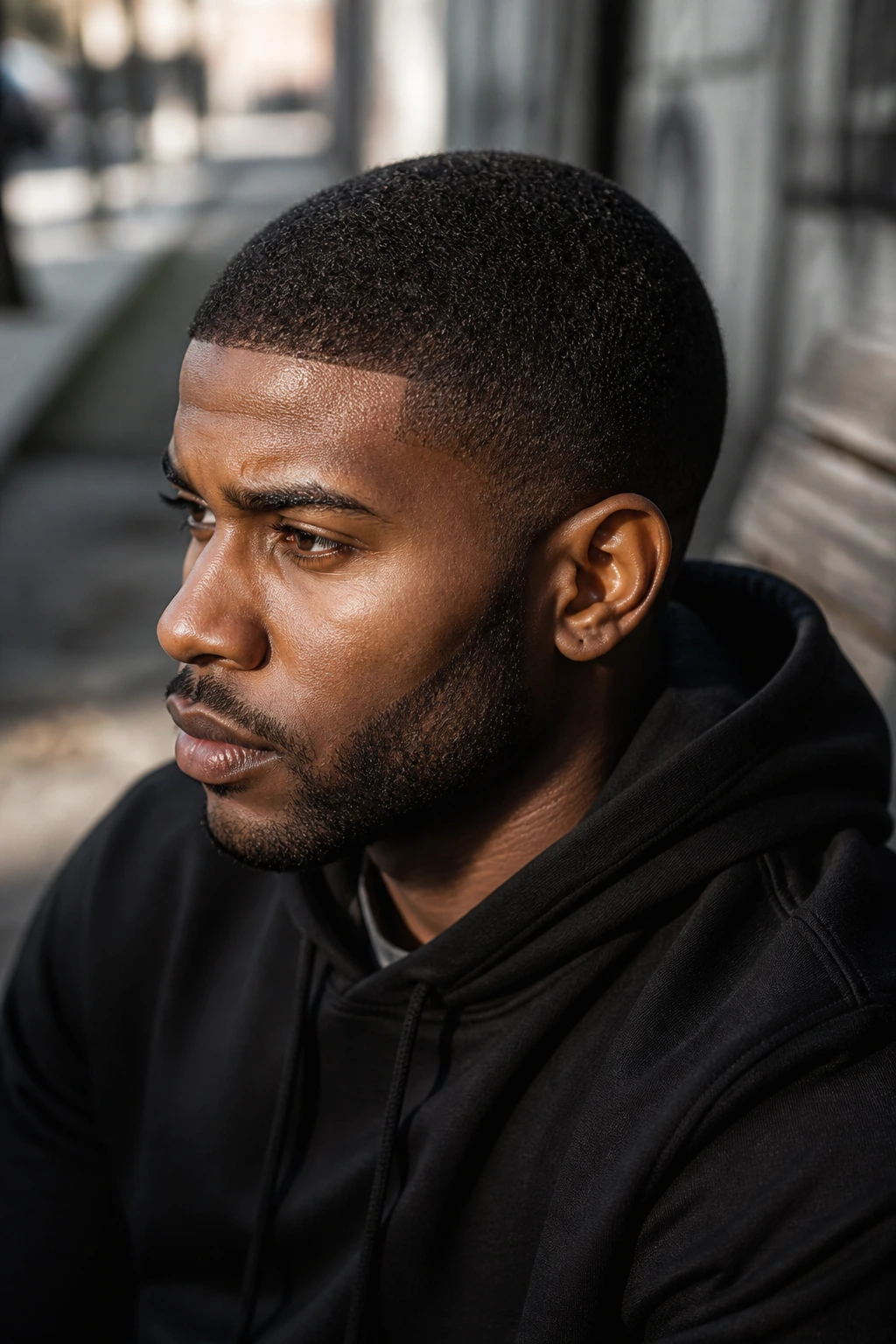
The shadow buzz is a little longer than the shortest buzzes, and that tiny increase gives the hair a soft gray-brown shadow effect. On Black hair, it looks especially good because the texture reads as depth instead of fuzz. This is the cut for men who want close-cropped hair but don’t want the scalp to dominate the look.
A matte finish helps here. Too much shine makes the top look patchy under strong light, while a light moisturizer keeps the hair healthy without turning it greasy. If your hair grows in tight and even, this is one of the most forgiving cuts you can wear.
23. Short Wave Buzz
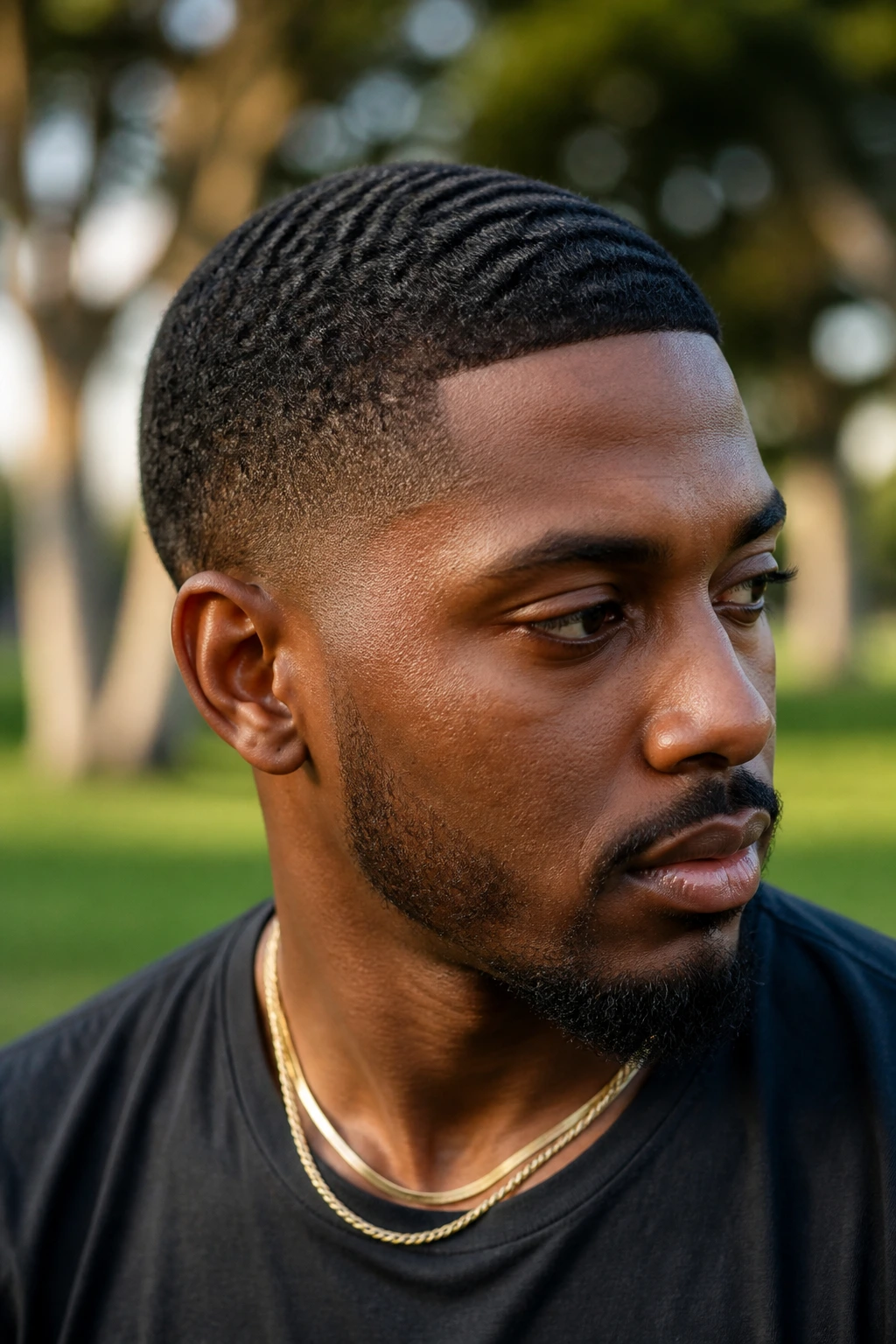
Can you keep a wave-minded buzz cut? Yes, if you keep the top just long enough to catch direction, usually around a #1.5 or a careful #2. This is not a full 360-wave setup, and it should not pretend to be. It’s more like a short crop that still lets you brush and compress the pattern a little.
If you’re already serious about waves, ask your barber to leave enough length on top to respect your brush routine. A durag at night still matters. So does moisture. If the hair is cut too low, you lose the pattern, and no amount of brushing will bring it back.
24. Sponge-Brush Buzz
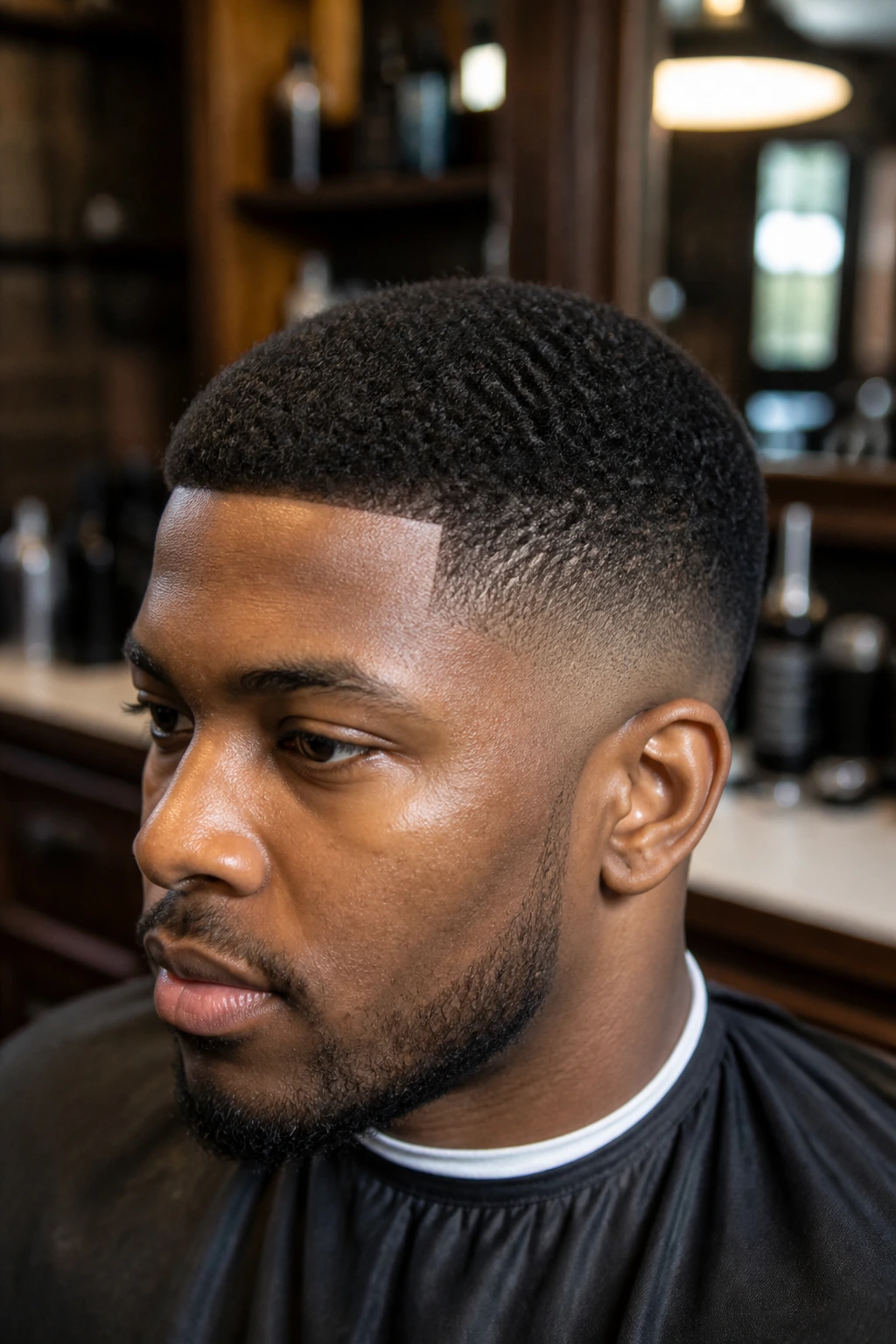
The sponge-brush buzz keeps enough texture on top for the hair to show a bit of shape when you use a curl sponge lightly. On tightly coiled hair, that can give the cut a rougher, more lived-in surface without turning into a full twist style. It’s a clean buzz, but with a little texture story left in it.
This works best when the top stays slightly longer than the sides. You want the sponge to influence the crown, not fight a skin-close cut. If you like texture more than shine, this is a good place to live.
25. Hard Part Buzz
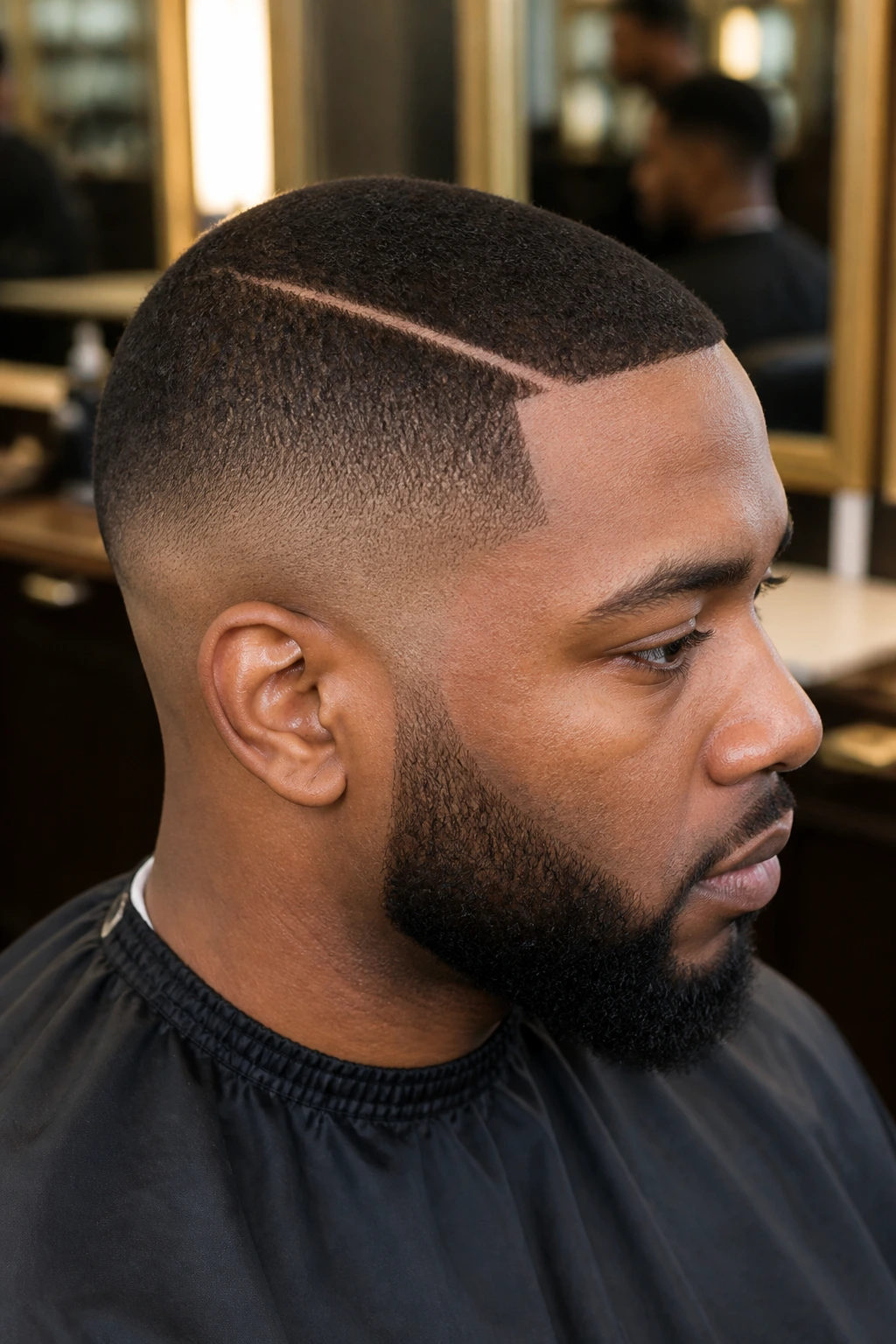
A hard part on a buzz cut is small, but it changes the whole mood. The shaved line gives the haircut a built-in graphic element, which is handy if you want something cleaner than a design but sharper than a plain crop. It looks best when the part line is placed where the head shape naturally supports it.
What makes it work
- Keep the top even, usually around a #1.5 or #2.
- Place the hard part where the barber can keep it visible without overcutting.
- Match it with a tidy beard edge or clean cheek line.
- Avoid extra lines if you want the part to stay the main feature.
Too many details can crowd the look. One clean line is enough.
26. Double-Strip Buzz
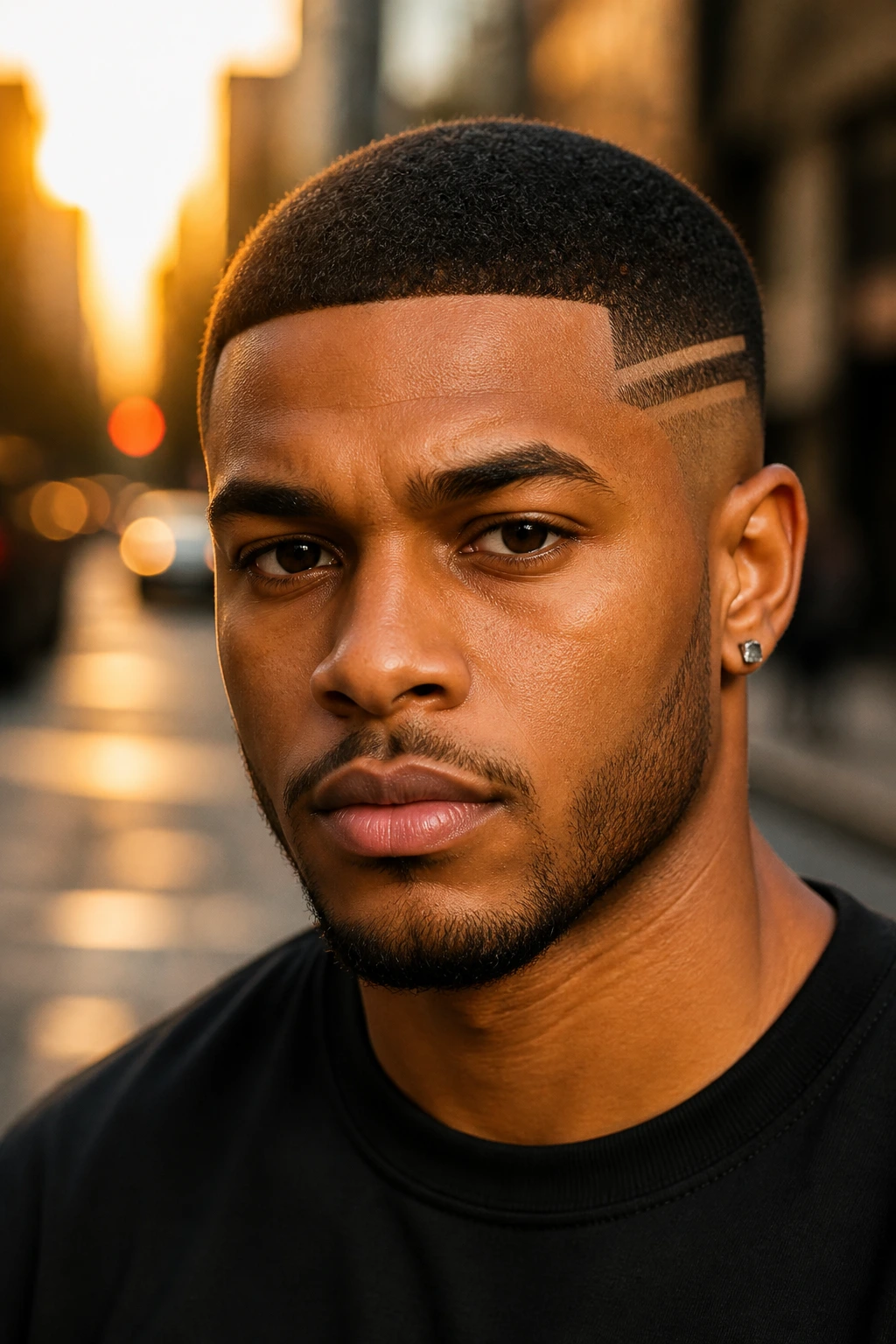
Two shaved lines on a buzz cut give the haircut a little swagger without going into full design territory. The lines can sit above the ear, across one side, or through a fade, depending on how bold you want it. On Black hair, the contrast makes those lines pop immediately.
This style is best when the rest of the cut stays simple. No loud color, no complicated beard pattern, no messy neckline. The lines should be the statement, not a layer on top of chaos. Keep the top short and even, and let the stripes do the talking.
27. Razor-Design Buzz
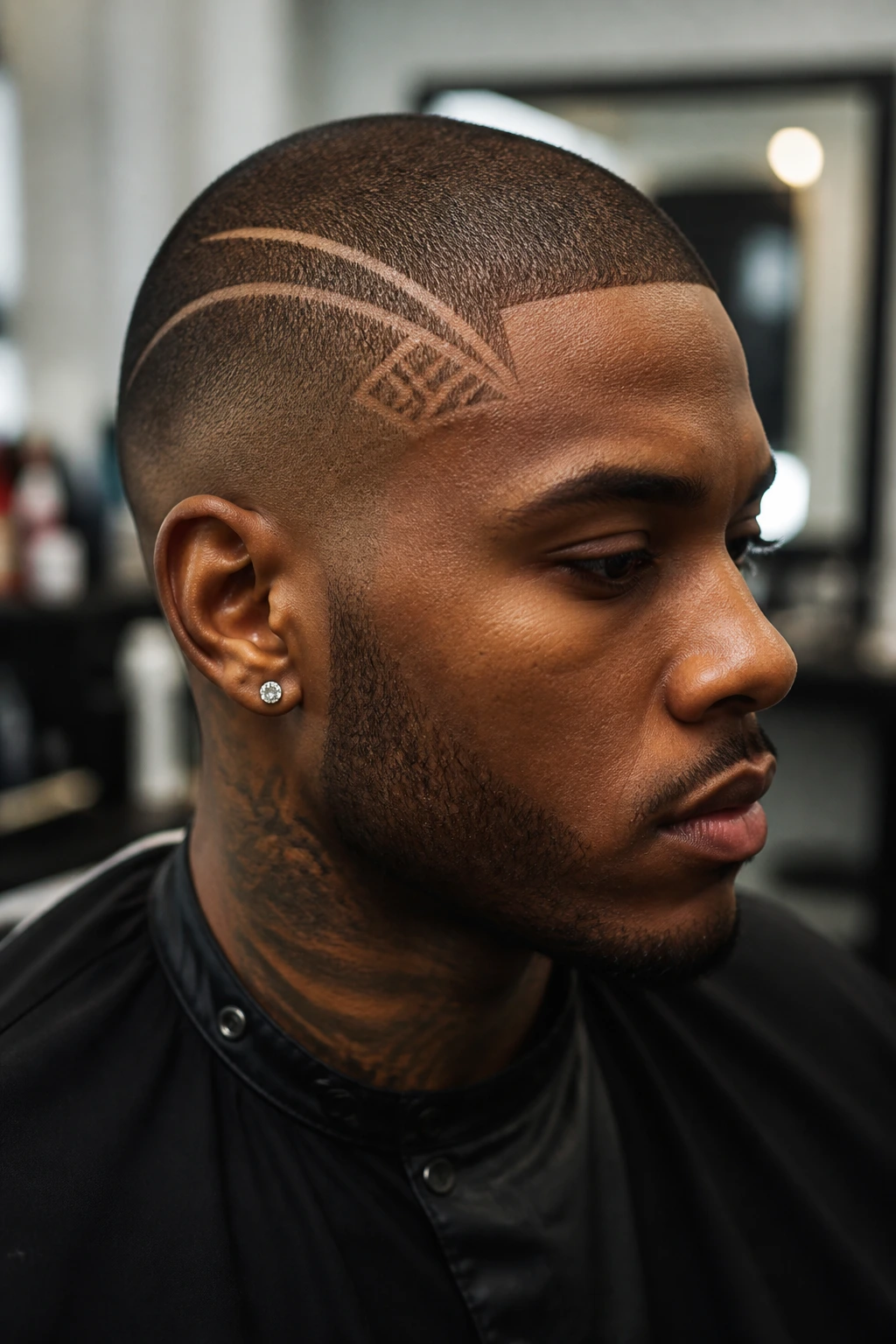
A razor design buzz is for the guy who wants the haircut to say something on purpose. Curves, slashes, lightning, a small geometric cut — all of it works best on a clean, short base. The design should fit the head shape, not fight it. That’s where barbers earn their money.
This is one of those styles that looks best fresh. The design starts to blur as the hair grows, so if you love it, be ready for touch-ups every couple of weeks. Keep the rest of the haircut very controlled. A design on top of a sloppy fade is just noise.
28. Blonde Buzz
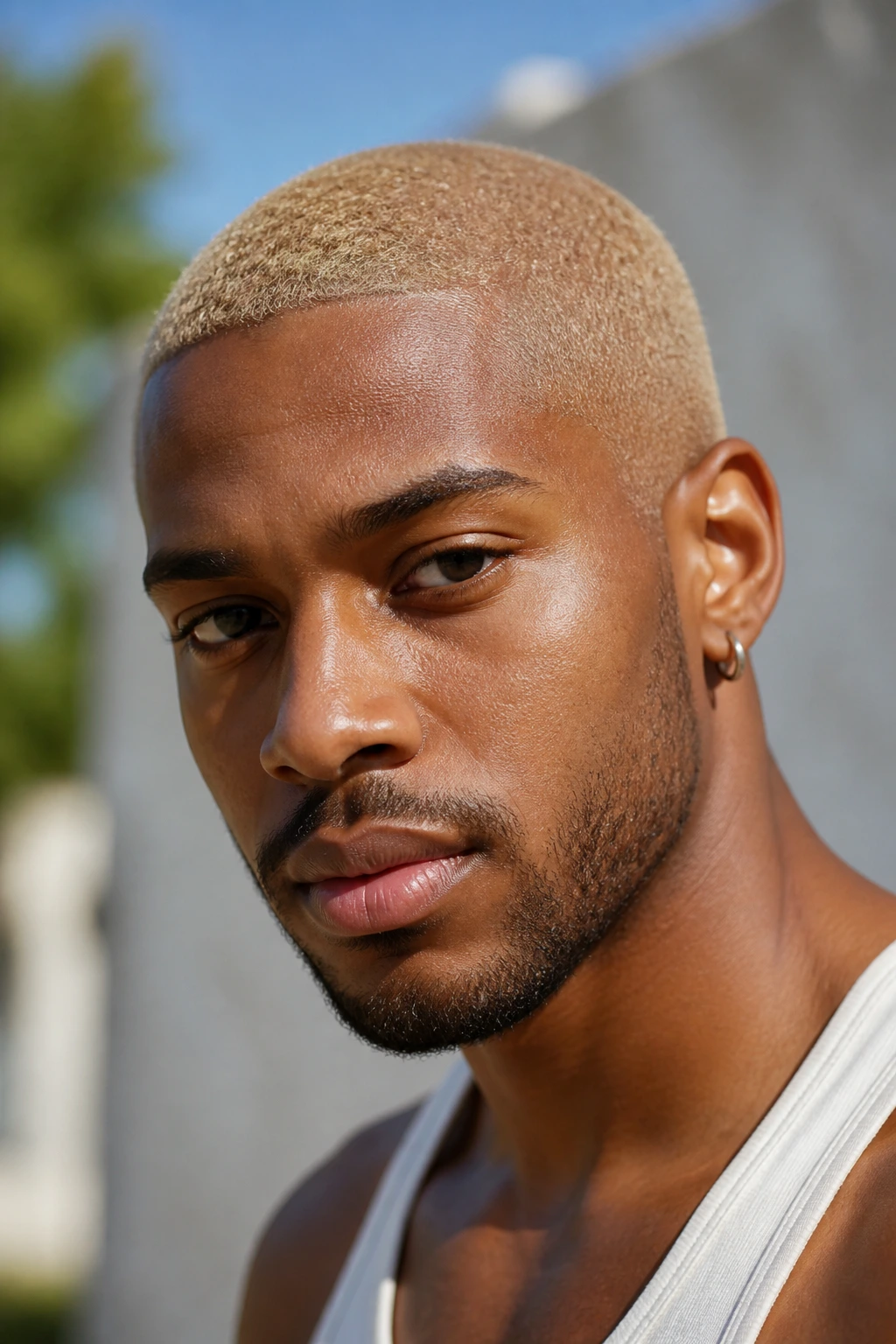
Bleaching a buzz cut blonde or honey-gold changes the whole texture story. Short hair takes color well because the cut surface is even, and the color can make the coils look more visible under light. It’s a strong choice, not a shy one.
If you go this route, keep the scalp in mind. Bleach can dry the skin fast, and short hair doesn’t hide irritation. Use a gentle shampoo, condition the hair, and do not leave the color work to guesswork. A blonde buzz looks sharp when the tone is even and the scalp stays calm.
29. Salt-and-Pepper Buzz
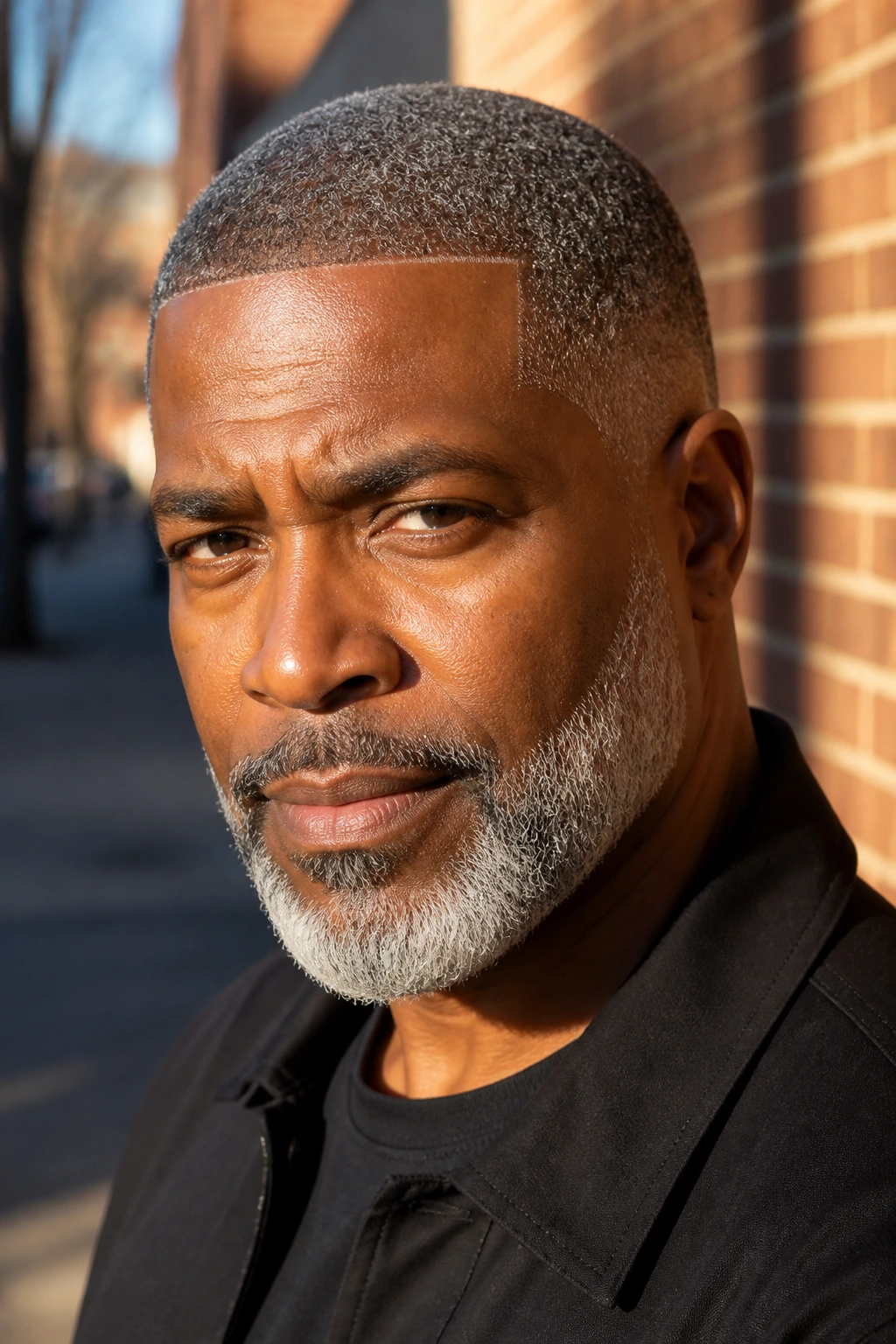
Gray hair under a buzz cut looks clean, not old, when the edges are cared for. In fact, the short length often makes the salt-and-pepper mix look richer because the dark and silver strands sit together in a tight field. It’s one of the easiest cuts to wear if you’ve started graying and want to keep it neat.
The haircut benefits from a precise lineup and a tidy beard if you have one. A messy edge can make the gray look accidental; a controlled edge makes it look intentional. Keep the top even and let the color do what it already wants to do.
30. Platinum Buzz
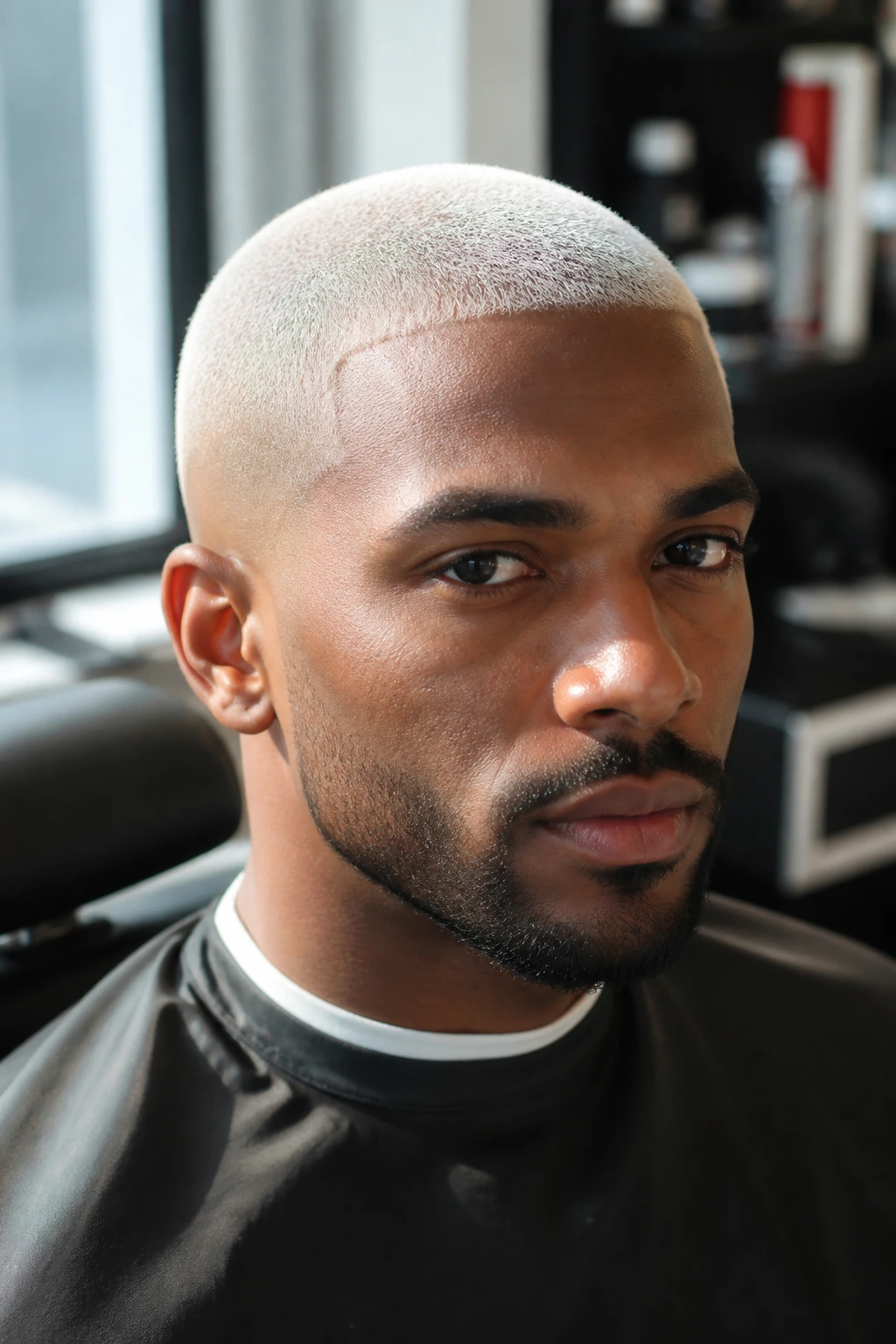
Platinum is the loud version of the dyed buzz cut. It pushes the contrast high and makes the whole head read as a single bright shape. It can look very sharp on Black men when the fade is clean and the eyebrows, beard, and scalp care are kept in check.
The downside is upkeep. Platinum hair wants moisture, toner, and a barber who knows how to keep the fade from looking washed out. If you’re going this light, the haircut should stay simple. The color is already doing enough work.
31. Receding Hairline Buzz
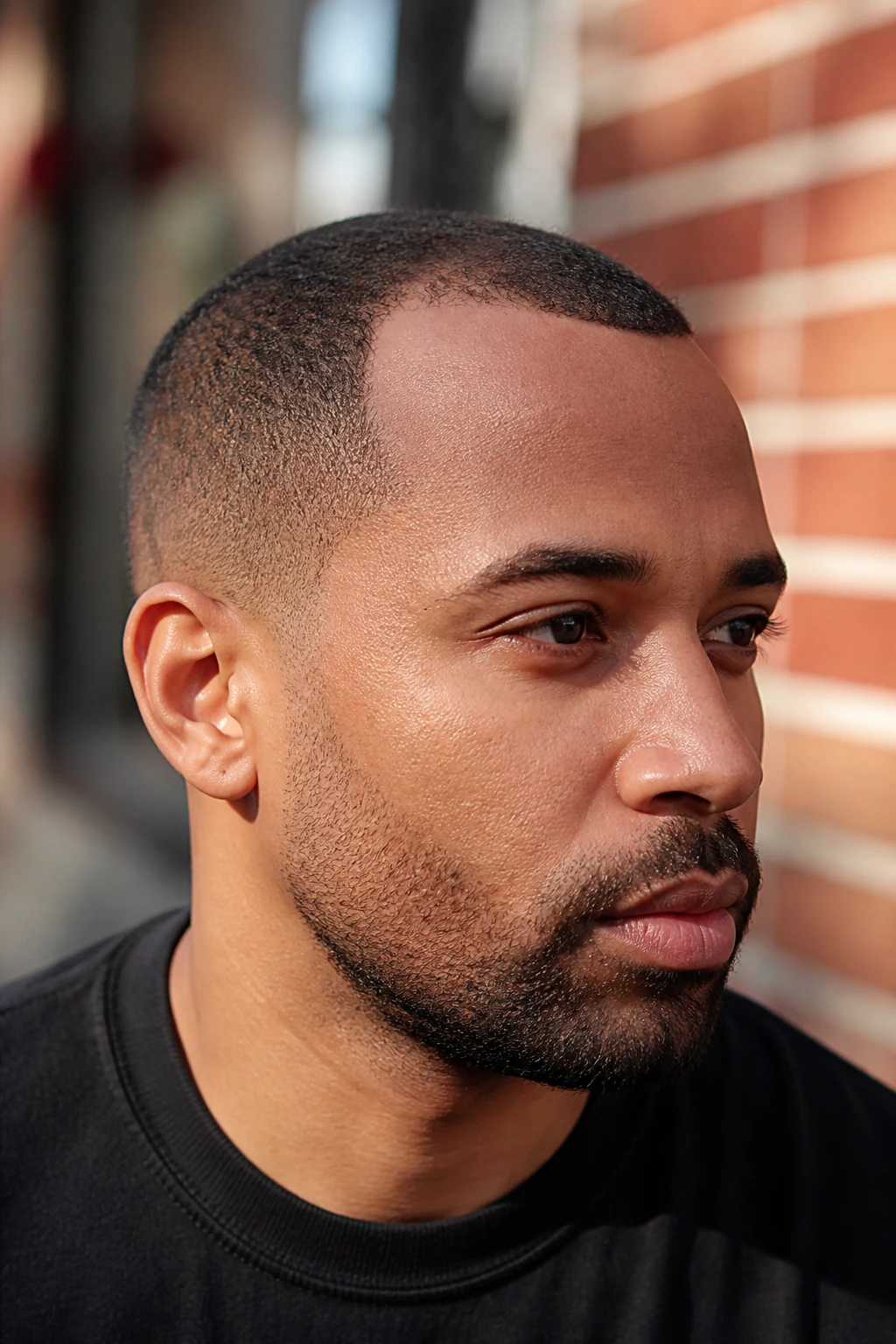
A receding hairline buzz works when the cut respects the front instead of fighting it. Keep the top short but not razor-short, and let the barber round the corners a little so the hairline follows the actual growth. That softens the temples without drawing a spotlight to them.
The shape trick
A #1.5 or #2 often works better here than going too low. It keeps the front from disappearing completely and gives the barber more room to build a believable outline. If you also wear a beard, keep the sideburn transition smooth so the face doesn’t split into unrelated parts.
32. Crown-Softening Buzz
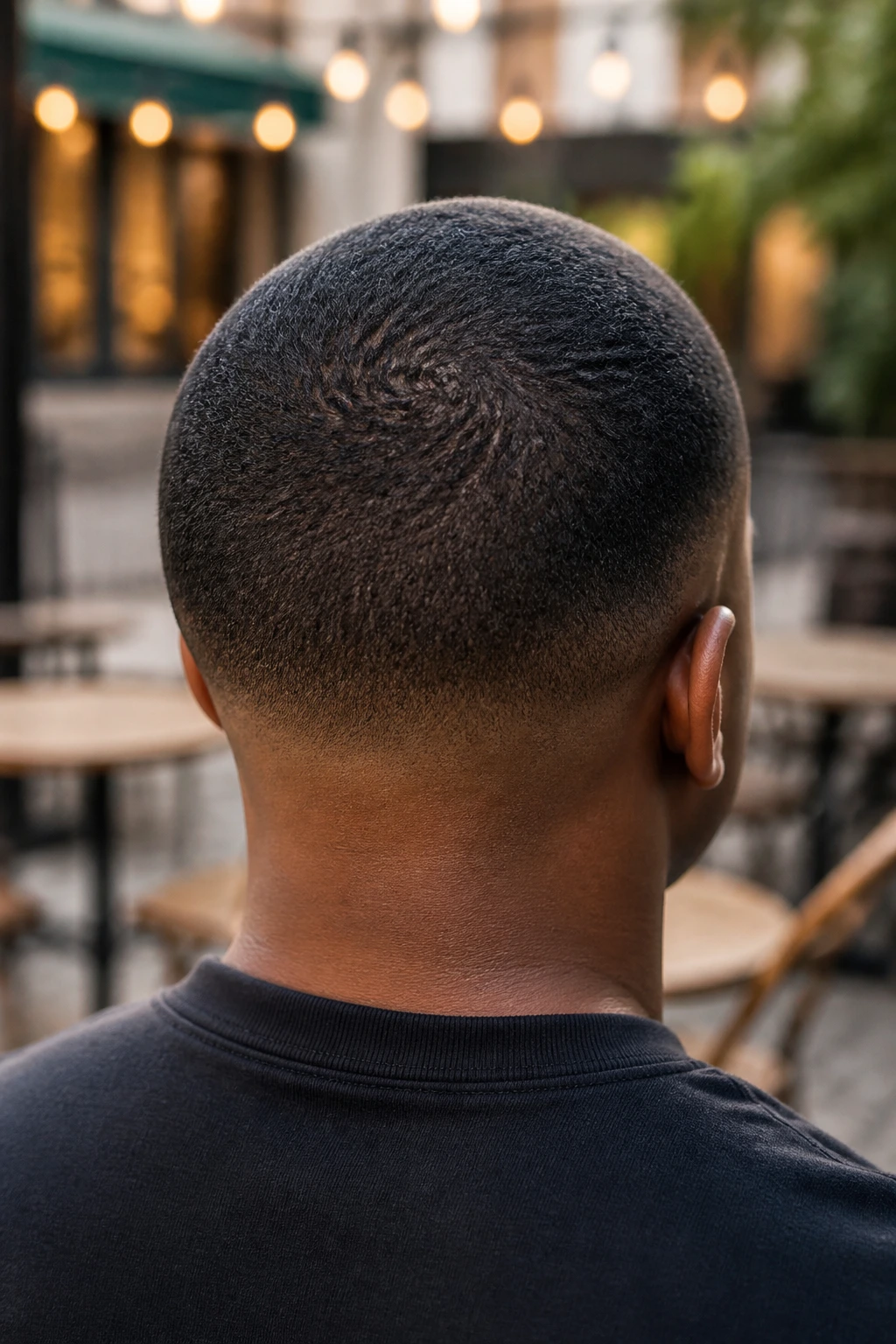
The crown swirl can be a tricky thing. Cut too low, and it shows like a thumbprint. Leave a little length — usually around a #2 or #2.5 — and the swirl becomes less obvious, more like texture than a hole in the top. That’s why this style matters.
It’s a good choice if you notice the back of your head more than the front in mirrors. Ask the barber to watch the crown carefully and avoid overcutting that zone. A softer top can make the whole buzz cut look fuller.
33. Low-Profile Office Buzz

The low-profile office buzz is calm. No shaved design, no loud fade, no harsh contrast. Just a clean short cut with a neat neckline and a controlled edge. It’s the kind of buzz that works with a button-down shirt, a hoodie, or a suit jacket without changing its personality.
What keeps this style sharp is restraint. Let the fade stay low or just taper the perimeter, and keep the lineup natural rather than severe. If you want a cut that stays professional while still looking modern, this is the quiet winner.
34. Military Regulation Buzz
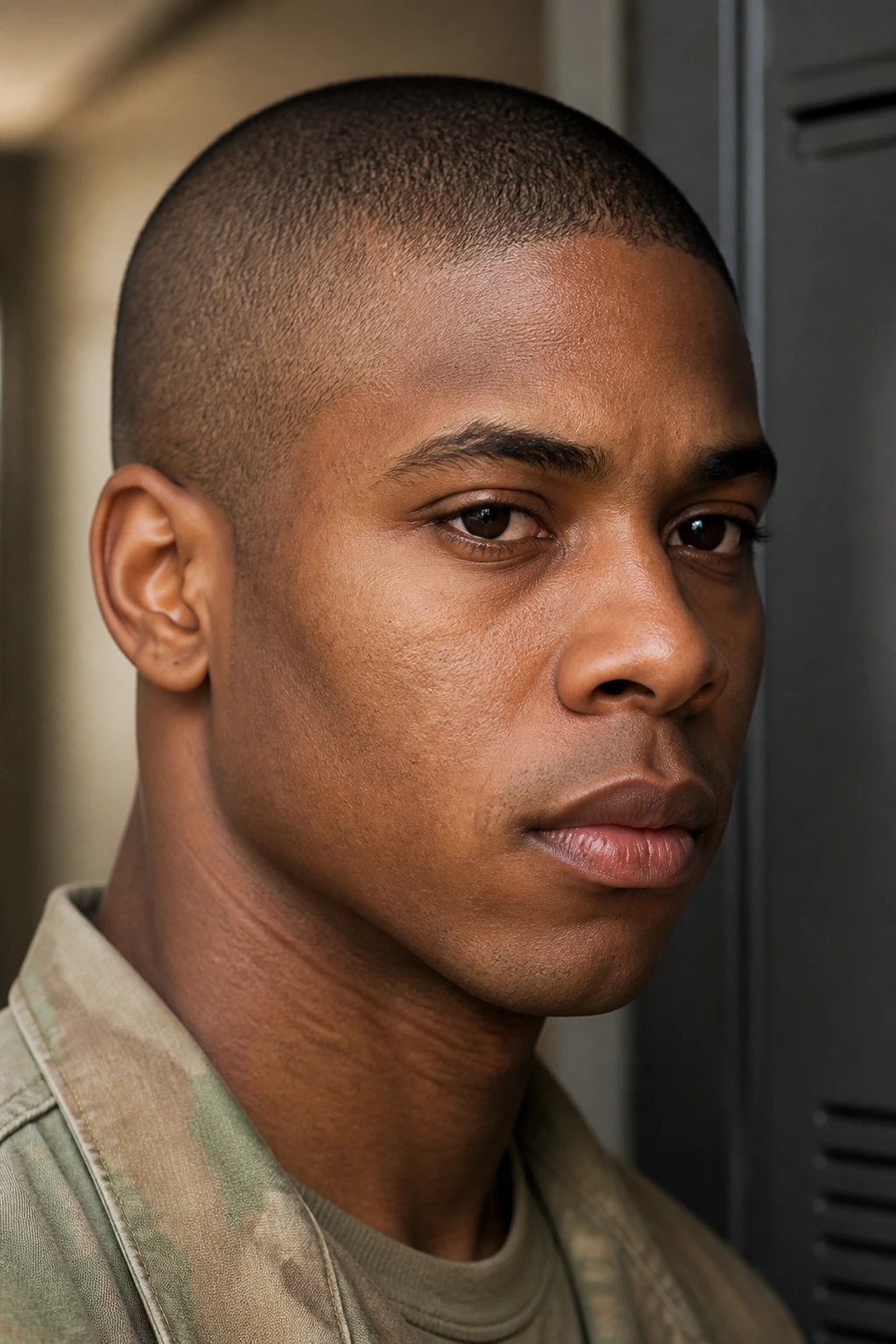
The military regulation buzz takes the discipline of the classic buzz and strips out the decoration. The result is all shape, no ornament. On Black hair, that can look extremely clean when the guard length is even and the neck is lined up carefully.
Keep it strict
- Uniform length on top.
- Tight sides with no bulky transition.
- Clean neckline and sideburns.
- No stray design lines or uneven patches.
This style is best if you like order. It doesn’t try to flatter with tricks. It just sits right.
35. Longer Shadow Buzz
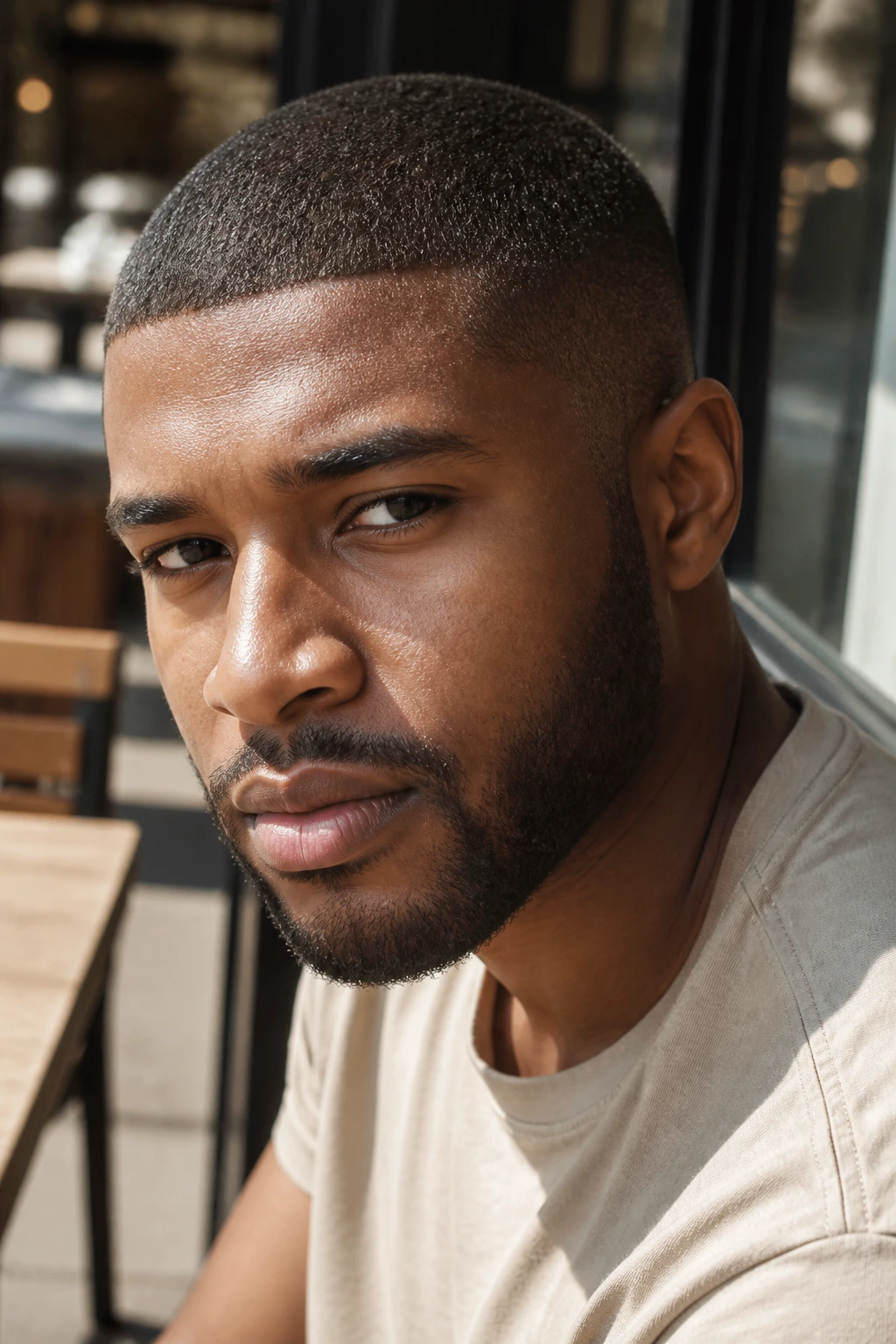
A longer shadow buzz — think #2.5 or #3 — is the cut I recommend to men who want the buzz look without the near-skin exposure. It keeps enough length to soften the scalp and enough tightness to stay neat. On coarse hair, the result is a dense, even shadow that wears well.
This is also a smart first buzz cut if you’ve never gone very short. You can always go shorter next time. Going too low too fast is where a lot of guys get unhappy, and this length avoids that problem.
36. Tapered Sideburn Buzz
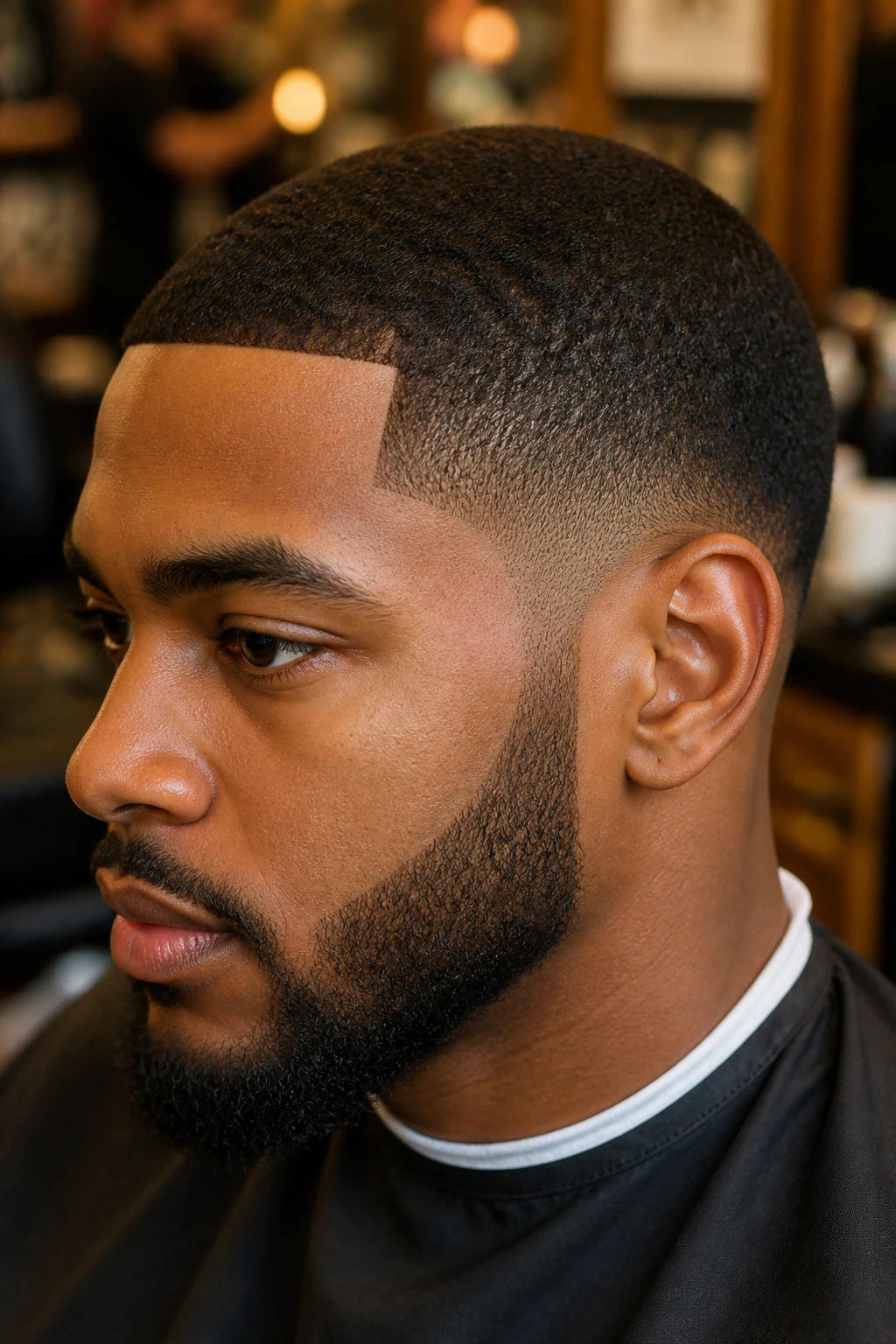
Tapered sideburns make a buzz cut look finished from the front and the profile. The cut flows from the temple into the beard or cheek area with a gentler line, which prevents that chopped-off look that short hair can sometimes have. It’s subtle, but it matters.
If your beard is medium length, this style helps the whole face read as one shape. The taper can be low and narrow or a little wider, depending on how much structure you want. Either way, the sideburns should look like they belong there.
37. Thick-Beard Anchor Buzz
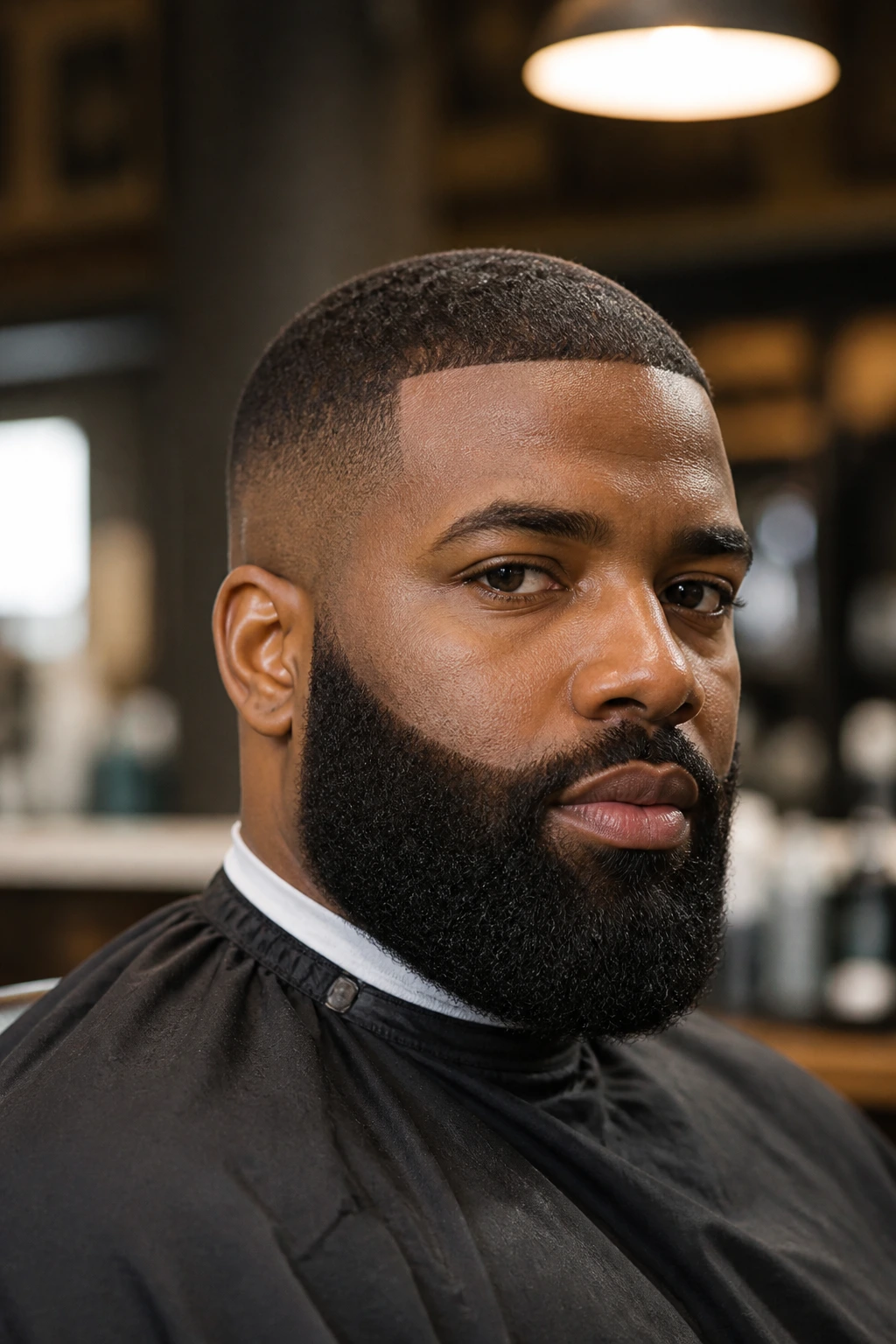
A thick beard anchor buzz lets the beard be the heavyweight. The top stays short and clean, while the beard carries the contrast and gives the face depth. This is one of my favorites for men with strong growth on the chin and jawline, because it makes the buzz cut feel grounded.
Best pairing
Keep the top simple, often around a #1 or #1.5, and let the beard stay full but shaped. Don’t let the cheek line drift too high or the neck too low. When the beard is huge and the top is tiny, the face needs balance, not extra volume in random places.
38. Grown-Out Buzz
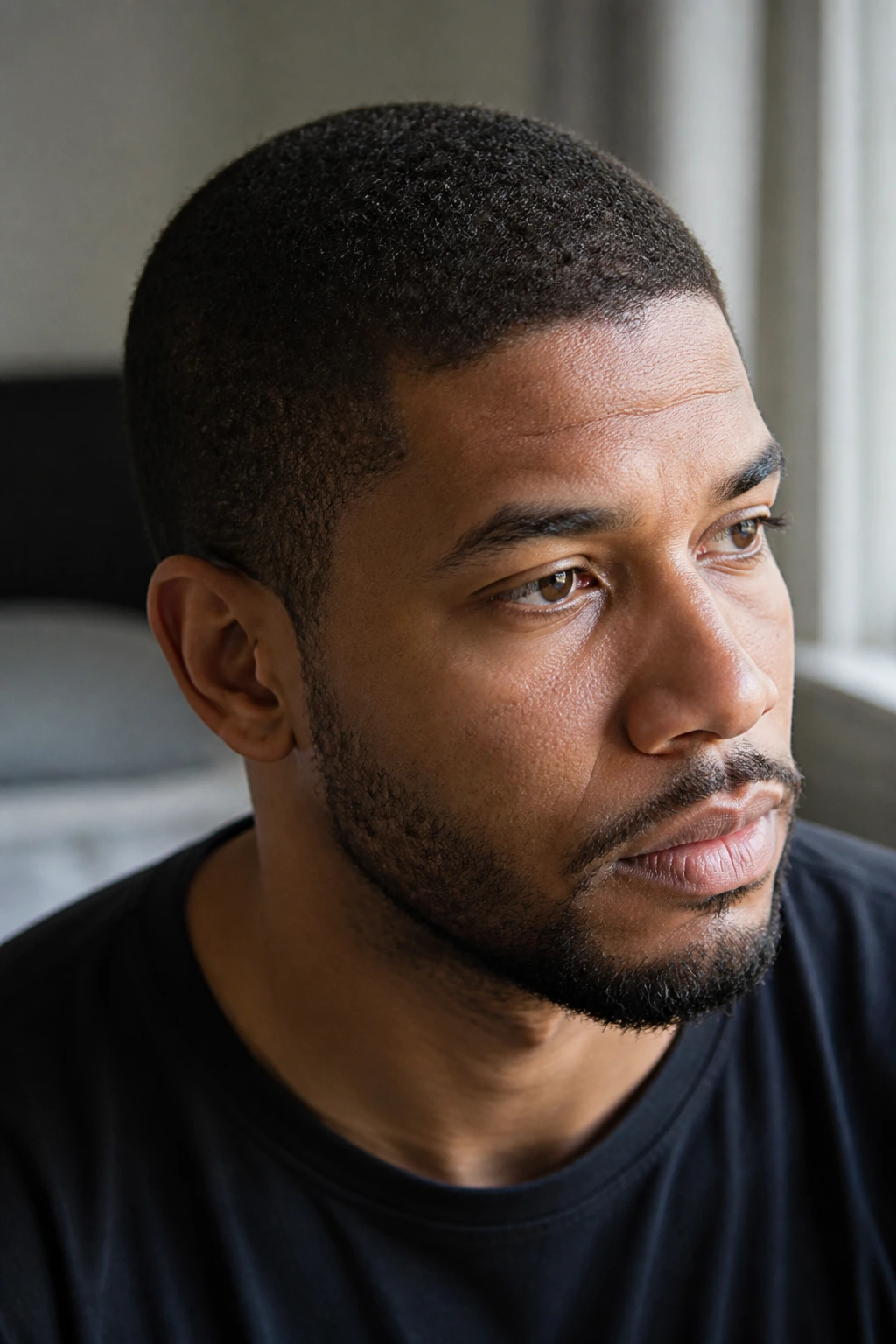
A grown-out buzz is the version you wear a week or two after the fresh cut, when the edges have relaxed but the shape is still there. Some guys try to fight this stage. I wouldn’t. If the neckline is still clean and the beard is handled, the grown-out buzz has a relaxed, easy look that suits a lot of Black men better than a cut that’s been pushed too far down.
The trick is knowing when to stop the grow-out. Once the edges blur and the crown starts puffing, it stops reading as intentional. Keep the maintenance close enough that the cut still looks chosen. That’s the sweet spot.
What Makes a Buzz Cut Work So Well on Coily Hair
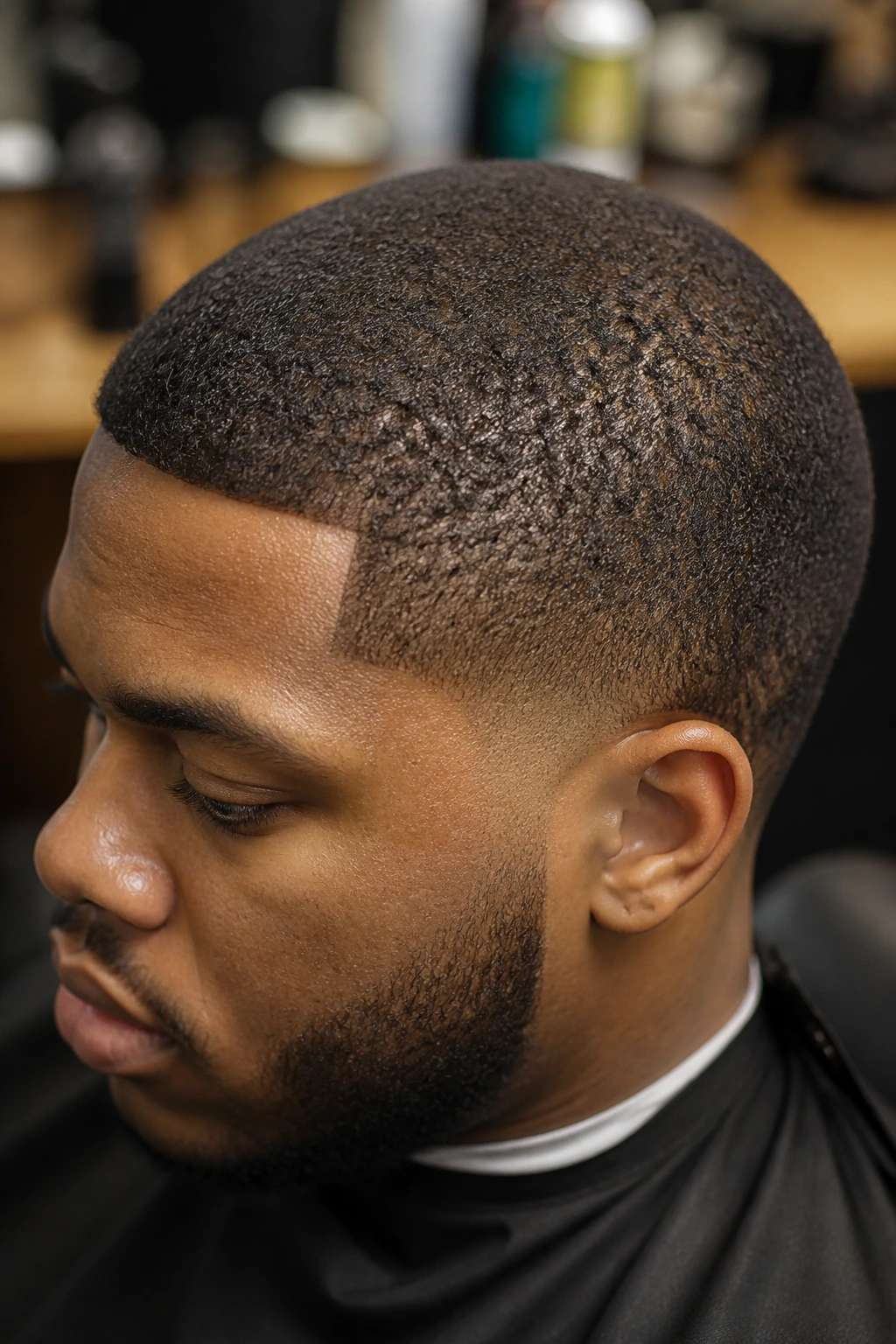
Coily hair changes the whole equation because the texture sits tight and dense even when the hair is short. That density gives a buzz cut a shadowed, velvety look that straight hair doesn’t quite match. The cut can be almost bare and still look full, which is why these styles feel different on Black men than they do elsewhere.
The other big reason is the outline. With short hair, the head shape, hairline, and beard line become part of the haircut. A skilled barber can use a taper or a fade to pull focus where it belongs. A weak lineup, on the other hand, shows immediately. There’s no hiding here, and that honesty is a strength.
Essential Clippers, Guards, and Barber Tools
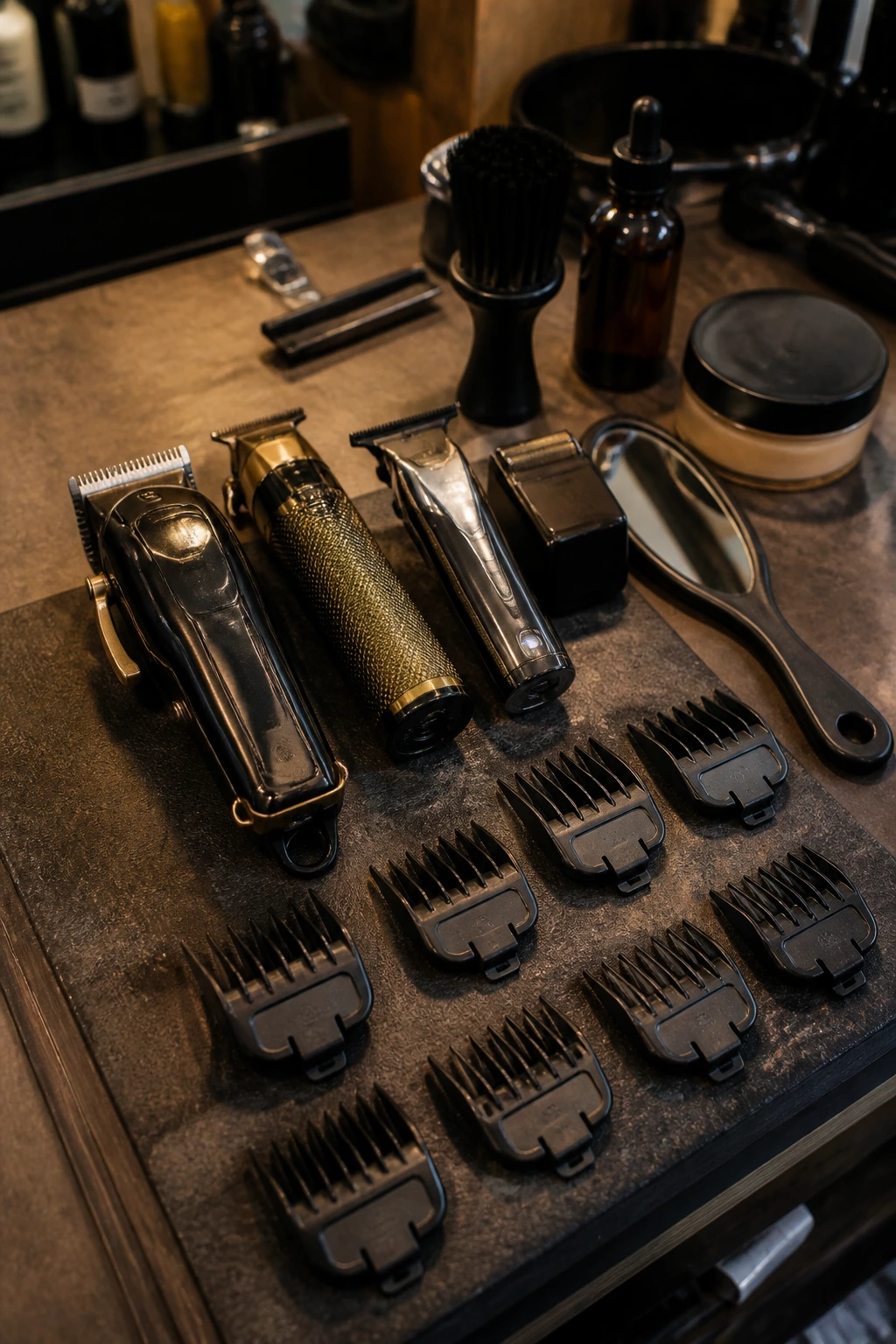
- Cordless clippers with a sharp lever: A good clipper lets the barber blend a #1 into a #2 without leaving steps or dark bars.
- Guard sizes from #0.5 to #3: That range covers most buzz cut styles in this collection, from skin-close to softly textured.
- Detail trimmer or edger: This is what gives you the lineup, temple corners, and clean neckline.
- Foil shaver, optional: Useful for true skin fades, but not necessary if you prefer a taper or low fade.
- Soft wave brush: Handy for those keeping texture or a short wave pattern on the top.
- Hand mirror: Lets you check the back of the head and the neckline after a cut.
- Clipper oil and disinfectant spray: Dull, dry blades tug hair and irritate the scalp. Oil them often.
- Moisturizing scalp lotion or light balm: Especially helpful when the cut is very short and the scalp is visible.
How to Choose the Right Length, Fade, and Hairline
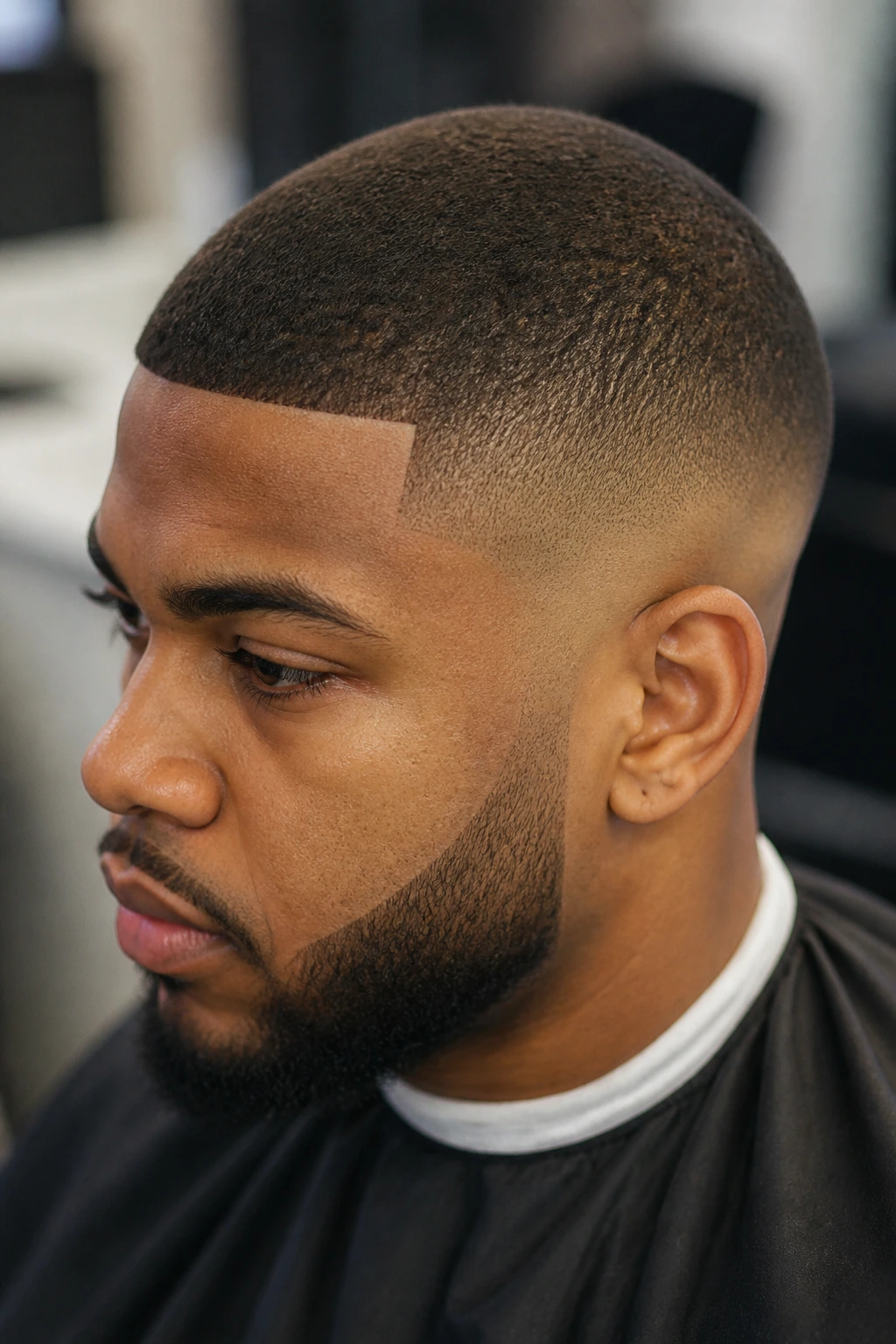
The first choice is length, and length changes the mood more than most guys expect. A #0.5 or no-guard cut puts the scalp front and center. A #1 or #1.5 gives you more shadow and a softer read. A #2 and up starts to look less bare and more textured. If you’re unsure, begin one guard longer than you think you want. That one extra step usually saves regret.
Fade height comes next. Low fades are smoother and easier to live with. Mid fades split the difference and work for most face shapes. High fades create drama fast, which is great if you want contrast and less great if your hairline is uneven or your scalp gets dry. Temple fades and tapers are the safest places to start.
The hairline should follow growth, not fantasy. If the corners are thin, forcing a razor-straight box can make the cut look harsher. Rounded corners, soft edges, and clean temples often age better. A buzz cut is already a statement. You do not need to shout.
How to Wear These Cuts in Real Life
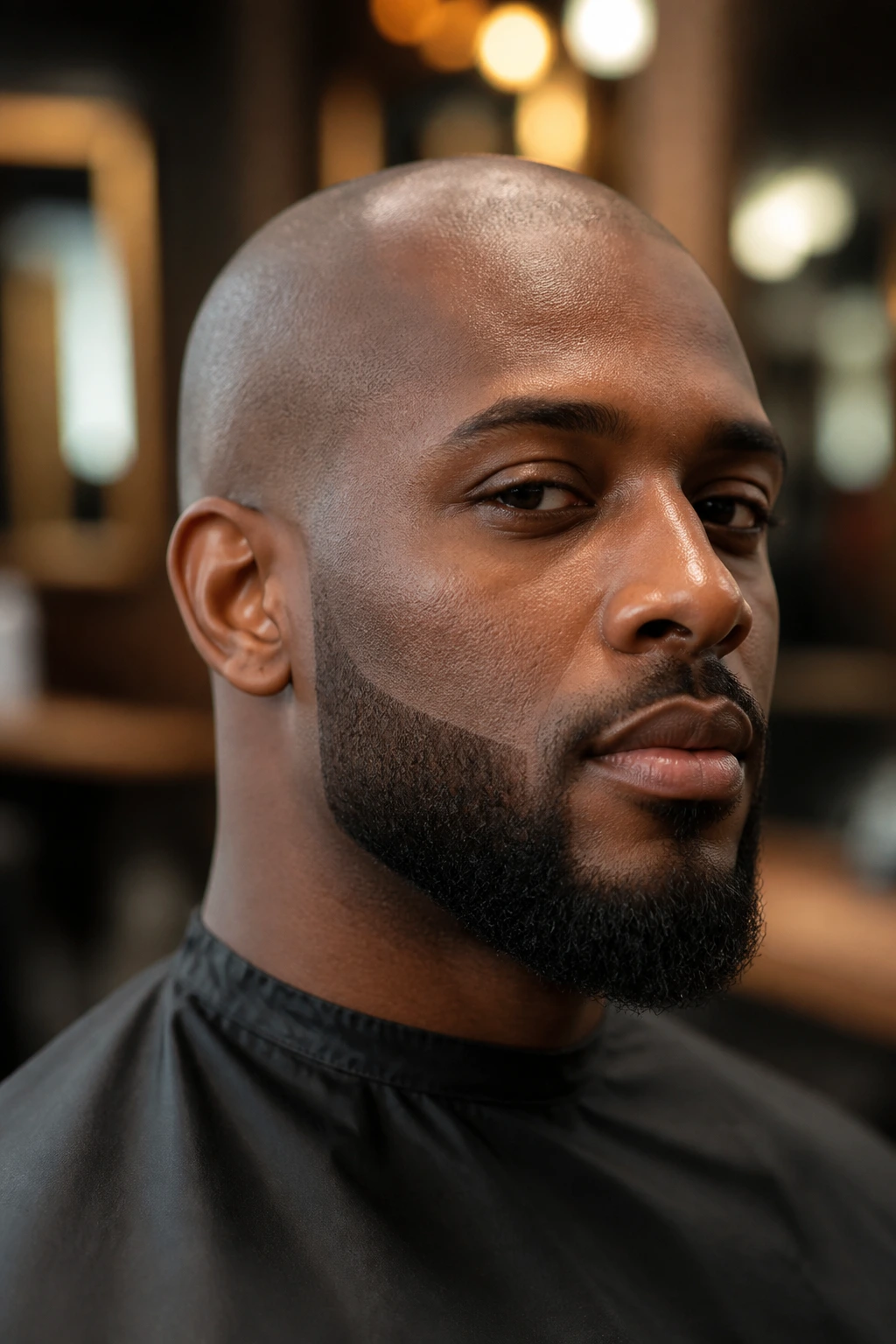
Front View: The lineup is what people notice first, so keep the forehead edge crisp if the rest of the haircut is simple. A sharp front line can make a #1 buzz read much cleaner than a sloppy fade.
Side View: This is where the fade, temple work, and sideburn blend earn their keep. If you wear glasses or small earrings, a temple fade keeps the area from getting crowded.
Beard Pairing: A short buzz with a beard is a strong move, but the beard should be shaped with intention. A 3 mm beard, a short boxed beard, or a full beard with a low cheek line all work better than letting it run wild.
Touch-Up Rhythm: Clean lines usually need attention every 7 to 14 days, depending on how fast your hair grows. If you’re wearing a skin fade, the shape can start to blur sooner.
Styling Extras and Finishers That Change the Read
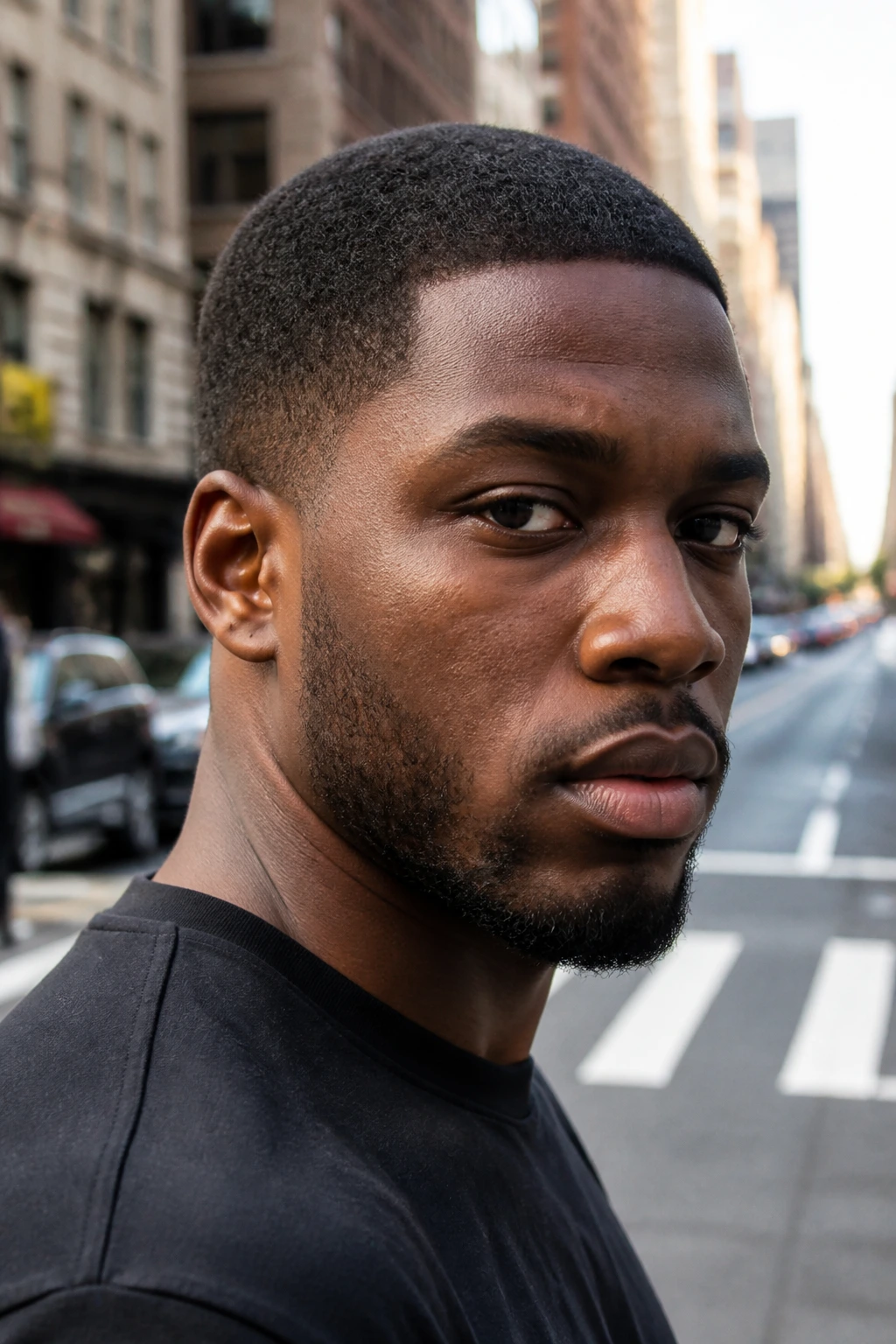
Scalp Finish: Use a small amount of light moisturizer or scalp balm after washing. The scalp should look healthy, not shiny like oil. Too much product makes a close buzz look greasy fast.
Edge Crispness: A quick edge-up around the forehead, temples, and neck can change the haircut’s whole feel. If you do it at home, keep the trimmer flat and work in small passes. Do not try to redraw the hairline every three days.
Beard Balance: If the beard is thick, keep the buzz slightly longer or let the fade connect smoothly. If the beard is short, a sharper lineup on top can carry the look without overwhelming the face.
Color Moves: Blonde and platinum buzz cuts need conditioner and scalp care. A shaved head shows dryness faster, so that bleach work has to be maintained, not ignored.
Low-Effort Upgrade: A taper at the neck and temples can make the simplest buzz look more deliberate than a bare all-over cut with no shape.
Keeping the Cut Sharp Between Barber Visits
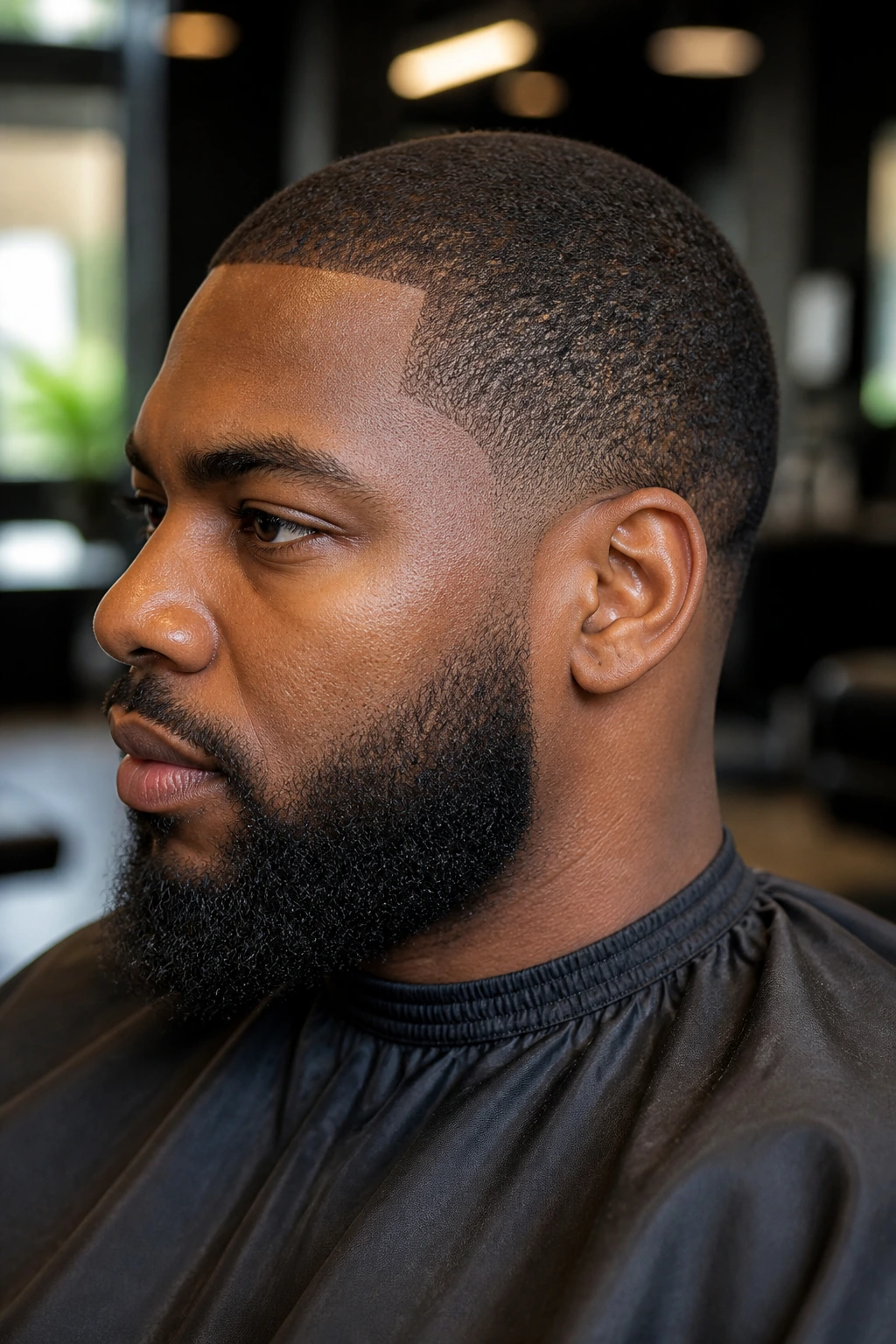
A fresh buzz cut usually looks its cleanest for about a week, maybe a little longer if the length is #2 or above. After that, the neckline starts to blur, the temples lose edge, and the fade begins to fade — which is literally what fades do. If you like crisp lines, plan on a touch-up every 1 to 2 weeks.
For home maintenance, keep the clippers clean after every use. Brush out the blades, spray them with disinfectant, and oil them before they start sounding dry and scratchy. Dull clippers on coily hair tug more than people expect, and tugging leads to bumps. If you shave your neckline at home, work with good light and stop before you chase perfection into a crooked line.
The scalp matters too. Short cuts show dryness, ashiness, and irritation fast. A light moisturizer after washing, plus a gentle shampoo instead of harsh stripping products, keeps the cut looking cared for. If you wear a skin fade or go very short, sunscreen on the scalp is not a luxury. It’s common sense.
Variations and Adaptations to Try
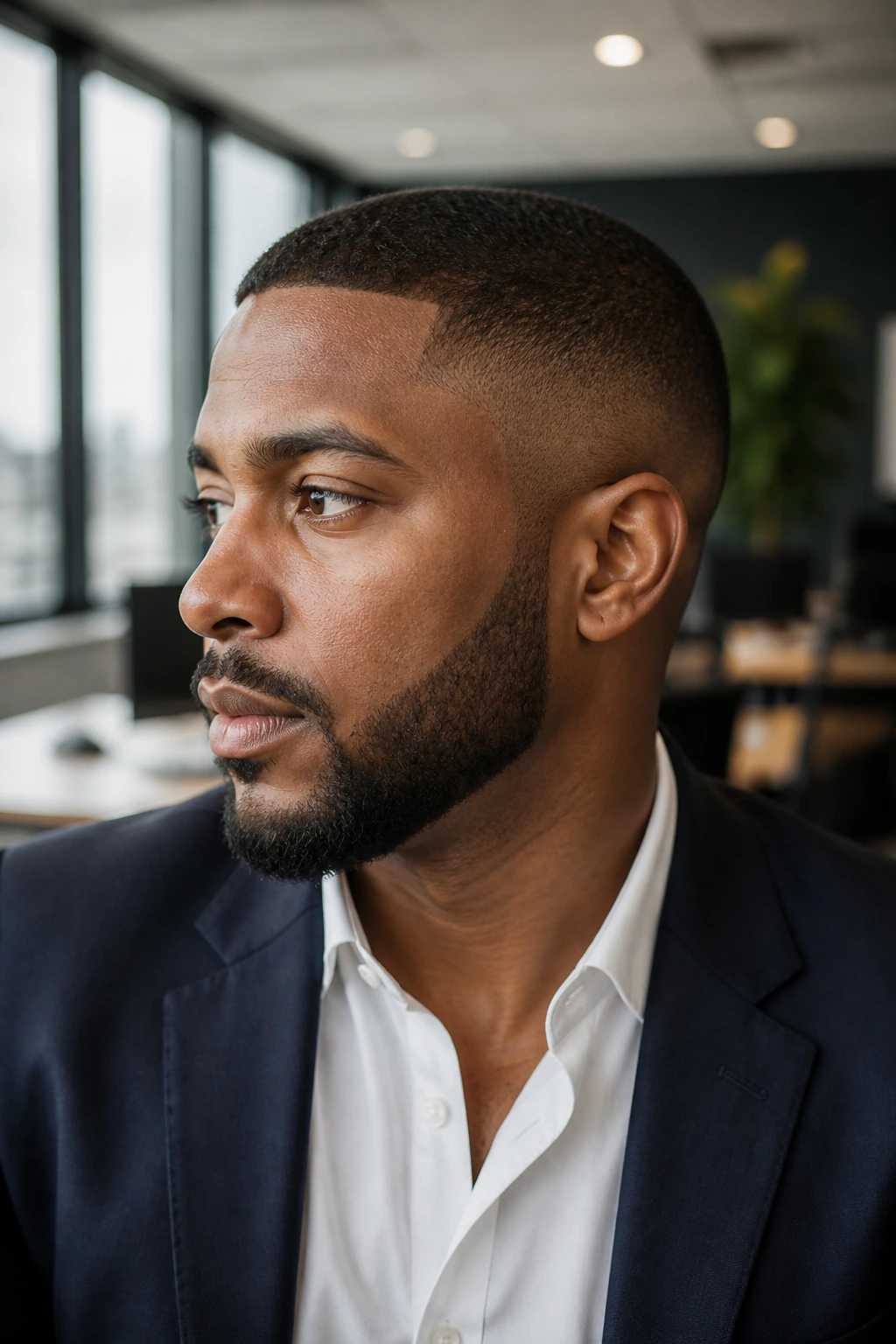
Boardroom Buzz: Keep the top around a #1.5 or #2, add a low taper, and skip all shaved designs. This reads clean in formal settings and grows out without drama.
Temple-Frame Buzz: Ask for a temple fade that connects to a neat beard line. It’s one of the best choices if you want contrast without a harsh skin fade.
Hairline-Friendly Buzz: Round the corners lightly and avoid boxy edges at the temples. This is a good move if the front hairline is maturing or uneven.
Wave-Saver Crop: Leave the top just long enough for a brush routine and wear a durag at night. You’re not trying for full waves here; you’re preserving a little direction and texture.
Color Pop Buzz: Go honey-blonde, copper, or platinum if you want the haircut to stand out on sight. Keep the shape simple so the color stays the focus.
Sensitive-Scalp Buzz: Skip the razor finish and choose a taper or low fade instead of skin. The haircut still looks neat, but the scalp gets a break.
Common Mistakes to Avoid
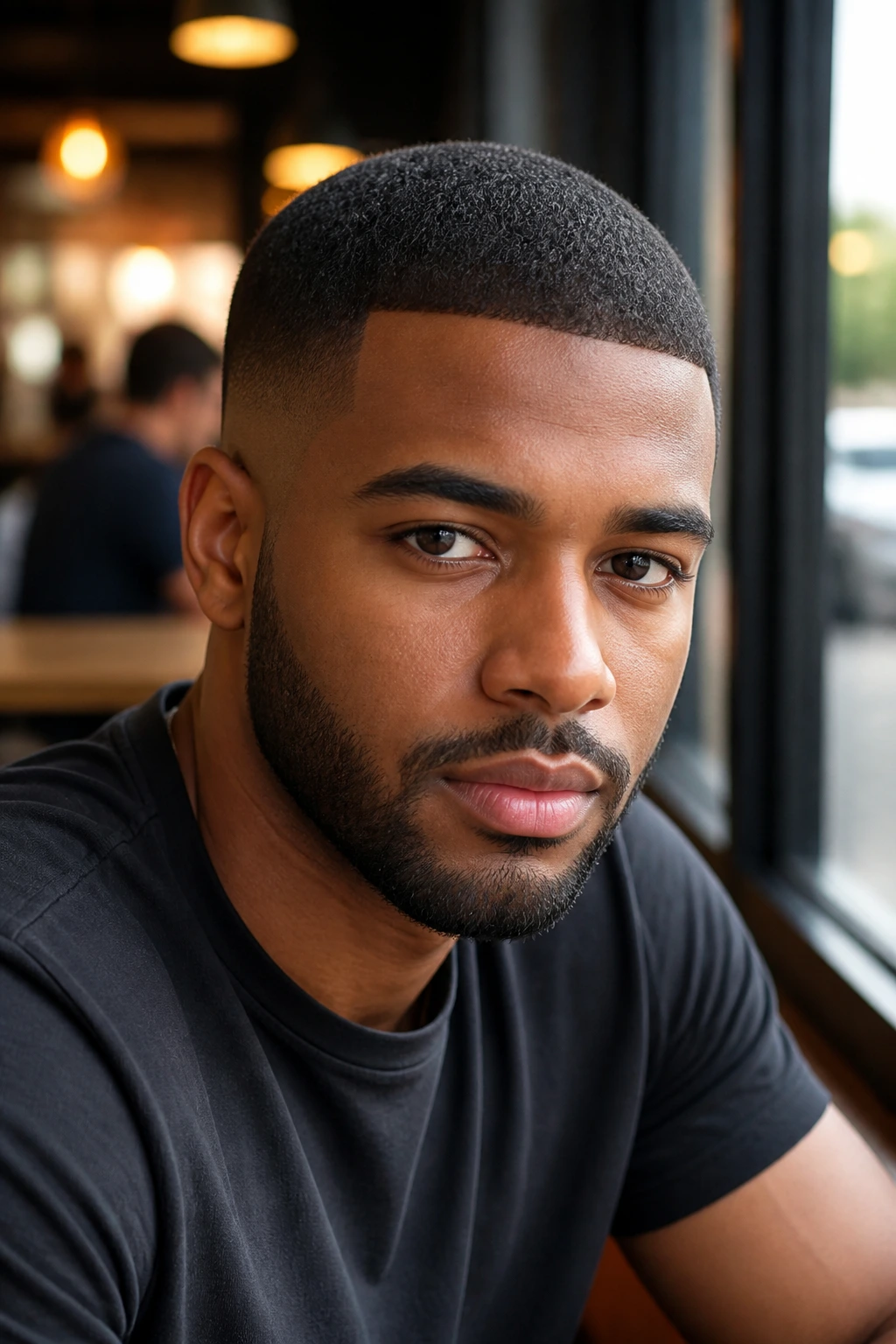
- Going too short on the first cut: A no-guard buzz can feel harsher than expected. Start with a #1 or #1.5 if you’re unsure, then go shorter next time.
- Forcing a hard hairline that doesn’t match growth: If the corners are thin, a boxy lineup can look fake. Rounded edges or a soft front line often look cleaner.
- Letting the beard and haircut fight each other: A huge beard with a near-shaved top can work, but only if the beard is shaped. Otherwise the face looks lopsided.
- Skipping scalp care: Dry skin, flakes, and razor bumps show up fast on short cuts. Moisturize lightly and avoid over-shaving irritated spots.
- Using dull clippers at home: Tugging hair makes the cut rough and can irritate the skin. Oil the blades and change them when they start dragging.
- Letting the neckline grow too low before a touch-up: Once the back gets fuzzy, the whole cut loses its shape. Clean it before it gets there.
Frequently Asked Questions
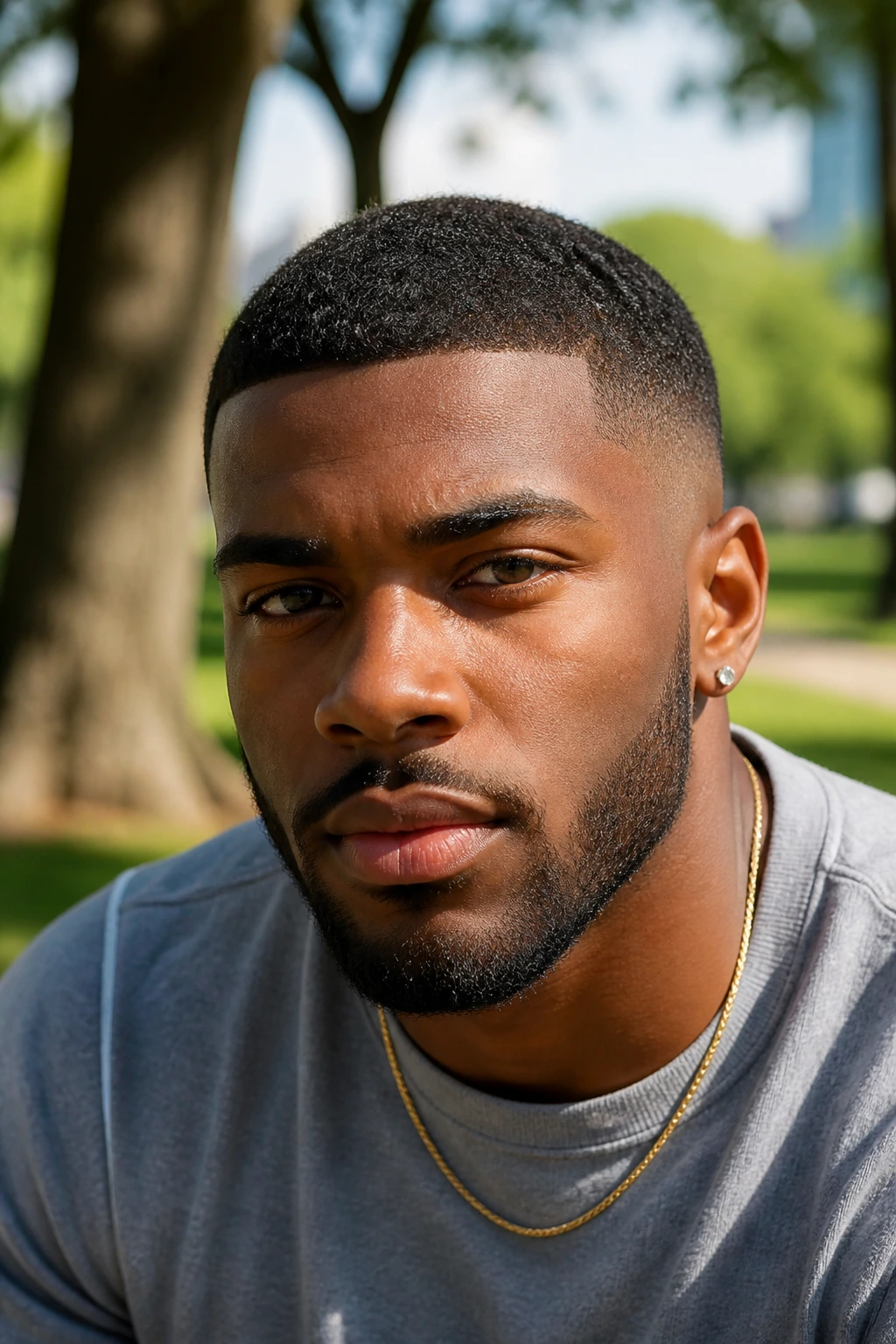
What guard length is best if I’m getting my first buzz cut?
A #1.5 or #2 is usually the safest starting point. It keeps enough texture to soften the scalp and gives you room to go shorter later if you want more contrast.
Can a buzz cut work with a receding hairline?
Yes, and sometimes it works better than longer hair because it removes the fight. A rounded hairline, soft temple fade, or Caesar-style front can make the haircut look intentional instead of exposed.
How often should I get a buzz cut touched up?
If you want the lines crisp, plan on every 1 to 2 weeks. A simple, even buzz with no fade can last longer, but the neckline and sideburns still need attention if you care about shape.
Is a skin fade buzz too harsh for sensitive skin?
It can be. A taper fade or low fade is easier on the scalp because it avoids the razor-close finish on the sides. If bumps or dryness are an issue, start there.
Can I keep waves with a buzz cut?
Only to a point. A very short buzz will erase the pattern, but a longer crop around a #1.5 or #2 can preserve some direction if you keep brushing and wear a durag at night.
Should I pair a buzz cut with a beard?
If your beard grows well, yes. The beard gives the face weight and keeps a very short top from looking too bare. Just keep the cheek and neck lines clean so the transition looks planned.
What’s the difference between a burr cut and a buzz cut?
A burr cut is usually shorter and closer to the scalp, often around a #1 or below. A buzz cut can be that short too, but it also covers the fuller range of short guard lengths, usually up to about #3.
How do I stop my scalp from looking dry after a fresh cut?
Use a small amount of light moisturizer right after washing, not thick grease. If your scalp is exposed, a matte balm or lotion usually looks better than a shiny product that reflects light and shows every patch.
Why the Cleanest Buzz Cuts Hold Their Shape
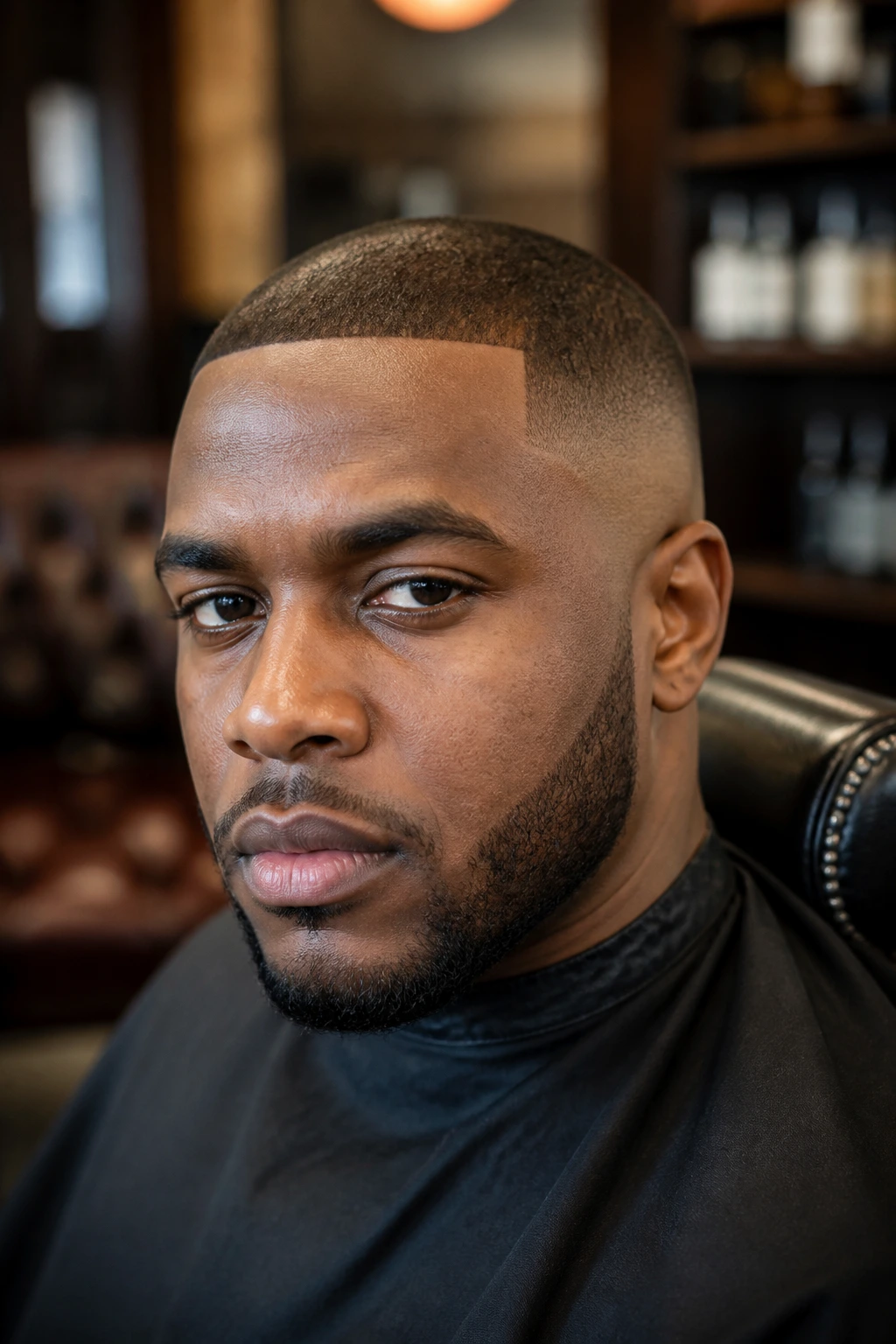
Short hair leaves nowhere to hide, and that is the whole reason it works. When the lineup is right, the fade is even, and the beard is trimmed with the same care as the top, a buzz cut on Black hair can look sharper than longer styles that take twice as much effort. The cut is simple. The judgment calls are not.
Pick the version that matches how much edge you want to maintain, then stick with the rhythm that keeps it clean. A buzz cut only looks “low maintenance” when the maintenance happens on schedule. Miss that part, and the shape disappears fast.
