



Short hair on a bride has a particular kind of nerve. There’s nowhere to hide, and that’s exactly why it can look so deliberate: a clean jawline, a sharp side part, and one well-placed pin can read as more elegant than a curtain of curls ever does.
Bridal hairstyles for short hair work best when they respect the cut instead of fighting it. A chin-length bob wants movement at the ends. A pixie wants lift at the front. Anything with a natural bend can be shaped with the right mousse, a 1-inch iron, a few bobby pins, and a little patience while the hair cools in place.
The mistake I see most often is trying to make short hair behave like long hair. That usually ends in sad, slipping sections and a crown that goes flat by cocktail hour. Short hair needs structure, not quantity. One strong line near the temple, a tucked ear, a soft wave at the cheek, or a clean little twist at the nape can carry the whole look once earrings, veil, and neckline enter the picture.
Why These 17 Looks Earn Their Spot
-
Less Weight on the Style: Short hair gives pins and combs less length to hold, so the finished shape often stays cleaner than a heavy, overstuffed updo.
-
Accessories Actually Matter: A pearl pin, crystal comb, or satin ribbon can change the whole silhouette because there’s less hair competing for attention.
-
Your Cut Still Shows Up: These styles keep the bob, pixie, or lob visible instead of burying it under curls that turn into one big cloud.
-
Touch-Ups Are Simpler: A quick mist, one extra pin, or a smoothing pass with a flat iron can refresh short bridal hair without rebuilding the whole thing.
-
Texture Becomes Part of the Design: Natural bend, wave, and curl don’t need to be erased; they can be the shape.
-
Veils and Earrings Get a Better Stage: Short hair leaves more space around the neckline and ears, which keeps those details from disappearing.
1. Soft Side-Swept Waves
A deep side part does heavy lifting on short hair. It creates a clear line, opens one side of the face, and gives the style a little swing without making it look overworked. On a bob or lob, this is one of those bridal looks that reads polished from the front and still has enough movement to feel soft.
Why it works on short hair
A side-swept wave gives a shorter cut a built-in shape. The hair doesn’t need much length to show off that bend near the cheekbone, and once one side is tucked behind the ear, you’ve got room for an earring that actually gets seen.
The best version starts with a 1-inch curling iron or wand. Curl pieces away from the face, let them cool fully, then brush them out with a boar-bristle brush so the waves merge into one smooth curve instead of looking like separate curls.
Best for
- Chin-length bobs and collarbone-length lobs
- Brides wearing drop earrings or a single statement pin
- Dresses with one-shoulder or sweetheart necklines
Pro tip: Keep the crown smooth and the side part clean. If the root area gets too puffy, the wave loses its line and starts looking accidental.
2. Glossy Finger Waves
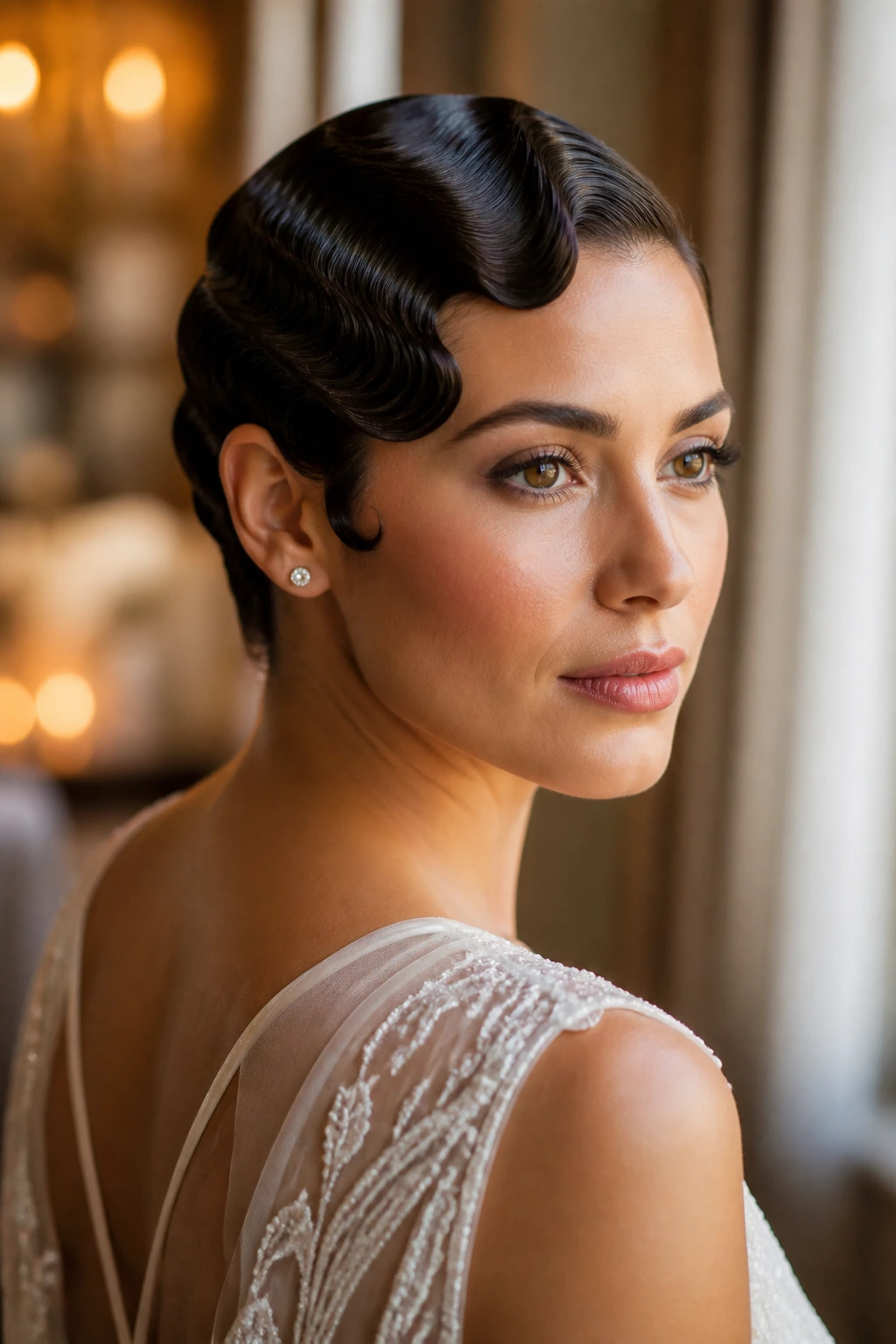
Why do finger waves still show up at weddings? Because they turn a short cut into architecture. The style looks exact, deliberate, and a little dramatic in the best way, especially when the gown has a vintage shape or beaded detail.
This is the one that rewards patience. Start on damp hair with gel worked through in small sections, then shape the waves with a fine comb and your fingers. Duckbill clips help hold each ridge while the hair sets. If you have a pixie or a very short bob, this can look especially sharp around the hairline and temple.
I like finger waves most when the rest of the outfit is clean. Lace sleeves, satin, a simple veil, even a strong lip — all of it works. The hairstyle already has enough presence.
What to watch for
- Too much product turns the wave heavy and sticky.
- Uneven sectioning makes the ridges wobble instead of flowing.
- Rushing the dry time is a bad idea; the shape needs to be fully set before you touch it.
A glossy finish spray at the end is the last pass, not the first. Use it lightly. More shine is not the same as better shine.
3. Jeweled Pixie Sweep
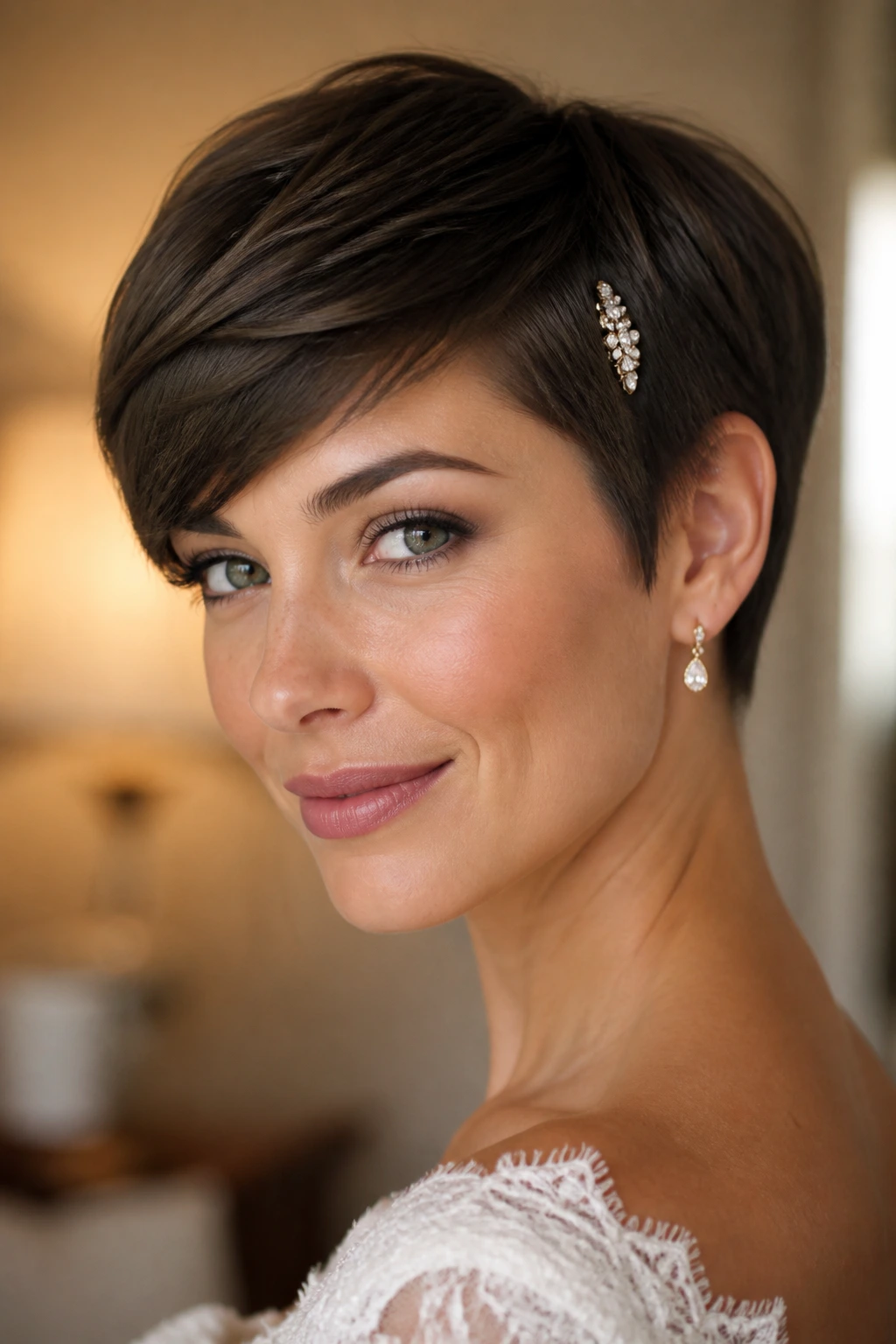
A pixie does not need volume everywhere. It needs one strong decision. In this case, that decision is a sweeping fringe or front section held in place with a jeweled clip, barrette, or slim comb just above the temple.
The charm here is restraint. Keep the sides neat, give the top a little lift with mousse or texture paste, and let the accessory do the visual work. A small crystal comb looks especially good when it sits where the hair changes direction, not plopped dead center like an afterthought.
Accessories that fit this look
- A narrow rhinestone barrette
- A pearl cluster pin
- A small comb with a curved back
- One strong clip rather than two or three tiny ones
This is a smart choice for brides who like their features visible. It leaves the forehead open, frames the eyes, and doesn’t fight a high neckline or a detailed collar. If the dress already has a lot going on, the pixie sweep keeps the hair from shouting over it.
One-sentence truth: A pixie looks more expensive when the clip looks chosen, not added.
4. Faux French Twist at the Nape
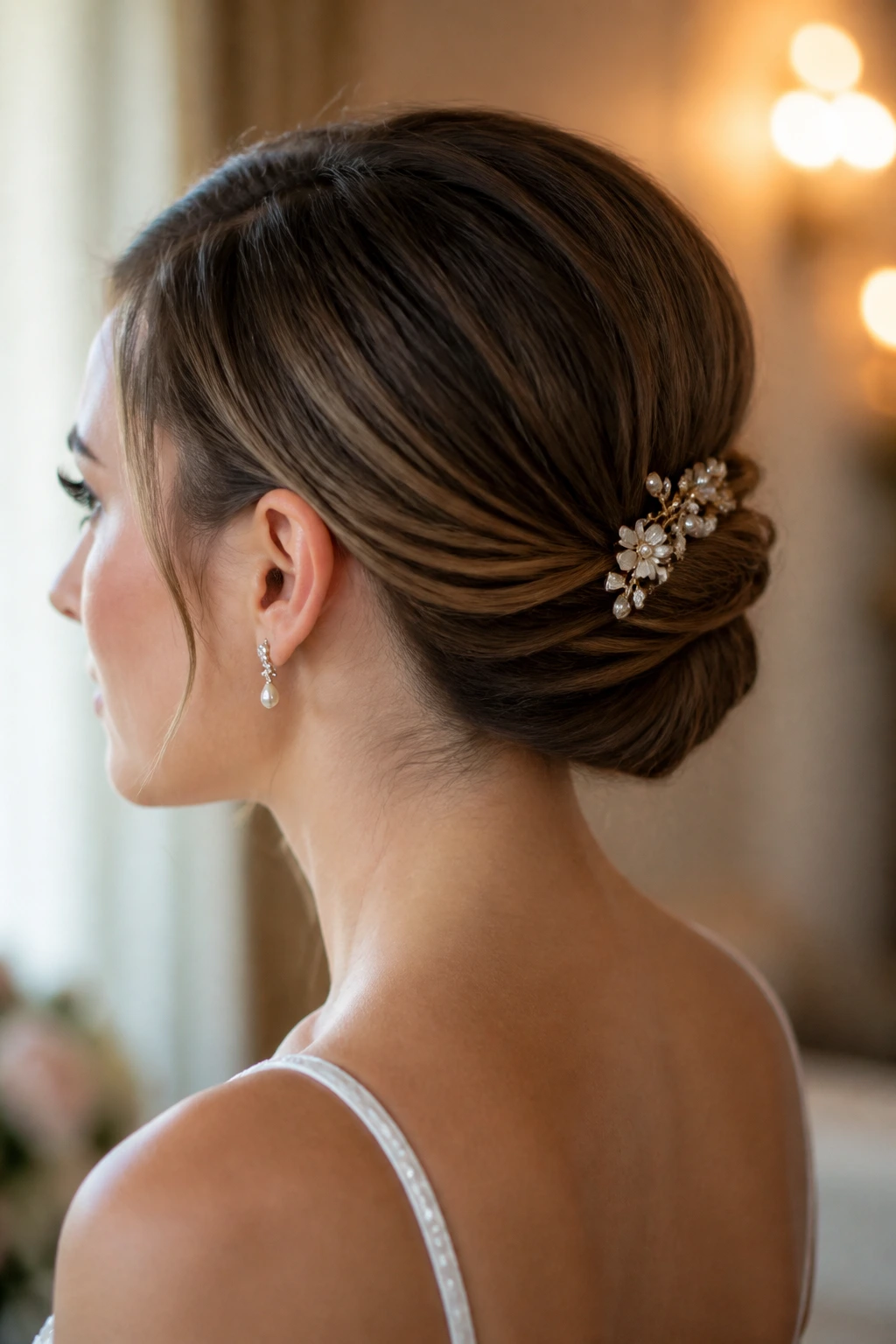
If your bob won’t gather into a real twist, cheat the shape. That’s the whole game here. The hair is folded and pinned upward in sections so the back gives the impression of a French twist without pretending the length is there.
This works best on bobs that brush the jawline or sit just above the shoulders. Twist the side pieces inward, pin them vertically at the nape, then tuck the ends under so the silhouette stays compact. A decorative comb can hide the seam where the sections meet, which is a useful little lie on a wedding day.
The key is pin direction. Push pins up and slightly inward, not straight out. Cross two pins in an X if a section feels loose. That tiny adjustment changes how secure the style feels when you turn your head, hug people, or wear a veil with some weight.
Good match for
- Classic satin or crepe gowns
- Brides who want neck and shoulder line visible
- Veils attached low or just below the crown
This is one of my favorite short-hair bridal looks because it reads formal without turning stiff. It has enough structure for photos, but it still leaves a soft edge around the face.
5. Braided Crown for a Bob
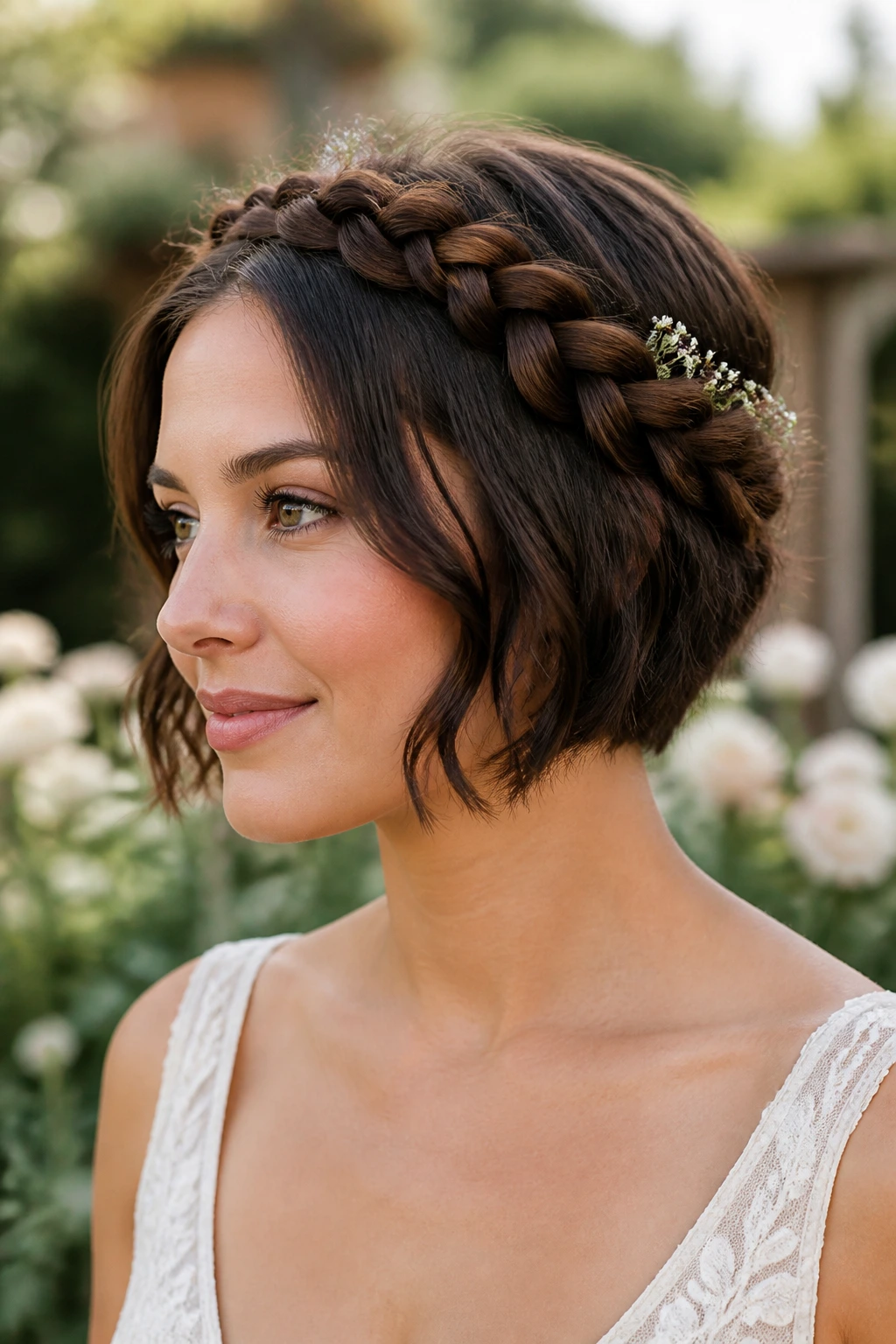
A bob can absolutely wear a braid. It just has to be scaled to the length. A tiny crown braid, rope braid, or Dutch braid along the hairline gives short bridal hair a soft frame and a little texture where it counts.
The style works especially well when the braid starts at one temple and curves around toward the other side, then disappears into pinned ends at the back. You do not need a thick braid. A small, tight braid can be just as pretty because it looks intentional instead of overbuilt.
After it’s pinned, gently loosen the braid with your fingertips so the plait feels a touch fuller. Not messy. Just less stiff. If your hair is very smooth, mist the section with texture spray before braiding so the strands grip each other instead of slipping loose.
Why it holds up
- The braid creates its own structure.
- The pinned ends sit under the crown instead of dangling.
- Shorter hair frames the face instead of dragging the braid down.
This one works well for garden weddings, outdoor vows, and dresses that need a softer edge. A small braid near the hairline can also hide a grow-out line if the cut is in that awkward between-stage length.
6. Sleek Wet-Look Bob
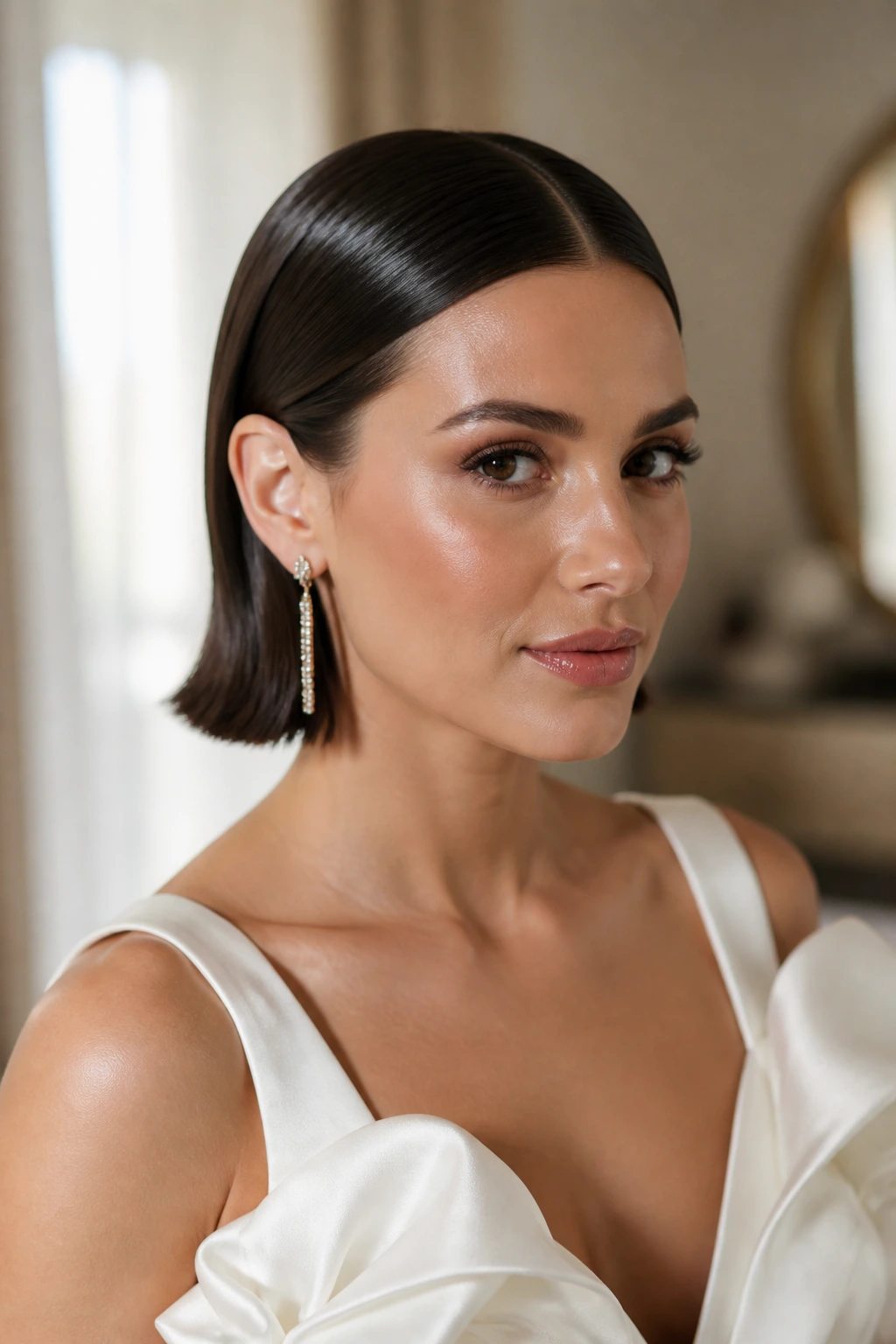
Slick does not mean severe. A wet-look bob can feel modern, expensive, and very clean when it’s done with enough control to stay shiny but not greasy. The shape says confidence. No fuss, no fluff, no wandering flyaways.
Start with a smoothing cream on damp hair, then add a light-to-medium gel through the top and sides. Use a tail comb to draw the part sharply, then comb the hair flat toward the head. If you want one side tucked behind the ear, secure it with a hidden pin under the hair rather than relying on product alone.
This style is strongest when the accessories are strong too. Long earrings, a sculptural gown, even a simple veil comb work well because there’s nothing fighting for space. The hair becomes a frame, which is exactly the point.
Best if you want
- A crisp, modern finish
- Less visible movement around the face
- A style that survives humidity better than brushed-out curls
The one trap: too much gel at the roots can make the style look wet in a bad way instead of polished. Use enough to hold the shape, then stop. You want shine, not a helmet.
7. Sculpted Pompadour Pixie
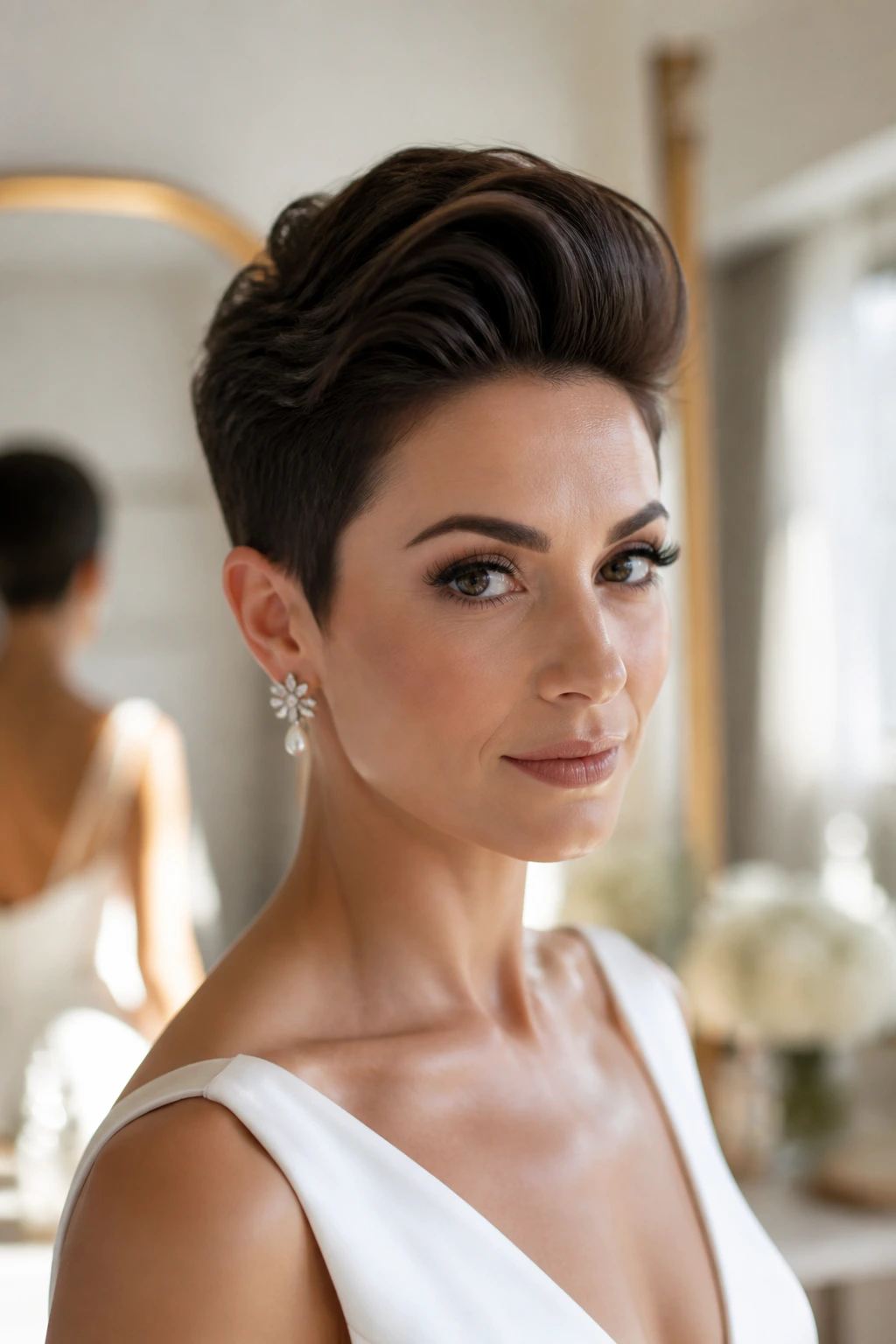
A pixie with lift at the front has a lot of attitude, and that can be a good thing on a wedding day. The trick is to make the height look sculpted, not stiff. A little movement through the top, clean sides, and a gentle curve back from the forehead give this style its shape.
Blow-dry the front section upward with a small round brush or your fingers, then set it with a clip while it cools. That cooling time matters. If you skip it, the front collapses fast, especially if your hair is fine. Once the top has shape, smooth the sides close to the head and finish with a matte or satin-finish spray.
What makes it work
- The lifted front balances a dramatic neckline.
- Short sides keep the style crisp from every angle.
- The shape leaves room for bold earrings or a high collar.
This is a strong choice if the dress is clean-lined and the bride wants the hair to feel deliberate rather than delicate. It also photographs well from the side, where the front height and the clean profile can do a lot of work without any extra decoration.
8. Old Hollywood Side-Sweep
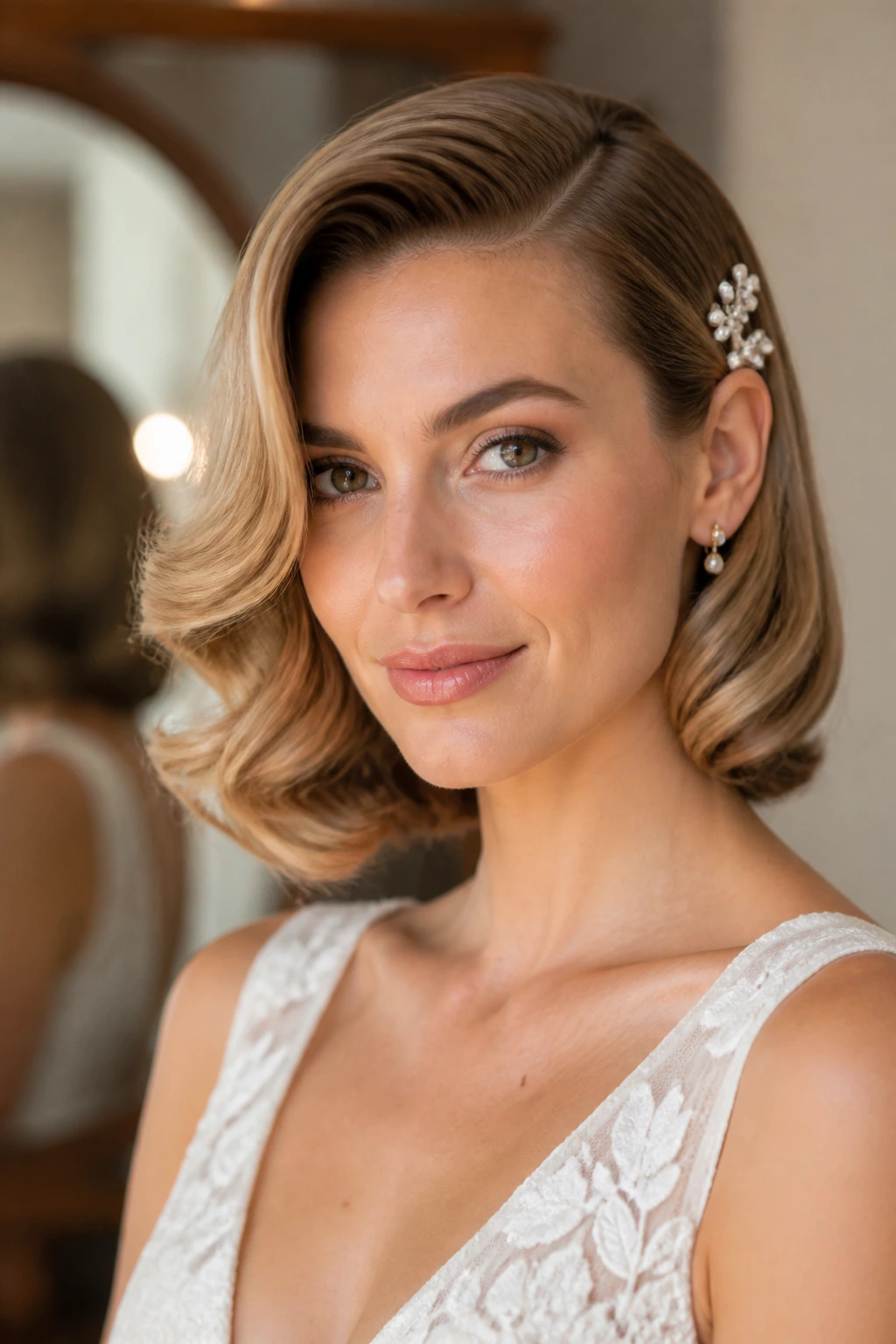
A lob with a deep side part and brushed-out waves reads old-school in the best way. It has that glossy, curved shape people associate with old film stills, but on short hair it feels lighter and less fussy than a full cascade.
Set the hair in sections with a 1-inch iron, curling every piece away from the face. Clip the curls while they cool, then brush them through gently so the pattern turns into one wide wave. The finished line should run from the part across the forehead and down toward the jaw, almost like the hair is being guided by a soft breeze.
This style shines on dresses with satin, silk, or a little structure in the bodice. It also gives you an elegant place for a comb or pin just above the ear, though I’d keep the accessory small. The wave itself already has enough personality.
Best for: brides who want glamour without an updo.
Avoid: too much hairspray too soon. If you lock the curls before they cool, they lose that brushed, flowing shape and can turn stiff.
9. Tucked Bob With Volume at the Crown
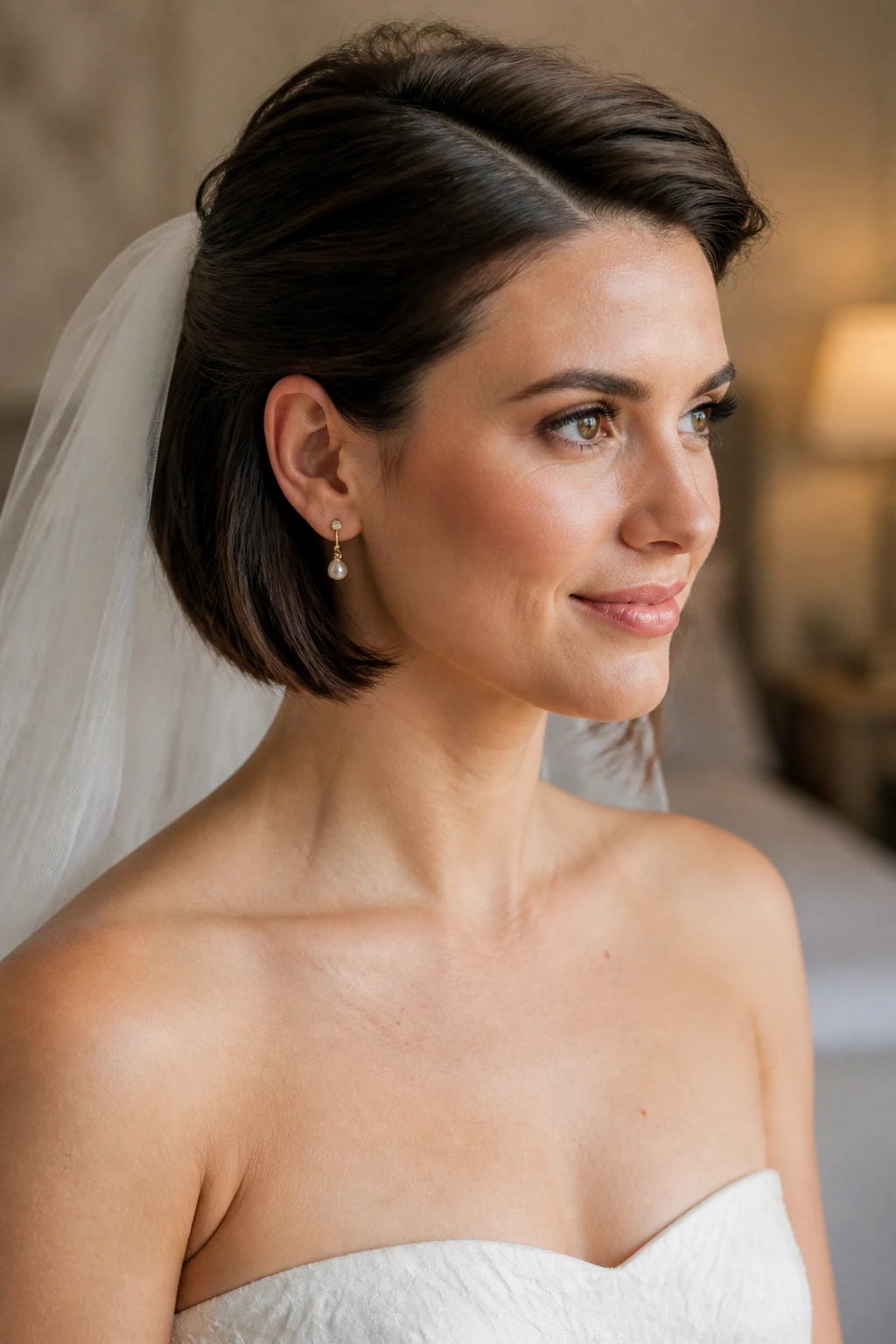
What if you want polished but not tight? This is the answer. The tucked bob keeps the ends out of the way, but the crown stays softly lifted so the style doesn’t flatten against the head.
Work a little root-lift mousse through damp hair, blow-dry the crown upward, then smooth the outer layer with a brush. Tuck the ends under at the nape or behind the ears and pin them from underneath so the pins disappear into the cut. A little backcombing at the crown can help, but don’t go wild. A small cushion is enough.
The look is tidy from the front and surprisingly graceful from the side because it gives the head shape without adding bulk. If you’re wearing a veil, place the comb above the lift rather than crushing it. That one placement mistake can make the whole style go flat.
A good match for
- Mid-length bobs
- Neckline-heavy dresses
- Brides who want a neat profile for ceremony photos
This is one of those styles that gets better when the hair is cut cleanly at the ends. A blunt bob especially looks sharp here because the line at the bottom stays visible.
10. Mini Chignon for Short Hair
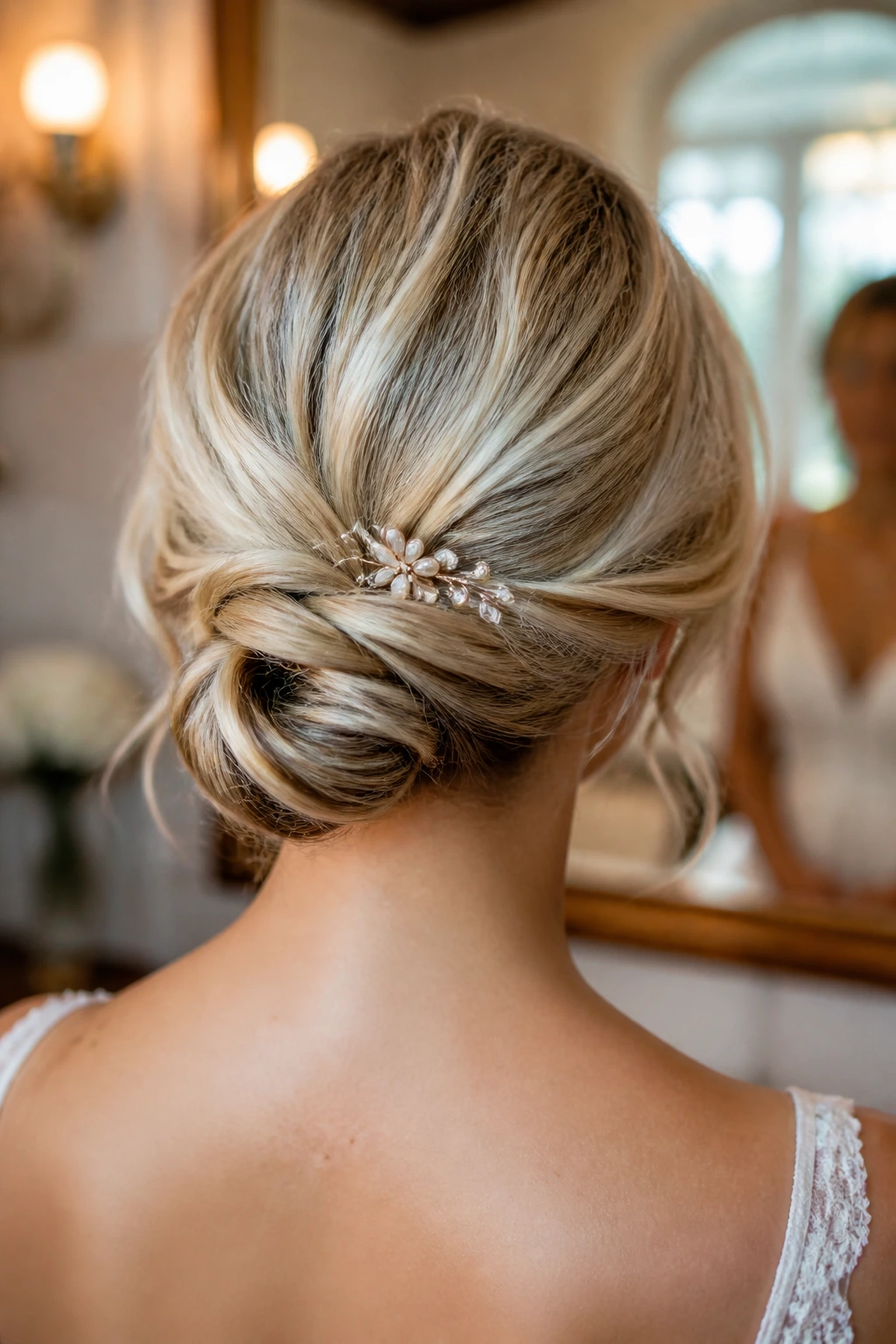
You can make a knot out of short hair if you stop thinking in one piece. That’s the secret. A mini chignon on a bob or lob is built from small sections twisted and pinned together at the nape, creating a compact knot that looks more deliberate than a regular bun.
Work with second-day hair or add a bit of texture spray so the sections don’t slide. Twist one side in, pin it close to the head, then fold the rest upward in small loops. A tiny elastic can help anchor the first section if your hair is slippery. Finish by smoothing the outer surface and hiding any exposed ends beneath a decorative comb or a few well-placed pins.
What to expect
- It will look smaller than a long-hair chignon.
- That’s fine. The point is shape, not size.
- The back should feel tight enough to hold, not so tight that it flattens the crown.
This style is good when the dress is formal and the bride wants a neat back view. It also works well under a veil because the knot creates a low anchor point that doesn’t compete with the comb.
11. Halo Braid With Loose Ends
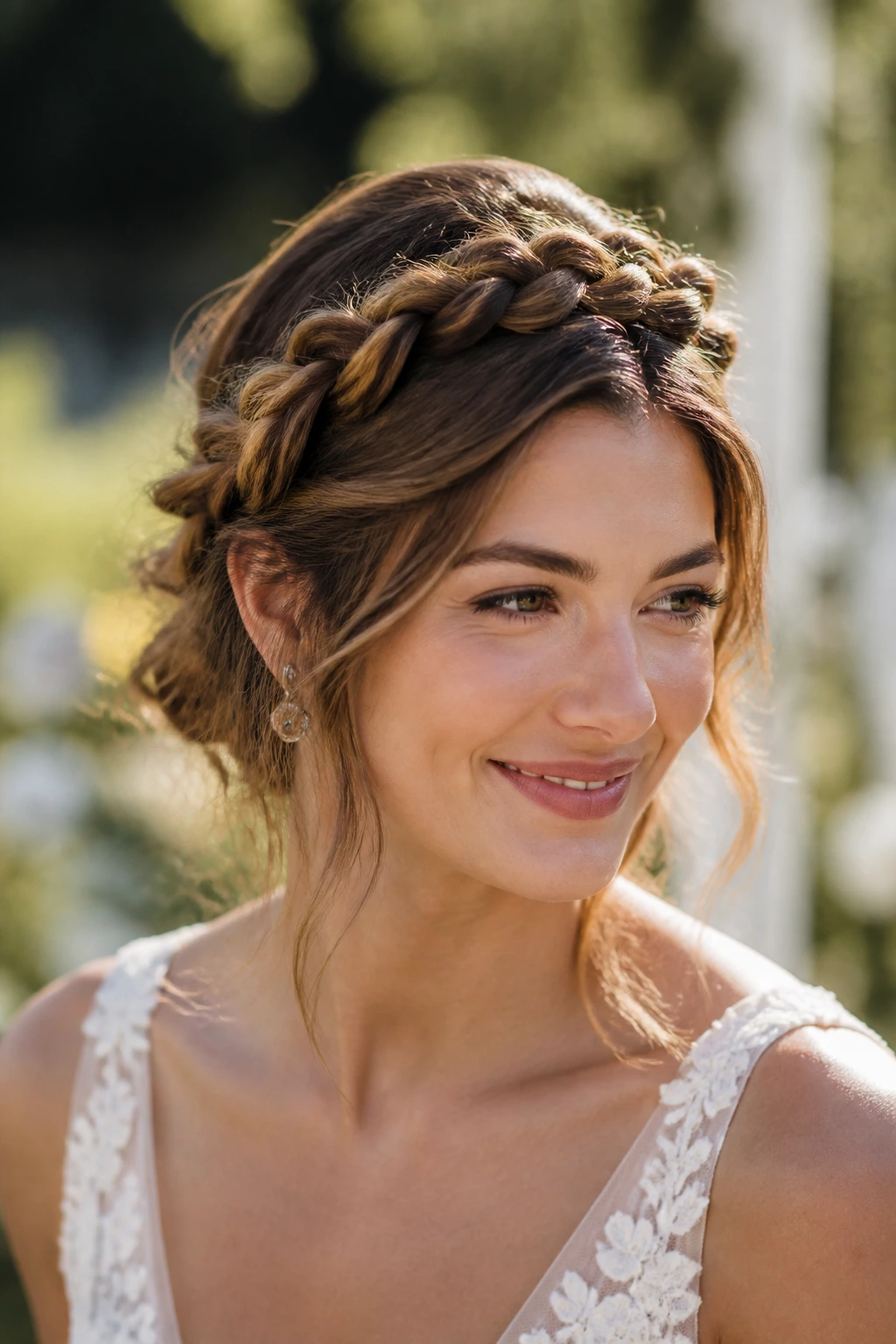
How do you get a romantic braid from a bob that barely reaches the shoulder? You braid the perimeter, not the whole head. A halo braid on short hair is usually a partial braid that wraps along the front and sides, then disappears into pinned ends at the back.
That smaller scale is the reason it works. A thick braid can overwhelm short hair, while a thin braid along the hairline gives just enough detail to feel bridal. If your hair is very short at the nape, leave the braid ends tucked under a cluster of pins or a small floral piece. No one needs to see the finish line.
This is a good choice for outdoor ceremonies and dresses with soft fabric, though it can be dressed up with pearl pins if the gown leans formal. I like it best when a few face-framing pieces stay loose. Too much tension around the hairline makes the whole thing feel stricter than it needs to be.
Tip: Slightly pancake the braid after it’s pinned so it reads on camera. Thin braids can disappear in photos if they stay too tight.
12. Flipped-Out Ends and Satin Bow
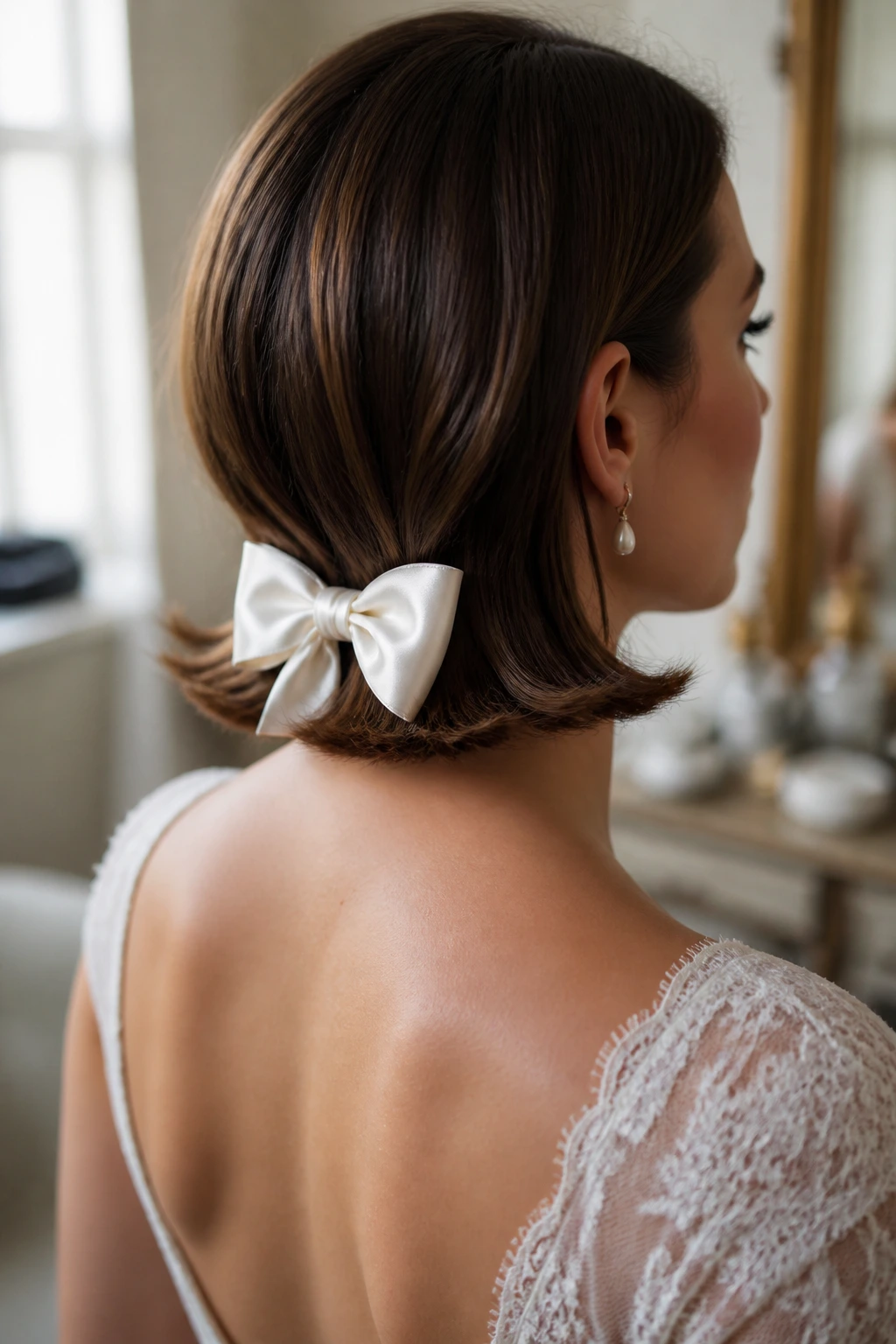
A flipped-out bob can be charming in a way that polished buns sometimes aren’t. The ends kick outward just enough to show the shape of the cut, and a satin bow at the back or nape gives it a neat finishing point.
This style is fast, which is not the same as casual. Blow-dry with a round brush or use a flat iron to create a slight flip at the bottom inch of the hair. Keep the top smooth, then tie or pin a small bow where the style ends. If the bow is too large, it takes over. Small and structured works better.
I especially like this look for brides who want a lighter feel without losing polish. It’s sweet without turning childish, especially if the bow matches the dress lining, shoes, or bouquet ribbon.
Best when you want
- A cut that still looks like a cut
- A finish that’s easy to refresh
- A soft nod to retro styling
If the bride has a blunt bob, the flip shows off the edge of the cut. On layered hair, the bow helps anchor the shape so the ends don’t scatter.
13. Curly Bob With Floral Comb
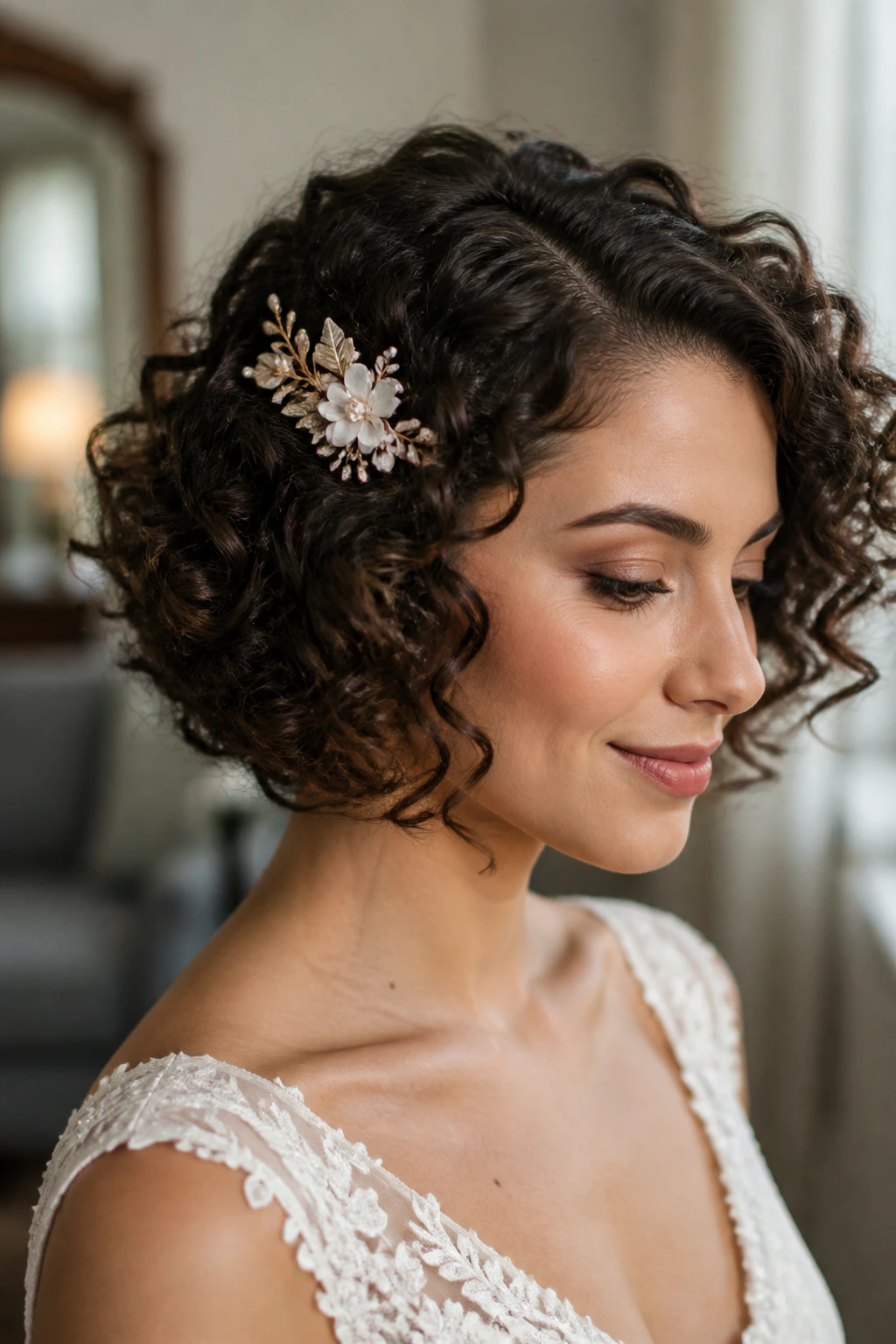
Natural curls deserve their own seat at the table. A curly bob with one floral comb tucked at the side can look fuller, softer, and more alive than a style that’s been forced into submission.
Define the curls with cream or gel while the hair is damp, then let the shape dry completely before you touch it. Once the curls are dry, separate them gently with your fingers and tuck one side back with a comb that sits low and close to the head. Fresh flowers can work, but a sturdy floral comb usually survives better through a long day of hugs, wind, and dancing.
This look is happiest when the curls are allowed to keep their natural pattern. Don’t brush them out. Don’t stretch them flat. The density of the curl pattern is the style.
Keep in mind
- Use flexible hold, not crunchy hold.
- Place the comb where the curl pattern already has a natural gap.
- Leave the crown a little lifted so the profile doesn’t go boxy.
This is one of the most honest bridal looks on short hair because it lets the texture do the talking. That usually reads better than trying to flatten it into something it isn’t.
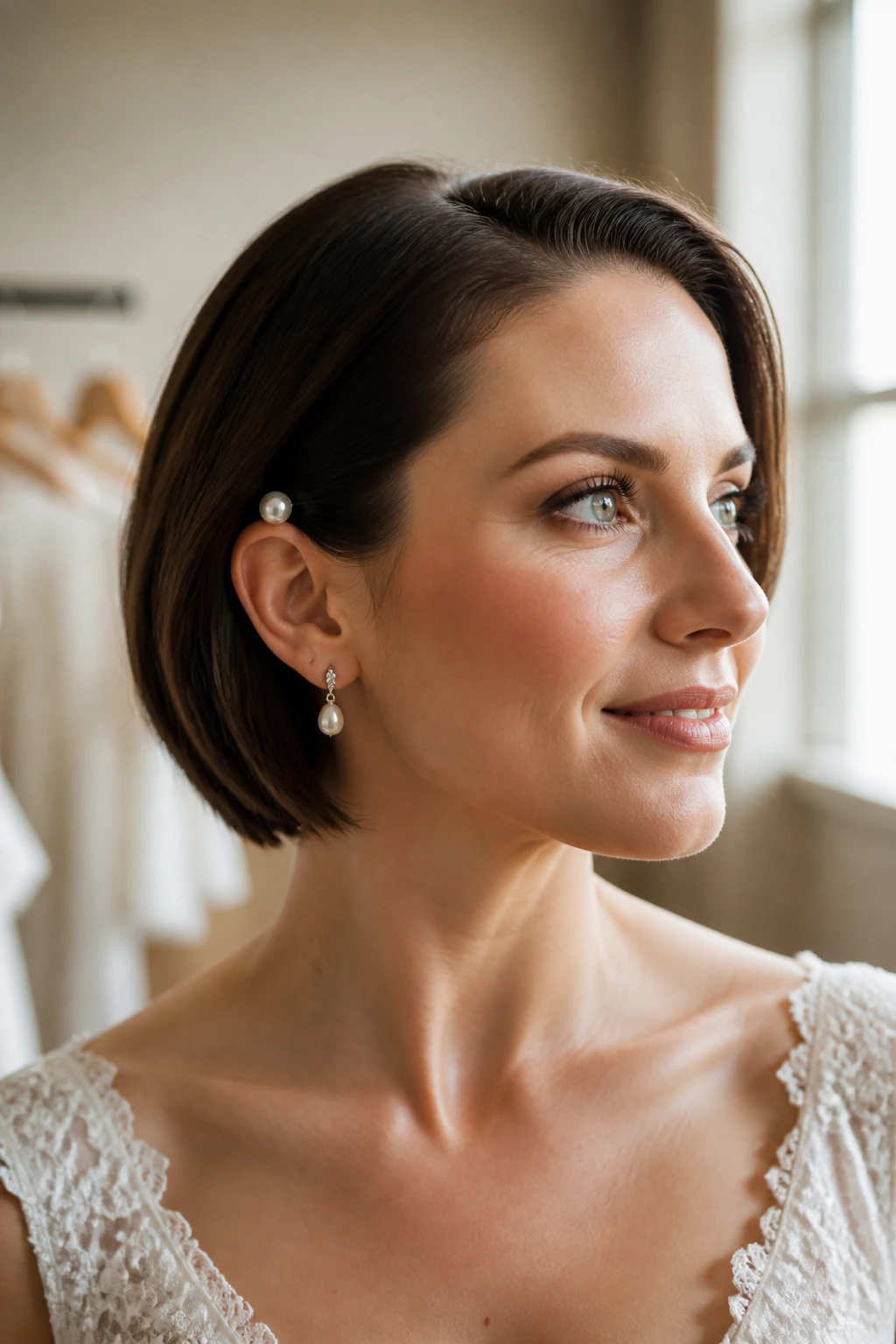
14. Statement Ear-Tuck With Pearl Pins
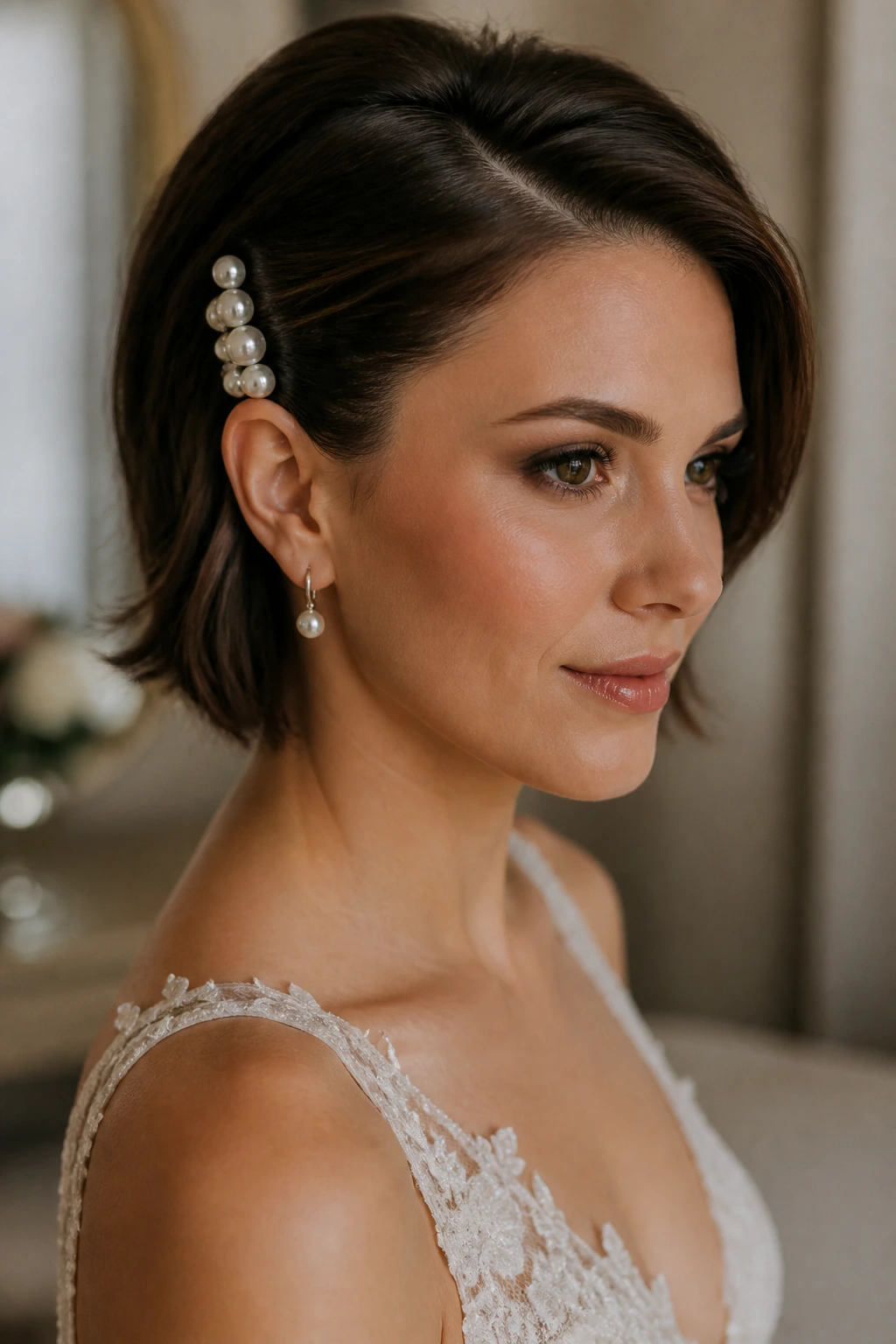
Sometimes the best move is a single exposed ear. Tuck one side back, pin it cleanly behind the ear, and line the part or temple with pearl pins so the style has a strong focal point without feeling crowded.
This look works because it gives the face a clear frame. One side stays open for earrings and profile shots, while the other side can carry the decoration. On short hair, that asymmetry feels intentional fast. You don’t need a lot of length to make it work, either. A bob or pixie can both handle it.
A few smart pairings
- A sleek satin gown
- A high neckline that needs the face opened up
- Drop earrings or a single ear cuff
I’d avoid piling on more than one accessory family here. If the pins are pearly, let the earrings stay simple. If the earrings are bold, use fewer pins. Too many shiny points can start to look busy on short hair, where everything sits close together.
Best part: this style is easy to refresh in a bathroom mirror if a pin starts to shift.
15. Faux Bob Under a Veil
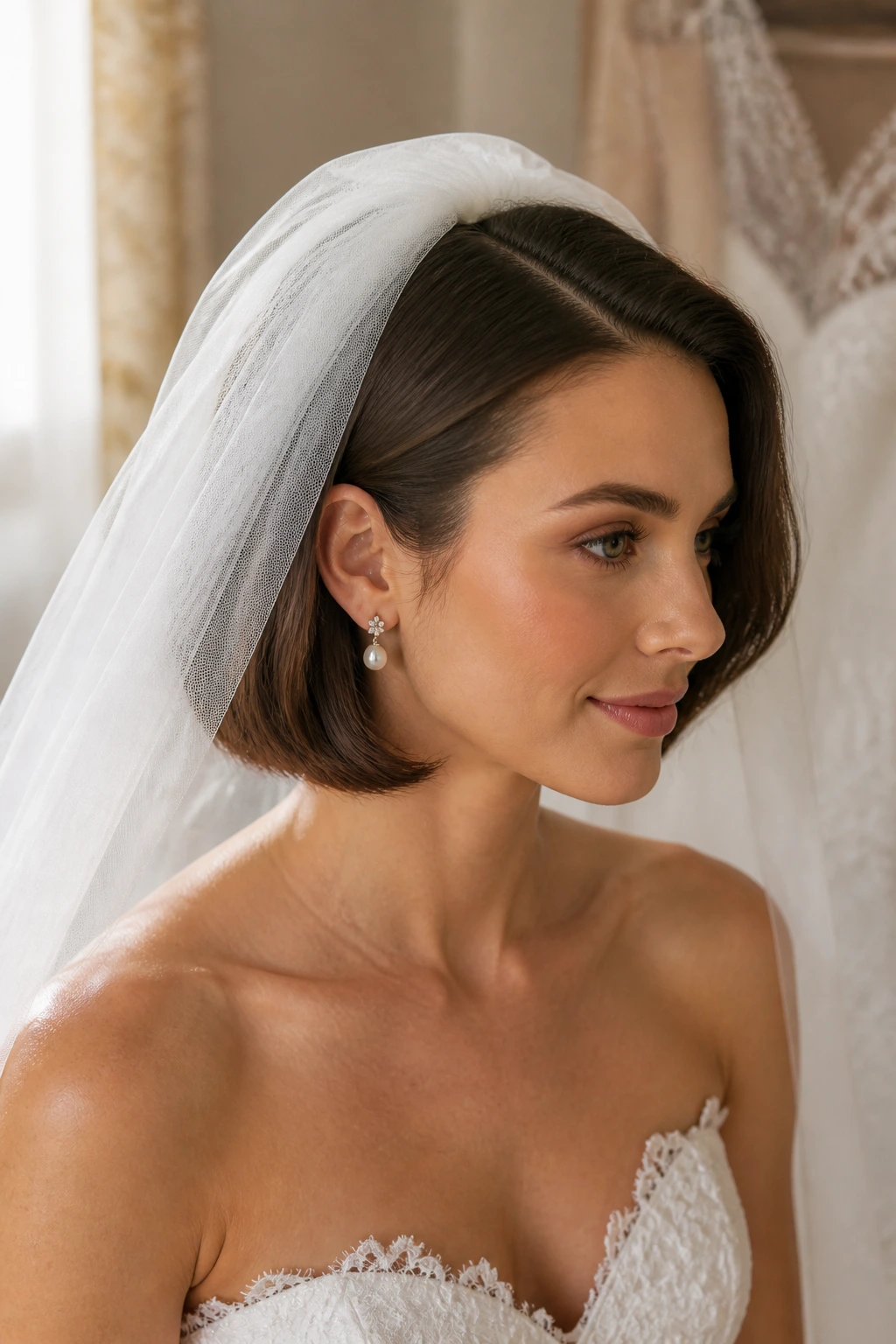
If you want short hair to look a little more dressed up, a faux bob does it. The trick is to tuck the ends inward so the hair appears shorter and more sculpted, then let the veil sit over the top and soften the whole shape.
This style is especially useful for lob-length hair that falls awkwardly between bob and shoulder. Pin the lengths under in small sections, curving them toward the neck instead of outward. Once the silhouette is compact, place the veil comb where it won’t crush the top. Usually that means above the strongest lift, not in the flattest spot.
A faux bob can be very pretty from the side because it creates a smooth line that the veil can skim over. It also keeps the neckline clean, which is useful if the dress has lace, buttons, or a detailed collar.
What makes it work
- More pins than you think.
- Smaller sections than you think.
- A little texture at the top so the veil comb has something to grip.
I like this option for brides who want the ceremony and the photos to feel a little more formal without committing to a full updo.
16. Twisted Half-Up for a Lob
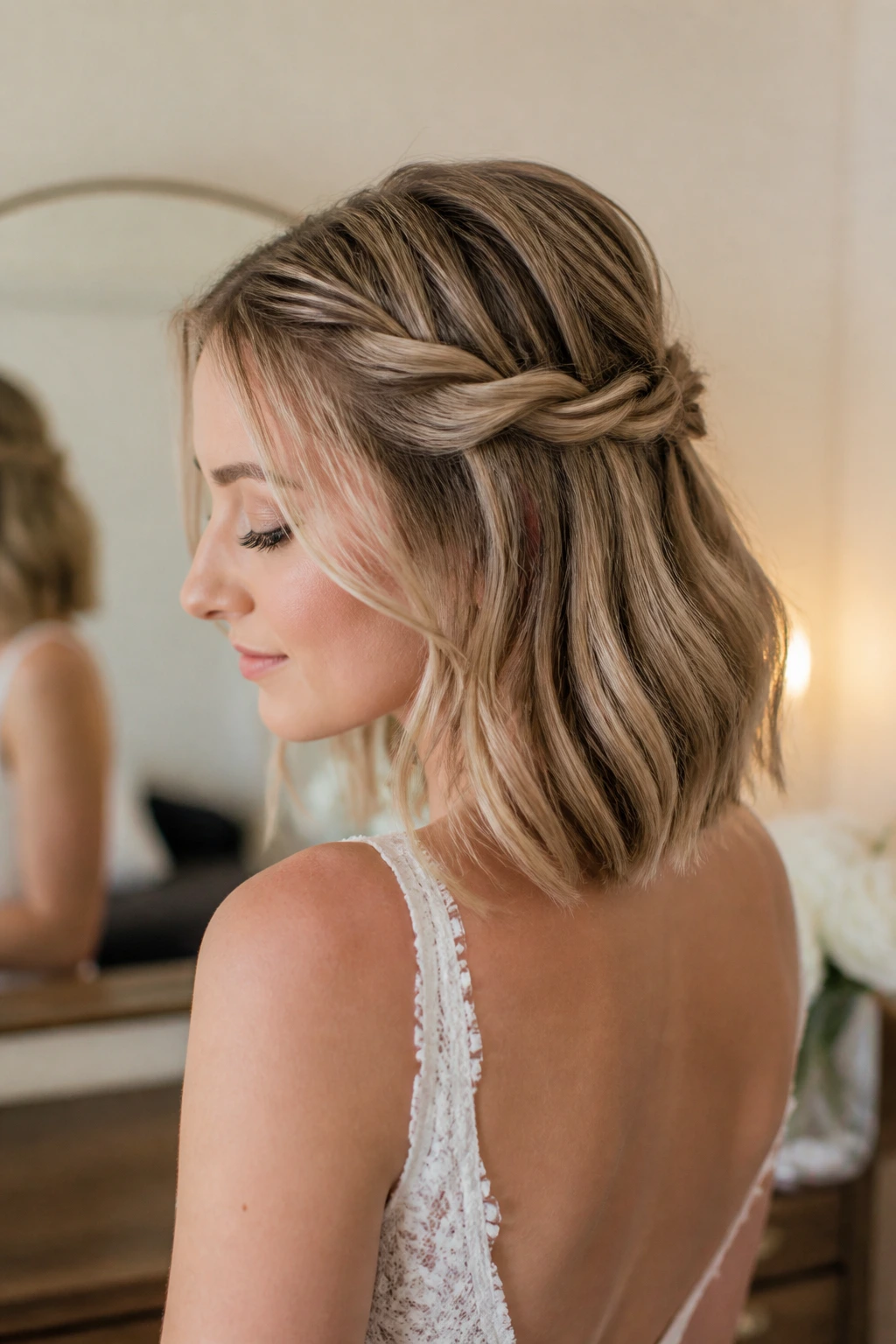
A lob is long enough to play, but short enough to stay tidy. A twisted half-up style sits right in that sweet spot. Two small twists from the temples meet at the back, leaving the rest of the hair down so you keep movement and shape.
It works well when you want the face open but don’t want a fully pinned style. The twists can be smooth and sleek or soft and loose, depending on the dress. If the hair is layered, keep the twists narrow and pin them with crossed bobby pins so the short layers don’t spring free. A small barrette can hide the join point at the back.
This is one of the easier bridal looks to wear all day because it doesn’t pull much on the scalp. It also lets the ends stay visible, which matters if the lob has a nice blunt finish or a subtle bend.
Good when
- You want half-up structure without volume overload
- The gown has an open back or simple neckline
- You need a style that moves nicely in photos
The shape is pretty uncomplicated, and that’s the charm. A lob in a twisted half-up style looks like it knows exactly what it’s doing.
17. Tousled Waves and a Hair Vine
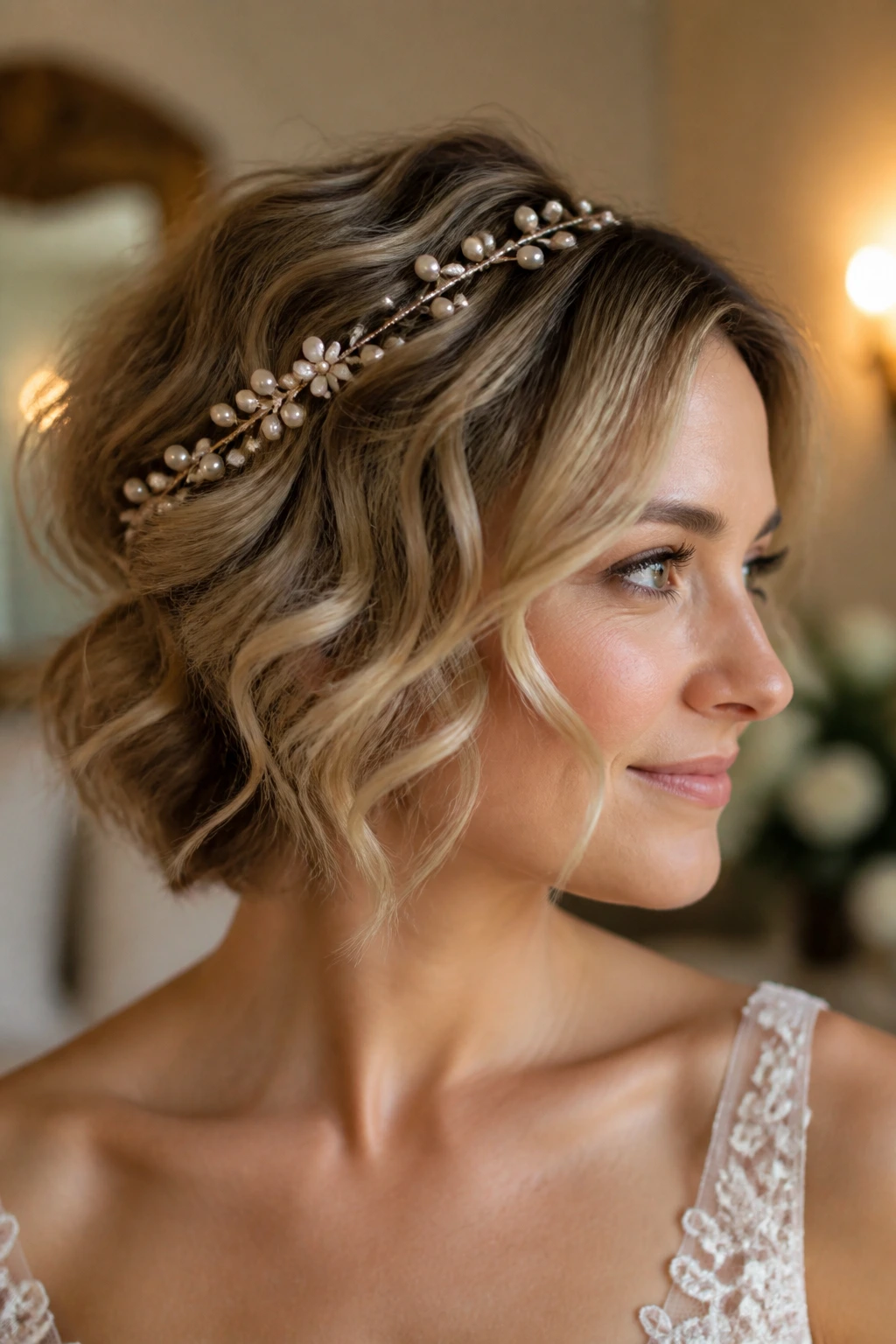
Soft waves and a hair vine are a strong closing act for short bridal hair. The waves keep the cut visible, while the vine gives the style a path to follow across the head instead of sitting like an afterthought at one side.
Use a curling iron or wand to make loose bends, not tight ringlets. Brush them out a little so the pieces separate into soft curves, then place the vine along the crown or diagonally from one temple toward the back. A vine with tiny pearls or crystals works best when it traces the shape of the hair rather than sitting flat against it.
This look suits brides who want something romantic but not over-structured. It’s softer than a sleek tuck, less formal than finger waves, and easier to live in than a very pinned style. If the dress has lace or soft drape, the effect feels coordinated without becoming matchy.
Small warning: shine spray belongs on the mid-lengths and ends, not the roots. Too much near the scalp can flatten the wave and make the vine look like it’s sitting on a greasy surface.
Why Short Hair Gives Bridal Styling Sharper Shape
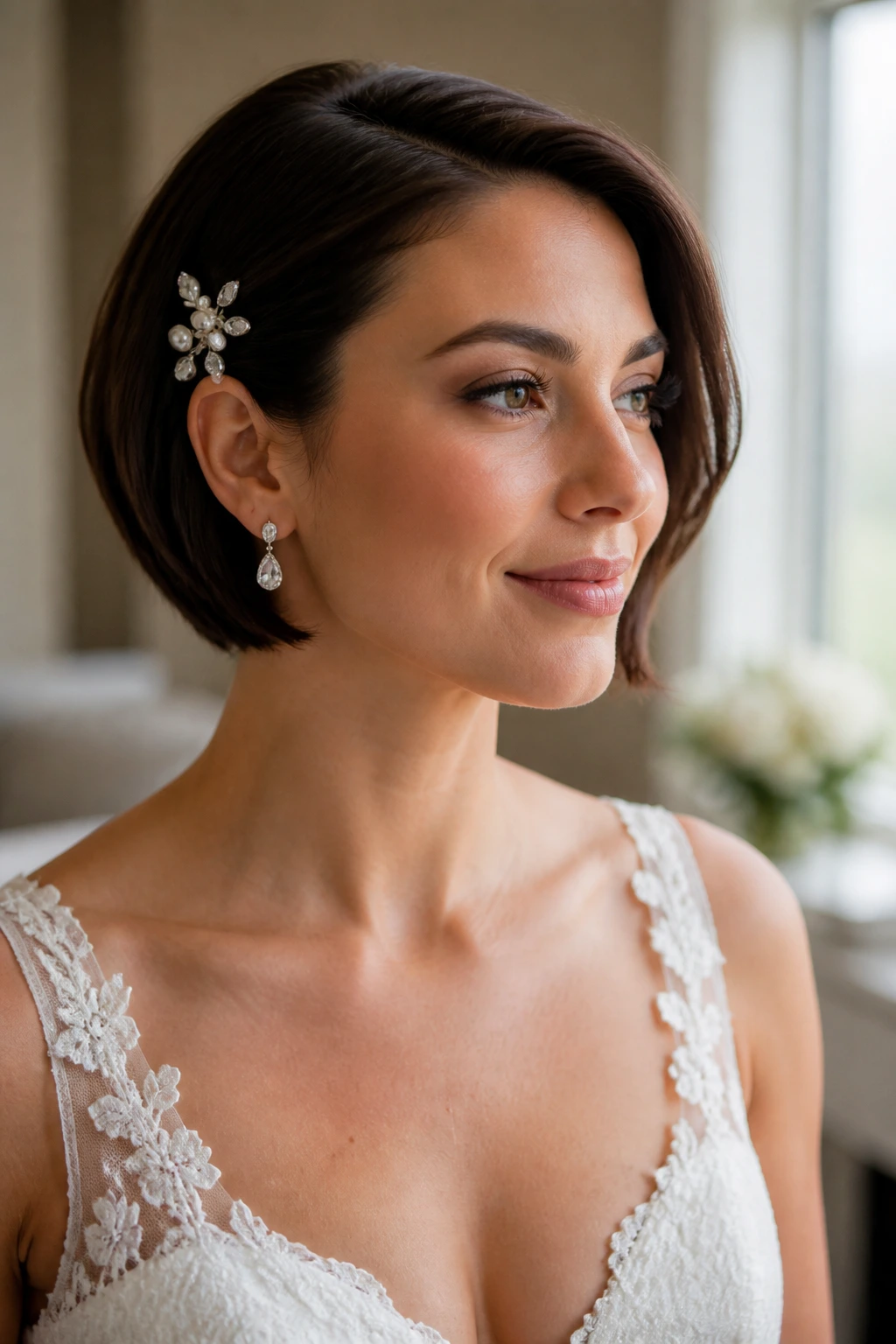
Short hair takes shape faster than long hair does. That sounds obvious until you’re standing in front of a mirror and realize one clean tuck can change the whole line of the face. There’s less mass to control, less weight pulling down a pin, and fewer places for the style to lose its outline.
That’s the reason so many short bridal looks feel polished instead of overdone. A bob can show a wave from root to end. A pixie can show a lift at the front and a clean edge at the sides. A lob can look like it has movement without swallowing the neckline. The cut is doing part of the work, which is a gift.
There’s also a practical advantage. Short hair usually needs fewer pins, less product, and fewer emergency fixes in the middle of the day. That does not mean it’s easier to style in every case — a slippery pixie can be maddening — but it often responds better when you stop asking it to imitate long hair. Work with the length you’ve got. That’s where the good looks live.
Essential Tools for These Looks
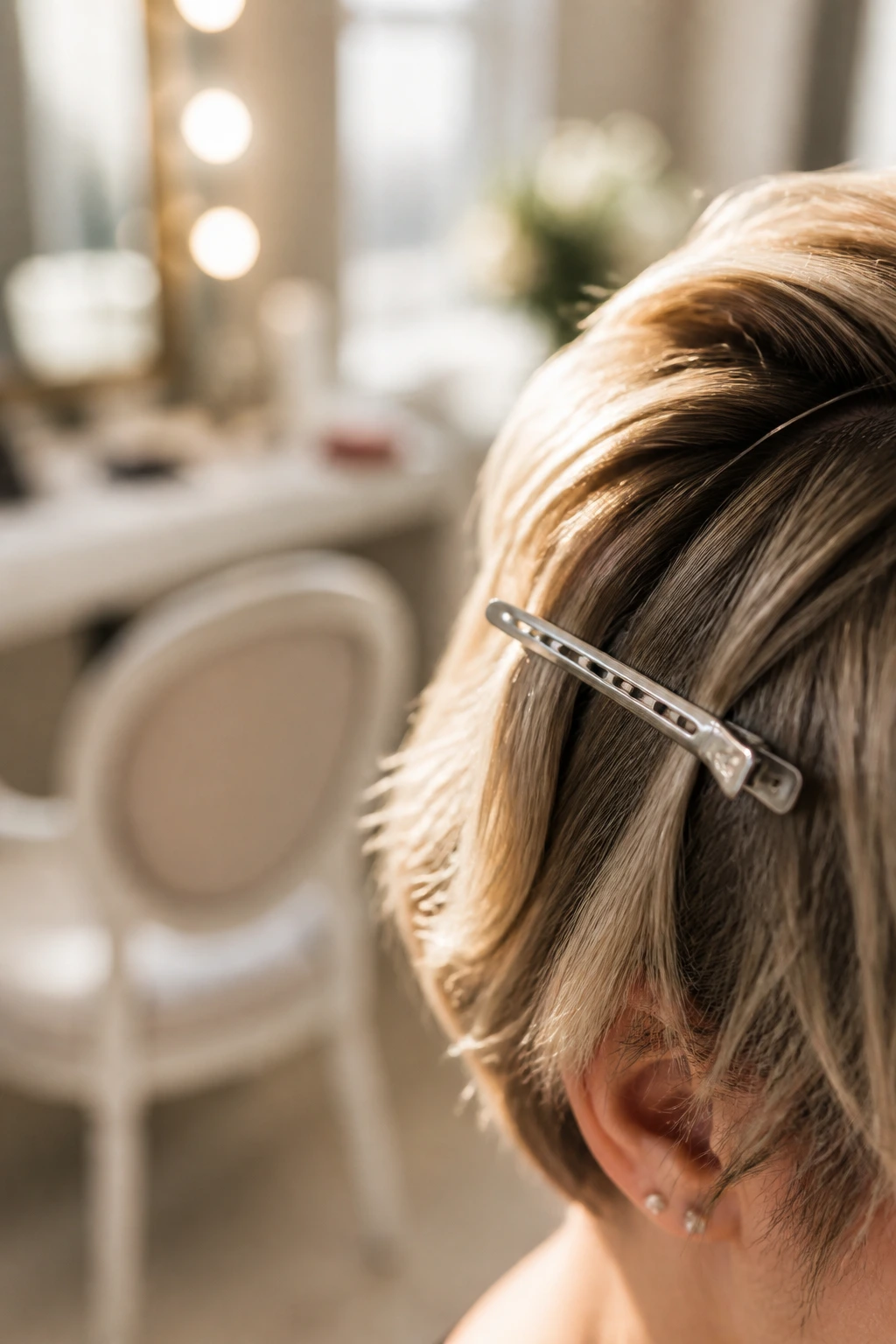
-
Tail comb: Useful for clean parts, smooth sections, and teasing the crown without wrecking the surface.
-
1-inch curling iron or wand: The safest all-purpose hot tool for bobs and lobs because it makes bends that brush out nicely.
-
Mini flat iron: Handy for pixies, flipped ends, and smoothing the front of a sleek style.
-
Sectioning clips: Keep smaller pieces out of the way while you wave, braid, or twist.
-
Bobby pins in hair-matched shades: Short hair shows pins fast, so matching them to the hair makes the finish cleaner.
-
U-pins: Better than standard bobby pins for holding compact rolls, mini chignons, and tucked sections.
-
Boar-bristle brush: Great for smoothing waves into one soft shape without destroying the body underneath.
-
Texture spray or dry shampoo: Helps grip when the hair is too clean or too slippery.
-
Flexible-hold hairspray: Good for touchable styles that still need movement.
-
Strong-hold hairspray: Use this for finger waves, slick looks, and any style that needs a firmer set.
-
Blow dryer with concentrator nozzle: Gives more control over the crown and front sections.
-
Small decorative comb, pin set, or hair vine: Choose one focal accessory first; more than one often starts to crowd the short shape.
Choosing Products That Hold Without Crunch
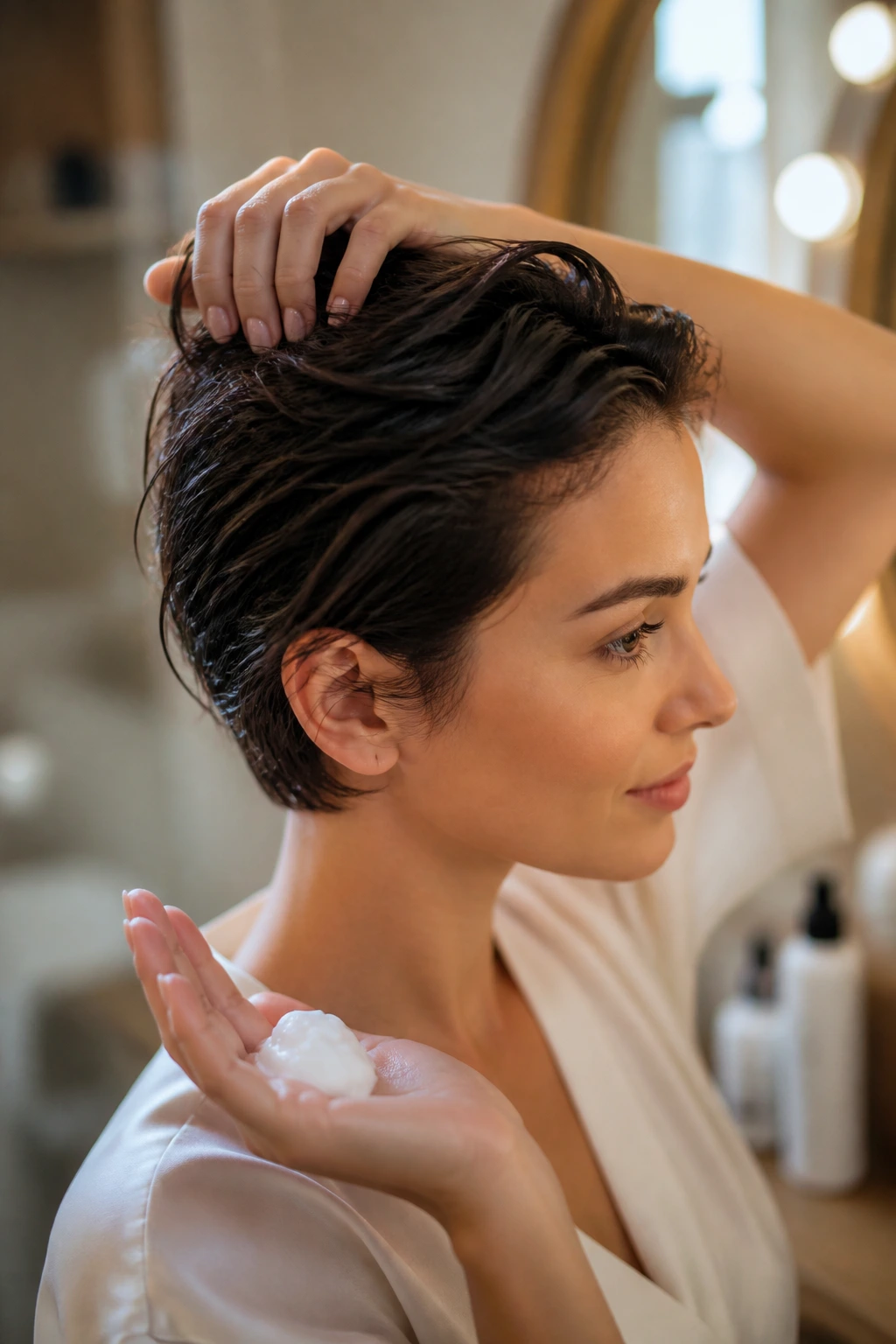
Short bridal hair lives or dies by product choice. Too little, and the style slips. Too much, and the hair turns stiff, dull, or greasy at the roots. The sweet spot depends on hair texture, not just the style itself.
For fine hair
Fine hair usually needs root lift and grip before it needs shine. A lightweight mousse on damp hair, followed by texture spray at the roots once dry, gives pins something to grab. Heavy oils are a bad trade here; they flatten the style before the ceremony even starts.
For thicker or denser hair
Thicker hair often needs a firmer hold, especially if it’s being twisted, tucked, or braided close to the head. A smoothing cream can tame the surface, but the inner structure usually benefits from stronger bobby pins and a more deliberate sectioning pattern. Smaller sections matter. Big sections feel efficient until they start slipping.
For curls and waves
Curly and wavy hair tends to look best with flexible hold products that support the pattern instead of freezing it. A curl cream or light gel can keep the shape from frizzing out, and a finishing mist can tame the top layer without turning the curls into a shell. Dry curls are easier to pin than freshly fluffed ones, so let the hair settle before the final accessory goes in.
A trial run helps here more than anywhere else. The product that looks fine in the bathroom can behave very differently once the hair is under lights, heat, and a veil.
How to Wear These Looks With Veils, Earrings, and Necklines
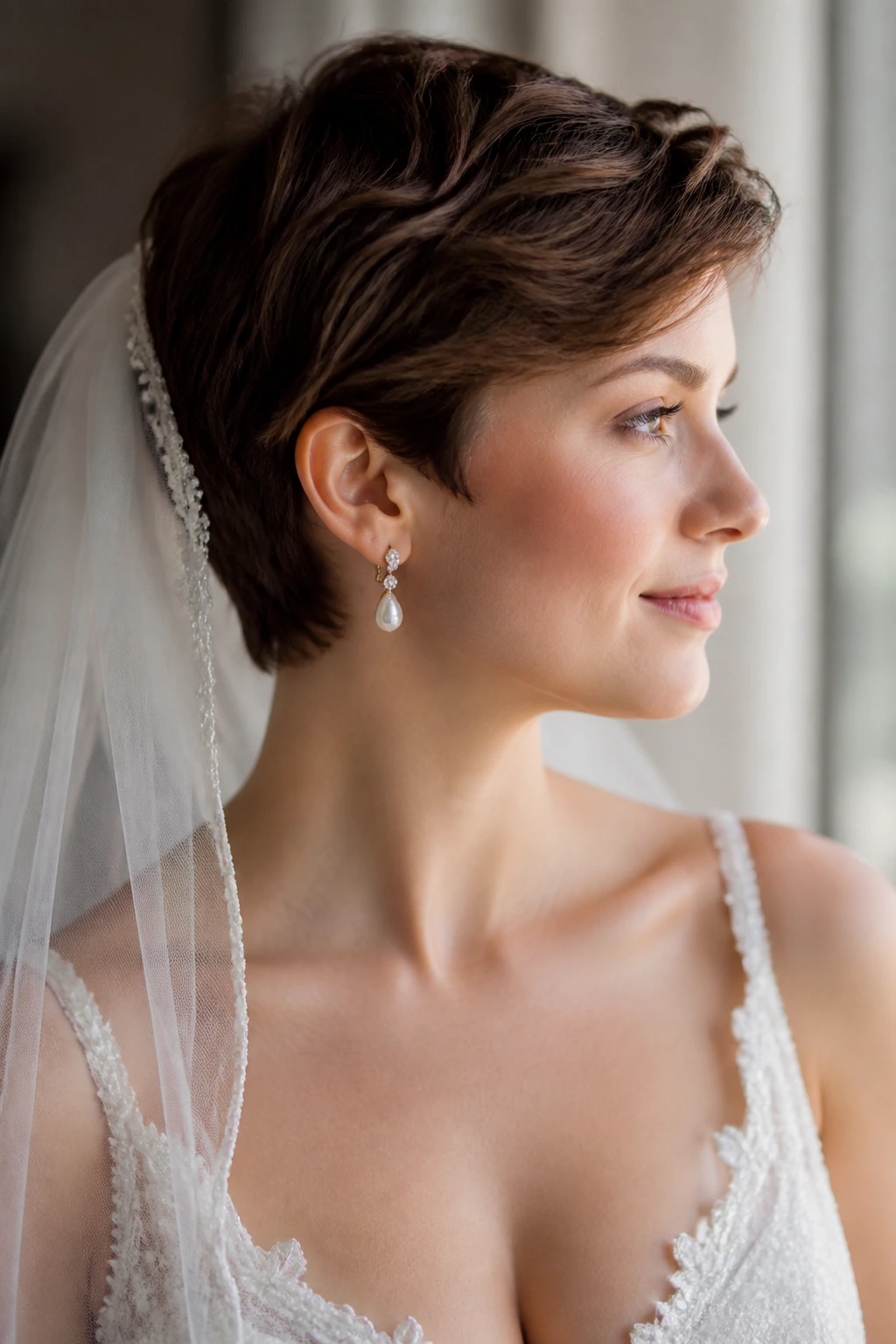
Presentation: Keep the silhouette clean enough that the haircut still reads in profile. If the style is side-swept, tucked, or waved, leave one strong line visible so the head shape doesn’t disappear under accessories.
Accessories: Pick one main point of interest first — veil comb, pearl pins, crystal barrette, or hair vine — and let the rest of the look support it. Short hair gets crowded fast when every shiny object arrives at once.
Necklines: Strapless and sweetheart gowns can handle more movement at the sides, while high necks and mock necks usually look better with sleeker hair or a tuck that clears the collar. A one-shoulder dress often loves an asymmetrical style because the hair can echo the line of the garment.
Veil Placement: On short hair, the comb wants a stable base. Place it where the crown has enough padding to support the weight, or use hidden pins to build that base first. If the veil is heavy, test it with a few slow head turns before you call the look done.
Extra Styling Tips for a More Personal Finish
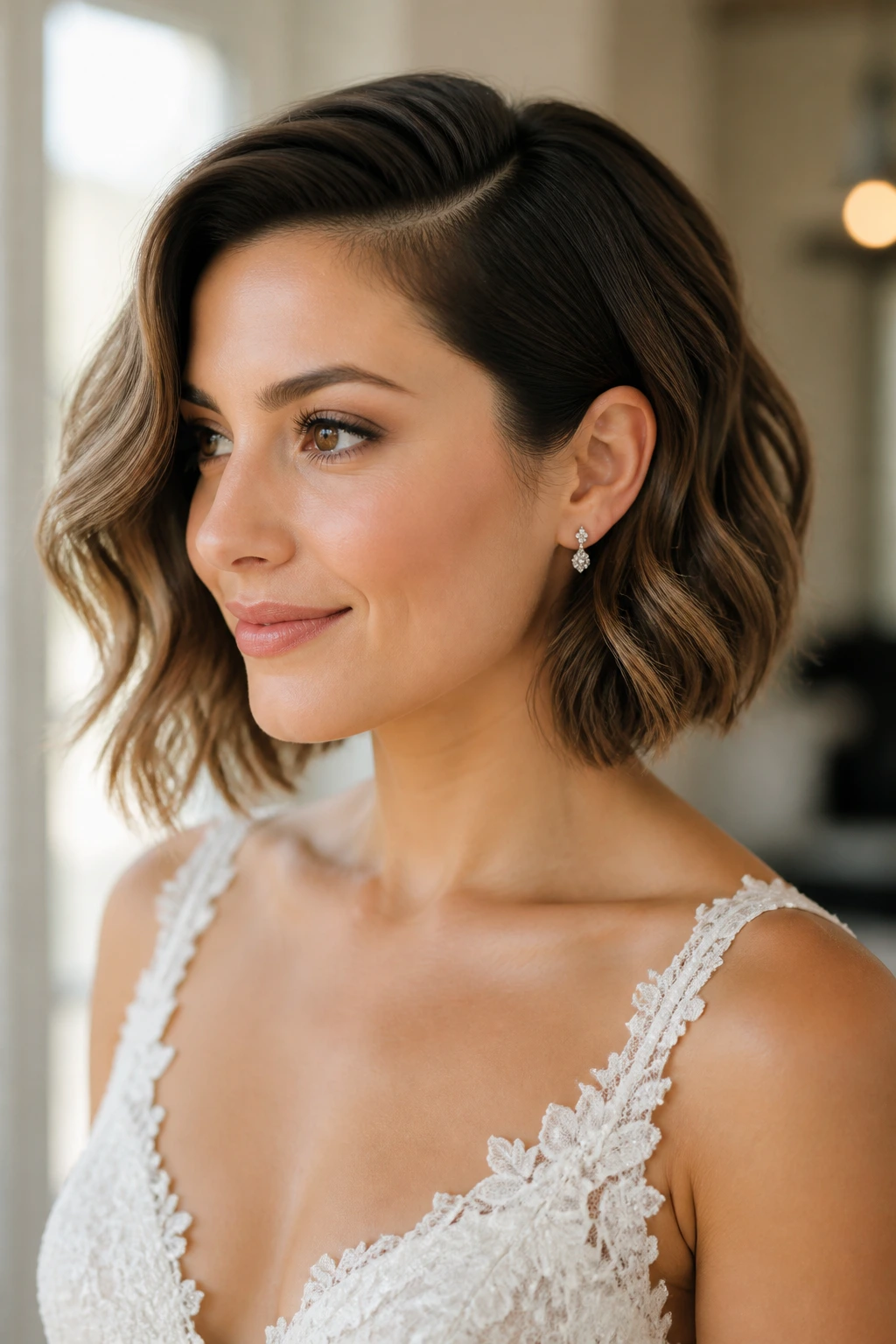
Texture Boost: If the style feels too soft, mist a little dry shampoo at the roots and rake through the mid-lengths with your fingers. That tiny bit of grit helps waves, braids, and tucked sections stay put.
Customization: Swap the accessory type to change the mood. Pearl pins make the same bob feel softer, while a crystal comb or metallic barrette pushes it toward a sharper, more formal line.
Finishing Touch: A tiny amount of shine serum on the ends can make short hair look finished, but keep it away from the roots. One pea-sized drop rubbed between the palms is plenty for most bobs and lobs.
Make-It-Yours: If the dress is ornate, keep the hair cleaner. If the dress is plain, let the hair do a little more work with a wave, braid, or lifted crown. The two should not compete for attention.
A tiny detail can matter more than a big one here. A slightly off-center part, one pin hidden under the temple, or a single curl left near the cheek can change how the whole style reads.
Trial Runs, Prep Work, and Wedding-Day Touch-Ups
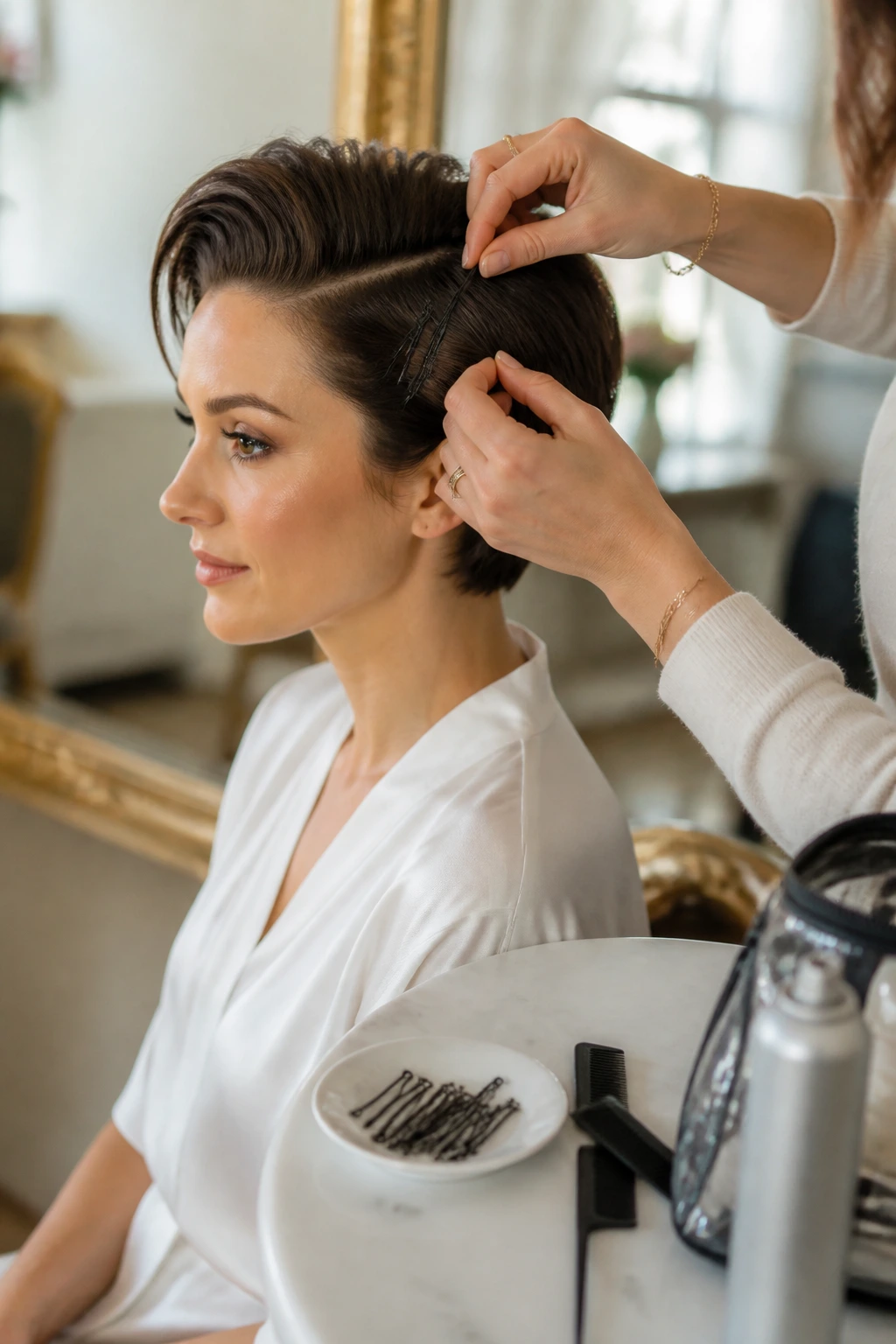
A trial run is not optional with short bridal hair. Short lengths can behave one way in the mirror and another way under event-day stress, so test the style with the actual accessory, the actual part, and the actual veil if there is one. Photographs from the front, side, and back tell the truth much faster than the mirror does.
Most short styles hold better on day-old hair. Freshly washed hair can be too slippery, especially for braids, tucks, and pins. If the hair is very clean, a little dry shampoo or texture spray near the roots usually solves more problems than another can of hairspray. For curls and waves, build the shape first, let it cool completely, then brush or separate as needed. Warm hair falls. Cold hair remembers.
For the wedding morning, keep a small touch-up kit nearby. A practical kit should include 8 to 12 bobby pins, a travel-size hairspray, a tiny comb, a few extra clear elastics, and one or two spare accessory pieces in case a pin snaps or a comb slips. If the style is meant to stay all night, check it once before the ceremony, once before photos, and once before dancing. That sounds fussy. It isn’t. It saves the style.
Variations and Adaptations to Try
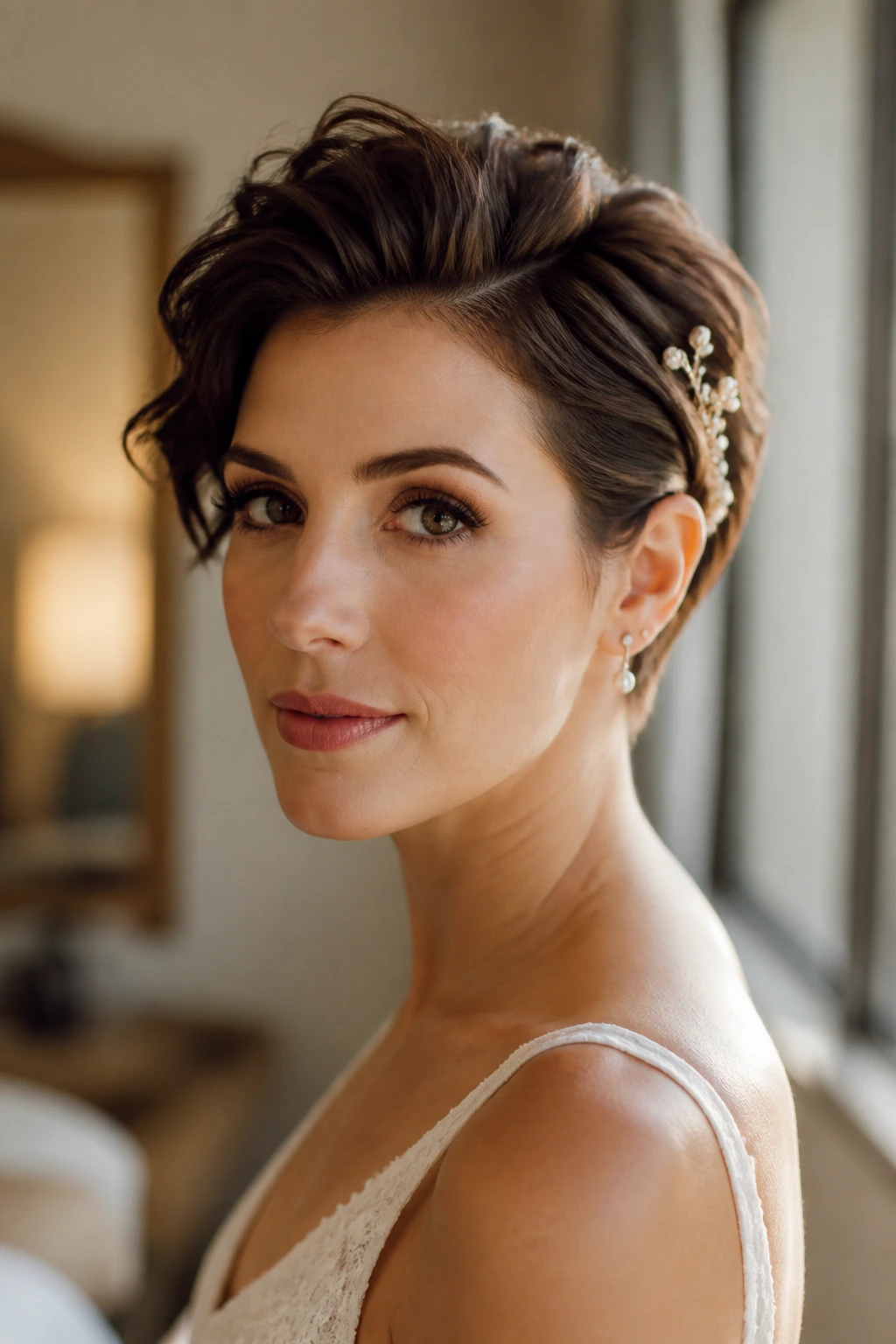
Fine-Hair Lift: Use mousse at the roots, a light blow-dry, and a small amount of backcombing only where the accessory will sit. Fine hair can collapse fast if the crown gets overloaded, so keep the top airy and let the shape come from a side part or a tucked edge.
Thick-Hair Control: Work in smaller sections and use more pins than you think you need. Thick hair often looks gorgeous in short bridal styles, but it needs disciplined sectioning so the surface stays smooth and the underneath doesn’t spring apart.
Natural-Curl Version: Keep the curl pattern intact, define it with cream or gel, and pin only the sections that need shaping. A curly bob or pixie usually looks best when the curl remains visible around the face instead of being brushed into one flat surface.
Humidity-Ready Finish: Choose a sleeker base, add flexible spray instead of heavy oil, and carry a small anti-frizz mist. Short hair can puff at the edges when the air is damp, so a cleaner outline usually holds up better than soft loose pieces.
Veil-First Version: Build the hair around the veil comb instead of choosing the hair first and forcing the veil on top. A low tuck, a side sweep, or a minimal chignon often works best when the veil is non-negotiable and needs a firm anchor.
Minimalist Edit: Skip sparkly accessories and keep the line clean — smooth tuck, soft wave, or a neat side part. This version fits brides who want the dress, makeup, and posture to do most of the talking.
Common Mistakes That Make Short Bridal Hair Fall Flat
Choosing a style that fights the cut is the easiest way to get a disappointing result. A pixie can’t behave like a braid-heavy updo, and a chin-length bob can’t be dragged into a large knot without a lot of pinning that eventually shows. Fix it by matching the style to the length you actually have.
Using too much product too early is another common problem. Hair that feels gummy during the trial usually turns limp by the ceremony. Apply product in small amounts, build in layers, and stop before the roots lose movement.
Pinning in the wrong direction causes loose sections and slipping. Pins hold better when they catch hidden hair and go in against the direction of the movement, not with it. If a section keeps sliding, cross two pins or anchor into a denser part of the cut.
Forgetting the veil or earrings until the end creates crowding. Short hair doesn’t leave much surface area, so each accessory needs a job. Pick the focal point first, then decide whether the rest should stay quiet.
Skipping the trial with the real accessories leads to surprises nobody wants. A comb may sit differently than expected, a veil may crush the crown, or a heavy earring may pull a side-swept style off balance. Test the whole setup before the day is packed with other decisions.
Trying to make every strand behave is the last trap. Short bridal hair often looks better when one or two soft pieces are allowed to live near the face. Too much correction can erase the shape you wanted in the first place.
Frequently Asked Questions About Brides With Short Hair
Can a bride with a pixie wear a veil?
Yes, and the veil can look excellent with a pixie if the comb is anchored in a stable spot. A small amount of lift at the crown or a slight side sweep gives the comb something to grip, which keeps the veil from sliding or flattening the cut.
What short hairstyle holds best for a long wedding day?
Sleek tucked styles, finger waves, and structured side parts usually hold very well because they rely on shape more than loose movement. Anything that depends on brushed-out curls needs a stronger spray and a few emergency pins in the touch-up kit.
Should I wash my hair the day of the wedding?
Usually not, unless your stylist tells you the style needs freshly washed hair. Day-old hair often gives better grip, especially for braids, twists, and pins. If your hair gets oily fast, a little dry shampoo at the roots is the safer move.
Can I add clip-in pieces to short hair?
Yes, but the attachment points need to be hidden carefully so they don’t show through the shorter layers. Clip-ins work better for adding fullness than for making the style itself; the shape still needs to suit the cut.
What if my bob is too short for a real updo?
Use a faux twist, a tucked bob, or a compact mini chignon built from small sections. Those styles create the feeling of an updo without pretending the hair is longer than it is.
How do I keep bobby pins from slipping out?
Slide them into a hidden section of hair, not just the surface, and point the grippy side toward the scalp. If the hair is very silky, texture spray or a little backcombing where the pin goes will help more than adding another can of hairspray.
Which accessories work best with short bridal hair?
Slim combs, pearl pins, headbands, hair vines, and small floral pieces tend to sit better than oversized clips. The shorter the cut, the more important scale becomes. A tiny detail can look luxurious; a bulky piece can overwhelm the whole shape.
Can I do one of these styles myself?
Some of them, yes. A side-swept wave, tucked bob, or soft waves with a pin are realistic for a steady hand and a good mirror setup, while finger waves, faux twists, and veil placement are much easier with a stylist or at least a practiced helper.
Short Hair, Strong Finish
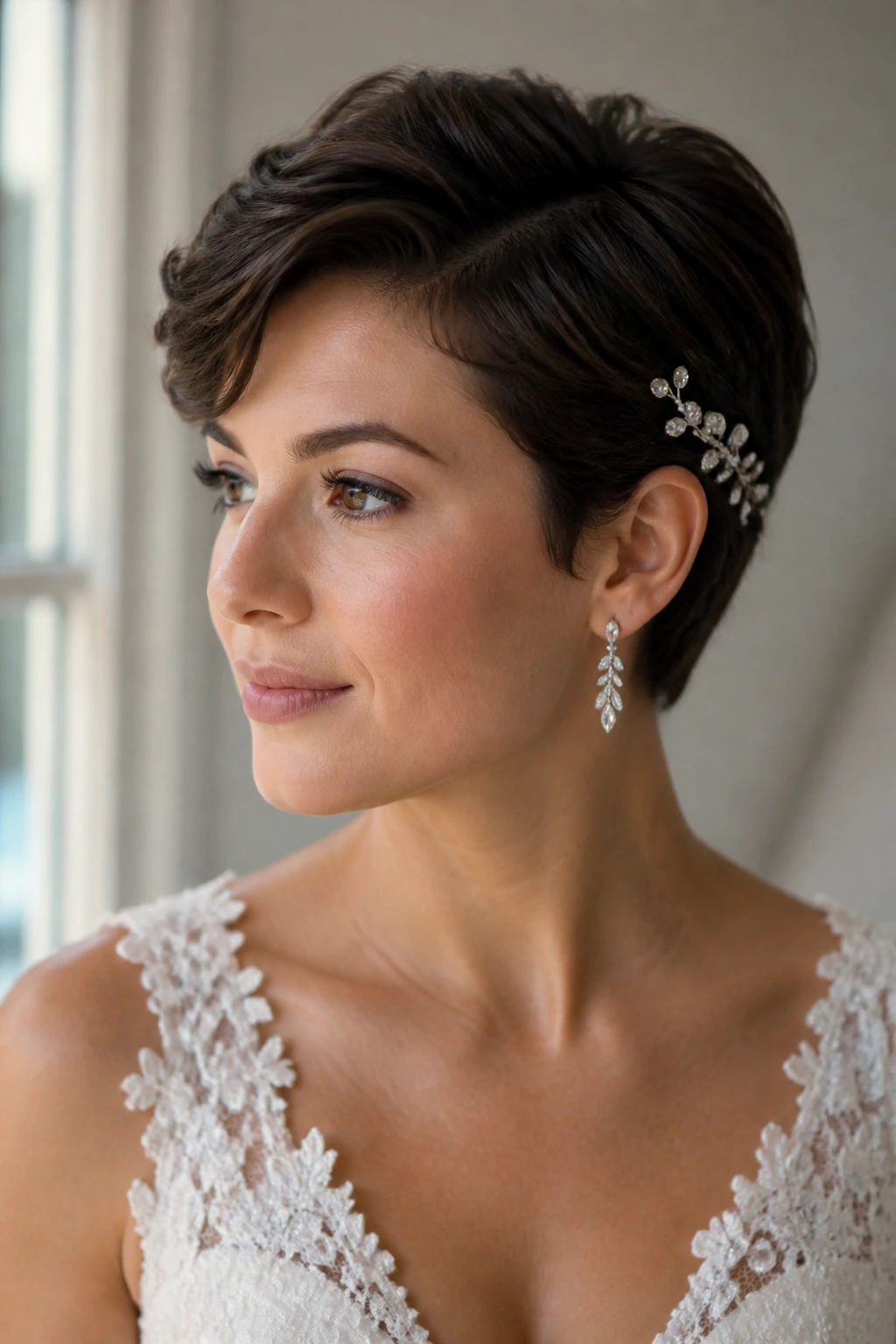
Short bridal hair works best when it keeps its own shape. That’s the part people sometimes miss. You are not compensating for the length; you are choosing a silhouette that fits the cut, the dress, and the way you want to look when the camera catches your profile.
The smartest styles here are the ones that leave room for the details that matter: a clean ear, a veiled crown, a small comb, a neat neckline. If you test the shape ahead of time and let the cut stay visible, the result feels calm instead of crowded. That calm reads as confidence in photos, which is probably why these looks keep coming back.
Pick one shape, one accessory, and one strong finish. Then stop fiddling with it. Short hair tends to look best when it is allowed to stay precise.
