



Round faces do not need bigger hair. They need smarter lines.
Short straight hairstyles for round faces work best when they change the outline: a little height at the crown, a cleaner edge at the jaw, a side part that breaks the symmetry, or a front section that drops past the cheeks instead of stopping right on them. Straight hair is honest in a way curly hair isn’t. Every millimeter shows. Every hemline shows. Which is why a sharp cut can do more for balance than a pile of layers ever will.
There’s a common mistake people make with this face shape. They chase softness everywhere and end up with width where they did not want it. A bob that ends exactly at the fullest part of the cheek can make the face feel wider. A fringe that sits heavy across the brows can flatten the middle of the face. A little length, a little angle, and a little restraint usually do the heavy lifting instead.
The good news is that short hair gives you options. Not one mood. Not one “correct” cut. A chin-length bob can look crisp and tailored. A pixie can look lean instead of severe. Even a blunt cut can work if the hemline sits in the right place and the parting is doing its job. That’s the fun of it, really. The haircut is not there to hide your face. It’s there to shape the way people see it.
Why These Cuts Work on Round Faces
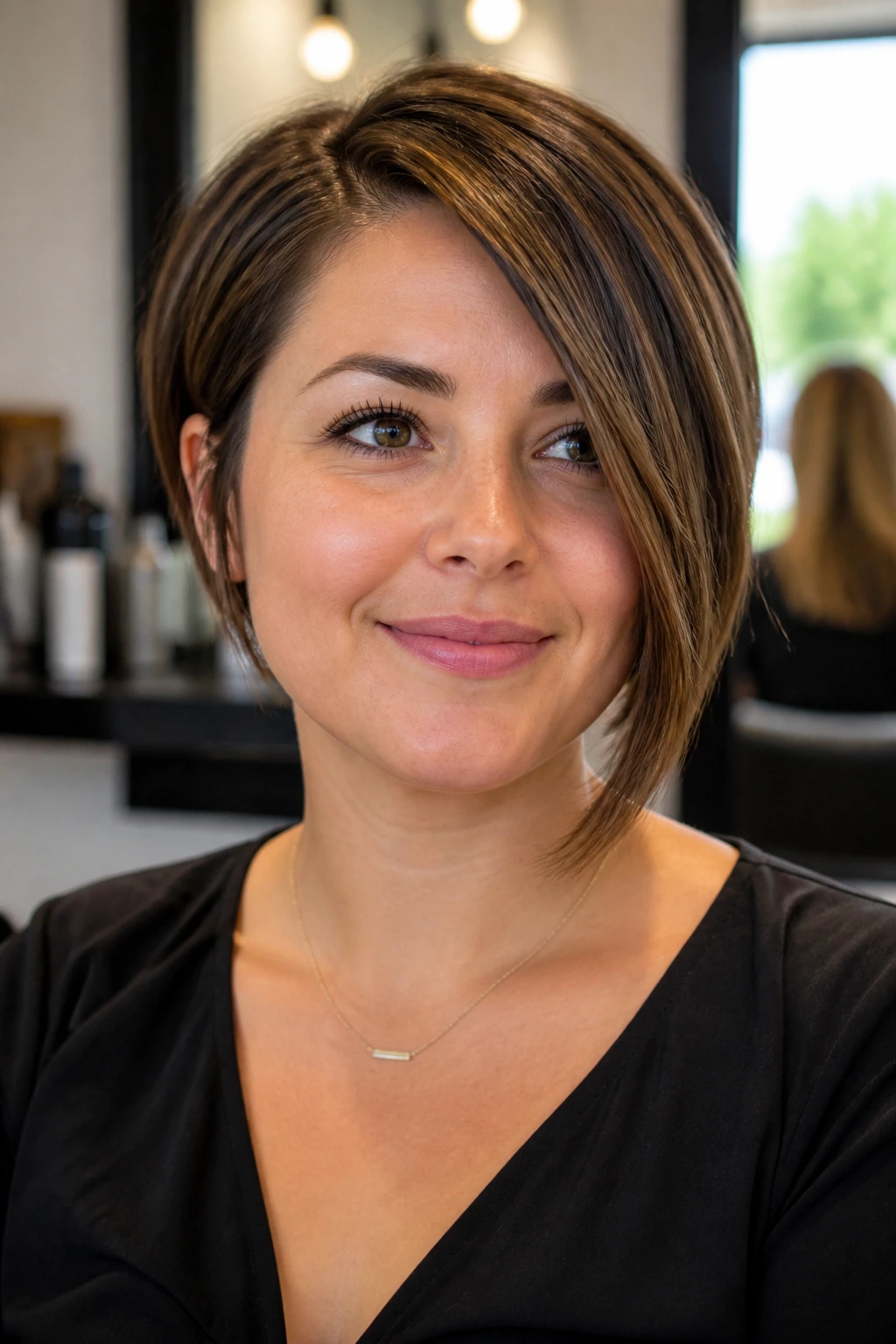
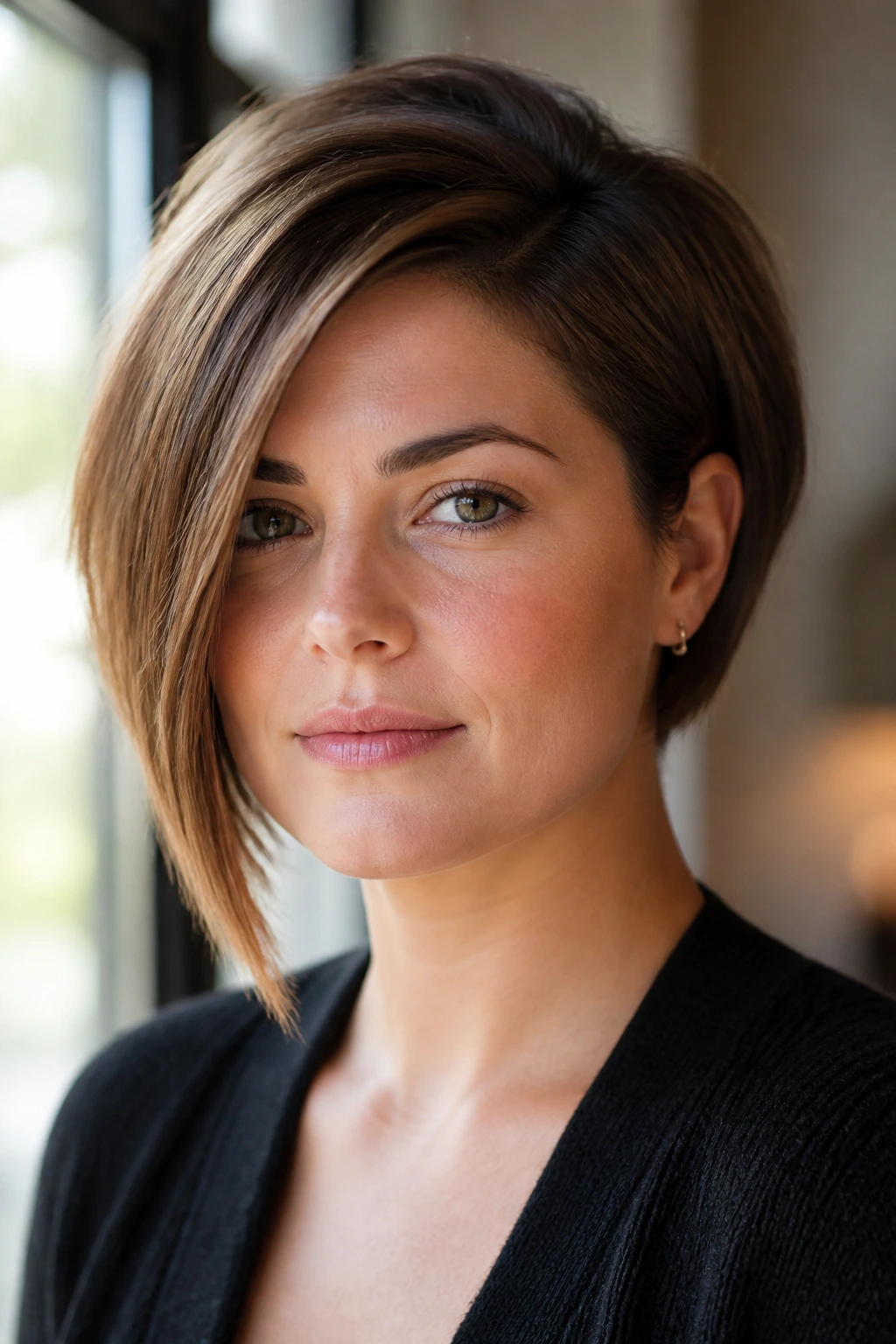
-
Diagonal lines do the slimming work: A front section that’s longer than the back pulls the eye downward instead of outward, which is why angled bobs keep showing up on this list.
-
Cheekbone-skimming pieces matter: When the shortest part of the cut stops above the widest point of the face, the cheeks don’t get boxed in.
-
A little crown height changes everything: Even an extra half-inch of lift at the roots can make a short cut read longer and leaner.
-
Clean edges beat fluffy width: Straight hair looks best when the outline is crisp; too many short layers near the sides can make the face feel broader than it is.
-
Parts are not minor details: A deep side part can calm down a round face faster than another two inches of length.
-
Short does not mean flat: Pixies, crops, and bobs can all work if the silhouette stays controlled around the temples and nape.
1. Blunt Chin-Length Bob

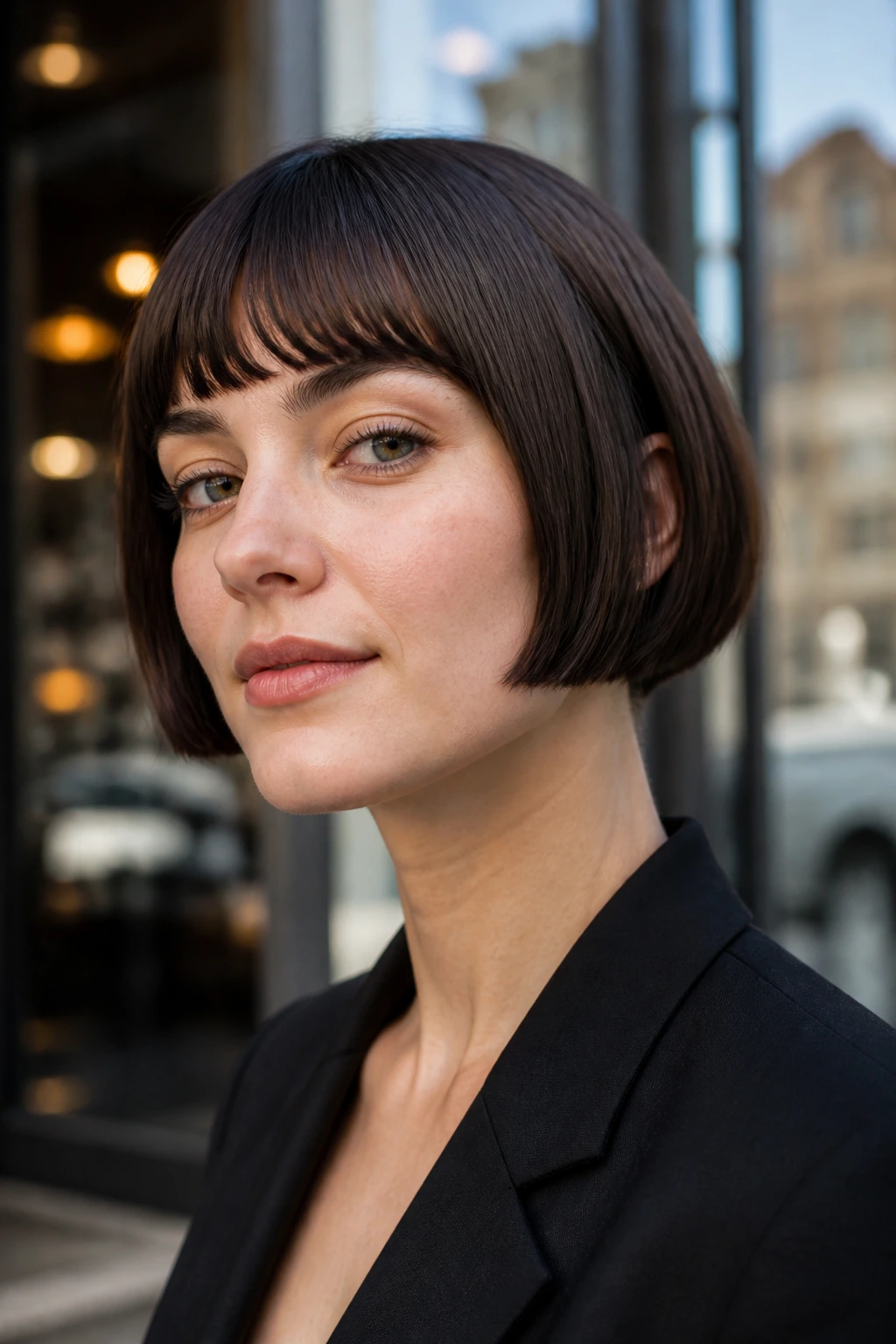
A blunt chin-length bob is the haircut equivalent of a clean white shirt. No fuss. No excess. Just a sharp line that lands right where the face needs structure.
Why It Flatters a Round Face
The blunt edge gives the jaw a firmer outline, which helps offset the softness in the cheeks. The trick is placement. If the hem sits exactly on the widest part of the face, it can feel boxy in a bad way; if it drops a touch below the chin, it usually reads cleaner. I like this cut best with a side part and tucked ends, because that little asymmetry keeps it from feeling too neat.
Styling Note
Keep the ends smooth and slightly beveled inward, not curled under with a big round brush. You want a line, not a puffball. A flat iron pass over the bottom inch is usually enough.
2. Sleek A-Line Bob
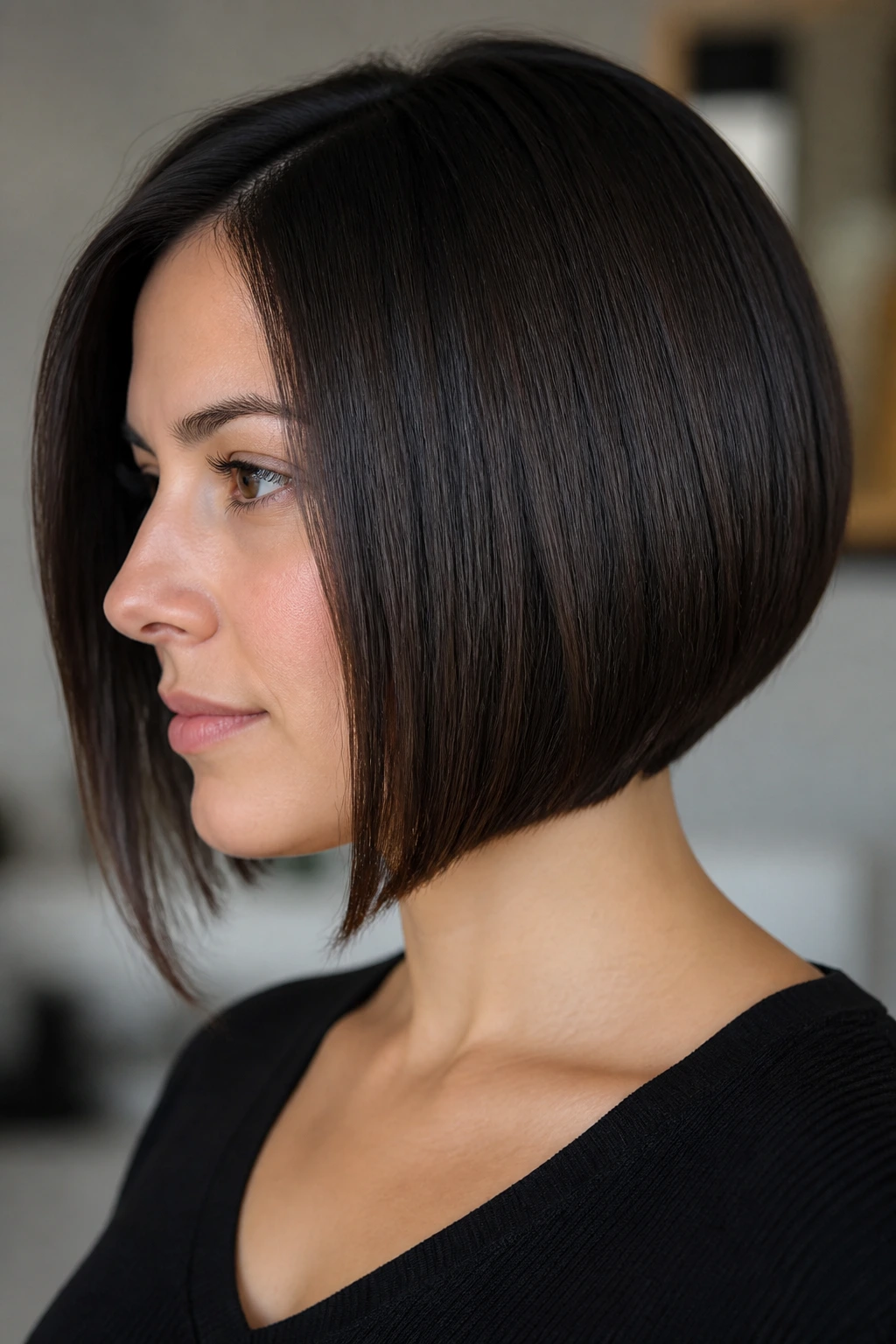
This is the bob for people who want the haircut to do the contouring.
What the Angle Does
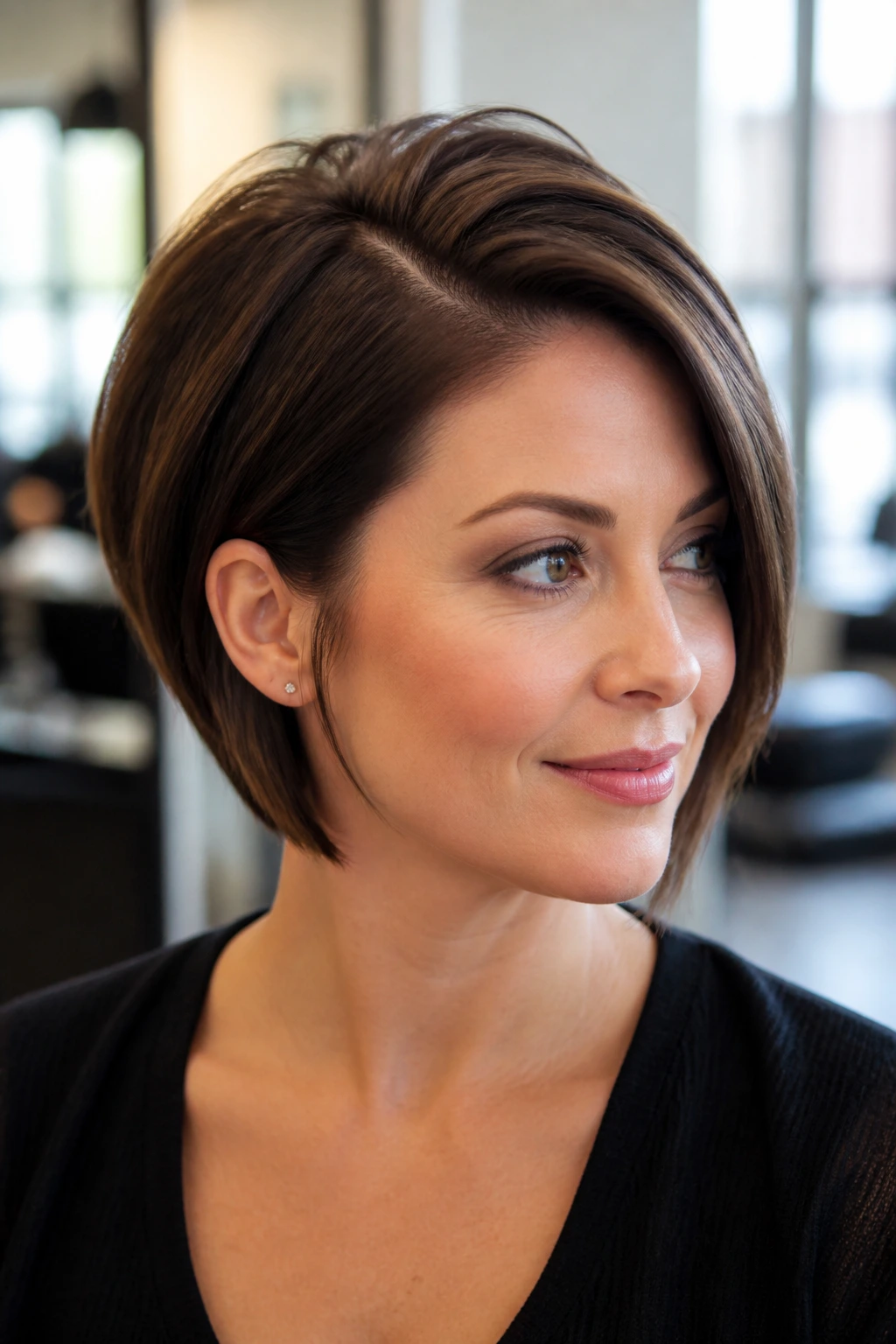
The A-line bob is shorter in the back and longer in the front, which draws a diagonal line across the face. That diagonal matters. Round faces soften on curves; a cut that moves at an angle interrupts that curve in a way that feels clean, not harsh. It also keeps the front pieces from sitting right on the cheeks.
A good A-line bob should look deliberate from the side. The back hugs the nape, the front grazes the jaw, and the whole shape feels tidy even when the hair is dead straight. If your hair is fine, this shape gives the illusion of density. If it’s thick, the angle removes bulk where you don’t want it.
3. Asymmetrical Bob
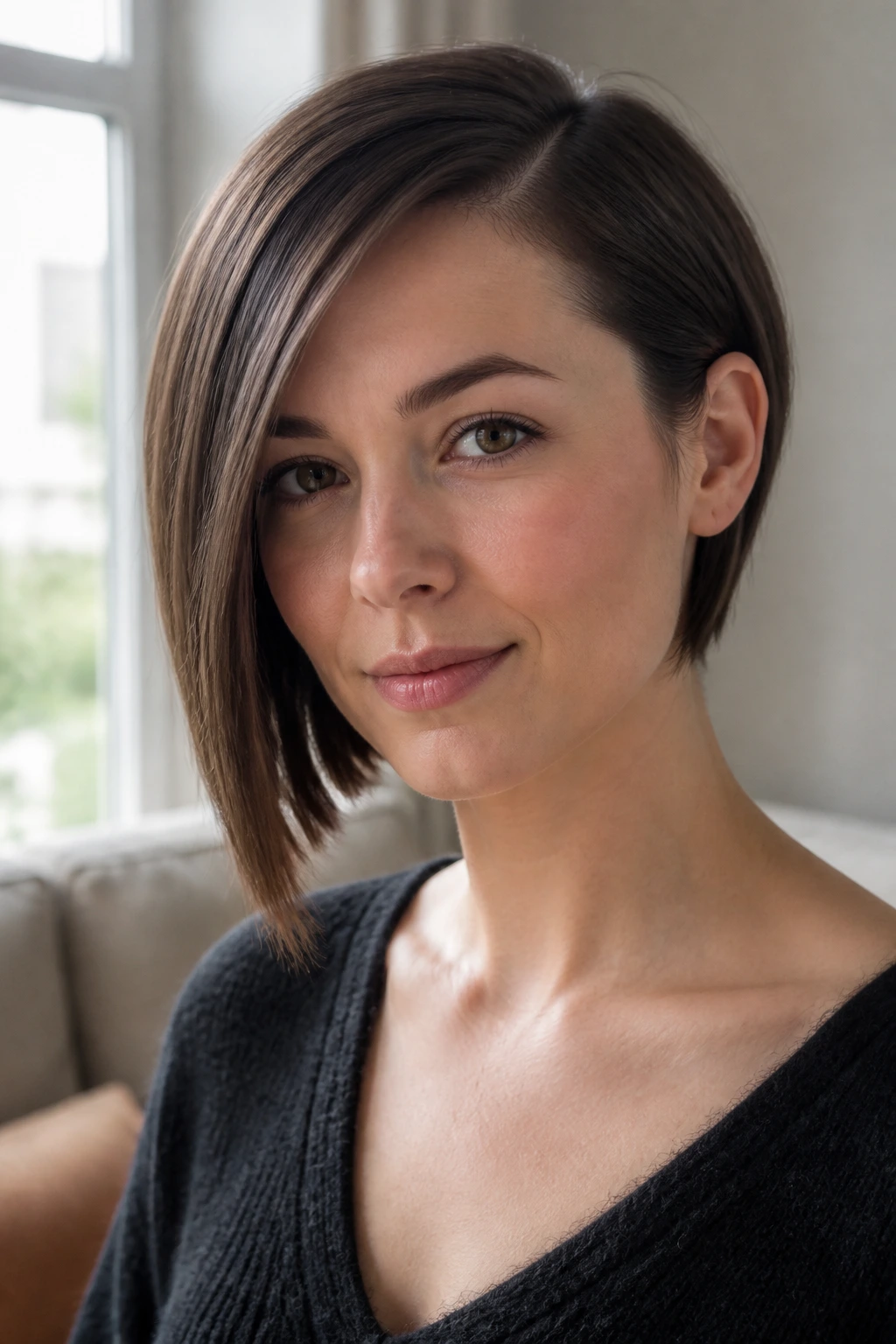
One side longer. One side shorter. Simple idea, strong payoff.
Why It Works
A round face benefits from anything that breaks up perfect symmetry, and an asymmetrical bob does that with almost no effort. The longer side gives the eye somewhere to travel, while the shorter side keeps the style from ballooning at the cheeks. I especially like this cut with a deep side part, because the part and the length difference work together instead of competing.
The key is restraint. You do not need a dramatic one-inch ear-to-ear difference unless you want that look. Even a subtle shift of half an inch to an inch can change the shape enough to matter.
Quick Styling Cue
Flat-iron the longer side so it falls like a clean ribbon, then keep the shorter side tucked or close to the cheekbone. That contrast is the whole point.
4. French Bob with a Soft Fringe

A French bob can be charming on a round face, but only when the fringe has a little air in it.
The best version sits around the jaw and pairs with a soft, piecey fringe that stops above the brows or just skims them. Heavy, blunt bangs can close in the face fast. Softer bangs leave room around the eyes and keep the cut from reading too dense at the top.
I think this look works best when the ends are neat and the fringe is slightly irregular. Not messy. Just not too perfect. A little separation at the fringe makes the whole cut feel lighter.
5. Micro Bob

Shorter hair does not automatically widen a round face. In the right shape, it can actually sharpen it.
Why It Deserves a Spot Here
A micro bob sits above the jaw and usually just below the ears, so the face gets more visible neck and less side bulk. That matters. The eye sees vertical space, not just width. On straight hair, the cut looks especially crisp because there’s no wave pattern softening the outline.
This one is best if you like precision. The hemline needs to stay neat, and the sides should not puff out. If your hair grows fast around the nape, plan on regular trims. A grown-out micro bob can lose the whole effect in a hurry.
6. Box Bob
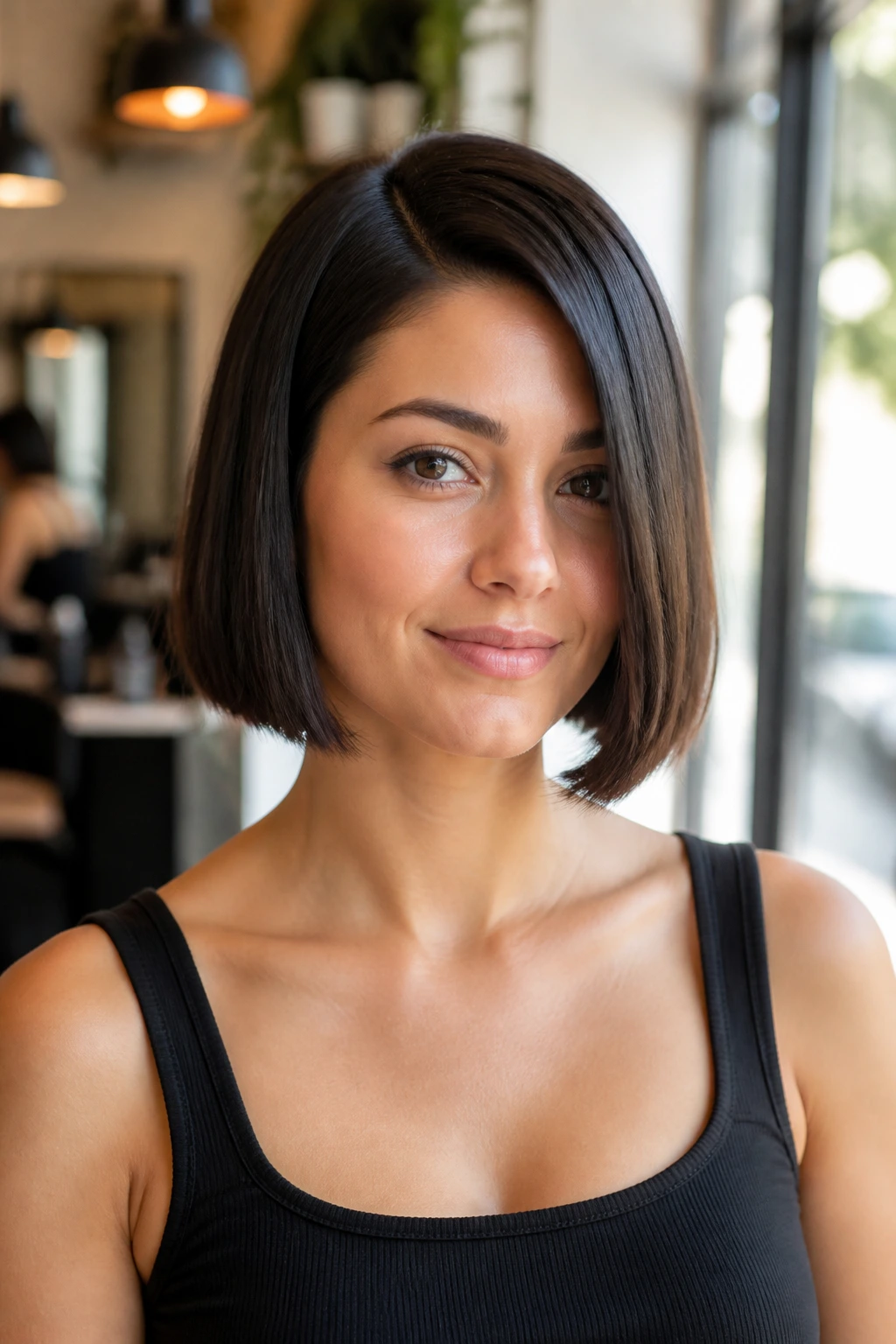
The box bob is the quiet overachiever on this list.
What Makes It Different
It has a squarer silhouette, usually with blunt edges and very little layering. That square shape can work beautifully on a round face because it introduces corners where the face is all curve. There’s no need to over-texturize it. The clean line is the point.
A box bob looks especially good on straight, dense hair. The weight helps hold the shape instead of collapsing into a soft bubble. If your hair is fine, ask for a slight undercut at the nape so the back does not spread out.
Best move: keep the ends polished and the part slightly off center. That keeps the shape from feeling too strict.
7. Inverted Bob
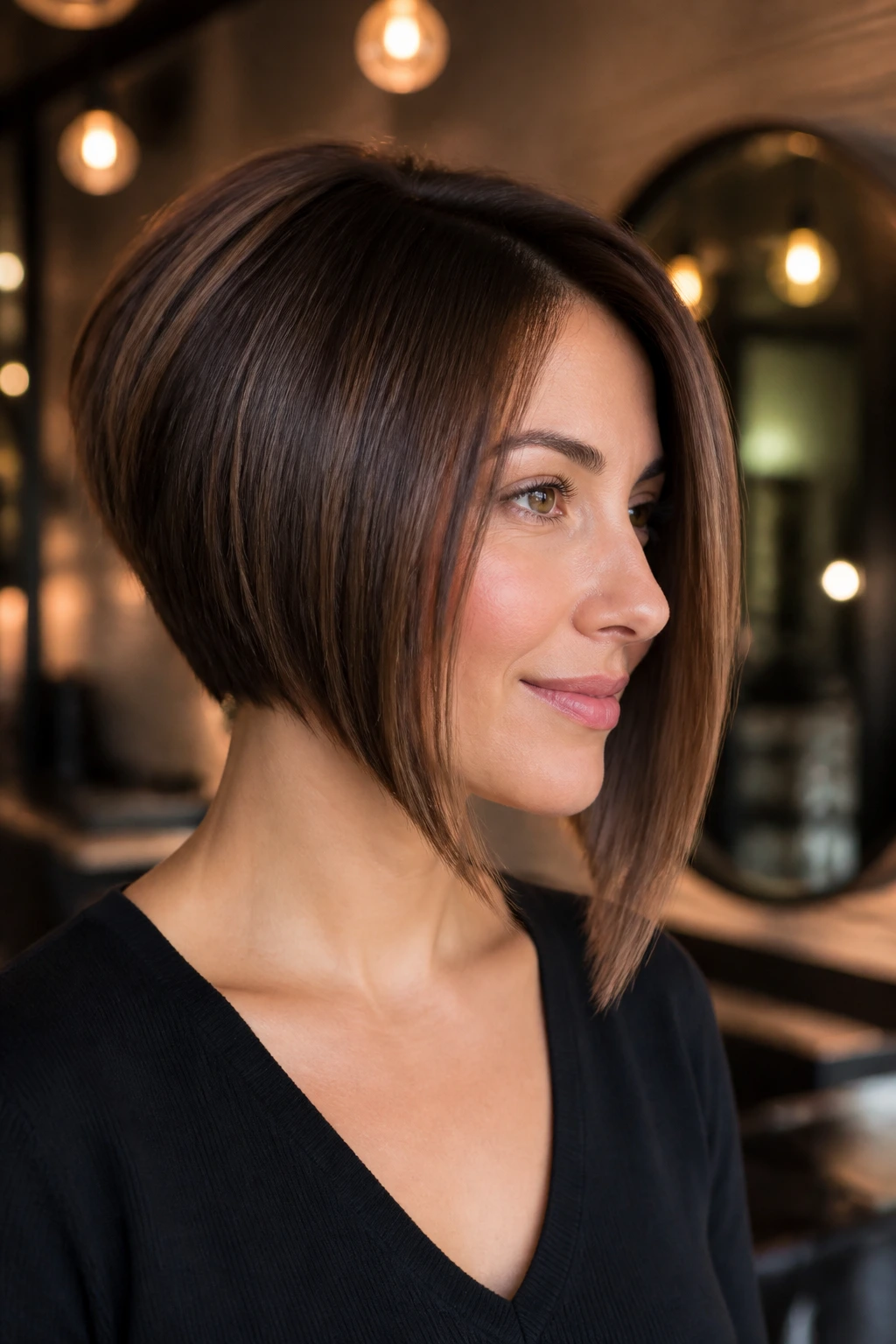
If you want lift without teasing the crown into a helmet, start here.
Why It Flatters
An inverted bob is stacked a bit higher in the back and longer in the front. That back lift adds height, which lengthens the face visually, while the front pieces skim past the cheeks. It’s a smart cut for straight hair because the geometry stays visible. Wavy hair can blur the shape. Straight hair shows it off.
I like this style when the front is not overly long. Too much length in front can drag the face down. Too little and you lose the slimming effect. A good stylist will keep the angle obvious but not theatrical.
8. Jaw-Skimming Side-Part Bob


This is one of the easiest short straight hairstyles for round faces to wear every day.
The side part is doing half the work. It breaks the face into uneven sections, which keeps everything from reading as one wide circle. The jaw-skimming front pieces then create a line below the cheekbone, so the eye gets pulled lower. That’s the trick.
This cut is also easy to tuck behind one ear. That tiny move opens up the jaw and makes the style feel lighter. If you want low maintenance with a little polish, this one’s hard to beat.
9. Chin-Length Bob with Curtain Bangs

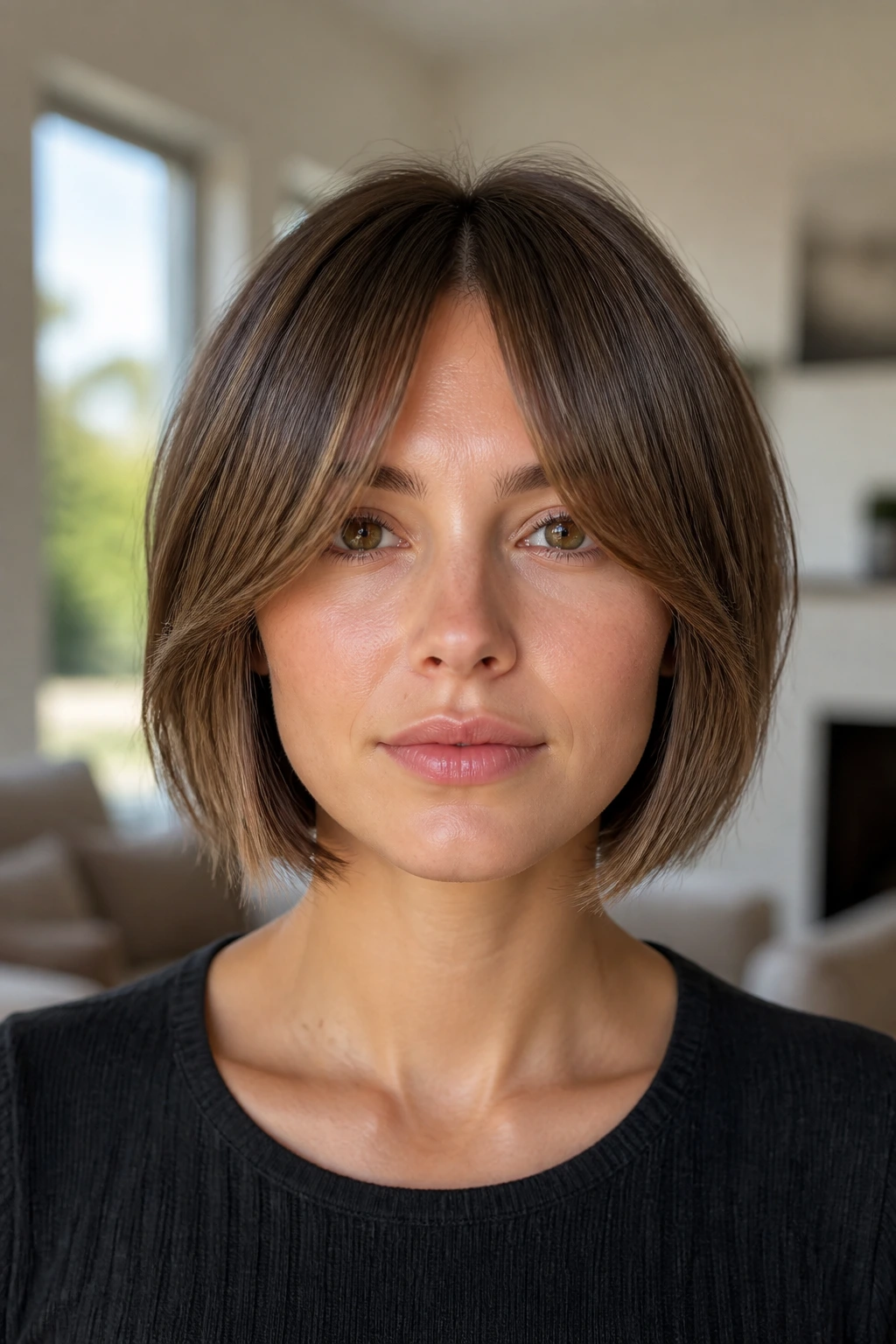
Curtain bangs are not the enemy of round faces. Bad curtain bangs are.
Why They Work
The useful version starts somewhere near the brow or a touch lower and opens out toward the cheekbones. That shape creates a vertical break in the center and softens the width at the sides. If the bangs are cut too short or too dense, they sit like a shelf. Nobody needs that.
This bob works best when the curtain pieces blend into the front length and stop just past the widest part of the cheek. Straight hair keeps the transition clean. I’d avoid too much round-brush volume here. The bangs should part and fall, not puff.
Styling Cue
Blow-dry the fringe forward first, then split it and direct it outward with your fingers or a flat brush.
10. Long Pixie with a Side Sweep
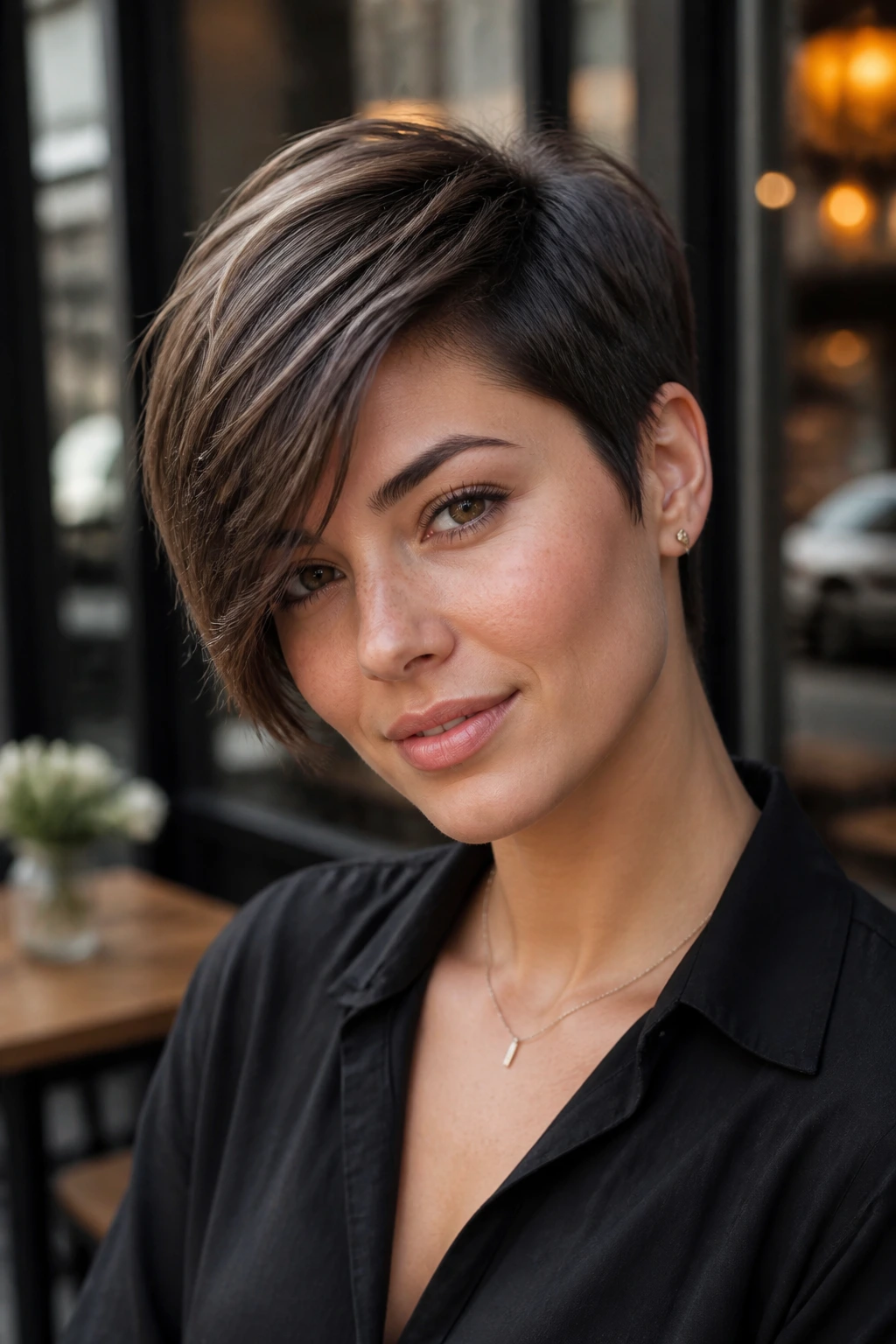
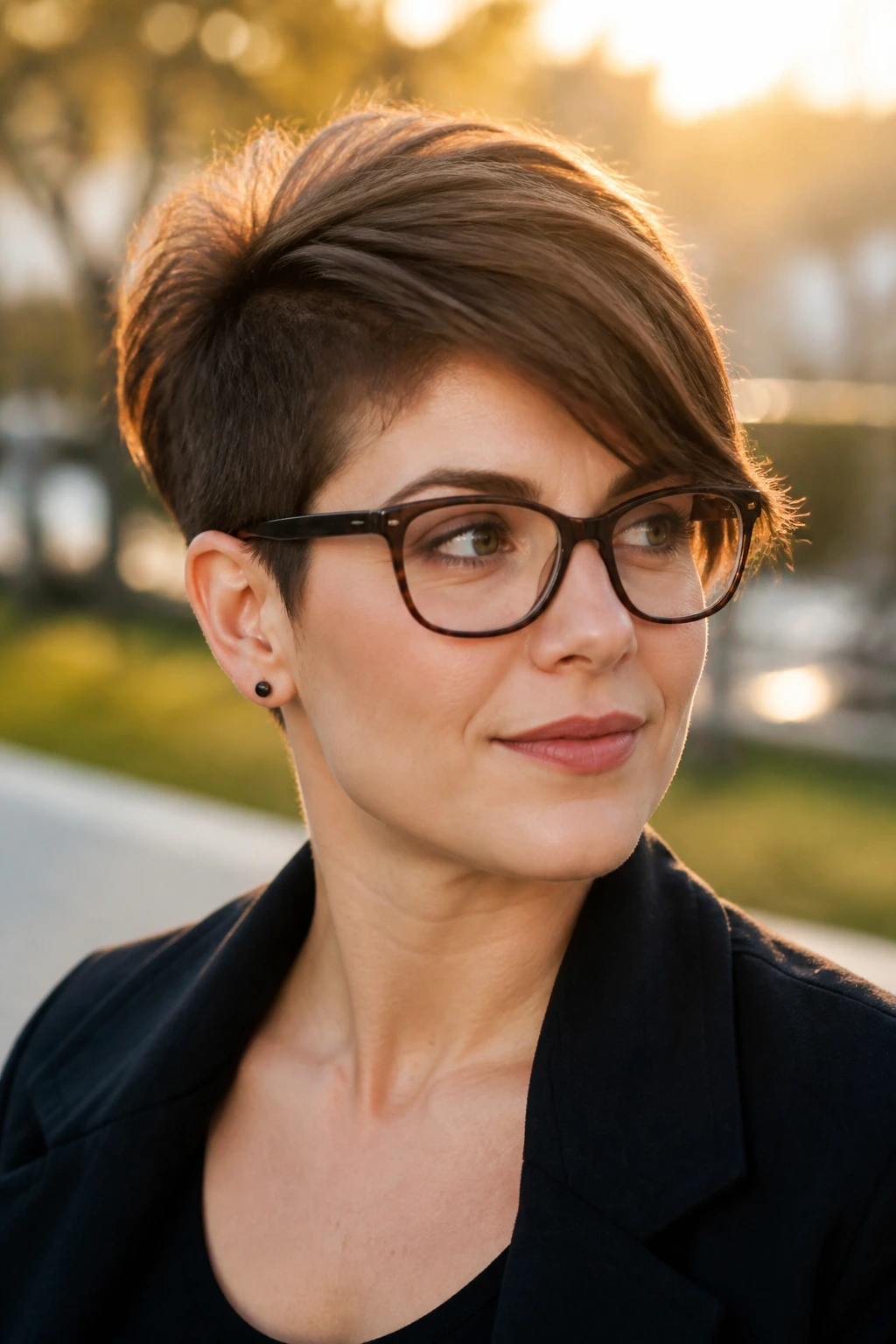
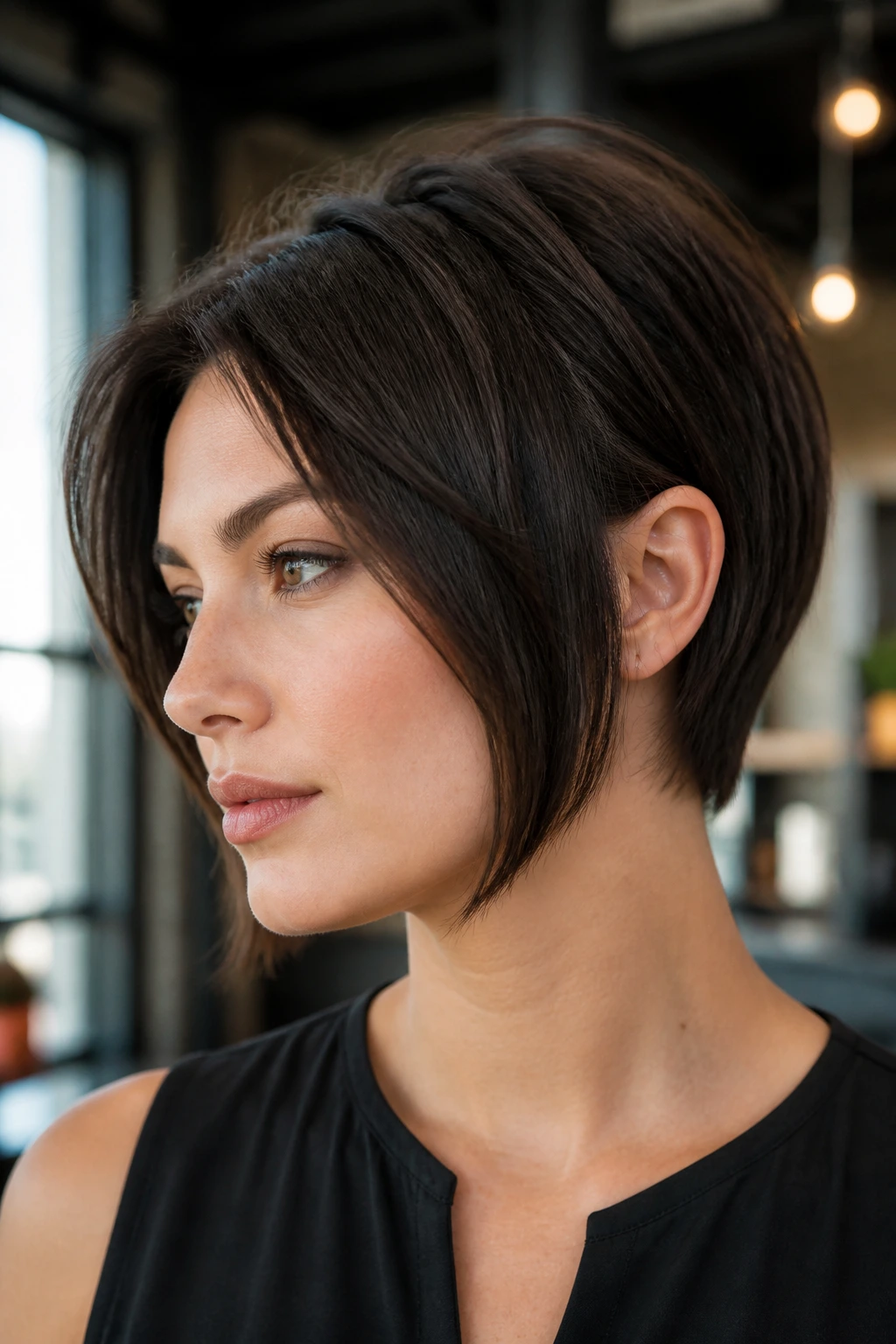
A long pixie is one of the smartest cuts for a round face because it builds length where the eye needs it most: on top.
The longer top section pulls attention upward, while the shorter sides keep the face from widening at the temples. A side sweep gives the cut movement without creating bulk. If the top is too flat, the whole look can get cute in the wrong way. If it has a little lift, it feels sharp.
This cut also wears well with glasses. The side-swept front keeps the frame line from fighting the haircut.
11. Tapered Pixie Crop
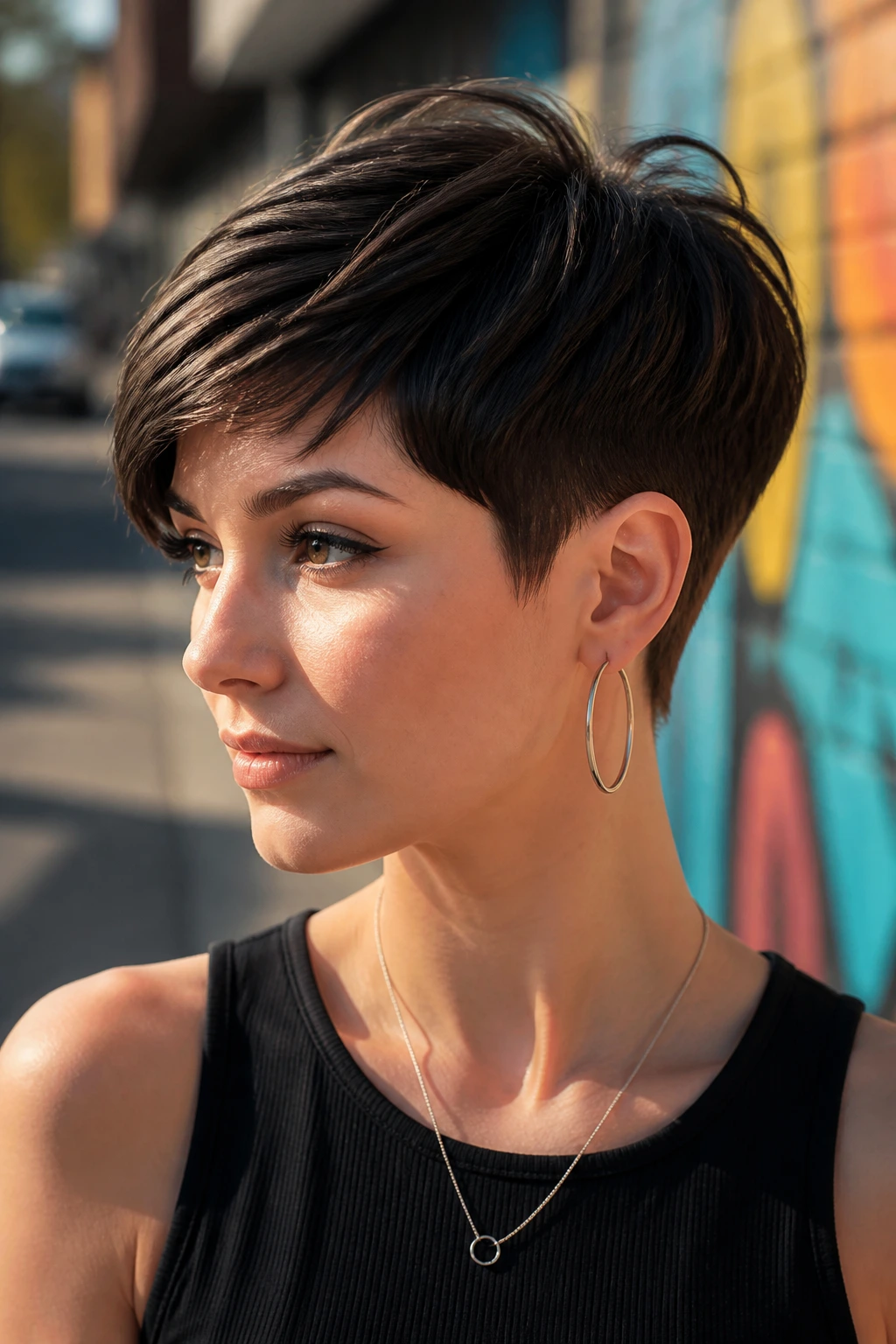

Short, neat, and tighter around the edges. That’s the appeal.
Why It Flatters a Round Face
The taper at the nape and temples removes width where round faces tend to collect it. The top stays longer, which keeps the shape from collapsing into a flat cap. On straight hair, the taper reads especially clean because the shorter sections lie close to the head instead of frizzing outward.
I like this cut on people who want an easy morning routine. It needs less styling than a bob, but it still benefits from a little root lift. A dab of lightweight paste through the top is usually enough.
12. Pixie Bob
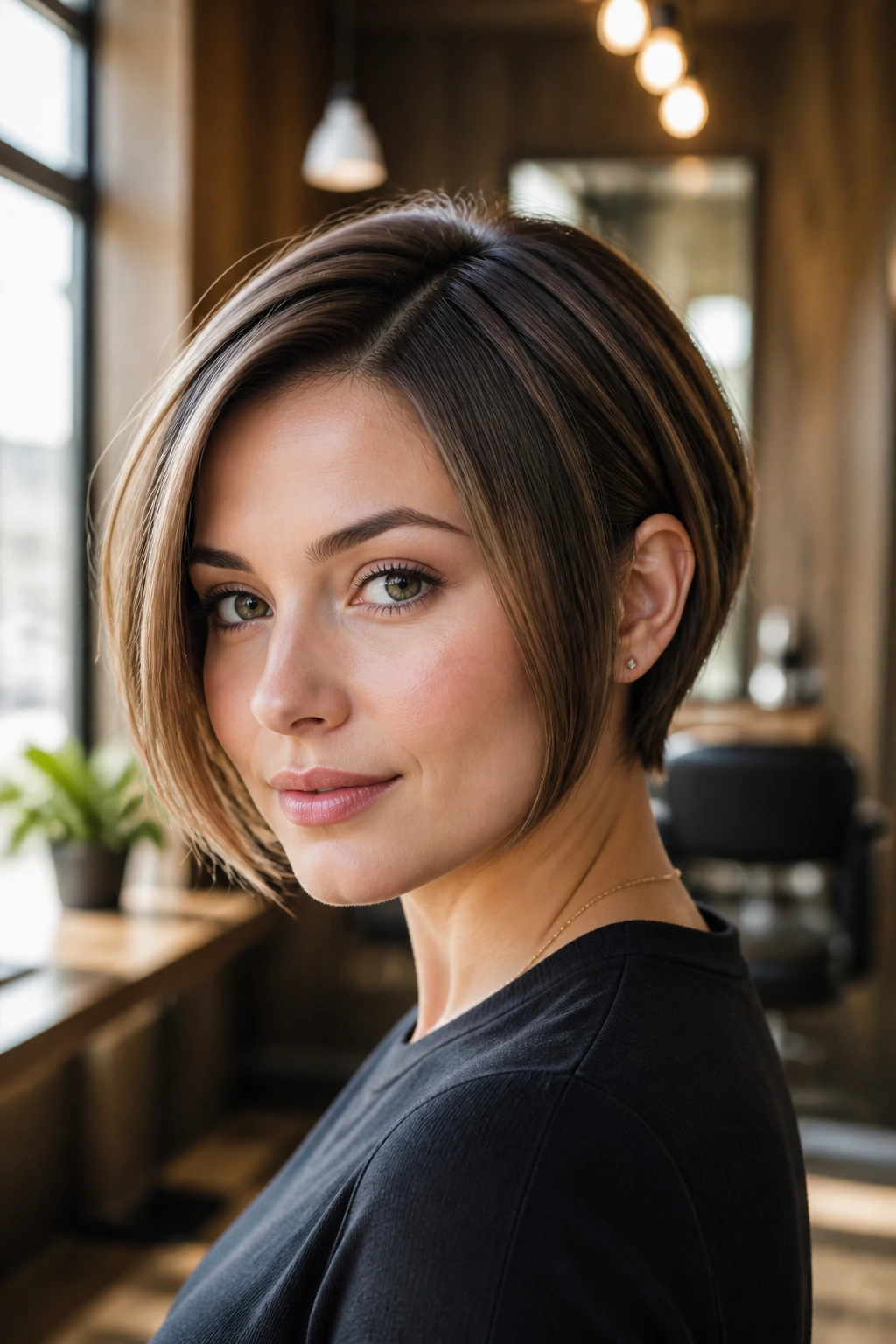
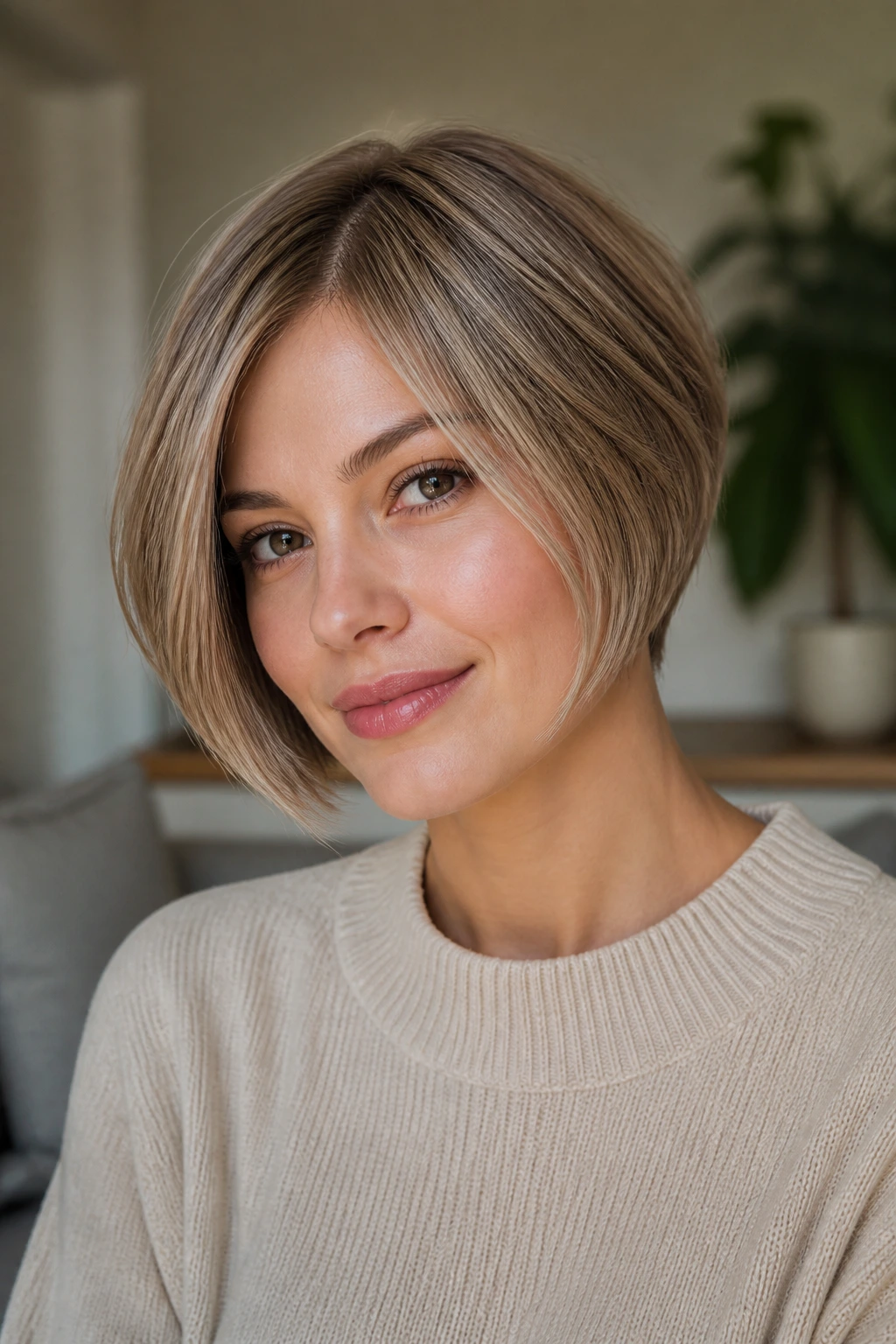
A pixie bob is the middle ground for people who want short hair without going all the way to a crop.
It keeps enough length around the front to skim the cheeks, but the back stays compact. That balance matters on a round face because it prevents the widest part of the cut from sitting at the middle of the face. You get a little softness without losing definition.
This is a good cut if you like to tuck hair behind one ear, wear it half-sleek, or change the part often. It is flexible without becoming shapeless.
13. Undercut Pixie
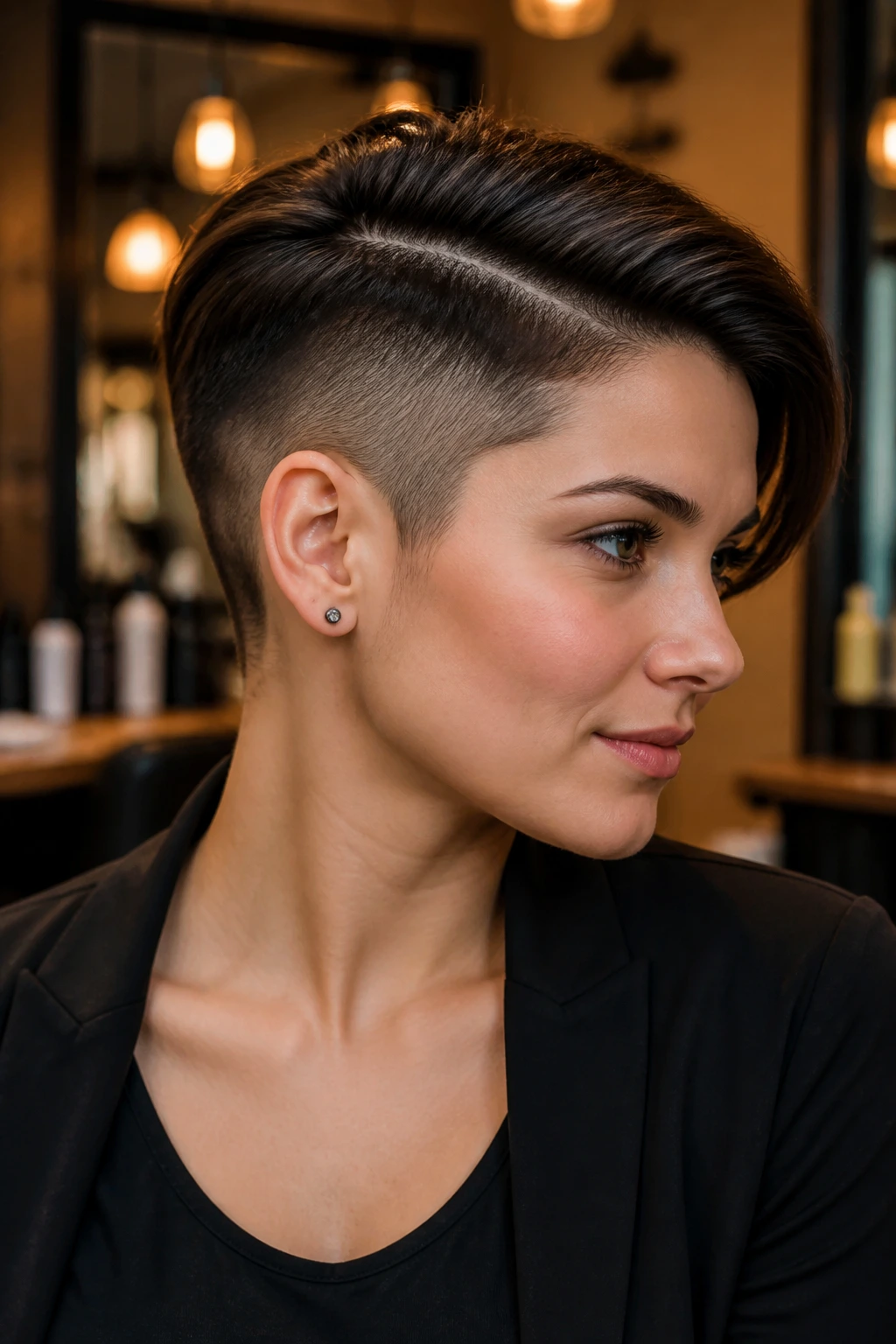
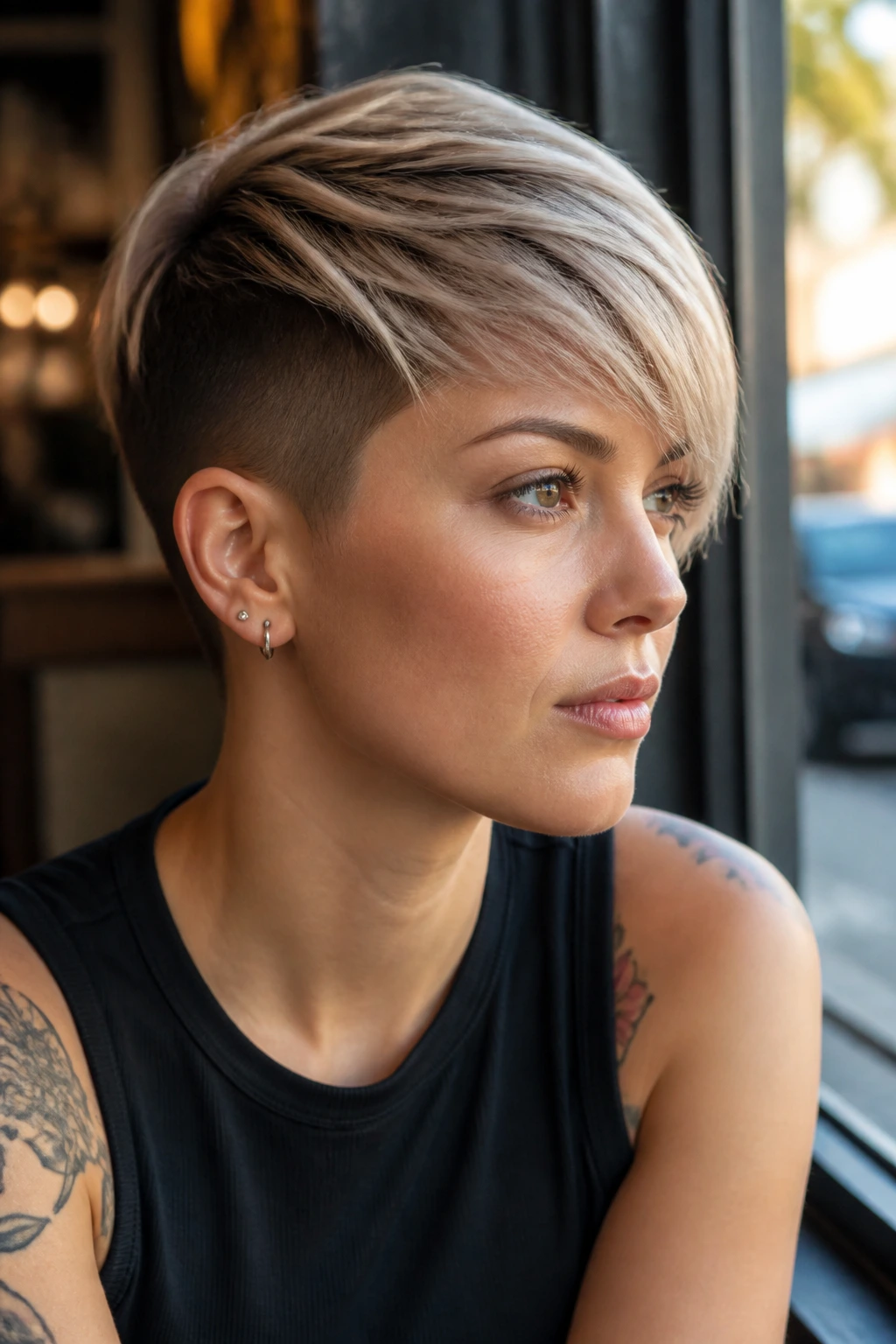
Does an undercut sound extreme? It can. But on a round face, it can also be a neat little cheat.
By removing bulk underneath, the style stops the sides from puffing out and widening the face. The top can stay longer and sleeker, which gives you height and direction. The contrast is strong, so this cut is best when you want the hair to look intentional, not sweet.
Keep the top smooth and let the undercut stay hidden unless you want a bit of edge to show. A side sweep across the forehead helps the whole shape read longer.
14. Ear-Length Crop with Tucked Sides
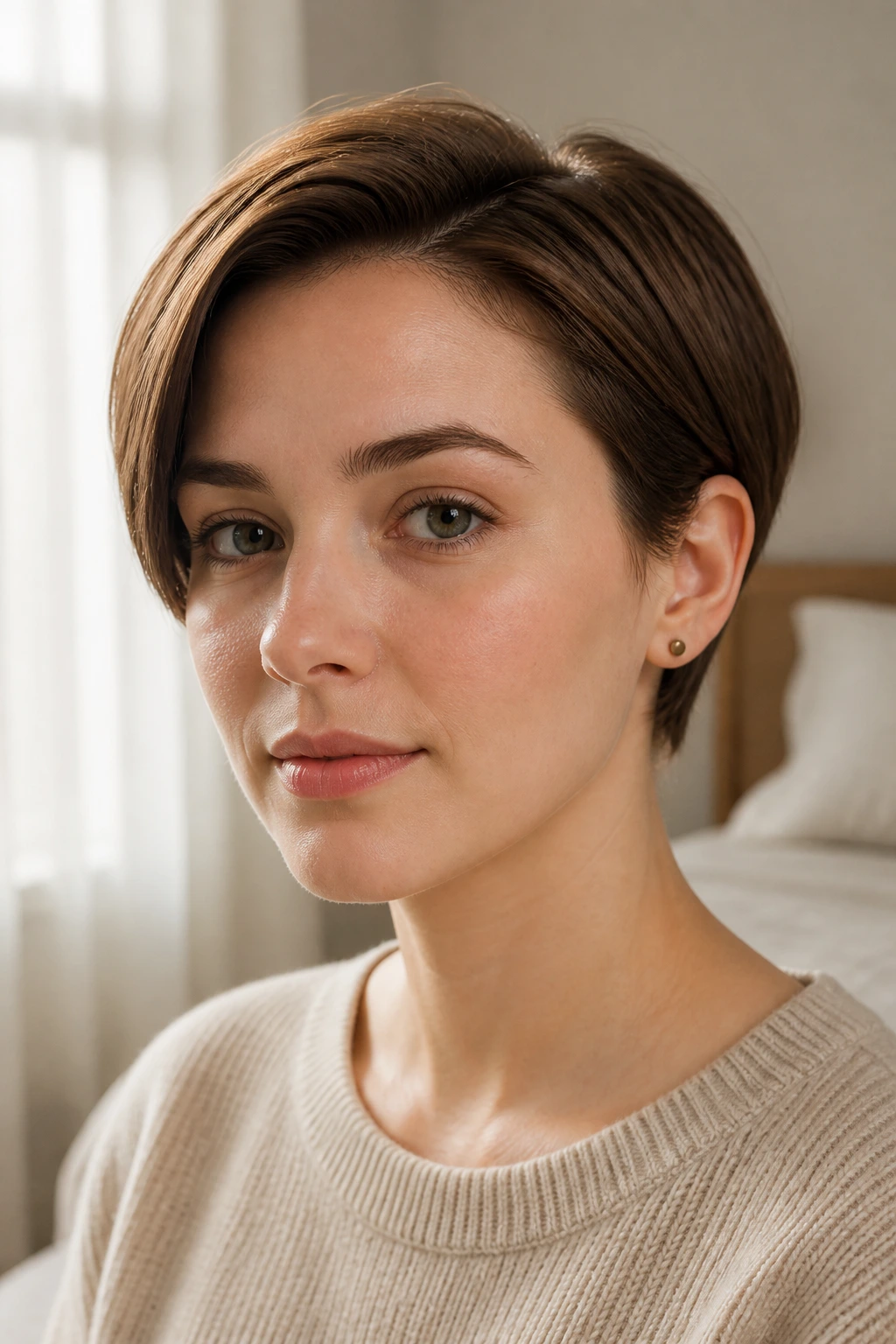
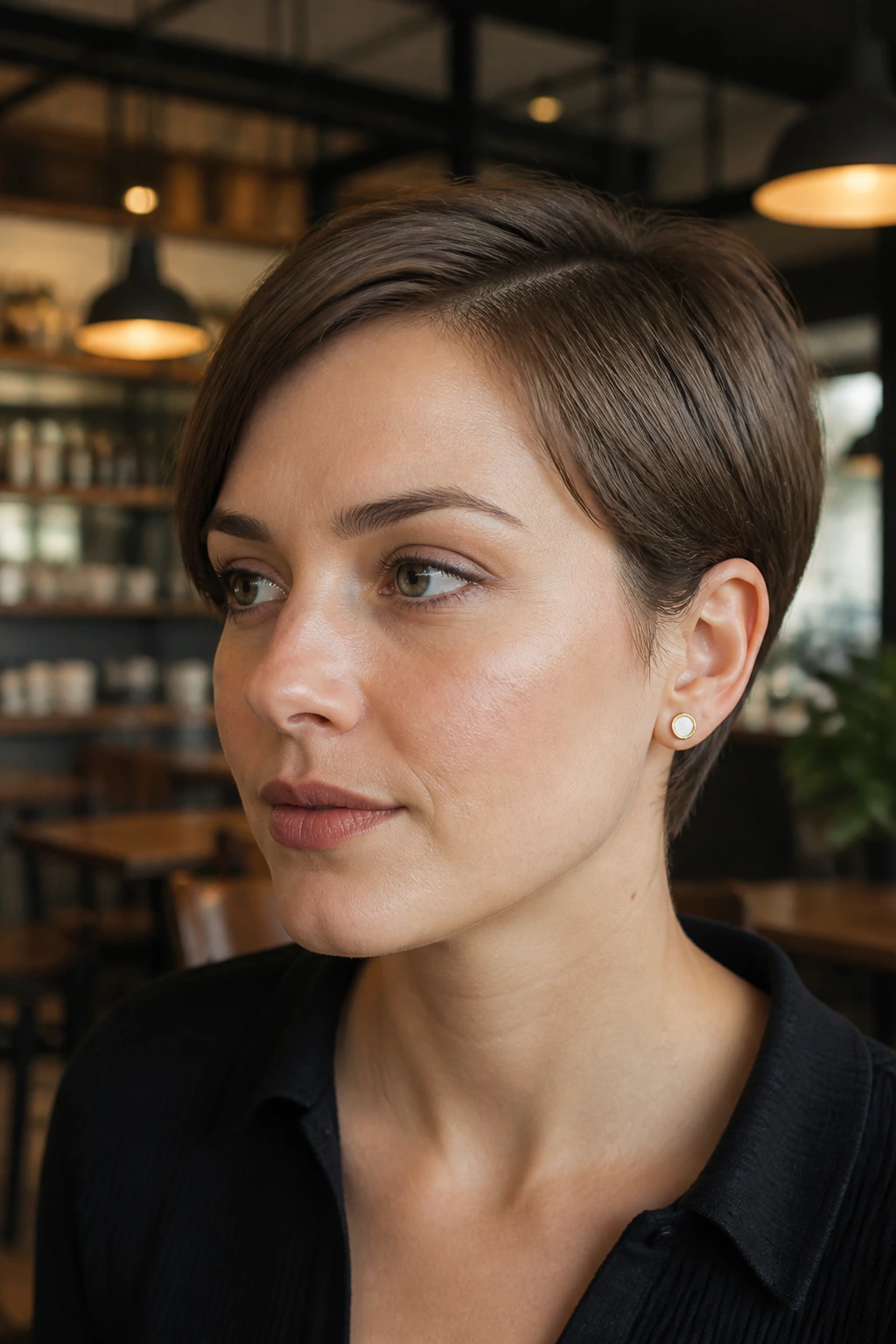
This one is sharp in a very specific way.
The ears are partly visible, the sides stay close, and the top lies controlled rather than fluffy. That open area around the ears and neck gives a round face some breathing room. It also makes the jaw look a touch longer, which is never a bad thing here.
I like this crop with a smooth side part and a tiny bit of bend at the front. Nothing bulky. Nothing beachy. The charm is in the clean line.
15. Graduated Bob
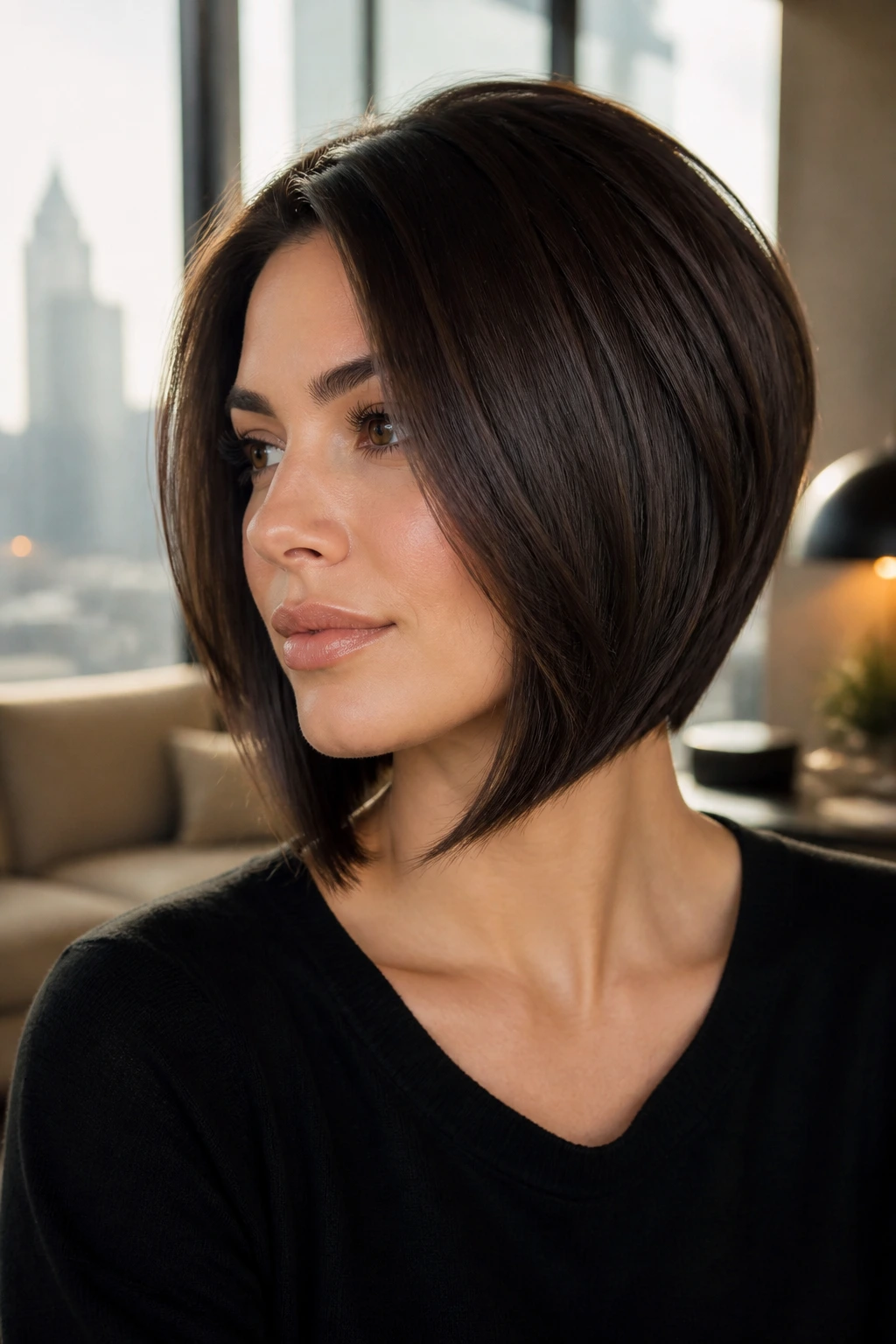
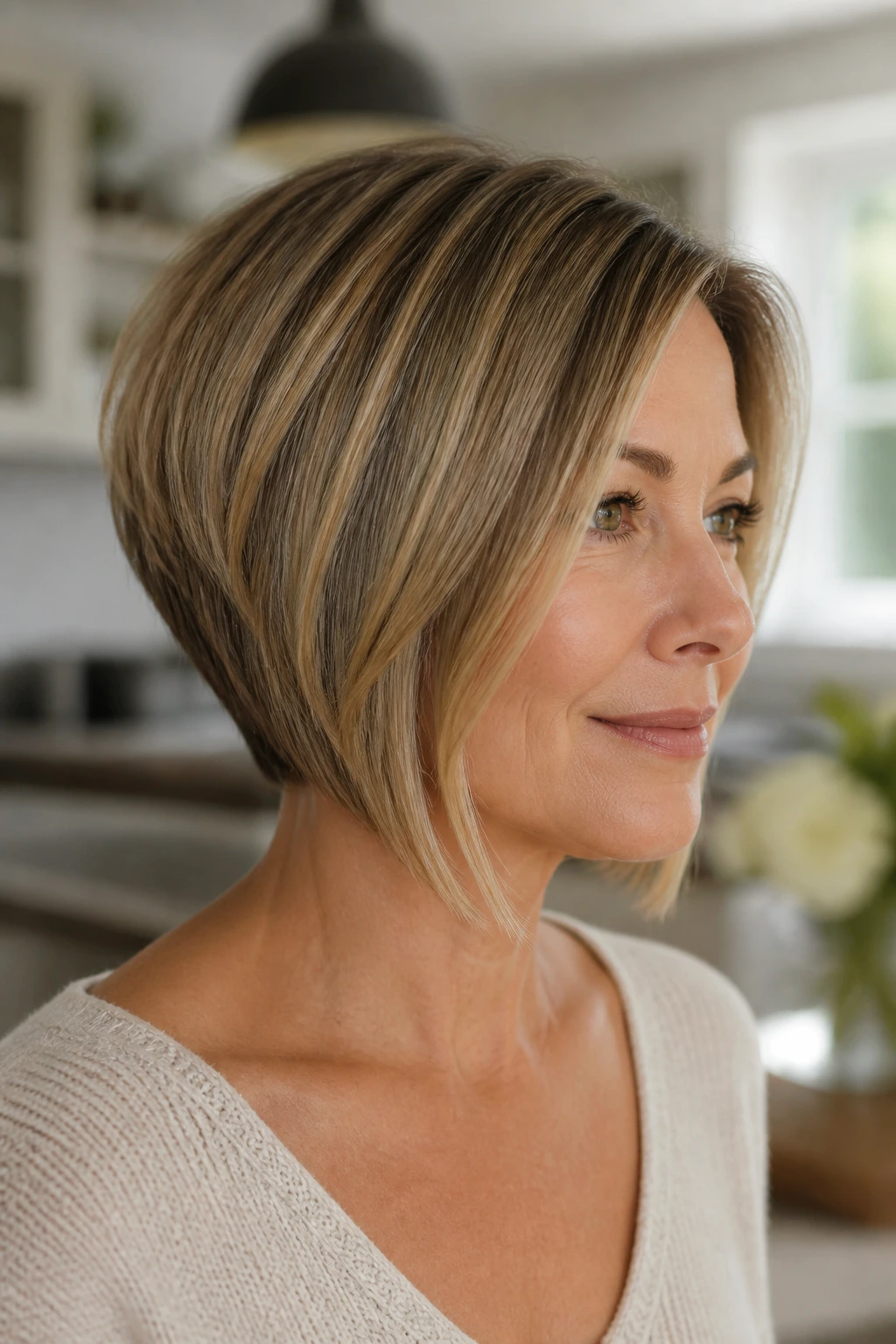
A graduated bob has built-in structure, and straight hair shows it off better than almost any other texture.
The shorter layers in back lift the crown and taper into longer front pieces. That gives the face a vertical frame instead of a wide one. On a round face, the crown height matters more than people realize. A flat top can make the whole cut feel heavy. A graduated shape keeps the energy moving upward and forward.
This is one of my favorite cuts for thick straight hair because it removes bulk without turning the ends flimsy. The shape stays crisp for longer.
16. Straight Shag Bob


A shag on straight hair only works when the layers are controlled.
Too many short layers at the sides and you get fluff. Too little and the shag disappears. The sweet spot is a bob with long, understated interior layers that create movement while the outline stays clean. That lets the hair shift without exploding at the cheeks.
This cut is good if you want texture but still need the face to look a little longer. Keep the ends blunt enough to hold a line. Let the movement live inside the cut, not on the outer edge.
17. Razor-Cut Bob


Razor cutting can be lovely on straight hair, but it needs a steady hand.
The razor softens the ends so the bob moves instead of sitting like cardboard. On a round face, that can be useful if the hair is dense and you want less visual heaviness. The catch is simple: too much razor work near the cheekbone can create fuzzy width. Keep the softening low and the front pieces long enough to skim past the face.
This is a good one for people who like a slightly undone finish without actual mess.
18. Collarbone Skimmer
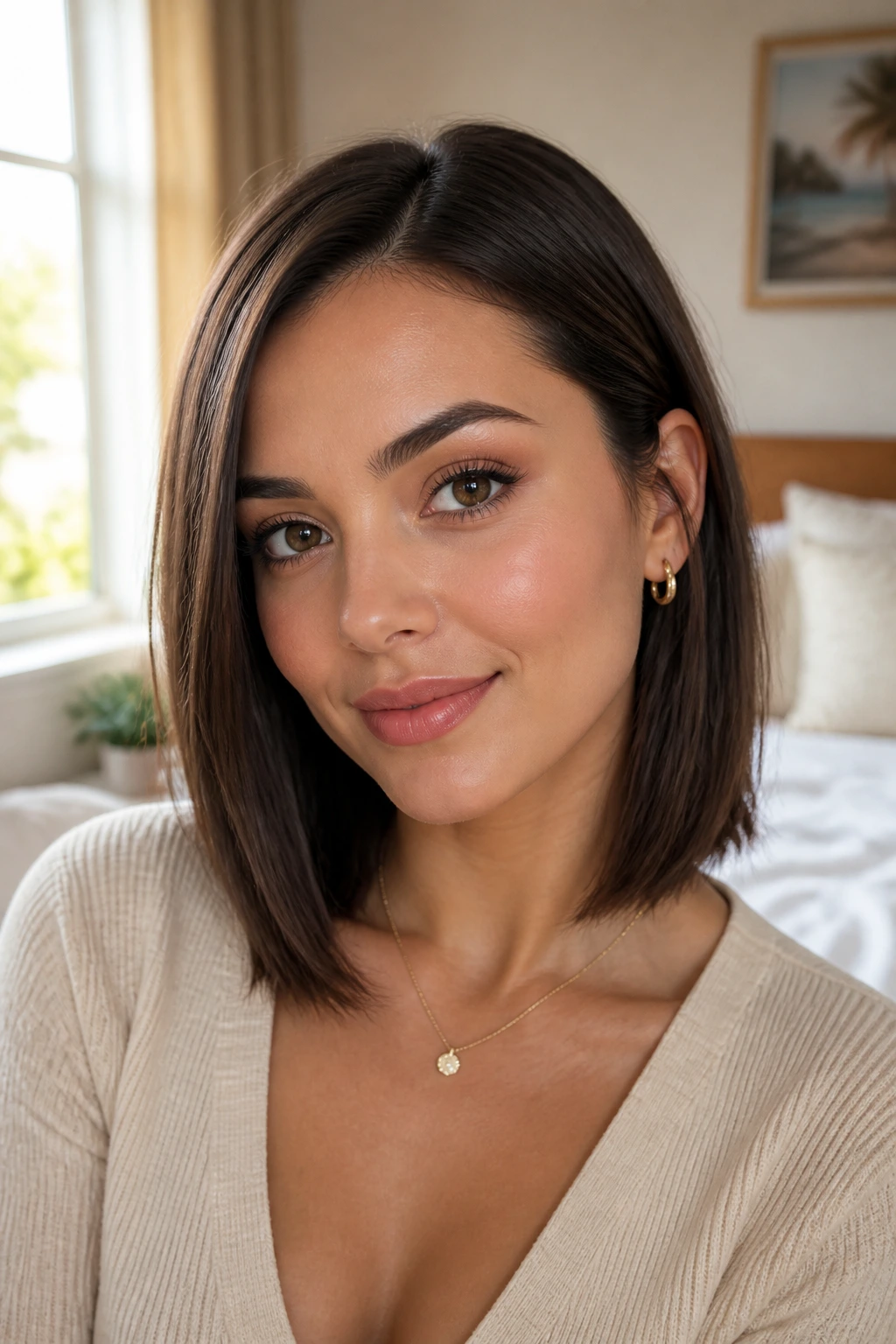

Not everyone wants a very short cut. Fair enough.
A collarbone skimmer lands just below the widest part of the face and gives you one long, straight line from root to hem. That extra length can make a round face look noticeably leaner without requiring much styling. It is still short enough to feel fresh and easy, but it avoids the cheekline problem that chin-length cuts sometimes create.
I especially like this option if you wear your hair tucked behind your ears or pulled half back. It gives you room to play without losing shape.
19. Center-Part Blunt Bob

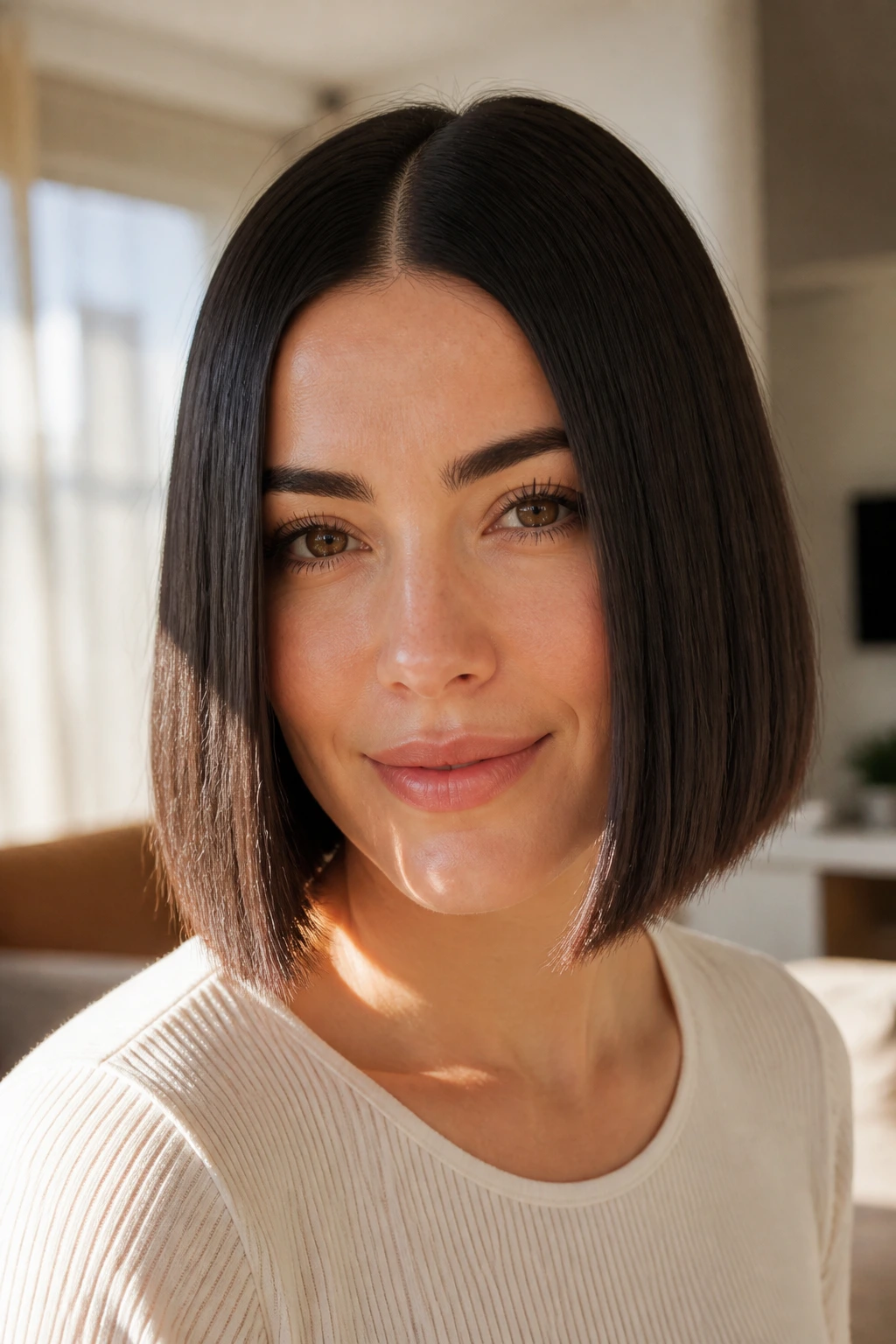
A center part on a round face gets blamed too quickly. The real issue is usually the cut, not the part.
Why It Can Work
When the bob is long enough to sit below the chin and the hem is blunt, the center part adds a clean vertical line down the face. That symmetry can be elegant, not widening, if the length is right. The front pieces should not stop right at the cheeks. They need to move below them.
If your hair is straight and medium to thick, this cut can look especially polished. Keep the roots smooth and the ends sharp. A center part plus a too-short bob is where people run into trouble. The same part on a slightly longer blunt cut can look much better.
20. Deep Side-Part Bob

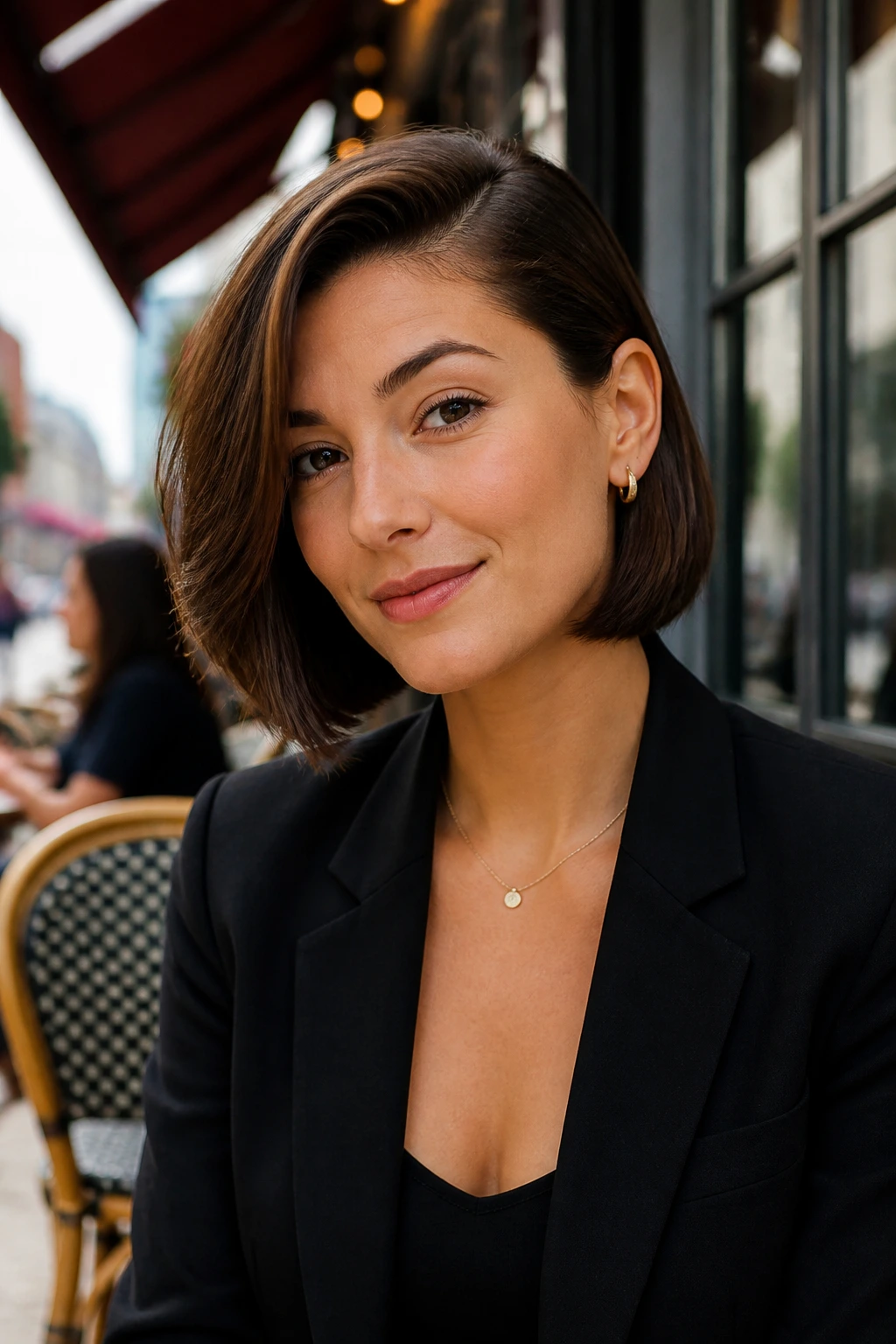
If you want the fastest face-shaping trick in the bunch, this is it.
A deep side part pushes hair over one side of the forehead and opens the other, which breaks up the roundness immediately. It also lets one side fall diagonally across the face, creating a leaner line. The bob itself can be blunt, slightly angled, or tucked; the parting does a lot of the work.
I like this on straight hair because there’s no wave pattern fighting the shape. One clean part. One smooth side. Done.
21. Front-Heavy Bob
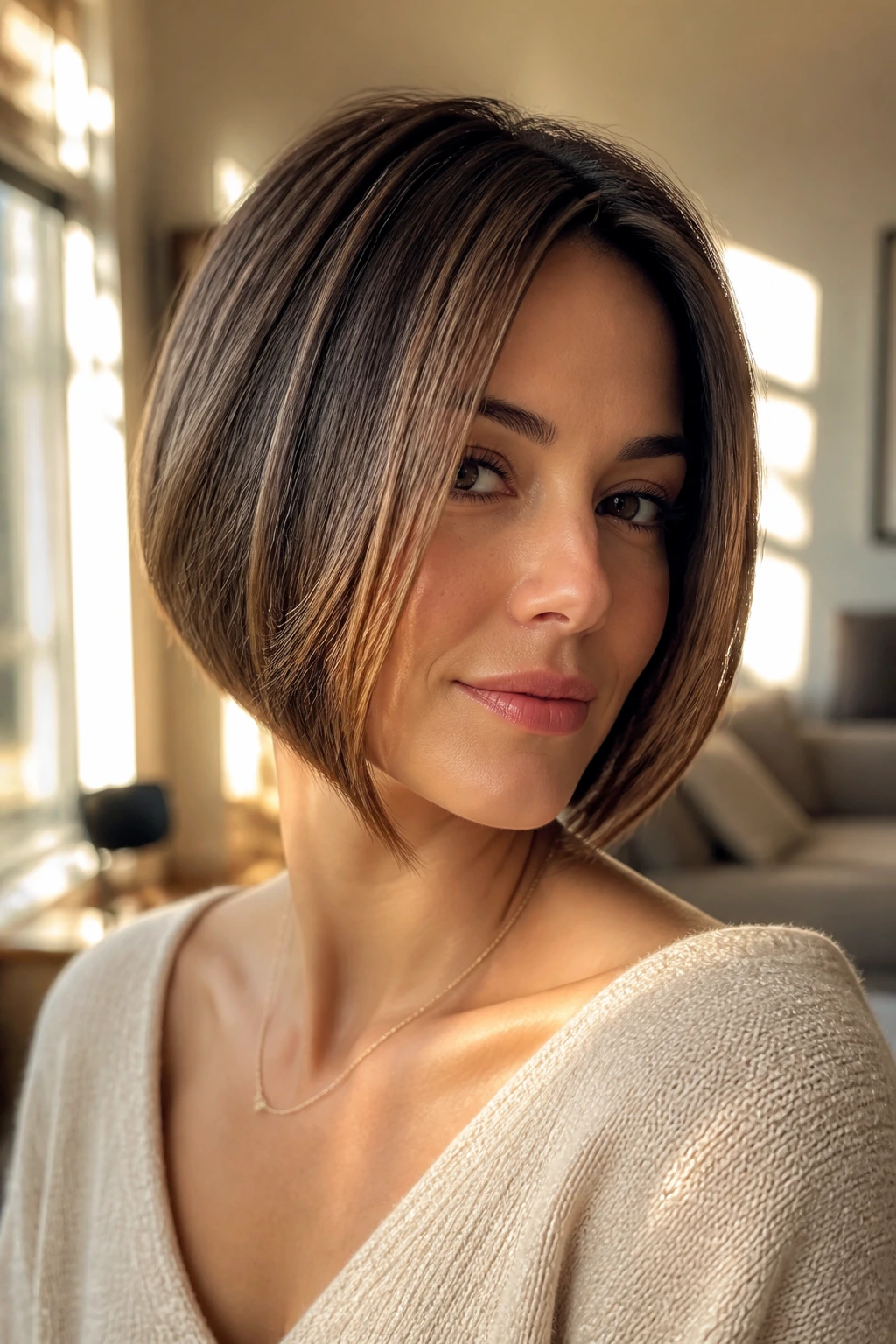
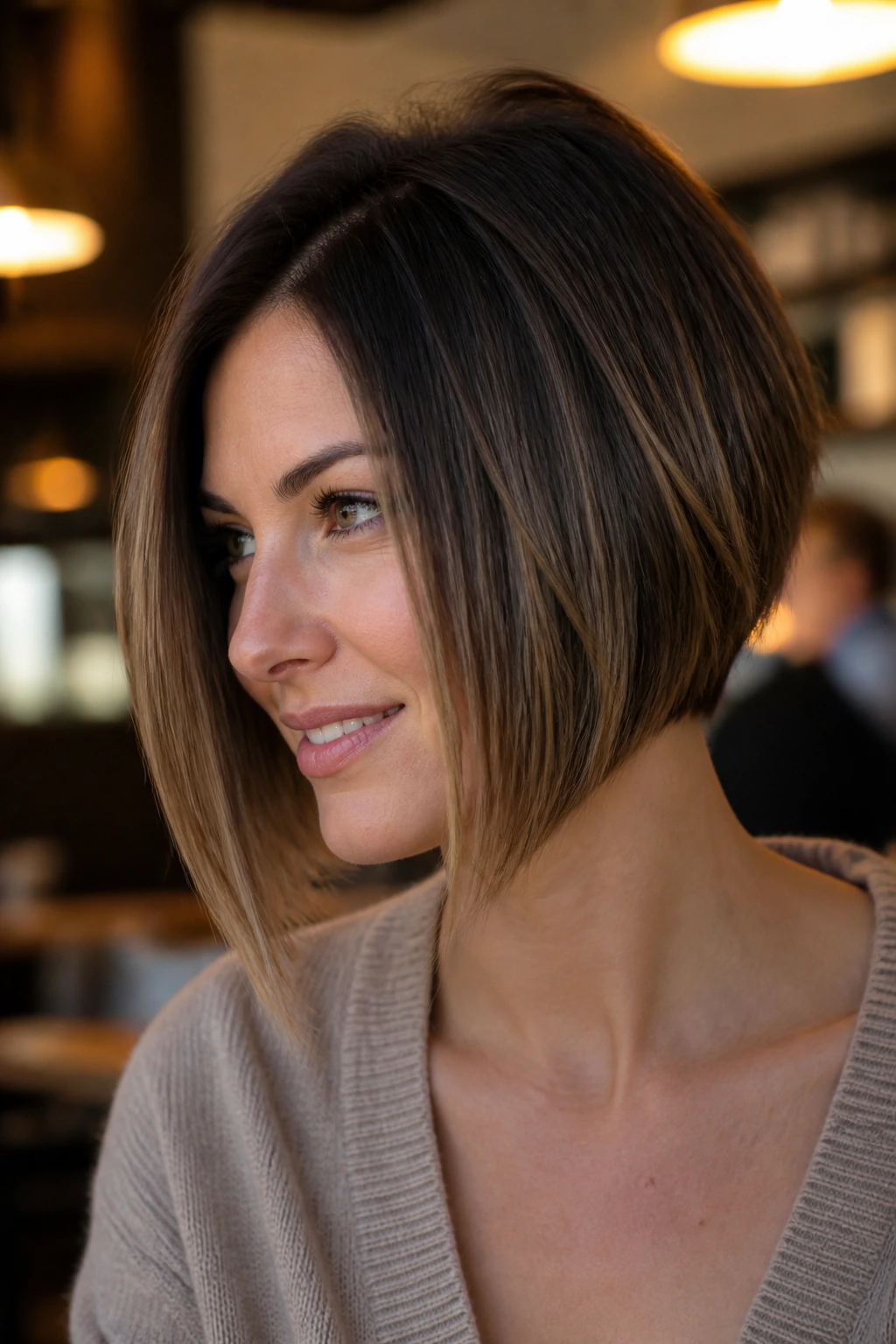
This cut sounds heavier than it is. That’s part of the charm.
The front is kept a little longer and denser, while the back stays lighter and closer to the nape. The result is a shape that frames the face without ballooning around the sides. On a round face, front weight can be useful because it draws the eye downward and forward rather than straight out.
Ask for the longest pieces to fall below the cheekbone. That detail keeps the haircut from sitting too square at the widest point.
22. Face-Framing Lob with Clean Ends
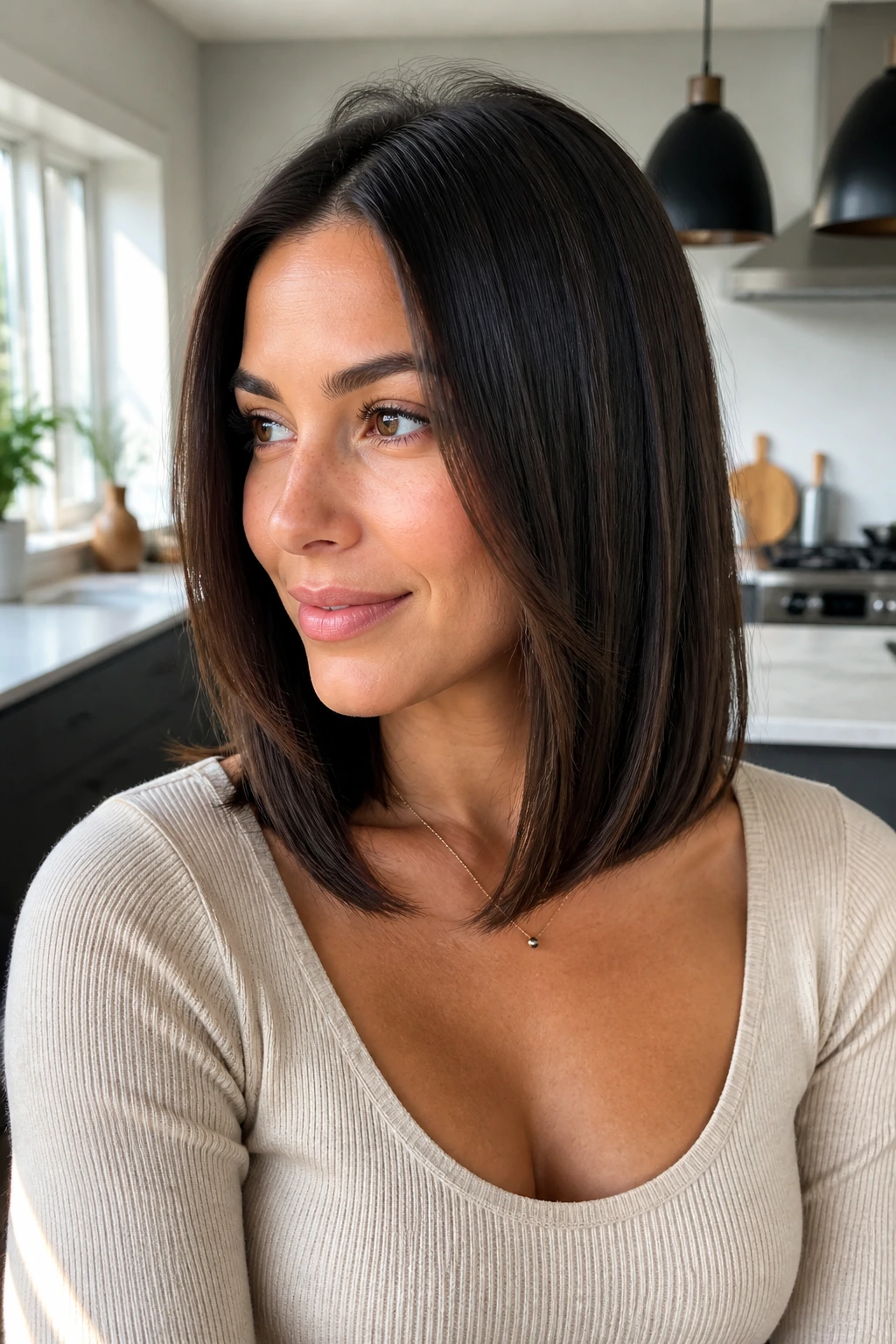
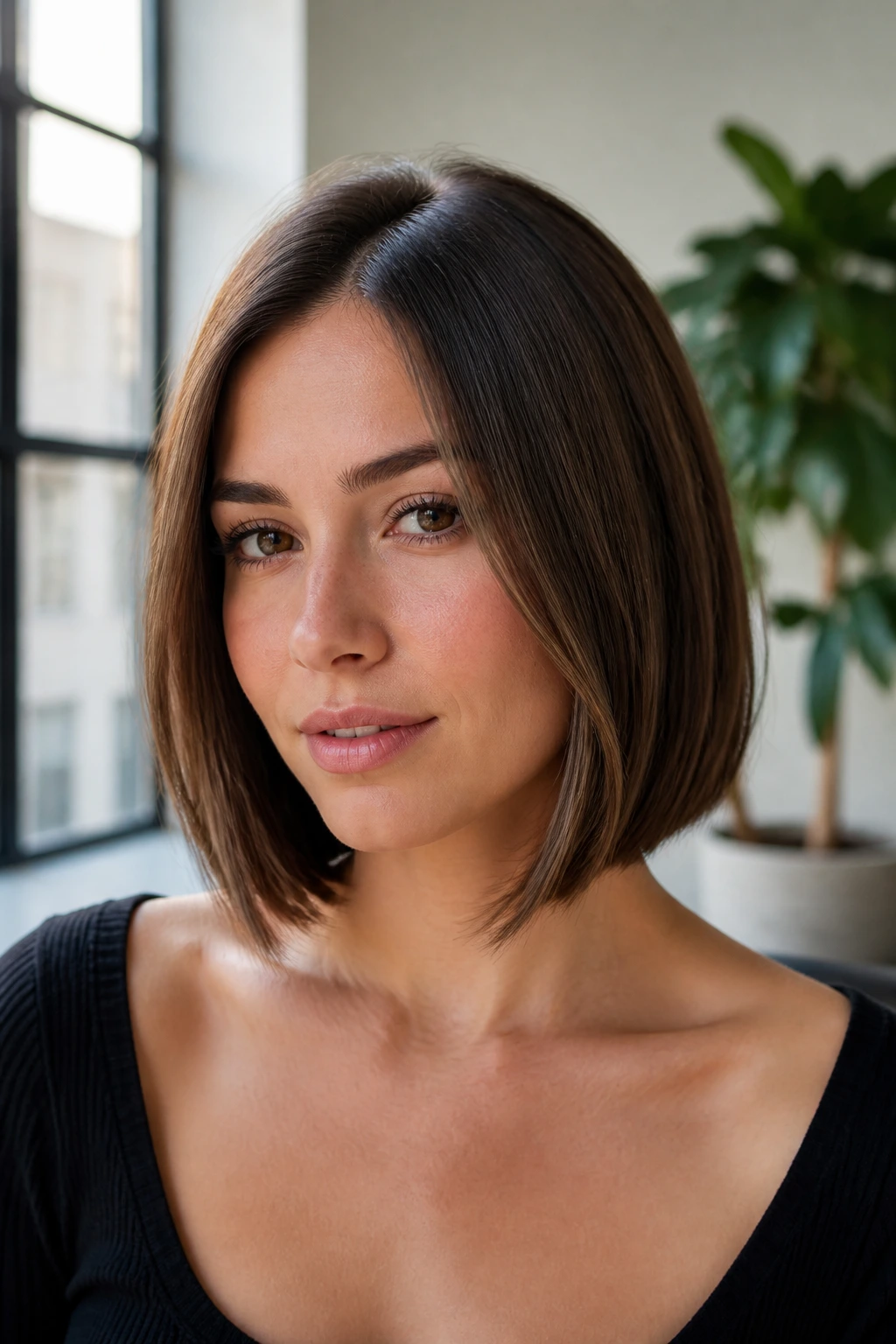
A lob only works on a round face when the face-framing pieces start low enough to skip the cheekiest part.
That’s the whole game. Keep the front pieces clean, long, and straight, with the shortest layer sitting below the cheekbone. The outer line should stay tidy so the style looks intentional, not grown out. Straight hair helps here because the edges stay visible.
This is a nice bridge cut if you’re not ready for a full bob or don’t want to go as short as a pixie. It gives length where you need it and lift where you want it.
23. Grown-Out Pixie with a Long Fringe
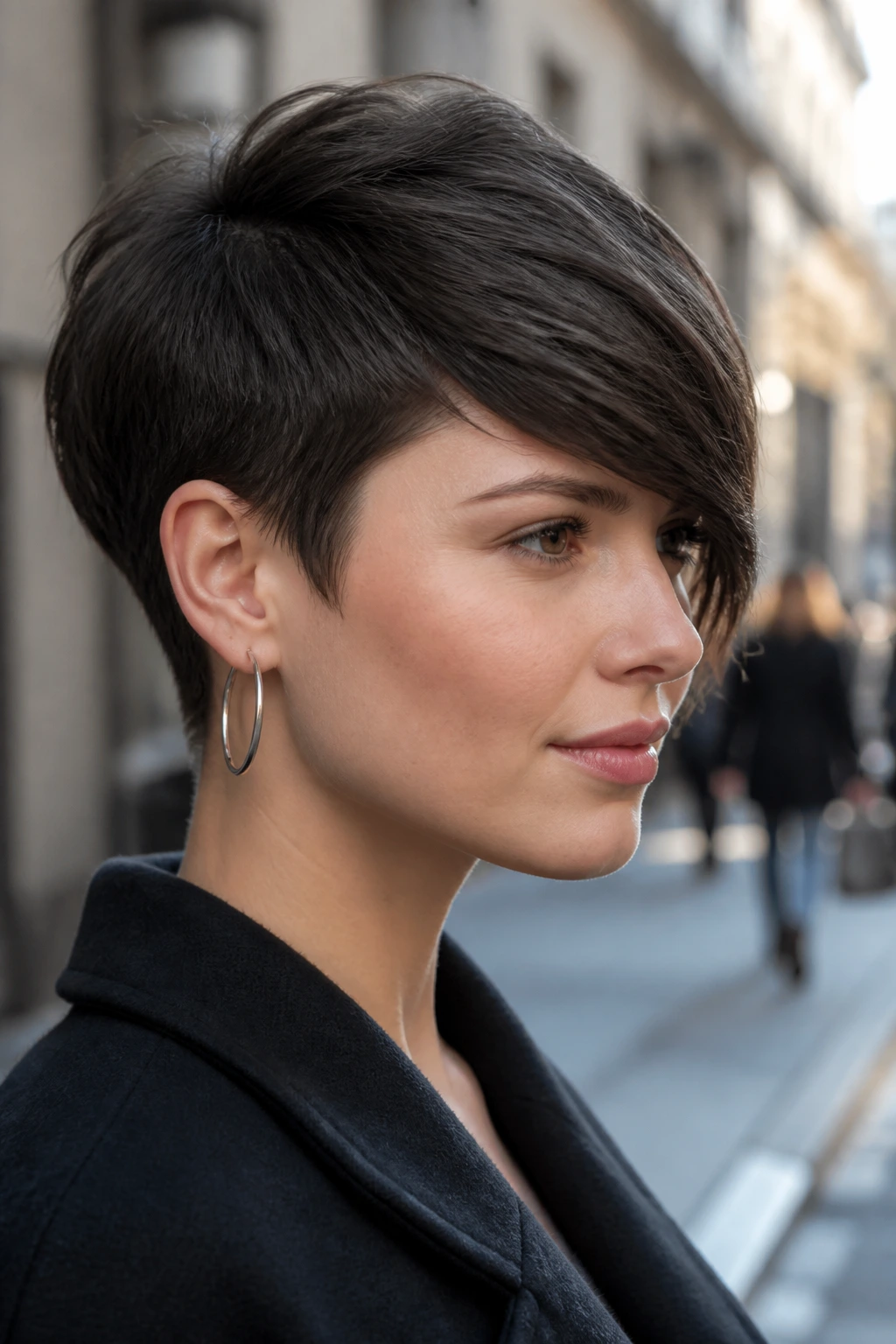
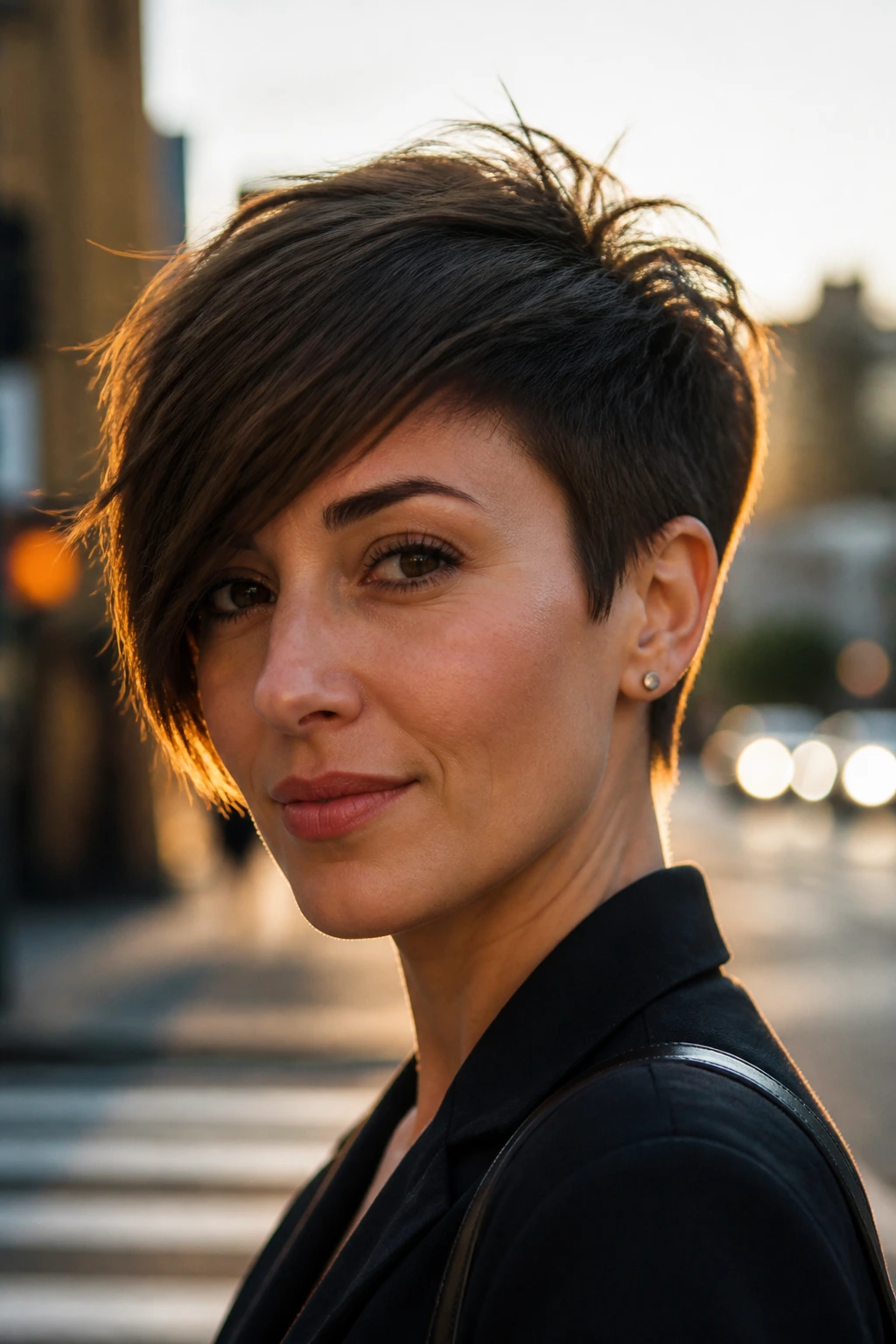
Growing out a pixie can look awkward if you let every section do its own thing. Don’t.
The smartest version keeps the fringe long enough to sweep across the forehead while the sides stay trimmed close. That shape narrows the face and gives the top direction. A round face can carry a long fringe well, especially if it starts off-center and falls past one brow.
This is also a practical cut if you want a shorter maintenance cycle without having to book a trim every few weeks. The fringe gives you styling room while the shape stays neat.
24. Sleek Crop with Baby Bangs
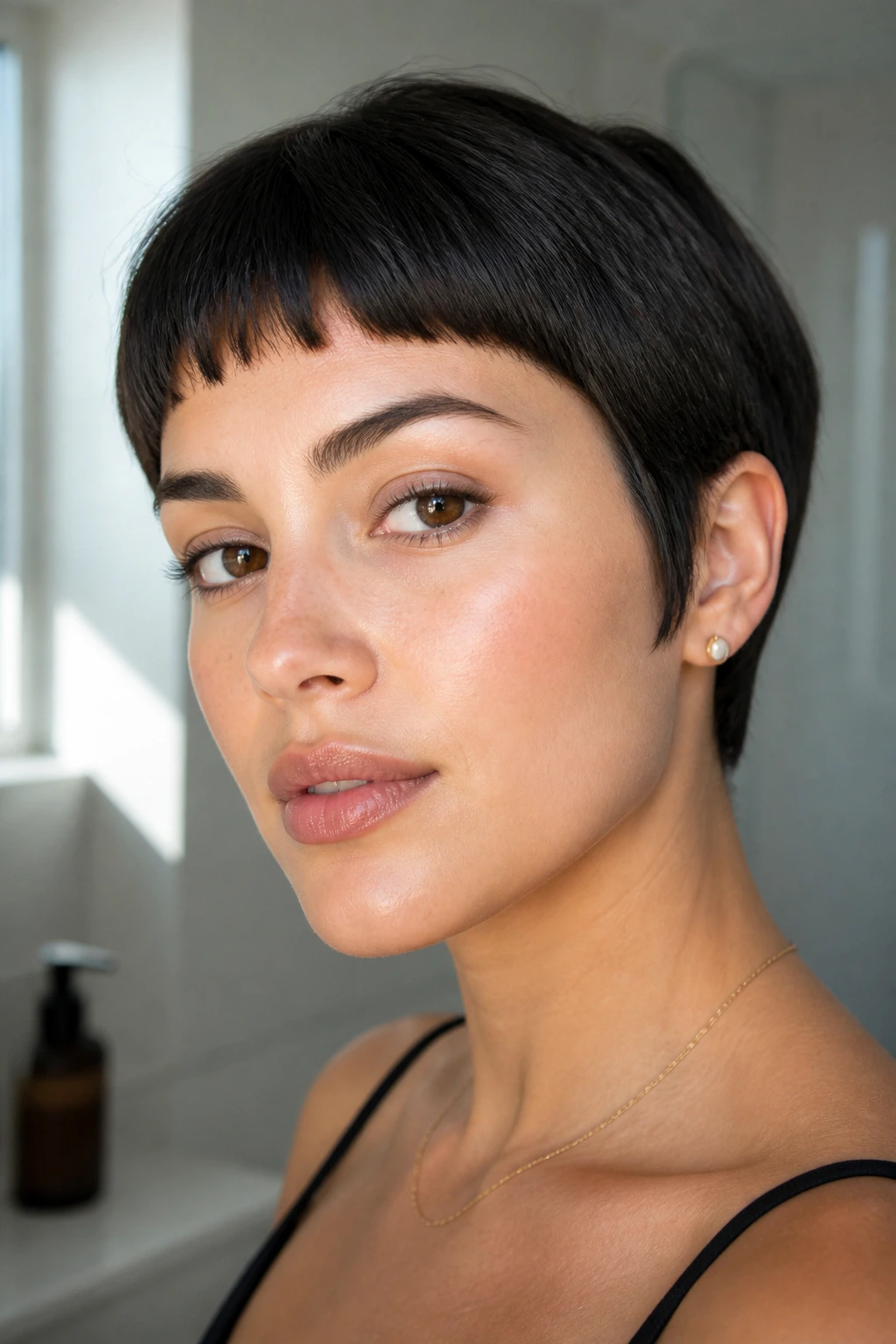
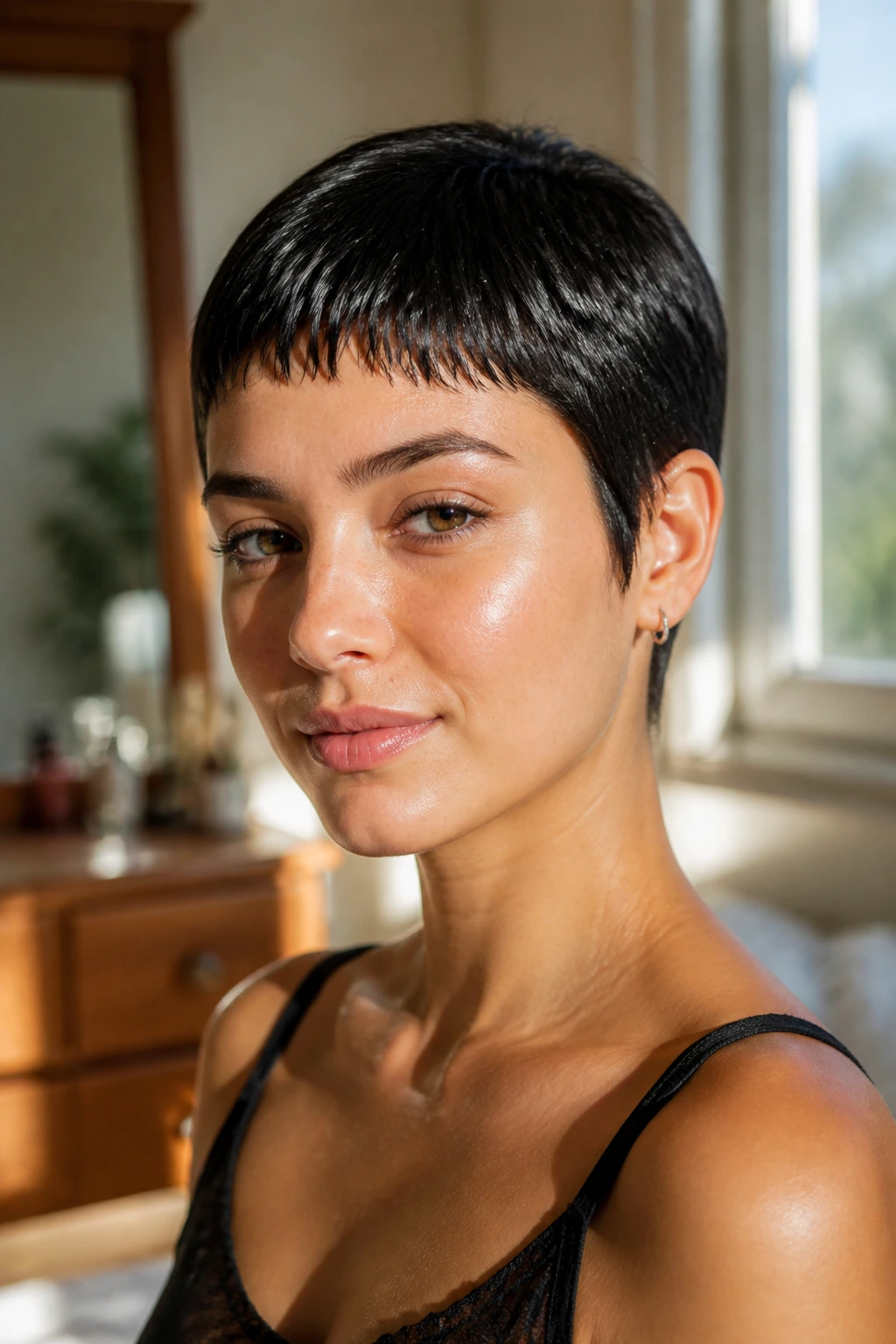
Baby bangs are bold. No pretending otherwise.
On a round face, they need a controlled silhouette around the sides so the bangs do not become the only thing you notice. The benefit is the strong horizontal line across the forehead, which can make the face feel more structured. The rest of the cut should stay sleek and close.
I’d reserve this one for people who like a sharper look and are willing to keep the styling precise. If the hair gets too fluffy, the effect fades fast. On straight hair, though, it can look crisp and very modern without being loud.
25. Feathered Short Bob

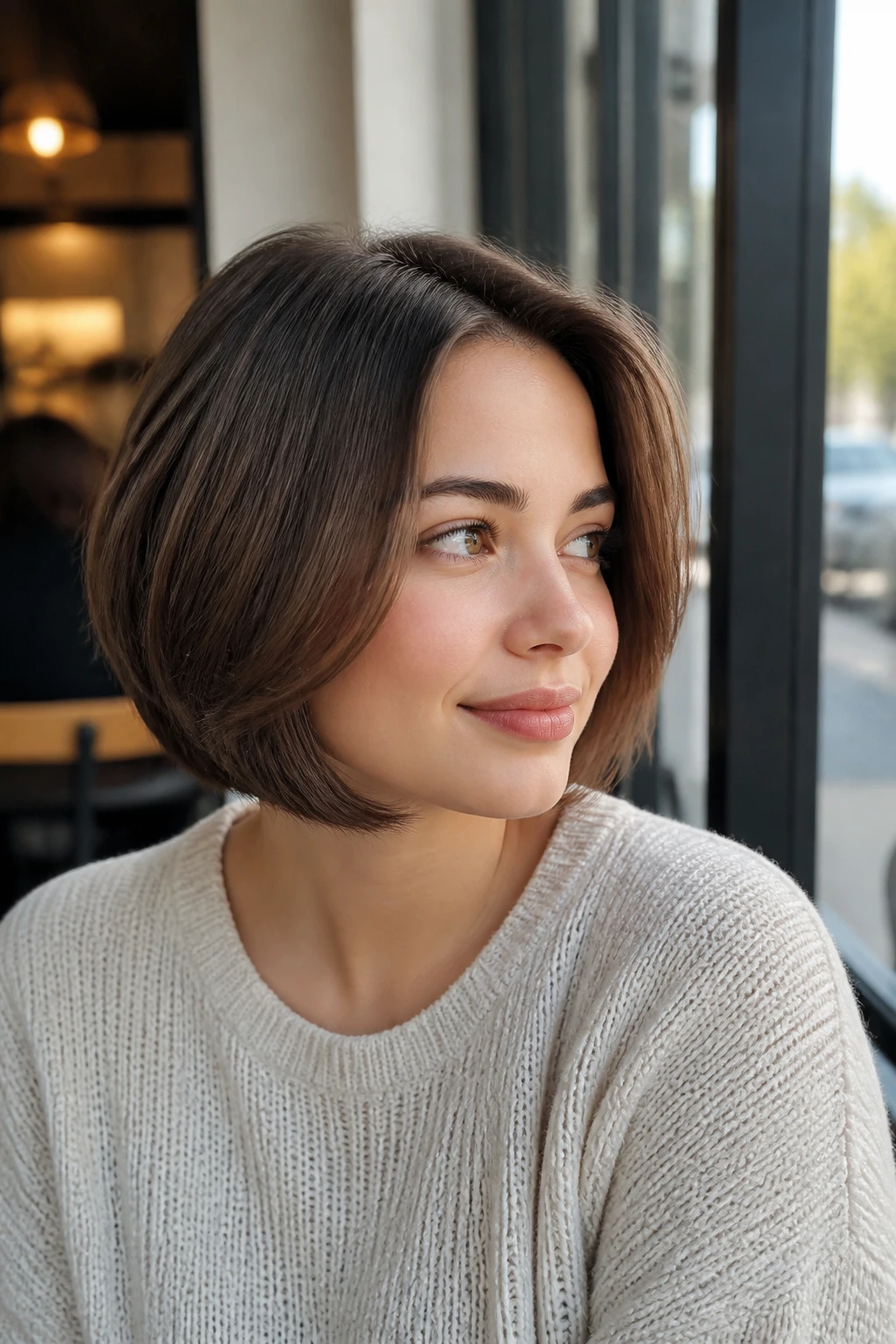
A feathered bob is the friendlier cousin of the blunt bob.
The feathering softens the edges, but it should live mostly at the ends, not around the cheeks. That keeps the cut from expanding sideways. On a round face, a little softness can help if a blunt line feels too severe, especially when the hair is thick or naturally dense.
I like this version when the styling is smooth and the feathering is subtle. Too much razoring and the shape gets airy in the wrong places. A light hand is better here.
26. Tucked-Behind-the-Ear Bob

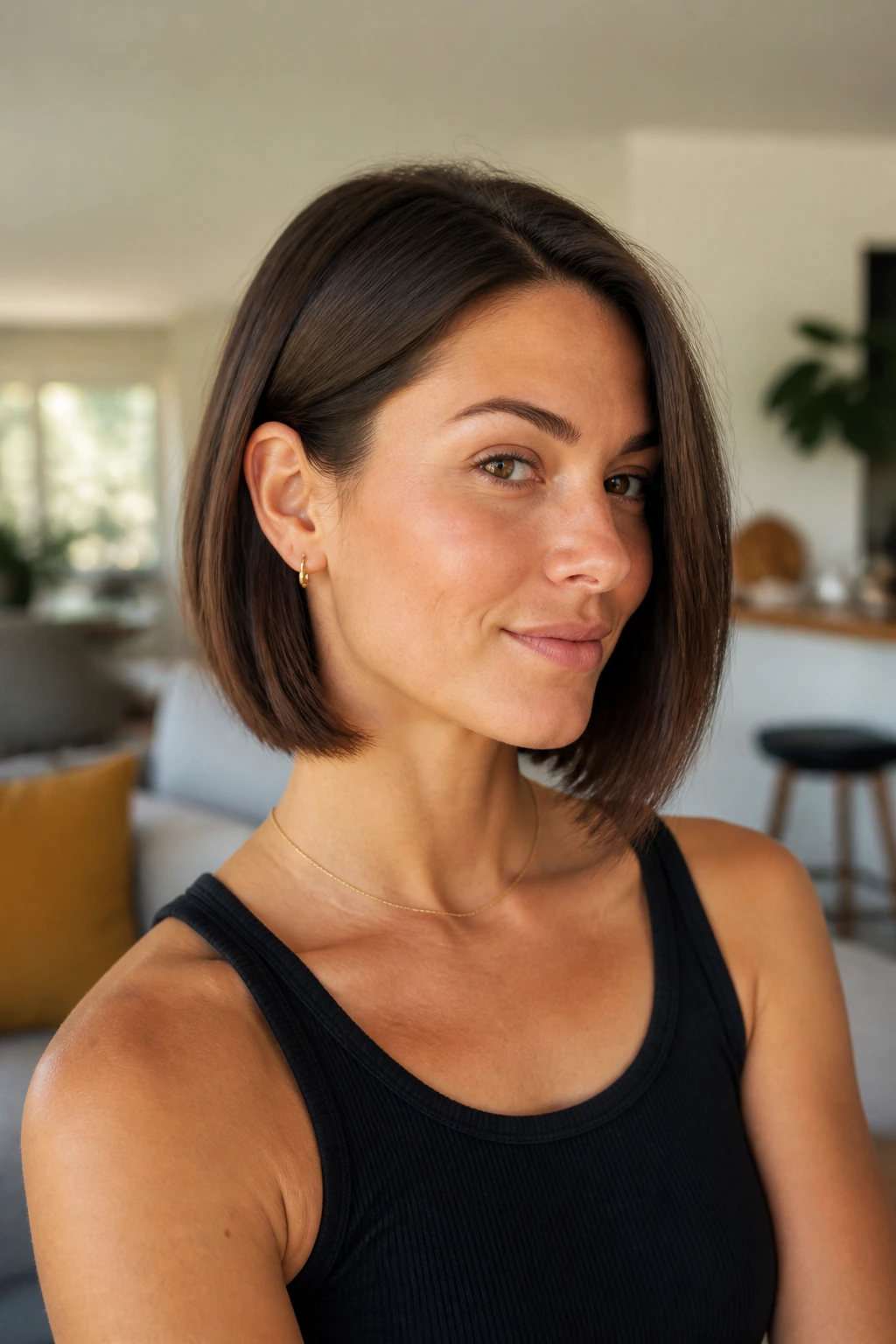
Sometimes the cut is only half the story. The styling makes the rest.
A bob that can be tucked behind one ear opens the face and shows the jawline, which breaks up roundness in a small but useful way. The side that stays down keeps the shape from feeling too exposed, while the tucked side adds that asymmetry round faces usually appreciate. Straight hair is ideal because the tuck stays neat instead of slipping out.
This works especially well with side parts, small earrings, and a clean neckline. Tiny things. Big difference.
27. Mini Bob with a Side Fringe
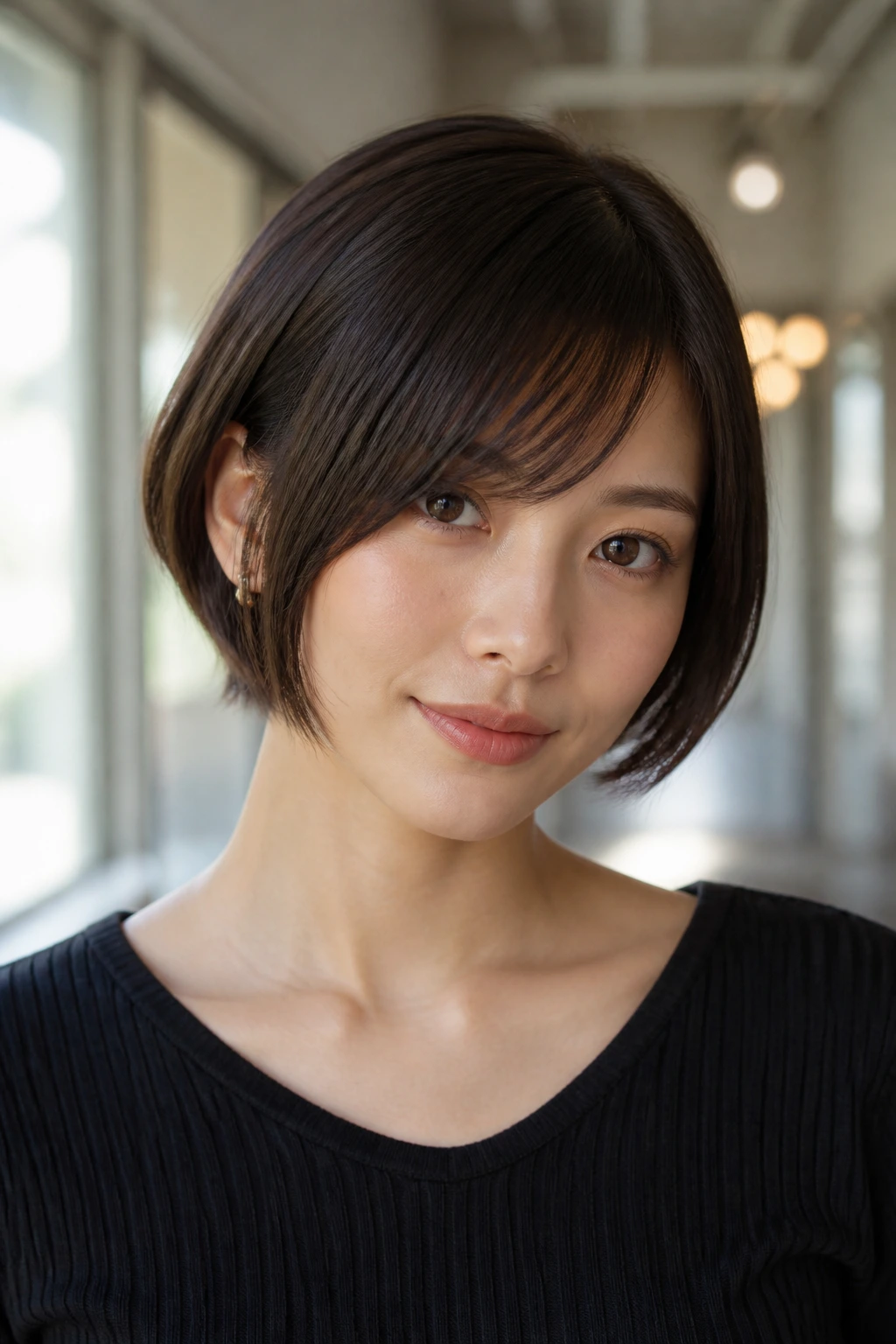

This is the neat, sharp version for anyone who wants short hair but does not want a boxy finish.
A side fringe cuts across the face diagonally, which is half the battle with a round shape. The mini bob keeps the hemline compact, but the fringe stops the cut from feeling too blunt at the forehead. That combination keeps the eye moving.
If you like hair that looks tidy with almost no effort, this is a strong pick. Keep the fringe long enough to sweep, not so short that it sits like a shelf. That one detail changes everything.
Why Short Hair Can Still Work the Jawline

The best short straight hairstyles for round faces do not try to hide the face. They edit it.
That difference matters. A cut can add a jawline where the bone is soft, pull the eye down with a front angle, or open space at the temples so the cheeks do not dominate the whole look. Straight hair makes those moves easy to read. There’s no fluff to blur the line, which is why the exact placement of the hemline and part has so much power.
A round face usually looks strongest when the haircut gives it contrast. Not more roundness. Contrast. A blunt edge against soft cheeks. A diagonal front against a circular outline. A little lift on top against fullness at the sides. Those are small changes on paper and visible ones in the mirror.
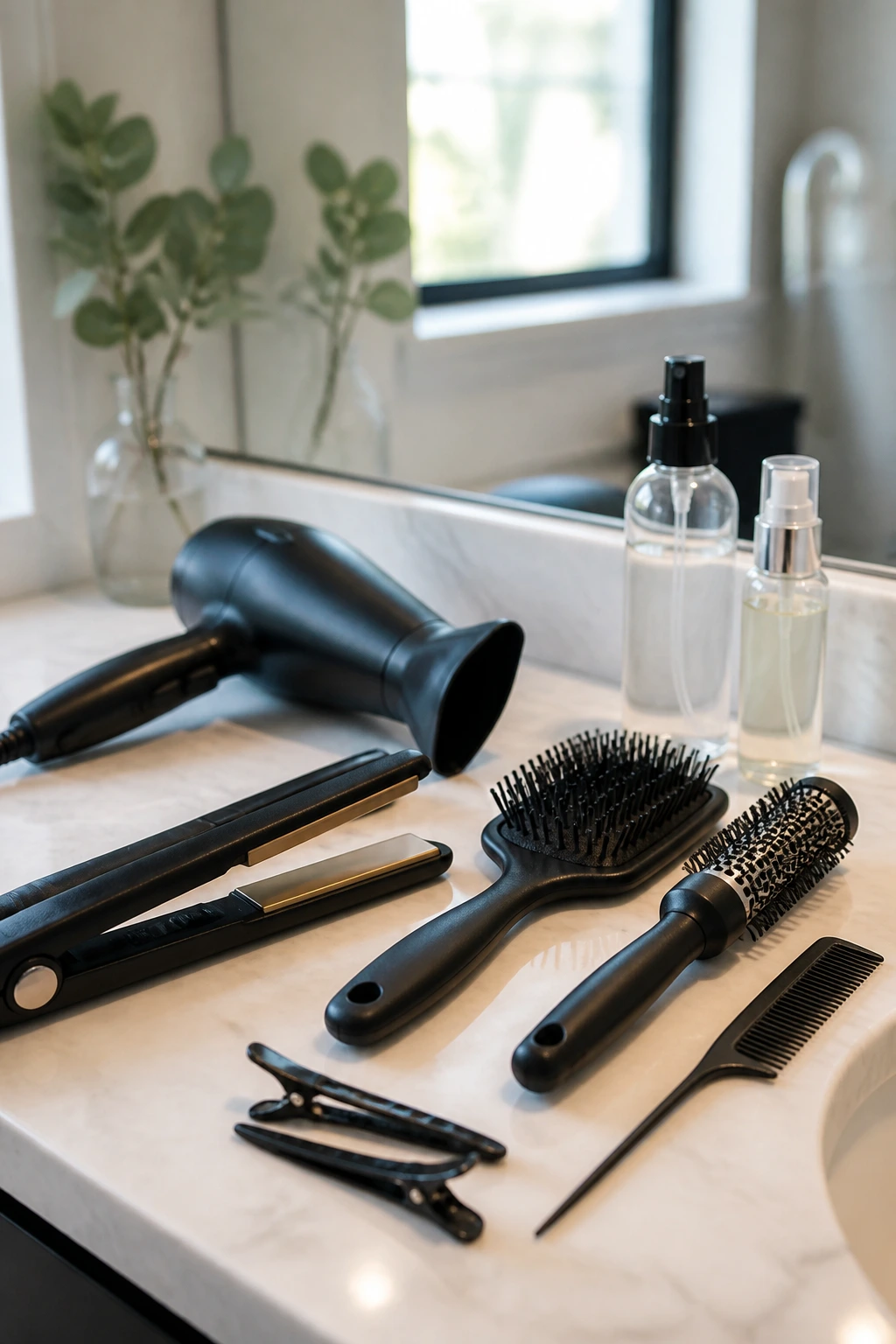
Essential Tools for Sleek Short Hair
-
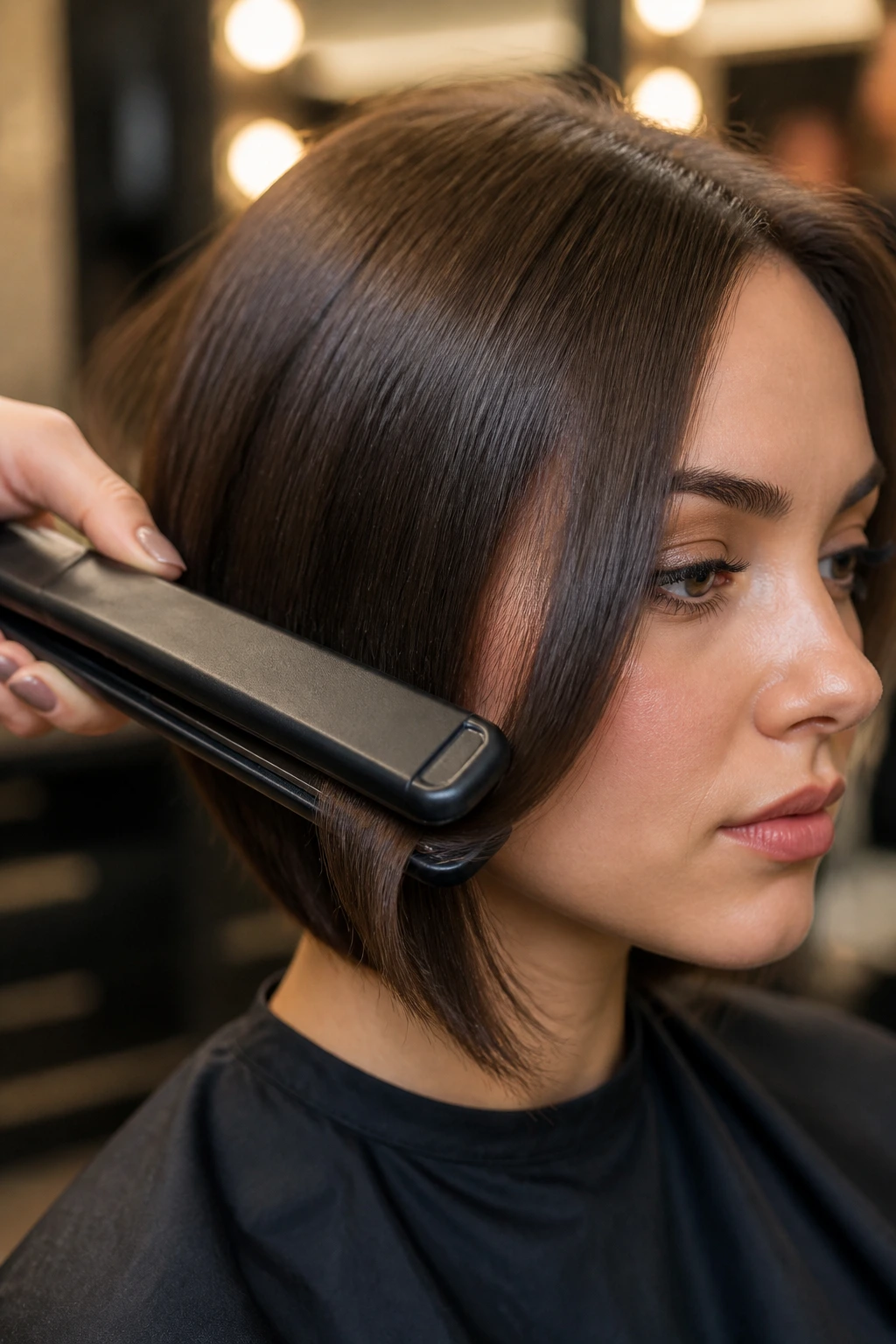
1-inch flat iron: Best for smoothing bobs, tightening ends, and creating a crisp bend at the front pieces without flattening the whole head.
-
Blow dryer with a nozzle attachment: The nozzle keeps airflow aimed where you want it, which matters if you’re trying to direct the roots away from the cheeks.
-
Paddle brush: Good for chin-length and collarbone-length cuts when you want a smooth, straight finish with less tension than a round brush.
-
Small round brush: Useful for pixies and short crops when you need a little crown lift, not a full blowout.
-
Heat protectant spray: Put this on every section before flat-ironing or blow-drying; straight styles show heat damage fast.
-
Light smoothing serum: A pea-sized amount on the ends keeps short straight hair from looking dry and fuzzy.
-
Tail comb: Helps with clean parts and sectioning, especially for asymmetrical bobs and deep side parts.
-
Duckbill clips: Keep the top section out of the way while you work on the sides and nape. Small thing. Huge help.
How to Ask for the Cut at the Salon

The easiest way to avoid a disappointment is to talk in shape, not in trends.
Bring one or two photos, then point to the pieces you like: the length in front, the part, the fringe, the nape, the jawline. Say where your face is widest. Say whether you tuck your hair behind your ears. Say if you want your neck visible or covered. That information helps more than saying you want something “flattering.”
Be specific about where the front should hit. On a round face, the difference between chin, jaw, and collarbone is not small. It changes the whole silhouette. If you want a bob, ask whether the front can sit just below the cheekbone. If you want bangs, ask whether they can be cut to part and open rather than sit as one heavy block.
Styling Moves That Keep the Shape Sharp
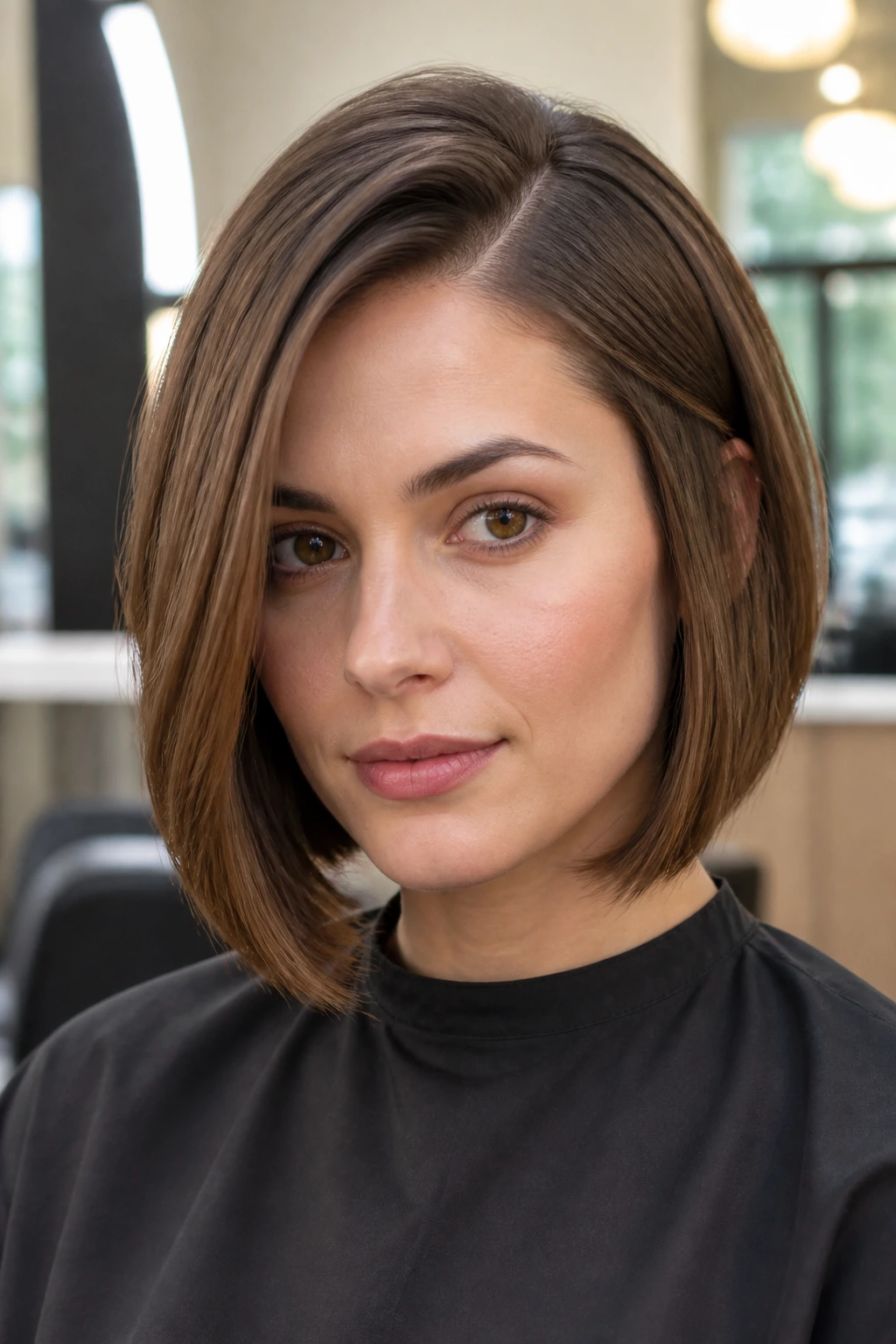
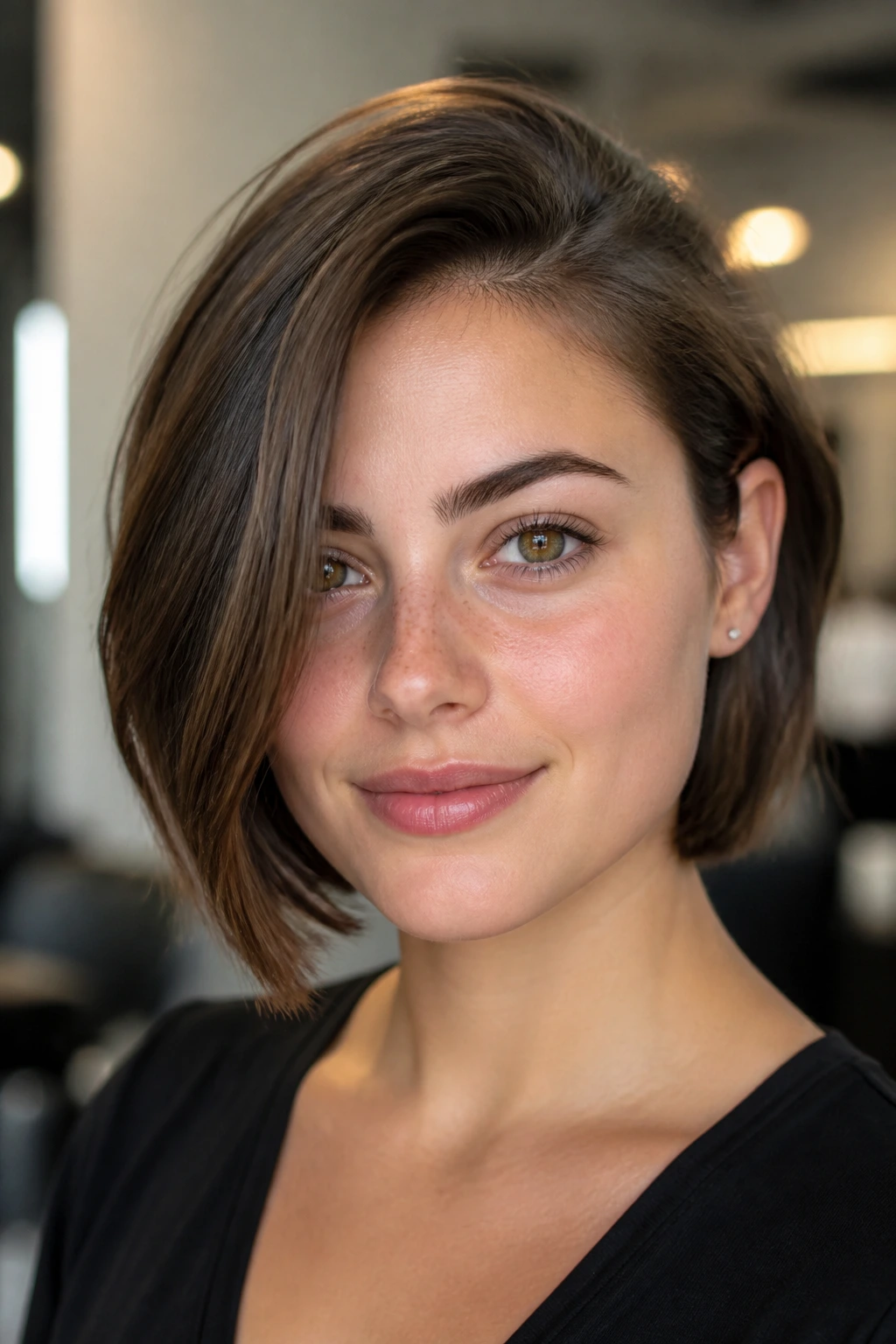
Part placement: Start by moving your part one to two inches off center. That tiny shift is often enough to stop a short cut from looking too symmetrical.
Root direction: Blow-dry the roots in the opposite direction first, then switch them back. It creates lift without obvious volume, which is exactly what a round face needs.
Ends only: Smooth the bottom inch or two with a flat iron and leave the rest alone. Overworking the whole head makes the style look stiff.
Tuck strategy: Tuck one side behind the ear when you want to show the jaw and break up width. Leave the other side forward so the cut still frames the face.
Finish lightly: Use a small amount of serum or cream on the ends. Too much product makes short straight hair collapse into flatness.
Mistakes That Add Width Instead of Line

-
Cutting the hemline at the widest cheek point: The hair lands right where the face is fullest and makes the roundness louder. Ask for the front to sit above or below that point.
-
Stacking too many short layers at the sides: The hair puffs out and builds sideways volume. Keep the interior layers long if you want movement.
-
Heavy bangs that stop at the brows: A thick fringe can shorten the face and press everything downward. If you want bangs, let them open or sweep.
-
Flat roots all over the crown: A totally flat top makes the face look wider by comparison. A little lift at the roots helps.
-
Overusing texture spray on straight cuts: Texture is fine in moderation, but too much can spread the cut outward and blur the clean outline.
Variations for Fine Hair, Thick Hair, and Glasses


The Soft-Edge Version: Keep the same shape, but ask for slightly longer front pieces and a less severe hemline. This is useful if blunt cuts make you feel boxed in. The face still gets structure, just with a gentler finish.
The Thick-Hair Edit: Remove bulk from the interior and keep the outer line controlled. Thick hair can swell at the cheeks if it’s over-layered in the wrong spot. A strong perimeter with careful debulking usually works better than lots of choppy ends.
The Fine-Hair Edit: Stay blunt, stay compact, and avoid too much thinning. Fine hair needs a solid edge to look full. A micro bob, blunt bob, or collarbone skimmer can all work well if the weight line is preserved.
The Glasses-Friendly Version: Keep the fringe above the frames or let it blend longer into the sides. Crops and pixies look especially good here, because the glasses and the haircut can share the spotlight instead of fighting for it.
The Low-Maintenance Grow-Out: Choose a bob with a slightly longer front or a pixie with a long fringe. Both hold shape for longer when they grow out, which saves you from that awkward in-between stage.
Keeping the Cut Fresh as It Grows Out

Short hair changes fast. That’s the part nobody mentions enough.
Pixies usually need a trim every 4 to 6 weeks if you want the shape to stay crisp. Bobs can stretch a little longer, often 6 to 8 weeks, depending on how fast your hair grows and how precise the cut is. Once the ends start flipping out at odd angles or the part starts drifting because the shape is collapsing, the cut is telling you it’s time.
At home, keep straight hair healthy with heat protectant, a light serum on the ends, and a quick root refresh when the crown starts falling flat. A silk pillowcase helps too. Hair that sleeps rough usually wakes up with uneven bends, and short straight styles show that immediately.
Frequently Asked Questions
Which short haircut makes a round face look slimmer?
The safest bets are angled bobs, asymmetrical bobs, deep side-part bobs, and long pixies with height at the crown. They all create vertical or diagonal lines, which break up the circular shape.
Can a round face wear a blunt bob?
Yes, but placement matters. A blunt bob that stops at the cheekbone can widen the face, while one that sits at the chin or just below it usually looks cleaner.
Are bangs a bad idea for round faces?
Not at all. Heavy, blunt bangs can be tricky, but curtain bangs, side bangs, and soft fringe pieces often work well because they open the face instead of boxing it in.
Is a pixie cut flattering on a round face?
It can be, especially if the top has some length and the sides are tapered. A flat, round, close crop is the version that tends to cause trouble.
Should I avoid a center part if I have a round face?
No, but the cut needs to support it. A center part works better with a slightly longer bob or lob, where the front pieces fall below the widest part of the cheeks.
What if my hair is very fine and straight?
Stay with clean shapes: blunt bobs, box bobs, micro bobs, or a polished pixie bob. Fine hair usually looks better with a strong outline than with lots of thinning or razor work.
How do I keep a short straight haircut from puffing out at the sides?
Cut bulk from the right place, not everywhere. Then blow-dry the roots smooth, keep product light, and avoid over-layering around the cheeks and temples.
How often should I trim short straight hair?
Pixies often need shape-ups every 4 to 6 weeks. Bobs and lobs can usually go 6 to 8 weeks, though a blunt cut will start looking soft sooner than a layered one.
Smart Salon Language That Actually Helps

A good haircut starts with a good sentence.
Tell your stylist that you want the face to look longer and the sides to stay narrow. Mention whether you want your cheekbones covered, skimmed, or opened up. Say if you wear your hair tucked, and say whether you flat iron at home or prefer to air-dry and go. That changes the cut more than people think.
If you like movement, ask for it on the inside of the shape, not around the cheeks. If you want a blunt finish, say so. If you want a shorter nape and longer front, say that plainly. Stylists work faster when you describe the shape you want instead of using a pile of vague words.
A Few Practical Styling Habits That Pay Off

Heat protection first: Straight hair does not forgive burnt ends. A fine mist before blow-drying or flat-ironing keeps the cut smoother for longer.
Root lift, not root fluff: Lift at the crown is helpful. Big volume at the sides is not. Aim the dryer upward at the roots, then smooth the outer layers down.
End control: A tiny bit of serum on the last inch makes the line read sharper. Too much and the cut looks greasy by noon.
Sleep smart: A silk or satin pillowcase helps preserve a sleek part and keeps short lengths from kinking overnight.
Final Tweaks That Make the Shape Feel Intentional

Sometimes the smallest change is the one people notice.
Move the part. Tuck one side. Let the fringe grow an extra half-inch. Add a bit more lift at the crown and less product at the sides. Those are not dramatic moves, but they change how a short cut sits on a round face, and that’s the whole point. Hair rarely needs more effort. It usually needs the right one.
Sharp Lines, Softer Width
Short hair on a round face works best when it behaves like architecture. Clean lines. Clear edges. A little lift where the eye needs to go, a little restraint where width can creep in. That is why these cuts stay useful: they’re not trying to fight your face shape. They’re learning its shape and drawing better lines around it.
Pick the version that matches your routine, your density, and how much styling you’re willing to do before coffee. A blunt bob will ask for polish. A pixie will ask for trims. A side-parted crop will ask for almost nothing. Choose the one you’ll actually wear, then keep the outline clean. That’s where the flattering part starts.
