



Straight hair is honest. If the line is good, the whole head looks polished; if the line is weak, the ends tell on you immediately. That is why sleek long straight haircuts for older women live or die on geometry, not on some vague promise of “keeping it long.”
The good news is that long hair after 50, 60, and beyond does not have to mean limp hair, see-through ends, or a style that needs a round brush and a prayer every morning. A clean perimeter, a smart part, and a few well-placed front pieces can make fine hair look denser, thick hair look calmer, and silver strands look sharper. Straight hair shows every choice. That sounds unforgiving, but it’s also a gift.
I keep coming back to this because it matters: when the cut is right, you spend less time rescuing the shape and more time wearing the hair. The best versions here do not fight age or texture. They account for them. They give you shine, movement where you want it, and a line that still looks deliberate when the weather misbehaves or the day runs long.
Why These 24 Cuts Work Better Than One Generic Long Style
-
A blunt edge makes the ends look fuller: On straight hair, a clean perimeter creates the illusion of density even when the hair has thinned a little at the bottom.
-
Small shape changes do the heavy lifting: A one-inch angle, a hidden layer, or a longer front piece can change how the hair sits around the jaw and neck without turning the cut into a layered mess.
-
Straight hair shows silver beautifully: Gray, white, and salt-and-pepper strands reflect light best when the cut line is crisp, not ragged.
-
These styles can suit glasses, collars, and necklines: The right long cut doesn’t fight your frames or your wardrobe; it sits with them instead of crowding them.
-
Maintenance stays sane: Most of these shapes need trims, yes, but they do not demand daily heat styling to look finished.
1. A Blunt Center Part That Keeps the Length Looking Dense
A blunt center part is the haircut equivalent of a sharp pencil line. No fluff. No wandering shape. Just a straight fall that makes the hair look heavier from cheekbone to ends, which is exactly why this cut lands so well on older women with fine or medium straight hair.
The key is the perimeter. If the ends are starting to look wispy, a blunt edge gives them back some authority. It also works beautifully with silver and white hair because the light bounces across the line instead of getting lost in chopped-up layers.
What to Ask For
- Keep the length one solid line, usually at the collarbone, mid-back, or just below it.
- Dust the ends instead of carving in lots of layers.
- Part the hair exactly in the center and keep the front pieces equal.
Best for: hair that has thinned a little at the ends and needs a fuller silhouette.
Avoid if: your crown naturally splits hard off-center and you refuse to style it; a center part will fight you every morning.
2. Invisible Layers for Fine Hair That Needs Movement
Invisible layers are the haircut version of good tailoring. You don’t see the stitches from the front, but you notice how much better the garment sits. On straight hair, these layers live underneath the top surface, so the outline stays sleek while the interior gets just enough lift to keep the hair from hanging like a curtain rod.
That matters for fine hair, which can look flat fast if every strand is the same length. Too many visible layers make the ends look thinner. Hidden layers avoid that trap.
The nicest part is that this cut still reads as long and polished. It just doesn’t look stiff. If you tuck one side behind the ear, the hair moves. If you bend the ends slightly with a flat iron, the shape still holds.
Why It Flatters Fine Hair
- The outer line stays clean.
- The hidden layers stop the hair from clinging to the head.
- The ends keep enough weight to look intentional, not feathered into nothing.
This is the one I recommend to women who say, “I want body, but I do not want obvious layers.” That’s the right instinct.
3. Curtain Pieces That Open the Face Without Losing Length
Curtain pieces are a smart compromise for anyone who wants softness around the face but refuses to chop the length. They start around the cheekbone or just below it, then drift into the rest of the hair so the front never looks separately “cut up.”
The trick is restraint. Short curtain bangs can get fussy on straight hair, especially if the hairline grows in different directions. Longer pieces are easier to live with. They soften the forehead, skim the temple, and blend into the side lengths without shouting for attention.
If you wear glasses, this cut can be a savior. The front pieces sit above or around the frames, not across them, which keeps the face open. And if your features have sharpened a little with age, these pieces take the edge off without hiding your face.
Best Way to Style It
- Blow-dry the front pieces away from the face using a round brush or paddle brush.
- Let them cool before you touch them.
- Keep the rest of the hair straight and smooth so the fringe doesn’t look like a separate event.
A soft curtain frame can make long hair feel far more modern than a blunt wall of length. It’s subtle. That’s the point.
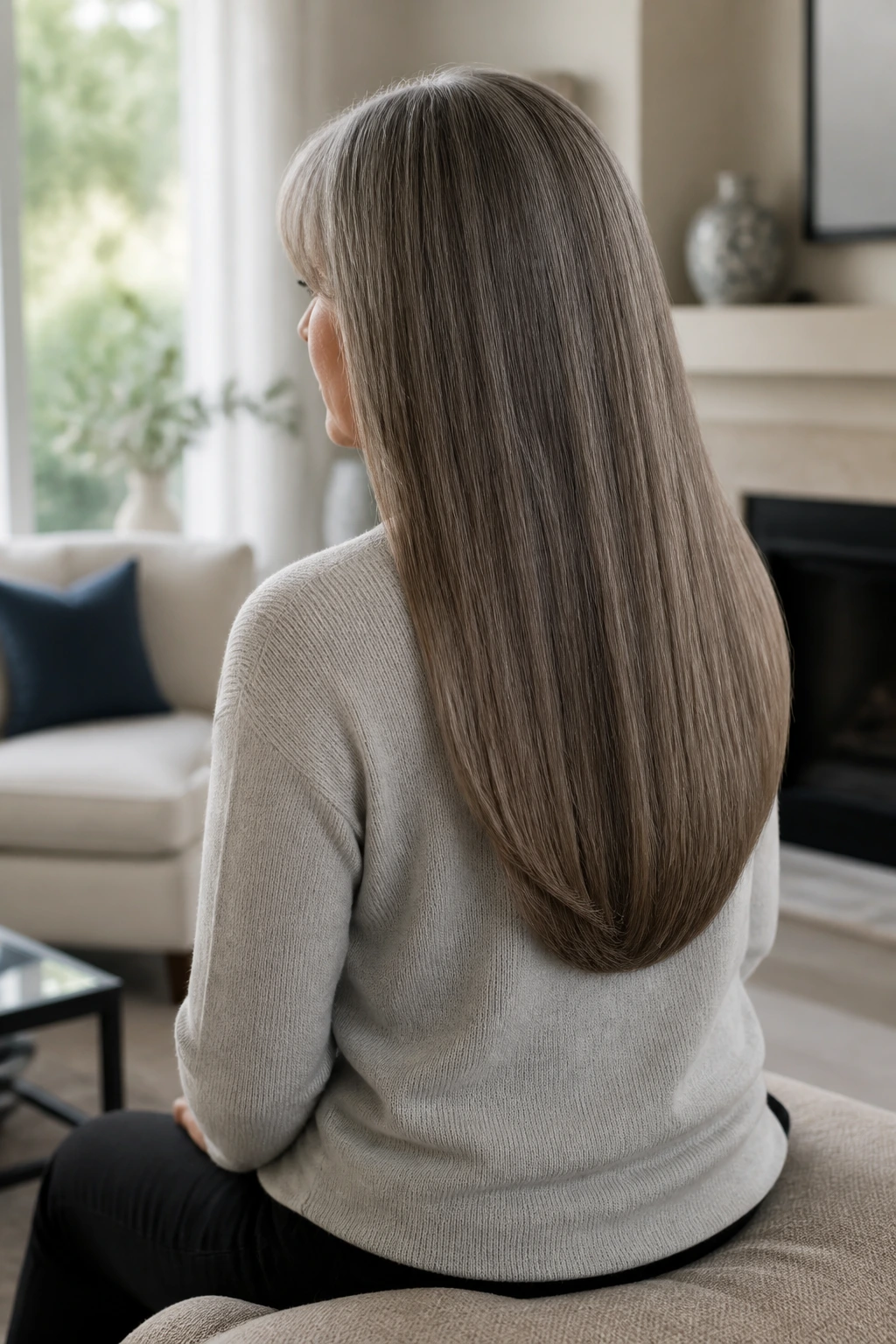
4. A Soft U-Shape That Falls Cleanly Down the Back
A U-shape cut gives long hair a little curve without breaking the line. The center falls slightly longer than the sides, which creates a gentle sweep down the back instead of a hard sheet of hair. On straight hair, that curve is visible even when the style is barely done.
This is a smart choice if you like long hair but don’t want the silhouette to feel blocky. It also helps thick hair sit better because the front isn’t all the same weight as the back. The shape still looks polished when pulled over one shoulder, which matters more than people admit.
The U-shape is especially kind to women whose hair has become a touch coarse at the ends. A tiny curve in the cut can make the whole head look softer, and that softening reads as deliberate, not precious.
5. A Side-Part Sweep That Softens the Hairline
A deep or medium side part does one simple thing very well: it breaks up the seriousness of long straight hair. A center part can look sharp, but a side part brings more lift at the crown and a little movement across the forehead. That helps when hair has flattened a bit at the temples or when the hairline feels harsher than it used to.
This cut is not about drama. It’s about a small shift that changes the whole balance of the face. The hair falls heavier on one side, which can soften square jaws, narrow a long face, and make straight hair feel less severe.
If the root area is stubborn, blow-dry the part while lifting at the scalp with a vent brush. You do not need much volume. A half-inch of lift is enough. Too much and the style starts to look dated.
6. Long Layers With a Tight Interior Debulk
For thick straight hair, long layers that live inside the shape can save the whole haircut from looking like a helmet. The outer edge stays sleek, but the stylist removes weight from the interior so the hair lies flatter and swings better. That is very different from obvious layers, which can make thick hair puff at the wrong spots.
The cleanest versions of this cut use long, low layers that begin below the chin and stay blended. Nothing choppy. Nothing razor-thin. The goal is to calm the bulk while preserving length.
When This Cut Makes Sense
- Your hair looks triangular at the bottom.
- Your head feels heavy by midday.
- Your ends flip out in a way that looks accidental.
This is one of those haircuts that feels almost boring until you live with it. Then you realize your hair is drying faster, sitting better, and behaving with less argument.
7. A Heavy-Ended Cut for Thick Hair That Wants Control
Not every straight haircut needs movement everywhere. Sometimes the smartest move is to keep the bottom heavy and let the top stay sleek. A heavy-ended cut gives thick hair a strong base, which stops it from exploding outward at the ends.
I like this shape for women who want long hair that still feels disciplined. The line at the bottom is the point. If the stylist thins too much or shreds the perimeter, the cut loses its balance and the ends start to look patchy.
Thick straight hair often benefits from less excitement, not more. A strong, blunt edge makes it easier to wear loose, braid, or tuck behind the shoulders. It also looks excellent with gray or white strands because the dense edge gives the color more presence.
8. Mid-Back Hair With a Slight Forward Angle
A slight forward angle means the front is a little shorter than the back, usually by an inch or two. That tiny shift can do a lot. It draws the eye toward the collarbone and jawline, while the extra length in the back keeps the style feeling long and feminine.
This cut is a nice answer for anyone who wants long hair but finds one-length lengths a little flat around the face. The angle creates a gentle frame without becoming a true layered cut. It also works well if you often wear hair over one shoulder, because the front stays light and the back keeps its shape.
The best part is that it looks intentional even when the hair is tucked into a coat collar or sweater. Some cuts collapse under clothing. This one survives it.
9. Waist-Length Straight Hair With a Glossy Finish
Waist-length hair is not for everyone, and I say that without apology. But when it suits the person wearing it, it has a clean, almost architectural effect. On straight hair, the long line can look stunning if the ends are kept healthy and the shape isn’t overworked.
This is the cut that asks for discipline. Regular trims matter. Split ends show faster. A dry, rough finish will undermine the whole thing. But if the hair is dense enough and the care is consistent, the result is striking in a way shorter hair can’t quite copy.
The trick is not to pile on layers. Waist-length straight hair already has movement from its own weight. Too much cutting turns it into strings. Keep the edge strong, use a small amount of serum from mid-length to ends, and let the length speak.
10. Bottleneck Bangs Framed by Long Straight Length
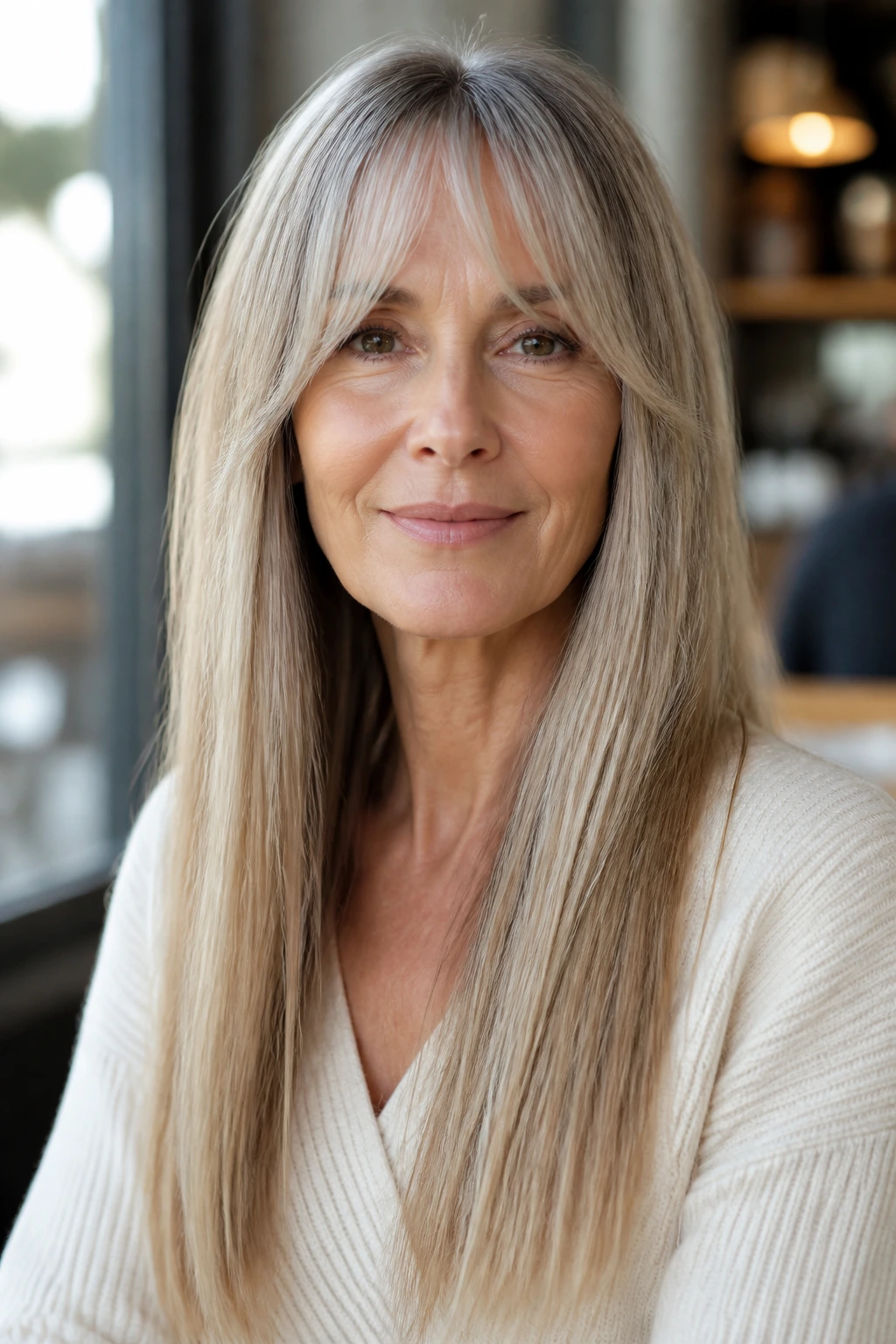
Bottleneck bangs are a cleaner, softer option than blunt bangs for older women who want a little forehead coverage without committing to a heavy fringe. They’re shorter in the center, then open out toward the temples, which gives the face a gentle frame instead of a hard line.
This works well with long straight hair because the fringe gives the front of the haircut a point of interest. The rest of the length can stay sleek and simple. That contrast keeps the style from feeling flat.
Why They’re Easier Than Blunt Bangs
- They grow out more gracefully.
- They let the forehead show through a little, so the cut doesn’t feel boxed in.
- They sit well with glasses because the outer pieces can be tucked into the sides.
A good bottleneck bang should look like it belongs to the haircut, not like a separate top section pasted on at the front. If it feels too dense, it was cut too short or too thick.
11. Silver and Gray Hair With Long, Clean Layers
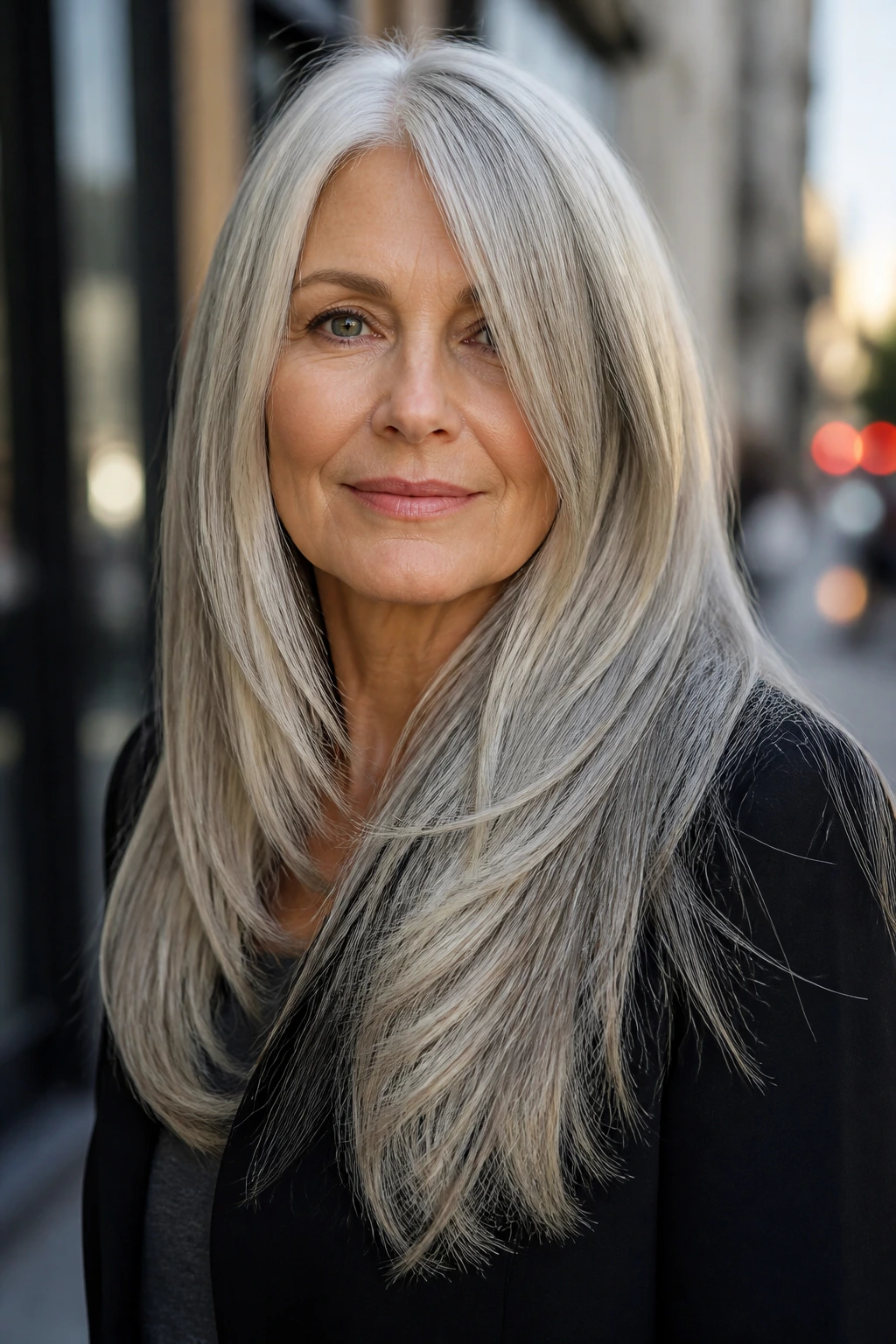
Gray hair loves a sharp cut. It gets ignored too often. The texture can be wiry in one spot, smooth in another, and the color shows every rough edge, which is exactly why long, clean layers matter. They give the silver strands shape without turning them into frizz.
The best version of this style keeps the layers long and the perimeter clean. A stylist who goes in too aggressively will leave the ends looking light and broken. That is the opposite of what gray hair needs. What it needs is clarity.
A glossing treatment or toner can help, but the cut is still the main event. If the shape is good, the hair looks bright. If the shape is dull, the color has to work twice as hard.
12. A Glass-Hair One-Length Cut
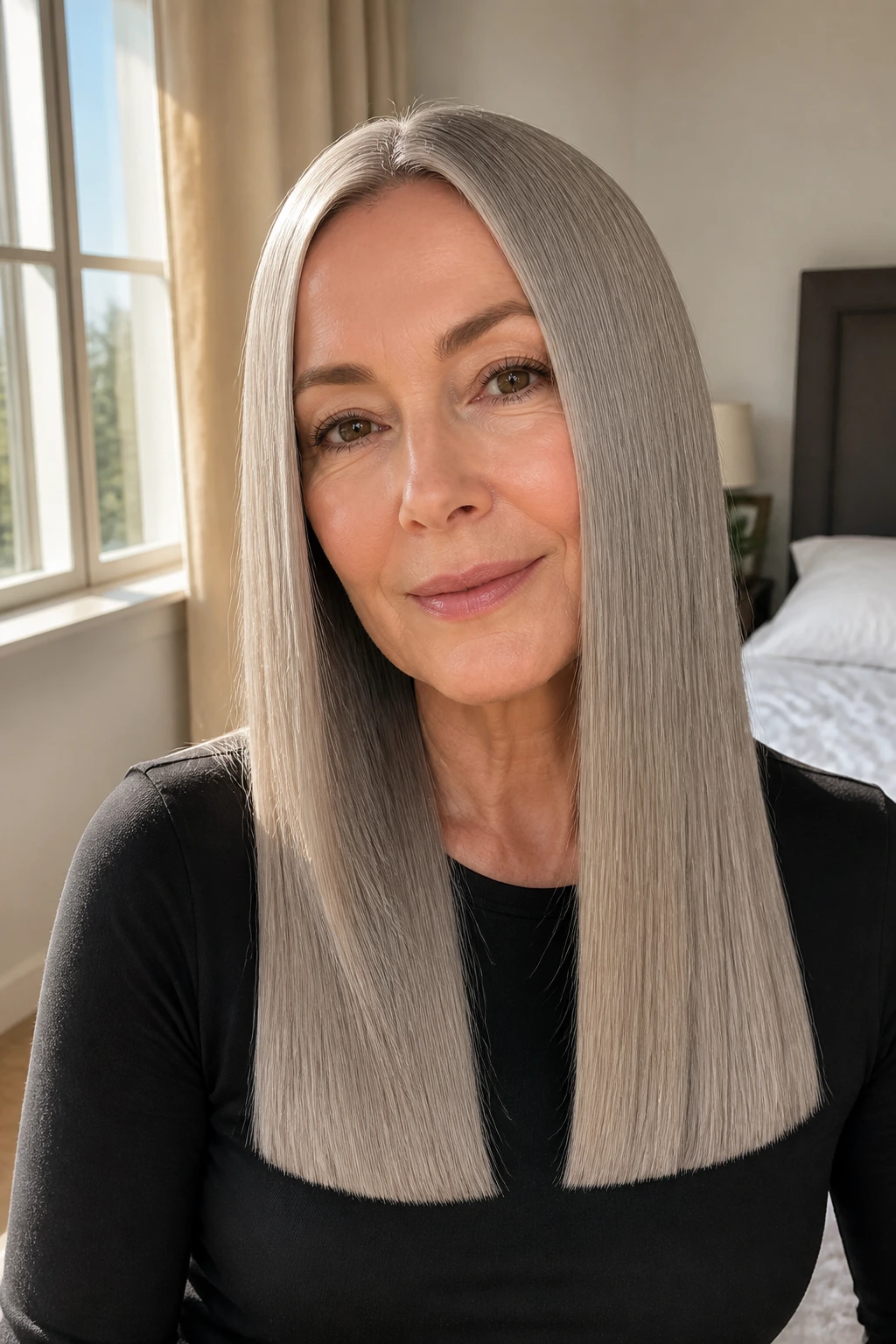
Glass hair is not about making the hair stiff. It’s about making the surface so smooth that the light moves over it in one clean sheet. A one-length cut is the best base for that finish because there are no choppy pieces interrupting the line.
This cut suits women whose straight hair is naturally shiny or who are willing to keep up with heat protection and regular trims. It’s a confident haircut. There’s nowhere to hide, which is why it looks expensive when it’s done well and tired when it isn’t.
What Makes It Different
- No obvious layers.
- Strong perimeter.
- Smooth, blunt ends that sit close to the body.
If your hair tends to puff, this cut can still work, but only if the length is long enough to carry some weight. Mid-back to lower-back is usually safer than a bob-length version for puff-prone straight hair.
13. A Deep Side Part That Gives the Crown More Shape
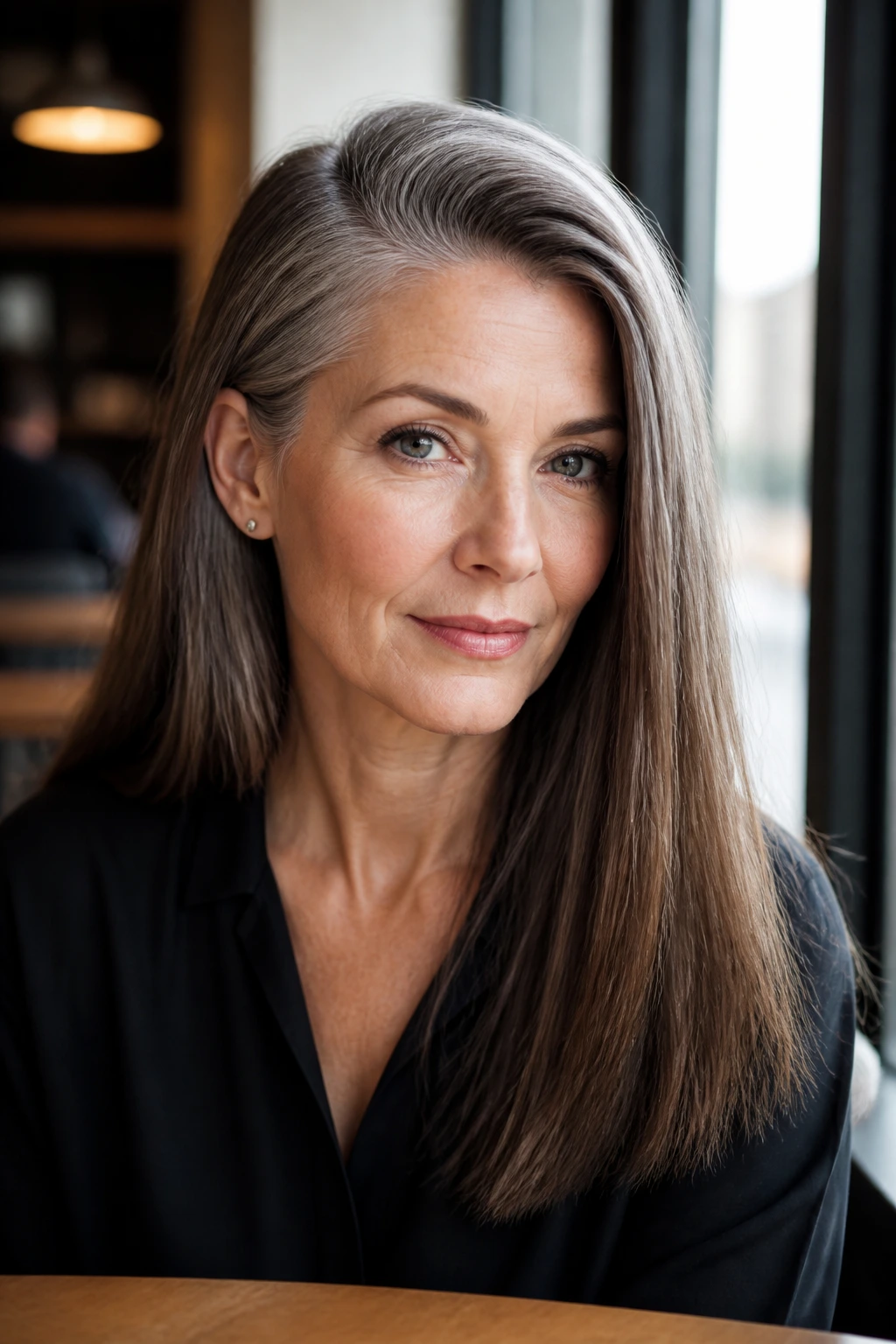
A deep side part can pull a whole haircut out of flatness with almost no effort. It creates lift at the crown, pushes one side across the forehead, and gives long straight hair a little asymmetry. That asymmetry matters more than people think. It breaks the outline so the face doesn’t disappear into a sheet of hair.
This is especially useful if one temple is thinner, one side of the hair falls flatter, or the crown needs help standing up. The cut itself can stay long and simple. The part does the styling work.
The side-part version is also good on days when you want the hair to feel a bit less predictable. A center part is clean. A deep side part has energy. Not a lot. Just enough.
14. Face-Slimming Pieces That Start at the Cheekbone
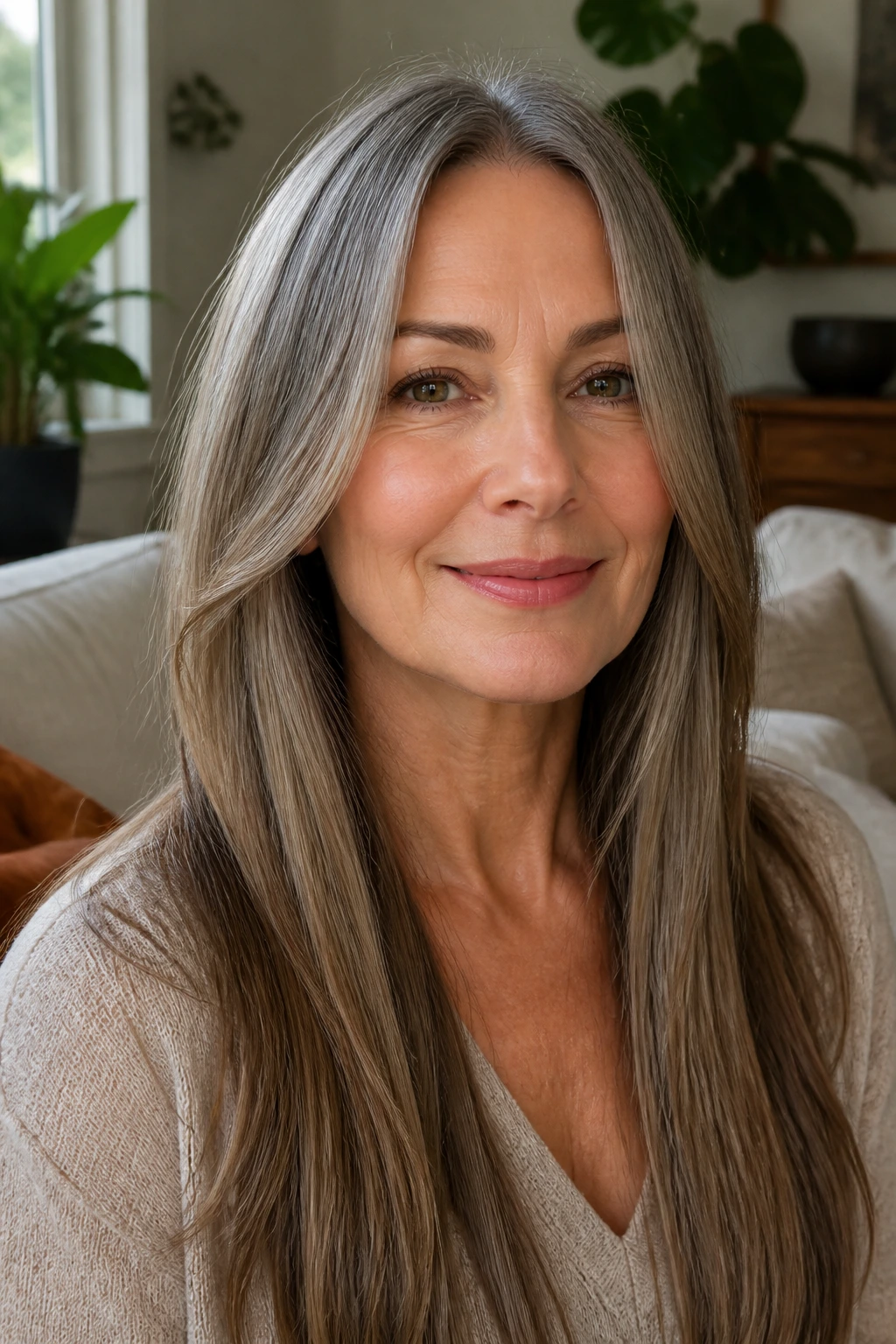
If you want softness around the face without losing the length, cheekbone-level face-framing pieces are one of the best tools in the box. They start high enough to affect the shape, but not so high that they become a mini shag.
This cut works on long straight hair because the front pieces can melt into the rest of the length. They skim the cheeks, narrow the face a touch, and keep the long shape from looking heavy near the jaw.
A small warning: if the face frame is too short, it can look like a mistake two weeks after the haircut. Keep the pieces long enough to tuck behind the ear or blend into the front of the shoulder. That gives the style room to grow.
15. Long Straight Hair With Internal Layering Only
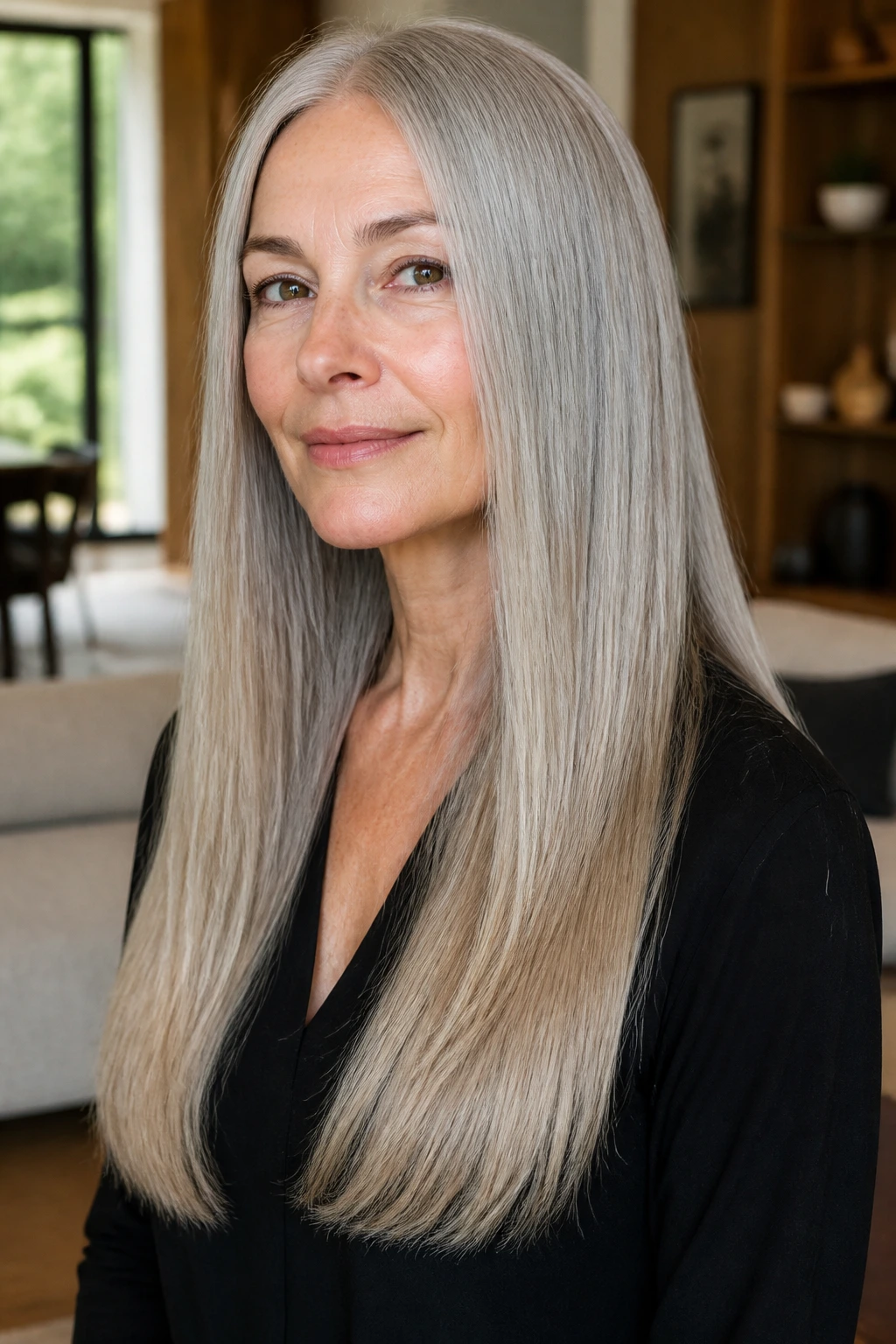
Internal layering is for women who want a clean outer line but need the inside of the haircut to behave. The stylist removes bulk from the underlayers, leaving the surface smooth. That means the haircut still looks sleek from the outside, but it doesn’t act like a block of wood.
This is one of the best answers for dense straight hair that gets too puffy under the ears or in the back. The line stays elegant. The bulk drops. Win, win.
It also suits older women who like to wear their hair straight but hate that heavy shelf effect some long cuts create. Internal layering solves that without making the ends ragged. Ask for weight removal, not short layers. Those are not the same thing, and the difference shows up every morning.
16. A Glasses-Friendly Cut That Stays Away From the Frames
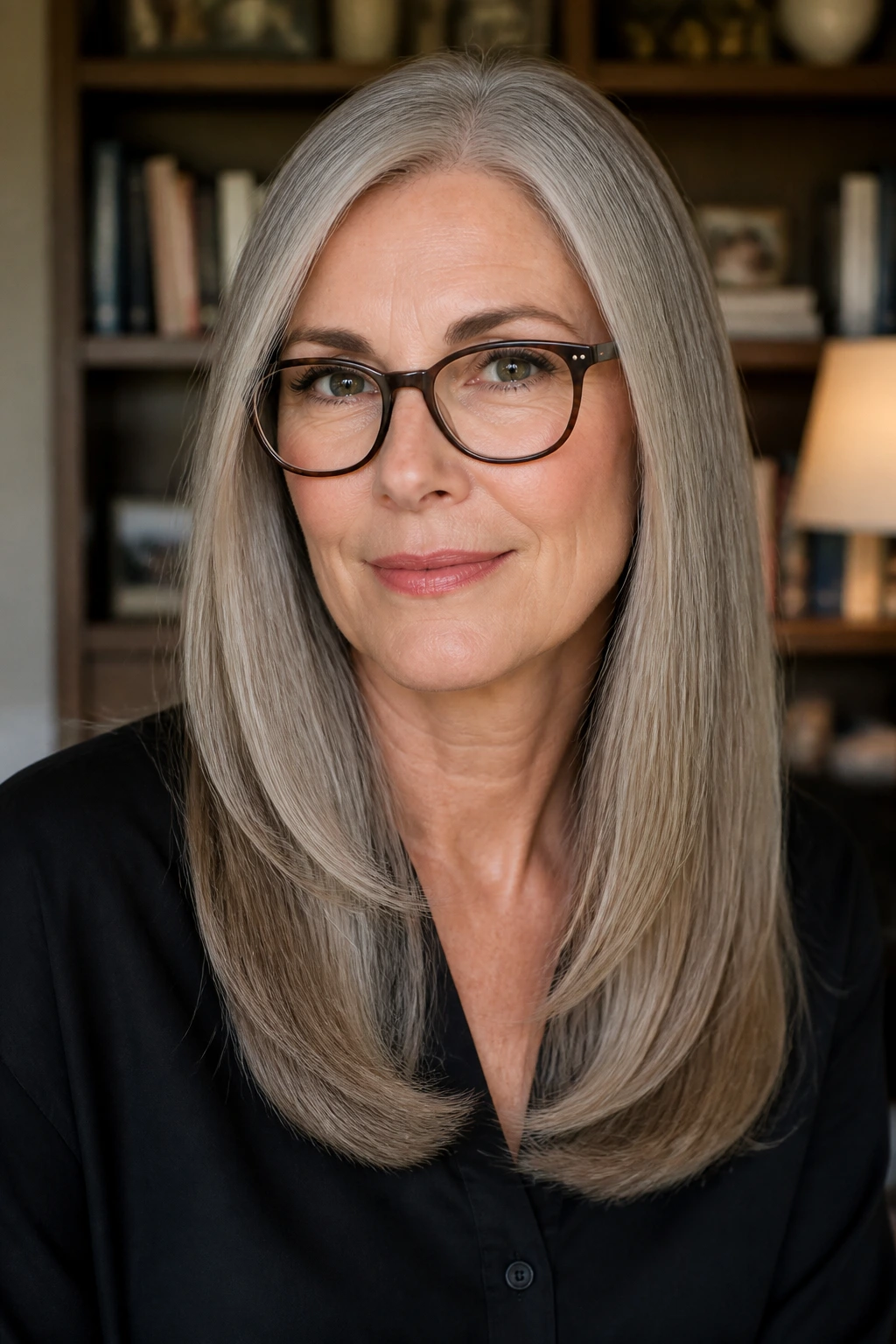
Haircuts and glasses need to get along. Too many front layers end up fighting the frames, curling into them, or brushing against the temples all day. A glasses-friendly long cut keeps the front pieces slightly longer and more controlled so the hair clears the frames instead of crowding them.
This usually means a soft center part or a gentle side part, plus front pieces that start below the cheekbone. The rest of the hair can stay one length or lightly layered. The important part is clearance.
The Best Setup
- Keep the shortest front pieces below the top of the frame.
- Avoid choppy bangs unless you want a lot of daily styling.
- Add a tiny bend near the ends so the hair doesn’t sit flat against the arms of the glasses.
If you wear glasses every day, the haircut should account for them. That sounds obvious. Yet many do not.
17. Chin-Skimming Front Pieces on Long Hair
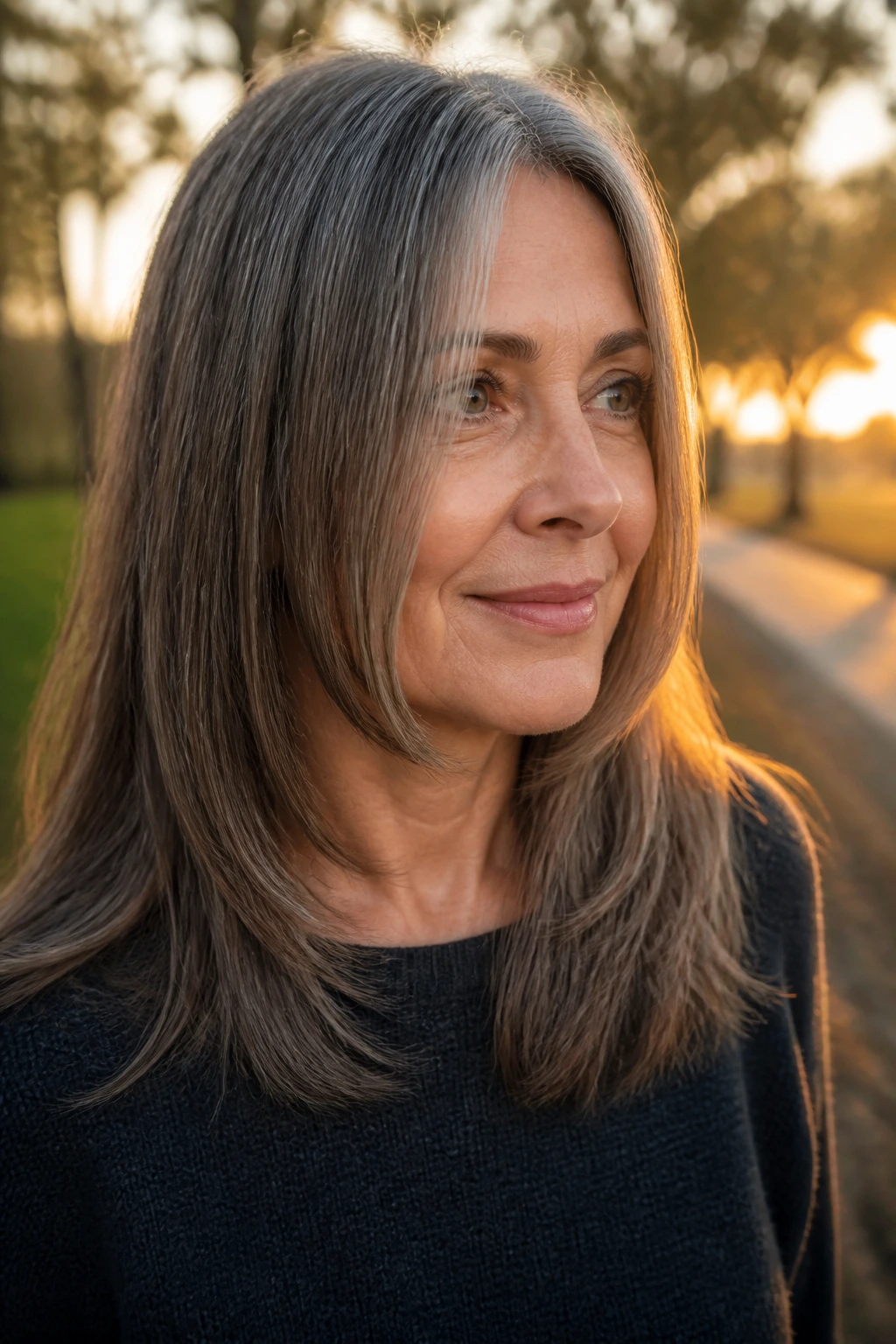
Chin-skimming pieces are the sweet spot for women who want facial softness but dislike the upkeep of shorter fringe. These front sections start around the jaw and flow into the rest of the length, which gives the face a little shape without hardening the outline.
Straight hair handles this especially well because the front pieces fall cleanly instead of puffing. The result is a long silhouette with a subtle frame around the lower face. It can make the jaw look more defined and the neck a little longer.
This cut is a good answer for anyone whose hairline has changed over time or who simply wants more structure around the face. The pieces are long enough to tuck, pin, or blow back. That flexibility is the real luxury here.
18. Feathered Ends That Move Instead of Flip
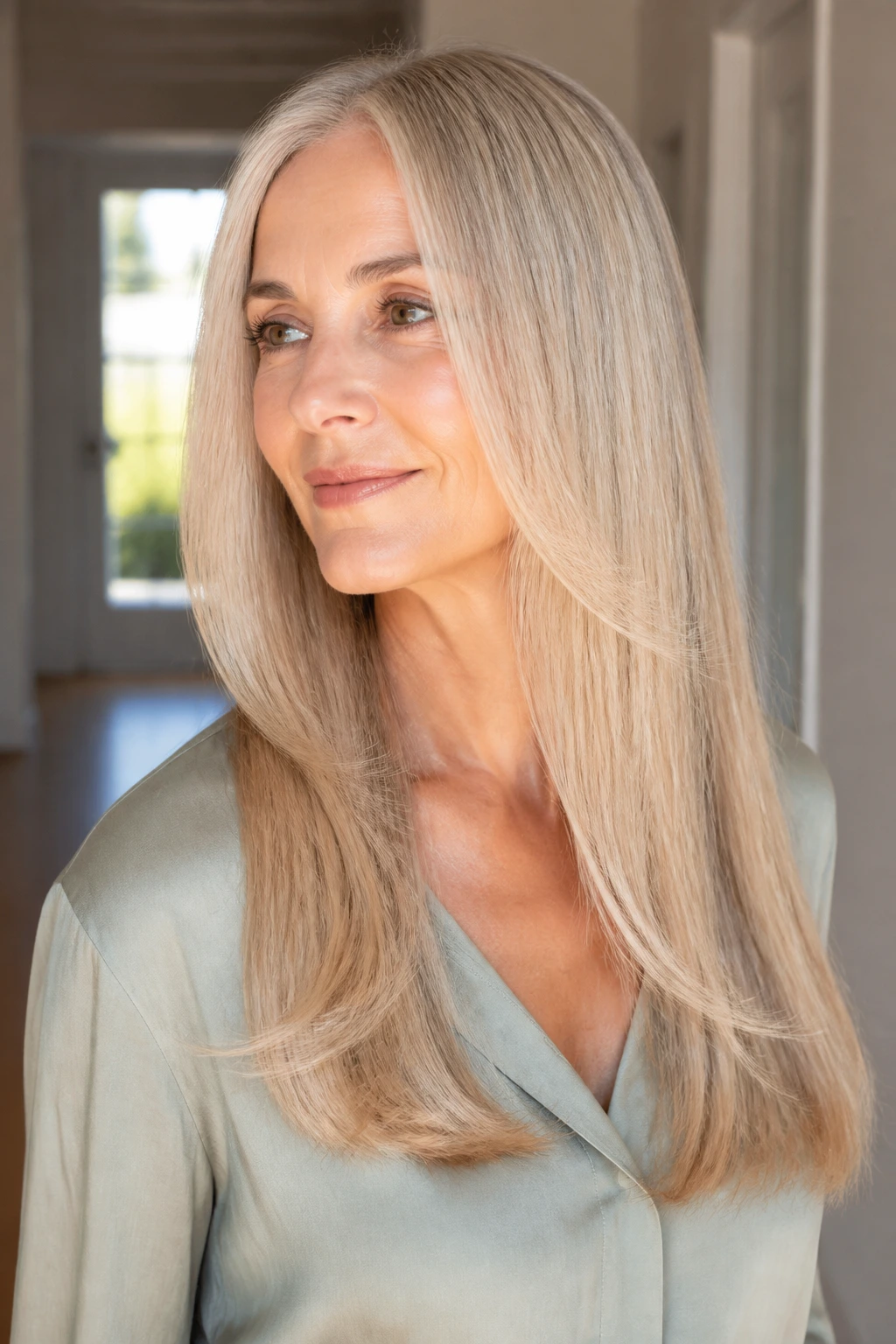
Feathered ends can work on straight hair, but they need a light hand. I’m not talking about the old over-thinned, wispy feathering that makes the ends look dry. I mean soft, tapered ends that move a little when you walk and don’t sit like a straight plank.
This is a good option if your hair has a natural bend and you want the cut to feel a bit softer. It also helps long straight hair avoid that heavy curtain effect, especially when the hair is thick around the shoulders.
What to Watch For
- The feathering should be subtle.
- The ends should still look full from the front.
- A tiny bend is enough; you do not need a lot of flip.
If your hair is fragile, ask for the softest possible version. Heavy-handed feathering on older hair is a fast way to get dry, see-through ends.
19. A Minimalist No-Layer Cut for Straight Hair
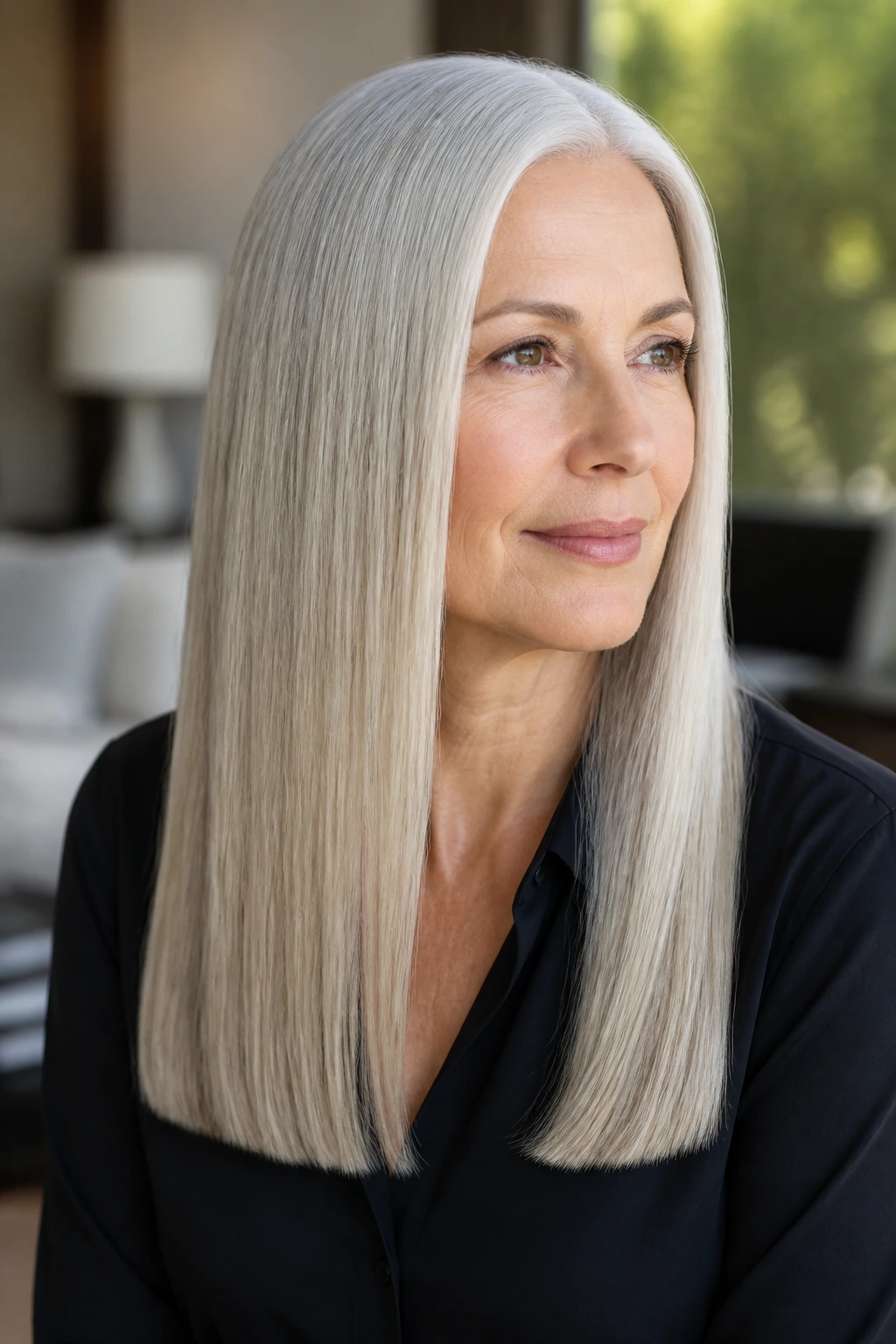
Some hair looks best when nobody gets clever with it. A no-layer cut is exactly that: a long, clean line with almost no interior cutting. It keeps the silhouette strong and makes straight hair look polished with very little daily effort.
This shape is especially good for hair that already lies flat and has enough density to support a blunt line. The ends look thicker, the body of the hair feels calmer, and the haircut ages well between trims. There’s a reason stylists keep returning to it when clients want something chic but not fussy.
If you love the look of long, expensive-looking hair that doesn’t try too hard, this is the version. It can be center-parted, side-parted, tucked, clipped, or worn loose. The whole point is that the shape holds its own.
20. Tucked-In Ends That Curve Under Slightly at the Neck
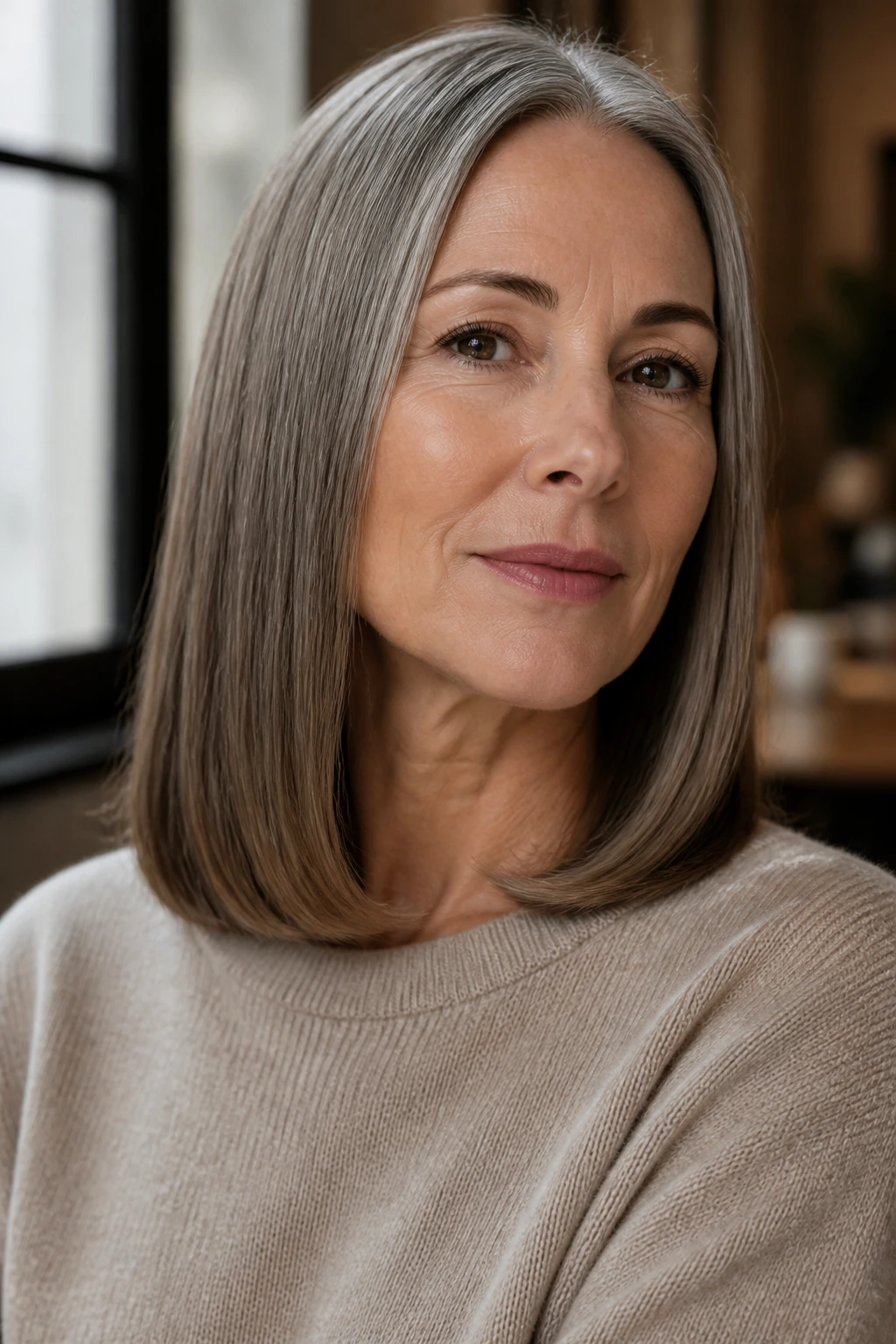
A slight undercurve at the ends gives long straight hair a more finished feel, especially when the hair touches collars, scarves, and knitwear. Instead of kicking out at random, the ends tuck under the neck line and follow the body a little more neatly.
This cut is useful for women who live in button-downs, turtlenecks, or structured jackets. The hair doesn’t fight the clothing. It settles into it. That sounds small until you spend a winter pulling your hair out of a scarf every ten minutes.
The undercurve can be created with the cut itself or with a brief blow-dry using a round brush. Either way, the result is a quieter, more polished line. Not flashy. Better.
21. Blended Layers for Dense Hair That Feels Heavy
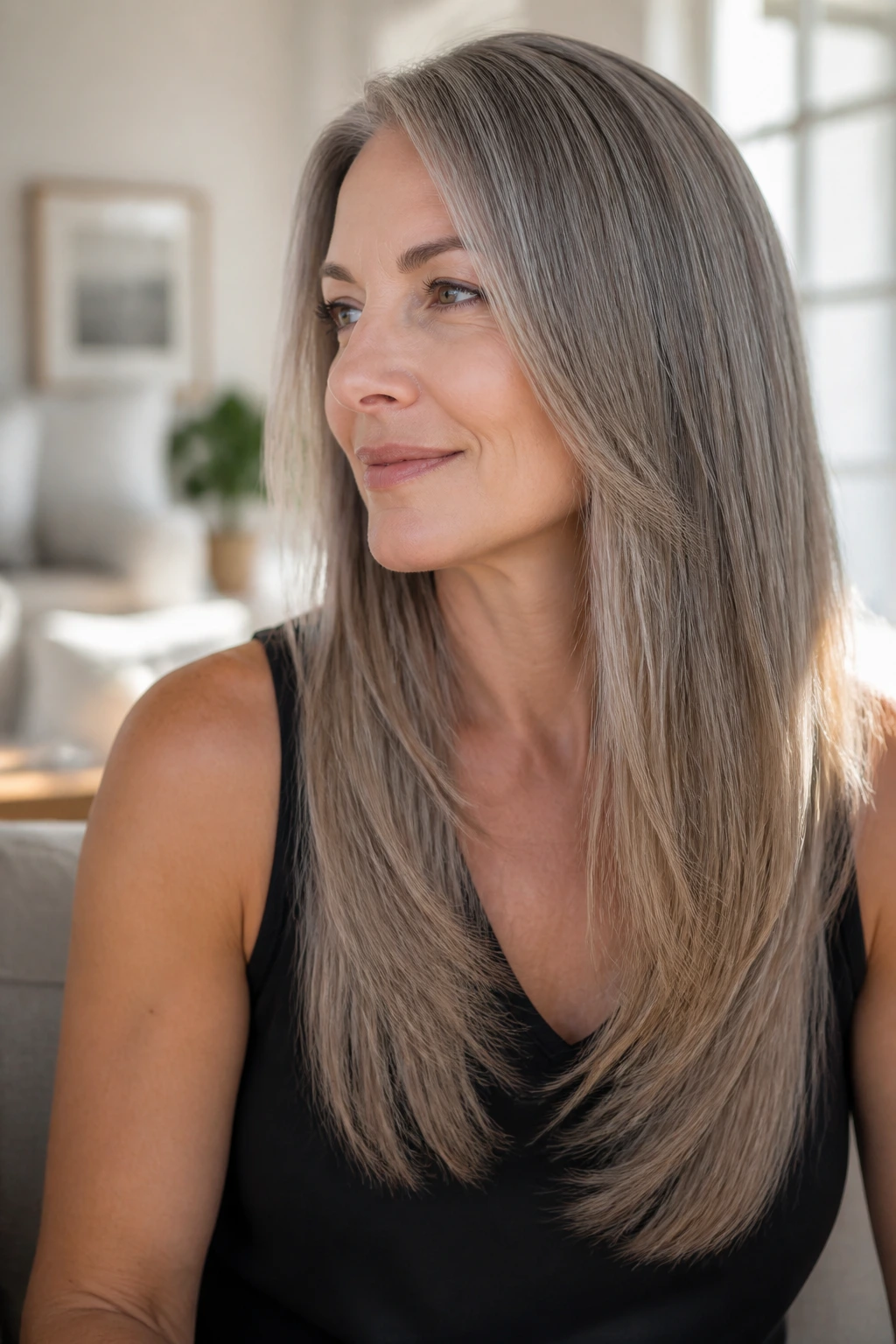
Dense straight hair can look gorgeous and still feel like a beast on the shoulders. Blended layers help by breaking up the weight without making the haircut look chopped. The transitions should be smooth enough that you can’t point to where one layer ends and another begins.
This style is especially good for women whose hair has become thicker in some places and coarser in others. The layers help the hair lie down more evenly and prevent the bottom from splaying outward. You still keep length. You just lose the load.
Best Uses
- Hair that takes forever to dry.
- Hair that puffs at the nape.
- Hair that feels too heavy when worn loose.
A good blended layer cut should be felt more than seen. If the layers announce themselves, the stylist went too short.
22. A Long Straight Cut With Dusting at the Ends
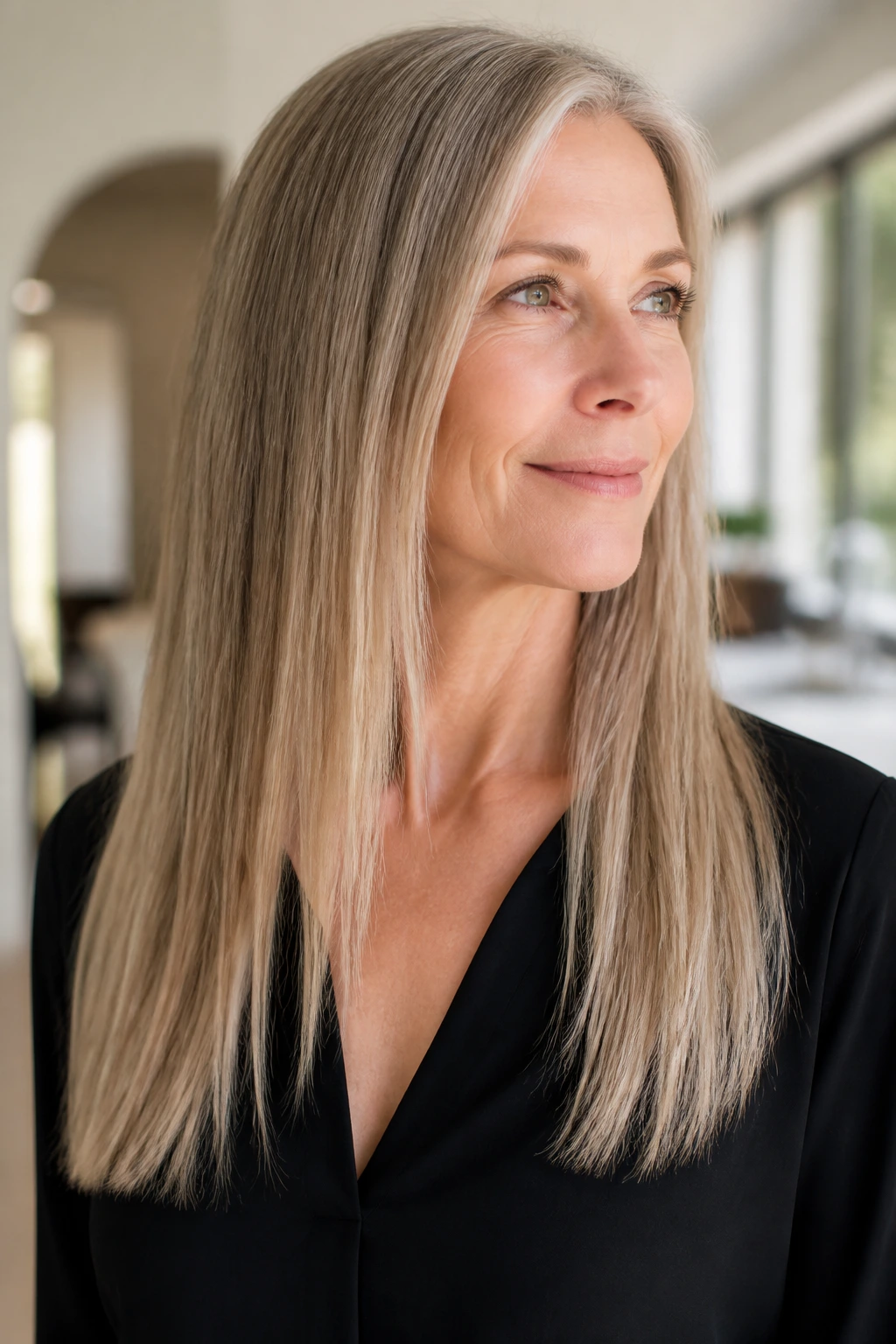
Dusting sounds minor because it is minor, and that is why it works. Instead of chopping several inches, the stylist removes only the damaged, splitting tips so the line stays sharp. On long straight hair, that little maintenance move can make the whole haircut look fresher.
Older women often benefit from this approach more than a dramatic reshape. If the length is working, keep it. Clean up the bottom. That’s often enough. It preserves the density you already have while getting rid of the scruffy look that makes long hair seem neglected.
I’m a fan of dusting for anyone who wants to keep long hair but doesn’t want to lose length just because a few ends are tired. It’s a maintenance plan, not a reinvention.
23. Collarbone-to-Back Length With a Clean Edge
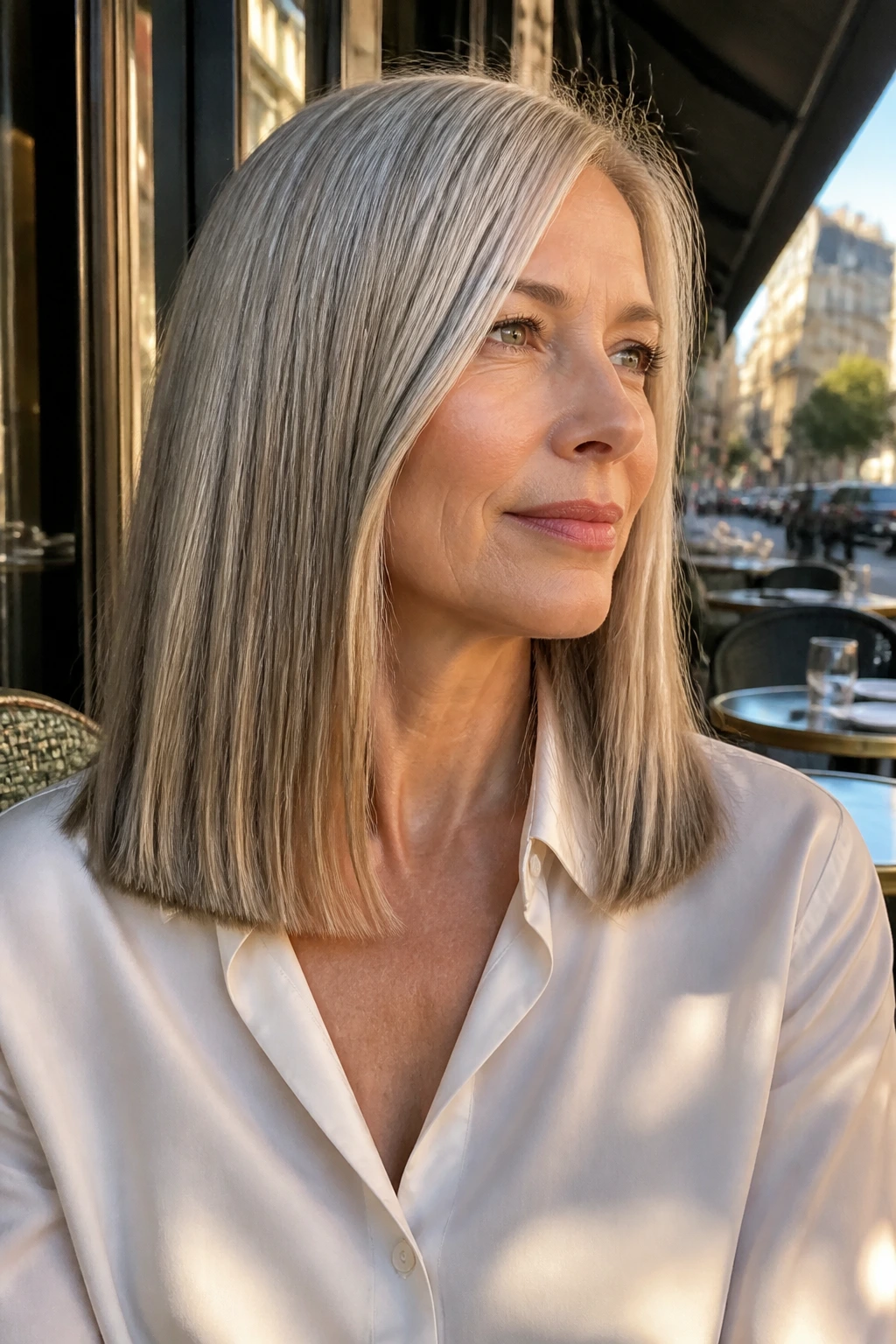
This is the practical sweet spot. Long enough to feel feminine and versatile, not so long that it drags around or demands constant attention. Collarbone-to-back length gives straight hair enough room to fall smoothly while staying easy to tuck, clip, or wear down.
The clean edge matters here more than the exact inch count. If the ends are blunt and the perimeter is tidy, the whole cut looks intentional. That makes this one a strong choice for older women who want low-drama hair that still reads polished.
Why It Works in Real Life
- It sits well with coats and sweaters.
- It grows out gracefully.
- It gives enough length for a ponytail or claw clip.
If you’re between “long hair” and “too much hair,” this length usually lands in the right place.
24. A Soft Money-Piece Frame on Long Sleek Hair
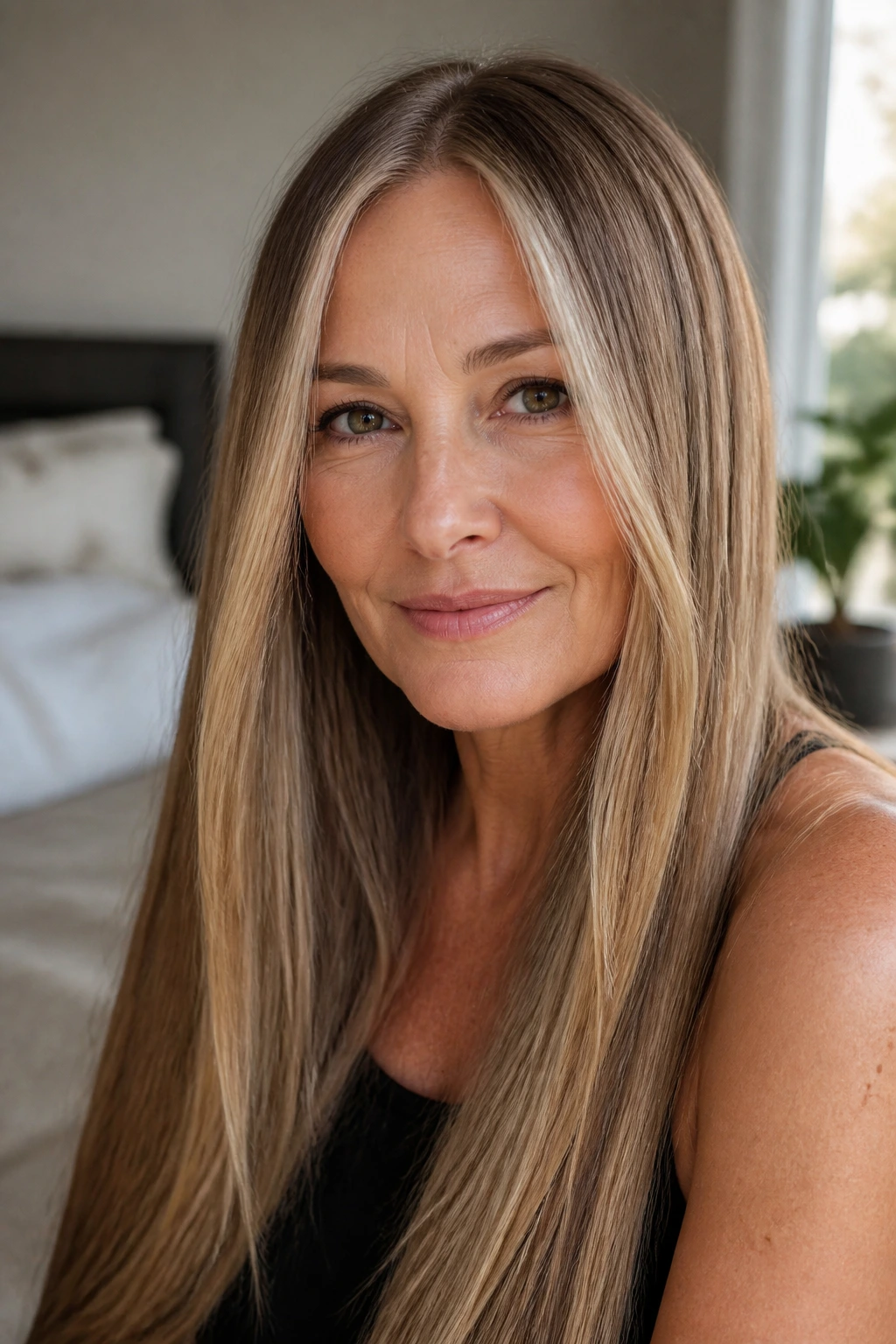
A soft money piece is the easiest way to brighten long straight hair without turning the cut into a color project. The front sections are a shade lighter or simply lighter-looking, which draws the eye to the face and makes the rest of the length feel cleaner.
This does not have to mean dramatic highlights. A subtle brighter edge around the face can lift silver hair, blend grays, or give darker hair a little movement near the temples. On straight hair, the effect is crisp because there are no curls to blur it.
The cut itself can stay simple: long, sleek, and straight. The money piece carries the interest. That’s a nice trade if you want a haircut that looks fresh without a lot of styling gymnastics.
What Makes a Long Straight Cut Read as Polished
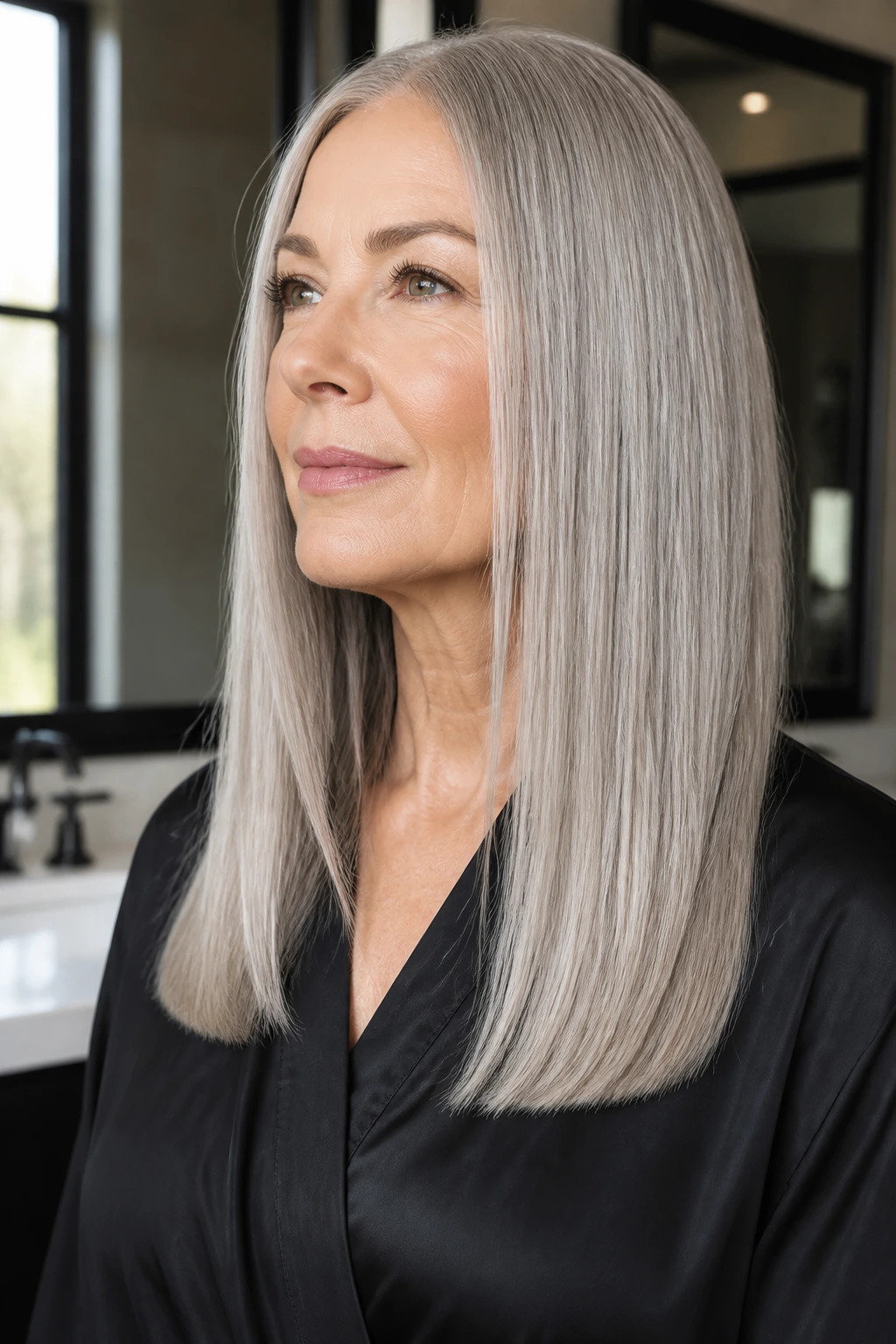
A polished straight cut is rarely about the length alone. It’s about the edge. The perimeter has to look deliberate, the front has to relate to the face, and the hair has to sit in a way that makes the eye move from top to bottom without getting stuck on rough spots.
Straight hair is unforgiving in the best way. If the ends are split, you see it. If the line is off, you see it. If the cut is thoughtful, you see that too. That’s why blunt edges, subtle angle changes, and controlled face-framing matter so much more than dramatic layering.
For older women, the smartest version of a long straight cut usually balances two things at once: density and softness. Too much softness can make the ends look thin. Too much bluntness can look hard around the face. The sweet spot sits in the middle, and it often comes down to a quarter-inch here, an inch there, not a wholesale makeover.
Essential Tools for a Smooth Finish
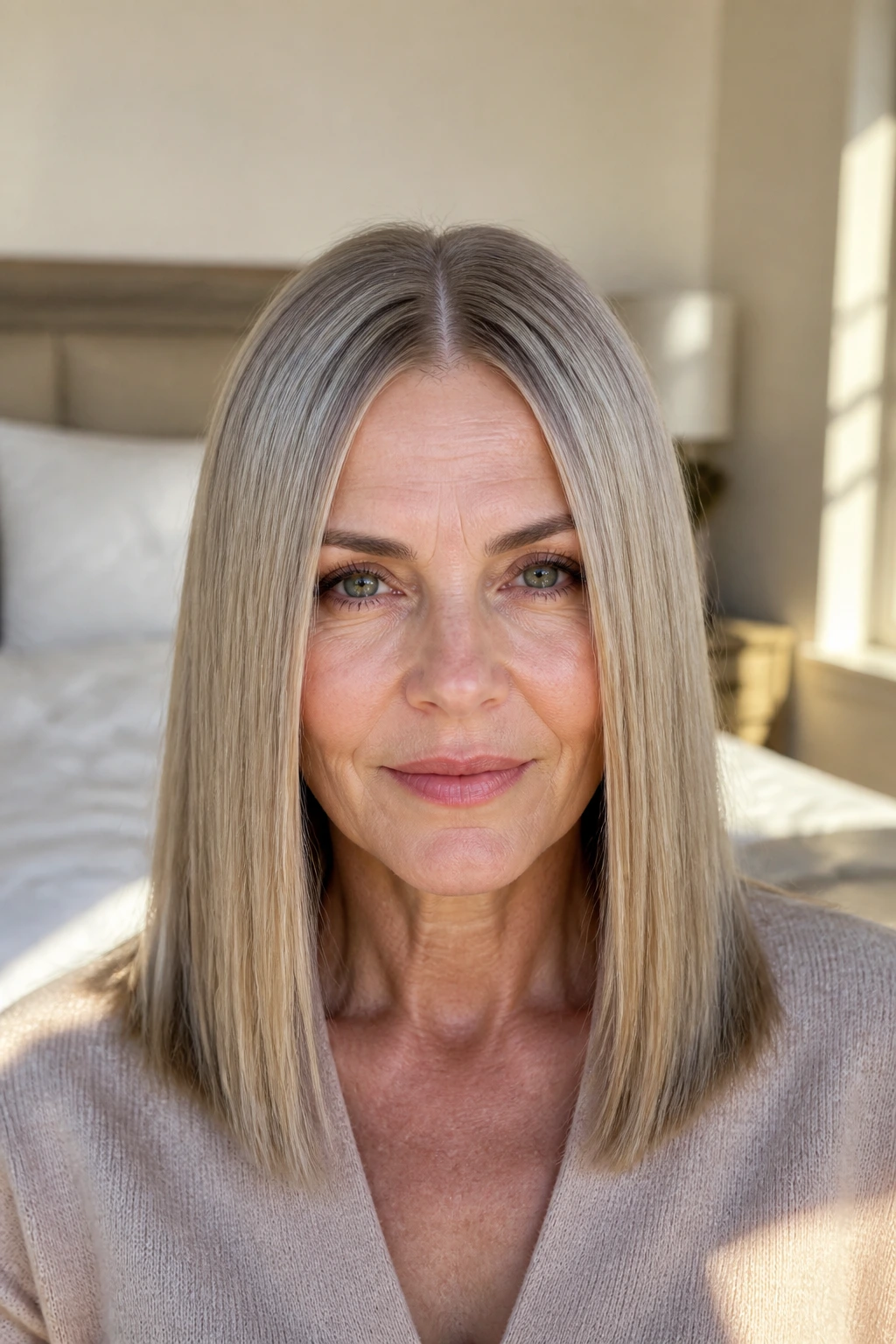
-
Blow dryer with a concentrator nozzle: The nozzle keeps airflow pointed downward, which helps the cuticle lie flatter and cuts down on frizz.
-
Paddle brush: This is the easiest brush for long straight hair because it smooths wide sections without overbuilding volume.
-
Fine-tooth tail comb: Useful for clean parts and neat sectioning, especially if you want a center part or a precise side part.
-
Flat iron with ceramic or titanium plates: Use it on fully dry hair only. Rounded edges help you add a slight bend at the ends instead of a poker-straight, hard finish.
-
Heat protectant spray: Non-negotiable if you use hot tools. Spray it through the mid-lengths and ends, not just the top.
-
Light serum or oil: A pea-sized amount is enough for the ends on most hair types. Too much turns sleek into greasy.
-
Sectioning clips: These make blow-drying and flat ironing much easier, especially if the crown needs extra attention.
-
Microfiber towel or cotton T-shirt: Less roughing up means less frizz and fewer bent-up ends after washing.
How to Ask Your Stylist for the Right Line
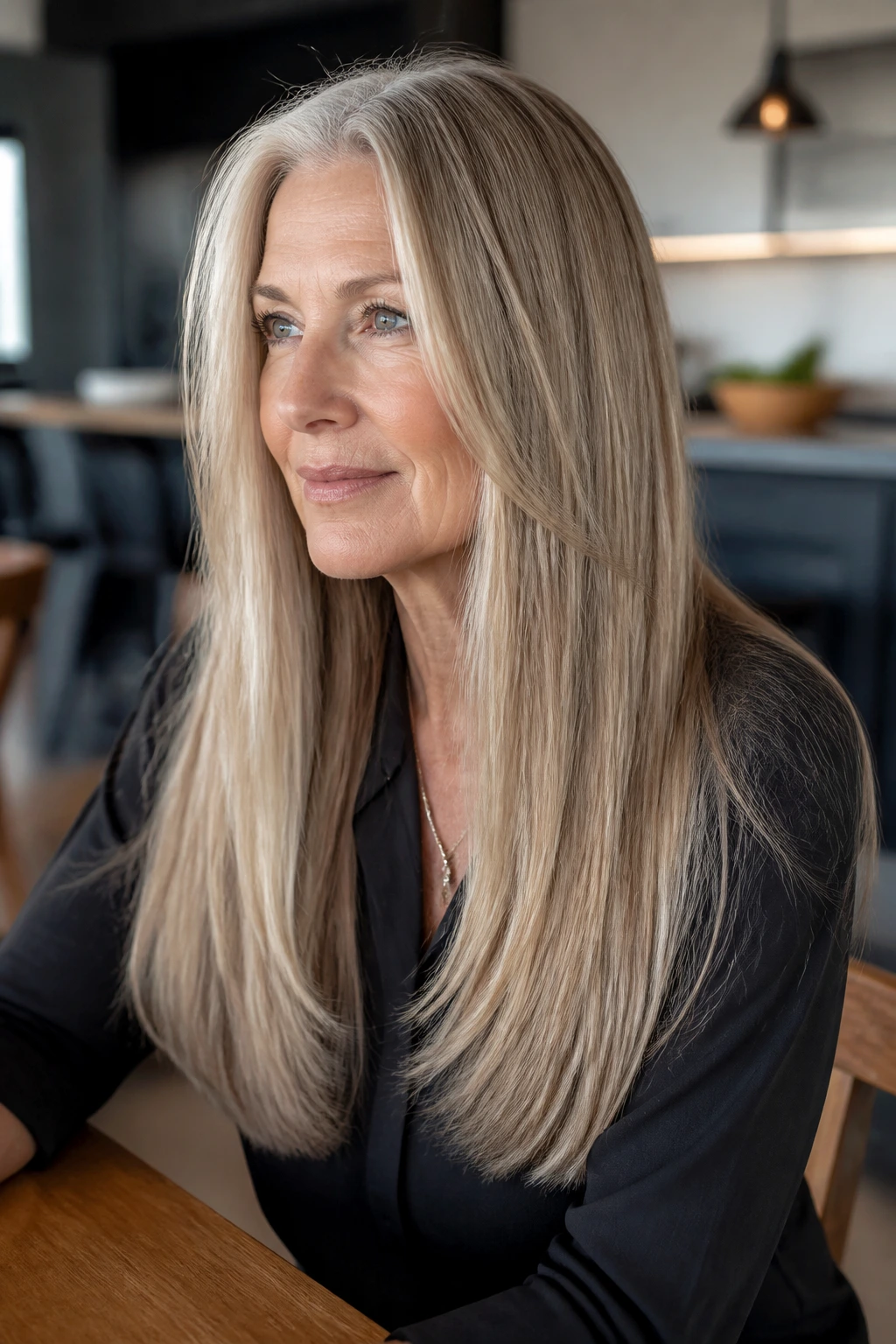
Bring photos, yes, but say what you want in plain language too. Photos show the shape. Words explain the maintenance. That combination matters because two haircuts that look similar on a screen can behave very differently on your head.
Try a sentence like this: “I want the length to stay long, but I need the ends to look fuller, not stringy.” That tells the stylist to protect the perimeter. If you want layers, say where they should start. Below the chin is very different from cheekbone height, and the difference shows up fast on straight hair.
A good salon conversation also covers how you wear the hair. If you part it on the side, say so. If you wear glasses, mention that. If your hair flips outward at the ends, bring that up. Those details stop the stylist from giving you a pretty cut that only works under perfect conditions.
Bring up trim timing too. If you want a crisp line, tell them you plan on dusting every 8 to 10 weeks. That changes how aggressively they should cut the shape.
Smart Styling Moves for Everyday Wear
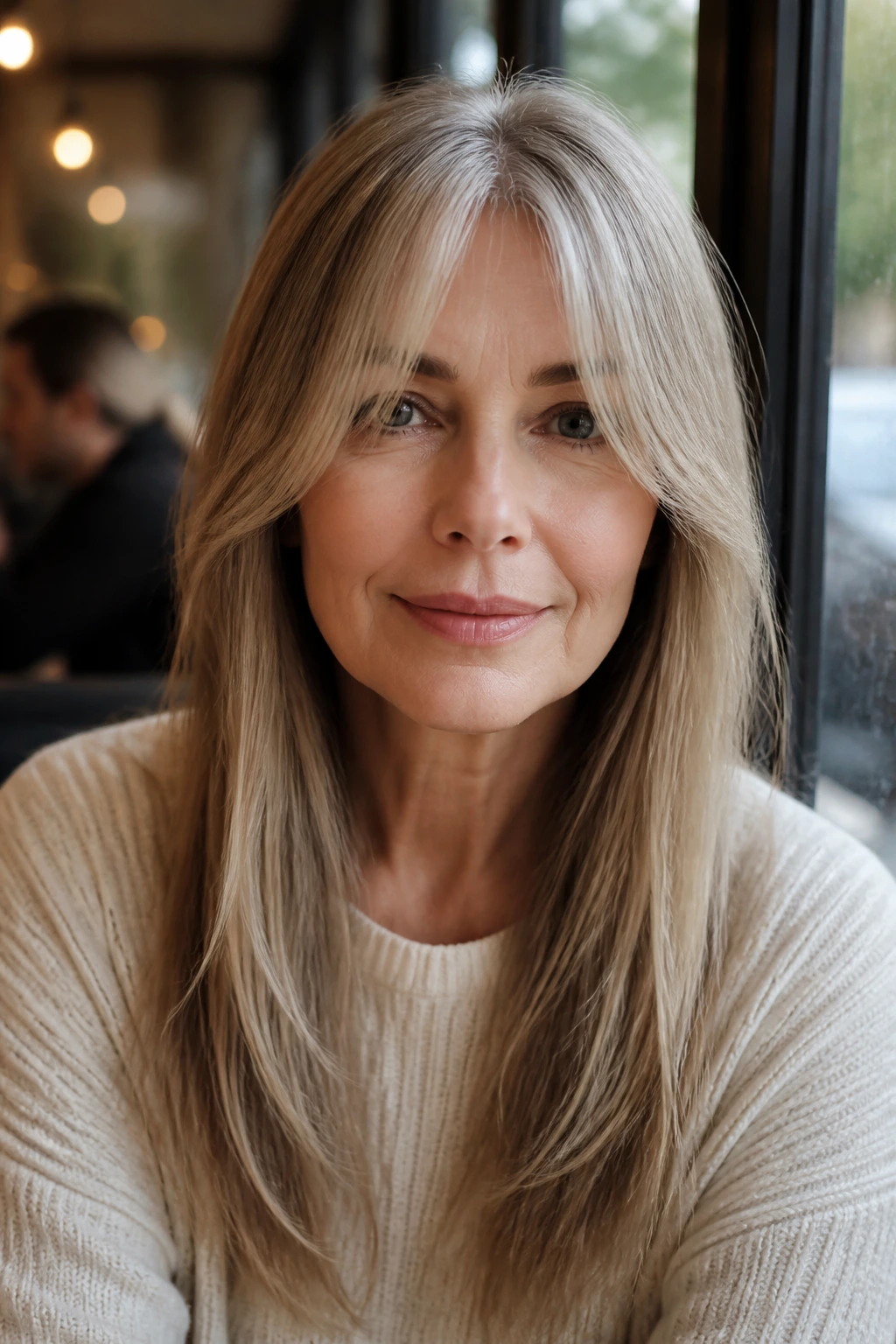
Root Lift: A clean crown makes a long straight haircut look twice as intentional. Blow-dry the roots in the opposite direction of your part for the first minute, then switch back and smooth them down.
Length Finish: Run a flat iron only through the last 2 to 3 inches if the rest of the hair is already smooth. That keeps the ends neat without flattening the whole head.
With Glasses: Keep the front pieces long enough to clear the frames. If the hair keeps landing on the temples, move the part or trim the face frame a touch lower.
For Work or Evenings Out: Tuck one side behind the ear and keep the other side down. That small asymmetry makes sleek hair look styled without adding curls or heavy product.
With Collars and Scarves: If your clothes have a lot of texture, a slight undercurve at the ends helps the hair sit above the fabric instead of getting trapped in it.
Additional Tips and Finish Boosters
Flavor Enhancement: A tiny drop of shine serum on the last 3 inches makes straight hair look sharper than a whole handful of product on the surface. Apply it to your palms first, then skim the ends.
Customization: If your hair feels flat in the back, ask for a small amount of internal weight removal rather than visible layers. You get movement without losing the clean outline.
Pro Move: Let the roots cool before you touch them. That one habit keeps the crown from collapsing three hours later.
Salon Timing: If you want the shape to stay crisp, book a trim every 8 to 10 weeks. If your hair grows slowly and the line still looks clean, you can stretch to 12 weeks, but the ends will tell on you sooner than you think.
Gray-Hair Bonus: A clear gloss or toner every so often can make silver hair look brighter, but the cut still matters more than the color treatment. The sharp line is what keeps the tone from looking dull.
Common Mistakes That Age the Cut Too Fast
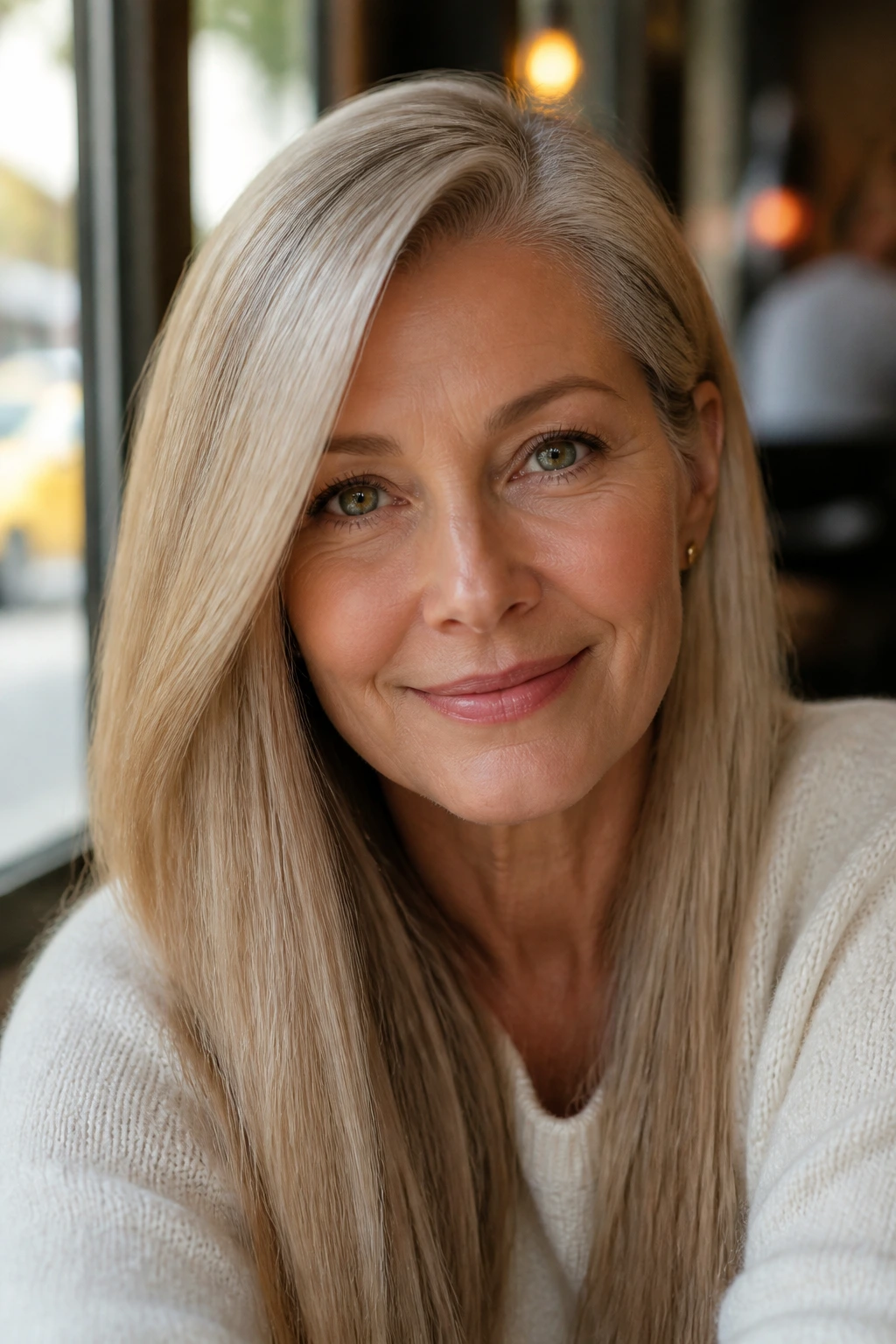
The first mistake is over-layering the ends. It makes straight hair look thinner than it is, especially around the shoulders. The fix is simple: keep the layers long or hidden, and protect the perimeter.
The second is skipping trims until the split ends start traveling upward. By then, the bottom already looks scraggly, and the cut loses the crispness that made it flattering in the first place. Trim sooner, not later.
A third problem is choosing bangs that need daily battles. Short fringe can be lovely, but if your hairline swirls, your glasses sit high, or your forehead isn’t evenly shaped, you may end up spending too much time fixing it. Longer curtain pieces or bottleneck bangs usually behave better.
The fourth mistake is flat-ironing the whole head every day at high heat. That leaves straight hair dry and brittle, which is the fastest route to ends that look old before their time. Use heat protectant, keep the temperature moderate, and leave some days for a brush-and-serum finish.
Variations and Adaptations to Try
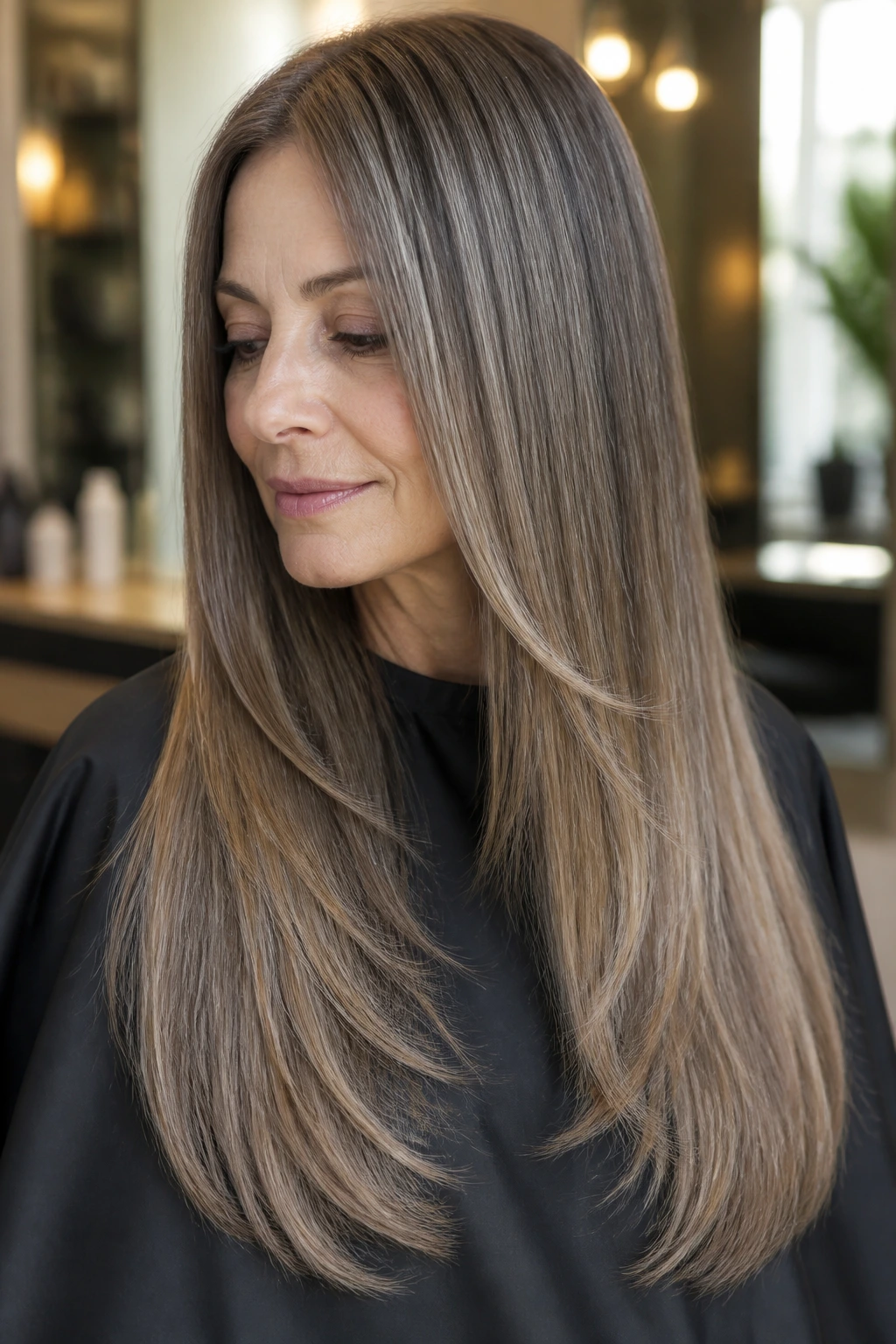
The Silver Blade: Keep the cut blunt and one-length, then add a gloss treatment so gray or white hair reflects light cleanly. This version is best when the hair is already dense enough to hold its line.
The Fine-Hair Anchor: Use a no-layer shape with just a whisper of dusting at the ends. It keeps the body of the hair intact and avoids the see-through bottom that makes fine hair look tired.
The Thick-Hair Calmer: Add hidden interior layers and keep the exterior edge heavy. This is the one to ask for if your hair feels too wide around the shoulders.
The Soft Fringe Option: Swap blunt bangs for curtain pieces or bottleneck bangs. You get forehead coverage and softness without having to re-cut the fringe every few weeks.
The Glasses-Smart Version: Keep the front pieces below the frame line and make the rest of the hair follow a straight, controlled fall. It keeps the haircut from fighting your eyewear.
How to Keep the Shape Between Salon Visits
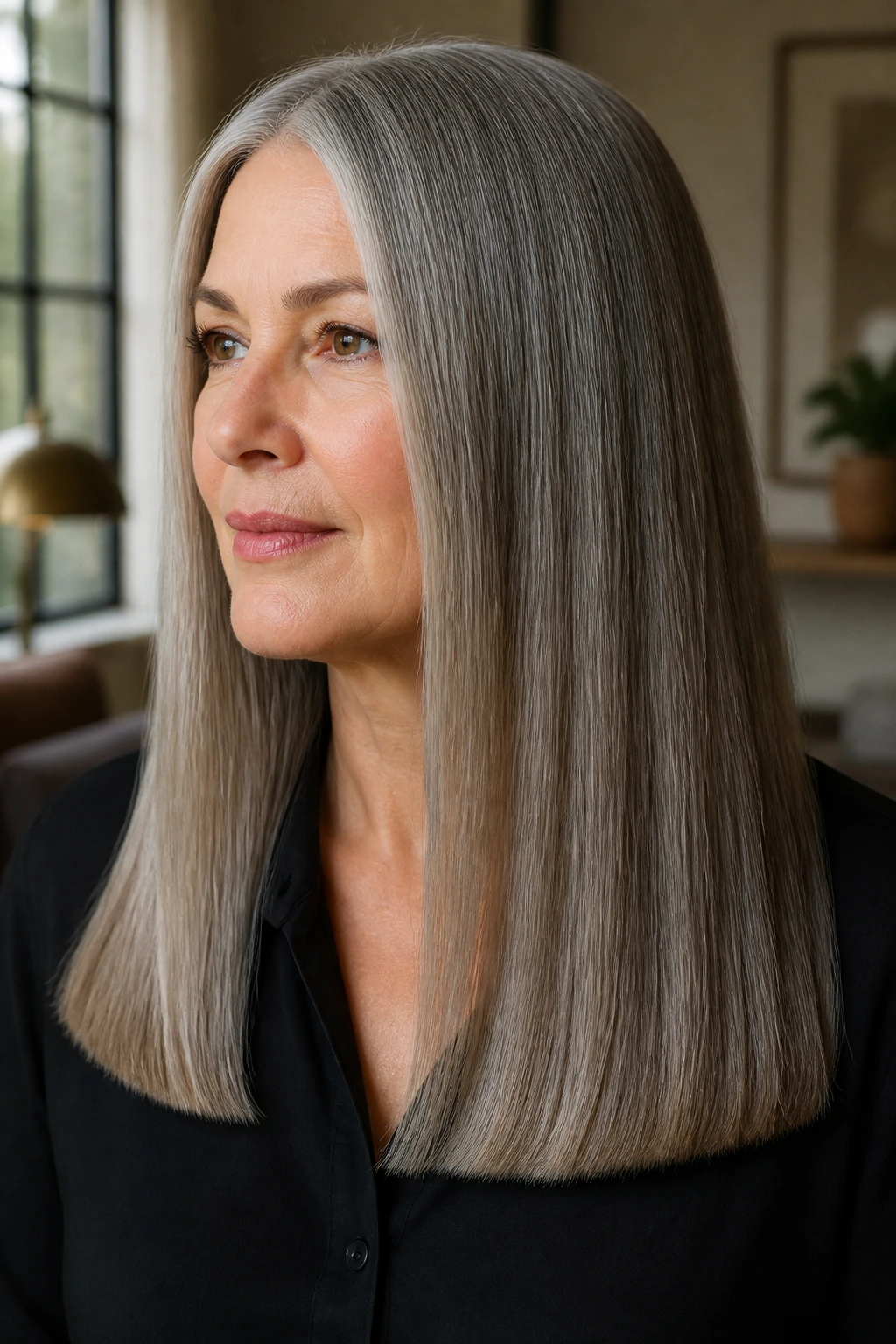
Long straight hair keeps its dignity when the maintenance is boring and regular. That means washing with a routine that fits your scalp, not your mood, and drying the hair in a way that doesn’t rough up the cuticle. If your roots get oily fast, wash more often. If they do not, don’t force it.
Use heat sparingly. A blow-dry with a nozzle and paddle brush can be enough for most days, especially if the cut is good. When you do use a flat iron, keep it around 300°F to 350°F for most hair types, and only go higher if your hair is very coarse and genuinely needs it. Higher heat than that tends to create shine for a few hours and damage for weeks.
At night, a silk or satin pillowcase helps the ends stay smooth, and a loose braid or low ponytail can keep long hair from tangling into itself. If the hair is flat at the crown in the morning, mist the roots lightly with water, lift them with your fingers, and hit them with a dryer for 30 to 60 seconds. Small fix. Big difference.
Frequently Asked Questions
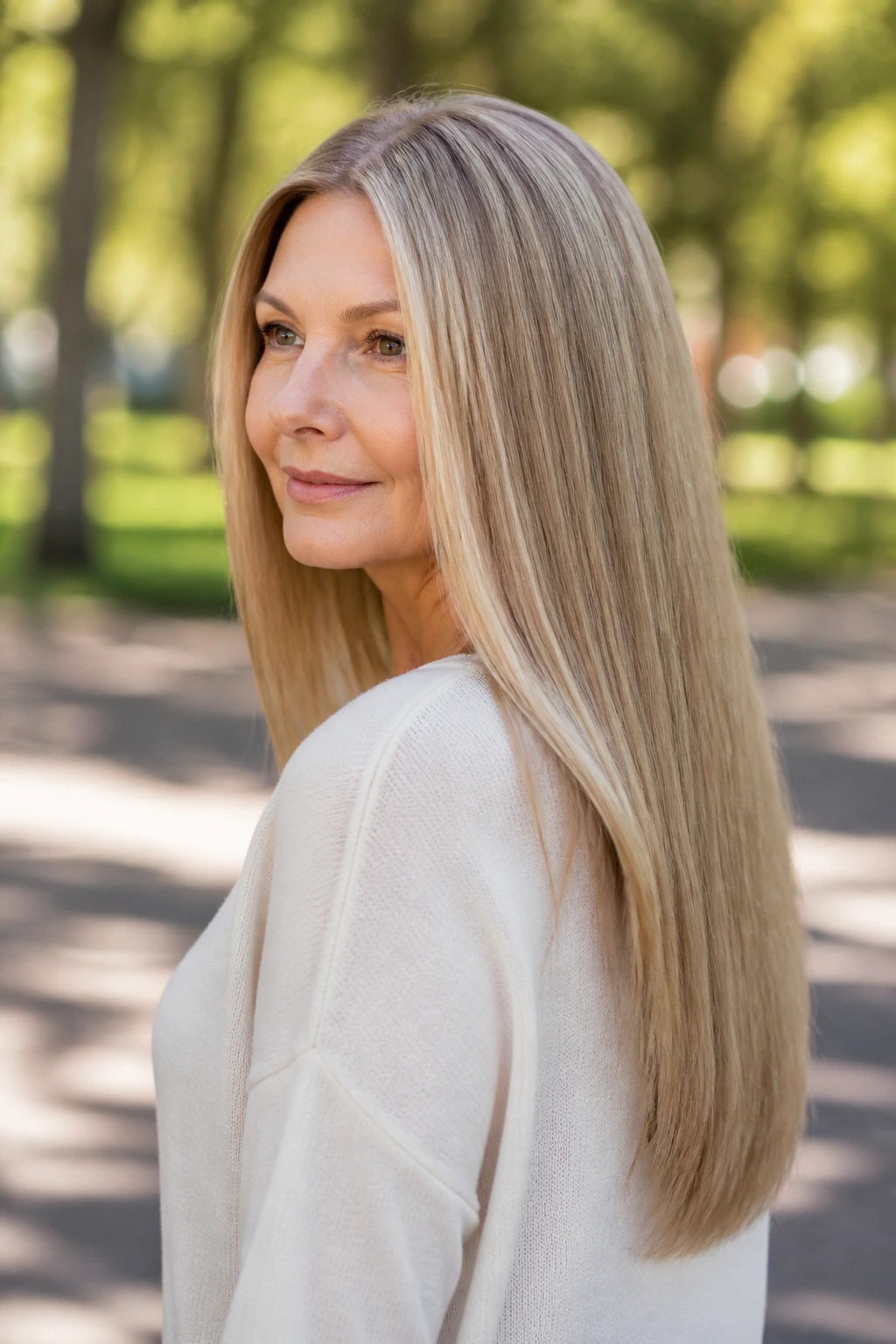
Which long straight haircut makes fine hair look thicker?
A blunt one-length cut usually wins here. It keeps the ends full and avoids the see-through effect that too many layers can create.
Are long straight haircuts flattering on older women?
Yes, when the shape is clean. Straight hair looks best with a sharp perimeter, a smart part, and enough softness around the face to keep the cut from feeling severe.
What if my hair is straight but my ends flip out?
Ask for a slight undercurve or a blunt trim every 8 to 10 weeks. Flipped ends usually mean the shape is too old, not that the hair refuses to cooperate.
Should I choose a center part or a side part?
Choose the part your hair will actually hold. A center part looks crisp on balanced faces and denser hair; a side part adds lift at the crown and softens the front.
Can I wear bangs with long straight hair if I wear glasses?
Yes, but longer fringe usually works better than short blunt bangs. Curtain pieces or bottleneck bangs sit more easily around frames and need less daily fixing.
How often should long straight hair be trimmed?
Most women do well with trims every 8 to 12 weeks. If you want a blunt line to stay clean, stay closer to 8 weeks.
What’s the best cut if my hair is thick and puffy?
Look at internal layering, a heavy perimeter, or a gentle U-shape. Those shapes reduce bulk without turning the ends stringy.
Does gray hair need a different cut than colored hair?
Not a different cut, but often a cleaner one. Gray and white strands show shape and texture more clearly, so a crisp line keeps the color looking bright instead of fuzzy.
Sharp Lines, Soft Edges
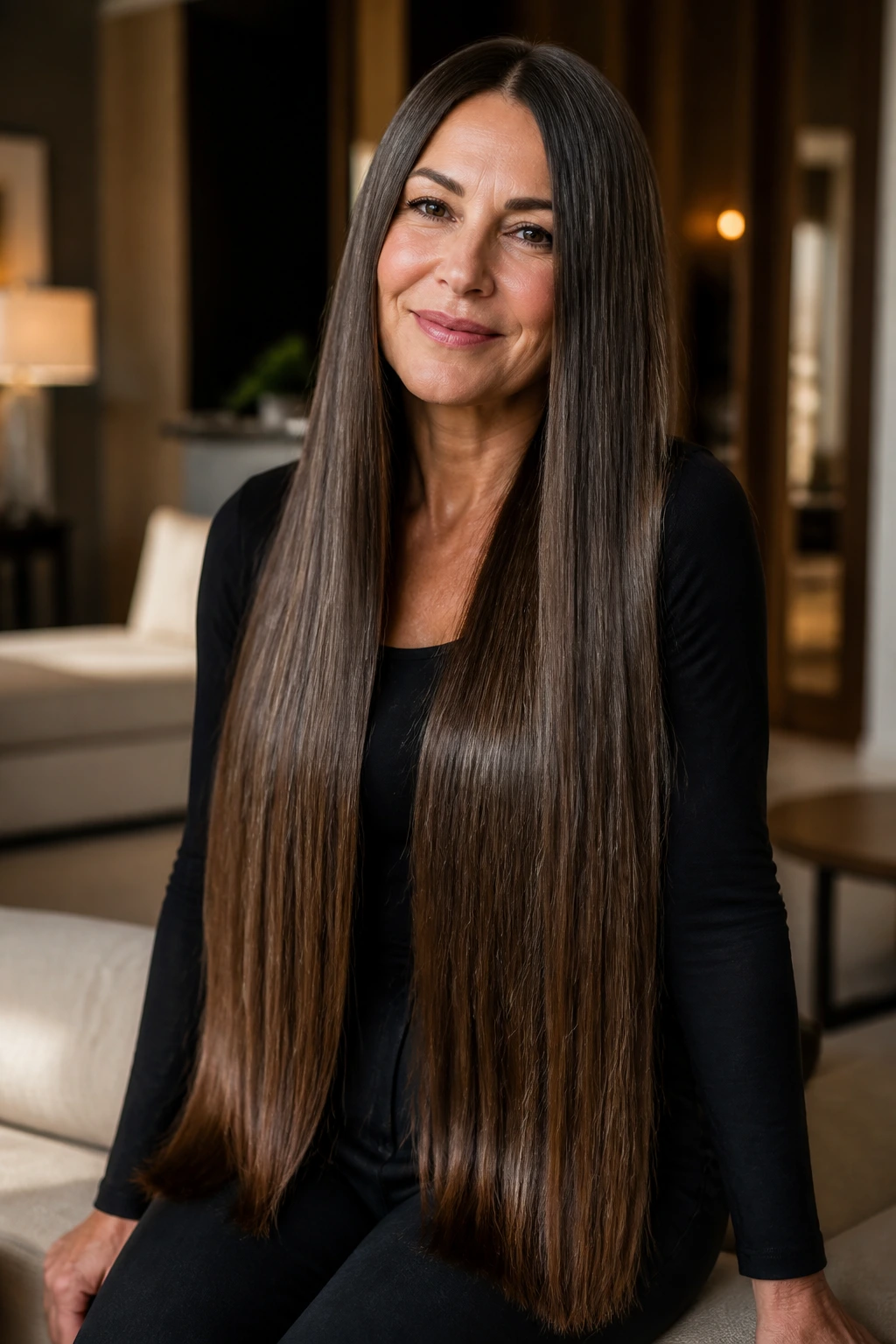
The nicest thing about long straight hair is that it does not need to be loud to look finished. A clean line, a smart face frame, and the right amount of weight at the ends can do more than a dozen styling tricks ever will. That is especially true for older women, when the goal is often less about “changing everything” and more about making the hair sit beautifully with the life you already have.
If one of these cuts keeps tugging at your attention, that’s probably the one. Bring it to your stylist, talk in inches and shape, and ask for the line that matches your density rather than the hair you had at 25. The best long straight haircut is the one that still looks good when the wind hits it on the walk to the car.
