



A prom ponytail can look sharper than loose curls when the base is clean, the height is chosen on purpose, and the ends are shaped instead of left to fend for themselves. The difference shows up fast: one version feels like you grabbed your hair and went, while the other reads polished the second you step into the room.
Prom night hair has a funny little problem. It has to survive photos, heat, dancing, and a dress that may already be doing a lot visually. A ponytail solves that beautifully when it’s built with intent — a wrapped elastic, a firm anchor, a curl pattern that doesn’t collapse by dessert, and a finish that looks touched, not stiff.
And yes, a ponytail can be formal. A very formal, very pretty ponytail. The trick is choosing the right height, texture, and accessory load for the dress and for your hair’s own habits, because hair has habits. It always does. A style that stays sleek at the roots but still moves at the ends is usually the sweet spot for prom, and that’s where the best versions live.
Why These Ponytail Styles Stand Out
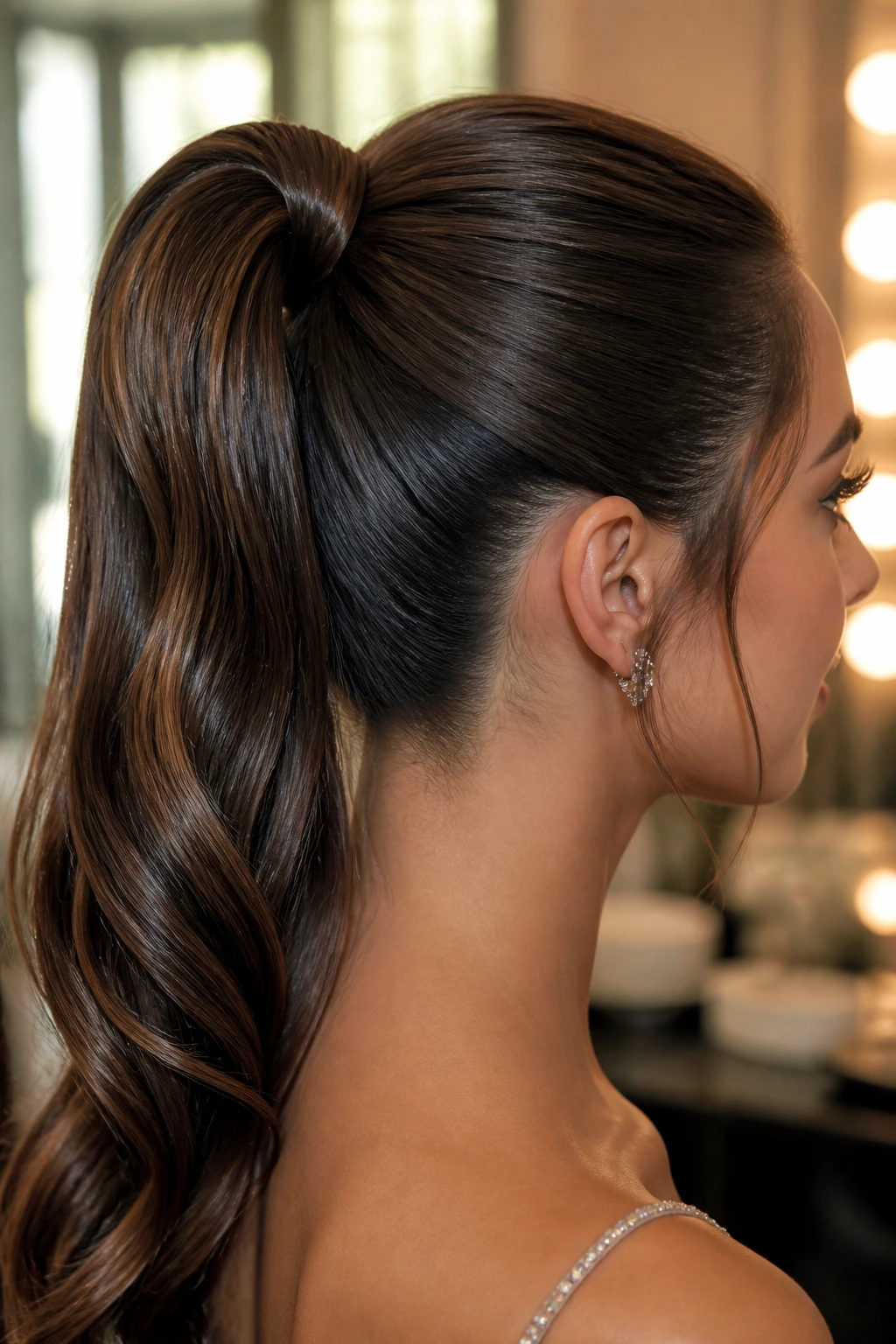
- Dress-Friendly: These ponytail styles leave room for necklines, earrings, and shoulder details instead of fighting them for attention.
- Photo-Ready: Clean bases, wrapped ties, and shaped ends hold up better under flash than loose, wind-tossed hair.
- Hair-Texture Friendly: Straight, wavy, curly, and coily hair all have a lane here, which matters more than most people admit.
- Long-Wear Practicality: A well-pinned ponytail can survive hours of movement without slowly sinking into your collar.
- Accessory-Friendly: Ribbons, pearls, crystal clips, and braids can change the mood fast without needing a full redo.
Why Ponytails Read Formal on Prom Night
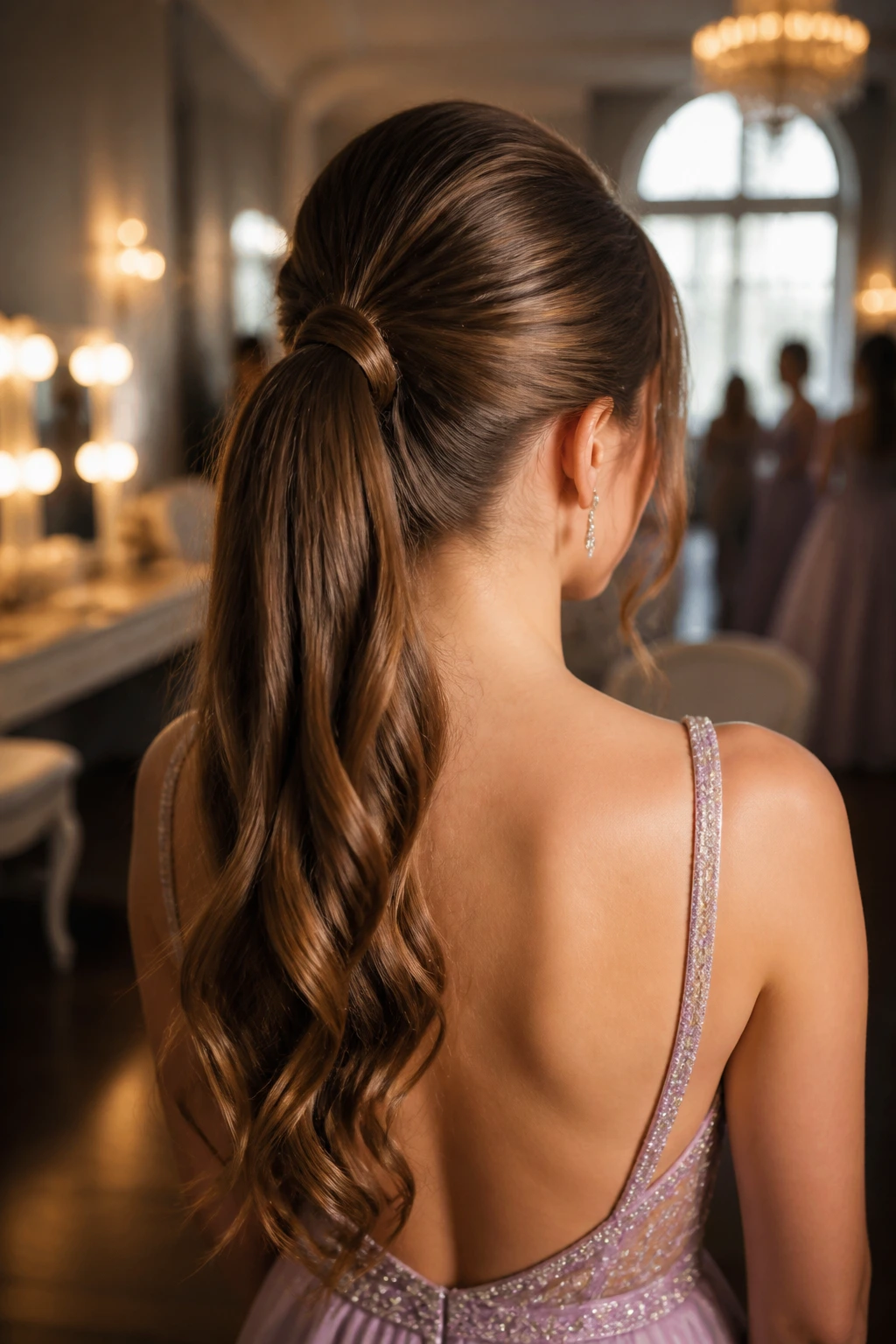
The reason a ponytail works for prom is simple: it gives the hair a shape the eye can read from across the room. A lot of loose styles look pretty up close and disappear in a crowded photo. A ponytail has a line, a base, and a direction. That sounds plain, but plain can be a gift when the dress is already busy with sequins, lace, ruffles, or a dramatic neckline.
A formal ponytail also solves the “flat by 10 p.m.” problem better than most down styles. Once the hair is gathered and anchored, the roots can be lifted with teasing, mousse, or a hidden clip-in piece. The movement shifts to the ends, which is exactly where you want the softness to live. That way the style can be polished near the crown and still have some swing when you turn your head.
The best versions are never one-note. Even a sleek ponytail usually needs something extra — a braid wrapped around the base, a wave through the tail, a satin ribbon, or a crystal pin parked just above the elastic. Those little choices make the style look deliberate instead of default. And deliberate is the whole game on prom night.
1. Sleek High Glass Ponytail
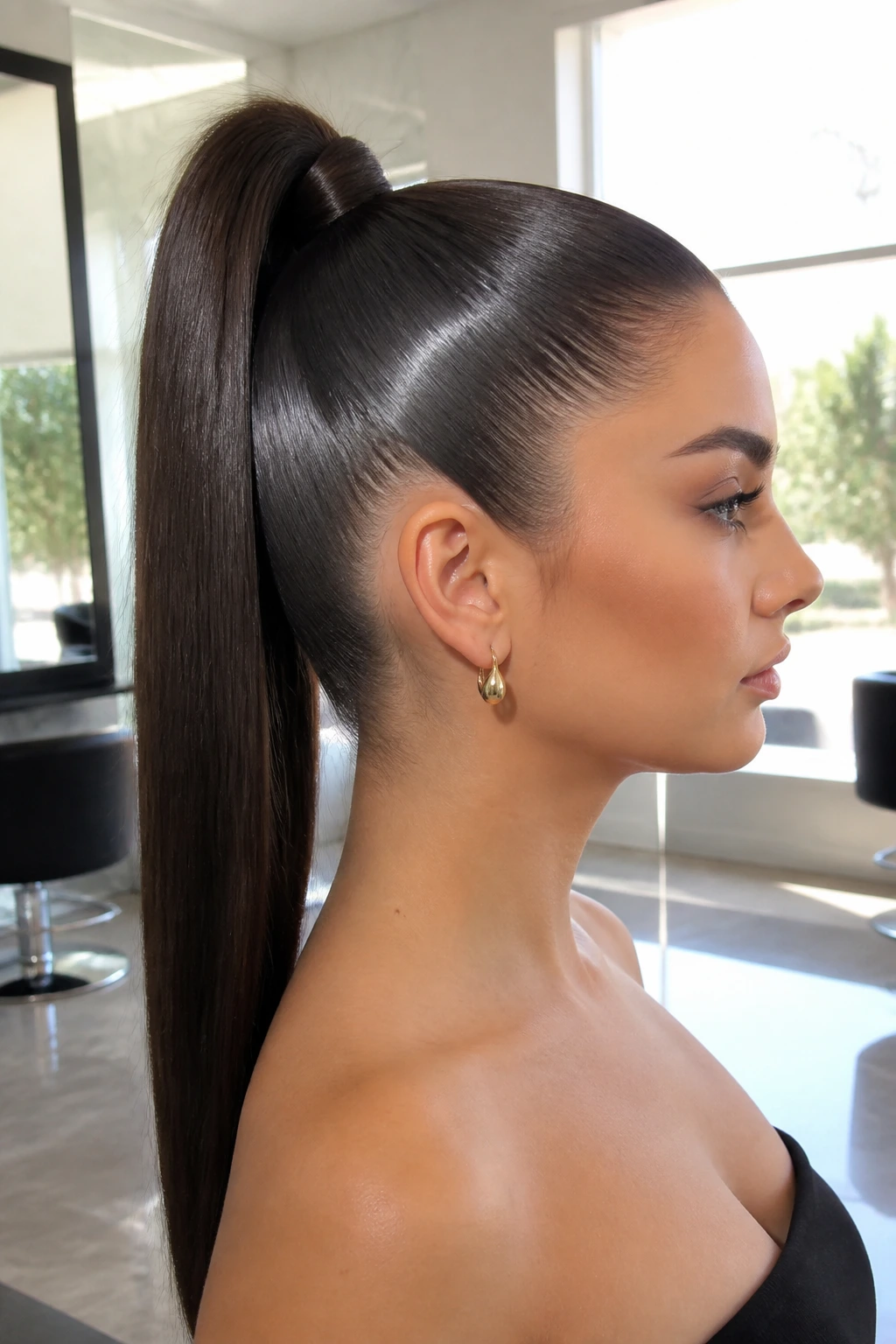
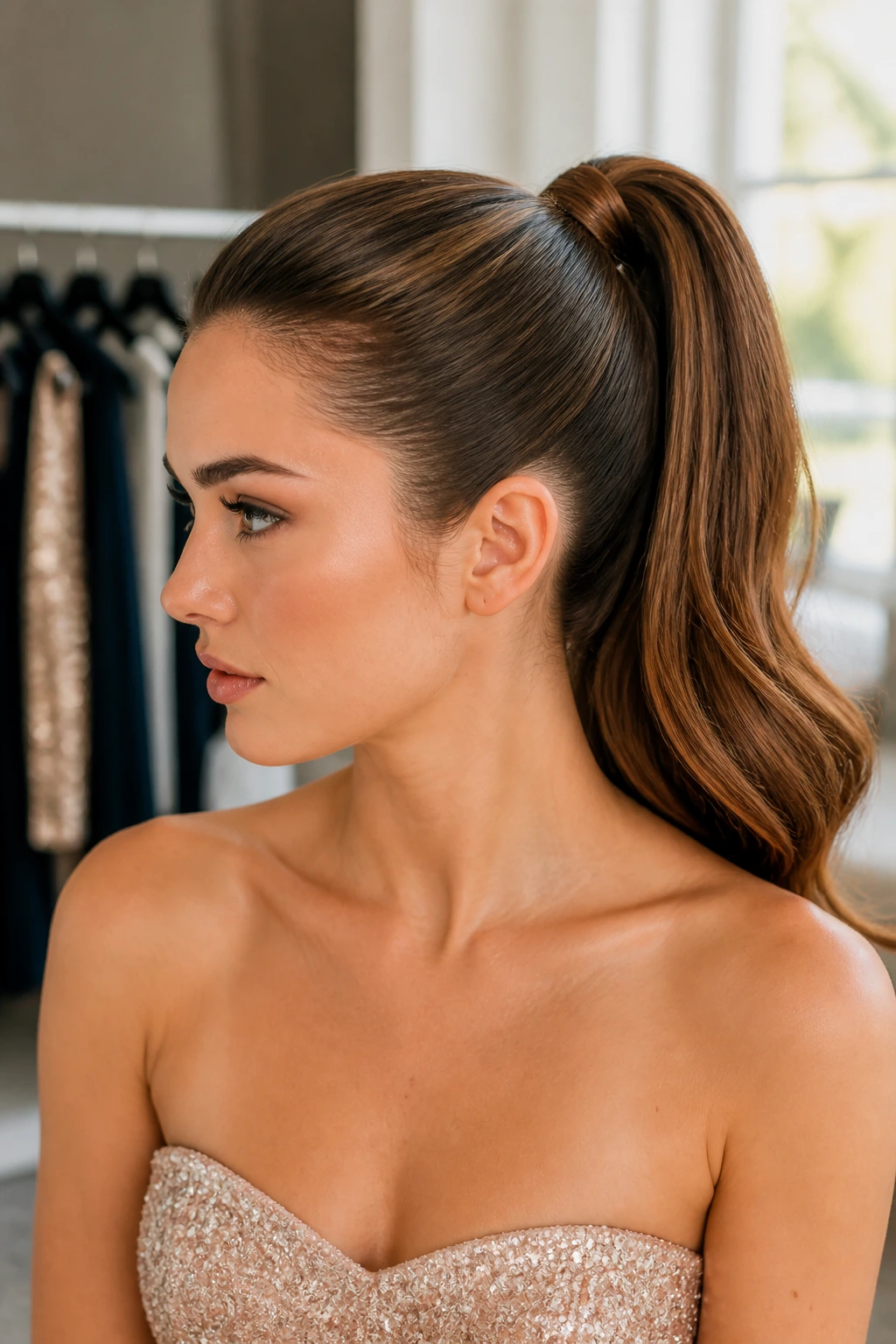
This is the polished one. The kind that says you planned ahead. Keep the part razor clean, smooth the hair back with a boar-bristle brush, and place the ponytail high enough to sit just above the crown, not at the back of the head. That placement gives lift and keeps the profile sharp in photos.
A tiny strand wrapped around the elastic finishes the look, but the real magic is the shine. Use a light gloss spray on the tail only, not the roots, or the style starts to look greasy instead of reflective. If your hair is fine, tuck a small hidden pad or tease a thin section under the crown before gathering; the extra support keeps the ponytail from drooping halfway through the night.
2. Bubble Ponytail with Satin Ties
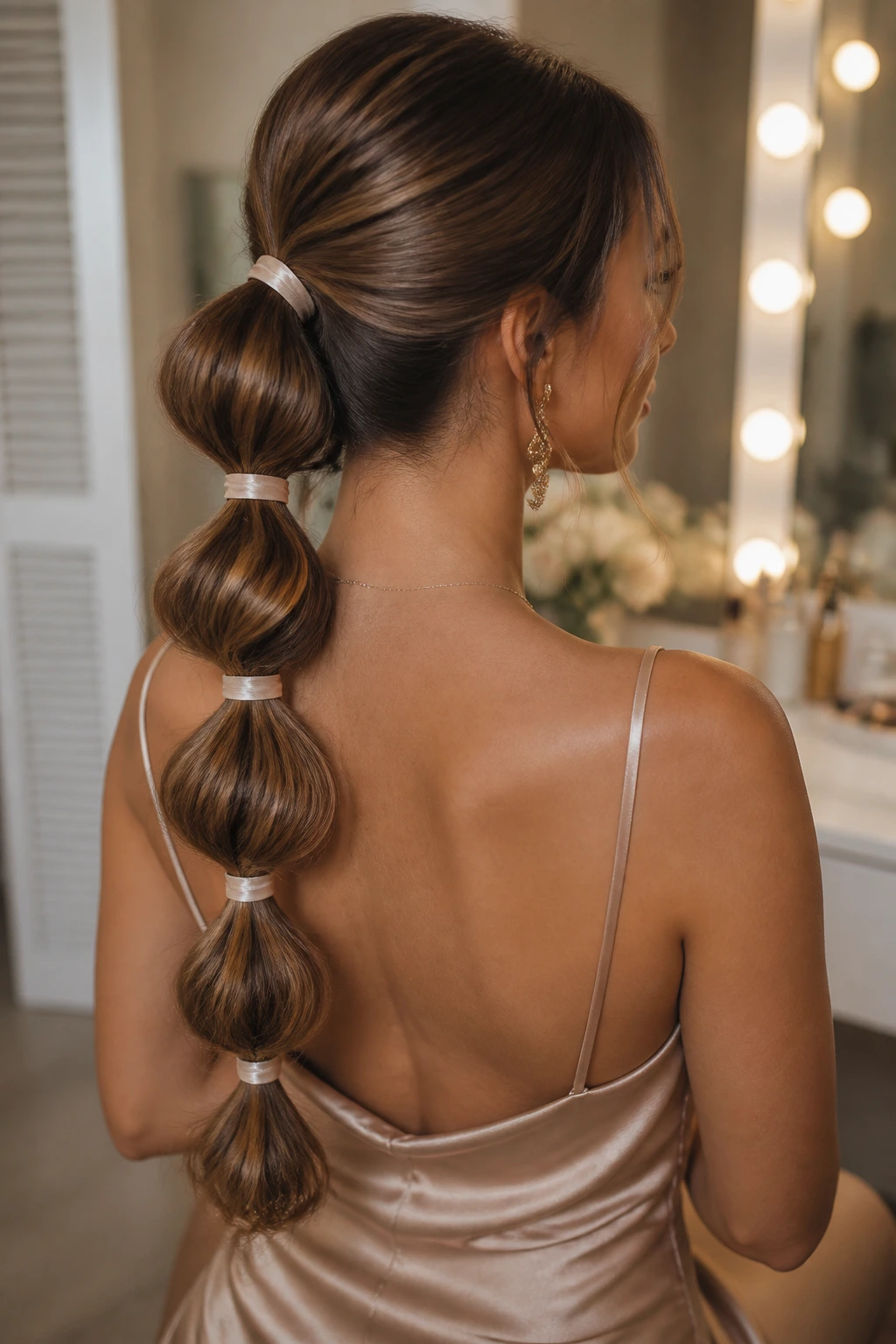
Bubble ponytails have a little theater in them, which is exactly why they work so well for prom. Each section gets its own puff, so the style stays interesting even if the dress is simple. Use clear elastics every 2 to 3 inches down the tail, then gently tug each gap outward until it forms a rounded bubble.
How to Build the Shape
The satin ties matter because they soften the look and cover any elastic that wants to show. Choose a ribbon that’s about 1/2 to 3/4 inch wide; anything thinner disappears, anything much wider can overpower the style. This version is especially good for thick hair, but fine hair can pull it off if you curl the tail first and add a little texture spray.
If you want the bubbles to look deliberate, keep the spacing even. Uneven spacing reads more casual. Even bubbles look editorial, and that tiny difference changes the whole mood.
3. Wrapped Low Ponytail with Soft Waves
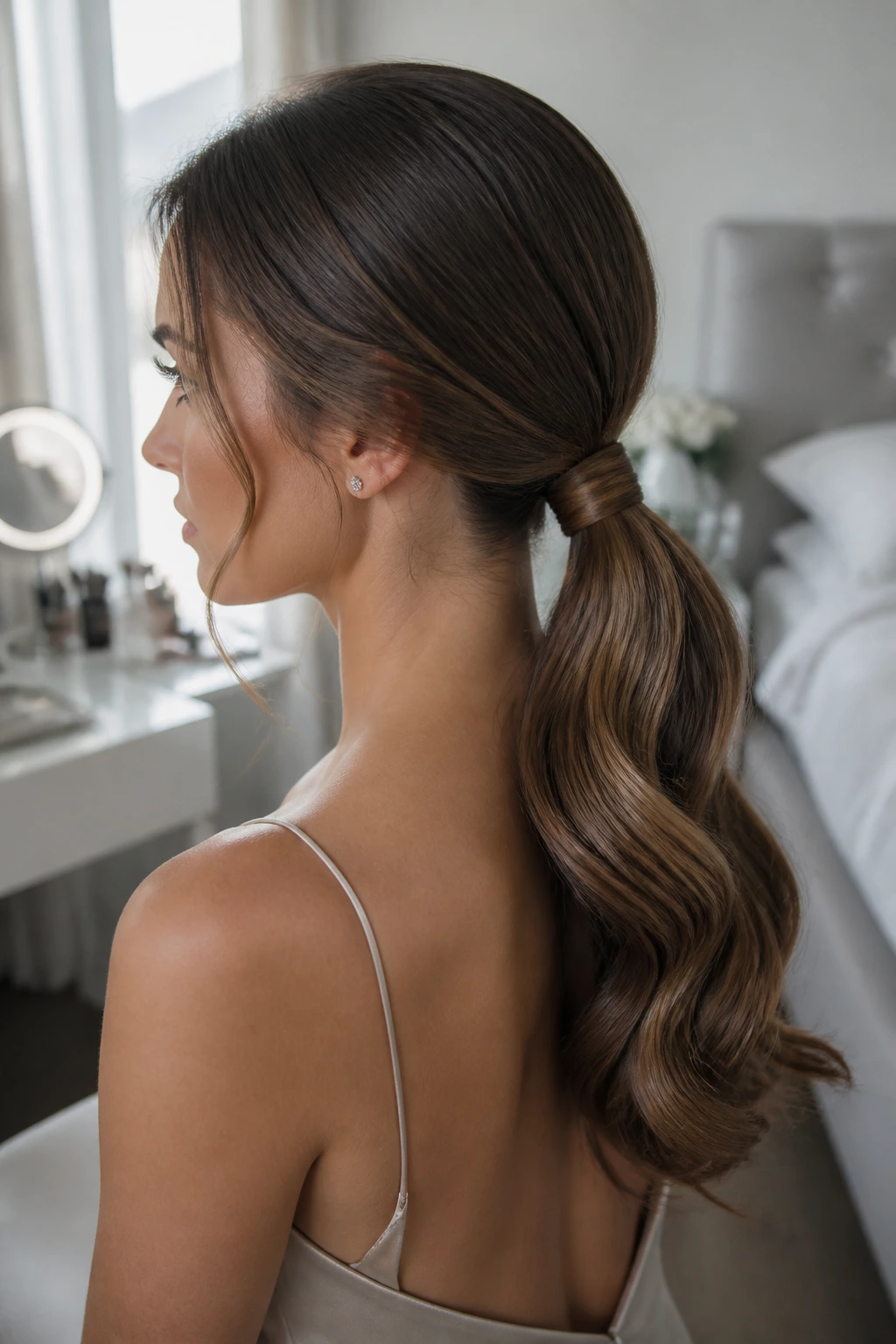
A low ponytail can be more formal than a high one if the finish is smooth and the waves are brushed into soft bends. Place it at the nape, slightly off-center if your dress has detail at the front, and wrap a 1-inch strand around the elastic so the base disappears. Then curl the tail in large sections — 1.25-inch barrel curls work well — and brush them gently into wide S-shapes.
The result feels calm and expensive without trying too hard. That is the appeal. It also sits beautifully with open backs and one-shoulder dresses because it doesn’t compete with the line of the neckline. If your hair tends to puff at the nape, mist that area with a little smoothing spray before you gather it.
4. Braided Crown Into Ponytail
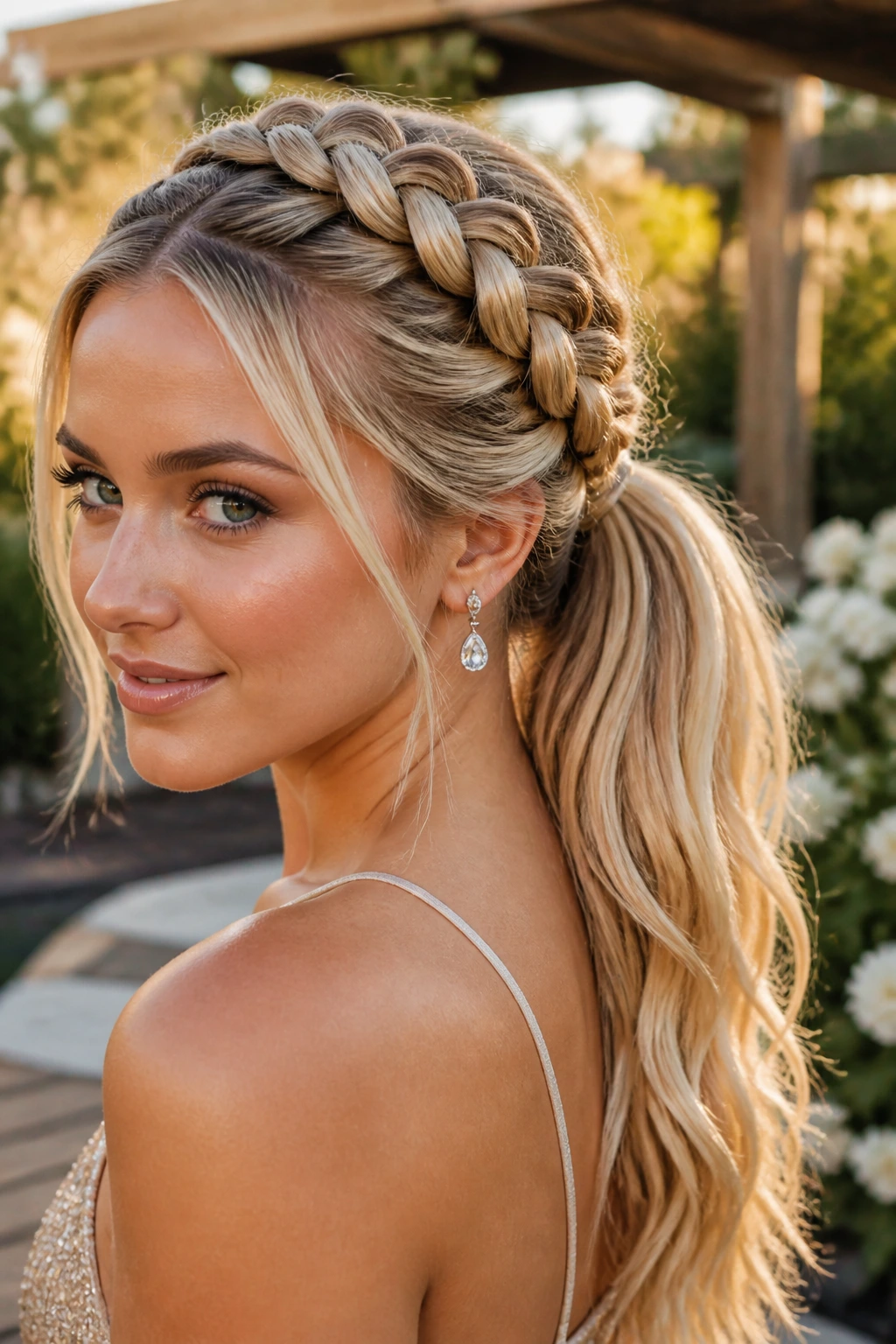
If you want the front of the hairstyle to matter as much as the tail, this is a smart pick. Braid a section along the hairline or around the crown, then pull the rest into a ponytail so the braid feeds into the base. It gives structure up top and keeps the style from feeling too simple.
The braid can be a French braid, Dutch braid, or even two narrow braids meeting at the back. I like this style for dresses with simpler bodices, because the braid becomes the detail. If your hair is layered, pin the shorter pieces under the braid before you tie the ponytail so the front stays neat instead of fuzzy.
5. Curly High Ponytail with Face-Framing Tendrils
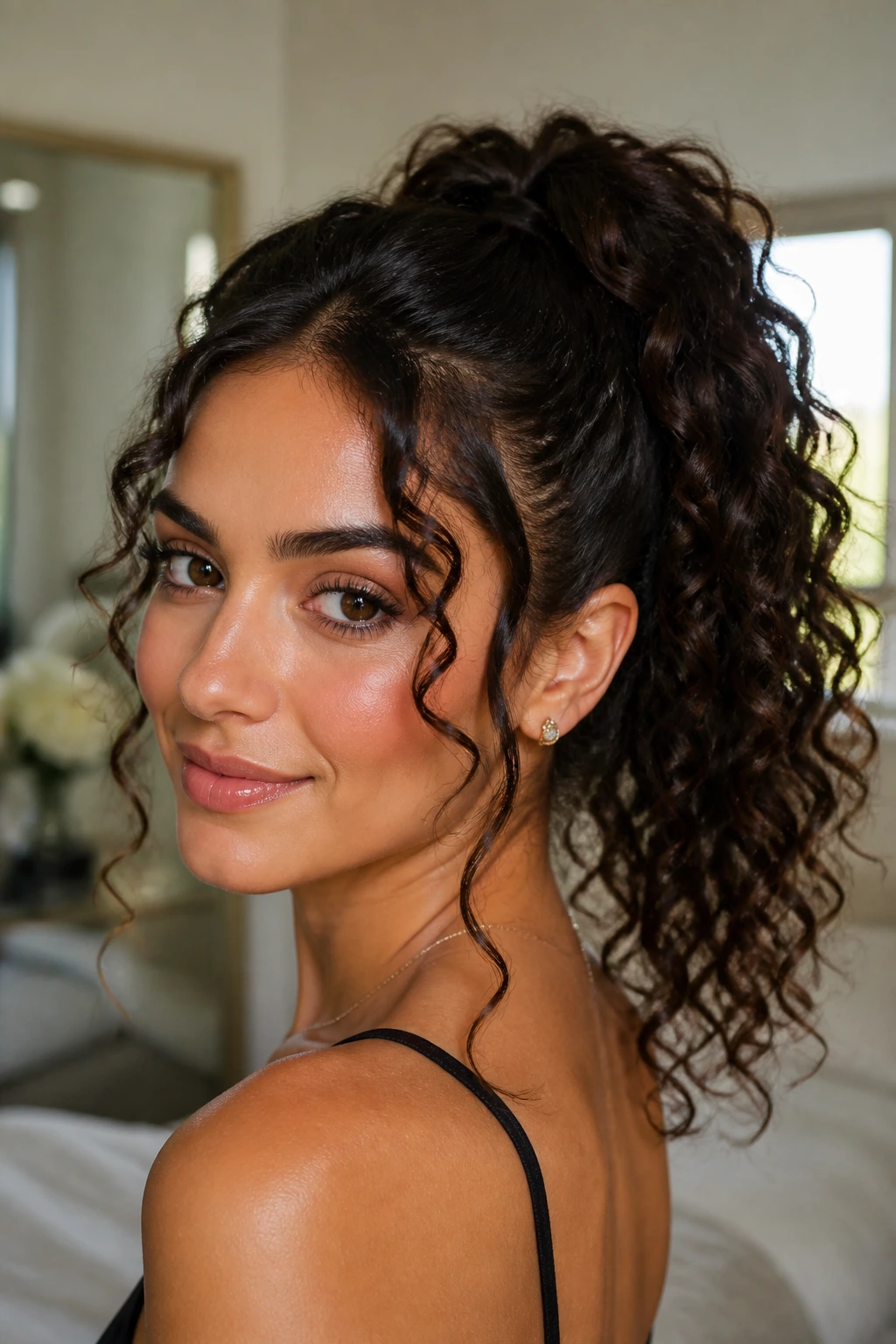
This one has energy. Not chaos — energy. Start by curling the hair in 1-inch sections, then gather it high and let two slim tendrils fall near the cheekbones. Those tendrils matter more than people think; they soften the pull of the high ponytail and keep the style from looking severe.
Use a curling iron or wand with a barrel close to 1 inch so the curls stay defined after dancing. If the hair is naturally curly, you can work with the pattern you already have and just refine the front. A dab of edge control at the hairline helps, but don’t smear it everywhere. That’s how a good ponytail starts looking wet in the wrong way.
6. Side-Swept Ponytail with Deep Part
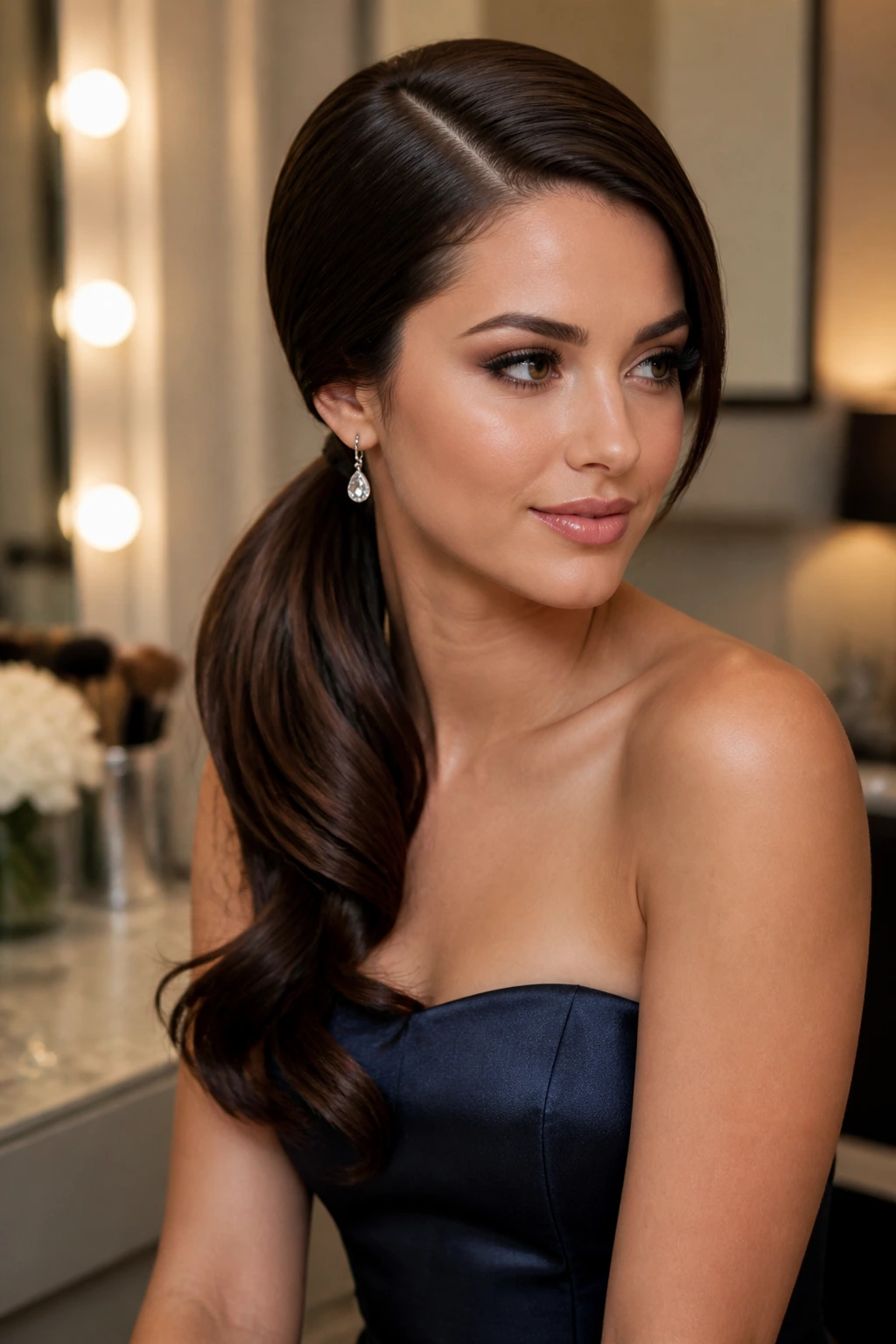
A deep side part changes the whole face. It gives the ponytail a little drama before the tail even starts. Sweep the hair hard to one side, smooth the front section back toward the nape, and let the tail fall over one shoulder for a softer, more romantic line.
This is a strong choice if your dress has an asymmetrical neckline or one shoulder detail. The ponytail follows the same visual logic as the dress, which makes the whole outfit look considered. Keep the roots sleek, but don’t flatten the tail itself; a little bend or wave in the ends keeps the style from feeling too strict.
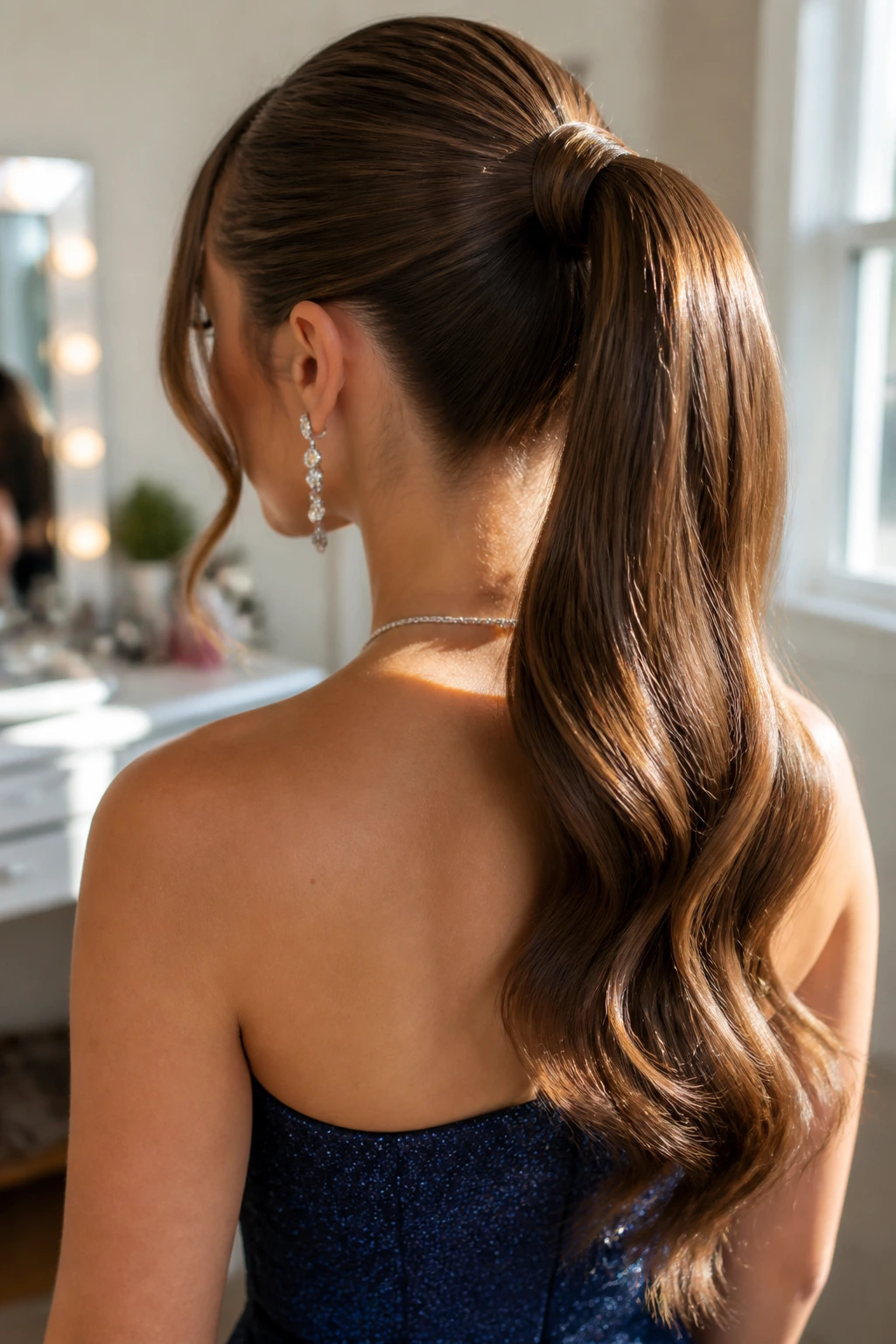
7. Hollywood Wave Ponytail
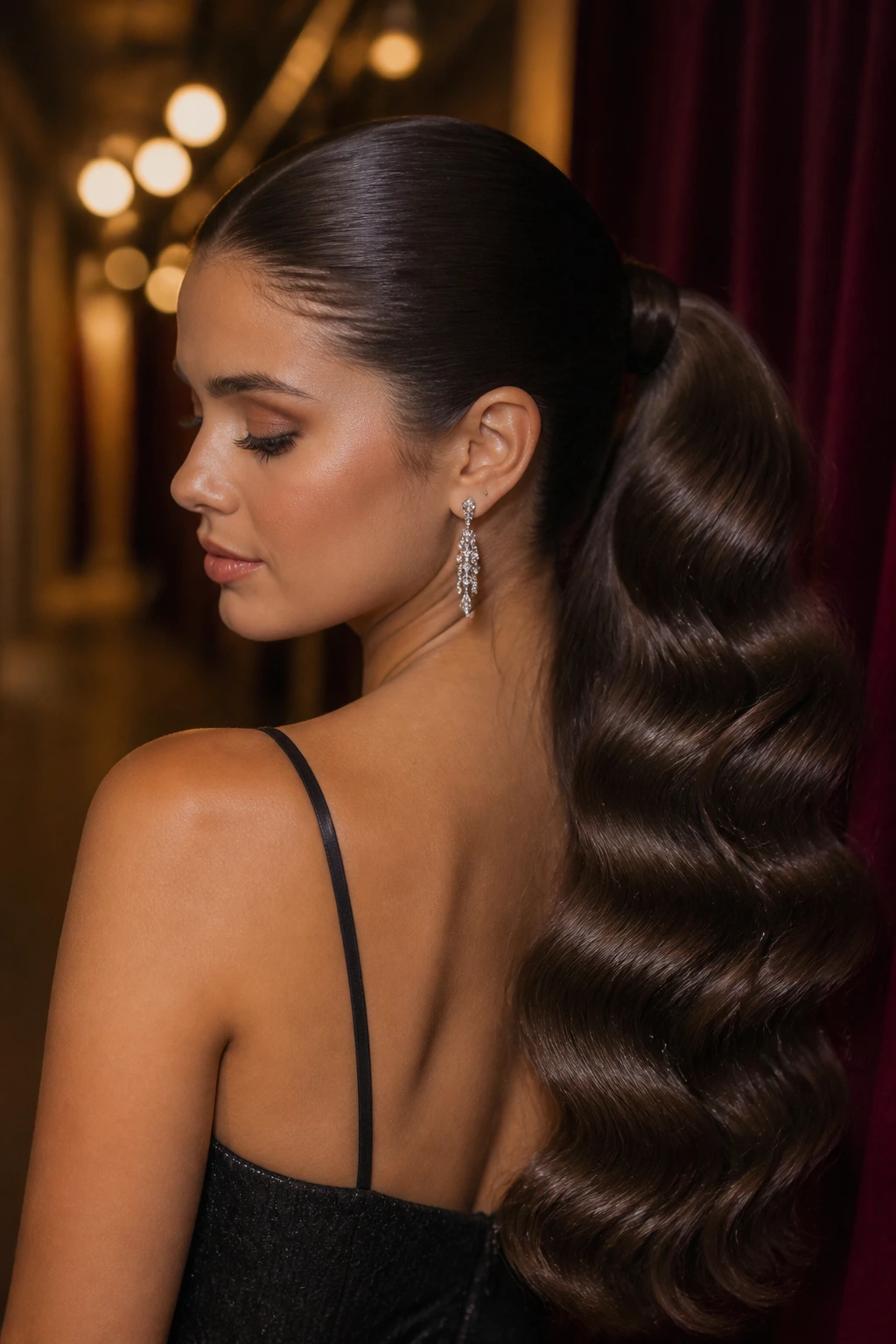
What makes this work is the tail, not the base. Curl the ponytail in large, uniform waves, then brush them out just enough so the ends fall in a glossy cascade. The crown stays smooth and close to the head, but the tail carries that old-school screen-star movement.
Best for Long Hair and Clip-Ins
This is one of the better prom ponytail styles for anyone with longer hair or a hidden extension piece. The waves need length to show off their shape. If the tail is too short, the look becomes more “cute” than “formal,” and that’s a different mood entirely. Add a little shine serum at the mid-lengths only, or the waves lose their definition.
8. Textured Mid-Height Ponytail with Volume Crown
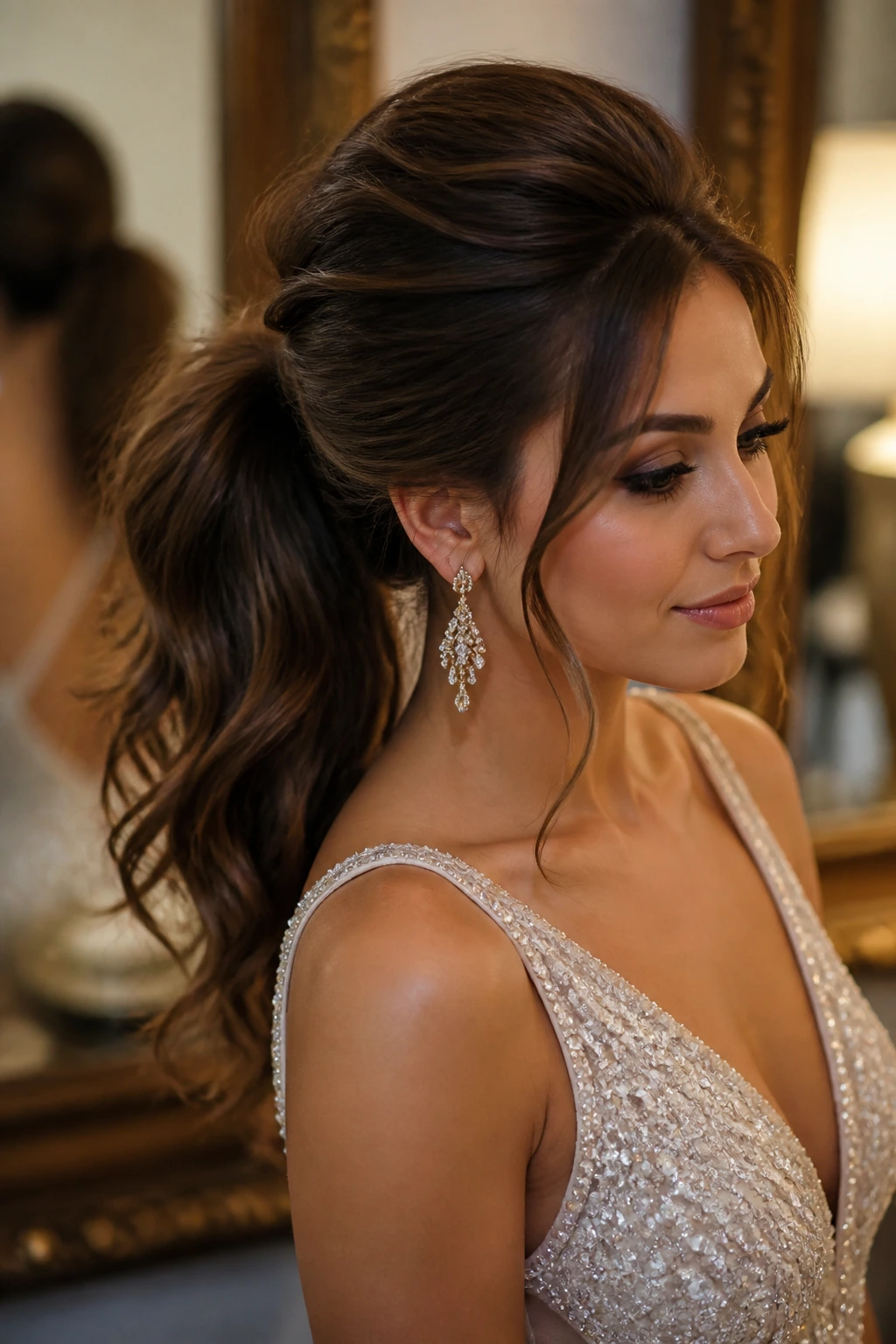
Mid-height is underrated. It sits at the practical middle ground: high enough to feel styled, low enough to stay comfortable for hours. Tease a hidden section at the crown, smooth the outer layer over it, and gather the ponytail at the point where the back of the head begins to round.
The texture on top should feel airy, not messy. A few soft bends through the tail keep it from looking flat. I like this one for gowns with beaded straps or detailed backs because it doesn’t put all the attention at the top or bottom; it lets the dress keep its own space.
9. Ribbon-Tied Ponytail
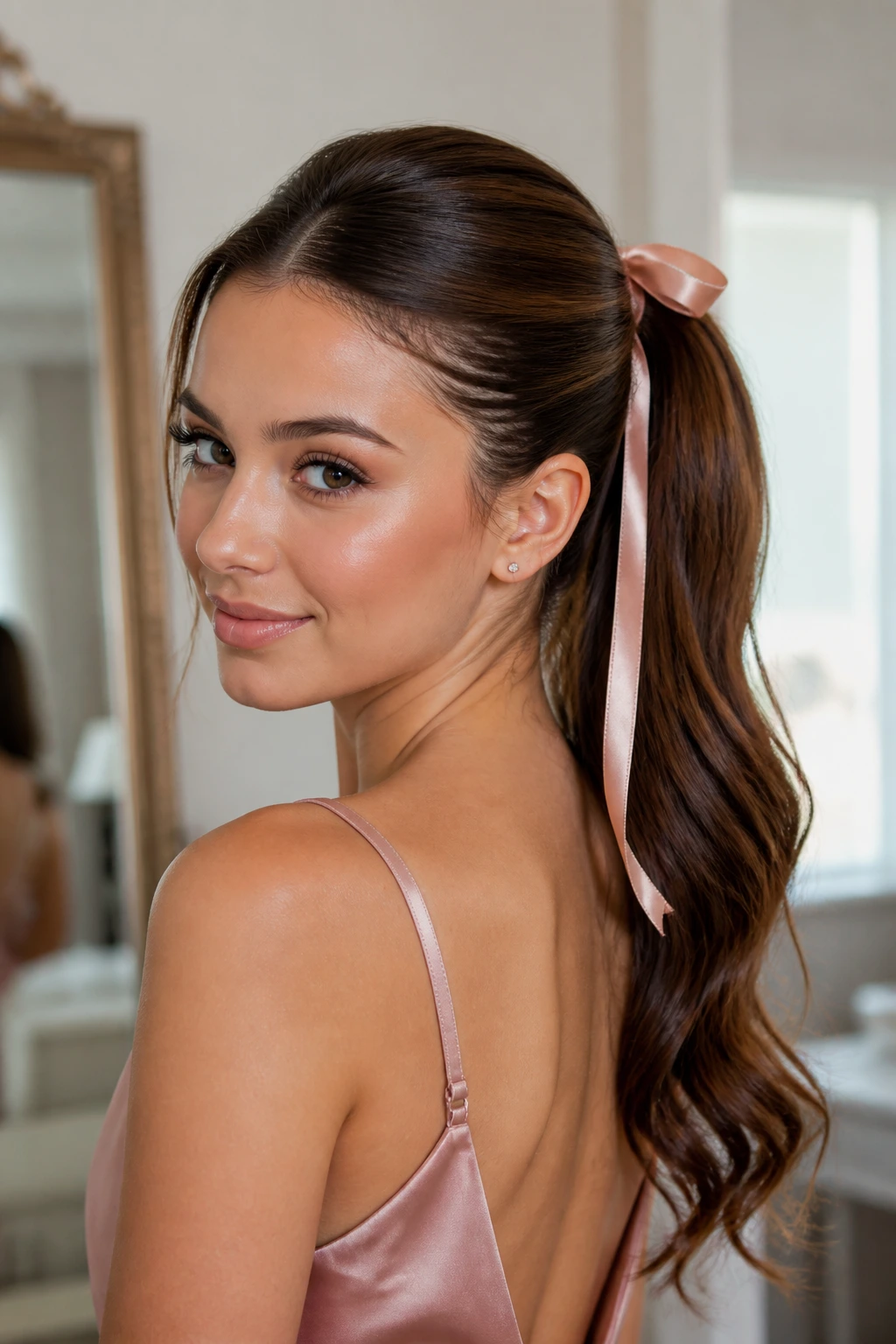
A ribbon can do more than a bow at the end. It can become the whole mood. Tie a satin or velvet ribbon around the base and let the ends trail down the tail, or wrap it neatly and finish with a small knot. The trick is to keep the ribbon color close to the dress, shoes, or jewelry so it feels intentional.
This style looks best when the hair is already smooth and the tail has a little shape. A dead-straight tail can make the ribbon feel costume-like. A softly curled tail gives the ribbon a real place to live.
10. Fishtail Braid Ponytail
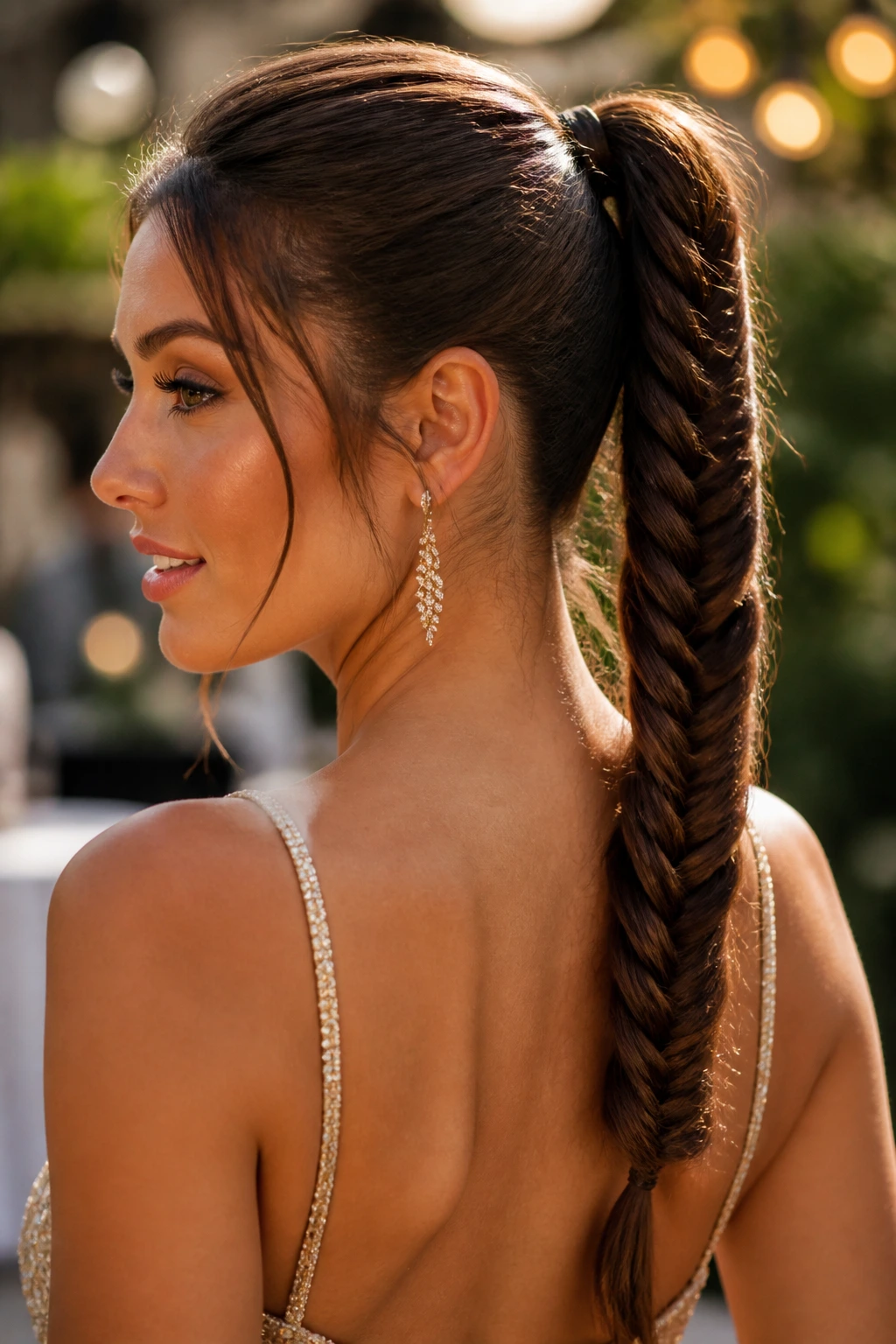
A fishtail braid down the length of the tail brings texture without needing a lot of extra accessories. Start with a ponytail, split the tail in two, and cross tiny outer sections back and forth until the braid tightens into that woven pattern. It works especially well on thick hair, where the braid has enough bulk to look full.
Why It Holds So Well
The structure is the point. A fishtail braid doesn’t unravel as fast as a loose curl pattern, so it’s a good option for a night with heat, movement, or humidity. If your hair is slippery, mist the tail with texturizing spray before braiding. You’ll get better grip, and the braid will show up more clearly in photos.
11. Twisted Rope Ponytail
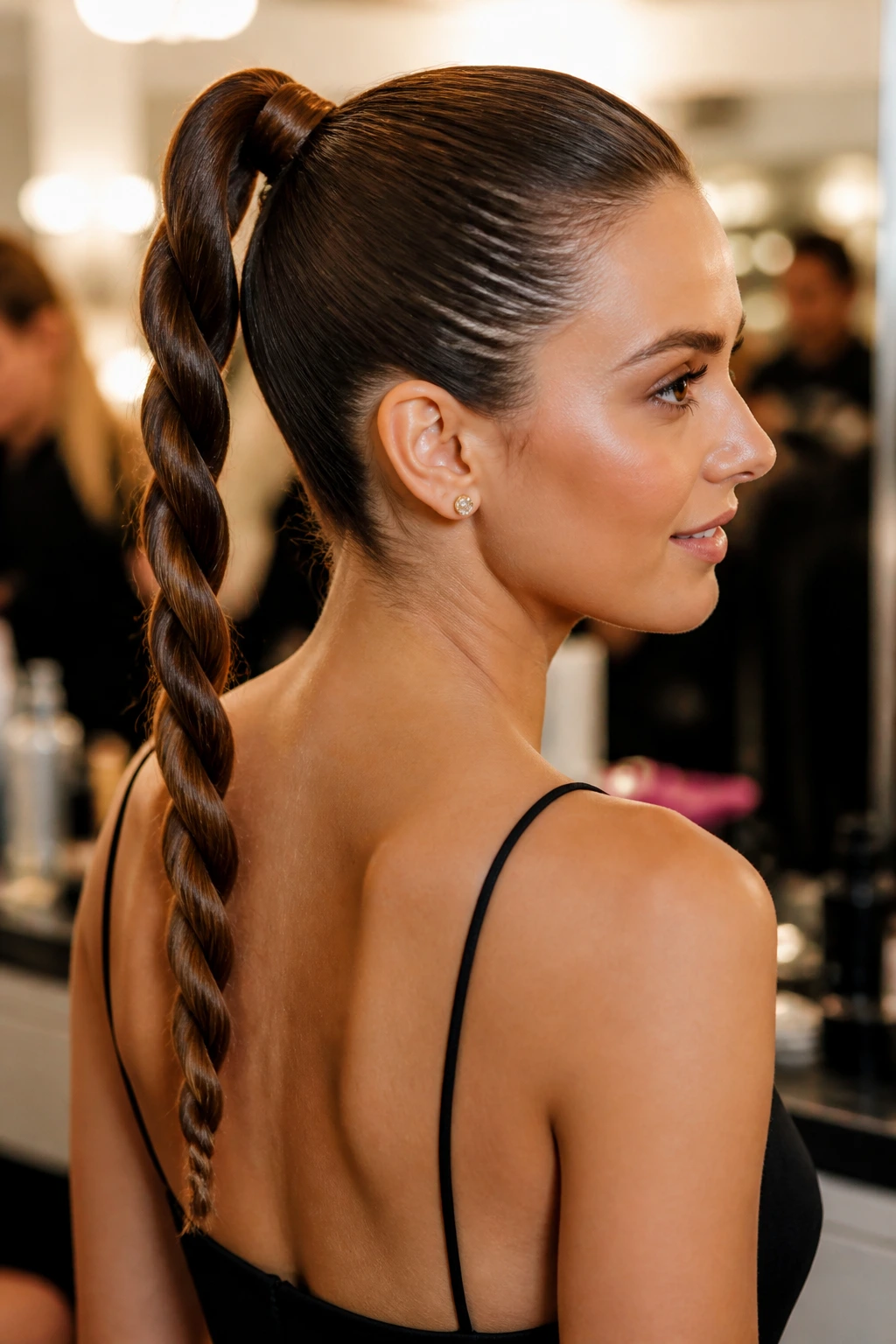
Rope twists have a clean, modern feel that still looks formal if the finish is neat. Divide the tail into two sections, twist each section in the same direction, then wrap them around each other in the opposite direction. The result is a rope-like texture that looks polished and a little unexpected.
This style is a nice option when braids feel too common and curls feel too soft. It sits well with sleek dresses and sharp jewelry because the lines are crisp. Secure the end with a clear elastic and hide it with a tiny hair strand if the ribbon or accessory isn’t doing that job for you.
12. Double-Bubble Ponytail
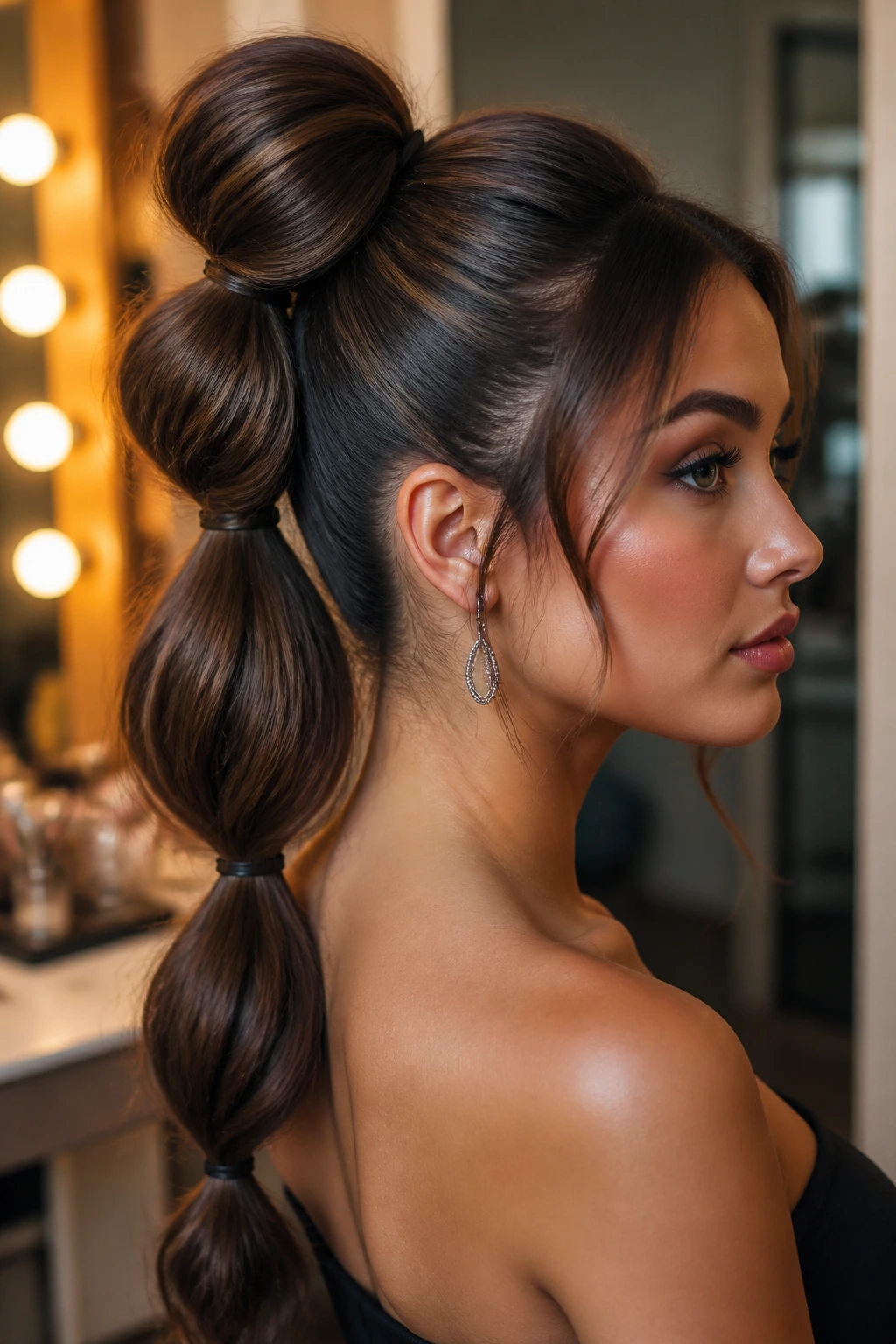
This is the bubble ponytail’s more dramatic cousin. Instead of even puff sections all the way down, build two larger bubbles at the top, then let the rest fall into a smoother tail or smaller bubbles below. It gives the style shape near the base, where a lot of ponytails go flat.
The top sections need support, so tease lightly before you tie each elastic. If the hair is fine, a little dry shampoo at the roots can add grip without making the style stiff. This one looks especially good on long, straight hair because the contrast between smooth and puffed sections shows up clearly.
13. Low Ponytail with Polished Middle Part
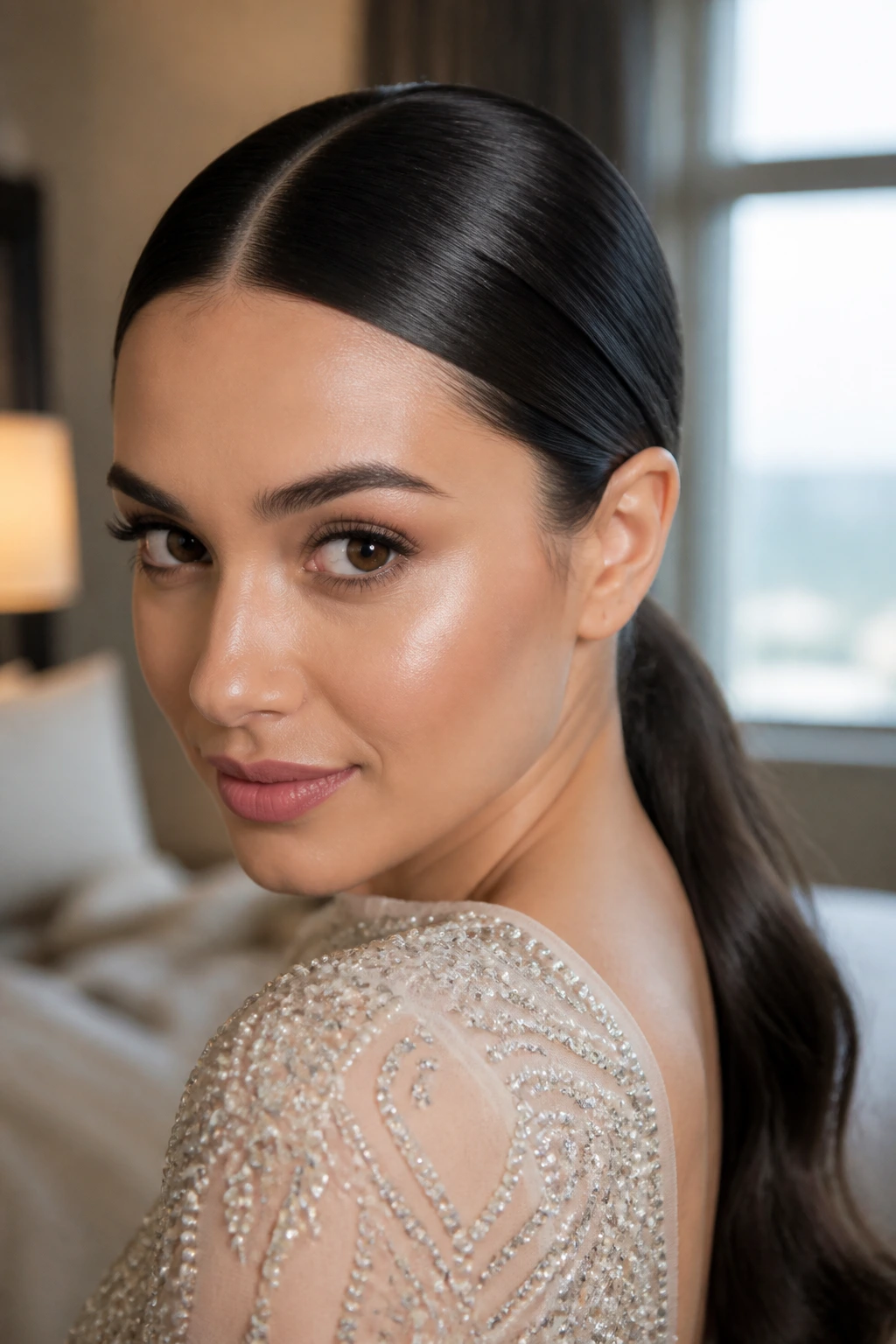
A center part can be almost severe in a good way. It creates balance and lets the rest of the style stay quiet. Smooth the hair from the part straight back to the nape, keep the ponytail low, and let the tail fall in either soft waves or straight polished lengths.
This is the ponytail for someone who wants the dress to do most of the talking. It pairs neatly with beaded collars, high necklines, and clean satin fabrics. You don’t need a lot of ornament here. A hidden elastic and one wrapped strand are enough if the finish is crisp.
14. Voluminous Curly Ponytail
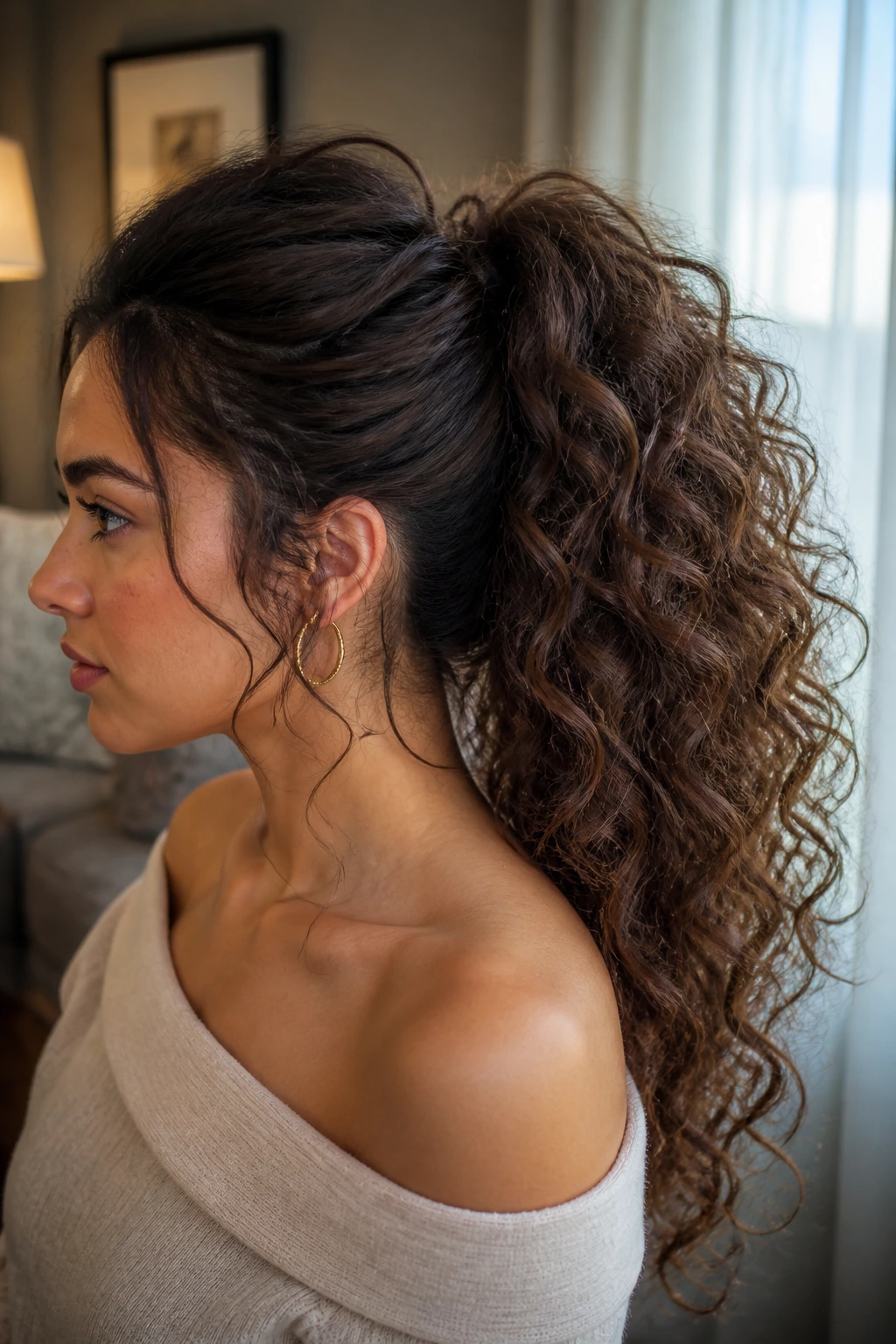
If your curls already have shape, don’t fight them. Gather them high or mid-height, secure with an elastic that won’t snag, and let the curls keep their spring. The fullness does most of the work. You’re basically framing the face with movement.
How to Keep the Curl Pattern from Collapsing
Use a curl cream or light mousse before drying, then diffuse on low heat if needed. Once the ponytail is in place, separate only the biggest clumps by hand. Pulling too hard makes the curls frizz and turns the shape puffy in a less flattering way. This style is best when the hair is fully dry; even a little dampness will drag the curls down.
15. Slicked-Back Ponytail with Crystal Clip
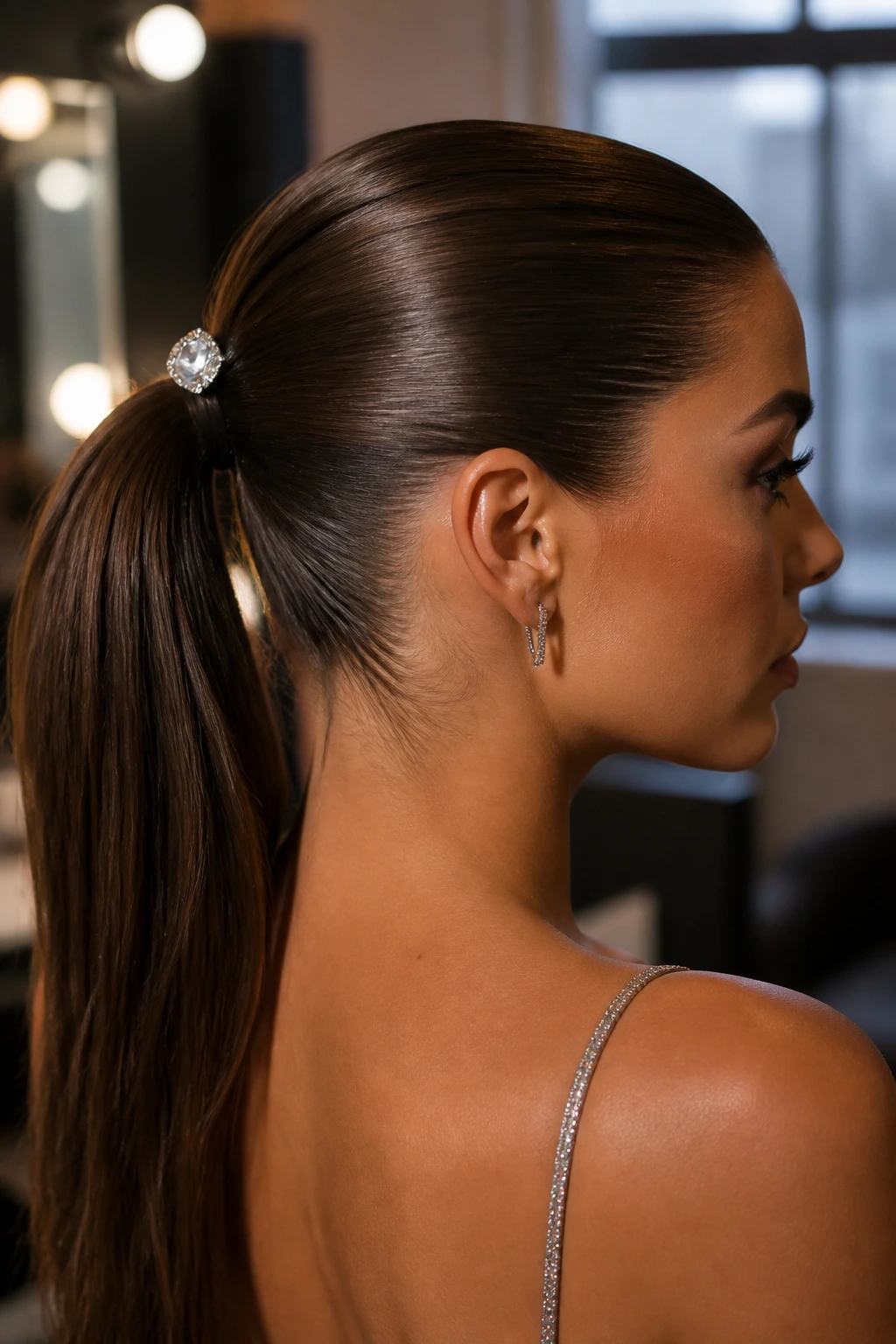
This one has a cleaner attitude. Brush the hair back tightly, keep the crown smooth, and place a crystal clip just above the elastic or at one side of the base. The clip should look like a detail, not a rescue operation. That means one strong piece is better than five tiny ones.
The shine needs to be controlled. A sleek base with a little gloss at the tail ends works better than product everywhere. If the dress has sparkle, keep the clip small and sharp. If the dress is plain, the crystal can do a lot more heavy lifting.
16. Half-Braided Ponytail
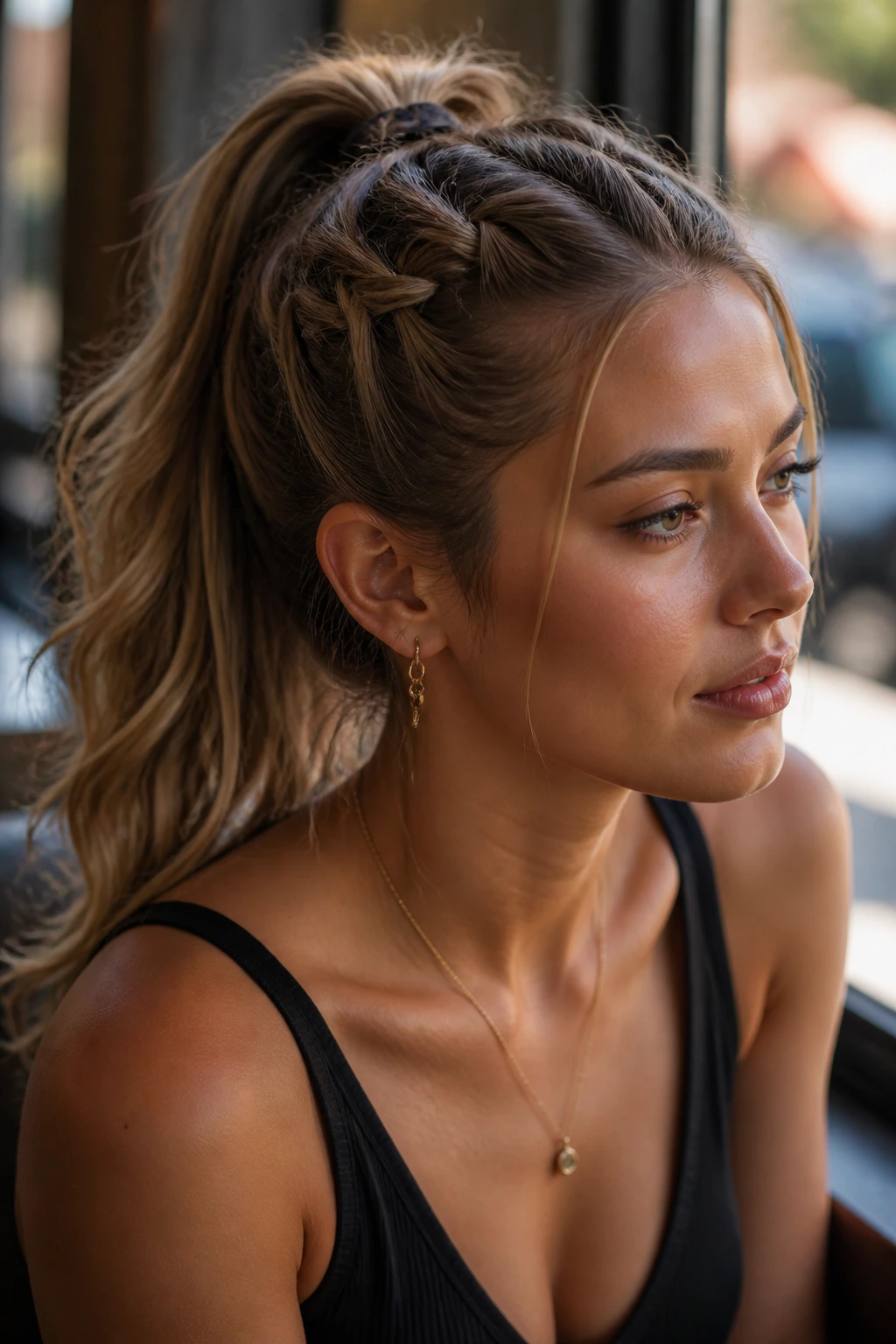
What happens when you want braid detail but not a full braided head? This. Braid the front section, stop it halfway, and pull the rest into a ponytail. The visual break is nice because it creates two textures in one style without making the whole look busy.
This works especially well for medium-length hair that needs a little lift. The braid gives you structure near the hairline, and the ponytail keeps the finish relaxed. If you’re using a curling iron, curl the tail after the ponytail is secured so the length stays soft and cohesive.
17. Wavy Ponytail with Loose Tendrils
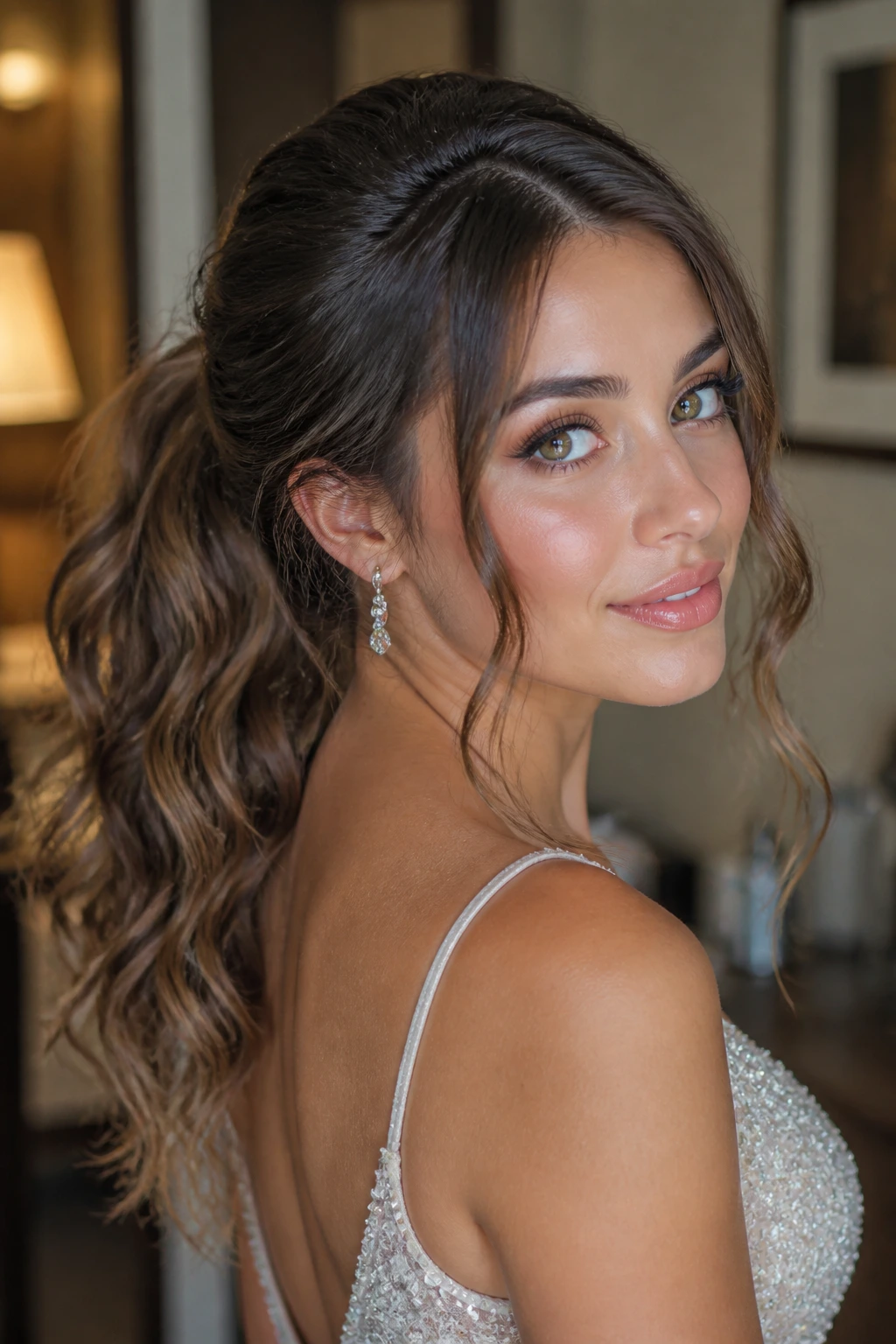
This is the gentler side of prom hair. Leave a few face-framing pieces out, wave the rest of the hair loosely, and secure the ponytail without crushing the body you’ve already built. The tendrils should be soft and lightly curled, not ringlets hanging in front of your eyes.
A lot of people overdo the looseness and end up with a style that looks unfinished. Keep the base tidy. Let the softness happen around the cheeks and at the ends, where it belongs. That balance is what makes the look romantic instead of lazy.
18. High Ponytail with Wrapped Braid Base
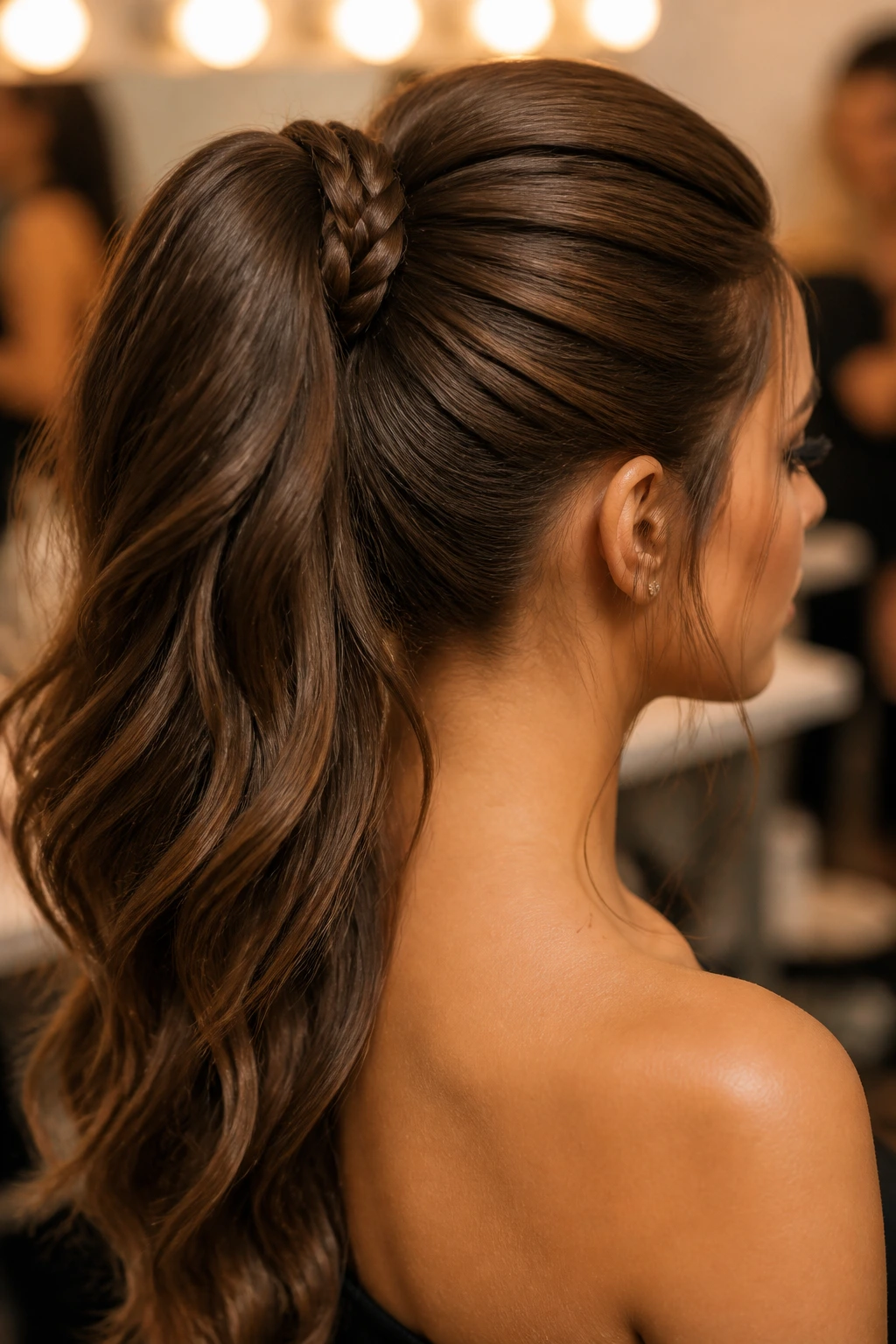
Take a small braid, wrap it around the ponytail base, and pin it underneath. The braid disguises the elastic while also adding a bit of sculpted texture right where the style needs it most. A high placement keeps the hair lifted, which helps if your dress has a low back or thin straps.
Use a firm-hold spray on the braid before you wrap it. It keeps the smaller strands from escaping later. This is one of those styles where the back view matters as much as the front, so don’t skip the tidy part behind the ear.
19. Bow-Accent Ponytail
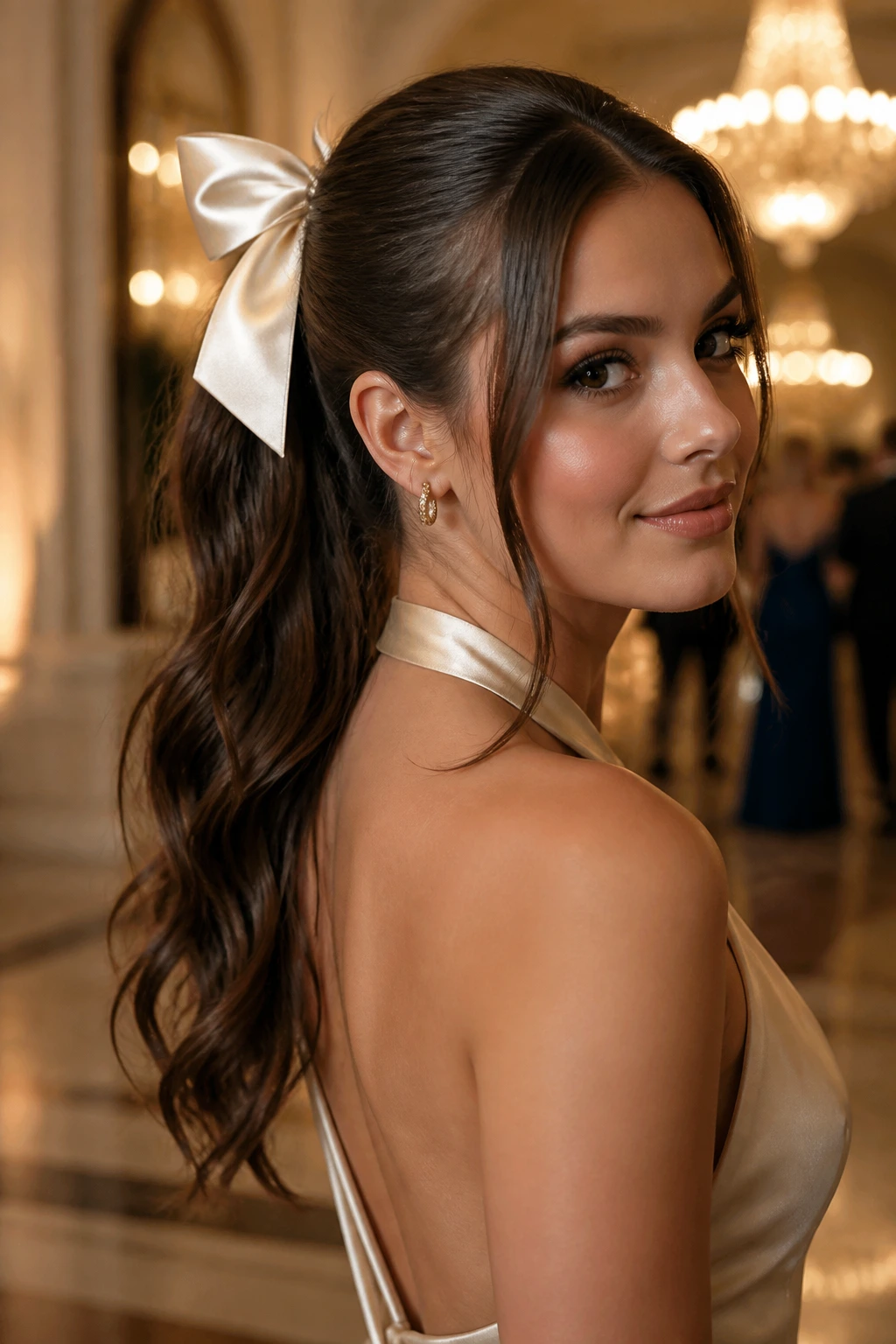
A bow is not childish when the rest of the style is controlled. In fact, a strong satin bow at the base can make a ponytail look sharper because it creates a focal point. Keep the hair smooth or softly waved, then let the bow sit right at the elastic.
The size of the bow should match the dress. If the gown is intricate, a smaller bow is enough. If the dress is simple, a larger bow can carry the look. Velvet, satin, and grosgrain all change the tone a little, so choose the fabric the way you’d choose shoes — it matters.
20. Sleek Low Ponytail with Center Part
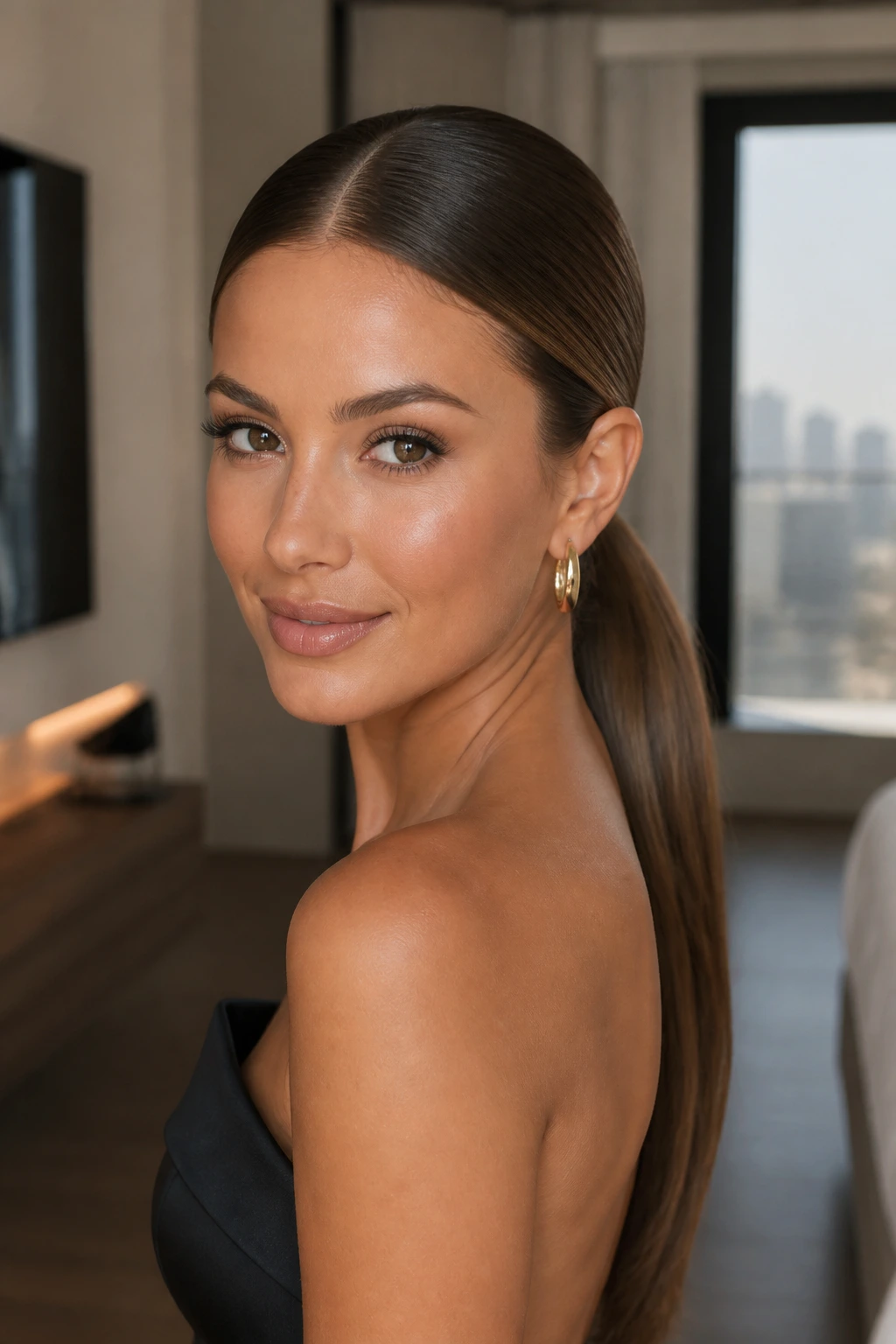
Compared with the middle-part ponytail that leans soft, this one leans clean. The difference is in the finish: flatter roots, straighter lengths, fewer loose pieces. It’s a tidy choice for dresses with a dramatic back or a lot of detail at the bodice, because it never competes.
A low ponytail also survives long events well. It doesn’t press into the collarbone the way a high ponytail can, and it’s easier to refresh if a little humidity gets involved. Keep a fine-tooth comb and a travel hairspray nearby if you know you’ll be touching up during photos.
21. Braided Bubble Ponytail
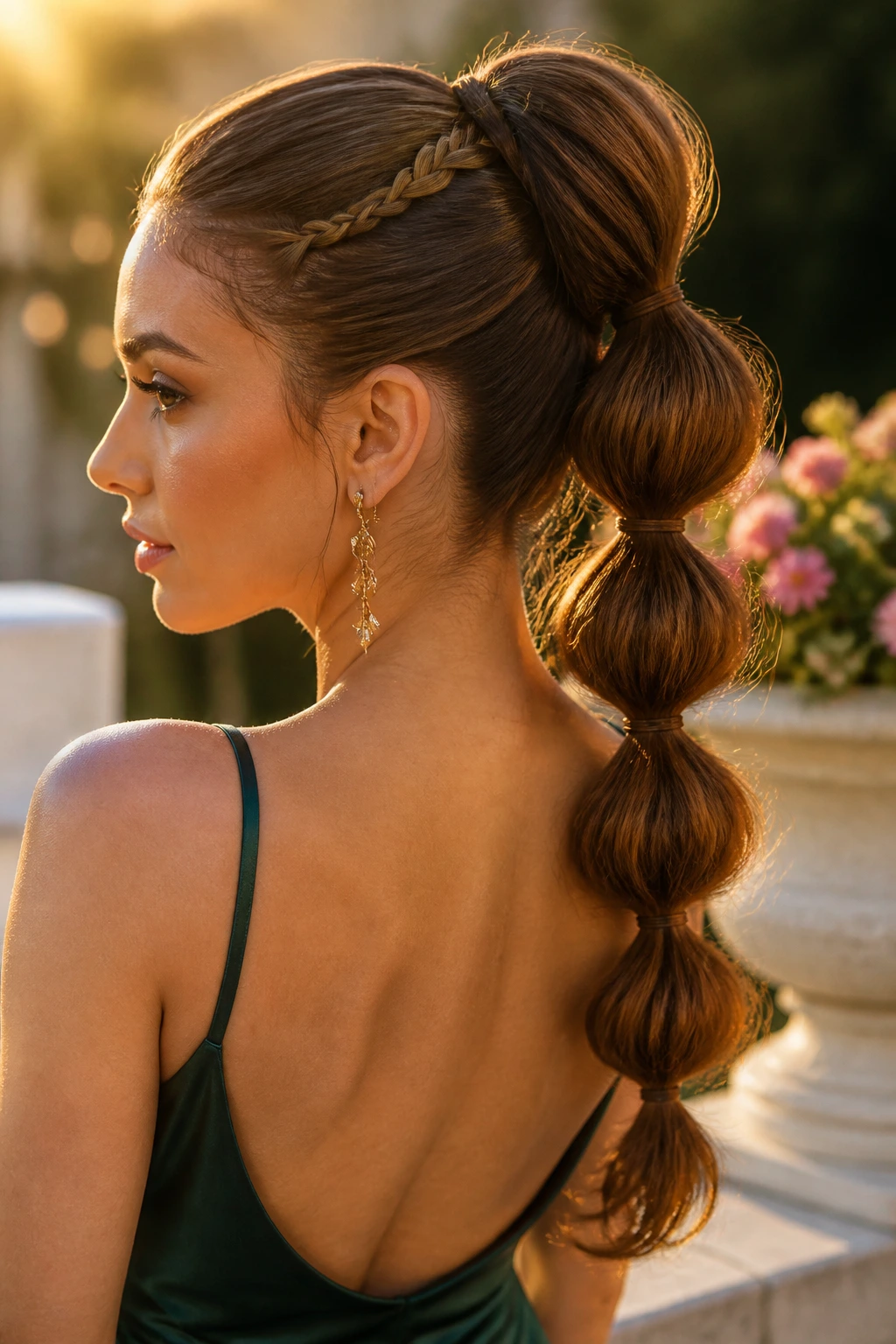
This one combines two textures that usually live apart. Start with a braid near the top or all the way through the first section of the tail, then transition into bubble sections below. The blend keeps the style from looking repetitive and gives the eye something new to follow.
It’s good for thick hair and extensions because the braid adds control before the bubbles begin. If your hair is fine, make the bubbles smaller and tighter so the sections don’t collapse. A little ribbon at the top can tie the whole idea together, but the texture alone is already doing a lot.
22. Low Side Ponytail with Old-Hollywood Curl
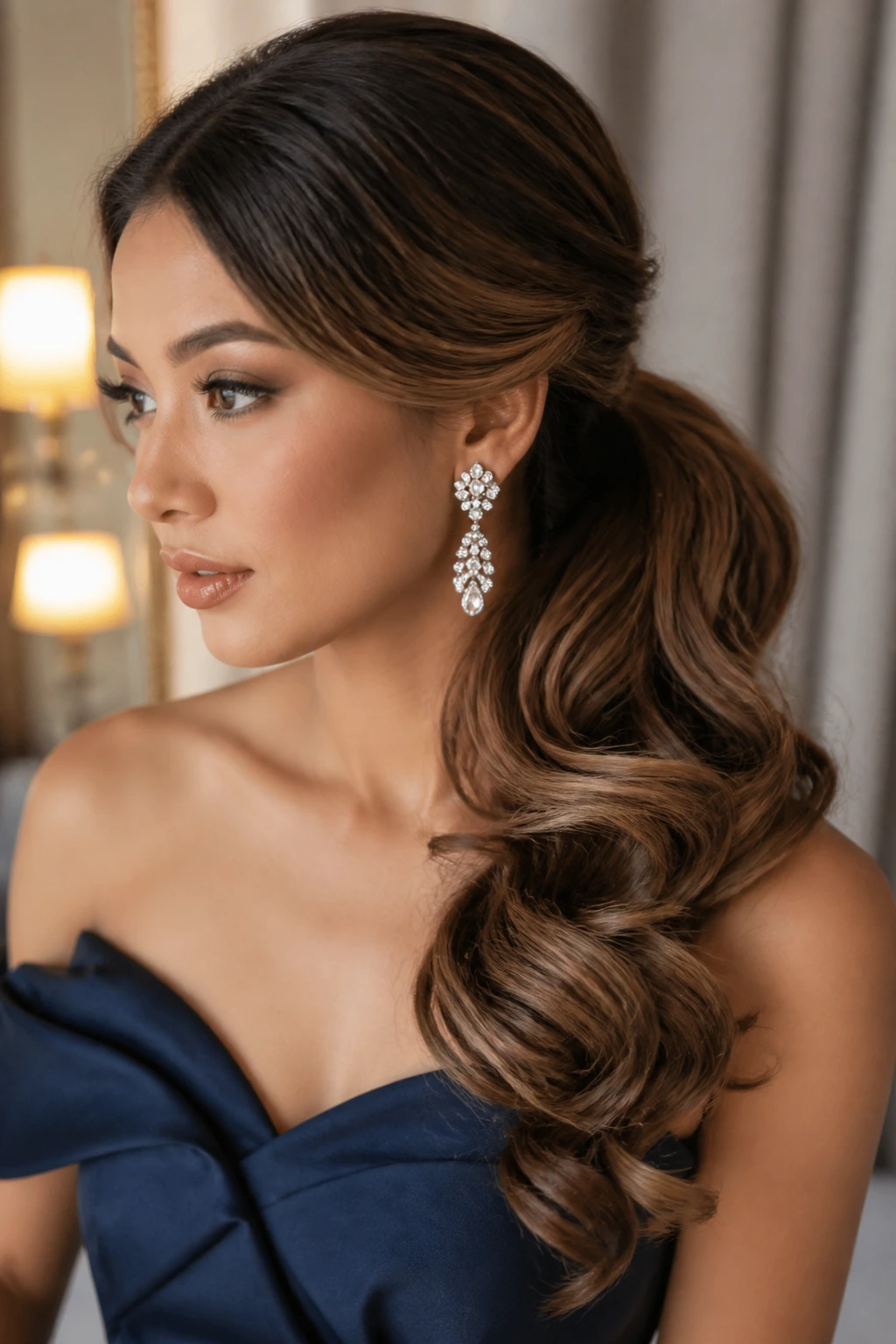
A low side ponytail works best when the tail feels sculpted. Sweep the hair to one shoulder, curl the tail into broad waves, and brush them into a soft arc. The shape feels vintage without looking costume-y, which is a nice line to walk on prom night.
This one loves a statement earring on the open side. The exposed ear and shoulder frame the face nicely, especially if the dress has a one-shoulder cut. Keep the base sleek enough that the side placement looks deliberate; otherwise it drifts into “I changed my mind halfway through.”
23. High Ponytail with Teased Crown
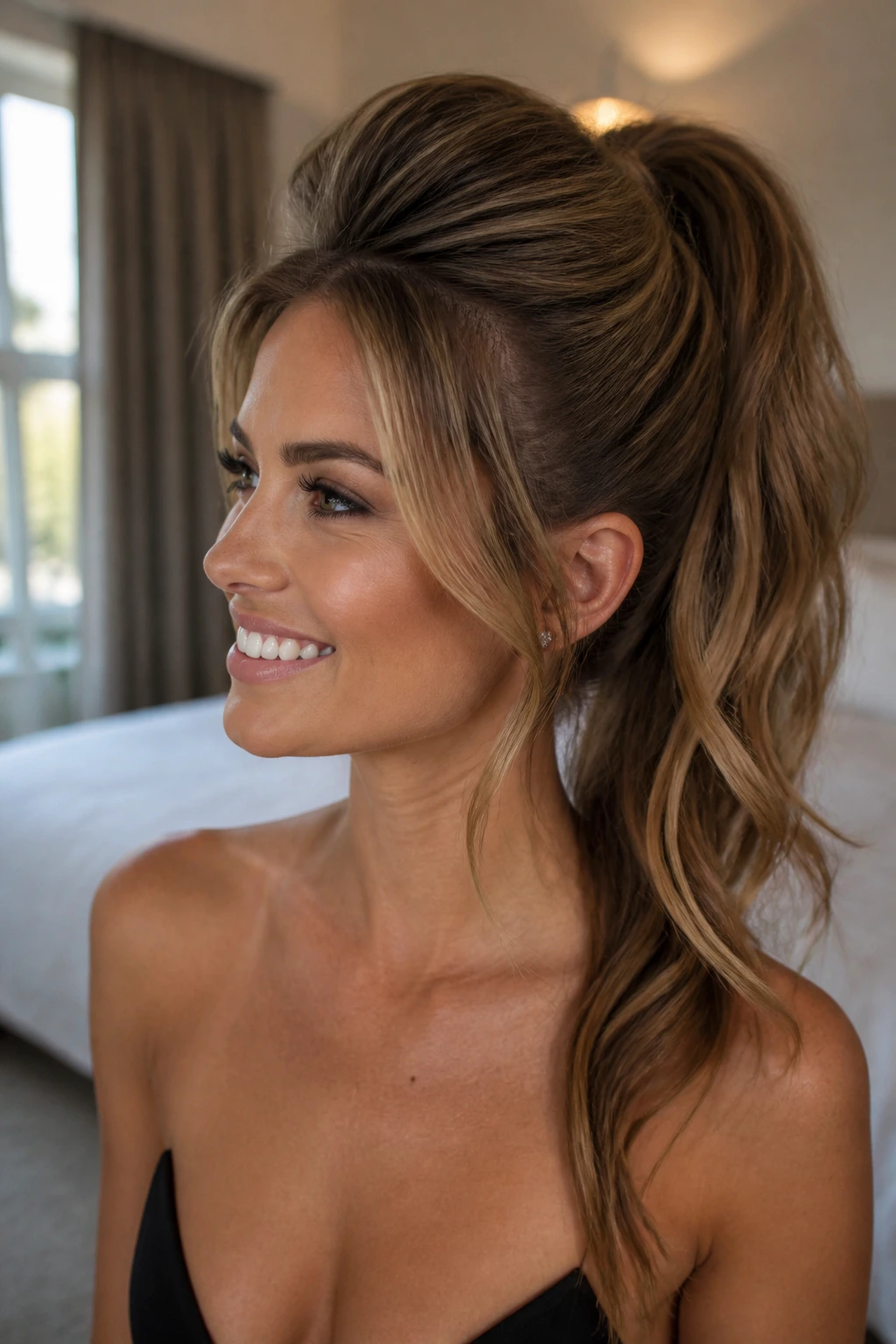
A teased crown gives the high ponytail lift before the tail even starts moving. Backcomb a hidden section at the top, smooth the outer layer over it, and secure the ponytail where the crown begins to rise. The tail can be straight, curled, or waved, but the lift up top is what makes the style feel bigger.
For Thin or Fine Hair
This is the one to reach for if your hair needs help looking full. A lightweight volumizing powder at the roots can make the tease hold without becoming stiff. Don’t pile in too much hairspray at once. Build the shape, then lock it in lightly, or the crown goes crunchy fast.
24. Messy Textured Ponytail with Soft Lift
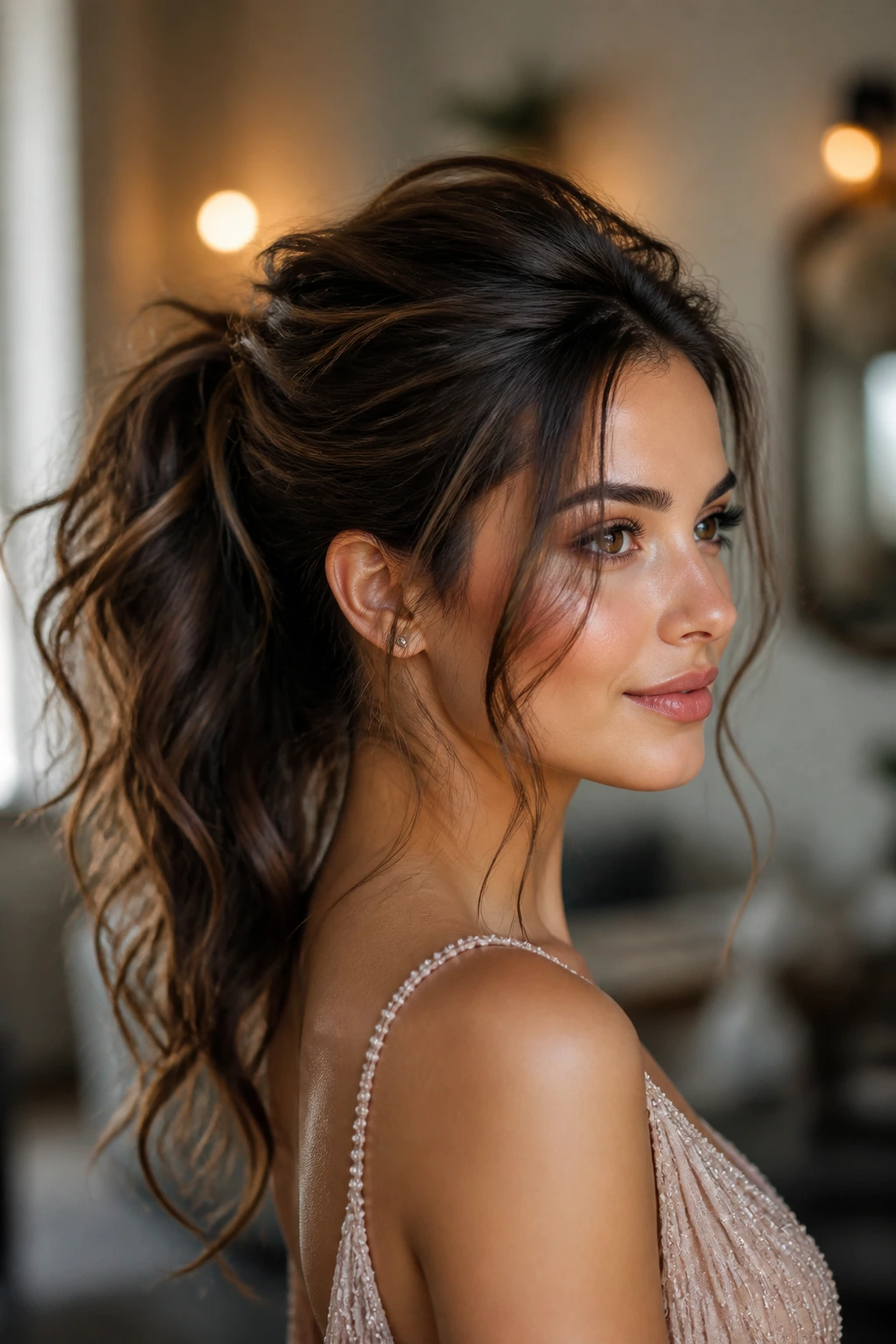
Messy does not mean careless. It means the texture has some air in it. Start with loose waves, rake in a bit of texturizing spray, gather the hair with a soft lift at the crown, and let a few pieces escape around the face and temples.
This is a good choice if your dress is very structured and you want the hair to offset that. Too much polish can make the whole look feel hard. Soft lift keeps it approachable while still dressed up. The key is controlling the mess. Random flyaways are one thing; intentional looseness is another.
25. Waterfall Braid Ponytail
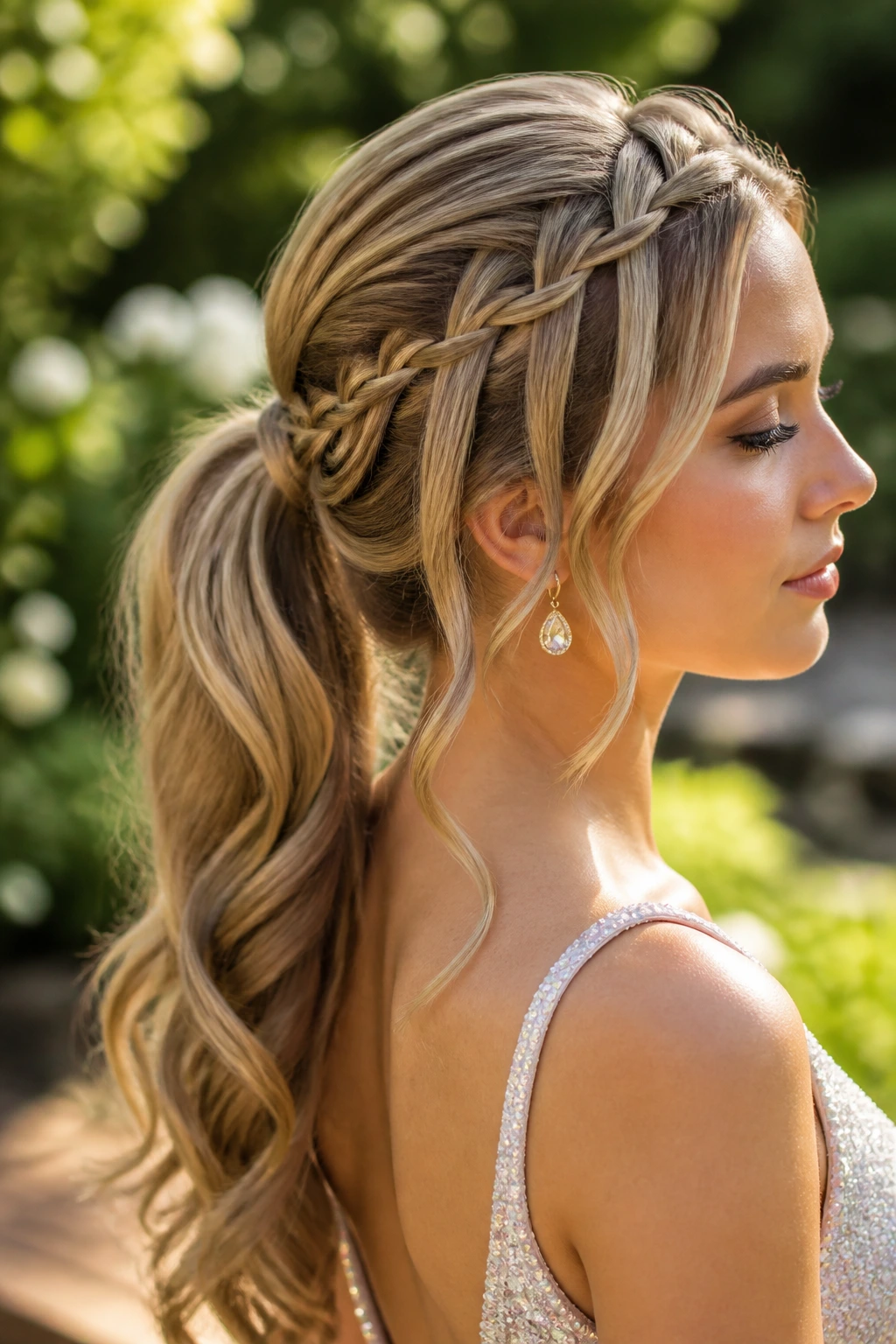
A waterfall braid gives you movement at the top and a clean ponytail below. The braid creates little dropped sections that look almost like ribbons of hair falling through the braid pattern. Then the rest pulls into a ponytail, which keeps the style from getting too fussy.
It’s a pretty choice for medium to long hair, especially if you want the front to feel special without covering the whole head in braids. The dropped sections should be curled lightly so they blend into the tail. Otherwise the top and bottom look like two separate hairstyles that met in the middle by accident.
26. Ponytail with Scarf Wrap
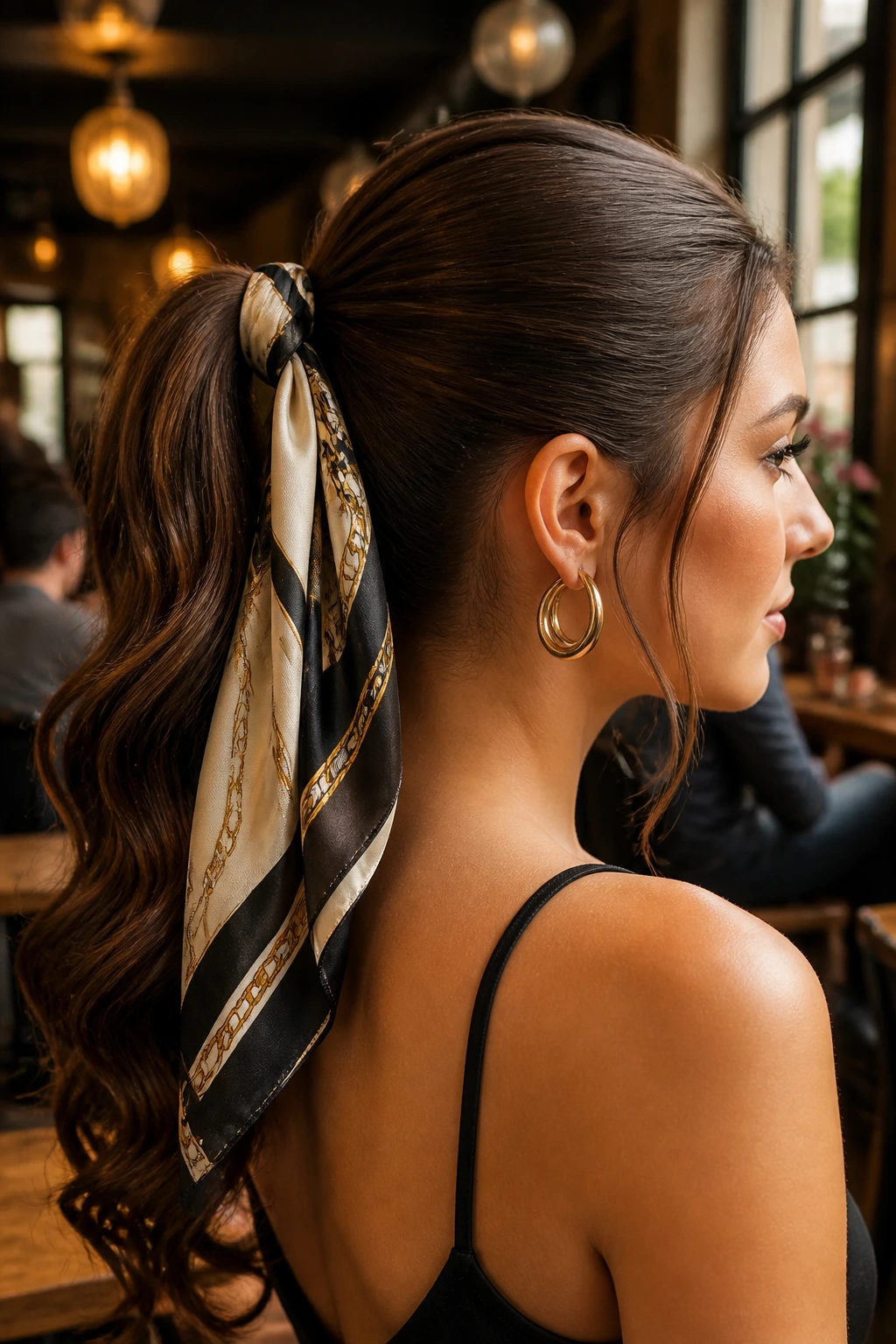
A silk scarf or narrow printed wrap can turn a basic ponytail into something with personality. Tie it around the base, let the ends trail down the tail, and keep the rest of the hair smooth or softly waved. The print should echo the dress, makeup, or jewelry, not fight it.
What to Choose
Use a lightweight scarf so it doesn’t pull on the elastic or slide around. Satin and silk are easier on hair than stiff fabric. If you have layers, pin the scarf ends under the tail before you leave the house. They’ll stay put, and you won’t spend the night adjusting them in the restroom mirror.
27. Curled Ponytail with Hidden Clip-In Extensions
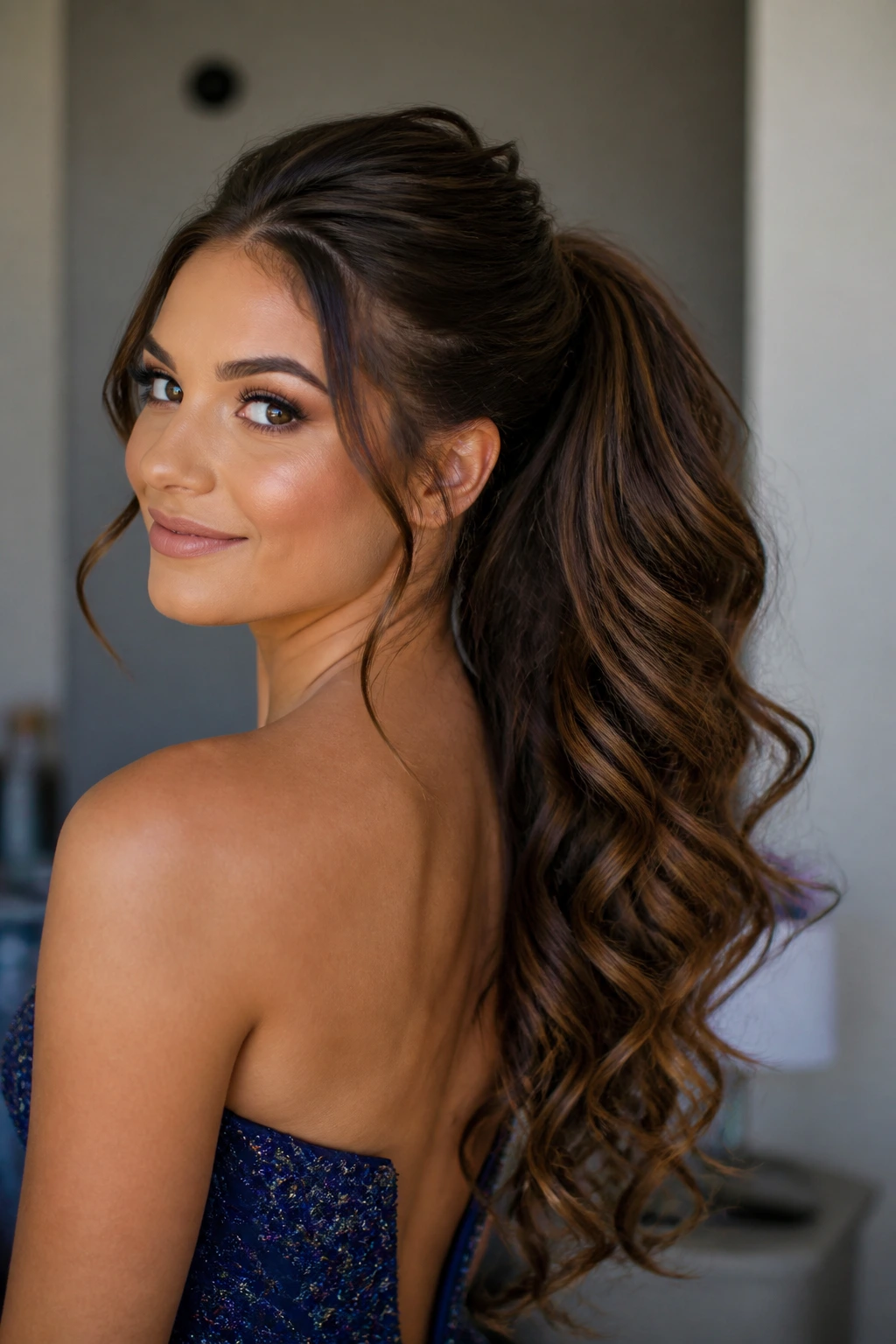
This is the stealth option for anyone who wants length and fullness without making the extensions obvious. Clip the pieces under the top layer, secure the ponytail, then curl the whole tail in sections so the added hair blends with your own. The goal is one shape, not a layered reveal.
Match the extension texture to your natural hair as closely as possible. Straight hair with frizzy extensions will show the seam. If the roots are fine, backcomb lightly where the clips sit and keep the base flat over them. Once the tail is curled, you shouldn’t be able to tell where the real hair ends.
28. Minimalist Knot-Wrap Ponytail
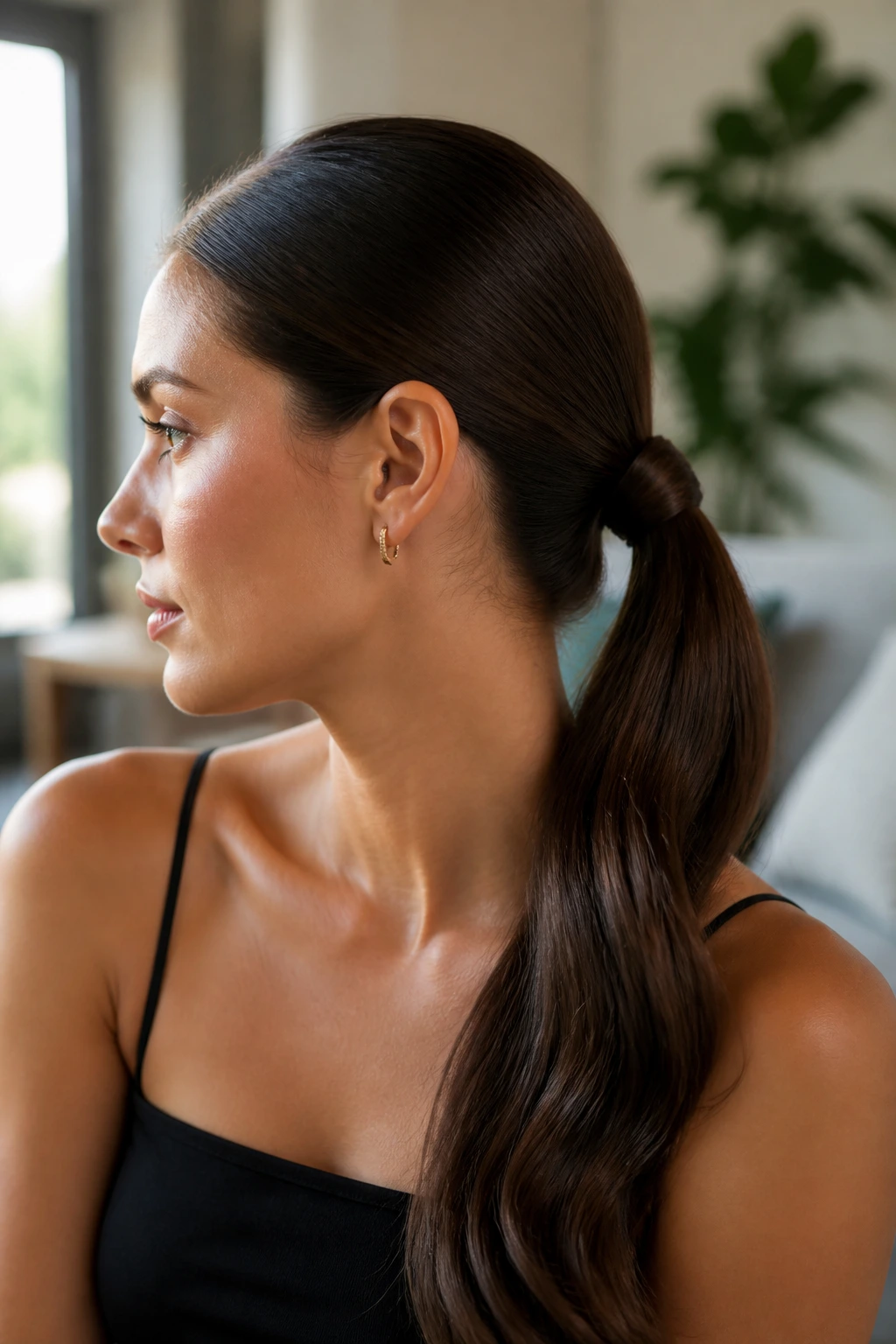
A knot-wrap ponytail skips the obvious ribbon and uses the hair itself to create a knot-like detail at the base. Twist two small sections around each other, pin them, and let the tail fall cleanly below. It’s subtle, which is exactly why it looks polished.
This is a strong pick for dresses with a lot of decoration because it keeps the hairstyle quiet. No glitter needed. No giant accessory fighting the beading. The hair becomes a sleek frame instead of a second focal point.
29. Platinum-Sleek Ponytail with Sharp Edges
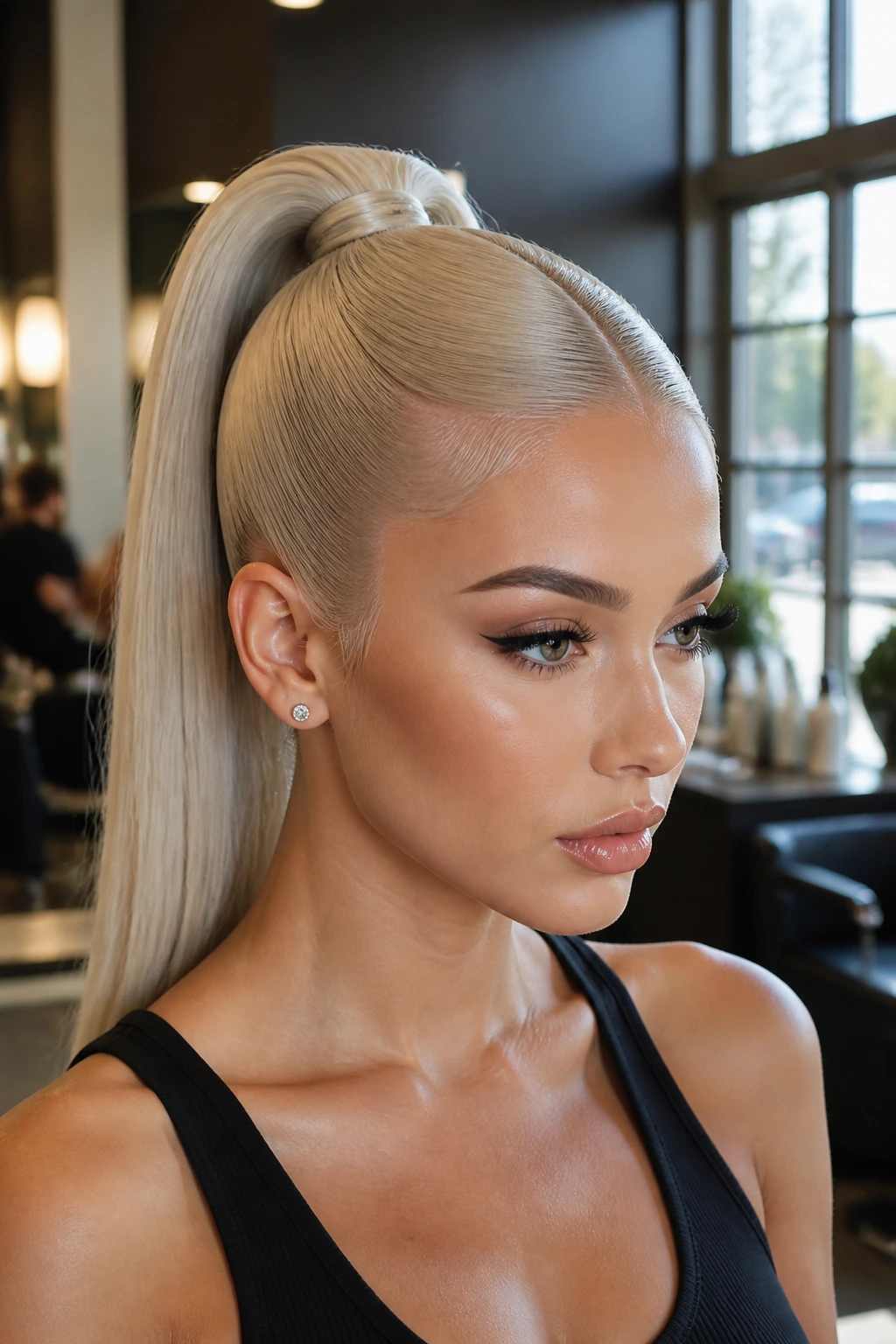
This style is for people who want the hairline crisp enough to look architectural. A center part, brushed-down sides, and a tight elastic create the base, while the tail stays super straight and glossy. If you have lighter hair, the overall effect gets even sharper because shine shows more clearly.
Edge control or gel can help shape the hairline, but keep the application thin. Too much product makes the front look heavy. A narrow strand wrapped around the base cleans up the finish and makes the style feel intentional all the way through.
30. Side Braid Into Ponytail
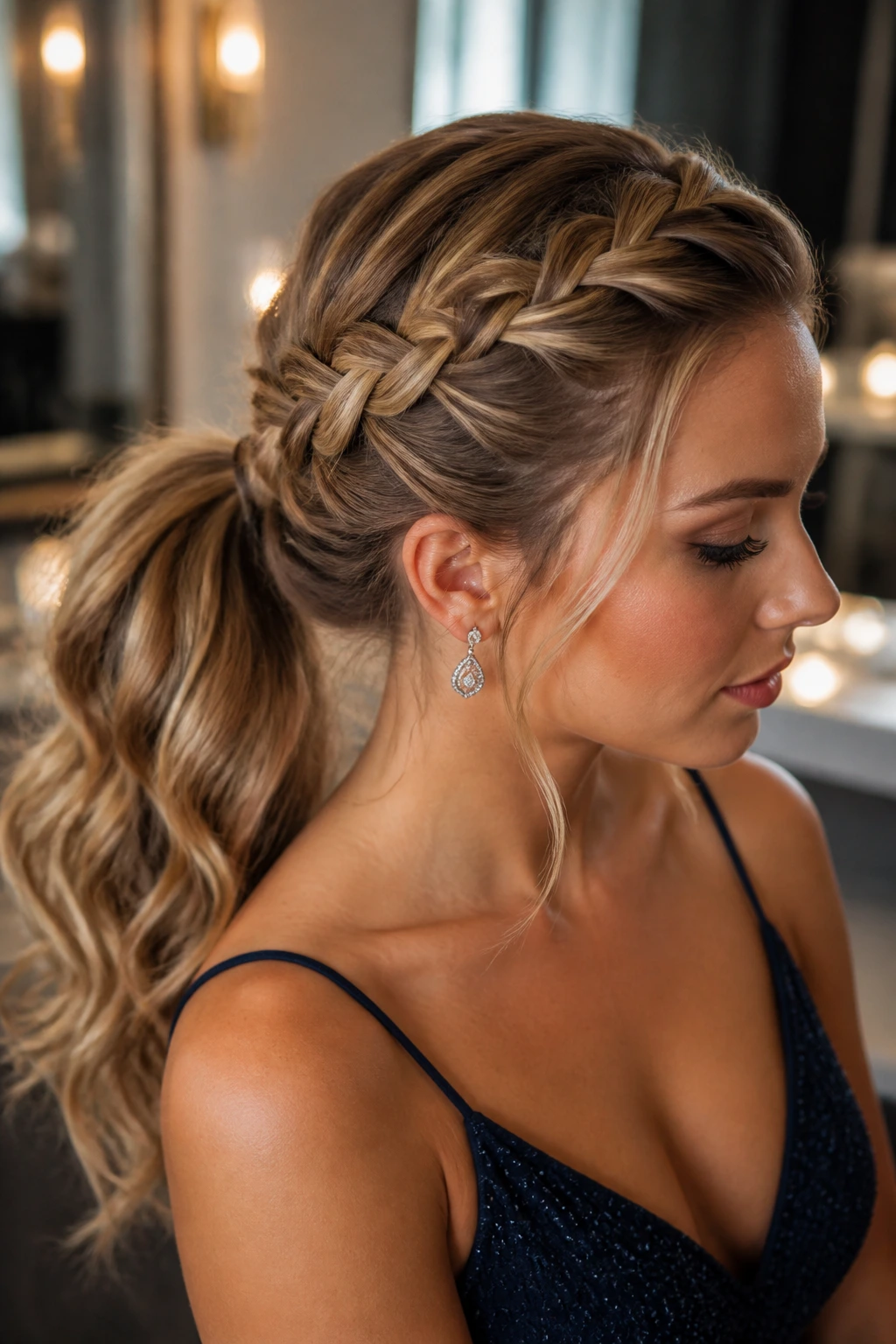
A side braid gives the ponytail a softer entry point. Braid from one temple or just above the ear, then sweep the rest into a ponytail at the back or slightly off-center. The braid acts like a guide line, pulling the eye into the ponytail instead of dropping it straight down.
When It Works Best
This style works especially well with side-swept dresses, dresses with one embellished shoulder, or gowns that already have movement in the fabric. The braid keeps the front interesting, and the ponytail handles the back. If your hair is thick, keep the braid loose. If it’s fine, braid more tightly so it has enough visual weight.
31. Cascading Ponytail with Spiral Curls
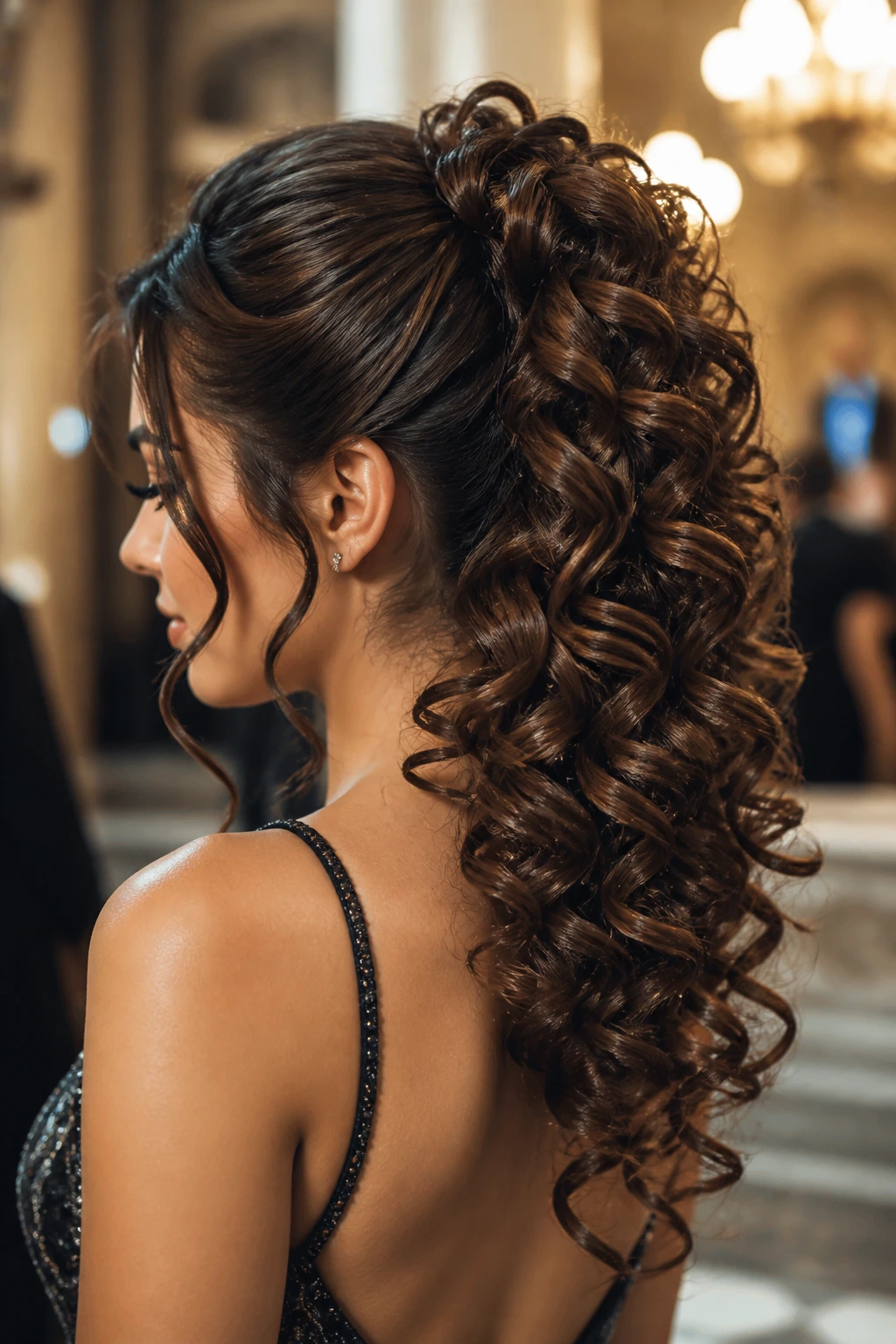
This is one of the most obviously “formal” ponytail styles because the curls do the talking. Curl the entire tail in smaller spiral sections, then separate the curls just enough to let them fall in layers. The result is long, glossy movement that looks great in photos from every angle.
The trick is using the right barrel size. A 3/4-inch to 1-inch wand gives tighter spirals that hold shape longer than loose waves. Set each curl in your hand for a few seconds before releasing it. That small pause matters. It helps the curl cool in place instead of collapsing early.
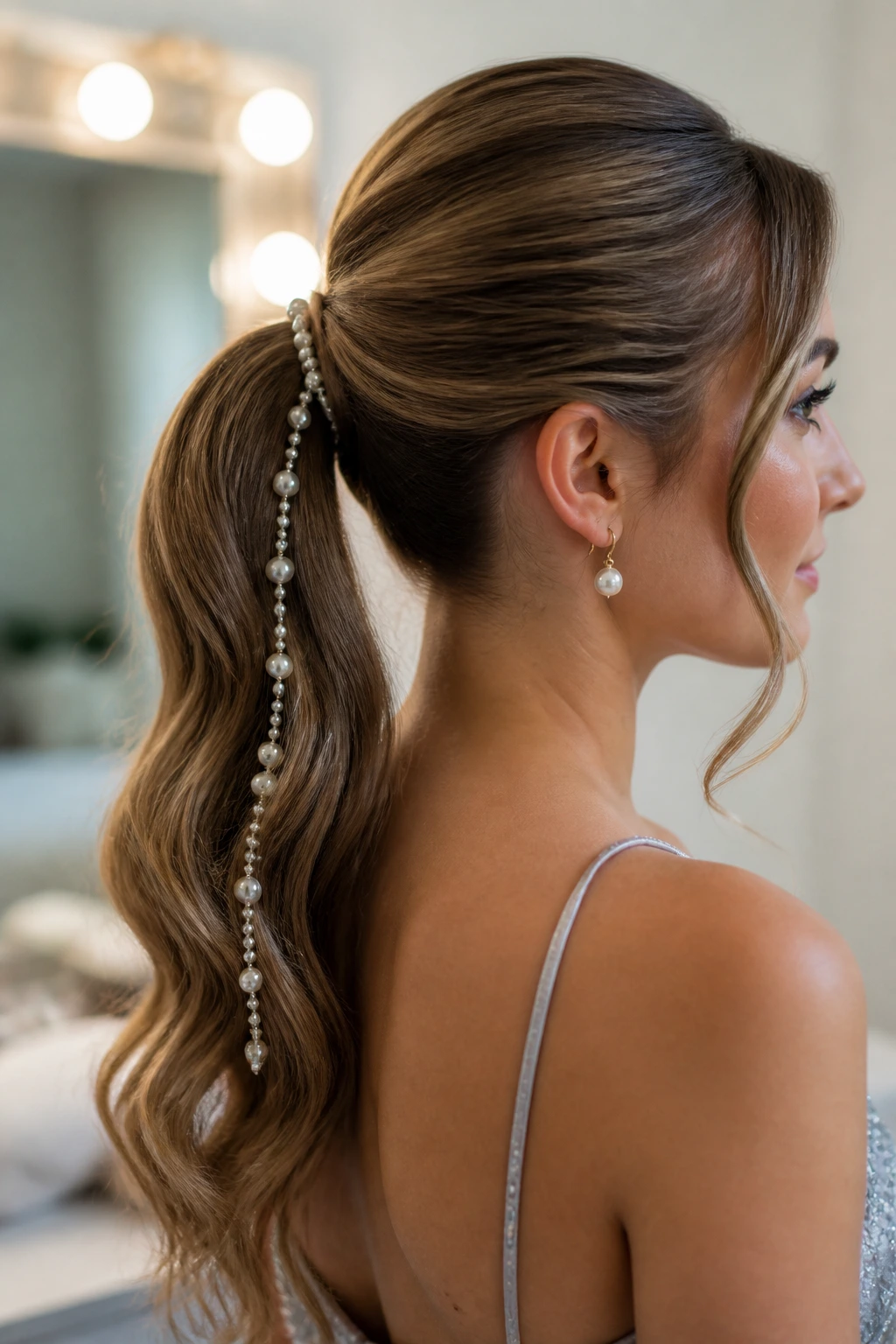
32. Prom-Ready Ponytail with Pearl Pins
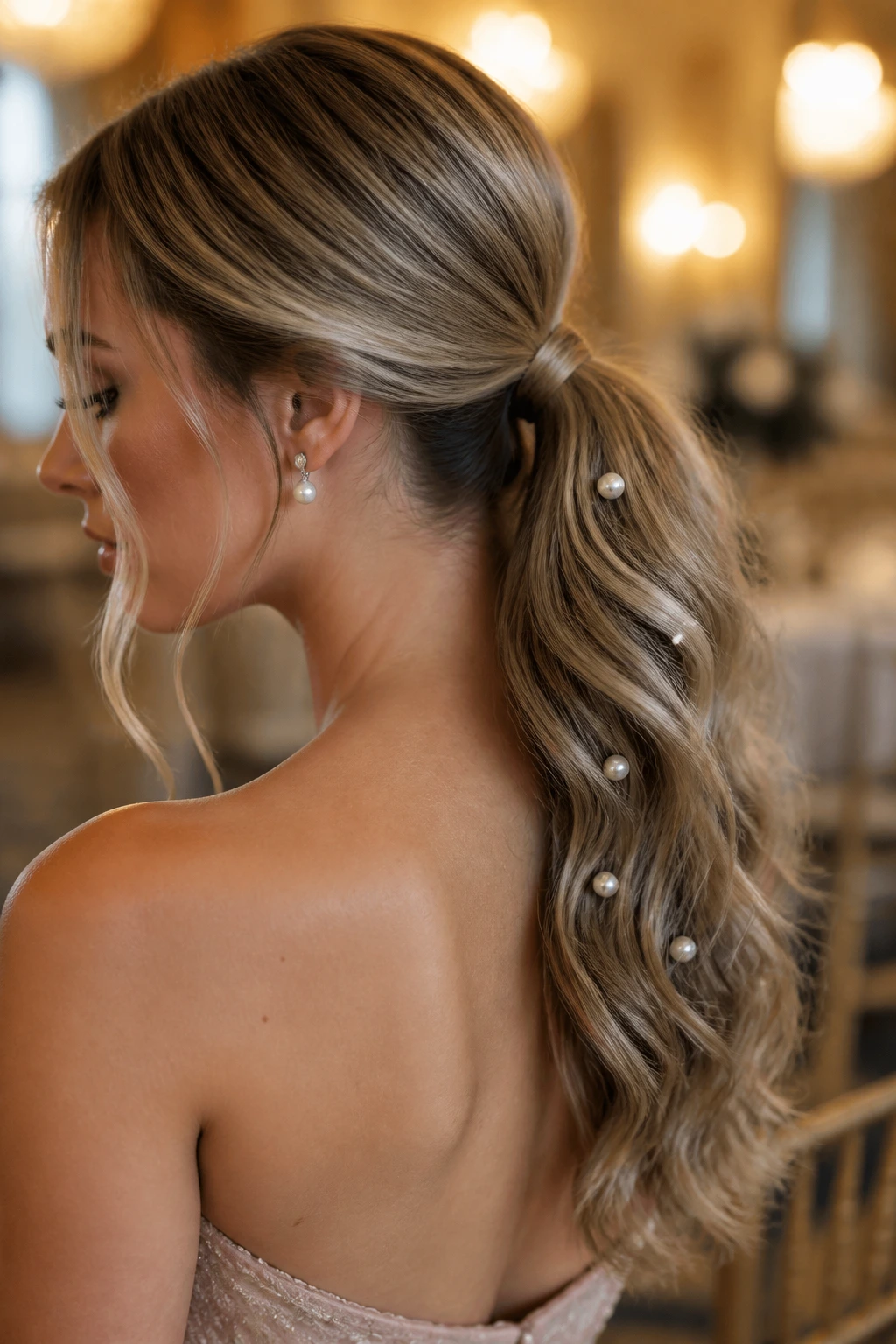
Pearl pins can change the whole mood of a ponytail without making it feel precious or fussy. Dot them along a braid, tuck them near the base, or scatter a few through a low ponytail with brushed-out waves. The look is polished, but the hair stays wearable.
If the dress already has pearls, echoing that detail in the hair is an easy win. If not, the pins still give the style a formal finish. Keep the rest of the look simple so the pearls don’t compete with sequins or a heavy necklace.
33. French-Braid Ponytail
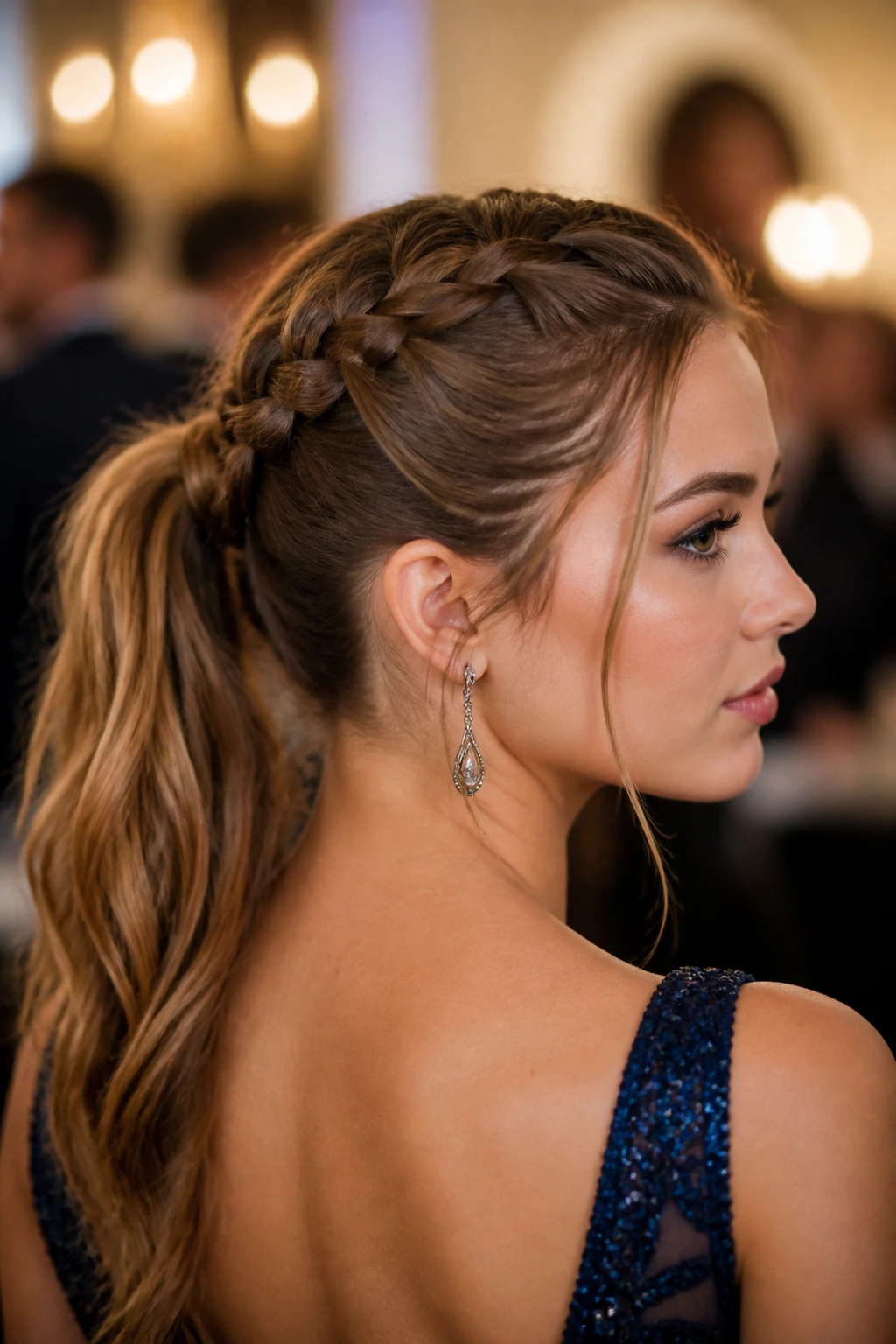
A French-braid ponytail gives you control at the crown and texture through the rest of the style. Braid the top section from the hairline down to the point where you want the ponytail to begin, then secure the rest into a tail. It’s neat, practical, and sturdy enough to stay put through a lot of movement.
This style does well with active prom nights because the braid anchors the front. There’s less shifting, less puffing, and fewer little strands wandering loose by the dance floor. If you want a softer finish, gently tug the braid edges after tying it to create width without mess.
34. Low Ponytail with Twisted Sides
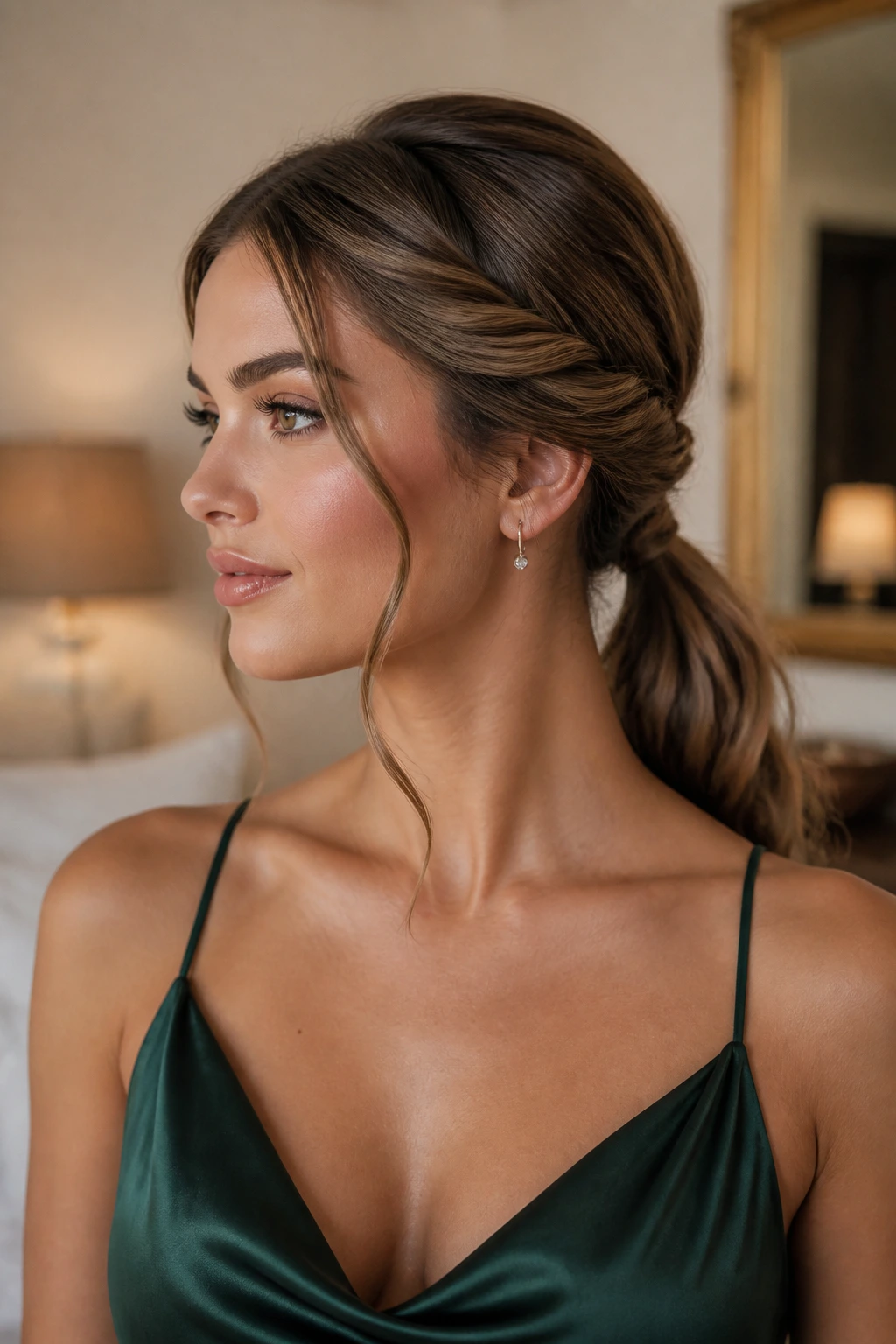
Twisted sides add shape without the visual weight of braids. Take two front sections, twist them back toward the nape, and secure them into a low ponytail. The twists create a smooth frame around the face and keep the style from looking like a plain office ponytail in a fancy dress.
This one is excellent for medium hair because it doesn’t need enormous length to look complete. Add a bit of curl to the tail if the hair is naturally straight; the contrast between the twisted top and the soft tail gives the style more depth. If your dress has a soft, draped fabric, this ponytail fits right in.
35. High Ponytail with Curtain Bangs
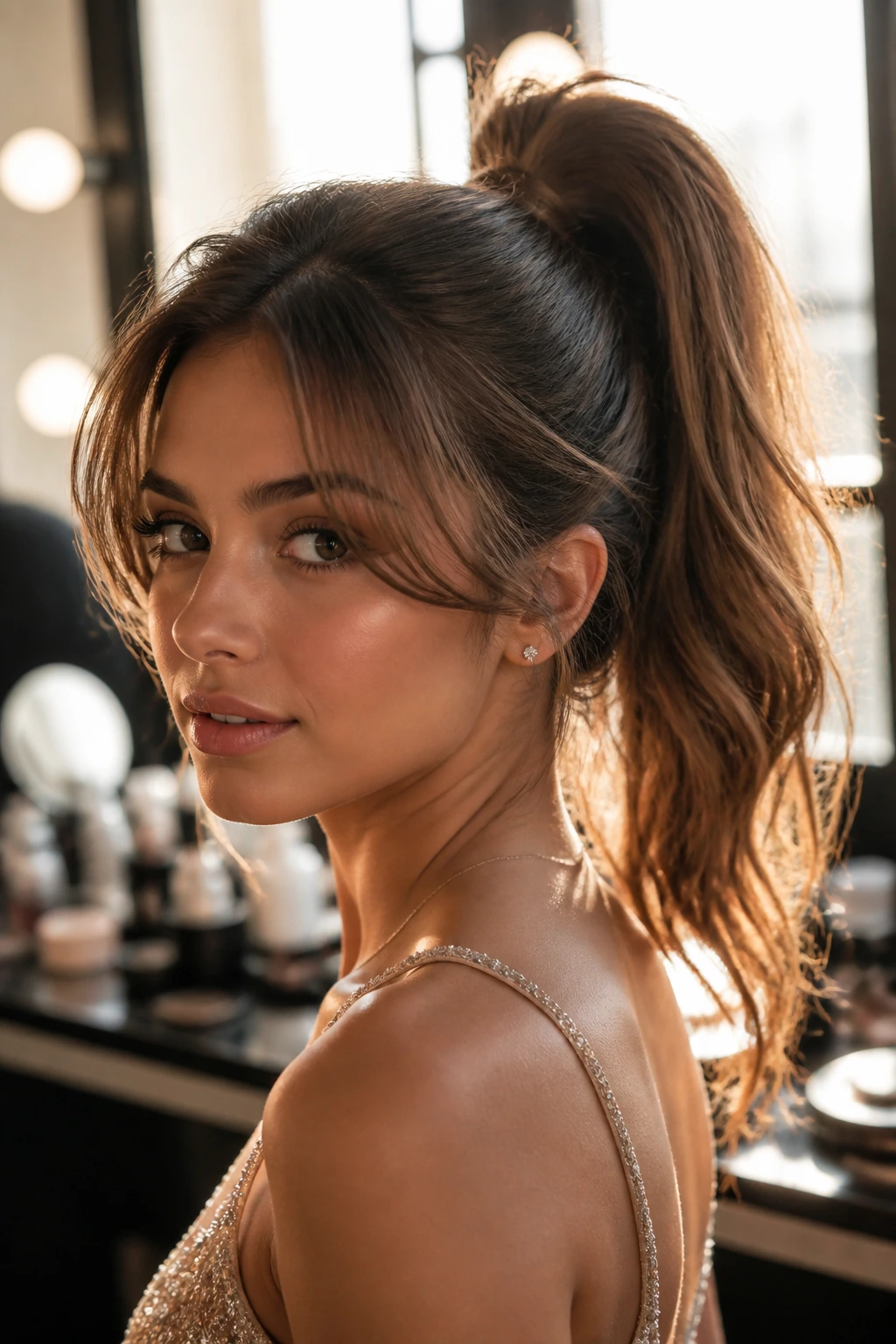
Curtain bangs give a high ponytail a softer front edge, which is useful if you want lift without all the sharpness of a slicked-back style. Keep the bangs loose and shaped around the cheekbones, then gather the rest of the hair high and secure it tightly. The bangs should frame, not cover.
This look works especially well when the tail has body. Big curls, waves, or even a full straight extension make the contrast feel intentional. If the bangs are freshly blow-dried, use a tiny amount of flexible hairspray so they don’t separate and hang in strings by the end of dinner.
36. Romantic Ponytail with Floral Accent
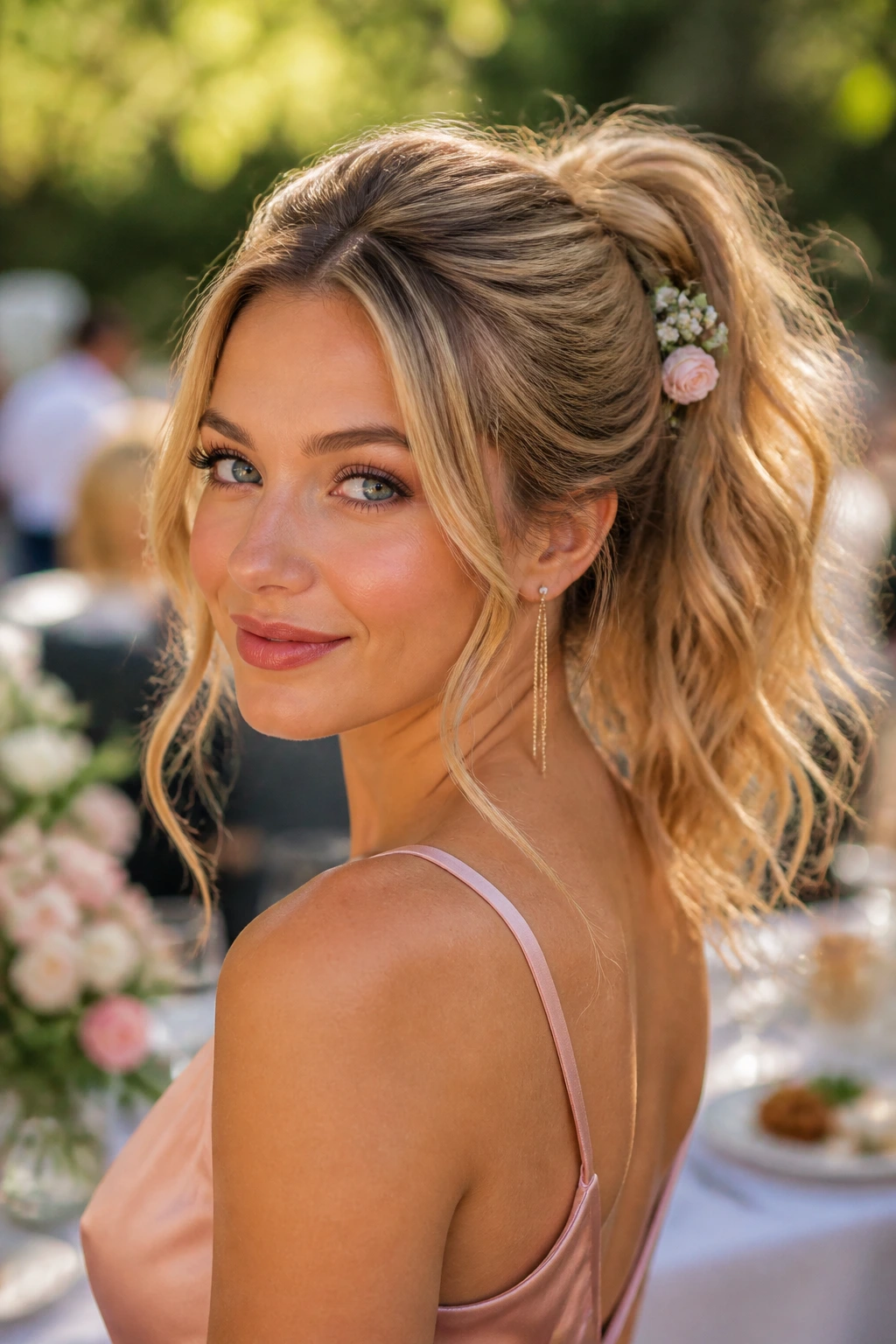
A floral accent belongs in hair when the rest of the style stays simple. One silk bloom, a cluster of tiny pinned flowers, or a slim floral comb can give the ponytail a softer, almost garden-party feel. The danger is overloading it, so keep the flower detail small unless the dress is very minimal.
This style looks best with waves or loose curls in the tail. Straight hair can make the floral piece feel too detached. Match the flower tone to the dress rather than the bouquet. That keeps the whole look from drifting into costume territory.
37. Extra-Long Ponytail with Flip Ends
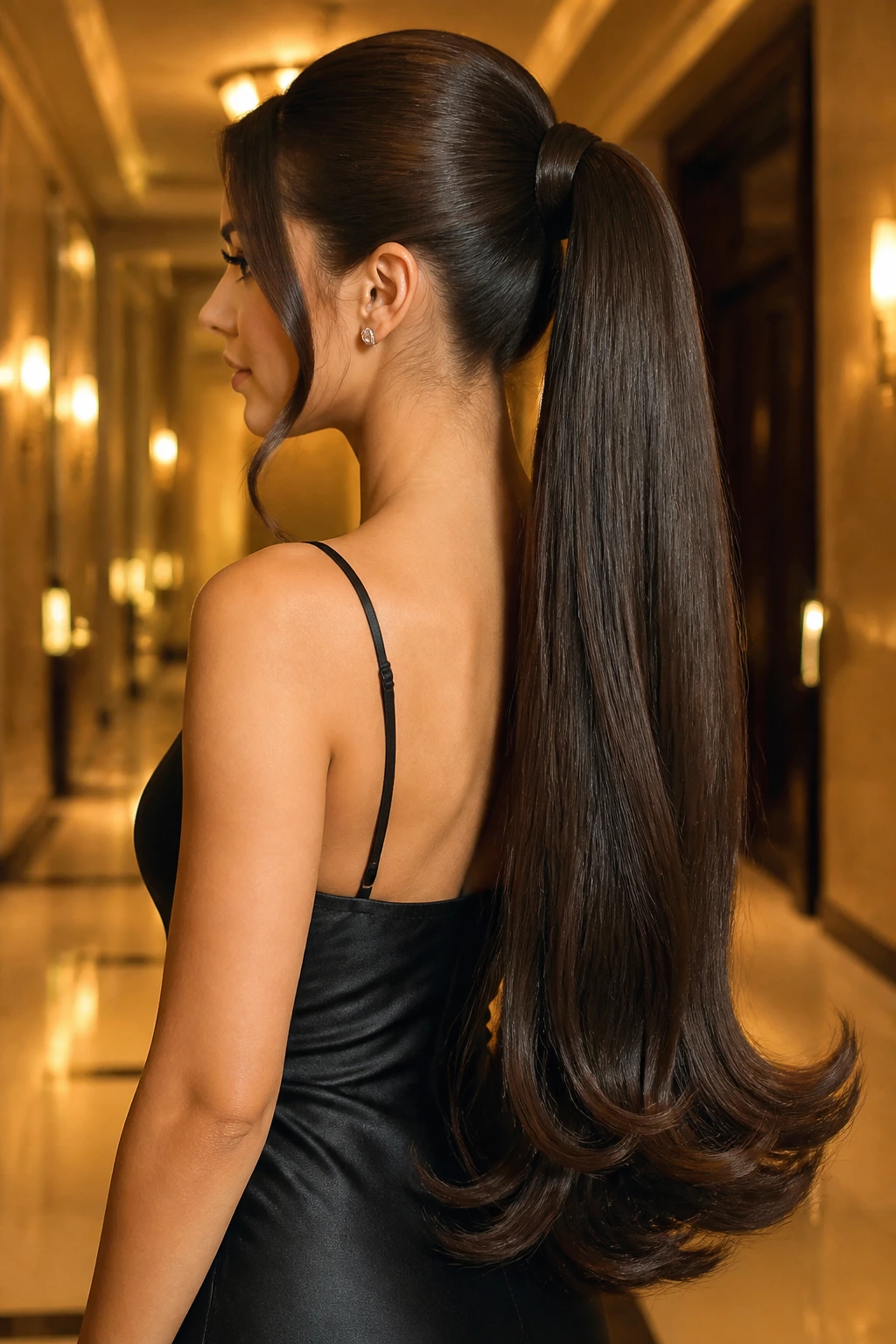
If the ponytail is long enough to move like a ribbon, use that length. An extra-long extension or a well-blended natural tail can be curled at the ends and then flipped slightly outward for a dramatic finish. It gives the style a bit of old-fashioned glamour without needing a heavy accessory.
The Detail That Changes Everything
The ends matter. A blunt, heavy finish can make a long ponytail feel flat. A soft flip at the last 2 to 3 inches keeps it lively and easier to see in motion. This is a strong choice for tall dresses, long earrings, and anyone who wants the hair to make a bigger entrance than usual.
38. Crown-Volume Ponytail with Soft Waves
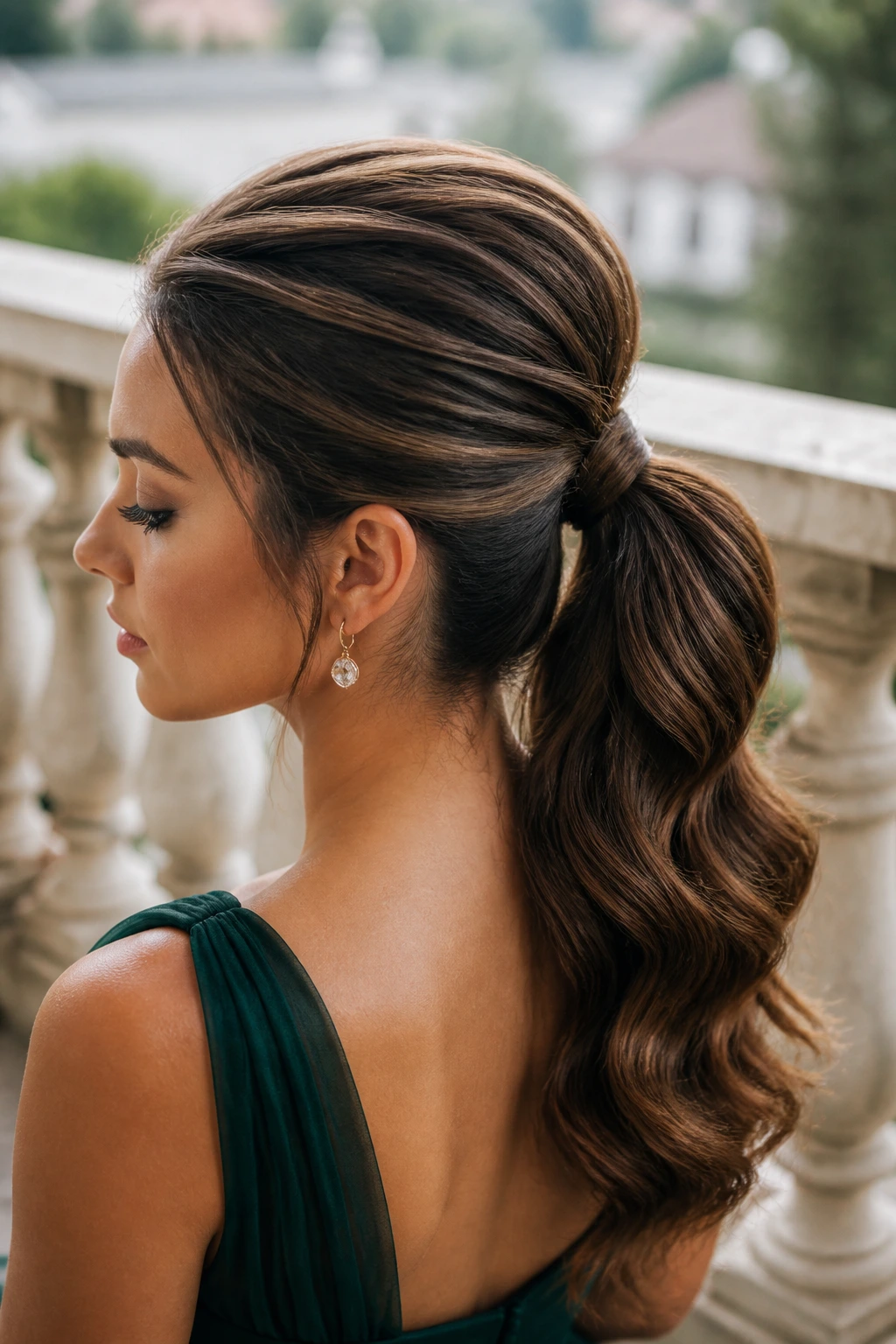
This is the style for a balanced finish. The crown gets lift, the tail gets movement, and nothing is pushed too far in either direction. Tease just enough at the top to create height, smooth the outer layer, and wave the tail in large sections so it falls with a little body.
The shape feels graceful because it avoids extremes. Not too sleek. Not too messy. Not too high. Not too low. That middle ground can be a relief when the dress already has a strong shape or a lot of detail. It’s also one of the easiest styles to freshen up after a few hours; a quick finger-comb through the crown and a light spritz at the ends usually brings it back.
Why Ponytail Height Changes the Whole Look
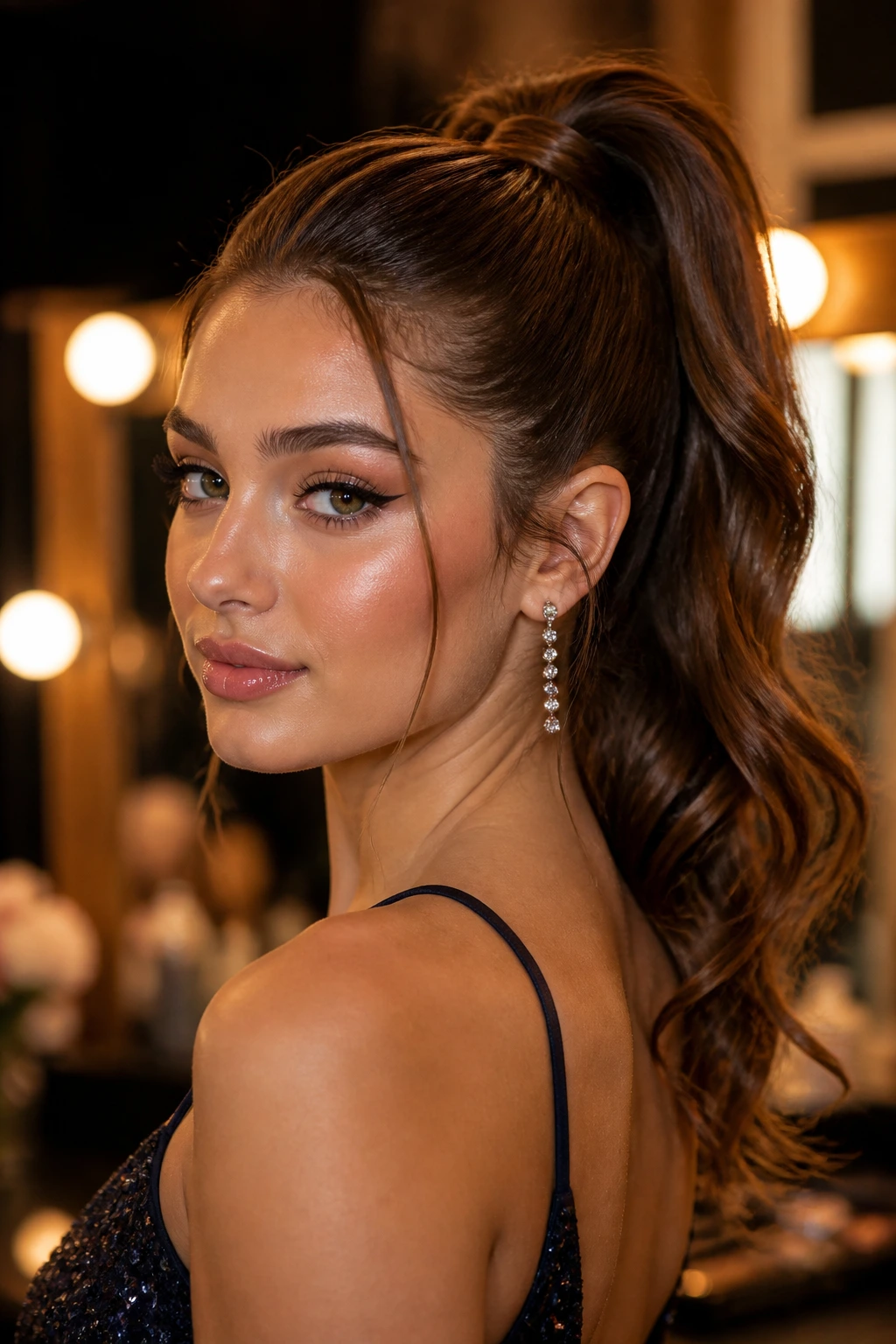
Height is one of those choices that looks small on the styling chair and huge in photographs. A high ponytail pulls the face upward and shows off the jawline. A mid-height ponytail sits in the practical sweet spot and tends to stay comfortable longer. A low ponytail feels calmer and pairs well with dramatic earrings, open backs, and high necklines.
Think about the dress first. A strapless bodice can take more height and volume at the crown. A halter already creates vertical lines, so a sleek low ponytail often feels more balanced. One-shoulder dresses like some side sweep or off-center placement because the hair doesn’t fight the asymmetry. That’s the kind of detail that makes the whole outfit look considered.
Texture matters just as much. Fine hair usually needs a little hidden support, especially in higher styles. Thick hair can carry big braids and bubble sections without much help. Curly hair often looks strongest when the ponytail follows the natural pattern instead of forcing it into something flat. If you keep fighting the texture, the style will fight back.
Essential Tools for These Prom Ponytails
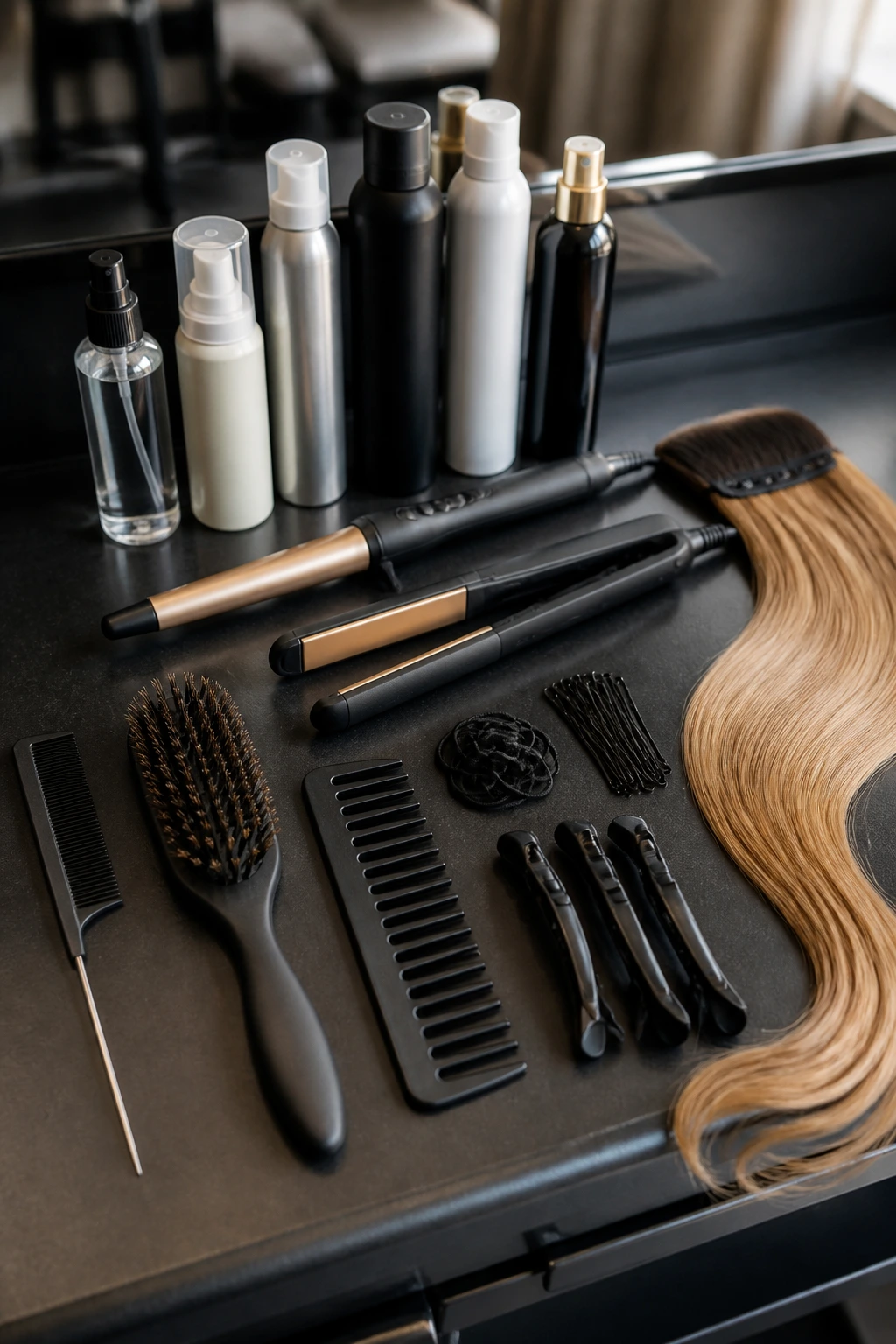
- Tail comb: The skinny end helps create clean parts and smooth sectioning without tearing up the hair.
- Boar-bristle brush: Best for sleek bases because it smooths the surface without adding puff.
- Wide-tooth comb: Useful for curly and wavy styles where you want shape, not frizz.
- Fine elastic bands: Clear or hair-colored elastics keep the base neat and disappear fast.
- Bobby pins: Stock more than you think you need; hidden braids, wraps, and twists always need backup.
- Curling iron or wand: A 1-inch barrel handles most prom ponytail styles; a smaller barrel gives tighter spirals.
- Flat iron: Handy for glassy straight ends, sharp parts, and a polished base.
- Texturizing spray: Gives grip to fine or slippery hair before braiding or wrapping.
- Mousse or blowout cream: Helps roots hold shape without turning the hair crunchy.
- Strong-hold hairspray: Use a flexible formula if you want movement, a firmer one for sleek styles.
- Shine spray: Best on the tail lengths and ends, never drenched at the roots.
- Clip-in ponytail extension: Optional, but extremely useful when length or fullness is missing.
- Heat protectant: Non-negotiable before any hot tool touches the hair.
- Sectioning clips: Keep the hair separated while you build the base.
- Mirror with good back view: A hand mirror or three-way mirror makes the wrap, braid, and pin work much easier.
Smart Prep for Smooth Roots and Lasting Hold
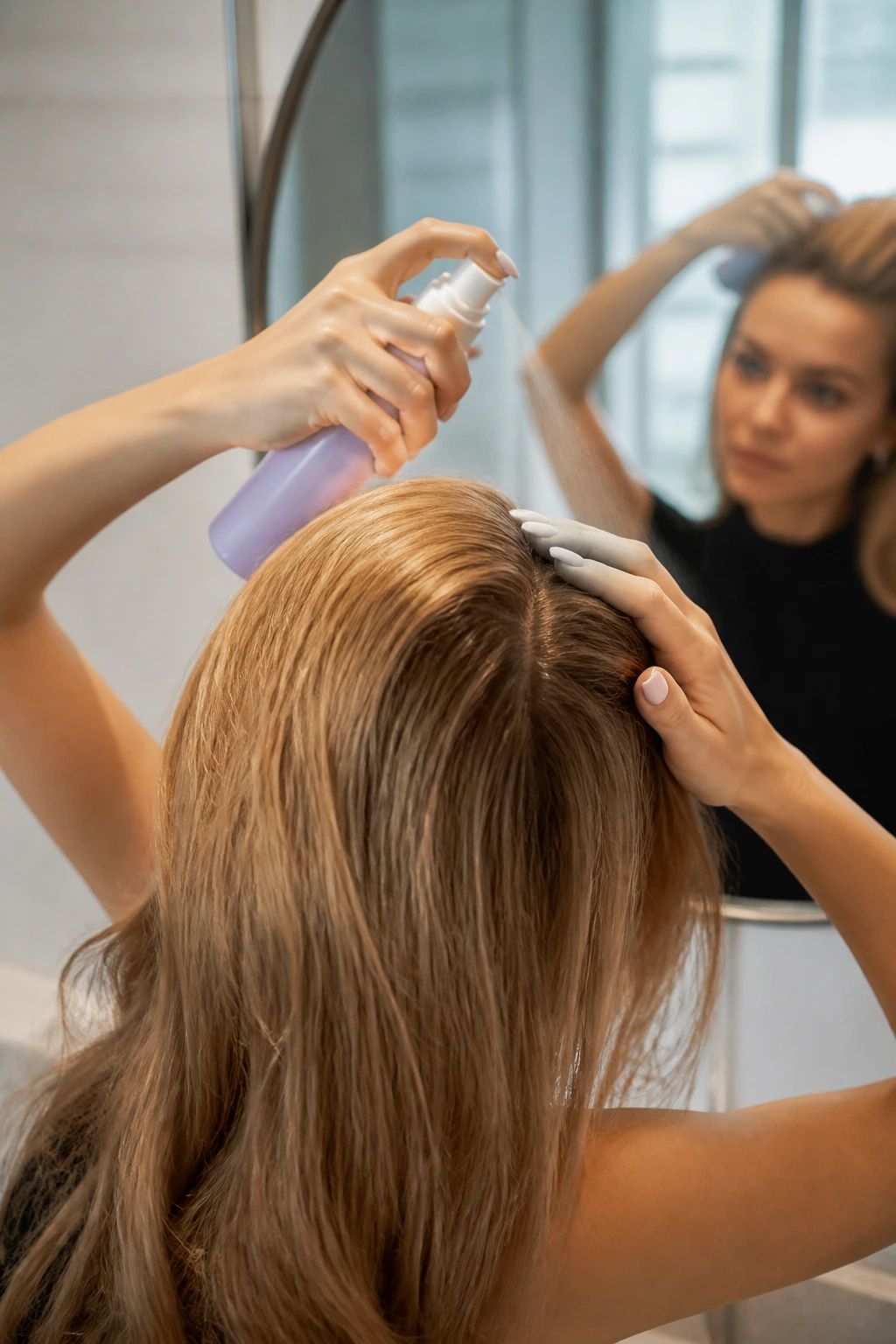
Hair prep is where most ponytails either get easy or get annoying. Start with dry hair that’s clean but not slippery. Freshly washed hair can be too soft to hold, especially if your strands are fine. If that sounds familiar, blow-dry with a little mousse or root-lifting spray so the hair has some grip before you style it.
Product order matters. Heat protectant first, then your heat tools, then shaping products like texture spray or hairspray. If you put oil or shine serum on too early, the roots can collapse. Save the smoother stuff for the mid-lengths and ends where it belongs. I like to keep the hairline tidy with a small amount of gel or edge control, then brush it in with a soft brush so it doesn’t sit in obvious patches.
One more thing people skip: cool the style before you touch it again. If you curl the tail, pin it briefly while it cools, or at least leave the curls alone for a few minutes before brushing them out. Warm curls fall fast. Cool curls stay. That little wait is dull, but it pays back when the photos start.
How to Match the Ponytail to Your Dress and Hair Type
Neckline: Strapless, sweetheart, and open-back dresses usually welcome a higher ponytail because the hair lifts the eye and keeps the shoulders visible. Halters and high necklines often look better with low or mid-height versions so the whole outfit doesn’t feel crowded.
Hair texture: Straight hair shines in glassy, ribbon-tied, and knot-wrap styles. Wavy hair is the easiest place to start for soft glam looks. Curly and coily hair can look stunning in high curly ponytails, bubble styles, and voluminous tails, especially when the natural texture is allowed to lead instead of being flattened.
Accessory load: If the dress already has beading, sequins, or a dramatic collar, keep the ponytail cleaner. If the dress is plain satin or crepe, bring in pearls, bows, or braid detail. Hair accessories should finish the story, not start a second one.
Face-framing: A center part lengthens the face. Side sweeps soften angles. Curtain bangs and loose tendrils soften a high ponytail that might otherwise feel severe. Tiny tweaks like that change the whole read of the style.
How to Keep the Style Fresh Through the Night
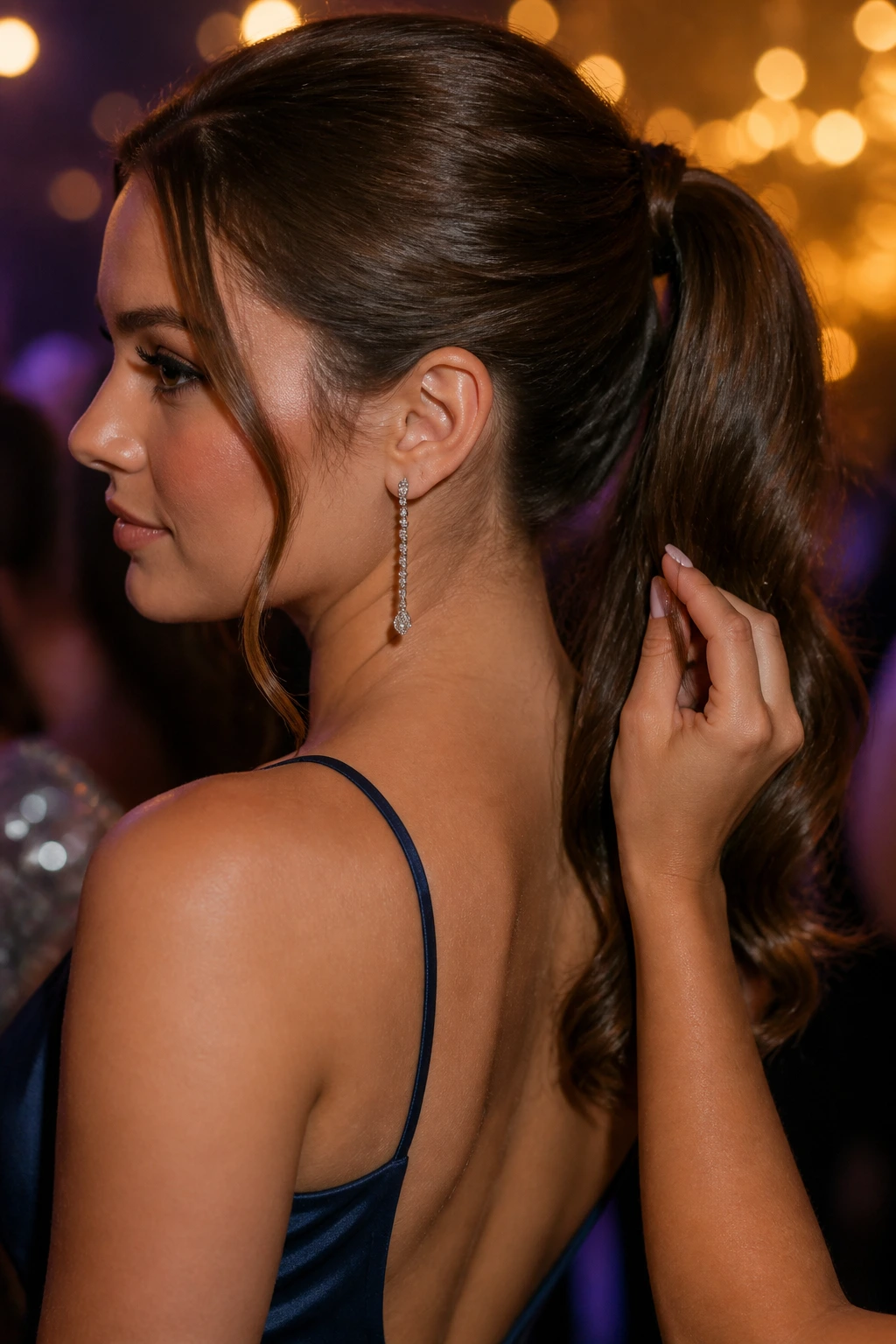
The first line of defense is placement. A ponytail tied too low tends to slide under movement and rub against the collar. One tied too high can pull uncomfortably by the second hour. Find the spot where the head can move naturally without dragging the elastic around. That’s the one you want.
Pack a small touch-up kit. A few bobby pins, one spare elastic, a mini hairspray, and a tiny comb are enough for most styles. If the hairline gets fuzzy, tap a little spray onto the comb instead of spraying your entire head again. That keeps the top from getting hard. If the tail loses shape, finger-twist one section and let the rest fall loose. You do not need a full restyle at the restroom mirror.
For humid rooms or crowded dance floors, a light anti-humidity spray at the crown can help, but keep it modest. Too much and the style turns sticky. The goal is control, not shellac. If a few flyaways show up, fine. Hair moves. That’s part of why a ponytail feels alive instead of helmet-like.
Additional Tips and Style Boosters
Flavor Enhancement: Use a tiny amount of shine spray on the tail ends only, then run your hands down the length once. That gives the hair a finished look without making the crown greasy.
Customization: Swap a ribbon for a pearl chain, a crystal clip, or a slim velvet bow depending on the dress. One accessory can change the whole personality of the ponytail.
Volume Boost: If the crown looks flat, clip a small hidden extension or use a root-lift powder before gathering the hair. The extra height keeps the style from sinking after a few hours.
Softness Trick: Leave out two narrow face-framing pieces and curl them away from the face. The line of the cheekbones shows up better, and the style loses that too-tight feeling.
Make-It-Yours: For a minimalist look, skip the accessories and keep the base sleek. For a more romantic look, add waves, braid detail, or pins with a bit of sparkle. The same ponytail can lean polished, sweet, or dramatic with a couple of changes.
Common Mistakes to Avoid
The first mistake is overloading the roots with product. When the hairline gets too much gel, oil, or spray, the ponytail starts looking heavy and can slip. Use a little, brush it through, and stop. The shine belongs on the lengths, not the scalp.
Another common issue is placing the ponytail in the wrong spot for the dress. A high ponytail with a high-neck gown can feel crowded. A low ponytail with a dramatic open-back dress can disappear. Check the neckline in a mirror before you commit, because the relationship between the hair and dress is the whole point.
People also curl the tail too early and then brush it too hard. That fluffs the shape until the ends lose definition. Let the curls cool, brush gently, and stop before they become a cloud. If you want soft waves, loosen them a little. If you want spirals, leave them alone.
Heavy accessories are another trap. Big clips, giant bows, and thick pins can drag fine hair downward over time. Use the lightest piece that still reads in the mirror. The goal is a ponytail that survives photos, dinner, and the dance floor — not a style that needs to be rescued every twenty minutes.
Variations and Adaptations to Try
Short-Hair Clip-In Version: If your hair stops at the shoulders, a clip-in ponytail extension can carry almost any of these styles. Hide the base with a braid wrap or ribbon so the join disappears. Match the texture first, not just the color.
Curly-Hair First Version: Start from your natural curl pattern and shape it into a high, mid, or low ponytail without trying to flatten it. The style looks richer when the curl keeps its own movement, and you’ll spend less time fighting frizz.
Humidity-Resistant Version: Choose a sleek base, use a firm but flexible hairspray, and keep the tail in a braid, twist, or bubble shape instead of loose curls. Less exposed hair means less chance for the style to puff out.
Soft Glam Version: Pair a low or mid-height ponytail with brushed waves, curtain pieces, and pearl pins. The effect is gentle and formal at once, which works well with satin and chiffon dresses.
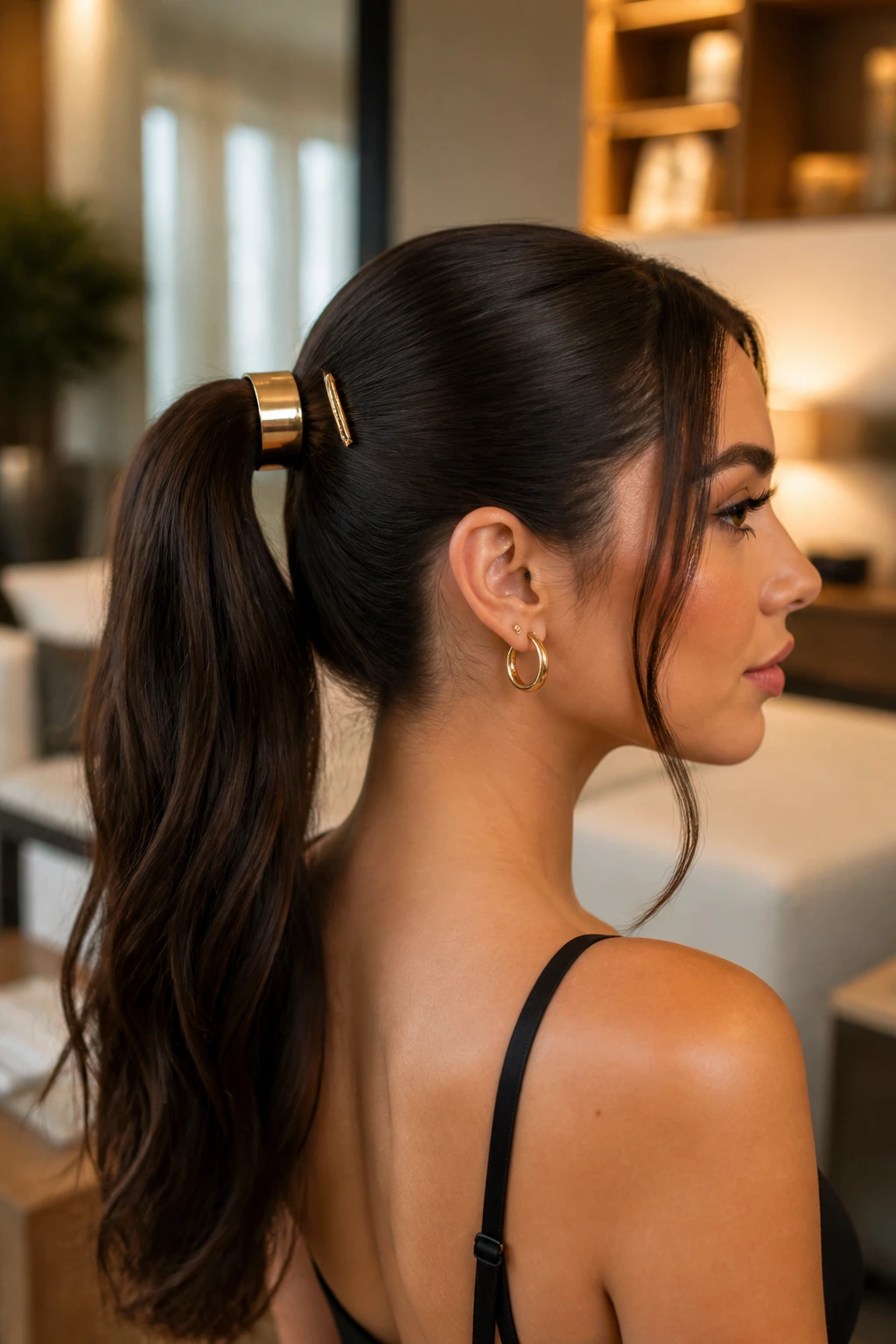
Edgy Metallic Version: Swap ribbon and floral accents for silver cuffs, minimalist clips, or a sharp crystal barrette. Keep the base sleek and the tail straight or sharply waved so the accessories don’t fight the hair.
Budget-Friendly Version: Use clear elastics, one good brush, a single curling tool, and a ribbon you already own. You can get a polished prom ponytail without buying a drawer full of specialty pieces.
Frequently Asked Questions
Can a ponytail really look formal enough for prom?
Yes, if the base is neat and the finish is intentional. A wrapped elastic, clean part, and shaped tail can look more polished than loose curls that fall apart halfway through dinner.
What ponytail style works best with a strapless dress?
High ponytails, crown-volume styles, and curled tails usually pair well with strapless necklines because they lift the eye and keep the shoulders open. If the dress already has a lot going on at the top, a mid-height version may feel calmer.
How do I hide clip-in extensions in a ponytail?
Clip them in under the top layer, not at the very top of the head, and blend the texture before you secure the ponytail. Curl or wave the natural hair and the extension together so the seam doesn’t show in the tail.
What if my hair is fine and slips out of ponytails?
Add grip before you gather it: mousse, dry shampoo, or texture spray at the roots helps a lot. A tiny hidden tease under the crown and two crossed bobby pins at the base can stop the ponytail from sliding.
Should I wash my hair the day of prom?
Not always. Slightly lived-in hair usually holds better than squeaky-clean hair, especially for sleek or braided ponytails. If you do wash it, blow-dry with a bit of texture product so it isn’t too slippery.
How do I keep flyaways down without making the style stiff?
Use a soft brush with a touch of hairspray rather than blasting the whole head. Apply product in layers, and leave the tail ends more flexible so the style can still move.
Can I do a prom ponytail myself, or do I need a stylist?
A simple sleek low ponytail, ribbon tie, or soft wavy version is very doable at home with a good mirror. Styles with braids, extensions, or precise curls are easier if someone else can help with the back.
What ponytail looks best with a one-shoulder dress?
A side-swept ponytail, low ponytail, or off-center version usually fits best because it keeps the neckline visible. Avoid a centered, ultra-high style if the dress already has a strong diagonal line.
How far ahead should I practice the style?
One trial run a few days before prom is smart, especially if you’re using extensions, braids, or a curling iron you don’t use often. That gives you time to adjust the height, accessory size, and product load without pressure.
A Ponytail That Feels Put-Together
A good prom ponytail doesn’t need to shout. It just needs to hold its shape, flatter the neckline, and keep looking like you meant it from the first photo to the last song. That can mean glassy and sharp, or soft and curly, or full of pearls and ribbon. The best version is the one that matches the dress and stays comfortable enough that you stop thinking about it.
The nice thing about ponytails is how far they can go with a few smart choices. A different part changes the mood. A braid changes the texture. A ribbon changes the whole tone. That flexibility is why this style keeps showing up at formal events — it’s not one hairstyle, really. It’s a whole family of them.
If prom night is asking for hair that looks elegant, survives movement, and still feels like yours, a ponytail is a very good answer.
