



Thick hair does not behave like a tidy little sample swatch. It has weight, memory, lift at the roots, and a way of expanding the second the air gets damp. That is why the best hairstyles for frizzy hair for thick hair are not the ones that try to flatten every strand into submission. They are the styles that give the hair a shape to live in.
A good style for this hair type has to do two things at once. It needs enough structure to keep the bulk from puffing out in the wrong places, and enough softness that the frizz doesn’t turn the whole thing into a helmet. That balance is tricky. Get it wrong and you end up with a ponytail that sags by lunch, a braid that looks tiny against all that density, or a bun that seems to have swallowed three extra inches of hair.
The styles below lean into the texture instead of pretending it isn’t there. Some are polished, some are soft, some are downright practical. All of them work because they respect the same reality: thick hair needs anchor points, frizz needs direction, and a little visible texture often looks better than fighting for glassy perfection that won’t survive the walk to your car.
Why This Collection Feels Different
-
Built for bulk: These styles can handle a lot of hair without collapsing into a sad little lump halfway through the day.
-
Frizz-friendly on purpose: Several of them look better with a bit of halo texture, so you do not have to chase every flyaway with a brush and a prayer.
-
Low-tool reality: Most of these need a comb, a few strong elastics, a handful of bobby pins, and maybe a clip. That’s it.
-
Humidity has less power here: The styles rely on braids, twists, wraps, and shape, which means the hair can expand a little without ruining the look.
-
Dressy without stiffness: A lot of thick-hair styles go wrong because they’re smoothed too hard. These keep movement, which is what makes them wearable.
-
Fast enough for real life: Several of them take under ten minutes once you know the hand motion, and thick hair loves a repeatable routine.
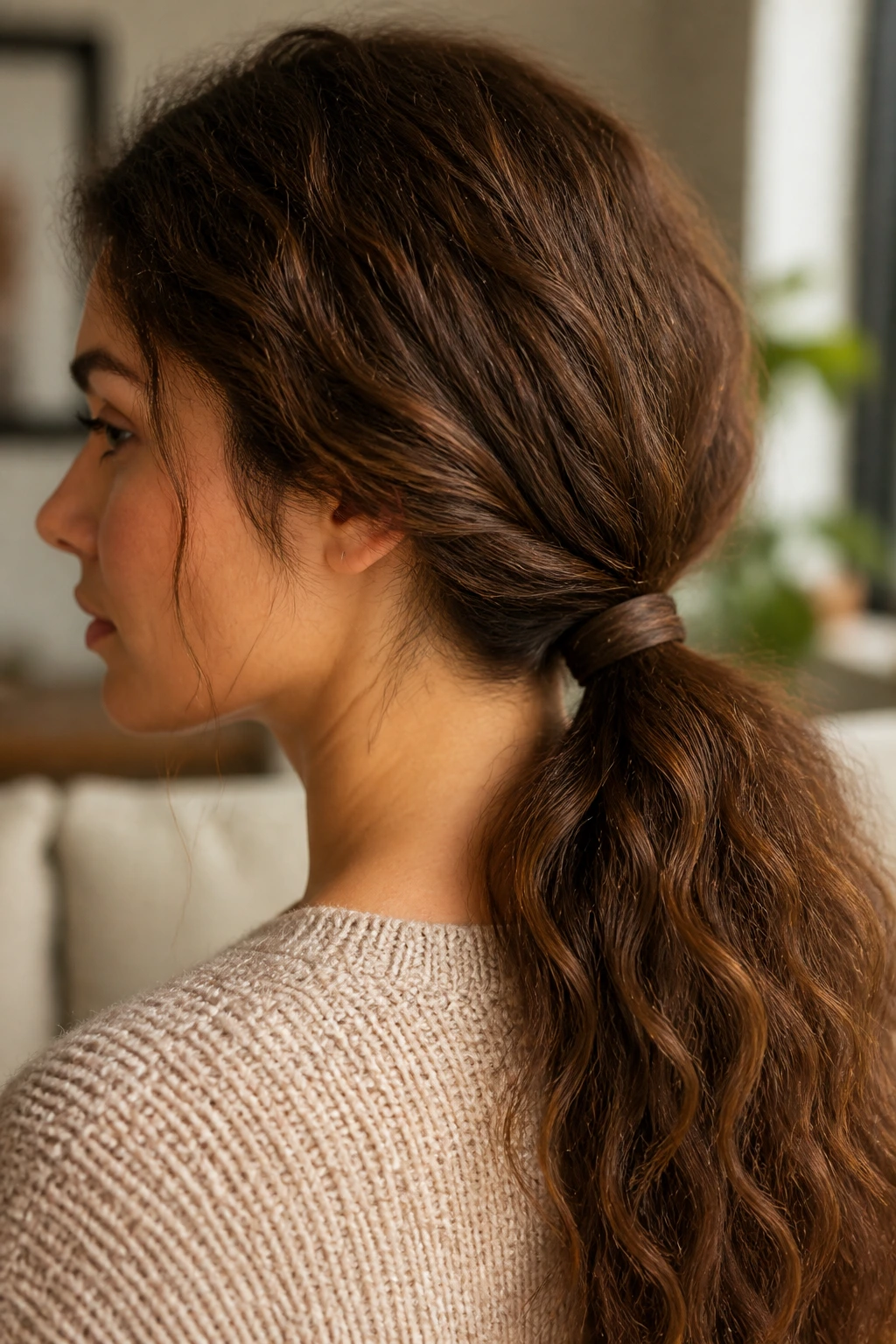
1. The Wrapped Low Ponytail
A low ponytail sounds plain until you do it on thick, frizzy hair and realize how much better it behaves than a high one. The nape keeps the shape close to the head, the tail stays full, and the whole style looks intentional instead of blown around by the weather.
Why It Works
The low placement keeps the hair’s weight from pulling the style apart. Frizz at the crown is easier to smooth into the shape of the head when you’re not trying to drag everything straight back. If you wrap a small section of hair around the elastic, the finish looks cleaner without needing heavy styling products.
Quick Details
- Use a smoothing cream or light gel on the front and sides only.
- A strong elastic matters here; thick hair will chew through flimsy ties.
- Wrap a 1-inch section of hair around the base and pin it underneath.
- Pull a few front pieces loose if you want a softer face frame.
Best move: leave the ponytail slightly lower than you think you should. Too high and thick hair can start to fan out like a broom head.
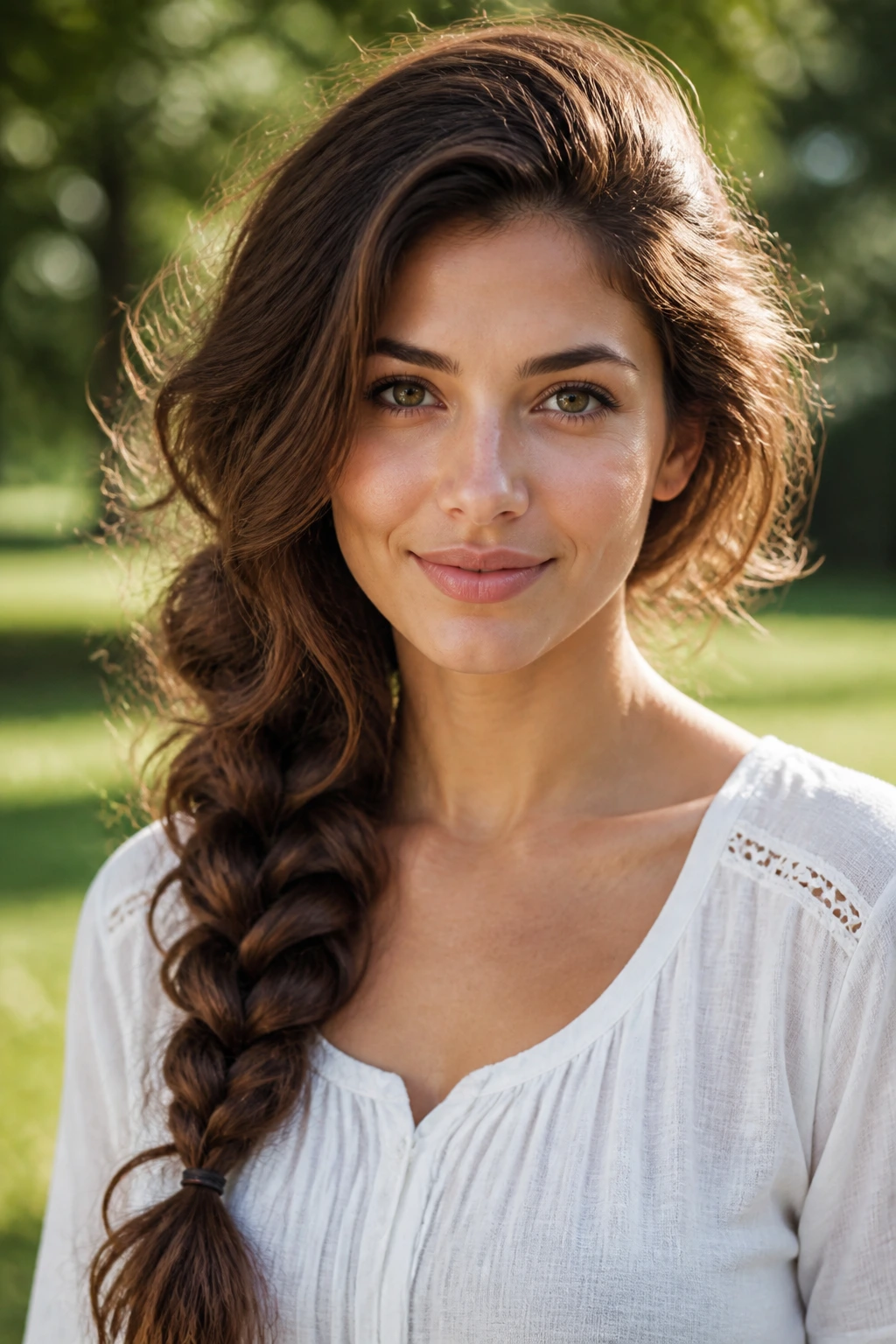
2. The Loose Side Braid
This is the style that quietly saves a lot of thick-hair mornings. A side braid gives the bulk somewhere to go, and the asymmetry makes frizz look styled instead of accidental. A tight braid can feel severe on dense hair; a looser one feels easier, and frankly, more flattering.
The nice part is that the braid doesn’t need to be small or perfect. Thick hair makes a chunky braid all on its own, which is half the appeal. Tug the outer edges a little after braiding so it widens and looks fuller along the length. That little “pancake” step changes everything.
Wear it over one shoulder with the ends tucked under a sweater collar, or let it hang down the back if you want a cleaner line. If your hair frizzes most at the ends, stop the braid a few inches before the very bottom and secure the tail with a small elastic. It keeps the last bit from sticking out like a frayed rope.
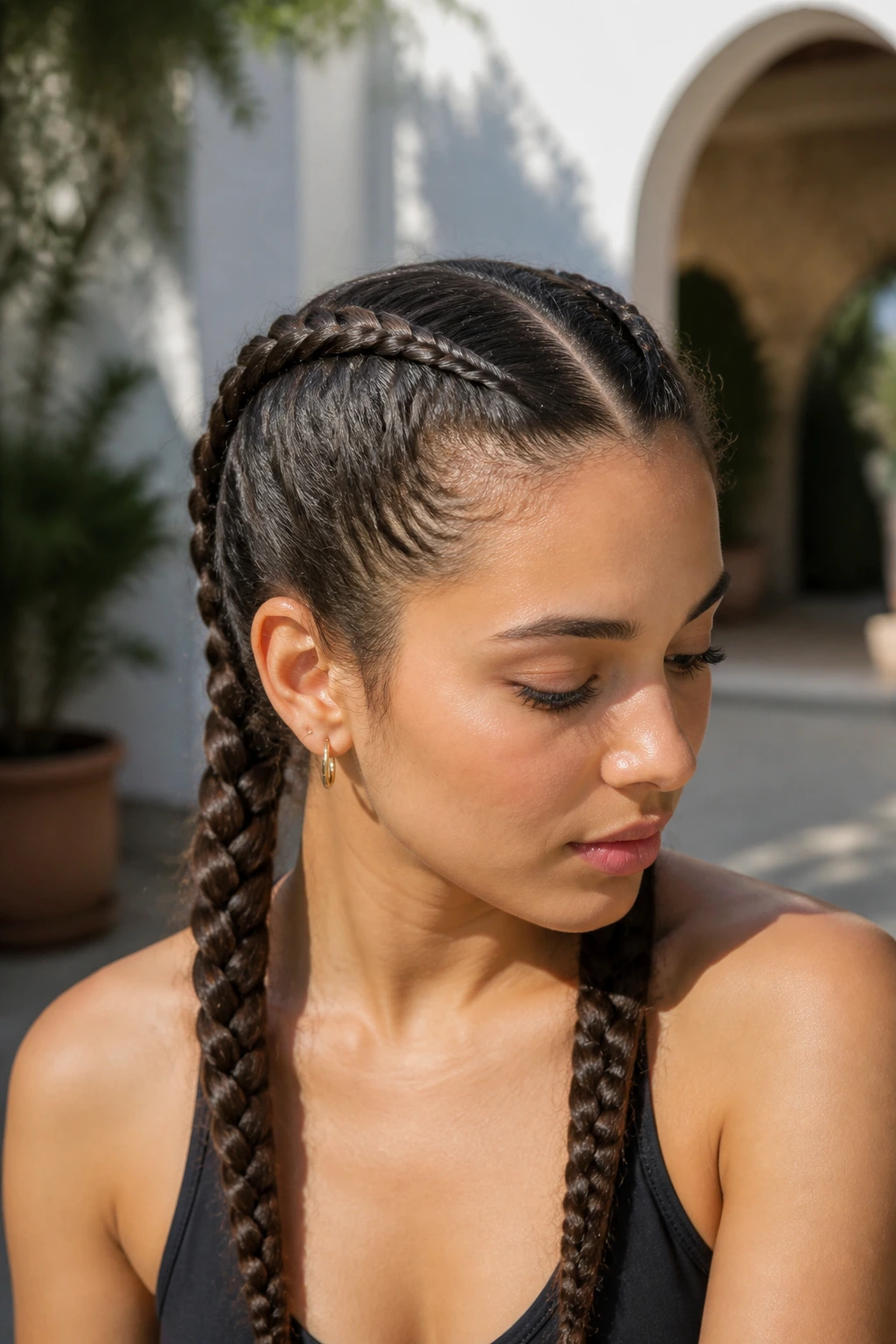
3. Double Dutch Braids
Need a style that stays put through a long day? Double Dutch braids are the blunt answer. Thick hair gives them the right amount of body, and frizz only adds grip, which helps the braids hold their shape instead of slipping flat against the scalp.
The key is not to make the sections too tiny. Thick hair needs broader partings so the braids don’t take forever and the tension stays even. Start with a clean center part, then braid close to the scalp and keep each braid snug but not punishing. A braid that feels like it’s pulling at your temples will give you a headache before lunch.
How to Wear It
Pull the braids low and secure the ends with small elastics if you want a practical, athletic feel. Leave a little softness around the hairline if you prefer a less severe finish. On very frizzy hair, a tiny bit of gel along the part keeps the style sharper for longer.
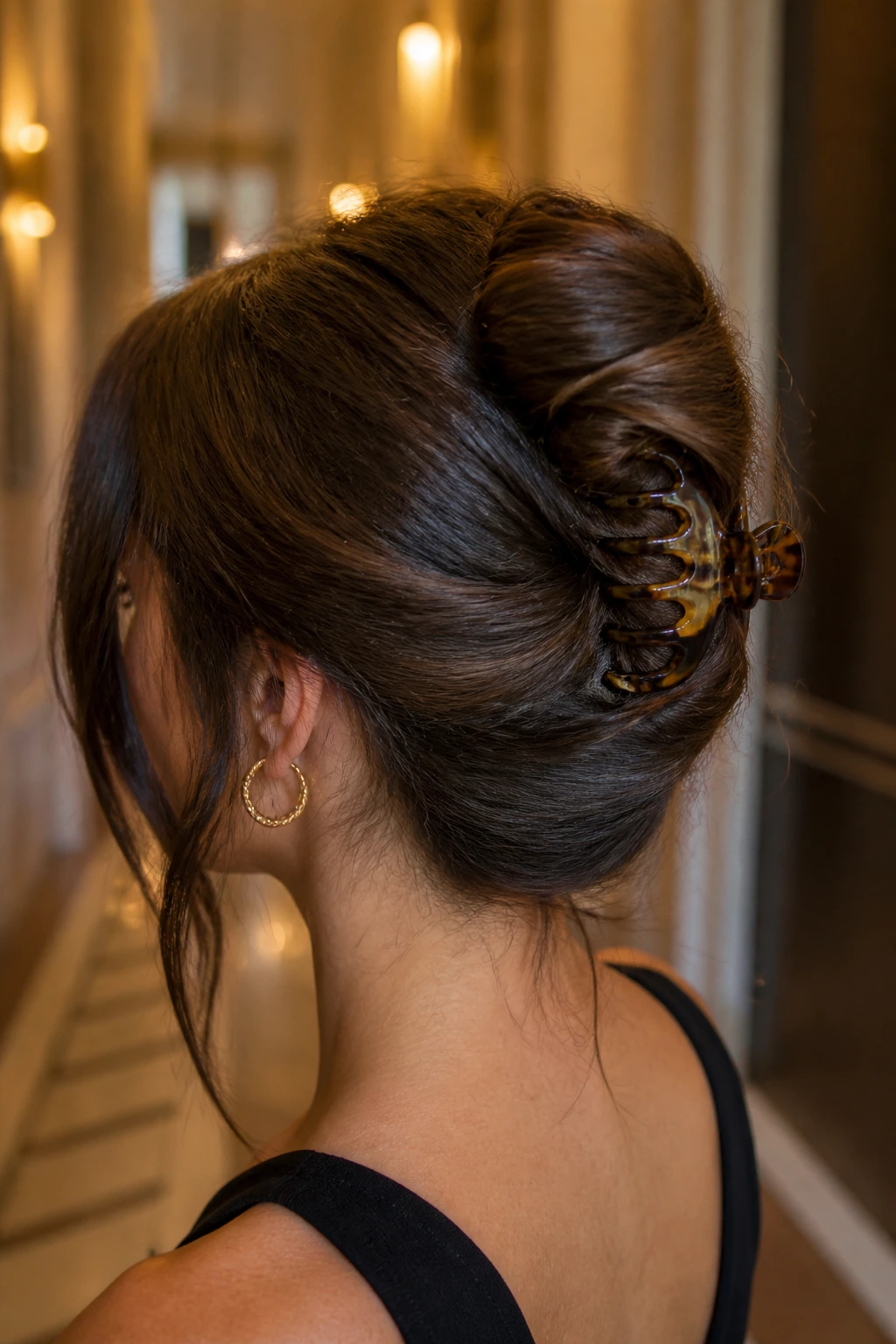
4. The Claw-Clip French Twist
There’s a reason claw clips keep showing up in thick-hair routines: they catch a lot of hair fast. A French twist made with a clip works best when the hair has some grip. Frizz helps here. It stops the style from sliding apart the way pin-straight hair sometimes does.
Twist the hair upward from the nape, fold the length inward, and clip it vertically. Don’t chase a perfect shell-like twist. Thick hair looks better with a bit of volume inside the roll. If the ends stick out, tuck them under the clip or let a few pieces spill loose on purpose. That little imperfection keeps the style from looking stiff.
This is one of the best options for days when you need your hair off your neck but still want something that feels put together. It takes less time than a bun and usually feels lighter, which is a nice trade when your hair has real heft.
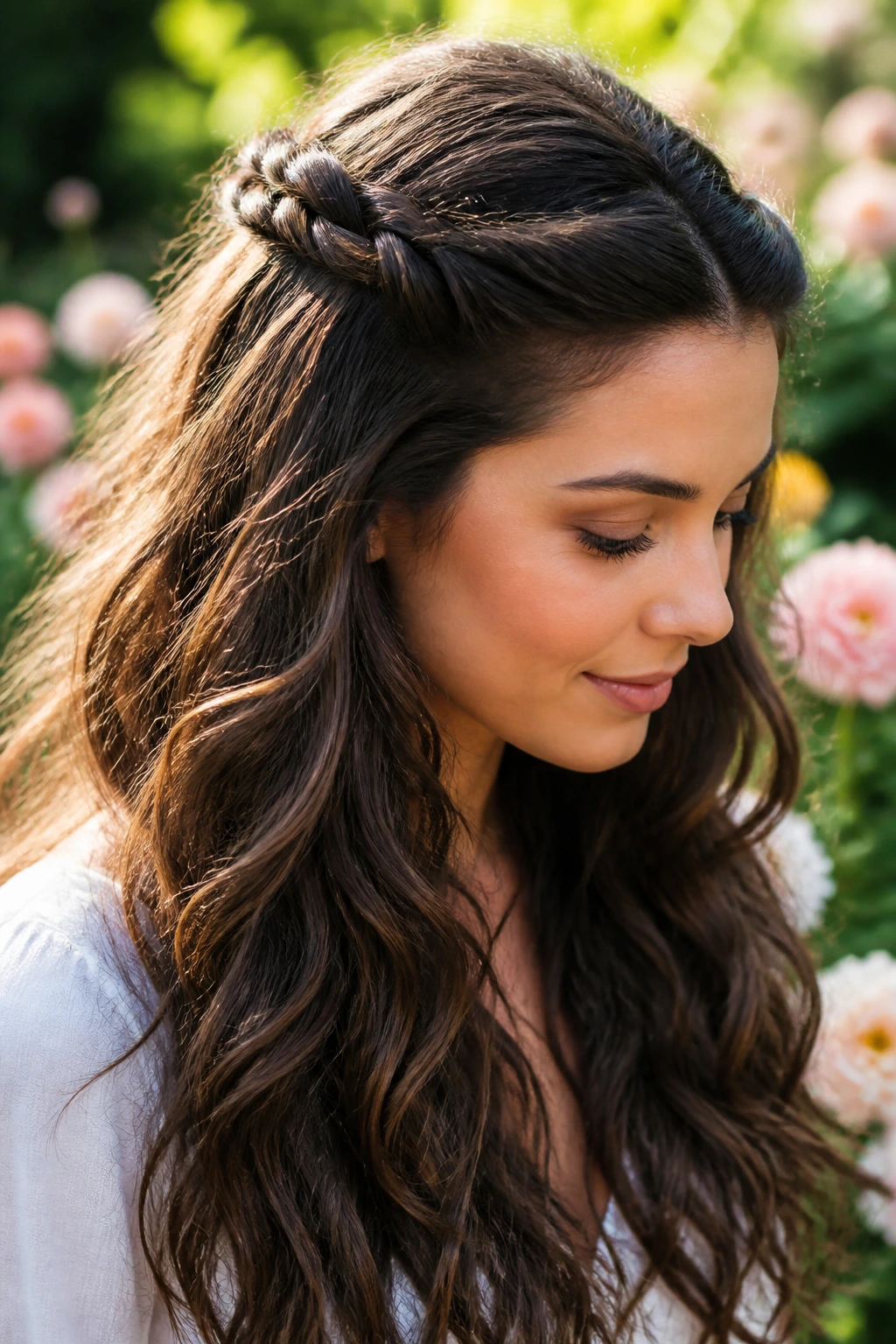
5. The Half-Up Twist Crown
Half-up styles are a gift for thick, frizzy hair because they let you control the top half without sacrificing the good part of the length. The twist crown does that especially well. It keeps the face clear, lifts the roots, and leaves the bottom section free enough that the hair still moves.
Start with two sections from the temples, twist each one back, and pin them at the center or just behind the crown. You can keep it neat or let the twists loosen a little. Frizz around the twist edges doesn’t ruin anything; it softens the shape and makes the style look less like a formal updo and more like an actual hairdo someone wears out of the house.
A tiny mist of flexible-hold spray before pinning helps the twists keep their line. If the front layers are short, leave them out and let them blend into the rest. Thick hair has enough visual weight that a few free strands won’t look sloppy.
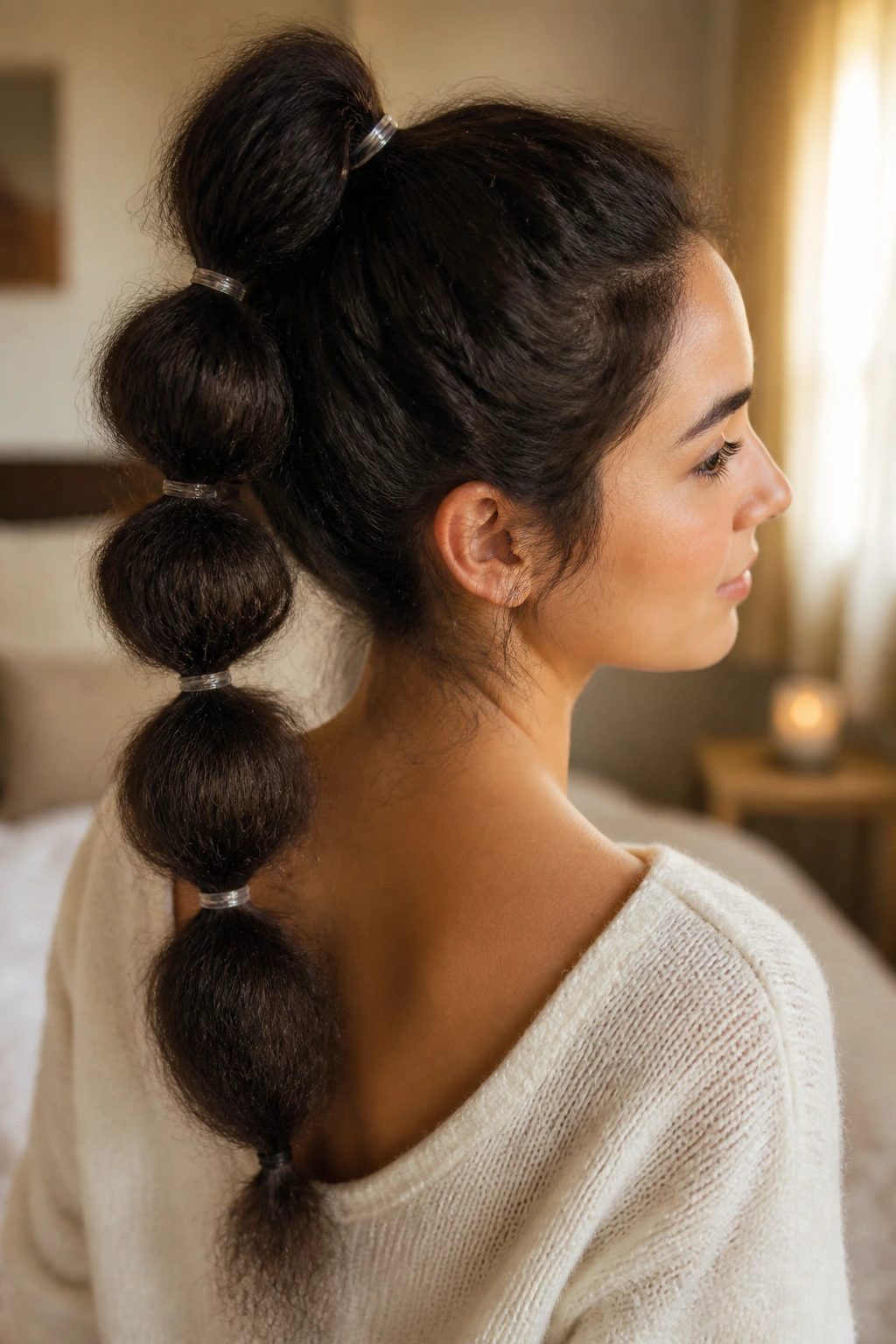
6. The Bubble Ponytail
A bubble ponytail is what happens when a regular ponytail gets a little more structure and a lot more personality. On thick hair, the style is especially good because the pony already has body. Each bubble just adds shape instead of trying to create volume from nothing.
Use elastics every 2 to 3 inches down the tail, then gently pull each section outward to form rounded “bubbles.” The trick is to keep the tension even. If one section gets pulled too hard, the whole thing starts looking uneven. Frizz actually helps here because the bubbles don’t need to be sleek to look finished.
This style works when you want something playful but not childish. It’s neat enough for a day out, and if you use small clear elastics or hair-colored ties, the shape reads more polished. A low bubble ponytail feels softer; a high one looks bolder and a little more playful.
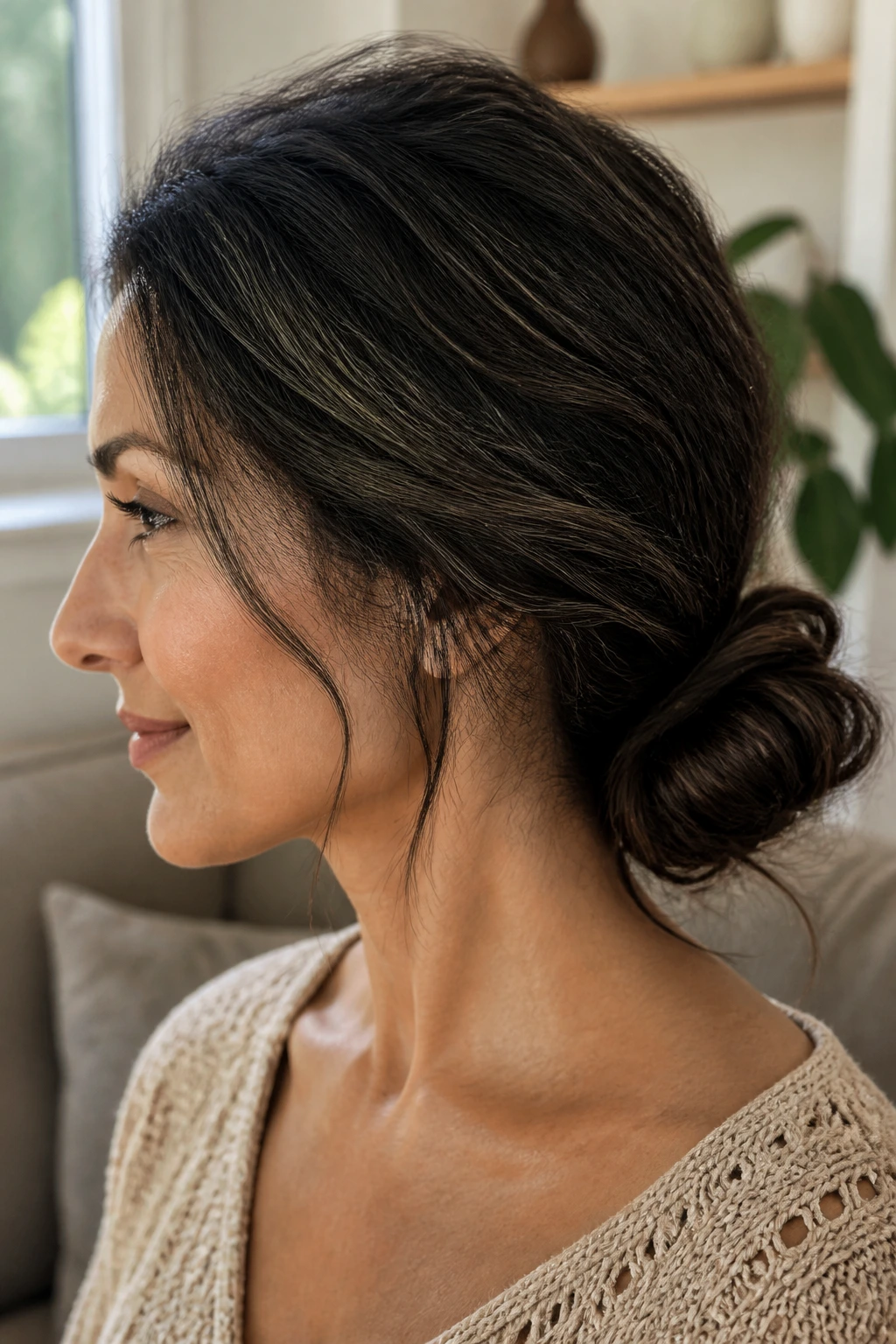
7. The Low Textured Bun
A low textured bun is the style I reach for when thick hair needs to look calm but not overworked. The texture keeps it from looking like a tight little knob, and the low position keeps the weight where it belongs. It also hides frizz better than a smooth bun because the edges don’t have to be perfect.
Gather the hair at the nape, twist it into a loose coil, and pin it in place with long bobby pins. Cross the pins if the bun feels heavy. That cross-pin trick matters more than people think. Thick hair has a way of prying apart weak pinning, especially if the bun sits low and carries all the hair’s weight.
Leave a few wisps around the ears or the hairline if the style feels too strict. The bun should look controlled, not compressed. If the texture is especially rough, a little oil rubbed only over the outer surface of the bun gives it a softer finish without flattening the whole shape.
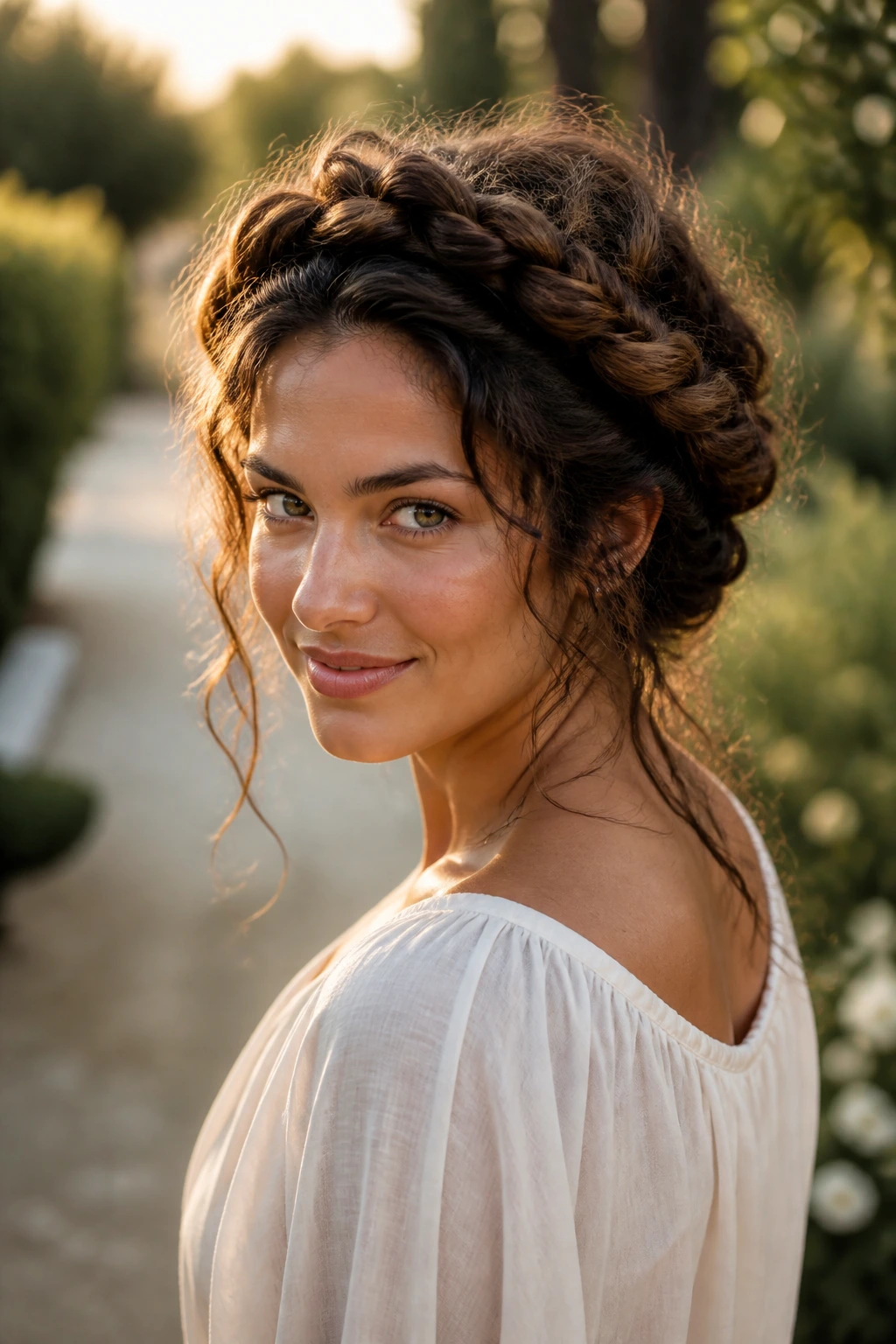
8. The Crown Braid Halo
A crown braid is one of the few styles that makes frizz look like part of the design. That is a rare thing, and I love it. Instead of hiding the texture, the braid uses it to create a soft halo around the head, which is exactly where thick hair tends to look good.
You can braid around the perimeter from one side to the other, or make two braids and pin them across the top. Either way, the goal is a braid that sits close enough to the head to stay in place but loose enough that the hair doesn’t feel squeezed. Thick hair needs room to live. A crown braid gives it that room while still keeping the length under control.
This is one of the better styles for events because it holds shape even when a few strands pop loose. In fact, those little loose pieces are part of what makes it work. The braid should look like it belongs to the hair, not like it was stapled on.
9. The Rope-Braid Ponytail
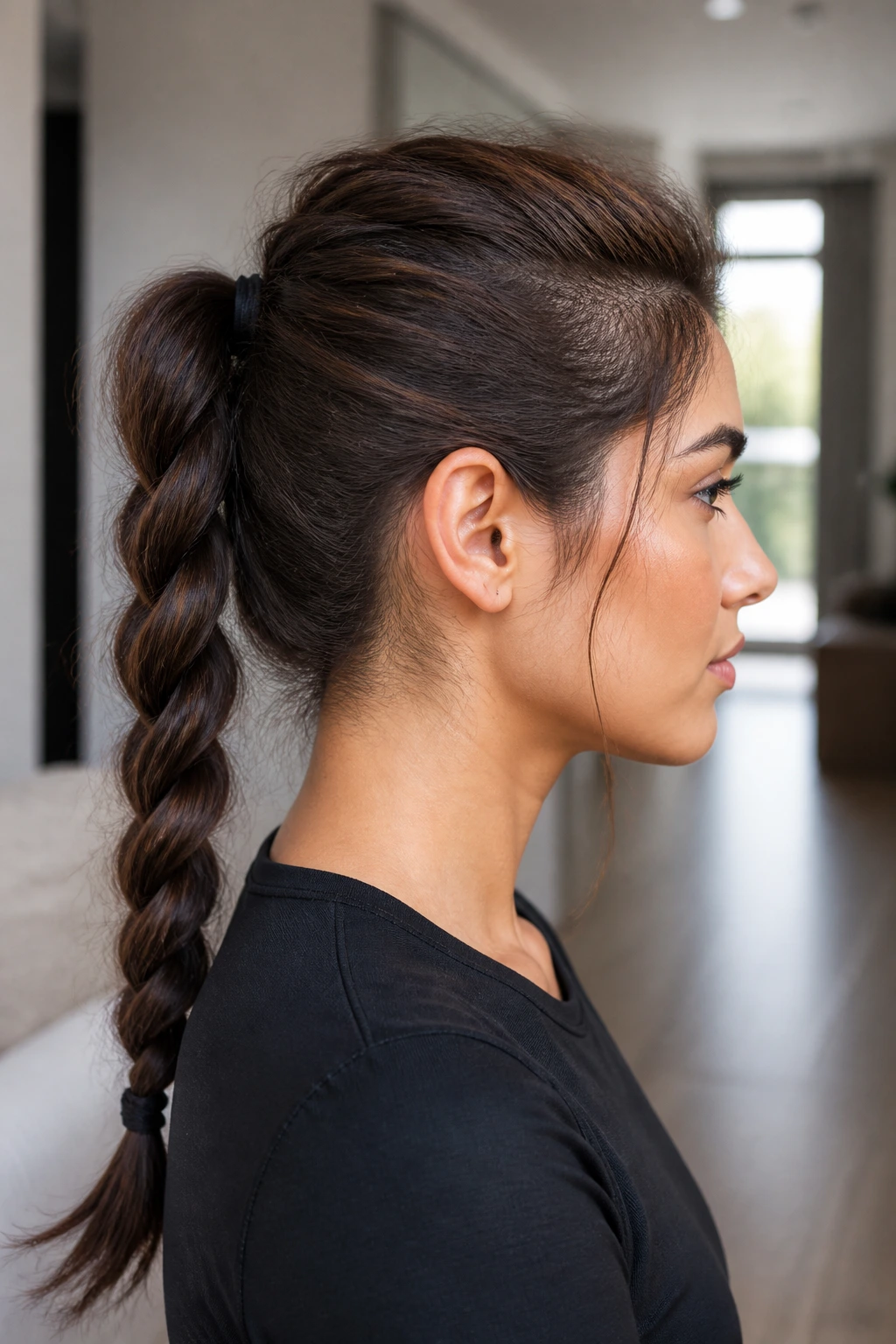
A rope braid looks sharper than a standard ponytail and takes less hand coordination than a full braid. Twist two sections around each other, keep the tension even, and the result is a neat, twisted tail that shows off thick hair instead of hiding it.
The style works especially well when your hair is too frizzy for a sleek finish but you still want clear lines. Rope braids handle that middle ground nicely. The twist pattern stays visible even if the outer layer expands a little, which means you don’t lose the shape when humidity shows up.
How to Wear It
Place the ponytail at mid-height if you want it to swing, or low if you want it to sit flatter against the back. For longer thick hair, secure the end with a small elastic and then wrap a strand around the base. That little finish keeps the style from looking rushed.
10. Space Buns With Soft Ends
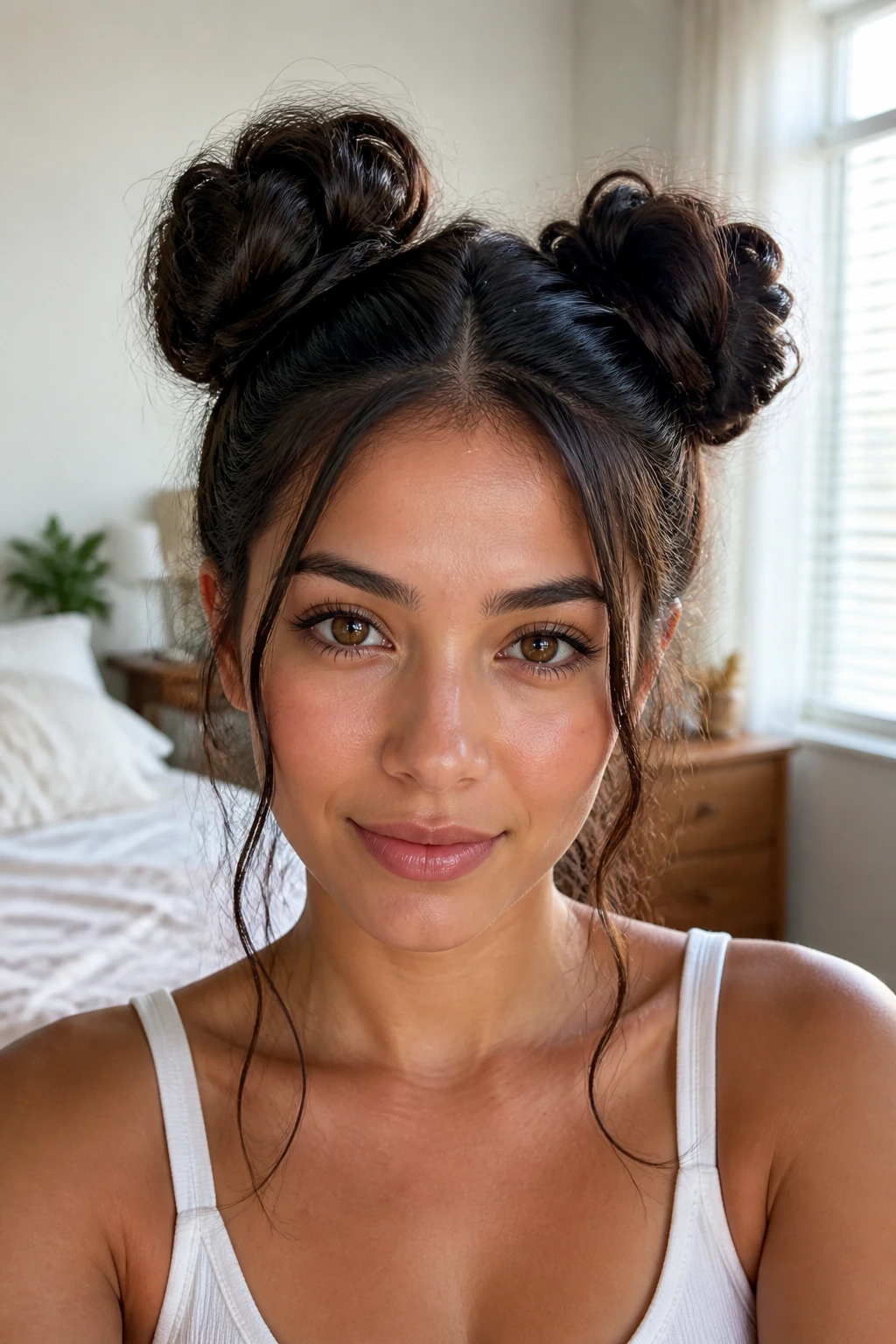
Space buns are not just for music festivals and glitter. On thick, frizzy hair, they can be practical because they spread the weight across two points instead of one. That’s easier on the scalp, and it lets the hair keep some playful texture rather than gathering into one heavy lump.
The style works best when the buns are not tiny. Small space buns on thick hair can look stuffed and tight. Bigger buns feel cleaner and more balanced. Leave the ends tucked in for a neater shape, or let a few pieces escape if you want the style to read softer. A middle part gives a strong, graphic look. A slightly off-center part feels a little less severe.
If your hair frizzes around the ears, smooth just that area and let the rest stay textured. The contrast is useful. Too much smoothing removes the point of the style. Too little and the whole thing can start to drift. Right in the middle is where space buns on thick hair usually look best.
11. The High Puff Ponytail
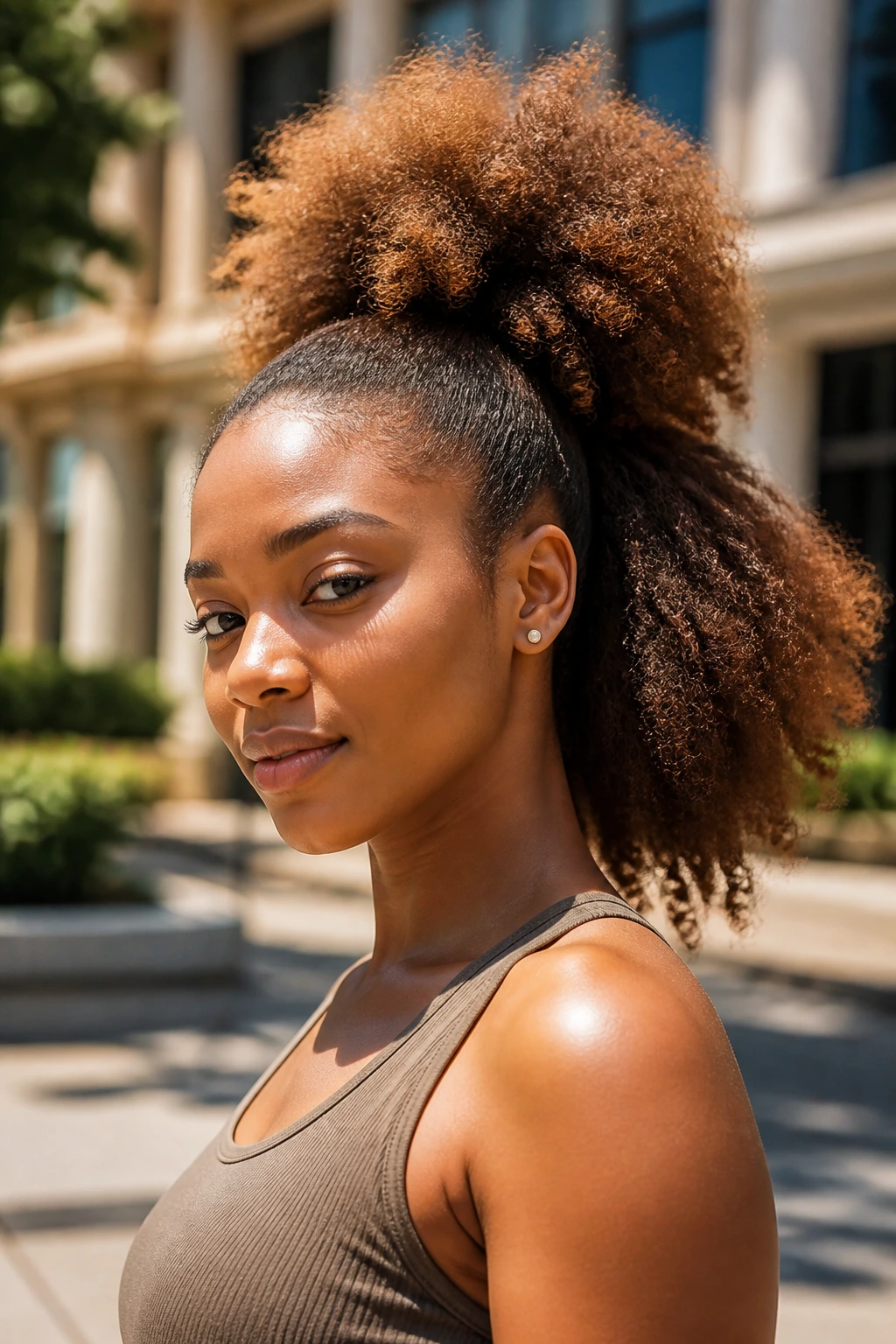
High ponytails and thick hair have a strange relationship. Go too tight and the style can look strained. Go too loose and the whole thing collapses. The high puff ponytail splits the difference by embracing volume at the crown and leaving the tail full enough to feel intentional.
This style is especially good when your roots have natural lift and your mid-lengths are frizzing a little. Gather the hair high, smooth the front with your hands or a brush, and let the pony stay soft. The puff at the crown gives the style height without making it harsh. If you want extra polish, wrap a small section of hair around the elastic.
I like this style when the hair is second-day and the roots aren’t fresh anymore. It does not demand perfection. In fact, a little texture is part of the appeal. The ponytail should look alive, not lacquered flat.
12. The Messy Top Knot
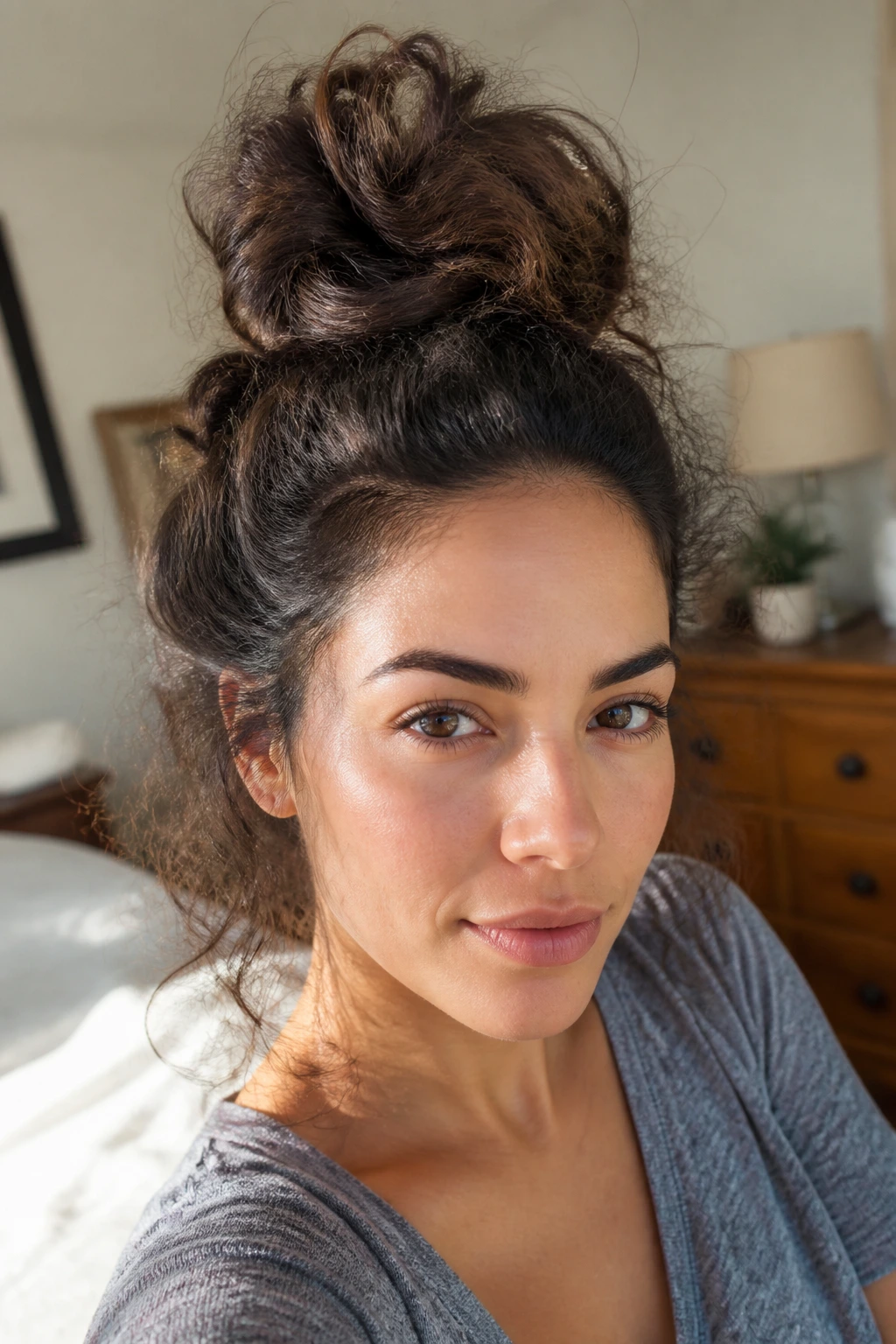
A top knot on thick hair has to be handled with some respect. If you try to force every strand into one tiny knob, the bun gets heavy, uneven, and weirdly tired-looking. The better version is looser, slightly undone, and placed high enough that the hair can coil naturally.
The reason it works is simple. Thick hair gives the knot real body, so the style has shape even when it’s relaxed. The frizz around the edges makes the bun feel airy instead of overpacked. Pull the knot apart a little after pinning so it sits wider, then let the ends tuck in or poke out depending on the mood.
This is a good style for when you want your face clear and your neck free without losing the impression that you did something with your hair. That’s the actual win. Not perfection. Just enough shape that the style feels deliberate.
13. The Twisted Low Chignon
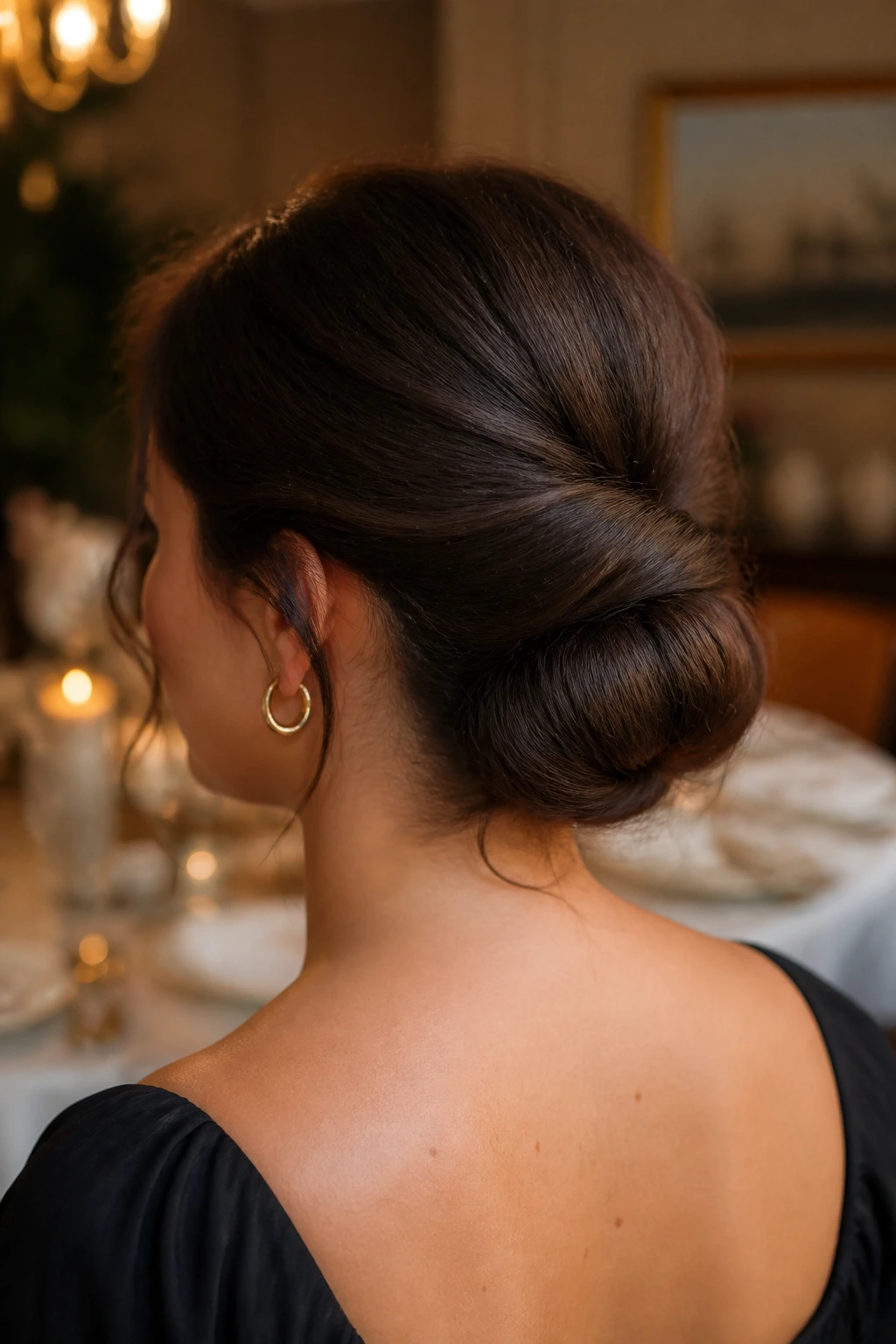
A chignon sounds fancier than it is. On thick, frizzy hair, it’s basically a low twist that gets tucked and pinned until it looks smooth from the outside and full underneath. I like it because it gives structure without forcing the hair into a flat shell.
Work the hair into a low ponytail first, then twist the tail upward or sideways and pin it into a soft roll. Keep the outside surface tidy, but do not smash the shape down. Thick hair needs some air inside the fold. That’s what keeps the chignon from looking hard or over-sprayed.
This one suits dinners, events, and any day when you need the hair to stay off the collar of a shirt. If the frizz is concentrated near the ends, tuck those ends deep into the roll instead of fighting them with more product. Sometimes the neatest fix is the simplest one.
14. The Half-Up Claw-Clip Cascade
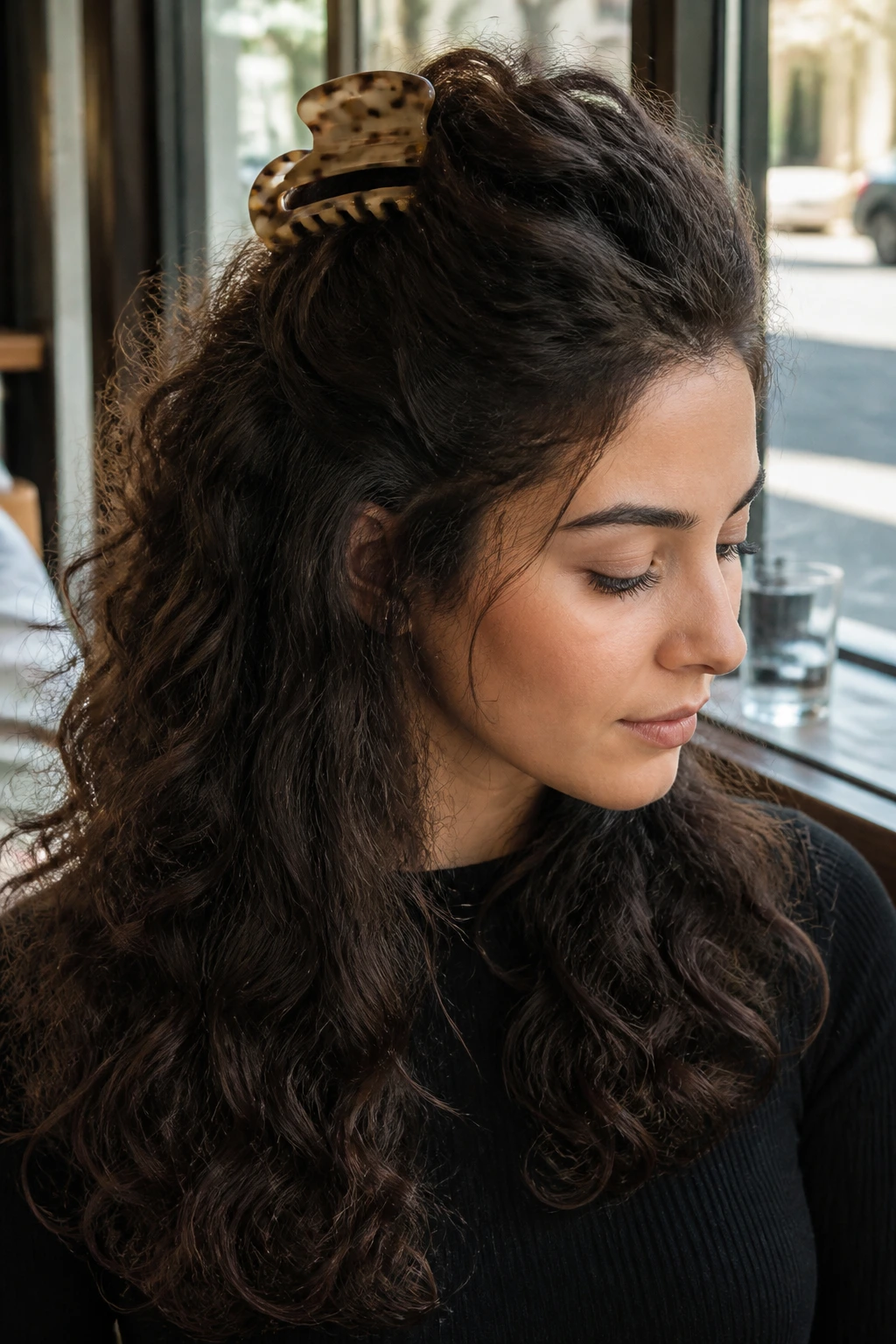
Half-up claw-clip styles are not lazy. They are smart. On thick hair, the clip does exactly what it should: it lifts the crown, loosens the weight off the face, and lets the rest of the hair keep its bulk. The cascade underneath keeps the style from looking chopped off.
Choose a clip that can actually hold your density. Cheap small clips snap shut and then slide out by noon. A larger clip with strong teeth grips better, especially if the hair has some texture. Gather the top section, twist once or twice, and clip it high enough that the bottom length falls freely.
This style works when you want quick control without flattening the whole head. It’s also one of the easiest fixes for day-two frizz because the loose ends below the clip can stay textured while the top looks pulled together. That mix is the point.
15. French Braid Pigtails
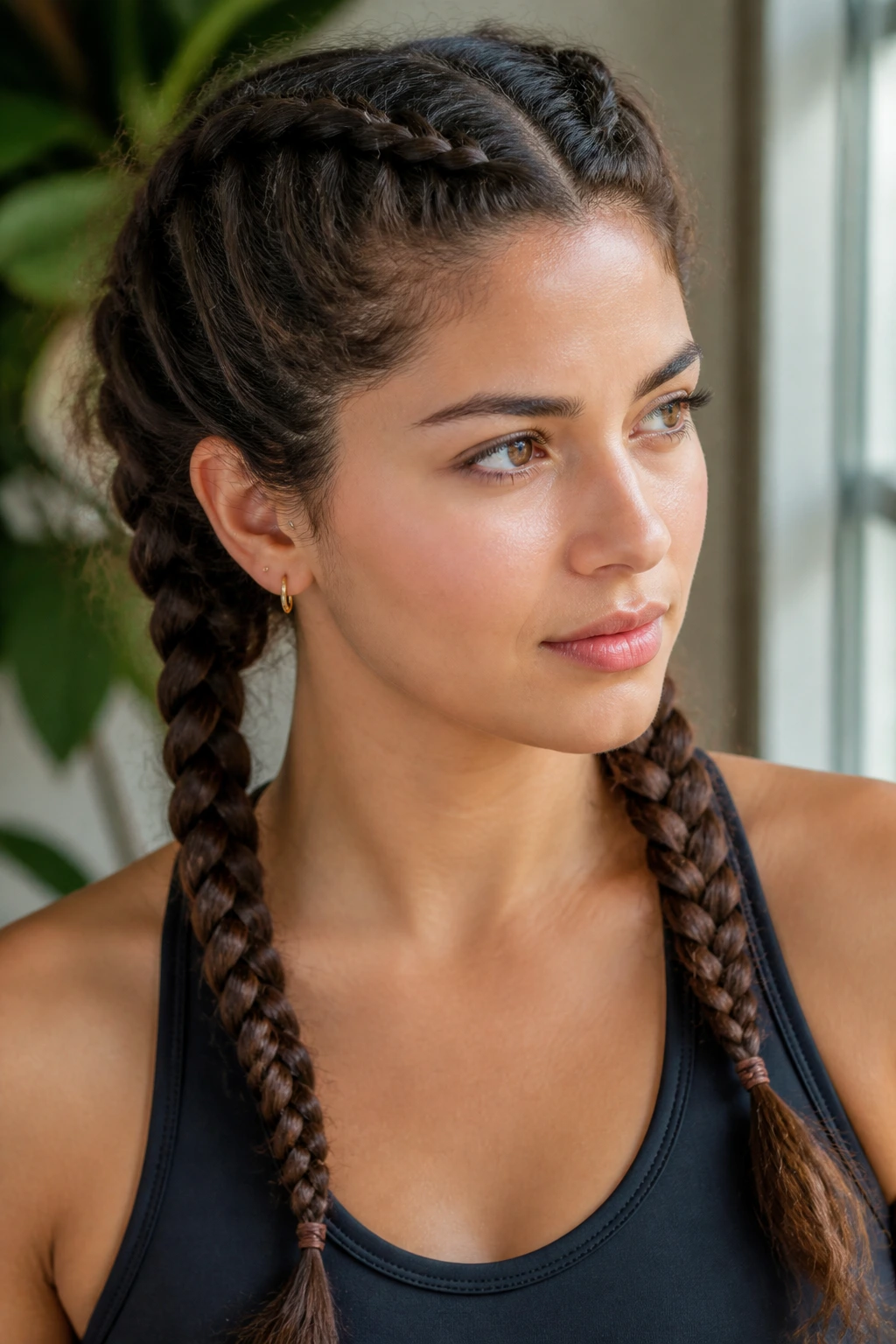
French braid pigtails have a straightforward job: distribute all that hair into two secure paths and keep the scalp from feeling overloaded. Thick hair loves them because the braid pattern holds volume in place instead of letting it all puff out.
The braids should start at the hairline and move down the back or over the shoulders, depending on the look you want. Keep them even, but don’t obsess over making them mirror-image perfect. A tiny difference in thickness rarely shows once the braids settle. What does show is tension that’s too tight on one side and too loose on the other, so aim for balanced hands.
This style is practical, but it doesn’t read childish when the braids are a little chunky. Wear them with a center part for a clean look or a side part if your face shape likes a bit of offset. Thick hair gives the braids enough body that they don’t disappear into the rest of the style.
16. The Scarf-Wrapped Bun
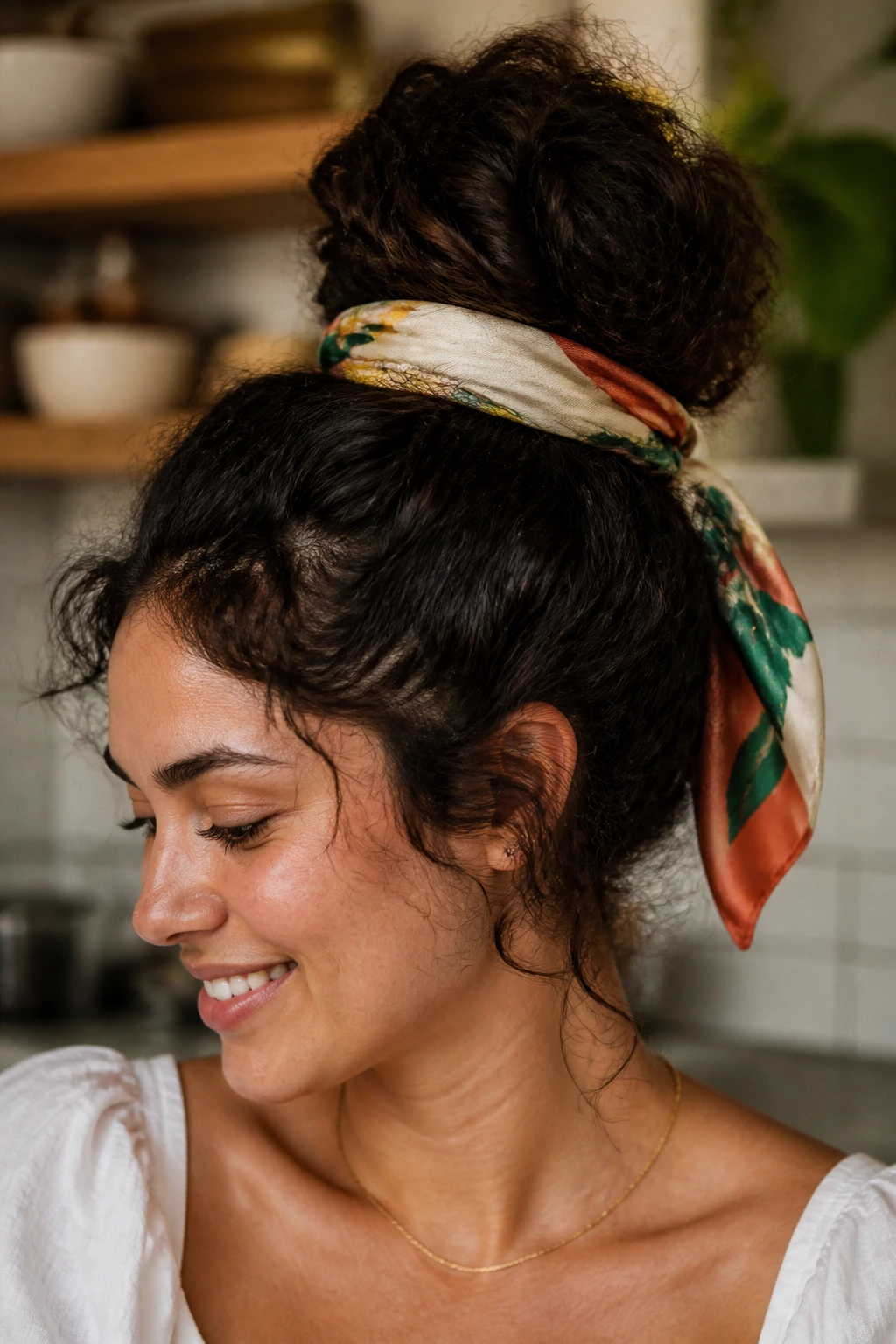
A scarf-wrapped bun solves two problems at once. It hides the hair tie and gives the bun a finished edge, which matters when thick hair starts puffing around the base. The scarf also helps tame frizz around the hairline without forcing every strand to lie flat.
Fold the scarf into a band, wrap it around the base of the bun, and tie it off in a knot or bow depending on how much color you want to show. Keep the bun itself low or mid-height so the scarf can sit comfortably. A silk or satin scarf glides a little better; cotton grabs more, which can be useful if the hair is slippery.
This style is especially good on days when the hair is not cooperating and you do not want to think too hard about it. The scarf turns a practical bun into a deliberate look. That is often all you need.
17. The Bendy Blowout With Curtain Layers
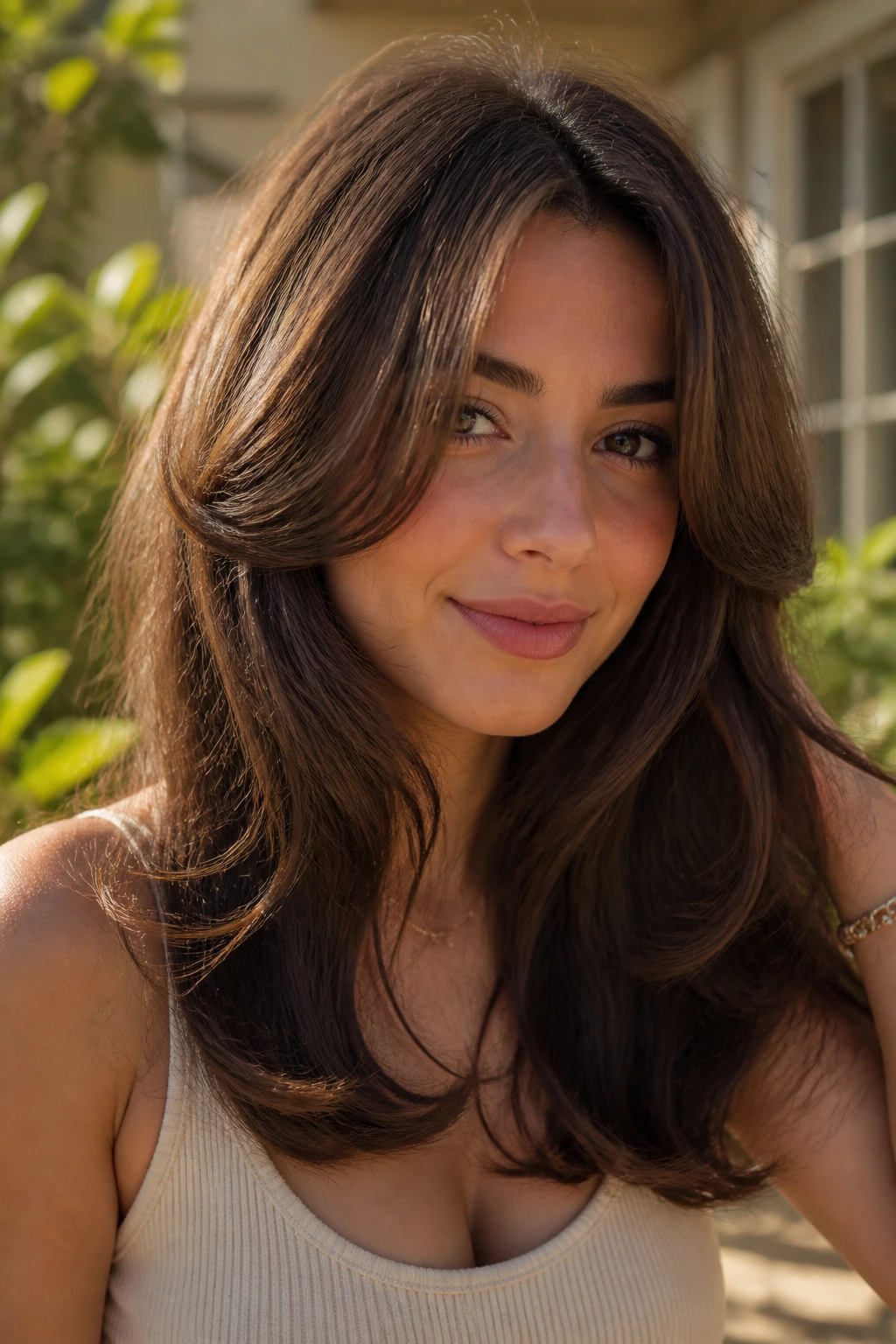
Not every hairstyle for frizzy, thick hair has to be an updo. Sometimes the best answer is to shape the hair so the texture looks expensive instead of unruly. A bendy blowout with curtain layers does that by adding soft movement through the mids and letting the ends turn under or away on purpose.
A round brush or hot brush helps, but the finish should not look pin-straight. The bend in the lengths gives the hair a softer, looser outline, which is kinder to frizz than a harsh flat iron pass. Curtain layers around the face help break up the density and stop the front from ballooning into one blunt wall.
This style is for people who like their thickness visible. It works because the hair still has body, but the silhouette feels shaped. If the ends puff a little, that’s fine. The point is to guide the volume, not erase it.
Why Thick, Frizzy Hair Needs a Different Strategy
Thick hair does not fail because it is difficult. It fails when the style ignores how much hair is actually there. A skinny braid on dense hair looks underfed. A tight ponytail can pull at the roots and still end up frizzing around the hairline. A sleek bun that looks polished on fine hair may look cramped and overworked on coarse, full strands.
The better strategy is to build from the texture outward. Braids, twists, clips, and wraps all give the hair a path to follow. They also create friction points that help the style stay in place. That matters because thick hair has weight. A style that can hold that weight without collapsing will always beat one that only looks neat for five minutes.
Frizz helps more than most people admit. It gives braids grip, keeps buns from sliding, and stops slick styles from looking too severe. The trick is deciding where you want the texture to show and where you want a little smoothing. Once you make that choice, the whole routine gets easier.
Essential Tools for Thick, Frizzy Hair
-
Wide-tooth comb: Best for detangling without ripping through knots when the hair is damp or freshly conditioned.
-
Smoothing brush: Useful for ponytails, buns, and claw-clip styles when you want the surface to lay flatter before you pin it.
-
Strong snag-free elastics: Thick hair needs elastic that stretches and springs back without snapping after two uses.
-
Bobby pins in two lengths: Standard pins handle flyaways; longer pins hold buns, twists, and crown braids that carry more weight.
-
Sectioning clips: These keep thick hair from swallowing your hands while you braid or twist one side at a time.
-
Large claw clip: A small clip will betray you. A larger one with strong teeth is worth the drawer space.
-
Microfiber towel or soft T-shirt: Helps blot moisture without roughing up the cuticle and making frizz worse.
-
Diffuser attachment: Handy if your hair is curly or wavy and you want body without blasting the shape apart.
-
Satin scrunchies or scarf: Good for overnight protection and for styles that should not leave a hard crease.
-
Lightweight leave-in or curl cream: A small amount goes a long way on thick hair, especially on the front and ends.
Smart Product Picks for Frizz, Density, and Hold
Thick hair needs products that do a job without smearing the hair into a heavy, greasy sheet. That means choosing by hold and finish, not by how shiny the bottle looks. For smoothing the front and flyaways, look for a light cream or gel that dries with some control. If the air is humid, a firmer gel usually behaves better than a soft cream because it gives the hair a little shell before the frizz starts pushing through.
On the other hand, if your hair is coarse and dry, too much gel can make it feel stiff. A leave-in with slip, followed by a pea-size amount of styling cream, often gives a softer result. Keep heavier oils away from the roots unless you want the style to go limp. They’re better on the ends, especially when the ends are the part that keeps puffing open.
For holding braids and twists, flexible-hold spray is often enough. You do not need a helmet. You need a little memory. A good spray should let the hair move when you touch it but still keep the style from unraveling the second you step outside.
What to Look For
- Water-based leave-ins if your hair gets weighed down easily.
- Alcohol-free or low-alcohol stylers if your hair dries out fast.
- Softer creams for day-two hair that needs shape without crunch.
- Strong gels for parts, edges, and humid weather.
- Edge control or smoothing balm only where you actually need it, not over the whole head.
How to Wear These Styles for Work, Weekends, and Events
Everyday wear: The wrapped low ponytail, half-up claw-clip cascade, bubble ponytail, and messy top knot are the easiest to wear when you need your hair out of the way but don’t want a stiff look. They sit fast, they refresh well, and they don’t require perfect part lines.
Dress-up factor: The twisted low chignon, crown braid halo, scarf-wrapped bun, and claw-clip French twist all read more polished without needing straightened hair. Add earrings or a strong lip and they stop feeling casual in a hurry.
Best for movement: Double Dutch braids, French braid pigtails, and the rope-braid ponytail handle long walks, errands, and windy days better than loose styles. They keep the hair contained without flattening all the life out of it.
Best when the roots are not fresh: The high puff ponytail and low textured bun are forgiving on second-day hair. A little root lift and a little texture actually help them look more complete.
Small Styling Moves That Make a Big Difference
Frizz Shield: Put product on the parts that show first — the front hairline, top layer, and ends — before you style the rest. Thick hair does not need a ton of product everywhere. It needs the right product in the right places.
Volume Control: If the crown is puffing too much, press it down with a brush and then secure the style lower than you planned. That tiny drop in height often fixes the whole silhouette.
Pin Strategy: Cross bobby pins in an X when a bun or twist feels loose. One pin holds shape; two crossed pins hold weight.
Finish Line: Use a single drop of serum or a mist of shine spray on your palms, then smooth over the outer layer. Do not spray directly at the roots unless you want them to clump.
Sleep Prep: Twist or braid the hair loosely before bed, then secure it with a satin scrunchie. The goal is to keep the shape from collapsing, not to squeeze it flat.
Common Mistakes That Make Thick Hair Puff Out
Using tiny elastics on heavy hair: They stretch out fast and can snap when the tail gets too much weight. Choose stronger ties or double them up.
Pulling braids too tight at the start: That leaves the front hairline tense and still doesn’t stop frizz from showing later. A firm-but-comfortable braid lasts longer and feels better.
Smoothing the whole head with too much product: Thick hair can swallow product in some places and still frizz in others. Use less than you think and focus on the zones that need help.
Choosing clips that are too small: A small claw clip on dense hair is a joke. It will slide, crack, or both. Size matters here.
Trying to force a sleek finish on a very textured day: Some days the hair wants softness, not polish. Fighting it too hard usually makes the style look stiff and the frizz more obvious.
Leaving the ends out of a bun with no plan: Ends that just stick out sideways make a bun look unfinished. Either tuck them in, wrap them around, or let the mess be deliberate.
Easy Variations and Switch-Ups
Rain-Day Armor: Turn any braid or twist into a tighter version with a firmer gel on the top layer and a deeper side part. The shape holds better when the air is damp and the hairline wants to puff.
Heatless Texture: Use the half-up twist crown, low textured bun, or crown braid halo on damp but not wet hair, then let it dry in place. The texture finishes soft and a little lived-in without a hot tool.
Office Clean-Up: Swap the messy top knot for the twisted low chignon or the wrapped low ponytail. Those two styles read sharper around collars, blazers, and button-downs.
Gym-to-Errands: Double Dutch braids and the high puff ponytail are the best no-fuss options when you need one style to last through sweat, movement, and a quick stop for coffee.
Short-Layer Fix: If your layers keep falling out, choose a claw-clip French twist or a half-up claw-clip cascade. Loose layers can escape on purpose there and still look like part of the style.
Keeping the Style in Shape Overnight
Most braided and twisted styles last longer if you protect them before bed. A satin bonnet, silk pillowcase, or even a loose scarf wrap helps cut down on the rough friction that makes frizz expand overnight. If the style is a ponytail or bun, shift it lower and looser before sleep so it does not leave a hard crease across the back of the head.
For braids, sleep with them tucked in a loose braid or wrapped into a low, soft coil. If the hair is curly or wavy, a loose pineapple on top can keep the shape from getting crushed, but don’t cinch it so tight that the roots get stretched. In the morning, loosen the style with your fingers first. Brush only if you need to, because a brush can break up a good twist faster than humidity does.
Buns and claw-clip styles usually need the quickest refresh. A little mist of water on the outer layer, plus a tiny bit of cream rubbed between the palms, is enough to revive the shape. If the ends have gone fuzzy, re-wrap the elastic or re-pin the bun rather than piling more product onto it.
Questions People Ask Before They Pick a Style

Can frizzy hair look polished without being straightened?
Yes, and that’s the point of most of these styles. The polish comes from shape, placement, and clean lines in the right spots, not from forcing every strand flat. A braided ponytail or wrapped bun usually looks better when the texture is still visible.
What style holds best on very thick hair?
Double Dutch braids, low buns with crossed pins, and French braid pigtails usually stay put the longest because they spread the weight across more anchor points. A single elastic often isn’t enough on its own.
Should I style thick frizzy hair wet or dry?
Most of these are easier on dry or mostly dry hair. Wet hair can stretch, swell, and misbehave while it dries, which makes braids and buns look uneven. The exception is a heatless set where you want the texture to dry into shape.
How do I keep a ponytail from sliding down?
Use a stronger elastic, gather the ponytail at the exact spot where the head curves, and tease the hair slightly at the base before securing it. Thick hair often needs a second elastic underneath the first one.
What if my hair is frizzy but also fine?
Choose the styles with structure but less weight, like the half-up twist crown, rope-braid ponytail, or wrapped low ponytail. You’ll want less product and lighter pins so the style does not collapse under itself.
Are claw clips enough for thick hair?
They can be, if the clip is large and the hair is twisted first. A small clip on thick hair is mostly decorative. A stronger one with long teeth can hold a French twist, half-up style, or low roll.
How do I stop buns from looking too bulky?
Spread the bun slightly wider instead of stuffing hair into one tight knot. A flat, wide bun usually looks cleaner on thick hair than a tiny round lump sitting on top of the head.
Can these styles work if my hair has short layers around the face?
Yes. Leave the shorter pieces out on purpose or smooth them into the front with a little cream and pins. Half-up styles, claw clips, and soft braids are the easiest when the front layers won’t stay tucked in.
Shape That Works With the Hair You Have
Thick, frizzy hair is easier to style once you stop asking it to behave like something it isn’t. That’s the whole trick. Pick shapes that can carry weight, let texture do some of the work, and keep a few good tools close by. The result does not have to be stiff to look finished.
The best styles here share one trait: they give your hair a job. Hold the crown. Gather the bulk. Twist the length. Frame the face. Once the hair has a direction, frizz turns into part of the outline instead of a problem you keep chasing with a brush.
