



By the time frizzy hair has puffed at the crown, gone fuzzy at the ends, and started sticking to the back of your neck, the problem usually isn’t the texture itself. It’s the shape. Frizzy hair needs a plan that works with the rougher surface, the stray strands, and the little bit of expansion that happens the second humidity, friction, or a wool coat gets involved.
That’s why low-maintenance hairstyles for frizzy hair tend to look better when they aren’t trying to erase texture. Braids, twists, buns, clips, puffs, and tucked styles let the hair do what it already wants to do, then give it a clear outline. A smooth blowout can be gorgeous, sure, but it also asks for time, heat, and a level of obedience many heads of hair simply do not offer.
The styles below are the ones I reach for when I want hair out of my face without turning the mirror into a half-hour negotiation. Some take a minute. Some take five. All of them can survive a little wind, a little sweat, and that soft halo effect frizzy hair gets when the day stops cooperating.
Why These Styles Make Sense for Frizzy Hair
They use texture as part of the look: A braid that is a little puffed out or a bun with soft edges does not read as messy on frizzy hair; it reads as normal, which is a nicer standard anyway.
They cut down on friction: Less brushing, less re-brushing, fewer elastic changes. That matters because frizz often gets louder when the hair keeps being handled.
They hold up better through the day: A style with a firm shape can lose a few wisps and still look finished. A sleek style loses one section and starts looking tired fast.
They work on second-day hair: Hair that has a bit of grip is easier to twist, braid, and clip. Freshly washed hair can be slippery, but frizz-prone hair usually gets more cooperative once it has a little texture.
They let you skip heat: That alone saves time, cuts down on damage, and keeps the hair from flipping between dry and overworked.
They look better when they soften: Frizz tends to bloom as the day goes on. These styles are built for that. They can stretch a little and still keep their outline.
1. Loose Low Braid With Face-Framing Pieces
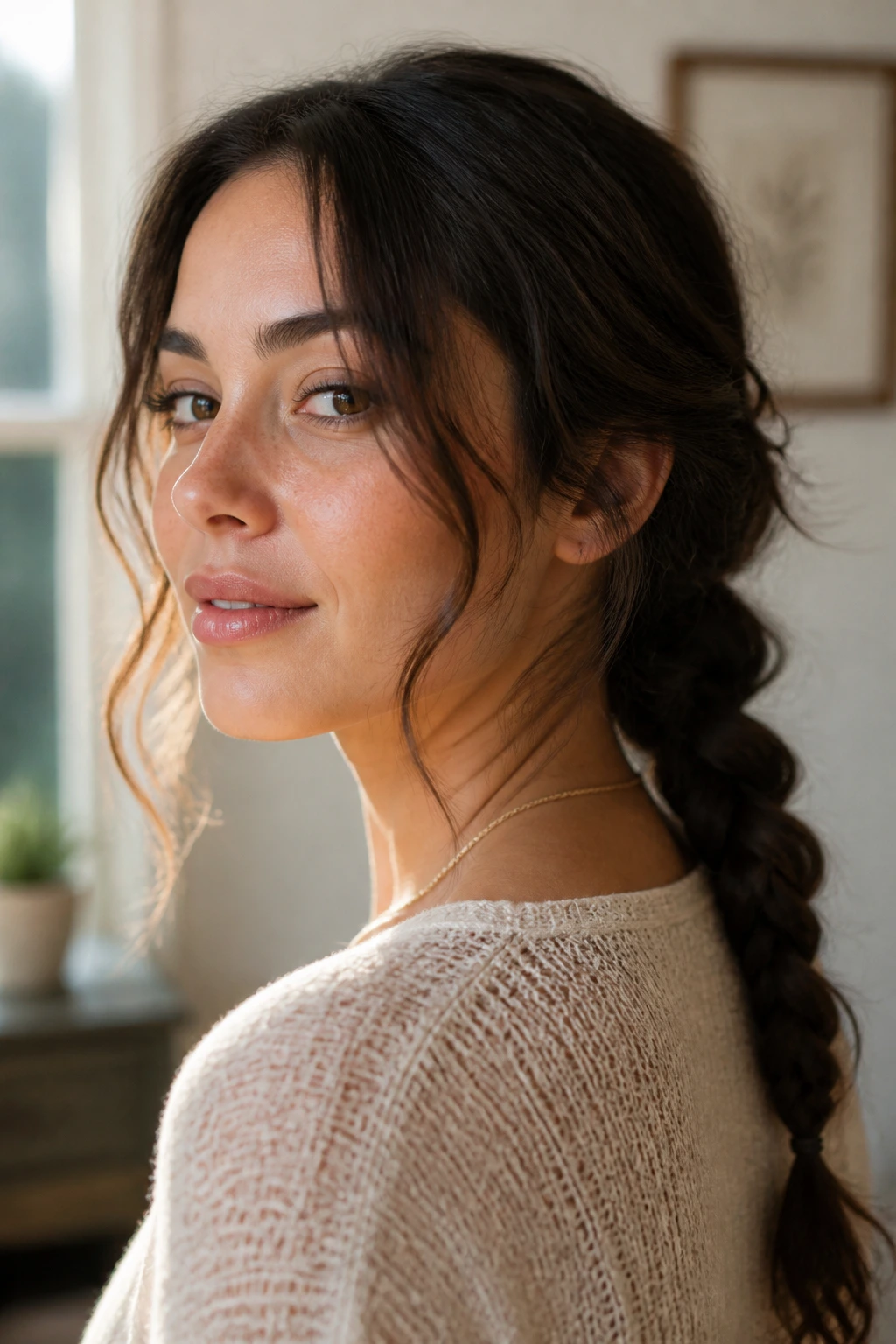
This is the braid that forgives a messy crown. If your hair puffs at the top by lunch and the ends have their own ideas, a loose low braid keeps the whole thing contained without forcing the hair to look like it went through a press.
The trick is to start at the nape, not the temple, and braid with enough slack that the sections stay rounded instead of tight and ropey. Leave out a few pieces around the cheeks and temples if you want softness. On frizzy hair, those stray bits often blend in better than you think. They do not read as mistakes. They read as texture.
A light leave-in on the outer layer helps, but don’t drench the hair. Just smooth a pea-sized amount between your palms and skim the top, sides, and ends before you braid. If your layers are short, secure the braid with a small clear elastic and stop one or two inches before the ends so the braid doesn’t look strained.
2. Claw-Clip French Twist
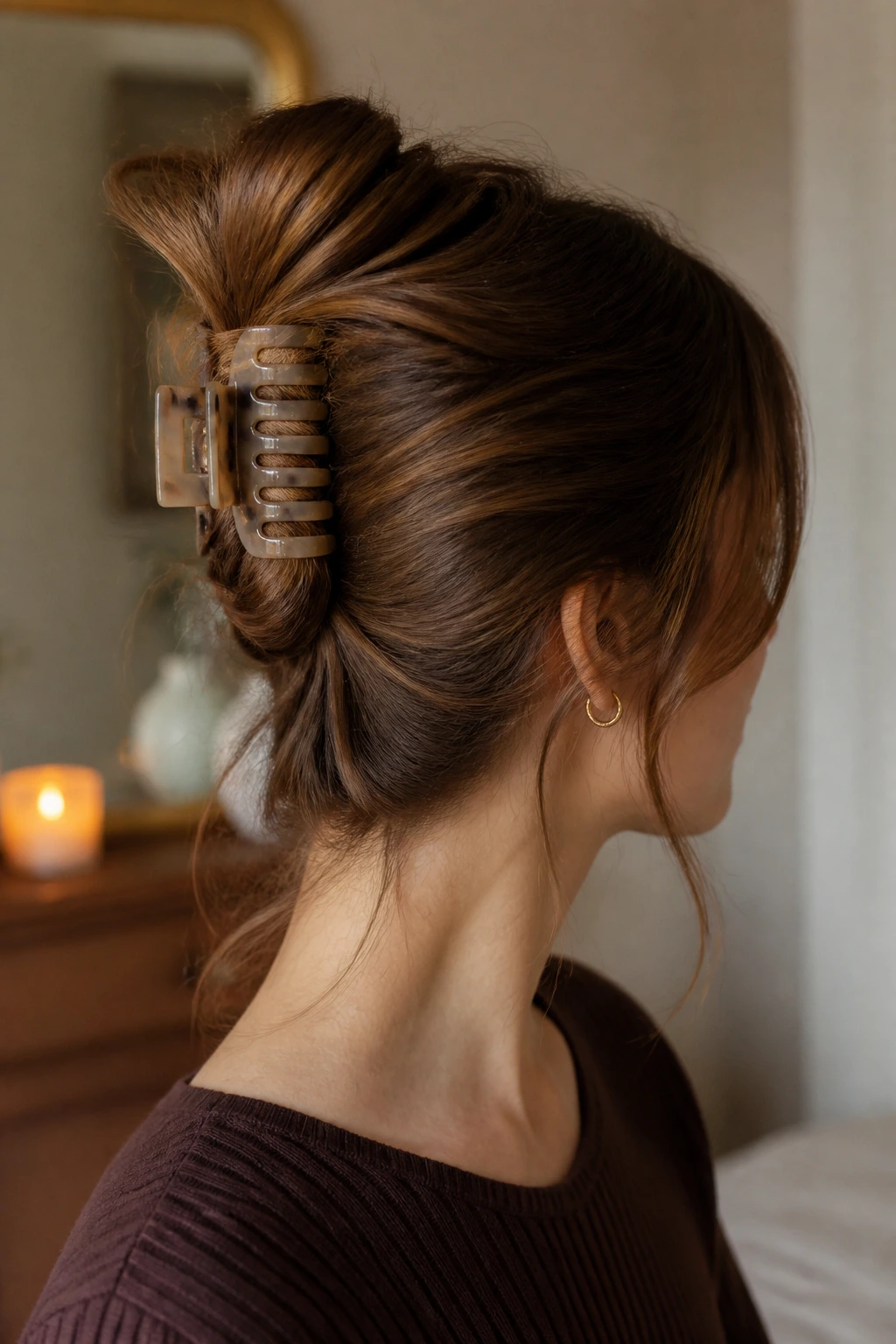
Want hair up fast without making the top layer look pinned to your skull? The claw-clip French twist handles frizzy hair with a little more grace than a tight ponytail ever will. It works because the shape is vertical and loose, so the hair can expand a bit without falling apart.
Gather the hair at the back, twist upward, fold the length in once, and clamp it with a medium or large claw clip. Thick hair usually needs a clip with a curved spine and strong teeth; tiny fashion clips slip and crack under the weight. Let the ends stick out a little if they want to. That softness is part of the charm.
How to make it stay put
- Twist the hair after a quick detangling pass, not after aggressive brushing.
- Hold the twist close to the scalp before clipping so the weight is supported.
- Cross two bobby pins under the clip if the twist slips during the day.
The best part is the shape stays readable even when some strands puff out around the hairline.
3. High Puff That Keeps the Roots Off Your Face
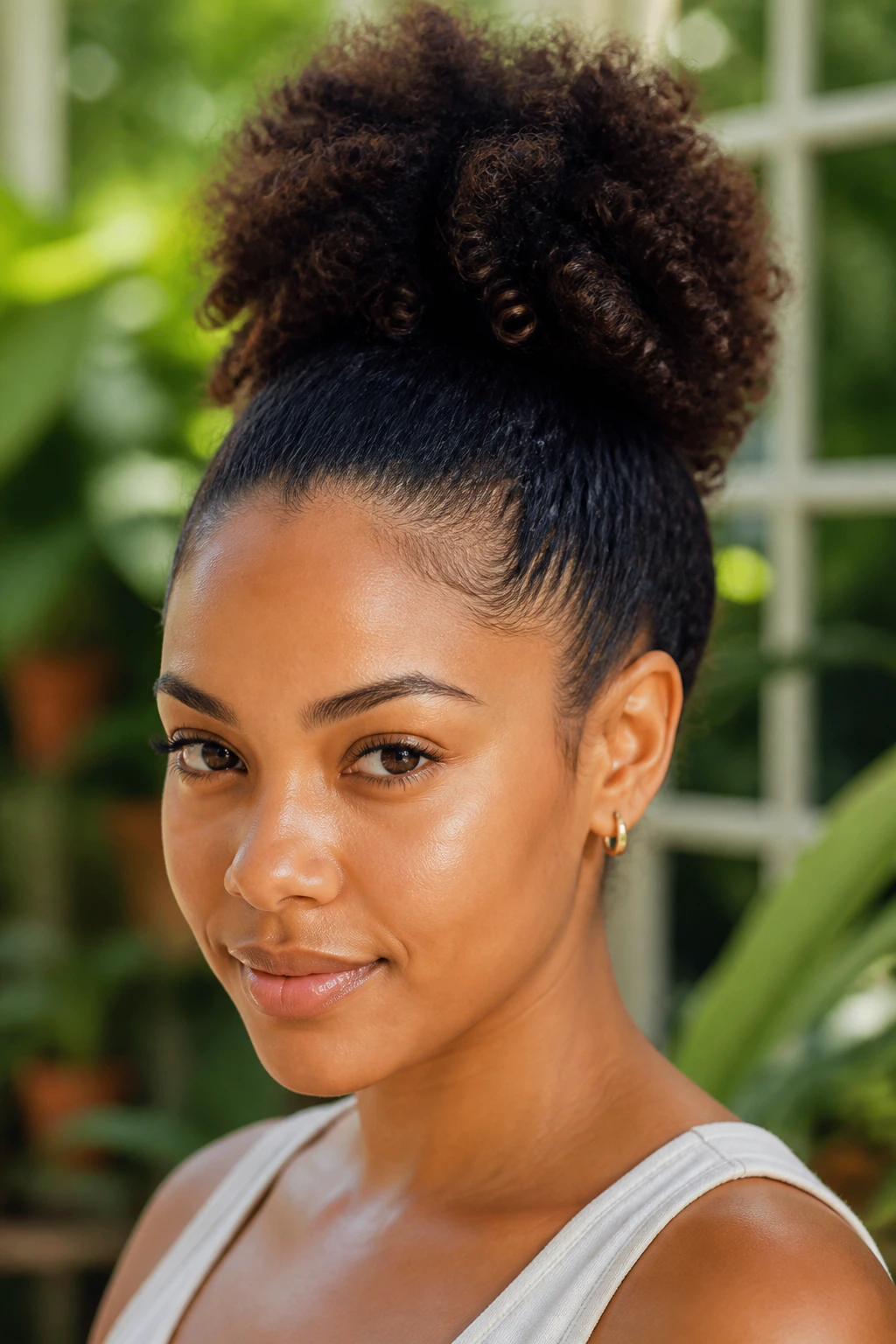
For coily and tightly textured hair, the high puff is not a fallback. It is the style. It takes the parts of frizz you usually spend time taming — the lift, the volume, the bend in the strands — and turns them into the point.
The easiest version uses a satin or stretchy band that sits around the head like a soft crown. Gather the hair toward the top, smooth the front only as much as you need to, then let the rest bloom above the band. Don’t flatten the puff into submission. A little height is what makes it look right. If you press too hard, it starts looking like a compromised bun instead of a deliberate shape.
A touch of gel at the hairline can help if you want the front cleaner, but keep it light. The puff itself should stay airy. I also like this style for humid days because it gets the hair off the neck without asking every curl to behave the same way.
4. Half-Up Top Knot
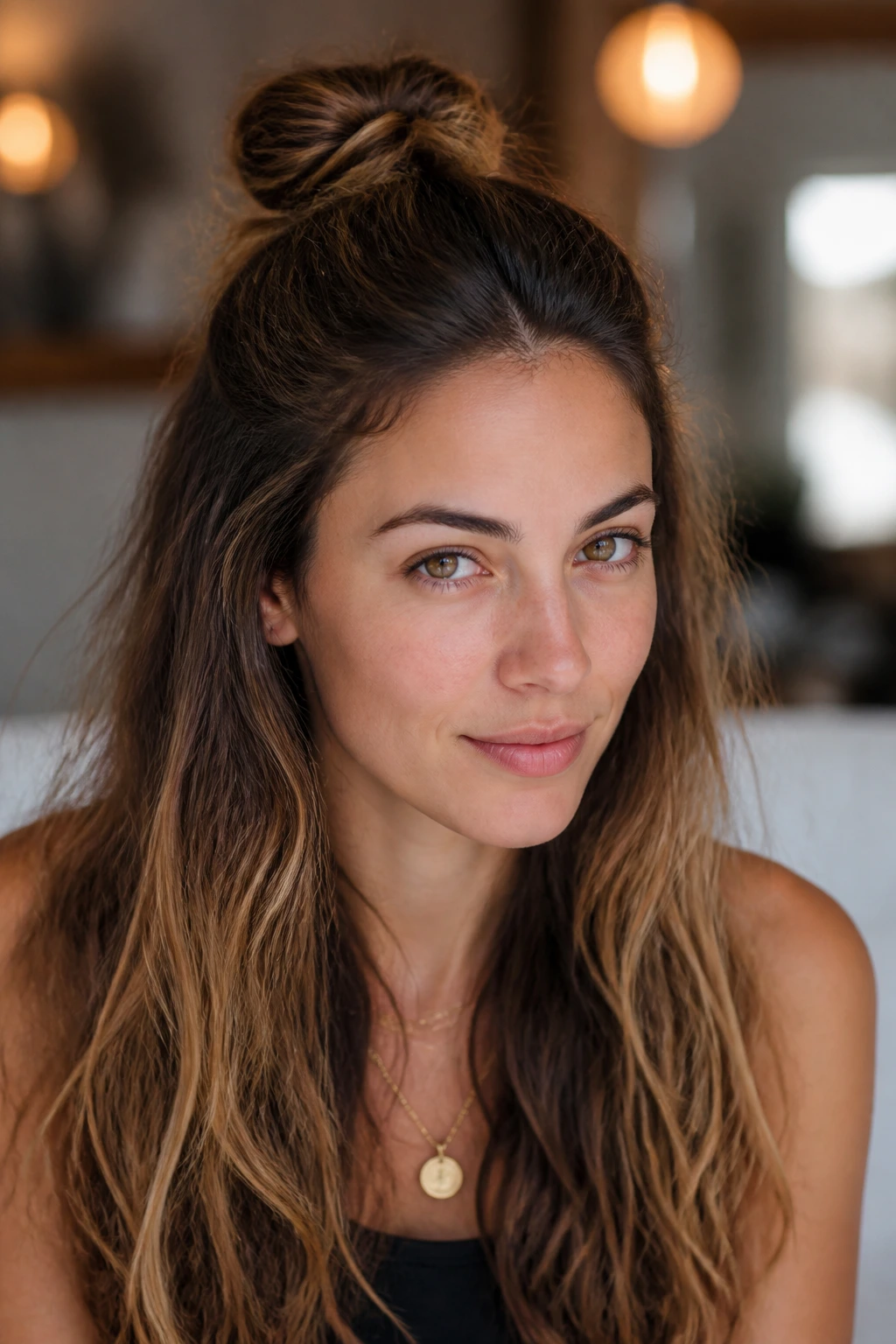
By the time your hair has that soft halo around the crown, a half-up top knot can pull the whole look together in three minutes. It keeps the top section off your face and leaves the rest down, which is useful when the lower lengths still have some shape and you do not want to tuck everything away.
Pull the top third of the hair back, twist it into a knot, and secure it with a small elastic or a few pins. The knot does not need to be compact. In fact, a slightly loose knot looks better on frizzy hair because it gives the top some lift. If the bottom layer is wavy or curly, leave it alone. Don’t brush it into submission. That usually just opens the frizz wider.
This one is especially good for shoulder-length hair that’s too short for a full bun but too big to leave completely loose. It gives you a clean forehead and a little shape without pretending to be polished.
5. Two Loose Dutch Braids
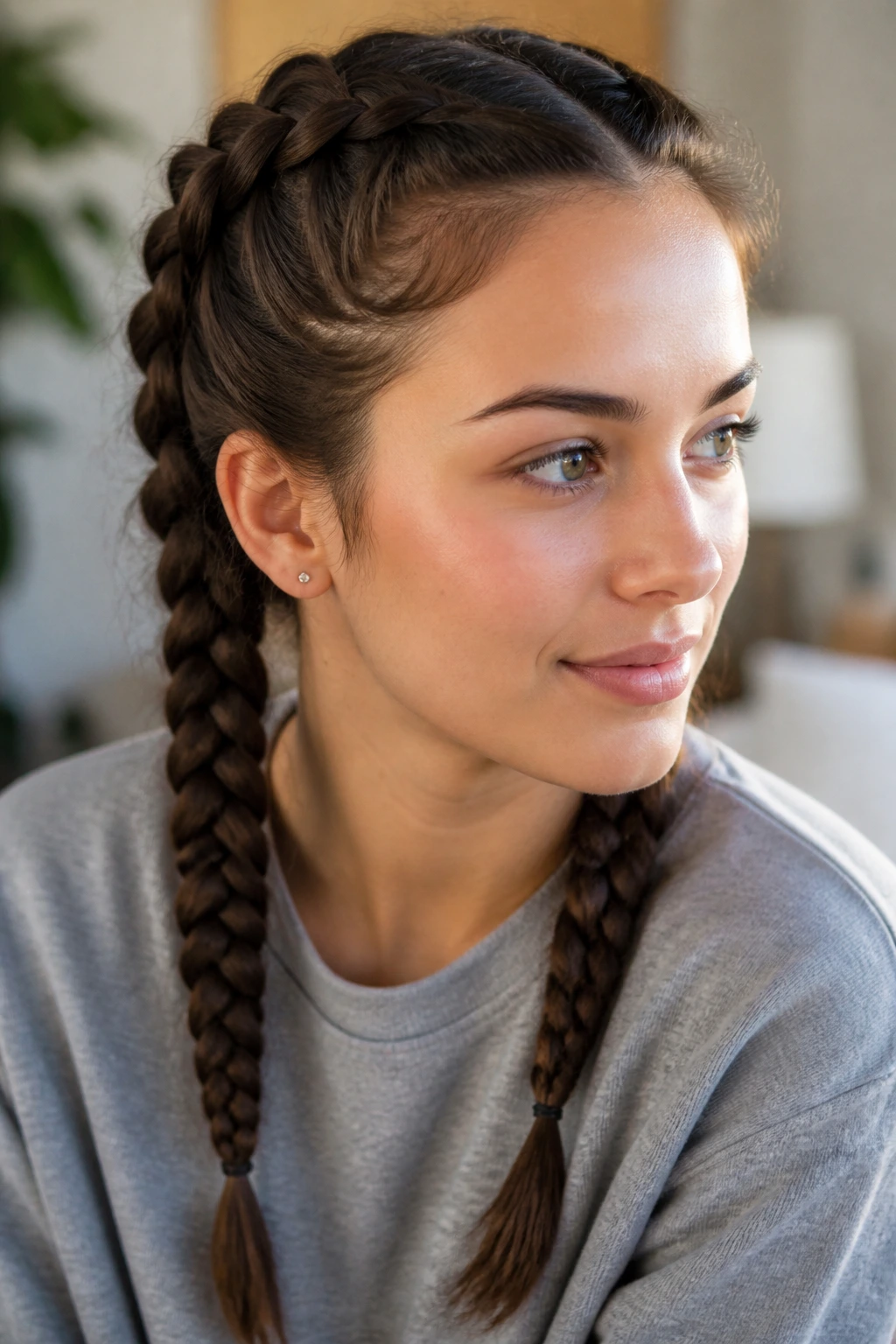
A single braid is not always the simplest answer. Two loose Dutch braids can be easier to live with because they distribute the weight and keep layers from wandering off in different directions. They also sit closer to the scalp than standard braids, so the shape stays visible even when the hair itself starts to puff.
Part the hair down the middle, braid each side underhand, and keep the tension even from root to end. If you want the braids to look fuller, tug the outer edges gently once they’re finished. That little bit of widening makes the braid look intentional instead of tight and fussy.
These are one of my favorite options for people who want a style that can survive movement — errands, a long day, a hoodie, a windy walk, all of it. The braids may loosen a little, but loosened braids on frizzy hair usually look better than pristine ones anyway.
6. Banana Clip Twist
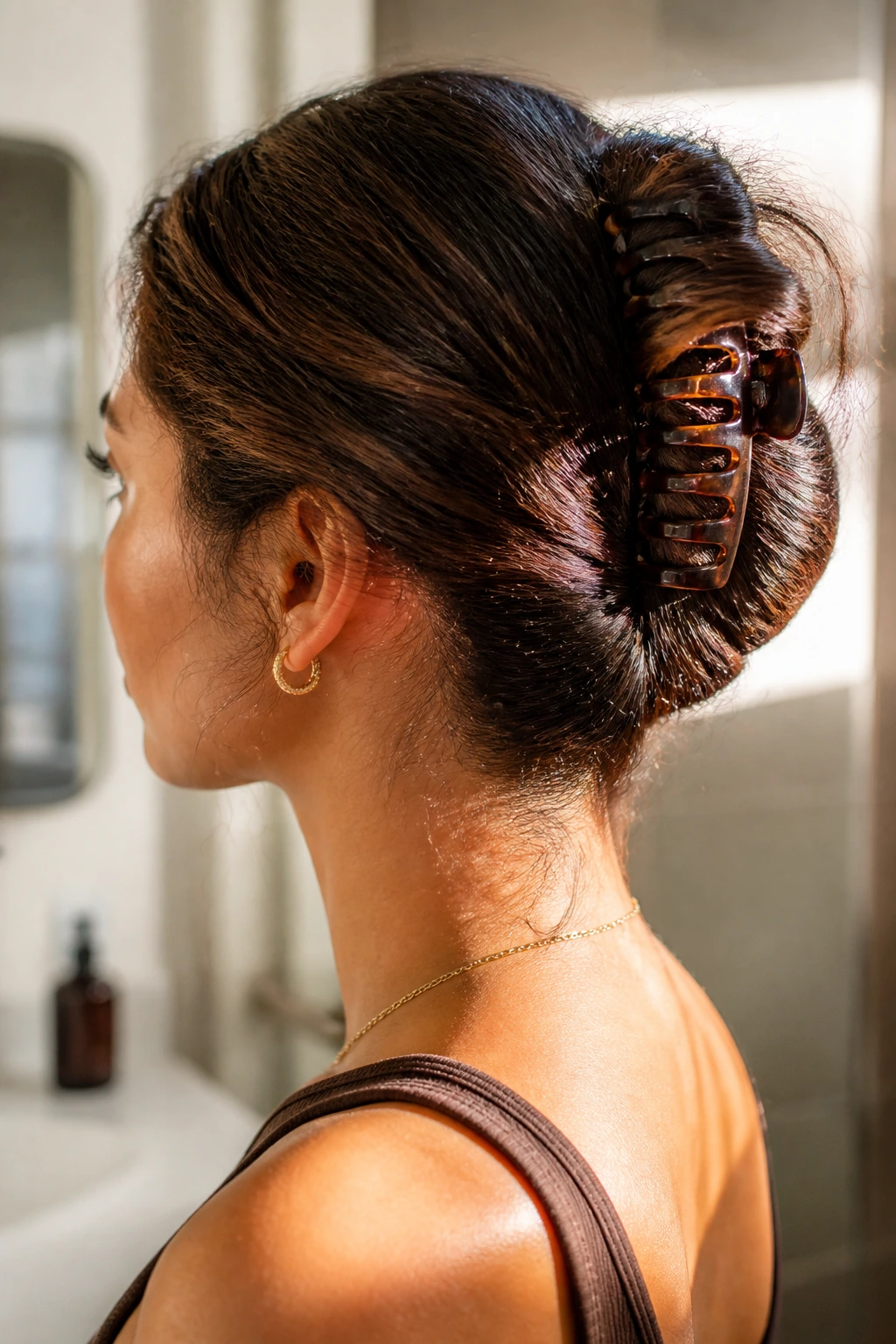
There’s a reason the banana clip never fully disappeared from bathroom drawers. It does one job well: it lifts the hair quickly without forcing the hairline to do too much work. On frizzy hair, that matters. Less tugging means less puffing around the temples and less of that sore scalp feeling by noon.
Gather the hair low or mid-height, twist it upward, then clamp the banana clip along the length of the twist. Long hair can fan out over the clip, which looks nice if the ends are layered or naturally fluffy. Thick hair needs a clip with actual grip, not a flimsy decorative shell that opens under pressure.
This style is especially handy when you want to look like you made an effort without doing much at all. It looks better when it’s not perfectly centered, which is saying something. A slight offset can make the whole thing feel less rigid.
7. Messy Low Bun With a Few Coils Left Out
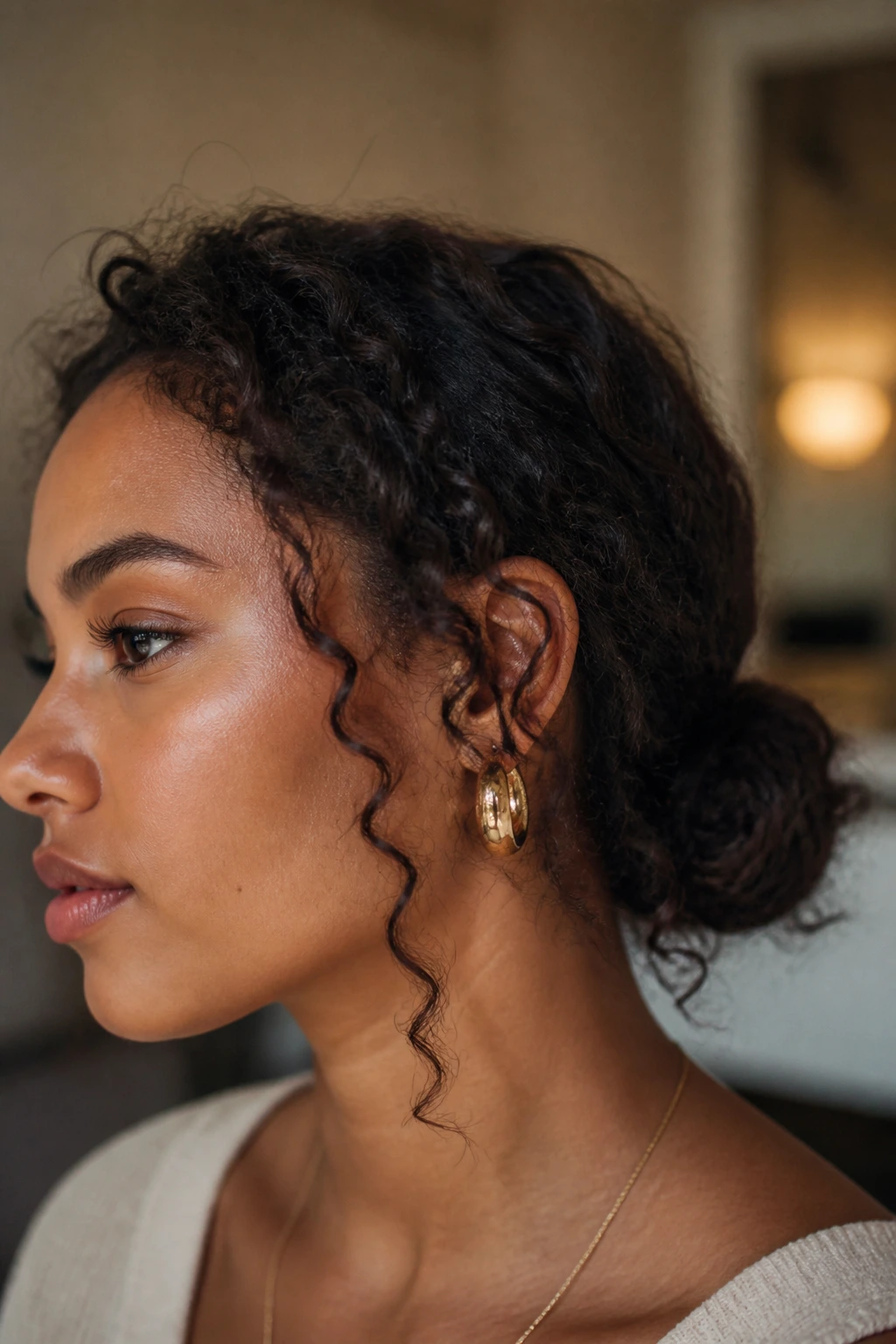
A low bun on frizzy hair should look a little soft at the edges, not like a helmet. The nicest version is tucked near the nape, held with one elastic and a few pins, with one or two coils left out around the ears or the neckline. Those loose pieces take the edge off the whole style.
Start by gathering the hair loosely at the back, twist it into a bun, and pin it where it feels secure. If your hair is thick, make the bun flat enough to sit comfortably under a coat collar or car headrest. If it is fine, leave more texture in the twist so the bun has some size. Either way, don’t chase every tiny flyaway. The bun gets better as it softens.
Why this works
The shape is strong enough to hold, but the details are soft enough to hide frizz rather than spotlight it. A bun that tries to be slick often fails at the first sign of humidity. This one has a little room to breathe.
8. Rope-Braid Ponytail
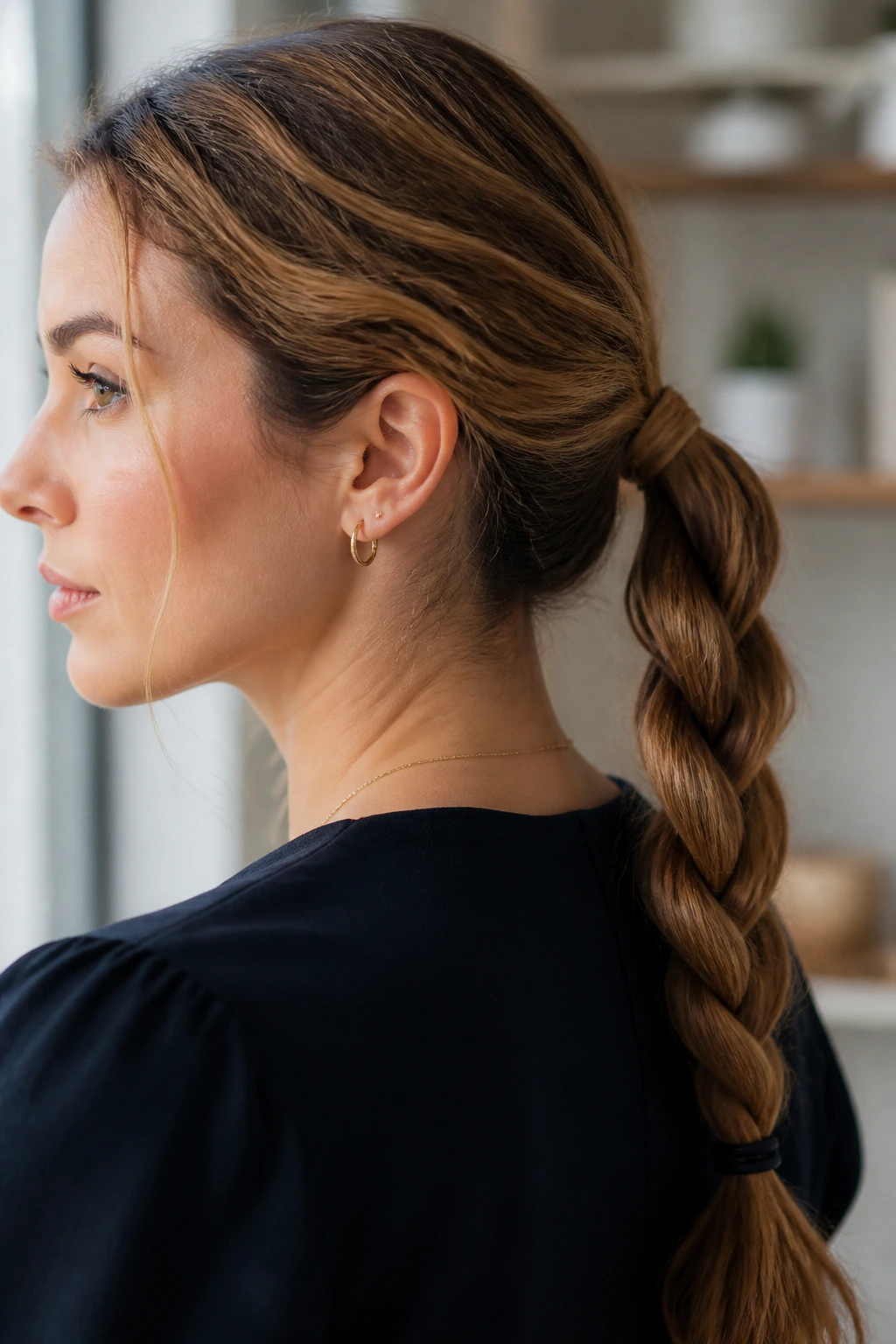
Need something that can survive wind and a coat collar? The rope-braid ponytail is a quiet workhorse. It looks more styled than a regular ponytail, but it is faster than a full braid and often holds better on hair that likes to puff.
Pull the hair into a mid or low ponytail, divide it into two sections, twist each section in the same direction, then wrap them around each other in the opposite direction. Secure the end with a small elastic. If the hair is very frizzy, a little mousse or light cream on the ponytail before twisting helps the rope stay defined.
What I like about this one is how it disguises texture. The twist pattern gives the eye something to follow, so even if the ponytail expands a little through the day, it still reads as deliberate. That’s the goal, really.
9. Headband Tuck With a Soft Scarf
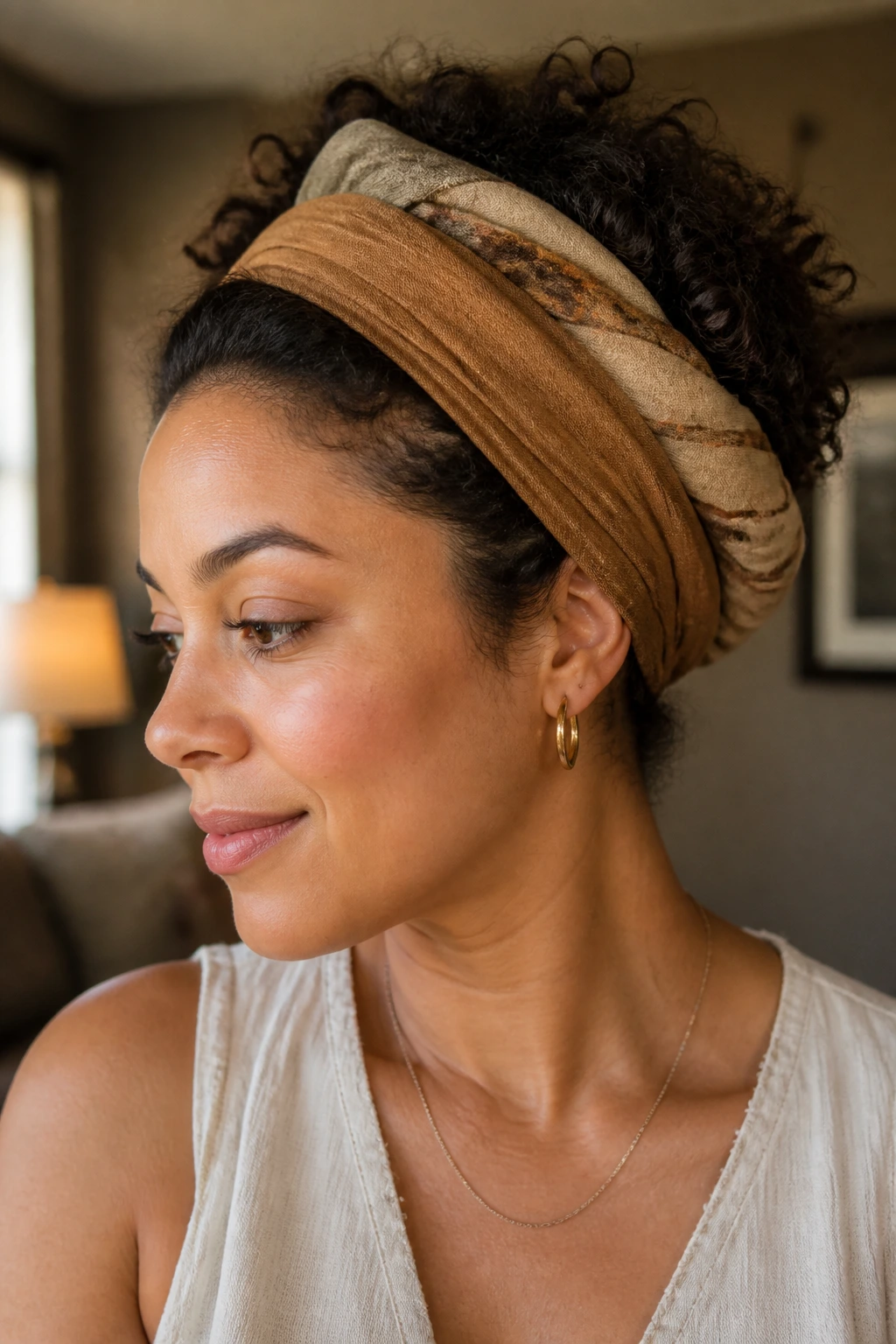
The scarf tuck turns loose ends into the style itself. It is especially useful for shoulder-length or longer frizzy hair that won’t quite behave enough for a bun but also doesn’t want to stay down.
Slide on a stretchy headband or tie a soft scarf around the head, then tuck sections of hair up and into the band from the back toward the front. The result lands somewhere between a roll and a tucked chignon. It looks softer if the hair has a bit of texture, which is lucky, because frizzy hair usually brings plenty.
If the hair is slippery, mist the lengths first with water and a small amount of leave-in so the tuck holds. If the hair is dry and puffy, you can skip that and work with the texture you already have. It’s one of those styles that gets easier once you stop trying to make every strand line up.
10. Pineapple Ponytail
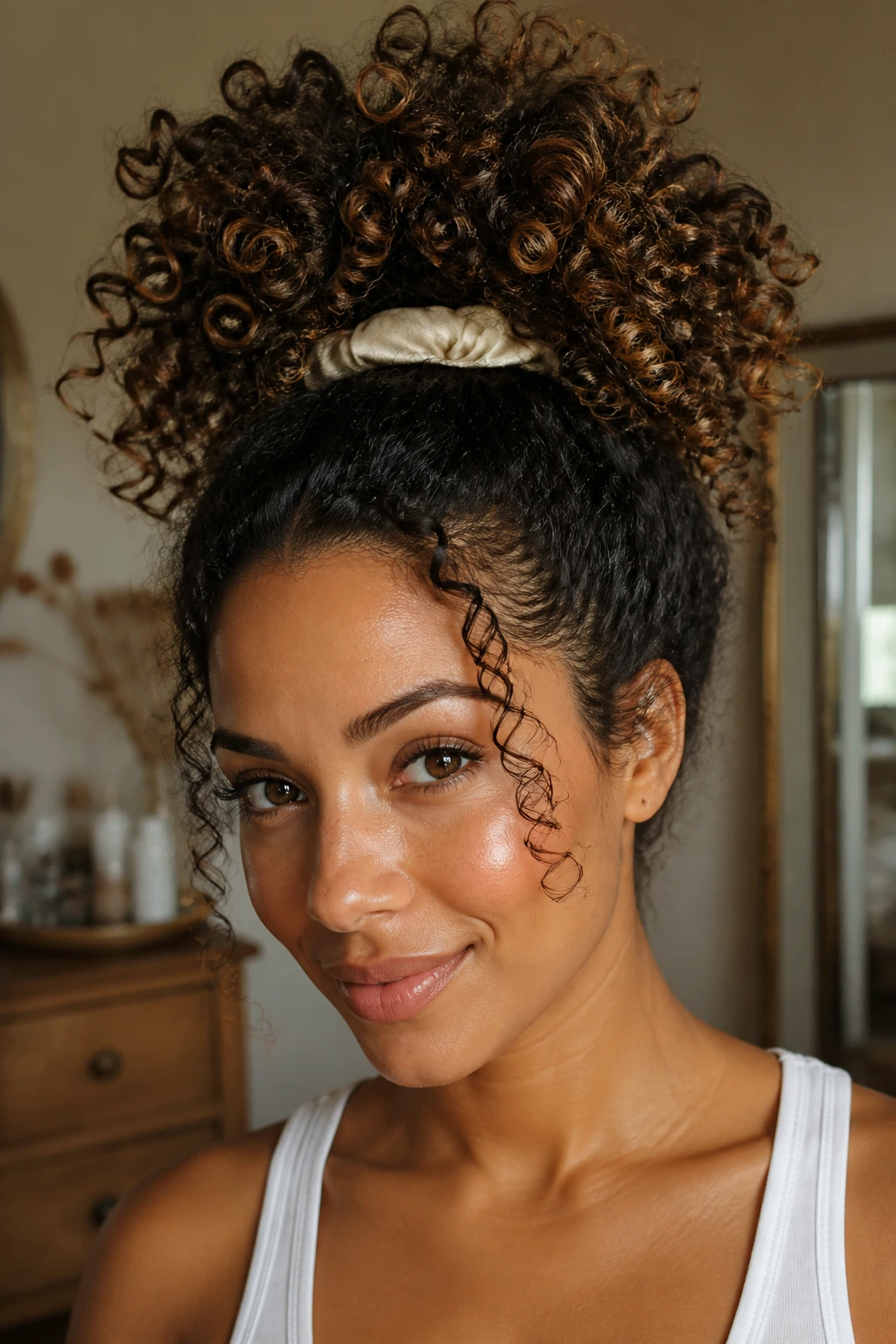
The pineapple is the most useful “messy” style for curly or coily frizz. It lifts the hair high on the head, usually with a silk scrunchie or soft band, so the curls can pile upward instead of getting crushed flat at the back of the head.
This is not the same as a high puff. The pineapple keeps the length and curl pattern more intact, which makes it a favorite for wash-day curls, overnight wear, or days when you want volume without reshaping everything. Let the curls sit loosely at the top and don’t tighten the band so much that the roots get sore.
It works best when the hair has moisture in it. A light leave-in or curl cream before gathering the ponytail can help the curls stay soft instead of turning rough at the ends. If your hair is already dry, use a little water on your hands first and smooth only the outer layer.
11. Side Braid Draped Over One Shoulder
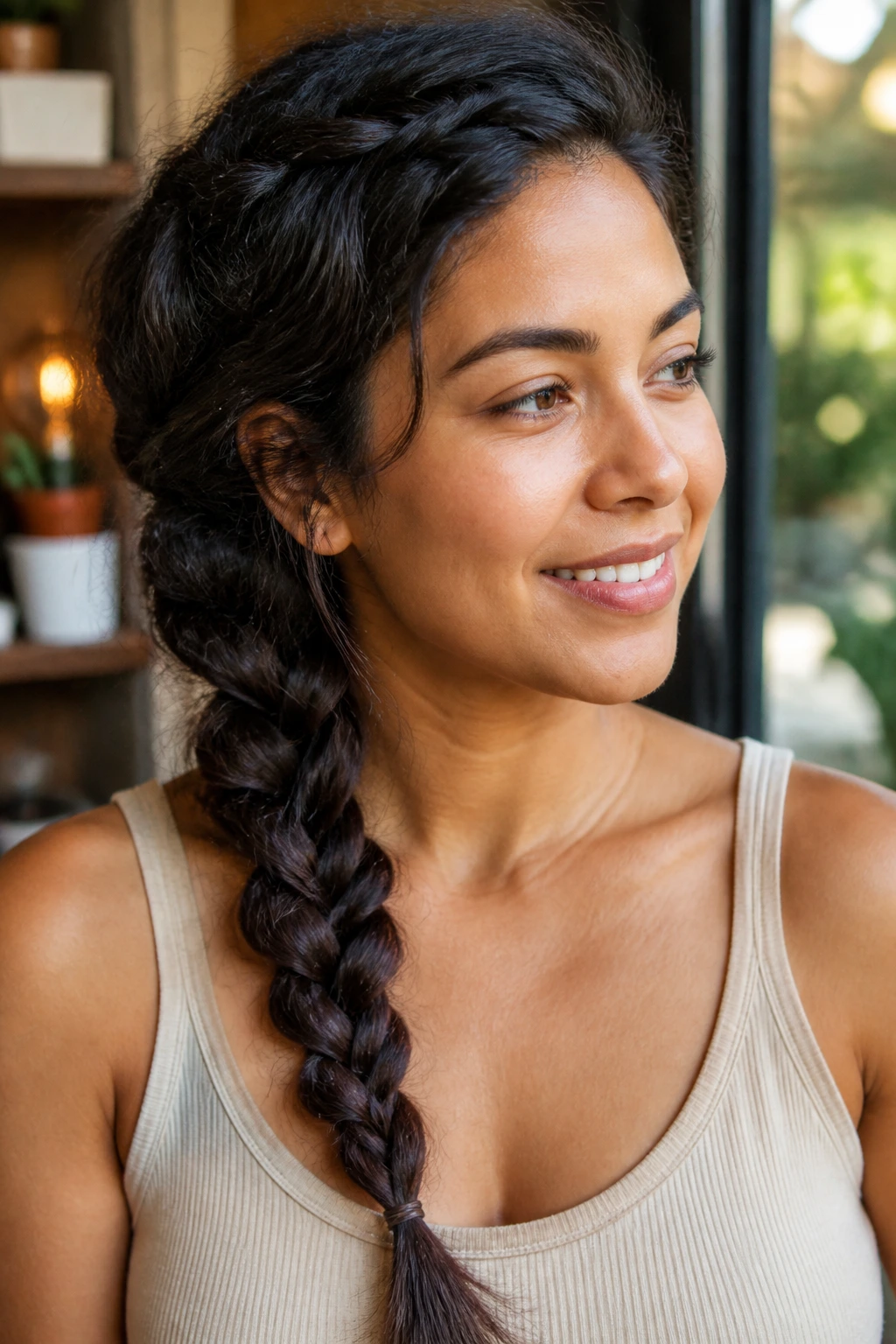
If your layers keep escaping one side, move the braid there on purpose. A side braid over one shoulder is one of the easiest ways to make frizzy hair look styled without making it look stiff. The off-center placement gives the braid a little personality, and the texture makes it feel fuller than a neat center braid ever does.
Start with a side part or simply sweep the hair over one shoulder and braid loosely from behind the ear down. If the braid looks too tight, tug it apart gently with your fingers once it’s secured. That creates a thicker outline and helps any flyaways blend into the shape.
This style is good on days when you want something you can wear with a sweater, a coat, or a scarf without ending up with a knot of hair at the back of your neck. It also survives a surprising amount of movement.
12. Bubble Ponytail
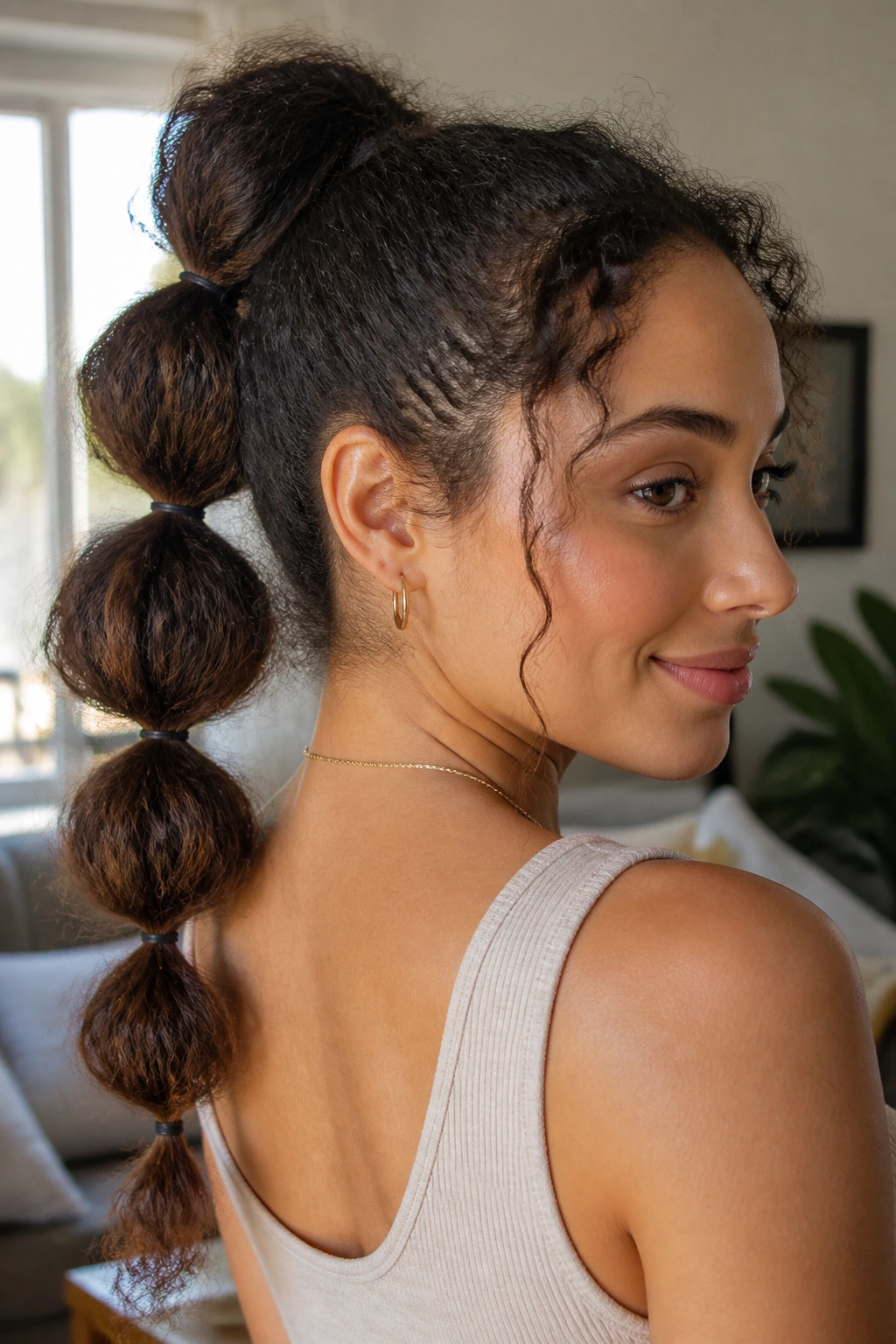
Bubble ponytails give you the shape of a styled blowout without asking for smooth ends. That is exactly why they work on frizzy hair. The puff between elastics is built in, so the natural volume becomes part of the design instead of a flaw you have to hide.
Secure the hair into a single ponytail, then add small elastics every 2 to 3 inches down the length. Gently pull each section outward until it rounds into a bubble. Keep going all the way to the end or stop halfway if the hair is shorter. The sections do not need to be even to look good; they just need to be deliberate.
A bubble ponytail is one of the few styles that gets stronger when the hair is thick or textured. The more body the hair has, the fuller the bubbles look. That makes it a smart choice for frizzy hair that tends to deflate sleeker styles.
13. Half-Up Braid Crown
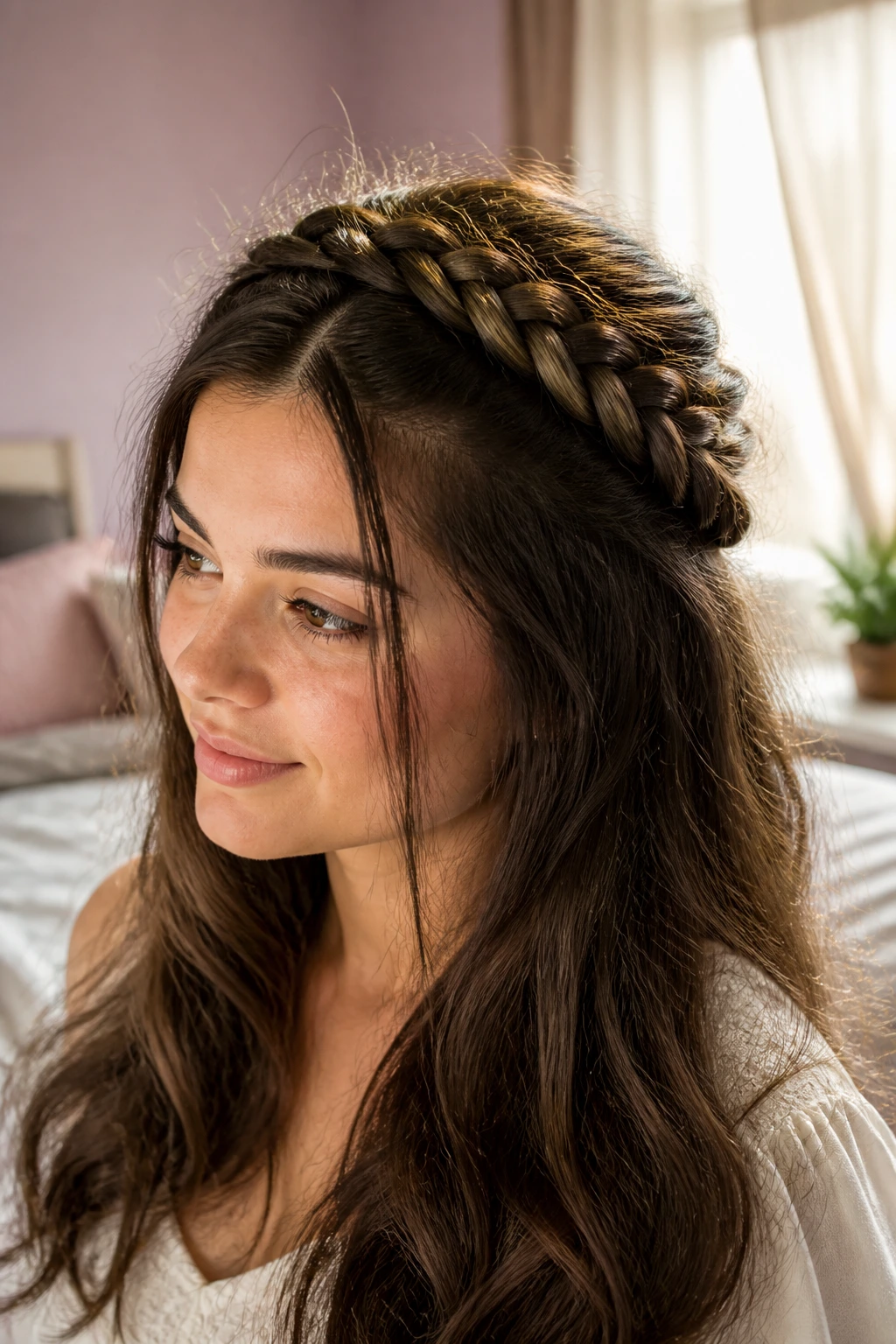
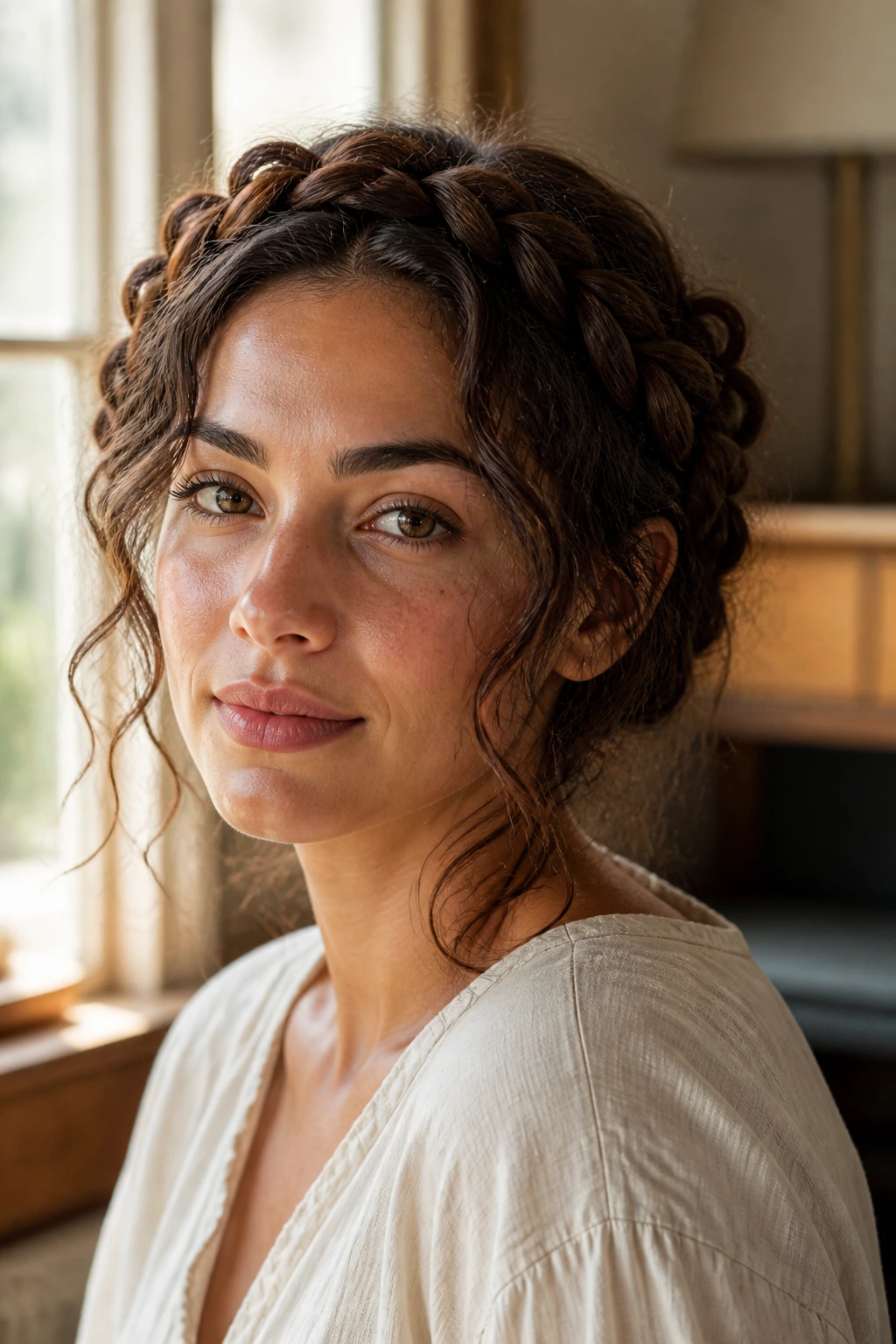
A braid crown looks nicest when the sides are slightly full, not scraped flat. That’s why it suits frizzy hair so well. The texture around the crown blends into the braid instead of sitting there like a halo you have to fight.
Pull two small sections from each temple or braid one section across the top of the head, then pin it back on the opposite side to create a half-crown effect. You can make it with a single braid, two mini braids, or even a twist if your hair is layered and slippery. The result keeps the front controlled while leaving the rest of the hair down.
I like this style for hair that has gone fuzzy at the roots but still has a decent shape through the lengths. It’s quick, it looks intentional, and it doesn’t require the sort of smoothing that usually turns frizz into a bigger problem.
14. Space Buns With Soft Ends
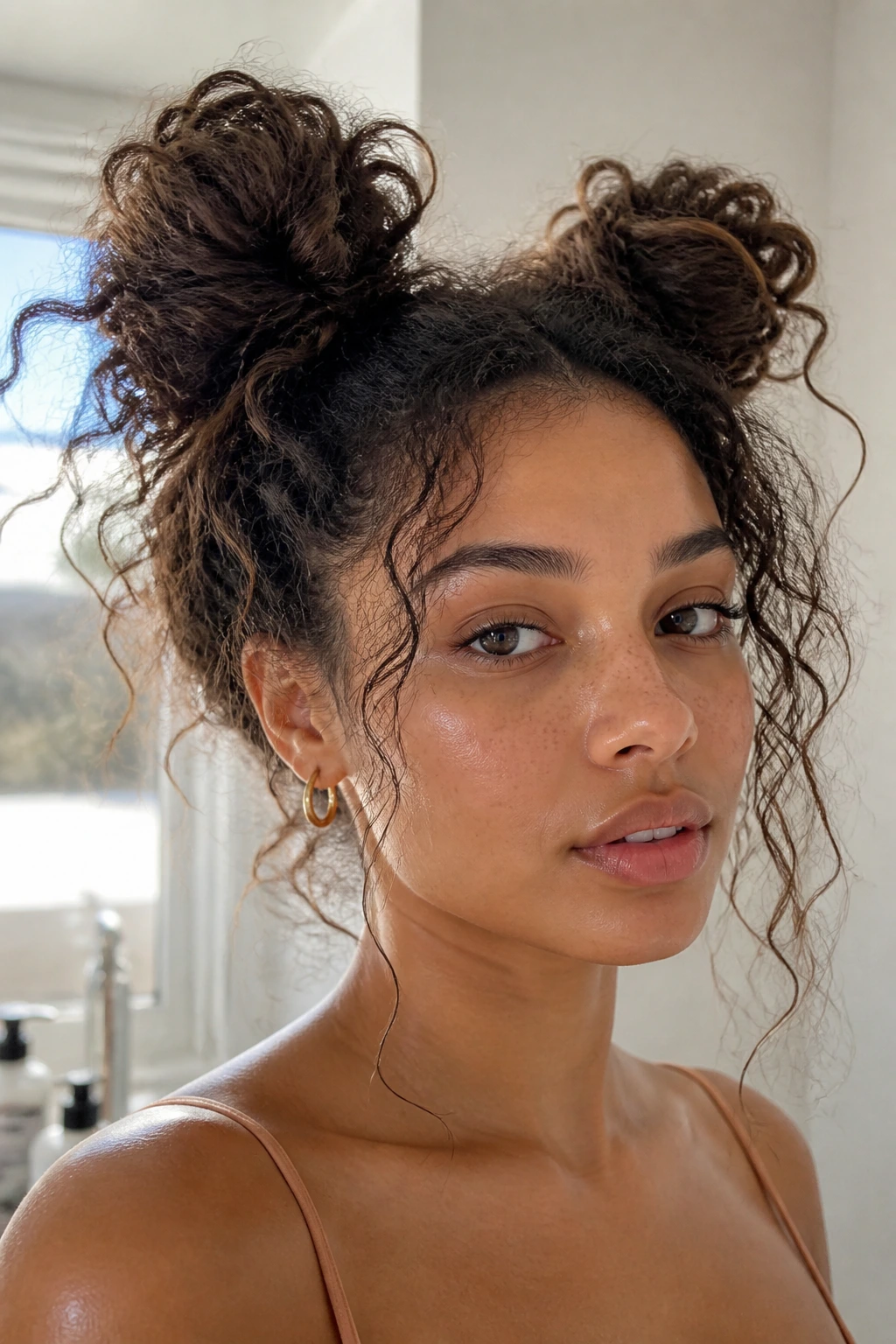
Space buns are what I reach for when I want the hair to stop pretending to be neat. They work because they give frizzy hair two obvious shapes to live in, and once those shapes are there, the little flyaways stop looking like a problem.
Divide the hair down the middle and twist each half into a bun high on the head. Keep them loose unless you want a tighter, more compact look. Frizzy hair usually does better when the buns have a little air in them, especially around the part and the back. If short pieces fall out, let them. They make the style look lived-in rather than overworked.
This one suits medium-length hair more than very long hair, though long hair can do it too if the buns are tucked flatter. It’s playful, but it’s also practical: the hair is off the face, the neck is clear, and the whole thing can be redone in about five minutes.
15. Low Chignon With a Center Part
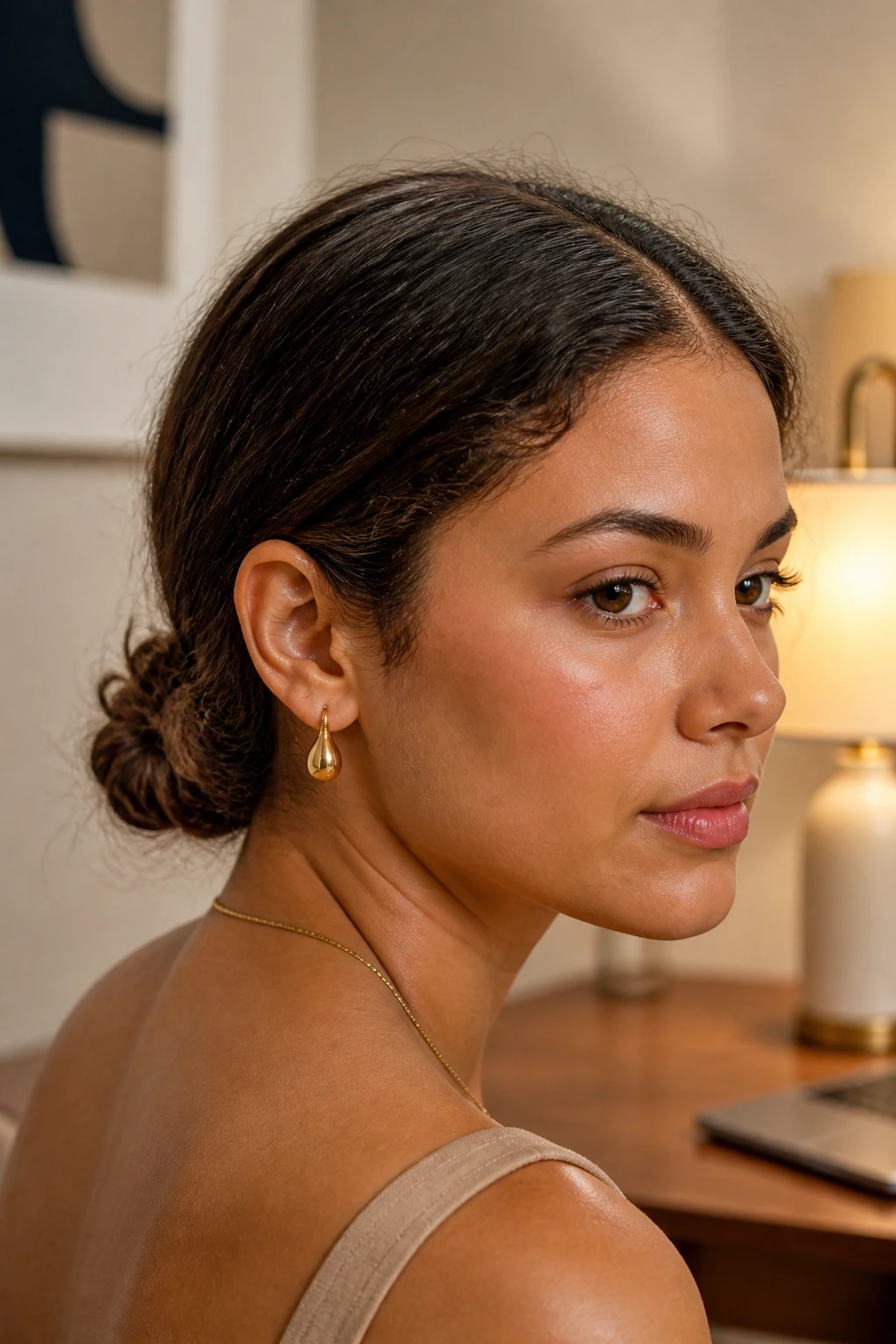
Can frizzy hair look polished without a ton of smoothing? Yes — if you keep the chignon soft. The trick is not to erase the texture, only to give it a cleaner route.
Make a center part, smooth the top lightly with a bit of cream or gel, and gather the hair low at the nape. Twist it into a compact chignon, pin it in place, and leave the bun slightly rounded rather than flattened. A little frizz around the part can still look neat if the lines are clean and the bun itself is stable.
This style is one of the few that can move from daytime to more formal settings without much extra work. It likes medium to thick hair, and it does not need every strand to behave. That is a mercy.
16. Mini Twists or Two-Strand Twists
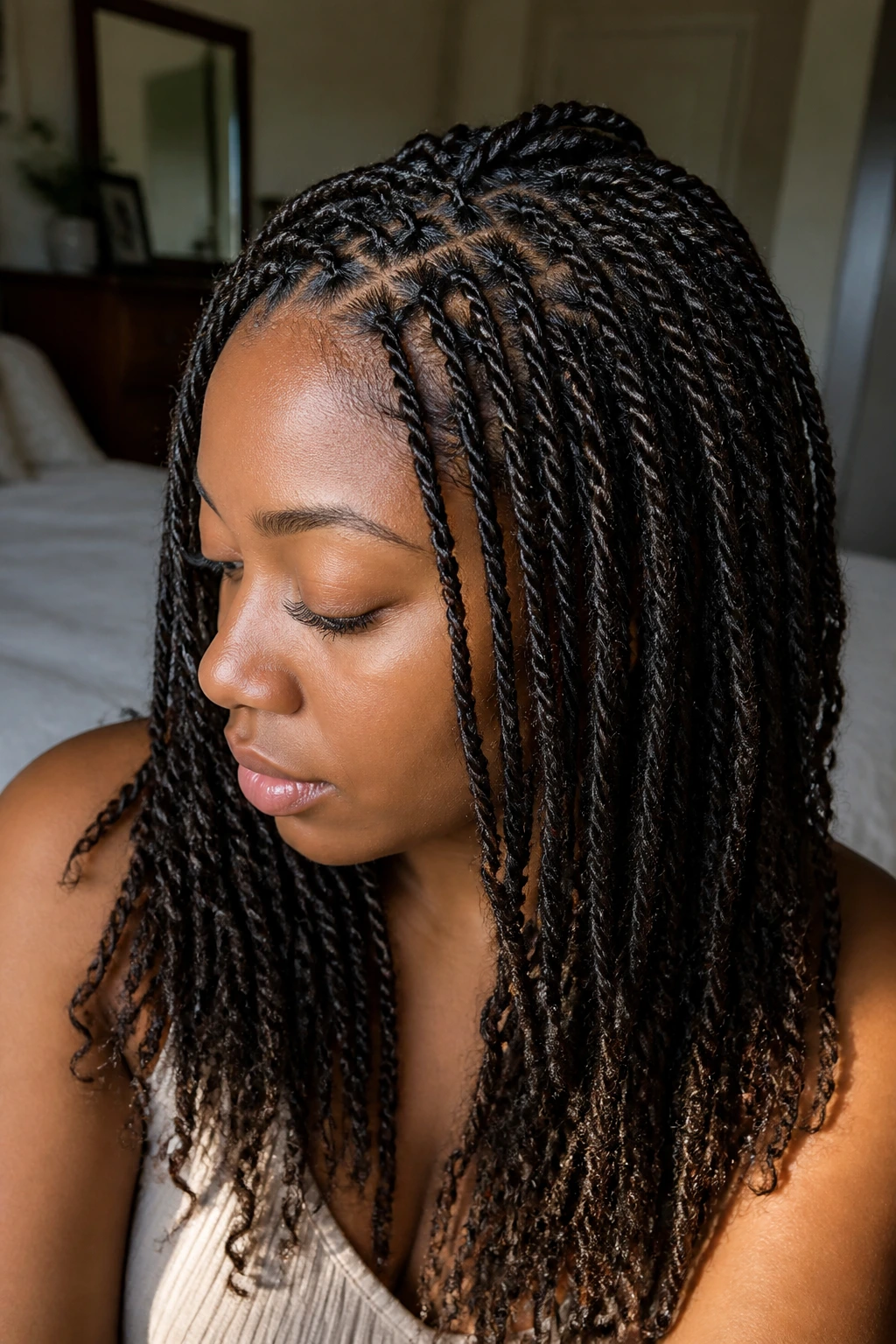
Mini twists are the closest thing to a set-it-and-forget-it style on textured hair. Once they’re in, they hold their shape for days, and the frizz that would normally spread outward gets contained inside each twist.
Section the hair into small parts, apply a little moisture or cream, and twist each section from root to end. The size can change based on how much time you have. Smaller twists last longer and stay tidier; larger twists are faster and give you more movement. If you like a twist-out later, keep the sections even so the release pattern looks consistent.
This style asks for more work on day one, but then it gives that time back. Sleep with a bonnet or silk scarf, and the twists usually need only a quick finger-style in the morning. For a lot of people with frizzy or coily hair, that trade is worth it.
17. Halo Braid That Wraps the Hairline
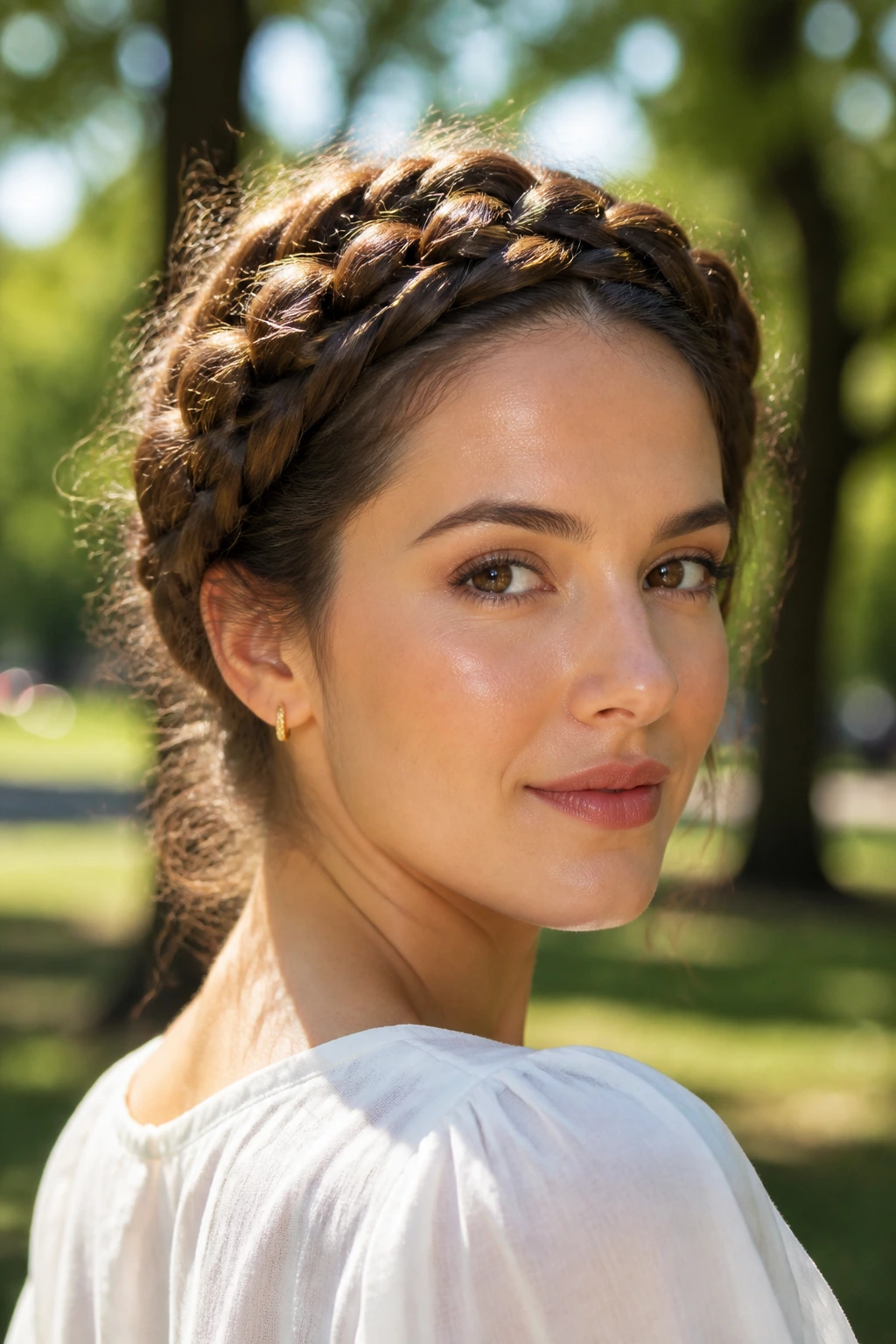
Halo braids handle hairline frizz by hiding it in the path of the braid itself. That is a neat trick, and it works especially well when the crown and temples are the first places to expand in humidity.
Braid around the perimeter of the head, close enough to the hairline that the style feels intentional, but not so tight that it pulls. Use pins where the braid crosses the nape or meets the other side. If the hair is layered, tuck the shorter pieces into the braid as you go rather than forcing them to lie flat.
This one takes a little more practice than the others, but it pays off because the finished shape is stable. Even when the day gets humid or your hair starts to soften, the braid still frames the face instead of fighting it.
Smart Prep That Saves You From Fighting Flyaways All Day
The fastest way to make frizzy hair harder to style is to over-handle it before you start. A lot of people go straight for brushing, then more brushing, then a little more brushing because the hair still looks fuzzy. That usually makes the fuzz louder. Start with detangling, not aggression.
Use product in your hands first. A pea-size amount of leave-in, curl cream, or smoothing lotion spread between your palms goes farther than a blob slapped onto one section. You want a thin film on the outside of the hair, not a greasy patch on top.
Let the hair be slightly lived-in. Freshly washed hair can be too slippery for braids and twists. Second-day hair often holds better because the strands have more grip. If you need to start clean, wait until the hair is about 80% dry before styling, then finish with fingers instead of a brush.
Choose tension carefully. Tight styles create tension at the roots, and that tension can make the hairline frizz faster later in the day. Hold the style securely, yes. Pull it into the scalp like you’re trying to win an argument, no.
Keep one backup tool nearby. A silk scrunchie, two bobby pins, or a spare clip can rescue a style when the shape starts to sag. It takes ten seconds. That is a lot cheaper than redoing your entire head at 3 p.m.
Common Mistakes That Make Frizz Louder
The most common mistake is brushing dry frizzy hair over and over until the outer layer turns into a cloud. The symptom is obvious: the more you brush, the bigger and rougher it looks. Use fingers or a wide-tooth comb, and stop once the tangles are gone.
Another one is making the style too tight at the hairline. The front looks sleek for an hour, then the scalp gets sore and the baby hairs start popping out in every direction. Secure the style close enough to hold, but leave room for the hair to move.
Heavy oil is a sneaky problem, especially on fine hair. A lot of people think more shine will calm frizz, but too much oil can make the hair look stringy at the roots and dry at the ends. Use a small amount only on the outer layer or the very ends if they need it.
Tiny elastics can also cause trouble. They snag, break, and leave the ponytail with a dented look that gets worse as the day goes on. If your hair is thick or textured, choose elastics that can actually handle the weight.
The last mistake is trying to fight every flyaway with more spray. At some point, the style has already decided what it wants to be. A few loose pieces are fine. A rigid shell usually isn’t.
Variations When You Want Something Softer, Sleeker, or More Protective
Five-Minute Morning Fix: If time is tight, reach for the claw-clip French twist, the half-up top knot, or the loose low braid. These need the fewest moving parts and can be built from hair that isn’t freshly washed.
Humidity-Proof Office Version: A low chignon, side braid, or halo braid keeps the outline cleaner when the air is damp and the hair wants to expand. They look finished without needing constant touch-ups.
Short-Length Rescue: If your hair won’t reach a full bun, use the scarf tuck, half-up knot, or space buns. Those styles work with shoulder-length and layered hair instead of punishing it for not being long enough.
Protective Weekend Set: Mini twists, two loose Dutch braids, and the pineapple ponytail all keep manipulation low. That matters if your scalp gets tired quickly or your ends tangle every time you wear the hair loose.
Softer Face-Frame Version: Leave a few strands out around the temples, then choose styles with a clear back shape — a low braid, a side braid, or a messy bun. The face framing takes the edge off while the main shape still does the real work.
Tools That Earn Their Space in the Drawer
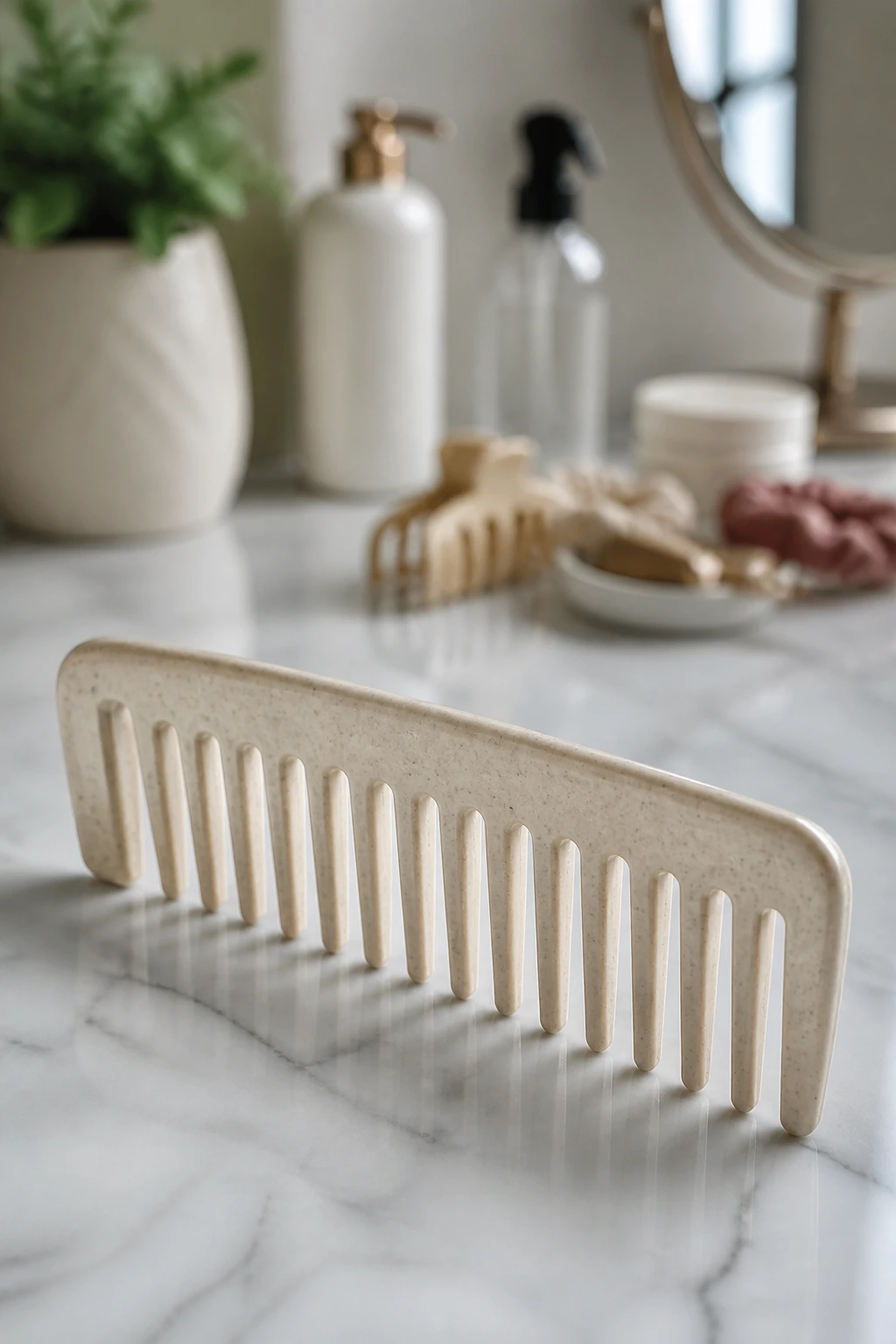
- Wide-tooth comb: Better than a fine brush for detangling without kicking up more frizz.
- Spray bottle: Handy for loosening stubborn sections before braiding or twisting; a few mists are enough.
- Leave-in conditioner: Keeps the outer layer soft and gives braids a little slip without making the hair greasy.
- Curl cream or light mousse: Useful for defining waves, curls, and coils before puffs, twists, or braids.
- Medium or large claw clip: The clip needs enough grip to hold thick or textured hair without snapping shut.
- Silk scrunchies: Easier on the hairline than thin elastics and less likely to leave a hard crease.
- Bobby pins with a strong bend: Cheap pins bend open fast; the stronger ones hold buns and twists much better.
- Small clear elastics: Good for braids, rope ponytails, and bubble ponytails when you need the ends secured cleanly.
- Silk scarf or bonnet: Saves a style overnight and cuts down on pillow friction.
- Handheld mirror: Useful for checking the back of buns and braids without guessing.
How to Keep the Style Going Through the Day and Into Tomorrow
Frizzy hair is rarely ruined by one stray puff. It usually falls apart because the style dries out, gets flattened, or gets handled too much. If a braid starts getting fuzzy, don’t immediately pull it apart. Smooth the surface with clean hands, maybe a drop of leave-in, and leave the structure alone.
At night, choose the maintenance method that matches the style. Loose braid? Sleep in it or re-braid it lightly before bed. Pineapple, high puff, or mini twists? Cover the hair with a satin bonnet or scarf so the roots do not get rubbed into a new halo while you sleep. A low bun or chignon can be pinned loosely and preserved with a silk pillowcase if you don’t want to reset it.
The next morning is where people often overdo it. A quick refresh should be quick. Mist the hands, not the whole head, then smooth the outer layer, retie the elastic if needed, and replace any slipped pin. If the style has fully collapsed, start over. Half-repairing a tired style usually leaves the hair looking drier than before.
For multi-day wear, the easiest rule is this: if the shape is still there, refresh it; if the shape is gone, reset it. Chasing a dying style with more spray is how hair ends up looking dusty and stiff. A clean restart takes less time than people expect.
Questions People Ask Before They Commit to Braids, Clips, and Twists
What is the easiest hairstyle for frizzy hair if I only have five minutes?
A low braid, claw-clip French twist, or half-up top knot usually wins that race. They need minimal sectioning, and a little unevenness doesn’t hurt the final look.
Should I smooth frizzy hair before braiding it?
A little, yes. A lot, no. Use your hands with a small amount of leave-in or cream, then braid while the hair still has some grip. That usually gives a better hold than trying to make the hair perfectly sleek.
How do I keep braids from puffing up too much?
Start with hair that isn’t freshly washed and slippery, keep the first inch of the braid secure, and use small, even sections. A braid will still soften during the day, but it should stay shaped if the base is firm.
Can these styles work on straight hair that frizzes at the ends?
Yes, especially the low braid, bubble ponytail, and low chignon. Straight-frizzy hair often needs a little smoothing at the top and more structure at the ends so the frizz reads as texture instead of static.
What if my hair is too short for buns?
Try the scarf tuck, space buns, side braid, or half-up knot. Those styles give you shape without demanding full length.
Are claw clips safe for thick frizzy hair?
They are, if the clip is large enough and has a strong spring. Tiny clips slip and can pinch; bigger curved clips usually hold better and cause less tension.
What’s the best overnight style for frizz-prone hair?
A loose braid, pineapple, or mini twists usually works best. They reduce friction against the pillow and keep the hair from turning into a tangled cloud by morning.
How do I keep the style from looking too messy?
Pick one clean element and let the rest stay soft. That could be a neat part, a tight base, or a hidden elastic. If everything is loose, the style looks unfinished. If one thing is controlled, the rest can breathe.
Do I need hairspray for these styles?
Not usually. Light spray can help with flyaways, but heavy use tends to make frizzy hair stiff and dull. For most of these styles, a touch of leave-in or a little water on the hands works better.
A Style Routine That Lets Texture Do Its Job
The nicest thing about low-maintenance hairstyles for frizzy hair is that they stop asking your hair to be something else first. A braid doesn’t need every strand to obey. A twist doesn’t care if the surface is a little fuzzy. A bun can have soft edges and still look finished. That freedom is the whole point.
Pick the styles that fit the length you actually have, not the length you wish you had after a blowout. Keep the tools simple. Keep the tension sensible. And if a few flyaways show up anyway, let them stay where they are. On frizzy hair, shape matters more than perfection, and a style that can hold its own in real weather is worth far more than one that only works in a bathroom mirror.
