



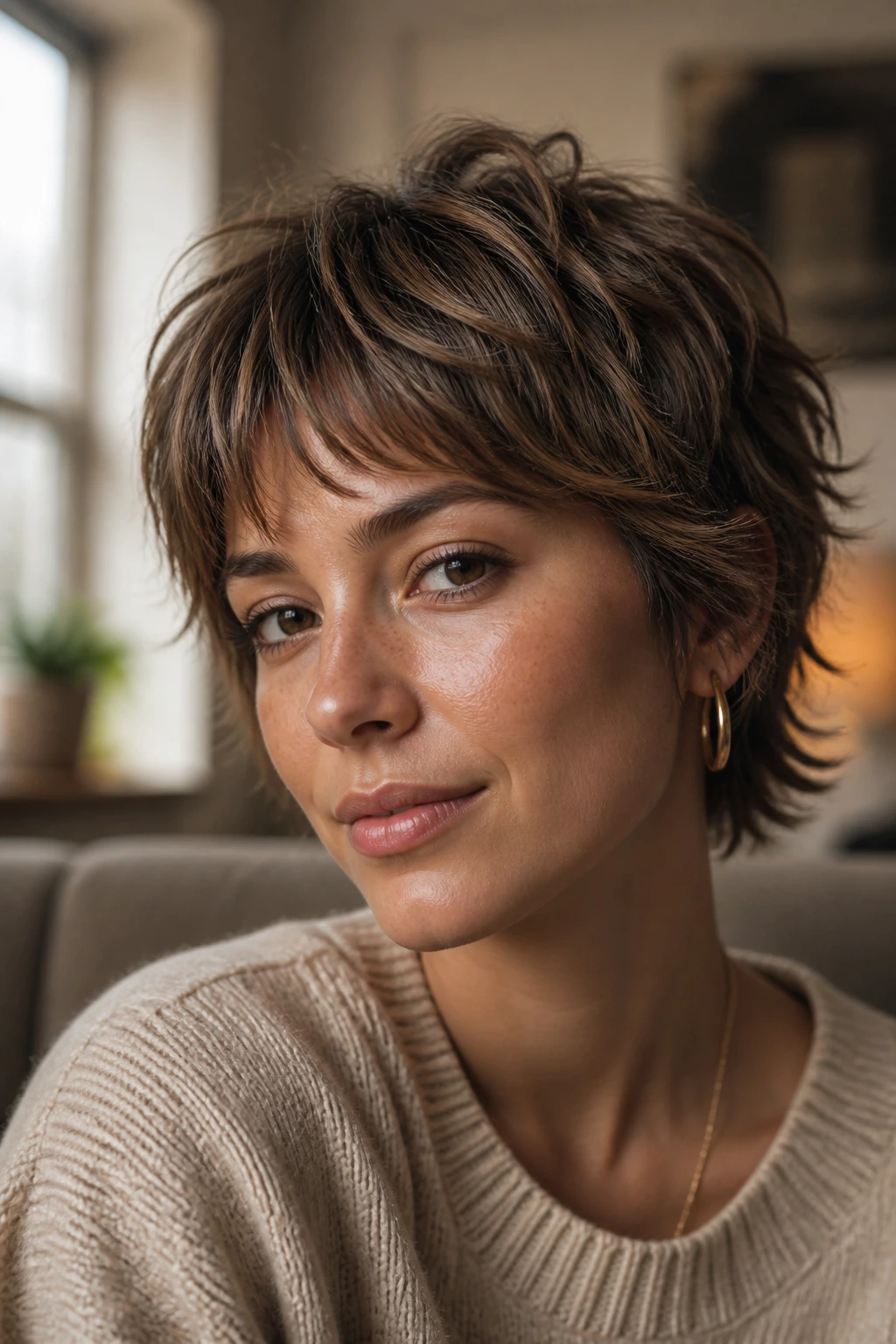
Short hair has a nasty habit of turning rigid if the cut is too blunt. One week it looks fresh, the next it starts sitting like a little cardboard cap around the head. Feathered hairstyles for short hair solve that problem in the most useful way possible: they soften the ends, lighten the perimeter, and make the whole shape move instead of lock up.
That movement is the real appeal. A good feathered cut doesn’t scream for attention; it flicks at the temples, bends at the jaw, and breaks up the heavy line that makes short hair feel boxy. You see it immediately in the mirror. The silhouette looks lighter, the neck looks longer, and the hair stops behaving like a single block.
Feathering is not the same thing as random thinning or shaggy layers gone a bit wild. On short hair, the best versions are controlled. The ends taper where they should, the crown keeps enough lift, and the shape still looks deliberate when you tuck it behind an ear or let it fall forward after a quick shake. That’s why this family of cuts keeps working across pixies, bobs, crops, bixies, and those in-between lengths that can be hard to style on busy mornings. There’s a lot of range here, and the useful part is how each version solves a different problem.
Why This Collection Works So Well
-
Softness Without Losing Shape: Feathering breaks up blunt edges, so a short cut keeps its outline while the ends stop looking heavy or sealed shut.
-
Better Grow-Out: A feathered perimeter grows out with less of that hard shelf line at the ears and nape, which buys you a little more time between trims.
-
Texture-Friendly: Fine hair gets lift, thick hair gets weight removed, and wavy hair gets a cleaner bend instead of a puffier triangle.
-
Styling Takes Less Force: Most feathered short cuts only need a blow-dryer, a small brush, and a dab of product on the ends. No wrestling match.
-
Face-Framing Helps Fast: A few tapered pieces around the cheekbone or jaw can change the whole read of the cut without adding length.
-
Not Just One Vibe: These looks can feel polished, edgy, airy, or soft—sometimes all in the same haircut, depending on how the feathering lands.
1. Soft Feathered Pixie with Tapered Sides
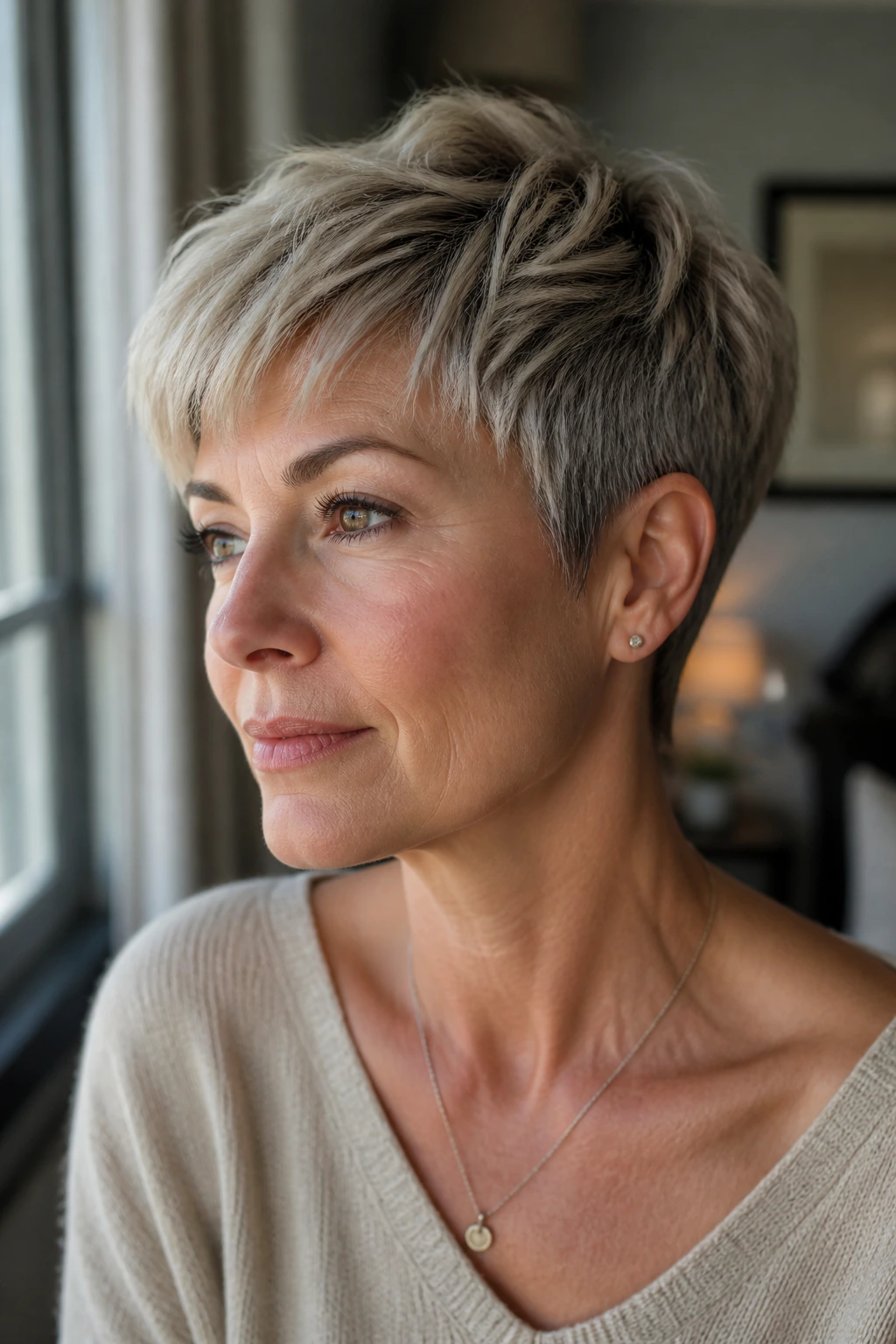
The easiest way to keep a pixie from looking severe is to soften the sides before they start to puff out or sit flat. This version keeps the top a little longer, then tapers the sides close enough to the head that the whole shape feels clean, not helmet-like. The feathered ends give it that airy, almost brushed-out finish that makes a pixie look intentional even when you’ve barely touched it.
Why It Works
The trick is in the balance: short around the ears, a touch more length on top, and point-cut ends that don’t form a hard line. That means the style moves when you shake your head, which sounds small, but on a pixie it changes everything. If your hair tends to stick straight out at the temples, this cut smooths the transition.
Best for: straight to slightly wavy hair that needs lift without bulk.
Ask for: a tapered outline, feathered top layers, and soft sideburns instead of a blunt edge.
- Keep the top at about 2 to 3 inches if you want to push it forward.
- Use a pea-size matte paste only on the tips.
- Blow-dry with the nozzle aimed down the sides to keep them sleek.
Tiny tip: don’t overload the crown with product or the feathering disappears fast.
2. Chin-Length Feathered Bob with a Deep Side Part
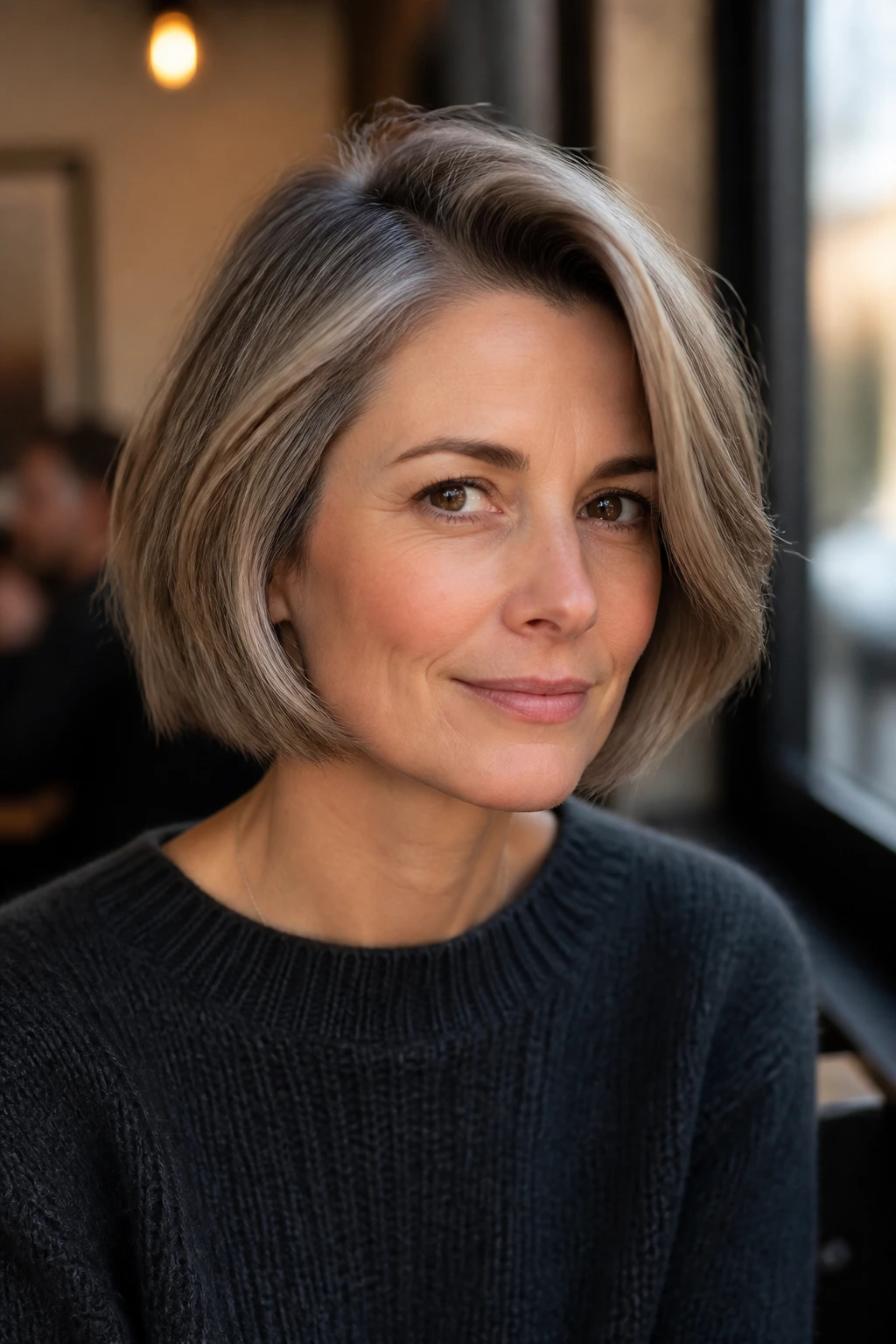
A chin-length bob can go boxy fast, especially if the ends land in one thick line. A deep side part changes the whole read of it. The heavier side creates lift at the root, while the feathered ends let the bob skim the jaw instead of sitting there like a block.
The nice part is how forgiving this version feels on day two. A little bend at the ends and a tuck behind one ear are enough. You don’t need perfect symmetry, which is a relief because symmetry is overrated on short hair anyway.
What Makes It Click
The feathering should start below the cheekbone and taper toward the neck, not get carved into the top layers. That keeps the bob from looking too airy near the part and too heavy at the bottom. If your hair is dense, ask for internal weight removal rather than aggressive thinning on the surface.
How to Wear It
- Blow-dry the heavy side first to build lift.
- Roll the ends under with a 1¼-inch round brush for a softer finish.
- Finish with a light mist of texture spray, then scrunch the ends once with your fingers.
If you wear glasses, this shape sits nicely around the frames without fighting them.
3. Bixie with Lived-In Crown Layers
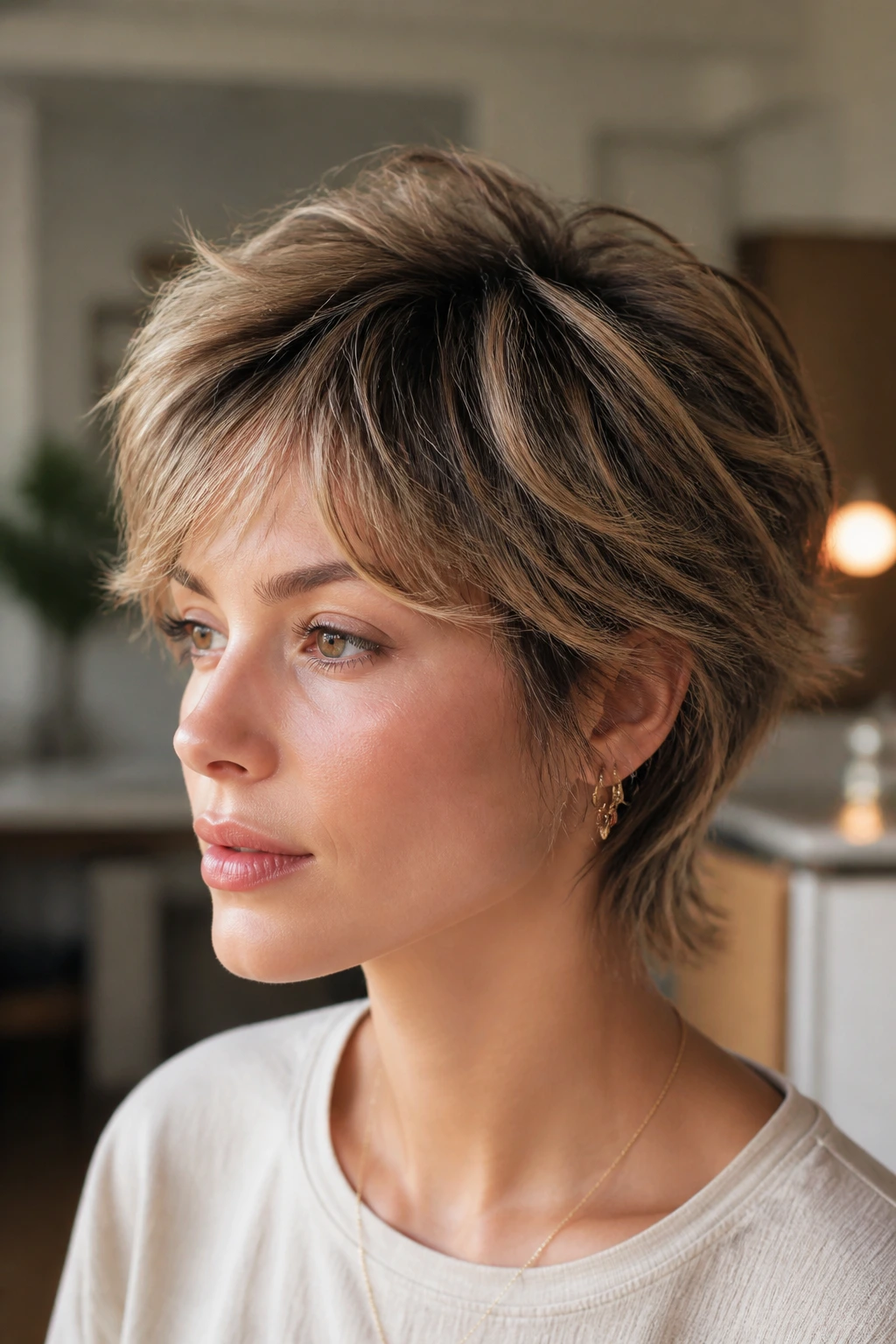
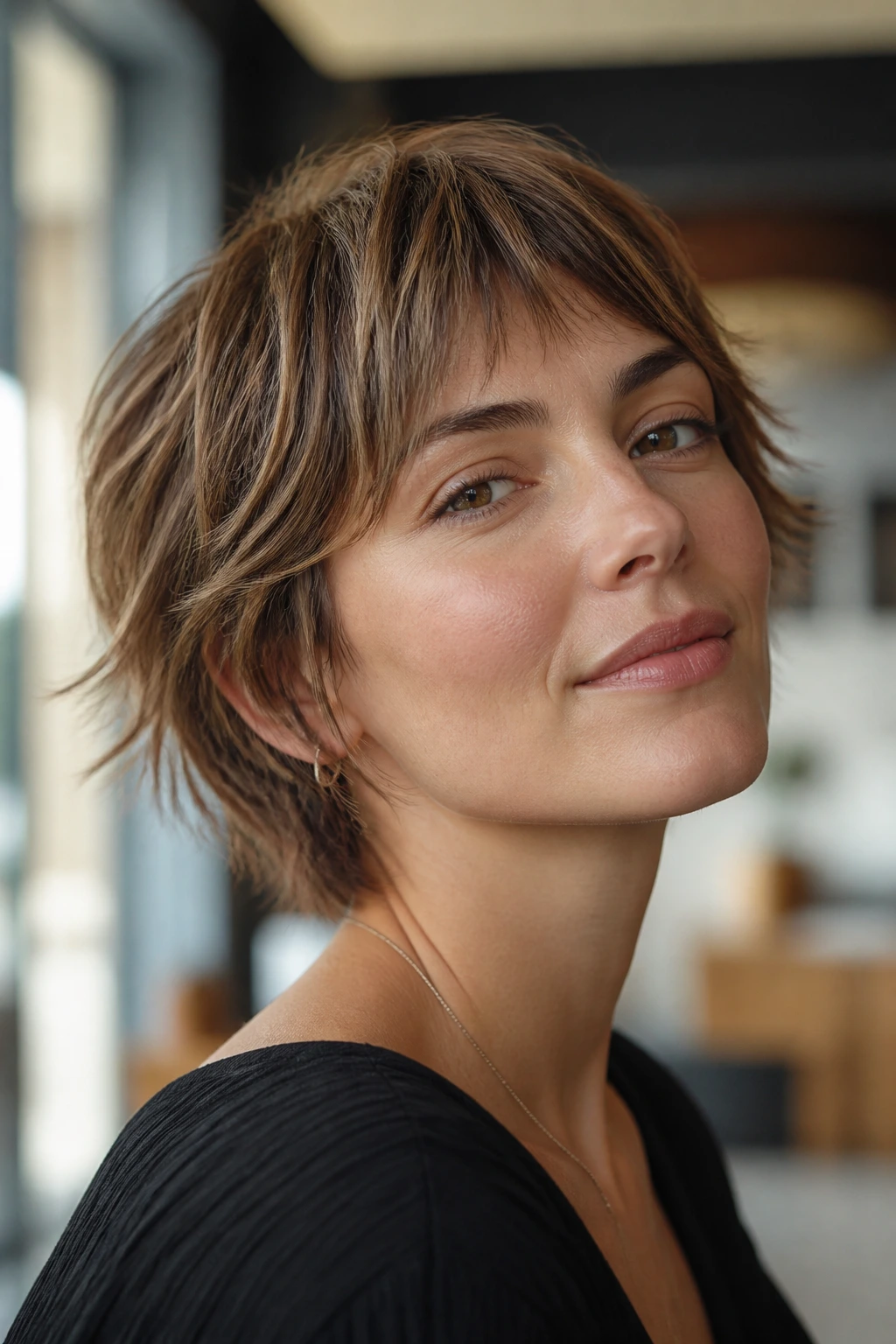
A bixie sits between a bob and a pixie, and that in-between length is where feathering starts earning its keep. The crown layers are longer than you’d use in a classic crop, so they can collapse or puff out depending on the cut. Feathering solves that by taking weight out of the crown without stripping away the fullness that gives the shape its body.
You get a cut that can be pushed back, parted to the side, or roughed up with fingers and still look like it belongs on your head. That matters more than people admit. A bixie that only behaves in one position is annoying. This one has options.
Why It Works
The crown is where the eye goes first, so the feathering there needs to be soft, not shredded. Ask for shorter nape sections, then longer, feathered pieces through the top and sides. The goal is movement with some memory—not wispy ends that separate into strings.
Styling Note
Use a lightweight mousse at the roots, then blow-dry with your fingers lifting the crown up and forward. A small round brush can go on the front pieces only.
Best detail to remember: if the top gets too short, the bixie loses its swing.
4. Wispy Feathered Crop with Side-Swept Fringe
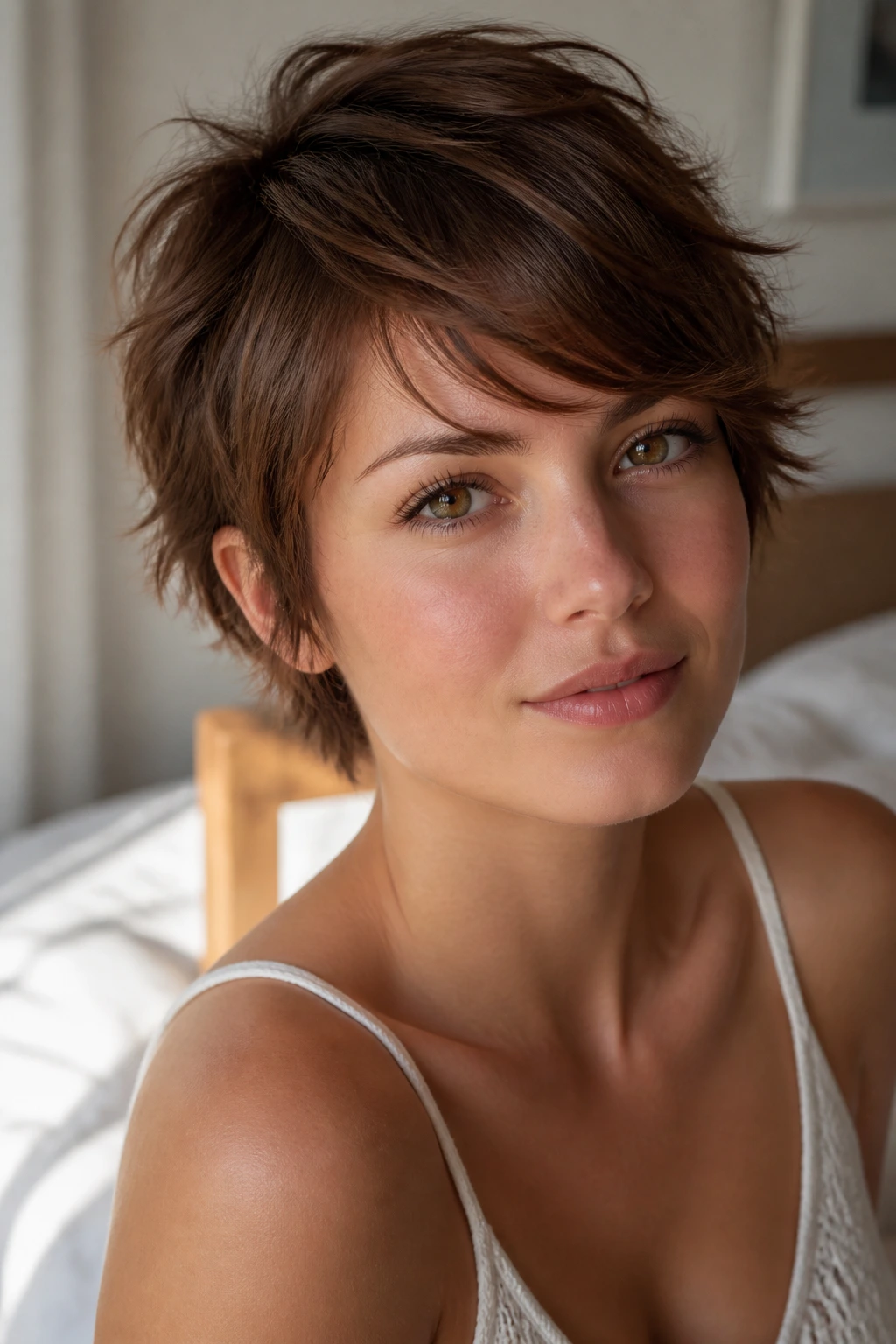
This is the cut for anyone who wants short hair that feels light around the face. The fringe sweeps across the forehead in a soft line, and the feathered crop underneath keeps the sides from swelling out. It has that breezy, slightly undone look that reads softer than a classic crop but sharper than a shag.
The fringe is the piece that changes the mood. A blunt bang would make this feel heavier. A side-swept fringe keeps the forehead open on one side and gives the cut a bit of drift, which is a nice way of saying it doesn’t sit there staring back at you.
Why It Works
The feathering through the top should be short enough to create lift, but not so short that it spikes. Think airy, not spiky. If your hairline is irregular or your forehead is shorter, this cut gives you more control because the fringe can be directed instead of forced straight down.
- Dry the fringe first so it doesn’t set in a weird cowlick shape.
- Use a small amount of cream only on the ends, never the roots.
- Ask for point-cut edges around the temples so the fringe blends.
The whole look lives or dies on softness. Keep it there.
5. Rounded Feathered Bob with Tucked Ends
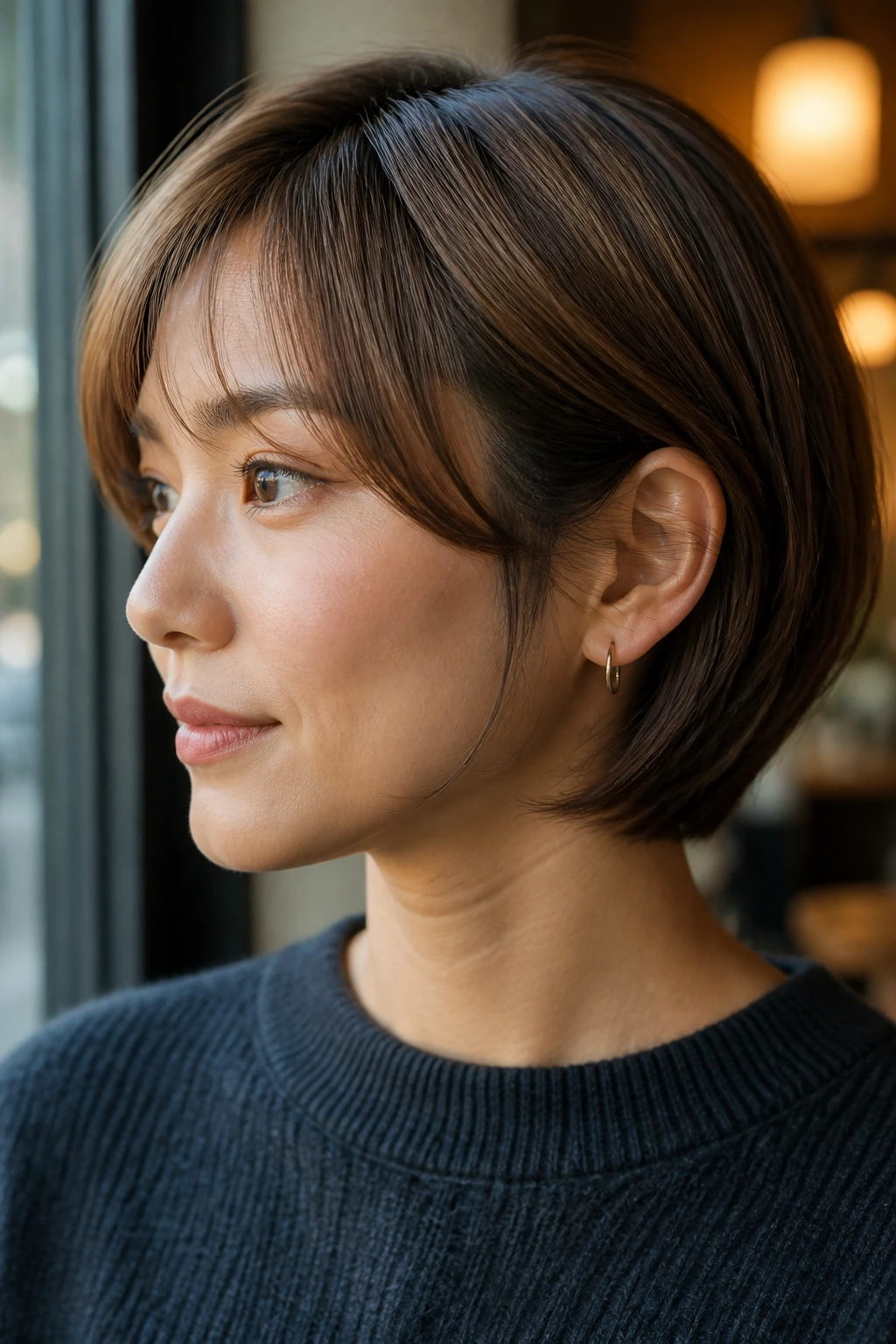
A rounded bob has one job: sit close to the head without looking stiff. Feathering helps it do that. The ends are lightly tapered so the curve at the jaw feels smooth instead of blunt, and the back keeps enough volume to hold the shape without bulging.
I like this version on people who tuck their hair behind the ear a lot. The ends don’t fight the tuck. They fold into it. That sounds tiny, but if you’ve ever had a blunt bob jab at your jaw every time you turn your head, you know why it matters.
What Makes It Stand Out
The curve should be visible even when the hair is dry and untouched. That means the stylist has to cut the shape, not rely on the blowout to fake it. Feathering at the perimeter lets the bob curve inward without turning into a mushroom.
Quick Styling Cue
Use a vent brush at the roots and a round brush only at the ends. If you curl the whole head, you’ll lose the clean outline.
Best for: straight hair that needs a little bend and thick hair that needs the bottom edge softened.
6. Long-Top Feathered Pixie with Short Nape
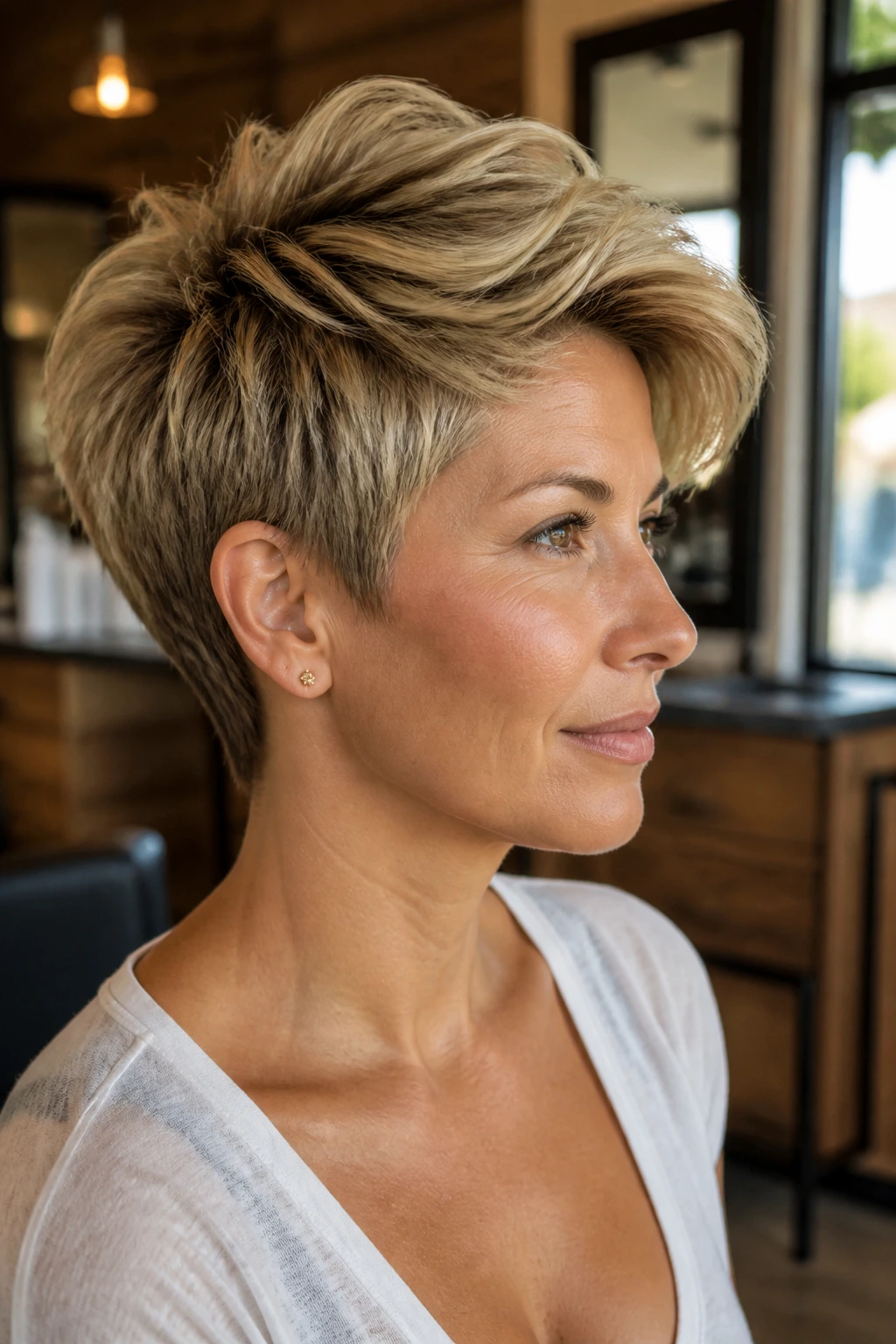
This one has attitude, but not the loud kind. The nape stays short and snug, while the top has enough length to flick back, fall forward, or sweep to the side in a single motion. Feathering through the top keeps the longer pieces from feeling heavy, which is the mistake that turns long pixies into lumpy ones.
It’s a smart cut if you like a little drama up top and a clean line through the neckline. The contrast is the point. Short at the back, airy at the crown, and soft around the temples. Done right, it looks sharp without looking hard.
Why It Works
The nape sets the clean base, and the feathered top gives you freedom. The cut needs a bit of internal layering, but not so much that the top falls apart into choppy bits. If your hair grows fast at the nape, this shape still looks good for a while because the tapered back doesn’t suddenly turn into a shelf.
Styling It Fast
Rough-dry the back first. Then use your fingers to lift the top while directing airflow from root to tip. A little paste on the front pieces gives the feathering its bend.
7. French Feathered Bob with Soft Micro Fringe
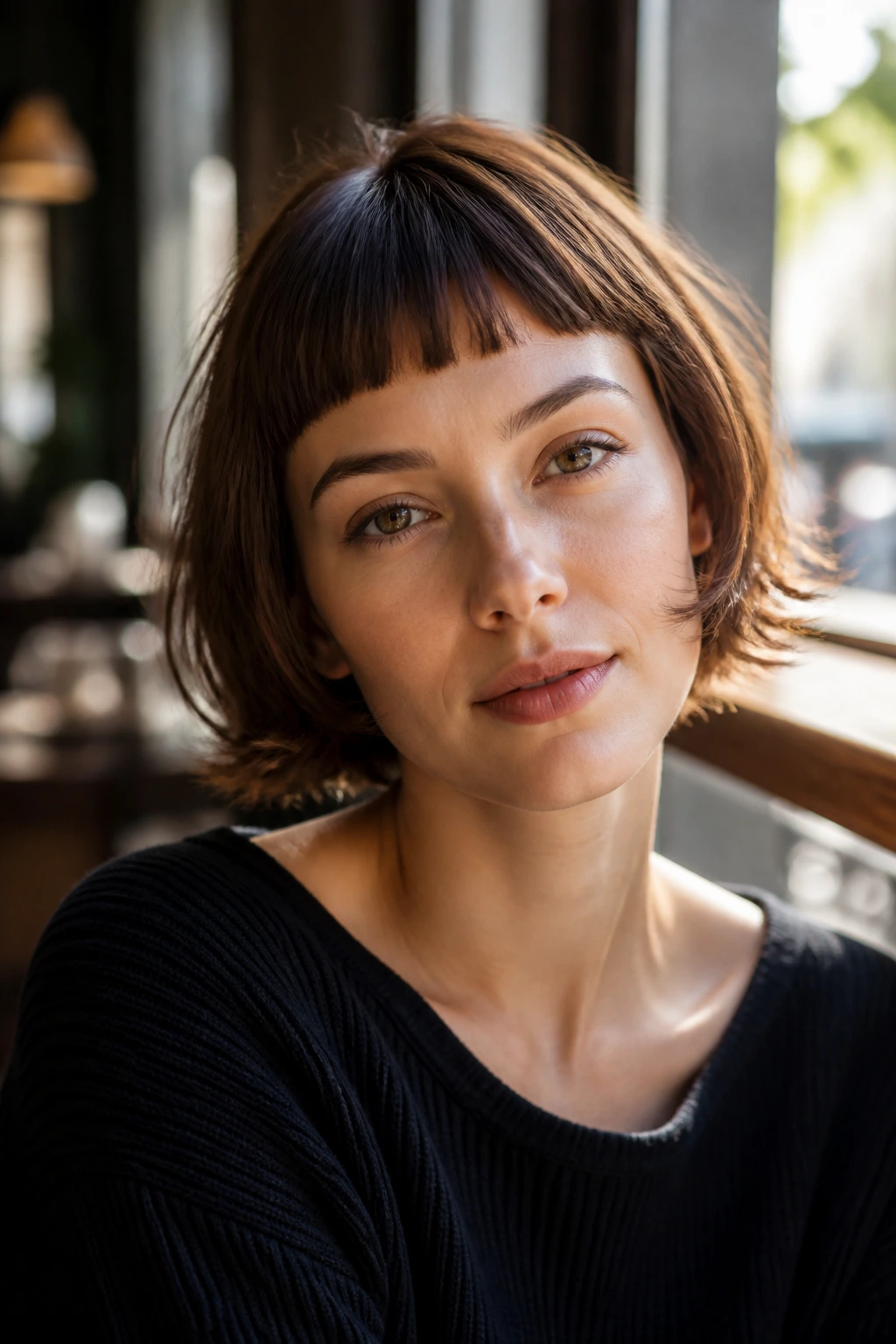
A micro fringe changes the mood instantly. It makes a feathered bob look sharper, more editorial, and a little less polite. The rest of the cut stays soft—feathered around the jaw, lightly broken up at the ends—so the tiny fringe becomes the contrast that keeps the whole thing interesting.
This is not a cut for people who want their hair to hide in the background. It has character. The fringe sits high enough to show brows, and the bob underneath keeps the outline light rather than heavy. That combination is harder to pull off than people think.
The Detail That Matters
Keep the bob a touch longer than the fringe’s visual weight suggests. If the perimeter gets too short, the cut can start looking toy-like. Soft feathering through the sides stops that and gives the hair enough movement to balance the tiny bang.
How to Wear It
- Use a flat brush or your fingers to dry the fringe first.
- Keep the ends smooth, not curled under too tightly.
- Add a whisper of shine spray on the top layer only.
The fringe is the garnish here. Don’t let it overpower the bob.
8. Short Shag with Feathered Nape
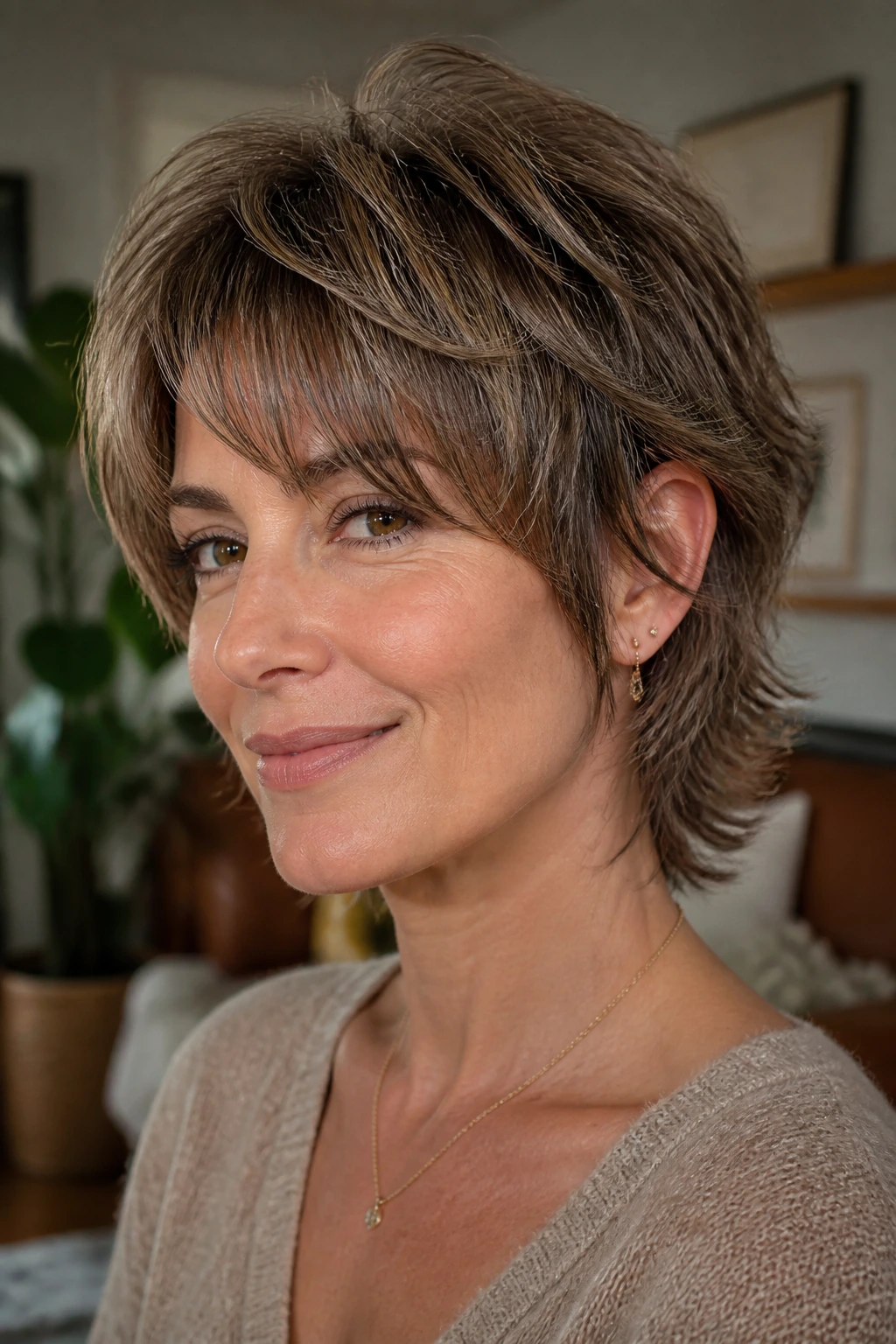
A short shag can go feral in a hurry if the nape is left too bulky. Feathering the back changes that. The neckline gets lighter, the crown keeps some lift, and the top layers sit in that broken-up, piecey way that gives a shag its edge without making it look over-cut.
This version is good when you want texture, but you don’t want the hair to stand up like it’s got opinions. The nape stays soft and close, while the top pieces move more freely. That keeps the silhouette from turning into a triangle.
Why It Clicks
The shag shape relies on contrast. Shorter pieces around the crown and sides need a softer back to keep the whole cut from feeling too stacked. Feathering removes that heavy line at the nape and lets the top layers fall more naturally.
Styling Cue
Scrunch in a small amount of mousse, then dry with a diffuser on low heat or let it air-dry halfway before touching it. Too much brushing kills the shag texture fast.
9. Fine-Hair Feathered Crop with Lifted Crown
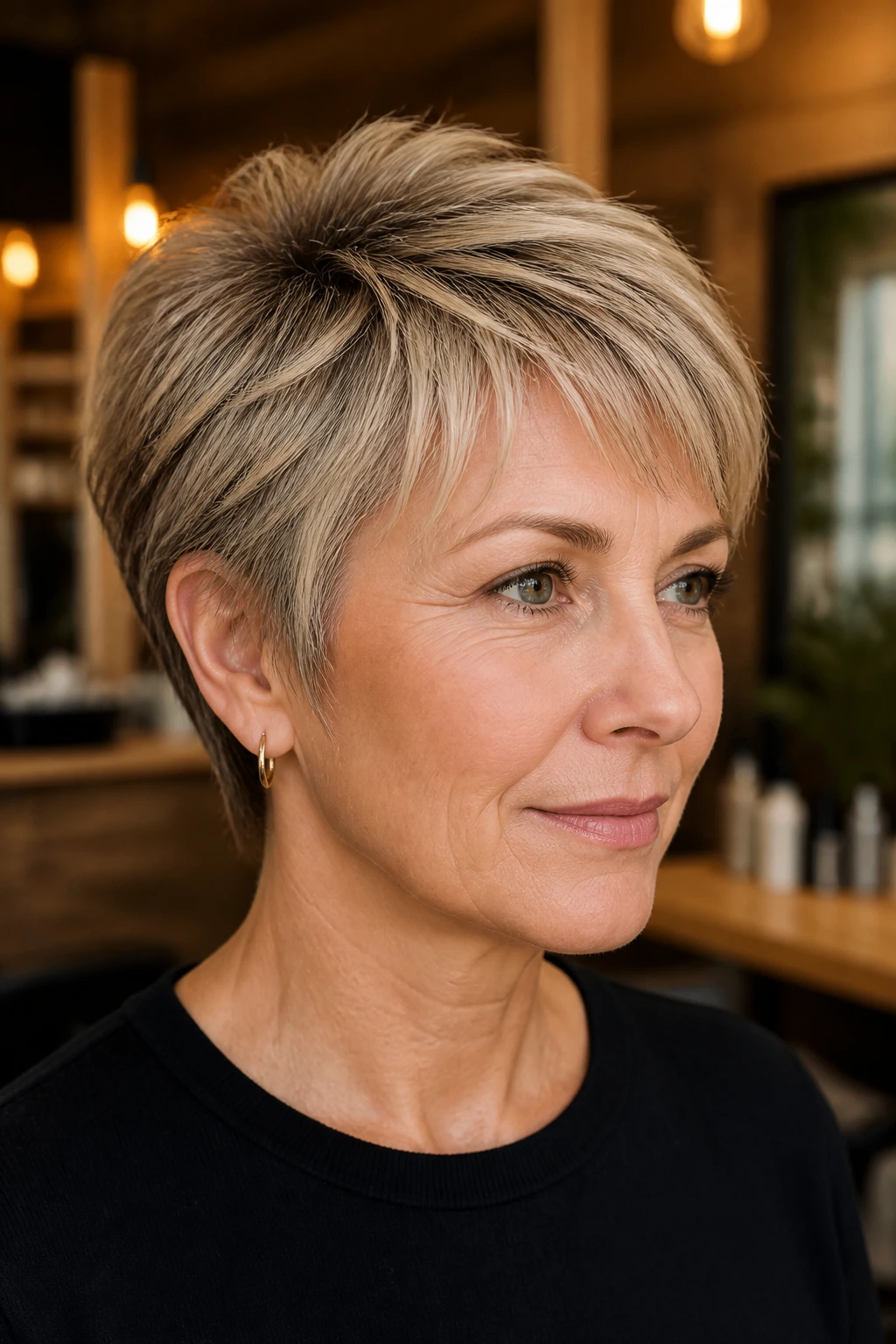
Fine hair needs a careful hand. Too much thinning and it goes see-through. Too little and it droops. This crop uses feathering sparingly at the crown, which keeps the roots lifted while the ends still have enough body to look full. It’s one of the best versions for people who want short hair that doesn’t collapse by noon.
The shape should feel light, but not sparse. That’s the line to hold. A tiny bit of lift at the crown and soft tapering around the temples can make fine hair look far more alive than a blunt cut ever does.
What to Ask For
Ask for feathering only in the top surface and around the perimeter, with enough internal weight left underneath to support the style. If the stylist starts talking about “removing bulk” and your hair is already fine, slow that conversation down.
Styling Notes
- Use mousse at the roots before drying.
- Flip the head upside down for the first minute, then smooth it back into place.
- Dry shampoo on day two gives the crown a second life.
10. Bob with Curtain Bangs and Feathered Sides
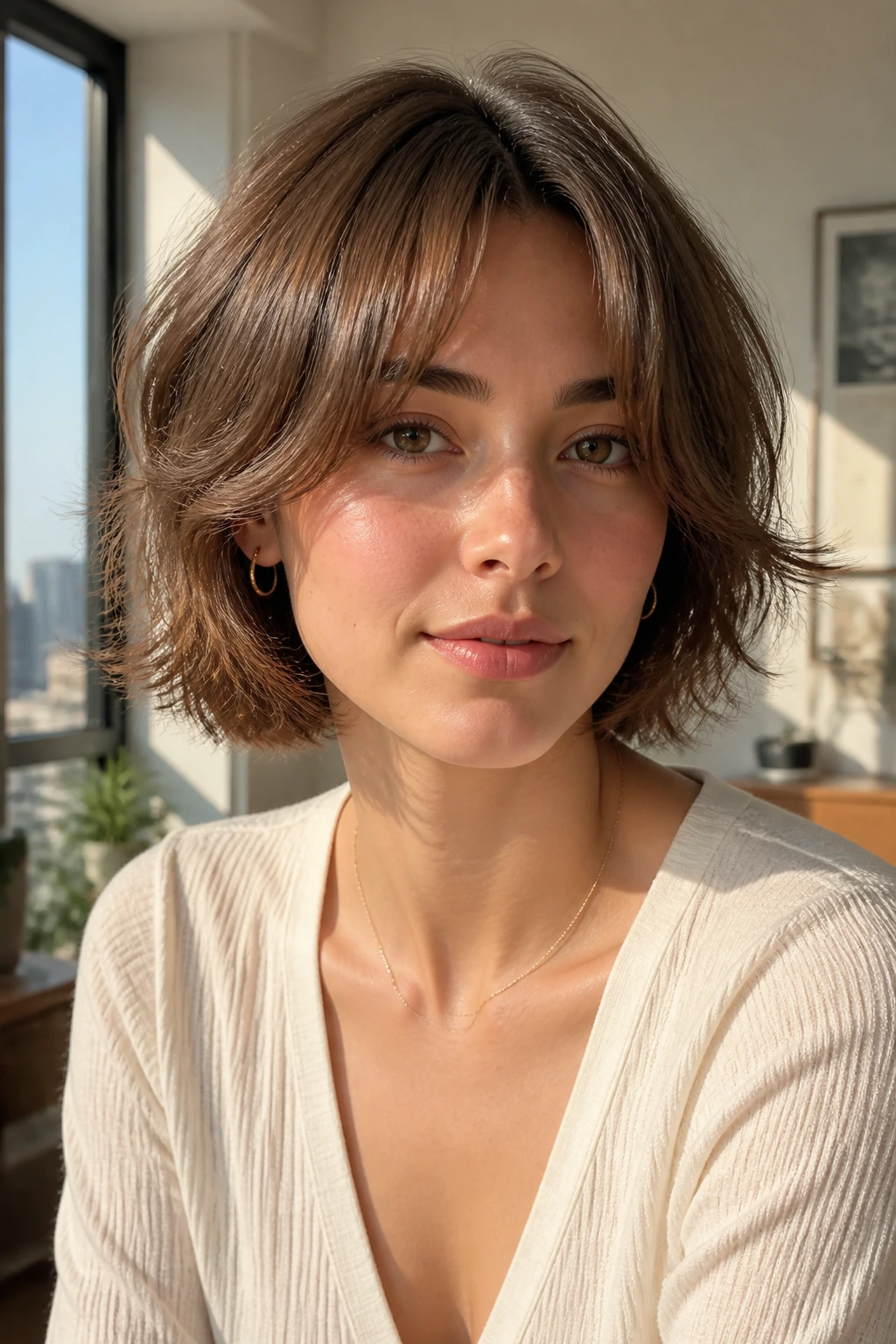
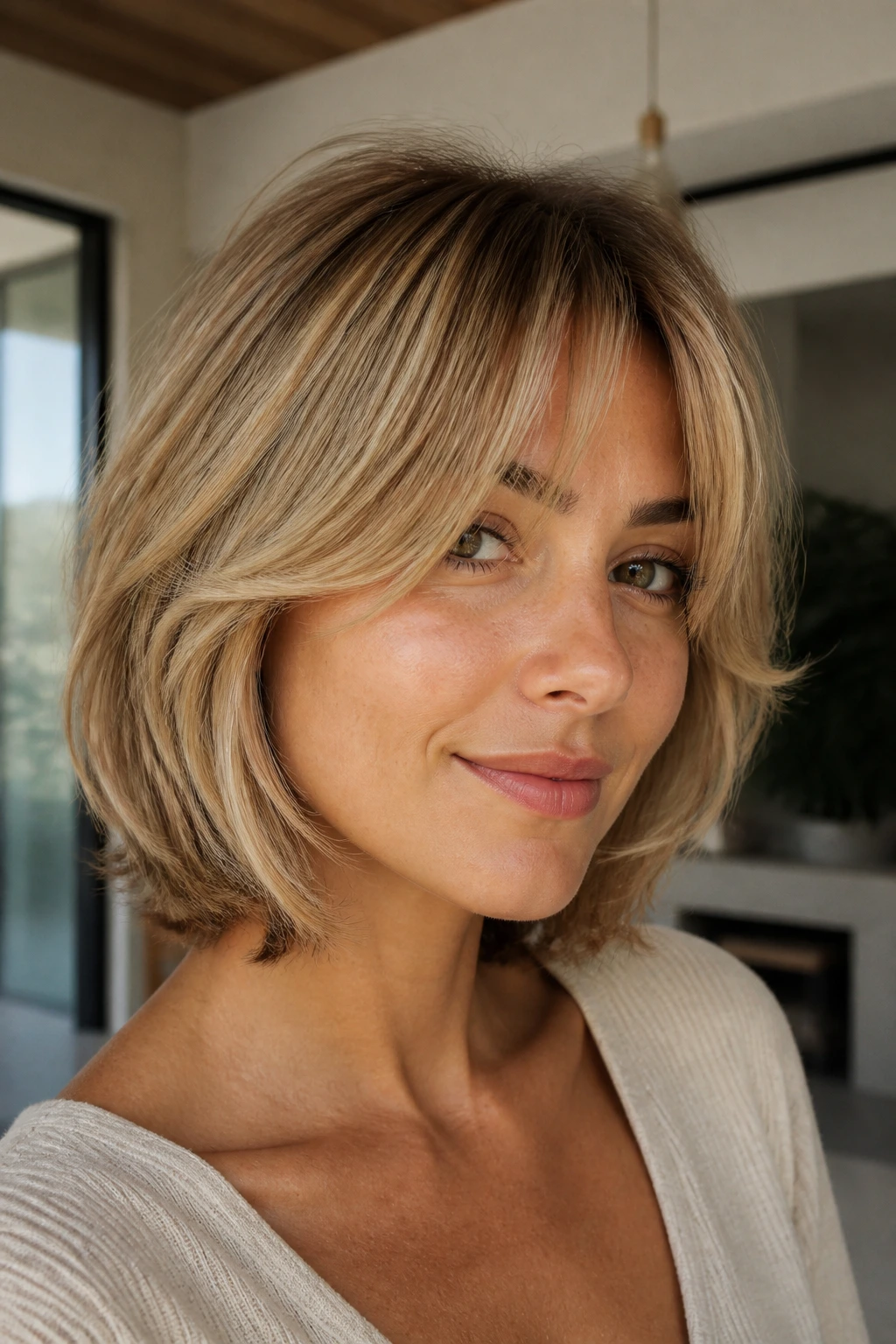
Curtain bangs are forgiving, and on short hair they do a lot of work. They open the face, soften the forehead, and let the bob sit without that heavy horizontal line that blunt cuts create. The feathered sides connect the fringe to the rest of the cut so the shape feels blended rather than split into two separate ideas.
This is one of those styles that looks easier than it is. The bang placement has to be right. Too short, and the curtain effect disappears. Too thick, and it starts acting like a curtain in the literal sense—flat and heavy.
Why It Works
The center of the fringe should be a little shorter, with longer pieces that fall toward the cheekbones. Feathering those side sections helps them bend outward instead of hanging straight down. That gives the bob room to breathe around the face.
Styling It
Blow-dry the bangs side to side with a round brush, then finish by directing each side away from the middle. A tiny touch of cream on the ends keeps them from fraying.
11. Thick-Hair Feathered Pixie with Chipped Ends
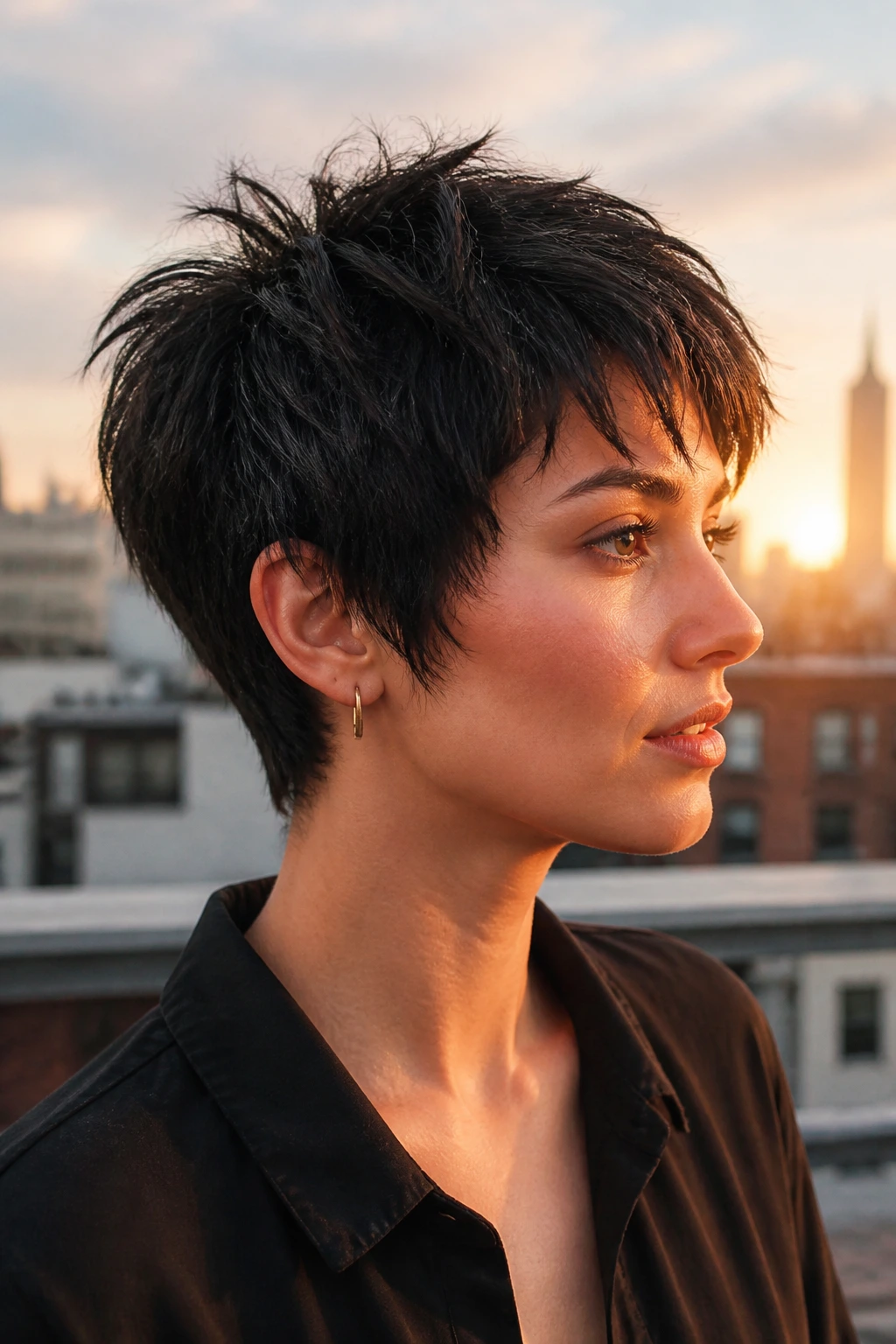
Thick hair can make short cuts feel dense in a hurry. A feathered pixie with chipped ends solves that by taking the edge off the bulk, especially through the top and sides where thickness likes to gather. The goal is a piecey finish, not a frayed one.
The cut should never look stripped thin. That’s the trap. Thick hair needs weight control, not a desperate attempt to make it disappear. If the ends are chipped properly, the shape stays lively while the density drops enough to sit near the head.
What Makes It Work
The best version uses controlled point cutting on the outer layers and keeps the interior from getting hacked apart. Ask for texture at the crown, a close nape, and a little extra length at the front if you want the piecey effect to show.
Good to know: thick hair often looks best when the ends are slightly irregular, not perfectly even.
Quick Styling
Work a fiber cream through dry hair with your fingertips. Pinching the ends is better than combing the product through.
12. Tapered Feathered Cut with a Hidden Undercut
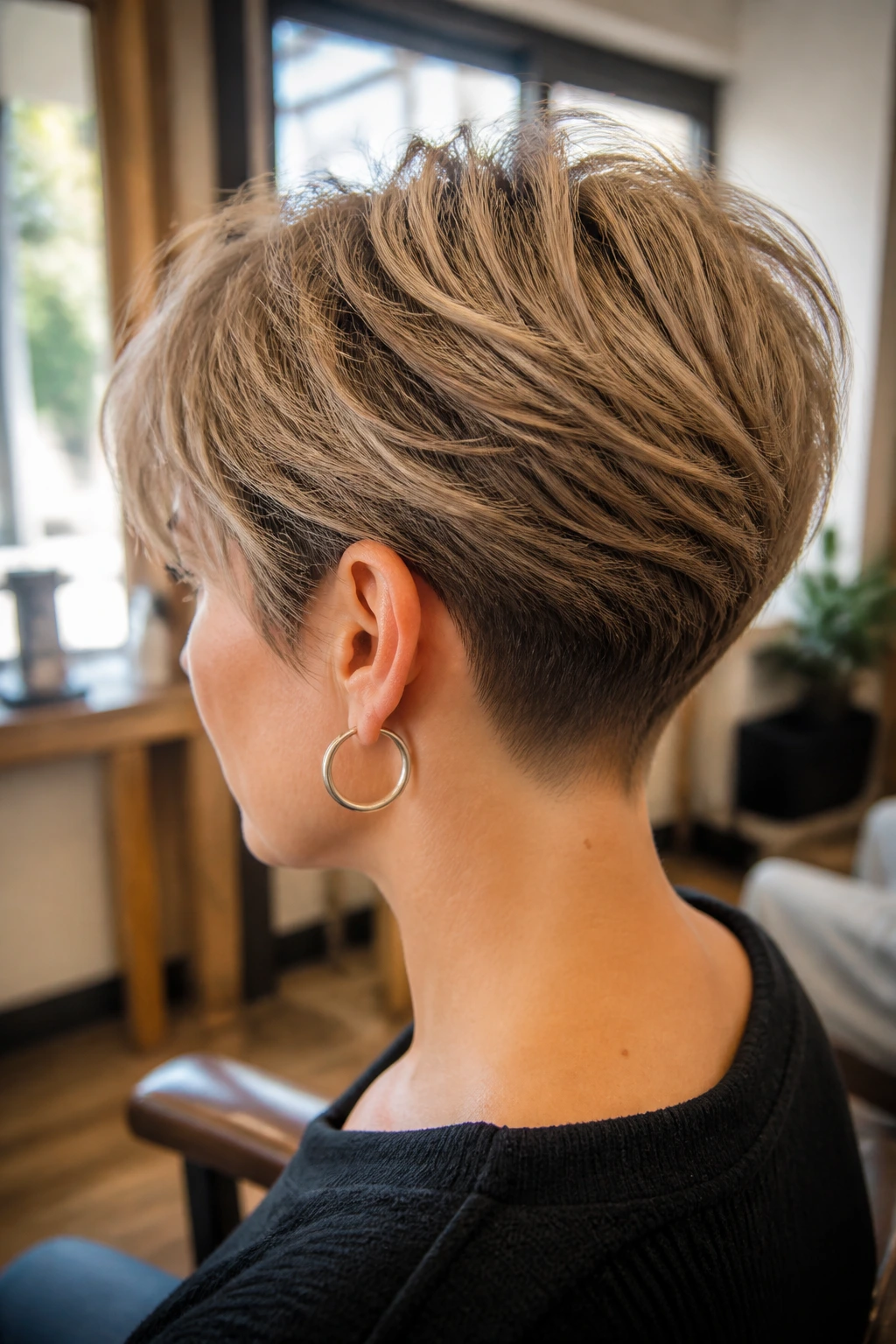
This cut is for people who want short hair that stays clean under the surface. The hidden undercut removes bulk where you can’t see it, while the feathered top keeps the haircut from looking shaved or severe. The result feels lighter, cooler, and much easier to style if your hair grows dense at the neck.
It’s a good move when the back of your head tends to puff out. The undercut tames that, and the feathering lets the top sit softly over it instead of clinging to a hard line.
Why It Works
The top layer should be long enough to cover the undercut fully when worn down. Feathering then gives the visible surface a soft, moving finish. If the cut is too short on top, the undercut shows too much and the whole thing loses that seamless look.
Styling Idea
Use a flat brush to direct the top forward or to the side, then finger-rake the pieces around the face. You want movement, not separation.
13. Wavy Feathered Crop with Air-Dried Texture
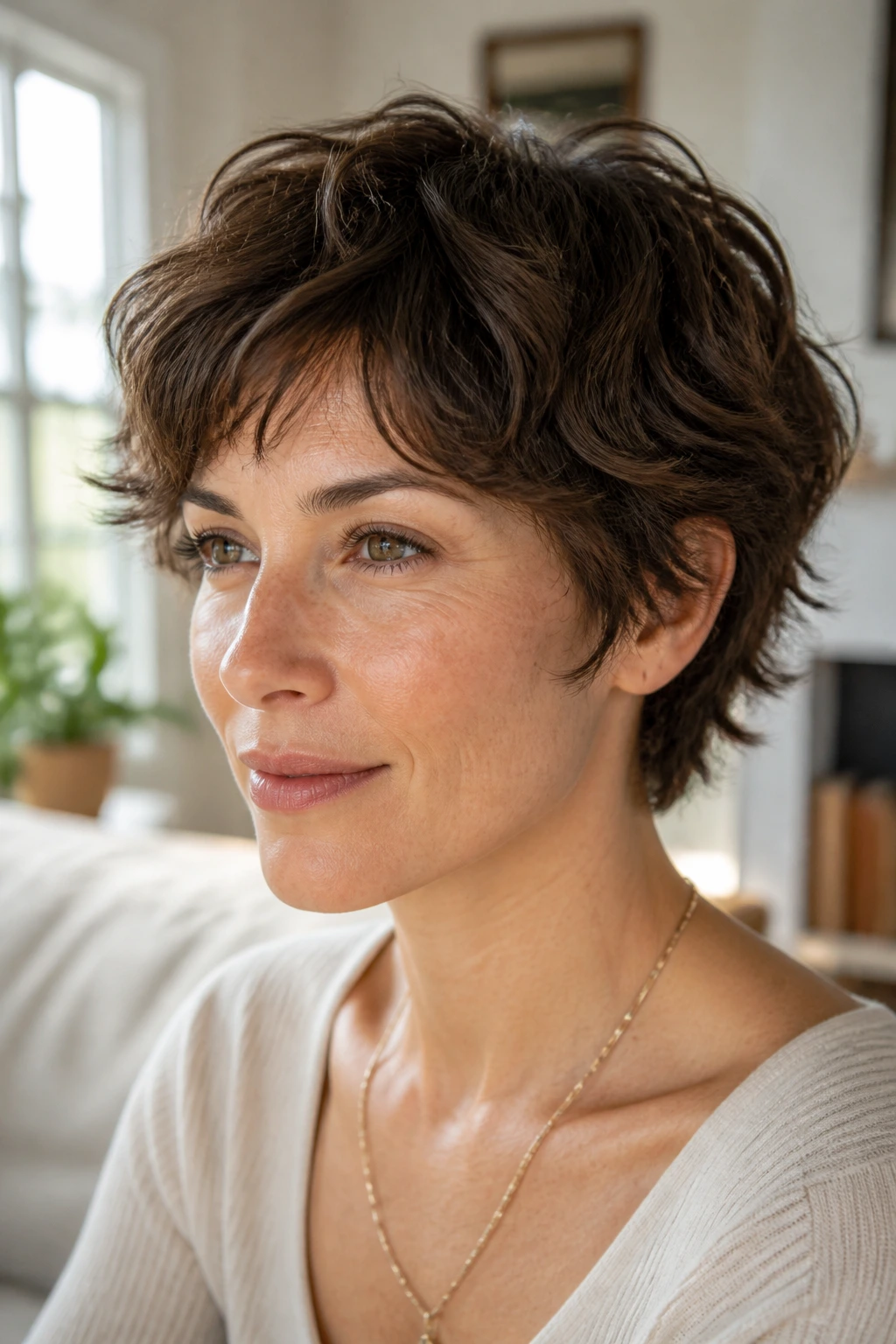
Wavy hair and feathering get along beautifully when the cut respects the wave pattern. This crop keeps enough length for the wave to show, then softens the ends so the shape doesn’t balloon out. Air-dried, it looks relaxed; blown out, it can look a little more polished. Either way, the movement is built in.
The danger with waves is overworking them. Too much brushing and the texture frizzes. Too much product and the feathered ends clump. The sweet spot is a light hand and a cut that already knows where the wave wants to go.
What to Ask For
Ask the stylist to cut it dry or mostly dry if your waves are strong. That lets them see where the feathering should land. If they cut it wet and guess, you can lose the shape once it dries.
Style It Like This
- Mist with leave-in spray.
- Scrunch in a small amount of curl cream.
- Let it air-dry most of the way before touching it.
The less you fuss, the better it looks.
14. A-Line Feathered Bob with Swingy Front
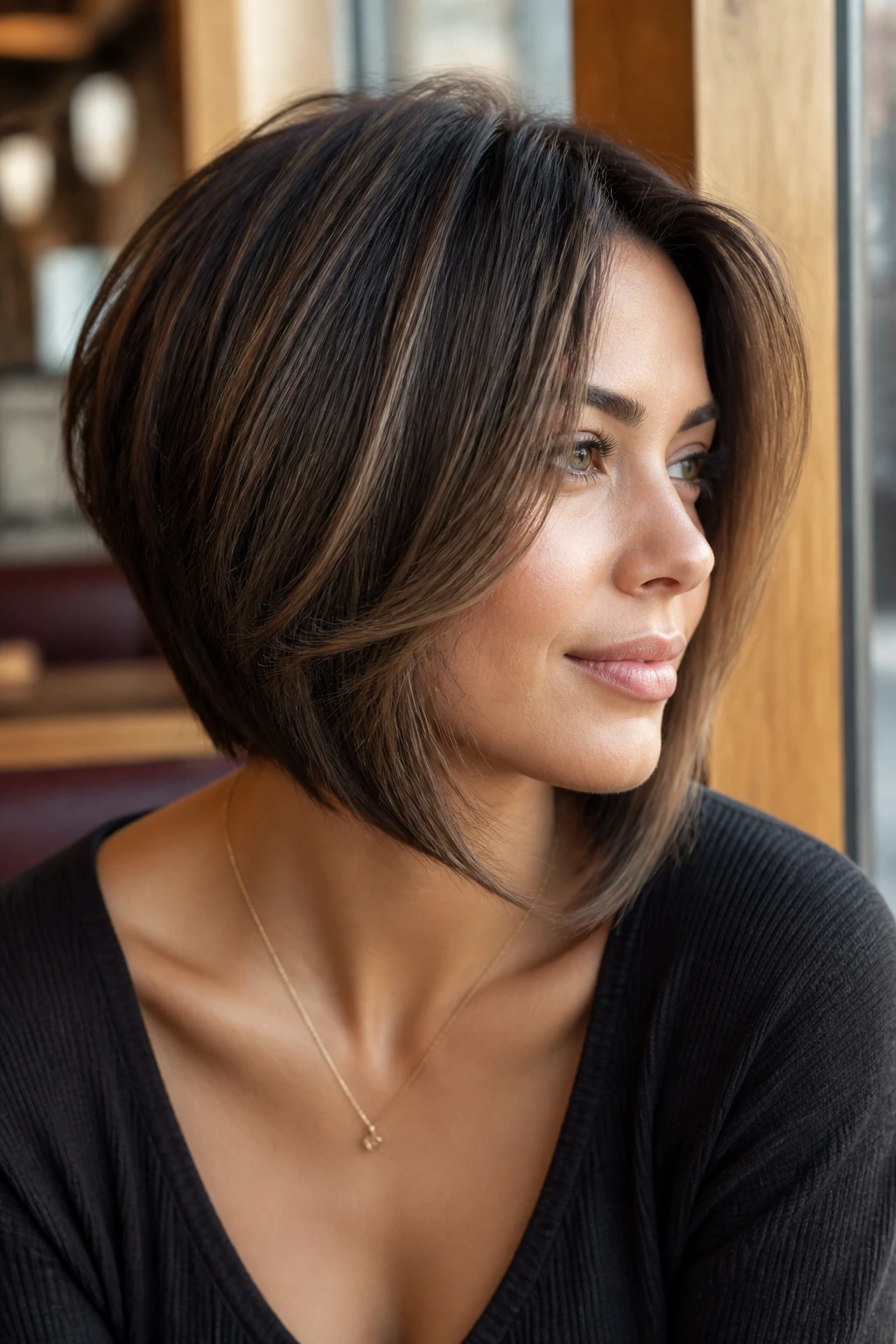
An A-line bob has a built-in angle, but feathering stops the front from looking too hard. The back sits a little shorter, the front skims longer toward the jaw, and the feathered ends keep the slope soft. It’s a cleaner, lighter version of the classic angled bob, which can otherwise start feeling a bit bossy.
The swing happens at the front. That’s the part to protect. If the front is feathered too much, the angle disappears. If it’s too blunt, the haircut looks stiff. The best version lands somewhere in the middle.
Why It Works
The shape creates motion on its own, and the feathering keeps the movement from turning into a solid wedge. Think of the ends as softened steps rather than one bold line. That difference matters, especially if your hair is straight and likes to show every cut line.
Styling Cue
Dry the front pieces forward, then bend them slightly away from the face at the last inch. It keeps the angle visible without turning the bob into a curl.
15. Micro Bob with Razor-Soft Ends
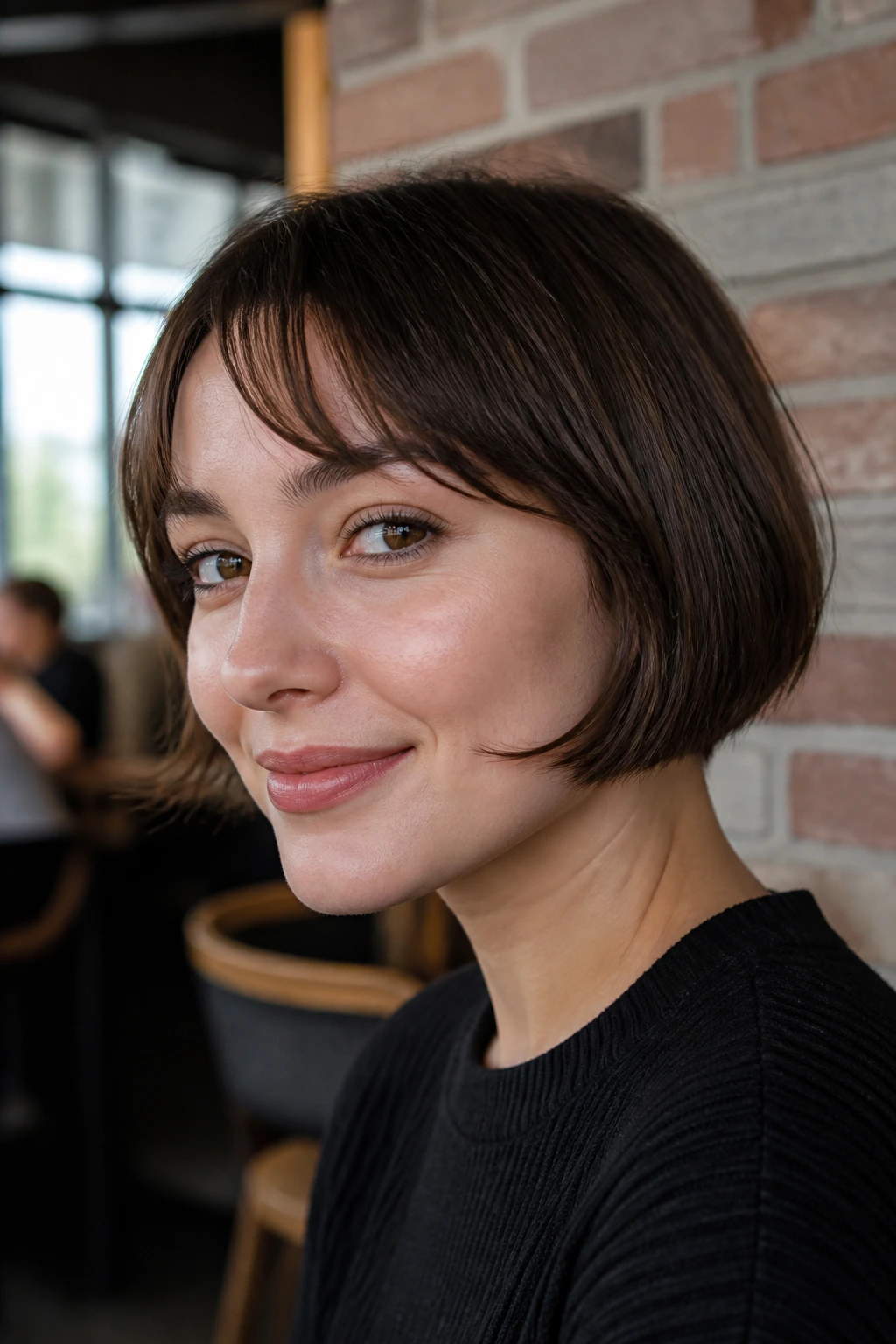
A micro bob sits right at the edge of short hair and needs softness to keep from looking too exact. Razor-soft ends do that job well. They remove the heavy line at the bottom and give the cut a bit of air, which is useful when the length lands around the lip or just below the cheekbones.
I like this cut on people who don’t want a lot of styling drama. It can look neat with almost no effort. But it only works if the ends are handled carefully. A heavy blunt line on a micro bob can look abrupt fast.
The Detail That Matters
The razor should be used lightly. Not shredded through the whole head. Just enough to soften the perimeter and let the hair move. If your hair is already fragile or very fine, scissors may be safer than razor work.
How to Wear It
Tuck one side behind the ear, leave the other loose, and add a mist of shine spray. That’s usually enough.
16. Textured Pixie-Bob with Piecey Layers
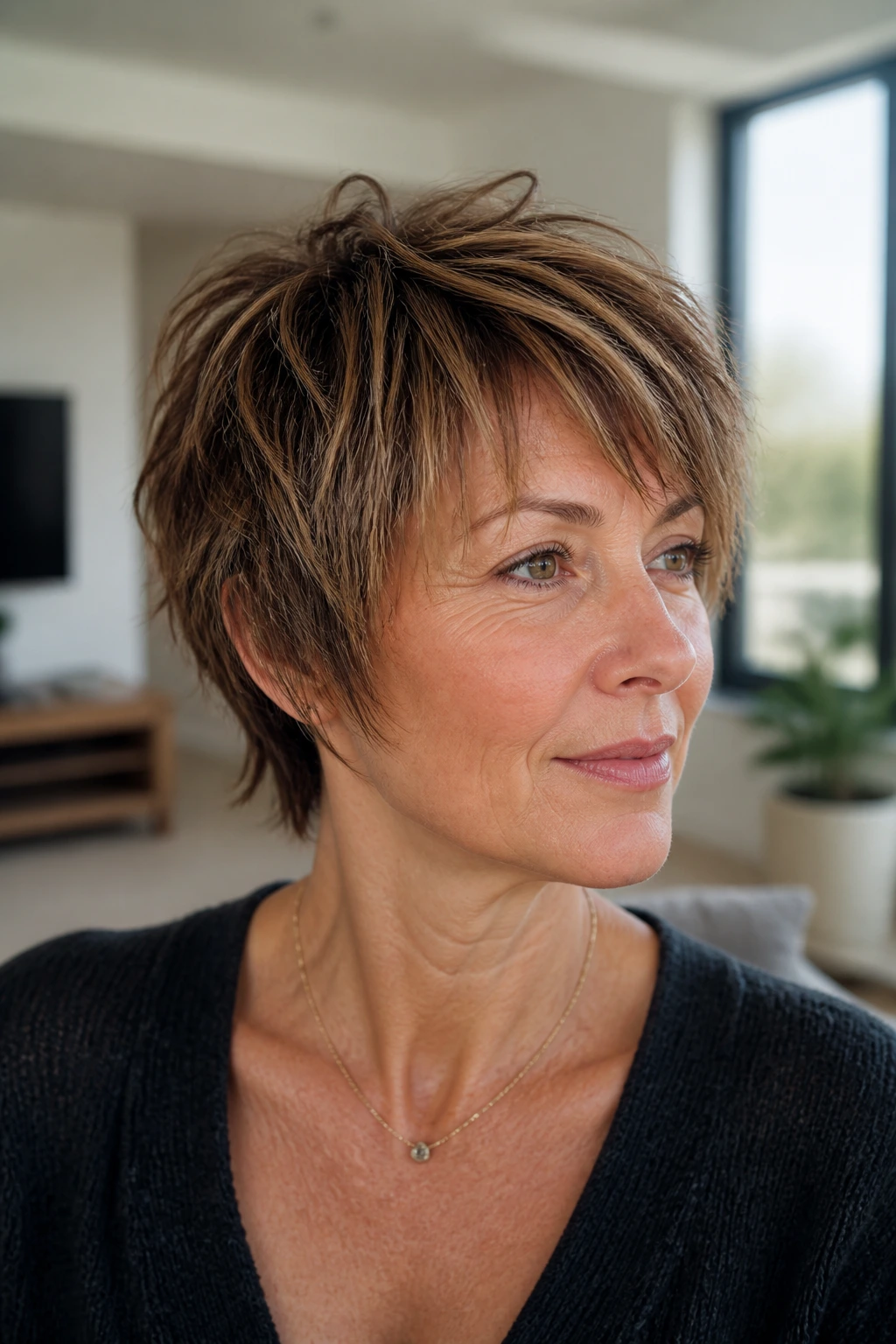
The pixie-bob is a shape people either love instantly or ignore because they haven’t seen the right version. Feathering gives it the link between the shorter back of a pixie and the slightly fuller front of a bob. The piecey layers keep it modern, not puffy.
What you want here is separation. Not stringiness. There’s a difference. The layers should sit apart just enough to show movement, but still read as one haircut when you glance in the mirror.
Why It Works
The front can stay a little longer for softness around the jaw, while the back stays tighter and more lifted. Feathering through the middle sections keeps the transition smooth. That’s what saves it from looking like two different haircuts stitched together.
Styling Tip
Use a small amount of paste on dry hair and pinch the ends where the layers fall. If you comb it out after, you’ll flatten the texture you just created.
17. Feathered Cut with Long Swoop Bangs
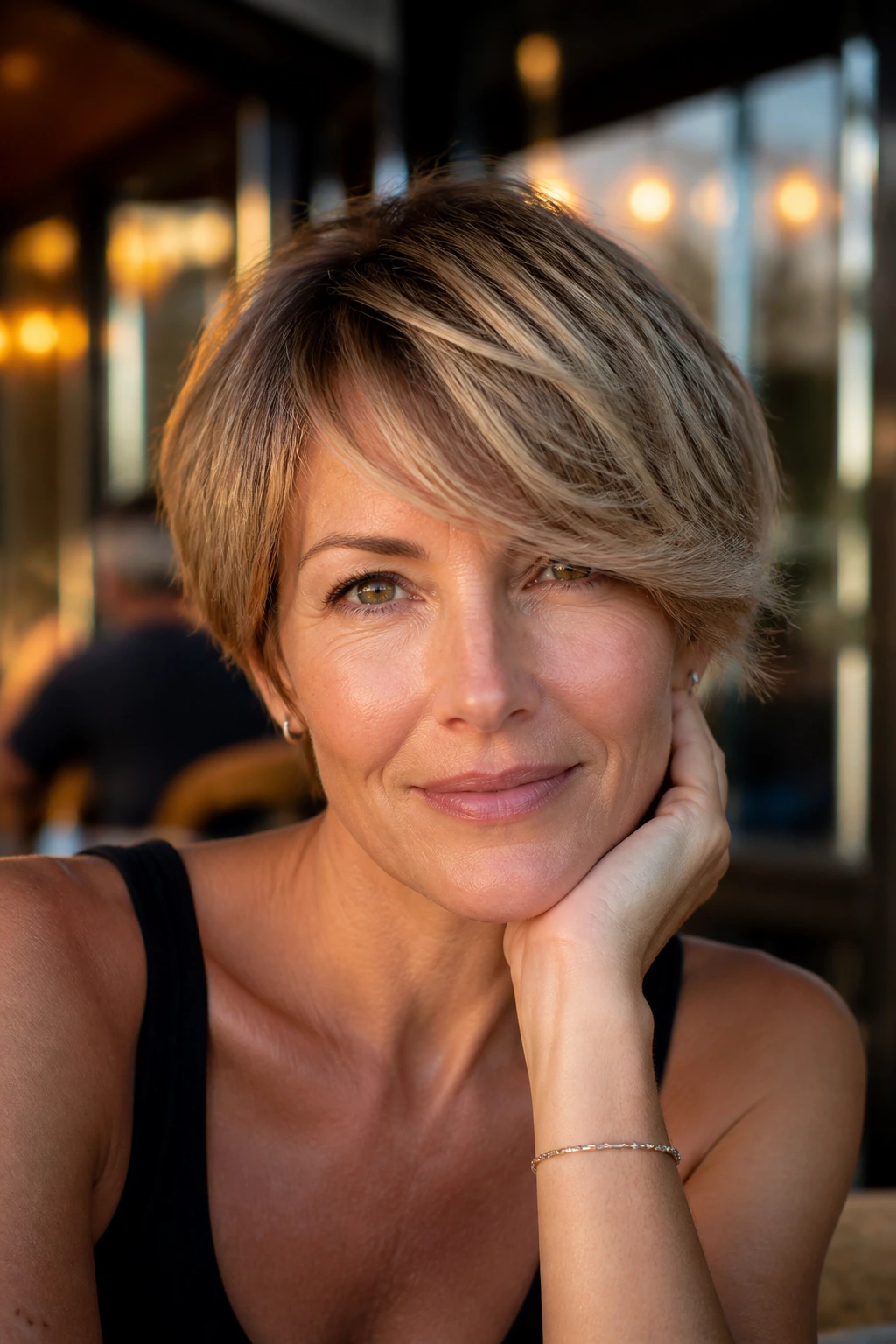
Long swoop bangs are the kind of fringe that can rescue a short cut on a day when nothing else wants to behave. The feathered sides help the bangs blend back into the haircut instead of sitting on the forehead like a separate curtain. The result feels softer, more directional, and a little more grown-up.
This shape is especially useful if you want to hide a strong forehead line or soften a square hairline. The bang can drift across the face without stealing the whole show. Nice balance. No hard edge.
How It Comes Together
Keep the bang long enough to sweep diagonally from part to cheekbone. If the feathering around the temples is too short, the bang loses its path and starts jutting out. That’s the part to watch.
Styling It
Blow-dry the bang from side to side, then pin it for a few minutes while it cools. That little cooling trick helps the curve stay put.
18. Neck-Hugging Bob with Soft Feathering
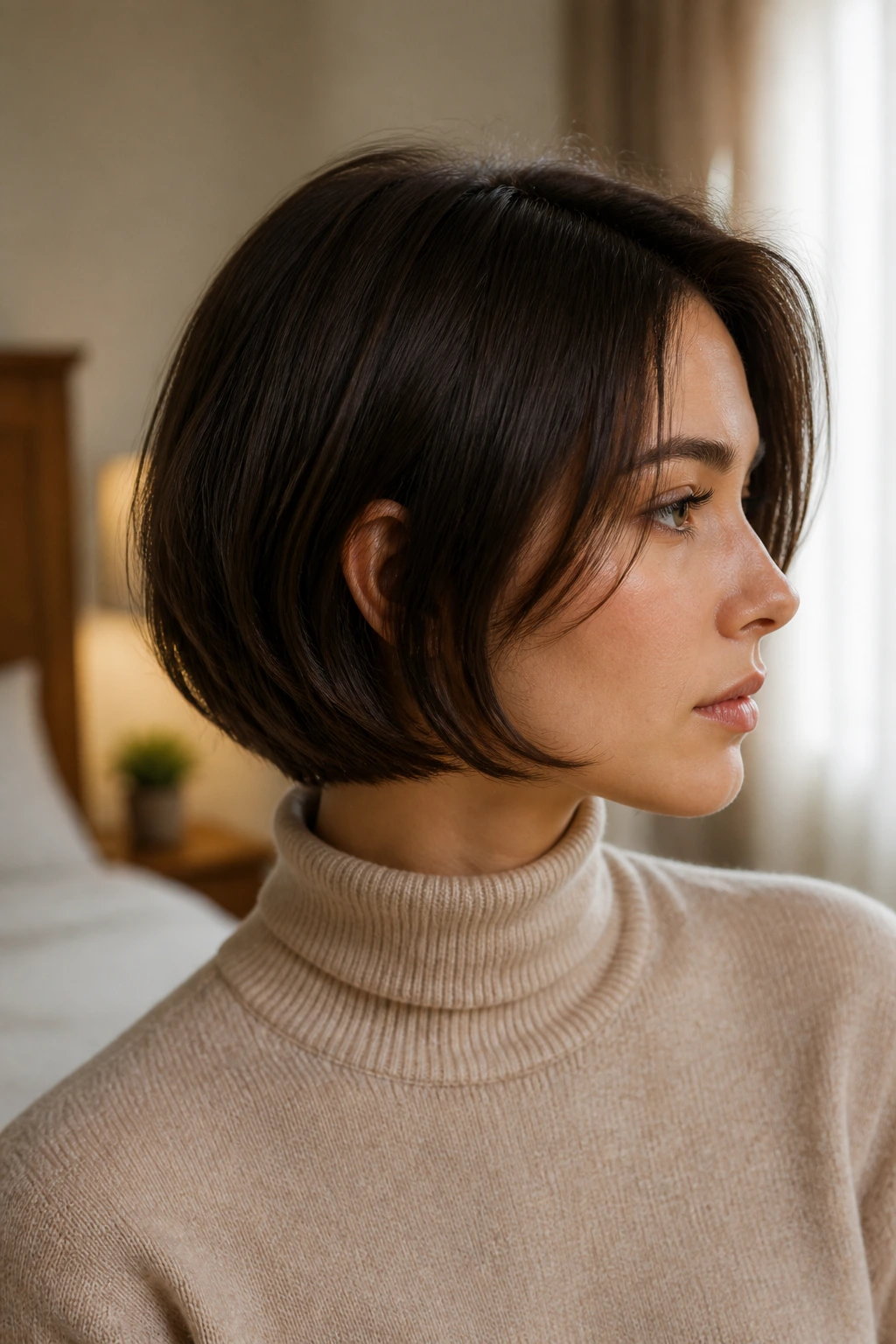
A neck-hugging bob sits close to the nape and gives off that clean, tailored look that works especially well with feathered ends. The softness at the perimeter keeps the cut from looking severe. Without that feathering, the shape can feel like a hard shelf. With it, the bob slips around the neck and moves when you turn your head.
The neckline is where this cut earns its keep. If you wear scarves, high collars, or jackets with a lot of structure, the bob still sits neatly instead of fighting your clothes.
Why It Works
The back should curve inward gently, while the front stays slightly longer to keep the silhouette from getting too tight. Feathering reduces the blunt edge and lets the bob settle into the shape of the head.
Style Note
Dry the nape first. If you leave it damp too long, it can puff up and lose that close fit.
19. Straight-Hair Feathered Crop with Clean Edges
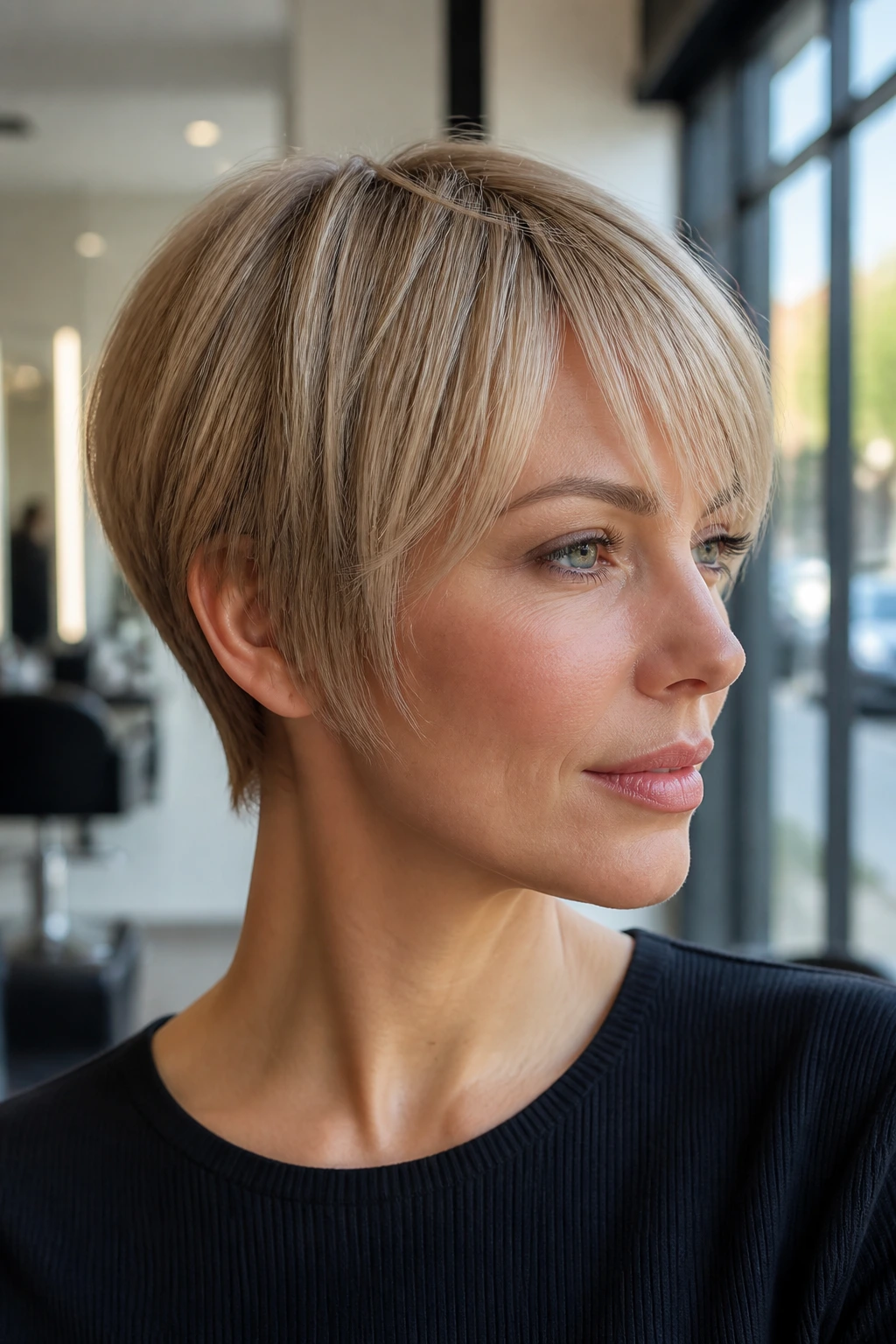
Straight hair can make feathering look either crisp or flat depending on how the cut is handled. This crop keeps the edges clean, then softens them just enough so the whole style doesn’t become a ruler-straight line. The result is sleek, but not severe.
This version is good when you want order. Not stiffness. The feathering should be subtle, almost quiet, with just enough taper to keep the ends from looking cut with a single pass of scissors.
What Makes It Work
The shape depends on precision. Too much texture and straight hair starts to look wispy in a bad way. Keep the feathering around the perimeter and slightly through the top, then leave enough weight in the middle to hold the crop together.
Quick Styling
Run a flat brush through the top while drying, then use your fingers to separate only the front pieces. That keeps the finish clean.
20. Round-Face Feathered Bob with Cheekbone Lift
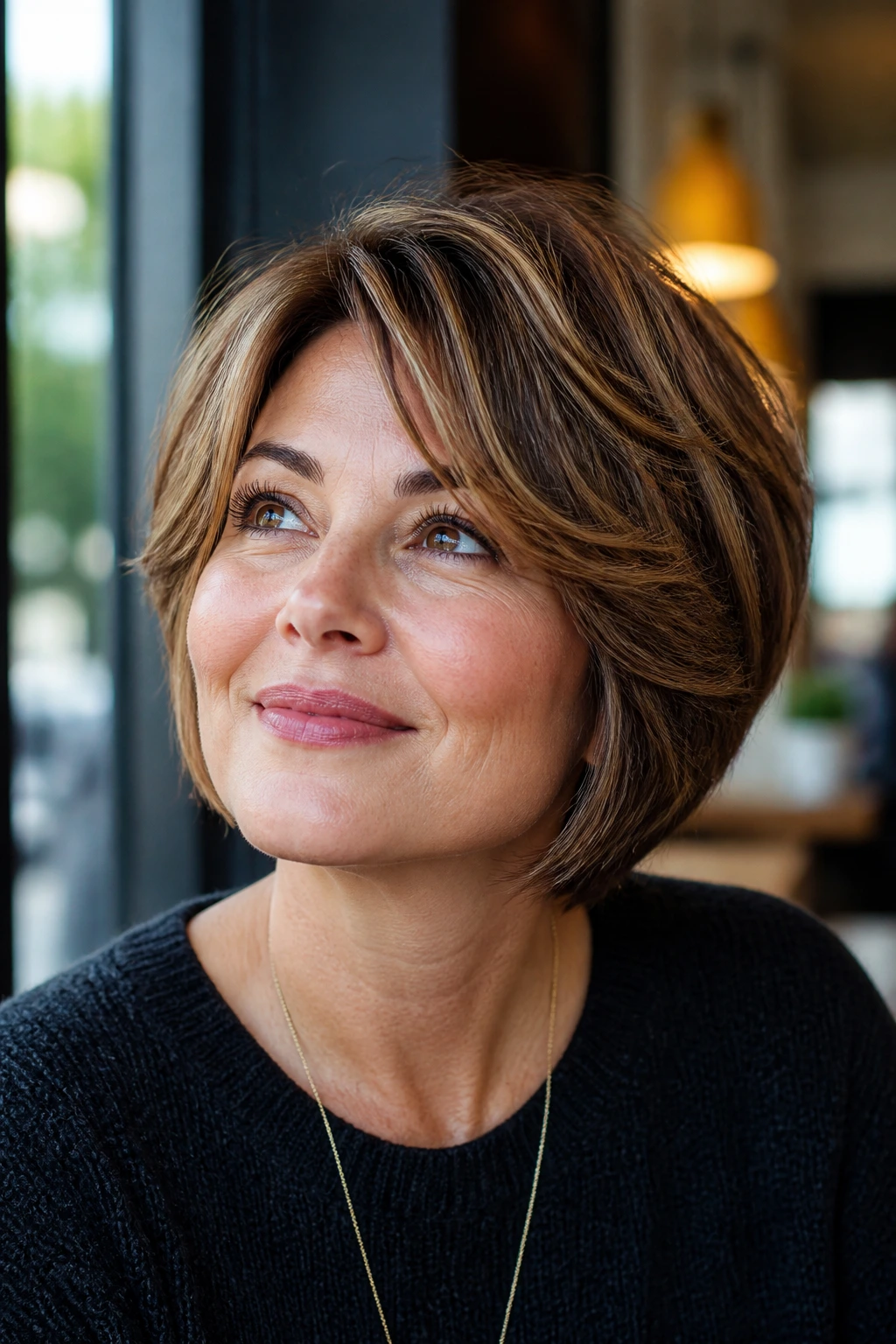
A round face does well with height near the crown and movement near the cheekbones. This feathered bob uses both. The length skims just below the jaw, while the tapered front pieces draw the eye upward and outward. It’s a smart silhouette when you want softness but also a little structure.
The key is not filling out the sides too much. That’s the mistake that makes short bobs sit wide. Feathering the front sections helps keep the shape vertical enough to flatter the face without feeling severe.
Why It Works
Ask for more lift at the crown and a longer angle in front. The side pieces should brush the cheekbone, not stop above it. That little drop changes the whole profile.
Styling Cue
Blow-dry the top upward first, then smooth the front down and forward. You want height at the root, not poof along the sides.
21. Tucked-Behind-Ear Feathered Cut
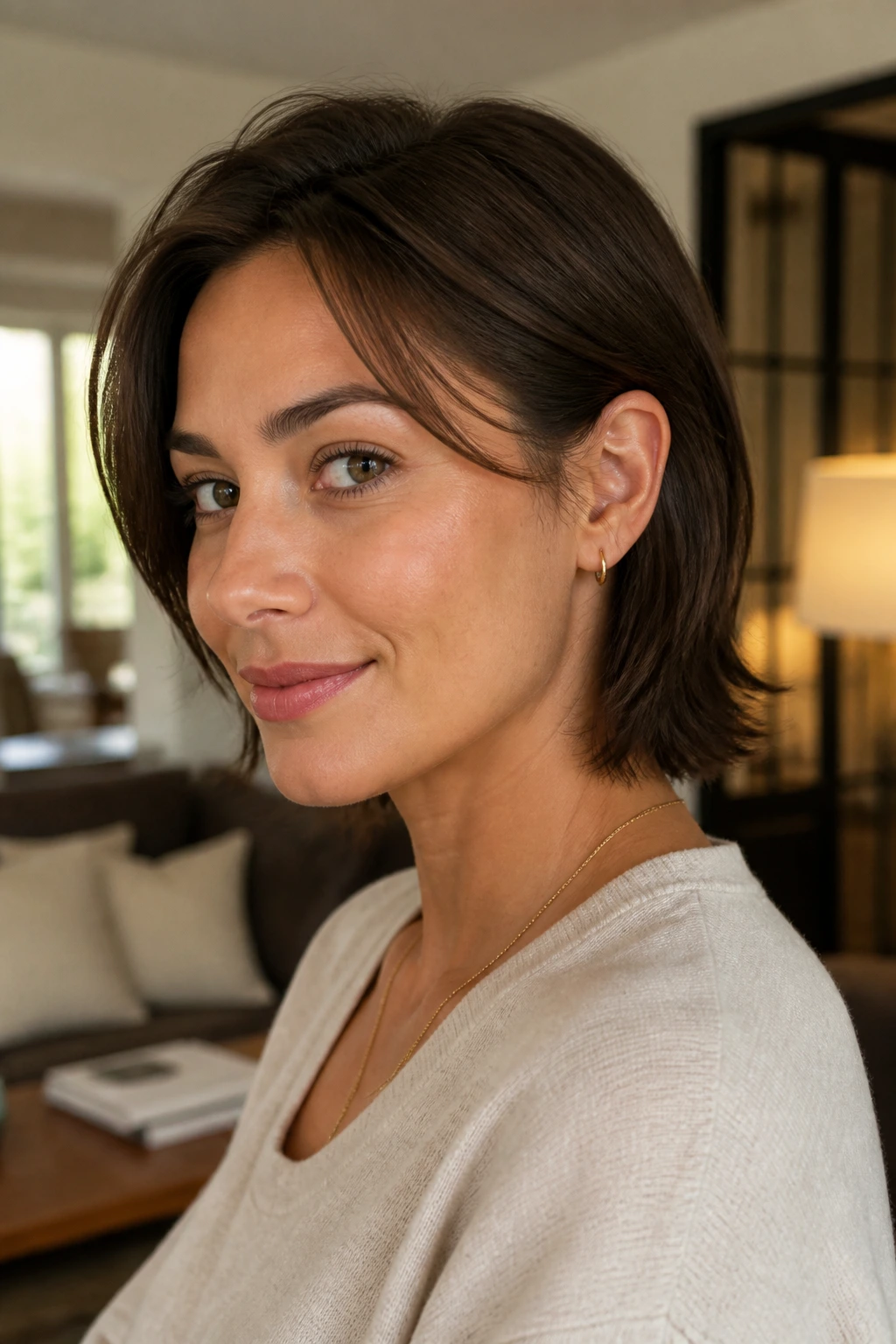
Some cuts are built for the ear tuck, and this is one of them. The feathering around the front makes the tuck look neat instead of bulky, while the back stays soft enough to fall naturally once you release it. It’s a tidy, easy shape that still has movement.
This is a good choice if you spend half your day moving hair behind one ear and then back again. A blunt edge can crease in weird places. Feathered ends sit more politely.
What Makes It Click
The front should have enough length to slide behind the ear without popping out at the temple. The feathering around that area keeps the line broken up, which makes the tuck feel intentional instead of accidental.
Style It
Use a dab of smoothing cream along the front edge only. Leave the rest of the cut light so it can move.
22. Feathered Pixie with Sideburn Length
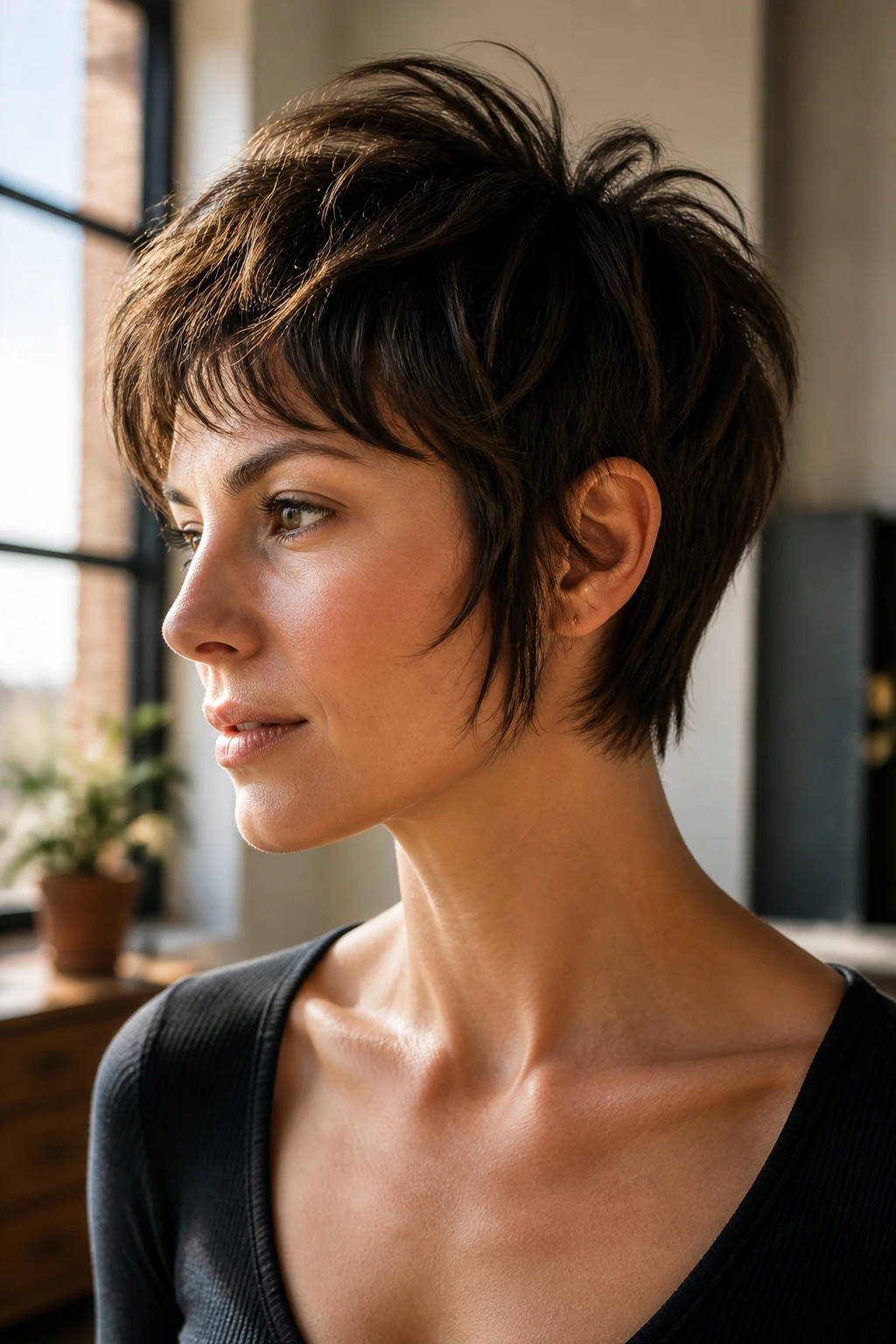
Sideburn length changes a pixie’s whole attitude. It softens the transition from cheek to jaw and gives the cut a little swing when you turn your head. Feathering through the top keeps the crown from feeling too dense, while the longer sideburns make the shape feel less abrupt.
This version is a good bridge for people who want a pixie but don’t want to lose all the framing around the face. The longer sides act like little curtains. Not dramatic ones. Just enough.
Why It Works
The sideburns should be tapered, not blunt. If they’re too thick, they can drag the whole look down. Feathering the top and keeping the sides soft keeps the silhouette balanced.
Styling Note
A small round brush can bend the sideburns inward or outward depending on the mood you want. That tiny change matters more than people think.
23. Razor-Soft Bob for Dense Hair
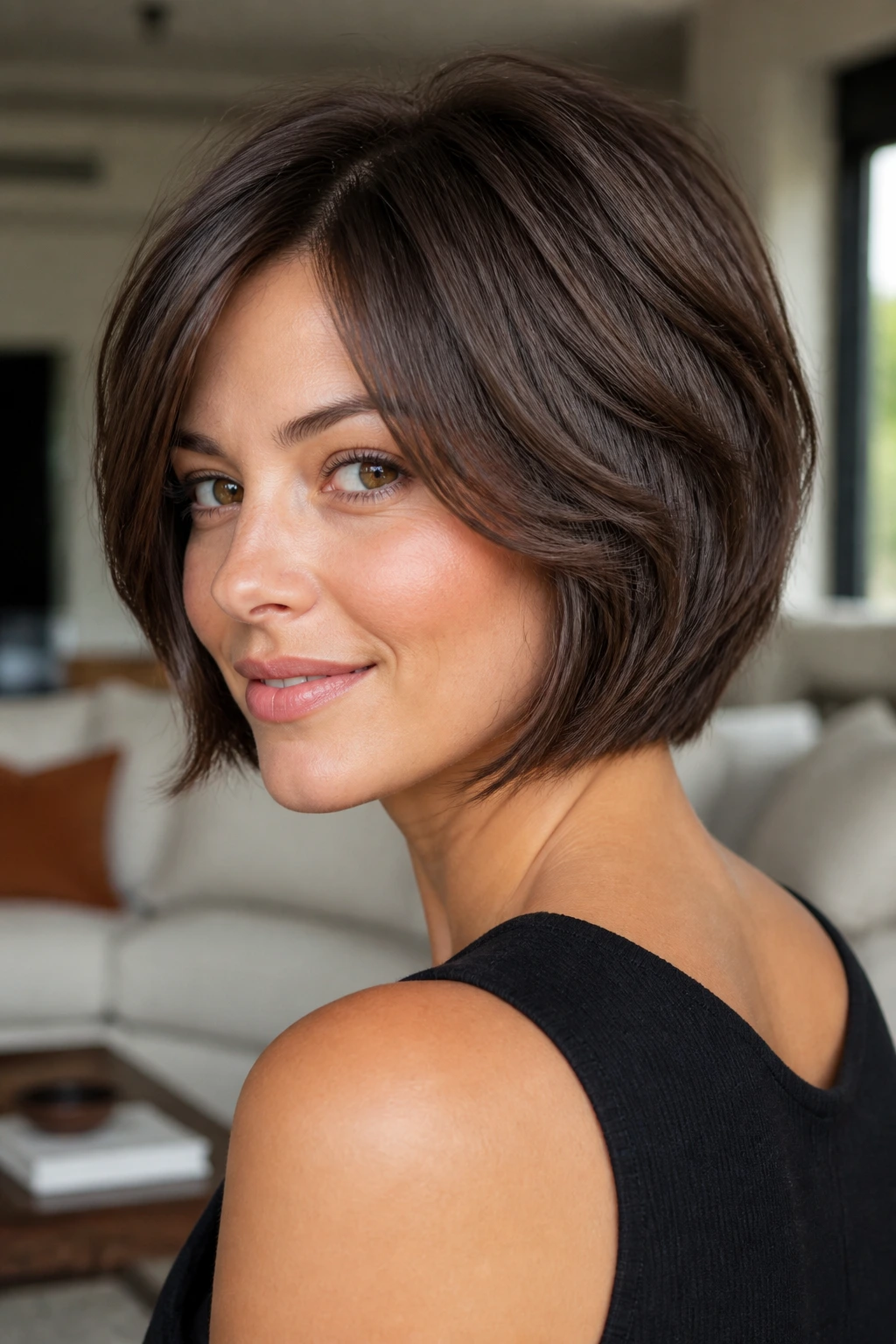
Dense hair needs relief, but it needs the right kind. A razor-soft bob uses feathering to remove heaviness at the ends while keeping the surface smooth enough to fall properly. It’s cleaner than a choppy cut and lighter than a blunt bob that’s been over-thinned.
The cut works because it takes weight out of the bottom where dense hair tends to puff. The bob still has a strong line, just softened enough so it doesn’t feel like a brick sitting on the neck.
Why It Works
The internal shape should stay full, with softness at the perimeter. That means the razor work is focused on the ends, not the whole head. Too much texturizing turns dense hair into frizz. Too little and you’re back to square one.
Styling Cue
Use a smoothing balm before drying, then finish with a touch of dry oil only on the last half-inch of the ends.
24. Feathered Crop for Coarse Hair
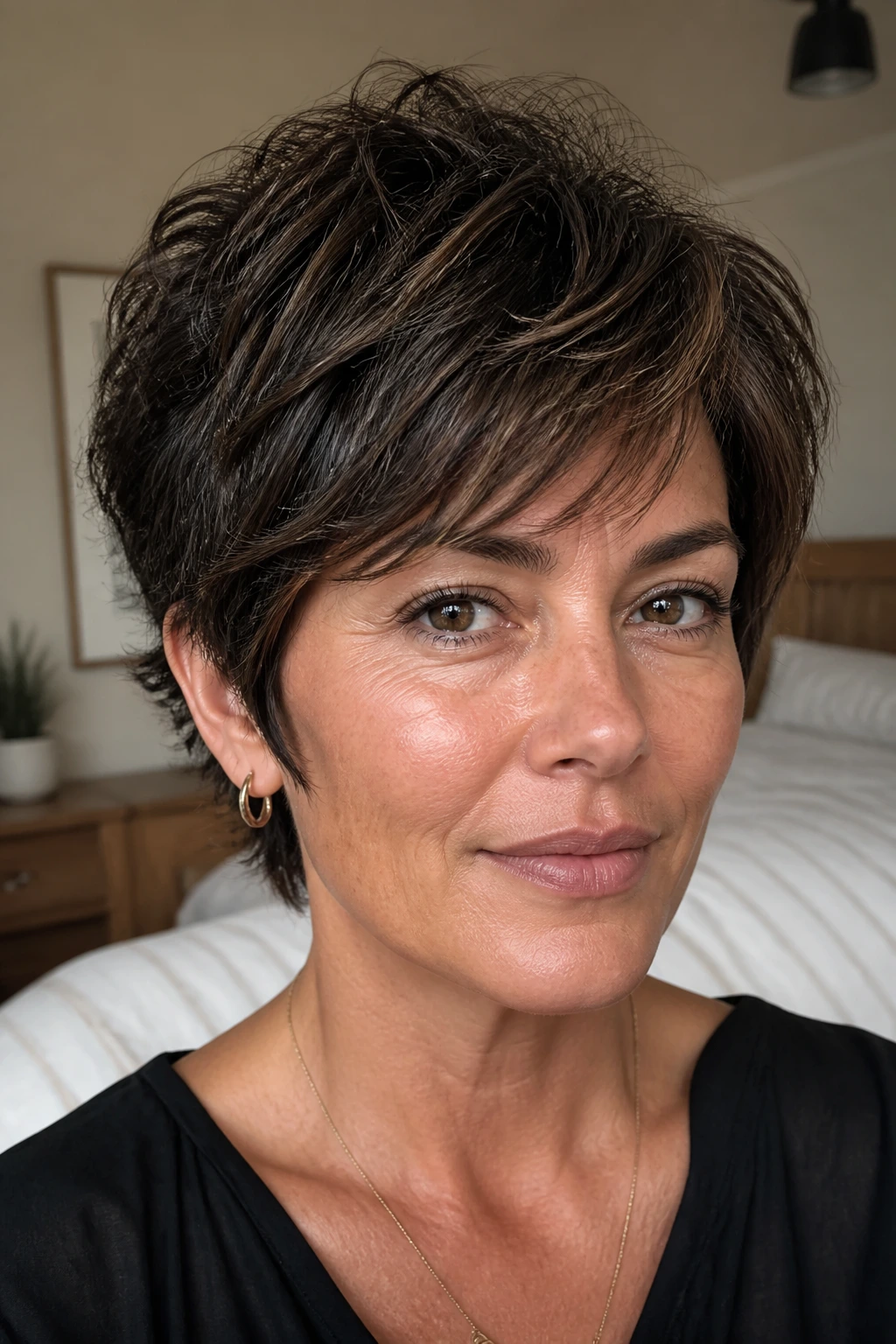
Coarse hair has its own rules. It can hold shape beautifully, but it can also feel stubborn if the cut is too blunt. A feathered crop softens the perimeter and gives the strands room to move, which keeps the style from feeling blocky or overly heavy.
The important thing is not to remove so much weight that the ends go fuzzy. Coarse hair can take more texturizing than fine hair, but it still needs a solid foundation. Feathering should open the shape, not hollow it out.
What to Ask For
Ask for softness at the ends and controlled reduction through the bulkier zones around the back of the head. If you have a strong wave or bend, the stylist should cut with that movement in mind, not against it.
Styling It
A cream with a little grip works better than a slick serum. You want control with touchable ends, not shine that collapses the texture.
25. Feathered Cut with Micro Bangs
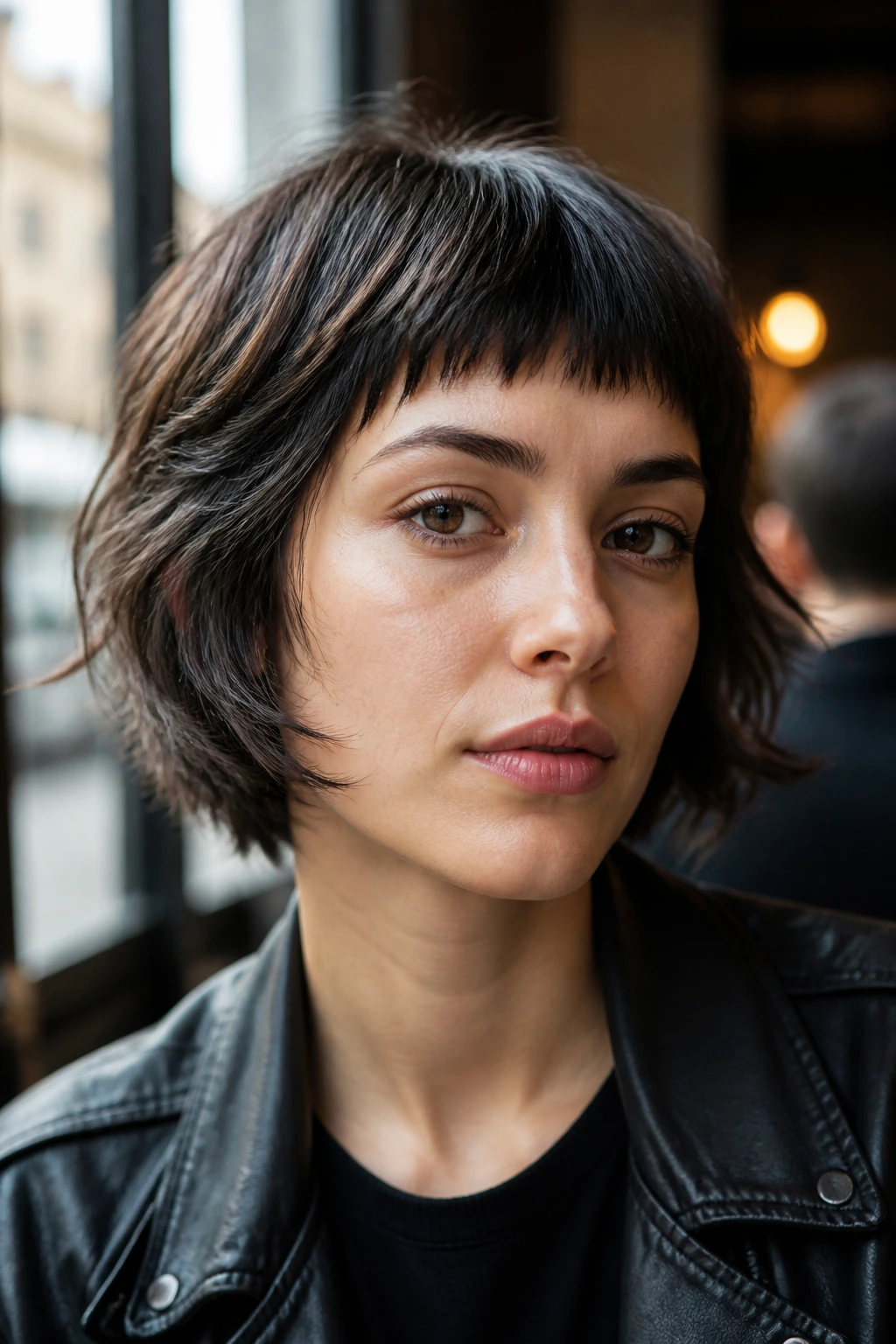
Micro bangs make a feathered short cut feel more graphic, which is a nice change if you’re bored with soft fringe. The short bang gives the cut a hard little edge, and the feathered sides keep the rest from looking too severe. It’s a contrast style, and contrast is what makes it memorable.
This version suits people who like the forehead exposed and the eyes more open. The fringe is tiny, but it still changes the whole face. The rest of the cut should stay soft so the micro bang has something to play against.
Why It Works
The sides need to be feathered enough that the bang doesn’t look pasted on. Keep the fringe short and clean, then let the movement happen around it. If the sides get too fluffy, the contrast disappears.
Style It
Dry the bangs first, then use a flat brush to smooth the rest. A tiny bit of paste at the fringe line keeps it crisp.
26. Face-Framing Feathered Wings
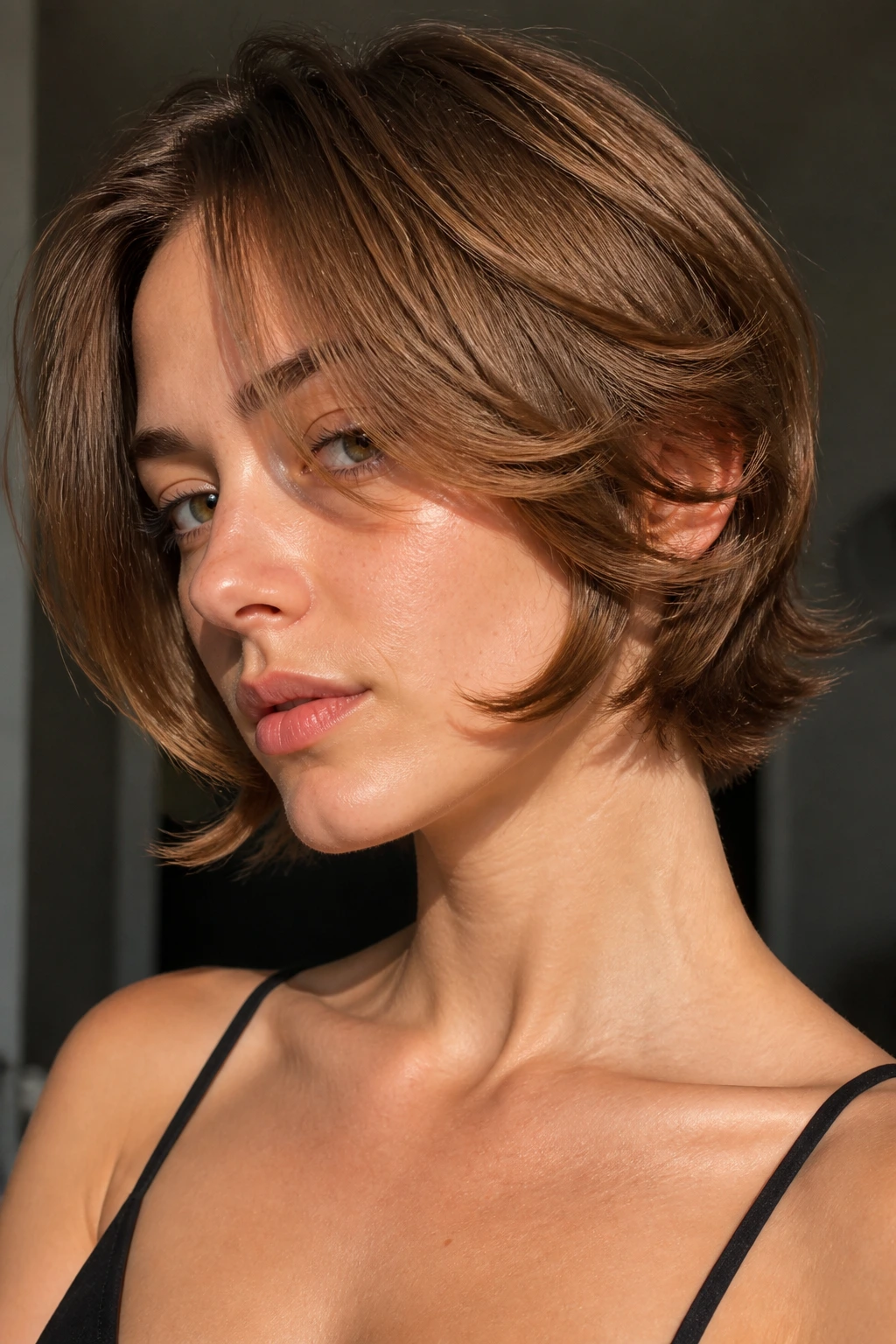
These are the pieces that flare softly away from the face, almost like tiny wings at the cheekbone and jaw. They work best on short cuts that need a little contour without full bangs. Feathering makes the pieces bend instead of hanging straight, which gives the face a lifted look without adding bulk.
The shape is subtle, which is why I like it. It doesn’t read like “I got bangs and changed my life.” It reads like the haircut has thought about your bone structure a little.
What Makes It Different
The front sections should start short enough to frame, then taper longer as they meet the rest of the cut. That motion around the face is the whole point. Keep the rest of the style simple so the wings have room to show.
Styling Note
Direct the front pieces away from the face with a round brush, then let them cool before you touch them. Cooling sets the bend.
27. Sleek Feathered Pixie-Bob with Soft Crown
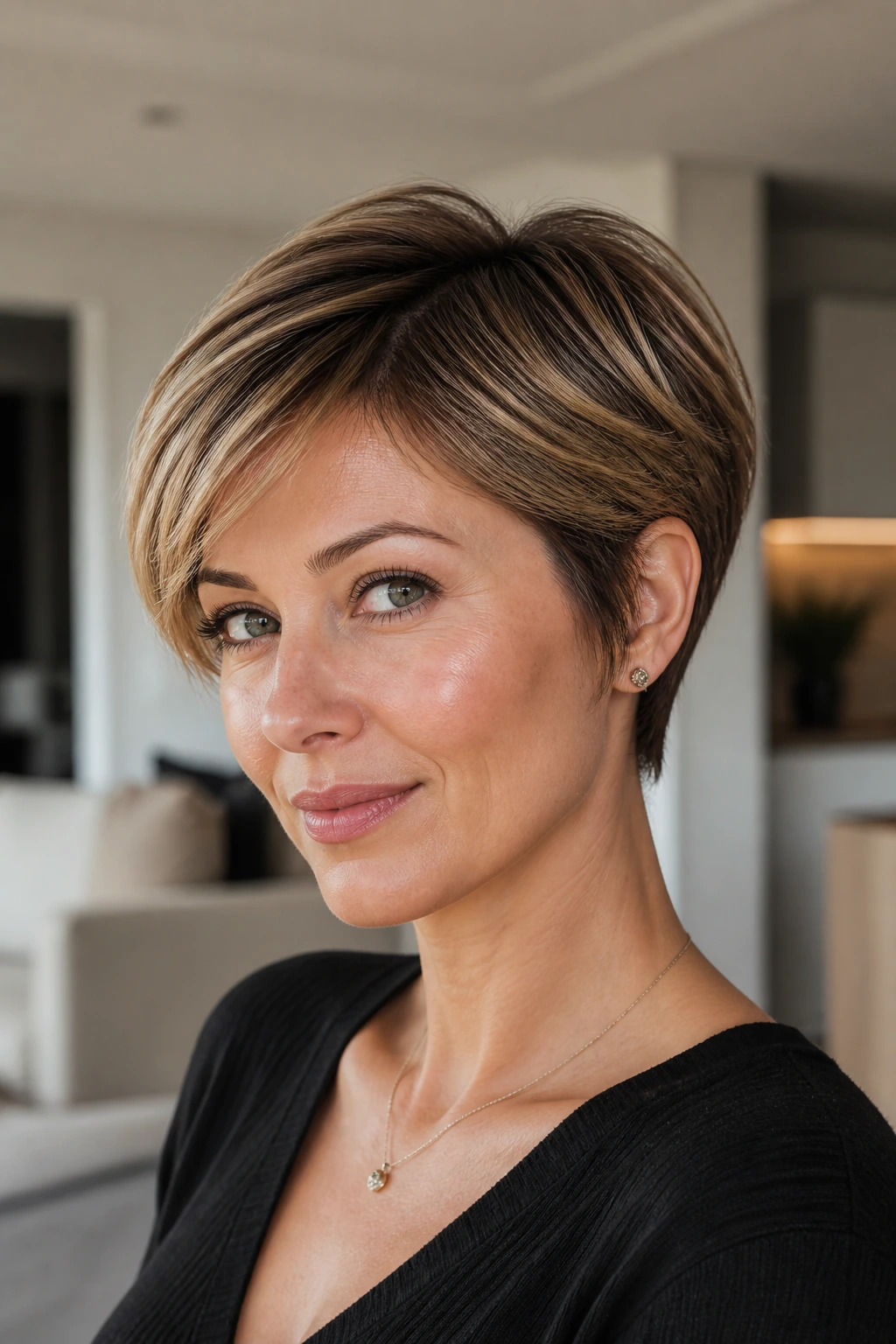
The last look in the mix pulls the whole idea together. It’s short enough to feel clean, long enough to tuck, and feathered enough to avoid that blocky pixie-bob shape that can happen when the crown gets too dense. The crown stays soft, the sides stay neat, and the ends move just a little when you turn your head.
This is the cut for people who want a polished finish but not a stiff one. You can wear it smooth, toss it with texture spray, or tuck one side behind the ear and leave the rest loose. It handles all of that without losing its outline.
Why It Works
The feathering is subtle through the crown and stronger at the perimeter, which keeps the top from puffing up while the ends stay light. That balance is what makes the pixie-bob shape feel modern rather than dated.
Best Styling Move
Blow-dry with a nozzle, brush the crown back for lift, then bend only the last inch of the front pieces. That final bend is enough.
Why Feathered Short Cuts Move Better Than Blunt Ones
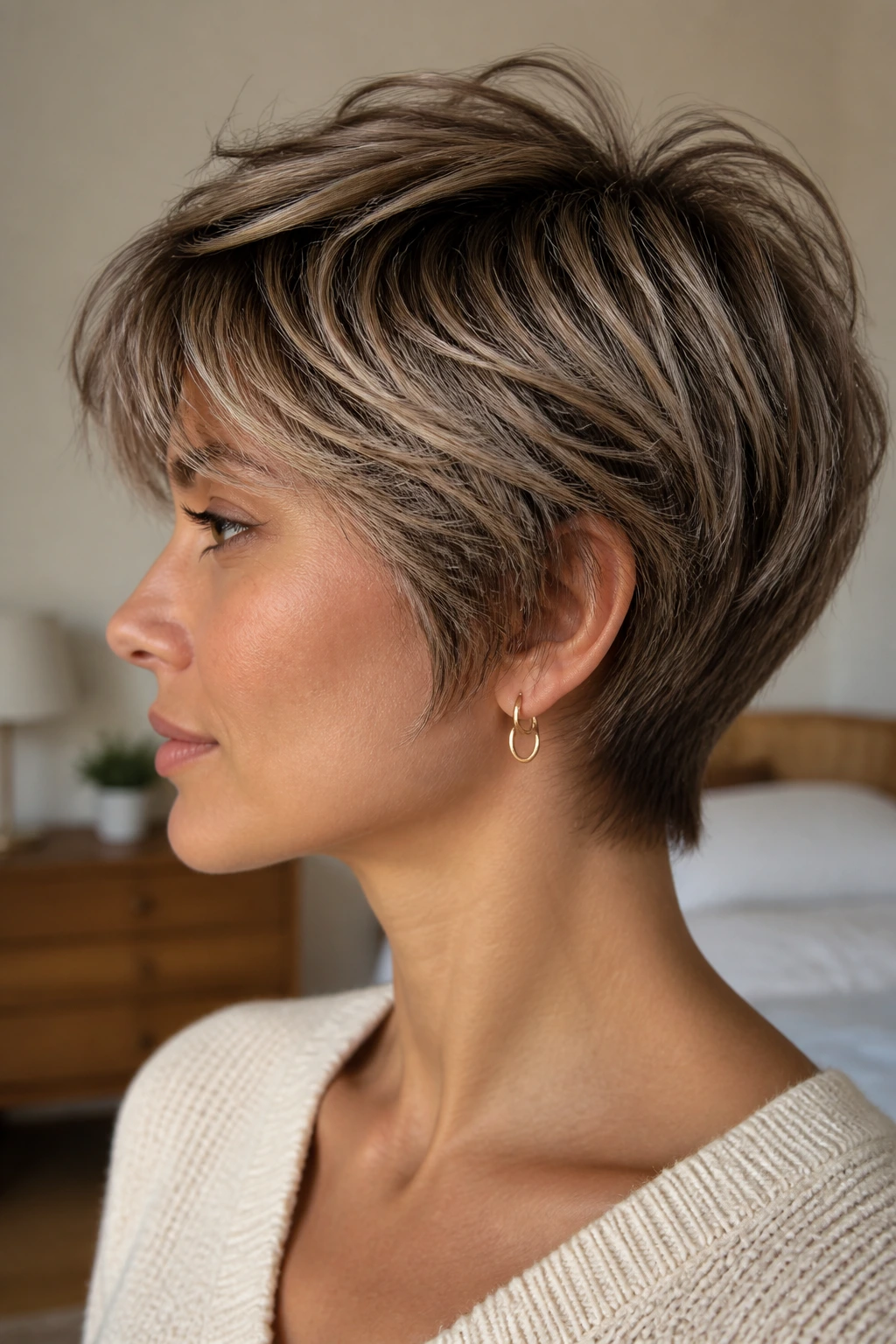
A feathered cut earns its keep because it changes where the weight sits. Short hair doesn’t have much length to help it fall, so the shape has to be built into the cut itself. A blunt edge gives you a hard line. Feathering softens that line, which lets the hair swing, tuck, and settle with less effort.
The other thing feathering does well is stop the perimeter from reading too wide. That matters on bobs, pixies, and bixies alike. The hair can still be full, but the edges don’t make a square frame around the face. A little taper at the sides, a bit of softness at the nape, and a cleaner crown all add up to a shape that feels lighter when you move.
Feathering vs. Layering, Without the Haircut Jargon
Layering changes length inside the haircut. Feathering changes the edge. Sometimes the two overlap, and a stylist may use both, but the result is different. Feathering is what gives you that soft, brushed-out finish at the ends. On short hair, that finish is what keeps the cut from turning dense or blocky.
Where the Shape Should Live
The best feathered short cuts don’t scatter texture everywhere. They place movement where the eye lands: around the cheekbones, through the top, and at the neckline. Leave too much feathering in every direction and the cut can lose its backbone. Leave it in the right places and the style reads clean from across the room.
Essential Tools for These Looks
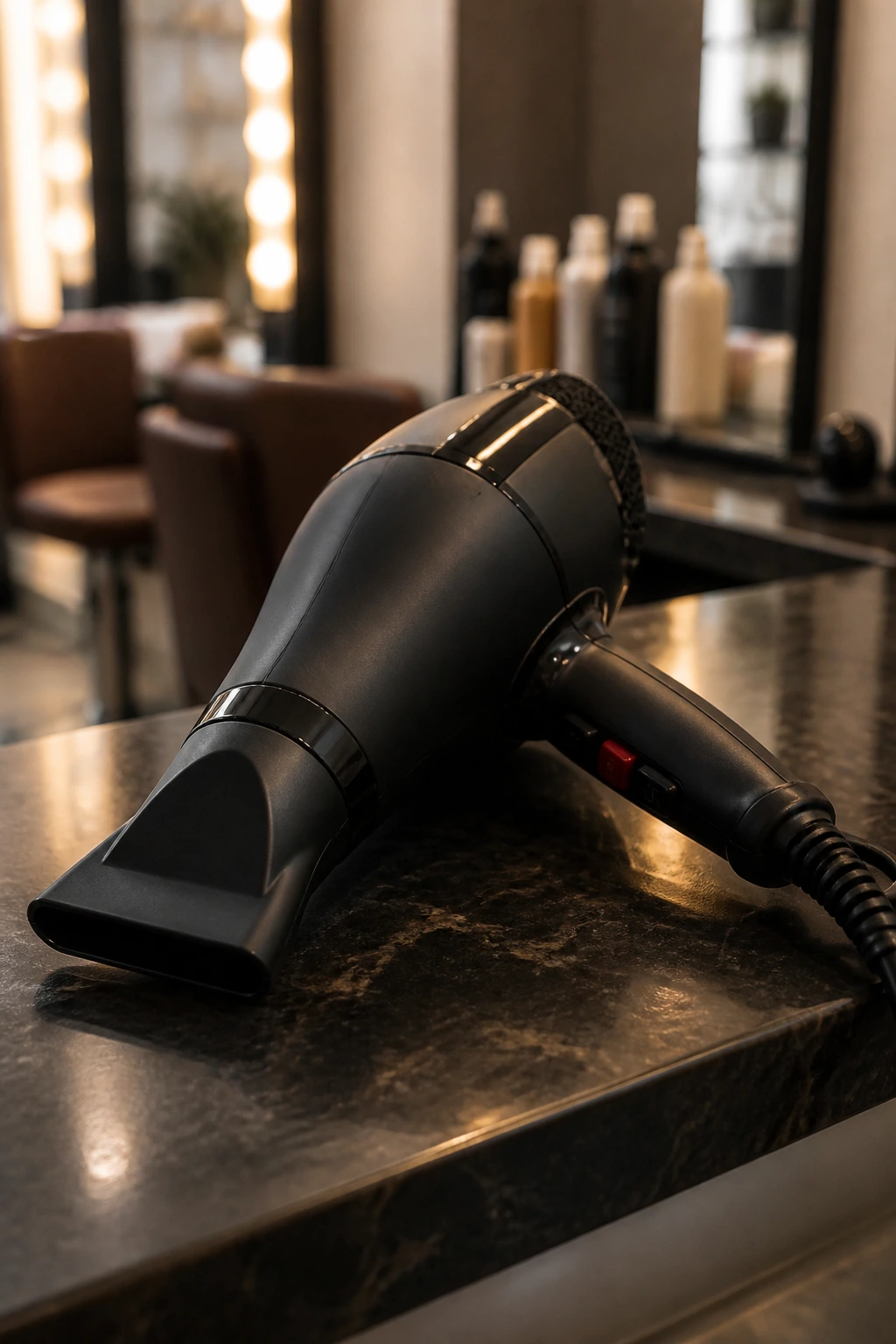
-
Blow dryer with a concentrator nozzle: Directs airflow where you want it and keeps the feathered ends from puffing up.
-
1-inch round brush: Best for pixies, crops, and shorter fringe; it bends the ends without creating huge curls.
-
1¼-inch round brush: A safer size for bobs, especially if you want a gentle curve at the jaw.
-
Vent brush: Good for quick drying on busy mornings when you only need root lift and a tidy finish.
-
Lightweight mousse: Adds grip at the roots without making short hair sticky or stiff.
-
Heat protectant spray: Worth using every time you blow-dry or flat-iron the ends.
-
Matte paste or fiber cream: Gives pixies and bixies separation on dry hair; use sparingly.
-
Texture spray: Useful when you want the feathered pieces to move a little more and sit a little less flat.
-
Dry shampoo: Helps the crown stay lifted on day two and day three, especially on fine hair.
-
Flat iron with rounded edges: Handy for bending only the last inch of a bob or fringe without making it poker-straight.
-
Clips: Keeps the top section out of the way while you dry the back first.
-
Wide-tooth comb: Useful on wavy or textured hair so you don’t pull apart the natural pattern too early.
How to Ask for the Right Feathering at the Salon
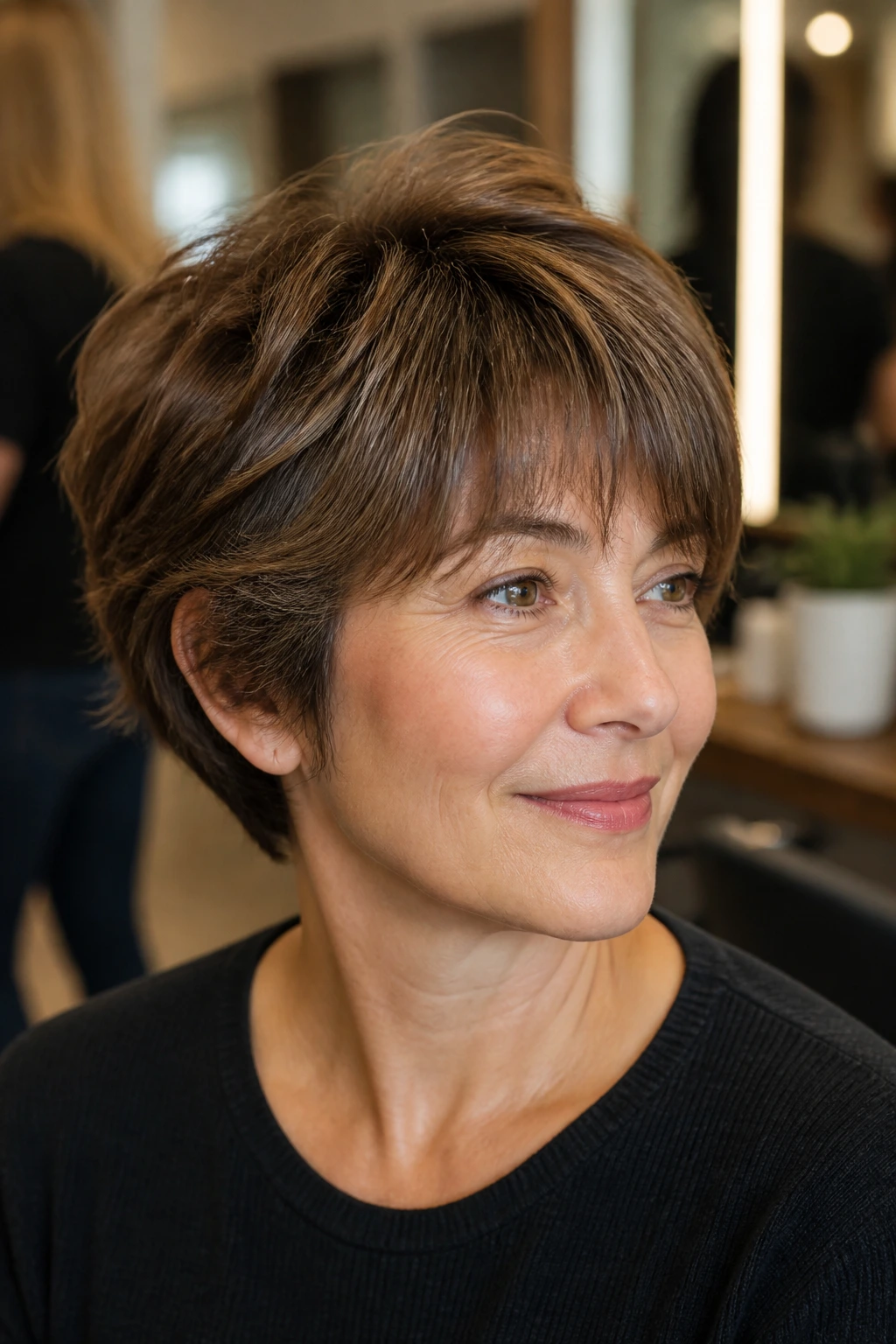
Ask for soft feathering, not just “lots of layers.” That one phrase can save you from getting a haircut that’s shorter than you wanted or too shredded at the ends. Bring at least two photos if you can: one that shows the overall shape, and one that shows the fringe or neckline you like. Stylists read pictures fast, but they read words differently, and the mix helps.
Be specific about where you want the movement. Say whether you want the crown lifted, the nape close, the sides soft, or the front pieces longer for cheekbone framing. On short hair, those details matter more than the generic name of the cut. A feathered bob can look polished or edgy depending on whether the weight stays in the perimeter or gets taken out through the top.
What to Mention If Your Hair Is Fine or Thick
Fine hair needs restrained feathering. Thick hair often needs more internal control. If your hair is fine, tell the stylist you want to keep density at the ends and avoid see-through pieces. If your hair is thick, ask where the bulk gathers—around the crown, behind the ears, or at the nape—so the cutting is targeted instead of random.
A Small Script That Helps
Try this: “I want the ends soft and moving, but I don’t want it over-thinned. Keep enough weight for shape.” That sentence does a lot of work.
How to Style the Cut So the Ends Stay Soft
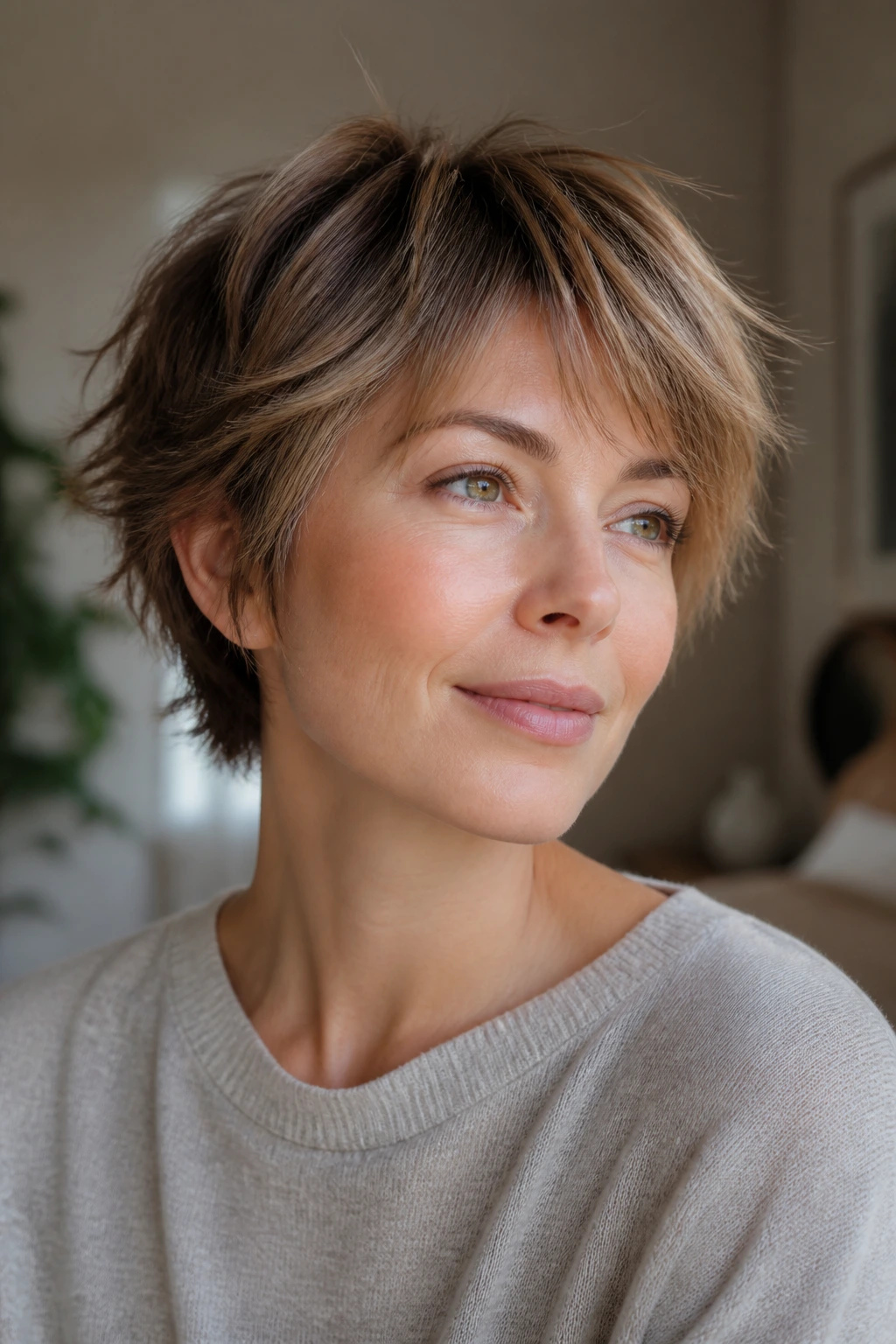
Start with direction, not product. If you blow-dry short feathered hair straight up in the air, it will land wherever it wants. If you direct the airflow down the sides and then lift only where you need crown volume, the cut behaves much better. The nozzle matters. So does the hand holding the brush.
Use less product than you think, especially on short hair. A small pea-size amount of paste can shape a pixie. A couple of pumps of mousse can give a bob enough memory to hold the feathering. Heavy cream, thick oil, or too much serum will make the ends collapse and turn glossy in a bad way.
The Easy Heat Pattern
Dry the roots first. Shape the front second. Touch the ends last. That order keeps the feathering from going flat while you work. If you use a flat iron, bend only the final inch or so, then let it cool in your hand for a second before releasing it. That tiny pause keeps the soft flick in place.
When Air-Drying Makes Sense
Wavy and textured cuts often look better with a little air-dry time in the middle of the process. Let the hair get about 70% dry, then go back in with a brush or your fingers. If you attack it too early, you can break the wave pattern and end up with fuzz instead of feathering.
How to Maintain the Shape Between Trims
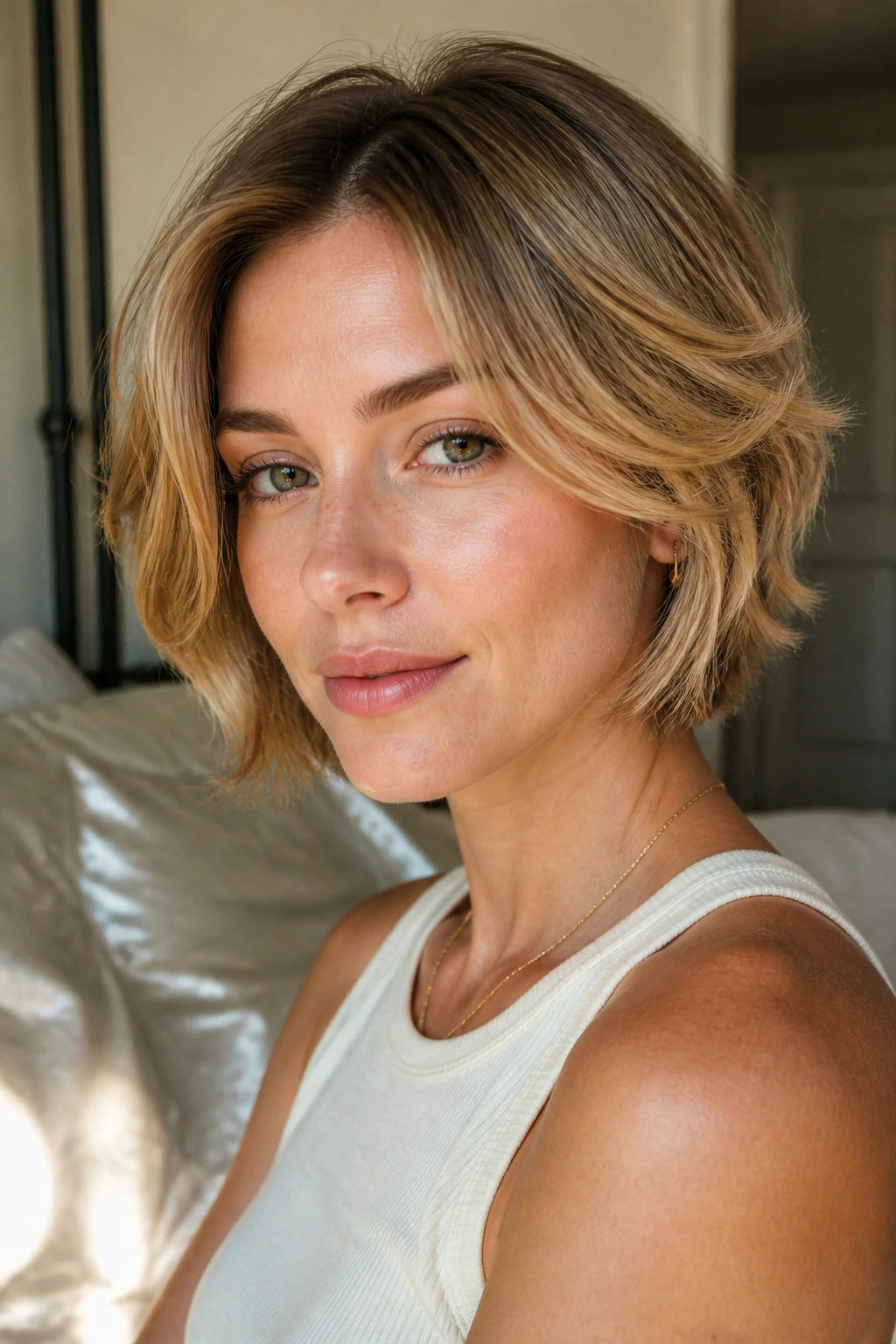
Short feathered hair needs regular clean-up if you want the shape to stay light. Pixies usually want a trim every 4 to 6 weeks. Bobs and bixies can stretch a little longer, around 6 to 8 weeks, before the edges start losing their lift. If the nape grows too much, the cut begins to lean backward. If the fringe gets too long, the feathering around the face stops showing.
Night care helps more than people expect. A satin pillowcase reduces that rough, sleepy friction that can flatten the crown and crimp the ends at the wrong angle. If your hair tangles easily, sleep with it dry and brushed out. Wet short hair tends to set in weird bends.
Refreshing It on Day Two
A mist of water at the roots, a finger comb through the front pieces, and a quick blast from the dryer are often enough. You do not need to start over every morning. On fine hair, dry shampoo at the crown restores lift. On thicker hair, a tiny bit of water on the ends can bring the feathering back without adding product.
When It Needs a Salon Visit
If the ends start sticking out in a blunt shelf, if the nape stops hugging the neck, or if your fringe no longer falls into place without force, the shape is asking for a trim. That’s the real sign.
Additional Tips and Texture Boosters
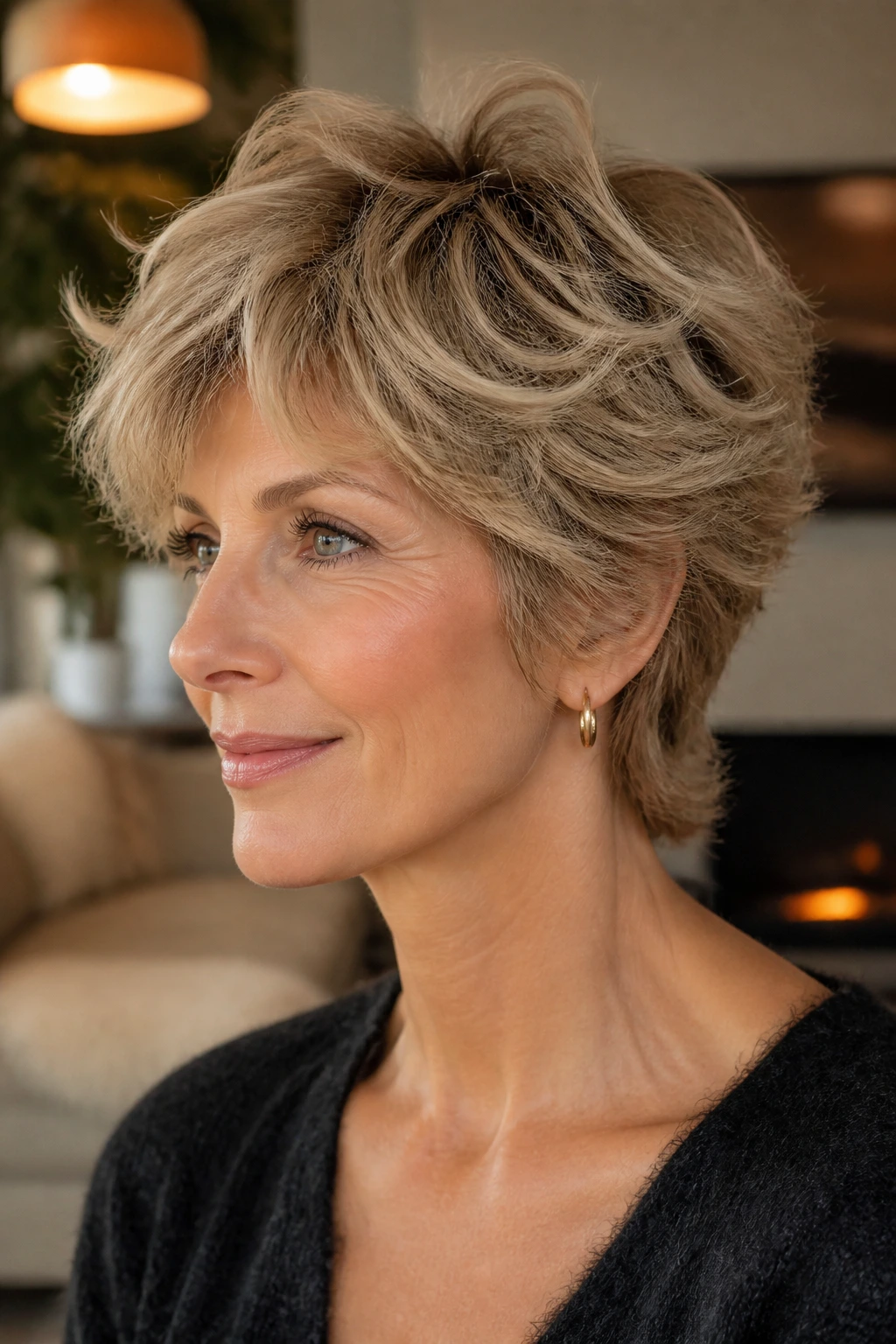
Flavor Enhancement: A light texturizing spray at the very end can make feathered pieces separate just enough to show the cut’s shape. Use it on the mid-lengths and ends, not the roots, or you’ll lose the soft lift.
Customization: If your hair is flat at the crown, blow-dry the opposite side first to create a small root bend, then switch the part back. It sounds fussy, but on short hair it gives the crown a better memory.
Serving Suggestions: Okay, hair doesn’t get served, but the finishing touches matter. A tucked ear on one side, a clean neckline, or a single curved piece over the cheekbone can change the whole mood of the cut.
Make-It-Yours: For a softer look, keep the feathering subtle and the ends rounded. For a sharper version, let the front pieces stay longer and use a little paste to separate the tips. For a low-maintenance finish, ask for a shape that still works when air-dried.
Common Mistakes to Avoid
-
Over-thinning fine hair: The symptom is see-through ends and a crown that collapses by lunch. The fix is to keep more weight in the perimeter and ask for softer point cutting, not aggressive thinning.
-
Feathering every section equally: If the whole head gets the same level of texturizing, the cut loses its backbone and starts looking fuzzy. Keep the strongest feathering where you want motion—around the face, crown, or nape—and leave the rest cleaner.
-
Using heavy creams on short hair: If the cut looks greasy or the ends clump together, the product is too rich. Switch to a lighter mousse, paste, or spray and use less of it.
-
Letting the nape grow too long: That’s when a pixie or short bob starts to kick out at the back. A quick trim around the neckline keeps the feathered outline crisp.
-
Blowing everything straight under: That can turn soft feathering into a helmet shape. Bend the ends only slightly and keep the roots lifted, not puffy.
Variations and Adaptations to Try
Fine-Hair Whisper Feathering: Keep the layers light and the edges soft, but leave enough density underneath to hold the shape. This version avoids the see-through look that can happen when fine hair gets over-cut.
Curly Crown Feathering: Cut the hair dry or nearly dry so the curl pattern stays honest. The feathering should follow the curl, not fight it, which keeps the top from ballooning.
Dense-Hair Weightless Crop: Use targeted bulk removal at the nape and behind the ears, then keep the top feathered and movable. This one works when your short hair needs to feel lighter without losing body.
Sharp-Edge Feathered Pixie: Keep the outline clean and add just a little taper at the ends. It gives you the structure of a neat pixie with enough softness to avoid looking severe.
Soft Bob With Face Pieces: Let the front stay longer and build feathering into the sides only. That’s a good choice if you want movement near the face but prefer the back to stay tidy.
Frequently Asked Questions
What’s the difference between a feathered cut and a layered cut?
A layered cut changes lengths inside the shape, while feathering softens the edges and makes the ends taper. You’ll often see both in the same haircut, but feathering is what gives short hair that airy finish instead of a blunt line.
Is feathering a good choice for fine hair?
Yes, if it’s done lightly. Fine hair needs movement, not over-thinning, so ask for soft point cutting and keep enough density in the ends to avoid a sparse look.
Can curly or wavy hair be feathered?
It can, but the cut should respect the curl pattern. On textured hair, feathering works best when the stylist sees the hair dry or nearly dry, because wet curls can shrink and shift in ways that are hard to predict.
How often should short feathered hair be trimmed?
Pixies usually need trimming every 4 to 6 weeks, while feathered bobs can often go 6 to 8 weeks. Once the nape starts losing its shape or the fringe stops falling into place, the haircut is overdue.
Will feathering make thick hair look thinner than I want?
Not if the weight removal is controlled. Thick hair can take more softening, but the stylist should remove bulk strategically instead of shaving the ends down until they look ragged.
Can I style a feathered short cut without heat?
Yes, especially if the cut already has the right shape. A little leave-in spray, finger styling, and a touch of texture product can be enough for air-dried hair, though a quick blast of heat usually sharpens the silhouette.
What should I ask for if I don’t want a shaggy result?
Say you want soft feathering with a clean outline and controlled ends. That tells the stylist you want movement without a broken-up, over-textured finish.
What if the feathering looks too wispy after the cut?
That usually means too much weight came out of the perimeter. A stylist can often correct it by reshaping the outline and leaving more density at the bottom, so don’t wait too long to ask.
The Shape That Keeps Moving
Feathered short hair works because it solves the same old short-hair problem in a smarter way: it keeps the shape from turning stiff. The movement shows up at the right places—around the jaw, along the nape, through the crown—and the haircut keeps its life even when you’re not doing much to it.
What I like most is how practical it is. A feathered pixie can look sharp in thirty seconds. A feathered bob can grow out without embarrassing you. And once the cut is matched to your texture, it stops feeling like a style you have to wrestle into place every morning.
That’s the sweet spot. Soft, shaped, and willing to move a little.
