



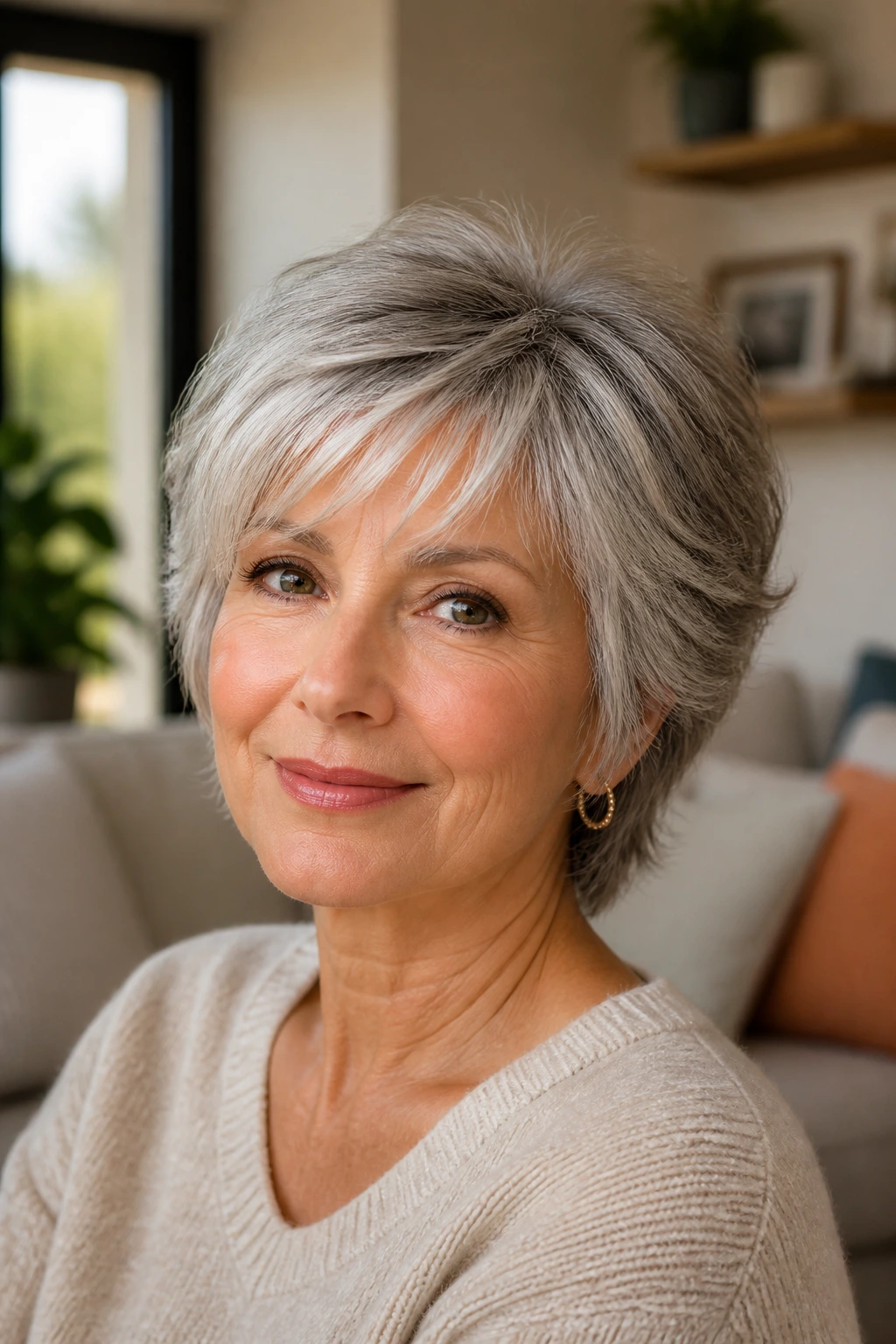
Feathered hairstyles for short hair over 50 work because they don’t fight the hair you actually have. A good feathered cut bends around the face, lifts at the crown, and keeps the neckline from turning boxy after a long day, a windy walk, or one too many minutes on a cotton pillowcase. That matters more than a glossy salon photo.
Short hair changes shape fast once density shifts at the temples and crown. If the cut is too blunt, the bottom can look heavy and the top can look sparse. If it’s thinned too much, the ends go wispy in a sad, see-through way. Feathering sits in the middle. It gives movement without turning the whole head into fluff, and it plays especially well with silver strands, natural bend, and the little frizz that shows up when hair has a mind of its own.
The cuts below range from tidy pixies to jaw-skimming bobs, because “feathered” is a technique more than one single look. Some versions need a round brush. Some want fingers and texture spray. Some need almost no styling at all. Keep that in mind as you scan the list — the right one usually announces itself fast.
Why These Feathered Cuts Earn Their Keep
-
Crown lift without hard teasing: Feathering removes weight where short hair tends to collapse, so the top sits up instead of lying flat against the scalp.
-
Soft edges around the face: Wispy ends blur the line at the jaw, temples, and cheekbones, which is useful when you want shape without a stiff outline.
-
Texture gets to stay texture: A little wave, bend, or frizz can work in your favor here, because feathered layers are built to move rather than sit like a cap.
-
Fast morning styling: Most of these looks can be reshaped with a 1- to 1.5-inch round brush, a touch of mousse, and a few minutes of root lift.
-
Better grow-out: Soft layers keep reading as intentional longer than a blunt cut, which means you don’t get punished the second the salon trim starts growing out.
-
Silver looks sharper, not harsher: Feathering breaks up heavy blocks of gray so the color looks dimensional instead of helmet-like.
1. Crown-Lifting Feathered Pixie
A pixie only works if the top has a little lift. This version keeps the sides short and the crown airy, with soft, feathered pieces that stand up instead of sticking to the head. It’s especially good when the hair around the temples has started to thin, because the eye goes to the volume on top, not the narrow spots at the edges.
The styling move is small but important: work mousse into damp roots, then dry the crown with a nozzle and a round brush, pulling the hair up and slightly back. Don’t flatten it with heavy cream. A tiny amount of texture paste on the tips is enough.
2. Side-Swept Feathered Crop
Can a short crop soften the whole face? Absolutely. The side-swept feathered crop uses a deep part and a long diagonal fringe to pull attention across the forehead instead of straight down the middle. It’s the cut I’d pick for anyone who likes short hair but does not want the front to feel severe.
Keep the nape neat and the top lightly layered. The fringe should skim the brow, not sit rigidly above it. When the hair is dried in the direction of the part, the whole cut falls into place with a clean, easy bend.
3. Jaw-Skimming Feathered Bob
A jaw-length bob with feathered interior layers is one of those shapes that looks more expensive than it is. The bluntness of the outer line gives the haircut a spine, while the feathered middle layers keep it from feeling boxy. If your jawline is strong, this cut softens it. If your jaw is narrower, it gives the face some width right where it helps.
I like this one with ends that flip in a little or tuck under slightly. A 1.5-inch round brush and a quick blow-dry around the front pieces is enough. Leave the layers soft, not shredded.
4. Wispy Feathered Shag Crop
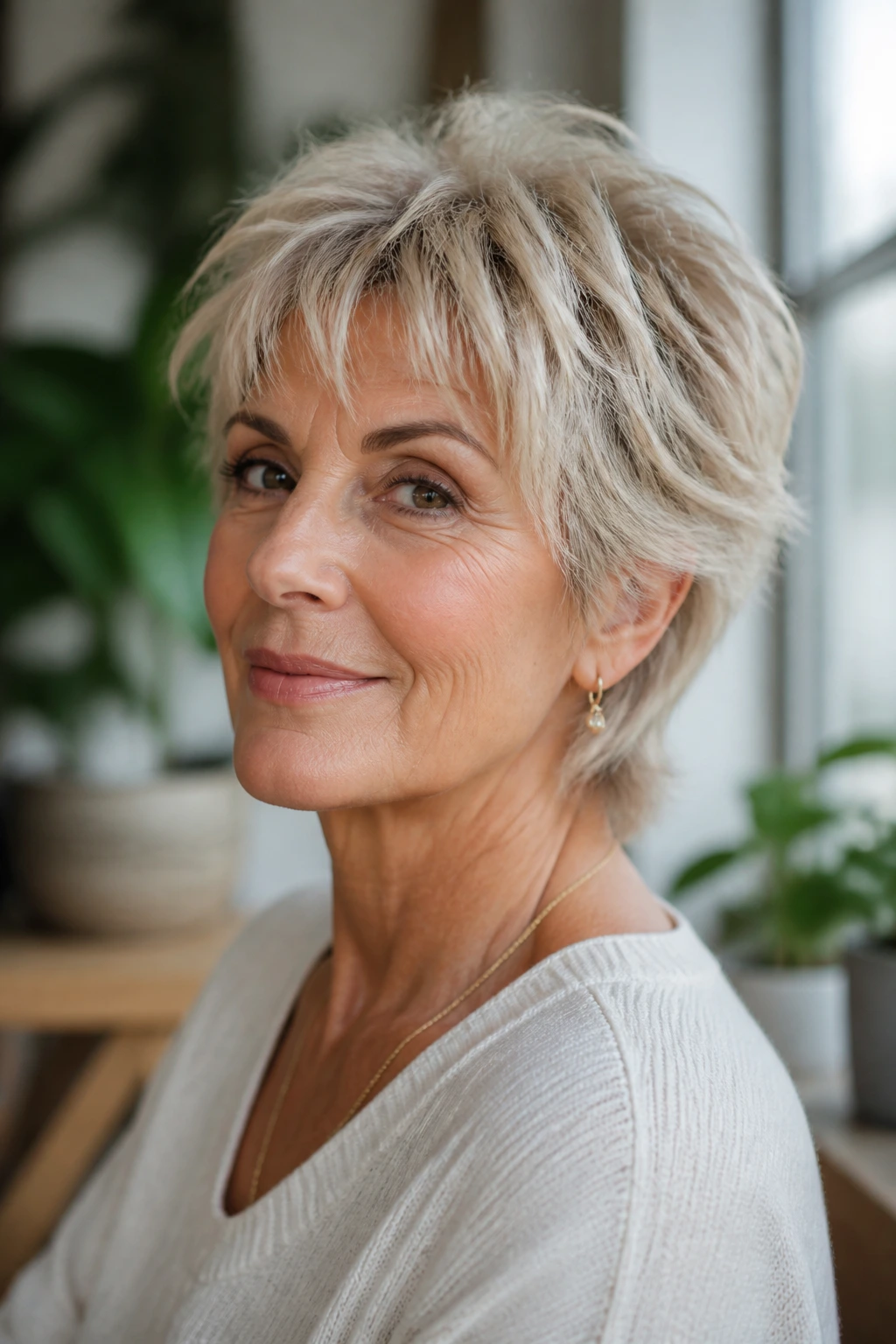
This is the cut for people who want movement first and polish second. The wispy feathered shag crop has choppy layers around the crown, a little pieceiness at the sides, and enough air around the fringe to keep the shape light. It’s a good match for natural wave and for hair that gets a bit puffy in humidity anyway.
The trick is not to overstyle it. Use a lightweight texture spray, scrunch the top with your fingers, and let the ends do their thing. If you try to smooth every strand into obedience, this haircut loses its charm.
5. Silver Feathered Cut With a Rounded Nape
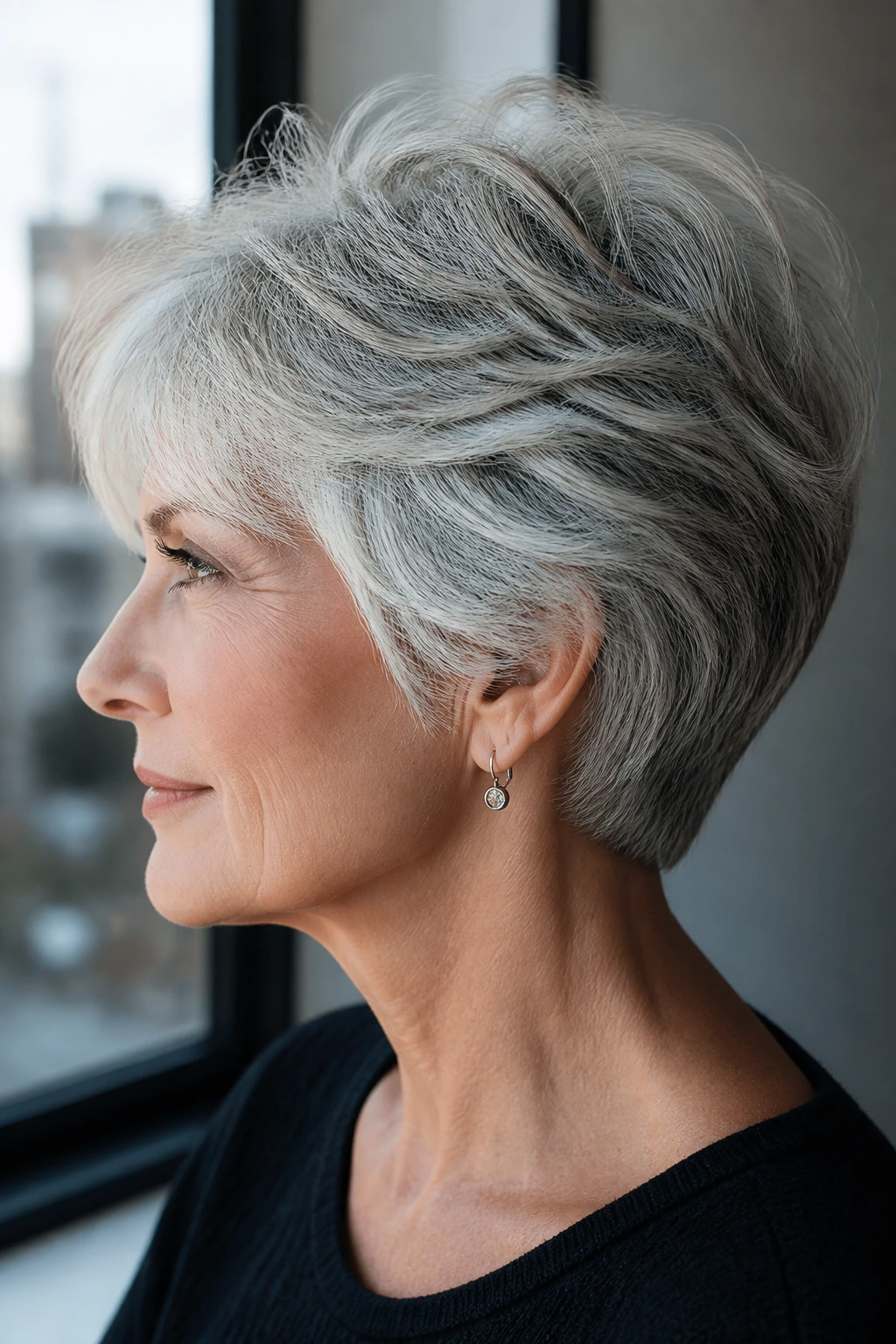
Silver hair likes a neat outline. This cut keeps the nape rounded and clean, then feathers the top and sides so the white, gray, and charcoal strands show movement instead of sitting in one solid block. The shape is kind to a strong neck and looks especially crisp when the ends are freshly trimmed.
If the silver has a yellow cast, a violet shampoo once a week can help. Don’t overdo it or the hair can pick up a dull lavender tint. A little shine serum on the mid-lengths makes the feathering read clearly without turning slick.
6. Temple-Soft Feathered Pixie Bob
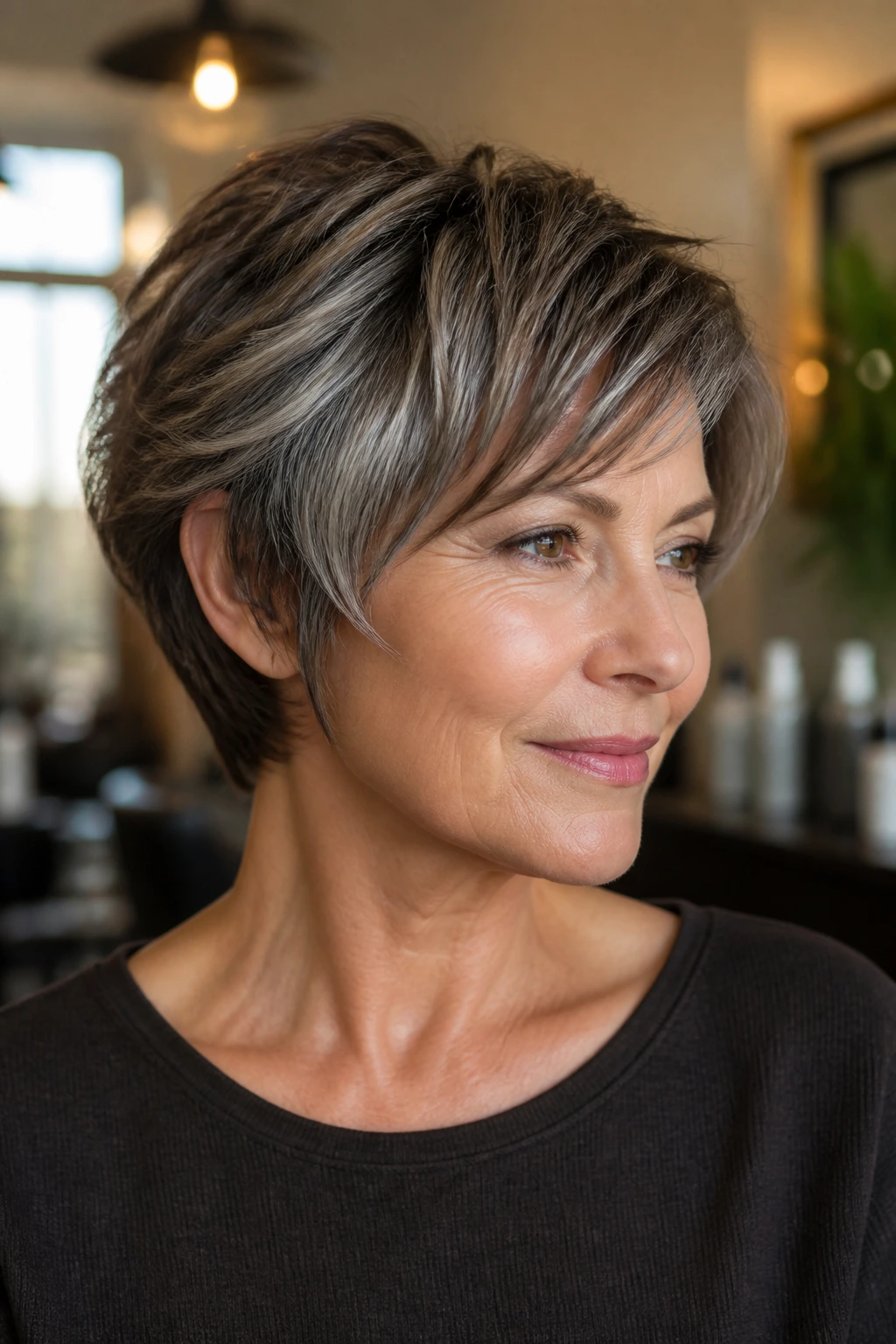
This one lives between a pixie and a bob, which is exactly why it works so well. The temple area is kept a touch longer and softer, so the cut doesn’t pull tight around the face. That matters if you wear glasses, have a little temple thinning, or simply want a shape that doesn’t feel clipped to the skull.
Ask for the edges to stay soft around the ears. The back can be tidy, even slightly tapered, but the front should keep a small swing. It’s a smart cut when you want short hair that still has a little drape.
7. Razored Feathered Crop With Piecey Ends
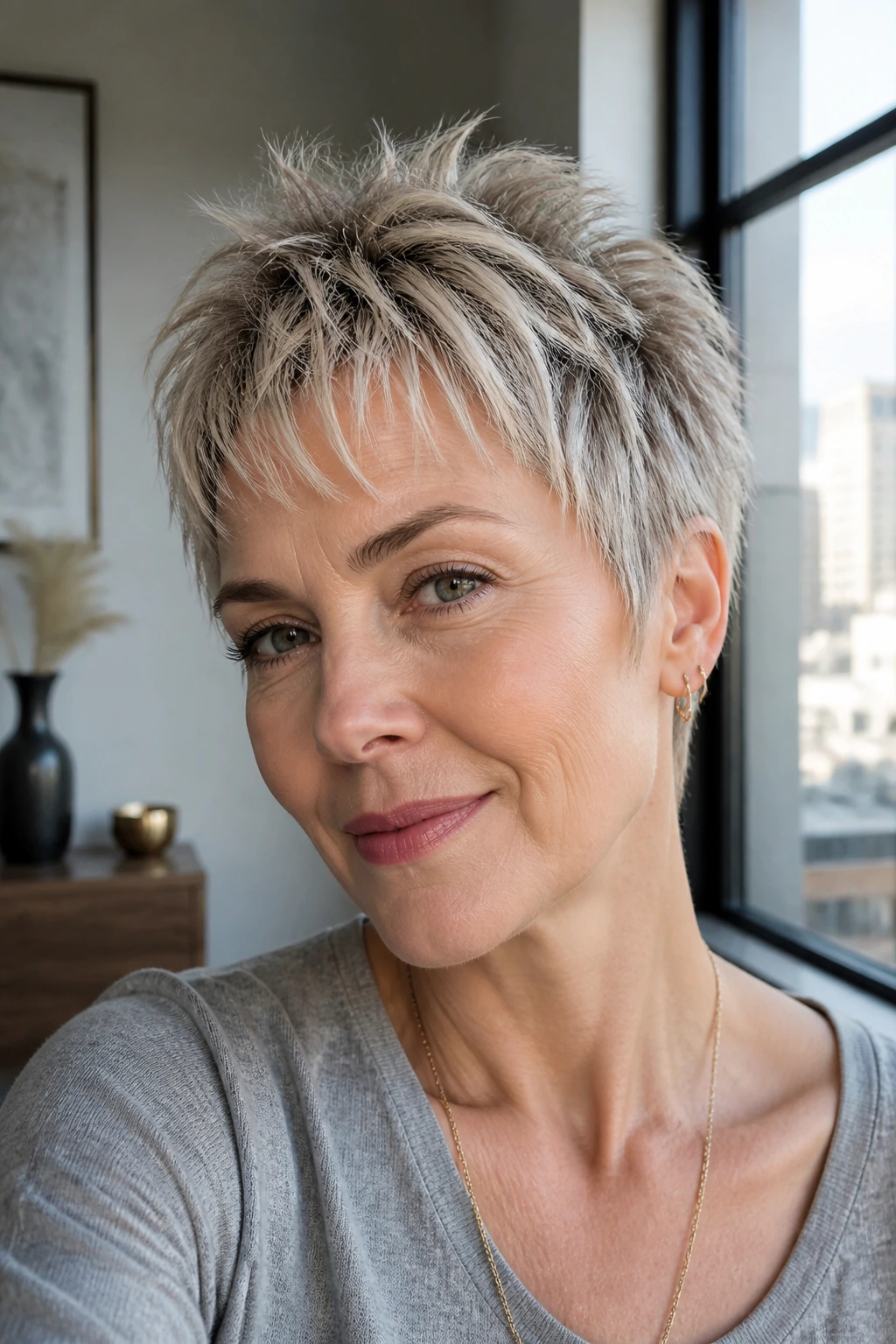
This crop has bite. The ends are lightly razored or point-cut so they separate into little pieces instead of falling in one solid line. Thick hair benefits most, because the razor work removes bulk and lets the shape breathe. On coarse hair, though, the blade needs a careful hand — too much and the ends fray.
A dab of wax or pomade between the fingers helps define the pieces. Start with almost nothing, warm it well, then tap it into the tips only. If the hair starts to look stringy, you’ve used too much.
8. Airy French Bob With Feathered Bangs
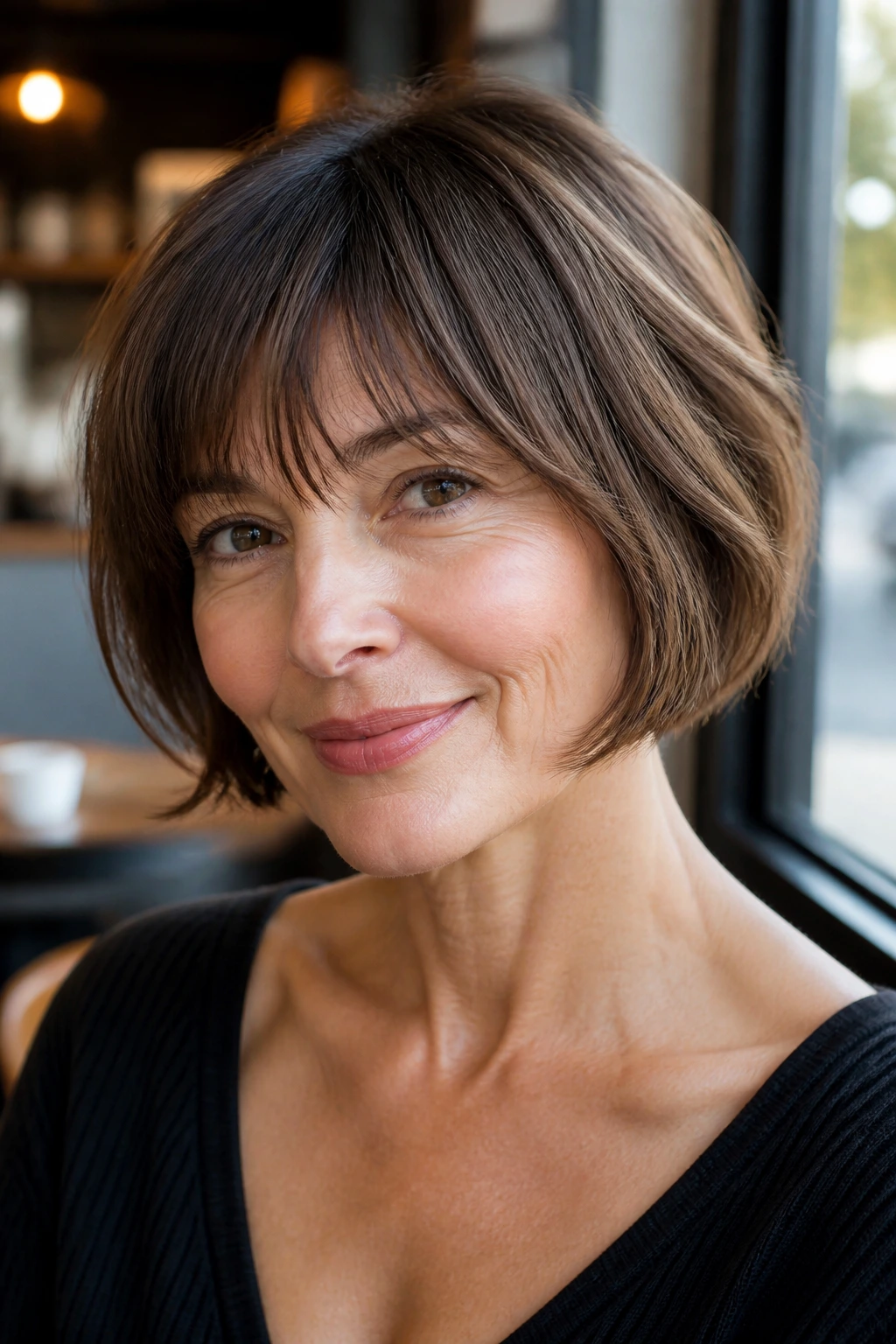
This is the bob with manners. It sits near the chin, carries a soft fringe, and keeps the bottom line loose enough to move when you turn your head. The feathered bangs are the key: they should skim the forehead and break apart a little at the ends, not hang like a curtain.
It’s a lovely choice when you want a polished shape that still feels easy. Blow-dry the bangs from side to side first, then smooth the rest with a round brush. The result should look soft, not stiff. That’s the point.
9. Neck-Skimming Feathered Flip
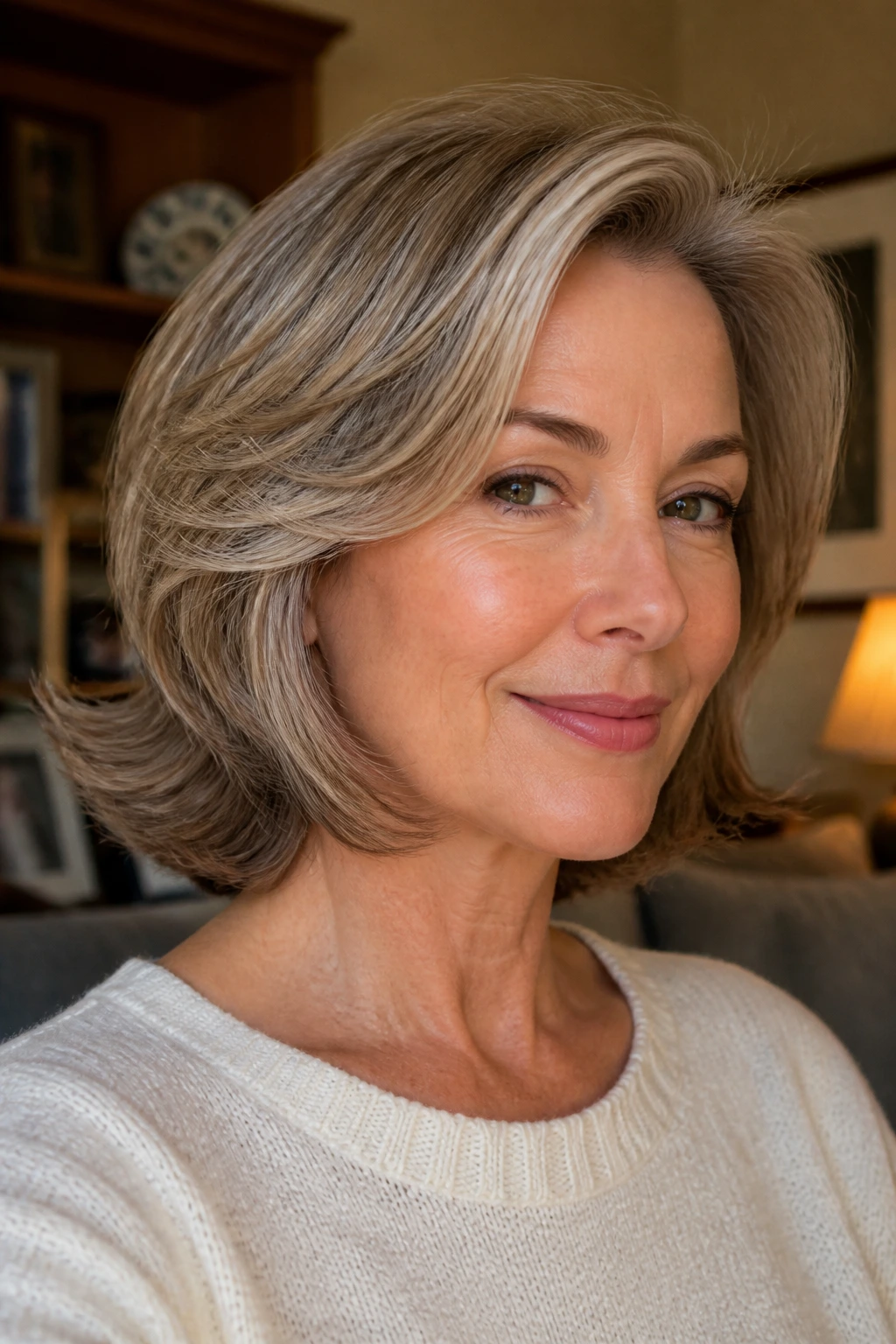
A little length around the neck changes everything. This cut lands just above or right at the collar, then flips the ends outward with feathered layers through the middle. It gives you the feel of short hair without the severe snap that some pixies can have.
Use a round brush and lift the ends away from the neck as you dry. A quick undercurl at the front and a slight flip at the back keep the shape lively. It’s one of the easiest cuts to wear with earrings, because the hair doesn’t crowd the face.
10. Rounded Feathered Bob With Lift at the Back
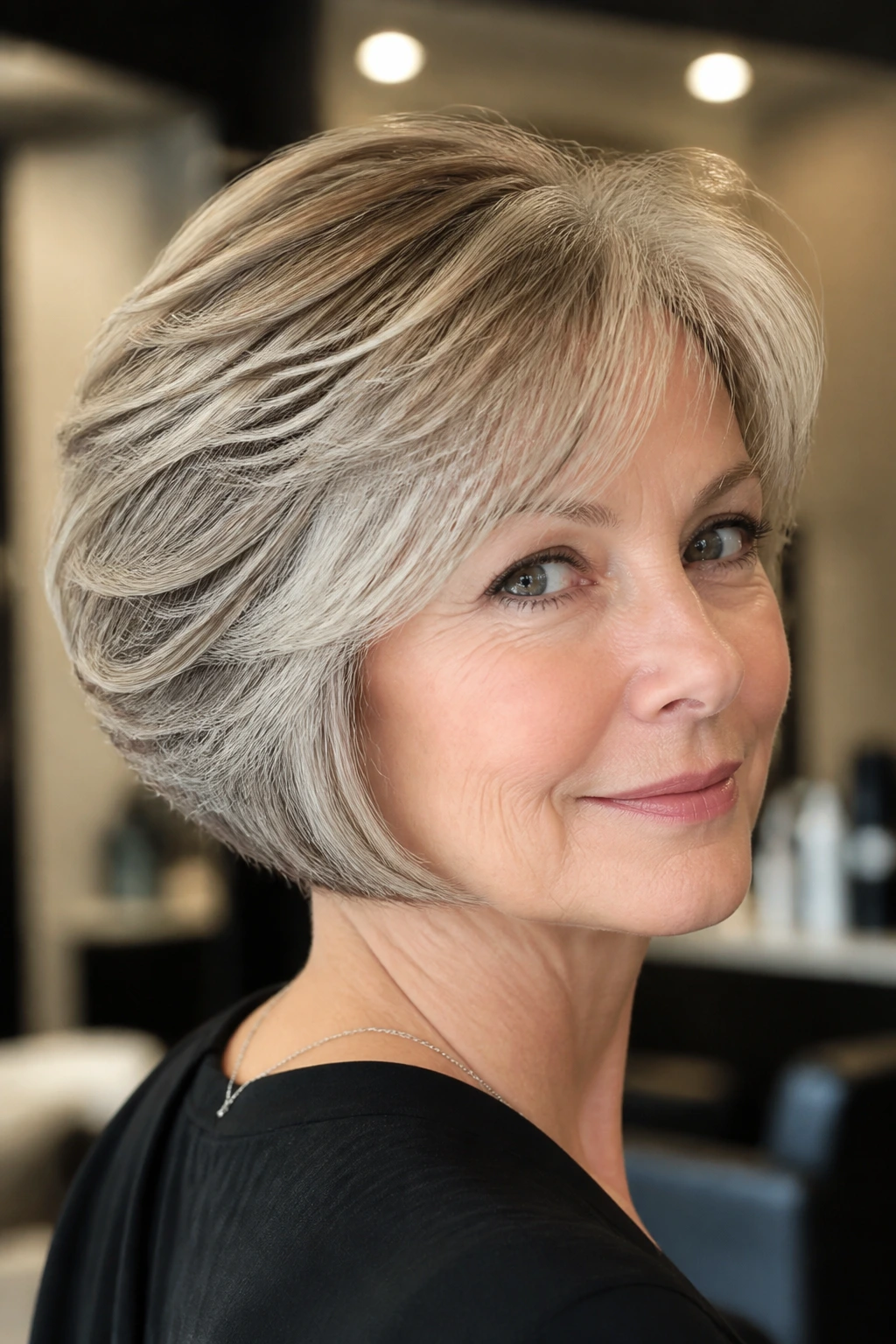
A rounded bob can go wrong fast if the weight lands in the wrong place. This version keeps the back lifted and airy instead of stacked into a hard shelf. Feathered layers through the crown and sides stop the haircut from looking helmet-shaped, which is the trap with a lot of old-school bobs.
If your hair tends to flatten at the back of the head, this one earns its place. Dry the crown with root clips for a few minutes, then brush the ends under. The silhouette should stay curved, but never blocky.
11. Textured Crown Feathered Crop
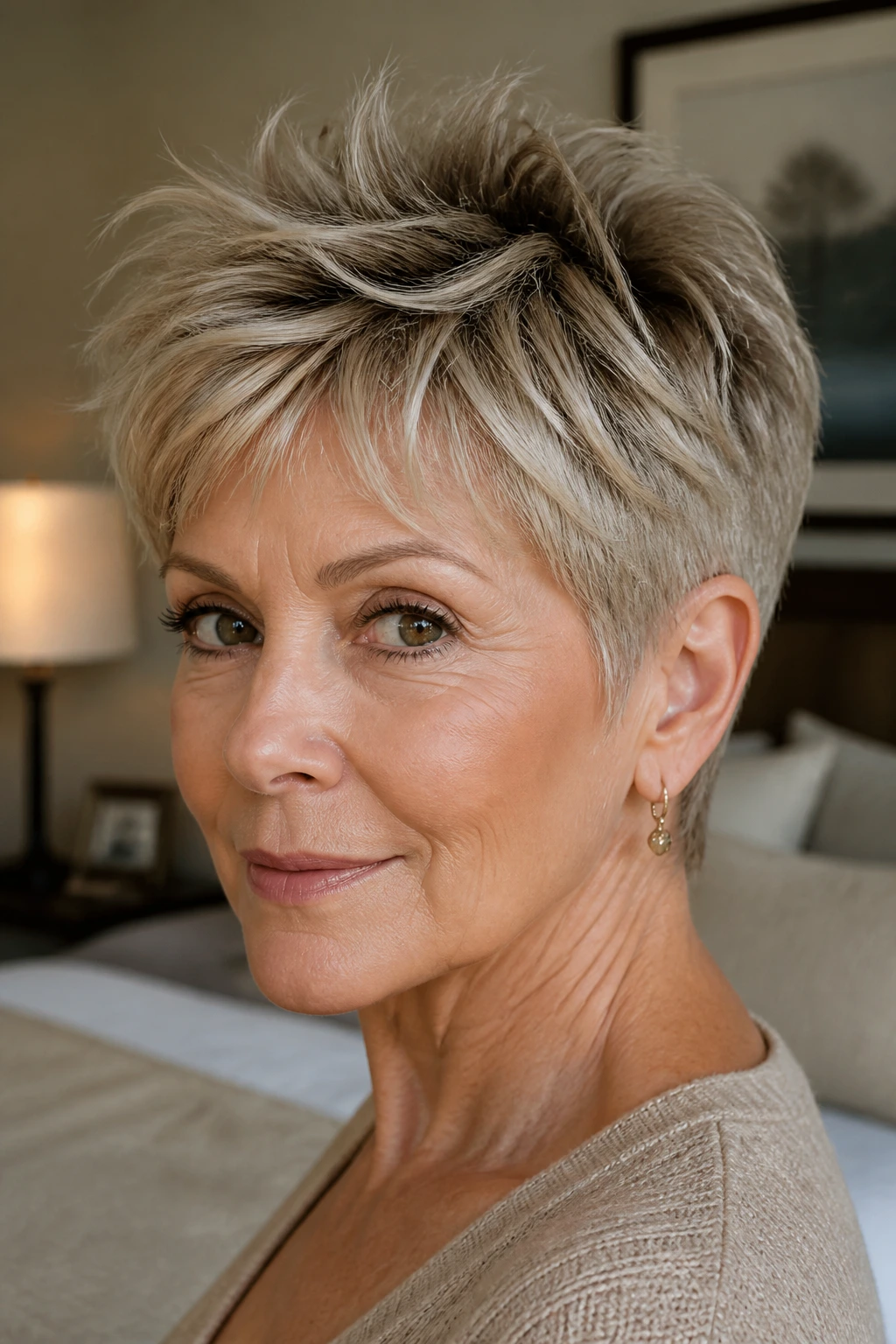
This crop is built from the top down. The crown carries most of the visual interest, while the sides stay close and clean. That makes the haircut feel taller and lighter, which is useful when the top needs help and the sides already behave.
I’d choose this for fine hair that wants lift without a lot of length. A volumizing spray at the roots and a quick blast of warm air are enough to wake it up. The rest can be finger-styled. Don’t over-comb it flat after drying — that’s how the shape disappears.
12. Swooping Bang Feathered Cut
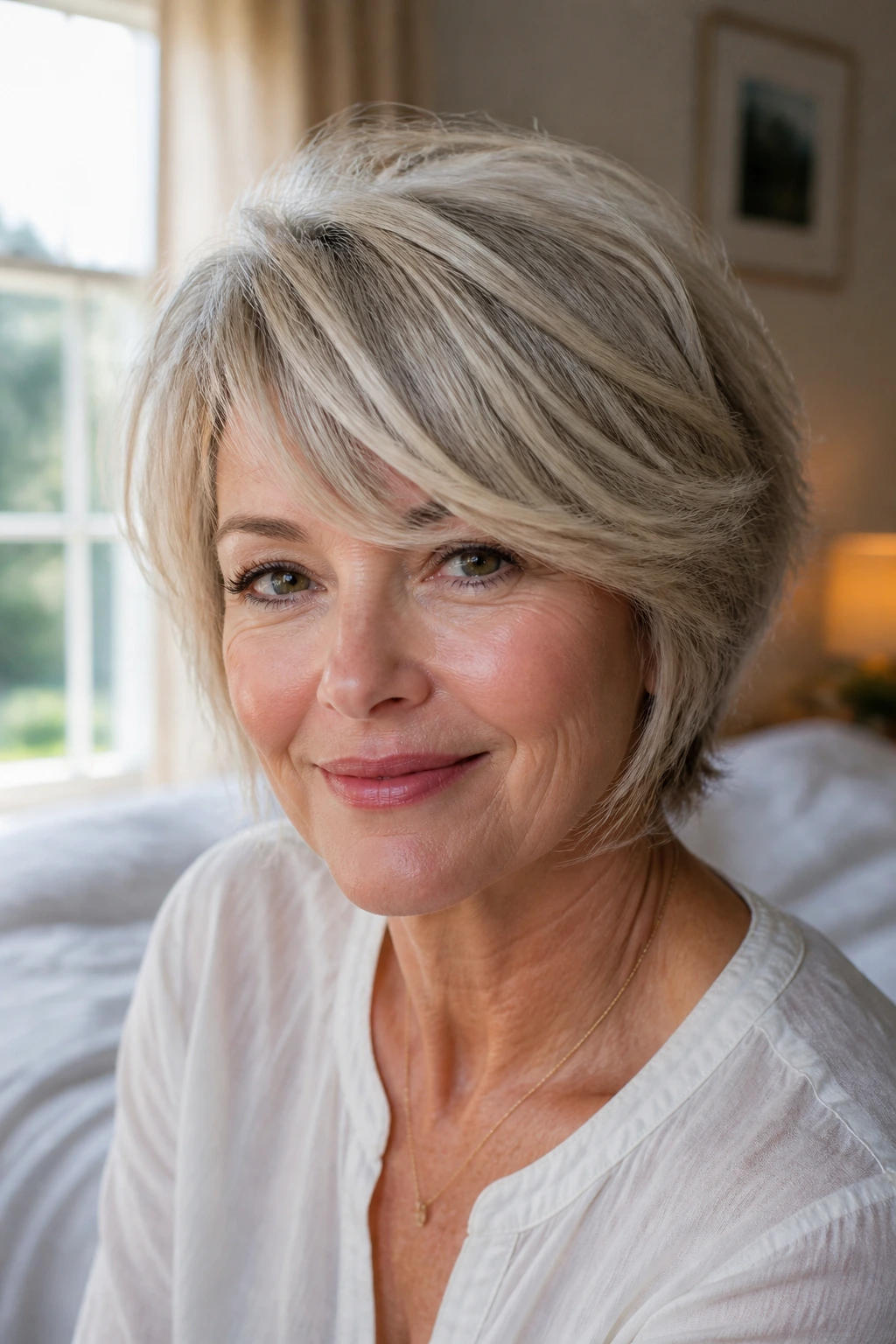
A swooping fringe can change the entire mood of a short haircut. Here, the bang is longer on one side and feathers into the rest of the cut, creating a diagonal line that softens the forehead and gives the face some movement. It’s a nice fix for a high forehead or a face shape that feels a little long in short hair.
The key is the transition. You want the bang to melt into the side layers, not sit there like a separate piece. Blow it across the forehead with a round brush and let the ends curve naturally. Too much spray will make it stiff, and stiff fringe is a headache.
13. Soft-Stack Feathered Bob With Tucked Sides
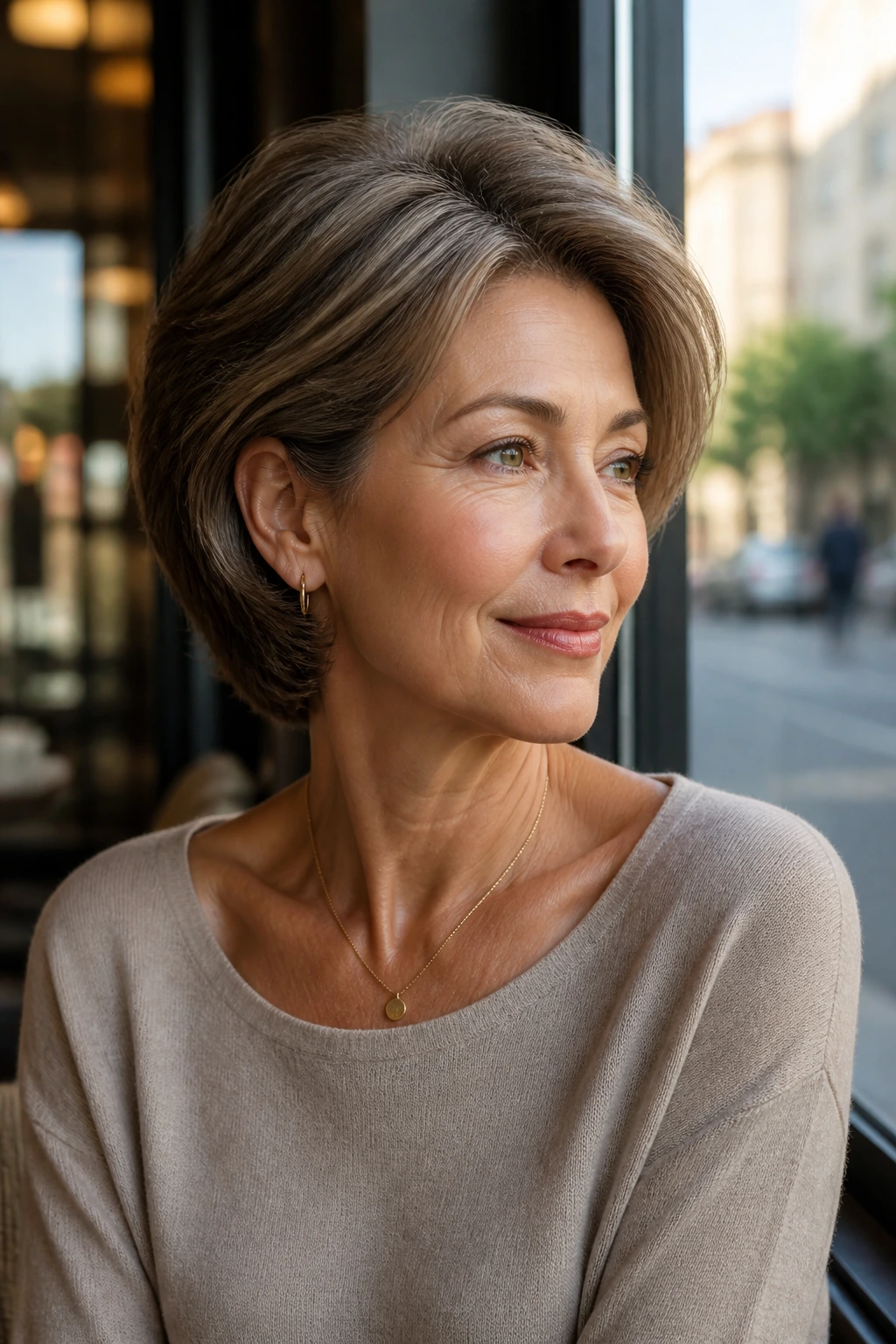
This bob has a little more structure in back, but the stacking is softened so it never looks wedgey. The sides are cut to tuck neatly behind the ears, which makes the whole haircut easier to wear with scarves, jewelry, or glasses. It’s one of those practical shapes that still looks finished from every angle.
If you like hair that stays put, this is a good bet. Ask for a clean nape and feathering through the interior rather than heavy layering at the outline. The best version keeps the silhouette smooth, not puffy.
14. Feathered Cut for Wavy or Curly Hair
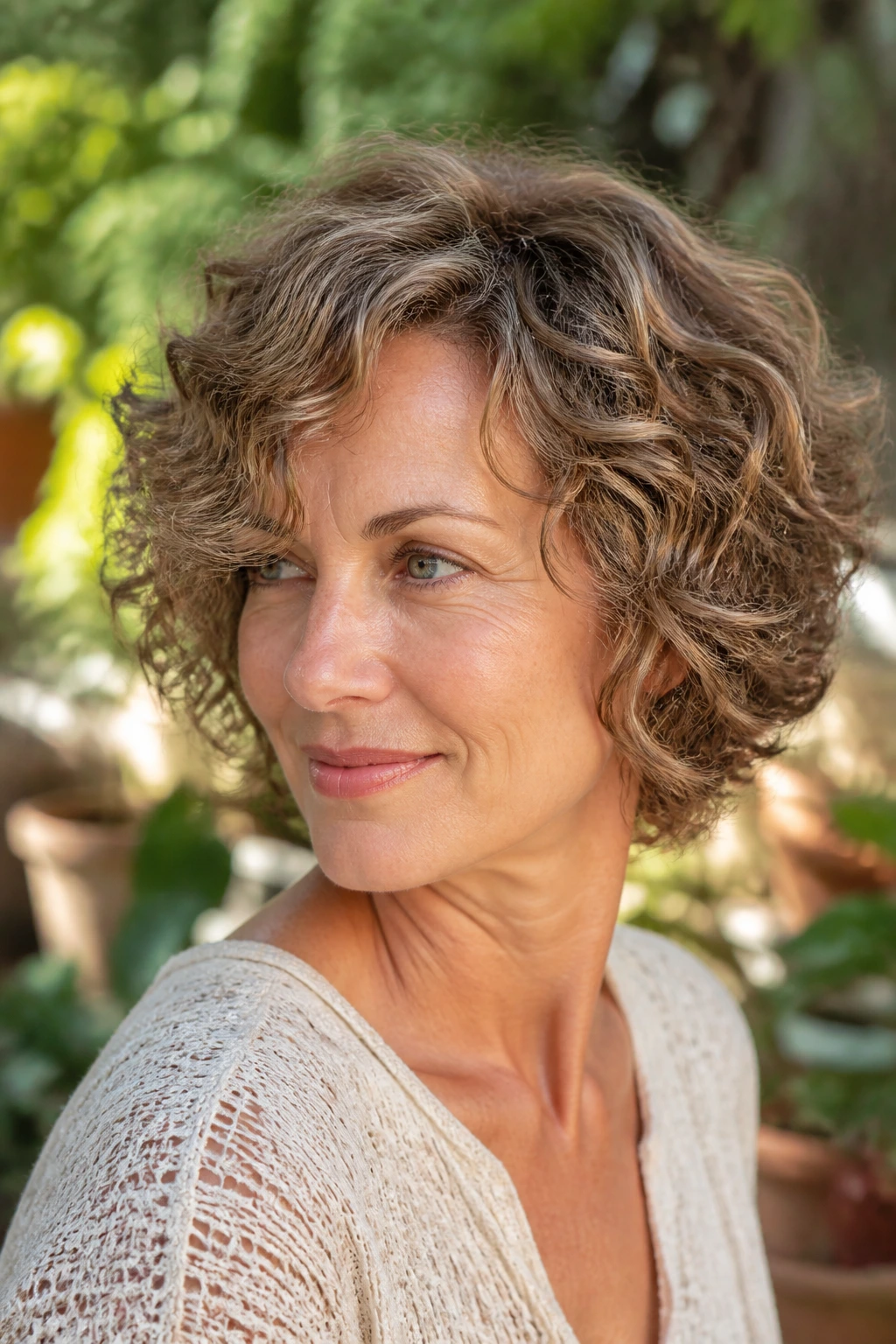
Feathering and curl can get along if the cut respects the pattern. On wavy or curly hair, the layers should be shaped around the bend instead of against it, which keeps the curl from bulking up in one place and collapsing in another. The end result is soft movement, not triangle hair. Nobody needs triangle hair.
This cut often works best when the hair is shaped dry or almost dry, because curl lies. It tells you one thing when wet and another when dry. A curl cream and a diffuser can help, but don’t drown the hair in product. A little frizz is fine here. It reads as texture, not failure.
15. Salt-and-Pepper Feathered Pixie
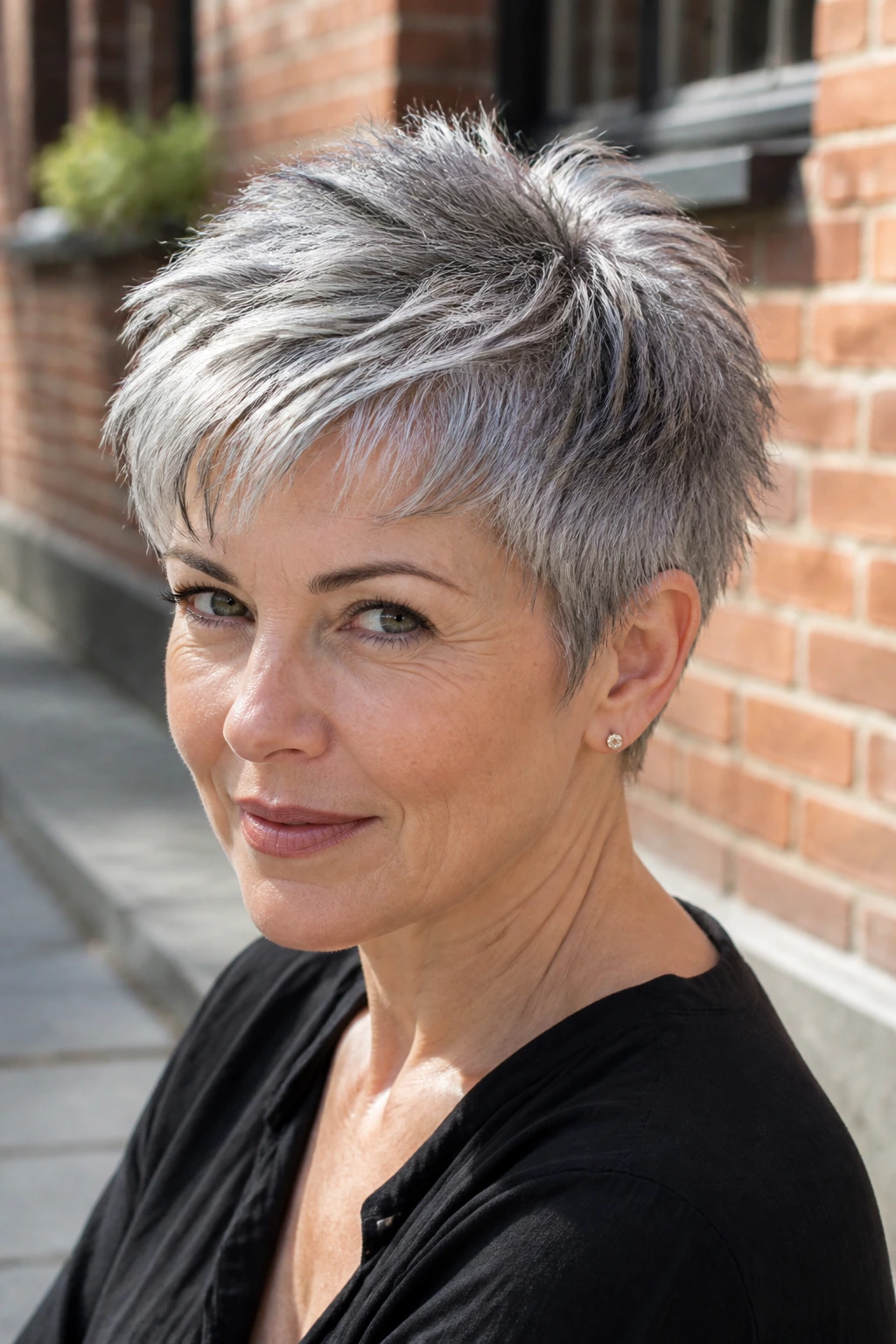
Salt-and-pepper hair looks sharp when the layers let the color breathe. This pixie keeps the sides tidy and the top feathered, so the mix of dark and light strands shows as motion, not blotches. It’s a neat choice if your hair has turned mostly silver with a few darker pieces still hanging around.
A light matte paste works better than anything glossy. Shine is nice, but too much can flatten the natural contrast in the color. This cut likes a bit of edge around the ends and a soft lift at the front.
16. Temple-Volumed Feathered Bob
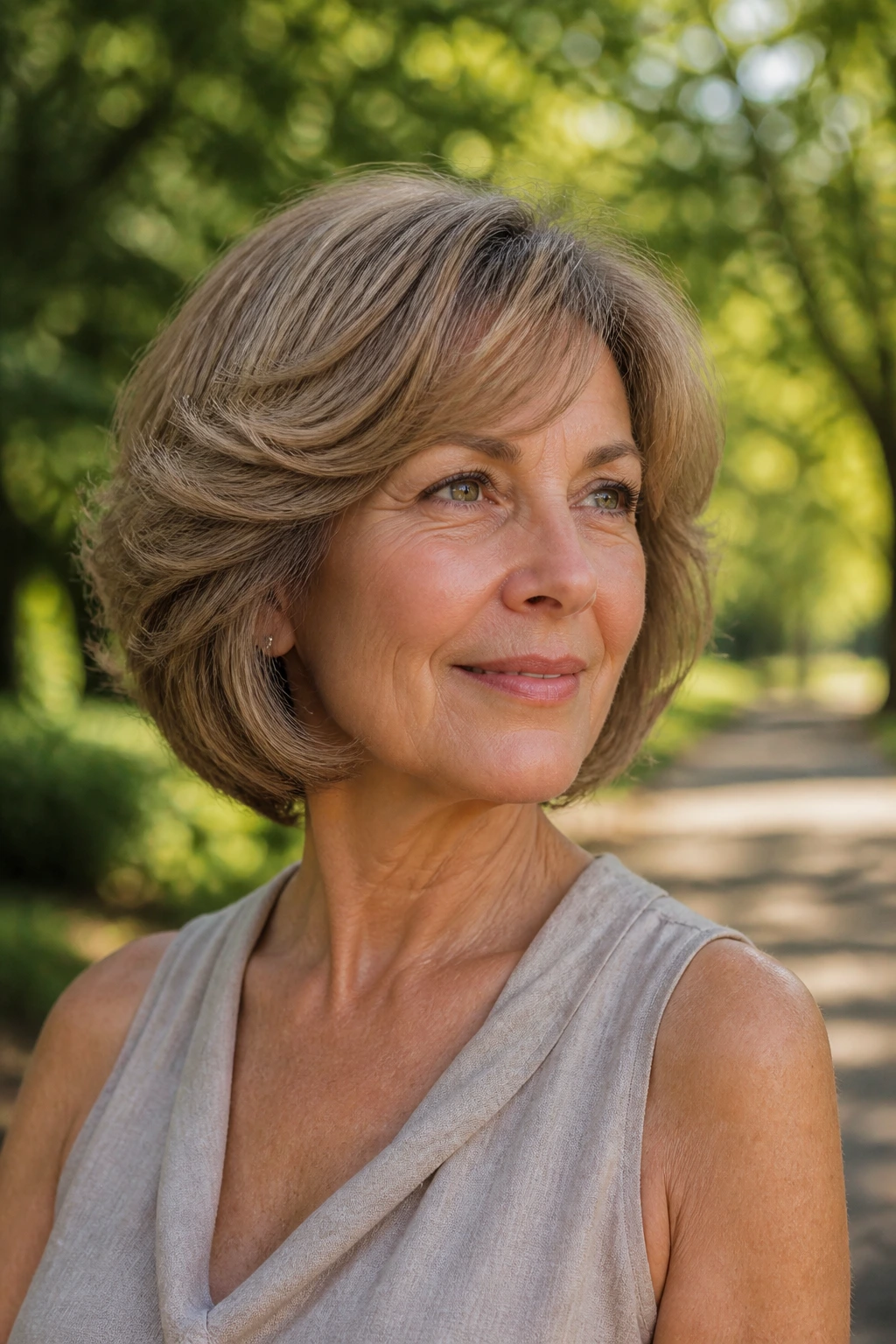
Some faces need width at the temples more than height at the crown. This bob solves that by feathering volume outward at the sides while keeping the top controlled. It’s a very good move for a long face or a narrow jaw, because the extra movement happens at eye level where it changes the whole balance.
The styling should be gentle. Brush the sides outward just enough to create a soft curve, then stop. If you force the ends under too hard, you lose the width that makes the cut work. This one is about restraint.
17. Long Fringe Feathered Crop
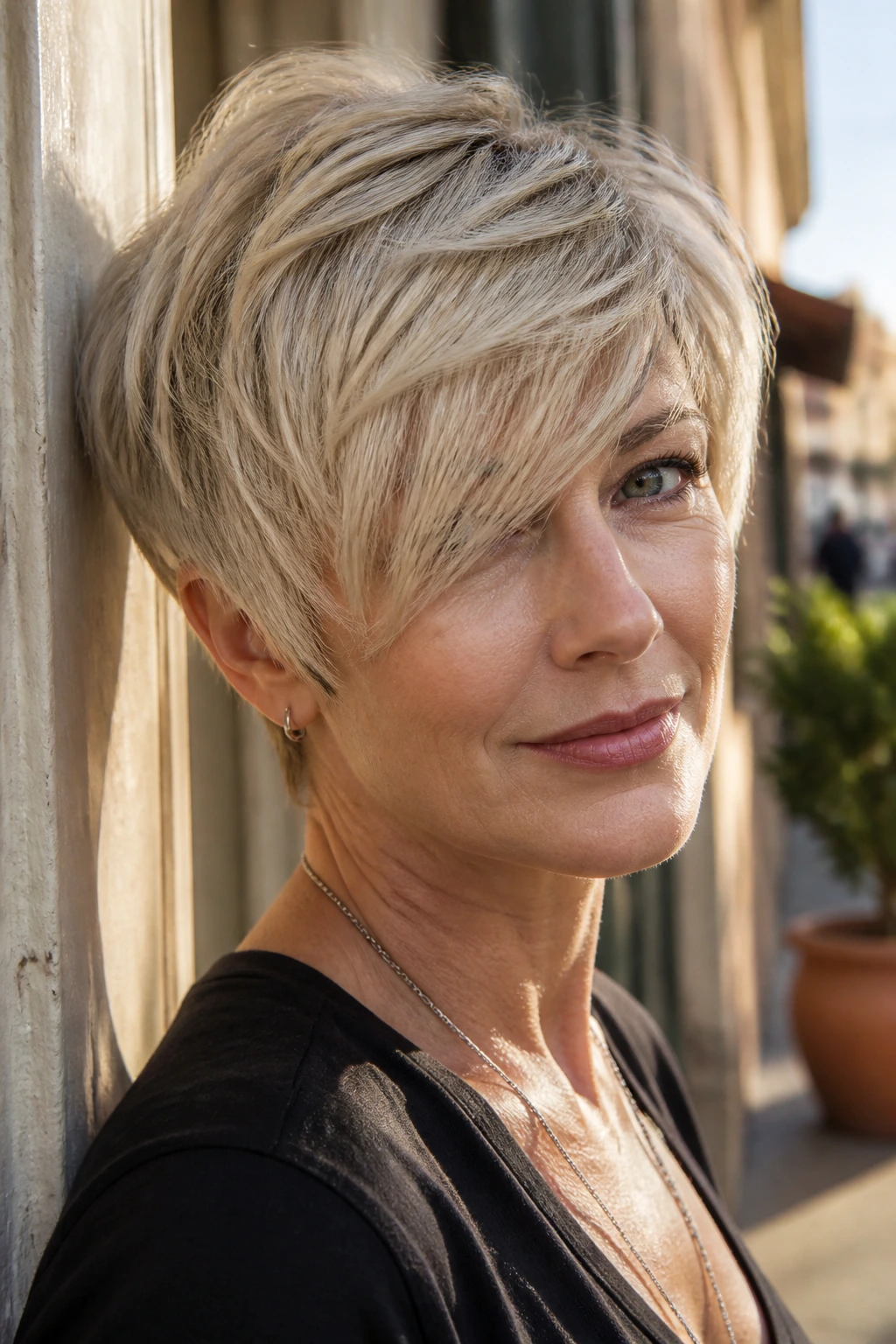
A long fringe can soften a forehead without hiding the face. This crop keeps the sides short and the front a little longer, with feathered ends that skim past the brows and graze one eye when the part shifts. It has a quiet, relaxed feel — not fussy, not severe.
The fringe needs a little attention in the morning. Blow it dry first, before the rest of the head, and push it side to side so it doesn’t split. Once it’s settled, the rest of the crop is easy.
18. Tousled Feathered Short Shag
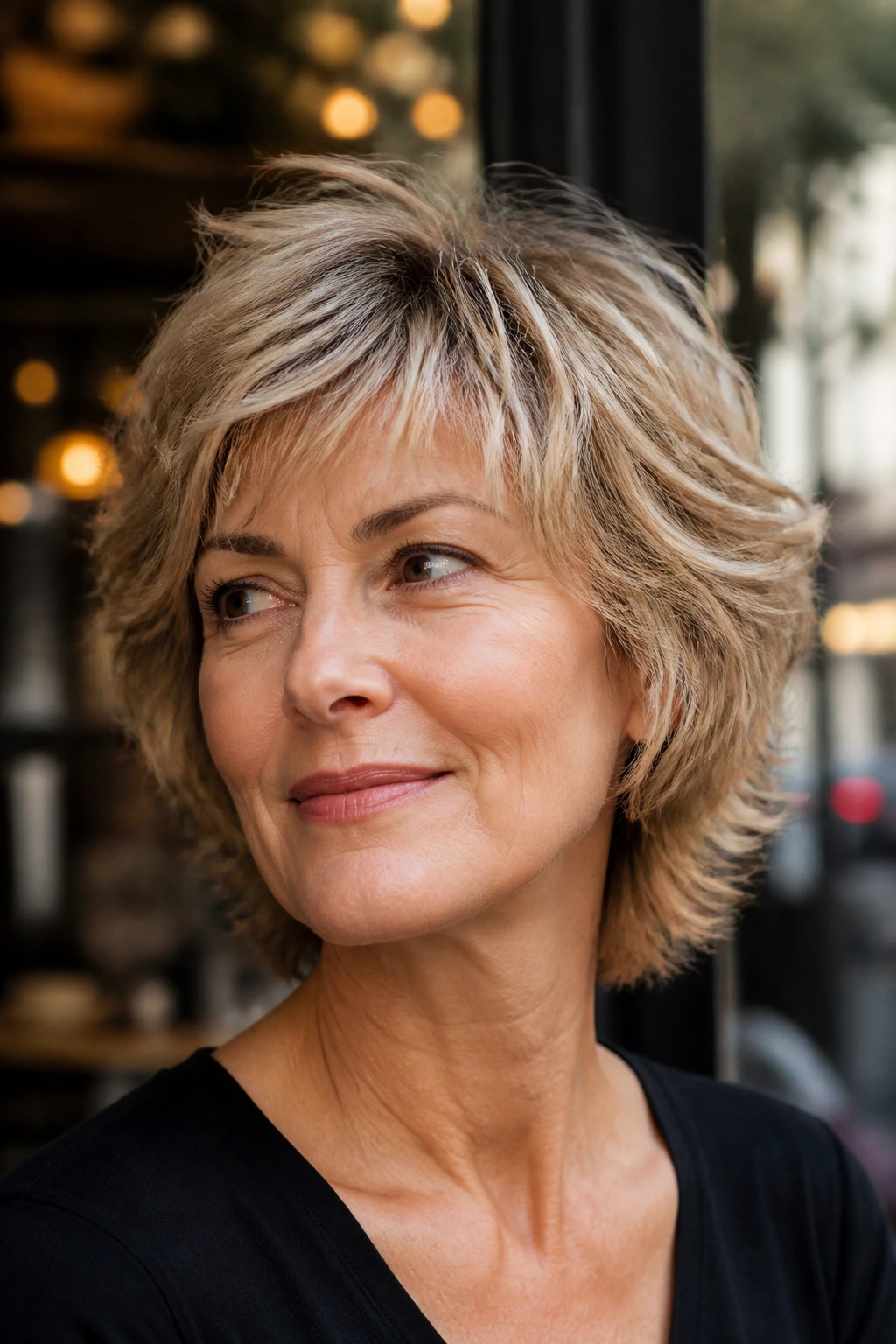
This is the hair version of leaving the shirt untucked on purpose. The tousled short shag keeps the layers loose, the fringe broken up, and the ends light enough to move when you turn your head. It’s a strong choice if your hair already has wave, frizz, or a little natural lift.
The styling should stay casual. Use a texturizing spray at the roots, then pinch the ends between your fingers after drying. If the cut starts to look too neat, you probably did too much. A short shag should look lived-in, not combed to death.
19. Ear-Tuck Feathered Bob
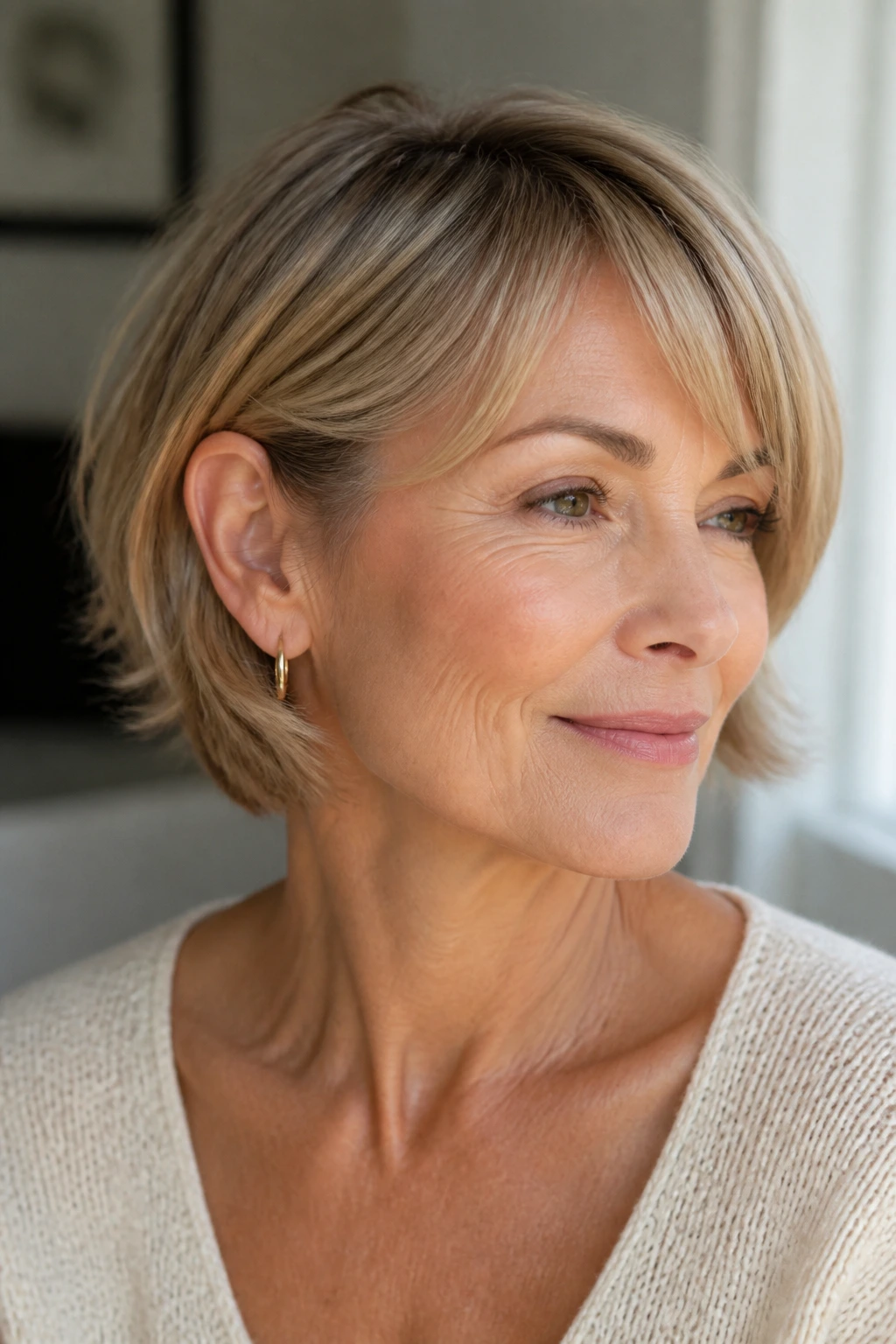
This bob is made for the tuck-behind-the-ear moment. The front pieces are cut with enough softness to slide cleanly back, while the rest of the haircut keeps a feathered curve around the cheek and jaw. That gives you control: one day it reads polished, another day it looks relaxed.
Earrings matter here. Small hoops, studs, or a simple drop earring show off the shape without fighting it. If you tuck one side and leave the other loose, the cut gets a little asymmetry without requiring a dramatic change.
20. Feathered Cut That Leaves Room for Glasses

Glasses should frame a haircut, not fight it. This version keeps the temples light and the side lengths just clear of the frame arms, so the hair doesn’t puff into the hardware or get trapped behind your ears. That tiny adjustment makes a big difference.
I like this with a side part and soft layers that skim the cheekbones. Bangs can work, but they need to land above or just at the top edge of the frames. Anything lower starts collecting on the lenses, and nobody wants to chase their hair off their glasses all day.
21. Fine-Hair Feathered Cut With a Denser Edge
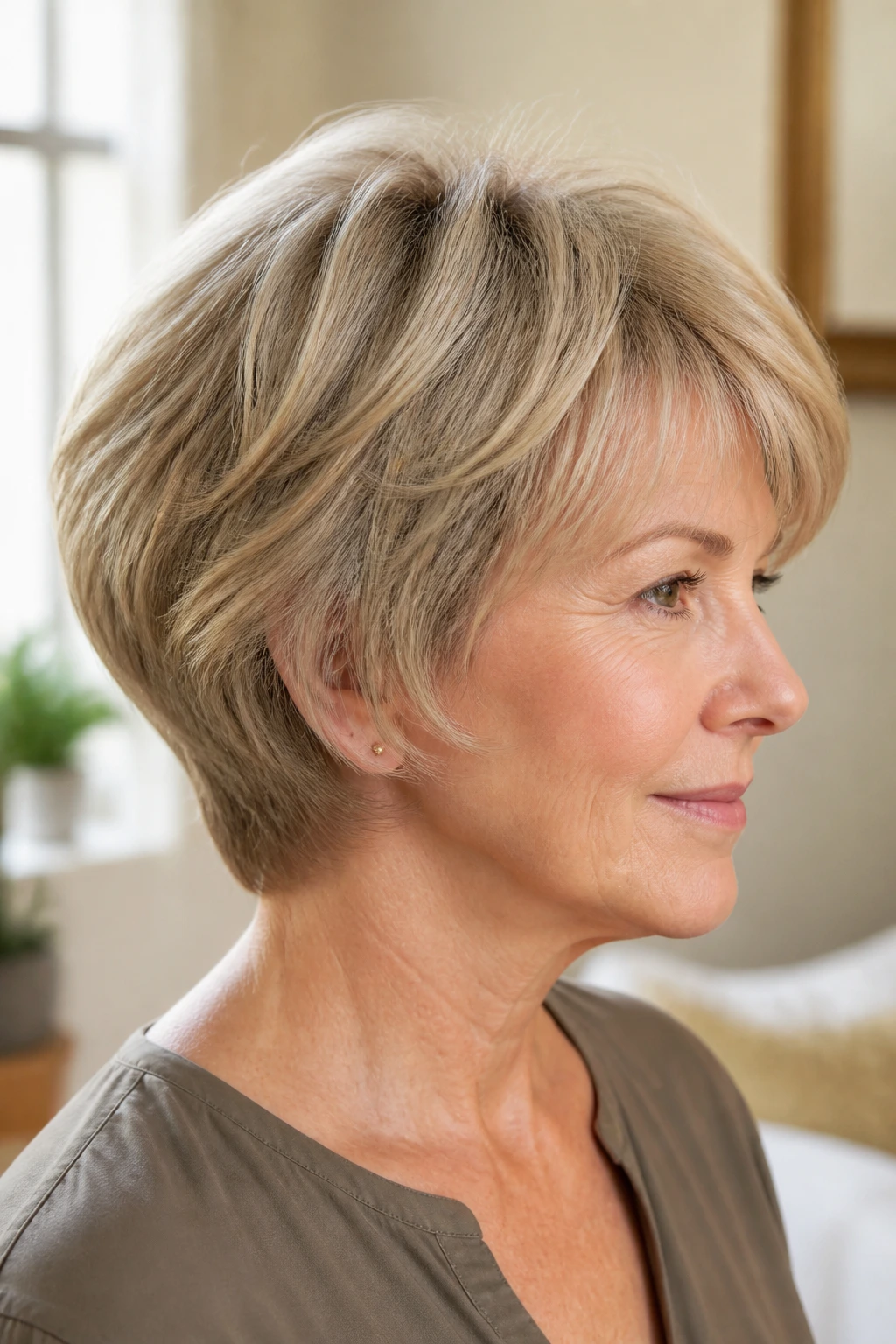
Fine hair needs a careful hand. If the ends are feathered too much, the cut can go see-through in a week. This version keeps the interior airy but preserves a denser perimeter so the hair still looks full at the bottom.
Ask your stylist to keep the outline blunt enough to hold shape. Then add lighter feathering only through the crown and around the face. That gives you movement without turning the whole head wispy. It’s the difference between soft and sparse.
22. Thick-Hair Feathered Crop With Bulk Removal
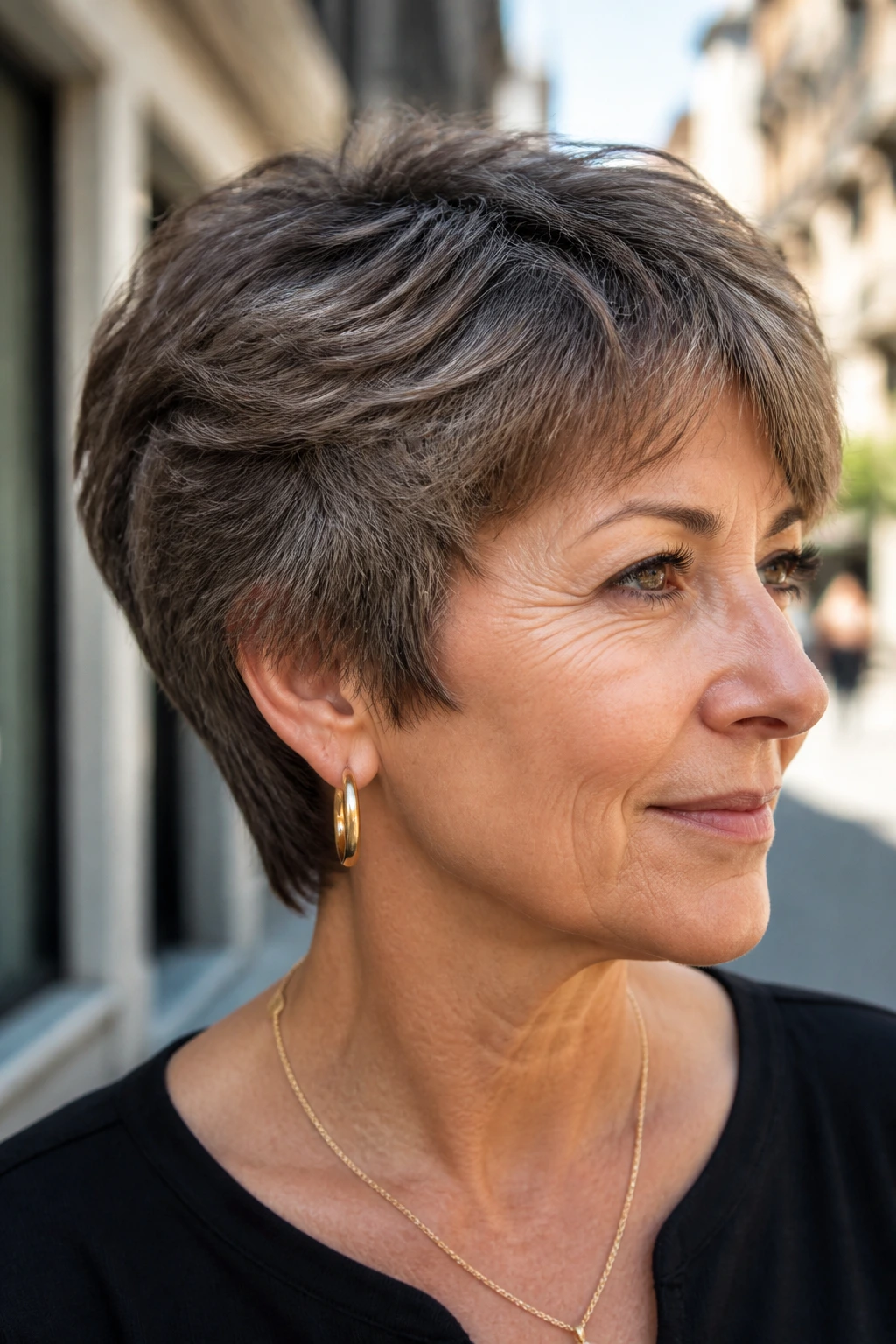
Thick hair doesn’t need more width. It needs release. This crop uses feathering to remove bulk inside the shape, especially around the crown, behind the ears, and at the nape. The result is shorter hair that feels lighter on the neck and easier to style in the morning.
The biggest mistake with thick hair is overloading it with product after the cut. Start with a small amount of mousse or cream, then dry it fully so you can see the real shape. Once the bulk is gone, the feathering starts to show.
23. Soft-Neckline Feathered Cut
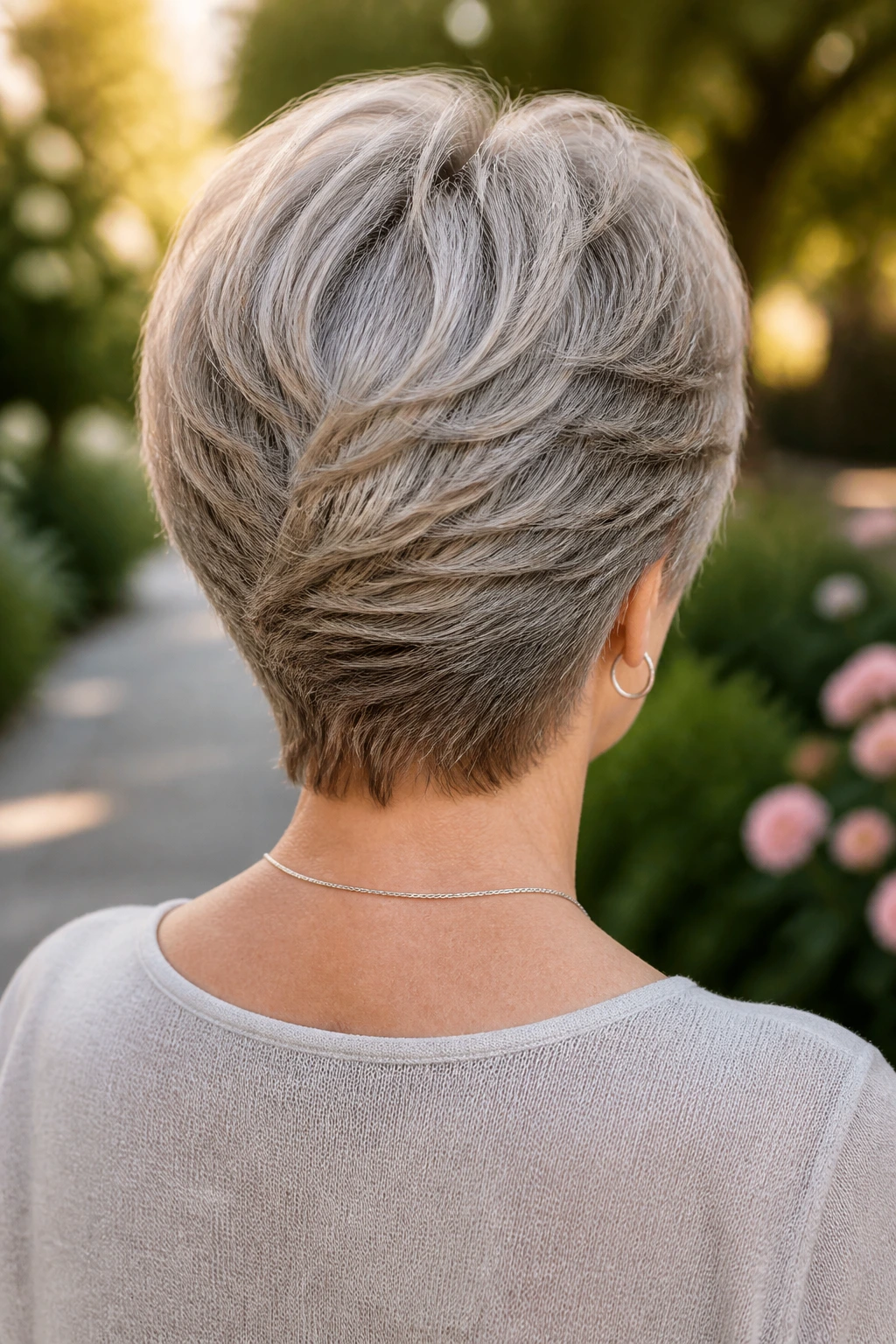
The neckline can make or break a short haircut. A soft neckline stays tapered and lightly feathered instead of ending in a hard line, which keeps the back of the head from looking square. It’s a tidy choice that still feels gentle.
This shape suits people who wear collars, scarves, or jackets with structure. The hair sits neatly against them instead of bunching up. If the nape grows out too fast, a quick cleanup around the edges brings the whole cut back into shape.
24. Micro-Bang Feathered Pixie
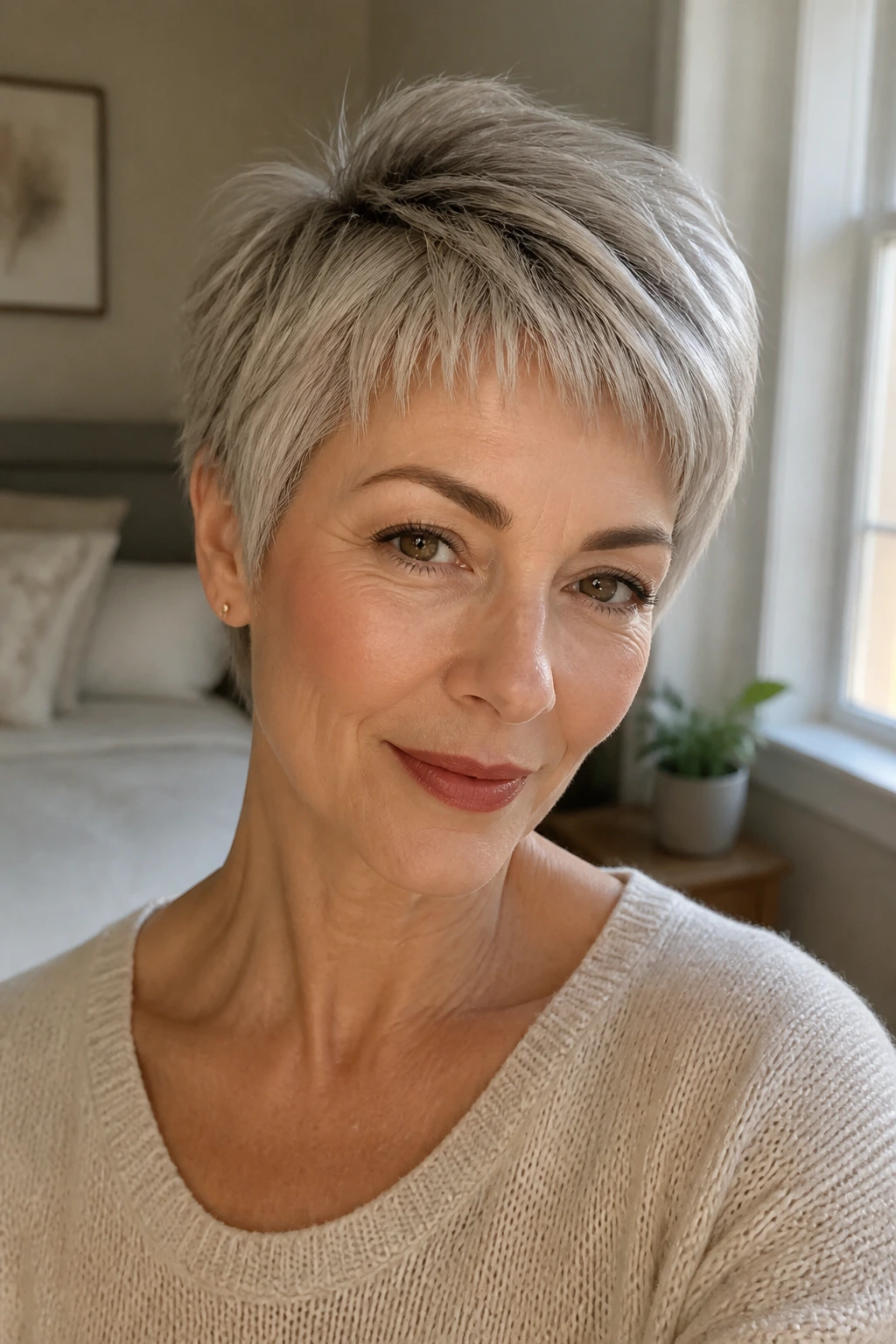
Micro-bangs are not for the timid, but they can look sharp on the right face. Paired with a feathered pixie, they create a little bit of bite up front and a lot of lightness everywhere else. The cut works best when the rest of the hair is kept soft, so the fringe becomes a focal point instead of a hard line.
The bangs should sit cleanly and be cut with care — too short and they can feel severe. I’d keep the texture on the top loose and the sides close. That balance makes the fringe feel intentional, not accidental.
25. Deep Side-Part Feathered Bob
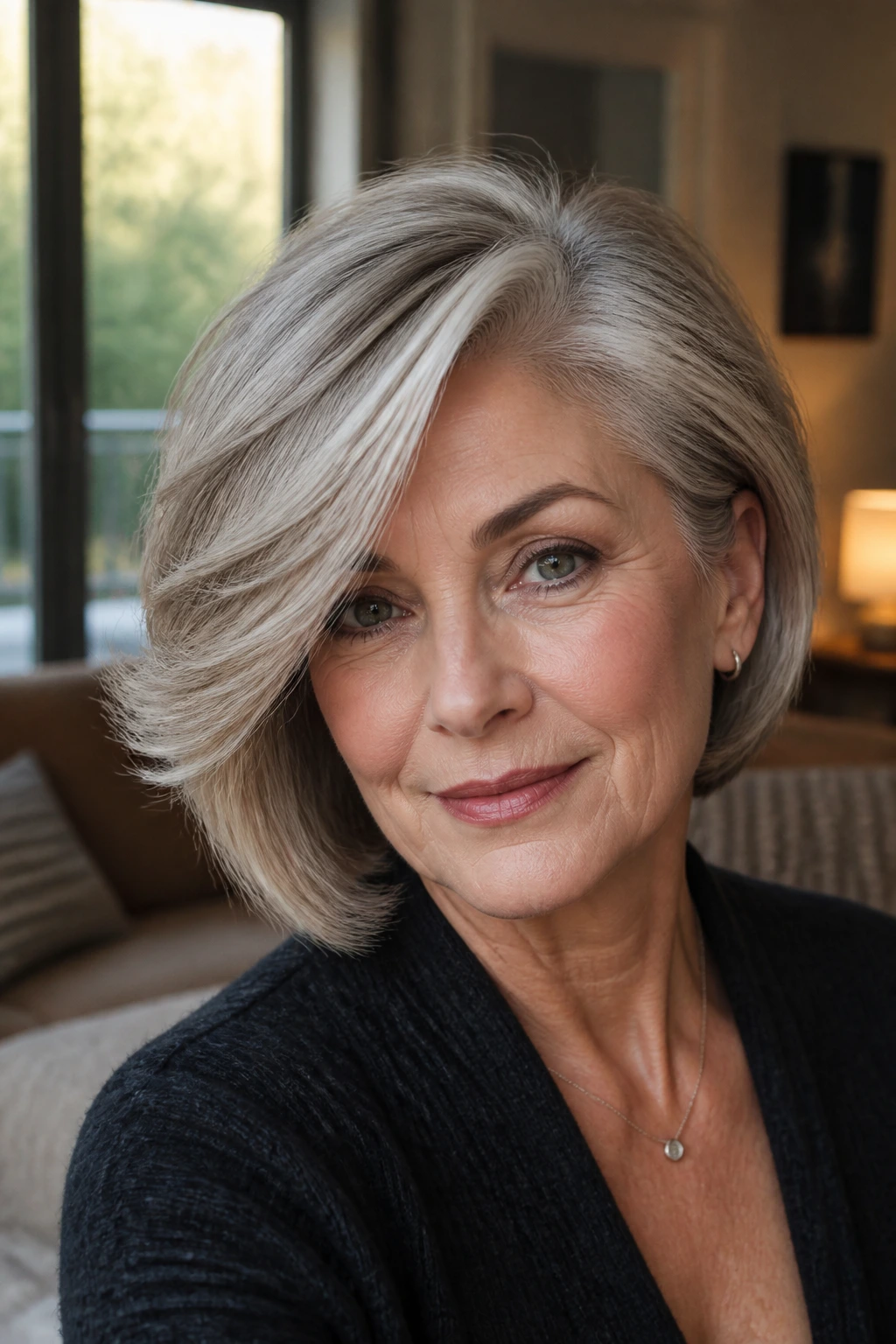
A deep side part changes the direction of volume. In this bob, the heavier side gets a soft feathered sweep while the lighter side stays cleaner and closer to the head. It’s one of the easiest ways to change a short haircut without changing the length.
This is useful if your hair always wants to split in one place anyway. Work with that habit instead of fighting it. A deep part can add lift, hide a flat crown, and make the face look more open in a way that feels surprisingly natural.
26. Gray-Glow Feathered Cut
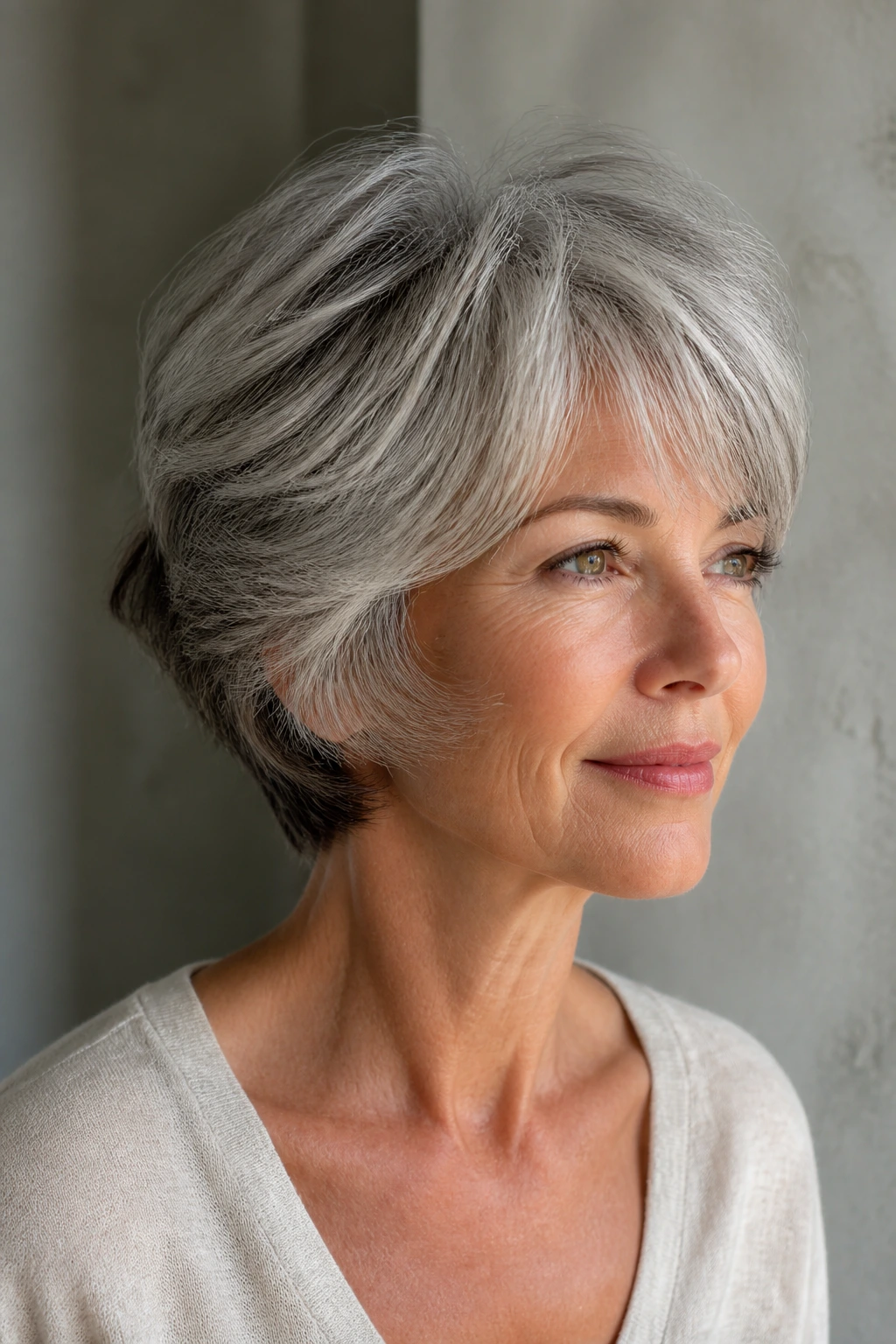
Gray hair can go dull when it’s cut too blunt or styled too heavily. A gray-glow feathered cut keeps the silhouette soft and lets the strands move, which makes the color look brighter and more dimensional. It’s a good fit for pure silver, pewter gray, or those in-between shades that turn up after the salon grows out.
A light glossing serum helps, but only on the mid-lengths and ends. Too much at the roots will kill the lift. If the hair is coarse, a small amount of leave-in conditioner after washing keeps the feathered ends from feeling dry.
27. Texture-Cream Feathered Crop
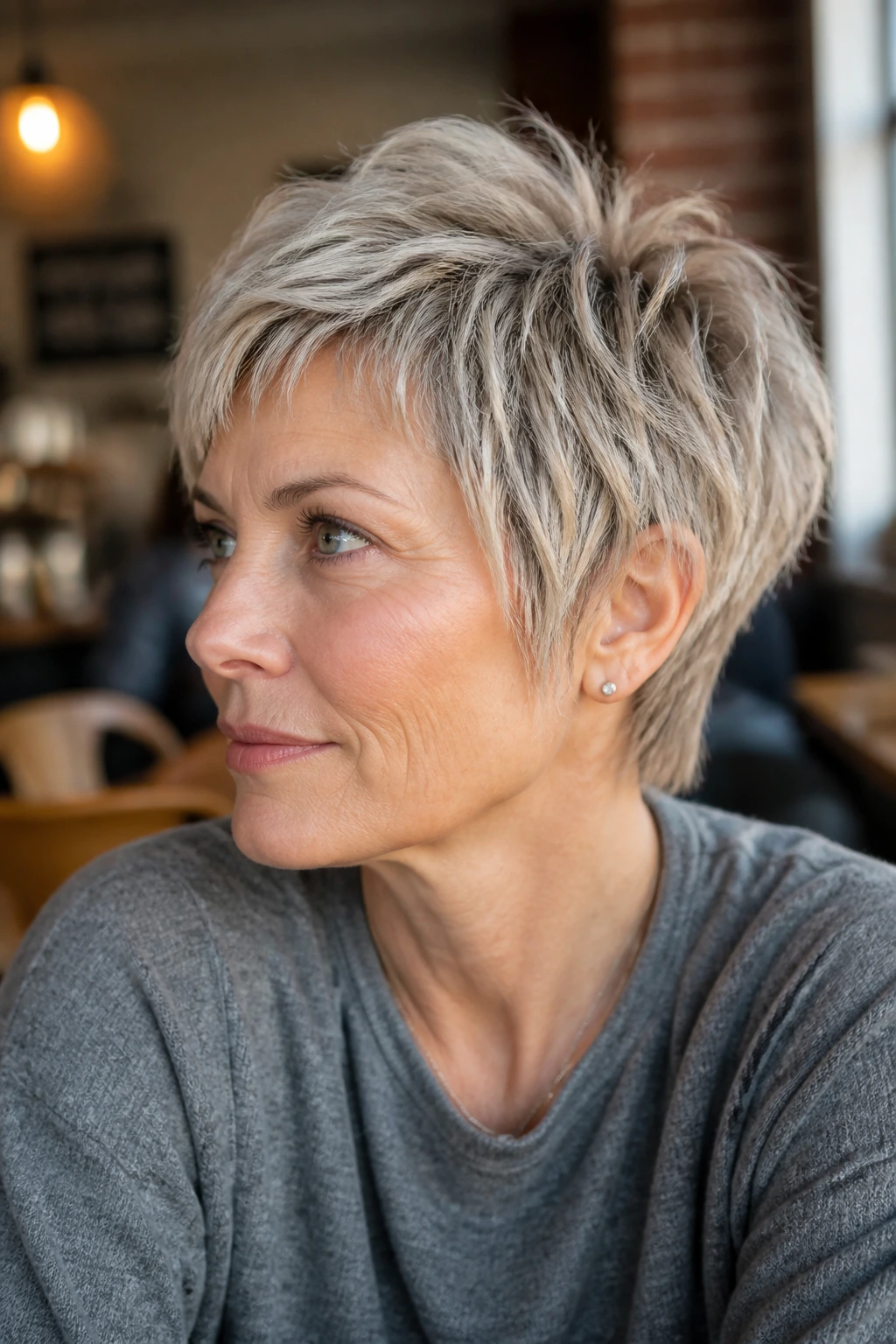
This crop is built for people who like piecey definition. The cut itself stays short and feathered, but the finish uses a small amount of texture cream to separate the ends just enough to make the shape visible. It’s a little sharper than the airy pixies and a little less fussy than a full shag.
Rub the cream between your palms until it disappears, then tap it into the tips. Don’t smear it everywhere. The goal is control at the edges, not a sticky helmet. That tiny bit of separation gives the haircut its character.
28. Wash-and-Go Feathered Short Cut
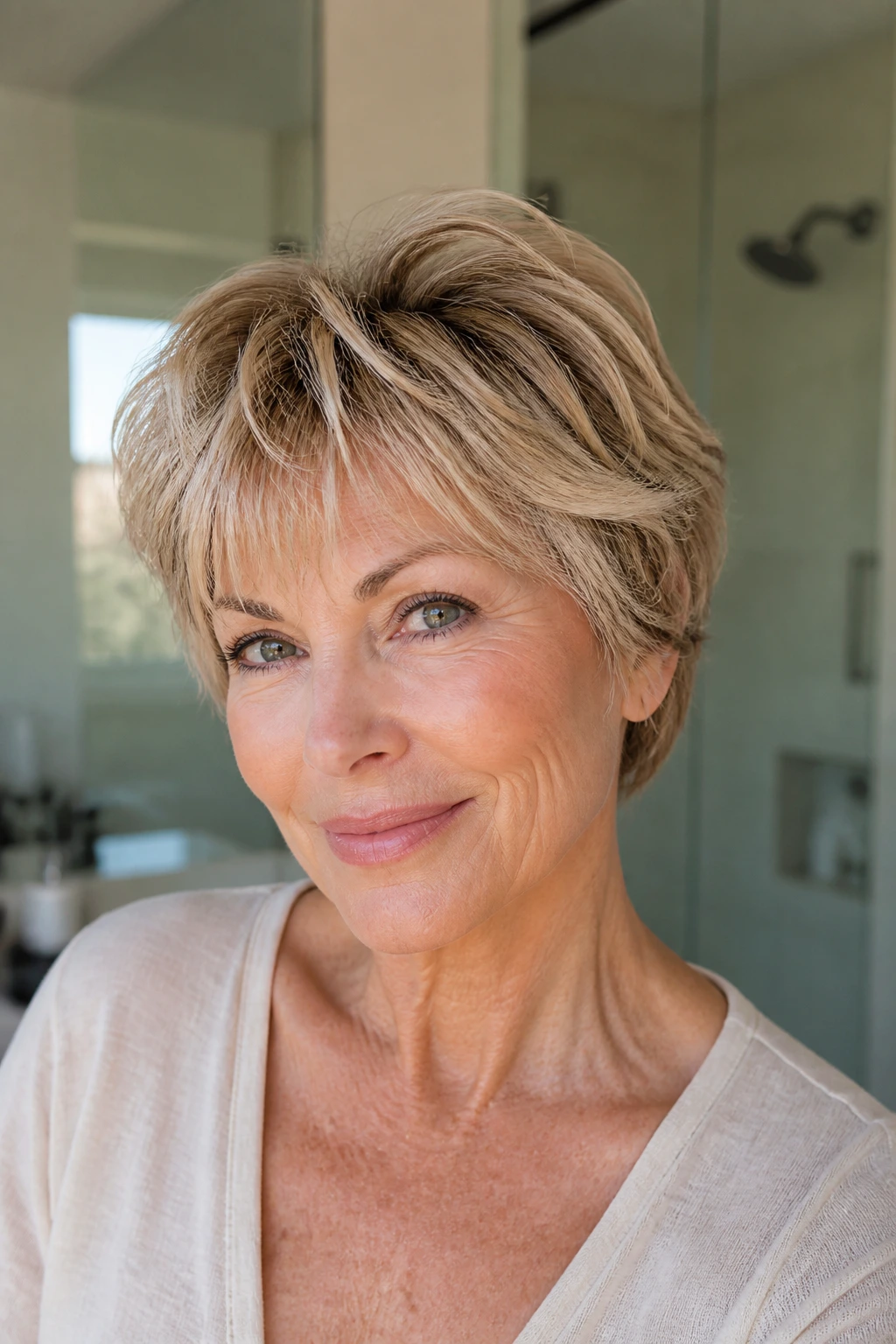
Not every short haircut needs a whole morning. This version is shaped to air-dry with the least amount of work, which is a gift if your schedule is full or your hair simply behaves better when you leave it alone. The layers are feathered enough to move, but not so many that the cut loses itself when the brush stays in the drawer.
A little mousse on damp roots, a finger-comb, and maybe a quick pinch of texture spray are often enough. If one side bends awkwardly, mist that side lightly and scrunch it back into place. The cut should still look like a haircut even when you’ve done almost nothing to it.
Why Feathering Works Better Than a Straight Edge on Short Hair
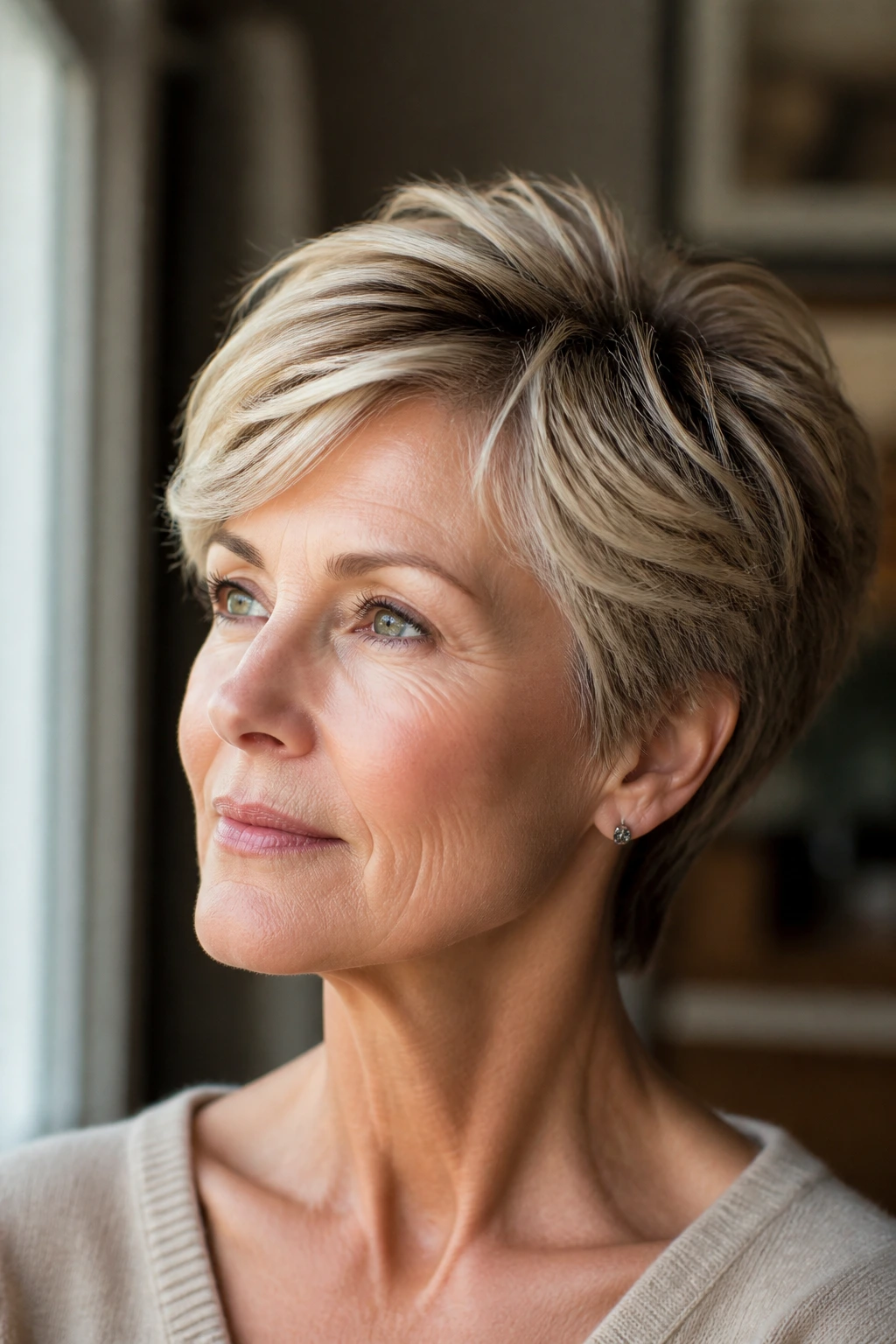
Short hair after 50 tends to show every design choice. That’s the whole issue. A blunt edge can be lovely on dense, straight hair, but once the crown starts losing volume or the ends begin to dry out, a hard line can look boxy or thin in the wrong places. Feathering softens the edge of the cut so the shape looks intentional, even when the hair isn’t perfectly behaved.
The real trick is weight distribution. Feathering removes bulk where the hair wants to collapse and leaves enough structure where the style needs to hold. That’s why a short feathered bob can sit better around the jaw than a one-length chop, and why a pixie with soft top layers can look fuller than a tighter cut with no internal movement. Less weight in the wrong spot. More shape where the eye lands.
The parting matters more than most people think
A feathered cut does its best work when it respects the natural part and any cowlicks at the front hairline. Fighting those patterns with a hard blow-dry usually creates more work, not less. If the hair wants to split left, right, or off center, let that guide the design.
The ends should still have a little purpose
I’m not fond of feathering that goes too far and leaves the perimeter stringy. The bottom edge still needs enough substance to hold the shape. If the last inch of hair looks see-through, the cut has been overworked.
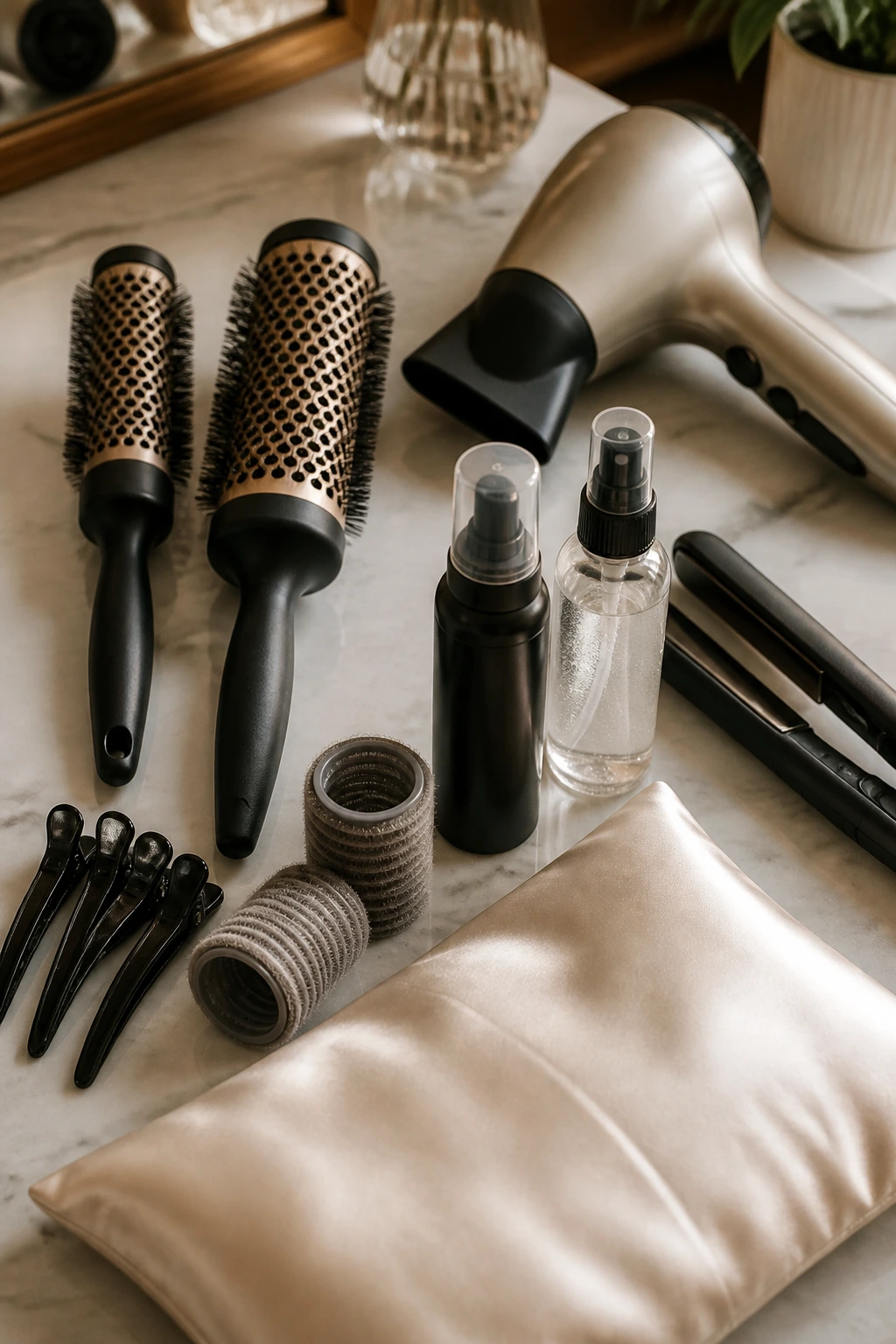
Essential Tools for Styling Feathered Short Hair
-
A 1-inch round brush: Best for pixies, crops, and short fringes that need a little bend at the root.
-
A 1.5-inch round brush: Better for bob lengths and jaw-skimming cuts, where you want curve without curl.
-
A blow-dryer with a nozzle attachment: The nozzle keeps air aimed at the roots so you can lift the hair instead of blasting it everywhere.
-
Lightweight mousse or root-lift spray: These products give the crown some hold without making the cut feel sticky or stiff.
-
Texturizing spray: Useful for shaggy or piecey styles when you want separation at the ends.
-
Small flat iron or mini styling iron: Optional, but handy for a quick curve on the fringe or a bit of bend near the temples.
-
Root clips or Velcro rollers: These help set lift while the hair cools, which matters more than people expect.
-
Satin pillowcase or sleep cap: Not a styling tool in the usual sense, but it keeps feathered layers from getting crushed overnight.
How to Choose the Right Feathered Cut for Your Texture and Face Shape
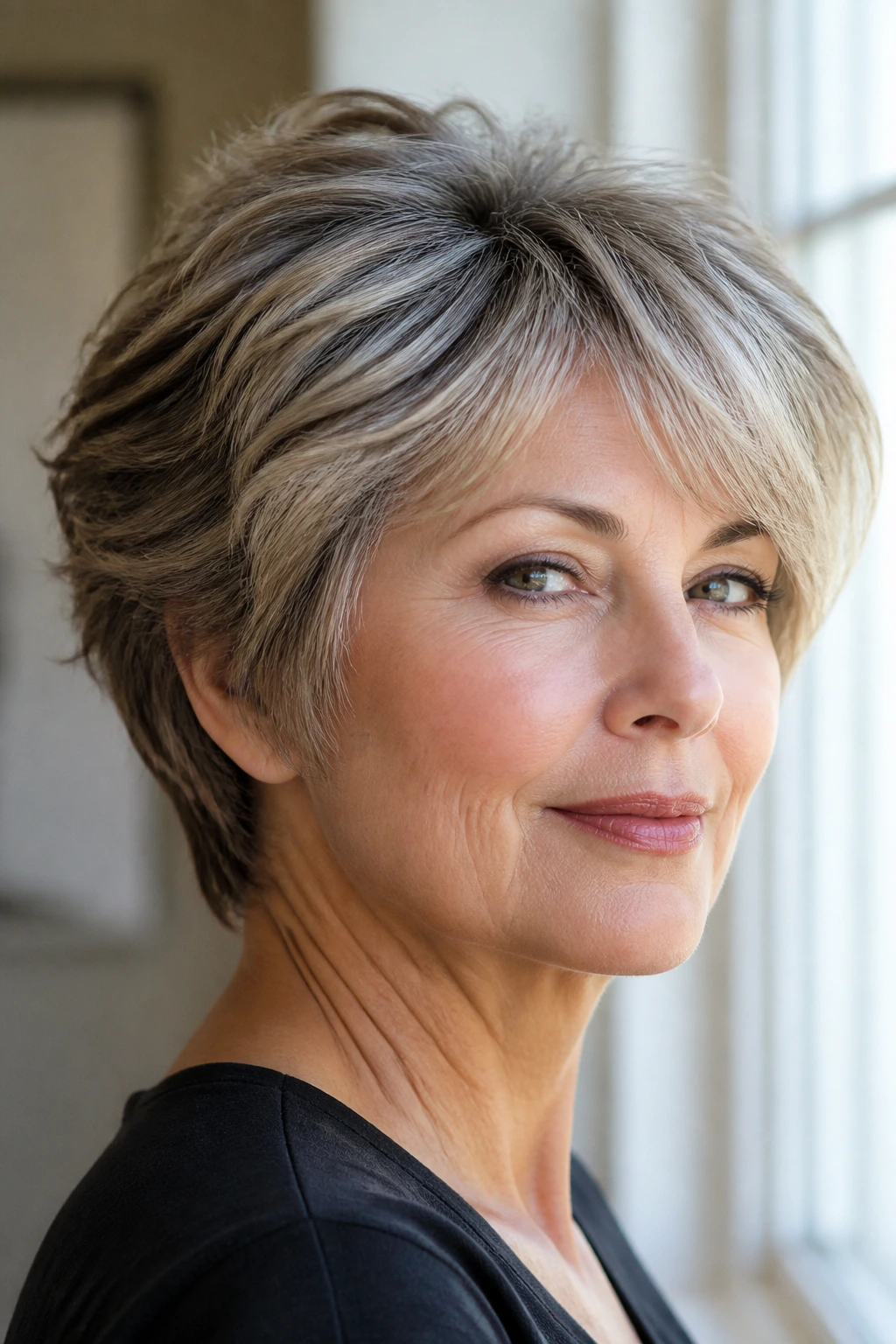
A feathered haircut should do more than look cute in a static photo. It needs to suit the hair sitting on your head, the face it frames, and the amount of time you’ll actually spend on it. Fine hair usually needs a denser outline and lighter feathering through the crown. Thick hair usually needs more internal removal so the shape doesn’t balloon out around the ears.
Face shape matters, too, but not in a rigid, rule-book way. Round faces usually like a little height at the crown and a side-swept front. Long faces usually need width around the temples or cheekbones. Square jaws often benefit from wispy ends that don’t stop dead at the jawline. If you wear glasses, keep the side length clear of the frame arms or the haircut will spend half its life being pushed back into place.
Ask for shape, not just “layers”
That’s the salon shorthand that saves a lot of grief. Tell the stylist where you want the movement — crown, temples, fringe, neckline — and where you want the weight to stay. Feathering is much better when it has a job.
How to Wear and Style These Cuts Day to Day
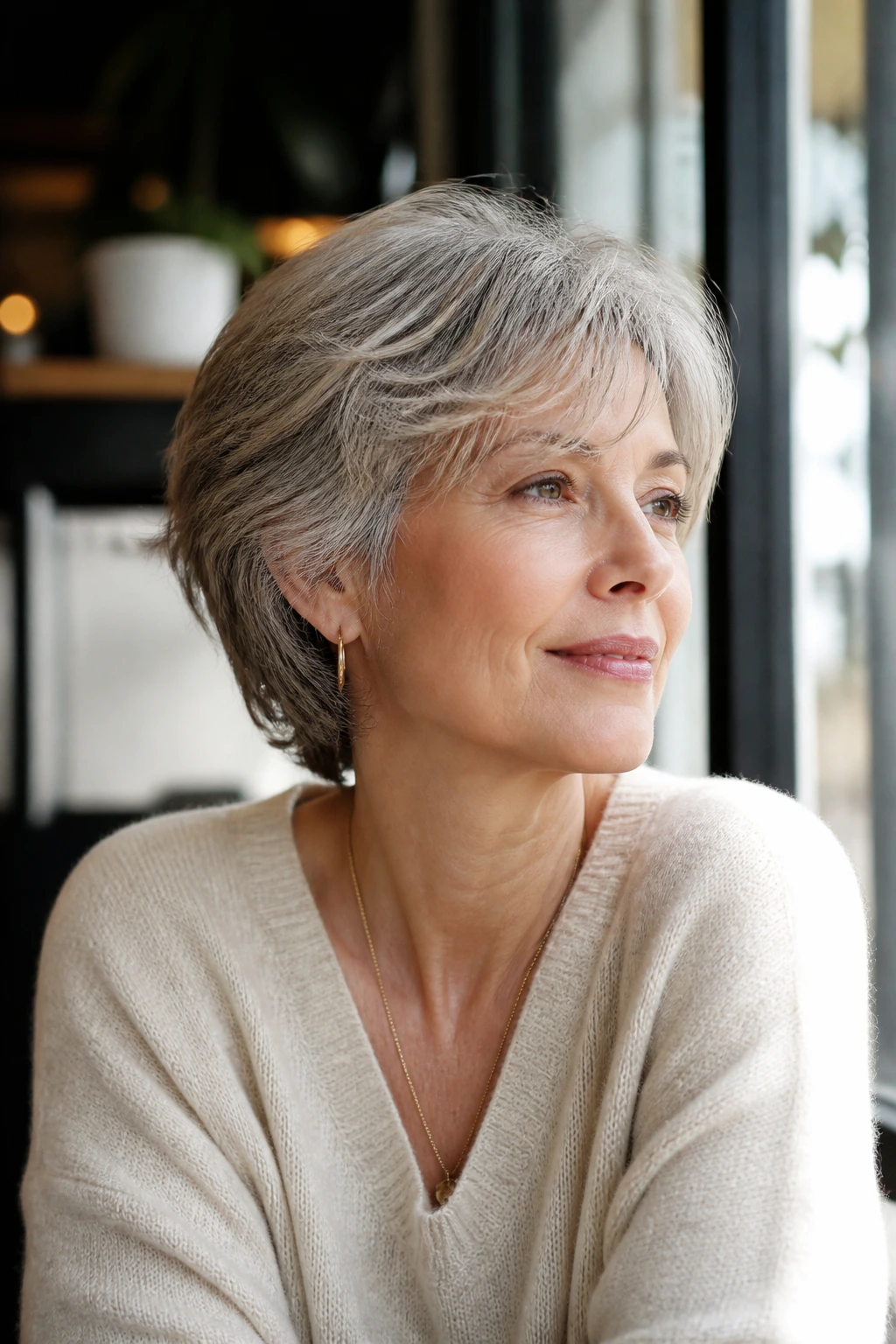
Front view: Keep the shape soft around the eyes and cheekbones so the hair doesn’t turn into a wall. A side part, a light fringe, or a few feathered pieces around the face usually does more than a lot of styling ever will.
Side view: The side silhouette is where short feathered hair either looks elegant or looks unfinished. Tuck one side behind the ear if you want a cleaner line, or let the side layers fall forward if you want more softness.
Finish: Use a matte paste or texture spray when you want the ends to read piecey and modern. Use a small amount of serum when you want silver or gray hair to catch light and look smoother.
Pairings: These cuts look sharp with slim frames, small hoops, open collars, and necklines that don’t crowd the hair. A chunky turtleneck can swallow a very short feathered cut unless the neckline is clean and lifted.
Styling Boosts and Personal Touches
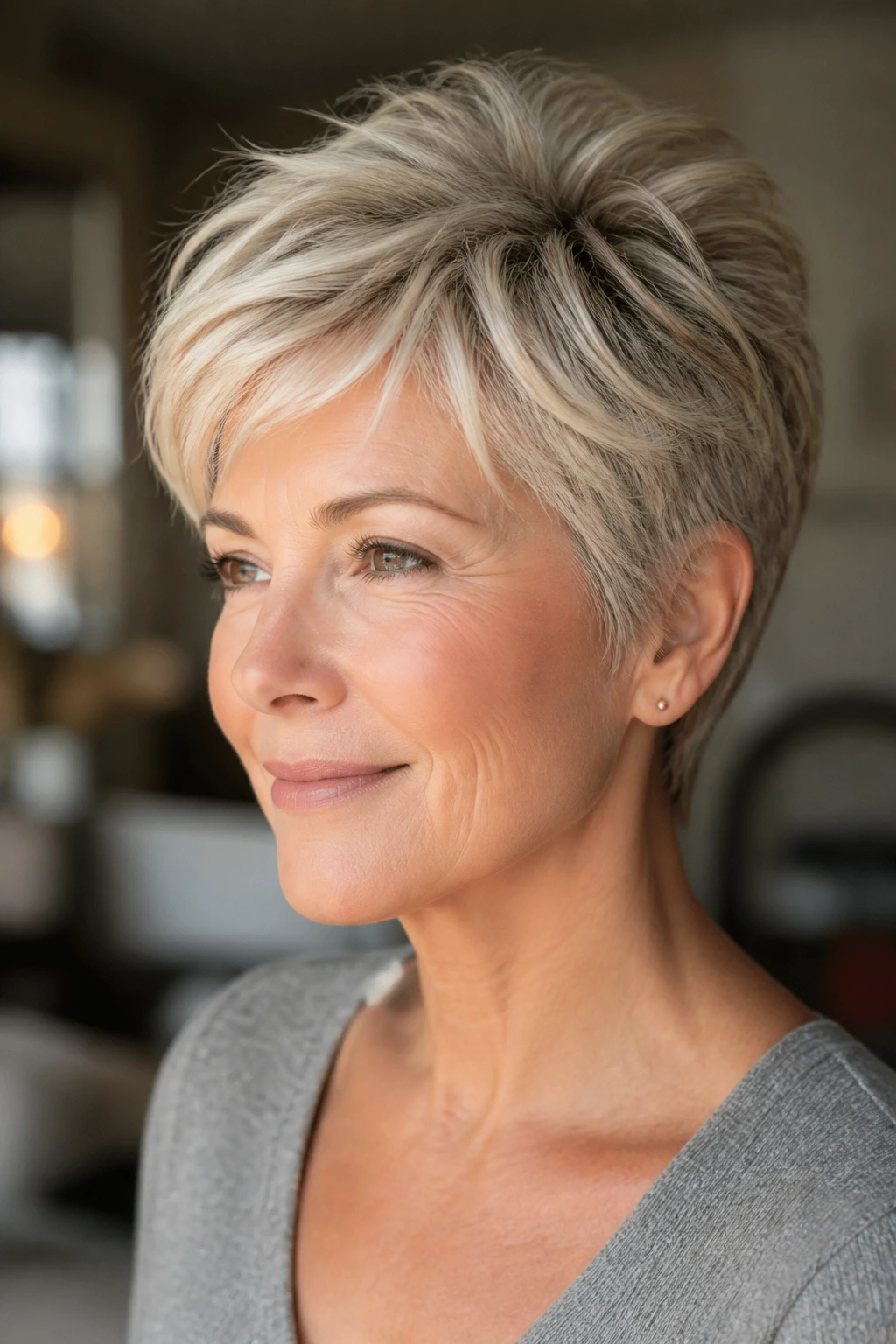
Lift at the crown: Clip the top section up while you dry the rest, then take the clips out and give the roots a cool shot for 10 seconds. That one small move keeps the crown from sinking flat by noon.
Piecey texture: Warm a pea-sized amount of paste between your palms and tap it only onto the ends. If you run it through everything, the feathering disappears and the cut starts looking damp.
Softer fringe: Brush the bangs side to side while drying, then finish by pushing them into the direction you want. That keeps them from splitting and gives them a little bend instead of a hard crease.
Gray shine: A drop of lightweight serum on the mid-lengths can make silver hair look polished, but don’t bring it near the scalp. Roots need air. Ends need help.
Keeping the Shape Fresh Between Salon Visits
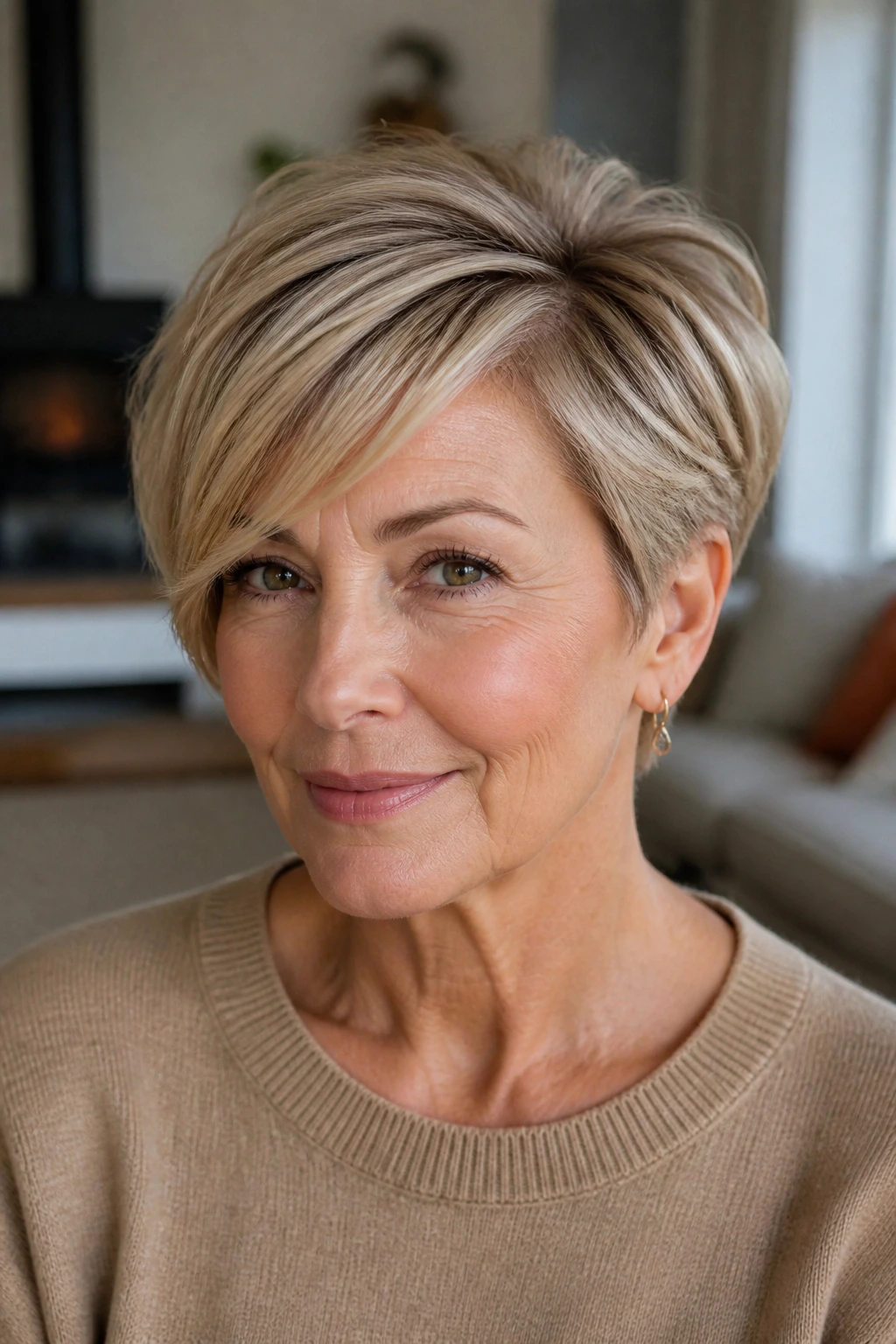
Feathered short hair looks best when the outline stays clean. For most pixies and crops, a trim every 4 to 6 weeks keeps the feathering visible. Bobs can stretch a little longer, closer to 6 to 8 weeks, but the front pieces still need attention if they start dropping into the eyes or hitting the collarbone at the wrong angle.
At night, a satin pillowcase helps more than people expect. It cuts down on the crushed, fuzzy look that cotton can create. If one side tends to flip up, pin it loosely with a soft clip before bed or mist it lightly in the morning and reset it with your fingers. A dry shampoo at the roots on day two can give the crown another half-day of lift.
If you want to save a blowout, don’t touch the hair too much once it’s cooled. Let the shape set. That’s especially true with feathered bobs. The less you handle the ends after styling, the less they fray.
Variations and Adaptations to Try
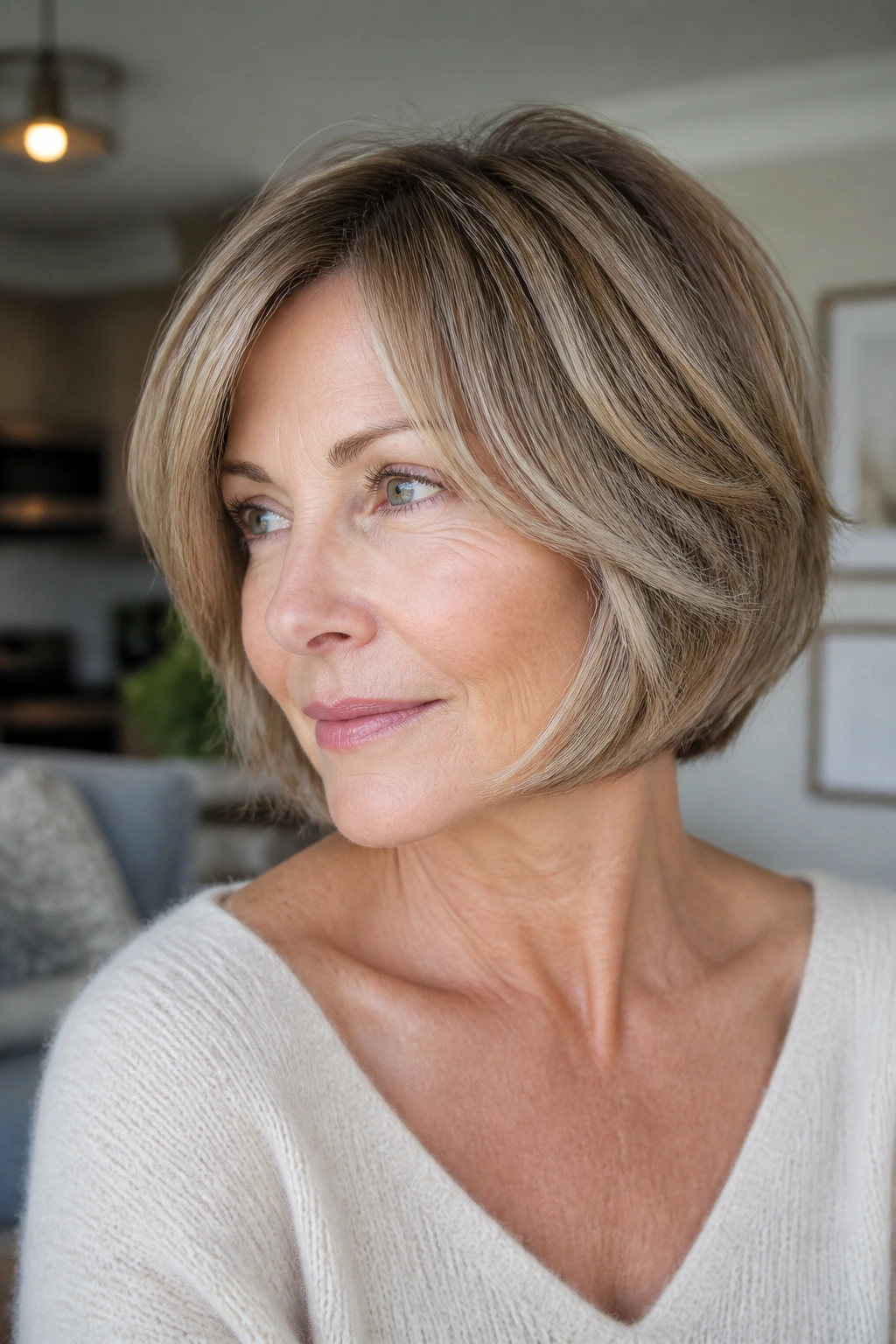
The Fine-Hair Save: Keep the outer edge denser and put the feathering mostly through the crown and front. Fine hair looks fuller when the bottom line stays solid.
The Thick-Hair Reset: Ask for more internal debulking behind the ears and under the crown. Thick hair benefits from space inside the shape, not just shorter length on the outside.
The Curl-Friendly Version: Shape the cut dry or nearly dry so the curls land where they live. Feathering should follow the curl pattern, not bulldoze it.
The Glasses-Ready Version: Leave room at the temples and above the frame arms. That small bit of clearance keeps hair from puffing into your glasses every time you move.
The Gray-Glow Version: Keep the layers soft, use a shine product sparingly, and let the silver do the talking. Harsh chunking can make gray hair look choppy instead of dimensional.
The Low-Heat Version: If you hate blow-drying, pick a cut that has movement built in and use mousse plus a finger-dry. A feathered shape can air-dry well when the layering is done with restraint.
Common Mistakes to Avoid
-
Feathering the ends until they disappear: When the perimeter goes see-through, the haircut loses its shape and starts looking tired fast. Keep the bottom line full enough to hold the silhouette.
-
Overloading the cut with cream or oil: Heavy product kills the lift at the crown and makes feathered pieces clump together. Use less than you think, then add only if the hair still feels dry.
-
Ignoring the natural part and cowlicks: A feathered fringe that fights the hairline will split, stick up, or fall across one eye in a stubborn little curtain. Shape the cut around the growth pattern instead.
-
Cutting the nape too blunt: A square neckline can make even a soft bob look severe. A tapered or rounded nape keeps the back of the head lighter.
-
Leaving too much length near the ears: Side bulk around the ears can make short feathered hair look helmet-like. If that area swells out, ask for a cleaner taper there.
-
Skipping trims for too long: Feathering loses its definition as it grows, especially around the fringe and cheekbones. Once the layers stop stacking softly and start dropping into one flat line, it’s time for a trim.
Frequently Asked Questions
What exactly makes a haircut “feathered”?
Feathering means the hair is cut and styled so the ends taper and separate, rather than landing in one blunt edge. It usually involves point cutting, layering, or razor work in the interior of the shape, then styling the hair away from the face or upward for movement.
Are feathered hairstyles good for fine hair over 50?
Yes, but the cut has to be handled with care. Fine hair does best when the perimeter stays a little denser and the feathering happens mostly in the crown and front, because over-thinning can make the ends look sparse.
Can I wear a feathered short haircut if my hair is curly?
You can, and the results can be lovely when the cut is shaped around the curl pattern. The mistake is cutting curls as if they were straight; dry or nearly dry cutting gives a better picture of where the feathered pieces will land.
How do I ask my stylist for this look?
Ask for soft feathering through the crown and face, with enough weight left at the outline to keep the shape full. If you know you want a pixie, bob, or crop, say that too — “feathered” describes the texture of the cut, not the length by itself.
Will feathered short hair work with glasses?
It can work very well, especially if the temples are kept light and the side pieces don’t press into the frame arms. The cleanest shapes usually sit just above or just outside the glasses instead of right on top of them.
How often should I trim feathered short hair?
Pixies and crops usually need a trim every 4 to 6 weeks to keep the feathering visible. Short bobs can go a little longer, but once the layers start collapsing into one flat shape, the cut stops reading as feathered.
What if my hair flips out in the wrong direction?
That usually means the ends need a bit more shaping or the blow-dry is pushing them the wrong way. A round brush can reset the bend, and a small amount of styling cream on the tips often helps the hair settle instead of sticking out like it’s making a point.
Can I air-dry a feathered cut and still make it look finished?
Yes, if the cut was built for it. Use mousse or a light curl cream on damp hair, scrunch the roots, and keep your hands off it while it dries; the key is letting the feathered layers fall into their own shape instead of overhandling them.
Feathered Hair That Keeps Its Shape
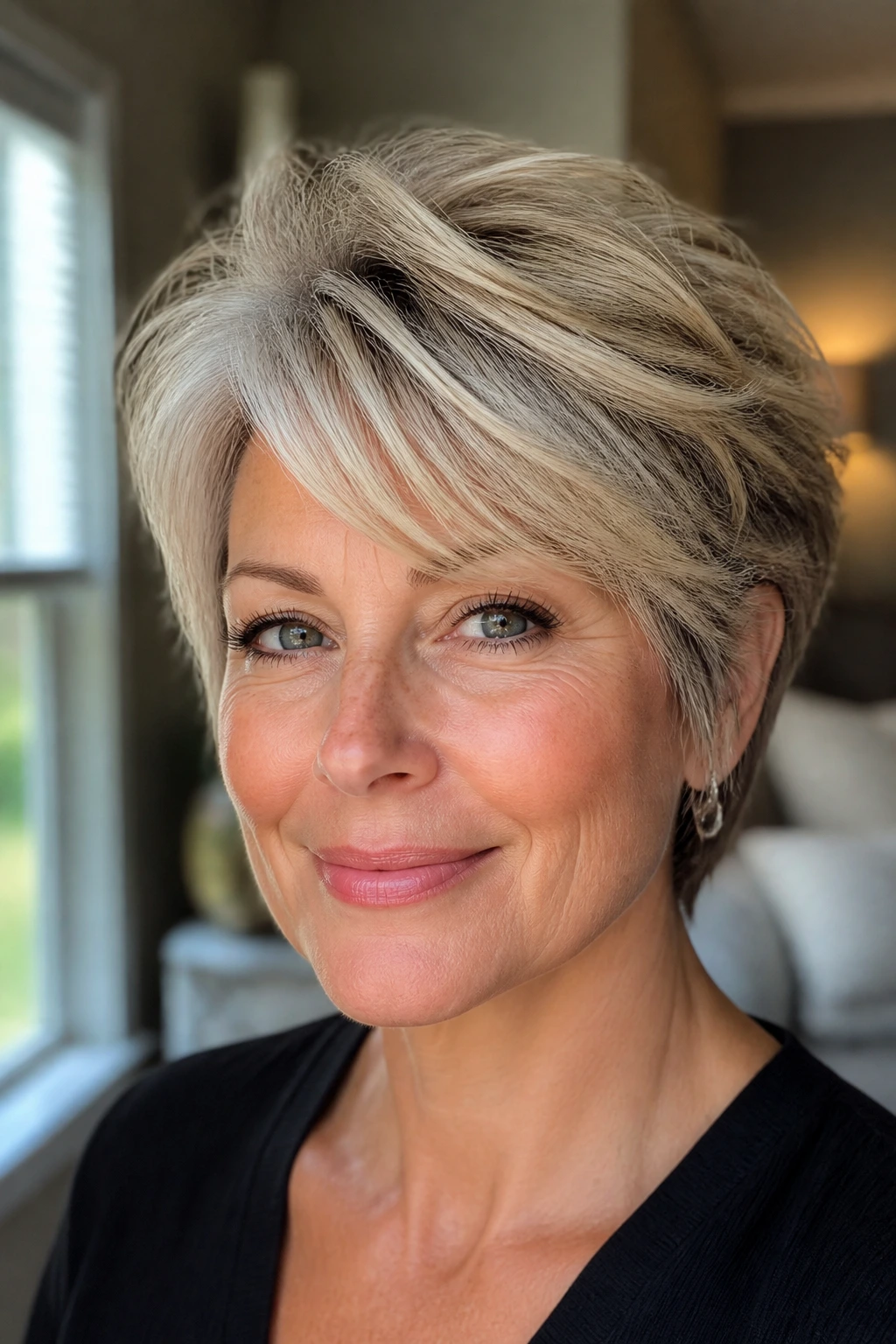
The best feathered short hair after 50 does not try to act young. It acts awake. That’s a different thing, and honestly, a better one. The right cut gives the crown some lift, the face some softness, and the neckline a clean finish that still moves when you do.
Start with the shape that matches your texture and density, not the shape you think you “should” wear. That’s where feathering earns its keep. It works hardest when it looks easy, and the good versions still look like real hair on a real head after a full day of weather, errands, and life.
