



Frizzy hair after 40 is not a sign that your hair has turned against you. It usually means the cuticle is drier, the ends are older, the gray strands are a little wirier, and humidity has more chances to sneak in and puff everything up. The smartest hairstyles for frizzy hair for women over 40 do not fight that texture. They give it a shape that looks deliberate.
I like cuts that keep enough weight to stop the ends from blooming into a halo, but not so much bulk that the whole head becomes a triangle by lunchtime. A blunt lob can look crisp and modern. A shag can soften the outline without making the hair feel heavy. A good bob can make air-drying look like a choice instead of a compromise.
And that matters more than people admit. By this point, most women are not looking for a style that behaves for twenty minutes in salon lighting and then gives up at home. They want something that survives work, weather, glasses, sunglasses, scarves, sleep, and one more cup of coffee. Frizz should not be the problem you solve every morning. It should be part of the texture the haircut already knows how to handle.
Why Hairstyles for Frizzy Hair for Women Over 40 Work Better With Shape, Not Weight
-
Weight in the right place calms the ends: Hair that frizzes at the bottom usually looks better with a blunt or softly blunt perimeter around the shoulders, collarbone, or chin, because the extra weight keeps the ends from blooming outward.
-
Movement beats stiffness: A cut with soft internal layers or face-framing pieces hides puffiness better than a super-sleek style that collapses by noon and leaves every flyaway shouting.
-
Texture and gray hair need room: Coarse silver strands often need a little movement at the crown and around the face, not aggressive thinning that leaves the ends looking wispy and dry.
-
Air-drying becomes a feature, not a backup plan: The best shapes for this hair type still look finished when you let them dry naturally, which is a lifesaver on the mornings when a round brush feels like a joke.
-
The face matters more than the age number: A cut that opens the cheekbones, softens the jawline, or lifts the eyes will do more for the overall look than any “youthful” gimmick ever could.
-
Humidity stops being the boss: When the silhouette is right, a little puff on the surface reads as volume instead of a problem. That distinction changes everything.
The short version: a good shape makes frizz look like texture. A bad shape makes it look like the haircut lost a fight.
Choosing Hairstyles for Frizzy Hair for Women Over 40 by Face Shape, Density, and Frizz Pattern
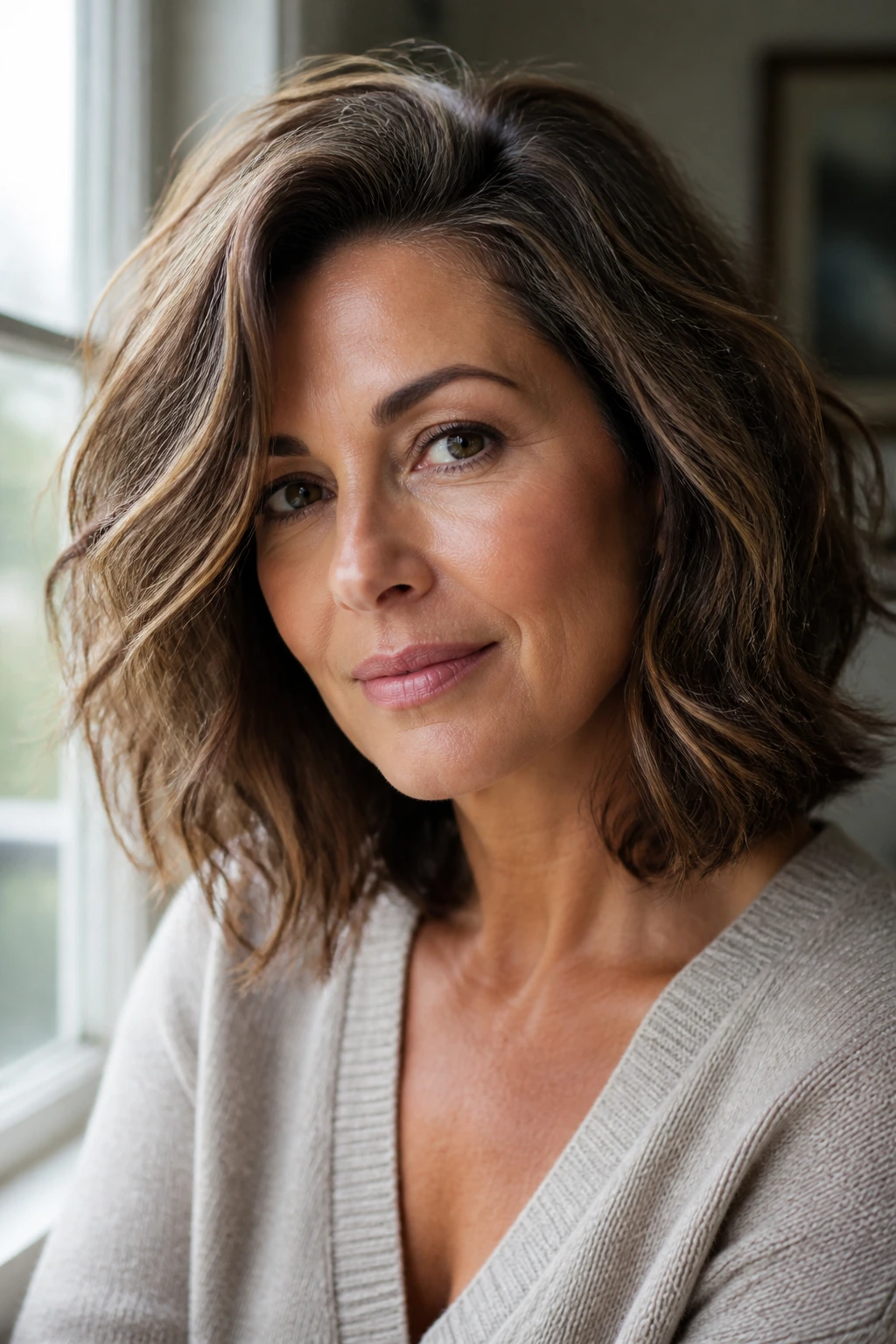
The easiest way to narrow the field is to stop thinking in terms of “good hair” and start thinking in terms of where your frizz actually lives. If the fuzz shows up most at the ends, you want a cleaner perimeter. If it starts at the crown, you want lift and parting tricks. If the whole head expands when the weather turns damp, you need a cut with enough structure to hold its outline.
Fine but frizzy hair usually does best with shapes that keep some weight: a collarbone lob, a blunt bob, or a shoulder-length cut with just enough layering to keep it from looking flat. Too many short layers on fine hair can make the ends look stringy fast.
Thick or coarse hair can handle more movement. A shag, bixie, or textured midi cut takes bulk out of the right places without leaving the outline too heavy. I’d be careful with aggressive thinning shears here; they can make thick hair feel airy for a week and ragged for a month.
Curly or wavy frizz tends to look best when the cut respects the natural bend. Dry cutting, long layers, and face-framing pieces placed where the curl actually lands are usually smarter than trying to force a straight line across hair that wants to curve.
If you wear glasses, think about what sits around the temples and cheekbones. Chin-length bobs, French bobs, and curtain bangs can frame the face cleanly. Long side pieces that hit right at the frame arms, though, can be a constant snag.
And if you hate styling tools, say so at the salon. Ask for a shape that still looks decent after an air-dry and a few scrunches. That one sentence can save you from a cut that looks lovely only with forty minutes of effort and a very cooperative mirror.
1. Soft Layered Lob
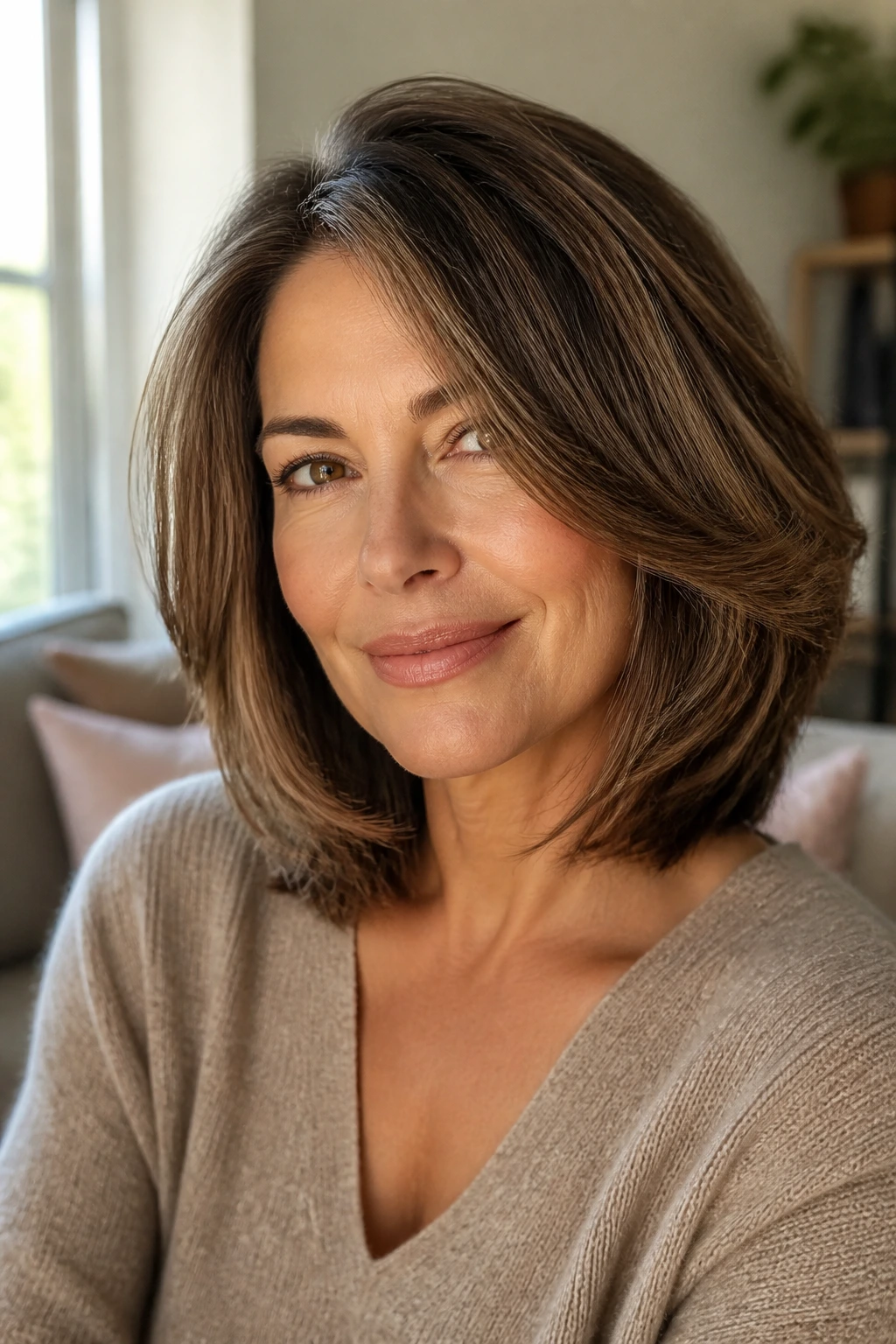
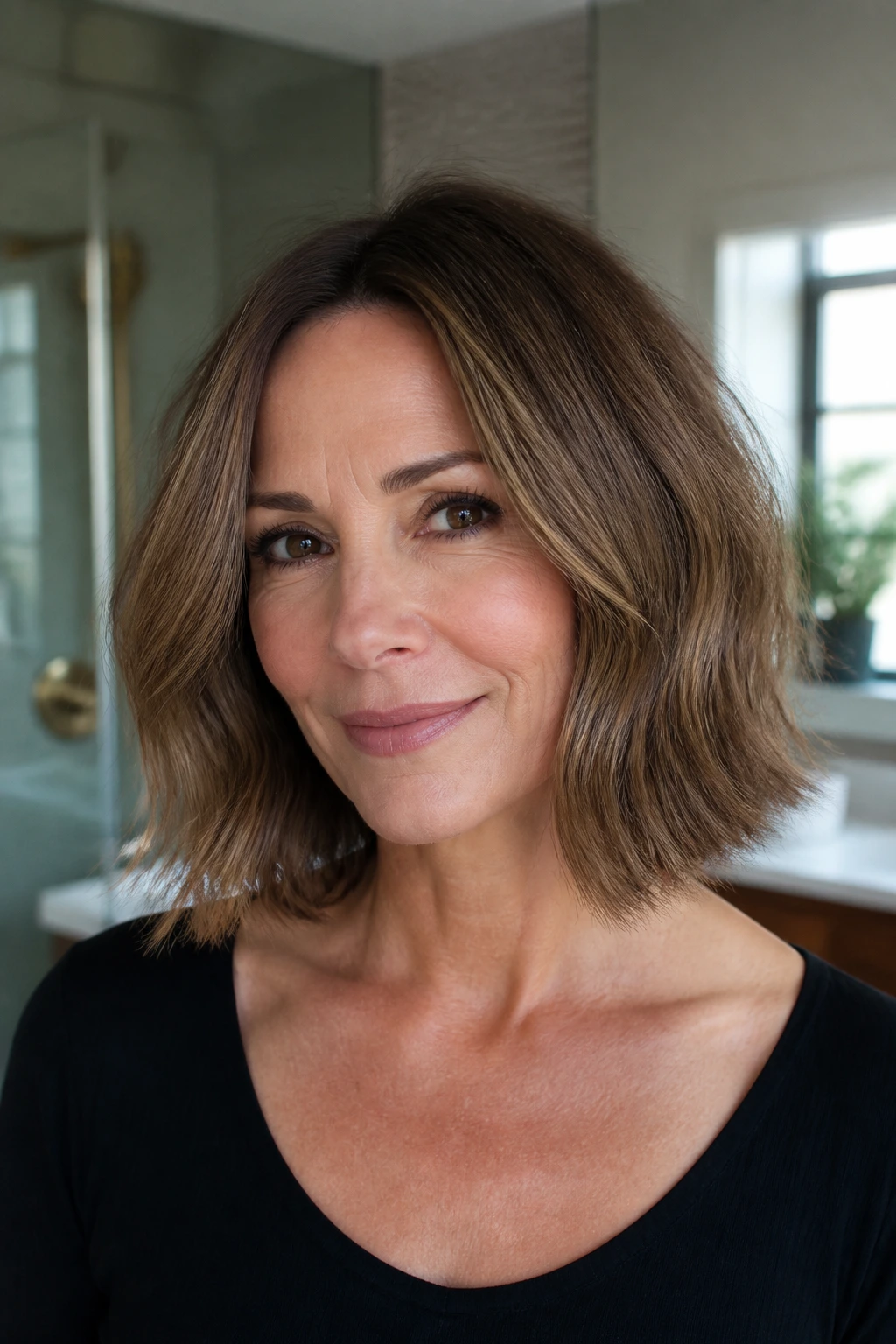
A soft layered lob sits in that sweet spot between “too short to tie back” and “too long to behave.” It usually lands somewhere around the collarbone, which is long enough to keep some weight at the ends and short enough that frizz doesn’t get a huge runway to expand. I like this cut on women who want movement without the commitment of a shorter bob.
The layers should be gentle, not choppy. Ask for internal layers that start below the chin so the shape bends, not explodes. If your hair is fine, keep the layers minimal. If it’s dense, the stylist can remove bulk underneath without breaking the outer line.
This cut is one of the easiest to style with a quick bend from a large-barrel iron or a round brush. But it also looks decent air-dried with a little leave-in conditioner and a squeeze of mousse through the mid-lengths. That’s the appeal. It doesn’t demand perfection.
2. Collarbone Blunt Cut with a Loose Bend
A blunt cut is not the enemy of frizzy hair. A bad blunt cut is. There’s a difference. When the line lands at the collarbone and the ends are kept clean, the blunt edge gives the hair a solid base so the frizz reads as body instead of fuzz.
The trick is to keep the bend loose. A single pass with a 1.25-inch curling iron, or even a few large velcro rollers while the hair cools, is enough to soften the line. You do not need tight curls here. In fact, tight curls can make the bluntness feel fussy.
I’d choose this for medium-density hair that expands in humidity but still has enough weight to sit neatly. It also works well with a side part, which keeps the shape from looking boxy. If the ends are split or dry, this cut will show it fast, so trims matter.
3. Curly Shag with Airy Face Framing
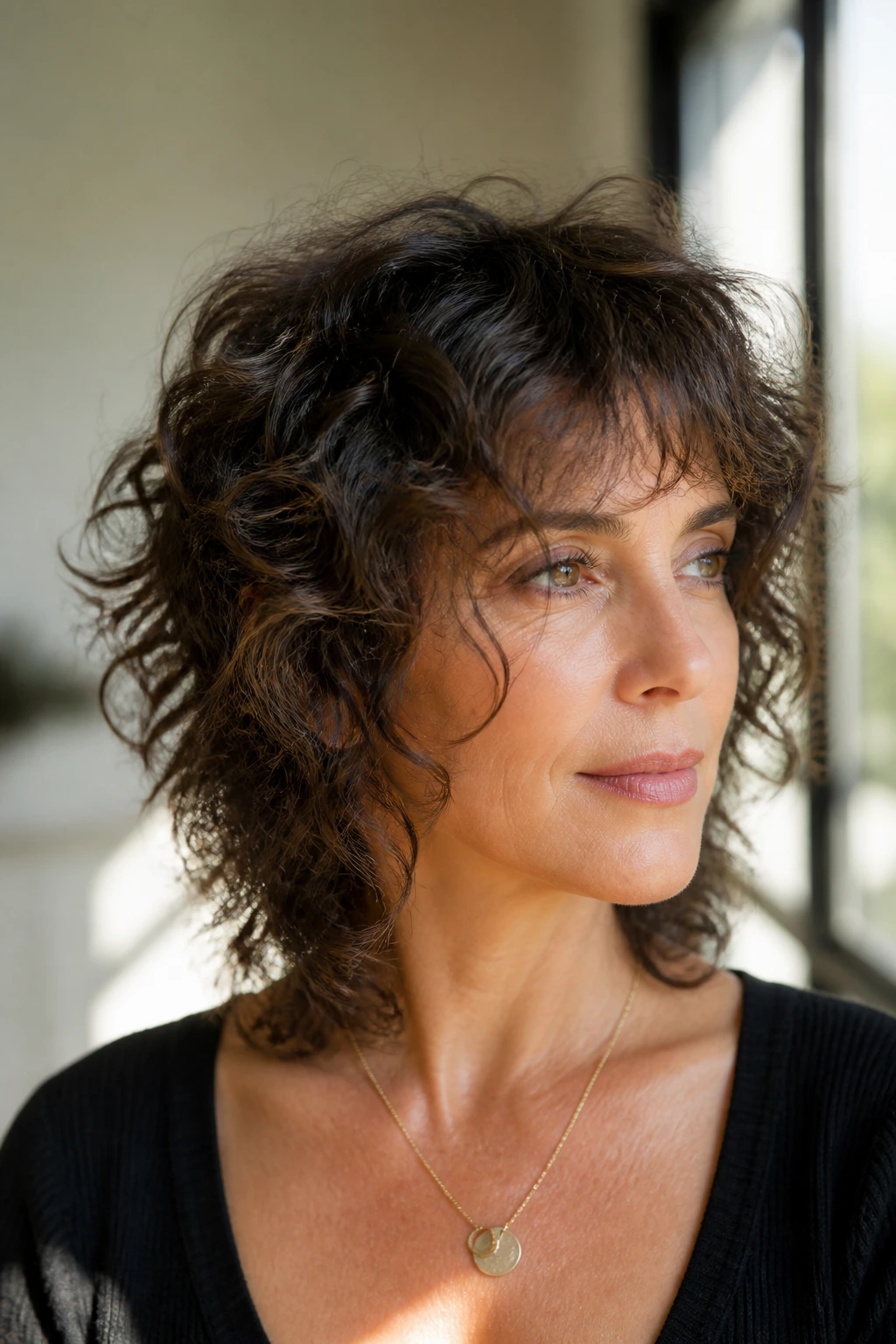
A curly shag is what happens when someone stops pretending frizz and curl are separate issues. They’re cousins. Sometimes they’re siblings. The shag gives curls space to stack without turning into a pyramid, and the face-framing layers help the front of the hair land softly around the cheekbones and jaw.
This cut looks best when it’s shaped around your actual curl pattern, not a stretched-out version of it. A dry cut often helps because the stylist can see how the hair lives in real life. That matters if some pieces spring tighter than others, which is common.
What to ask for
- Keep the crown light, but not shredded.
- Let the shortest face-framing pieces fall around the cheekbone or just below it.
- Avoid razor-heavy ends if your hair is coarse or porous.
- Ask how the layers will look when your hair is air-dried, not just blow-dried.
A good shag does not make hair look “messy.” It makes curly texture look intentional. Big difference.
4. Long Layers and a Deep Side Part
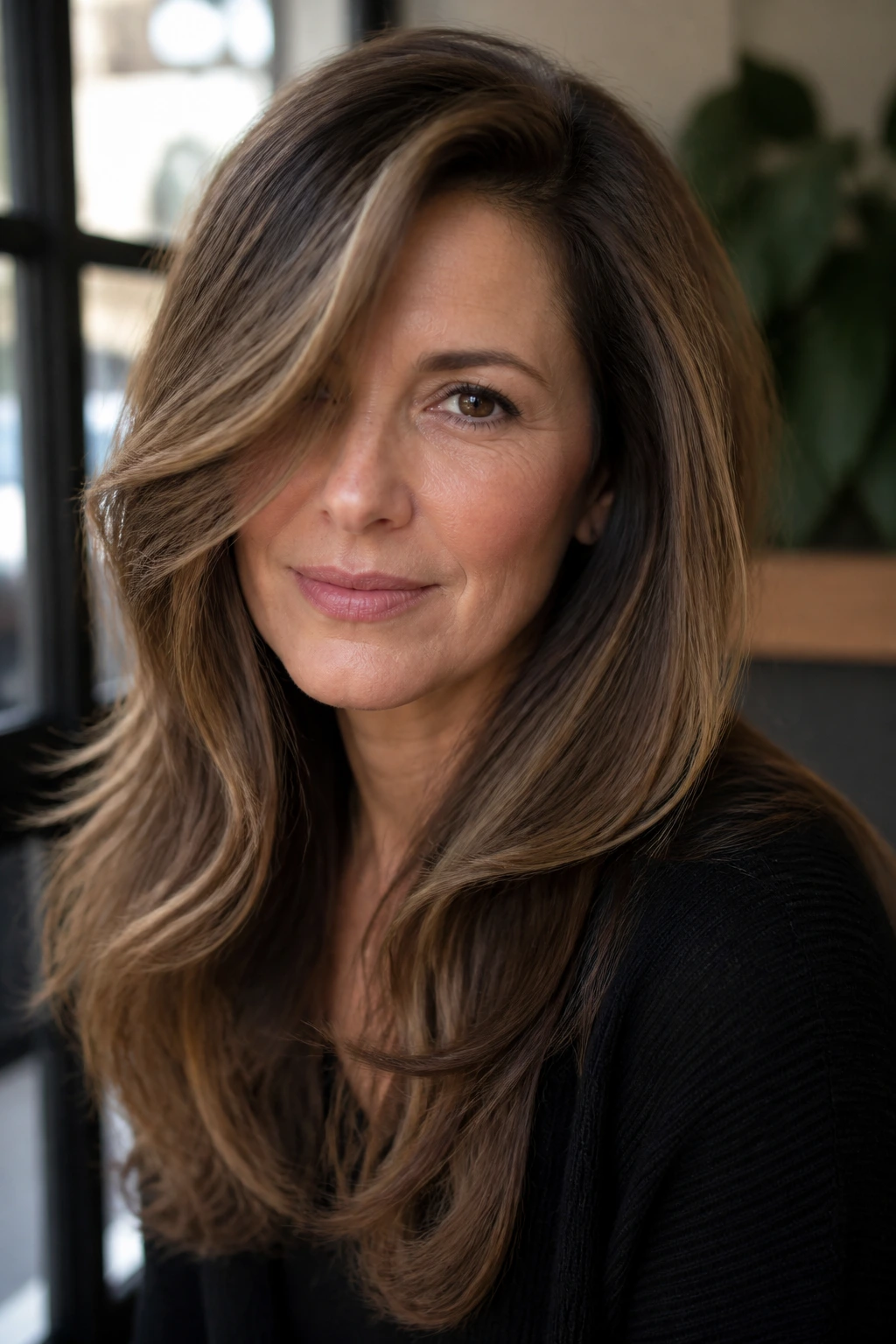
Middle parts can be honest. They can also be brutal. If your frizz is most noticeable at the crown or your hair naturally wants to puff outward on both sides, a deep side part is often the easiest fix. It changes the balance of the head shape before you even touch a product.
Long layers keep the length while cutting down on the heavy curtain effect that can make frizz look wider than it is. The layers should start low—below the chin is a good rule—so the ends still have enough mass to hang with some control. Too many short layers in long hair can make the top look full and the bottom look dry.
This is a strong option for women who want to keep their hair long but need the outline to feel lighter. It also gives you styling flexibility. Wear it straightened, waved, or pinned back on the heavy side and the shape still holds. That is not a small thing when your mornings are busy.
5. Chin-Length Bob with Tucked Ends
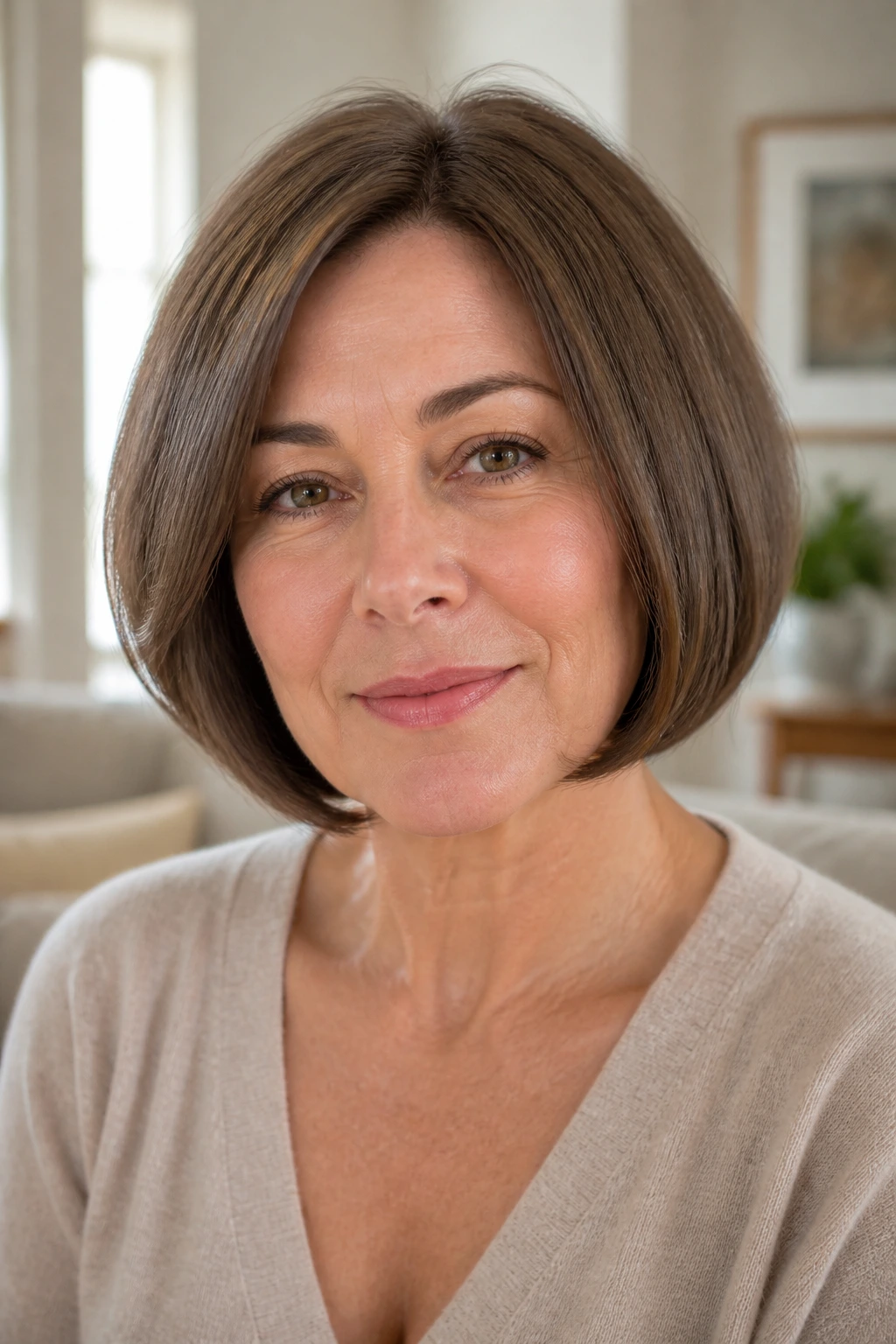
A chin-length bob is clean in a way that feels almost architectural. The line sits close to the jaw, which means the hair has less room to puff, and the shape can sharpen the face beautifully when it’s cut well. It’s one of the best choices if your frizz tends to collect near the bottom half of the hair.
Tucked-under ends help a lot. They take the edge off the line so the bob feels soft rather than severe. I like this with a little bevel at the ends, especially if the hair is naturally bulky or if you wear glasses and want the shape to sit neatly around the frame.
This cut does ask for trims. A chin bob grows out fast, and the line can lose its neatness once the ends pass the jaw. If you’re the sort of person who wants a haircut to stay crisp for months without a touch-up, this is not the one. If you like a shape that looks tailored, though, it’s hard to beat.
6. Piecey Pixie with a Soft Crown
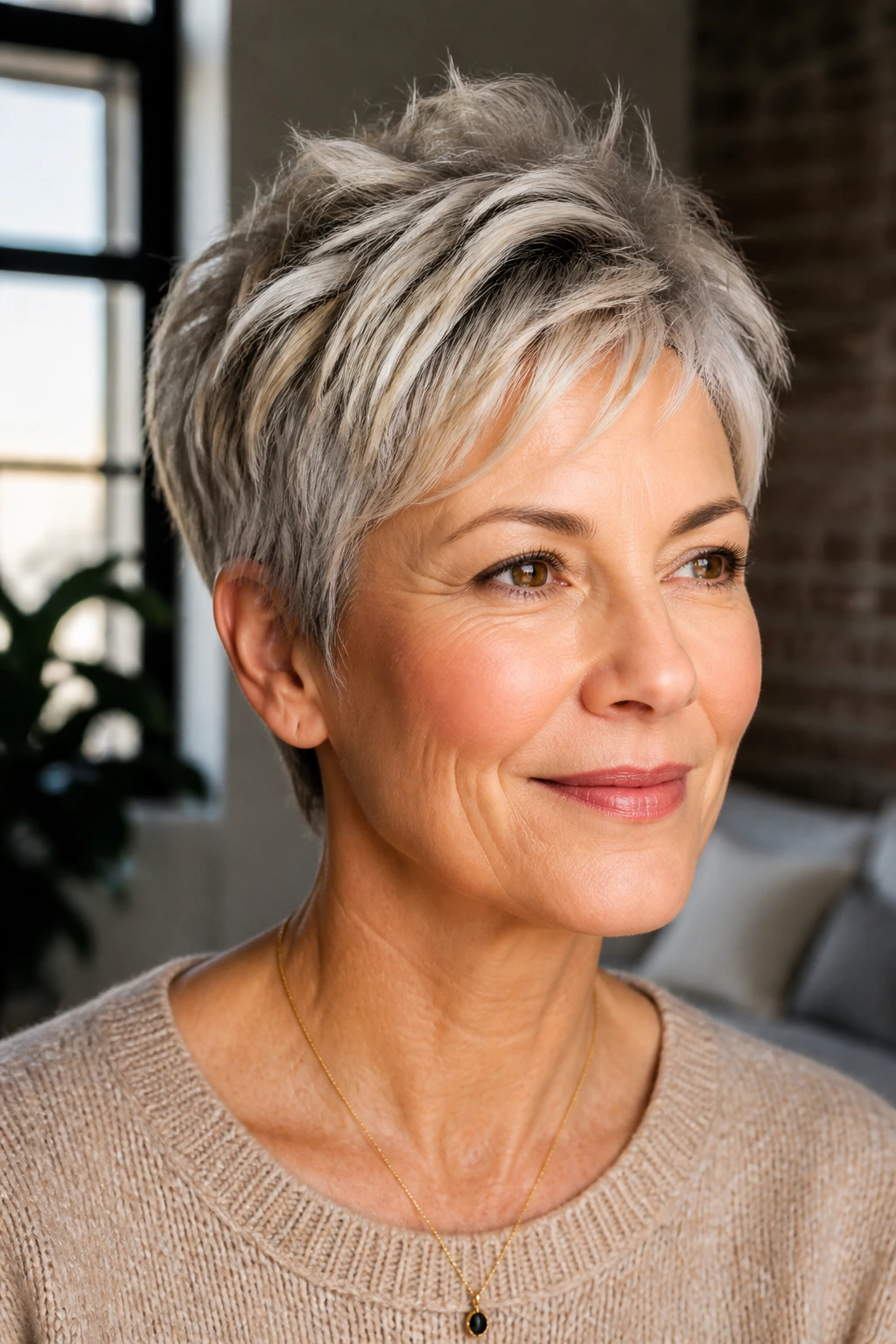
A pixie can be the most forgiving cut in the room if it’s done with a light hand. The key is “piecey,” not spiky, and a soft crown rather than a helmet shape. Frizzy hair often has enough natural lift to give a pixie life without much work, which is exactly why this cut can feel so freeing.
Keep a little length on top so you can push the hair forward, sweep it sideways, or tuck it behind the ear. The sides should be tapered, not hacked to the scalp. Over-thinning is the mistake here. It leaves the top looking fuzzy and the ends looking thin at the same time.
A pea-sized amount of styling paste or cream is usually enough. Warm it in your hands, then pinch the pieces into place with your fingers. No need to flatten everything. The charm of this cut is that it looks alive, not lacquered.
7. French Bob with Wispy Fringe
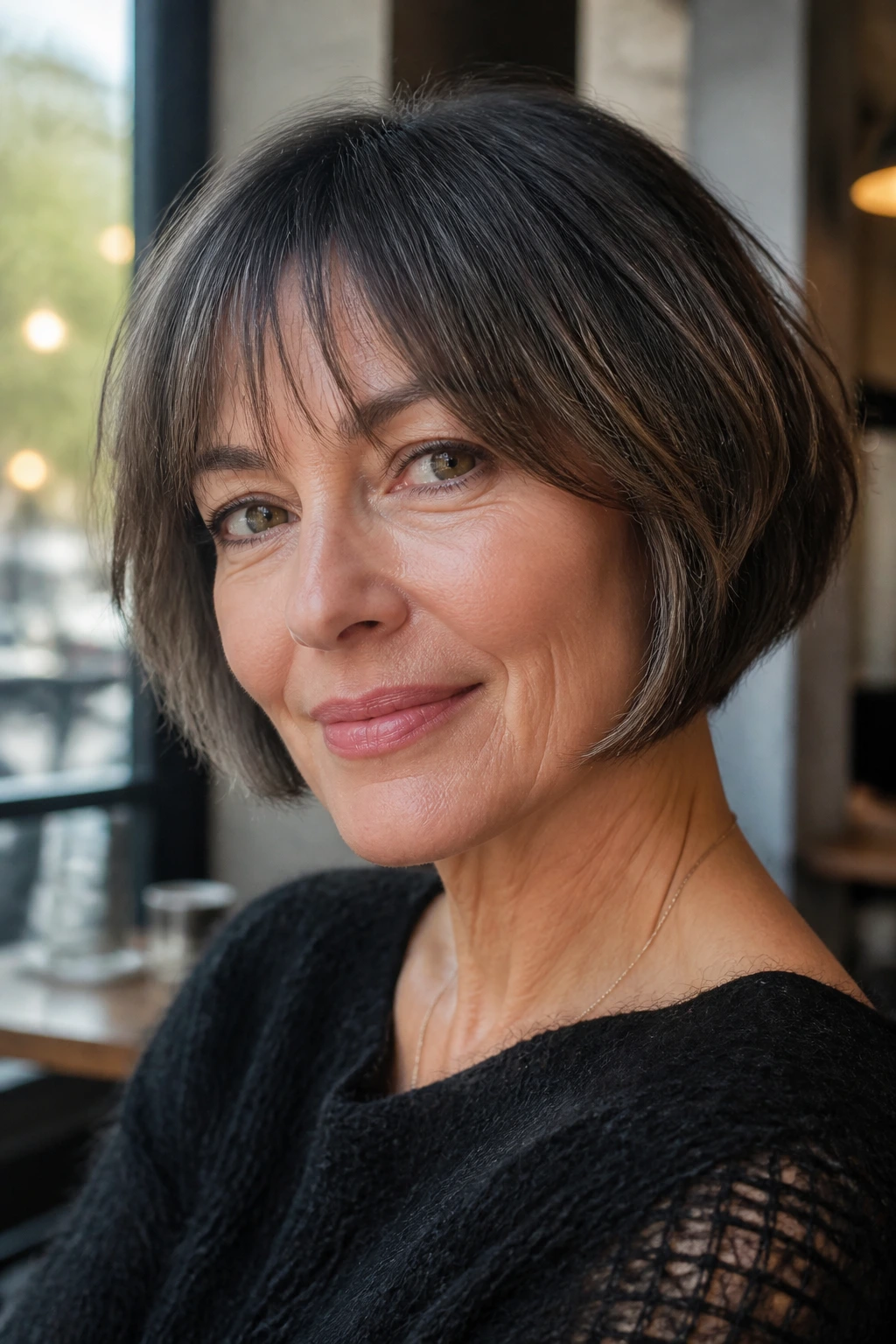
A French bob lands short, often around the cheekbone or just below the ear, and it has a certain nonchalant charm that works especially well on hair with texture. The outline is compact, which helps frizz feel controlled, and the wispy fringe keeps the whole thing from looking too severe.
The fringe matters. Heavy blunt bangs and frizz tend to fight each other. A softer, slightly see-through fringe sits better against dry or wavy hair and can be pushed to the side on bad days. That flexibility is the real win here.
This is a beautiful choice if you want a style that looks put together even when the rest of the hair is doing its own thing. It can also make gray hair look striking because the shape is so clear. I’d keep this one on the shorter side only if you’re willing to maintain it. Once the bob drops too low, it loses the magic.
8. Shoulder-Length Cut with Curtain Bangs
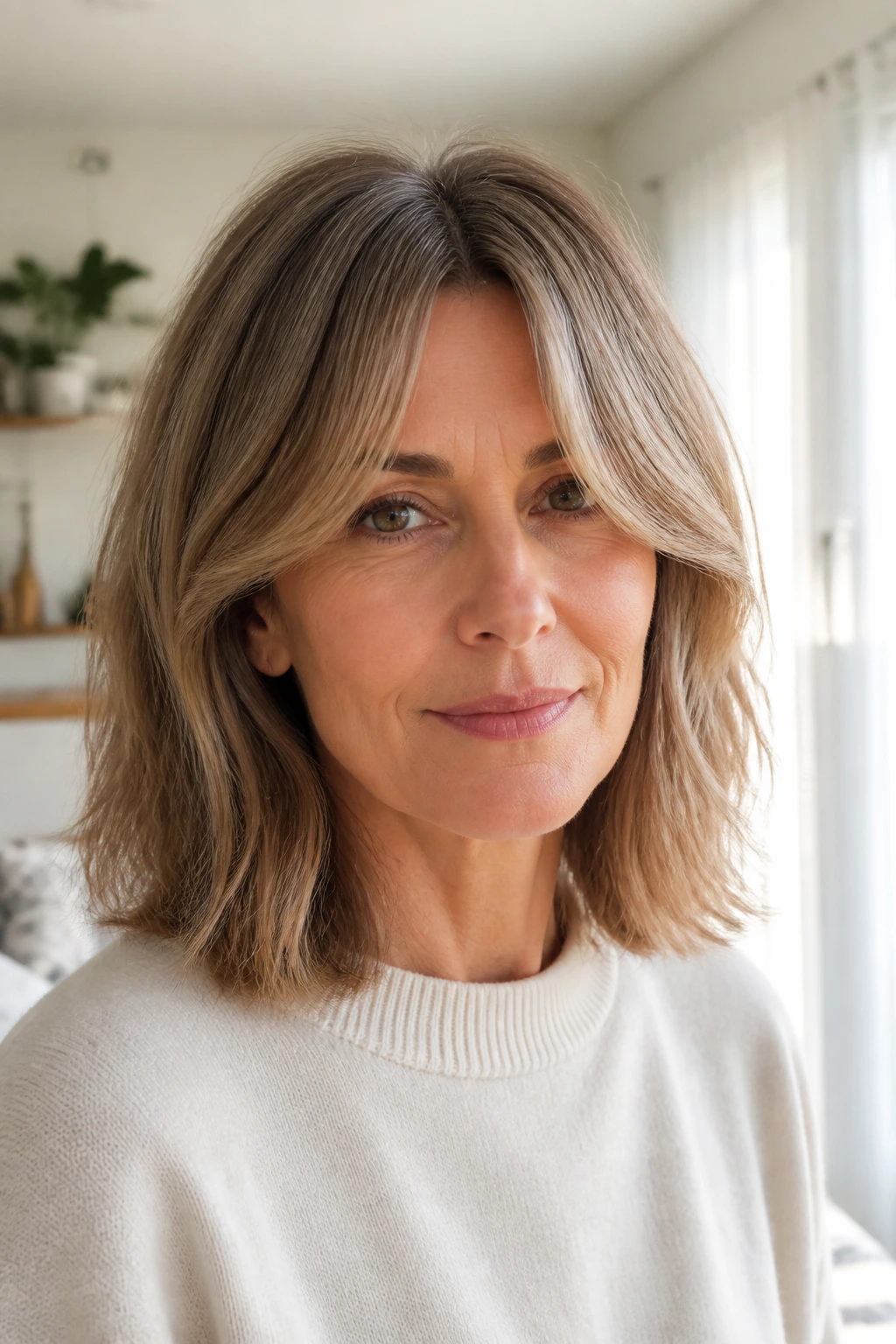
Curtain bangs are one of the few fringe styles that can actually get along with frizz. They part in the middle, sweep to the sides, and soften the forehead without demanding laser-straight precision. Around the shoulders, they create a frame that keeps the rest of the hair from feeling too heavy.
Why the parting matters
A center-opening fringe works because it gives the hair direction. Instead of sitting like a blunt curtain and puffing out at the widest point, the pieces fold away from the face and land where the cheekbones can catch them. That’s a softer look, and usually a more forgiving one.
Ask for the longest points to hit around the cheekbones. If the bangs are cut too short, they can spring up and separate in a way that looks accidental. If the hair is coarse or very frizzy, a little extra length buys you control.
This cut is especially good if you like wearing your hair tied back sometimes. The curtain bangs keep the front from looking bare when the rest of the hair is up, which is a nice thing to have in a real life full of errands and half-finished coffees.
9. Half-Up Twist with Loose Crown Volume
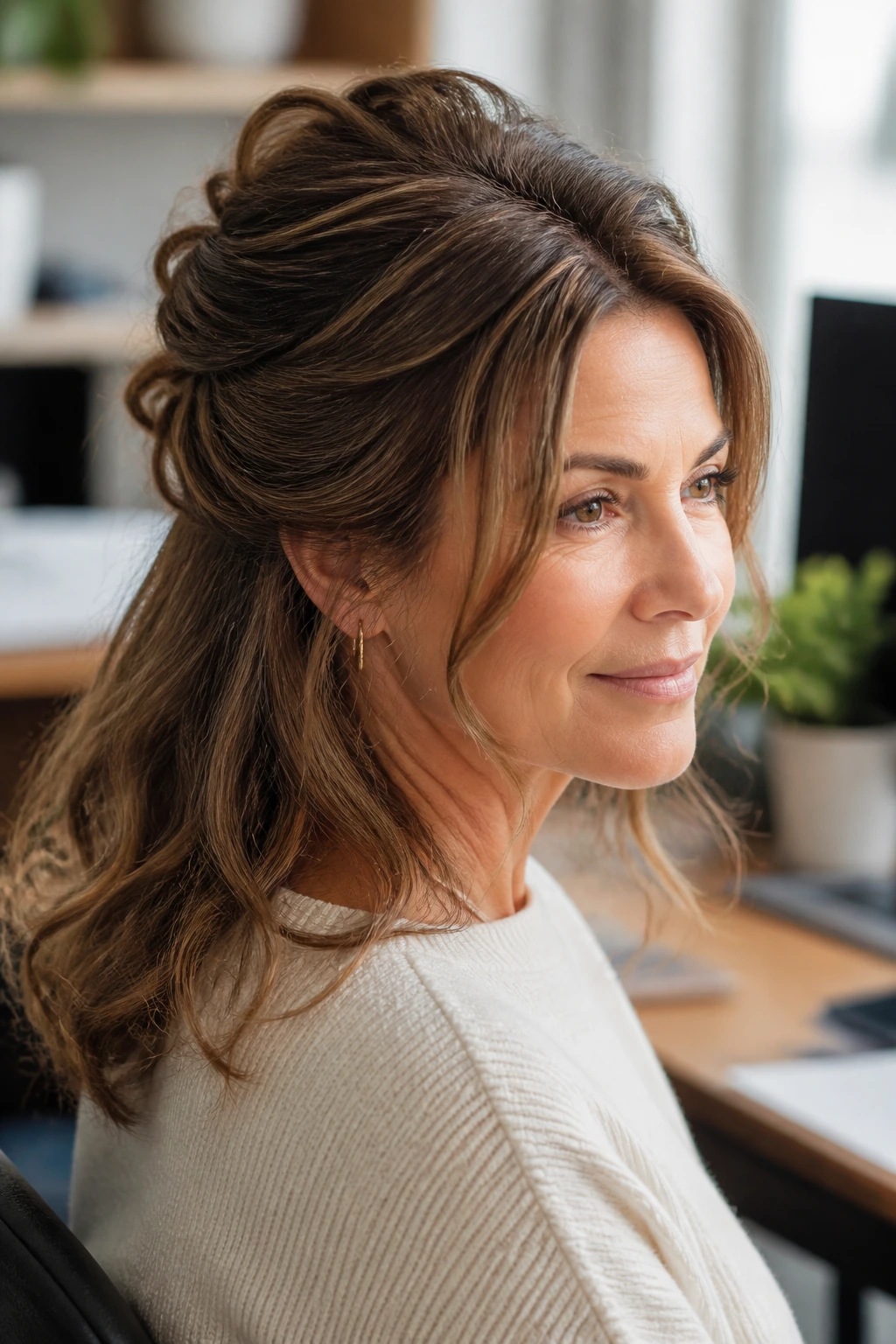
Some days, the haircut matters less than what you do with it. A half-up twist is one of those styles that makes sense when the top layer is fuzzy but the ends still want to do something pretty. Pulling the front half back gives the face a little lift and keeps the frizz away from your eyes.
The trick is to leave the crown loose. If you slick it flat, every flyaway along the hairline will stand up and announce itself. A little lift at the root makes the style look softer, and a few face-framing pieces left out keep it from feeling formal in the wrong way.
Use a small elastic, then twist each side back before pinning. You can keep it polished or loose depending on the occasion. It works for office days, dinner, or the kind of morning when you need your hair out of the way but don’t want to look like you’ve given up.
10. Low Messy Bun with Face-Framing Strands
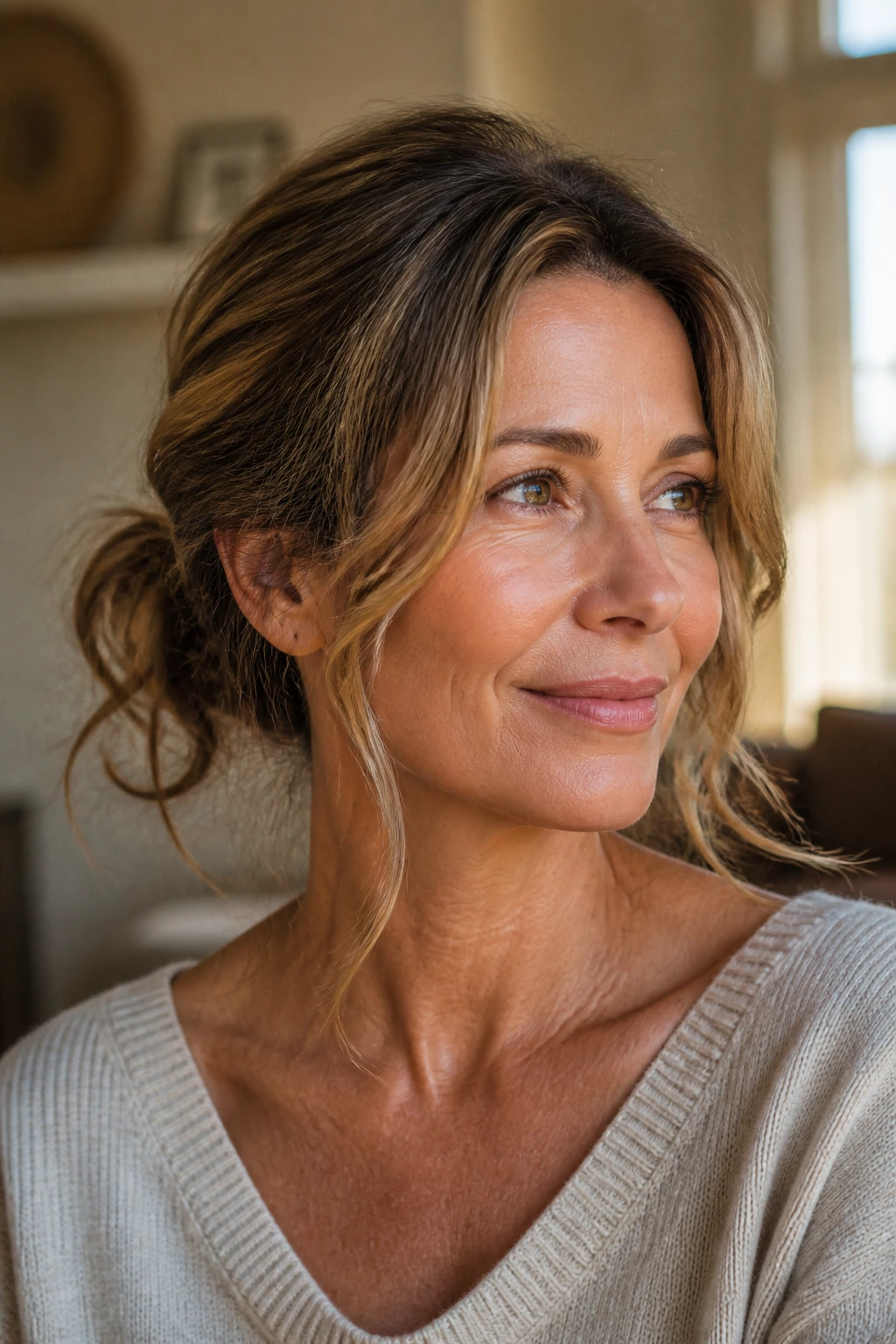
A low messy bun gets much better results when the mess is controlled. Put the bun at the nape or just above it, smooth only the top layer, and leave a few fine pieces around the face. Frizz actually helps this style by softening the outline, as long as the bun itself doesn’t collapse into a blob.
I prefer this version over a tight ballerina bun for frizzy hair. The tighter you pull the scalp, the more obvious the flyaways become. A little looseness around the crown keeps the look intentional. A dab of cream on the fingers is enough to smooth the top without making it greasy.
This is a good style for second- or third-day hair, especially if the ends have a little wave left in them. You can tuck the bun lower for a neat office look or let it sit looser for something more relaxed. The face-framing pieces do a lot of work here. Don’t skip them.
11. Claw Clip Twist for Second-Day Hair
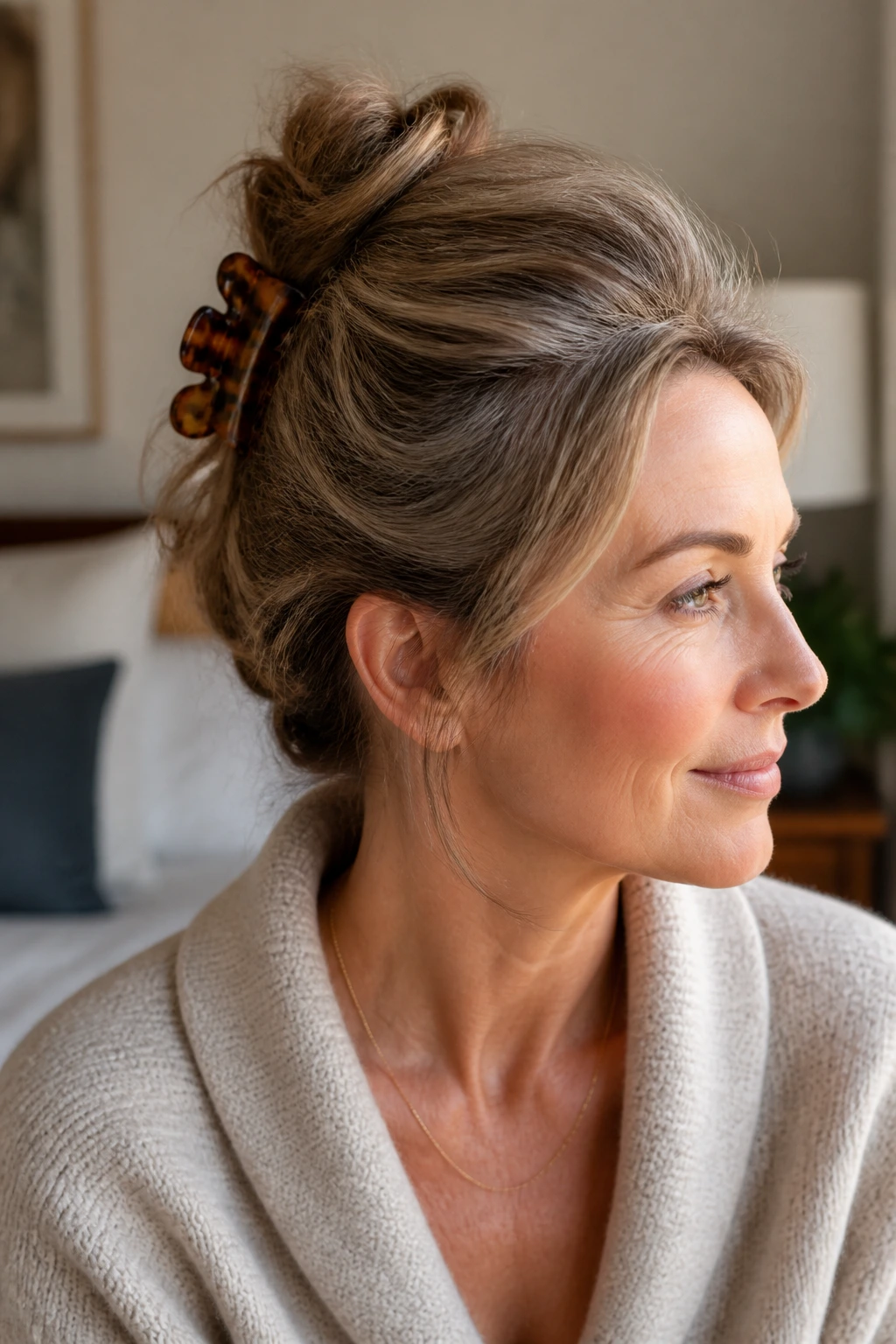
A claw clip twist is one of those styles that only works well when the clip is the right size. Too small, and the hair slips. Too large, and the whole thing feels clumsy. The sweet spot is a clip that catches the twist securely without crushing the crown.
This style is brilliant on frizzy hair because the texture gives the clip something to hold onto. Twist the hair upward, fold the ends under or let them fan out, and secure it so the clip bites into the twist itself. If you just pin the outer layer, it will slide. Fast.
What makes it work
- It takes two minutes.
- It looks better when the hair is not freshly washed.
- It keeps volume at the crown instead of flattening it.
- It can feel polished enough for work if the front is smoothed with a little cream.
I reach for this when I want the easiest possible lift without committing to a full updo. It’s not fancy. It just works.
12. Side-Swept Waves with Root Lift
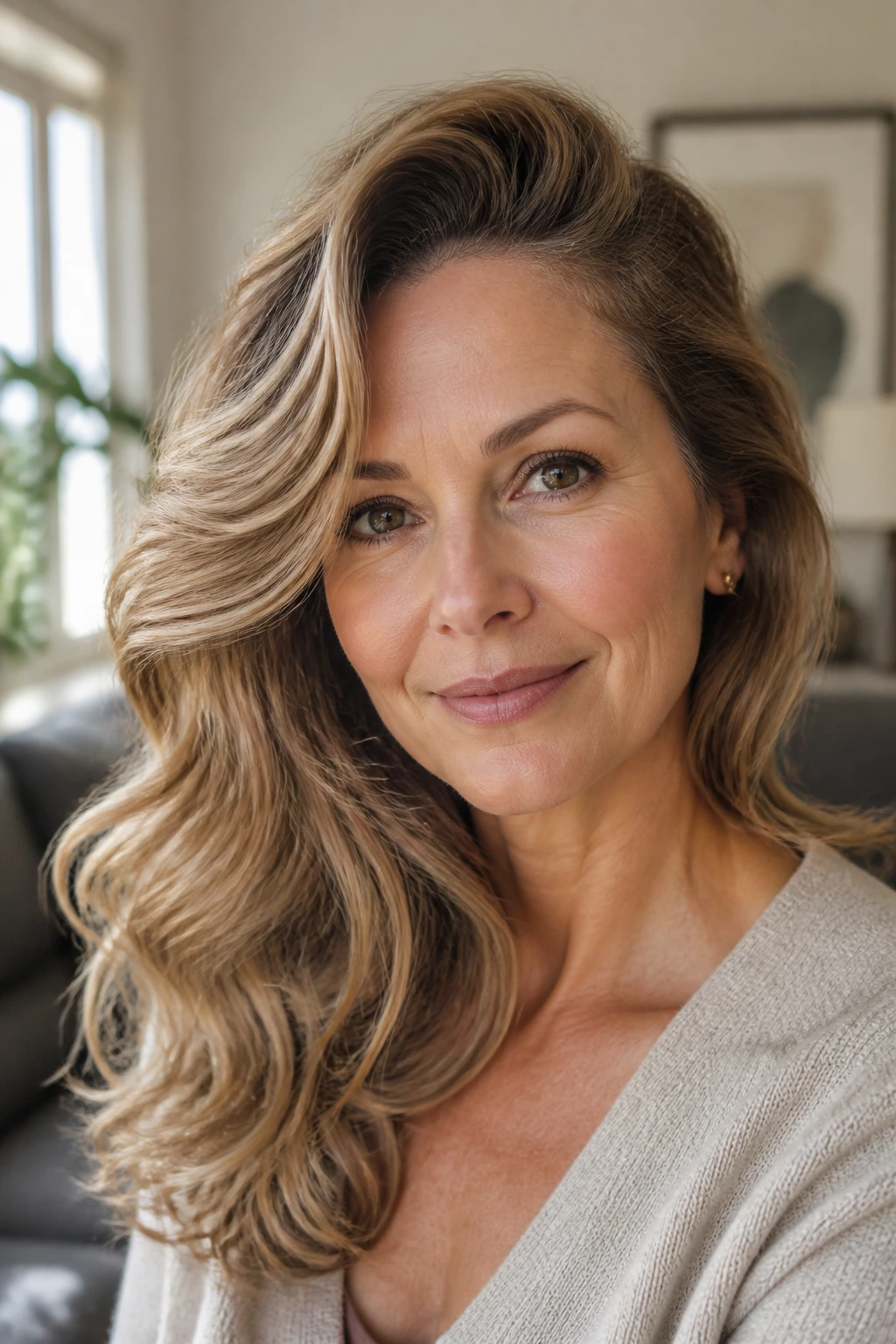
Side-swept waves are basically a polite way to say, “We are using your texture and making it look expensive.” The side part lifts the root, the waves soften the outline, and the hair falls diagonally across the face in a way that tends to flatter most face shapes.
This style works especially well if your hair gets frizzy at the crown but still holds bend through the ends. A large curling iron, a flat iron wave, or even overnight flexi rods can create the shape. The goal is not tight ringlets. The goal is wide, loose movement that keeps the texture from puffing in all directions.
If you wear this look often, set the part on the heavier side and let the front pieces fall across the cheekbone. It makes the face look longer and gives the hair a more finished outline. I like this for evenings, but it is not too dressed up for daytime if you keep the waves loose.
13. Braided Crown for Soft Control
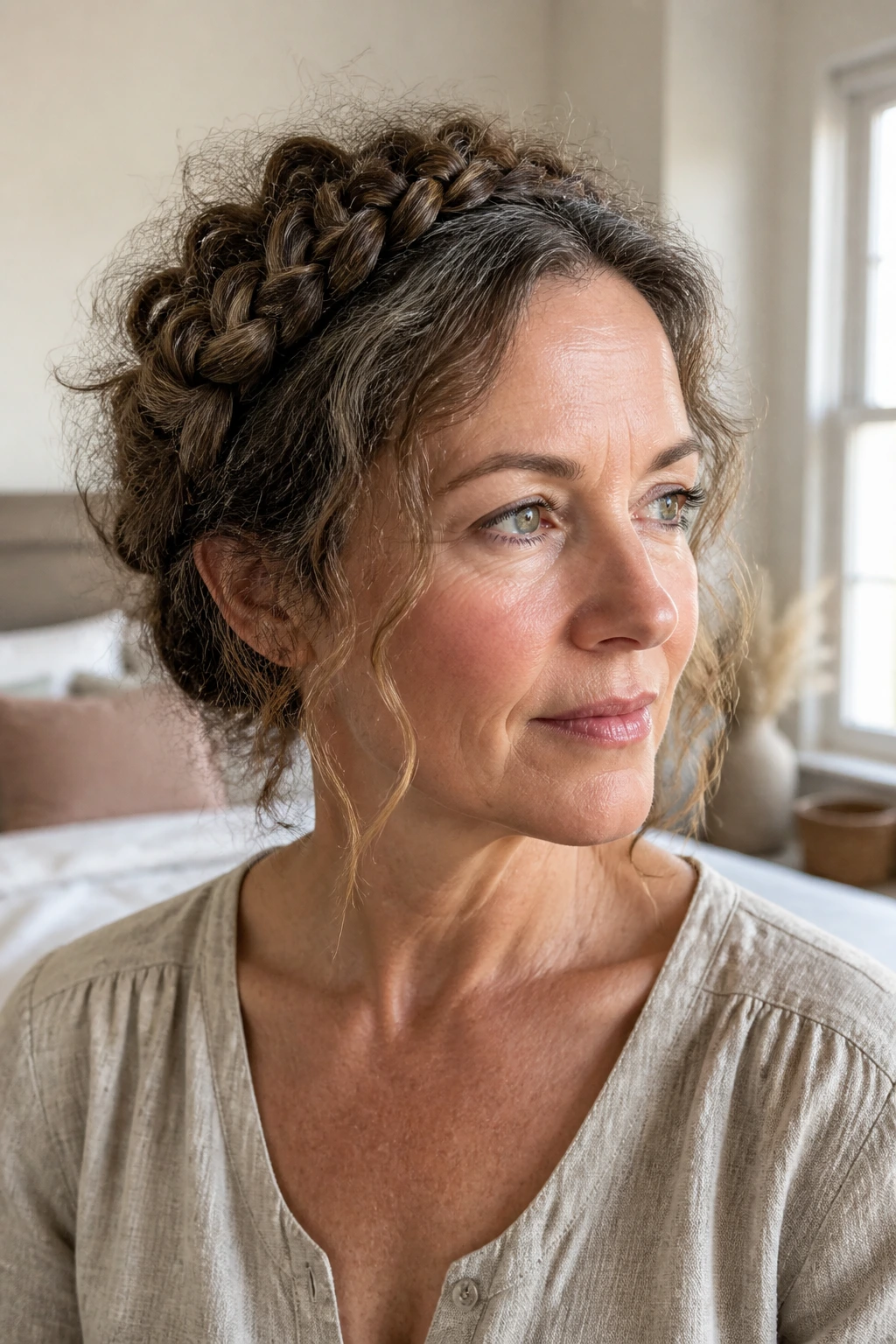
A braided crown is a good answer when you want the hair off your face but still want softness around the edges. Frizzy hair can actually make this braid better because the texture gives the braid grip. Sleek hair can feel slippery; textured hair holds the weave.
You can do a full halo braid, two side braids pinned across the head, or a loose braid that starts near the temple and wraps around the crown. The braid does not need to be tight. A slightly loosened braid looks richer and less school-uniform. Pull a few tiny pieces free around the face and nape if you want it to feel softer.
This is a smart style for humid weather, travel, or any day when you know you’ll be reaching up, bending down, and generally fighting your own hair. It also works nicely with a few gray streaks showing through the weave. The dimension is part of the appeal.
14. Deep Side-Part Blowout
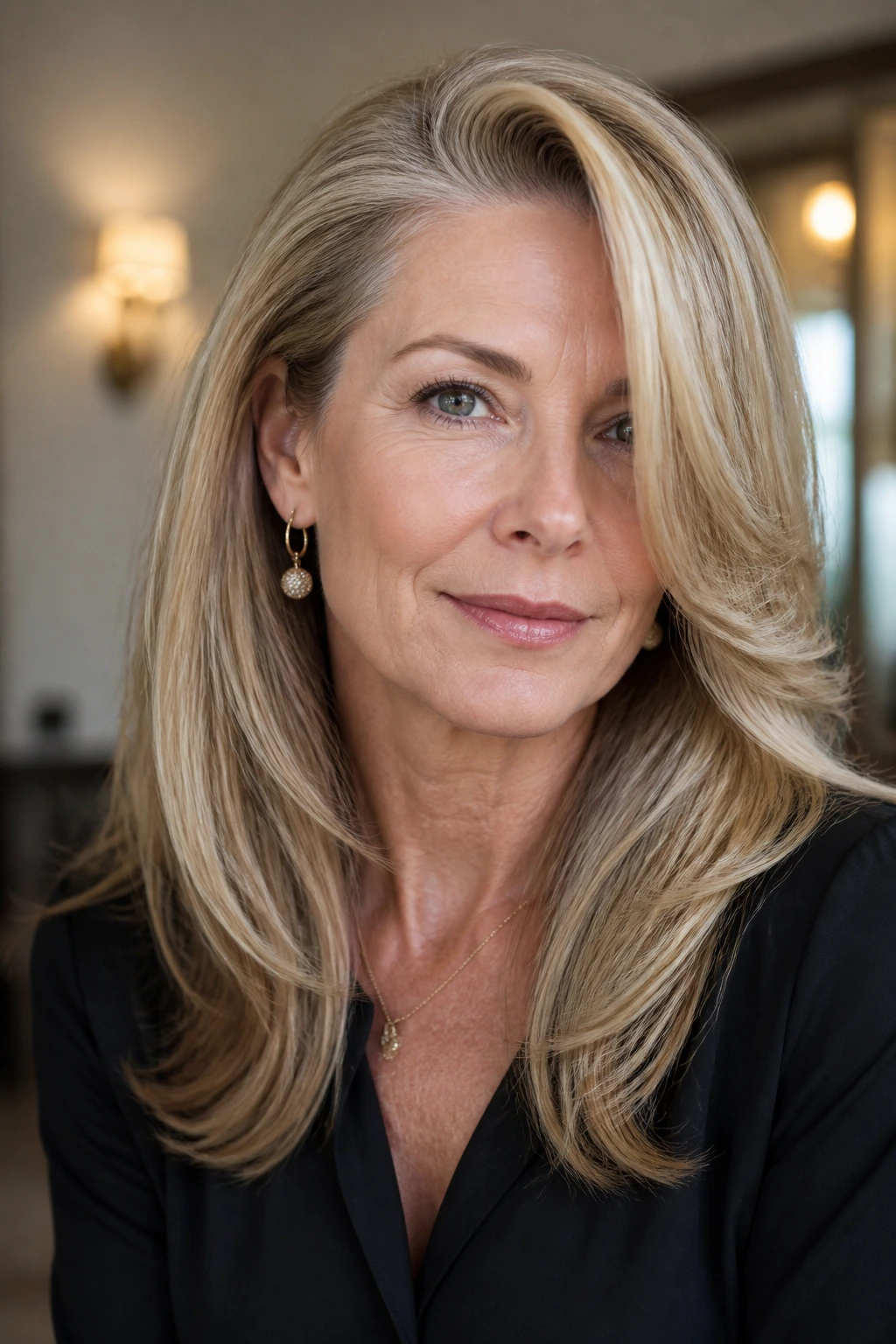
A deep side-part blowout is the polished option in this group, and I still think it has a place. Not because frizzy hair has to be “tamed,” but because sometimes you want that smooth bend and a little root lift for an event, a meeting, or a night out when you’d like your hair to show a bit of discipline.
What makes it hold
Start with heat protectant on damp hair. Rough-dry the roots first, then use a round brush to lift the crown and curve the ends under or slightly out. Finish with the cool shot so the shape sets while the hair is still wrapped around the brush.
The side part is doing more work than people realize. It gives the top volume without needing too much teasing, and it keeps the hair from sitting flat against the head. If your hair is coarse, this style often lasts longer than it does on fine hair because there’s more structure for the wave to cling to.
A light anti-humidity spray at the end can help, but don’t soak the hair in product. Too much and the blowout loses the swing that makes it look good in the first place.
15. Wavy Ponytail with Wrapped Base
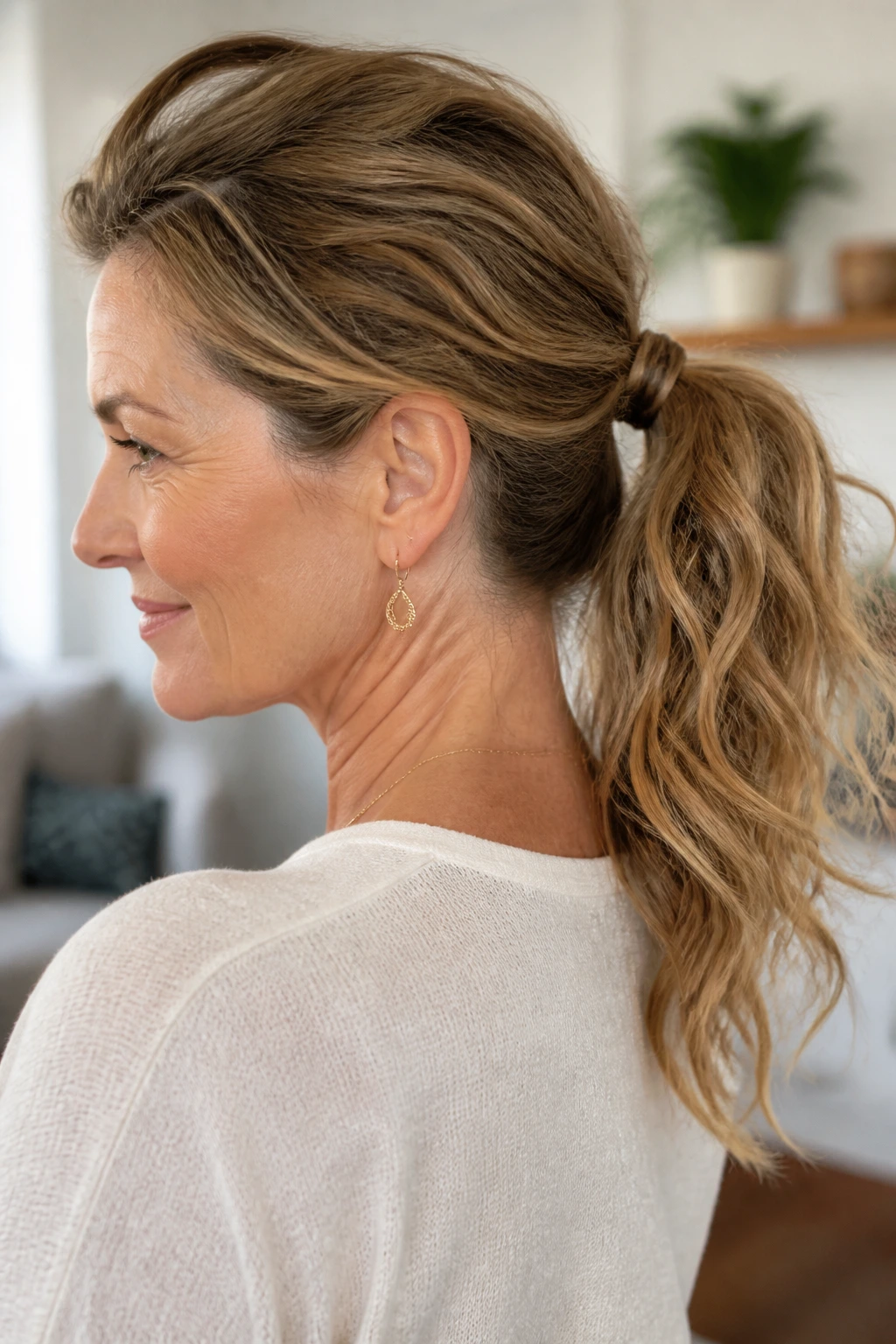
A ponytail can look elegant when the texture is allowed to stay part of the story. Pull the hair into a low or mid-height ponytail, leave a little bend through the lengths, then wrap a small section of hair around the elastic to hide it. That tiny move changes the whole look.
The crown should stay soft, not pulled tight. A flat top makes frizz obvious around the edges. A little lift at the roots keeps the face open and helps the ponytail look like an actual style rather than a gym shortcut. If the front pieces are too fuzzy, smooth only the first inch or two with a cream on your fingertips.
This is a good everyday option when you want your hair off your neck but don’t want to lose the shape of the waves. It also works if your ends are in between washes and behaving better than your roots. Hair has moods. This style lets that be true without fuss.
16. Shoulder-Length Flip-Out with Round Brush Ends
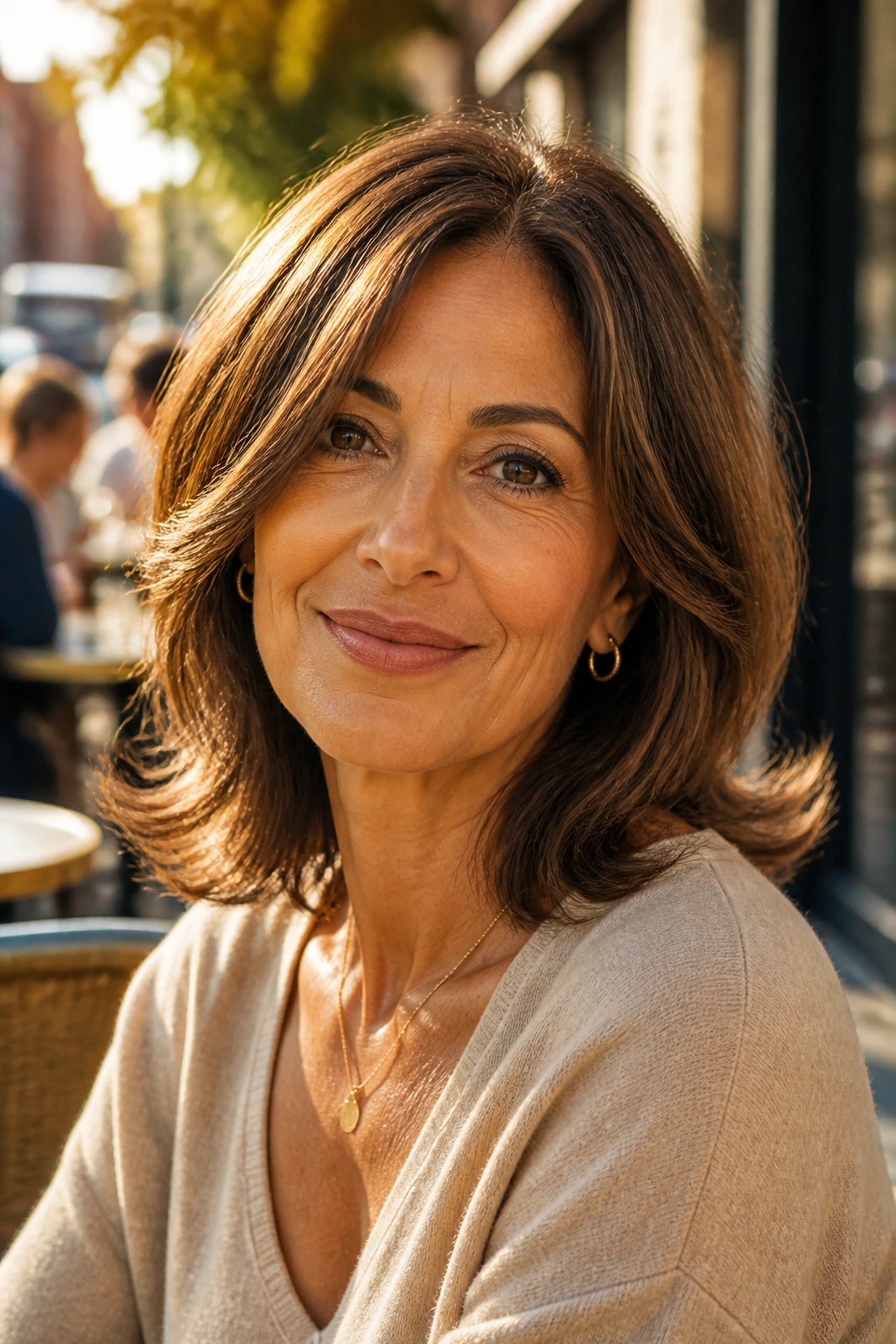
Flip-out ends bring movement back into shoulder-length hair that might otherwise sit heavy. The shape is gentle: the ends turn outward just enough to catch the eye, while the body of the hair stays relaxed. On frizzy hair, that outward flick can look lively instead of unruly if the layers are cut cleanly.
This style is a nice fit for women who want a mid-length cut but don’t want it to collapse into a plain sheet. A large round brush or a big curling brush can create the flip in under ten minutes if the hair is mostly dry already. The point is to shape the ends, not force the whole head into a blowout.
I also like this look on silver hair. The flip shows off movement and makes the color look dimensional, especially when the light catches the outer layers. If you’re tired of everything looking either too flat or too fluffy, this one sits in the middle.
17. Textured Midi Cut with Invisible Layers
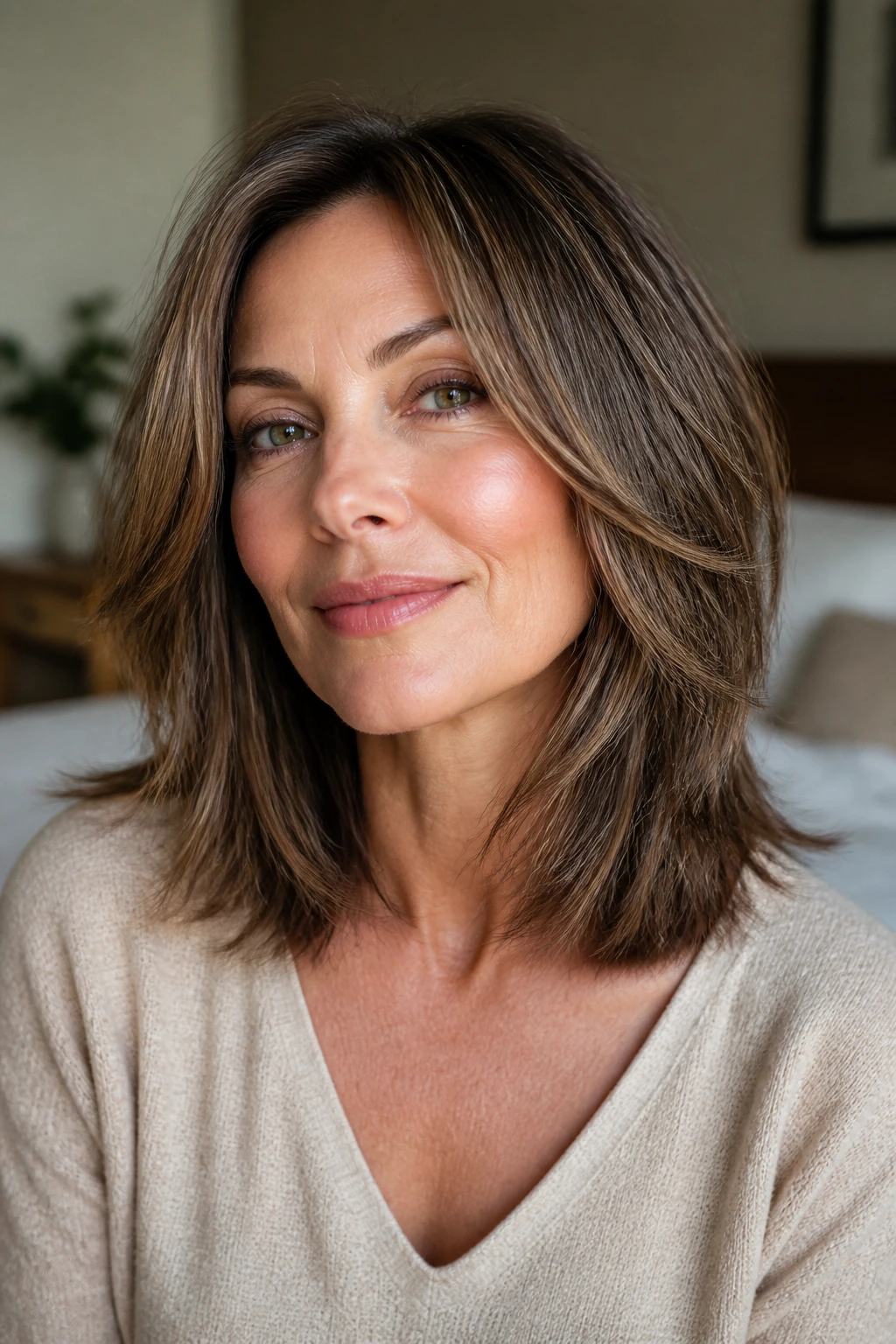
A textured midi cut falls somewhere between the shoulders and the upper chest, and the good version uses invisible layers to control bulk without announcing them. That matters. Obvious layers can make frizzy hair look chopped up. Hidden ones can make it feel lighter while preserving a clean outline.
This cut is especially useful if you want to keep more length but still need the shape to sit closer to the head. The internal layers take some of the heaviness out from underneath, so the surface doesn’t balloon the minute the weather turns damp. It’s a smart compromise between long and short.
Why the layers matter
- They stop the bottom from becoming a triangle.
- They keep the mid-lengths from hanging like a curtain.
- They let waves and bends move instead of stacking in one block.
- They make air-drying easier because the hair has room to collapse into a shape instead of a puff.
If you want one cut that can be worn straight, waved, or pinned back, this is one of my favorites.
18. Bixie with Feathered Sides
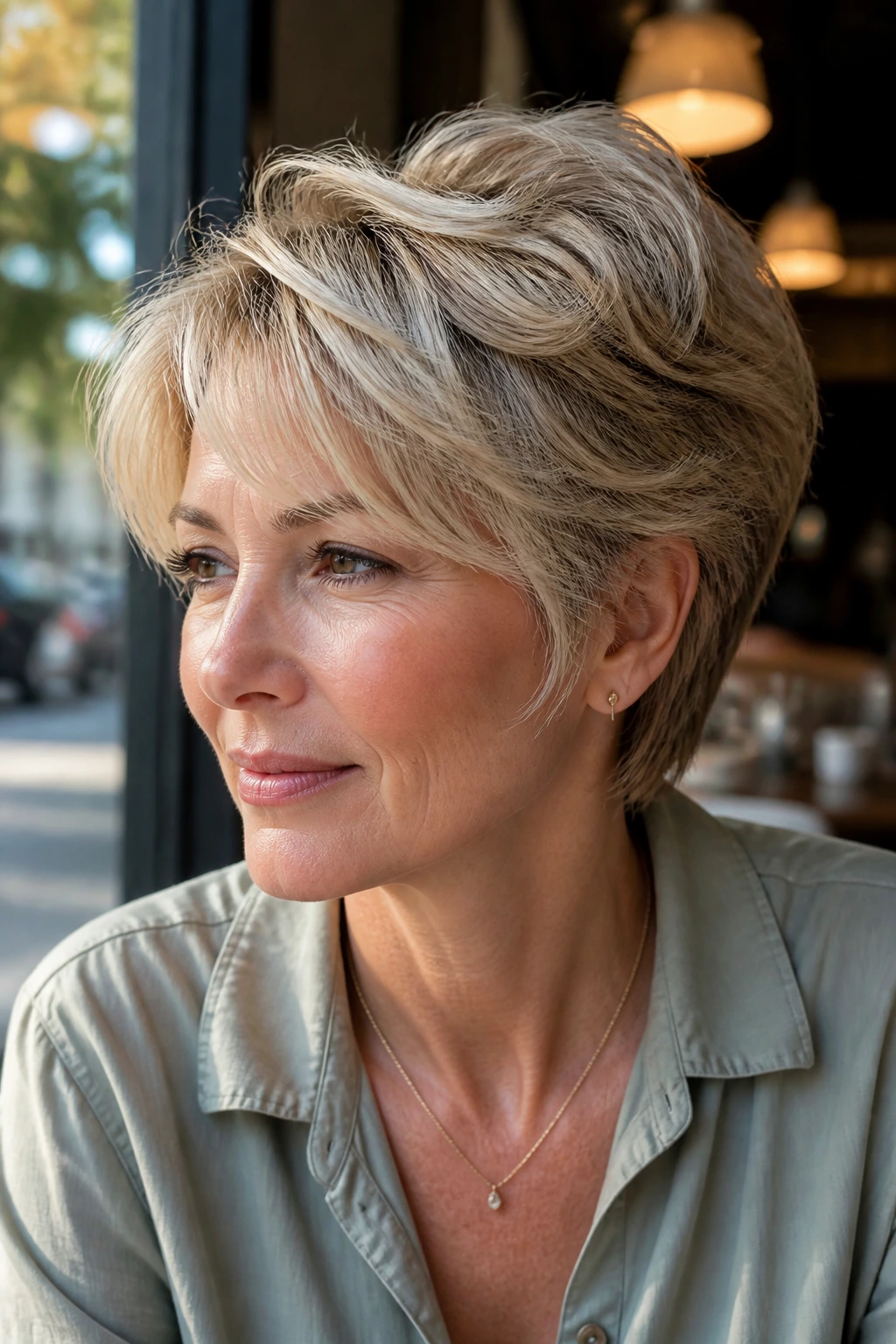
A bixie sits between a bob and a pixie, which is a very useful place to be if you want shorter hair without going all the way to a crop. The feathered sides soften the edges, while the longer top gives you enough length to work with if you want a side sweep or a bit of lift at the crown.
This shape can be especially flattering around the ears and temples, where frizz often makes the hair seem wider than it is. Feathering there keeps the outline from looking blocky. The trick is to avoid over-texturizing the ends. You want movement, not a feathery halo that frays by lunchtime.
If you wear glasses, this cut can be a dream because the hair stays clear of the frames without looking severe. A tiny amount of styling cream on damp hair and a quick finger-dry is usually enough. It is short, yes. But it still feels like hair.
19. Sleek Top Knot with Wispy Finish
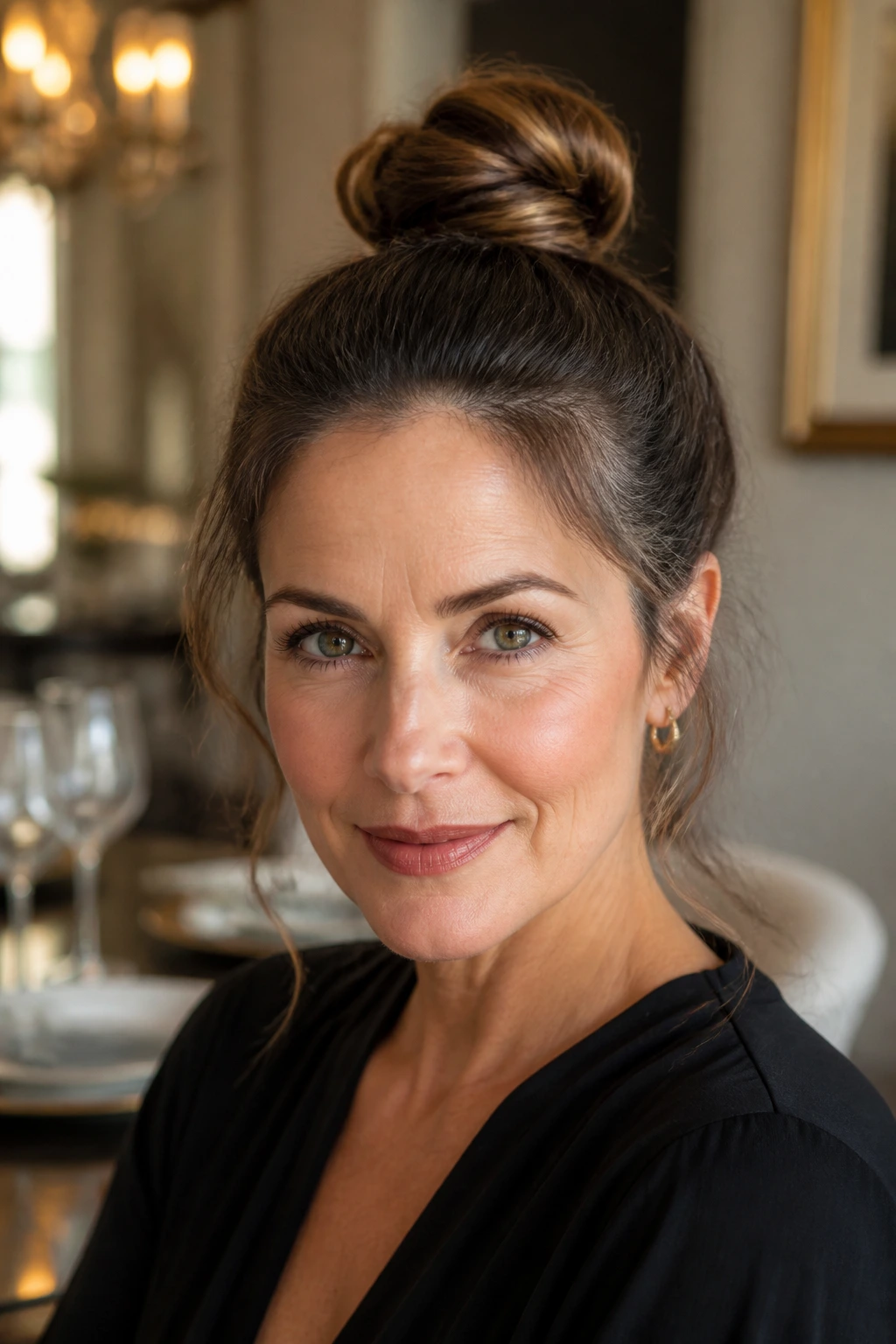
A top knot can be too severe on frizzy hair if every strand is pulled tight and every flyaway is sprayed down like a crime scene. The better version keeps the crown smooth, the knot compact, and a few wispy pieces free around the hairline and ears. Frizz softens the look instead of ruining it.
I like this when you need a cleaner updo for a dinner or a formal day and you do not want the constant battle of smoothing every piece. Gather the hair high, twist it into a knot, and pin it with enough grip that it stays put. Then stop. Leave the small loose pieces alone unless they’re actually sticking out in a way that bothers you.
The style feels best when it has a little air around it. Too polished, and it can make the face look hard. Too loose, and it loses shape. The middle ground is where the texture works for you. That’s the whole theme of this list, really.
Styling Moves That Make Frizz Look Intentional
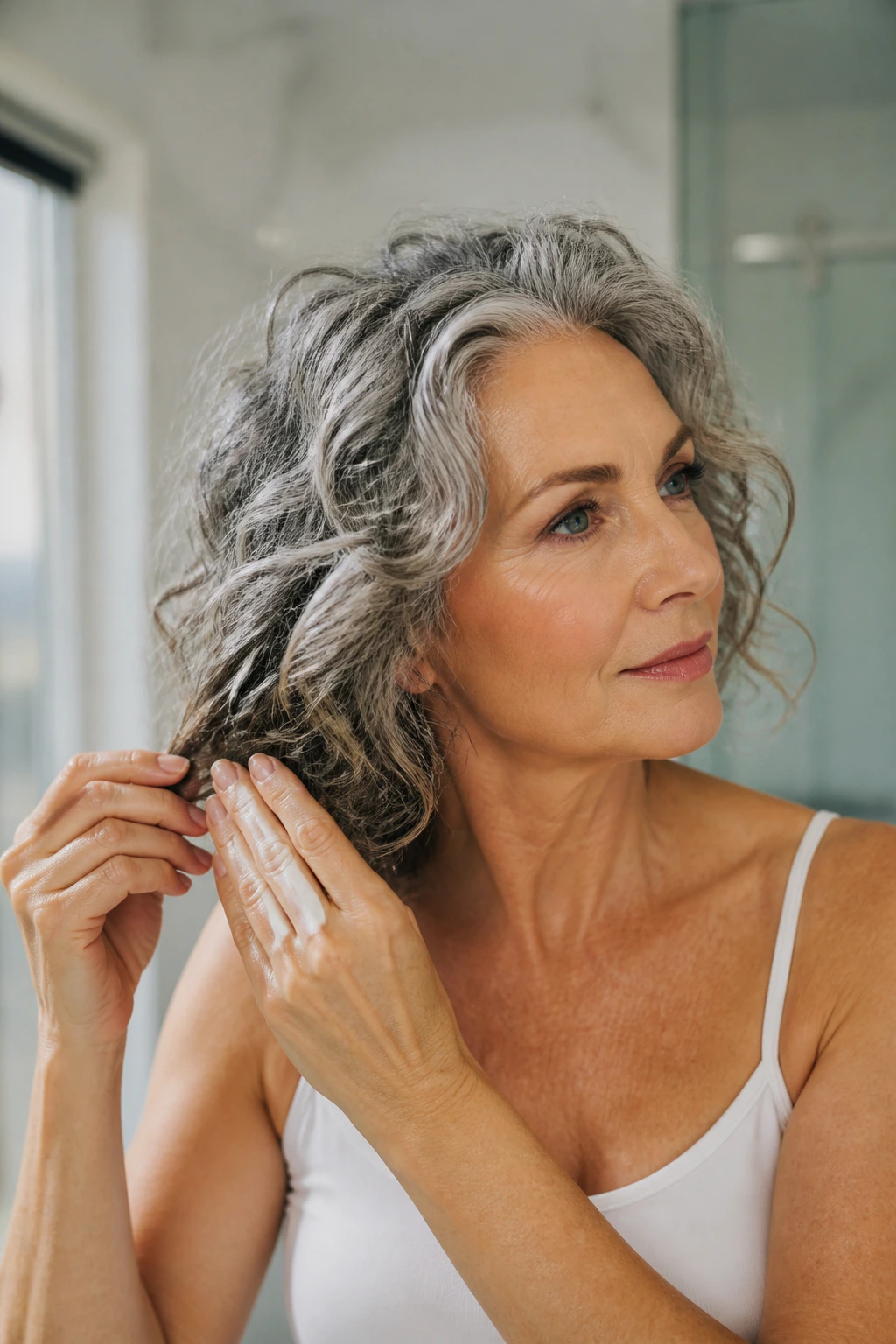
The best style in the world still needs a few simple moves to look finished. Frizzy hair usually behaves better when you decide, early, whether you’re going for smooth, bendy, or fully textured. Mixing all three in the same head—slick roots, dry ends, and fluffy mids—usually makes the whole thing look confused.
Dry in the direction you want the hair to live. If you want a side part, dry the roots that way from the start. If you want volume at the crown, clip the part opposite your normal side for a few minutes while the roots cool.
Use product where the frizz shows up. Leave-in conditioner belongs on the mid-lengths and ends. Mousse can go near the roots if you need lift. Serum should stay mostly on the last few inches, and only a little.
Pick one tool and stick to it. A round brush blowout, a diffuser, or a curling wand can all work. Using all three usually creates too much manipulation, which is how frizz turns into a cloud with opinions.
Set the shape with cool air. That last shot of cool air matters more than it sounds. Hair that’s still warm will shift and puff once you walk away. Hair that cools in place tends to hold the bend longer.
I also think it helps to touch your hair less than you want to. The more you pull at it, the more the outer layer lifts. Annoying, yes. True, also yes.
The Mistakes That Turn Texture Into Puff
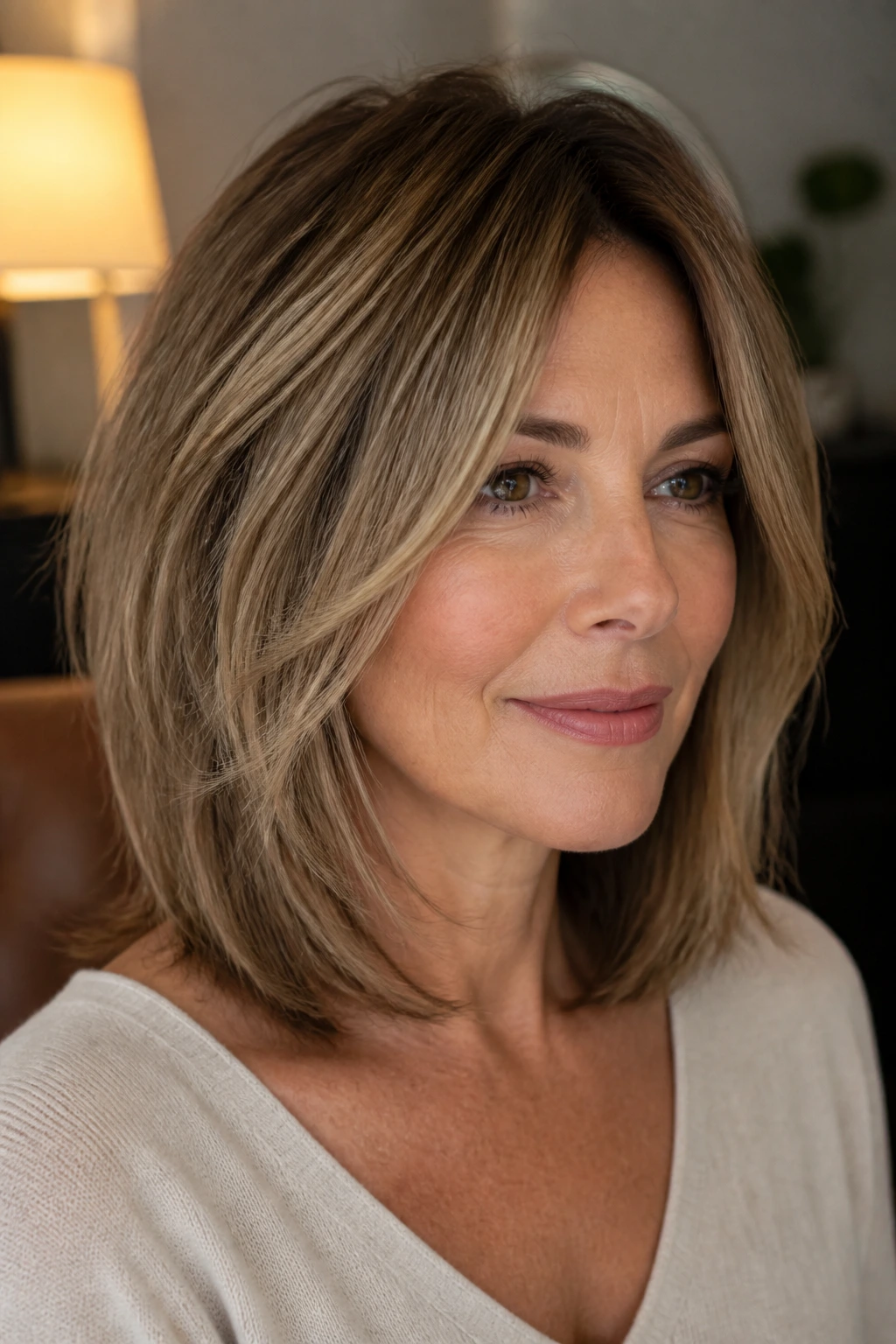
The biggest mistake is cutting all the weight off the ends. Hair that frizzes needs some perimeter to hang onto. When the bottom is too thin or too shattered, the outer layer expands and the whole cut starts to look wide. The fix is a cleaner line or softer layers placed lower, not more thinning.
Dry brushing is another classic problem. It pulls apart the cuticle and sends static everywhere, which is exactly what you do not want if your hair already wants to puff. Detangle in the shower with conditioner, or mist the hair lightly before using a wide-tooth comb.
Too much product is a trap. Heavy creams and oils can make fine hair collapse at the roots while the ends still frizz, which is a strange but common look. Use lighter products first, then add more only where the hair is actually dry.
Skipping trims shows up fast on frizzy hair. Split ends do not stay politely at the bottom; they travel up the strand and make the hair look rough from a distance. If you wear a bob, lob, or pixie, the shape can slide out of line long before you notice it in the mirror.
And please do not ask a stylist to “thin it out” unless you know exactly where and how. Thinning shears used in the wrong place can leave frizzy hair fuzzy, uneven, and hard to style. Weight removal should be deliberate, not a guessing game.
Variations for Fine, Thick, Curly, and Gray Hair
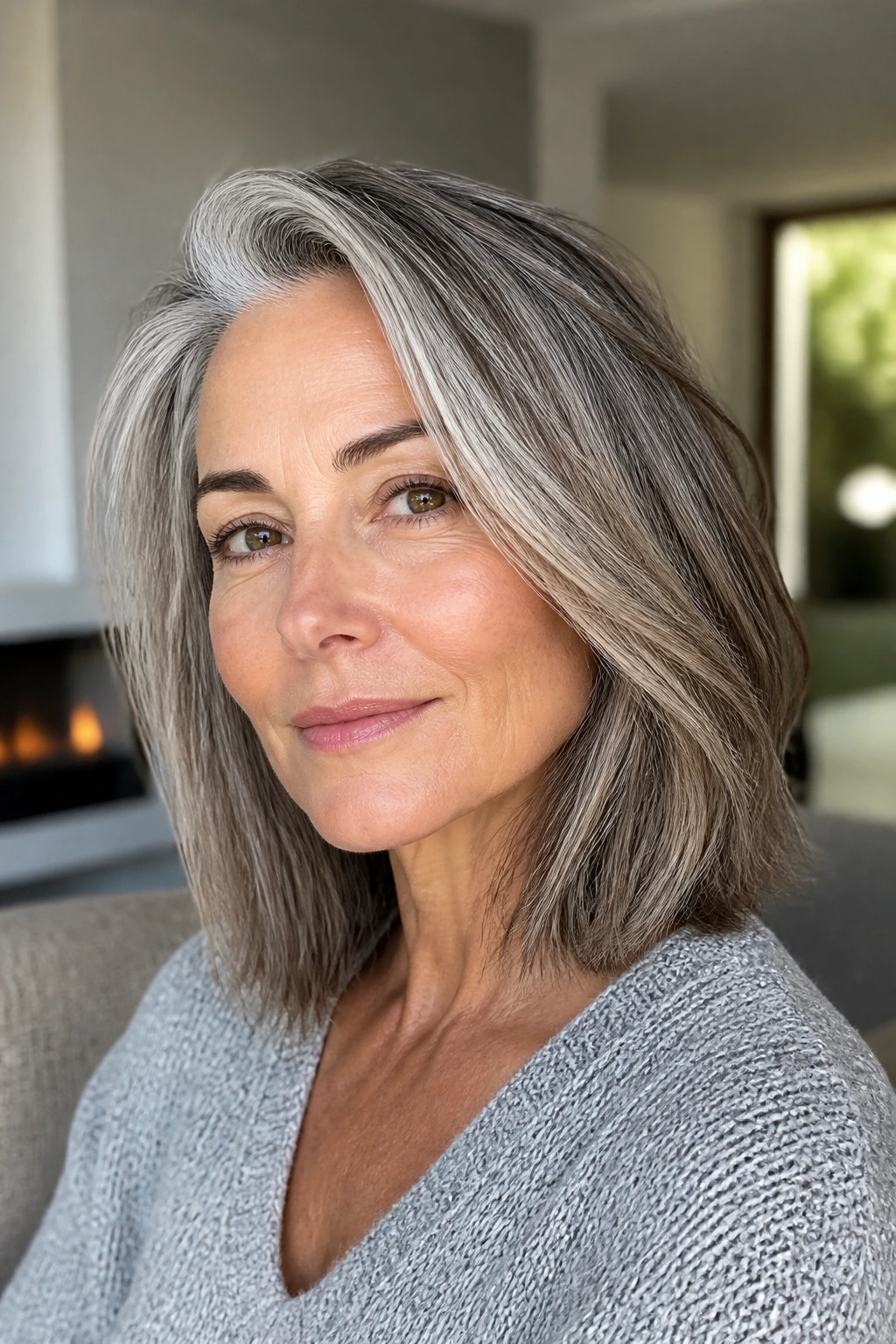
Fine-Hair Lift Version: Keep the outline blunt at the ends and the layers minimal. A collarbone lob, French bob, or shoulder-length cut with curtain bangs gives fine frizzy hair enough body without making the ends look sparse. Use mousse or a root spray, not heavy cream.
Thick-Hair Shape Version: Go for a shag, bixie, or textured midi cut with internal layering. Thick hair usually needs bulk removed from underneath so the surface can sit closer to the head. I’d avoid too many short layers on top unless you want extra lift.
Curly-Coil Friendly Version: Choose a dry-cut shag, longer layers, or a curly bob that respects shrinkage. Let the stylist see the hair in its natural state if possible, because curls and coils do their own math. Diffusing helps, but the cut should already know where the curl lands.
Silver-Strand Version: Gray hair often looks sharper in shapes with clean edges and soft movement around the face. A chin-length bob, pixie, or side-part lob can make silver strands look dimensional instead of dull. A little gloss cream or lightweight leave-in helps with the rougher texture gray hair can bring.
Low-Heat Version: If you do not want to reach for hot tools, stick with braids, claws, buns, and cuts that air-dry well. A shag, textured midi, or lob usually gives the best payoff here because the shape is built into the cut. That saves time every single week.
The Tools Worth Keeping on the Bathroom Shelf
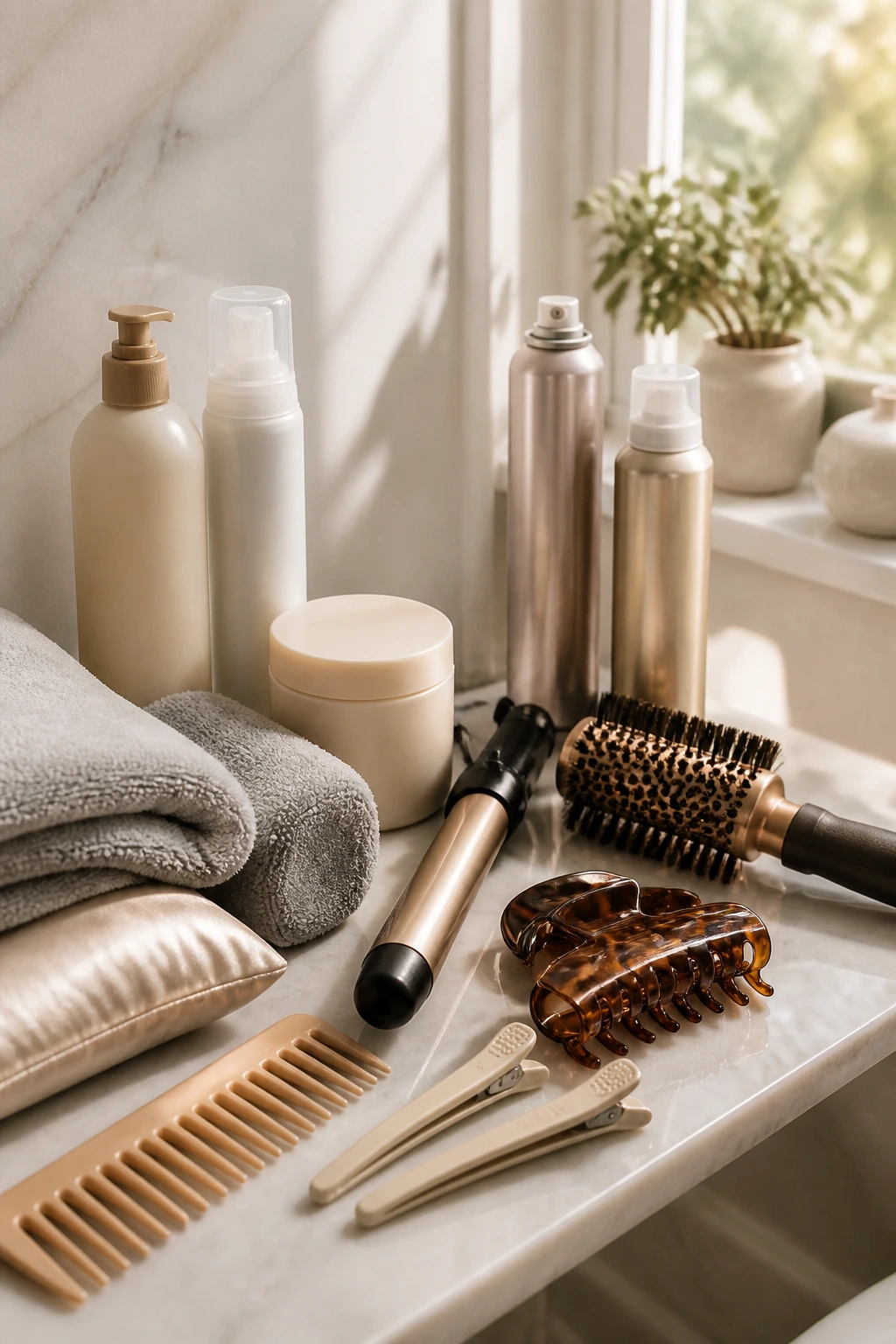
- Wide-tooth comb: Best for detangling damp hair without tearing up the cuticle.
- Microfiber towel or soft T-shirt: Blots out water without roughing up the surface the way a bath towel can.
- Leave-in conditioner: Helps the mid-lengths and ends stay smoother before styling.
- Lightweight mousse: Gives roots and waves some structure without making the hair sticky.
- Smoothing cream: Good for the hairline, crown, and any pieces that puff first.
- 1.25-inch curling iron or wand: Useful for loose bends, side-swept waves, and softening blunt ends.
- Round brush: A medium or large barrel brush helps with blowouts and flip-outs.
- Duckbill or sectioning clips: Keep the crown and sides organized while you dry or style.
- Flexible-hold hairspray: Holds the shape without turning textured hair stiff.
- Dry shampoo: Adds grip at the roots and buys you another day between washes.
- Claw clip: Fastest shortcut for second-day frizz when you need the hair up in under a minute.
- Satin pillowcase or bonnet: Reduces friction overnight, which matters more than most people think.
Keeping the Shape Between Salon Visits
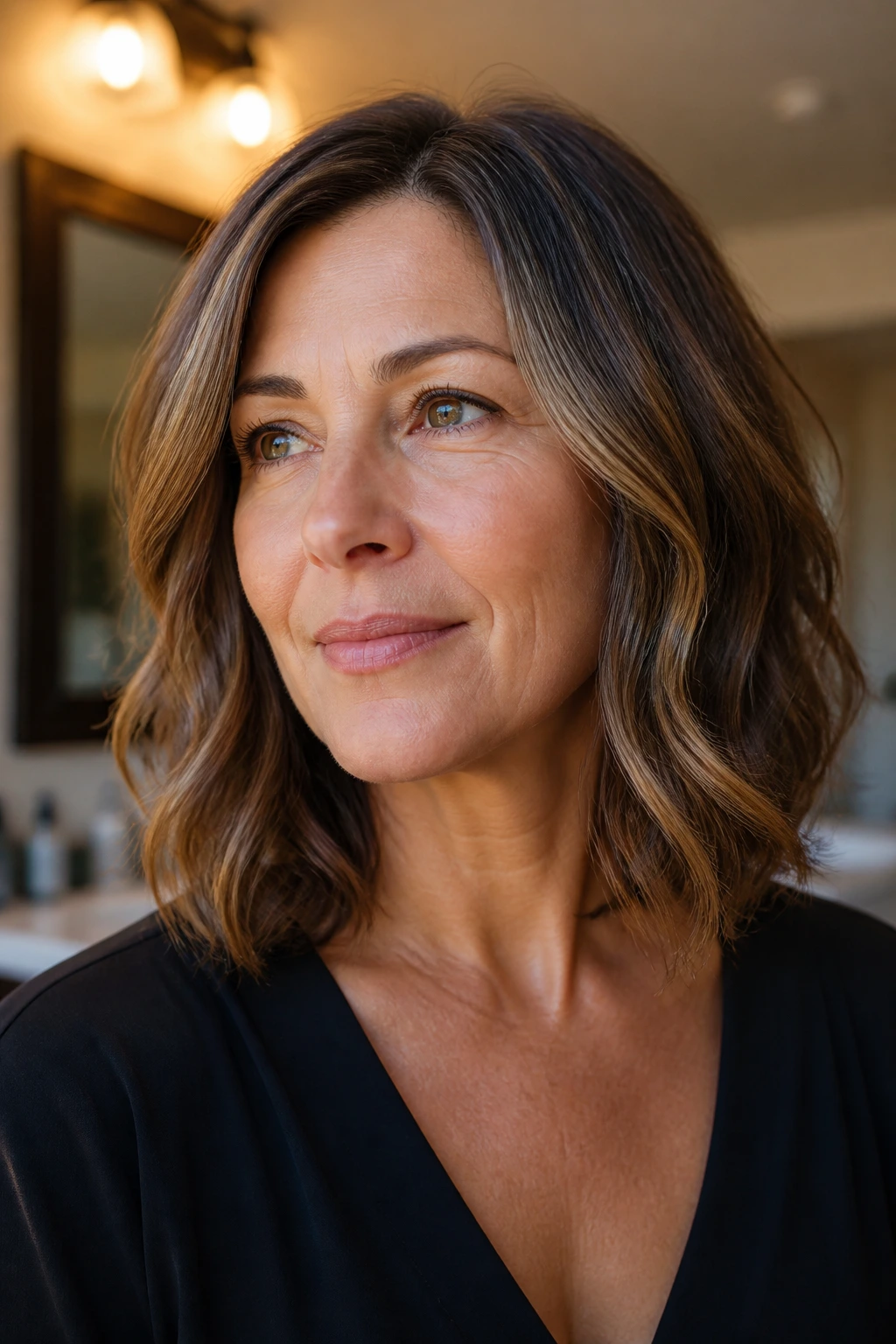
A good cut can drift out of shape faster than you expect if you ignore it. Bobs and lobs usually need a trim every 6 to 8 weeks if you want the line to stay neat. Pixies and bixies often need a cleanup every 4 to 6 weeks around the ears and neckline, even if the top can stretch a little longer. Curtain bangs usually want a touch-up before the rest of the cut does.
At home, the main goal is to keep the ends from drying out and the shape from collapsing. If your hair gets frizzy overnight, sleep on a satin pillowcase or wear a loose braid, soft bun, or bonnet. A tiny amount of leave-in on the ends before bed can help if your hair is dry, but do not load it up. You want softness, not residue on the pillow.
Second-day refreshes are easier when you use water on purpose. A mist bottle with water and a pea-sized amount of leave-in conditioner can wake up waves, bangs, or bends. Scrunch the hair, then let it dry for a few minutes before deciding whether it needs a diffuser, a quick blast from the dryer, or nothing at all. Most hair looks worse when touched too early.
If you wear a fringe, give it its own schedule. Bangs usually need a quick trim or dusting more often than the rest of the hair because they show growth fastest. That tiny maintenance habit keeps the whole haircut looking intentional instead of like a style that gave up halfway through the month.
Frequently Asked Questions About Hairstyles for Frizzy Hair for Women Over 40
Which hairstyle works best for frizzy hair over 40?
A soft lob, chin-length bob, or textured midi cut usually gives the best balance of shape and flexibility. If you want something shorter, a pixie or bixie can be excellent too, as long as the cut keeps softness around the crown and sides.
Can I keep my hair long if it’s frizzy?
Yes, but long hair needs some structure. Long layers, a deep side part, and regular trims keep the ends from looking too wide or dry, which is where long frizzy hair usually starts to misbehave.
Are bangs a bad idea for frizzy hair?
Not if you choose the right kind. Curtain bangs and wispy fringe usually behave better than heavy blunt bangs because they can blend into texture instead of fighting it. Short, thick bangs tend to puff faster.
Is a bob or lob easier to manage?
A lob is usually easier if you want more styling flexibility and the option to pull hair back. A bob gives a cleaner outline, but it can need more regular trimming to stay sharp. I’d pick the lob if you like breathing room.
How do I keep my hair from frizzing in humidity?
Start with a leave-in conditioner or light cream, dry the hair fully, and finish with a flexible anti-humidity spray. Touching it less matters too. The more you keep your hands out of the hair, the less the cuticle gets disturbed.
What if my hair is fine and frizzy at the same time?
Keep the layers modest and the ends fuller. Fine frizzy hair usually looks better in blunt or softly blunt shapes, because too much layering makes the ends look wispy and the frizz more obvious.
Do I need heat styling every day for these looks?
No. Several of these styles work well with air-drying, braids, buns, or a quick bend from a brush. If heat is part of your routine, use it to shape only the pieces that need help, not the whole head.
How often should I trim these styles?
Most lobs, bobs, and midi cuts stay in shape best with trims every 6 to 10 weeks, depending on how crisp you want the outline. Pixies and bangs need more frequent cleanup, especially around the neckline and temples.
The Cut Should Work With the Hair
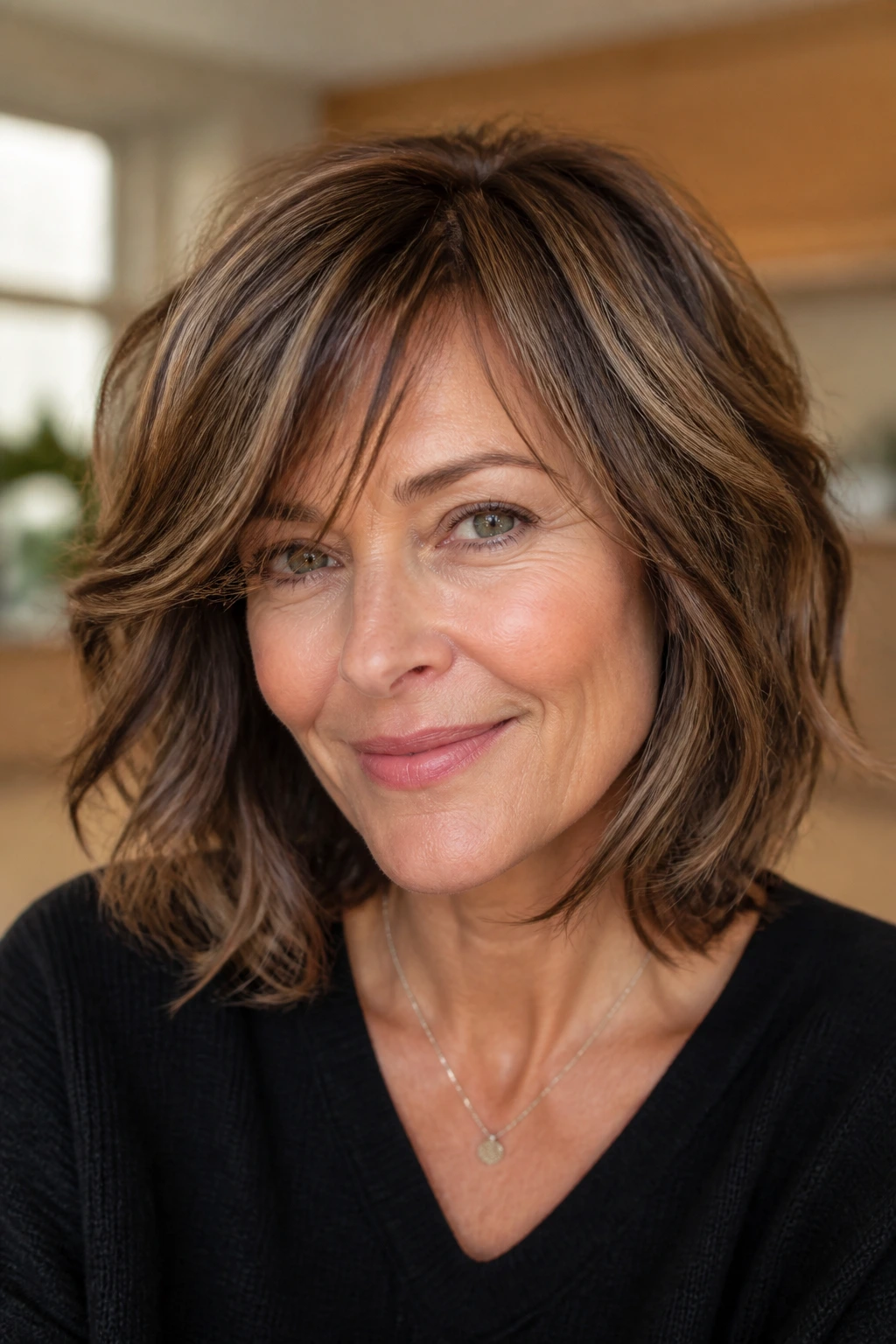
The best haircut for frizzy hair is the one that stops asking the hair to be something it isn’t. A shape with good weight, the right layers, and a clear outline can make texture look soft, lifted, and intentional instead of puffy or tired. That is the real trick.
And age has less to do with it than people think. Hair after 40 often asks for a little more moisture, a little more shape, and a little less fighting. Once the cut starts working with the texture, the morning routine gets quieter. That alone is worth something.
Pick the style that matches how your hair behaves on its stubborn days, not just on the good ones. That’s the one you’ll keep reaching for.
