



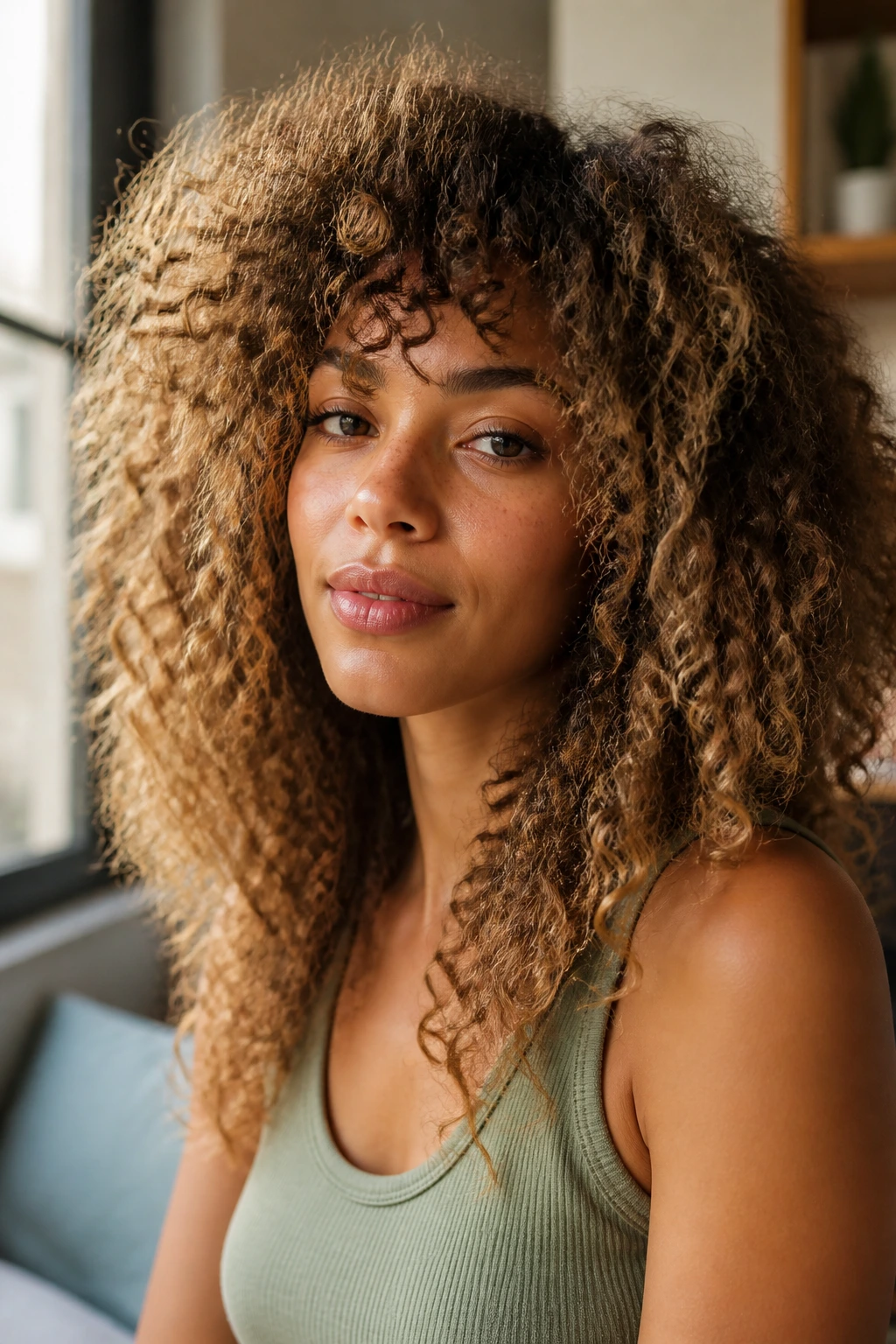
Hairstyles for frizzy hair work best when they stop fighting the texture and start giving it a shape. A head full of frizz can look messy in one style and expensive in another, and the difference is usually not the hair itself—it’s the tension, the parting, and the way the ends are handled.
That’s why the strongest styles for frizz-prone hair usually have one thing in common: they make room for volume without letting everything sprawl. A high puff, a loose braid, a tucked bun, a claw-clip twist—these styles don’t ask the cuticle to behave like glass. They ask it to do what it already does well: hold, lift, and bend.
Humidity, second-day oil at the roots, and a few flyaways around the crown can ruin a style that depends on perfection. They can also make the right style look better, because the softness stops the whole thing from reading stiff. The list below leans into that reality. No fantasy sleekness. No pretending every strand will lie flat. Just hairstyles that work with texture and still look intentional.
Why These Frizz-Friendly Styles Earn Their Keep
-
They use texture as structure. Frizz gives braids, buns, and puffs something to grab, which is why these styles often hold better than the same look on slippery hair.
-
They survive a little humidity. A style that still looks good after a walk in damp air is worth more than one that needs constant mirror checks.
-
They make day-two hair feel useful. Instead of trying to erase a little roughness, these looks turn it into grip, shape, or softness around the face.
-
They work across lengths. Short, shoulder-length, long, thick, and fine frizzy hair all get options here, not one tired answer.
-
They can look polished or undone. The same braid or bun can read neat with tighter sections or relaxed when you widen the plaits and let the flyaways stay.
1. High Puff Ponytail for Frizzy Hair
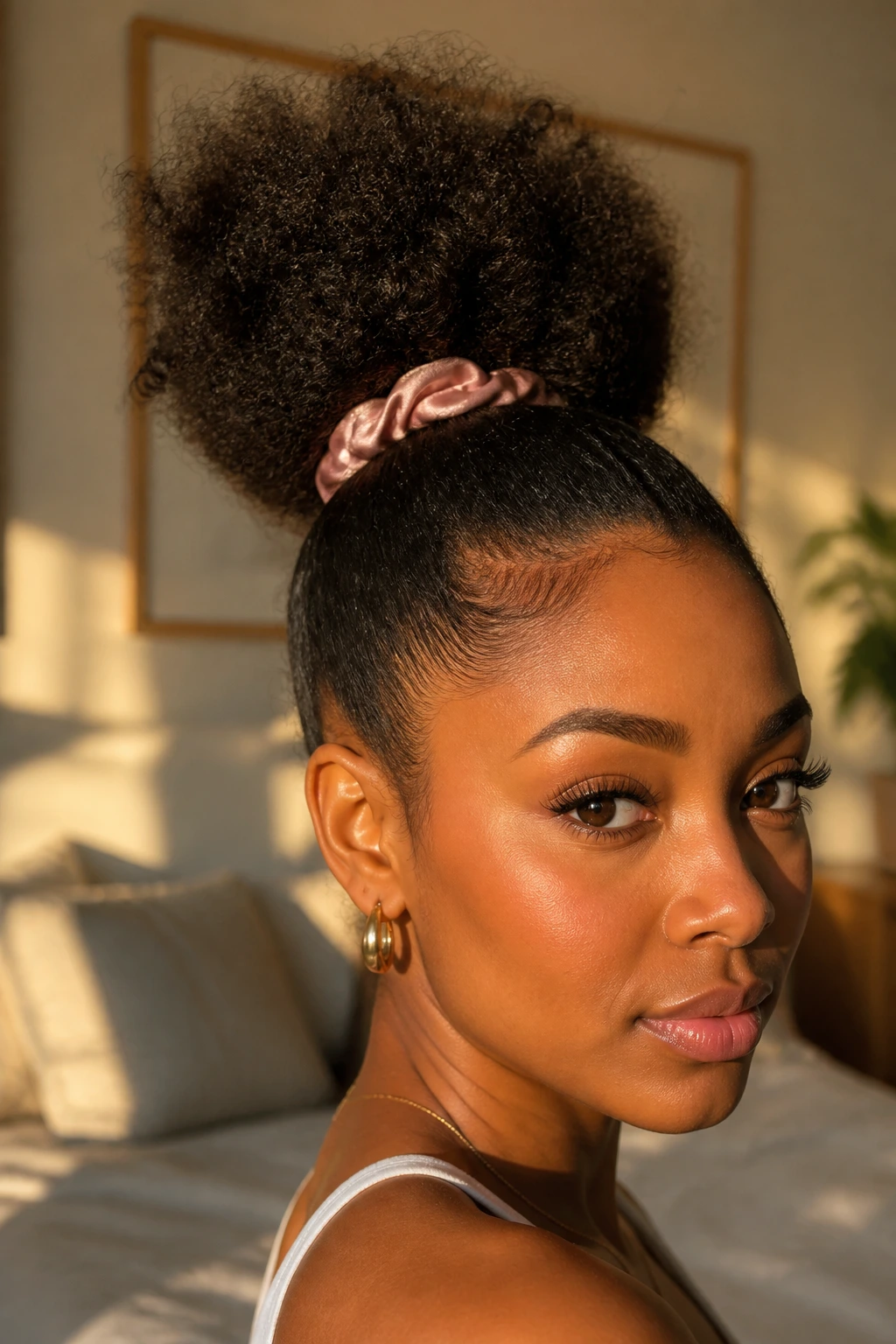
A high puff ponytail is what happens when you stop apologizing for volume. Pull the hair up near the crown, smooth the sides just enough to keep the outline clean, then let the puff itself stay big and springy. On curly or coily hair, it sits like a cloud. On wavy or frizz-prone straight hair, it gives height without looking overworked.
The move here is restraint. Use a soft elastic or satin scrunchie so the base doesn’t dig in, and flatten the edges only where the hairline needs order. If you slick the whole head down, you lose the best part of the style. Keep the crown lifted. That’s the point.
2. Low Chignon with Loose Ends
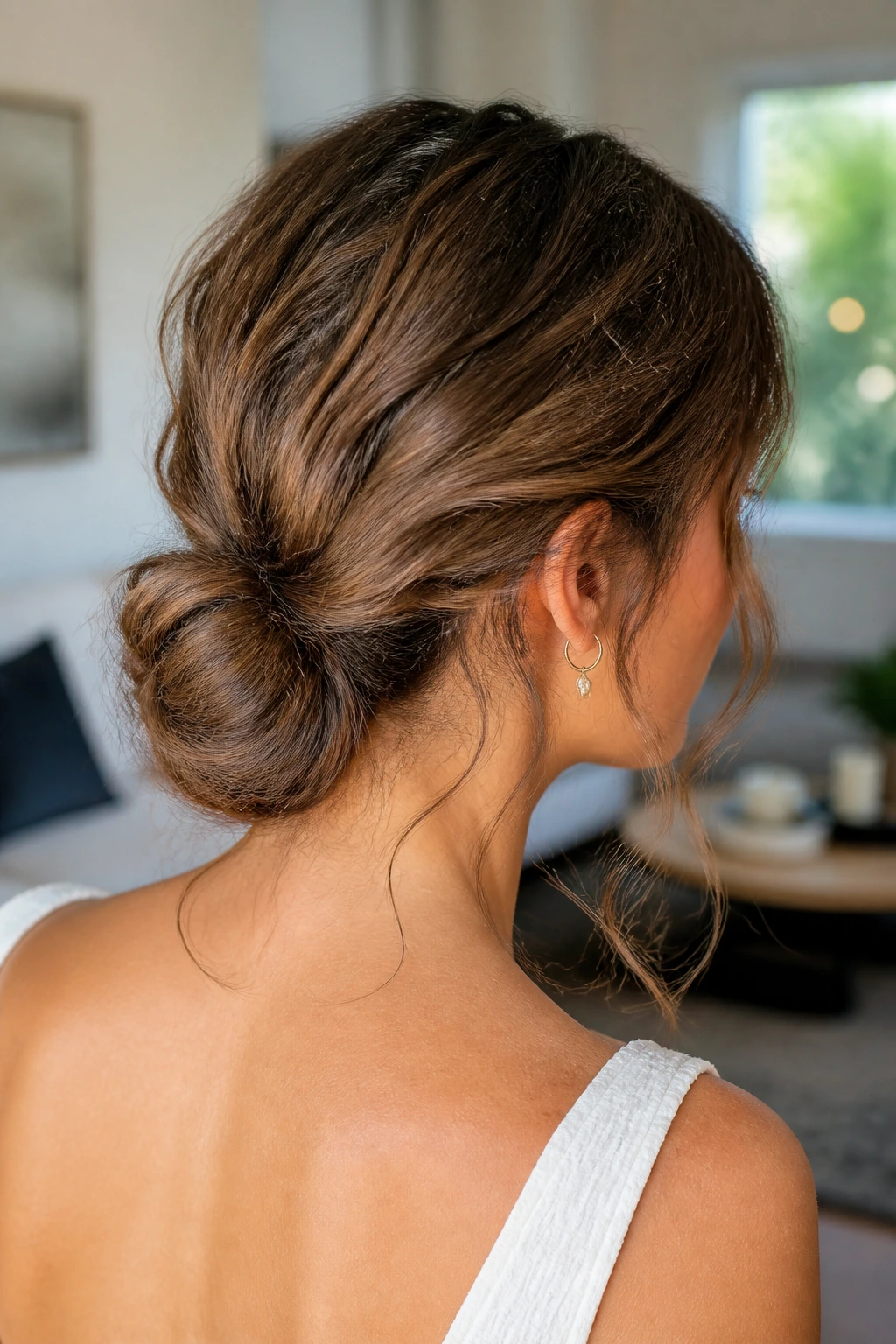
Why does a low chignon work so well on frizzy hair? Because it lets the texture blur the seams. Twist the length at the nape, fold it into a low bun, and leave a few wisps around the ears instead of chasing every stray strand. The result feels softer than a rigid knot and doesn’t collapse the second the air gets sticky.
Pin from underneath with U-pins or two crossing bobby pins, not one big heroic pin that gives up halfway through the day. A pea-size dab of cream on the top layer helps the surface lie down without turning the hair greasy. A center part makes it cleaner. A side part makes it feel a little more relaxed.
3. Half-Up Top Knot with Airy Lengths
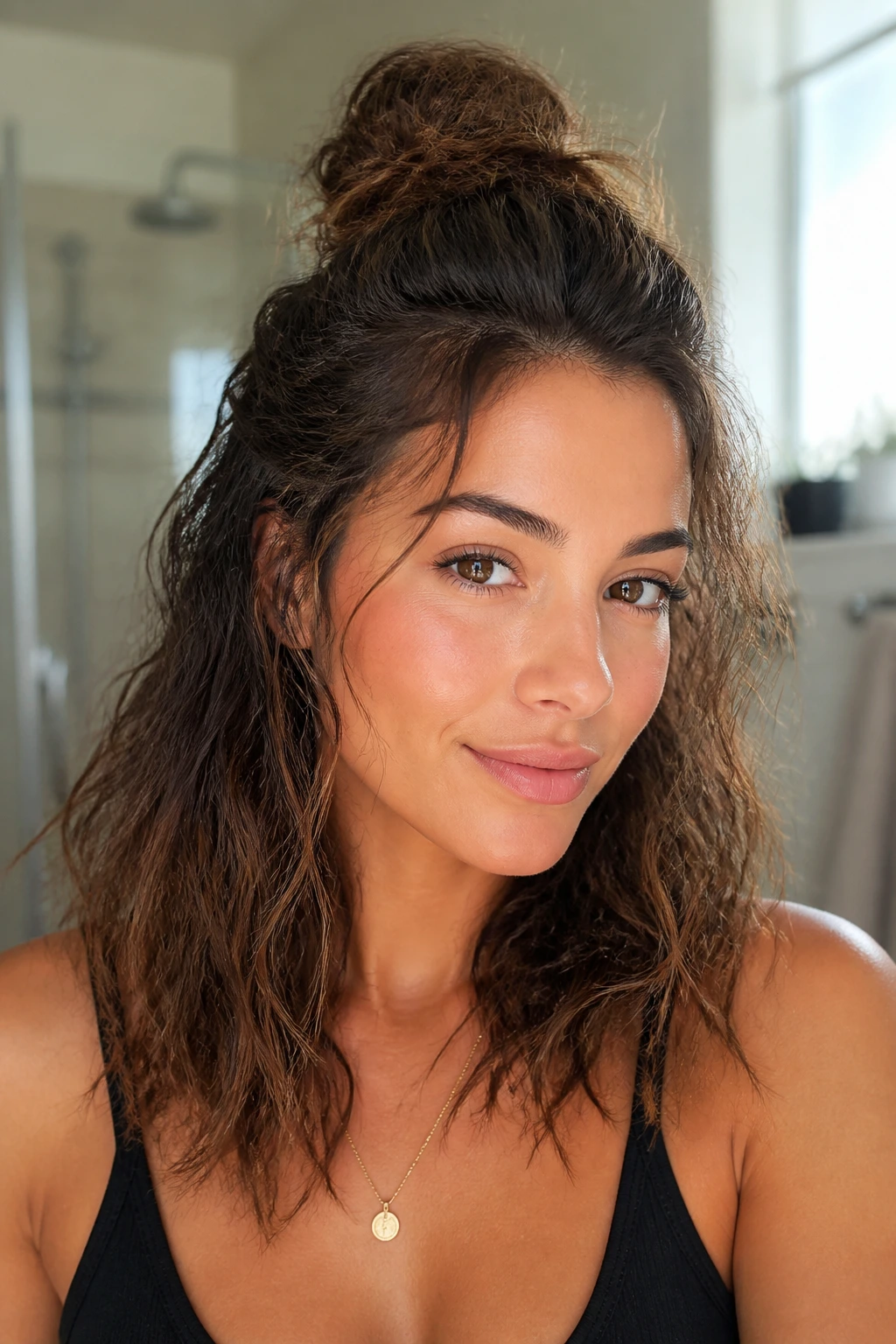
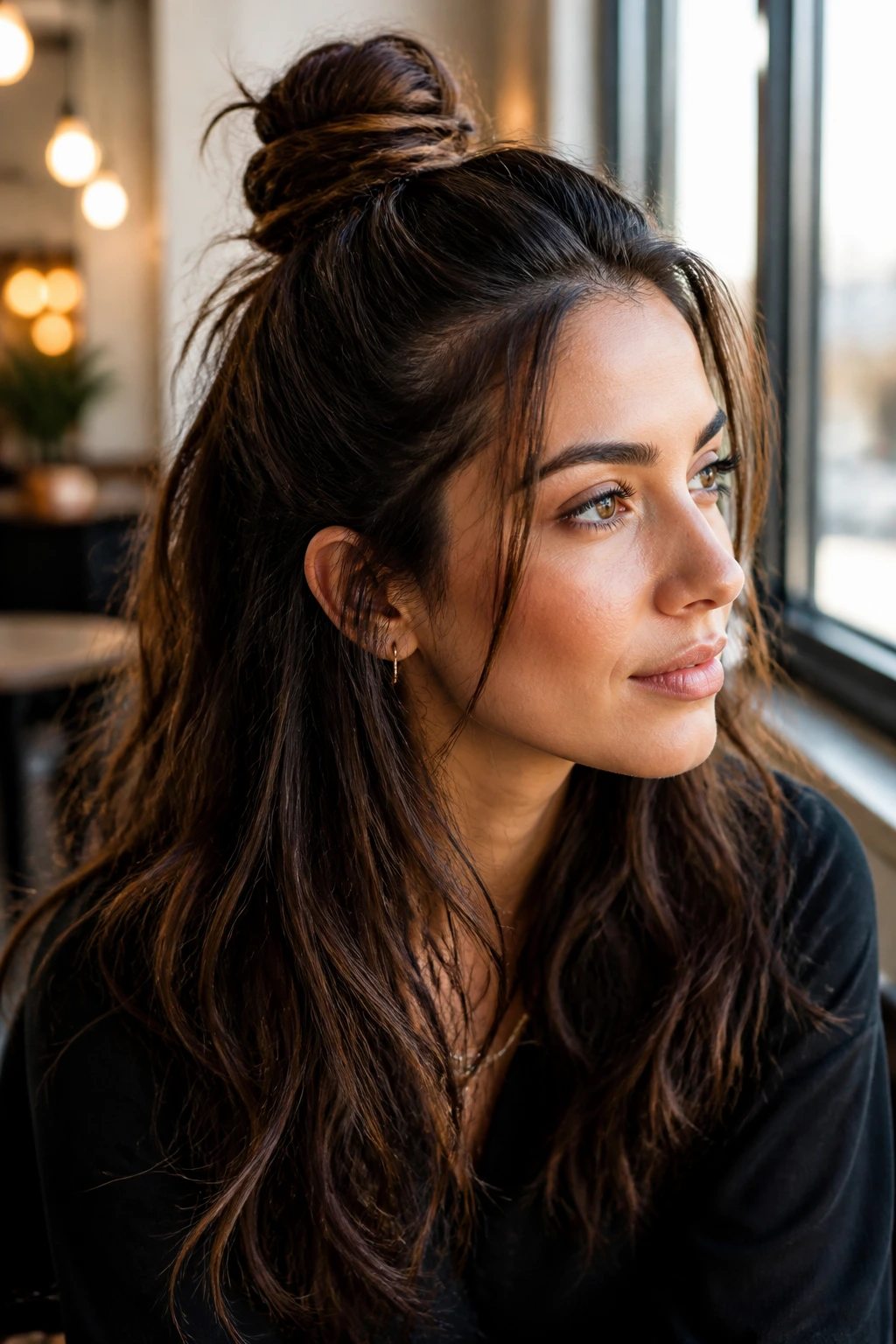
Day-two hair with a mind of its own? A half-up top knot fixes that fast. Gather the top section from temple to temple, twist it into a small knot, and leave the rest loose so the lower half keeps its movement. Frizz at the crown disappears into the knot, while the lengths stay free.
This style looks better when the knot is slightly messy, not wound so tight that it turns into a pebble. If your hair is thick, secure the knot with a second elastic underneath the first one. If it’s fine, tease the crown lightly before you twist. A few face-framing pieces keep it from reading too severe.
4. Dutch Crown Braids Along the Hairline
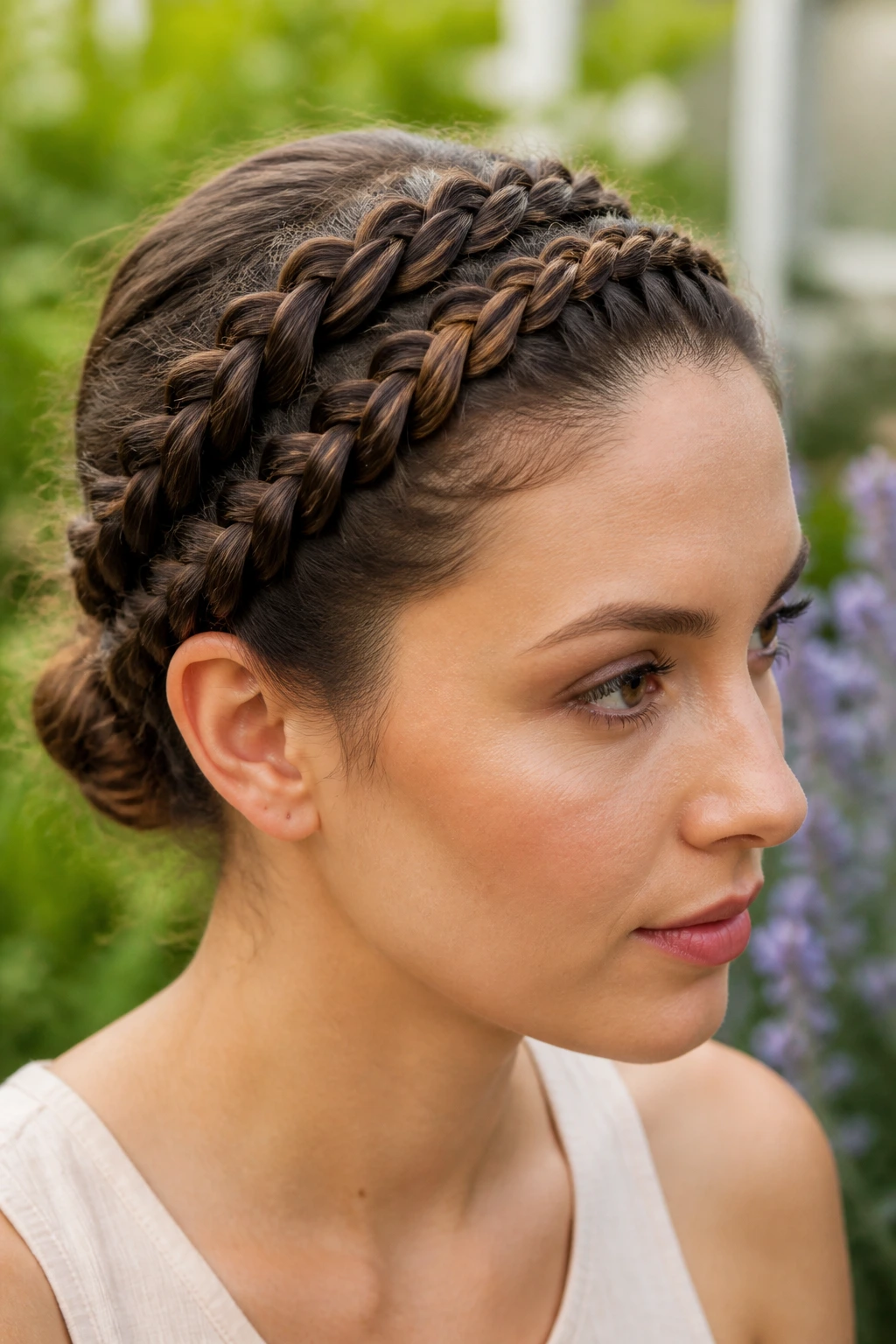
Dutch crown braids are one of the cleanest ways to control a frizzy hairline without flattening the whole head. The braid sits raised off the scalp, so the texture around it becomes part of the design instead of something you try to hide. It’s especially useful when the top layer puffs up faster than the rest.
Keep the braid slightly raised
Start with a neat part, then braid just tight enough to hold, not so tight that the braid pulls at the temples. If you have thick hair, work with larger sections; tiny sections make the braid look overdone and take forever. Tuck the ends into a bun or pin them behind the ear. That little hidden finish keeps the style from feeling fussy.
5. Bubble Ponytail with Soft Volume
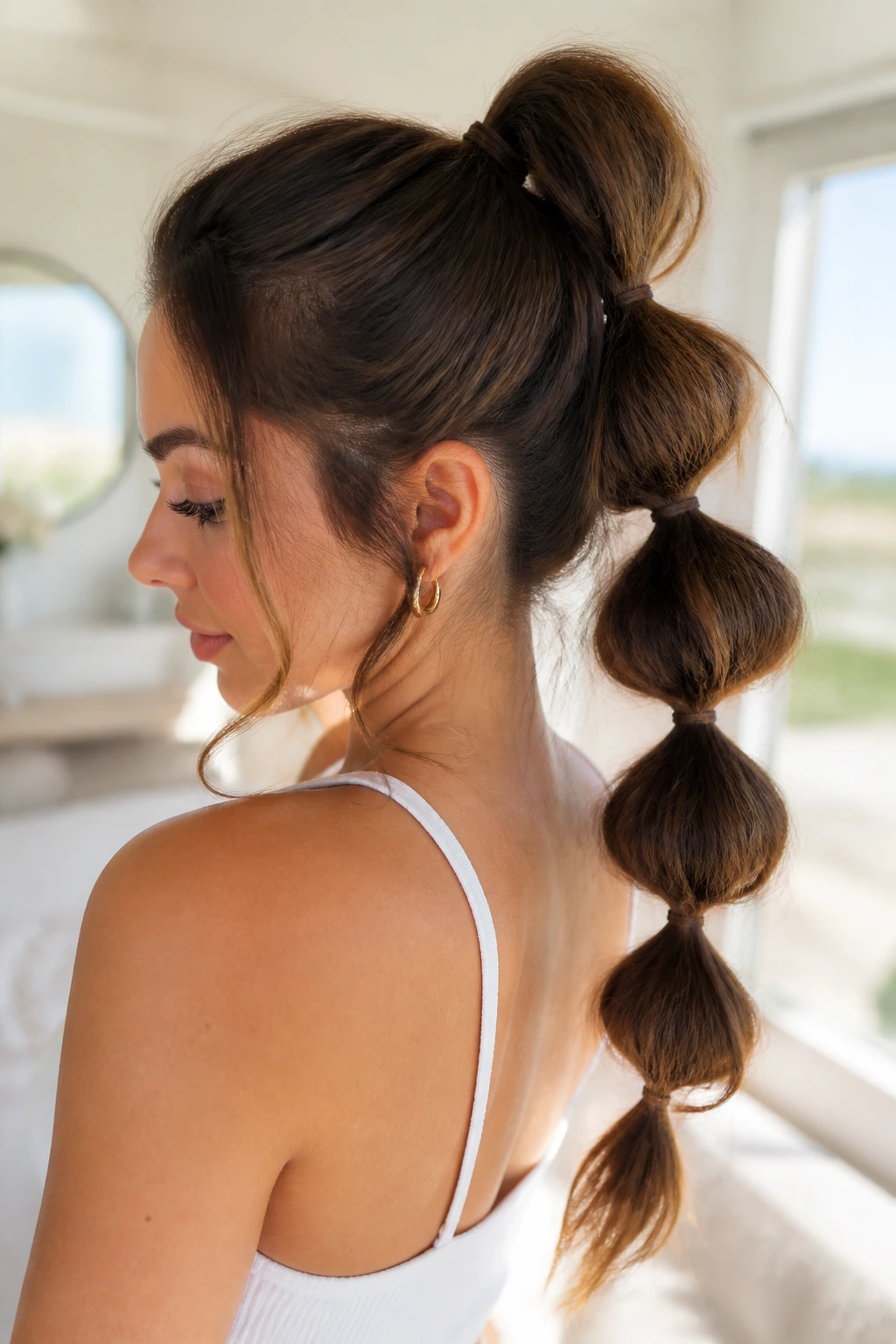
Elastic by elastic, the bubble ponytail turns frizz into structure. Pull the hair into a ponytail, then place small clear elastics every 2 to 3 inches down the length. Gently tug each section outward so the “bubbles” puff into shape instead of lying flat.
This one is a gift for thick hair because the body of the ponytail does half the work. Use a smoothing cream only at the top and leave the length textured; if you slick the whole thing, the bubbles look limp. It’s quick, it stays put, and it looks more considered than a plain ponytail without asking for much more effort.
6. Claw-Clip French Twist
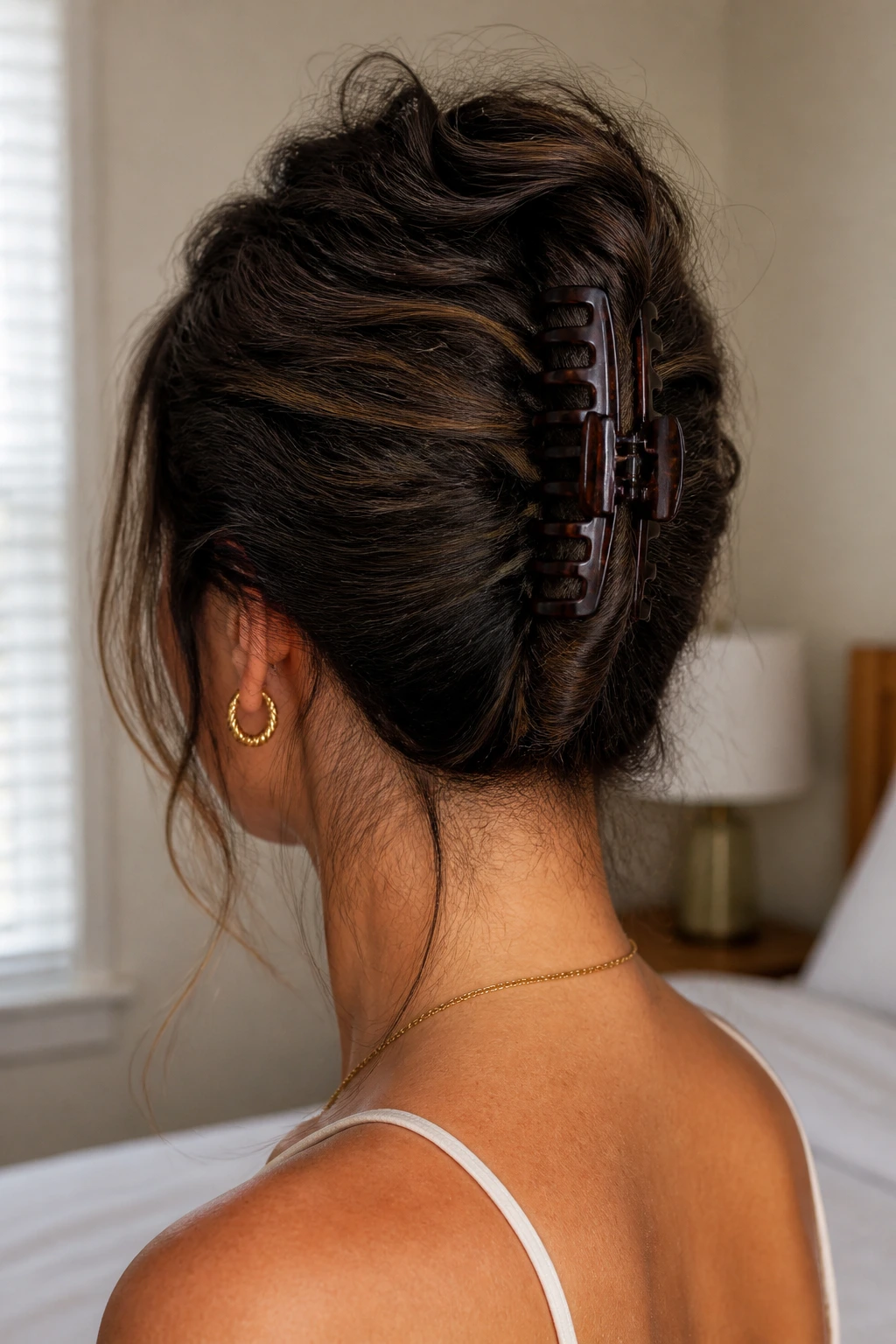
The claw-clip French twist is the style I reach for when the back of the head needs order fast. Twist the length upward, fold the ends inward, and clamp the clip vertically so the teeth catch the twist instead of crushing it. A few loose pieces at the nape make it look less severe.
The reason it works on frizzy hair is grip. Frizz gives the clip something to hold, which means you don’t have to overprep the hair into a slippery sheet. Medium-length and shoulder-length hair behave especially well here. If your hair is heavy, choose a larger clip with a strong spring, not the flimsy kind that slides open after an hour.
7. Loose Side Braid with Framed Face
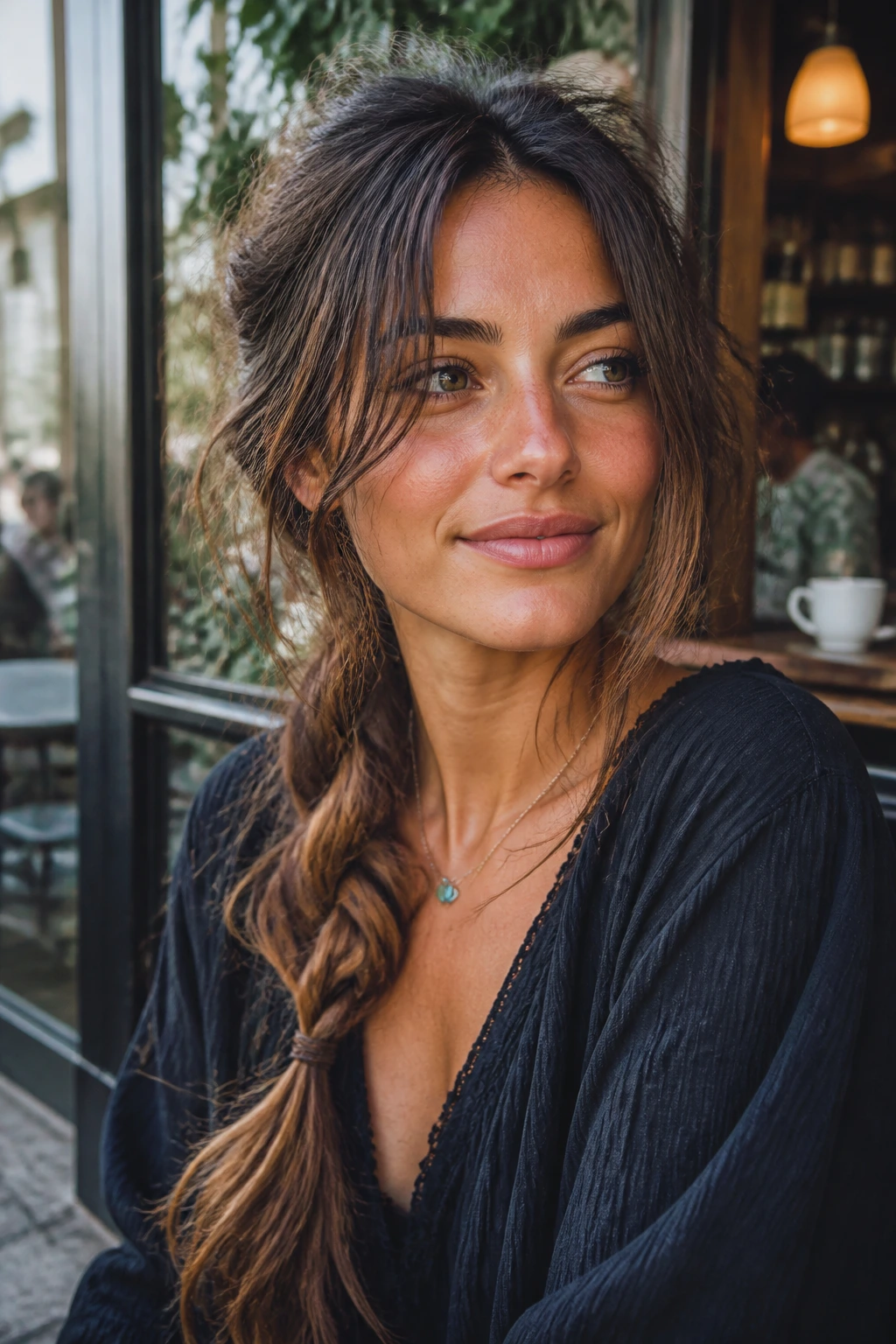
A side braid doesn’t need to be tight to look finished. Sweep the hair to one side, braid it loosely, then pinch the braid wider with your fingers so the texture has room to breathe. The softened shape is a lot more forgiving than a neat braid on hair that likes to puff.
Best on hair that already has some bend
If the front pieces fall apart easily, leave them on purpose. A few face-framing strands keep the braid from feeling too school-uniform, and they blend into the rest of the texture instead of looking like mistakes. Add a dab of cream at the ends before you tie them off so the tail doesn’t fray into a fuzzy tassel.
8. Space Buns with Curly Ends
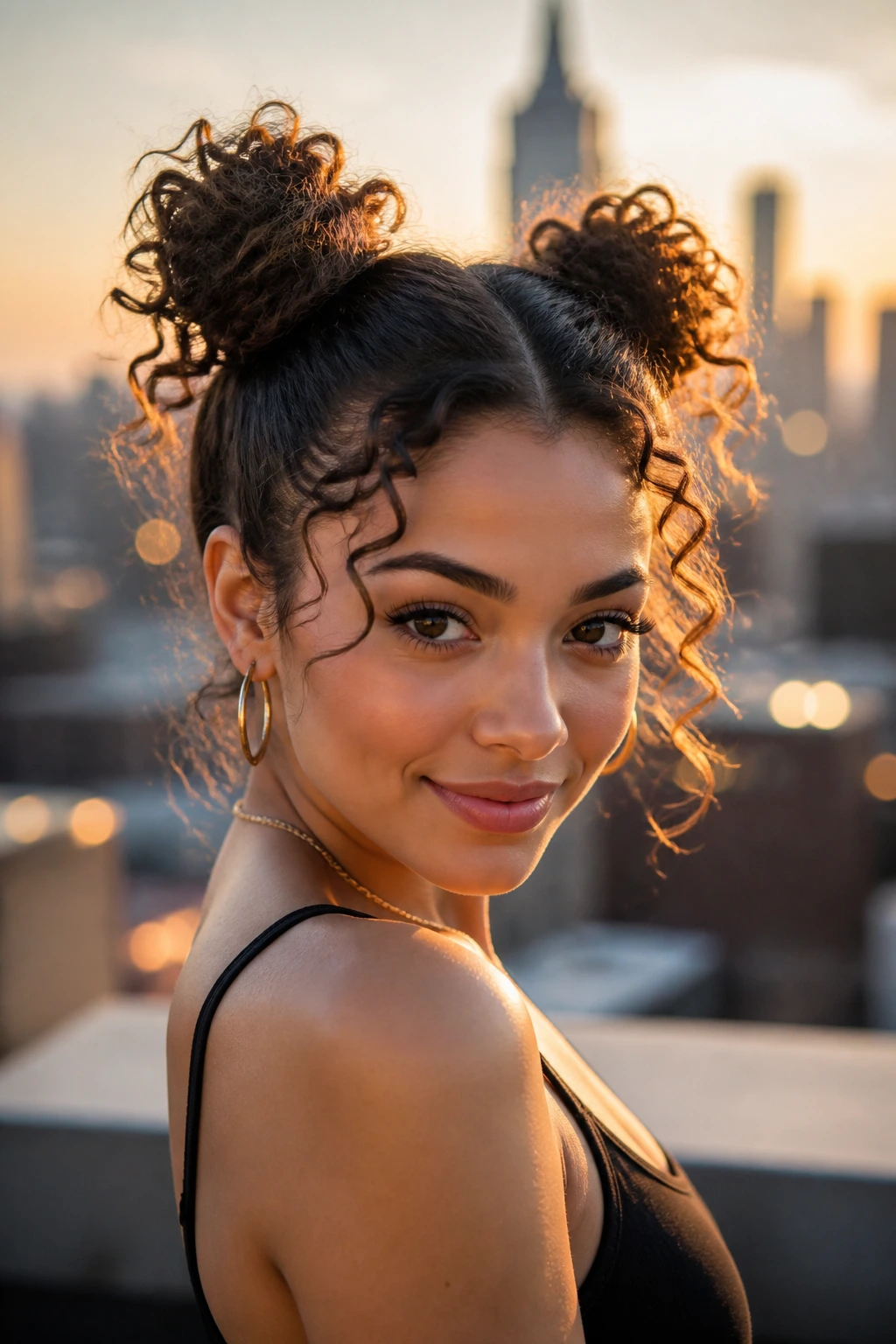
Space buns are the playful answer when the crown wants lift and the ends want to keep moving. Part the hair down the middle, twist each side into a bun, and leave the ends out if you want a looser, more textured finish. Tucked ends give a neater look. Loose ends make the style feel younger and a little bolder.
The trick is symmetry without perfection. One bun can sit a few millimeters higher than the other and still look right, which is a relief on hair that never behaves like a diagram. Use a couple of pins under each bun so the weight doesn’t drag them down. This style is especially good when the roots are fluffy and you want to make the most of that height.
9. Pineapple Updo for Day-Two Curls
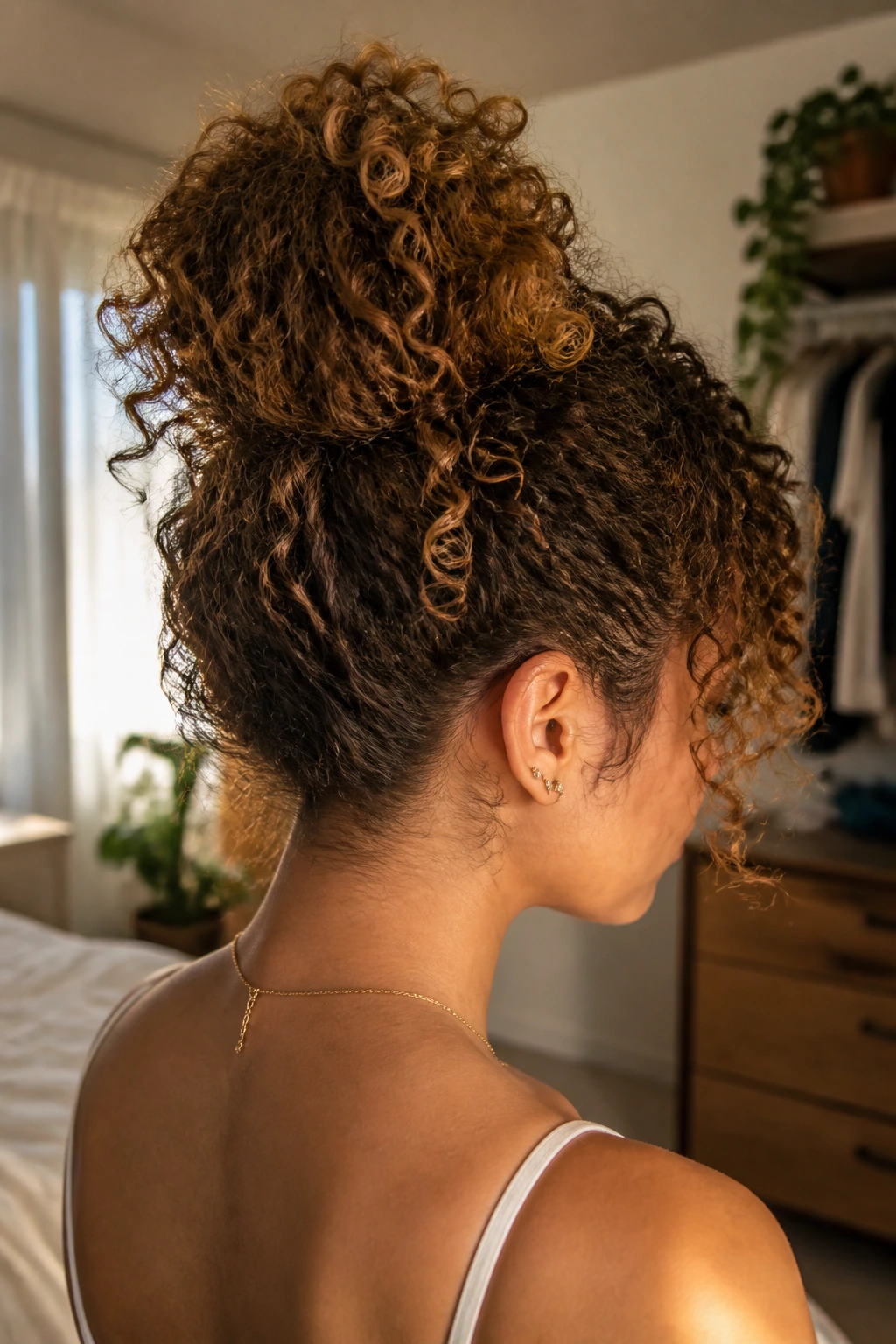
The pineapple updo is part hairstyle, part preservation trick. Gather the hair high on the head with a soft scrunchie, let the curls or waves fall forward, and keep the base loose enough that you don’t flatten the curl pattern. It’s one of the few styles that looks better when the texture is a little wild.
I like this one for mornings when the back of the hair feels flat but the ends still have life. It keeps the shape intact and reduces the amount of rework you need later. If the front keeps slipping, anchor the base with a second scrunchie or a small claw clip underneath. That little extra support matters more than people think.
10. Rope-Braid Ponytail
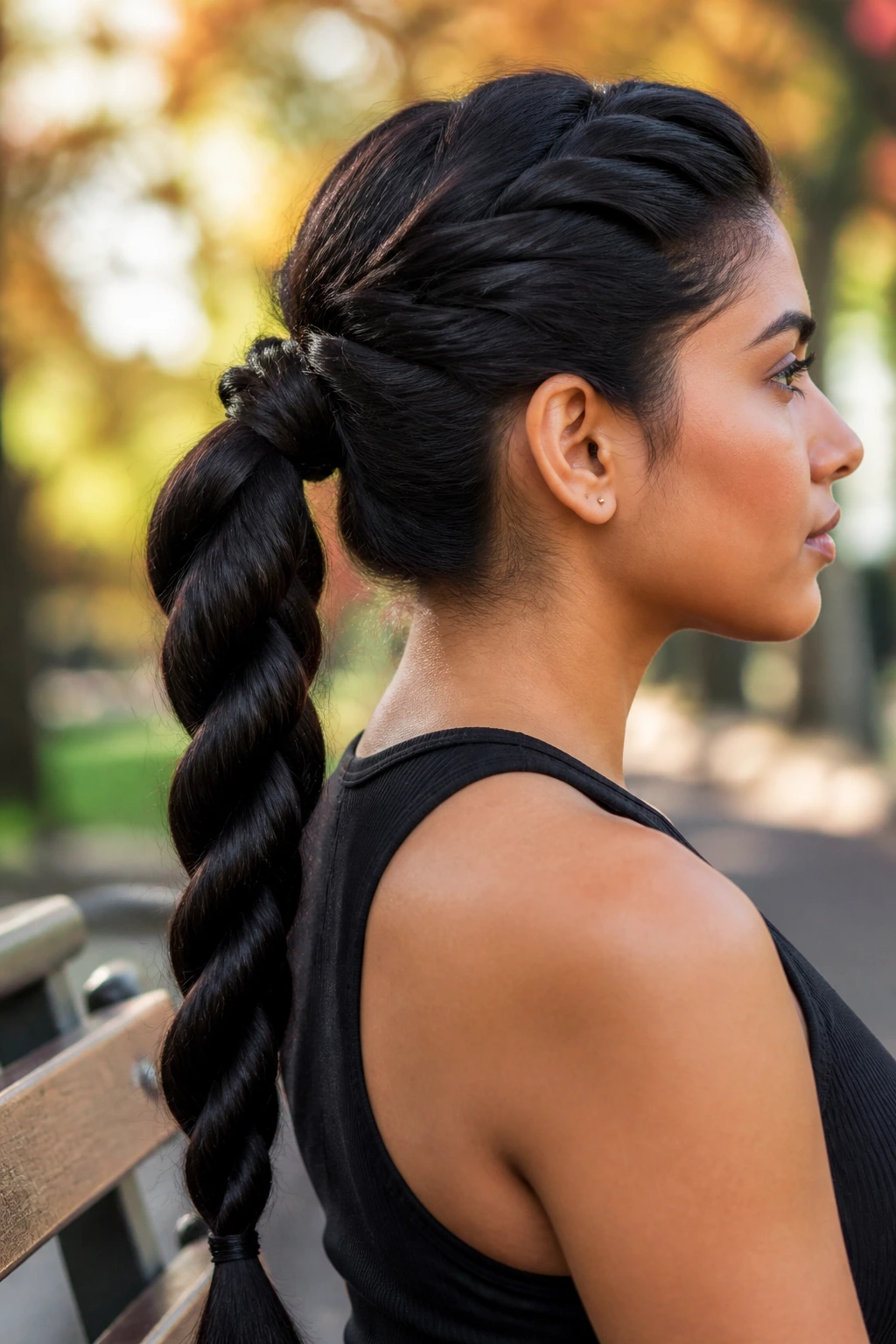
A rope-braid ponytail is sleek in a way that still respects texture. Split the ponytail into two sections, twist each section in the same direction, then wrap them around each other in the opposite direction. That counter-twist keeps the rope braid tight and tidy without requiring perfect smoothness.
This style is especially good for thick hair because the twist pattern holds better than a regular three-strand braid on some textures. Keep a hand on the base while you twist so the ponytail doesn’t loosen at the root. Finish with a tiny bit of serum on the tail, not the whole head. Too much product here turns the braid sticky instead of controlled.
11. Braided Halo Around the Scalp
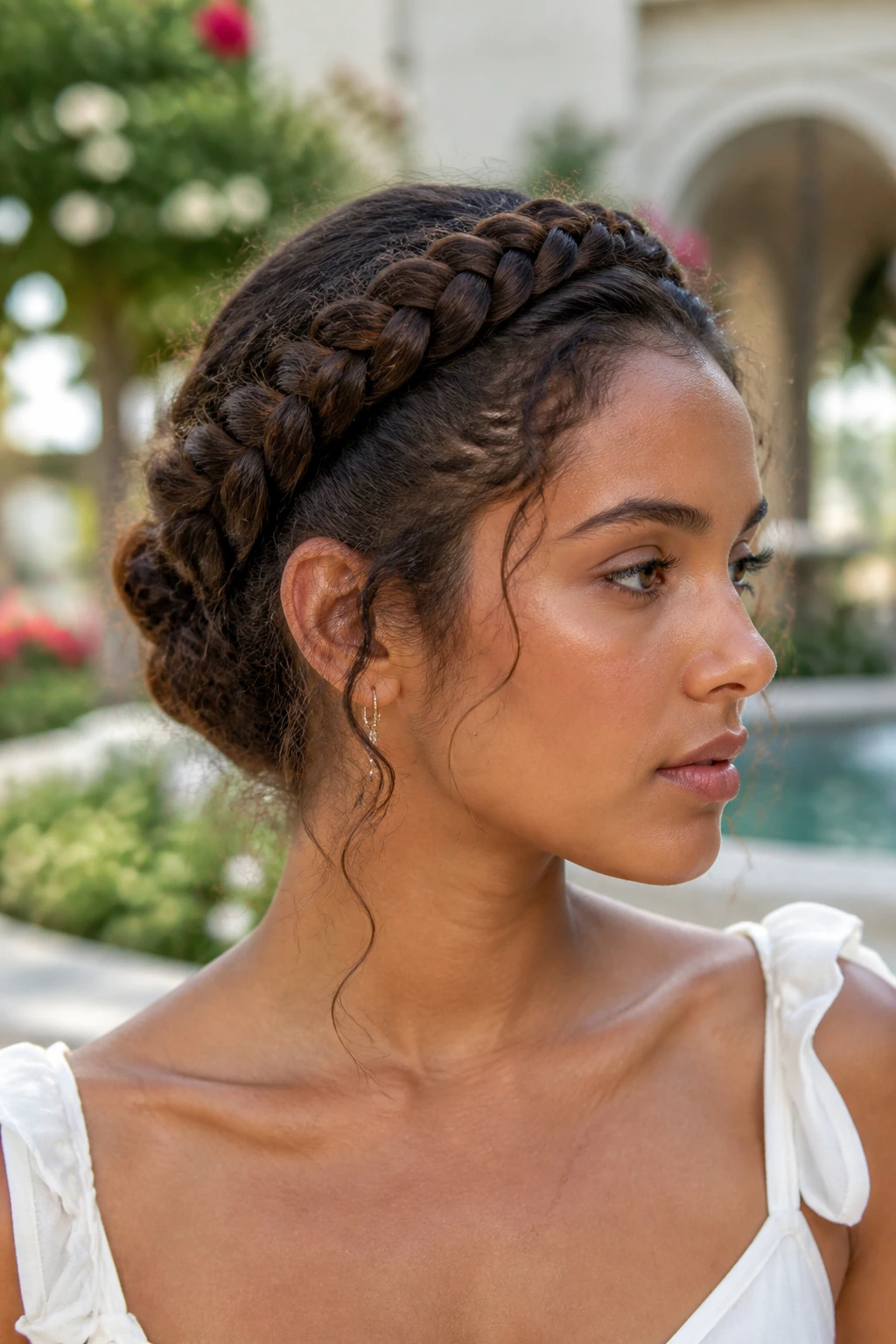
A braided halo is one of those styles that makes frizz look deliberate from the first glance. The braid wraps around the hairline like a frame, which means the sides can be soft while the front stays under control. It’s a smart fix when the crown is puffy but you don’t want a full updo.
Where the halo does the heavy lifting
Start the braid near one temple and follow the curve of the scalp. If your hair is layered, braid a little tighter at the beginning so the shorter pieces stay inside. Pin the tail under the braid itself, not just behind it, or the end will pop loose when you move. The style lasts longer than loose hair and feels lighter than a full bun.
12. Twisted Low Bun with Hidden Pins
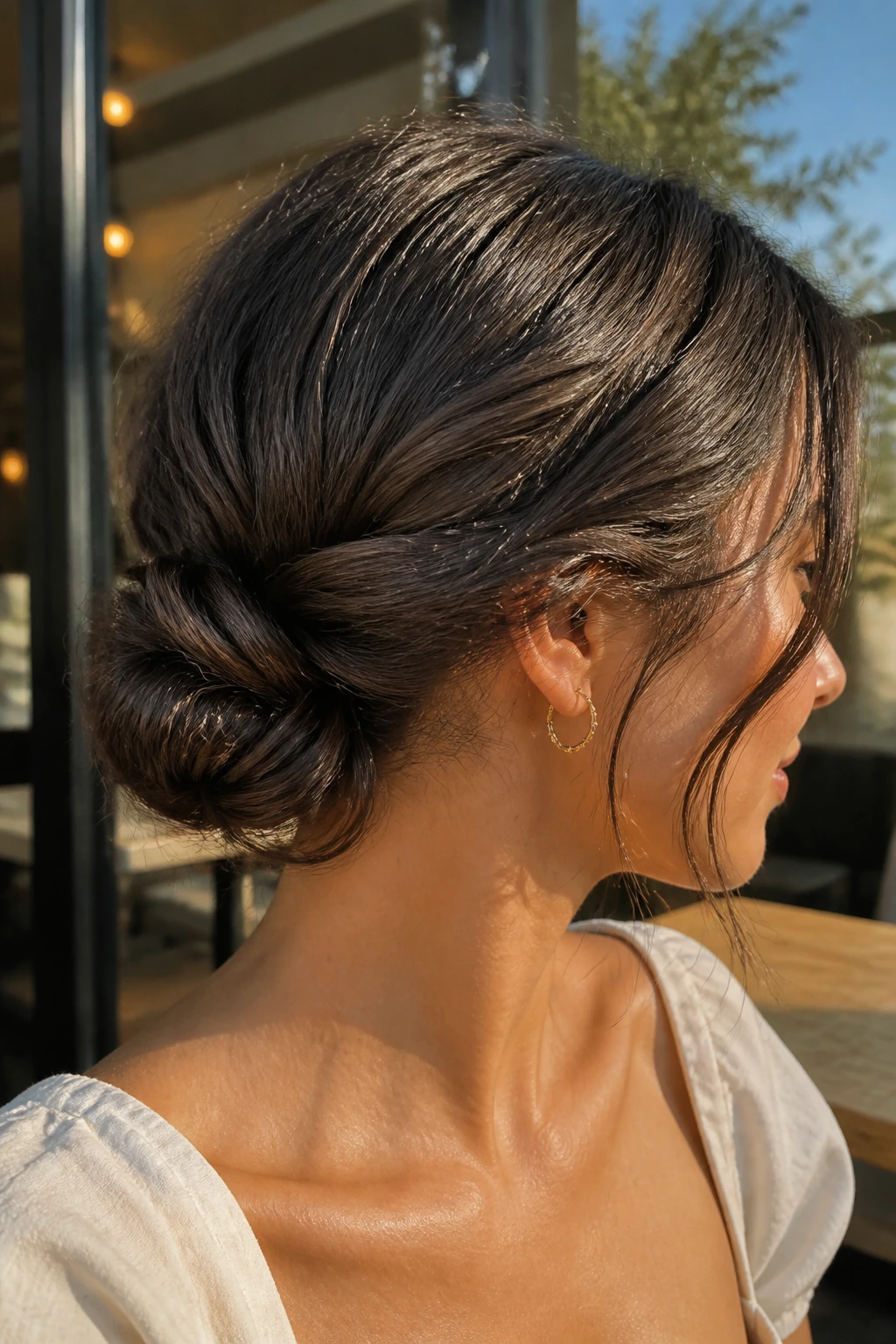
A twisted low bun can look formal or casual depending on how clean you make the base. Twist two sections at the nape, wrap them into a knot, and pin the shape from underneath so the pins disappear. That hidden-pins trick matters on frizzy hair, because visible hardware can make the style feel rushed.
This is a good choice when the hair is coarse or dense and plain twists need more support. Use a little smoothing cream on the top layer, then leave the body of the twist textured. You want enough control to see the shape, not so much control that the bun looks hard. A soft bun with strong pins beats a perfect-looking knot that slips open.
13. French Braid Pigtails
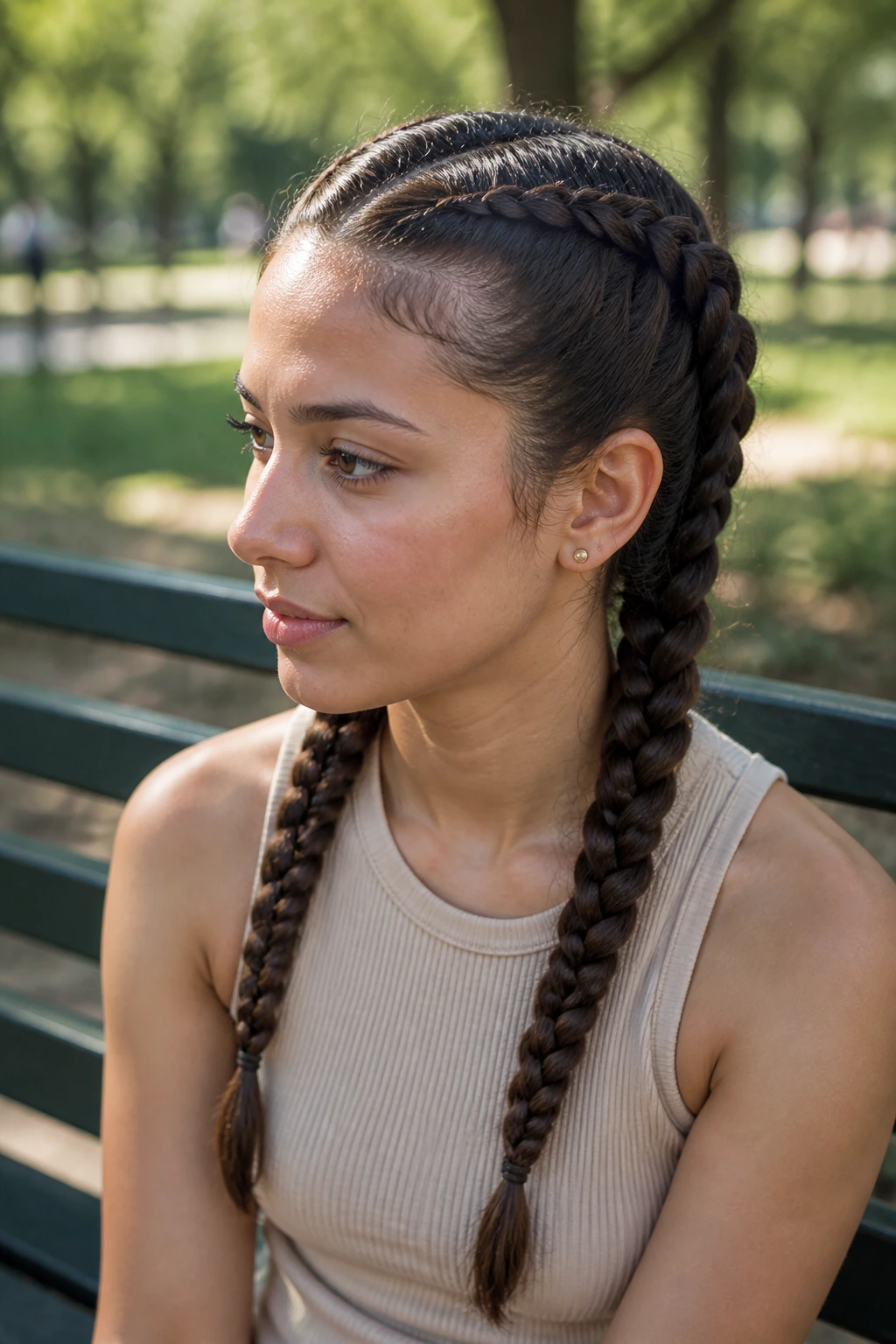
French braid pigtails are not just a school-day style. On frizzy hair, they keep the hair secure while the braid pattern gives the surface a clean rhythm. Start at the crown, keep the parts even, and braid down to the ends. If you want a softer finish, gently widen the plaits once they’re tied off.
These work well for travel, windy days, and anything that involves bending over a lot. They also behave better than loose pigtails on thick hair because the braid removes some of the bulk. If the ends dry out fast, smooth a drop of oil only on the last inch or two. That tiny detail keeps the ends from fraying into a halo.
14. Scarf-Wrapped Low Ponytail
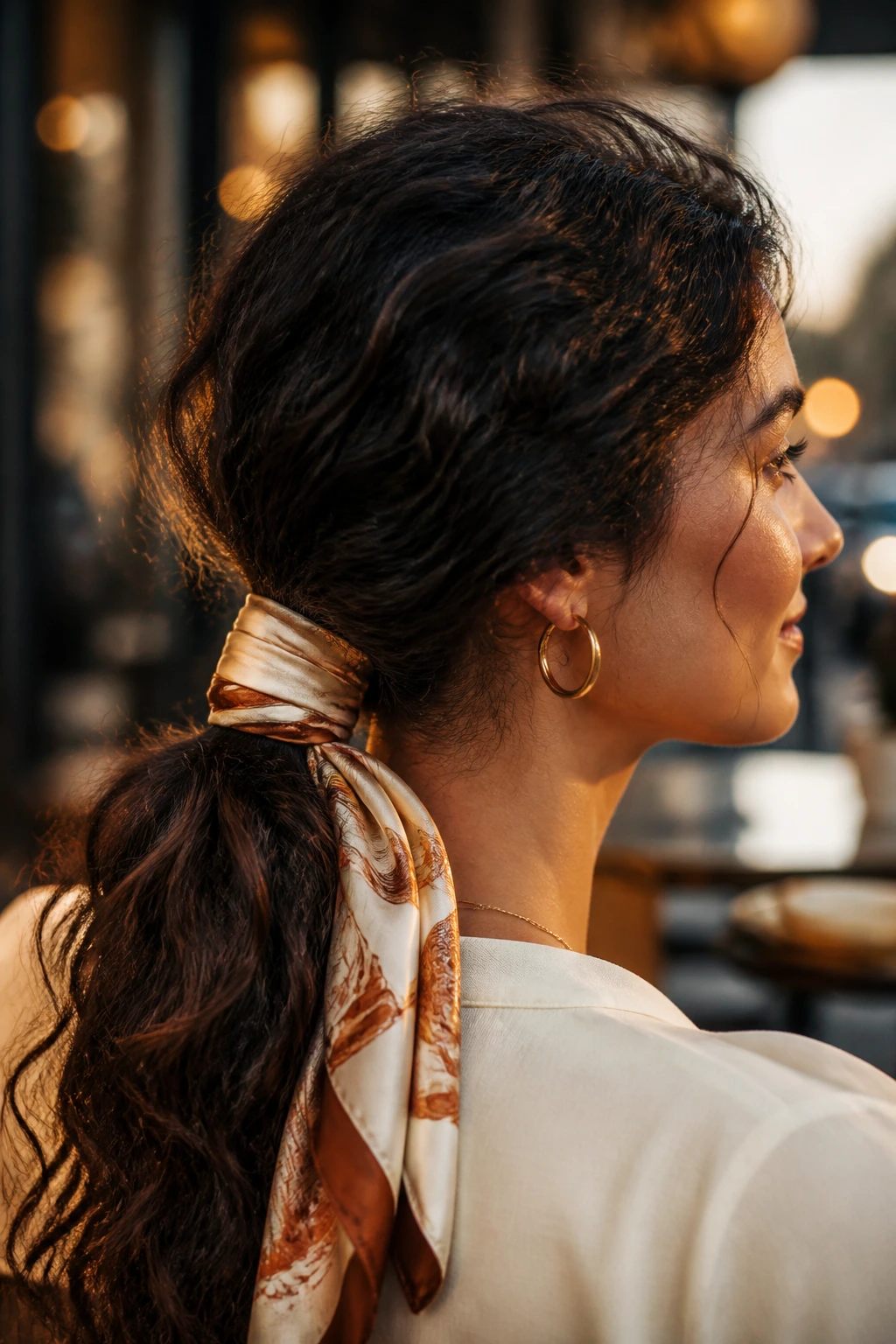
A scarf-wrapped ponytail is one of the easiest ways to make frizz look styled instead of fought. Tie the ponytail low, wrap a silk or satin scarf around the base, and let the ends of the scarf hang or knot them off to one side. The scarf hides the base and adds enough visual weight that the texture reads intentional.
Use this when the hair is puffing at the roots but the lengths still have movement. A scarf with a little grip works better than a slippery one that slides as you walk. If the ponytail itself needs taming, smooth only the top inch with cream or gel. The rest can stay full. That contrast is what makes the style work.
15. Wet-Look Side Part
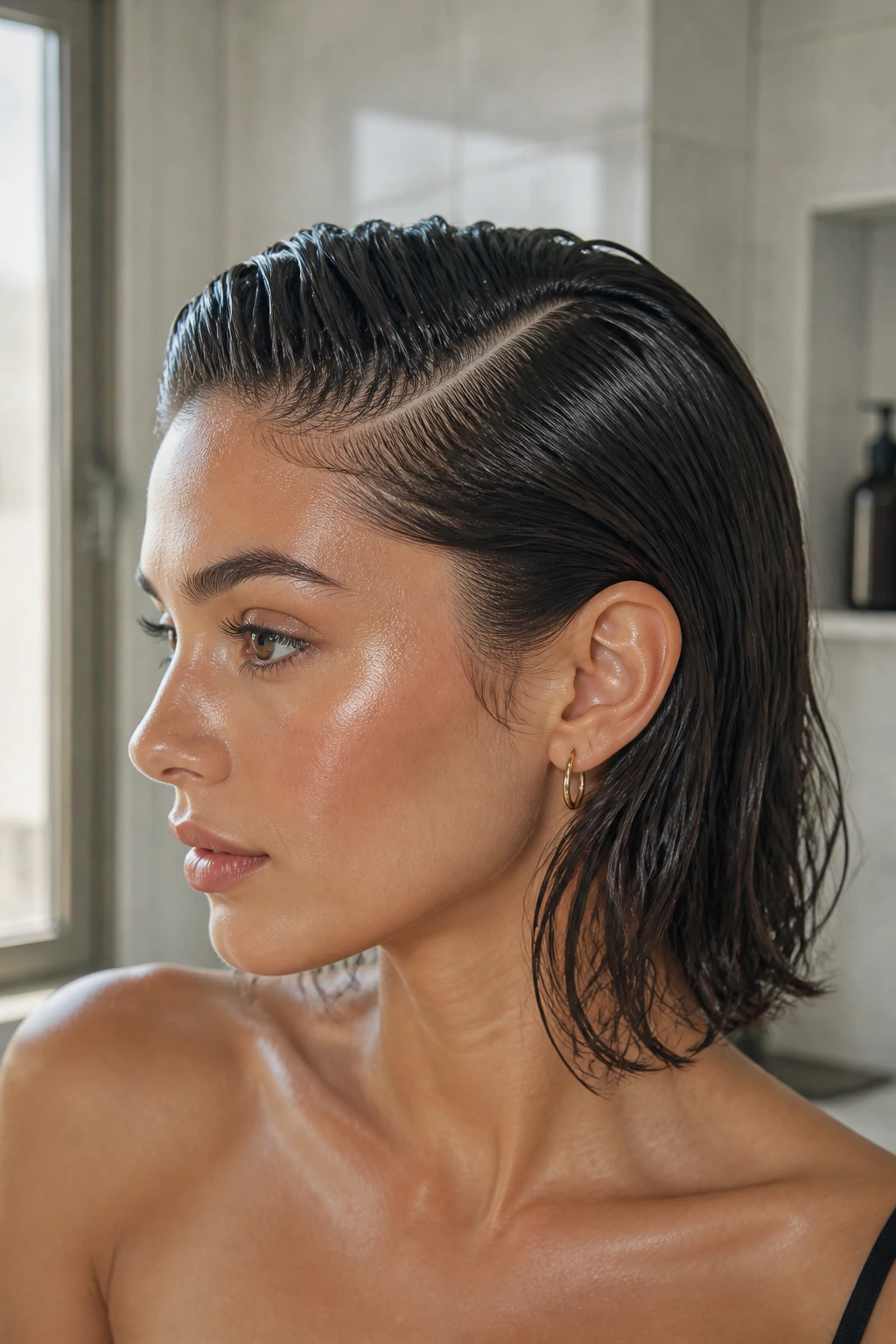
A wet-look side part is where frizzy hair gets to look sharp without being flattened into nothing. Apply gel to damp hair, carve a deep side part, and comb the surface smooth while the hair is still pliable. The shine and the clean line make the texture feel intentional, not accidental.
Shine is the point here
This style is strongest on waves and curls that can hold a cast as they dry. If your hair is fine, use less gel so it doesn’t turn sticky; if it’s coarse, a firmer hold product keeps the shape longer. Let the front dry fully before you touch it. The moment you start fluffing the side part early, the whole look loses its edge.
16. Wash-and-Go Shag
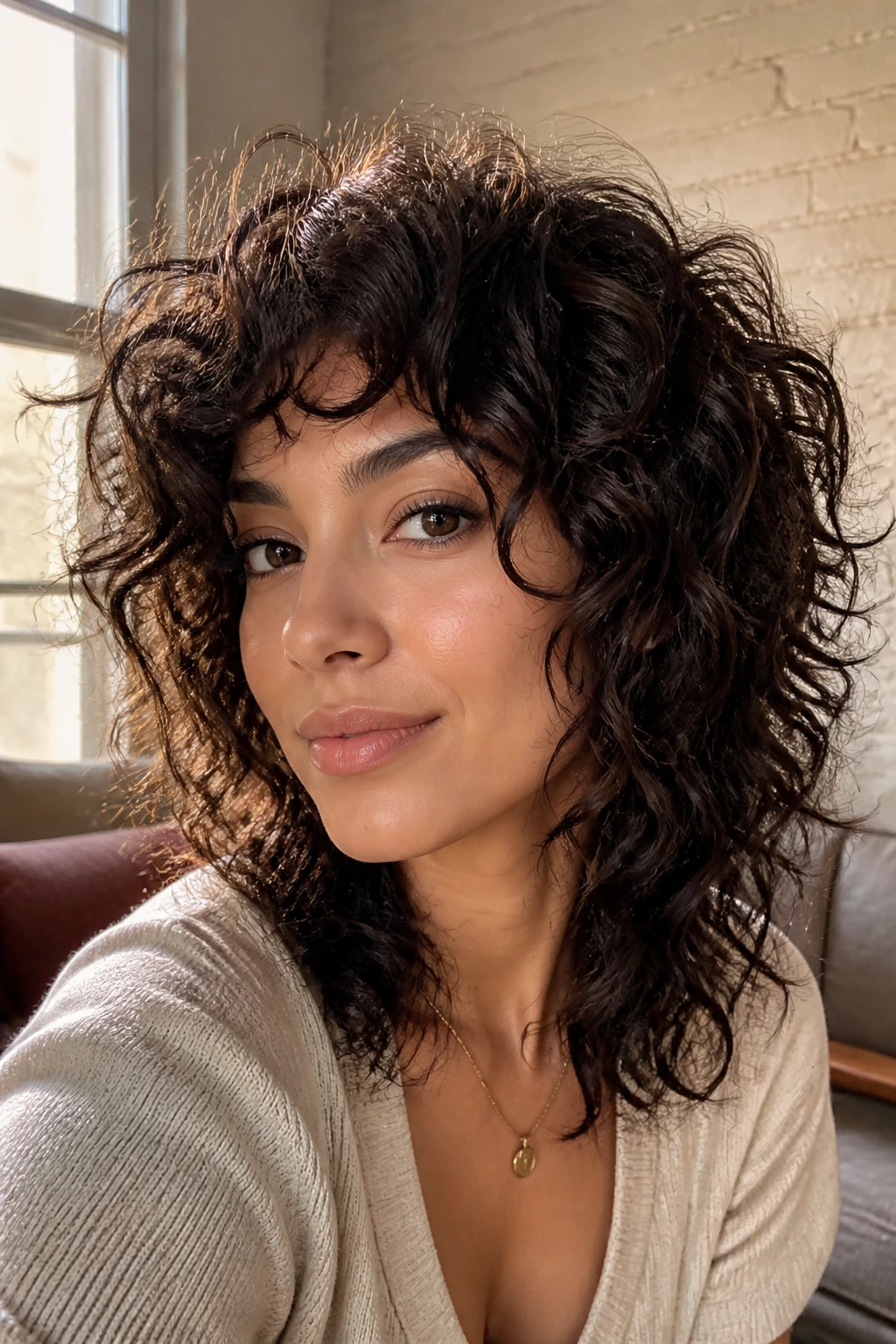
A wash-and-go shag is less about forcing the hair into shape and more about giving the cut enough layers to do the work. The shorter pieces around the crown stop the top from ballooning, while the longer layers keep the silhouette light. On frizzy hair, that balance matters.
This style needs a good cut more than a mountain of product. Use a curl cream or light mousse on damp hair, scrunch the lengths, and let the texture dry with room to expand. The shag works because it doesn’t ask every strand to behave the same way. It gives the hair permission to move, and that usually looks better than a flat finish.
17. Headband Tuck
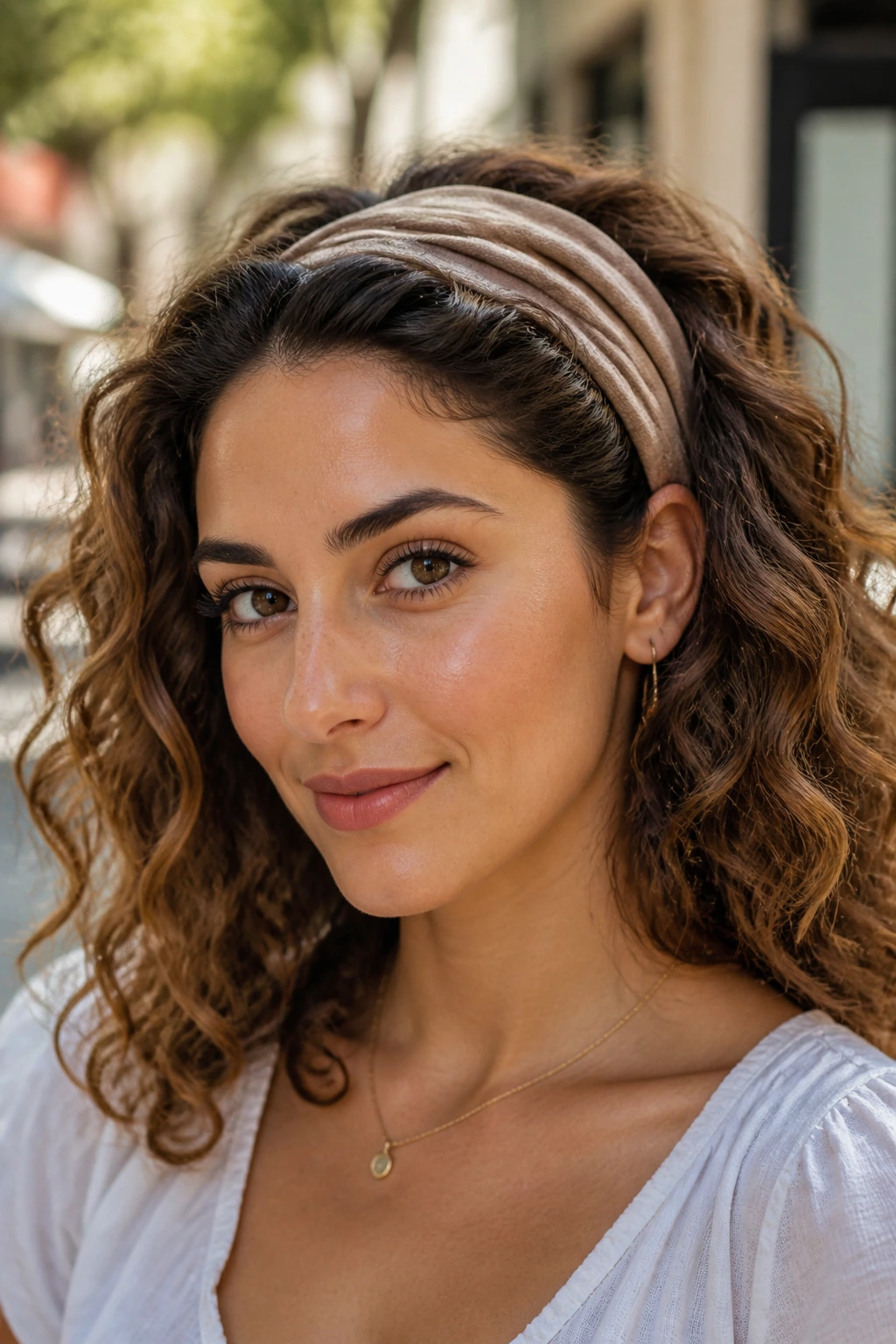
A headband tuck is a classic for a reason. Slip a stretchy headband over the hair, tuck the front sections into the band, and let the back stay loose or gathered. The headband controls the front frizz, and the tucked shape creates a soft roll that looks more deliberate than it has any right to.
Best when the roots need a reset
This style is fast on second-day hair and especially useful when the crown has puffed up but the lengths still look decent. Choose a band with enough grip that it doesn’t slide backward. If the tuck feels bulky, loosen one side and let a few pieces fall around the face. That keeps the style from looking too stiff.
18. Pull-Through Braid
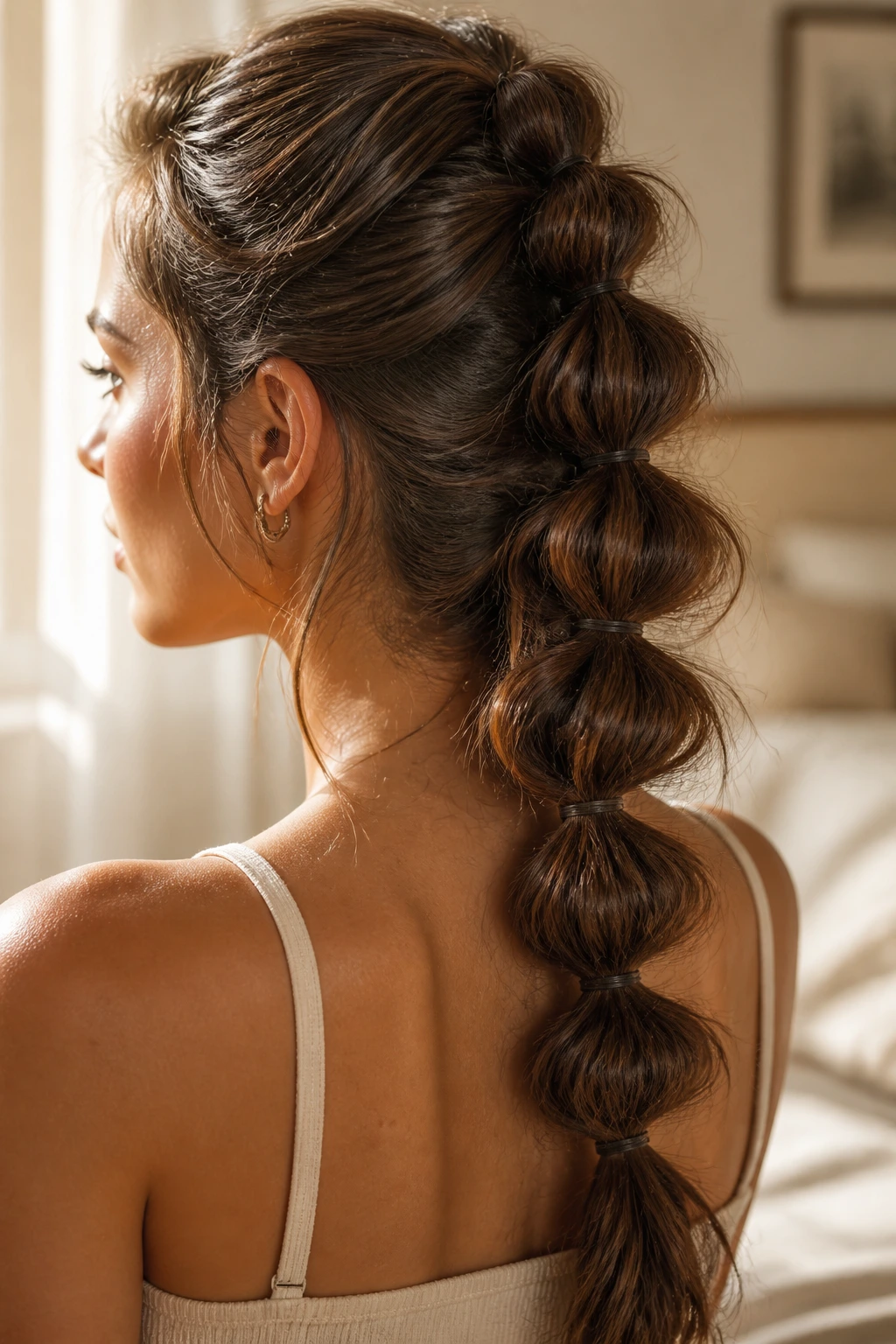
A pull-through braid gives you braid drama without needing perfect three-strand skills. Make a series of small ponytails down the back, split and pull each section through the one above it, then widen each bubble as you go. On thick or frizzy hair, the style looks full in the best way.
It works because the sections create shape even when the hair itself wants to expand. Use clear elastics or small ties that disappear into the hair, and secure each segment firmly before you move to the next. If a regular braid falls apart in your hands, this one may feel much easier. It’s more forgiving, and that’s a real advantage on textured hair.
19. Two-Strand Twist-Out
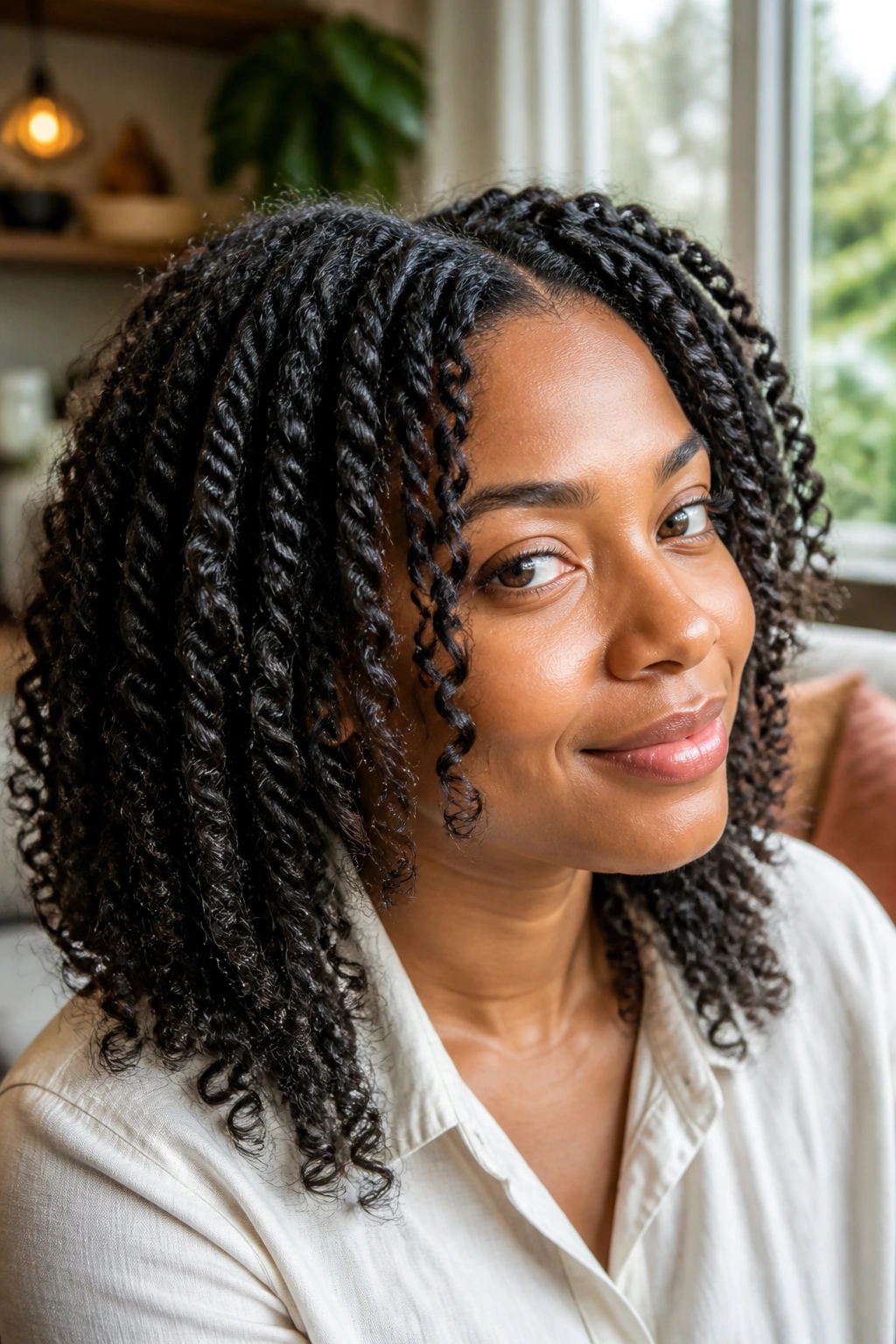
A two-strand twist-out is a smart option when you want the hair stretched, patterned, and soft at the same time. Twist damp sections with a light cream, let them dry fully, then unravel them once they’re no longer cool to the touch. The result is not flat and not wild. It sits in the middle, which is often where frizzy hair looks happiest.
How to get the most from the twist pattern
Bigger twists make a looser look. Smaller twists give more definition and a little more hold. If the roots puff up first, leave them alone for a day and refresh the lengths with a tiny bit of leave-in mist. Trying to re-twist everything every morning gets old fast. A twist-out should work with the hair, not become a part-time job.
20. Sleek High Bun
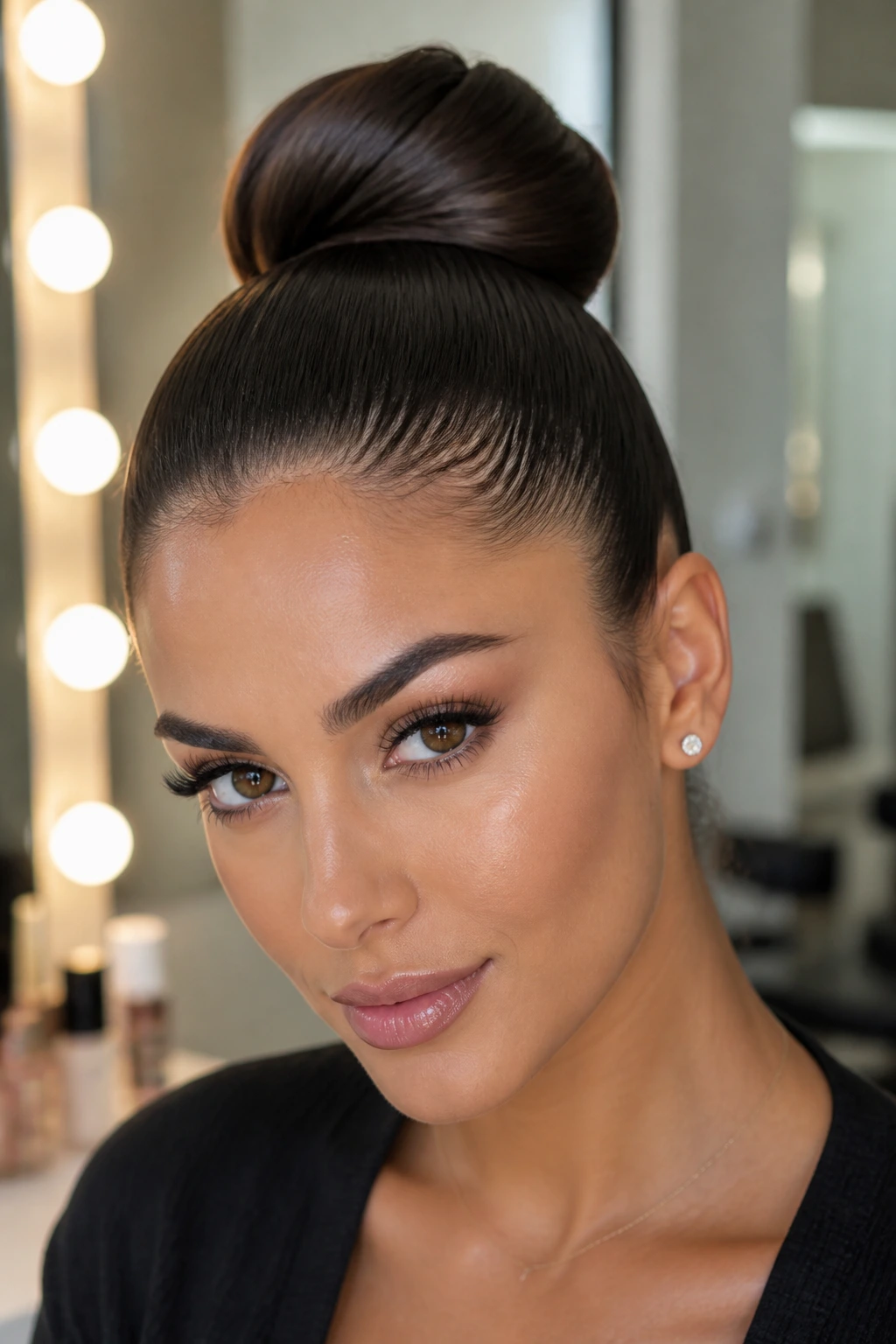
A sleek high bun is what you wear when you want the edges under control and the rest of the hair out of the way. Smooth the roots with gel or a light styling cream, gather the hair high, and coil it into a bun that sits above the crown. Frizz at the ends stays hidden, which is part of the appeal.
This style looks best when the base is clean and the bun itself is tight enough to hold, but not so tight that it starts pulling at the scalp. An edge brush helps, but don’t keep brushing the same spots over and over. That just irritates the hairline. One clean pass is enough. Maybe two.
21. Faux Hawk Puff
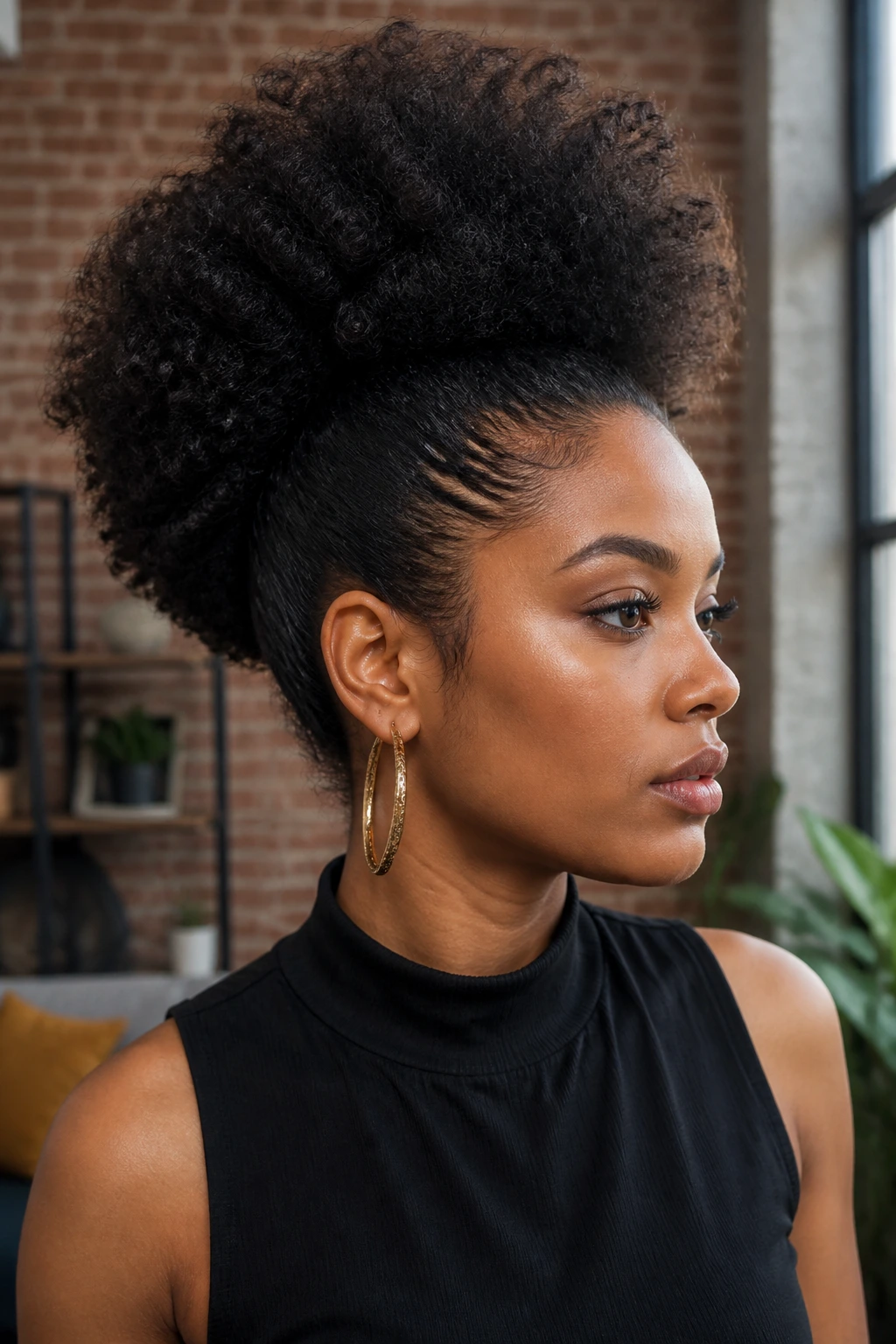
A faux hawk puff gives frizzy hair a shape that feels bold without needing a sharp cut. Pin or twist the sides upward toward the middle, then leave the center section lifted and full. The contrast between the controlled sides and the fluffy top is what makes it work.
This style is especially good when the hair has a lot of density and you want to show that off instead of hiding it. It can be as structured or as loose as you like. Leave the sides a little softer if you want a less dramatic line. Tighten them if you want the center strip to stand out more. Either way, the volume becomes the feature.
22. Loose Low Ponytail with Tendrils
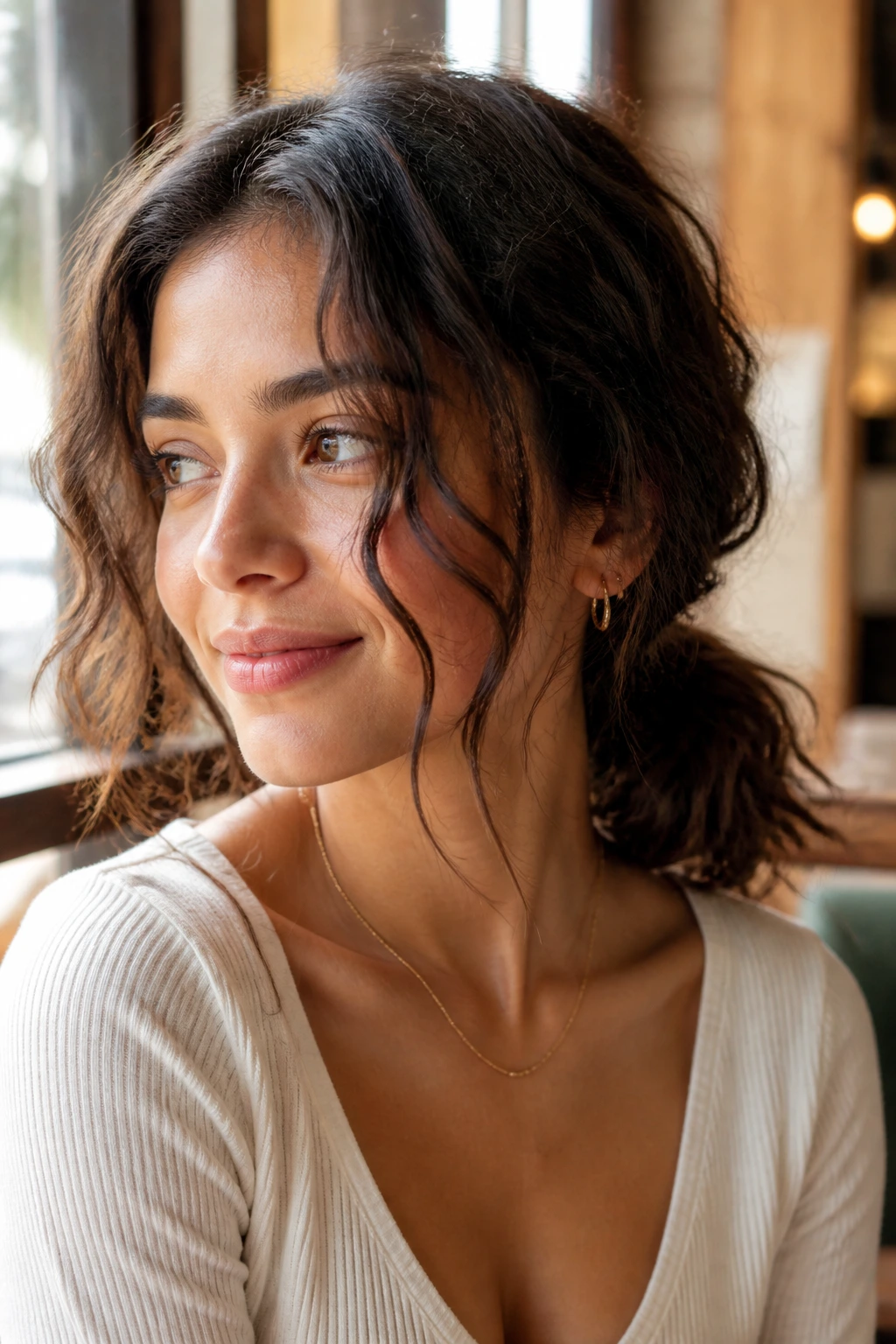
A loose low ponytail with tendrils is the no-fuss answer for hair that won’t lie flat but still needs to look composed. Part the hair in the middle or off to one side, gather it at the nape, and let a few front pieces fall around the face. Those tendrils soften the texture and keep the style from feeling severe.
Use a soft elastic and wrap a small section of hair around the base if you want the ponytail to look a little cleaner. Don’t pull the sides too tightly. Frizzy hair shows tension fast, and the lines at the temples can start to look harsh if you force them down. Softness here is a feature, not a backup plan.
23. Crown Twist Bun
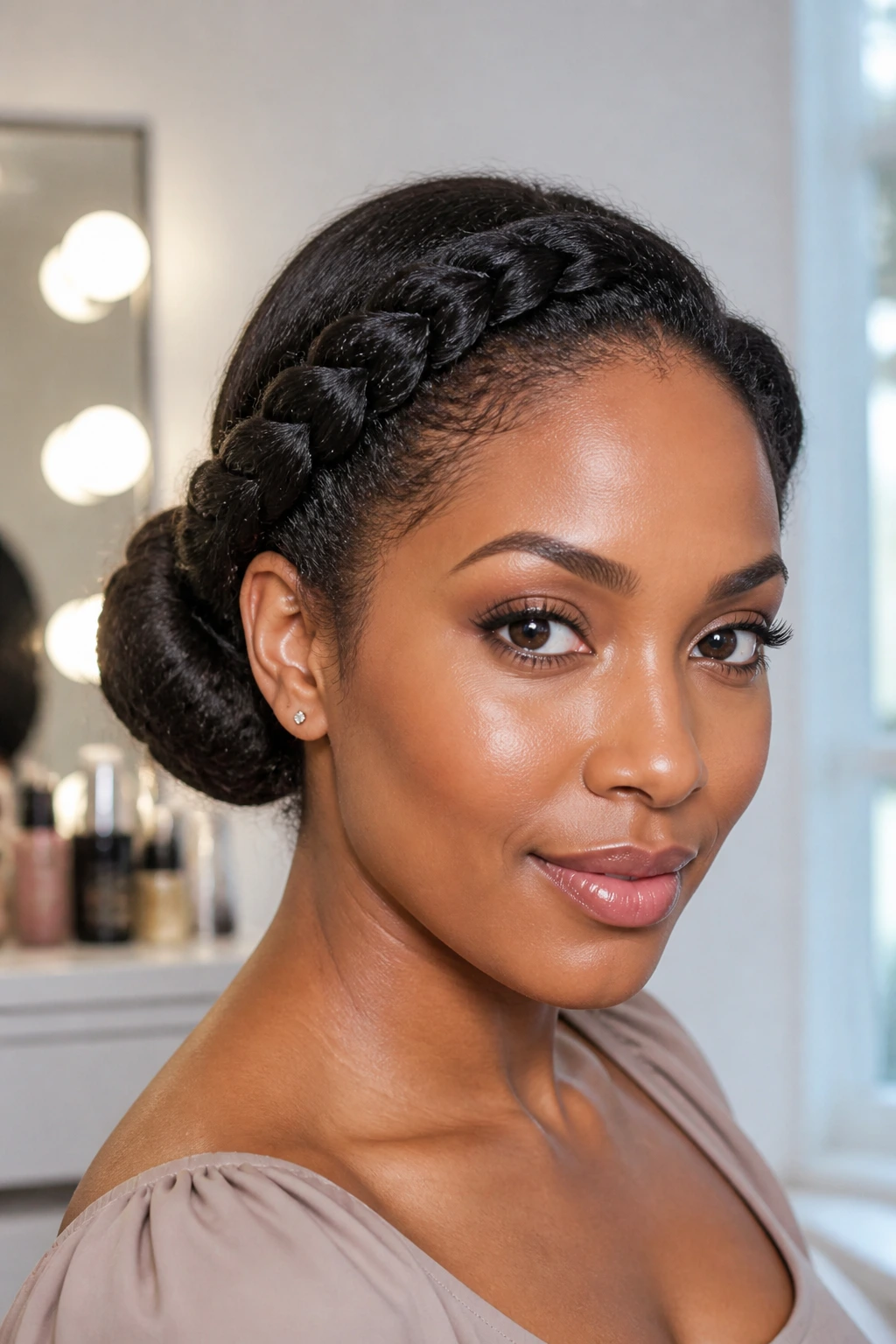
A crown twist bun is a strong option when the sides are doing their own thing and you need the hair to behave. Twist sections from the temples toward the back, then gather them into a bun at the nape or just above it. The twists give you structure around the face and turn uneven frizz into a deliberate frame.
A good fix for uneven texture
This style is especially handy on layered hair, where the shorter pieces near the front tend to escape first. Twist those pieces in before they have a chance to wander. Use pins that match the direction of the twist so they disappear into the shape instead of fighting it. The bun can stay low and soft while the crown looks neatly controlled.
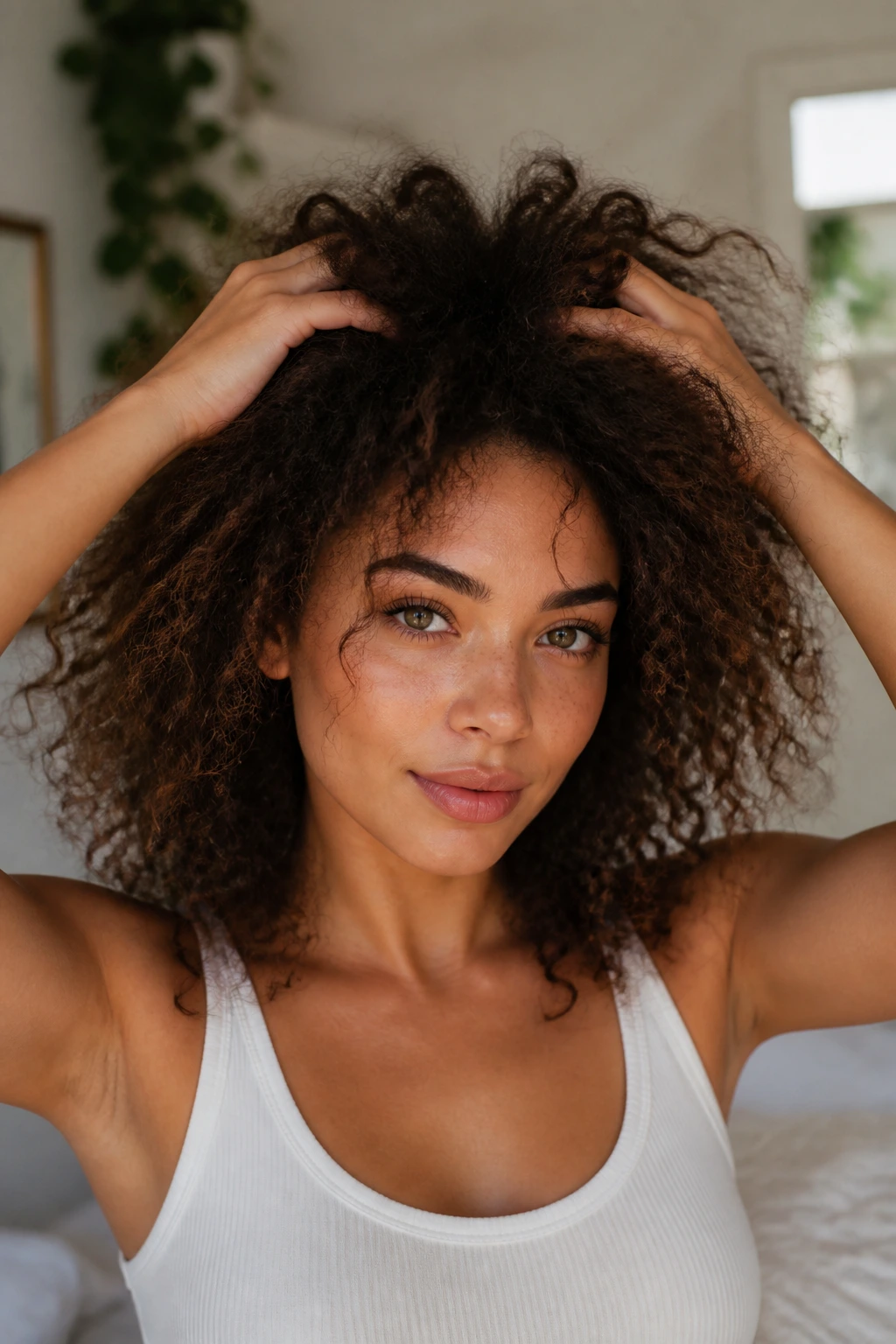
24. Voluminous Afro Shape
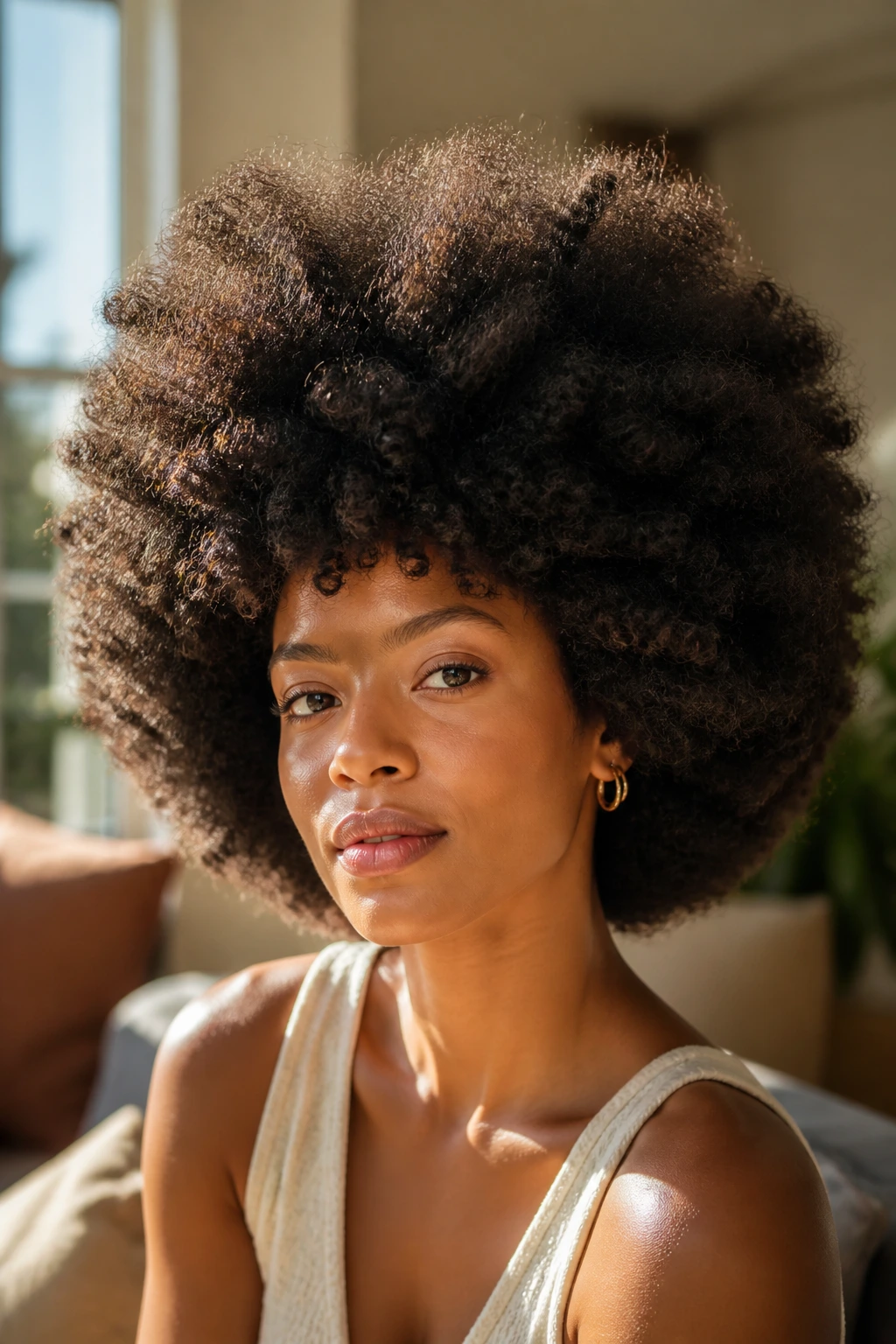
A voluminous afro shape is not about “taming” anything. It’s about sculpting the outline so the hair reads as a shape, not a cloud that wandered in by mistake. Pick the roots gently, moisturize the lengths, and round out the silhouette with your hands or a wide pick. The goal is balance, not shrinkage.
This style depends on the cut, too. If the shape is uneven, the volume can tip to one side and throw the whole look off. Keep the sides even and let the top breathe. A good afro shape has presence because it knows where to stop. That line matters more than people think.
25. Curtain-Bang Lob with Air-Dried Bend
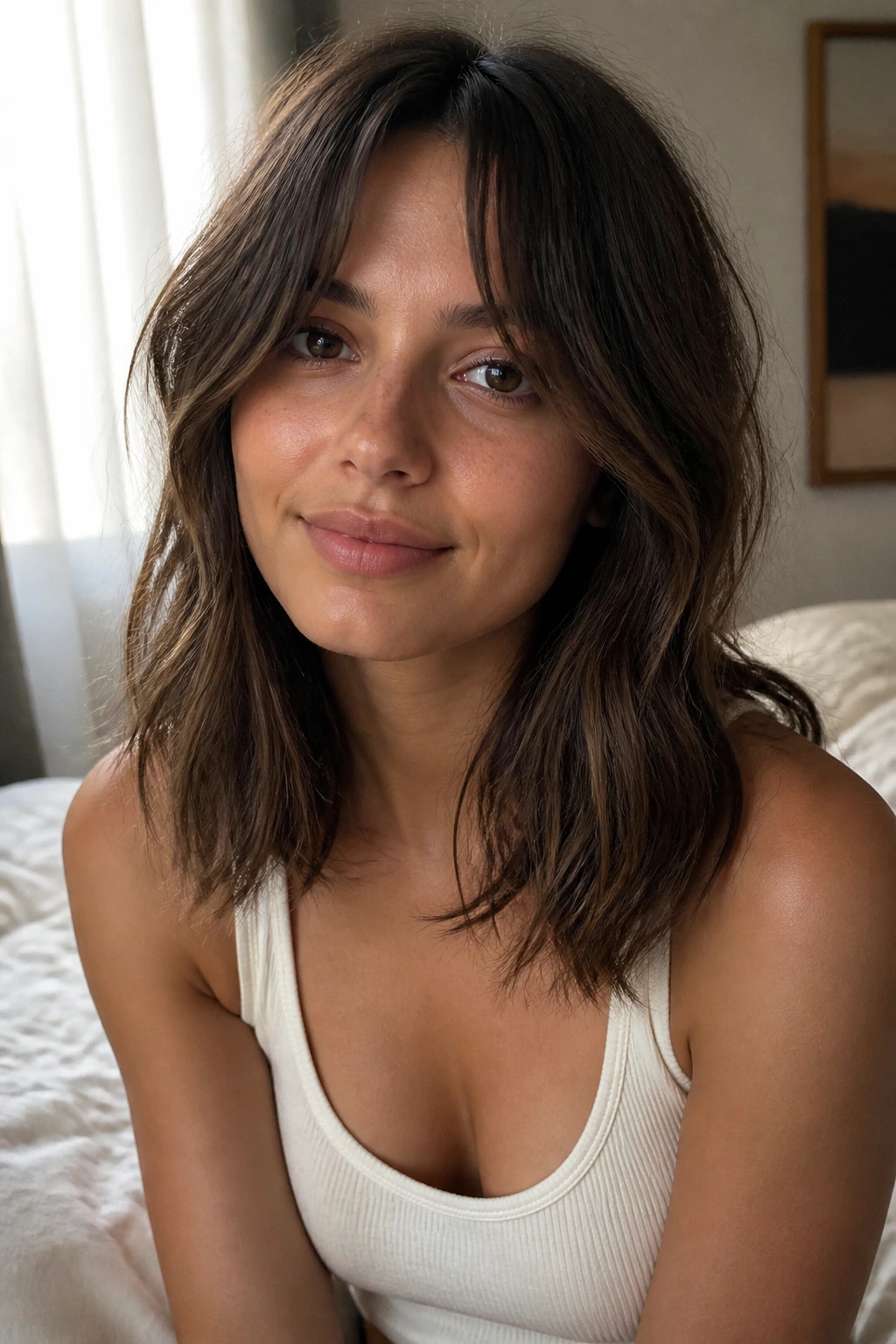
A curtain-bang lob gives frizzy hair a frame without demanding a lot of daily precision. The longer bob keeps the ends light, and the curtain bangs soften the front so the texture feels intentional around the face. Air-dried bend in the lengths keeps the style from going flat.
This one works best when the layers are cut so they can move, not hang in one heavy block. A bit of mousse or curl cream helps the bend hold, and a quick scrunch at the ends keeps the shape from drying stiff. I like this style because it looks better with a little mess than with too much fuss. That’s useful, not a flaw.
26. Mini Buns with Loose Ends
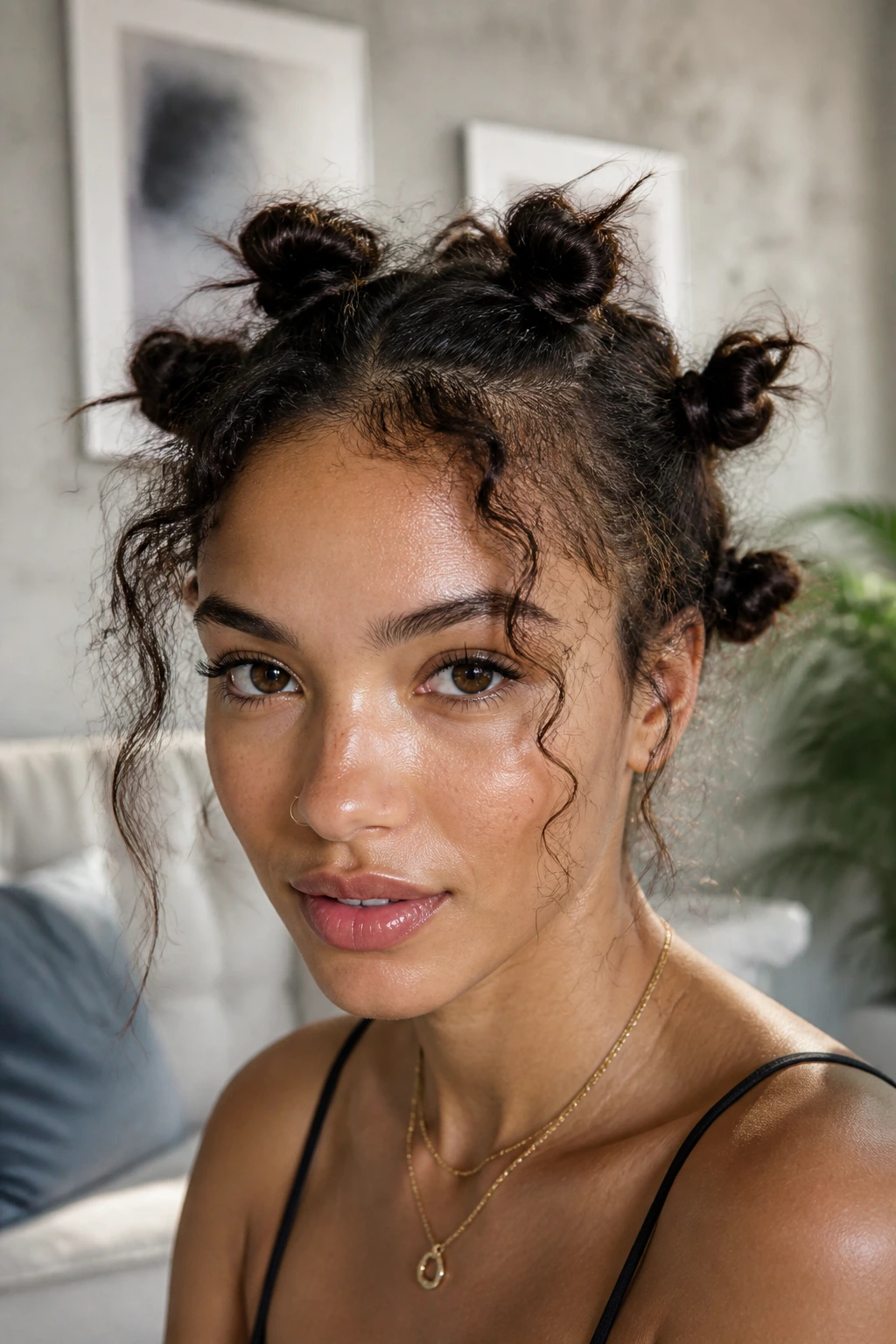
Mini buns are the fun version of a practical style. Divide the hair into small sections, twist each one into a bun, and let a few ends stick out if you want a softer finish. On frizzy hair, those loose ends don’t read as mistakes. They read as texture.
The style works especially well on shorter lengths or layered hair where a single large bun might slide out. Use small elastics first, then pin the bun into place so the weight doesn’t drag it down. You can make the buns perfectly matched, or let them sit a little uneven. Small mismatch is often what makes the style look lived-in instead of staged.
27. Tucked-In Roll
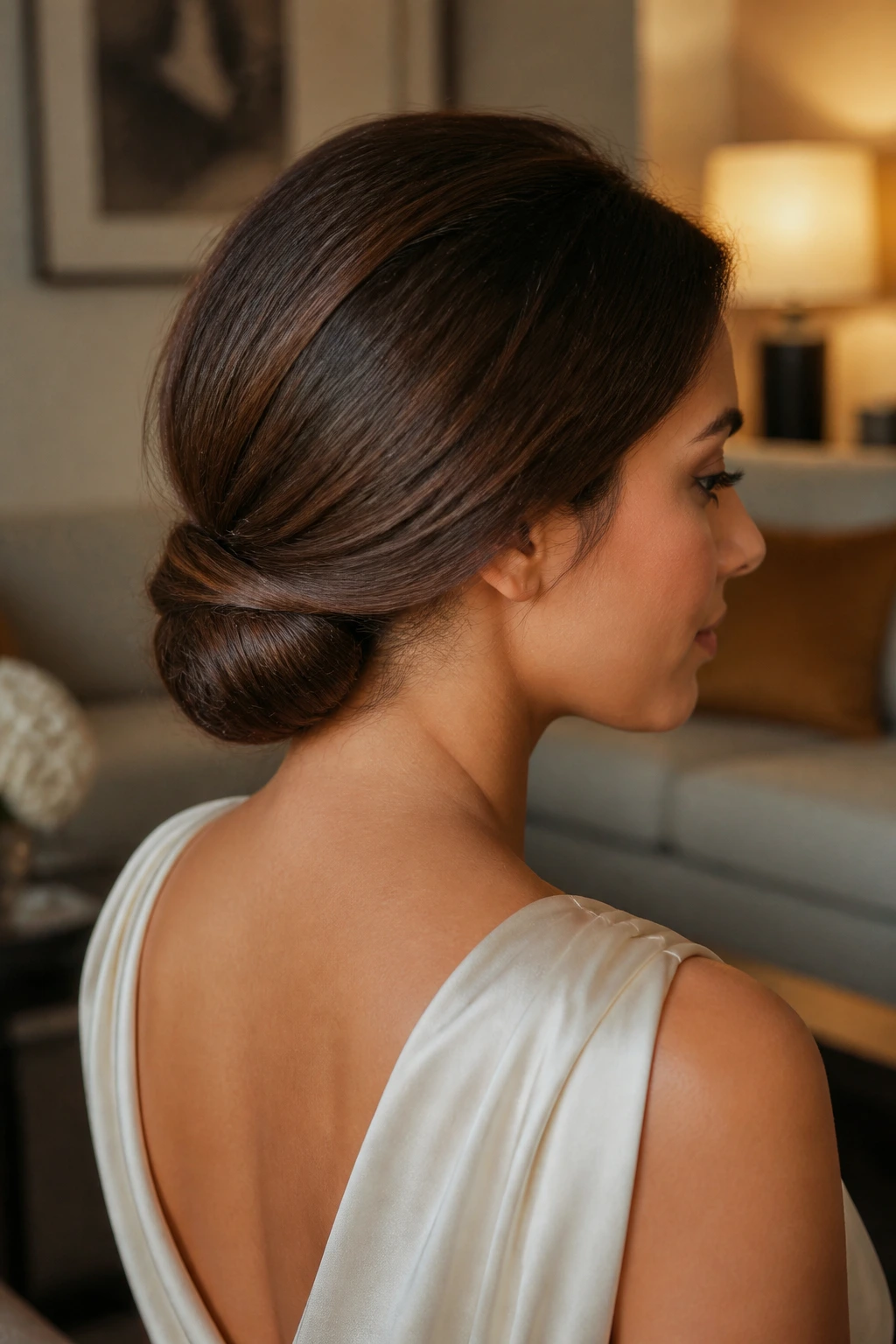
The tucked-in roll is the calm cousin of the French twist. Gather the hair low, roll the length upward, and tuck the ends into the fold before pinning it in place. The roll hides most of the frizz inside the shape, which makes it a solid choice when the hair is puffing but still needs to look polished.
Watch the base, not the top
The roll only looks good if the base is anchored well. Use pins in an X shape near the nape so the weight stays centered. If the top layer is frizzier than the rest, smooth only that section with a touch of cream. The rest can stay textured. You do not need to erase every flyaway for this one to work.
28. Slicked-Back Braid
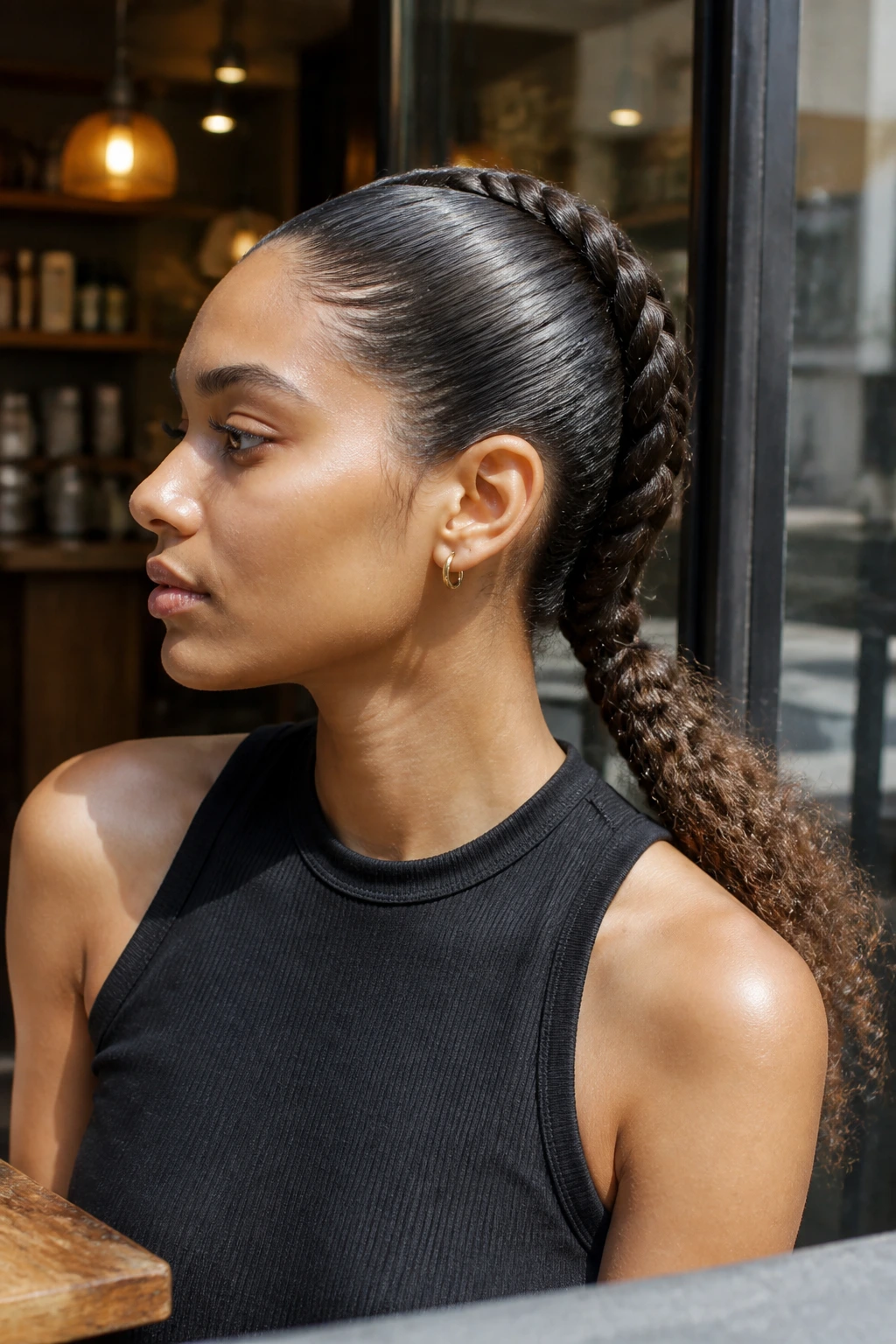
A slicked-back braid combines two moods: a smooth front and a textured length. Gel the hair back from the hairline, braid it low or high, and let the tail stay a little fluffy if that’s where your texture wants to go. The contrast keeps the style from looking too severe.
This is a good option when you want the hair off your face and you want the braid to last through the day. Frizzy hair gives the braid body, which makes it look full instead of skinny. If the hairline is softening as the day goes on, don’t keep adding product. Pin the flyaways into the braid’s base or let them stay. The braid can carry it.
29. Knotless Braids
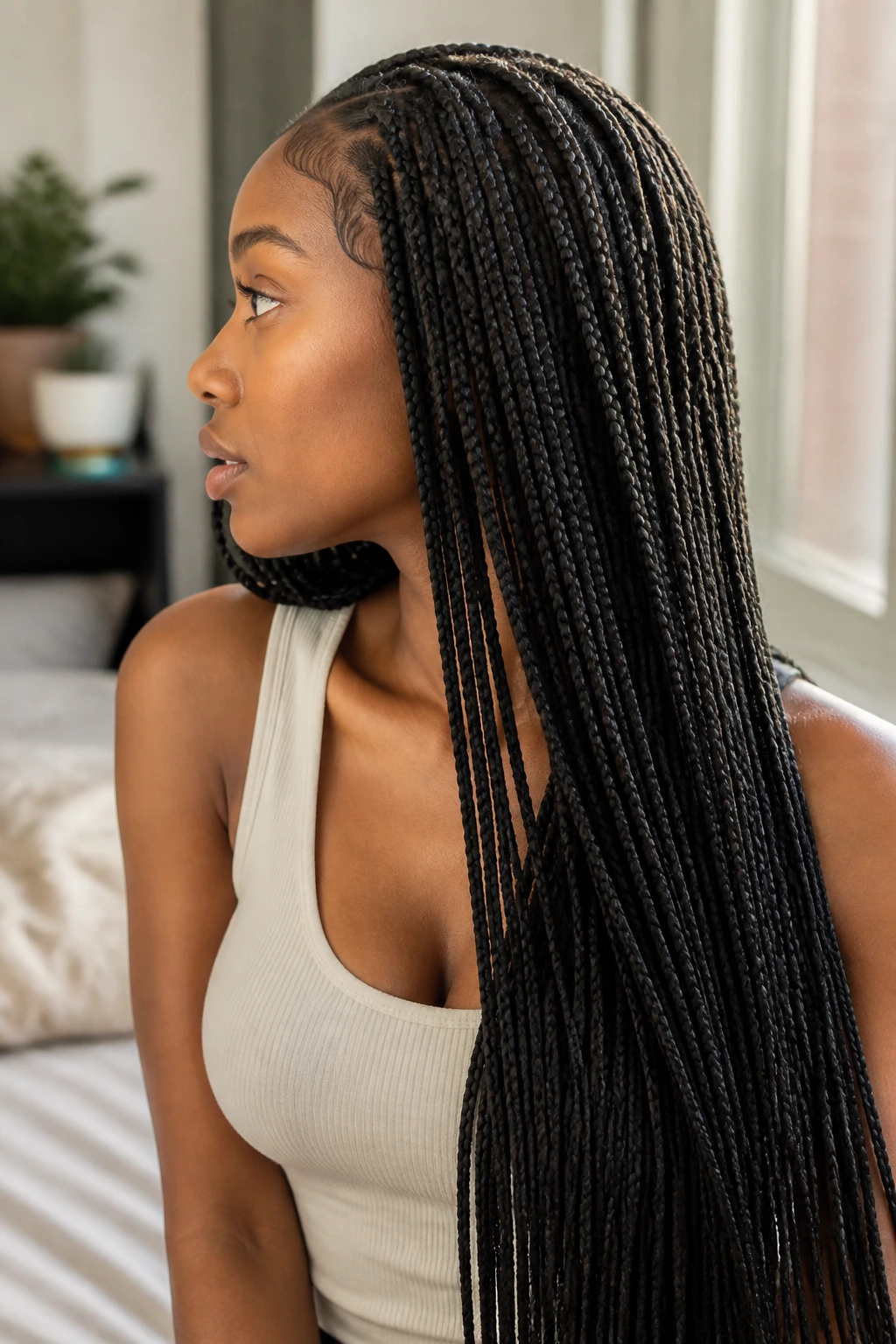
Knotless braids are the long-wear answer for frizzy hair when you want less daily handling. The braid starts with your natural hair and builds in extension hair gradually, which keeps the base lighter and often more comfortable than a tight knot. The finished style holds shape for days without needing a lot of fuss.
They’re not a quick fix, and they should not be installed tightly enough to pull at the scalp. That part matters. If the braids feel sore after a few hours, something is wrong. Proper knotless braids should feel secure, not painful. Once they’re in, the style needs simple upkeep: scalp care, a satin wrap at night, and a light touch during the week.
30. Braided Bun
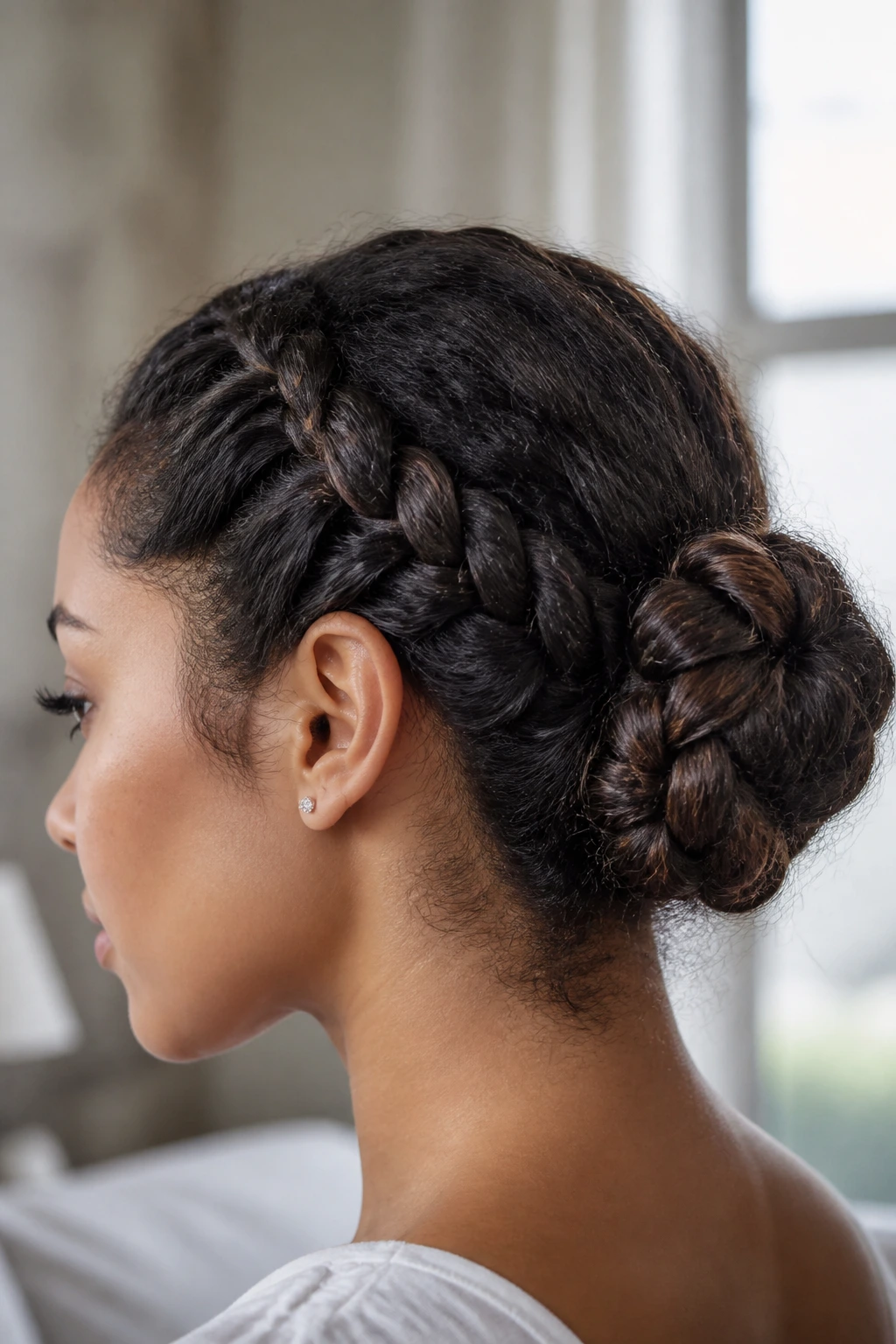
A braided bun gives you the control of a braid and the compact shape of a bun in one move. Braid the ponytail first, then coil the braid around itself and pin it down. On frizzy hair, that extra braid step helps the bun stay tight and keeps the tail from exploding outward.
This one works well when you want a style that can handle a full day without constant fixing. It’s especially useful for thick hair because the braid cuts down the bulk before you wrap it. If you want a softer look, loosen the braid a little before turning it into the bun. If you want a sharper line, keep it snug and hide the ends underneath.
31. Half-Up Claw-Clip Sweep
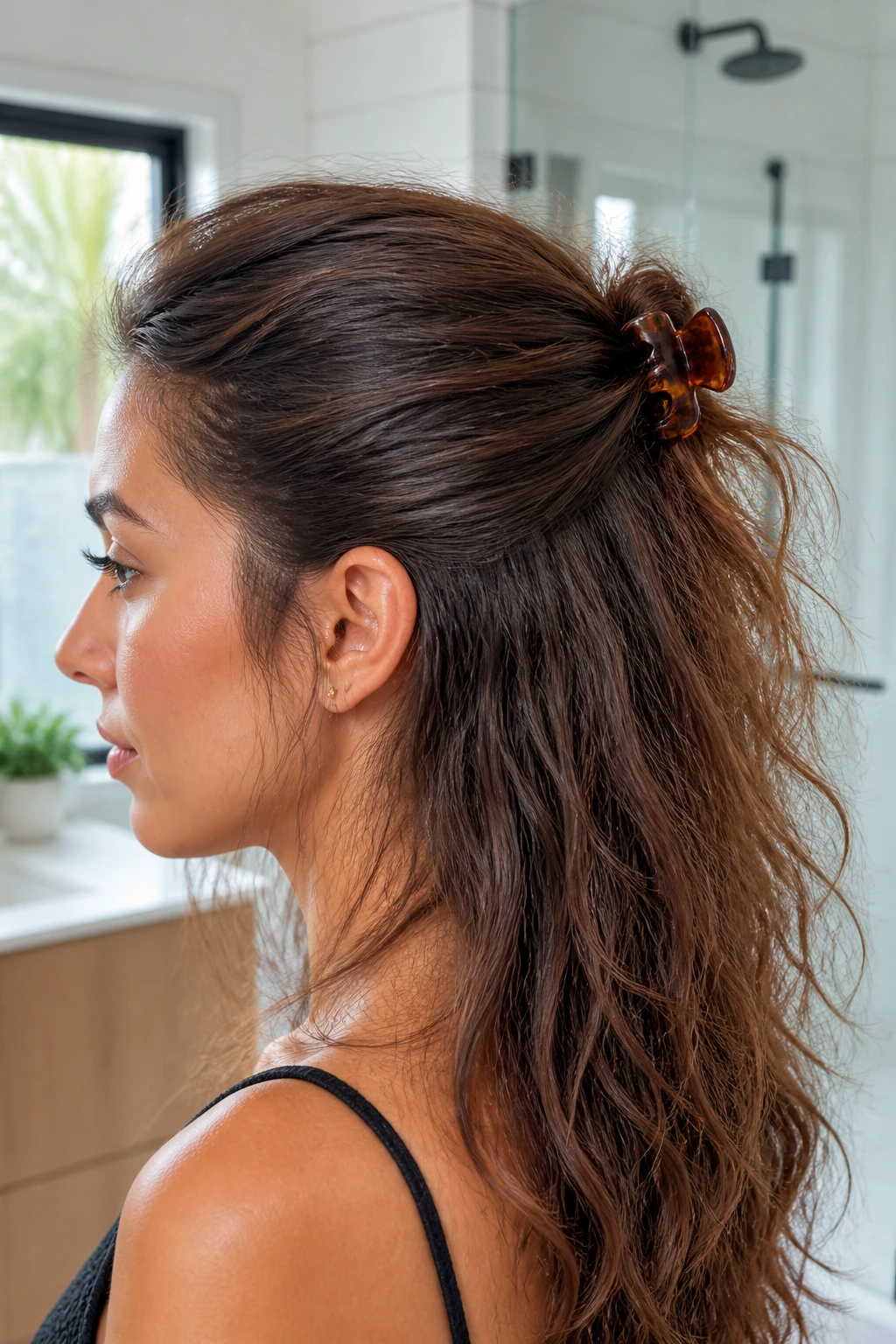
A half-up claw-clip sweep is the quickest way to make frizz look intentional with almost no prep. Pull back the top half of the hair, twist it once, and clip it high enough that the ends fan out a little. The lower half stays loose, which keeps the style from feeling too strict.
The clip should hold the weight, not crush it
Choose a claw clip that can actually grab the amount of hair you have. Small clips look cute until the twist starts sliding out. If your hair is thick, gather the top section with both hands before you clip so the base stays even. A little face-framing frizz is fine here. It softens the top and keeps the whole style from reading stiff.
32. Micro-Crimped Half-Up Ponytail
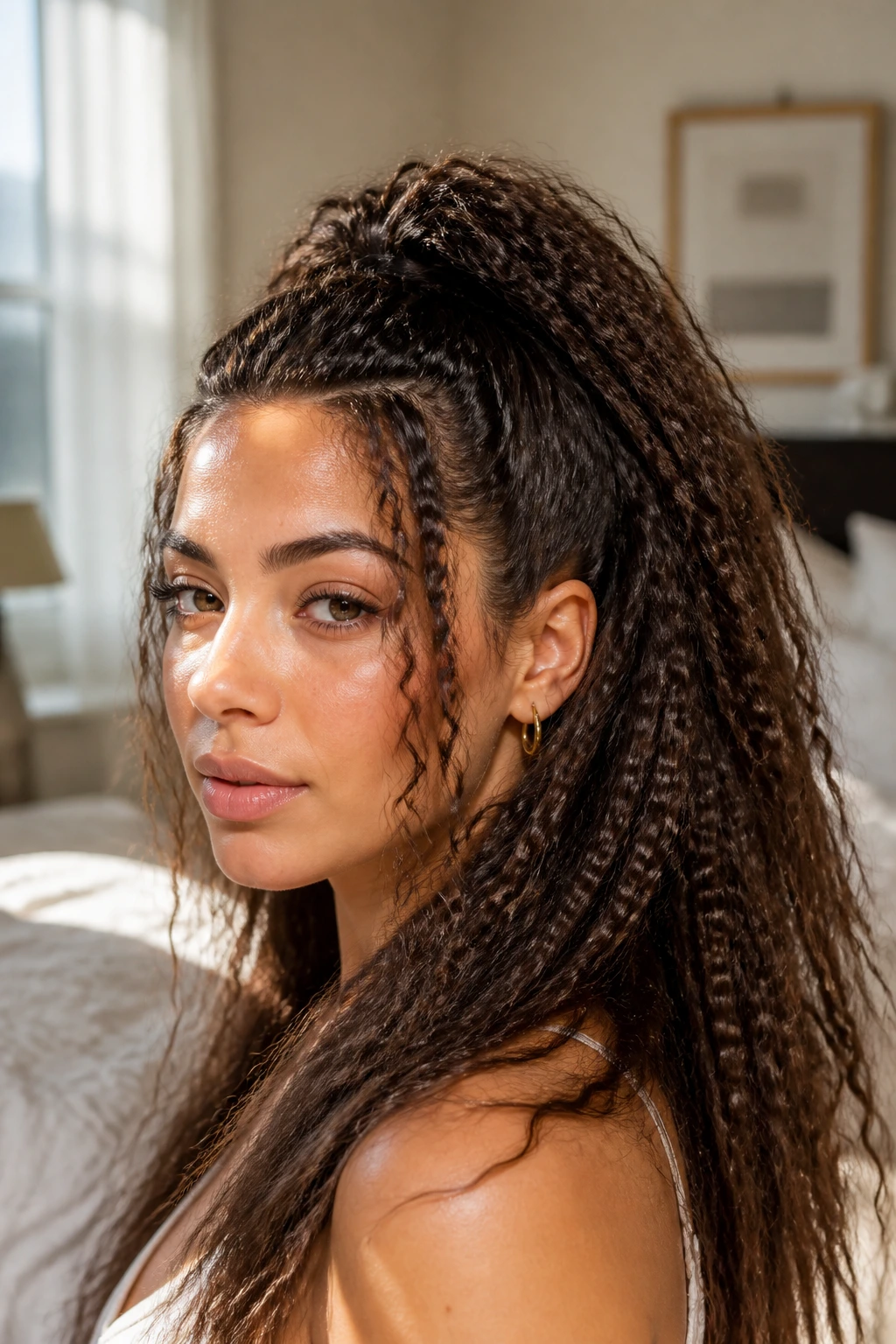
Micro-crimping turns frizz’s natural texture into a visible pattern, and a half-up ponytail gives that pattern a place to show off. Crimp the top or the ponytail itself with a styling tool, then gather the top half or the full length into a pony. The result has a zigzag body that feels deliberate rather than random.
If you don’t want heat, braid the hair in small sections overnight and undo it in the morning for a similar textured effect. That’s the version I prefer when I don’t want to hear a hot tool humming near my ears. Keep the root section a little smoother so the crimped texture stands out lower down. Too much crimp from root to tip can look busy.
33. Textured Pixie Crop
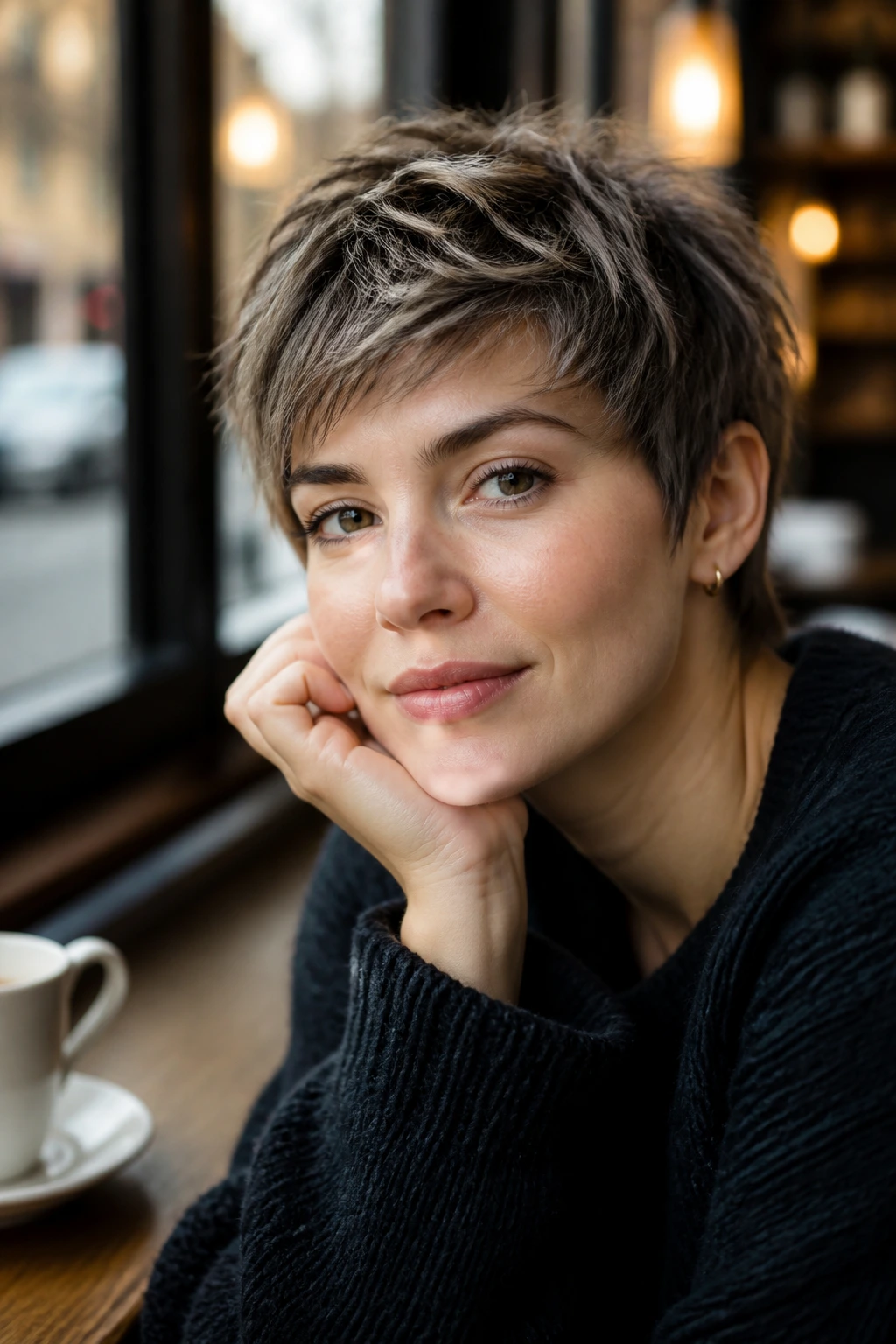
A textured pixie crop is proof that frizzy hair can look sharp at very short lengths. The cut leaves enough movement on top to show the texture, while the sides and back stay lighter and easier to manage. Piecey layers at the crown stop the style from turning into a helmet.
This one needs regular trims, or the shape starts to blur. Use a small amount of paste or mousse on the top, then push the hair in the direction you want it to fall. A pixie with texture looks best when it has separation, not when every strand is glued into place. If your hair has a natural bend or wave, that detail does half the styling for you.
How to Style Frizzy Hair Without Flattening It
-
Start with texture that’s evenly dry or evenly damp. Half-dry hair frizzes in strange places and leaves you with a top that is flat and ends that puff out like a triangle.
-
Match the hold to the style. Light cream works for puffs and loose ponytails; stronger gel makes sense for slicked-back looks and wet parts. Using the same product on every style is a lazy mistake.
-
Use parts as design lines. A clean middle part, a deep side part, or a zigzag part changes the whole look before you even touch the ends. A good part can make an ordinary braid look intentional.
-
Pin from the inside. Hide bobby pins under the twist or braid so the style keeps its shape without looking cluttered. Visible pins are fine in a pinch, but they should feel like the last step, not the whole plan.
-
Refresh the silhouette, not every strand. If the braid loosens, tighten the base. If the puff falls, re-tie the elastic. Chasing one flyaway at a time will eat your morning.
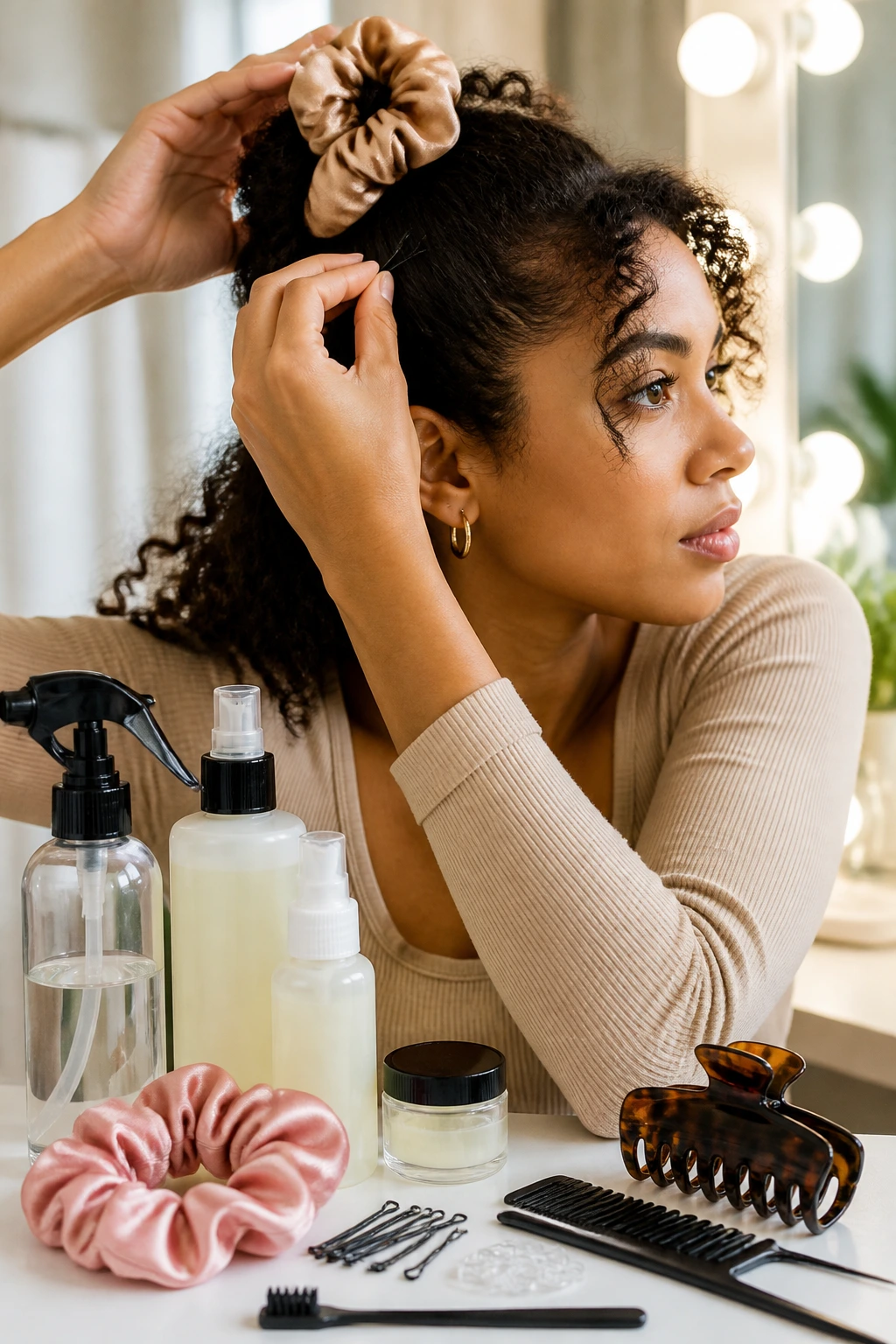
Essential Tools and Accessories for These Styles
-
Satin scrunchies: These hold puffs, ponies, and pineapple styles without leaving the hard crease that thin elastics make.
-
Claw clips: A strong clip is the backbone of French twists, half-up sweeps, and quick updos that need a little grip.
-
Bobby pins and U-pins: U-pins are the quiet workhorse for buns and rolls; bobby pins help shape the edges and lock twists in place.
-
Clear elastics: Useful for bubble ponytails, pull-through braids, and mini sections where you don’t want the tie to show.
-
Wide-tooth comb: Best for detangling without shredding curls or turning waves into a cloud of static.
-
Rat-tail comb: Clean parts matter more on frizzy hair than people admit, and this tool gives you the control to make them.
-
Edge brush or soft toothbrush: Handy for smoothing the hairline in slick styles without dragging product through the whole head.
-
Spray bottle: A light mist helps reset damp styles, revive curls, and make braids easier to section.
-
Leave-in conditioner: Good for twist-outs, braid-outs, and any style that needs softness without heaviness.
-
Light gel or styling cream: Gel gives hold for slick looks; cream gives a softer finish for buns, ponytails, and natural textures.
-
Silk scarf or bonnet: This is the overnight insurance policy. Without it, the hairline frizzes up and the base of the style gets fuzzy.
-
Diffuser attachment: Useful for curl patterns, shag cuts, and any style where you want volume without blasting the texture flat.
Common Mistakes That Make Texture Look Messy Instead of Intentional
-
Brushing dry frizzy hair from roots to ends. That creates static, breaks up curl groups, and makes the surface look puffy in the wrong places. Detangle from the bottom up with a wide-tooth comb or your fingers, then stop.
-
Using too much oil at the crown. The roots start to slide, clips lose grip, and styles that should last half a day fall apart in two hours. Keep oil for the ends or the driest pieces, not the whole head.
-
Pulling the hair too tight at the temples. You get tension, headaches, and little broken pieces around the hairline. A style should feel secure, not like a tug-of-war.
-
Starting braids or twists on tangled hair. The style looks lumpy, and the finished braid frays because the sections were never clean. Spend the extra minute to detangle and part properly. It pays off every time.
-
Sleeping without protecting the style. Cotton pillowcases rough up the cuticle and flatten the base. A satin scarf, bonnet, or pillowcase keeps the shape intact longer.
-
Trying to flatten every flyaway. Some frizz is just texture doing texture things. If you chase every strand, the style can end up stiff and overworked. Pick the pieces that affect the silhouette and leave the rest.
Variations and Alternatives for Different Lengths and Routines
Humidity Shield: If the air is heavy and your hair swells fast, reach for braids, buns, slicked-back ponytails, or a claw-clip twist. These styles hold their outline better when the weather turns damp, especially if you keep the front section smooth and the rest textured.
Fine-Hair Version: Fine frizzy hair can look flat if you load it with heavy cream or too many pins. Use lighter products, smaller sections, and styles that create lift—like a half-up top knot, a side braid, or a scarf-wrapped ponytail.
Thick-and-Coily Version: Bigger sections, stronger elastics, and more pins help styles hold without collapsing under the weight. High puffs, braided buns, pull-through braids, and knotless braids all handle dense hair well because they spread the weight instead of fighting it.
Short-Length Fix: Short frizzy hair doesn’t need long braids to look styled. Mini buns, headband tucks, slicked-back side parts, and textured pixies keep the shape clean without asking for length that isn’t there.
Heat-Free Stretch Style: Twist-outs, braid-outs, and pineapple sets stretch the hair without a flat iron or crimping iron. They’re the move when you want defined texture and less shrinkage, but still want to keep the hair’s natural body.
Dress-It-Up Version: Low chignons, crown twist buns, and rope-braid ponytails read a little sharper if you smooth the base and hide the elastics. They’re the styles I’d reach for when the setting asks for more control but the hair refuses to go board-straight.
Overnight Care, Refreshes, and How Long These Styles Last
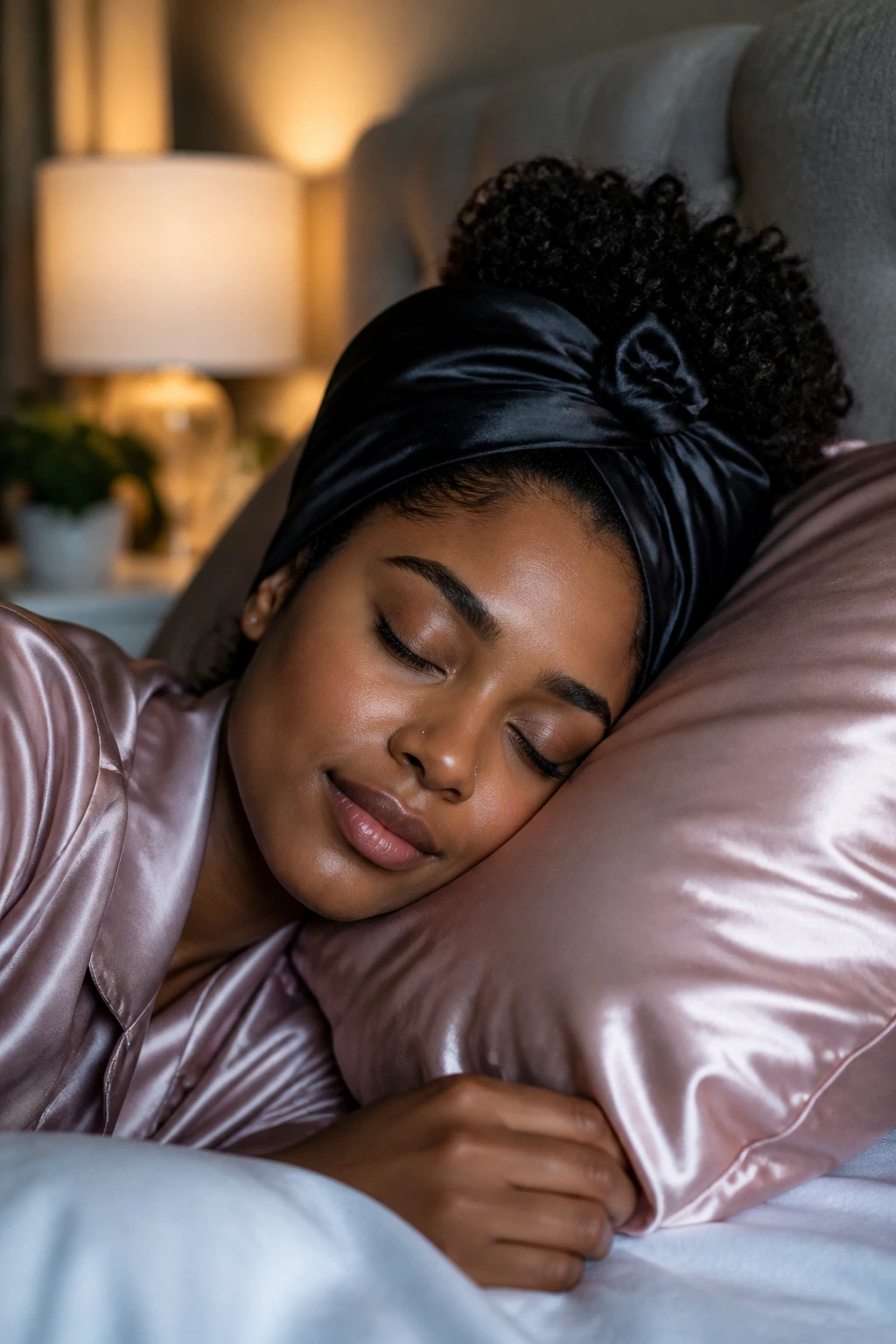
Puffs, buns, and claw-clip styles usually last one full day cleanly, sometimes two if you sleep well and don’t crush the base. Wrap the hairline with a silk scarf or sleep on a satin pillowcase, then reset the shape in the morning with your hands, not a full wash. If the style starts to sag at the crown, re-tie the base instead of rebuilding everything.
Braids and twists live longer. A tidy French braid, Dutch braid, twist-out, or pull-through braid can usually hold for 2 to 4 days if you protect it at night and keep your hands out of it. Knotless braids and other protective styles can last several weeks, but only if the scalp stays comfortable and the roots don’t get overloaded with product. If it hurts, that is not a sign to “break them in.” It is a sign to loosen something.
Wash-and-go shags, blowout bends, and crimped styles usually need refreshing by day two or day three. Use a light mist of water or leave-in on the pieces that have gone flat, then shake the roots and reshape the front with your fingers. Dry shampoo helps with oil at the scalp, but it won’t fix a collapsed silhouette. For that, you need shape, not powder.
Frequently Asked Questions About Hairstyles for Frizzy Hair
Which hairstyles last the longest on frizzy hair?
Braids, knotless braids, twisted buns, and slicked-back styles usually last the longest because they keep the hair contained and reduce friction. If you want more than one day out of the style, protect the base at night with a satin wrap.
Can frizzy hair look sleek without being flat?
Yes. A slicked-back braid, wet-look side part, or low chignon can keep the roots smooth while leaving the length or bun with some body. That contrast is what keeps the style from looking stiff.
What if my hair is short?
Short frizzy hair still has options: mini buns, a headband tuck, a textured pixie, or a slicked-back side part. The trick is choosing styles that work with your length instead of trying to force a ponytail that can’t hold enough hair.
Do I need heat for any of these styles?
No, not for most of them. Twist-outs, braid-outs, puffs, buns, ponytails, and claw-clip styles can all be done without heat. If you want a crimped finish or a blowout bend, heat can help, but it isn’t required for the whole list.
How do I keep flyaways from taking over by lunchtime?
Use a product with the right hold at the start—light cream for soft styles, gel for slick styles—and finish with a scarf press for a few minutes if you need the base to lie down. After that, stop touching it. Repeated smoothing makes more flyaways, not fewer.
Are braids better than buns for humidity?
Usually, yes. Braids hold the shape of the hair more tightly, while buns can swell at the surface if the hair is very porous. A bun still works, but it needs better pinning and a little more control at the base.
What if my hair is very thick and keeps slipping out of clips?
Pick a stronger claw clip and twist less hair into it at once. If the clip still slides, add bobby pins under the twist so the clip holds the shape instead of carrying all the weight by itself.
Can I do these styles on second-day hair?
Absolutely. In fact, a lot of frizzy hair styles are easier on day-two or day-three hair because the texture has more grip. A loose pony, half-up top knot, braid, or claw-clip twist often behaves better once the hair has lost that squeaky-clean slip.
A Better Way to Wear Frizz
Frizzy hair does not need to be hidden to look good. It needs a shape that respects what it already wants to do: lift, expand, and hold. Once you stop asking it to behave like silk, the whole thing gets easier. The right ponytail, braid, bun, or cut can make texture look like the strongest part of the style instead of the thing you’re fixing around.
Pick one look that gives you control on rushed mornings and one that lets the volume stay loud on purpose. That alone changes the way you approach the mirror, and the rest tends to follow.
