



Fluffy haircuts are not a mood board fantasy. They’re a shape.
The right one gives hair lift at the crown, movement through the mid-lengths, and ends that float instead of hanging like damp rope. That’s the whole trick. When a cut is built well, fine hair can look fuller without being teased into submission, and thicker hair can look soft instead of bulky. Even frizzy or crimped texture can work in your favor when the perimeter is shaped with some restraint.
I’ve always thought the best fluffy cuts have a little air in them. Not stiffness. Not that sprayed-to-death helmet finish. Air. A good cut still looks alive when the blow-dry calms down, and it still looks intentional on day two with dry shampoo and a messy part.
That’s where these styles earn their keep. Some are short and lifted, some are shoulder-grazing and bouncy, and some keep length but build softness through layers placed where they actually do something. If you’ve ever left the salon with hair that looked lighter, softer, and just more movable, you already know the feeling. The goal is to get there on purpose.
Why These Fluffy Haircuts Feel Full Without Looking Puffy
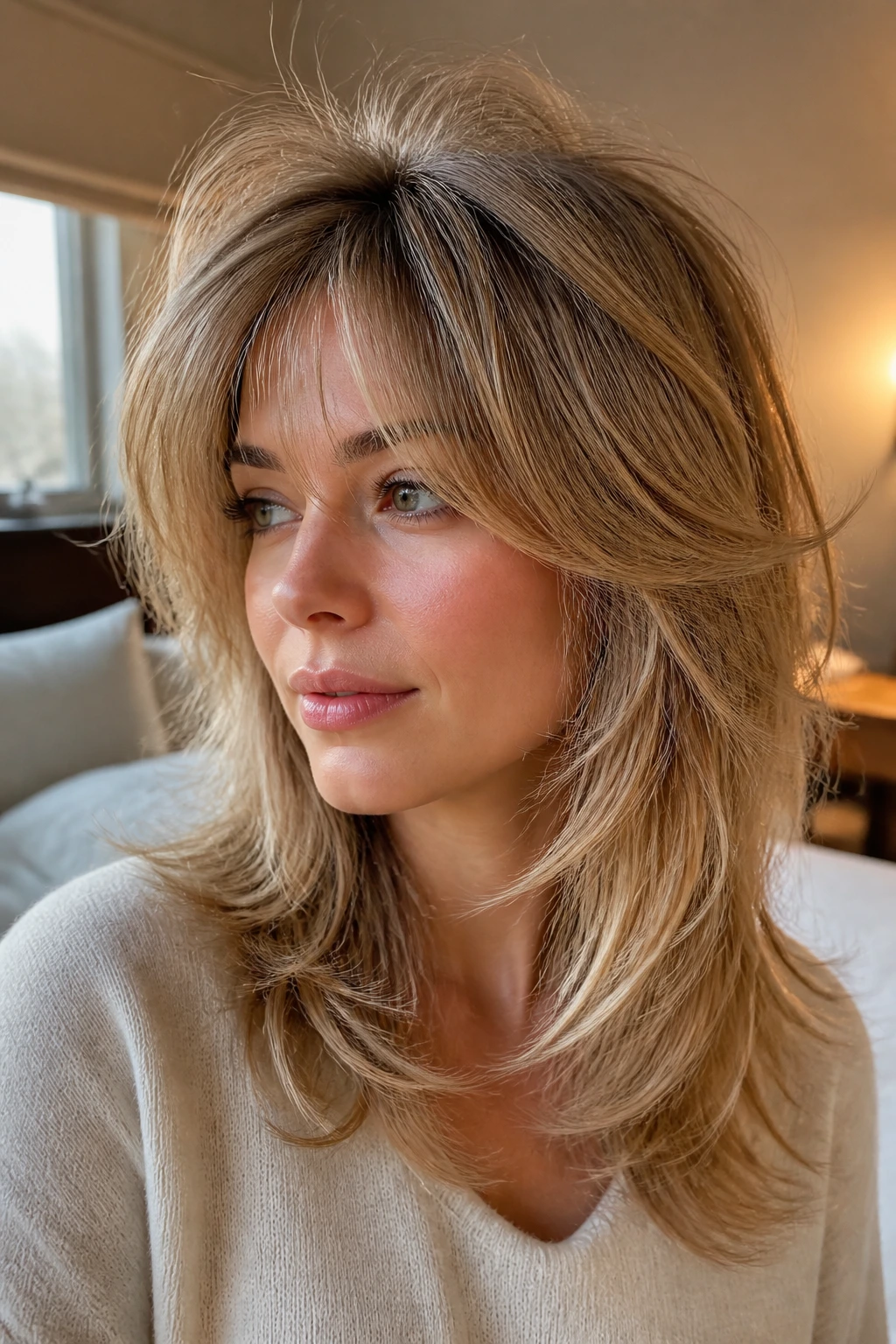
Lift sits in the right places: The volume is built near the crown, cheekbones, or jawline instead of ballooning out from the sides.
Texture gets used, not fought: Wavy, crimped, and frizzy hair often has more body than straight hair; the cut just needs to stop it from turning wide in the wrong spots.
The shape grows out better: Soft layers and feathered edges usually look even better after a few weeks, which matters if you do not want a precision cut that collapses fast.
Styling stays workable: Most of these cuts need a round brush, diffuser, or quick bend with a flat iron — not a 45-minute arm workout.
They play nicely with bangs: Curtain bangs, bottlenecks, and wispy fringes can add softness without swallowing your face.
1. Soft Layered Bob
A soft layered bob sits right in that sweet spot between polished and touchable. The best version lands around the chin or just below it, with short internal layers that keep the crown from going flat and longer pieces near the front so the shape doesn’t turn boxy. When it’s cut well, the hair swings instead of sitting still.
This one works especially well if your hair has a little bend or if it tends to puff at the ends. Ask for a rounded outline, not a blunt wall. A quick blow-dry with a 1¼-inch round brush gives the ends a soft turn under, which keeps the whole cut looking plush instead of sharp.
2. Butterfly Cut
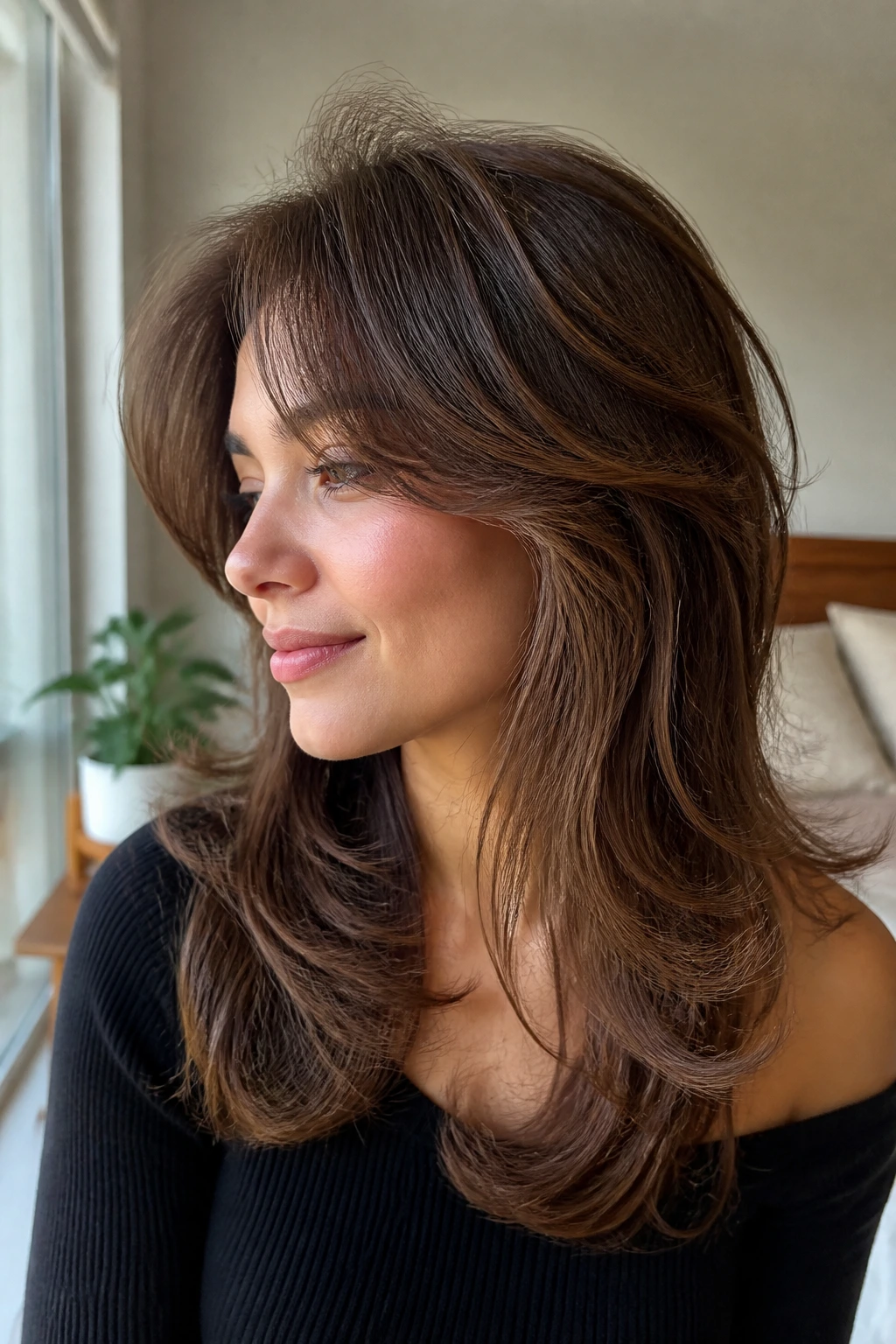
Why does the butterfly cut keep showing up in fluffy-hair conversations? Because it gives you two things at once: short, face-brightening layers on top and longer length underneath. That combination creates lift at the crown without sacrificing the swing people want from longer hair.
The layers should start high enough to matter — usually around the chin or collarbone — but not so high that the whole cut loses weight. That balance is what makes the style feel airy rather than frayed. If your hair is fine, this cut can make it look like you have more of it. If your hair is thick, it takes some of the heaviness out of the middle.
3. Curly Shag

Curly hair loves a shag when the layering respects the curl pattern. The shape should rise at the top, narrow a little through the sides, and leave enough length at the perimeter so the curls stack instead of exploding outward. Bad shag cuts on curls go wide fast. Good ones look like the hair is blooming.
I like this cut best when the curls are shaped while dry or almost dry, because that lets the stylist see exactly where the coils spring up. Diffusing with a low heat setting and a mousse that actually holds can make the layers read as fluffy, not fuzzy. The cut does the heavy lifting. The product just keeps it honest.
4. Modern Wolf Cut
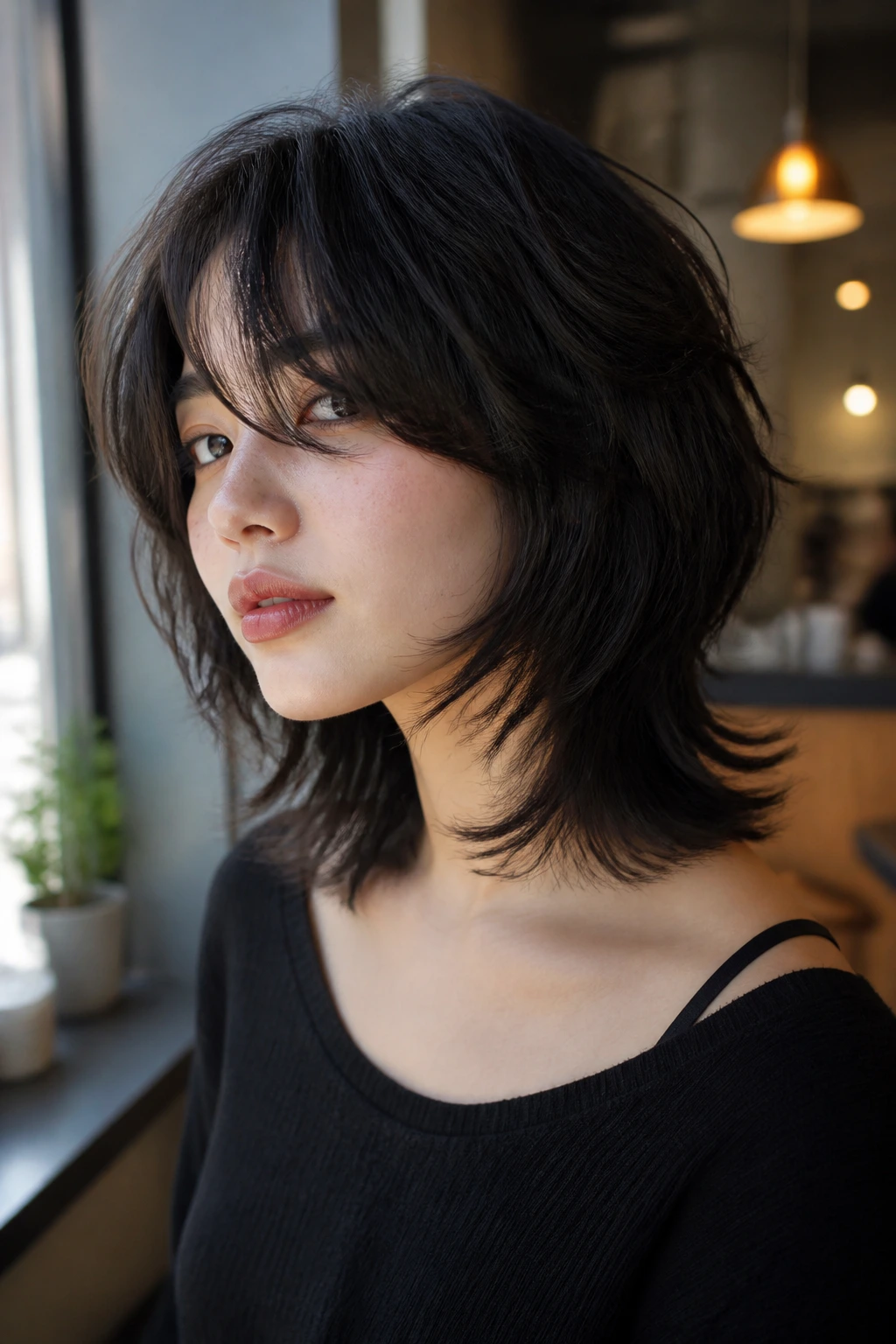
The modern wolf cut has a rougher edge, but it does not need to look harsh. The trick is a soft crown with tapered lengths through the neck and a little shag energy around the face. When the balance is right, the cut looks fluffy and cool instead of mullet-wild.
This is one of the best options for wavy or frizz-prone hair that wants a little rebellion. The short layers create movement, and the longer pieces keep the shape from puffing into a triangle. If your hair is thick, ask the stylist to keep the interior light without shaving off too much perimeter weight. Too much thinning, and the ends start to look see-through.
5. Rounded Pixie With Fluffy Crown
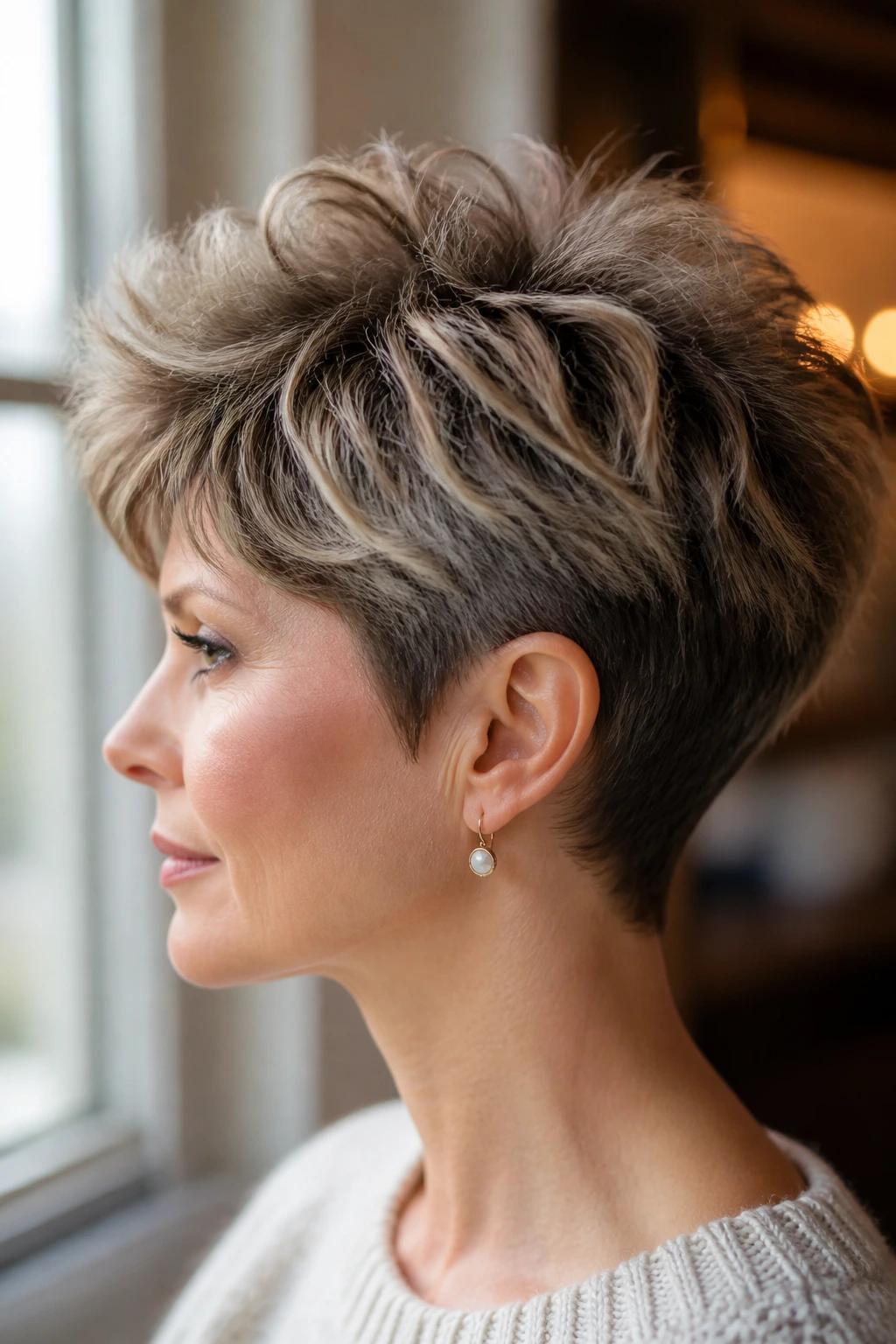
A pixie can look soft. It just needs the right crown shape.
A rounded pixie with a little extra length on top gives you that plush, airy finish without turning the sides bulky. The sides and nape should stay neat, while the top is left long enough to brush up and over with fingers or a small round brush. It’s a smart cut for fine hair that needs lift, and it’s also good for cowlicks because the shorter shape prevents the hair from fighting itself all day.
6. Collarbone Lob
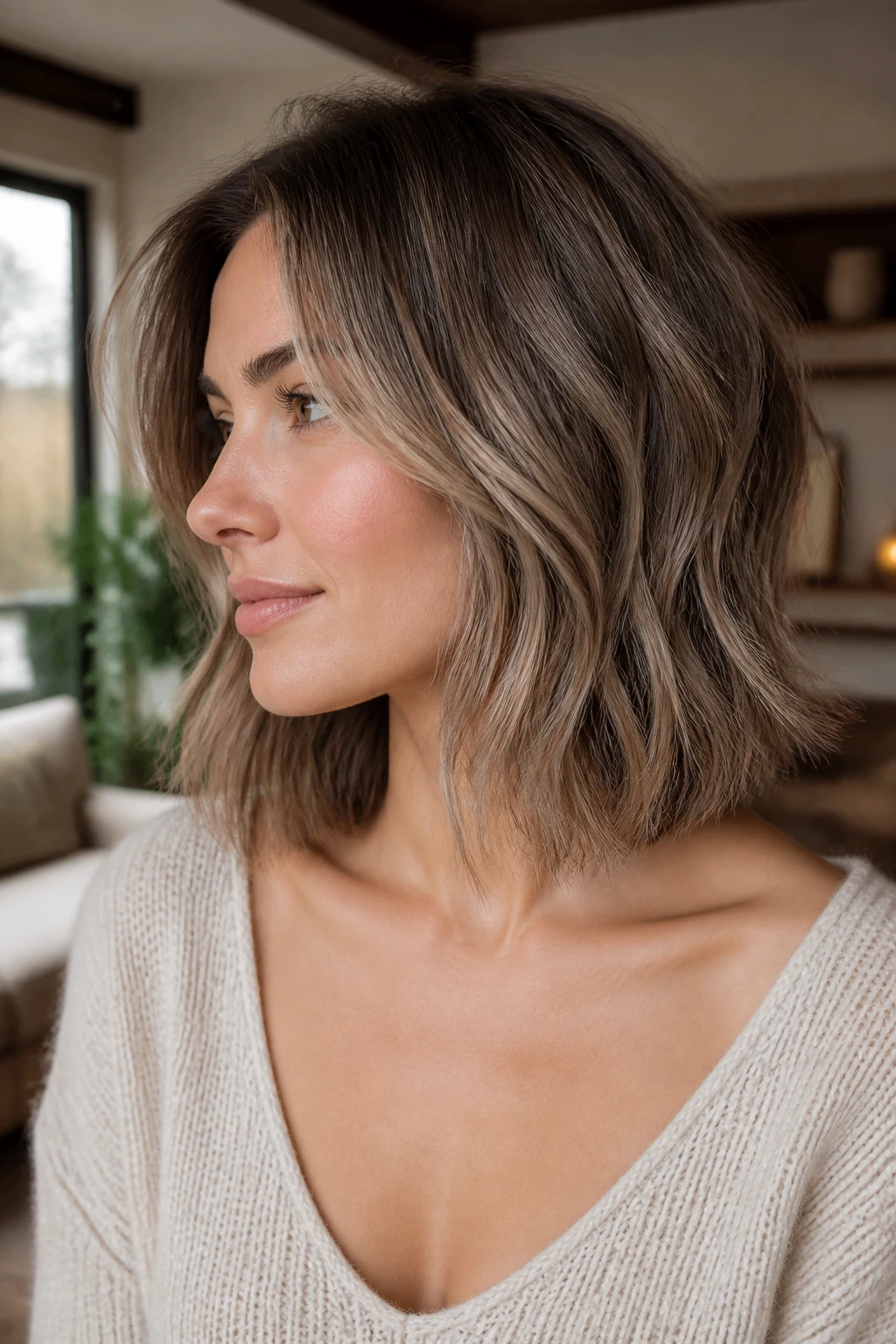
The collarbone lob is one of those cuts that makes sense the second you see it move. The length skims the collarbone, which gives the ends enough weight to bend softly instead of flying apart, but not so much length that the shape collapses. Add a few hidden layers and it gets a light, floating quality.
This is a good middle ground if you want volume without committing to something short. A side part can give it more body near the root, while a center part makes the front pieces drape in a cleaner line. Either way, a quick bend with a large-barrel iron or a round brush turns this into a very wearable fluffy style.
7. Curtain-Bang Shag
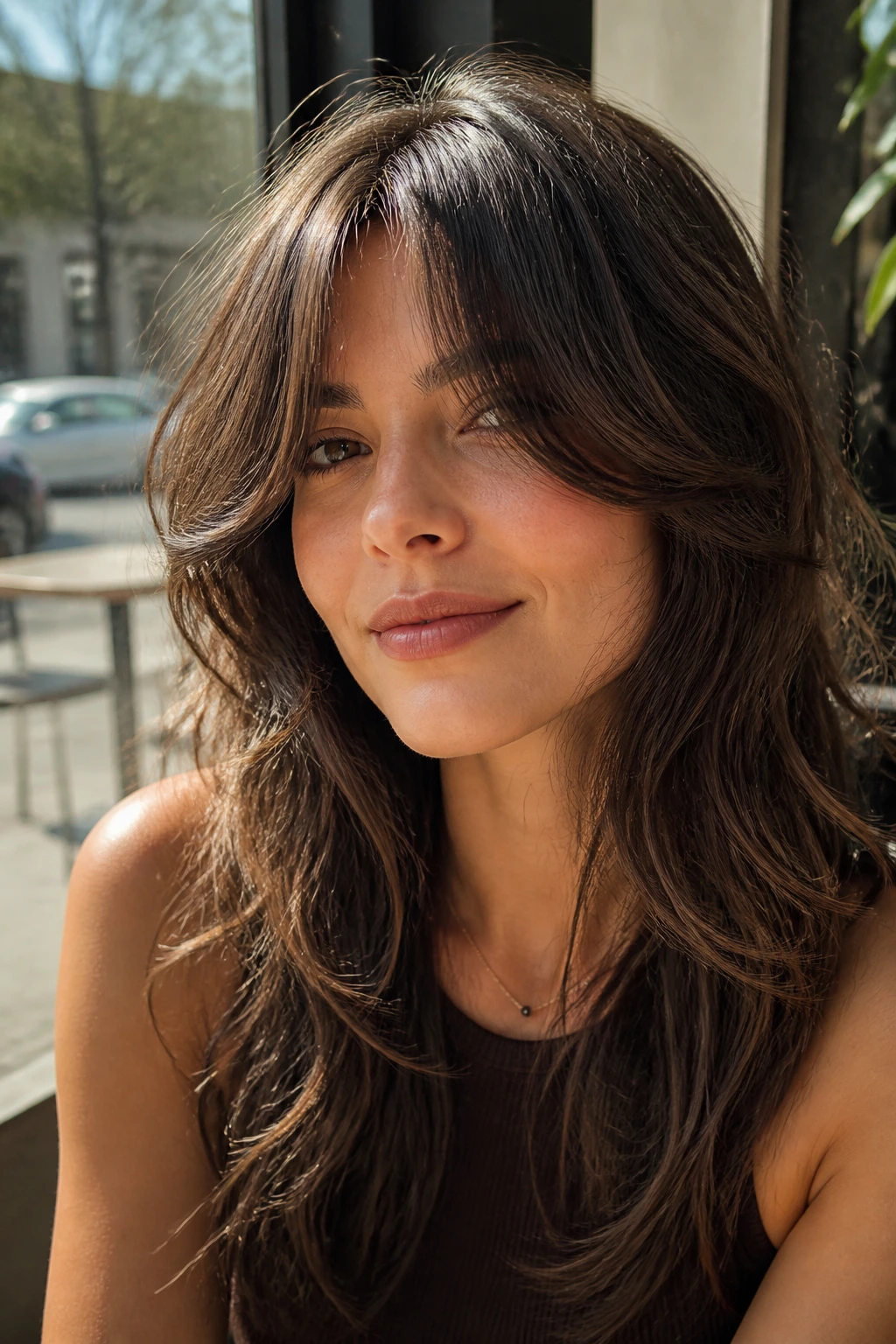
Curtain bangs change everything. They open the face, break up the front, and make even medium-length hair look lighter. Paired with shag layers, they create a soft frame that feels relaxed but not sloppy.
The key is keeping the bangs long enough to split around the cheekbones. If they’re cut too short, they can fight the rest of the shape and make the top too busy. With the right length, the bangs blend into the side layers and create that airy, lived-in look people keep trying to fake with styling sprays.
8. Feathered Mid-Length Cut
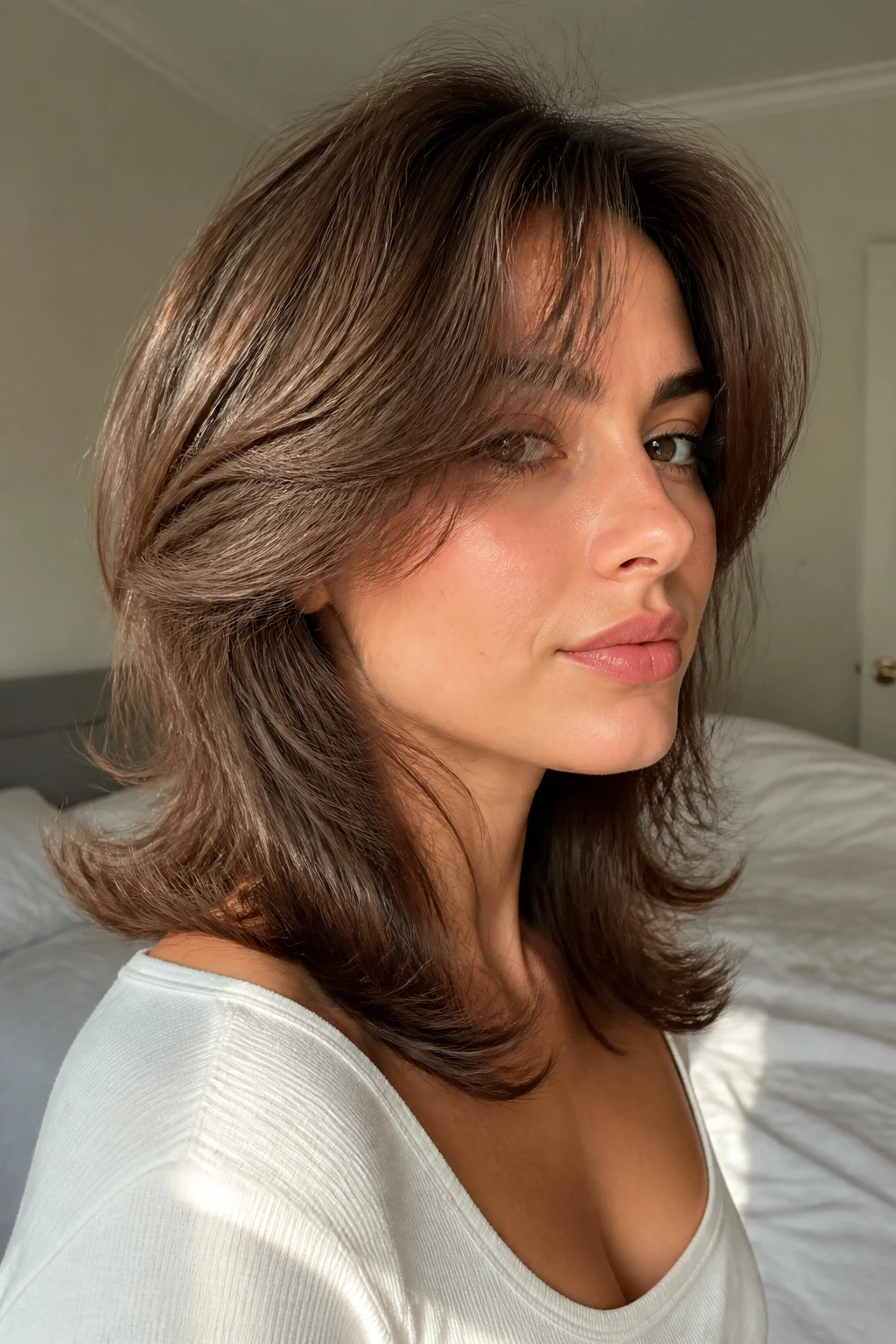
Feathering never really left; it just got smarter.
A feathered mid-length cut uses light, directional layers that fan away from the face and taper through the ends. It’s a beautiful choice for thick or medium-density hair because it removes bulk without hacking the shape apart. The result is soft, especially when the ends are styled with a gentle flip.
I like this cut on hair that tends to sit heavy at shoulder length. The feathering keeps the silhouette from becoming a block. Blow-dry with a big brush, then pinch the ends outward for a little bounce. It’s old-school in the best way.
9. Bixie Cut
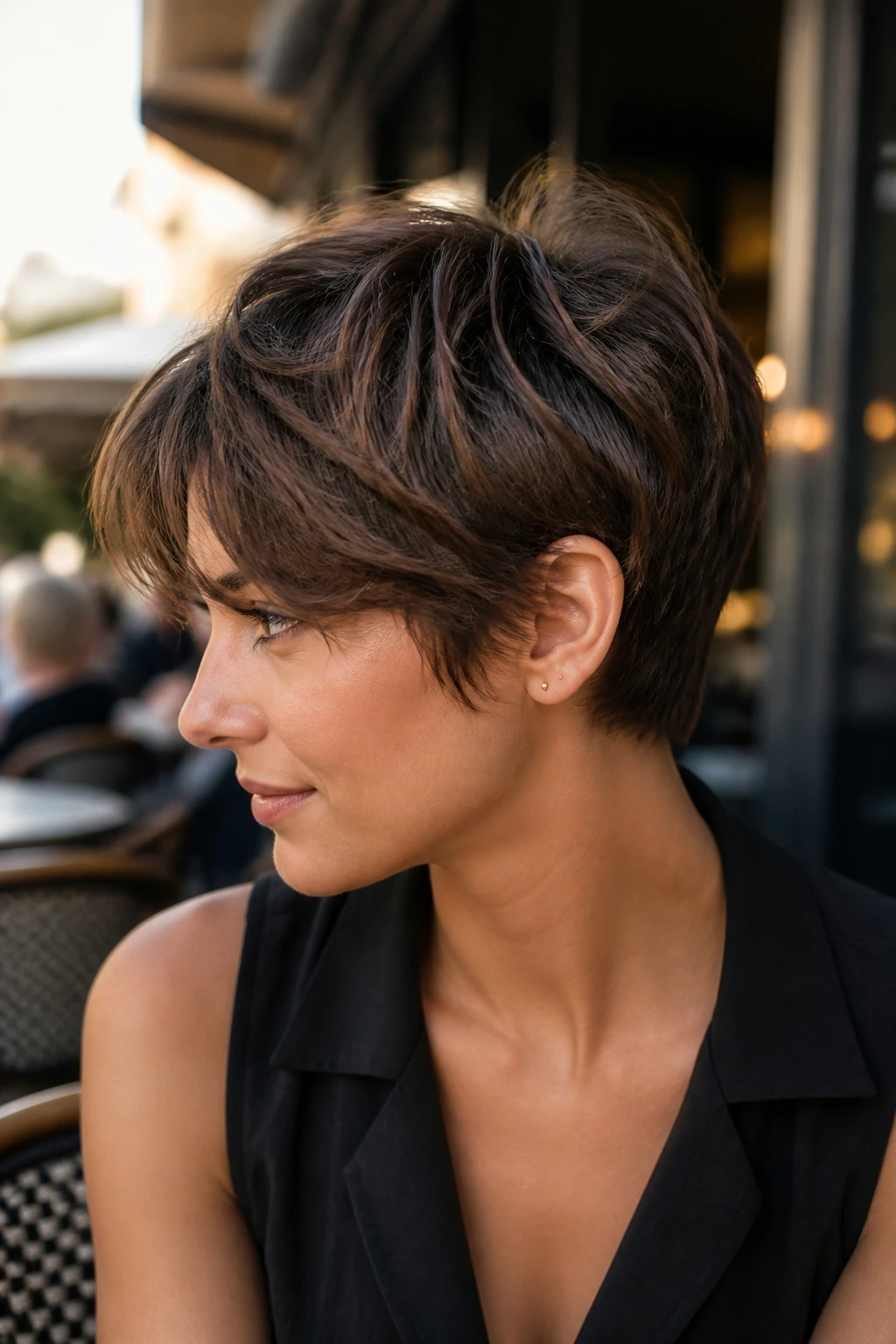
A bixie is part bob, part pixie, and that in-between energy is exactly why it works for fluffy texture. The top stays long enough to lift, the sides stay short enough to prevent bulk, and the back usually hugs the head in a neat curve. It has a little attitude, but it’s still soft around the edges.
This cut is especially good if you want short hair without the severity of a classic pixie. It looks best when the top has some separation — a little mousse, a little finger raking, not a perfect helmet blowout. On thick hair, it takes the edge off the density. On fine hair, it creates the illusion of a lot more shape.
10. Long Layers With Face-Framing Pieces
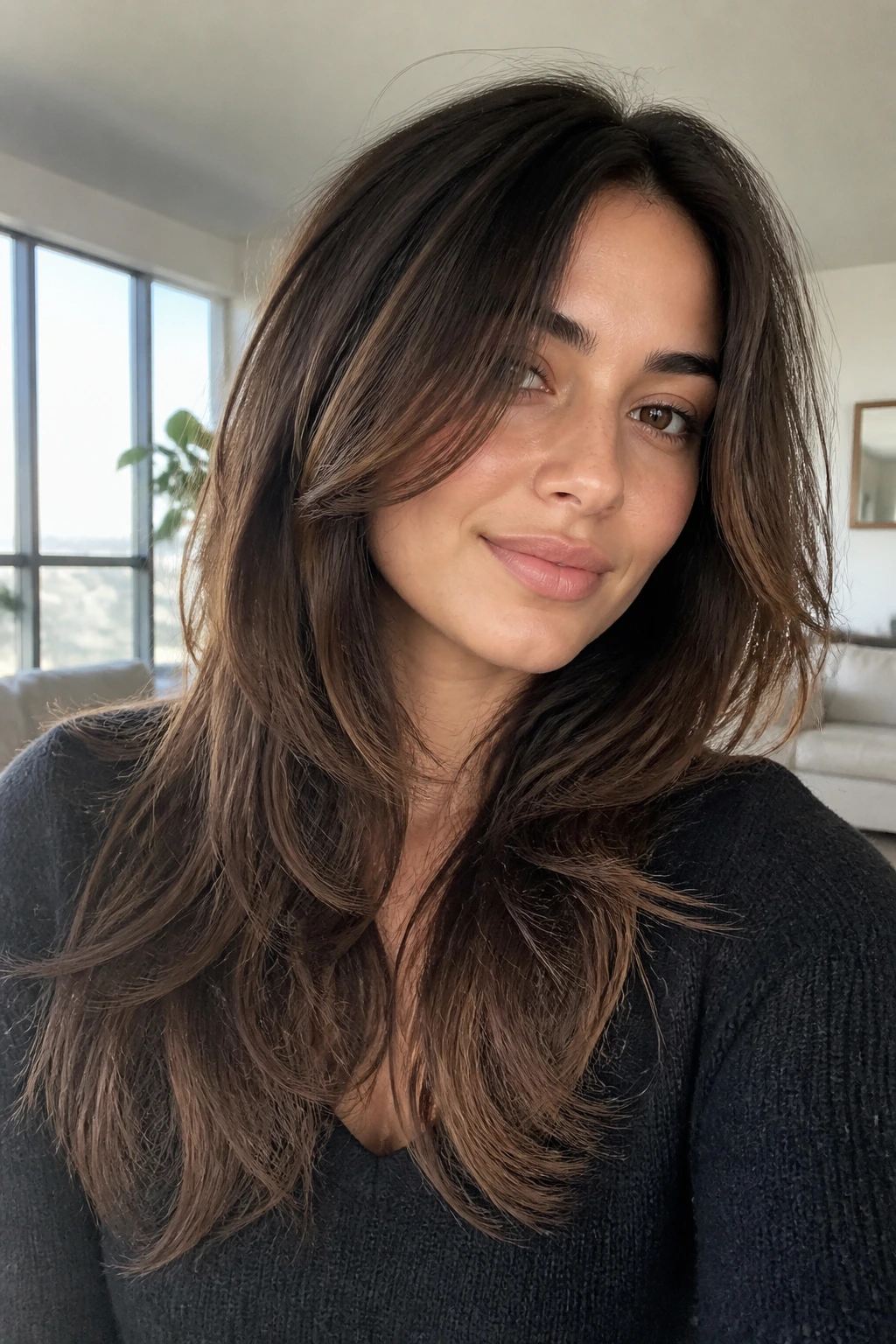
If you want length and volume, this is the safest bet.
Long layers keep the bottom from feeling like one heavy sheet, and face-framing pieces pull the eye upward so the whole style feels lighter. The crucial bit is placement. Layers that start too high can leave the ends thin and stringy. Layers that start too low barely do anything at all. The sweet spot is usually below the chin and above the chest, depending on density.
11. Soft Mullet

A soft mullet sounds cheekier than it is. The modern version keeps the top and front full, lets the back run a little longer, and avoids the harsh disconnect that made the old version so polarizing. Done well, it looks fluffy, not choppy.
This cut works best on hair with natural bend, because the layers can move without much effort. It’s also one of the better choices for people who want texture without a ton of daily styling. A matte cream or light paste gives the ends separation. Too much shine product kills the whole mood.
12. Clavicut With Hidden Layers
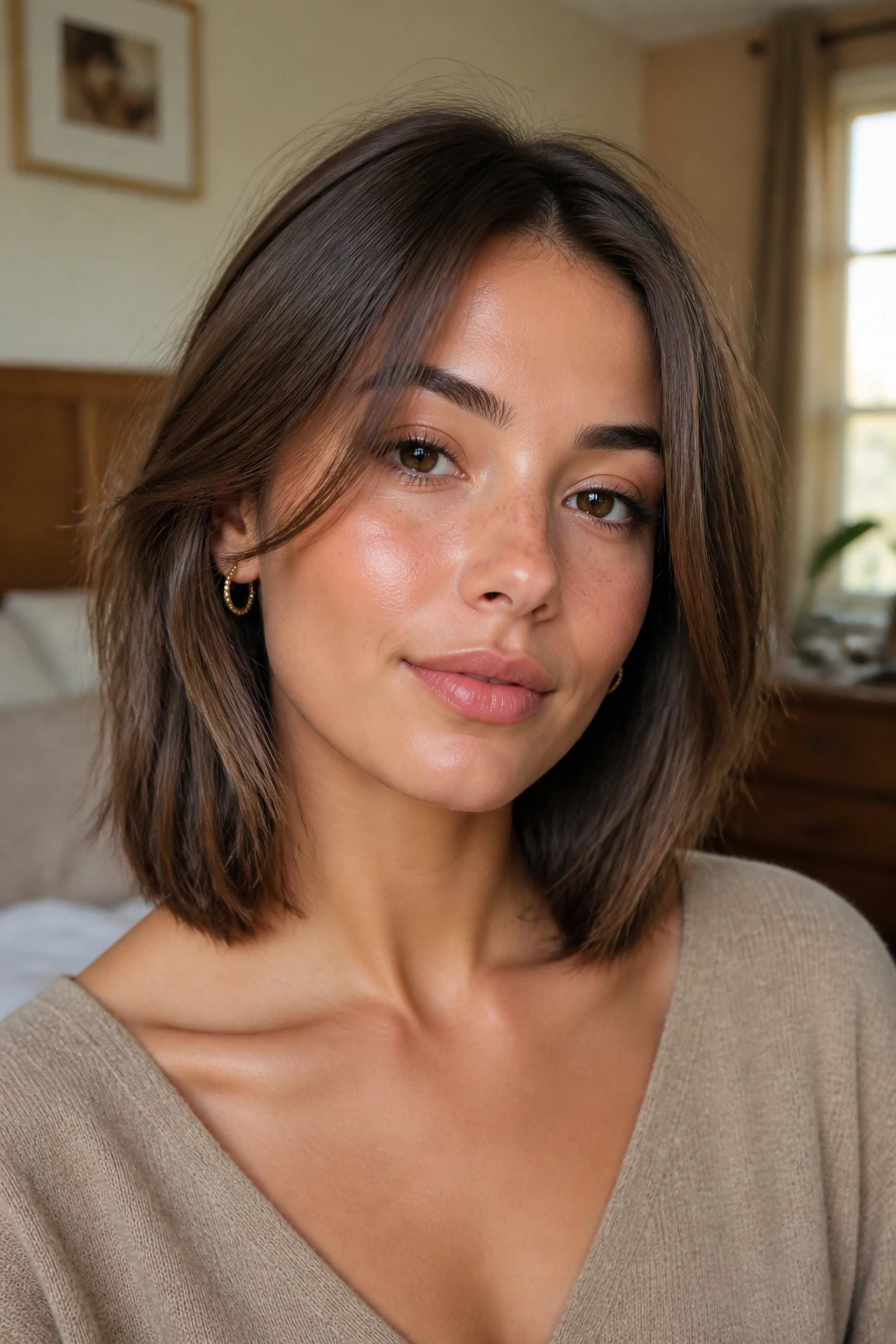
A clavicut sits right at the collarbone, which is a smart length for people who want softness but not a lot of salon drama. On the surface, it looks neat and simple. Underneath, hidden layers keep it from lying flat.
That internal movement is the whole point. You still get enough length to tuck behind the ears or pull into a clip, but the shape doesn’t hang like a curtain. It’s one of the easiest fluffy haircuts to live with because it looks decent air-dried, blown out, or lightly waved. No tricks. Just good balance.
13. Layered Midi With Flip-Out Ends
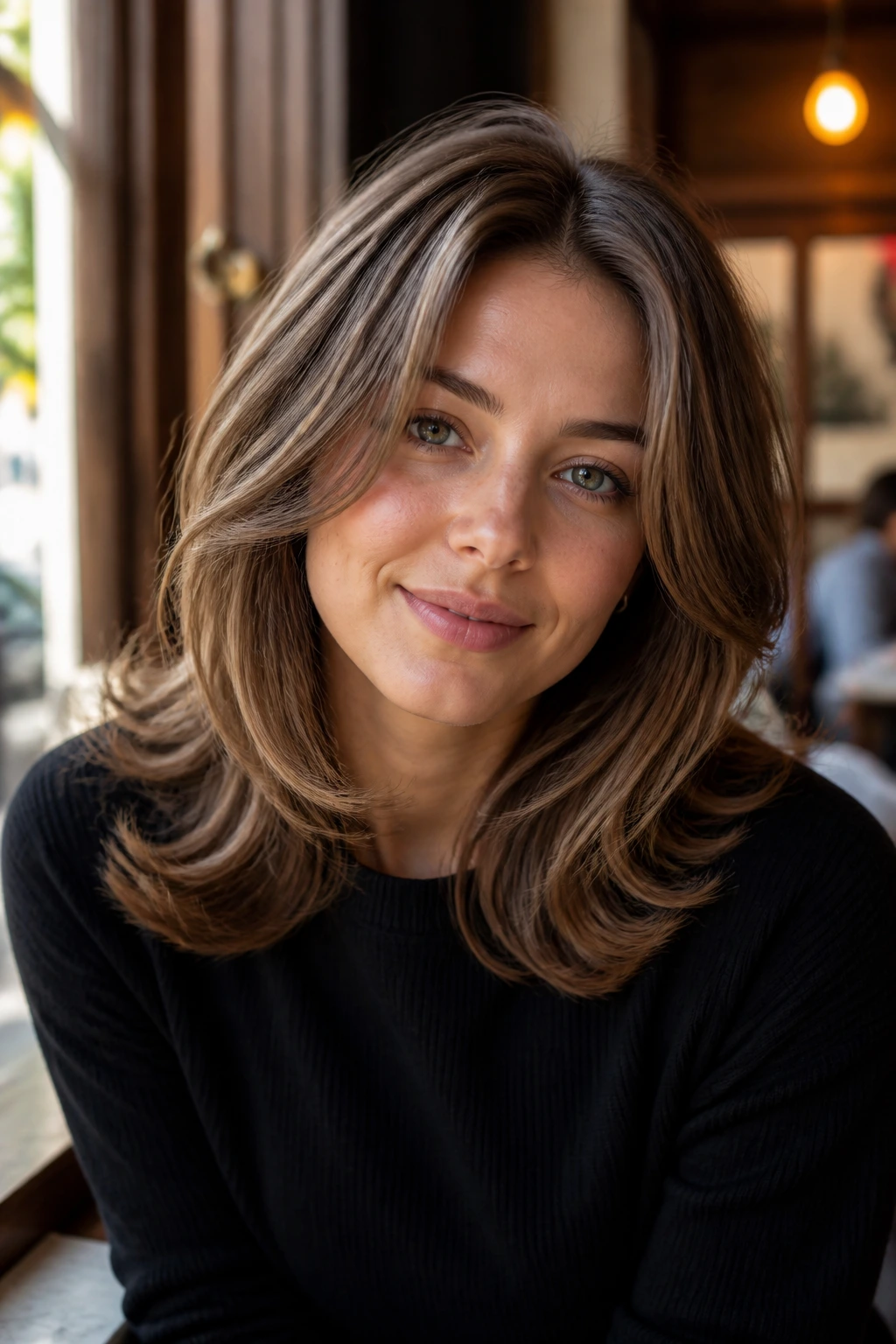
There’s a reason the flipped-out midi keeps coming back. The shape feels playful, and the volume sits at the edges where you can see it. A layered midi cut gives the hair enough body to swing, while the flipped finish keeps the ends from disappearing into the shoulders.
This one looks especially good if your hair is medium to thick and you like a little polish without stiffness. Use a round brush or a flat iron bend at the last inch of the hair. Small move. Big difference. The flip-out keeps the whole style from feeling flat against the neck.
14. French Bob With Airy Fringe
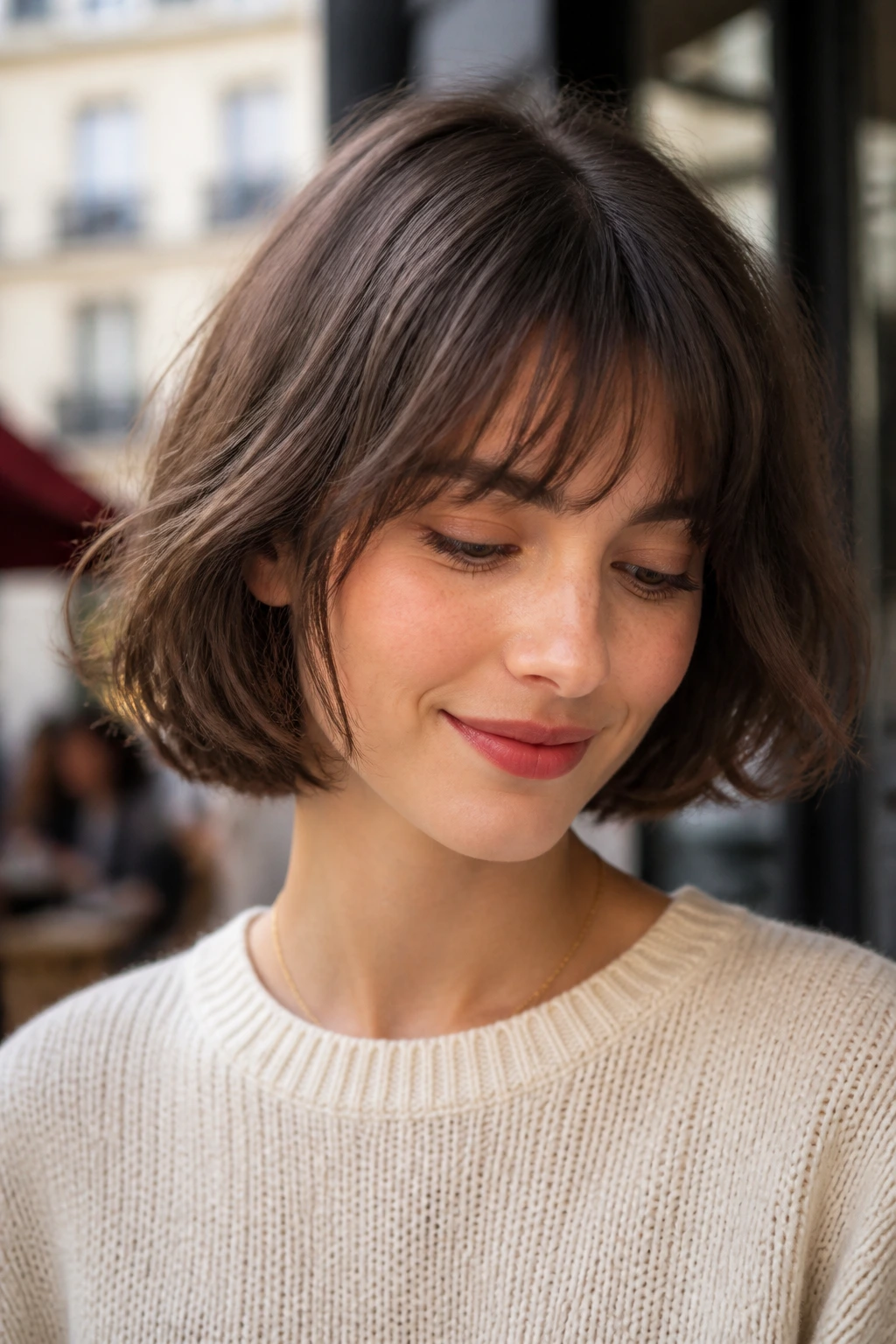
The French bob is short, but it doesn’t have to be severe. The best versions stop around the jawline and carry a soft fringe that breaks up the forehead without closing off the face. Add a little texture through the ends and it becomes breezy instead of sharp.
This cut needs confidence, but not much product. A bit of texture spray and a rough dry are enough if your hair has natural bend. If it’s straight, a quick wave around the face helps. The fringe is the thing that keeps it feeling light. Too heavy, and the whole cut turns into a block.
15. Halo-Layered Long Cut
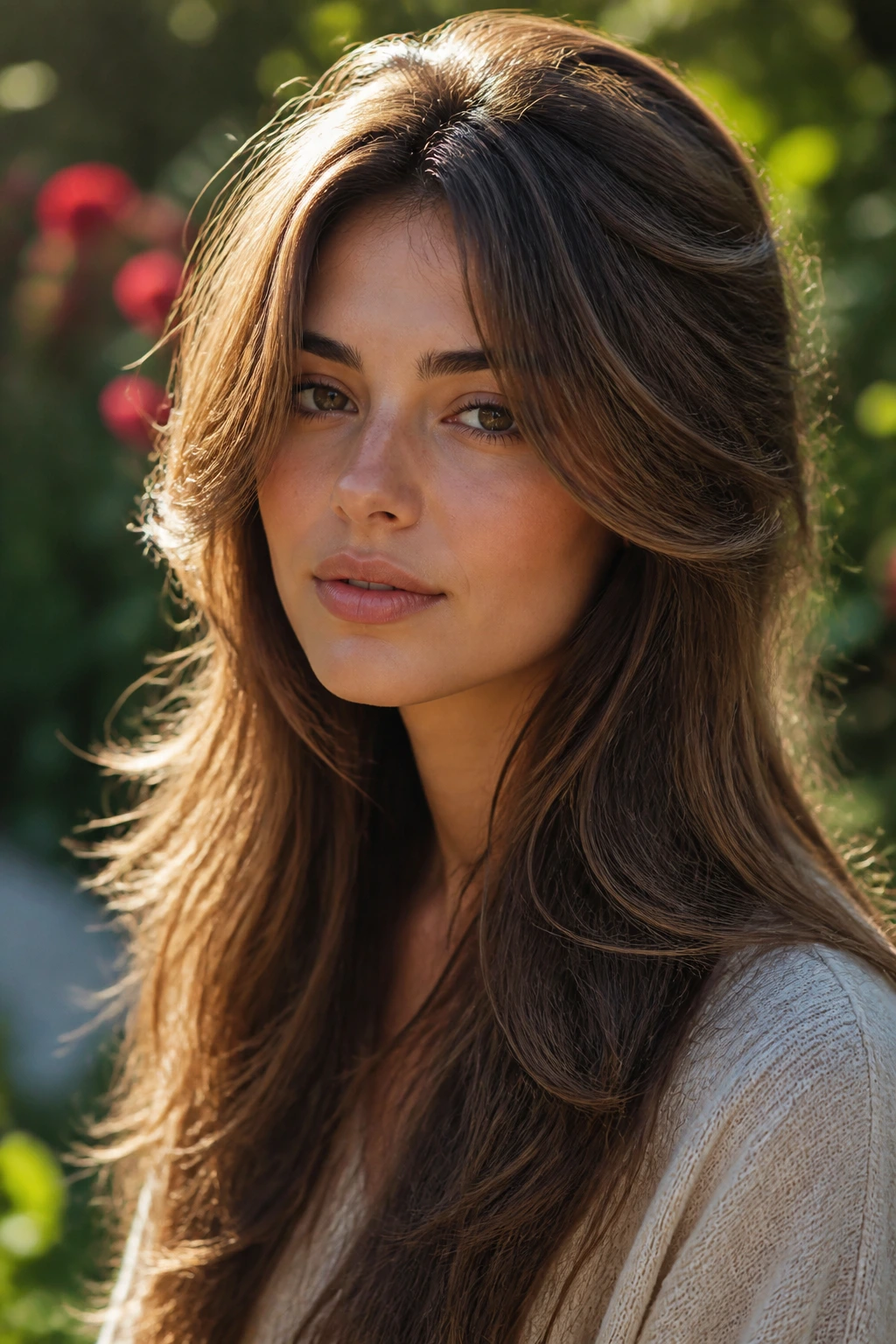
What if you want to keep your length but lose the heaviness? Halo layers do that job.
These layers focus around the crown, the upper sides, and the pieces that frame the face, leaving the lower lengths more intact. That creates lift on top without thinning the bottom into scraps. On thick or dense hair, it can feel like somebody took the weight out of your head without taking away the part you actually like.
16. Razor-Cut Shag

A razor-cut shag has a different feel from a scissor-cut shag. The edges are softer, a little wispy, and often more broken up, which can work beautifully on wavy hair that wants movement. It can also make fine hair look airy, though you need a light hand.
That light hand matters. Too much razor action can leave ends weak or frayed, especially on hair that already splits easily. But on the right texture, the razor creates a fringe-like softness that ordinary cutting sometimes misses. This is not the cut for someone who likes crisp lines. It is for someone who likes hair that moves when they turn their head.
17. Tapered Crop With Soft Fringe
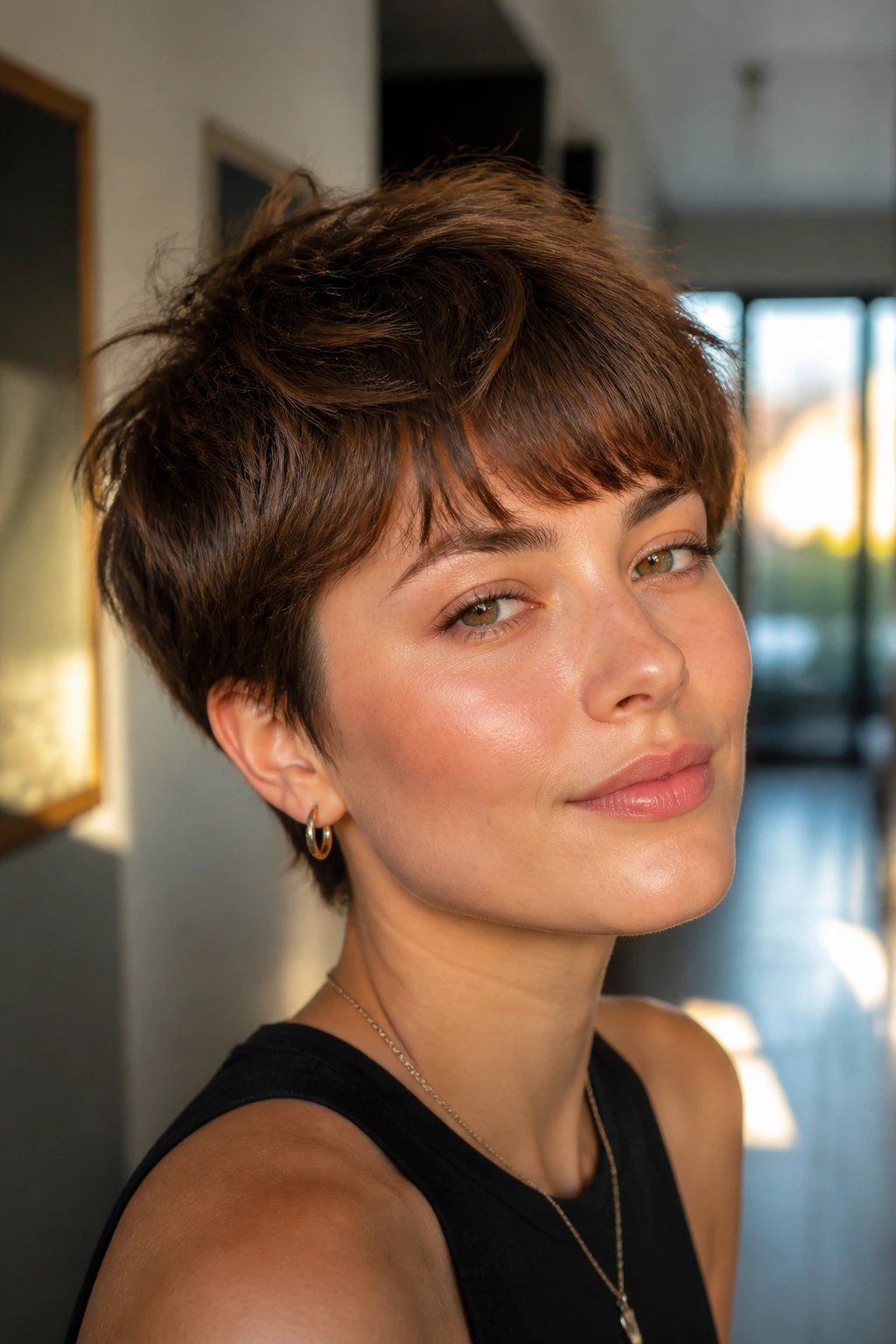
Short hair can be fluffy too.
A tapered crop keeps the sides and nape close while leaving enough height on top to create lift. Add a soft fringe and the shape gets a little warmth, a little roundness, and a lot less severity than a hard-edged crop. It’s a good choice for people who want something neat but not severe enough to feel stern.
18. Bottleneck Bang Bob
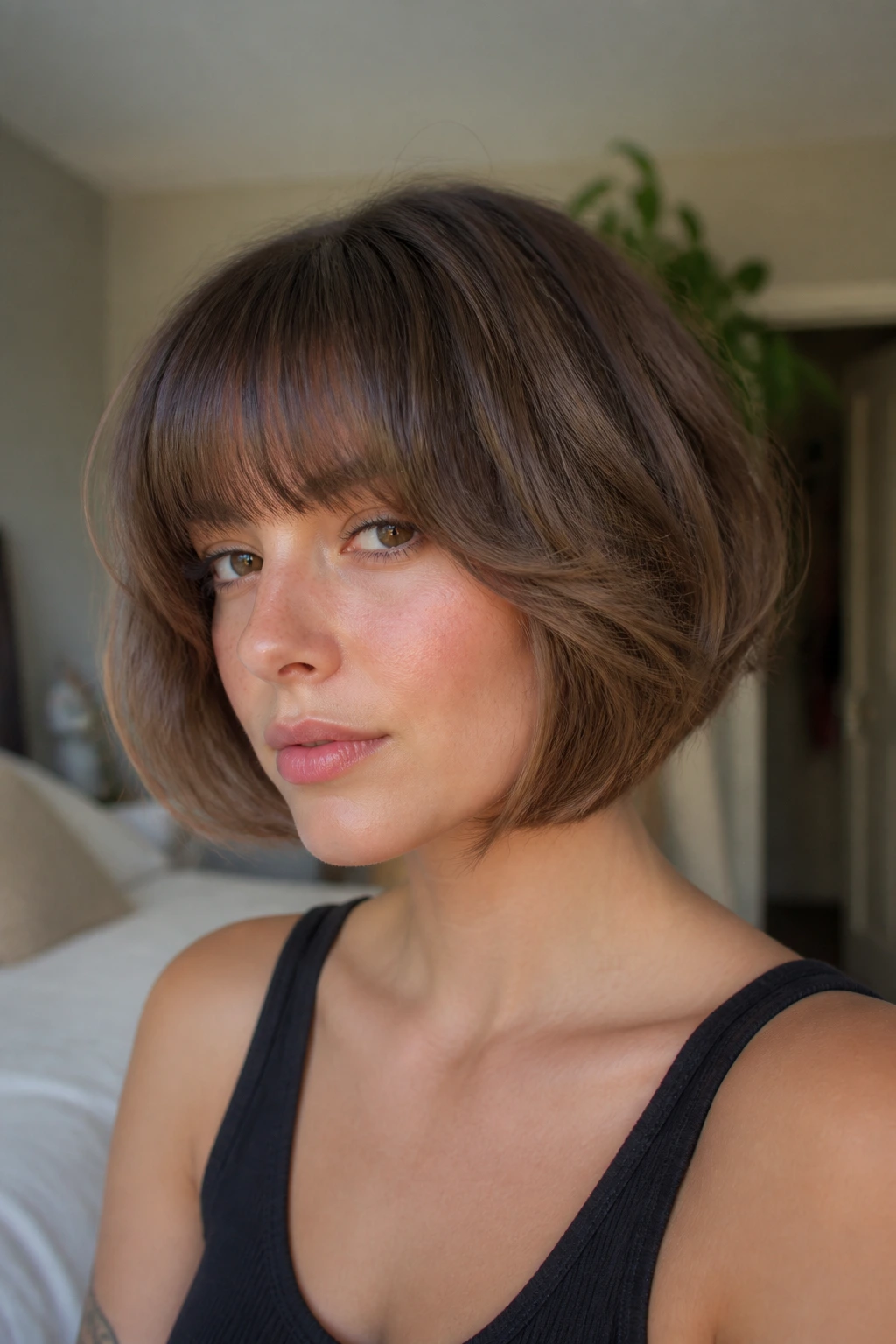
Bottleneck bangs are one of the smartest fringe shapes around because they start a little fuller in the center and taper softly toward the sides. Paired with a bob, they create a frame that feels plush without covering the face too much. The bang shape also helps the bob read as softer and more voluminous.
This cut works on straight, wavy, and slightly curly hair, but it does need regular bang trimming. Let the fringe grow too long and the effect disappears. Styled with a round brush or a quick air-dry bend, it gives that rounded, fluffy edge people want from a bob without the old blunt-line heaviness.
19. Swoopy Side-Part Layers
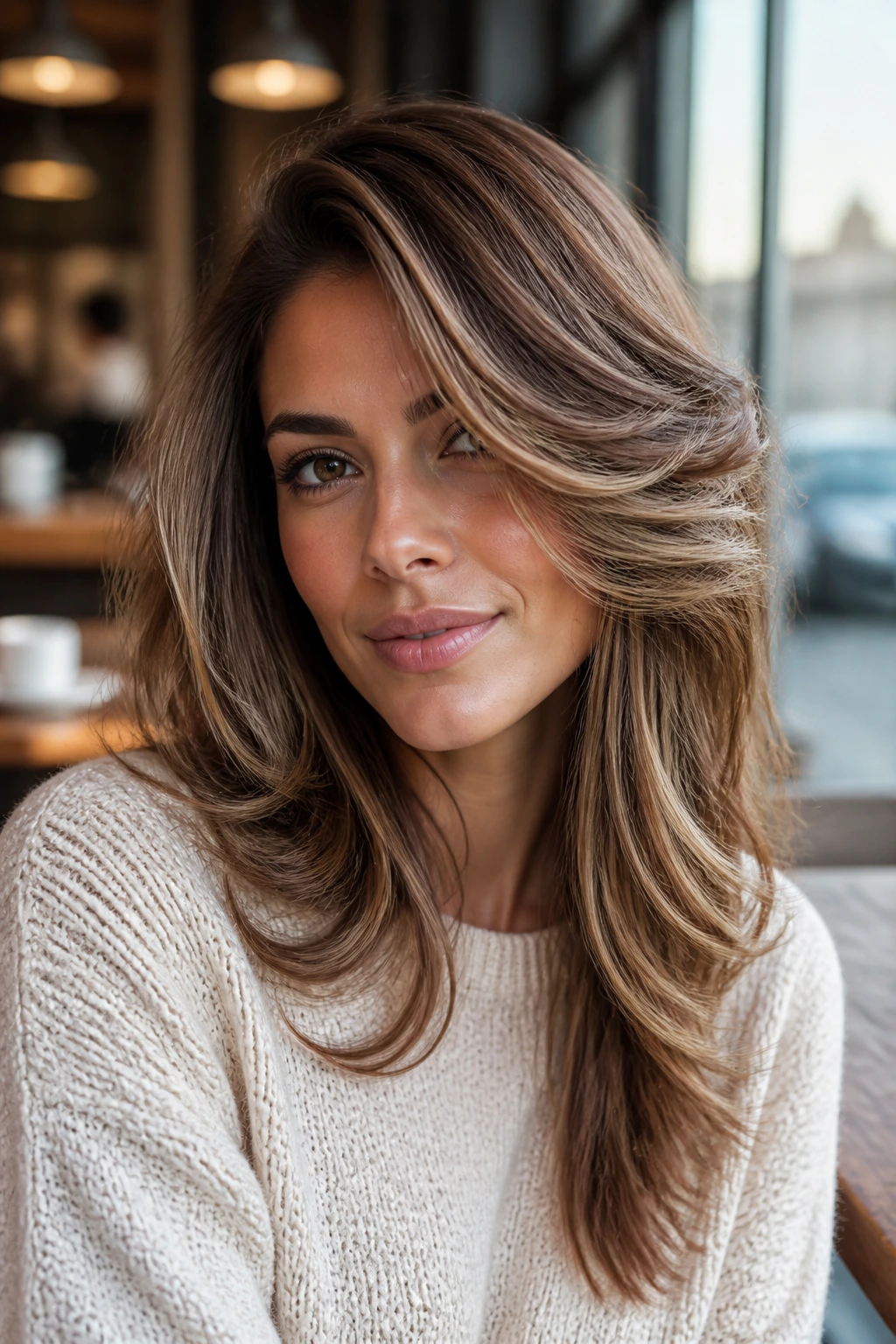
A deep side part can be a cheat code for volume. It shifts the weight, lifts one side at the root, and gives the lengths a sweeping line that feels elegant without being precious. Add layered ends and the whole cut picks up more movement.
This style suits people who want softness around the face without committing to bangs. It’s especially good when one side of the hair tends to collapse or when a cowlick pushes the part around. A little mousse at the roots and a big brush at the top will give you the lifted shape. After that, the layers do the rest.
20. Angled Lob
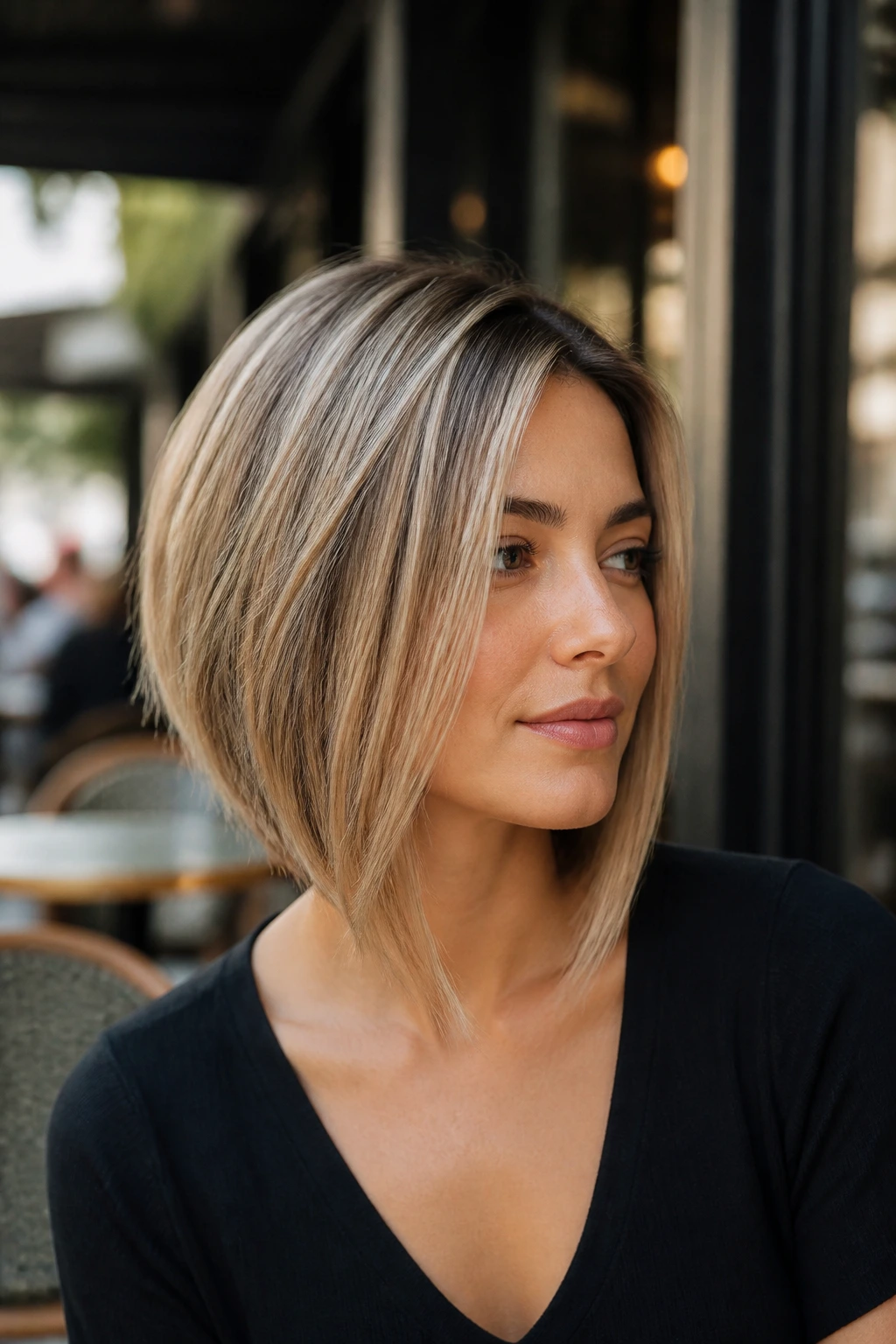
An angled lob is shorter in the back and longer in the front, which sounds simple until you see what it does to the silhouette. The angle pulls the eye forward and keeps the hair from sitting as a flat rectangle on the shoulders. It also gives the nape a cleaner, lighter feel.
I like this on hair that needs shape but not too much layering. The front pieces can swing against the collarbone, while the back stays lifted and easy to manage. It’s polished, but not stiff. If your hair is thick, ask for internal removal in the back so it doesn’t feel dense at the neckline.
21. Choppy Shag With Micro Layers
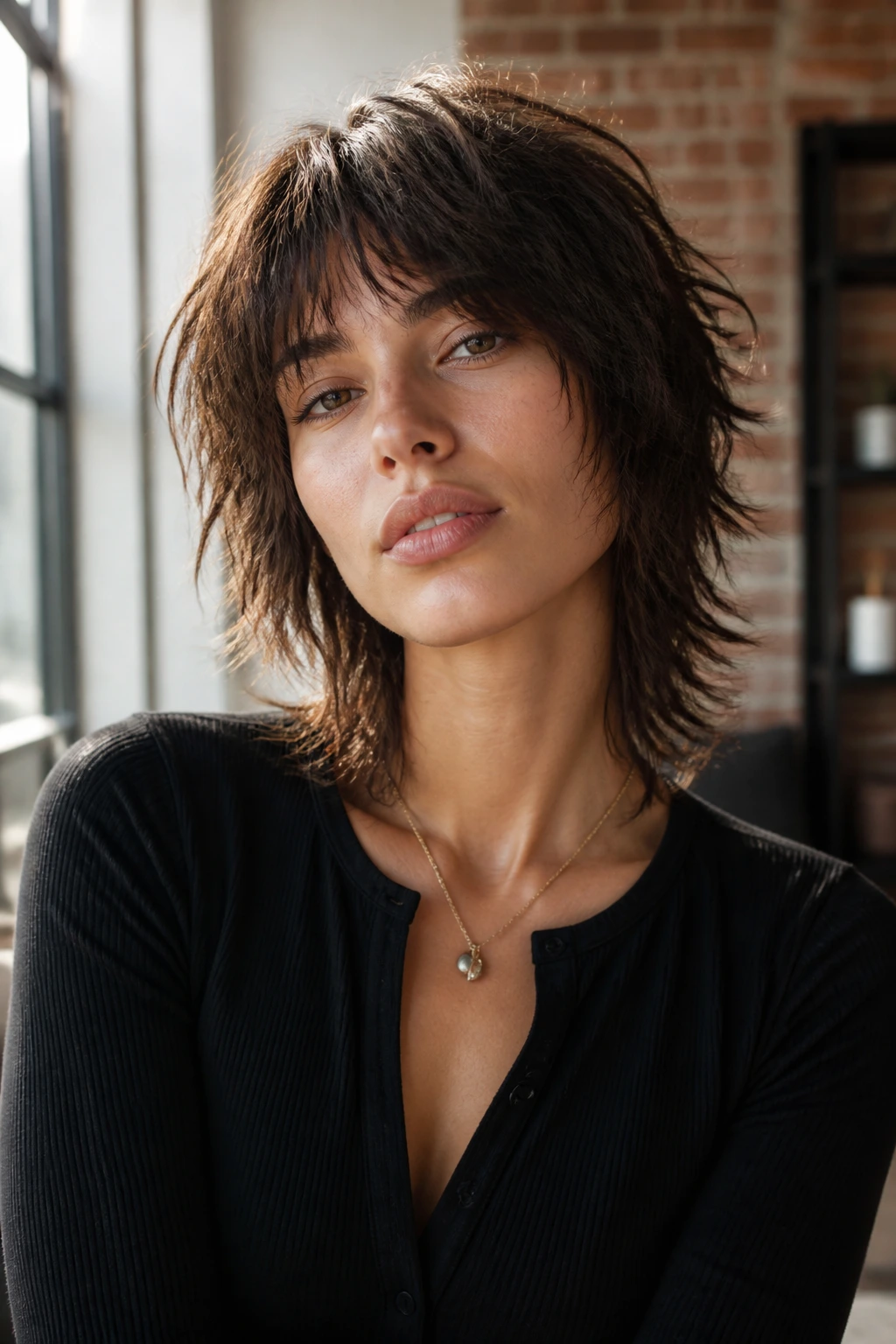
This is the haircut for people who do not want their hair to behave too much.
A choppy shag with micro layers creates separation everywhere — at the crown, around the cheeks, through the ends. It has more texture than a classic shag and usually needs some styling paste or mousse to keep the pieces from blending into a blur. On dense hair, that extra texture can be a blessing. On fine hair, it can go too far if the layers are overdone.
The best version keeps some softness near the face so the cut doesn’t look shredded. You want motion, not holes. If your hair has a natural crimp or wave, this cut can make it look intentionally tousled instead of accidentally wild. That’s the line.
22. Rounded Shoulder-Length Cut
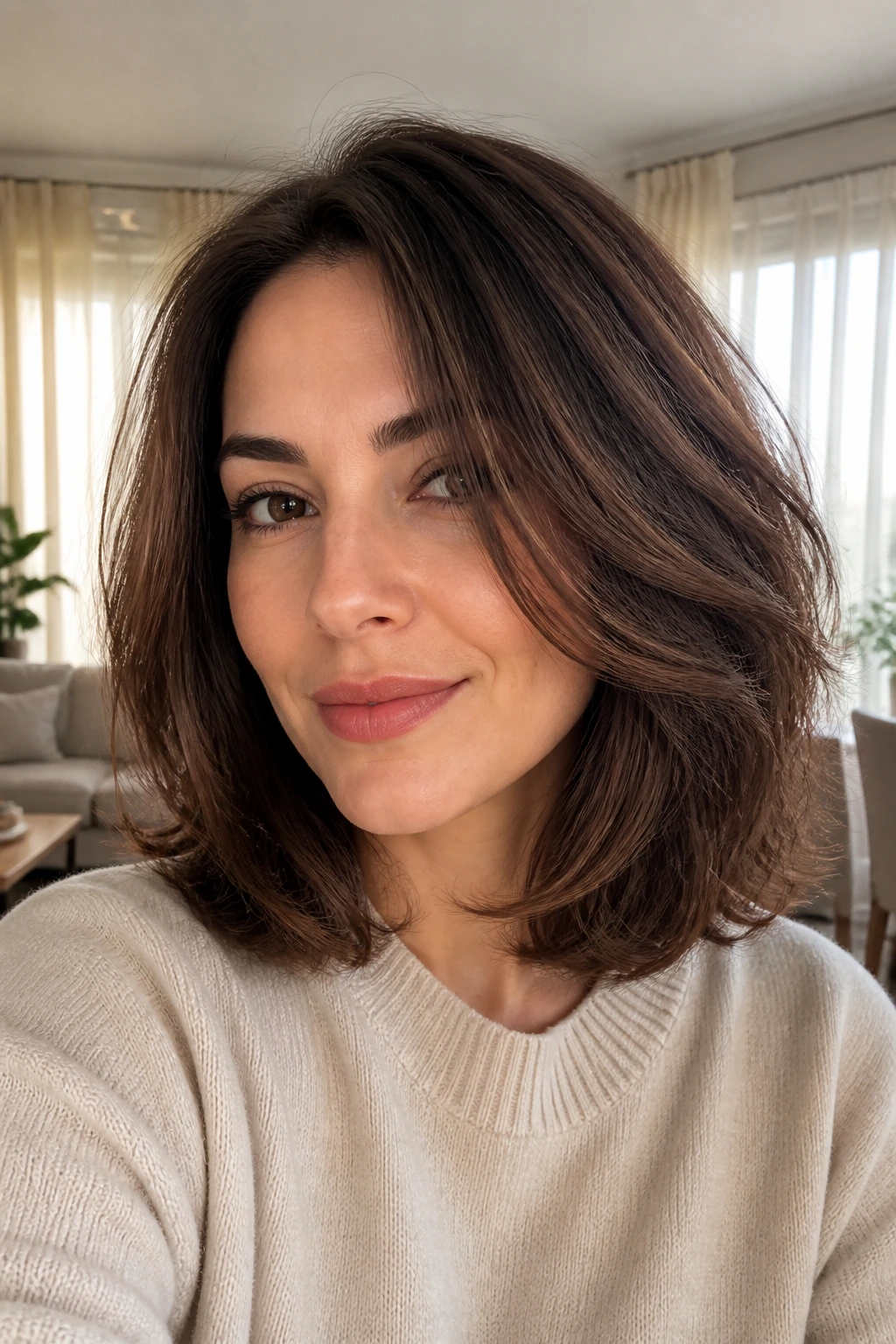
A rounded shoulder-length cut is a quieter kind of fluffy. The shape curves gently around the shoulders instead of dropping straight down, which helps the hair feel fuller and more plush. A little internal layering keeps the sides from jutting out, while the rounded perimeter gives it that soft, touchable finish.
This is one of my favorite options for people who want volume but still need a low-drama haircut. It works with air-drying, light blowouts, or a loose wave. The shape is forgiving. If you skip styling one morning, it still has enough structure to look intentional.
23. Long Pixie With Wispy Top
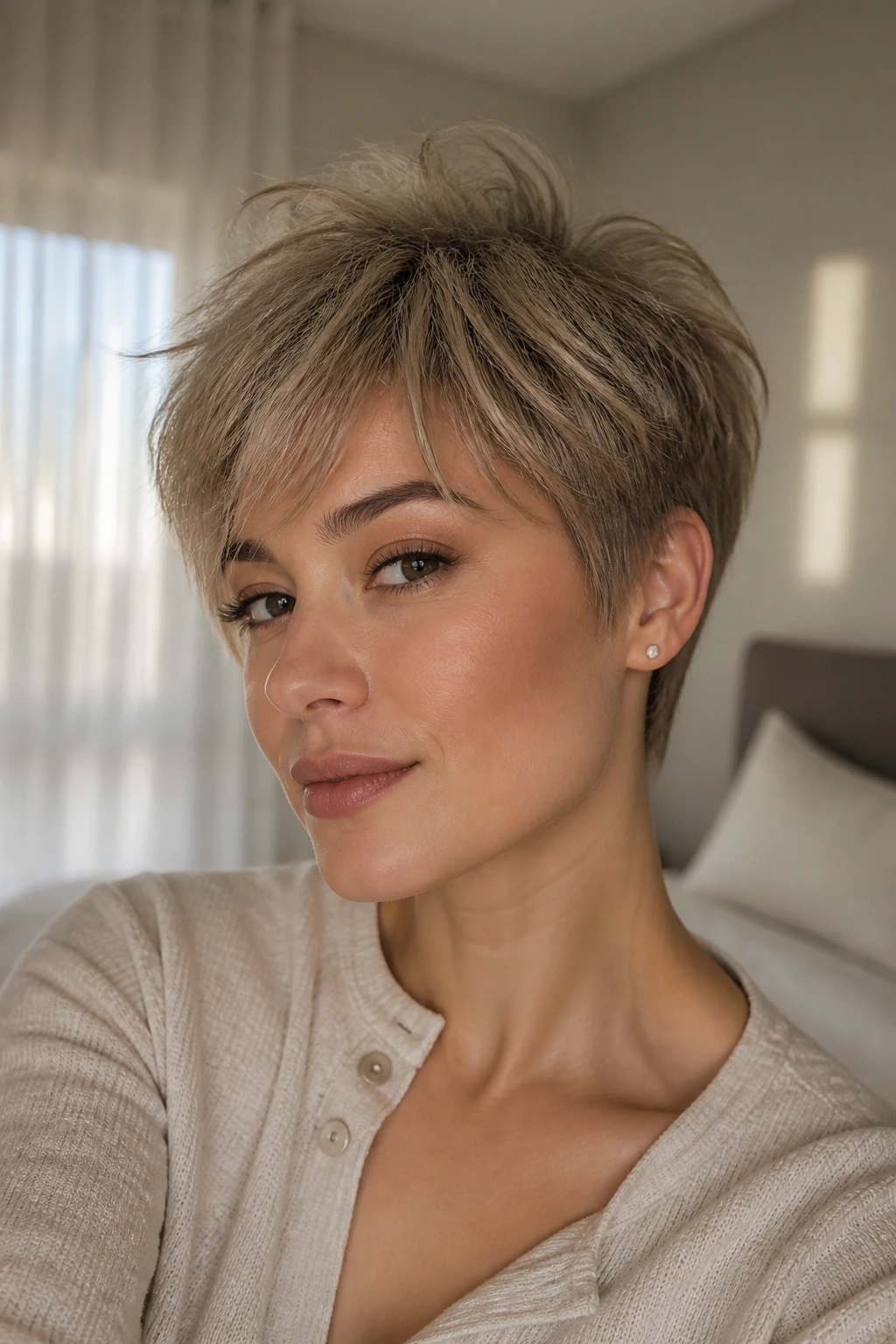
A long pixie gives you the ease of short hair without the hard stop at the scalp. The top stays long enough to lift, sweep, or tuck into a side part, and the wispy fringe breaks up the front so it doesn’t feel severe. The sides can be tapered neatly while the crown keeps a little fluff.
This cut is especially useful if you want something light around the ears and neck but still want hair you can play with. Fingers are usually enough to style it. A little root spray helps, but the cut itself should carry the shape. If it needs constant rescuing, the top is probably too short.
24. U-Shaped Cut With Internal Layers
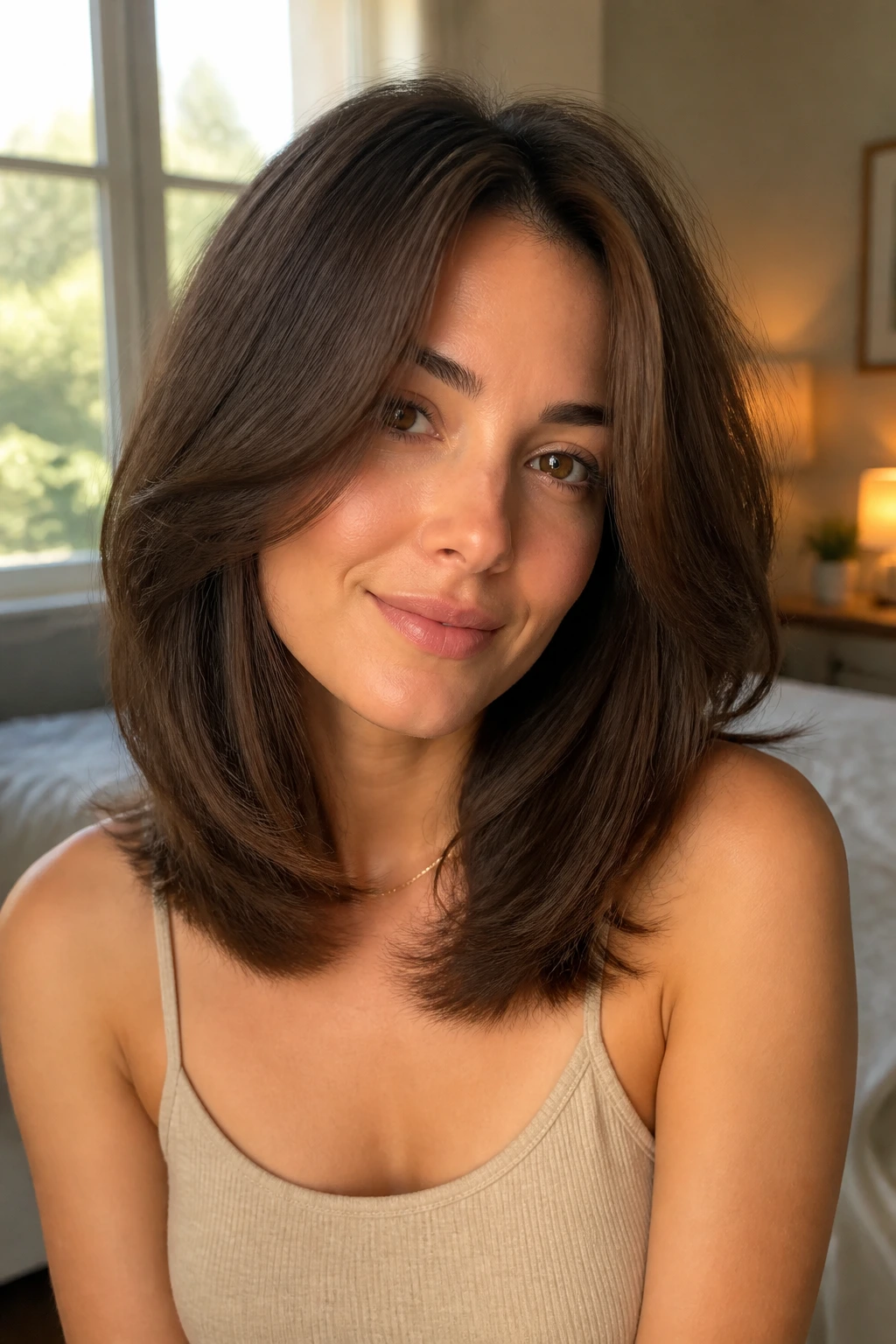
A U-shaped cut sounds subtle, and that’s the beauty of it. The perimeter falls in a gentle curve, which keeps the ends looking full, while internal layers remove enough weight to keep the crown from flattening. It’s a smart long-hair option for anyone who wants movement without sacrificing thickness.
The U shape also helps the hair fall in a softer way down the back. Straight hair gets a little bend. Wavy hair gets more obvious body. Frizzy textures can look especially good here because the curve keeps the shape from ballooning at the sides. It’s not flashy. It just works.
25. Volume-Rich Blowout Layers
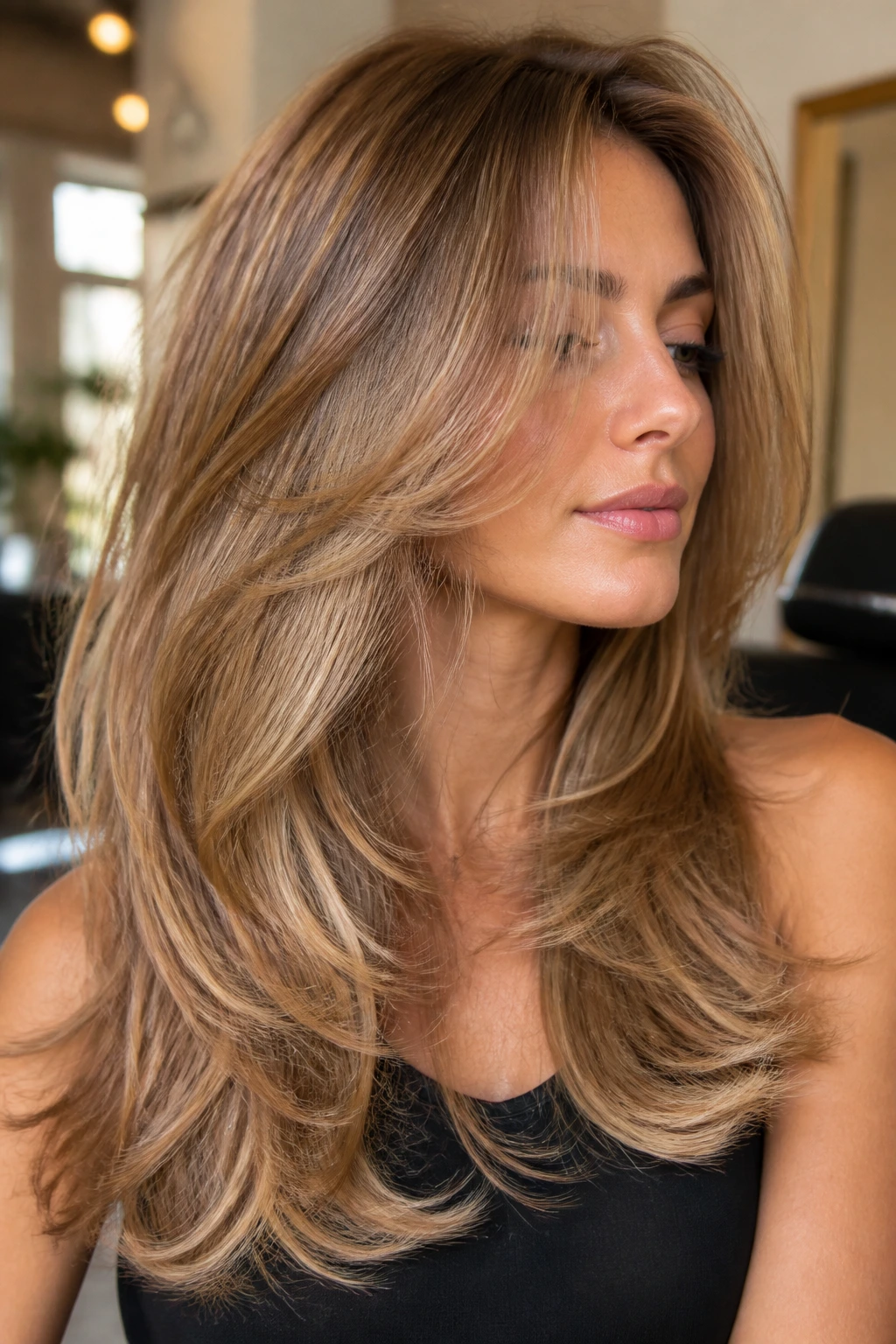
If your dream is hair that looks like it was styled with a round brush and a little stubbornness, this is the cut to ask for. Volume-rich blowout layers are usually built around the face and crown, with longer layers through the sides so the finish has swing. The whole point is bounce.
This cut suits medium to thick hair best, especially if you enjoy the ritual of blow-drying. Velcro rollers, a big brush, or even a hot-air brush can bring the shape to life. On day two, dry shampoo at the roots and a quick re-bend at the front keep it from sinking. It’s the kind of cut that wants a little attention, then pays it back in movement.
Why Fluffy Haircuts Stay Soft Instead of Falling Flat
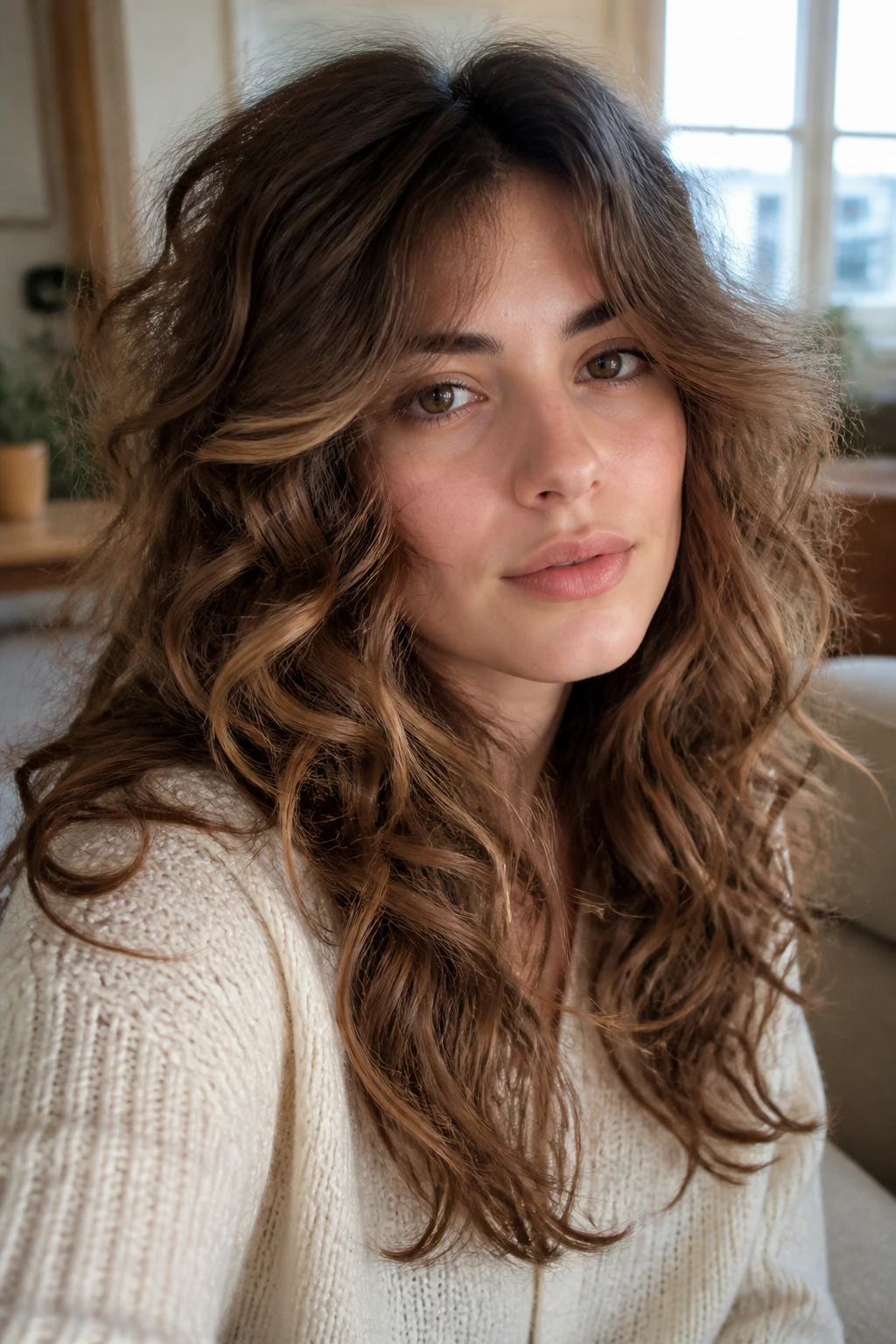
The difference between fluffy and puffy is usually hidden in the structure.
A good fluffy haircut takes weight off the places that drag the shape down — often the mid-lengths, the sides around the cheekbones, and the crown if the top is too heavy. At the same time, it leaves enough perimeter at the ends to keep the silhouette full. That balance is why a collarbone lob can look airy while a badly layered cut at the same length can look stringy and sad.
For frizzy, crimped, and wavy hair, the cut matters even more than the styling product. If the hair wants to expand, you need layers that guide the expansion upward or inward, not outward at the widest point of the head. That’s why a rounded bob can feel much better than a blunt box, and why a shag can look soft when the shortest layers are placed with purpose.
One thing people get wrong all the time: they ask for volume everywhere. That’s how you get a triangle. What you actually want is controlled lift — a little at the crown, a little around the face, and enough movement at the ends that the hair keeps breathing when it dries down.
The Tools That Make Soft Volume Easier to Keep
-
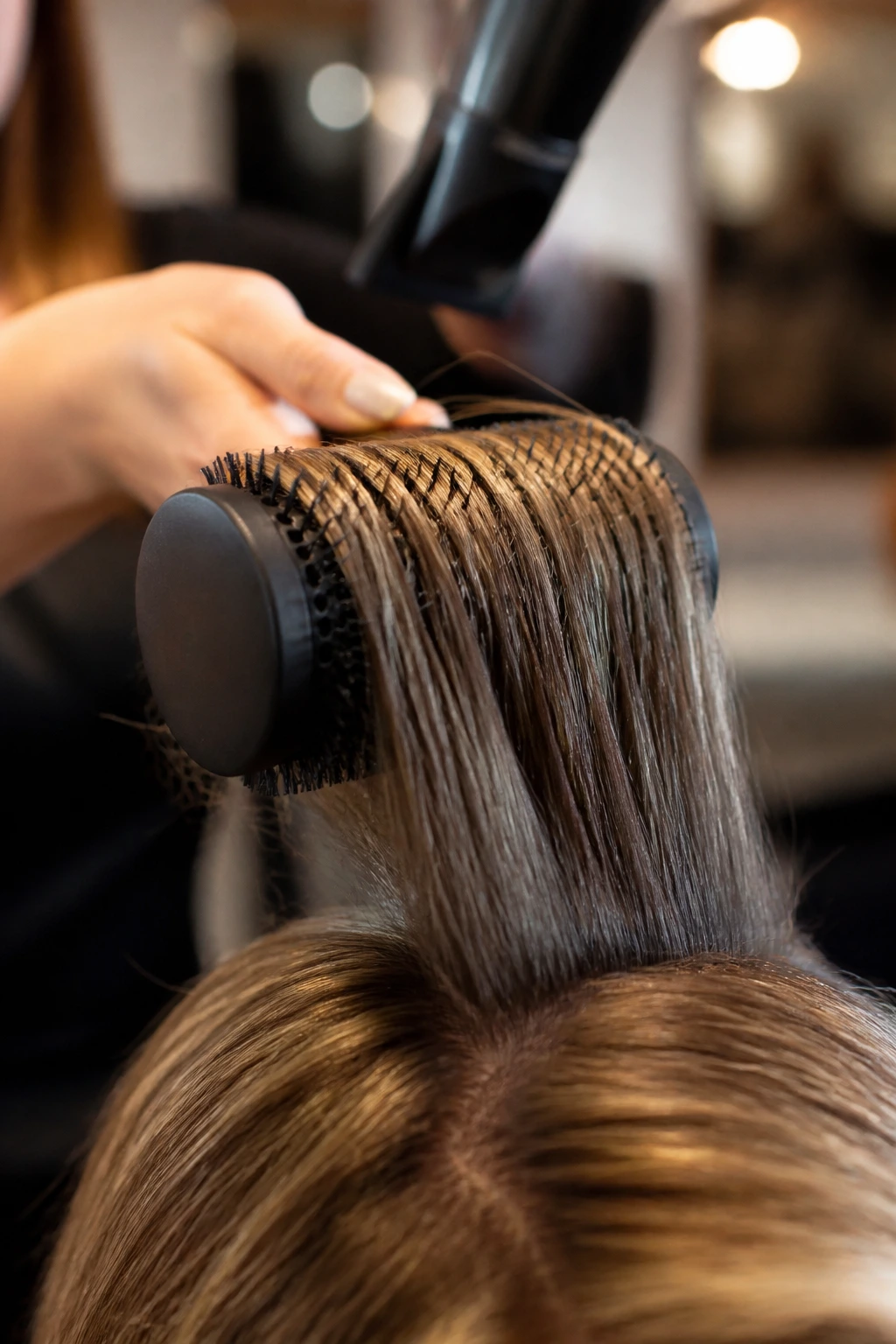
A 1 to 1½-inch round brush: Smaller barrels give a stronger bend; larger barrels keep the finish looser and softer.
-
A diffuser attachment: This is the friend of curls, waves, and crimped texture when you want lift without blasting the pattern apart.
-
Light mousse or root lift spray: Use it at the roots before blow-drying so the crown doesn’t collapse the second the brush leaves.
-
Dry shampoo: Best on day two or day three, especially if your hair gets soft and sleepy at the scalp.
-
Texturizing spray: Adds separation to shaggy layers, bobs, and pixies without making hair feel crunchy.
-
Velcro rollers: Not glamorous. Very effective. A few minutes in the front can change the whole silhouette.
-
Wide-tooth comb: Better than a fine comb for curls and soft waves; it keeps the cut from puffing in the wrong spots.
-
Sectioning clips: Useful when you want the top to dry with lift instead of getting mashed under the rest of the hair.
-
Blow dryer with a nozzle: The nozzle matters more than people think. It directs heat, which helps smooth the cuticle without flattening the shape.
-
A silk or satin pillowcase: It won’t create volume by itself, but it protects the shape you already paid for.
How to Choose the Right Fluffy Haircut for Your Texture
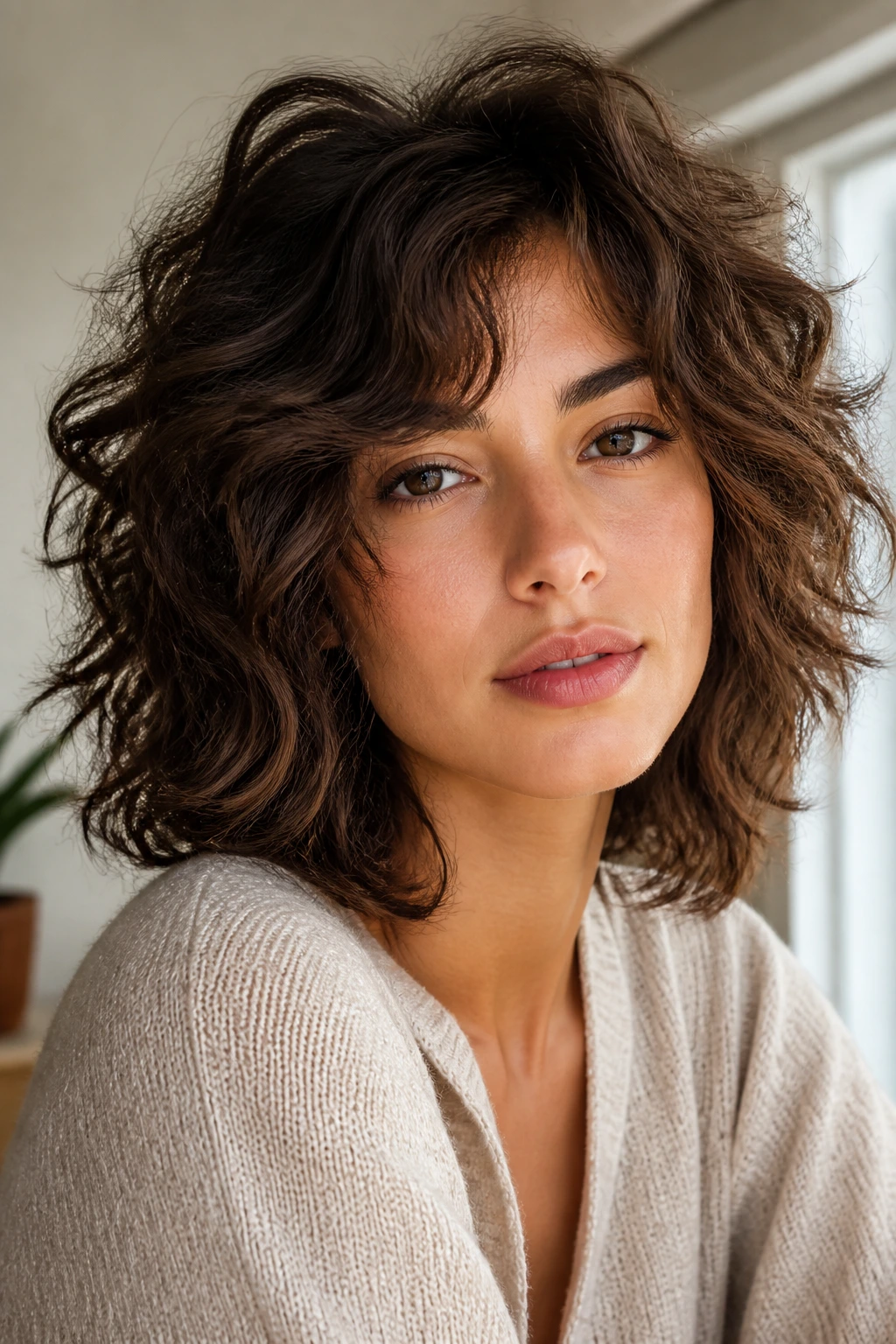
Fine hair: Look for cuts that create lift without removing too much weight from the ends. A soft layered bob, rounded pixie, clavicut, or collarbone lob can make fine hair look fuller because the silhouette stays compact. If the layers are too high or too many, the hair starts looking sparse fast.
Thick hair: You need shape control more than you need more layers. Feathered mid-length cuts, halo layers, angled lobs, and long U-shaped cuts help the hair move without turning into a block. Thick hair can carry more texture, but it still needs a perimeter that holds together.
Curly hair: The cut should follow the curl pattern, not fight it. Curly shags, long pixies with room on top, and halo-layered long cuts are strong choices because they let the curls spring where they want. Dry cutting can help, because it shows the real shape before the scissors decide anything.
Frizzy or crimped hair: Don’t chase sleekness so hard that you erase the natural body. A modern wolf cut, razor shag, or rounded shoulder-length cut can make the texture look intentional. The mistake is usually too much bulk removal at the wrong point, which leaves the hair wide and fuzzy instead of fluffy.
Cowlicks and stubborn growth patterns: Shorter cuts sometimes handle these better than long ones because there’s less length fighting the swirl. A side part, curtain fringe, or long pixie can work with the growth pattern instead of pretending it isn’t there.
How to Wear the Shape So It Still Looks Soft by Noon
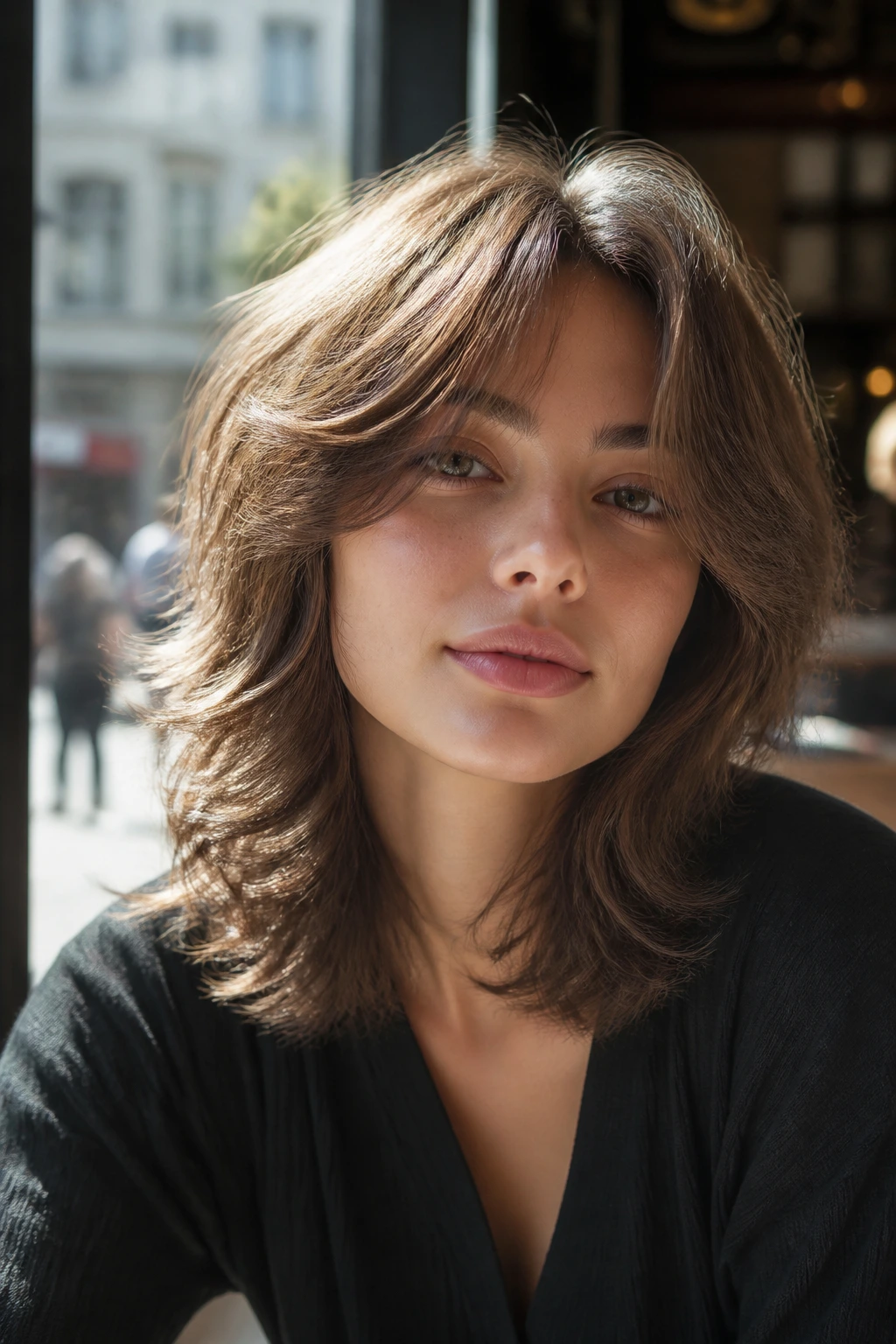
Presentation: Keep the lift where the cut was designed to sit. For bobs and lobs, that usually means a bend at the ends and a little root lift on top. For shags and wolf cuts, it means separation around the face and a softer finish through the crown.
Accompaniments: Earrings, glasses, headbands, and collars all change how fluffy hair reads. A high collar can flatten a short fluffy cut around the neck, while a pair of statement earrings can make a bob feel more open. Little things. They matter.
Portions: If your hair is dense, keep more length in the perimeter and less aggressive layering. If it’s fine, keep the layers close to the shape and avoid thinning the ends too much. The wrong proportion is usually why a haircut looks airy in the salon and tired at home.
Routine Pairing: The best daily pairing is rarely a heavy serum. Use a root product at the crown, a lightweight cream through the ends, and a dry texture spray only where you need separation. Too much product kills the lift fast. Less, then more if needed.
Extra Tricks That Make Soft Volume Last Longer
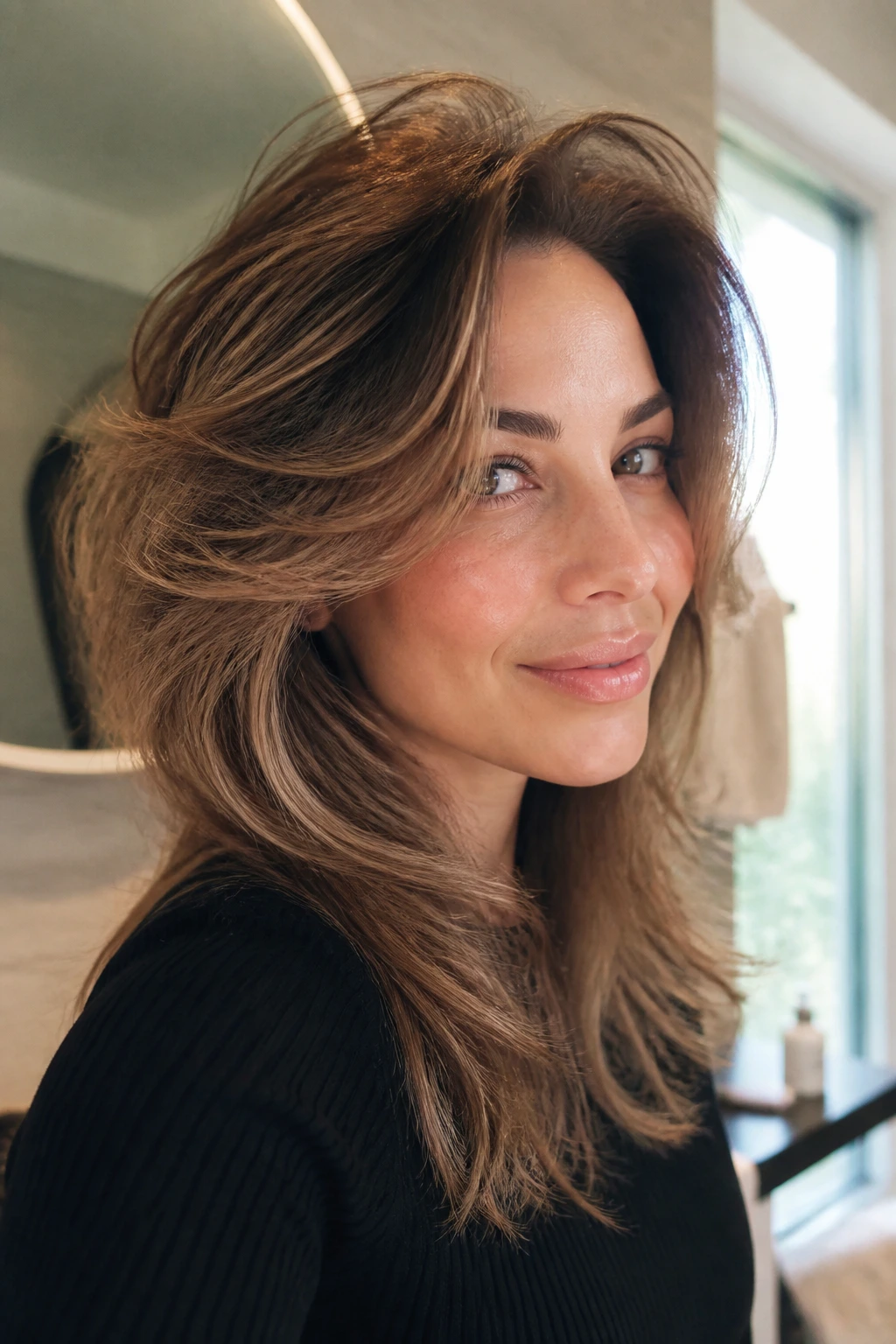
Root Lift: Blow-dry the roots in the opposite direction of the part for the first few minutes. That tiny wrong-way set gives the hair memory, and memory is what fluffy hair needs.
Texture Boost: If the cut looks too tidy, mist a texturizing spray under the top layers and scrunch the ends with your fingers. You want movement, not stiffness.
Softness: A pea-sized amount of cream on the ends can keep a shag or bob from looking frayed, especially if your hair is prone to frizz. Too much, though, and the whole cut sinks.
Make-It-Yours: For a polished office look, keep the part clean and the ends smooth. For a more undone look, let the fringe fall a little messier and use your fingers instead of a brush. Curly hair can lean into the halo. Straight hair can lean into the bend.
Common Mistakes That Flatten a Fluffy Cut
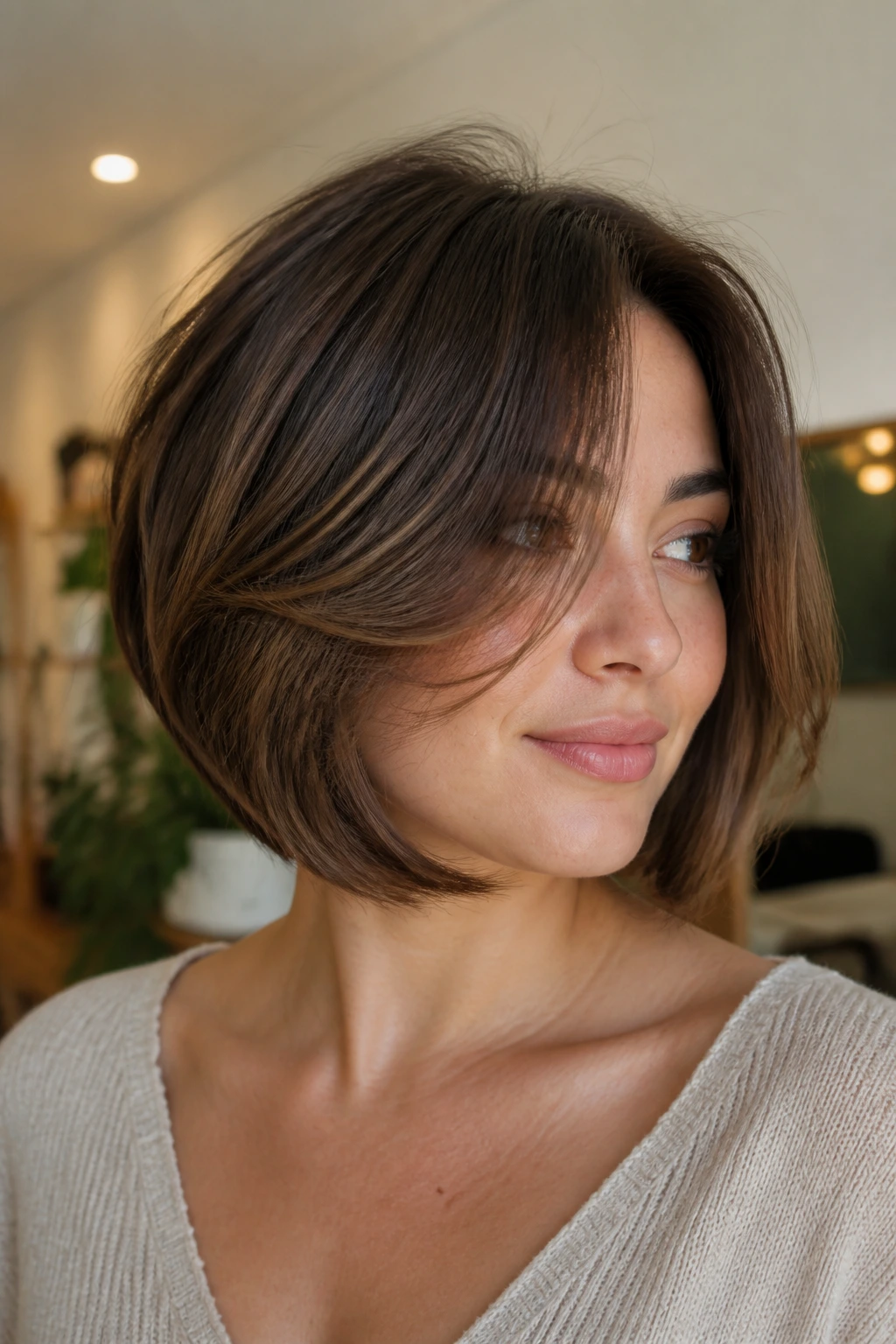
Over-thinning the ends: The symptom is hair that looks airy for one day and see-through for the next two. The fix is to keep enough perimeter weight so the shape doesn’t fray out.
Cutting the top too short: This is a classic fine-hair mistake. The crown lifts at first, then sticks up like a broom. Ask for lift near the roots, not a chop that leaves no runway for styling.
Using heavy oils at the root: Shine is nice. Flat roots are not. Keep oils and rich serums on the lower half of the hair, or the volume collapses before lunch.
Ignoring growth patterns: Cowlicks, whorls, and a stubborn front hairline will change how the cut sits. A good stylist works with them. A rushed one bulldozes them, then sends you home with a part that will never stay put.
Picking a fringe without checking shrinkage: Bangs can spring shorter than expected, especially on waves and curls. If you want curtain fringe or bottleneck bangs, leave enough length to let them settle.
Forgetting the styling tool in the equation: A fluffy cut cut with the wrong barrel size can look too curled or too straight. The shape needs the right finish. A 1¼-inch brush gives a different result from a giant round brush, and that changes the whole head.
Shape Shifts for Different Hair Lives
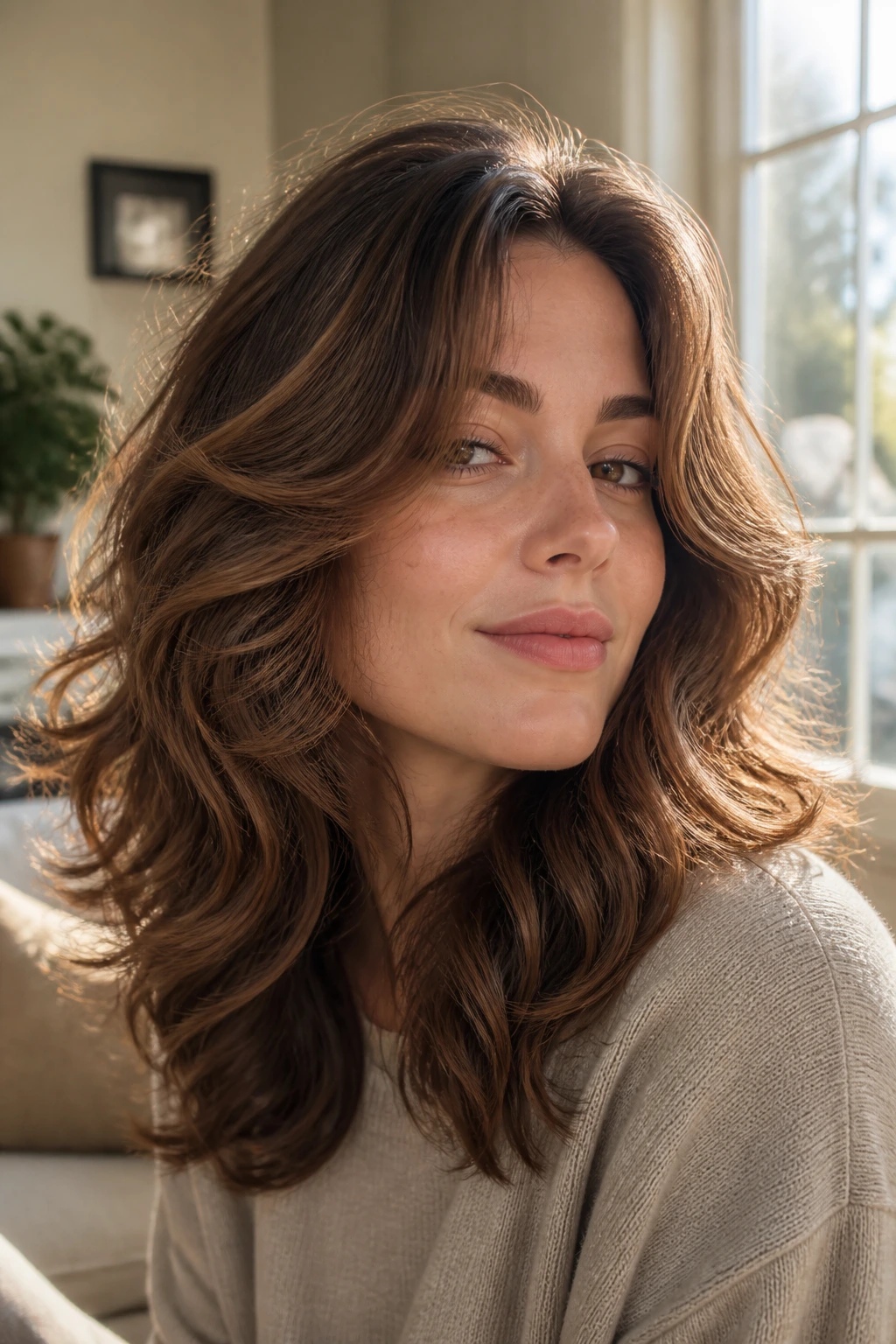
The Air-Dry Version: Best for wavy or curly hair that already has body. Ask for layers that fall naturally when the hair dries without a brush. This version leans on movement, not polish.
The Blowout Version: Built for people who like roller sets, round brushes, or hot-air brushes. The layers need to be placed so the ends flip and the crown lifts without much effort. It’s a little more maintenance, but the finish is lush.
The Short-and-Soft Version: Think bixie, rounded pixie, or tapered crop. These cuts keep the head light and the shape plush, which is useful if you want volume without long hair dragging everything down.
The Long-and-Loose Version: Butterfly cuts, halo layers, and U-shaped cuts belong here. They keep the length while lifting the top, which is the right call if you want soft volume without losing the part you can still pull into a clip.
The Texture-First Version: Curly shag, wolf cut, and razor shag. These are for people who want the hair’s own pattern to do most of the work. Product helps, but the cut does the talking.
Keeping the Cut Fresh Between Appointments

Fluffy haircuts hold their shape best when you do not let them grow unchecked. A trim every 6 to 10 weeks keeps short shapes like pixies, bixies, bobs, and French bobs from losing their outline. Long layers can usually stretch a little longer, often 8 to 12 weeks, as long as the front pieces are still framing the face instead of falling into your mouth.
Between washes, use a light touch. Dry shampoo at the roots on day two is enough for most hair types. If the ends start to feel dull, a tiny bit of leave-in cream on the last few inches will help without flattening the crown. Sleeping on a silk or satin pillowcase keeps the top from getting crushed, and clipping the front layers loosely can stop curtain bangs from going weird overnight.
If your hair is curly, refresh with water and a little leave-in rather than piling on more product. If it’s straight, a few minutes with a round brush or large roller set can bring the shape back faster than a full restyle.
Questions People Ask Before They Book

Are fluffy haircuts good for fine hair?
Yes, if the layers are placed carefully. Fine hair usually needs shape and lift, not a lot of thinning. A bob, pixie, clavicut, or collarbone lob with soft internal layers can make the hair look fuller without exposing too much scalp at the ends.
Will layers make thick hair look thinner?
Only if they’re cut too aggressively. Well-placed layers remove bulk while keeping the perimeter full enough to hold a shape. That’s the difference between “lighter” and “stringy.”
Can frizzy hair pull off a fluffy cut?
Absolutely, and sometimes it looks better than very sleek hair in these cuts. The key is to avoid over-cutting the widest parts of the head. A shag, wolf cut, or rounded shoulder-length shape usually handles frizz better than a blunt box.
What should I ask for at the salon?
Bring photos, but also describe your texture and how much time you’ll spend styling. Say where you want the volume — crown, cheeks, or ends — and ask how the cut will grow out after six weeks. That part matters more than the first-day blowout.
Do curtain bangs work with a fluffy haircut?
They can, and they often help. Curtain bangs add lift and softness around the face, but they need enough length to settle. On wavy hair, they’re especially useful because they blend into layers instead of sitting like a separate helmet.
How do I keep the shape on day two?
Dry shampoo at the root, a little bend at the front, and less hand-touching than you think you need. A few minutes with a round brush or hot-air brush is usually enough to wake the cut back up.
Is a fluffy cut high maintenance?
Not always. A rounded bob or clavicut can be surprisingly easy. A shag or blowout-layer cut needs more styling, but the tradeoff is that the shape often looks better with a little wear.
The Shape That Keeps Working
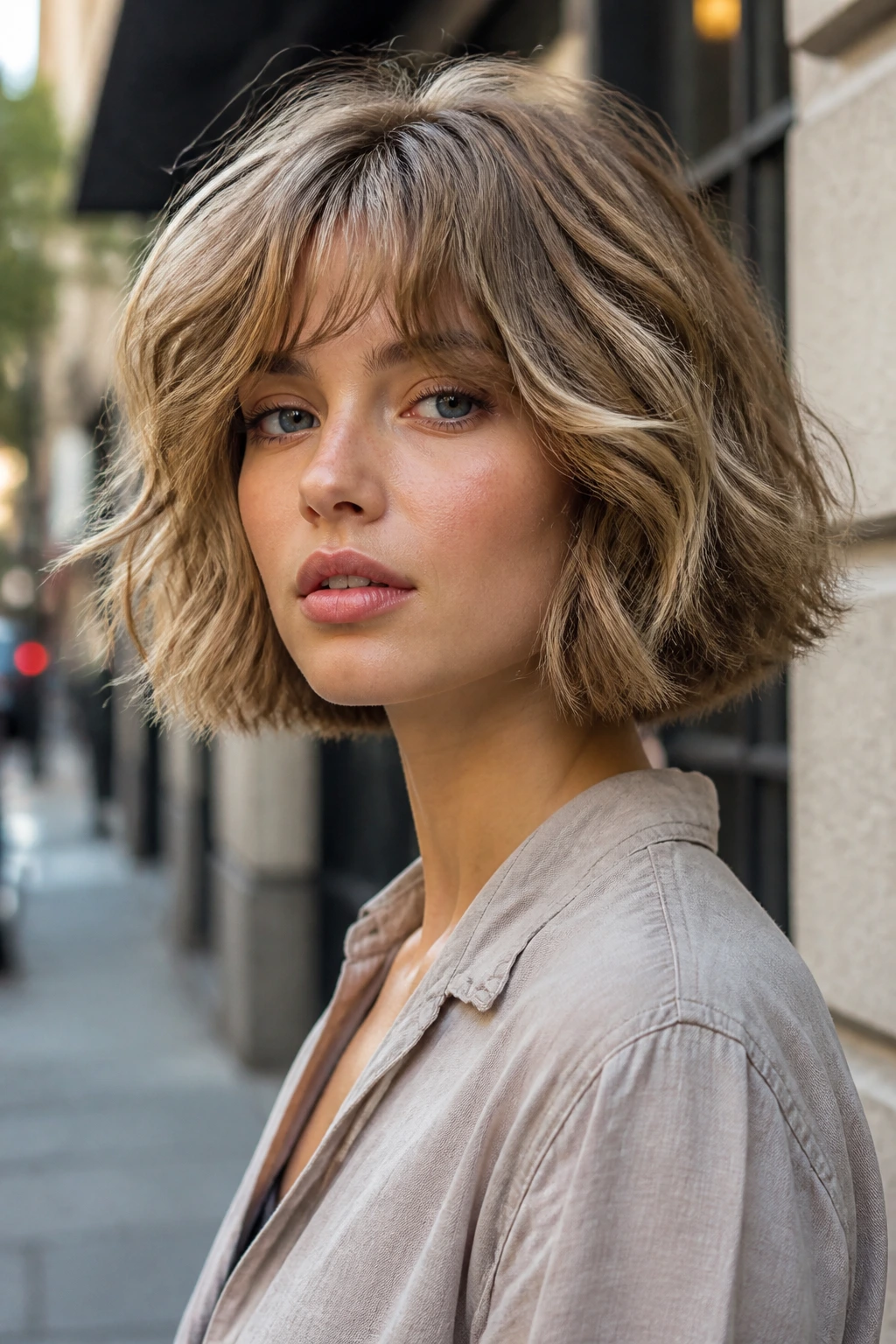
The best fluffy haircuts do not fight your texture. They give it a better outline. That’s why a bob can look plush instead of blocky, why a shag can feel soft instead of messy, and why long layers can suddenly stop dragging the face down.
Pick the cut that matches how you actually live with your hair. If you blow-dry, choose a shape that rewards that habit. If you air-dry, choose one that keeps its structure when you leave it alone. If your texture is crimped, wavy, or curly, stop trying to flatten every bend out of it. There’s body in there already.
A good haircut makes that body look intentional. And once you get that part right, you spend a lot less time trying to fake volume that was hiding in plain sight all along.
