



Thick, frizzy hair has opinions. Cut it too blunt at the wrong length and it balloons out like a mushroom cap; leave it too long and the weight can drag the shape flat while the ends still puff. Short cuts for thick, frizzy hair work best when they respect the hair’s own spring, bend, and bulk instead of trying to bully it into behaving like fine, slick hair.
That’s the part most people get backwards. They ask a haircut to fix texture, when the haircut should really make the texture easier to live with. The sweet spot is usually somewhere between the chin and the collarbone, with enough internal shaping to remove bulk but not so many short layers that the ends go fuzzy by noon. A good short cut on this texture looks deliberate even when you air-dry it messy.
The cuts below lean into that reality. Some keep a hard line, some stack the back, some turn frizz into movement, and some are for the person who wants the shortest possible crop without looking like they lost a fight with the clippers. The common thread is shape. Once that’s right, styling gets a lot less dramatic.
Why These Cuts Make Thick, Frizzy Hair Easier to Wear
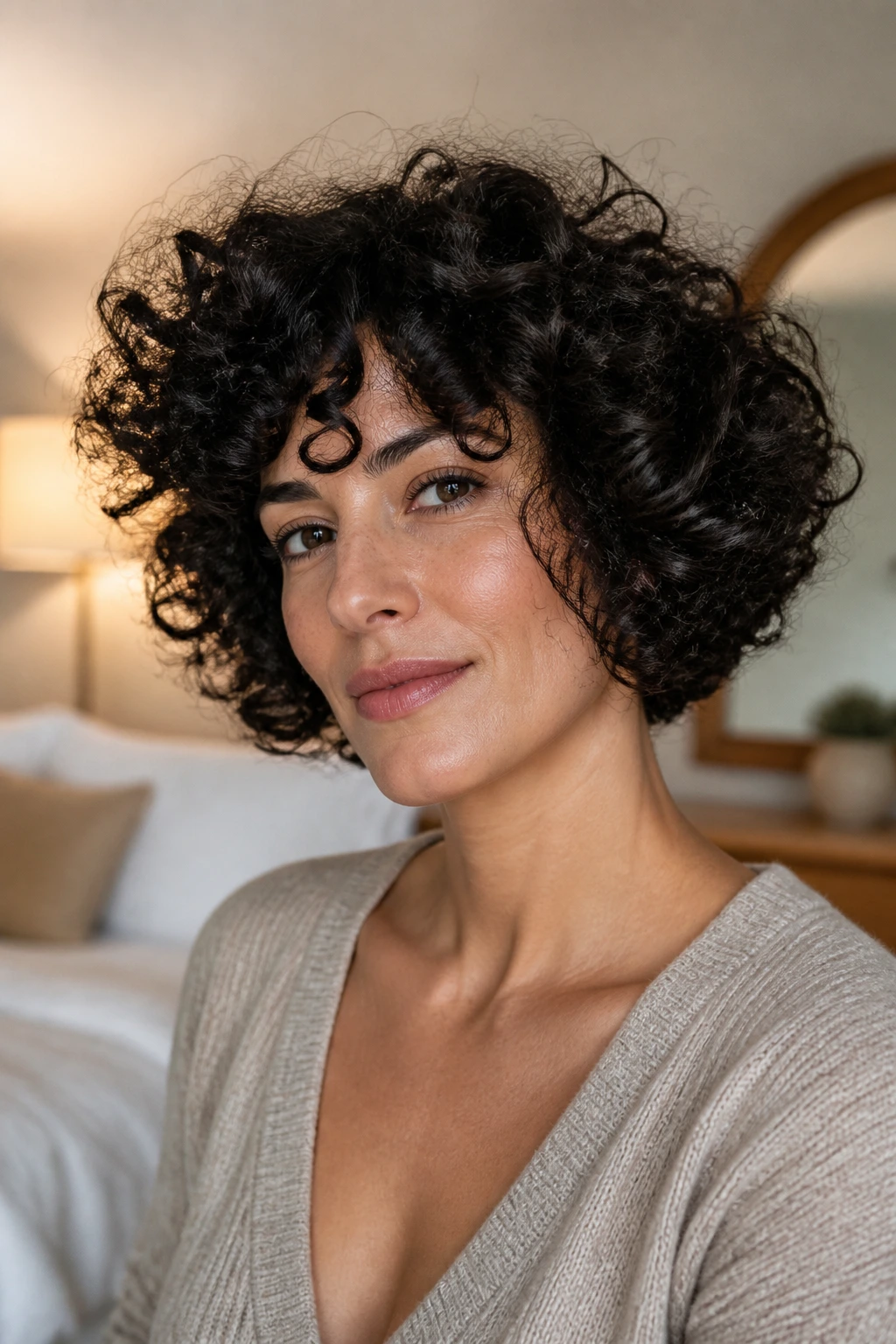
- Weight control: Cutting off the heavy tail at the jaw, chin, or nape removes the length that makes thick hair swell outward at the ends.
- Shape first, smoothness second: A strong outline — blunt, stacked, rounded, or inverted — still reads clean when humidity roughs up the surface.
- Faster dry time: Shorter hair dries sooner, which matters because frizz tends to look louder when hair dries unevenly.
- Less product, less collapse: Short cuts usually need a lighter touch with cream and oil, so you get movement without the greasy, flattened finish.
- Texture gets to do the work: If your wave, curl, or bend has room to live, the haircut itself becomes the style instead of something you fight every morning.
- Easier trims: Short shapes show when they’re growing out. That sounds annoying, but it also means you can keep the cut crisp with small, regular trims instead of a big rescue mission.
1. Chin-Length Blunt Bob
This is the haircut I reach for when thick hair needs to stop expanding at the sides. A chin-length blunt bob gives you one clean line, and that line does a lot of heavy lifting when frizz starts lifting the surface. The blunt edge keeps the shape looking intentional instead of puffed.
Ask for a perimeter that sits right at the chin, with only light debulking inside the shape. Too many short layers will break the line and make the whole cut look fluffy. On straight-to-wavy thick hair, this bob has a nice, heavy swing. On curly texture, it needs to be cut with shrinkage in mind so it doesn’t bounce up too high.
2. Stacked Bob with Soft Graduation
A stacked bob works because the back does the heavy lifting. The shape is shorter at the nape and slowly longer as it moves toward the front, which removes bulk where thick hair usually feels bulky first. Soft graduation matters here. Hard stacking can tip into helmet territory fast.
I like this cut for hair that grows outward at the crown and below the ear. It gives the head shape, not width. If your hair puffs at the nape, this is one of the cleanest fixes, because the shorter back lets the outline sit closer to the neck instead of hovering off it.
3. Collarbone Lob with Invisible Layers
If you are not ready to lose the length completely, the collarbone lob is the safe bet I don’t actually think is boring. It lands in that odd little zone where the hair still moves, but the ends don’t have enough length to drag into a triangle. Invisible layers keep the bulk under control without making the surface look chopped up.
This cut is a good match for people who wear their hair half-up a lot or want something that still fits behind the shoulders. It also behaves well on thick frizzy hair because the collarbone gives the cut enough weight to settle. Shorter than that, and you may get more puff than swing.
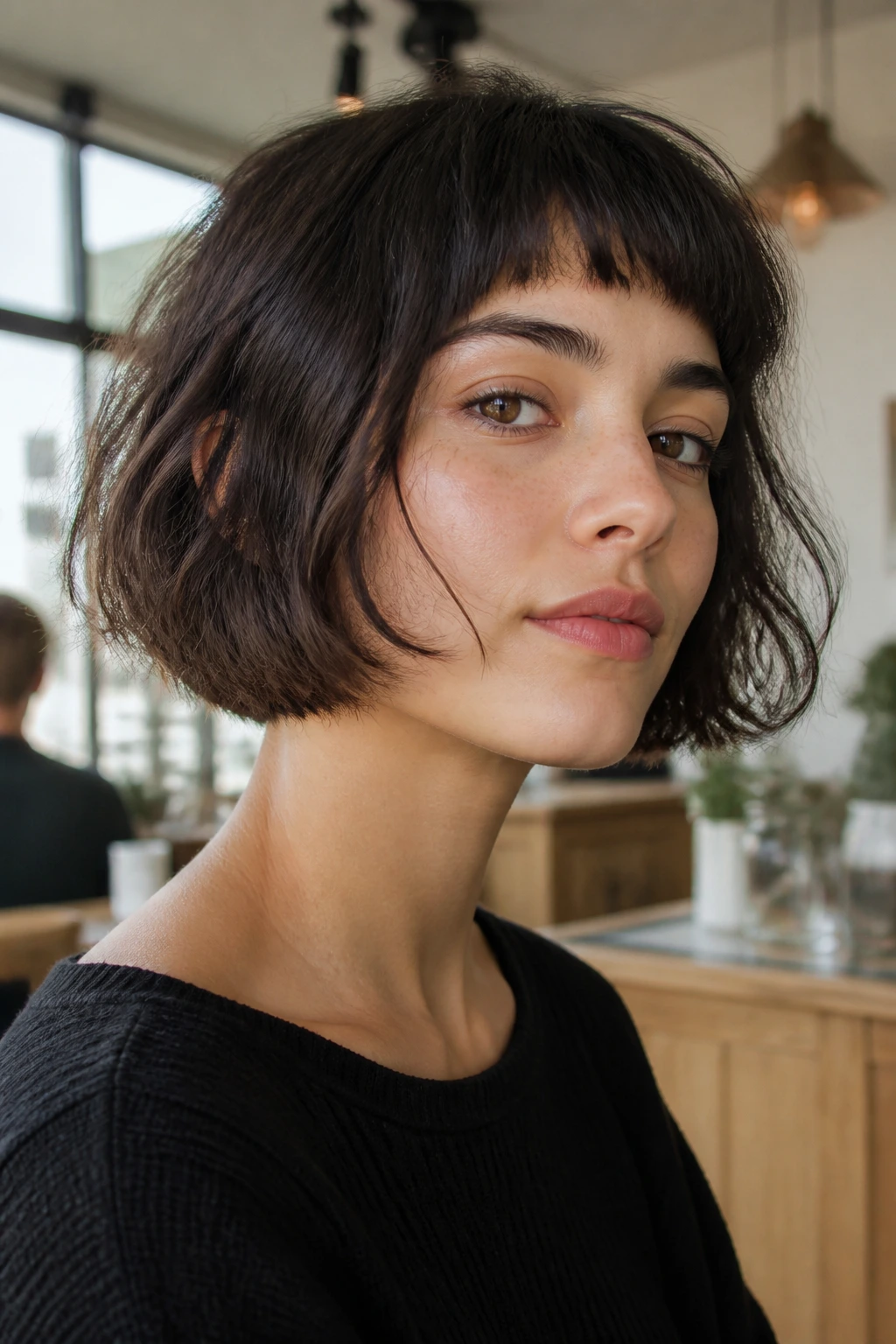
4. French Bob with Micro Fringe
A French bob sounds dainty until you put it on thick hair. Then it gets crisp and a little bit cheeky. The cut usually sits between lip and jaw level, with a short fringe that skims the brows or sits above them. On frizzy hair, the density helps the fringe keep its shape instead of splitting apart.
The catch is shrinkage. If your hair has any wave or curl, a micro fringe can jump up fast, and that is a bad surprise in daylight. This version works best when the bob is cut dry or nearly dry so the stylist can see how the texture actually behaves.
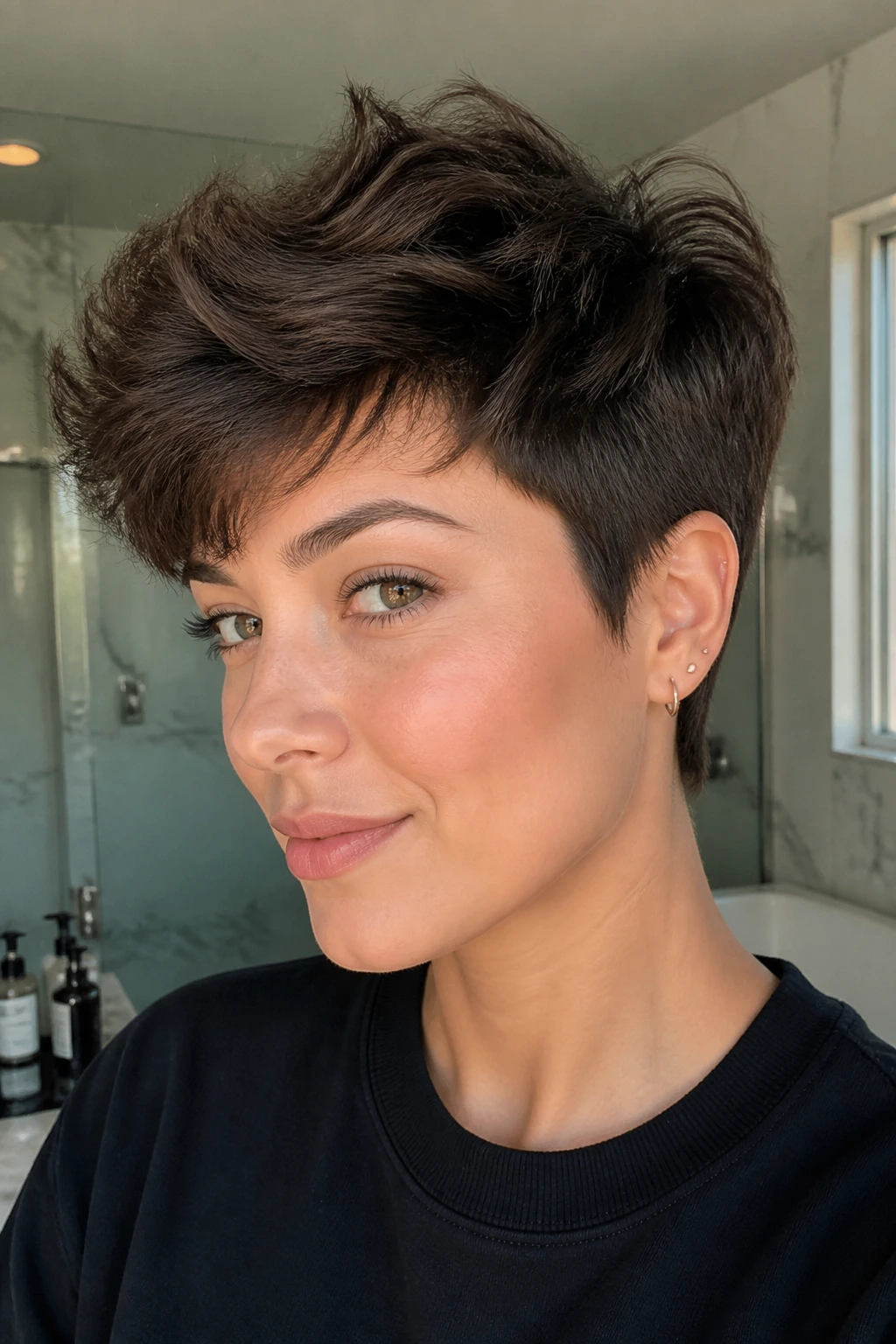
5. Textured Pixie with Long Top
A pixie on thick, frizzy hair can look expensive in the best way if the top stays long enough to move. Think 2 to 4 inches on top, with shorter sides and a neat nape. That length gives you lift without the overgrown mushroom effect thick hair can create when it’s cropped too evenly.
This is the cut for someone who wants to be done with blow-drying. A little mousse, a quick finger-dry, maybe a touch of paste at the ends, and you’re out the door. If the top gets cut too short, though, the texture can stick up in every direction. That’s not edgy. That’s just fought with.
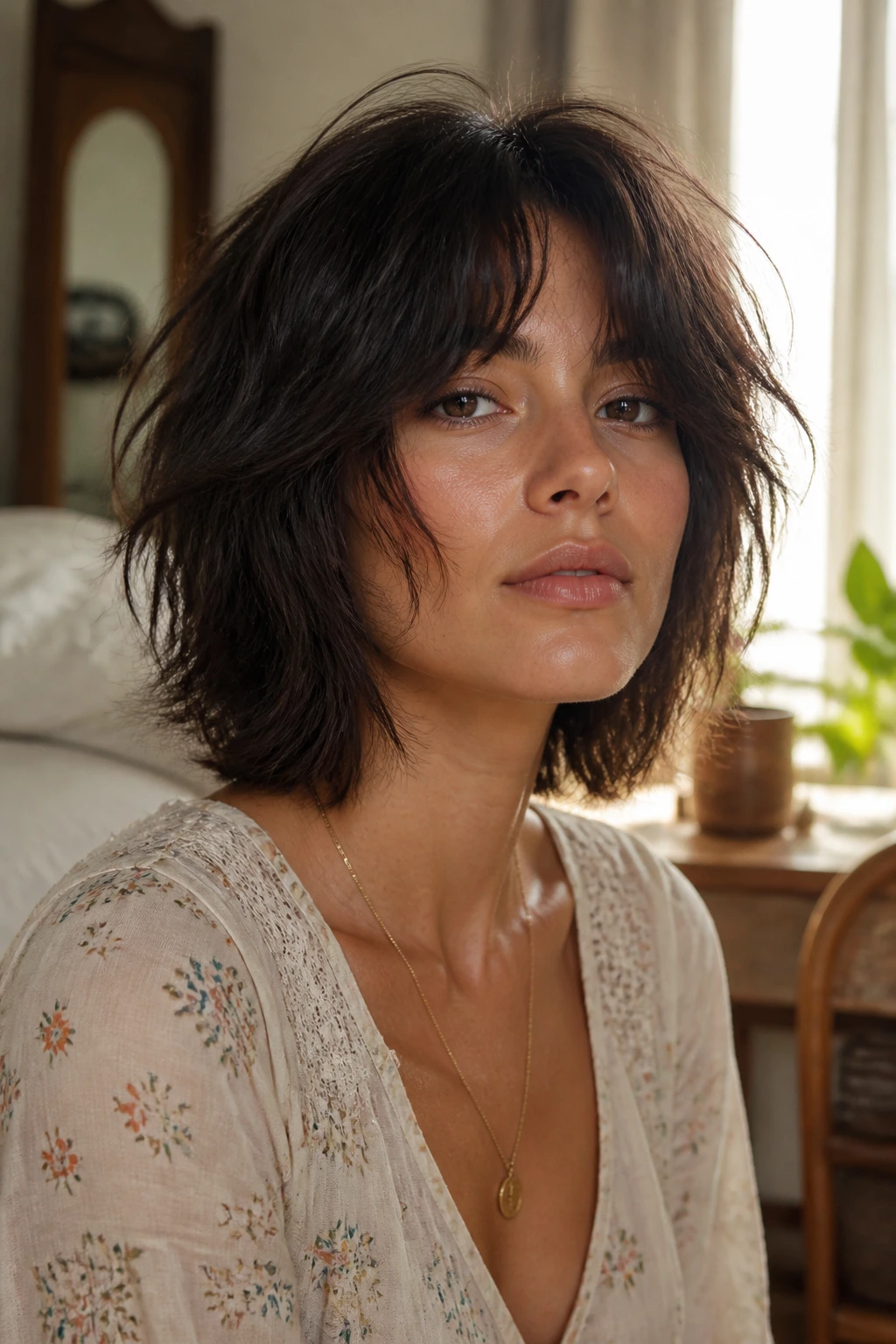
6. Soft Shag
The soft shag is where frizz starts looking like movement instead of trouble. The magic is in the layers, but not the kind that start too high and turn the crown into a dandelion. You want the shortest movement to begin around the cheekbone or lower, so the shape keeps its weight at the top and freedom around the ends.
I like this one on thick hair that refuses to lie flat. Air-dried, it looks lived-in. Diffused, it gets even more bend. The best soft shags still hold a perimeter, which keeps the cut from going too wispy. That’s the line to watch. Too wispy, and thick hair will eat the shape for breakfast.
7. Curly Crop
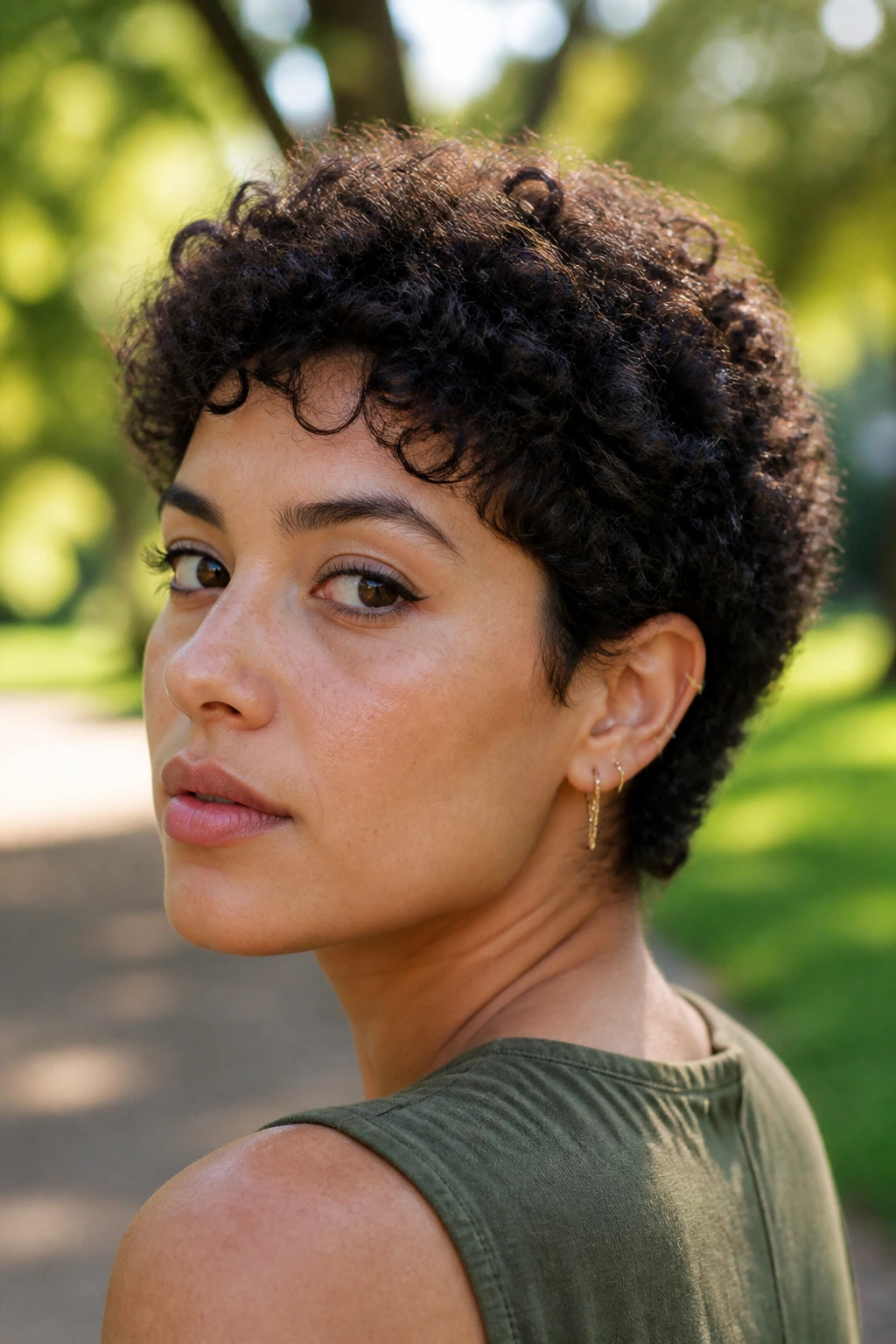
A curly crop is short, honest, and far less fussy than people assume. It sits close to the head, but not so close that it loses all personality. On thick frizzy curls, the trick is cutting to the curl pattern itself, not to a stretched version of the hair. If the stylist cuts it wet and too tight, the result can shrink into a puffy ball.
This cut is especially good if you hate ends touching your shoulders. No rubbing, no tangling, no weird flip at the collar. It looks best when the top has enough length to show the curl shape, and the sides are softened just enough that the whole cut feels rounded rather than boxy.
8. Angled Bob
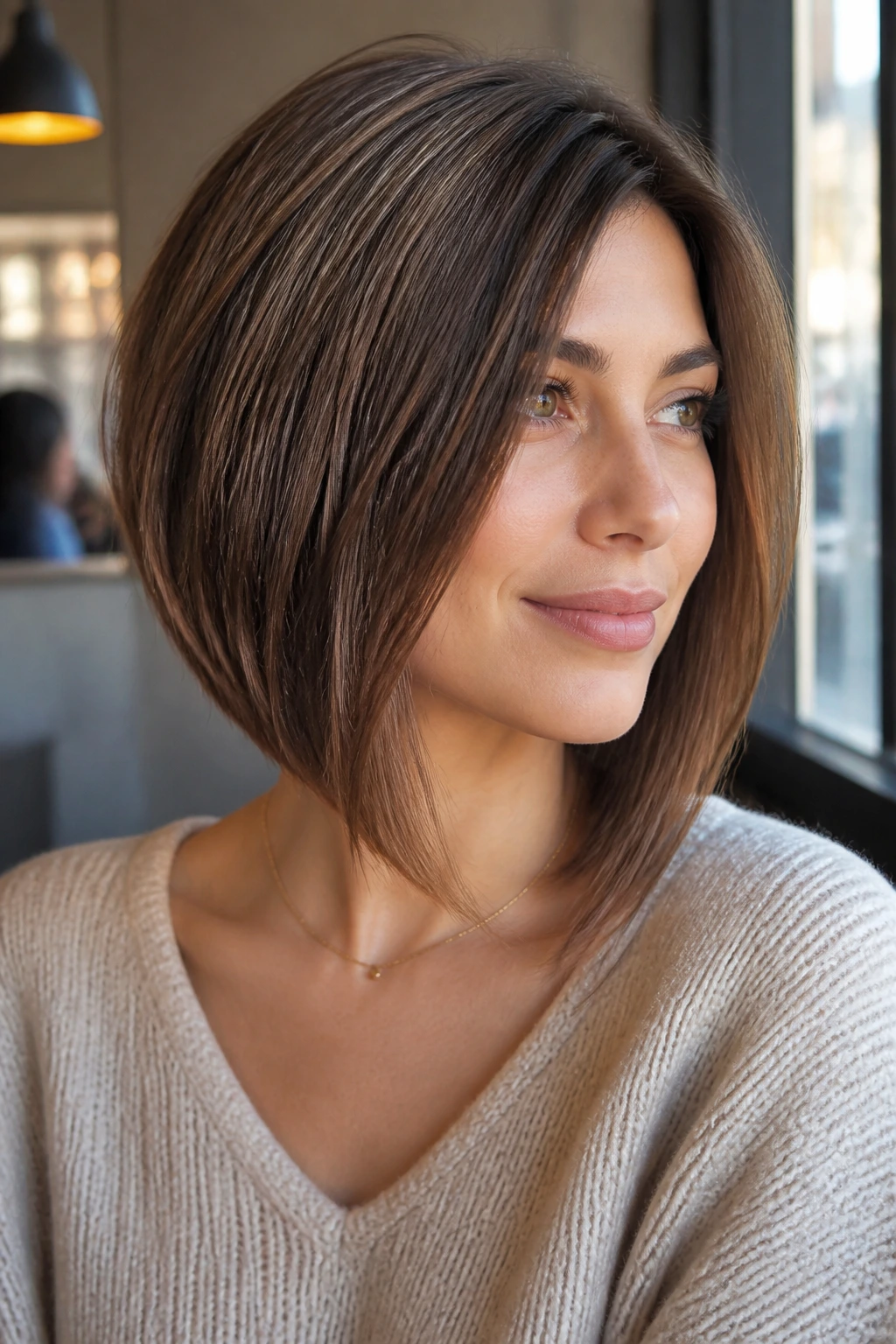
An angled bob gives thick hair somewhere to go. Shorter at the back, longer at the front, it pulls the eye forward and away from the width that frizz can create around the jaw. The angle doesn’t need to be dramatic. In fact, subtle is smarter here.
The cleanest versions have a gentle slope that kisses the collarbone in front and sits a little higher at the nape. That keeps the neck light while letting the front pieces frame the face. If the angle gets too steep, it starts looking like a shape trick instead of a haircut. Keep it soft. Thick hair already brings enough drama on its own.
9. Rounded Bob
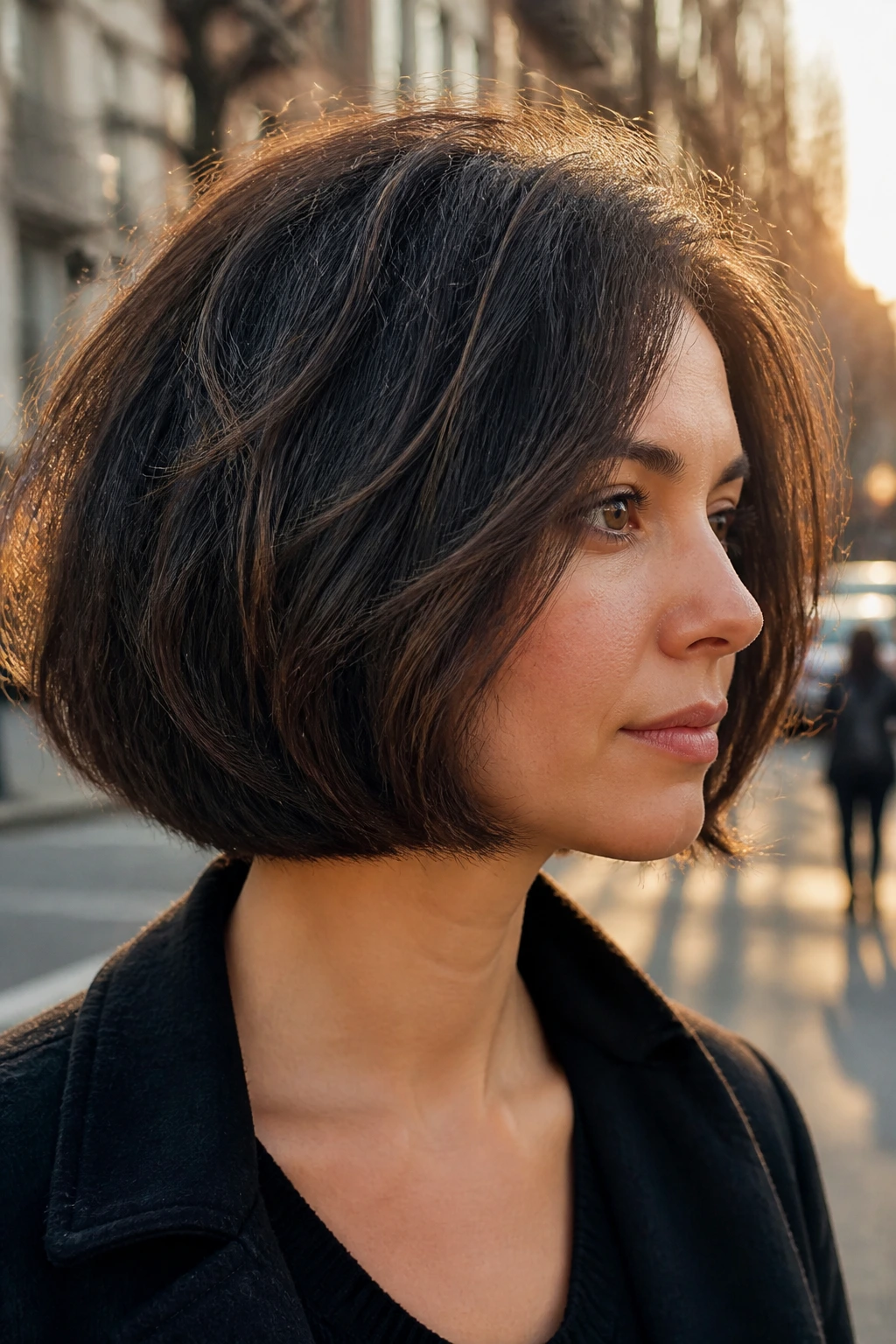
A rounded bob is one of those cuts that quietly solves problems. Instead of a hard square edge, it curves with the shape of the head and lets the bulk sit in a smoother arc. That curve helps thick, frizzy hair look controlled, especially if your ends tend to flick outward when they get too short.
This is a smart choice if you want volume without the triangle. The rounded silhouette keeps the width balanced from temple to jaw, which matters more than people think. On dense hair, a boxy bob can turn stiff. A rounded one looks like it was designed to move.
10. Asymmetrical Bob
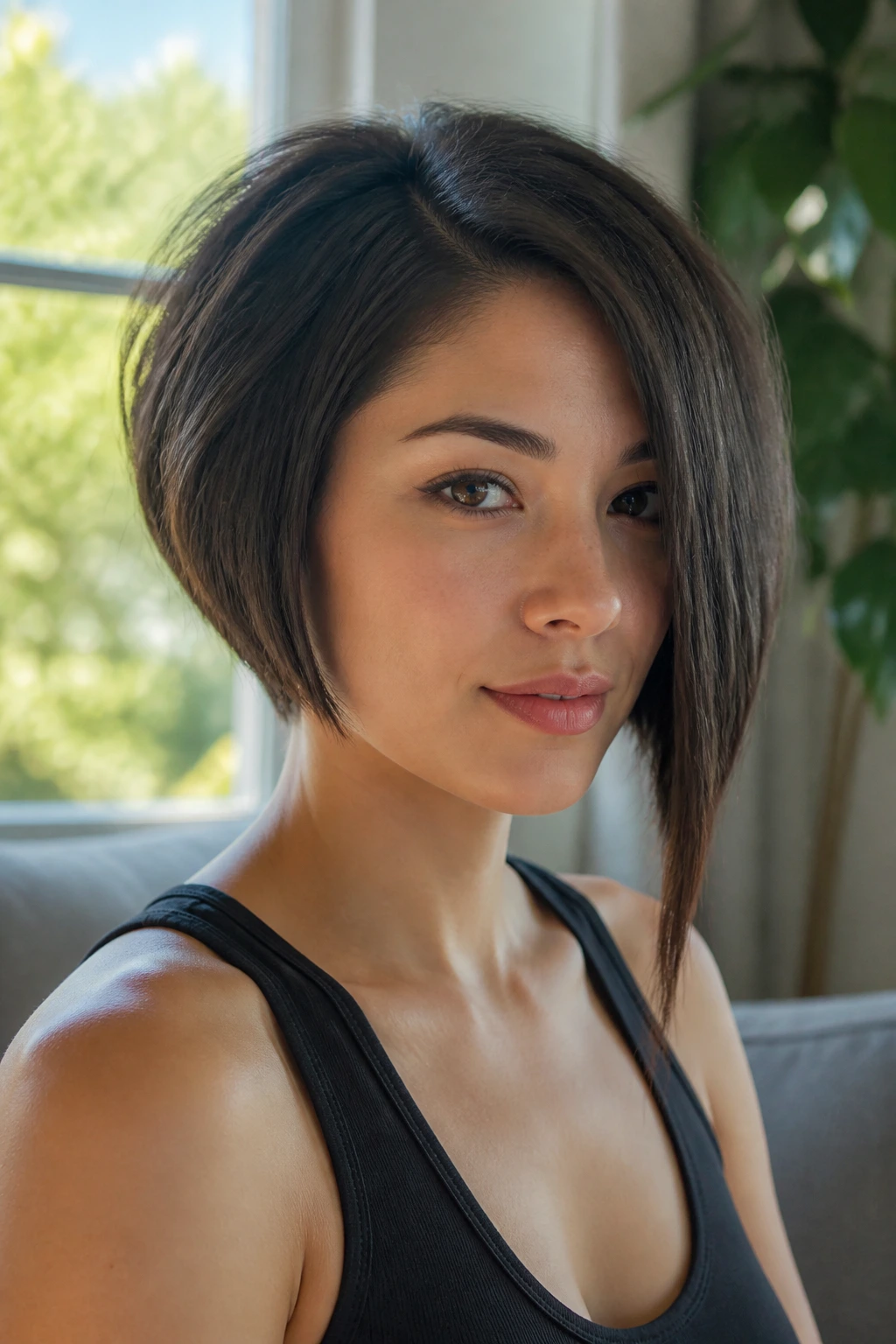
One side a little longer than the other sounds like a style choice, and it is, but it also helps when your hair grows unevenly or one side has more bulk. The asymmetry breaks up the density and gives the cut a sharper line without needing a lot of layering.
I’d use this when you want a bob that feels modern but still easy to wear. It does ask for a little discipline. If the part shifts every day and the hair is left to do whatever it wants, the shape can look accidental. A side part and a quick blow-dry around the front usually keep it honest.
11. Modern Mullet
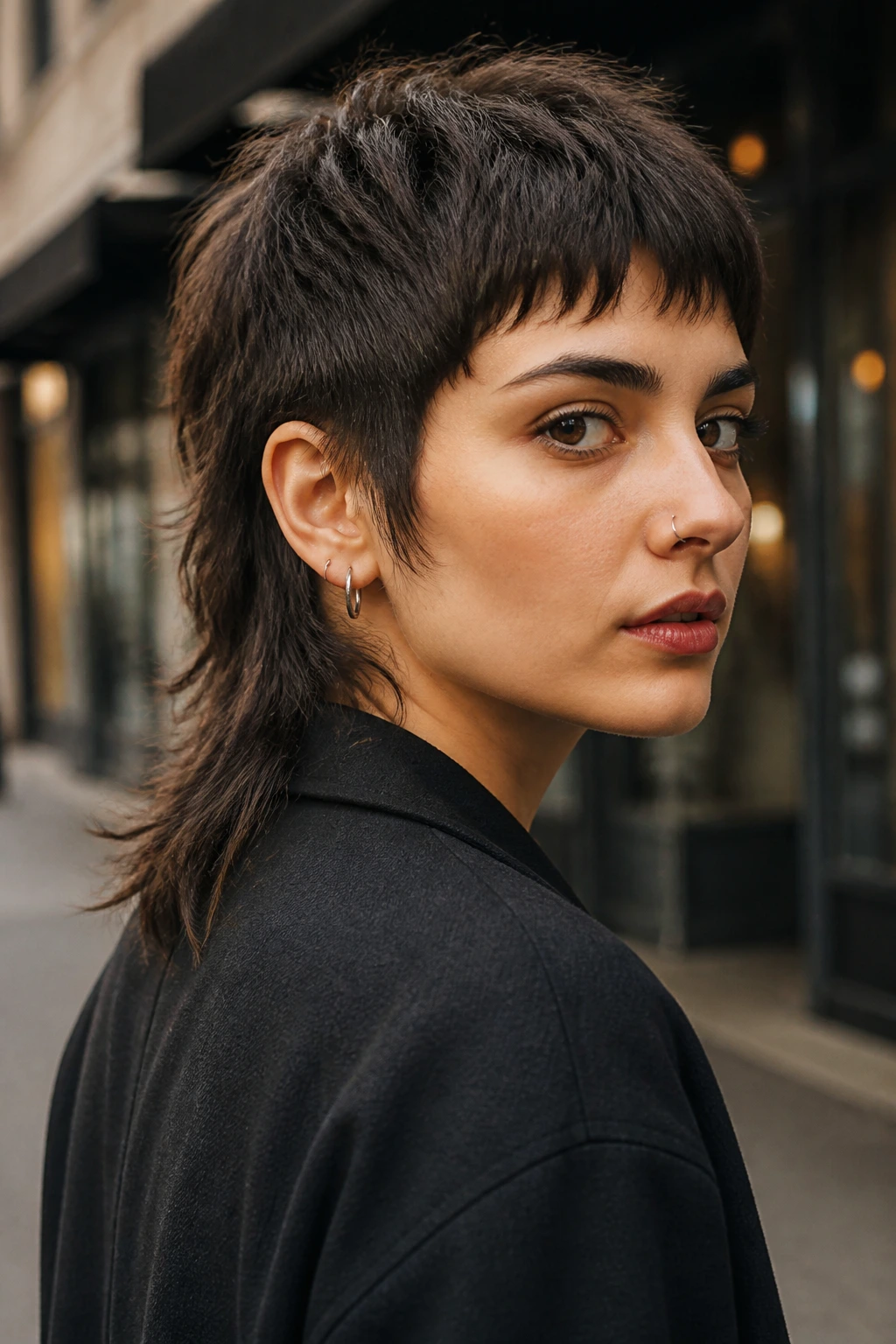
The modern mullet is not the joke version people remember from old photos. On thick, frizzy hair, it can be one of the smartest short cuts in the room because it keeps length where it flatters the neckline and removes bulk where the hair feels widest. Shorter around the crown and sides, longer at the back. Simple. Effective.
What makes this version work is softness. The transition shouldn’t be harsh. You want movement, not a hard disconnect that turns the haircut into a costume. Thick waves and curls hold this shape especially well, and frizz tends to read as texture instead of mess when the outline is clean.
12. Mixie Cut
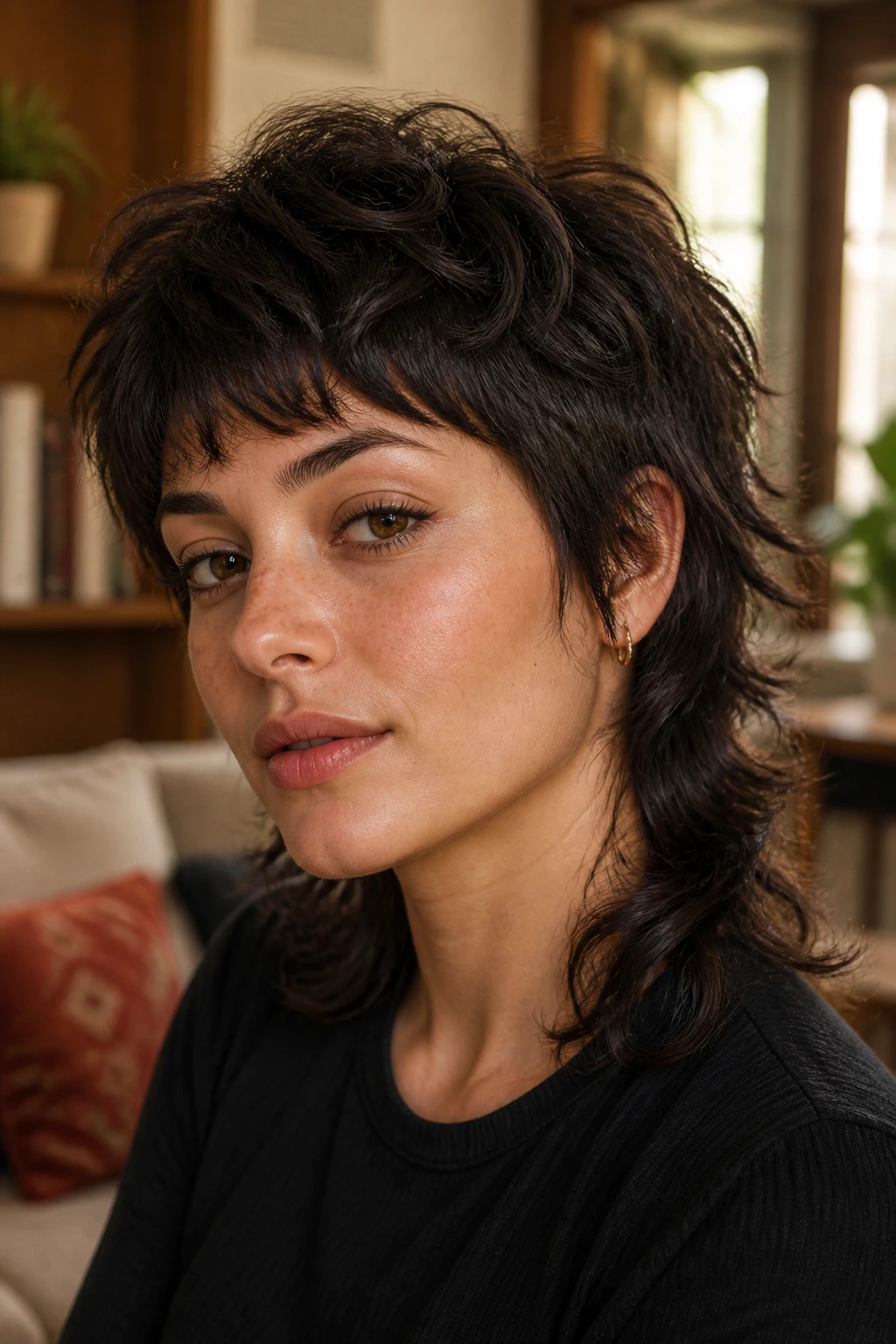
The mixie lives between a pixie and a mullet, and that middle ground is where thick texture often behaves best. It’s short enough to feel light, but not so clipped that the hair pops out in stiff little spikes. The back can stay a touch longer, while the top and sides carry the shape.
This is a good cut for people who want something playful without committing to a very short crop. It’s also a practical fix if your hair is dense around the crown but flat at the nape. The mixie gives each zone a job. Hair like that does better when it knows where to go.
13. Bixie Cut
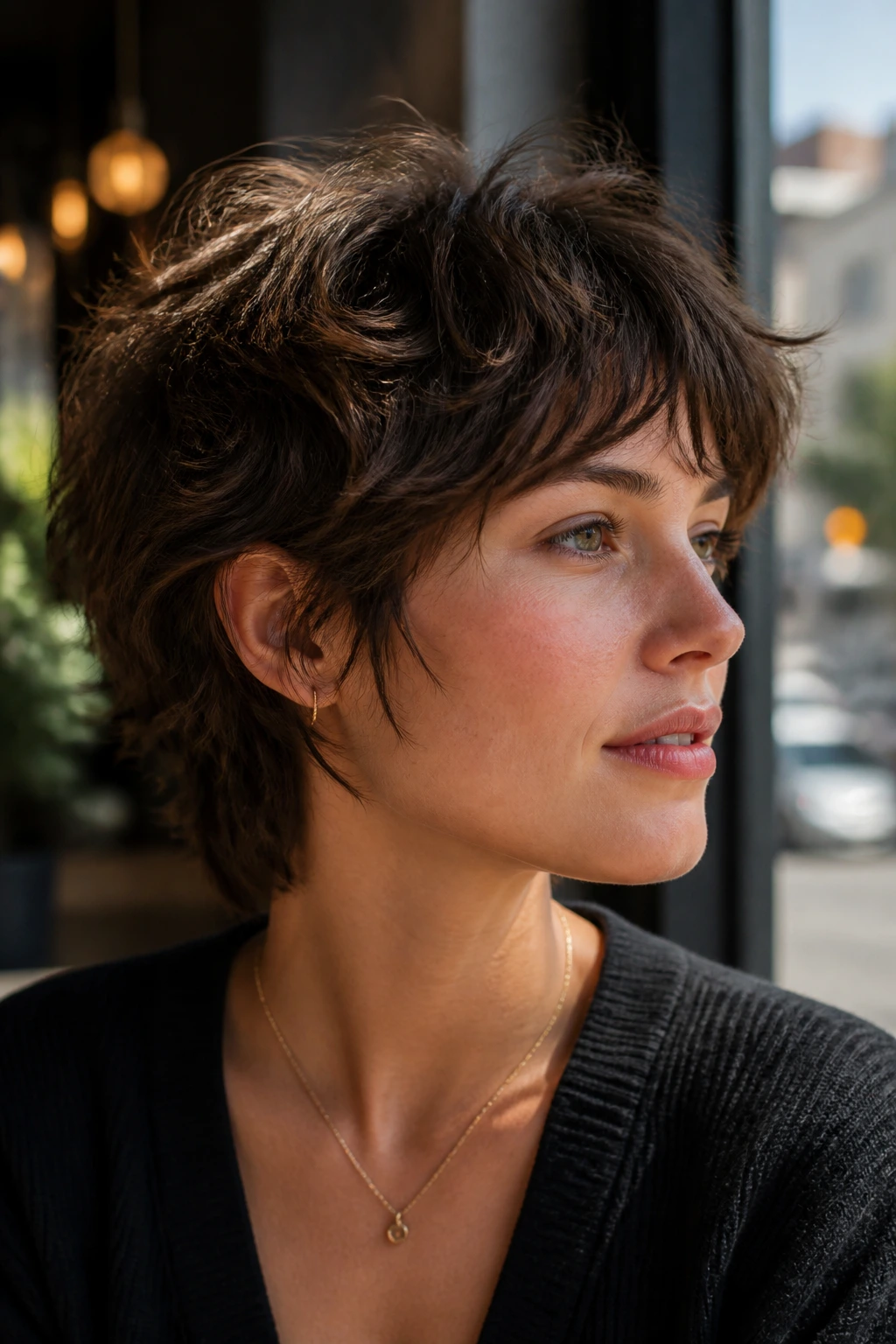
A bixie is basically a bob and a pixie having a more sensible conversation. It keeps a little more length than a pixie, especially around the ears and nape, but still has the lighter, choppy feel of a shorter crop. For thick frizzy hair, that extra length can make the cut easier to style because it keeps the shape from standing up on its own.
This one is especially useful if you want short hair but not severe hair. It’s soft around the edges, which matters if your texture goes fuzzy when it’s cut too crisp. A bixie can be worn sleek, tousled, or air-dried, and it doesn’t need much more than a small amount of cream or paste.
14. Tapered Pixie
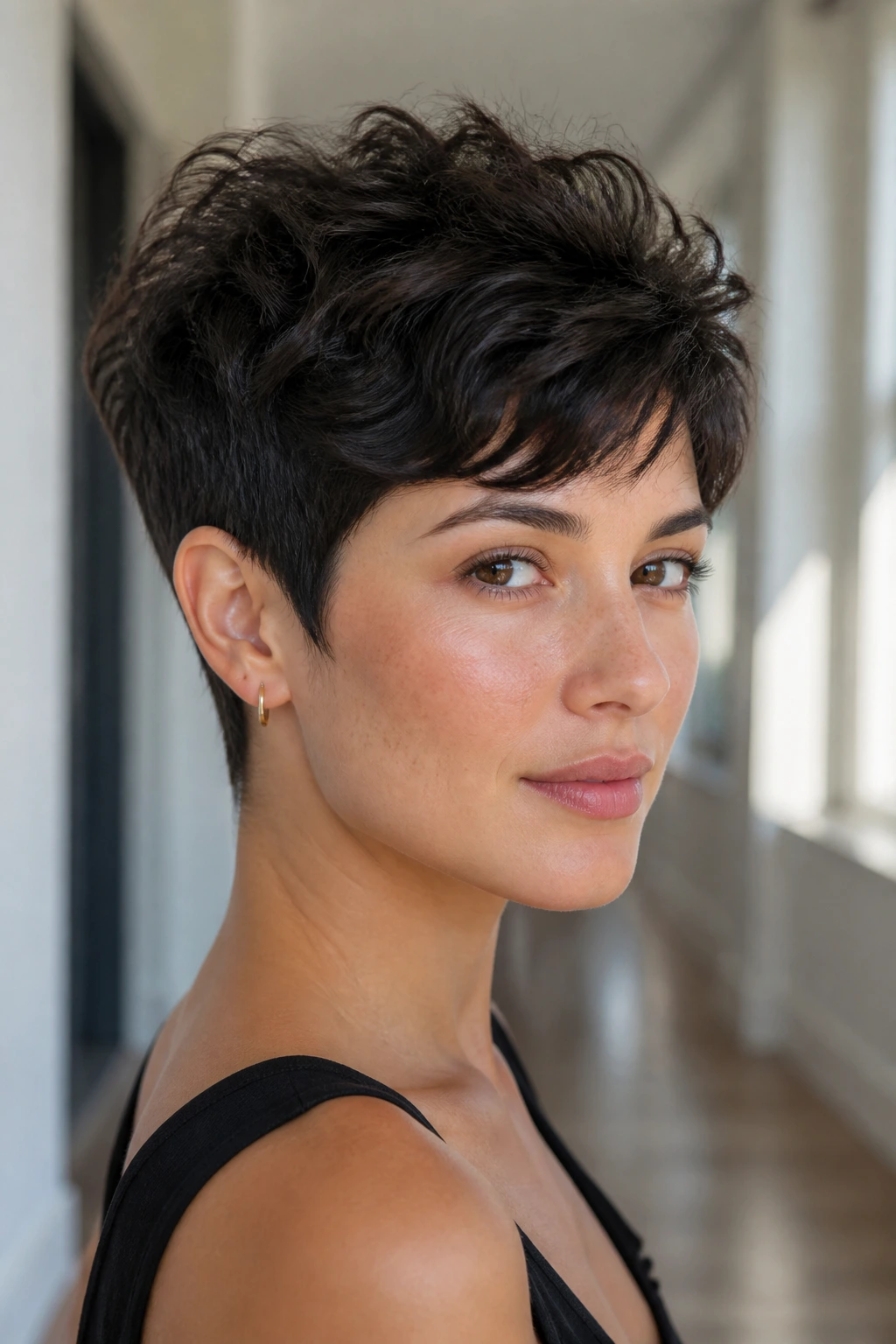
A tapered pixie is a precision cut. The sides and nape get shorter and cleaner, while the top stays full enough to show the texture. On coarse or coily hair, that taper keeps the haircut from ballooning at the temples. On wavy thick hair, it makes the head shape look tighter and neater.
This cut needs regular maintenance. Not forever. Just enough. A neckline that starts to grow out will change the whole silhouette, and with a tapered pixie the silhouette is the whole point. If you like a sharp outline and don’t mind a trim every 4 to 6 weeks, this one earns its keep.
15. Feathered Lob

A feathered lob uses lighter internal shaping so the ends don’t hang like a slab. The length still gives you the safety of a lob, but the feathering softens the bulk and keeps thick hair from feeling heavy around the shoulders. It’s a nice cut for anyone who wants movement without losing all the mass that helps frizzy hair settle.
The key is restraint. Too much feathering and the hair starts looking airy in the bad sense — thin at the ends, fuzzy on top, and not especially shaped. Done well, though, the cut lifts the face and keeps the edges mobile. It’s one of the better choices if you style with a round brush.
16. Wolf Cut
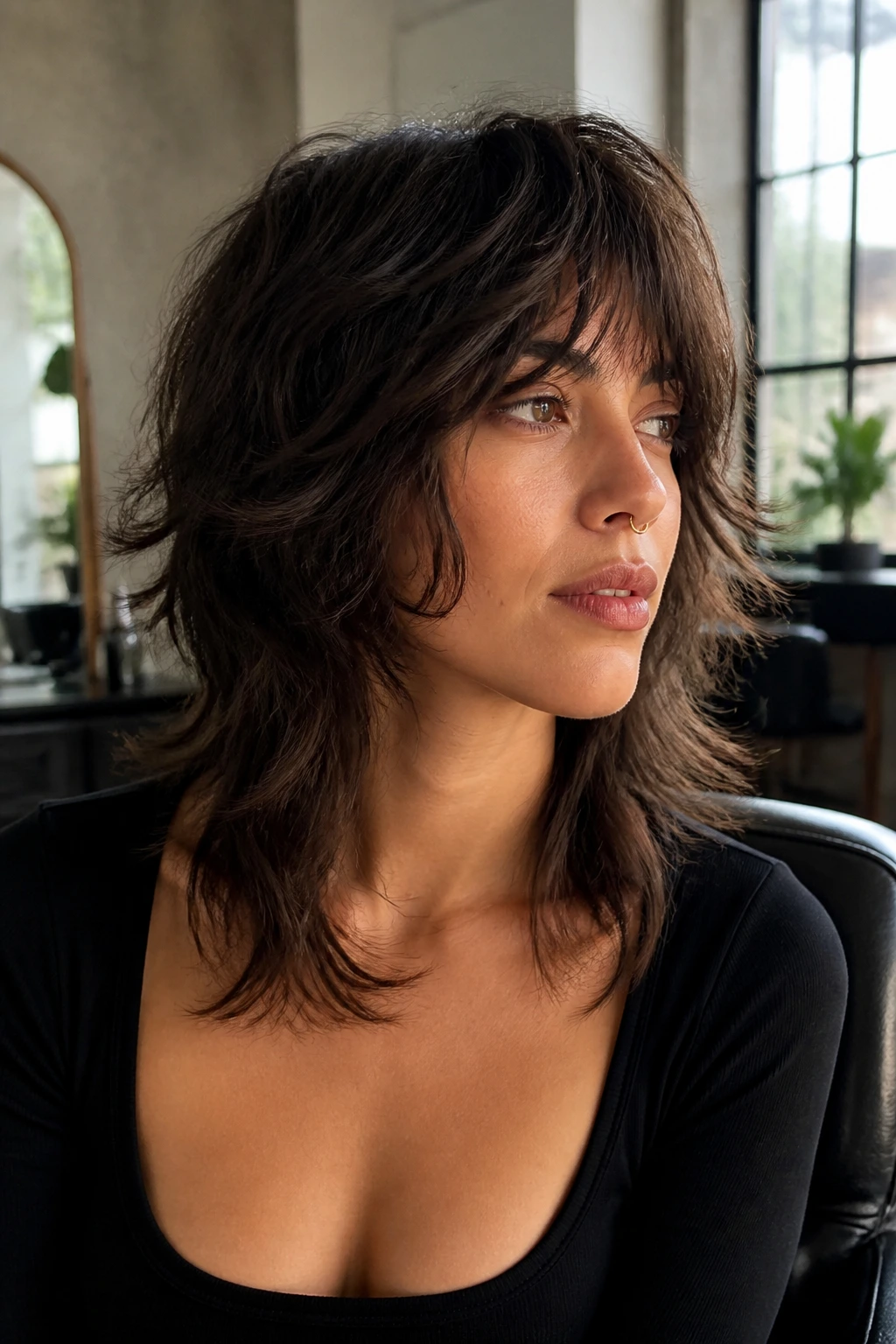
The wolf cut can go wrong fast on thick hair, and that’s exactly why I think it deserves a place here. When it’s controlled, it gives thick frizzy texture a lived-in outline with real movement through the crown and lengths. The shorter layers stop the hair from forming one giant triangle, while the longer ends keep it from looking too chopped up.
The trick is moderation. If the layers are razored to death, the cut gets fuzzy. If they’re too subtle, it just looks like a shag that forgot what it was trying to do. A good wolf cut has a little wildness, but the shape still reads clearly from the front and the side.
17. Hush Cut
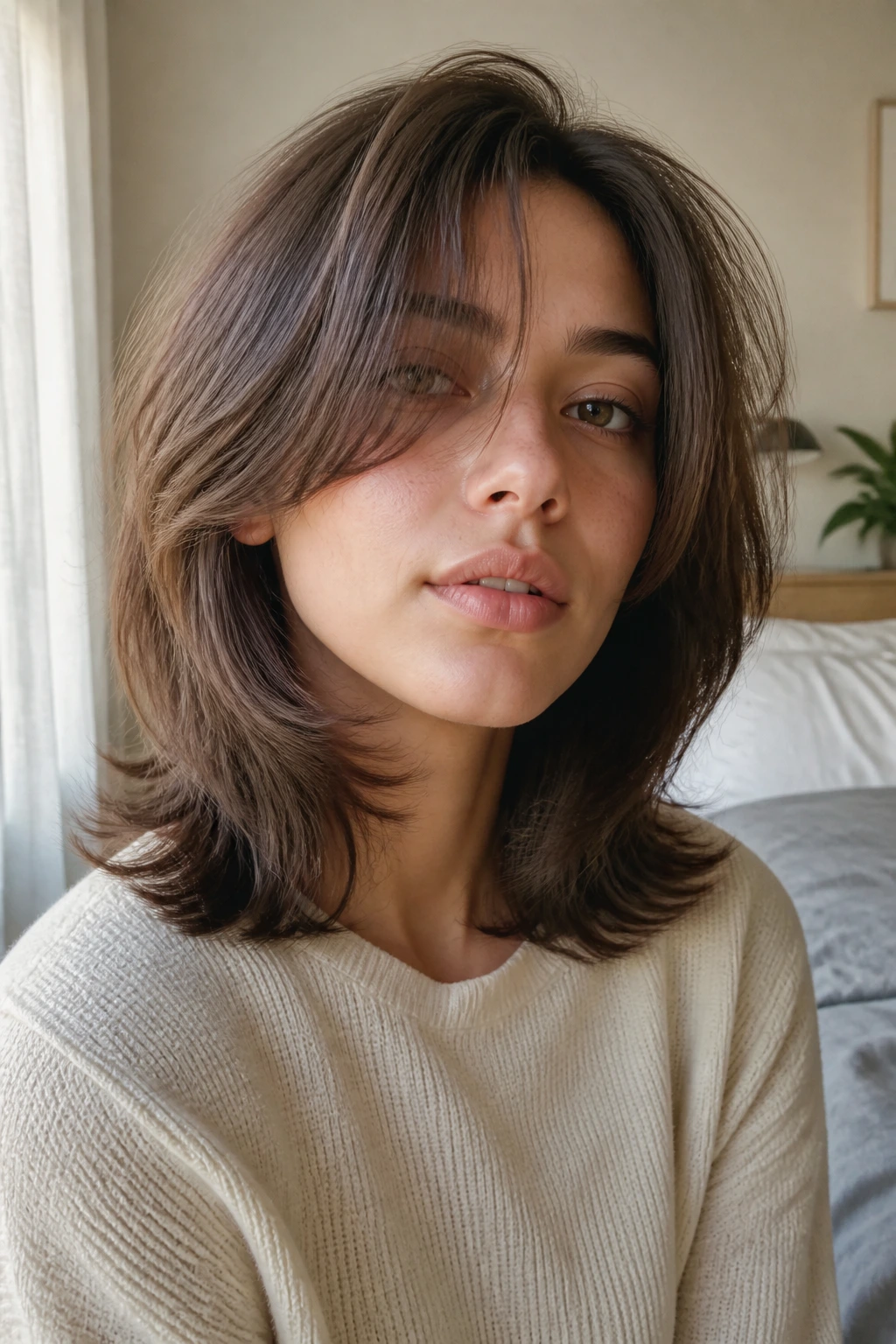
The hush cut is the quiet one in the room. It borrows the softness of a shag but pulls back from all the obvious texture pieces, so the haircut feels feathered rather than chopped. For thick, frizzy hair, that matters because you get movement without the kind of over-layering that makes the ends look thirsty.
I like this cut for people who want something flattering and low-drama. It plays nicely with air-drying, and it doesn’t demand a very specific styling routine. The face-framing pieces should stay long enough to bend, not short enough to frizz out. That’s the whole game here.
18. Side-Swept Crop
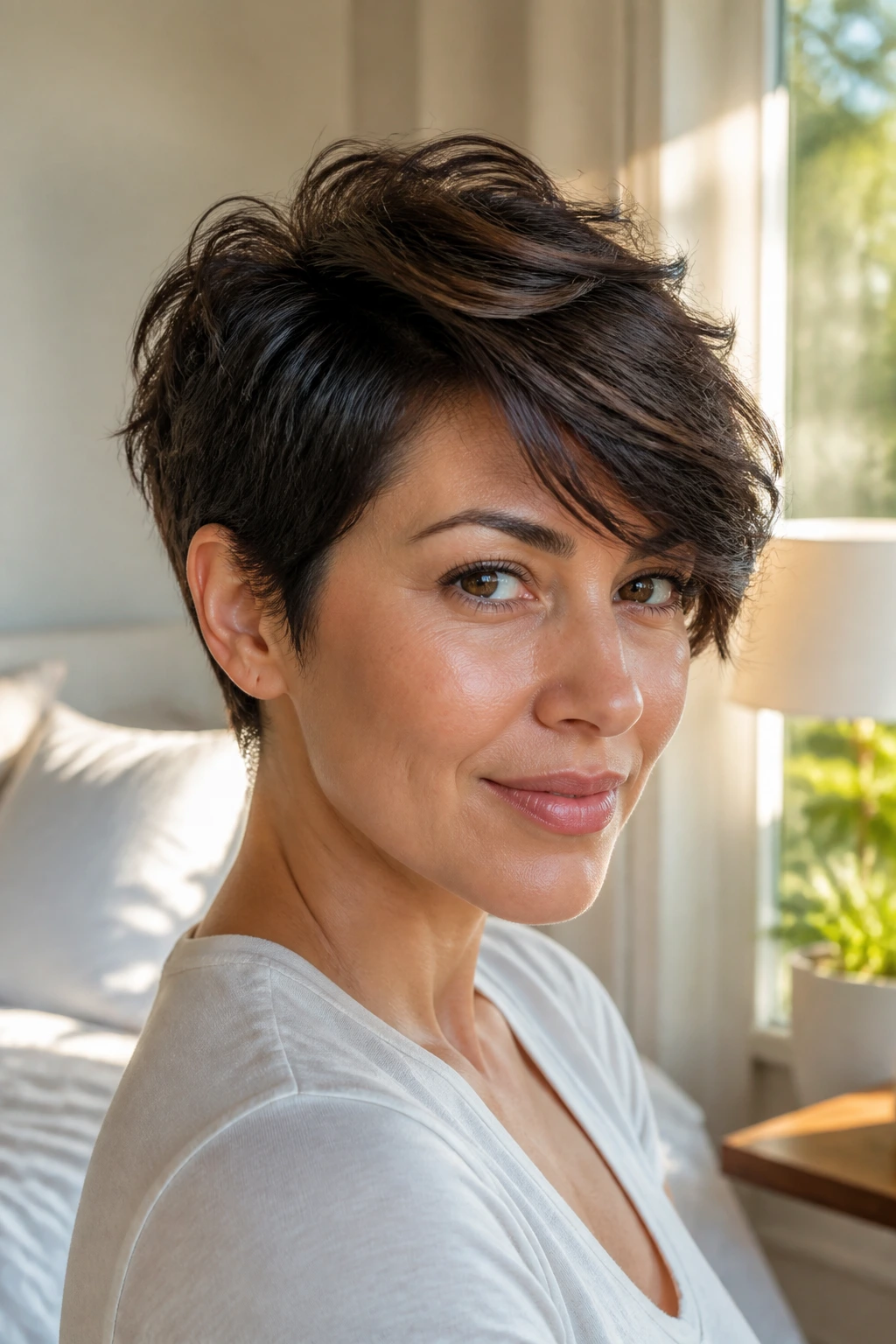
A side-swept crop gives you a little softness right where thick hair can feel harsh: around the forehead and temples. The fringe sweeps across instead of dropping straight down, which helps break up fullness and draws the eye diagonally. That diagonal line is doing more work than it looks like.
This cut is a good pick if you want short hair that still reads feminine, polished, or just less severe. It works especially well when one side of the hair naturally falls flatter than the other. The side sweep lets the texture help instead of fight the shape.
19. Pageboy Bob
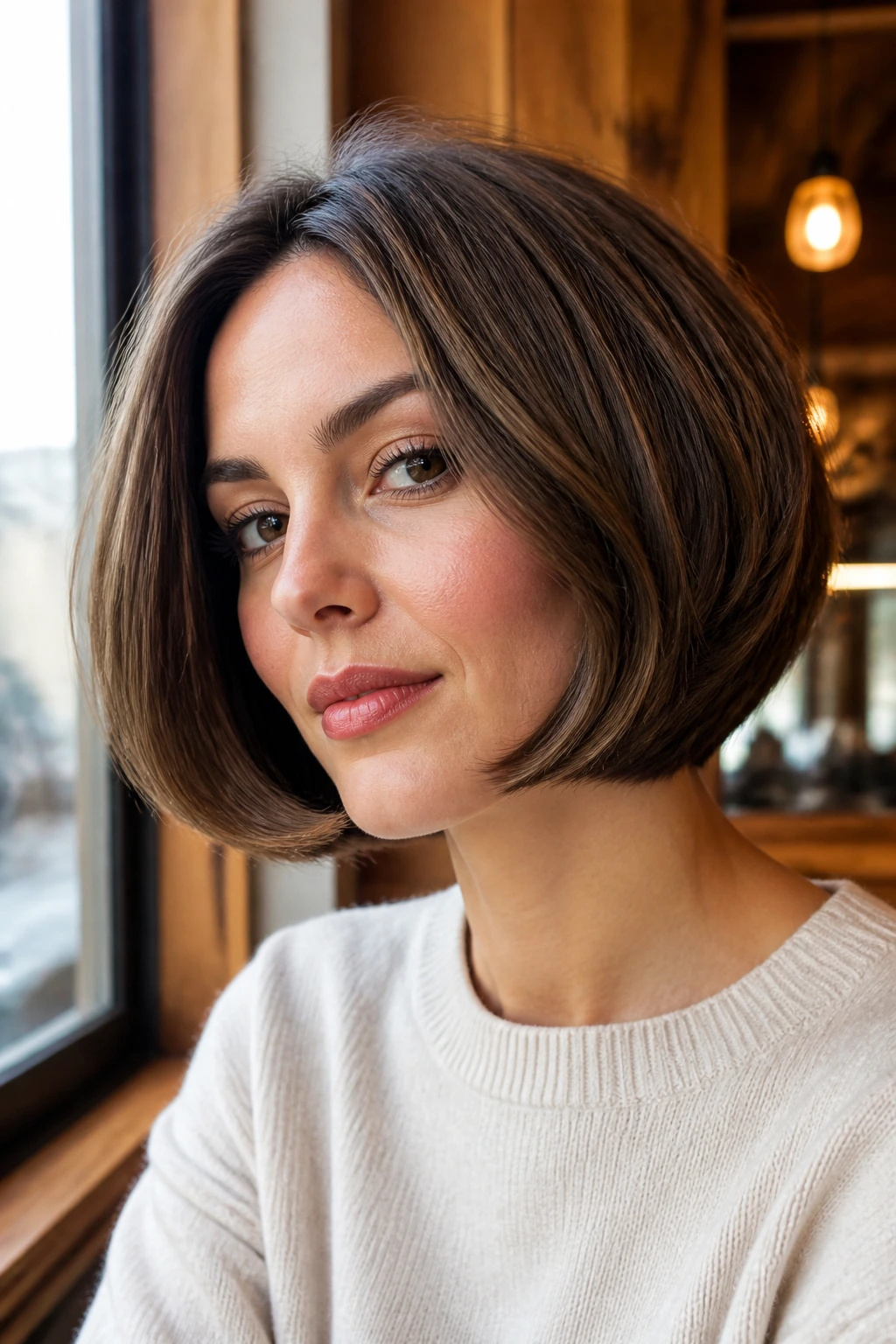
The pageboy bob has that classic undercurve that tucks the ends inward. On thick frizzy hair, that inward bend is gold. It keeps the perimeter controlled and stops the ends from flipping into a halo around the jaw. The look is clean, but not flat.
It works best when the cut is strong and regular. If it gets too long, the curve loses its purpose. If it gets too layered, it stops looking like a pageboy and starts looking like a confused bob. This is a cut for someone who likes structure and doesn’t mind giving it a tidy trim now and then.
20. Inverted Bob
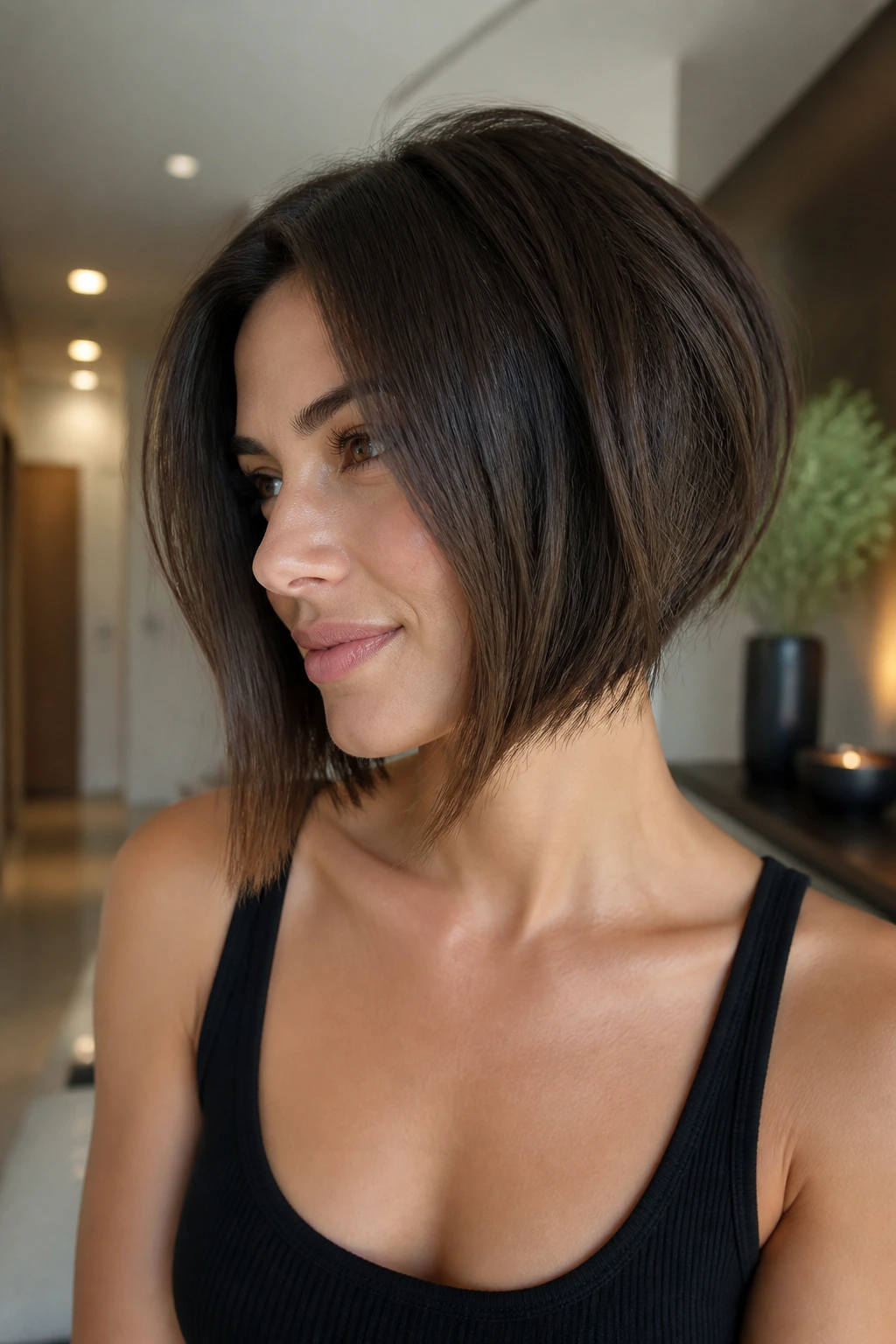
An inverted bob has a shorter back and a longer front, but the real point is the balance it creates. Thick hair can get bulky at the nape, and this cut clears that out while keeping enough length around the face to feel soft. It’s sharper than a rounded bob, less forgiving than a lob, and that’s why it works.
The best versions keep the front pieces long enough to hit the jaw or just below it. That gives the face a frame while the back stays tucked in. If the contrast is too strong, the haircut can look stiff. Keep the angle moderate and the shape stays elegant in a practical way.
21. Layered Bowl Cut
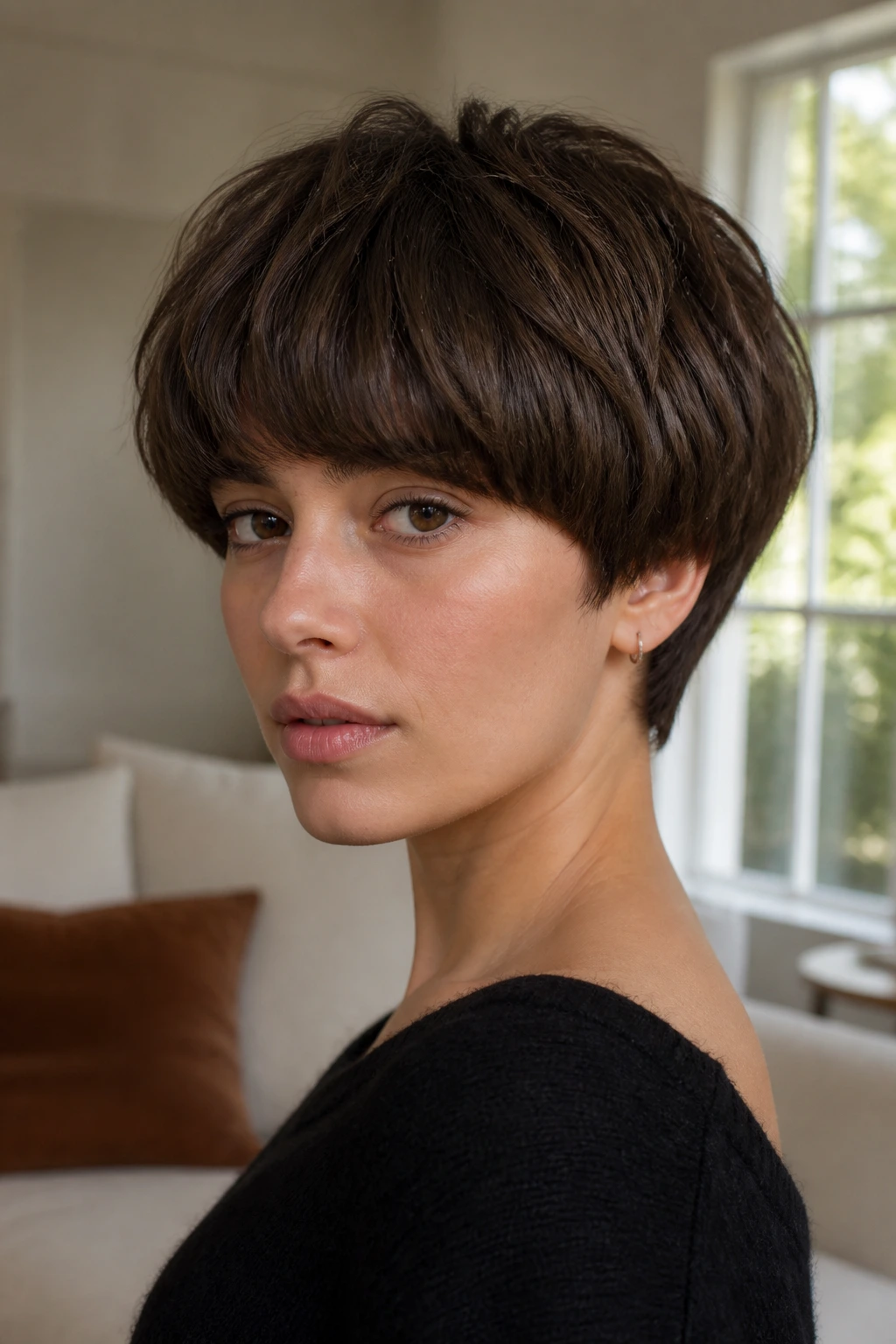
A modern bowl cut on thick, frizzy hair is not the cartoon version you’re probably picturing. When the perimeter is softened and the layers are handled with care, it creates a strong, rounded silhouette that controls bulk beautifully. This is one of the few short shapes that can make density look deliberate from every angle.
It’s best for people who want a bold line and are not afraid of a little geometric attitude. The fringe should be customized to the hairline, not forced into one flat strip. That part matters. Thick hair gives the bowl cut its body, but the cut still needs a human touch or it turns into a helmet.
22. Jaw-Length Bob with Undercut
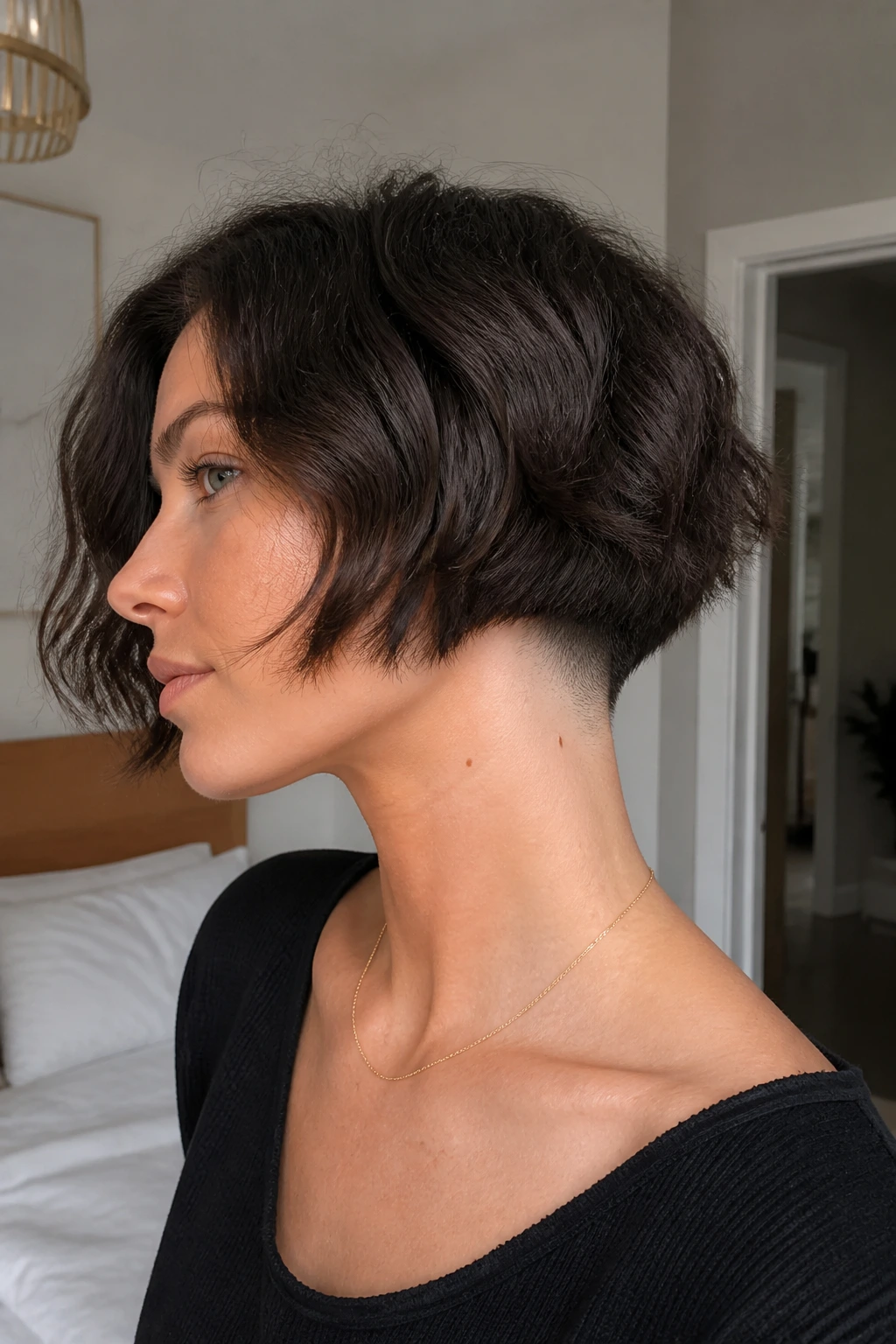
If your hair feels too big for a blunt bob, an undercut can save the whole thing. The top stays at jaw length, but the hidden underlayer is taken shorter to remove weight where it builds up most. That lets the bob sit closer to the head without looking thin on top.
This cut is a solid choice for dense hair that overhangs at the nape or expands at the sides. The undercut is especially useful if you want to keep the outside shape polished but you’re sick of the haircut taking forever to dry. It’s not visible in the same way a shaved side is visible. It just makes life easier.
23. Short Curly Shag

A short curly shag understands one thing very well: curls want room. The layers follow the curl pattern, so the shape can spring without turning into a puffball. On thick frizzy curls, that means the cut can be short and lively without going too wide at the sides.
The best version keeps some length around the crown and cheekbones while lifting the interior enough that the hair doesn’t sit in one heavy mass. Air-drying is the friend here. A diffuser works too. What you do not want is a rough blowout that stretches the curls out and then makes them frizz harder when they bounce back.
24. Pixie Bob
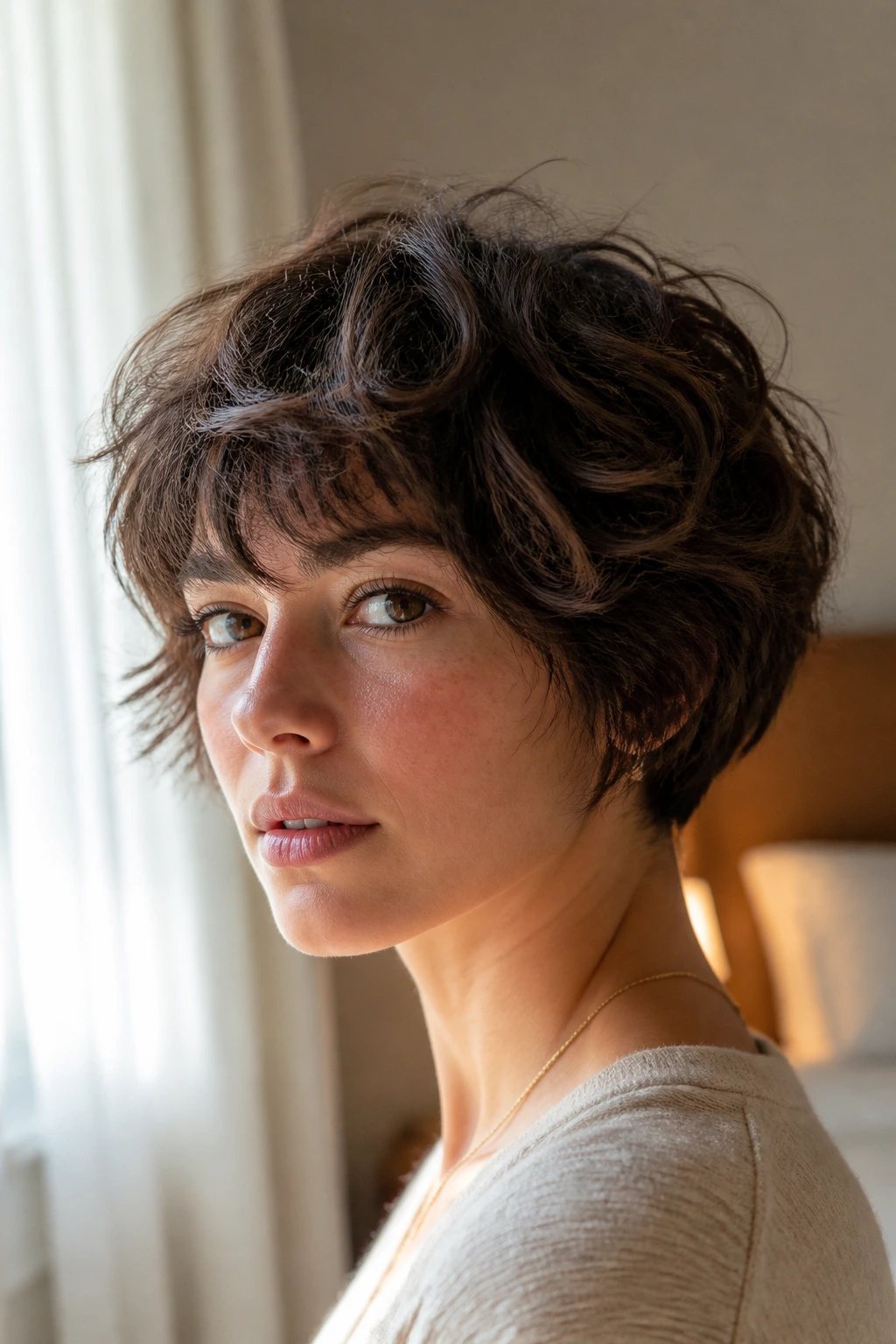
A pixie bob is the useful middle ground for people who want something short but not ultra-short. It keeps a little more length through the top and sides than a pixie, which helps thick frizzy hair stay soft instead of sticking out at every angle. The shape feels modern without needing a lot of styling time.
This cut is especially good if you want ear coverage or you’re nervous about a true crop. It gives you the safety net of some length while still taking off enough bulk to lighten the head. If you like to tuck pieces behind the ear and let the top fall messy, this one has a lot of range.
25. Soft Undercut Crop
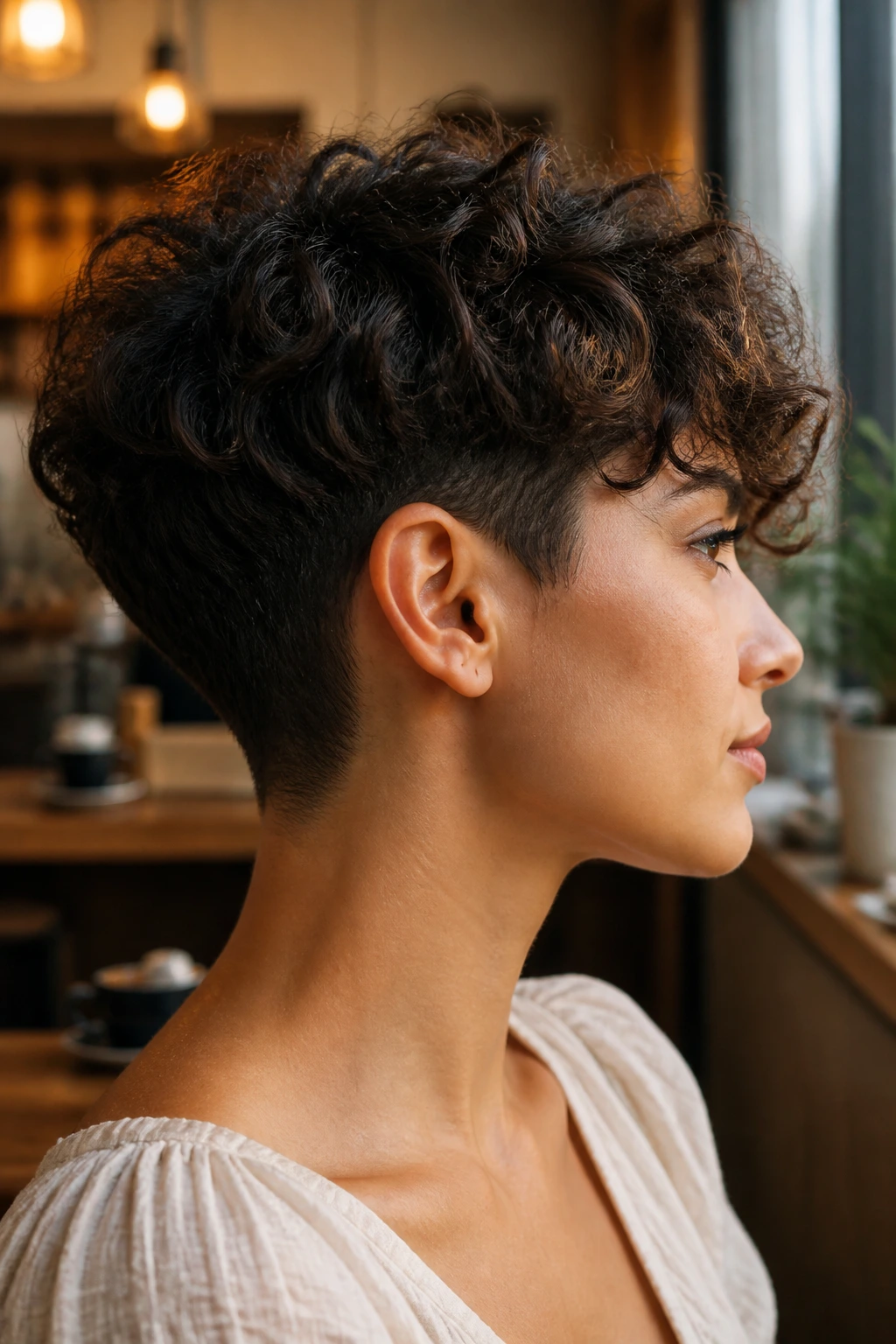
A soft undercut crop sounds severe, but it doesn’t have to be. The idea is simple: remove hidden bulk underneath while leaving the top layer longer and textured. Thick frizzy hair benefits a lot from this setup because the cut looks full on top without feeling heavy all over.
It’s a strong choice if your hair is so dense that traditional layering never seems to take enough weight out. The undercut does the private work. The visible top layer gets to behave like a lighter crop. That combo makes morning styling easier, especially if you hate spending ten minutes wrestling the back of your head.
26. Ear-Length Crop
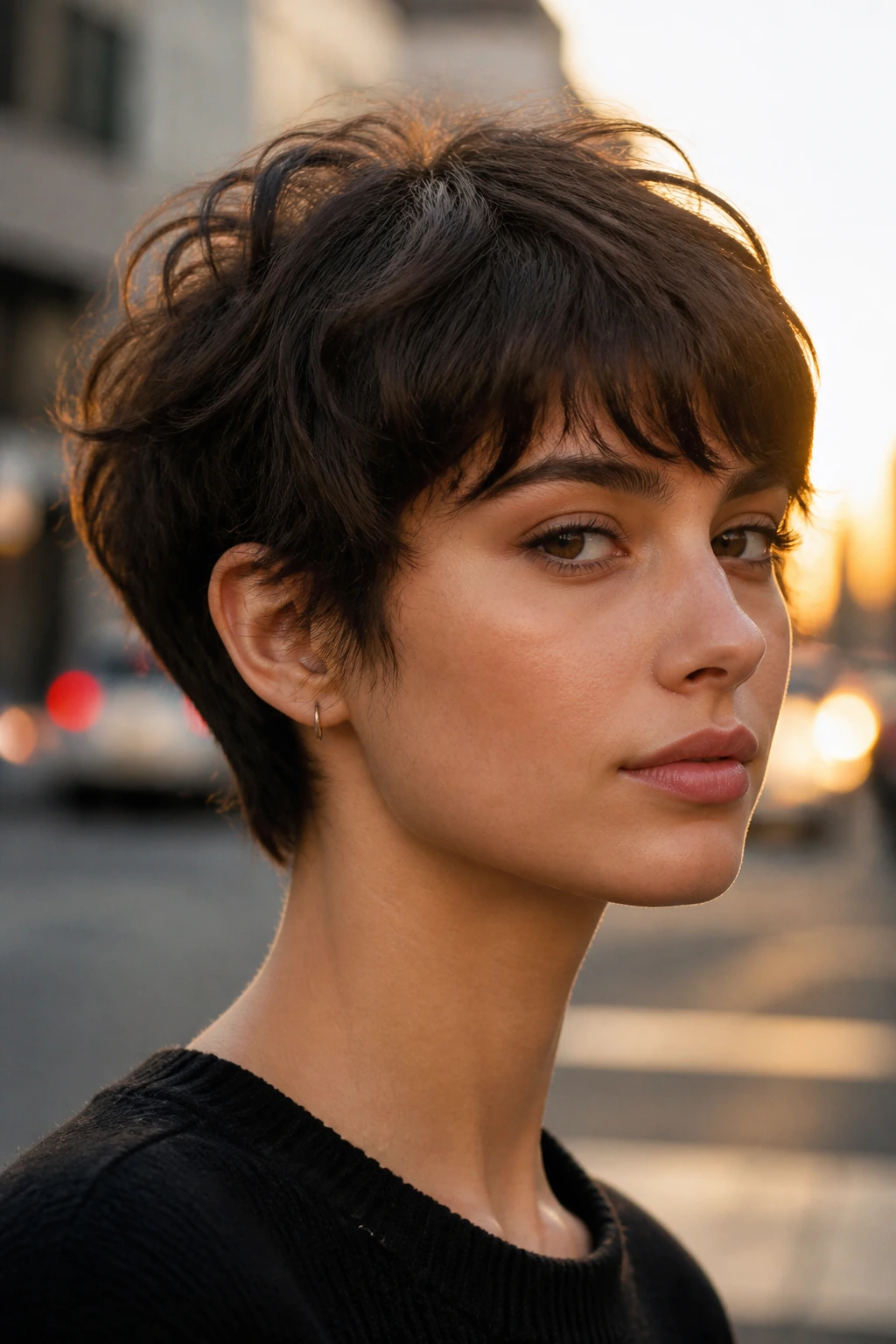
An ear-length crop is short, clean, and a little brave. On thick hair, the short length can actually make the texture easier to manage because there’s less of it trying to expand in every direction. The haircut needs a good outline, though. Without that, it can look like you just gave up halfway through.
This cut shines when the nape and sides are shaped with care and the top has enough movement to keep the style from looking flat. It’s not the easiest cut to grow out neatly, so go in with your eyes open. Still, if you want to wash, scrunch, and leave, the ear-length crop makes a solid case for itself.
27. Choppy Bob with Deep Side Part
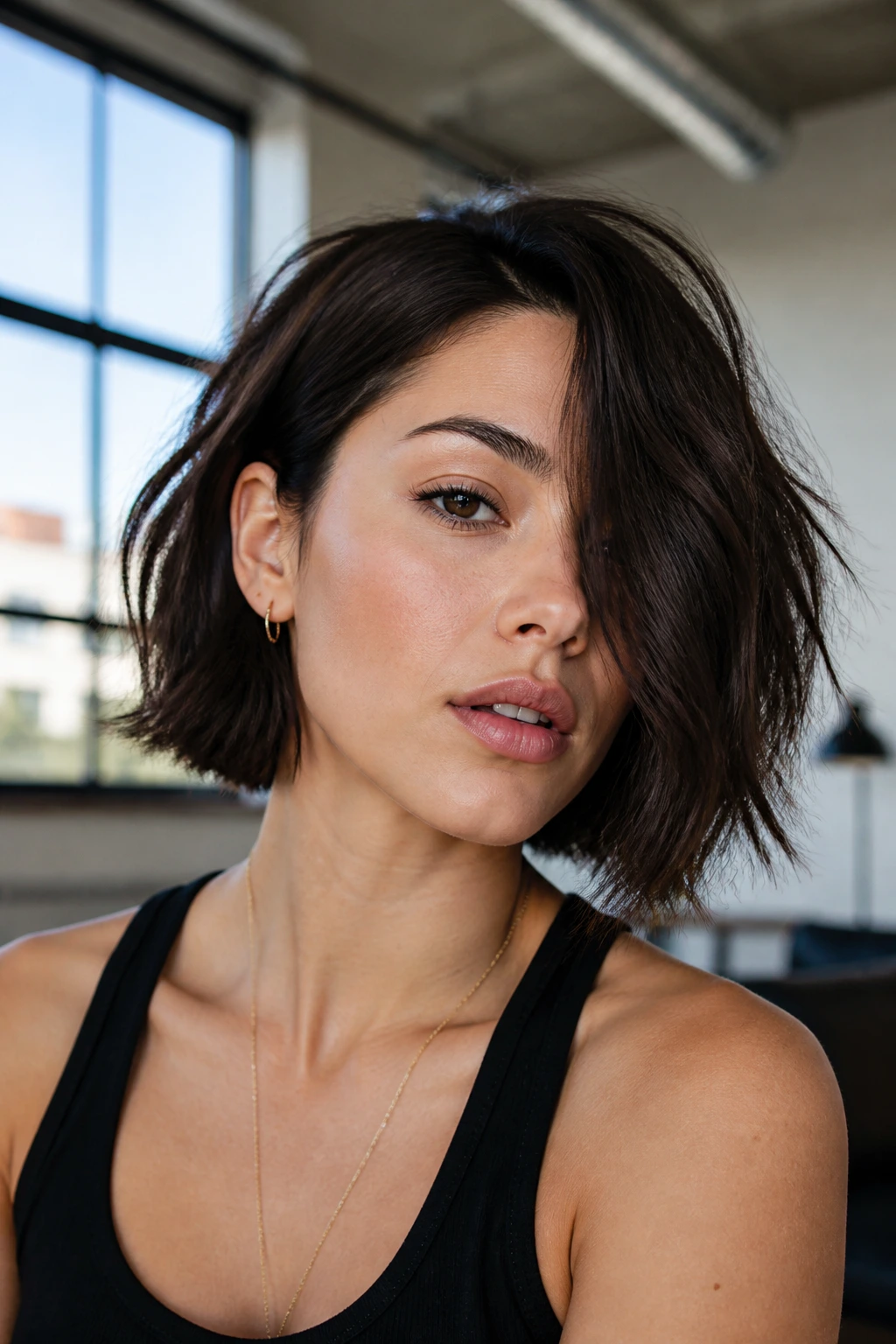
A deep side part can rescue a thick bob that feels too boxy. It shifts the weight off-center and lets the hair fall in a more flattering diagonal line, which often softens the look of frizz around the crown. Add choppy ends, and the bob stops feeling like a block.
I like this cut when one side naturally wants to lie flatter or when the face needs a little lift. The choppiness should be enough to break up mass, not so much that the perimeter disappears. This is one of those cuts that looks better after a quick finger-tousle than after trying to make it perfect. Perfect is not the point.
28. Tucked-Under Bob
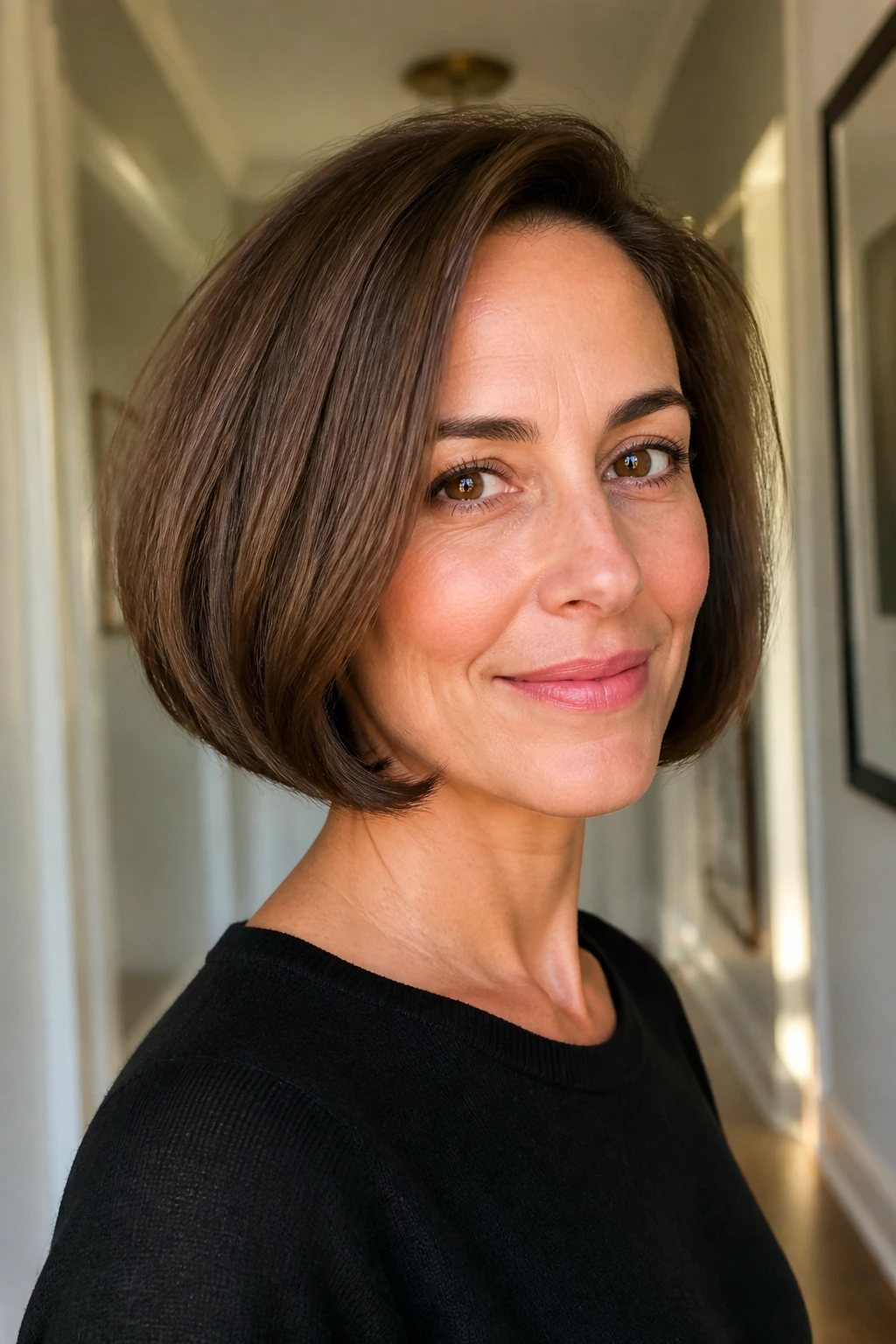
The tucked-under bob is a small detail haircut with a big payoff. The ends are cut and styled to curve inward, which keeps thick, frizzy hair from sticking out at the jaw or flipping at the neck. That inward tuck makes the whole silhouette look cleaner, especially in profile.
This shape can be worn sleek or soft, depending on how much brush work you want to do. It’s a smart choice if you hate the way your hair touches your collar and immediately explodes into static. The tuck gives it a finish line. Sometimes that’s all a haircut needs.
29. Grown-Out Pixie
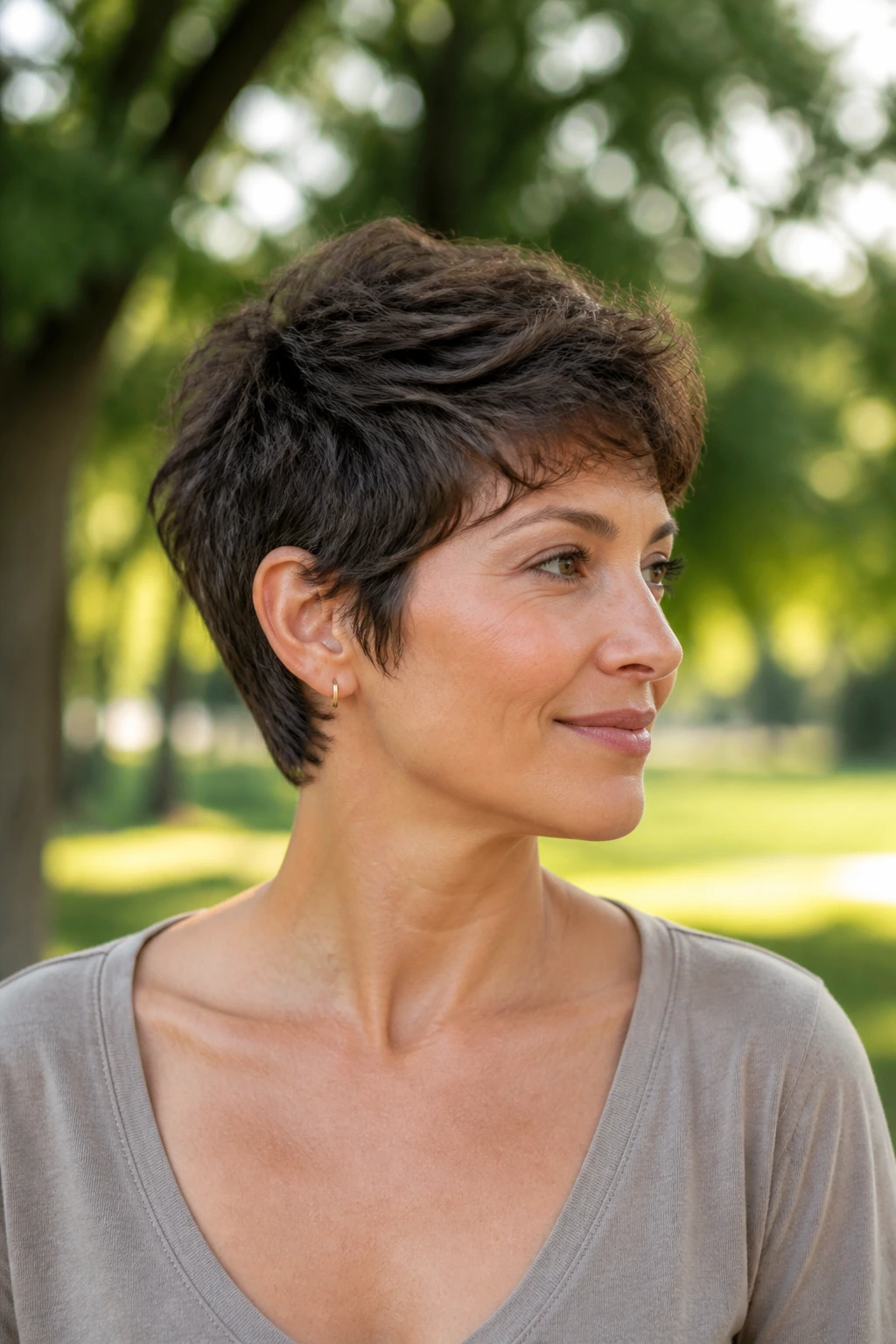
A grown-out pixie is for the person who wants short hair without looking freshly clipped every four weeks. The top stays a little longer, the sides stay soft, and the whole cut has room to move. Thick frizzy hair gives this shape a lot of life because the texture keeps it from looking limp as it grows.
The best part is the transition. It can move from a true pixie toward a bixie or mini bob without a weird awkward stage if the original cut is shaped well. That makes it easier to live with. If you like short hair but hate high-maintenance salon schedules, this is one of the more forgiving paths.
30. Disconnected Bob
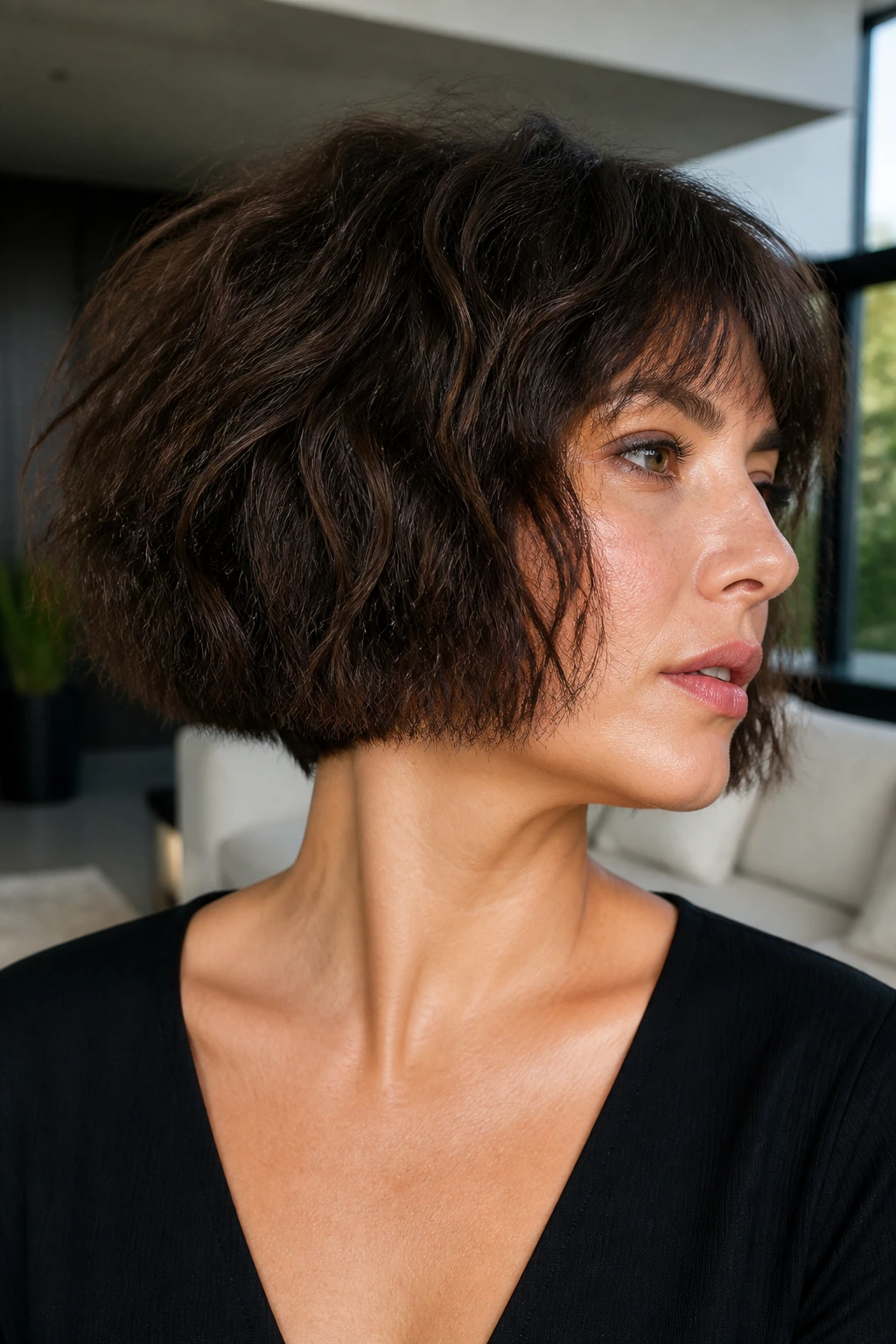
A disconnected bob uses a visible shift between the top and lower sections of hair, which sounds bold because it is. On thick frizzy hair, that separation can remove a surprising amount of bulk while keeping the overall shape sharp. The top layer sits with more presence, while the lower section can stay shorter and cleaner.
This cut is best when you want something architectural. It is not the most natural-looking option, and that is the point. The disconnect gives the style a bit of edge and keeps dense texture from becoming one giant mass. If you want a cut that reads as deliberate even when slightly tousled, this is a strong pick.
31. Box Bob with Soft Ends

A box bob gets its name from the square outline, but thick hair needs that square softened just enough at the ends so it doesn’t look stiff. The shape keeps the sides from puffing out, and the blunt perimeter helps frizz look contained. The result is clean, strong, and oddly easy to wear.
This cut is especially good if you like sharp lines in clothes and architecture and want your hair to do something similar. It works on straight, wavy, and loosely curly texture, though the softer the bend, the more the box shape shows. Think structured, not severe.
32. Short Cut with Curly Fringe
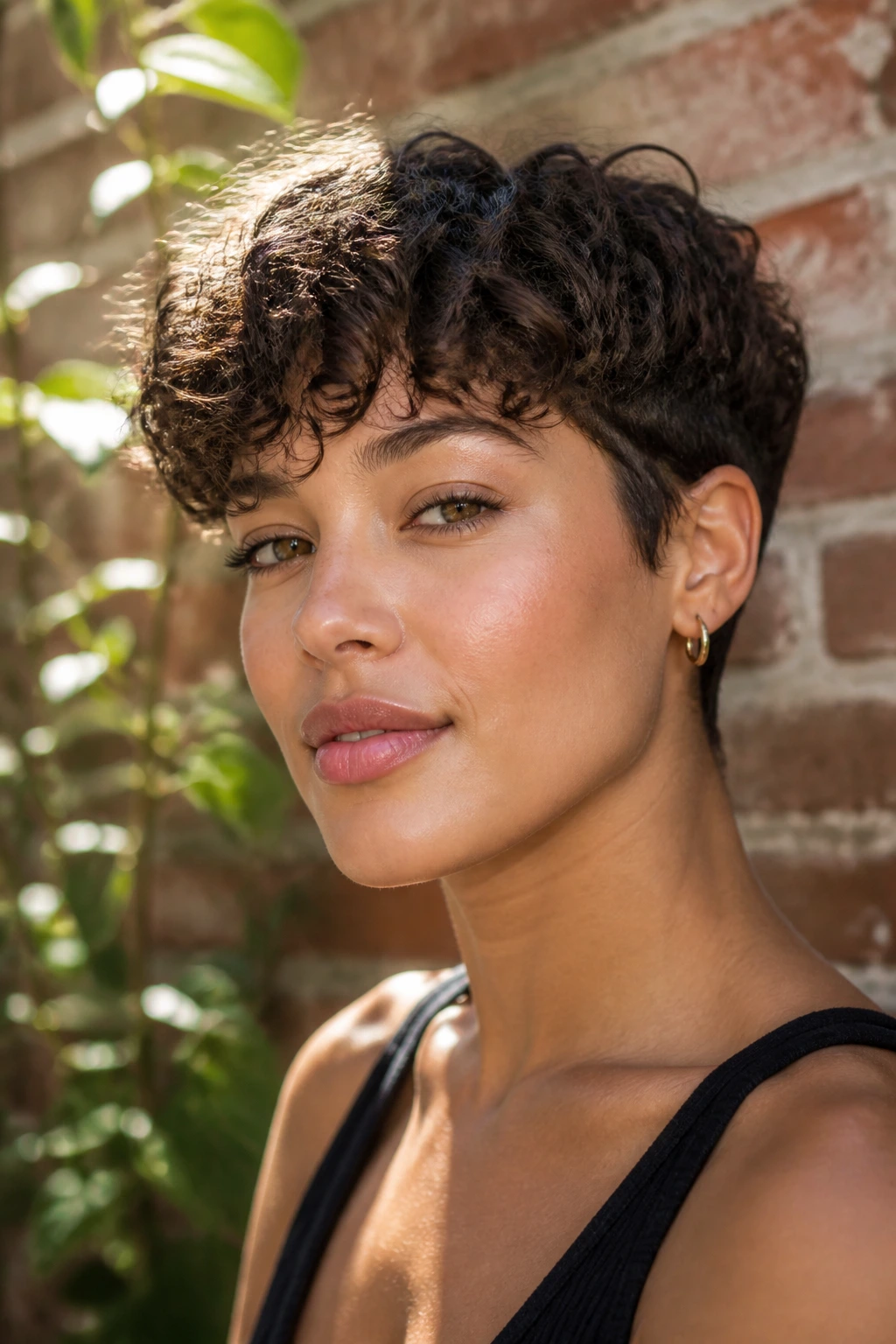
A curly fringe can be the difference between “short haircut” and “short haircut that actually suits thick hair.” Instead of forcing the front flat, you let the fringe curl, bend, or flick naturally. That gives the cut personality and keeps the forehead area from looking too bare.
This style works well when the sides and back are cropped close enough to create balance. The fringe should be left a touch longer than you think, because curl shrinkage is not shy. A short cut with a curly fringe has a little softness around the face and a lot of practical sense in humid weather.
33. Blunt Micro Bob
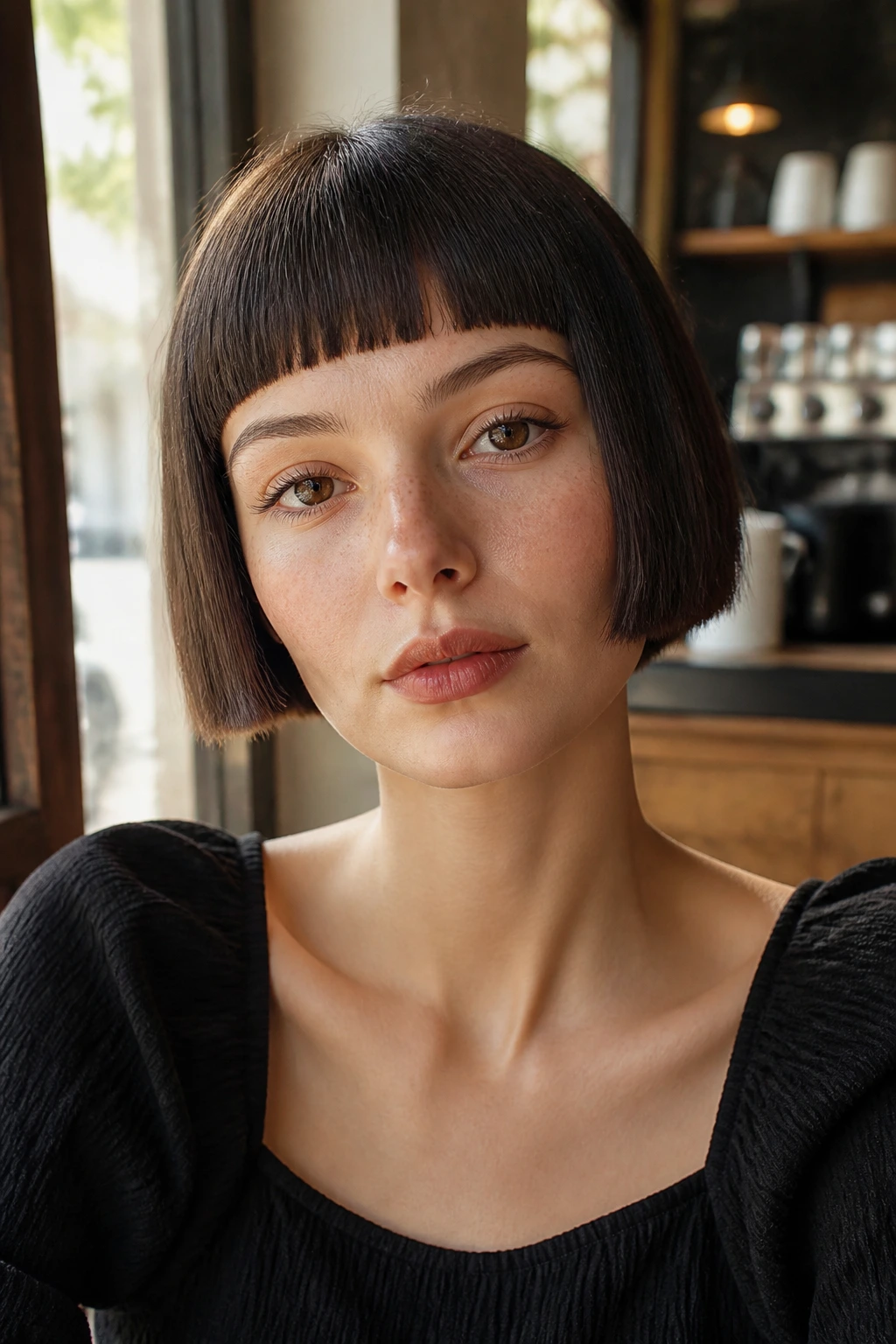
The blunt micro bob sits somewhere between bold and disciplined. It’s short enough to show the neck and jaw, but strong enough at the perimeter to hold thick hair in place. The blunt edge is doing all the visual work here, which is exactly why it suits frizzy texture so well.
I’d call this the haircut for people who want a sharp silhouette without extra fuss. It needs regular trims, and it rewards clean styling, but it also looks good a little messy because the line remains clear. If you like your hair to say something specific, this cut says it fast.
34. Tapered Afro Crop
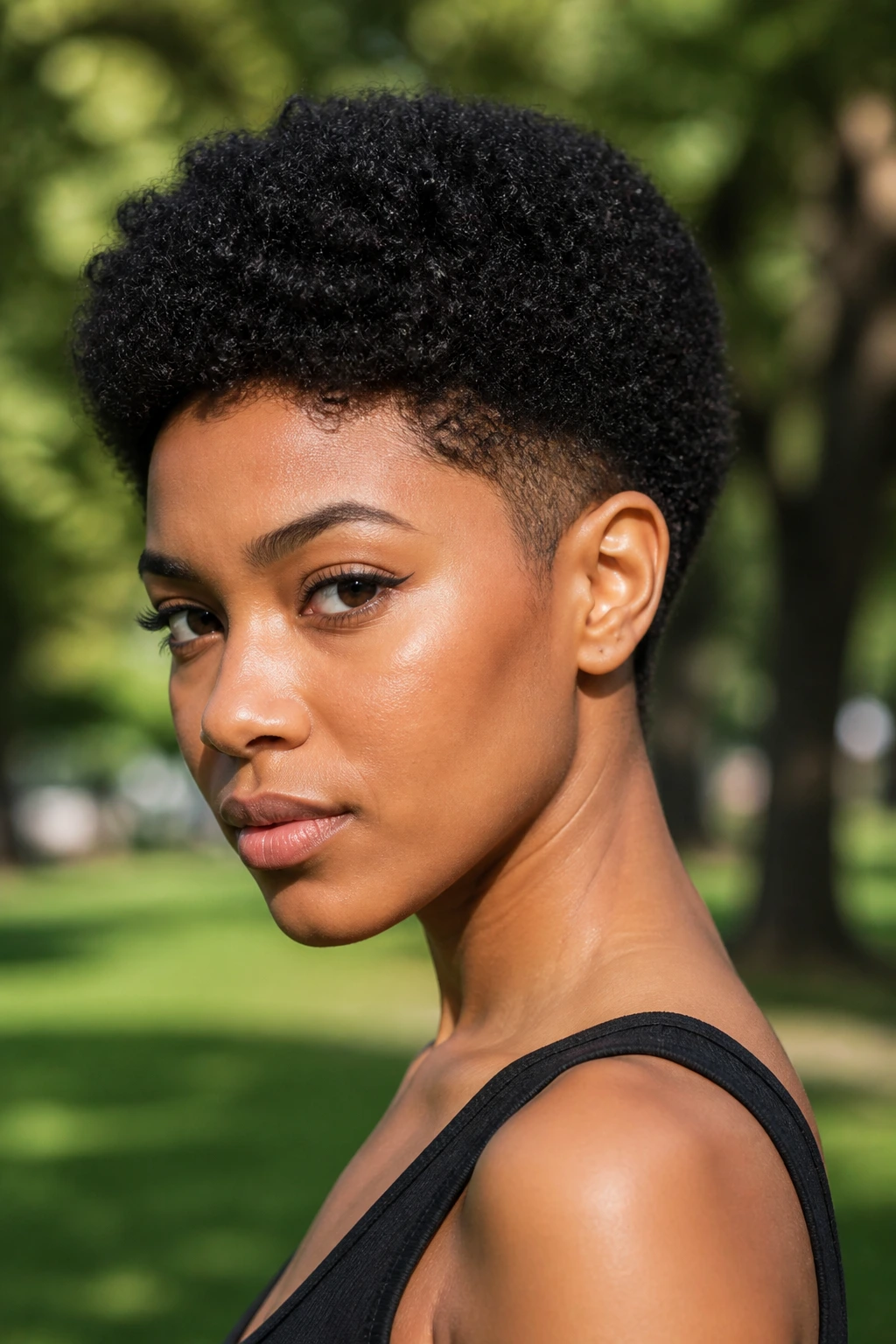
For coily or tightly curled hair, a tapered afro crop can be one of the best short shapes around. The sides and nape taper in, while the top keeps height and texture. That keeps the silhouette rounded without widening at the temples or building too much bulk at the back.
This cut is powerful because it works with density instead of trying to flatten it. The shape is neat, but the texture stays visible. Regular shaping around the edges keeps it crisp, while the crown can stay full and lively. If you want short hair that honors coil pattern and still feels clean, this is the one to beat.
35. Short Layered Crop with Nape Detail
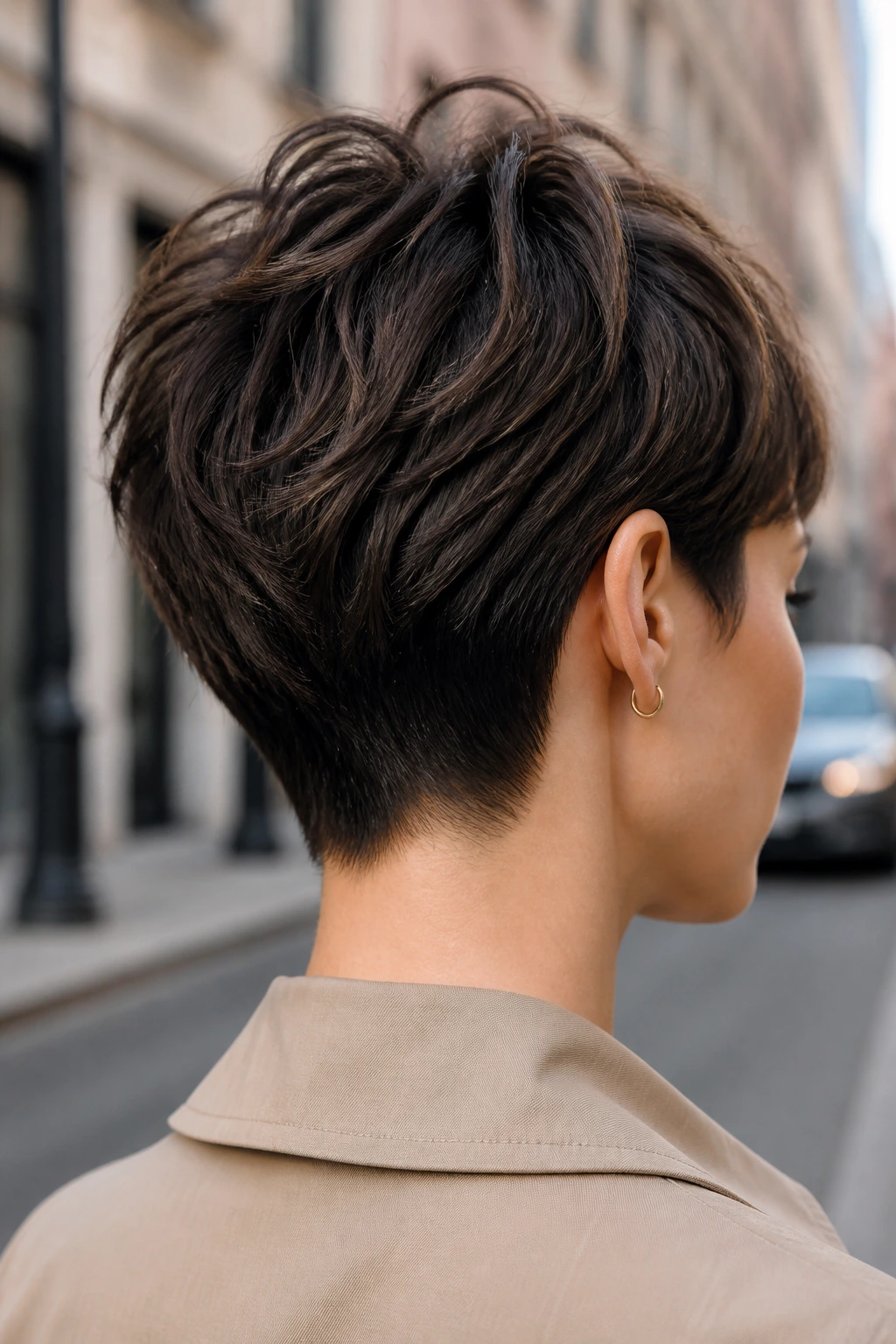
A short layered crop with nape detail is the sort of haircut that looks small from the front and smart from the back. The nape is tightened up so thick hair doesn’t bunch at the neckline, while the top layers stay long enough to move. That balance matters more than any single styling product.
This cut is a good closing choice because it works for a lot of textures without asking for too much drama. The back can be crisp, the sides soft, and the top a little piecey if you want it. It’s neat, it grows out in a decent way, and it gives thick frizzy hair shape without making it feel stripped down.
Why the Right Short Cut Changes the Whole Texture
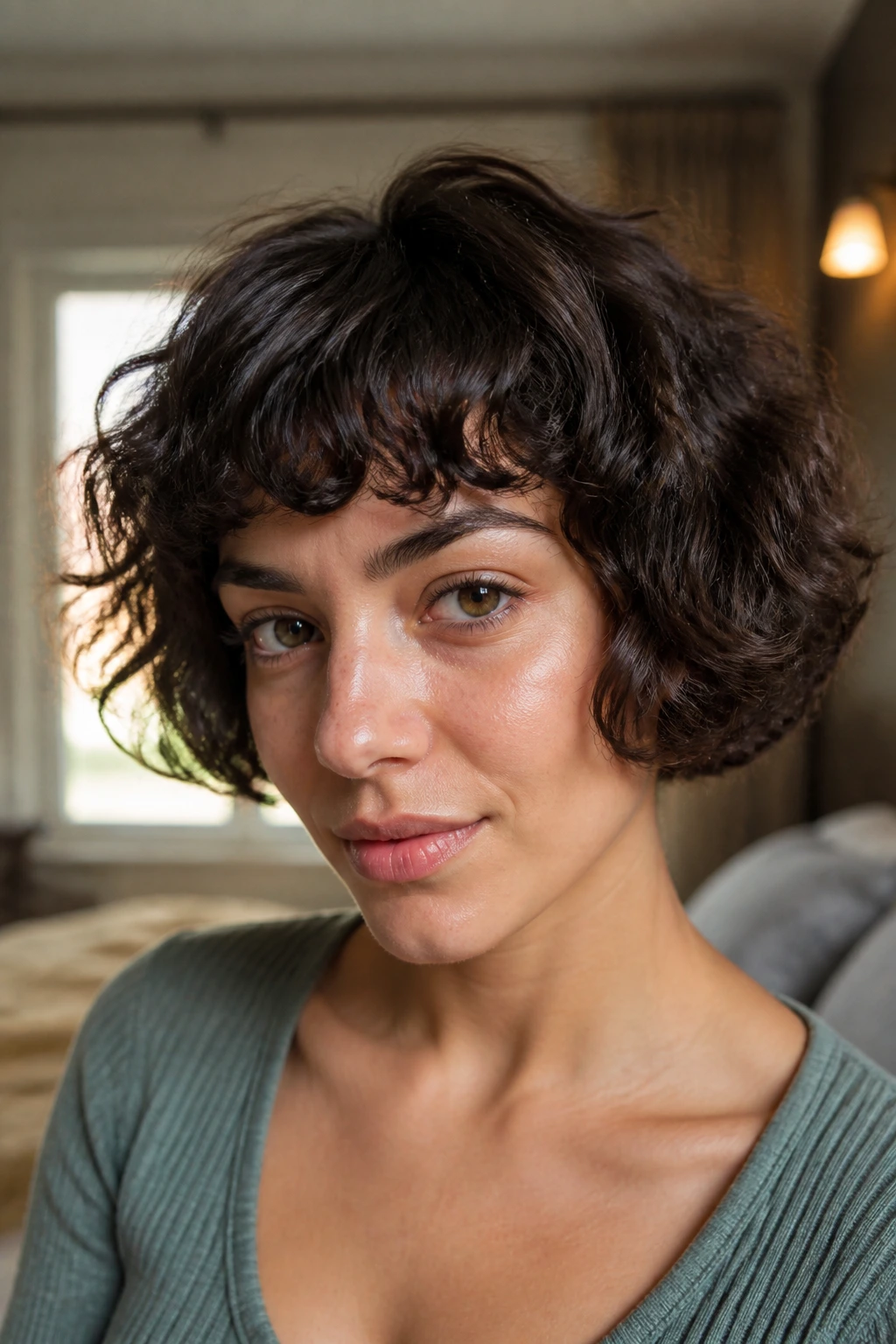
Short hair on thick, frizzy texture works when the cut stops fighting the bulk and starts directing it. That can mean a blunt line, a hidden undercut, a stack at the nape, or layers that begin lower than people expect. The exact answer changes with your density and curl pattern. The principle does not.
The best short cuts make the hair look like it belongs to the head it’s on. No puffing at the jaw. No triangle at the shoulders. No crown that looks like it has its own weather system.
Essential Tools for Styling and Maintenance

- Tail comb: Clean parts and sectioning matter when you’re trying to keep a short shape neat.
- Sectioning clips: Thick hair needs to be clipped away in chunks, not fought in one giant handful.
- Spray bottle: A fine mist resets frizz and lets you restyle without soaking the whole head.
- Wide-tooth comb: Better than a brush for detangling thick, textured hair after washing.
- Diffuser attachment: Helps curls and waves dry with less disruption and less puff.
- Blow-dryer nozzle: Useful if you’re smoothing a bob or beveling the ends under.
- Light mousse or gel: Gives short textured cuts hold without the greasy collapse that heavy cream can cause.
- Small amount of serum or oil: Best saved for the ends only; a pea-sized amount is usually enough.
- Microfiber towel or T-shirt: Cuts down on roughness when hair is wet and fragile.
- Hair clips for root setting: Helpful if you want lift at the crown while the hair dries.
Salon Notes and Product Picks That Actually Matter
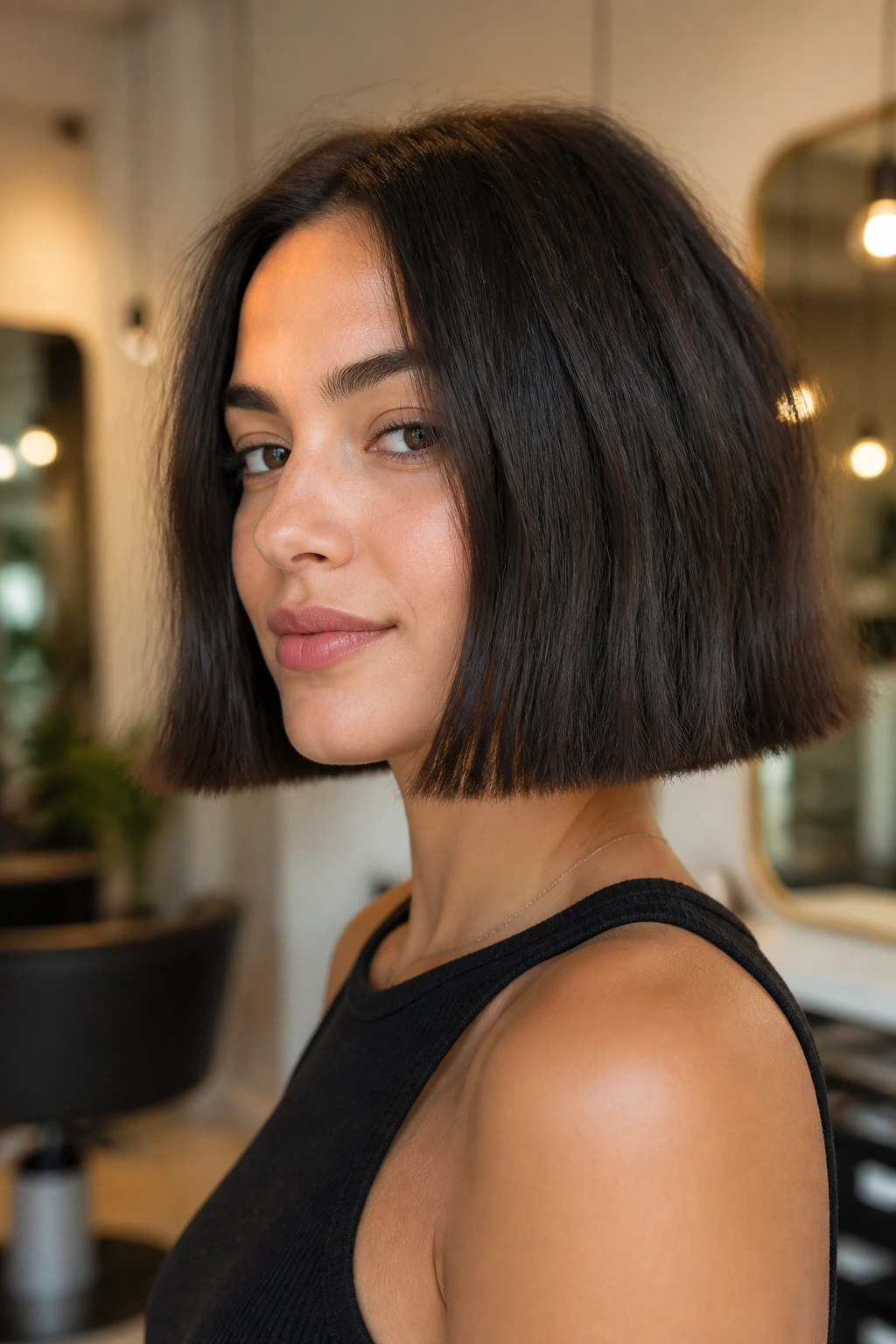
Bring more than one photo if you can. One front view is not enough for thick, frizzy hair, because the side line and the back shape are where the haircut either works or falls apart. Show your stylist what you like about each photo — the fringe, the nape, the fullness at the crown — instead of saying you want the whole thing copied. That saves a lot of awkward guessing.
Ask how the cut will behave dry. That matters more on thick texture than it does on fine hair. A bob that looks tidy when wet can turn into a puffed shape once it dries, and a pixie that seems small in the chair can flare out around the ears if the weight is removed too high.
Product-wise, I’d keep the routine light. Mousse, soft gel, and a small finishing serum usually do more for frizzy hair than heavy creams, which can flatten the top and leave the ends separated. If your hair is coarse and dry, use the cream only on the driest sections. If it’s dense and puffy, start with gel on soaking-wet hair and let the haircut do most of the work.
How to Wear These Cuts Without Fighting the Texture
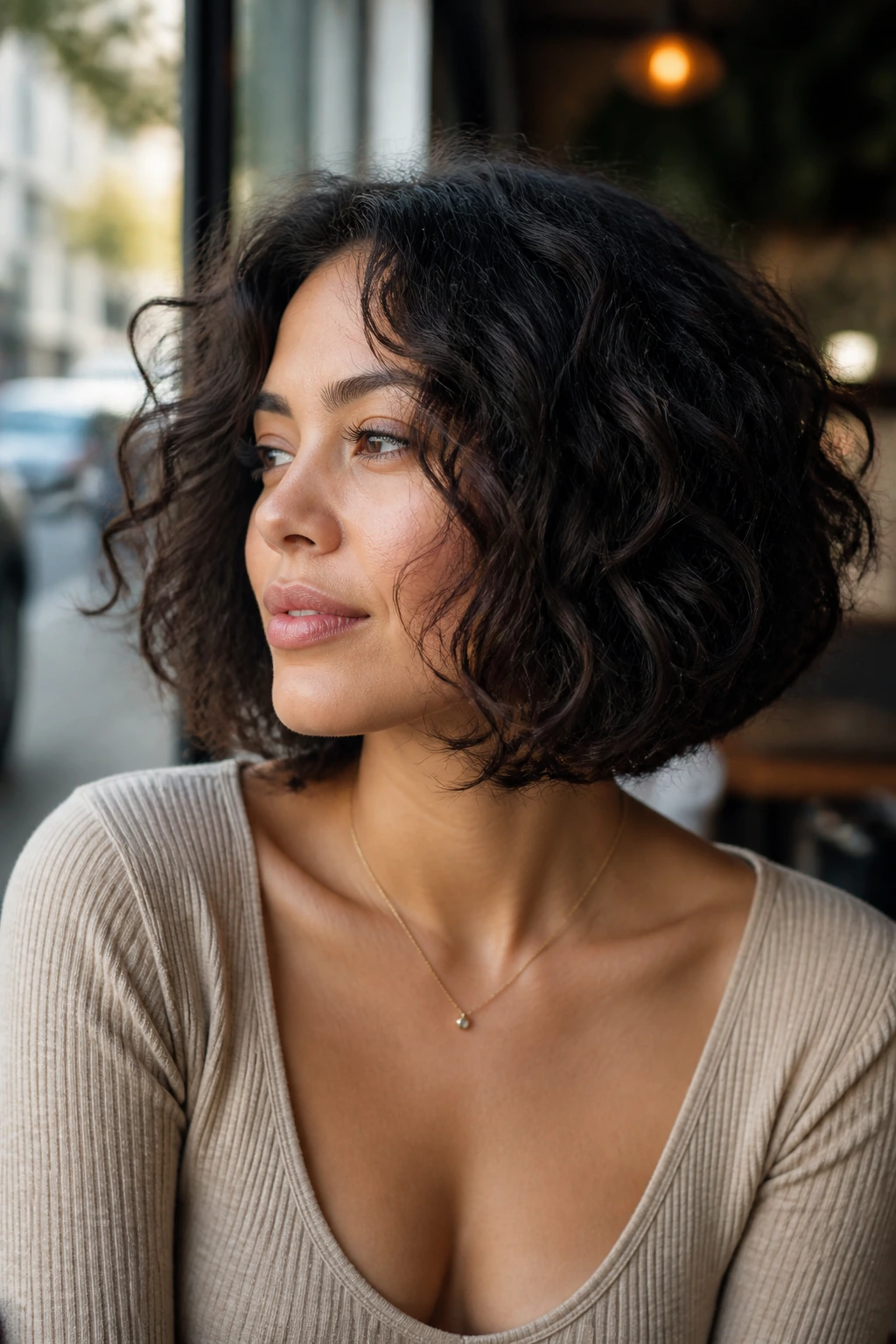
Silhouette: Pick a line that matches your density, not just your face. Thick hair usually looks better in a clear shape — blunt, stacked, rounded, or tapered — than in vague “layers everywhere” territory.
Styling: Work on damp hair. A little mousse or gel before drying usually gives a cleaner result than trying to tame the frizz after it has already set. If you diffuse, use low heat and low speed. Rough heat makes thick hair expand faster than people expect.
Finish: Keep the finishing product off the roots unless your hair is very coarse and dry. A pea-sized amount of serum through the ends is usually enough. More than that often just separates the texture and makes the cut lose its shape.
Best Match: If you hate daily styling, choose a bob, crop, or stacked shape. If you want movement and don’t mind a bit of styling, a shag, wolf cut, or mixie will give you more swing. Either way, the cut should look decent with a lazy day of product, not only after a full blowout.
Extra Styling Tips for More Shape and Less Puff
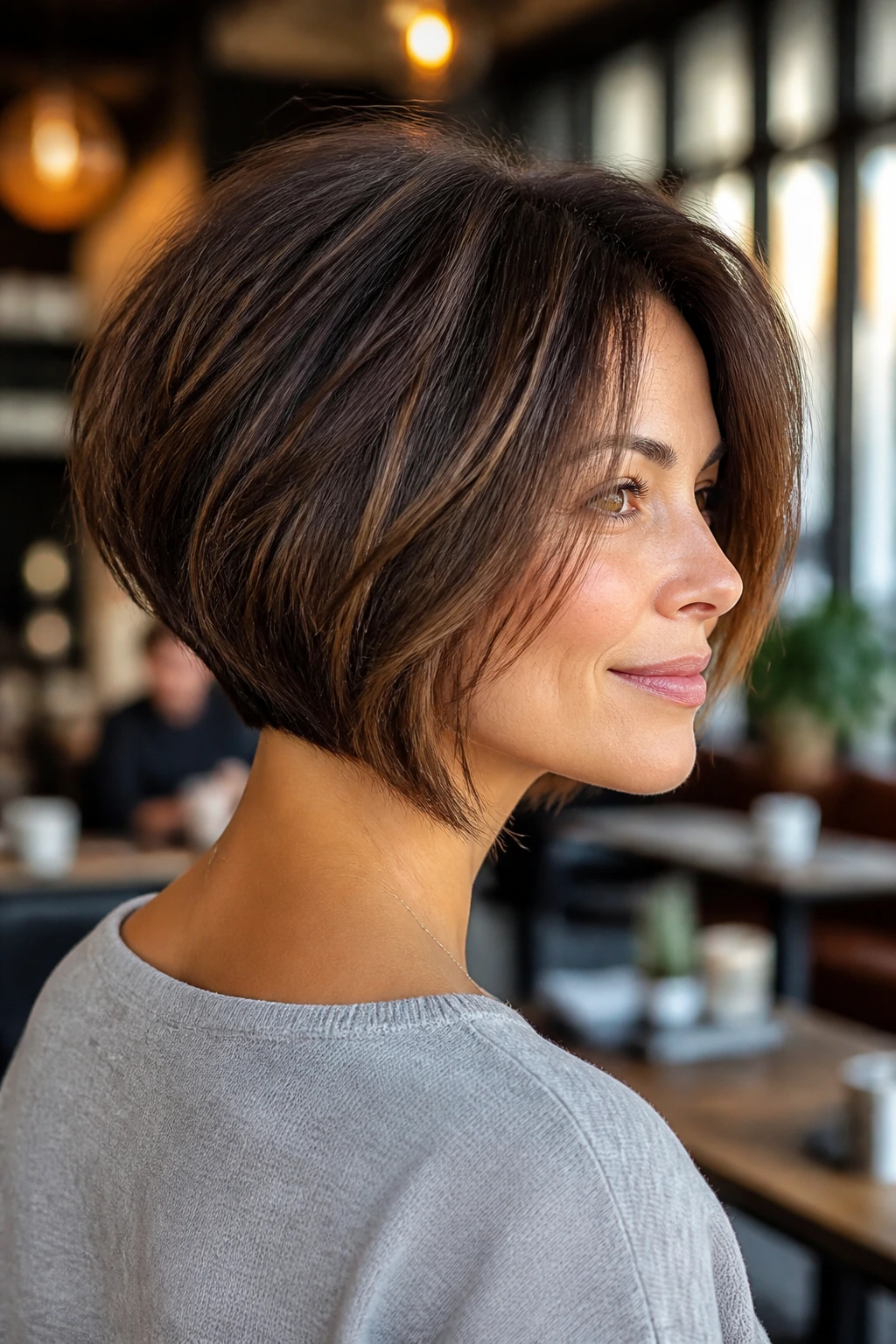
Root Lift: Clip the crown while the hair is drying so the top doesn’t collapse under its own weight. Two or three small clips at the roots can change the whole outline.
Humidity Buffer: Use a light gel on soaking-wet hair, then scrunch in a touch of mousse if you need softness. That combo tends to hold better than a heavy cream alone, especially when the weather gets damp.
Fringe Control: If you wear bangs, dry them first. They’re the first section to spring up or split, and once they set wrong, you’ll spend the rest of the day fixing them.
Time Saver: Don’t aim for perfect dryness. Get the hair about 80 percent dry, shape the front, and let the rest finish on its own. Thick hair often looks better with a little air-dried movement than with overworked smoothness.
Cost-Saver: Skip thinning shears unless your stylist is using them with a very clear plan. Random thinning is how thick hair ends up frizzy at the surface and hollow underneath.
Common Mistakes That Make Thick, Frizzy Hair Bigger

The biggest mistake is over-layering the crown. It sounds like a fix for bulk, but when the top is chopped too short, thick hair stands up instead of settling down. The result is a halo, not a shape. The fix is to keep the shortest layers lower and let the top retain enough length to lie where it’s put.
Another problem: taking a blunt cut too high on the head. A chin-length line can look sharp; an ear-length line can look boxy if the hair is dense and round. If the cut seems to flare out at the sides, the perimeter probably needs adjusting, not more product.
Then there’s the thinning-shear trap. It feels helpful in the chair. It often backfires later. Thick hair that’s thinned too much can become fuzzy at the ends while the heavier parts of the cut still swell. Ask for targeted debulking, not blanket thinning.
Bang shrinkage is another sneaky one. Frizzy or curly fringe will usually rise more than expected, especially once dry. Cut it with extra length and recheck it dry if possible.
And yes, heavy styling cream can make the whole shape slump. The hair may feel softer, but soft is not the same as controlled. If the style goes limp at the crown and puffy at the ends, swap some of that cream for mousse or gel.
Variations and Adaptations to Try
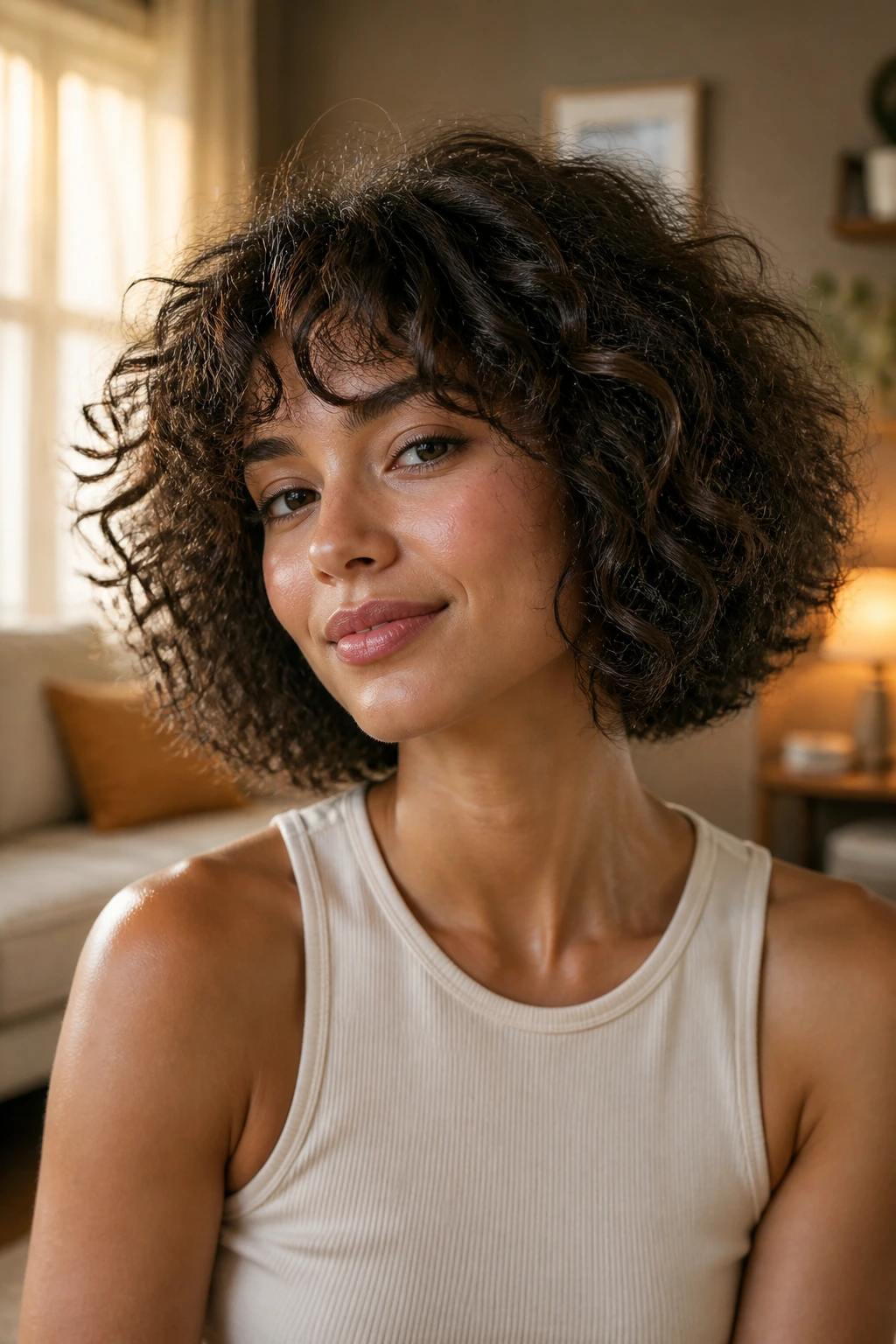
The Air-Dry-Only Version: Choose a cut with a clean perimeter — like a blunt bob, bob-pixie, or rounded crop — and ask for layers that work with natural bend, not against it. This version lives or dies by shape.
The Blowout-Friendly Version: Pick a lob, feathered bob, or inverted cut with enough length to hold a brush set. These styles take better to smoothing, beveling, and a polished finish.
The Curl-First Version: Ask for a dry cut or a curl-by-curl shape if your hair shrinks a lot. Short curly shags, curly crops, and tapered crops tend to behave best when the cut respects the curl pattern from the start.
The Low-Maintenance Grow-Out Version: A pixie bob, grown-out pixie, or collarbone lob will usually grow more gracefully than an ultra-short crop or a very precise bob. If you hate frequent trims, this path is kinder.
The Strong-Line Version: Blunt micro bobs, box bobs, and chin-length bobs give thick frizzy hair a hard outline that holds up in humidity. If you want your texture to look contained, this is the cleanest route.
Keeping the Shape Between Salon Visits
Short cuts on thick frizzy hair need upkeep, but not panic-level upkeep. Pixies, bixies, and tapered crops usually want a trim every 4 to 6 weeks if you want the edges to stay crisp. Bobs and lobs can often stretch to 6 to 10 weeks before the shape starts slouching.
Between visits, refresh with a light mist of water and a tiny bit of product rather than rewashing every time. That matters because thick hair can get dry fast when it’s washed and rough-dried over and over. A satin pillowcase or bonnet also helps cut down on friction at the nape and around the crown, which is where frizz tends to show first.
If the cut starts puffing at the sides, it usually needs reshaping, not more oil. If the fringe starts sitting too short, it probably needs a trim, not a deeper side part. Hair tells you what’s wrong if you pay attention to the shape it’s making.
Frequently Asked Questions
Is short hair actually better for thick, frizzy hair?
Often, yes, because shorter hair removes the weight that makes thick strands spread outward. The catch is that the cut has to be designed for bulk, not just shortened across the board. A bad short cut can look wider than long hair ever did.
Should thick, frizzy hair have layers or no layers?
Usually some layers help, but not the short, choppy kind everywhere. Long internal layers or soft graduation remove bulk without making the surface fuzzy. Too many short layers can make the hair explode at the sides.
What’s the easiest short cut to maintain?
A chin-length blunt bob or a grown-out pixie usually wins here. Both keep a clear shape with minimal daily fuss, though the pixie needs more frequent trims if you want it neat.
Are bangs a bad idea on frizzy hair?
No, but they need the right length and the right cut. Curly fringe, side-swept fringe, and longer micro fringe can work well if shrinkage is accounted for. Short, heavy bangs can go poofy fast.
Is a dry cut better for this hair type?
It often is, especially if your hair shrinks, bends, or fluffs up a lot as it dries. Cutting dry lets the stylist see the real silhouette. Wet cuts can still work, but only if the stylist knows how your texture behaves when it’s fully dry.
How often should I trim a short cut?
Most short cuts need a shape check every 4 to 8 weeks. Crops and pixies grow out fast around the ears and neck, while bobs and lobs can usually go a little longer before they lose the line.
What if my hair puffs out after washing no matter what I do?
That usually means the shape is too layered at the top or too light at the perimeter. Product can help some, but it won’t fix a haircut that was thinned in the wrong places. A more structured bob, stacked shape, or undercut crop often solves more than another styling cream ever will.
Can I wear these cuts without heat styling?
Yes, and that’s one of the reasons thick, frizzy hair often benefits from short cuts. The trick is choosing a shape that looks finished air-dried: blunt bob, shag, crop, or tapered cut. If you want sleek ends every day, you’ll need more heat and more time.
The Shape That Holds Up
The best short cut for thick, frizzy hair is the one that gives the bulk a job. Sometimes that means a hard line. Sometimes it means a hidden undercut. Sometimes it’s just the right amount of softness around the face so the rest of the head can stay controlled.
Bring photos, talk about shrinkage, and ask where your hair gets widest when it dries. That one detail tells a stylist more than a vague request ever will. Once the shape is right, thick texture stops feeling like a problem and starts doing what it does best: taking up space in a way that actually looks good.
