



Short wavy hair has a funny habit: the minute you try to bully it into obedience, it can go puffy, flipped-out, or strangely round at the ends. Leave it alone, and it often looks flat at the root and busy everywhere else. Beach wave looks for short wavy hair sit right in that narrow middle lane where the bend feels casual, the ends stay light, and the whole cut gets a little more shape without turning into a helmet.
The part people miss is that short hair does not behave like long hair with the ends chopped off. A 1-inch wand, a flat iron twist, a diffuser, or even a salt-spray scrunch changes the silhouette fast, because there isn’t much length to hide a mistake. That’s why a bob with loose bends can look sharp and airy, while the same technique on a pixie needs a lighter hand and more root lift.
The best part? Short wavy hair gives you room to play. A deep side part can make a jaw-length cut feel leaner, a brushed-out wave can soften a blunt bob, and a little clip or scarf can change the whole mood without adding much work. The looks below cover the polished, the undone, the piecey, and the slightly messy versions that short waves actually wear well.
Why These Short-Wave Looks Work So Well
- Short length keeps the texture honest: On a bob or lob, every bend shows, so a small change in direction can make the haircut look more intentional instead of mushy.
- Natural wave gets a real job: Wavy hair already wants to bend; these looks refine that pattern instead of fighting it.
- The finish can swing casual or polished fast: A soft brush-through makes the same cut read cleaner, while sea salt spray and air-drying push it toward rougher texture.
- Face shape gets more room to breathe: Side parts, curtain fringe, and tucked sides shift where the eye goes, which matters more when the hair is short.
- Second-day hair often looks better: A little grit gives short waves grip, so these styles usually behave better after the first wash day passes.
- Accessories do more on short hair: Clips, headbands, and scarves show up clearly and can change the whole look without needing extra length.
1. Soft Center-Part Lob Waves
A center part on a short lob can be unforgiving if the wave pattern is too tight, but the soft version is a different animal. The hair falls in loose bends that open around the face and skim the collarbone, which keeps the look light instead of puffy. It’s the sort of style that looks like you spent ten minutes, even when the wand actually saw a little more than that.
Use a 1-inch curling wand and wrap 1-inch sections away from the face, leaving the last inch out. Once the curls cool, rake through with fingers and a drop of lightweight oil. The key is not to make the waves uniform; a few slightly straighter pieces keep the lob from looking overworked.
2. Side-Swept Bob Waves
A side part gives a bob immediate attitude. One side sits close to the cheekbone, the other side lifts and moves, and that asymmetry makes short wavy hair look fuller at the roots without needing much product. It’s a good choice when your hair starts to collapse by midday.
The styling trick is simple: blow-dry the root opposite your part first, then bend the mid-lengths with a flat iron or wand, always turning the tool the same direction on the heavier side. Finish with a light mist of flexible hairspray at the crown, not the ends. Too much spray down low makes the waves look stiff.
3. Jaw-Skimming Flip Waves
This look works because the ends kick out just enough to frame the jaw without making the haircut look wide. On short wavy hair, that tiny flip can change the whole mood. It feels a little retro, a little easy, and much less precious than a perfectly curled bob.
Start by rough-drying the hair until it’s about 80 percent dry, then bend only the last 2 inches of each section with a small round brush or a flat iron twist. The face-framing pieces should curve under, while the back can turn slightly outward for movement. If your hair naturally flips weirdly, this style lets the flip look deliberate instead of accidental.
4. Choppy Shag Waves
If your cut has layers, this is where short beach waves really wake up. A choppy shag gives the wave room to separate, which keeps the top from ballooning and the ends from clumping into one solid shape. The result is messy in a controlled way, which is my favorite kind of messy.
Work in mousse at the roots and salt spray through the mid-lengths, then scrunch while diffusing on low heat. Stop before the hair gets fully dry if you want a piecey finish. Fully drying it straight with a brush defeats the point; this look needs a little lift, a little grit, and a few imperfect bends.
5. Piecey French Bob Waves
A French bob with waves has a crisp line that stops the texture from getting too wild. The cut usually sits at cheek to chin length, so the wave pattern needs to be loose and separated, not curled tight like a ribbon. That contrast is what gives the style its edge.
Use a flat iron to make soft S-bends instead of full curls. Press, twist, release, then move down the section in small steps so the wave looks broken up rather than round. A matte finishing cream on the ends helps the pieces stay distinct. Skip heavy serums; they make the bob look greasy fast.
6. Air-Dried Salt-Spray Waves
This is the low-effort look that still looks like you paid attention. Short wavy hair takes salt spray well when the product is used sparingly and scrunched into damp hair, not drenched into it. Too much and you get a crunchy shell. Too little and nothing happens.
Mist from mid-length to ends, then twist random sections around your fingers and let them air-dry with the part you want already in place. I like to clip the crown up while it dries, because root lift disappears fast on short cuts. Once the hair is dry, break up any hard bits with a tiny dab of cream.
7. Deep Side-Part Sweep

A deep side part can turn a simple bob into something far more dramatic. The hair sweeps across the forehead, the volume shifts to one side, and short waves suddenly look longer than they are. That’s useful if your cut hits right at the chin and you want to slim the profile a bit.
The trick is to set the part while the hair is still damp and then dry the heavy side over a round brush for lift. Curl only the front sections away from the face, leaving the back looser. A deep part on very fine hair can slide back out, so pin the part for a few minutes while it cools.
8. Grown-Out Pixie Waves
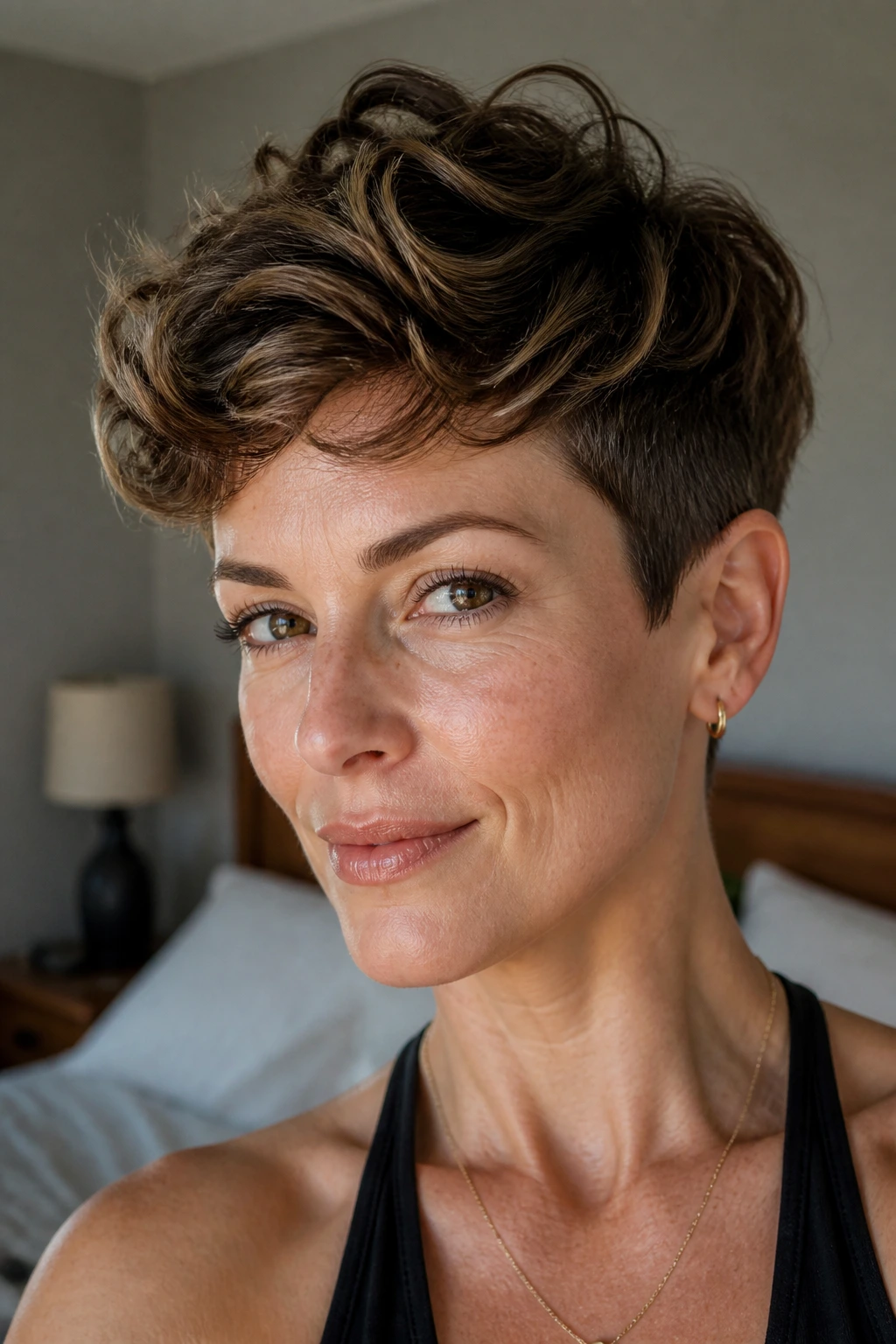
This one is for the in-between stage, when a pixie is not quite a pixie anymore. The wave lives on the top and crown, while the sides stay closer and cleaner so the shape does not puff out like a mushroom. It looks best when the texture feels touchable, not helmet-stiff.
Use a pea-sized amount of mousse on damp hair, then diffuse or finger-dry the top upward. Bend only the longest top pieces with a small wand if they need help. The shortest sections should be left alone; forcing those pieces into curls usually makes the cut look fussy.
9. Micro Bob S-Waves
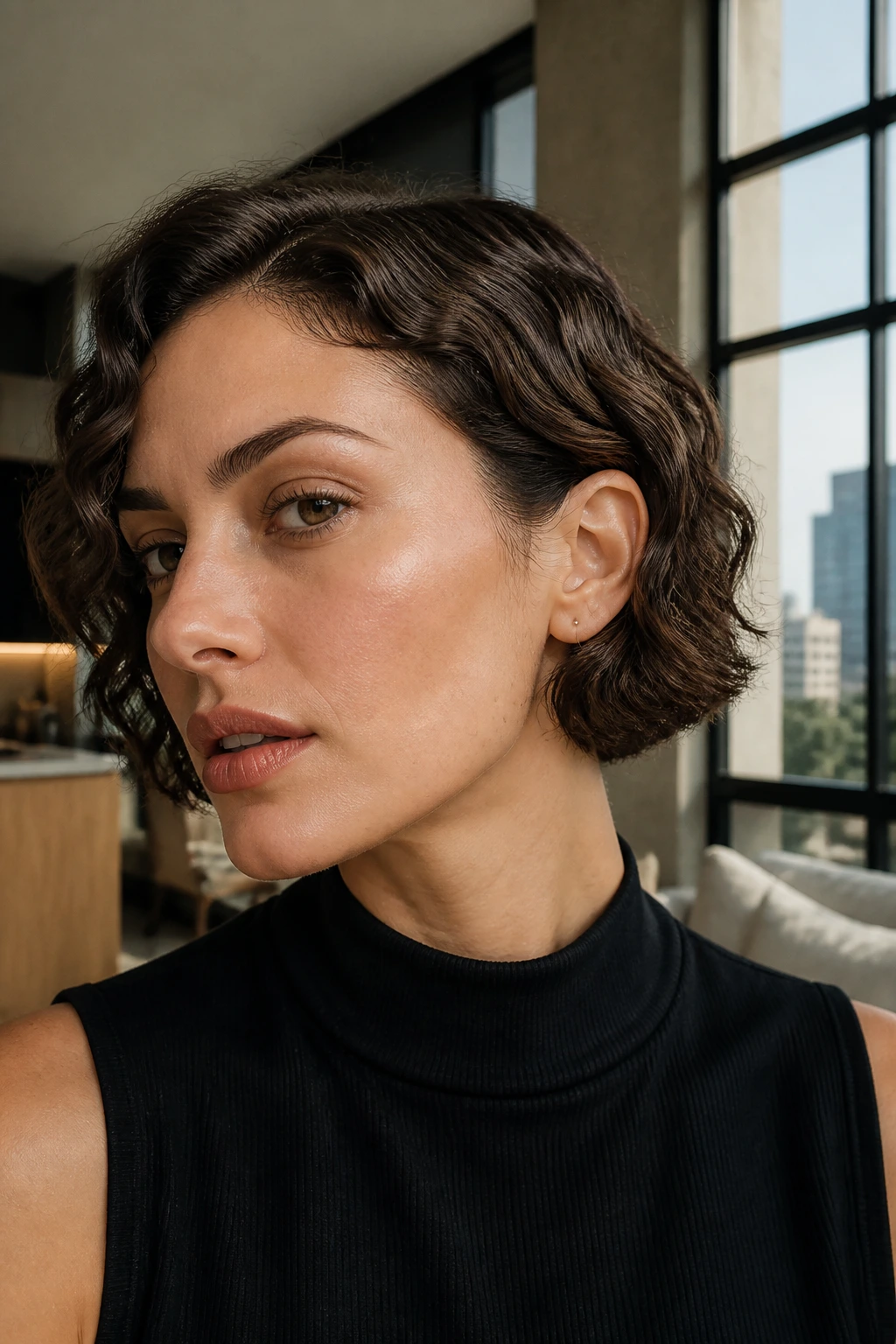
A micro bob needs a lighter touch than people expect. The hair is too short for big, loose loops, so the best result is a series of tiny S-waves that move across the cut instead of stacking into curls. Think texture, not curl pattern.
Use a flat iron and make short, shallow bends from root to tip. Keep the tool moving. If you pause too long, the wave gets too round and the style loses that sleek, modern feel. A small amount of dry shampoo at the root can add grit and help the waves hold their shape through the day.
10. Curtain Bang Waves
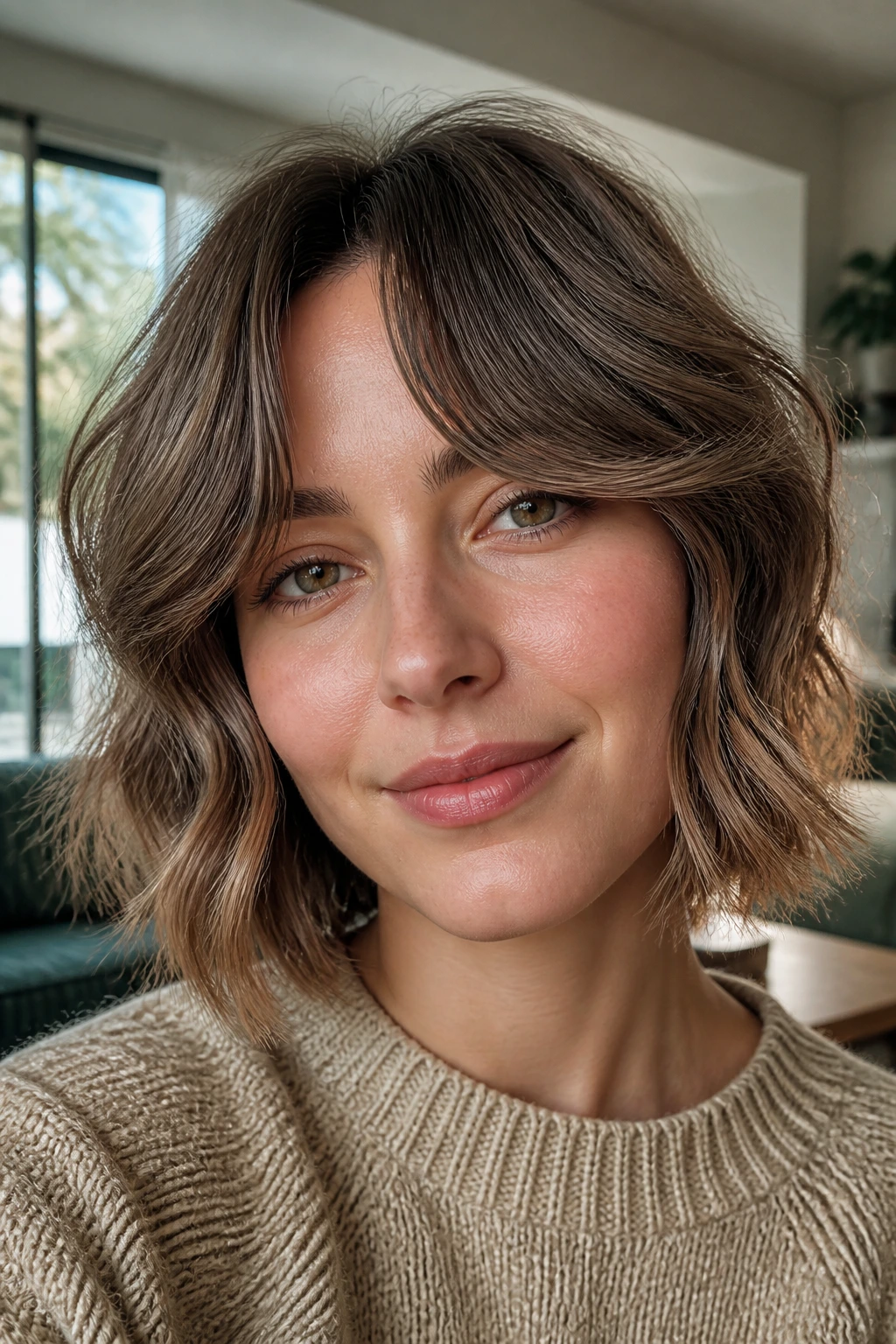
Curtain bangs and short wavy hair are a good pair when the bangs get their own texture plan. The fringe should bend away from the face and then split softly in the middle, while the rest of the hair stays a little looser. That framing keeps the cut from looking too dense around the eyes.
Dry the bangs first with a round brush or a large Velcro roller if you have one. Then add soft bends through the rest of the hair so the fringe doesn’t look disconnected. If the bangs are too curly, they will swallow the forehead; if they are too straight, they’ll look bolted on.
11. Claw-Clip Half-Up Waves
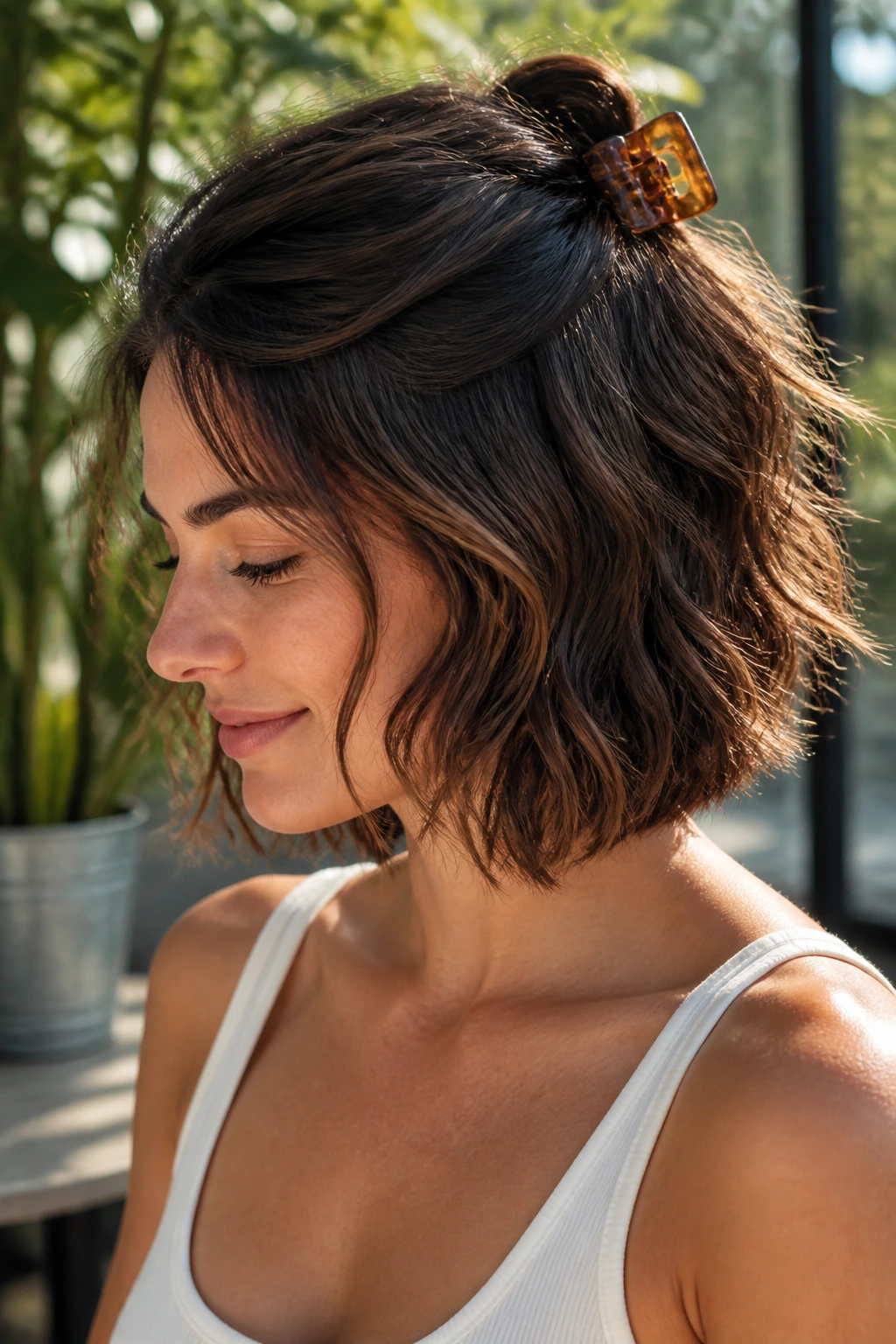
A claw clip changes the whole attitude of short beach waves. It lifts the top layer, shows off the bend underneath, and keeps the back from getting squashed when you want a quick style that still looks deliberate. On a bob, the half-up lift can create a little fake volume where you need it most.
Gather only the crown and upper sides, not the whole head, then twist loosely before clipping. Leave the ends loose around the clip instead of tucking them all the way in. That tiny messiness matters. A too-tight clip makes the style look stretched and can flatten the wave pattern you just built.
12. Slick Roots, Wavy Ends
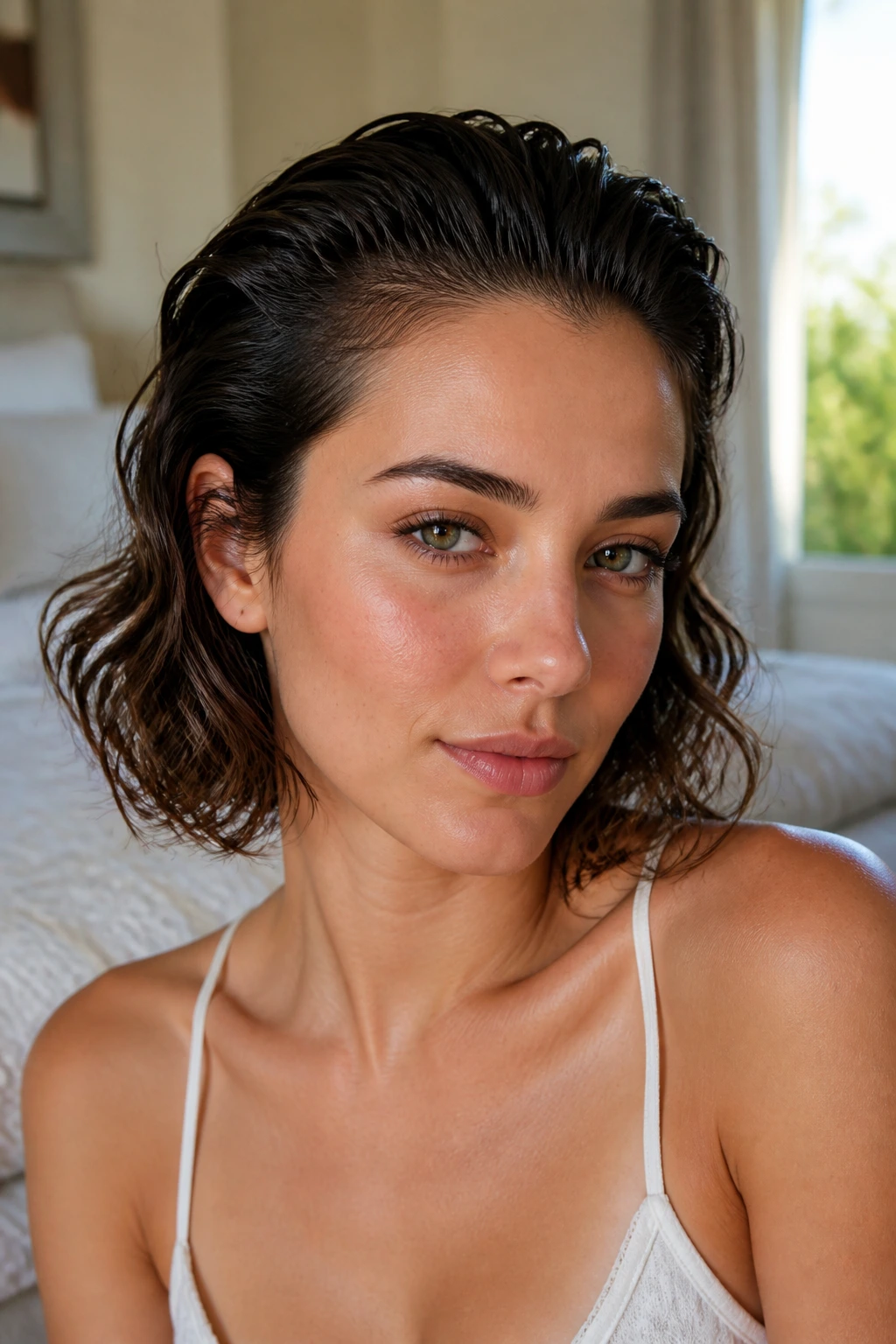
This is one of my favorite contrasts for short hair because it looks modern without asking for much length. The roots stay polished and close to the head, while the waves start around the cheekbones and carry the movement down. It’s cleaner than full beach texture and a lot less likely to puff in humidity.
Use a smoothing cream or a touch of gel at the roots, then wave only the mid-lengths and ends with a wand. Keep the top section smooth with a brush before the product sets. If your hair is thick, this style can look bulky unless the root product is spread very thin.
13. Salt-Scrunched Bob Waves
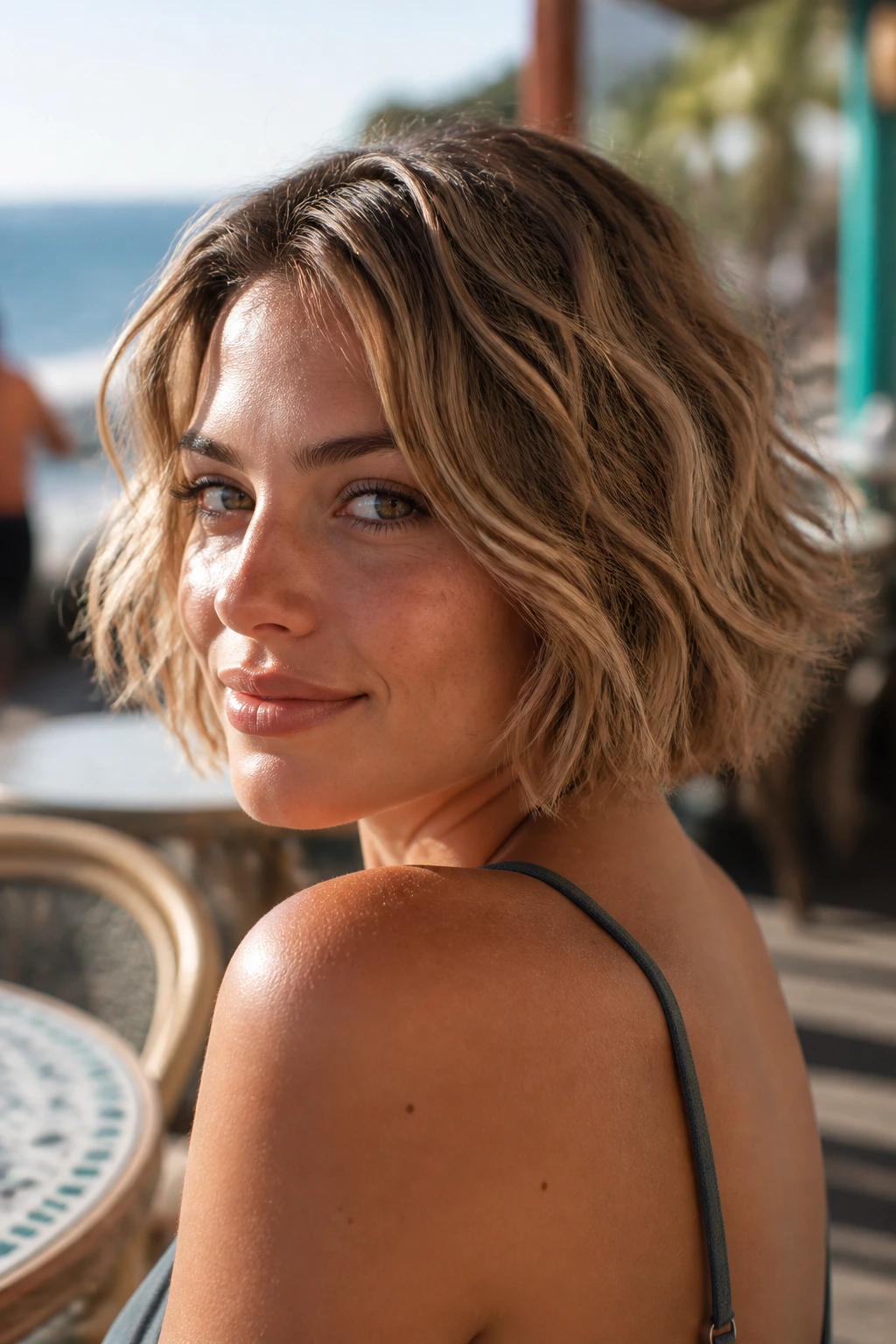
This is the gritty, more obvious beach texture that a lot of short wavy hair can carry without trouble. The salt spray roughs up the cuticle just enough to give the bob a dry, tousled finish, especially if the ends tend to fall straight. It’s a good choice when you want the hair to look like it’s been bent by weather, not polished by a tool.
Scrunch the product into damp hair in upward motions and then stop messing with it. Really. The more you rake through, the more you stretch the wave out. If the roots dry too flat, flip the head upside down for the last few minutes of drying and shake the hair loose.
14. Flat-Iron Ribbon Waves
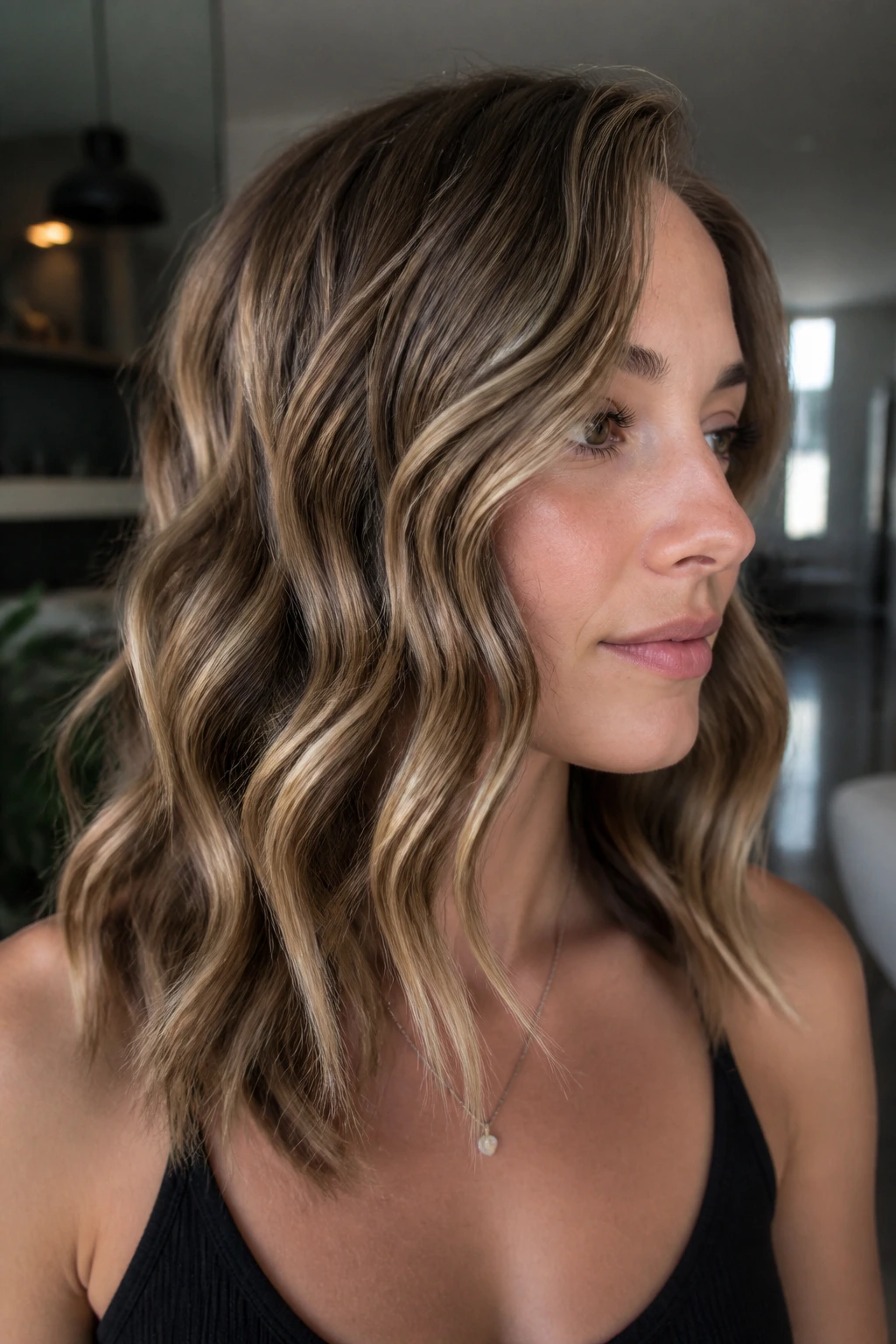
Ribbon waves use a flat iron to make a soft, continuous bend that’s a little sleeker than wand curls. On short hair, that matters because tight ringlets can look crowded fast. Ribbon waves slide more cleanly across the cut and give you movement without too much bounce.
Clamp a section, rotate the iron 180 degrees, slide a few inches, then rotate back. The result is a long, soft bend that feels almost like fabric folding. Use a heat protectant first and keep the iron moving; leaving it in one spot creates a hard crease that looks awkward on short ends.
15. Crown-Volume Windswept Waves

If your hair falls flat at the top, this style gives it a little drama without making the ends too big. The waves are lighter through the sides and stronger at the crown, so the shape lifts upward before it moves outward. It reads airy, not helmety.
Blow-dry the roots in the opposite direction from your part, then pin the top for five minutes while it cools. After that, create loose bends only through the lower half of the hair. The look is best when the top has volume but still feels soft to the touch, not sprayed into place.
16. Brushed-Out Soft Waves
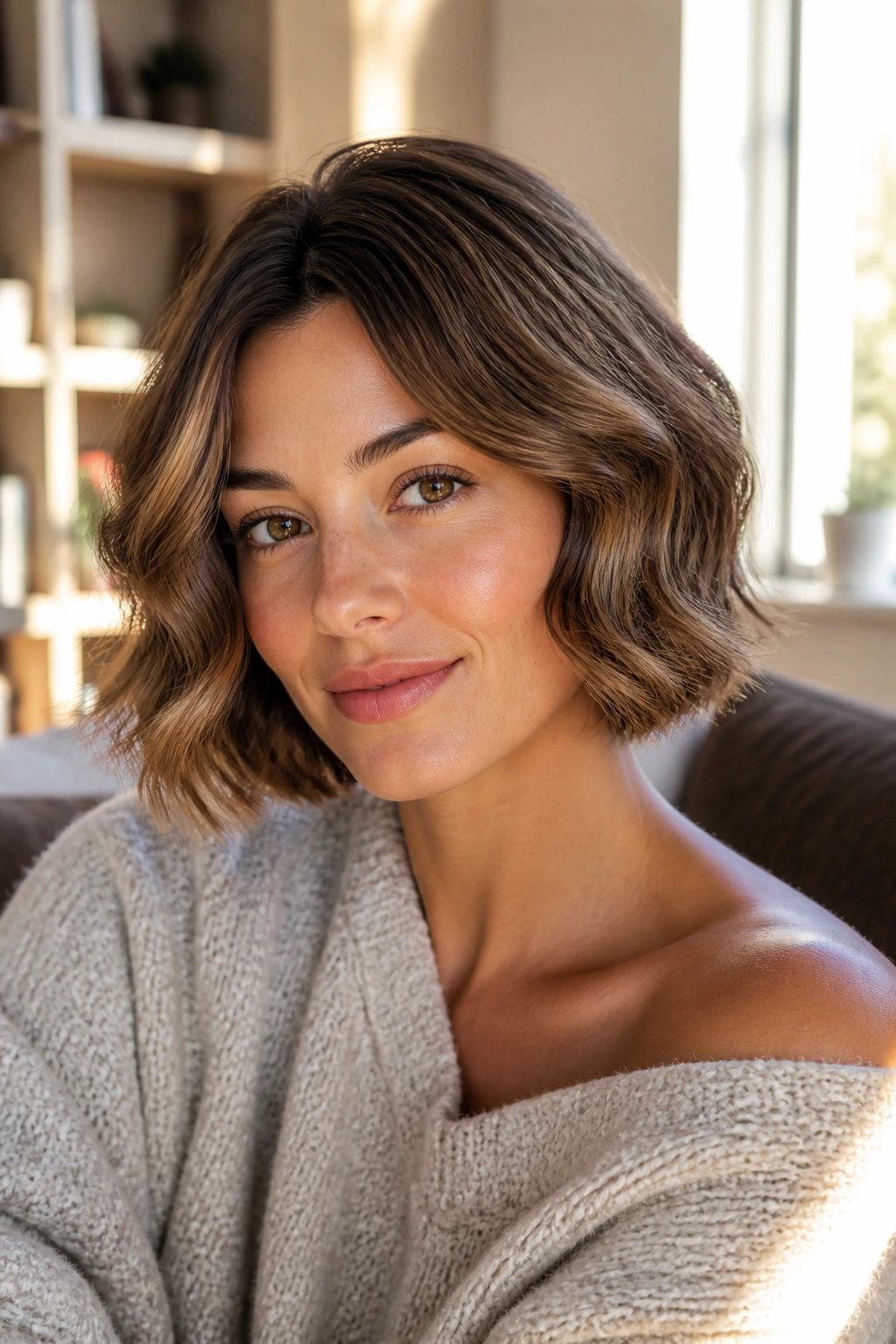
Brushed-out waves are for the days when you want short hair to look less piecey and more smooth. The bend stays there, but the texture softens and expands a little, which works well on blunt bobs and lobs. I like this version when the cut needs polish for dinner or work.
Let the waves cool fully first, then use a paddle brush or wide brush to soften them from mid-length to ends. Don’t brush the root area too hard or you’ll erase the lift. A tiny bit of serum on the palms helps stop the ends from fraying into a halo.
17. Tucked-Behind-Ear Waves
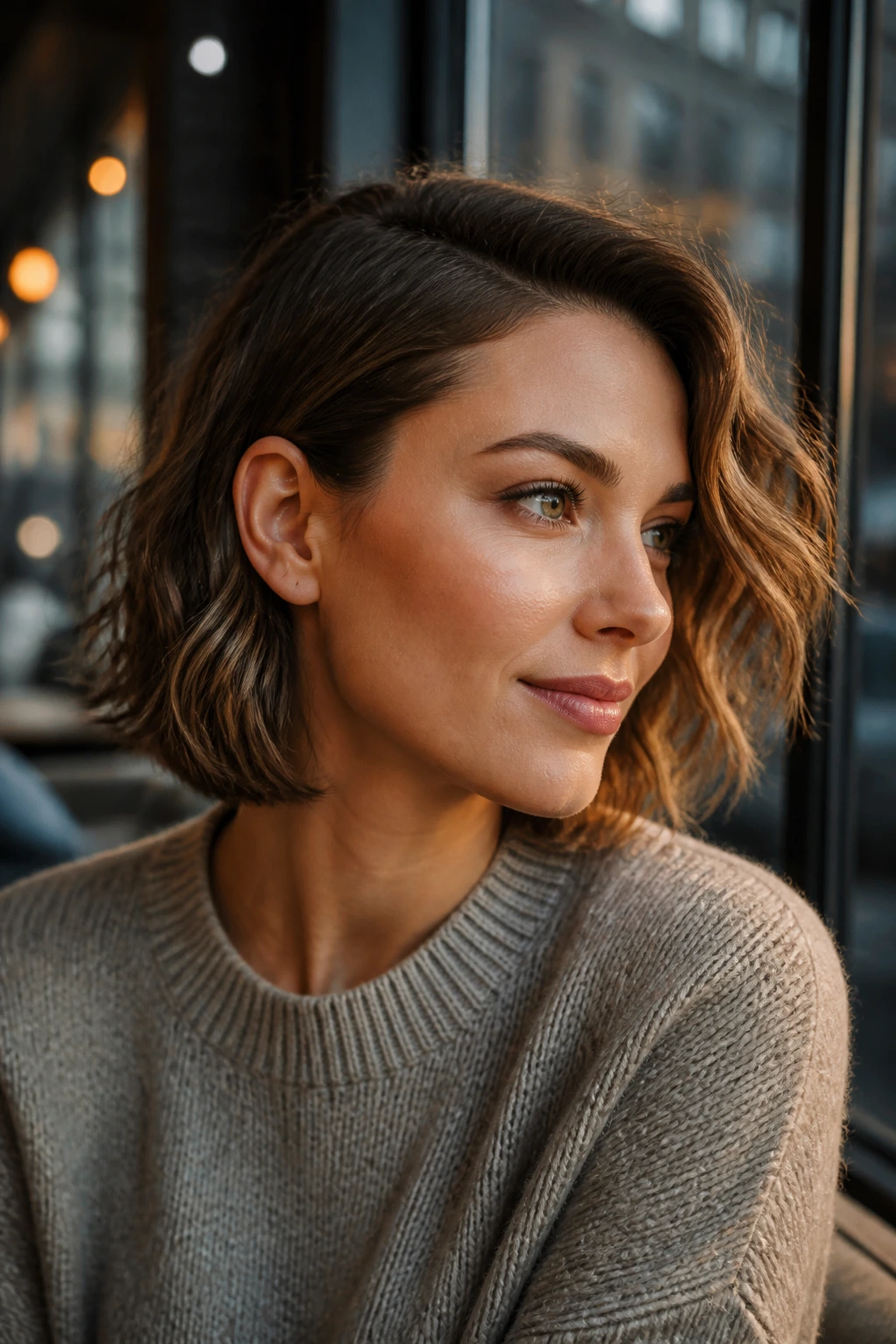
This one sounds simple, and it is, but that’s the appeal. One side tucked behind the ear exposes the cheekbone and makes the wave pattern on the untucked side stand out more. On short wavy hair, a little asymmetry goes a long way.
Create loose waves all over, then tuck one side and secure it with a flat pin if your hair slips. Leave a few thin pieces out near the temple so the look doesn’t feel too neat. When the tuck sits too low, it can drag the whole style down, so keep it high enough to show shape.
18. Mini Headband Waves
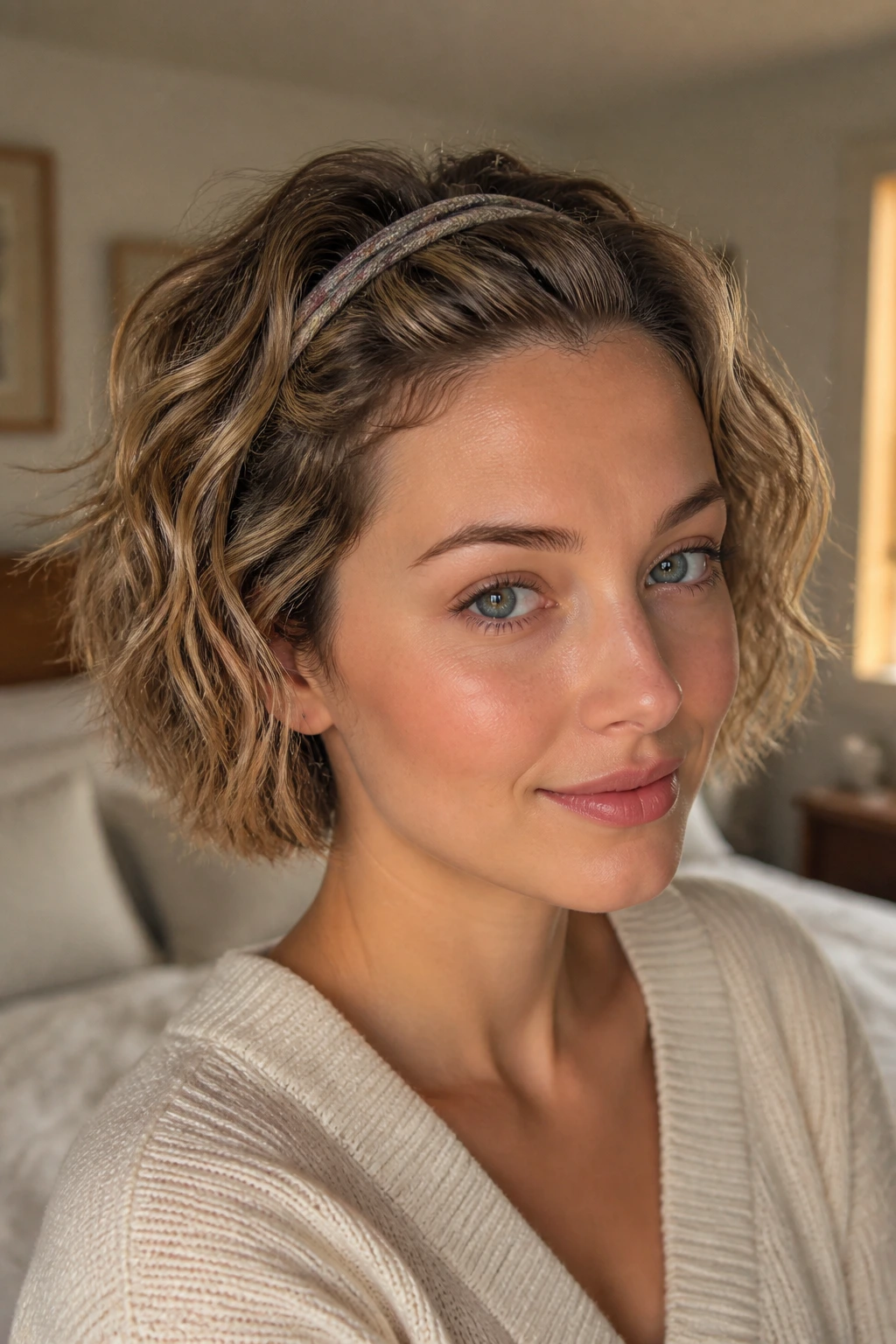
A slim headband can make short beach waves look finished in about ten seconds. The band pushes the top back just enough to show the texture at the crown and along the sides, which is useful when the front pieces won’t cooperate. It’s one of the easier fixes for day-two hair.
Place the headband after the wave pattern is set, not before, unless you want a bent crease at the hairline. A fabric band feels softer than a rigid plastic one and won’t fight the wave. If the ends near the ears puff out, a little cream rubbed between fingertips usually settles them down.
19. Asymmetrical Wave Sweep

Asymmetry gives short cuts more personality than a perfectly even wave ever will. One side can sit slightly fuller, while the other stays flatter and closer to the head. That shift makes the haircut feel deliberate and a bit sharper.
Style the heavy side with a bigger bend and let the lighter side stay looser. A side part helps, but the real trick is not making both sides identical when you wave them. The mismatch should feel subtle, not lopsided. That line between balanced and uneven is where the look gets interesting.
20. Hidden Braid Texture
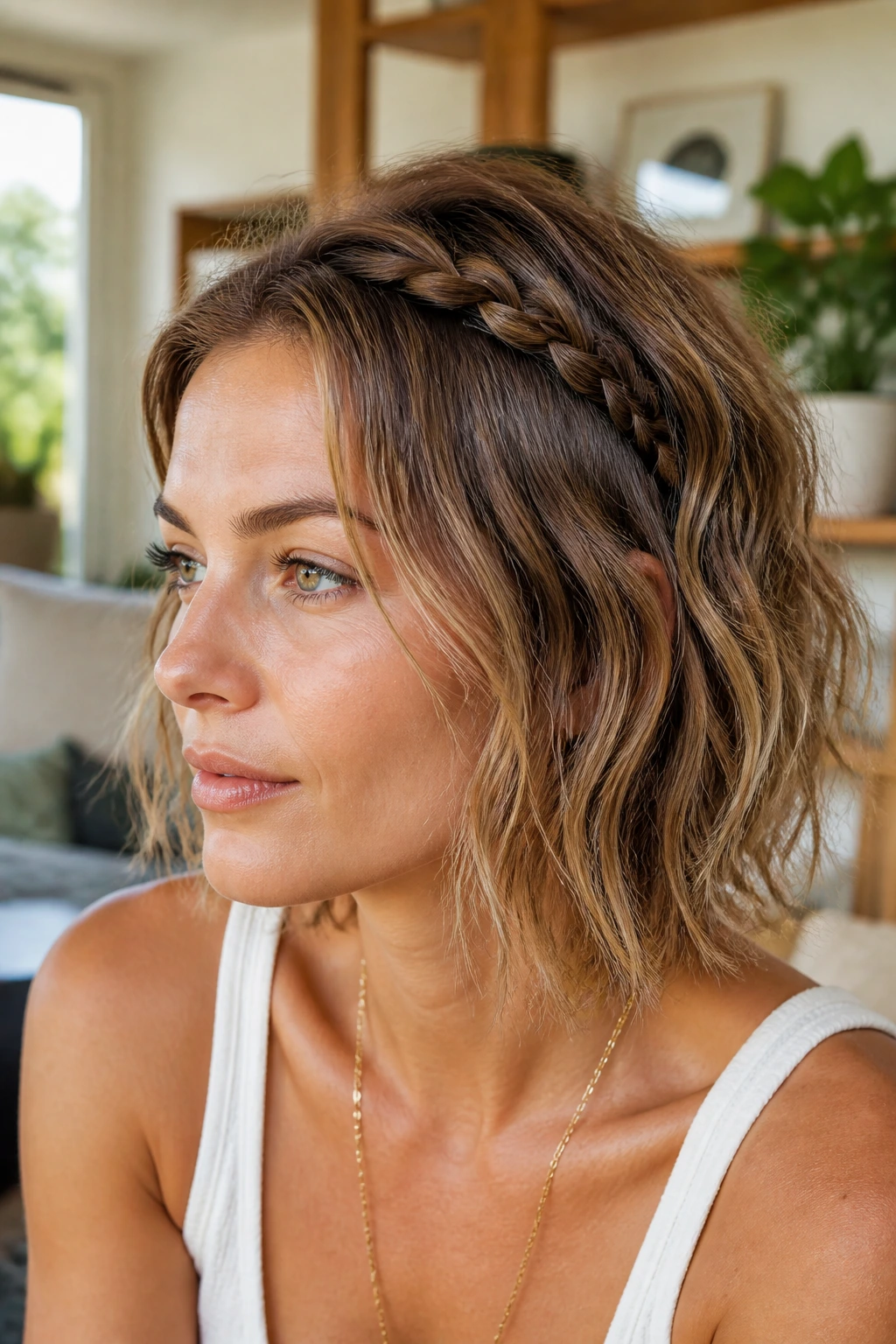
A tiny braid can add a beachy, lived-in bend without heat. On short wavy hair, that matters because too much heat can make the ends brittle fast. Braids also work well when your wave pattern is uneven and you want a softer, more diffused texture.
Braid one or two damp sections near the front or at the crown, let them dry, and then loosen them with your fingers. The bend left behind is gentler than a wand wave. Don’t braid the whole head too tightly; tight braids make crimp lines that can look too set for this style.
21. Diffused Root-Lift Waves
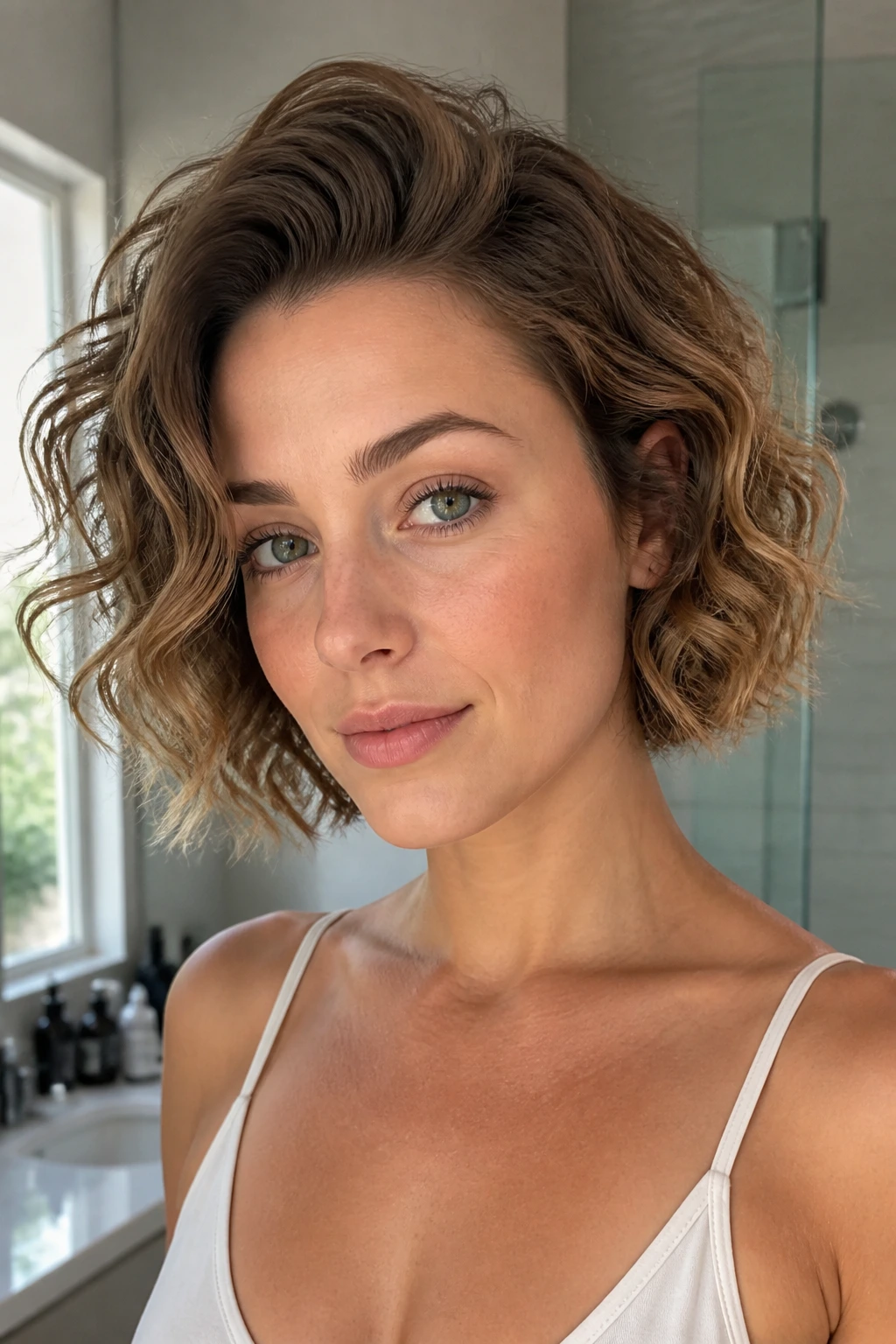
A diffuser changes the game for short wavy hair because it keeps the pattern from getting blasted apart. Instead of blowing the hair flat, it dries the roots upward and lets the wave form with more body. That’s handy if your hair tends to collapse at the crown the minute it loses moisture.
Use low speed, low heat, and cup the hair into the diffuser rather than pushing it around. Hold sections in place for a few seconds, then move. If you keep touching the hair as it dries, the wave gets fuzzy. Less handling, better shape.
22. Face-Framing Bends
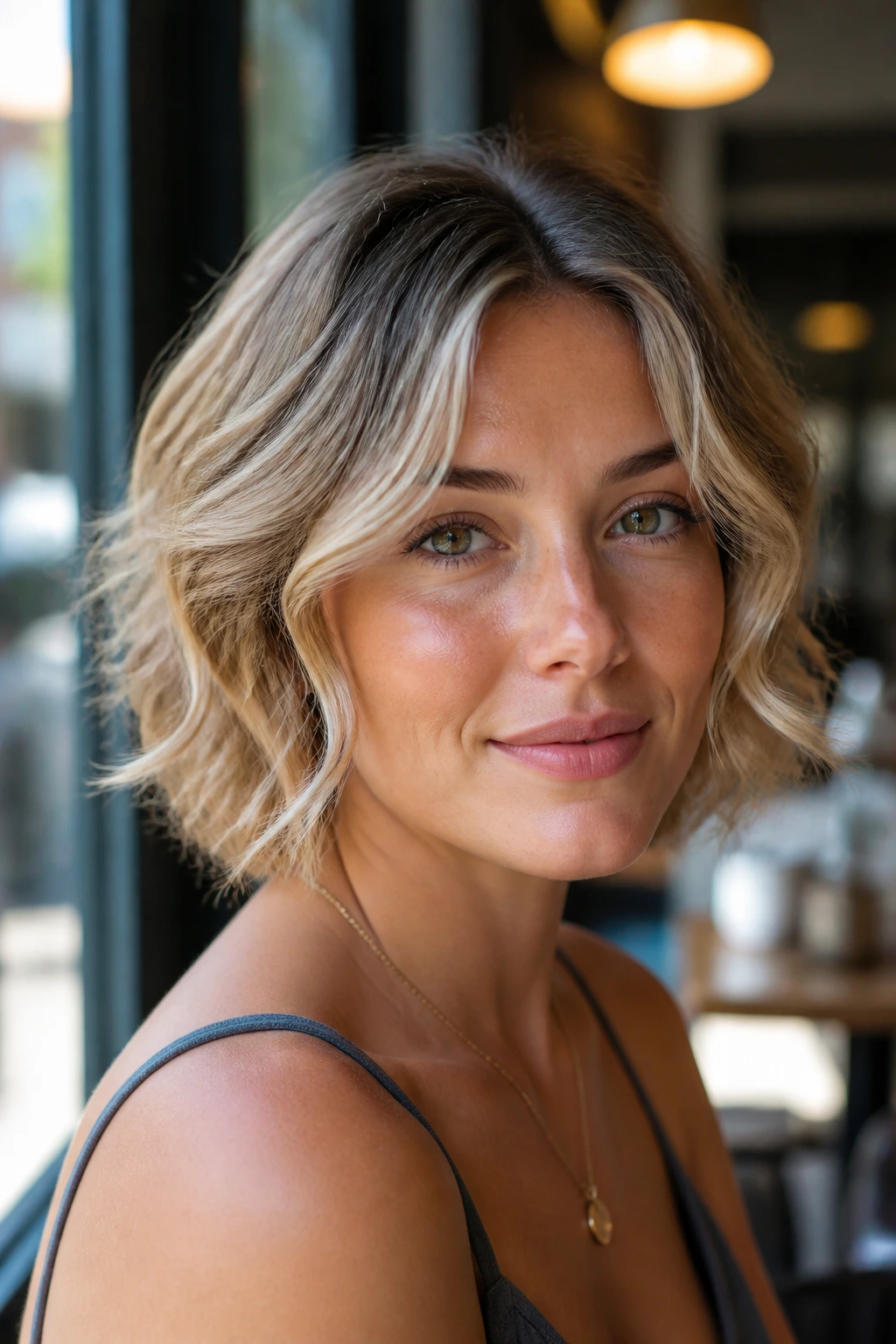
Face-framing bends are the quiet workhorse of short beach wave styling. The front pieces get a little more movement, a little more curve, and suddenly the entire cut looks softer around the eyes and mouth. You do not need to wave every strand for this to work.
Focus on the first inch or two around the face and leave the back more relaxed. A wand or flat iron both work, but the bend should move away from the face and then soften toward the ends. If your cut has layers, those front pieces can get too curly fast, so keep the heat brief.
23. Choppy Gamine Waves
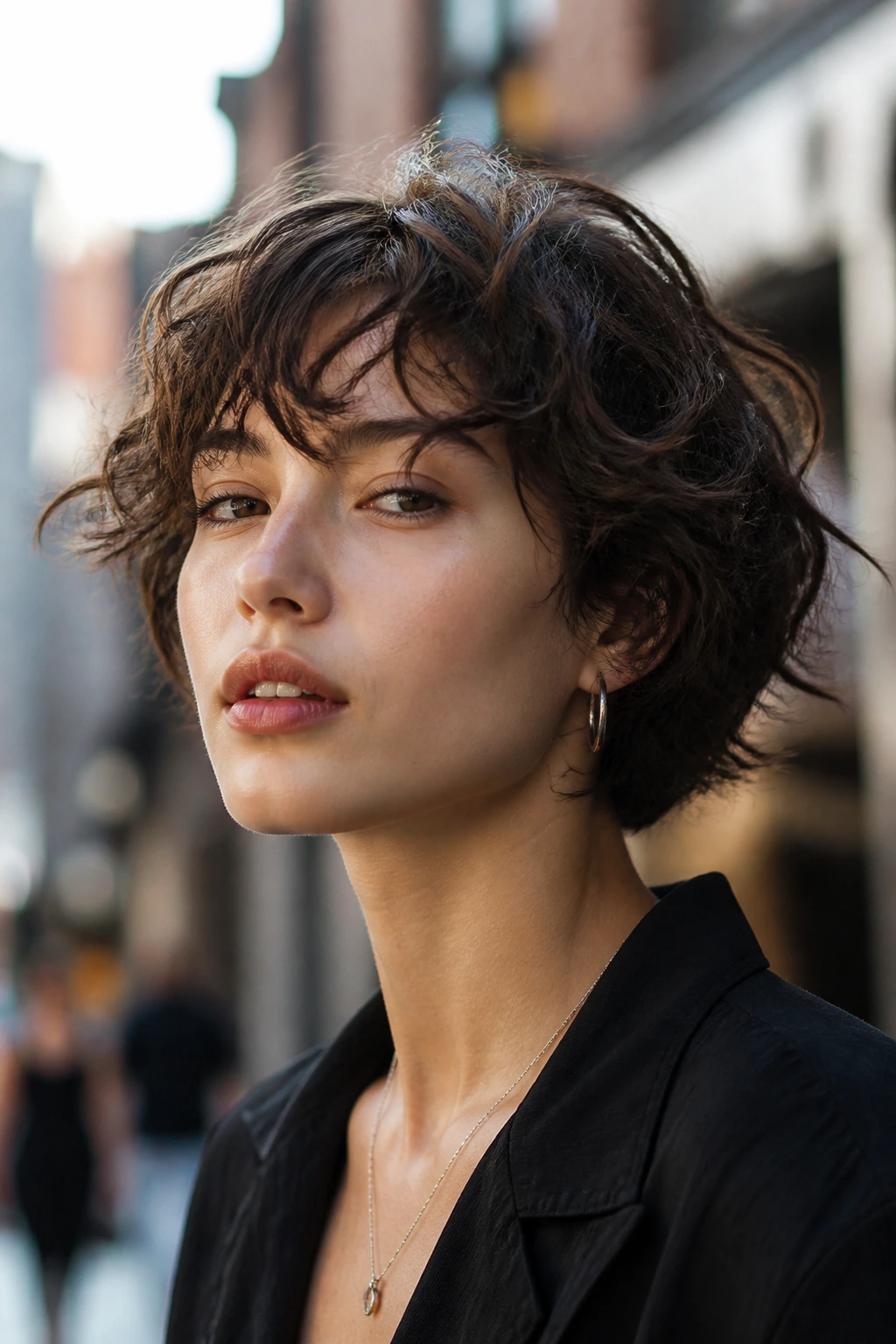
This version has more edge than sweetness. The wave pattern is broken and a little uneven, with choppy ends that stop the hair from looking polished in the usual way. It suits shorter bobs, pixies, and cuts with a bit of attitude built in.
Use texturizing spray after styling, then pinch a few pieces together to separate them. Do not smooth everything down. The roughness is the point. If the hair starts to look too soft, the shape loses that clean, slightly boyish feel that makes the style work.
24. Wet-Gel Cast Waves
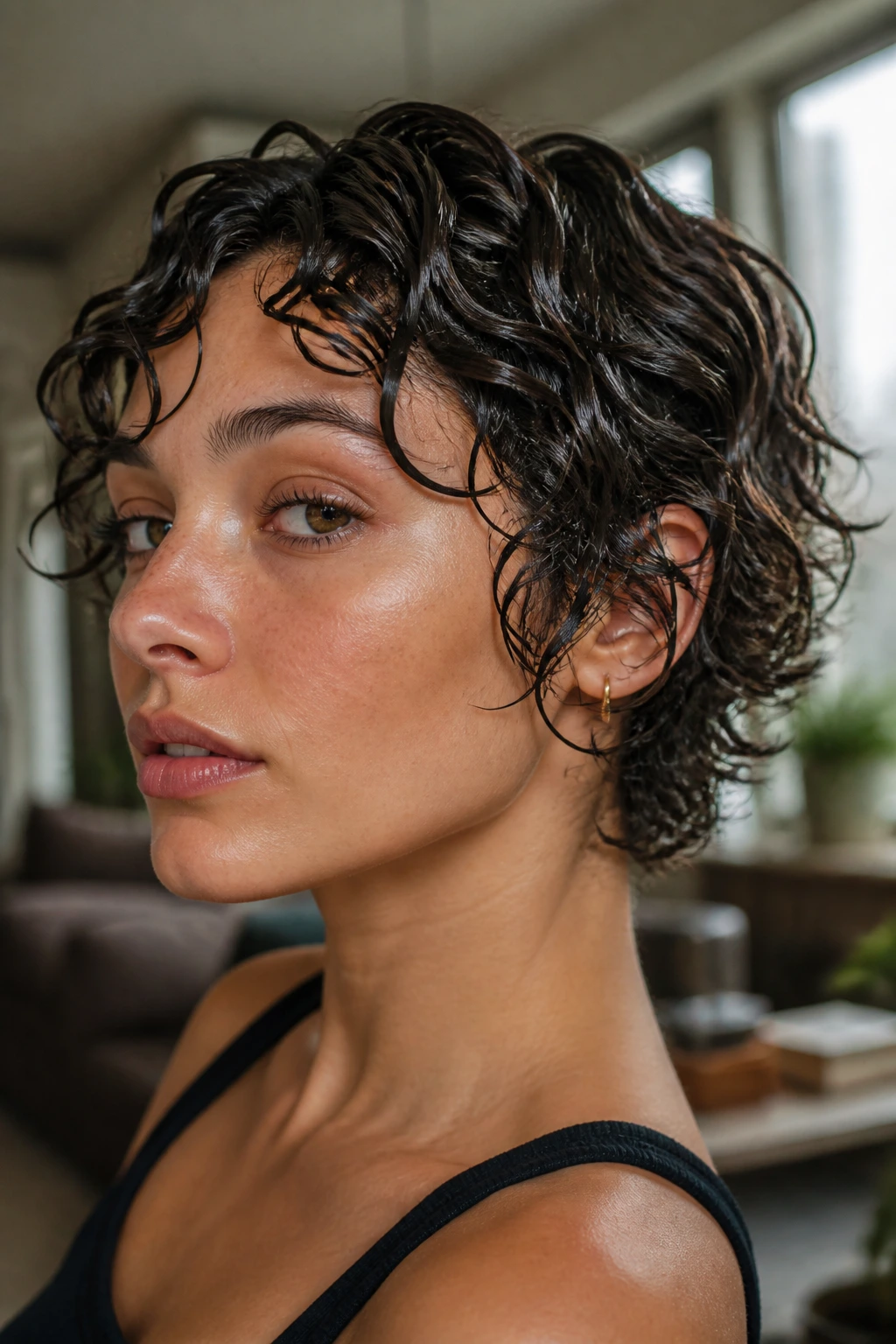
A gel cast can sound scary, but on short hair it can be a smart way to lock in shape. The hair dries with a firm shell, then you scrunch it out for a defined wave that lasts longer than loose air-dried texture. It’s especially useful when humidity keeps stealing your shape.
Apply gel to soaking-wet hair, scrunch the wave pattern into place, and leave it alone until dry. Once the cast forms, break it gently with your hands. The final finish should feel touchable, not crunchy. If you don’t scrunch out enough, the style can look too stiff for a beach-wave look.
25. Rake-and-Scrunch Undone Bob

This is the easiest style in the whole bunch, and it works best when the cut already has a little natural bend. Raking the product through with fingers keeps the waves from clumping too neatly, while scrunching encourages the hair to fold into irregular movement. It looks relaxed because it is.
Use mousse or a lightweight cream, rake it through damp hair, then scrunch from the ends upward. Let it air-dry or use a diffuser on low. The danger here is overdoing the product; short hair shows buildup fast, especially near the temples and ears.
26. One-Inch Wand Waves
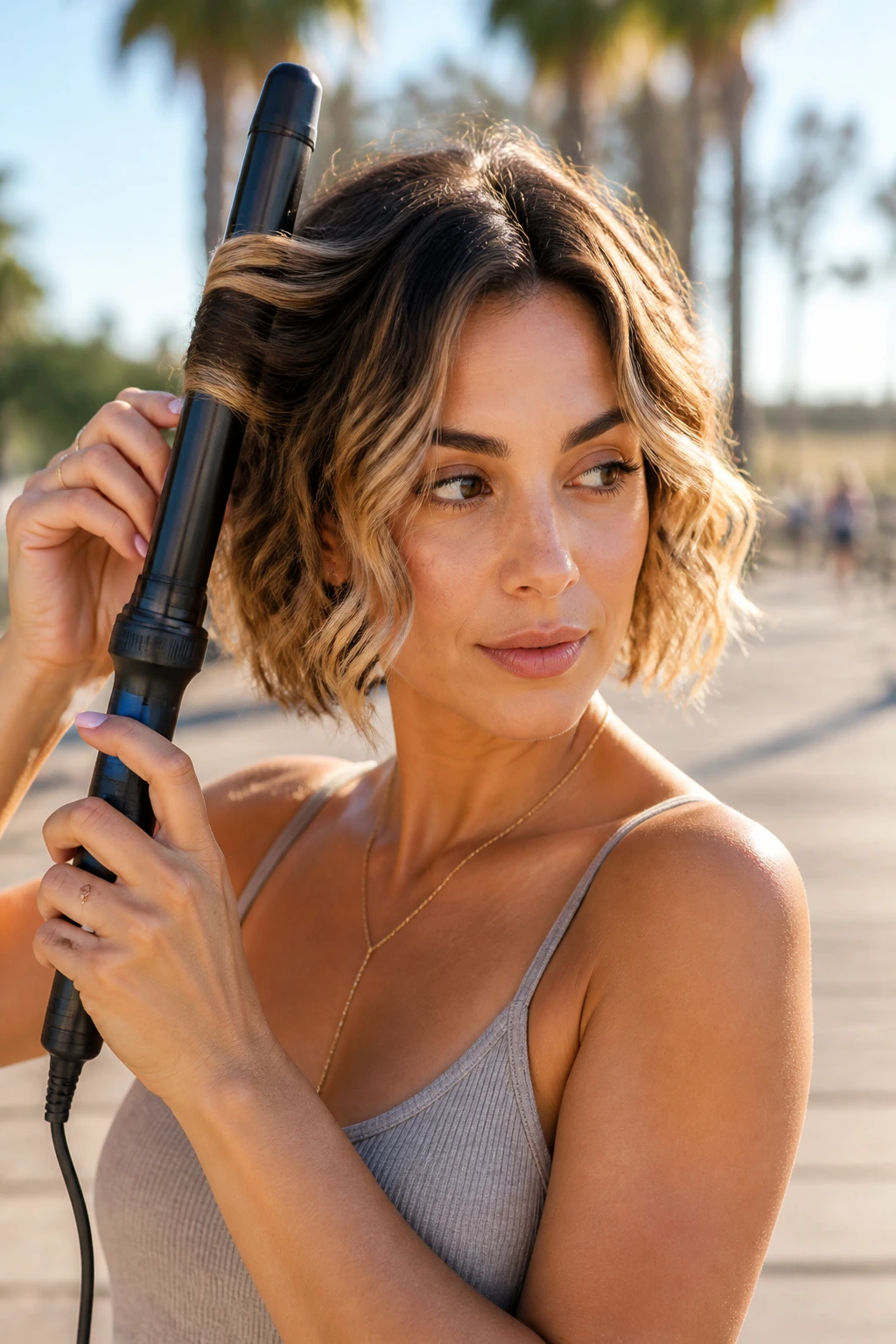
If you want the classic beach-wave shape, this is the tool that gets you there most reliably on short hair. A 1-inch wand gives enough bend without creating ringlets that are too tight for the length. That balance matters more on a bob than on longer hair, where the curl can relax on its own.
Wrap the section around the wand for 5 to 8 seconds, depending on thickness, then release and let it cool before touching it. Alternate direction on the lower sections for a more natural finish. Keep the ends a little straighter than the rest. That tiny detail keeps the style from reading as “curled” instead of “waved.”
27. Retro Flipped-End Waves
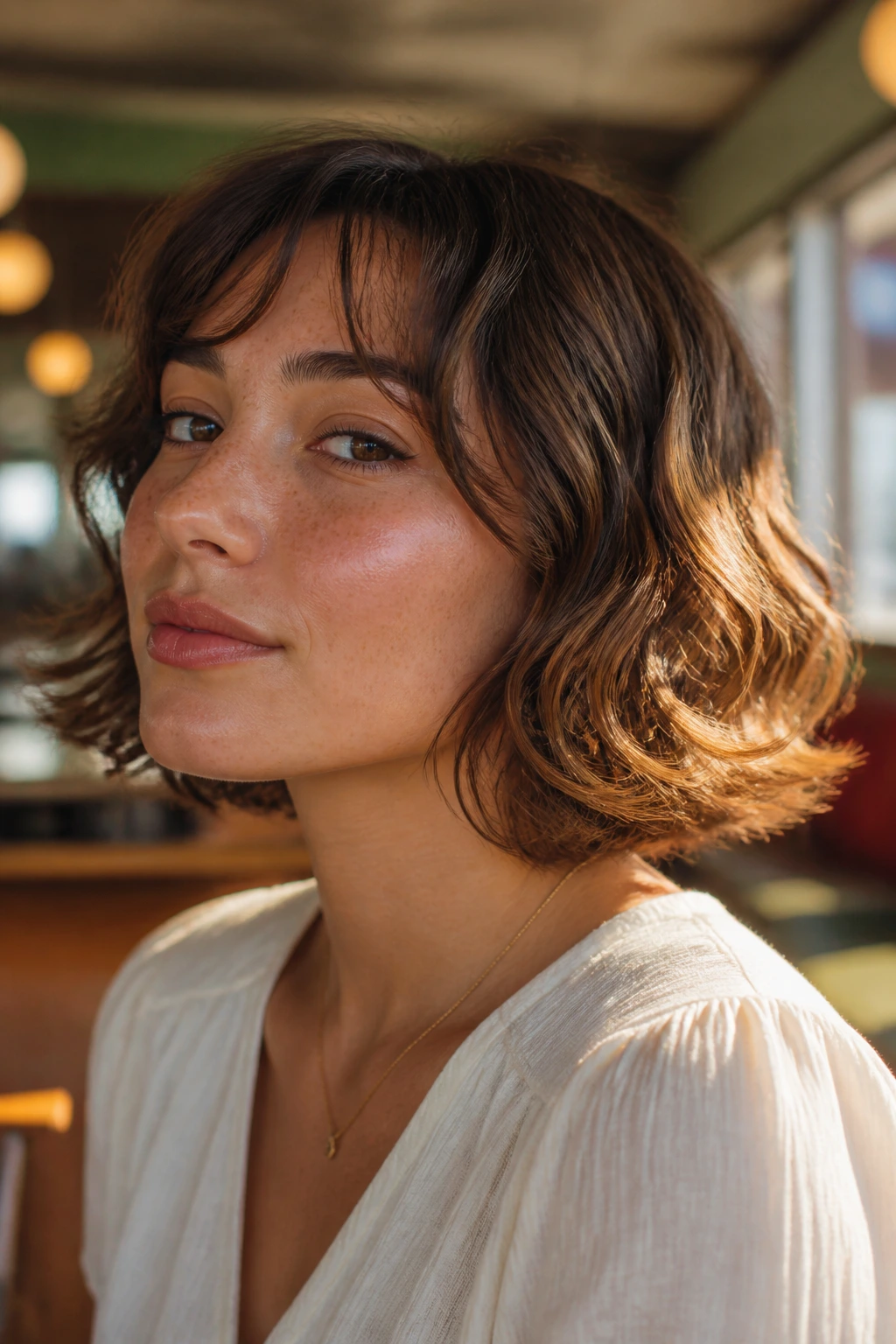
A retro flip adds a little swing at the bottom of short waves. The upper part stays soft and beachy, but the ends turn outward just enough to give the cut a playful shape. It works especially well with bobs that hit just below the chin.
Use a round brush or flat iron to flip the bottom inch away from the neck. The rest of the hair should stay loose, so the flip feels like a finish rather than the whole story. This is a good choice when you want something with a little personality but not a full vintage look.
28. Scarf-Tied Waves
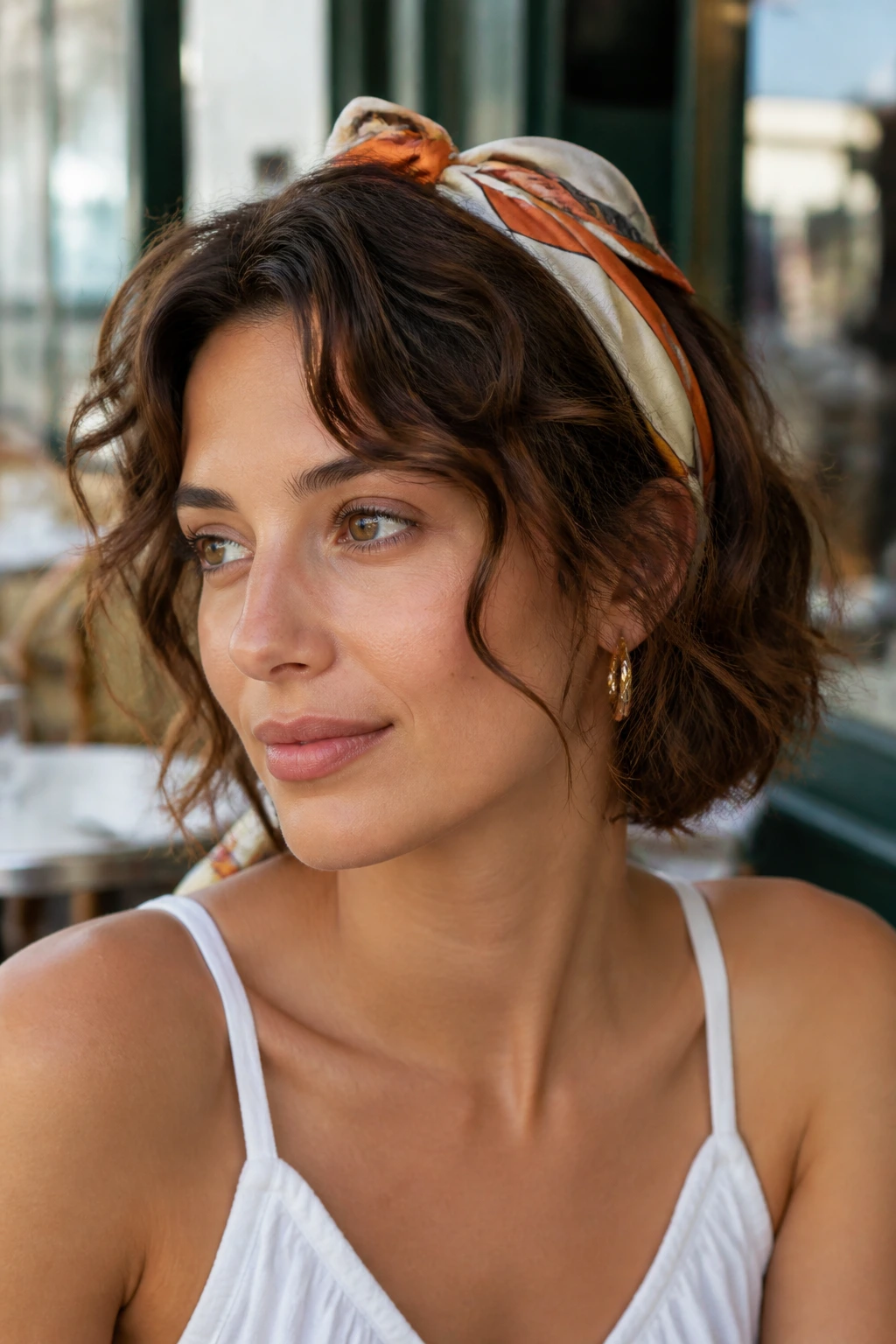
A scarf changes the mood of short hair faster than almost anything else. Tie it over already-textured waves and you get shape at the front, movement at the back, and a little color near the face. The waves underneath can stay loose and imperfect, which is half the charm.
Choose a narrow scarf if your hair is very short, because a bulky wrap can swallow the cut. Tie it loosely at the crown or under the back section so you don’t crush the wave pattern. Satin works well if you want less friction. Cotton gives a more casual finish and a bit more grip.
29. Half-Curled, Half-Natural Waves
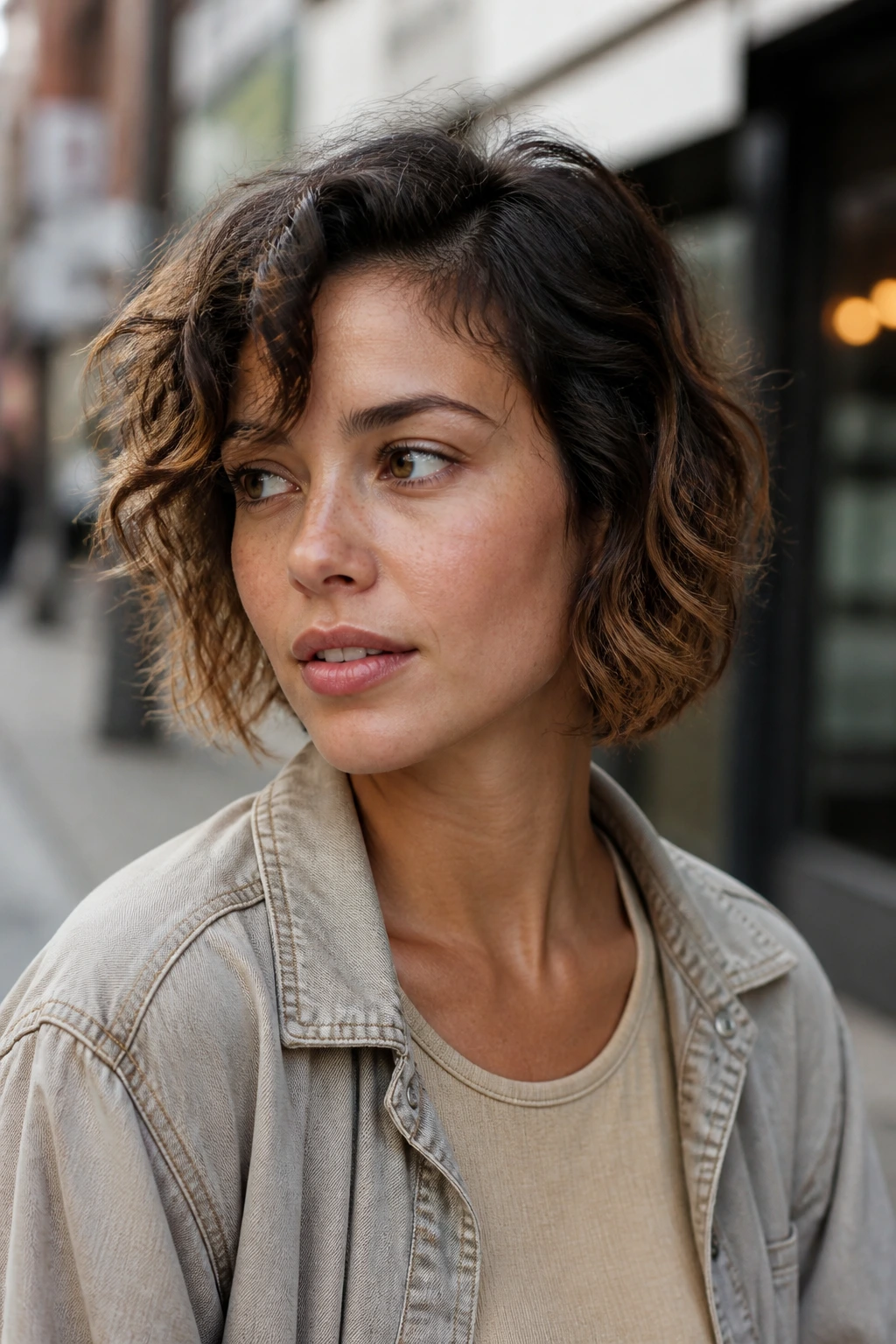
This one is for people who don’t want to curl every strand. Keep the natural wave in some sections and use a wand only on the pieces that go flat or bend in the wrong place. The result looks less styled and more believable, which is usually the goal with short texture.
Work in alternating sections: curl one, leave one, curl the next. Then soften everything with your fingers. That uneven mix keeps the haircut from looking stamped into place. If you curl every piece the same way, short hair can turn puffy fast, especially around the sides.
30. Clipped-Back Wave Detail
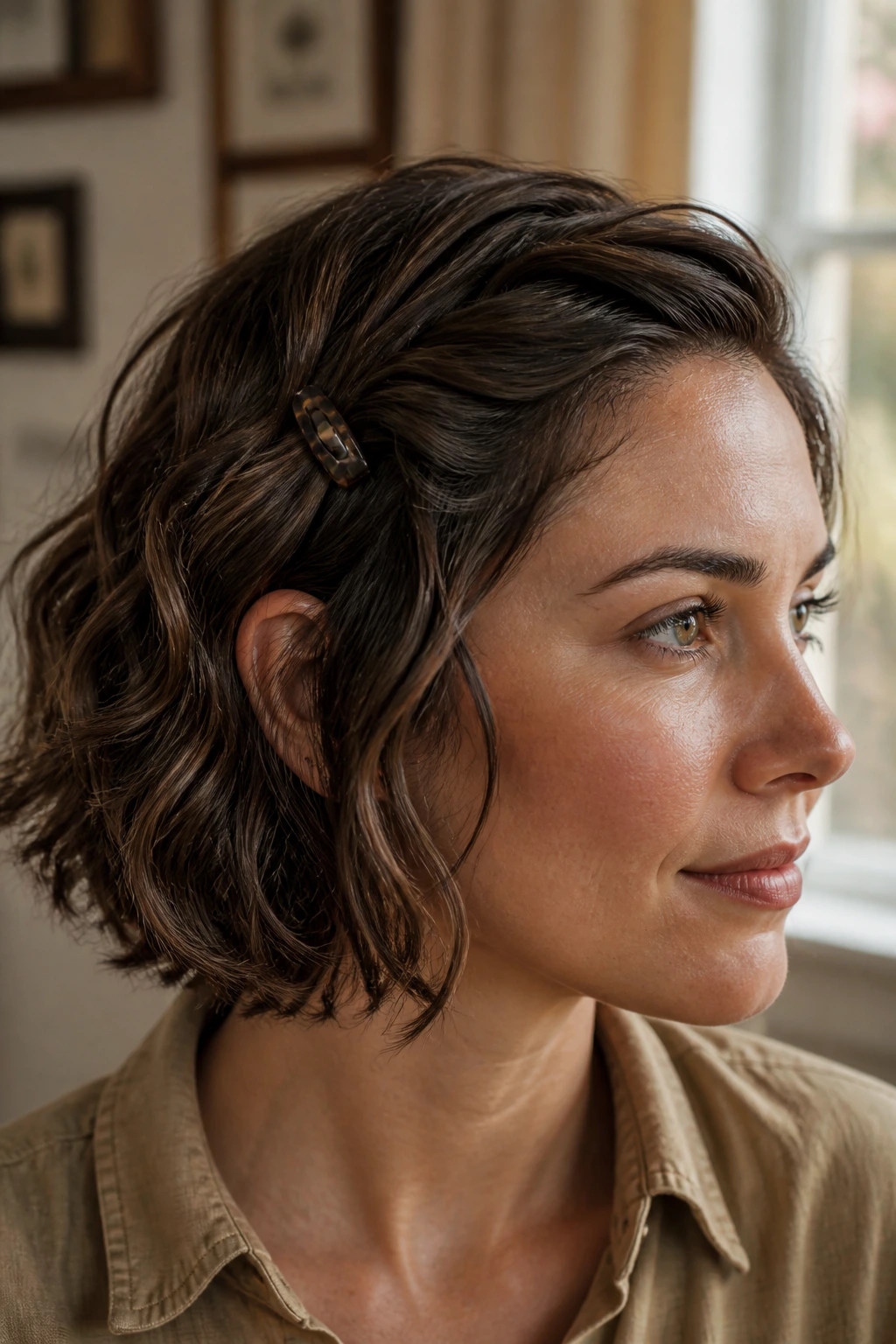
A small clip near the temple or above the ear can make a simple wave look sharper. The clip lifts one side away from the face and lets the texture underneath show through. It’s useful on days when you want some control without flattening the style.
Set the waves first, then pin back just one front section. A tortoiseshell clip, a matte barrette, or even a small metal snap clip works. Keep the clip close to the head so it doesn’t pull the wave straight. The goal is a little shape, not a hard line.
31. Matte Airy Waves

Matte waves have less shine and more separation, which can make short hair look fuller. The finish is soft but not glossy, so the texture reads as light and modern instead of polished and heavy. It’s a nice answer for hair that gets oily quickly.
Use dry shampoo at the root before styling, then finish with a matte texturizing spray through the mid-lengths. Avoid heavy shine sprays or thick oils. Those make short hair cling together, and once the pieces stick, the beach-wave pattern disappears into one solid mass.
32. Curly-Wavy Hybrid Texture
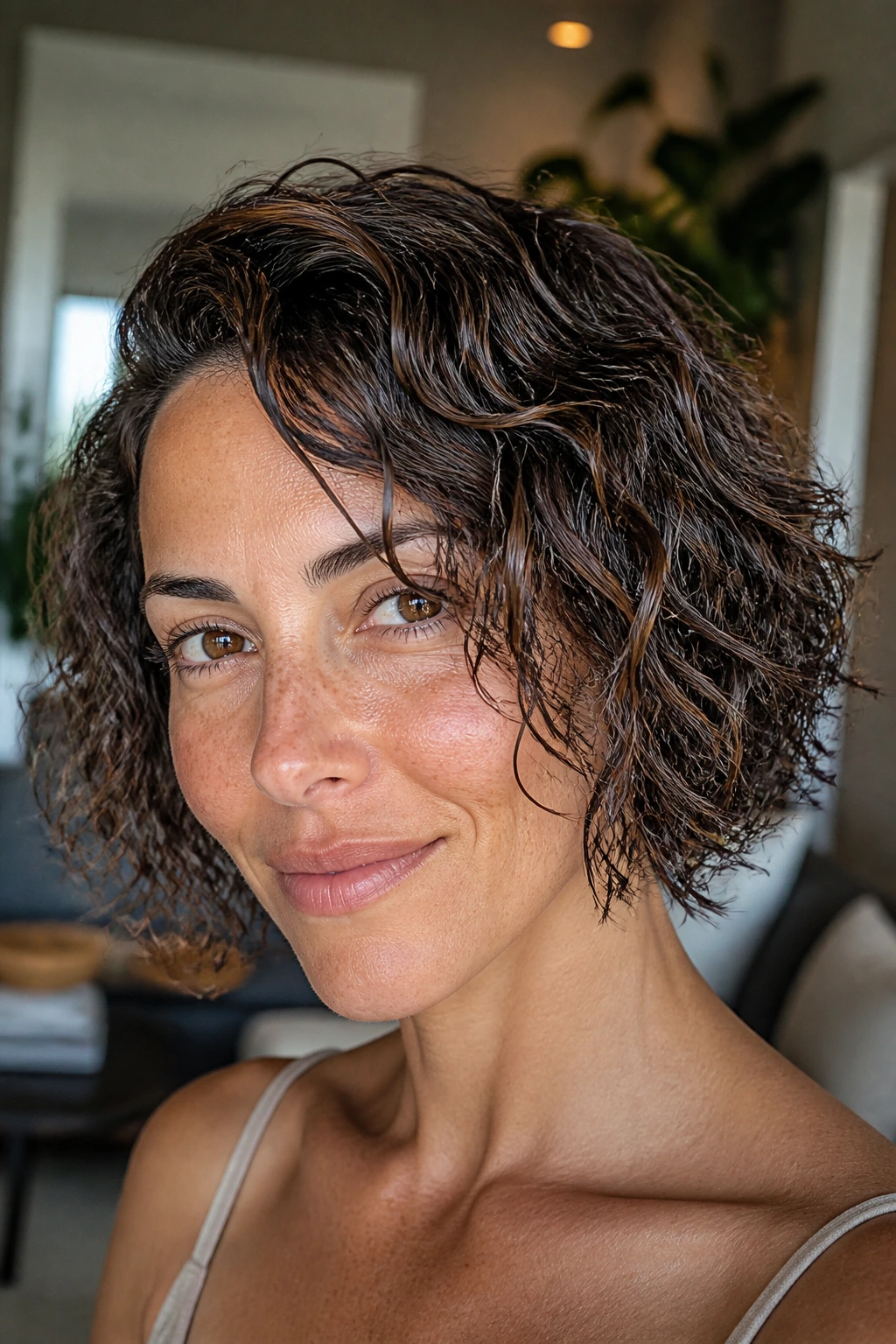
If your hair sits between wavy and curly, don’t force it into a stricter wave pattern. Let some sections form tighter bends and keep others looser. That mix can look richer than a uniform wave because the texture has more movement from strand to strand.
Use a curl cream or light gel on damp hair and scrunch carefully. A diffuser helps, but don’t over-dry the curls. The trick is to preserve the shape without making the shorter layers spring out too far. Hybrid texture usually looks best with a side part and a soft finish around the face.
33. Fine-Hair Feather Waves
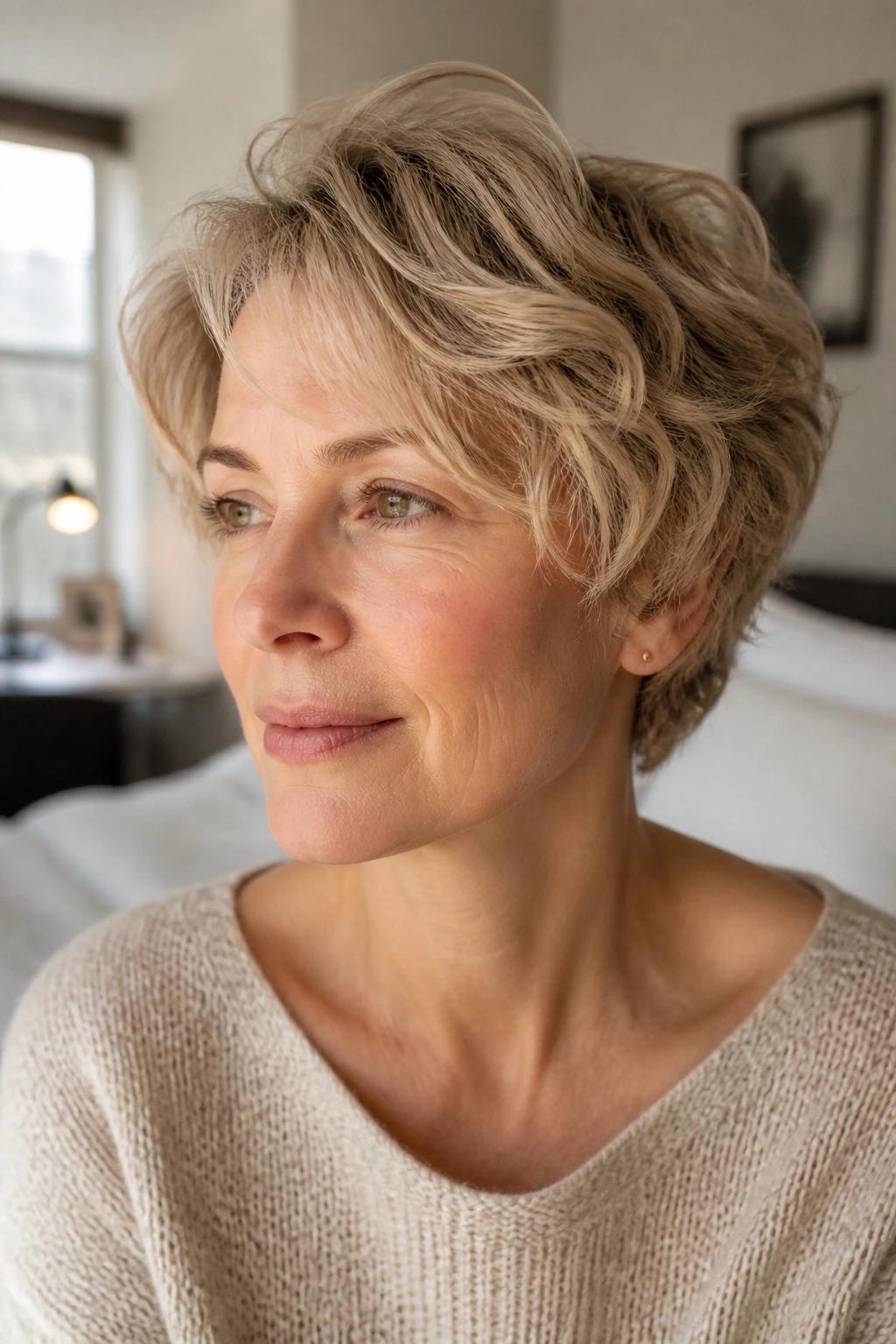
Fine short hair needs a light touch or it collapses. Feather waves use small, loose bends and very little product so the hair keeps lift at the root. Heavy creams and thick sprays usually make this type of hair go limp by lunch.
A foam mousse or volumizing spray at the roots gives enough body without weighing the hair down. Wave only a few pieces around the face and crown if the whole head feels too fragile. Feather waves are not about density. They’re about air.
34. Thick-Hair Loose Wave Loft

Thick short hair often needs a stronger plan, because it can hold shape but also swell fast. Loose wave loft keeps the movement broad and open so the hair does not stack up into one wide shape. The wave should sit on top of the density instead of fighting it.
Blow-dry with a round brush at the crown, then wave larger 1.5-inch sections with a wand or flat iron. Keep the product light at the root and a little richer at the ends if they frizz. If your hair is very thick, a few hidden layers make this style easier to manage and less boxy.
35. Humidity-Proof Texture Waves
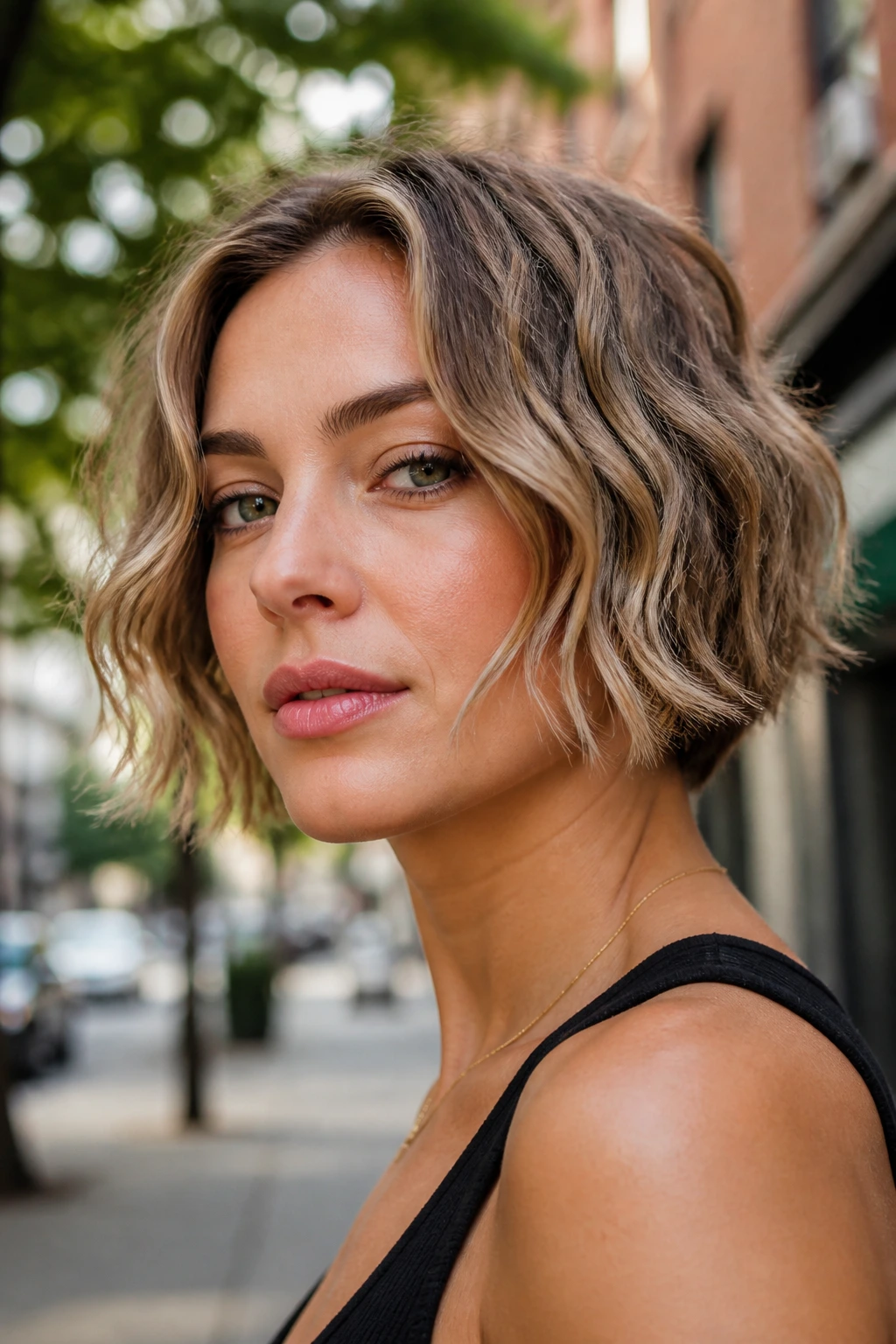
Humidity changes the rules, and short hair feels it first. The trick is to build texture that can frizz a little without losing shape, which means starting with a strong base and finishing with the right kind of hold. Beach waves in humid air should look separated, not stiff.
Use a heat protectant with some hold, set the waves with a wand, then seal the style with a light anti-humidity spray. Focus on the outer layer and the face-framing pieces, because those are the ones that puff first. If you know the day is going to be damp, skip overly soft creams; they break down too fast and let the wave drop.
How to Get More Life Out of Short Beach Waves

Short waves reward small adjustments. That sounds obvious, but it matters in practice because a quarter inch of root lift or a slightly tighter bend around the face can change the whole silhouette. If the cut starts to look too round, push the top flatter and keep the movement lower. If the ends vanish, add a tiny bend at the last inch and leave the crown alone.
Product choice matters more than most people think. A light mousse can give fine hair enough memory to hold a wave for hours, while a stronger cream can tame thick hair that would otherwise balloon. I’m picky about heavy oils on short cuts; they often sit on the outer layer and make the shape look greasy before the day is over.
Heat helps, but not everywhere. Use it where the hair resists your pattern most—usually the front and the upper crown—then let the rest stay a little irregular. That unevenness keeps beach waves from looking stamped into place, and on short hair, a little irregularity reads as texture rather than mess.
Tools and Products That Actually Help
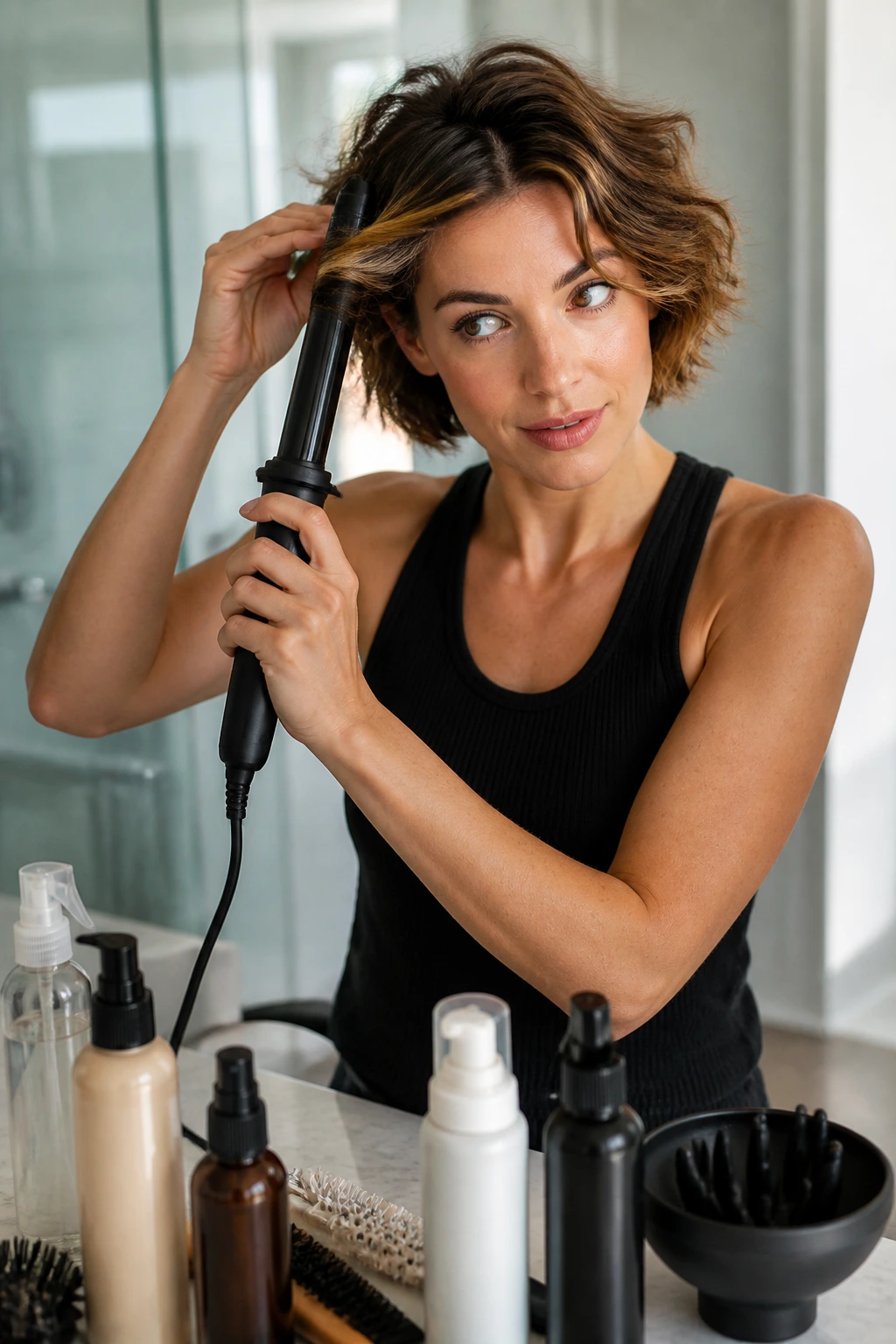
- 1-inch curling wand: Best for loose, classic waves on bobs and lobs; smaller barrels can make short hair too curly.
- Flat iron with rounded edges: Handy for S-waves and ribbon bends, especially on jaw-length cuts and pixies.
- Heat protectant spray: Use it every time you add heat; short hair still fries, and the ends are usually the first to show it.
- Sea salt spray: Good for rough texture and air-dried styles, but keep the spray light so the hair does not feel sticky.
- Volumizing mousse: Gives fine or flat roots a bit of memory before diffusing or blow-drying.
- Lightweight texturizing spray: Adds separation after styling without making the hair crunchy.
- Flexible hairspray: Useful for soft hold around the crown and bangs.
- Diffuser attachment: Helps wavy and curly-short hair keep its shape while drying with less frizz.
- Small clips, pins, and barrettes: Great for half-up styling, side sweeps, and tucked detail.
- Wide-tooth comb and paddle brush: The comb helps keep the texture intact; the brush softens waves when you want a smoother finish.
How to Choose the Right Texture Products
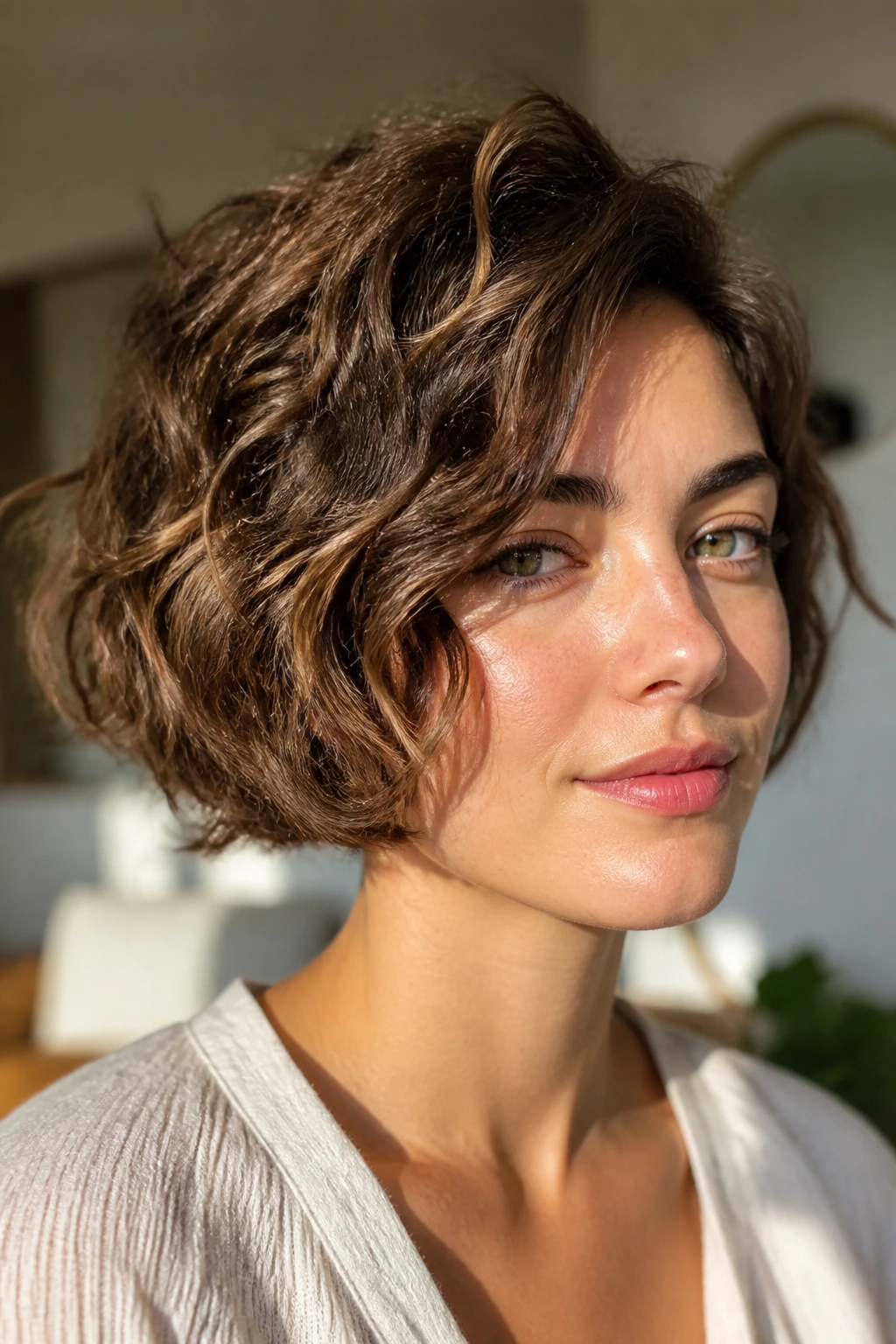
The best product for short beach waves depends on what your hair does when it dries on its own. Fine hair usually wants mousse or a light spray with a bit of grip. Thick hair often needs a cream or a stronger wave spray that can control puffiness without flattening everything out.
Read the hold level the same way you’d read a recipe amount. Too much hold can make short hair feel stiff, and too little can leave you with a soft blur that disappears in an hour. Salt spray gives grit, but grit is not the same as support. If the roots go flat fast, choose a root lift spray or mousse before you reach for more sea salt.
Frizz-prone hair also needs a little thought. A heat protectant with smoothing agents can keep the cuticle calmer when you use hot tools, while a light finishing cream helps the ends stay separated after styling. Avoid piling on three glossy products at once. Short hair shows buildup fast, and once it gets coated, the wave loses shape.
How to Wear These Looks Without Overthinking It
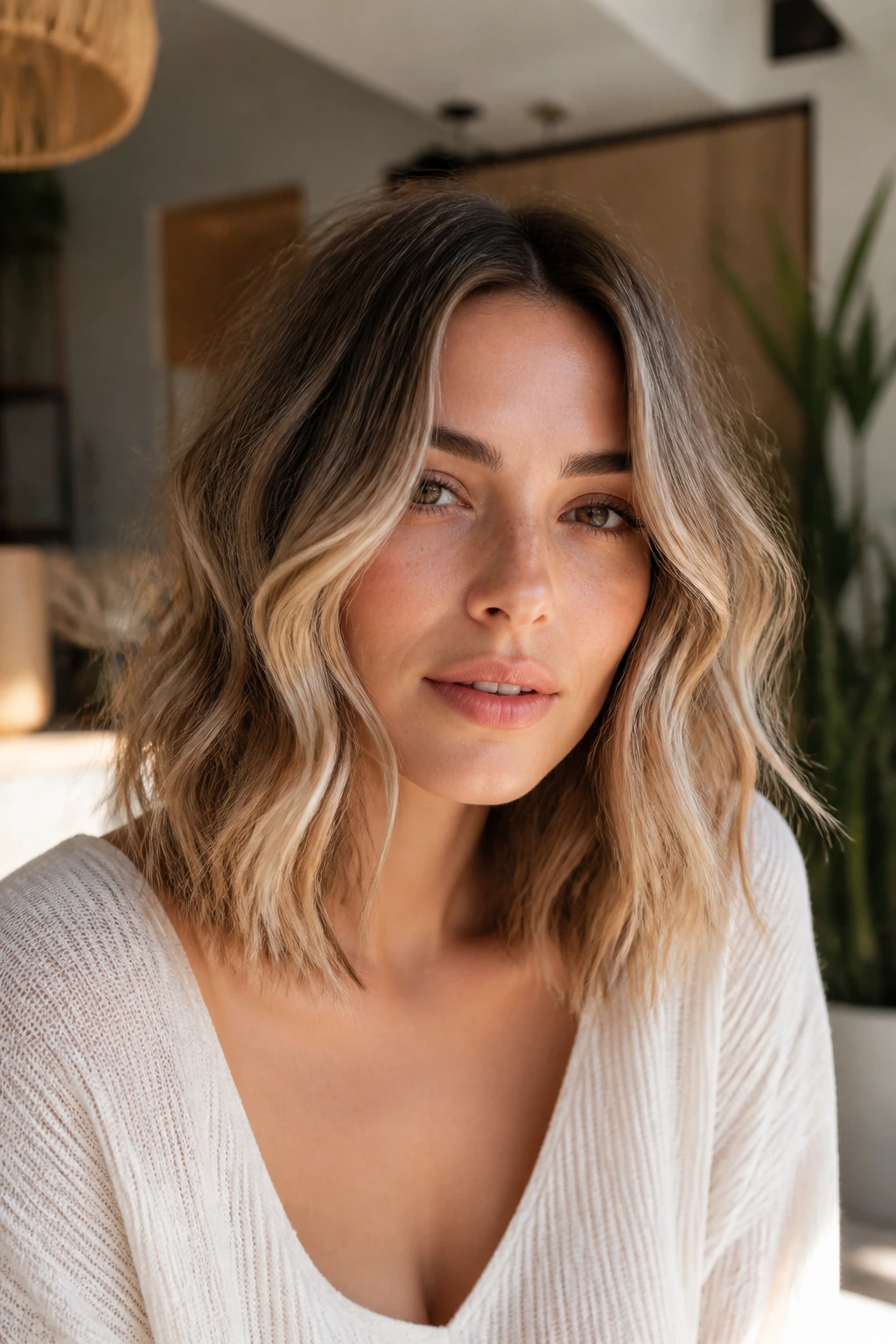
Beach waves on short hair do not need a matching outfit or a perfect part. They look best when the finish feels a little lived-in. A clean black tee, a soft button-down, a sharp blazer, a denim jacket—they all work because the hair already carries enough texture.
Accessories change the mood fast. A claw clip makes the same wave look casual and off-duty, while a slim barrette reads neater. If you wear earrings, short waves can clear the neckline and make the earrings show more, which is one reason this length is so easy to style for both day and night.
If you want the cut to feel more polished, brush the surface lightly and leave the ends loose. If you want it more relaxed, scrunch a little product into the lower half and let the front pieces fall where they want. There’s no prize for making the whole head behave the same way.
Smart Styling Tips That Save Time
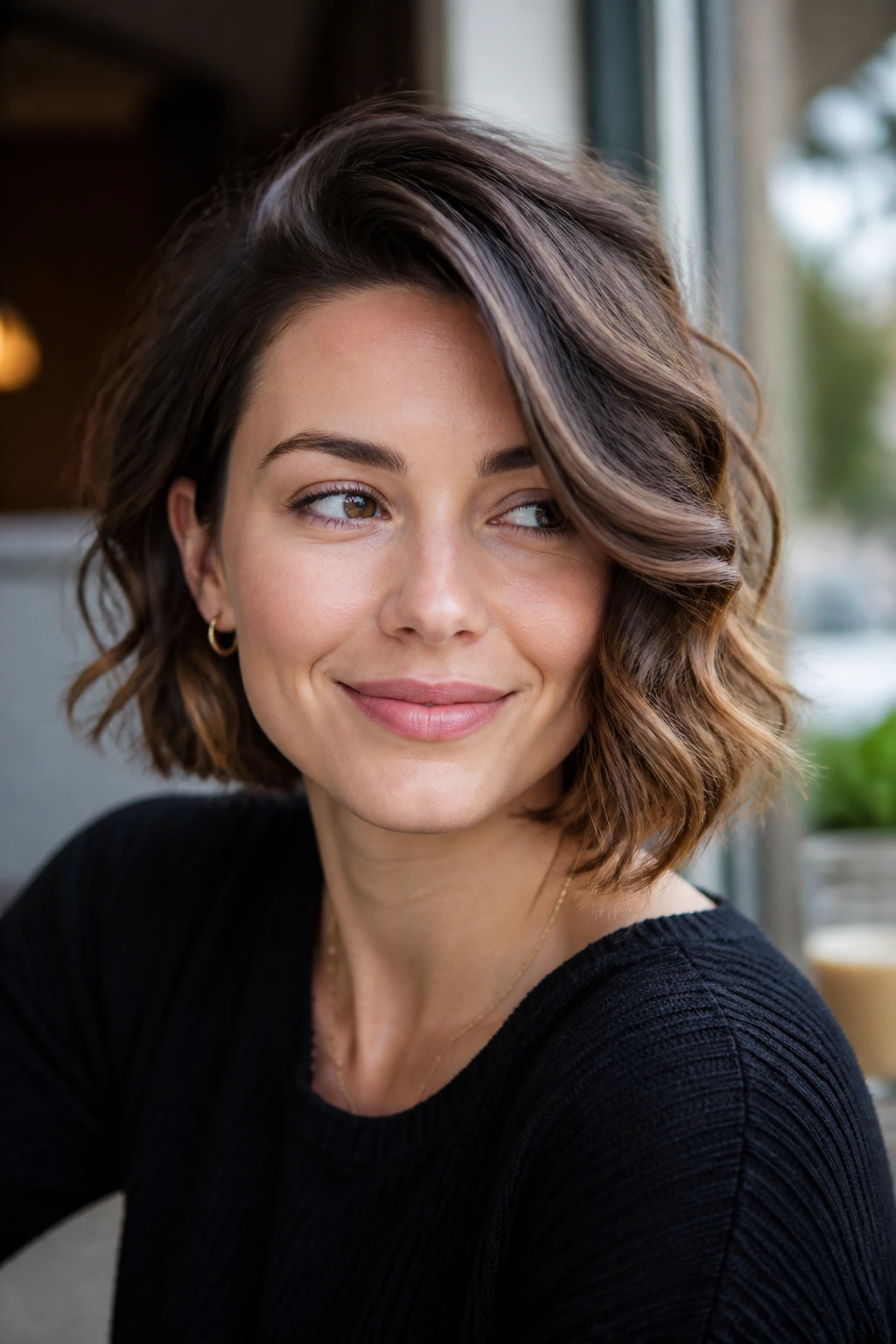
Root First, Ends Later: Get the crown right before fussing with the ends. If the top is flat, the whole style can look tired no matter how nice the wave pattern is.
Cool Before You Touch: Hot waves fall apart when they’re handled too early. Let the hair cool in the shape you made, even if that means standing around for five minutes.
Work in Fewer Sections: Short hair does not need twenty tiny pieces. Six to eight sections is usually enough for a bob or lob, and the style looks less overdone.
Use the Same Direction Sparingly: Too much uniform curling makes short hair puff. Mix directions and leave a few ends straighter so the shape stays soft.
Refresh the Front, Not the Whole Head: On day two or three, re-wave the face-framing pieces and crown first. That usually fixes the whole style faster than starting over.
Common Mistakes That Flatten Short Waves

The most common mistake is too much curl, not enough bend. Short hair rarely needs tight spirals. When every section gets wound hard around a wand, the cut expands outward and starts to look round instead of beachy. Use a bigger barrel, shorten the heat time, and keep the ends a touch straighter.
Another problem is loading up on product at the root. Mousse and spray have their place, but a heavy root layer can make the top look stringy or greasy before lunch. Put hold where the wave needs memory, not where your scalp already makes the hair lie flat.
Brushing too early is a close third. If you brush hot waves, they collapse into a soft blur and then frizz back up. Let the hair cool completely, then use fingers or a very soft brush only if you want a smoother finish.
And watch the front pieces. They frame the face first, so if they’re too curly, too straight, or too sticky, the whole style feels off. Those pieces need the lightest hand of all.
Ways to Change the Look Without Starting Over
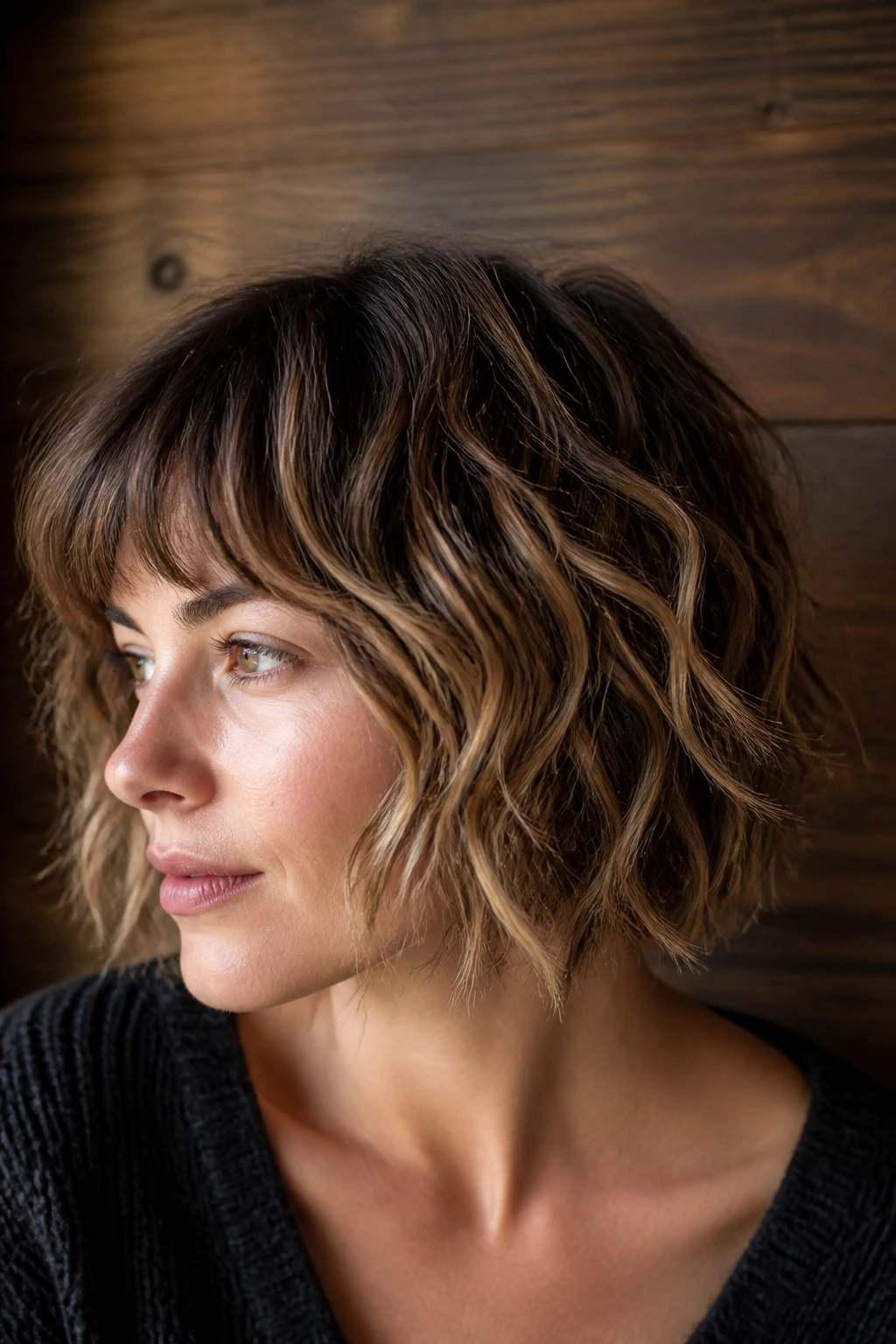
Soft and Glossy: Swap salt spray for a lightweight cream and brush the wave pattern out a bit more. This version sits closer to the head and looks cleaner on blunt cuts.
Rough and Piecey: Add texturizing spray at the ends and pinch small sections apart with your fingers. Good for shaggy cuts and second-day hair.
Polished Workday Version: Keep the roots smoother, tuck one side behind the ear, and use flexible hairspray around the face. It reads neater without losing the wave.
Sweaty-Gym-to-Dinner Fix: Mist the hair lightly with water, twist a few front sections, and hit them with a diffuser on low. You don’t need to restart the whole head.
Accessory-Heavy Version: Add a clip, headband, or scarf and keep the rest of the styling minimal. Short hair can carry a strong accessory without disappearing under it.
Keeping the Texture Going Between Washes
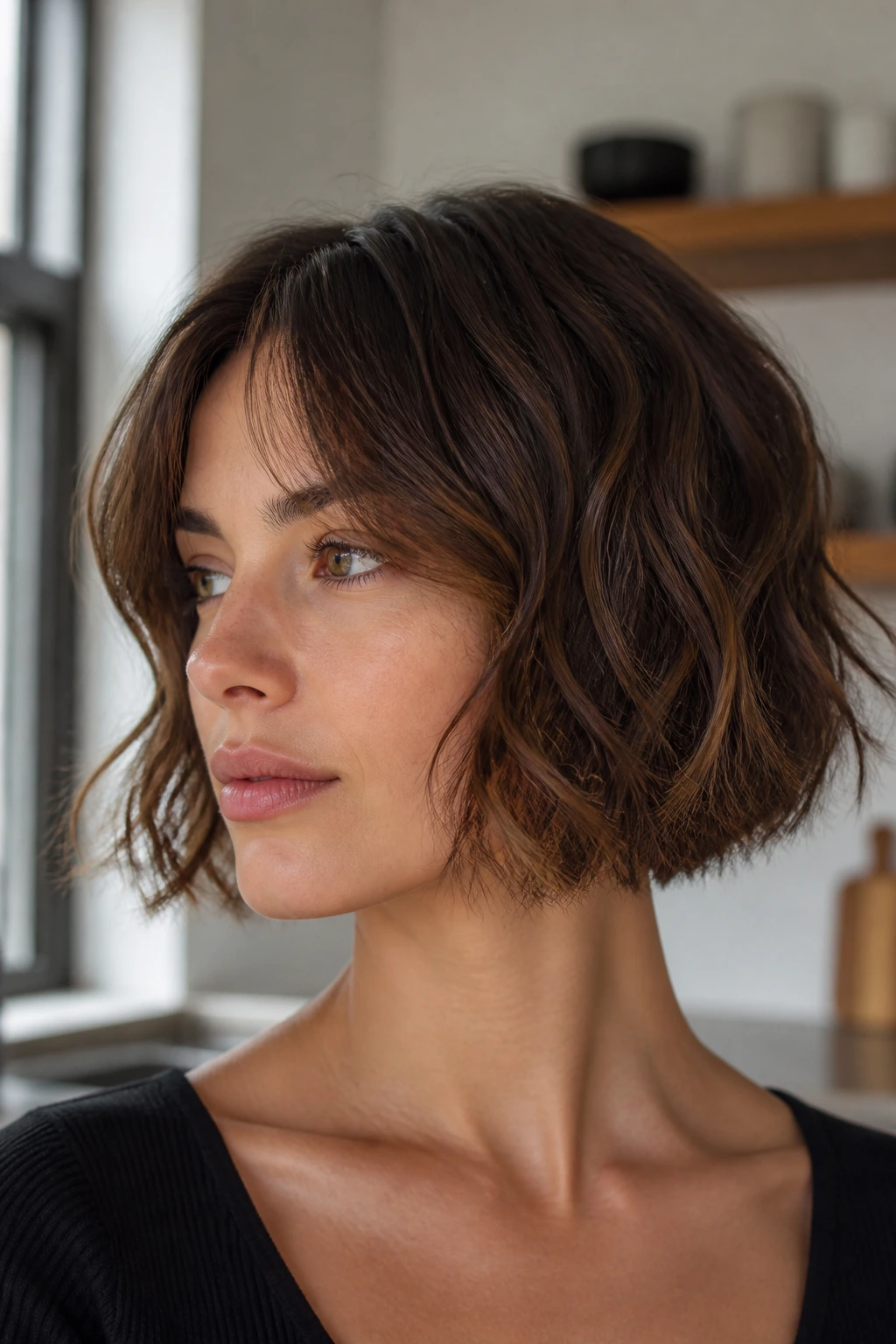
Short beach waves usually look best on the first or second day after washing, once the hair has a little grip. By day three, the roots may need dry shampoo and the ends may need a touch of water or lightweight cream. That’s normal. Short hair just shows the decline faster.
Sleep on a silk or satin pillowcase if you can. It cuts down on friction, which means fewer bent-up ends in the morning. In the morning, mist only the pieces that need reshaping, twist them with your fingers, and let them dry for a few minutes before you touch them again.
If the style goes flat, don’t pile on more product without checking the root first. A quick lift at the crown with dry shampoo often brings the whole shape back. If the ends go frizzy, a rice-grain amount of cream rubbed between your palms is enough. More than that, and the short cut starts to look coated.
Frequently Asked Questions
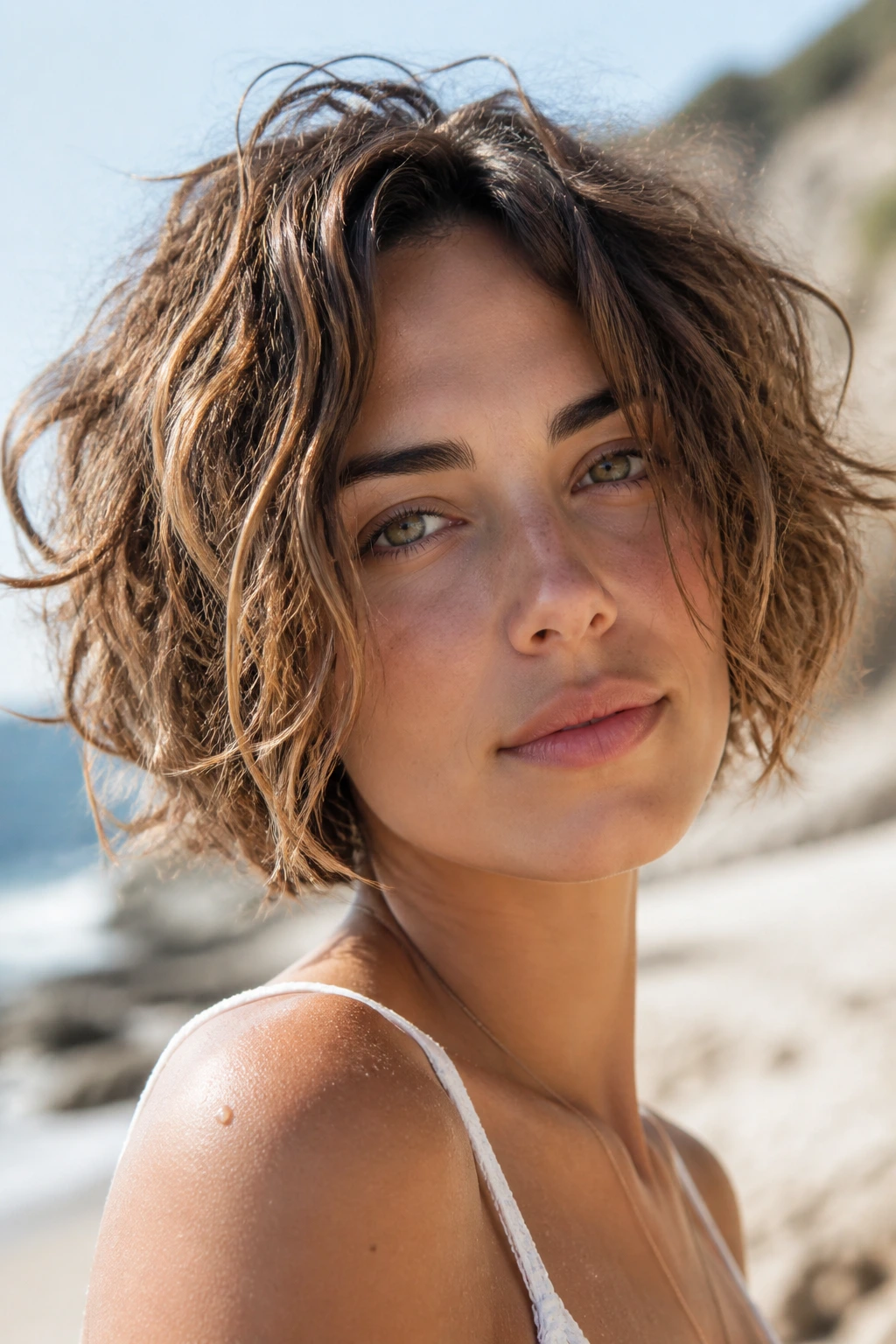
How do I keep beach waves from puffing out on short hair?
Use looser bends, not tight curls, and leave a few ends straighter so the silhouette stays soft. A little root lift helps, but too much volume at the sides will make a bob widen fast.
What barrel size works best for short wavy hair?
A 1-inch barrel is the safest starting point for most bobs and lobs. If your hair is very short, a smaller tool can work, but it’s easier to over-curl the ends.
Can I get beach waves without heat?
Yes. Salt spray, a light mousse, and a few loose twists or braids can give a softer version of the look. It won’t be as defined as a wand wave, but it can be enough for everyday texture.
Why do my waves fall out so quickly?
Usually the hair was either too clean, too heavy with product, or touched before it cooled. Short hair needs some grit and a little patience for the shape to hold.
How often should I refresh the style?
Most short waves hold up best for one to three days with a quick refresh in between. Rework the front, crown, and ends before you re-style the whole head.
What if my hair is fine and flat?
Use mousse at the roots, not cream, and keep the product light overall. Fine short hair usually looks better with airy bends and a bit of dry shampoo than with heavy, glossy finishes.
What if my hair is thick and stubborn?
Blow-dry the roots first and use a stronger heat set on the upper layers. Thick hair often needs slightly larger sections and a finishing spray that keeps the wave from swelling.
Are beach waves good for bangs?
Yes, if the bangs are styled with their own plan. Curtain bangs, wispy fringe, and side-swept pieces all fit better than blunt bangs that are forced into the same bend as the rest.
A Short Cut, A Better Wave
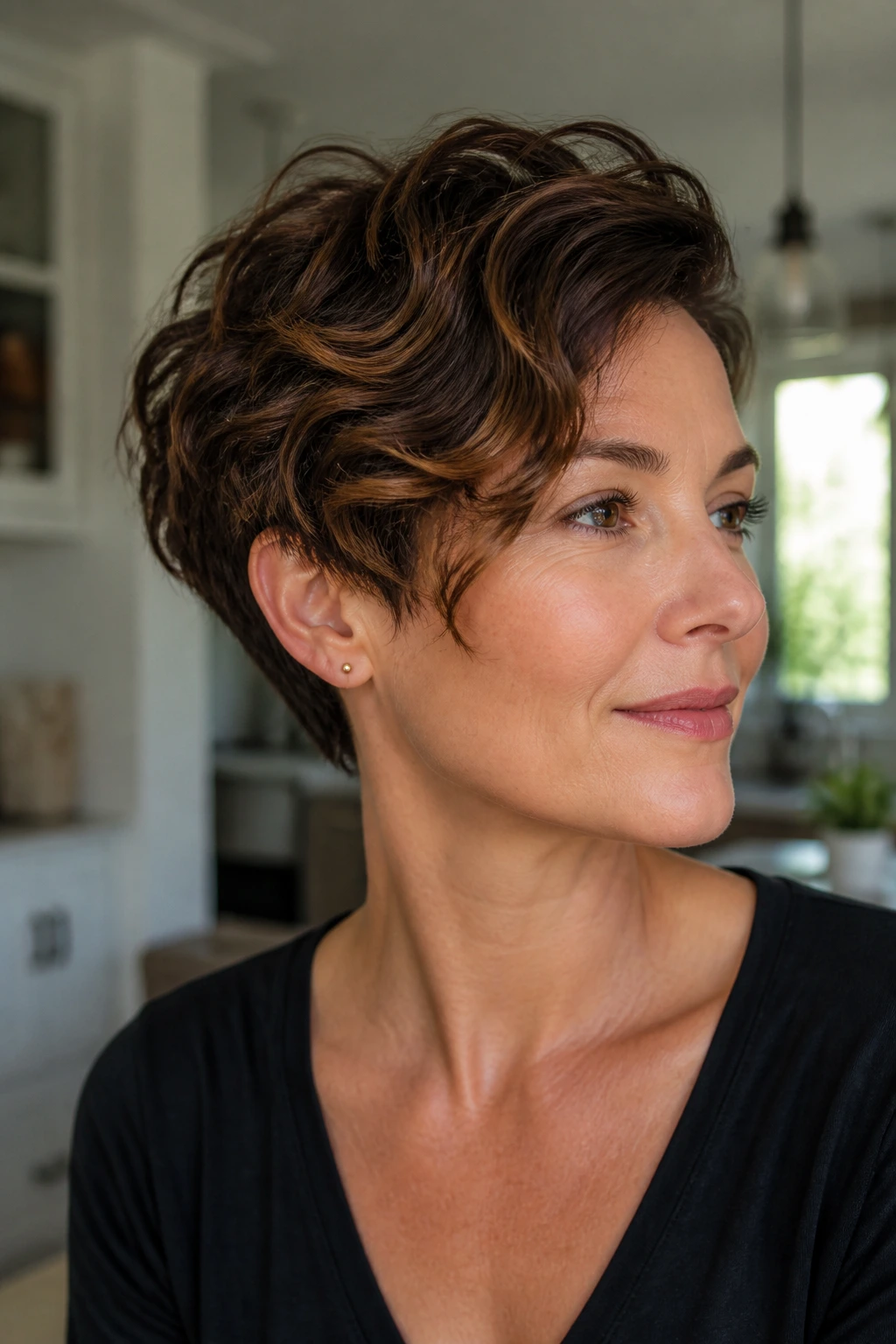
Short wavy hair does not need a lot of length to look styled. It needs the right kind of bend in the right places. Once the part, the root lift, and the finish all agree with the cut, the whole style starts to look cleaner, lighter, and more intentional.
The useful part is that you do not have to marry one version of the look. Some days call for a soft lob wave and a middle part; other days need a side sweep, a clip, or a rougher salt finish. That flexibility is what makes short beach waves worth keeping in the rotation.
Pick the version that matches your cut, your texture, and how much time you actually want to spend in front of a mirror. Then tweak one thing at a time. The shape will tell you what it wants next.
