



Volume changes everything after sixty. A good cut doesn’t cling to the scalp or collapse into a single flat line; it lifts, bends, and makes the face look more awake without pretending hair is twenty-five again. That’s the sweet spot most women are actually after, even if nobody says it out loud.
The wrong haircut around this age tends to do one of two things. It gets too long and heavy, so the ends drag the whole shape down, or it gets chopped too blunt and sits there like a helmet. Neither one has much movement. Neither one flatters silver strands, softer jawlines, or the way hair texture shifts over time.
The cuts that work best are the ones that keep weight in the right places and remove it in the wrong ones. Crown lift matters. Side parts matter. Face-framing pieces matter. And yes, the difference between a cut that looks “fine” and one that looks alive is often just a few inches of smart shaping.
Why These Styles Earn Their Keep
-
Crown Lift: The best volume cuts leave enough length on top to push up with a brush or fingers, which keeps hair from lying dead-flat against the scalp.
-
Softness Around the Face: Layers that start near the cheekbone or jaw add movement without turning the whole cut into wispy fluff.
-
Less Daily Fuss: A smart shape needs less rescue work in the morning, because the haircut itself does some of the styling.
-
Works With Silver Hair: Gray, white, and salt-and-pepper hair show texture well, so a cut with clean structure and movement looks sharper, not harsher.
-
Better Balance With Glasses and Jewelry: When the sides are trimmed well and the top has lift, the haircut doesn’t fight with frames, earrings, or collars.
-
Room for Fine or Thinning Hair: These styles don’t depend on density. They create the illusion of fullness by using line, angle, and placement.
1. Feathered Pixie With a Lifted Crown
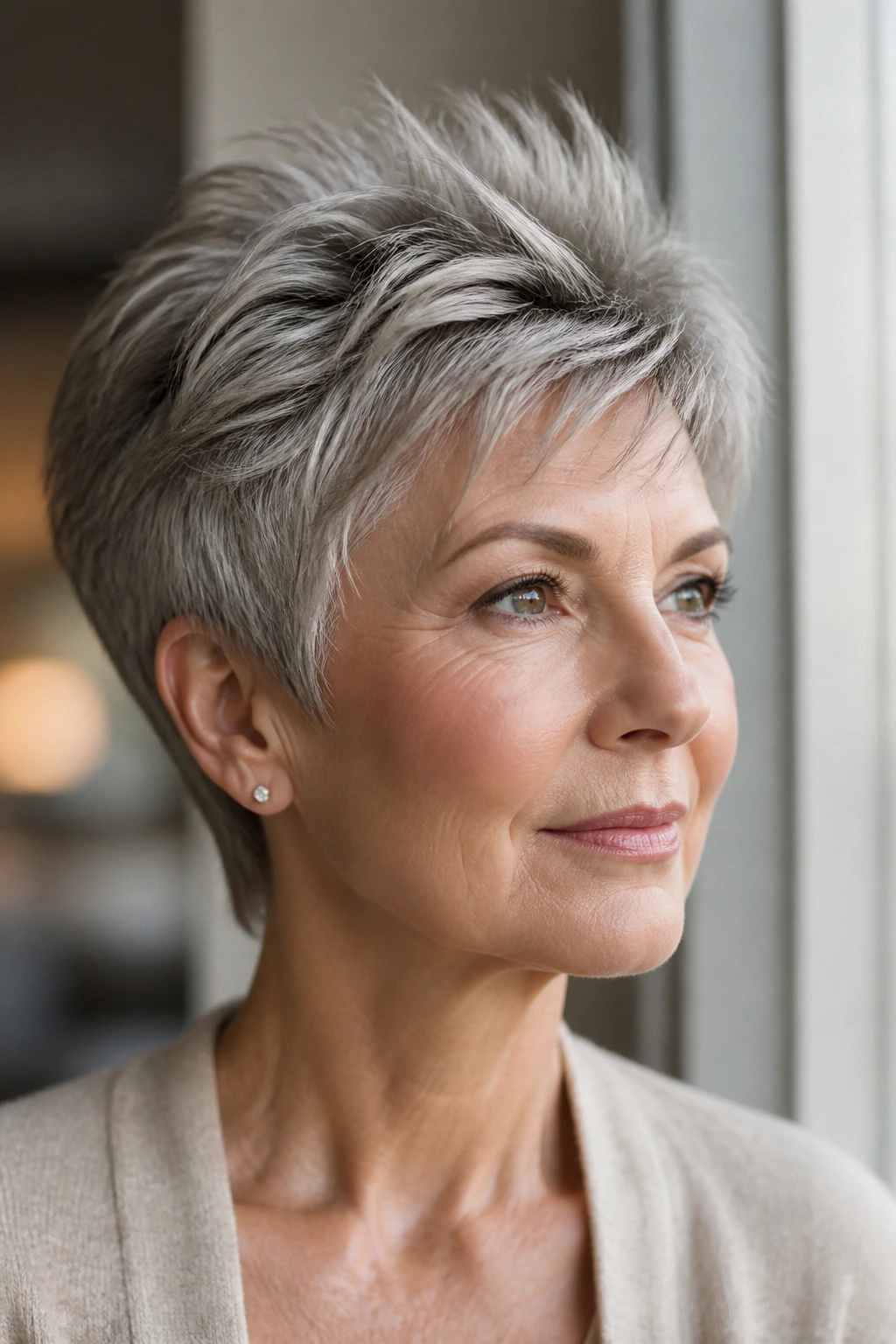
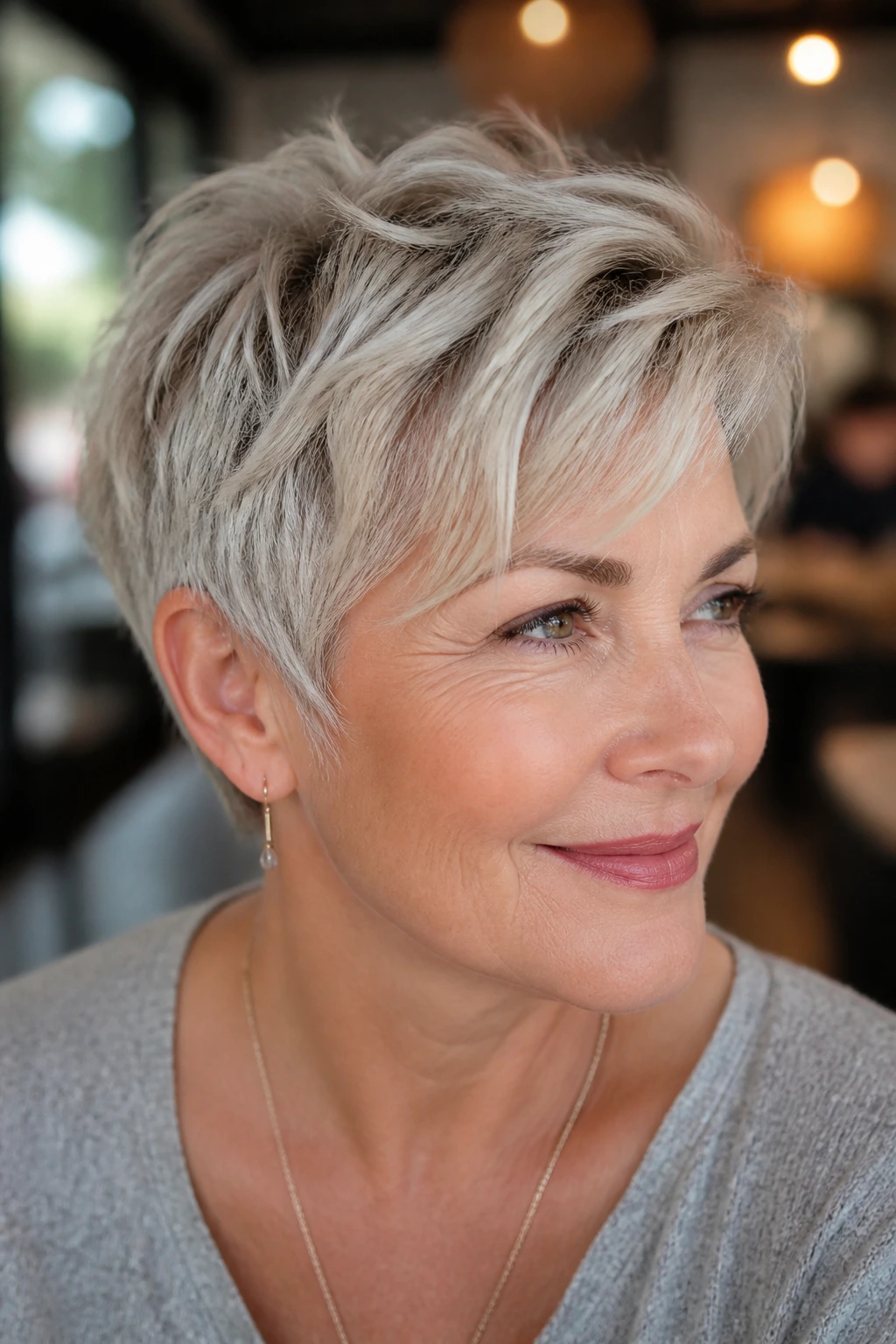
A feathered pixie is one of those rare short cuts that looks lighter and fuller at the same time. Keep the sides tight enough to remove bulk, but leave the top around 2 to 3 inches so you can direct it upward with a round brush or just your fingers. That small bit of extra length on top is doing a lot of heavy lifting.
What I like here is the softness. A hard, spiky pixie can look severe on mature features, especially if your hair is fine and the front keeps splitting open. Feathering the top and lightly texturizing the crown gives you air between the strands, which is where the illusion of volume lives.
What to Ask Your Stylist
Ask for short tapered sides, a longer crown, and soft texturizing on the top only. If the stylist starts thinning the whole head with a razor, stop them. That move can make fine hair look stringy by the second week.
Best for straight to slightly wavy hair, and especially useful if you want the back of your neck clear but still want some lift around the crown. It also works well with glasses because the shape stays neat near the temples.
2. Stacked Bob With a Lifted Nape
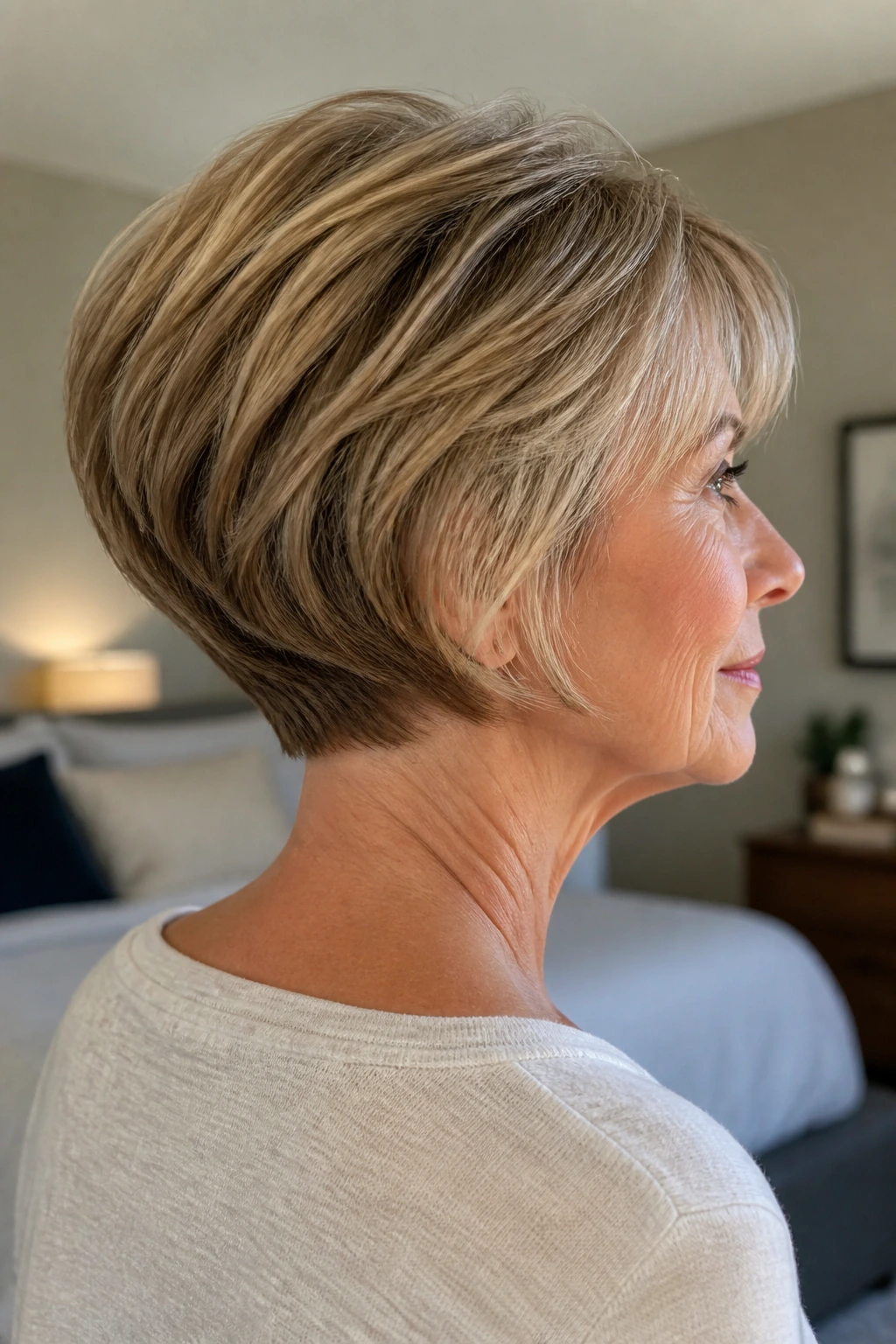
Can a bob look full without feeling bulky? Absolutely, if the back is stacked correctly. This cut uses shorter layers at the nape to build a rounded shape that pushes the top section up instead of letting it fall straight down.
The trick is in the angle. The back should rise gradually, not sharply, or you end up with a boxy shape that needs constant smoothing. A good stacked bob gives you a little architecture. The silhouette looks deliberate, and the hair at the crown has somewhere to sit besides your scalp.
This one is a strong choice for straight or lightly wavy hair that tends to go flat by midday. Blow-dry it with a 1.5-inch round brush, pulling the back under and lifting the roots for the first few minutes. That tiny routine changes the whole mood of the cut.
If your hair is dense, ask for internal removal of bulk below the occipital bone. If it’s fine, keep the stacking subtle so the ends don’t look too see-through.
3. Chin-Length Side-Part Bob
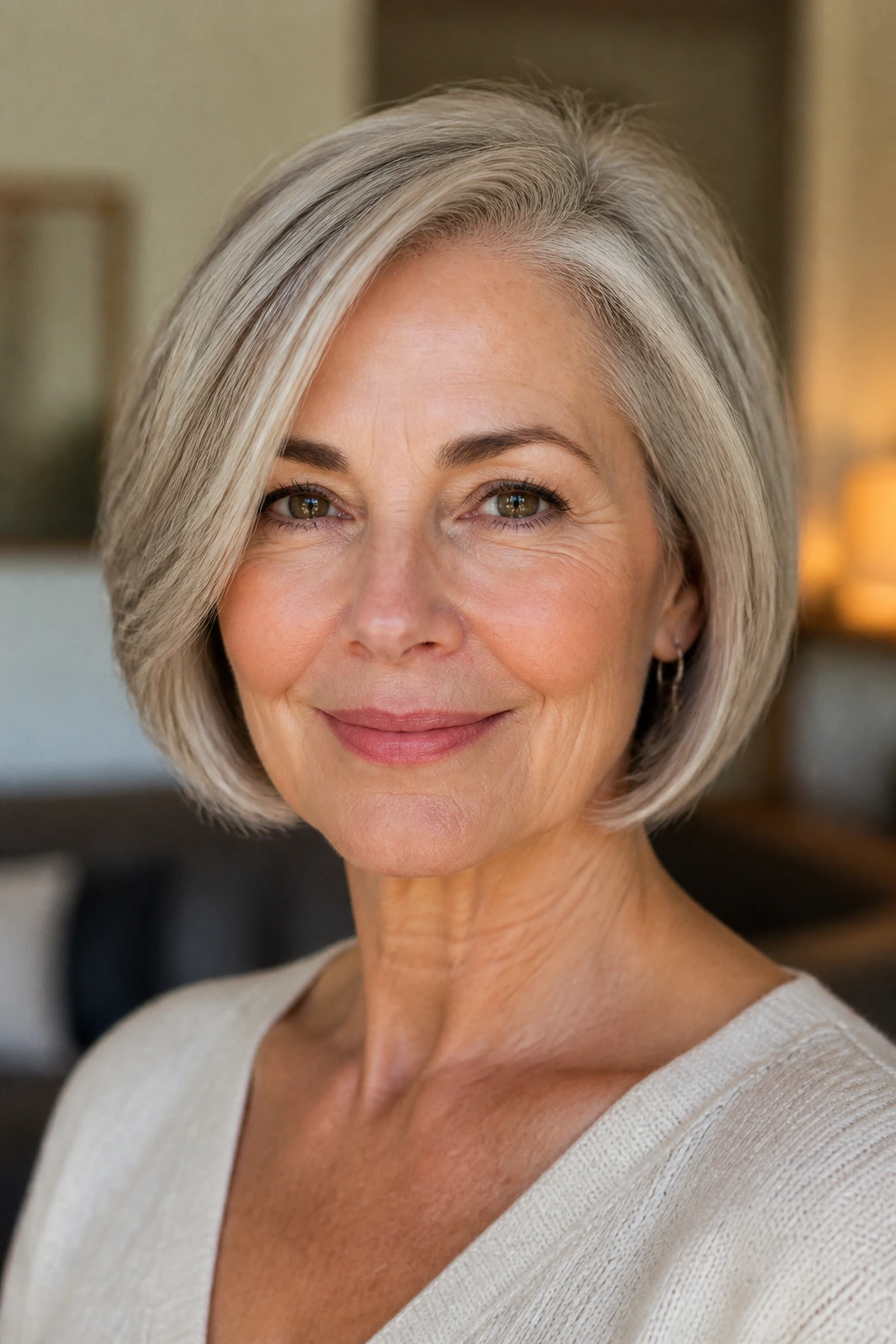
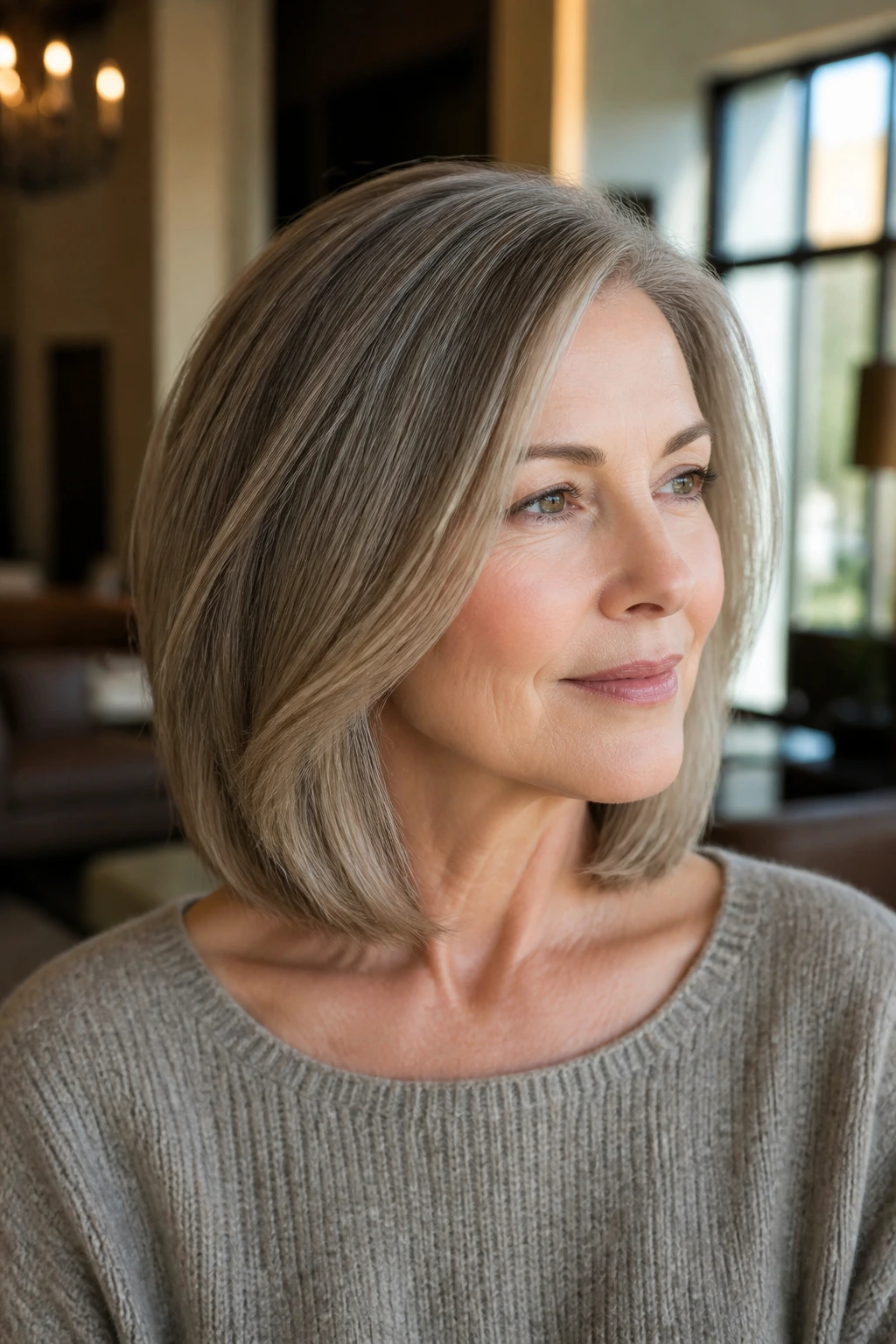
A chin-length bob with a side part is one of the smartest ways to add width where hair has started to thin at the temples. The side part shifts the volume off-center, and that small asymmetry makes the whole style look fuller. It also gives the face a softer frame without hiding it.
This cut works especially well when the ends are slightly beveled instead of blunt-straight. That bend at the bottom keeps the hair from hanging like a curtain. If you have a strong jawline, the bob lands right on it and makes the whole shape look clean. If your jaw is softer, the side part and a few face-framing strands prevent the cut from looking boxy.
Best Styling Habit
Dry the front in the direction of the part first, then flip the brush back once the roots are warm. That keeps the part from splitting open. A pea-sized amount of lightweight cream on the mid-lengths is enough; heavy serum will drag the whole thing down.
This is one of the easiest cuts to wear with statement earrings. The line stays neat, the volume sits at the right place, and nothing feels overdone.
4. Shoulder-Length Shag With Curtain Fringe
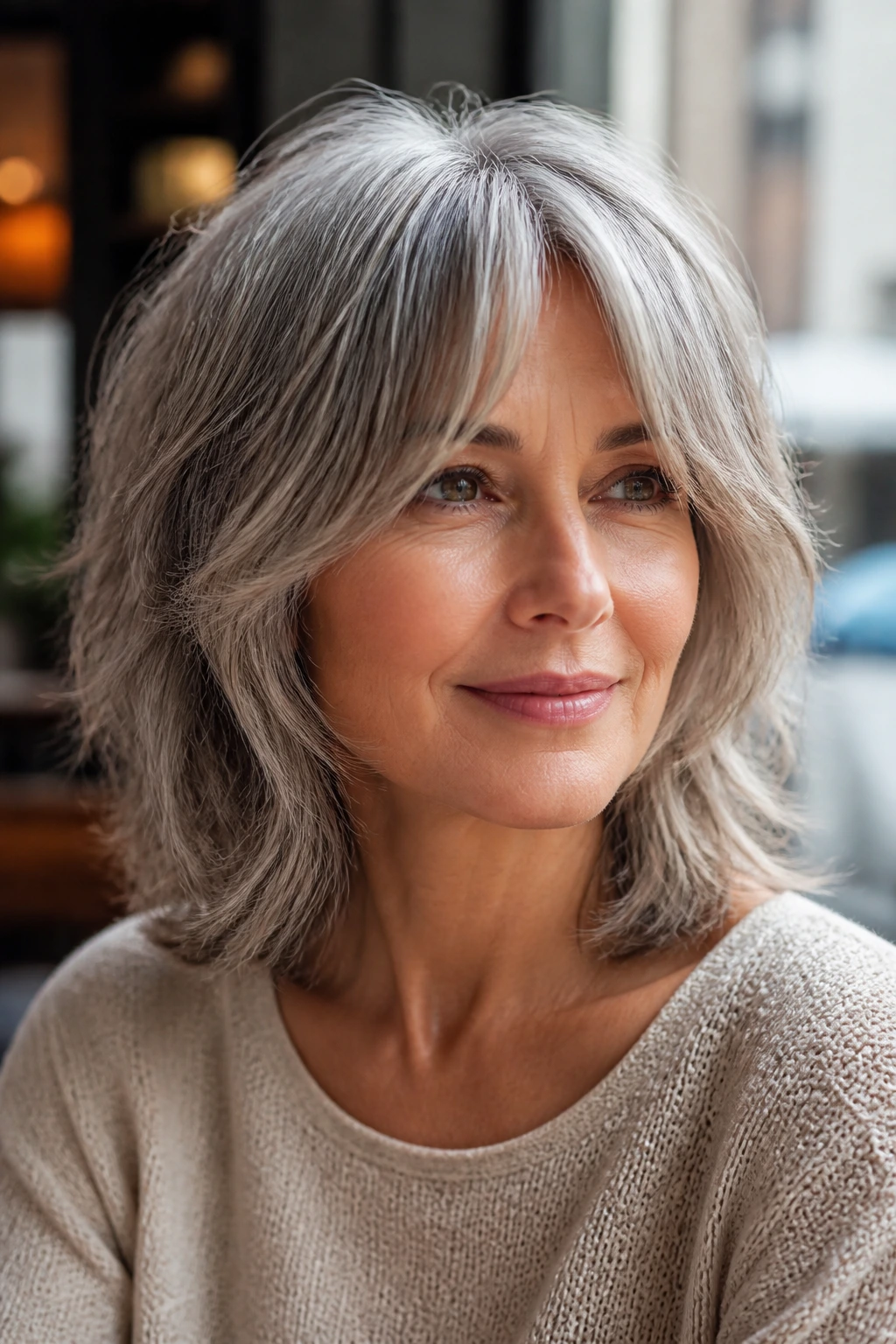
The shoulder-length shag is the cut I recommend when someone wants movement but refuses to go short. It gives you layers that start around the cheekbone and break up the length so the ends don’t sink into a flat line. Add a curtain fringe, and the face gets soft framing without a heavy bang sitting on the forehead.
This style really shines on wavy hair. When the layers are cut to follow the natural bend, the hair falls with a loose, airy shape that feels relaxed but still controlled. On straighter hair, it needs a little help from mousse and a rough blow-dry with a diffuser or round brush. Not much. Just enough to keep the crown from lying down.
The shag also does something useful for gray and silver hair: it stops the color from reading as one solid block. Those layers create breaks in the surface, which makes the sheen and texture show up better.
If you like a haircut that looks better on day two, this is a strong candidate. The fringe settles a little, the layers loosen up, and the shape gets easier.
5. Collarbone Lob With Invisible Layers
The collarbone lob is a quiet cut, but it isn’t boring. When the ends hit right at the collarbone and the layers stay tucked inside the shape instead of sitting on the surface, the whole cut looks thicker than a longer one-length style. That’s the trick: you keep the perimeter solid and hide the movement where it does the most good.
This is a smart choice if you want to keep length for ponytails, clips, or a tucked-behind-the-ear look. It also plays nicely with fine hair because the line isn’t so long that it drags itself flat. You get a little swing when you turn your head, and that helps more than most people think.
A Useful Detail
Ask for internal layers, not obvious choppy ones. The top should still look clean from the outside, with the weight removed underneath so the cut doesn’t puff out like a triangle.
A round brush or large hot rollers give this lob a polished bend. But if you’re the air-dry type, ask your stylist to leave enough bluntness at the ends so the cut still holds shape without heat.
6. Curly Rounded Bob
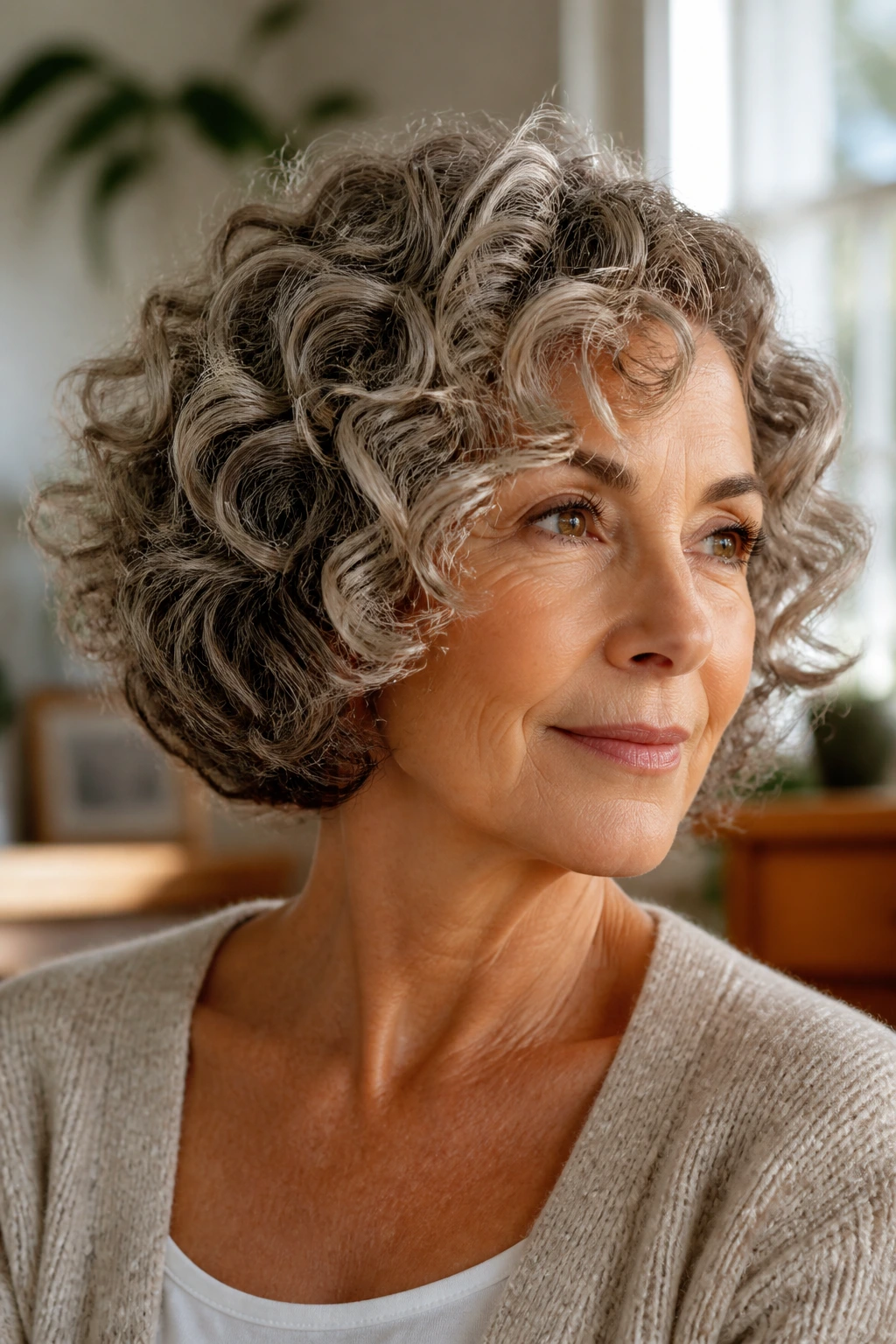
A curly bob looks fuller than a longer curl cut because the curls have less length to drag them down. That sounds simple, and it is. Shorter curls spring upward, while longer curls often stretch out and collapse at the bottom.
The best version is rounded, not triangular. You want enough layer to let the curls stack, but not so much that the shape becomes frizzy or uneven. If your curls are loose, ask for a bob that hits somewhere between the chin and the top of the neck. If your curls are tighter, a slightly longer shape can keep the silhouette balanced.
Do not let anyone cut this one wet and walk away. Curly hair shrinks, shifts, and changes direction when it dries. A good cutter will work with the curl pattern, or at least check the shape dry before finalizing the line.
A diffuser helps, but don’t blast the hair to death. Low heat, low speed, and a little root lift at the crown are enough. If the curls are already springy, the goal is definition, not volume inflation.
7. Bixie With Soft Edges
A bixie sits somewhere between a bob and a pixie, and that middle ground is exactly why it works for volume. You get short sides, a lifted crown, and a little more length through the top and front so the style doesn’t look clipped flat against the skull.
It’s a good cut if you want movement but not a full pixie commitment. The top can sweep forward, sideways, or up, depending on how your hair wants to behave. That flexibility matters. A cut that only works one way is annoying. A cut that gives you three directions is useful.
The edges should stay soft, not razor-sharp. If the perimeter gets too neat, the top can look disconnected. A slightly feathered finish keeps it friendly around the ears and nape, which helps if your hairline has softened a bit over time.
This is one of the best options for women who want quick styling with a bit of attitude. A dab of mousse at the roots and a lift with fingers is usually enough. No one needs to stand at the mirror for twelve minutes making a short cut look “done.”
8. Graduated Bob With a Full Back Curve
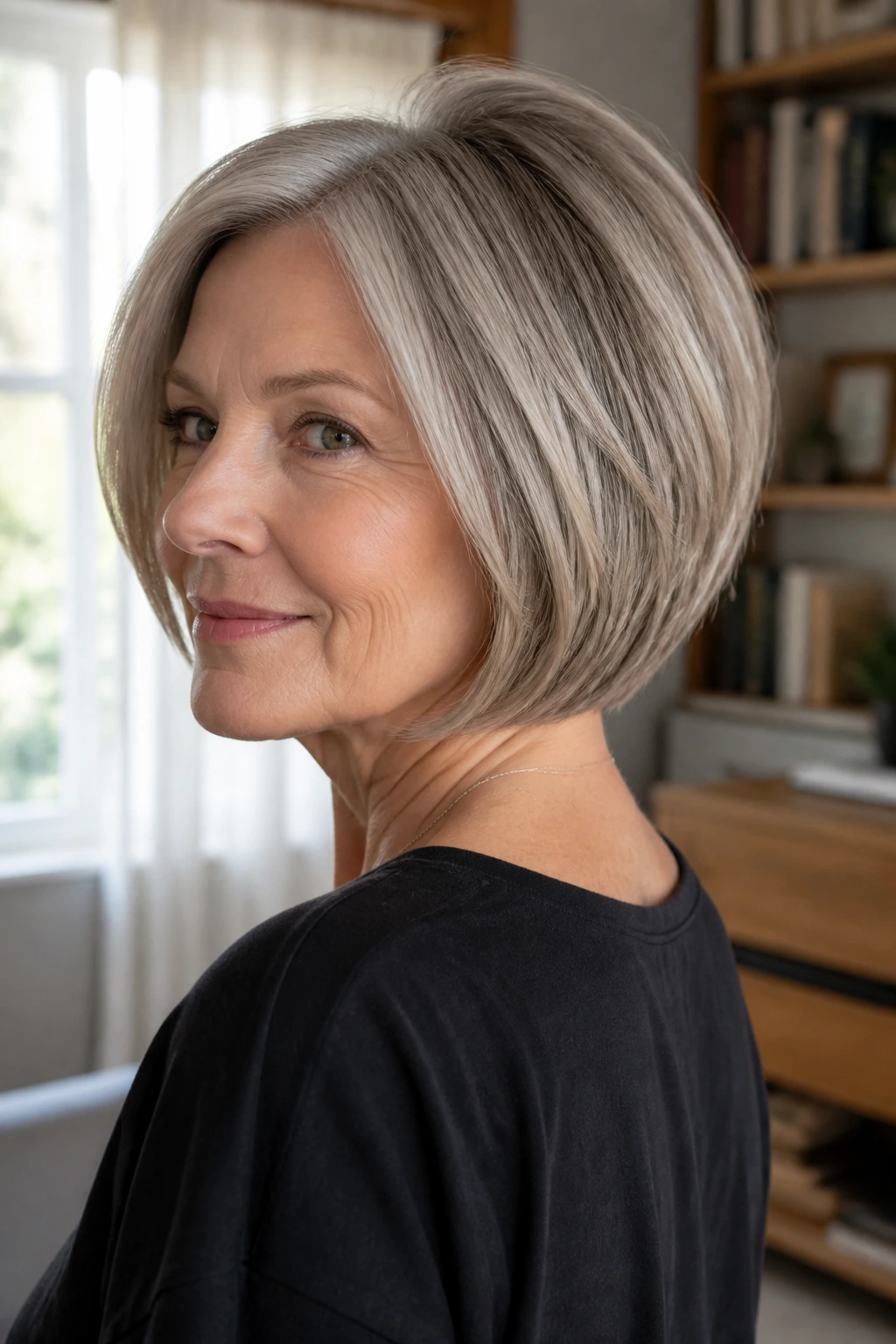
A graduated bob is the polished cousin of the stacked bob. The difference is the curve: the back sits fuller and rounder, while the front gradually gets longer. That line creates a clean shape that still has body at the crown and in the back.
I like this one for straight hair because it gives the illusion of density without needing a lot of product. The curve pushes the eye upward, so the whole cut looks more lifted. It also keeps the neck area tidy, which can be nice if you’re tired of hair brushing your collar all day.
What Makes It Work
The angle matters more than the length. If the front is too long, the back will look collapsed. If the back is too short, the whole style can go stiff. The sweet spot is a gentle rise from nape to jawline, with enough length at the front to tuck behind one ear.
Use a round brush or a blow-dry brush and aim the airflow at the roots first. Don’t flatten the crown by rushing through the top. That’s where the shape starts.
9. Feathered Mid-Length Cut
A feathered mid-length cut is a good answer for anyone who likes some shoulder length but not the weight that usually comes with it. The layers are soft and directional, not chopped into obvious steps. That means the ends move instead of hanging in one dull line.
This style works best when the shortest layers start below the cheekbone. If they begin too high, the hair can puff in the wrong places. If they start too low, you lose the lift that makes the whole cut worth wearing. Around the collarbone to upper shoulder is the zone to think about.
The real charm here is how it behaves when you wear it loose. It doesn’t demand perfect styling. A quick blow-dry with a vent brush gives it some shape, and a little root spray at the crown keeps the top from lying flat. After that, the cut does most of the work.
This is the style for someone who wants softness, not fuss. It has enough length for clips and low buns, but enough layering to stop the hair from reading as heavy.
10. French Bob With Texture
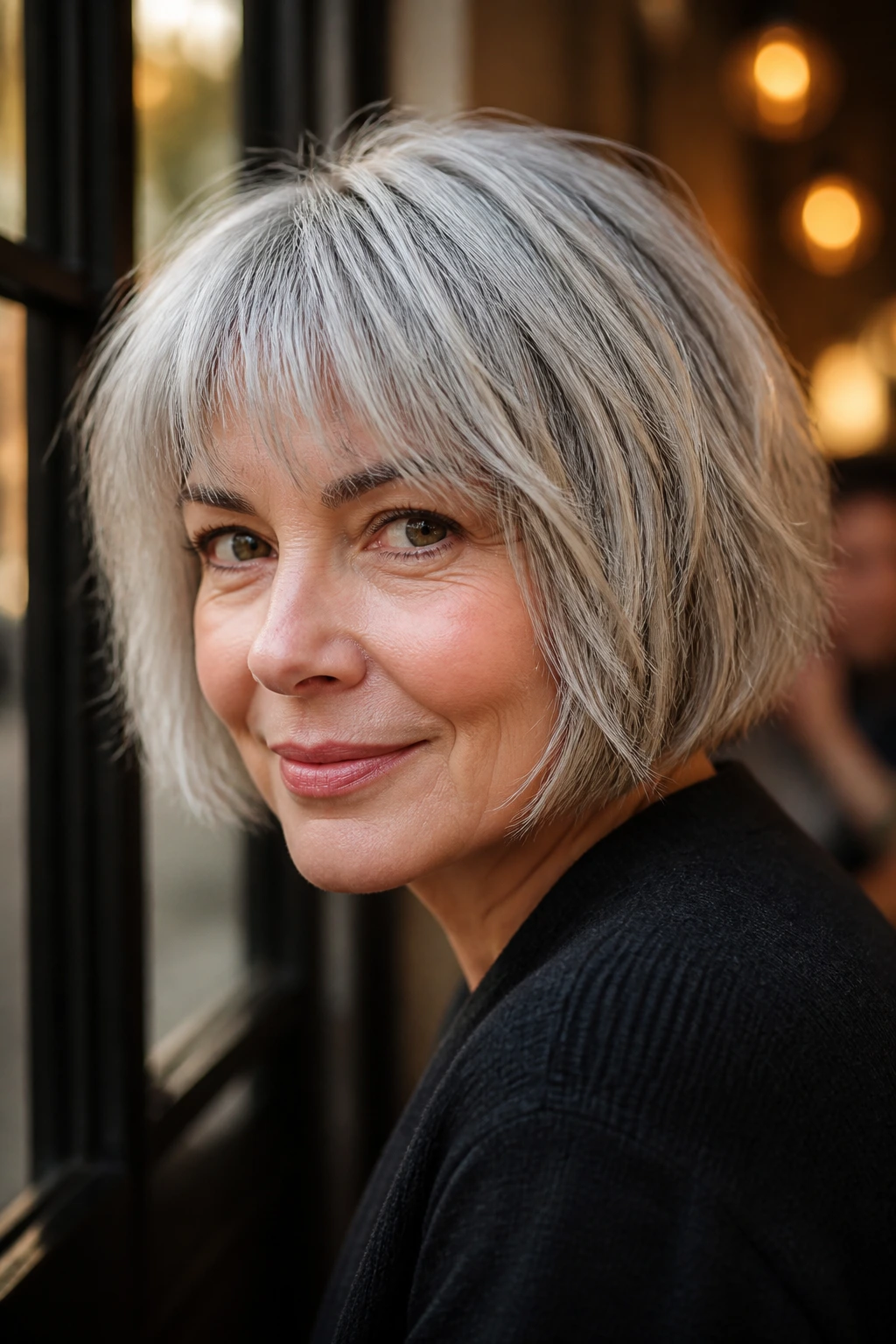
A French bob with texture is short, cheeky, and far more forgiving than people think. The key is the length: usually around the jawline, sometimes a touch shorter, with a fringe or face-framing bend that keeps the cut from feeling severe. It can look chic on silver hair, but only if the texture is handled well.
What saves it from looking like a line drawn with scissors is the finish. A little point-cutting at the ends, a soft fringe, and a side part or broken center part keep the shape light. If the hair is fine, this cut can create the illusion of density because the perimeter is compact. If the hair is thick, the texture keeps it from becoming a block.
Quick Styling Note
A small amount of texturizing spray at the roots and mid-lengths is enough. Too much product turns the surface sticky, and then the bob loses that neat swing that makes it interesting.
This cut is especially good if you like earrings, scarves, or strong lipstick. The hair stays close enough to the face to balance those details without competing with them.
11. Side-Swept Crop With Longer Top Length
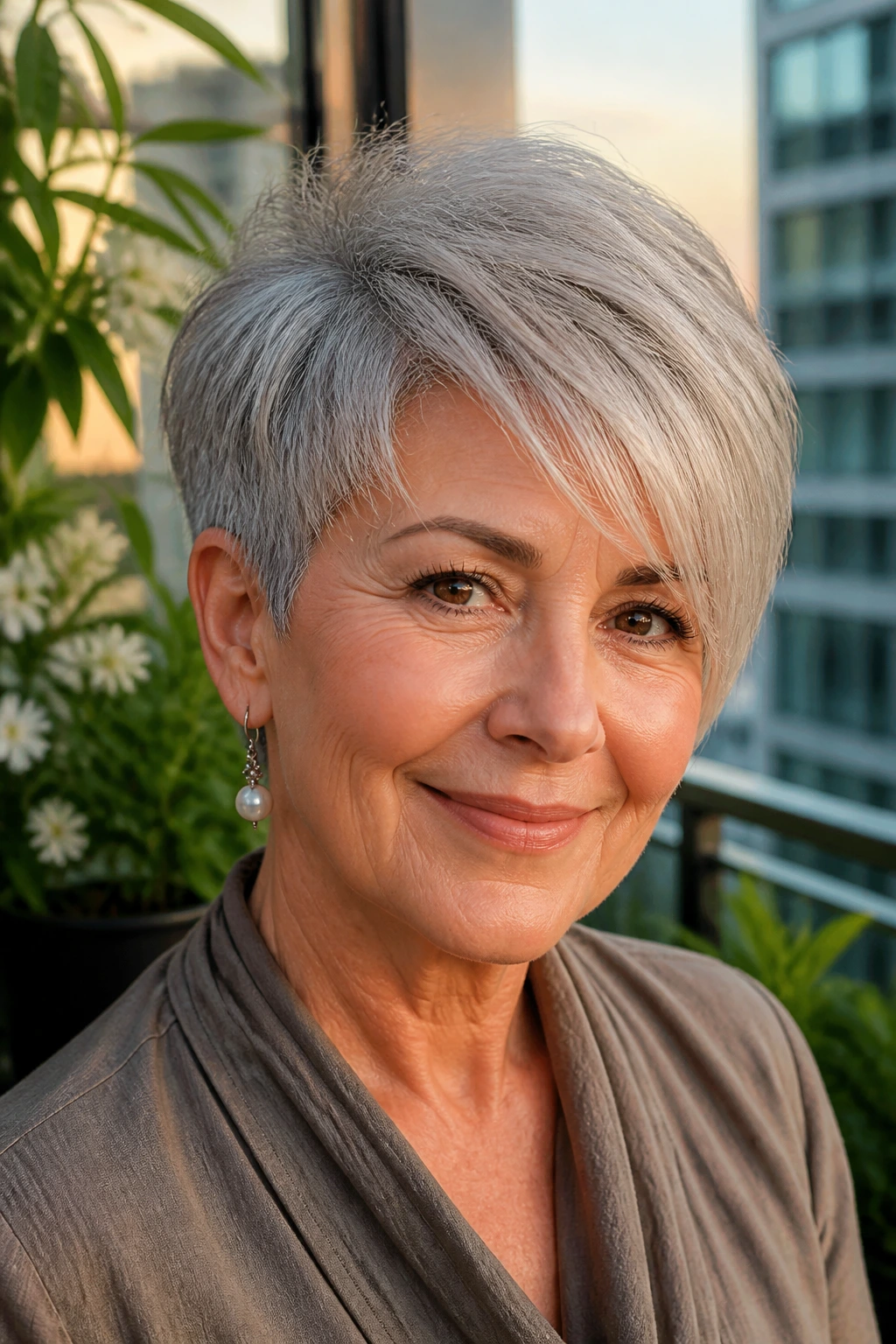
Can a short crop still look soft? Yes, if the top is kept longer and swept to one side instead of standing straight up. This is one of my favorite fixes for hair that has lost some density at the front, because the diagonal line fills space in a flattering way.
The cut should be tight around the ears and nape, but not shaved down so far that the shape gets harsh. Leave enough length through the top to create a visible sweep, usually around 3 to 4 inches depending on texture. That length lets you direct the hair without fighting it.
This is also a good choice if you don’t want a lot of daily styling. A little root lift, a quick finger dry, and a touch of paste or cream is usually enough. The shape is built into the cut, which is what makes it worth wearing.
How It Helps the Face
The diagonal front breaks up the forehead area and gives the face a little movement near the temples. That’s a small thing, but it matters. Hair that goes straight up and straight down can look stern. A sweep looks softer.
12. Layered Lob With Airy Ends
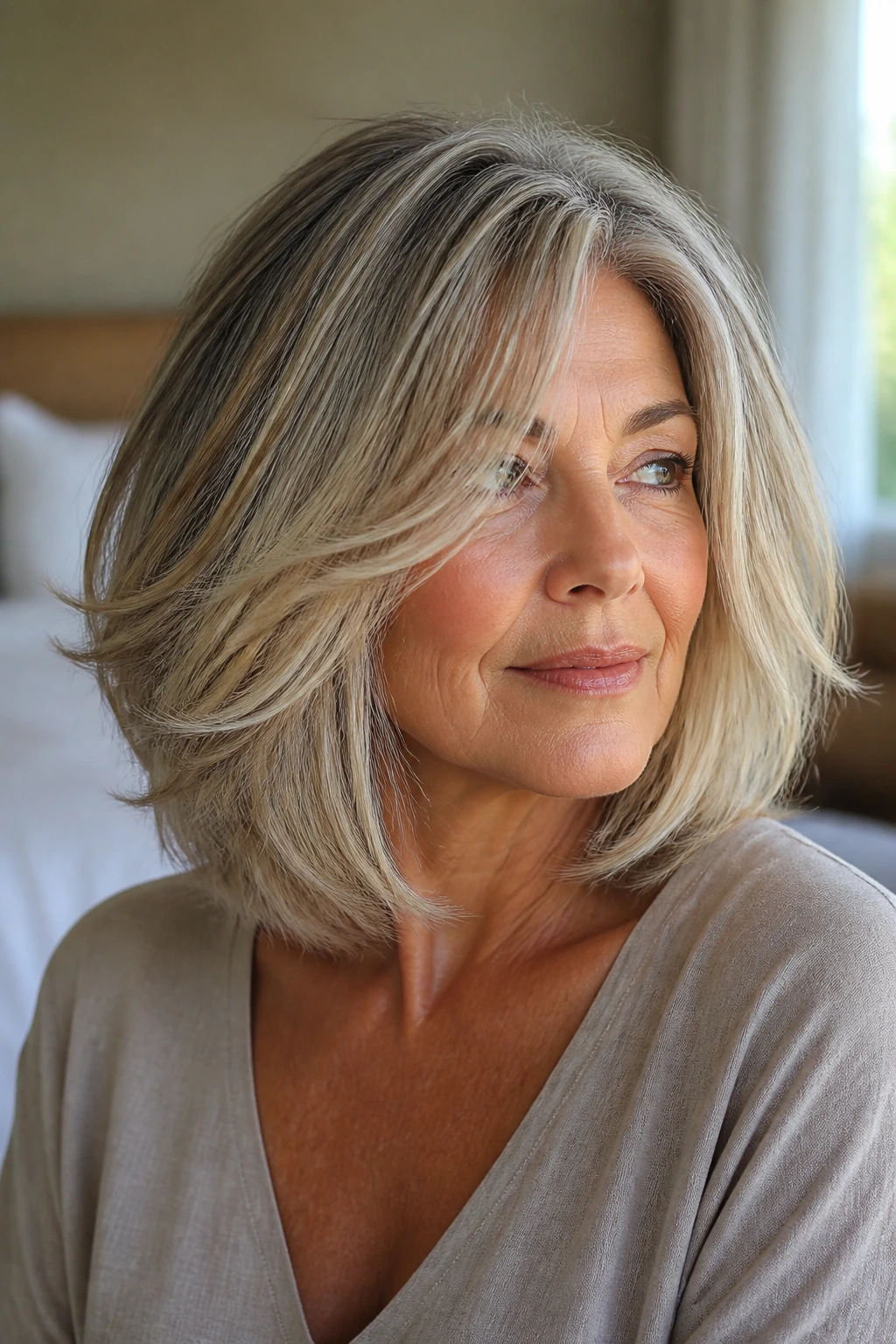
The layered lob is the cut I point to when someone says, “I still want length, but I’m tired of my hair drooping.” The ends sit around the shoulders, and the layers are placed so the bottom doesn’t drag. That makes the whole cut feel lighter right away.
A good lob should move when you turn your head. If it doesn’t, the layers are probably too timid or too heavy. The airy version keeps enough thickness through the middle so the hair doesn’t go transparent at the ends. That balance is the trick.
This cut can go either straight or wavy, which is useful if you don’t want to commit to one texture every morning. A blow-dry gives it polish. A loose wave gives it body. Either way, the perimeter should still look clean enough to hold shape.
If your hair is thick, ask for interior debulking and not too much length all at once. If your hair is fine, keep the layers conservative so the bottom doesn’t look wispy by week three.
13. Silver Shag With Crown Lift
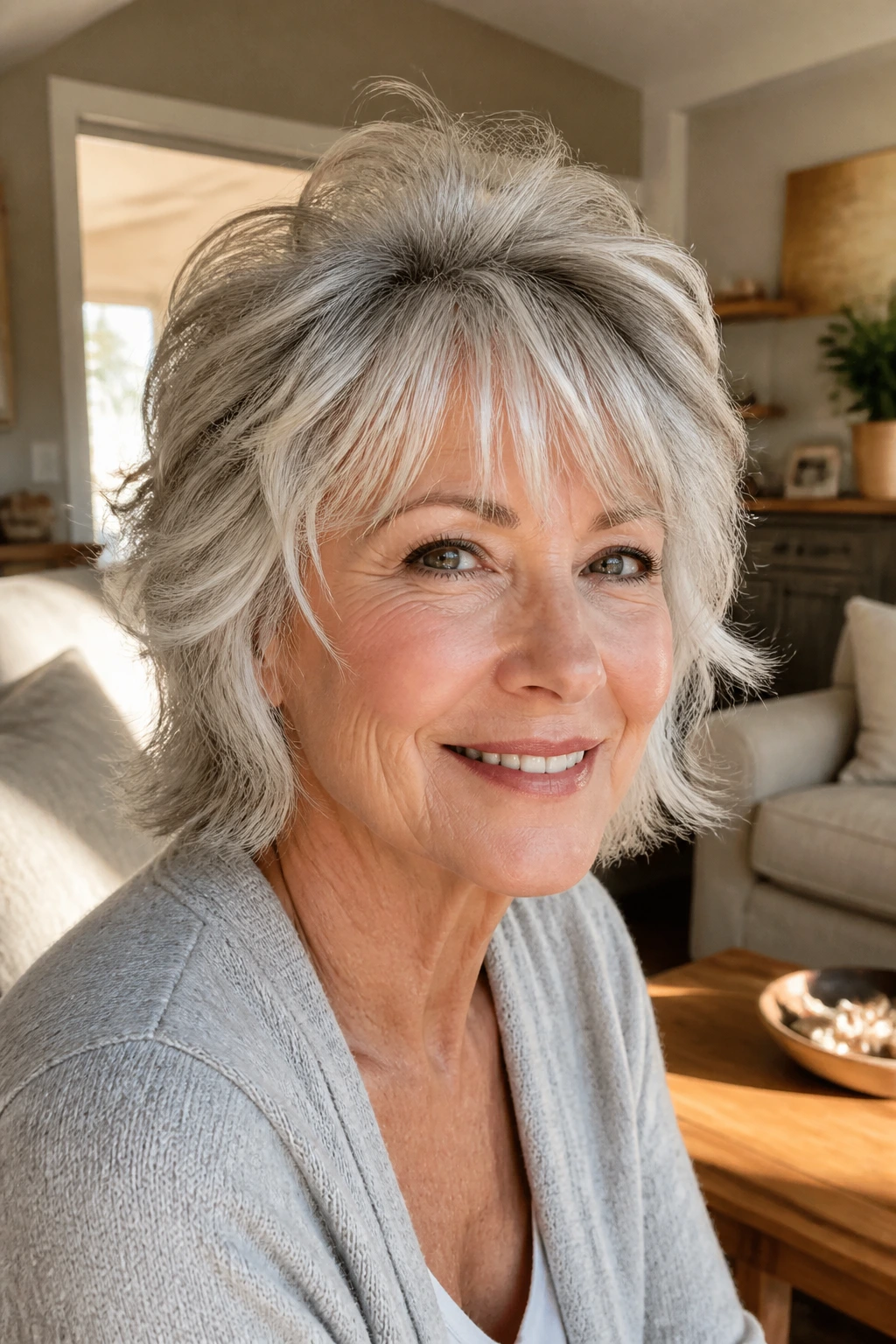
Silver hair loves texture. It shows every layer, every bend, every bit of lift at the root, which is why a silver shag can look so lively when a heavier cut looks tired. The crown stays light, the sides break up the silhouette, and the fringe or face frame adds motion right where you need it.
There’s also a practical upside here. Silver strands often feel drier and a little coarser, so a cut with movement can keep the hair from feeling stiff or helmet-like. A small amount of lightweight conditioner from ears down, plus a mousse at the root, keeps the shape open.
I’m partial to this style because it doesn’t try to hide the texture of gray hair. It uses it. That’s a much better approach than trying to smooth everything into submission.
One note: if the hair is very dry, skip heavy oils near the crown. They flatten the lift fast. A little shine at the ends is fine. A slick root is not.
14. Short Curly Cut With a Defined Top
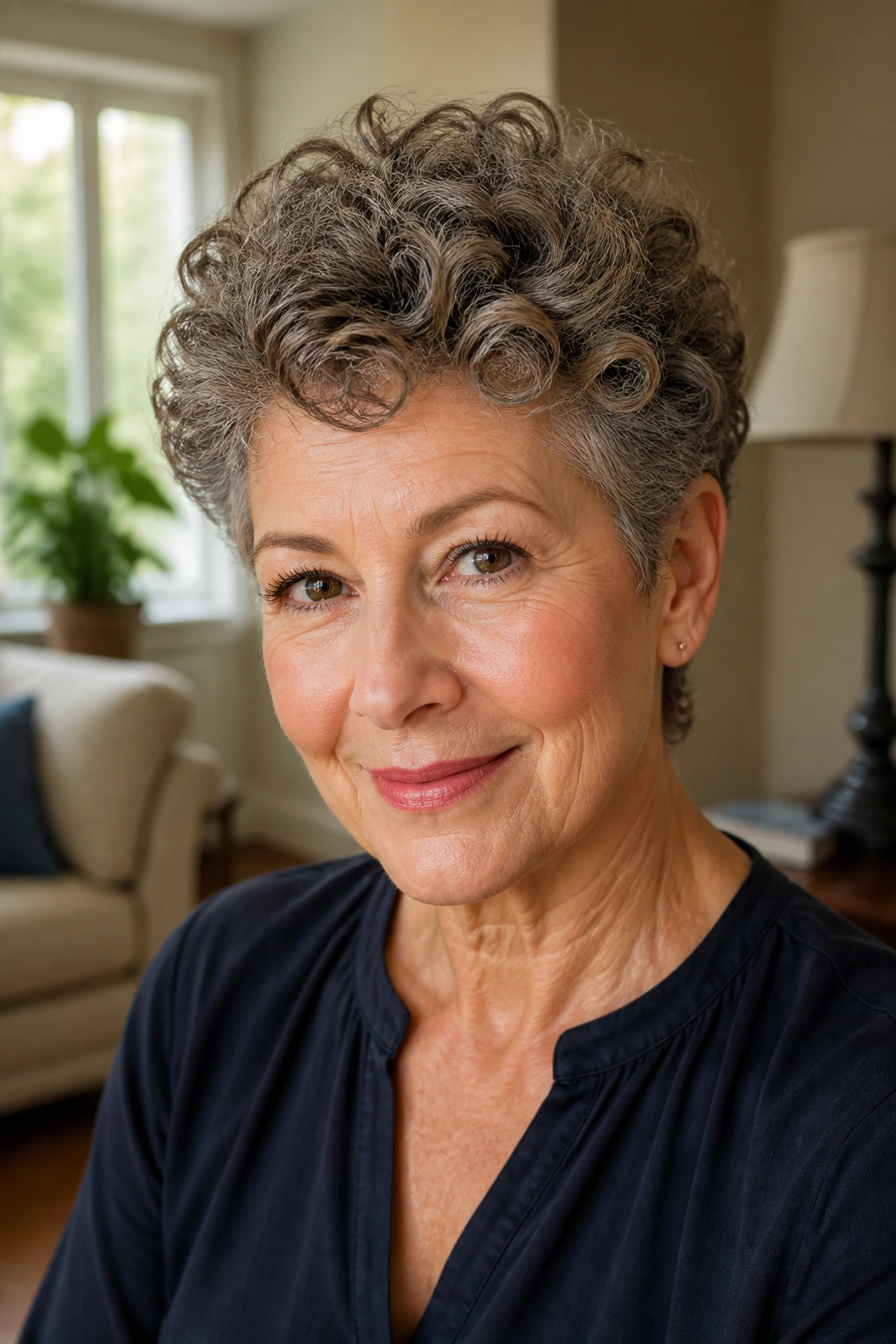
Short curly hair can either bloom or balloon, and the difference is in the shape of the top. A defined top keeps the curl pattern visible while stopping the sides from spreading outward into a triangle. That’s the enemy here. Not curl. Triangle.
Ask for layers that respect the natural curl pattern and enough length on top to let the curls stack. If the cut is too short at the crown, the hair can stick up in odd directions. If it’s too long on the sides, the volume falls where you do not want it. The balance is what makes this style work.
What to Tell the Stylist
Say you want lift on top, control on the sides, and enough shape to air-dry without puffing out. If your curls are tight, a dry or curl-by-curl approach usually gives a cleaner result than a one-length wet cut.
This is one of the easiest styles to wear with a diffuser and a little curl cream. Don’t overload it. A small amount of product scrunched into damp hair is enough to keep the curls from frizzing away from the head.
15. Sleek Bob With Hidden Layers
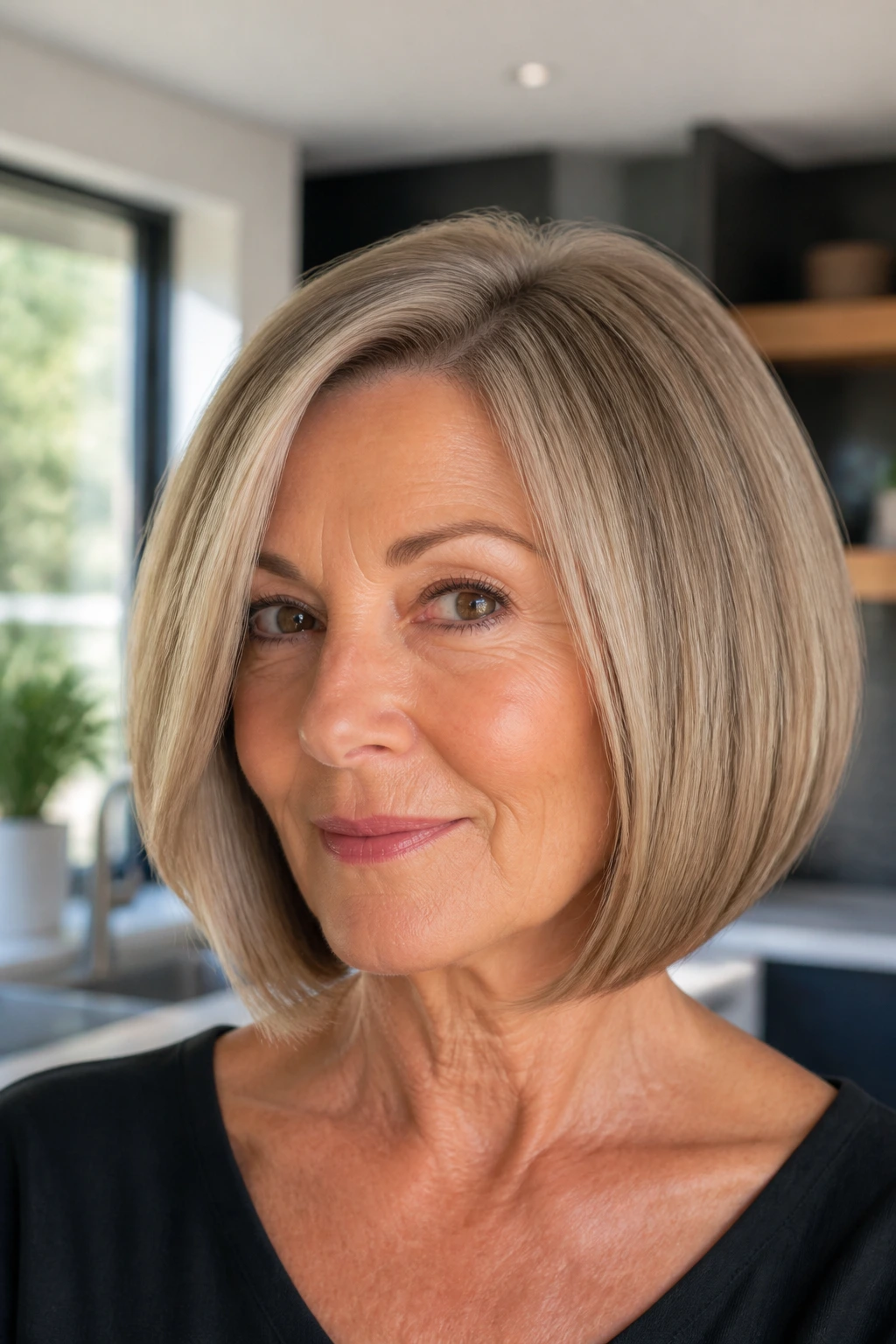
A sleek bob does not have to be flat. That’s the mistake people make. The good version keeps the outside smooth and the inside lightly layered so the shape doesn’t collapse against the jaw.
This is the cut for someone who likes clean lines but still wants a little height at the crown. Hidden layers inside the bob stop it from feeling too heavy, especially if your hair is thick or naturally straight. The outside reads polished; the inside does the lifting.
It’s also one of the easiest styles to wear with silver hair because the shine shows off the line. A center part can work here, but I often prefer a slightly off-center part because it creates a little more lift on top. Not dramatic. Just enough.
If you blow-dry this style, use a flat brush on the top and a round brush at the ends. That keeps the line smooth without making the whole thing lie like paper.
16. Long Layers With Face-Framing Lift
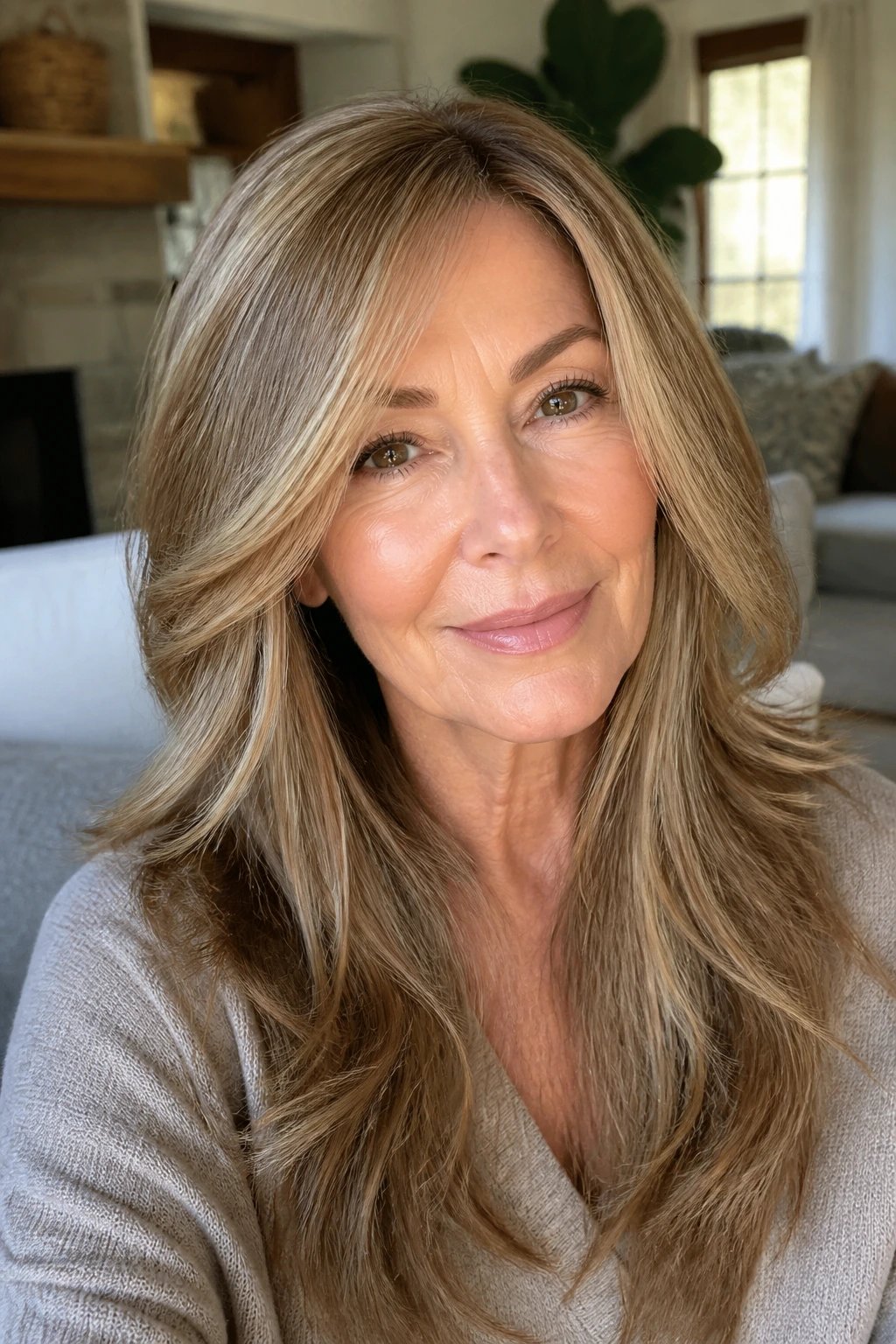
Long hair after sixty is not the problem. Heavy, shapeless long hair is the problem. If you want to keep length, long layers with face-framing lift are the way to do it without ending up with a curtain that drags itself down your back.
The key is where the layers start. Too high, and the top gets too thin. Too low, and nothing changes. A good starting point is around the chin or collarbone, with pieces that brighten the cheekbones and open up the sides of the face. That gives movement without making the ends feel sparse.
This is the right choice if you’re attached to ponytails, braids, or a tucked-back look. It also gives you room to wear a round-brush blowout when you want more polish. The shape doesn’t have to be fancy. It just needs enough structure to avoid that flat, stretched-out look long hair can fall into.
A little volume spray at the roots and a large round brush will do more here than layers of serum ever will.
17. Wavy Crop With a Lifted Fringe
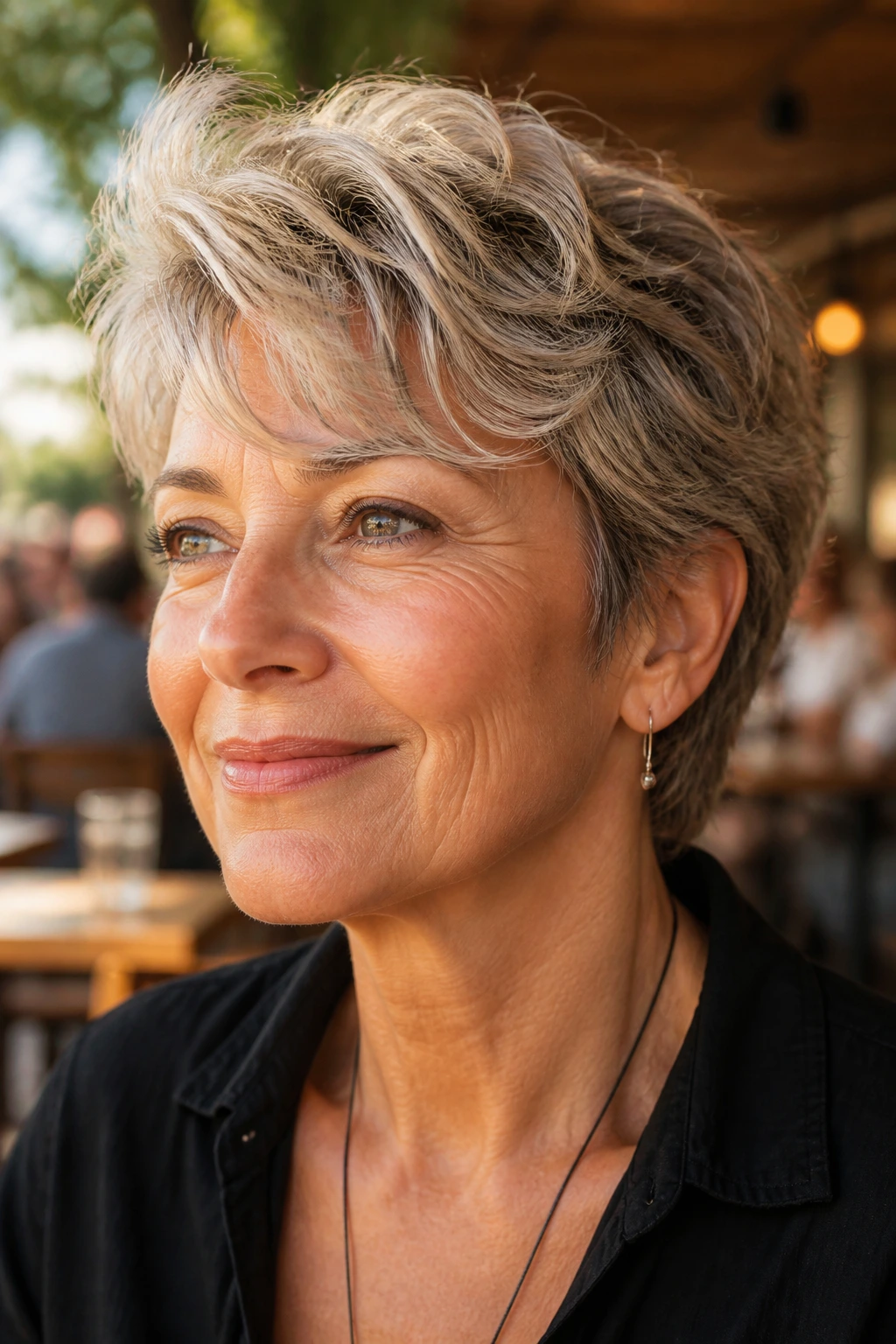
A wavy crop with a lifted fringe has just enough edge to keep things interesting and just enough softness to stay wearable. The fringe sits lightly forward or slightly to the side, while the top keeps enough length to form a wave instead of a hard spike. It’s casual, but not sloppy.
This is a strong option if your hair has a natural bend and you don’t want to fight it. Letting the wave stay visible makes the cut look fuller, especially around the front. The fringe helps balance the forehead area, and the cropped sides keep the silhouette from getting too wide.
Best For
Wavy, slightly coarse, or mixed-texture hair that doesn’t want to lie in one neat direction. The cut gives that texture somewhere useful to go.
A small amount of mousse or light styling cream on damp hair is enough. After that, rough-dry with your fingers and stop before you overwork it. Over-styling kills this cut faster than anything else.
Why Volume Works Better Than Over-Length
A lot of women are told to keep their hair long because long hair is supposedly flattering at any age. I don’t buy that advice in a blanket way. Length without shape can make hair look thinner, not fuller, because gravity has more room to flatten it.
The better cuts use shape as a shortcut to density. A lifted crown creates height. Internal layers keep the interior from getting dense and dull. A clean perimeter stops the ends from fanning out into mush. That combination matters more than chasing inches.
There’s also a real visual trick at work. Hair that sits a little off the scalp gives the face more space, and that space reads as freshness. It’s not about pretending the hair is different than it is. It’s about arranging it so the eye sees movement first.
Tools That Actually Help the Shape Hold
-
Volumizing mousse: Use a golf-ball-sized amount on damp roots; it gives memory without making the hair sticky.
-
Root-lift spray: Best sprayed at the crown and part line before blow-drying, not after.
-
Round brush, 1 to 2 inches: The smaller size gives more bend near the root; the larger one smooths shoulder-length styles.
-
Vent brush or blow-dry brush: Useful if you want speed and don’t care about a highly polished finish.
-
Diffuser attachment: A must for wavy or curly hair when you want lift without frizz.
-
Velcro rollers: Old-school, yes. Also excellent for adding crown height while you put on makeup or pick out earrings.
-
Dry shampoo: Good on clean hair too, especially at the roots, because it adds grip.
-
Lightweight conditioner: Choose one that doesn’t leave a slippery film on the scalp area.
-
Tail comb: Handy for clean parting and lifting small sections at the crown.
What to Ask for at the Salon Chair
A good salon conversation changes the whole haircut. Don’t ask for “something youthful” — that usually sends people into awkward territory. Ask for lift at the crown, softness around the face, and a shape that doesn’t depend on heavy styling. That gives the stylist something useful to work with.
If your hair is fine, say you want to keep the ends full and avoid over-thinning. If it’s thick, say you want bulk removed from the interior, not the perimeter. Those are not the same request, and the difference matters a lot once the hair dries.
Bring a photo, yes, but also say what you like about it. Maybe it’s the nape. Maybe it’s the fringe. Maybe it’s the way the top doesn’t sit flat. That language is better than saying you want the whole thing copied. Hair texture, growth pattern, and face shape change the result anyway.
One more thing. If you wear glasses, tell the stylist. The length around the temples and the balance at the ears need to cooperate with the frames, or the cut will keep snagging and puffing where you don’t want it.
Styling Habits That Keep the Lift Alive
Root Prep: Start with mousse or root spray on damp hair, but keep it close to the roots. Product dragged through the lengths can weigh the shape down before you finish drying.
Drying Direction: Blow-dry the crown first, pulling the roots in the opposite direction of your part for the first minute or two. That small trick gives the hair a memory of lift.
Hands Off the Ends: Stop fussing with the lengths once they’re shaped. The more you rake through them, the more you break up the cut’s clean line.
Finishing Touch: Use a tiny bit of wax or paste only on the ends or fringe if the style needs definition. A heavy gloss serum is usually too much for volume-first haircuts.
When to Stop: The moment the shape looks full enough, stop styling. Overworking the hair is the fastest way to flatten it.
Common Mistakes That Flatten the Whole Look
-
Too much thinning: The symptom is stringy ends and see-through layers. The fix is a blunt perimeter with light internal texturizing, not aggressive razoring.
-
Heavy conditioner at the roots: The hair looks clean for ten minutes and then slides flat. Keep conditioner from the ears down and rinse well.
-
A center part on every cut: Some faces can wear it, but many over-sixty haircuts need a slight off-center part to create lift where the hair is weakest.
-
Making the layers too short around the face: Short layers near the cheeks can puff out weirdly and make the haircut feel dated. Start lower if you want softness.
-
Skipping trims for too long: Once the ends fray, the whole style loses shape. Volume is partly a maintenance issue.
-
Using too much oil or silicone serum: Shine is fine. Slip is not. A little goes a long way, especially on fine or silver hair.
Variations and Alternatives to Try
Fine-Hair Lift Version: Ask for fewer, smarter layers and keep the perimeter solid. A root spray and Velcro rollers will do more for the shape than extra thinning ever will.
Thick-Hair Softening Version: Use longer layers and interior debulking so the haircut doesn’t turn into a triangle. This is the version that keeps body without bulk.
Curl-First Version: Let the curl pattern lead the cut. Dry cutting or curl-by-curl shaping usually gives the best volume because the final shape matches how the hair actually behaves.
Glasses-Friendly Version: Keep the fringe lighter and the sides narrower around the temples. The goal is to make room for the frames, not bury them.
Low-Heat Version: Choose a cut with built-in bend — shag, bixie, lob, or feathered crop — so air-drying gives you decent shape without a full blowout.
How to Keep the Shape Between Visits
A volume cut only stays good if you maintain the outline. For most short and mid-length styles, plan on a trim every 5 to 8 weeks. Fringe-heavy cuts may need attention closer to 3 to 4 weeks, because bangs lose shape faster than the rest of the cut.
Between appointments, use dry shampoo at the roots on day two or three, even if the hair doesn’t look oily. It gives the strands grip and helps the top stay off the scalp. A quick blast from a blow dryer at the crown can wake the shape back up in under two minutes. That’s often enough, which is nice. We don’t always need a full redo.
If you wear a lob or longer layers, sleep with the hair loosely secured or on a silk pillowcase so the ends don’t get smashed overnight. On curls, refresh with a spray bottle, a little leave-in, and finger scrunching rather than rewetting everything. That keeps the volume from turning into frizz soup.
For silver or white hair, be careful with heavy purple shampoo. Too much of it can make the hair feel dry and flat. Use it only as often as needed to keep the tone clean.
Questions People Actually Ask Before They Chop or Shape
Will a shorter cut always make my hair look fuller?
Not always. A short cut that’s over-thinned can look flatter than a shoulder-length style with smart layering. The shape matters more than the length by itself.
What if my hair is very fine and straight?
Choose cuts with a solid perimeter and light crown lift, like a stacked bob, feathered pixie, or chin-length side-part bob. Fine straight hair usually needs structure more than more layers.
Can I keep my hair long and still get volume?
Yes, but the layers need to start high enough to break up weight, and the ends need regular trimming. Long hair without shape will almost always sag.
Is a center part bad after sixty?
No, but it isn’t the best default for everyone. If the hair is thinning at the crown or temples, a slight side part often gives a better lift and looks softer around the face.
What’s the easiest style to maintain?
A bixie or a short layered bob usually wins there. Both can be revived with root spray, a little finger drying, and a quick pass of a round brush.
How do I stop my hair from going flat by noon?
Start with product at the roots, not the ends. Blow-dry the crown first, avoid heavy oils near the scalp, and use dry shampoo even on clean hair if the roots need grip.
Should gray hair be cut differently?
Sometimes, yes. Gray hair often feels coarser or drier, so it benefits from shapes that show movement without over-layering. A cut with texture and a soft finish usually works better than a stiff one-length shape.
A Fuller Shape That Still Looks Like You
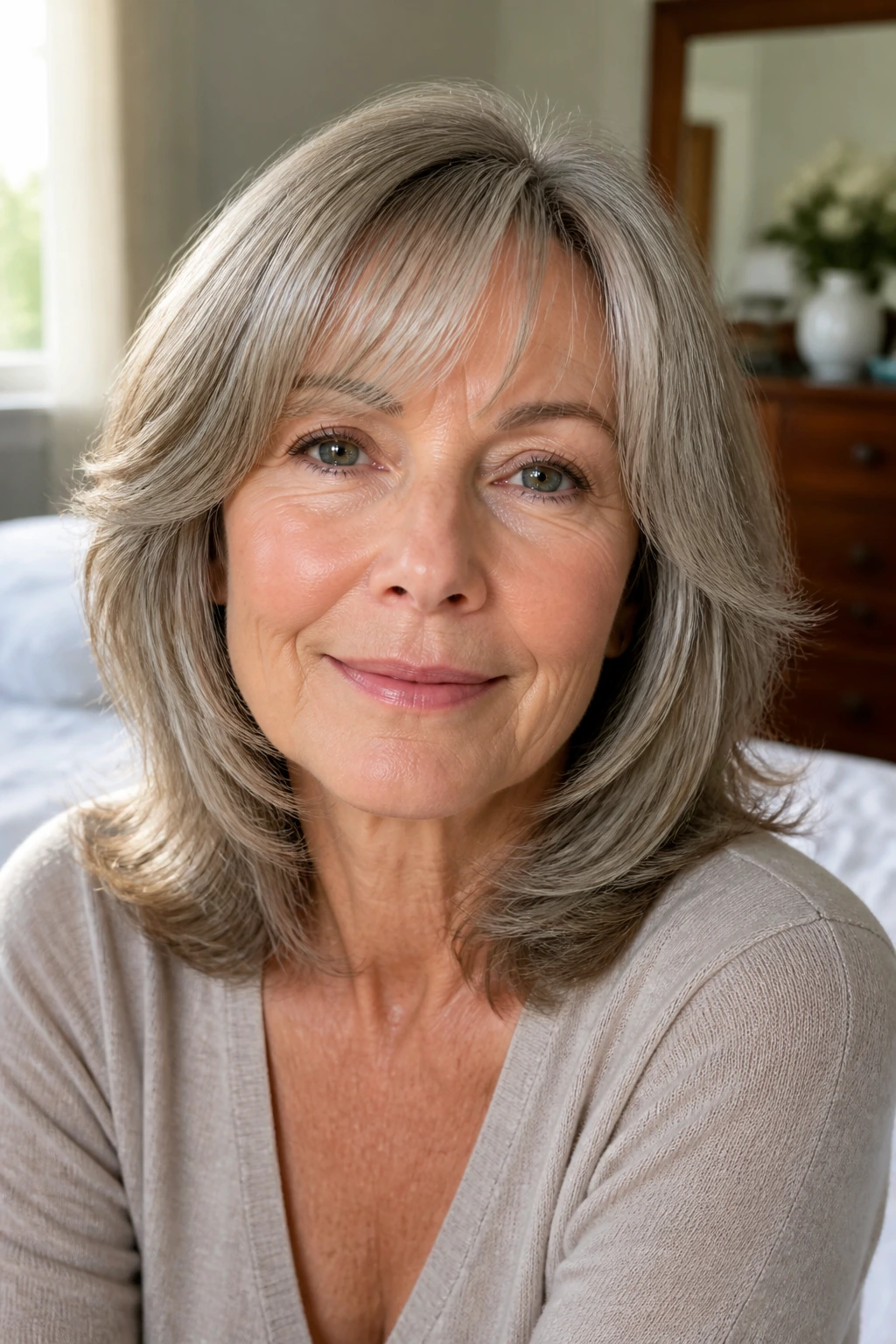
The best hairstyles for women over 60 don’t chase youth. They chase shape. That’s a much saner goal, and honestly a much prettier one. When hair has lift at the crown, softness at the face, and enough movement through the ends, it looks cared for in a way that never feels forced.
The nice thing about volume is that it can be quiet. It doesn’t have to scream. A few well-placed layers, a side part, and a cut that respects the way your hair actually grows can change the whole balance of a face.
Pick the silhouette that suits your texture, keep the ends fresh, and don’t be afraid of a little height. Hair that moves is hair that feels alive.
