



Short haircuts for women over 60 work best when they stop fighting the hair that’s actually on your head. Not the hair from ten years ago. Not the hair you had in your forties. The hair you have now, with its finer ends, softer crown, or stubborn cowlick that appears every time you try to do something “simple.”
That’s why short styles can feel so sharp at this stage of life. They remove dead weight. They let the neck show, bring the eyes up, and make silver strands look clean instead of scraggly. A good short cut does not shout. It behaves.
And the best ones are not all pixies. Some are neat bobs with a hard edge. Some are soft crops with a bend at the fringe. Some are little, almost shy cuts that make earrings stand out and jawlines look clearer. The trick is matching shape to texture, because hair after sixty has opinions. You might as well work with them.
Why These Cuts Earn Their Keep
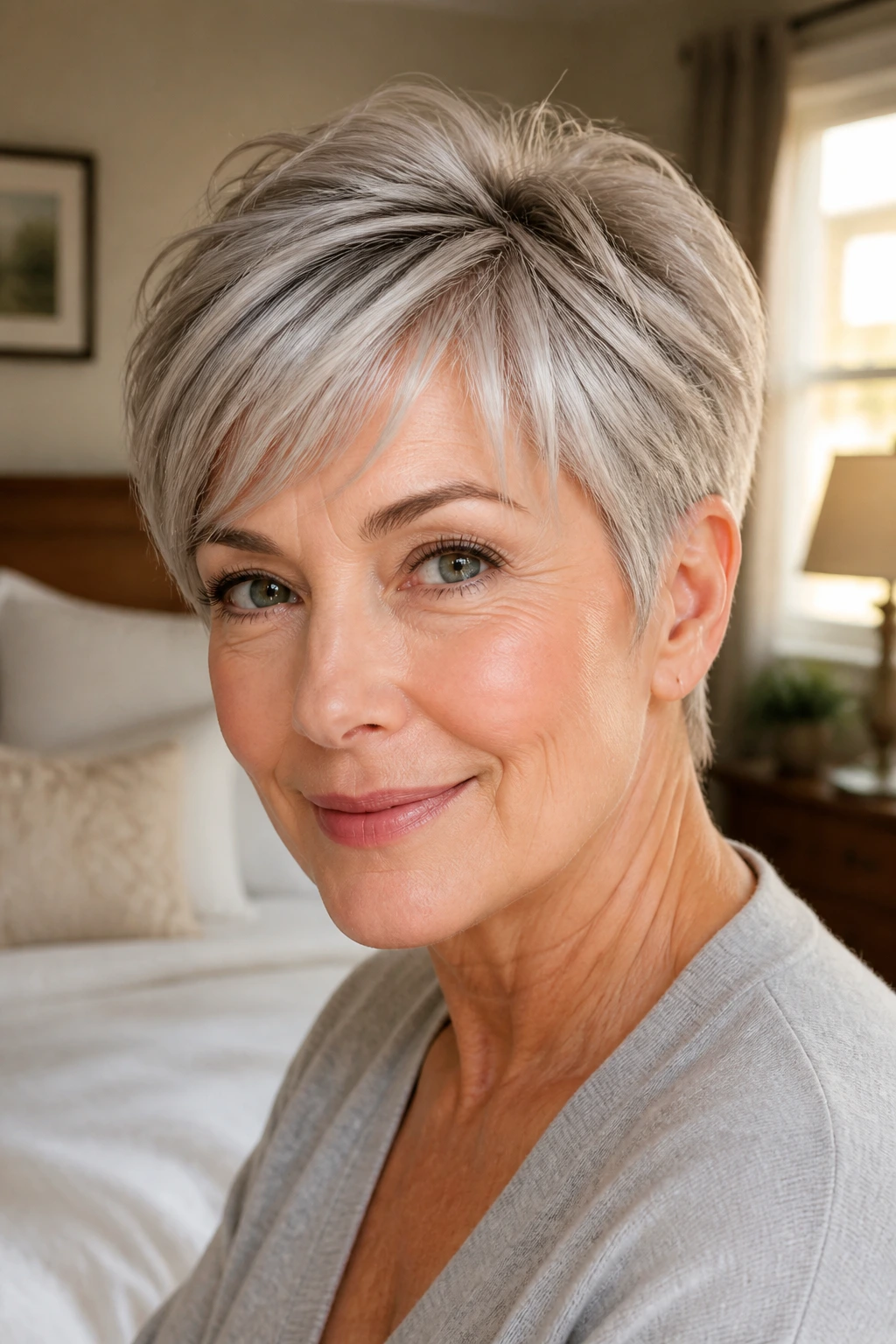
-
Less collapse at the crown: Removing length from the back and sides lets fine or thinning hair lift instead of lying flat by lunchtime.
-
A cleaner neckline: Short cuts keep the nape from turning into a fuzzy afterthought, which makes the whole head look more finished.
-
Gray hair looks sharper in shape: Silver and white strands can be wiry; a deliberate outline keeps them looking polished instead of frayed.
-
Glasses finally get room: The right short style stops hair from fighting your frames every time you turn your head.
-
Styling takes less brute force: A round brush, a little mousse, and ten minutes usually do more than an hour of wrestling longer hair.
-
You can choose softness or edge: Short does not mean severe. A wispy fringe, a rounded bob, or a tousled crop can change the mood completely.
1. Soft Pixie With Side-Swept Fringe
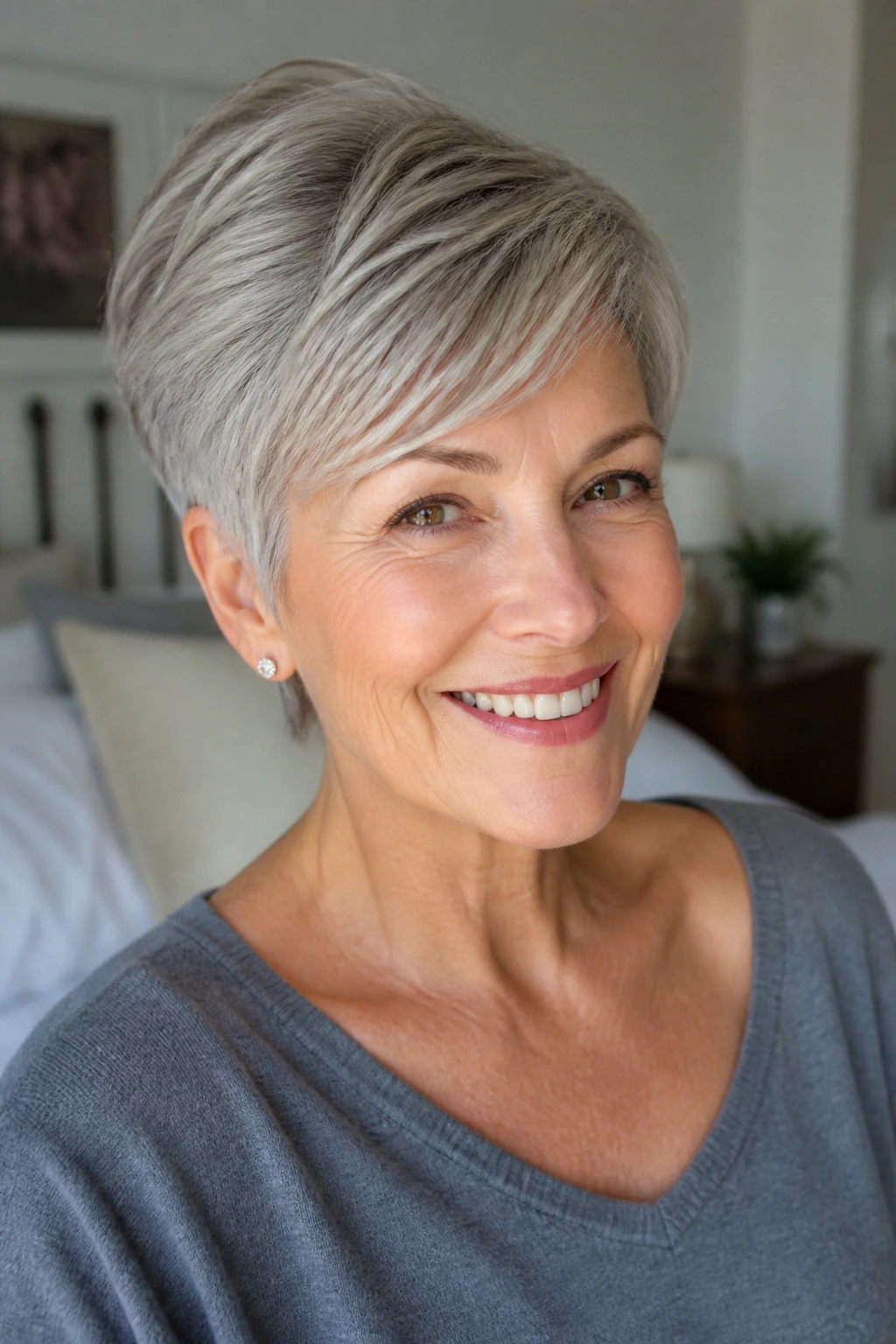
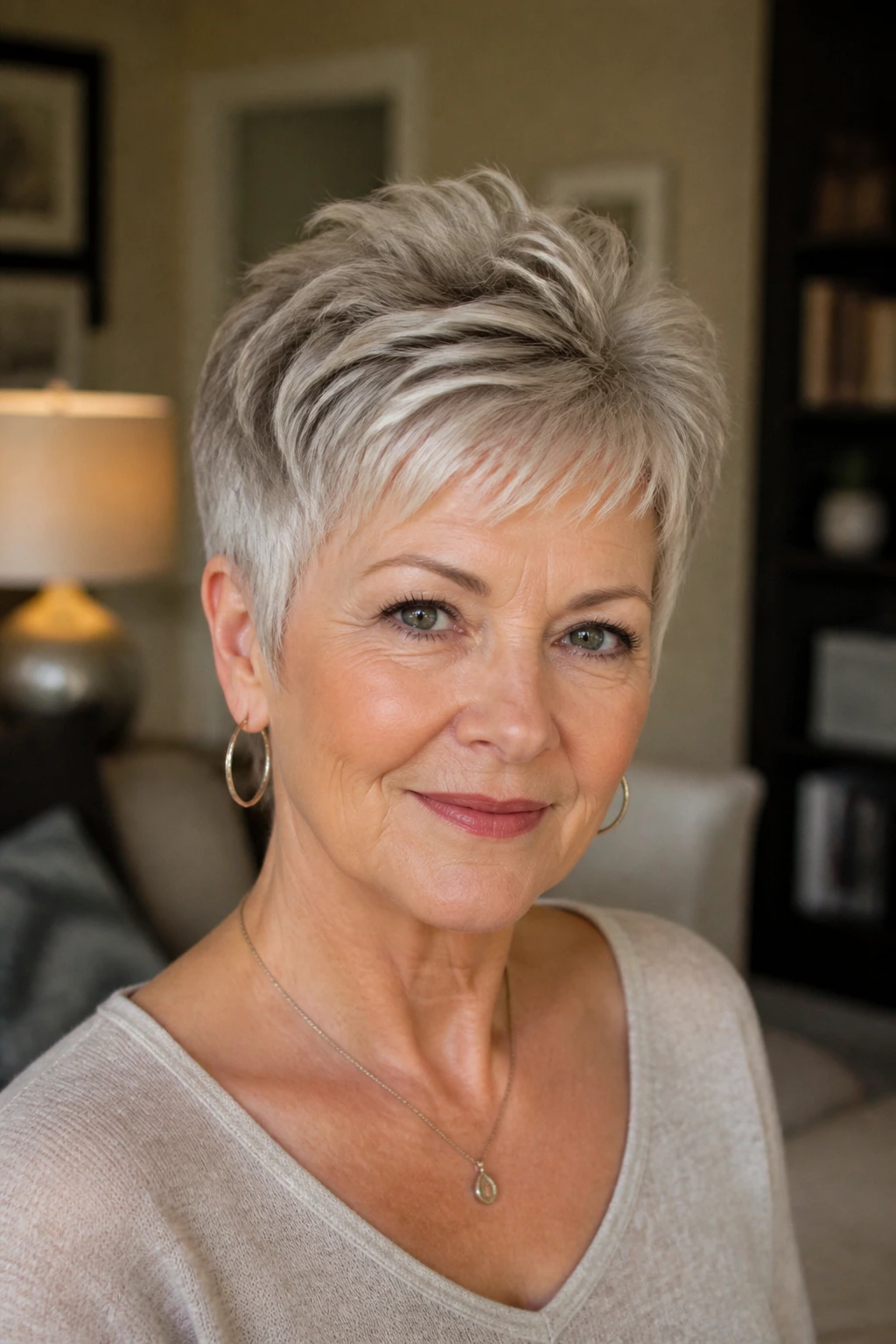
A soft pixie with a side-swept fringe is the haircut I reach for when someone wants short hair but does not want to feel exposed. The fringe softens the forehead, and the top has enough length to move, which keeps the cut from looking helmet-like. It’s neat, but not stiff. That matters.
Why it behaves well on mature hair
This cut works because it keeps weight off the sides while leaving a little lift on top. If your hair has started to lose density around the crown, the extra length at the fringe gives you something to shape with a finger and a dab of mousse. It also plays nicely with fine hair, because the outline stays close to the head without looking flat.
Ask for the sides to be tapered, not buzzed bluntly, unless you want a sharper edge. If you wear glasses, this is one of the easiest cuts to live with. The hair stays out of the frames, and the face still feels framed.
2. Textured Crop With Piecey Layers
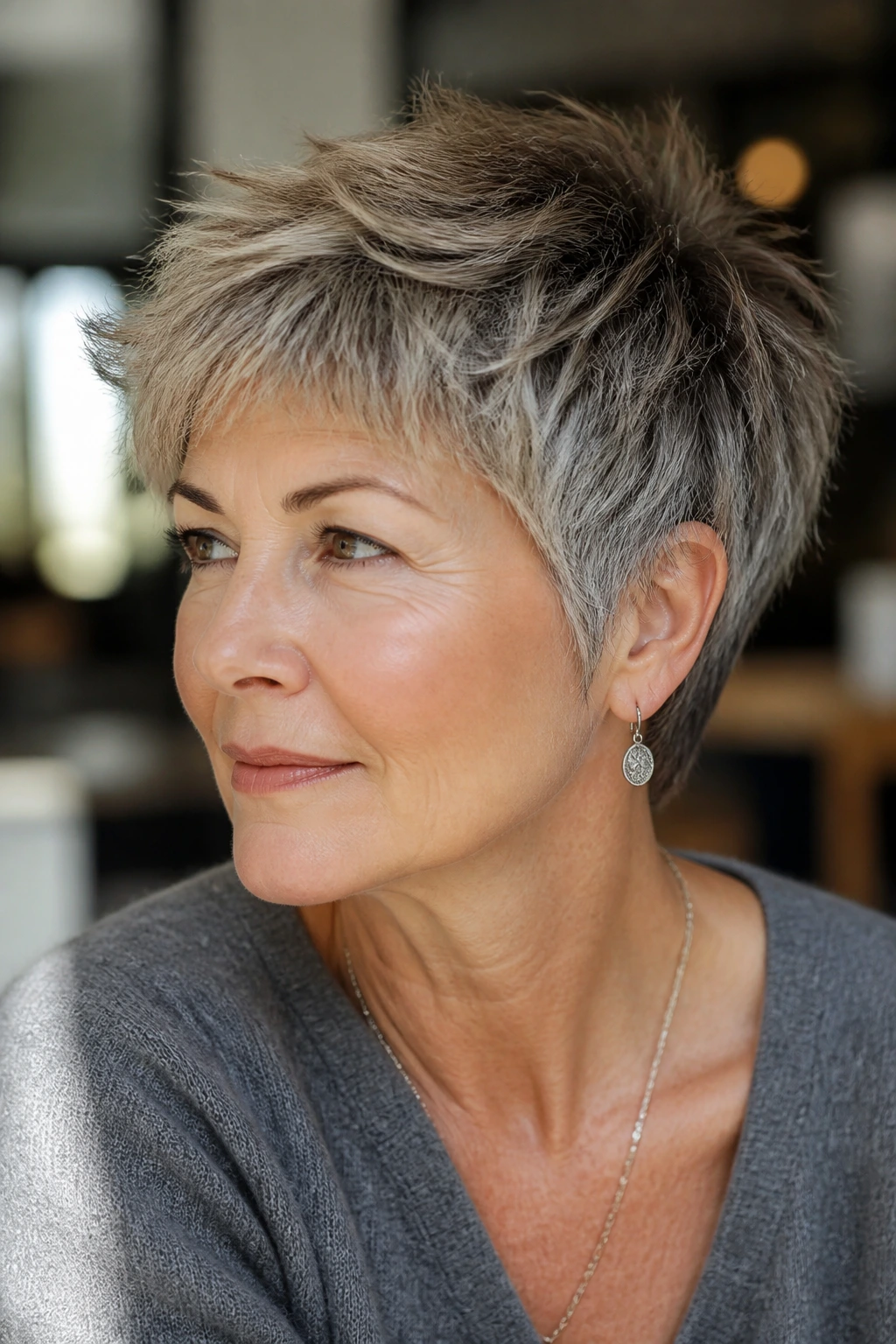
Why do some short cuts look lively and others just look short? Texture. This crop proves the point. The top is cut into small, broken layers that separate a little when you work in paste or lightweight cream, so the hair does not sit in one solid block.
The best version of this cut has movement around the temples and a little roughness at the crown. That gives it a modern shape without needing much daily styling. It suits straight or slightly wavy hair especially well, and it’s a smart choice if your hair has thin spots that show through under a blunt line.
Use a pea-sized amount of styling cream, warm it between your palms, and pinch the ends instead of smoothing everything down. The result should look deliberate, not overdone. If it starts to look fuzzy, the product is too heavy or your cut was thinned too aggressively.
3. Chin-Length Bob With Airy Ends

A chin-length bob is one of those cuts that sounds ordinary until you see the right version on the right face. The difference is in the ends. If the bottom edge is too blunt and heavy, it can drag the whole shape down. If the ends are lightly beveled, the hair moves and the jawline looks cleaner.
Best for hair that needs a little swing
This cut suits straight, wavy, and softly bent hair. It gives enough length to tuck behind one ear, which is useful when you want a change without committing to a full crop. A side part works beautifully here because it adds lift at the front and keeps the bob from looking boxy.
If your neck is one of the places you like to show off, this is an easy win. The line lands right at the jaw, so earrings and collars stay visible. Blow-dry it with a round brush or an air brush until the ends curve under just slightly. No stiff bends. That’s the mistake.
4. Stacked Bob With Clean Nape
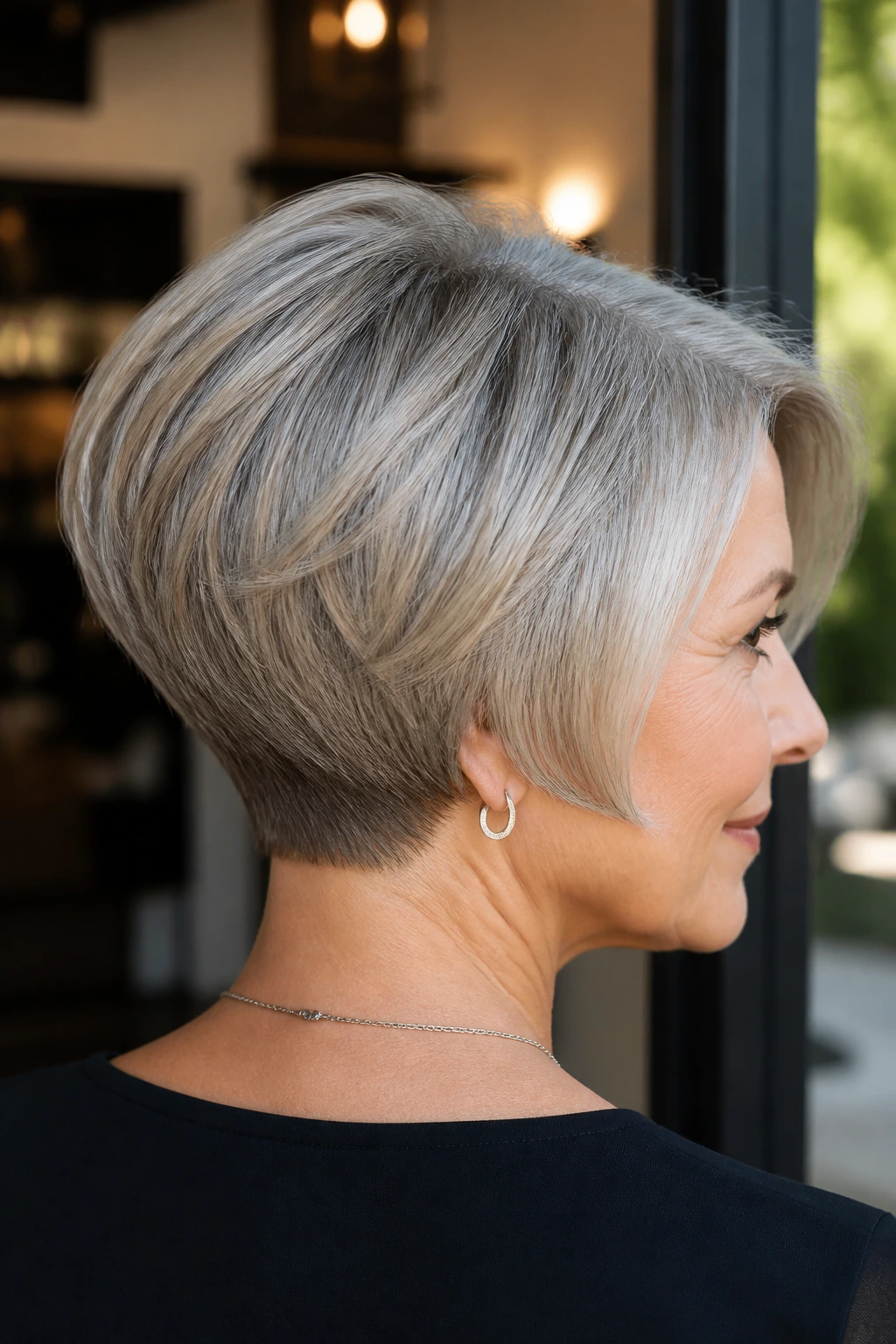
A stacked bob is not the same thing as a heavy, old-fashioned haircut that sits there and behaves. Done well, it lifts the back of the head and clears the nape so the silhouette looks crisp from every angle. Done badly, it turns into a triangle. The difference is all in the stacking.
This cut is a good choice if the back of your hair tends to puff or if you want a shape that feels tailored. The shorter layers in the back create height, while the front can stay a touch longer to soften the jaw. It’s especially useful for straight hair that needs structure.
Keep the nape tidy every four to six weeks. That’s the whole point. Once the back gets fuzzy, the clean line disappears and the bob starts to look accidental. I like this cut with a side part and a little root lift at the crown. It has a polished, no-nonsense feel.
5. French Bob With Brow-Grazing Fringe
A French bob with a brow-grazing fringe is sharp in the best sense. It sits around the jaw, sometimes a touch shorter, and the fringe lands close to the eyebrows without hanging in the eyes. There’s a neatness to it that can look expensive without trying too hard.
The catch? It likes hair that already has some control. If your texture is very curly or extremely coarse, the line will need more shaping. But on straight to mildly wavy hair, it gives a clean frame for the face and makes cheekbones look more pronounced.
I’d only recommend this if you are willing to trim the fringe often. Once it grows past the sweet spot, the whole cut loses its point. Keep the ends blunt but soft at the edge, not razor-thin. That little softness keeps it from looking severe.
6. Feathered Crop With Crown Lift
Feathering gets dismissed a lot because people remember the wrong version of it. Too much thinning. Too much flipping. Too much “I asked for volume and got a fluffball.” But a well-cut feathered crop has one job: it lifts the crown without making the sides bulky.
This is a strong option for hair that lies close to the scalp. The feathering breaks up the top layers so they stand away from the head in a more relaxed way. A little mousse at the roots and a quick blast with a dryer can make the shape hold for hours.
What to tell the stylist
Ask for weight removal through the top, not all through the ends. That matters. When the ends are over-thinned, the style starts to separate into wisps and loses its body. If the crown is flat but the sides are thick, this cut can balance the whole head fast.
7. Curly Pixie Cut
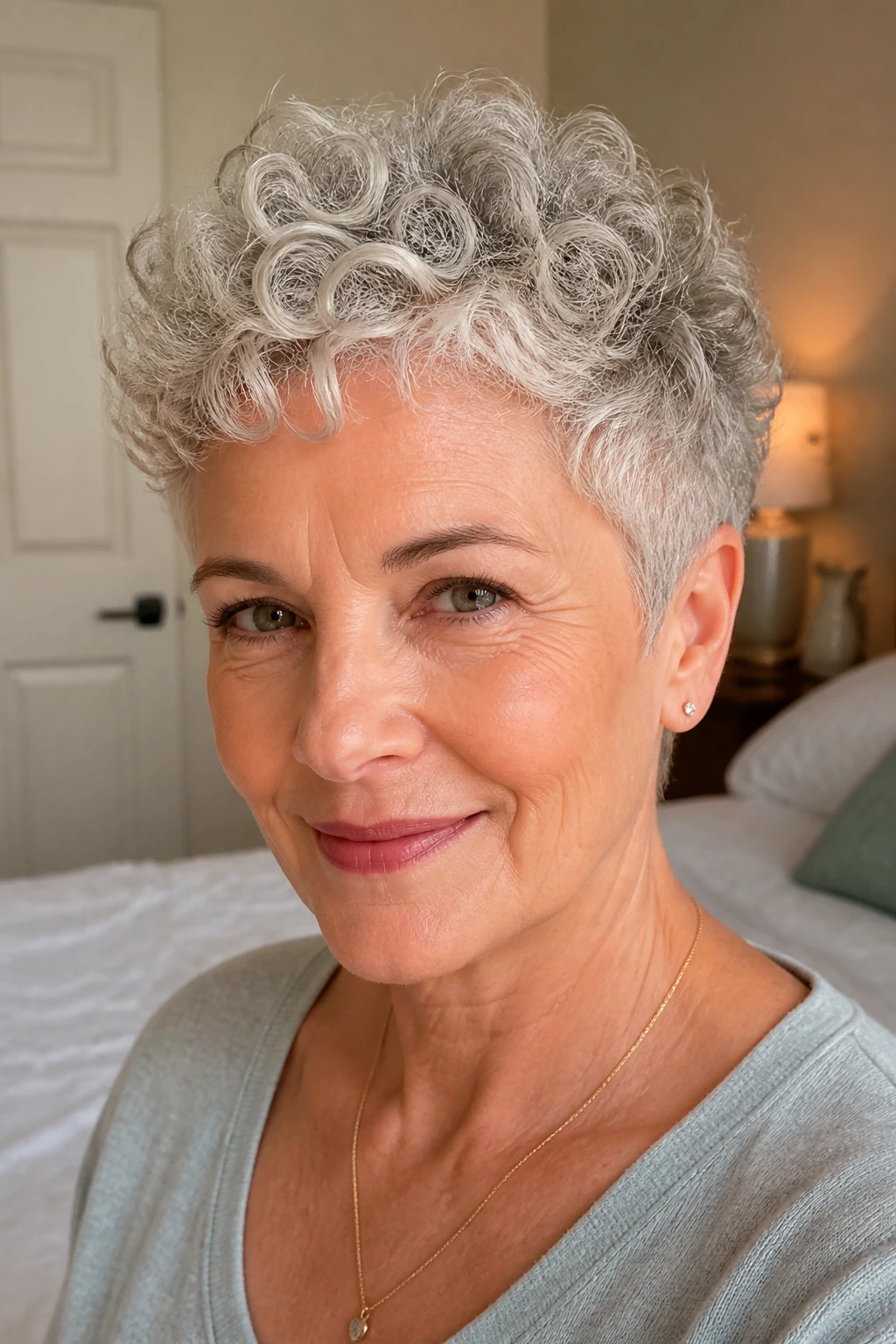
Curly hair should not be forced into a boxy little helmet, and a curly pixie is proof. The cut lets the curls rise on top while keeping the sides controlled, so you get shape without trying to flatten the texture into obedience. That never works for long anyway.
The secret is the dry shape. Curl shrinks, bends, and changes in odd ways when wet, so a good stylist often cuts it with the hair in its natural state or at least close to it. That keeps the fringe from landing too high and the top from turning too short once it dries.
Use a curl cream, not a heavy butter, and let the curls form before you touch them again. If you rake your fingers through too much, the shape loses definition. A curly pixie looks best when the curls stay separate enough to show their pattern.
8. Tapered Cut With Longer Top
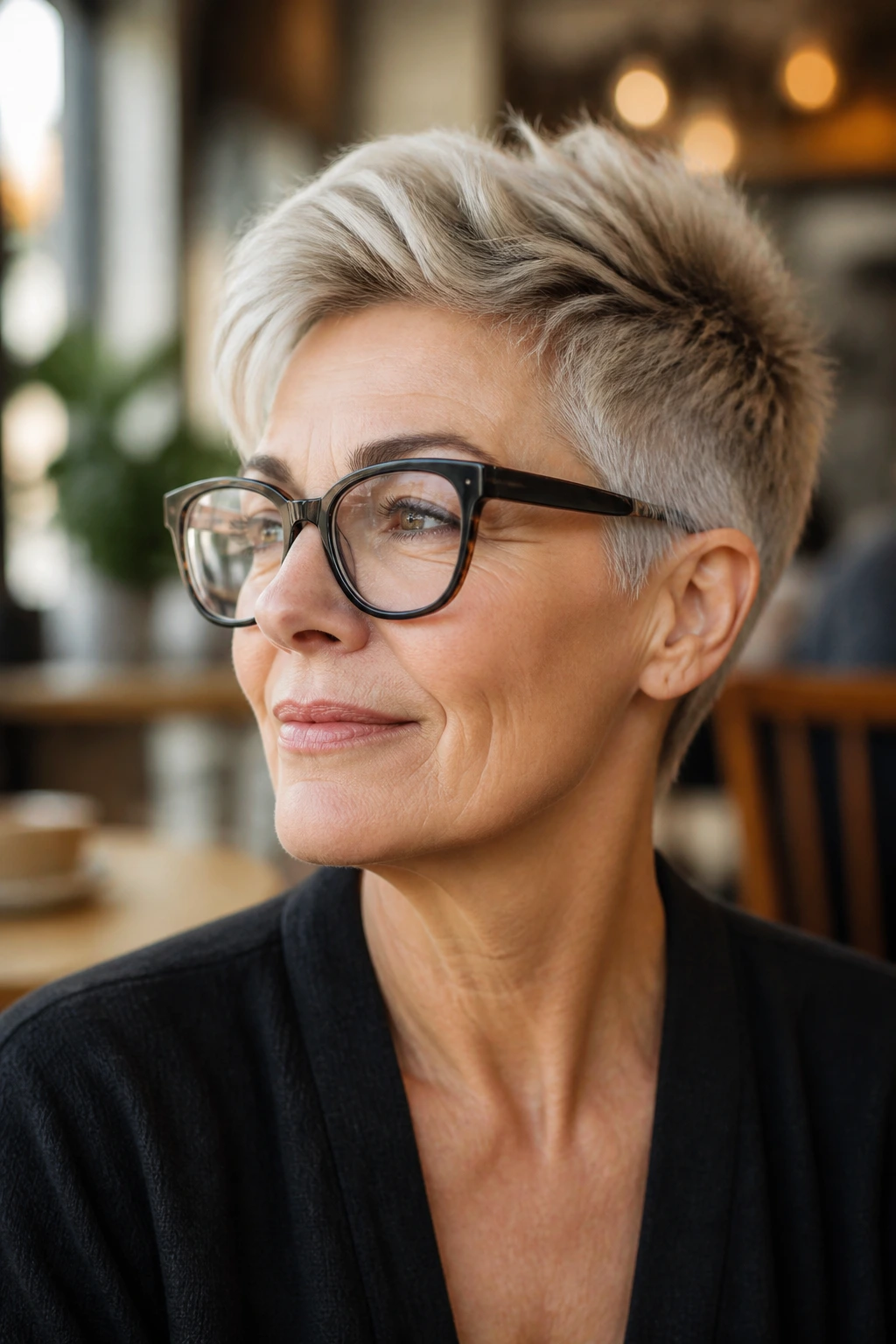
If you want short hair that still feels a little lifted and modern, a tapered cut with a longer top does a lot of smart work. The sides and back stay close to the head, while the top keeps enough length to brush up, over, or slightly forward depending on your mood.
It’s a good match for women who wear glasses because the top can be styled away from the frames instead of collapsing into them. It also suits hair that has bulk around the sides but not much density on top. The taper removes that side weight and keeps the head shape clean.
This is one of my favorite options for active women who do not want hair getting in their face. It stays neat after a quick finger-dry, and it doesn’t need a perfect blowout to look intentional. Slightly messy is fine here. Better than fine, honestly.
9. Asymmetrical Bob With Side Part
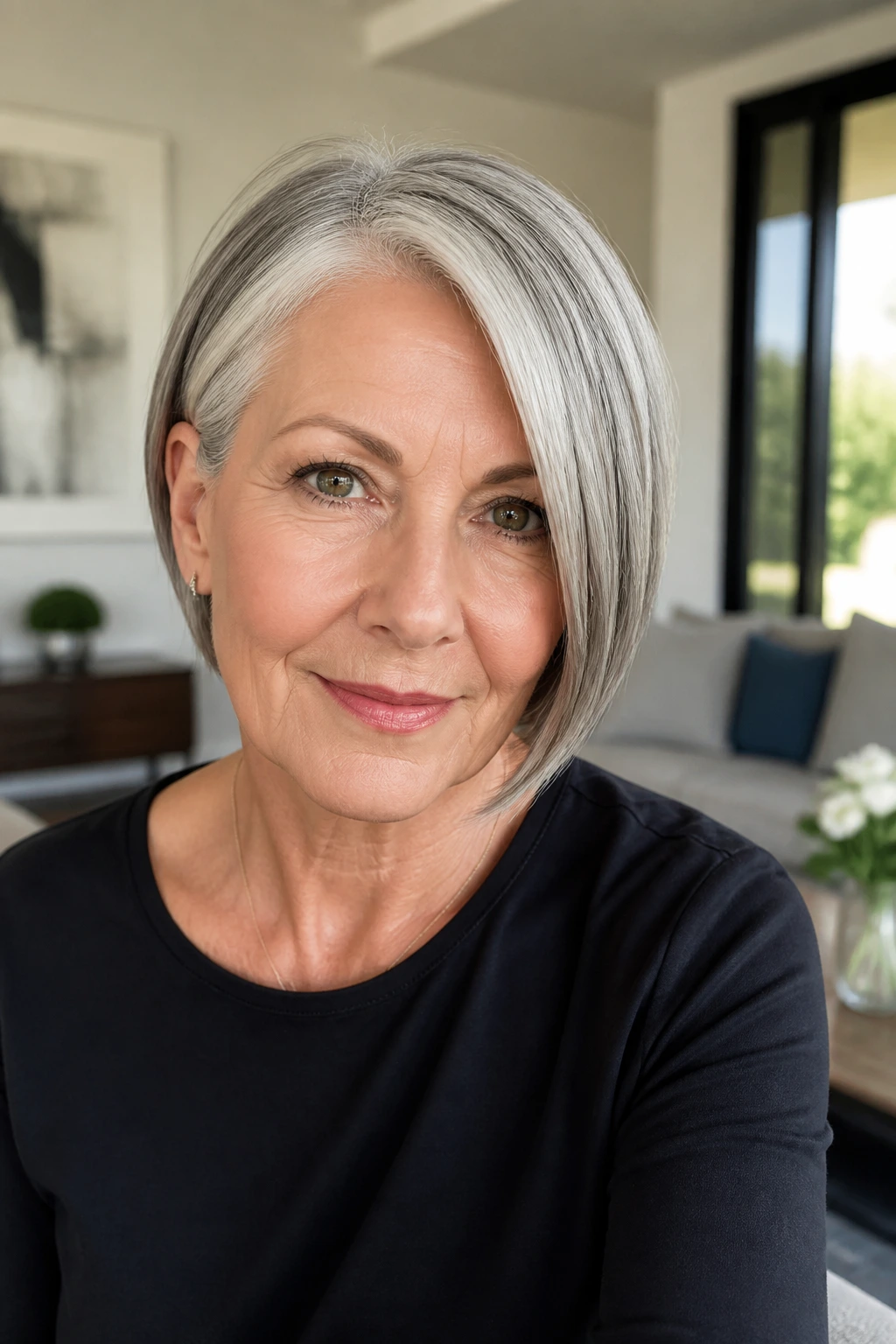
An asymmetrical bob gives you a little drama without asking for a wild cut. One side sits a touch longer, which creates movement around the face and breaks up the symmetry in a way that feels fresh. If your jawline is square or your neck is short, that diagonal line can be a gift.
Who it flatters
This shape works especially well when hair is straight or smooth enough to show the angle. A side part helps the longer side drop cleanly, while the shorter side opens the face. If you want the look to stay modern, keep the asymmetry subtle. Too much difference starts to read as a statement haircut, and not everyone wants that.
I like this cut for women who are tired of hair that sits in one static shape. The asymmetry keeps the eye moving. It also gives you options: tuck the shorter side behind the ear, or sweep the longer side forward when you want softness at the cheek.
10. Rounded Bob for Fine Hair
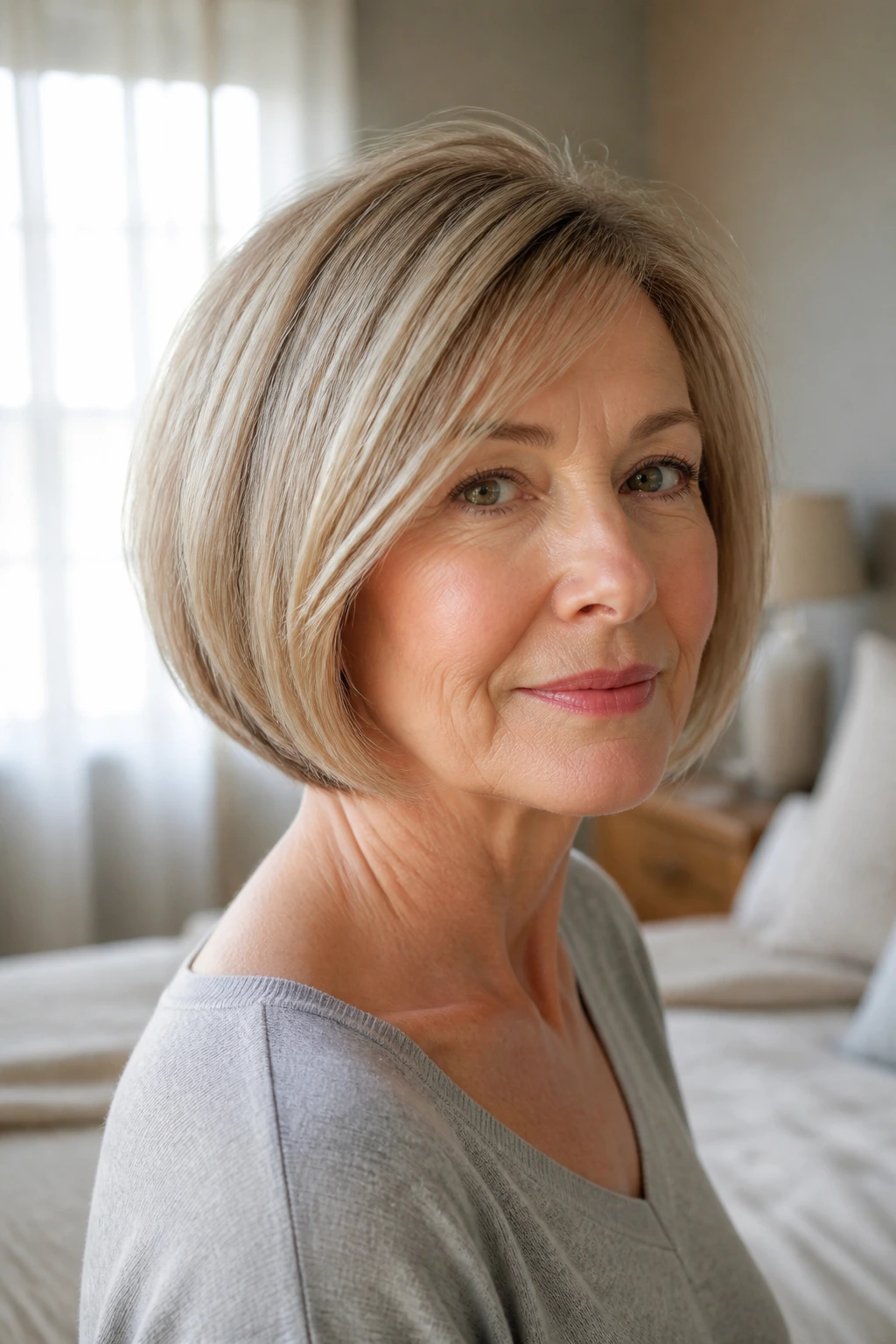
A rounded bob can be a lifesaver for fine hair because it makes the outline feel fuller without piling on length. The curve matters. Instead of hanging straight and thin at the bottom, the hair follows a soft arc that adds the look of body.
Ask for the ends to be shaped, not shredded. Fine hair already has enough see-through moments. Over-texturizing can make the perimeter look weak. A rounded bob works best when the line is clear and the interior has just enough lift to keep the crown from falling flat.
This cut is especially nice if your hair has lost some density at the temples. The rounded sides close in the shape and make the whole haircut feel denser than it is. Use a small round brush and dry the roots up and back. That little lift changes everything.
11. Shaggy Bob With Wispy Layers

There’s a reason the shag keeps coming back: it forgives a lot. A shaggy bob with wispy layers softens the outline and lets the hair move instead of sitting in one hard block. If your hair has a bit of wave, this cut can look almost effortless. Almost.
Why it behaves the way it does
The layers take some of the weight off the bottom and let the top sit loosely, which creates a lived-in look without needing much teasing. It’s a sensible cut for women who like a softer face frame and don’t want a sharp edge around the jaw.
The one thing I would watch is over-layering at the ends. If the stylist goes too light with the scissors, the bob can frizz at the bottom and lose its shape. Ask for softness, not thinness. That distinction matters more than people think.
12. Swept-Back Pixie
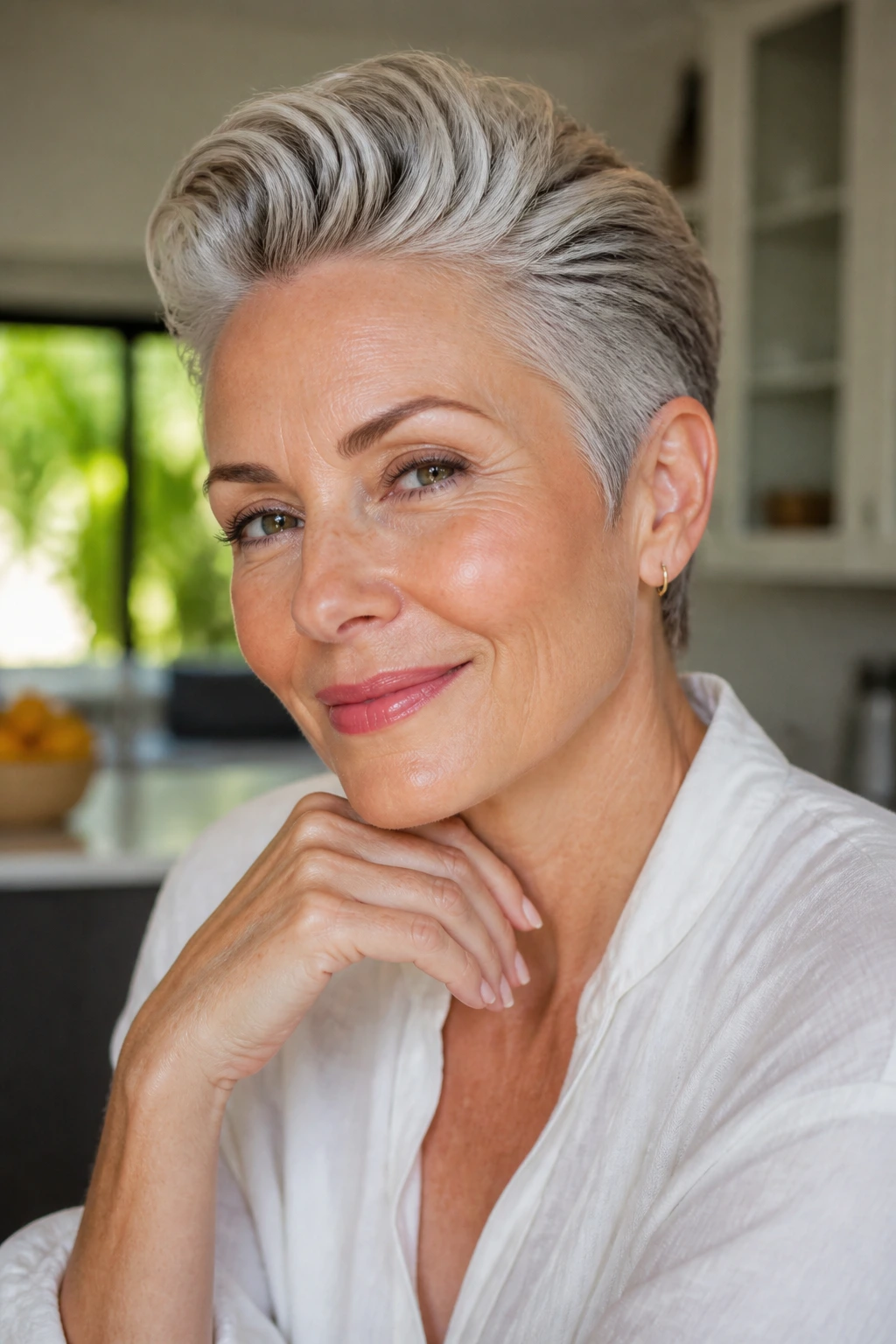
A swept-back pixie opens the face in a way that feels clean and a little bold. The top is long enough to push back with a brush or your fingers, while the sides stay close. It’s the sort of cut that shows cheekbones, eyebrows, and earrings without any extra work.
This works best when the hair has enough natural direction to move backward without standing up in weird places. A light styling cream or paste helps, but don’t use too much. If the product turns shiny or sticky, the sweep starts to look wet instead of airy.
I like this cut on women who are done with fringe fighting the forehead. The face gets all the attention. If you want a haircut that looks sharp with almost no parting fuss, this is a strong one.
13. Classic Pageboy Reworked
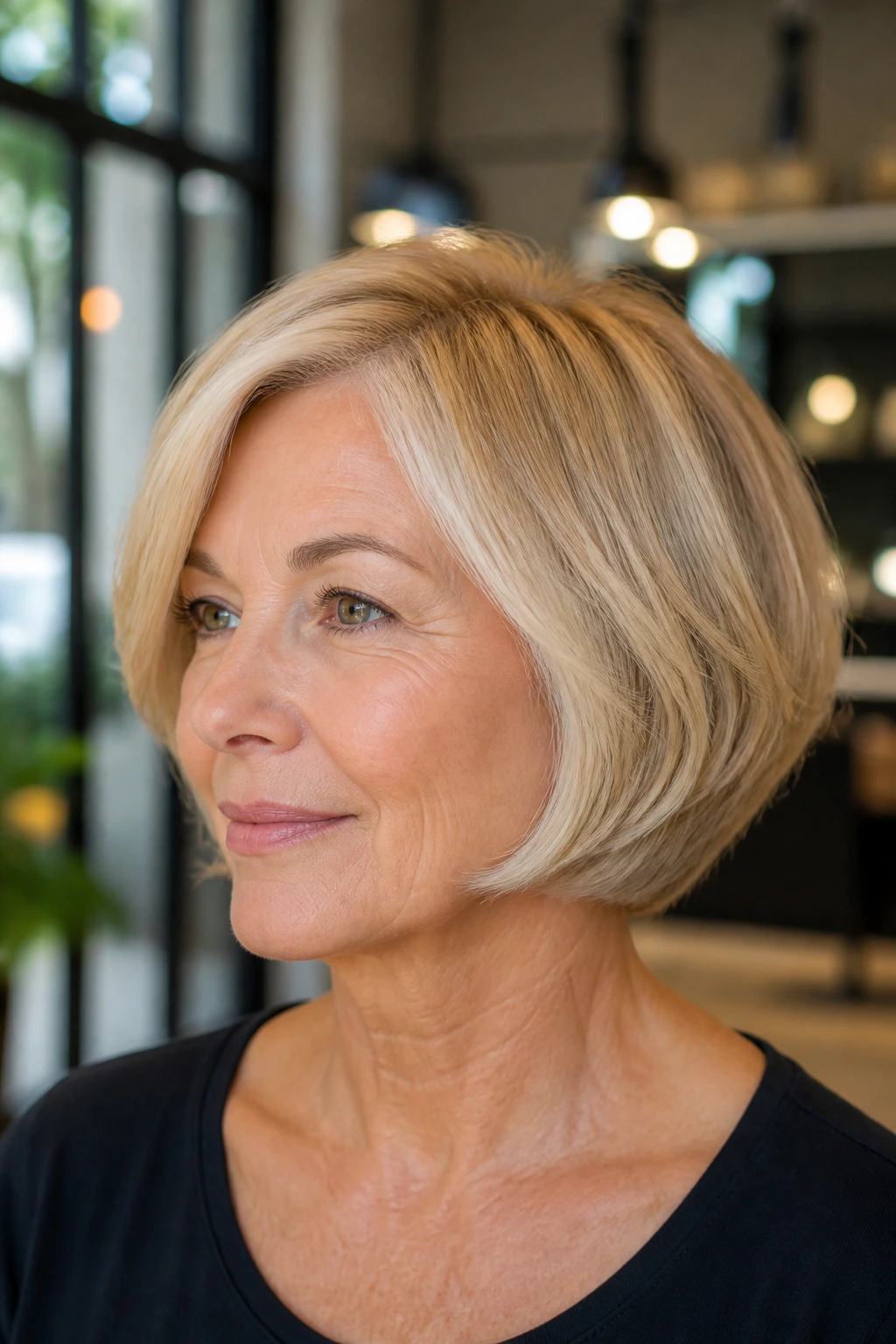
The pageboy used to have a reputation for being stiff. That was then. A modern pageboy can be soft around the ends, slightly curved under the jaw, and much lighter around the crown than the old-school version. Done right, it has structure without looking dated.
This shape is especially useful if you prefer hair that stays close to the head but still has a finished outline. It can be sleek on straight hair or gently bent on wavy hair. The nape should be tidy, and the front should carry enough length to frame the face without swallowing it.
If you’re someone who likes neat lines, this one is worth a look. It looks deliberate with a side part and a good blow-dry. It also behaves well in humid weather, which is a bigger deal than people admit.
14. Silver Fox Crop
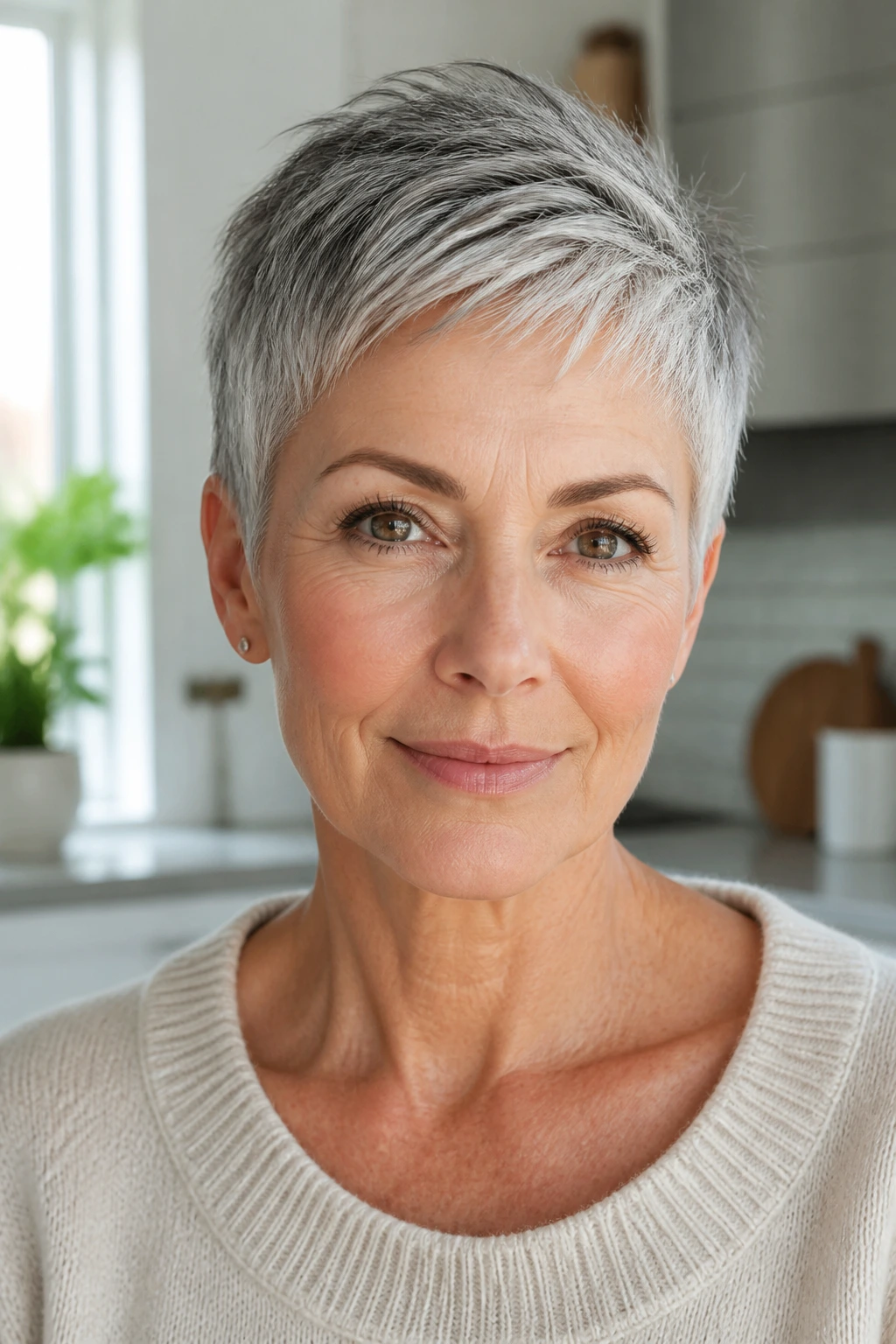
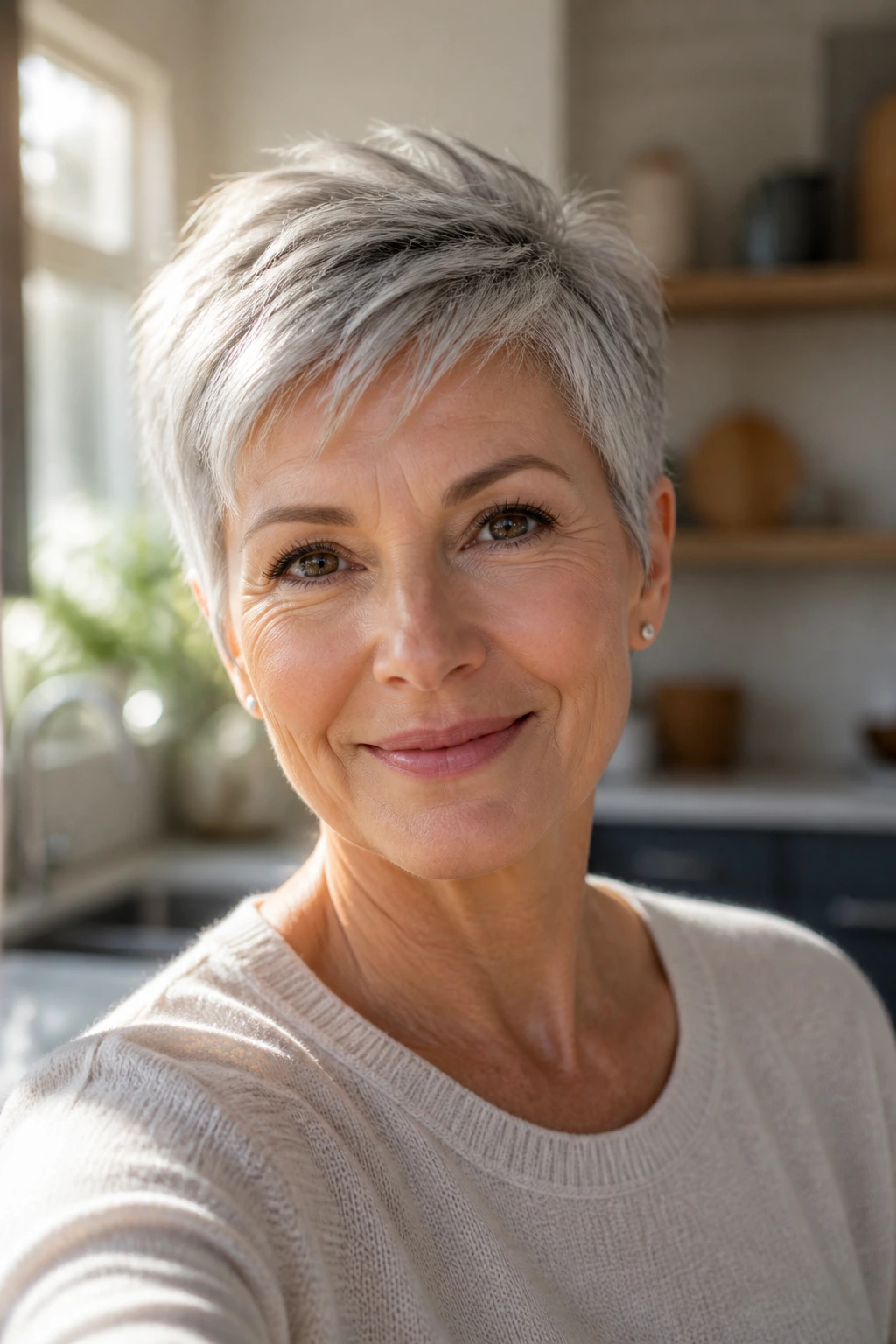
A silver fox crop makes gray hair look like a choice instead of a compromise. That’s the point. A short crop shows off the clean contrast in white, silver, charcoal, and salt-and-pepper strands, and the close shape stops the color from getting lost in longer lengths.
Gray hair often feels coarser, so a crop can tame the puffiness that shows up around the ears and neckline. I’d keep the layers soft and the top a little longer so you can direct the hair without making it look spiky. A shine cream helps if the strands have gone dry.
This cut is for women who want their natural color to be part of the style, not something hidden under styling tricks. It looks especially strong with simple jewelry and a clear brow line. There’s not much clutter here. That’s the appeal.
15. Graduated Bob
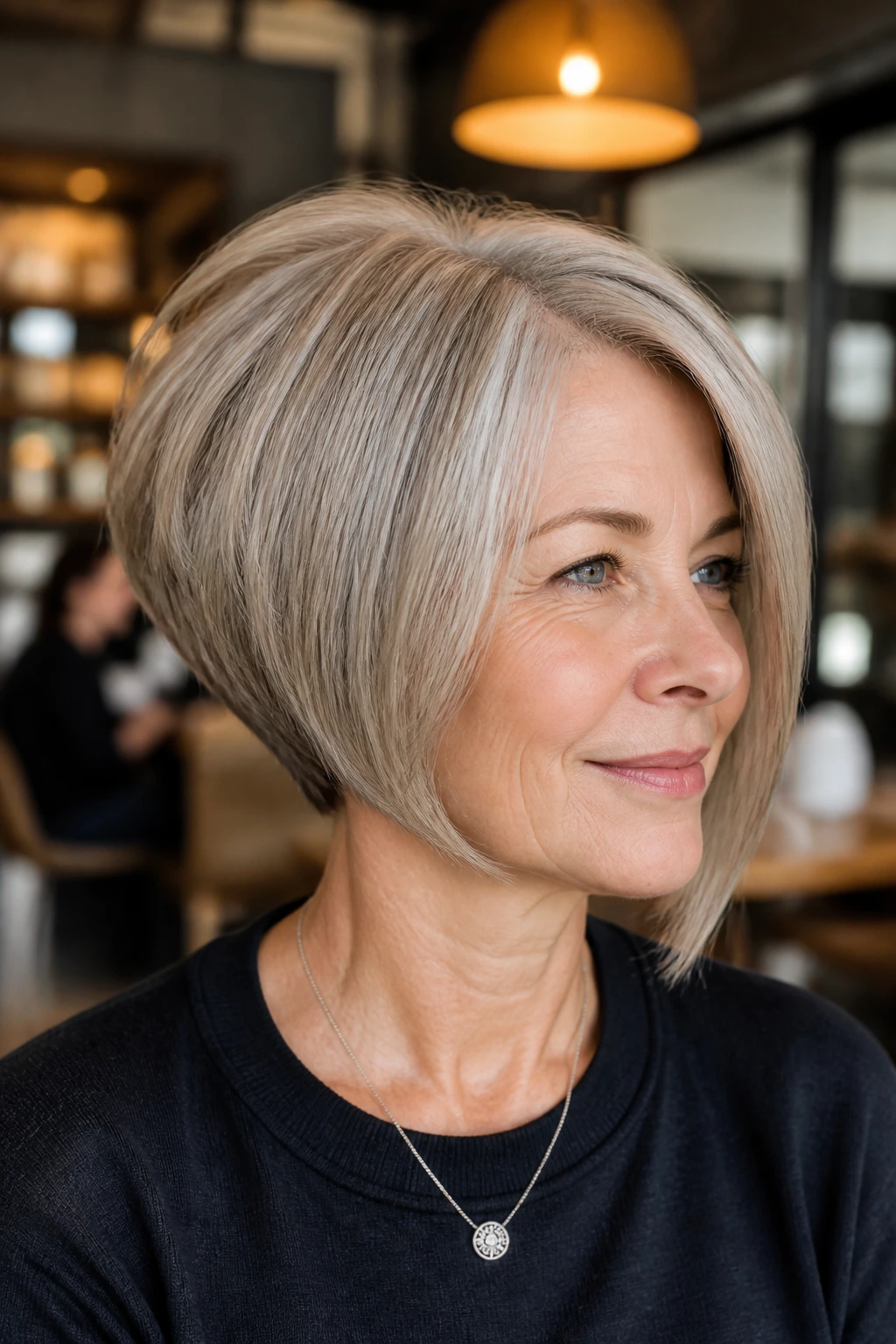
A graduated bob gives you lift in the back and a smoother drop toward the front. It’s a cousin of the stacked bob, but usually a bit softer and more blended. If you want shape without a harsh ridge at the occipital area, this is the one to ask about.
Best when you want structure without stiffness
This cut is ideal for hair that has enough density to hold a rounded form but not so much bulk that it turns boxy. The graduation keeps the back elevated, which helps the head look fuller. Meanwhile, the front length keeps the face from feeling boxed in.
I like this style for women who want a more classic silhouette than a pixie but less weight than a traditional bob. It dries into shape better than many people expect. The key is not to flatten the crown with too much heavy cream.
16. Bixie Cut
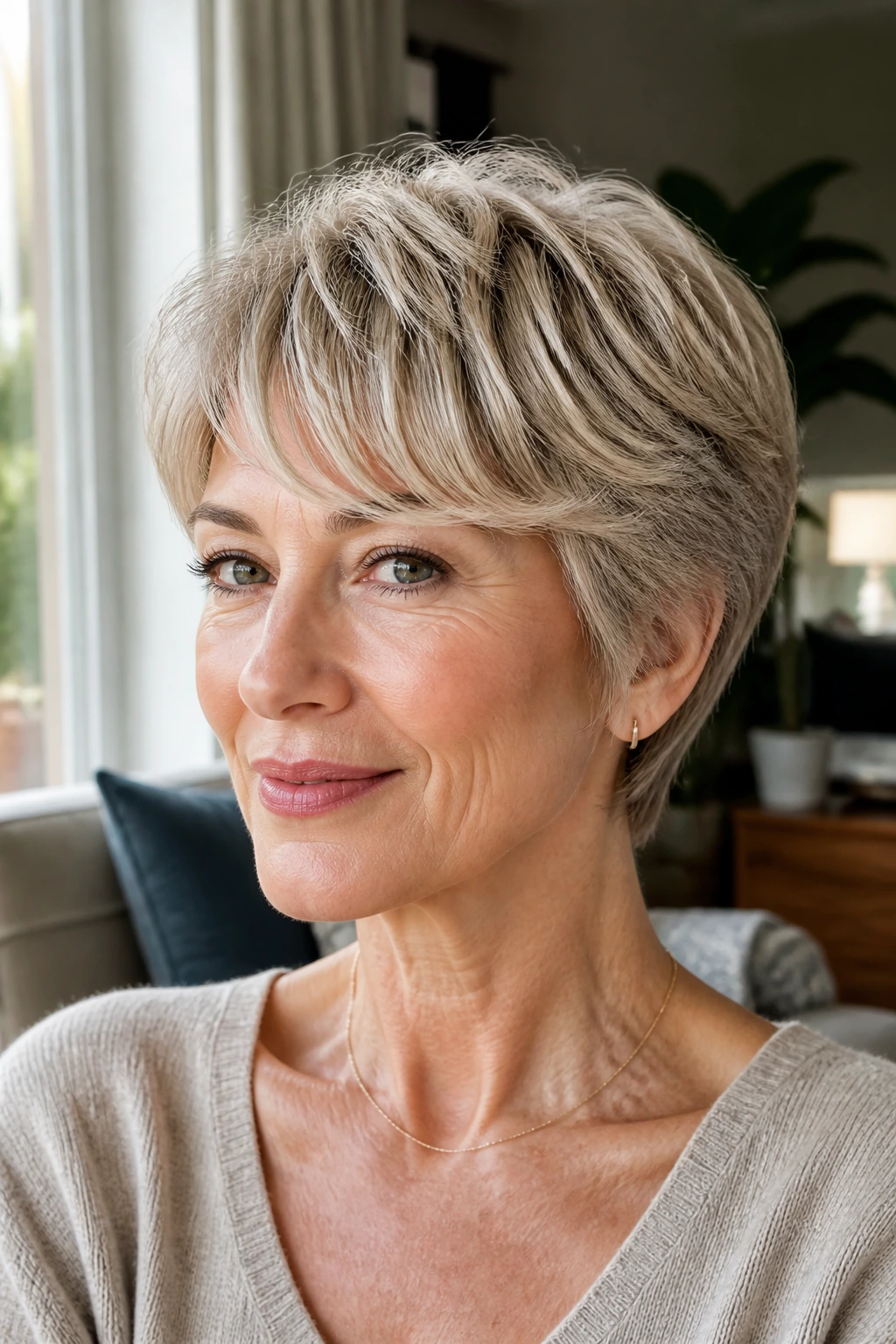
A bixie sits right between a bob and a pixie, and that middle ground is where a lot of women find their sweet spot. It’s short enough to feel fresh, but there’s still enough length around the ears and top to soften the look. The result is easy to wear and not fussy.
This cut is especially useful if you’re growing out a pixie or cutting down from a longer bob. It bridges the gap without making you feel stranded in an awkward stage. The shape can be slightly tousled or smoothed depending on product choice, which makes it more adaptable than people think.
The best bixies have a little irregularity around the fringe. Not choppy chaos. Just enough movement to keep the style from looking like a cap. If your hair is fine, ask for texture at the top, not the ends.
17. Side-Parted Crop for Glasses
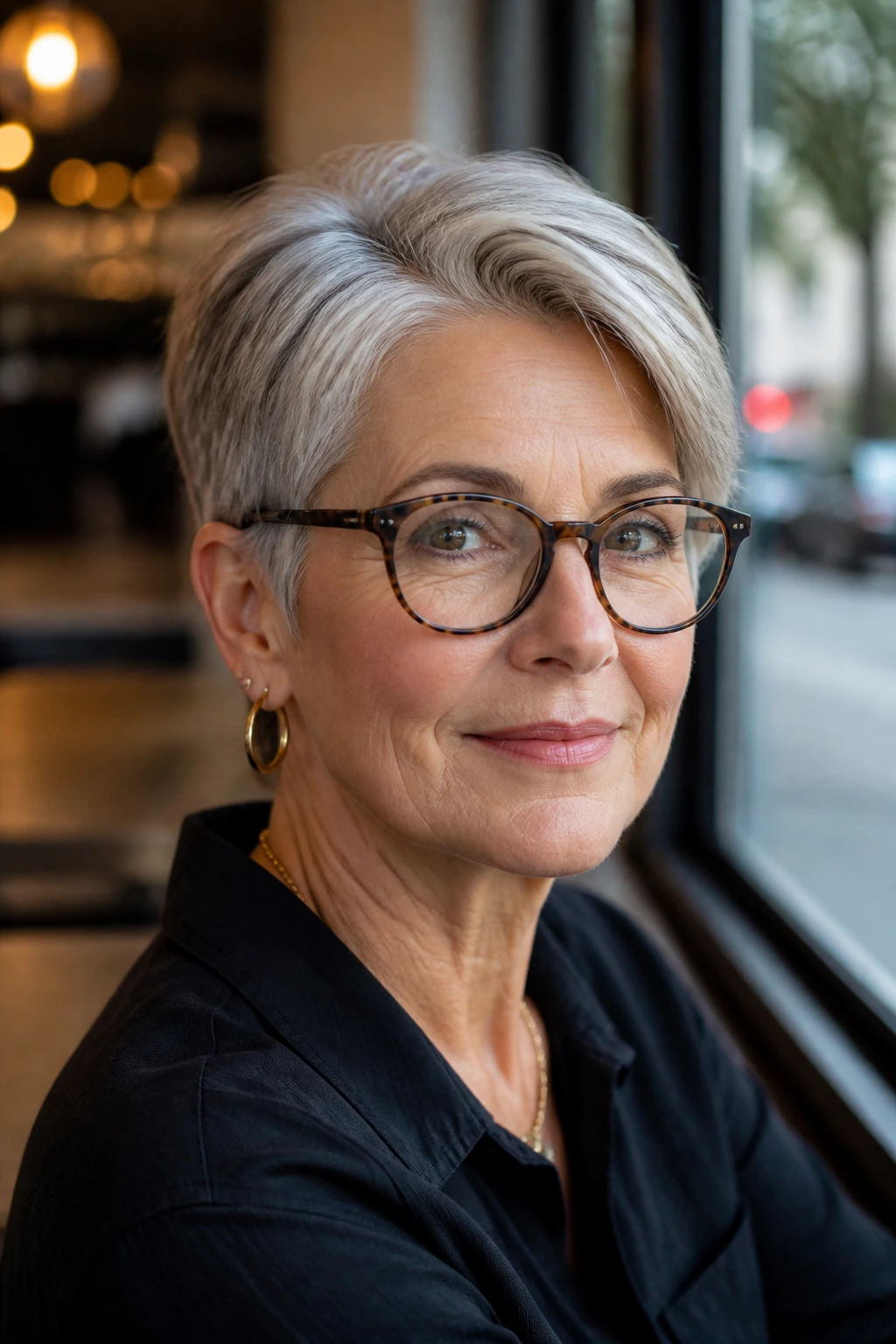
Glasses can change the whole conversation. A side-parted crop keeps the hair from sitting squarely over the frames, which means the haircut and the glasses can actually coexist. They should not be in competition.
This cut tends to work well with soft layers and a slightly longer top. The side part creates height away from the lenses, while the crop keeps everything neat around the ears. If your frames are bold, this cut lets them stay visible. If they’re delicate, it keeps the face from getting crowded.
I’d choose this shape if you are tired of pushing hair out of your glasses every ten minutes. It’s practical in the best way. The haircut does its job and gets out of the way.
18. Layered Cut for Wavy Hair
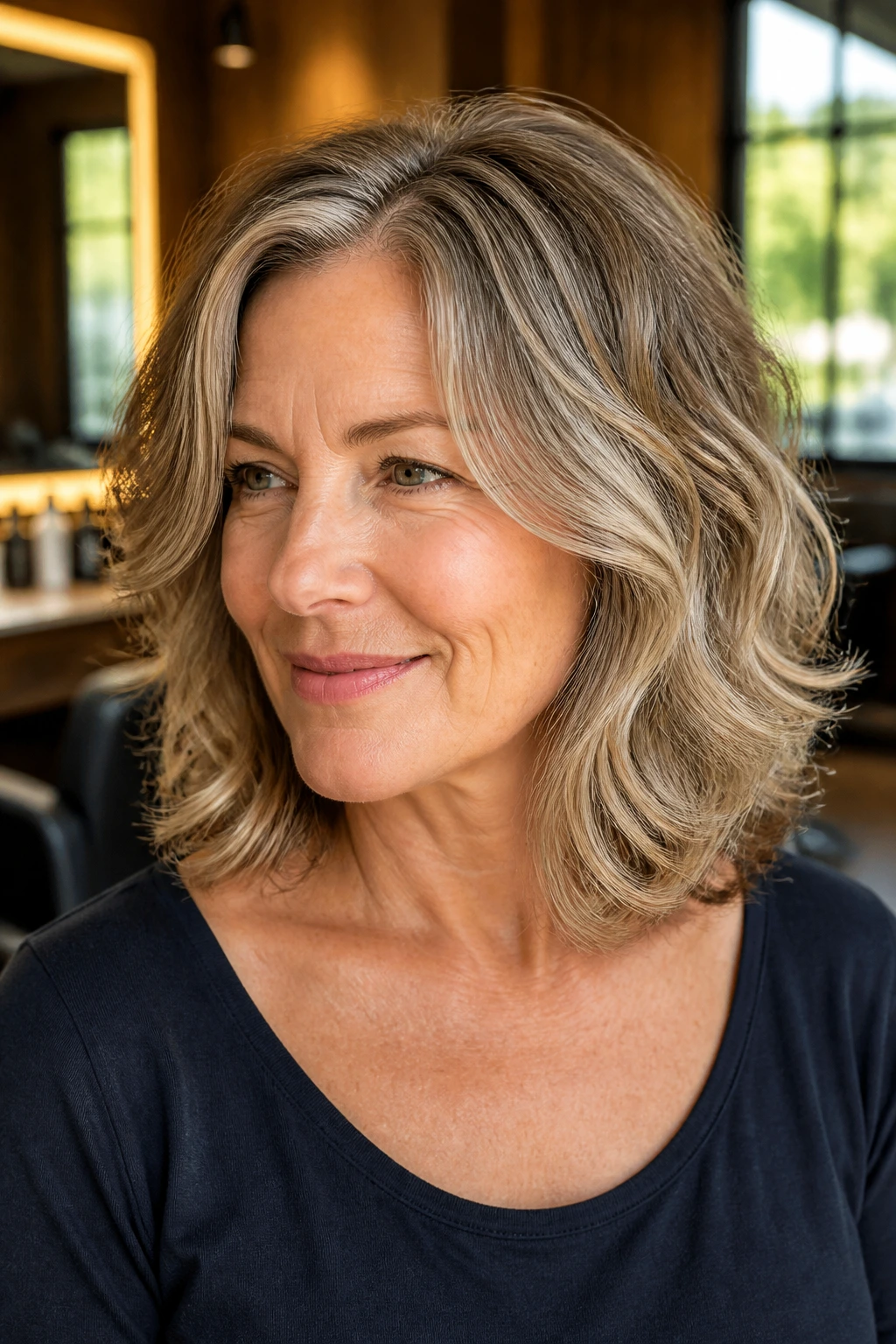
Wavy hair likes room to bend. A layered short cut gives it that room without letting it balloon out at the sides. The trick is to keep the layers long enough to follow the wave pattern and short enough to stop the ends from hanging heavy.
If your waves start around the cheekbones or jaw, this cut can look especially good because the movement lands right where the face needs softness. A little curl cream or lightweight foam is usually enough. Don’t overload it. Wavy hair can go limp fast when product is too rich.
I prefer this shape when someone wants a short haircut that doesn’t look “cut short.” It still reads as hair, not a helmet. That’s a big difference.
19. Short Curly Bob
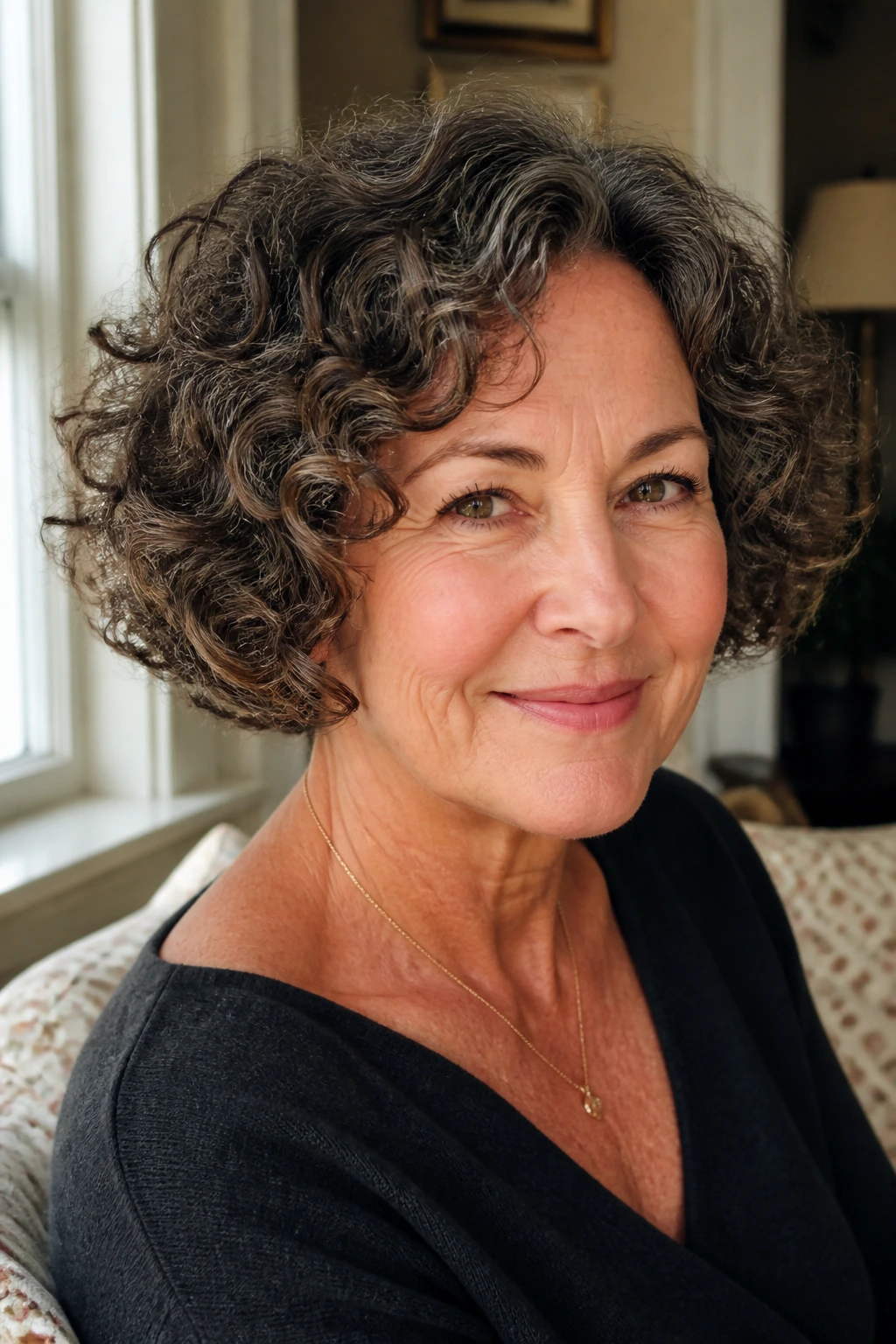
A short curly bob is the kind of cut that makes curls look like they belong on purpose. Not grown out. Not unruly. Purposeful. It sits around the jaw or just above it, with enough length for curl pattern to form and enough control to keep the outline clean.
What makes it work
The shape depends on the curl spring. Tight curls may sit higher, while looser ones fall lower, so the exact length matters. That is why curl cuts are better when dry or cut close to dry. You want the hair to settle where it actually lives.
This is a strong choice if you want softness around the face and less bulk at the shoulders. Keep the back slightly shorter if your curls tend to puff there. A diffuser helps, but stop drying before the curls get crispy. That brittle look ages the style fast.
20. Ear-Length Crop
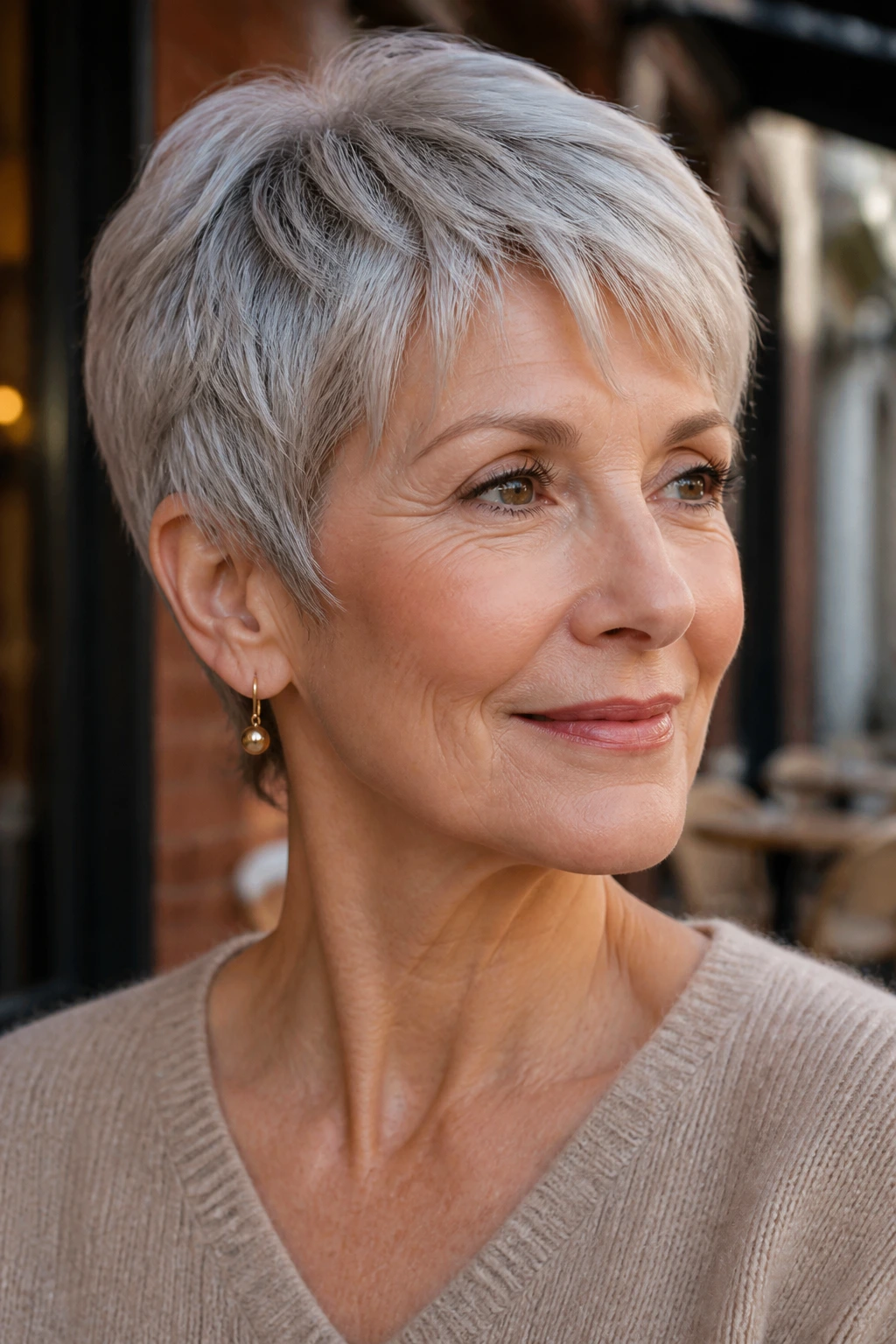
An ear-length crop is short, clean, and a little daring without crossing into high-maintenance territory. The hair sits just around the ears, which puts all the attention on the eyes, cheekbones, and neckline. It’s a tidy cut with a surprising amount of character.
If your hairline is strong and your face shape can handle openness, this one is worth trying. It works especially well when the edges are soft rather than razor-straight. Too crisp and it can feel severe. A little bend at the top keeps it friendly.
This is one of those cuts that looks especially good with statement earrings because the ears are not hidden. If you like showing jewelry, this is a smart shape. If you do not want that much exposure around the face, skip it.
21. Undercut Pixie
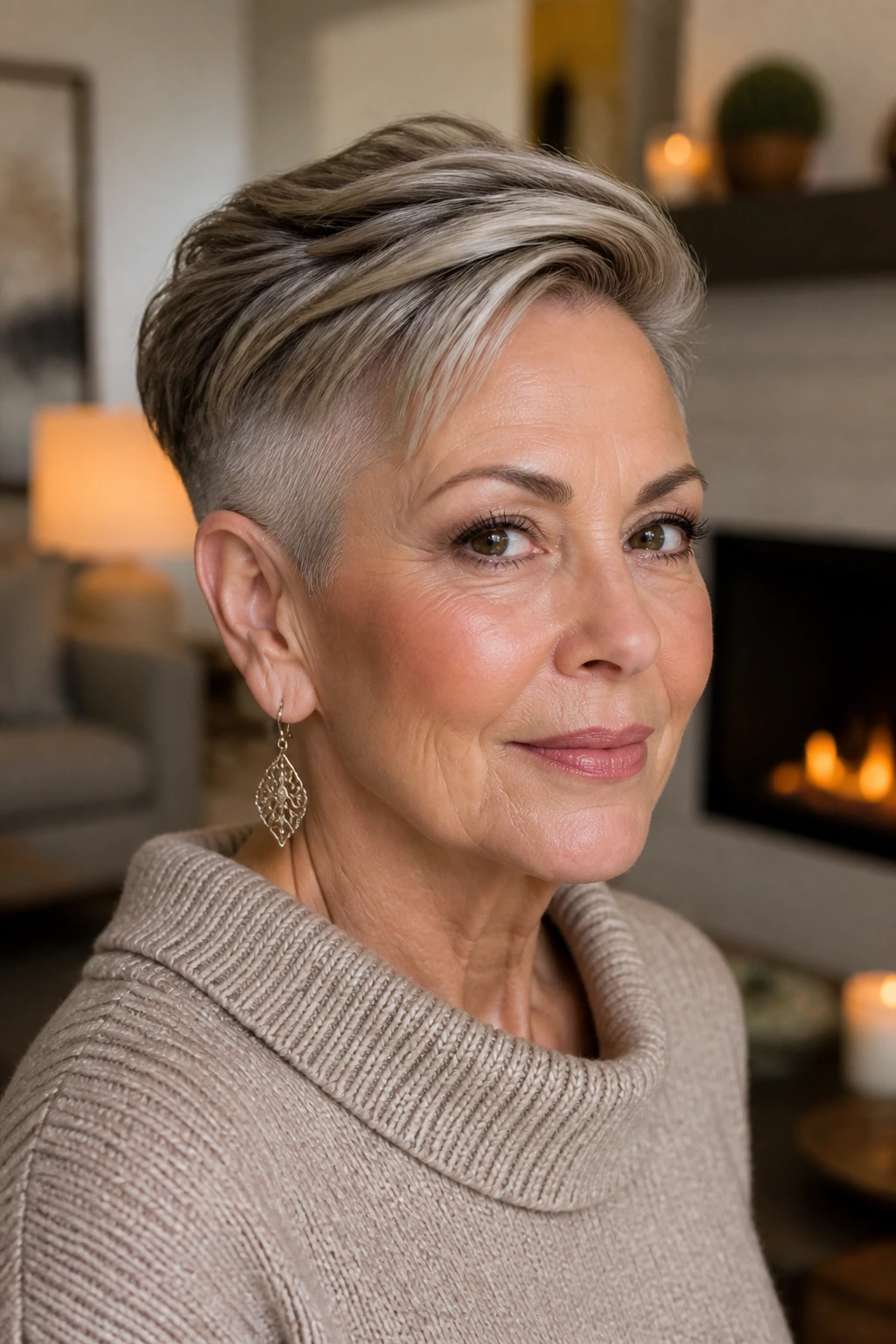
An undercut pixie is not just for the bold. It’s a practical cut for dense hair that gets too hot, too bulky, or too puffy around the sides and nape. Removing that extra weight makes the top easier to control and the whole head feel lighter.
The beauty of the undercut is that it hides under the longer top layers. You get relief without broadcasting the shave unless you want to. That makes it more wearable than people expect. I’d recommend it for women who spend too much time fighting volume in humid weather.
A little styling paste on top is enough. If you like a smoother look, brush the top flat. If you want edge, sweep it up and back. The cut gives you room to choose.
22. Short Shag With Tapered Ends
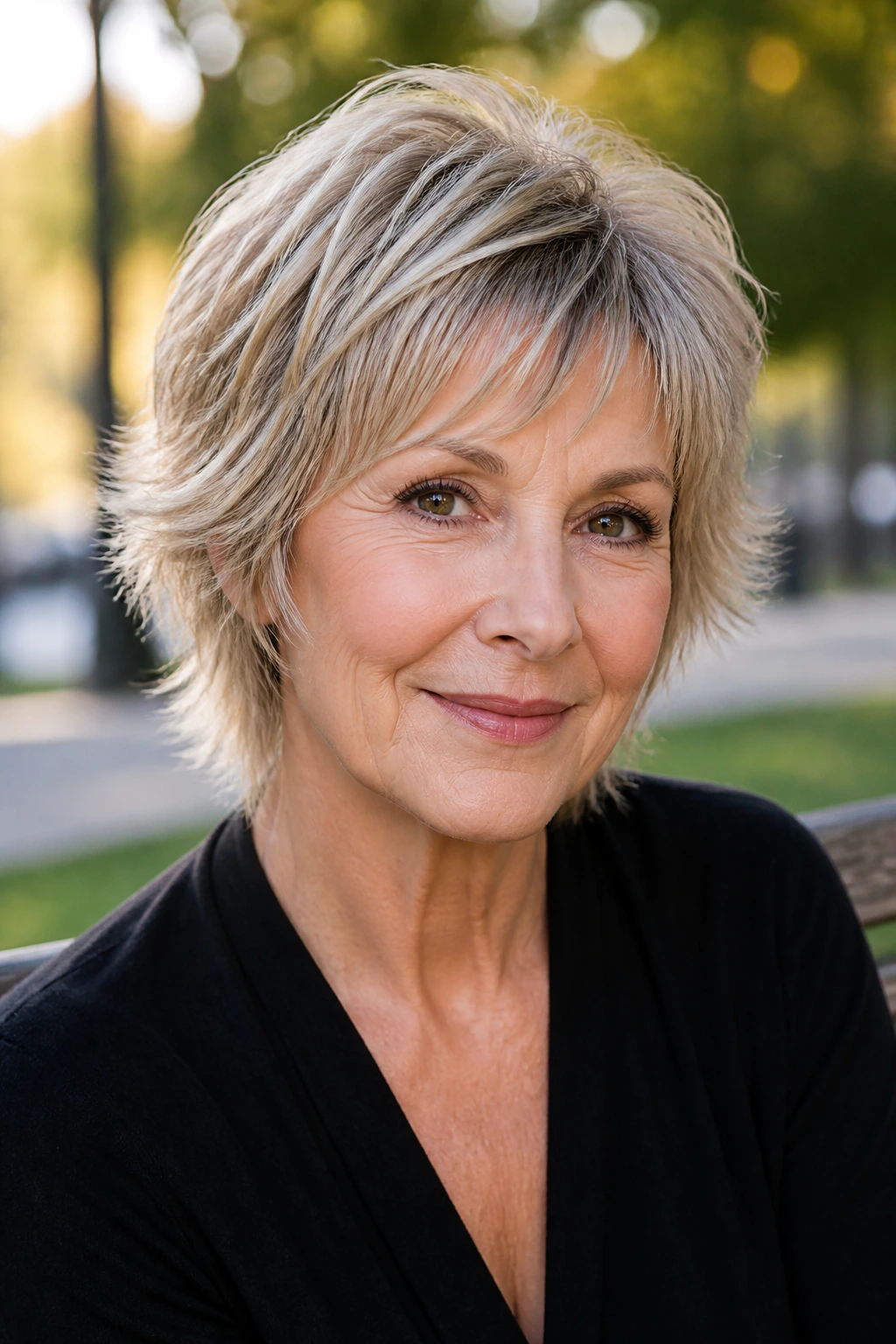
A short shag with tapered ends is softer than the name suggests. It keeps the movement of a shag but trims down the ends so the shape does not spread out in a frizzy halo. That makes it useful for women who want texture without looking over-layered.
This cut works especially well on hair that bends a little but does not curl tightly. The layers create that slightly undone shape around the cheekbones and jaw, which keeps the haircut from feeling too precious. I like it because it doesn’t demand perfection from the styling.
A salt spray can help, though a light mousse usually holds better on finer hair. If the ends start to look stringy, the layers are too aggressive or the hair is too dry. Cut it back before the shape gets tired.
23. Blunt Micro-Bob
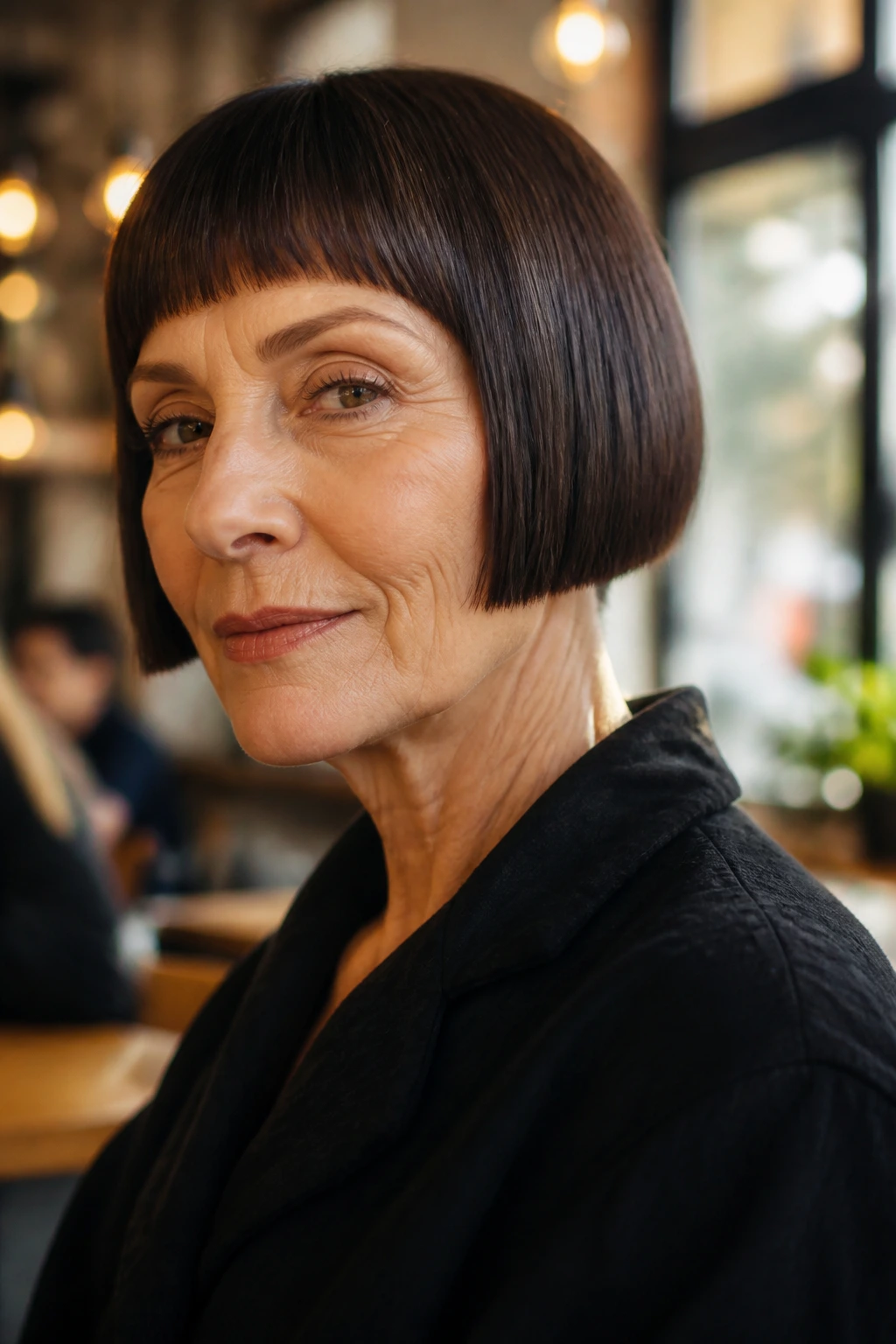
A blunt micro-bob has a clear edge, and that edge is the whole point. The length usually sits somewhere between the cheekbone and jaw, with a straight perimeter that makes thick or medium hair look dense and deliberate. It’s spare, but not cold.
This cut is smart if your hair has enough body to support a line. Fine hair can wear it too, but only when the perimeter is kept sharp and the interior is not over-thinned. That’s where people go wrong. They want a blunt bob, then ask for so much texture that the bluntness disappears.
The blunt line makes gray strands look organized, which I like. It also grows out in a fairly tidy way, if the weight is distributed well. If you want clean and modern without a lot of fuss, this is a strong candidate.
24. Choppy Crop With Soft Bangs
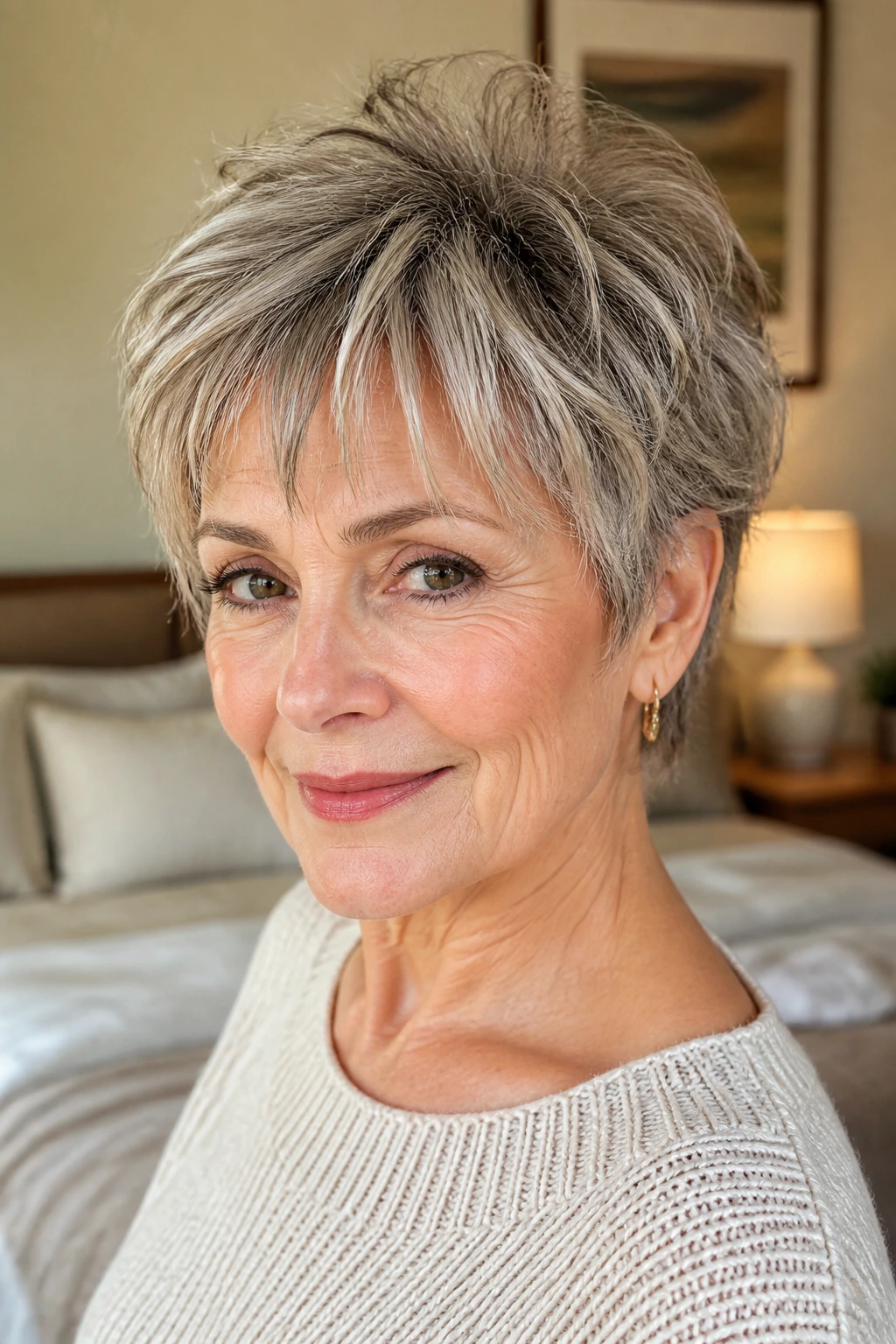
A choppy crop with soft bangs has just enough roughness to feel current, but the bangs keep it friendly. The bangs should be light, not thick. Heavy fringe can weigh the face down and steal the lift from the top.
This cut is a nice answer for women who want short hair with some personality. The choppy pieces make it easy to style with fingers, and the bangs soften forehead lines without hiding the whole face. That balance matters more than the trendiest shape.
I’d ask for the bang length to stop just above the brows or slightly below, depending on your hairline and glasses. The crop around the sides can stay close, while the top holds a little texture. That mix keeps the haircut from feeling too juvenile or too severe.
25. Tucked-Behind-Ear Bob

A tucked-behind-ear bob is one of those cuts that looks simple until you realize how much thought it saves. The hair is long enough to tuck, short enough to stay controlled, and clean enough to show off ears and earrings when you want them visible.
The shape works because it gives you two modes. Tucked on one side, it feels polished and open. Untucked, it can still frame the face. That kind of flexibility makes a difference when you want a haircut that plays well with glasses, necklaces, and collars.
Keep the ends smooth and not too bulky, or the tuck gets clumsy. If your hair has a natural wave, a small blow-dry brush can help guide the front pieces without flattening everything else.
26. Crown-Lifted Pixie Bob
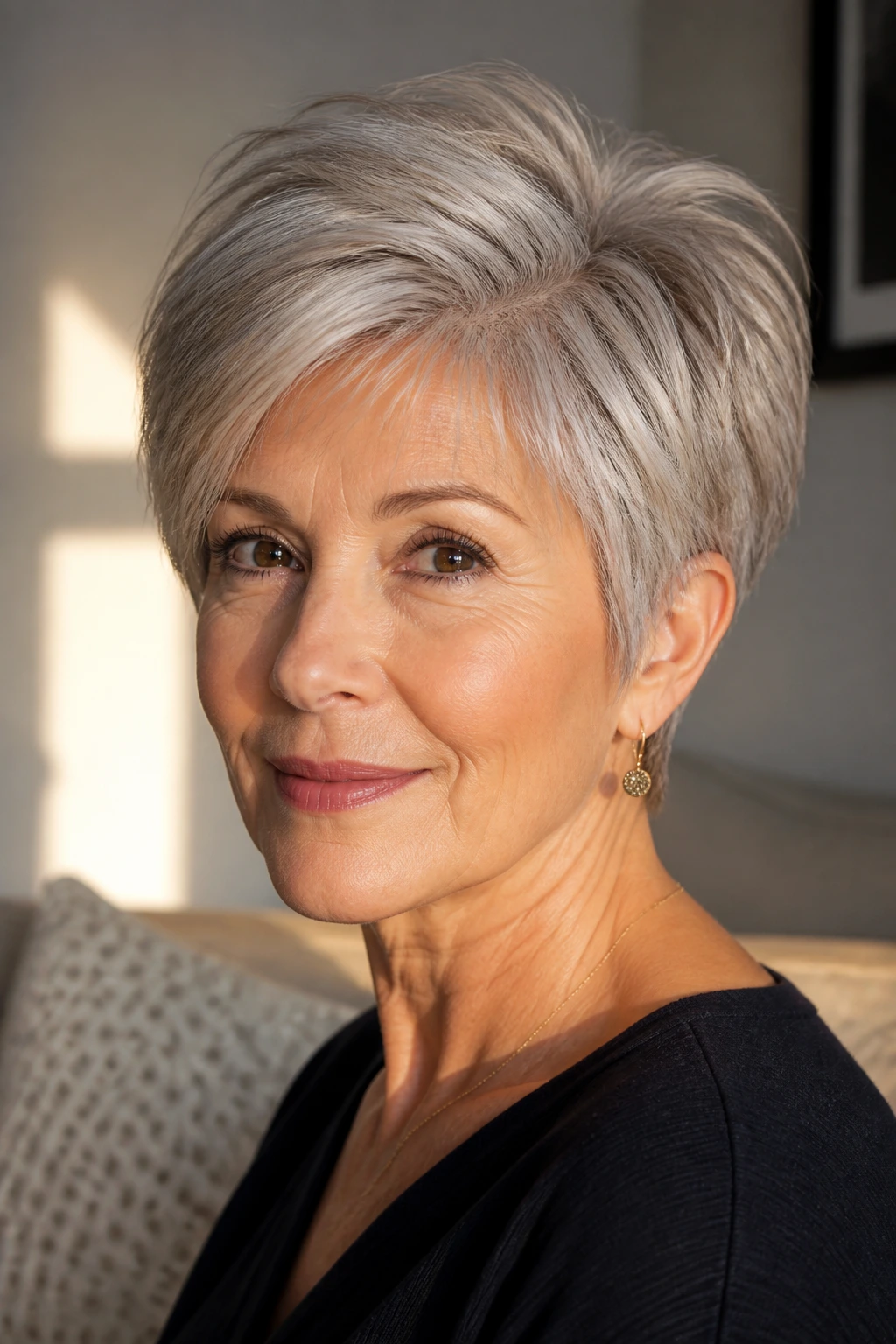
A crown-lifted pixie bob is for the woman who wants height at the top but a little more length than a true pixie. It gives the crown room to rise while the sides stay compact, so the silhouette feels balanced instead of triangular.
This shape is useful if your hair thins more on top than at the sides. The lift draws the eye upward and creates the look of body where you need it most. A root spray and a quick blow-dry with a round brush can keep the shape alive between washes.
I like this cut because it does not force you into one lane. You can wear it sleek one day and tousled the next. That flexibility makes it practical, and practical hair is underrated.
27. Rounded Cut With Long Fringe
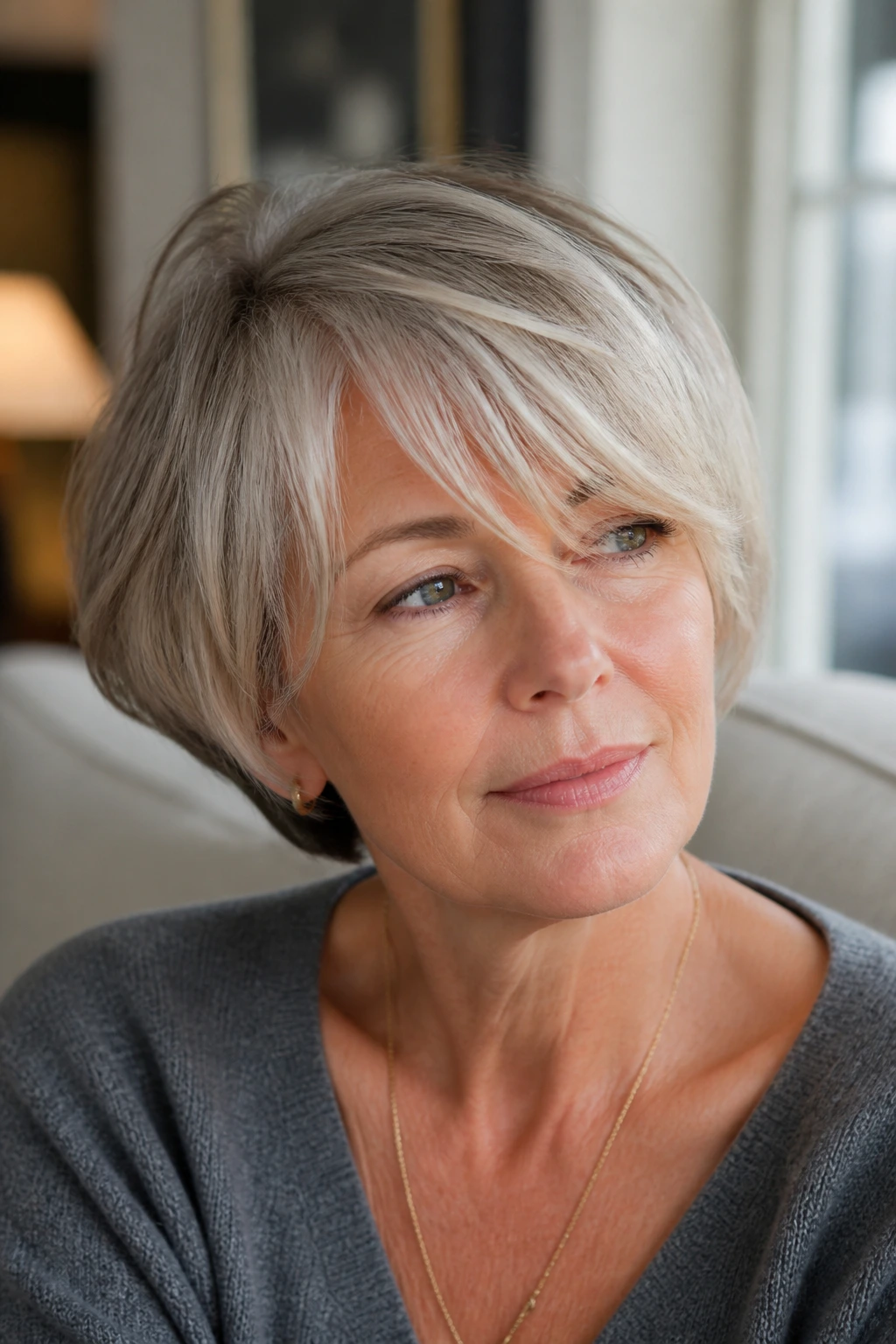
A rounded cut with a longer fringe softens strong features without hiding them. The sides curve in, and the fringe sweeps across the forehead in a way that can balance a strong jaw, a wide forehead, or a face that needs a little visual length.
Where it shines
This cut does well on straight or gently wavy hair, especially when the fringe is cut to move rather than hang. The rounded outline gives the haircut fullness, while the fringe keeps it from feeling too severe. If you wear your hair behind one ear often, this is a nice shape because the front still has interest.
I’d ask for the fringe to be blended into the side rather than cut as a separate chunk. That keeps it from looking heavy. The whole point is softness with structure, and the shape should feel easy to live with.
28. Neck-Hugging Bob
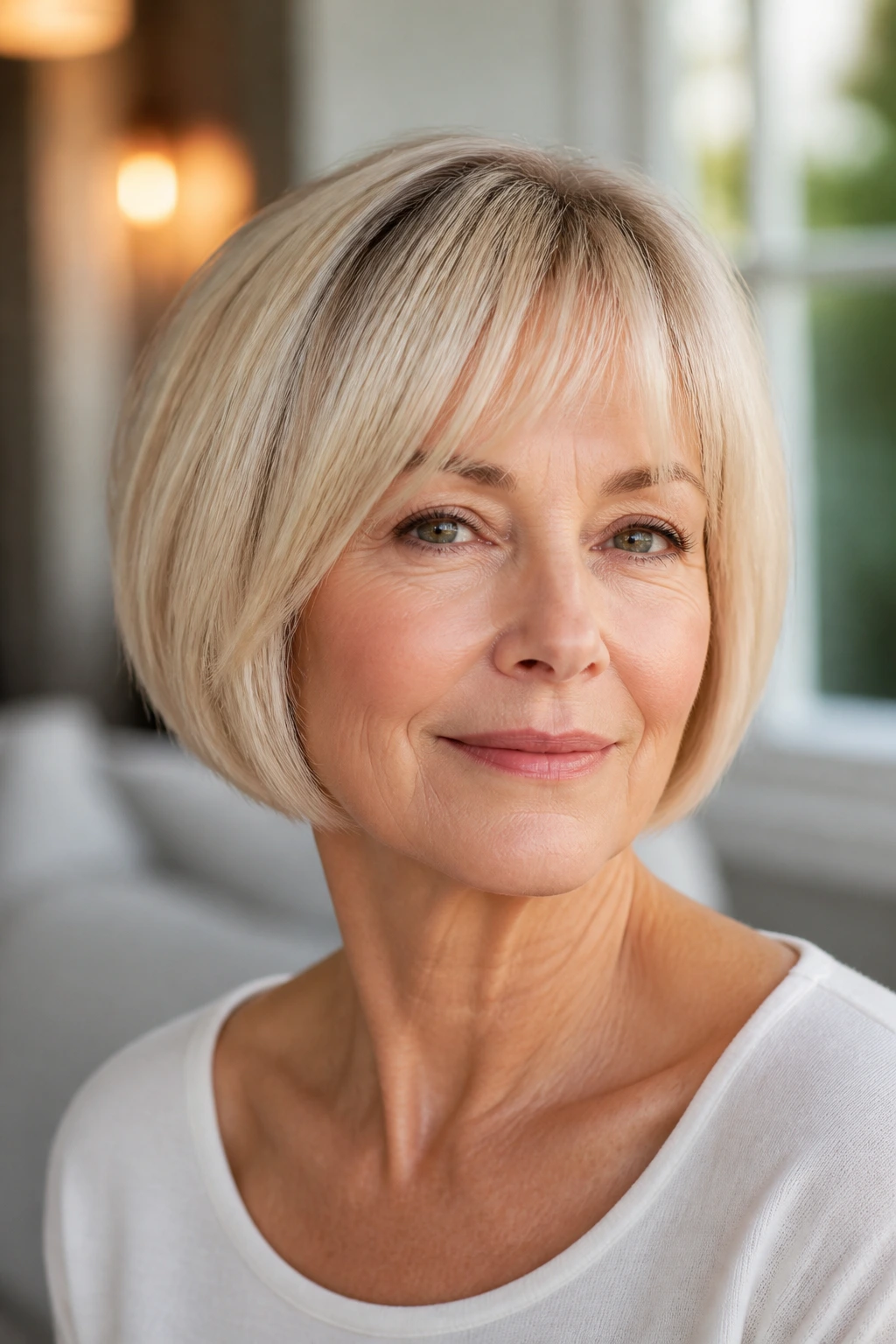
A neck-hugging bob sits close to the neck and follows the line of the jaw and nape without floating away from it. It’s neat. Very neat. That is what makes it good. If you want a haircut that looks arranged even on a lazy day, this is one of the most reliable choices.
The shape works especially well for straight hair or hair that can be smoothed with a brush and dryer. It keeps the neck visible and the back tidy, which makes it a strong choice for women who dislike stray ends brushing the collar all day. A soft side part keeps it from looking too rigid.
This is also a useful style if your hair has become more resistant to big shapes. Instead of trying to force volume, it leans into a controlled outline. There’s a quiet confidence in that. No drama. Just shape.
Why Short Hair Feels Better on Hair That Has Changed Texture
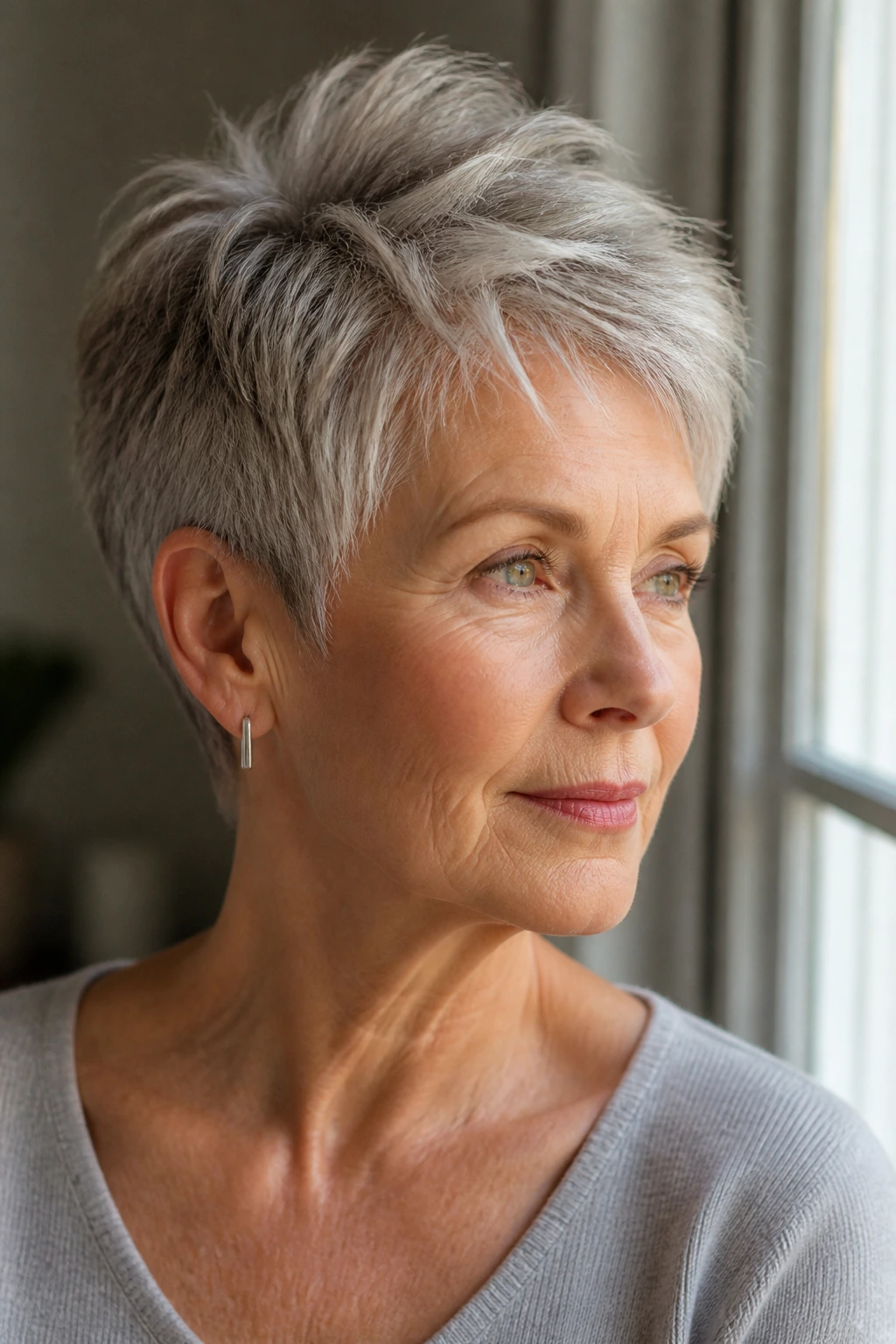
Hair changes after sixty, and the change is not imaginary. It can grow finer, lose a little pigment, and start to behave differently in humidity or heat. The scalp often shows more quickly, the crown may flatten sooner, and older lengths can look stringy even when they’re healthy. Short cuts solve those problems by reducing the amount of hair that has to be supported.
The shape matters because mature hair rarely behaves like one solid type. You can have finer roots and coarse ends, or gray strands that are wiry in one patch and limp in another. A shorter outline helps the whole head read as intentional. It also makes blow-drying less of a workout. Less hair means less drag on the brush, less time under the dryer, and less chance of overworking the ends until they fray.
One more thing. Short hair shows craftsmanship. A clean neckline, a soft fringe, a good part, a precise edge around the ears—those details are much easier to notice when the haircut is cropped. If your stylist is good, a short style makes that obvious. If they are sloppy, it shows that too, so ask for the shape you actually want.
How Short Hair Works With Glasses, Earrings, and Collars

Glasses change face balance in a way that a lot of haircut advice ignores. If the frames are substantial, you need hair that does not fall into the lenses or create a thick wall around the temples. A side-parted crop, a tucked-behind-ear bob, or a swept-back pixie handles that better than a dense, all-one-length shape.
Earrings deserve mention too. Short hair lets them breathe. Studs read cleaner. Hoops show up properly. A crop that exposes the ears can make even simple jewelry feel more considered, and you do not have to choose between the haircut and the accessories.
Collars and necklines matter more than people admit. A neck-hugging bob works beautifully with a crisp shirt collar. A pixie looks sharp with a turtleneck or a wide neckline. If your hair keeps snagging in the back of the collar, it is probably too long for the way you dress. That’s not vanity. That’s daily friction.
Essential Tools for Styling Short Hair at Home
-
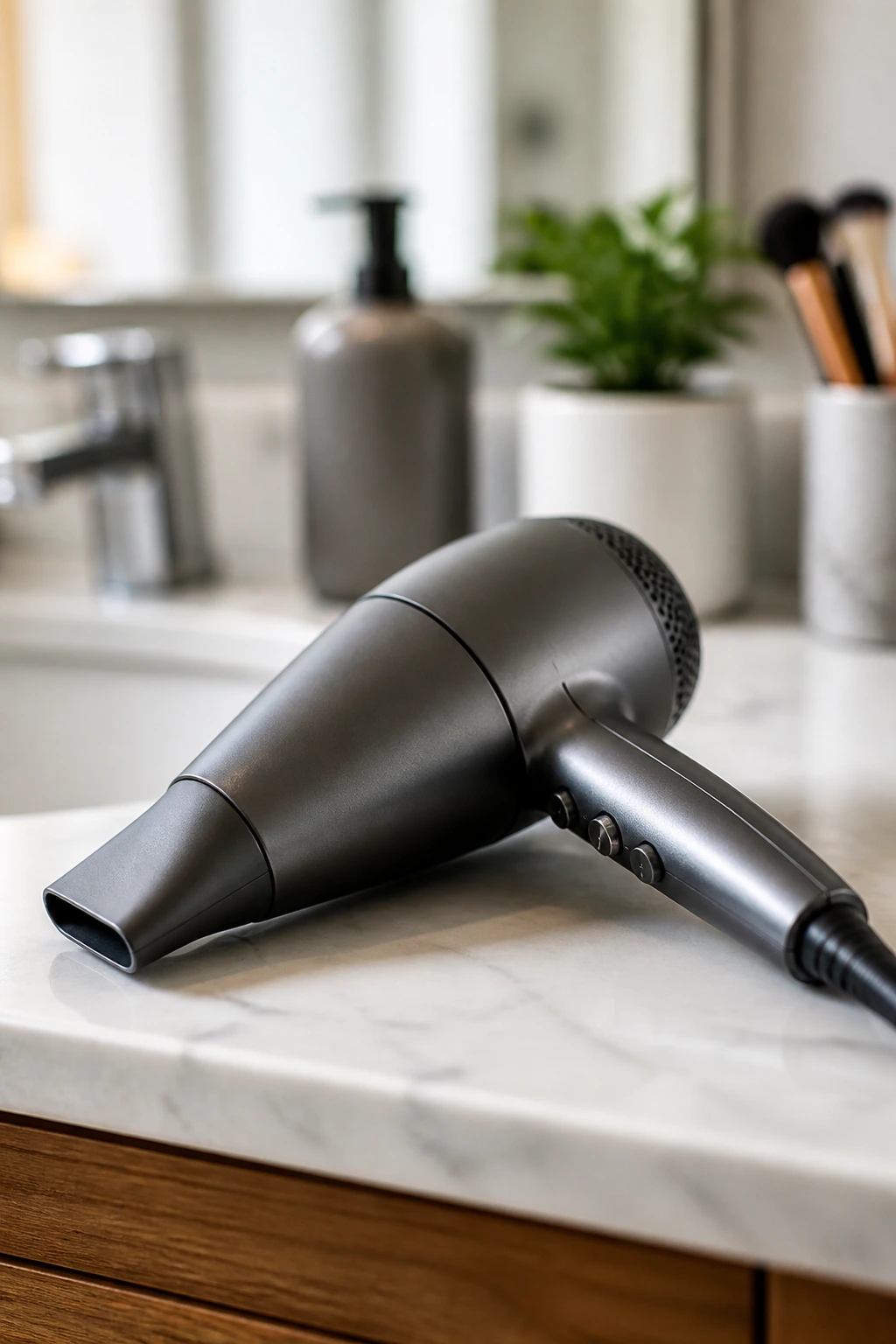
Blow dryer with a narrow nozzle: Directs air at the roots so you can lift the crown instead of blasting the whole head.
-
Small round brush, 1 to 1.5 inches: Best for bending bangs, smoothing a bob, and nudging the ends under.
-
Paddle brush: Useful when you want a sleeker finish on a blunt bob or neck-hugging shape.
-
Fine-tooth tail comb: Good for clean parts, sectioning, and lifting a little root at the crown.
-
Light mousse or root spray: Gives fine hair some memory without turning it sticky or stiff.
-
Texturizing paste or cream: Handy for pixies, crops, and bixies where you want separation at the ends.
-
Curl cream or foam: A better fit than heavy butter for short curls that need definition, not weight.
-
Dry shampoo: Helps between washes when the roots start to sit close to the scalp.
-
Flat iron, small plate size: Useful for polishing a bob or flipping a side fringe, but keep the heat moderate.
-
Diffuser: Worth having if your short hair is wavy or curly and you want shape without roughing up the curl pattern.
Choosing the Right Shape for Fine, Thick, Curly, or Wavy Hair
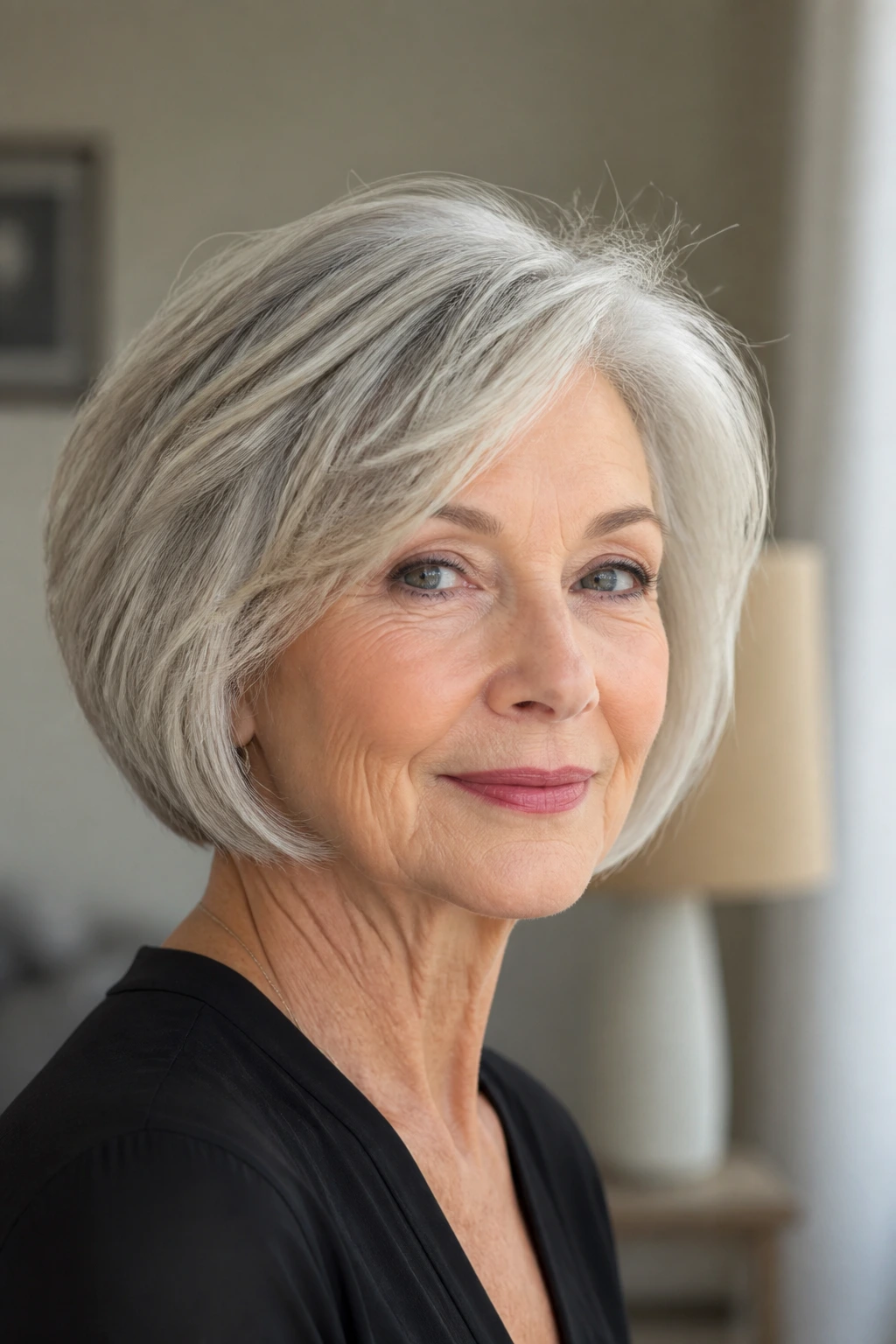
Fine hair usually behaves better in shapes that keep a clear outline. Rounded bobs, stacked bobs, bixies, and soft pixies do that well because they avoid too much weight at the bottom. If the hair is fine and sparse at the crown, ask for lift there and keep the ends blunt enough to read as full. Over-texturizing fine hair is a fast way to make it look see-through.
Thick hair needs removal of bulk, but not all at once. Tapered cuts, undercut pixies, graduated bobs, and short shags help because they take pressure off the sides and back. The mistake is asking for “layers” without explaining where the bulk lives. Hair that is thick at the nape needs a different solution from hair that is thick at the temples.
Curly hair likes room and dryness in the right places. Curly pixies and short curly bobs work when the shape follows the curl pattern instead of fighting it. Wavy hair is more forgiving. It can wear shaggy bobs, French bobs, and chin-length cuts with airy ends because the wave adds movement where straight hair needs product.
How to Ask for the Cut at the Salon Chair
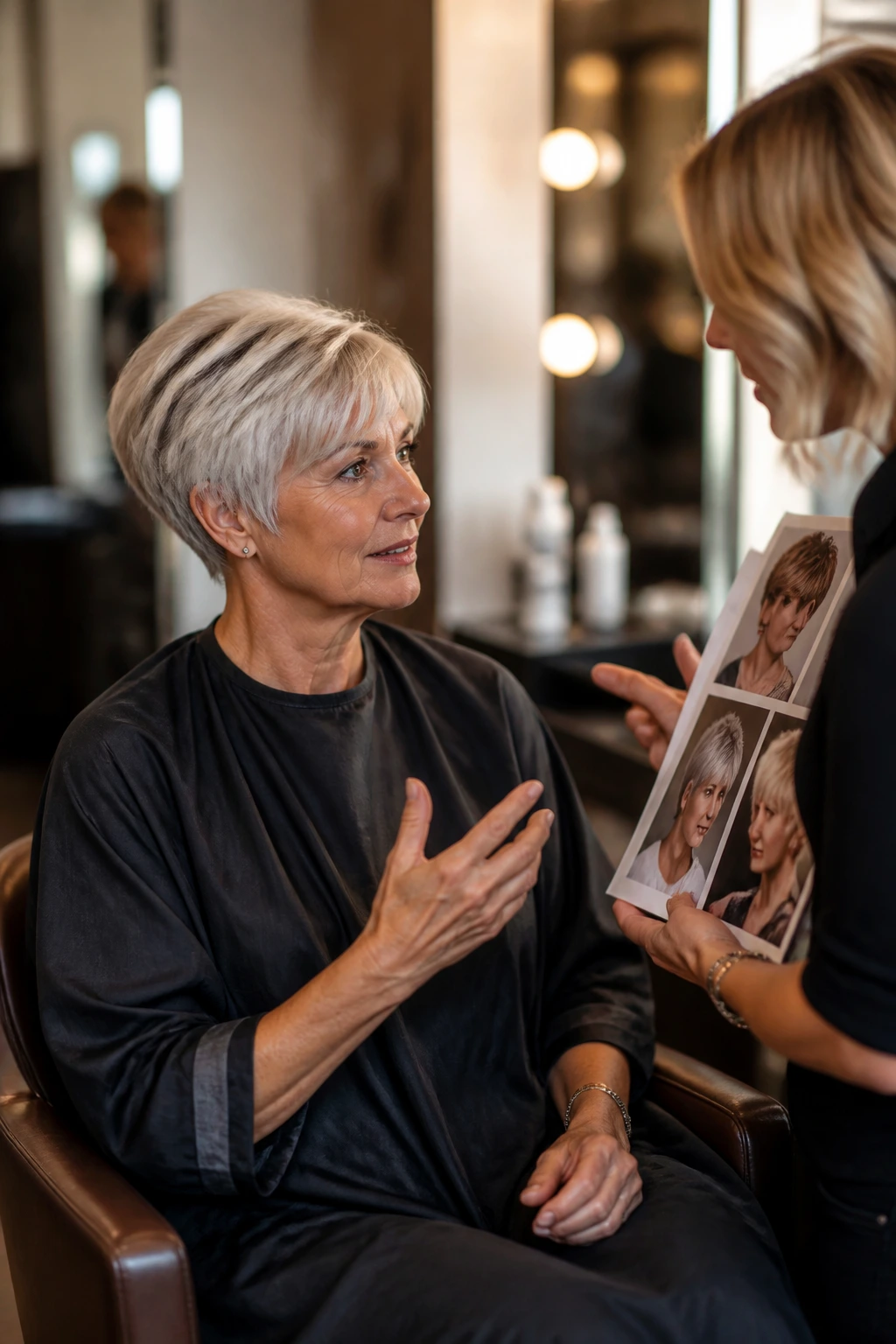
Bring photos, yes, but do not stop there. A photo tells the stylist the shape. Your hair tells them the truth. Say whether your hair is fine, medium, thick, straight, wavy, curly, or resistant at the nape. Mention cowlicks, growth patterns, and whether the crown falls flat by noon. Those details change the cut more than the picture does.
Use plain language. Say you want lift at the crown, softness around the forehead, or a cleaner neckline. If you wear glasses, say so. If you like tucking one side behind your ear, say that too. These are not tiny preferences. They shape the haircut.
And be specific about maintenance. A French bob needs more frequent trims than a shaggy bob. A tapered pixie needs the nape cleaned up often. If you are not up for that, say it before the scissors come out. A haircut that fits your schedule is better than one that looks good for ten days and then annoys you.
Ten-Minute Styling Routines That Actually Hold
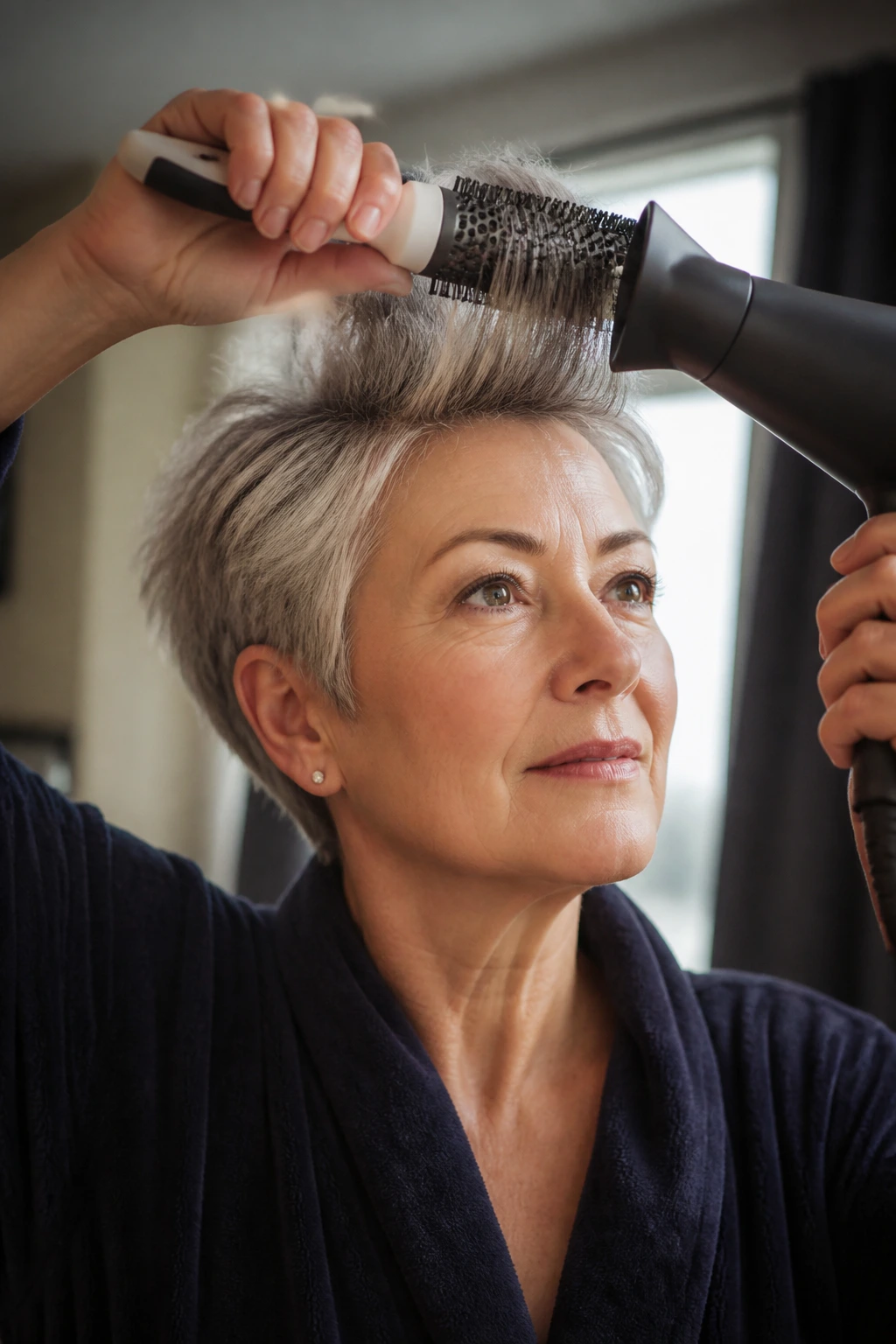
The first rule is to start with damp, not soaking, hair. Blasting hair that is dripping wet wastes time and leaves the roots limp. Towel-blot, then work in a small amount of mousse or cream based on texture. Fine hair needs light hold. Thick or curly hair usually needs a touch more support.
Use the dryer at the roots first. That is where the shape lives. If you’re wearing a bob, bend the ends under with a round brush. If it’s a pixie, use your fingers to lift the top and direct the fringe where you want it. Once the shape is set, stop touching it. That sounds too simple, but it matters.
Second-day hair is its own thing. A little dry shampoo at the crown, a quick mist of water on the front, and a tiny bit of paste through the ends can revive a short cut fast. Do not drown it in product. Short hair gets greasy faster than longer hair, and once it goes limp, you are fighting the whole cut.
Common Mistakes That Make Short Hair Harder Than It Should Be
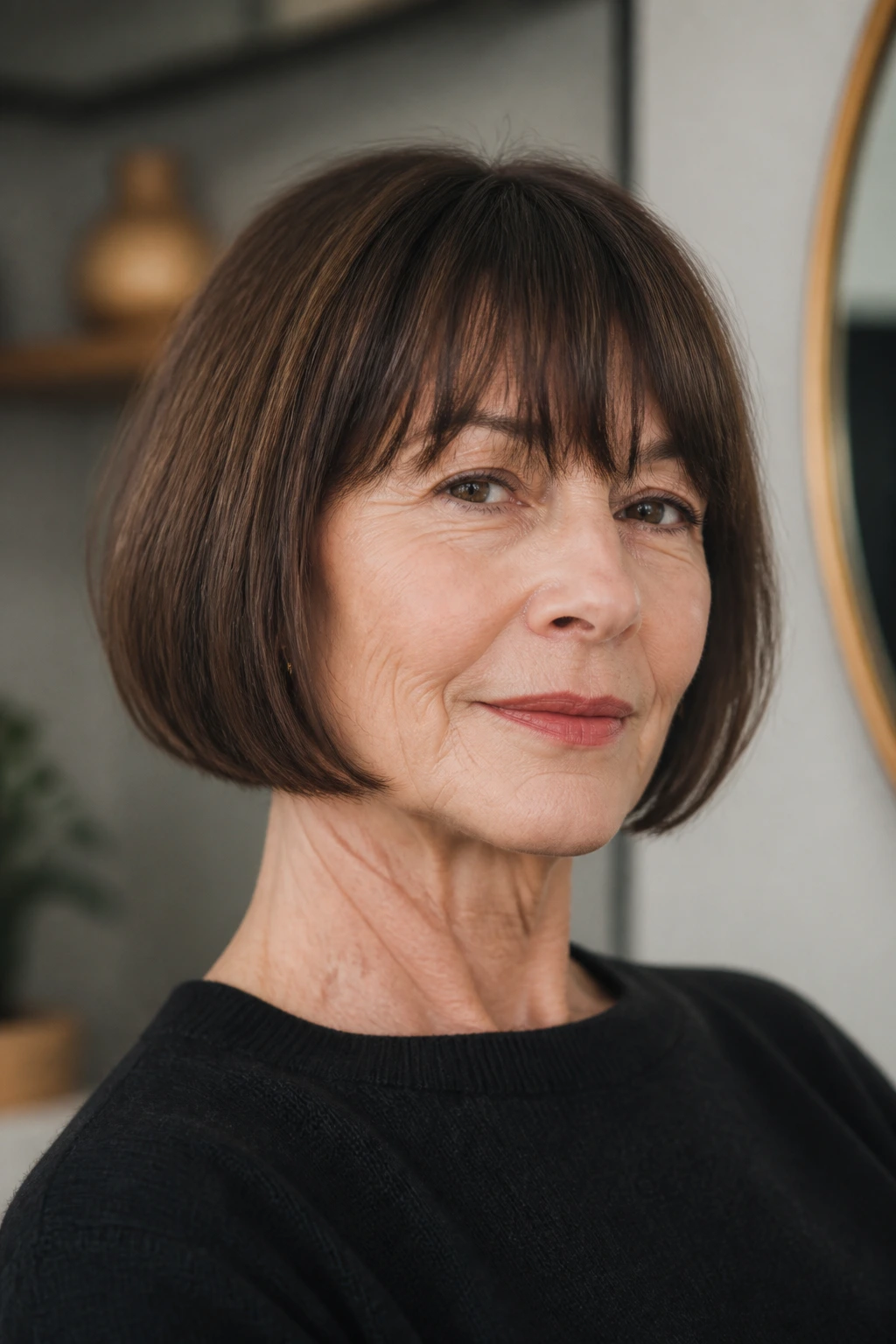
The biggest mistake is asking for “short” without naming the shape. Short can mean a pixie, a bob, a crop, or a stacked cut, and those are not interchangeable. If you only say “make it shorter,” you may end up with a cut that suits the stylist’s taste instead of yours.
Another common problem is over-thinning. It sounds helpful when hair is thick, but too much texturizing can make gray or fine hair fray at the ends and look fuzzy by week two. The fix is a controlled removal of bulk, not a heavy-handed carve-out with thinning shears.
Bangs cause trouble when they ignore the hairline. If you have a strong cowlick or a forehead swirl, a straight fringe can split and stick. A side-swept or longer fringe is usually easier to live with. And if your neckline grows fast, do not pretend it won’t matter. It will. The back shape disappears first.
Variations and Adaptations to Try
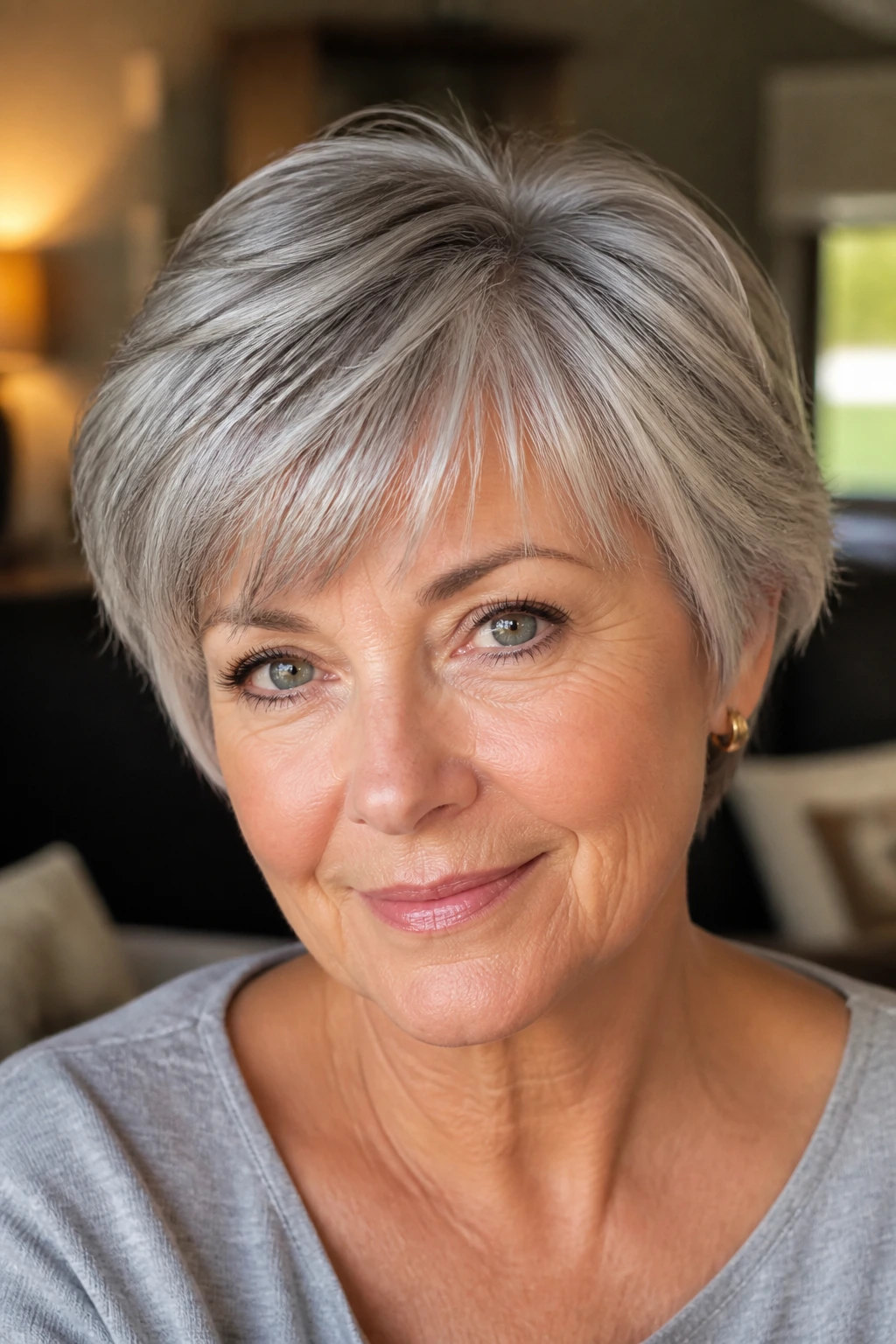
The Soft Silver Edit: Keep the cut gentle and let the gray grow in with a gloss or clear shine treatment. This works best when the layers are subtle and the outline stays clean.
The Glasses-Friendly Sweep: Leave enough length on top to direct the hair away from the frames. A side part and a little root lift keep the face open.
The Low-Maintenance Wash-and-Go: Choose a crop, bixie, or shaggy bob that looks good with finger-drying alone. This one is for women who do not want to blow-dry daily.
The Curl-First Version: Shape the cut around the natural curl pattern and keep the fringe a touch longer than you think. Curl shrinkage is real, and the extra length keeps surprises under control.
The Bold Edge Version: Add an undercut, an asymmetrical side, or a very blunt line if you like a sharper look. The haircut should feel like yours, not like a polite compromise.
Keeping the Shape Between Salon Visits
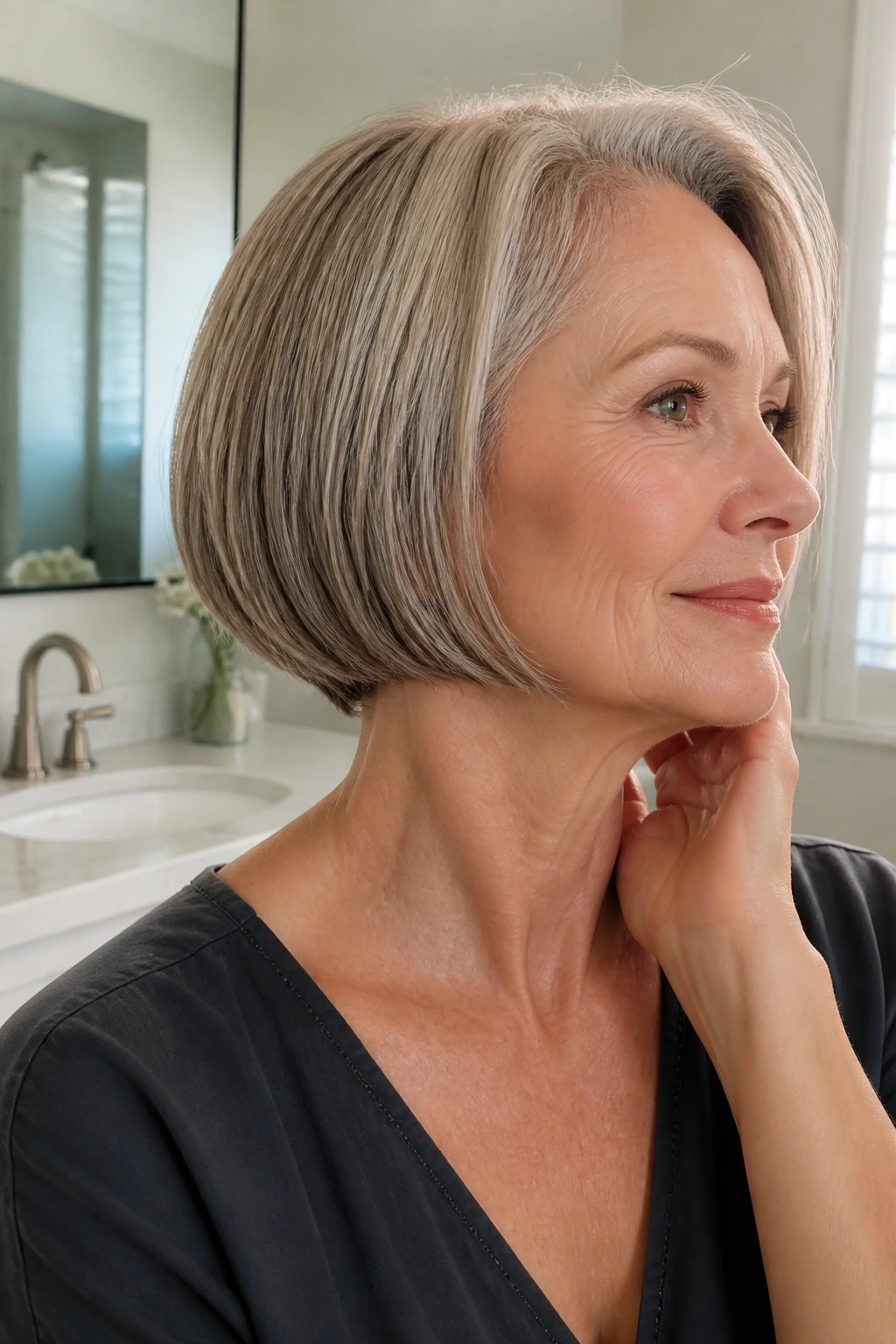
Pixies usually want a trim every 4 to 6 weeks. Bobs can often stretch to 6 to 8 weeks, depending on how strict the line is. A neck-hugging bob or anything with a crisp nape starts looking shaggy sooner than a shaggy bob, so watch the back first. That is where the shape goes to die.
At home, keep the scalp clean enough that the roots do not get heavy. Fine hair may need more frequent washing; curly or coarse hair may stay happier with longer gaps between shampoos. Use conditioner on the mid-lengths and ends, not the crown, unless your hair is so dry it needs a tiny amount near the top.
If you color gray hair, the cut will look best when the tone stays fresh and the shape stays edged. A gloss or toner refresh every 4 to 6 weeks can keep silver from going dull, but the cut itself still needs the regular trim. Sleeping on a silk or satin pillowcase helps the ends stay smoother, which sounds small until you see the difference on day three.
Frequently Asked Questions
Which short haircut is easiest to live with if my hair is thinning?
A rounded bob, soft pixie, or bixie usually works best because these shapes keep a clear outline without relying on heavy density. Ask for lift at the crown and avoid too much thinning at the ends.
Can I wear bangs if I have glasses?
Yes, but the length matters. A side-swept or brow-grazing fringe usually plays better with frames than a thick straight bang that sits right on the lenses.
What’s the best short haircut for curly hair after sixty?
A curly pixie or short curly bob is often the sweet spot because both allow the curl pattern to show without too much bulk. Dry cutting or cutting close to dry helps the shape land where it should.
How often should I trim a short haircut?
Pixies and undercuts usually need attention every 4 to 6 weeks. Bobs can stretch a bit longer, but if the neckline or fringe is part of the shape, don’t let it drift too far.
Will a short haircut make my face look older?
Not if the shape is chosen well. A good cut opens the face, softens hard lines where needed, and keeps the hair from dragging everything downward. The wrong cut can age anyone; that’s a shape problem, not a short-hair problem.
Should I ask for layers or a blunt edge?
That depends on density and texture. Fine hair often looks better with a stronger edge, while thicker or wavier hair may need some layering to stop it from puffing out.
What if my hair sticks up at the crown no matter what I do?
Ask for more length or weight at the crown and use a root-lift product only at the roots, not through the ends. Sometimes the fix is less product, not more. A weird cowlick will not obey wishes.
Can I make a short cut look softer if I don’t like a severe style?
Yes. Side-swept fringe, rounded edges, a little texture around the temples, and softer neckline tapering can change the mood fast. The shape can be short without feeling hard.
The Cut That Fits Your Face and Your Routine
A short haircut only works when it matches the life around it. A woman who wears glasses, likes bold earrings, and hates a long blow-dry needs a different shape from someone with thick curls who wants height at the crown. That is the whole game.
The best short styles after sixty are the ones that keep their shape on ordinary days, not only on salon day. Clean lines, soft movement, and a little honesty about texture beat a dramatic photo every time.
Pick the cut that respects your hair’s habits, and it will stop feeling like maintenance. It will start feeling like relief.
