



A good pixie cut on a little girl should survive breakfast, a backward cap, and one more dash across the playground before lunch. That sounds like a small ask until you’ve watched a blunt crop puff up at the crown, flip into the eyes, or sit oddly around the ears by noon. The best pixie cuts for little girls are the ones that stay soft at the edges and sensible in the middle.
Short hair shows everything. Cowlicks at the crown, a strong side part, a thick nape, a swirl behind one ear — all of it shows up faster in a pixie than in shoulder-length hair. That is not a problem if the cut is shaped with those things in mind. Leave a little room on top, taper the sides cleanly, and the haircut starts doing the work for you.
I like pixies on kids when they look finished even when nobody styled them that morning. A mist of water, a finger comb, maybe a barrette if the fringe needs to stay put. That’s the sweet spot: playful, tidy, and not fussy. The styles below lean into that balance, from classic crops to curl-friendly shapes and grow-out-friendly trims that don’t turn awkward after three weeks.
Why These Pixie Cuts Work on Real Kids
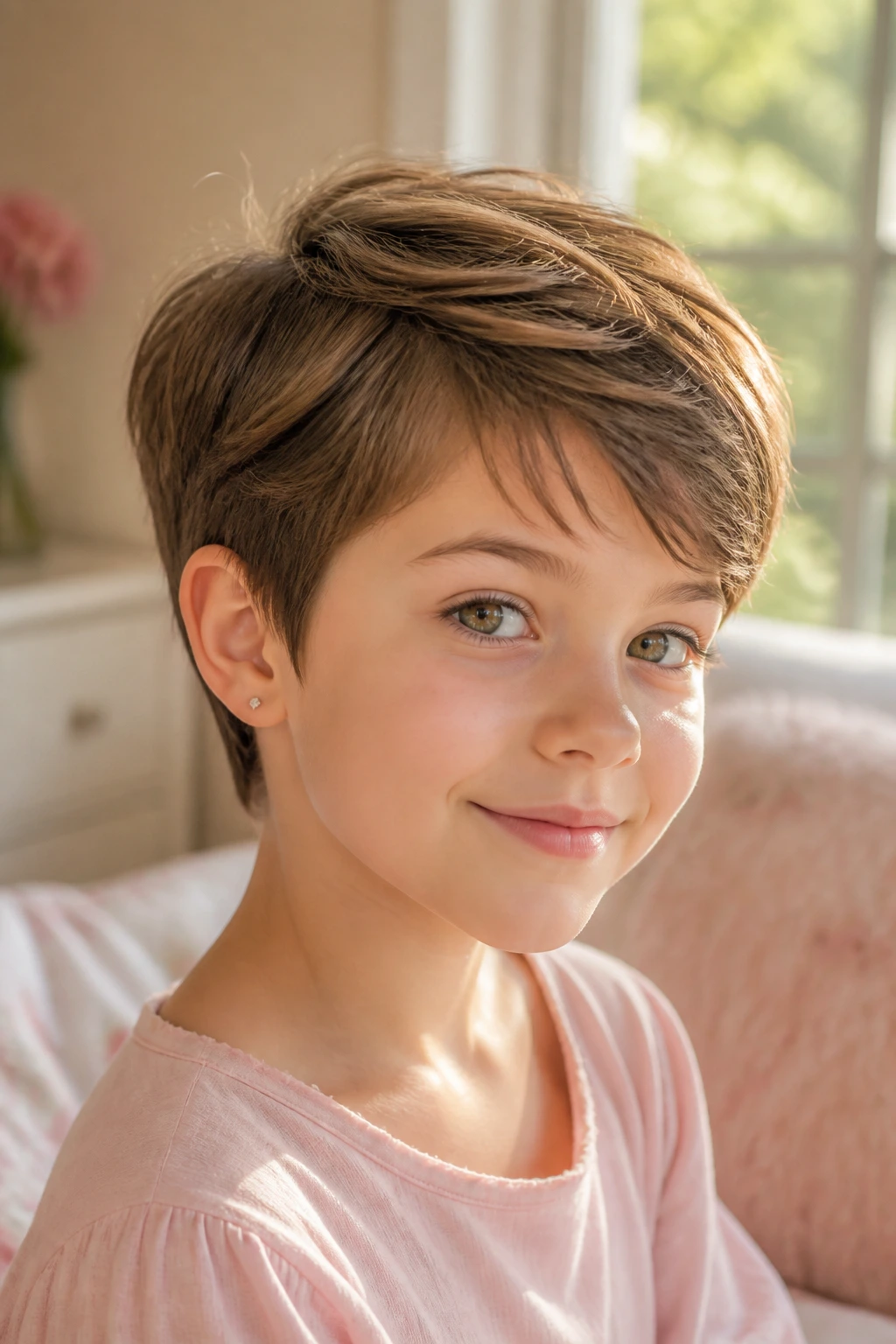
- Fast morning fix: A well-shaped pixie usually needs a quick mist, a finger comb, and maybe one clip, not a full blowout.
- Texture-friendly: Straight, wavy, curly, and coily hair all wear a pixie better when the top length and nape taper match the hair’s natural bend.
- Accessory-ready: Tiny clips, bows, and headbands sit better on a short shape than they do on heavy, shoulder-length hair.
- Less tangling at the neck: Kids who hate knots after sports, car rides, or naps usually do better with a shorter nape.
- Grows out with a plan: The stronger pixies leave a little extra length at the fringe or crown, so the next trim is a tune-up, not a rescue mission.
- School-photo safe: The right cut keeps hair out of the eyes without making the face look stripped bare.
1. Soft Classic Pixie
The soft classic pixie is the one I recommend when a child wants short hair but not anything sharp or edgy. The sides stay neat, the crown keeps a little lift, and the fringe lands gently above the brows instead of cutting straight across the forehead. It reads tidy in a way that still feels childlike.
What makes it useful is the balance. You get enough length on top to finger-style in under a minute, but not so much that the shape collapses by lunchtime. Ask for about 2 inches on top, a slightly shorter taper at the sides, and a soft neckline rather than a hard, clipped line.
This cut is also forgiving during grow-out. A classic pixie can slide into a longer crop without looking messy if the fringe and crown were left with a little room in the first place. That’s the part I like best. It buys time.
2. Side-Swept Fringe Pixie
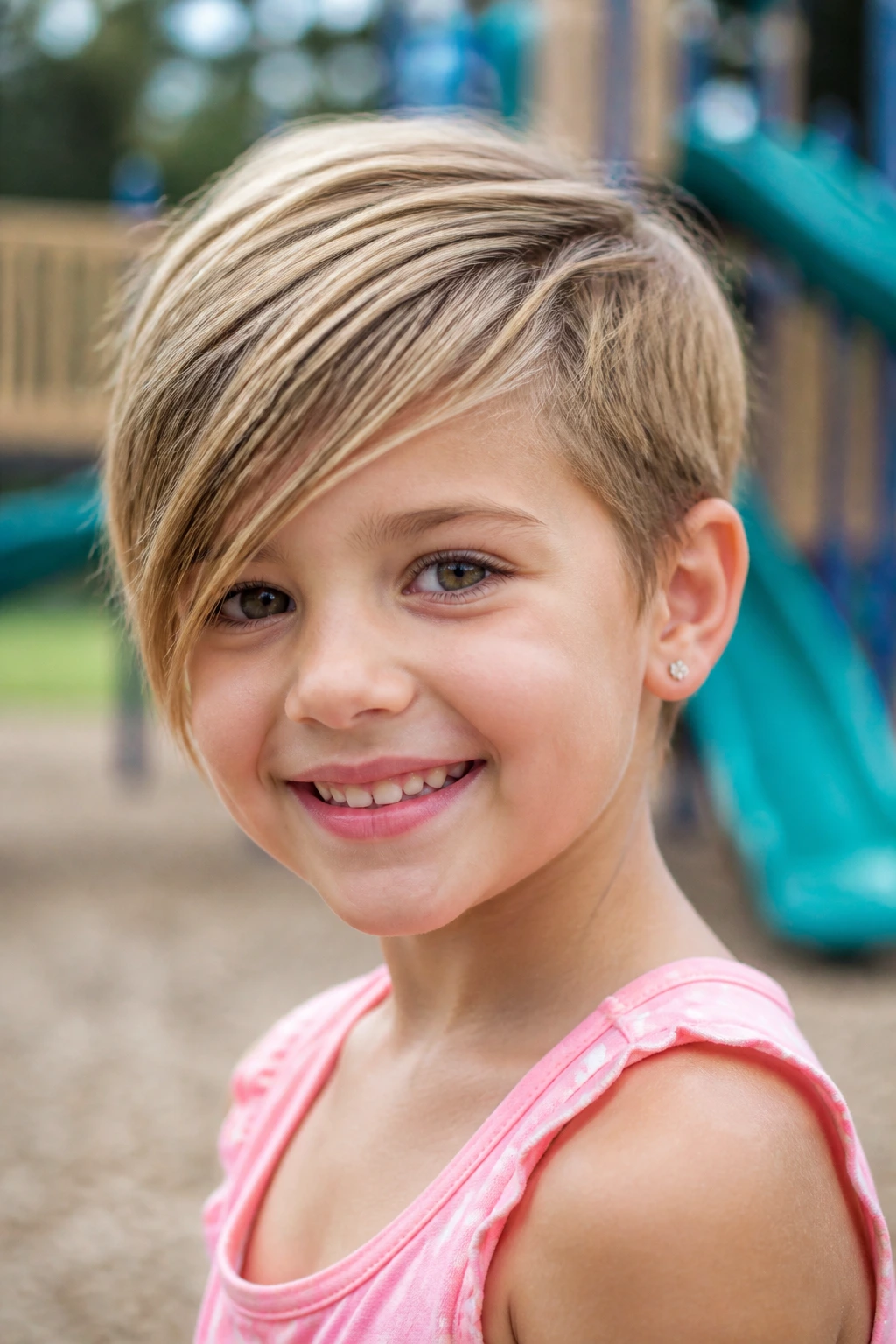
If your child hates hair touching her eyes, start here. The side-swept fringe pixie keeps the front long enough to move diagonally across the forehead, which means the haircut feels softer than a blunt bang and less jumpy than a super-short crop. It’s one of the easiest pixies to live with.
The secret is the angle. Ask for the longest piece to fall just past one eyebrow, then taper the rest of the fringe so it sweeps instead of hangs. That small diagonal line helps the cut grow out more gracefully, too. Straight hair lays into it cleanly; wavy hair gives it a little bend.
Best for kids who want hair out of the face
This shape is a good compromise for children who say they want “short hair” but still like the feeling of hair moving when they turn their head. A tiny clip at the heavier side can keep it in place on windy days without changing the whole style.
3. Curly Tapered Pixie
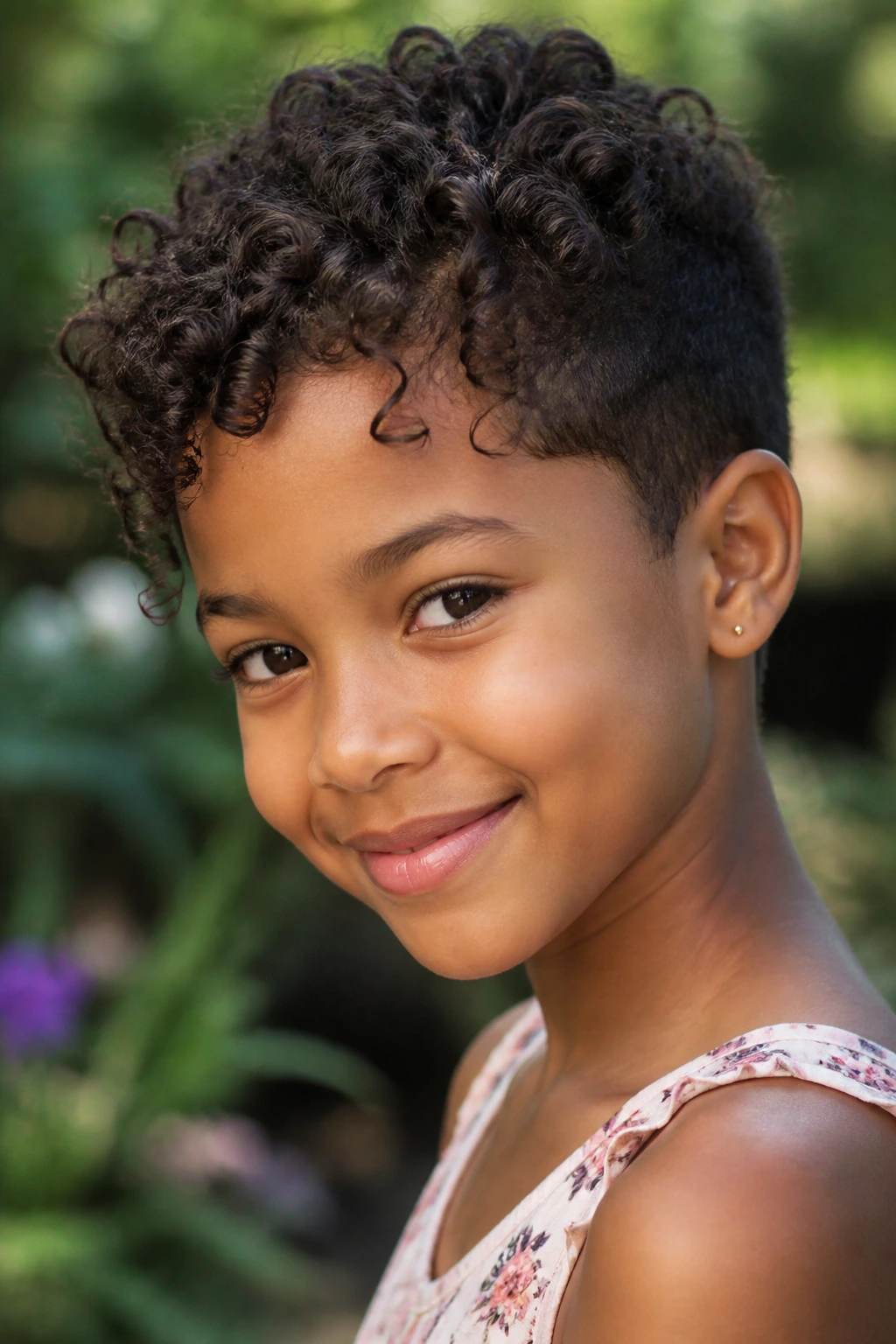
Curls need room, and a tapered pixie gives them exactly that. Instead of flattening the shape, this version lets the top keep a bit of bounce while the sides and nape are cleaned up so the whole haircut looks intentional, not bulky. The silhouette stays light around the ears, which is where curly cuts often get puffy.
Ask the stylist to cut it with the curl pattern in mind, not against it. A dry or mostly dry cut helps because curls shrink more than straight hair when they’re cut wet. Leave around 2 to 3 inches on top, then taper the sides enough to keep the shape close to the head.
Use a small amount of leave-in conditioner and let the curls do the rest. Scrunch, don’t rake. A curl cream that feels light on adult hair can still be too heavy on a child’s finer curls, so start with less than you think you need.
4. Choppy Textured Pixie
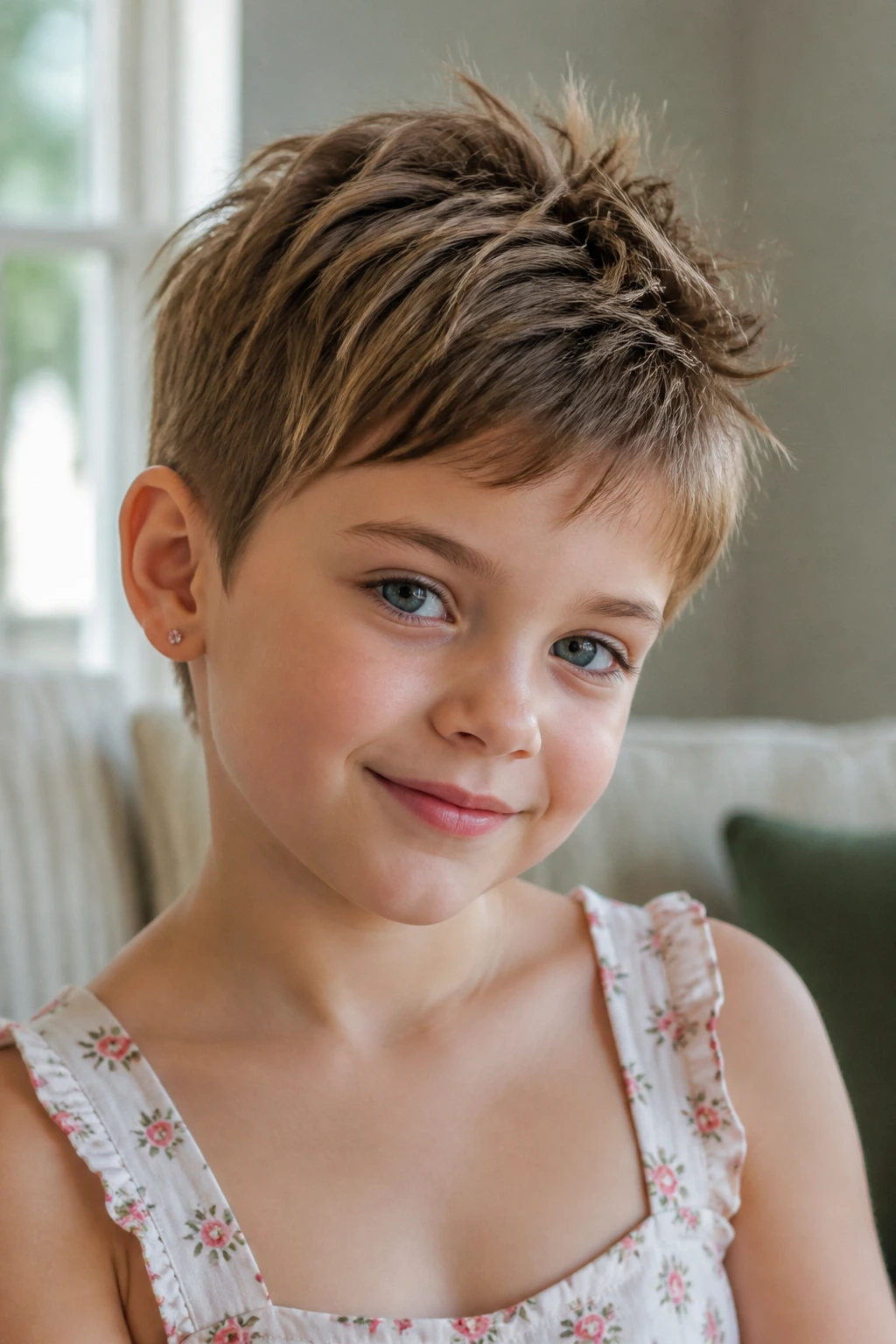
A choppy textured pixie has a little edge, but on a kid it reads playful rather than severe. The layers are point-cut or lightly razored so the ends fall in pieces instead of one solid sheet. That makes the haircut look lively even when it’s air-dried and untouched.
This is the version I like for straight or slightly wavy hair that tends to lie flat. The broken-up ends create movement without demanding heat styling. Ask for short, piecey layers on top and a soft taper at the sides so the top has all the energy and the edges stay neat.
A matte cream or tiny dab of styling paste can separate the pieces if you want a more tousled finish. Go light. Too much product makes short hair look greasy fast, and on a child it’s rarely worth the extra shine.
5. Long-Top Pixie
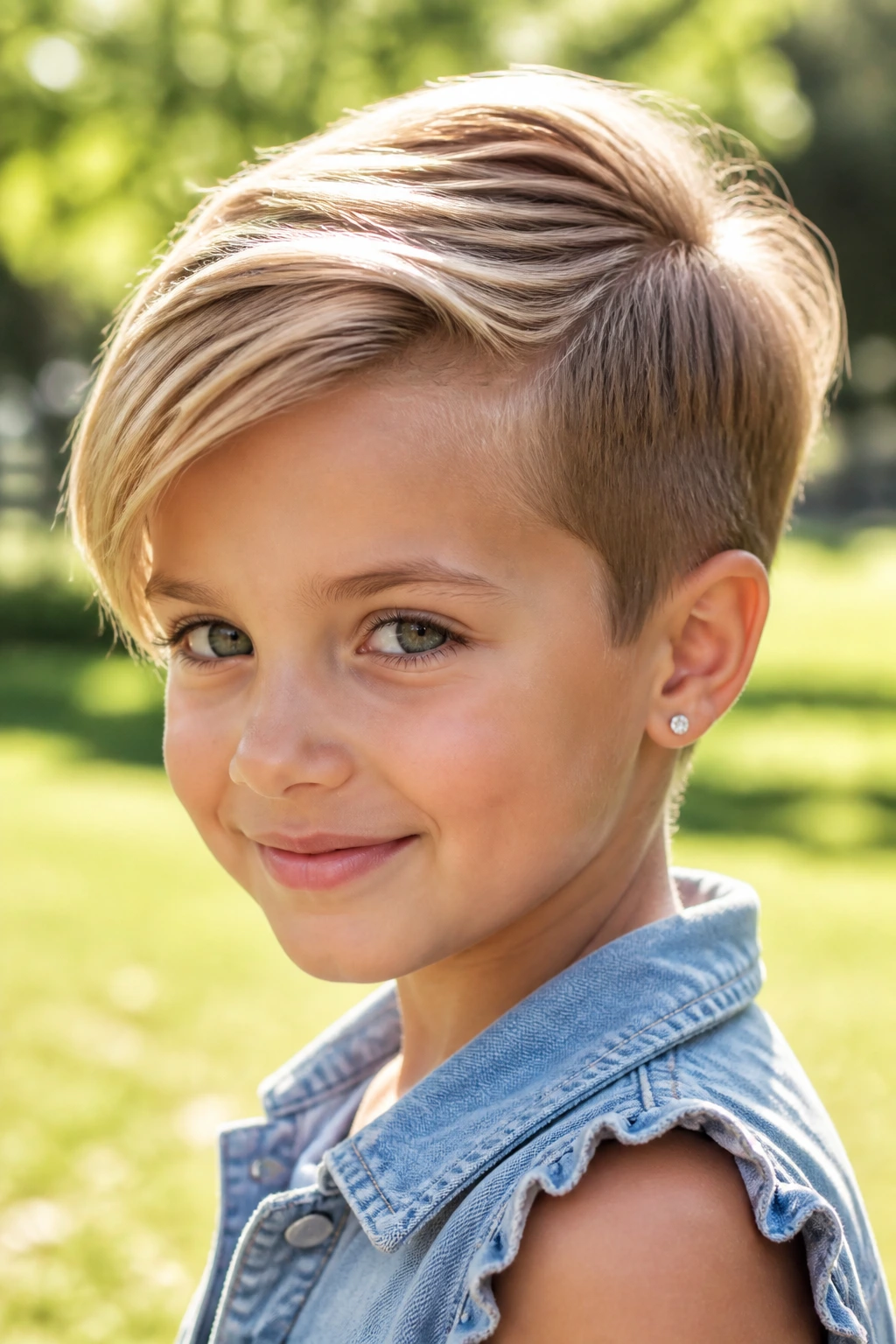
The long-top pixie gives you options, and that is why parents keep coming back to it. The sides stay short and tidy, while the crown and front are left longer so the cut can be brushed forward, pushed to the side, or fluffed up with fingers. It looks a little different every time.
This one works especially well for kids who like to change their mind. One day it sits smooth and neat; the next day it’s pushed up a bit for a playful shape. Ask for 3 to 4 inches through the top and crown, with shorter sides so the length on top actually shows.
It also handles growth nicely. When the top gets longer, it doesn’t immediately look wrong — it just becomes more flexible. That makes it a smart option if you don’t want to rush back to the salon the moment the cut starts filling in.
6. Ear-Tucked Pixie
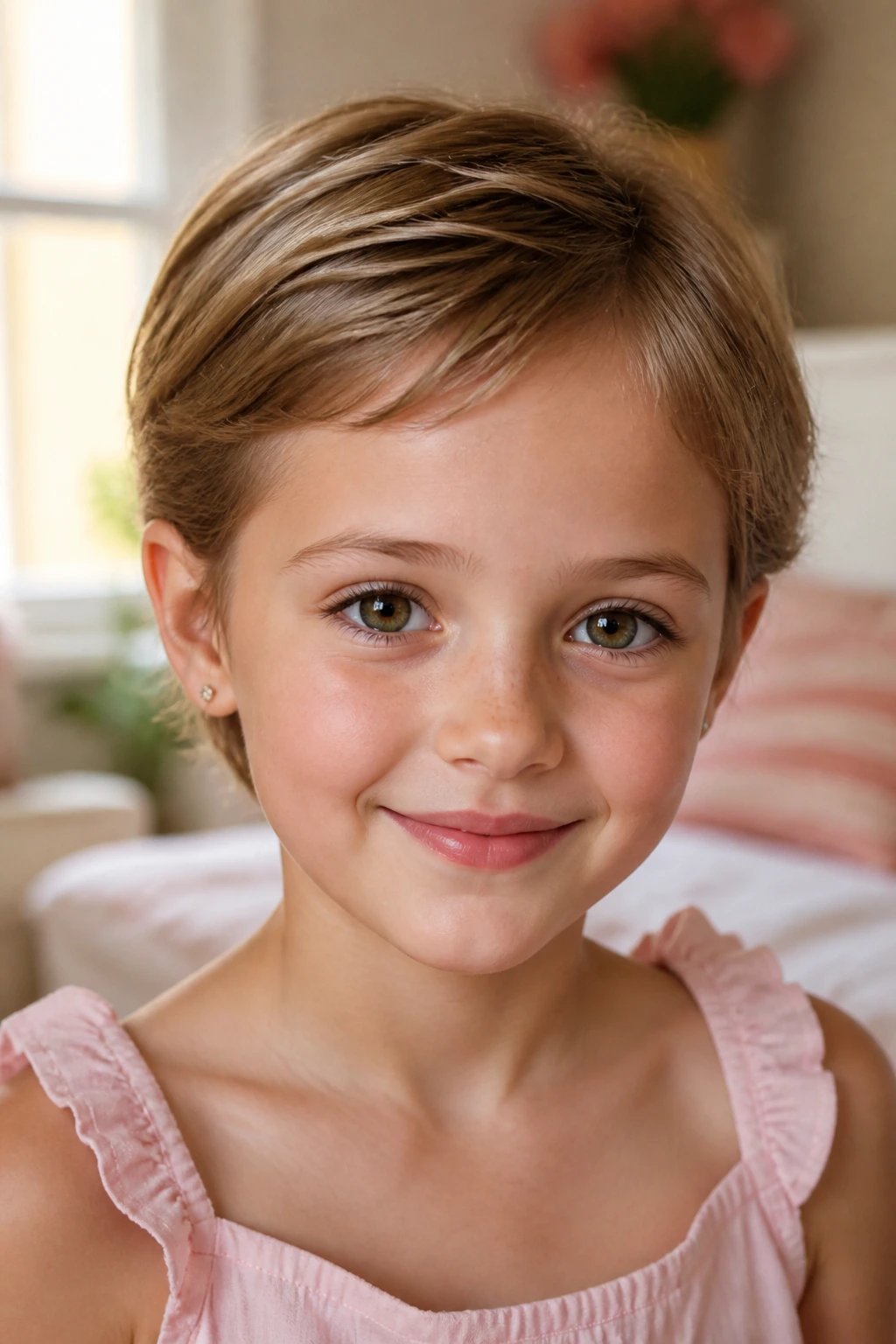
The ear-tucked pixie is all about soft lines around the sides. Instead of cutting tight into the head, the hair near the temples stays just long enough to tuck behind the ears when needed. That tiny bit of extra length changes the whole feel of the haircut.
I like this version for kids who want short hair but still enjoy touching, tucking, or flipping it behind one ear. The shape has movement, and the face stays open without looking bare. Ask the stylist to leave enough length at the sides so the ears can be covered or uncovered on the fly.
It’s also useful when a child wears small earrings, headbands, or clip-in bows. The tuck creates a clean frame for accessories without making them fight the haircut.
7. Feathered Layered Pixie
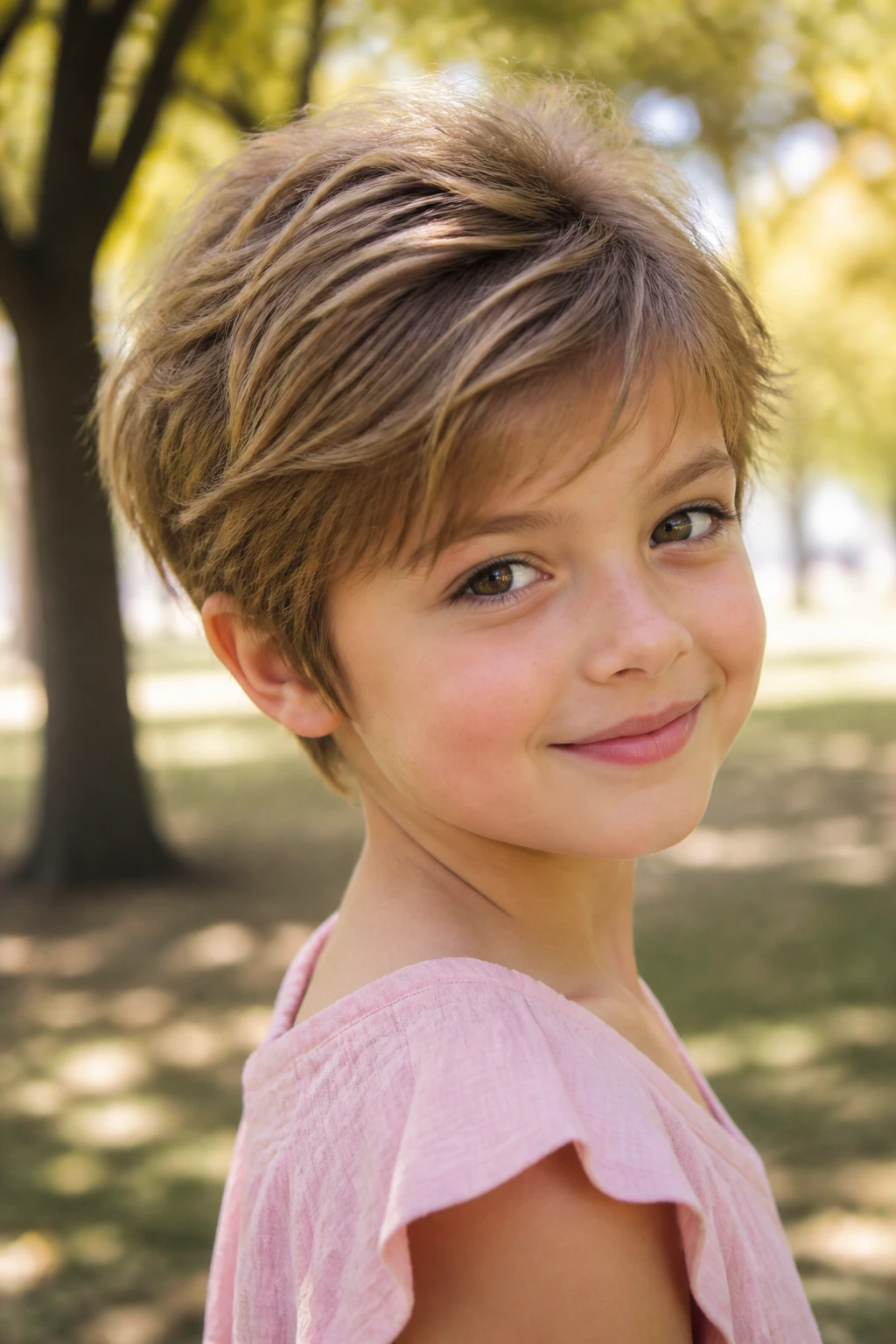
Feathered layers make fine hair look fuller and thicker than a blunt crop usually does. The ends are softened, not chopped, so the hair falls in airy little sections that move when the child turns her head. It’s a gentle look, and I mean that in the best way.
This cut needs restraint. Too much thinning and the hair starts to look wispy in a not-so-good way. Ask for feathering through the top and crown, with the fringe kept light but not sparse. A round brush or just a quick finger-dry can lift the front without making it look overstyled.
If your child has hair that falls flat by lunch, this is one of the safer pixies to try. The feathered shape gives the illusion of body even when the hair is fine.
8. Tiny Bangs Pixie
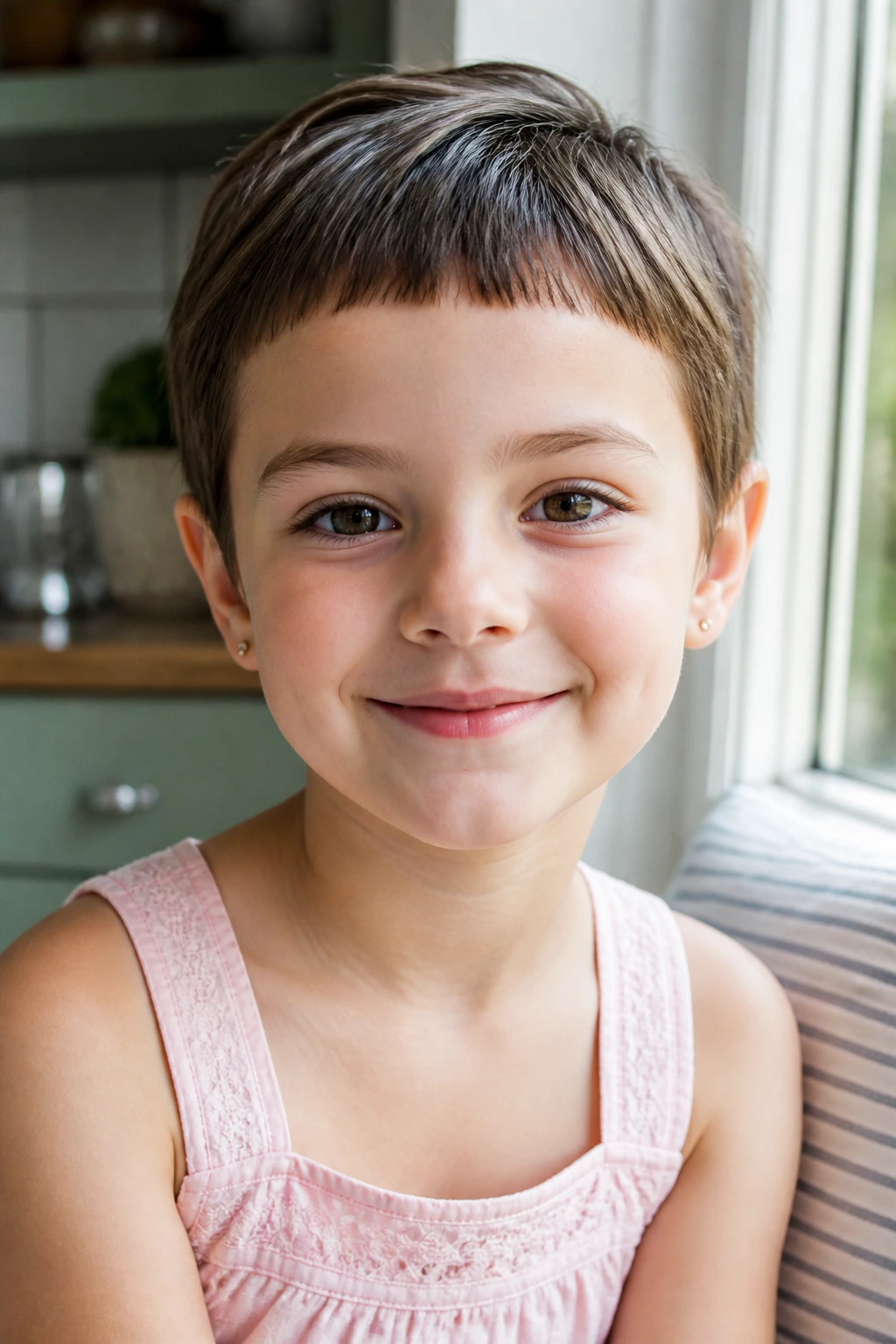
Tiny bangs can be adorable on the right child, but they are not a lazy choice. The fringe sits much shorter, usually well above the brows, which means it has a bold little personality and needs regular trimming. The upside is that it stays out of the eyes and gives the face a neat frame.
This version looks best when the rest of the cut stays soft. If the bangs are very short, the sides and top should keep enough texture to balance them out. Otherwise the haircut can start feeling too severe. Ask for the fringe to skim high on the forehead, not cut into a hard line.
I’d choose this one for a child who likes a crisp, tidy look and doesn’t mind frequent salon visits. It’s a strong style. Not harsh, just specific.
9. Pixie Bob Hybrid
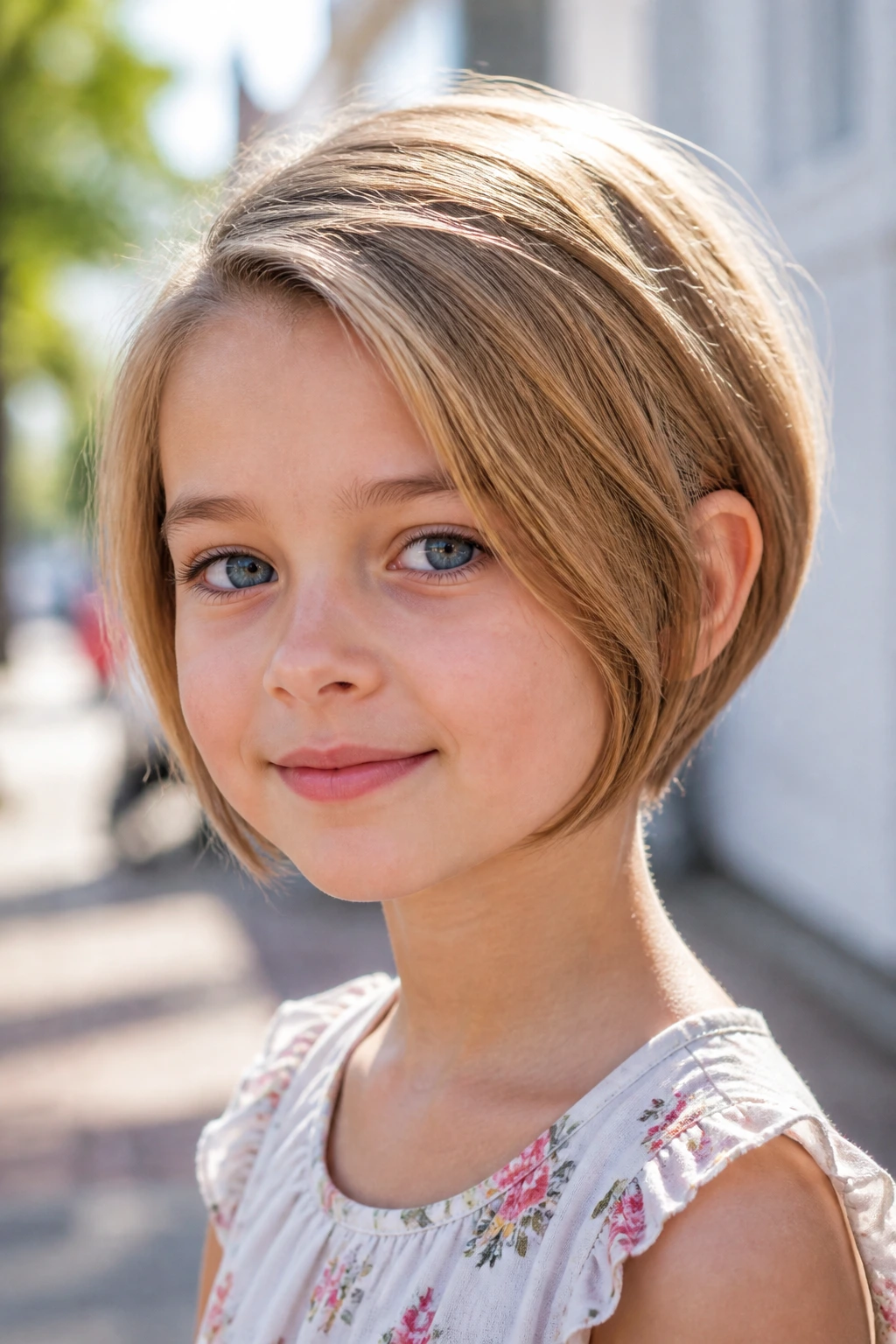
A pixie bob hybrid gives you the shorter feel of a pixie with a little extra length around the jaw and nape. That makes it one of the easiest transitional cuts for little girls who are nervous about going too short all at once. It still behaves like a short haircut, but the edges are softer and more forgiving.
The longish back helps the cut move into a bob later if needed. The front can be swept aside, and the sides can sit around the ears instead of above them. Ask for the nape to stay a touch longer than a classic pixie and for the top to be light enough to avoid that boxed look.
It’s especially good for kids with thick hair because the extra length gives the stylist room to remove bulk without making the shape too tiny. That’s the part many people miss. Short does not have to mean severe.
10. Asymmetrical Pixie
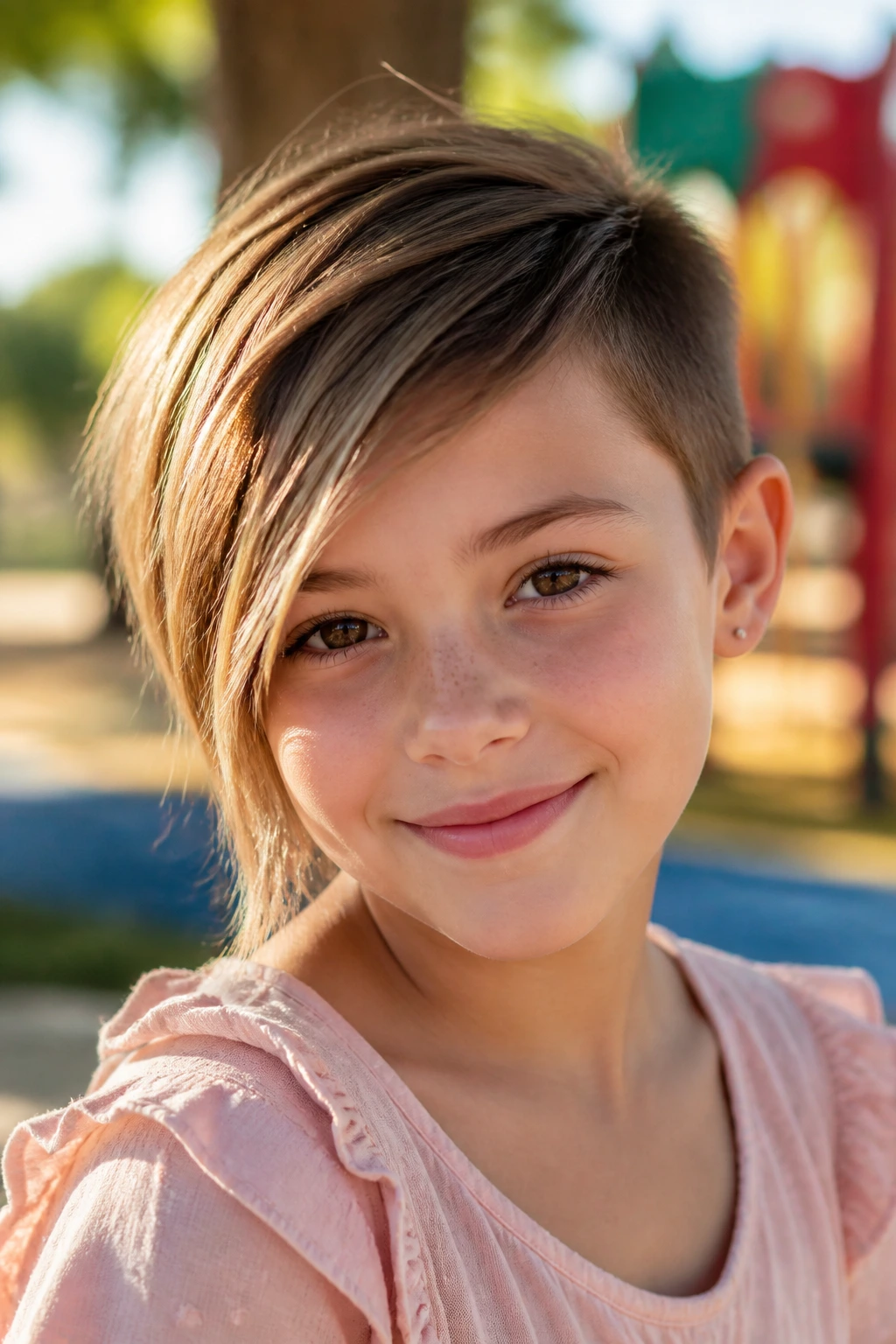
An asymmetrical pixie is just a little off-center, and that’s the charm. One side stays longer than the other, usually with a side-swept top that creates a diagonal line across the face. It looks modern, but on a child it reads more like fun shape than fashion statement.
The important thing is keeping the difference soft. You want a visible change in length, not a dramatic split. Ask for one side to graze the ear while the other sits higher and more fitted, then keep the top long enough to blend the two.
This style is nice for kids who like a haircut with a little personality. It also works well when hair naturally parts to one side, because you’re not fighting the growth pattern. That alone saves a lot of morning fuss.
11. Rounded Pixie for Fine Hair
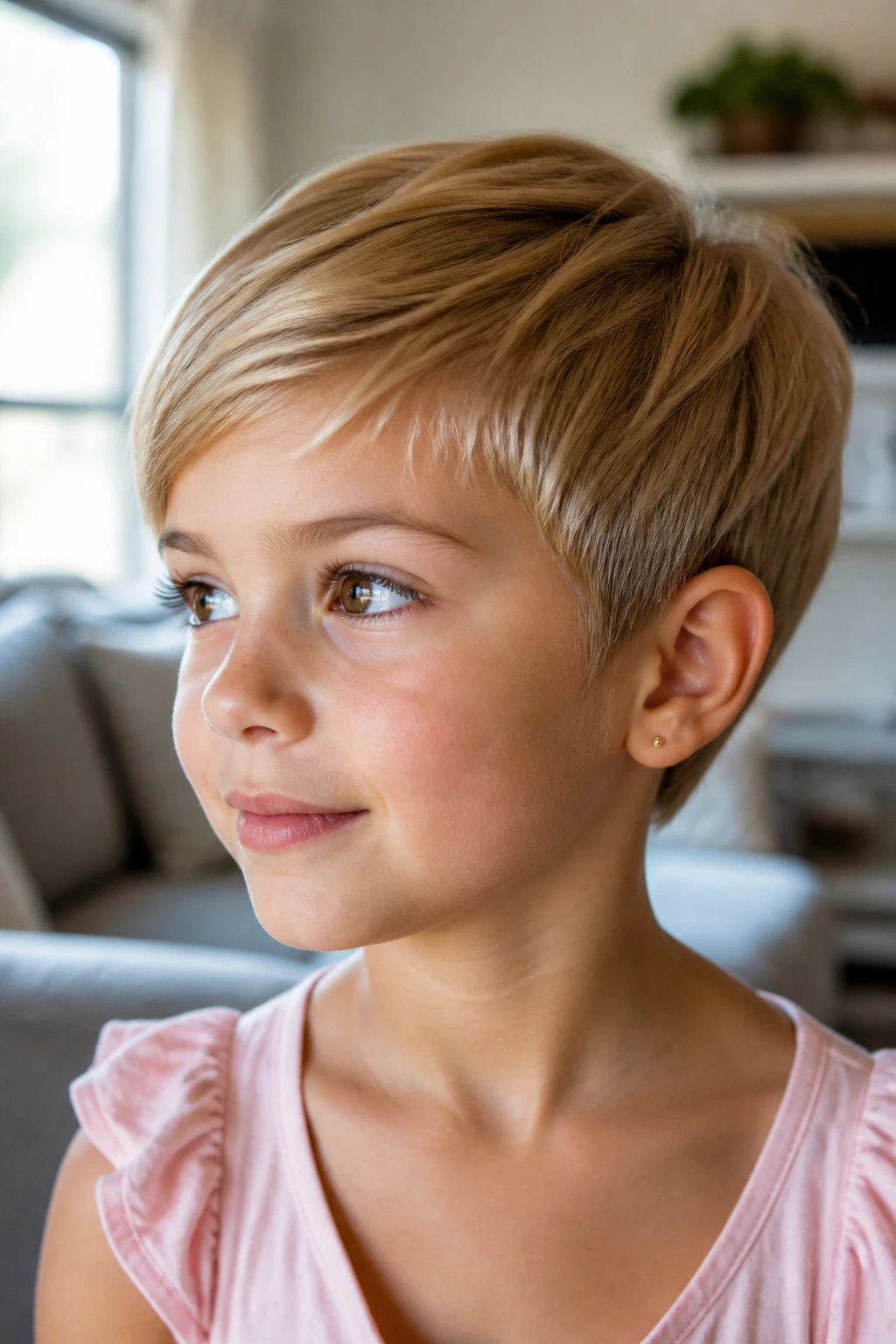
Fine hair often looks best when the cut itself creates shape, and a rounded pixie does exactly that. The crown stays a little fuller, the sides are softly curved, and the whole silhouette feels balanced instead of flat. It’s a smart choice when the hair has less density but still needs body.
The roundness matters more than volume-heavy styling. Ask for gentle layering that builds a curved outline around the head rather than a spiky top. A tiny bit of mousse at the roots can help, but the haircut should be doing most of the work.
Why it behaves better than a choppy crop
A choppy pixie can sometimes expose sparse spots in fine hair. The rounded shape hides that by keeping the lines soft and connected. It’s less fussy, and honestly, less likely to look overworked on a child.
12. Tousled Bedhead Pixie
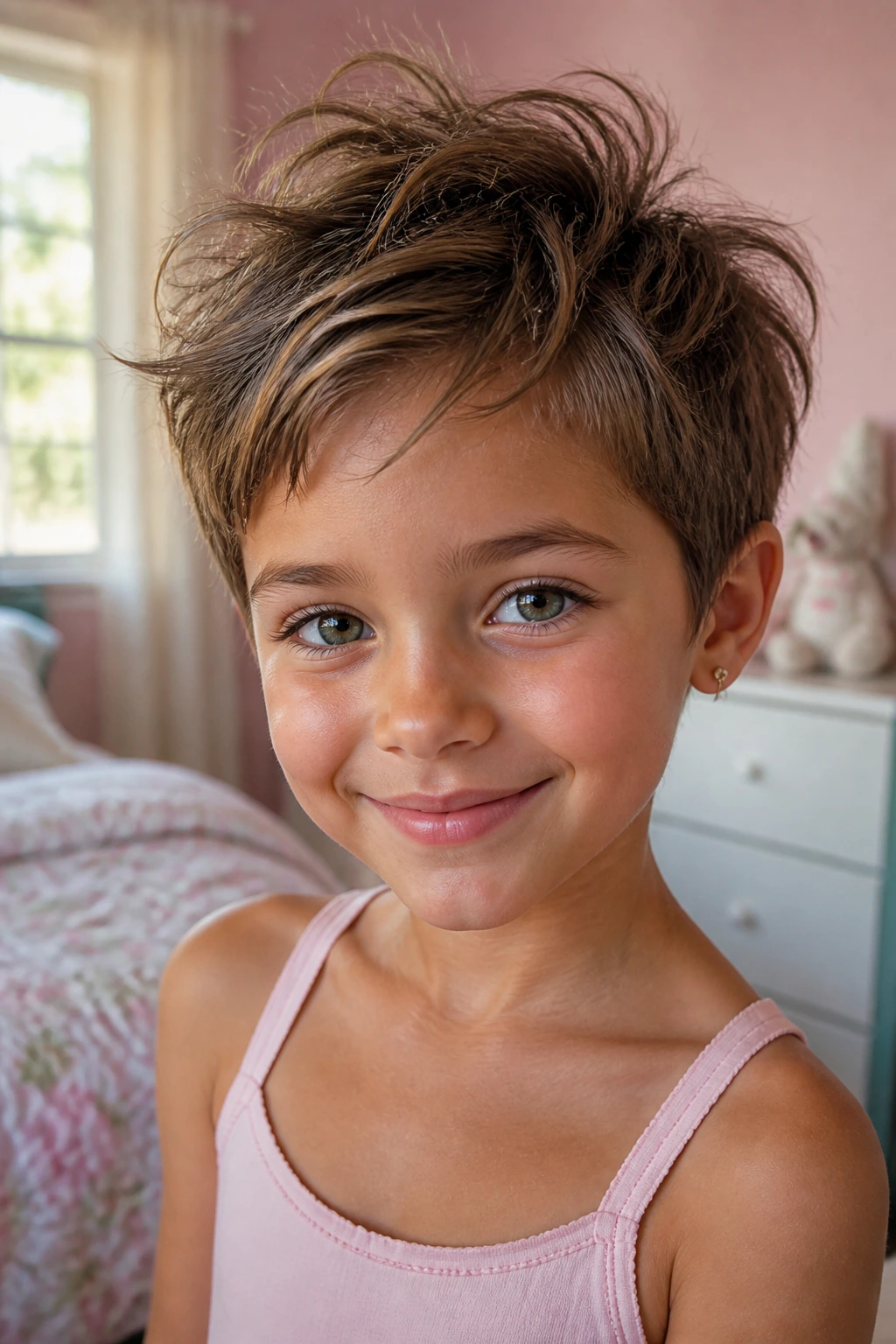
The tousled bedhead pixie is the one that says, “I woke up and I’m still adorable.” That’s the whole mood. The layers are uneven in a deliberate way, so the hair looks light and a little messy without turning into a knotty mess.
This style works especially well when the hair has natural bend or a bit of thickness. A small amount of leave-in conditioner through damp hair, then a quick scrunch with a microfiber towel, is usually enough. If you use too much product, the tousled effect turns sticky fast.
I like this one for active kids because it accepts a little imperfection. If a strand falls forward or the crown lifts up after a nap, the cut still makes sense. That’s a useful haircut.
13. Deep Side-Part Pixie
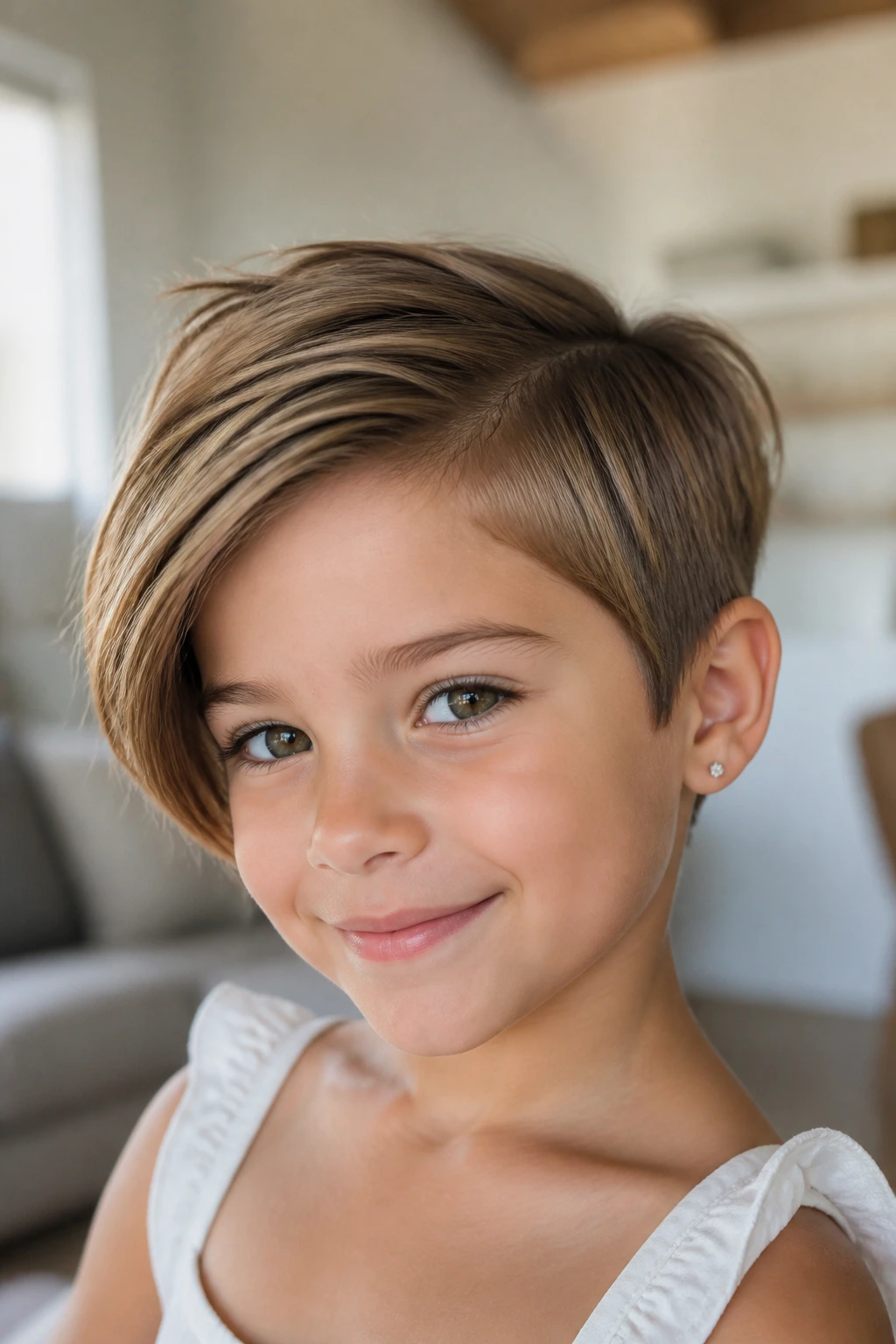
A deep side part can save a pixie when the crown has a stubborn cowlick. Instead of fighting the swirl, you guide the hair across it and let the part do the heavy lifting. The result is a shape that falls more predictably and looks cleaner across the forehead.
This cut usually keeps one side a bit fuller and the front long enough to sweep. Ask the stylist to show you where the hair wants to separate while it’s damp. That tiny detail matters more than people think, because a pixie can look perfect in the chair and stubborn at home if the part ignores the growth pattern.
For kids who like a neat, polished finish, this is one of the simplest options. You can reset it with water in seconds.
14. Tapered Nape Pixie
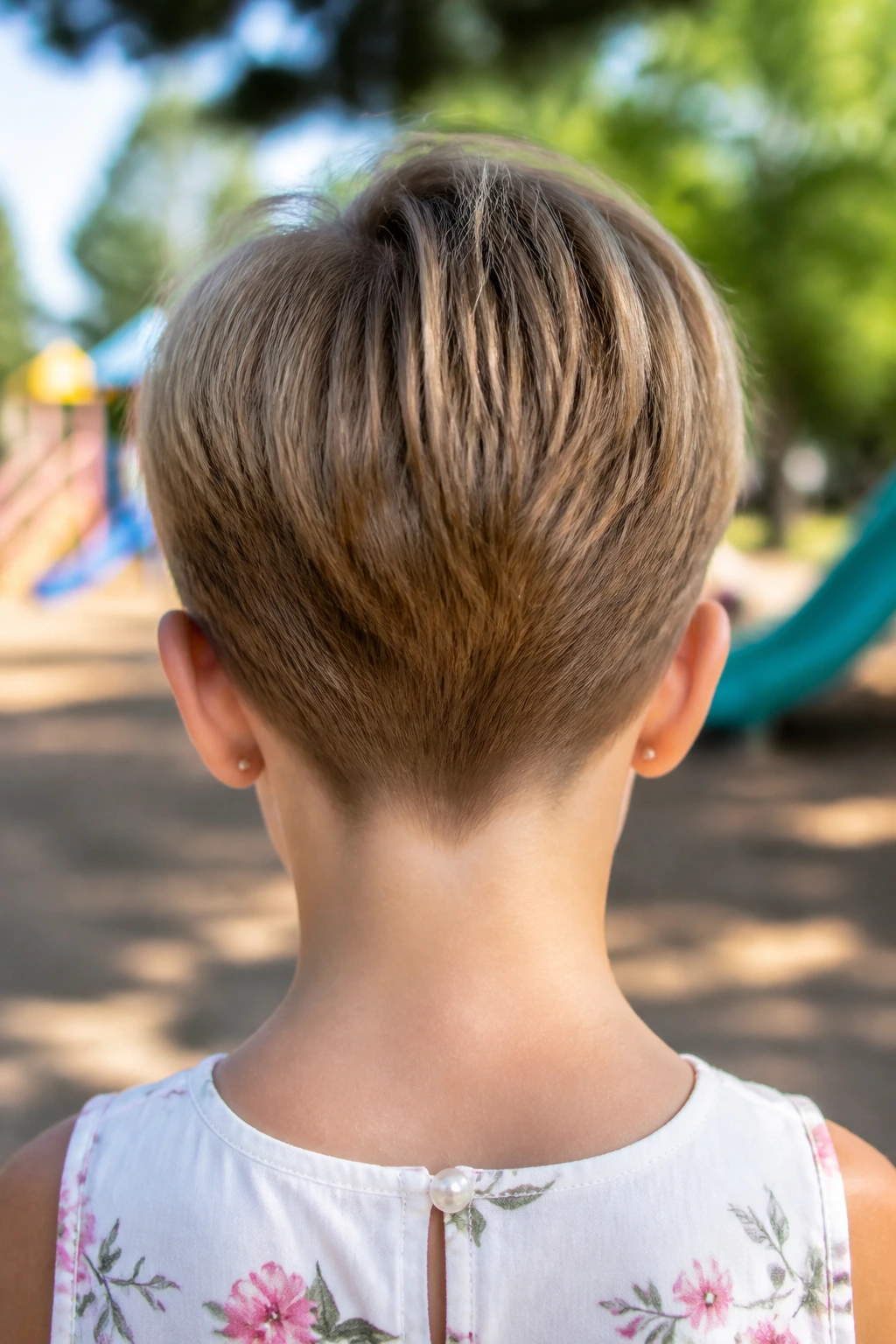
The tapered nape pixie is one of my favorites for active kids because the back stays clean against the neck. No fuzzy shelf of hair. No sweaty line hiding under a collar. Just a close, tidy taper that keeps the cut looking fresh longer.
The trick is not taking the nape too high unless that is the look you want. A taper that follows the natural neckline usually grows out better than a super-short, blunt edge. Ask for soft blending around the ears too, so the haircut doesn’t feel clipped to the skull.
This is a good choice for children who wear uniforms, sports gear, or hoodies often. The shape sits flat under straps and doesn’t snag as much as a longer cut would.
15. Wispy Pixie With Clips
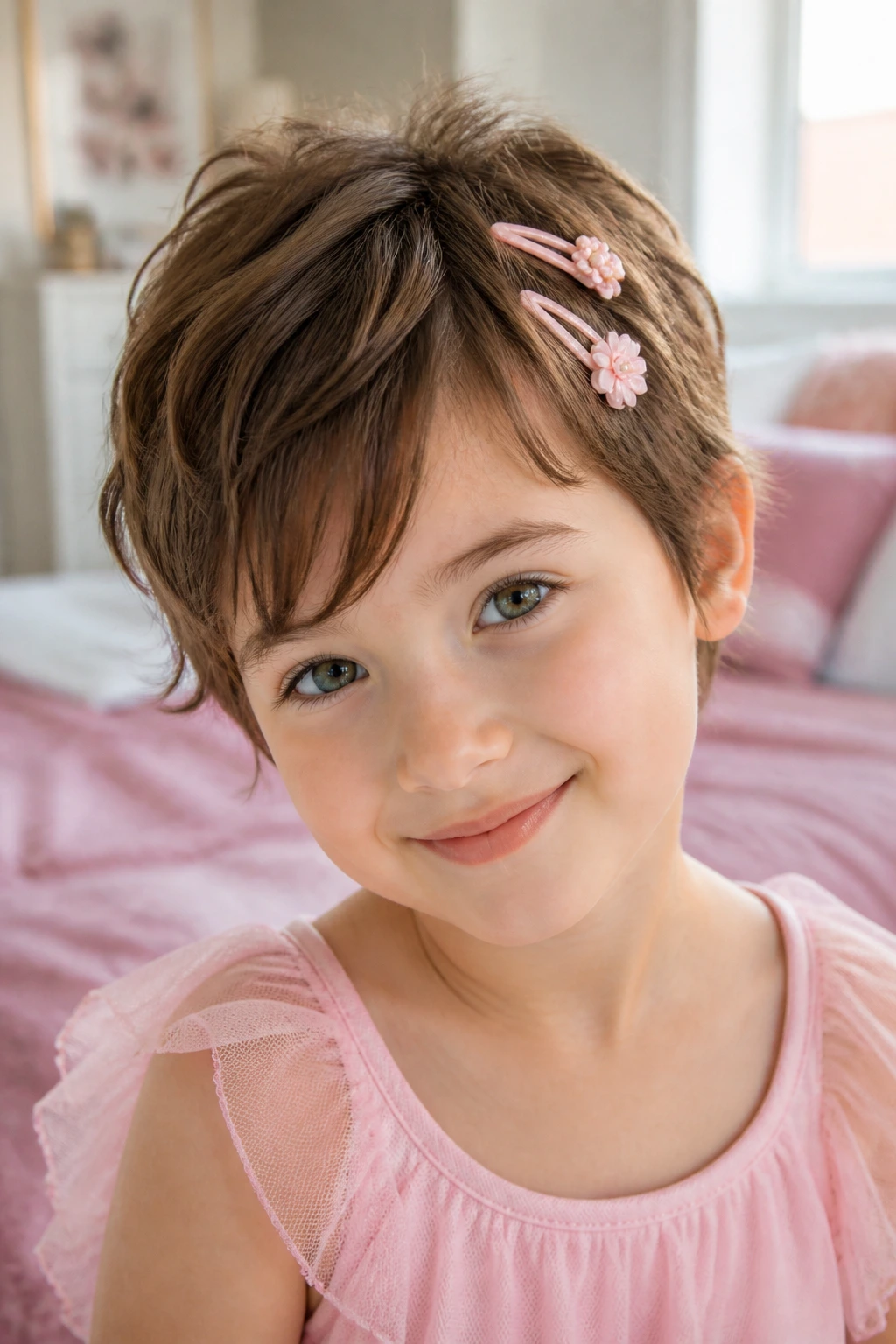
A wispy pixie with clips is built for kids who like decorating their hair. The front stays long enough to pin back, the sides remain light, and the overall shape gives barrettes and tiny snap clips a real place to sit. Without that extra length, accessories start sliding off or looking forced.
I’d ask for just enough fringe to cross the forehead softly, then keep the sides feathered instead of heavy. That gives you a little freedom in the morning — one clip on both sides, a barrette on one side, or a pair of bows when the mood calls for it.
It’s a clever style for children who want short hair but do not want to give up hair accessories. That’s the whole point, really. Short doesn’t have to mean bare.
16. Coily Natural Pixie
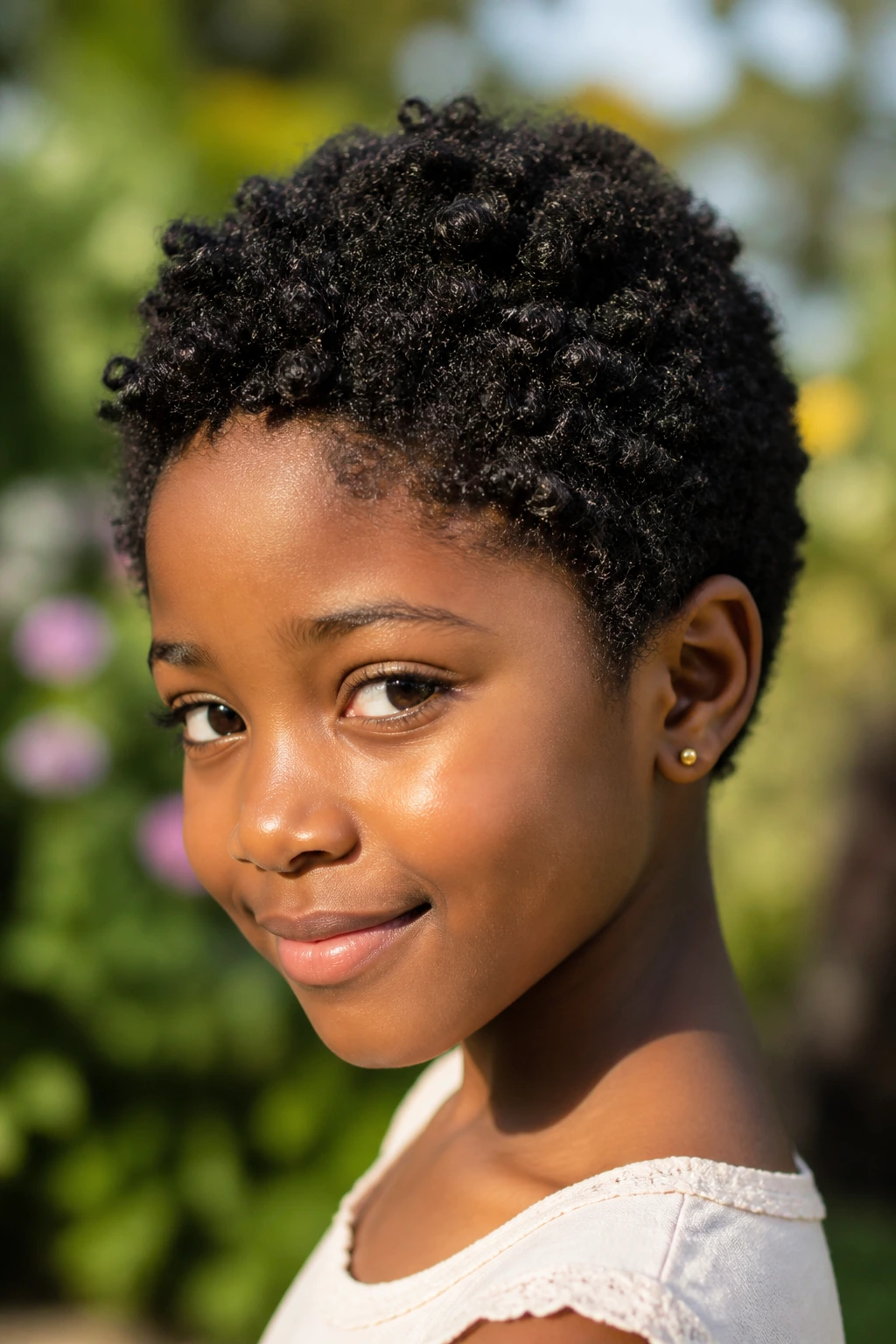
Coily hair needs a shape that respects shrinkage, and a natural pixie does that better than a blunt crop ever will. The hair is cut to follow the coils instead of forcing them into a straight silhouette, which keeps the style soft, rounded, and full of texture.
A dry cut helps here because coils spring up in a way that wet hair can hide. Leave enough length for the curls to form, then taper the sides just enough to keep bulk under control around the ears and nape. A moisturizing leave-in or cream is usually enough; you do not need a heavy product stack.
This is one of those cuts that looks better when the hair is healthy than when it is overloaded with product. Keep the routine simple and the coils will do the rest.
17. Crown-Heavy Pixie
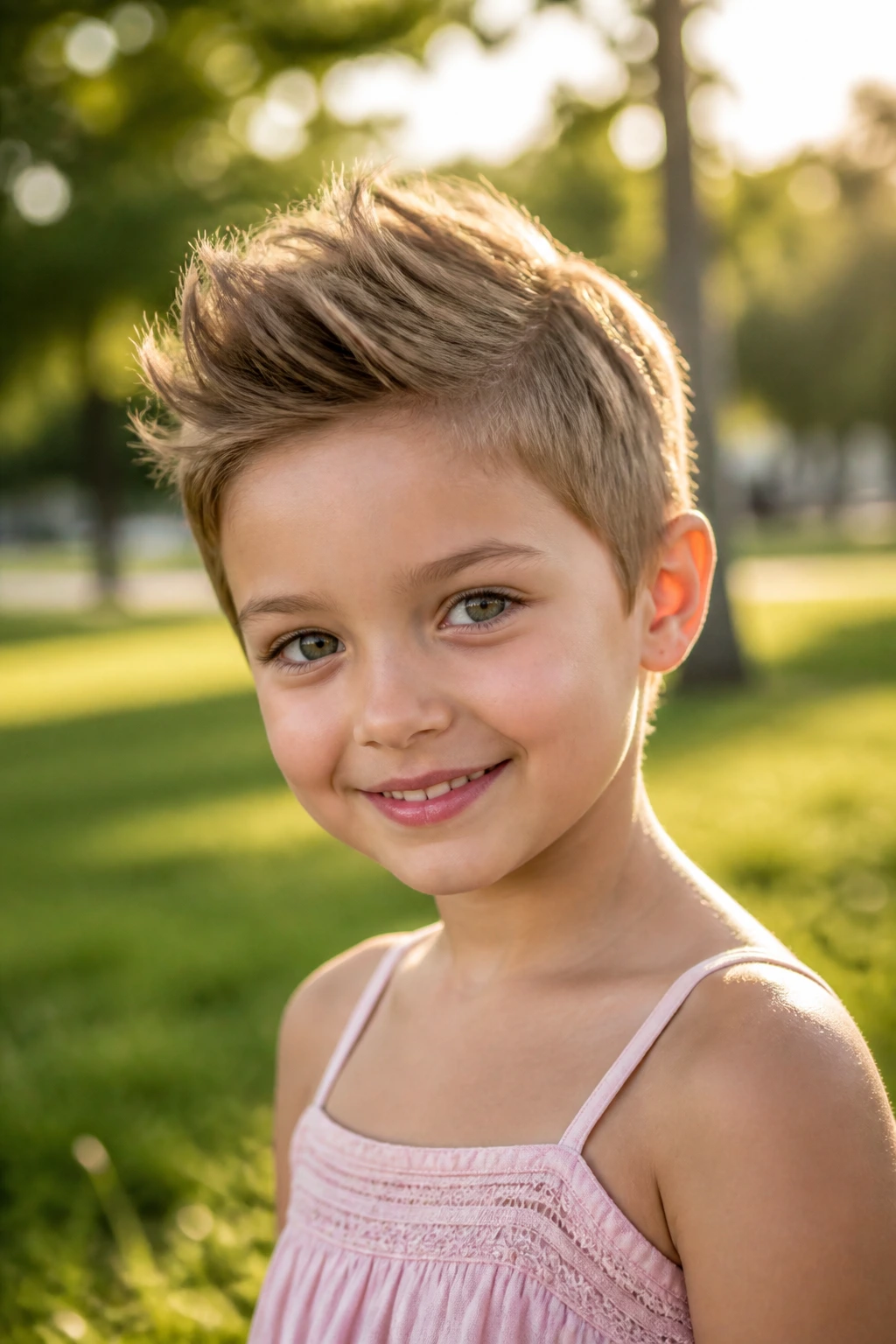
A crown-heavy pixie is all about lift where the eye naturally goes first. The top and crown stay longer, the sides stay compact, and the haircut gets a little buoyancy without turning into a full puff. It’s a nice choice for kids whose hair lies flat and needs help looking lively.
Ask for roughly 3 inches at the crown and a shorter blend around the temples. The shape should climb upward a bit, not spread outward. That difference keeps the haircut from feeling wide.
The best part is that a crown-heavy pixie gives you room to style. You can smooth it down for school or fluff it slightly for a weekend look. Same cut. Different energy.
18. Soft Undercut Pixie
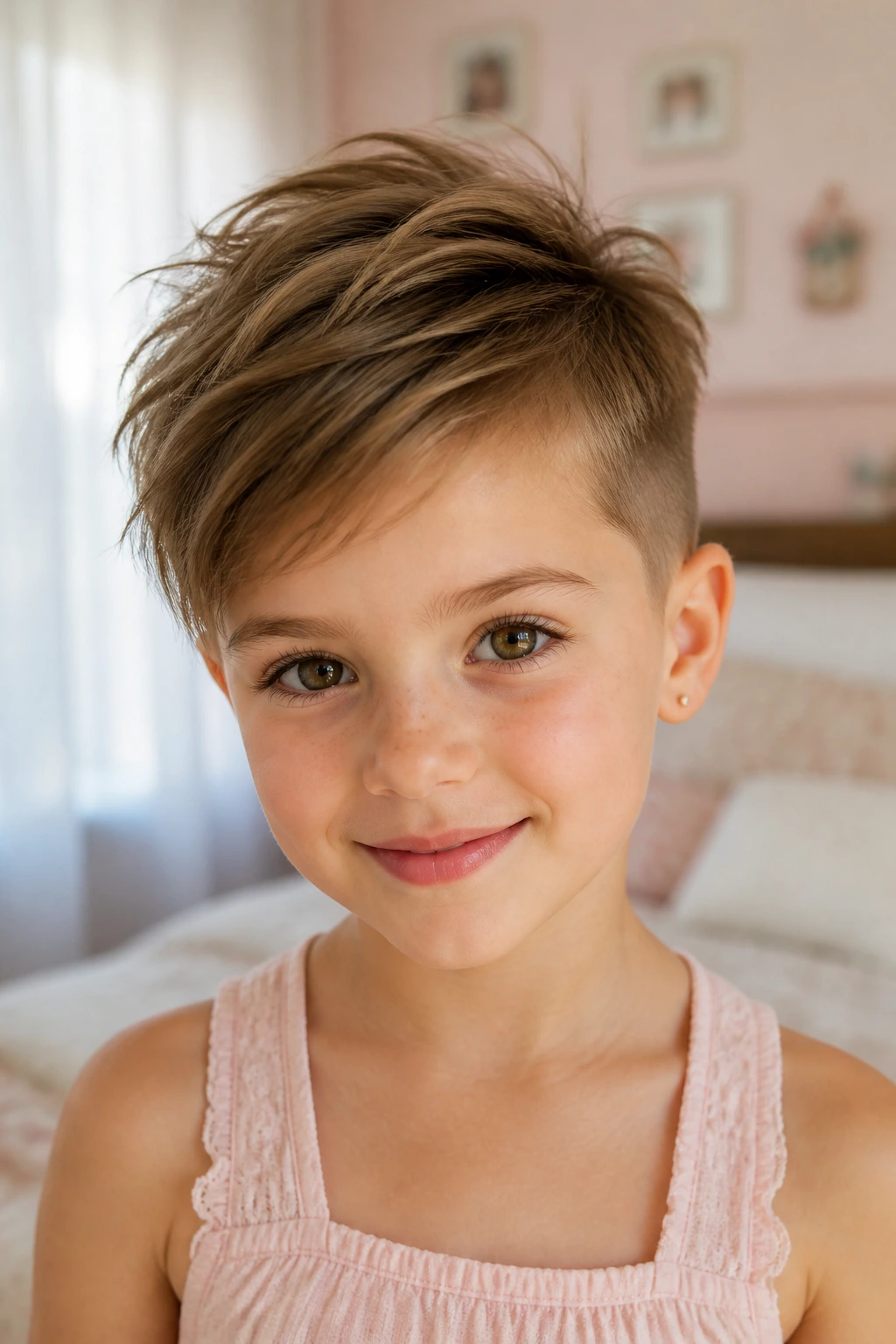
A soft undercut pixie is useful when the hair is thick enough to build up at the sides and back. The underlayer is cut shorter, but not shaved harshly, so the top sits over it with a little lift and less bulk. It feels lighter on the head, which some kids love.
I prefer a soft undercut over a hard one for children because it grows out more gently. The line between the top and underlayer should be blended enough that there is no abrupt shelf. Ask for the stylist to keep the undercut subtle unless your child is asking for something more dramatic.
This style also helps during hot, active days because it removes some of the weight from the neckline. Less puff, less heat, less fuss.
19. French-Inspired Pixie
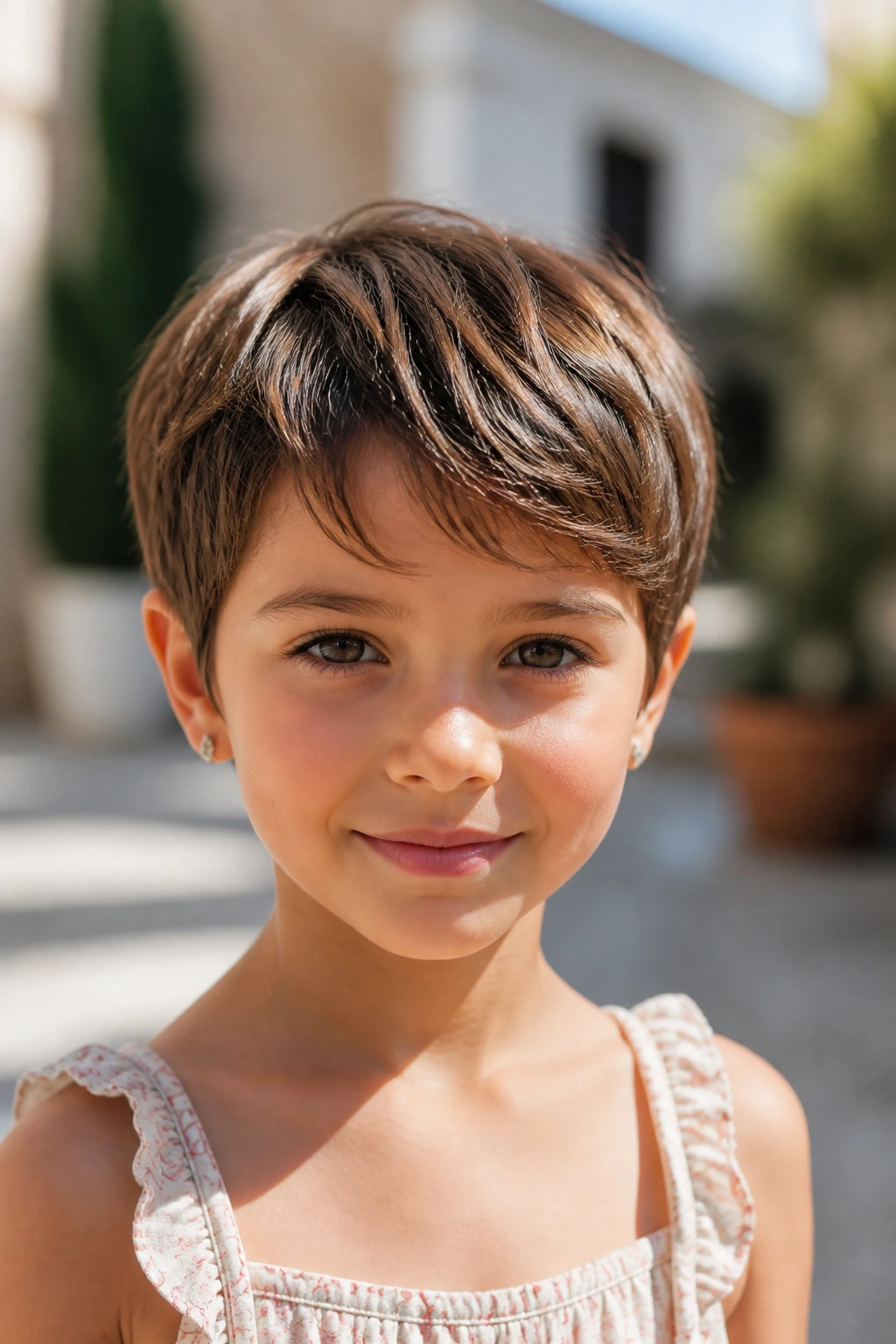
The French-inspired pixie has a little softness around the fringe and a clean, close shape at the back. It feels airy instead of overworked. On a little girl, that usually means the haircut looks polished without looking stiff.
The key details are a slightly longer fringe, a narrow silhouette at the sides, and a crown that is light but not fluffy. This version works well on straight or gently wavy hair. If the hair is very thick, the stylist should remove bulk underneath so the shape does not mushroom out.
I like this cut when the family wants something neat for daily wear but still a little special for photos or events. It has that quiet, clean look that stays easy.
20. Mushroom-Inspired Pixie
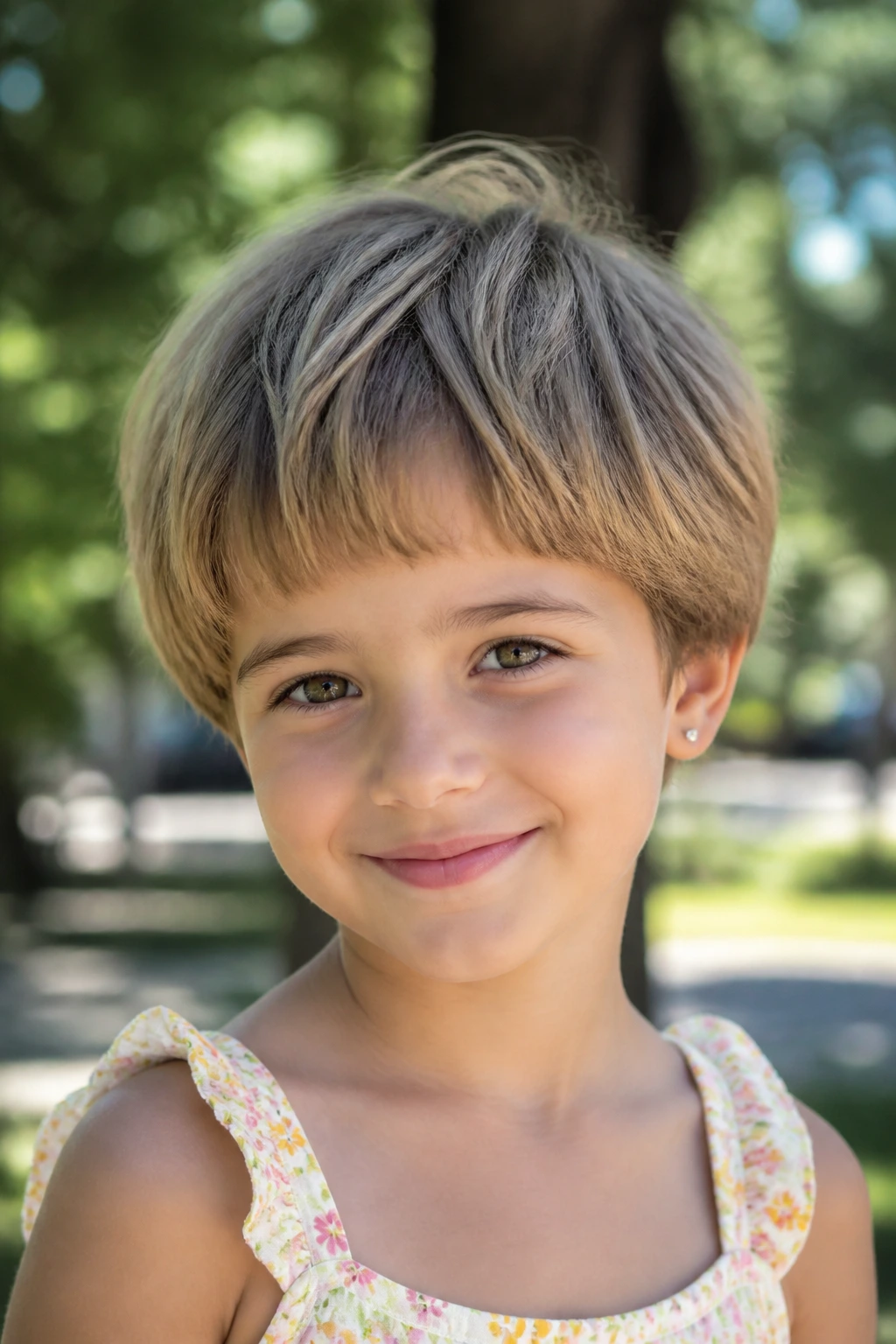
A mushroom-inspired pixie sounds bold, but it does not have to look like a bowl cut from the wrong decade. The modern version keeps a rounded outline and soft texture through the ends so the shape feels cute, not rigid. It’s more tailored than the old-school version people worry about.
This cut works best when the perimeter is softened and the top has movement. Ask the stylist to avoid a hard, blunt edge all the way around. A little feathering changes everything. It stops the haircut from sitting like a cap and gives it some bounce.
For straight hair, the mushroom-inspired shape can look very neat. For wavy hair, it gets a looser, almost playful curve. That difference is worth paying attention to.
21. Shaggy Pixie
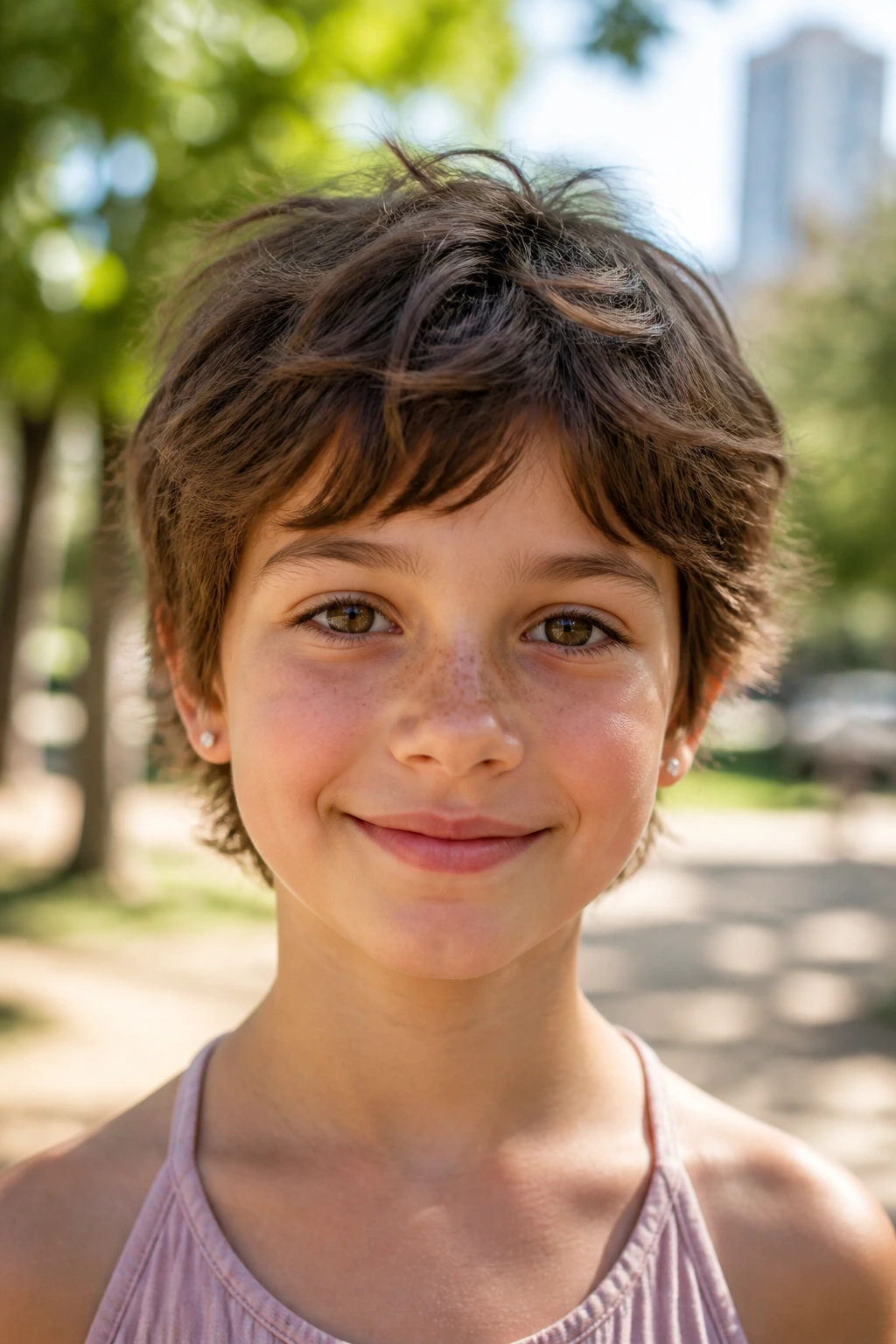
A shaggy pixie is basically the pixie with a little bit of mischief in it. The layers are loose and uneven in the nicest way, so the hair moves instead of sitting flat. It works especially well when a child’s hair has a natural wave or a little thickness.
This cut is friendly to kids who never keep the same part for more than five minutes. A finger comb, a bit of spray, and the shape is back. The ends should be choppy enough to show texture but not so shredded that the style looks unfinished.
If your child likes hair that feels a little wild, this is a good one. It has personality without requiring much effort.
22. Curly Fringe Pixie
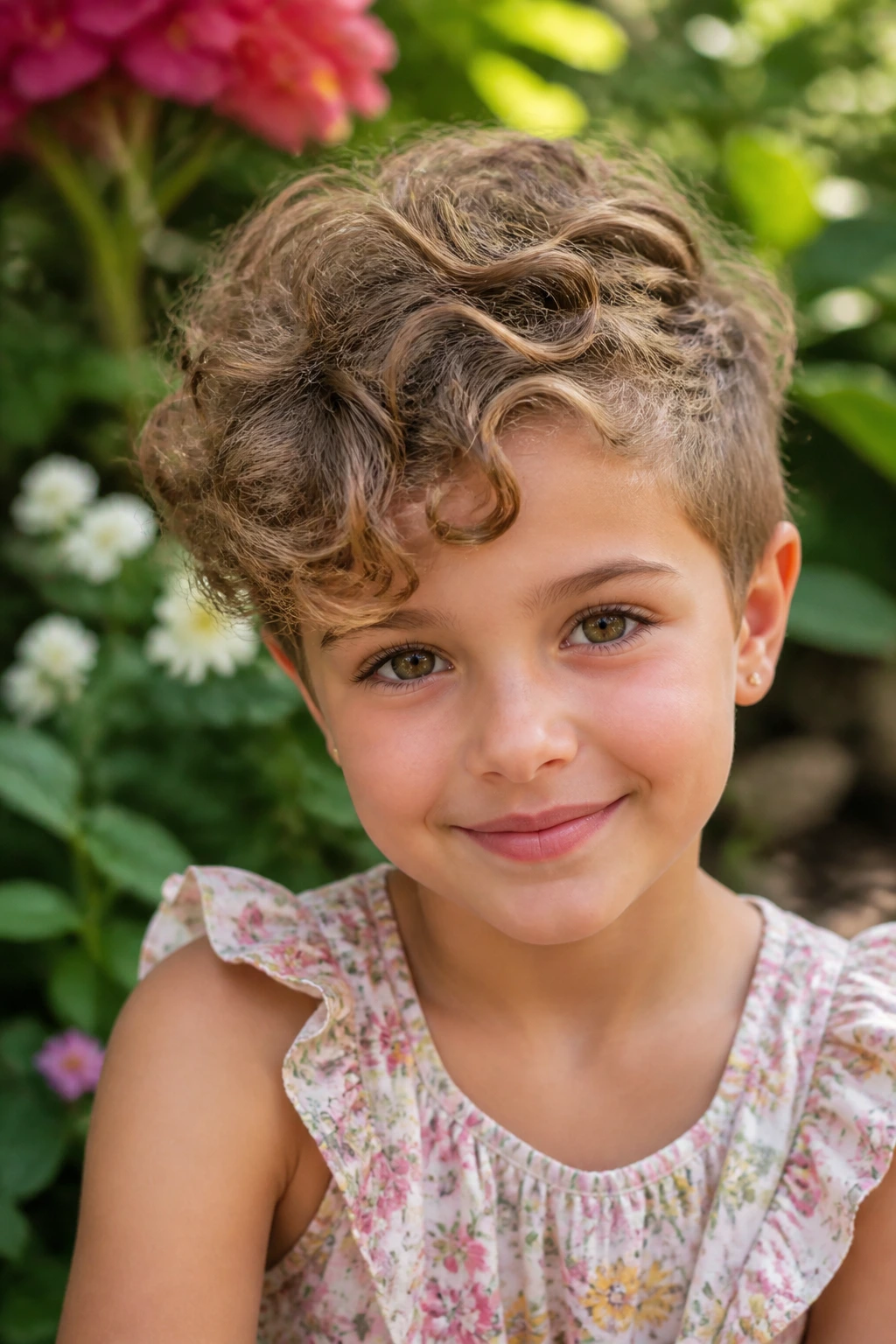
Curly bangs need respect, not control, and a curly fringe pixie gives them that. The fringe stays long enough to spring upward into a soft curve, which is the part many people get wrong. Cut curly bangs too short and you end up with a puffy surprise.
Leave the front longer than you think you need, then let the curls settle before making any final decisions. The sides should taper close so the fringe stays the star. A little curl cream or leave-in on damp hair helps keep the shape defined without weighing it down.
This is a lovely option for kids who like having curls in front but do not want them hanging in the eyes all day. It’s short, but not severe.
23. Sleek Tucked Pixie
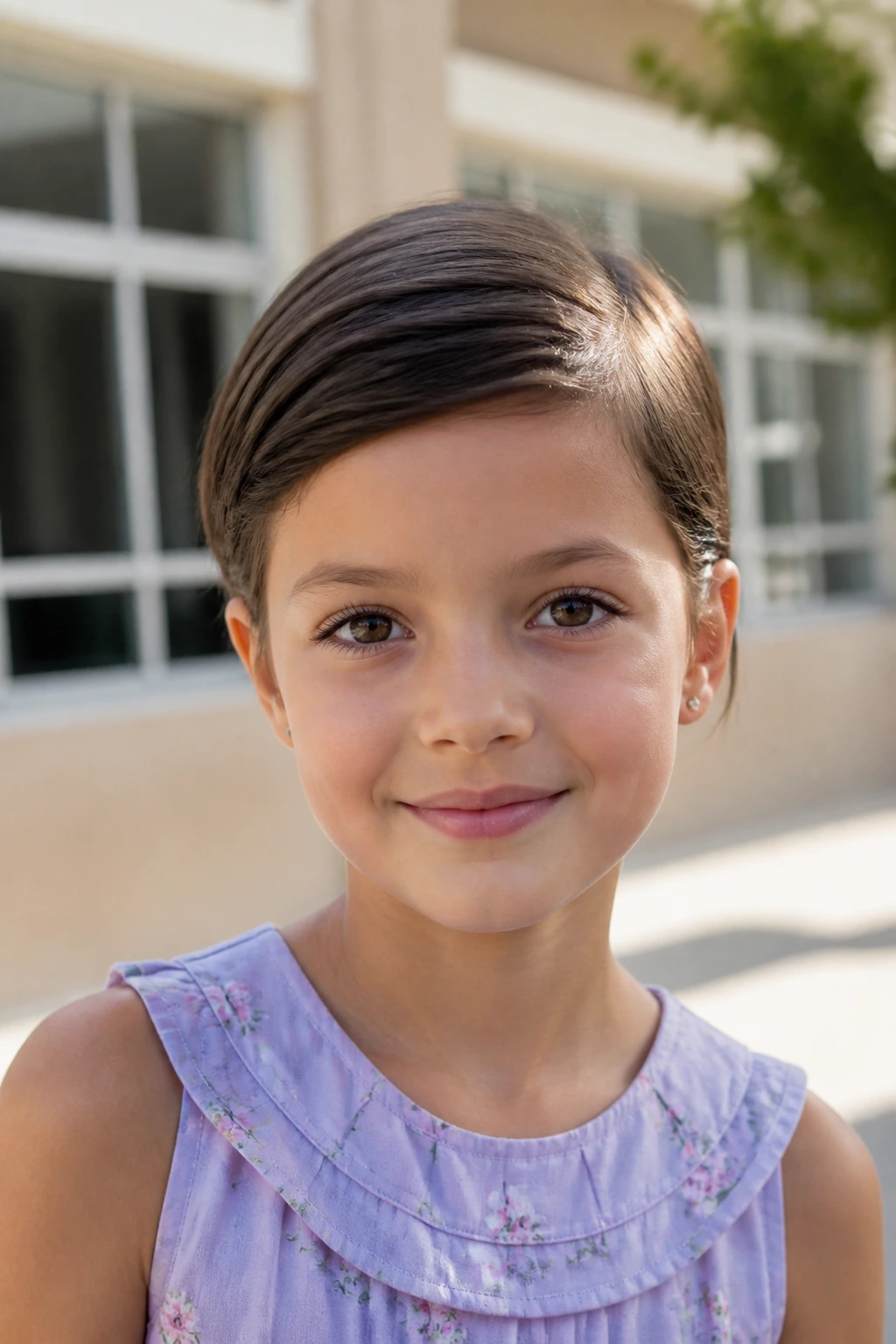
The sleek tucked pixie is the clean one in the group. Hair is kept smooth at the sides and front, then tucked behind one or both ears to create a simple, neat frame around the face. It’s a good choice when a child likes order and hates flyaways.
This style depends more on cut than product. If the sides are too bulky, the tuck will look forced. Ask for a smooth contour around the ears and a fringe long enough to guide back without sticking up. A tiny bit of smoothing cream can help, but keep it light.
I’d reach for this cut when a family wants something that works for school photos, dress-up days, and regular everyday wear without changing shape much.
24. Playful Spiky Pixie
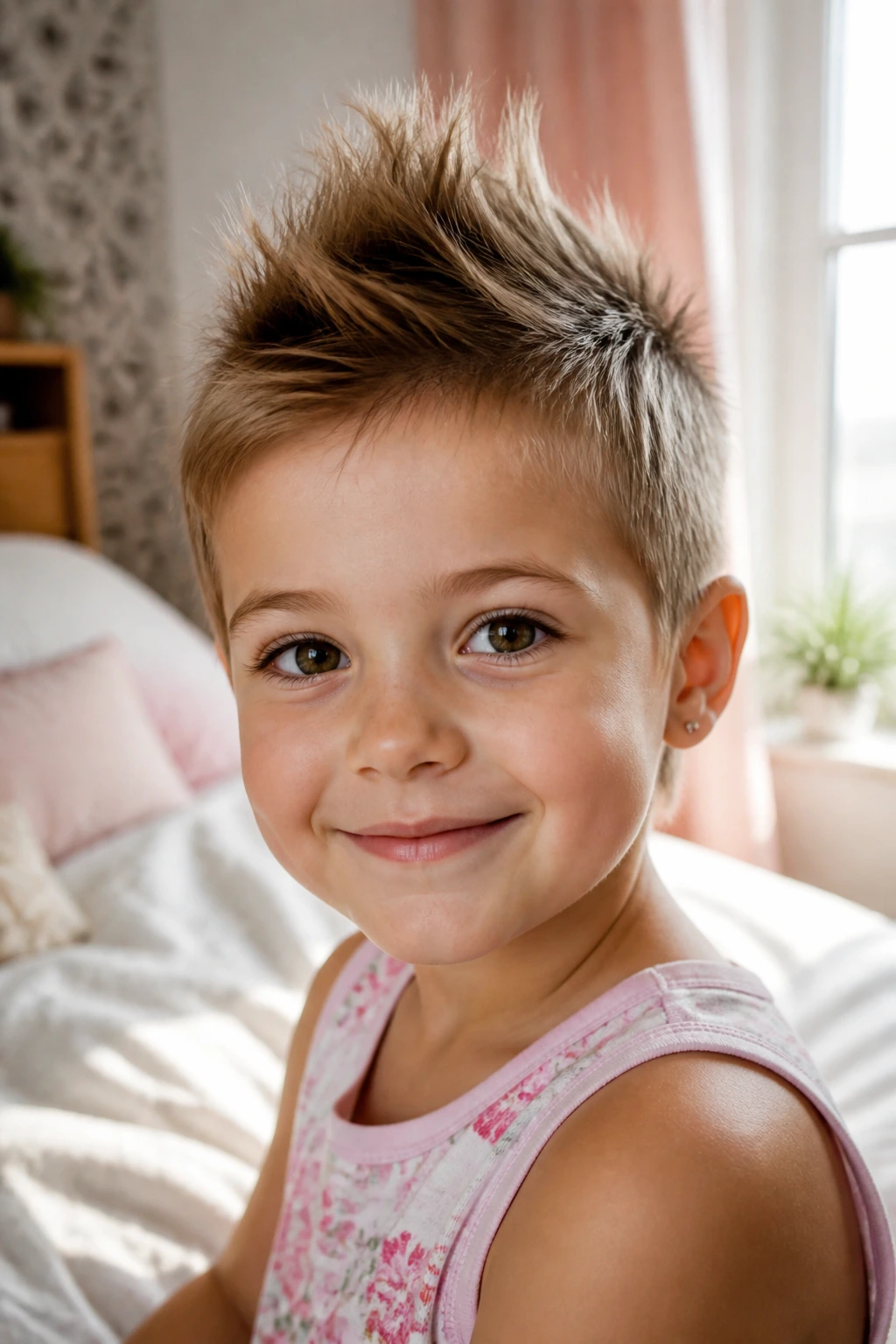
The playful spiky pixie is fun without looking like it’s trying too hard. The top is cut short enough to pinch into little points, while the sides stay cleaner and closer to the head. On a child, that gives the haircut some lift and humor.
A pea-size amount of light styling cream is plenty. Warm it between your fingers, then press and separate the top in small sections. Don’t use sticky gel. It makes short hair look stiff, and kids usually hate how it feels.
This style is best for children who like a little energy in their hair and do not mind a shape that changes from day to day. It’s a tiny haircut with a big personality.
25. Mini Pompadour Pixie
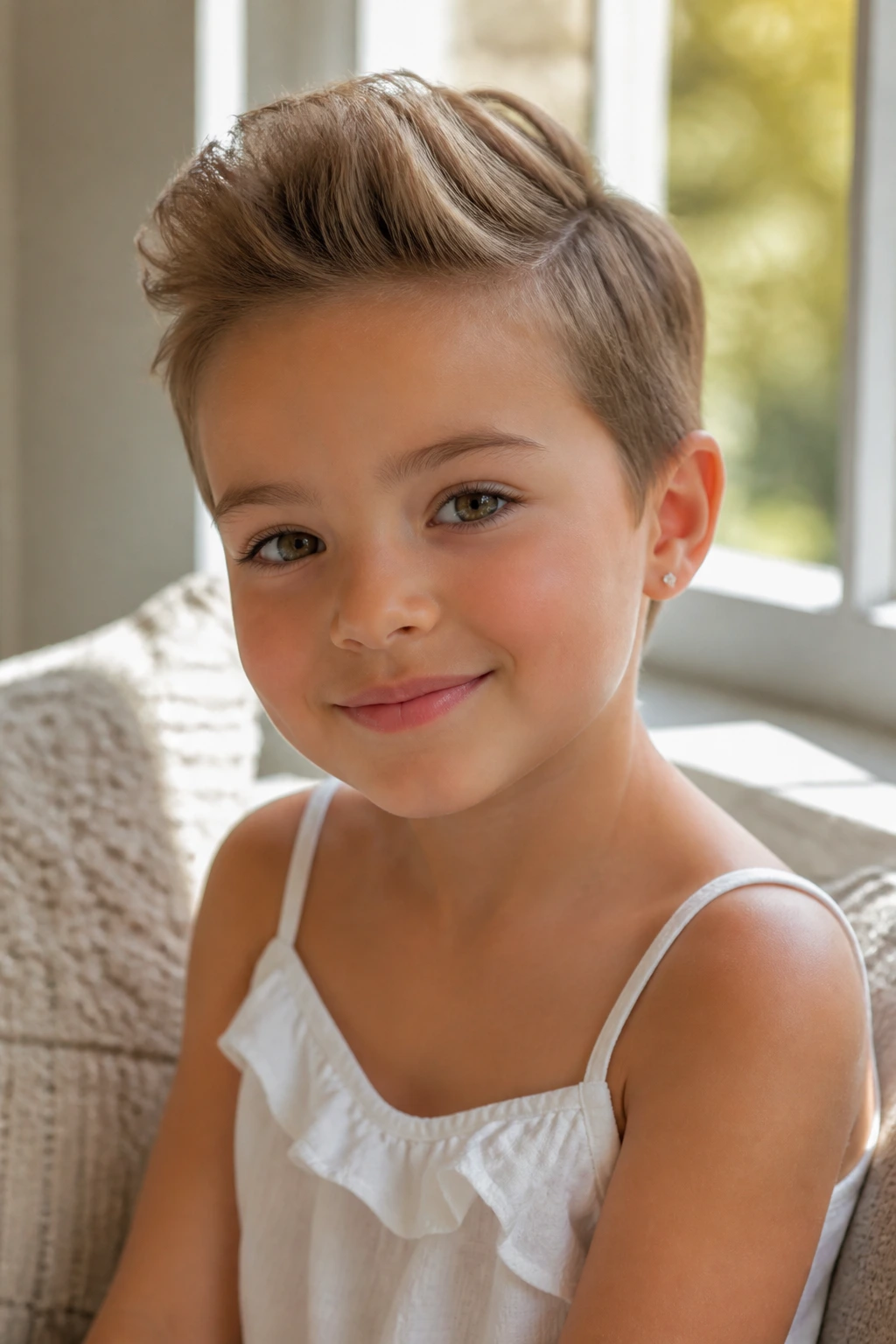
A mini pompadour pixie gives the front just enough height to feel special. The top is brushed or finger-lifted back from the forehead, while the sides stay short and neat. It has a dressy little feel, but not so much that it becomes a costume.
This cut works well when the fringe naturally wants to move back or up. Ask for a little extra length at the front and crown so you can shape it without needing heat every morning. If the hair is fine, a touch of root lift at the crown helps the front stay up.
It’s a fun option for special occasions, photos, or any child who likes the idea of hair that stands a bit taller than average. Small lift. Big effect.
26. Face-Framing Pixie
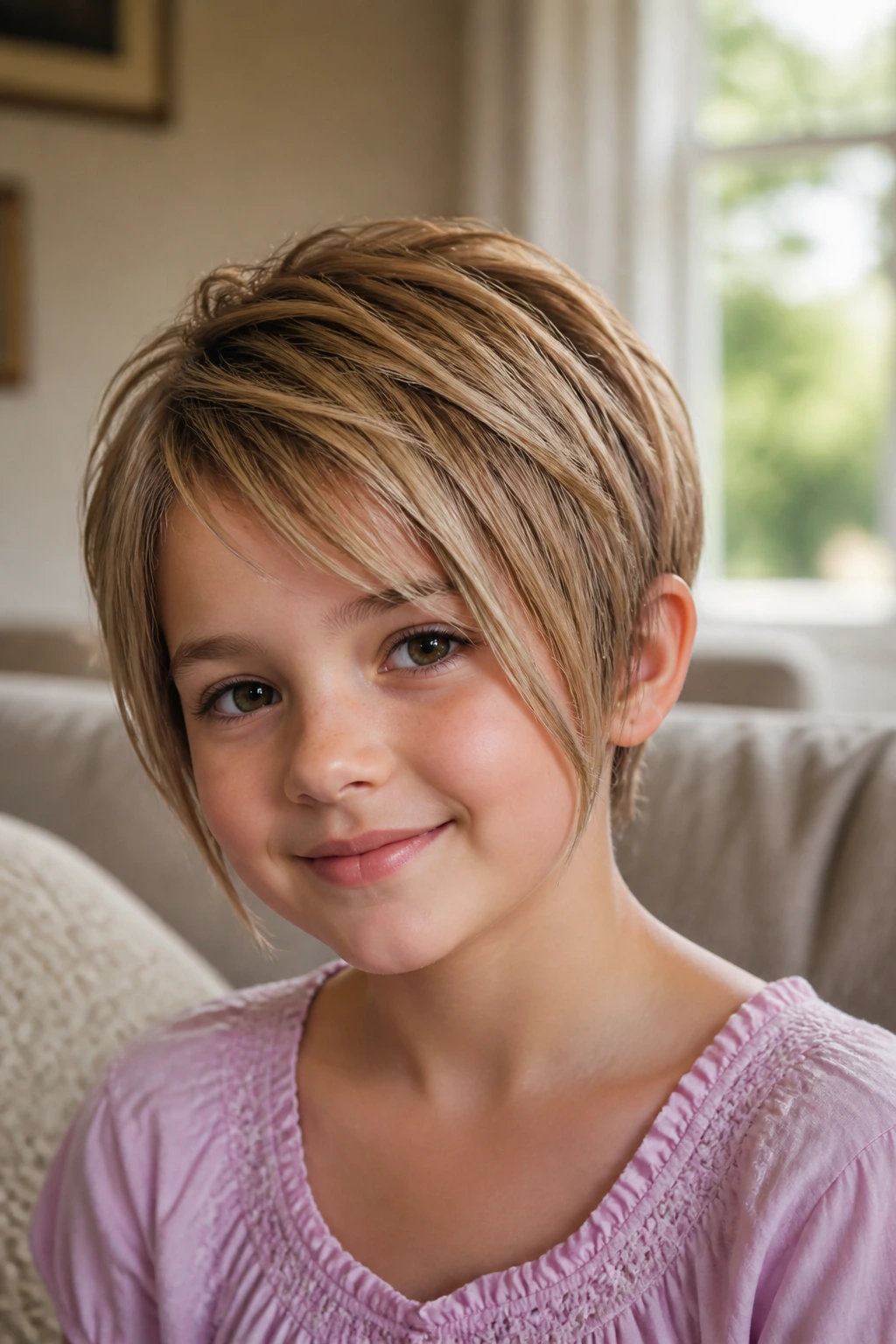
The face-framing pixie leaves the temples and front a little longer so the hair curves around the cheeks and jaw. That softness matters. It keeps the short haircut from feeling too exposed, and on a child it often looks more relaxed than a severe crop.
I like this version for kids who are unsure about short hair. The face-framing pieces give them something familiar to touch and tuck. Ask for the shortest parts to stay compact at the nape and under the ears, while the front stays long enough to move.
This cut also gives you styling flexibility. You can wear it swept forward, tucked back, or clipped on one side. That’s useful when a child changes her mind halfway through the morning.
27. Thick-Hair Tapered Pixie
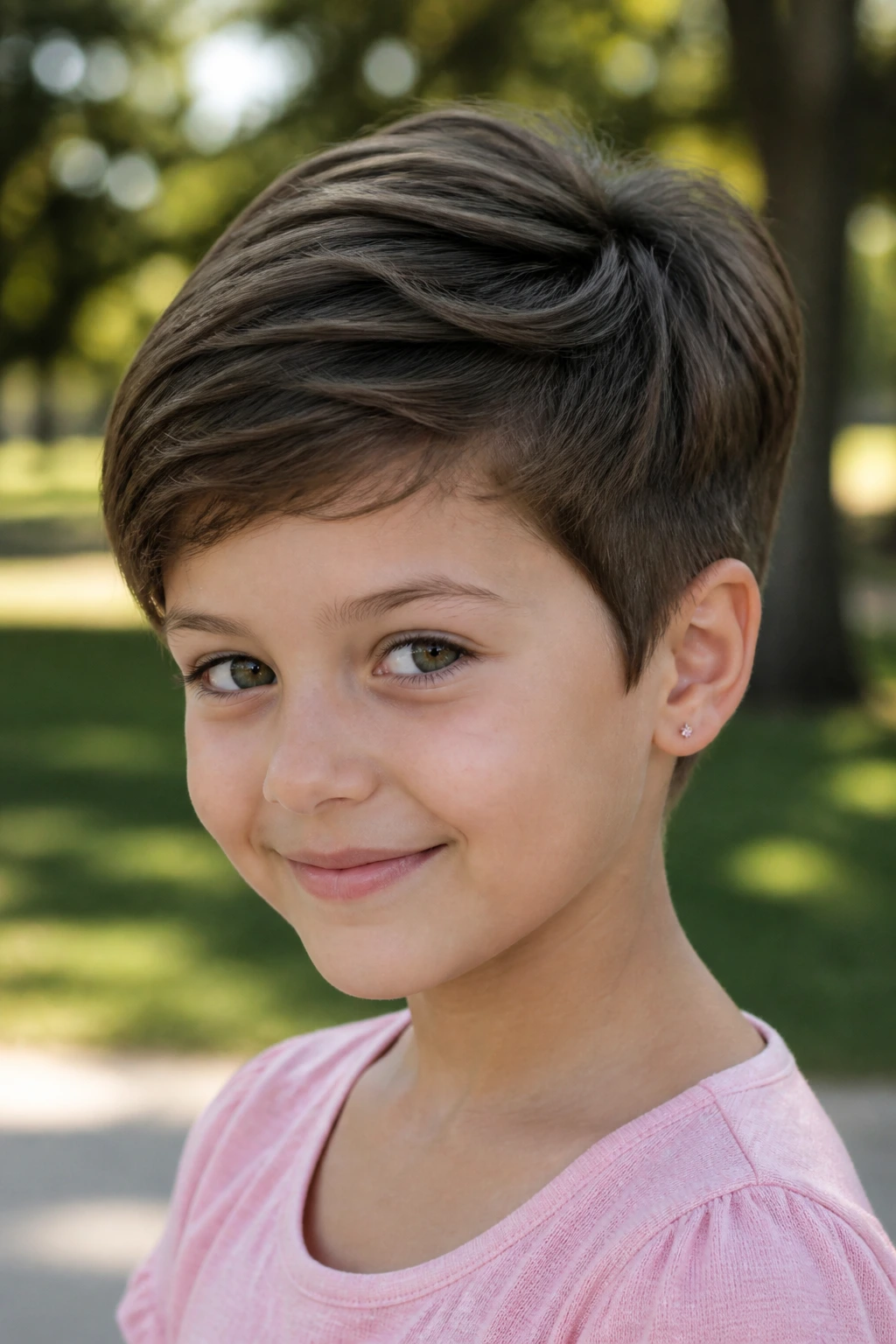
Thick hair can turn into a helmet if the cut is too blunt, and a tapered pixie solves that problem. The sides and nape are reduced carefully, and the top is layered enough to keep the shape light. The whole point is to remove bulk without making the haircut look thin.
The stylist may need to use thinning shears or point-cutting, but it should never feel shredded. Ask for softness through the interior rather than a blunt collapse at the ends. That matters because thick hair grows outward fast if the weight is left in the wrong place.
This cut is one of the best for keeping a child cooler around the neck and ears. It also sits better under hats, which is a small thing until you deal with it every single day.
28. Soft Round-Face Pixie
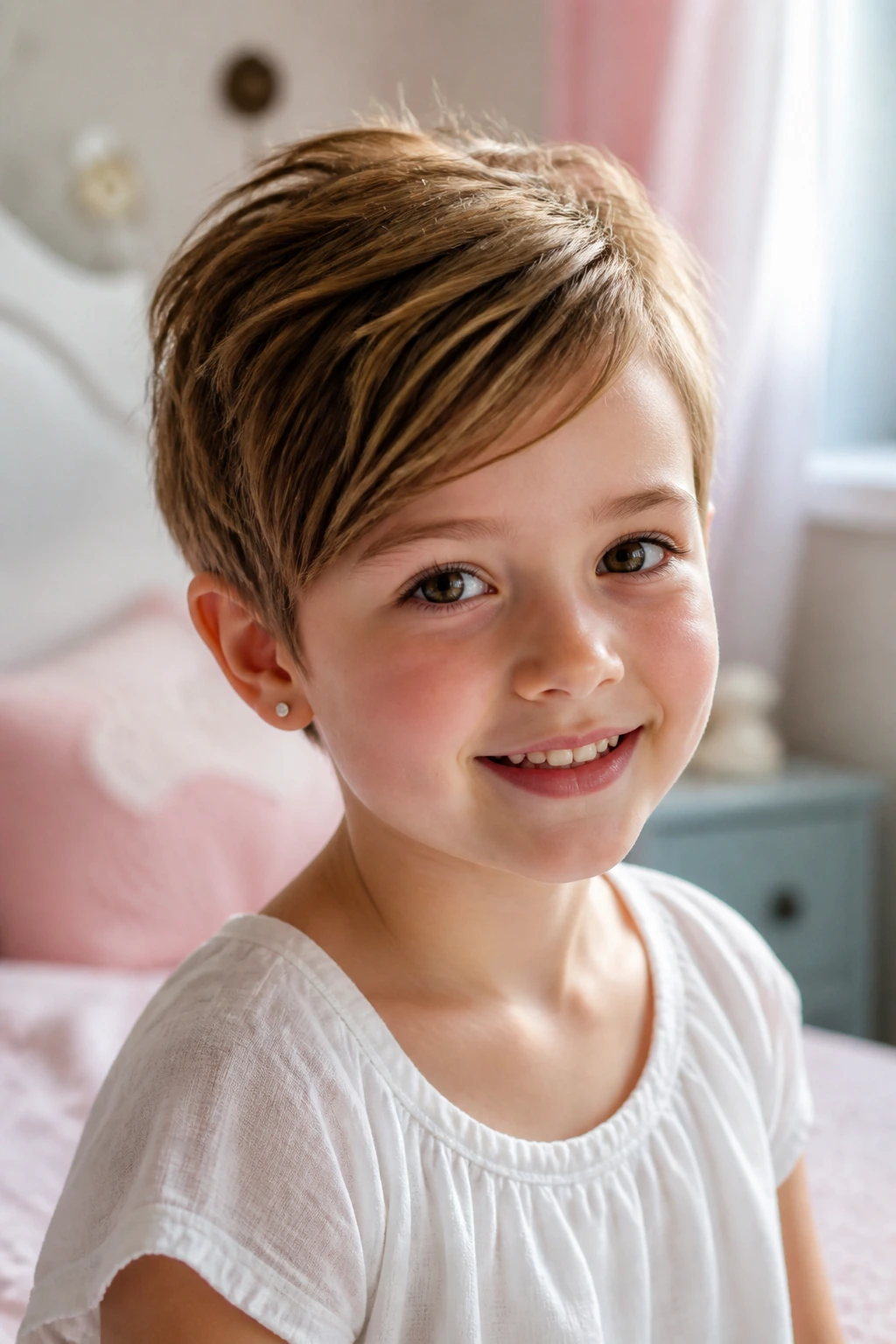
A round face usually benefits from a little height at the crown and a little calm at the sides. That is exactly what a soft round-face pixie gives you. The line climbs gently upward instead of spreading sideways, which helps the face feel more open.
The fringe should stay side-swept or wispy rather than blunt across the forehead. That keeps the center of the face from looking boxed in. Ask the stylist to maintain some softness around the cheeks and to avoid too much width where the hair lands by the ears.
This is a good cut when you want short hair without making the face look wider than it is. The trick is balance. Not narrow. Not fluffy. Balanced.
29. Angular Fringe Pixie
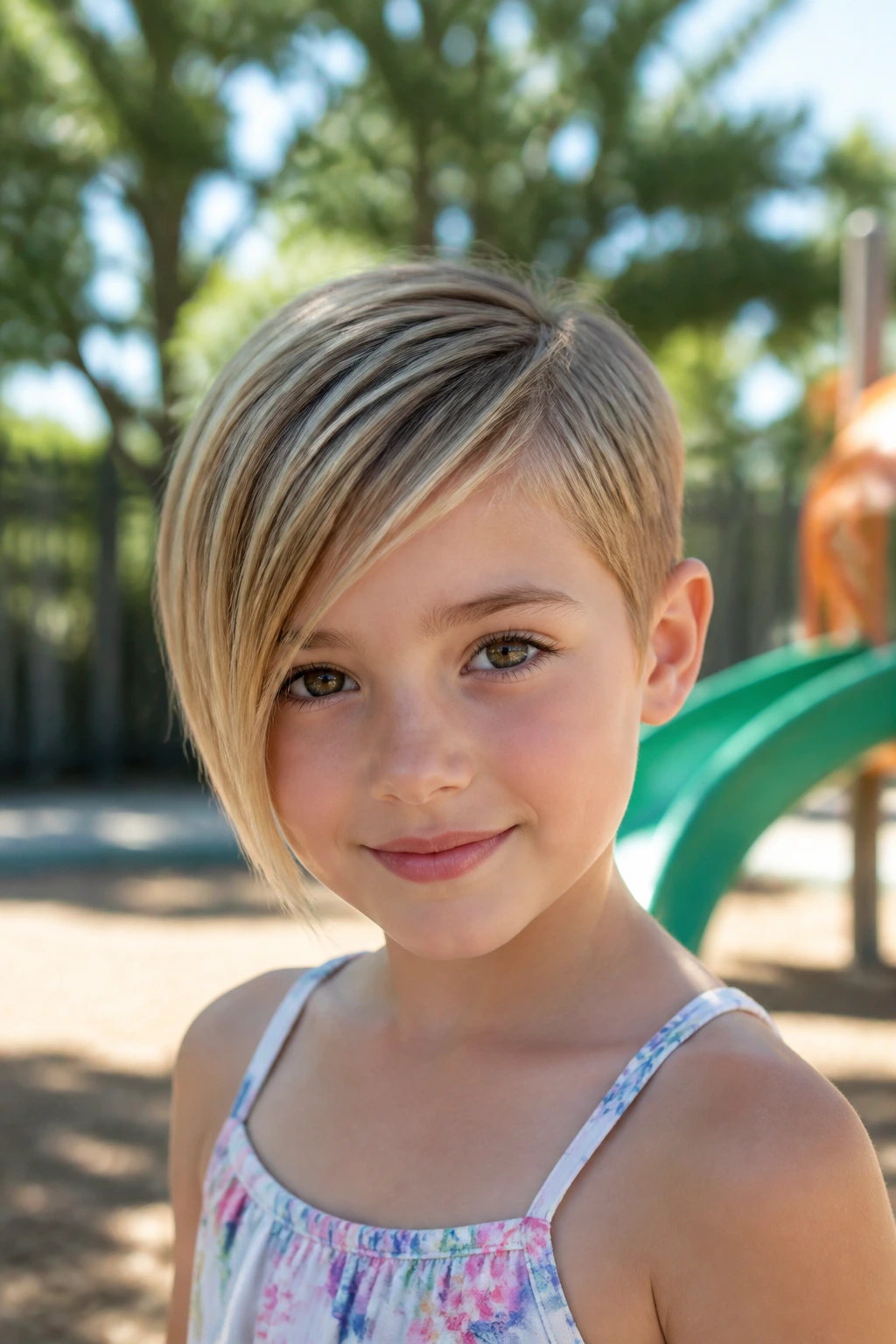
An angular fringe pixie uses diagonal lines to create shape. One side may sit a little longer, or the fringe may sweep across at a sharper angle than a classic side part. The result is energetic and clean at the same time.
This cut is useful for balancing stronger jawlines or adding structure to very soft hair. It works because the eye follows the diagonal line, not a blunt horizontal edge. Ask for a soft taper underneath so the angle stays the focus and doesn’t get crowded by bulk.
For a child who likes a little edge but still needs a haircut that behaves at school, this is a nice middle ground. It looks intentional without turning dramatic.
30. Patterned Nape Pixie
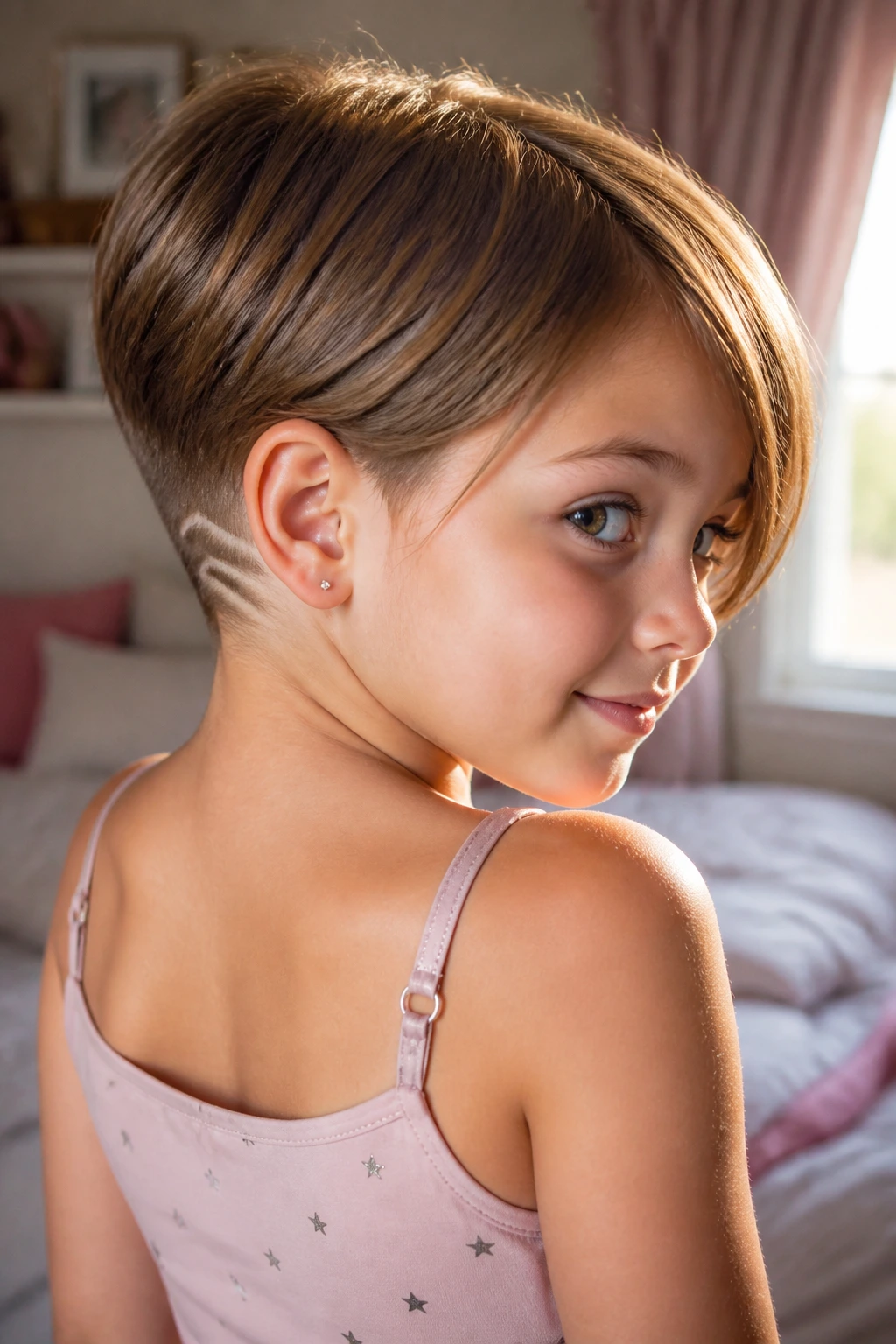
A patterned nape pixie adds a tiny bit of fun at the back, usually with a small line, curve, or subtle shape shaved into the nape. It’s a detail, not the whole haircut. On a child, that detail can feel special without taking over the style.
If you go this route, keep the pattern small enough to grow out cleanly. Bold patterns need more frequent upkeep and can look messy faster than the rest of the cut. I prefer a simple line or soft notch unless the child is very committed to the idea.
This is the pixie for kids who want one little surprise in the haircut. It’s playful, and yes, it tends to get comments at the playground.
31. Wavy Pixie
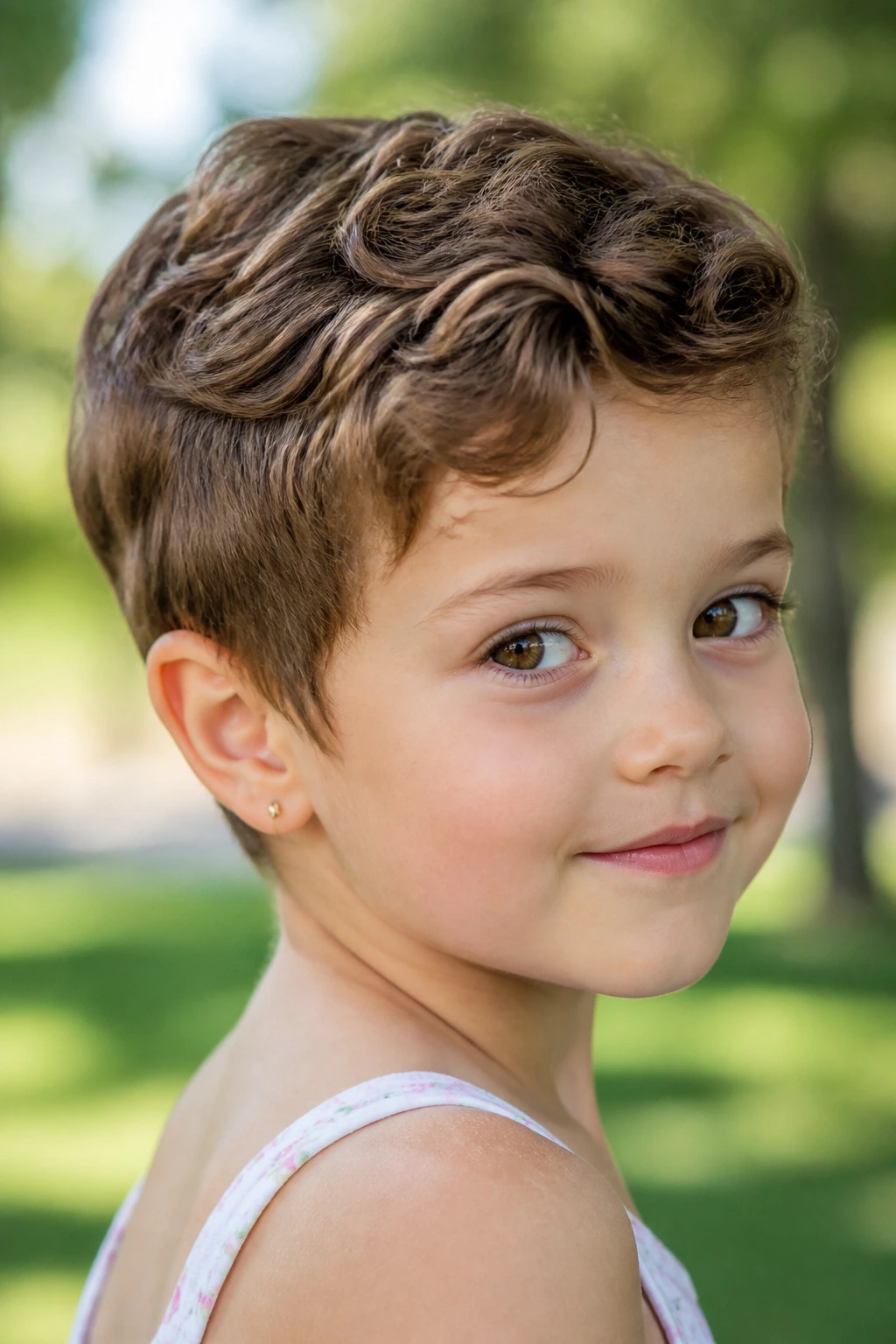
Wavy hair has a mind of its own, so the best pixie for it is one that follows the wave instead of flattening it. The top stays a little longer, the sides stay controlled, and the shape bends with the hair rather than against it. That is what makes it look easy.
A wavy pixie usually needs less product than people expect. A touch of leave-in or a light mousse is often enough. Let it air-dry when possible. If you blow-dry every wave straight, the cut starts fighting back.
The best part of this style is that it can look different after every wash without losing its identity. Some days it sits smoother. Other days it gets a little more lift. That’s not a flaw.
32. Swept-Back Pixie
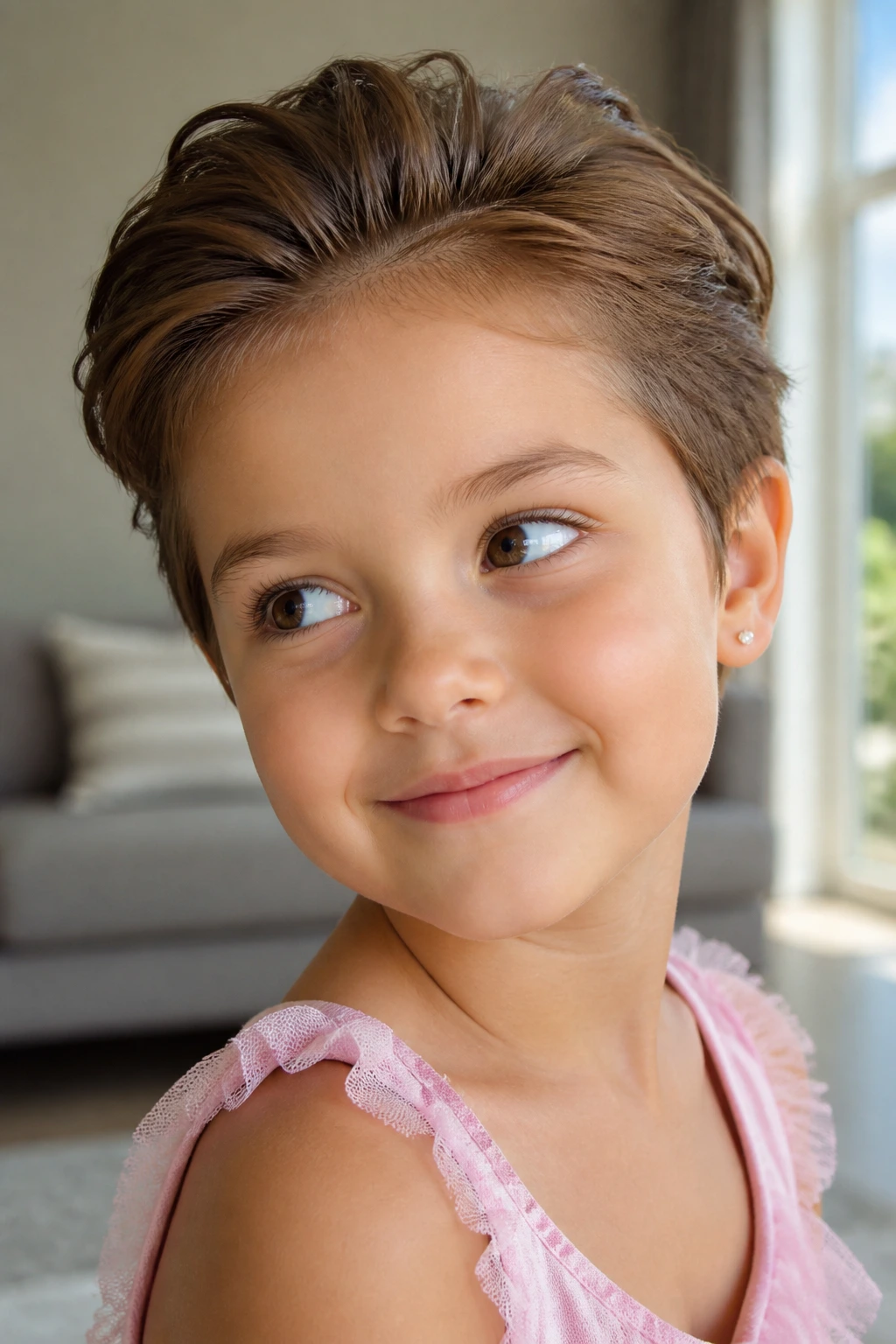
A swept-back pixie clears the forehead and gives the face room. The front is long enough to be brushed or finger-pushed back, which makes it useful for kids who do not want hair in front of their eyes but also do not want a super-short fringe.
This style works well when the crown has a bit of natural lift. If the hair is very flat, ask for a little extra length through the front and top so it can hold that backward motion. A soft clip or tiny comb can help on days when the hair refuses to stay put.
It’s a good choice for active kids because it keeps the face open. No constant pushing hair out of the eyes. That alone can be worth the haircut.
33. Soft Mohawk Pixie
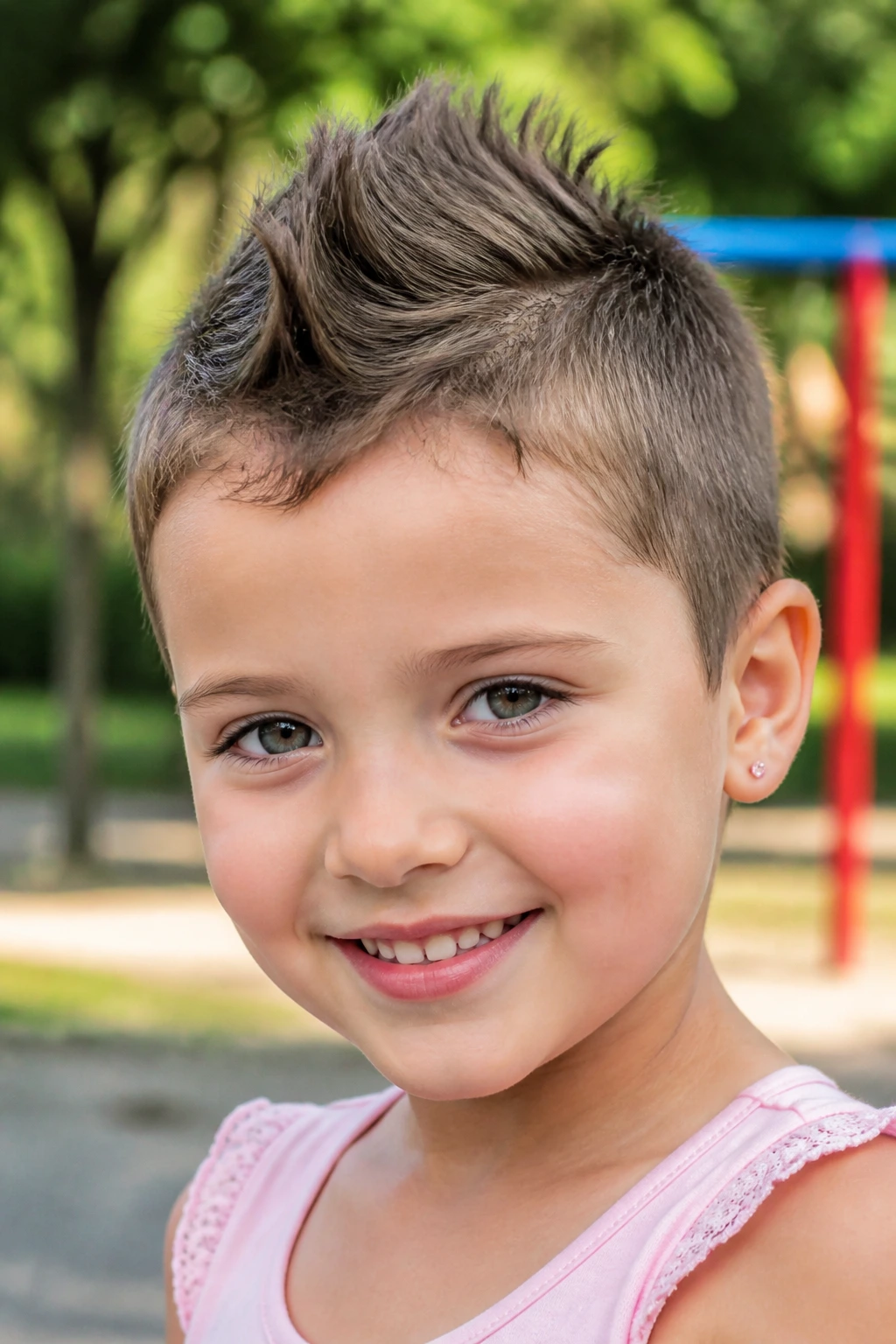
A soft mohawk pixie keeps a narrow strip of length running from the forehead to the crown, while the sides stay tighter and cleaner. But this version is soft, not punk. The strip is textured and child-friendly, so it looks playful rather than severe.
I like this one for kids who want something a little bolder without going into hard-edged territory. Ask the stylist to keep the center strip flexible enough to brush down if needed. That way the haircut can be casual on ordinary days and a little taller on special ones.
It’s also a practical shape for thick or straight hair that wants to stand up on its own. The center line gives the haircut direction. Otherwise it can puff in every direction.
34. Longer-Crown Pixie
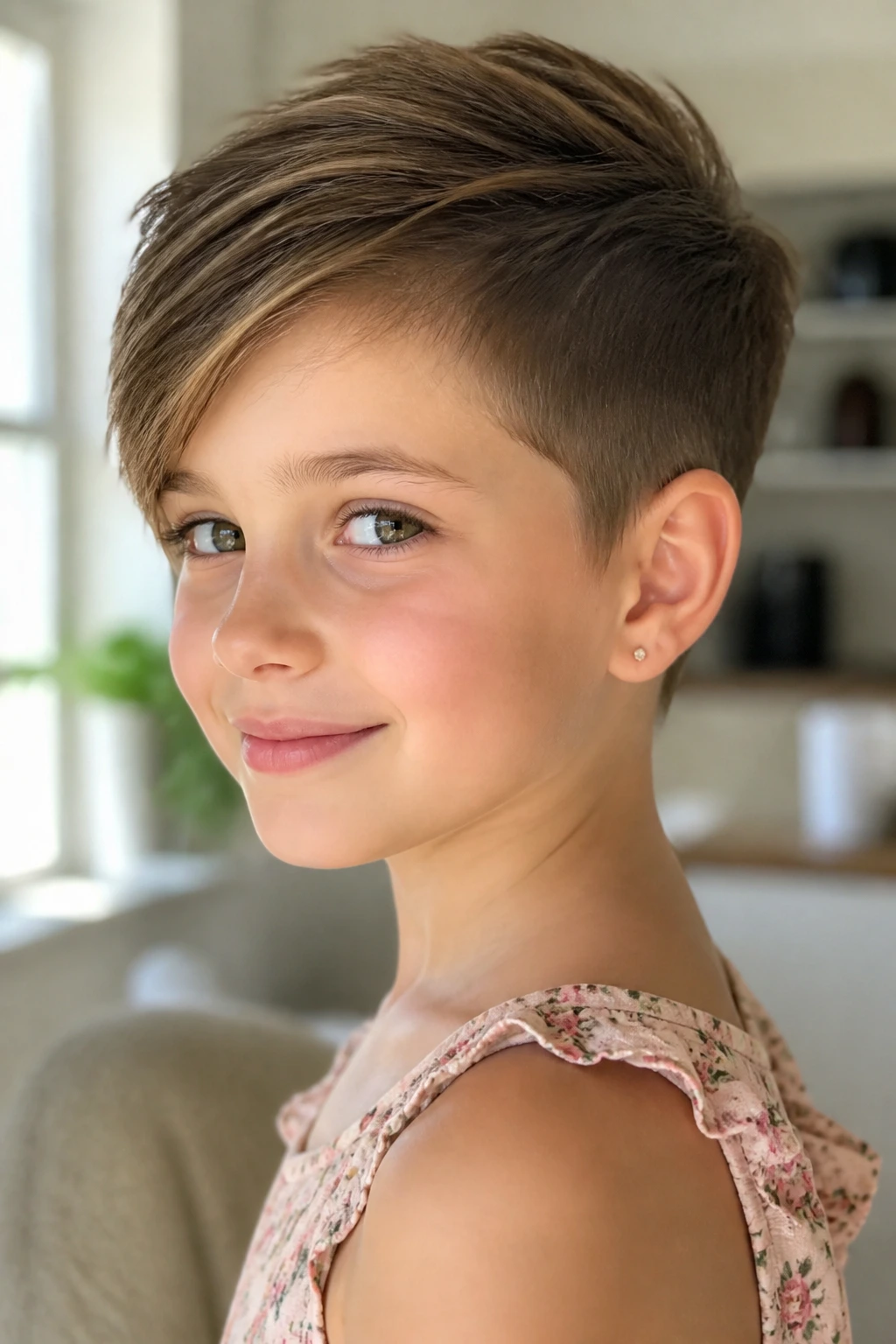
The longer-crown pixie is one of the most versatile shapes in the group. The crown stays noticeably longer than the sides and nape, which gives you room to sweep, fluff, or smooth the top depending on the day. It’s a small difference that adds a lot of flexibility.
This style is especially useful for kids who are in the middle of a grow-out or who like changing their hair without changing the cut. You can move it from neat to playful with almost no effort. A side part, a touch of water, and the top falls into place.
It also helps if the child has a crown swirl. Extra length gives the hair enough weight to settle better. That’s the kind of practical detail that saves a lot of morning arguing.
35. Wispy Neckline Pixie
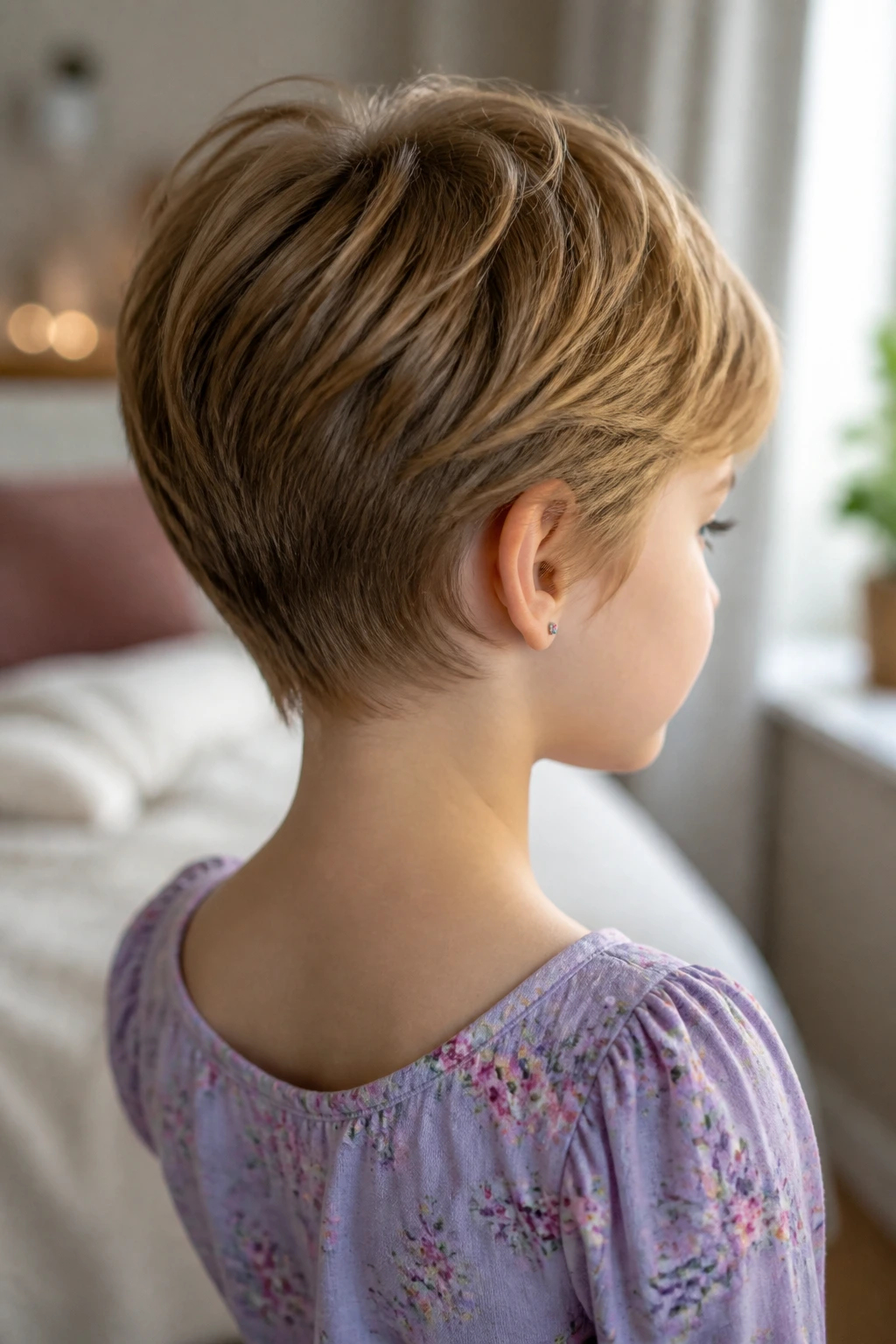
A wispy neckline pixie has a soft finish at the back instead of a hard, clippered edge. That makes the haircut feel lighter and less boxy, especially when the hair starts to grow out. It’s a subtle detail, but it changes the whole mood.
This is a good option for kids with sensitive skin or for families who dislike that sharp, freshly clipped line at the nape. Ask for the neckline to be blended and softened with scissors rather than cut into a blunt shelf. The style will still look neat, just gentler.
I also like this version because it doesn’t scream for maintenance quite as fast as a more severe nape. That extra softness buys a little time.
36. School-Day Pixie
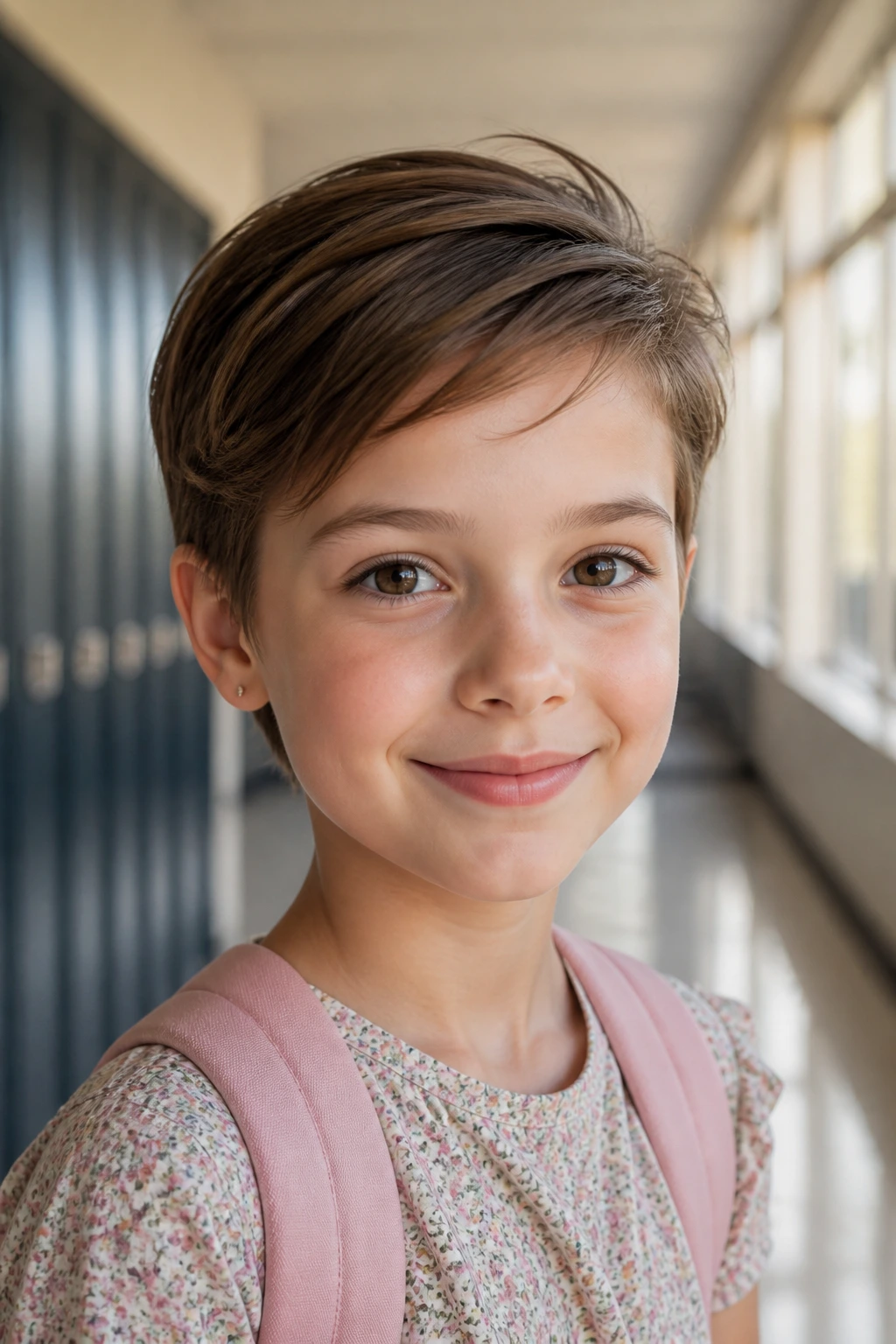
The school-day pixie is the practical one. The fringe stays out of the eyes, the sides stay tidy, and the top is short enough to reset with a quick comb before the door opens. It’s the haircut I’d suggest when a family wants no drama in the morning.
This cut tends to be a classic shape with a sensible twist: not too much height, not too much fringe, and enough softness that it doesn’t look like a little helmet. A slight side part helps it stay in place, especially after a nap or a hoodie.
If your child wears the same haircut to class, soccer, and dinner, this is one of the safest shapes. It behaves. That matters more than people admit.
37. Grow-Out Pixie
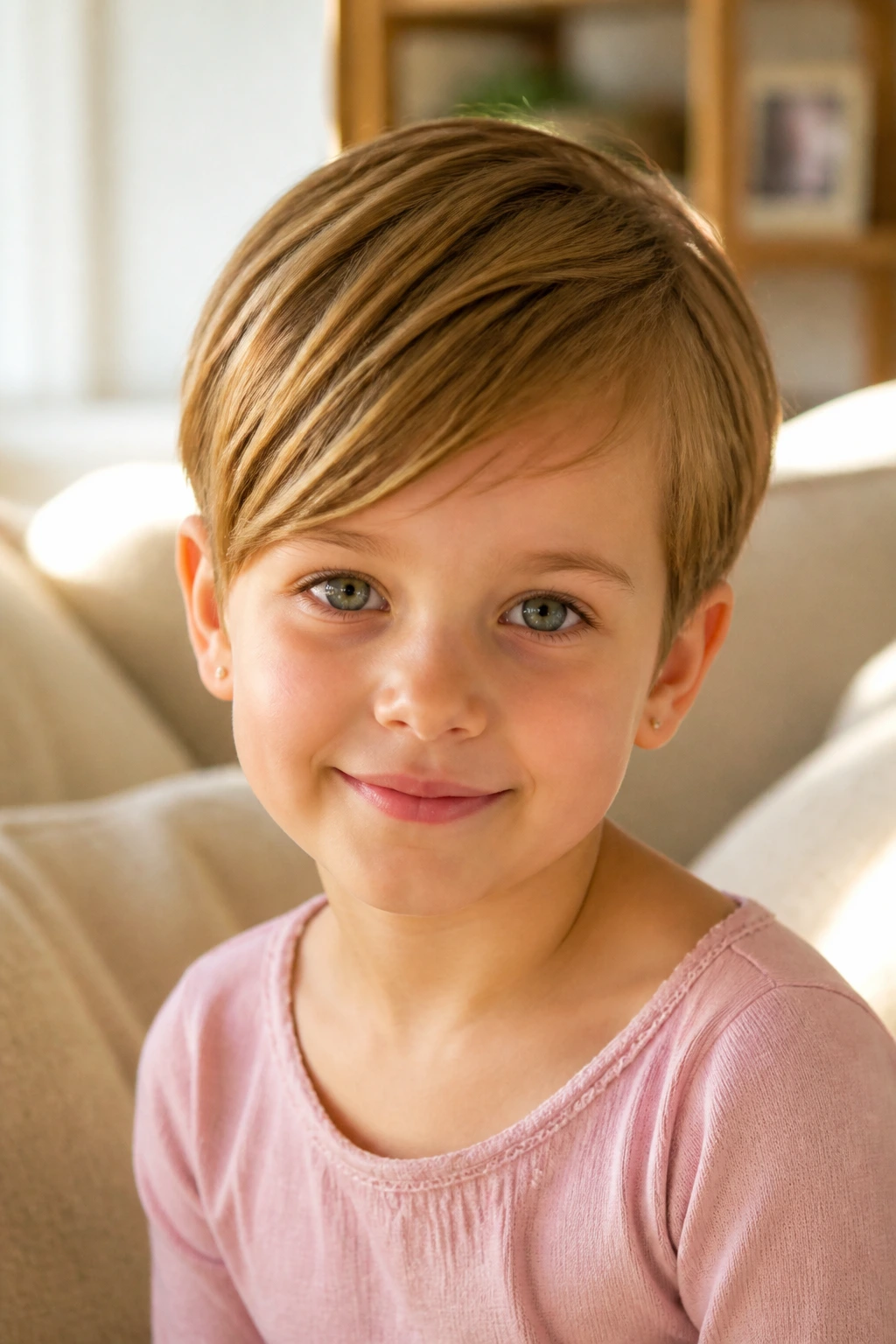
A grow-out pixie is not a style for one day. It’s a strategy. The cut starts short enough to feel fresh, but the top, fringe, and nape are left with just enough extra length so the shape can slide into a bob later without an awkward middle stage.
That means the stylist has to think ahead. Ask for softness around the ears, a fringe that can be tucked or swept, and a nape that is tapered rather than shaved close. Those choices make the difference between “growing out nicely” and “why does it look like that now?”
I like this option when a family knows a child might want short hair for a while but not forever. It keeps the timeline calm. No panic cut needed six weeks later.
38. Accessory-Ready Pixie
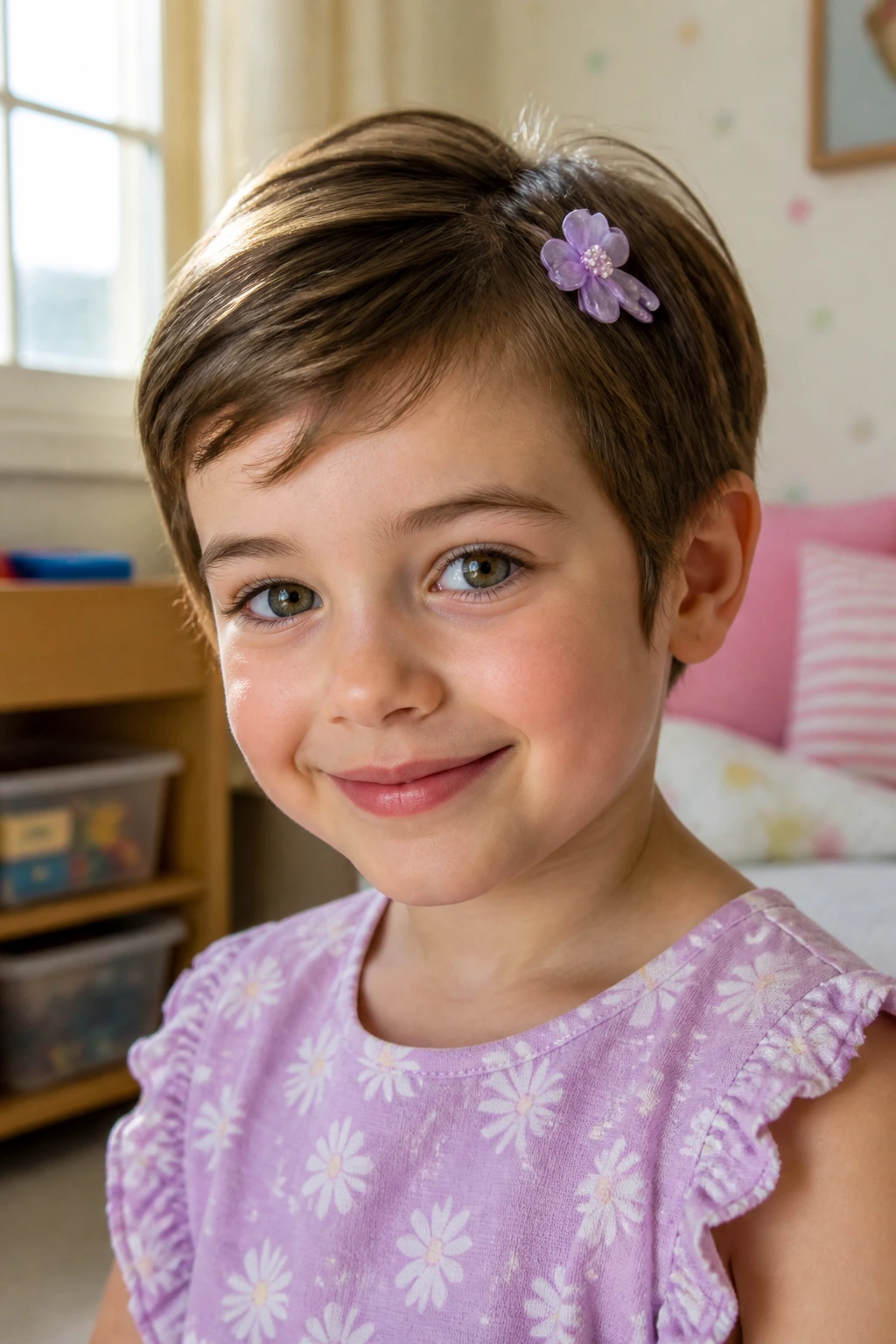
The accessory-ready pixie leaves enough length in the front and at the temples for bows, clips, and headbands to actually stay put. That sounds simple, but it’s the difference between a cute add-on and a sliding piece of plastic that won’t behave. Short hair can wear accessories well when the cut gives them something to hold.
Ask for a little extra length where clips naturally sit, usually just above the brow or at one side of the fringe. The rest of the haircut can stay close and clean. That keeps the style light while still making room for decoration.
This is the pixie I’d choose for a child who likes to change her look often. One day it’s plain. The next day it has two barrettes and a ribbon. Same haircut, different mood.
Why a Pixie Cut Needs a Grow-Out Plan
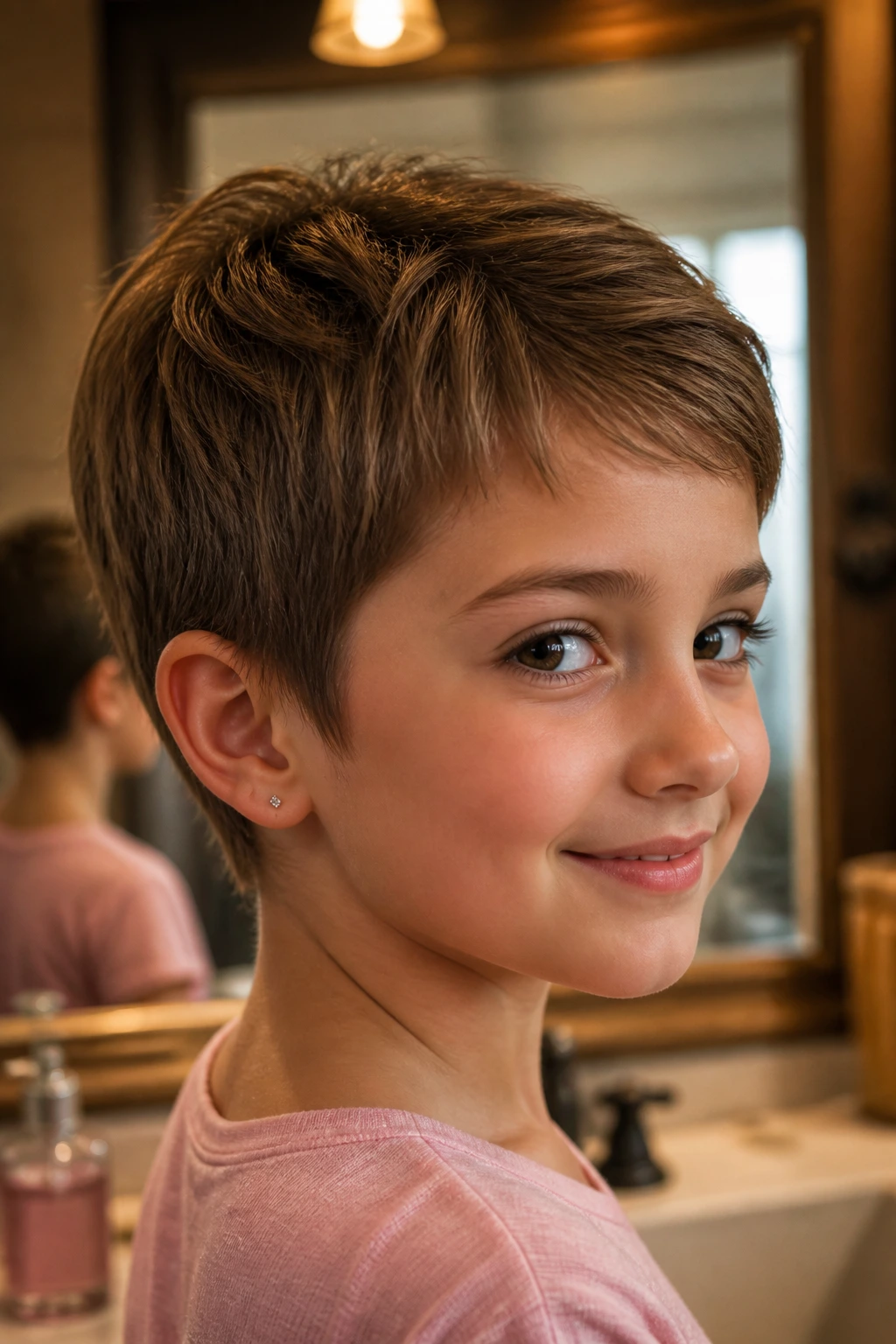
A pixie only looks easy when the shape has a plan. That is the part people miss. Short hair grows unevenly around the hairline, and the fastest-changing spots are usually the fringe, the nape, and the area around the ears. If those zones are cut too tight, the haircut starts fighting you fast.
The sweet spot is leaving enough length that the hair can be tucked, swept, or clipped when it gets a little older. A child who likes hair in her eyes may need a softer fringe. A child who hates neck hair may need a cleaner nape. Same haircut category. Different details.
The crown matters too. A little extra length there buys styling room later, which is why some pixies hold up for weeks while others start looking off after ten days. I’d rather see a child with a slightly longer top and a softer side taper than a cut that looks perfect for one afternoon and odd the rest of the month.
When you think ahead, the pixie becomes less of a one-shot haircut and more of a shape that can move. That is the version that stays nice between salon visits.
What to Tell the Stylist Before the Cape Goes On
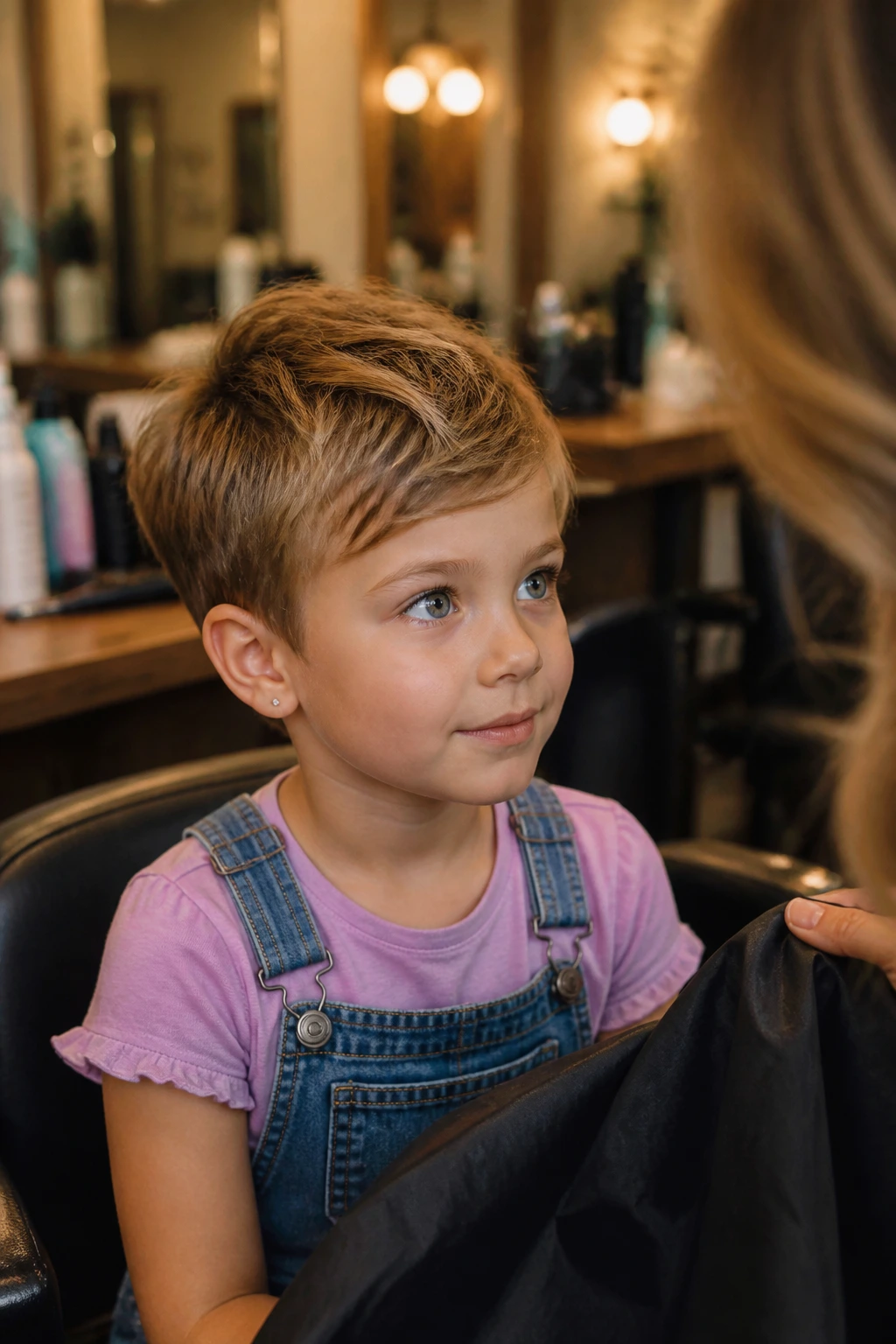
Bring photos, but bring the right photos. A close crop on straight hair will not behave the same way on curls, and a stylish salon image can hide a million things the camera won’t show — like the way the crown swirls or the way the nape sticks out. Show at least two reference photos from the front and one from the side.
Then say what your child actually does with her hair. Does she tuck it behind her ears all day? Does she hate anything touching her forehead? Does she wear barrettes, headbands, or hats? Those small habits matter more than a vague request for “short and cute.”
A few things are worth saying out loud before the first snip:
- How often can you come back for trims?
- Does your child mind fringe touching her eyes?
- Are there cowlicks at the crown or around the hairline?
- Does she want clips, bows, or headbands to stay part of the look?
- Does she prefer scissors near the ears instead of clippers?
If you can answer those questions, the stylist can shape the cut to fit the child instead of forcing the child to fit the cut. That is the whole game.
Tools That Make Pixie Hair Easier to Manage at Home
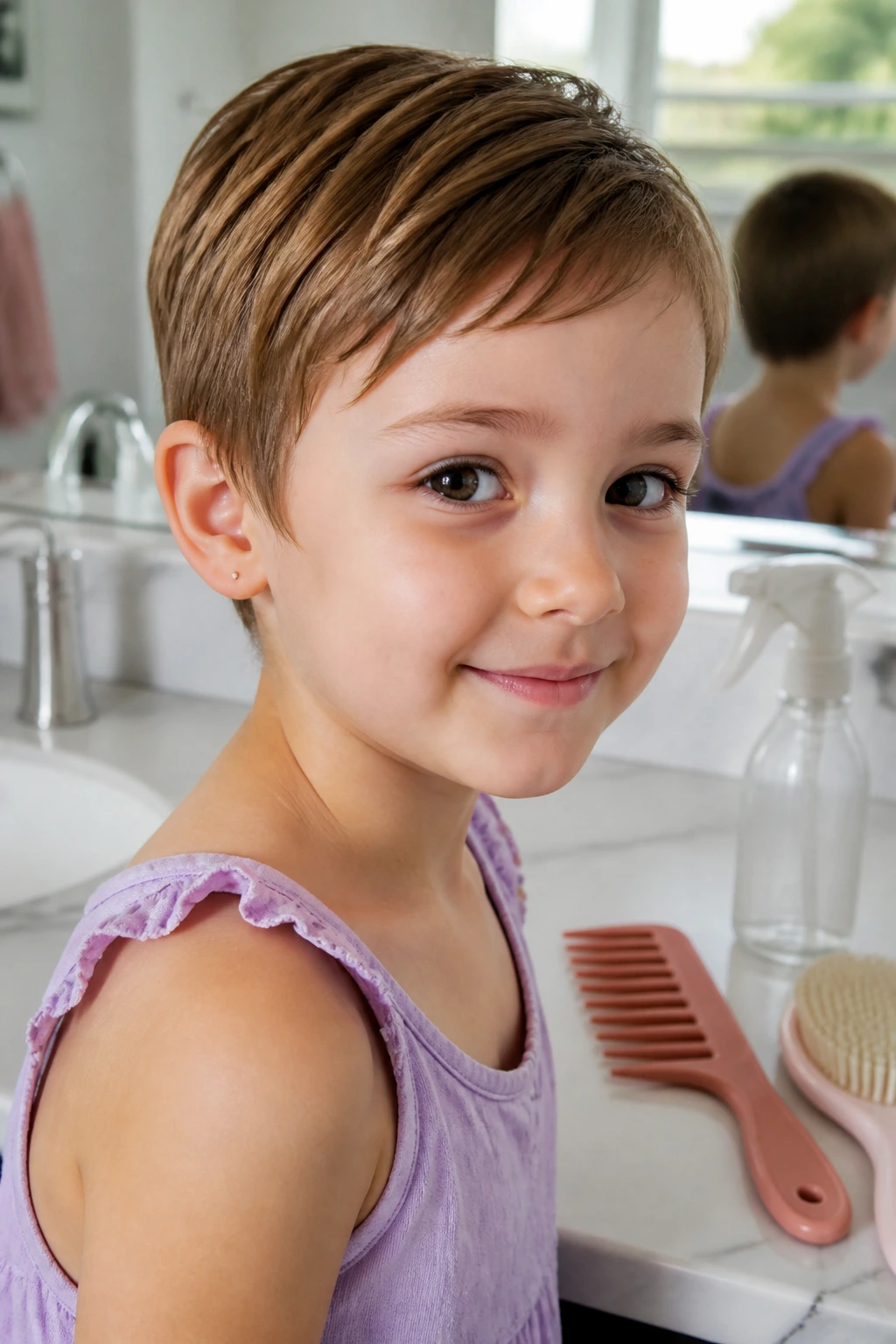
- Spray bottle: A few mists of water reset a pixie faster than a full wash.
- Wide-tooth comb: Good for detangling curls or waves without pulling at the crown.
- Soft bristle brush: Smooths the sides and fringe without flattening the whole shape.
- Leave-in conditioner: A small amount helps with frizz, especially on curly or coily pixies.
- Light styling cream or mousse: Use a tiny amount to shape the top without turning it crunchy.
- Duckbill clips or tiny barrettes: Useful for sweeping fringe out of the face on busy mornings.
- Headbands and soft hair ties: Handy for kids who want the look of longer hair without actually growing it out.
- Microfiber towel: Better than a rough bath towel for drying hair without adding fuzz.
- Blow dryer with a cool shot: Optional, but helpful if the front needs a quick set.
How to Choose the Right Pixie for Texture, Cowlicks, and Face Shape
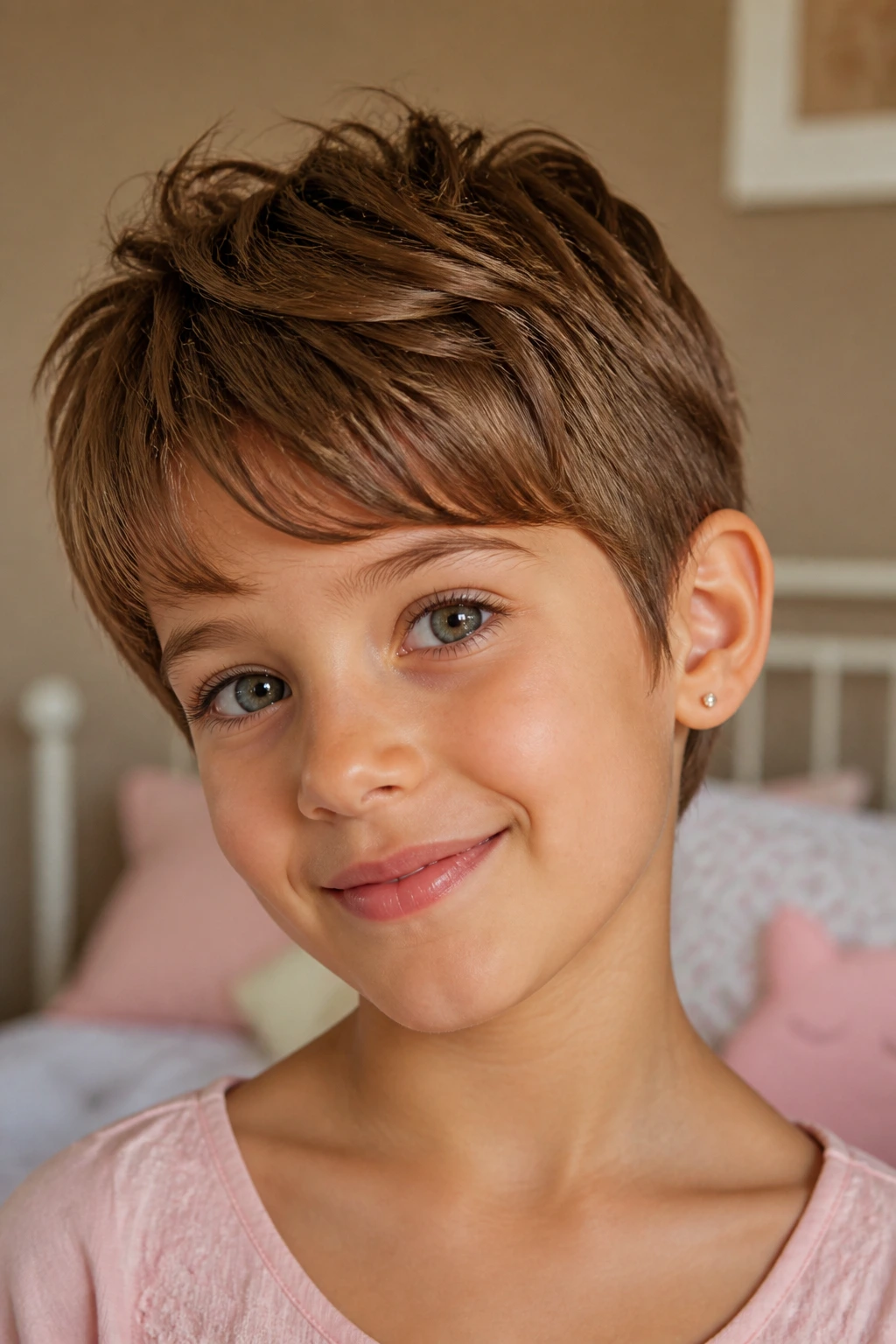
Texture decides more than most people think. Straight hair usually needs shape created by the cut itself, so a pixie with feathering, a clean side part, or a little height at the crown tends to look better than one that relies on product. Wavy hair wants movement. Curls and coils want length left where the hair springs up. Thick hair needs bulk removed in the right places, not just taken shorter everywhere.
Cowlicks are the other big clue. If the crown lifts and splits, a deep side part or a longer top can calm that down. If the front flips forward, the fringe should probably stay a little longer so it can be guided instead of forced. Fighting the growth pattern usually creates more styling work, not less.
Face shape matters, but not in a rigid way. Round faces often look nice with a little height and diagonal fringe. Square faces soften well with wispy edges around the temples. Longer faces usually need a bit more width through the sides or a fringe that breaks up the vertical line. The haircut should frame the child, not erase her features.
Bring the child’s hair in its natural state when possible. Dry, brushed, and not pinned away tells the stylist more than a polished braid ever will. That one choice often separates a pixie that grows beautifully from one that gets clipped too short in the wrong spot.
Fast Morning Styling Moves That Save Time
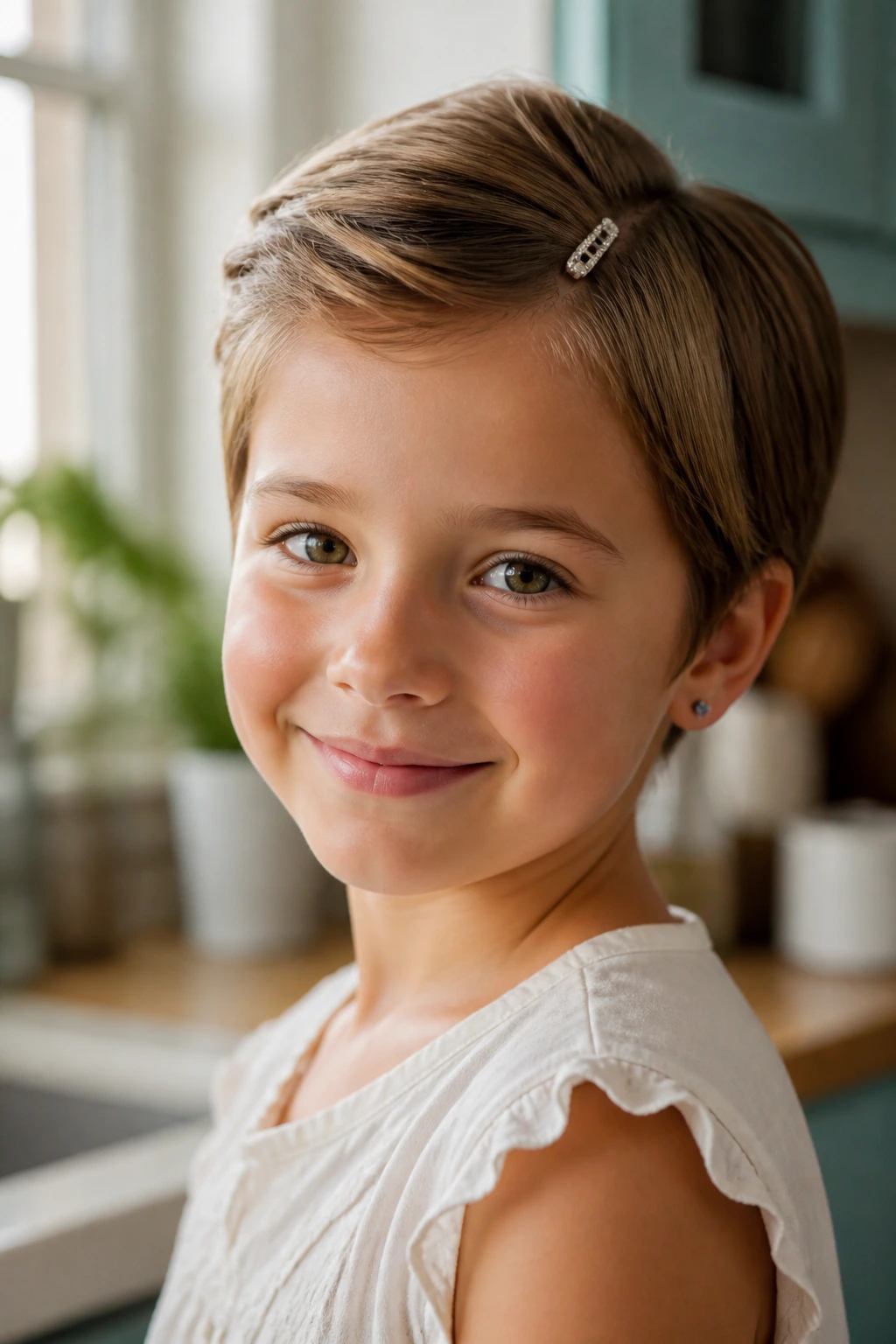
A pixie should take minutes, not a wrestling match. If you’re spending longer than breakfast on the hair, the cut probably needs less product or a slightly different shape. The best reset is usually water first, fingers second, and product only if the hair keeps sticking up.
Water Reset: Mist the hair lightly, especially the fringe and crown, then smooth the direction with your palms. Dry hair often only needs a little moisture to remember where it belongs.
Part and Clip: If the front keeps falling into the eyes, create a side part and pin one side back with a tiny clip. That keeps the haircut neat without making it look overly styled.
Texture Without Crunch: Use a pea-size amount of cream or mousse for the top. Warm it in your hands before touching the hair so you don’t dump a blob in one spot.
Warmth Without Fuss: A blow dryer on low, aimed at the roots, can help a stubborn crown settle. Keep it brief. You’re shaping, not doing salon theater.
Finish Line: Smooth the ears, the nape, and the fringe with what’s left on your hands. That tiny step makes the haircut look deliberate instead of half-done.
Common Pixie-Cut Mistakes and How to Avoid Them
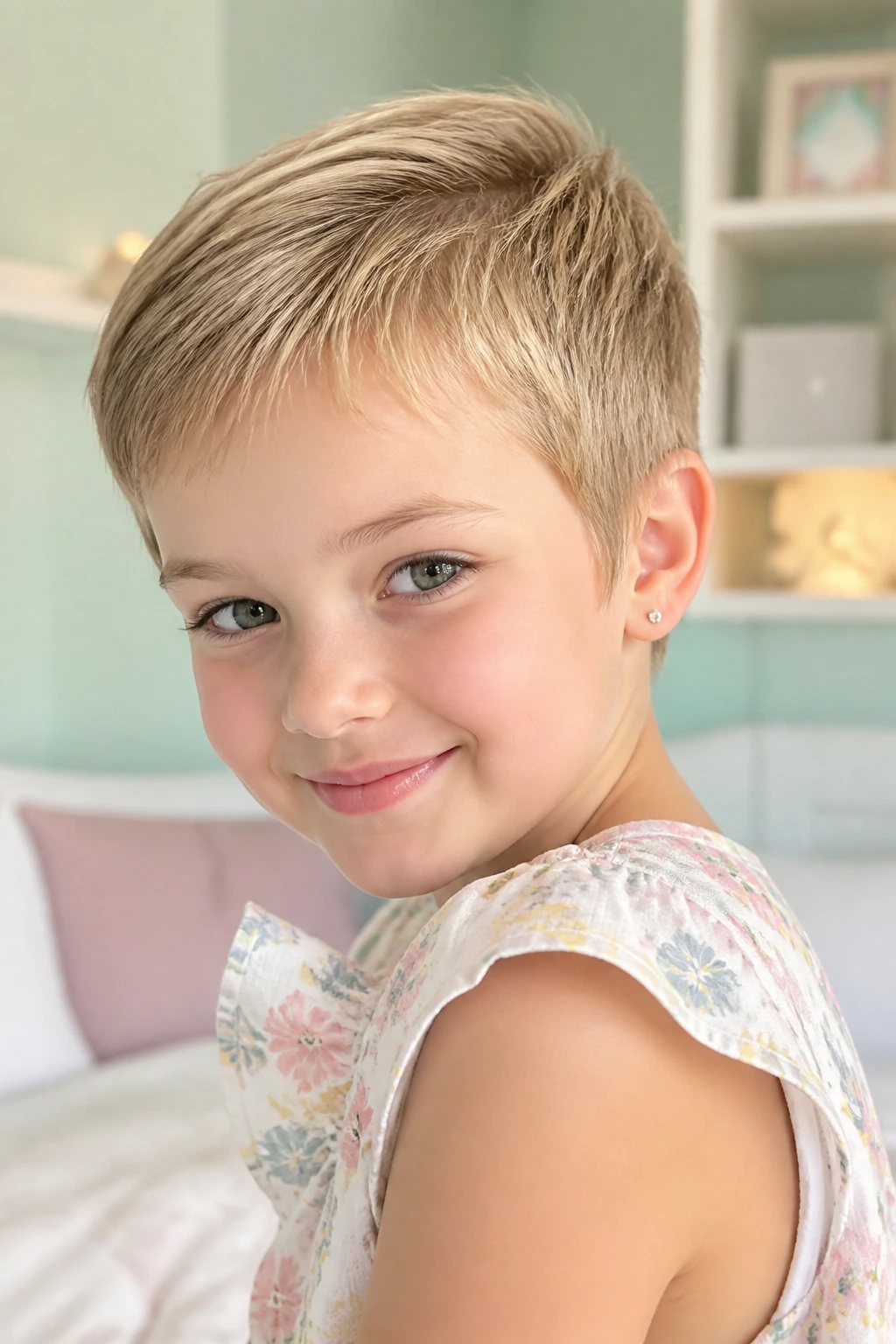
- Cutting the fringe too short: If the bangs sit too high, they can look choppy and grow out awkwardly. Fix it by leaving the front long enough to sweep or tuck, especially if your child dislikes hair on the forehead.
- Ignoring a cowlick at the crown: A swirl that points up or sideways will fight a blunt cut every morning. Show the stylist exactly where the hair breaks so the top can be shaped around it.
- Over-thinning thick hair: Taking too much weight out at once can make the haircut puff at the ends while the top goes flat. Ask for bulk removal only in the spots that actually need it.
- Making the sides too bare for accessories: Tiny clips need a little hair to grab. If you want bows or barrettes to stay, leave some length at the temples.
- Skipping the trim schedule: Pixies lose their shape faster than longer hair. If the nape starts fuzzing out and the fringe starts poking the eyes, it’s time.
Variations and Add-Ons That Change the Mood
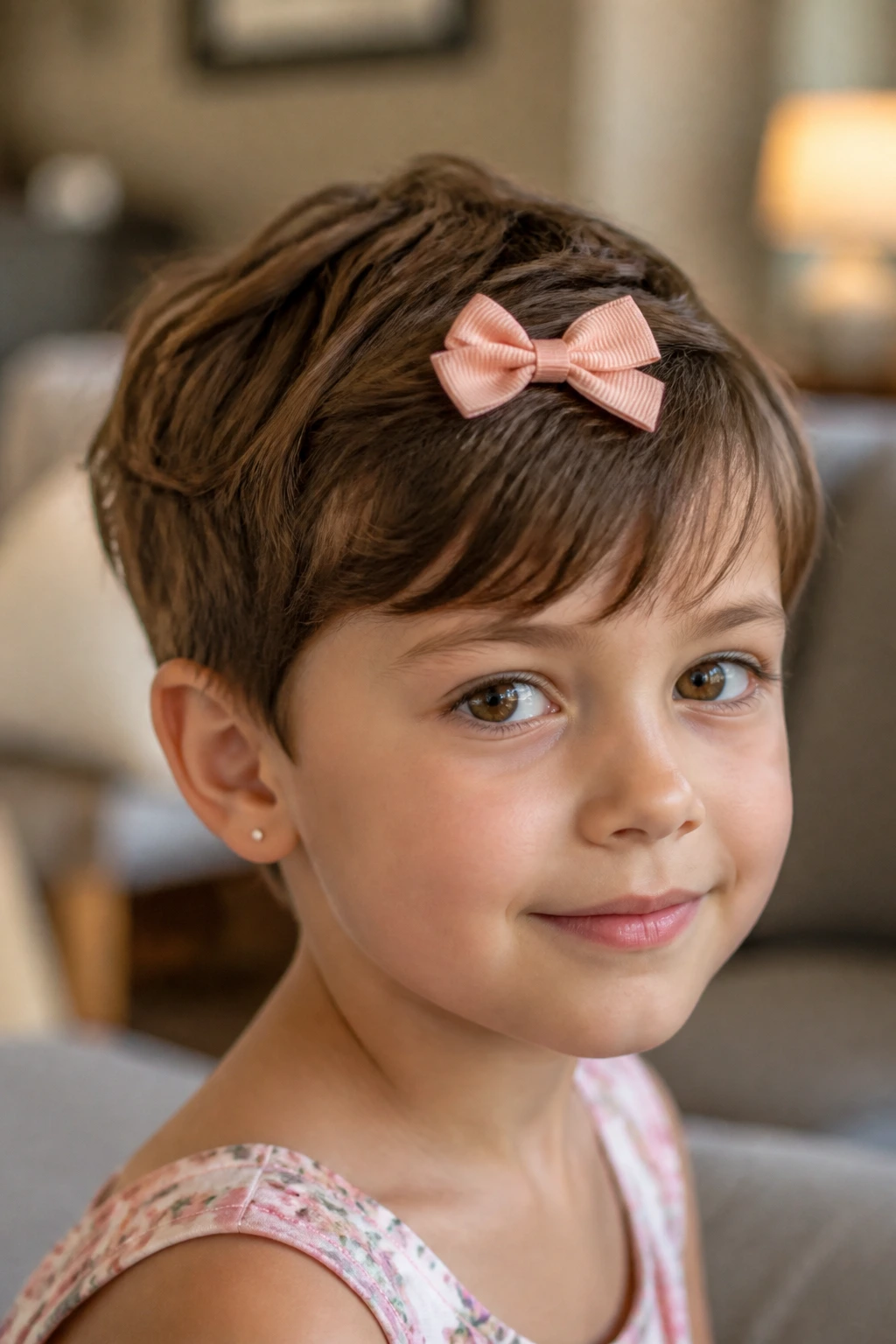
Ribbon-Ready Fringe: Leave the front just long enough for small bows or a narrow headband to sit comfortably. This works well for kids who like changing their look without changing the haircut.
Curly Cloud Finish: Add a curl cream to a curly pixie and let the texture expand softly instead of flattening it. The result is rounder, fuller, and easier to live with on humid days.
Sporty Taper: Keep the nape and sides tighter, then leave enough length on top to sweep forward after a helmet or hat. It’s a useful version for active kids who are always in and out of sports gear.
Photo-Day Polish: Smooth the fringe to one side, tuck one ear, and keep the crown close. The haircut suddenly looks cleaner for pictures or family events.
Bold Line Detail: A tiny line or subtle shape at the nape adds personality without making the cut hard to grow out. Keep it small if you want the look to stay school-friendly.
Grow-Out Softener: Leave a little extra length around the temples and neckline. That keeps the cut from turning boxy once it starts filling in.
Wash Days, Trim Timing, and Grow-Out Care
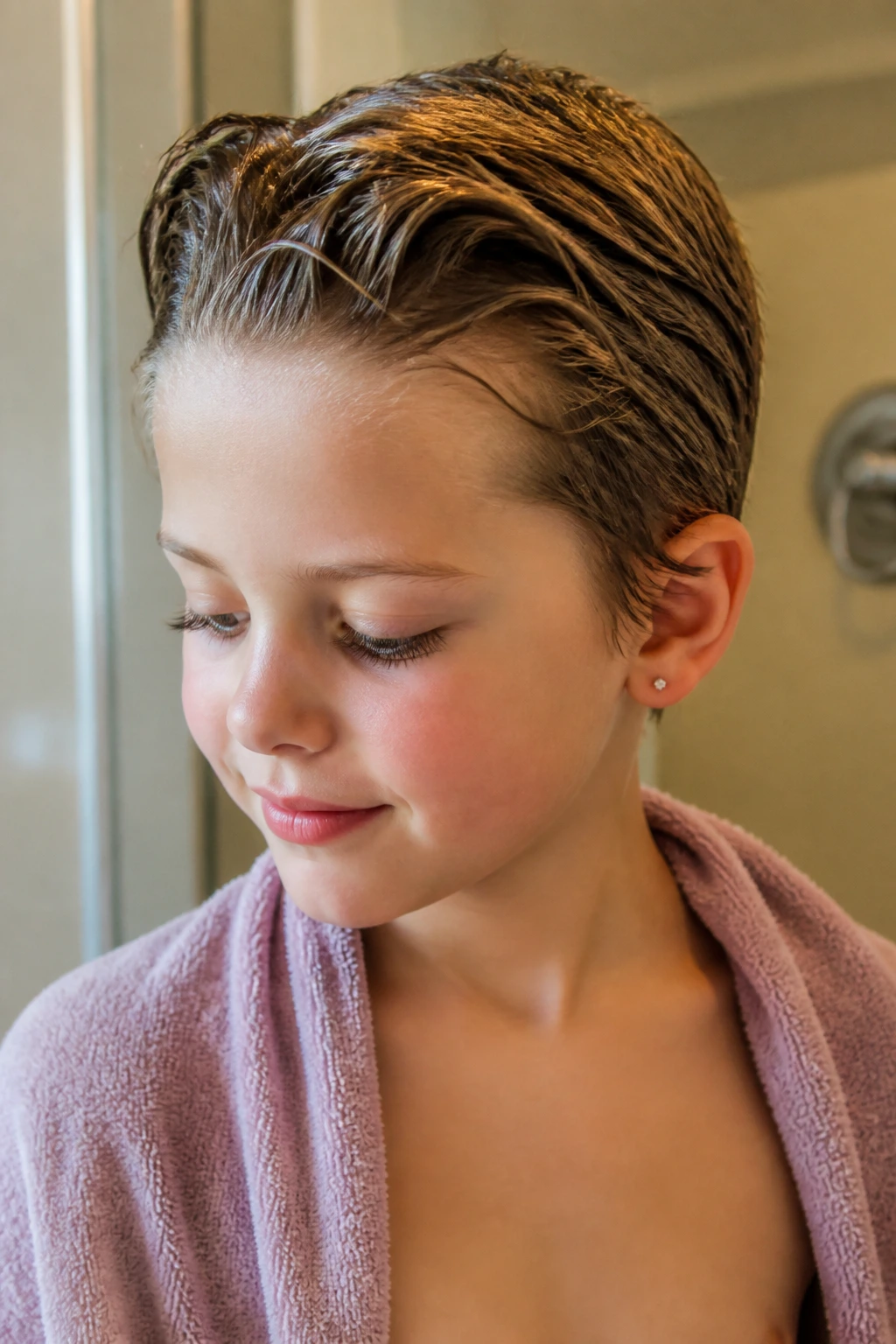
Pixie cuts usually look best when they’re not over-washed. For most kids, washing every 2 to 4 days is enough, unless the scalp gets oily faster or the hair is loaded with product. Curly and coily pixies often do better with fewer washes and more conditioner on the ends. Straight or fine hair can usually handle a little more frequent washing if the scalp needs it.
Trims matter. A classic pixie usually needs a refresh every 4 to 6 weeks if you want the outline to stay neat. Fringe trims often happen sooner — every 3 to 4 weeks if the hair falls into the eyes quickly. Nape cleanups can stretch a bit longer if the cut was soft to begin with. The tighter the shape, the sooner it will ask for attention.
Swim days and sweaty days need their own routine. Rinse chlorine out as soon as you can, then smooth in a small amount of conditioner. If the hair dries tangled, especially around the ears and neckline, the next morning starts rough.
At bedtime, a satin pillowcase helps short hair stay smoother and less frizzy. That sounds fussy until you see how much it cuts down on the morning reset. Tiny change. Big payoff.
Frequently Asked Questions
What face shape looks best with a pixie cut on little girls?
There is no single winner, but softer fringe and a little height at the crown tend to suit most faces. Round faces usually benefit from diagonal lines, while longer faces often look better with a bit more width through the sides.
Can a pixie cut work on curly or coily hair?
Yes, and it often looks better when the cut respects the curl pattern instead of flattening it. Leave extra length for shrinkage, taper the sides carefully, and avoid cutting the front too short.
How short should the bangs be?
Short enough to stay out of the eyes, not so short that they bounce up and sit above the forehead in a way that feels harsh. If the child dislikes fringe touching her face, start a little longer and trim later.
How often does a pixie need a trim?
Most pixies need shape maintenance every 4 to 6 weeks. Fringe and nape areas can need attention sooner if the child’s hair grows fast or the style is very tight.
Can my child still wear bows and clips with a pixie?
Absolutely, if the cut leaves enough length at the temples or fringe. The accessory-friendly versions are built for exactly that.
What if my child has a strong cowlick?
Do not fight it with a blunt, short crop in the wrong direction. Show the stylist where the hair pushes and choose a side part, longer top, or softer crown so the cut works with that swirl.
Is a pixie hard to grow out into a bob?
Not if the cut was planned for grow-out in the first place. Keep a little extra length at the nape, fringe, and sides, and the transition can be smooth instead of awkward.
What if the haircut comes out too short?
First, give it a week. Short hair settles as it grows a little and gets easier to style with clips or a side part. If it still feels too bare, the next cut should leave more length around the ears and forehead.
Short Hair, Big Personality
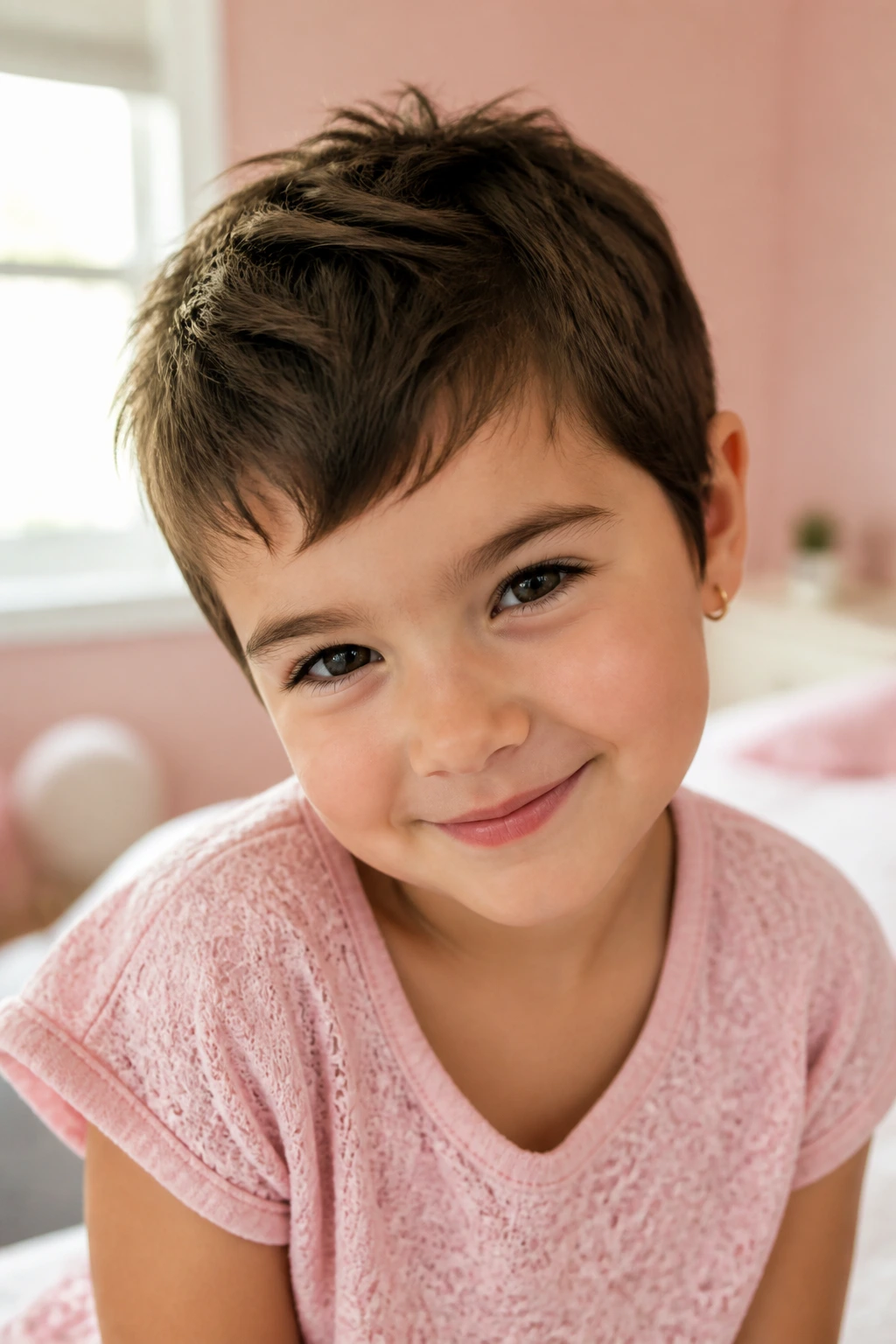
A thoughtful pixie can be one of the easiest haircuts in the room, but only when the shape fits the child’s hair and daily life. The right version stays soft around the edges, keeps the fringe out of trouble, and leaves enough length where it counts. That’s why some pixies feel effortless and others feel like a daily project.
The smartest cuts in this set aren’t the flashiest ones. They’re the ones that still look like themselves after a nap, after a hat, after a long ride home. If you keep the crown, fringe, and neckline in balance, short hair becomes a relief instead of a chore. And when the next haircut comes around, you’ll know exactly which direction to go.
