



Short haircuts for women over 60 in layers have a funny way of exposing bad cutting the minute you turn your head. A blunt crop can sit there like a little cap. Good layers, though, move. They lift at the crown, skim the cheekbones, and stop short hair from going heavy at the sides, which matters more once hair starts changing texture, density, and patience.
And yes, hair changes. Temples can thin. The crown can go flat. Gray strands can feel wirier than they used to, then suddenly softer in the wrong places. That’s why a layered short cut is not just “short hair, but shorter.” It’s a shape decision. A layered pixie can make fine hair look airy instead of sparse. A stacked bob can give the back of the head some structure instead of a mushy little shelf. A shaggy crop can keep silver hair from looking too fixed or too formal.
The best layered cuts do one thing very well: they make the haircut work with the hair you actually have, not the hair you wish showed up after shampooing. That’s the whole game. Some of these styles are neat and polished. Some are softer and a little pieced out. A few lean bolder. All of them can be adjusted for straight, wavy, or curly texture if the layers are cut with intent instead of enthusiasm.
Why This Collection Feels Useful Instead of Fussy
-
Lift where hair tends to collapse: Layers around the crown and top keep short hair from lying flat against the scalp, which is the fastest way to make a cut look tired.
-
Softness without losing shape: A layered crop can blur the jawline, temples, and neck without turning into a shapeless halo.
-
Works with changing texture: Gray, silver, and salt-and-pepper strands often behave differently from the hair you had years ago, and layers help them move instead of puff.
-
Better for glasses and earrings: Short layered cuts leave room around the ears and cheekbones, so frames, hoops, and studs don’t fight the haircut.
-
Flexible at the salon: You can ask for more lift, less bulk, a longer fringe, or a softer nape depending on whether your hair is fine, thick, straight, or wavy.
-
Easier to keep looking deliberate: A layered short cut usually looks less “grown out” between trims than a blunt pixie or one-length bob, especially if the interior shape is cut well.
1. Feathered Pixie With Crown Lift
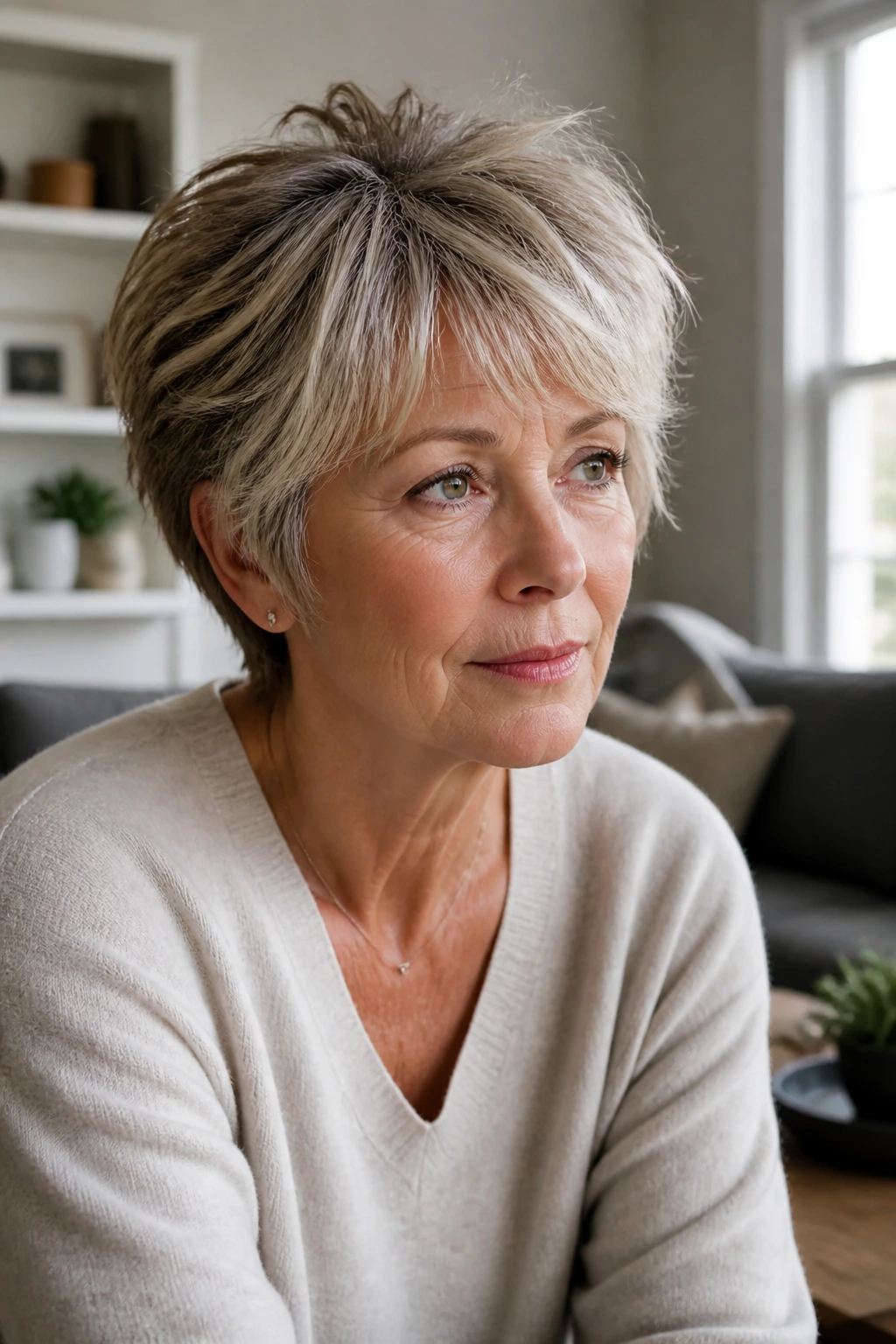
A feathered pixie is the haircut I reach for when someone wants movement more than drama. The top is cut with soft, feathered layers, the sides stay close without feeling shaved down, and the crown gets enough lift that the whole head looks lighter. On women over 60, that little bit of height matters. It keeps the cut from sinking into the scalp and makes fine hair look like it has a second job.
What I like about this shape is that it doesn’t need a perfect blowout to behave. A dab of root mousse, a quick blast with a dryer, and a small round brush at the crown usually do the trick. If the hair is gray or silver, the feathering catches the light in a clean, airy way instead of showing every flat spot.
What to ask your stylist for
Ask for shorter sides, a tapered nape, and feathered layers concentrated on the top and crown. If you wear glasses, keep the temple area soft so the frames don’t fight the haircut. If your hair is fine, avoid over-thinning the ends; that’s how a pixie turns wispy in the wrong sense.
A feathered pixie also gives you room to play. You can brush it forward for softness, lift it at the roots for more shape, or tuck one side behind the ear for a cleaner look. It’s one of the few very short cuts that can look polished without looking stiff.
2. Stacked Bob With Tapered Nape
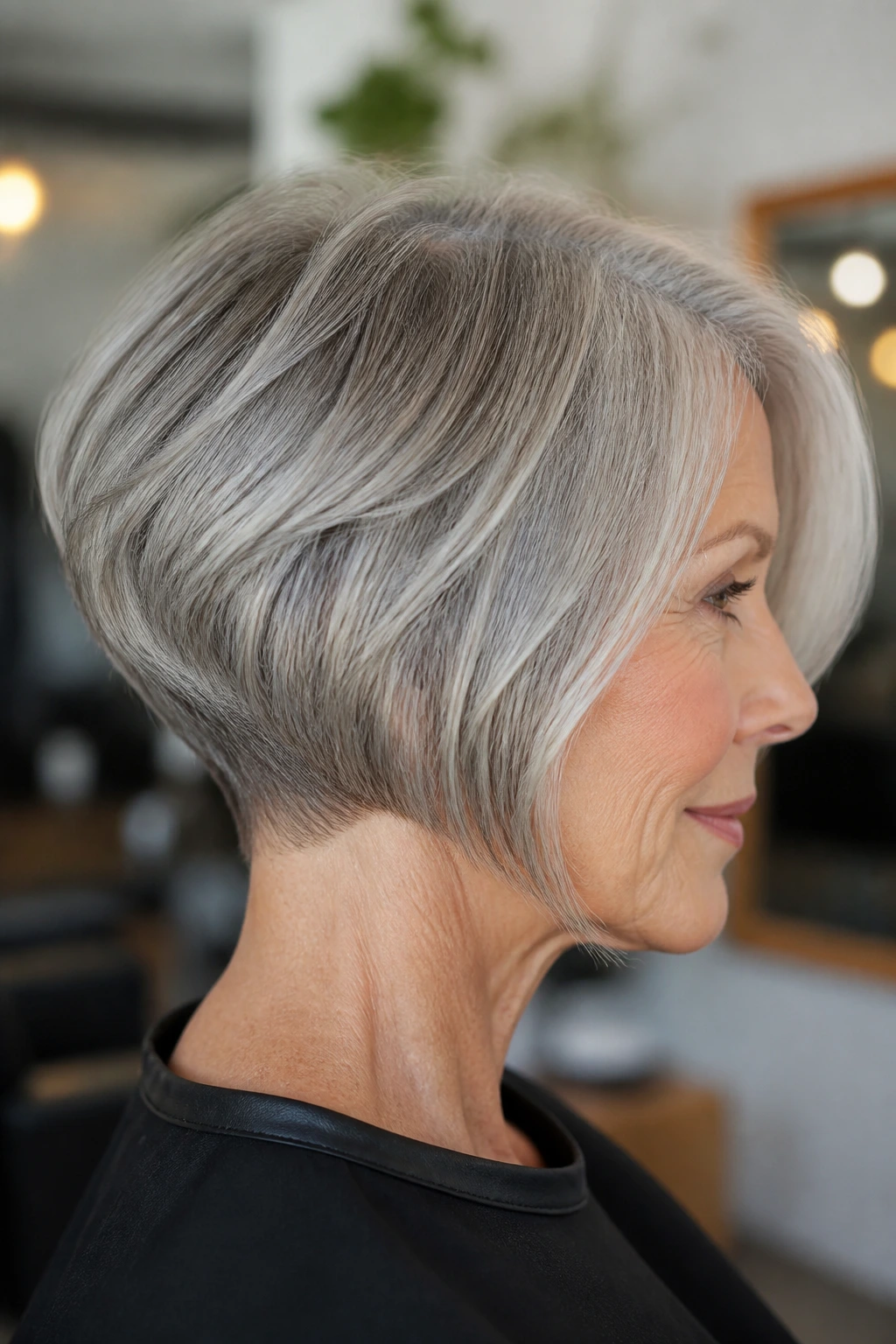
A stacked bob has a backbone. That’s the appeal. The back is cut shorter and stacked in neat, close layers so it hugs the nape, while the front keeps enough length to soften the jaw. It’s tidy, yes, but not boring if the stacking is done with some restraint. Too much stacking and you get a helmet. Too little and the shape collapses by noon.
For women over 60, this cut is especially useful when hair has gotten flatter at the back of the head. The layered graduation creates lift without needing a ton of product. On straight hair, the lines look crisp. On softly wavy hair, the back gets body and the front keeps its swing. That contrast is what keeps the cut from feeling dated.
The best version keeps the neckline clean and the front pieces a touch longer, usually grazing the jaw or just below it. That small difference makes the cut feel modern instead of severe.
3. Soft Layered Crop With Side-Swept Fringe
Want something short without showing every line on your forehead? This is the one. A soft layered crop with a side-swept fringe gives you movement at the top and a gentle sweep across the face, which is often more flattering than a hard, straight bang. It softens the front without closing the face off.
The layers should stay light and separated, not hacked. That matters a lot. If the fringe is too thick, it can sit like a curtain and drag the whole cut down. If it’s too thin, it disappears. The sweet spot is a fringe that brushes one eyebrow and blends into the top layers at the temple.
This style is especially good for hair that wants to lie flat at the front but has some natural bend elsewhere. A finger-dried finish works well here. So does a small amount of styling cream rubbed through the top and fringe, then pushed sideways with your hands.
4. Chin-Length Layered Bob With Airy Ends
A chin-length layered bob is one of those cuts that sounds ordinary until you see it move. The length sits right around the jawline, which gives the face some structure, and the layers lighten the ends so the shape doesn’t sit like a box. The result is clean but not severe, which is a nice place to be.
This cut is a good fit if you want a little more hair than a pixie but less fuss than a longer bob. The airy ends stop the style from feeling heavy, especially if your hair is thick at the bottom. Ask for point-cut ends or soft internal layering so the bob bends instead of puffing.
If you wear readers or full frames, this length is kind. It frames the glasses without swallowing them. And if your hair has a bit of wave, even better. The cut naturally picks up that movement around the chin and cheeks.
5. Textured Wedge Cut With Rounded Shape
The wedge cut gets a bad reputation when it’s cut too blunt and too shell-like. A modern version is much better behaved. The back still tapers and the shape still curves around the head, but the layers are broken up enough that the cut feels softer and less rigid.
This is a smart choice for women who want short hair with a bit of structure but do not want the high-maintenance feel of a heavily styled crop. The rounded shape fills in nicely behind the ear and at the nape, which helps if hair tends to look sparse in those areas. The texture on top keeps it from looking old-fashioned.
A wedge cut works best when the stylist keeps the top light and the perimeter clean. Too much bulk in the crown can make the head look round in a blunt way. Too little and the shape loses its signature curve. It’s a balancing act, not a mystery.
6. Shaggy Pixie With Piecey Top Layers
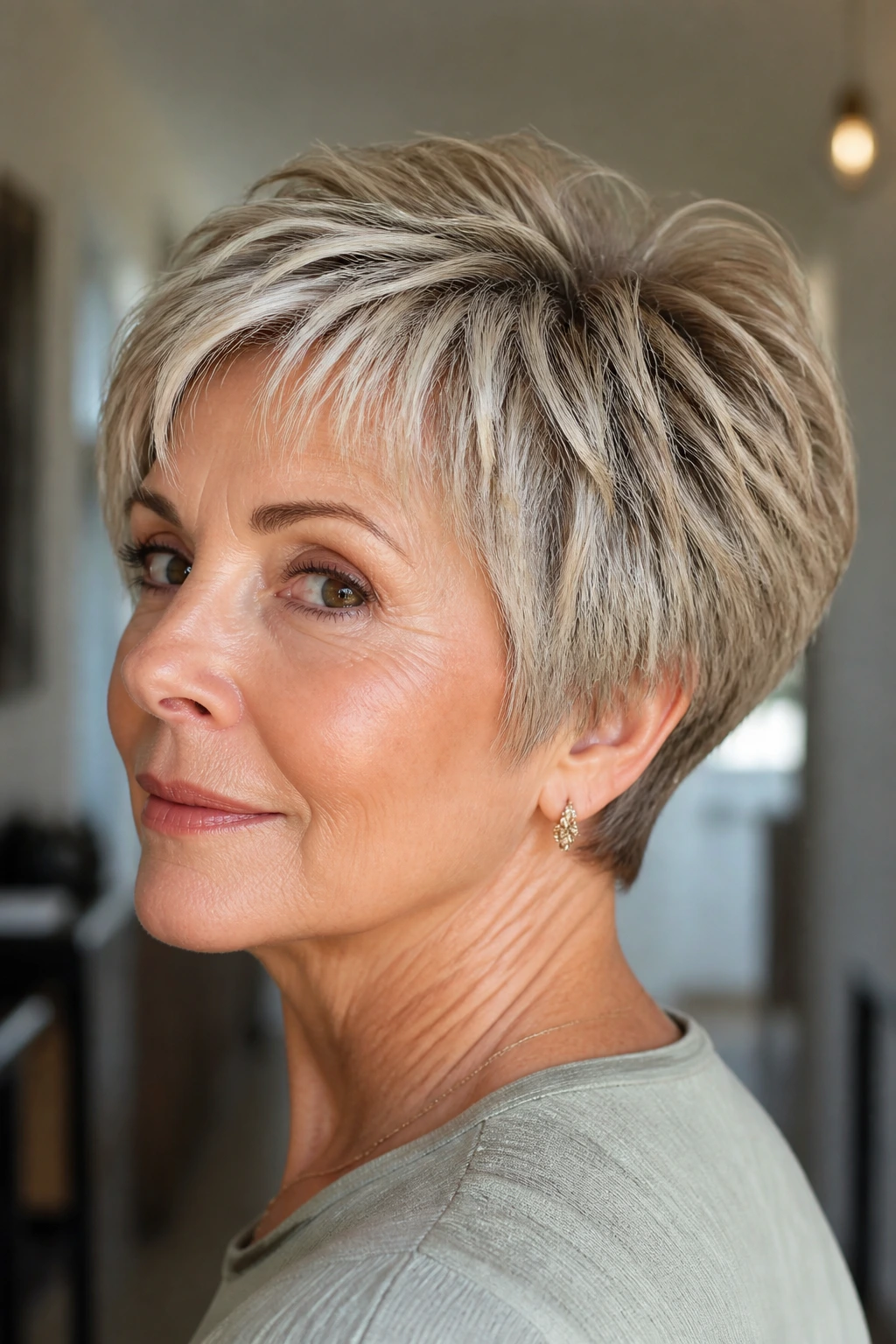
This is the cut for someone who likes a little edge but still wants the hair off the neck and ears. A shaggy pixie uses piecey layers on top, broken texture through the crown, and softer edges around the sides. It’s less polished than a feathered pixie and more alive because of it.
The trick is restraint. A shaggy pixie should look lived in, not over-styled into spikes. If your hair has wave, the layers will separate naturally. If it’s straight, a touch of texturizing spray or a tiny bit of paste at the fingertips gives those layers something to hold onto.
I especially like this shape on salt-and-pepper hair. The contrast between silver strands and darker ones makes the piecey layers easy to read, so the haircut shows up even on days when you don’t do much to it. That’s a nice trade.
7. Layered French Bob With Soft Bend
A French bob is short, chic, and a little cheeky, but the layered version softens the whole thing. Instead of sitting as one sharp block, the ends bend in slightly and the top keeps some lift. The length usually lands around the lip to chin area, which makes it feel deliberate and compact.
The reason this works so well over 60 is simple: it frames the face without overworking it. You don’t need a heavy fringe. You don’t need dramatic stacking. You need a clean shape, a soft bend at the ends, and enough internal layering so it doesn’t puff at the temples.
If your hair is naturally straight, a round brush and a quick bend under at the ends are enough. If it’s wavy, let it do half the work. A French bob should look like it knows exactly what it’s doing, even when you spend less than ten minutes on it.
8. Graduated Bob With Face-Framing Layers
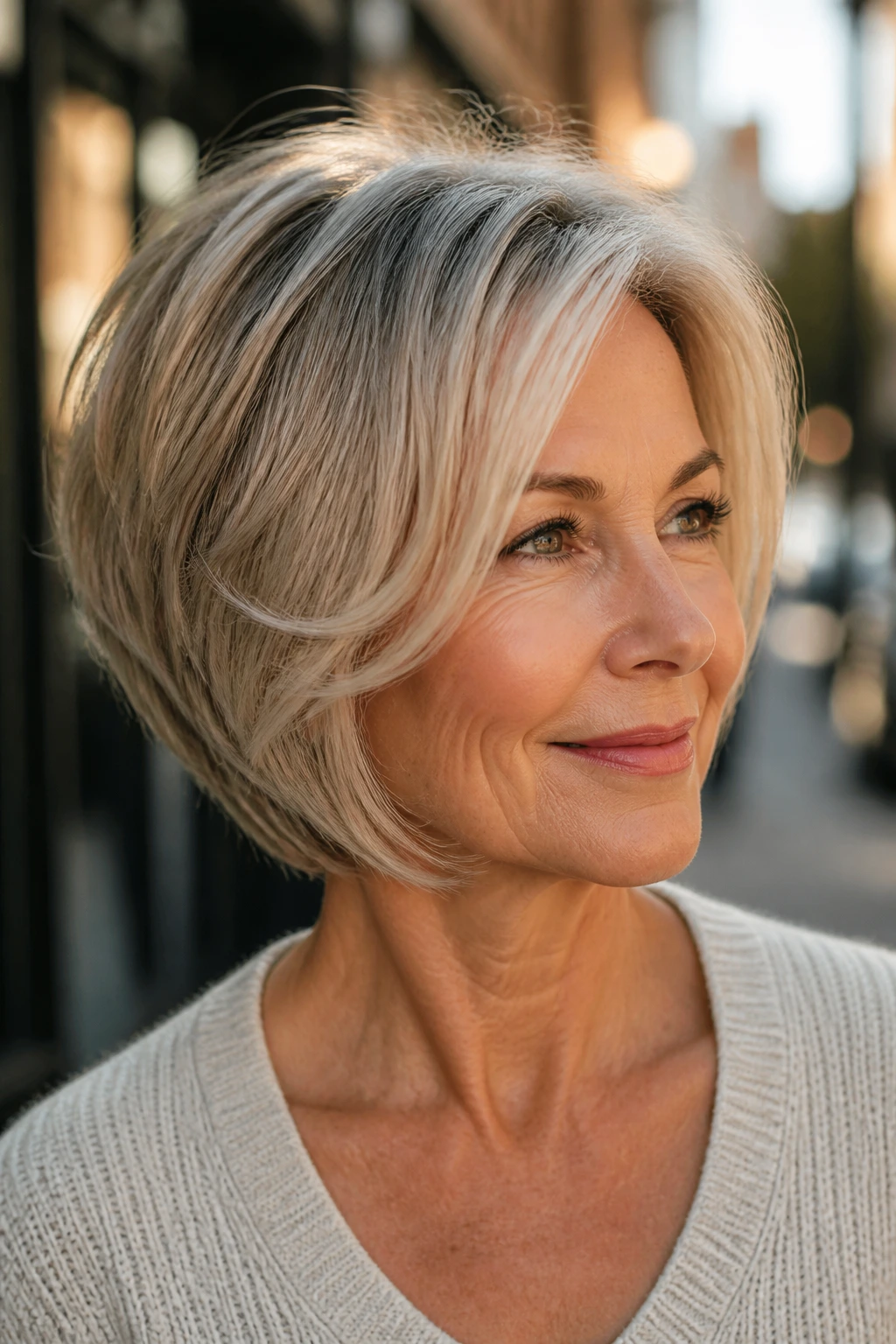
A graduated bob and a stacked bob are cousins, but they’re not the same thing. The graduated version keeps the back shorter and the front longer, then uses face-framing layers to soften the shift. It gives you shape without a hard edge, which is a nice option if you want short hair that still feels a little fluid.
The front pieces matter here. They should fall in a way that lightly brushes the cheeks or jaw, not sit straight down like drapes. Those front layers can narrow a wider face, soften a strong jaw, or break up the straight line of a square cut. Subtle is the word.
This is a strong choice if you like tidy hair but don’t want a severe silhouette. The haircut looks especially good when tucked behind one ear, because the asymmetry shows off the face-framing without making the whole style fussy.
9. Curly Layered Crop for Natural Texture
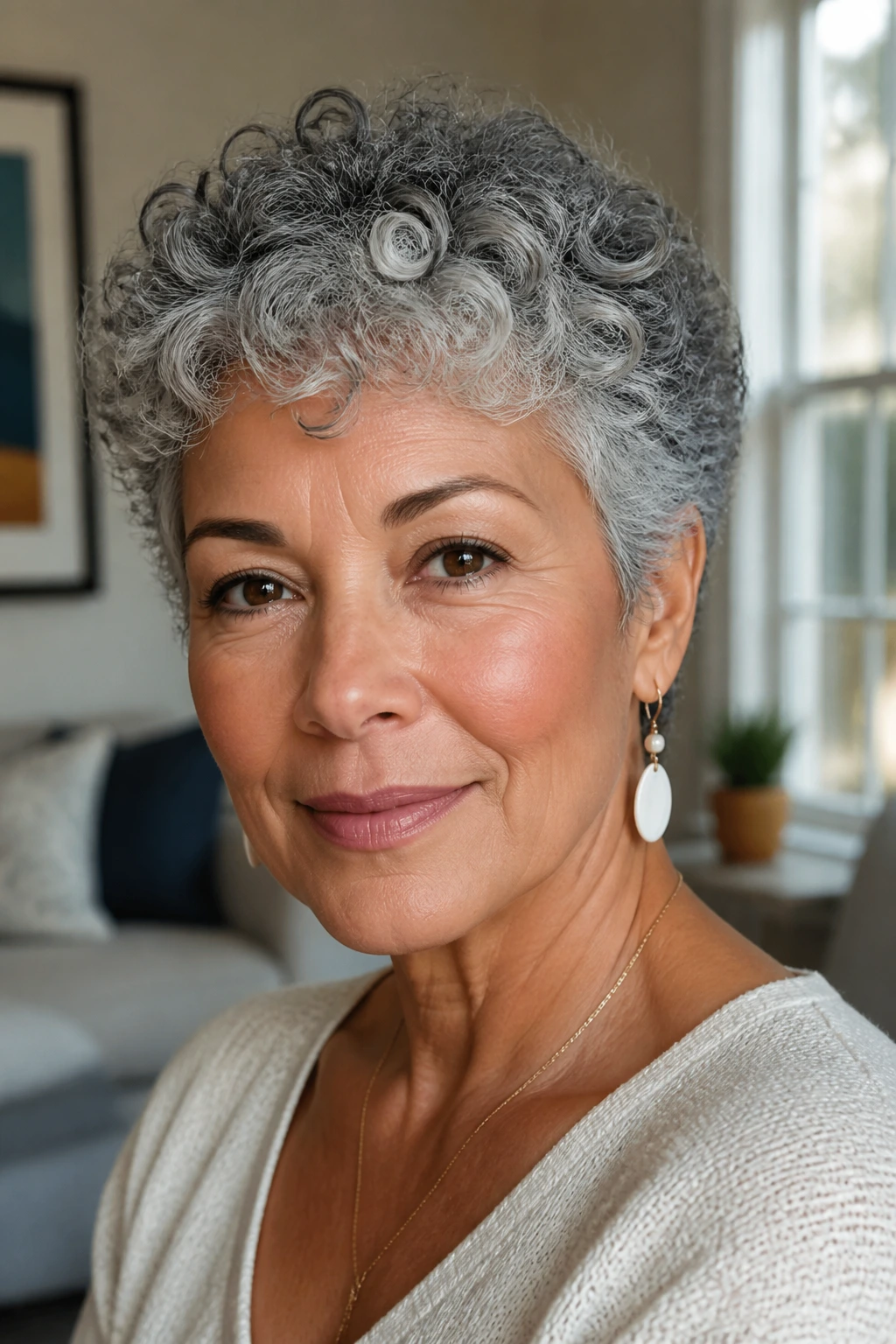
Curly hair needs layers the way flat hair needs lift. Without them, a short curl cut can balloon out at the sides and go triangle-shaped in a hurry. With the right layers, though, the curls stack with more grace and the top doesn’t end up flat while the sides go wild.
This cut works best when the stylist respects shrinkage. Short curly hair can look twice as short once dry, so the layers need to be cut with the curl pattern in mind, not just the wet length. Dry cutting can help, or at least a careful cut on hair that’s been shaped in its natural state.
A curly layered crop is one of the easiest ways to make gray curls look intentional. A small amount of leave-in and a diffuser can pull the whole shape together without crunch. And no, it does not need to be perfect. Curls are allowed to have opinions.
10. Long Pixie With Tucked-Behind-Ear Layers
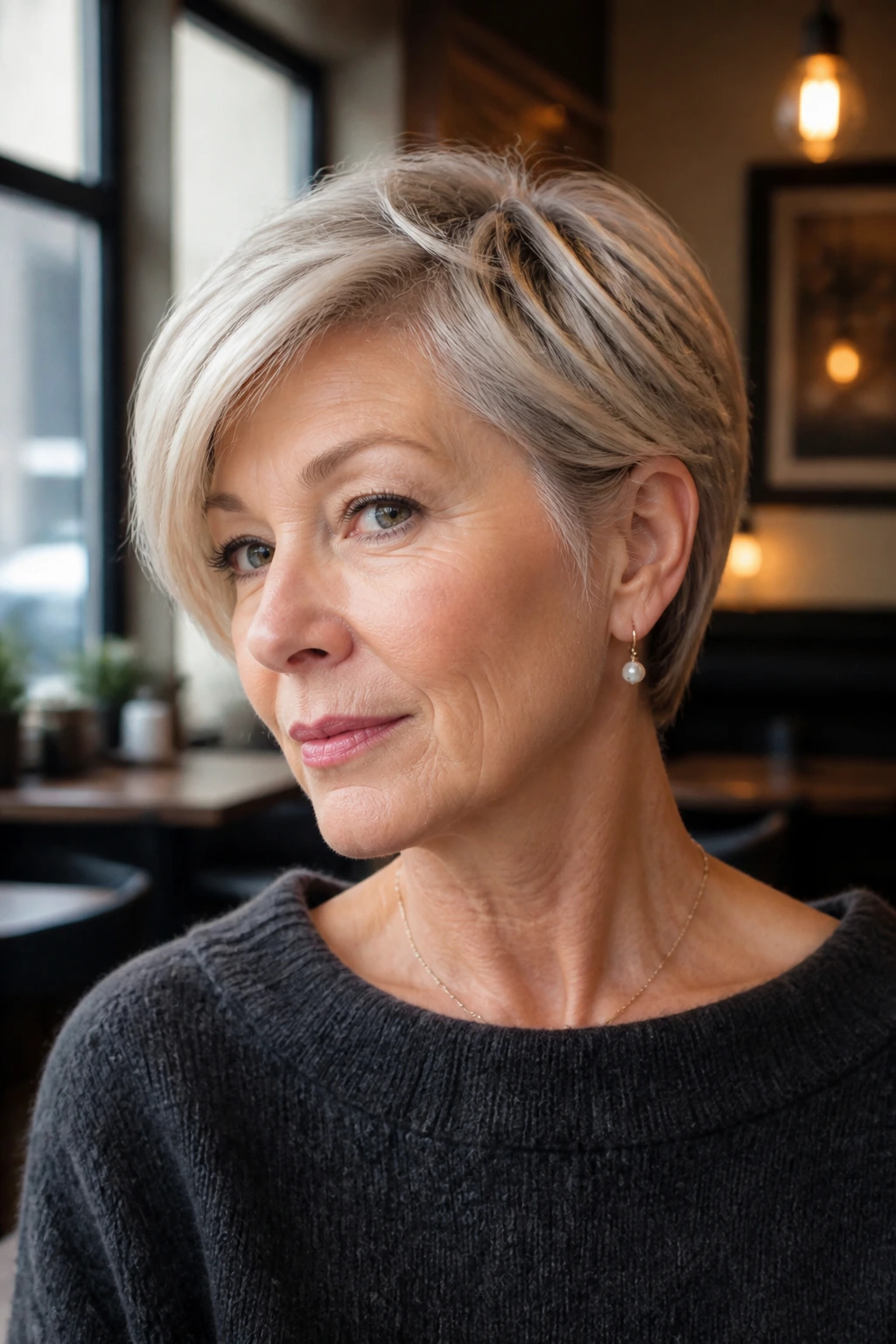
A long pixie gives you the ease of short hair and a little more styling room than a very cropped cut. The top stays long enough to sweep, separate, or push forward, while the sides are layered so they tuck behind the ears without ballooning out. That tucked-behind-ear line is the whole point. It keeps the style neat and a touch elegant.
This is a good cut when you want movement near the face but not a lot of bulk around the neck. It also works well for women who wear earrings or glasses, because the hair can move around those details instead of covering them. A long pixie can look polished with almost no product if the layers are cut cleanly.
If your hair tends to flip at the ears, ask for softer layering there. A hard shelf at the side defeats the purpose. You want the cut to bend inward, not stick out and make you mutter at the mirror.
11. Sleek Layered Bob With Hidden Internal Layers
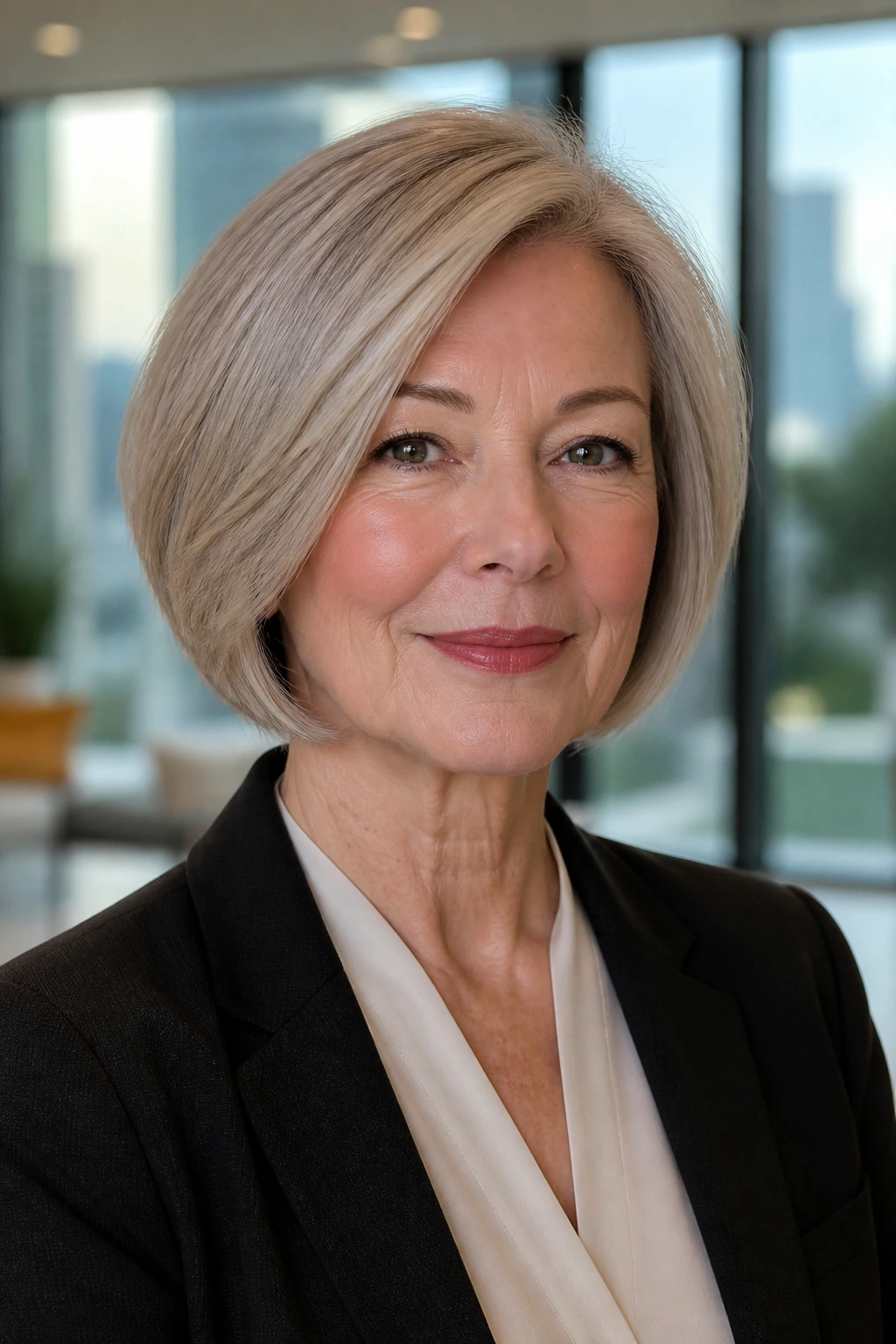
A sleek layered bob is for people who like a cleaner finish. From the outside, it can look like a simple bob. Underneath, though, hidden internal layers remove bulk and help the shape bend. That’s the trick. You get movement without obvious choppiness.
This is a great option for thick hair that swells when cut blunt. The internal layers keep the ends from feeling heavy, and the smooth surface makes the haircut look neat. On straight hair, especially silver or white hair, the shine really shows. It’s a very honest cut. If the hair is healthy, it looks expensive. If it’s dry, it will tell on you, so moisturizing matters.
I like this style for women who want a grown-up bob that still feels easy to wear with a blazer, a turtleneck, or a simple tee. It doesn’t scream for attention. It just sits well.
12. Salt-and-Pepper Shag Bob
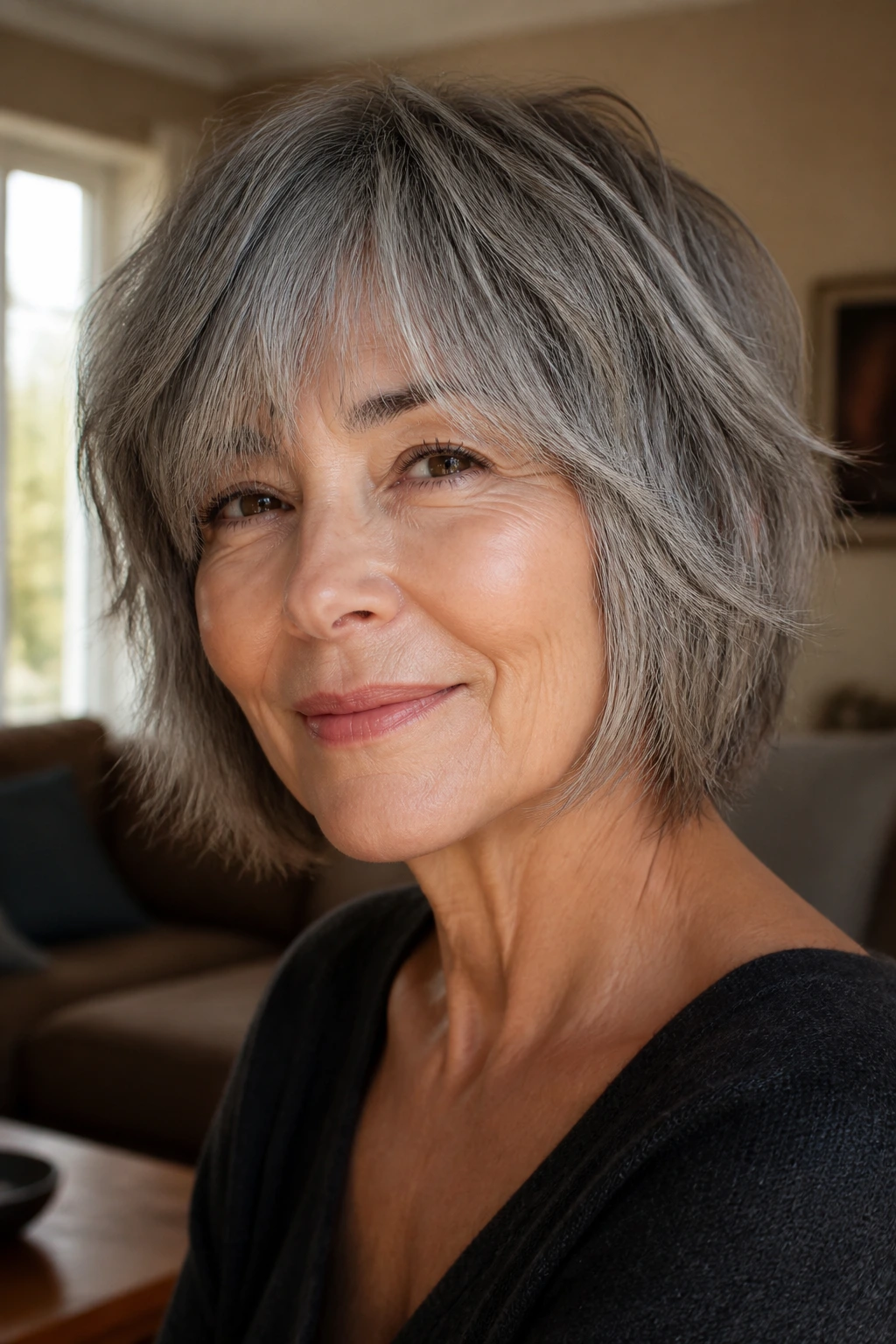
A salt-and-pepper shag bob is one of the best ways to let natural color do the work. The mixed tones in gray hair catch the broken texture of the shag, so the haircut looks dimensional even without much styling. It has that slightly undone edge, but not in a careless way.
The shag bob usually lands between the chin and the top of the neck, with layers that move away from the face and a bit of texture through the crown. That makes it forgiving on days when the hair has a mind of its own. Honestly, that’s half the appeal. You’re not trying to freeze it into place.
It suits wavy hair especially well. A little mousse scrunched in damp hair and a quick air-dry can be enough. If your hair is very fine, don’t overload it with cream; the texture will disappear under the weight.
13. Asymmetrical Layered Bob
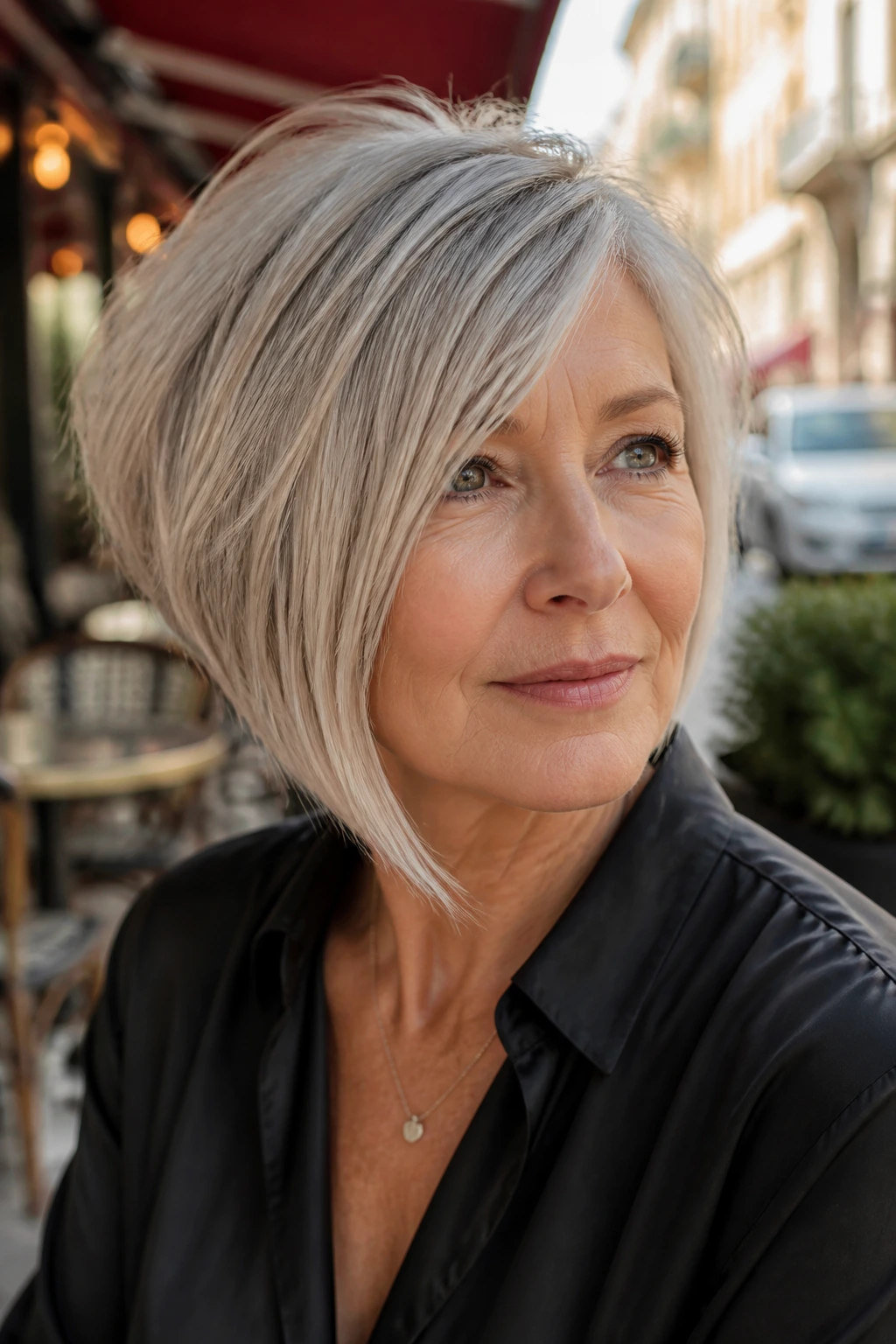
An asymmetrical bob isn’t about being dramatic for the sake of it. The slightly longer side draws the eye in a diagonal line, which can be very flattering when you want to lengthen the face or soften a rounder jaw. The layered version makes that diagonal feel soft instead of severe.
A small asymmetry is usually best. We’re talking about a subtle difference in length, not a sharp one-side-longer statement unless that’s really your style. The layers should still flow from back to front so the shape reads as modern, not chopped from two different haircuts.
This cut is a good choice if you want short hair with a little attitude and don’t mind a shape that asks for a round brush or flat iron touch-up now and then. It’s not the most low-effort cut in the bunch, but it pays off if you like hair that looks deliberate from every angle.
14. Tapered Crop With Wispy Bangs
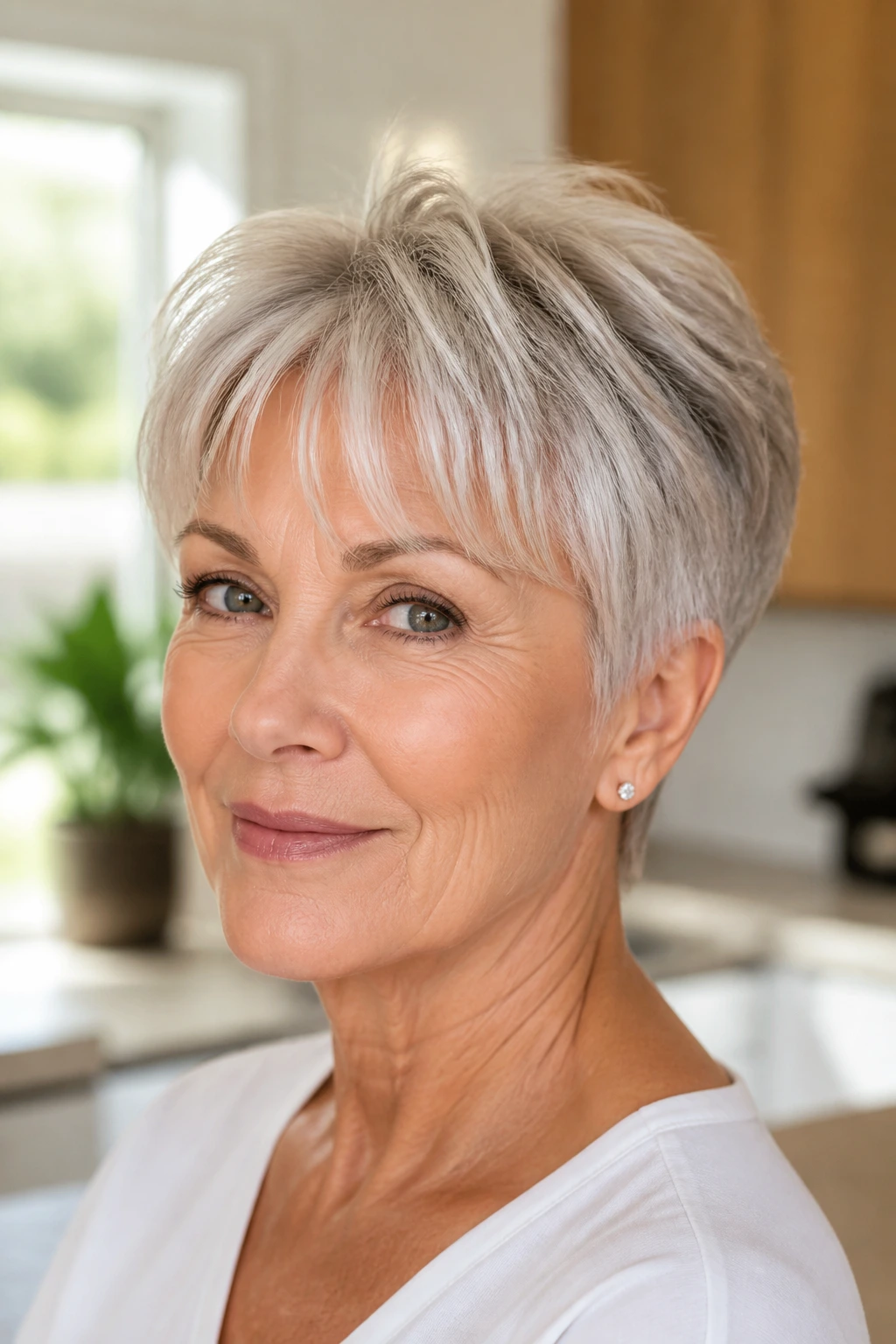
A tapered crop with wispy bangs is one of the nicest options when you want softness around the forehead without committing to a dense fringe. The sides and back taper close to the head, while the top and bangs stay light. The bangs should feel airy, not chopped. If they’re too heavy, the whole haircut can look boxed in.
This shape is good for women who want a little coverage across the forehead but still want the face open. It also works well when the hairline has changed a bit with age. Wispy bangs can bridge that gap without shouting about it. They let the eyes do the talking.
The key is keeping the bangs piecey and movable. A touch of styling cream, then a quick side sweep with the fingertips, is often enough. If you need to round-brush them every morning, they’re probably too heavy.
15. Soft Undercut Pixie With Feathered Top
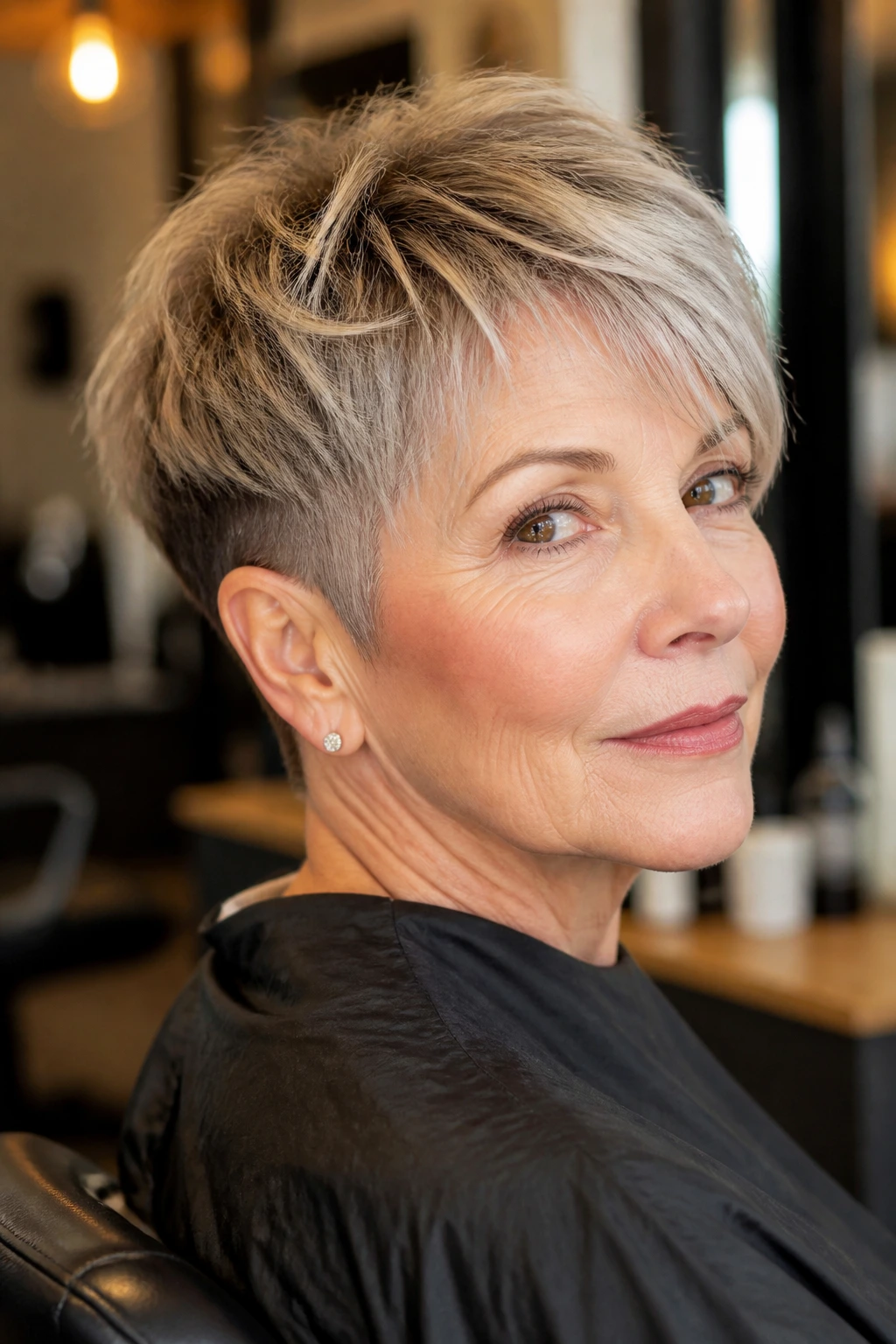
An undercut sounds bold, but a soft undercut pixie can be quietly practical. The area around the nape and sometimes the lower sides is clipped shorter to remove bulk, while the top stays feathered and easy to style. That hidden reduction in weight makes a huge difference if your hair is dense or stubborn at the back.
The best part is that the undercut doesn’t have to be obvious. It can sit beneath the surface and just make the top layers lie better. That means less puff at the nape, less bulk around the ears, and less time spent wrestling the back of the head into place.
This is a smart cut for active people too. It stays cleaner under scarves, collars, and high necklines. The only caveat: you need a plan for growing it out. Short undercuts can become awkward if the shape is ignored for too long.
16. Layered Bob With Curtain Fringe
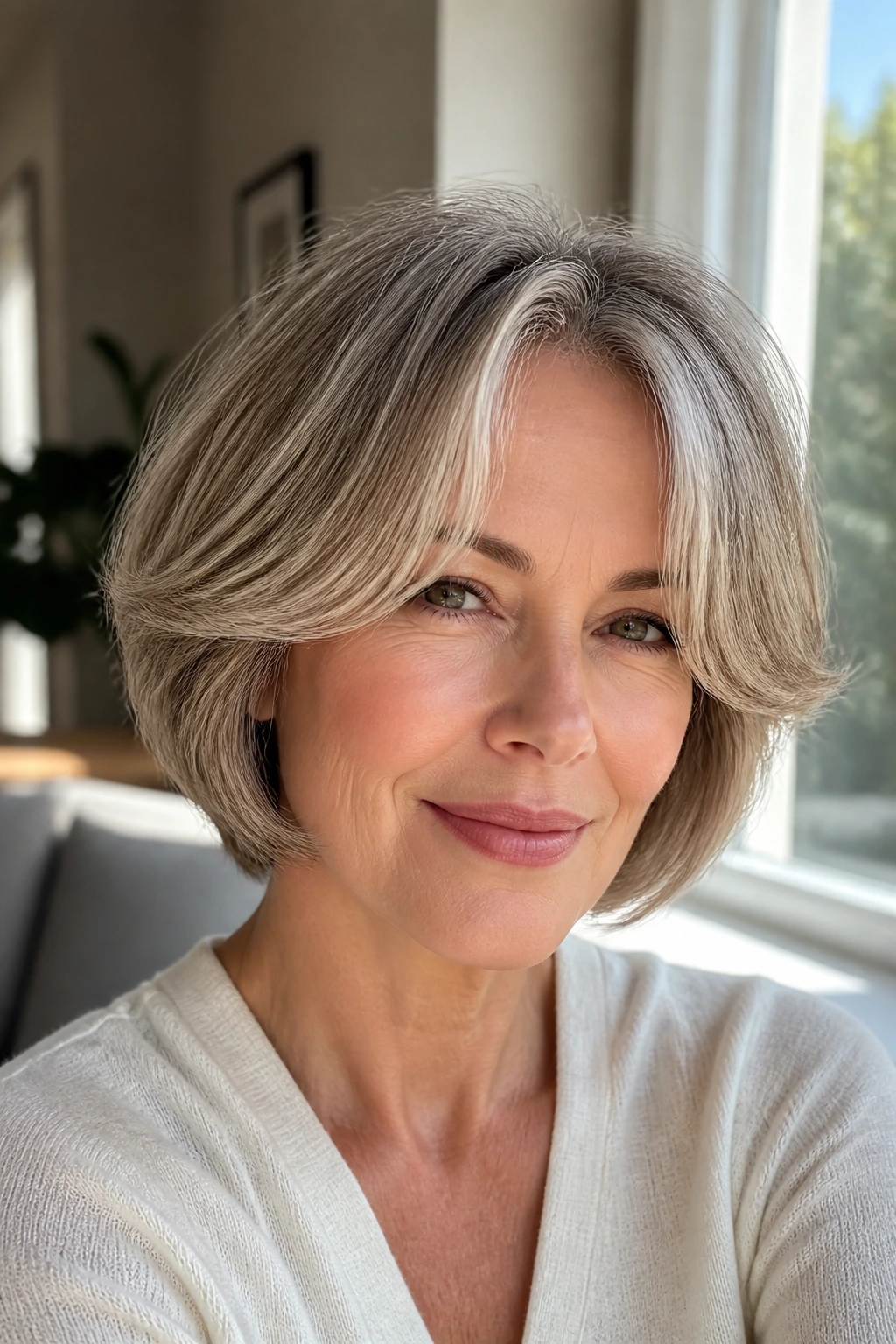
Curtain fringe on a short layered bob is a little bit softer than straight bangs and often easier to live with. The fringe opens in the center and sweeps out toward the temples, which brings attention to the eyes and cheekbones without boxing in the face. On short hair, that framing can be worth a lot.
The cut should keep enough length in the fringe to bend, not stand straight up. If the bangs sit too short, they lose the curtain effect and start looking choppy. The bob itself should be layered lightly through the ends so the fringe has something to connect to. Otherwise it feels like two separate haircuts.
I like this on women who want some front interest but hate the maintenance of a full bang. It’s forgiving, and it tends to grow out better than a blunt fringe. That alone earns it points.
17. Rounded Razor-Cut Crop
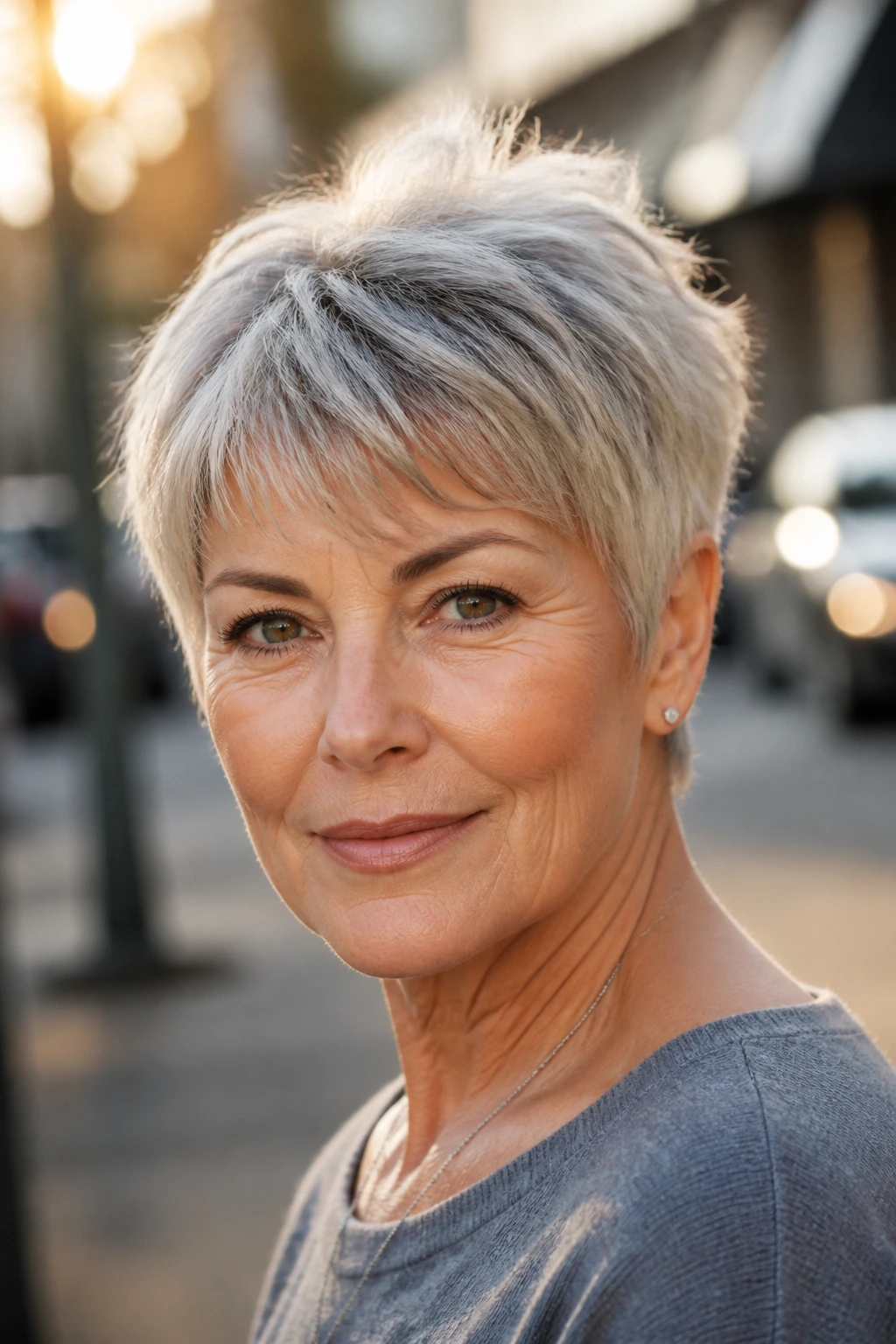
A razor-cut crop has a softer, airier finish than a scissor-cut crop, especially when the hair is straight or lightly wavy. The razor takes away some of the hard edges, so the layers fall in fine pieces instead of blunt chunks. Rounded around the head, it creates a shape that feels light without turning flyaway.
This cut is best on hair that can handle a little edge. Very fragile or over-processed strands may not love a razor, since the ends can look frayed if the technique is heavy-handed. On healthy hair, though, the result is a crop with movement and a slightly broken finish that looks modern without being overstyled.
It’s especially nice if you don’t want a lot of product in your hair. A little shape cream and some finger-combing are usually enough. The haircut does the talking.
18. Voluminous Crown Layered Pixie
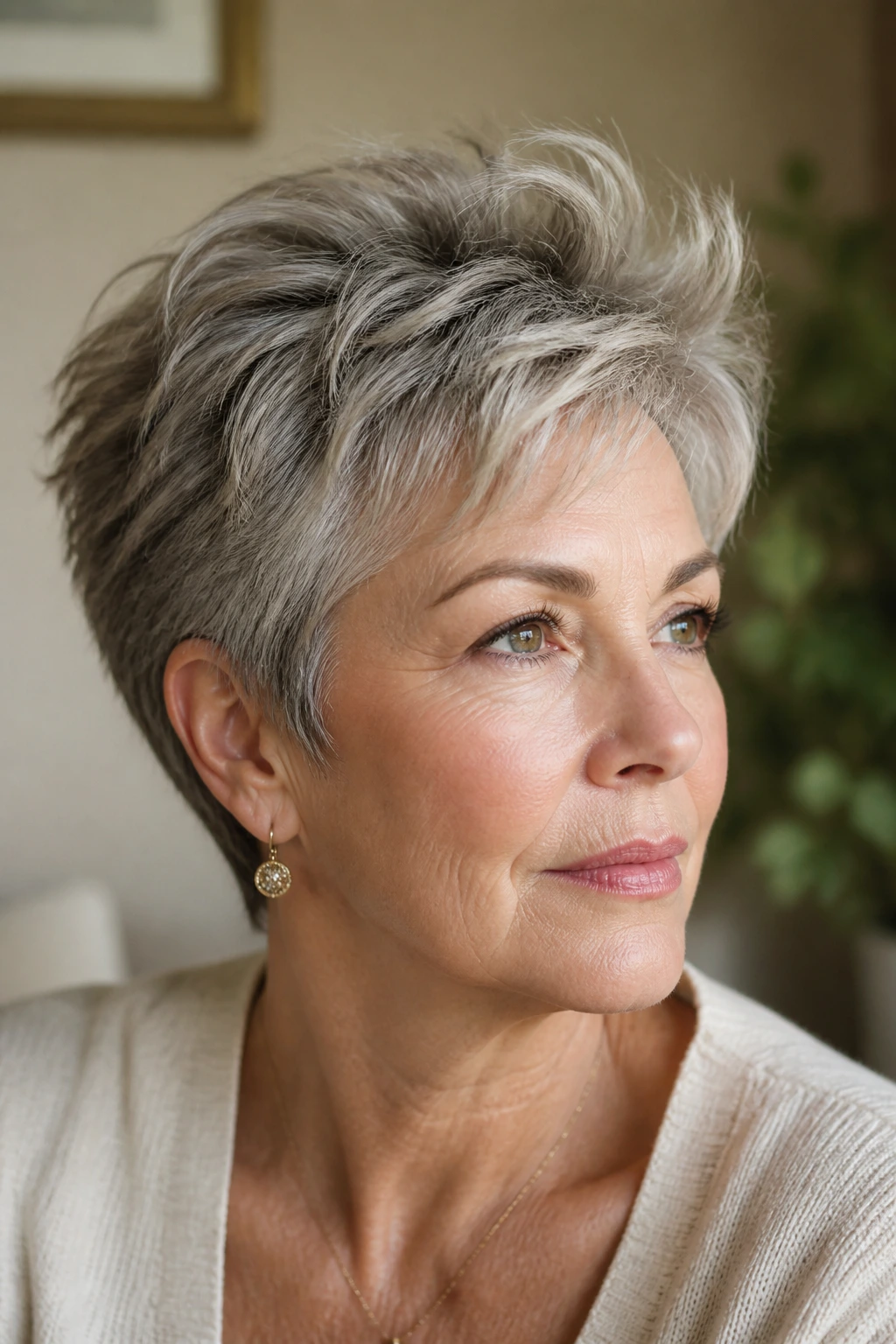
Some short cuts need crown volume the way a good jacket needs shoulders. This one is built for that. The sides stay close enough to slim the head, while the top and crown layers are cut to stand up a little and create lift. It’s not a bouffant. It’s controlled height.
That crown lift is helpful if your hair has gone flat on top, which happens to more people than hair commercials ever admit. A root-lifting spray, a quick blow-dry in the opposite direction of your part, and a cooling clip at the crown can make the whole style look much fuller. Small tricks. Big payoff.
This cut does ask for some styling. Not a lot, but enough to matter. If you want to wake up and walk out the door with no effort at all, choose something less crown-dependent. If you don’t mind five minutes, this one gives a lot back.
19. Layered Jaw-Length Cut With Side Part
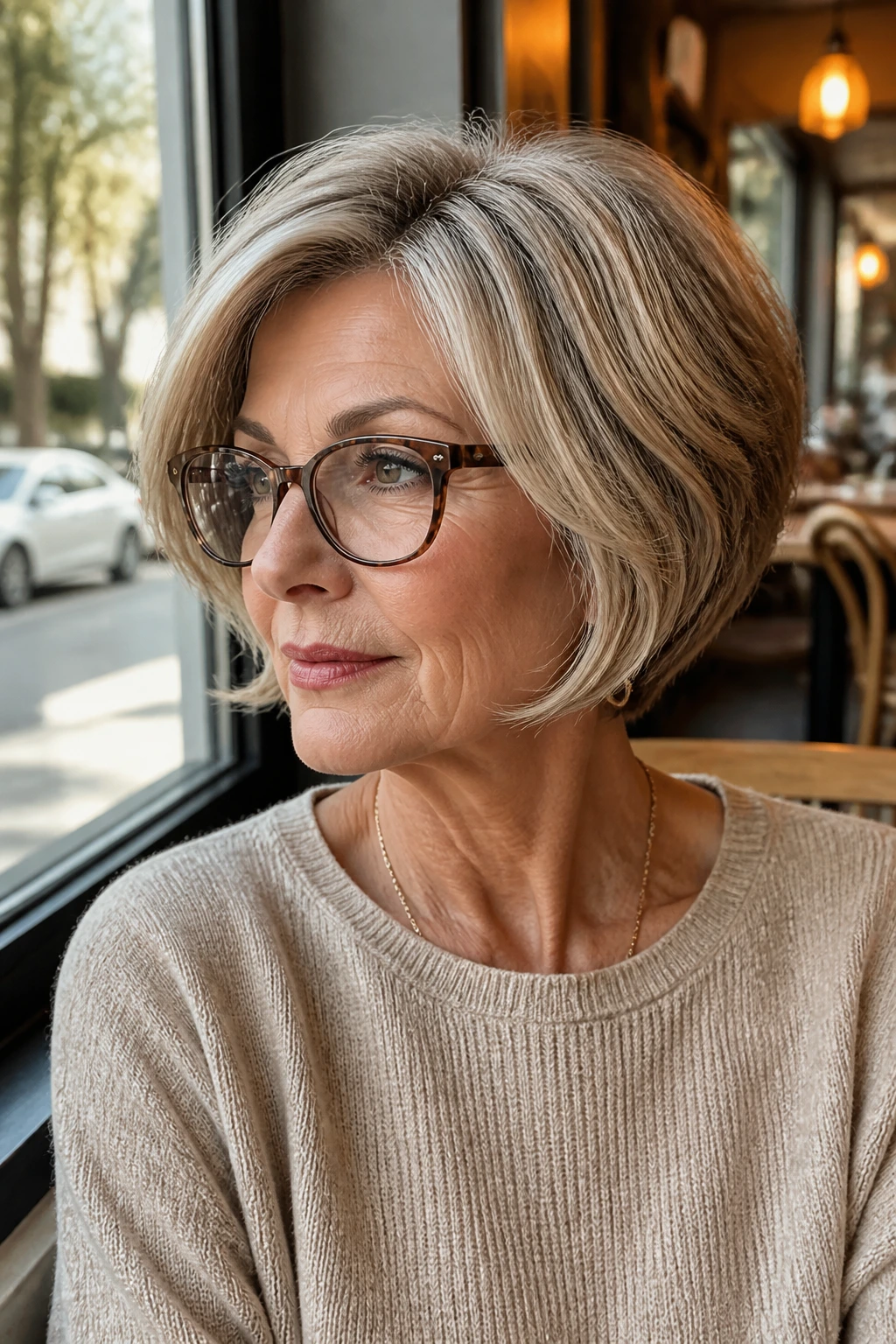
A jaw-length cut with layered movement and a side part lands in that useful middle zone between a bob and a crop. It gives coverage at the sides while still keeping the neckline open. The side part builds a little lift on top, which is helpful if the crown is losing some strength.
The layers should start low enough to keep the outline clean. You want movement, not a shag. A deep side part can soften the face and make the cut feel less symmetrical, which is flattering on many face shapes. It also gives the style a little swing when the hair is tucked behind one ear.
This is one of the easiest layered looks to wear with glasses. The length sits just right so the frames don’t end up buried in hair or fighting with a strong fringe. That kind of practical harmony matters more than people admit.
20. Tousled Silver Crop With Choppy Ends
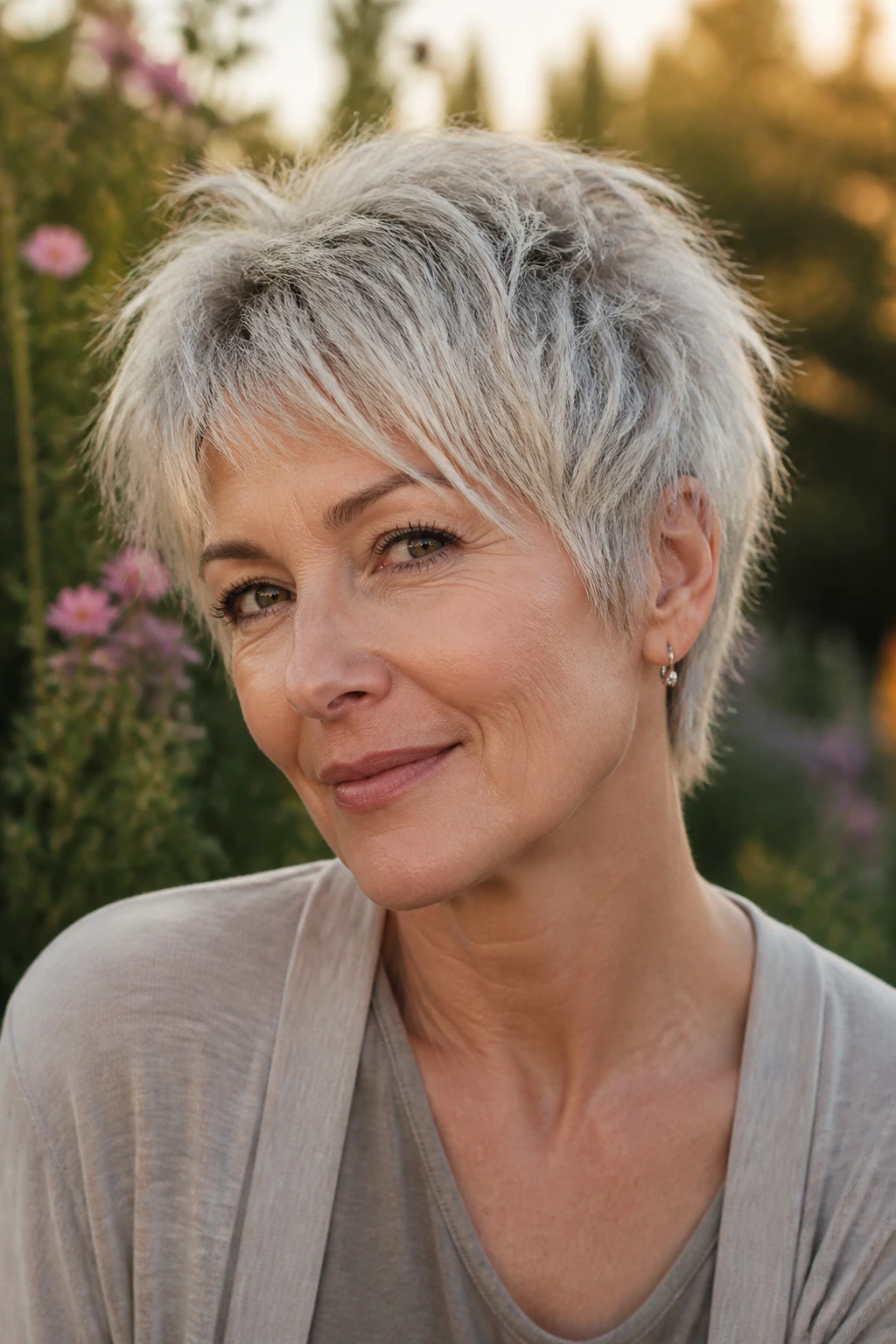
Silver hair can take a tousled crop beautifully, especially when the ends are broken up and the whole cut is kept light. Choppy ends make the style feel modern and casual, and the silver tone keeps the texture from looking muddy. It’s one of the best cuts for women who want their natural color to look intentional instead of apologetic.
The styling should stay loose. A texturizing spray, a little finger scrunching, and maybe a touch of matte paste at the ends are enough. Too much shine product can make the texture collapse. Too much cream can make silver hair look greasy before lunch, which is not the goal.
I like this cut for women who prefer a haircut that looks better with a little mess. It does not need perfection. It needs shape and a small amount of edge.
21. Side-Swept Layered Bob With Movement
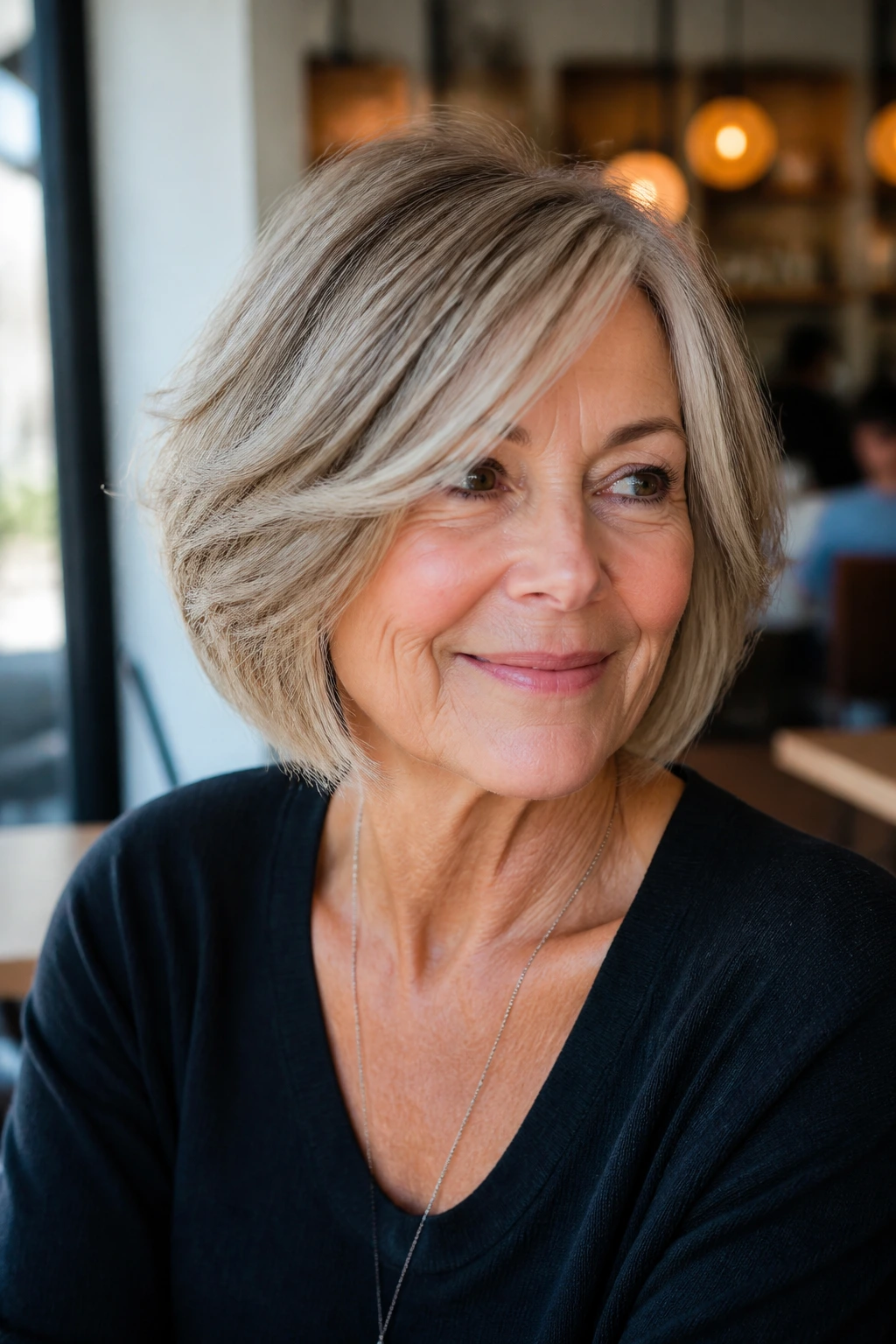
A side-swept layered bob has a nice way of opening the face without exposing everything. The hair is directed to one side, the layers keep it from sitting like a slab, and the movement creates a diagonal that’s easy on the eye. It’s a good option when you want softness and a bit of polish in the same cut.
The side sweep can help balance out a strong jaw or a broader forehead. It also works well if one side of your hair has a stronger cowlick than the other. Rather than fighting that pattern, the cut uses it. That’s usually the smarter move.
This is one of those cuts that looks quietly expensive when it’s shaped correctly. Not flashy. Just neat, fluid, and composed. And if the hair air-dries with a little bend, even better.
22. Neck-Grazing Layered Bob With Soft Undercurve
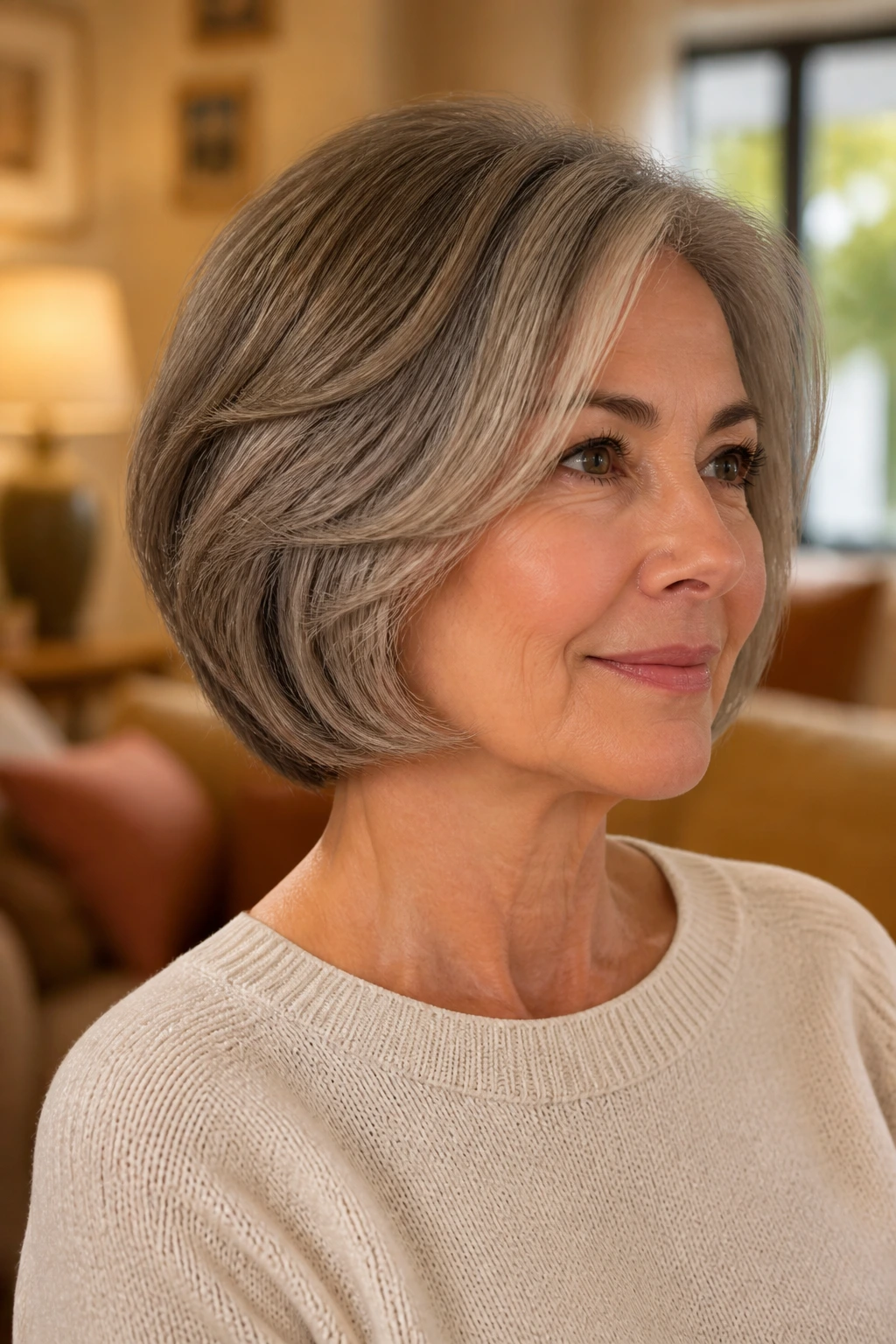
A neck-grazing bob keeps the ends just long enough to brush the collar line, which is flattering if you want the neck covered without feeling weighed down. The soft undercurve means the layers bend inward slightly instead of flaring out. That shape is far more forgiving than a blunt hemline.
This cut is especially useful for thick hair, because the layers remove the heavy edge that can make a bob feel boxy. It also pairs well with sweaters, jackets, and scarves, since it doesn’t bunch at the collar in the way longer hair can. Very practical. A little understated too.
If your hair flips at the ends, ask for more internal layering and less blunt perimeter. That small adjustment can mean the difference between a clean bend and a triangle shape that keeps trying to happen every morning.
23. Cropped Shag With Lifted Crown
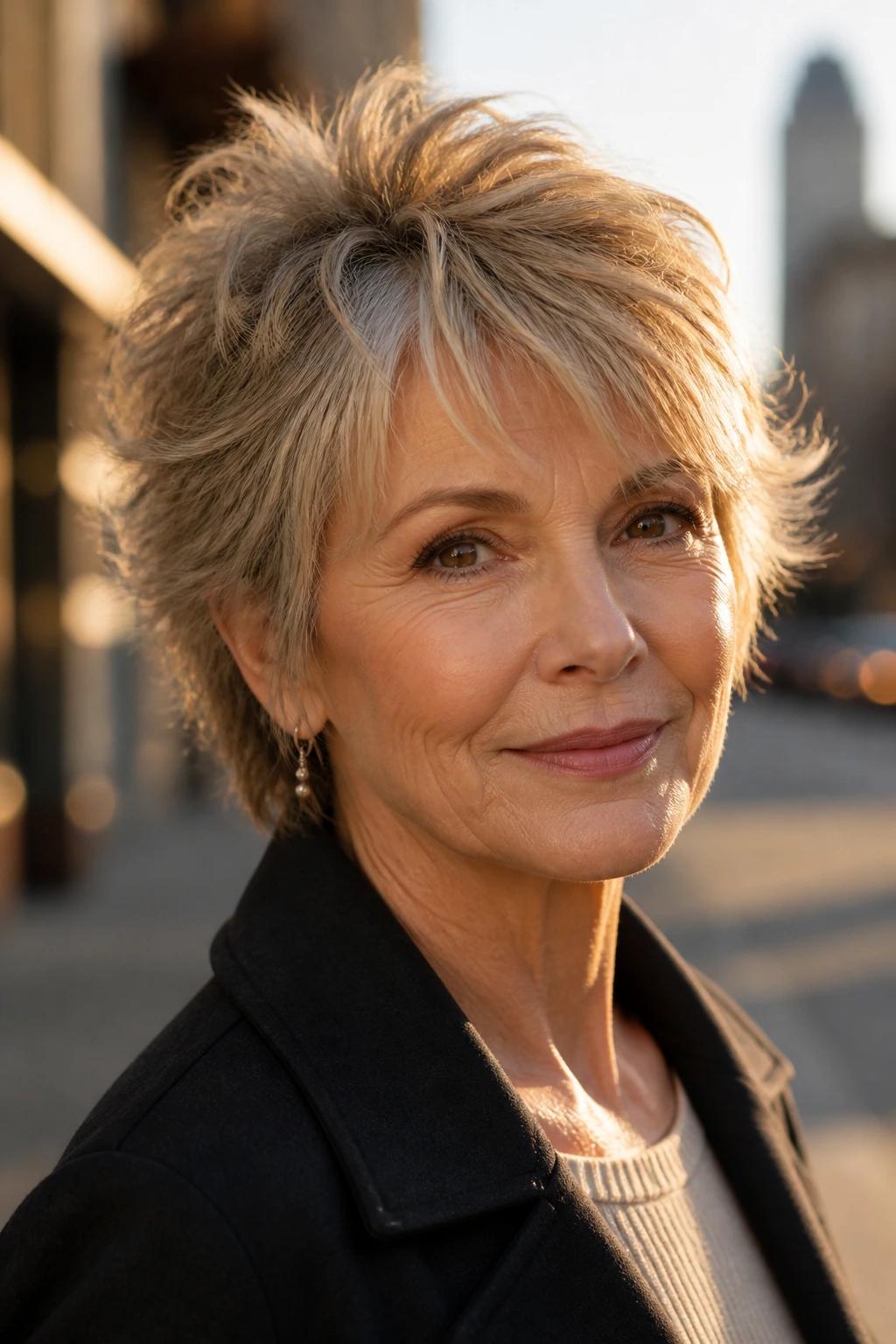
The cropped shag is the most playful cut in the bunch, and that’s why people either love it or skip it. The crown is lifted, the layers are broken up, and the fringe or front pieces usually fall softly around the forehead and temples. It has energy. It has movement. It refuses to sit still.
What makes it work on women over 60 is the balance between softness and shape. If the shag is too long, it starts looking unruly. If it’s too short, it loses that easy, textured feel. Keep the layers compact and the crown airy, and the cut stays modern without asking for a lot of perfection.
This is especially good for wavy or lightly curly hair. It can also look gorgeous on silver hair because the texture and the color play off each other so well. You get the sense of fullness without the weight.
Why Short Layers Change the Whole Shape of the Cut
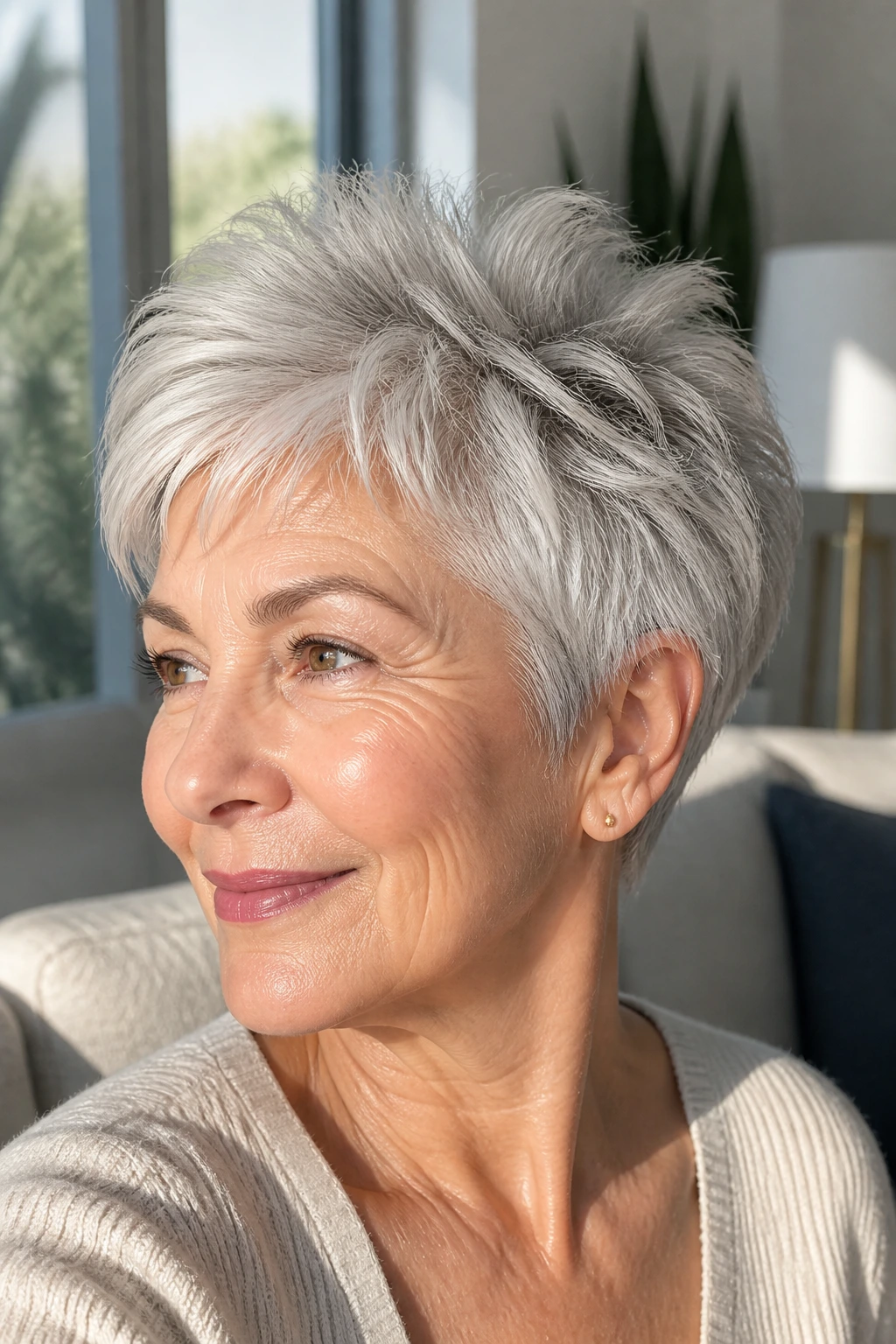
Layers do more than “add movement,” which is a phrase stylists use so often it has nearly worn out its welcome. In short hair, layers change the way the cut sits on the head. They remove weight where hair starts to collapse, create lift where the crown tends to flatten, and keep the outline from turning into one hard block.
That matters even more when hair gets finer, denser, or more textured with age. A blunt crop can exaggerate thin ends. A stacked bob can bulk up in the wrong place. A short layered cut, when it’s cut with intention, spreads the weight better and lets the hair fall in smaller, easier-to-manage sections.
There’s another piece people miss: layers change how light lands on the hair. Silver strands, salt-and-pepper color, and even darker hair with gray ribbons all look more dimensional when the cut has soft internal movement. The haircut does not create color. It gives the color somewhere to go.
Tools and Products That Make Layered Short Hair Easier
-
Small round brush: Best for lifting the crown on pixies and short bobs without making the ends flip too hard.
-
Vent brush or paddle brush: Good for quick drying and smoothing layered sections that want to puff.
-
Lightweight mousse or root lift spray: Helps fine hair hold a little structure at the roots without weighing down the sides.
-
Texturizing spray: Useful for shaggy pixies, crops, and choppy bobs when you want separation at the ends.
-
Heat protectant: Worth using even on short hair if you blow-dry or flat-iron regularly; short ends can still dry out.
-
Blow dryer with nozzle: Directs airflow where you need it, which matters when you’re shaping short layers around the crown and ears.
-
Small clips: Handy for setting the crown while it cools or keeping bangs out of the way while drying the rest.
-
Light smoothing cream or serum: Best for sleek bobs and layered cuts that need a little shine, especially on silver or coarse hair.
-
Purple shampoo, if your gray or silver pulls yellow: Use sparingly so the hair doesn’t turn dull or violet.
-
Salon scissors for tiny trims between visits: Only if you know what you’re doing. Most people should leave that to a pro.
How to Ask for Short Haircuts for Women Over 60 in Layers at the Salon
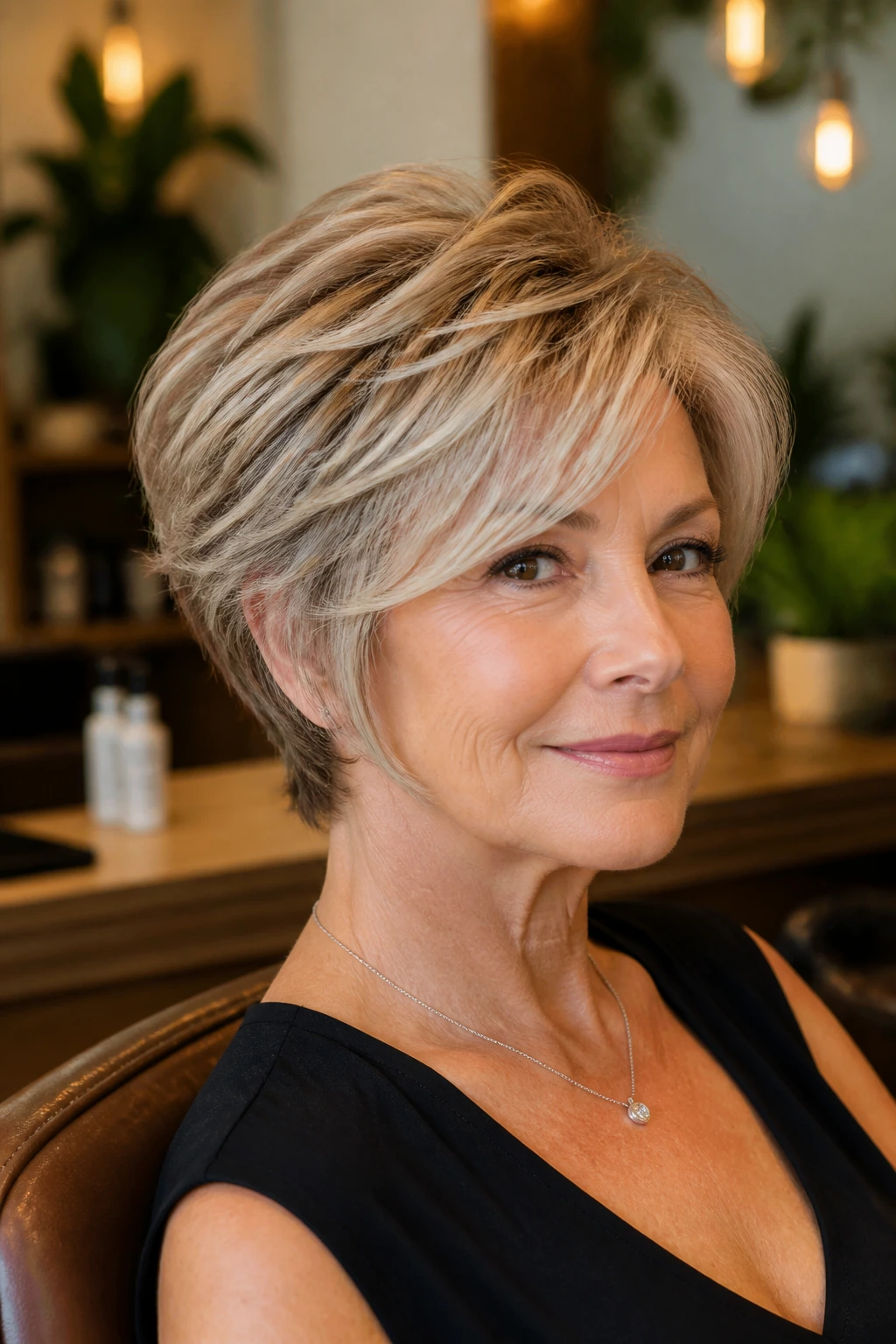
The easiest way to get a good result is to stop asking for a vague “short layered cut” and start describing the shape you want. Bring photos, sure, but also tell the stylist where you want volume, where you want less bulk, and how much time you plan to spend on styling. Those details matter more than the name of the haircut.
If you want lift, say so plainly: “I want more height at the crown and less width at the sides.” If you want softness around the face, ask for layers that start around the cheekbone or jaw instead of the chin. If you wear glasses, mention that too. The frames change how the front pieces should fall, and a good stylist will adjust for that.
One thing I’d push back on: do not let someone thin your hair just because it feels thick in the chair. Thinning shears are not a cure-all. They can make fine hair frizzy and make thick hair puff in humidity if they’re used carelessly. Layers cut with scissors, especially on short hair, are usually cleaner and easier to live with.
How to Wear These Cuts Without Fighting Them
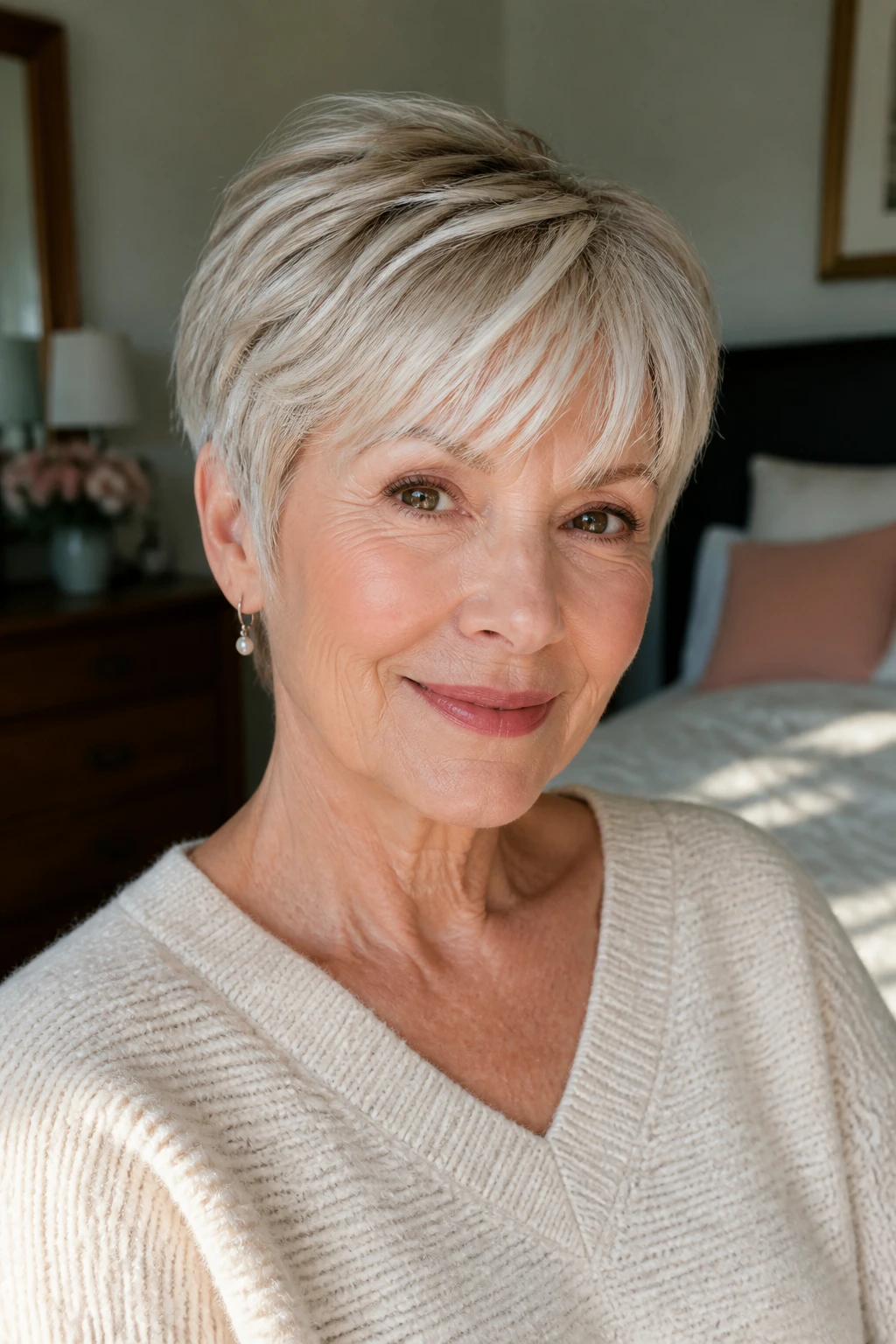
Presentation: Choose a finish that matches the cut. Feathered pixies and cropped shags look best with a little lift and separation, while stacked bobs and sleek layered bobs benefit from smoother edges and a neat part. If the haircut has movement built in, don’t iron it into submission.
Accessories: Glasses, hoops, studs, scarves, and collar shapes all matter more with short hair. A side-swept bob can frame bold frames; a cropped pixie makes earrings stand out; a neck-grazing bob sits neatly under jackets and winter collars. Let the accessories work with the shape instead of around it.
Balance: If your hair is fine, keep the layers compact and avoid too much thinning. If it’s thick, ask for weight removal in the interior so the sides don’t mushroom. If it’s wavy or curly, make sure the cut respects shrinkage, because a short curl cut that looks perfect wet can land two inches higher once it dries.
Best Pairing: Match the cut to how you live. If you want five-minute styling, choose a feathered pixie, a long pixie, or a soft crop. If you don’t mind a brush and dryer, a bob with layers gives you more styling options. There’s no prize for making life harder than it needs to be.
Additional Tips and Finish Boosters
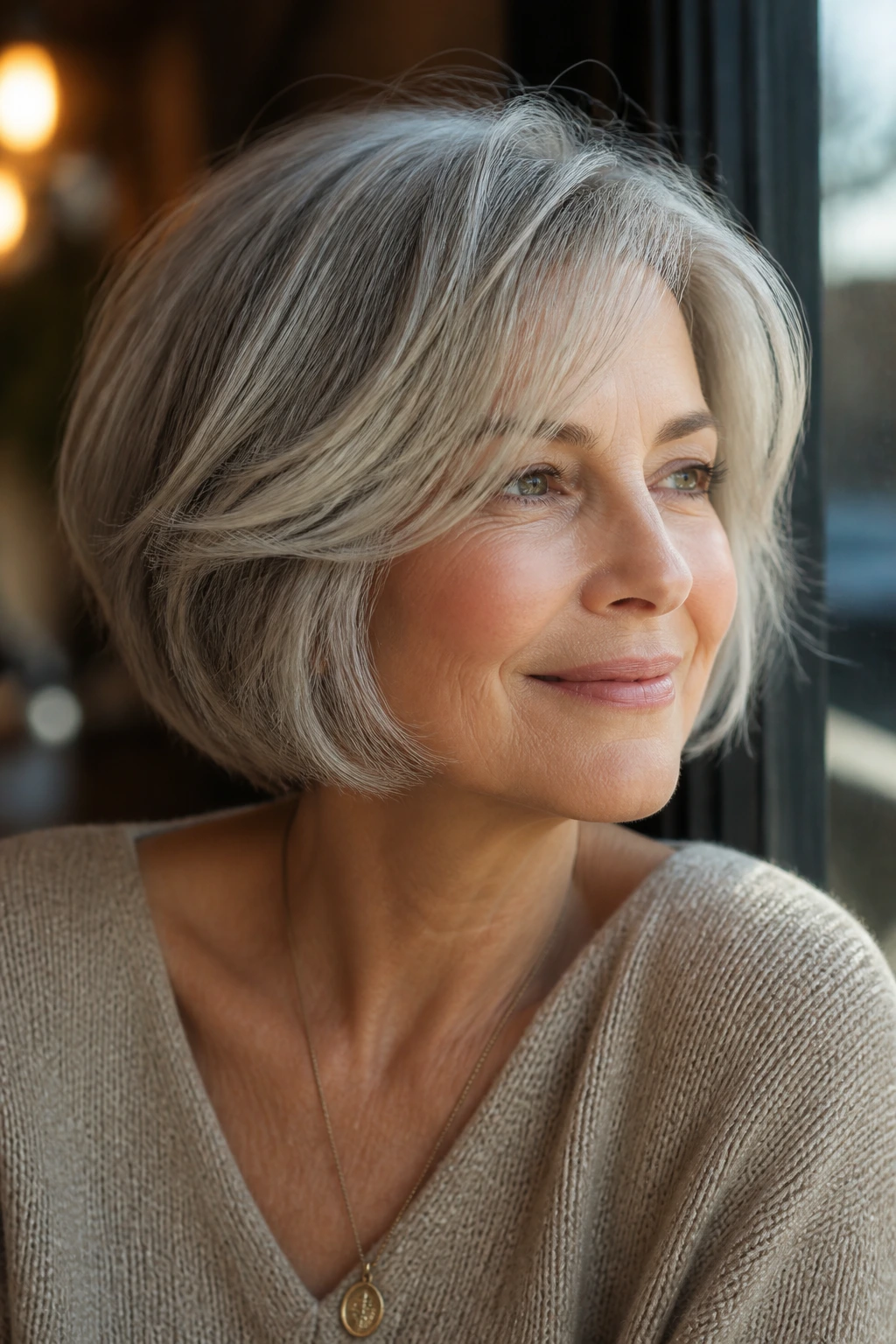
Root Lift: Work a pea-sized amount of mousse into damp roots, then blow-dry the crown in the opposite direction of your part for a few minutes. That one move can save a flat pixie or bob.
Texture Boost: For shaggy styles, scrunch a texturizing spray into the mid-lengths and ends after drying. Don’t spray the roots unless you want a rough, dry finish that can feel gritty.
Silver Brightness: If gray or white hair looks yellow, use purple shampoo once a week or every other week, not daily. Too much will dull the shine and make the hair feel chalky.
Time Saver: Set the crown with a clip while the hair cools after blow-drying. Five minutes of cooling does more than people think. Heat sets shape; cooling locks it in.
Make-It-Yours: If you want more softness, ask for longer face-framing pieces. If you want more edge, ask for pieceier ends or a slightly stronger graduation at the back. Tiny changes can shift a cut from classic to modern fast.
Mistakes That Make Layered Short Cuts Look Off
A layered short cut usually fails for one of five reasons, and they’re not mysterious. The first is too much layering at the top with too little length left to support it. The result is thin, spiky hair that looks anxious. The fix is to keep enough top length for movement and avoid removing bulk everywhere at once.
Another common problem is over-thinning thick hair. It can look smoother in the chair, then explode in humidity because the cuticle edges are left too airy and rough. If your hair is dense, ask for internal shaping with scissors, not aggressive thinning shears.
Then there’s ignoring growth patterns. Cowlicks at the crown, a strong side part, or a swirl near the nape can push a short layered cut into strange directions. A good stylist should cut around those patterns, not pretend they aren’t there.
A fourth issue is using too much product. Short layered hair does not need a handful of cream, a cloud of spray, and a dab of oil all at once. Pick one goal: lift, texture, or smoothing. If you try to force all three, the cut usually goes limp.
And finally, letting the neckline grow out too long. Short layered cuts lose their shape fast when the nape thickens. Even a tiny trim every few weeks can keep the whole style looking intentional instead of overdue.
Variations and Adaptations Worth Asking For
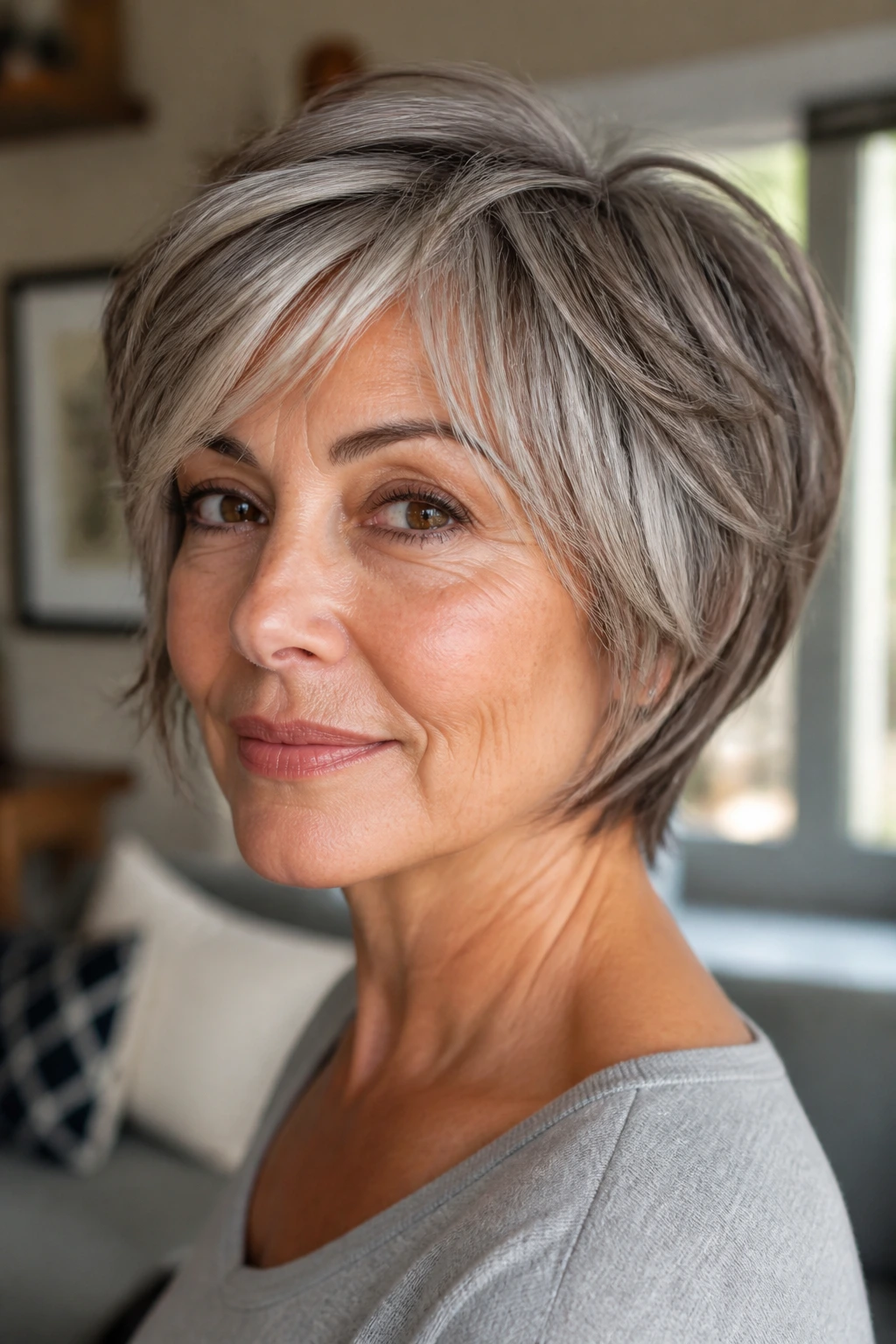
The Softer Frame: Keep the same layered cut, but let the front pieces fall a little longer around the jaw and cheekbones. This works well if you want face-framing without a heavy fringe.
The Low-Maintenance Air Dry: Ask for layers that support natural texture rather than a blow-dried finish. This is a good choice for wavy or curly hair, especially if you prefer less styling every morning.
The Sleeker Office Version: Keep the structure of a bob or pixie, but reduce choppiness and ask for cleaner edges. A smoothing cream and a side part make this version look more refined.
The Silver-Forward Version: Let the cut stay a little piecey and keep the color bright with careful purple shampoo use. On salt-and-pepper or white hair, texture can do more than heavy styling ever will.
The Fuller Crown Version: Add more lift through the top and crown, especially if the hair is flat there. This variation works best on fine hair and can make a short cut feel much livelier.
How to Keep the Shape Between Salon Visits
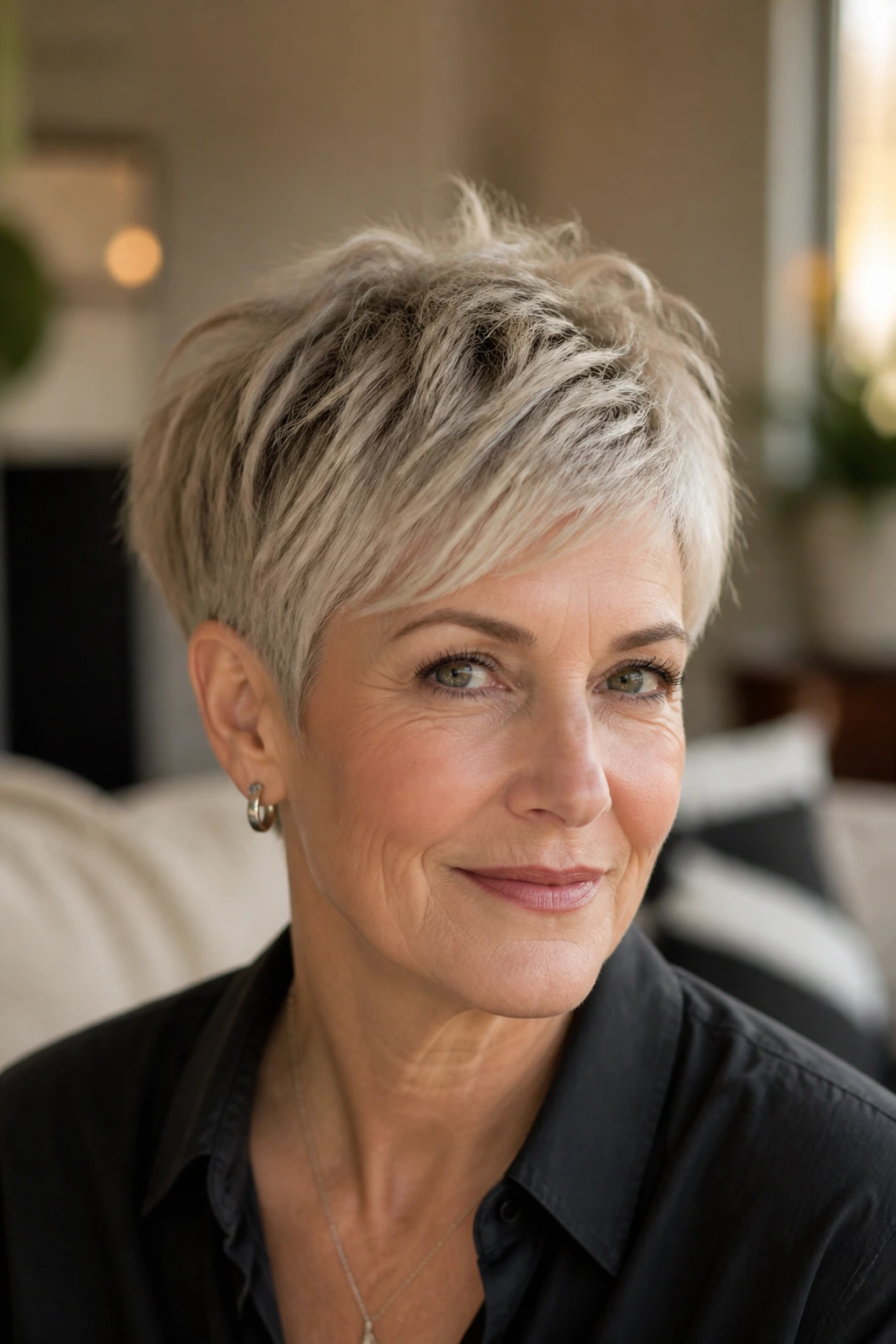
Layered short hair is less forgiving of neglect than longer hair, but it also recovers faster. Most short layered cuts need a trim every 4 to 8 weeks, depending on how fast your hair grows and how precise the shape is. A pixie with a tapered nape usually needs attention sooner than a bob with softer layers.
Washing habits matter too. If your hair is fine, too much conditioner at the roots can flatten the top within a day. Keep conditioner from mid-length to ends, then rinse well. If your hair is coarse or gray, a little leave-in or lightweight cream can stop the ends from feeling brittle, but don’t drown the cut in oil.
At home, aim for a quick reset instead of a full rebuild. Wet the crown slightly, re-dry the roots in the direction you want, and use your fingers to re-piece the layers. That usually works better than trying to restyle the whole head from scratch.
Questions People Ask Before Choosing a Layered Short Cut
Which short haircut with layers is best for fine hair over 60?
Feathered pixies, long pixies, and soft layered crops tend to work best because they keep the top light and add lift without over-thinning the ends. A blunt bob can work too, but only if it’s cut with hidden internal layers so it doesn’t sit flat.
Are layers good for thinning hair?
Yes, if they’re done carefully. The goal is to create movement and lift, not remove so much weight that the hair looks see-through. Short layers around the crown and face are usually smarter than aggressive thinning all over.
What’s the difference between a stacked bob and a graduated bob?
A stacked bob usually has more visible buildup in the back, while a graduated bob tends to be softer and more blended from back to front. The graduated version gives you shape without as much of a shelf at the nape.
Can curly hair wear short layered cuts?
Absolutely, but the cut has to respect shrinkage and curl pattern. A dry cut or a curl-aware layered cut usually works best, because curly hair changes shape a lot once it dries.
Should I get bangs with a short layered haircut?
Only if you want the upkeep. Side-swept fringe and curtain fringe are easier to live with than blunt bangs, especially if your hairline changes with humidity or your forehead is more sensitive to styling time.
How often should I trim a pixie or short bob?
A pixie may need trimming every 4 to 6 weeks. A bob can stretch closer to 6 to 8 weeks if the layers are soft and the shape is forgiving. Once the nape starts flipping or the crown flattens, it’s time.
Will a layered short cut work with glasses?
Usually, yes, and often better than longer hair. The trick is leaving enough space around the temples and keeping the fringe soft so the frames and the haircut don’t compete for the same visual space.
What if my hair sticks out at the crown or nape?
That’s usually a growth-pattern issue, not a styling failure. Ask your stylist to cut around the cowlick or swirl rather than against it, and use a small amount of root-lift product only where you need control. Fighting the hair head-on tends to make things worse.
The Shape That Keeps Working
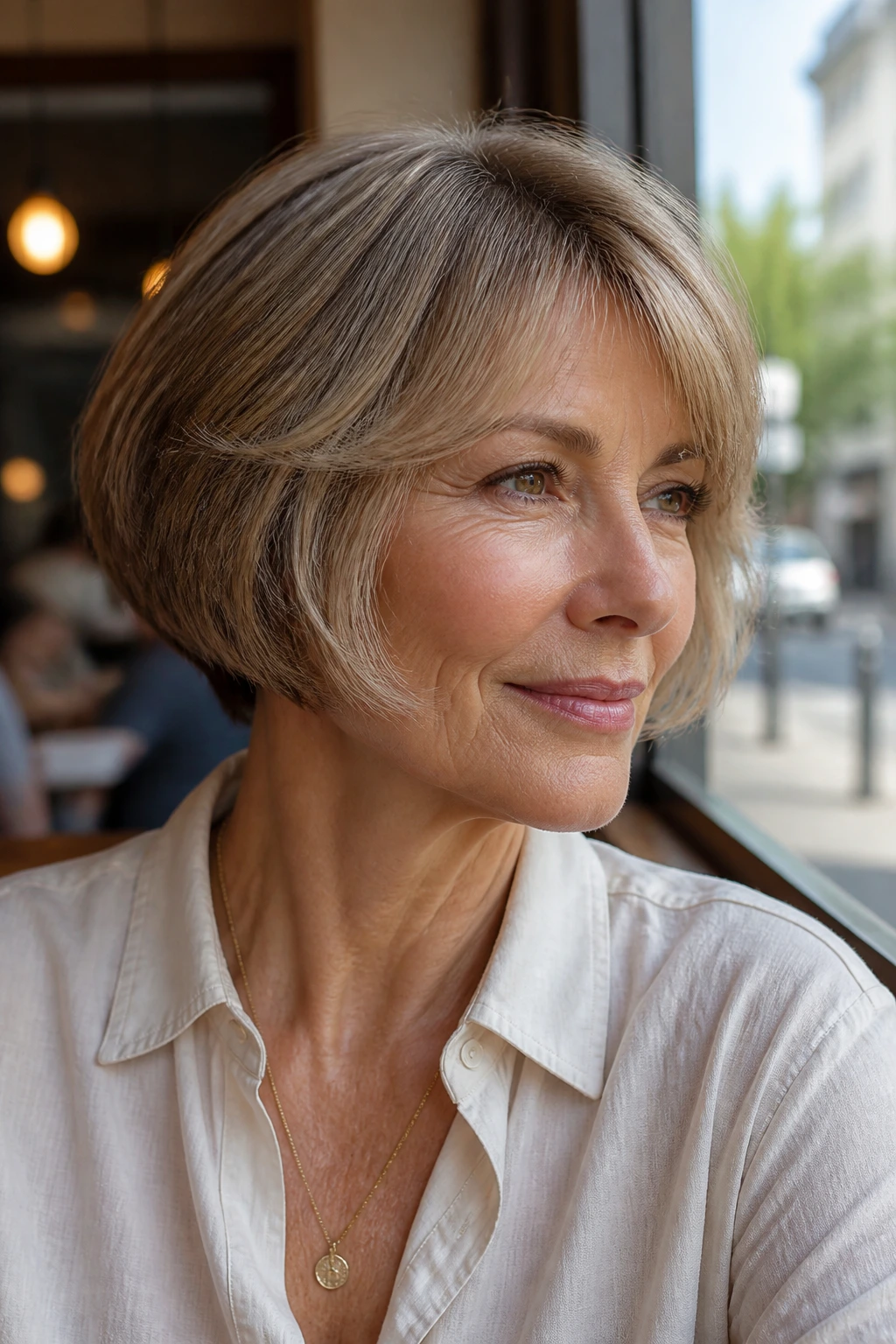
The best short layered cuts over 60 are not trying to pretend hair never changed. They work because they respect change. Fine hair gets lift instead of collapse. Thick hair gets room instead of bulk. Gray hair gets movement instead of a stiff outline. That’s a better deal than chasing a haircut that only looks good on day one.
If there’s a theme here, it’s this: shape matters more than length. A short cut with thoughtful layers can look fresh, neat, and easy in a way that blunt, one-note hair rarely does. Choose the version that matches your texture, your routine, and how much styling you’re willing to do before coffee.
And if you’ve been stuck in the same short haircut for years, this is one of the easier places to make a real change. A few well-placed layers can do more than a big chop ever will.
