



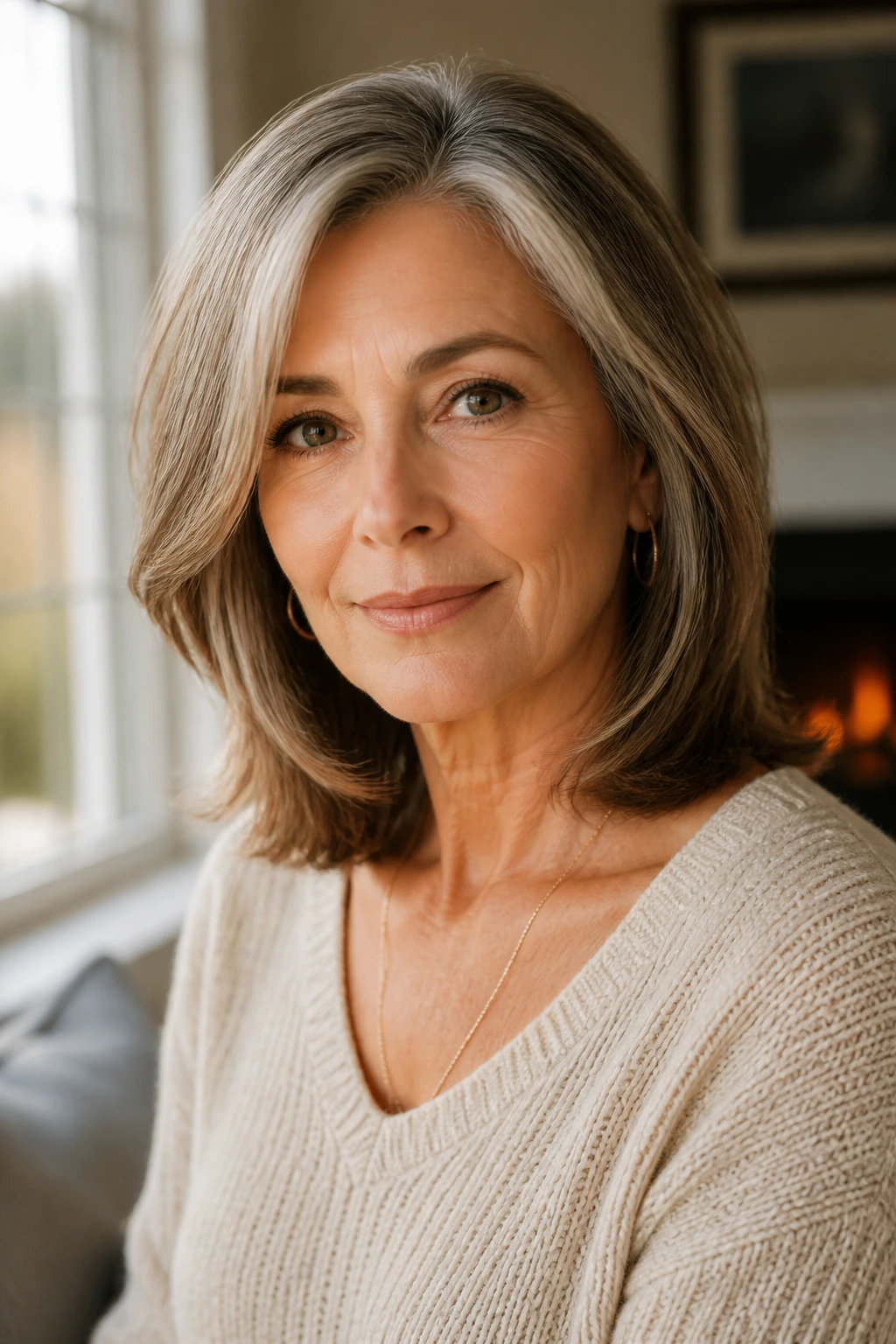
Medium length hairstyles for women over 60 solve a problem that short crops and long layers often miss: they keep enough weight to look polished, but not so much length that the hair hangs tired around the face. When a cut lands at the collarbone or just below the jaw, it can soften a strong chin, skim a sweater collar, and still tuck behind glasses without fighting back.
That middle zone matters more than people admit. Hair changes. The ends get drier. The crown can go flatter. Gray strands often feel wirier and need a cleaner shape, not more fuss. A good medium cut works with those changes instead of pretending they never happened.
I keep coming back to this length because it gives you options without demanding a ceremony. You can wear it sleek, let it air-dry with a little bend, or set the front pieces with a round brush and be done. The styles below do different jobs — some add lift, some build softness, some make fine hair look denser — but they all live in that useful space where the hair still feels like itself.
Why These Medium-Length Cuts Keep Showing Up in My Notebook
-
They keep the outline clean: A medium cut holds its shape better than very long hair, which can drag the face down when the ends thin out.
-
They work with changing texture: If your hair has gotten finer, coarser, or a little more wave-prone, shoulder-grazing lengths usually adapt better than extreme cuts.
-
They play nicely with glasses and jewelry: The right length clears the collar, shows off earrings, and doesn’t crash into the frame line of your glasses.
-
They grow out without panic: A good medium shape can survive several weeks of grow-out without looking neglected, which is not something every shorter cut can claim.
-
They give gray hair room to shine: Clean lines and movement at the ends make silver strands look deliberate instead of fuzzy.
-
They can be styled fast or slowly: A medium cut can handle a quick air-dry on a grocery run day and a brushed-out finish when you want more polish.
Why Medium Length Hair Works So Well After 60
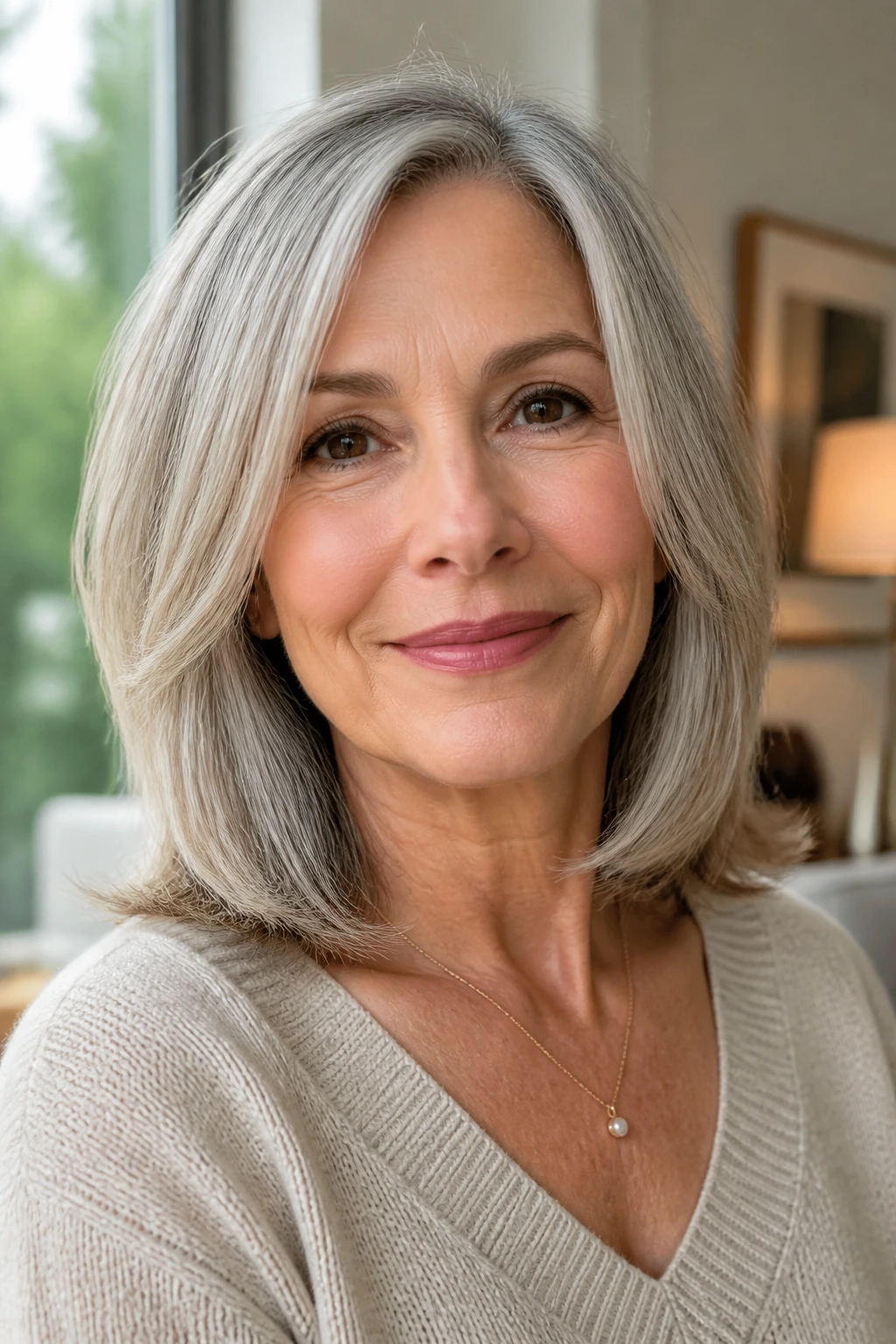
Hair at this stage often needs two things at once: weight at the ends and movement around the face. That sounds like a contradiction until you see it in a mirror. Too little length and the hair can pop up at the crown. Too much length and the shape collapses into a narrow curtain that clings to the jaw.
The sweet spot is usually somewhere between the base of the neck and the collarbone. That area keeps the ends from looking see-through, which matters a lot once hair density changes. It also avoids the harsh line that happens when a blunt cut lands exactly at the widest part of the jaw or neck. A cut that sits an inch lower can feel calmer and more balanced.
Layers need restraint here. Short, choppy layers can make fine hair look frayed and can make thick hair puff out at the wrong spot. Longer layers — especially face-framing ones that start around the cheekbone or lip line — tend to do more useful work. They move with the face. They do not scream for attention.
And gray hair? It loves a clear shape. Silver, white, and salt-and-pepper hair show every line, which is why a crisp lob, a rounded bob, or a controlled shag often looks sharper than a overworked style full of broken bits. The cut matters more than the gimmick. Always has.
How to Choose the Right Shape for Fine, Thick, Wavy, or Curly Hair
Fine hair
Fine hair usually looks best when the base line is kept fairly clean. A one-length lob, a curved bob, or a medium cut with very light face-framing pieces can make the ends look denser.
Skip heavy thinning. It sounds helpful in the salon chair and then the ends feel thin by the second week.
Thick hair
Thick hair needs room to move, but not so many short layers that it balloons out in all directions. Long layers, internal shaping, and a little bevel at the ends help the hair sit closer to the head without losing body.
If your hair has weight, use it. Don’t fight it with a haircut that tries to remove every ounce.
Wavy hair
Wavy hair can make medium cuts look lively with very little effort, but only if the shape is cut to follow the bend. Ask for a cut that respects the wave pattern when it dries naturally, not only when it’s stretched straight in the chair.
A little uneven texture through the ends is useful here. Too much razoring usually isn’t.
Curly hair
Curly hair wants length and structure at the same time. A medium cut that keeps the perimeter intact while building internal layers can keep curls from piling up at the sides.
If your curl pattern changes a lot from the wet stage to dry stage, a dry cut or curl-by-curl shaping is worth asking about. It’s slower, yes. It usually saves grief later.
If your texture has changed
This is the part people ignore. Hair that used to be straight may now bend a little. Hair that used to feel soft may have developed a coarse outer layer. The cut should follow the hair you have now, not the hair you remember.
That’s the whole game.
1. Collarbone Lob with Soft Face-Framing Layers
This is the cut I reach for when someone wants movement without losing the sense of a clean outline. The length sits right at the collarbone, which gives the ends enough weight to look full, but keeps the style from hanging flat. The front pieces skim the cheek and jaw rather than stopping abruptly at one hard line.
It works especially well if your hair is fine, slightly wavy, or a little thinner through the temples. The collarbone length gives fine hair something to hang on to, and the soft layers keep the front from feeling boxy. It also plays nicely with a neckline, a blazer, or a sweater with structure — the hair doesn’t get buried in the fabric.
Ask your stylist to keep the face-framing layers long enough to tuck behind the ear. That tiny detail matters more than people think. If the pieces are too short, you lose the option to shift the hair away from the face on days when you want it out of the way.
2. Feathered Shag with Lift at the Crown
If your crown goes flat by noon, this is the cut that pushes back. A medium shag with feathered layers adds lift near the top and keeps the ends from looking heavy. The trick is not to shred the entire head with layers. You want shape, not fluff.
Where the feathering should start
The best feathering usually begins around the crown and then softens through the sides. That keeps the lift where you need it most and prevents the lower lengths from turning wispy. I’d rather see a little swing at the temples than a pile of short pieces standing straight up on top.
This cut suits naturally wavy hair, coarser hair, and hair that has lost some body at the roots. It also looks very good in gray, because the movement makes silver strands catch light in distinct sections instead of all blending into one flat sheet.
A little warning: too much thinning shears work will wreck this shape. Feathering should feel airy, not shredded. The difference shows up after the first shampoo.
3. Curved Blunt Lob
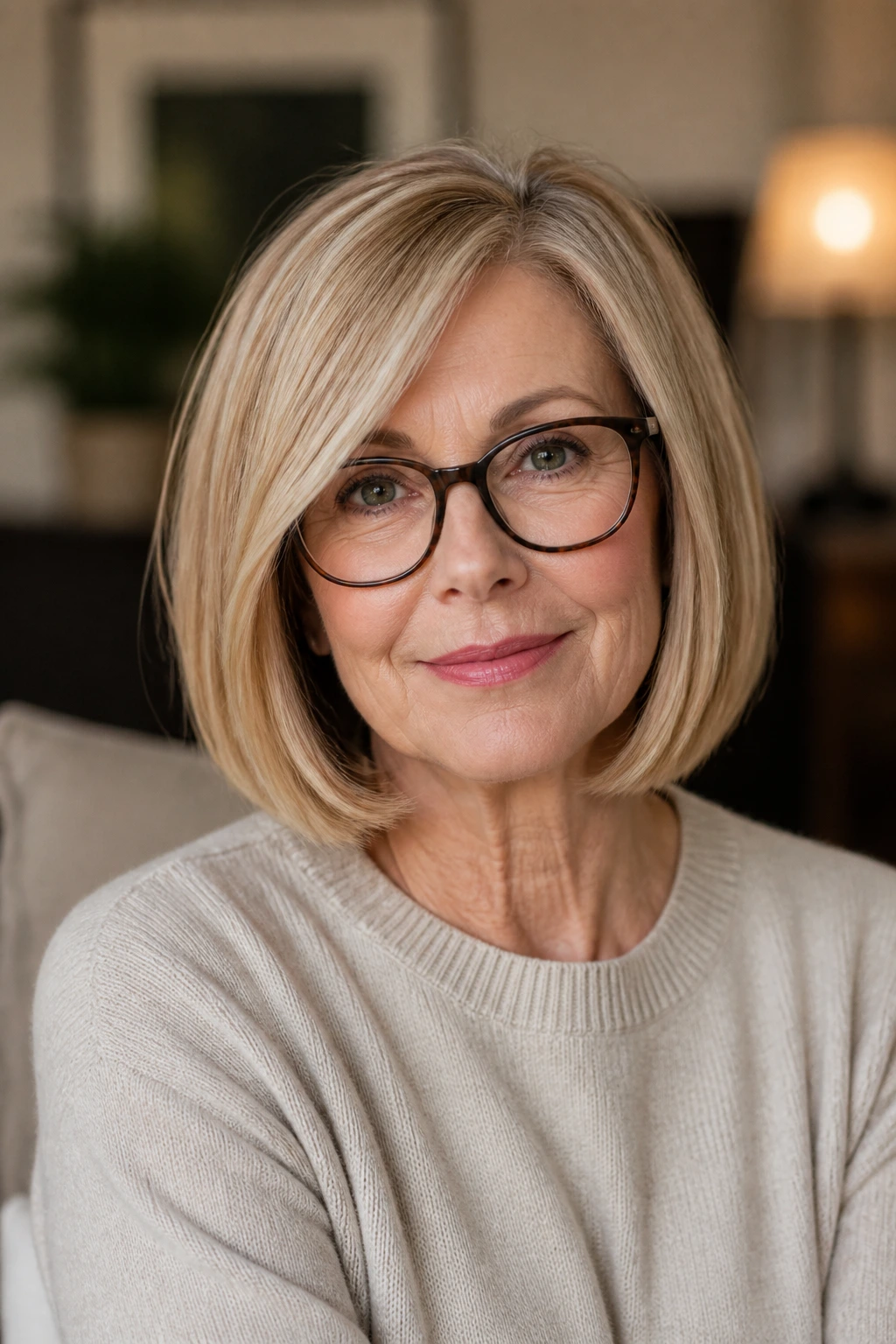
A blunt edge is not boring when the line is clean. A curved lob that falls just below the chin or at the collarbone can make fine or straight hair look denser because the perimeter stays full. The slight inward bend at the ends keeps the cut from looking hard.
This style is a quiet favorite for women who don’t want to spend twenty minutes changing the shape every morning. A round brush or a quick pass with a medium barrel brush is usually enough to give the ends that soft curve. If your hair dries mostly straight on its own, even better.
I like this one for women who wear glasses or simple earrings. It doesn’t compete with anything. It just sits there looking composed, which is harder to do than it sounds.
- Best for: fine or medium-density hair
- Ask for: a blunt perimeter with only minimal face framing
- Skip if: your hair is very thick and you don’t want to blow-dry it smooth
4. Side-Swept Shoulder-Length Cut
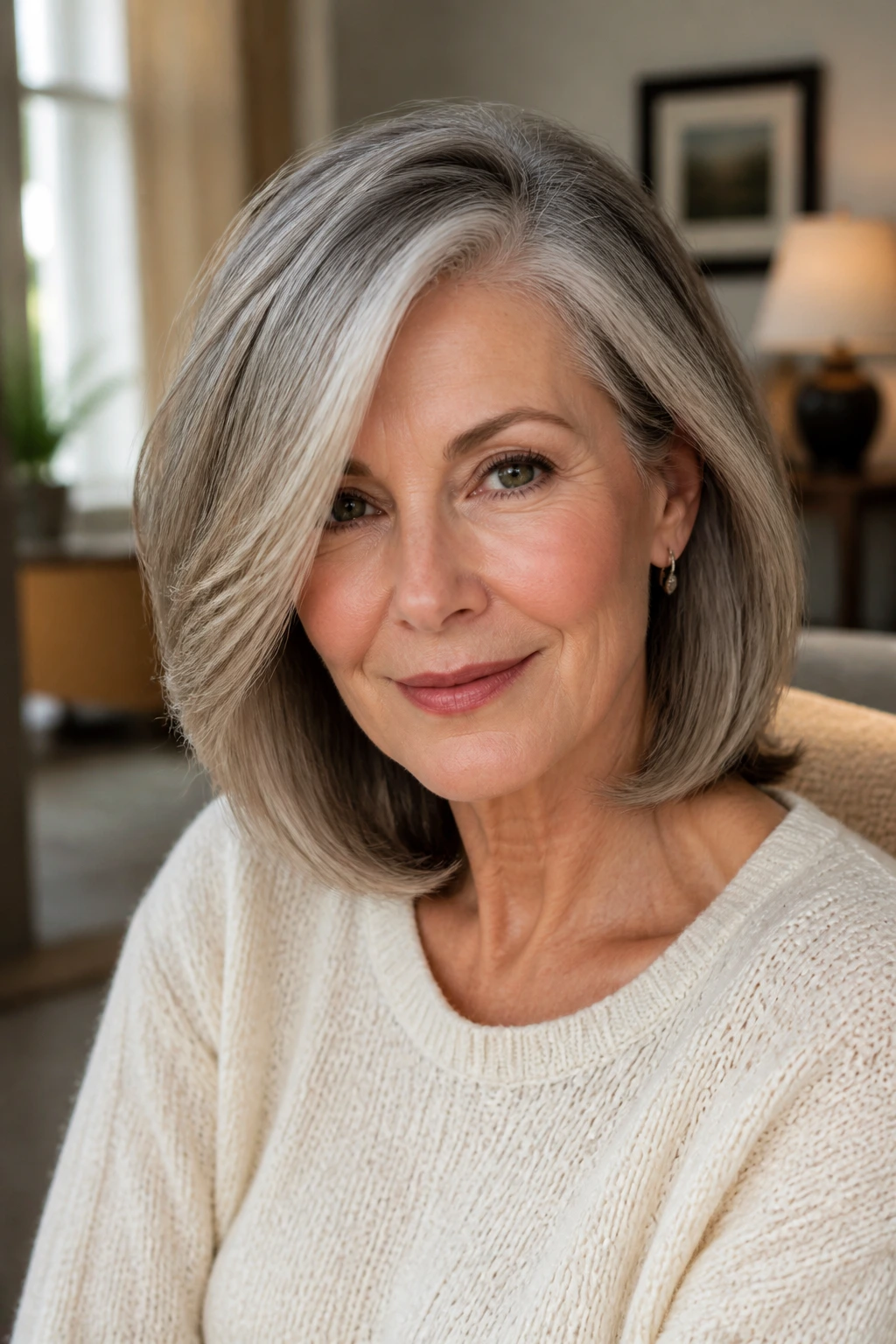
A deep side part can change more than a haircut. It gives the roots a little lift, softens the forehead, and keeps the face from being split into two equal halves, which is useful if a center part makes your hair lie too flat or exposes a thinning area at the crown.
The shoulder-length cut itself should be kept soft around the front, with one side falling a touch longer than the other. That asymmetry is subtle, not dramatic. You want the hair to swing when you move your head, not announce itself every time you step into a room.
This is a strong choice if you wear glasses. The side sweep keeps the hair from landing exactly on the top edge of the frames, which is where fringe can start to look busy. It also works well if one temple area feels thinner than the other. Hair does not need to be even to look balanced.
5. Curtain Bang Lob
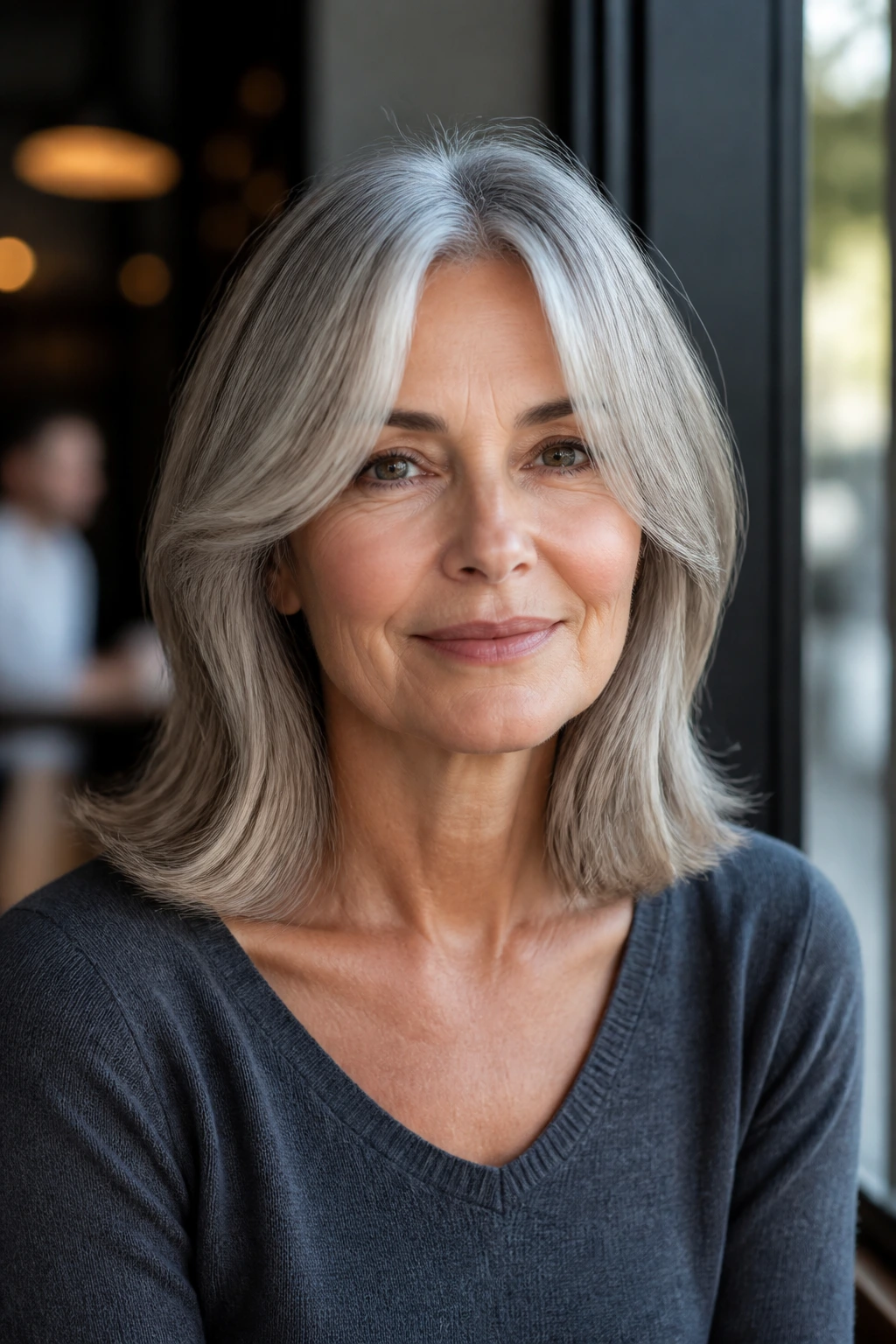
Curtain bangs are one of the few fringe options that can make sense without committing you to a weekly trim appointment. The bangs part in the middle or just off-center and open at the cheekbones, which gives the face shape without locking you into a blunt strip across the forehead.
This cut works best when the rest of the hair sits around the collarbone or a little below. The longer length keeps the fringe from looking too youthful or too severe. The whole shape feels soft, but not sleepy.
I prefer curtain bangs when the forehead feels a little wider than the chin, or when the face needs a frame that can move. They grow out in a way that’s more forgiving than straight-across bangs. They also sit nicely with gray hair because the lightness around the face keeps the fringe from feeling heavy.
If your hair is stubborn in the morning, ask for the shortest point of the curtain fringe to land no shorter than the bridge of the nose. That gives you room to style them without forcing them into place.
6. Choppy Wavy Lob
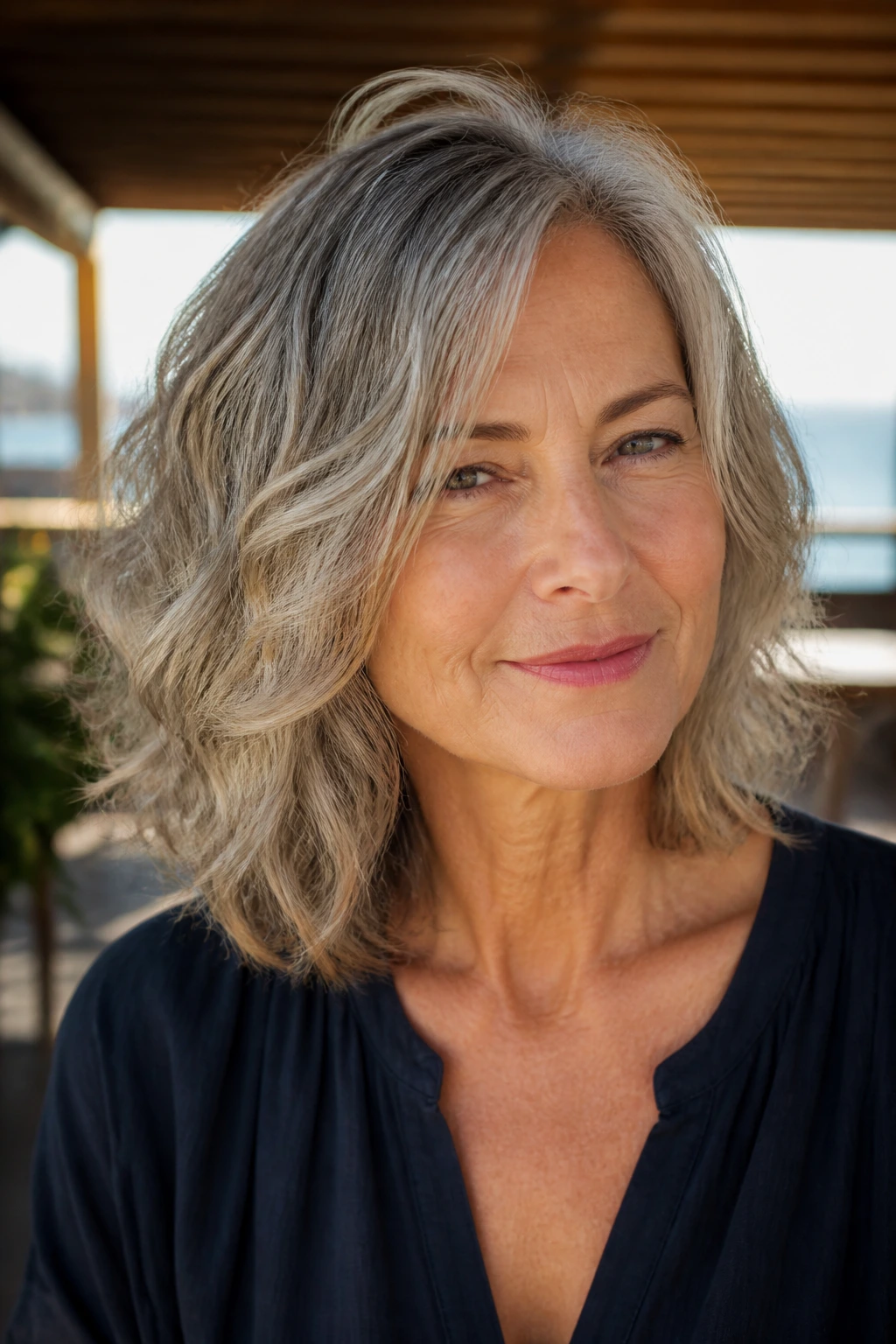
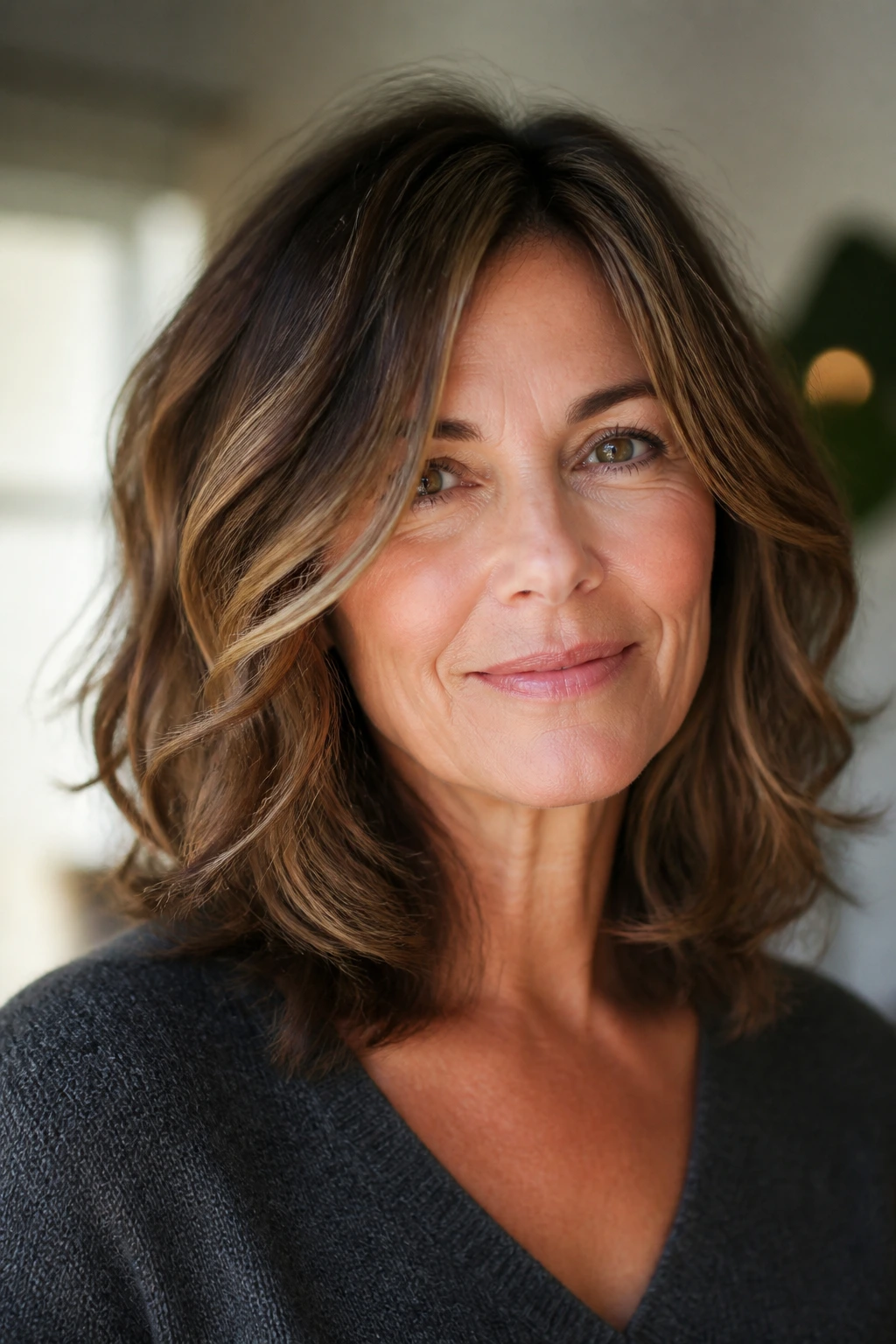
This is the cut for hair that already has a bend in it and needs help looking intentional, not controlled. The ends are lightly choppy, the layers are soft, and the texture is the point. If you air-dry wavy hair and it tends to puff at the sides, a choppy lob can calm the shape because it gives the wave a plan.
A little sea-salt spray or curl cream through the mids and ends is usually enough. Don’t flood the roots. That’s where the weight shows up fast. The aim is a piecey finish, with the waves separating just enough to show movement.
It’s a good cut for women who don’t want a polished blowout every day. Honestly, that’s the whole appeal. It looks finished even when it isn’t. There’s a difference between messy and loose, and this style lives in the loose category when it’s cut well.
7. Sleek Mid-Length Cut with Invisible Layers
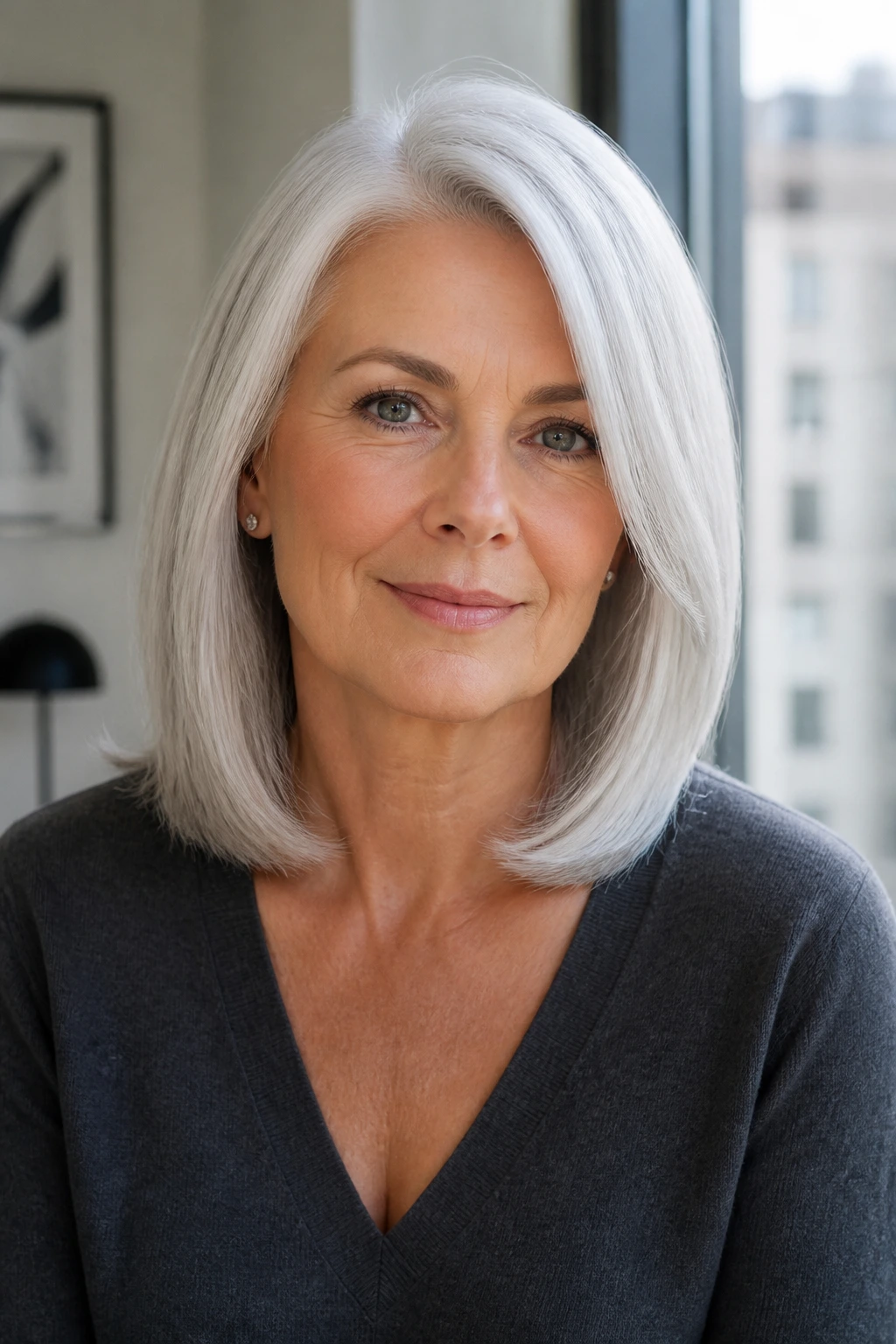
If you dislike visible choppiness, this is the answer. The cut looks almost one-length from the front, but it has hidden layers underneath that stop it from turning into a heavy block. That means the hair still moves when you walk, instead of behaving like a solid shelf.
The shape is especially useful for thick or coarse hair that wants to puff at the sides. A polished blow-dry and a little serum on the ends keep it smooth. The layers do their job without shouting about it.
I like this cut for women who want a neat finish but don’t want to look severe. It sits in that middle lane between sharp and soft. And if your hair is silver or white, the clean edge makes the shine more visible, which is half the charm.
8. Flipped-Out Shoulder Cut
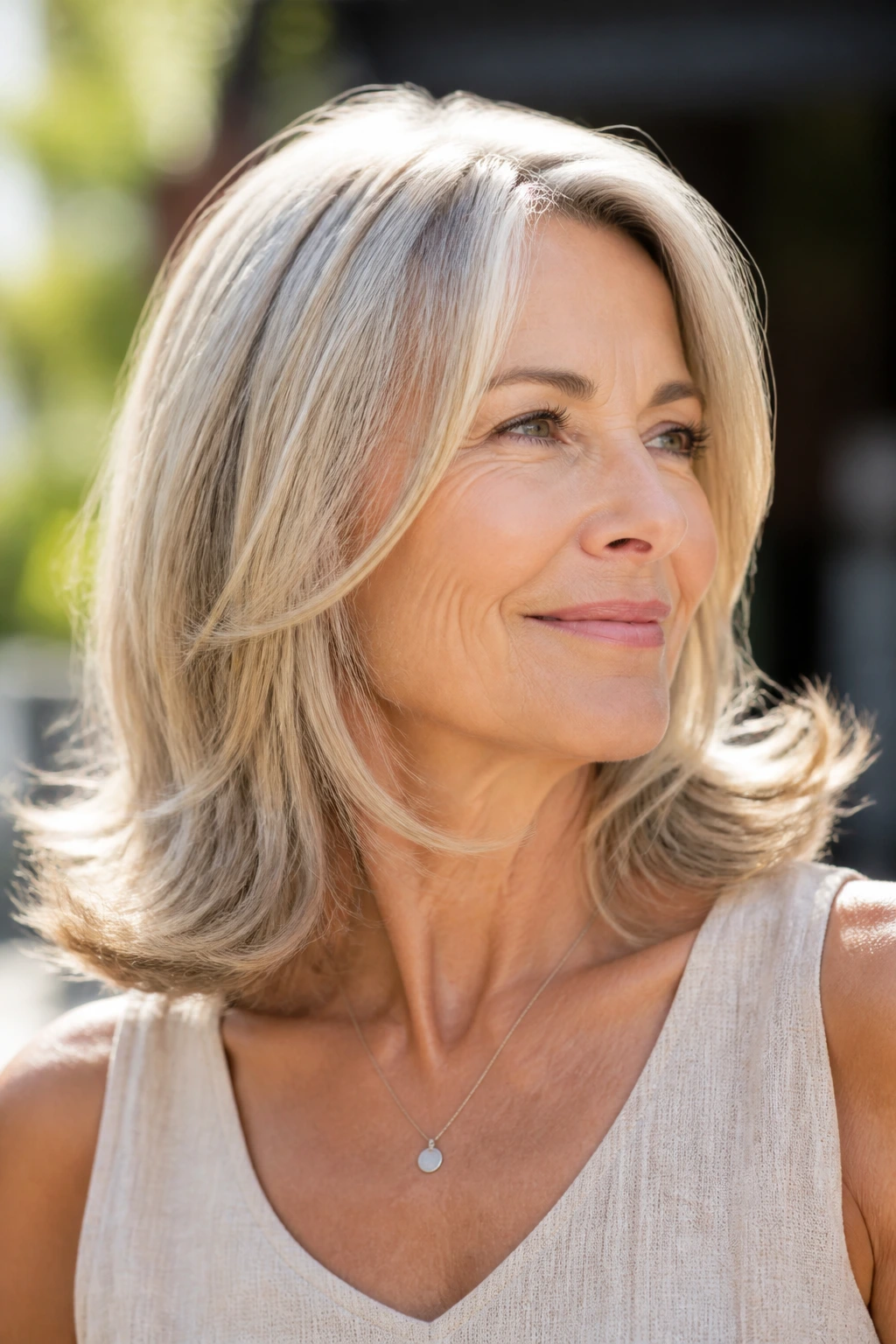
The flipped-out shoulder cut has a little retro energy, but when it’s done lightly, it feels modern rather than costume-like. The ends turn away from the face instead of curling under, which gives the cut a bit of lift and makes the whole silhouette feel lighter.
This works beautifully on hair that falls just to the shoulders, because that’s the length where the ends can bounce outward without looking forced. A round brush, a blow dryer with a nozzle, and a few quick passes at the tips are usually enough. If you use a flat iron, a tiny wrist turn does the same job.
It’s a good option if you want movement around the neck and jaw but don’t want a shag. The flipped finish keeps the line from sinking into your clothes. That matters more in real life than in salon photos.
What to ask for
Tell your stylist you want the ends to have a soft outward bend, not a dramatic flip. That usually keeps the result from looking dated.
9. Shoulder-Length Layers with Wispy Bangs
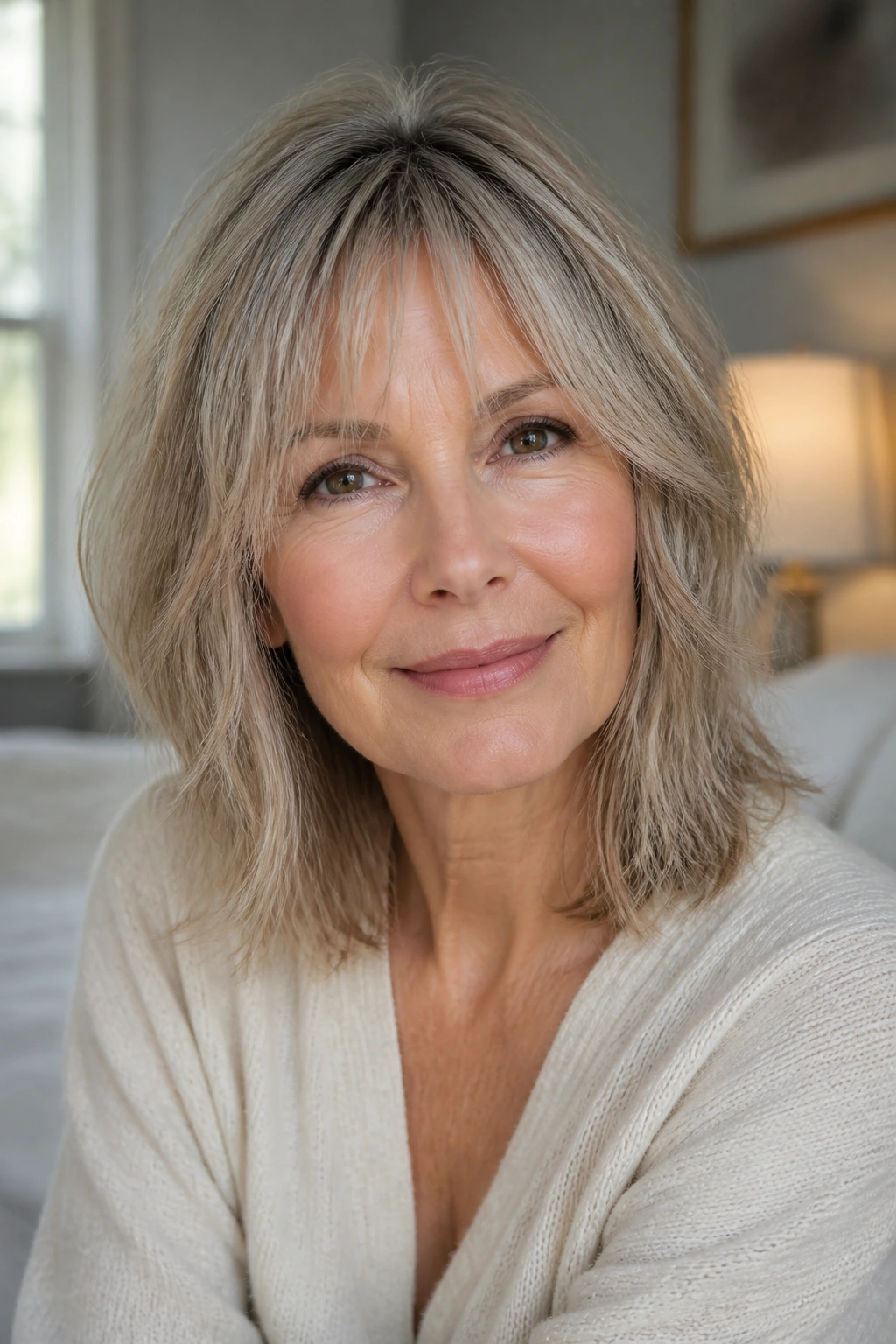
This cut softens the forehead without closing the face off. The bangs are broken up and light, so they don’t sit like a solid block. The layers through the shoulders keep the length from feeling heavy, especially if the hair has a little natural wave.
Wispy bangs can be a relief if your face feels long or if you want to disguise a hairline that has thinned a bit at the front. They give you a frame without forcing the eye to stop dead in one place. That’s the difference between fringe that flatters and fringe that bullies the face.
The key is restraint. Wispy does not mean sparse. It means soft, piecey, and a little translucent at the edges. If the bangs are too thin, they separate into strings and look unfinished by afternoon.
10. Long Layers for Thick Hair
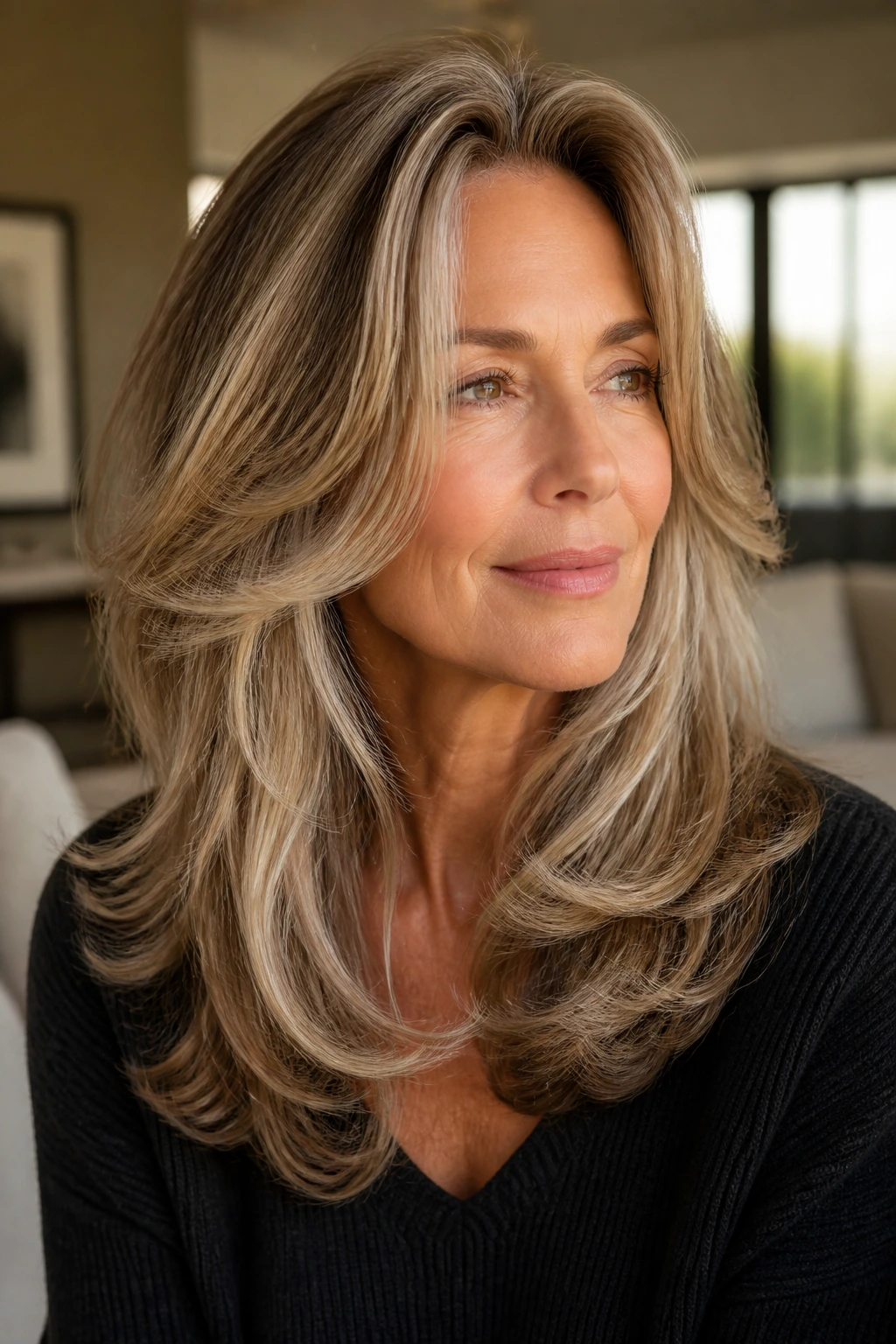
Thick hair at this length can feel heavy unless you keep the weight moving. Long layers solve that by shifting bulk away from the bottom edge while leaving enough density to keep the shape from frizzing apart. The result is hair that swings instead of sitting on the shoulders like a blanket.
This is one of the few cuts where less can actually do more. Too many layers will break the silhouette and create too much puff around the sides. A better version keeps the longest layers below the chin and lets the hair fall with enough structure to be worn up, half-up, or loose.
If your hair is thick and has a bit of wave, this style can take a blow-dry well and still look decent on air-dry days. That’s useful. Hair that can survive both a brushed finish and a rougher finish is hair that earns its place.
11. Soft Curls with Internal Layers
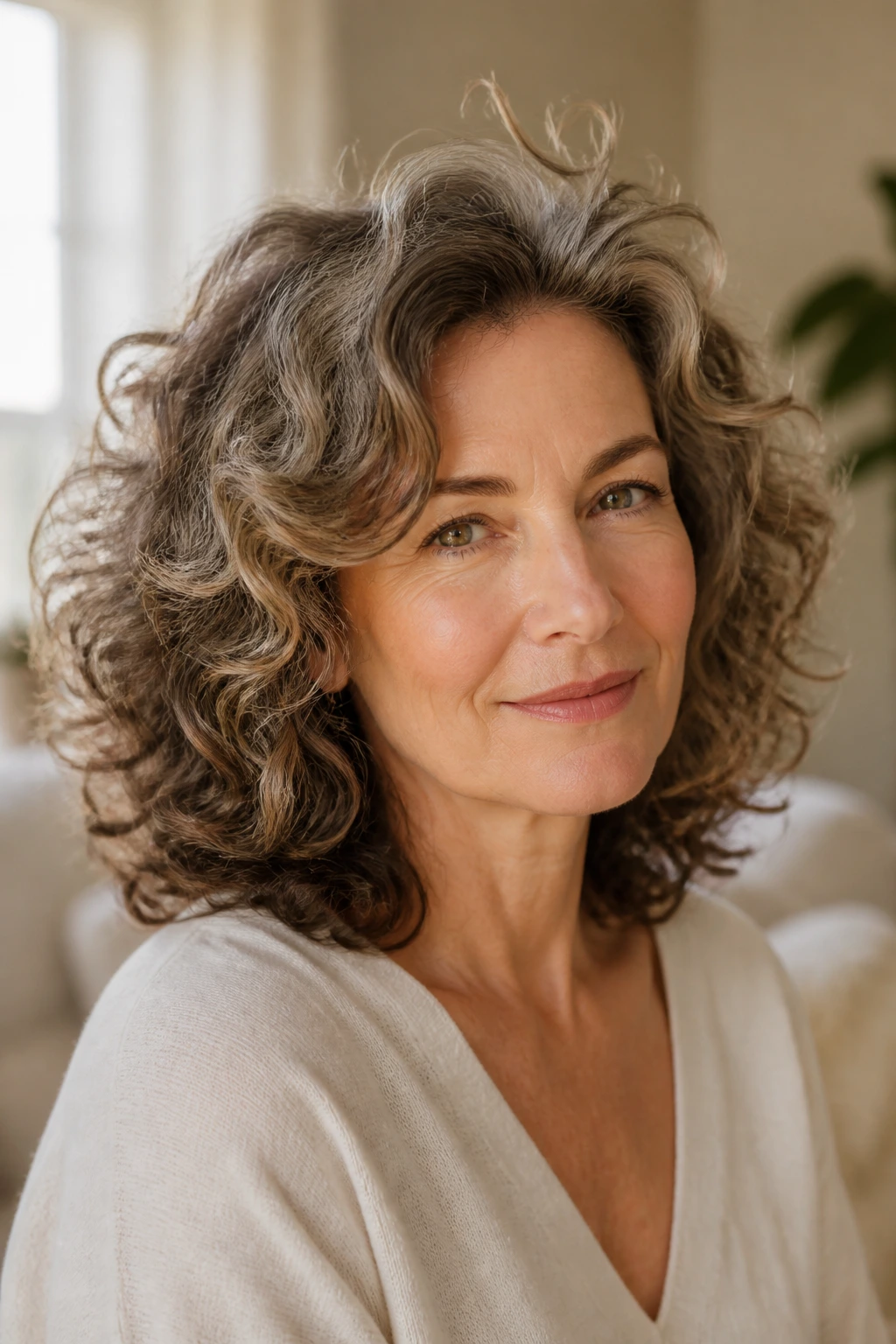
Curly hair at medium length needs room for the curl pattern to show without piling up at the sides. Internal layers are the move here. They remove weight inside the shape while keeping the outside line full, so the curls look rounded instead of triangular.
This is one of those cuts that should be shaped with the curl pattern in mind, not against it. If the curls shrink a lot when dry, the stylist needs to account for that before taking off length. A wet curl often lies. A dry curl tells the truth.
Styling note
Use leave-in conditioner, then a small amount of curl cream, and diffuse on low heat or air-dry with the hair scrunched up in sections. Don’t rake through it once it starts drying. That’s how you turn defined curls into puff.
I also like this cut for women with silver curls. The shape makes the texture read as deliberate, not unruly. Big difference.
12. Angled Lob with Longer Front Pieces
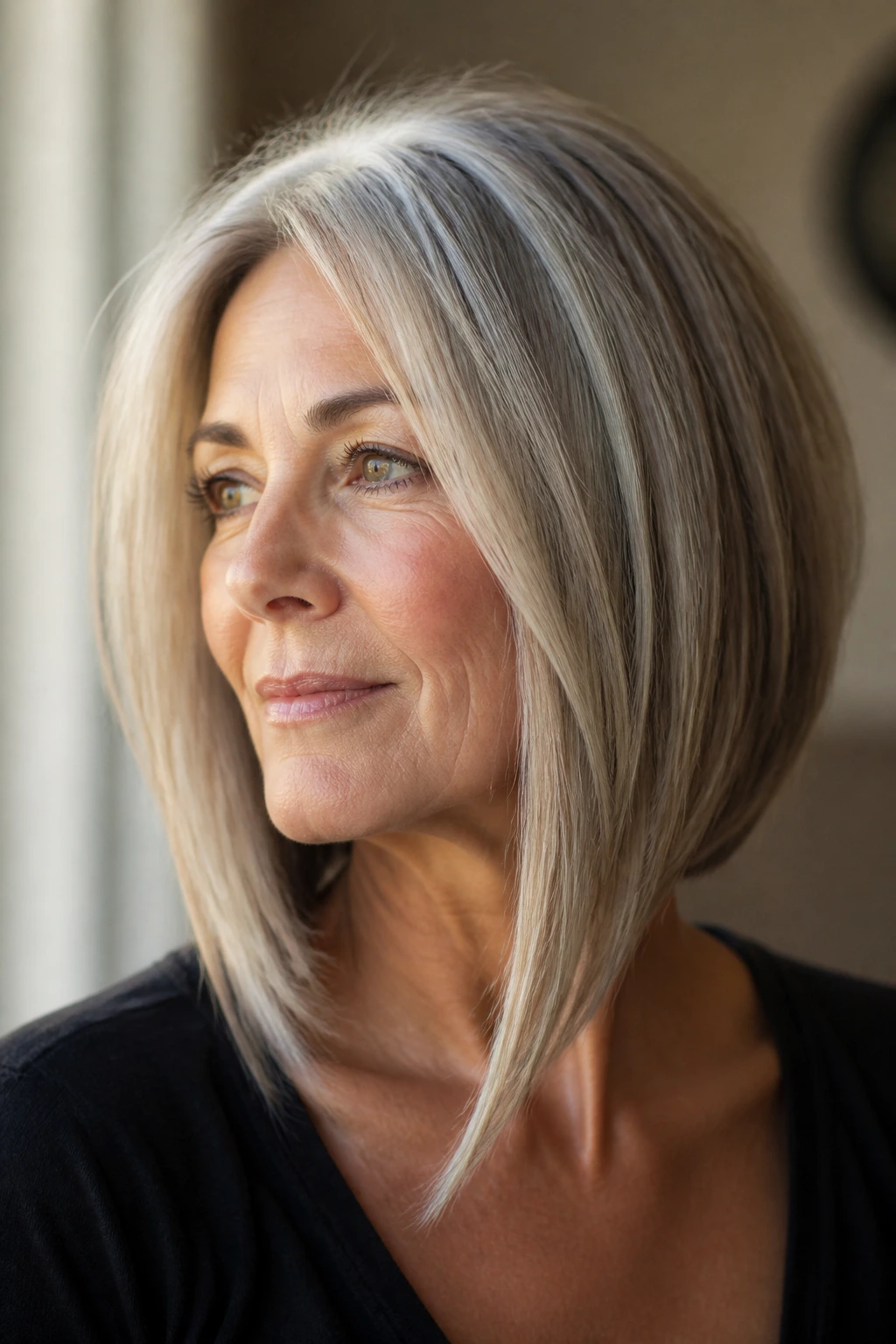
I prefer this angle when someone wants movement but does not want a haircut that screams for attention. The back sits a little shorter, the front falls longer toward the collarbone, and the whole thing creates a gentle line that draws the eye downward. That can make the neck look longer and keep the face from feeling boxed in.
The angle should be subtle. Not a sharp diagonal. Those can look dated fast and can be annoying to grow out. A soft angle reads cleaner and feels easier to live with.
This shape does well on straight or slightly wavy hair and is especially helpful if the jawline feels strong or if the cheeks are fuller than the person wants. The longer front pieces guide the eye where you want it to go, which is one of the oldest tricks in haircutting because it works.
13. Deep Side-Part Lob
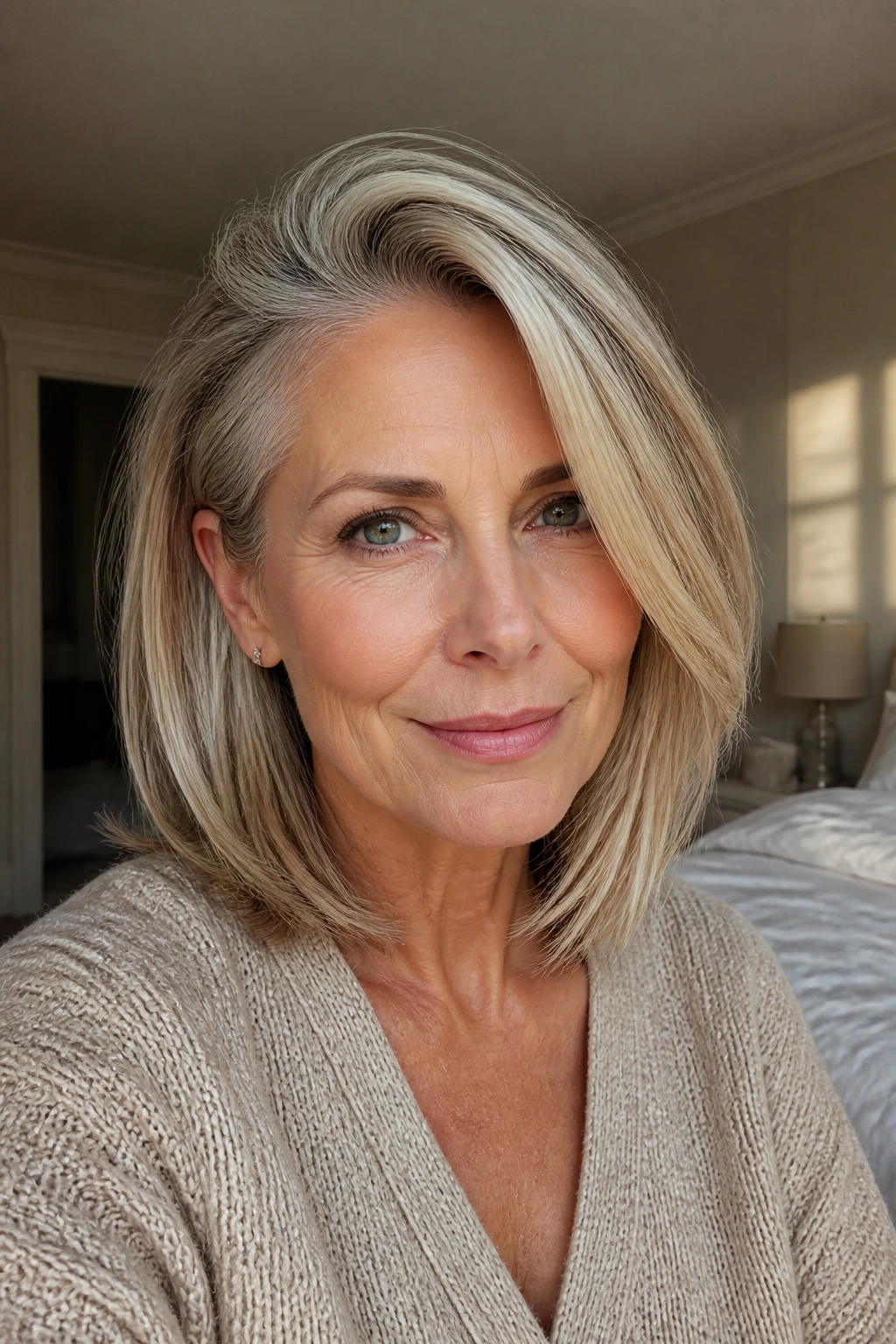
A deep side part does half the styling for you. It gives lift at the root, softens the front hairline, and adds an easy sense of movement even when the rest of the cut is simple. On a medium lob, that side part can turn a plain cut into something that looks deliberate.
The part should not sit so far over that it makes the hair collapse into the face. You want enough depth to create lift, then enough balance to keep the opposite side from disappearing. A bit of mousse at the root and a blow-dry in the opposite direction before settling the part usually solves that.
This is a particularly good choice if the top looks flatter than the sides. It also helps when hair gets stubborn around a cowlick. And yes, one small change in parting can make the whole haircut behave differently. People underestimate that all the time.
14. Modern Shag with Brow-Grazing Fringe
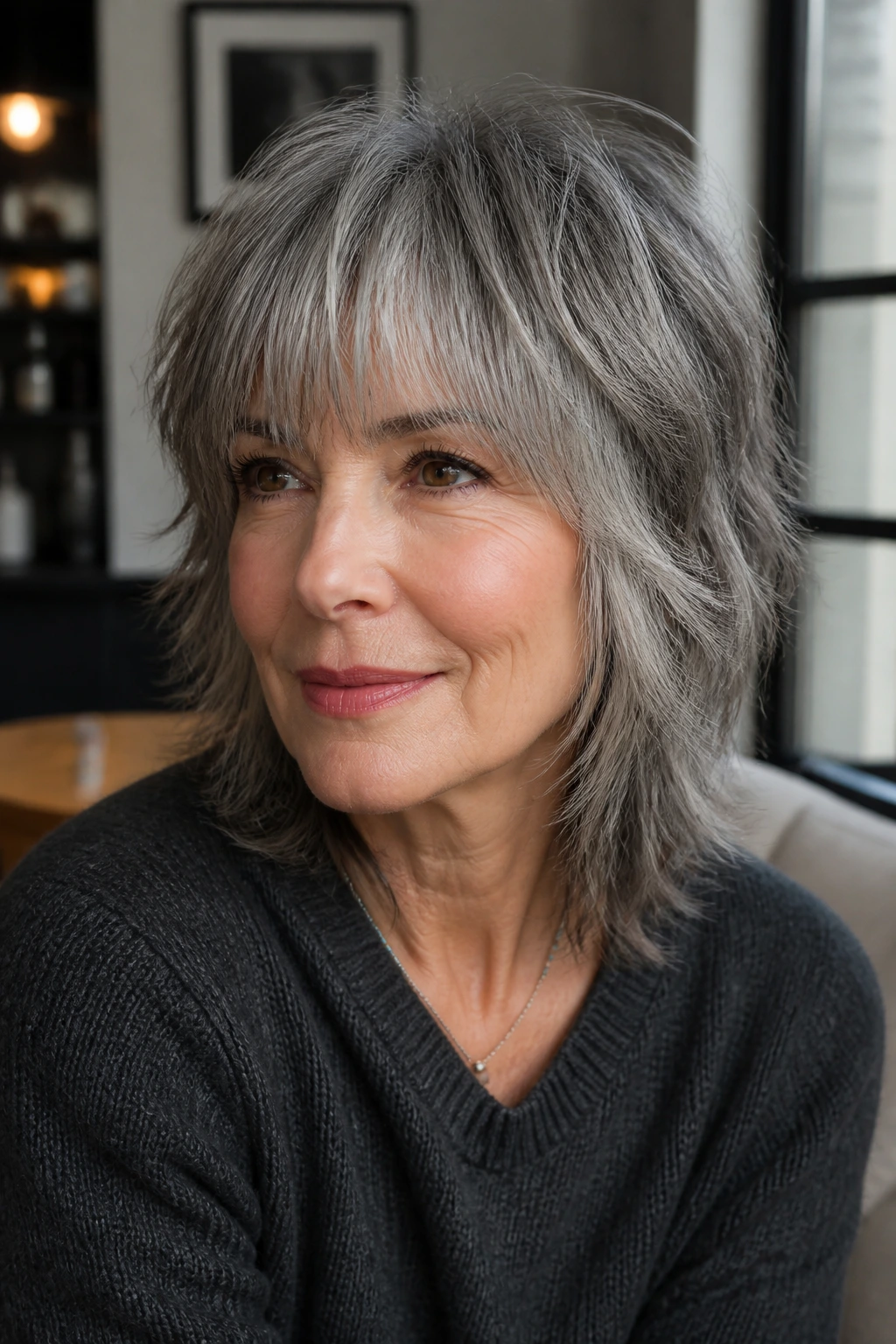
This is the shag for people who want texture without chaos. The crown has movement, the sides stay softer, and the fringe lands near the brows rather than cutting straight across the forehead. The result is a shape with energy that still knows where to stop.
It’s especially good for silver or salt-and-pepper hair because the cut lets the color variation show in layers. The light catches the pieces differently, which makes the whole style look dimensional. If the hair is coarse, keep the ends healthy and avoid over-razoring. That roughens the line too much.
The fringe does need some maintenance, but not as much as a full blunt bang. A quick trim or a small dusting every few weeks keeps it from drifting into your eyes. Worth it, if you like a little edge.
15. Airy Blowout Layers
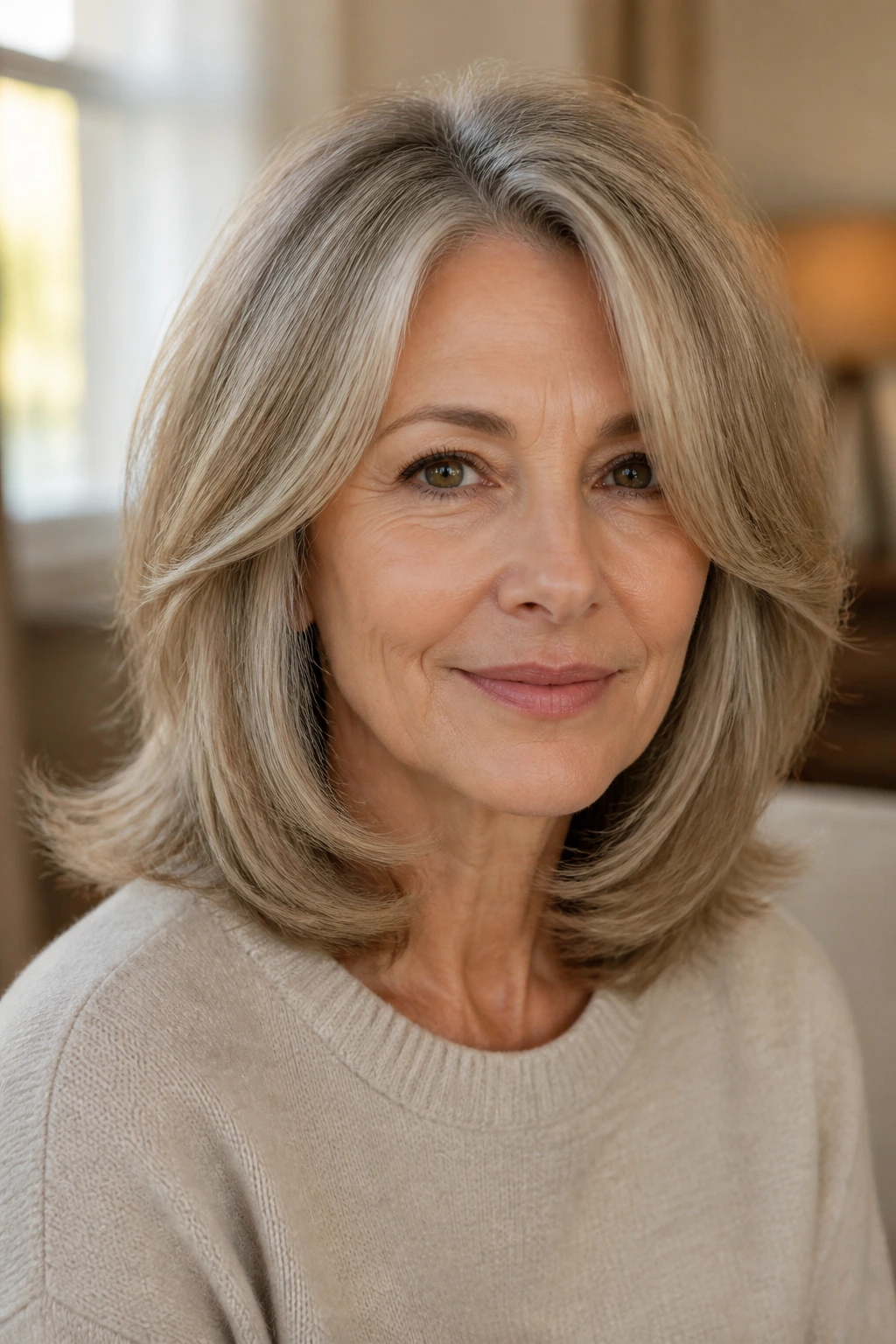
This is the cut for someone who likes the feeling of brushed-out, lifted hair. The layers are arranged to move away from the face, and the ends are shaped to turn under just enough to keep things tidy. It’s not a stiff set. It’s a looser, airier blowout shape that still holds.
The style is especially useful when hair has enough body to respond to a round brush. You do not need a huge salon blowout every day. A medium round brush, a nozzle on the dryer, and a few clips while the hair cools can do most of the work.
I like this on shoulder-grazing lengths because the lift at the front and the swing at the ends keep the hair from collapsing into the clothes. That sounds small. It isn’t. Hair that sits on the neck in a heavy slab can make you feel older than the cut actually is.
16. Textured Mid-Length Cut for Gray Hair
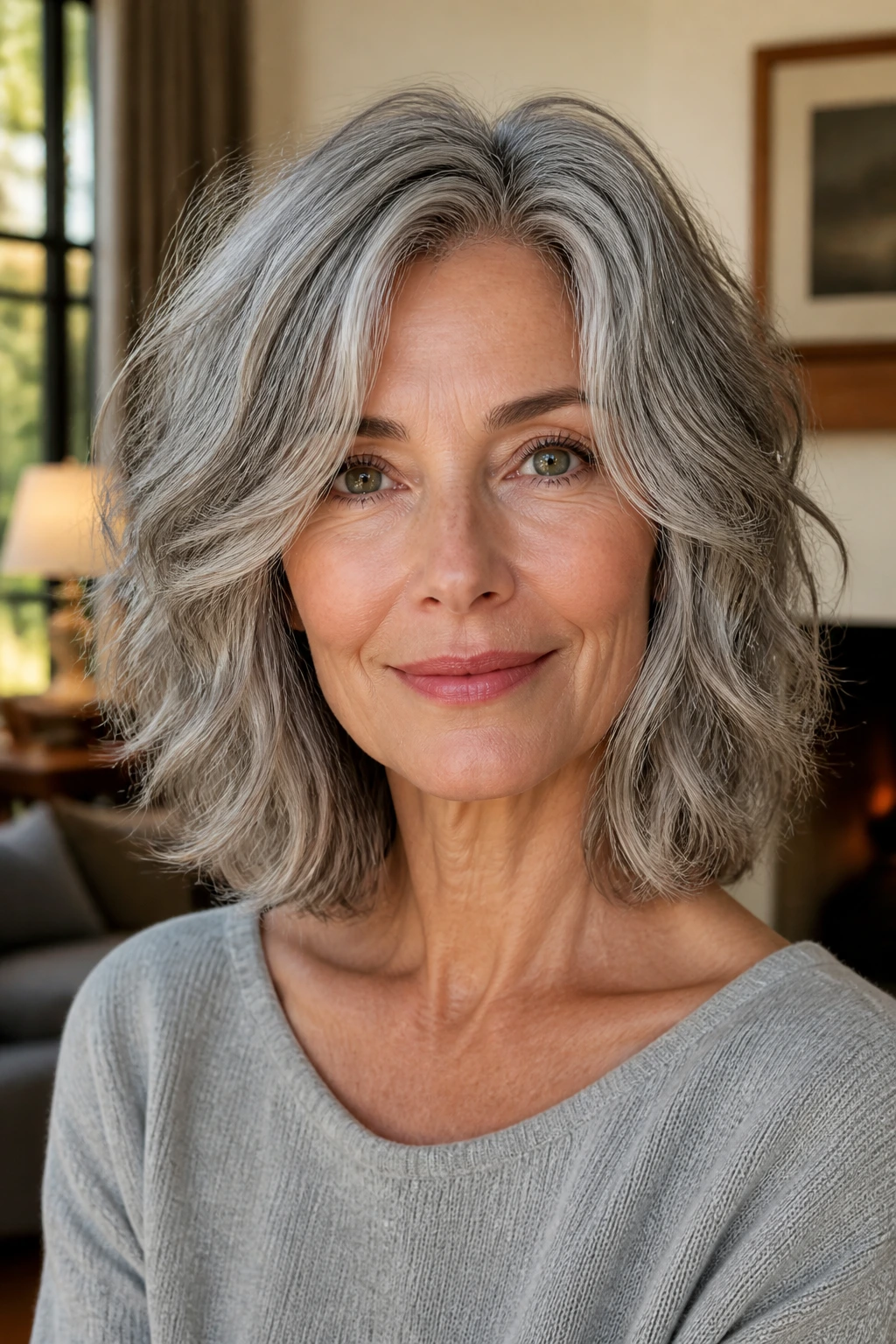
Gray hair has its own personality. Sometimes it’s soft and silky. Sometimes it’s wiry, dry at the ends, and startlingly reflective. A textured mid-length cut works with that by giving the hair a shape that looks intentional even when the texture shifts from strand to strand.
What helps most here is a clean perimeter with a bit of movement through the interior. You want the silver to read as shine, not fuzz. A little lightweight cream or serum on the ends can stop the hair from catching dry-looking light, but do not drown it. Gray hair can go limp faster than people expect.
If your silver has gone coarse
Ask for fewer blunt edges around the front and a bit more softness through the sides. Coarser gray hair tends to look better when the shape moves gently rather than being forced into a severe line.
The finished look should feel tidy, not fragile. That’s the goal.
17. Rounded Blow-Dry Bob
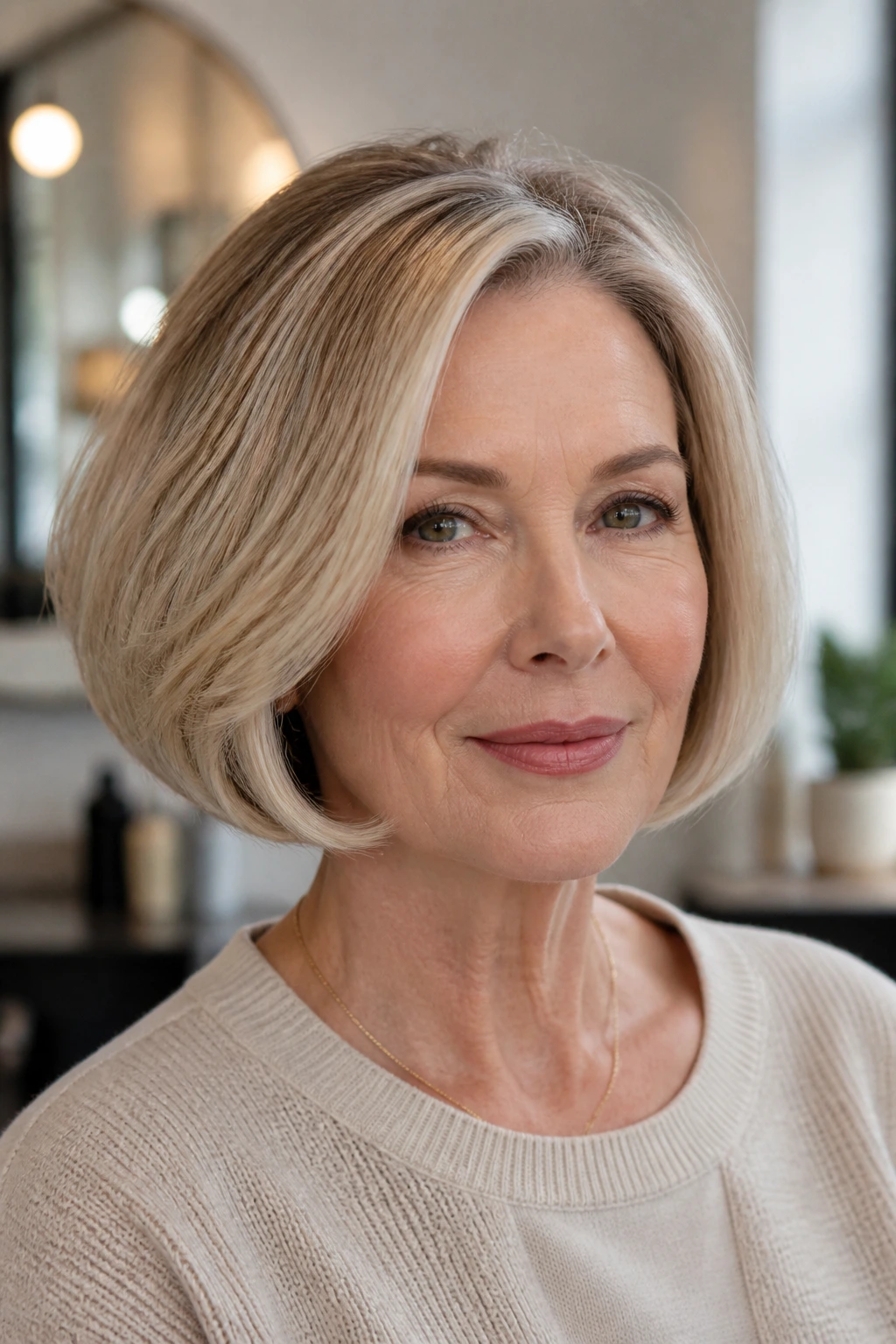
This cut curves under at the jaw and lifts just enough through the crown to keep the face open. It’s a smart choice if you like the feeling of a neat outline and want the hair to look styled with relatively little effort. The rounded shape gives fine or straight hair some body right where it tends to go flat.
A velcro roller or a round brush can help the ends turn in without much trouble. You don’t need a super-hot blowout. You need direction. That’s the part a good cut gives you.
The rounded bob also works under coats and collars better than a wider shag. It stays close to the head and doesn’t explode under fabric. That sounds oddly specific because it is. Real life includes scarf season, stiff jacket collars, and seats that squash the back of your hair.
18. Low-Maintenance Shoulder-Length Cut with Tapered Ends
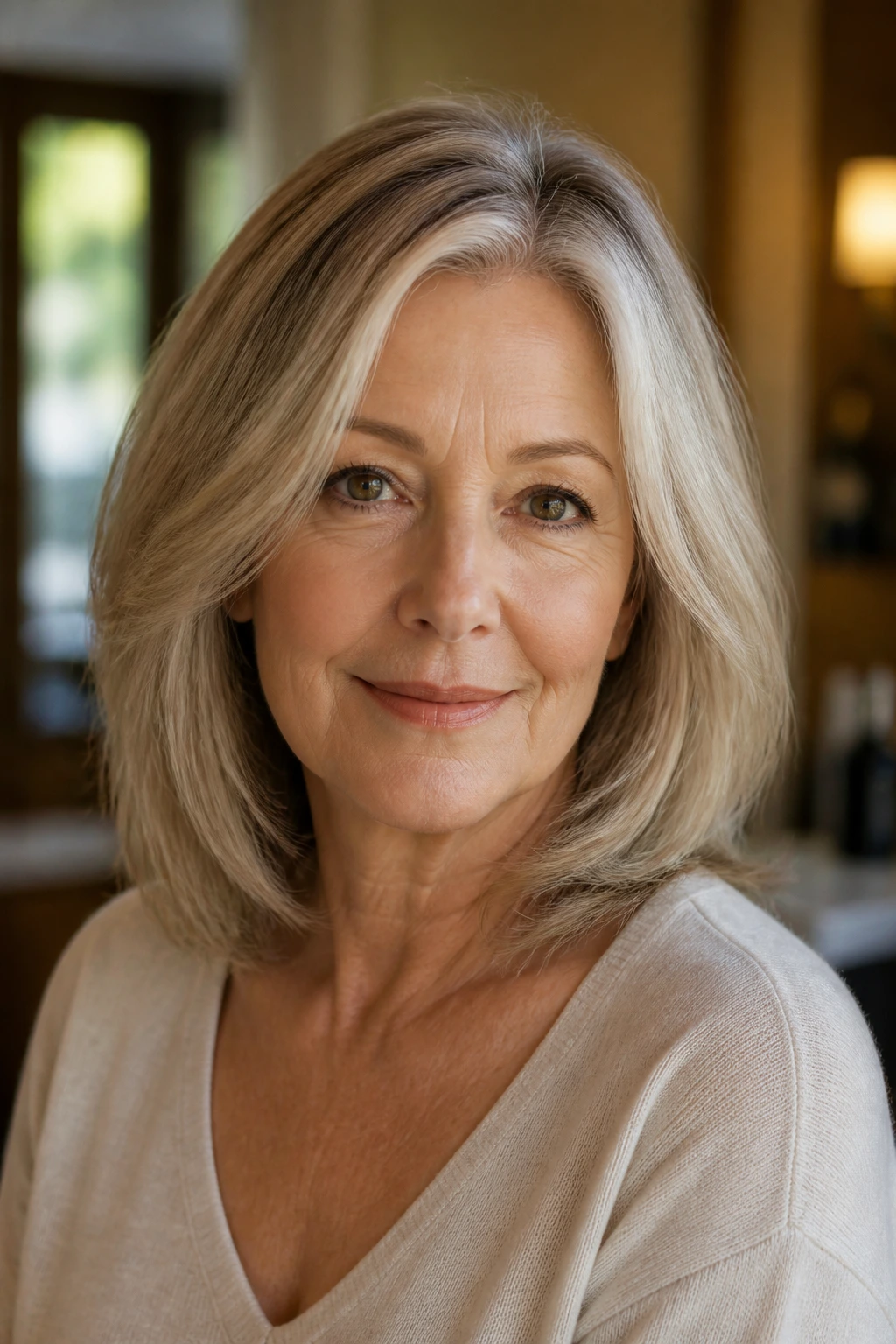
Not everyone wants a cut that asks for a round brush every morning. This one is for the person who wants shape with as little fuss as possible. The ends are tapered softly instead of thinned to nothing, and the overall length sits at the shoulders or just below.
That gives you room to wear it loose, clip it back, or pull it into a low twist without the style losing its line. It also gives the hair enough movement that it doesn’t feel heavy on day two. If your hair has a little wave, the tapered ends help it fall instead of sticking out at odd angles.
I think this is one of the most honest medium-length hairstyles for women over 60. It does not pretend you want a big styling routine. It just gives the hair a shape that behaves.
Essential Tools for Styling Medium Length Hair
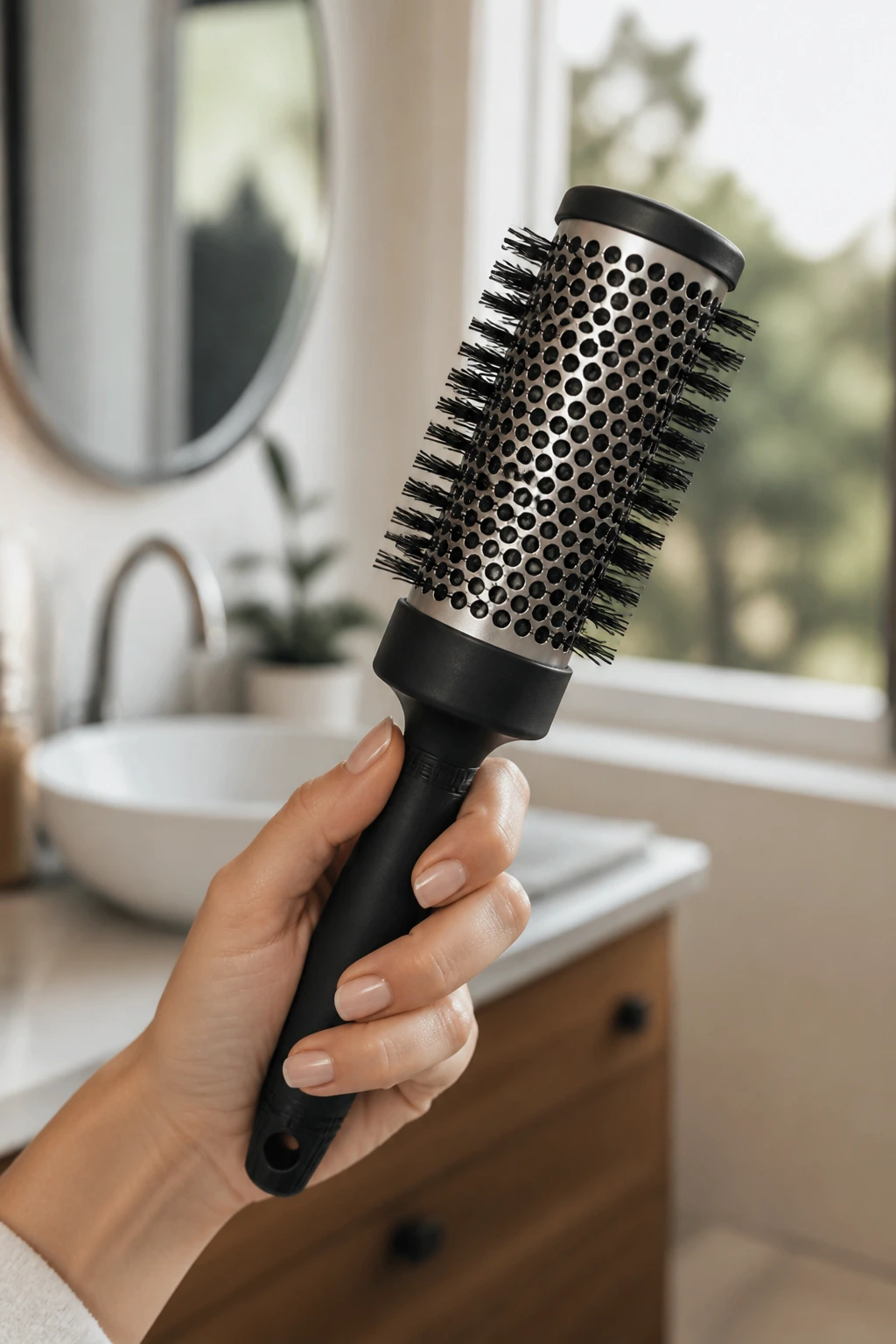
-
A 1.25-inch round brush: Big enough to bend the ends under or out without creating tiny curls that look overdone.
-
A paddle brush: Useful for smoothing the mids and detangling without pulling the shape apart.
-
A blow dryer with a nozzle: The nozzle directs airflow so the cuticle lies flatter and the finish looks cleaner.
-
Heat protectant spray or cream: A small amount before blow-drying keeps the ends from getting crisp, especially on gray or color-treated hair.
-
Lightweight mousse: Best at the roots for lift; too much through the ends can make medium hair feel sticky.
-
Velcro rollers or clips: Handy for setting face-framing pieces while they cool so they keep their bend.
-
A wide-tooth comb: Better than a brush for curly or wavy hair when you want to keep the pattern intact.
-
A few strong sectioning clips: They make blow-drying easier because you can work in clean, manageable sections.
-
Texturizing spray or dry shampoo: Good for refreshing the roots and giving soft movement back to day-two hair.
-
A silk or satin pillowcase: It reduces friction overnight and helps the ends stay smoother between washes.
Smart Cut, Color, and Product Notes
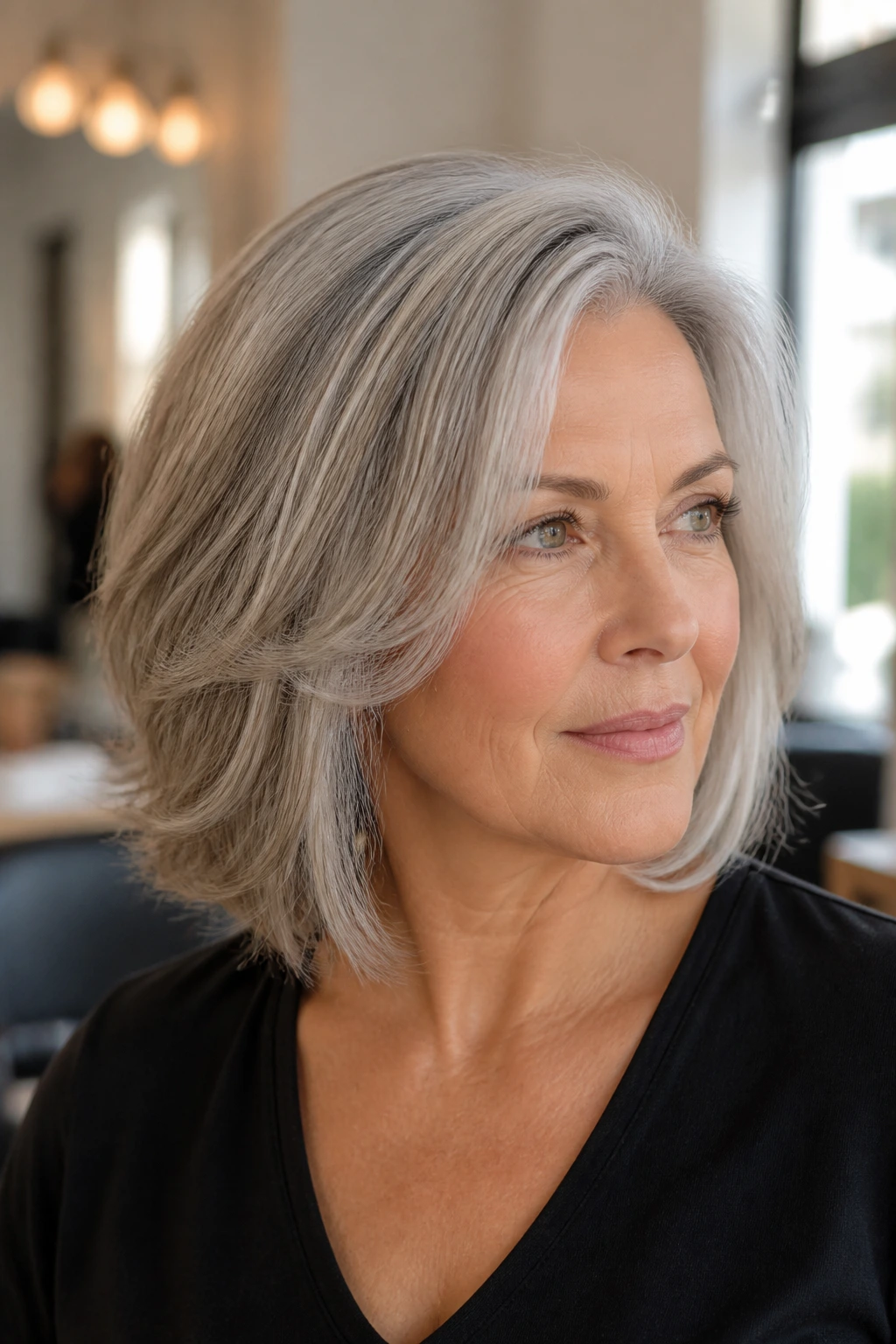
Bring photos, but bring the right kind. A filtered image with studio lighting and a neck-length model is not useful unless your own hair behaves the same way. What helps more is a picture from the front, one from the side, and one that shows the back or the way the ends fall around the shoulders.
Tell the stylist what you actually do with your hair. Air-dry? Blow-dry? Use a round brush once a week and a clip the rest of the time? That matters. A beautiful cut that only works under a salon blowout is not much help on a Tuesday morning.
Color plays into the shape, too. A soft lowlight can give a mid-length cut more depth, while bright silver or white hair usually looks best when the perimeter is clean and the ends are healthy. Gray hair can show dryness faster, so products should lean light — leave-in spray, a pea-sized cream, a drop of serum — not thick butter that sits on top.
Ask for measurements in real terms if you can. “Just below the collarbone,” “at the top of the shoulder,” “front pieces to the cheekbone” — those are useful. “Medium” is not. Every stylist hears that word and fills in the blanks differently.
How to Wear These Styles in Daily Life

Everyday: Keep the shape simple. A quick blow-dry on the front pieces and a loose bend at the ends is enough for most of these cuts, especially if the back can air-dry without turning wild.
For glasses: Favor side parts, curtain fringe, or longer front pieces that start above the frame line and slide below it. Bangs that end exactly where the glasses sit tend to split and fuss.
With earrings and necklaces: Collarbone lengths show off longer earrings and keep chunky necklaces from fighting the hair. If the cut falls right at the collar, tuck one side behind the ear and let the other side skim the shoulder.
On busy days: Use a claw clip low at the back or twist the hair into a loose roll while leaving the front pieces out. That keeps the cut visible instead of disappearing into the clip.
For a dressier finish: Bend the ends under, smooth the crown with a brush, and let one side sit a touch fuller than the other. A tiny imbalance looks more natural than a helmet of symmetry.
Styling Tricks That Make the Cut Look Intentional
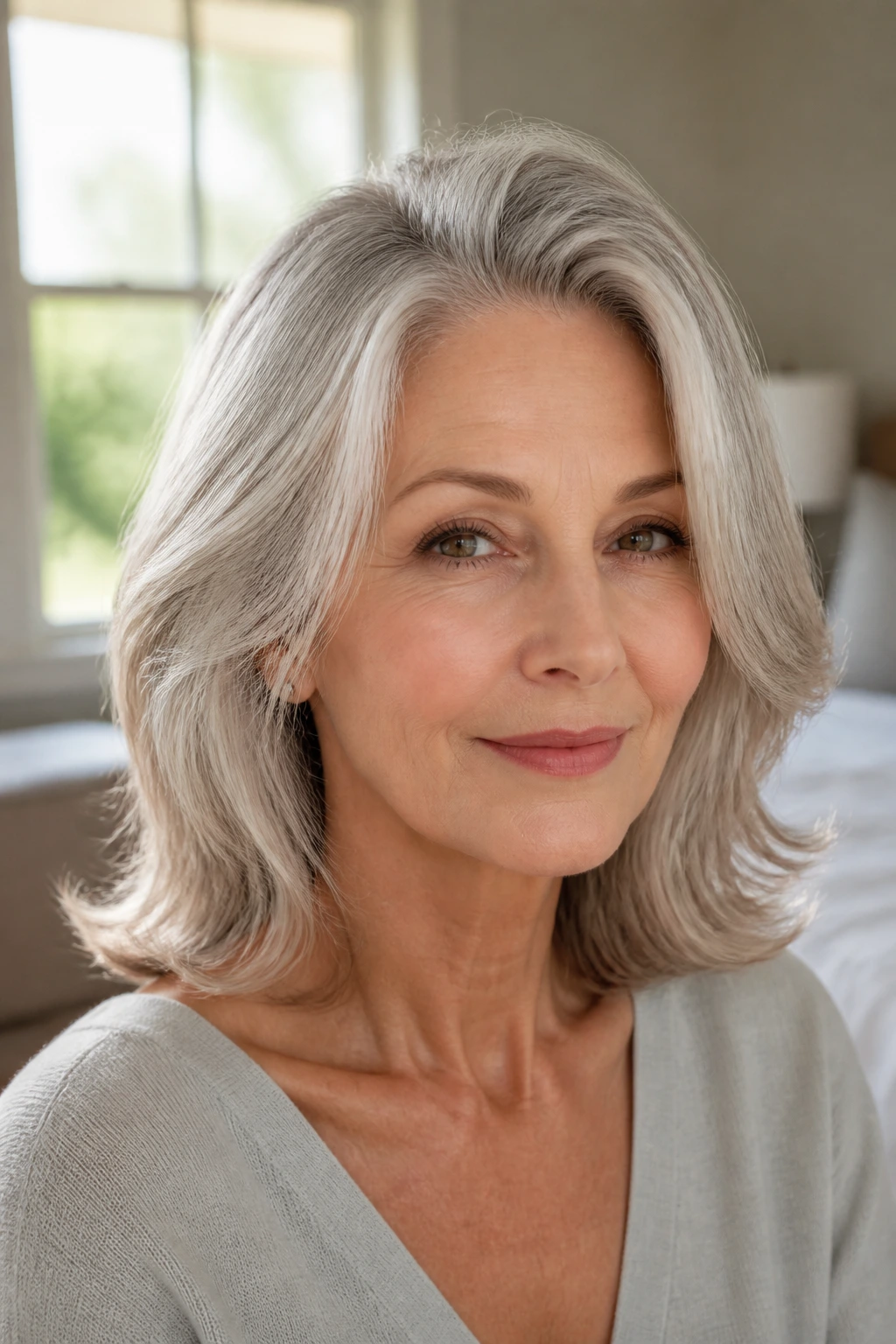
Root Lift: Put mousse only at the roots, then blow-dry the crown first. If the crown is flat, the whole style looks tired before you even touch the ends.
Face Softening: Direct the front pieces away from the face with the brush so they curve gently back. That opens the cheeks and keeps the cut from clinging to the jaw.
Texture Control: Use a pea-sized amount of cream through the mids on wavy or coarse hair. Too much and the cut sinks; too little and the ends go fuzzy.
Shine: A drop of serum on dry ends makes silver hair and color-treated hair look cleaner in the light. Keep it off the roots unless you enjoy flattening the whole top of the head.
Make-It-Yours: Switch the part, tuck one side, or pin a front piece back with a small clip. Little changes matter more than people expect, especially with medium length hair that already has a strong outline.
Common Mistakes That Flatten the Whole Look
-
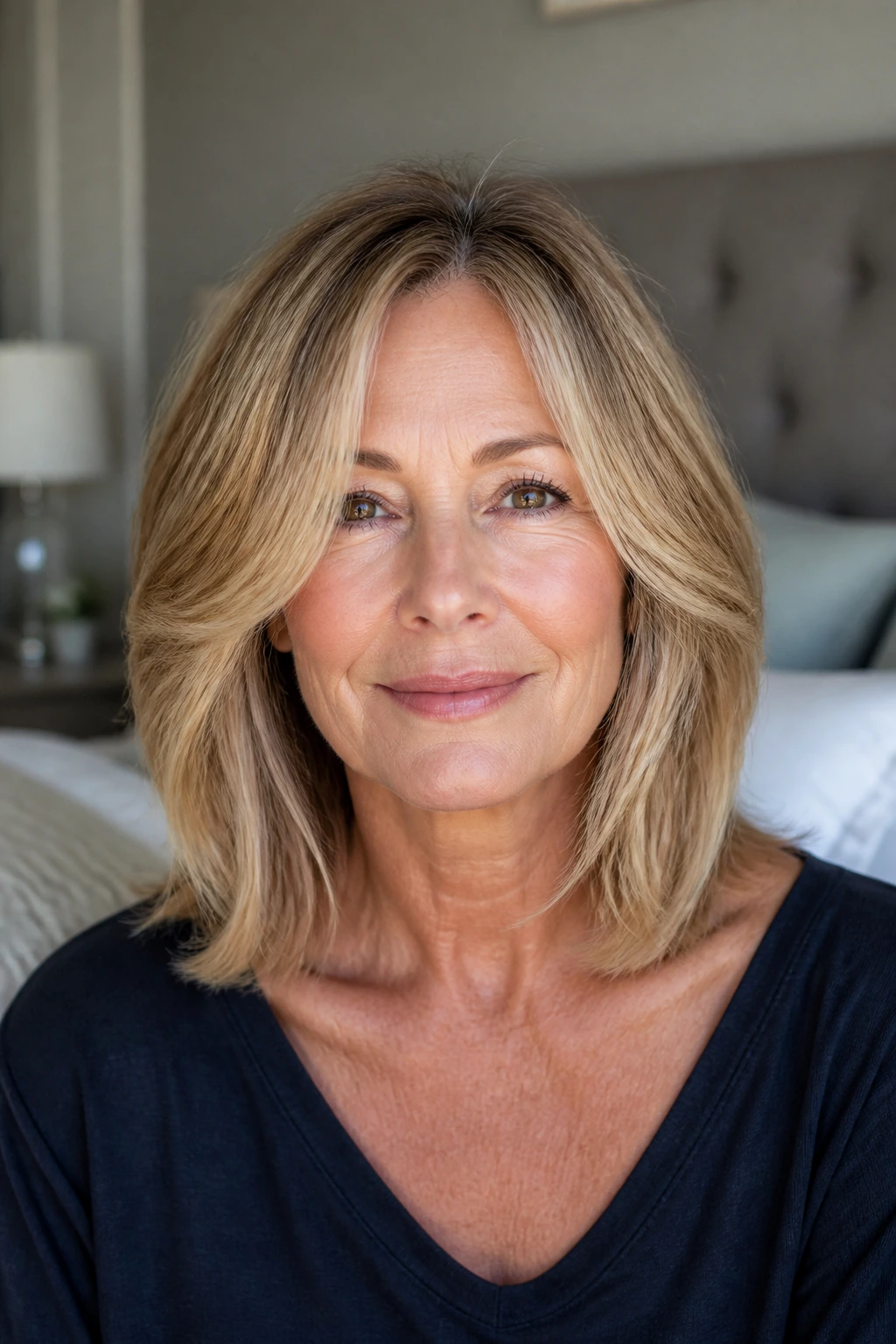
Too many short layers through the crown: The symptom is a puffy top and see-through ends. The fix is longer layers that keep the silhouette intact.
-
A fringe that sits right on the glasses line: It splits, pokes, and turns fussy by midday. Ask for curtain bangs or a side-swept fringe that clears the frame.
-
Over-thinning the perimeter: Hair looks airy in the chair, then wispy and tired once it dries. Keep some density at the ends so the outline still reads clean.
-
Using too much smoothing product: The hair turns stringy and starts to stick to the head. Start with a tiny amount and add only if the ends need it.
-
Ignoring where the cut hits the neck or jaw: A length that lands at the widest point of the jaw can make the face feel boxy. Move it a little higher or lower so the line feels easier.
-
Forcing a style that fights your drying pattern: If your hair bends one way on its own, cut it so that bend looks intentional. A cut that only works after an hour of heat is not low-maintenance, no matter what the brochure says.
Easy Variations and Adaptations to Try
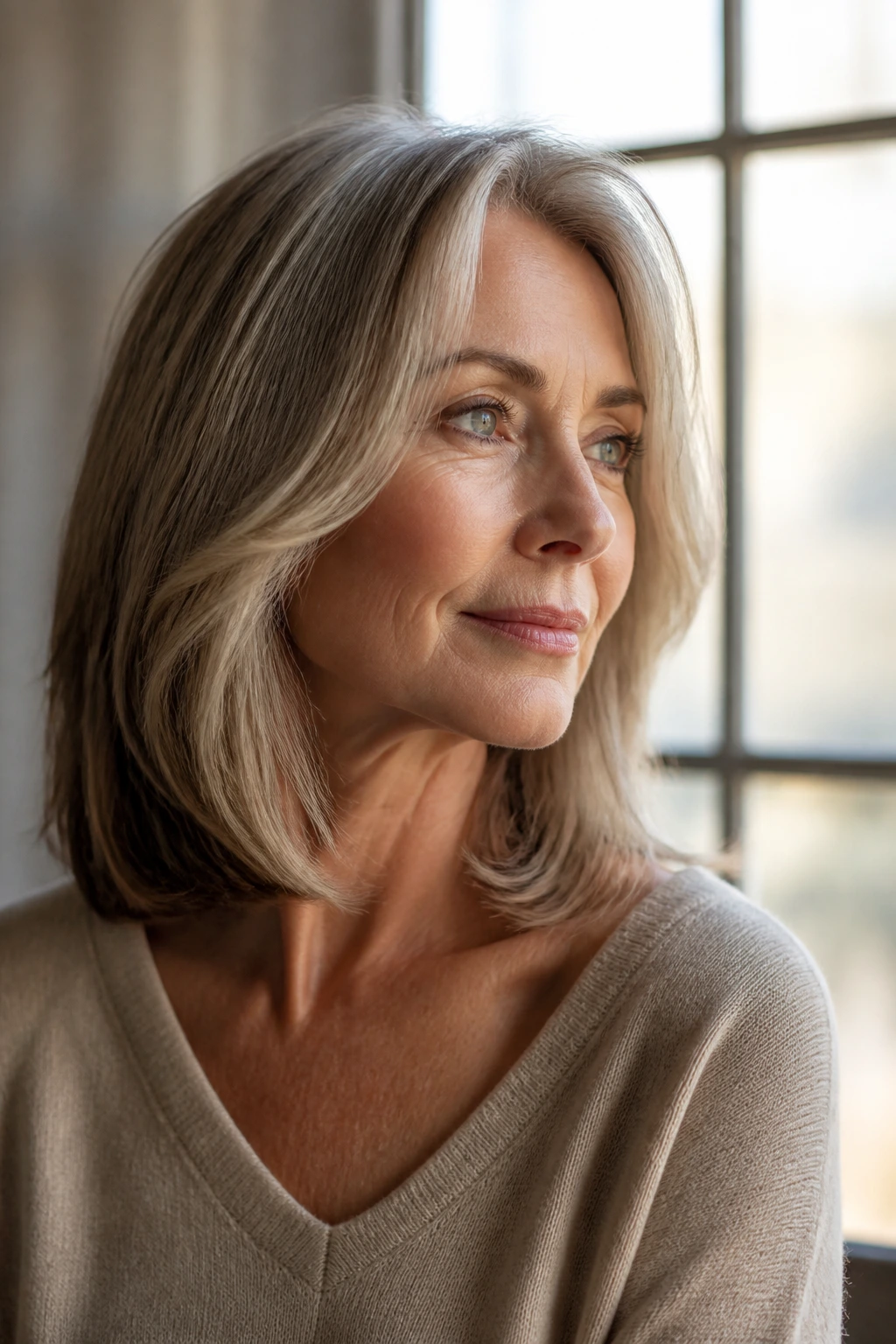
The Soft Silver Frame: Keep the length at the collarbone and add a clean face frame, then use a gloss or lowlight to give the gray more depth. This is the version that makes silver hair look bright rather than washed out.
The Fine-Hair Lift: Use a blunt base with very light layers near the front and a little crown lift. It keeps the ends full, which matters more than a lot of movement when density is low.
The Curl-Respecting Shape: Ask for the cut to be built around the curl pattern, not stretched straight in the chair. Internal layers and a longer perimeter keep curls from stacking too high at the sides.
The Glasses-Friendly Sweep: Start with a side part and fringe that bends away from the frame. It keeps the front open and avoids the line where bang and glasses tend to fight each other.
The Low-Heat Routine: Choose a cut that looks decent air-dried, then use rollers or a brush only on the face-framing pieces and ends. That gives the hair shape without making heat the whole story.
How to Keep the Shape Looking Fresh
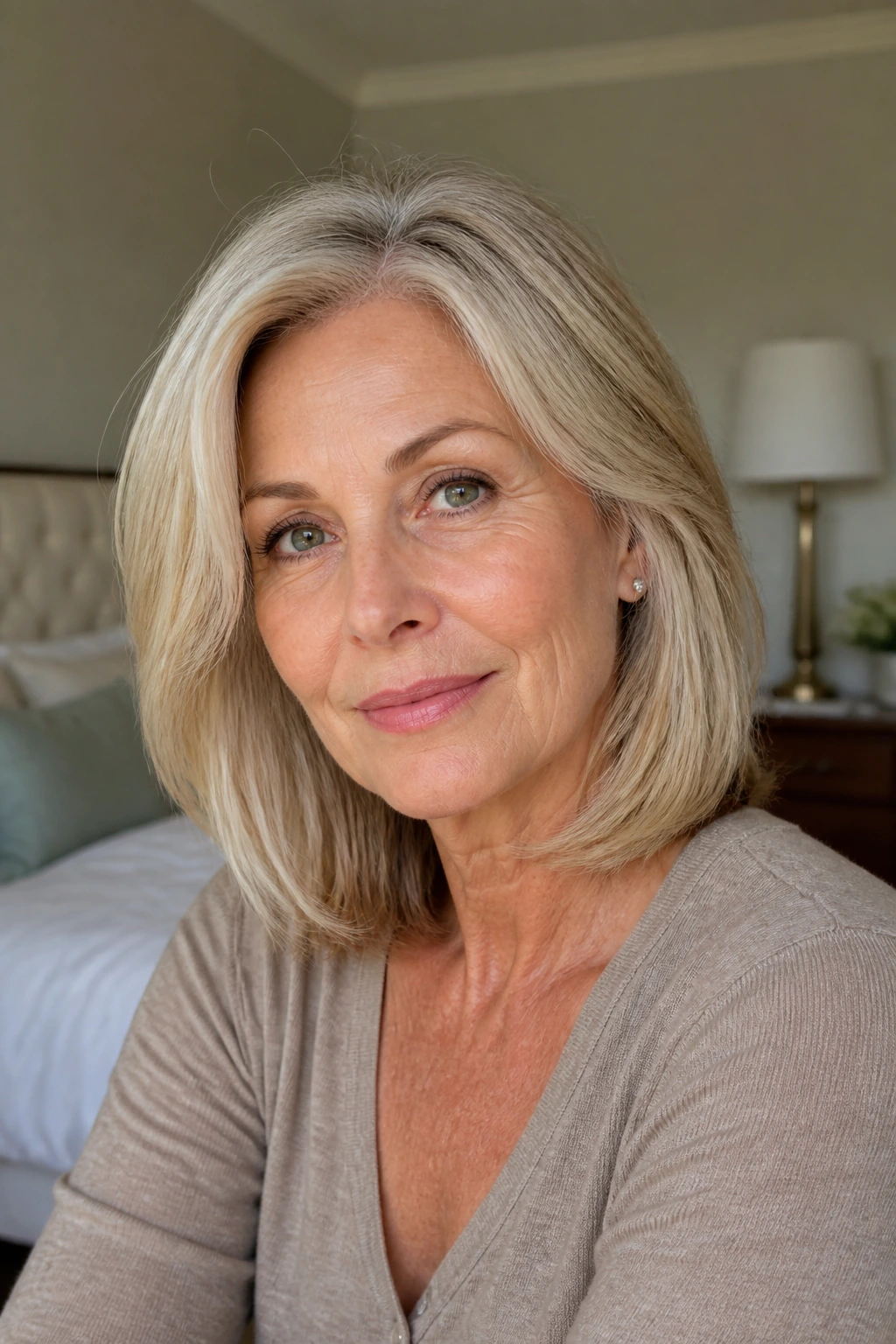
Wash frequency depends on scalp and texture, but most medium-length cuts behave well with two to three washes per week if your scalp allows it. Shampoo the roots, condition the mids and ends, and keep the conditioner off the crown unless your hair is very dry.
Trim schedules matter more than people want to admit. A shag or fringe often needs attention every 6 to 8 weeks so the layers don’t wander. A blunt lob or rounded bob can usually go 8 to 10 weeks before the shape starts to blur. If the ends begin to look thin and scraggly, that is your haircut asking for a dusting.
On day two, dry shampoo at the roots is usually better than trying to wash the whole head again. A little mist at the crown, a quick brush, and a touch of heat on the front pieces can reset the look fast. For curls and waves, a water-and-leave-in mix in a spray bottle often works better than more product.
Sleep helps. A silk pillowcase or a loose low braid keeps the hair from getting mashed flat at the neck. If your style has a fringe, pin it up loosely before bed so the front doesn’t pick up a stubborn bend.
Frequently Asked Questions
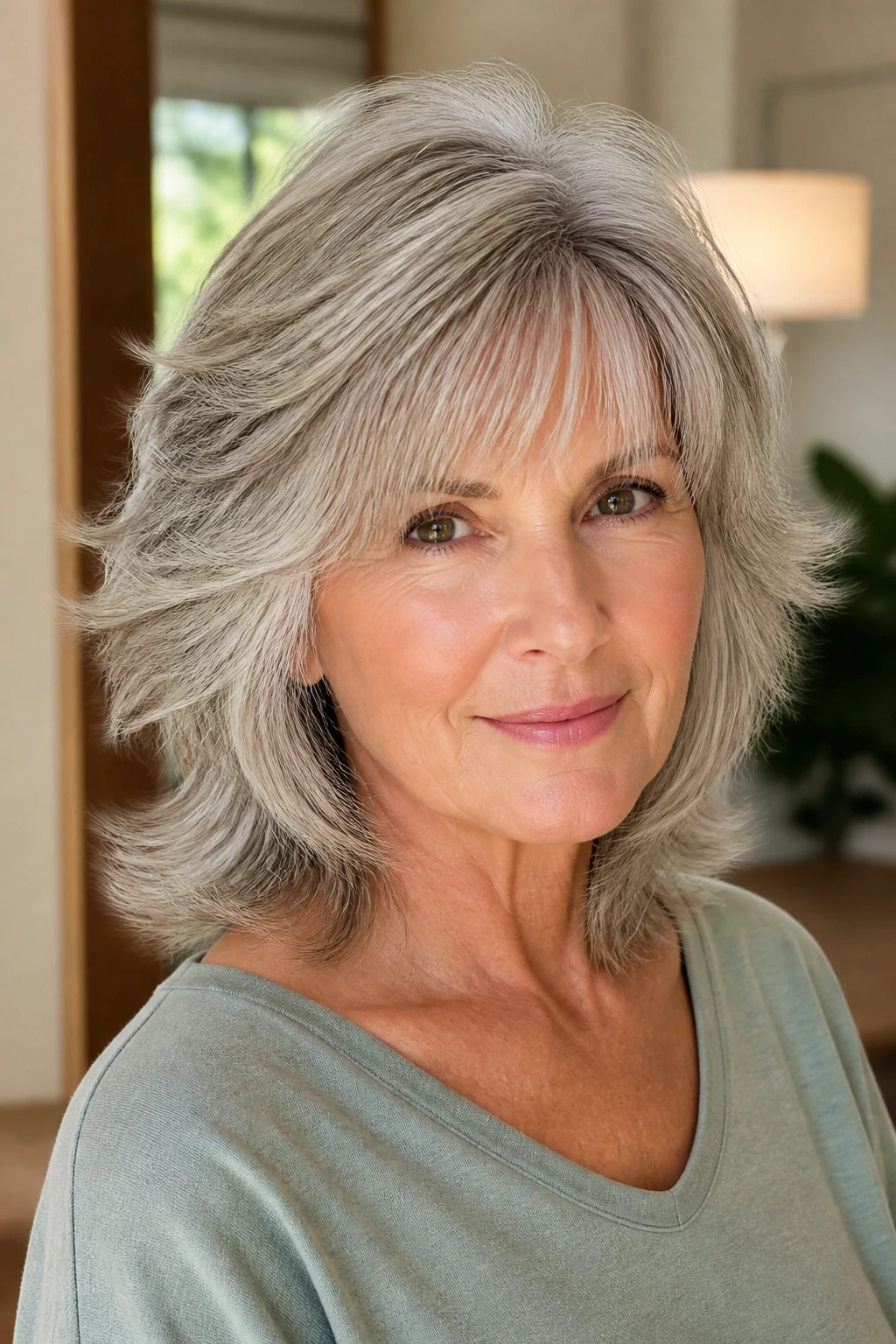
What medium-length haircut makes hair look fuller after 60?
A blunt lob or a rounded bob usually gives the strongest fullness because the perimeter stays dense. If your hair is thin, keep layers long and minimal so the ends do not go see-through.
Are layers good for thin hair?
Yes, but only when they’re controlled. Long, soft layers around the face can help fine hair move, while short, choppy layers usually make it look thinner at the ends.
What bangs work best if I wear glasses?
Curtain bangs and side-swept fringe are the easiest to live with. They avoid the hard line that blunt bangs can create right against the top of the frames.
How often should a medium-length haircut be trimmed?
Most shapes stay neat with a trim every 6 to 10 weeks. Shags, fringe, and very textured cuts need more frequent cleanup than blunt or softly layered lobs.
Can curly hair work at shoulder length?
Absolutely, and it often looks better there than at a shorter length that causes the curl to stack. Ask for internal layers and a curl-aware shape so the perimeter stays full.
What if my hair has gotten wirier with gray?
Keep the cut clean and avoid over-thinning. Wiry gray hair usually looks better with a smoother outline, a light leave-in, and a small amount of serum on the ends.
Is a deep side part still a good idea?
Yes, especially if the crown is flat or one temple looks thinner. A deep side part can add lift and make a simple cut feel more deliberate without changing the length.
What if I want low-maintenance hair but don’t want it short?
Ask for a shoulder-length cut with tapered ends and only a few long layers. That shape usually air-dries well, pulls back easily, and doesn’t punish you when you skip a fancy blowout.
A Cut That Still Feels Like You
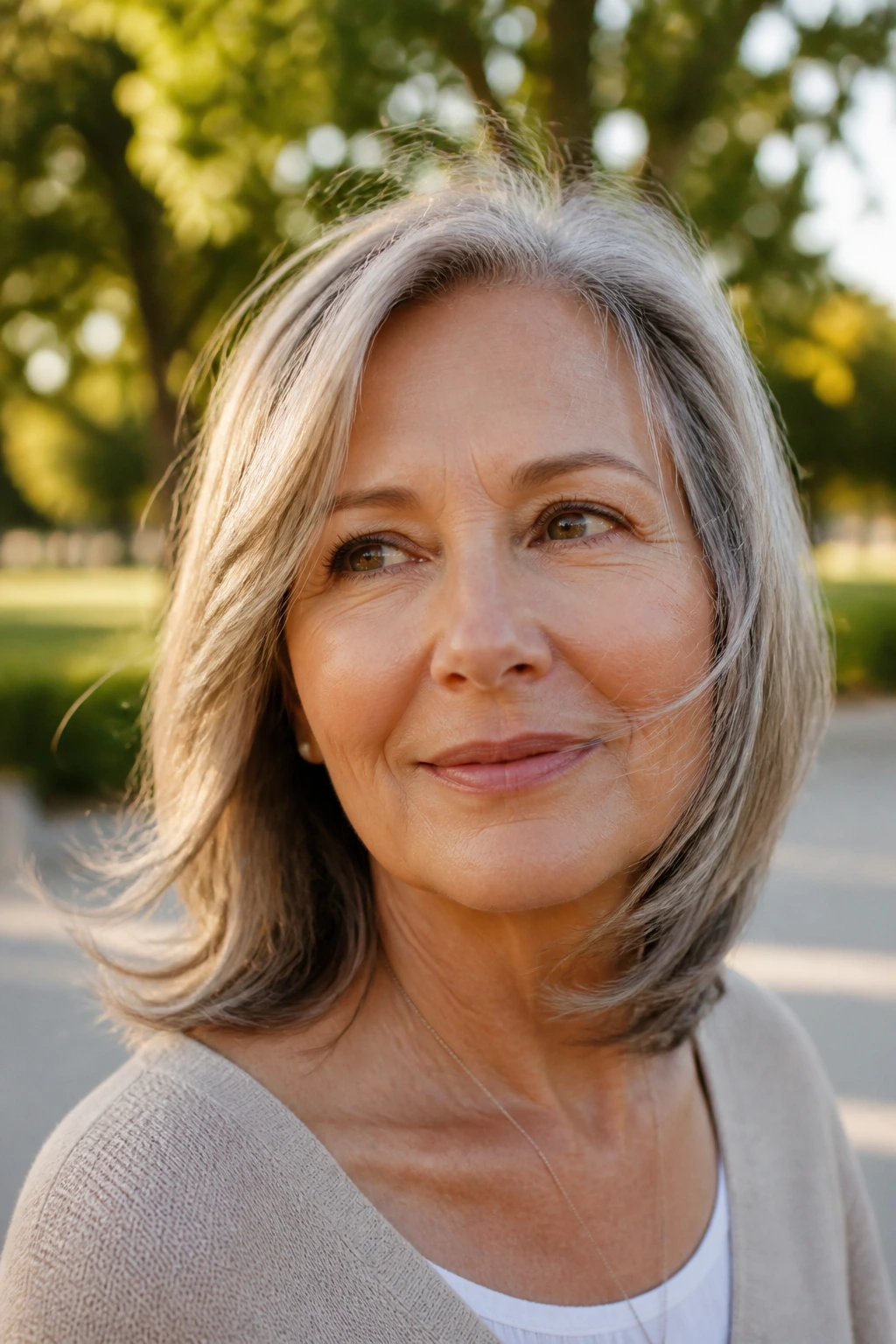
The best medium-length hairstyle after 60 is the one that works when you stop fussing with it. It should still sit well after a scarf, a nap, a windy day, or a quick brush-through at the sink. That’s the real test. Not the salon mirror. The ordinary morning.
And if one thing runs through all eighteen styles here, it’s this: shape beats effort. A haircut with the right line, the right weight, and the right amount of movement can do more for your face than a cabinet full of styling products. Start with the cut that matches your hair’s actual behavior, not the one that asks you to fight it every day.
