



The quickest way to make fine hair look fuller after 60 is usually not to keep it long. Long lengths can be lovely, sure, but they also drag at the root, show every weak spot at the crown, and let the ends turn stringy by noon. A good short cut changes the geometry of the whole head. That’s the magic of volume-adding short cuts for women over 60: they take weight off the ends, put shape where it matters, and make the top of the head look higher without asking you to wrestle with three hot tools before breakfast.
Hair changes with time. It often grows a little finer, a little drier, sometimes a little wirier around the gray, and the crown can start to lie flatter than it used to. None of that means you need to hide your hair under length. It means the cut has to do more work. The right short shape can fake lift at the root, soften the jaw, and make the back of the head look rounder in a way that reads as clean and intentional, not puffy or over-styled.
And there’s a side benefit people forget: a well-cut short style is usually easier to live with. You spend less time drying it. You use less product. You stop fighting the same limp section every morning. Some of these cuts are feather-light and airy, some are blunt and dense at the perimeter, and some lean on stacked backs or long fringe to steer the eye upward. All of them aim at the same thing: hair that looks like it has body, even on a day when it would rather lie flat.
Why These Short Cuts Look Fuller, Not Flatter
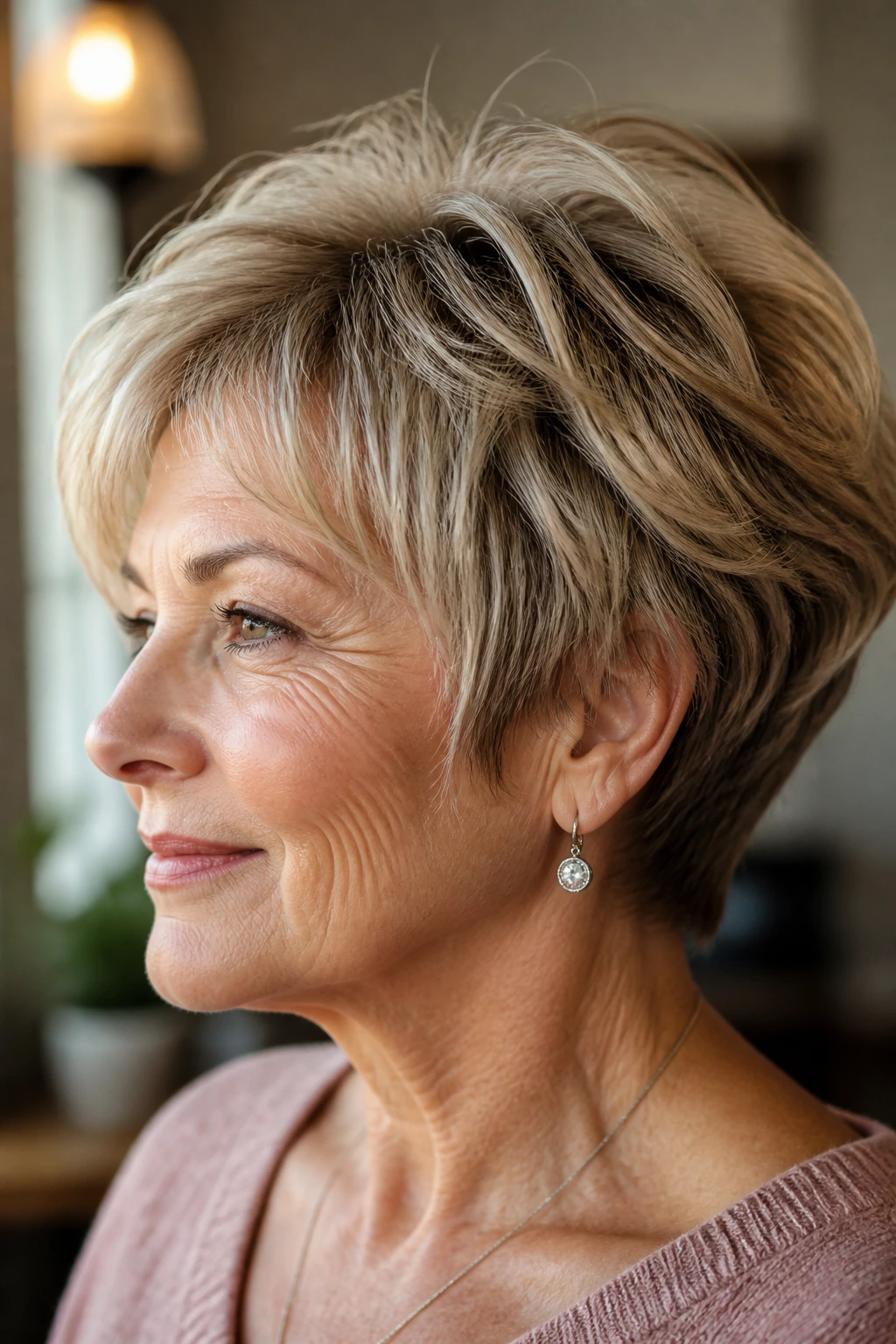
Weight changes everything.
When hair sits past the shoulders, the ends pull down on the roots. The moment you shorten the length, the hair can spring up a little at the crown and around the nape, which is exactly where flat hair usually gives itself away.
Shape beats size.
A good short cut does not need a lot of volume spray to look lifted. A stacked back, a side-swept fringe, or a bit of crown layering creates height in the cut itself, so you are not relying on product to fake structure.
The best short cuts leave room for movement.
Too much texturizing can make fine hair look wispy. Too little layering can make thick hair collapse into a helmet. The useful cuts sit in that middle ground where the hair can move, but not so much that it loses its outline.
Silver hair benefits from clean lines.
Gray and white strands often reflect light well, but they can also feel coarser or more slippery depending on texture. A short cut with a strong shape keeps that texture looking polished instead of fuzzy at the ends.
The crown matters more than people think.
A lot of “voluminous” haircuts are just smart crown control. Lift the top 1 to 2 inches, keep the nape tidy, and the whole head looks fuller from the side profile. That’s why a short crop can do more than a long layered cut ever will.
1. Feathered Pixie With Crown Lift
A feathered pixie is one of the cleanest answers for hair that’s lost a little density at the top. The cut is short around the ears and nape, but the crown stays long enough to be lifted with a small round brush or fingers. It does not have to look spiky or severe. Done well, it looks soft, light, and a little airy, like the hair has room to breathe.
Why the crown makes the difference
The whole trick is in the balance: the sides stay close, while the top keeps enough length to stand up from the scalp instead of sticking to it. That means less weight where you do not want it, and more shape where you do. If your hair lies flat at the crown by 10 a.m., this cut gives you a fighting chance before styling even starts.
- Best for: fine to medium straight hair that collapses easily.
- Ask for: 2 to 3 inches on top, softer feathering through the crown, and tapered sides that do not puff out.
- Style with: a light mousse at the roots and a 1-inch round brush.
- Watch for: too much thinning near the temples, which can leave the hair looking sparse.
A feathered pixie also grows out gracefully if the neckline is kept neat. That matters more than people admit. A crisp nape keeps the whole cut looking intentional even when the top has lost some lift.
2. Stacked Bob With a Short Nape
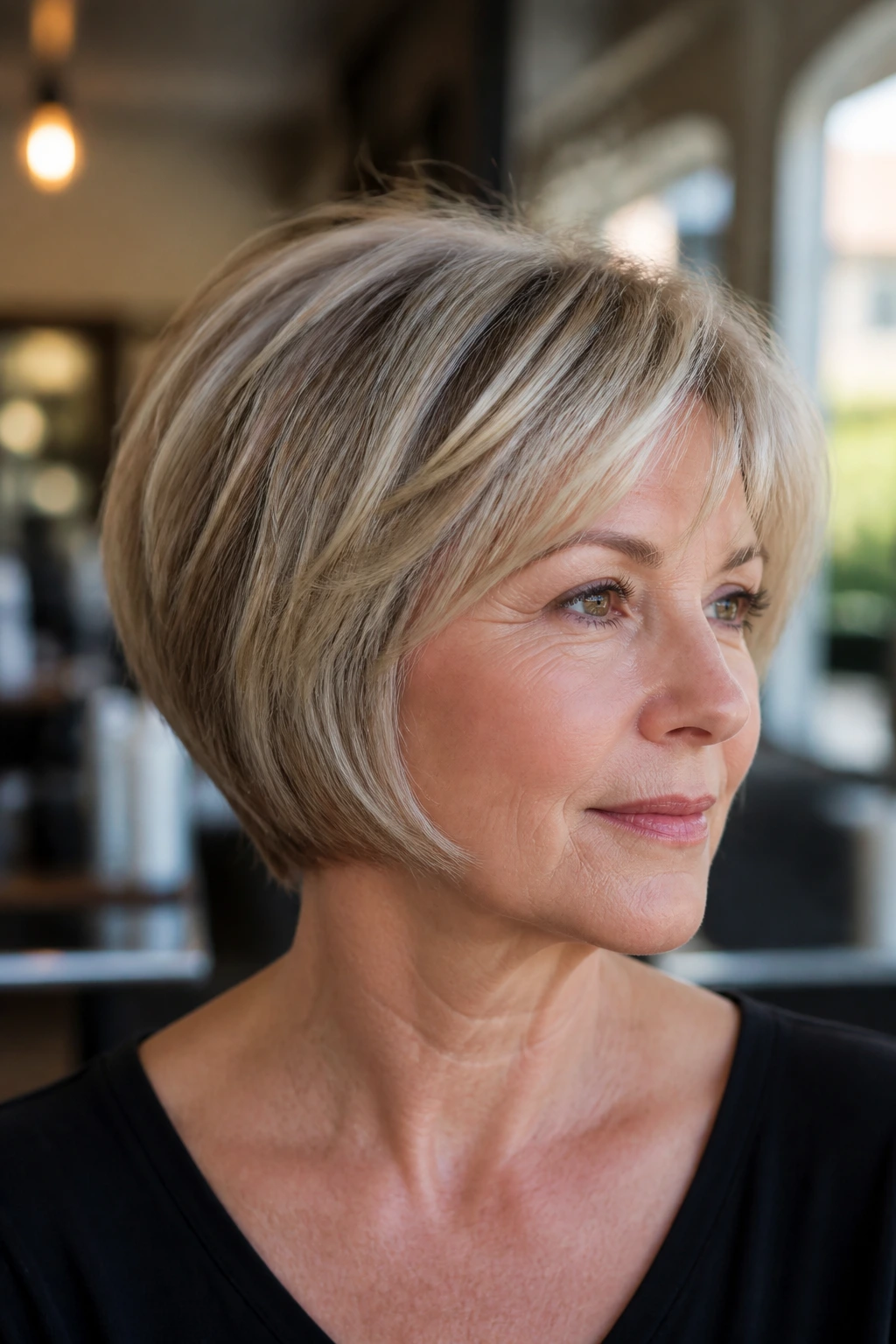
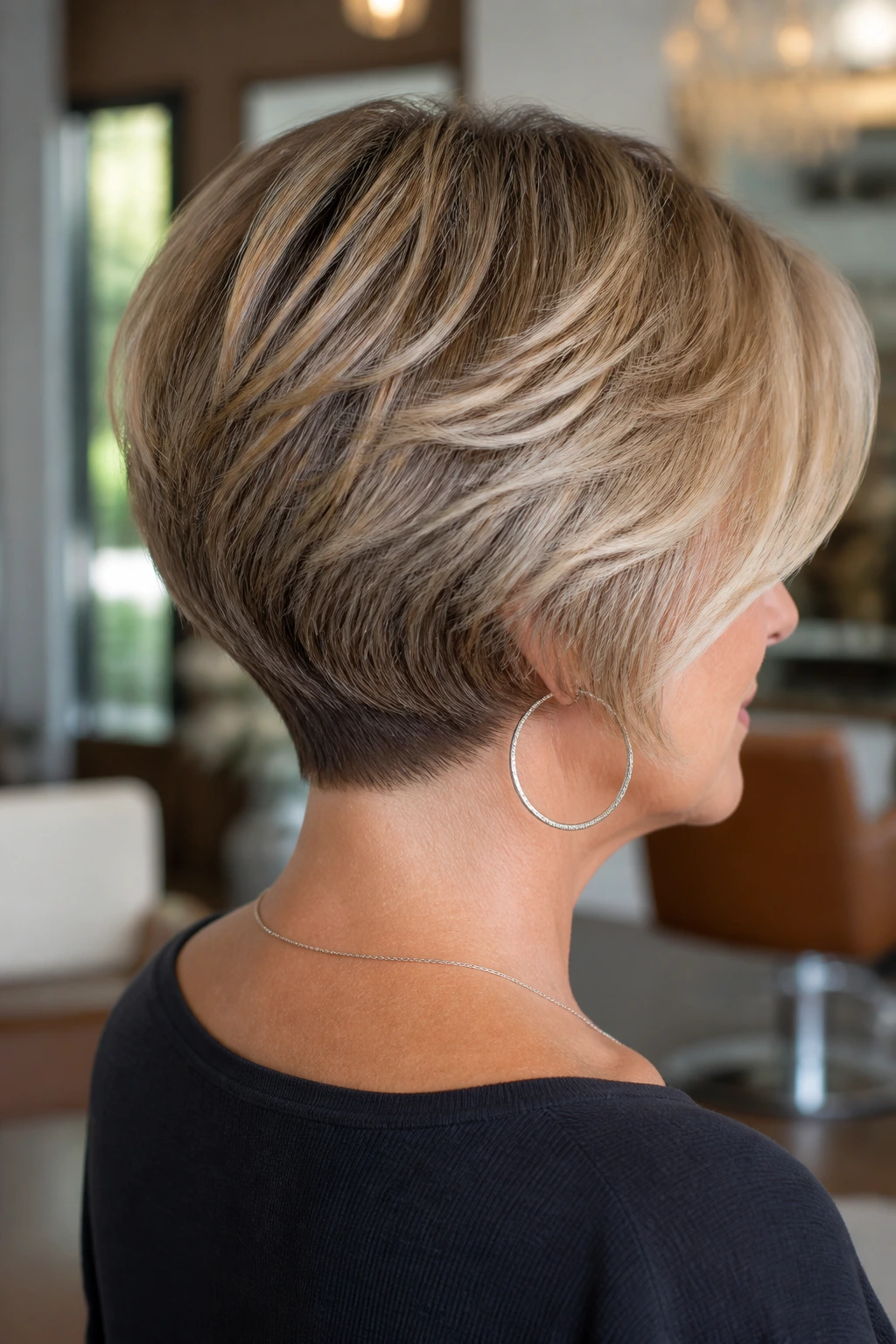
A stacked bob works because it builds height in the back without making the front feel heavy. The nape is cut short and layered in a way that lets the hair sit closer to the head, while the upper back pieces stack over it and create a rounded shape. That rounded shape is where the fullness lives.
This cut is one of my favorites for hair that has become thinner through the mid-lengths but still has enough body to hold a line. It gives the illusion of density from the side and back, which is where many people notice thinning first. And no, it does not have to look old-fashioned.
Keep the front just long enough to skim the jaw or sit a touch below it. Any longer, and you start losing the lift that makes the stack visible. If your hair has a bit of wave, this style gets even better after a quick blow-dry with the head tipped back and the nape smoothed down.
3. Side-Swept Crop With Soft Layers
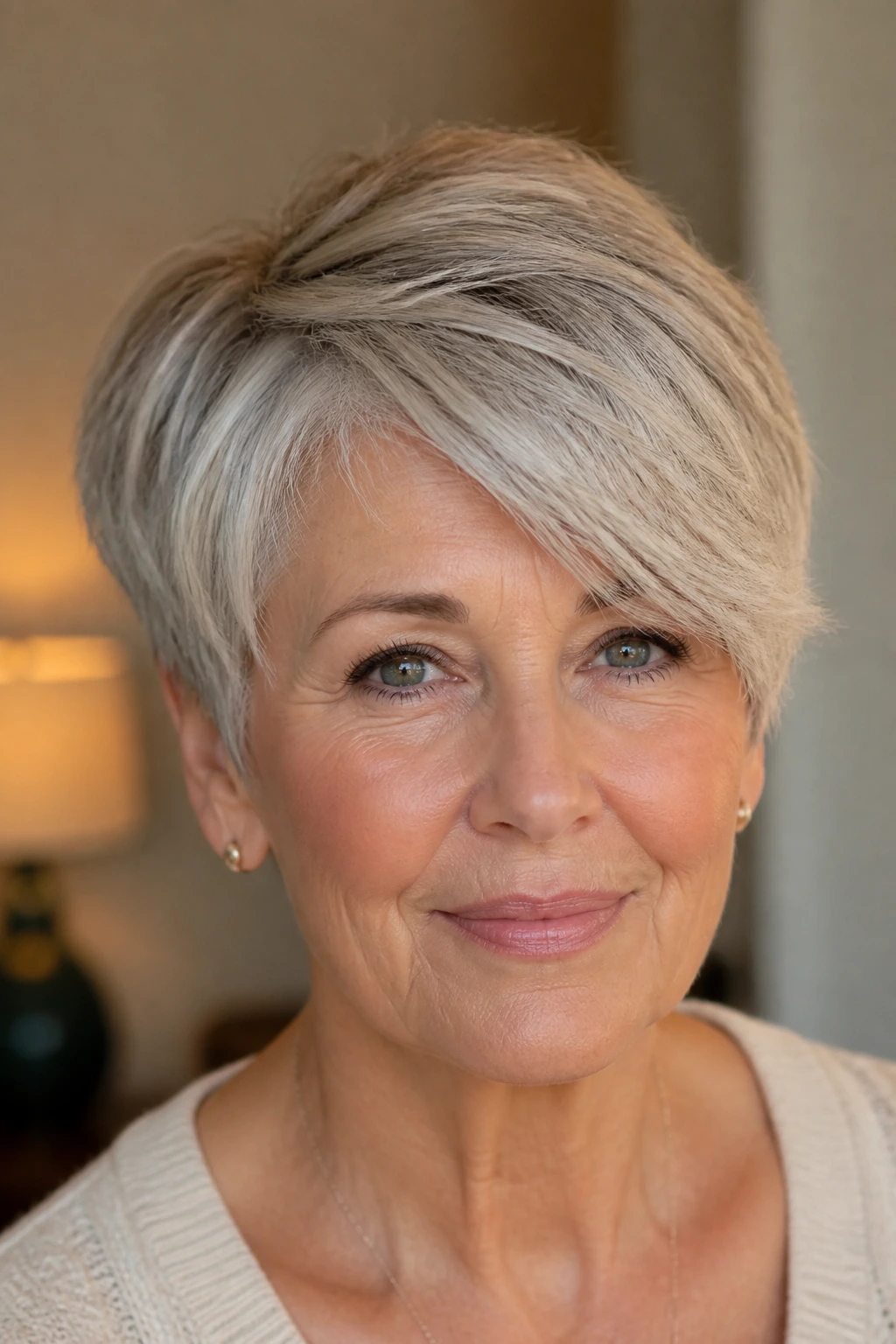
What if you want lift, but you do not want to look “done”? A side-swept crop is the easy answer. The deep part gives the hair a natural push in one direction, and the soft layers keep the front from sitting flat against the forehead or temples.
Where the volume comes from
The lift is not dramatic, which is exactly why it works so well. The eye sees the side part, follows the sweep across the forehead, and reads that diagonal as movement. That’s enough to make the whole cut feel lighter and taller at the same time.
A side-swept crop is useful when a full fringe feels too heavy or when a cowlick near the front needs a little help behaving. Keep the top long enough to brush across the forehead, and ask for the sides to be trimmed close enough that the shape does not balloon out around the ears.
How to style it
- Blow-dry the front in the opposite direction first.
- Switch the part back and direct the hair sideways with a vent brush.
- Use a pea-sized bit of paste only on the ends.
That little pre-dry trick is worth the trouble. It keeps the front from falling immediately back into the old flat pattern.
4. Textured French Bob
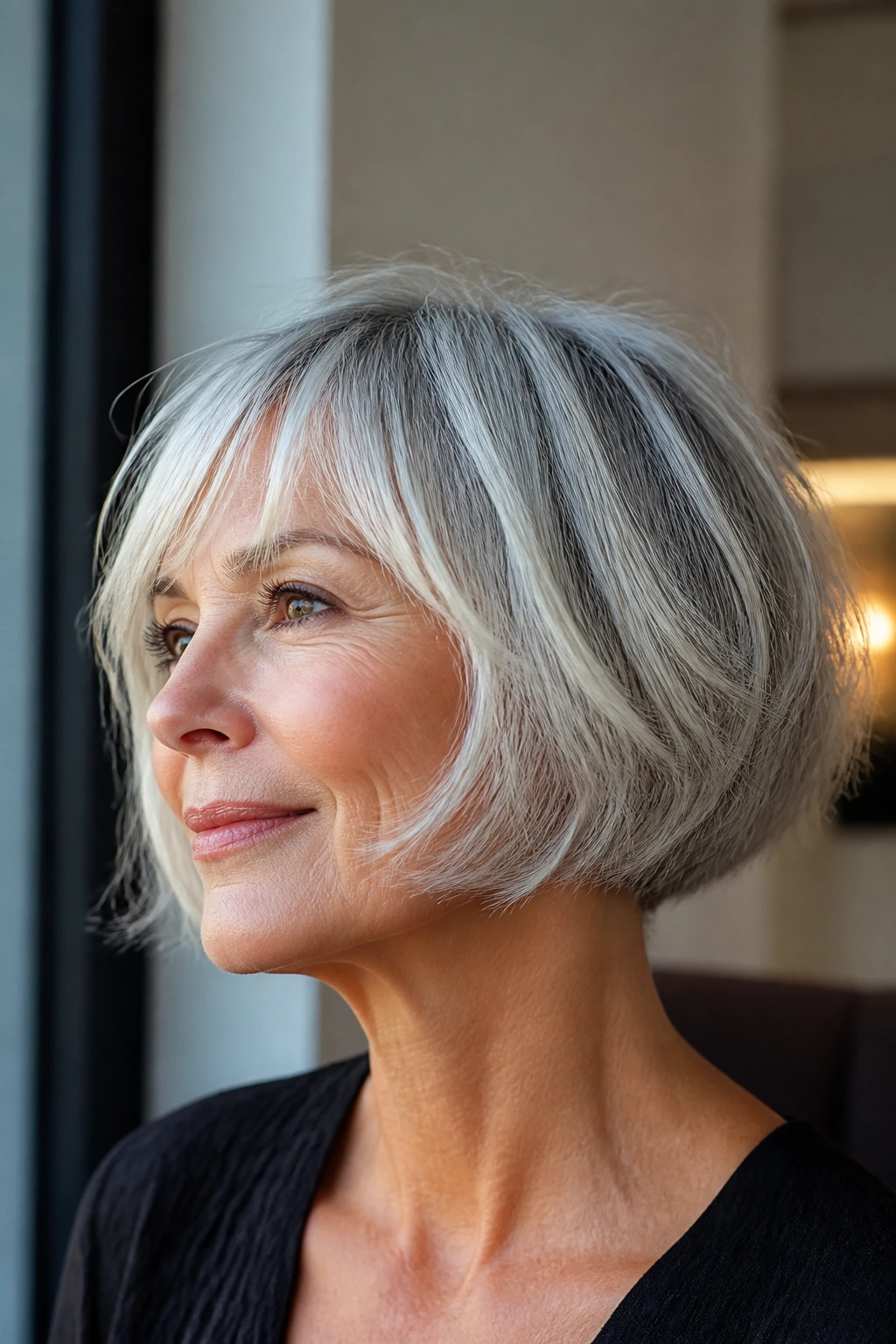
A French bob sits around the jawline and leans on shape more than length. It tends to look chic because the line is compact and the texture is lightly broken up, not over-layered. For women over 60, that compactness can be a gift. The hair does not have far to travel before it meets the ends, so the whole cut reads fuller.
This version is especially good on wavy or slightly coarse hair. The ends can flick in a little or sit with a bend, and that movement keeps the cut from feeling stiff. If the hair is very fine, keep the layers subtle. You want fullness at the edge, not see-through strands hanging off the perimeter.
The French bob also plays nicely with silver hair. Gray and white often show off the edge of the cut better than darker shades do, especially when the nape is kept neat and the front pieces skim the cheeks.
5. Bixie With Piecey Ends
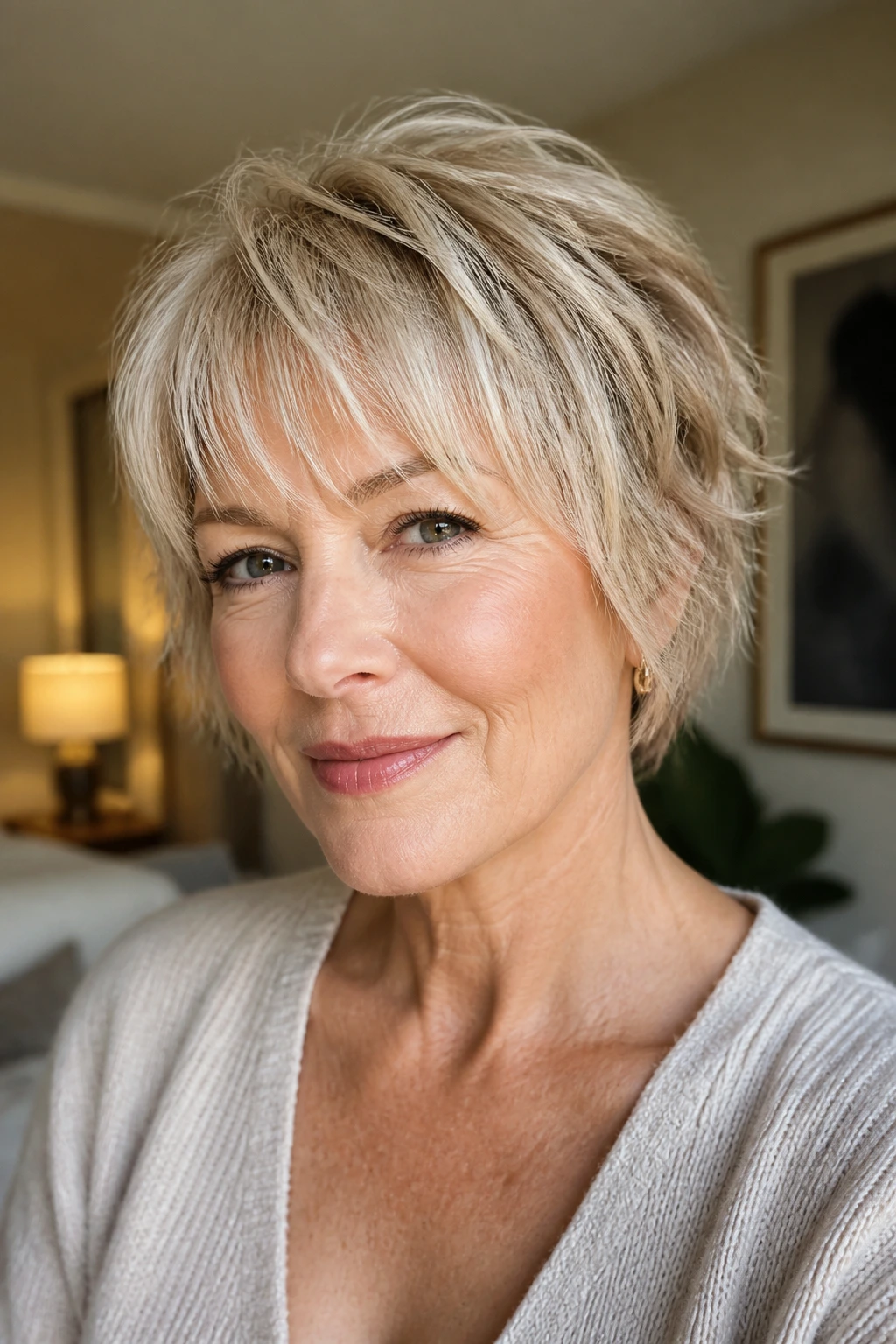
The bixie is the haircut for someone who wants the ease of a pixie but the softness of a bob. It lands between the two, which gives you more hair to work with on top and around the face, but not so much length that it slumps. Piecey ends keep it modern. They also stop the cut from turning into a round helmet, which is the risk with a lot of short layered styles.
This one is excellent for a grow-out phase. If you’ve had a pixie and do not want to jump straight to a bob, the bixie gives you a middle lane. It can be tucked behind the ear, fluffed up at the crown, or pushed forward when you want more texture.
Use a light styling cream rather than a heavy serum. Heavy products take the life out of the ends. The piecey look comes from separation, not grease.
6. Tapered Cut With Height at the Front
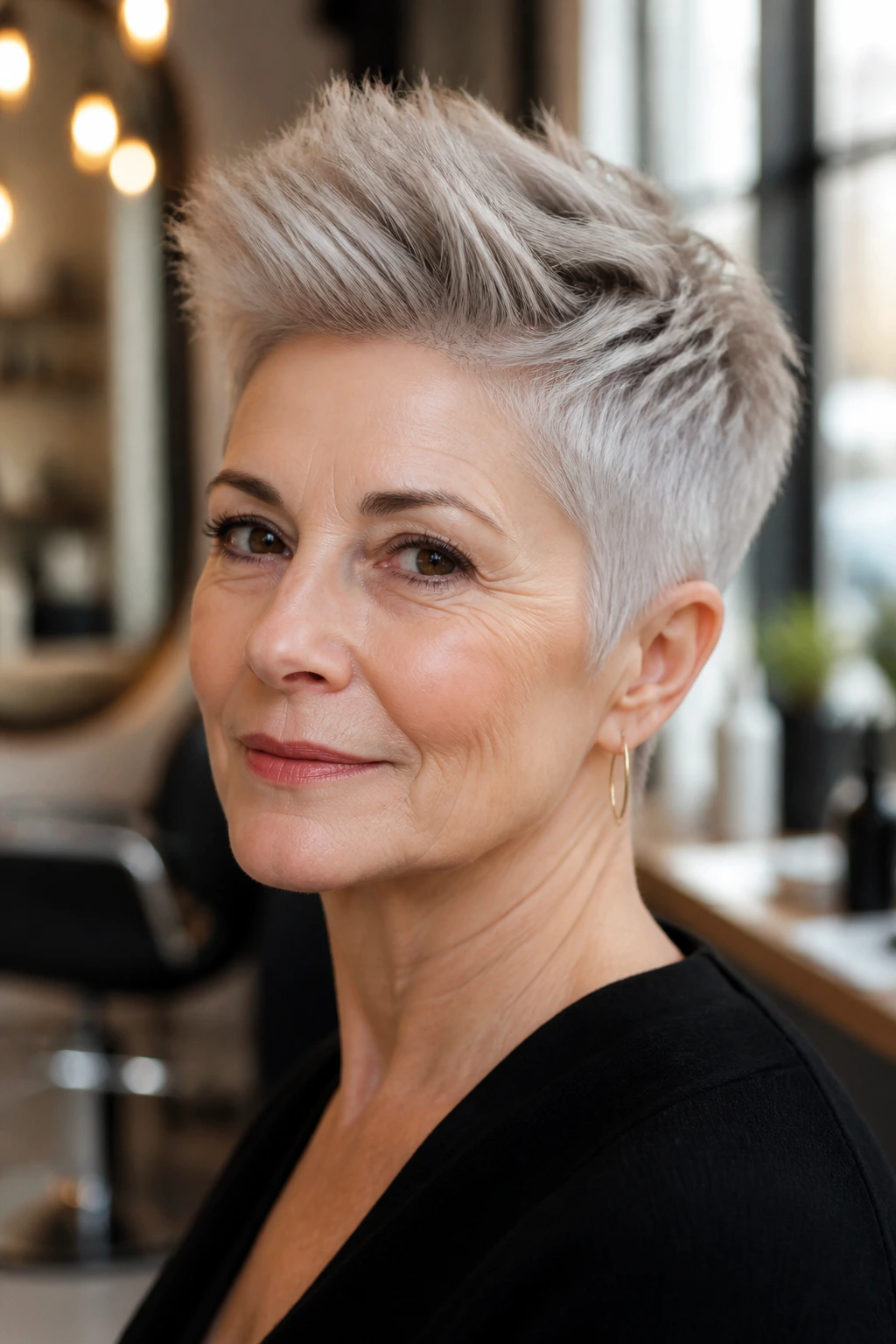
A tapered cut with height at the front is the one I reach for when the crown is flat but the face can carry a little lift. The sides and back are cut shorter and cleaner, while the top keeps more length toward the front hairline. That forward length lets you brush the hair up and slightly back, which creates a real sense of height without making the top feel teased.
Compared with a classic pixie, this shape feels a little softer and a little more deliberate. You are not asking the hair to stand straight up. You are asking it to rise and settle in a controlled arc. That is easier to wear, and often easier to style on hair that has become finer.
It suits women who wear glasses, too, because the extra height at the front keeps the cut from disappearing behind the frames. A little lift goes a long way there.
7. Curly Crop With a Rounded Silhouette
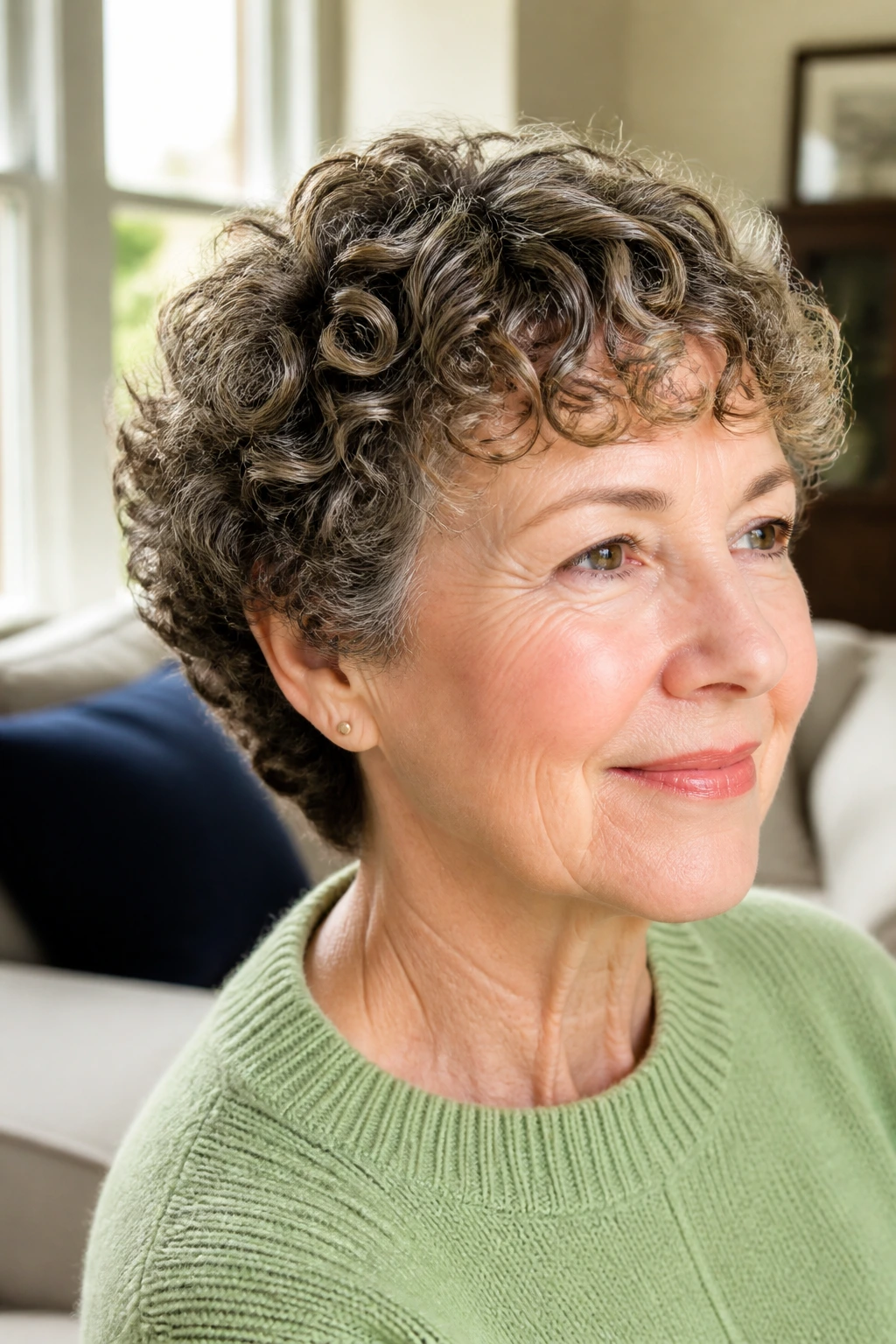
Curly hair after 60 often does better when it is shorter than people expect. Long curls can hang, stretch, and lose their bounce. A rounded crop lets the curl spring up, which gives you the fullness you were probably trying to keep in the first place.
What to ask for
Ask for the cut to be shaped to the curl pattern, not against it. That usually means leaving enough length on top for the curls to coil, keeping the sides controlled, and avoiding aggressive thinning shears unless your hair is very dense. Curly hair does not need to be shredded to look lighter.
A rounded silhouette can look wonderfully full around the head, especially if the top is cut with the curls dry so the stylist sees the true shape. That detail matters. Wet curls lie and shrink in ways that can make a cut far too short or far too flat.
Use a diffuser on low heat, or let the curls air-dry with a light cream. Scrunching too much at the scalp can make the roots frizzy instead of lifted.
8. Layered Wedge Cut
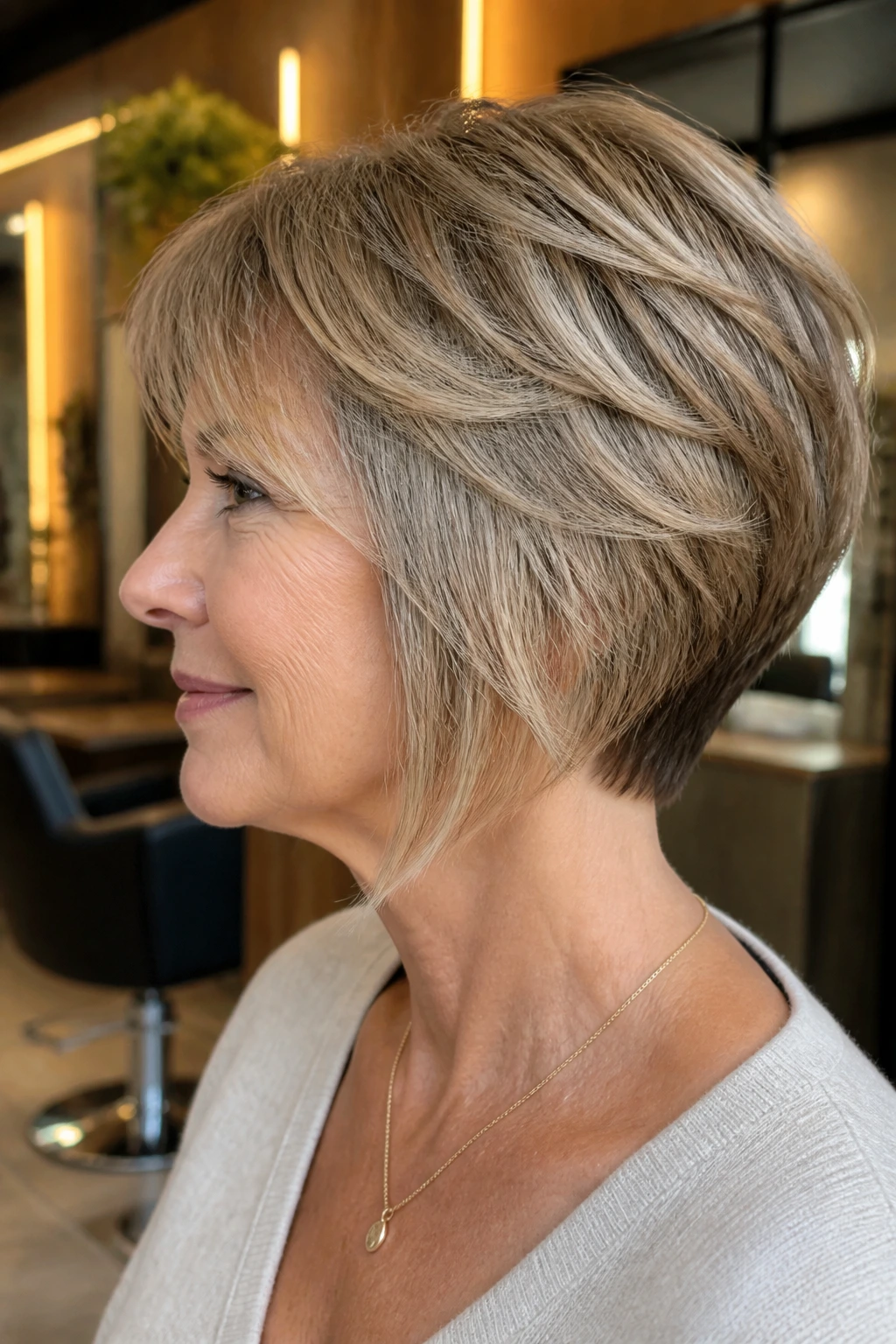
The wedge cut is one of those old-school shapes that keeps getting rediscovered for a reason. Short in the back, angled a bit longer toward the front, it gives the head a clean curve that reads as fullness from almost every angle. The layered version softens the shape so it does not look rigid.
It works especially well when the hair at the nape is dense but the crown needs help. The short back removes that heavy block of hair that can push the whole style downward. Then the top layers sit above it and create lift. If the hair is straight, the effect is crisp. If it has a little bend, the cut gains movement fast.
This is not a lazy haircut. It needs a good shape and a clean line. But when it’s done right, the wedge can make the back of the head look rounder and more supported than a lot of softer cuts can manage.
9. Asymmetrical Bob With Side Part
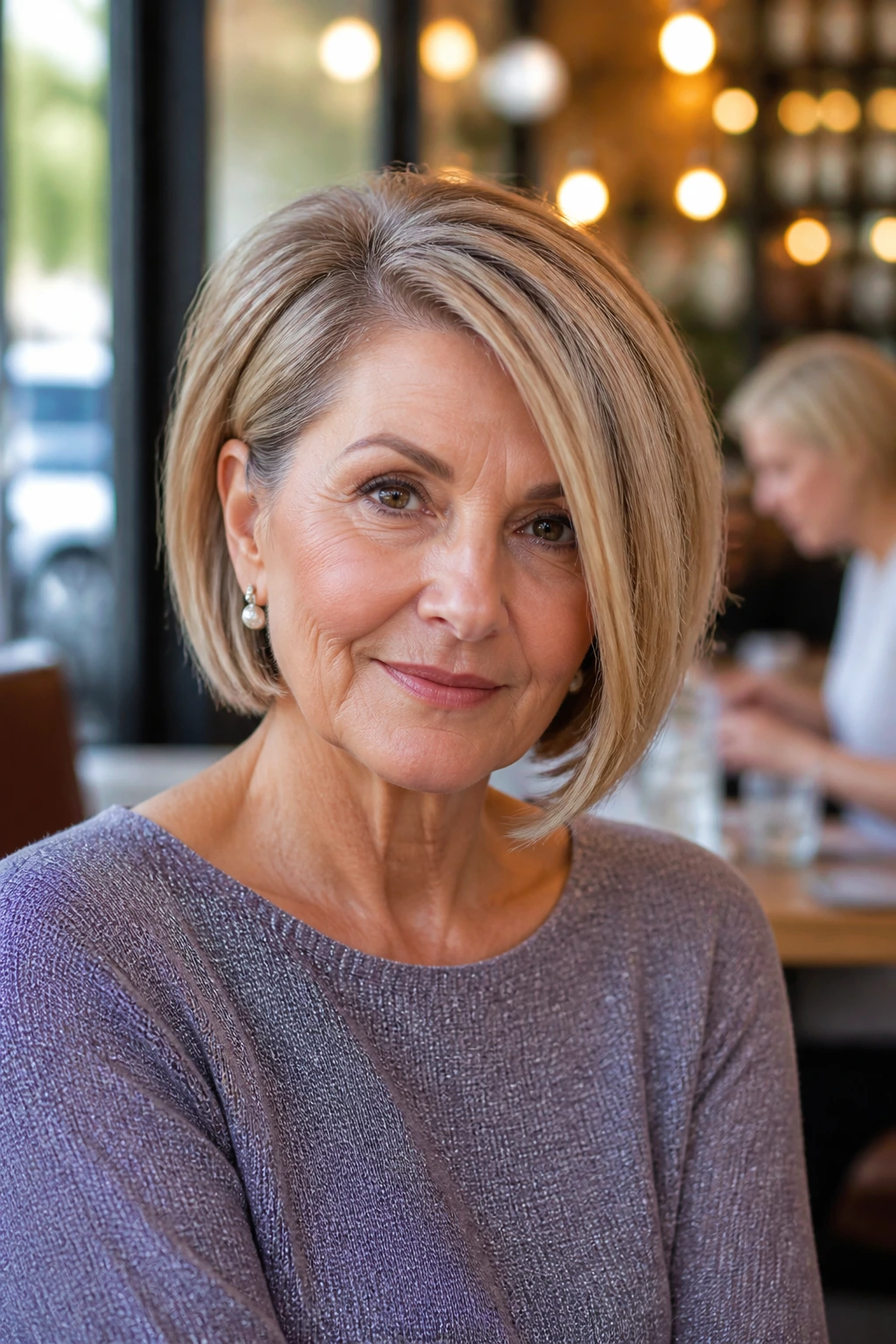
An asymmetrical bob is useful when you want volume and a little visual drama, but not the maintenance that comes with a heavily layered style. One side sits a little longer than the other, and the side part pushes the roots upward on the shorter side. That diagonal line creates motion all by itself.
A deep part can fix a flat crown faster than most products. Seriously. Hair tends to get set in its old habits, and shifting the part changes where the lift begins. An asymmetrical bob uses that trick to its advantage, while the uneven hem keeps the eye moving instead of locking onto one flat line.
Keep the difference subtle if you want softness. A dramatic angle can be fun, but a gentler one is easier to wear with everyday clothes, earrings, and glasses. The sweet spot is where the haircut looks deliberate, not like a mistake.
10. Razored Shag Pixie
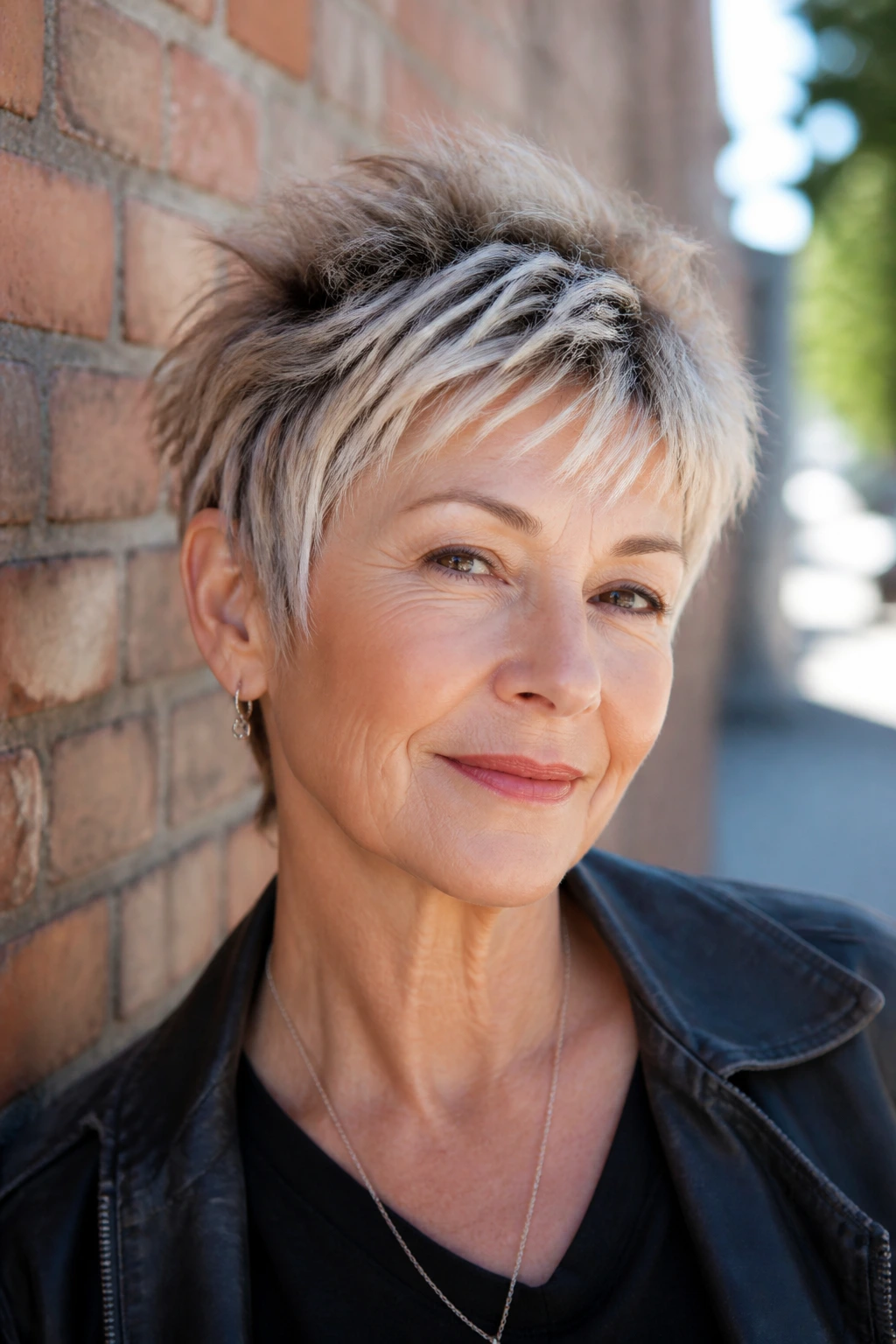
A razored shag pixie gives texture to hair that refuses to look airy on its own. Razor cutting removes weight in a softer, more broken way than blunt scissors, so the ends do not sit in one heavy block. That can be a blessing for thick or stubbornly straight hair that tends to droop.
This cut has a little attitude. Not a lot. Just enough. The layers are short, the edges are soft, and the top can be tossed forward or lifted back depending on your mood. If your hair grows in with a bit of natural disarray, this shape can use that instead of fighting it.
One caution: very fragile hair does not always love too much razor work. If the strands are already dry or rough, ask for a lighter hand so the ends do not fray. The goal is texture, not fuzz.
11. Chin-Length Bob With Airy Internal Layers
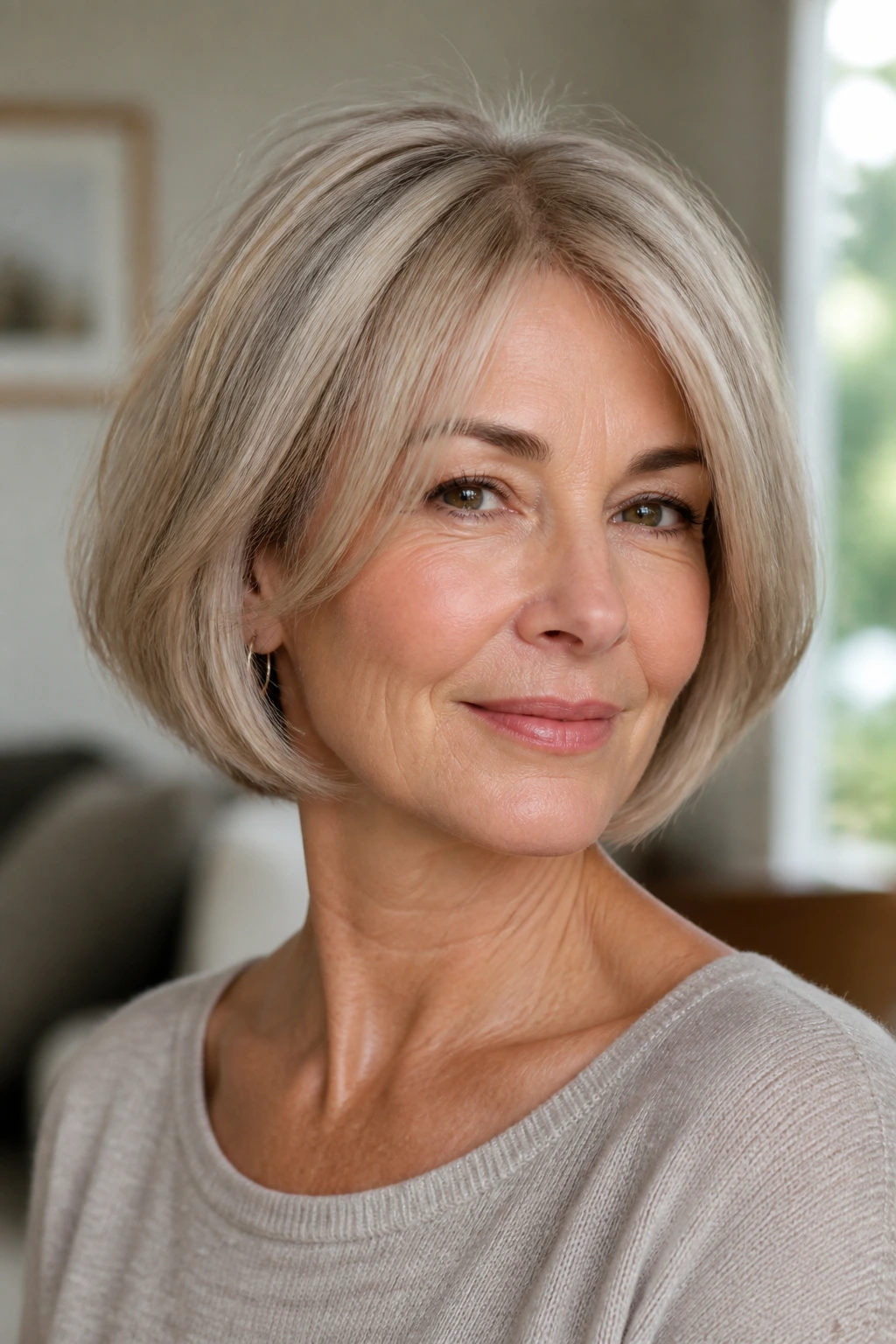
A chin-length bob is a smart choice when you want a fuller shape but do not want to go quite as short as a pixie or crop. The visible outline stays solid at the bottom, which gives the impression of thickness. Hidden internal layers underneath that top surface keep the bulk from collapsing.
That hidden structure is the part many people miss. You may look at the haircut and think, “That’s just a bob.” It is not. The inside has been thinned and lifted in a controlled way, while the outside edge stays clean. That combination gives the hair a denser appearance without looking puffy.
It suits women who want to tuck some hair behind the ears, keep a little movement at the sides, and still have enough length to curl the ends under with a round brush. It’s one of the easiest styles to grow into, too. The shape remains decent even when it gets a bit longer.
12. Undercut Pixie for Thick Hair
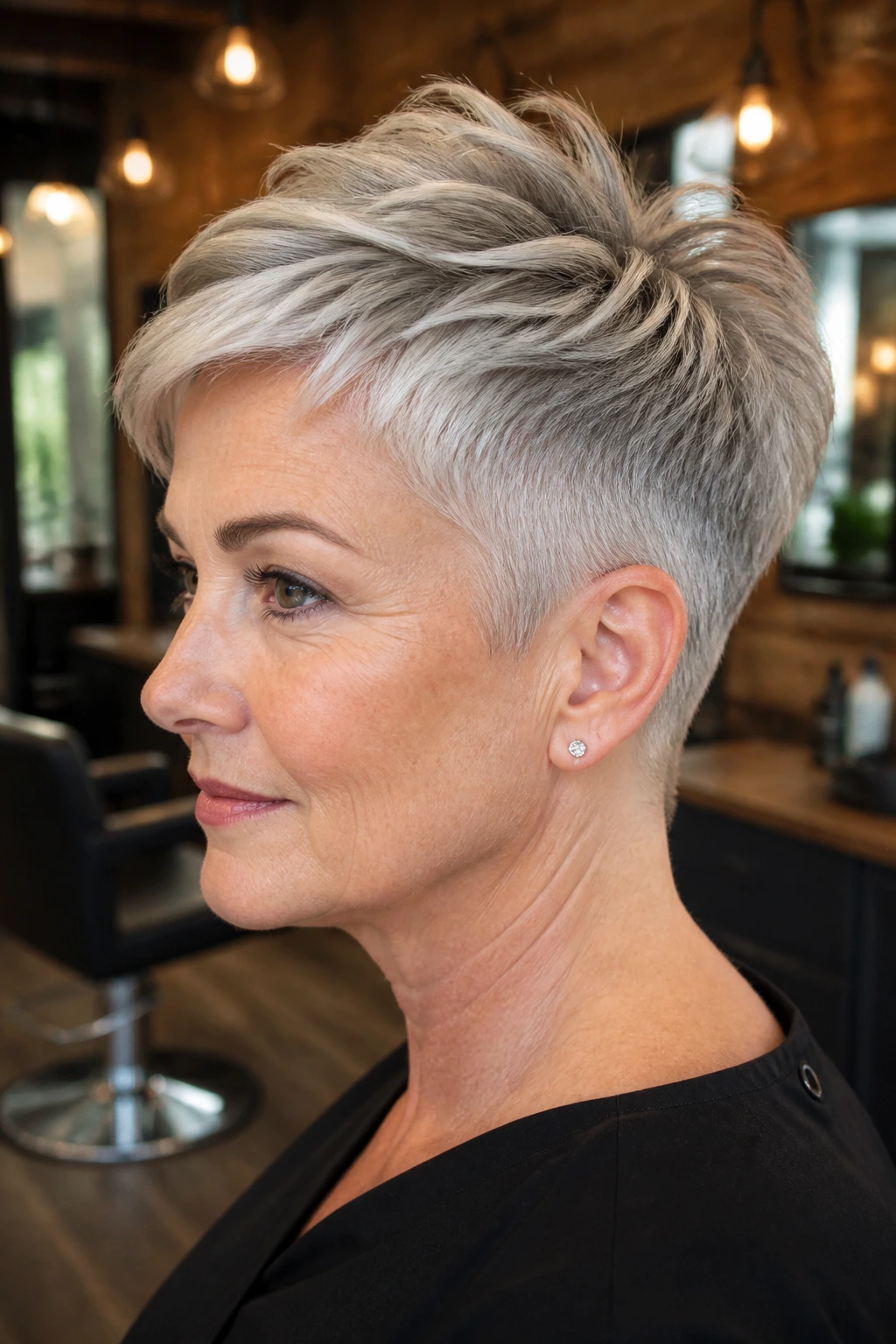
If your hair is thick enough to feel heavy by mid-morning, an undercut pixie can feel like someone took a brick out of the back of your head. The hidden undercut removes bulk from the nape and sometimes behind the ears, while the top stays long enough to move and lift. That’s the whole point.
This cut is not just about looking sleek. It makes the hair manageable. Thick hair can puff outward in all the wrong places if it is all left at the same length. An undercut lets the shape sit closer where needed and keeps the top from being dragged down by weight underneath.
It is especially useful if you dislike spending ten minutes drying the back of your head. Less bulk means less drying time. Less drying time means less chance the top will flatten before the rest is even done.
13. Swept-Back Crop
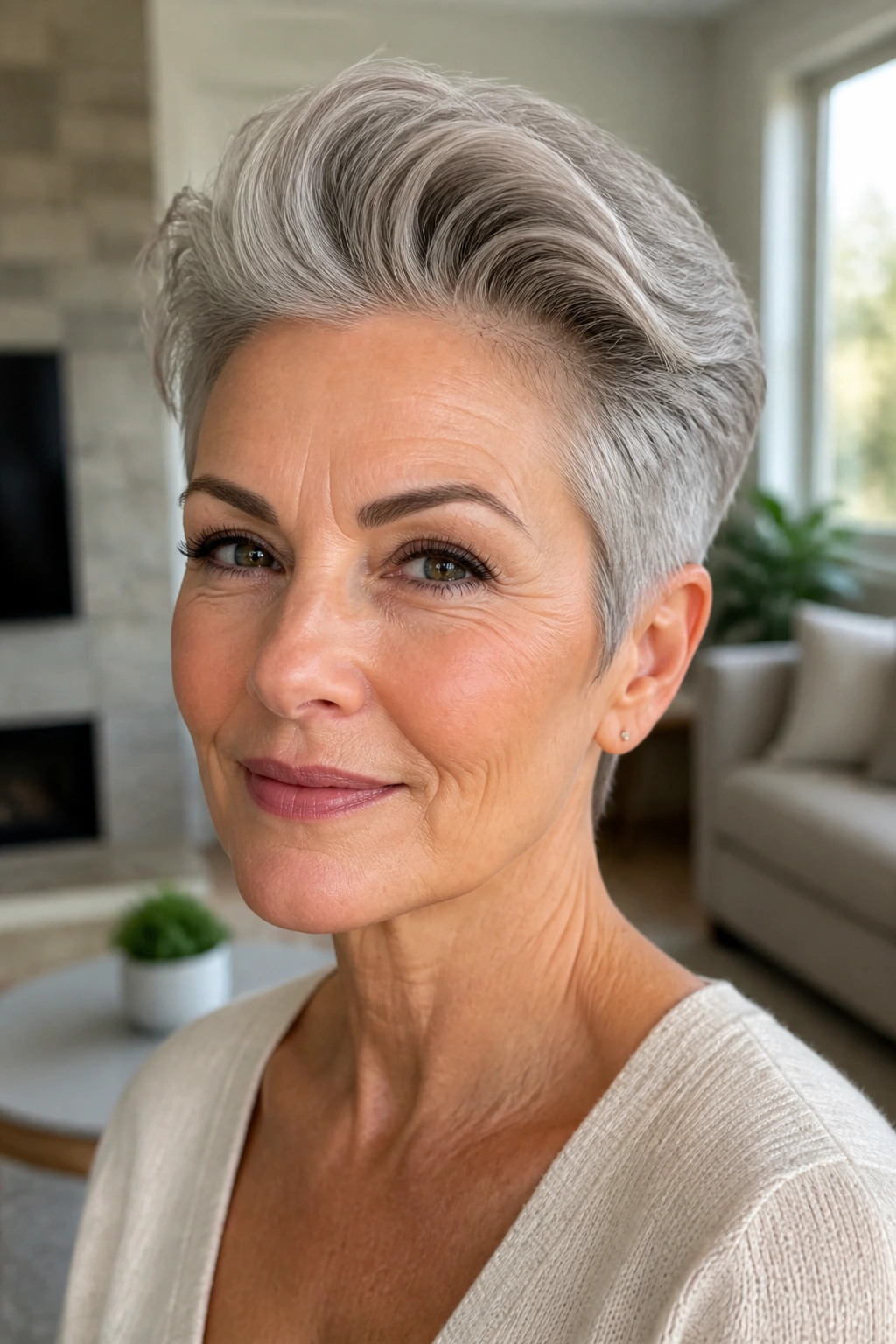
A swept-back crop gives you immediate face opening and a little height at the hairline. The hair is cut short around the sides and left longer through the front and top so it can be brushed back instead of forward. That backward direction matters. It lifts the roots away from the forehead and makes the whole cut feel more vertical.
Why it works for mature hair
A lot of hair starts to fall forward as it gets shorter. This cut fights that tendency. The front pieces are long enough to move, but short enough to stay off the face unless you want them there. If you have strong brows, good cheekbones, or a pair of glasses you like, this shape gives them room.
Use a light mousse or root spray at the front, then blow-dry with your fingers pushing the hair up and back. Do not drown it in wax. The style needs a little touch, not a helmet.
14. Rounded Pageboy With Lifted Crown
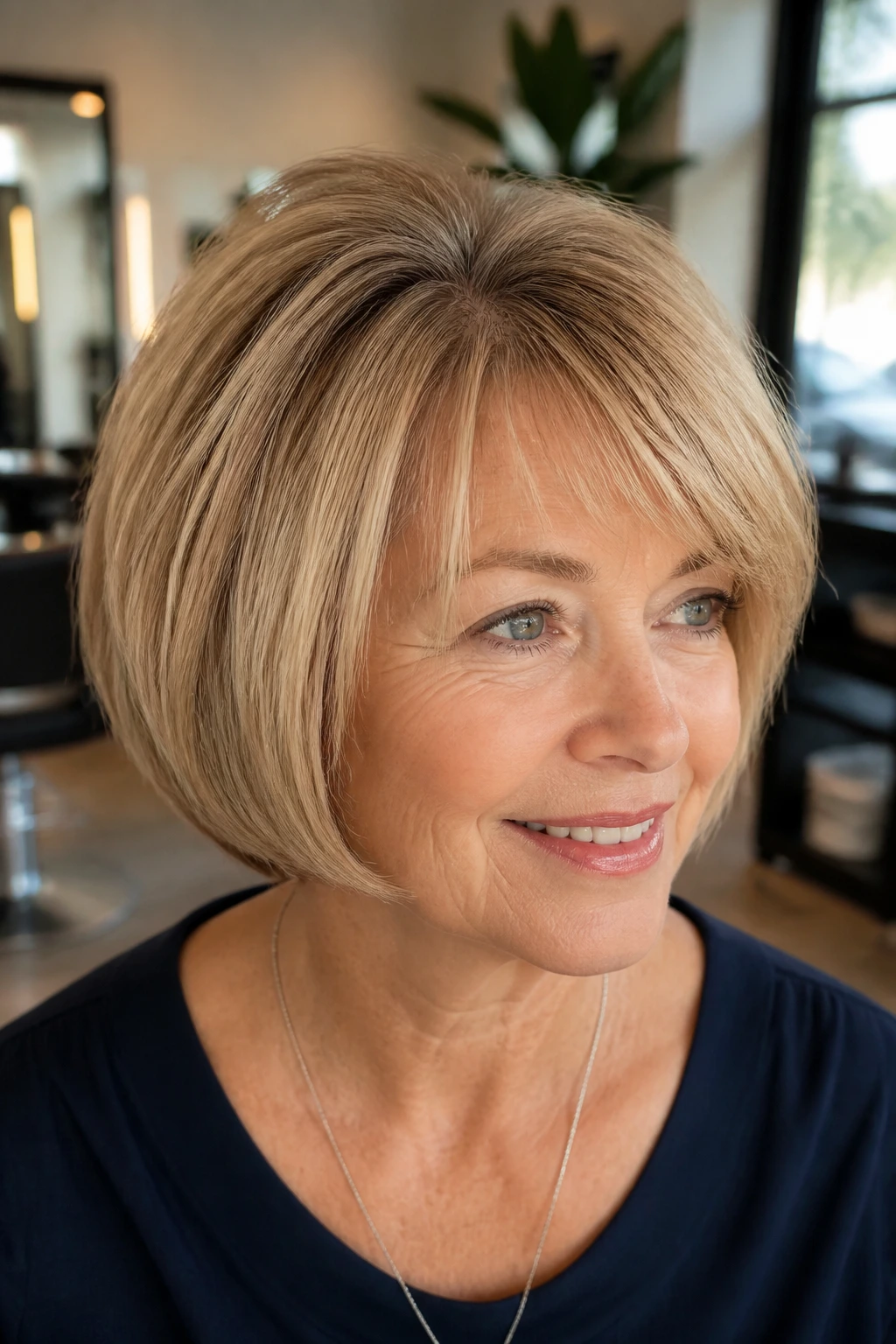
The pageboy gets a bad reputation because people picture the old stiff version. The modern rounded pageboy is softer. The crown is cut to lift, the sides curve in, and the ends can sit just under the jaw or brush the neck. It creates a neat silhouette without flattening the top.
This shape is useful if you like polish but hate the look of over-layered hair. A rounded pageboy keeps the line clear, which makes the hair look denser at the edge. Then the lifted crown keeps it from sitting like a cap. That balance is the whole trick.
It works particularly well on straight hair with medium density. On wavy hair, the curve can get a little more relaxed, which is fine as long as the nape stays clean.
15. Short Cut With Curtain Bangs
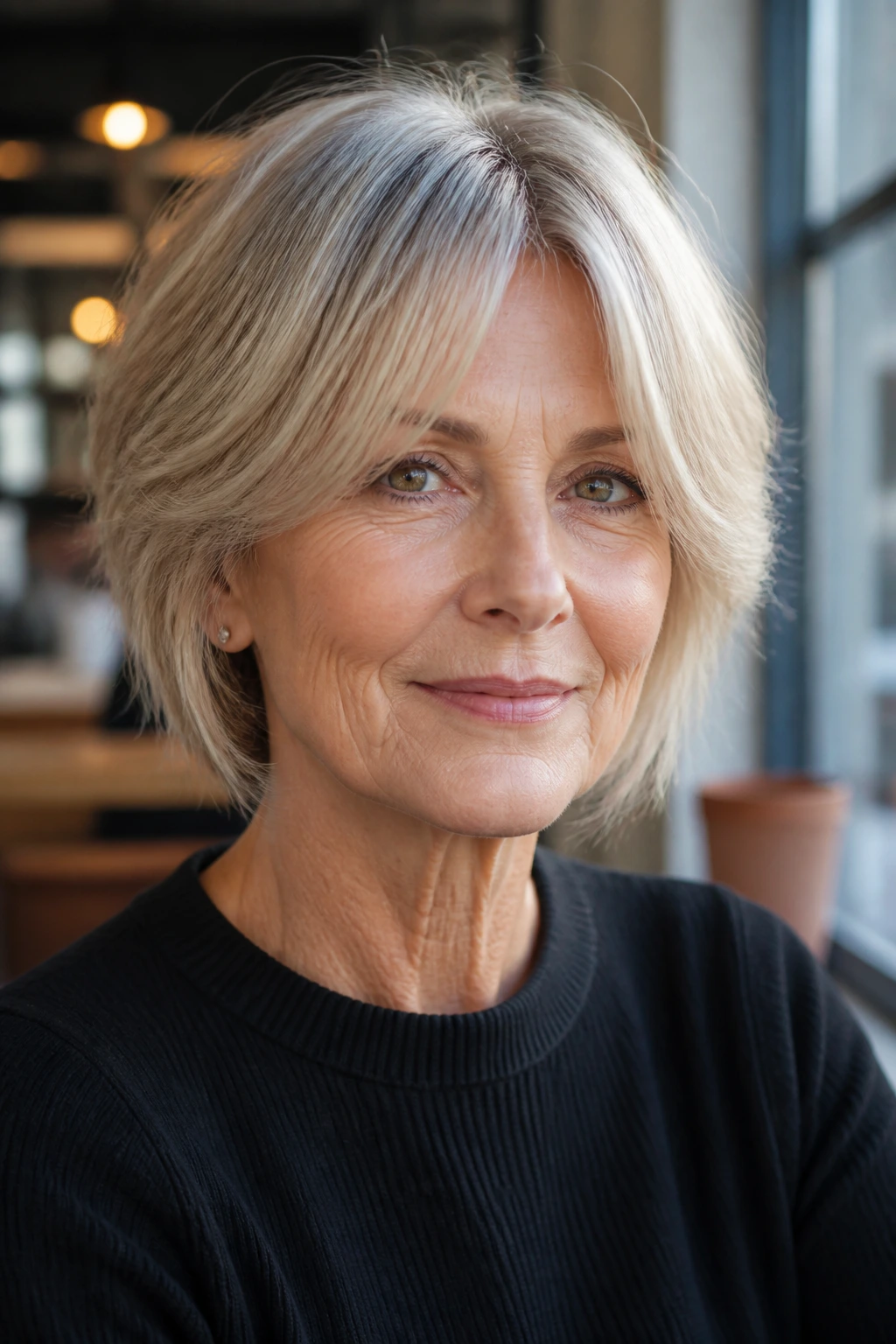
Curtain bangs can do more for a short haircut than people expect. They split the fringe, open the face, and create a soft lift right where the forehead begins. That upward sweep helps the top of the hair look fuller because the eye reads the bangs as movement.
How to keep them from going heavy
Keep the bangs long enough to blend into the sides, usually around cheekbone length at the longest point, then let the center sit a bit shorter so they part naturally. If they’re too thick, they eat the top of the face. If they’re too wispy, they disappear.
This cut is a good match for anyone who wants to soften lines around the forehead without hiding the face. It’s also kind to hair that falls flat at the front, because the bangs can be blown side to side with a round brush and set that shape quickly.
A little root lift spray near the fringe makes a visible difference. Little. Not a lot. Too much and the bangs lose their soft swing.
16. Salt-and-Pepper Soft Spiky Cut
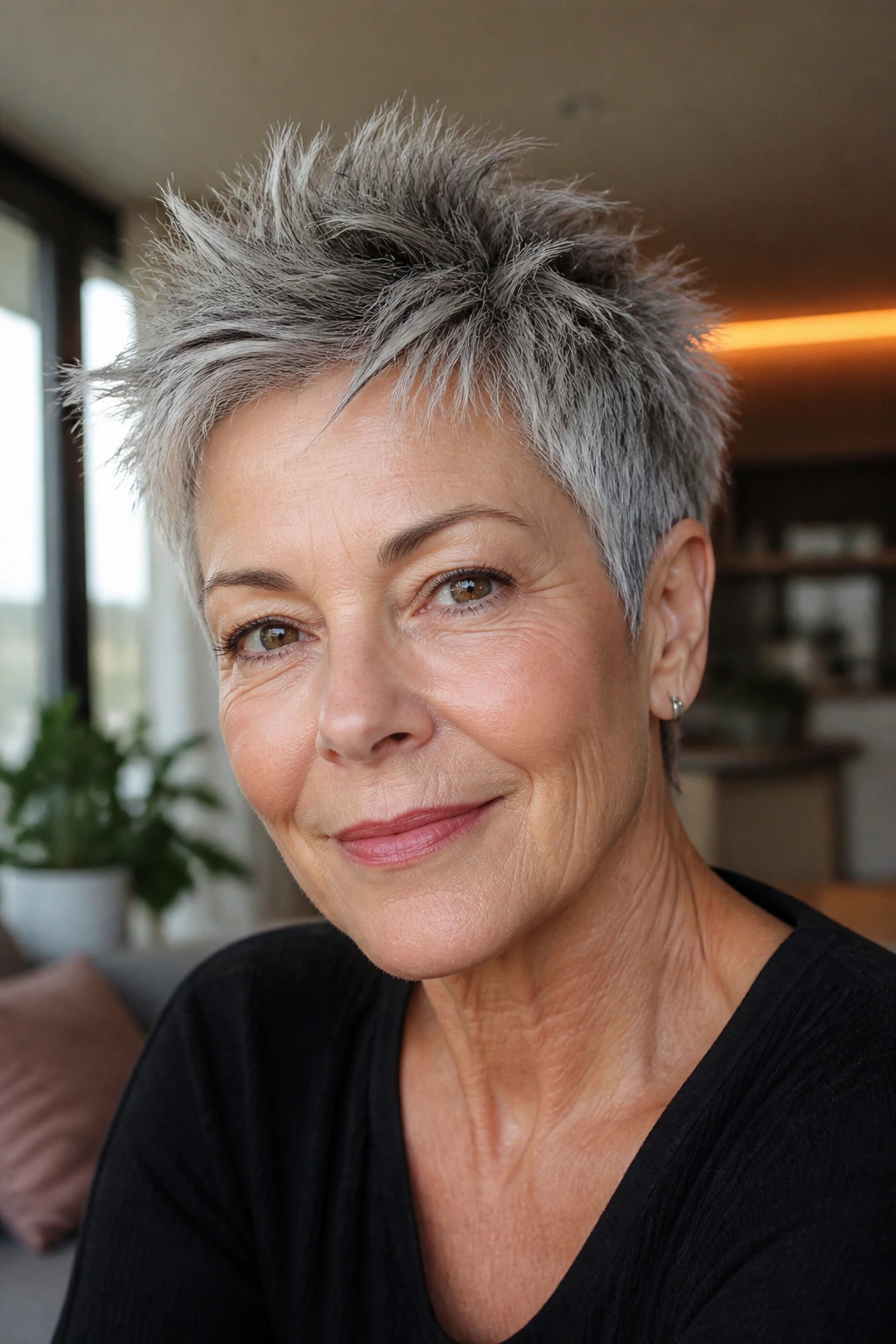
Salt-and-pepper hair can look sharp in a short cut because the contrast between gray and darker strands gives texture even before styling starts. A soft spiky cut plays into that. The top is cut short enough to stand a little, the sides stay neat, and the edges are broken up so the shape does not feel harsh.
This is one of the few short cuts that can look lively with almost no effort. A fingertip amount of matte paste and a quick lift at the roots may be enough. The gray strands catch enough light on their own that you do not need much else.
The caution here is over-conditioning. Heavy creams can make silver hair look limp and separated in a bad way. Keep the moisture, sure, but use it wisely. Light products keep the strands from clumping.
17. Ear-Length Razor Crop
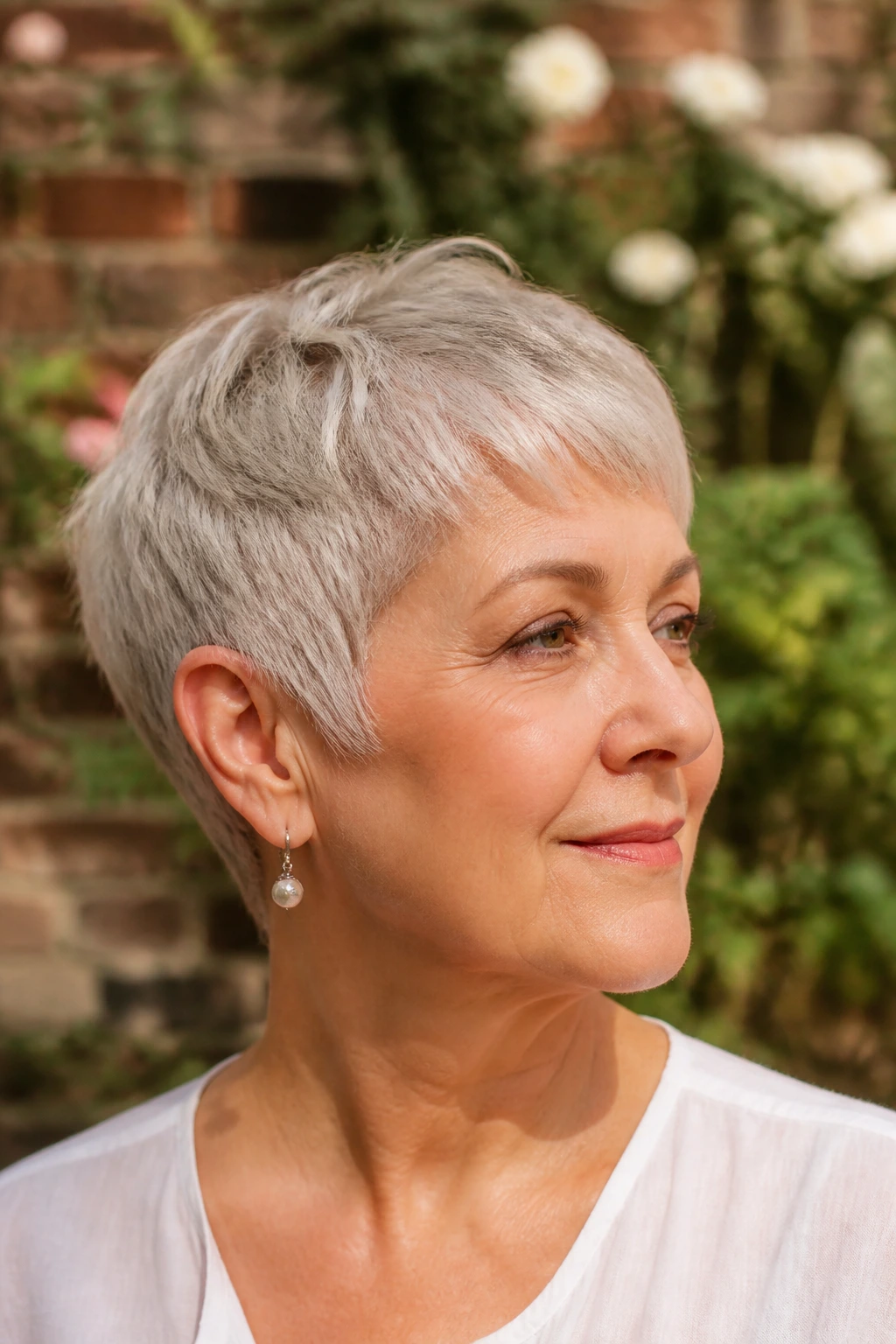
An ear-length razor crop sits in a sweet spot: short enough to feel light, long enough to tuck, and flexible enough to gain body with a quick blow-dry. The razor-softened ends keep the perimeter from looking blunt or boxy. That matters if your hair tends to stick out around the ears.
This cut is useful for women who want the neck open but do not want a super-short pixie. It gives a bit of coverage around the face while keeping the overall shape compact. If you’ve got straight hair, it can look crisp. If the hair bends or flips a little, the crop gets a more relaxed finish.
Ask for the area around the ears to be cleaned up carefully. A sloppy ear line is the fastest way to make this cut look unfinished.
18. Short Layered Cut for Wavy Hair
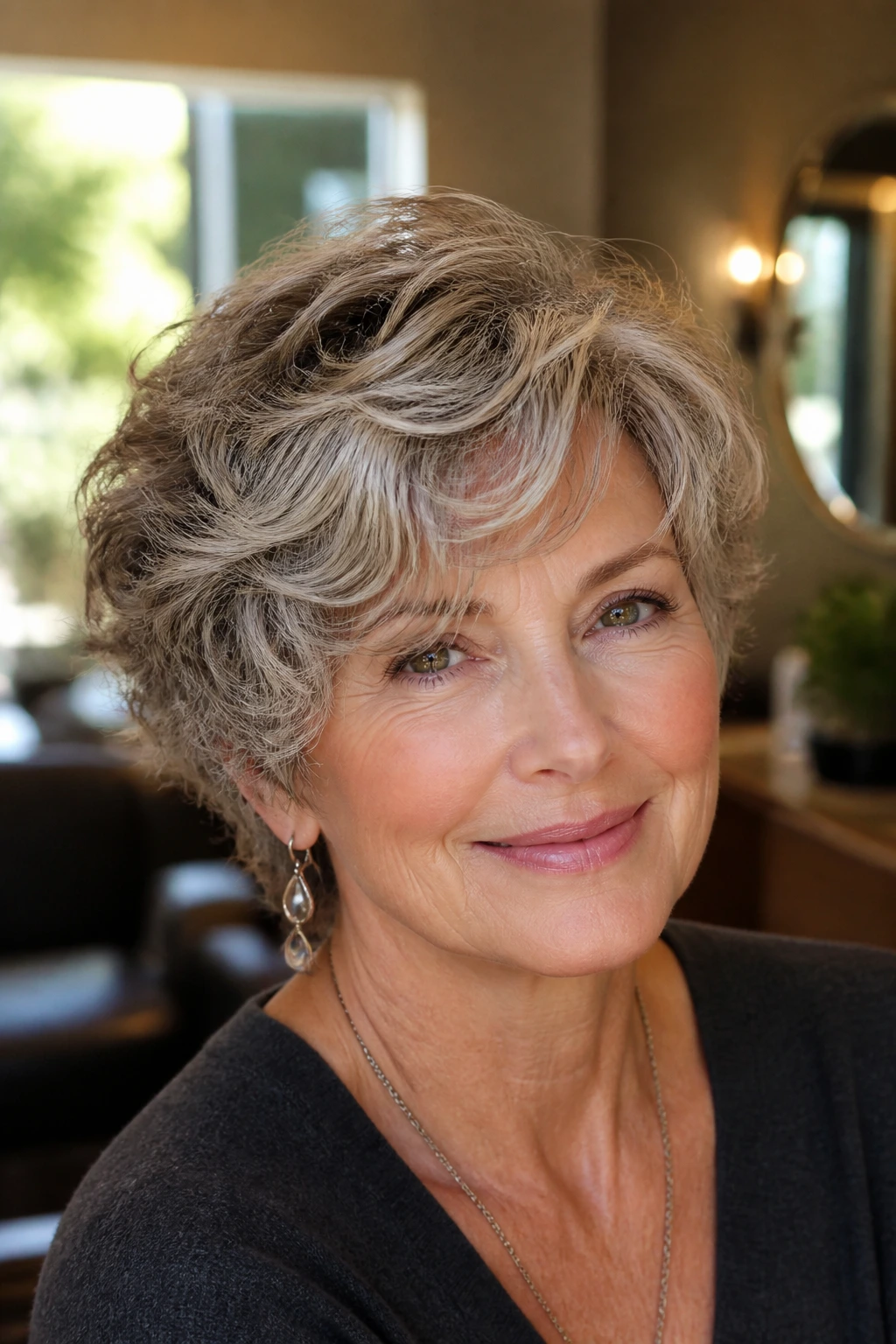
Wavy hair often wants to do its own thing, and that can be a gift when the cut is short enough to let the wave spring up. A layered short cut keeps the waves from stacking into a heavy triangle. The top stays lively, the sides stay controlled, and the whole shape gets more body from the bend in the hair.
The key is not to over-layer the ends. Too much layering on wave can turn into frizz or a fluffy cloud. Instead, keep the bulk where the wave needs support and remove weight only where the hair is dragging the shape down. That gives you lift without losing the outline.
A diffuser helps, but so does air-drying with the roots encouraged upward. Clip the crown for 10 to 15 minutes while the hair sets. That tiny delay can change the whole day.
19. Pixie Bob With Tucked Sides
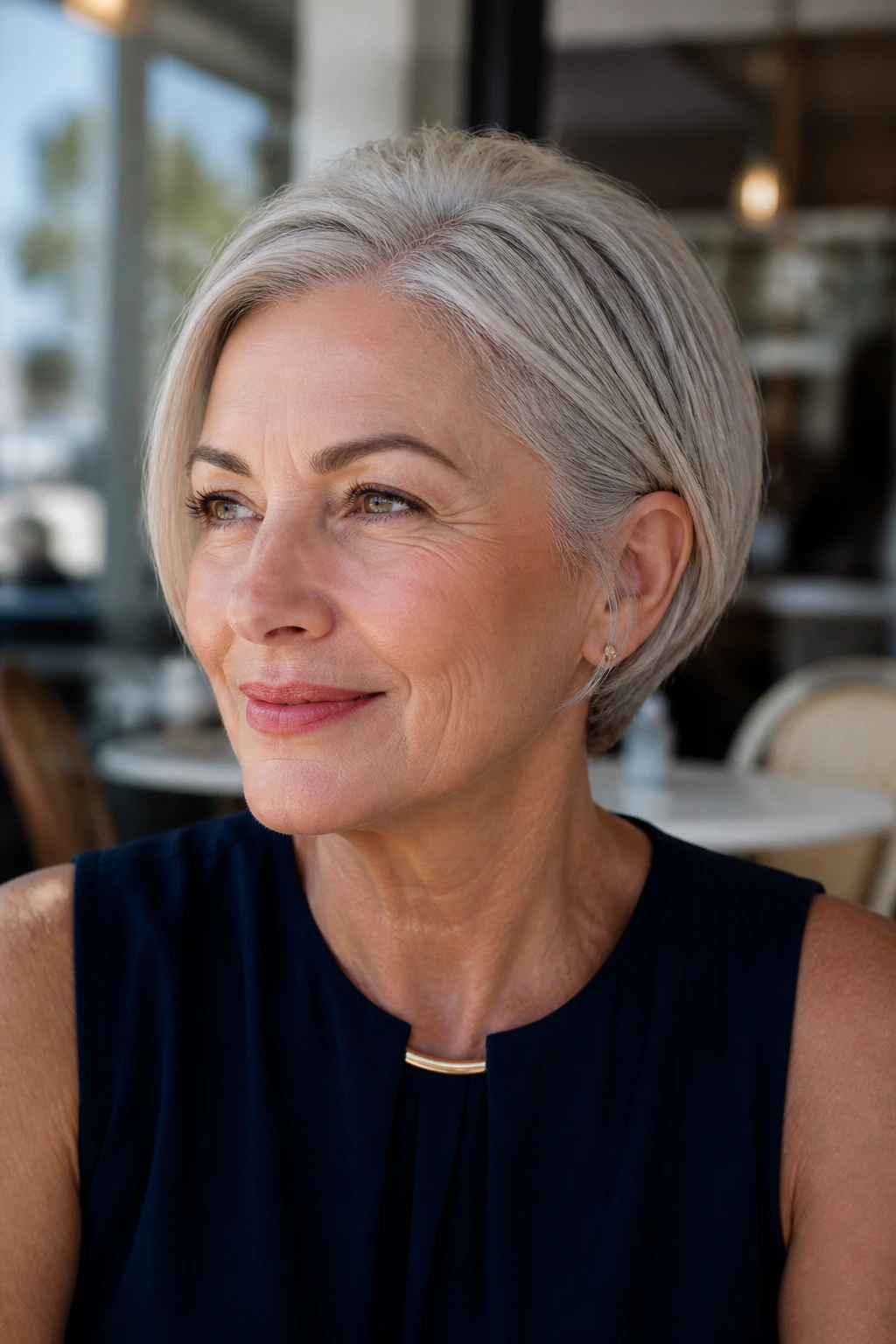
A pixie bob is what happens when you want the neatness of a pixie and the softness of a bob to live in the same haircut. The back is shorter and closer to the head, while the front keeps enough length to tuck behind the ears or brush toward the cheekbones. That tucked side creates lift instantly.
Best for hair that needs shape, not bulk
If your hair is thick at the sides but flat on top, this cut solves a real problem. The shorter back removes some of the mass, and the longer front keeps the style from feeling too severe. It also works well with glasses, because the hair can move around the frames without fighting them.
A pixie bob should not be over-thinned. The whole appeal is that it still looks like hair, not air. Keep the perimeter solid enough that the cut reads as full from the front.
20. Tousled Crop With Long Top
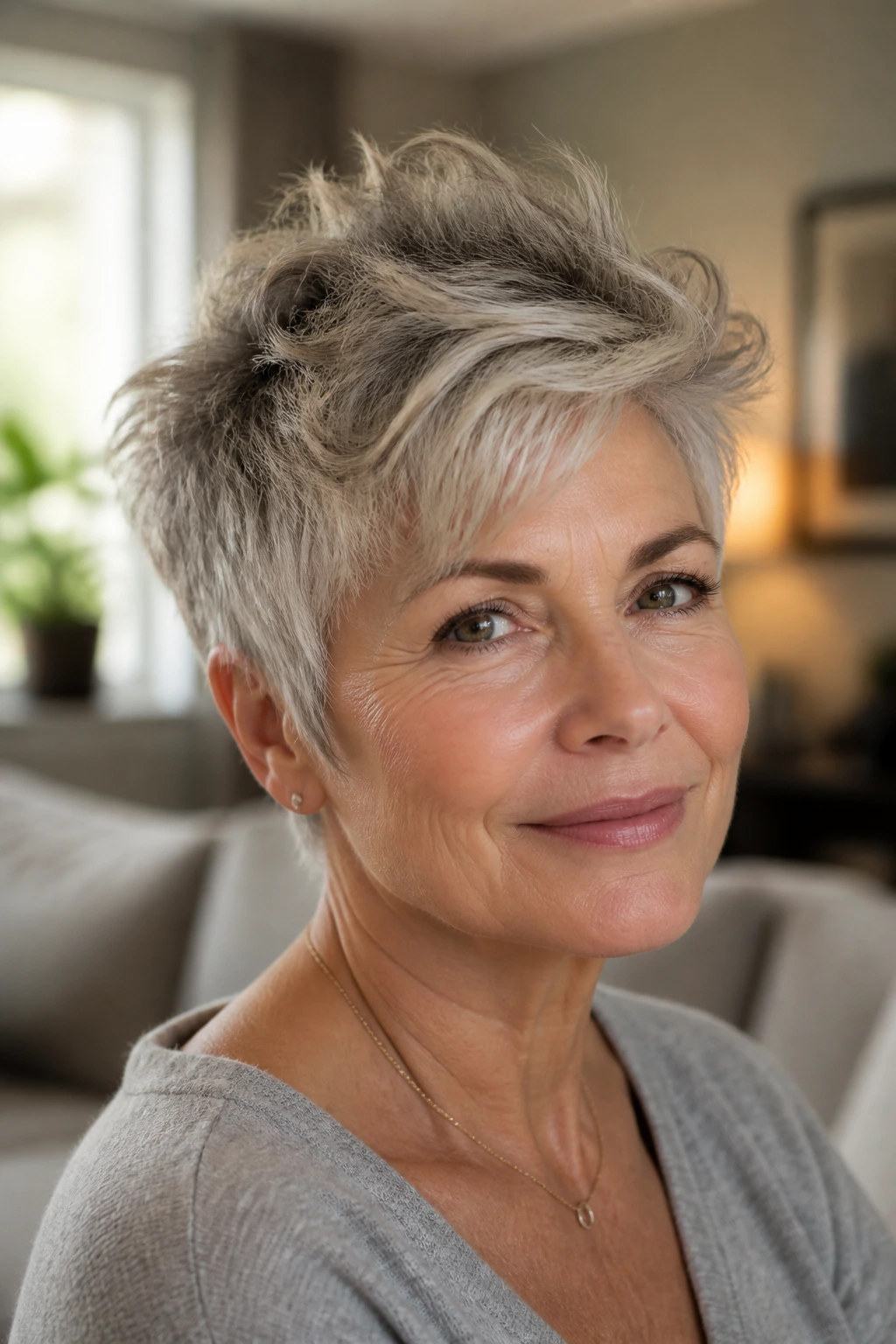
A tousled crop is for the woman who does not want a polished finish every day. The top stays long enough to pinch, push, and mess up with your hands, while the sides stay shorter so the overall shape does not lose control. That bit of looseness adds visual height because the top pieces do not lie in a flat sheet.
This one works best with a light paste or texture cream. Rub a tiny amount between your palms, then twist just a few top pieces. Stop before the whole cut turns sticky. The point is separation, not stiffness.
It’s a nice haircut for mornings when you want to look awake without doing much. I like that it accepts a little imperfection. Some cuts need precision. This one looks better with a small amount of mess.
21. Soft Bowl Cut With Movement
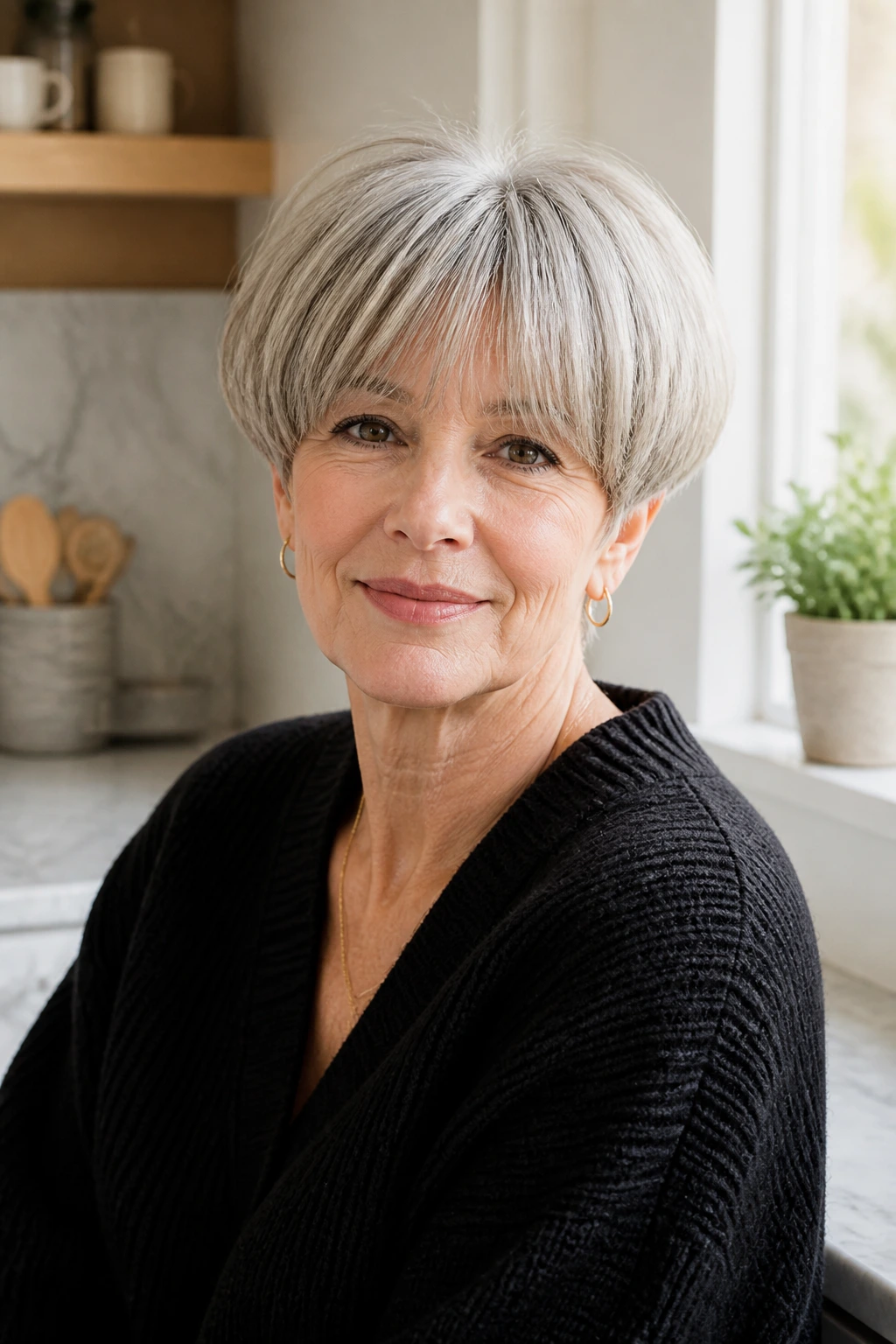
A modern bowl cut is not the helmet people remember. The shape is still rounded, but the interior is broken up so it can move, and the fringe is softened so it does not sit like a hard line across the forehead. That makes it a much better option for fine straight hair than the old, dense version.
What makes it different
The perimeter stays full. That’s the part that makes the hair look thick. But inside that outline, the stylist can remove a little weight so the top does not collapse. The result is neat, controlled, and surprisingly flattering on faces that look good with strong framing.
It does take a careful hand. If the cut is too blunt all the way around, it can feel severe fast. If it’s too shredded, the fullness disappears. The sweet spot sits between those two. Not easy. Worth it.
22. Natural Coil Crop With Tapered Sides
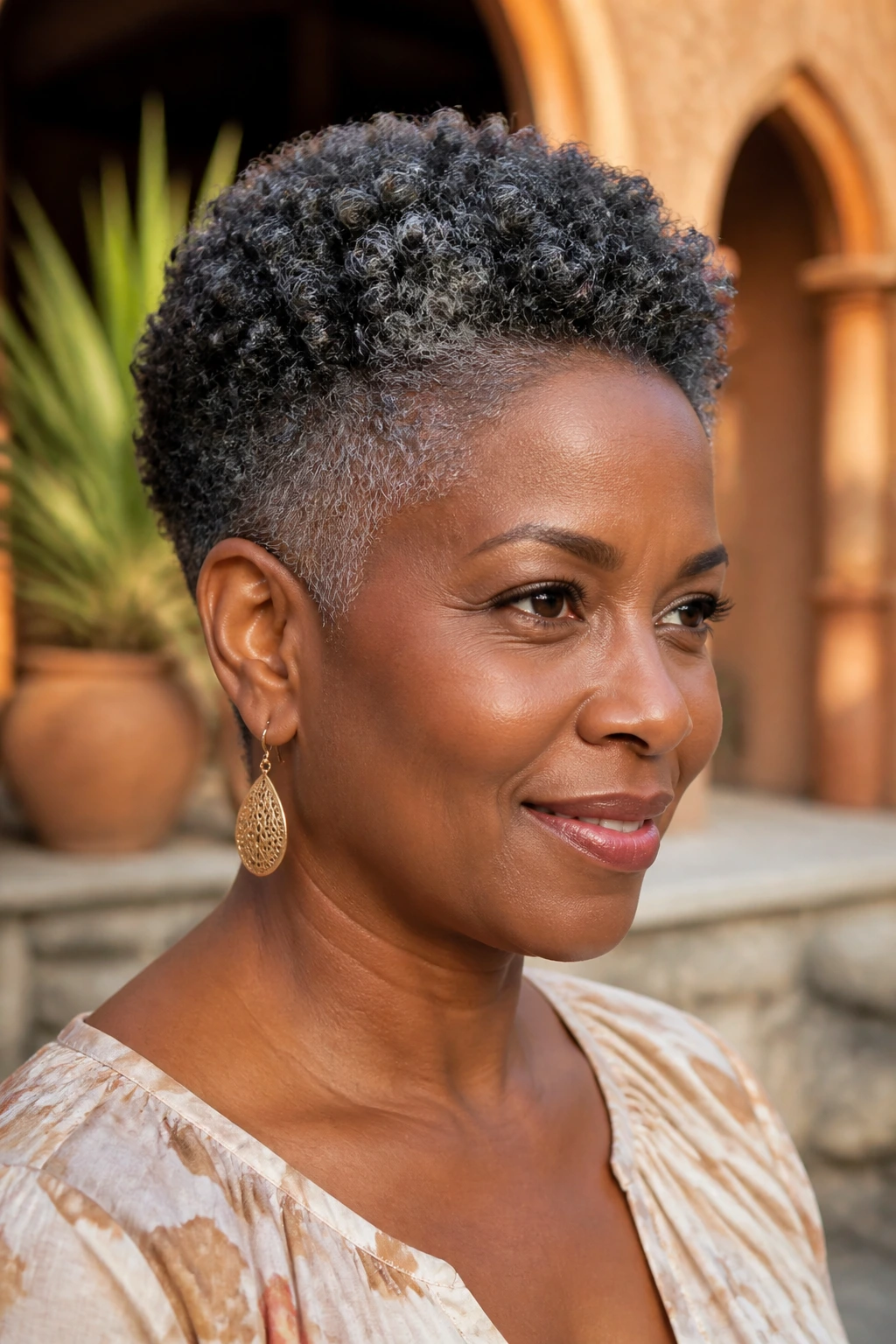
Coily hair often looks fuller when it is shorter, because the coils can spring up instead of being stretched by length. A tapered crop keeps the sides neat and lets the top keep enough room for the curl pattern to live. The shape is rounded, not boxy, which gives the head a fuller outline.
This cut works best when it is shaped with the curl pattern in mind. Dry cutting can help the stylist see where the coils want to sit, and that matters more than trying to force symmetry strand by strand. The hair should feel moisturized but not coated, because heavy product can flatten the top.
The nice thing about this shape is that it celebrates the natural texture instead of trying to tame it into a flat line. That’s a losing battle anyway.
23. Cropped Cut With Long Side Fringe
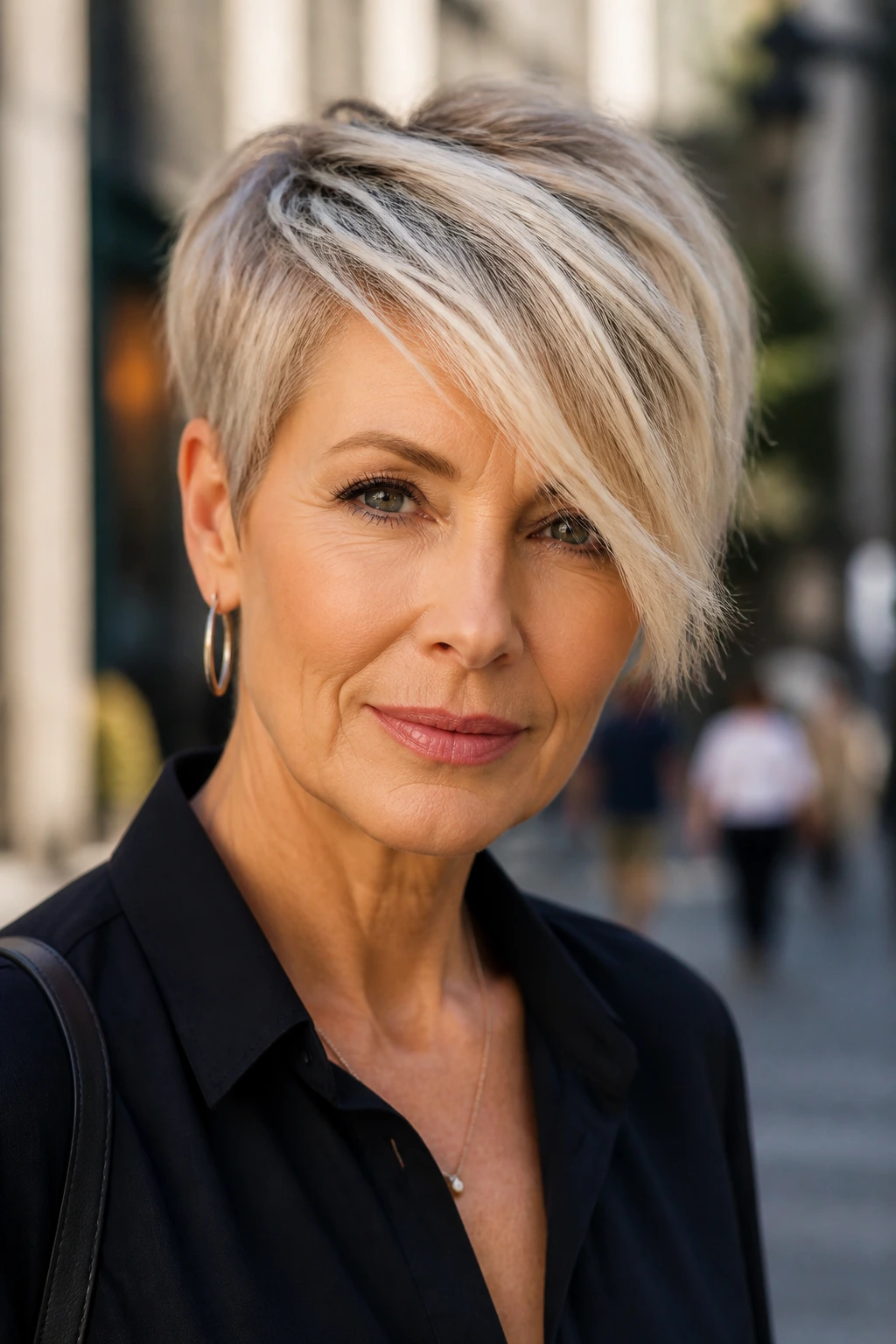
A long side fringe gives a cropped cut a little drama without stealing the volume from the top. It works by creating a strong diagonal line that leads the eye upward and across the face. That direction does more for lift than people realize.
This is a good option if you like short hair but do not want your face fully open. The fringe softens the forehead, can hide a cowlick, and keeps the haircut from feeling too blunt around the hairline. It also grows out decently because the fringe can be moved around as it gets longer.
Keep the rest of the cut close and neat so the fringe stays the star. If the sides get too busy, the shape starts to read as messy instead of full.
24. Blunt Mini Bob With Hidden Layers
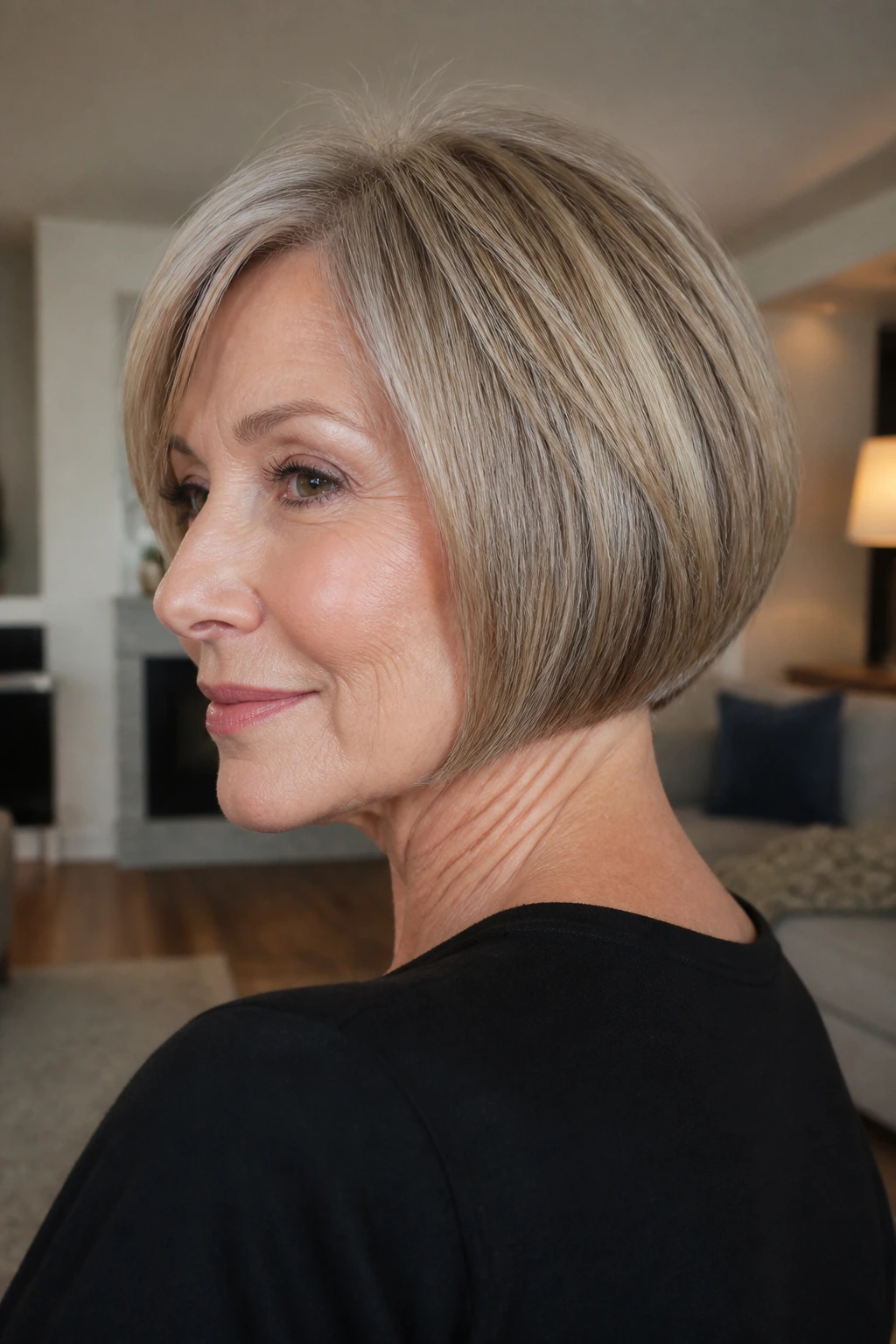
A blunt mini bob proves that volume does not always come from obvious layering. Sometimes a clean perimeter is the better move. When the ends are cut bluntly at chin level or slightly above, the edge looks thicker. Hidden internal layers under that surface keep the hair from drooping or puffing out.
This cut is especially useful for fine hair that needs the illusion of density. The blunt line gives the eye something solid to hold on to, while the internal shaping stops the cut from feeling like a block. It’s a smart compromise, and it wears well with a side part or a soft fringe.
If the hair is very straight, this is one of the easiest short cuts to maintain because it falls into shape quickly. A quick bend under the ends and a root lift at the crown are often enough.
How Short Cuts Create Lift Without Fighting Your Hair
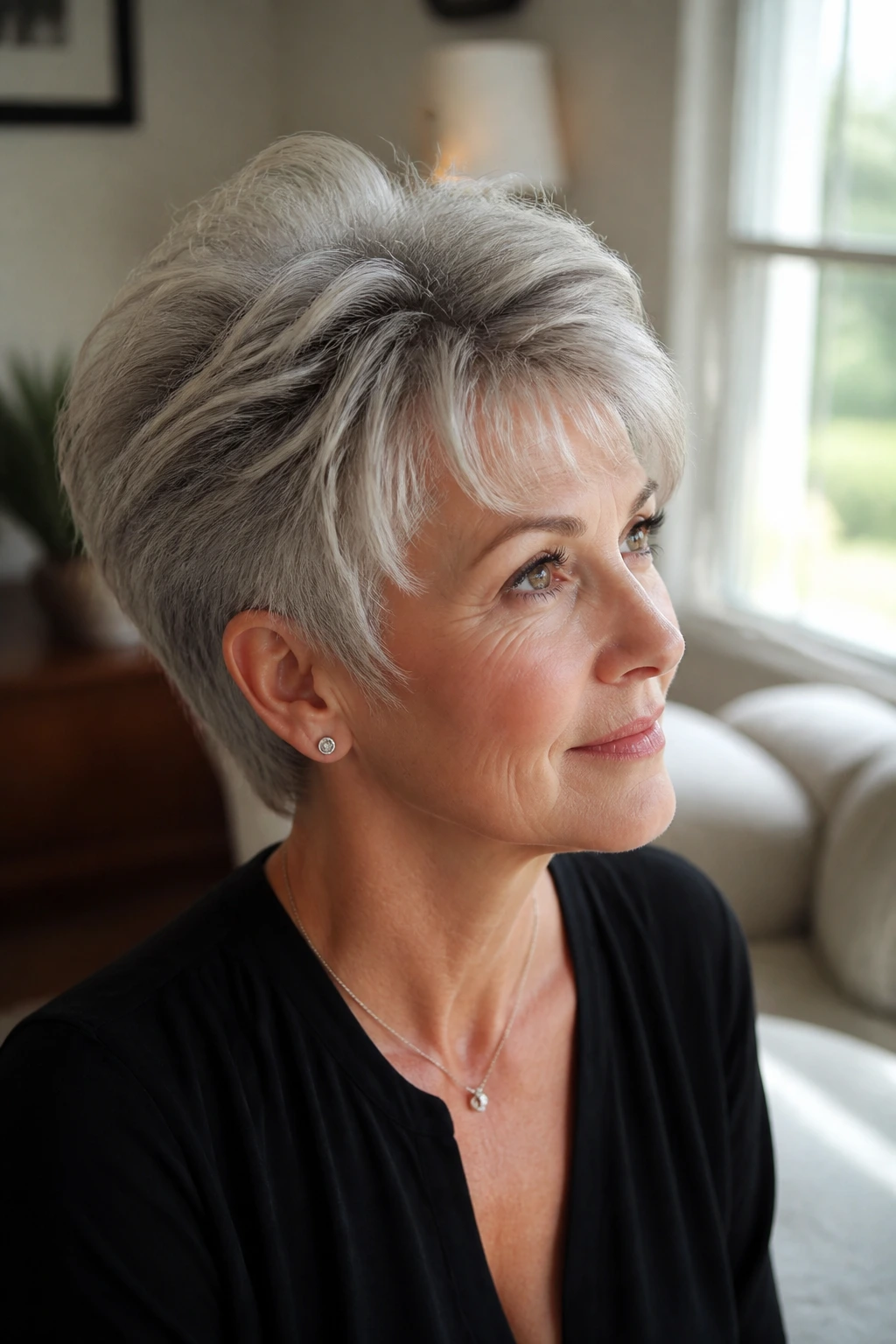
The best volume-adding short cuts for women over 60 do not try to make hair do the impossible. They work with gravity instead of against it. Shorter length removes drag. A clean nape keeps the back from sagging. A lifted crown changes the whole profile from the side. Those small changes add up fast.
What I like most is how differently the same haircut can behave depending on where the weight sits. Move the weight lower, and the top rises. Leave the top a touch longer, and the fringe starts doing some of the work. Add a side part, and the root on one side gets an instant boost. It sounds simple because it is simple. The hard part is choosing the right mix for your hair.
The smartest cuts also respect texture. Fine hair needs solid lines and restrained layering. Thick hair needs weight removal in the right spots. Wavy hair wants room to bend. Curly and coily hair need shape more than strict symmetry. Once the cut matches the texture, styling gets easier, and easier is the whole point.
How to Ask for the Right Shape at the Salon
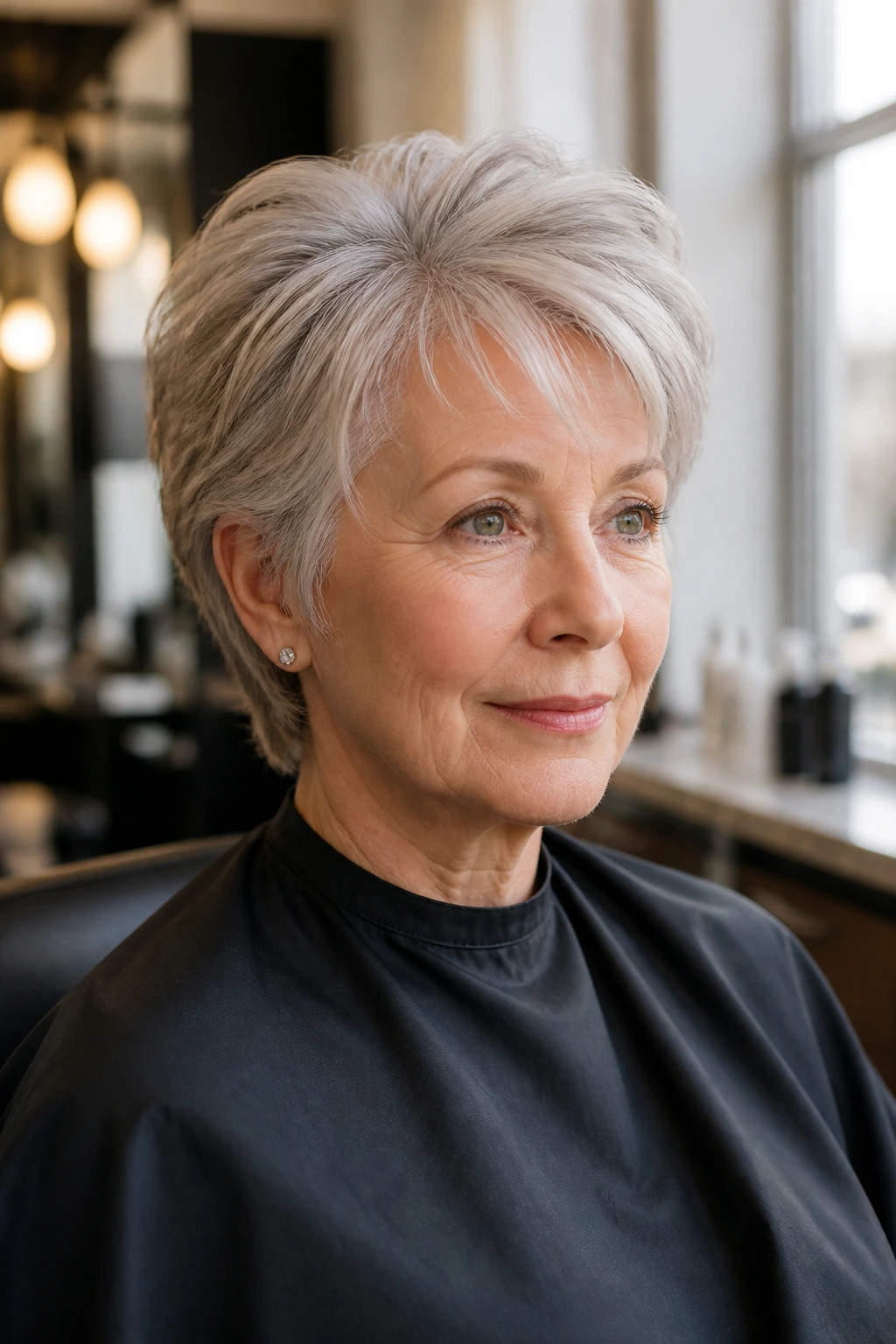
Bring a photo, sure, but say what you want the hair to do, not just what it should look like. If the crown goes flat, mention that. If the sides puff out near the ears, say that too. A stylist can adjust a short cut only when they know where the trouble spots live.
Crown Lift: Ask for a little extra length on top and less weight through the upper back. That helps the hair rise instead of lying close to the scalp.
Perimeter: Decide whether you want a blunt edge, a curved edge, or a tapered nape. Each one changes how full the haircut looks from the side and back.
Styling Time: Be honest about your morning routine. A cut that needs a round brush and twenty minutes of blow-drying is not the same as one that air-dries with a dab of cream.
Part Line: If your hair always falls in the same place, mention it. A cut that respects the natural part will usually look fuller than one that fights it.
And say this plainly if it helps: less hair is not the same as less style. A short cut can be cleaner, denser-looking, and easier to lift than a longer one that keeps dragging itself down.
Styling Tools That Earn Their Space on the Counter
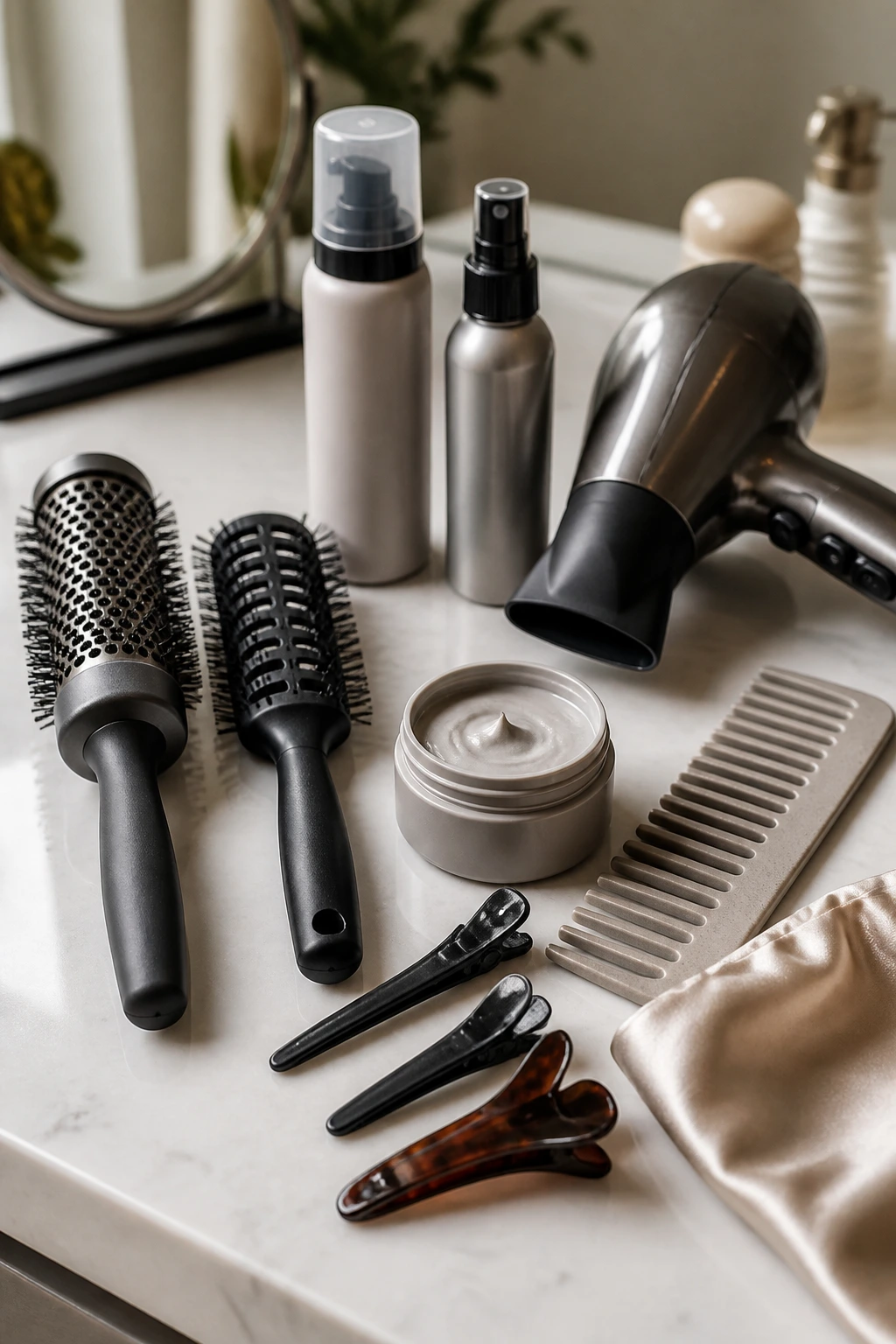
- 1-inch or 1.5-inch round brush — Best for lifting the crown and smoothing the top without flattening short layers.
- Vent brush — Good for quick drying when you want movement more than polish.
- Blow dryer with a concentrator nozzle — The nozzle keeps the airflow pointed where you need it, which helps root lift and control.
- Lightweight mousse — A golf-ball amount at the roots can help fine hair stand up without turning sticky.
- Root-lift spray — Useful on the crown and front hairline, especially on flat hair that loses shape fast.
- Texturizing paste or pomade — A tiny amount adds separation to pixies, bixies, and crops. Tiny. Not a palmful.
- Wide-tooth comb — Better than a fine comb for curlier textures and gentler product distribution.
- Duckbill clips — Handy for setting the crown while the rest of the hair dries.
- Clarifying shampoo — Once every 1 to 2 weeks if product build-up makes the roots collapse.
- Satin pillowcase — Helps short layers keep their direction overnight instead of sticking up in random spots.
How to Get the Most Lift Out of a Short Cut
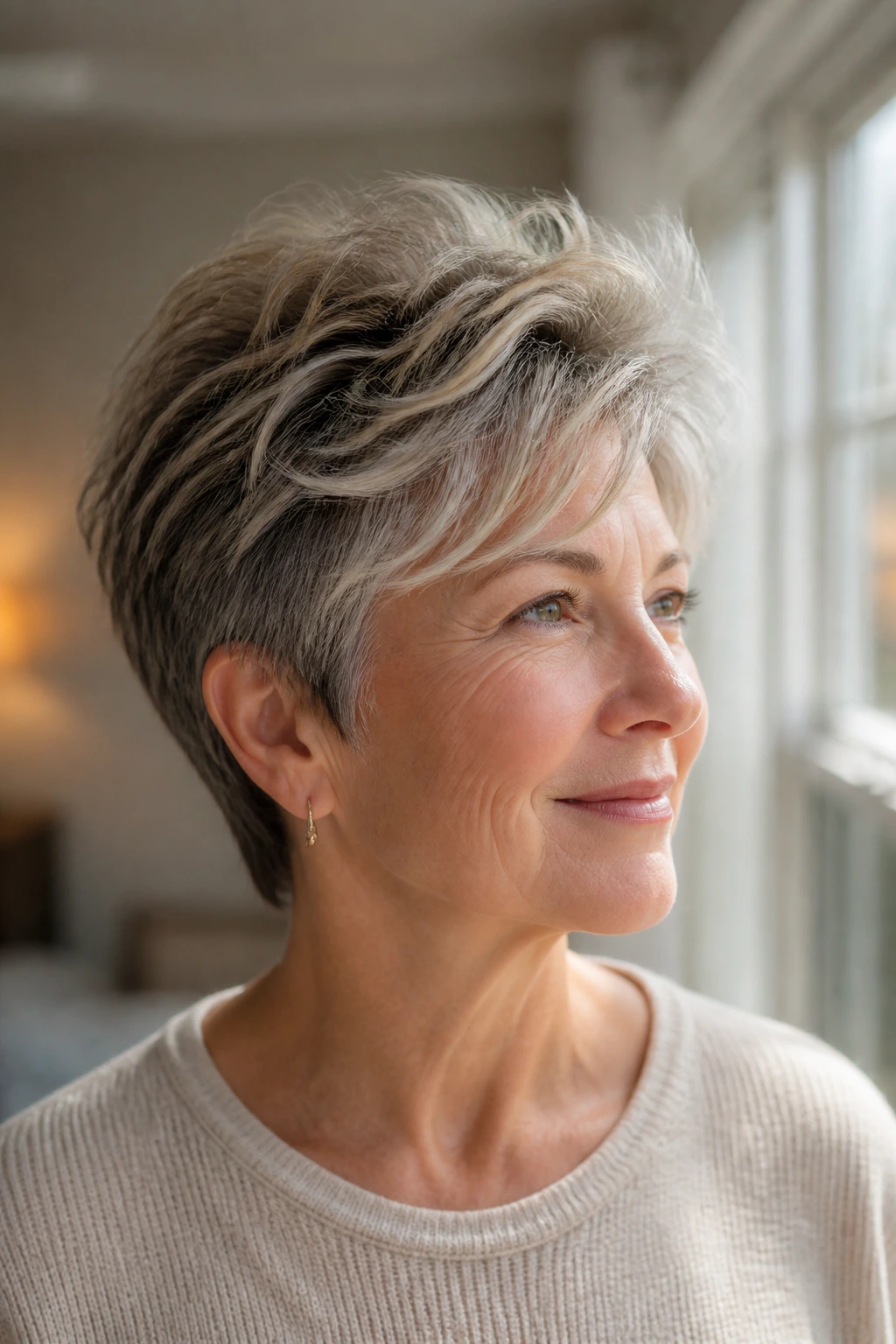
The fastest volume fix is usually not another product. It’s the way you dry the hair.
Dry the roots first: Aim the dryer at the crown and part line while lifting the hair with your fingers or a brush. If the top dries flat, it tends to stay flat.
Shift the part while drying: Blow hair in the opposite direction for a minute or two, then move it back. That creates memory and helps the roots rise.
Use less product than you think: Short hair needs a thin film, not a coating. If the ends look dark or shiny in a greasy way, you used too much.
Clip the crown briefly: A couple of duckbill clips at the top while the hair cools can keep lift in place better than extra spray.
Refresh on day two: A mist of water at the roots, a dab of mousse, and a quick finger dry usually beats piling on more wax.
A little blunt truth: if the haircut itself is wrong, no product will rescue it. That’s why the shape matters first.
Common Mistakes That Flatten a Short Cut
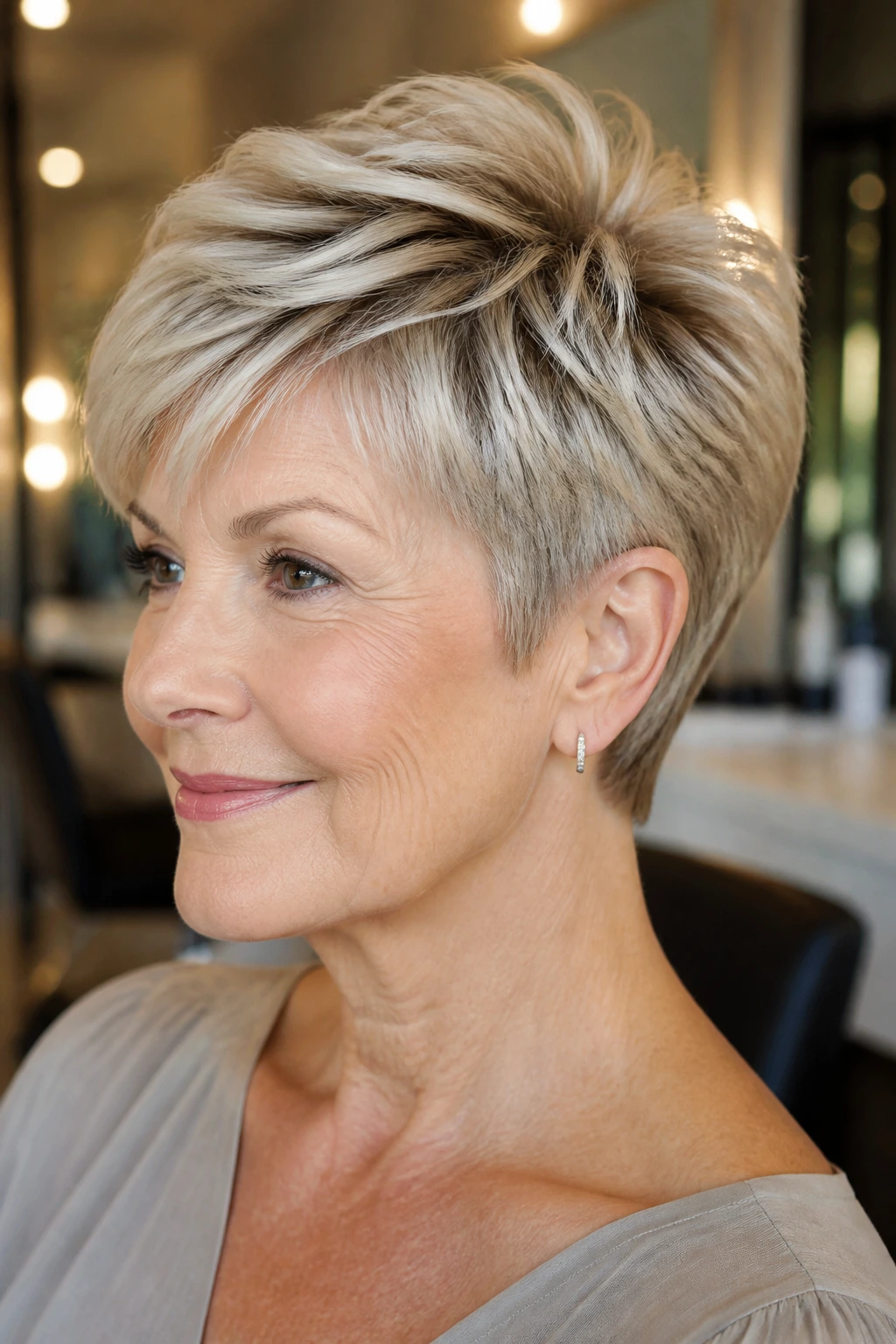
-
Keeping too much weight at the crown
The symptom is easy to spot: the top sits like a cap and collapses by lunch. Ask for more internal removal near the crown, not just shorter ends. -
Using heavy cream on fine hair
The hair turns stringy, then droops. Switch to mousse, root spray, or a light paste and keep conditioner off the roots. -
Over-thinning the sides
The haircut starts to look wispy near the temples and ears, while the top still feels flat. Thin only where the bulk is truly pushing the shape outward. -
Letting the nape grow too long
The back gets bulky and the whole silhouette drags down. Short cuts need the neckline cleaned up on schedule, not whenever you remember. -
Blowing hair straight down
That sets the roots in the flattest position possible. Lift the hair up and away from the scalp while drying, even if it feels awkward for a minute. -
Choosing a cut that ignores the natural growth pattern
Cowlicks, temple swirls, and a stubborn part can wreck a great haircut if they’re ignored. The cut should work with those spots, not pretend they aren’t there.
Variations and Alternatives to Try
The Fine-Hair Lift Plan
Keep the perimeter blunt and the layers restrained. A stacked bob, mini bob, or feathered pixie gives the strands a denser edge without exposing too much scalp.
The Thick-Hair Weight-Release Plan
An undercut pixie, razored shag pixie, or tapered crop removes bulk where thick hair likes to swell up. The result is lighter, faster to dry, and less boxy around the sides.
The Curl-Friendly Shape
Choose a rounded crop, curly pixie bob, or tapered coil cut. These shapes let the curl pattern rise naturally, which matters more than forcing a rigid silhouette.
The Glasses-Friendly Frame
Look for side-swept fringe, a swept-back crop, or a pixie bob with tucked sides. These keep the hair from crowding the temples and let the frames sit comfortably.
The Grow-Out-Friendly Version
A bixie, chin-length bob with hidden layers, or asymmetrical bob gives you room to grow between appointments without losing shape. That’s useful if you do not want to live at the salon.
Keeping the Shape Fresh Between Appointments

Short hair looks best when the outline stays clean. That usually means trims every 4 to 6 weeks for pixies and crops, and around 6 to 8 weeks for bobs, depending on how fast your hair grows. Let it go much longer and the nape starts to thicken, which drags the silhouette down.
Night care matters more than people expect. Short layers can stick up in odd directions after sleep, especially around the crown and fringe. A satin pillowcase helps. So does dampening the top lightly in the morning and re-drying the root direction instead of just misting the ends.
Product build-up can flatten the lift too. If your roots start feeling coated or the volume disappears even on clean hair, use a clarifying wash and skip the conditioner at the scalp. Keep conditioner from ear level down, then rinse well. Hair that feels squeaky at the root and soft on the ends usually styles better than hair that’s been smothered from scalp to tip.
And one more thing: if your hair color is silver, white, or salt-and-pepper, the cut shape does a lot of the visual work. Keep the edge clean and the top light, and the color will look deliberate rather than tired.
Frequently Asked Questions About Volume-Adding Short Cuts for Women Over 60
Which short haircut makes fine hair look the fullest?
A stacked bob, blunt mini bob, or feathered pixie usually gives the strongest fullness for fine hair. The common thread is a solid perimeter or a lifted back, because both create the look of more hair at the edge.
Will layers make my hair look thinner?
Too many layers can, yes. Short hair needs targeted layering, not endless carving. If the hair is fine, keep the layers soft and concentrated near the crown or under the surface so the outer shape still looks dense.
How short should I go if my crown is flat?
Short enough to remove weight, but not so short that the top can’t move. That often means a pixie, bixie, or short stacked bob rather than a longer shoulder-length cut. The exact length depends on your growth pattern, but crown lift usually starts showing once the top is well above the shoulders.
Can curly hair stay short without blowing up into a triangle?
Yes, if the shape is rounded and the sides are controlled. The trick is to keep enough length on top for the curl to spring and to avoid over-thinning the outer edges.
What part gives the most lift?
A deep side part usually wins. It lifts one side of the root, creates a diagonal line, and makes the whole cut feel less static than a center part.
How do I keep short hair from looking helmet-like?
Ask for movement in the crown or interior, not all the way around the head. A blunt edge can still work, but the inside needs some softness so the cut doesn’t sit as one stiff block.
Can I air-dry these cuts and still get volume?
You can, especially with wavy or curly textures. Clip the crown briefly, encourage the roots upward, and use a lightweight product. Straight fine hair usually benefits from at least a short root dry, even if the rest air-dries.
What if my hair grows in different directions on each side?
That’s common, and it’s fixable. A good cut will account for the cowlicks, temples, and natural part so one side does not fight the other. Tell the stylist where the hair pushes and where it drops.
A Shape That Holds Its Own
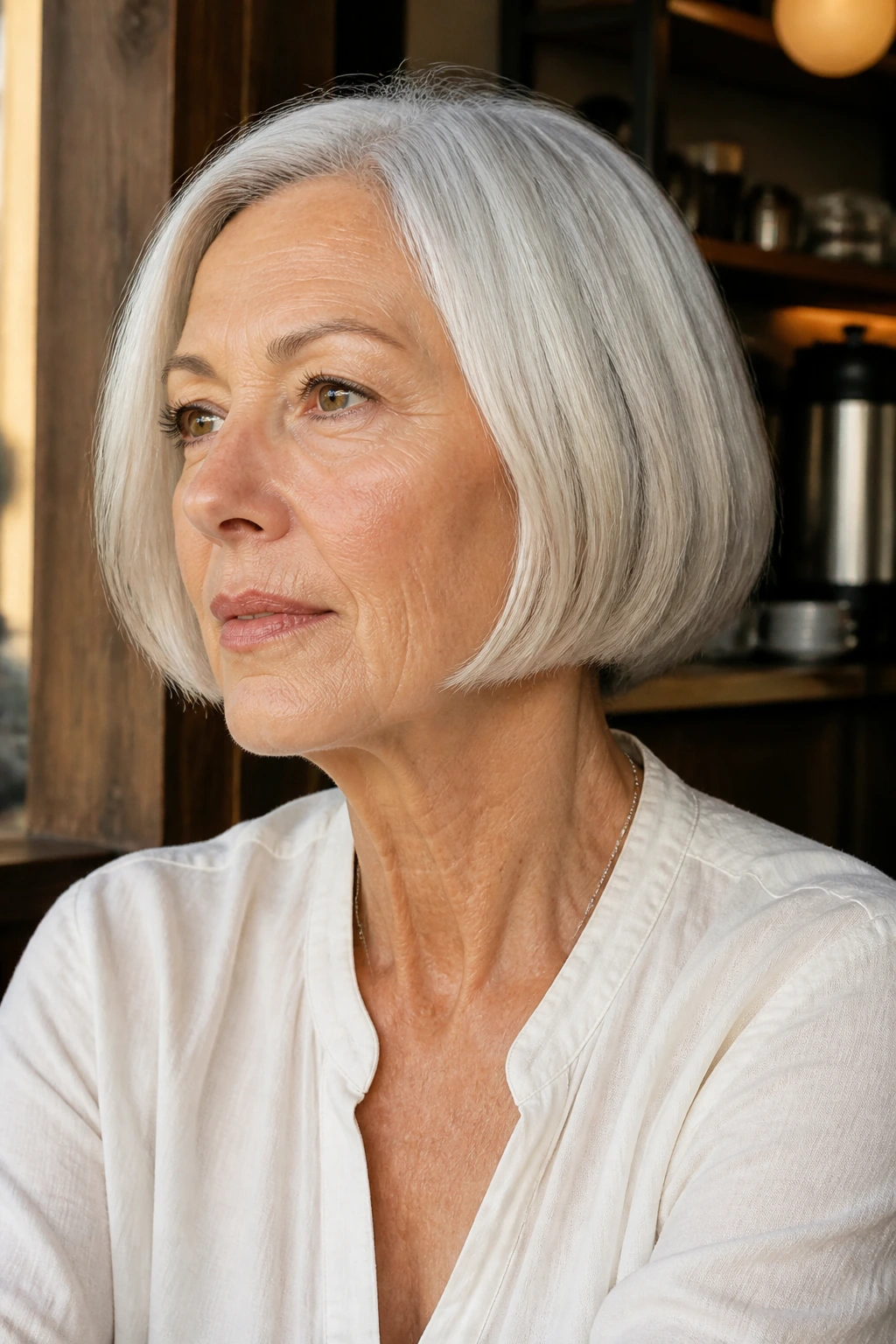
The best short cuts for women over 60 do more than shave off length. They give the hair a shape that works with gravity, texture, and the way your own head grows hair. That’s why a feathered pixie can look lively, a stacked bob can look denser than it is, and a blunt mini bob can make fine hair seem much fuller than a long layered style ever did.
There is no single answer here, and that’s the point. The right cut is the one that solves your specific problem: a flat crown, thick sides, a weak nape, curls that collapse, or a fringe that refuses to behave. Once those are handled, the rest gets easier.
If you’re bringing a photo to the salon, bring a sentence too: tell them where you want height, where you need softness, and where the hair always goes wrong. That one conversation is often worth more than ten product bottles, and it gives you a cut you can actually live in.
