



Hair gets a little less obedient after 60. It may come in finer at the temples, flatter at the crown, drier through the ends, or stubbornly wiry in the places that used to lie down without a fuss. None of that means you need to hide it. It means the cut has to work harder.
That is where aging gracefully haircuts for women over 60 start to make sense as a real category, not a polite phrase. The best ones do not fight your hair’s new habits. They build shape where the hair wants to collapse, remove weight where it drags, and leave enough movement that the whole style still feels alive when you turn your head.
I have always thought the sweet spot is this: a haircut should make your features look more awake, not make you look like you are auditioning for someone else’s idea of youth. A sharp jawline bob, a feathered pixie, a clean lob, or a curly crop can all do that, but only if the silhouette fits the hair that’s actually growing out of your scalp. That is the whole game. The shape has to earn its keep.
Why These Cuts Deserve a Spot on Your Shortlist
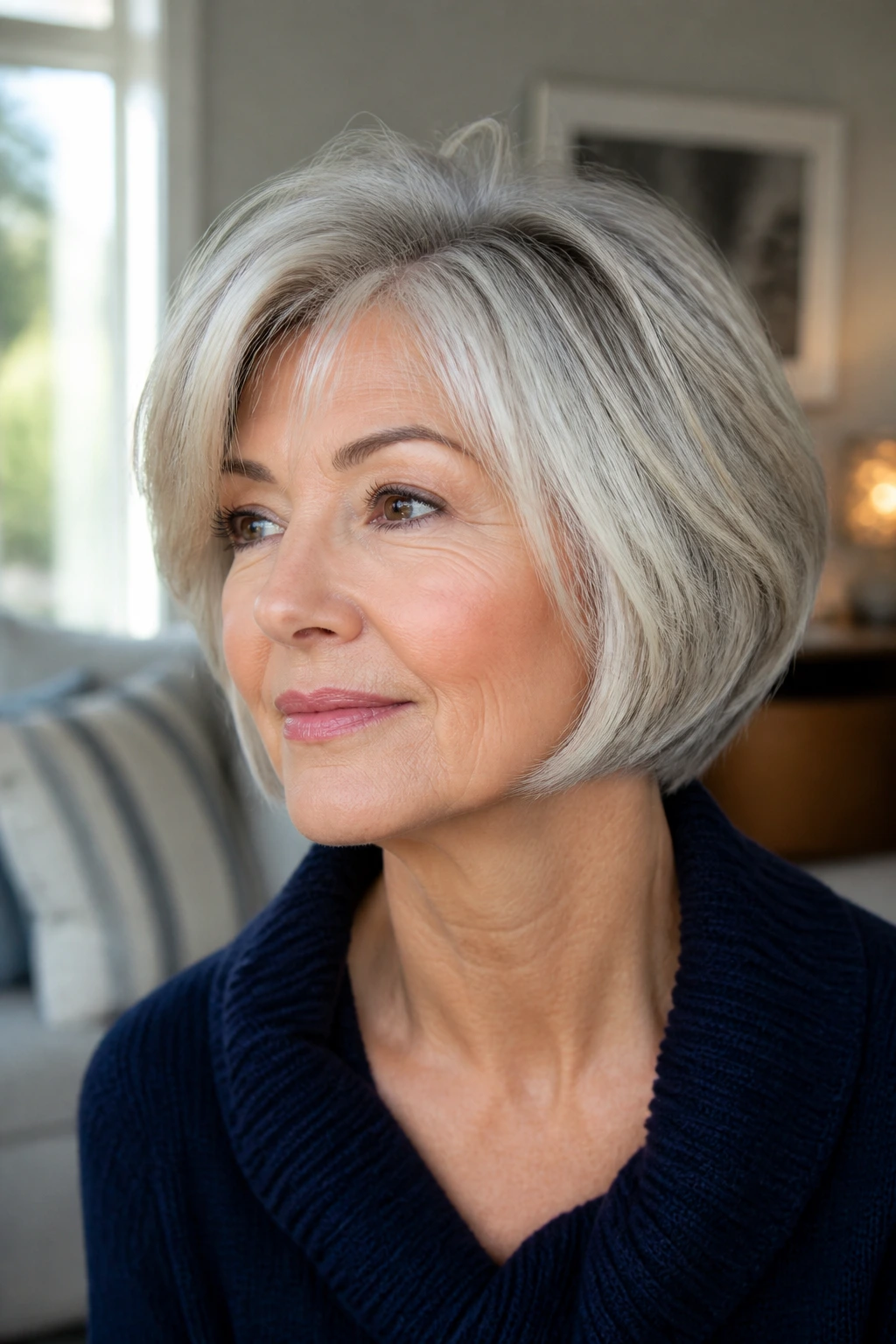
-
They work with finer density: A strong outline at the perimeter makes hair read fuller, especially when the ends are no longer thick enough to support long, see-through lengths.
-
They handle gray and silver beautifully: White and silver strands often have a different texture — a little coarser, a little drier — and these cuts keep that texture from looking puffy or abandoned.
-
They cut styling time without looking lazy: The right crop, bob, or lob can air-dry with a decent shape instead of needing a long battle with a round brush every morning.
-
They frame the face where it matters: Cheekbones, eyes, and jawlines can all be lifted or softened with a fringe, a bend at the ends, or a taper around the neck.
-
They grow out in a civilised way: The best versions keep their shape for weeks, not days, so you are not hostage to the salon chair every ten minutes.
-
They leave room for real life: Glasses, earrings, scarves, high collars, and windy weather all behave better with a cut that has a plan.
What Changes in Hair After 60
Hair after 60 is not broken. It is just different, and pretending otherwise leads to bad cuts. The strand diameter often shrinks, oil production slows, and the overall effect is less swing and more float. That is why a long cut that once looked lush can start to feel thin at the ends. There is no drama in that. It is geometry.
Color change matters too. Gray and white hair tend to show texture more clearly than pigmented hair, which can be a gift or a nuisance depending on the shape. If the cut is too blunt in the wrong place, the edges can look hard. If it is too layered, the ends can puff out like a dandelion in dry weather. The sweet spot is usually somewhere between structure and softness.
Cowlicks become louder. Crown flatness becomes more obvious. Around the face, hair may stop bending where you want it to, which is why a lot of women end up with bangs they did not mean to choose. A good stylist reads those patterns instead of pretending they are a nuisance to be corrected.
How to Pick a Cut That Fits Your Hair, Face, and Routine
Start with texture, not fantasy. Fine straight hair wants a different cut from thick wavy hair, and both of those want something entirely different from tight curls or coils. If you force a shape that depends on daily heat styling, you will resent it by day four. If you choose a cut that supports your actual texture, the mirror gets easier.
Face shape matters, but not in the cartoonish way some salon talk makes it sound. A round face does not ban a bob. A long face does not ban bangs. What matters more is where the volume sits and where the eye lands. A chin-length bob can sharpen a soft jaw. A side-swept fringe can shorten a long face. A bit of height at the crown can make the whole profile look cleaner.
And then there is the practical question: how much work are you willing to do on a weekday morning? Be honest. A hair dryer, a paddle brush, and five minutes are one thing. A round brush, a barrel iron, and a twenty-minute commitment are another. Pick the haircut that matches your patience, not your best intention.
1. Feathered Pixie with Soft Crown Lift
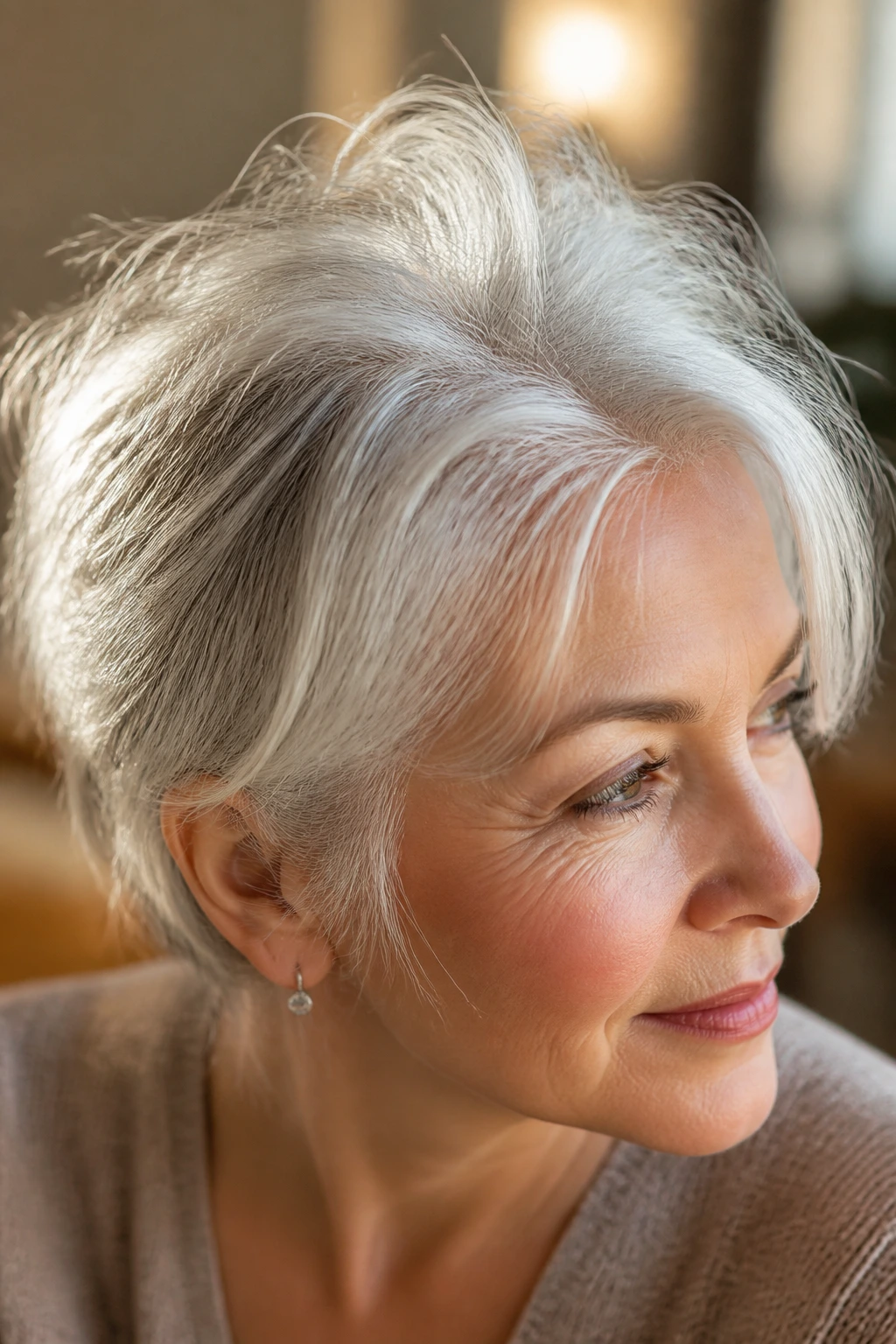
The feathered pixie is the cut I reach for when hair has started to feel a little too polite on top and a little too fuzzy at the ends. It keeps the sides neat, lifts the crown, and lets the texture move instead of sitting there like a helmet. The feathering matters. Without it, the cut can go stiff fast.
What makes this one work is the crown. A little height there creates the illusion of density, which is helpful when hair has thinned at the top but still has enough life around the ears and nape. Ask for soft, piecey texture through the upper layers and a clean neckline. If the shape is too chopped, it starts to look dated. If it is too tidy, it loses the point.
Why it flatters: The eye goes upward, which gives the face a lift without relying on a lot of length. It also keeps silver hair from puffing out in the wrong places.
Best for: Fine hair, straight hair, and anyone who likes a tidy silhouette that still has movement.
Styling note: A pea-sized amount of mousse at the roots, then a quick blast with a blow dryer and fingers, usually does more than a full round-brush routine.
2. Bixie with a Side-Swept Fringe
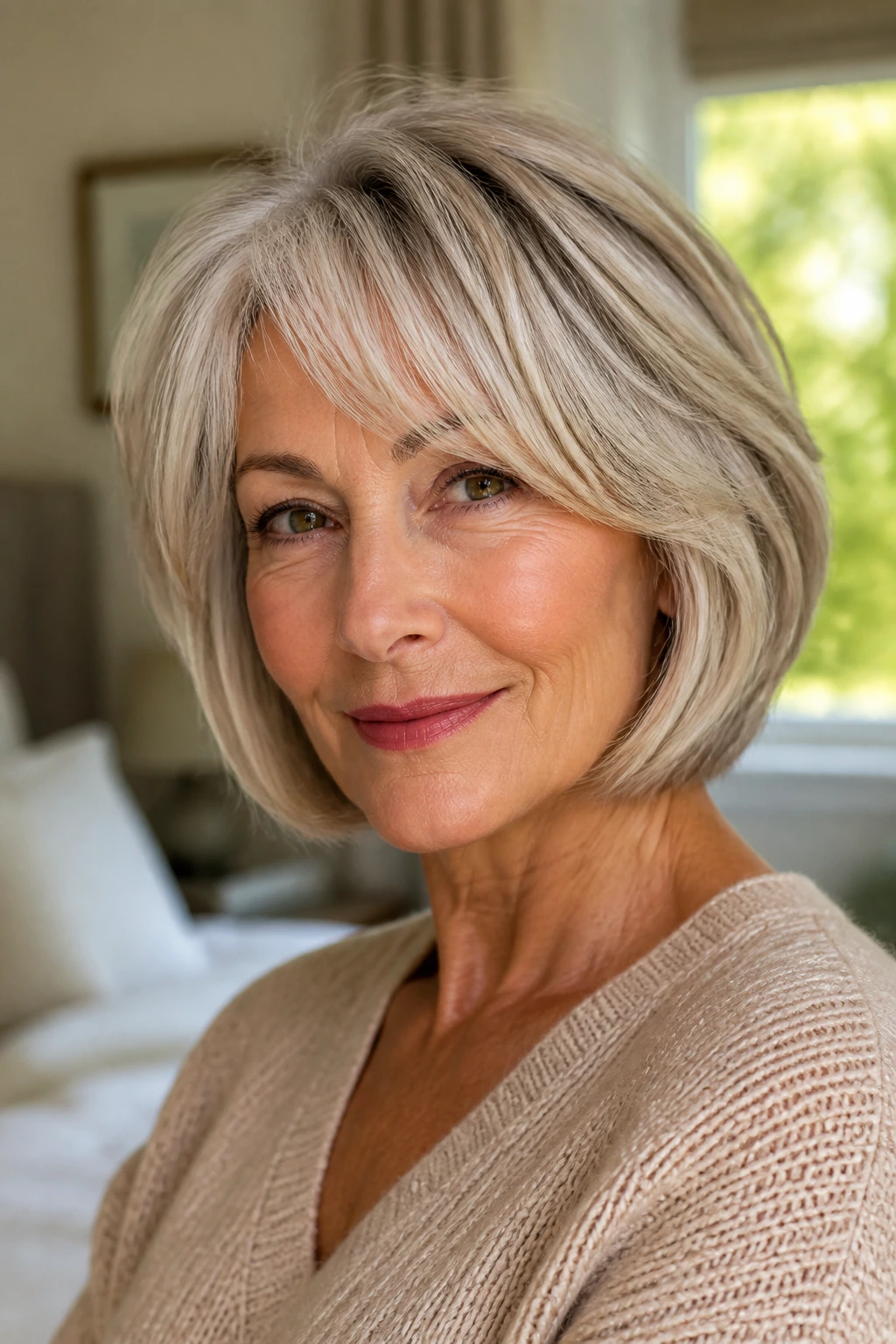
A bixie sits in that useful middle ground between a bob and a pixie, which is why so many women end up liking it more than either one. It is short enough to feel light, long enough to tuck behind the ears, and soft enough to avoid the harshness some very short cuts can create around the jaw.
The side-swept fringe is the thing that gives it polish. It breaks up a broad forehead, softens lines around the eyes, and moves the focus diagonally instead of straight across the face. That diagonal line is doing quiet work. It makes the whole cut feel easier.
What to ask for at the salon
- Keep the top long enough to sweep, not spike.
- Leave enough weight around the temples so the cut does not stand away from the head.
- Taper the nape so the back stays neat as it grows.
If you wear glasses, this cut behaves well. It does not crowd the frames, and it does not need to be blown into a perfect shape every morning. A little bend is enough.
3. Chin-Length Bob with a Gentle Curve
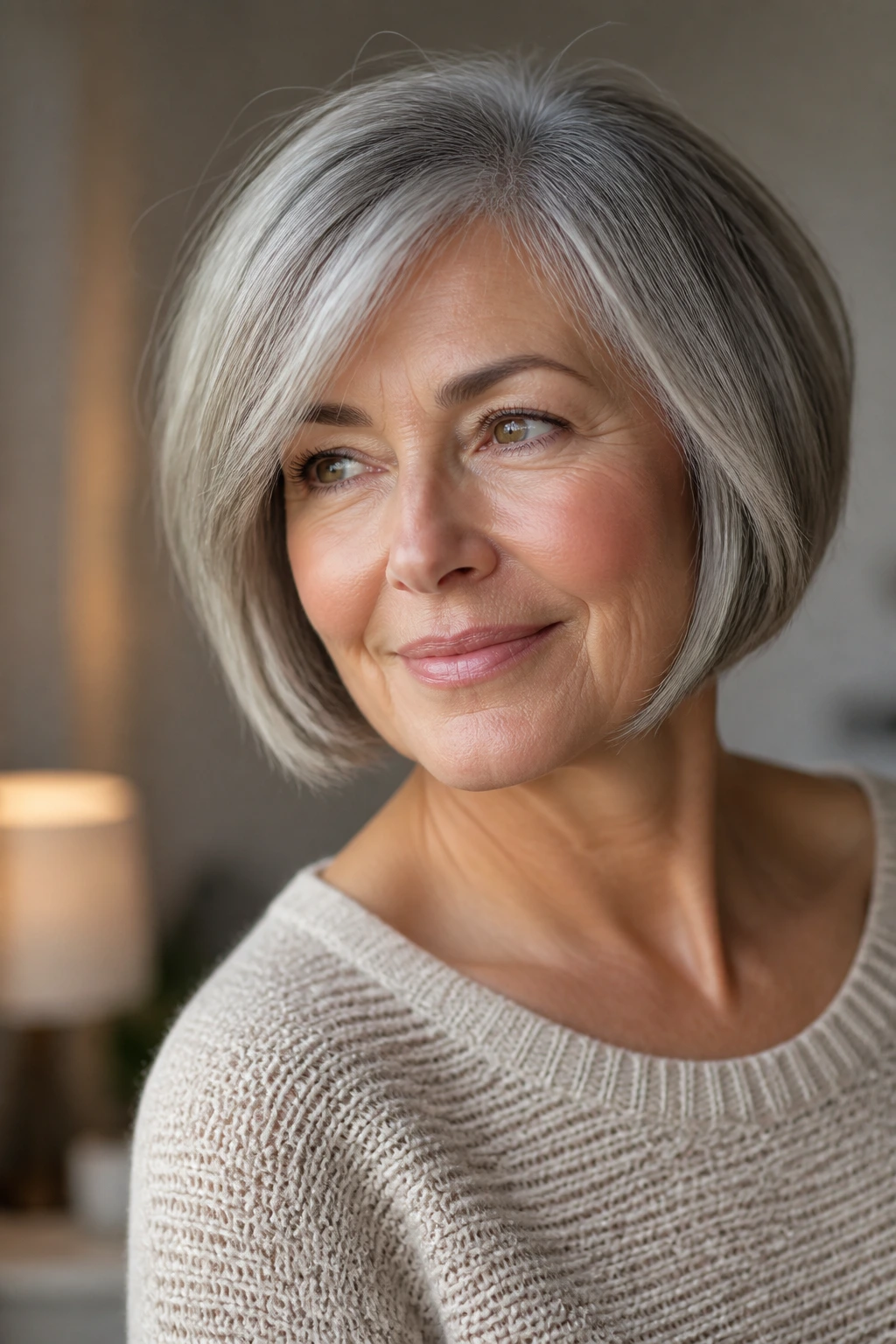
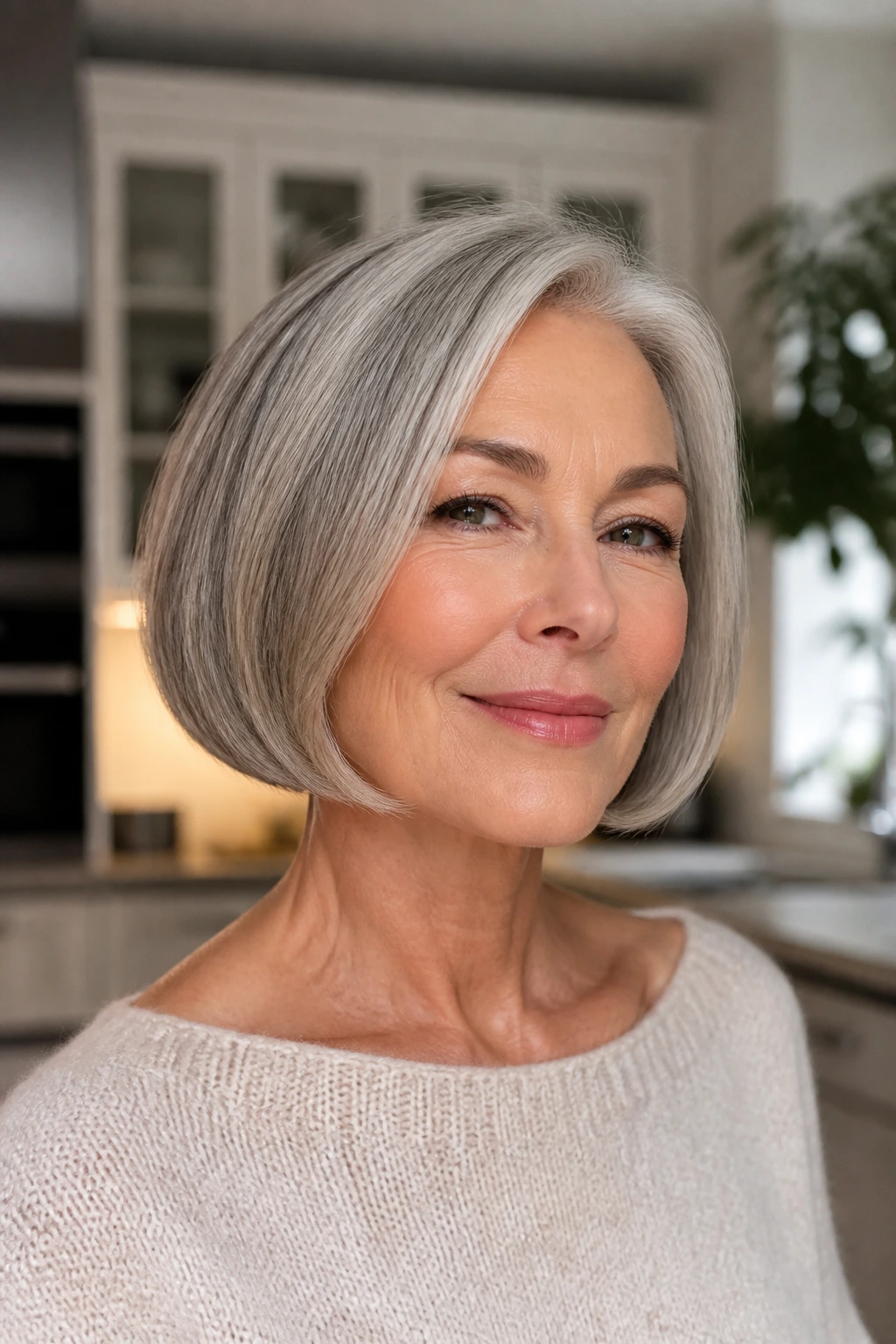
A chin-length bob with a gentle curve is one of those cuts that looks deliberate even on a windy day. It rests at a flattering point on the face, and when the ends bend inward just a touch, the whole shape feels clean without looking severe. That bend is the difference between “nice bob” and “why does this look so rigid?”
This is a particularly good choice if your hair is straight or only slightly wavy. It shows off shine, gives the jawline a cleaner edge, and plays well with a side part. I prefer a slight undercurve over a perfectly flat finish; flat can feel harsh, especially on white hair.
The trick is not to over-layer it. A chin bob needs enough density to hold the line. Too many layers and it starts to lose the very thing that makes it good. If you want movement, create it at the ends, not all through the body of the cut.
4. French Bob with Airy Bangs
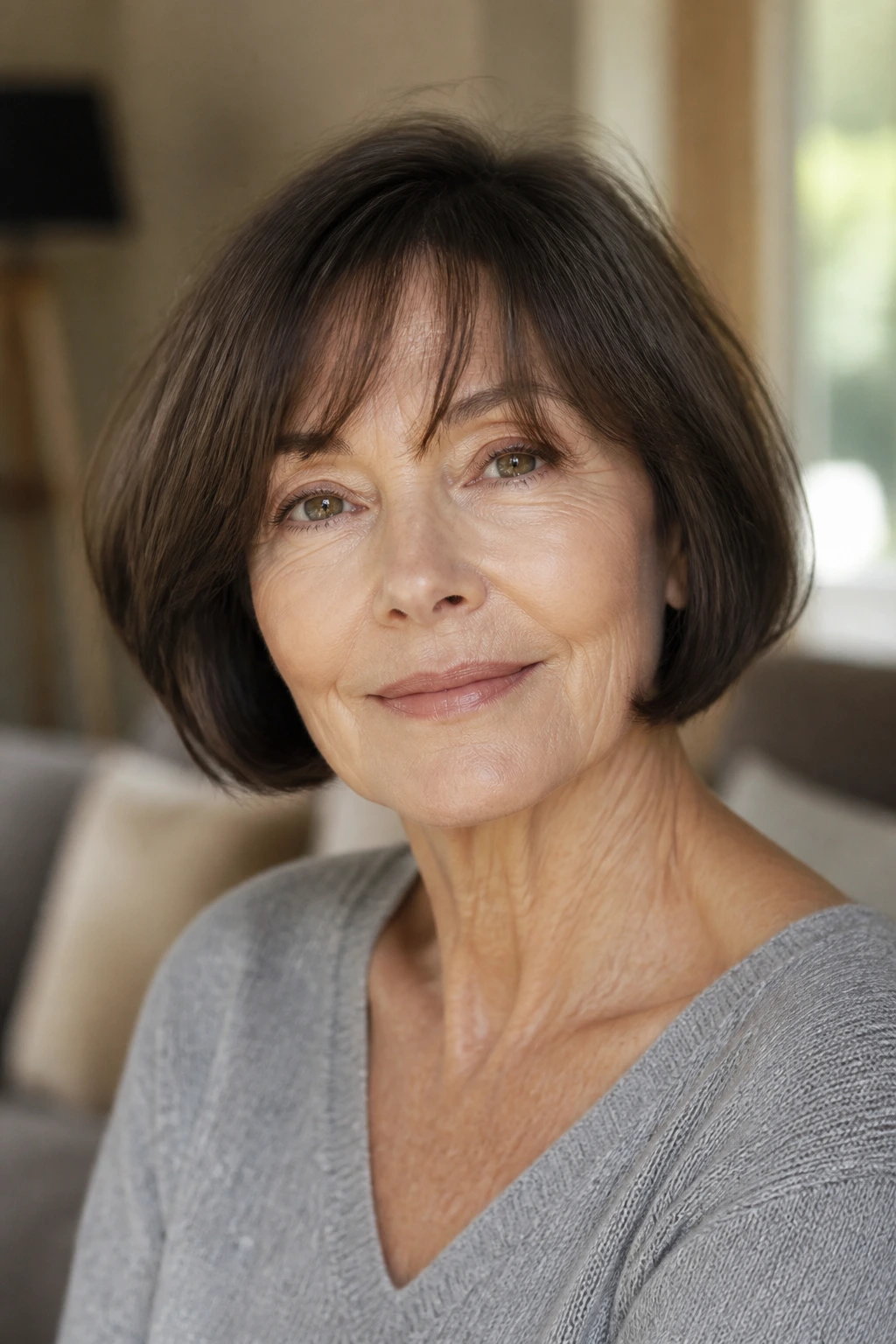
The French bob is short, cheeky, and a little more expressive than the standard bob. It usually sits around the jaw, sometimes a touch higher, and it loves a fringe that falls lightly across the forehead instead of behaving like a blunt wall. Airy bangs are what keep it from feeling costume-y.
This cut works best when the hair has some natural bend. If your hair is pin-straight and resistant, it can still work, but you will need a little styling at the root. The reward is a face-framing shape that feels crisp without looking overworked. It also pairs well with silver hair that has a bit of shine, because the silhouette reads clearly.
One small opinion: this cut looks best when the ends are slightly imperfect. Not messy. Just not over-controlled. A little softness around the cheekbones keeps it human.
5. Stacked Bob with a Tapered Nape
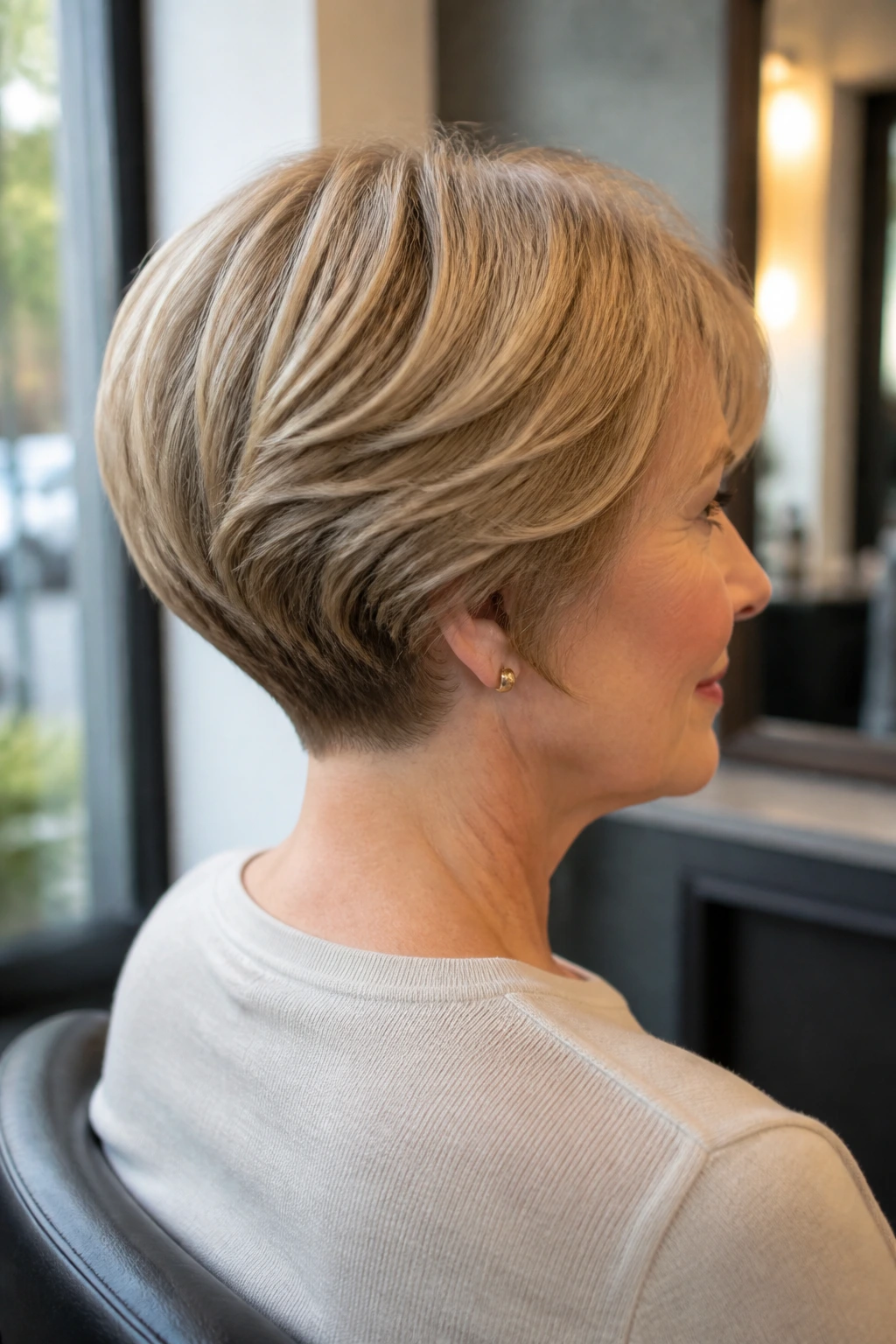
If the back of your head has started to lose shape, a stacked bob can be a small miracle. The stacked layers in the rear create lift where hair tends to lie flat, while the tapered nape keeps the neckline clean. The whole cut has architecture. That is why it works.
This is a good pick for fine or medium hair that needs a bit of body. The shorter layers underneath support the top layers, so you are not depending on styling spray to fake volume. The sides should still stay soft enough to avoid that sharp, wedge-like look some stacked bobs pick up when they are cut too aggressively.
It grows out with dignity if the stacking is done well. If it is cut too high or too tight, you will see the shape fall apart at the back first. That is the place to be precise.
6. Inverted Bob with Clean Angles
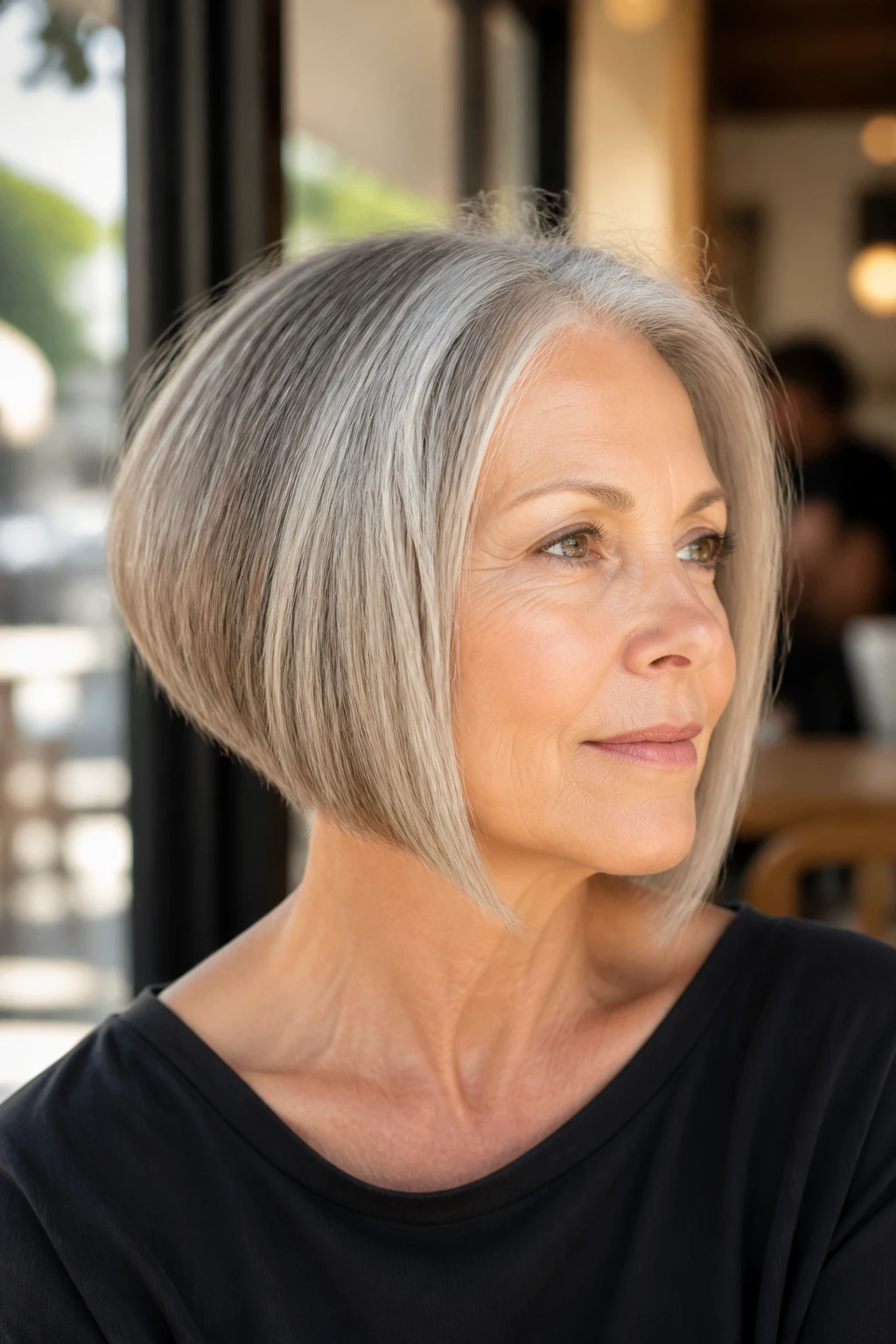
An inverted bob gives you length in the front and lift in the back, which is a useful trick when the face needs a bit of structure. The front pieces skim the jaw or collarbone, while the shorter back creates a neat curve that prevents the style from collapsing into one flat line.
This is the kind of cut I like for women who want a little edge without anything dramatic. The angles do the talking quietly. They sharpen soft features, especially around the jaw, and they make straight or slightly wavy hair look intentional with very little daily effort.
The key is restraint. If the front is too long and the back too short, the shape can look gimmicky. Keep the difference subtle. The best inverted bobs feel like they were designed by someone who knows exactly where the head turns.
7. Collarbone Lob with Hidden Layers
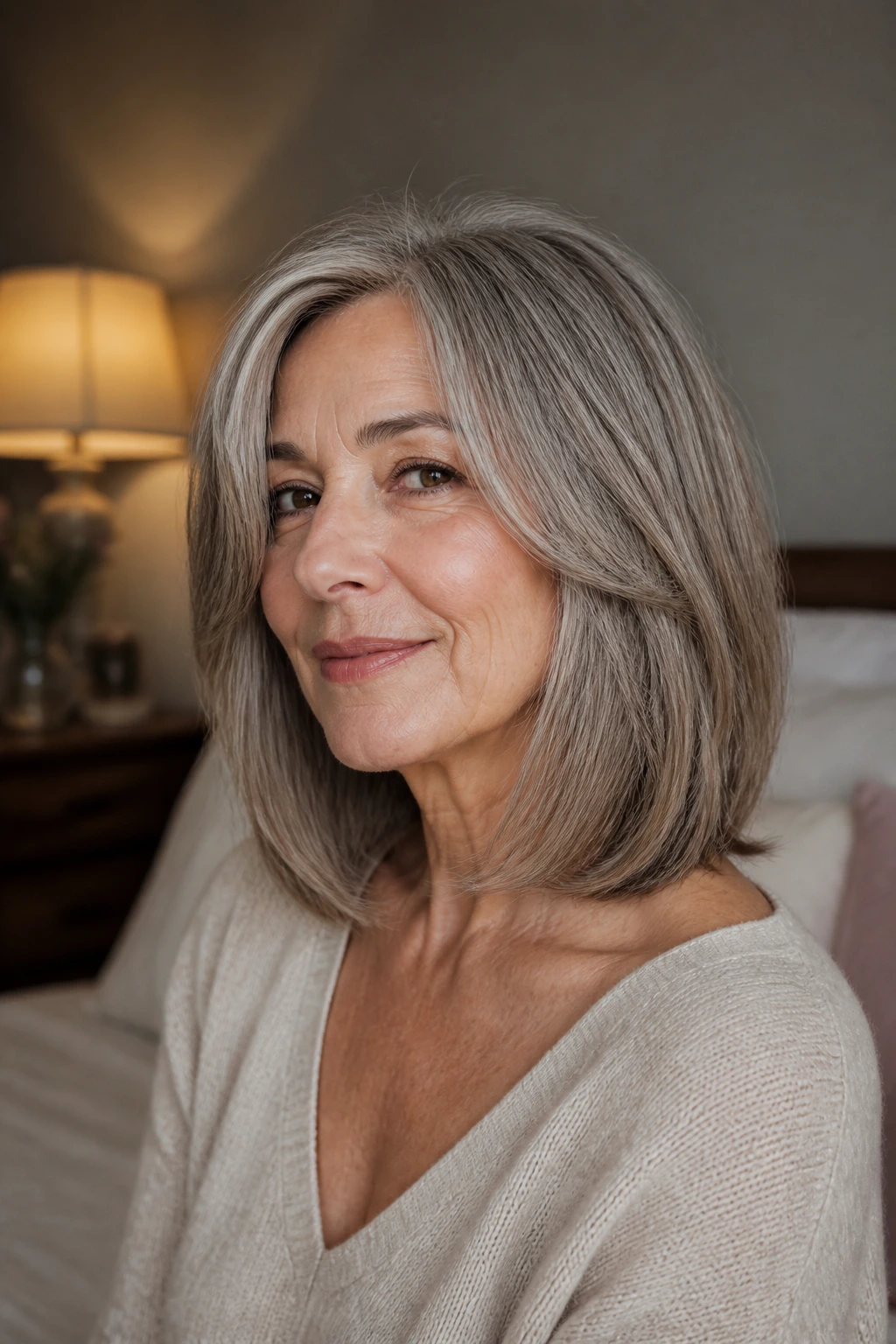
The collarbone lob is a good answer when you do not want short hair, but you also do not want the drag of longer lengths. It skims that collarbone zone where hair can still swing, tuck, and move without hanging into the chest like a heavy curtain. Hidden layers give it life without taking away the line.
This cut is especially kind to hair that has become a little finer over time. Long layers that are too visible can make the ends look thin. Hidden layers, placed lower in the shape, keep the surface smooth while softening the bulk underneath. You get movement without losing the outline.
It also behaves well with scarves, sweaters, and high necklines. No awkward flip. No endless tangling. Just enough hair to feel feminine, not so much that it starts running the show.
8. Shoulder-Length Shag with Piecey Ends

A shoulder-length shag is for the woman who likes a bit of personality in her cut. It has layers, but the right kind — piecey, slightly irregular, and loose enough to let waves or bends show through. The ends should look separated, not shredded.
This shape is excellent for hair that has some natural movement. It gives wave a place to live and keeps thick hair from ballooning. On silver or salt-and-pepper hair, the texture can look especially good because the highlights and lowlights from your own strands do half the visual work. That is a nice thing to have going for you.
Styling reality
- Scrunch in a light cream or mousse.
- Air-dry if your wave is cooperative.
- Use a diffuser if the top needs lift.
If your hair is pin-straight, a shag can still work, but it needs a little bend from a brush or iron. Otherwise it just sits there and asks to be brushed into something else.
9. Curtain-Bang Lob with Face-Framing Pieces
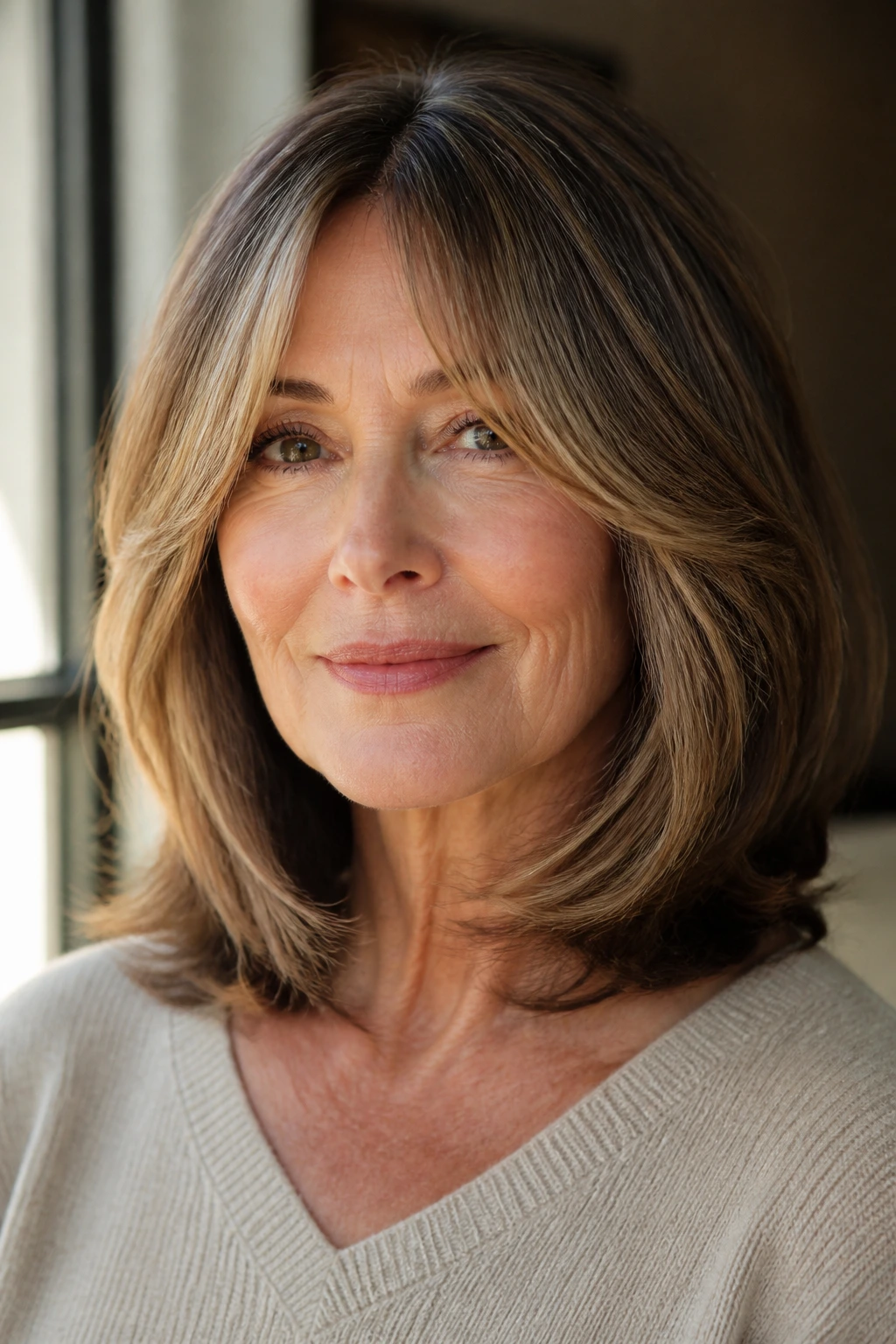
Curtain bangs are popular for a reason: they slide open around the face instead of stopping abruptly at the forehead. On a lob, they soften the whole cut and help redirect attention toward the eyes and cheekbones. The face-framing pieces should start high enough to matter, but not so high that they turn into a full fringe.
This is a smart cut if you are nervous about bangs. It gives you the effect without the commitment of a blunt line across the forehead. It also works well for people who wear glasses, because the center part and the split fringe keep the frame from feeling crowded.
The only catch is maintenance. Curtain bangs need a little shaping between trims, especially if your hair likes to separate at the temples. But if you are willing to do a quick blow-dry with a small round brush, they repay you by making the whole haircut feel softer.
10. Blunt Bob for Fine Hair
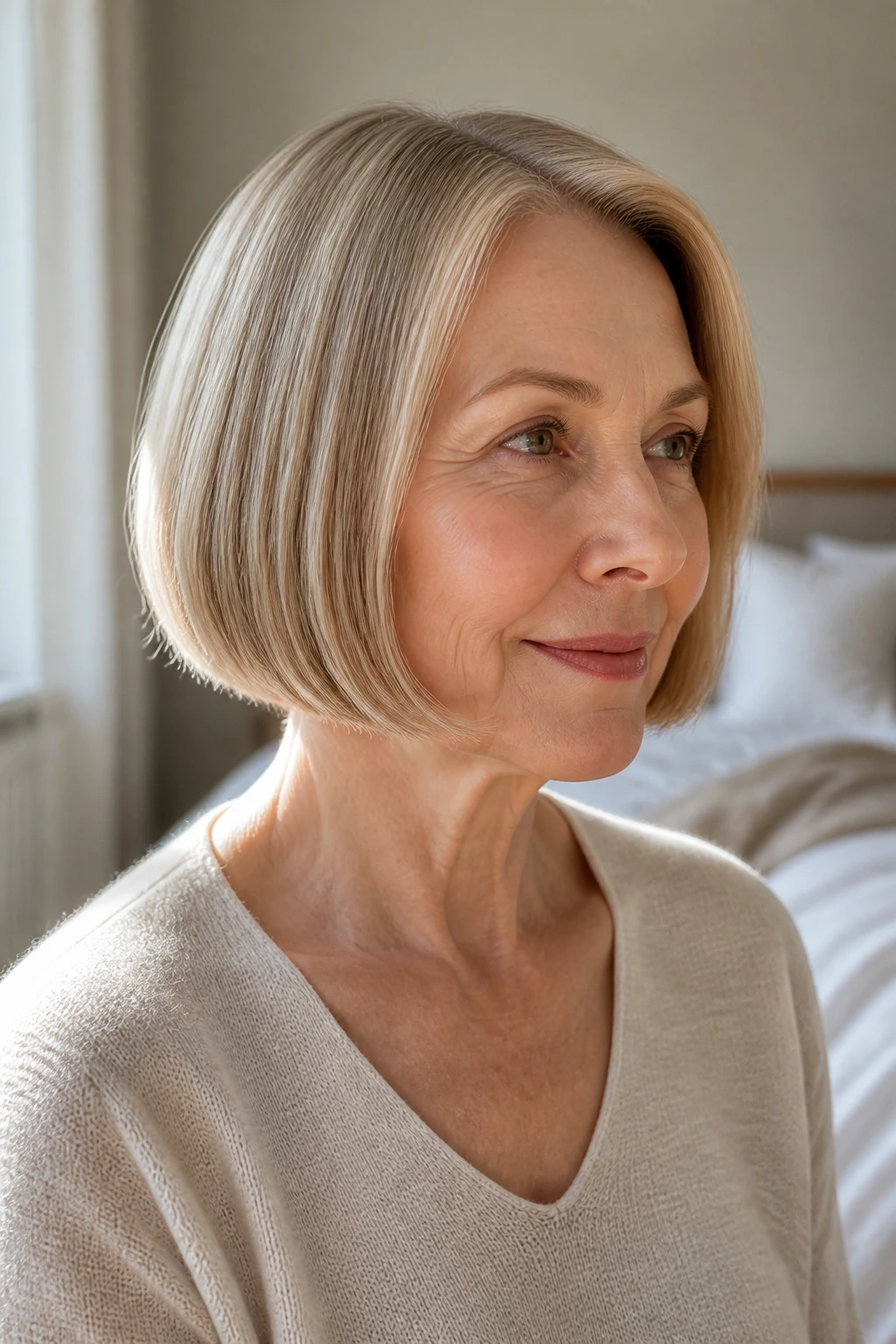
A blunt bob can look almost suspiciously full when it is cut well. That is the point. By keeping the line one length, the eye reads density all the way across the bottom, which is exactly what fine hair needs when the ends have gone wispy. Less layering. More edge.
People are often scared of blunt cuts because they imagine a block. That only happens when the shape is too heavy or too uniform around the face. A good blunt bob still has tiny adjustments — a little softening near the jaw, a side part if the face needs it, maybe a slight angle if the neck is short.
I like this cut on straight or slightly wavy hair that loses volume easily. It behaves best when it is trimmed every six to eight weeks, because the line is the whole point. Let it grow too long, and the magic starts to blur.
11. Curly Crop with a Rounded Shape
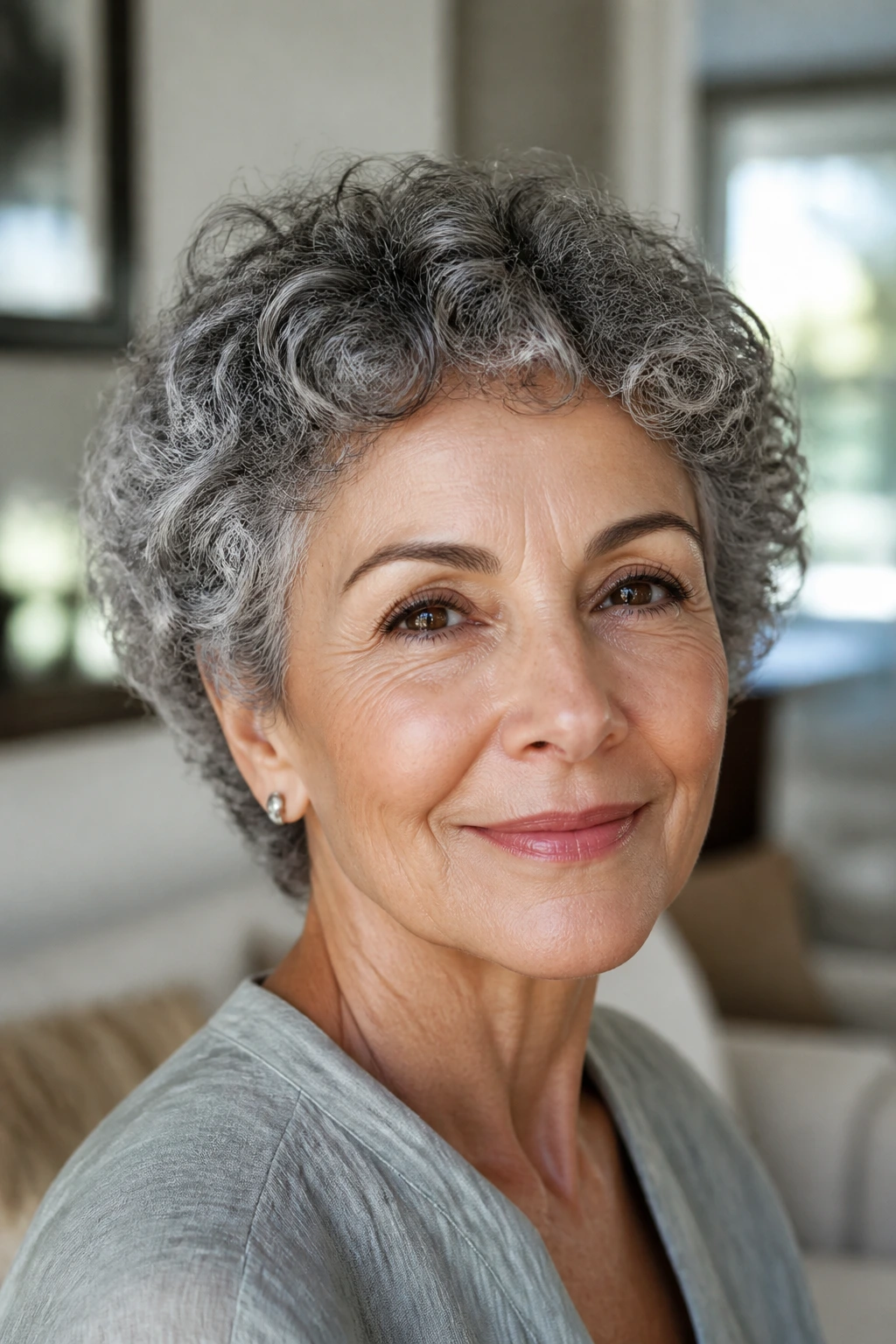
Curly hair has opinions, and a rounded crop is often the answer to those opinions. Instead of flattening the curl pattern into submission, this cut follows the natural contour of the head and trims enough length to keep the shape from turning triangular. That triangle is the enemy. Nobody wants it.
The roundness should come from balance, not bulk. A good curly crop removes weight where the sides puff out and leaves enough length at the top for the curls to spring. The result is soft, lively, and surprisingly elegant when the curls have been shaped by a hand that understands shrinkage.
Keep in mind that curly hair looks shorter once it dries. If you ask for chin length while wet, you may end up with something much shorter than you expected. Be specific with your stylist about how the curls behave when dry. That conversation saves a lot of regret.
12. Curly Bob with a Side Part
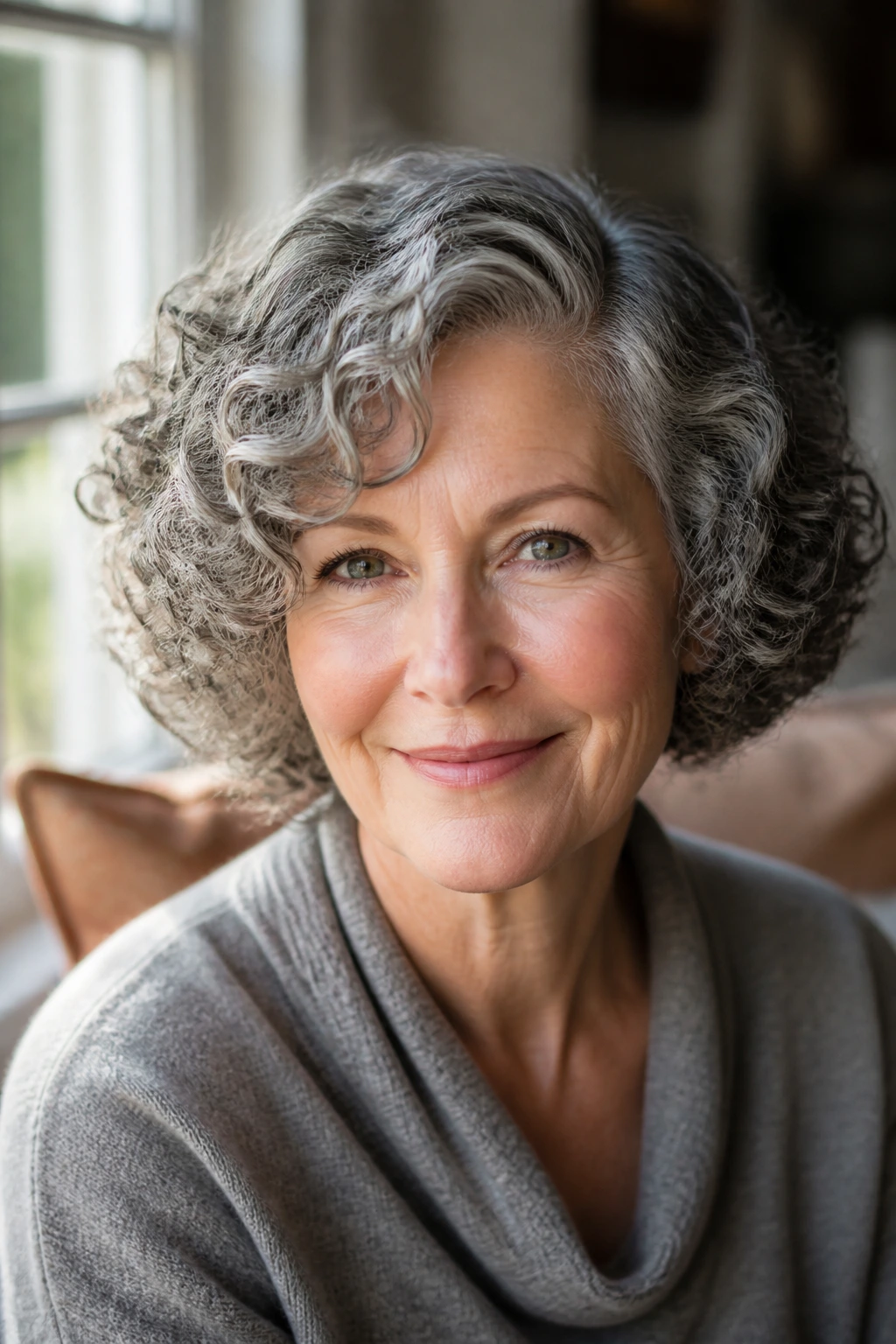
A side part changes everything on curly hair. It gives the curls direction, adds lift on one side, and keeps the shape from feeling too symmetrical or too predictable. The bob length keeps the curls from hanging too far and losing spring, which is useful if the bottom tends to get scraggly.
This cut is a nice middle ground for women who want to keep some length but need a shape that respects the curl pattern. The ends should be trimmed in a way that supports the curl clusters, not chopped into frizz. A curl-by-curl approach is ideal, though not every salon offers it.
What I like about this style is the movement. It has enough length to swing, enough body to look full, and enough irregularity to keep it from looking stiff. That is a tough balance to find. This one gets there.
13. Tapered Natural Gray Cut
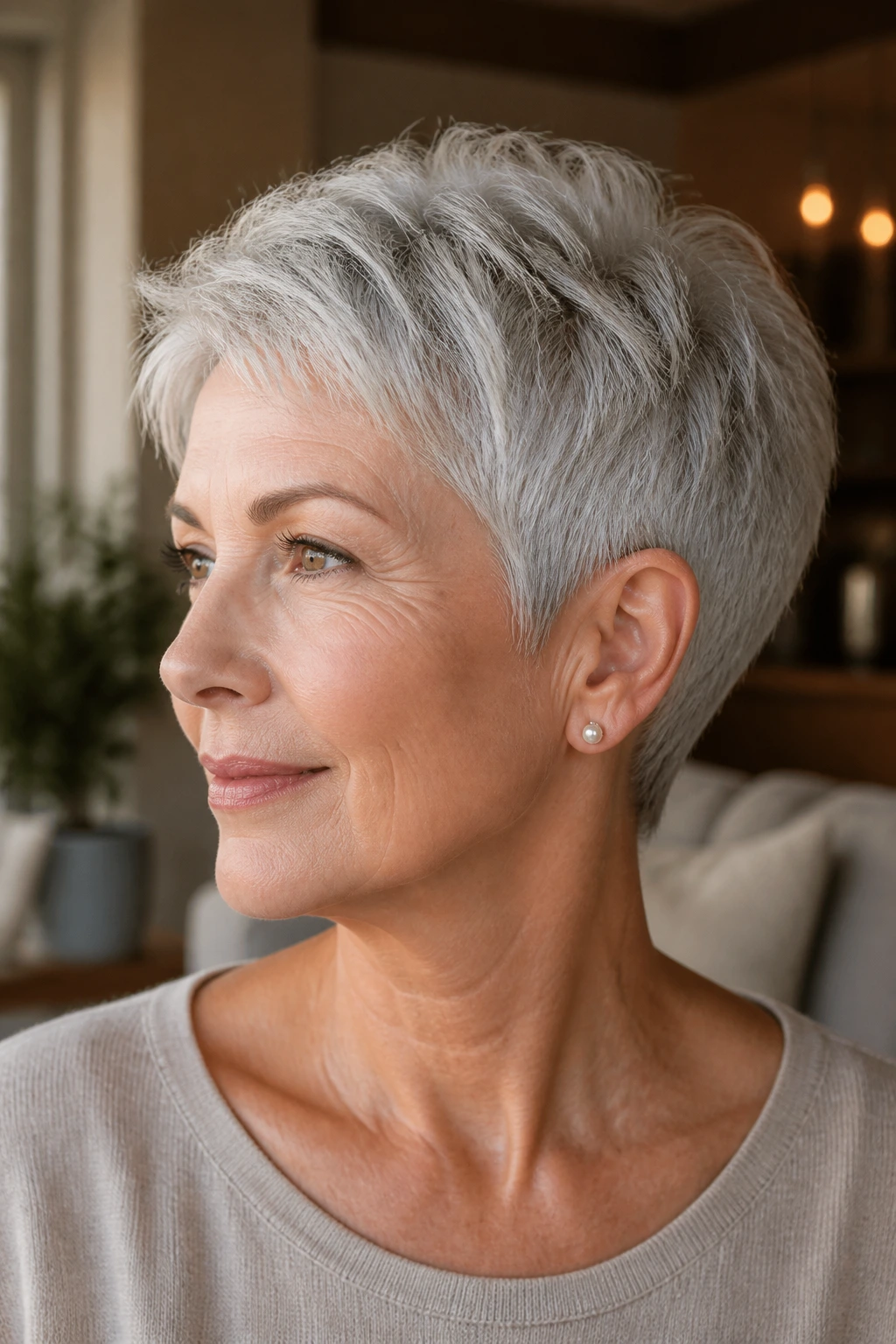
For natural gray hair, a tapered cut can be a revelation. It cleans up the sides and back, keeps the outline neat, and lets the top hold the shape. If the hair has become coarser with age — which happens often — tapering keeps it from blooming outward in a way that feels uncontrolled.
This cut is especially strong on textured, coily, or tightly curled hair, though it can work on straighter textures too if the crown needs lift. The idea is simple: let the top carry a little personality and narrow the sides enough that the silhouette stays polished. No puff. No fuss.
The gray itself does the styling work here. On a tapered shape, silver strands catch the light in a way that makes the cut read as intentional and crisp. That only works if the taper is clean around the ears and nape. Sloppiness shows fast.
14. Pageboy with Soft Undercurve
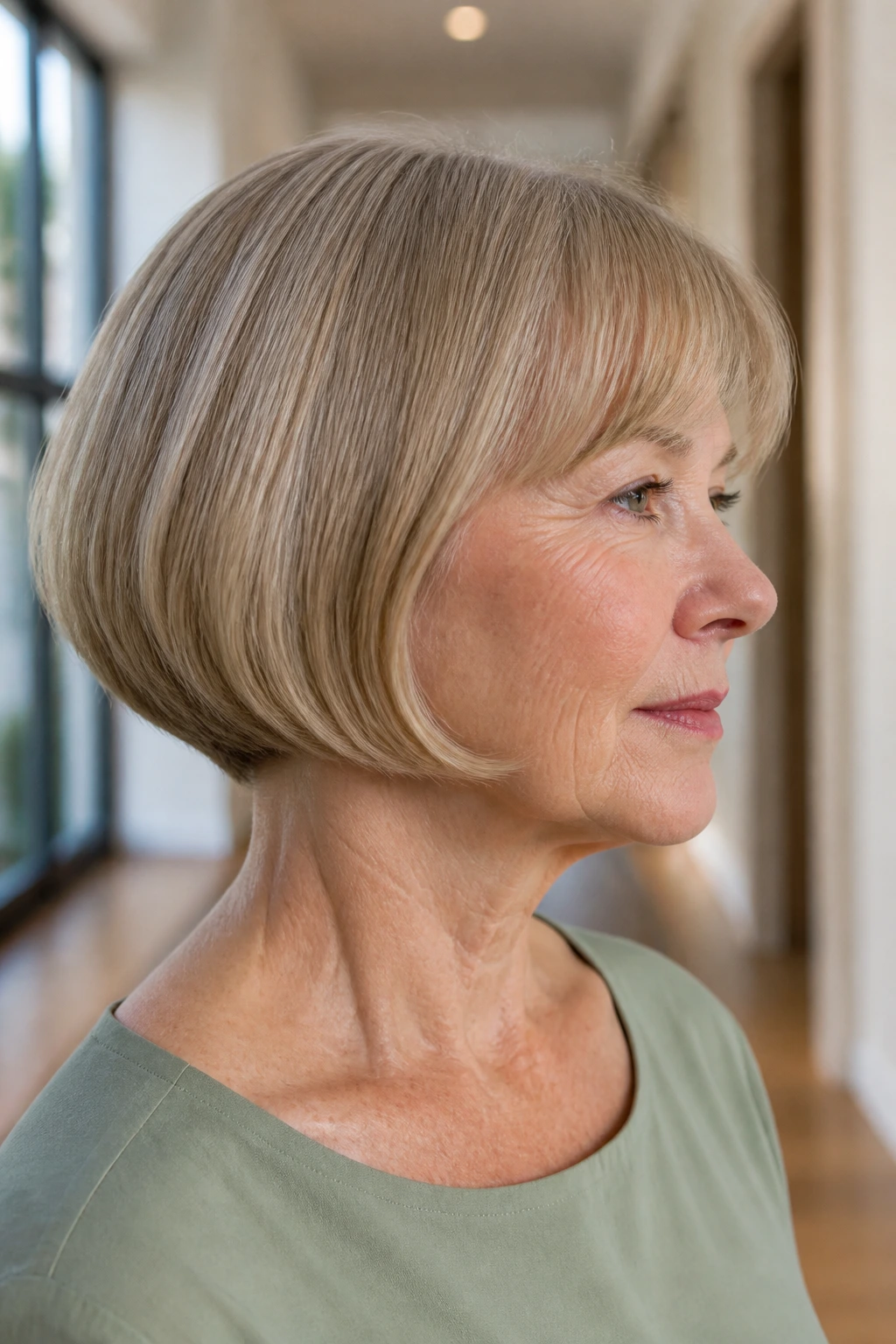
The pageboy has a retro bone structure that can look surprisingly current when it is softened a little. The classic undercurve hugs the jaw, the ends tuck under, and the whole style keeps the neck clean. It is structured, yes, but not stiff when the curve is gentle.
This cut is a strong choice for straight hair and anyone who likes a neat profile. It draws attention to the lower face, which can be useful if you want the eye to travel along the jawline instead of focusing on the forehead or temples. The bangs can be part of the look, or you can leave the front longer and side-swept.
It is not a wash-and-forget cut, though. The undercurve needs a round brush or a careful blow-dry, especially if your hair flips out at the ends. If you enjoy that kind of styling, the payoff is a shape that feels crisp in a very old-fashioned, very good way.
15. Asymmetrical Bob with Longer Front Pieces
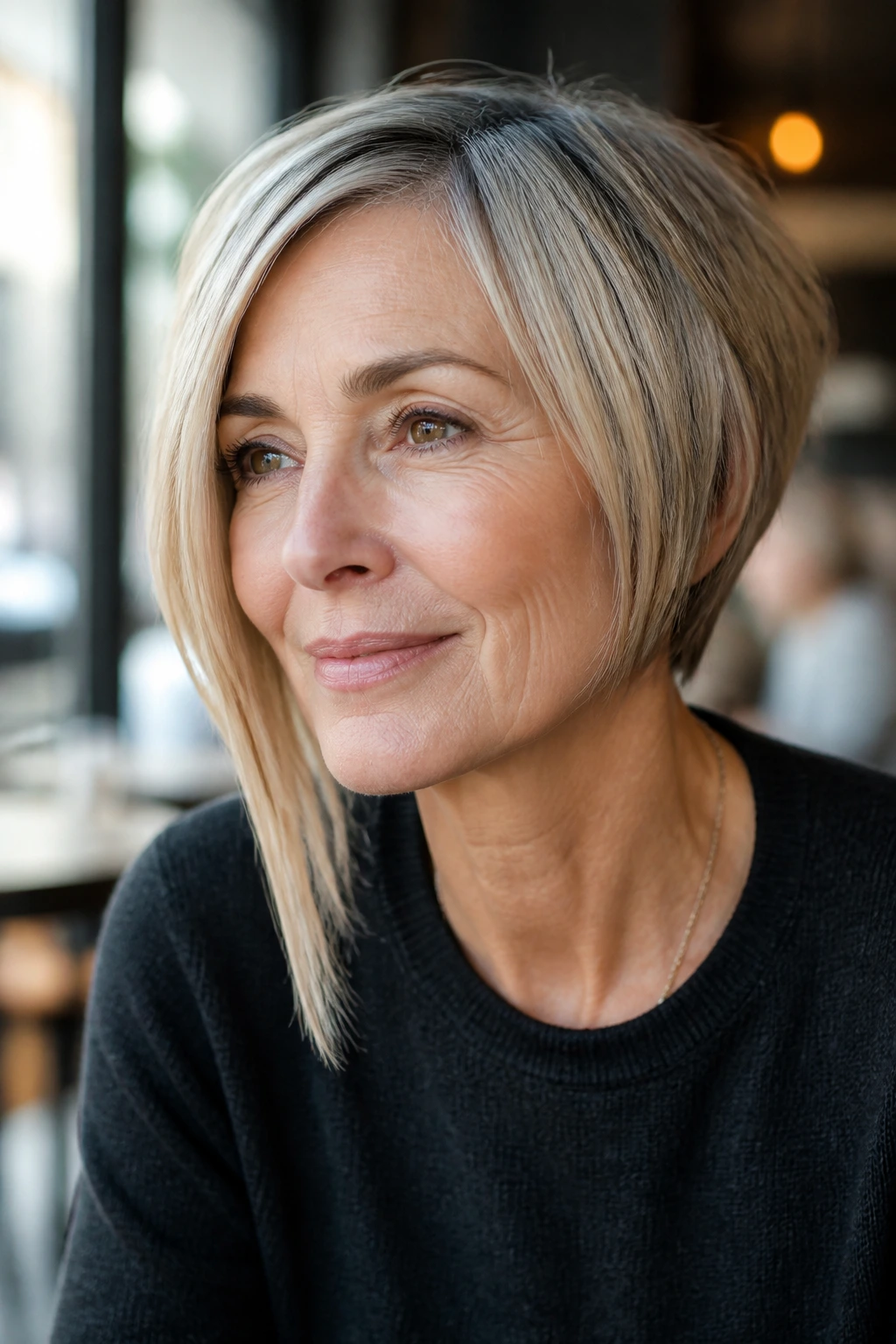
An asymmetrical bob brings a little tension to the silhouette, and that tension is useful. One side sits longer, the other slightly shorter, and the difference gives the face a diagonal pull that can sharpen a soft jaw or make a round face appear longer. It is not loud. It just refuses to be boring.
This cut works best when the asymmetry is obvious enough to read, but subtle enough to avoid looking like a fashion experiment from the wrong decade. The front pieces can skim the collarbone on one side while the other side rests higher at the jaw. That gives you a built-in styling trick: tuck the shorter side or let the longer side frame the face.
I would choose this if you want a bob with a little attitude but you still want it to behave in daily life. It looks especially nice with a deep side part.
16. Soft Mullet with a Modern Shag Shape
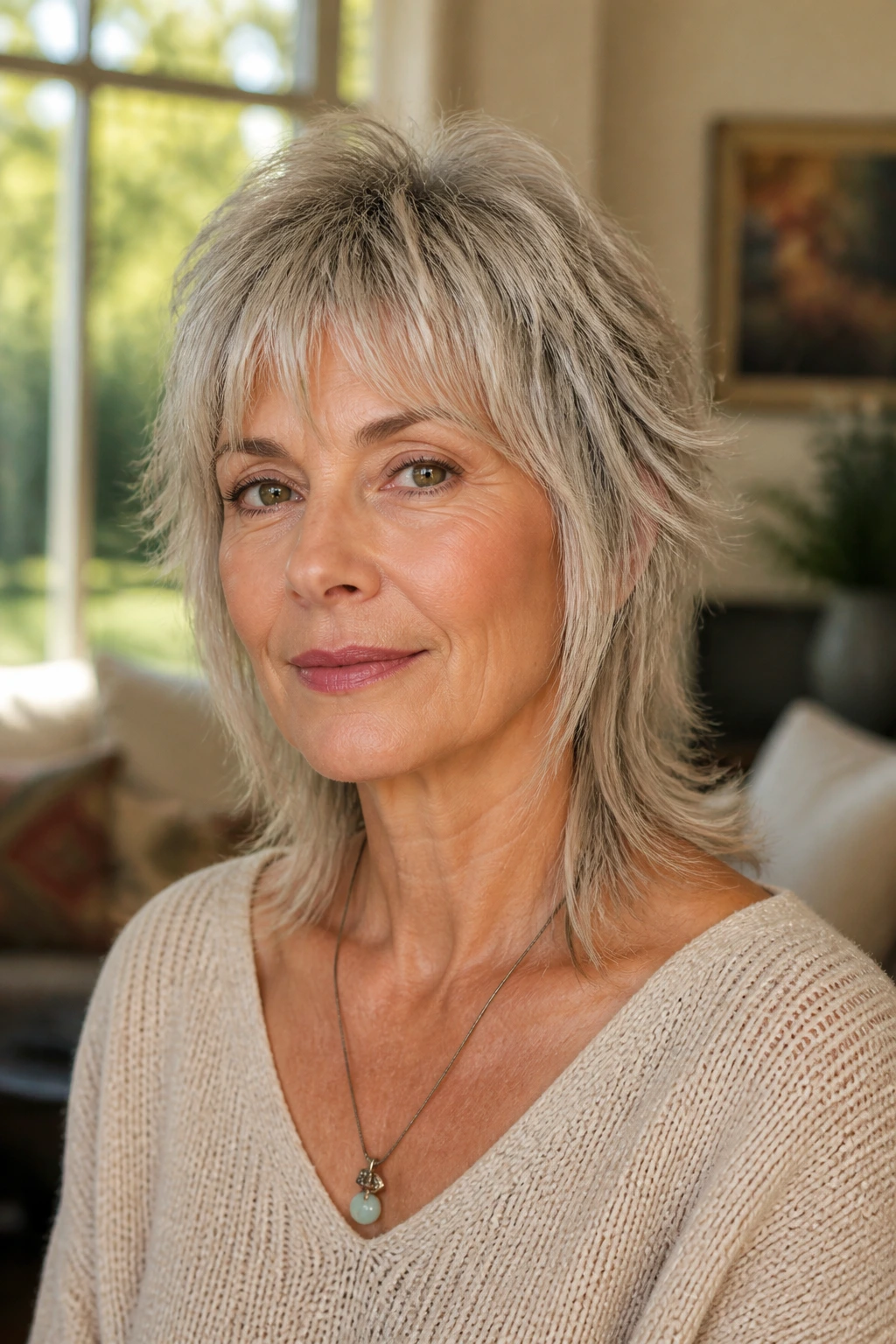
Yes, a mullet can be graceful. Not the hard-edged version from old photos, but a soft one with a blended crown, longer nape, and face-framing pieces that keep the whole thing from feeling severe. The modern shag version of it gives movement everywhere, which is useful if your hair has changed texture and refuses to sit neatly anyway.
This cut is for someone who does not want to play it safe. It can be flattering on wavy or curly hair, and it works well when the top is light but not wispy. The longer back adds interest, while the shorter layers around the face prevent the shape from dragging down the features.
It will not suit everyone. Fine, pin-straight hair can make the silhouette look limp unless it is styled. But on the right head, with the right texture, it has more life than a dozen tidy bobs put together.
17. Neck-Length Crop with Wispy Layers
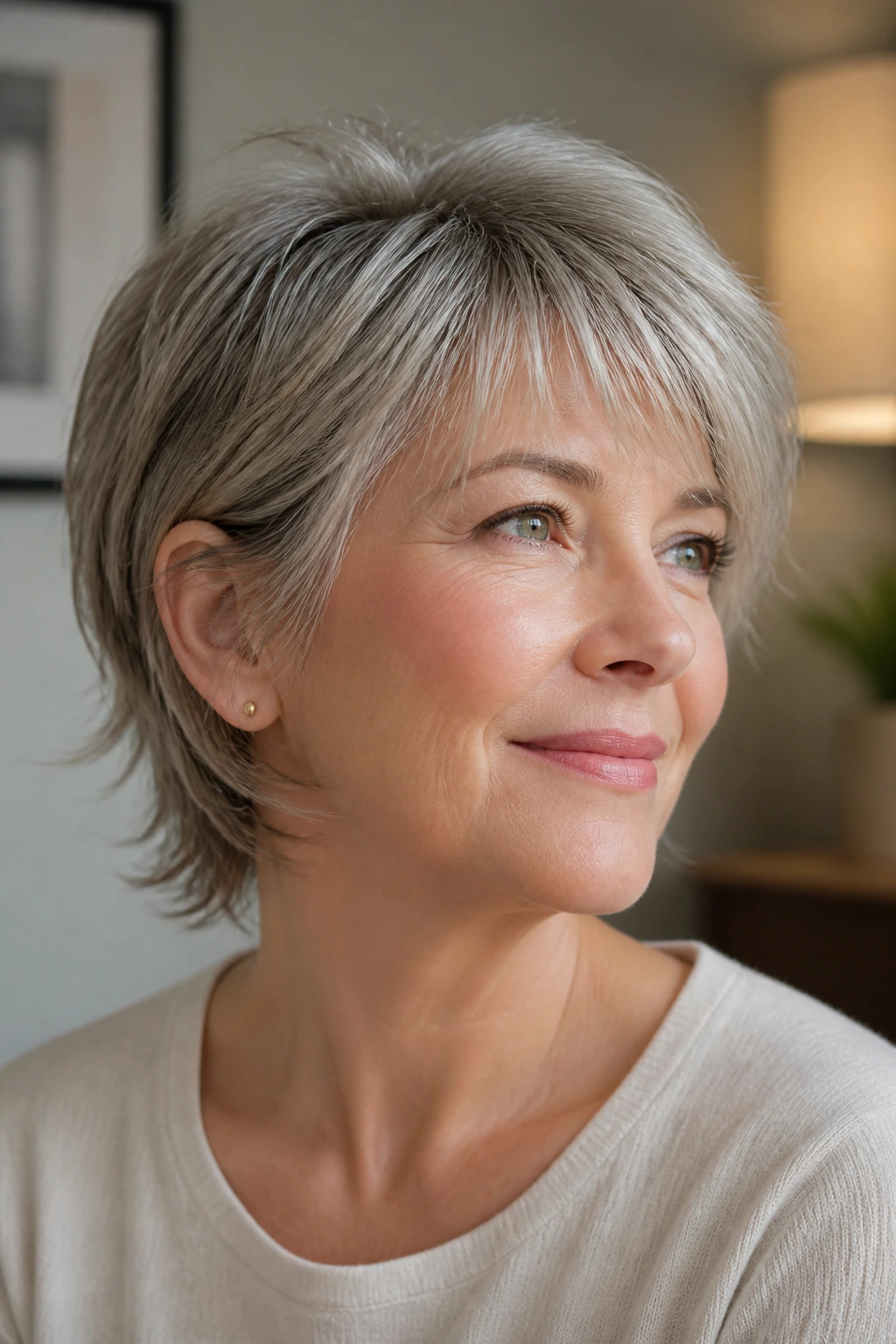
A neck-length crop sits in a very useful spot. It is short enough to feel fresh, long enough to tuck under a scarf or behind the ear, and light enough that it does not pile up around the collar. Wispy layers make it softer, which matters because a hard neck-length shape can turn boxy fast.
This is a nice option if you want your hair off your neck but do not want to go full pixie. The shape can be tailored toward the jaw or left a little looser around the face. It also works for women who wear earrings, because the length leaves them visible instead of hiding them under hair.
The one thing to watch is the ends. If the layers are too thin, the crop starts to look scruffy rather than airy. Keep them soft, not sparse.
18. Smooth Shoulder Cut with Tucked Ends
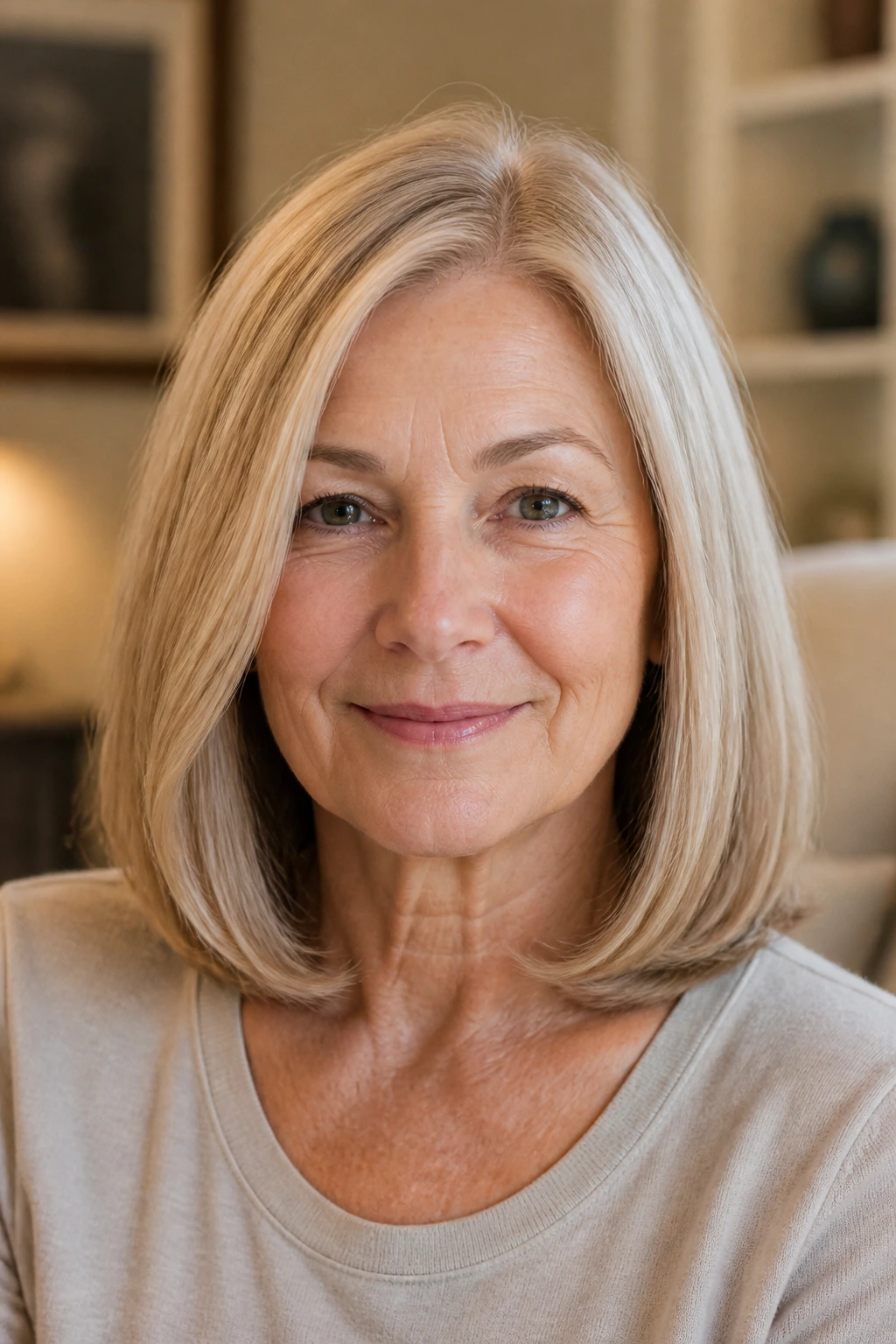
Some women want hair that simply looks neat. Not fancy. Not edgy. Neat. A smooth shoulder-length cut with tucked ends answers that need beautifully. The hair sits around the shoulders, the edges are cleaned up, and the ends curve inward just enough to look finished.
This style is especially good for thick straight hair, because it controls the bulk without taking away the length. It can be parted in the middle or slightly off-center, and it behaves well with a simple blow-dry using a paddle brush. Nothing dramatic. That is the charm.
I also like it because it works with everyday life. Tuck one side behind the ear for a cleaner look. Pull it back low when you need it out of the way. Let it rest on the shoulders when you want softness around the neck.
19. Rounded Afro with Clean Edges
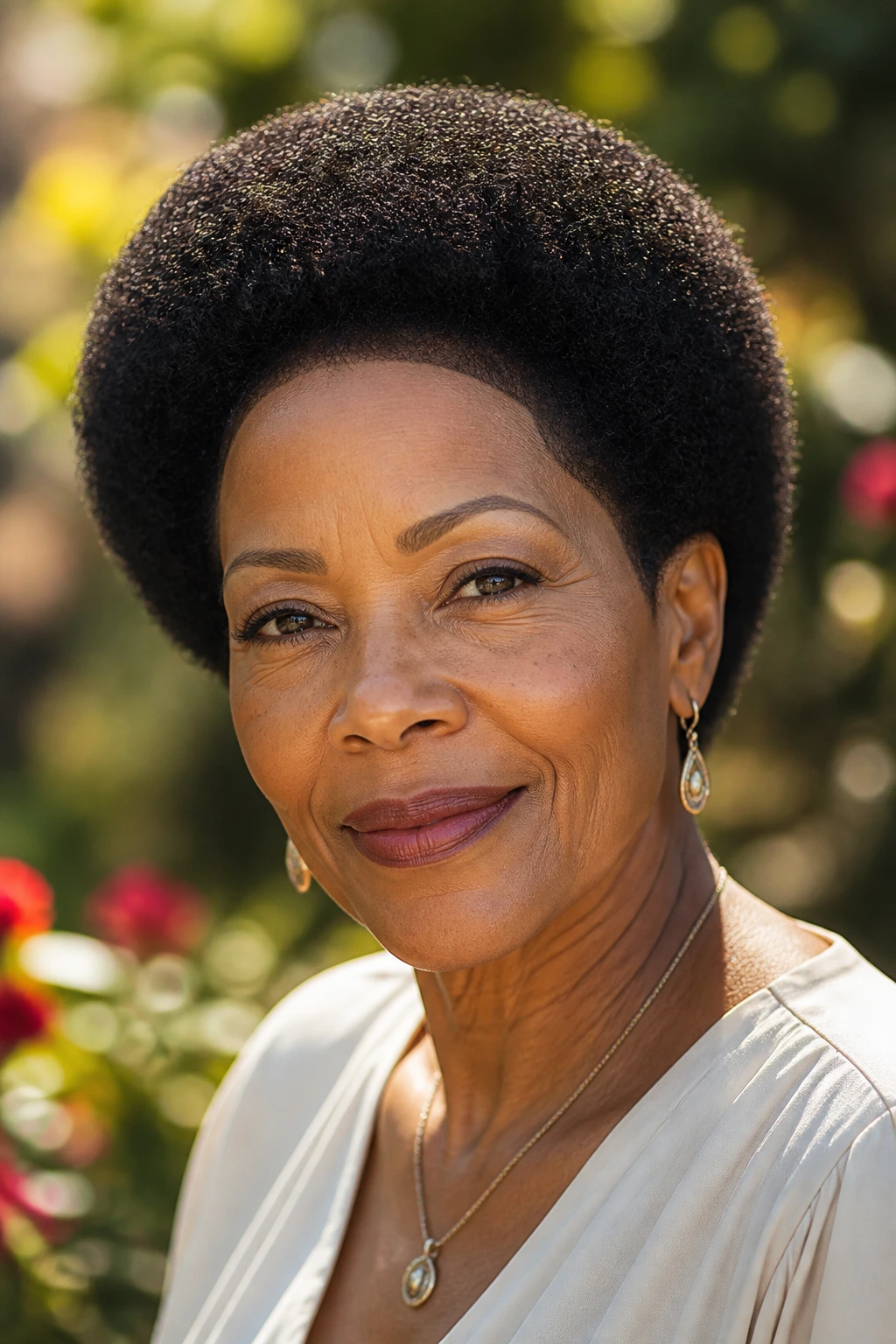
A rounded afro is not about hiding texture. It is about giving it a shape that feels finished. The round silhouette keeps the volume balanced around the head instead of letting it spread out unevenly, and clean edges around the hairline make the whole style look deliberate.
On coily or tightly curled hair, this shape can be one of the most graceful choices out there. The fullness becomes part of the design, not something to flatten down. A good cut respects shrinkage, moisturised texture, and the natural halo of the curls.
The edges matter here. A crisp but not overlined hairline keeps the shape from looking fuzzy at the perimeter. That tiny detail changes everything.
20. Short Crop with Textured Top
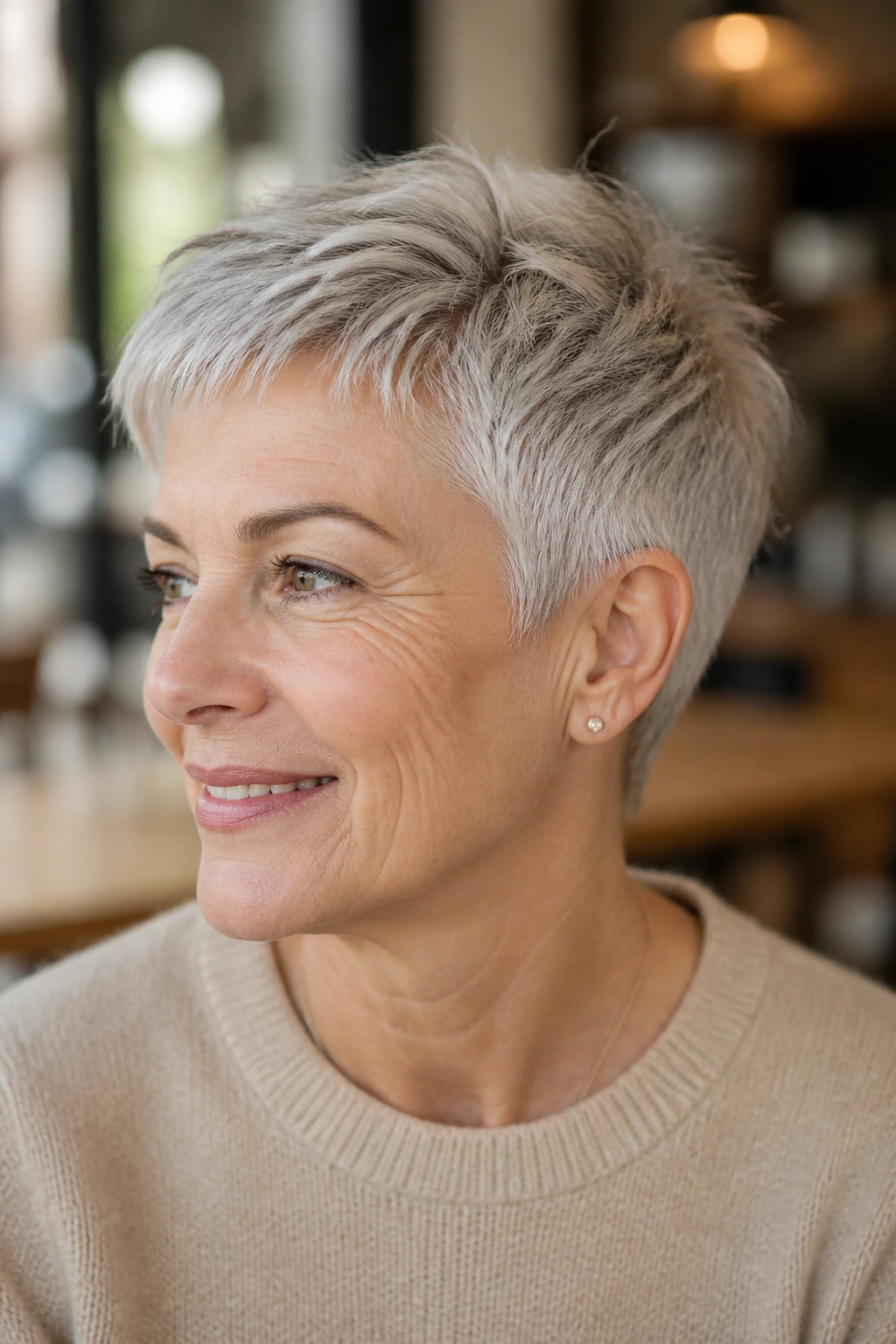
This is the kind of cut that makes people look more awake than they felt five minutes earlier. A short crop with a textured top keeps the nape clean, the sides close, and the crown piecey enough to avoid a flat helmet effect. It is tidy, but not severe.
I like this on silver hair with some natural movement because the texture in the top catches the eye and keeps the style from reading as plain. The trick is to keep the top separated, not spiky. A small amount of paste or cream is enough. Too much product and you lose the softness that makes it work.
It grows out into something interesting too, which is a bonus. As the top gets a little longer, the shape shifts rather than collapsing. That matters more than people admit.
21. Long Layered Cut with Face-Framing Pieces
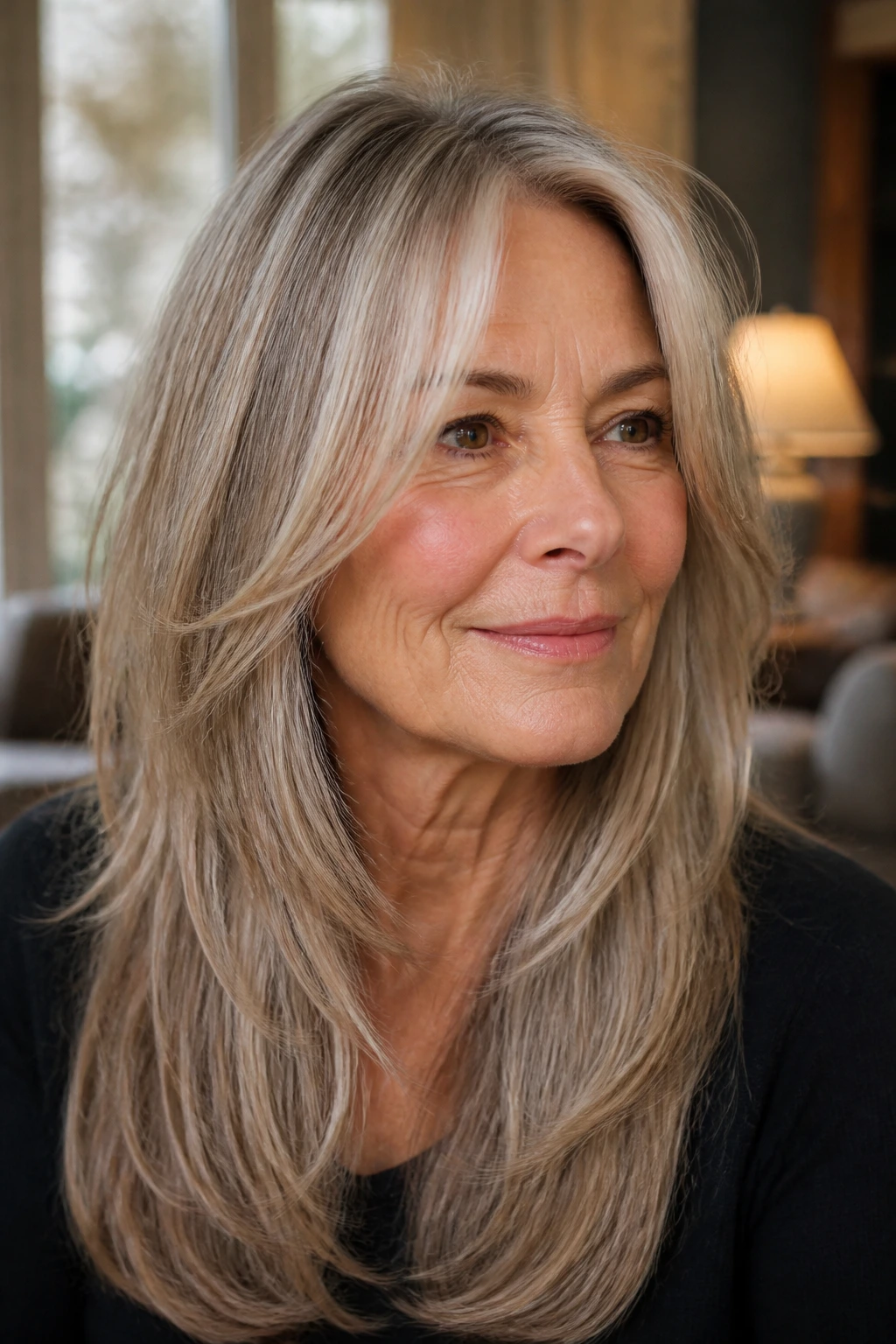
Long hair after 60 can be lovely when the ends still have enough density to look like a line. Long layered cuts with face-framing pieces keep the length while removing weight from the places that pull the face down. The pieces around the cheeks and jaw do a lot of visual work.
This is the cut for women who do not want to give up length, and there is nothing wrong with that. The key is to avoid thin, stringy ends. If the hair is too sparse at the bottom, the whole style starts looking tired. Layers should begin low enough to preserve fullness.
A center part can make this style feel modern and clean, while a soft side part gives it a little more lift. Either way, it needs good condition and regular trims. Long hair can age beautifully. It just cannot be neglected.
Why These Cuts Work Better Than Heavy Length
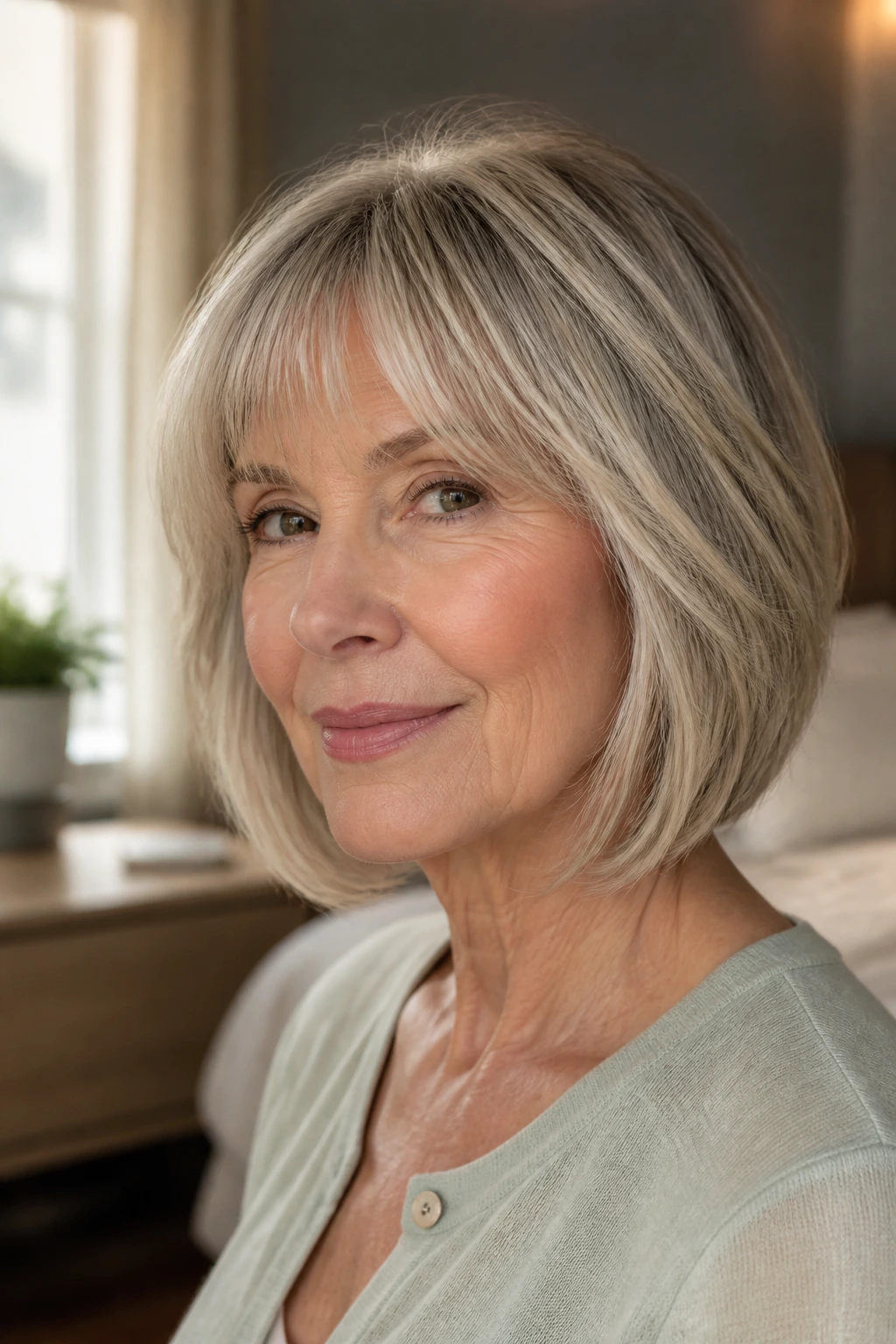
The best haircut after 60 does one thing that sounds small and turns out to matter a lot: it puts the weight in the right place. When hair gets finer, longer lengths can pull down the face and make the ends look transparent. When hair gets coarser, too much bulk can make the shape balloon outward. A strong cut solves both problems by trimming where the hair misbehaves and keeping shape where it helps.
That is why so many of these styles lean on structure. A bob line. A tapered nape. A fringe that lands in the right place. A crown that has a touch of lift. None of that is accidental. Good haircutting is a little like tailoring. If the fit is right, you stop thinking about it every morning.
And no, the answer is not always shorter. Sometimes the best move is a collarbone lob, or a layered shoulder cut, or long hair with clean ends and face-framing pieces. The haircut should suit the texture you have, not the texture you miss.
Essential Tools for Styling These Haircuts
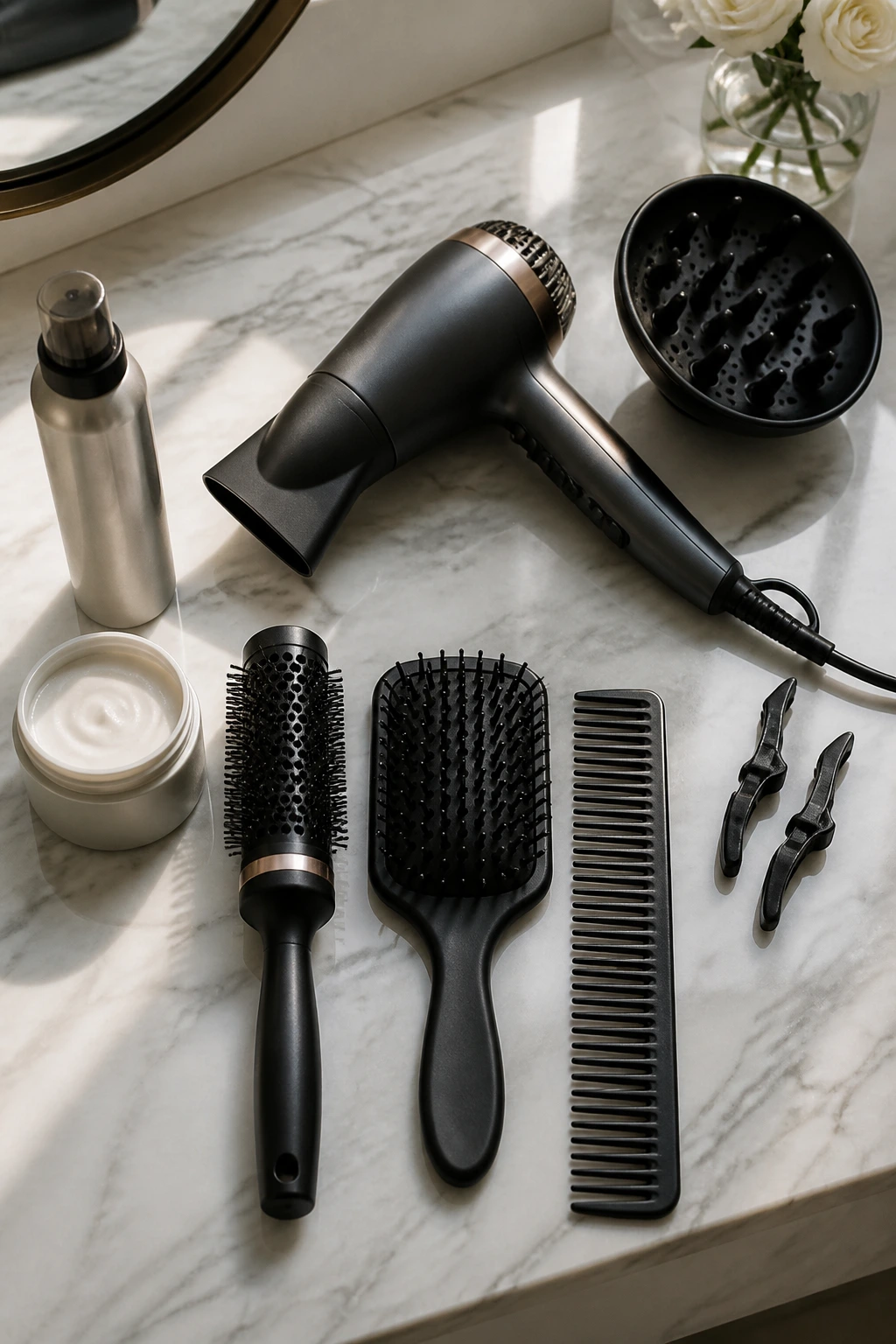
-
A blow dryer with a concentrator nozzle: The nozzle helps direct air at the roots and smooths the cuticle without blasting hair everywhere.
-
A small round brush, 1 to 1.5 inches: Useful for bobs, fringes, and any cut that needs a bend at the ends.
-
A paddle brush: Better for smooth shoulder-length cuts and quick daily shaping.
-
A wide-tooth comb: Gentle on curls, waves, and drier silver hair that snaps easily when pulled.
-
Light mousse or root lift spray: Gives support at the crown without the crunch of heavy hairspray.
-
Texturizing cream or paste: Good for pixies, bixies, and short crops where separation matters.
-
A diffuser attachment: Worth using for curly or wavy cuts; it keeps the curl pattern from getting blasted apart.
-
Hair clips: Handy for sectioning when you dry, smooth, or refresh the front pieces.
-
A hand mirror: Useful for checking the nape and back shape, especially on stacked or tapered cuts.
Smart Salon Notes and Product Choices
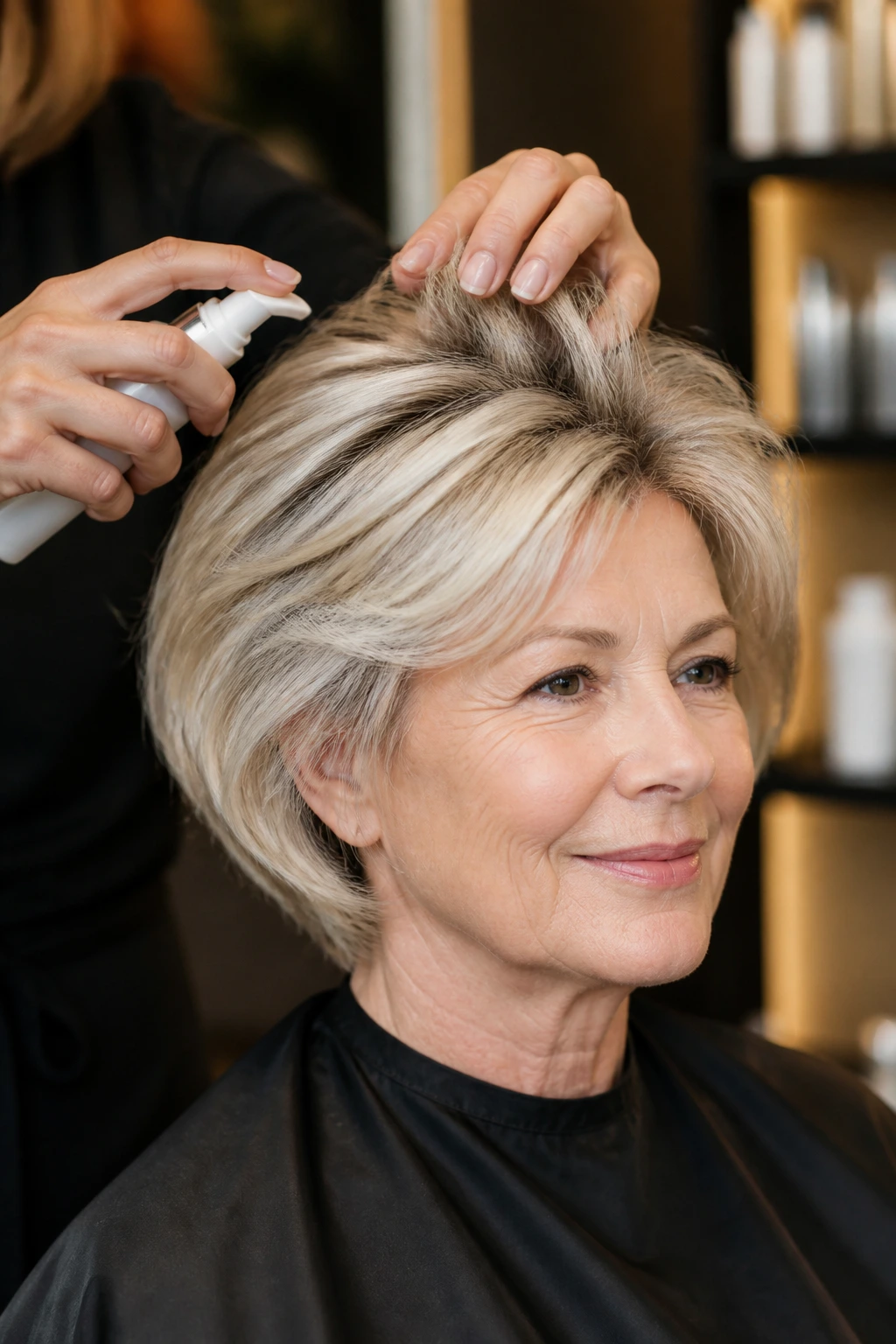
Bring pictures, but bring words too. A photo of a bob tells a stylist almost nothing unless you can say whether you want the ends blunt or soft, whether you style with a round brush, and how much time you spend in front of the mirror. That detail saves more bad haircuts than a folder full of saved screenshots.
Be honest about your texture. If your hair puffs in humidity, say so. If the crown goes flat by noon, say that too. If your hair breaks easily, the stylist needs to know before they start thinning it. The difference between a cut that flatters and one that frustrates often comes down to whether the person holding the shears understands your daily life.
Product choice matters, but not in the overloaded way social media likes to pretend. Fine hair usually does better with lightweight mousse or spray lift than with heavy creams. Curly hair often needs moisture first, then a light hold product to keep the shape from expanding. Silver hair usually wants more softness and less silicone buildup, because buildup can make it look dull and stiff.
How to Wear These Cuts Well Every Day
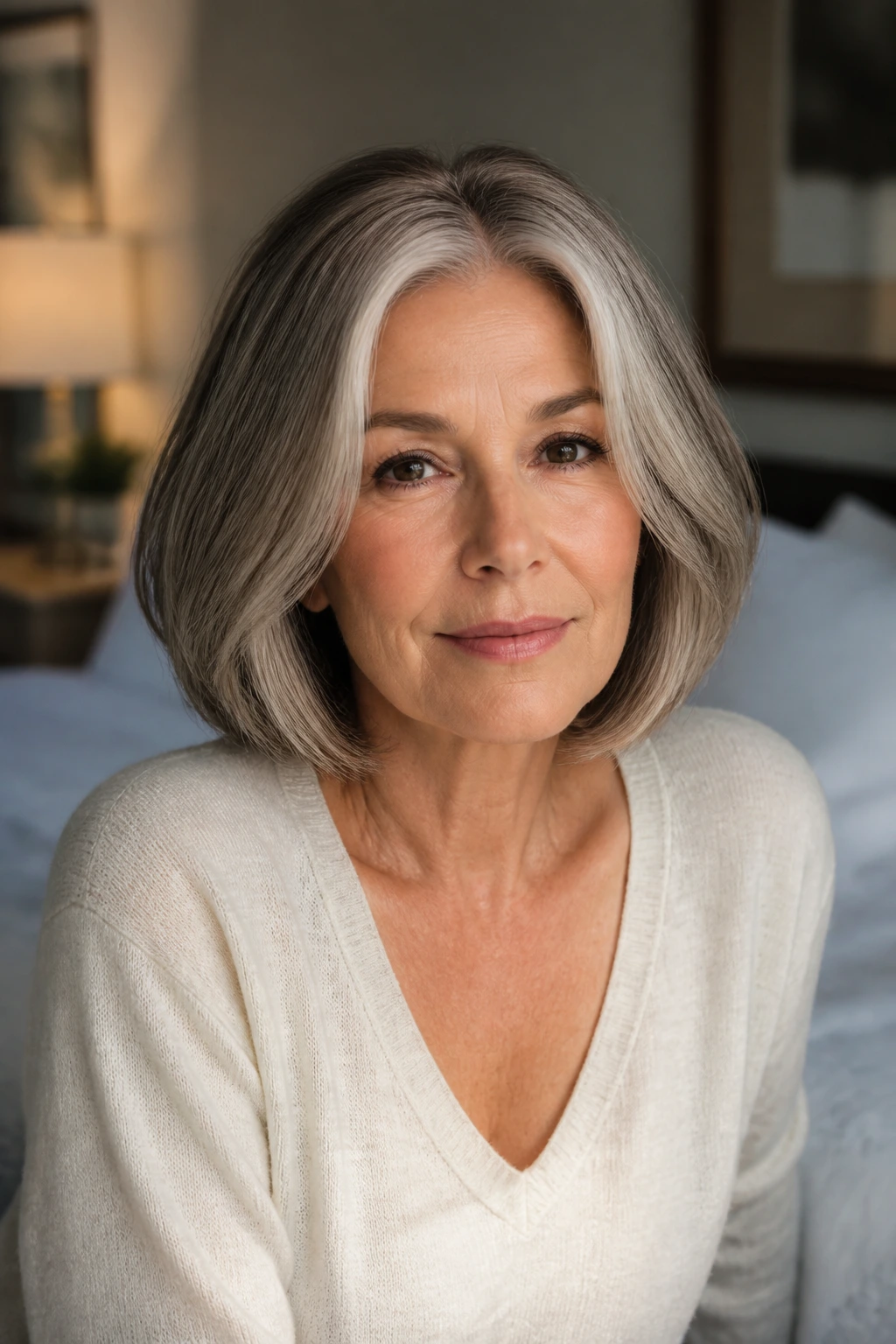
Parting: A center part gives symmetry and calm to bobs and lobs, while a side part can bring lift to flat roots and soften the forehead. Try both in daylight. One will usually make your features look more awake.
Accessories: Glasses, earrings, and necklines change how a haircut reads. A short crop shows off statement earrings. A jaw-length bob can frame a collar or scarf nicely. If you wear chunky frames, keep fringe light so the face doesn’t feel boxed in.
Styling time: Pixies and crops should sit well with 5 to 10 minutes of shaping. Bobs and lobs may need a quick blow-dry or a bend at the ends, especially if you want the cut to look polished instead of air-dried into random directions. Choose the style that fits the time you have on ordinary mornings, not the time you imagine you’ll have on a good one.
Finish: A tiny bit of shine serum on the ends can calm silver frizz and make the outline look cleaner. Use less than you think. Too much product smothers the movement that makes these cuts work.
Extra Polish Without Fuss
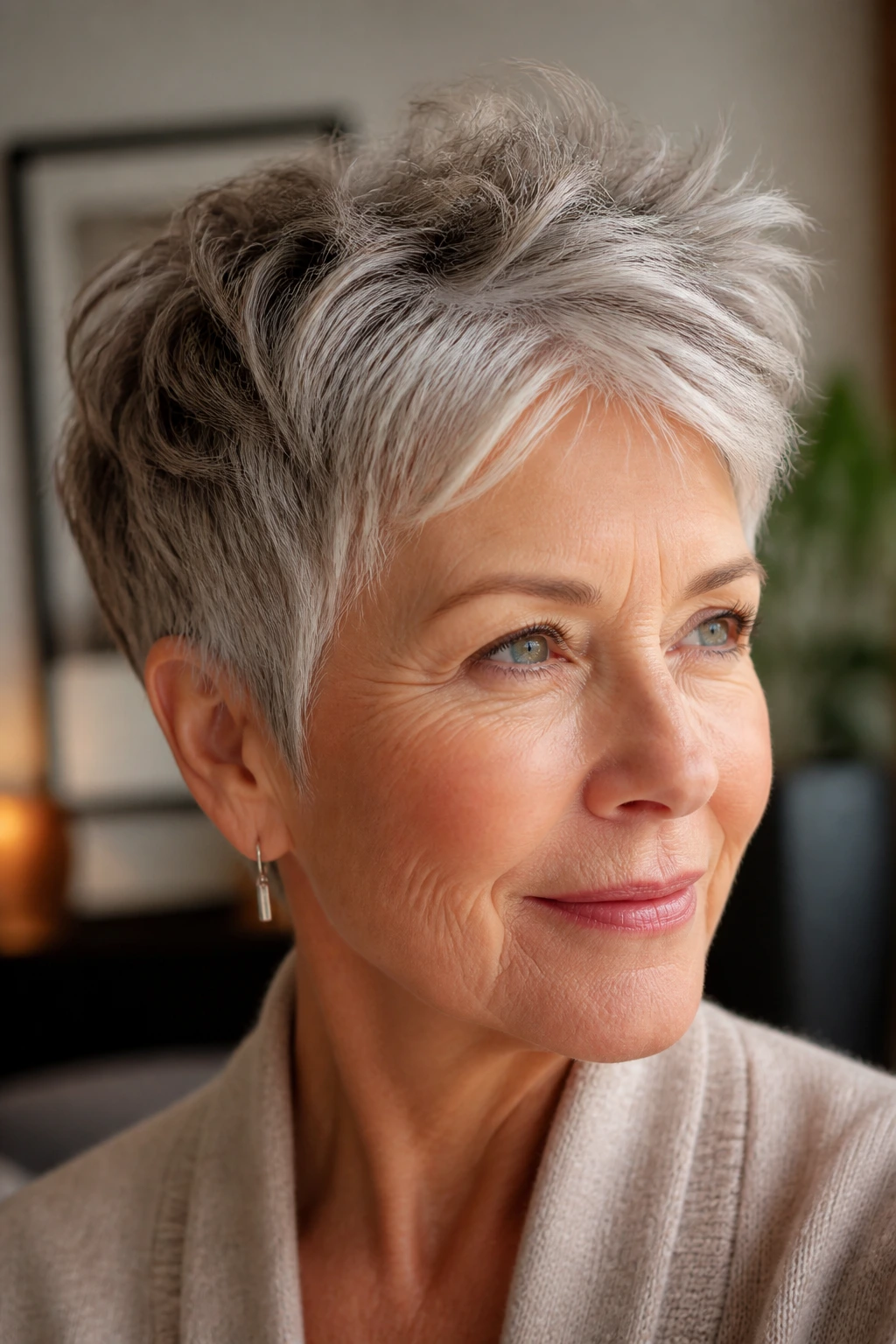
Volume Boost: A root-lifting spray applied to damp hair at the crown can keep a pixie, bixie, or bob from collapsing by lunchtime. Aim it at the roots, not the lengths, or you’ll end up with stiffness where you don’t need it.
Softness: If a cut feels too sharp, ask for a little texturizing around the perimeter or a softer fringe. One or two tiny adjustments can make a short cut look less severe without changing the whole shape.
Polish: A quick pass with a flat iron on the outer layer of a bob or lob can smooth the top while leaving the ends natural. That gives a cleaner finish without turning the hair into a board.
Make-It-Yours: If you love earrings, keep the sides a touch shorter. If you wear glasses, avoid heavy fringe that sits right under the frames. If your hair is naturally wavy, ask for a cut that lets the wave land where it wants to land instead of fighting it.
Common Mistakes That Age a Haircut Fast
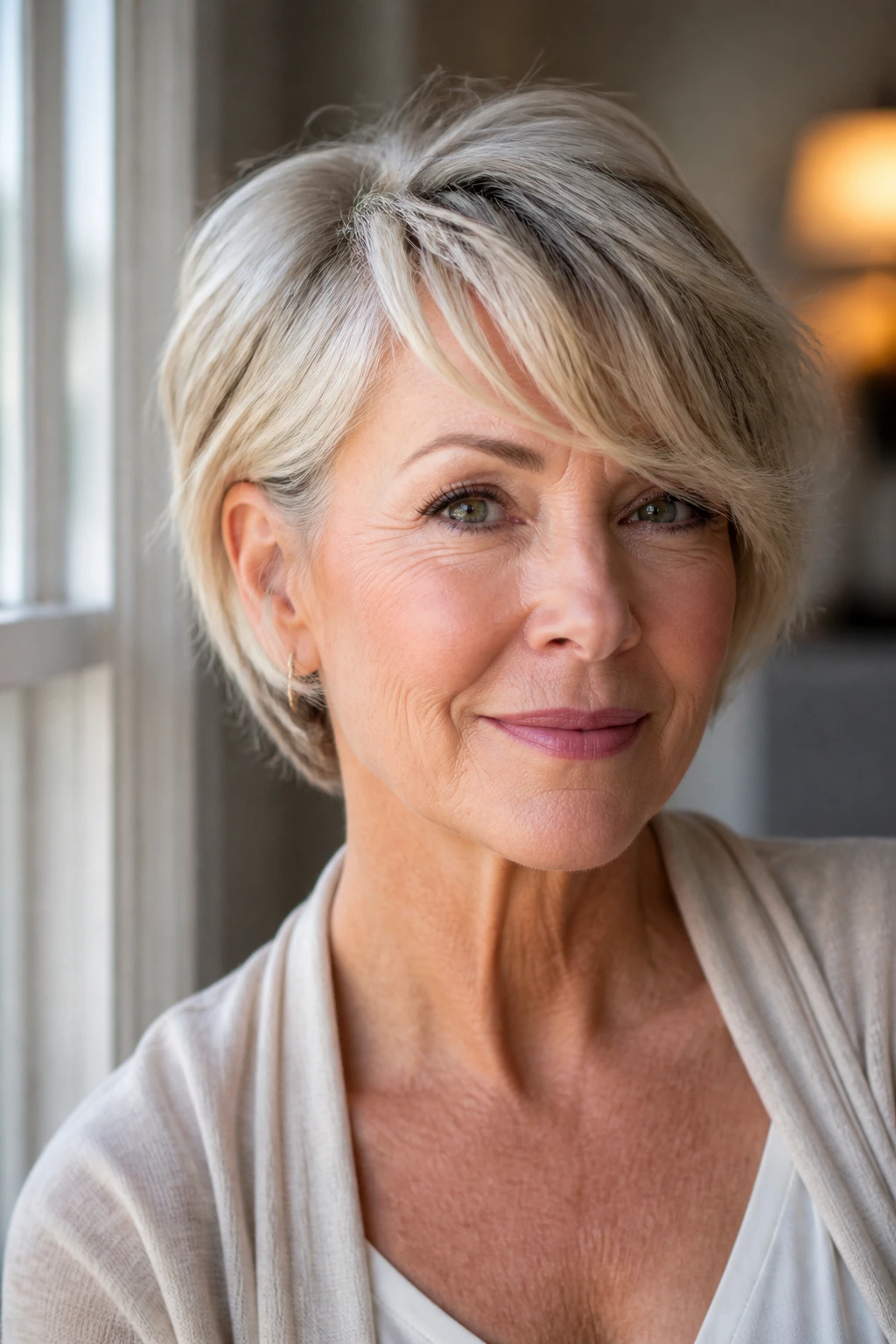
The first mistake is keeping too much length because you are nervous about change. Sometimes that works. Often it doesn’t. If the ends are see-through, dry, and hanging past the point where they still have shape, the cut starts aging the face instead of lifting it. A cleaner perimeter usually looks better.
The second mistake is over-layering fine hair. People think layers create movement, and they do — but too many layers can erase density and leave the ends wispy. Fine hair usually wants a solid line with just enough internal shaping to avoid heaviness.
Another problem is ignoring the crown. Flat roots at the top can drag a whole cut downward, especially on short and mid-length styles. A little lift there changes the profile more than people expect.
And then there’s the fringe issue. Bangs cut too thick can crowd the eyes and need daily wrestling. Bangs cut too sparse can look accidental. The answer is usually a softer, lighter fringe that can be worn forward or swept aside when you are not in the mood.
Last: don’t let a cut grow so long between trims that the original shape disappears. A pixie that needs shaping every five weeks is not being fussy; it is simply a pixie. Letting it go three months and then blaming the style is unfair to the style.
Variations and Adaptations to Try
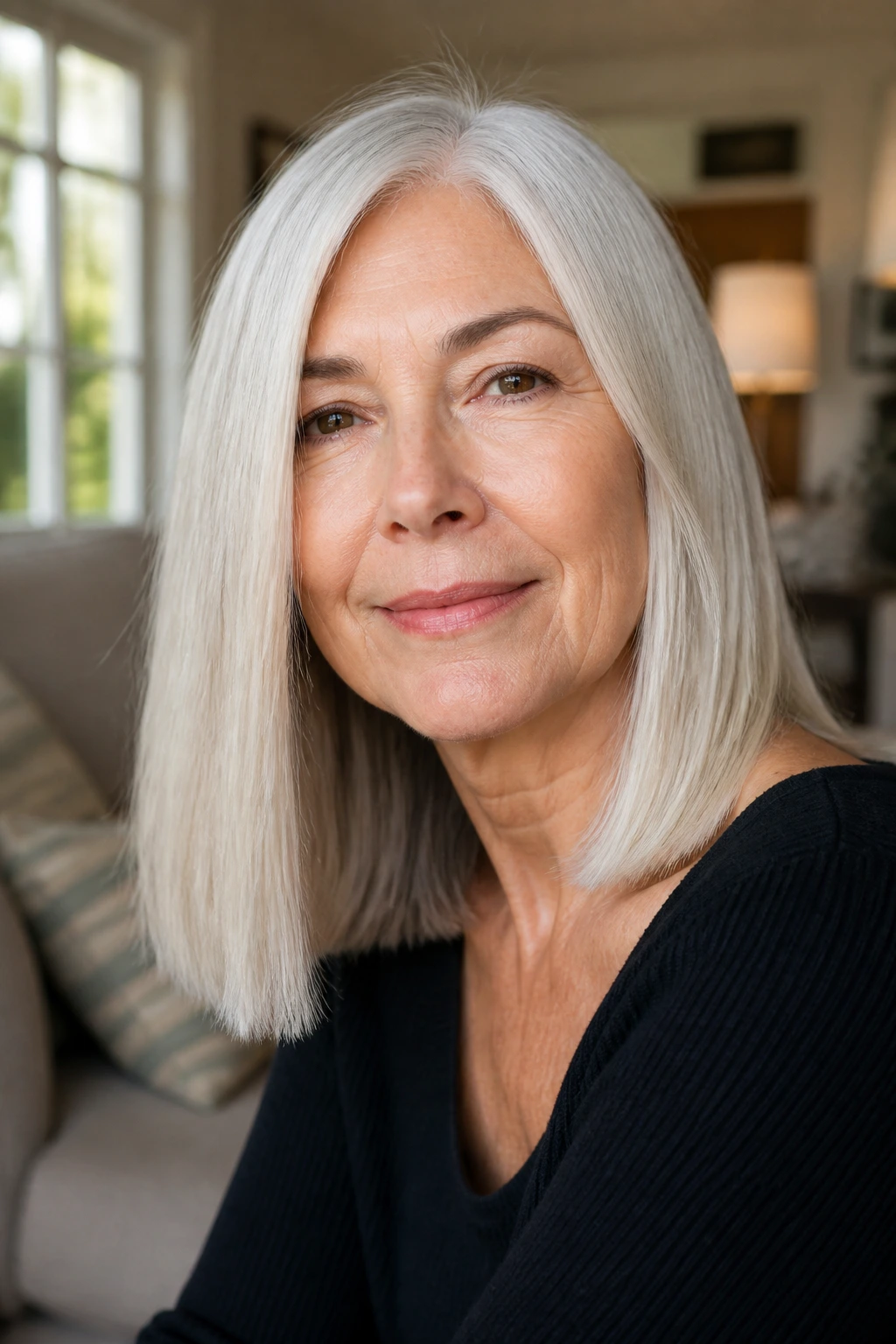
Silver and Sleek: Ask for a blunter line and minimal layers if your silver hair is straight and shiny. The clean edge makes the color look intentional, not faded.
Soft Wave Version: On a lob or shoulder cut, keep the layers long and the fringe light so natural wave can form without frizzing out at the sides.
Curly-Controlled Shape: For curls, keep the silhouette rounded and trim in a way that respects shrinkage. That keeps the top from ballooning and the bottom from turning ragged.
Low-Maintenance Grow-Out: Choose a bixie or collarbone lob if you want a style that still looks fine six weeks after the salon visit. The shape blurs gracefully.
Bolder Fringe Shift: If you want the face to look more open or more modern, add curtain bangs or a side-swept fringe. They change the whole attitude of the cut without forcing a dramatic chop.
Neck-Friendly Cut: If hair touching the neck makes you crazy, go with a tapered crop, a stacked bob, or a short pageboy. The neckline stays cleaner, and summer scarves stop feeling like a negotiation.
Keeping the Shape Between Salon Visits
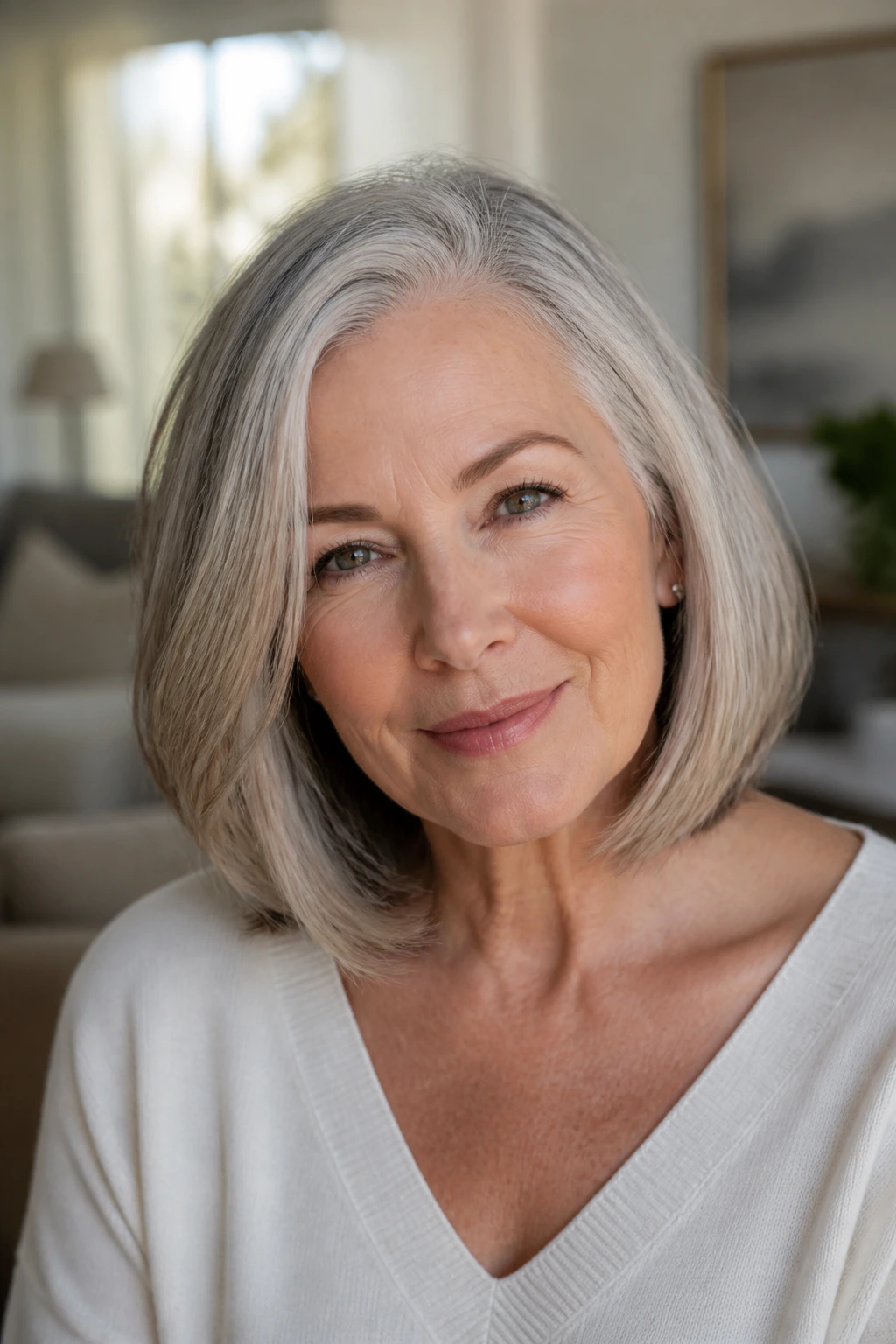
Pixies and short crops usually need shaping every 4 to 6 weeks. Let them go much longer, and the ears start getting swallowed and the crown loses lift. Bobs and French bobs can stretch to about 6 to 8 weeks if the line is forgiving. Lobs and shoulder-length cuts often hold for 8 to 10 weeks, sometimes a bit longer if the ends stay dense.
At home, the goal is not to redo the haircut. It is to keep it behaving. Use a light cleanser if your hair gets weighed down, a conditioner only from mid-length to ends if your hair is fine, and a leave-in if the hair feels dry or rough. Silver hair often appreciates a purple shampoo now and then, but not every wash — overdoing it can leave the hair flat or chalky.
Sleeping on a smooth pillowcase helps more than people admit. So does tying longer hair loosely at the nape instead of pulling it into a tight elastic that leaves a bend across the crown. Between trims, a few spritzes of water and a little cream can revive the front pieces faster than a full styling session.
Questions Women Ask Before Booking the Cut
Which haircut makes fine hair look fuller after 60?
A blunt bob, a stacked bob, or a feathered pixie with crown lift usually gives the most visible fullness. Fine hair needs a stronger outline or a bit of support at the top; too many layers can make it look thinner than it is.
Are bangs a bad idea for women over 60?
No. Heavy bangs can be annoying, but soft fringe, curtain bangs, and side-swept pieces can make a cut look more balanced. The real question is how much daily styling you’re willing to do at the forehead.
Can I still wear long hair and age gracefully?
Yes, if the ends stay dense enough to read as a shape. Long hair works better when it has clean edges, face-framing pieces, and regular trims so it doesn’t drift into stringy territory.
What if my hair is curly and getting drier with age?
Ask for a cut that keeps weight in the right places and avoids over-thinning the ends. Curly hair usually looks better when it is shaped dry or nearly dry, because shrinkage can change the whole cut once it dries fully.
How do I choose between a bob and a pixie?
Think about neck exposure and styling time. Pixies feel lighter and need more frequent trims; bobs give a little more softness around the face and usually grow out more calmly.
Will gray hair look harsh in a short cut?
It can if the outline is too severe, but a softer fringe, a little feathering, or a curved bob edge usually fixes that. Gray hair often looks best when the shape has some movement.
What should I say to my stylist?
Tell them how your hair behaves on day one and on day three, how much you heat-style, whether you wear glasses, and where your hair tends to flatten. Those details matter more than vague words like “easy” or “flattering.”
The Shape That Stays Yours
The best haircut after 60 does not try to turn back the clock. It gives your hair a shape that makes sense now, with the texture it has earned and the life it already lives on your head. Some women will want a close crop. Others will keep a lob, a bob, or soft length around the shoulders. All of those choices can look polished, modern, and entirely personal.
What matters most is that the cut respects the way your hair falls, not the way a photo filter would like it to fall. Bring the style that speaks to you, but bring a realistic note about styling time and maintenance too. That combination usually lands you in the right chair.
And when it does, the haircut stops feeling like a concession. It starts feeling like the most natural version of you.
