



A medium-length curly bob can look sharp in the mirror and then puff into a triangle by lunch if the cut ignores shrinkage, density, and where the curls actually sit when they dry. Layered bobs for medium length curly hair solve that problem when they’re cut with some restraint: enough layering to free the curls, not so much that the whole shape loses its outline.
That balance is the whole game. Curly hair doesn’t fall the way straight hair does, and it never has the decency to behave the same on both sides of the head. One curl cluster can spring up an inch higher than its neighbor, the crown can collapse, and a blunt perimeter can turn into a shelf. The right bob makes those quirks work for you instead of against you.
What I like about this haircut family is that it has room for opinions. You can keep the line clean, stack the back, open up the face, or leave the perimeter heavy and let the inside do the heavy lifting. Some versions look polished with almost no styling, and some lean a little messy in a way that feels deliberate, not accidental.
Why These 17 Shapes Earn Their Keep
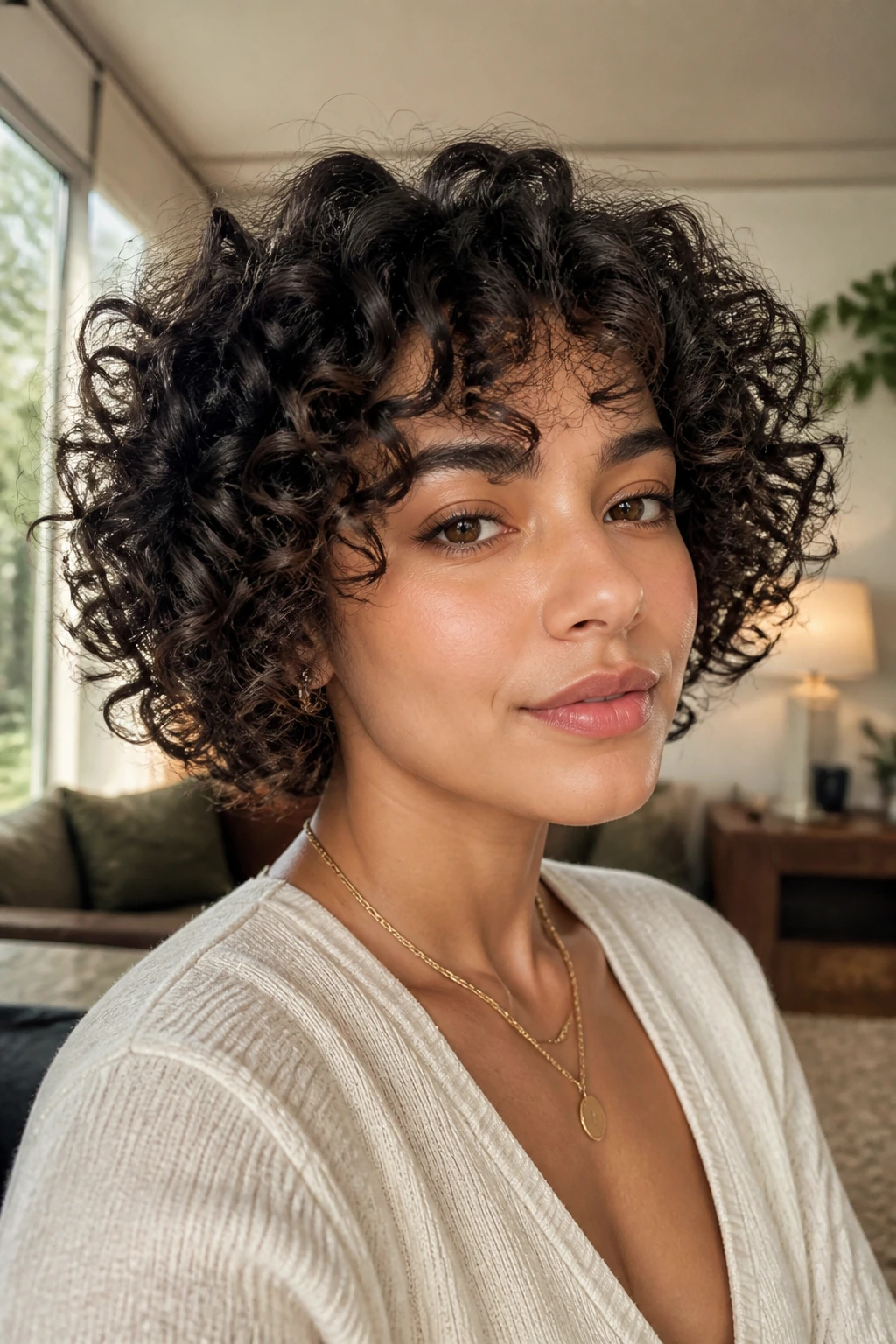
- Shrinkage-aware lengths: These bobs are built around where curly hair lands after it dries, not where it hangs when it’s wet and polite.
- Bulk control without flatness: The best versions remove weight where curls bunch up, then keep enough shape at the perimeter so the ends don’t fray into fuzz.
- Room for different curl patterns: Loose bends, ringlets, and tighter spirals all need different layer placement, and this collection covers that spread.
- Face framing that actually frames: A good bob should redirect the eye toward cheekbones, jawlines, or collarbones instead of stopping dead at one awkward line.
- Grow-out that doesn’t panic you: Several of these shapes keep working as they get longer, which matters when you do not want a trim every few weeks.
- Styling freedom: Some of these cuts love a diffuser. Others look better air-dried. A few barely need more than leave-in and a scrunch.
1. Soft Collarbone Cascade Bob
This is the version I’d hand to someone who wants a bob that still feels like hair, not architecture. The front pieces skim the collarbone, the layers stay soft, and the curls drop into a gentle curve instead of popping out at the cheeks like a spring.
The key is restraint. Too many short layers here will make the silhouette busy, but a low, gradual cascade keeps the ends moving. On medium-density curls, that movement is what stops the cut from looking boxed in.
Why It Works
The collarbone is a useful landing spot for curly hair because it gives the curl pattern room to spring without climbing all the way to the jaw. A dry cut works especially well here; the stylist can see where each curl cluster wants to live and avoid cutting the front too short. If your curls shrink hard, ask for the wet length to sit a little longer than you think you need.
A soft cascade also plays nicely with a side part or a center part. That makes it one of the least fussy bobs in the group. It has shape, but not attitude for the sake of attitude.
2. Rounded Halo Bob with Tapered Ends
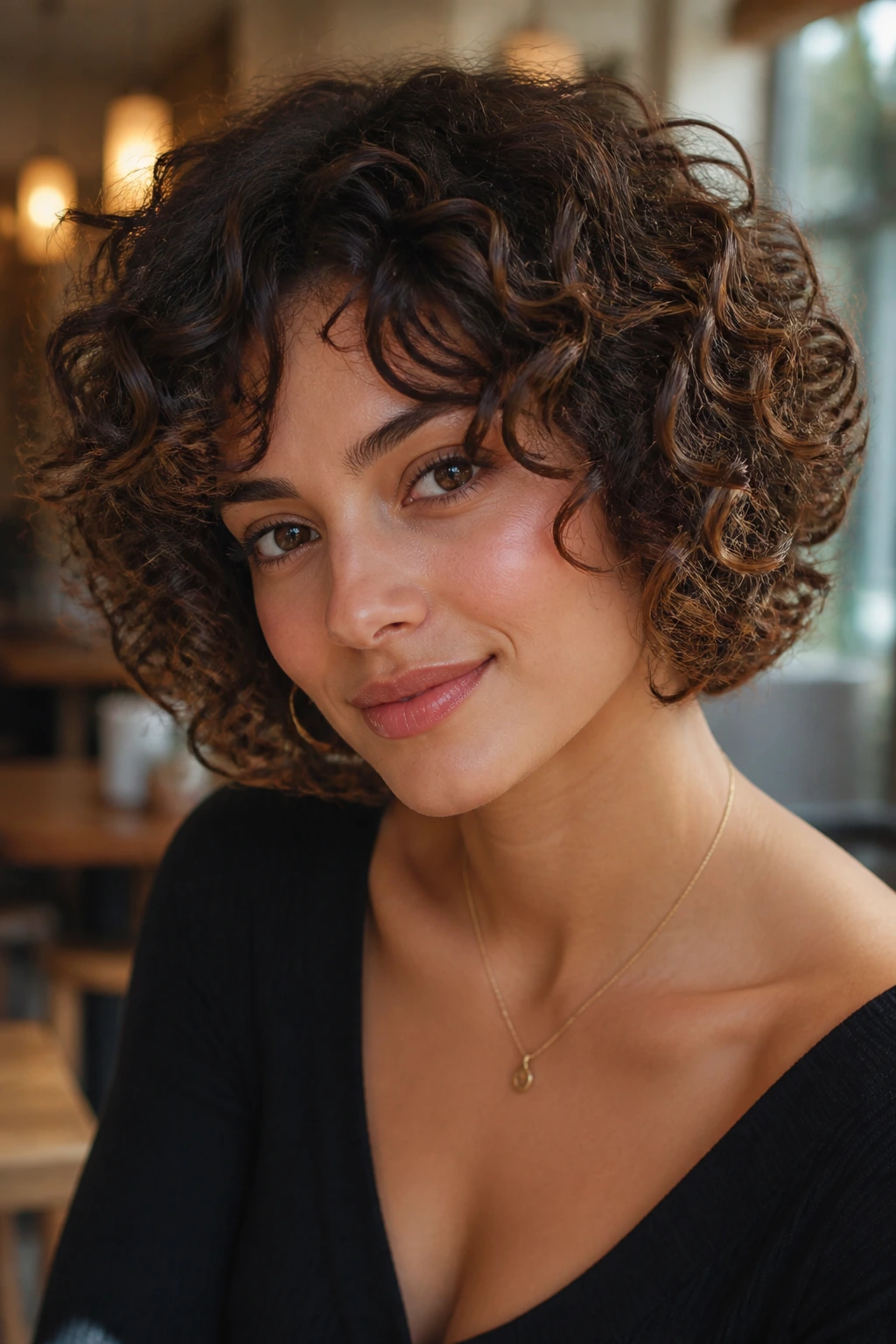
This is the shape that keeps dense curls from flaring out at the sides. The silhouette rounds gently around the head, with tapered ends that let the curl clumps fall into a neat halo instead of a blunt shelf.
It’s a good cut when you want the bob to look full but not puffy. The roundness gives the hair a finished outline, and the taper keeps the lower edge from feeling heavy.
What Makes It Different
The halo shape works because curly hair likes to stack. If you cut every strand to the same line, the curls can kick out at the perimeter and widen the face more than you want. A rounded bob softens that edge and keeps the profile smooth.
This one shines on medium-density curls that already have some bounce at the crown. Diffuse it with the head slightly tipped to one side, then stop drying before the roots go rigid. If the roots are dried flat, the whole halo loses lift.
3. Chin-Grazing Face Frame Bob
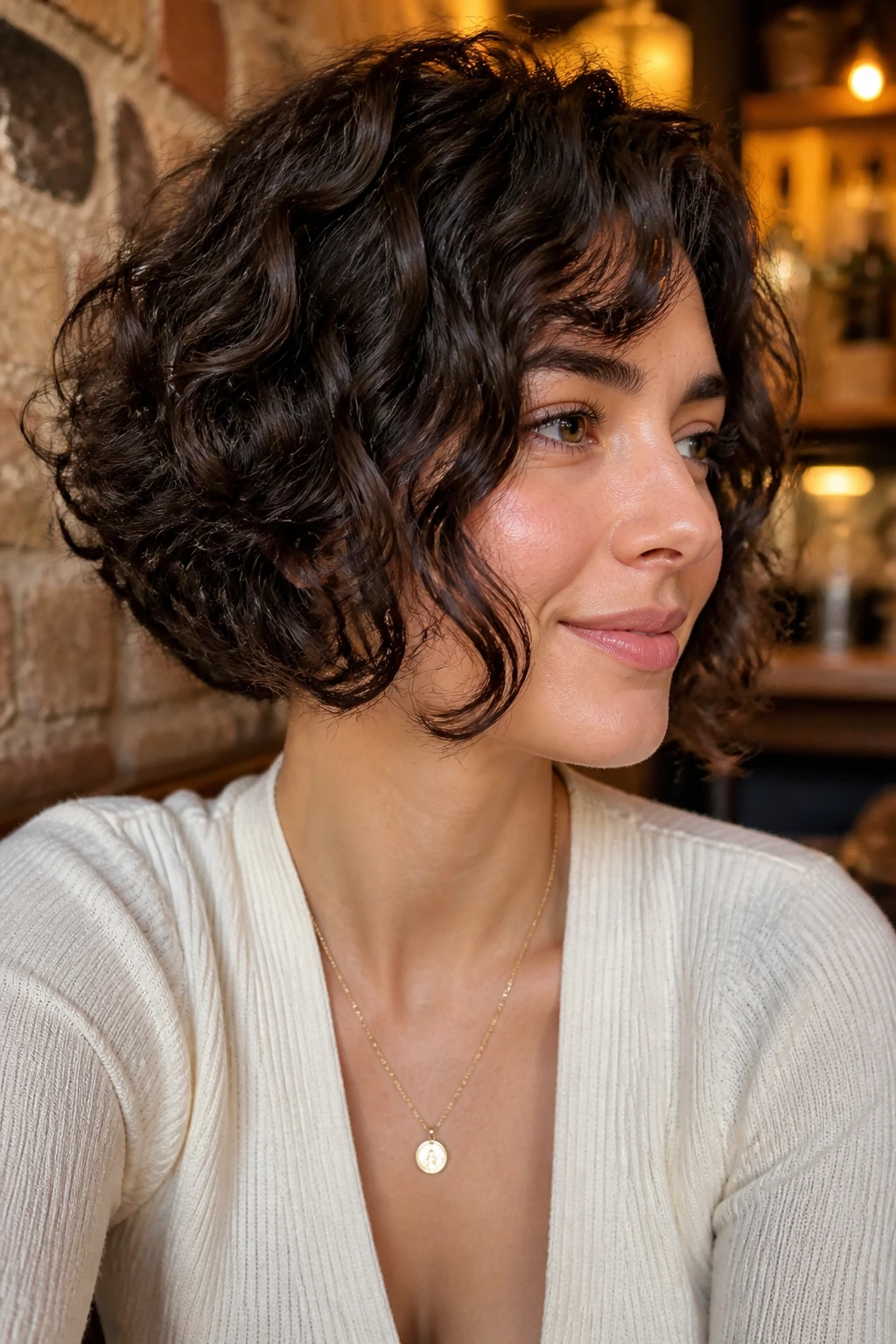
Need a bob that softens the jaw without disappearing into face-framing fluff? This is the one. The front layers hit around the chin, then melt into the rest of the cut so the face gets shape without a hard line cutting straight across it.
The trick is to keep the longest front pieces long enough to move. Curly hair around the chin can look abrupt if the layer lands too high, especially on round or square faces. A chin-grazing frame gives the curls a place to curl inward instead of sticking out like side wings.
Best for
- Round faces that want a little length near the cheeks
- Square jaws that look better with softened corners
- Medium curls that need a clear front shape
- People who tuck one side behind the ear and want it to look deliberate
Ask for the face frame to be blended, not chopped. The difference is obvious the minute the hair dries. One version looks like a haircut; the other looks like a scissor mishap.
4. Airy Curly Shag Bob
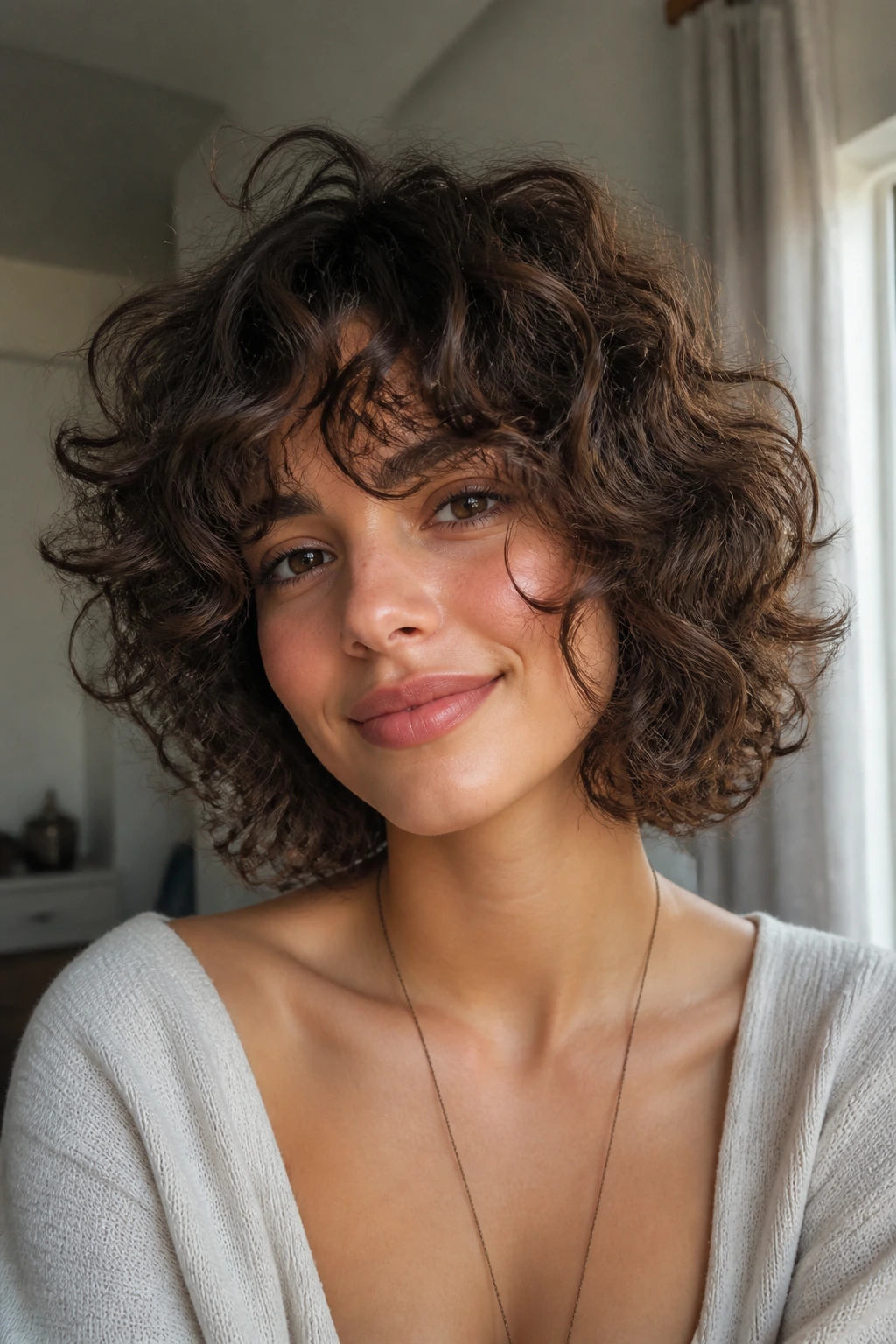
If your roots collapse the second your hair dries, this shape earns its keep fast. The shaggy version keeps layers higher on the crown and through the sides, so the curls can lift without dragging the whole bob down.
It has a little edge to it, but not the kind that looks costume-y. Think soft texture, a bit of crown height, and ends that move when you turn your head. The shape suits people who like the hair to look lived-in rather than polished to the last strand.
How to Make It Work
- Keep crown layers short enough to encourage lift, but not so short that the top looks chopped.
- Leave some weight at the perimeter so the shape doesn’t fray.
- Use a diffuser close to the roots first, then work down the lengths.
- Scrunch in gel while the hair is still wet enough to clump.
This one has a clear personality. It’s not shy.
5. Stacked Nape Curly Bob
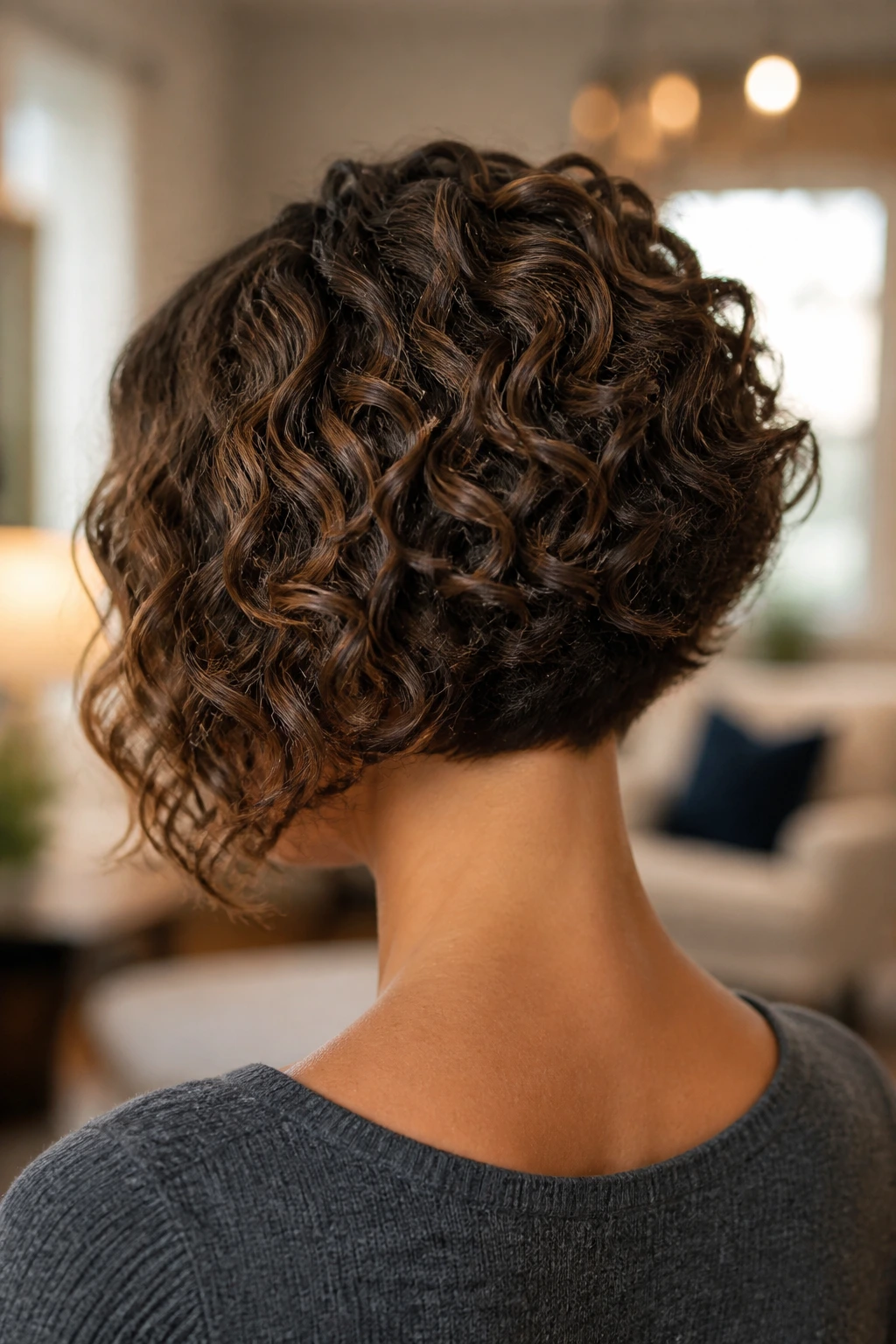
A stacked nape is the cleanest answer to bulky curls at the back of the neck. By removing weight in the lower back and keeping the front a touch longer, the cut lifts itself instead of sitting like a heavy cap.
Stacked shapes can go wrong if the back is overcut, so the layers need a measured hand. You want enough rise to keep the neck area from puffing out, but not so much that the silhouette becomes narrow and top-heavy.
This version is especially good for coarse curls and thicker density. The back gets enough internal support to keep the bob from collapsing, and the front still has enough length to feel medium rather than short-short. It’s a tidy shape. Very tidy. Almost bossy.
6. Deep Side-Part Layered Bob

A deep side part changes the entire read of a curly bob. Suddenly the crown gets lift, one side falls a little longer, and the face gets a softer diagonal line that can make the haircut feel more dynamic without changing the length much.
This is a smart pick if one side of your hair is flatter than the other. It also helps when your part line is stubborn or when you want to pull the eye away from a high forehead. The longer side does a lot of the visual work.
The part is the styling move, but the cut has to support it. Ask for slightly more length on the heavier side and a little interior layering near the crown so the roots can rise. Otherwise the side part just creates lopsided bulk, which is a different problem entirely.
7. Balanced Center-Part Bob

A center-part curly bob can look crisp, but only if the layers are balanced and the front pieces are built to fall evenly on both sides. The medium length here usually sits around the jaw or a bit below it, with enough movement to avoid a stiff, helmet-like outline.
This version works best when the curls already have a fairly even pattern from left to right. If one side is tighter, the center part can exaggerate the difference unless the cut is adjusted. The stylist should check both sides dry and refine the front lengths separately.
Why I’d choose it
It gives the haircut a calm, symmetrical feel. That can be useful if the curls are tight enough to make a side part feel too dramatic, or if you want the bob to read clean at the office and a little softer everywhere else. A center part also makes the face-framing layers work harder, which is handy when you want the haircut to draw attention upward.
8. Invisible Layers for Dense Curls
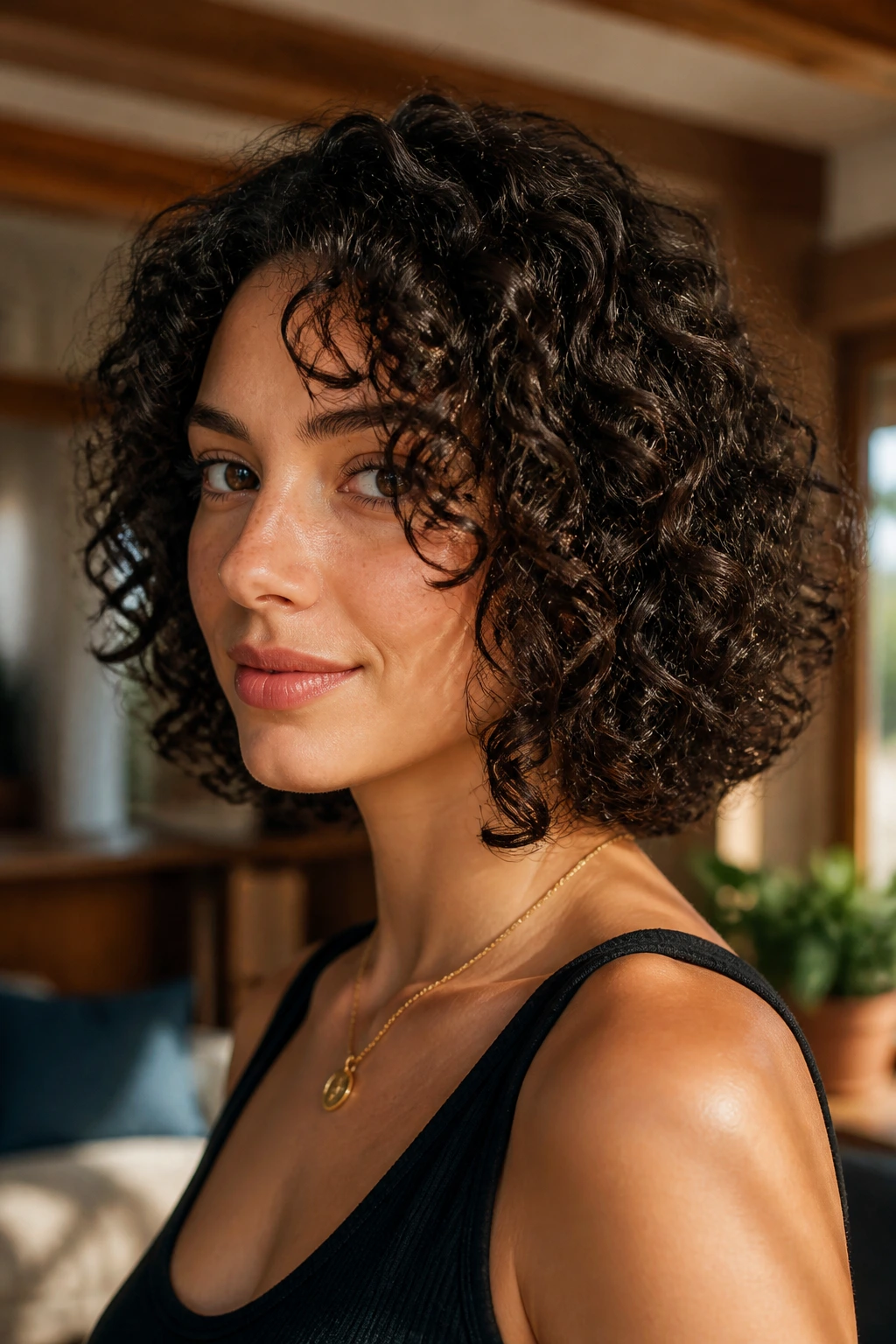
Invisible layers are the polite version of debulking. From the outside, the bob still looks smooth and continuous, but inside the shape, the weight has been removed in a way that lets the curls settle instead of balloon out.
This is one of the best options for dense curls that get wide before they get long. The perimeter stays clean, which matters because a curly bob can turn shaggy fast if the ends are over-thinned. Hidden layers keep the outline honest while lightening the load beneath it.
The best part is that the haircut still looks like a bob when it dries. That sounds obvious, but too many curly cuts drift into “some layers happened in there somewhere.” Hidden layering keeps the structure visible. The hair feels lighter. The shape still has discipline.
9. U-Shaped Curly Bob
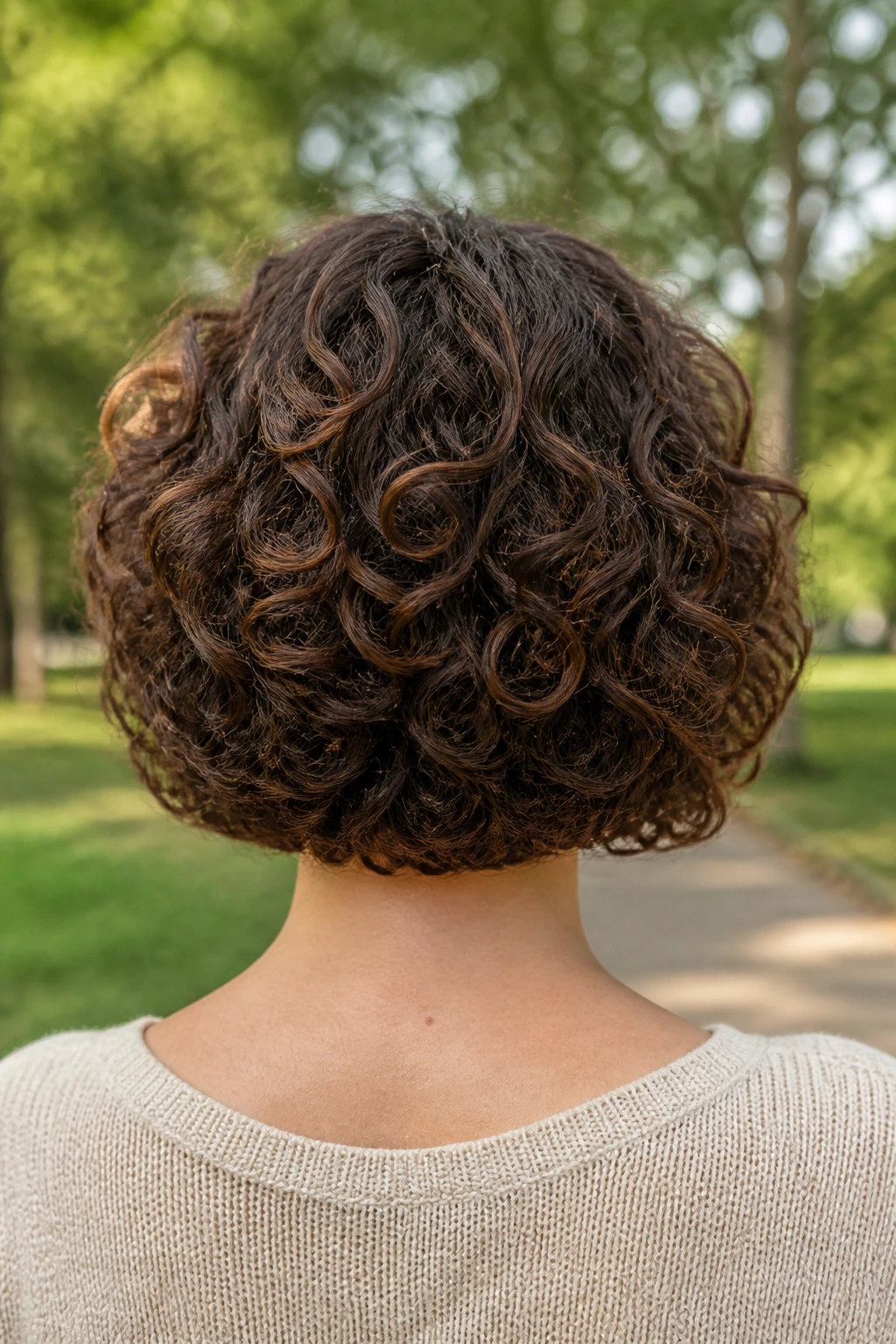
A U-shaped bob is a quieter cousin of the blunt cut. The back lands a touch shorter, the sides drift a little longer, and the whole shape curves gently instead of cutting straight across.
That curve matters on curly hair because it stops the perimeter from reading as a hard horizontal line. On medium length, the U-shape also helps the front pieces stretch the face a little, which is useful if the curls shrink up and sit higher than expected.
Where it shines
It’s good for people who want softness without going full layered shag. The shape has movement built in, but it still feels controlled. If you like tucking the front behind one ear, the longer side pieces make that look intentional, not like you’ve just forgotten one side of your head.
10. French-Inspired Medium Curly Bob

This one has a little Paris-in-the-morning energy, but the useful version of that energy, not the costume version. The length sits around the jaw to upper neck on curly hair, and the layers stay subtle so the bob keeps its compact shape.
The French-inspired version works when you want the curls to look neat with minimum fuss. The silhouette should stay clean near the ends and a little airy through the top. If the stylist goes too choppy, it stops feeling chic and starts feeling like a canceled appointment with scissors involved.
A light fringe can work here, but only if it blends into the front layers. Hard bangs with a curly medium bob are a separate project. This version wants softness, texture, and a perimeter that still knows where it is.
11. Asymmetrical Layered Bob
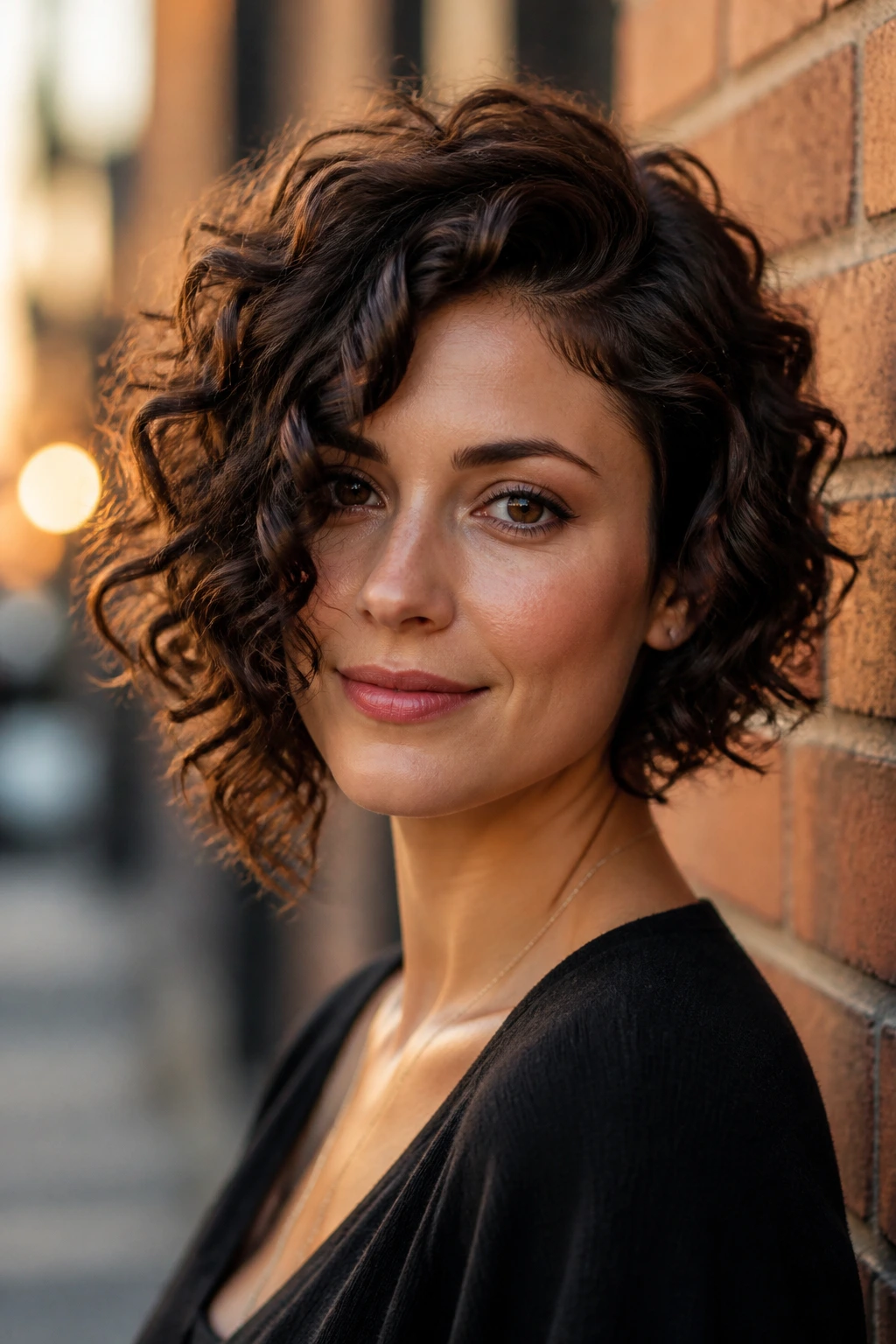
A slight asymmetry can be a lifesaver when the curl pattern is uneven. One side sits a touch longer, the layers are adjusted to suit the heavier curl cluster, and the haircut stops trying to force both sides into identical behavior.
That sounds subtle, but subtle is the point. The difference between a wearable asymmetrical bob and a theatrical one is usually less than an inch. Enough to shift the line. Not enough to feel gimmicky.
This shape is especially useful if one temple curls tighter, one side frizzes more, or your part naturally falls off-center no matter what you do. The asymmetry gives the eye a place to land, so the haircut looks designed rather than compromised.
12. Curved Fringe Bob
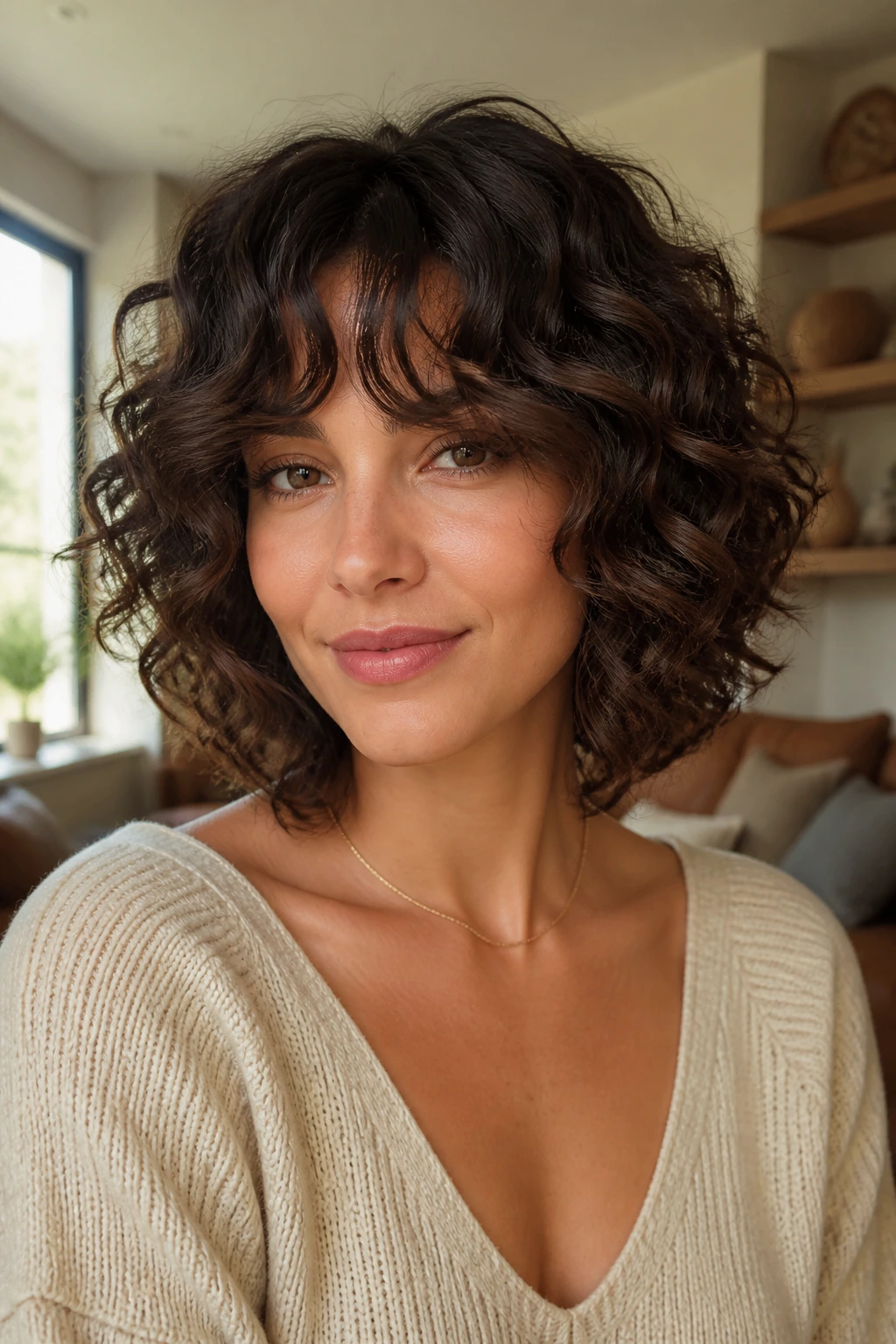
A curved fringe can make medium curly hair look softer around the face without dropping a full curtain of bangs into the eyes. The fringe starts shorter near the center, then lengthens toward the temples so it blends into the side layers.
This shape works because curly bangs need a little forgiveness. Straight-across fringe on curls can shrink hard and sit too high. A curved version gives you the fringe effect while keeping the front flexible enough to grow out cleanly.
What to ask for
- A fringe that lands slightly longer than a straight-cut bang
- Temple pieces that blend into the side layers
- Enough length to curl without springing above the brow
- A dry check before the final trim
It’s a good move if you want the face to feel more framed and less open, but you don’t want to fight your forehead hair every morning. There’s a difference.
13. Wash-and-Go Layered Bob
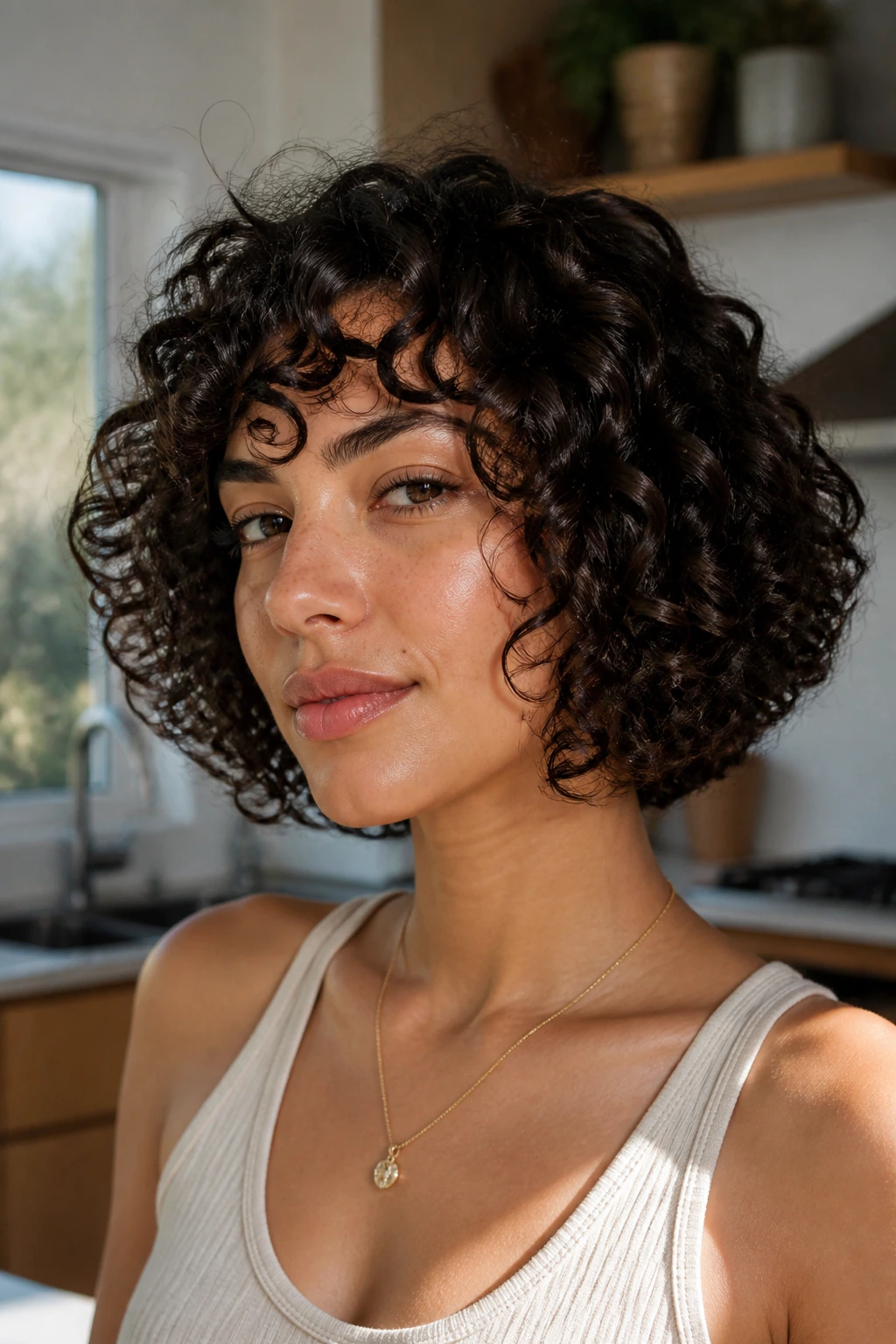
This is the no-nonsense version. The cut is built so the hair can air-dry with very little fuss, which means the layers need to be placed where the curls already want to move instead of where a diagram says they should.
The perimeter stays substantial enough to hold shape, and the layers are concentrated where the curls collapse or swell. A good wash-and-go bob should dry into a recognizable silhouette without a dozen clips, half a jar of cream, or a diffuser session that eats your afternoon.
If your routine is short on patience, this is the kind of bob that respects that. Not every haircut should require a dissertation. Some should just work when you squeeze in leave-in, gel, and a careful scrunch.
14. Shoulder-Skimming Wedge Bob

A wedge bob on curly hair uses a slightly shorter back and a gradually longer top and front to build lift from underneath. On medium length, the result is a shape that brushes the shoulders without sitting on them in a dead, heavy line.
This cut suits thicker curls that like to widen at the bottom. The wedge changes that by creating built-in angle. The back can stay neat, the crown gets a little room, and the front keeps enough length to feel modern rather than retro in a bad way.
It’s one of the better choices if your hair tends to puff at shoulder level. That’s a real problem with curly bobs, by the way. The shoulders are where a lot of shapes lose the fight.
15. Layered Bob for Fine Curly Hair
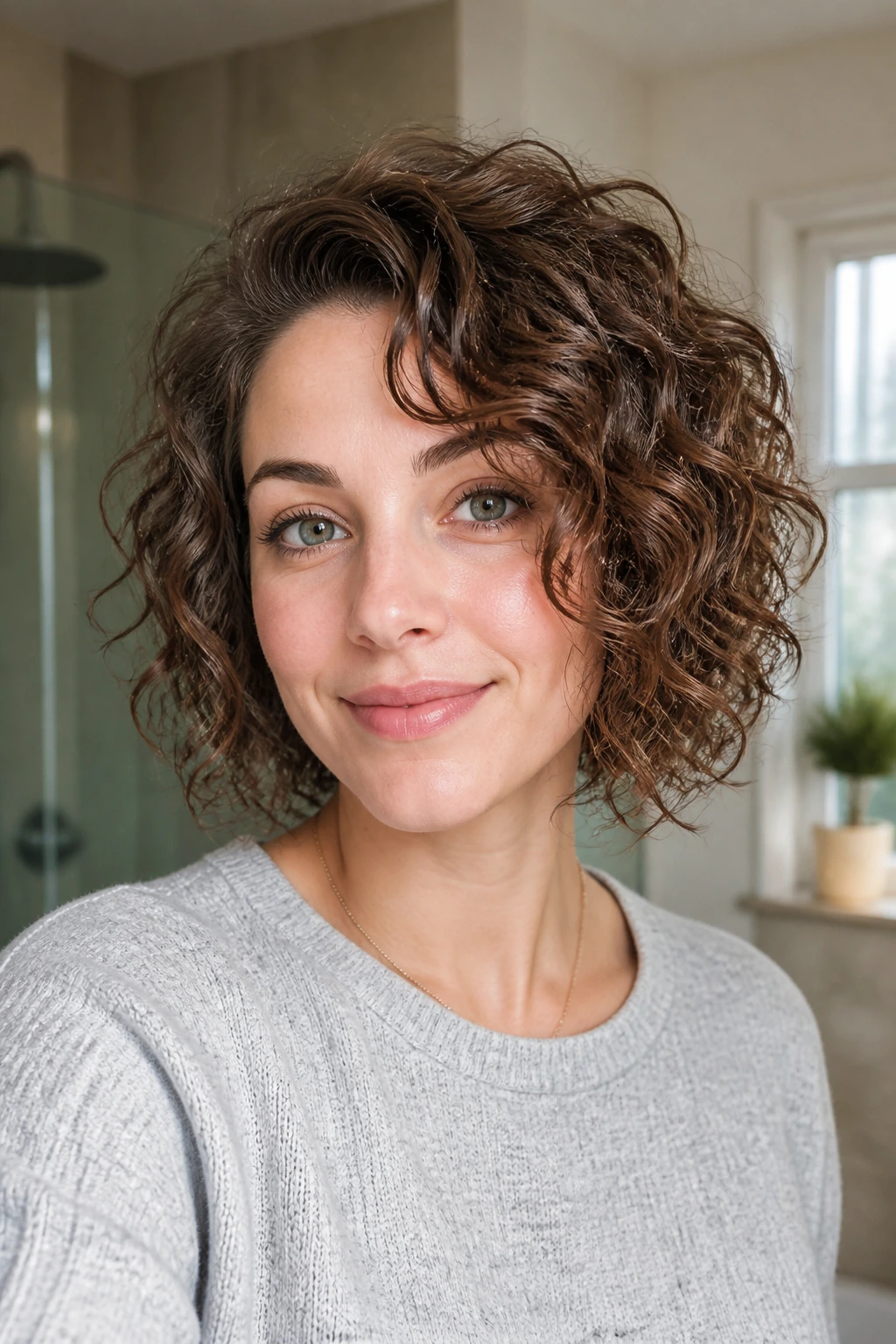
Fine curly hair needs layers, but not the eager, over-chopped kind. The goal is to keep the bob looking full while removing just enough weight for the curls to spring up instead of lying flat and stringy.
That usually means long, sparse layers rather than lots of short ones. The perimeter should stay solid. Too much internal thinning on fine hair makes the ends look see-through, and once that happens, the whole haircut can start to read sparse no matter how good the styling is.
How to keep it from looking thin
- Ask for long layers that begin lower on the head
- Keep the outline blunt enough to hold fullness
- Avoid heavy razor texturizing
- Use lightweight mousse or gel, not dense creams that drag the hair down
This version needs a light touch. Fine curls punish overediting.
16. Layered Bob for Thick, Dense Curly Hair
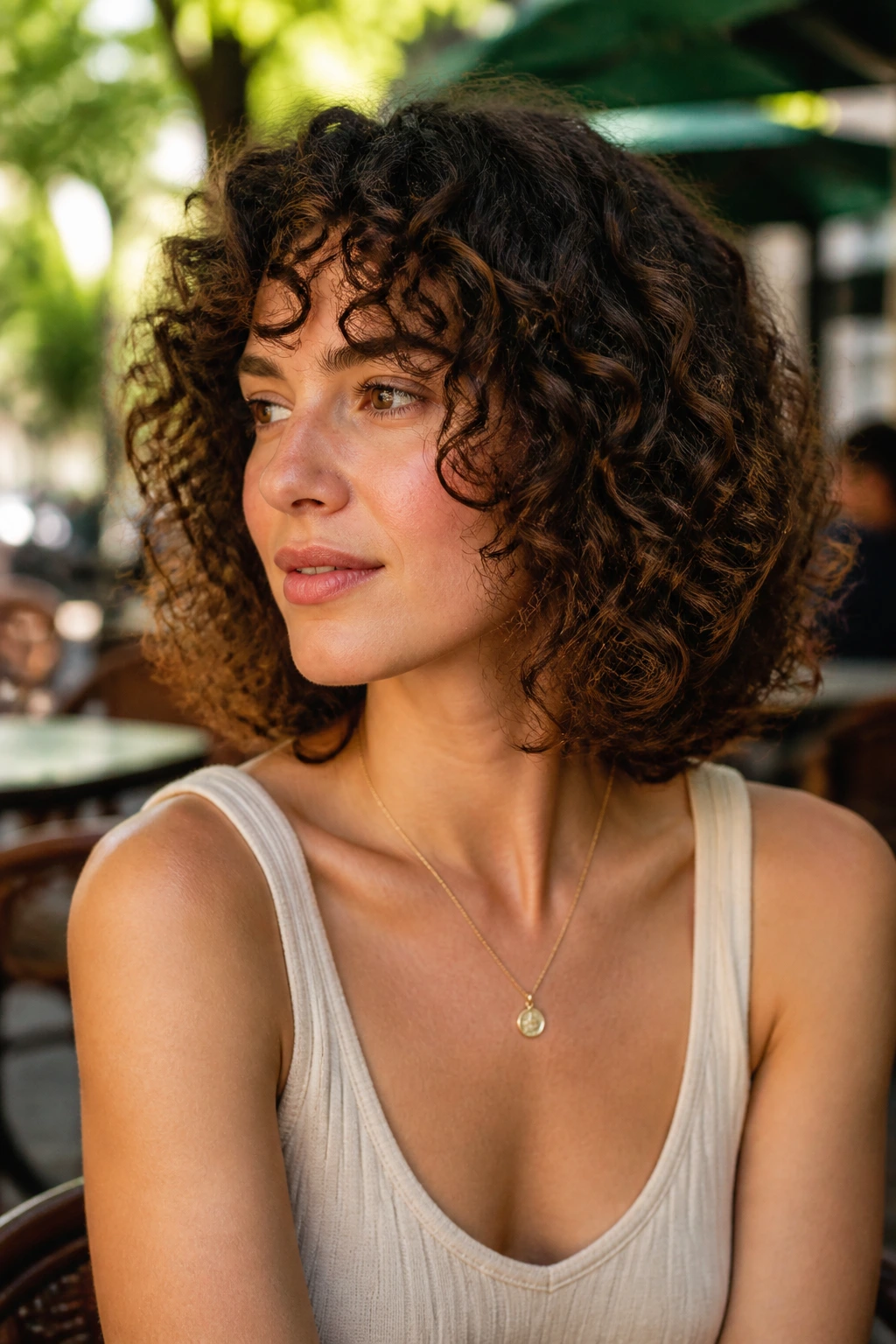
Thick curls are wonderful right up until they decide to become a triangle. This bob fixes that by taking weight out of the interior, letting the curl clusters stack with some air between them, and preserving a controlled edge at the ends.
The important part is where the weight comes out. Not the tips. Not a chaotic shearing of the whole head. The bulk lives underneath, in the middle sections and around the crown, where it can cause the widest expansion. Removing it there keeps the shape cleaner and the neck cooler, which matters more than people admit.
A dense-curly bob usually looks best with slightly longer top layers than you expect. That gives the hair enough weight to fall, which is the only thing standing between “intentional shape” and “large rounded cloud.”
17. Soft A-Line Curly Bob

A soft A-line bob is the version that understands geometry but doesn’t want to make a big speech about it. The back sits a little shorter, the front drifts longer, and the angle stays gentle enough that the cut still feels like a medium-length bob rather than a dramatic slant.
On curls, that front length matters. It gives the hair room to shrink without climbing too high and keeps the face shape from feeling boxed in. A strong A-line can get sharp fast, so the soft version is the one I’d trust more often. It grows out better, too.
This is a good finishing shape if you want a bob that can go to work, air-dry on a lazy day, and still look like someone made a decision on purpose. Which is a nice thing for a haircut to do.
Why Curly Layers Change the Whole Outline
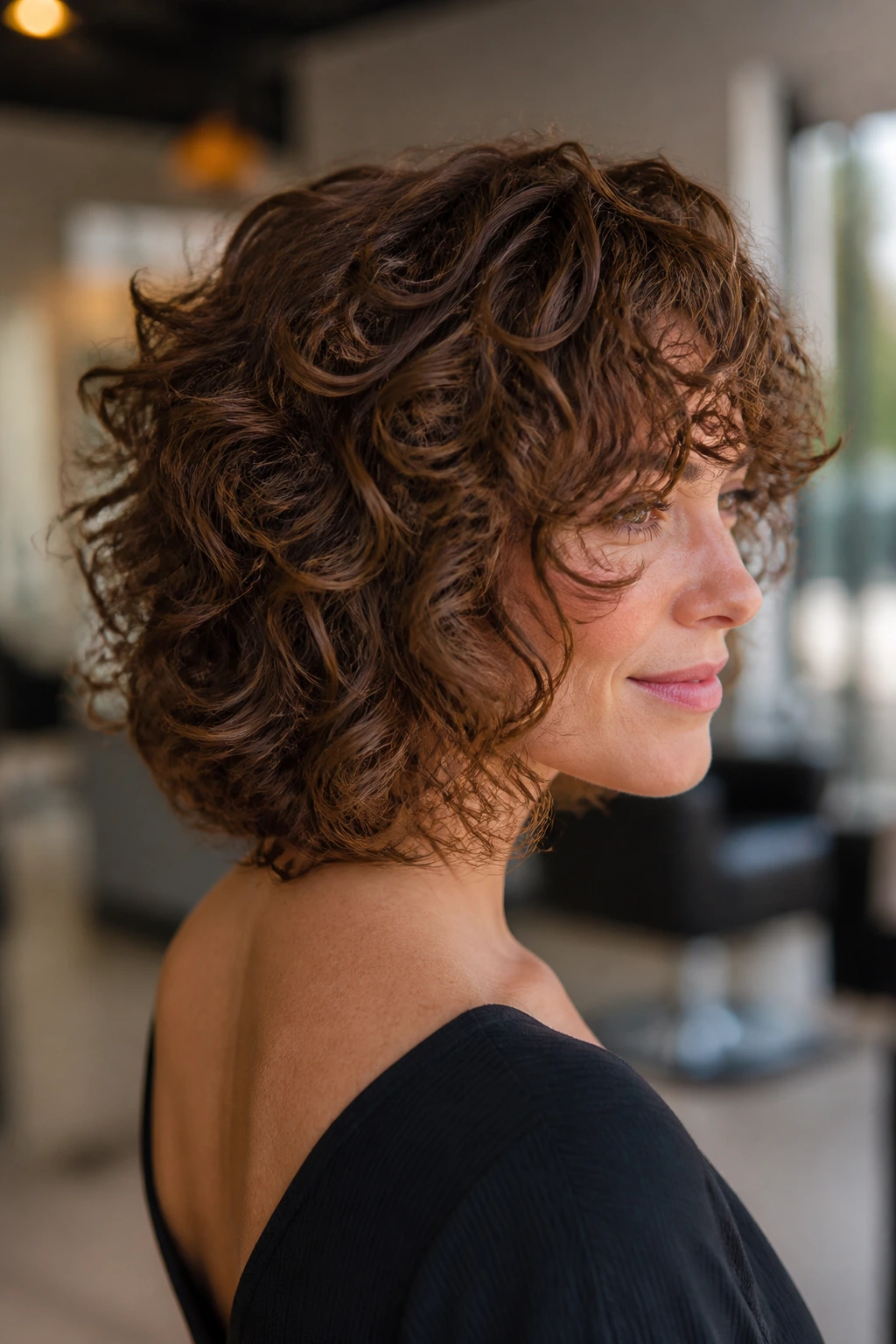
A curly bob is never just about the ends. The layers decide where the curls sit, how much air they hold, and whether the shape moves as one unit or breaks into frizz and bulk in three different places. That’s why medium length is such a useful sweet spot: there’s enough length for weight, enough room for layering, and enough surface area for the haircut to show its work.
Weight, not length, is the real issue
A lot of people ask for “more layers” when what they actually need is less bulk in one exact area. The crown can be heavy. The sides can flare. The nape can sit in a lump against the collar. Each of those problems needs a different fix, and a good bob responds to that rather than blasting the whole head with the same scissor work.
Curls stack, then they spring
Straight hair falls. Curly hair stacks before it falls, and then it springs back. That spring changes everything about the shape line. A bob that looks neat while wet can turn into a wider shape after it dries if the layer placement ignores that spring. This is why stylists who work with curls often cut differently than they would on straighter hair — not because curly hair is mysterious, but because it’s honest about gravity in a different way.
Medium length gives you room to edit
At chin to collarbone length, you can keep a solid perimeter and still carve in internal layers. That’s the sweet part. You have enough room for a face frame, enough length for a graceful grow-out, and enough structure to stop the haircut from becoming a triangle the minute humidity shows up.
How to Ask Your Stylist for the Shape You Actually Want
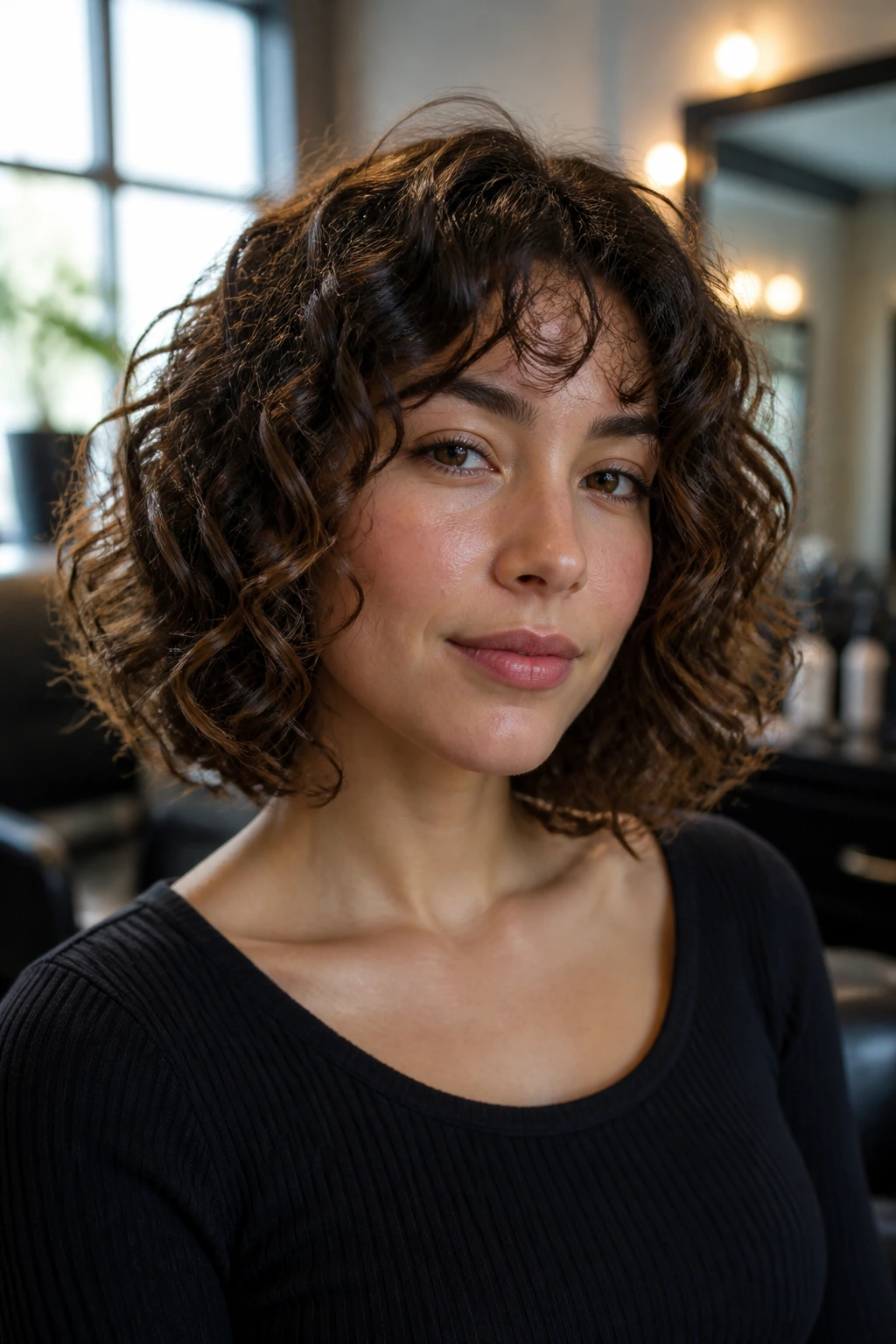
Bring photos, yes, but bring better language too. Photos show shape. Words explain what the photo cannot: your curl pattern, your shrinkage, your tolerance for styling, and whether you want volume at the crown or more width at the sides. Those are not the same thing.
Say the length in plain terms. “Collarbone” means something. “Medium” does not. If you want the bob to hit below the chin when it dries, say that. If you want the front to graze the top of the shoulders, say that too. A curly bob can look several inches shorter after it dries, so dry length matters more than wet length.
Phrases that help
- Cut it with shrinkage in mind. That tells the stylist not to trust the wet length alone.
- Keep the perimeter strong. You’re asking for a shape that still reads as a bob.
- Remove bulk inside, not just at the ends. This is the right language for dense curls.
- Leave enough length in the front to frame the face. Useful if you hate a blunt line at the jaw.
- Check it dry before you finish. Absolutely worth saying if the salon works mostly on wet cuts.
And one more thing. If you know your curls are uneven from side to side, say so before the first snip. That tiny detail saves a lot of regret.
Tools That Keep the Shape Honest

You do not need a drawer full of gadgets to keep a layered curly bob in shape. You do need a few pieces that respect the curl pattern instead of roughing it up.
- Diffuser attachment: Useful if you want root lift without blasting the curl clumps apart. A shallow bowl diffuser usually gives more control than a wide, open one.
- Wide-tooth comb: Best for distributing conditioner through wet curls without pulling them into frizz.
- Microfiber towel or soft T-shirt: A rough bath towel can swell the cuticle fast; softer fabric keeps the clumps together.
- Sectioning clips: Handy for styling the crown separately from the sides, which matters on stacked or side-parted bobs.
- Spray bottle: Useful for day-two refreshes and for reactivating product without starting from scratch.
- Light gel or curl cream: Choose based on density. Fine curls usually want lighter hold; denser curls often need more structure.
- Satin pillowcase or bonnet: This is the least glamorous item on the list and one of the most useful.
If you only buy one extra thing, buy the diffuser. It changes the shape more than most people expect.
Keeping the Shape Between Cuts

A curly bob looks best when it’s maintained like a shape, not treated like a random length that happens to be short. The trim schedule matters. So does the night routine. So does what happens on the second and third day after wash day, when curls start asking for help.
Trim timing
For a crisp bob, 8 to 10 weeks is the sweet spot. That keeps the perimeter from drifting into a mushroom or a triangle. If you like a softer grow-out and don’t mind a little extra length, 10 to 12 weeks can work, especially on medium-density hair that holds its outline well.
Night care
Sleep on a satin pillowcase or use a bonnet. If your bob is long enough to pineapple, loosely gather it at the crown with a soft scrunchie. If it’s shorter, protect the sides and nape from friction as much as you can. Those areas take the beating first.
Refreshing curls
A light mist of water, a dime-size amount of leave-in, and a quick scrunch are usually enough to wake up the curl clumps. If the crown has gone flat, clip the roots for 10 to 15 minutes while the hair dries. That tiny lift can save the whole silhouette.
Wash rhythm
Most curly bobs do well with washing every 2 to 4 days, depending on scalp oil, product build-up, and humidity. If the cut is fine or low-density, you may wash more often because the curls get limp faster. Dense curls can usually stretch a little longer.
The Curly Bob Mistakes That Create the Triangle

The triangle shape has ruined more curly bobs than bad scissors ever did. It usually comes from a few predictable errors, and once you know them, the fix is obvious.
- Cutting too much length off while the hair is wet. Wet curls lie. They shrink after the cut, and the bob ends up too short at the crown or around the jaw. The fix is a dry check before the final line is locked in.
- Over-layering the top. Too many short layers at the crown create frizz and make the silhouette puffy above the ears. Keep crown layers controlled and let the inside of the cut do more of the work.
- Texturizing the ends too aggressively. If the tips look fuzzy or see-through, the perimeter has been overworked. Ask for point cutting or internal debulking instead of a heavy razor pass.
- Ignoring curl imbalance. One side may spring tighter than the other. If the stylist trims both sides identically, the finished shape can tilt or kick out oddly. Check both sides dry before finalizing the line.
- Styling from almost-dry hair. Curl creams and gels spread badly when the hair is no longer soaking wet. The clumps separate, and the bob loses the shape memory that keeps it neat. Apply product earlier.
- Using too much heat too close to the hair. A diffuser parked on one spot for too long can rough up the curl surface and flatten the roots. Move it around. Give the hair a little space.
None of these problems is mysterious. They’re just common.
Variations and Alternatives for Different Hair Goals
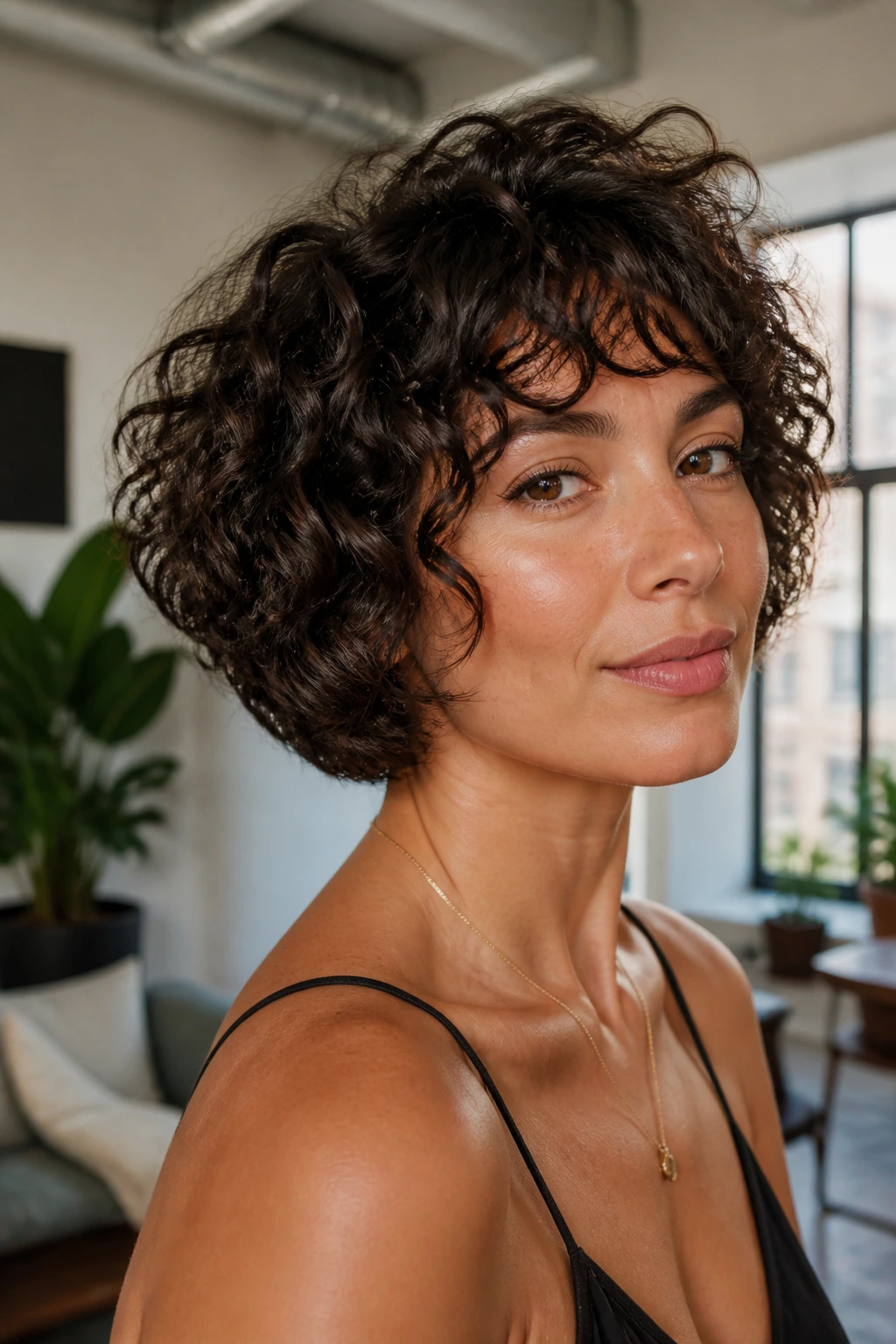
The Longer Grow-Out Lob keeps the front near the collarbone and the layers soft, which is useful if you hate frequent trims. It reads more relaxed than a true bob and gives you a safer buffer when the curls shrink more than expected.
The Crown-Lift Version pushes the layers a little higher at the top and keeps more weight at the nape. That works well for hair that collapses flat at the crown but still needs enough length below to stay medium.
The Fringe-Forward Shape adds a curved fringe or curtain-like front pieces, then lets the side layers merge around the face. Pick this if you like the idea of bangs but do not want a blunt, high-maintenance line across the forehead.
The Quiet Perimeter Cut is the gentlest version of all: a stronger outer line, minimal internal disruption, and just enough weight removal to stop the hair from ballooning. Fine curls and anyone nervous about over-layering usually do well here.
The Side-Part Drama Cut uses asymmetry and a deeper part to make the haircut feel more lively. It’s a useful trick for hair that naturally falls flatter on one side or for anyone who wants more root lift without changing the overall length.
Questions People Ask Before the Chop
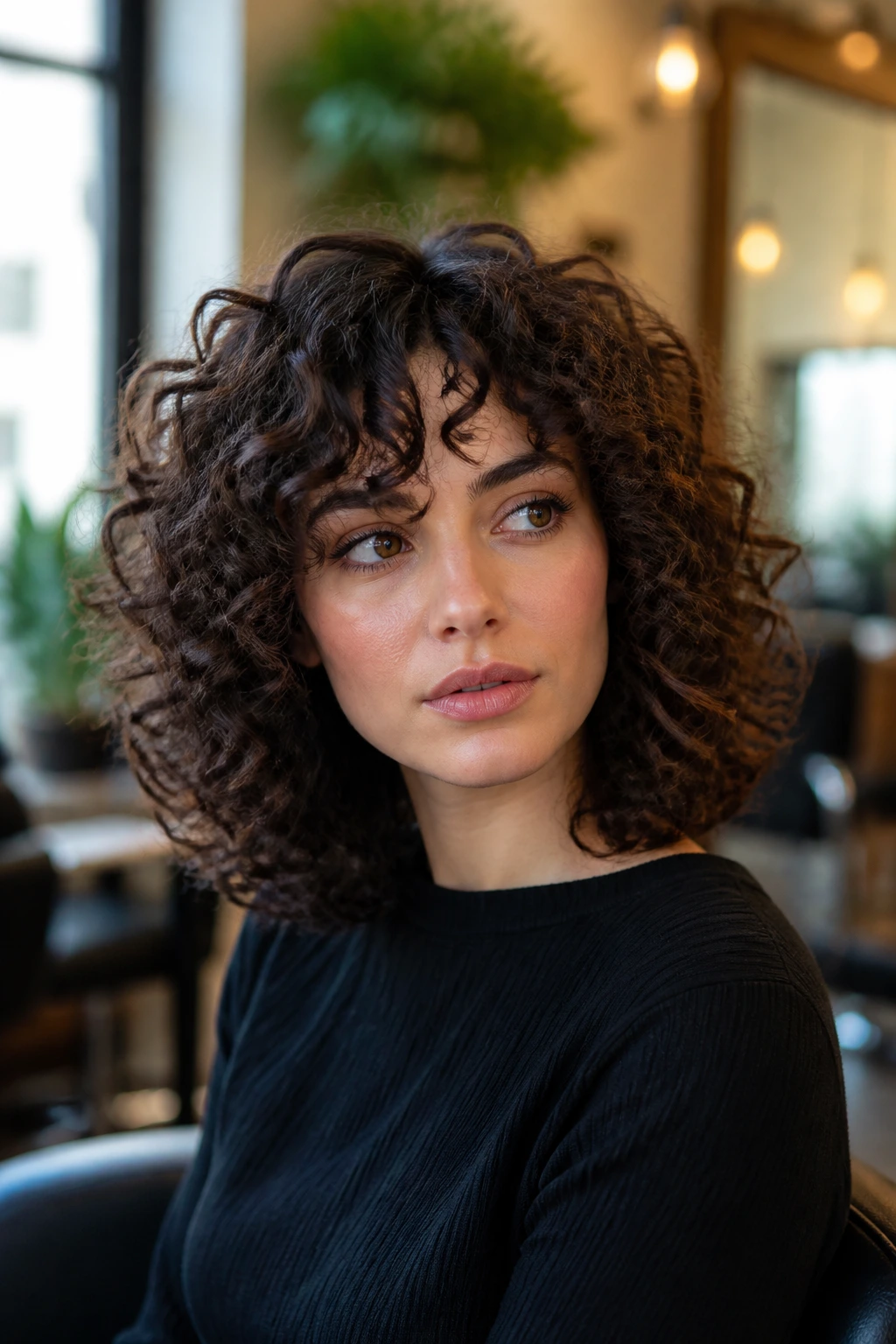
Will layers make curly hair frizzier?
Not if the layers are placed well. Frizz usually shows up when the hair is over-thinned, cut too short at the crown, or handled too roughly while drying. A controlled layered bob should reduce bulk, not scatter the curl pattern.
Should a curly bob be cut dry or wet?
Dry cutting shows the curl pattern and shrinkage more honestly, which is useful for shaping. Some stylists do a dry shape first, then clean up the line wet. That hybrid approach often gives the most useful result for medium curls.
How short can a medium-length curly bob go?
Short enough to clear the shoulders, but not so short that the shrinkage takes it above the jaw unless that’s what you want. For many curl patterns, anything from just below the chin to the collarbone counts as medium once it dries.
What if one side of my hair curls tighter than the other?
Say it out loud before the cut starts. The stylist can adjust the perimeter and layer placement so the uneven curl pattern looks balanced when dry. If they ignore it, the shorter side can jump higher and throw the whole shape off.
Can fine curly hair wear layered bobs without looking thin?
Yes, but the layers need to stay long and sparse. Keep the perimeter solid, avoid heavy texturizing, and use lightweight styling products so the curls clump instead of separating into wisps.
How often should I trim a curly bob?
Every 8 to 12 weeks, depending on how crisp you want the outline to stay. Stacked shapes and stronger A-lines need tighter maintenance; softer grow-outs can stretch a little longer.
What should I do if the bob turns into a triangle?
Don’t panic and do not start chopping at the sides yourself. A stylist can remove bulk inside the shape and soften the crown while preserving the outline. At home, use a diffuser with some root clips and keep the perimeter from drying puffy.
Can I still wear this cut if I air-dry most days?
Absolutely. In fact, several of these versions are built for that. The trick is choosing a shape with enough internal structure that the curls dry into position instead of expanding in random places.
A Shape That Stays Interesting
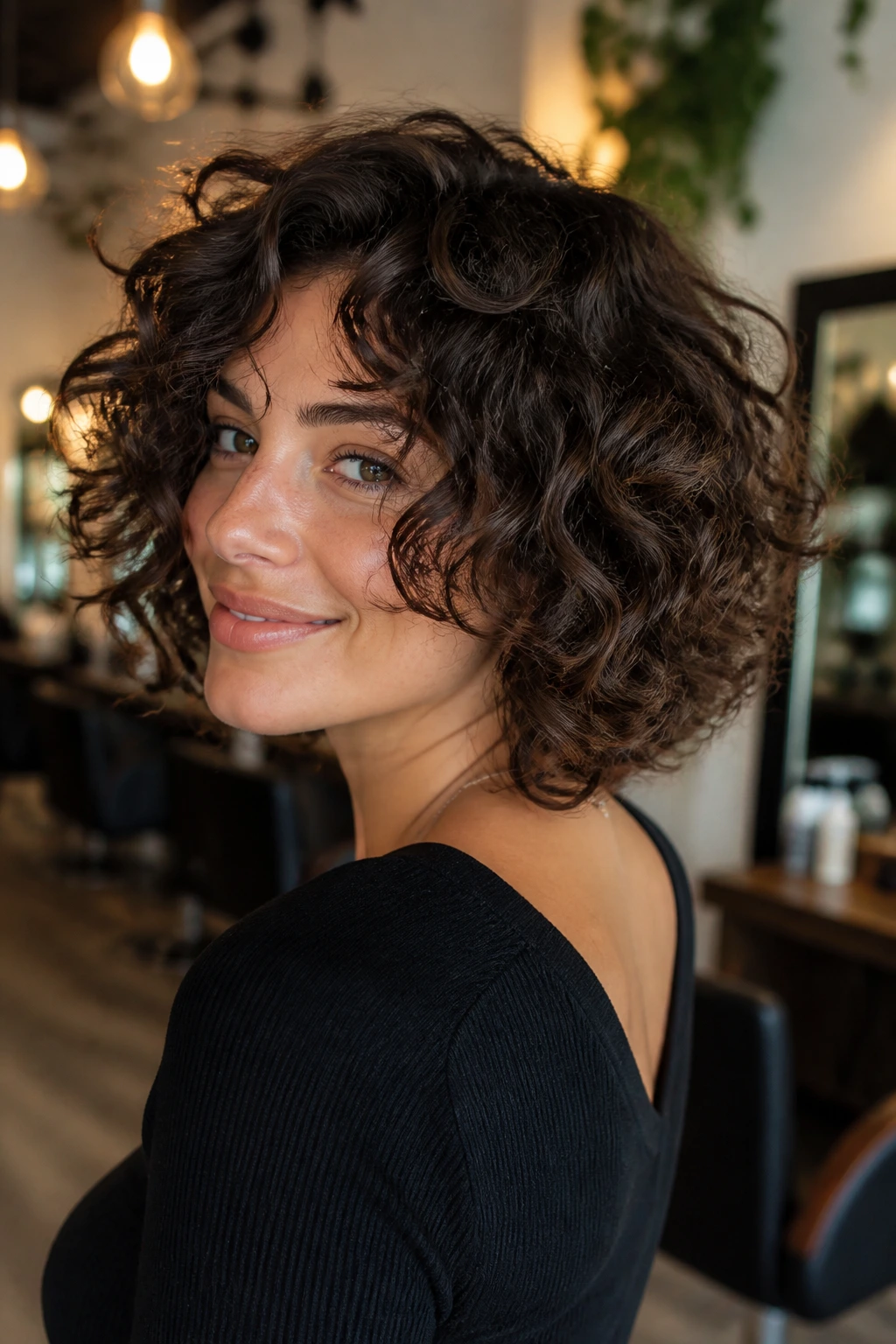
The best layered curly bob is never just “short hair with some layers.” It’s a shape with a plan. The plan can be soft, stacked, airy, asymmetric, or blunt around the edges with the real work hidden inside, but it should always respect where your curls settle and how much bulk they carry.
That’s why medium length is such a useful zone. There’s enough room to sculpt, enough weight to keep the curl clumps honest, and enough length to grow out without the haircut turning dramatic in the wrong way.
Bring a reference photo, name the length in plain words, and say what bothers you most about your current shape. The haircut gets a lot easier to get right when the stylist knows whether you’re trying to fix width, flatness, or that stubborn triangle at the shoulders.
