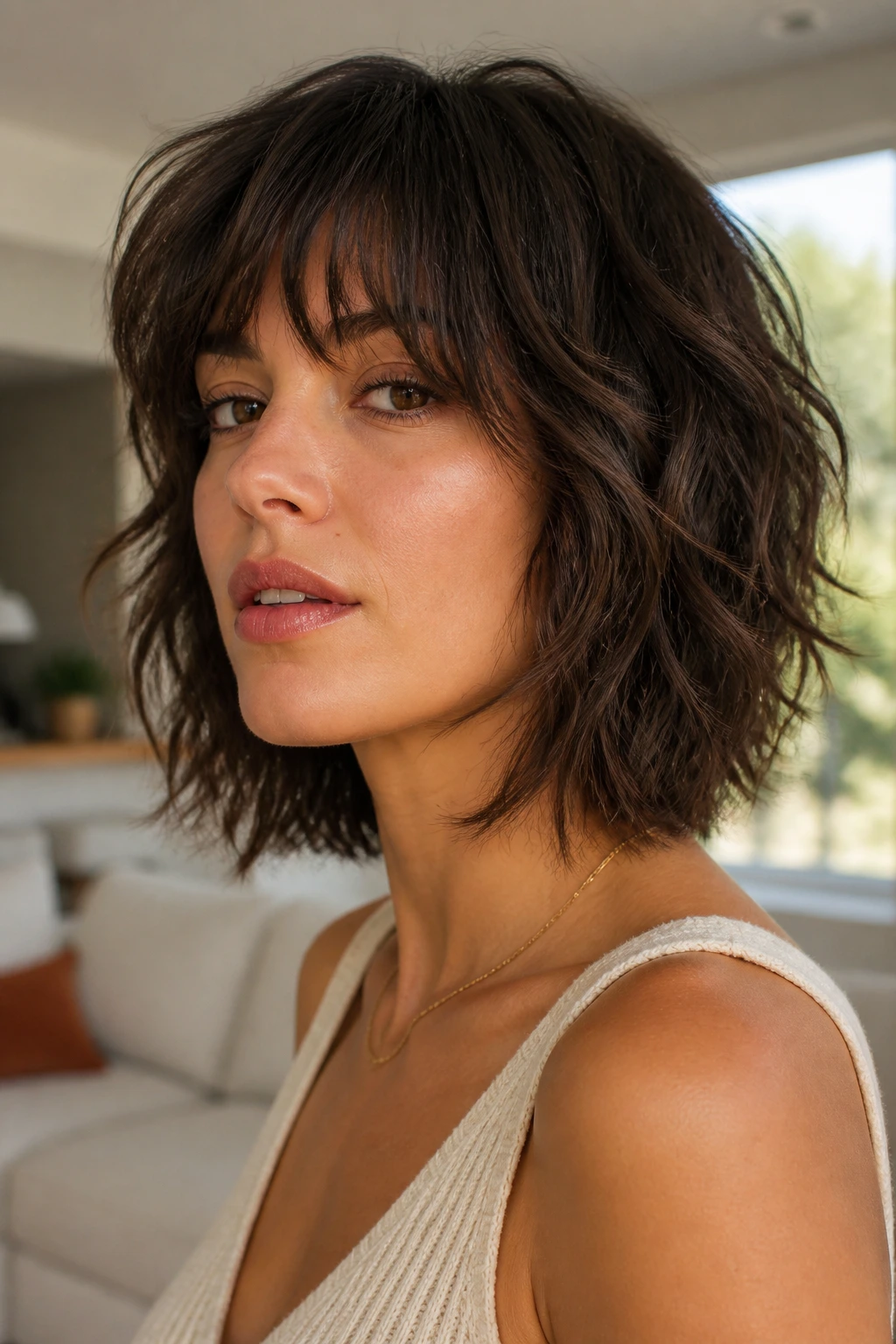
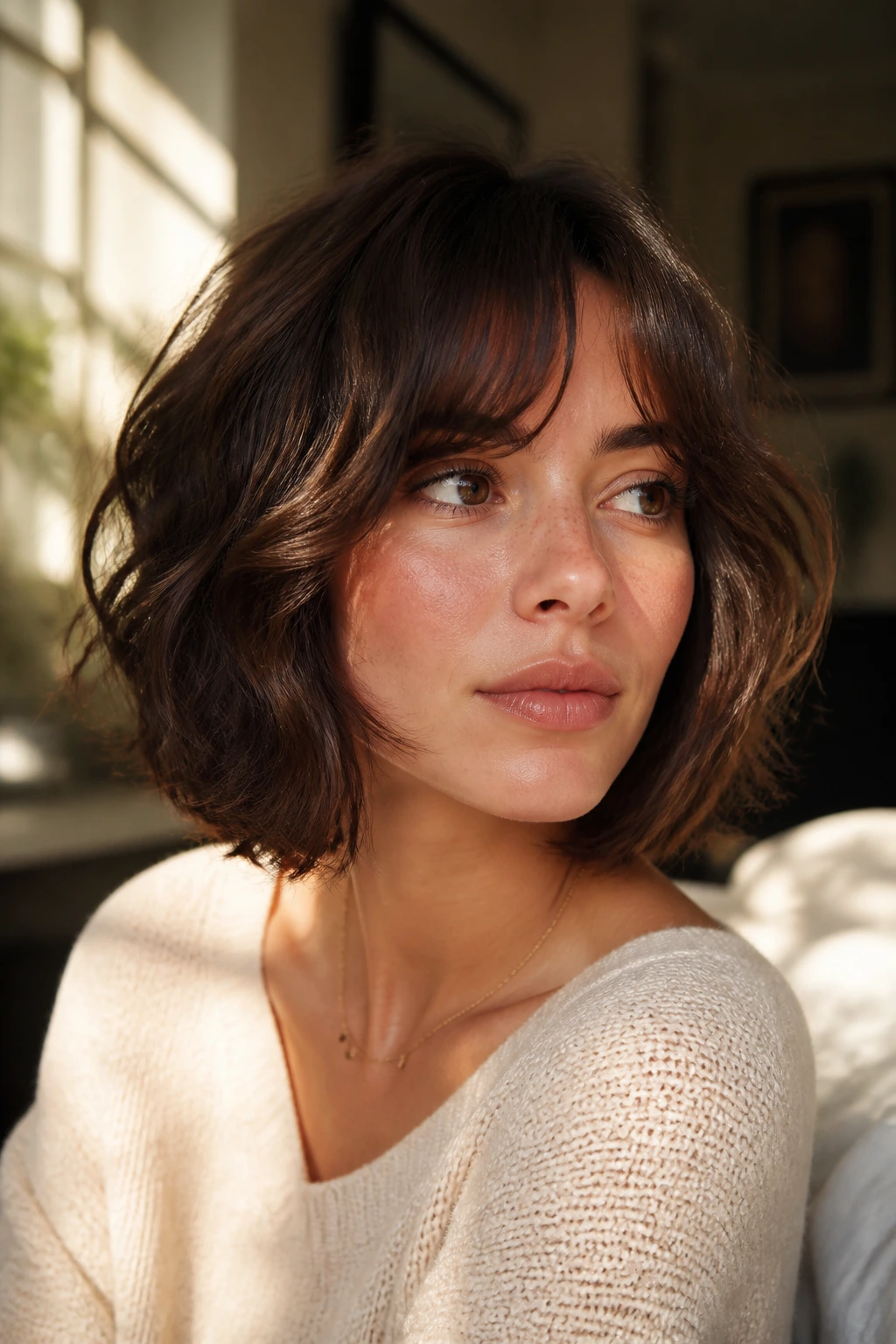
A brunette shaggy bob with bangs on wavy hair has a very particular kind of charm. It doesn’t try to sit still. The ends kick out a little, the bangs break up the forehead instead of boxing it in, and the whole cut keeps moving in that loose, piecey way that makes waves look intentional even when you’ve done almost nothing to them.
That’s why this shape keeps winning in real life, not just in salon photos. Wavy hair can turn blunt cuts into a triangle or make a polished blowout feel like a full-time job. A shaggy bob takes the opposite route. It gives the wave somewhere to land, then lets the texture do the rest. On brunette hair, the layers read even more clearly because shadow and shine show up differently across the cut. Chestnut, espresso, mocha, walnut — each shade changes how the layers catch the eye.
Bangs are the part that make the whole thing feel finished. Curtain bangs soften the front. Bottleneck fringe opens the face. Wispy fringe adds movement without the hard line that can make a bob feel stiff. If you’ve ever looked at your wavy hair and thought it wanted more shape but less control, that’s the sweet spot here.
Why These Cuts Work Better Than a Straight Edge
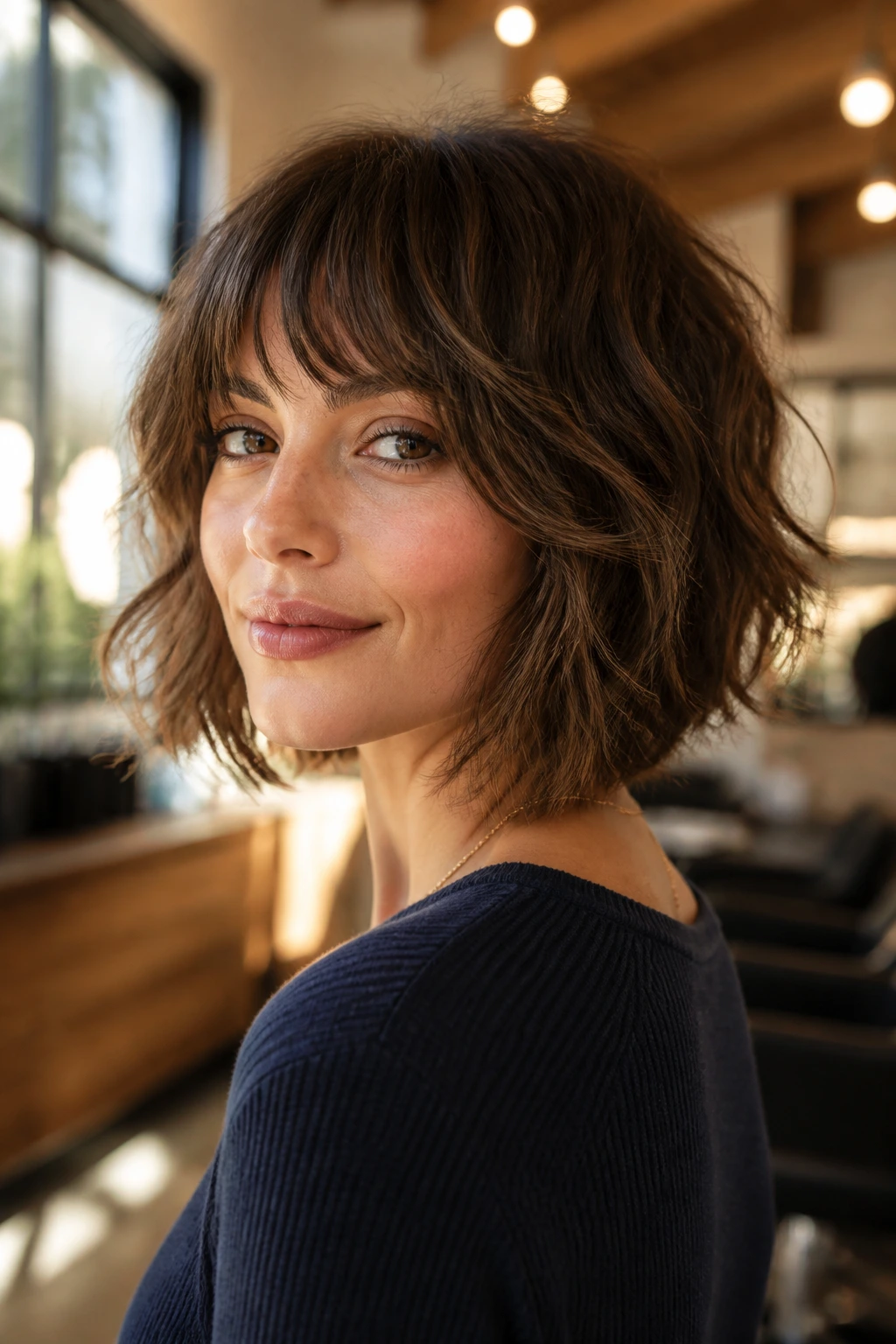
- Waves Carry the Shape: the cut gets movement from your natural bend, so the style looks alive even after a quick air-dry.
- Brunette Tones Show Layering Well: darker hair makes the interior layers, ends, and fringe separation easier to see, especially when there’s a little gloss or dimension.
- Bangs Soften the Bob’s Edge: a fringe keeps the haircut from feeling boxy around the cheeks and jaw.
- Most Versions Grow Out Cleanly: shaggy perimeter lines don’t fall apart the way a hard blunt bob often does.
- Styling Stays Light: mousse, cream, and a diffuser usually do more than heavy blow-drying ever will.
1. Soft Curtain Bangs Shaggy Bob
Curtain bangs and a shaggy bob are a very good match for wavy hair. The center opens a little above the nose, the sides sweep back toward the cheekbones, and the whole front of the haircut feels soft instead of pinned down. On brunette hair, especially chestnut or cocoa shades, those front pieces frame the face without swallowing it.
Why it flatters waves
Waves naturally want to split and fall in pieces, and curtain bangs are built for that behavior. The fringe doesn’t need to be dead even. In fact, a tiny bit of irregularity makes it look better. Ask for bangs that graze the brow in the center and blend into the front layers by the cheekbone, not a thick chunk that sits on the forehead like a shelf.
The best version of this cut lands around the jaw or just below it. Too short, and the curtain bangs can overpower the face. Too long, and you lose the lift that makes the shape feel airy. If you like wearing your hair tucked behind one ear, this is one of those cuts that still looks deliberate when it’s half-pushed back.
2. Piecey Micro-Fringe Shaggy Bob
A micro fringe with a shaggy bob is a bolder move, and that’s exactly why it works. The short bangs create a hard little edge up top, then the wavy bob loosens everything beneath it. It’s a strong contrast. The haircut feels graphic for two seconds, then the texture softens the whole thing.
This one suits brunettes who want the bob to read a little fashion-forward without going full helmet. Keep the fringe cut lightly textured, not blunt and heavy, or it can sit too stiffly against waves. The bob itself should stay choppy through the ends so the fringe doesn’t look disconnected from the rest of the cut.
Good to know
- Best on medium to thick waves: the fringe has enough density to hold its shape.
- Works with sharp brows: the short front line frames them fast.
- Needs regular bang trims: every 3 to 4 weeks if you want the length to stay precise.
- Pairs well with espresso brunette: the contrast makes the fringe show up cleanly.
3. Cheekbone-Grazing Layered Bob
Want the simplest way to lift the face without pulling the whole haircut shorter? Start the layers near the cheekbones. That’s the trick here. The cut sits in bob territory, but the movement begins high enough that the wave seems to spring away from the face instead of hanging on it.
This shape is especially good if your waves flatten at the crown and puff out at the ends. A cheekbone-grazing shag redistributes the weight, which matters more than people think. Brunette hair with a little dimension — walnut, mushroom brown, soft caramel ribbons — makes those layers easier to read, even indoors where the light is dull.
The result looks casual, but there’s real structure underneath. That’s the part I like. You get a cut that can go from coffee run to dinner without a fresh blowout, and it doesn’t scream for perfection when the weather gets humid.
4. Collarbone-Length Shaggy Lob

A shaggy lob gives you the softness of a bob with a little more length to play with. On wavy hair, that extra inch or two helps the wave stretch into a clean S-shape instead of bending too sharply at the jaw. If you’ve ever wanted a bob but worried it would feel too short on your face, this is the safer landing spot.
The bangs can be almost anything here — curtain, bottleneck, side-swept, or a wispy full fringe. My preference is a longer bang that blends into the front layers, because the length keeps the whole cut from feeling choppy in a bad way. When the hair is brunette, especially in a deep mocha or chocolate shade, the longer lob shows off movement without looking thin.
It also buys you flexibility. You can wear it air-dried and messy, then smooth the top layer with a round brush if you want a cleaner finish. That matters on days when you do not want to wrestle with your hair.
5. Choppy Chin-Length Bob
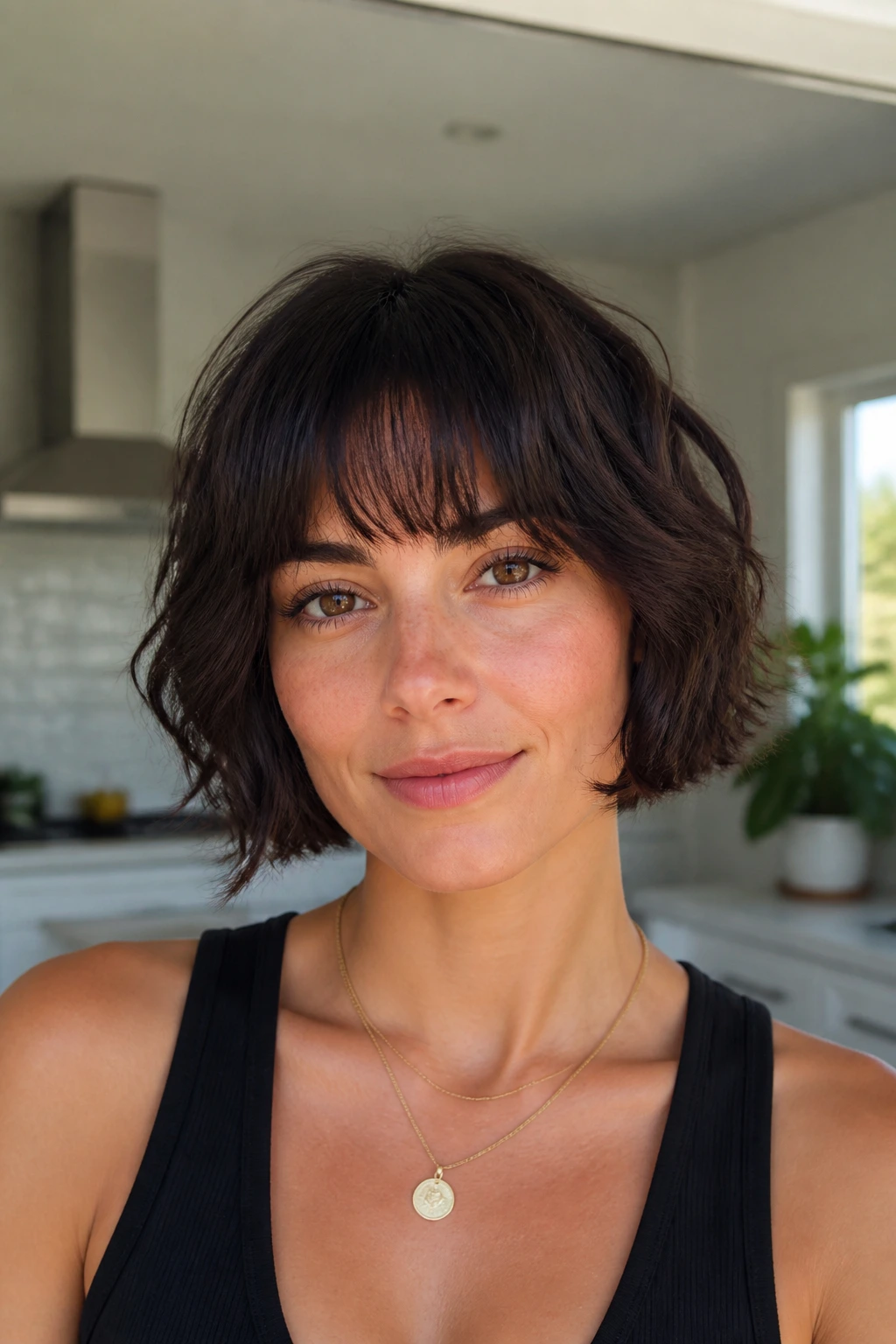
A chin-length shaggy bob is sharp, but not severe. That’s the difference. The cut sits right around the jaw, which gives the waves a place to break, and the choppy layers keep the silhouette from turning into a heavy block. If your waves are medium or coarse, this length can look fantastic because the texture builds shape fast.
The bangs matter here. A soft fringe or broken curtain bang keeps the look from feeling too square. If you choose a blunt bang with this length, you need to be careful with density and dryness, or the front can start bossing the rest of the haircut around. I like this version on brunettes with a little natural shine — dark brown and chestnut both make the edge feel cleaner.
Styling note
Use a small dab of mousse at the roots and scrunch through the lengths while they’re damp. Then leave the ends alone. The more you touch them while they dry, the more they frizz and separate in odd places.
6. Rounded Shag With Full Bangs
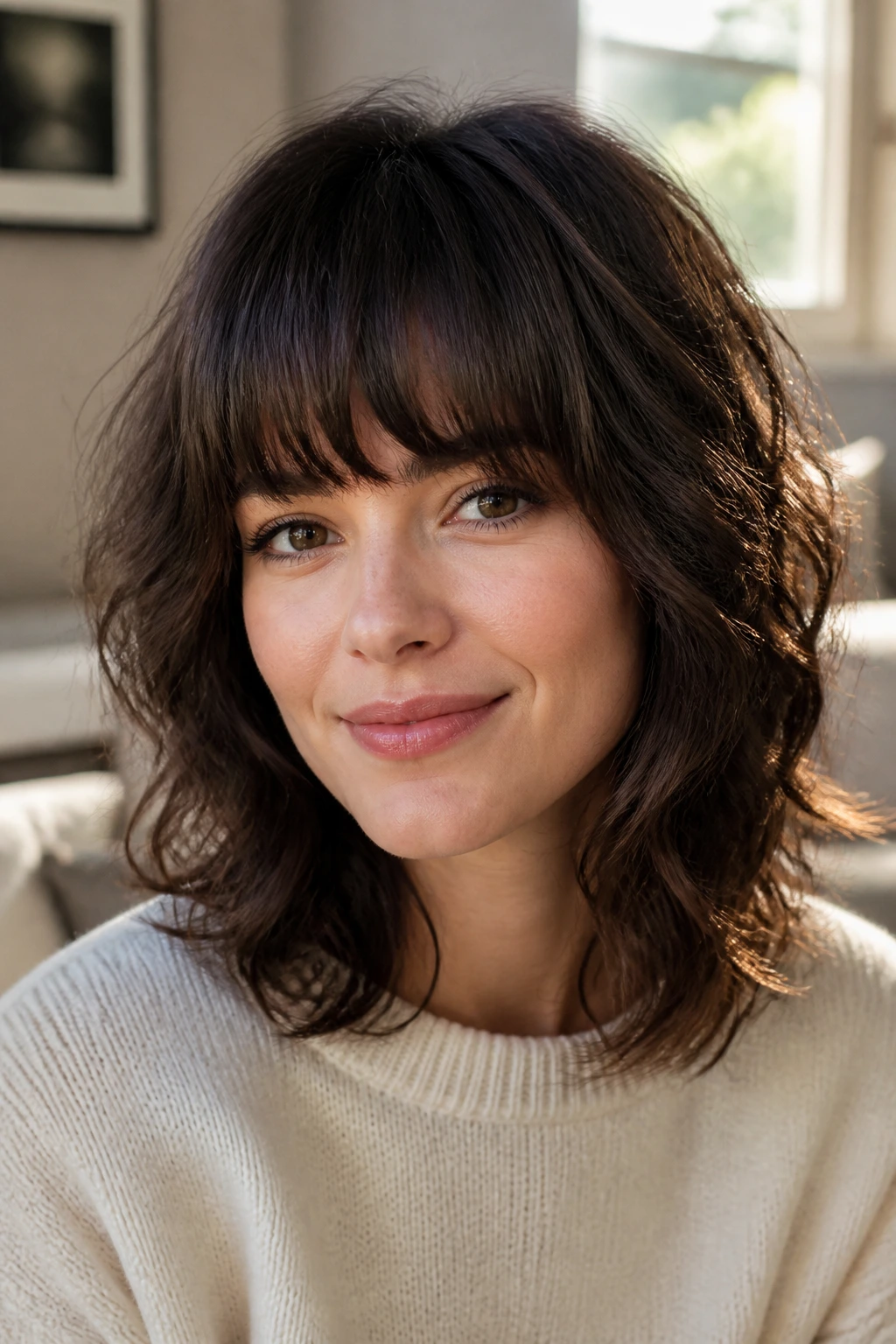
This is the version for people who like a little more shape up top. The crown stays rounded, the ends stay shaggy, and the bangs sit fuller across the forehead without feeling blunt to the point of stiffness. On wavy brunette hair, the result looks dense in a good way — plush, soft, and a little retro without tipping into costume territory.
It works especially well on thicker hair because the roundness keeps the volume from exploding sideways. The shape should still have movement, though. If the layers get thinned too aggressively, the top can go flat while the bottom sticks out, and that’s an annoying imbalance to fix.
I’d pair this with a rich brunette shade — walnut, dark chocolate, deep auburn-brown — because the color depth makes the rounded shape read clearly. It’s a haircut that likes healthy ends. Dry, frayed ends drag the whole thing down.
7. Invisible Layers With Wispy Bangs

Do you want a shaggy bob without the obvious choppiness? Invisible layers are the answer. The layers are there, but they’re blended enough that the cut keeps a smooth outer line. On wavy hair, that matters because too much obvious slicing can make the ends look pieced out in a cheap way.
Wispy bangs work with this because they echo the soft layering in front. They don’t need to cover much of the forehead; they just need to interrupt it. A brunette bob in a cooler brown tone — ash brown or mushroom brown — makes this kind of subtle shaping even more visible, since the shadows help define the layers.
This is a good pick if you like a polished finish but hate a stiff one. The cut still looks relaxed, but it doesn’t have the “I got my hair aggressively thinned” look that some shag cuts can take on.
8. Deep Side Part Shaggy Bob

A deep side part changes the whole mood of a shaggy bob. One side gets extra lift, the other side falls lower across the cheek, and the asymmetry makes wavy texture look fuller than it is. If your hair tends to collapse in the middle, this is an easy fix that costs nothing.
Brunette shades are especially good here because the side part throws shadows across the top of the head. That makes the shape look more dimensional. The bangs can sweep with the part or fall into a loose side fringe. Either way, the line around the face becomes softer and less predictable, which is the point.
This cut also gives you a cheat code for second-day hair. A little dry texture spray at the roots and a finger rake through the fringe is often enough. No elaborate reset. No rebirth ritual with a round brush.
9. French Bob With Brow-Skimming Bangs
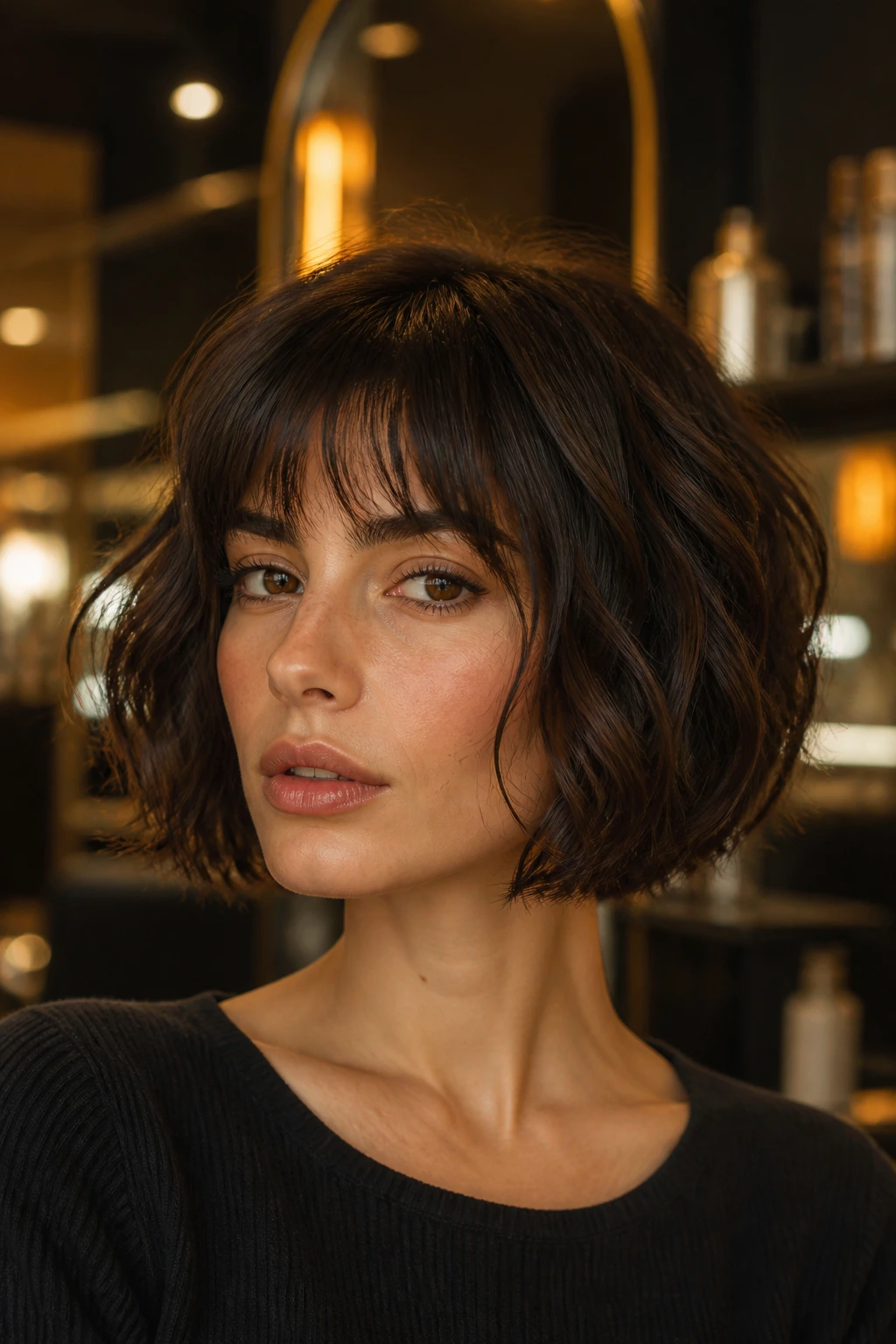
The French bob usually lands shorter and cleaner than a classic shag, but when you rough it up just enough and add wavy texture, it becomes much less rigid. Brow-skimming bangs keep the style grounded. They make the haircut feel deliberate, not severe, and on brunette hair the front line looks especially crisp against the softer wave pattern underneath.
I like this version when the waves are loose, not tight. The length usually sits around the cheekbone or just below the ear, which can be a nice choice if you want the bob to show off the neck and jaw. The trick is not to over-layer it. You want enough texture to break the outline, not so much that the haircut starts puffing out like a dandelion.
The fringe can be a little broken up at the ends so it doesn’t sit like a wall. That small change makes a big difference.
10. Feathered Ends and Bottleneck Bangs
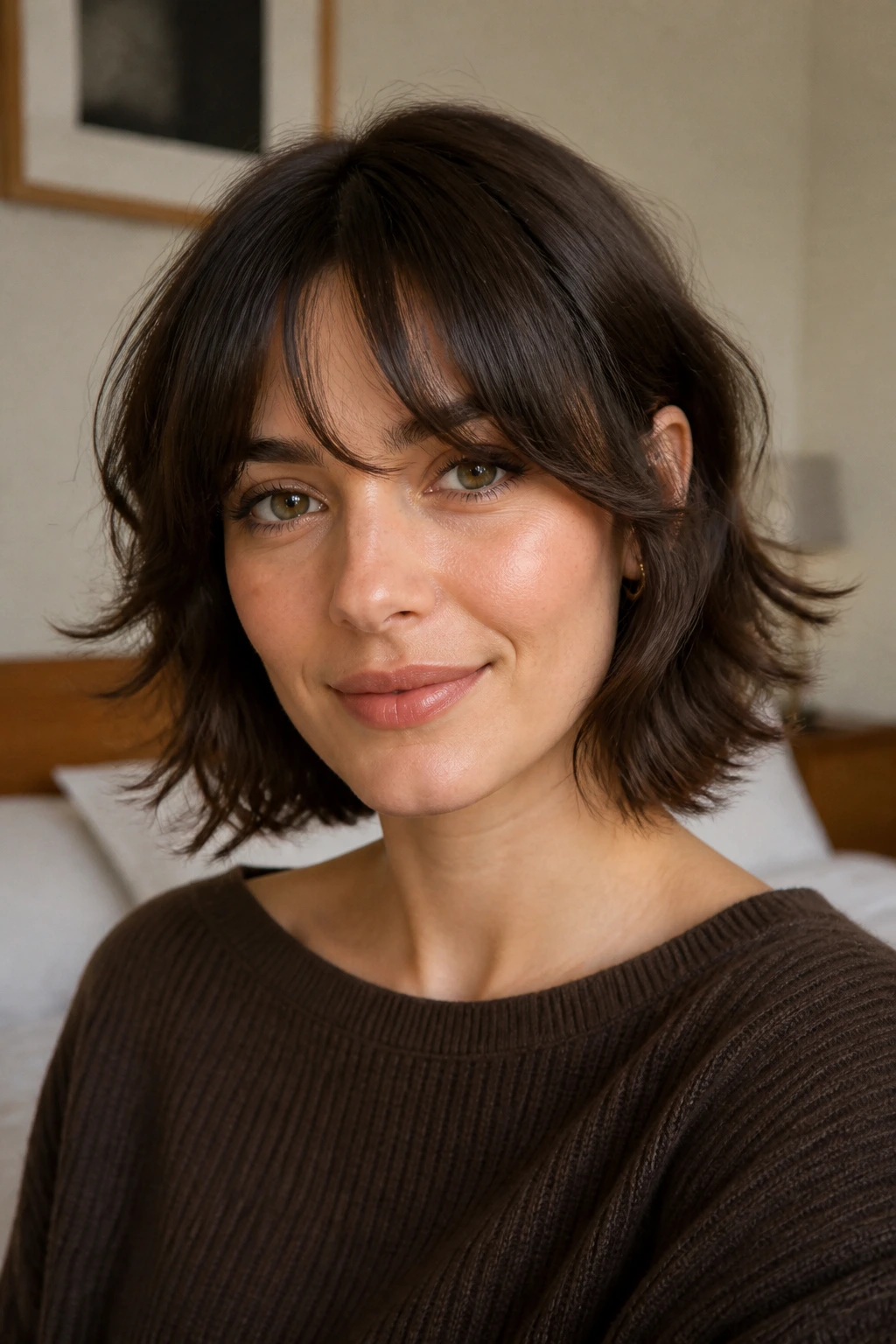
Bottleneck bangs deserve more love than they get. They start narrower at the center, then widen as they move toward the temples and cheekbones, which gives wavy hair room to breathe. Pair that with feathered ends on a shaggy bob, and the whole cut feels light without looking wispy in a fragile way.
This version suits brunette hair that already has some natural bend. The feathering at the ends stops the perimeter from feeling too blunt, and the bottleneck fringe prevents the face from looking closed in. It’s one of those cuts that makes sense from every angle. Front, side, back — the shape stays soft.
If you’re growing out a shorter bob, this is a very forgiving step in between. The bangs can keep their shape while the ends gain a little length, so the haircut doesn’t go through that awkward half-grown stage where nothing sits right.
11. Airy Mushroom-Bob Shag for Thick Waves
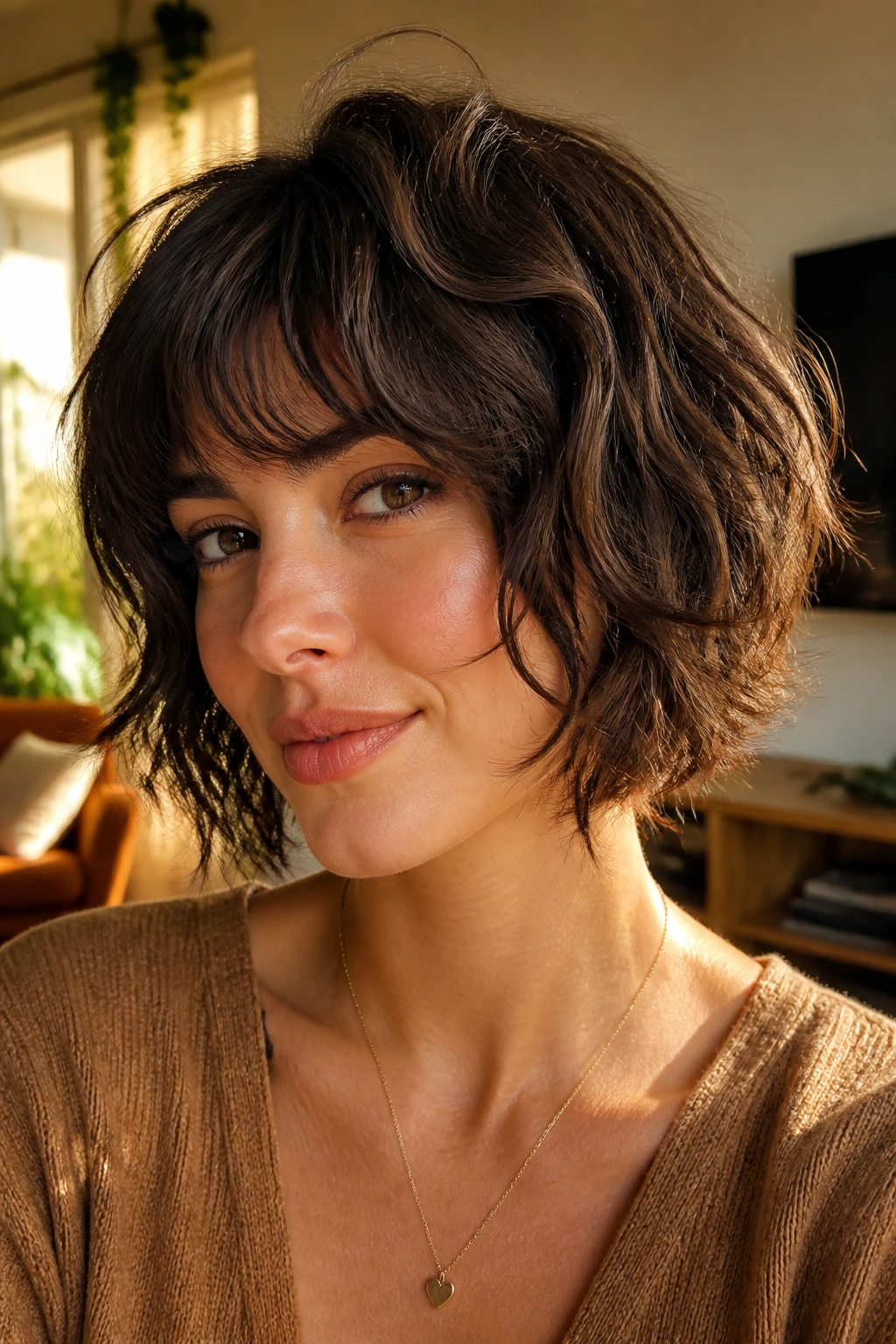
A mushroom-bob shape can look heavy if it’s cut wrong. With shaggy texture, though, it gets a softer edge. The crown stays rounded, the sides tuck in just enough, and the ends are broken up so the haircut doesn’t sit like a mushroom cap in the old-fashioned sense. On thick wavy brunette hair, that matters. A lot.
This is a strong choice if your hair gets big fast. The roundness manages the volume instead of fighting it. Ask for internal layering that removes bulk without carving out huge gaps, because those gaps can make thick waves flip awkwardly at the ends. Full bangs or a denser curtain fringe work well here; they balance the fullness at the crown.
It’s a good example of a haircut that looks styled even when it’s not. That’s the real win. The shape does part of the work before you touch a product.
12. Piecey A-Line Shaggy Bob
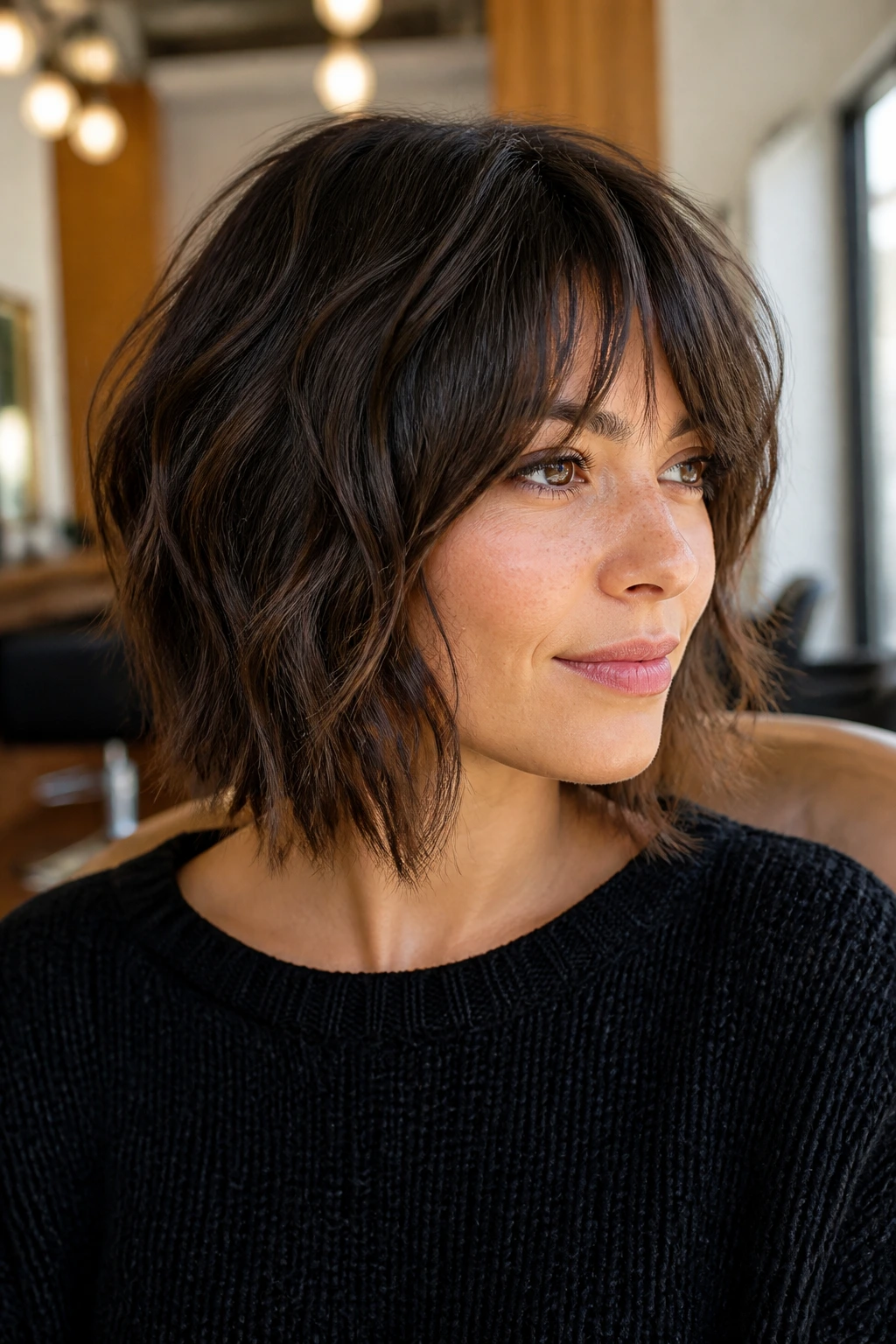
An A-line bob already has attitude. It’s shorter in the back and longer in the front, so the outline naturally pulls the eye forward. When you soften that shape with shaggy layers and bangs, the result feels less formal and a lot easier to wear on wavy hair.
I like this cut for brunettes who want length around the jaw or neck but still want the back to feel tidy. The longer front pieces can skim the collarbone while the rear stays lighter and lifts off the nape. That lift keeps the whole haircut from collapsing when the waves dry.
What to ask for
- A subtle A-line, not a steep wedge.
- Soft internal layers through the mids.
- Bangs that blend into the front pieces instead of stopping abruptly.
- Ends that are point-cut or feathered, not bluntly squared off.
If your stylist hears “A-line” and reaches for a dramatic angle, stop them early. This version should look relaxed. Not architectural.
13. Soft Wolfy Bob With Shaggy Bangs
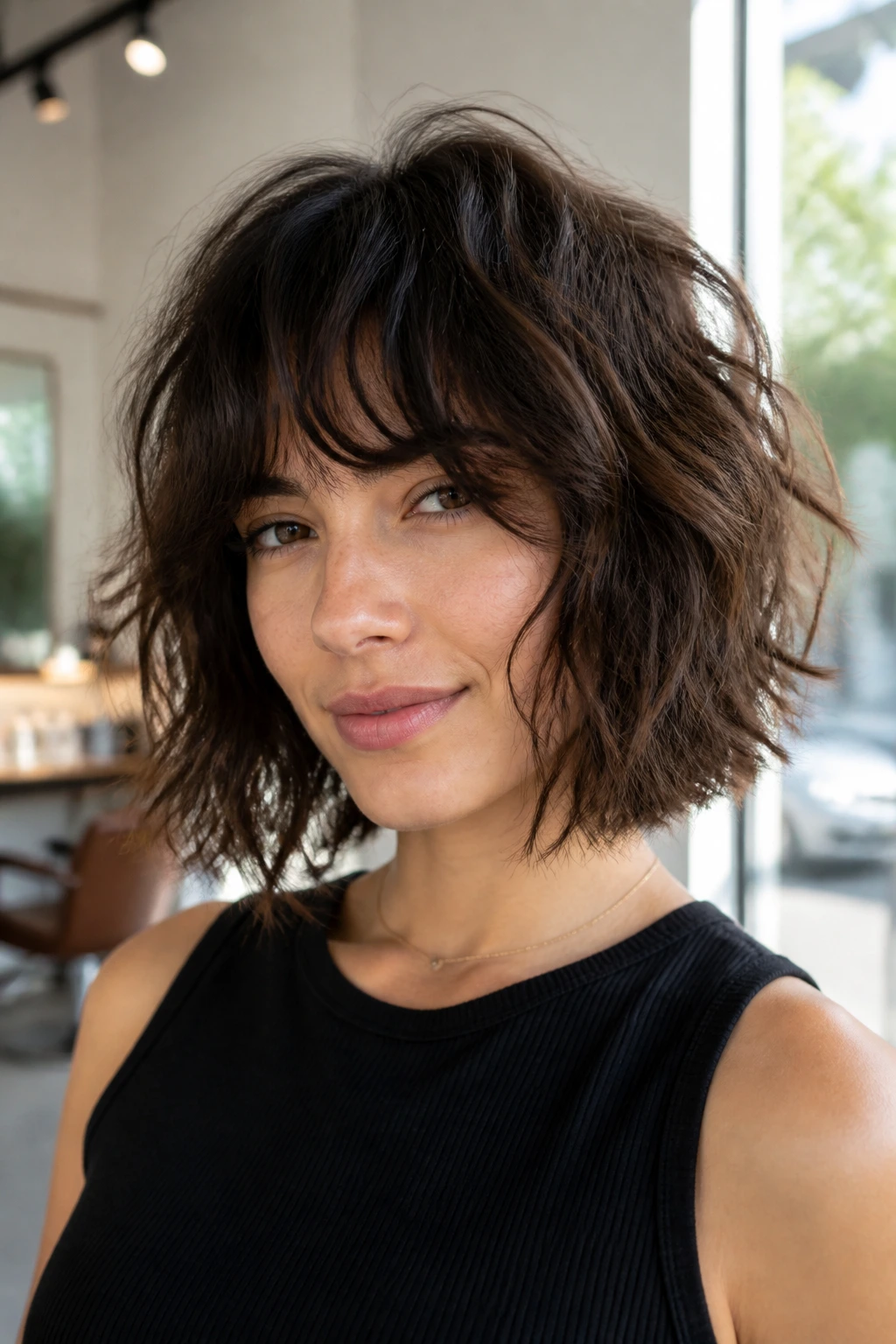
The wolf cut’s smaller cousin can be a really nice fit for wavy brunettes who want movement with a little edge. The crown gets some lift, the nape stays a touch longer, and the bangs stay shaggy enough to avoid that overdone, costume-y wolf-cut look. It’s modern without being fussy.
This one shines on hair with medium to high density. You need enough substance for the layers to show. If the hair is too fine, the crown can get stringy fast. On darker brunette shades, the rougher texture across the top looks especially clear because the light catches the layers at different angles.
Styling is forgiving. A bit of mousse, a diffused dry, and a small amount of matte paste at the ends can keep the fringe from turning fluffy. I wouldn’t over-smooth this one. The messy shape is the point.
14. Long Face-Framing Fringe Bob
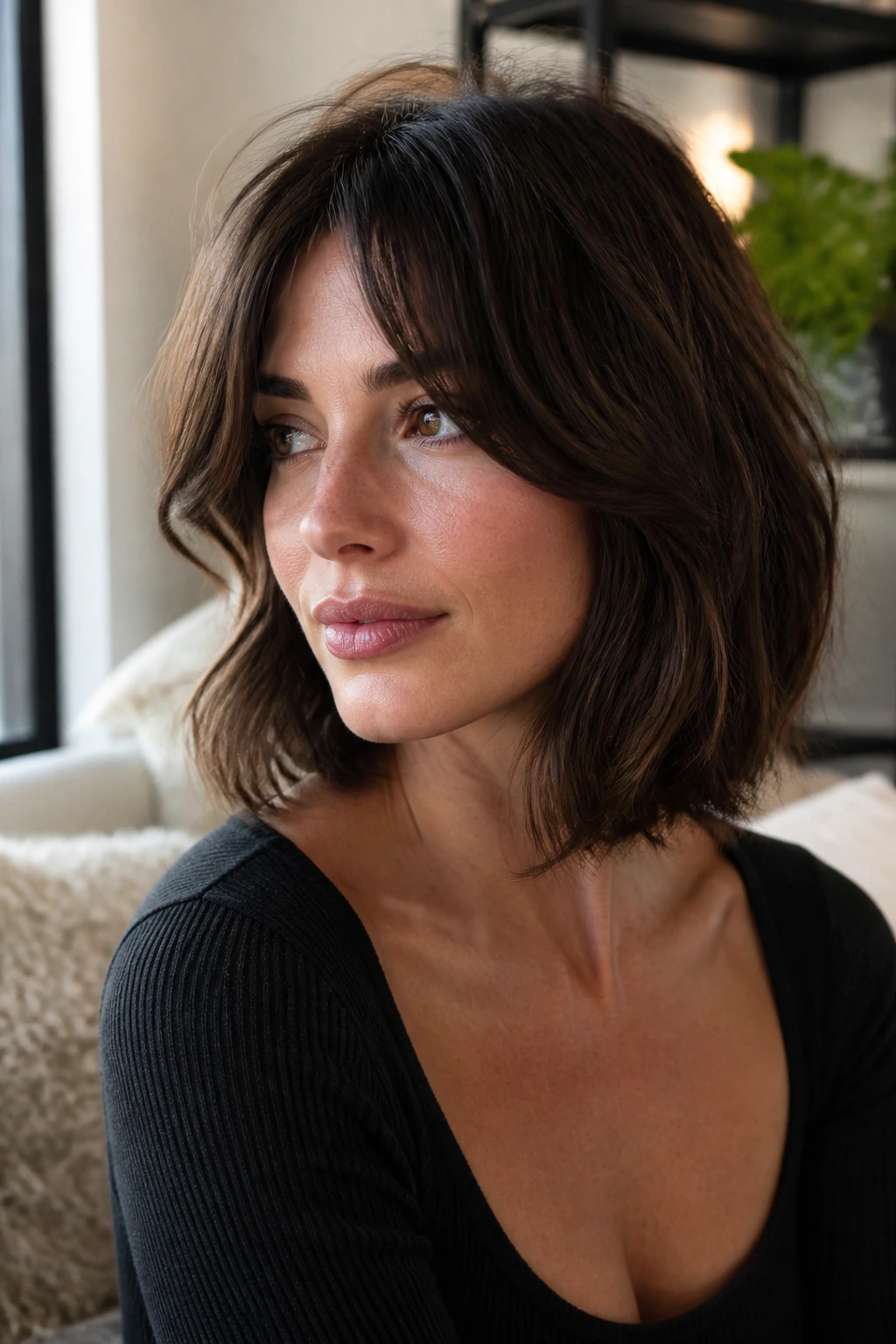
Want the easiest way to soften a wavy bob without losing length? Put the softness in the front. Long face-framing fringe starts around the temple or cheekbone and slides into the rest of the cut, so the haircut keeps motion even when the back is fairly simple.
This is especially good for longer faces, strong foreheads, or anyone who likes seeing hair move away from the cheeks. The waves have room to bend and fall around the face, which makes the cut feel easy to wear. A brunette shade with a little tonal variation helps the front pieces show up; otherwise, on very dark hair, the fringe can disappear into the rest of the cut.
A good way to wear this shape is to tuck one side behind the ear and leave the other side loose. It sounds small. It changes everything.
15. Grown-Out Shag Bob With Baby Bangs
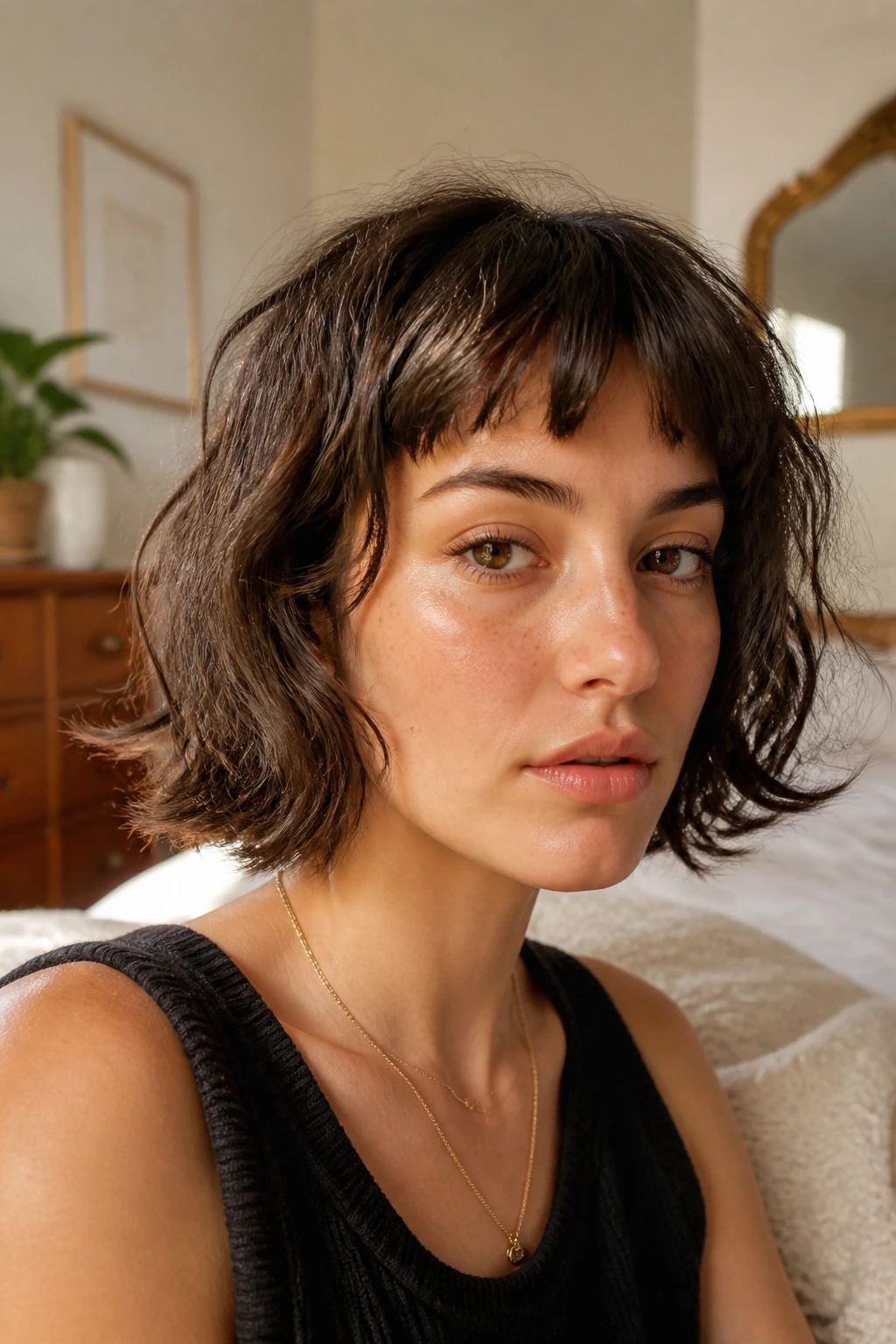
Baby bangs are not subtle. That’s why they can look so good with a shaggy bob. The short fringe gives the haircut a clear front edge, then the wavy bob below it keeps the mood loose. The contrast is strong, and the style feels intentional even when the texture gets a little wild.
This cut is a better fit if your hairline is cooperative. Cowlicks can fight short bangs hard, and a strong bend at the front can send the fringe into odd directions. When it works, though, it has real personality. I’d keep the bob itself slightly longer, around the jaw or just above the collarbone, so the baby bangs don’t make the whole look too severe.
It’s also one of the few shaggy bob versions that looks interesting even when the styling is minimal. Air-dry it, add a little texture spray, and let the fringe do the talking.
16. Center-Part Shaggy Bob With Bottleneck Fringe
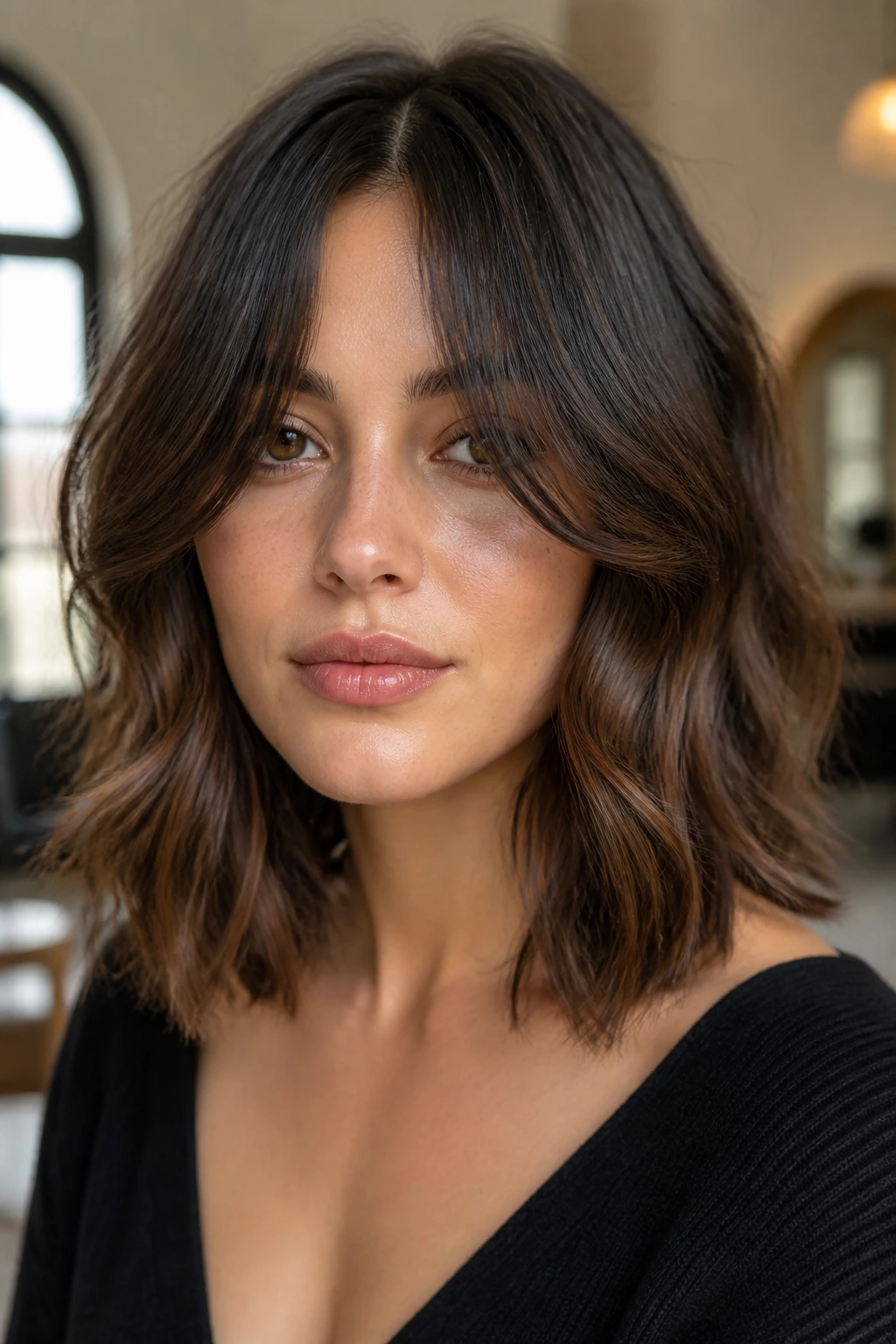
If your hair naturally splits down the middle, don’t fight it. A center-part shaggy bob with bottleneck fringe can look cleaner and more balanced than a side part ever could. The fringe opens in the center, the sides move toward the cheekbones, and the whole face gets framed without looking too symmetrical in a boring way.
The brunette color matters here because a center part can flatten the top if the tone is all one note. A little dimension — subtle highlights, lowlights, or even a rich gloss — keeps the shape from disappearing. This is one of those cuts that feels calm rather than loud. I like that. Not every haircut needs to be shouting.
If your waves are stronger on one side, this shape helps. The bottleneck fringe gives both sides something to do, and the center part keeps the front from collapsing into a heavy curtain.
17. Razor-Cut Brunette Bob With Windswept Bangs

A razor-cut bob has a softer, airier edge than a scissor-cut one. The ends feather out more lightly, which can be lovely on wavy hair if your strands aren’t already dry or frizzy. Add windswept bangs, and the haircut starts to feel casual in a polished way — not neat, but not messy either.
This version wants movement. A lot of it comes from the cut itself, not from product. The bangs should sweep across the forehead and break into a few separated pieces, almost like they were pushed by a bit of air. On brunette hair, that broken texture shows up well because the light catches the uneven ends.
Be careful if your hair is very porous or bleached. Razor cutting can exaggerate roughness. On healthy medium-texture waves, though, it can be one of the most flattering ways to keep the bob light.
18. Tousled C-Curve Bob
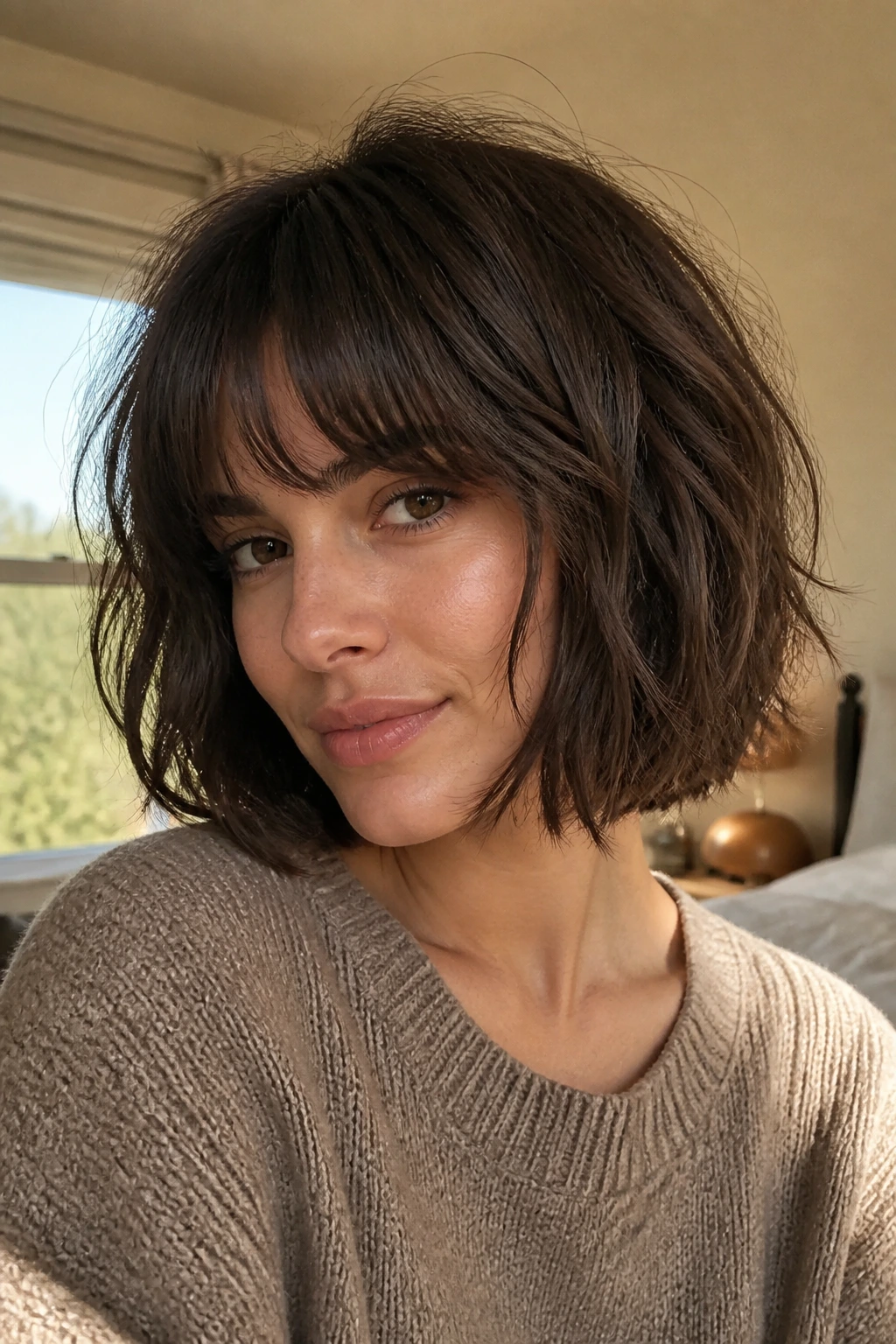
A C-curve bob bends inward softly at the ends, which gives the haircut a tidy shape without making it stiff. On wavy hair, that little inward arc can stop the bottom from flipping out in odd directions. The shaggy layers keep the shape from feeling over-sculpted, and the bangs soften the front.
This is a smart option if you like a defined silhouette but don’t want the bluntness of a classic bob. The curve can sit around the jaw, or drop lower toward the collarbone if you want more length. I especially like this on medium brunette shades — cocoa, hazelnut, soft chestnut — because the curve reads clearly, but the texture still feels relaxed.
You can get the curve with a round brush, a large roller, or even just a quick bend from a flat iron at the ends. Nothing dramatic. Just enough to suggest a shape.
19. Heavy-Textured Wavy Bob With Blunt Bangs

This is the version with opinions. Blunt bangs and a shaggy bob can look fantastic on wavy brunette hair when the density is right, because the contrast between the crisp fringe and the broken-up ends creates a strong frame around the face. It’s sharp up top, softer underneath. That contrast is the whole point.
Thick hair handles this especially well. If the hair is fine or very frizzy, blunt bangs can start to look skinny or puffy by the second day. But when the cut is balanced, it has a nice edge — not harsh, just defined. Dark brunette shades make the bang line look even more precise, while the layers below keep the haircut from becoming too rigid.
I wouldn’t recommend this version to someone who hates bang maintenance. It needs trims. But when you’re willing to keep up with it, the result feels fresh in a way softer fringes sometimes don’t.
20. Relaxed Inverted Bob With Shaggy Fringe
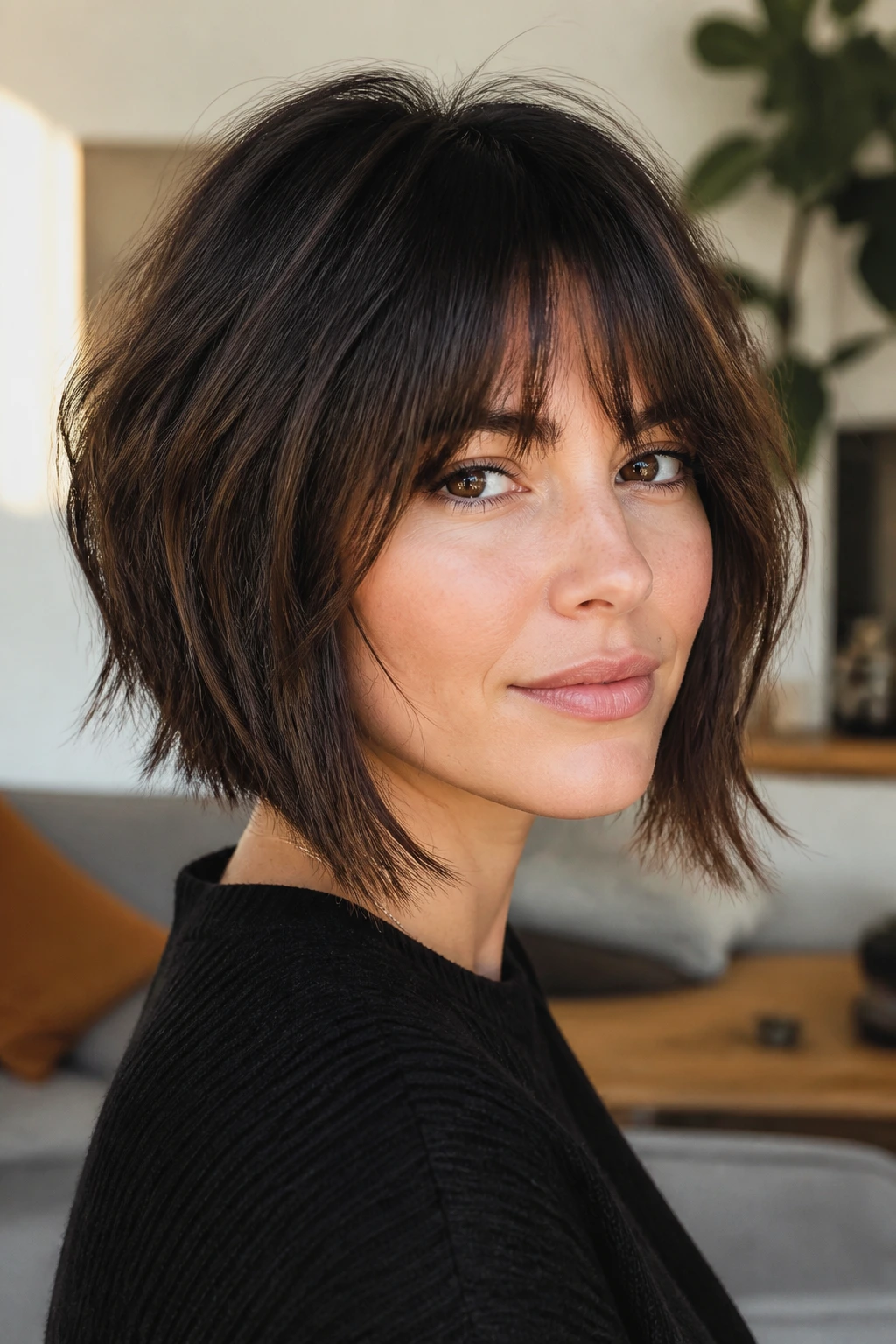
An inverted bob gives you lift in the back and length in the front. Make it shaggy, and the shape becomes much easier to wear on wavy hair. The layers remove some of the old-school stiffness, and the fringe brings the whole thing back into softer territory.
This is a good pick if you want the jawline to look a little longer or if you like hair that angles forward around the face. The shaggy fringe can be curtain-like or broken up, but it should connect to the front pieces so the haircut doesn’t feel disconnected. On brunettes, that forward angle reads beautifully because the darker color gives the shape some weight.
It’s one of those cuts that can look more polished with a quick bend under at the front. But it doesn’t need it. The natural wave is doing most of the heavy lifting.
21. Sunlit Brunette Shag Bob With Lived-In Highlights

Color changes the whole story here. A shaggy bob on brunette hair becomes much more visible when there are lived-in highlights threaded through the mid-lengths and fringe. A few softer caramel pieces around the face can make curtain bangs or bottleneck bangs stand out without turning the whole head into a streaky mess.
The trick is restraint. Thick highlight blocks fight the shag shape. Fine ribbons, a little brighter around the bangs and ends, make the layers look like they’re moving even when the hair is still. On wavy hair, that’s gold. The texture and color work together instead of competing.
I like this version because it solves a common brunette problem: dark hair can sometimes hide the haircut. A touch of dimension fixes that without needing a full color overhaul.
22. Low-Maintenance Air-Dry Shaggy Bob
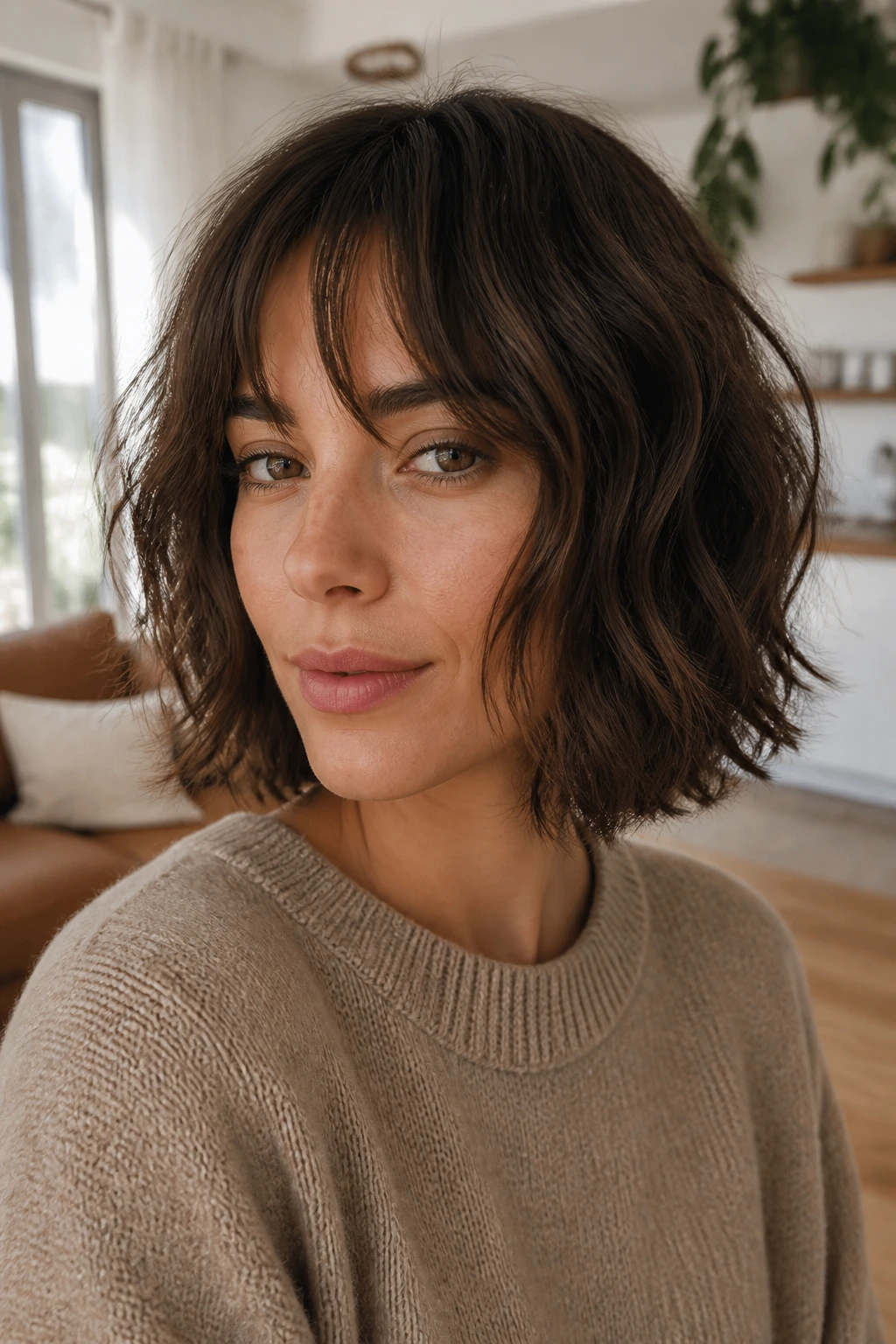
Some cuts are made for styling. This one is made to stop you from styling so much. The layers sit where the wave wants them, the bangs are soft enough to fall on their own, and the whole shape keeps its definition after a quick scrunch and a towel squeeze. That’s the appeal.
If you want a brunette shaggy bob with bangs for wavy hair and you do not want to spend twenty minutes coaxing it into place, this is the version to ask for. Keep the bangs longer and softer, the ends feathered, and the interior layers light enough to move. Then let it dry with a little mousse or curl cream, hands off. The less you poke it while it sets, the better it behaves.
I’ll say this plainly: not every haircut deserves a complicated routine. This one doesn’t.
Why a Brunette Shaggy Bob Works So Well on Wavy Hair
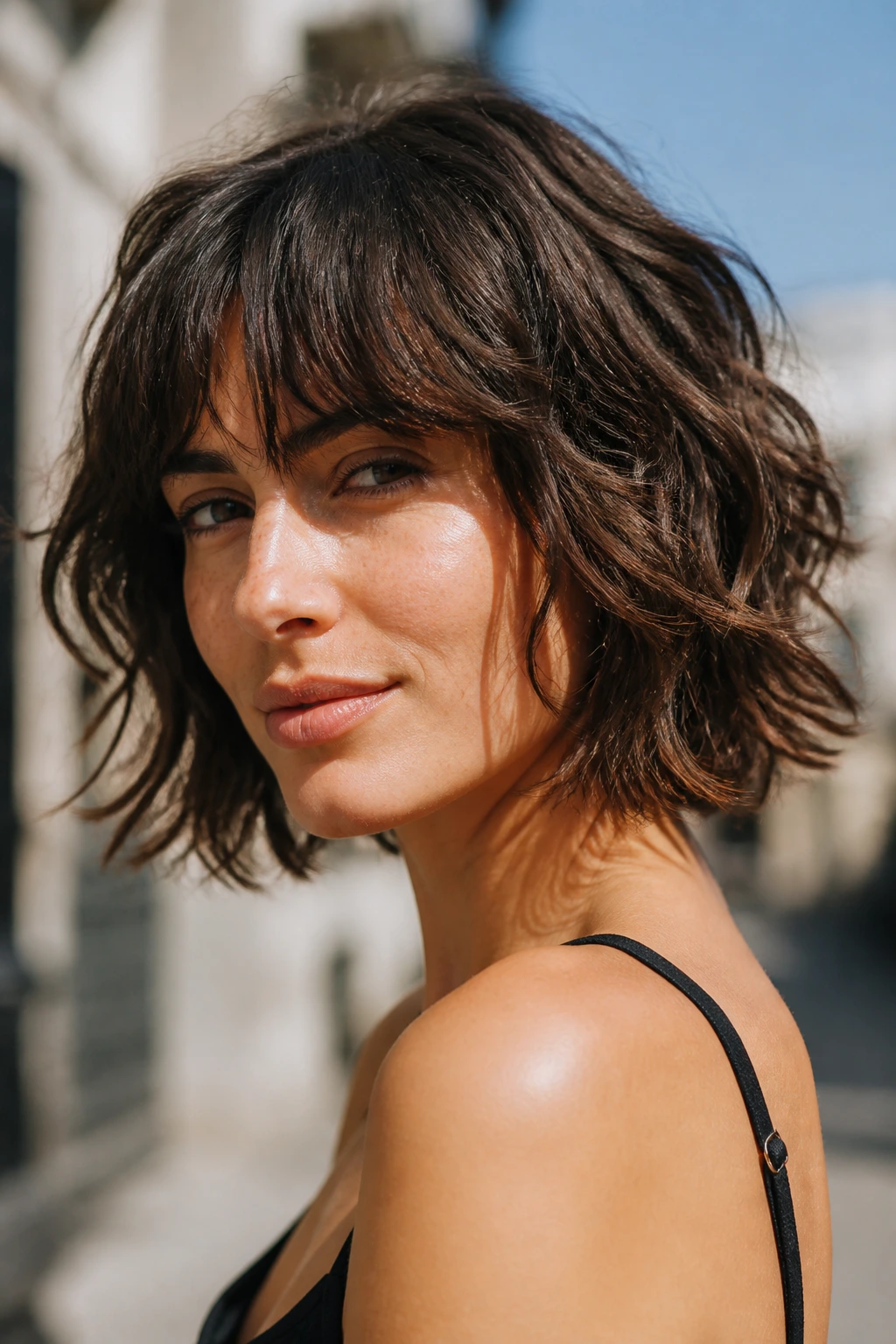
Wavy hair already has the bend built in, so a shaggy bob doesn’t have to invent movement from scratch. That’s the real reason this haircut feels so easy to live with. The layers give the wave a path, the bangs stop the front from going too straight or too square, and the brunette color makes the shape read clearly without shouting.
The brunette part matters more than people think. On very light hair, texture can blur together if the layers are too soft. On dark brown, chestnut, or cocoa hair, the shadows between the pieces make the cut look richer. You can see the curve of the fringe, the break at the ends, and the lift around the crown. That’s especially helpful if your waves are loose and easy to flatten.
It also grows out in a friendlier way than a blunt bob. The shag doesn’t demand exactness. A few millimeters of length at the fringe, a little extra softness at the jaw, and the cut still looks like the same haircut. That’s a useful thing when you don’t want to live at the salon chair.
How to Ask for the Right Shape at the Salon
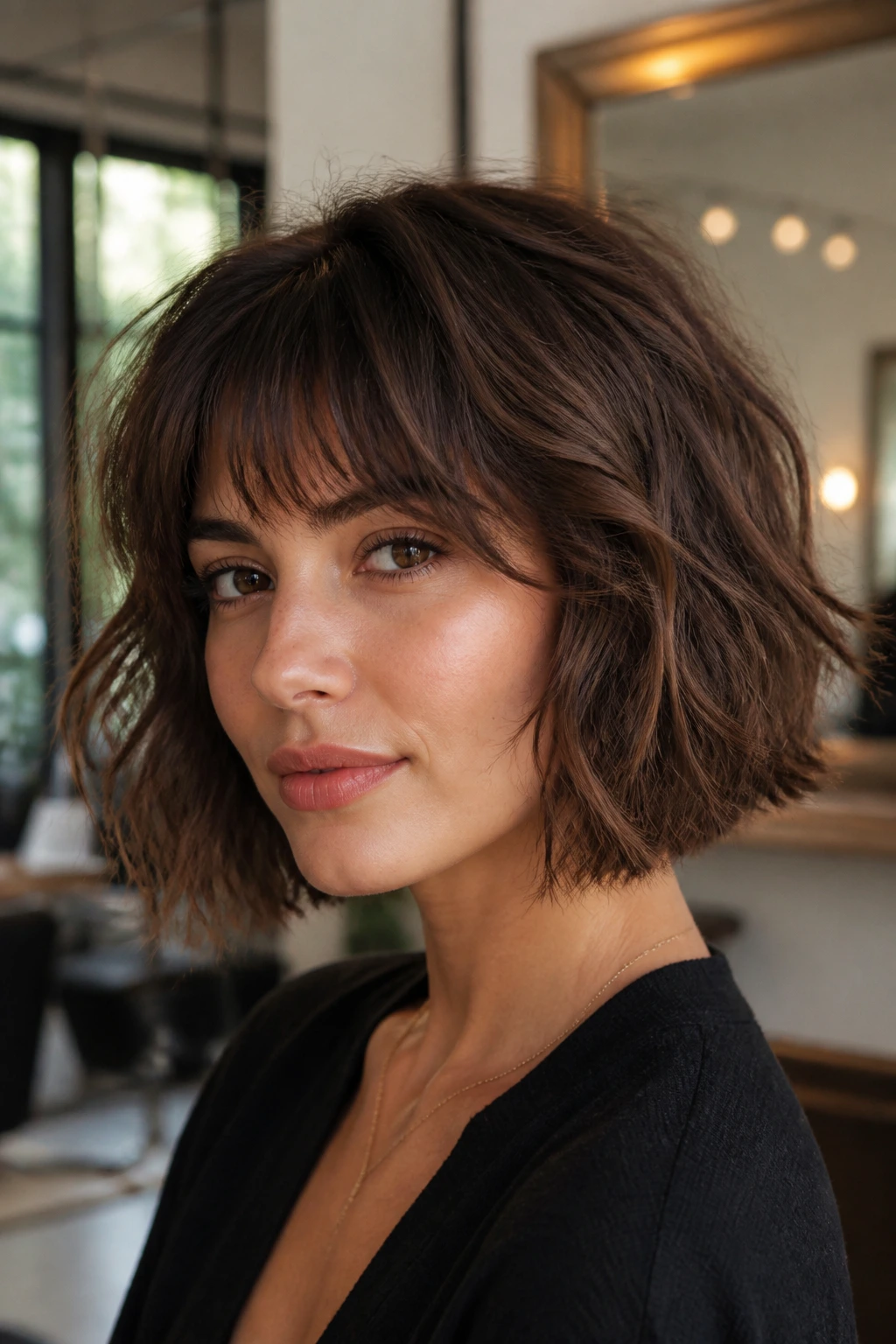
Bring a few reference photos, but don’t stop there. Photos show the finish. They do not show the cut points underneath. The shape lives in the layers, and that’s what you need to describe.
Tell your stylist where you want the length to sit — jaw, chin, collarbone, or just below. Then point to the bang style you want and say how much forehead you want covered. Curtain bangs, bottleneck bangs, wispy fringe, full fringe — those are not interchangeable. A little off in the wording can change the whole haircut.
Be specific about your waves too. Say whether your hair clumps easily, puffs at the ends, or goes flat at the crown. That changes where the layers should start. If your hair is dense, the interior can take more removal. If it’s fine, keep the layering longer and more blended so the ends don’t go see-through.
And please, do not say “just make it shaggy” and hope for the best. That phrase means different things to different stylists. Show the silhouette you want, then talk about the weight line and fringe length. Those details matter.
The Styling Routine That Keeps Waves Piecey, Not Puffy
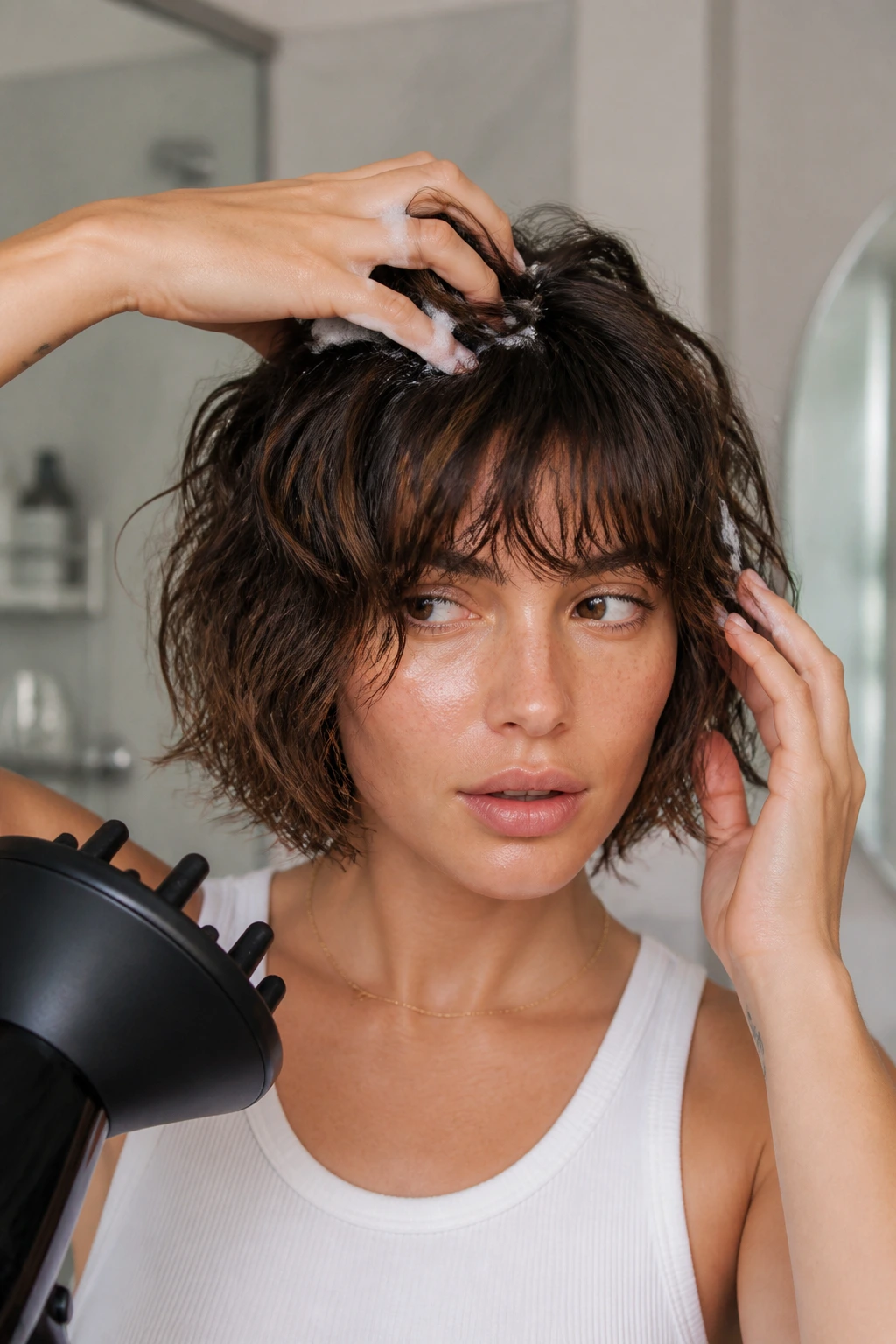
The best shaggy bob routine is light. Heavy cream can make the ends droop. Too much oil can flatten the crown. You want enough hold to separate the waves, but not so much that they stick together in oily ropes.
Start with damp hair and work in a small amount of mousse at the roots and mids. A golf-ball-sized amount is often enough for shoulder-length hair; less if the hair is fine. Scrunch upward with your hands, then twist a few bang pieces with your fingers so they don’t dry into one flat sheet. If you use a diffuser, keep the airflow low and move it around instead of blasting one spot until it frizzes.
If you’re air-drying, resist the urge to keep combing it. Once the wave pattern starts to set, leave it alone. A microfiber towel or cotton T-shirt can soak up the extra water without roughing up the cuticle. When the hair is almost dry, a tiny bit of texture spray at the ends can bring the shag back to life. Tiny. Not a cloud of it.
Small Tweaks That Make the Cut Work Harder
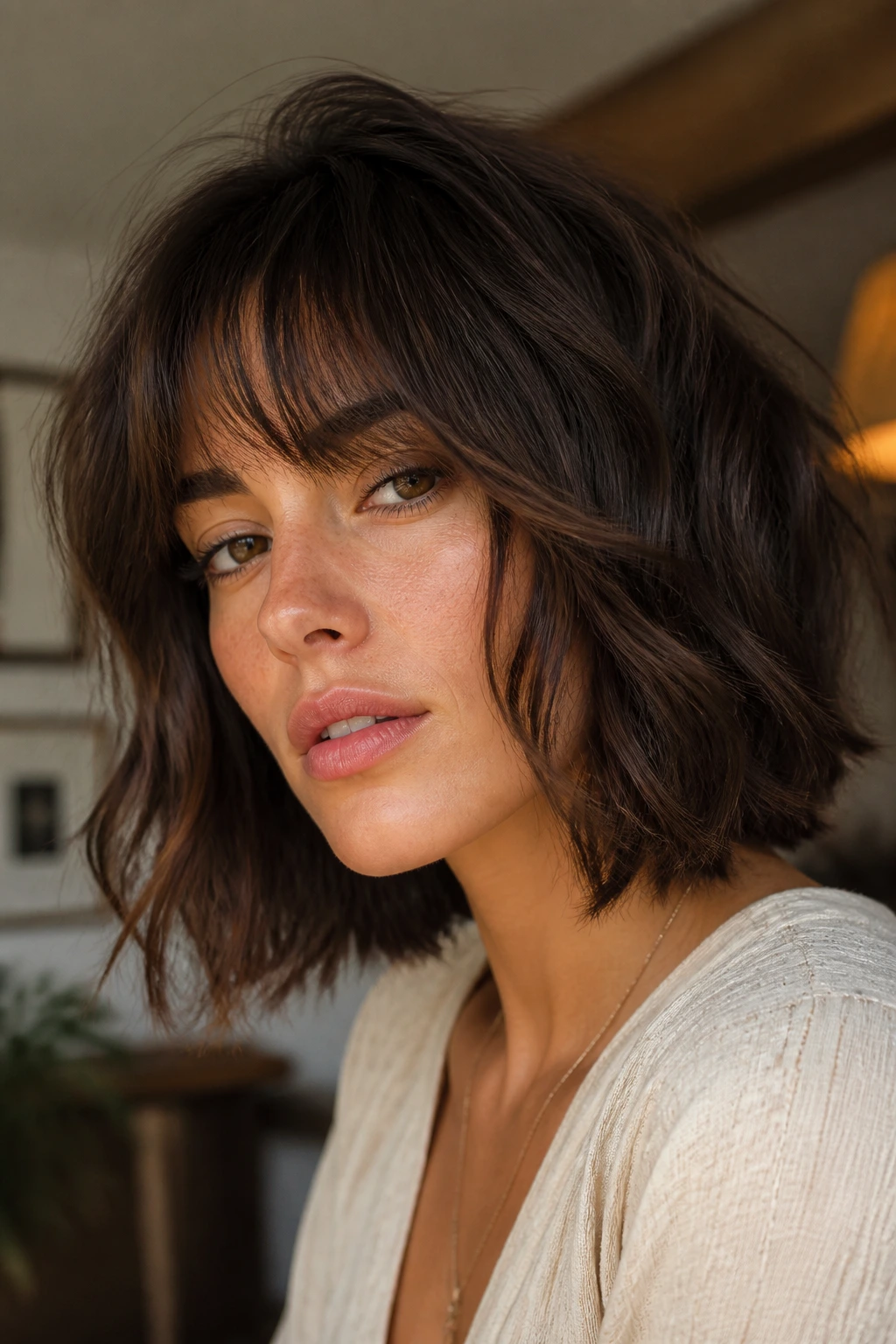
Bang Length: keep the fringe long enough to move. Shorter bangs can look cute, but they also demand more trim appointments and less room for natural wave.
Weight Removal: ask for internal layering, not aggressive thinning. The goal is movement, not frayed ends that stick out under the top layer.
Face-Framing Pieces: let the front layers start near the cheekbone if you want softness, or lower at the jaw if you want a stronger outline.
Finishing Product: use texture spray only where the hair needs separation, usually from mid-lengths to the ends. The roots can stay cleaner.
Color Dimension: even a subtle gloss or lowlight makes brunette shags read better. A flat, single-tone brown can hide the layering.
Tools That Actually Help
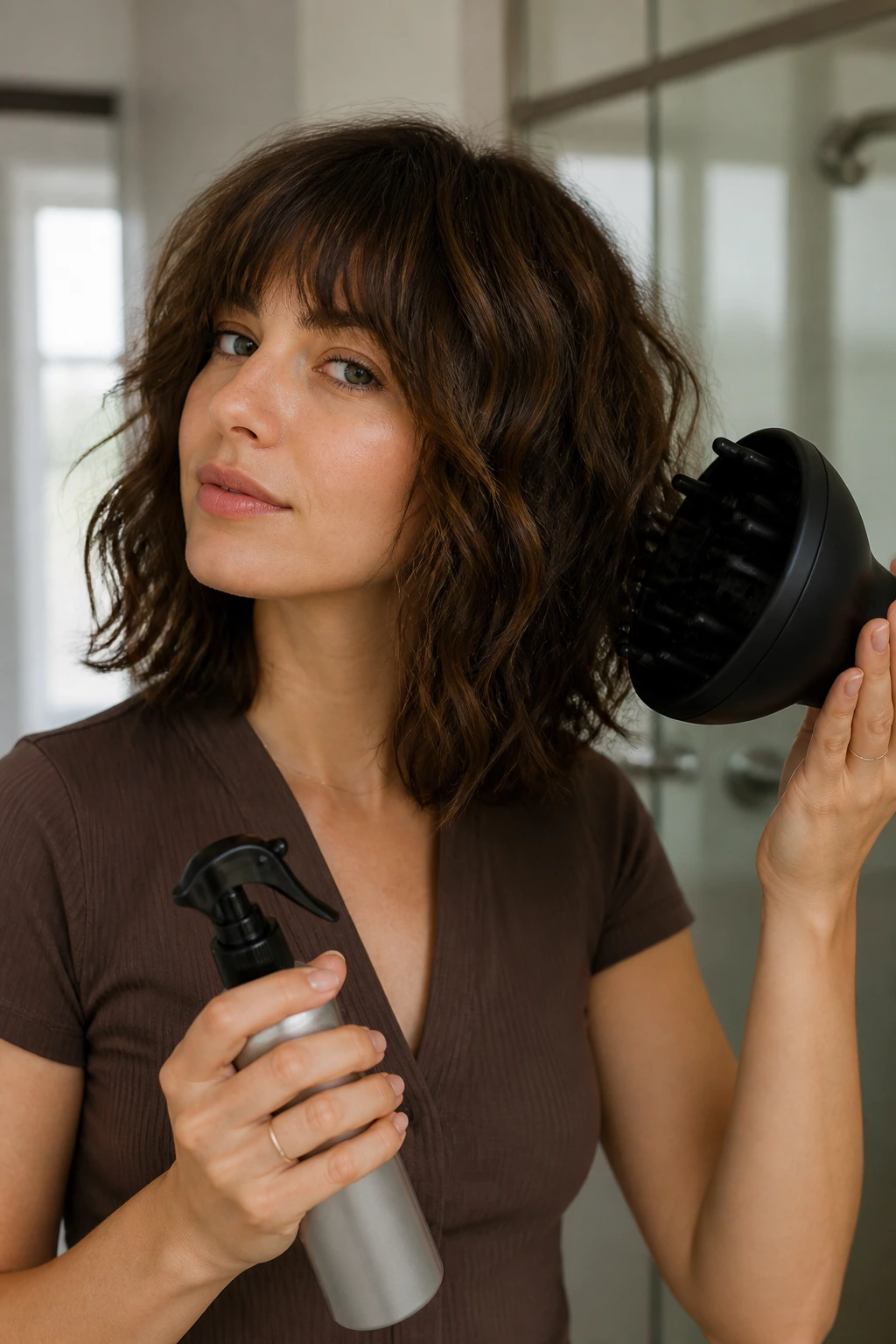
- A diffuser attachment: keeps wave clumps intact while cutting down on frizz.
- Microfiber towel or cotton T-shirt: absorbs water without roughing up the bangs or ends.
- Wide-tooth comb: useful only on wet hair if you need to distribute product gently.
- Small round brush: handy for shaping curtain bangs or bending the front pieces under.
- Texture spray: gives the ends that broken, lived-in separation that a shaggy bob needs.
- Light mousse or foam: better than heavy cream for most wavy brunettes.
- Hair clips: useful for air-drying the bangs away from the face if they separate too much.
How to Keep the Shape Between Trims

A shaggy bob usually looks best with trims every 8 to 10 weeks. If the bangs are blunt or baby-short, you may need a fringe trim every 3 to 4 weeks. Longer curtain bangs and bottleneck bangs can often stretch a little farther, sometimes 5 to 6 weeks, if you’re okay with a softer look.
Wash frequency matters too. Most wavy brunettes do well washing 2 to 3 times a week. More than that, and the ends can get dry and the bangs can lose their piecey shape. Less than that, and the roots may collapse under product buildup. Dry shampoo helps, but don’t cake it on. One or two light sprays at the roots is usually enough.
At night, clip the bangs loosely away from your face or use a soft headband if they bend badly while you sleep. If the ends start to flip in a weird direction, a quick mist of water and a handful of scrunches usually brings them back. The haircut is forgiving. You don’t need to rebuild it from scratch every morning.
Common Mistakes That Flatten the Cut
Going too blunt with the ends: a hard edge can make wavy hair look boxy, especially around the jaw. Ask for point-cutting or feathering so the perimeter stays soft.
Over-thinning the layers: too much removal leaves the ends stringy and the crown puffy. You want airy layers, not holes.
Cutting the bangs too short: short fringe can look cool for about five minutes, then it starts fighting cowlicks and shrinkage. Leave some room for the wave to bounce.
Using heavy cream everywhere: the top goes flat, the ends get greasy, and the whole cut loses separation. Use lighter product and keep it off the roots.
Ignoring your natural part: if your hair always wants a side part or a center part, work with it. Forcing a split that your hair rejects wastes styling time and usually looks awkward by lunch.
Variations and Alternatives Worth Considering

The Softer Office Bob: keep the bangs longer, the layers more blended, and the ends less choppy. This version looks calmer in a blazer and still has enough movement for weekends.
The Bigger-Texture Version: ask for stronger internal layers and use a diffuser with mousse. This suits dense, wavy hair that wants to expand instead of lie flat.
The Fine-Hair Version: keep the layers longer and the fringe lighter. Too much texture can expose the ends, so the cut needs a cleaner outer line.
The Thick-Hair Version: remove bulk below the crown and around the nape. Thick wavy brunette hair can take more shaping, but it needs control points so the silhouette doesn’t balloon.
The Grow-Out Bob: start at collarbone length with curtain or bottleneck bangs. It’s the safest choice if you like the style but hate frequent trims.
Frequently Asked Questions

Will a shaggy bob work if my waves are loose, not curly?
Yes, and loose waves are often the easiest texture for this cut. The layers show up without needing strong curl definition, and the bangs can sit softly instead of fighting the pattern.
Is this a good cut for fine brunette hair?
It can be, but the layering should stay controlled. Fine hair needs movement without too much weight removal, or the ends can look sparse. Ask for softer internal layers and a fringe that isn’t overly wispy.
What bang style is easiest to live with?
Curtain bangs and bottleneck bangs usually behave better than blunt or baby bangs. They grow out more gracefully and don’t demand such precise daily shaping.
How often do I need to style it?
Not every day if the cut is balanced well. Many wavy brunettes can refresh with water, a little mousse, and a few scrunches, then air-dry or diffuse for a few minutes. The haircut should work with second-day texture, not against it.
Can I wear this cut if my hair is very thick?
Yes, but the layering has to be thoughtful. Thick hair needs internal shaping and a clear weight line so the bob doesn’t puff out around the sides.
What if my bangs separate weirdly?
A tiny bit of water and a quick finger twist usually fixes it. If one side always falls faster, that may be your cowlick talking. Ask for a slightly longer fringe so it can split more naturally.
Does brunette color really make a difference here?
It does. Brunette shades show shadow and movement in a way that helps the shaggy layers read more clearly. Add subtle dimension if the hair looks too flat in one tone.
Can this grow into a lob without looking awkward?
Usually yes. That’s one of the nicest parts of a shaggy bob. The soft layers and fringe make the grow-out feel intentional for longer than a blunt cut would.
The Cut That Moves With You
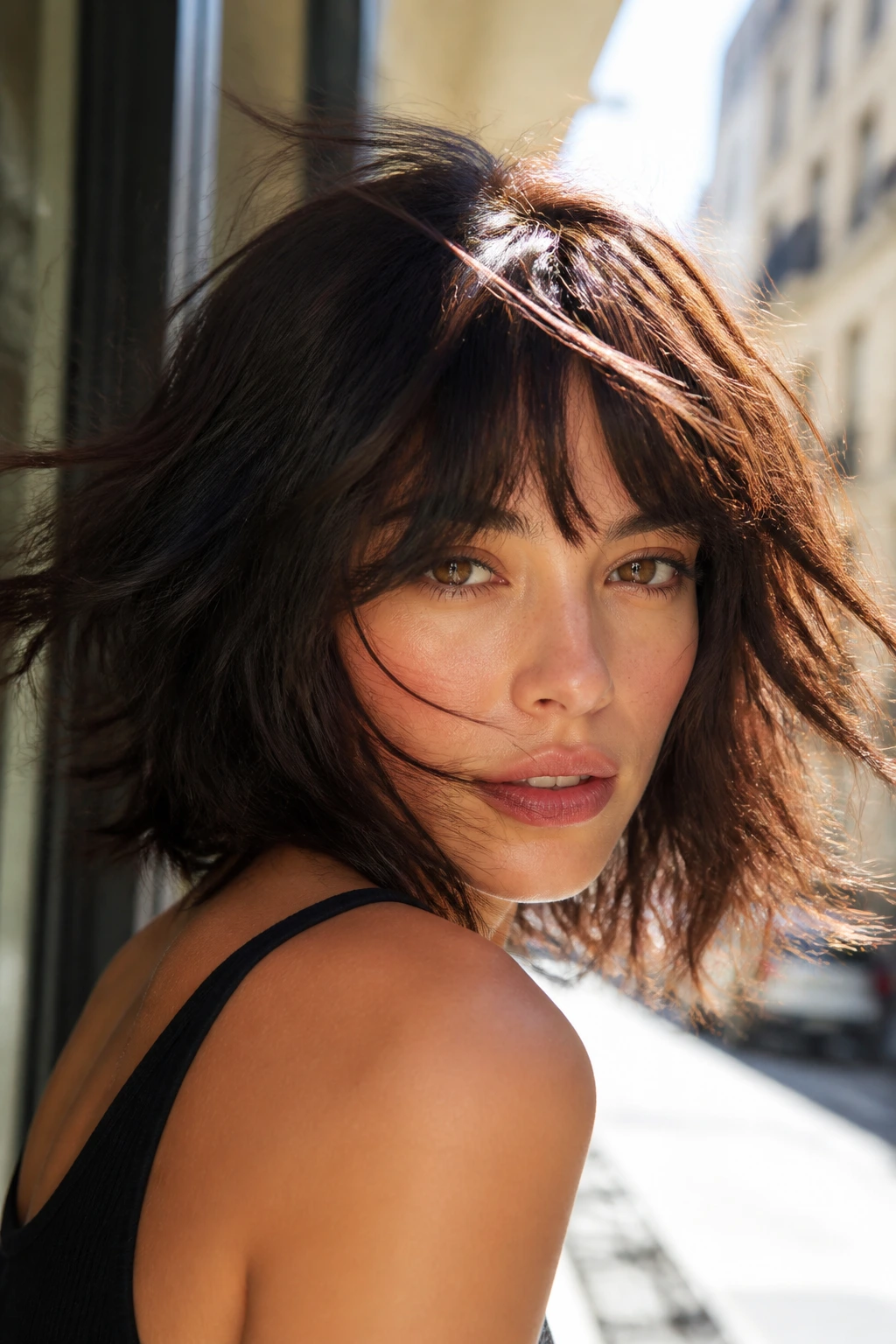
The best thing about a brunette shaggy bob with bangs for wavy hair is that it never asks for too much ceremony. It gives you shape, some edge, and a little softness around the face, then lets the wave take over. That’s a pretty fair deal.
If you want the shortest version of the advice, it’s this: keep the layers soft, keep the bangs suited to your forehead and wave pattern, and do not overcook the styling. The cut works because it leaves room for motion. Try to preserve that, and the haircut keeps paying you back.
[[The article ends here with a clean closing sentence?]]