



At chin length, asymmetry stops looking like a trick and starts doing real work. A bob that’s a little longer on one side changes the line of the jaw, shifts where the eye lands, and gives short hair a sense of movement that a straight, even cut sometimes just can’t manage.
That’s why asymmetrical bobs for short hair keep hanging around in salon conversations. They can be sharp or soft, polished or messy, dramatic or almost quiet — which sounds contradictory until you see how much shape one side panel can add. A good asymmetrical bob doesn’t need a huge length difference. Sometimes half an inch is enough to make the whole haircut feel deliberate.
The catch is that this style lives or dies on balance. Too much angle and you get a haircut that looks tilted. Too little and the asymmetry disappears once the hair settles. The best versions have a clear point of view: the longer side kisses the jaw or neck, the shorter side opens the face, and the back does the unglamorous job of making the front look clean. That’s where the real craft is.
- Shape control: A short asymmetrical bob gives you a visible line to work with, so the cut can sharpen a round face or soften a square jaw without needing a lot of length.
- Low-volume, high-impact: Even when the styling is minimal, the uneven perimeter gives the haircut movement. It reads as intentional instead of plain.
- Texture-friendly: Straight hair shows off the angles, but waves and curls can make the longer side swing in a way that feels lived-in rather than stiff.
- Easy to personalize: A tiny side difference, a deep side part, a stacked back, or a tucked-under front all change the mood without changing the basic cut.
- Worth the trim schedule: Short asymmetrical bobs usually need maintenance, but the grow-out is cleaner than people expect if the outline was cut well in the first place.
1. Glassy Angled Bob
This is the version that looks like it was cut with a ruler and then smoothed with a flat iron until every line behaves. One side drops just a touch lower than the other, and the finish is sleek enough that you notice the architecture before you notice the hair. On straight or slightly wavy textures, it gives short hair a polished edge that feels crisp without looking severe.
What makes it work is the clean perimeter. The shortest side usually lands around the jaw or just above it, while the longer side grazes the chin. I like this shape when someone wants asymmetry without a lot of feathering or layer noise. It’s honest. The cut is the statement.
A light heat protectant, a paddle brush, and a flat iron with beveled edges are enough to keep it in line. If your hair has a stubborn bend near the nape, blow-dry that area first with a nozzle attachment so the outline stays smooth. Otherwise the whole thing can kink at the back, which ruins the clean look fast.
2. Stacked Inverted Bob
If you want more lift in the back, this is the cut that builds it in from the start. The nape is shorter and stacked, and the front angles down longer on one side, so the head shape gets a nice curved profile instead of a flat shelf. It’s especially useful on hair that tends to collapse against the skull.
The stacked back gives you that little bit of volume people often try to fake with spray and teasing. The haircut does the work first. Then styling just makes it behave. On fine hair, that can be a relief. On thicker hair, the graduation removes some bulk so the shape doesn’t puff out.
I prefer this cut when the wearer wants something clean but not fragile. The silhouette stays neat even after a long day, and it still looks good when tucked behind one ear. That matters more than most people admit. A bob that needs constant babysitting gets old.
3. Deep Side-Part Bob

A deep side part changes the whole mood of an asymmetrical bob. Suddenly the longer side has a place to fall from, and the shorter side gets a little lift at the root. The effect is simple but strong: the face looks more open on one side and more sculpted on the other.
This version is one of the easiest ways to make short hair feel intentional without cutting much more length off one side. If you’ve ever looked at a bob and thought, Something’s missing, it may have been the part, not the cut. A deep side part adds slope, which makes asymmetry easier to read.
For styling, blow-dry the part in place with a nozzle and a round brush, then set the front with a clip while it cools. That little cooling period helps the root stay where you put it. Skipping it is why a lot of side parts collapse by lunch.
4. Tousled Asymmetrical Bob

This is the friendlier version. The line is still uneven, but the finish isn’t glossy or rigid, so the haircut feels softer and a little more undone. Loose bends through the mids and ends keep the longer side from looking like a shelf, which can happen if the cut is too blunt.
It’s one of my favorite options for people who don’t want to spend twenty minutes fighting their hair every morning. A salt spray or a lightweight mousse on damp hair, then a rough blow-dry with your fingers, is usually enough. You want the ends to separate a bit. Not frizz. Separation.
If your hair is naturally wavy, this cut can be very forgiving. The asymmetry gives the wave pattern somewhere to fall, and the texture keeps the line from feeling too strict. Straight hair can wear it too, but it needs a little bending with a 1-inch iron so the finish doesn’t go limp.
5. French Bob With a Longer Front Corner
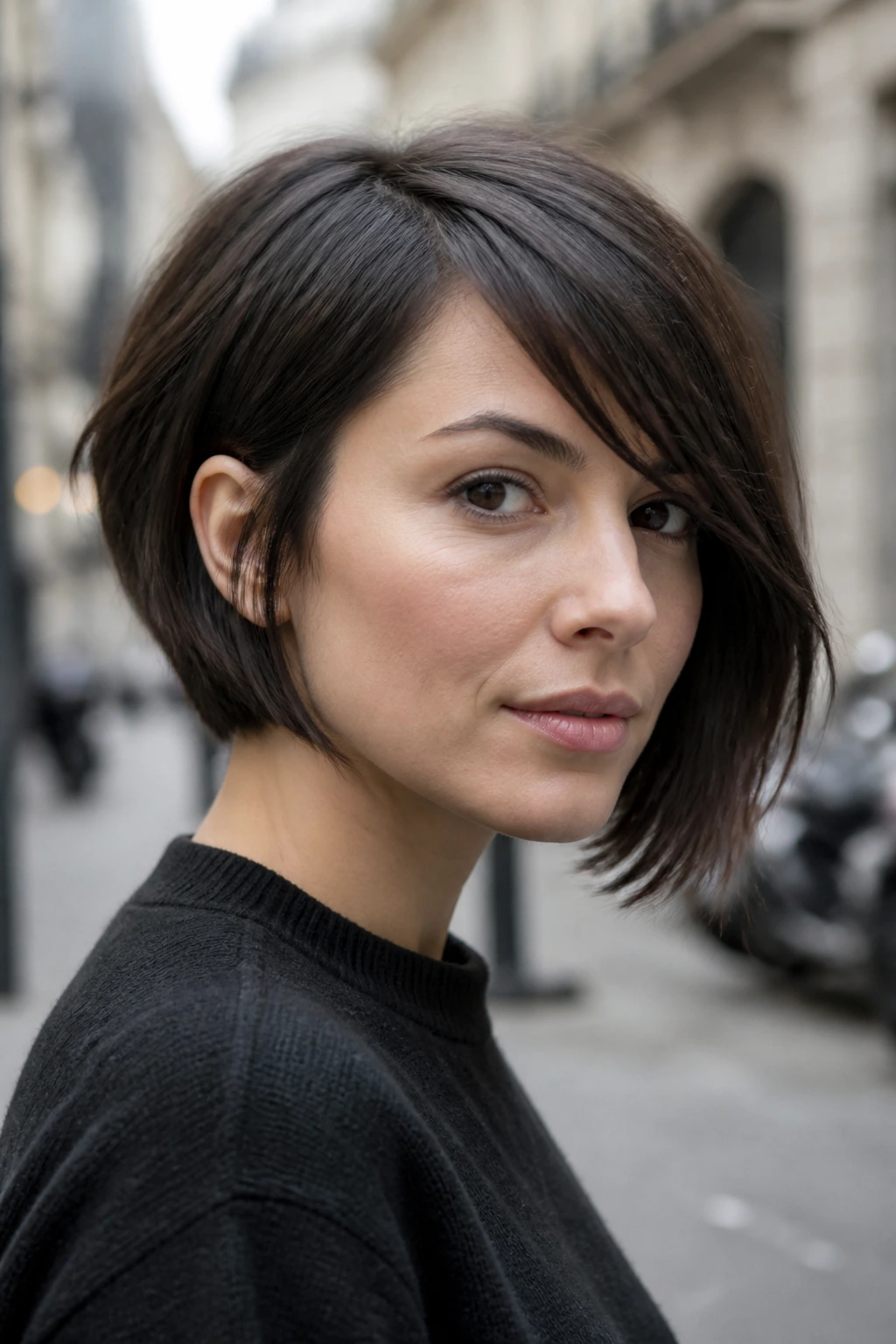
This one has a little attitude. The back stays short and compact, while one front corner drops just enough to keep the shape from becoming too precious. It still reads as a French bob — jaw-skimming, neat, cheeky — but the asymmetry gives it a sharper personality.
I like this shape on hair that has natural body near the roots. Flat hair can wear it, but you’ll need a root lift product or a quick round-brush blow-dry to keep it from sitting too close to the head. The longer corner is the detail that keeps the cut from looking like a standard chin-length crop.
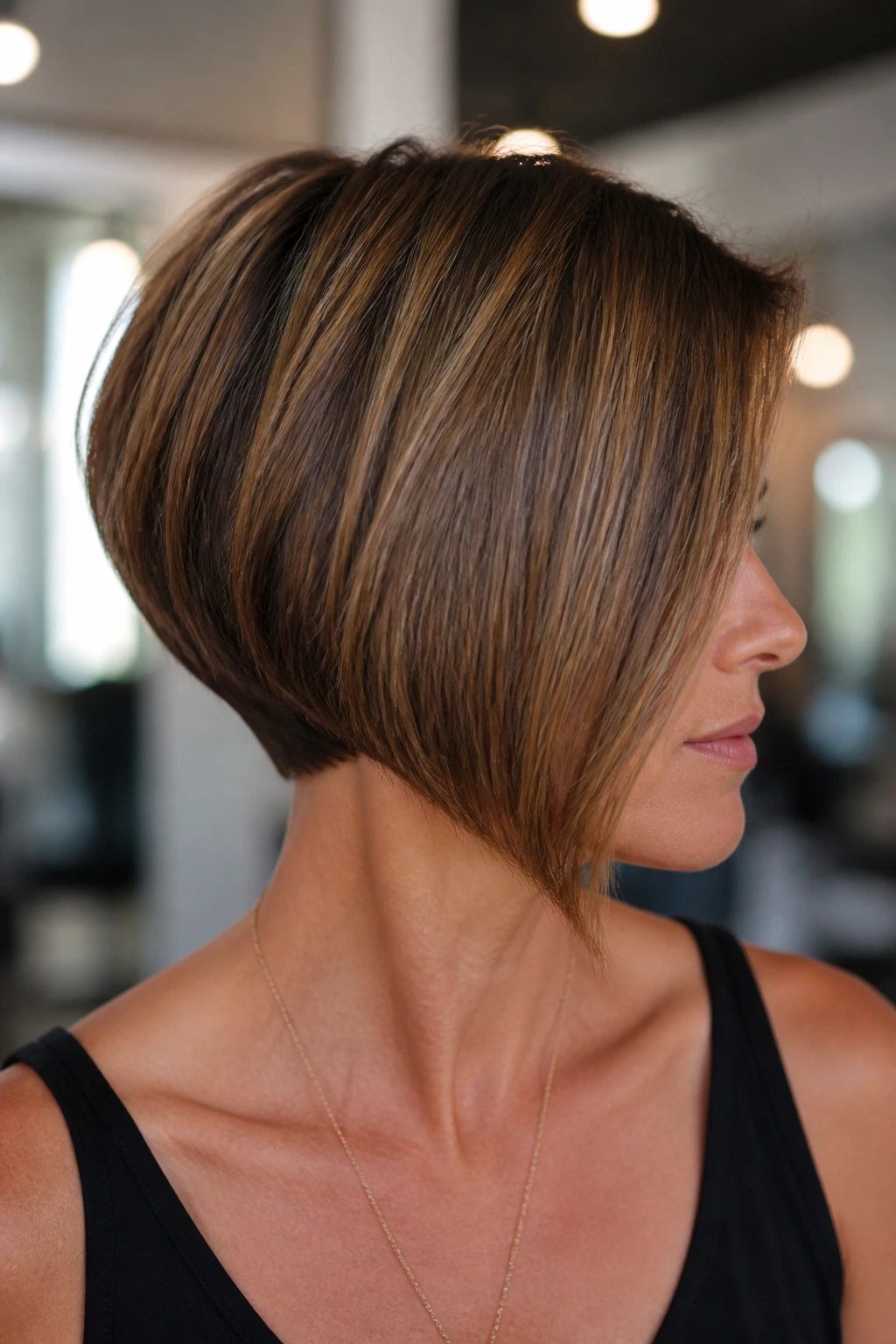
If you’re asking for it at a salon, bring a photo with the front and profile visible. That matters. A front-only shot hides the actual difference in length, and this cut depends on the side view. A picture that shows the ear line and neckline saves a lot of confusion.
6. Blunt A-Line Bob
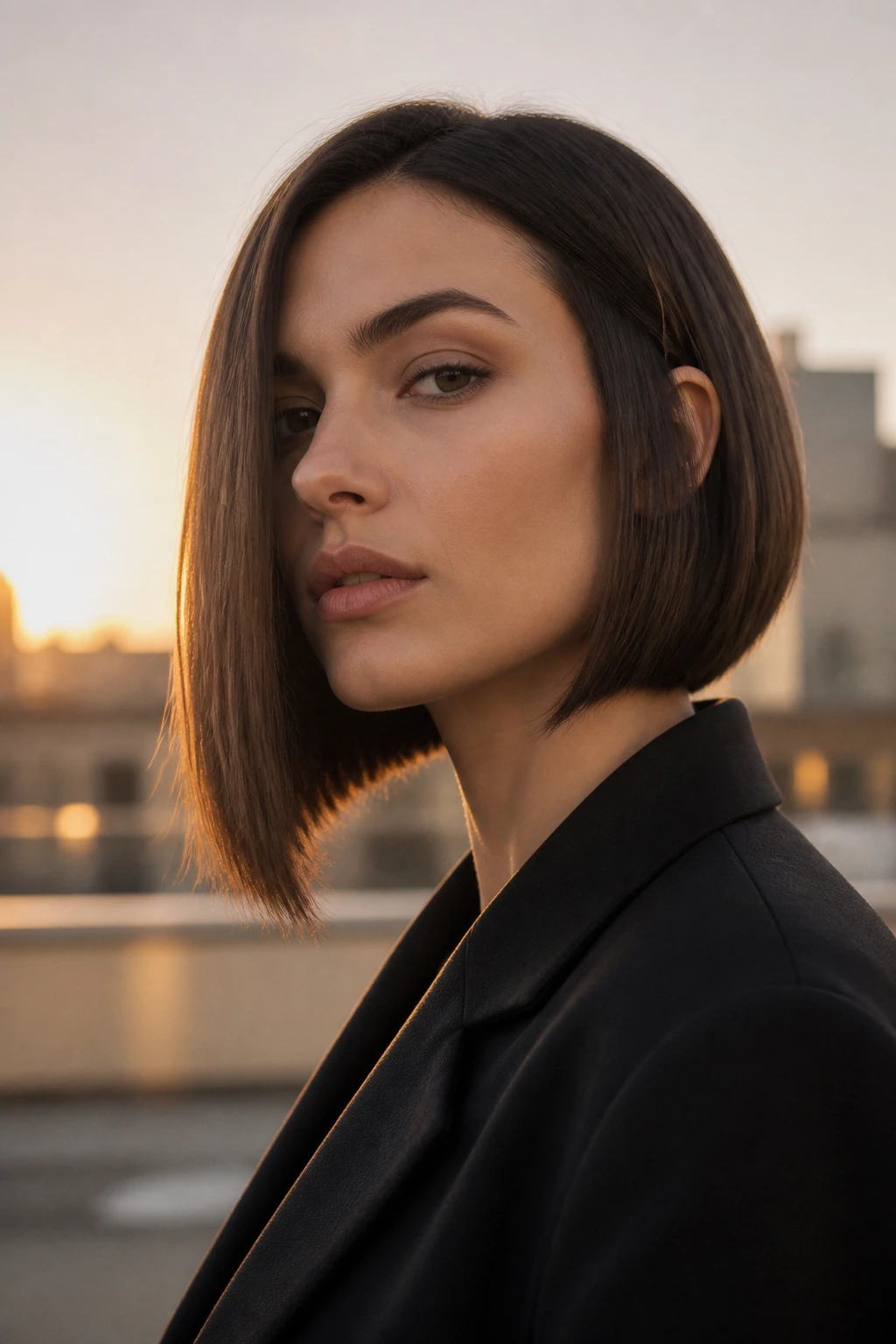
Blunt edges and asymmetry can sound like opposites, but they get along surprisingly well. The blunt A-line keeps the ends solid and dense, while one side still sits longer than the other. The result is sharp, graphic, and very good on straight hair that likes to show every line of a cut.
This is not the one to pick if you want softness. It’s the one to pick if you want the haircut to look expensive in the plainest possible sense: clean edge, clear shape, no fluff around the perimeter. A center or slight side part both work here, depending on how much drama you want.
The bluntness does mean you need regular trims. A tiny bit of grow-out is obvious on this shape because the line is so clean. But when it’s fresh, it has that crisp edge people keep saving to their camera roll.
7. Curly Asymmetrical Bob

Curly hair makes asymmetry more interesting because the difference in length doesn’t sit flat; it springs and shifts. One side can land at the cheekbone while the other curls closer to the jaw, and that mismatch is part of the charm. The cut should be done with curl pattern in mind, not against it.
Dry cutting is often the safer move for curls because the true shape shows up once the hair dries and shrinks. If the stylist cuts curly hair as if it were straight, the longer side can end up too short once the curl tightens. That is a nasty surprise. Nobody wants a bob that turns into a triangle by lunch.
For styling, leave-in conditioner and a curl cream are usually enough. Scrunch, diffuse on low heat, and stop touching it once the cast starts to form. The asymmetry should show through the curls, not fight them.
8. Razored Choppy Bob
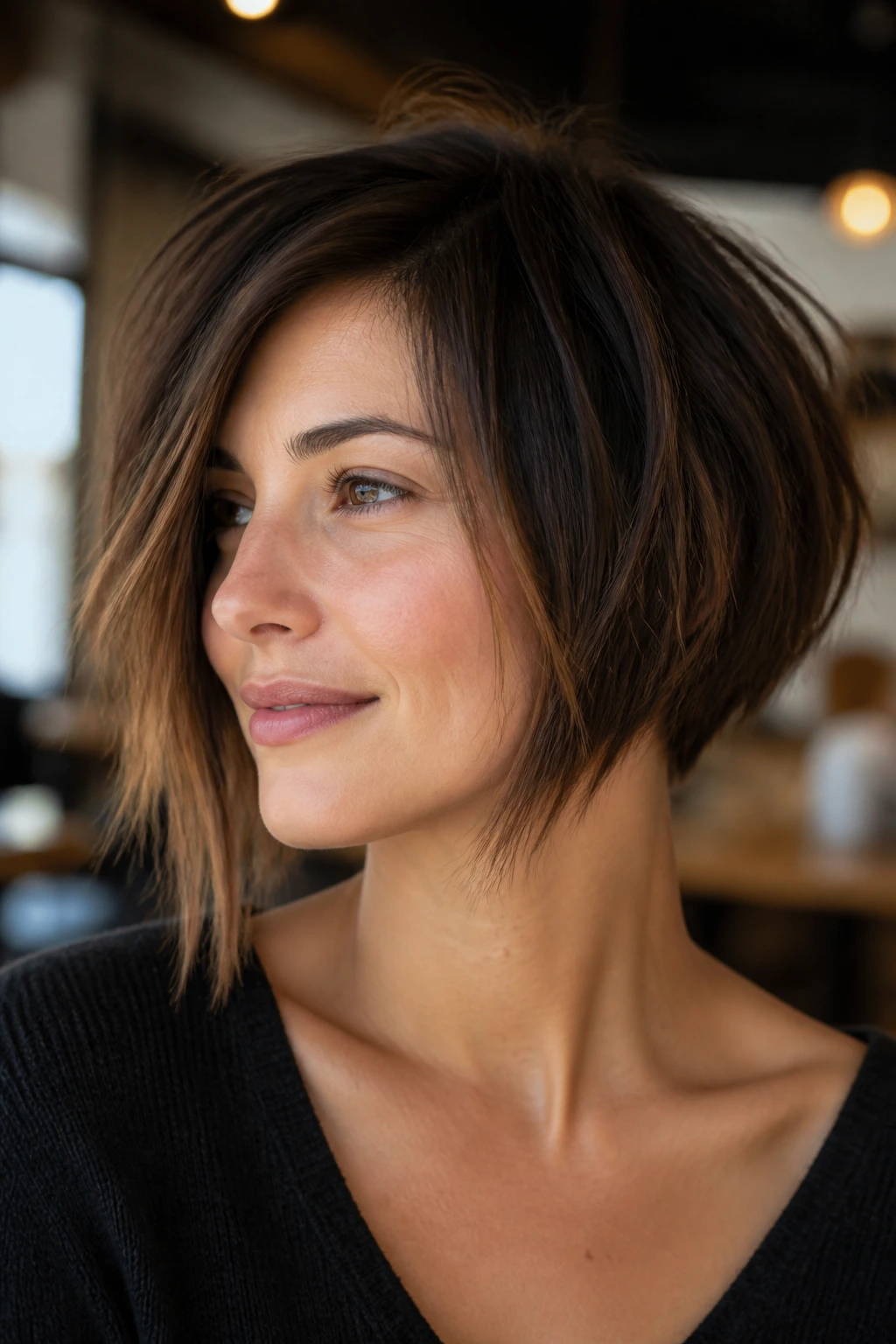
A razor-cut asymmetrical bob has more edge in the literal sense. The ends are softened and slightly broken up, which gives the longer side movement and keeps the shorter side from looking blocky. On dense hair, that texture can make a huge difference.
This cut is best when you want a piecey finish rather than a smooth one. It looks especially good with a little separation at the ends, so I’d reach for texture spray or a matte paste rather than heavy shine products. Too much gloss can flatten the choppy detail and make the whole thing look vague.
The danger here is over-thinning. A good razor bob should still have shape, especially around the perimeter. If the ends start looking wispy instead of airy, the cut has gone too far.
9. Curtain Bang Asymmetrical Bob
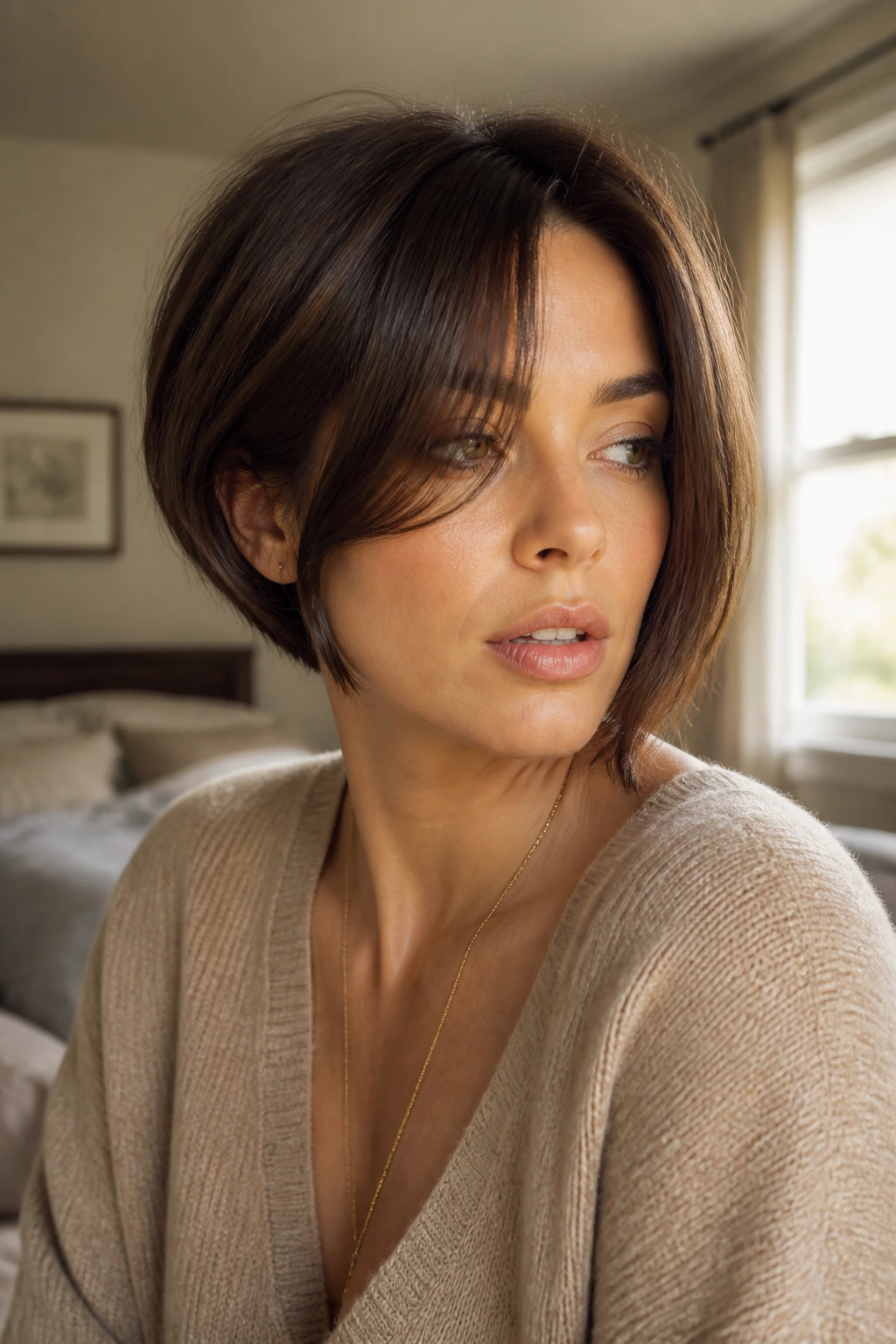
Curtain bangs and an asymmetrical bob are a good match because both shapes pull the eye outward. The bangs soften the forehead, and the uneven bob line keeps the jaw area from feeling boxy. Put together, the cut has movement from top to bottom.
This works best when the bangs are a little longer than the shortest side of the bob. If both pieces hit the same spot, the haircut can get muddy. You want the bangs to fall away from the center and the bob to keep its side-to-side difference. Two different shapes, one face.
A round brush and a small amount of flexible cream are your friends here. Blow-dry the bangs first so they don’t get stuck in the wrong direction. Once curtain bangs split badly, they can be annoying to fix.
10. Tucked-Behind-the-Ear Bob

There’s something satisfying about a bob that looks one way when worn down and another way when tucked. The asymmetry shows more clearly when one side is tucked behind the ear, because the longer side keeps its line while the shorter side reveals the neck and cheekbone. Small change. Big payoff.
I like this version for people who live in earrings. Hoops, studs, little sculptural pieces — they all work with a tucked bob because the hair isn’t fighting for space. You get a face-framing effect without adding more length.
Keep a light wax or cream at the ends so the tucked side stays smooth. If the front is too slippery, it slides out and loses that neat look. A tiny amount goes a long way.
11. Nape-Undercut Bob
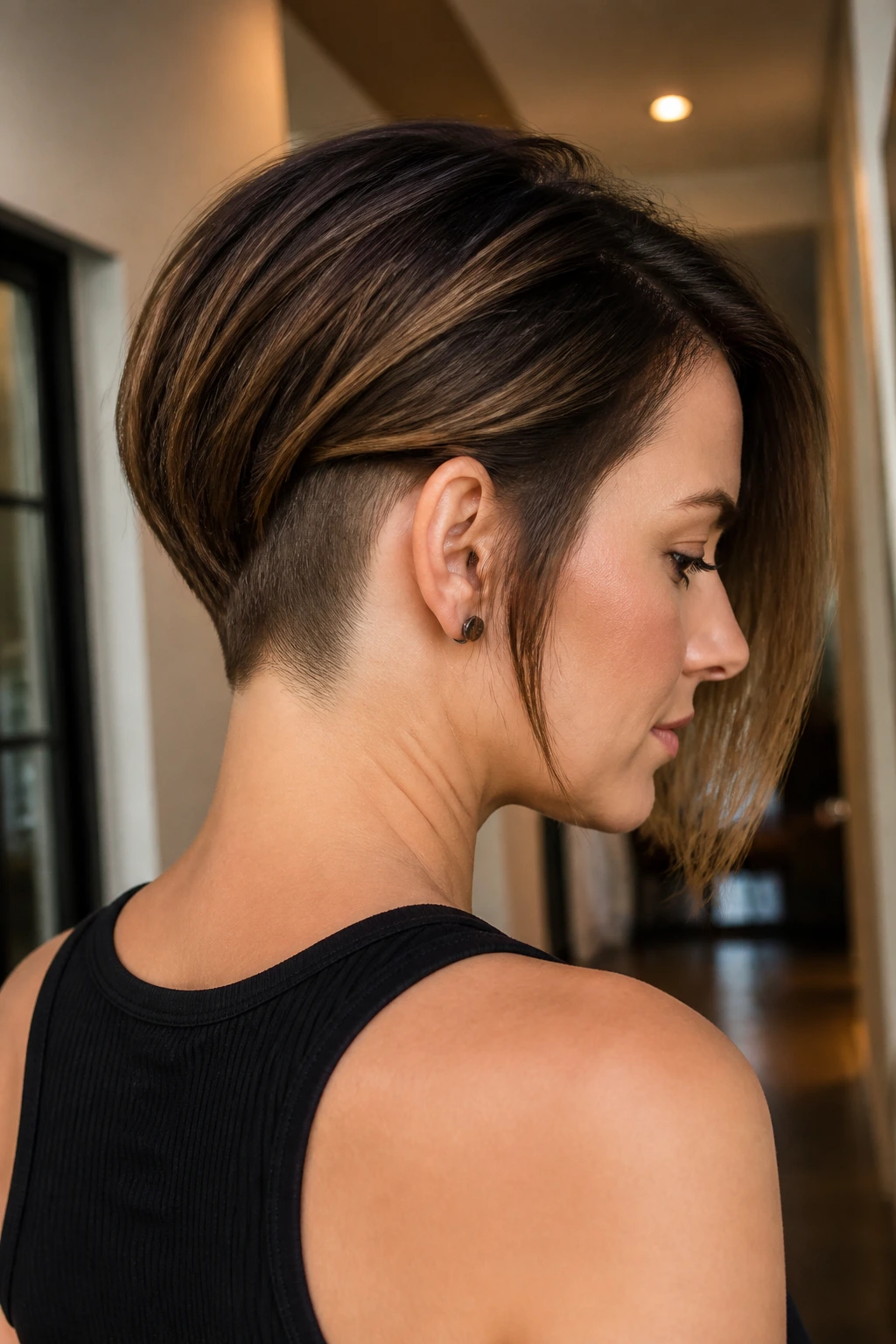
A hidden undercut at the nape can make an asymmetrical bob sit flatter, cleaner, and less bulky through the back. It’s a smart move for dense hair that tends to balloon under the occipital bone. The front stays longer on one side, but the back loses that heavy shelf feeling.
This is one of those cuts that makes people say the hair suddenly “falls better.” That’s usually the undercut doing its job. It doesn’t need to be dramatic or visible. Even a small panel cut shorter at the nape can reduce bulk enough to change the whole outline.
The downside is maintenance. As it grows, the undercut can poke out or create a fuzzy line at the neckline. If you go this route, commit to cleaning it up regularly. Otherwise the neat shape gets muddy fast.
12. Face-Framing Asymmetrical Bob

This version is built around the front pieces. The asymmetry is less about a steep angle and more about how the longer front section pulls toward the cheekbone while the shorter side opens the face. It’s softer than a hard angled bob and easier to wear when you don’t want the haircut shouting from across the room.
It’s especially useful if you want a bob that flatters without looking too severe near the jaw. The long front piece acts like a small curtain, which can soften round or square faces. The trick is to keep the face-framing section obvious enough that the asymmetry still reads.
A good stylist will usually point-cut or lightly layer the front so the ends don’t look like they were chopped with scissors and left alone. You want a clean fall, not a blunt flop.
13. Fine-Hair Lifted Bob
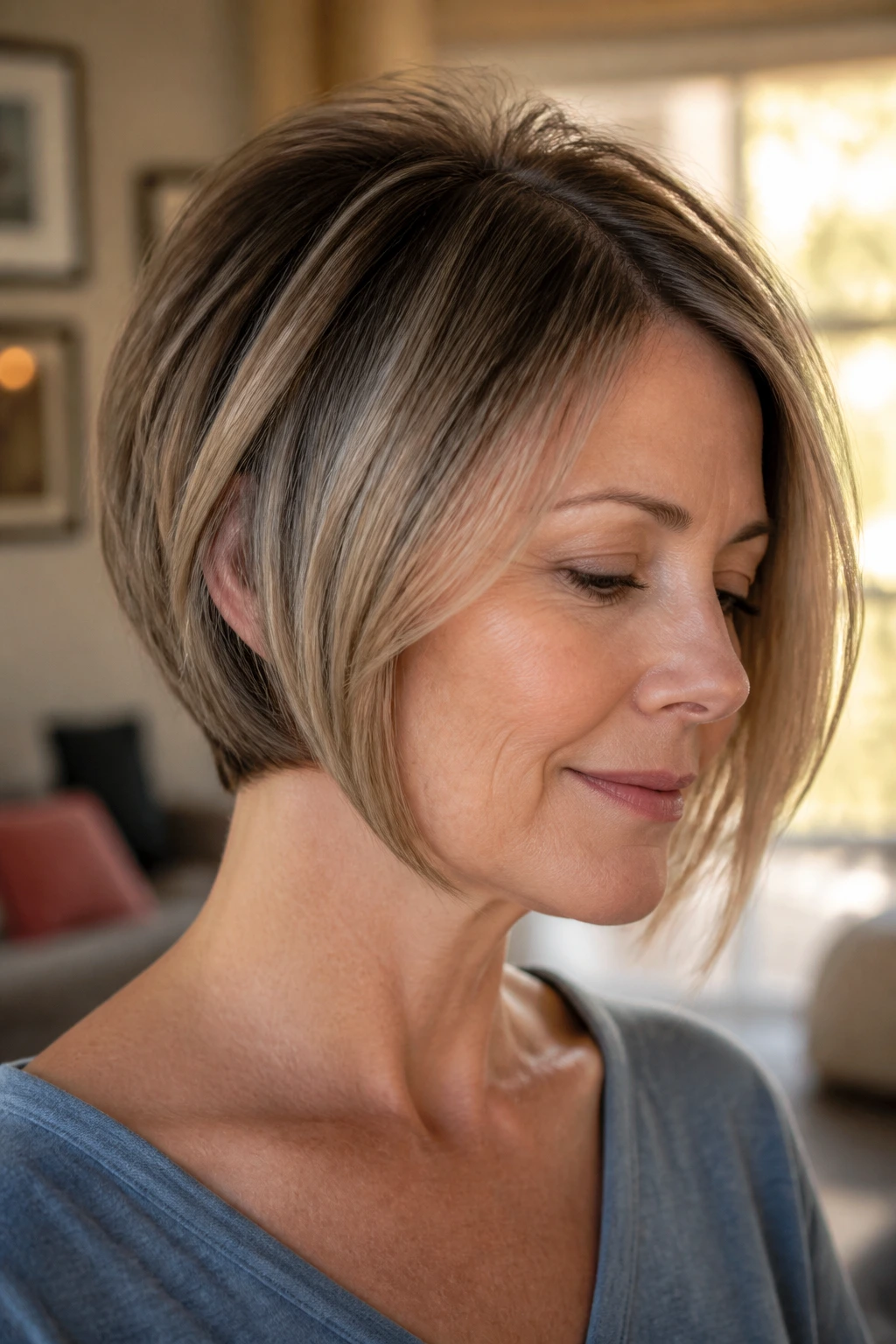
Fine hair needs a little help, and this cut gives it structure without dragging it down. The shorter back and longer front create a lifted silhouette, while the asymmetry keeps the shape from looking flat or helmet-like. That matters. Fine hair can turn too neat in a bad way if the cut is too even.
I’d keep the layers subtle here. Too much texture on fine strands can make the ends look sparse, and then the bob starts losing its body. A soft graduation in the back, plus a slight angle in the front, is usually enough to create the illusion of thickness.
Styling should stay light: root spray, round brush, maybe a dime-size amount of serum on the ends. Skip heavy oils. They drag fine hair down by midafternoon and make the asymmetry harder to see.
14. Thick-Hair Weight-Removed Bob
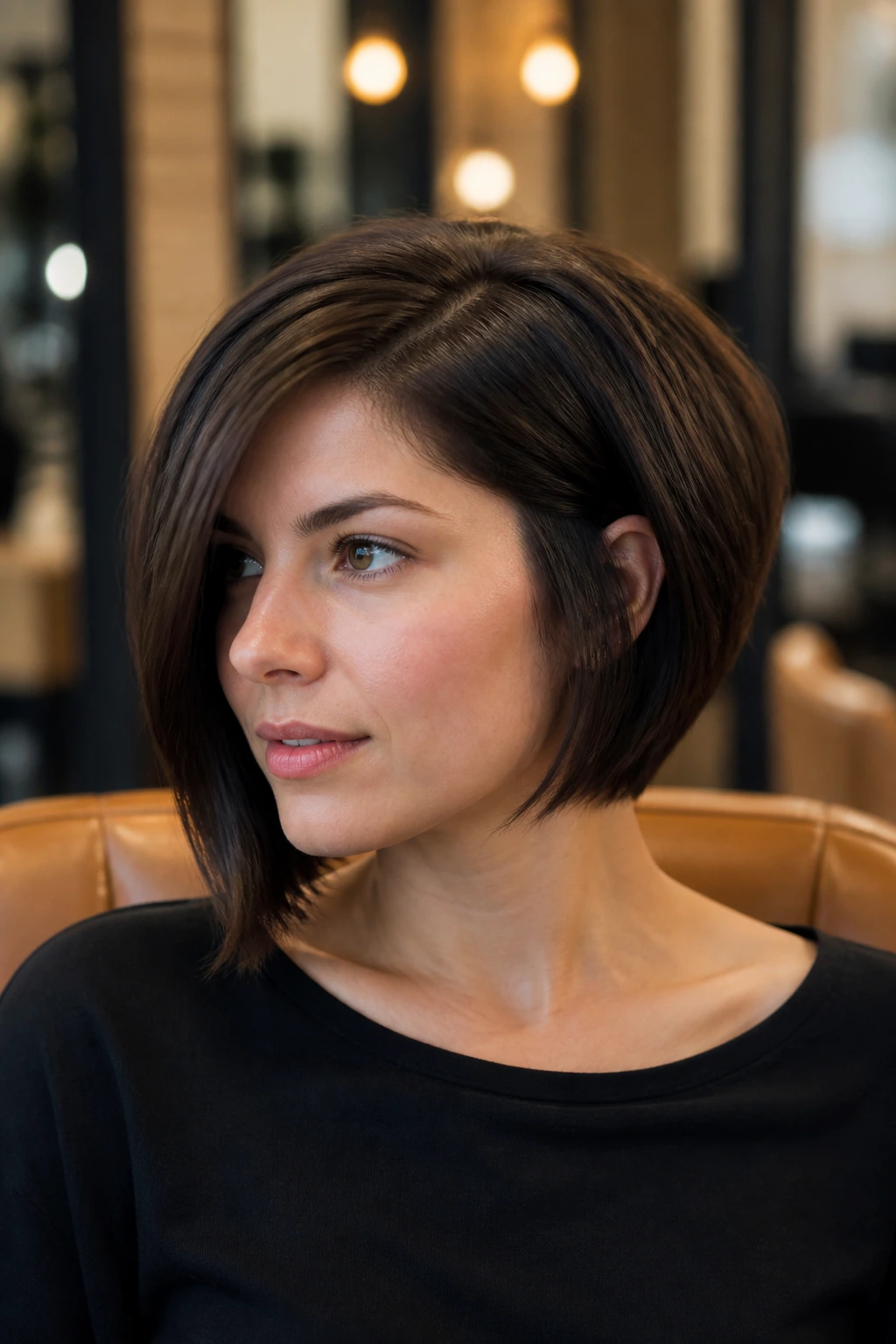
Thick hair and asymmetry can be gorgeous together, but only if the bulk is managed. This bob keeps the angle visible while removing some of the weight through the interior, so the longer side moves instead of puffing out. Without that, the cut can look like a square with ambition.
The point is not to thin hair until it disappears. That’s lazy cutting. The point is to create room for the line to bend inward a little near the jaw while keeping the perimeter solid. That balance is what keeps thick hair from swallowing the asymmetry.
Ask for internal weight removal rather than aggressive razor thinning if your hair is coarse or prone to frizz. A clean scissor cut inside the shape often ages better. It also grows out less weirdly.
15. Wavy Neck-Grazing Bob
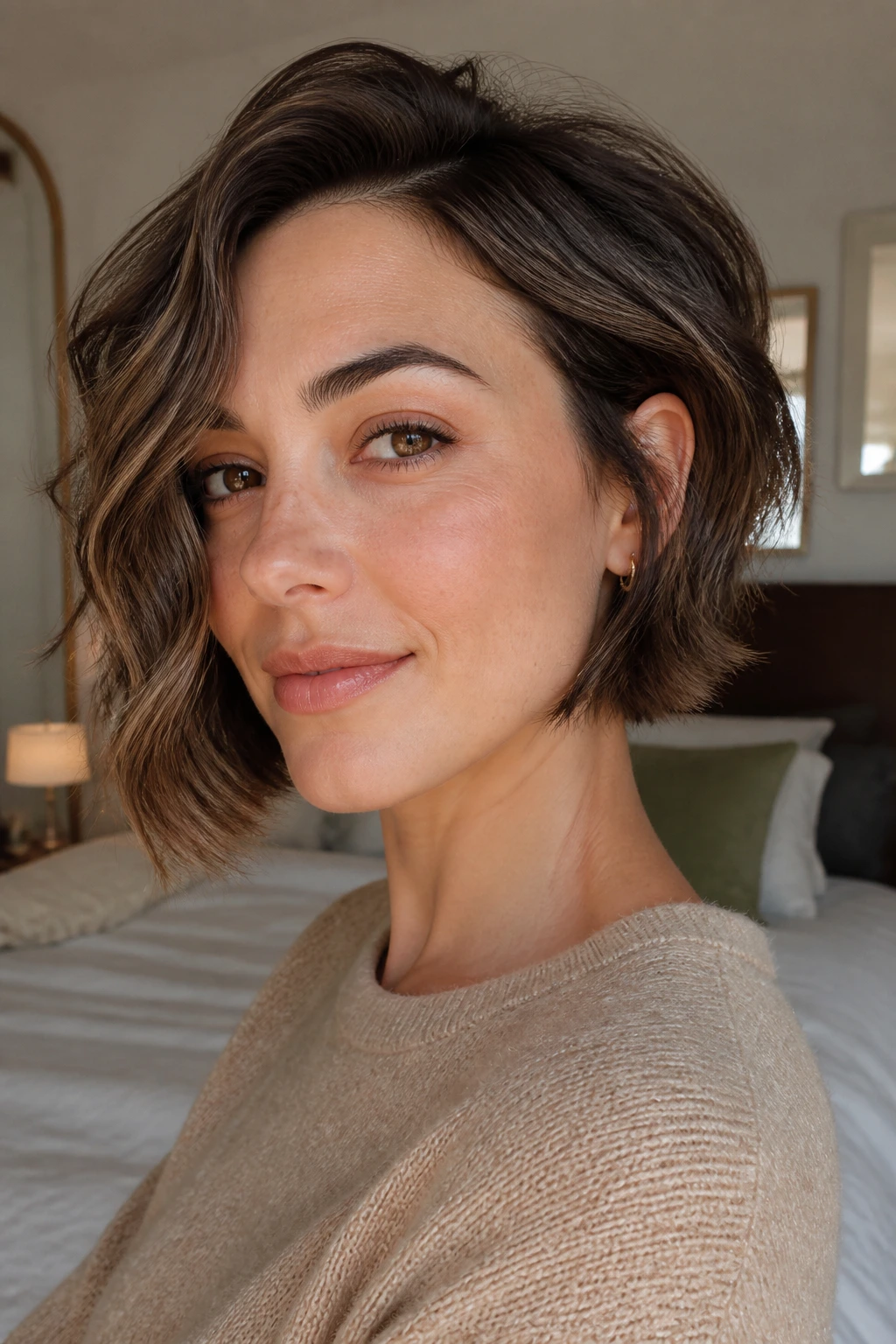
Waves make an asymmetrical bob feel easy, but the cut still needs enough precision to keep the line from wandering. A neck-grazing length is especially good because the longer side can sweep under the jaw while the shorter side lifts away from the neck. That movement is the whole point.
This is one of those cuts that looks better after a little lived-in chaos. Sleep on it, scrunch it, mist it with water in the morning. Fine. Perfectly smooth is not the goal here. A bit of bend through the front gives the asymmetry shape.
If your wave pattern flips under at the ends, ask for the front pieces to be left a touch longer. That extra length keeps them from shrinking too high when the hair dries.
16. Micro Bob With a Long Front Corner
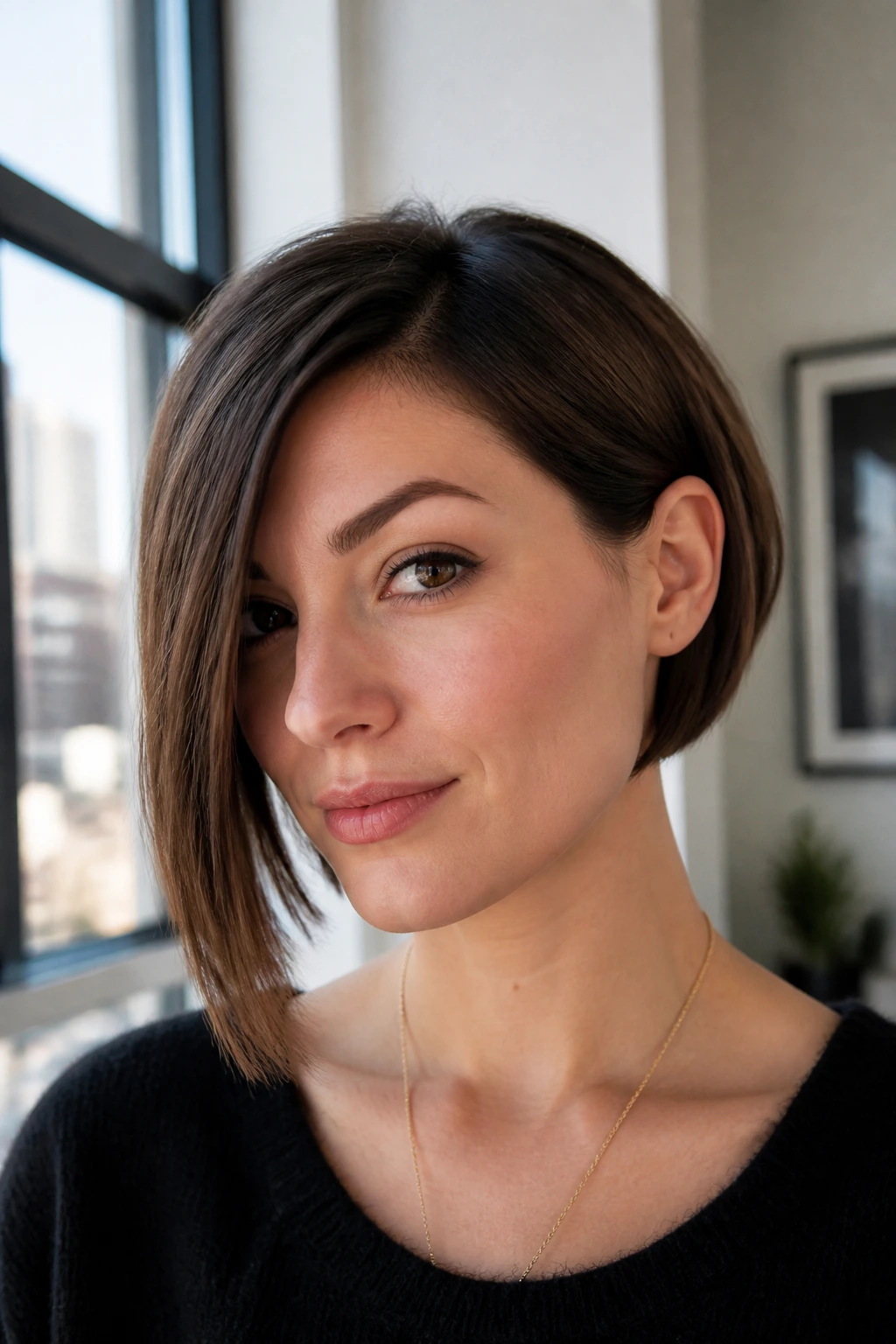
A micro bob is short enough to feel bold, but the longer front corner keeps it from reading as severe. One side may skim just below the ear while the opposite front lands closer to the jaw. That tiny contrast changes the entire silhouette.
I like this cut on straight or lightly wavy hair because the line stays visible. On very curly hair, the micro length can bounce up more than expected, so the asymmetry should be adjusted with shrinkage in mind. That part matters more than people think.
The styling is usually simple: blow-dry smooth, tuck one side, and let the front corner do the talking. If you want to make it more modern, a shine spray at the end can sharpen the line without making it greasy.
17. Shadow-Root Blonde Bob
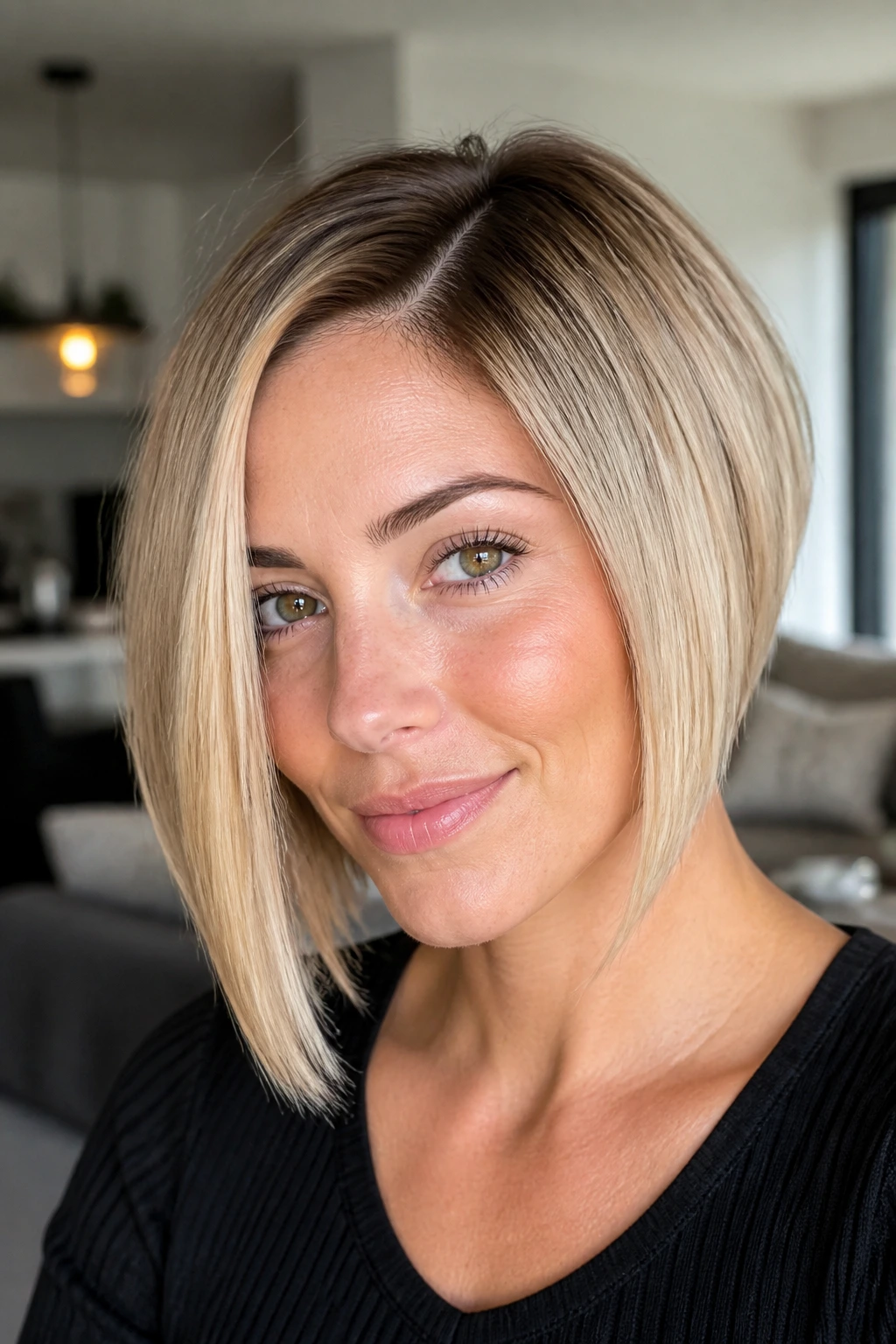
Color changes the way asymmetry reads. A shadow root on blonde hair gives depth at the scalp and makes the angle in the cut easier to see, especially when the side panels fall over the cheek and neck. The haircut looks thicker because the roots aren’t all one bright block.
This is useful if the cut itself is clean and you want the shape to stand out in a more obvious way. The darker root anchors the perimeter. The lighter lengths catch the eye as they swing. That contrast can be lovely on short hair.
The only caution is keeping the tone from drifting brassy, because warm fade can muddy the shape. If you wear blonde and short asymmetry together, the color maintenance is part of the haircut maintenance. They travel as a pair.
18. Copper Shine Bob
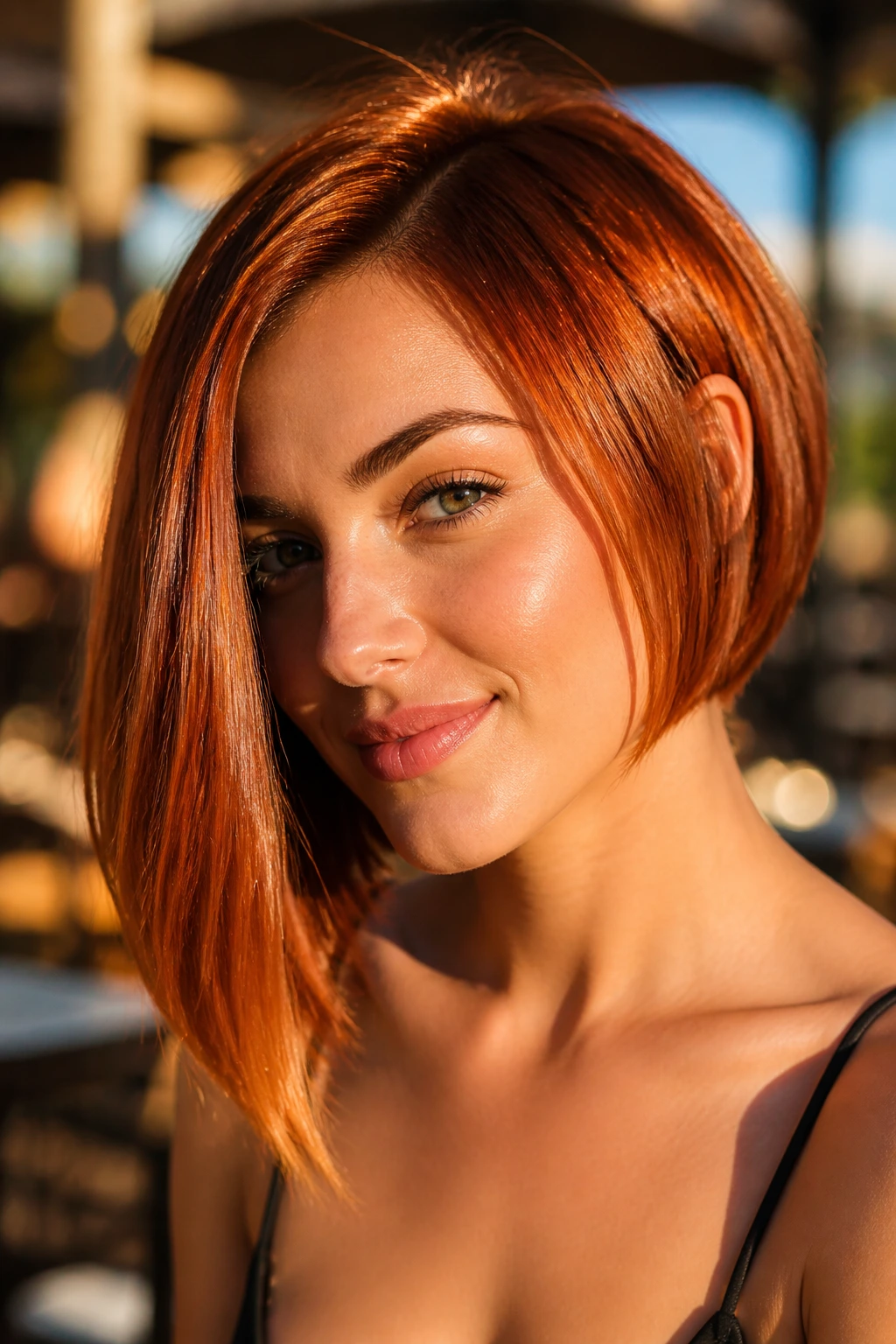
Copper makes an asymmetrical bob feel warmer and more alive. The cut line shows, but the color adds a glow that keeps the style from looking cold or too hard. On short hair, that warmth can soften the angle just enough.
This is especially nice when the bob has a clean front panel and a slightly shorter back. Copper catches light on the curved edge of the cheek, which makes the movement visible even when the hair is still. That’s a small thing, but small things matter on short hair.
Keep the finish glossy rather than matte if you go this route. Copper color looks dull fast when it’s dry, and the asymmetry loses some of its punch. A light color-safe mask and a smoothing cream help.
19. Wet-Look Editorial Bob
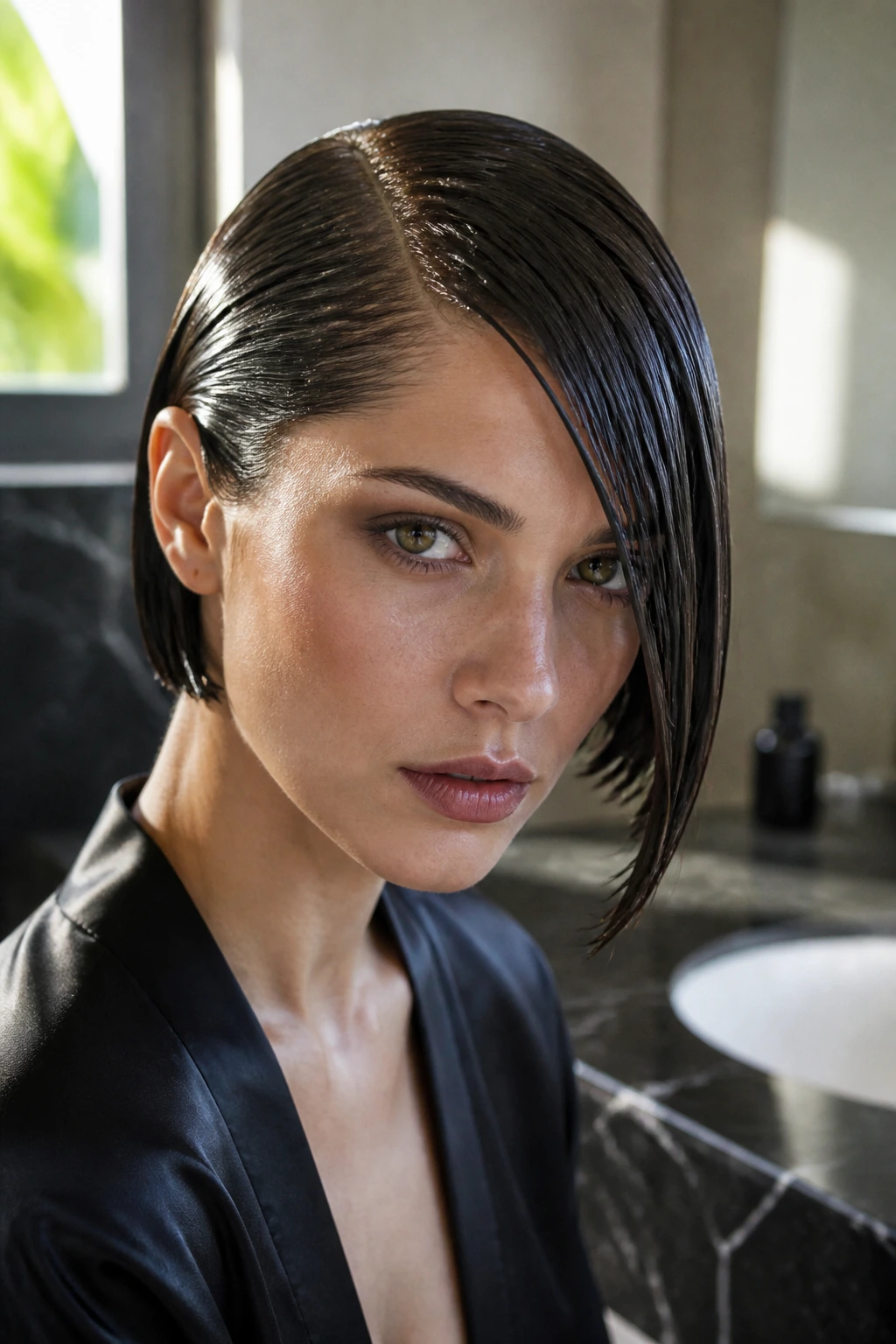
This is the boldest version on the list, and I mean that in the most practical sense. The wet look makes the asymmetry impossible to miss because the hair clings to the head and shows every angle of the cut. It’s sleek, a little severe, and very good for special occasions or nights when you want the haircut to look styled on purpose.
Use a strong gel or a gel-cream mix on damp hair, then comb the front in the direction you want and leave the ends slightly separated. The trick is not making it crunchy unless you want that. Too much product can turn the bob into a helmet. Too little and the shape disappears.
This one is not for anyone who hates touch-up work. The wet finish can collapse faster than a dry blowout. Still, when it’s right, it has real presence.
20. Side-Swept Fringe Bob
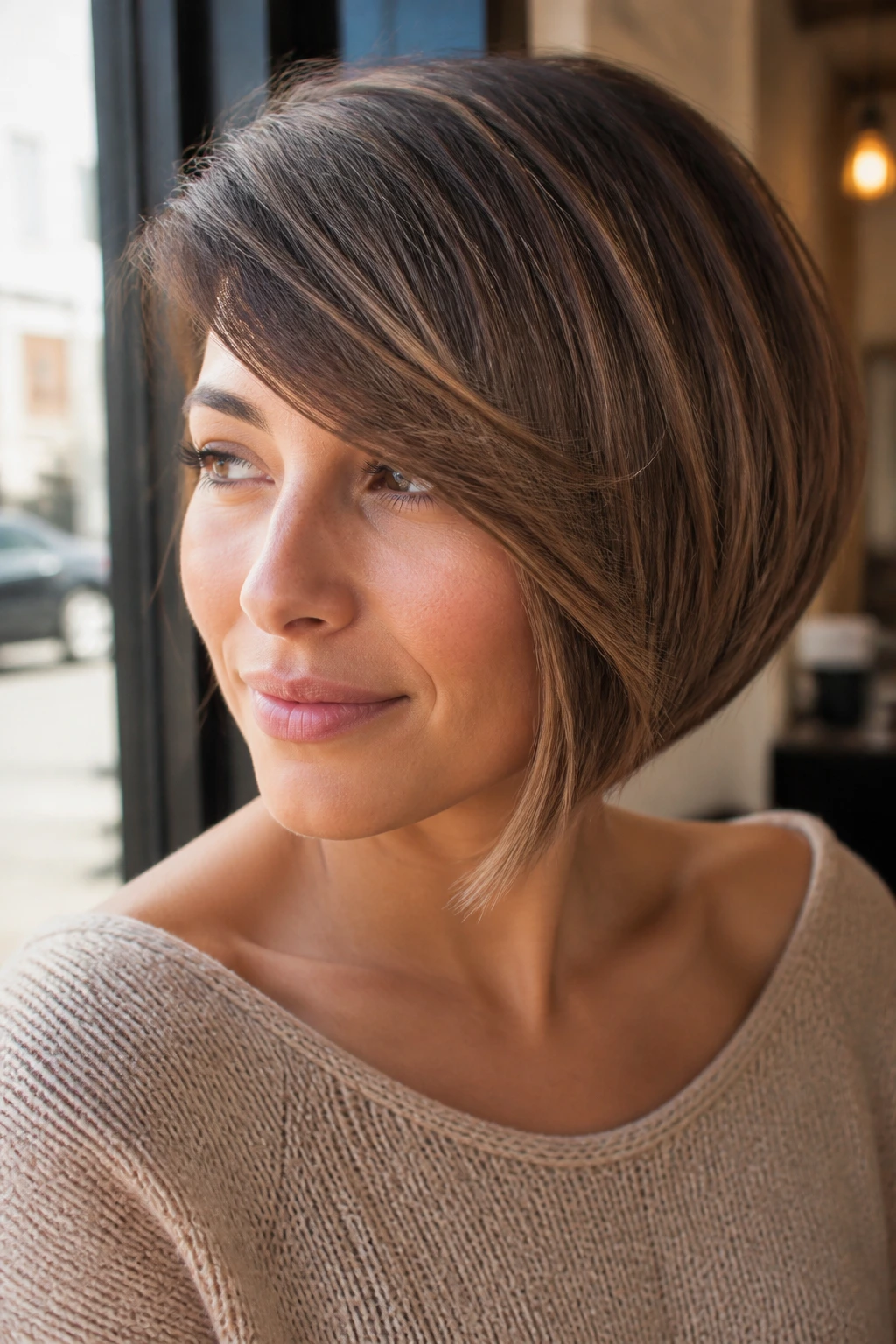
A side-swept fringe gives the asymmetrical bob a diagonal line on top to match the diagonal line below. That coordination makes the whole haircut feel designed, not accidental. It also helps if you want to soften a forehead without going full curtain bang.
The fringe should be long enough to move, not long enough to hang in your eyes all day. A light bevel at the ends keeps it from looking heavy. If the bangs are cut too blunt, they can fight the bob instead of flowing with it.
This cut is a good answer for people whose hairline naturally wants a side part. Rather than working against the grain, you let it help. Hair behaves better when you stop arguing with its habits.
21. Soft Graduated Bob
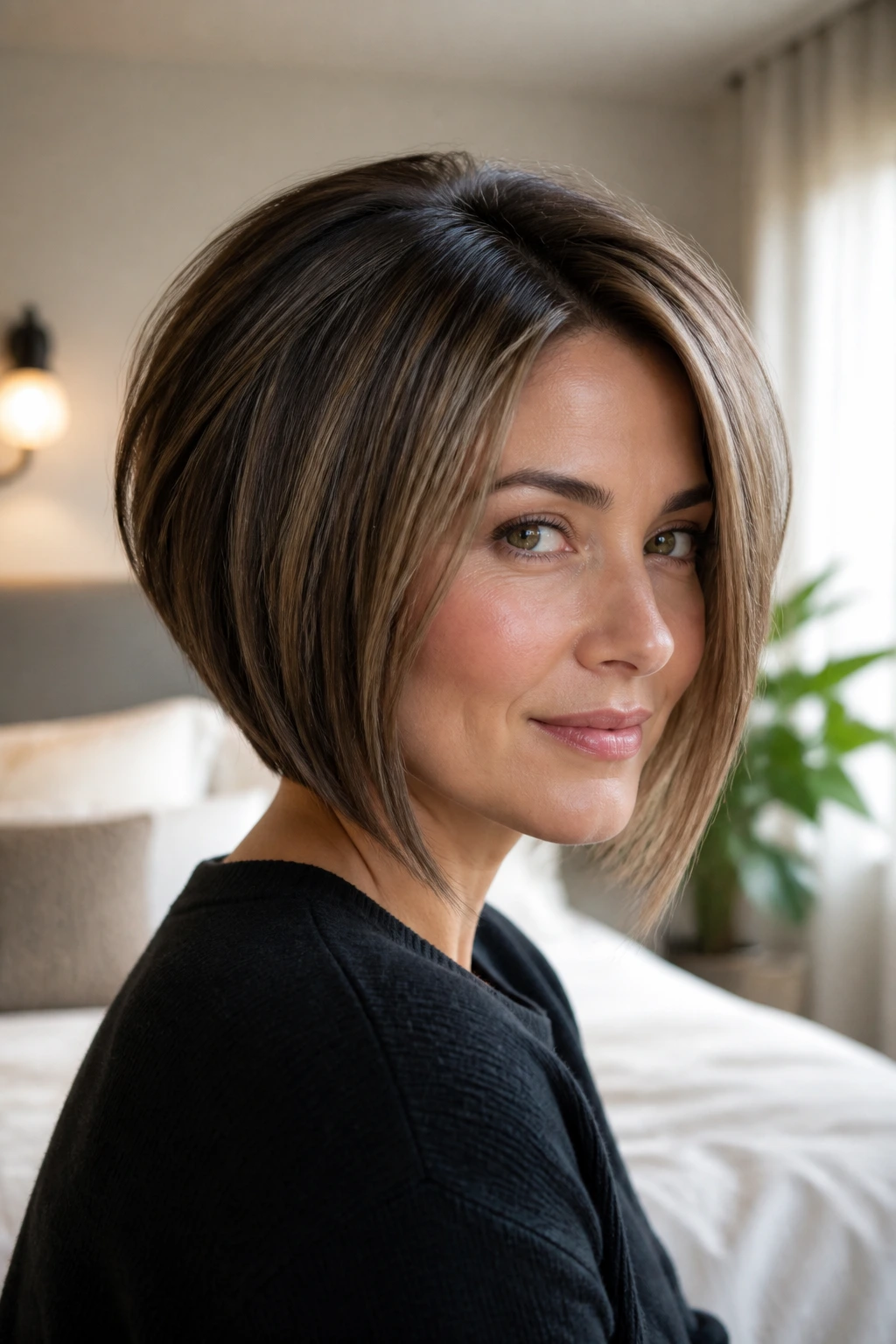
A soft graduation means the back has structure without stacking up dramatically. It gives the asymmetrical bob a gentle curve and keeps the crown from going flat, but the whole shape stays quieter than a classic stacked version. That makes it useful for people who want polish without a harsh outline.
This is one of the easiest versions to live with day to day. It styles quickly, grows out in a forgiving way, and doesn’t demand perfect straightening to look right. The angle is there, but it isn’t the whole conversation.
I’d call this the “weekday bob” of the group. It still looks finished with minimal effort, which is sometimes the real win. Haircuts shouldn’t need a pep talk every morning.
22. Piecey Shag Bob

A piecey shag bob brings in a little attitude from the shag family without losing the bob shape. The layers are light, the ends are separated, and the asymmetry gives the cut a diagonal line that keeps it from getting too fluffy. It’s a good fit for wavy hair that wants movement.
The danger here is too many layers near the face. If the haircut is over-layered, the bob can stop reading as a bob and start reading as a short shag with a side part. That’s fine if that’s what you want, but it’s a different animal.
A texture paste or dry spray at the end helps the pieces stand apart. You want a few visible strands, not a fuzz cloud. Small difference. Big mood change.
23. Jawline-Hugging Bob
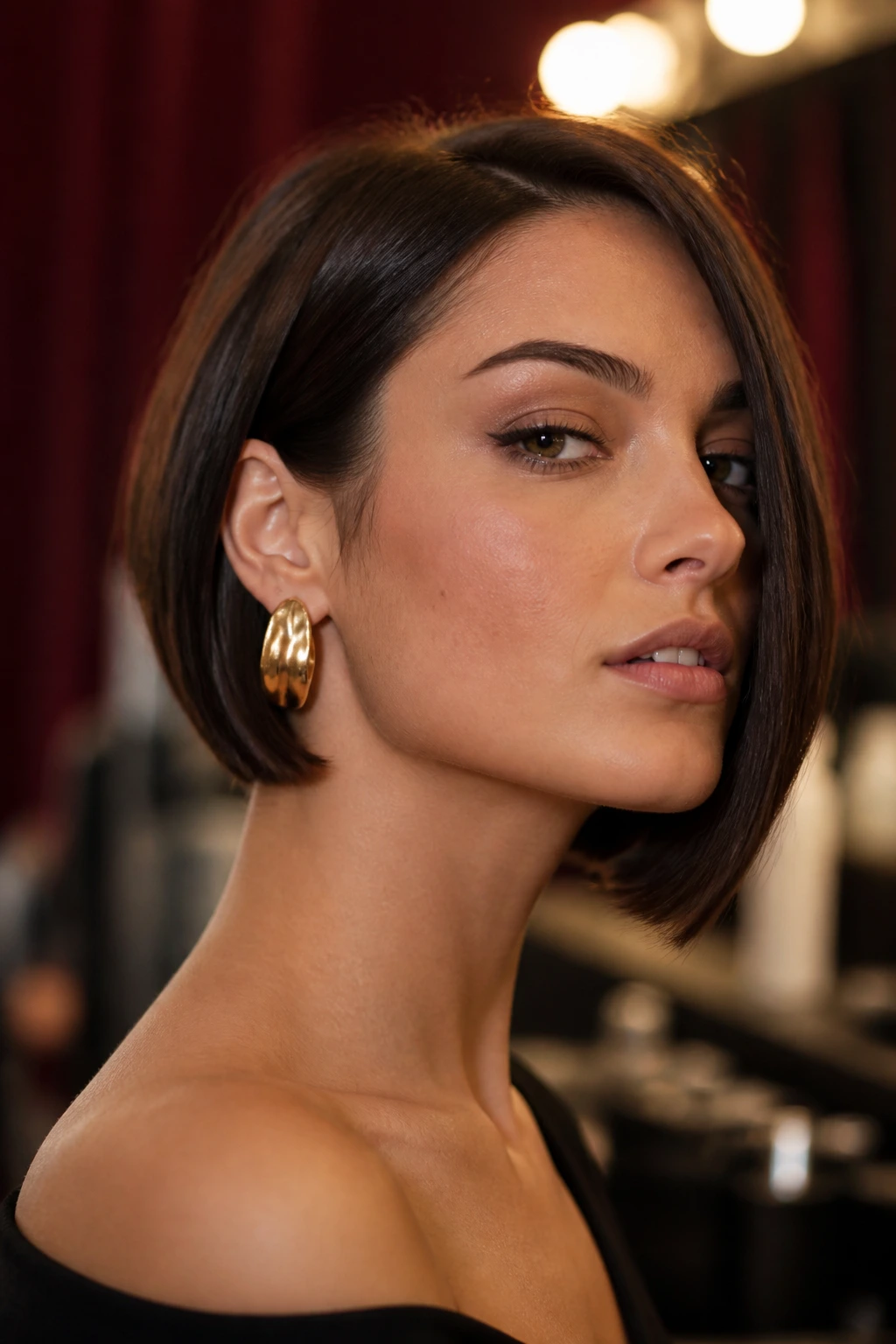
This cut sits right where the jaw begins to turn, which is exactly why it looks so good on people who want the face to appear a little more sculpted. The longer side kisses the jawline while the shorter side opens the cheek. It creates a clean frame without a lot of extra length.
The shape is especially good if you like wearing bold earrings or a visible neckline. Because the bob stays tight to the face, the accessories don’t compete with it. They actually help the haircut read even more clearly.
To keep the jawline effect crisp, avoid too much volume at the sides. A little bend is fine. A poofed-out side panel will break the line and make the cut lose its point.
24. Soft-Curled Bob
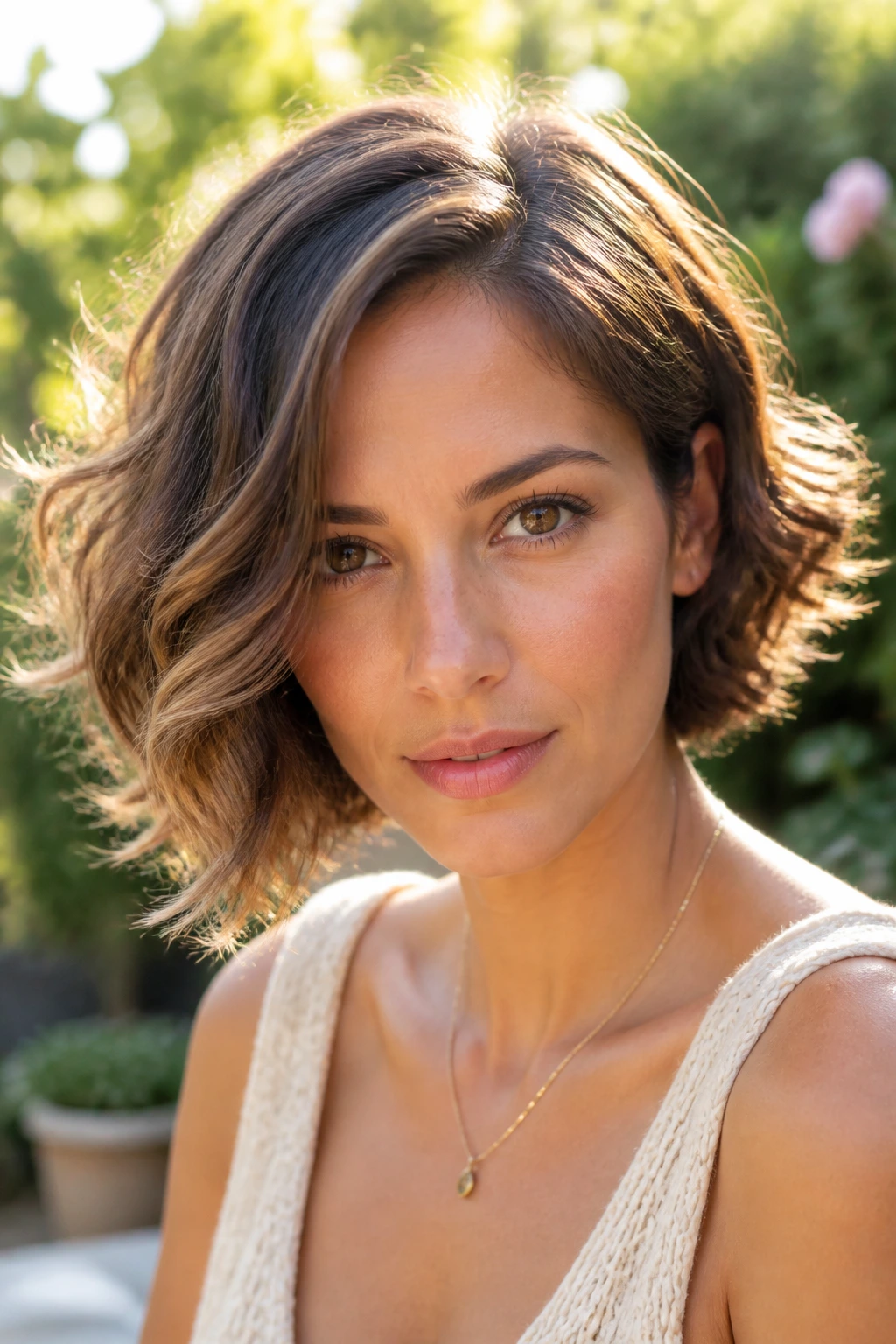
Soft curls make asymmetry feel romantic instead of sharp. The longer side can curl under the chin while the shorter side flicks outward slightly, and the difference gives the haircut a bit of swing. It’s one of the best options for someone who likes polished texture without stiffness.
A 1-inch curling iron or a flat iron wave technique both work here. I’d keep the curl direction mixed, not uniform, so the shape doesn’t look like a parade of identical loops. The asymmetry should still be visible, but through movement rather than a hard line.
A light flexible hairspray is enough to hold this style. Heavy spray makes curls brittle, and brittle curls kill the softness that makes this version pretty in the first place.
25. Sleek Center-Part Bob
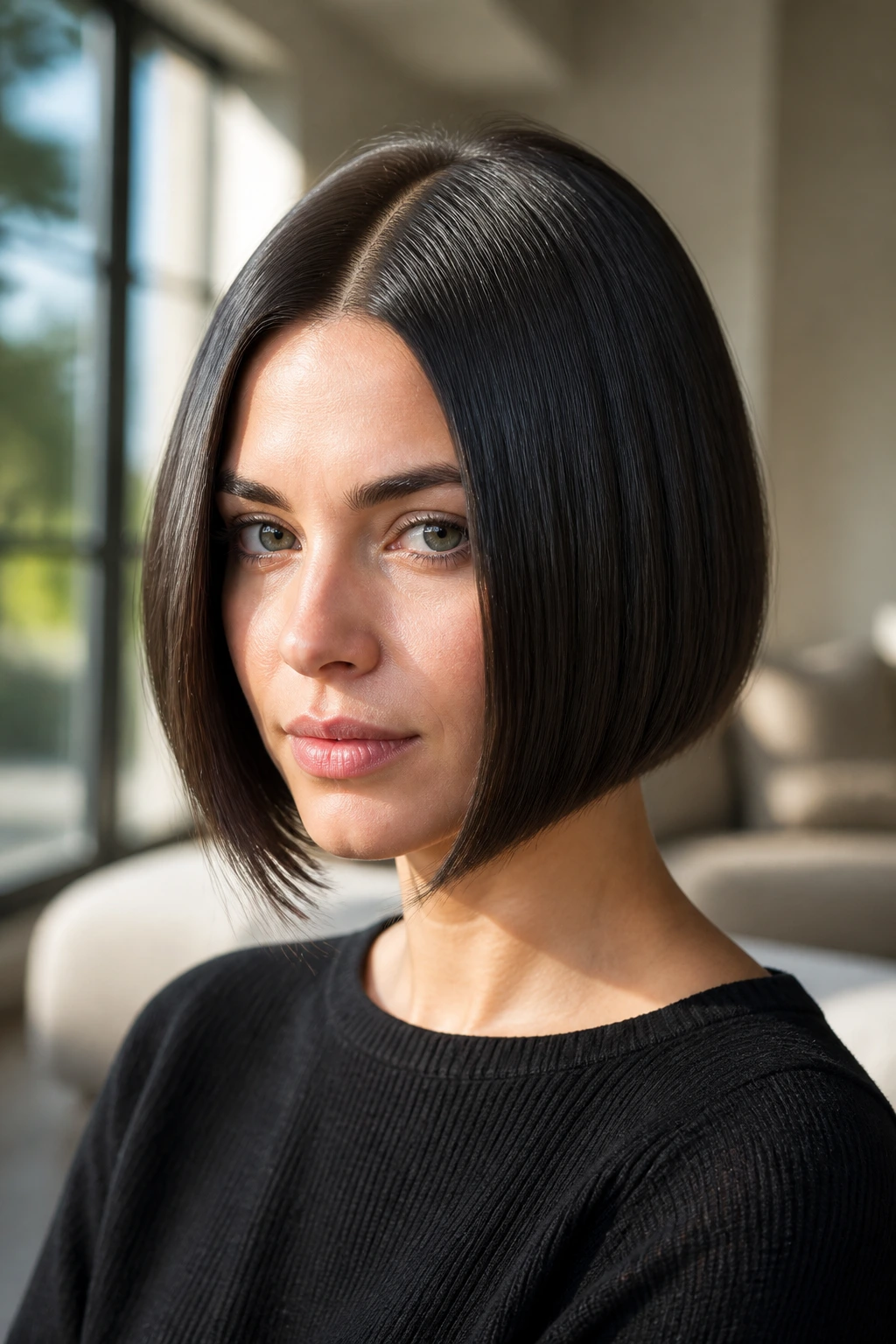
A center part doesn’t usually sound like asymmetry, but it can work beautifully when the cut itself carries the imbalance. The part creates a calm, symmetrical top line, and then the uneven length in the bob does the quiet work underneath. That contrast is what makes it interesting.
I like this look on straight hair because the center part keeps the whole style clean. On wavy hair, the middle split can bring out the natural bend in a way that feels relaxed rather than fussy. Either way, the shorter side should still be visible when the hair moves.
If your face is very round, a center part can make the bob feel a touch narrower. If your face is long, keep the front a little fuller so the cut doesn’t stretch the face further. The same haircut behaves differently depending on where it sits.
26. Ear-Length Bob With a Long Front

This is a compact little cut with a sharp front corner. The back or shortest side can kiss the ear, while the front angles forward enough to give the style range. It’s short, tidy, and much more versatile than it looks at first glance.
The ear-length side exposes the neck, which can be a nice break if you’re used to heavier hair around the face. The longer front piece keeps it from looking too severe. That tension — short in back, longer in front — is the whole appeal.
This cut needs a precise neckline. If the back is crooked, the asymmetry stops looking stylish and starts looking accidental. Ask for the nape to be checked from both sides before you leave the chair.
27. Asymmetrical Bob for Round Faces

When a face is round, the best asymmetrical bob usually creates a little vertical line and a little diagonal line at the same time. The longer side should graze below the jaw rather than sitting right at the widest point of the cheeks. That placement keeps the haircut from widening the face.
A deep side part helps here, and so does keeping the front slightly longer than you think you need. Short, blunt sides can make the face read broader. A longer front corner draws the eye down, which is the move you want.
I would avoid over-volumizing the sides on this shape. Root lift at the top is fine. Puff at the cheeks is not. They do different jobs.
28. Asymmetrical Bob for Strong Jawlines

A strong jawline can wear an asymmetrical bob beautifully, but the cut should either soften the jaw or deliberately echo it. A longer front piece that skims the jaw can ease the line a bit, while a blunt angled version can lean into the structure and make the whole face feel more graphic.
The mistake here is cutting the front too short and letting it sit exactly on the angle of the jaw. That can make the line feel heavy. Push the longer side a touch below or above that point so the haircut has room to breathe.
This is one of those shapes where I’d pay attention to texture first and trend second. If your hair naturally swings, let it swing. If it sits straight, keep the cut clean and let the outline do the talking. Either way, the jaw is part of the story, not the whole book.
Why the Uneven Line Changes Everything on Short Hair

Short hair shows geometry faster than long hair does. There’s less length to hide behind, so the perimeter of an asymmetrical bob has to do the job of framing the face, lifting the profile, and keeping the cut from looking accidental. That’s why the difference between sides matters so much. A one-inch shift at the front can change how the cheek, jaw, and neck read from across a room.
The best asymmetrical bobs don’t just lean one way. They use the longer side to guide the eye and the shorter side to clear space. That can make a round face look a little more elongated, a square jaw look a touch softer, or a fine-hair bob look fuller because the line is more visible. The shape works because the eye follows the line, and the line has somewhere to go.
There’s also a practical piece that gets ignored too often: the cut has to account for how hair sits when it dries. Short hair doesn’t forgive sloppy graduation. If the back is too heavy, the front drops. If the front is too short, the asymmetry disappears. A good cut understands that balance before styling ever starts.
Essential Tools for Styling an Asymmetrical Bob
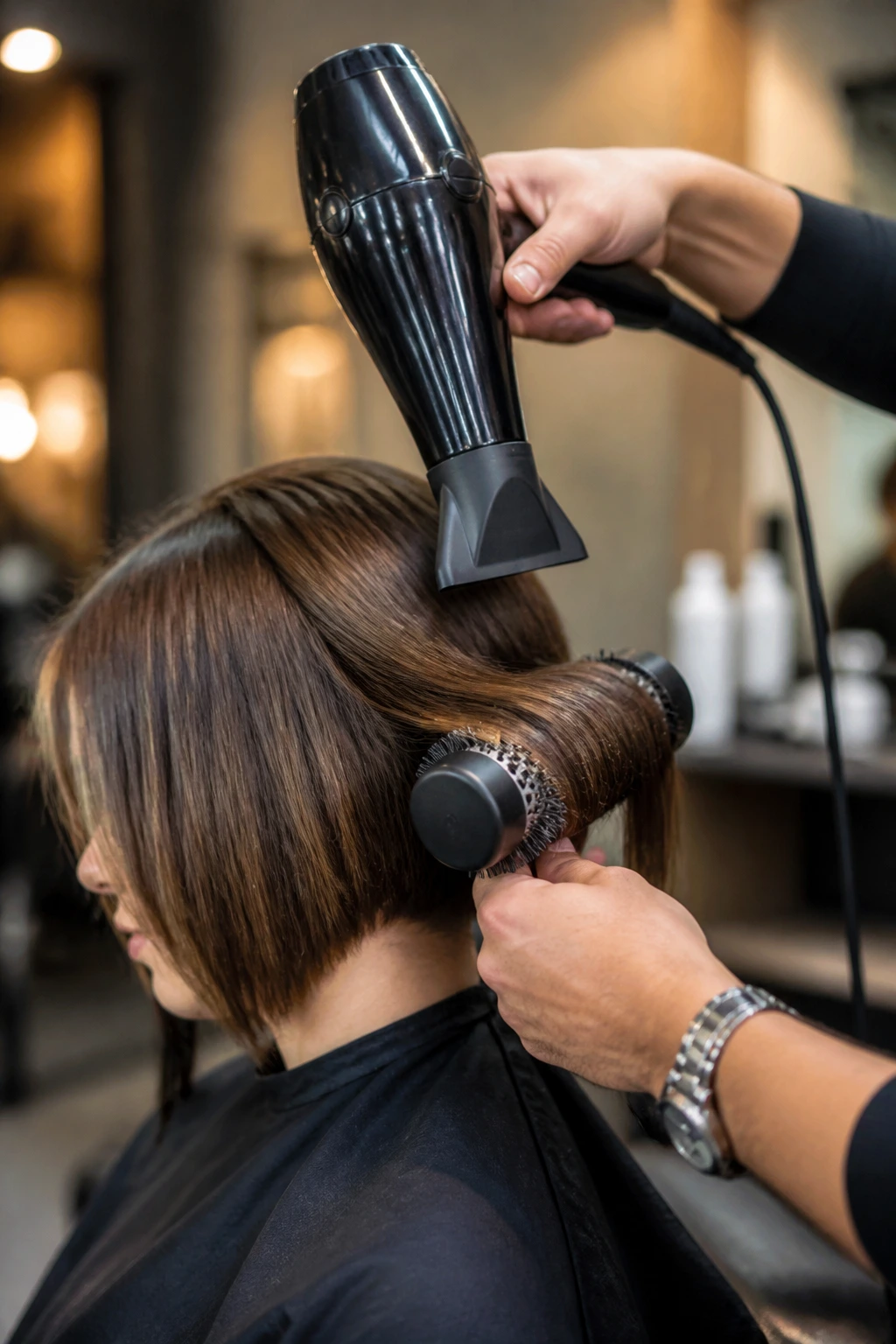
You do not need a bathroom drawer full of gadgets, but a few specific tools make short asymmetrical hair much easier to handle.
- Blow dryer with a nozzle: Directs the airflow so the perimeter dries smooth instead of puffing out in random directions.
- 1-inch or 1.25-inch round brush: Useful for bending the front pieces under or away from the face without overcurling them.
- Flat iron with beveled edges: Helps create a clean sleek finish or a soft bend at the ends without leaving a harsh crease.
- Tail comb: Good for crisp parts, sectioning, and making sure the asymmetry sits where you want it.
- Sectioning clips: Keep the top and side pieces out of the way while you dry the nape and crown.
- Heat protectant spray: Short hair still gets fried if you skip this. The ends are old, and they show damage fast.
- Texture spray or dry shampoo: Gives piecey definition when you want the asymmetry to look softer and more lived-in.
- Light serum or smoothing cream: Best on sleek versions, but use a tiny amount. Too much makes short hair go limp.
- Flexible hairspray: Holds the shape without turning the bob stiff and shiny in a plastic way.
- Hand mirror: Non-negotiable if you’re checking the back. The nape decides whether the cut looks sharp or lopsided.
How to Choose the Right Version for Your Face Shape and Hair Texture
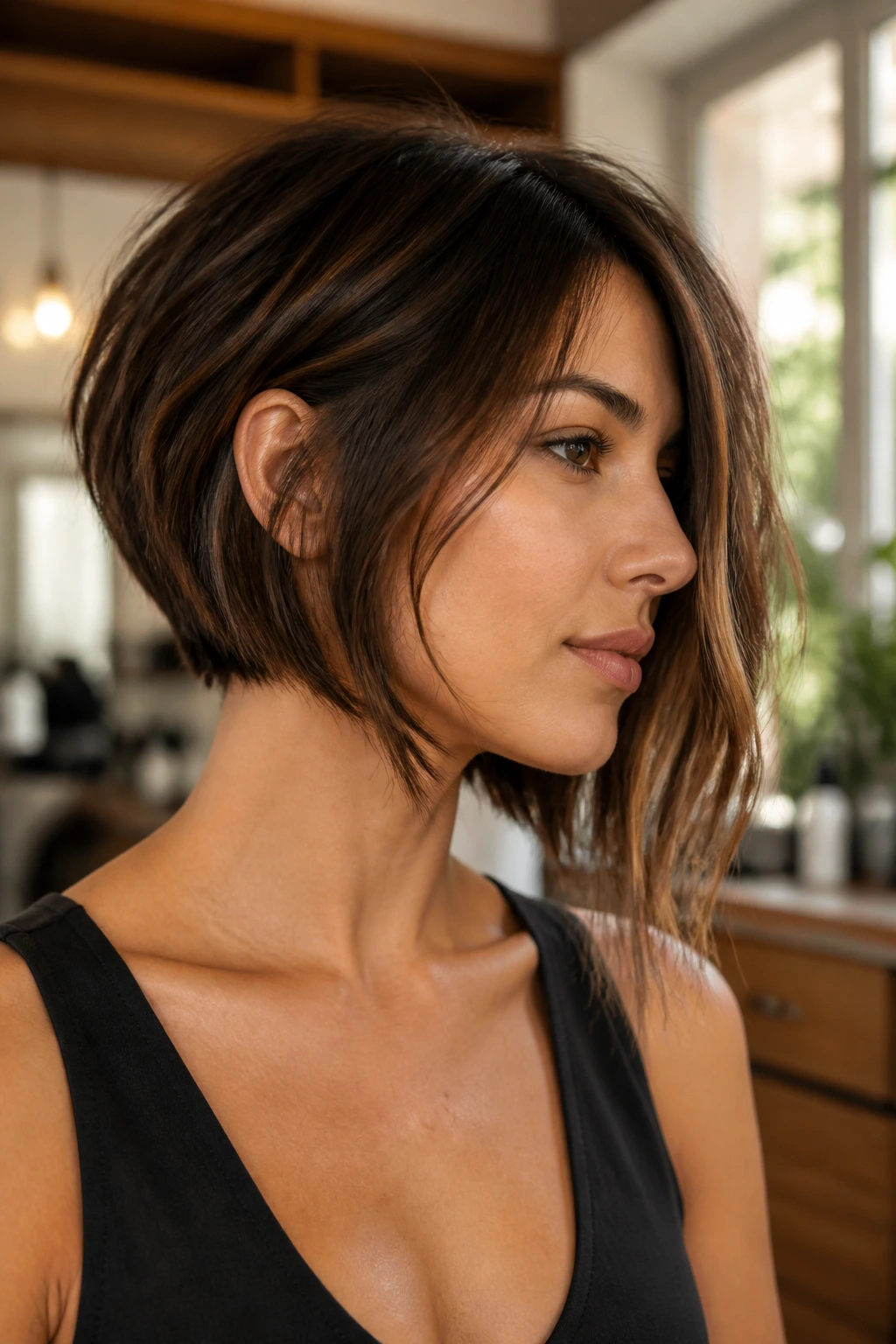
A good asymmetrical bob starts with an honest look at what your hair already does. If it bends under easily, you can keep the angles sharper. If it puffs or flips, you’ll want softer graduation and a slightly longer front so the line doesn’t break apart the moment humidity appears.
Face shape matters, but not in a rigid, rulebook way. Round faces usually do well with a longer front corner and a side part because the diagonal line helps lengthen the face. Square jaws often look good with softer texture or a piecey front that breaks up the width. Long faces usually need a little fullness at the sides so the cut doesn’t stretch the face further.
Hair density changes the whole conversation. Fine hair likes a cleaner perimeter and less internal thinning. Thick hair needs weight removal, but not so much that the ends start floating. Wavy and curly textures need enough room for shrinkage, because the asymmetry will tighten once the hair dries. And if you have a cowlick at the front, say so at the salon. That tiny swirl can wreck a side part if no one plans for it.
One thing I’d tell anyone bringing a photo to a stylist: bring one that shows the side view. Front-facing pictures are flattering but often useless for this cut. The whole point lives in the side line. If the stylist can’t see where the longer piece lands, you’re asking for a guess.
How to Wear an Asymmetrical Bob So It Looks Intentional

Styling: Sleek versions want a smooth blow-dry with the front section bent slightly inward or outward at the ends. Tousled versions want rough drying, a touch of texture spray, and fingers instead of a brush. Pick one mood and commit. Mixing a flat top with beachy ends can make the shape look confused.
Pairings: This haircut loves collars that show the neck — crew necks, bateau tops, open button-downs, small turtlenecks. It also plays nicely with earrings because one side of the face is often more visible. If you wear glasses, keep the front length in mind so the frame arms don’t fight the bob’s longest corner.
Balance: The asymmetry should echo somewhere. A deep side part, a tucked side, or a strong front corner gives the style a clear point of view. If everything is softly random, the cut stops feeling designed and starts feeling like you missed a trim.
Finish: Glossy for sharp lines. Matte texture for choppier cuts. Soft bend for everyday wear. The finish matters more than people think, because the same haircut can look very different depending on whether the ends are crisp or broken up.
Styling Tricks That Make the Cut Speak
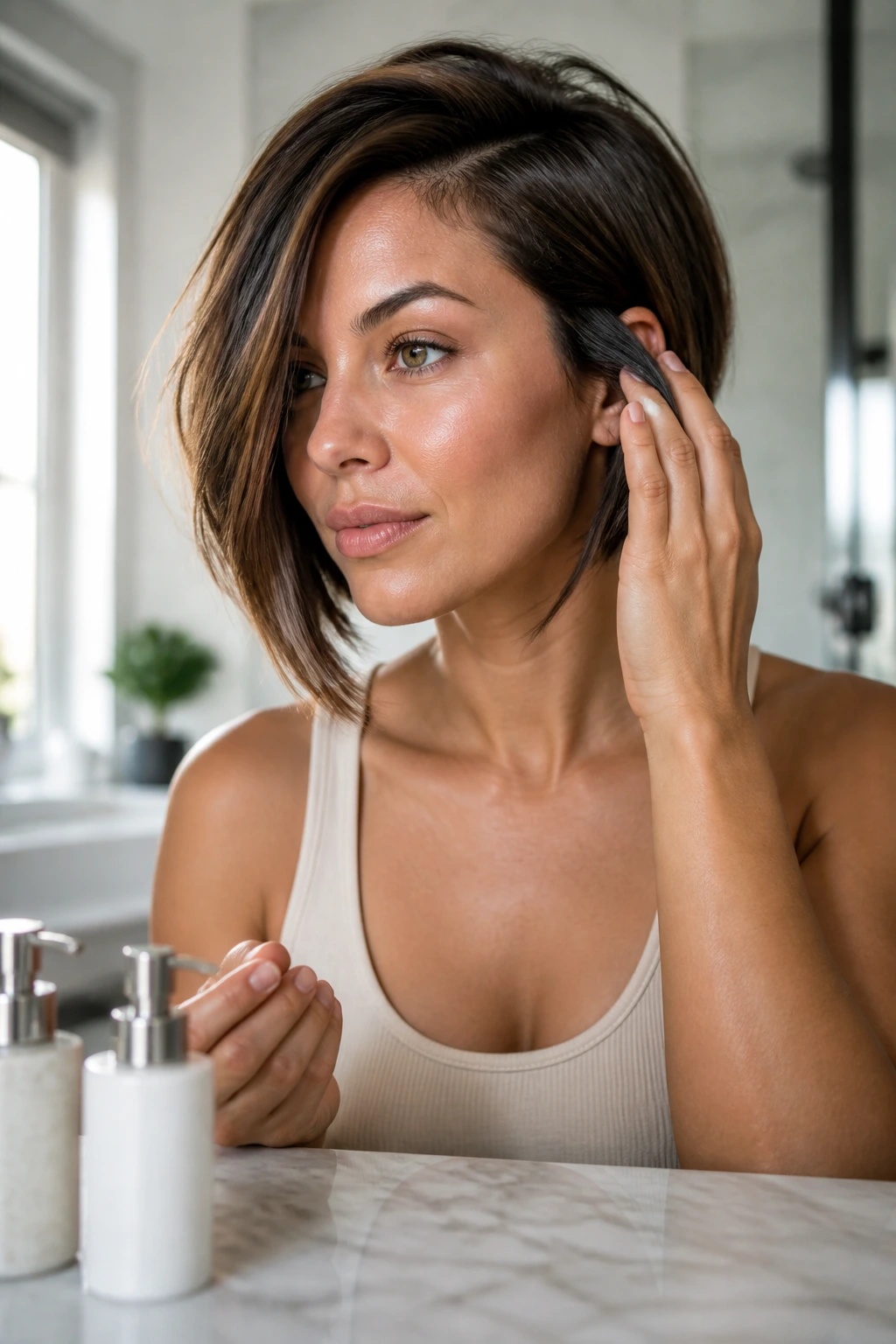
Gloss Boost: A pea-size amount of serum smoothed only on the outer layer can make the perimeter look cleaner without flattening the crown. Keep it off the roots unless you want the whole style to collapse.
Root Lift: If the shorter side lies too close to the head, clip the roots at the crown while they cool after blow-drying. Ten minutes is enough to change the shape. Short hair holds that lift better than long hair.
Edge Control: On blunt versions, a tiny sweep of pomade along the ends can sharpen the line and stop flyaways from softening the shape. Use less than you think. More product makes the bob look wet and heavy.
Face Opening: Tuck one side behind the ear or bend the longer front piece slightly away from the face. That gives the cut a clean opening and keeps the asymmetry easy to see.
Common Mistakes That Make the Cut Look Off
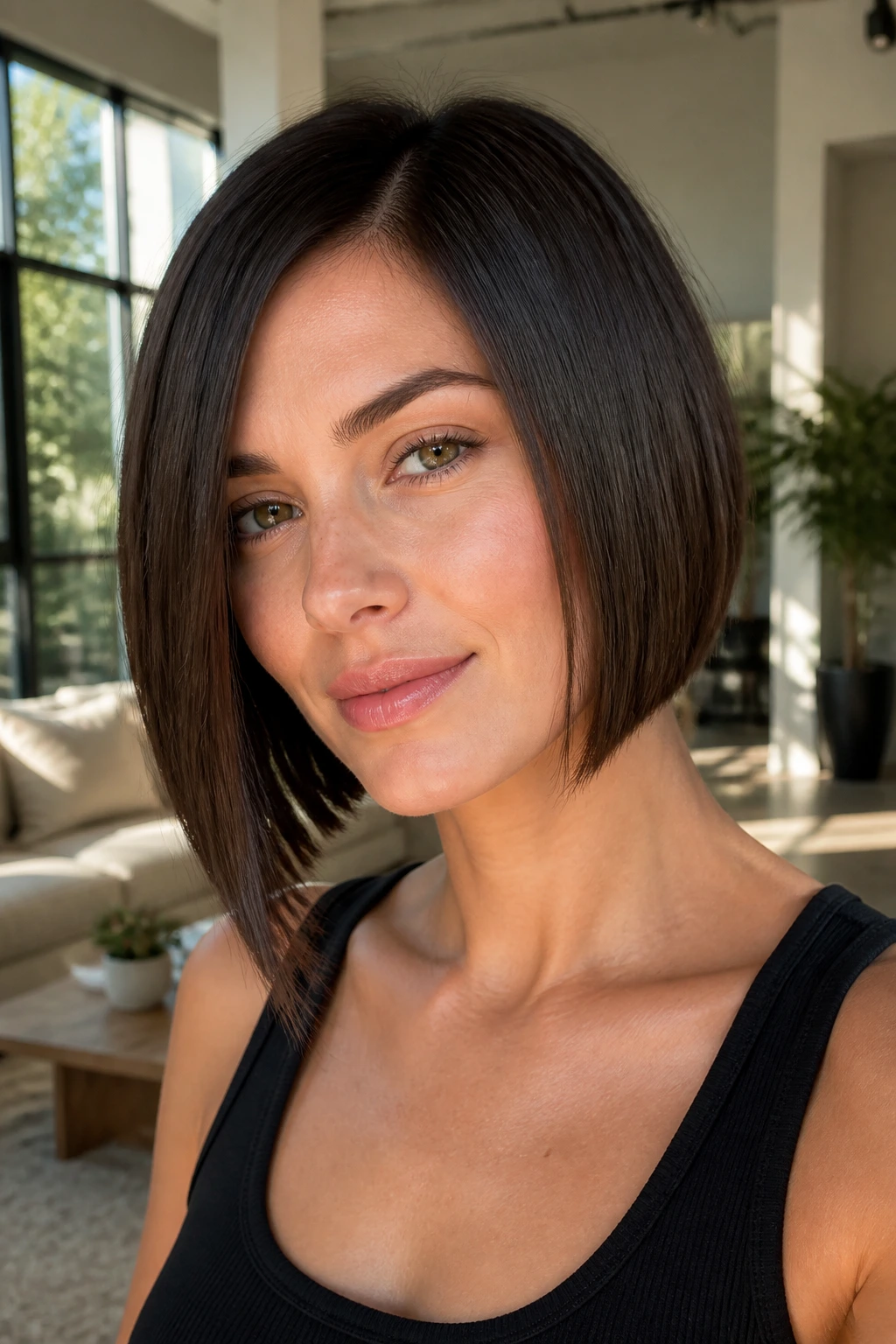
The first mistake is making the length difference too tiny or too extreme. If the sides are almost even, the haircut loses its point. If the longer side falls too far below the jaw on short hair, the balance can get clumsy. A good asymmetrical bob usually lives in the middle ground, where the difference is obvious but not cartoonish.
Another common problem is over-thinning thick hair or over-layering fine hair. Thick hair that gets carved out too hard starts to frizz and float. Fine hair that’s layered too much loses its perimeter and the bob begins to look stringy. The fix is simple, even if people hate hearing it: protect the outline first, texture second.
Skipping the neckline check is another one. A crooked nape or uneven back panel ruins the whole haircut because short styles expose everything. You can’t hide that with styling. You have to have the back cut cleanly, and then checked again in the mirror.
Last, the parting habit matters more than many people expect. If your hair naturally wants a side part and you force a center part every day, the bob may fight you. Work with the direction your hair settles, then shape the asymmetry around that.
Variations and Adaptations to Try

The Air-Dry Wave: Keep the cut soft, leave a little extra length in the front, and style with leave-in conditioner plus a light cream. This version is best if your hair already bends on its own and you want the asymmetry to feel relaxed rather than polished.
The Razor-Soft Edge: Ask for a sharper line through the perimeter but softened ends through the front corner. It’s a good choice for dense hair that needs movement without looking shaggy.
The High-Gloss Finish: Pair a clean angled bob with a smooth blowout and a shine spray. This suits straight hair and anyone who likes a clean, graphic line.
The Curly Frame: Let the asymmetry sit lower in the front so the curls can bounce without shrinking the style into a puffball. This version works best when the stylist cuts with the curl pattern visible.
The Hidden Undercut: Keep the cut clean from the outside, but remove bulk at the nape or behind one ear. It’s a smart adaptation for thick hair and warmer weather, when the back of the neck can feel too heavy.
Keeping the Shape Sharp Between Salon Visits
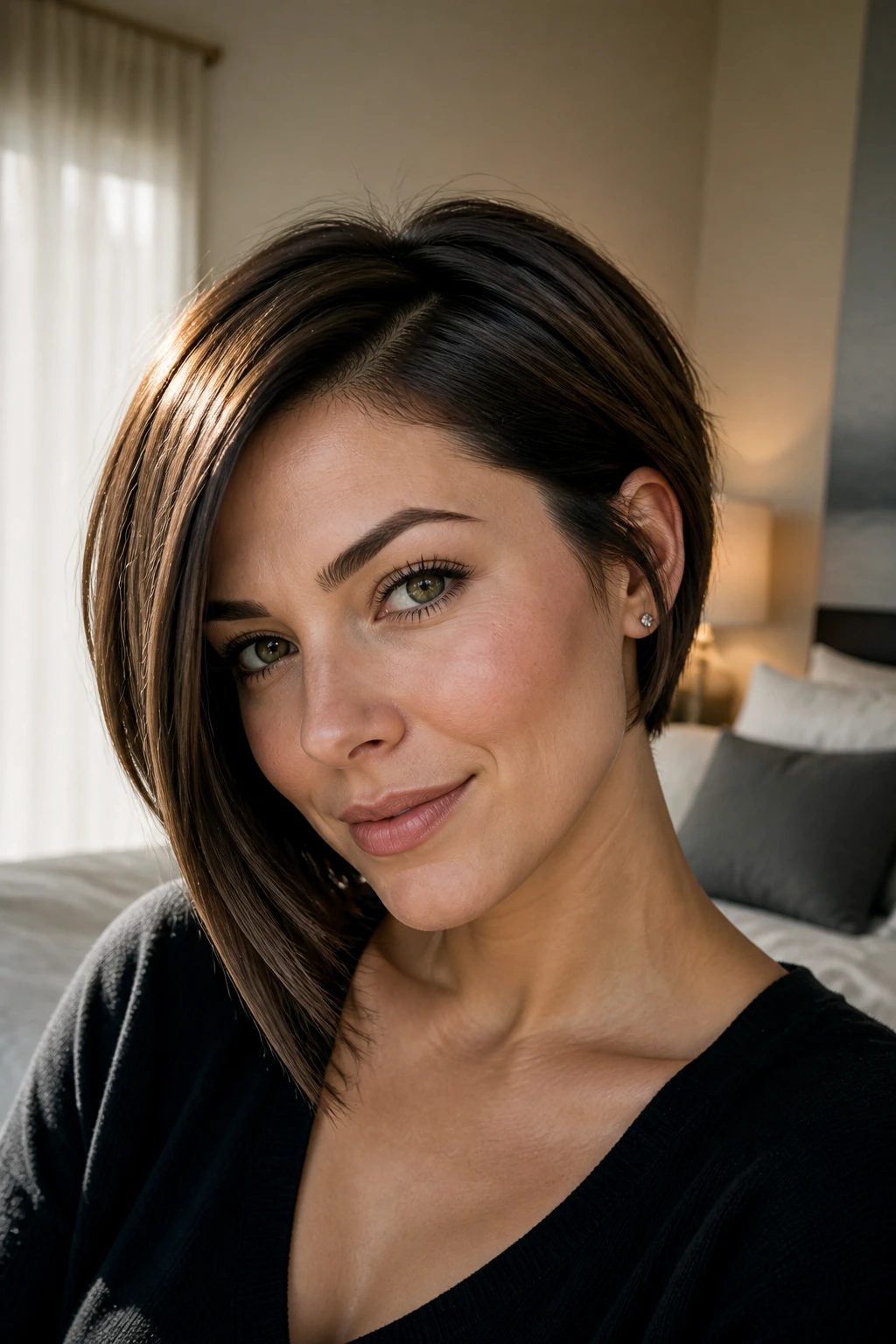
Short asymmetrical bobs usually need a trim every 4 to 6 weeks if you want the angle to stay crisp. If you wear a blunt finish, even a quarter-inch of grow-out can blur the line. Softer, textured versions last a bit longer, but the perimeter still starts to lose its shape once the front and back stop speaking the same language.
If you have bangs or a side fringe, plan on cleaning them up sooner. Bangs can need a touch-up every 2 to 3 weeks, especially if they fall into your eyes when the bob itself is still in good shape. That little trim can buy you time without changing the whole haircut.
At home, a light styling routine protects the outline. Heat protectant before blow-drying, a small amount of product at the ends, and regular brush cleaning all help the bob sit better. Dirty brushes drag product and dust through the front panels, which is a small thing until it isn’t.
Sleep matters too. A silk pillowcase or a loose tuck behind the ears can help the front pieces stay smooth. If you wake up with a bend, mist the hair lightly, re-direct the front with a brush, and hit it with a warm dryer for 30 seconds. That is usually enough.
Frequently Asked Questions About Asymmetrical Bobs
How much longer should one side be?
For short hair, a difference of 1 to 2 inches is often enough to read as asymmetrical without looking exaggerated. If you want a subtle version, even a half-inch shift at the front can work, especially with a deep side part.
Does an asymmetrical bob work on curly hair?
Yes, but the cut should account for shrinkage and curl pattern. The longer side usually needs a little extra length so the curl doesn’t spring up too high once it dries.
Is this haircut high maintenance?
It’s more maintenance than a one-length bob, but not by much if the cut is done well. Most people need trims every 4 to 6 weeks, and sleek versions need a quick styling pass to keep the line clean.
Will it make my face look wider?
Not if the shape is placed well. A longer front corner, side part, or jaw-skimming line usually helps redirect the eye instead of widening the face.
Can fine hair wear an asymmetrical bob without looking thin?
Yes. The trick is keeping the perimeter solid and avoiding too much texturizing. Fine hair usually looks better with a clean outline and a bit of root lift than with a lot of layering.
What if my hair flips out at the ends?
Then the cut may need a slightly longer front or a softer bevel at the ends. A round brush or a flat iron bend can also redirect the flip so it follows the line of the bob instead of fighting it.
Can I grow it out without a weird stage?
Usually, yes, if the original cut had a sensible angle. Regular trims that soften the line gradually will make the grow-out easier than letting the shape get wild all at once.
Do I have to wear a side part with this cut?
No, but a side part often helps the asymmetry read more clearly. A center part can work too if the haircut itself carries enough imbalance through the front panels.
A Sharp Finish
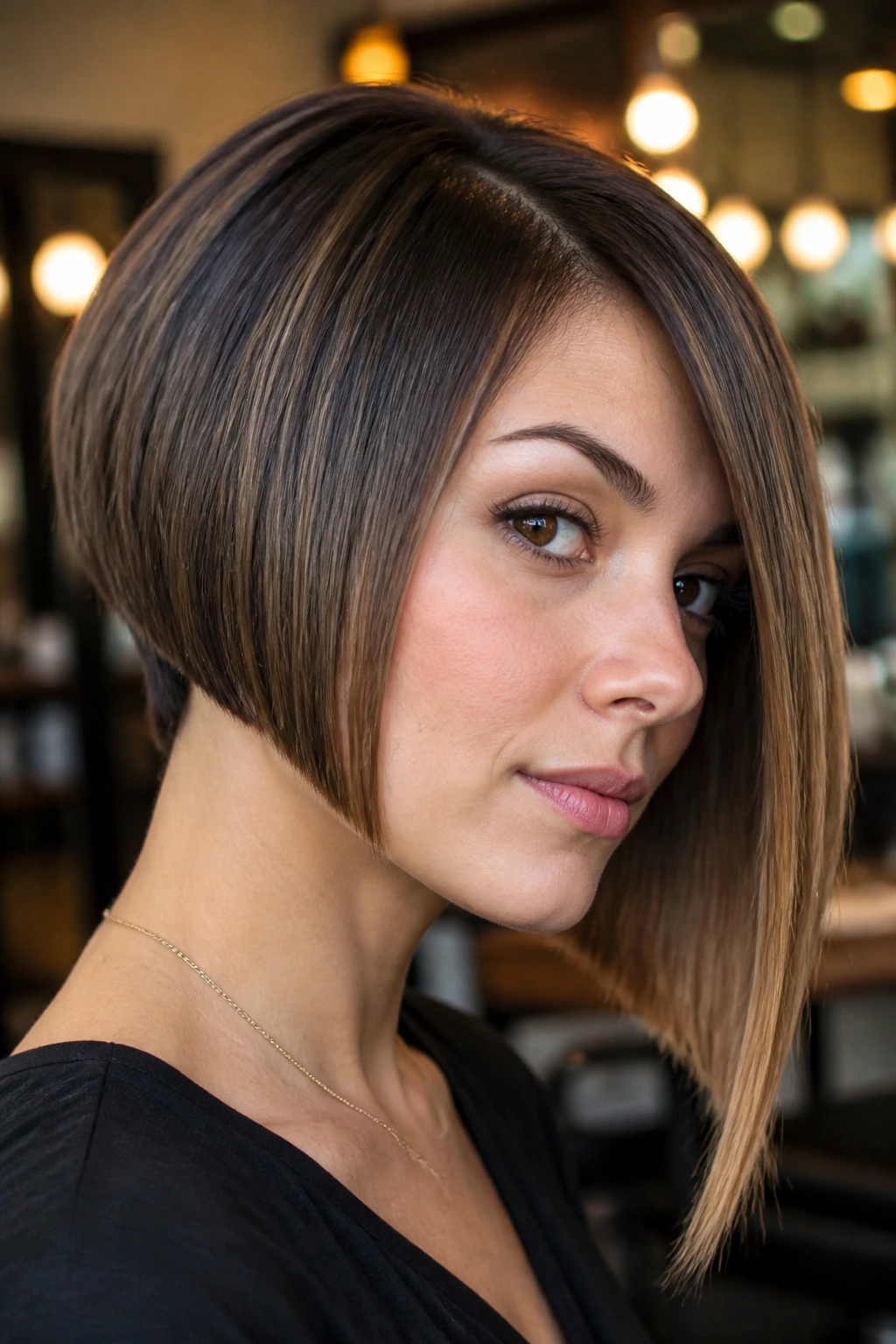
The nicest thing about a short asymmetrical bob is that it has a point of view without needing a dramatic stunt. It can be neat and soft at the same time, which is harder to pull off than it sounds. The longer front piece, the shorter back, the tiny shift in balance — those are small moves, but they change the whole mood of the haircut.
If you’re bringing one of these looks to a stylist, bring a photo with the side view visible and say what you want the shape to do: soften the jaw, lift the back, slim the face, or just make the cut feel less ordinary. That conversation matters more than naming the style alone. Haircuts are geometry first, and personality second.
And when the angle is right, you feel it every time you turn your head.
