



Wispy bob haircuts have a trick blunt bobs never quite pull off: they let the ends disappear a little. Not in a sloppy way. In a the-cut-is-breathing way, with feathered edges, soft interior texture, and just enough irregularity that the whole shape feels lighter the moment it dries.
That softness changes everything. A blunt bob can sit there like a shelf. A wispy bob moves. On fine hair, it can fake a fuller edge without looking stuffed. On thick hair, it can take the bulk out of the sides so the shape stops ballooning. On curls and waves, it can keep the silhouette from turning into a triangle that eats your jawline.
The best part is how specific the result can be. A few millimeters in length, a different part, a softer fringe, or one careful pass of point cutting can change the mood from strict to airy. Some of these cuts are neat and polished. Some are cheeky and piecey. A few are almost quiet enough that people notice the effect before they notice the haircut itself.
Why Wispy Bob Haircuts Earn Their Keep

-
They soften the edge without killing the shape: The perimeter still reads as a bob, but the last half-inch is broken up enough that it doesn’t look like a ruler line.
-
They help fine hair look less flat at the ends: A little texture at the bottom edge gives the illusion of more movement, especially when the cut lands at chin or jaw length.
-
They keep thick hair from puffing out like a triangle: Removing weight in the right spots lets the hair fall closer to the head instead of kicking out at the sides.
-
They work with air-drying, brushing, or heat: A wispy bob can look finished with a round brush, a diffuser, or a quick bend from a flat iron. That flexibility matters.
-
They grow out with less drama: When the line is already softened, the first few weeks of grow-out look intentional instead of stale.
-
They let bangs, parts, and face framing do real work: Curtain bangs, bottleneck fringe, and side parts all show up more clearly when the bob itself isn’t fighting them.
1. Chin-Length Wispy Bob With Curtain Bangs
A chin-length wispy bob with curtain bangs is one of those cuts that makes the jawline look cleaner without trying too hard. The length lands right where the face starts to narrow, and the soft fringe breaks up the front so the whole shape doesn’t feel boxy. When it’s done well, the bangs sweep away from the center and melt into the cheekbones instead of sitting like a heavy curtain.
Why the fringe matters
The bangs do a lot of the visual lifting here. If they’re cut too short, the whole cut turns cutesy. If they’re too thick, they steal the softness from the bob. The sweet spot is a fringe that opens at the nose or upper lip and gets longer as it reaches the temples.
That shape works especially well on medium and fine hair, because the bob itself stays light while the fringe gives you something to style. I like this version on hair that bends naturally at the ends. You do not need a lot of product. A round brush, a quick blow-dry, and a little root lift is usually enough.
Best for: people who want the bob to feel face-framing, not severe.
Styling note: bend the curtain pieces away from the face while they’re still warm, then let them cool before touching them again.
Strong tip: keep the bangs a touch longer than you think you need. Too-short curtain bangs lose the soft sweep that makes this cut work.
2. French Bob With Feathered Ends
A French bob gets a lot more interesting when the ends stop being blunt and start breathing. That little bit of feathering turns the cut from polished to lived-in, and it keeps the line from sitting too hard against the chin. The result is shorter, cheekier, and a bit less precious.
This version usually sits between the cheekbone and the jaw, with or without a fringe. I like it with a soft eyebrow-grazing bang when the goal is that slightly undone Paris-street look. The softness at the perimeter matters more than people think, because the whole point is to make the bob feel easy, not carved.
It works beautifully on straight hair and loose wave patterns. If your hair tends to flip out at the ends, this is one of those cuts where a tiny bend inward with a 1-inch round brush makes a big difference. Leave the texture a little imperfect. That’s the charm.
3. Jaw-Length Razored Bob
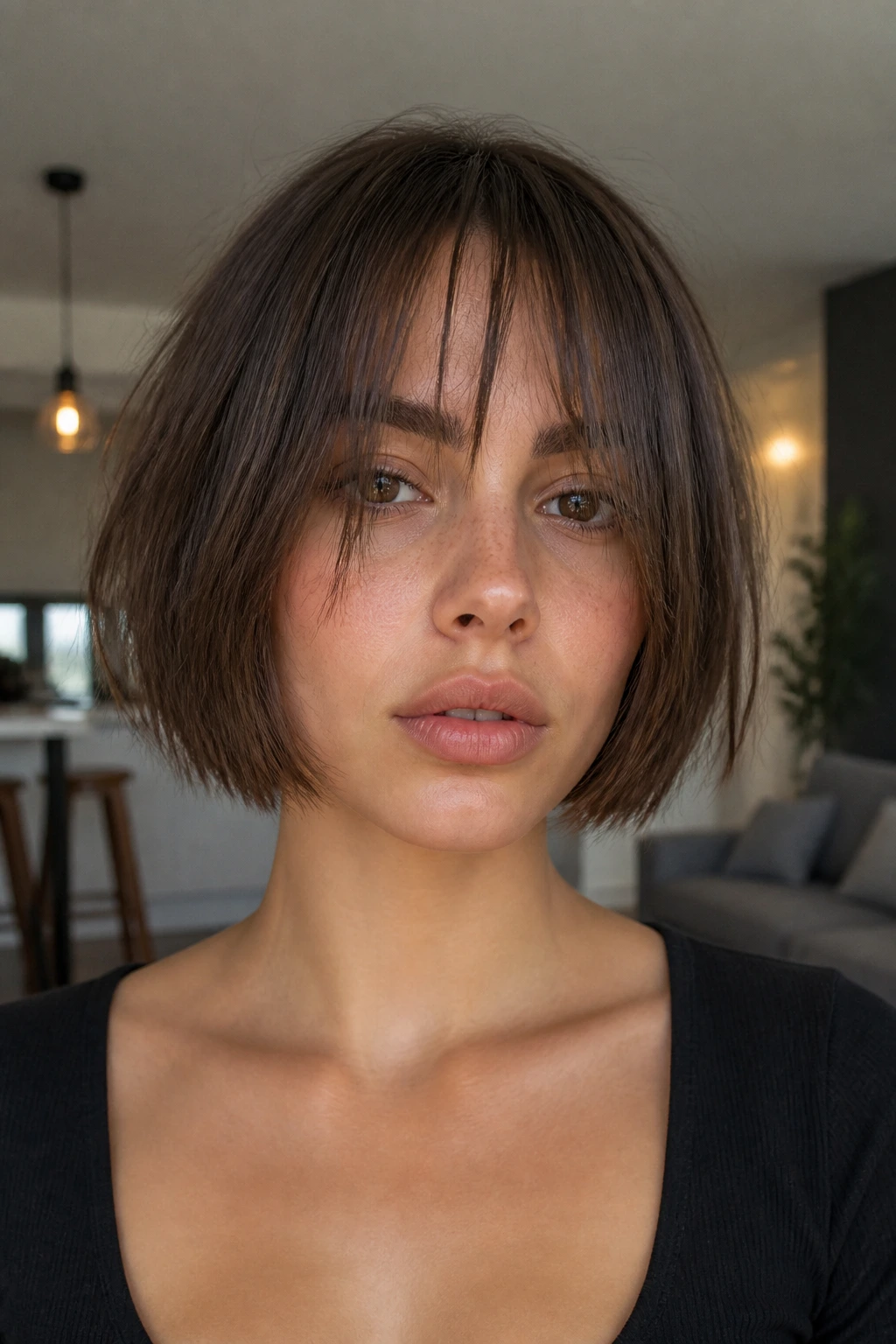
Why does a razored jaw-length bob feel lighter than a blunt one even when the length is identical? Because the razor takes weight out of the very edge instead of building a hard shelf. The shape still lands at the jaw, but the ends don’t stack up into a solid block.
That makes this cut a smart pick for thick hair that wants to spread outward. A good razor cut should create movement, not shredded ends. There’s a line there, and people cross it all the time. If the hair is already fine or frizzy, too much razor work can make the ends look wispy in the wrong way — more dry than airy.
How it wears best: with a slight bend and a piecey finish, not dead-straight perfection.
What to ask for: a soft perimeter, light point cutting, and enough internal weight left in place so the bob doesn’t puff out.
If you wear glasses, this length is particularly nice. The edge sits above or right at the frame, which keeps the whole look clean.
4. Collarbone Wispy Lob

A collarbone wispy lob is the easiest place to live if you want softness without committing to a shorter cut. It still counts as a bob family shape, but the extra length gives you room to tuck, twist, clip, or throw it into a half-up knot when the day gets messy. That’s not a small thing.
The wispy part matters because a longer cut can go flat fast. If the ends are too blunt, the lob starts looking heavy at the bottom. Softening the lower inch with point cutting or subtle layering keeps it from hanging like a curtain. You get movement around the collarbone, which is a nicer place for the length to sit than the middle of the neck.
This version is a good bridge haircut if you’re growing out a shorter bob. It also plays nicely with lazy styling. A quick bend around the front pieces and a bit of texturizing spray at the ends is often enough.
- Great if you want ponytail options.
- Easy to wear with center or side parts.
- Keeps enough length for heatless waves.
5. Soft Angled Bob
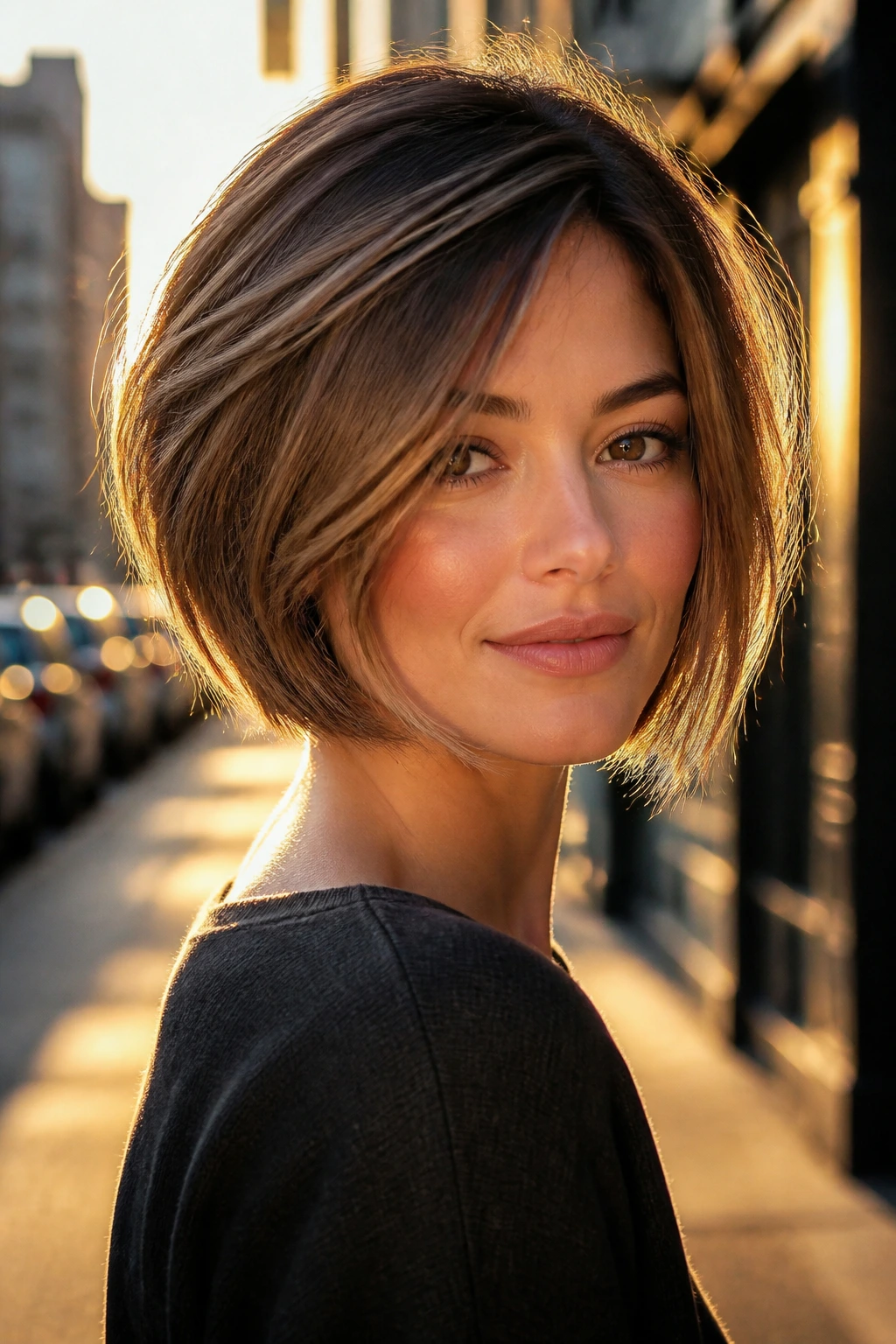
A soft angled bob gives you shape at the back and a little length up front, but it stops short of looking severe. That’s the key difference. A hard angle can feel graphic and sharp; a softened one feels like the haircut is naturally falling forward instead of being forced into a triangle.
This is one of my favorite shapes for anyone who wants a bob with quiet structure. It lifts at the nape, narrows the profile a bit, and leaves the front pieces long enough to graze the jaw or just skim the collarbone. The wispy finish keeps the front from looking like two heavy curtains hanging off the face.
It works well on hair that has a slight bend or enough density to hold a diagonal line. If your hair is pin-straight, the angle may read more clearly. If it’s wavy, the softness will show up faster. Either way, the trick is restraint. Too much graduation and the cut starts feeling dated. Keep the angle subtle and the ends light.
6. Curly Wispy Bob

A curly wispy bob is not about thinning curls into submission. It’s about releasing just enough weight that the curl pattern can stack without turning into a triangle. That distinction matters. A curly bob that’s cut too blunt at the bottom will often flare wide at the sides, which is a familiar frustration if you’ve worn curls for any length of time.
This version is best cut dry, curl by curl, so the stylist can see how the hair actually sits. The wispy effect comes from long, careful layers and a softer perimeter, not from carving huge chunks out of the head. You want bounce, not gaps.
How to style it: use a light leave-in, a curl cream that doesn’t coat the hair too heavily, and a diffuser on low to medium heat. Scrunching helps, but so does patience. Let the curls settle before touching them again.
If your curls are tighter, the cut may need a touch more length to keep the silhouette from shrinking too far. If they’re looser, a chin-to-jaw length works beautifully. Either way, this is one of the few bob shapes that gets better when it’s not over-manipulated.
7. Shaggy Bob With Piecey Layers
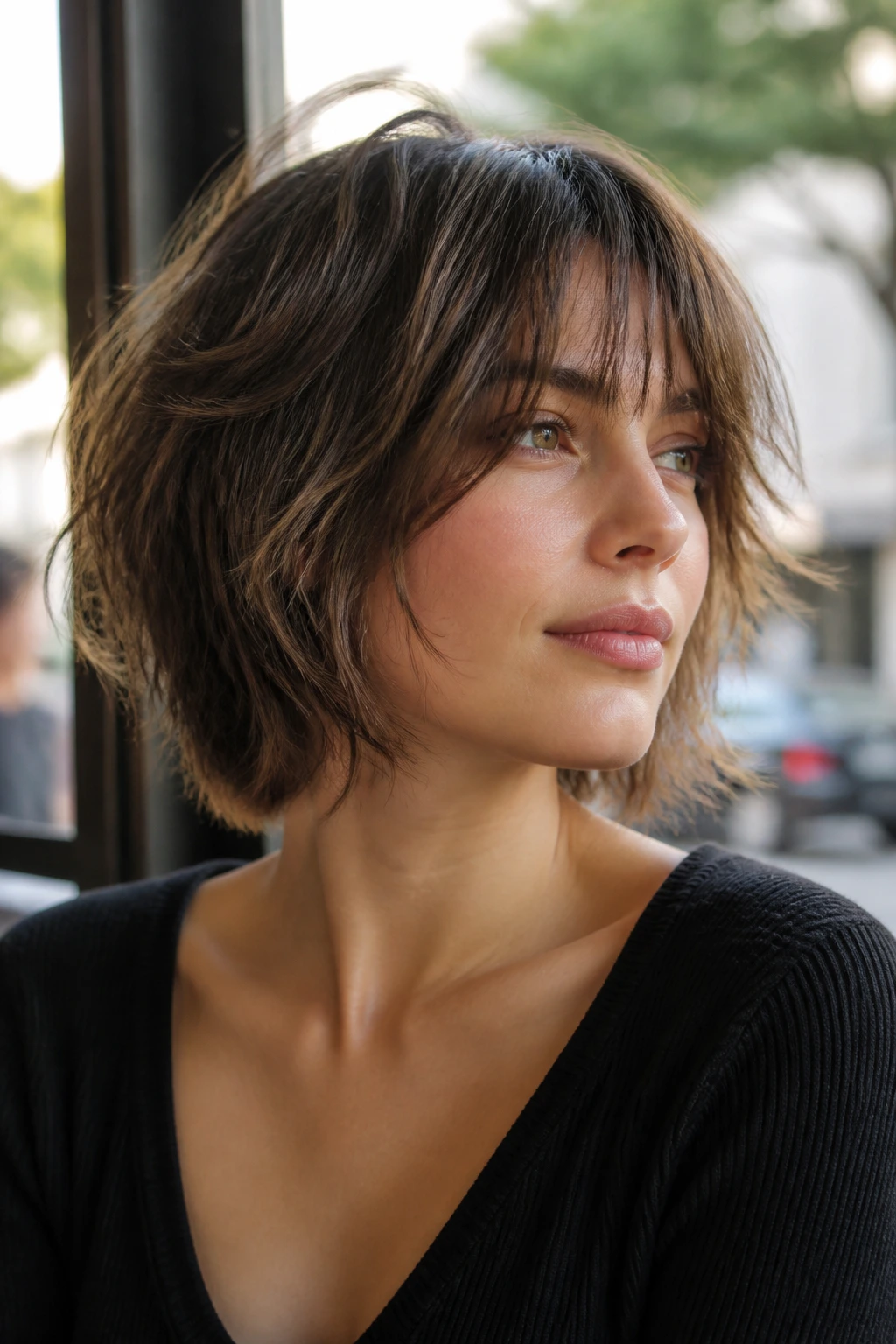
If you like hair that looks better after a coffee run than it did the second you left the chair, this is your cut. The shaggy bob with piecey layers lives on broken-up texture, especially around the crown and cheekbones. It’s less “fresh blowout” and more “I meant this,” which is a useful shift if you hate hair that looks too arranged.
The wispy part comes from the way the layers separate. The perimeter stays visible, but the interior breaks apart enough that the bob doesn’t sit as one dense mass. A good shaggy bob should still have a shape you can read from across the room. If it turns into a mini mullet, the layering went too far.
What keeps it from getting messy
- The crown should stay airy, not hollow.
- The ends should be broken up, not thinned to see-through.
- Texture spray or mousse should live mostly at the roots and mids.
A little roughness is the point. Too much polish kills the charm.
8. Micro Bob With Airy Ends
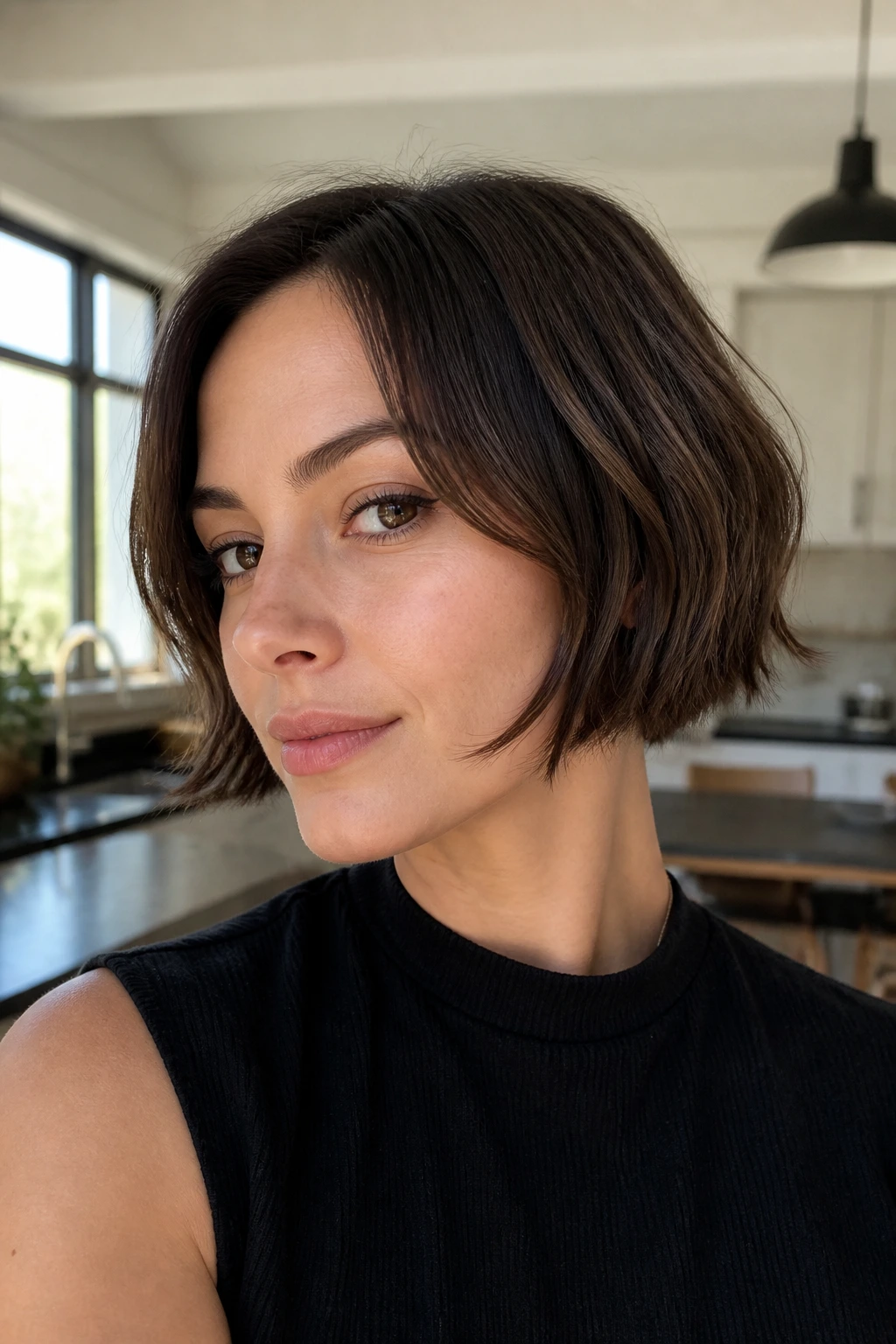
A micro bob with airy ends only works when the edges are handled with restraint. Short cuts can turn severe fast. The wispy perimeter keeps this one from reading like a hard block sitting on the head.
This cut usually lands somewhere between the earlobe and just below the cheekbone, depending on face shape and hair density. It suits people who like a sharper look but still want a bit of movement around the temples and jaw. The ends should be soft enough to flick, not blunt enough to sit in a single line.
It does ask for maintenance. Shorter hair shows growth faster, and a micro bob can lose its shape in a month if the neckline is ignored. Fine hair looks neat in this cut, but cowlicks can push the shape around. Thick hair can wear it too, though the internal weight has to be handled with real care.
My honest take: this is a strong haircut, not an easy one. If you want something that forgives skipped trims, look elsewhere.
9. Side-Part Wispy Bob
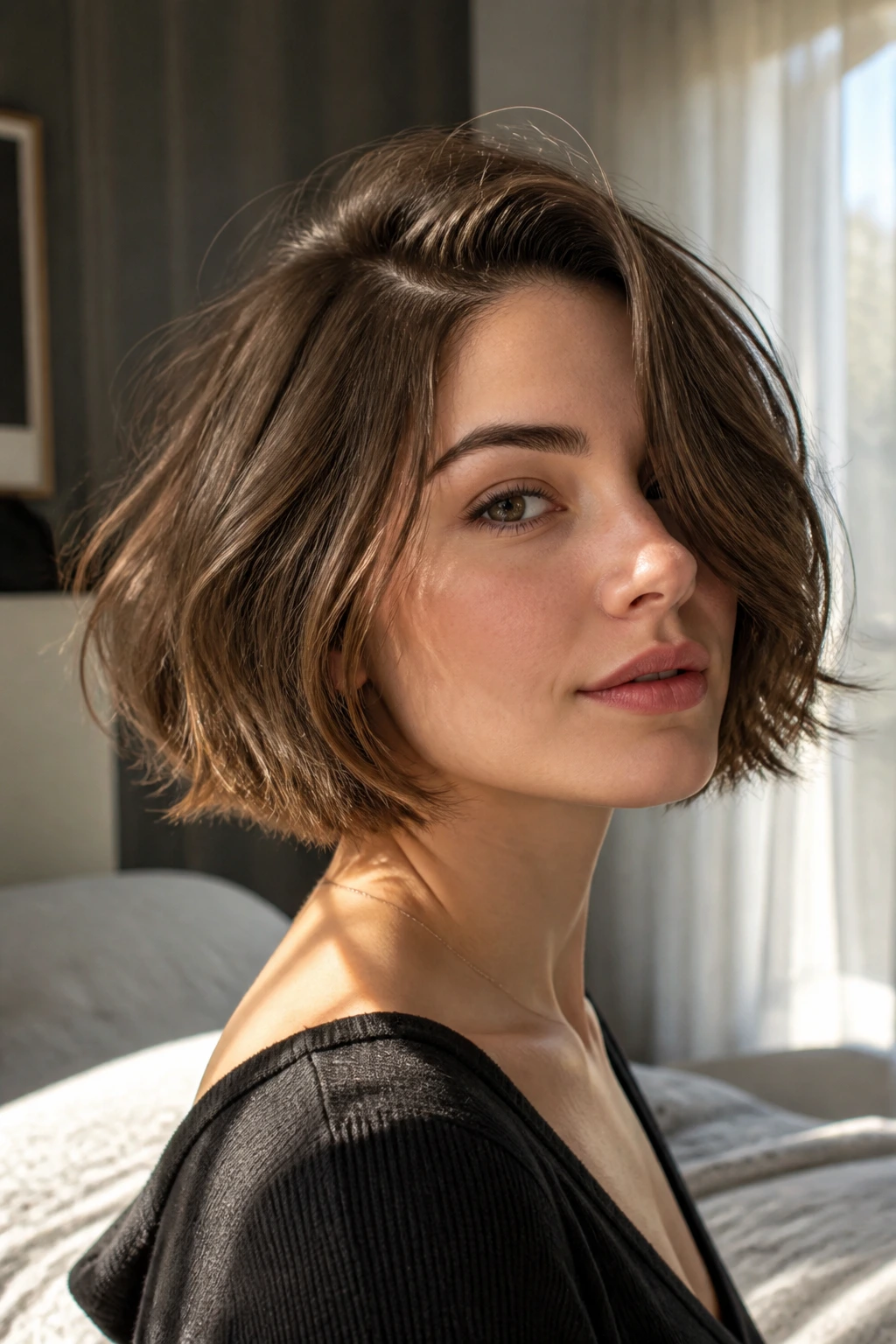
A side part changes a wispy bob more than people expect. Slide the part over by even an inch or two, and the root volume shifts, the fringe falls differently, and the whole face gets a little asymmetry in the best sense. A center part can feel calm. A side part brings lift.
That lift is especially useful if your crown goes flat by noon. A softly cut bob with a deeper side part gives the illusion of more height at the roots without teasing the hair into a puff. The front pieces can sweep across one cheek, which softens rounder faces and keeps the cut from feeling too symmetrical.
How to wear it without overdoing it
A side part should look deliberate, not pinned into place with half a can of spray. Blow-dry the roots in the opposite direction first, then flip them back. That little trick gives the front some bend and keeps the part from lying too flat.
This version is excellent if you want the same haircut to feel a little different depending on your mood. Small change. Big effect.
10. Inverted Bob With Soft Nape
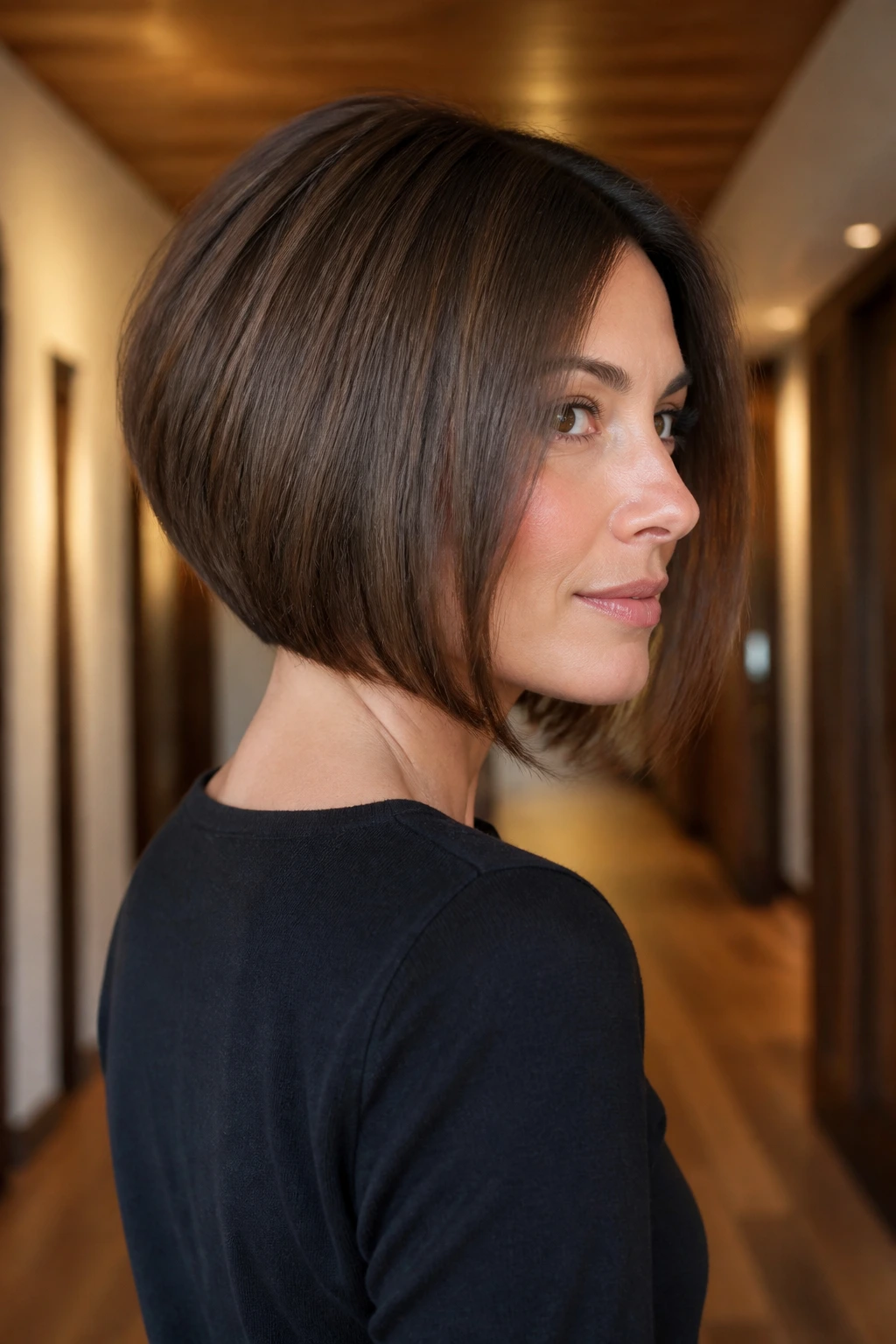
The inverted bob lives and dies by the back shape. When the nape is clean and the front pieces are longer, the haircut gets that neat curve that feels tailored. When the line is softened instead of razor sharp, it stops looking like a hairstyle from a stack of old magazines.
This is a smart cut for thick hair because the shorter back removes weight where it tends to build up. The front remains long enough to frame the face, and the wispy finish keeps the diagonal line from turning harsh. It’s especially nice if your hair grows out like a triangle at the base of the neck. The stacked back can tame that.
- Ask for soft graduation in the back, not a steep wedge.
- Keep the front pieces long enough to hit the jaw or just below.
- Use a round brush to polish the nape so the shape stays clean.
The silhouette is tidy. The texture is not stiff. That balance is the whole point.
11. Bottleneck Fringe Bob

The bottleneck fringe bob gets its name from the fringe shape: narrow in the center, wider as it opens toward the temples. That little curve softens the forehead without the straight-across weight of blunt bangs, and it pairs well with a wispy bob because neither part of the haircut feels locked into one hard line.
This is a nice option if you want bangs but don’t want to commit to a heavy fringe. The center can sit a bit shorter, while the outer pieces slide into the bob at the cheekbones. It makes the eyes stand out without stealing focus from the rest of the cut.
The upkeep is real. Fringe trims every three to four weeks help keep the shape readable. If you let the center grow too long, the whole effect collapses into a vague curtain. I like this on medium-density hair, especially when the bob itself is kept soft at the ends.
12. Textured Blunt Bob
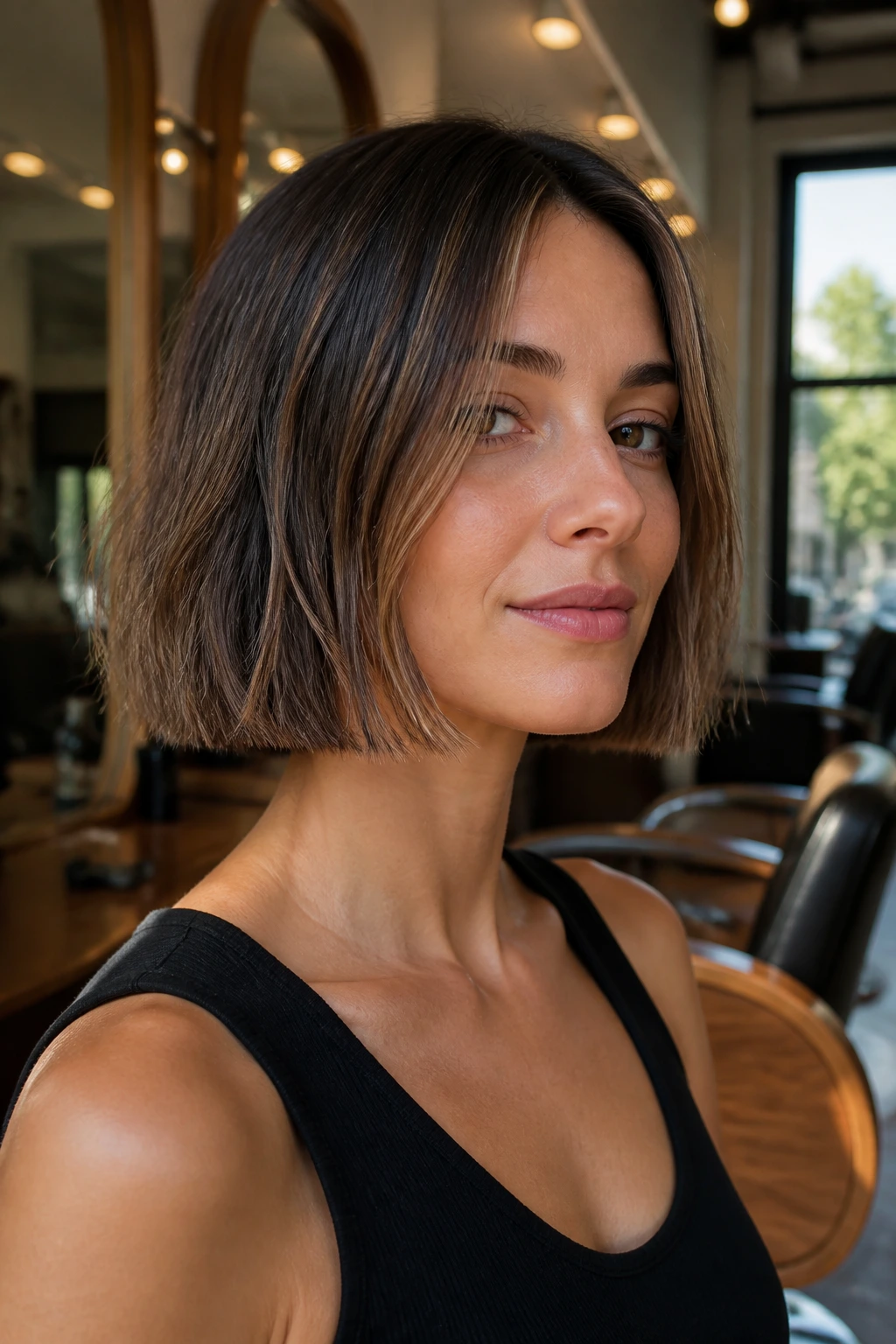
A textured blunt bob sounds like a contradiction, and that’s exactly why it works. The line still reads blunt from a distance, but the ends are softened enough that the haircut doesn’t sit like a hard cardboard edge. It’s a good option if you want polish and movement in the same cut.
The trick is micro-texture, not obvious layering. Think of it as breaking up the bottom quarter-inch so the bob shifts when you turn your head. The overall shape stays crisp. The finish doesn’t feel frozen.
This version suits people who like a clean style but hate the helmet effect that a fully blunt bob can create on thick or straight hair. A light smoothing cream and a flat iron passed once through the ends is usually enough. Don’t pile on oils. They flatten the texture and erase the point of the cut.
It’s neat. It’s a little softer than it looks. That’s the whole charm.
13. Asymmetrical Wispy Bob
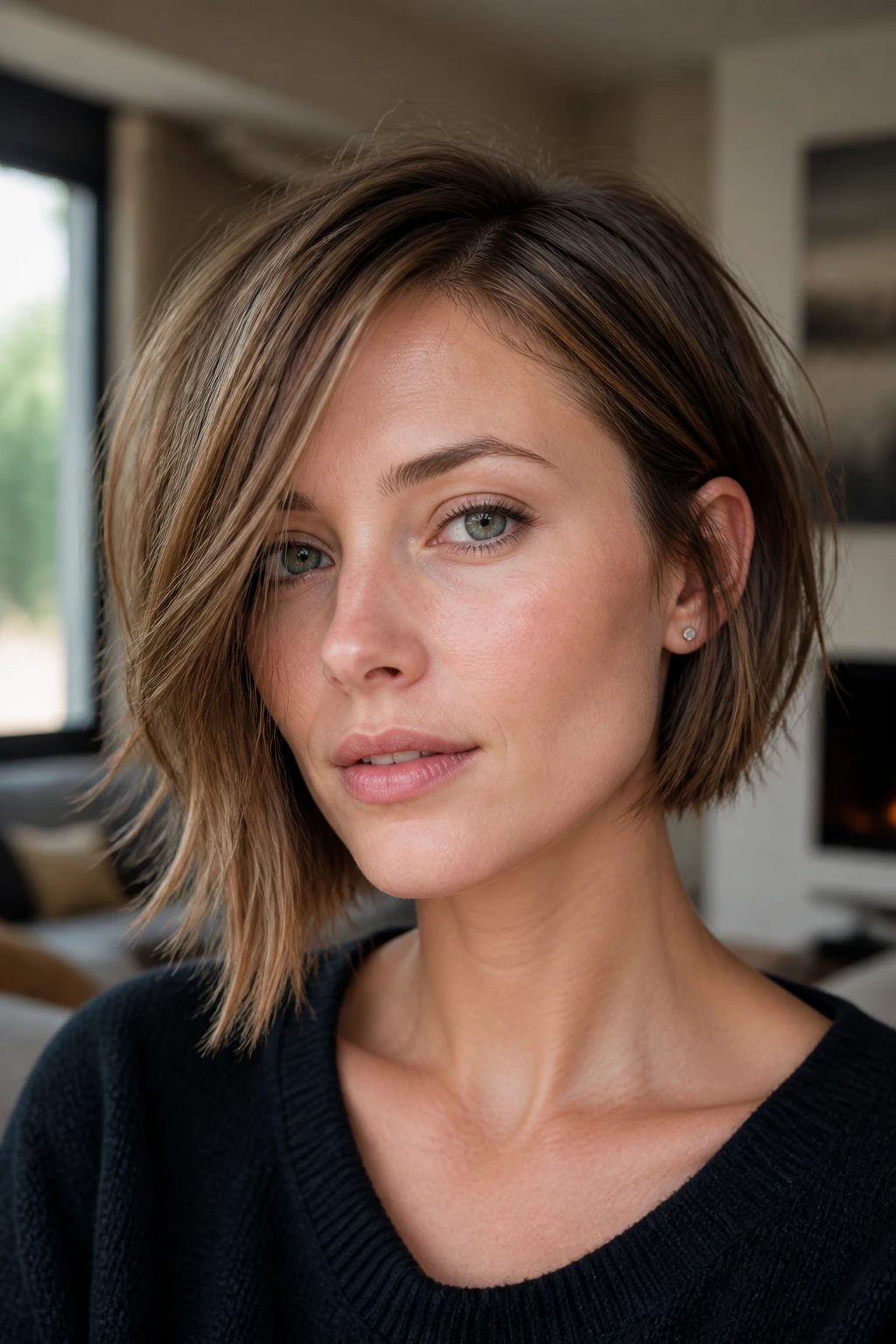
An asymmetrical wispy bob gives you a subtle difference from one side to the other, usually by keeping one side a half-inch to an inch longer. That’s enough to make the cut feel interesting without sliding into costume territory. The wispy ends keep the asymmetry from looking too sharp.
This is a good choice if you like one side tucked behind the ear more than the other, or if one side of your face carries more volume naturally. The longer side can skim the jaw while the shorter side opens the cheekbone. On straight hair, the difference reads cleanly. On wavy hair, it looks softer and a bit more casual.
Don’t overdo the contrast. If the two sides look like different haircuts, the balance is gone. I prefer a small, deliberate shift that shows up when the hair moves, not a dramatic slash across the head.
14. Stacked Bob With Feathered Crown
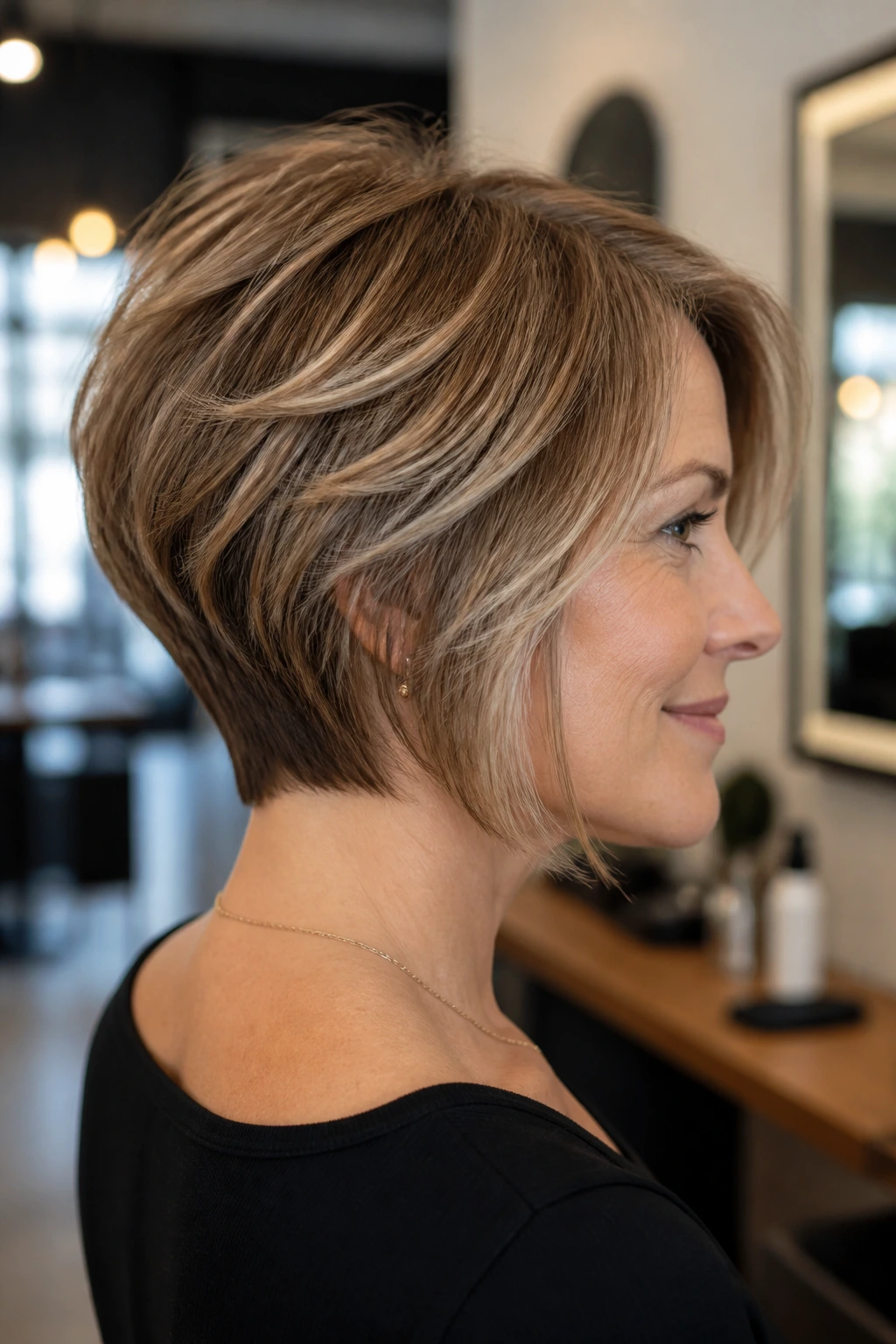
A stacked bob with a feathered crown gives fine hair something most bob shapes struggle to provide: lift where the head starts to flatten. The stacking at the back builds shape through the nape, while the crown layers keep the top from looking heavy or fixed in place.
The key is softness. A stacked bob can become old-fashioned fast if the graduation is too steep or the crown is too puffy. Feathered layers at the top keep the silhouette modern and let the haircut move when you do. The neckline should still feel clean, though. Messy stacking is not the same thing as airy stacking.
This cut works especially well if your hair falls flat at the roots and then flips out near the ends. It gives structure without forcing the whole head into a round helmet shape. Ask for controlled graduation, not a dramatic wedge.
15. Air-Dried Wavy Bob

Why do some bobs look better the moment you stop fighting them? Because the cut was made to work with the hair instead of against it. An air-dried wavy bob leans into that idea. The perimeter is softened, the length is tailored to the wave pattern, and the interior is left loose enough that the movement shows.
This is one of the most forgiving wispy bob haircuts if you live in leave-in cream and sea spray territory. The shape should land where the wave naturally bends, usually around the jaw or just below it. If the hair is too heavily layered, it can fray. If it’s too blunt, the wave can balloon. The middle road is the sweet spot.
The product mix that helps
- Light leave-in on damp hair
- A small amount of curl cream or wave cream
- One or two sprays of texture mist at the mids and ends
Scrunch it. Walk away. Touching it too much while it dries is the fastest way to make it look undefined.
16. Bob With Face-Framing Slices

A bob with face-framing slices is all about where the front pieces land. The shortest pieces usually begin near the cheekbone or just below it, then taper into the rest of the bob around the jaw. That lets the haircut soften the face without losing its bob shape.
This version is especially useful if your face feels rounder and you want more vertical movement. The sliced pieces pull the eye downward and inward, which changes how the bob sits visually. On heart-shaped faces, they can balance a wider forehead. On square faces, they break up the straightness around the jaw.
The slices need to blend. If they’re too disconnected, the haircut looks like it was cut in pieces instead of shaped as one piece. I’d ask for soft graduation around the front, not big chopped chunks. The goal is movement around the face, not obvious layers sitting on top of each other.
17. Rounded Bob With Light Layers

A rounded bob with light layers hugs the shape of the head in a way that feels clean and smooth, but the wispy layers keep it from looking like a bowl. That’s the difference between classic and dated. The silhouette stays curved. The ends stay soft.
This is a solid option if you like a more polished look and don’t want a lot of visible texture. The cut works well with a round brush or a large blowout brush because the layers encourage the hair to tuck inward slightly. It also behaves nicely in humid weather if the edges are not over-thinned.
I like this version on medium-density hair that needs shape but not a lot of disruption. It’s understated in the useful sense. You can wear it tucked behind one ear, pinned back, or neat and centered, and it still holds together.
18. Box Bob With Wispy Ends

A box bob usually means a stronger, more square outline. Add wispy ends, and the shape keeps its corners but loses the hard blocky feel that can make a short bob look stiff. That contrast is what makes this version interesting.
It’s a sharp cut with a softer finish. The line through the sides remains clean, which works well on straight hair and for anyone who likes a tailored look. The soft edges stop the bob from feeling too graphic. If you want something that reads modern but not edgy for the sake of being edgy, this is a strong pick.
Keep the neckline neat and the ends lightly textured. Too much layering destroys the box shape. Too little softness leaves you with a hard edge that can feel severe. The middle ground is the point here, and it’s a pretty satisfying one.
Why Wispy Ends Change the Whole Bob

A bob is shape first. That’s why the edge matters so much. When the perimeter is blunt, the eye sees one solid line, and the haircut can start to feel heavy even if the hair itself is fine. Wispy ends break that line up just enough that the bob moves instead of sitting there like a cutout.
Point cutting, razor work, and soft internal layering all do slightly different jobs. Point cutting nicks into the edge and gives the ends a broken finish. A razor can remove bulk faster, but it has to be used carefully or the hair starts to fray. Internal layers shift weight away from the bottom so thick hair doesn’t puff out at the sides. Those choices matter more than the overall length.
A lot of people ask for “texture” and mean ten different things. What they usually want is softness at the edge with enough shape left behind to keep the haircut looking intentional. That’s the sweet spot. Too little texture, and the bob feels stiff. Too much, and the line disappears.
My favorite part is that wispy bobs don’t have to be loud. The change can be subtle enough that people only notice how good your hair sits, which is usually the whole point.
Essential Tools for Styling Wispy Bobs
-
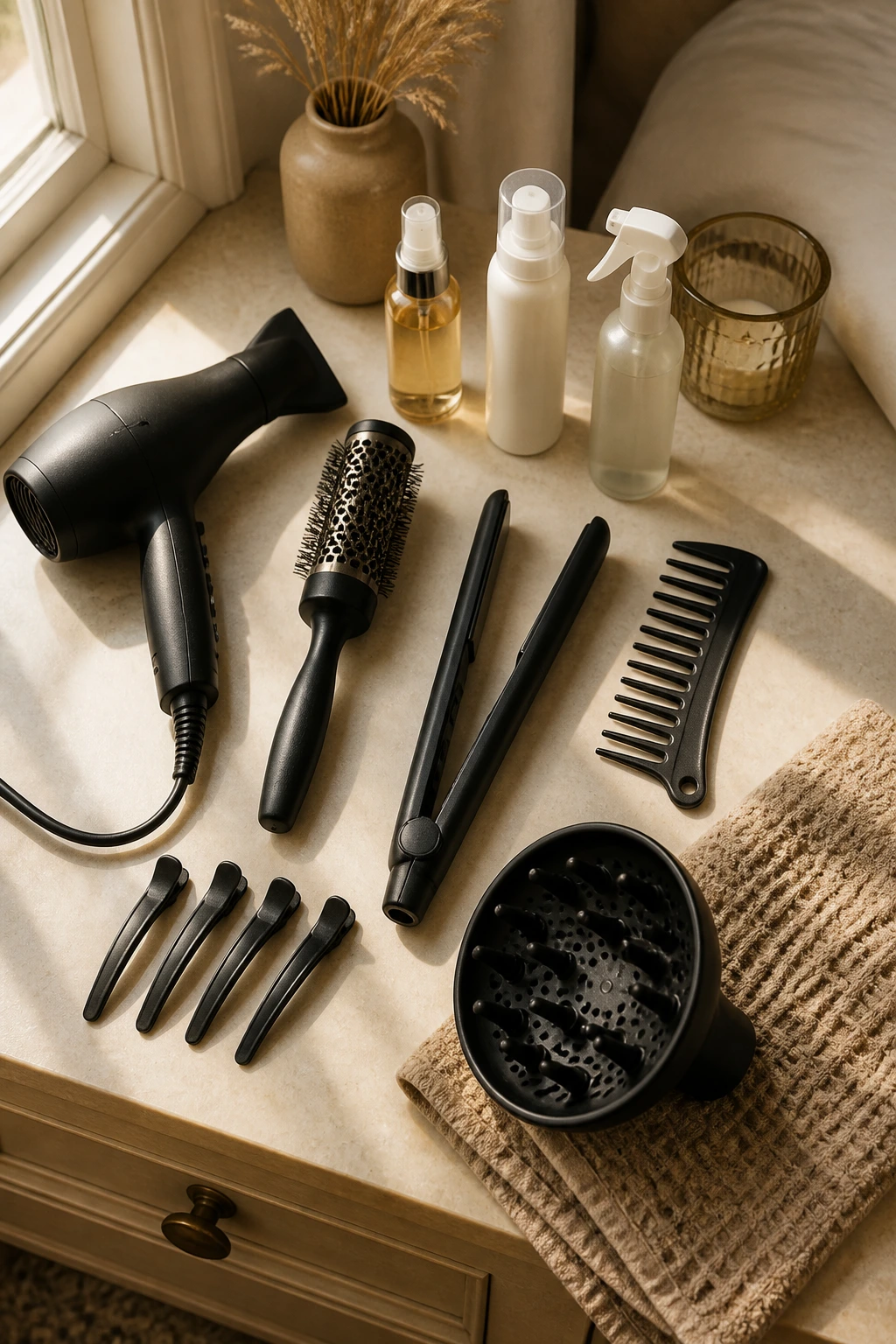
Blow dryer with a narrow nozzle: Concentrates airflow so you can bend the ends instead of blasting them into frizz.
-
1-inch round brush: Best for creating a soft inward curve at the jaw or a little flip around the cheekbone.
-
Flat iron with rounded edges: Useful for adding one smooth bend at the ends without making the bob look poker-straight.
-
Texturizing spray: Gives a piecey finish on shaggy, French, or air-dried versions without coating the hair.
-
Lightweight mousse: Helps fine or flat hair keep a little body at the roots and mids.
-
Heat protectant spray: Non-negotiable if you use hot tools more than once a week.
-
Wide-tooth comb: Better than a brush for curls, waves, and wet detangling.
-
Sectioning clips: Keep the front pieces separate while you dry or shape the back.
-
Diffuser attachment: Useful for curly and wavy bobs when you want softness without smashing the pattern.
-
Microfiber towel or cotton T-shirt: Cuts down on rough frizz while the hair is still wet.
What to Tell Your Stylist Before the First Snip
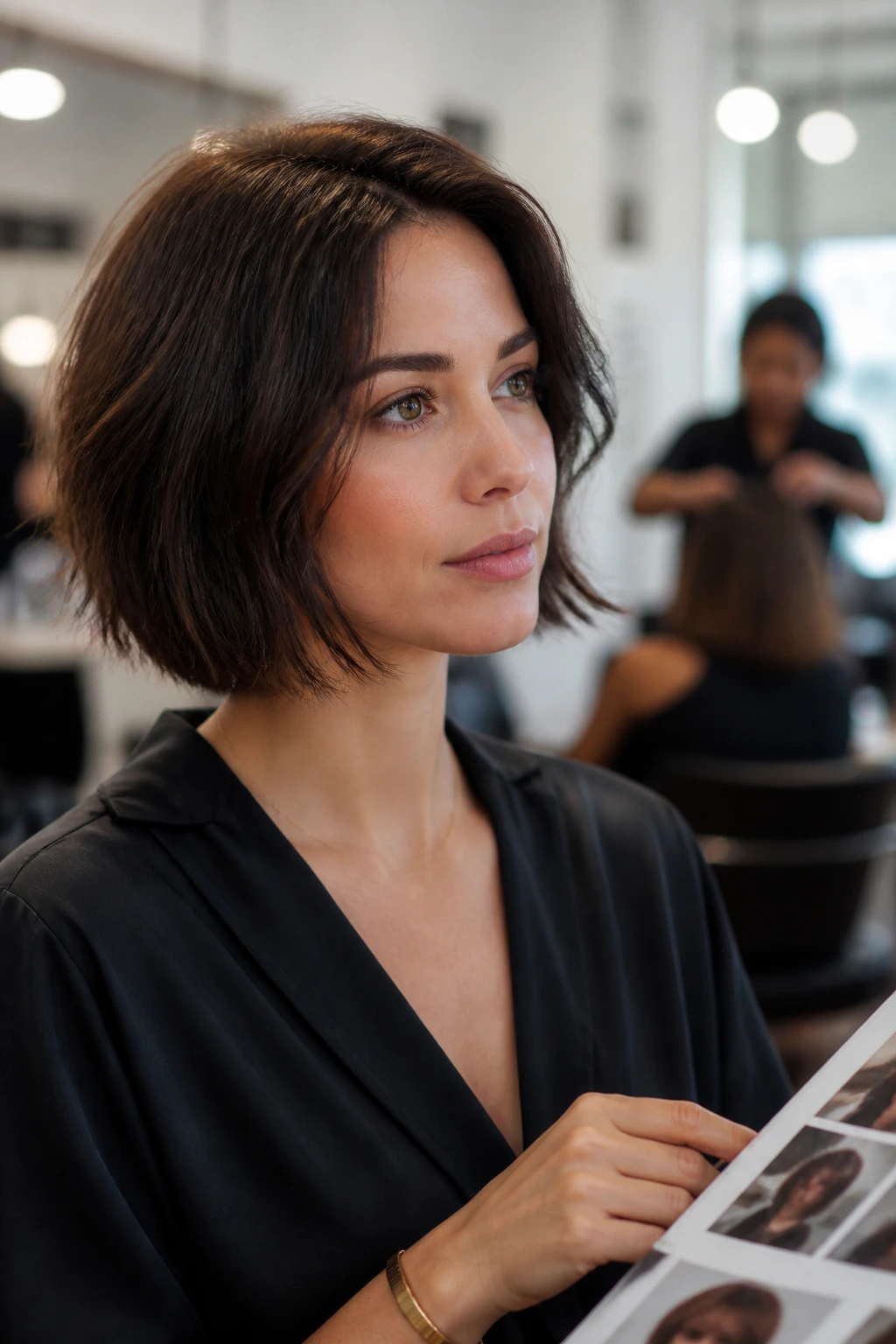
Bring photos. Not one photo, two or three. One should show the length you want. Another should show the texture you want. Those are not always the same thing, and that mismatch is where bad bob haircuts are born.
Say where you want the perimeter to sit: chin, jaw, or collarbone. That one detail changes the whole feel of the cut. Then explain how much movement you want at the ends. If you like softer edges, ask for point cutting or gentle texturizing at the bottom, not heavy thinning through the body of the hair. If your hair is thick, ask how they plan to remove weight without hollowing out the shape.
Fringe matters too. Curtain bangs, bottleneck bangs, side-swept fringe, or no fringe at all will make the haircut read differently on your face. If you wear glasses, say so. If you usually air-dry, say that too. A cut that looks lovely with a blowout may fall apart if you rarely use heat.
One more thing. Mention your cowlicks and your part. That sounds boring. It isn’t. The difference between a bob that settles and a bob that kicks out at the sides is often sitting right there on your crown.
Styling Tricks That Keep the Shape Soft

Root Lift: Start with damp hair, apply a pea-sized amount of mousse at the roots, and blow-dry the crown first. Lift the hair at the root with your fingers or a round brush for the first few minutes. That stops the top from collapsing before the ends are shaped.
Texture Without Crunch: Use texturizing spray on dry hair, not soaking wet hair. A couple of sprays through the mids and ends is enough. If the hair starts feeling sticky or stiff, you’ve gone too far.
Bend the Last Two Inches: The wispy effect usually lives at the ends, so don’t curl the whole head into submission. One soft bend inward or outward is often all you need. A flat iron works well here if you keep the motion loose.
Keep the Fringe Separate: Curtain bangs and bottleneck fringe need their own drying time. If you blast them together with the rest of the bob, they often separate in the wrong place. Dry them side to side with a brush or fingers, then leave them alone while they cool.
Humidity Fix: In damp weather, use less cream and more light-hold spray. Heavy products swell the ends and erase the airy finish. That’s one of those annoying truths nobody likes, but it matters.
Common Mistakes That Flatten the Movement
-
Cutting the edge too blunt: The bob starts looking like a shelf instead of a soft line. Fix it by asking for point cutting or very subtle texturizing at the perimeter.
-
Using heavy cream on fine hair: The ends go limp by midday, especially on chin-length cuts. Swap to mousse or a lighter leave-in and keep cream away from the roots.
-
Removing too much bulk near the crown: The haircut can turn holey or wispy in a bad way, with see-through spots on top. Keep the crown layers controlled and let the softness live at the edge.
-
Skipping trims for too long: Wispy does not mean ragged. Once the soft ends split and stick out, the cut loses shape. Short bobs usually need more frequent cleanups than longer lobs.
-
Ignoring the natural part or cowlicks: The shape keeps falling in the wrong direction, no matter how nice the cut is. Adjust the part at the salon and style from that starting point.
-
Overusing thinning shears: They can remove too much hair in one pass and leave the bob frizzy at the bottom. Point cutting or careful slide work is usually safer.
Variations and Adaptations for Different Hair Types
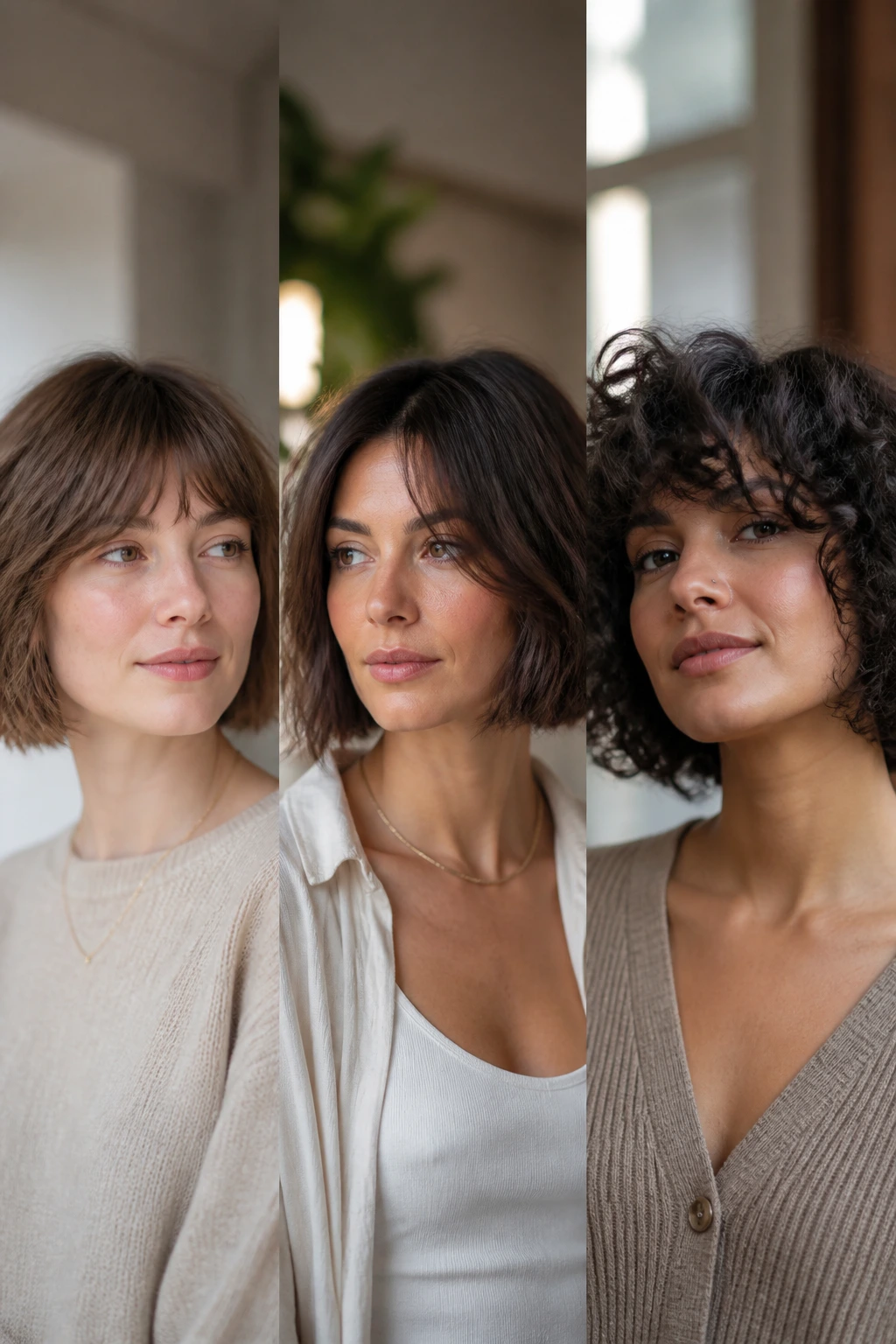
Fine-Hair Feather Lift: Keep the length near the jaw or collarbone and leave the layers subtle. The goal is to fake fullness at the edge, not erase density with too many snips.
Thick-Hair Weight-Release Bob: Ask for internal weight removal and a softened perimeter. This version is all about getting the sides to lie closer to the head without losing the bob silhouette.
Curl-Safe Dry-Cut Bob: Let the stylist cut it dry so they can see the curl pattern where it lives. Long layers and a soft perimeter keep curls from stacking up into a triangle.
Low-Maintenance Air-Dry Lob: Stick to collarbone length and avoid fringe that needs daily coaxing. This version is good if you like a cut that still looks decent on the second day with almost no effort.
Sharper Editorial Bob: Keep the outline crisp and the wisps controlled. A little asymmetry, a clean neckline, and a polished finish make the softness feel deliberate instead of casual.
Grow-Out Friendly Collarbone Bob: If you hate frequent trims, start longer and soften only the ends. You’ll get the wispy look without the panic that comes when a short cut starts losing shape.
Keeping the Cut Fresh Between Trims
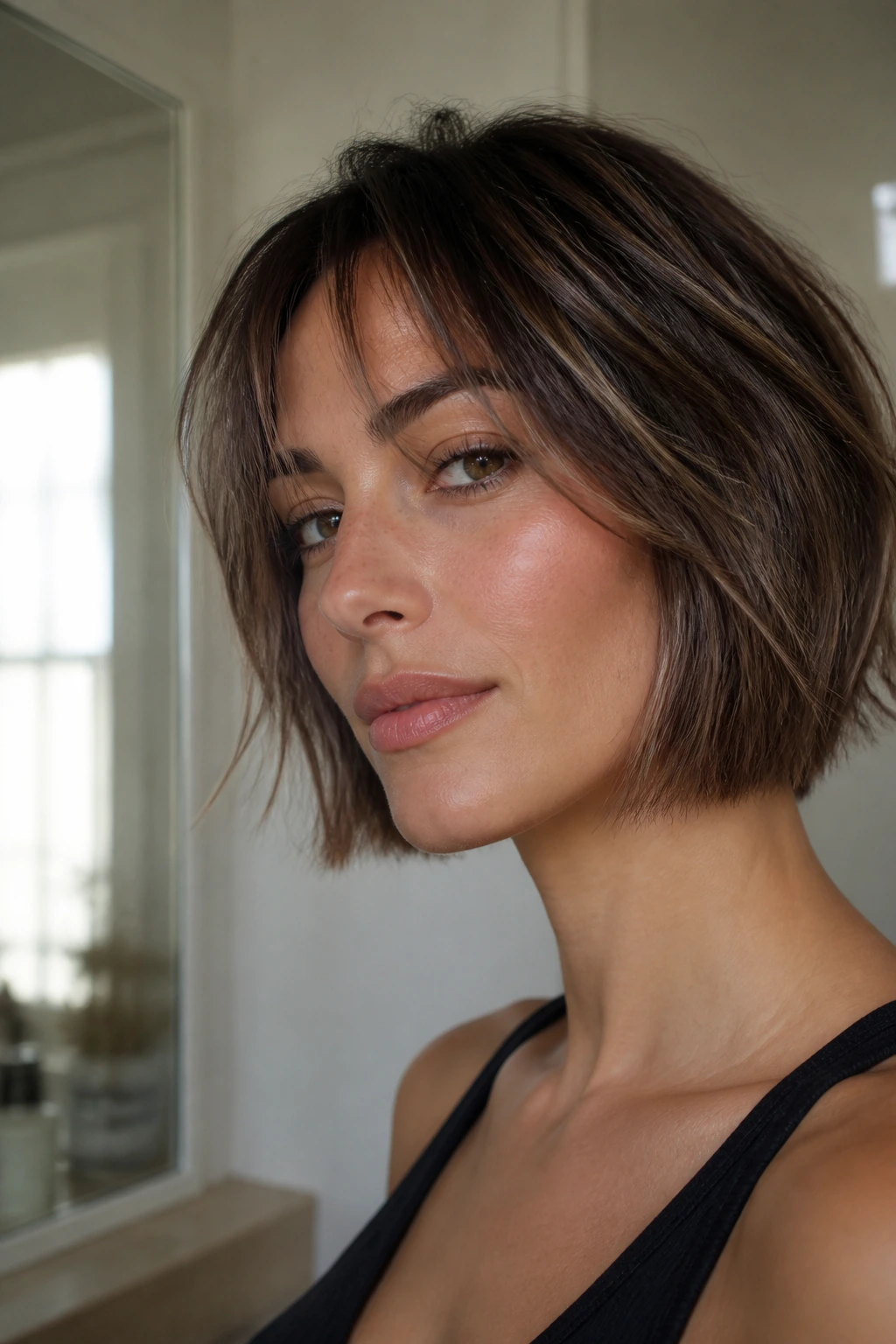
A wispy bob looks best when the edges are clean, not when they’re grown out into random frays. For chin-length, micro, and heavily shaped bobs, a trim every 4 to 6 weeks keeps the silhouette from drifting. Collarbone lobs can usually go 8 to 10 weeks if the perimeter is still sitting right.
Bang trims need their own schedule. Curtain bangs and bottleneck fringe usually need a touch-up every 3 to 4 weeks, especially if they’re meant to open around the eyes instead of hanging in them. If you’re trimming at home, only dust the very ends. Don’t take more off than you’re prepared to live with for a month.
At home, a little water goes farther than people expect. Mist the front pieces, re-bend the ends with a brush or flat iron, and refresh the roots with a bit of dry shampoo if the hair has collapsed. Silk pillowcases help too. They don’t make the cut last forever, but they stop the ends from getting rough overnight.
If the bob starts flipping out in one spot, that’s usually a sign the line has outgrown itself or the part has shifted. It’s fixable. Usually. Sometimes the answer is just a trim.
Common Questions About Wispy Bob Haircuts

Are wispy bob haircuts good for fine hair?
Yes, if the softness stays at the edge and doesn’t hollow out the interior. Fine hair often looks better with a wispy perimeter because it adds movement without needing a ton of bulk. The trick is to avoid over-layering the crown.
Can thick hair wear a wispy bob without puffing out?
Absolutely, but the cut has to remove weight in the right places. Ask for internal weight removal and a softer bottom edge, not random thinning through the whole head. Thick hair usually does best at jaw length or longer, where the shape has room to settle.
Do wispy bob haircuts need bangs?
No. Curtain bangs and bottleneck fringe are popular with these cuts, but a side part or a soft face-framing slice can do the same job. If your forehead is small or you hate hair touching it, skip bangs and keep the front pieces longer.
How often should I trim a wispy bob?
Short versions usually need a trim every 4 to 6 weeks. Longer lob versions can stretch to 8 to 10 weeks. Fringe usually needs its own cleanup before the rest of the cut does.
Will a wispy bob work on curly hair?
Yes, if it’s cut for the curl pattern instead of against it. Dry cutting helps the stylist see where the curls spring, and long layers keep the shape from turning wide. A curly wispy bob should still have a bob outline, just with softer movement inside it.
What if the haircut ends up too choppy?
That usually means the layers are too short or the ends were thinned too aggressively. A good stylist can usually soften the shape a little with blending at the next visit, but over-thinned hair takes time to grow back into place. Until then, styling with less texture product often helps.
Can I air-dry a wispy bob?
Yes, and some of the best versions are built for that. Use a light leave-in, scrunch the mids, and let the ends settle before touching them again. If the haircut was cut to suit your wave or curl pattern, air-drying can make the softness look even better.
What face shapes suit a wispy bob best?
There isn’t one answer, but chin-length and jaw-length versions tend to flatter a lot of faces because they frame the bone structure without hiding it. Round faces often like a side part or longer front pieces, while square faces usually benefit from softer edges and fringe that curves away from the jaw.
Soft Edges, Strong Shape
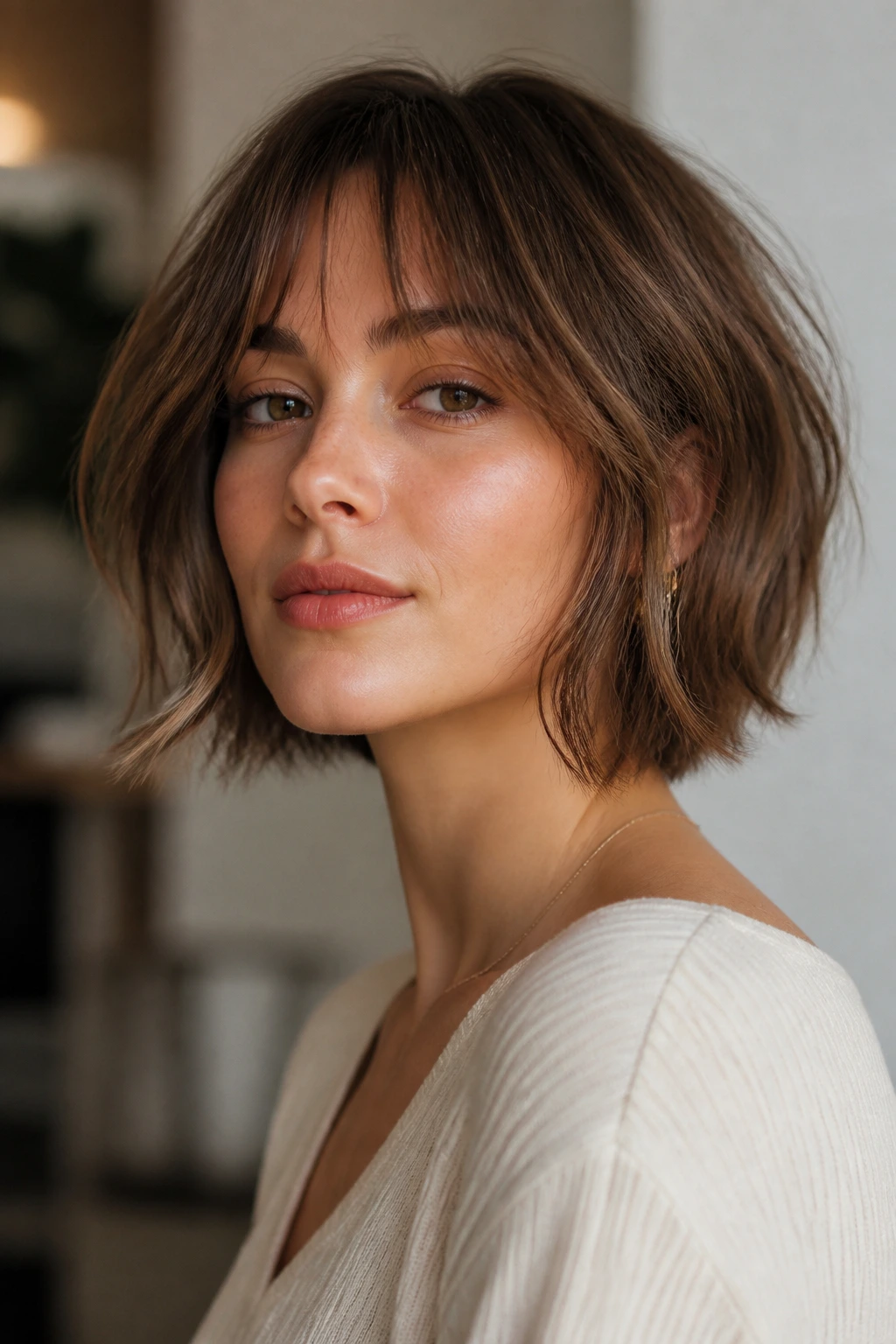
A wispy bob doesn’t need to shout to make itself known. The whole point is the quieter move: taking a shape that could feel blunt, boxy, or too neat and letting it breathe a little. That tiny shift at the ends changes the way the whole haircut sits on the face.
If you’re staring at bob photos and feeling torn between polished and piecey, this is the middle path worth looking at. Ask for softness where it counts, keep the perimeter visible, and resist the urge to overwork the texture. The best versions look like they were cut with care and worn with a bit of ease.
Bring one photo for length and one for texture, then let the rest be a conversation with your hair.
