



A straight layered bob can go flat in all the wrong places if the cut is lazy. Get it right, though, and the line sits clean at the jaw, the ends move without frizzing out, and the whole shape looks deliberate even when you’ve only spent ten minutes on it. That’s the charm of straight layered bob haircuts: they don’t need drama to look sharp. They need geometry.
The tricky part is that straight hair shows every decision. Too many layers and the bob turns wispy. Too few and it drops like a curtain. The sweet spot is usually a strong outer perimeter with layers tucked inside the shape, placed where they can remove bulk, create bend, or lift the crown without breaking the line. When a stylist understands that, the cut starts doing the work for you.
These 18 bob variations solve different problems: a heavy nape, a flat crown, a wide jaw, fine hair that slumps by noon, thick hair that balloons at the sides. Some sit at the chin. Some graze the collarbone. Some are tailored for a center part, others for a side part, and a few are built to grow out gracefully when you’re not in the mood for constant trims. The right one changes the whole mood of the haircut.
Why These Straight Layered Bob Haircuts Stand Out
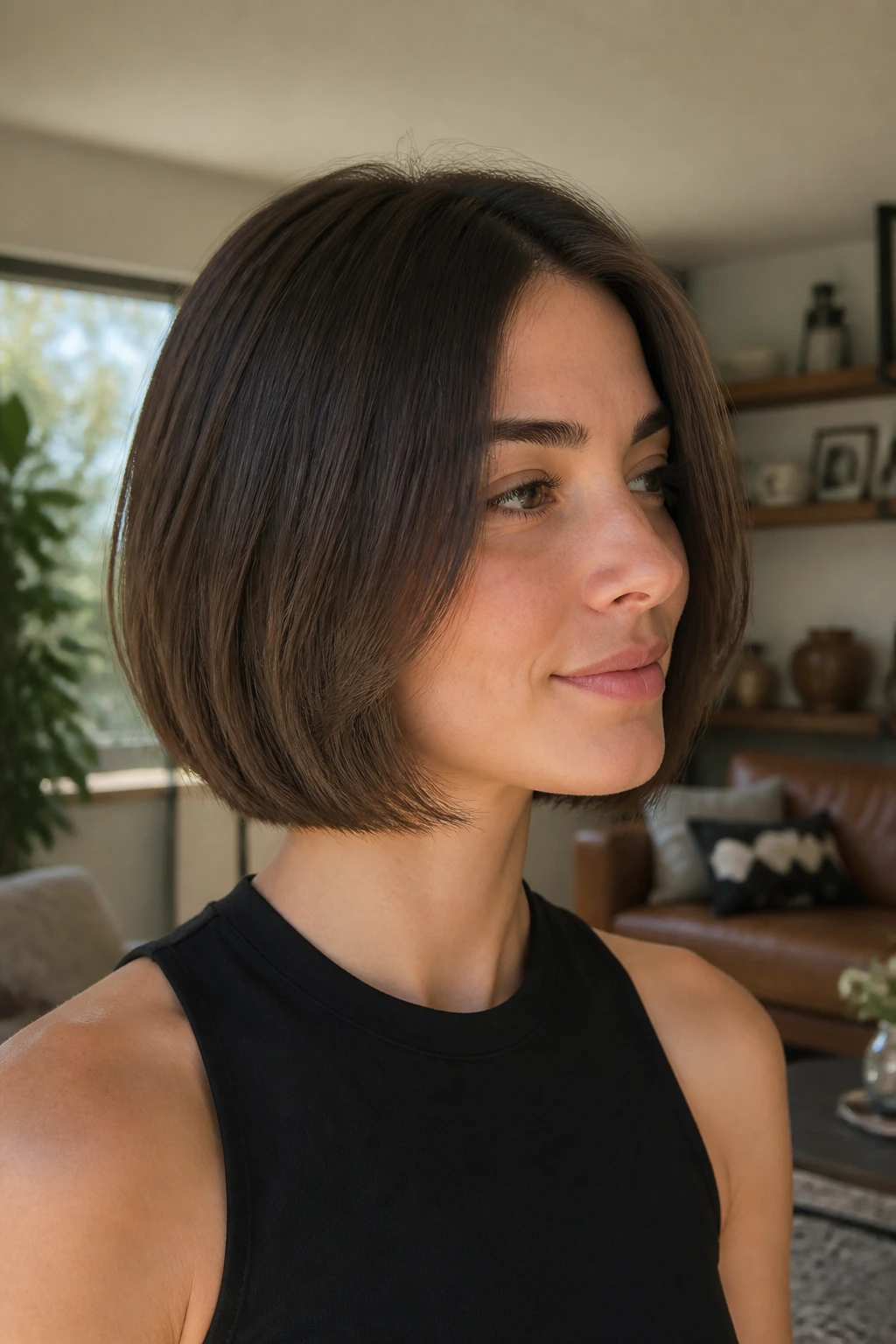
- The perimeter stays honest: These bobs keep a clear outer line, so the haircut still looks crisp even when the layers are soft.
- The layers work inside the shape: Instead of shredding the ends, the best versions remove weight where hair actually needs movement.
- The style fits straight hair’s habits: Straight strands show clean edges, crown lift, and parting changes better than textured cuts do.
- The length range is practical: Chin, jaw, and collarbone lengths all behave differently, and this collection gives you options instead of one narrow answer.
- The cuts are easy to read at the salon: You can point to where you want the length, where you want the lift, and where you do not want any thinning.
- The maintenance is predictable: Most of these shapes hold their line for weeks, then tell you when it’s time for a trim by fuzzing at the nape or flipping at the ends.
1. The Chin-Length Bob With Soft Internal Layers
This is the bob that looks clean from across the room and even better up close. The outer line sits at the chin or just a hair below it, which gives the face a firm frame, while the internal layers take a little weight out of the middle so the ends don’t puff outward like a triangle. On straight hair, that matters. A lot.
Why it works: the chin is one of the strongest visual anchors on the face, so a bob that lands there reads as intentional, not tentative. Keep the layers inside the shape, not through the bottom edge, and the haircut stays sharp while still moving. I like this one on medium-density hair because it gives enough shape without asking for a daily blowout.
What to ask for: a blunt perimeter at the chin with soft, invisible internal layers starting around the cheekbone or just below. If your stylist reaches for thinning shears near the ends, steer the conversation back toward weight removal in the middle of the haircut.
Styling note: one pass of a flat iron or a medium round brush is usually enough. The ends should bend under slightly, not curl. If they kick out, the layers are too short or the cut was overtexturized.
2. The Collarbone Bob That Barely Touches the Neck
Why do some bob haircuts feel easy while others feel fussy? Usually because the length gives you room to breathe. The collarbone bob sits in that useful zone where you can tuck it, flip it, pin it back, or let it fall straight without the haircut screaming for attention.
This version uses layers that start low and stay subtle. The top sections carry a little lift, but the perimeter remains long enough to keep the silhouette calm. It’s one of the best straight layered bob haircuts for someone growing out longer hair and refusing to look awkward in the process.
What makes it different
A collarbone bob can take a side part, center part, or off-center part without collapsing. That’s rare. The length gives the layers room to settle, and the hair moves in a gentle sheet rather than a hard fan. On fine hair, that sheet can look thin if the layers are cut too high, so keep them low and clean.
If you want a haircut that still reads polished on day two, this is a solid bet. It behaves. Which, in haircut terms, is a compliment.
3. The Stacked Bob That Keeps the Back Lifted
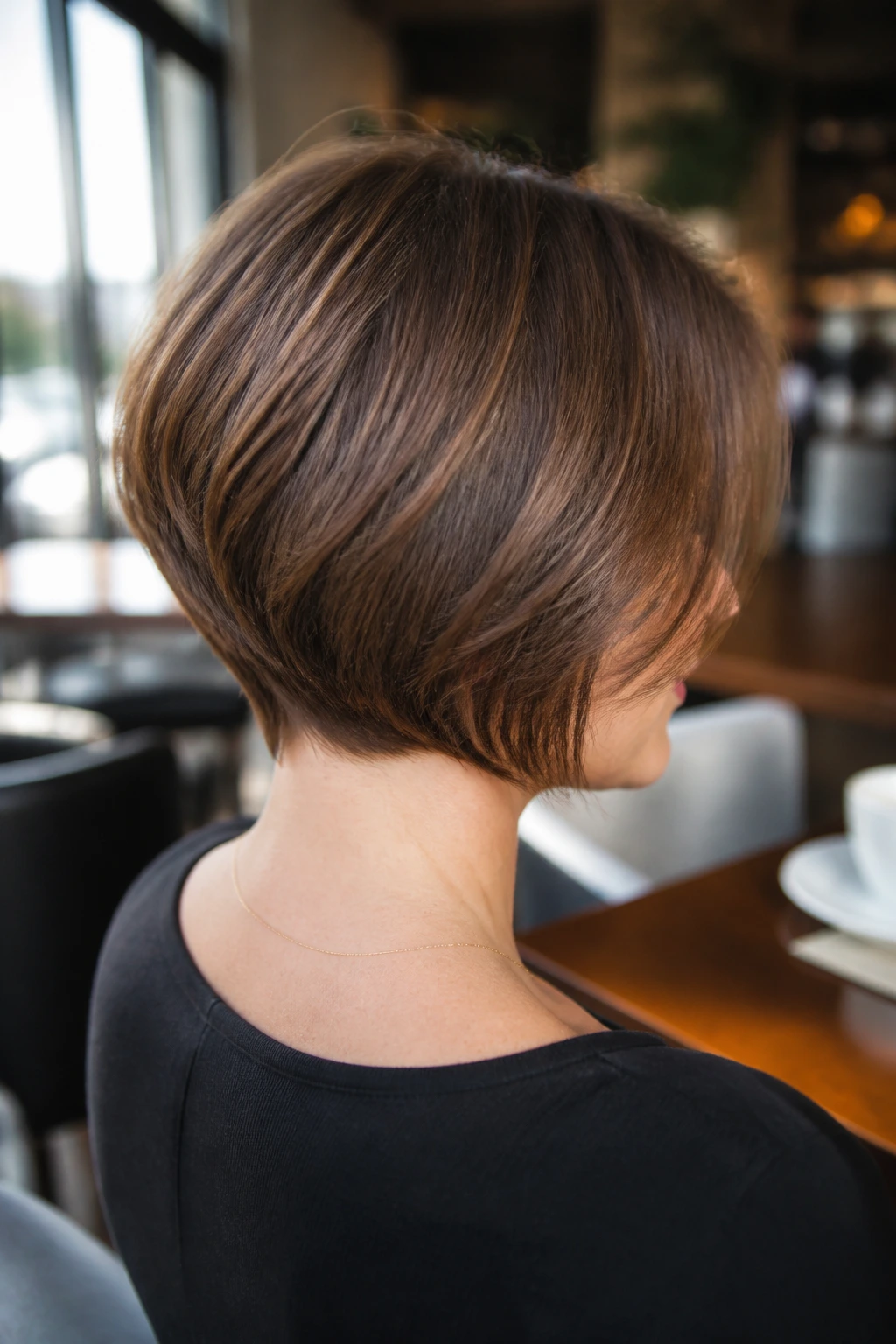
A stacked bob has attitude, but the best versions aren’t loud. They’re controlled. The nape is cut shorter and slightly rounded so the back sits close to the head, then longer layers are built above it to keep the crown from looking boxy. On straight hair, that gives you a neat, lifted back without the helmet effect.
Why it works: the stack creates a little air under the top sections, which stops the cut from collapsing flat against the skull. That’s useful if your hair grows in heavy at the back or if your crown tends to lie low. The key is moderation. A dramatic stack can look dated fast; a clean, gentle one keeps the shape fresh.
Ask your stylist to leave the layers long enough that the ends still read as a bob, not a pixie in disguise. If the back is too short, the front lengths can drag the whole cut into awkward territory. You want the nape to tuck in, not shout.
This one also grows out in a decent way. After a few weeks, the stack softens and the bob gets a little more swing, which is not a bad place to land.
4. The Center-Part Bob With a Blunt Perimeter
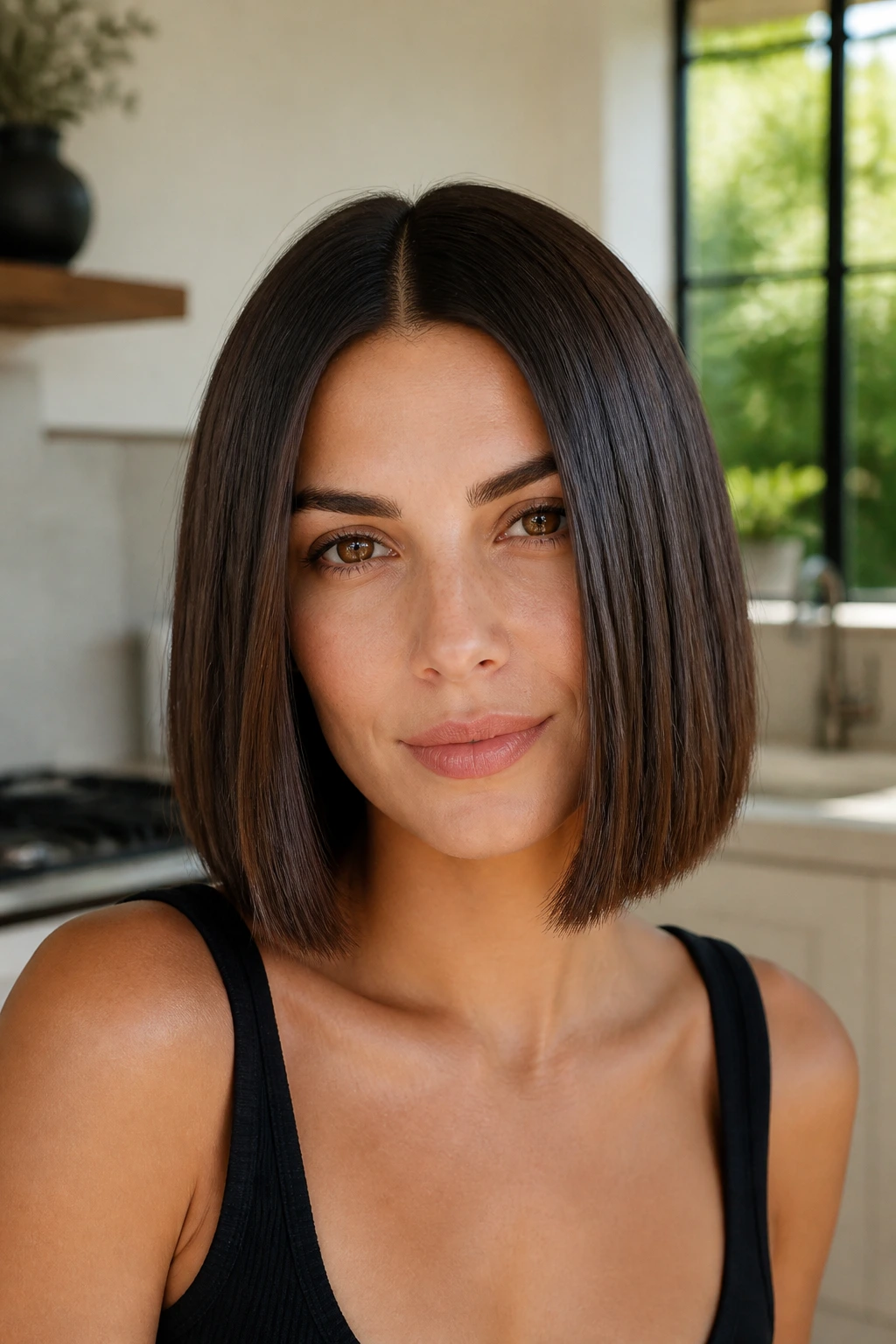
There’s no hiding behind a center part. That’s exactly why this haircut can look so crisp. A center-part layered bob puts both sides in symmetry, and when the perimeter is blunt, the line lands with a clean, almost graphic feel. It’s tidy. Not stiff. There’s a difference.
The layers here should be quiet. Think interior movement, not obvious slicing. Too much layering around a center part can make the sides drift apart and expose the neck in an unflattering way. Keep the ends dense, and let the inside of the haircut do the work.
Best for:
- Oval and long faces that can handle a symmetrical frame
- Straight hair that tends to split naturally down the middle
- Anyone who wants a bob that looks neat after a fast blow-dry
A center part also shows off shine. That’s the part people forget. When the cut is clean and the hair is smooth, the line from temple to chin looks almost architectural. If your hair has a stubborn cowlick at the front, though, this is the cut that will argue with it every morning. Not always. But enough.
5. The Side-Part Bob That Brings the Volume Forward
A side part changes the mood of a bob immediately. It lifts one side at the root, softens the forehead area, and gives the cut a little sweep that straight hair often lacks on its own. If a center part feels too strict, this is the move.
The layers should help guide that sweep. Shorter pieces near the part create height, while longer face-framing sections keep the line from getting puffy around the cheek. I like this bob on people whose hair lies flat at the crown but gets too full at the sides. The side part redirects the weight. Smart, simple, very useful.
If you wear glasses, this cut has another perk: the front pieces can graze the frame instead of fighting it. And if you’re the type who tucks one side behind the ear on instinct, the haircut should still look finished. That’s where the length on the longer side matters. It gives you room to play without losing the shape.
6. The Angled Bob With a Cleaner Front Line
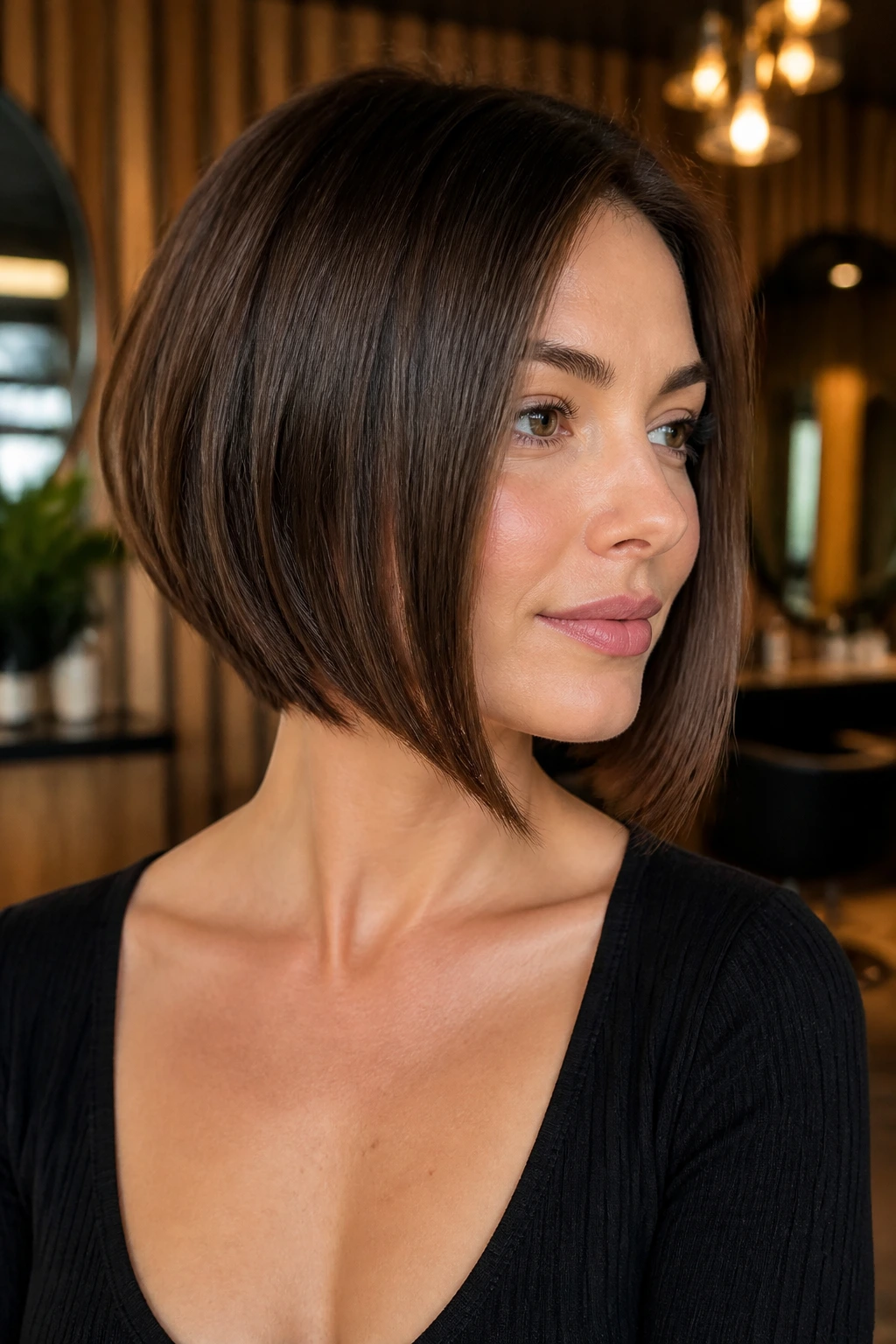
The angled bob is the one that starts shorter in the back and stays longer toward the front, but the sharpest versions keep the angle subtle enough to read as sleek, not severe. On straight hair, that diagonal line can be gorgeous because it pulls the eye down and forward, giving the face a little lift without needing curls or waves.
The layers inside the cut should support the front drop, not fight it. I’d ask for light graduation at the nape and longer layers through the front third of the haircut. That keeps the front pieces swinging cleanly instead of flipping outward at the collarbone.
A good sign: the front pieces should skim the jaw or just below it when dry, while the back hugs the neck. If the angle is too steep, the cut can start looking like two haircuts welded together. Nobody wants that.
This is a strong choice if you like a haircut that shows a little movement when you turn your head. The side profile matters here. A lot.
7. The French Bob With Softly Shattered Ends
Shorter, cheekier, and a bit more edited, the French bob sits around the lip line or just under the cheekbone. Add soft, shattered ends and you get a version that still feels neat but loses the hard edge that can make a blunt short bob look severe. On straight hair, that tiny bit of texture keeps the shape from turning into a slab.
The trick is restraint. Shattered does not mean thinned to death. It means the stylist takes tiny bites out of the edge so the hem has a little air in it. You should still see a line. Just not a brick.
This cut loves confidence, but it does not require a perfect face shape. If anything, the shorter length can make the cheekbones and eyes look more prominent, which is why so many people either adore this bob or avoid it entirely. There’s not much middle ground.
If you want to wear it tucked behind one ear with a lip balm and a plain tee, it looks cool without trying too hard. If you want it polished, a flat brush and a tiny drop of shine serum are enough. Tiny being the key word.
8. The Long Bob With Understated Layering
The lob is the diplomatic member of the bob family. It gives you length, shoulder clearance, and enough hair to tie back in a pinch, while still keeping the clean line that makes a bob feel deliberate. When the layers are understated, the cut keeps its weight and doesn’t puff out at the ends.
Why does this version work so well on straight hair? Because the lob can carry a little more movement without losing shape. Longer layers around the collarbone stop the haircut from looking like a single heavy curtain, but they don’t steal the body from the ends. It’s a nice middle road. Not boring. Just sensible in the best way.
I especially like this one for anyone nervous about going shorter. The shoulder length gap is real. A lob softens that leap.
The styling is easy to underestimate. A quick blow-dry with the nozzle pointed downward keeps the cuticle flat, and a bend at the very ends keeps the line from getting too sleepy. That little bit of bend matters more than people think.
9. The Neck-Length Bob That Tucks Cleanly Behind the Ear
A bob that hits around the neck sounds simple, but the detail work is where it earns its keep. The layers should remove just enough bulk from the lower half so the hair slips behind the ear without sticking out like a shelf. On straight hair, that tucked shape can look very clean.
This is one of those cuts that changes depending on what you wear. Crew necks, collars, scarves, turtlenecks — all of them alter how the hair sits. A neck-length bob with careful layering solves that by keeping the ends light enough to move but not so light that they fray.
Ask for this: long internal layers, a clean edge at the perimeter, and a little extra weight left at the jaw so the haircut doesn’t flare outward under the ears. The line should hug the neck, not float off it.
It’s a good choice if you like a bob that can be tucked away during the day and released at night without looking misshapen. Not every haircut can do that. This one can.
10. The Fine-Hair Bob With Hidden Lift
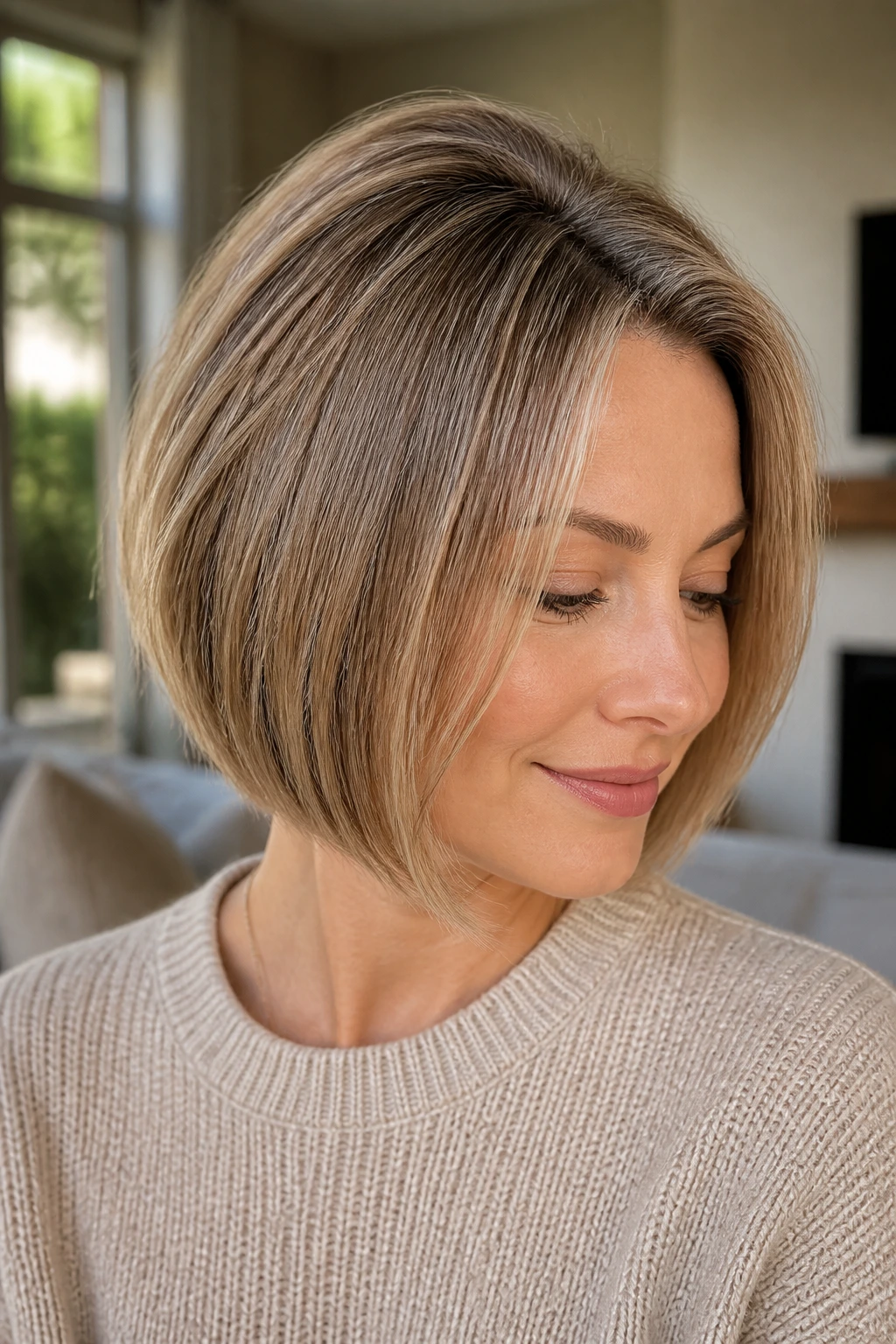
Fine hair needs a different kind of layering. Too much of it and the ends go see-through. Too little and the cut lies flat by lunch. The answer is a compact bob with hidden lift inside the crown and a perimeter that stays full enough to look dense.
I’d keep the layers closer to the top half of the haircut and avoid anything too aggressive near the bottom edge. That gives the illusion of volume without draining the ends. A good stylist will often use subtle point cutting, not heavy texturizing, because the goal is air, not frizz.
What to watch for
- Layers starting too low can make the bottom look stringy.
- Heavy conditioner at the roots will collapse the crown.
- A tiny round brush at the roots can do more than a mountain of mousse.
This bob is one of the best straight layered bob haircuts for people who want movement but hate the feeling of hair that has been overworked. It should swing. It should not look shredded.
11. The Thick-Hair Bob That Removes Bulk Without Looking Thin
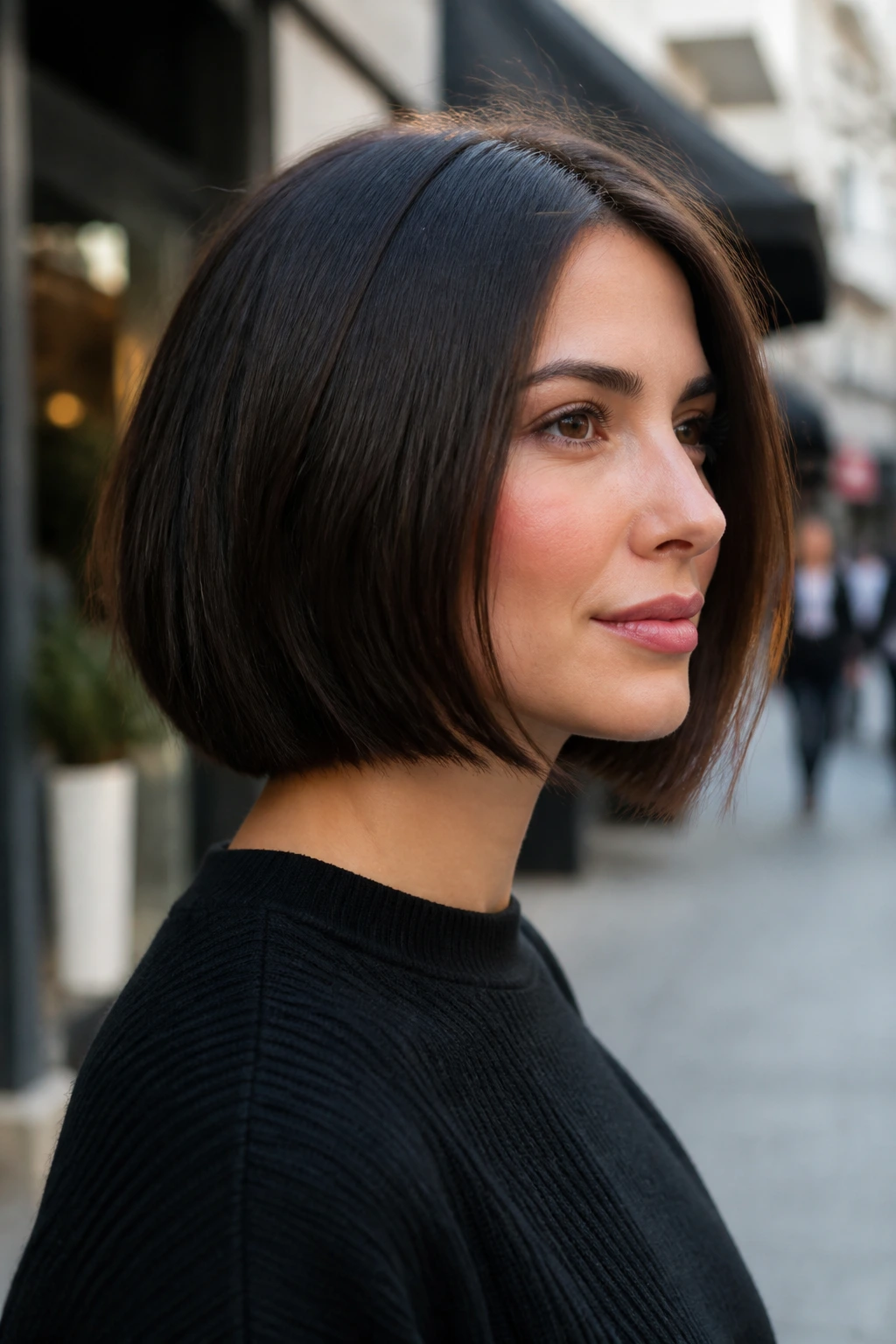
Thick hair gives you options, but it also gives you mass. If the cut is wrong, the bob turns into a square block at the sides and a heavy shelf at the nape. The answer is a bob that removes bulk in the middle, not at the bottom.
That distinction matters. You want the stylist to lighten the interior so the hair can collapse into a neat shape, while the perimeter stays strong enough to keep density. Too many people ask for thinning and end up with ends that look soft in the bad sense — fuzzy, not sleek.
A thick-hair bob often looks best when the layers are longer and lower, with a little extra length left near the jaw to stop the cut from springing outward. If your hair has a lot of body, the wrong layer placement can create a shelf you’ll spend all morning flattening.
This version is clean, not airy. That’s the point.
12. The Curtain-Bang Bob With Straight Length Through the Back
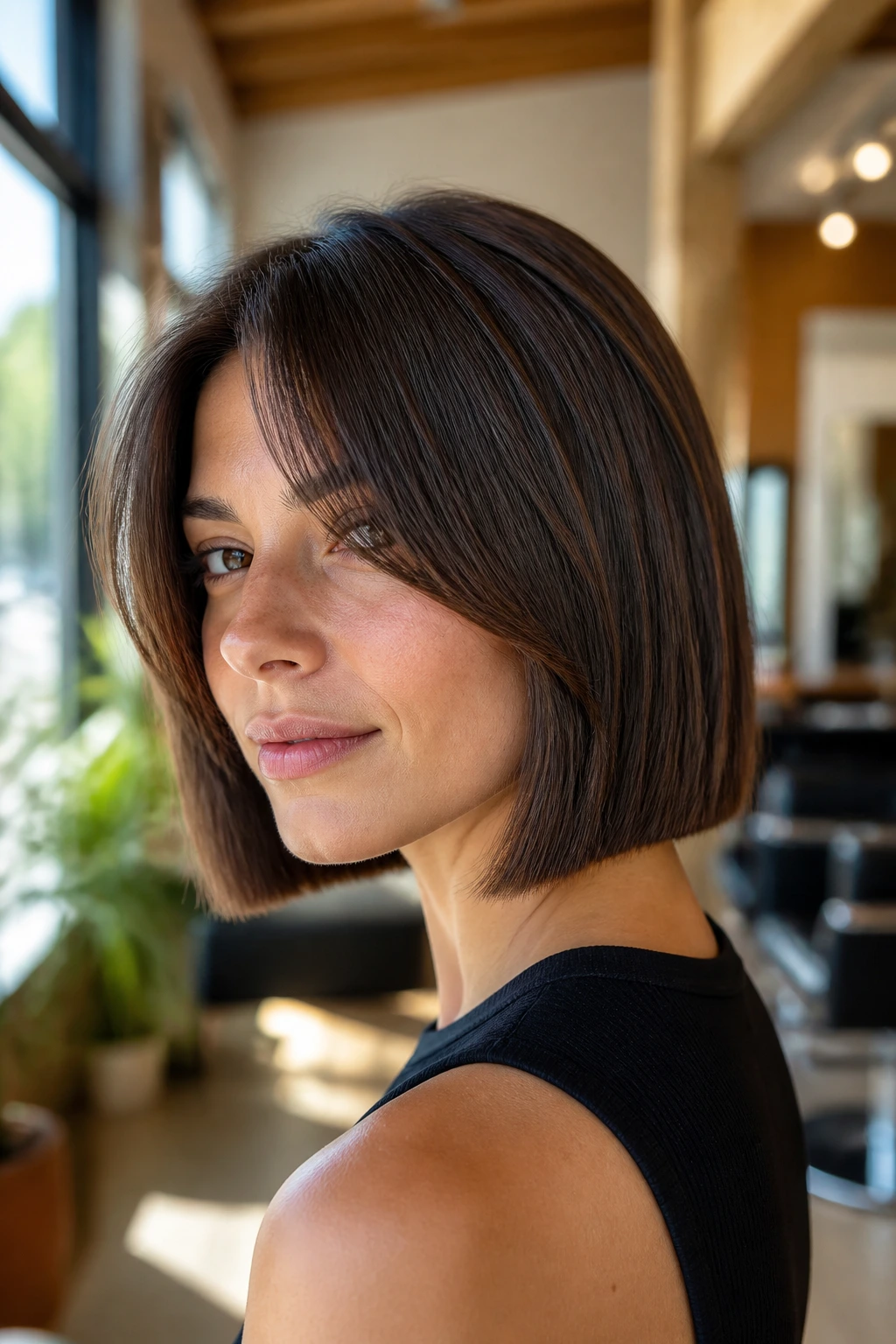
Curtain bangs can work with a bob if the rest of the haircut stays disciplined. The bangs should skim the cheekbones and split naturally in the middle or slightly off-center, while the back keeps a straight, controlled line. That contrast is what gives the cut shape.
The danger is over-layering the front. If the bangs are too short or too disconnected, the haircut starts looking split into separate pieces. Better to keep the fringe long enough that it can tuck back on a bad hair day, then let the bob underneath carry the main shape.
Why this one earns repeat wear
Curtain bangs soften the forehead and bring movement to the face without needing curls. On straight hair, they lie cleanly and give the bob a little bend at the front, which stops the whole cut from looking too severe. If your face is long or narrow, this can be a very flattering bit of balance.
The back should stay straight and polished. That’s the anchor. Without it, the bangs do too much of the talking.
13. The Jaw-Softening Bob for Strong Angles
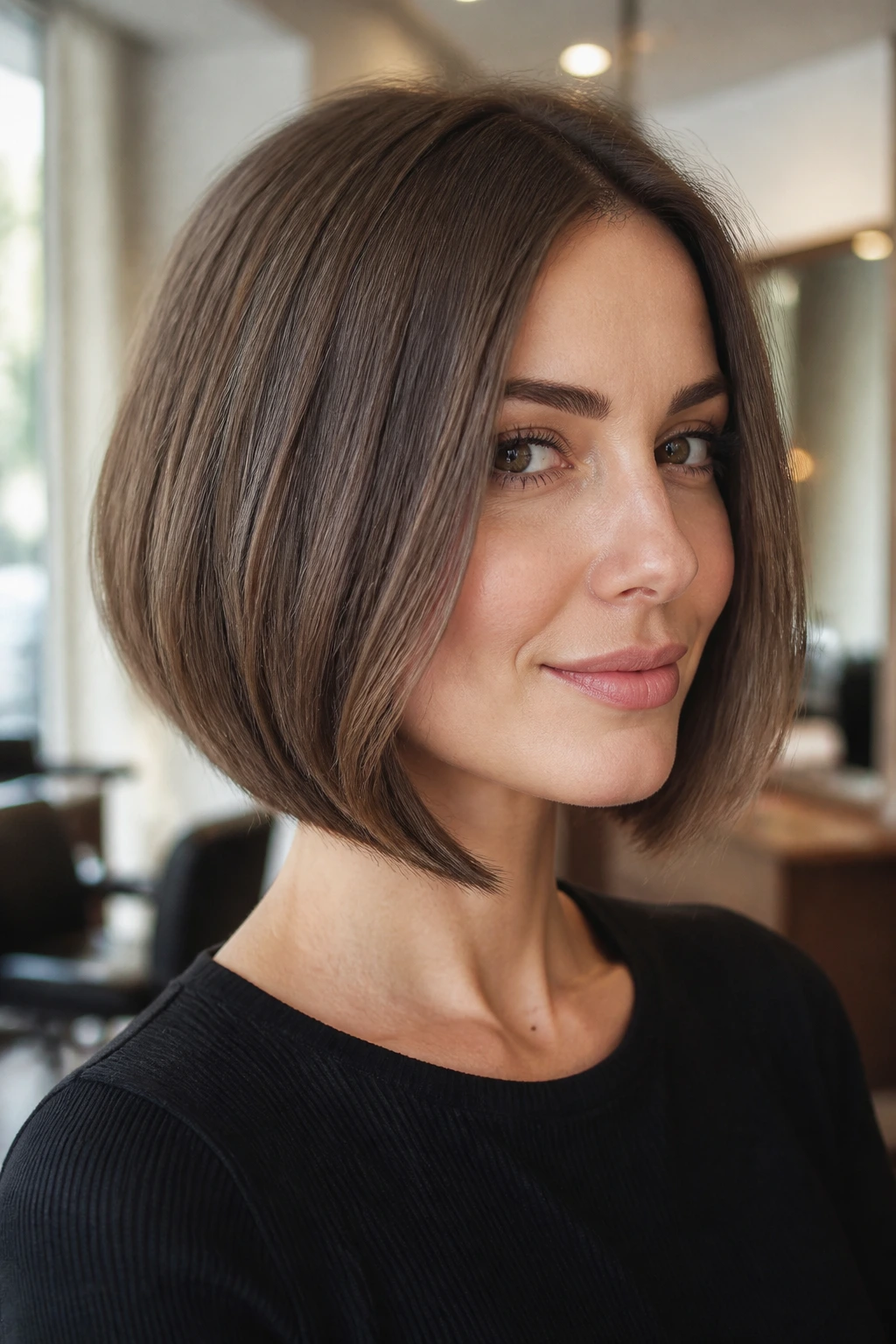
If your jaw is sharp or square, a bob can either flatter it or sit right on top of it like a bad edit. The better version uses layers that start just below the jawline, then curves the front pieces inward a touch so the haircut frames the face instead of boxing it in.
This is where a slight bend at the ends helps. Not a curl. A bend. That small inward sweep softens the hard line of the jaw without hiding it, which is a better move than trying to cover everything up. Hair should frame, not apologize.
My preference here: keep the perimeter blunt enough to stay modern, but leave the front a little longer than the back. That gives the face some length and lets the corners of the bob sit away from the jaw rather than directly on it.
It’s a very good cut if you like structure but don’t want your haircut to feel stern. Those two things are not the same.
14. The Face-Framing Bob for Oval Faces

Oval faces can wear almost anything, which is rude in the best possible way. Still, a face-framing bob makes the most of that balance by keeping the overall shape neat and placing the movement right around the cheekbones and lips.
Here, the layers do not need to fight for attention. They just need to land in the right place. A center part or slightly off-center part both work, and the front pieces can be cut to skim the cheek or jaw depending on how much length you want to keep in the face.
If your hair is straight, the cleanest version of this cut is the one where the front pieces are a touch longer than the back and the perimeter stays crisp. That combination makes the face feel open without losing the bob identity.
This style is a good reminder that not every layered bob needs to be dramatic. Sometimes the best move is to place two or three well-chosen layers and stop. Clean face-framing beats random texture every time.
15. The Soft-Corner Bob for Square Faces

Square faces can handle a bob, but the corners need softening. A clean line at the ends is fine; what you want to avoid is a cut that lands exactly at the widest point of the jaw and sits there like punctuation. That’s where the soft-corner bob comes in.
The layers should start low and move the eye downward, while the front pieces curve gently around the face. A side part often helps here because it breaks up the symmetry and takes some of the emphasis off the jaw. If the hair is straight, a slight inward bend at the corners can make a big difference.
The visual effect
The haircut should feel shaped, not rounded. That’s the balance. Too rounded and the bob loses its crispness. Too blunt and it can echo the jaw too closely. The best version finds a quiet middle ground: clean ends, soft edges, and a little movement around the cheek.
It’s one of the most practical straight layered bob haircuts for people who want definition without harsh lines. The haircut does its job, then gets out of the way.
16. The Airy Bob That Stays Light Around the Nape
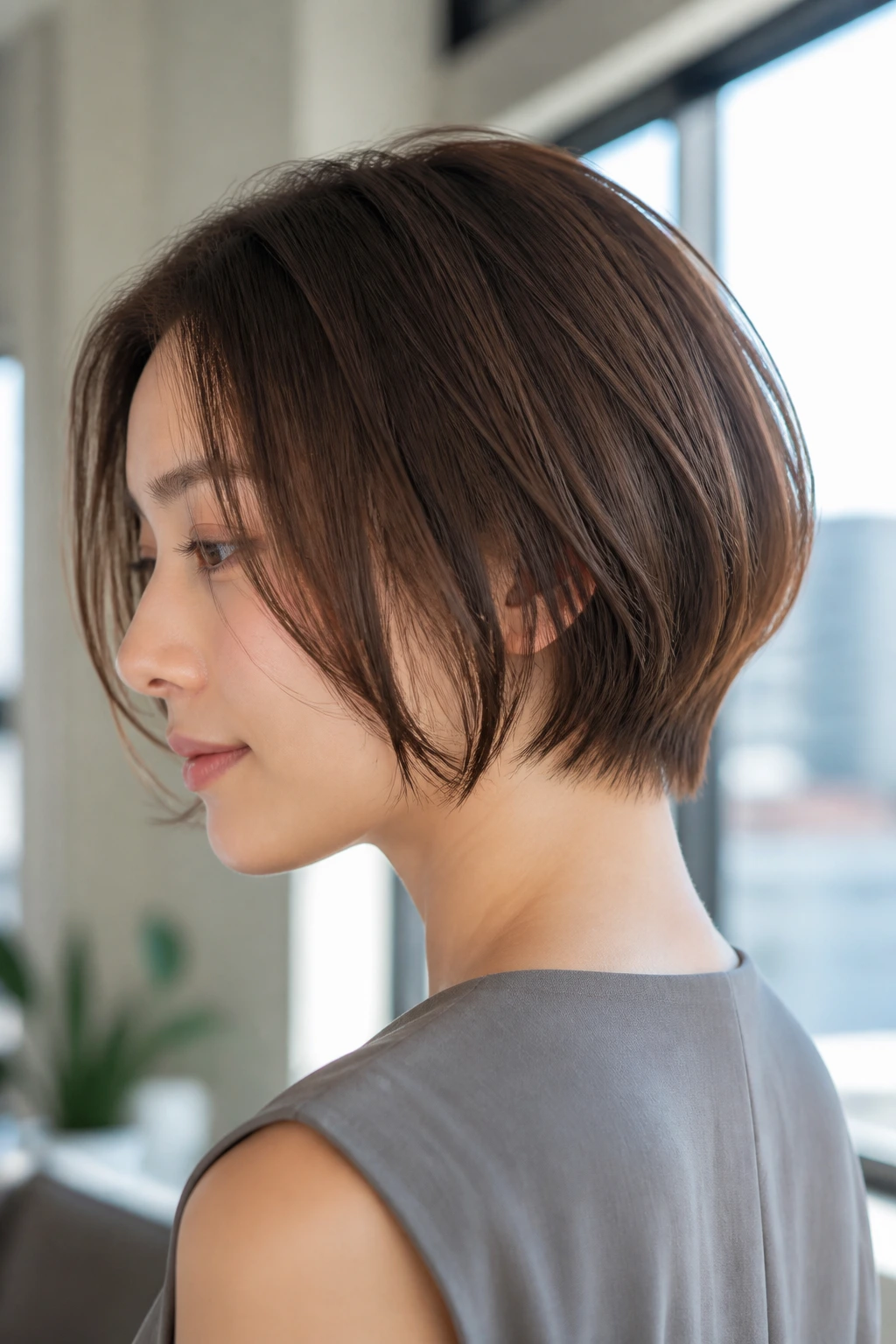
Heavy napes are sneaky. You don’t notice them in the chair, then a week later the back starts sitting flat and bending in weird directions. The airy bob solves that by removing weight below the crown and keeping the nape clean enough that the shape can breathe.
This cut is not about lots of visible layers. It’s about smart layering. A little shorter at the back, a little lighter through the interior, and enough density left in the perimeter to keep the hem from looking feathery. That gives the haircut a sense of lift without turning it into a shag.
If you wear your hair straight and want it to sit neatly under coats, scarves, or collared shirts, this bob behaves well. It also grows out in a controlled way, because the nape stays lighter while the front gains a bit of length.
There’s a reason stylists keep coming back to this shape. It solves everyday problems. Quietly.
17. The Razor-Edge Bob for Piecey Ends

Razor-cut ends are not for everyone. Said plainly. On the right hair, though, they can give a straight bob a sharper, more fragmented finish that looks modern without needing waves. The trick is to keep the razor work controlled so the ends stay piecey, not frayed.
This cut is best when the perimeter is still visible. The razor only softens the edge. If the whole haircut gets chewed up, the bob loses its line and starts looking tired before it even leaves the salon. I’d be cautious with very fine hair here, because the ends can disappear faster than you expect.
Good candidates:
- Straight hair with medium density
- Hair that resists bending under with a brush
- People who like a little texture at the edge without full-on choppiness
A tiny amount of cream or serum helps this cut settle. Too much product clumps the ends together and kills the whole point. Light hands. That’s the rule.
18. The Grow-Out Bob That Slides Into a Lob
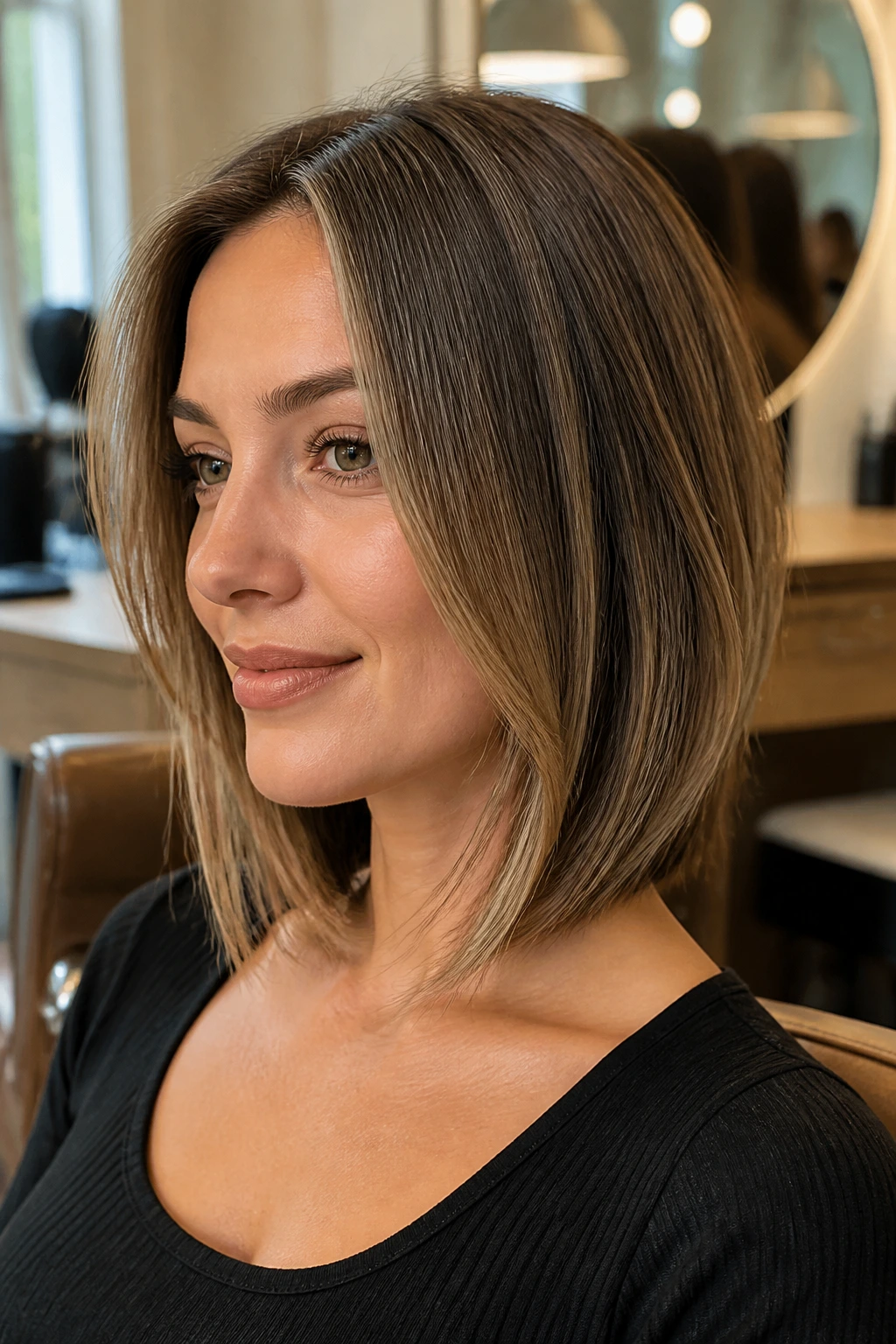
The smartest bob is sometimes the one that doesn’t fight grow-out. This version sits between bob and lob, with enough length to look intentional as it gets a little longer, and enough layering to keep the shape from becoming heavy at the shoulders.
It’s a solid choice if you hate the hard line of a fresh-cut bob but still want a structured shape. The layers should start low and stay long, especially through the front, so the haircut can pass through the awkward shoulder-grazing stage without flipping into a pyramid.
The grow-out bob is a little more forgiving than its shorter cousins. You can wear it straight, tuck it back, or turn it into a more relaxed lob with a few months of length. That makes it one of the most practical straight layered bob haircuts in the bunch, especially if you’re not eager for a strict trim schedule.
And honestly, that’s its charm. It doesn’t demand perfection. It just keeps going.
What Makes a Straight Layered Bob Look Crisp Instead of Choppy
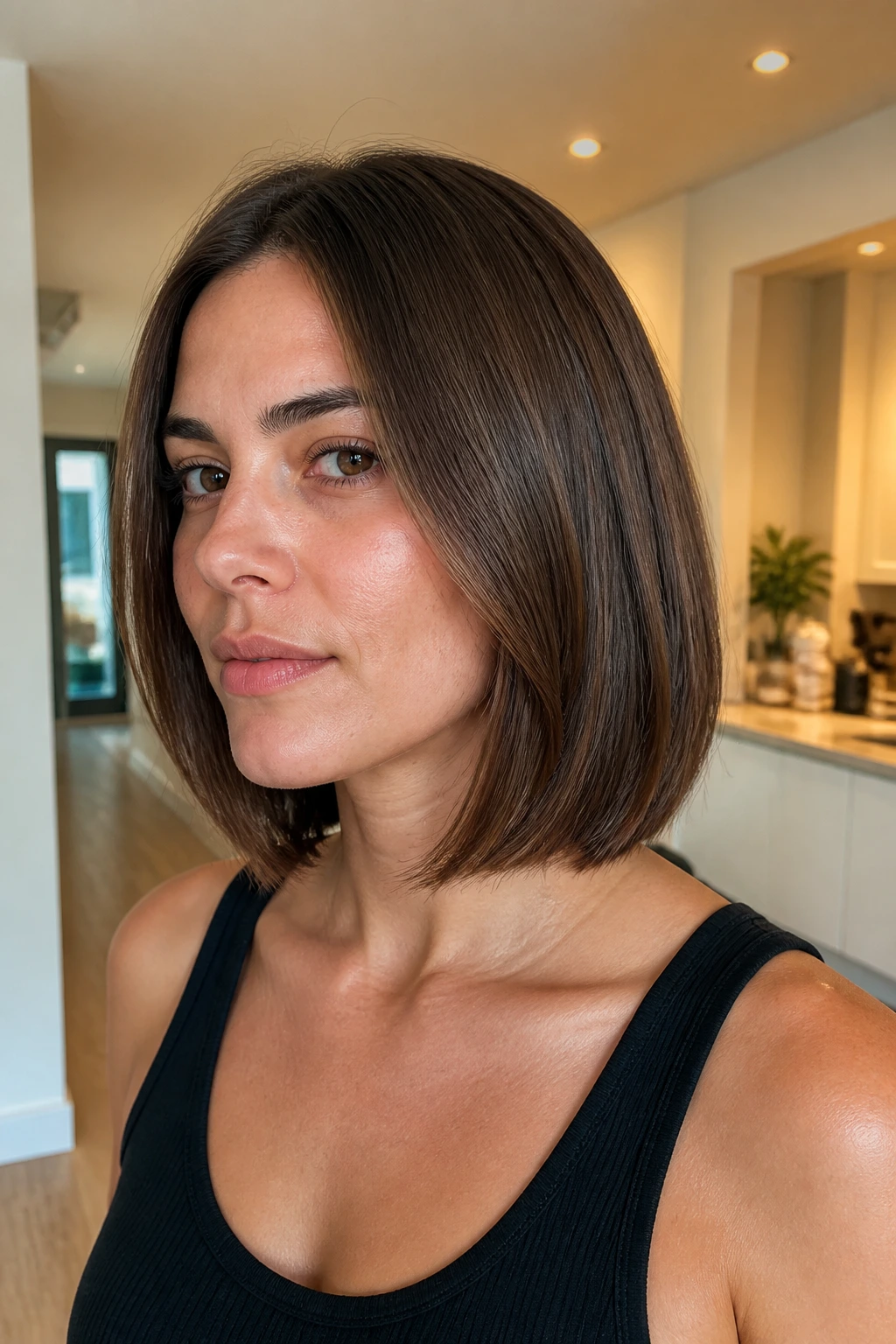
The line between sharp and messy is thinner than most people think. A straight layered bob looks crisp when the perimeter stays strong, the layers sit inside the shape, and the ends are cut with enough precision that they fall together instead of fanning out. That sounds simple. It isn’t always.
The biggest mistake is over-texturizing the bottom edge. Once the ends are thinned too much, the haircut loses weight, and straight hair exaggerates the problem by separating into wisps. A better approach is to keep the outer line blunt or lightly point-cut, then remove bulk higher up where the head actually needs it.
Placement matters more than quantity. A couple of well-placed layers near the crown can stop flatness. Five random layers can wreck the silhouette. That’s why a stylist’s sectioning and elevation angles matter so much. A 45-degree lift creates movement; a vertical chop at the wrong spot creates uneven shelves.
One more thing. Straight hair shows parting behavior. If your hair naturally falls left, a center-part bob may never sit as neatly as a soft side-part version. That’s not a flaw in the haircut. It’s just hair telling the truth.
Essential Tools for Styling and Maintenance
- 1-inch flat iron: Best for smoothing the ends under without leaving the bob stick-straight and stiff.
- Blow dryer with a narrow nozzle: Directs airflow down the hair shaft so the cuticle lies flatter and the shape looks cleaner.
- Round brush, 1.5 to 2 inches: Gives the crown lift and a slight bend at the hem without making the bob curl too much.
- Fine-tooth comb: Useful for clean parts and for checking whether the perimeter sits evenly on both sides.
- Sectioning clips: Keep the top layers separate while you dry the underneath sections first.
- Heat protectant spray or cream: Necessary if you’re passing a flat iron through the ends more than once.
- Light smoothing cream: Helps control flyaways on straight hair without making it greasy.
- Dry shampoo: Gives the crown some grit on day two and helps the bob stop hugging the scalp.
- Hand mirror: Worth keeping around if you want to check the nape and the back corners before leaving the house.
- Sharp hair scissors, optional for tiny trims only: If you’re not trained, skip at-home shape cutting. Use them for a single split end only if you absolutely must.
How to Ask for the Cut Without Losing the Sharp Edge
Bring photos, yes, but bring the right kind. One picture of the front and one of the side is better than ten vague inspiration shots that all show different lengths. Haircuts live and die by angle. A bob that looks sleek from the front can look completely different from the profile.
Tell the stylist where you wear your part. Say it out loud. If you part your hair on the left every day and show up with a center-part photo, the result may not sit the way you expect. Straight layered bob haircuts are shape-sensitive, and parting changes where the weight lands.
Be specific about the perimeter. If you want the ends blunt, say blunt. If you want softness, ask for subtle point cutting rather than heavy texturizing. And if you want layers, point to where you want them to start: under the cheekbone, at the jaw, below the collarbone. That one detail changes the whole cut.
Finally, mention how you style your hair. Air-dried? Flat-ironed? Round-brushed? The right layer placement depends on that answer. A bob built for a polished blowout is not the same as one meant to dry straight on its own.
How to Style Straight Layered Bob Haircuts at Home
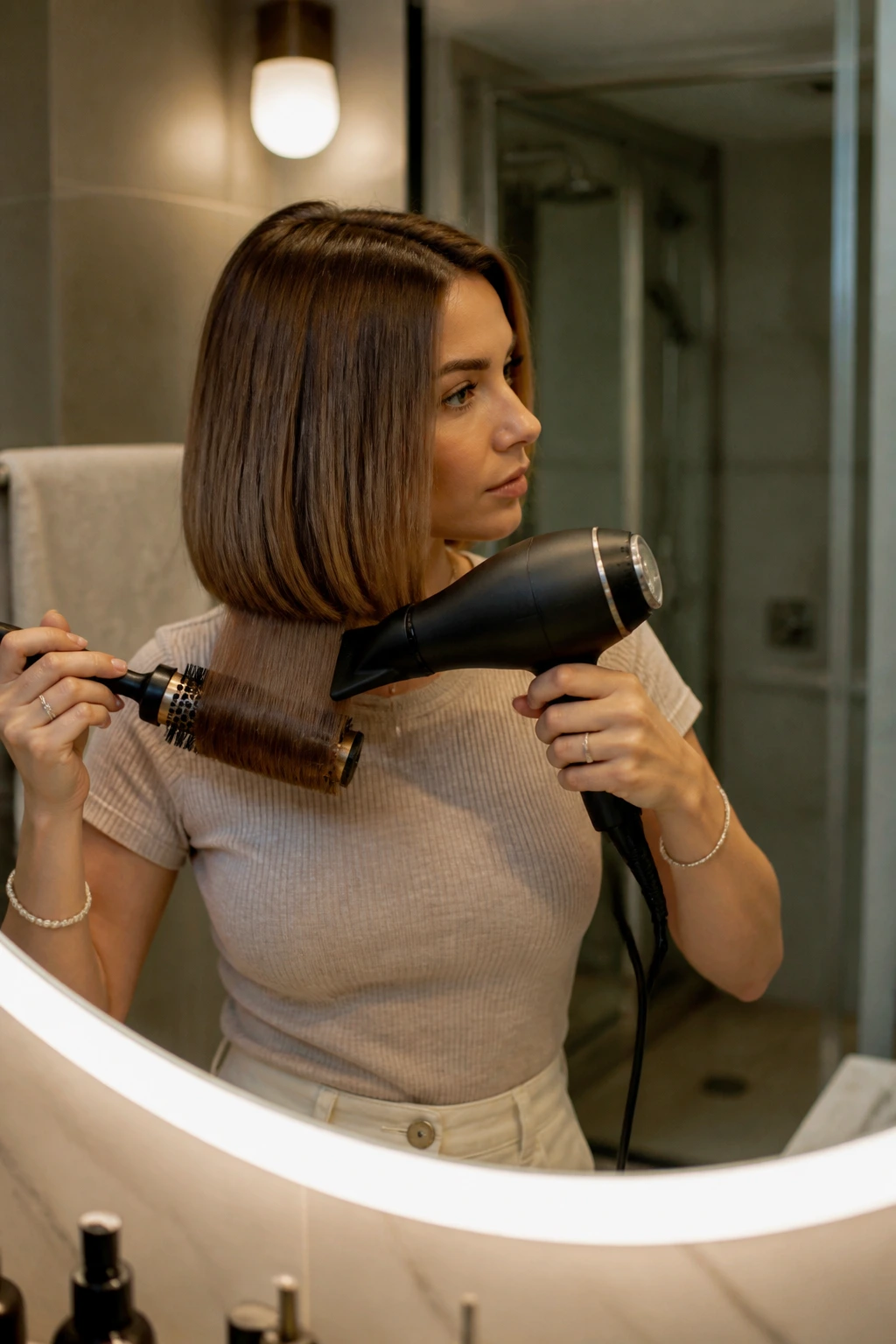
A good bob should not need a full production every morning. It should need a plan. Start with towel-dried hair, a heat protectant, and a decision about whether you want bend or flatness. That choice dictates the rest.
Blowout base: rough dry the hair about 70 to 80 percent, then use the round brush to smooth each section downward. Keep the nozzle pointed with the hair, not against it. A cool shot at the end helps the cuticle close and stops the ends from puffing.
Flat-iron finish: pass a 1-inch iron once through each section, then tilt the iron slightly at the last inch to nudge the ends under. Do not clamp and drag. That’s how you get crunchy-looking lines and bent corners.
Root lift: clip the top crown sections up while the hair cools, or aim the dryer upward at the roots for a few seconds before smoothing the lengths. Straight hair often needs lift at the top more than product at the ends.
Day-two refresh: mist the roots lightly, re-bend only the front pieces, and use a pea-sized amount of smoothing cream on the bottom inch. Too much product turns a sharp bob into a limp one fast.
Common Mistakes That Make the Shape Collapse

- Layers starting too high on fine hair: the ends go thin and wispy, and the bob loses its line. Fix it by keeping the weight at the bottom and asking for gentler internal layering.
- Over-thinning thick hair at the perimeter: the edge frays and the haircut puffs around the ears. Bulk belongs in the middle of the cut, not hacked out of the ends.
- Ignoring the nape: if the back is not cleaned up every few weeks, the whole shape looks fuzzy first from behind. A tidy nape keeps the bob looking intentional.
- Using too much serum or cream: the hair clumps, the layers disappear, and the sharp edge turns greasy. Start with less than you think you need.
- Blow-drying from random angles: the ends flip in different directions and the perimeter stops reading as one line. Dry with the nozzle pointed down and finish the last inch with control.
- Cutting bangs without considering the bob length: fringe and perimeter need to balance each other. Short bangs with a short bob can feel crowded unless the stylist leaves enough space around the face.
Variations and Alternatives to Try
Glass-Hair Finish: This version keeps the bob sleek enough to reflect light almost like a mirror. It works best on medium-density straight hair and needs a smoothing cream plus a flat iron, but only one pass. If your hair is already naturally smooth, this is the least fussy way to make the cut look sharp.
Soft Fringe Bob: Add eyebrow-skimming fringe that separates in the middle or slightly off-center. The bob underneath should stay blunt and structured so the bangs don’t take over the whole haircut. Good if you want a little softness around the eyes without committing to a full curtain bang.
Air-Dry Bob: Keep the layers longer and the perimeter a touch softer so the haircut settles well without heat styling. This one is smarter for hair that dries straight with only a little bend. It won’t look as polished as a blowout bob, but it can look clean with almost no effort.
Bixie-Leaning Bob: If you want more movement and less length, shorten the nape and add more internal texture through the crown. It sits between a bob and a pixie, and it’s best on people who want a lighter feel around the neck. Not subtle. Still useful.
Tucked-Ear Bob: Built to be worn behind one ear without losing its shape. The front pieces stay long enough to frame the face, while the opposite side can carry a little more weight. Handy if you like changing the part and playing with asymmetry.
Keeping the Cut Fresh: Trims, Washes, and Grow-Out

A straight layered bob shows its age in the back first. The nape fuzzes, the ends start to flick, and the clean line turns soft before you notice the front has changed. That’s why regular trims matter more here than they do with a shag or a longer cut.
For a crisp chin-length or collarbone bob, a trim every 6 to 8 weeks usually keeps the shape tidy. If you’re wearing a lob or a grow-out bob, you can often stretch that a bit longer, but the back still needs attention so the line does not drift into shapelessness. A tiny dusting — sometimes only 1/4 inch — can make the whole haircut sit better.
Wash frequency depends on your scalp and product load, but the styling shape often improves on day two. The hair settles. The ends stop looking freshly blown out and start behaving. That said, if you pile on dry shampoo for three days straight, the bob can get dull and rough at the root. A light shampoo reset is better than trying to rescue it with more spray.
Growing the cut out is easier if the stylist keeps the layers long and the perimeter controlled. The bob should slide into a lob, not explode into a triangle. If you want that transition to feel smooth, ask for trims that preserve the outline while nudging the length down gradually.
Frequently Asked Questions
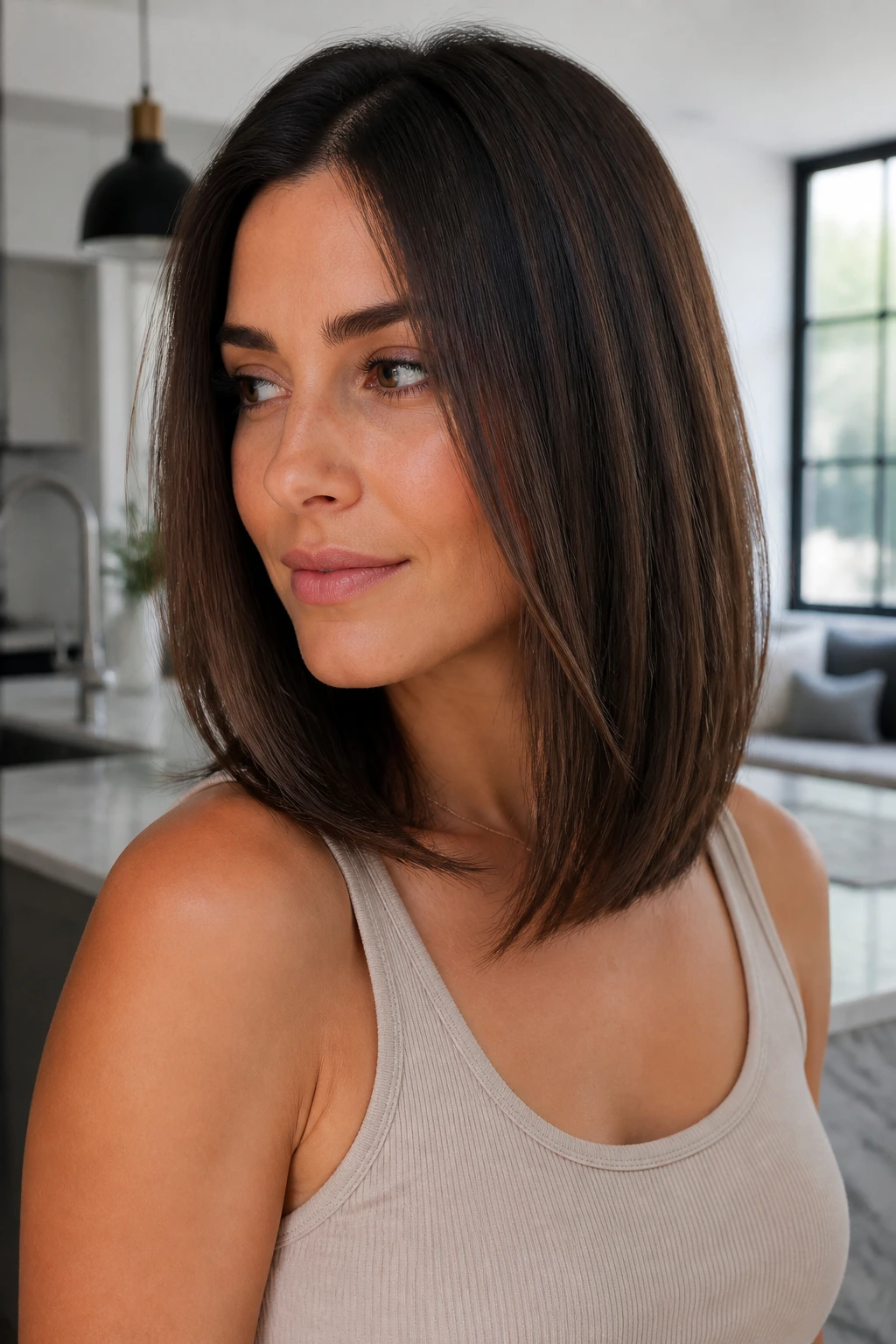
Will layers make a straight bob look thinner?
They can, if the layers are cut too high or too close to the ends. The better solution is to keep the outer line full and remove weight from the interior, especially on fine hair.
What face shapes suit straight layered bob haircuts best?
Most face shapes can wear one, but the length and parting change the result. Center parts often flatter oval and long faces, while side parts or longer front pieces soften square or rounder faces.
Can fine hair handle a layered bob without going flat?
Yes, if the layering is restrained. Fine hair usually looks best with a blunt perimeter and only a few internal layers near the crown, plus a root-lifting blow-dry.
Should thick hair get more layers or less?
Usually less visible layering and more smart weight removal. Thick hair needs enough structure to keep the line clean, but not so much bulk that the bob flares out at the sides.
How often should a sharp bob be trimmed?
Most need a trim every 6 to 8 weeks. If the shape is short and precise, the nape and corners will show growth sooner than the front.
What if the ends keep flipping out?
That usually means the perimeter is too light, the cut is grazing an awkward length, or the styling direction is inconsistent. Try smoothing the last inch under with a brush or flat iron, and ask your stylist whether the layers need to be shifted lower.
Can I wear a layered bob tucked behind my ears?
Yes, but only if the front is long enough to support that habit. A bob with too-short front pieces will pop out awkwardly after being tucked, which is annoying in a very specific way.
How do I grow a bob into a lob without it looking messy?
Keep the ends trimmed straight while the length increases, and ask for the layers to stay long. That way the haircut gains length without losing the outline that makes it look intentional.
The Clean Line Wins
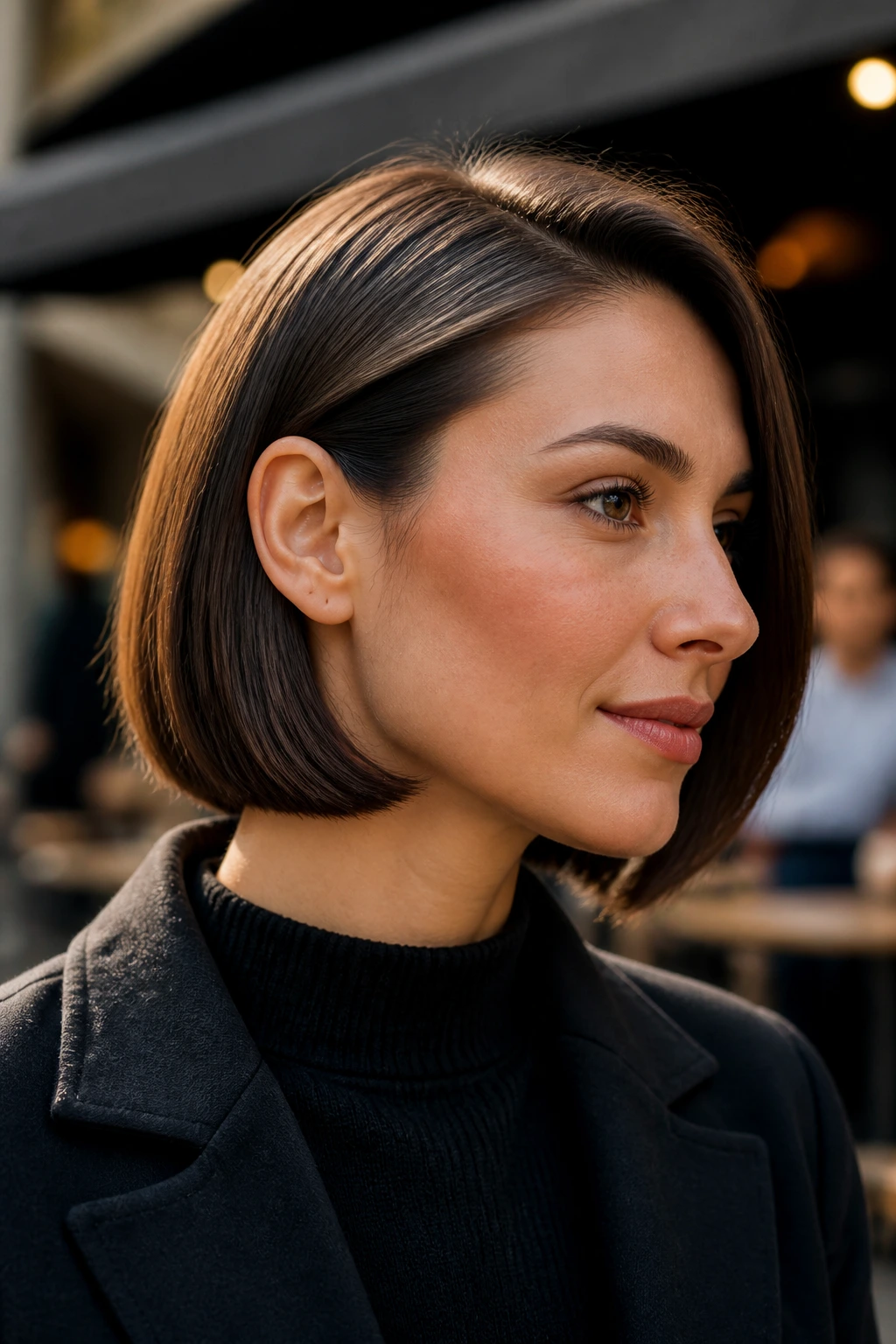
The nicest thing about a well-cut bob is that it keeps its promises. It frames the face, sits neatly at the neck, and does not ask you to become a different person every morning with a blow dryer. Straight layered bob haircuts work because they respect the line first and the movement second.
Pick the version that matches your hair density, your part, and how much styling you’re willing to do. A sharp bob is not about making life harder. It’s about giving straight hair a shape that holds, even when the day gets messy.
