



A short blonde bob has a way of showing every decision you make at the hairline. That is exactly why money piece highlights for short blonde bobs can look razor sharp or a little chaotic, with almost nothing in between. Two inches of placement can change the whole mood. Too thick, and the front reads like a stripe. Too thin, and you lose the payoff that makes the cut feel awake.
The best versions do a sneaky kind of work. They brighten the eyes first, then the cheekbones, then the jaw. On a chin-length or jaw-length bob, the front panels are doing more visual labor than they would on long layers, which is why a tiny shift in parting or toner can matter more than people expect.
I like this look best when it feels intentional but not fussy. The blonde should land like a clean flash near the face, then soften as it moves into the rest of the bob. If the front pieces are fighting the haircut, the whole thing falls flat. If they’re in sync, the bob looks expensive without trying too hard.
Why These 45 Ideas Work on a Short Blonde Bob
-
Face-framing first: The brightest strands sit close to the eyes and cheekbones, so they change the whole haircut without needing a full color overhaul.
-
Short hair shows placement fast: On a bob, a foiled slice that’s a quarter-inch too wide can look bold in a hurry, which is useful when you want clean impact and dangerous when you don’t.
-
Tone matters more than length: A pearl, beige, icy, or honey money piece can make the same bob read polished, cool, sunny, or soft without changing the cut.
-
Grow-out can be controlled: A root smudge or soft shadow keeps the front from screaming “new foil line” after two weeks.
-
Styling changes everything: Straightening, bending, or tucking the front pieces alters how chunky or subtle the money piece appears.
1. Soft Ribbon Money Piece on a Jaw-Length Blonde Bob
A narrow ribbon of cream-blonde at each temple is one of my favorite ways to wake up a jaw-length bob. It’s bright enough to pull the eye forward, but it doesn’t stomp on the shape of the cut.
Ask for thin foils that start around cheekbone level and stay soft at the root. That tiny bit of shadow keeps the front from looking pasted on, especially if you wear your bob straight.
2. Champagne Sweep Money Piece on a Side-Part Bob
A side part gives this look its lift. The heavier side gets the brighter sweep, and the weaker side gets a whisper of light so the whole frame still feels balanced.
Champagne blonde is a nice middle ground when you want glow, not glare. It works especially well on short blonde bobs that need a little polish around the face without turning icy.
3. Icy Hairline Slice for a Blunt Short Blonde Bob
This one is crisp. A thin, icy slice right at the hairline gives a blunt bob that clean, graphic edge you see from across the room.
Keep the section narrow. Really narrow. On short hair, a thick platinum front piece can look blunt in the wrong way, while a slim slice reads deliberate and sharp.
4. Beige Veil Highlights on a French Bob
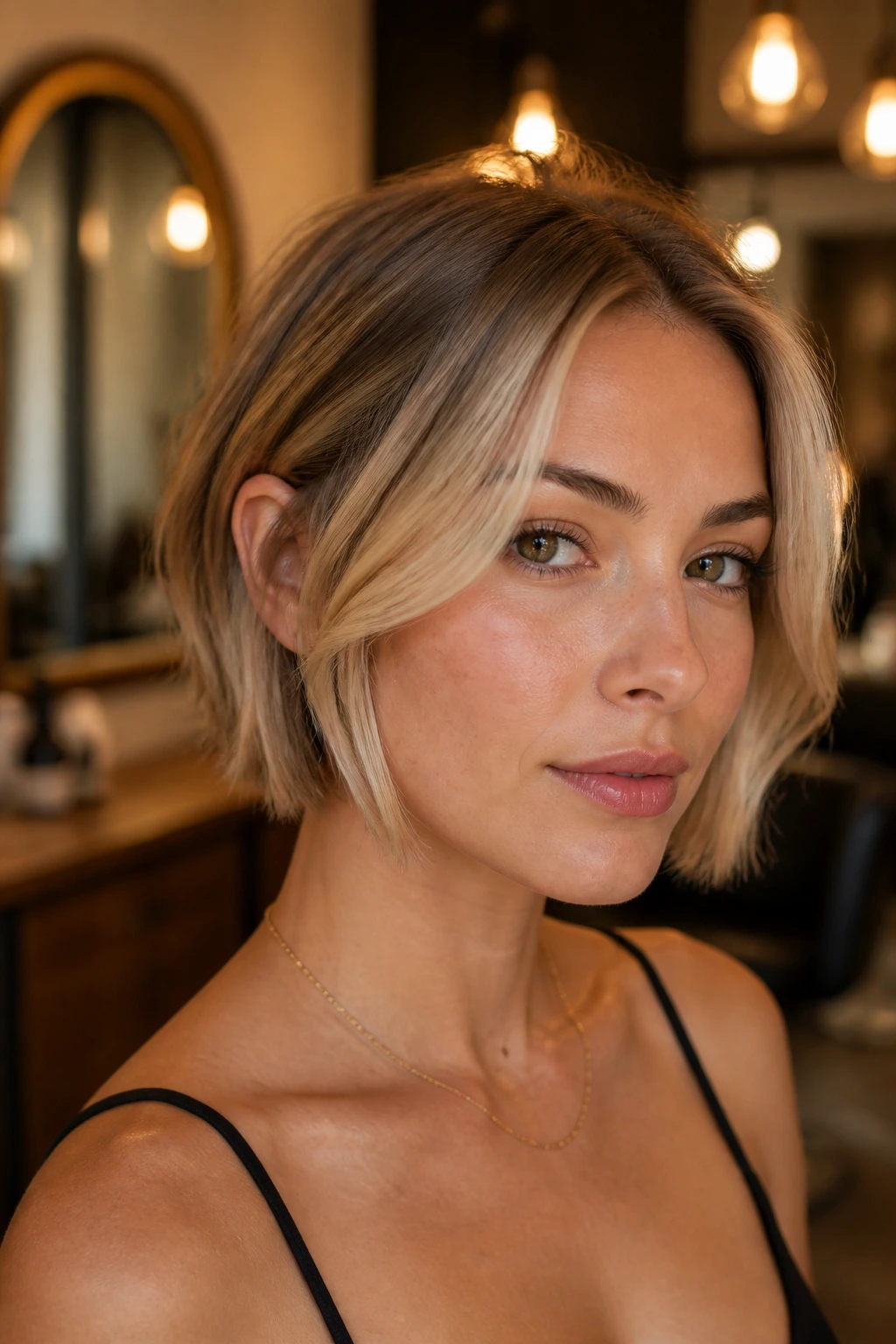
A French bob wants something soft at the front, not a neon stripe. A beige veil of brightness, placed just inside the hairline, gives the cut a quiet glow.
The trick is keeping the tone neutral enough that it doesn’t fight the naturally relaxed shape of the bob. You want the face to look lit, not overoutlined.
5. Rooted Buttercream Frame for a Choppy Blonde Bob
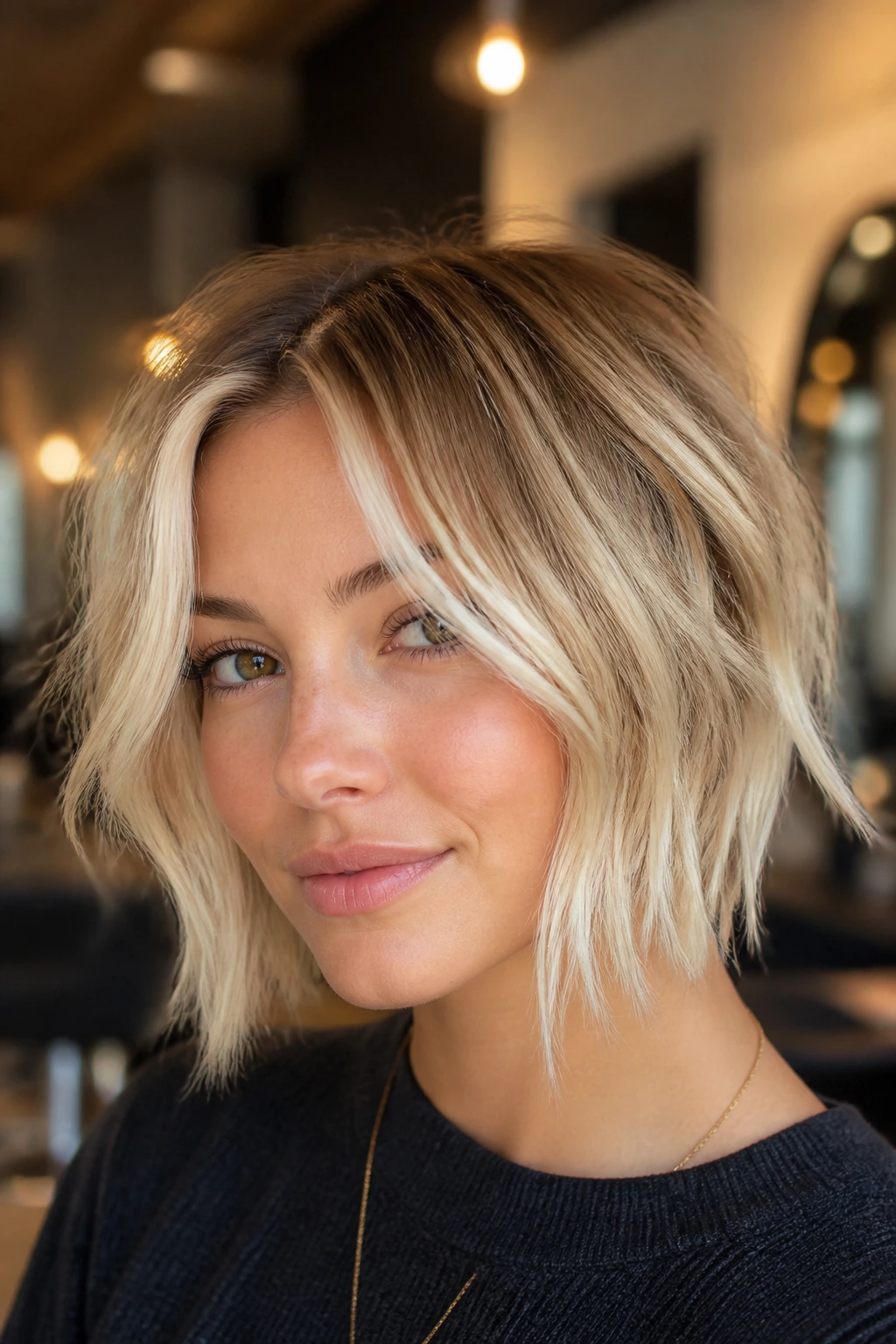
Buttercream blonde has that soft, edible warmth that flatters choppy texture. With a rooted frame, the front pieces look lighter, but the deeper base keeps the cut from getting washed out.
This is the one I recommend when someone wants brightness but hates obvious regrowth. The root shadow buys you breathing room.
6. Curtain-Front Brightening on a Short Blonde Bob
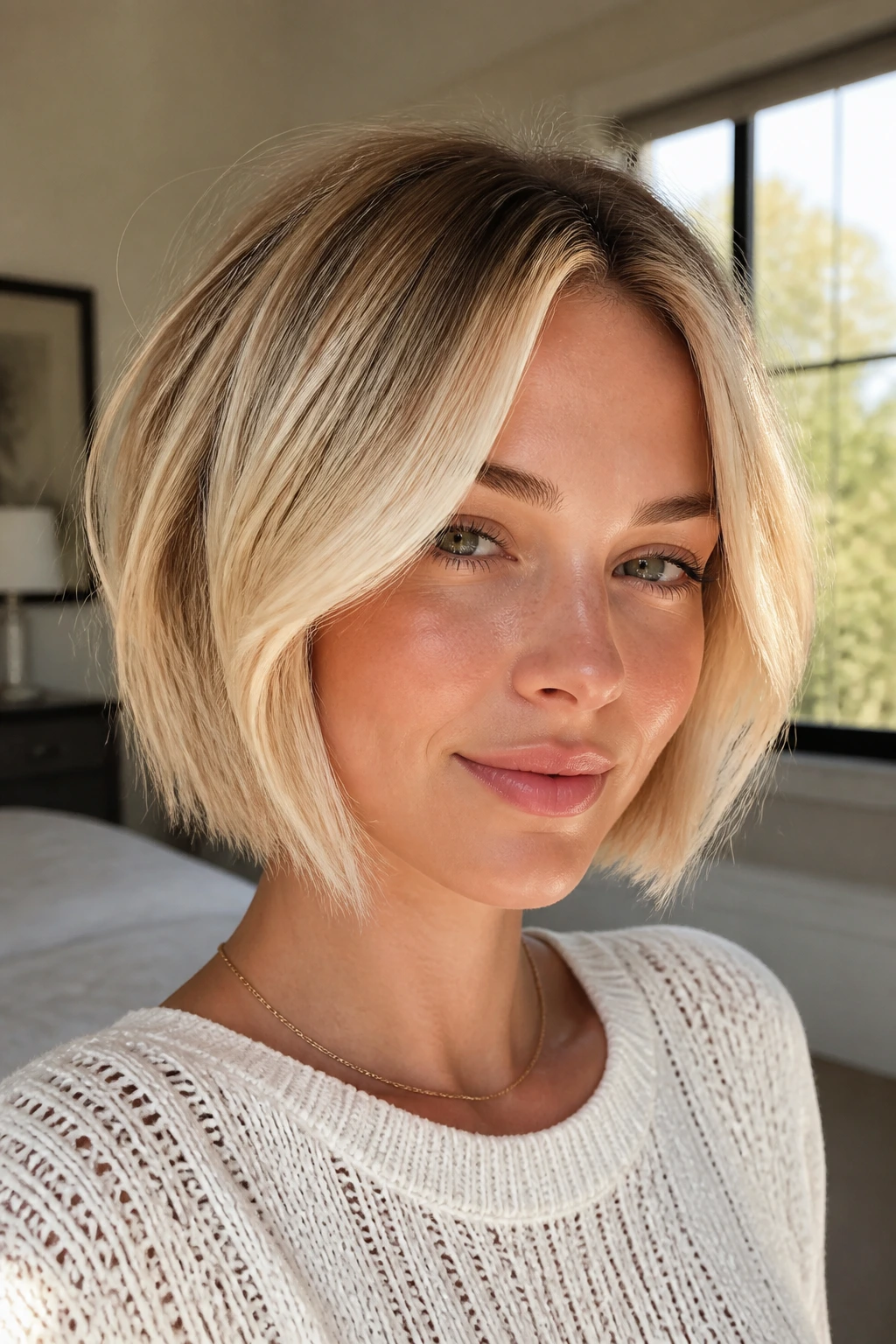
If your bob has any kind of fringe or curtain sweep in front, this placement makes a lot of sense. The highlight follows the opening of the fringe, so the light seems to spill out from the center.
It works best when the brightest point sits just below the part, then softens as it drops toward the cheek. Too high, and it turns into a little flag on the forehead.
7. Chunky 90s Money Piece on a Bob With Bend
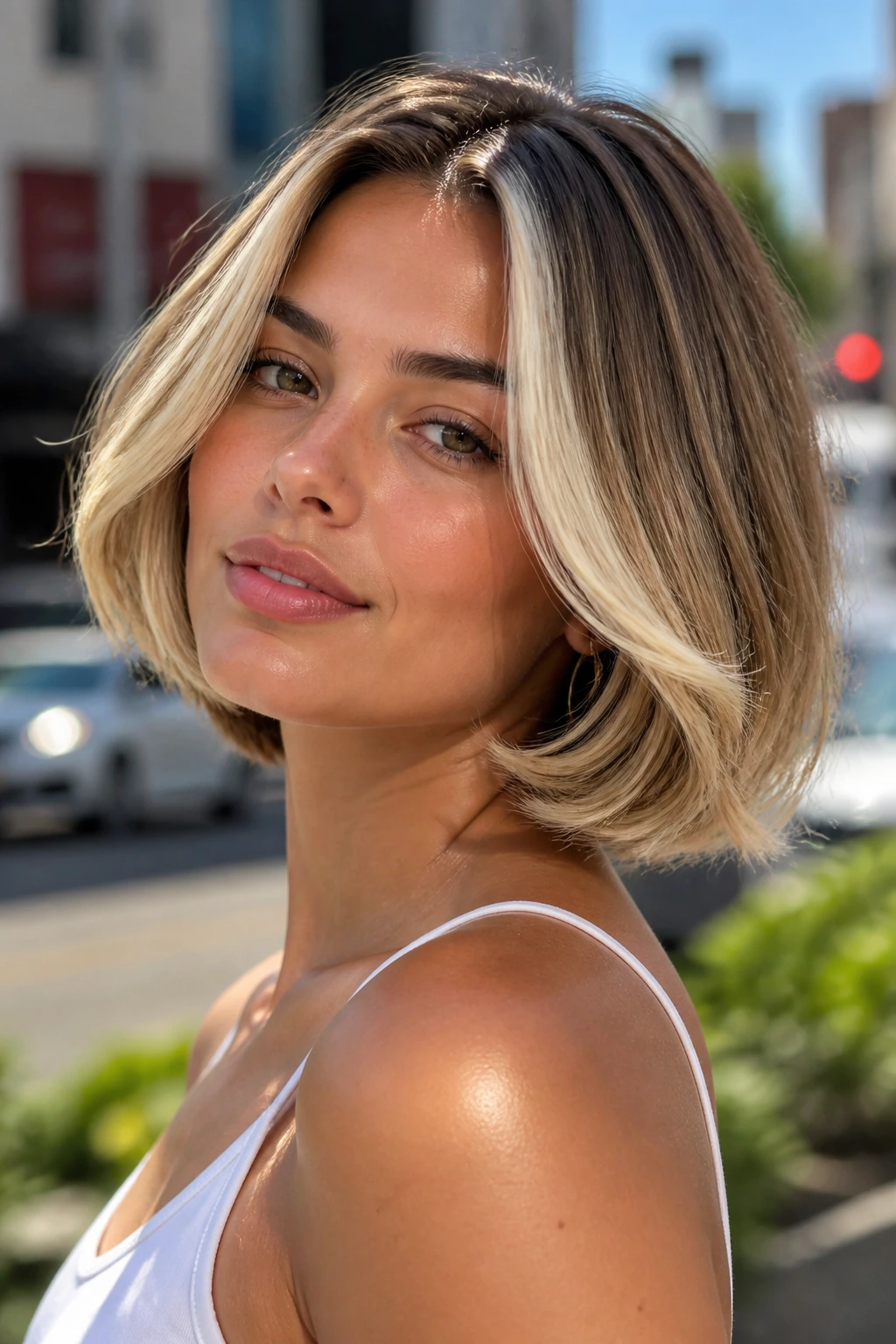
Sometimes you do want the stripe. A chunky front panel with softened edges gives a short blonde bob that nostalgic 90s hit without making the rest of the hair heavy.
The key is blur, not perfection. Keep the edge feathered, then bend the front with a flat iron so the panel moves instead of sitting there like a painted strip.
8. Pearl Glaze Face Frame on a Chin-Length Bob
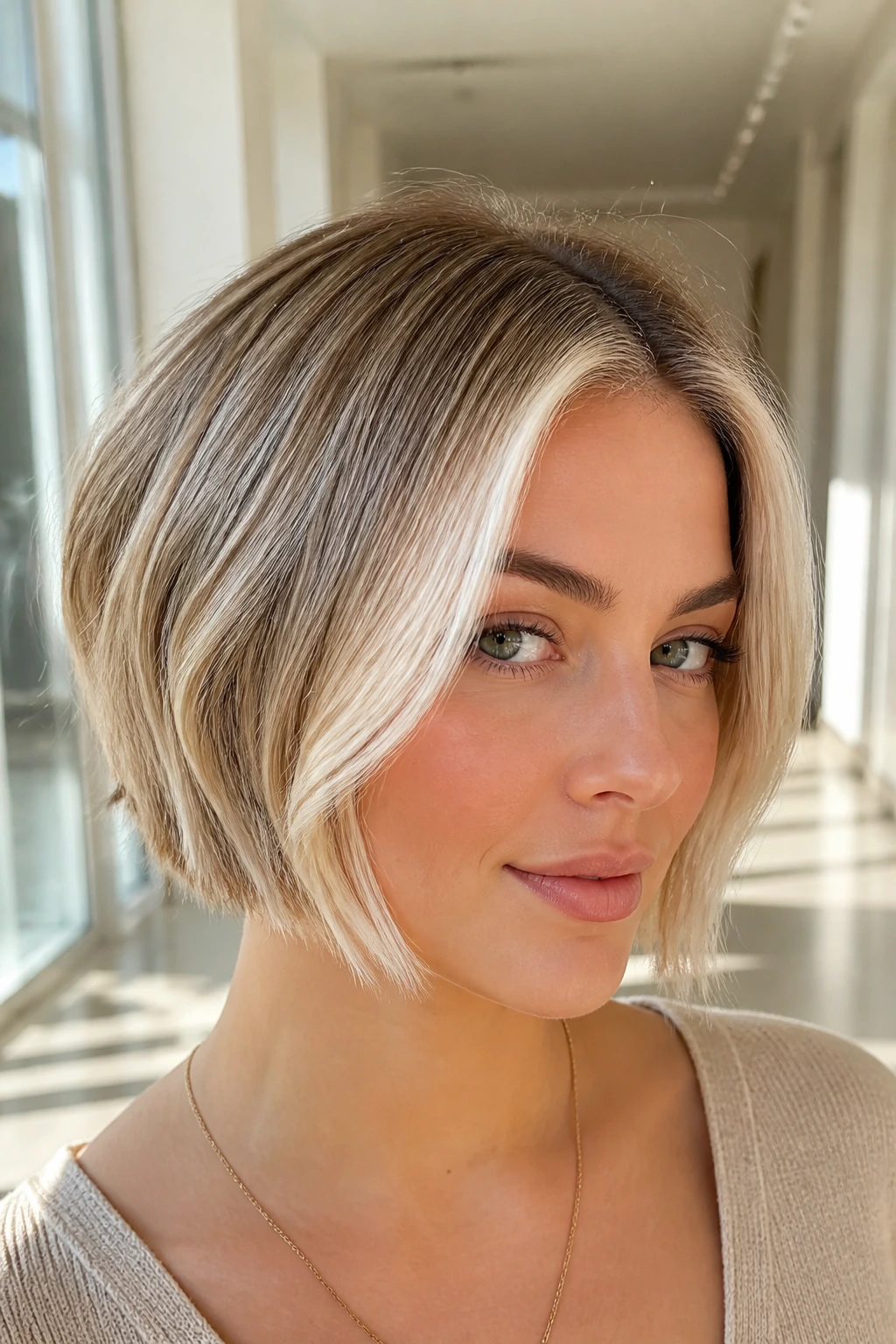
Pearl blonde is cooler than champagne and softer than silver. On a chin-length bob, that tone catches light in a cleaner way, especially if the rest of the hair is already pale.
A pearl glaze works when you want the front to look polished and reflective. It’s a smart choice if your hair lifts easily and you don’t want the money piece to turn yellow after a few washes.
9. Honey Halo Highlights on a Wavy Short Bob
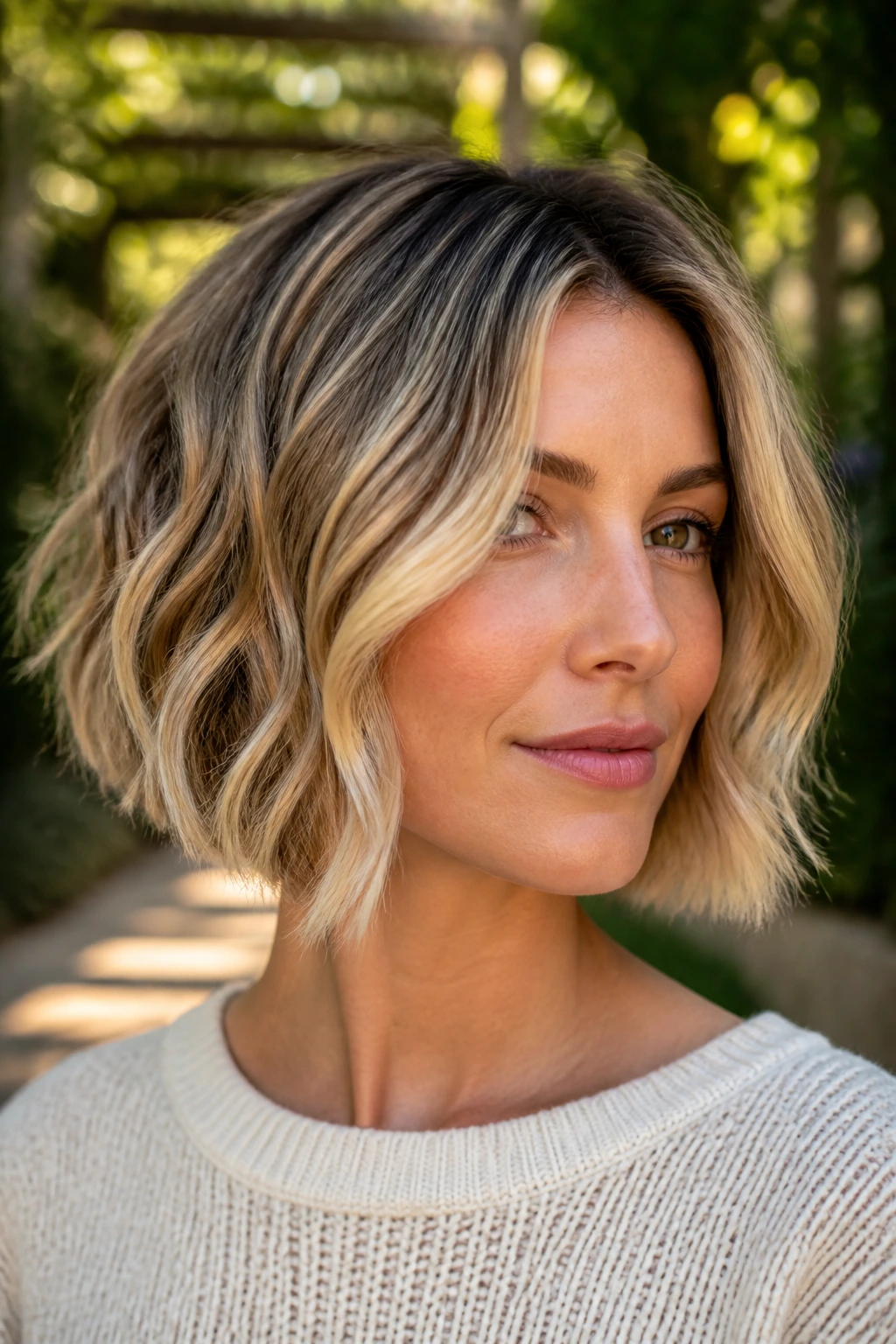
Honey blonde looks better on a short wavy bob than people expect. The waves break up the warmth so it reads as glow, not brass.
Place the lightest ribbons just around the face and let the rest of the bob stay a touch deeper. That little contrast makes the bend in the hair pop without forcing the front to do all the work.
10. Vanilla Ribbon Highlights on a Center-Part Bob
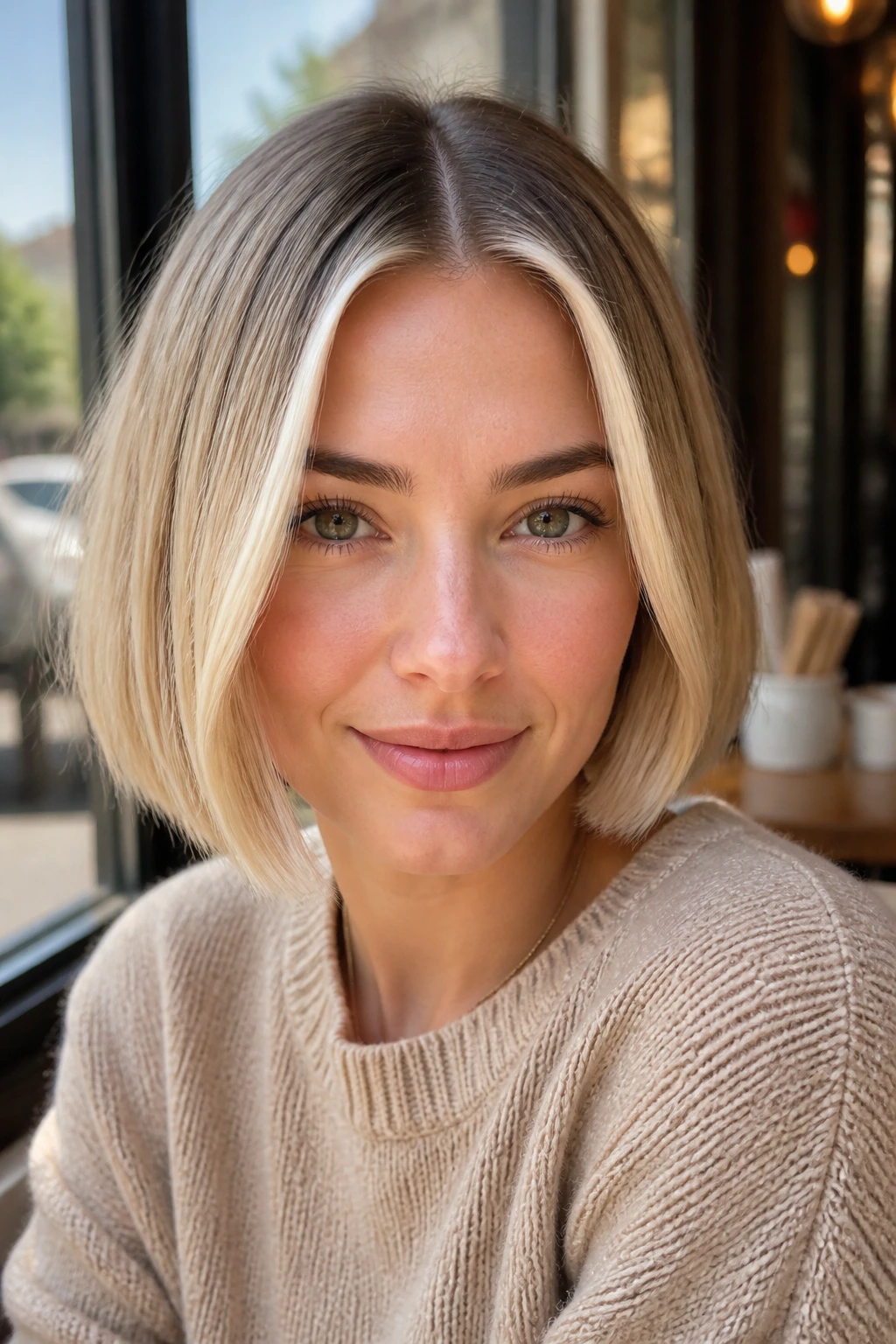
A center part wants symmetry, and vanilla blonde gives it exactly that. Two slender ribbons on either side of the part line create a neat frame that still feels soft.
This is a good move if your bob is blunt and you like a tidy finish. The color should skim the temples, not land in one thick chunk at the nose level.
11. Shadow-Root Spotlight on a Stacked Blonde Bob
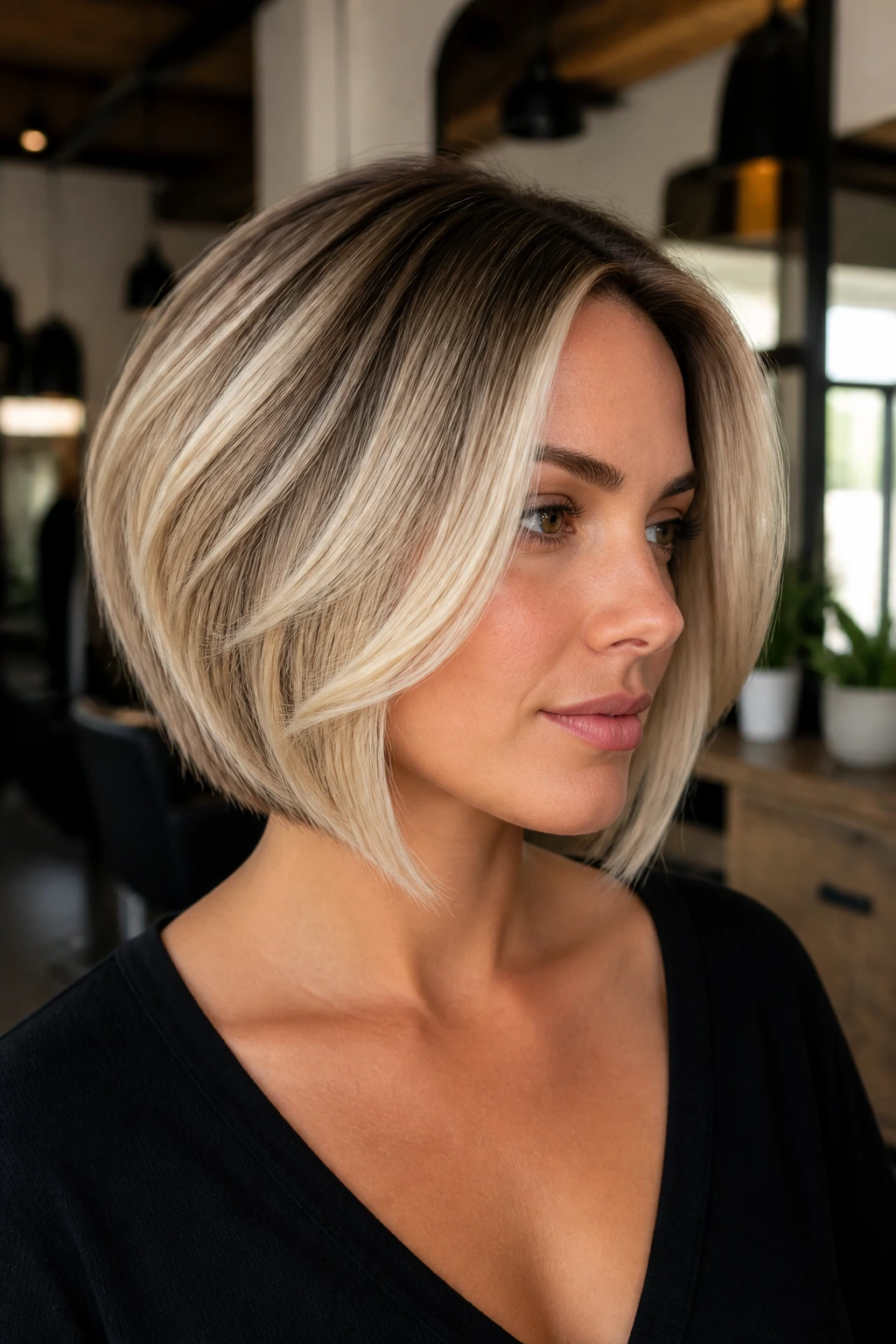
Stacked bobs can lose their shape if the front gets too bright all the way to the scalp. A soft shadow root keeps the money piece lifted without flattening the back volume.
This placement is especially useful when the bob has a rounder silhouette in the back. The darker base at the root makes the brighter front look intentional and keeps the cut from puffing out too much at the face.
12. Feathered Face Framing on a Layered Bob
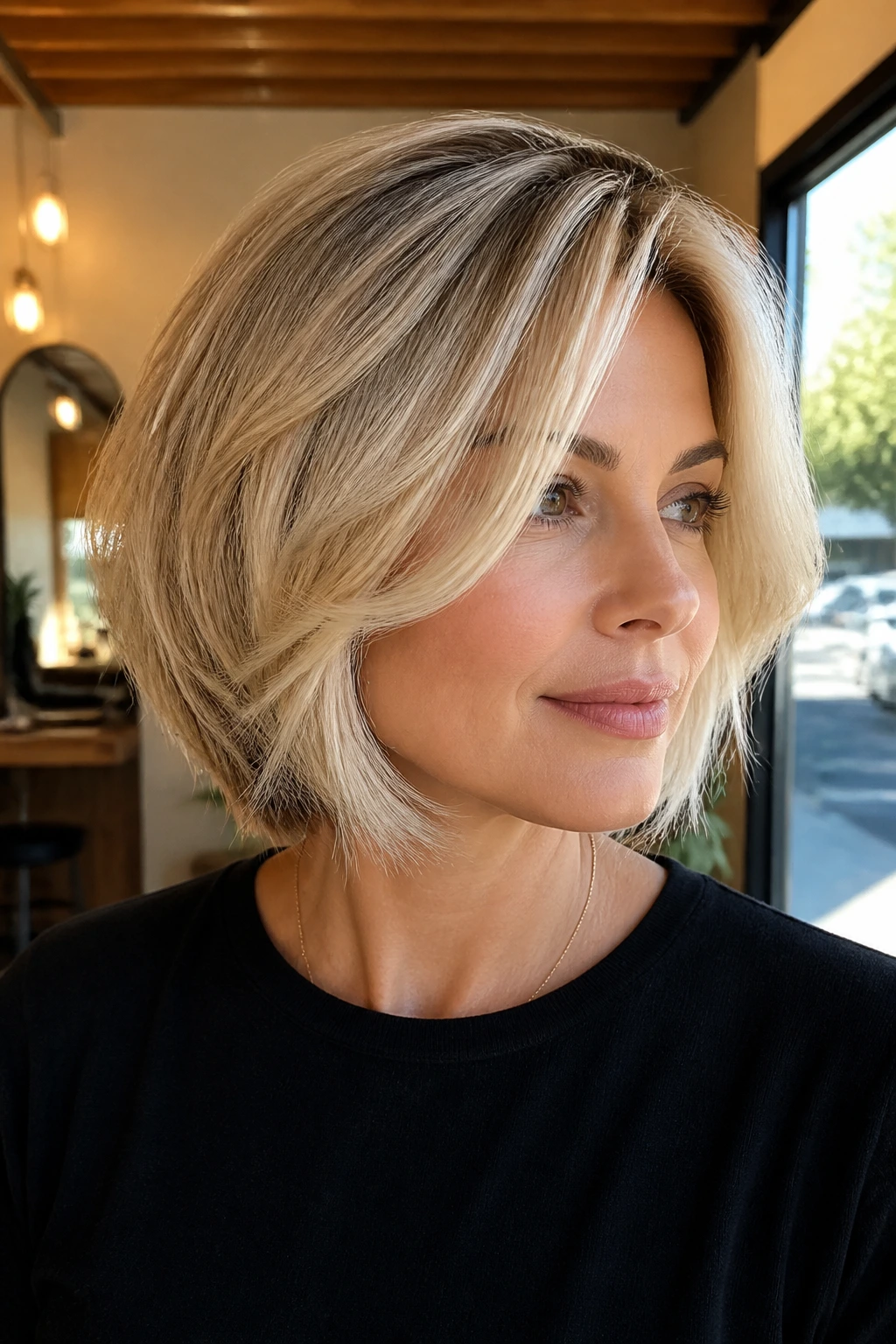
Feathered layers need feathered color. Instead of one heavy front foil, ask for a few thin slices that follow the movement of the layers and blur into the side sections.
The result is softer than a classic money piece, but it still gives the bob brightness near the eyes. It’s a good fit if your hair tends to split into pieces rather than falling as one solid sheet.
13. French Bob Bright Catch at the Temples
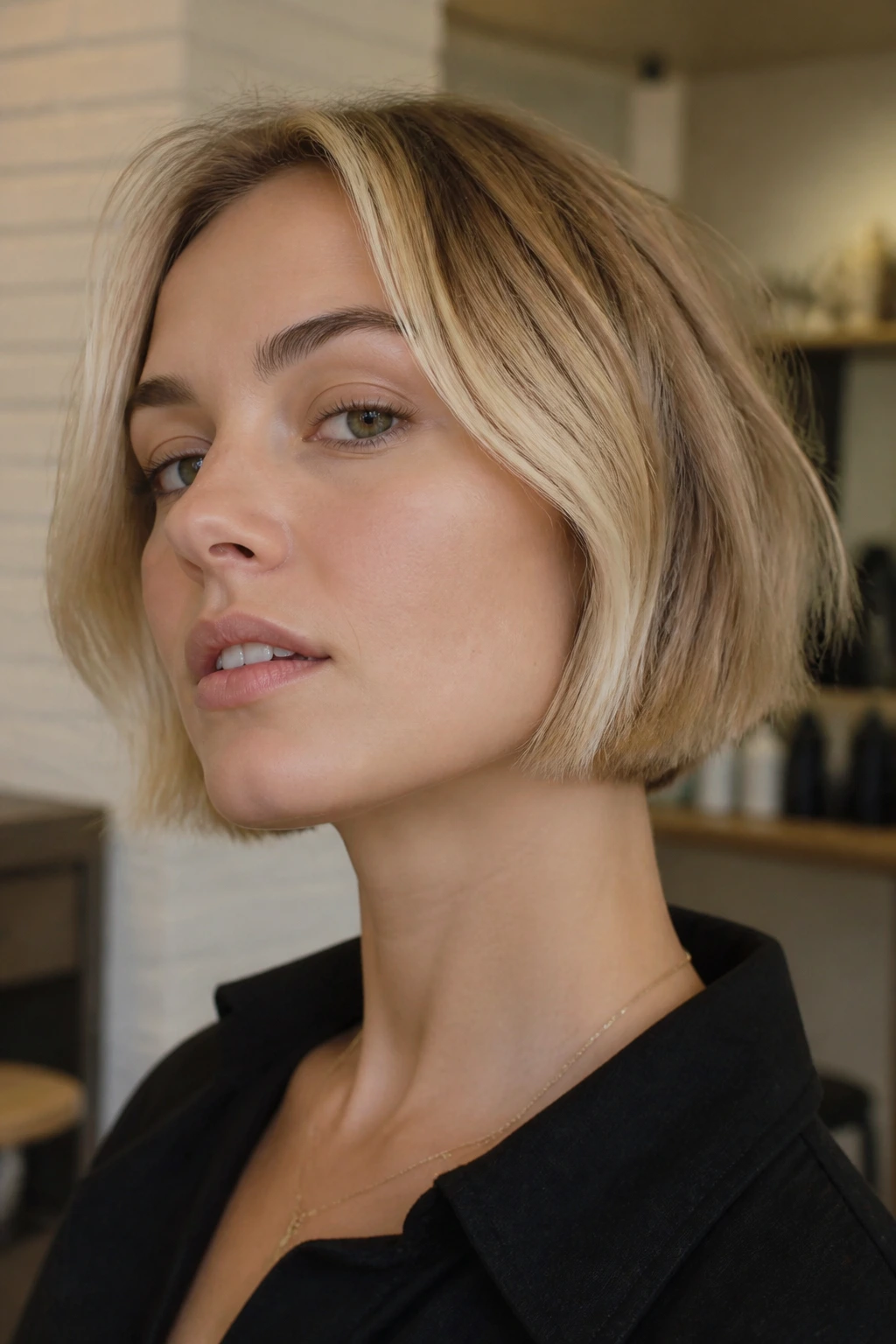
A French bob is short enough that you can’t hide a bad highlight. A bright catch at the temples gives it just enough edge to feel modern without looking overworked.
I like this version when the cut is air-dried or lightly bent under. The color should show as a quick flash when the hair swings, not as a hard line when it sits still.
14. Angled Bob Money Piece With a Clean Diagonal
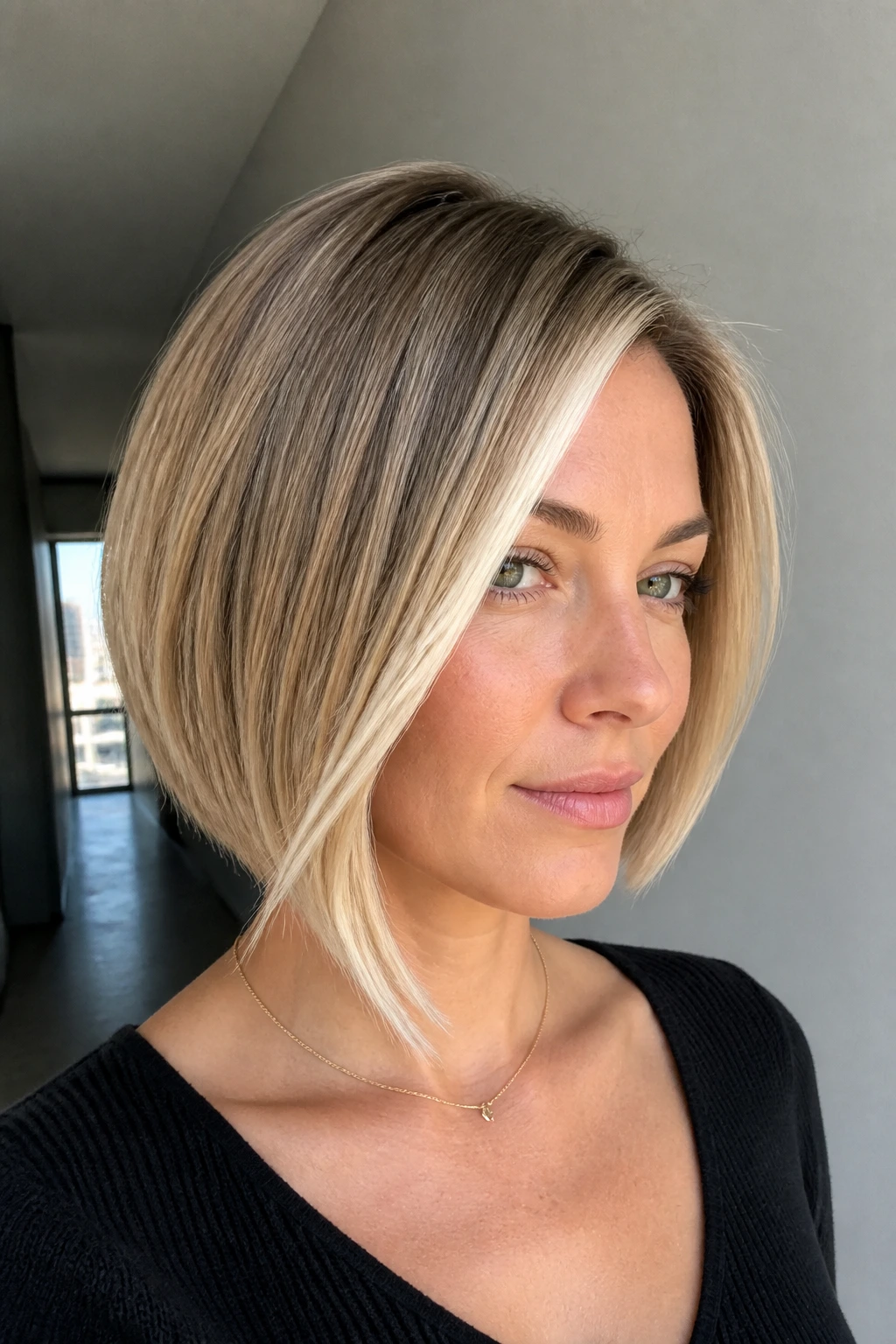
An angled bob already has motion built into it, so the money piece should follow that slope. A diagonal highlight that starts high near the part and drops lower toward the jaw makes the cut look faster and leaner.
This is one of those placements that works best when it’s almost invisible in the back and very precise in the front. Keep the contrast clean, not chunky.
15. Side-Swept Bright Burst on a Tucked Bob
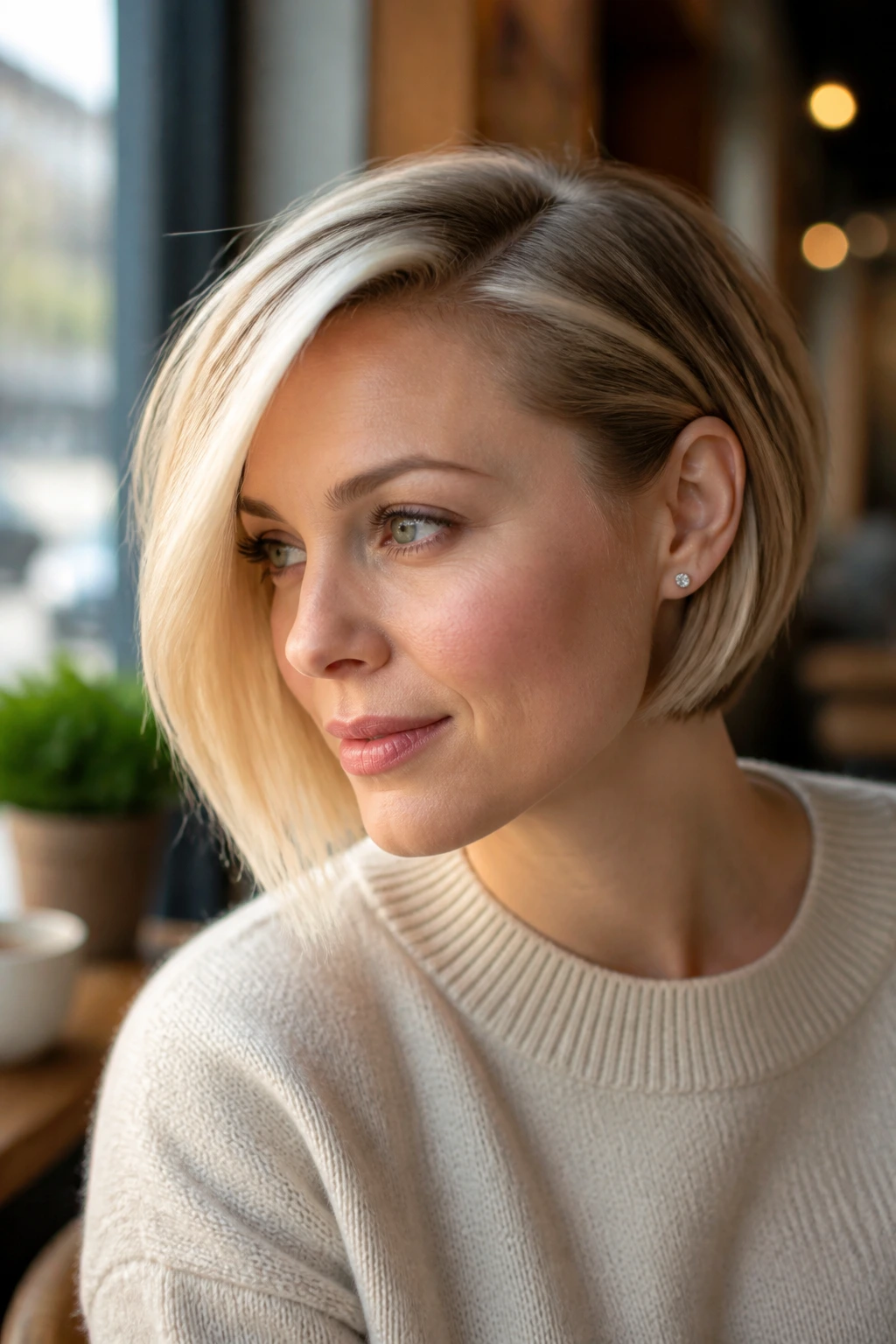
If you tuck one side behind the ear a lot, this is the move. Put the brightest section on the side that stays visible so the hair pops the second it gets tucked.
The tucked side should still have a whisper of light, but the main burst belongs on the exposed side. That asymmetry can make a short blonde bob look longer and more alive.
16. Micro Money Piece for Fine Blonde Bob Hair
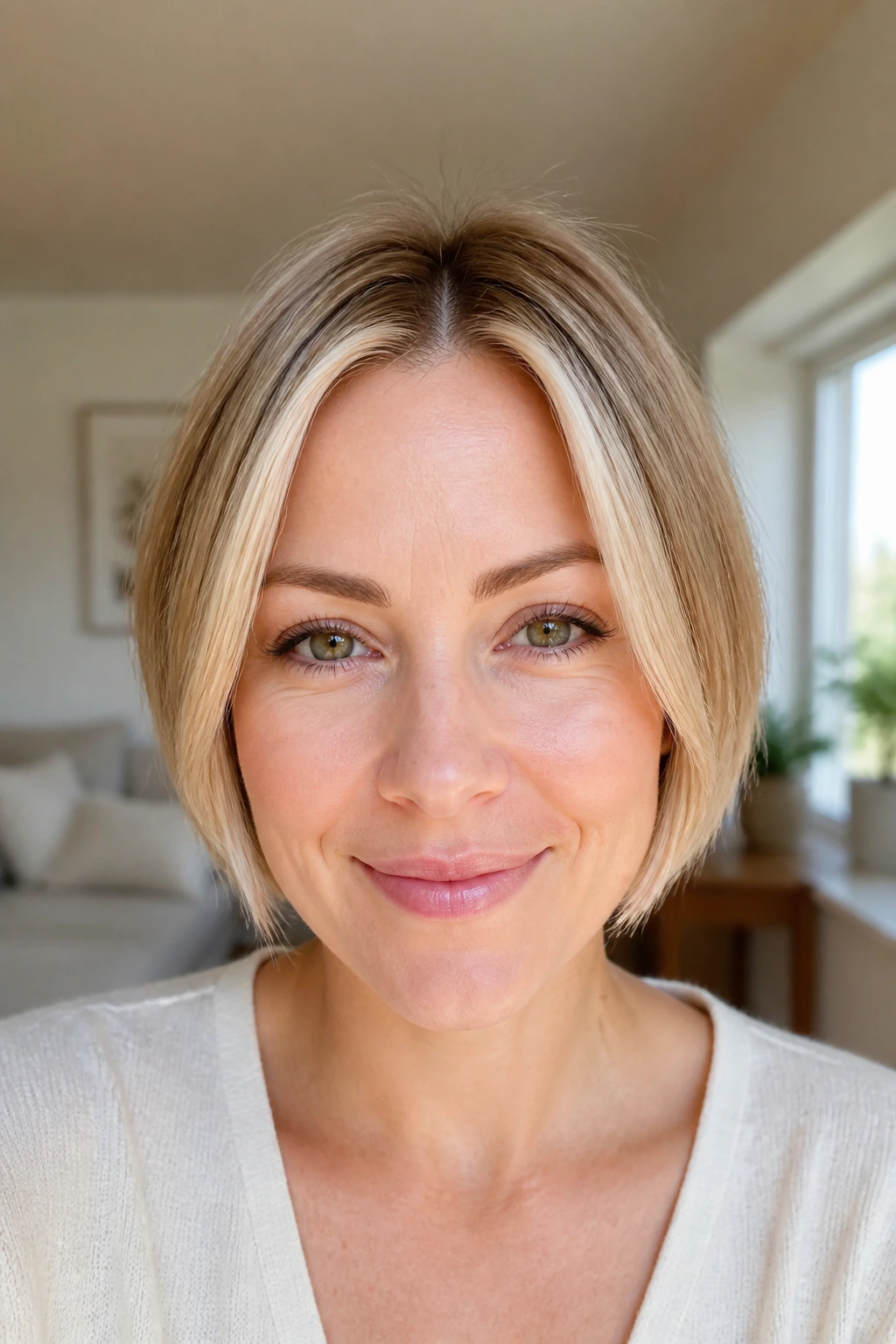
Fine hair can get swallowed by a heavy highlight, which is why micro money pieces are so useful. Tiny foils around the front hairline give brightness without showing every section line.
This approach is one of the cleanest ways to brighten a short bob without making the front look sparse. The effect is subtle in a mirror and stronger in daylight, which is exactly what many people want.
17. High-Contrast Frame for a Bold Short Blonde Bob
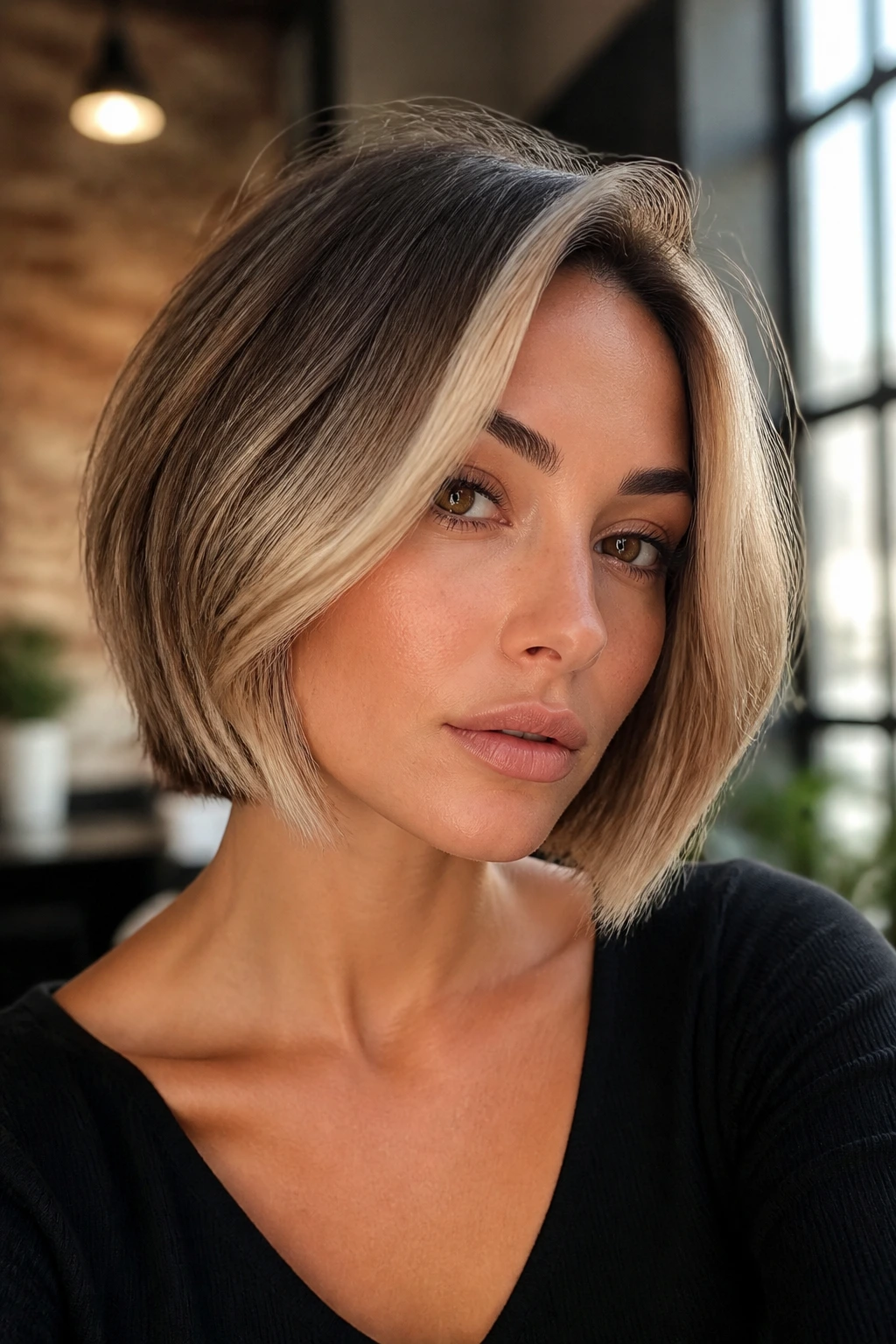
Sometimes the front should be obvious. A high-contrast frame puts a brighter blonde right beside a deeper root, and on a short bob that contrast reads fast.
Keep the edges soft so it doesn’t become a stripe. The drama comes from the difference in tone, not from a thick slab of hair that looks painted on.
18. Melted Blonde at the Temples on a Polished Bob
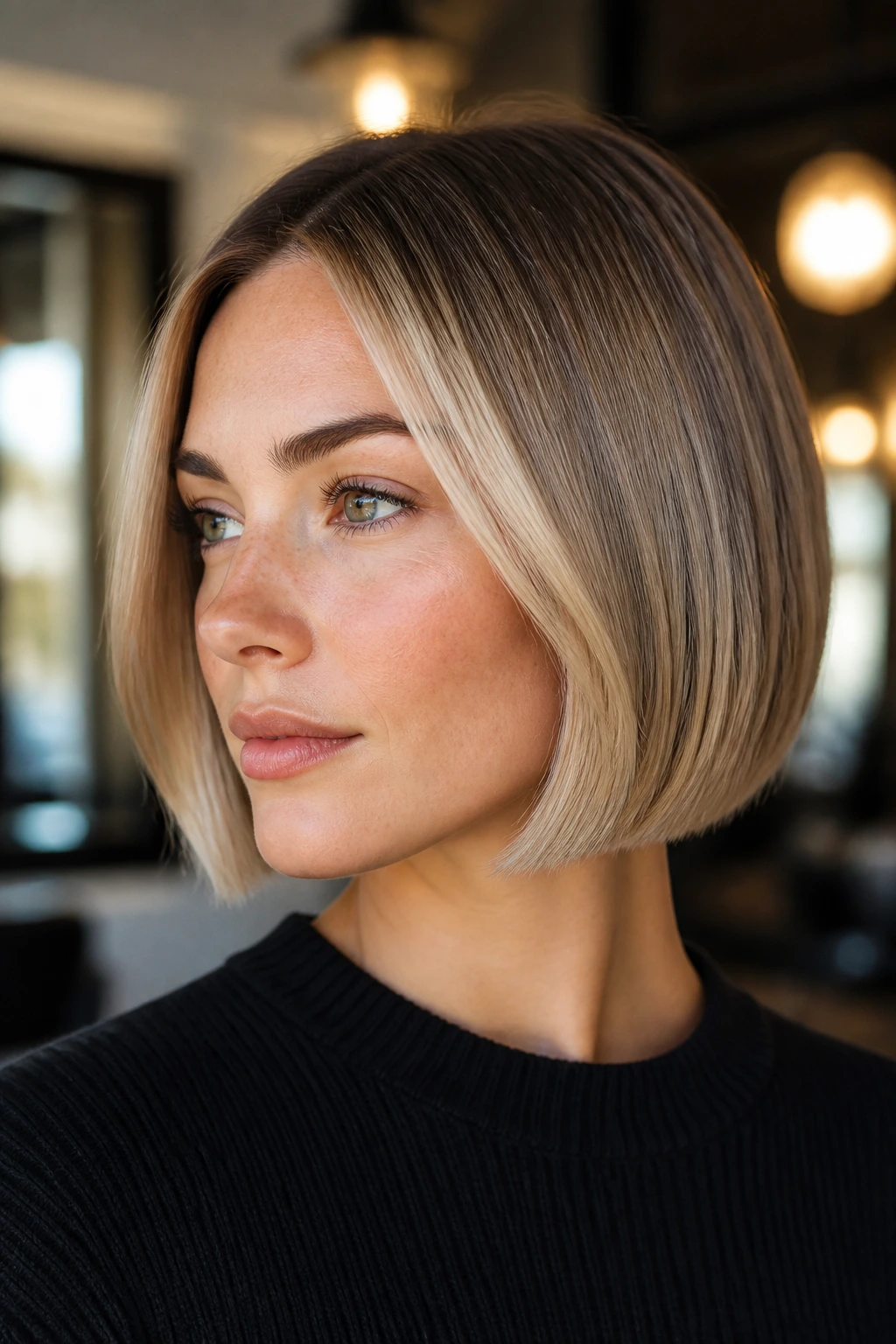
This is for the person who likes a smooth finish. The color melts from a slightly deeper root into a pale temple highlight, so the front looks glossy instead of striped.
It’s especially nice on straight bobs. The light catches the bend at the ends and the temples at the same time, which gives the style a tidy, salon-clean feel.
19. Cream Soda Face Frame on a Short Wavy Bob
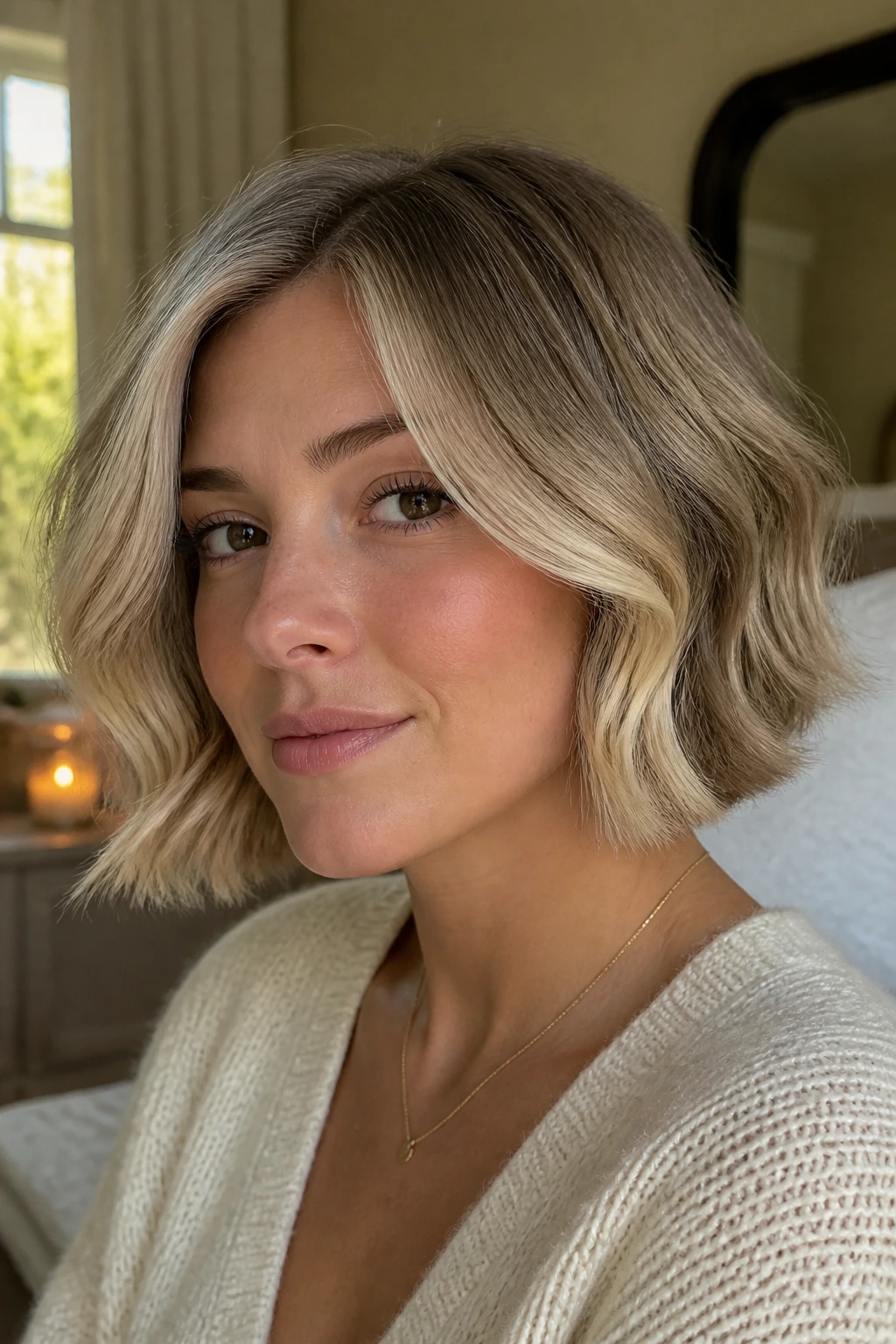
Cream soda blonde sits in that sweet beige zone that flatters warm and neutral skin without going too golden. On a wavy bob, it adds a soft glow around the face and stays easy on the eye.
The brighter pieces should be loose, not stacked too close together. Too much density at the front can make the wave pattern disappear, and that defeats the point.
20. Beachy Brightener for a Tousled Blonde Bob
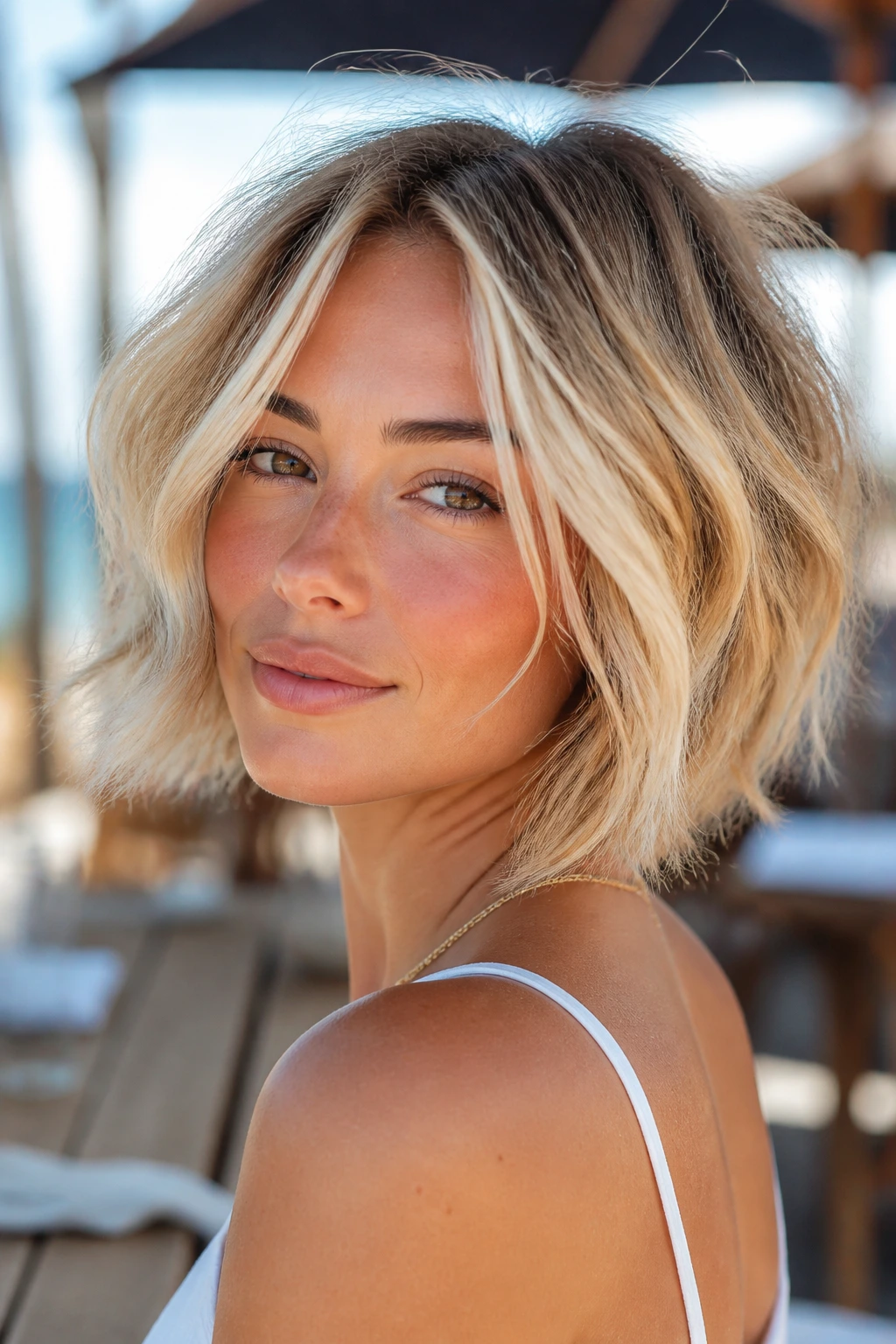
A tousled bob needs color that can get messy without looking accidental. The beachy brightener uses scattered front foils and a soft toner so the frame stays airy.
It works best when you’re not trying to make the highlight the whole story. The point is a sun-faded feel around the face, not a perfect rectangle of light.
21. Curly Bob Halo Frame With Bright Front Pieces
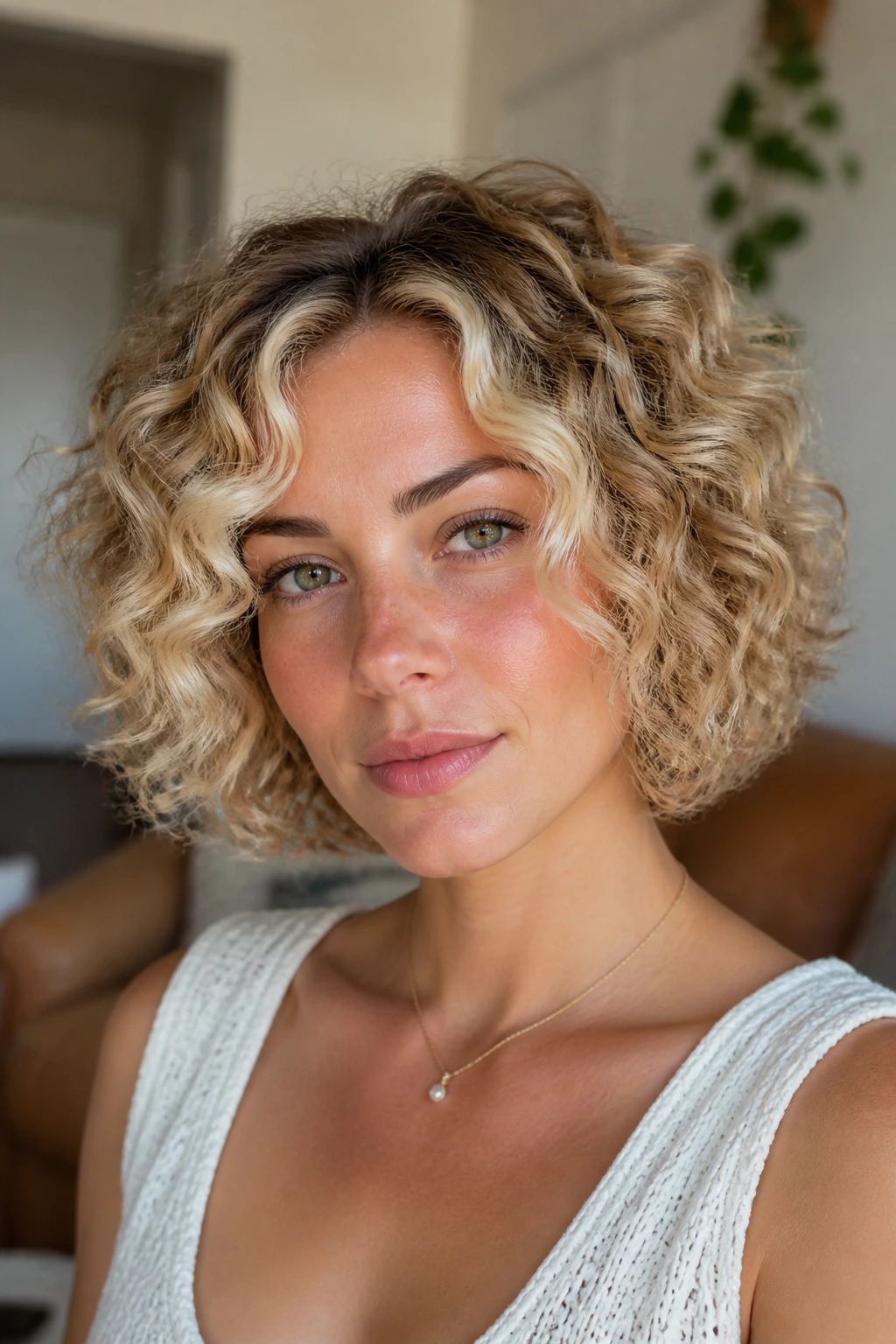
Curly short bobs need the bright pieces placed where the curls actually spring, not where they would sit on straight hair. A halo frame around the front curls gives shape and makes the silhouette read clearly.
Avoid heavy, solid front panels. Curly hair expands, and the color needs room to move or it starts looking patchy.
22. Stack-and-Light Bob With Lift Near the Face
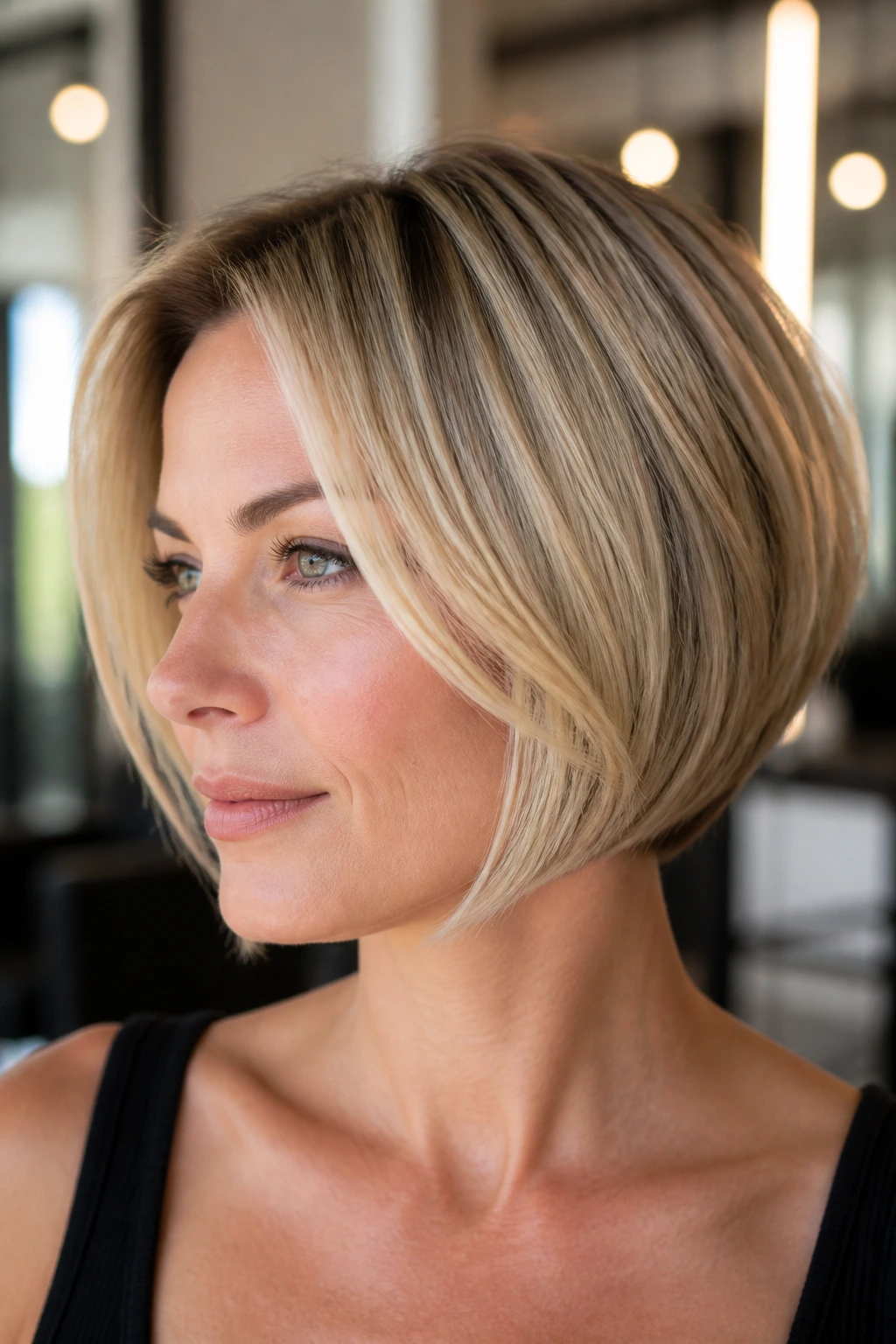
Stacked bobs already have a lifted back, so the front highlight should echo that upward energy. A light front panel near the cheekbone keeps the whole cut from feeling back-heavy.
I like this one when the bob is blunt through the ends but slightly rounded in profile. The brightness near the face balances the volume in the back and keeps the shape from reading too severe.
23. Bubble Bob Money Piece With Soft Edges
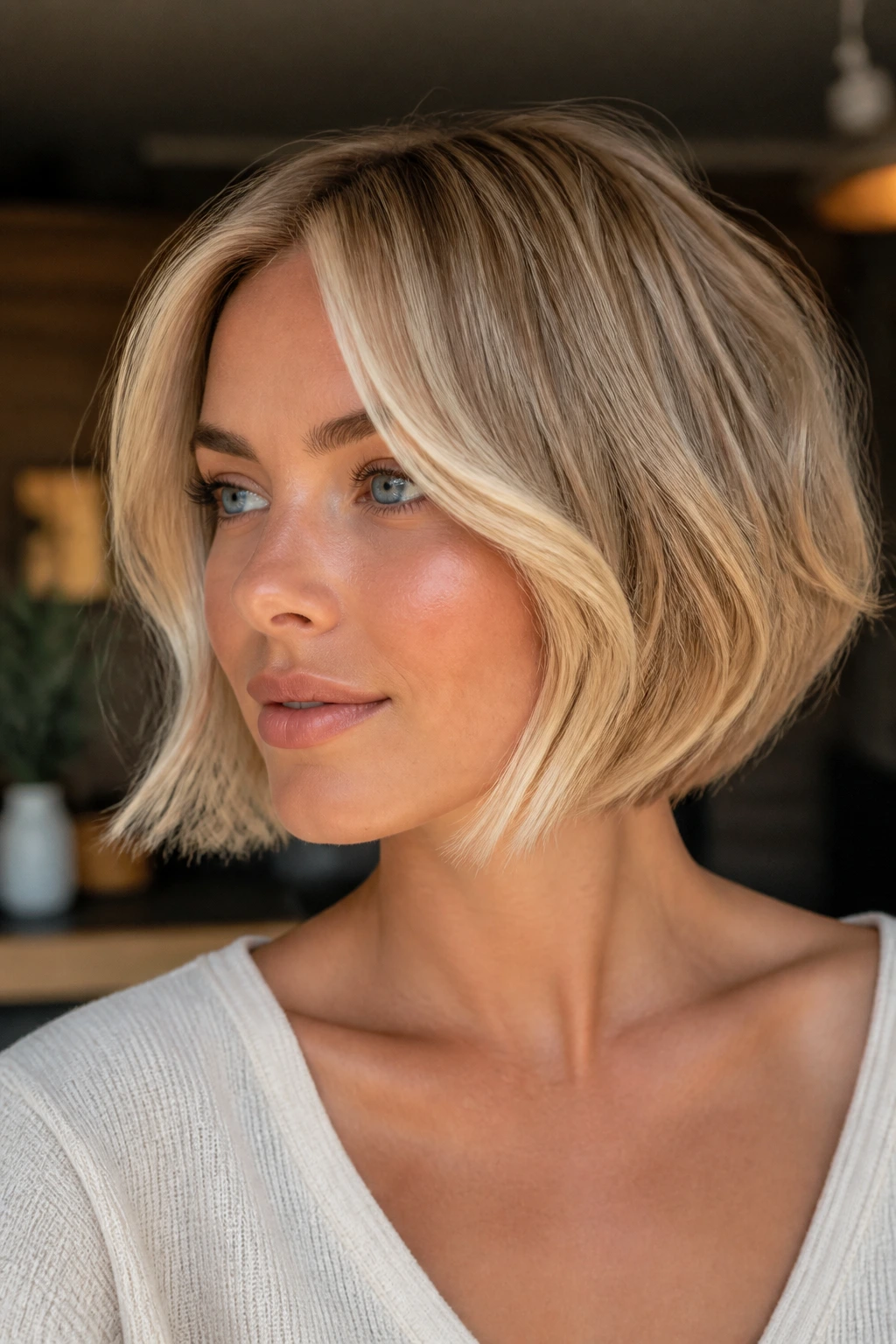
A bubble bob has that rounded, plush outline, and the front color should follow the same mood. Soft edges on the money piece help the cut feel smooth instead of chopped.
Choose a creamy blonde rather than a harsh platinum if you want the shape to stay soft. The highlight should look like it’s sitting on top of the bubble, not slicing through it.
24. Mushroom Blonde Frame for a Cooler Short Bob
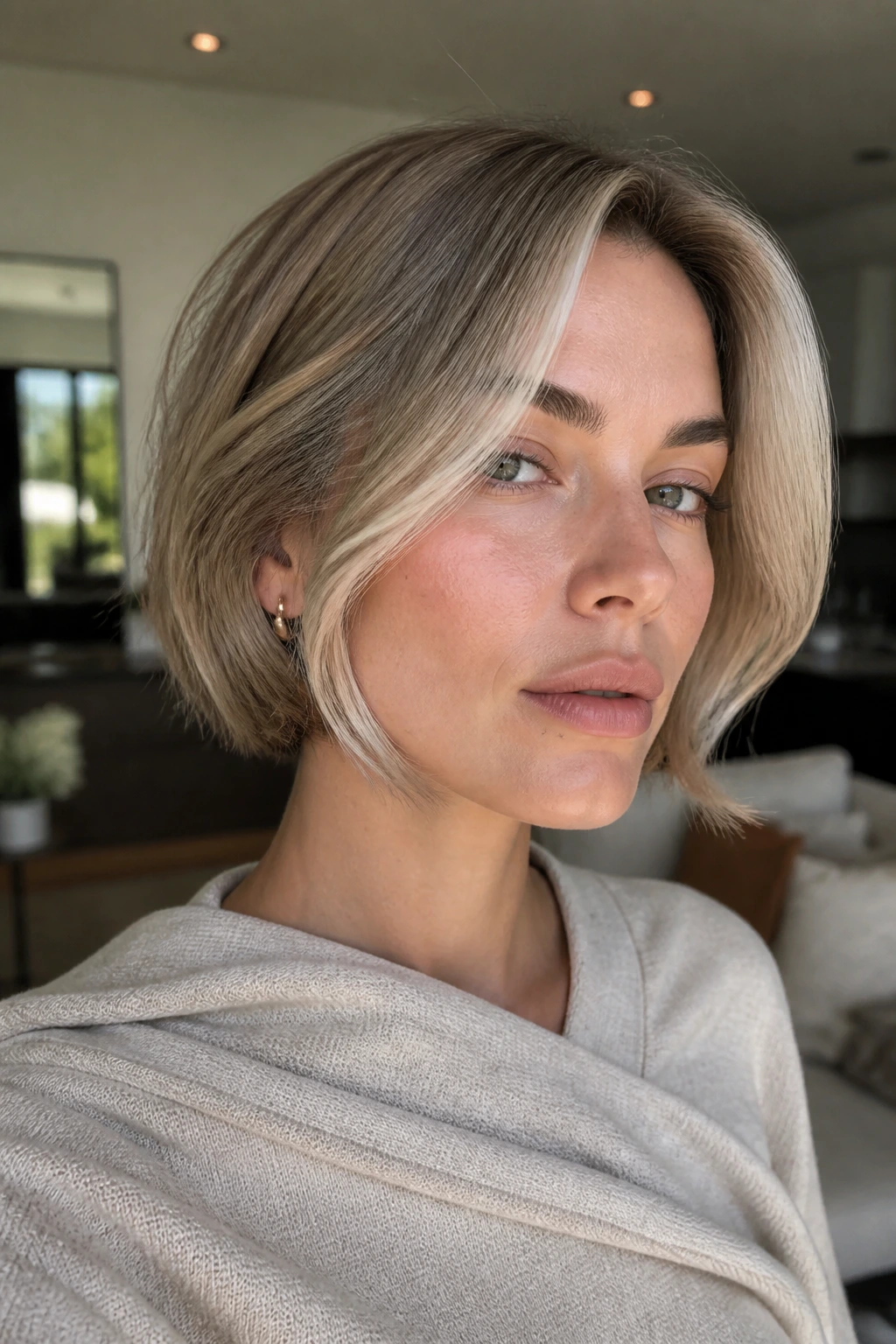
Mushroom blonde sits in the ash-beige family, and it can be gorgeous on a cool-toned bob. The front frame looks quieter, more muted, and a little more editorial.
This is not the choice if you want a sunny blonde. It is the choice if you want a short bob that feels expensive and slightly understated, with a cooler edge near the face.
25. Silver-Ice Front Streaks on a Crisp Blonde Bob
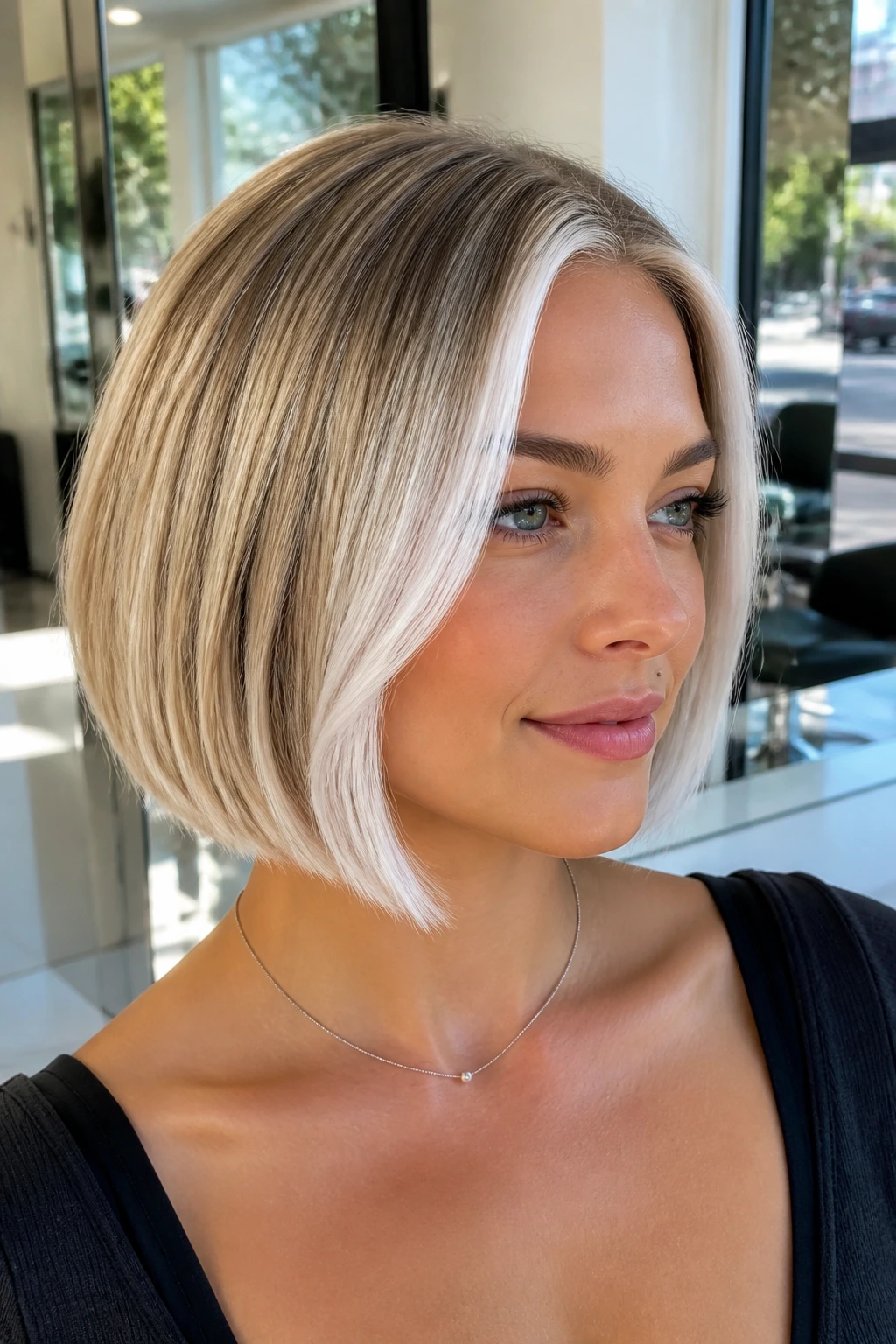
Silver-ice front streaks are bold, so the cut needs to be clean. On a crisp bob, they look almost metallic, which can be stunning when the rest of the blonde is pale and controlled.
The upkeep is real here. Cooler tones fade fast if you overuse heat or skip glosses, so this one rewards a little maintenance.
26. Warm Sand Money Piece on a Sunlit Bob
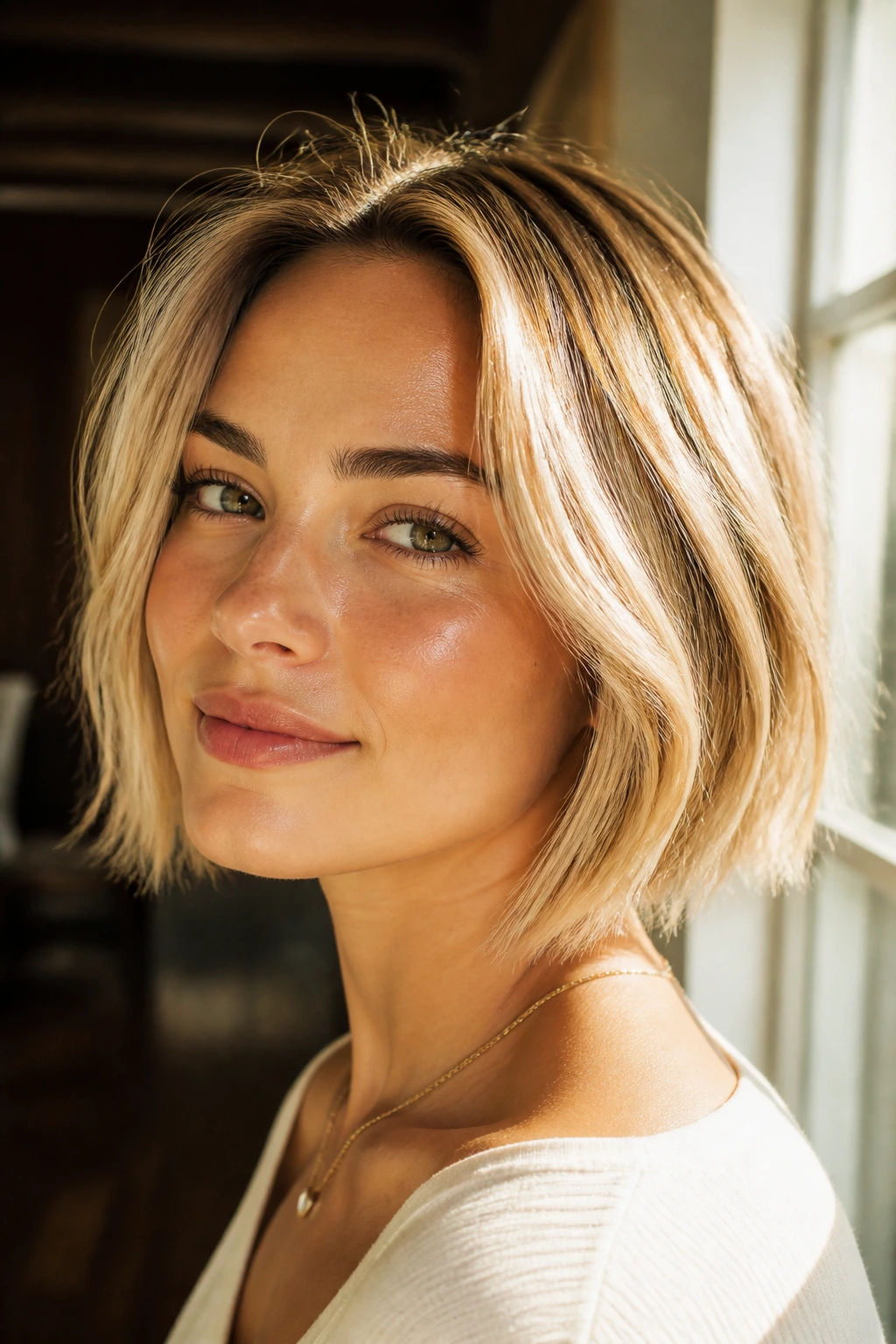
Warm sand blonde is softer than honey and a touch dustier than gold. On a short blonde bob, it gives a gentle face frame that feels calm rather than flashy.
I like it for people who wear gold jewelry or warmer makeup. The highlight should sit close to the hairline and melt into the sides so the warmth doesn’t bunch up in one spot.
27. Peachy Blonde Flicks for a Soft Front Frame
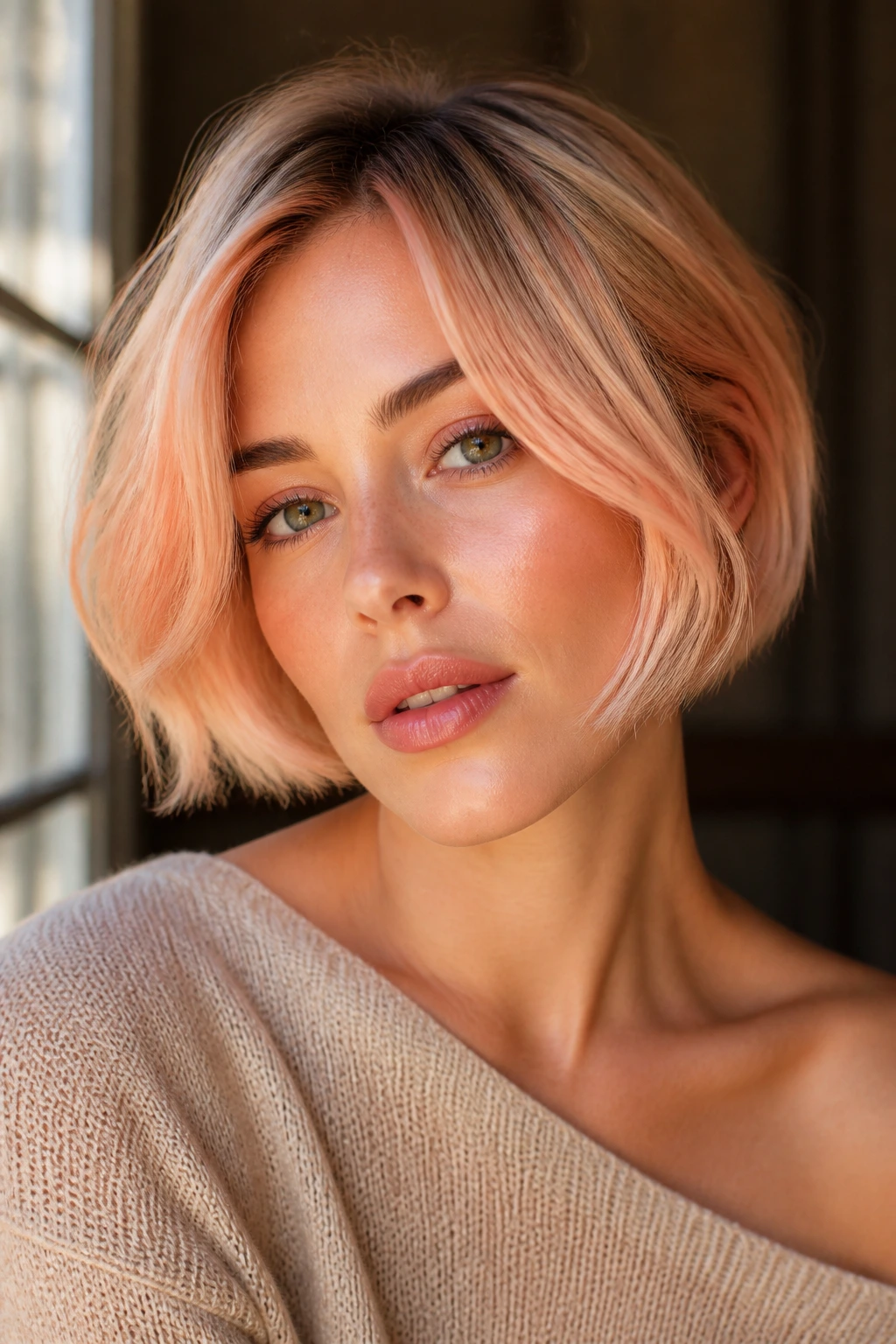
A touch of peach in the toner can make a bob feel fresh without shouting. Peachy blonde flicks are especially pretty when the cut is lightly textured and the front pieces bend away from the face.
This one works because the color is unusual but still wearable. It gives the front a warm blush that plays nicely with soft pink makeup and neutral clothes.
28. Split-Panel Money Piece on a Center-Part Bob
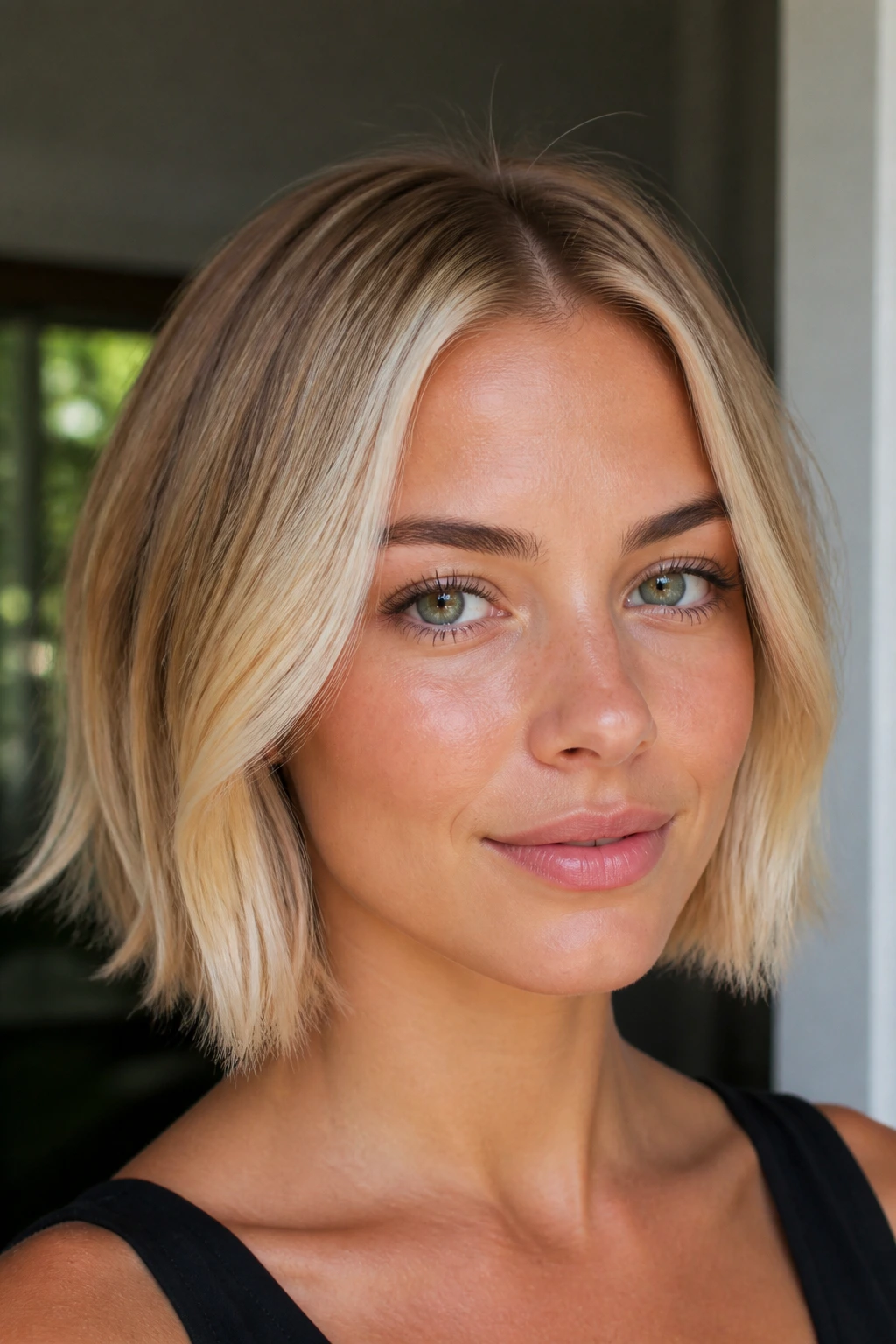
A center part doesn’t have to mean identical foils on both sides. A split-panel frame lets you place a slightly wider bright section on one side while keeping the opposite side slim and balanced.
The trick is to keep the visual weight even, even if the sections aren’t identical. That slight offset keeps the bob from feeling too rigid.
29. Hairline Babylights on a Minimal Blonde Bob
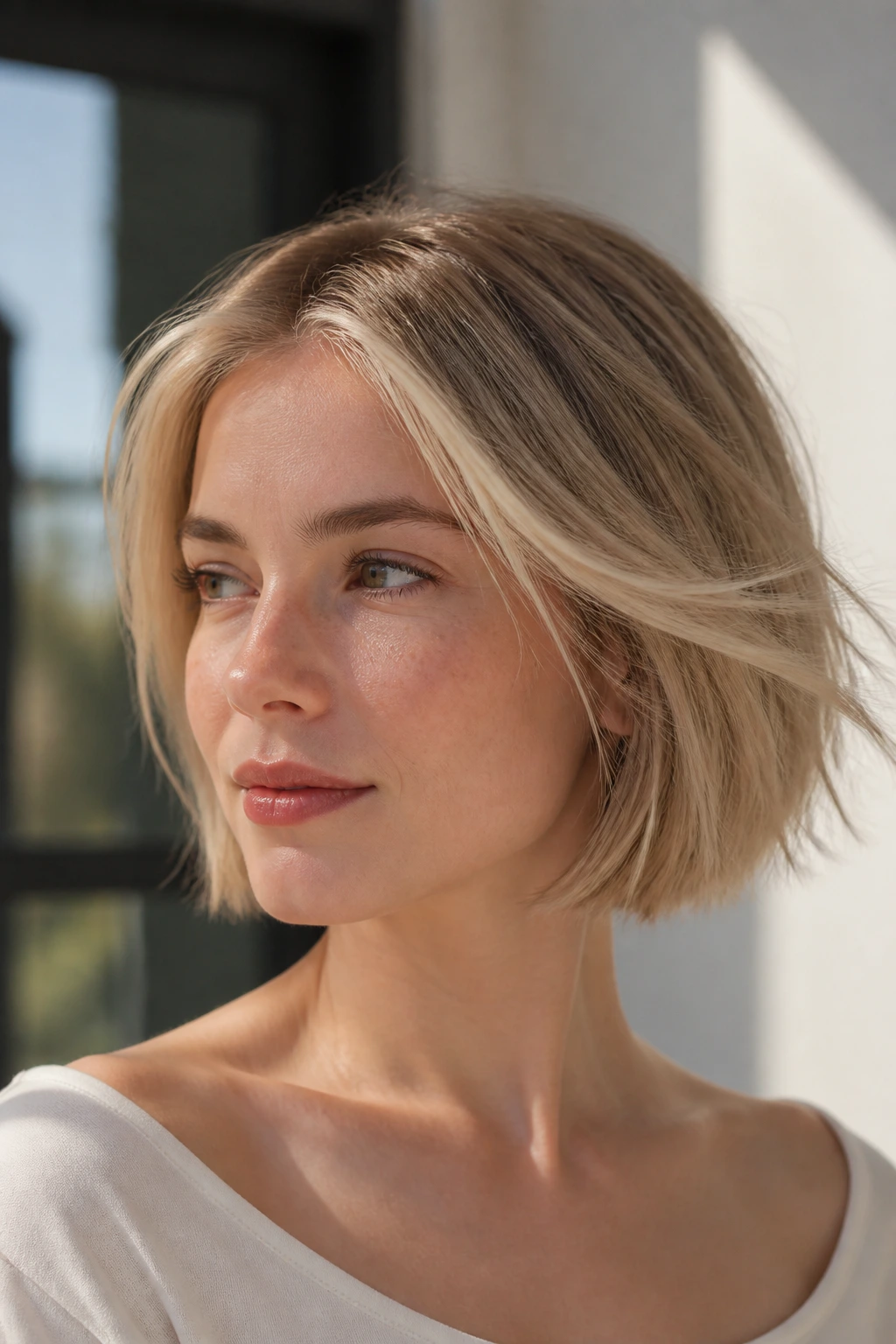
If you hate obvious highlights, babylights at the hairline are the safest bet. They read as a soft glow instead of a highlight line, which is ideal on a very short bob.
This is one of those looks that shows better when the hair moves. In stillness it seems simple; in daylight it quietly brightens the whole face.
30. Razor-Cut Bob With Thin Blonde Threads
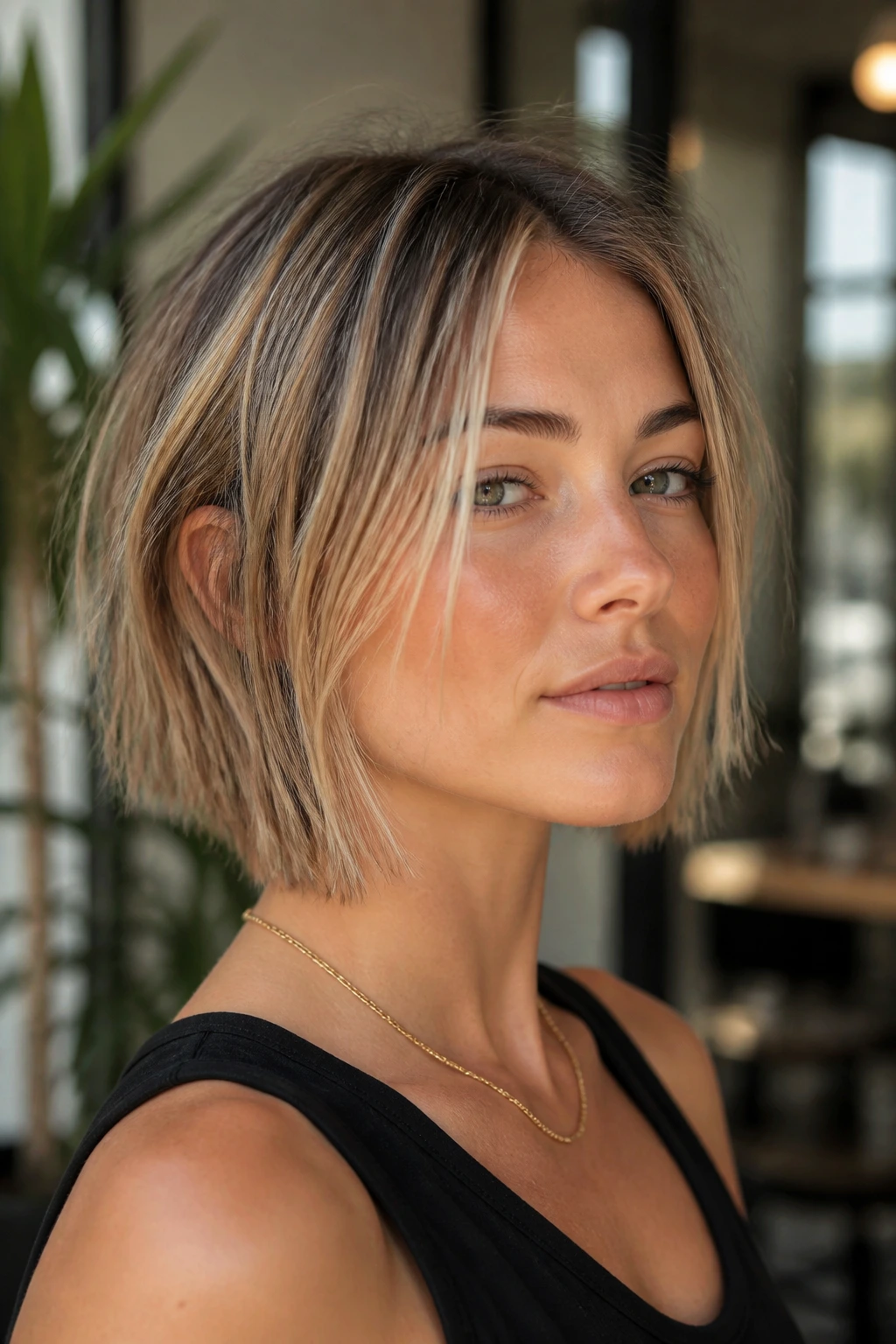
Razor-cut edges love thin color threads. The slightly undone texture of the cut pairs well with narrow blonde ribbons that move through the front without any hard block.
This one has an edge to it. It works best when the styling is loose and a little piecey, because the color follows the same restless line as the cut.
31. Inverted Bob Spotlight With Face-Lifting Foils
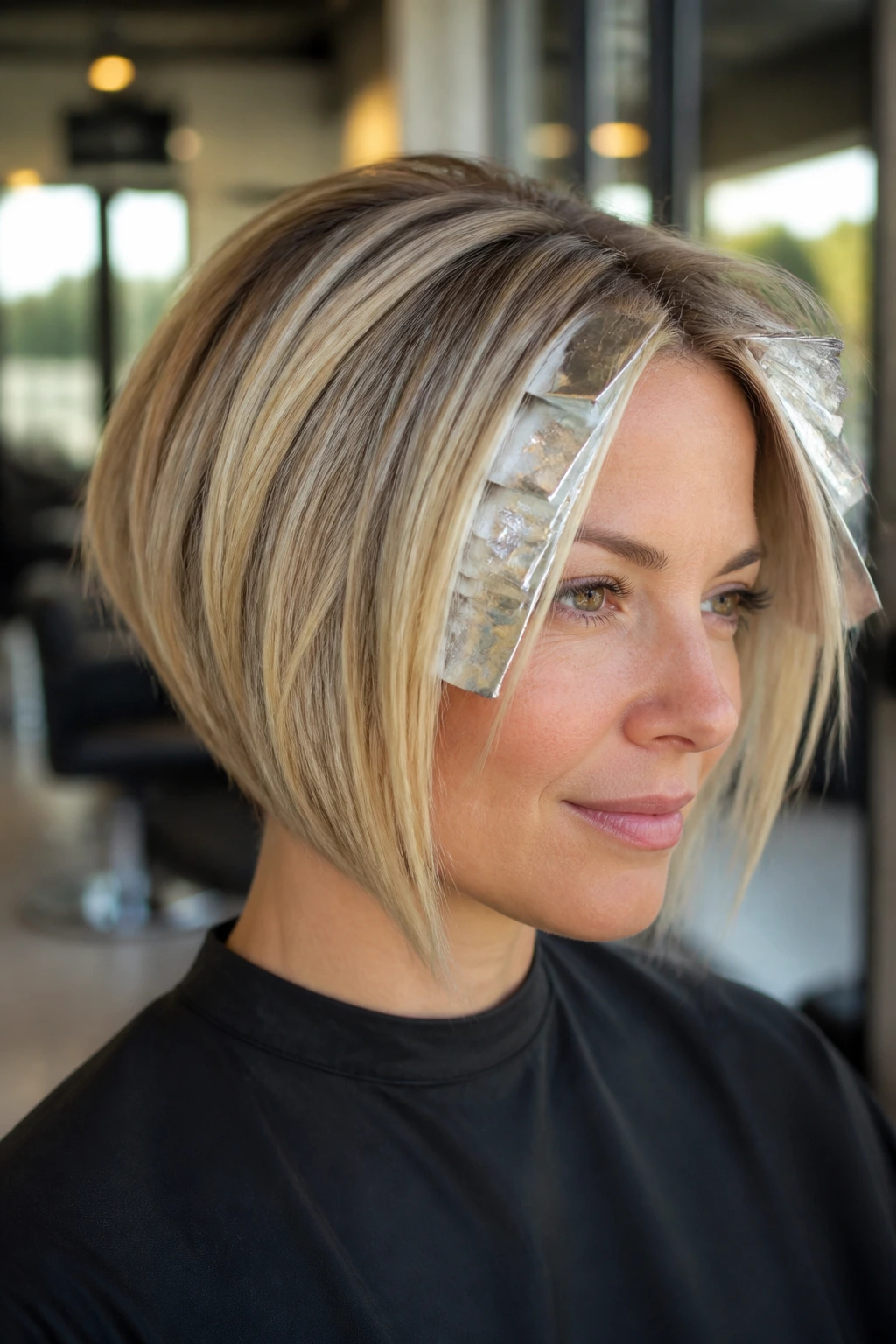
An inverted bob has that longer front and shorter back shape, which gives you a natural place to place the money piece. Face-lifting foils at the front corners sharpen the angle and make the silhouette feel taller.
Keep the brightest point near the front corners rather than pushing it into the center part. That keeps the shape clean and stops the whole bob from looking too top-heavy.
32. Jaw-Length Brightener With a Clean Tuck
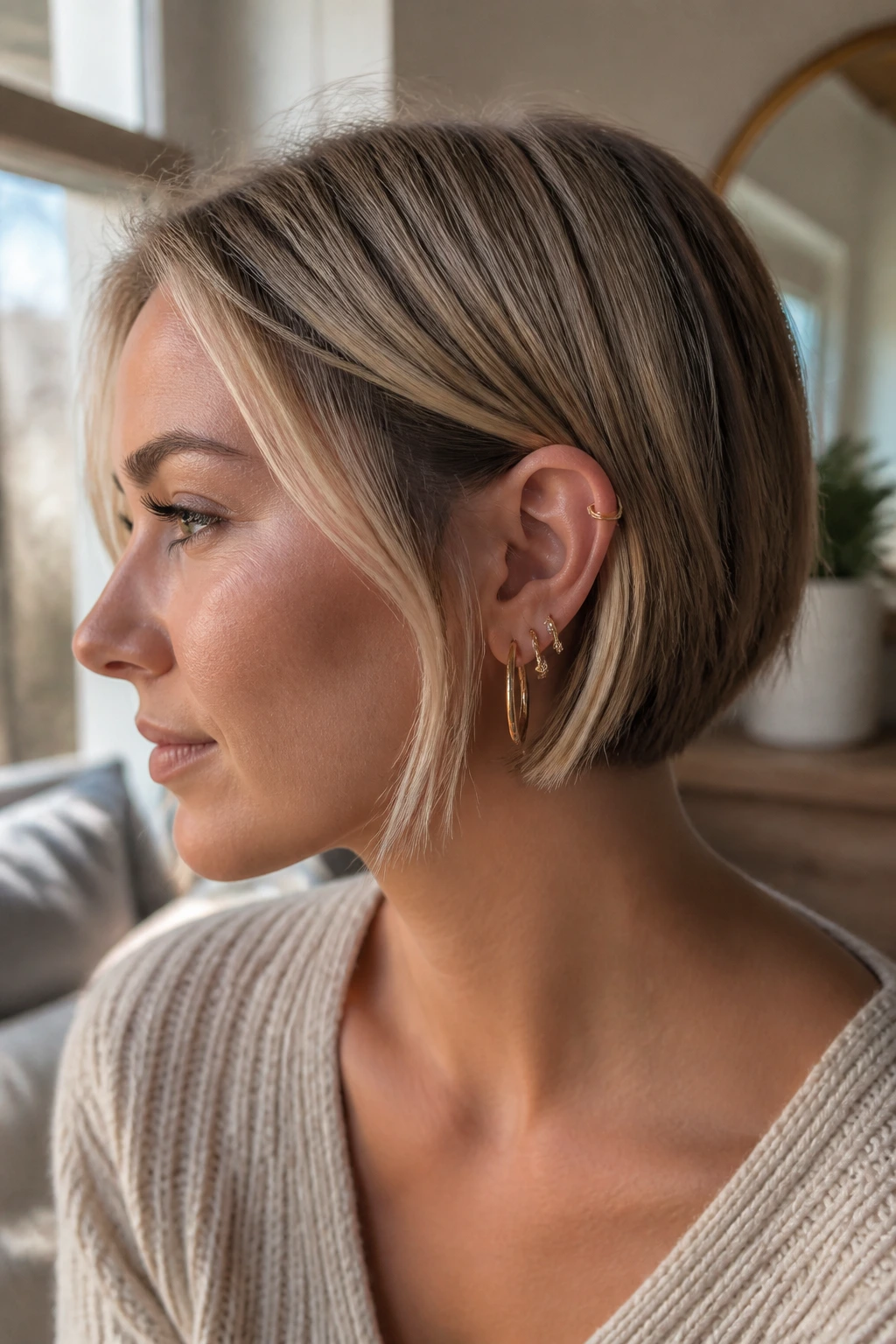
Some highlights only need to be seen when the hair tucks behind the ear. A jaw-length brightener does that well, because the front piece flashes out of the tuck and disappears again when it falls free.
It’s a subtle trick, but it works. The look feels low-key from the front and a little more interesting from the side.
33. Airy Half-Foil Frame on a Light Blonde Bob
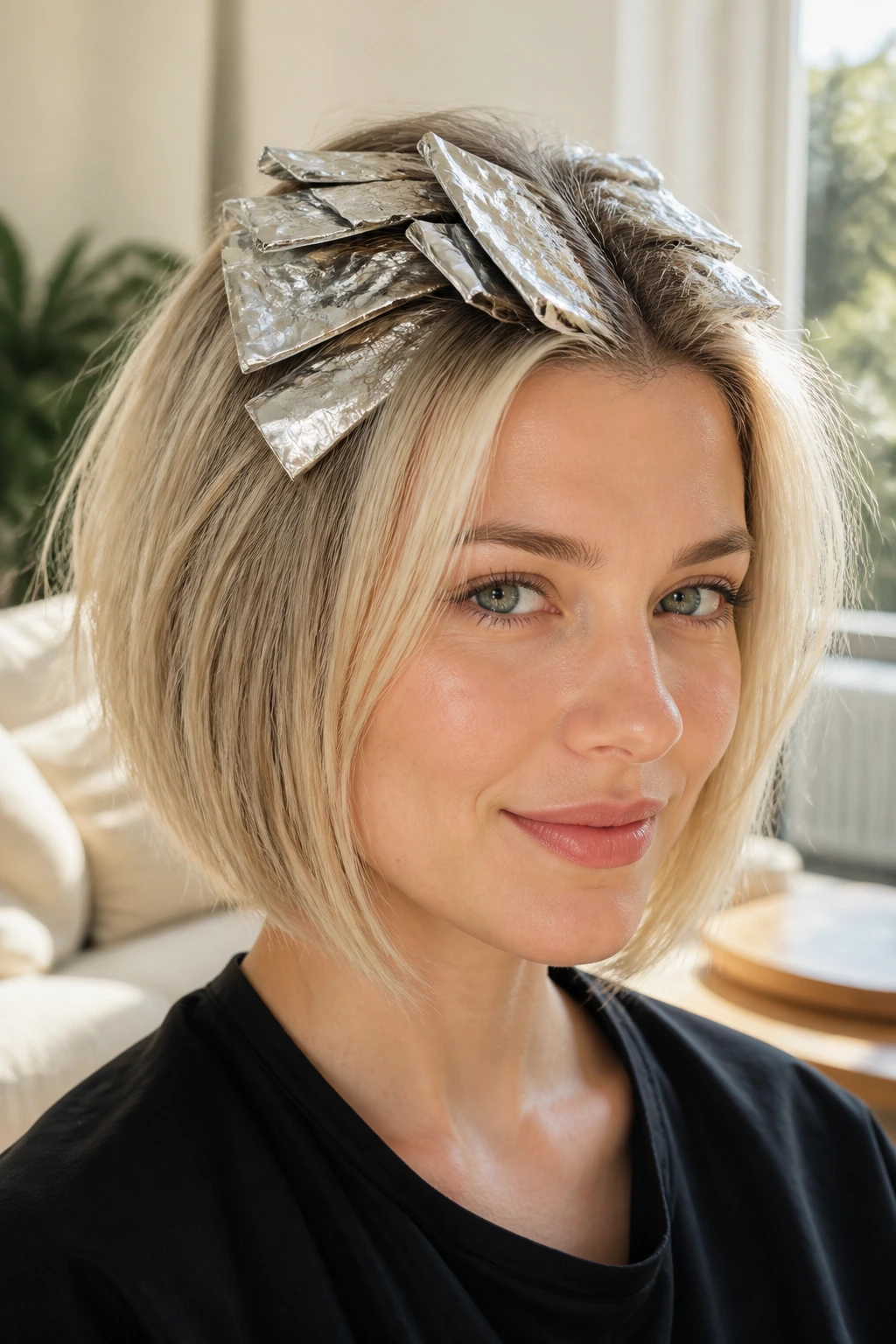
Half-foils are nice when you want brightness that stays light in feel, not just in tone. This version lifts the upper half of the front section and lets the lower half keep a little depth.
On a short blonde bob, that depth helps the shape hold. The front looks airy, but the cut still has a base to sit on.
34. Asymmetrical Bob With a Brighter Front Side
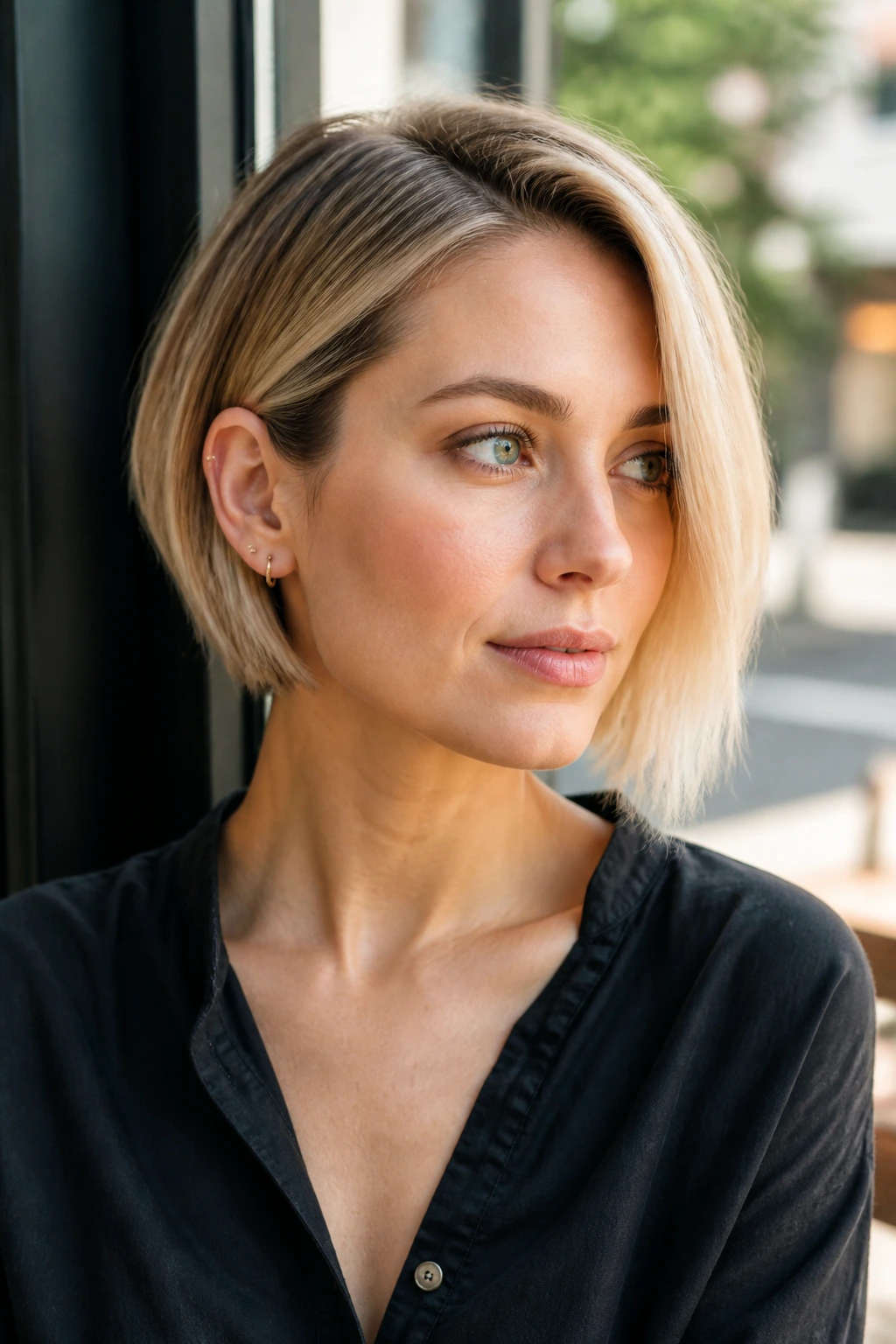
An asymmetrical bob already has attitude, so one front side can carry more brightness than the other. That slightly uneven placement makes the longer side feel intentional and keeps the cut from looking symmetrical in a boring way.
This is a good choice if you always part your hair to one side. It turns that habit into part of the design.
35. Soft Smoke Blonde Frame on a Short Bob
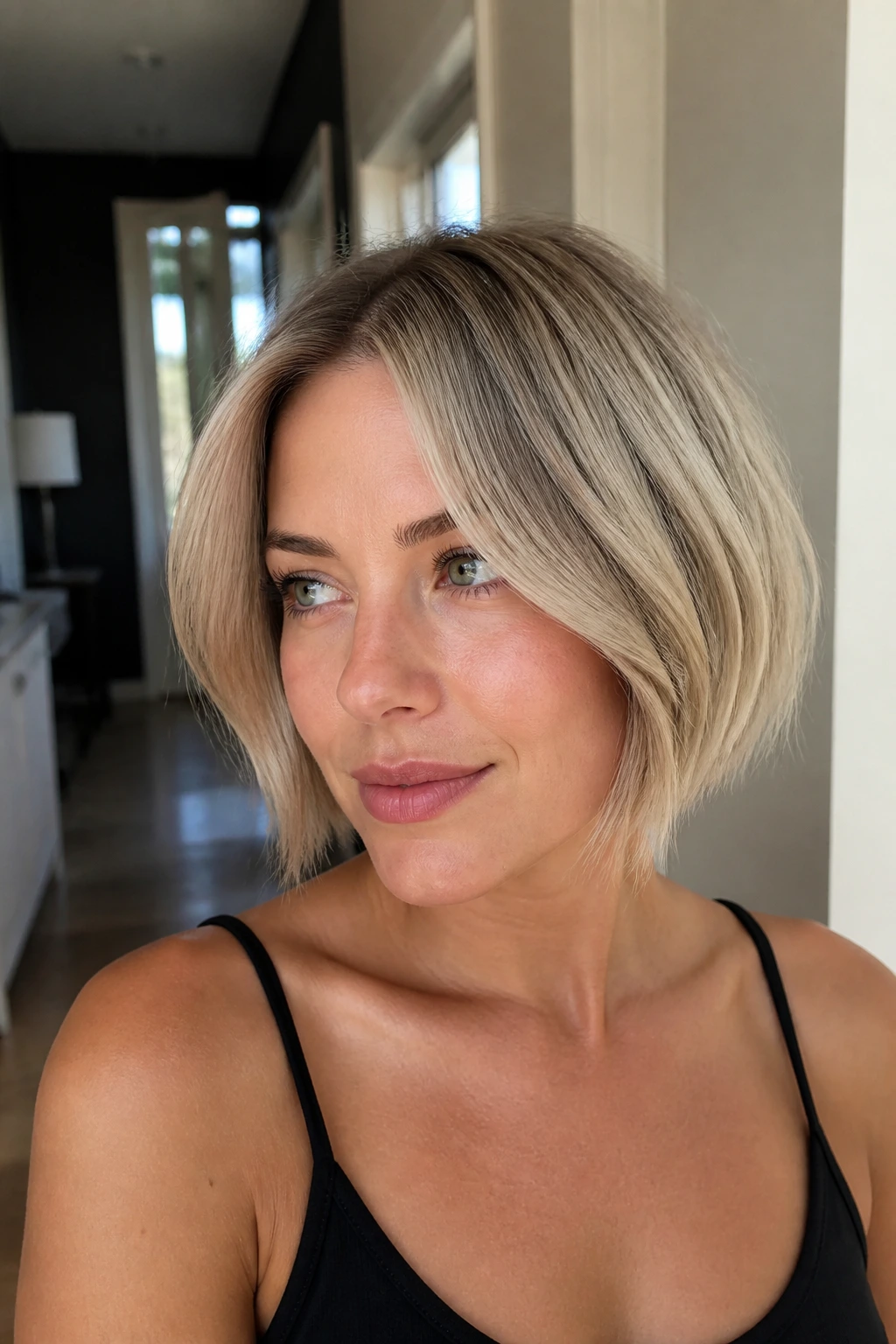
Smoke blonde is cooler and more muted than beige, with a dusty finish that suits a sleek short bob. Around the face, it looks calm and modern instead of sun-kissed.
I like this tone when the hair is already pale and you want depth without darkness. The shadow at the root helps the smoke blonde stay soft as it grows out.
36. Platinum Pop on a Short Blonde Bob
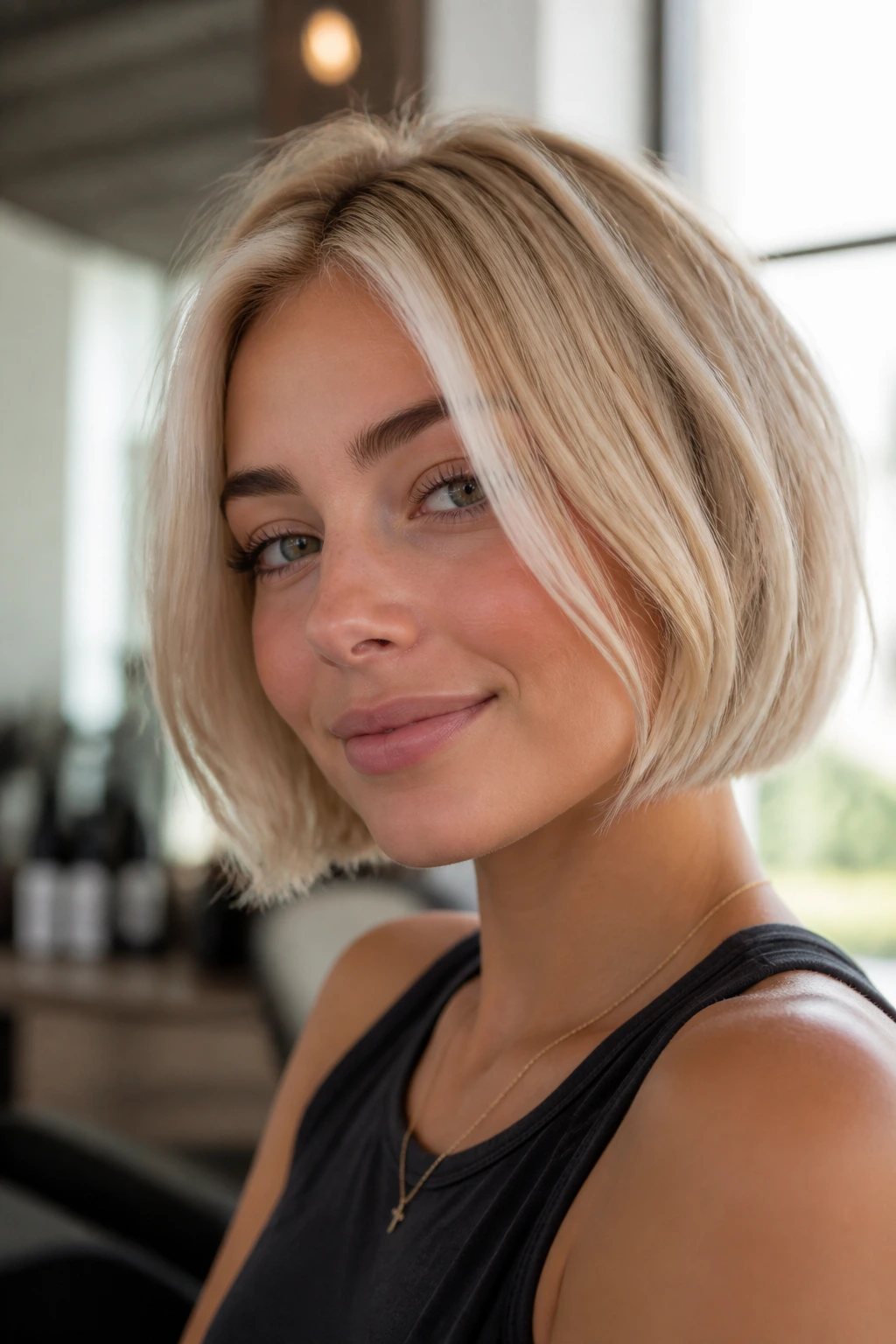
If the base is light enough, a platinum pop at the front can make a short bob look almost electric. Keep it thin and deliberate, or the line gets too severe.
This is one of the few looks where I think less hair is better. A small slice of platinum can do more than a full front panel if the rest of the blonde already has some brightness.
37. Lived-In Root Smudge Money Piece
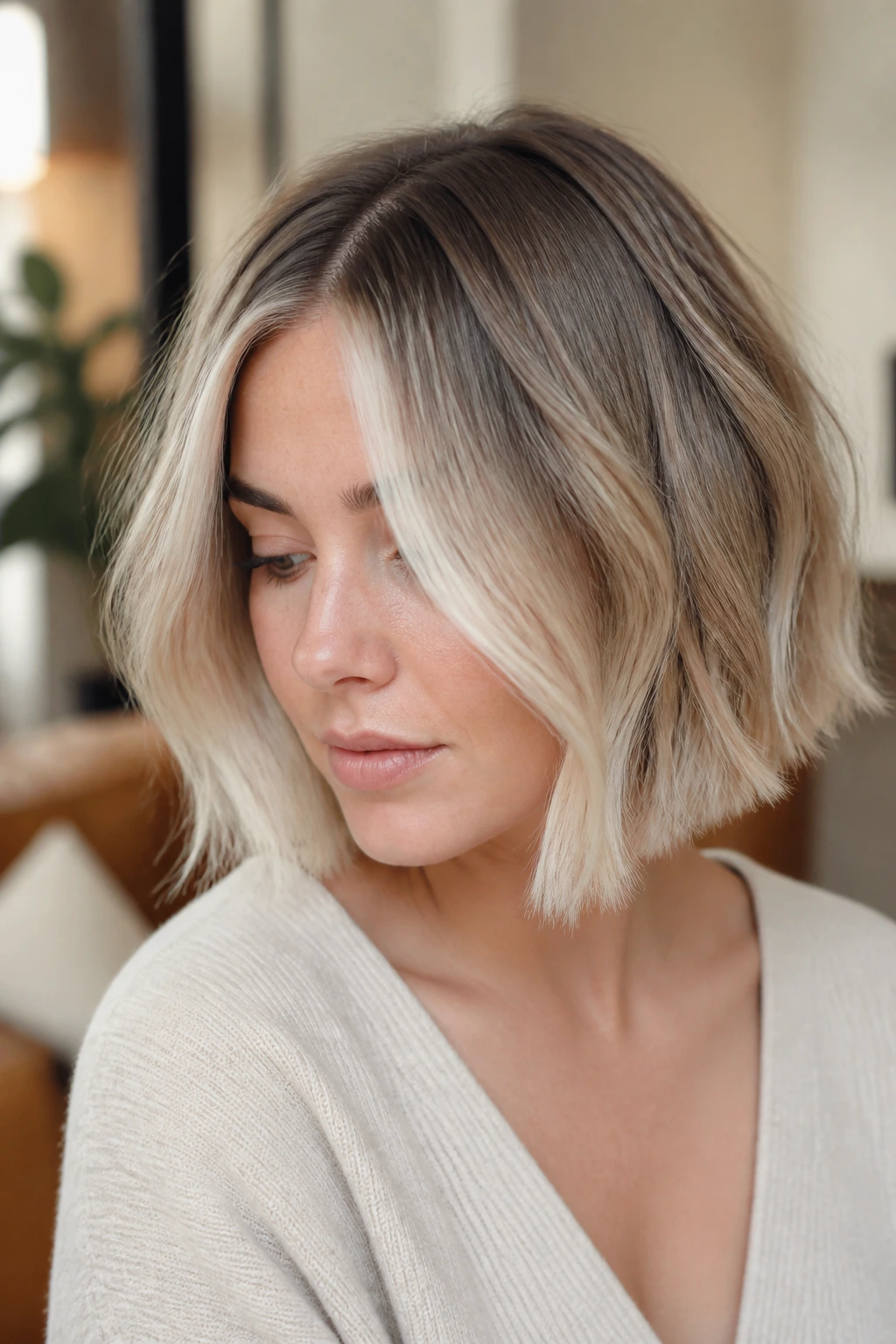
A root smudge is the reason some highlights age well and others do not. With a lived-in front frame, the money piece starts a touch softer at the root and blends into a brighter blonde at the ends.
This is the practical choice for anyone who hates obvious grow-out. It keeps the bob looking finished even when the appointment stretches a little longer than planned.
38. Sunburst Foils Around the Face
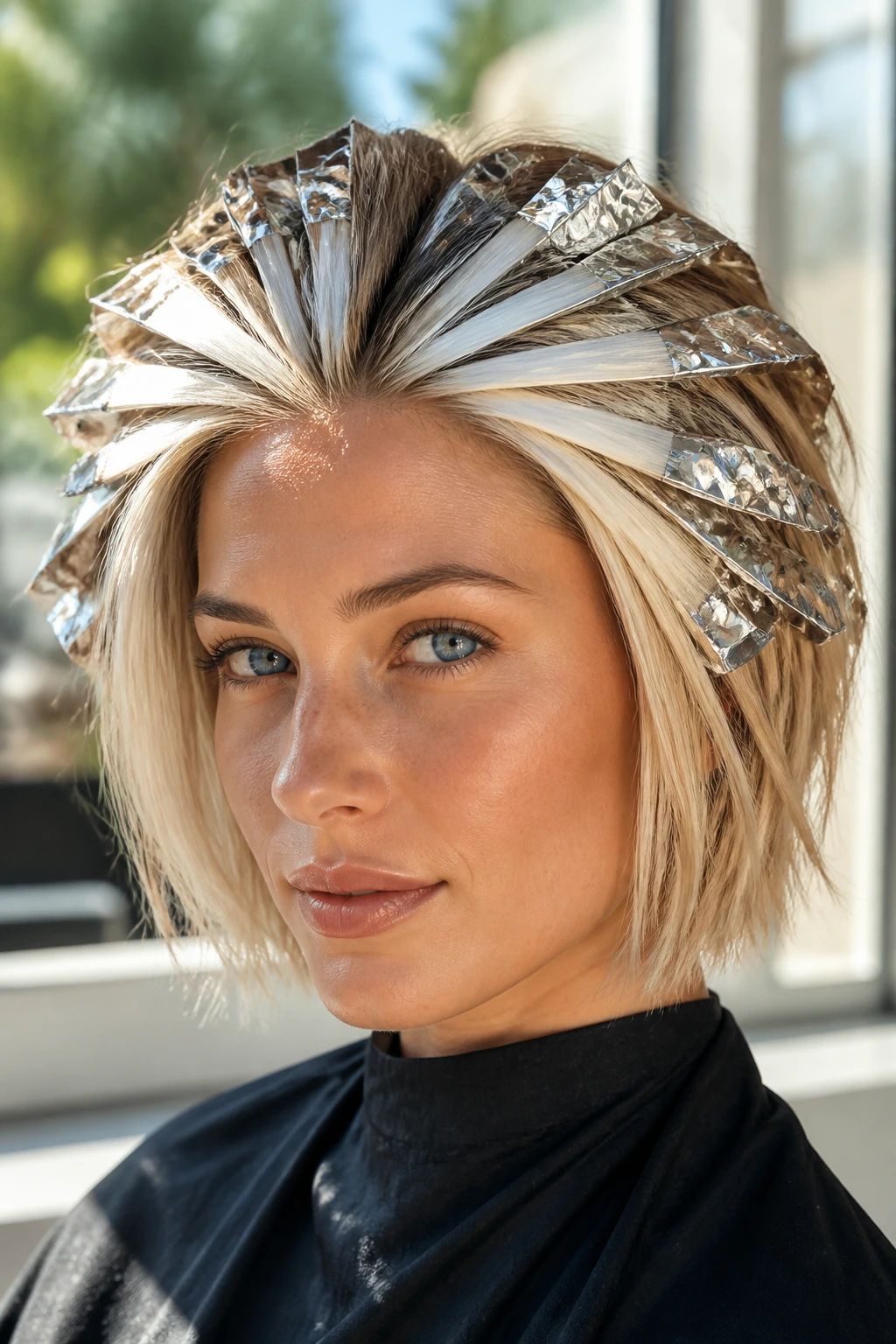
Sunburst placement means the foils radiate out from the hairline instead of sitting in one heavy block. On a short blonde bob, that shape can make the face look brighter without locking the color into one hard lane.
It’s especially nice on bobs that move a lot. The brightness shows at the temples, then disappears into the rest of the cut as the hair shifts.
39. Glass-Hair Bob With a Sharp Blonde Frame
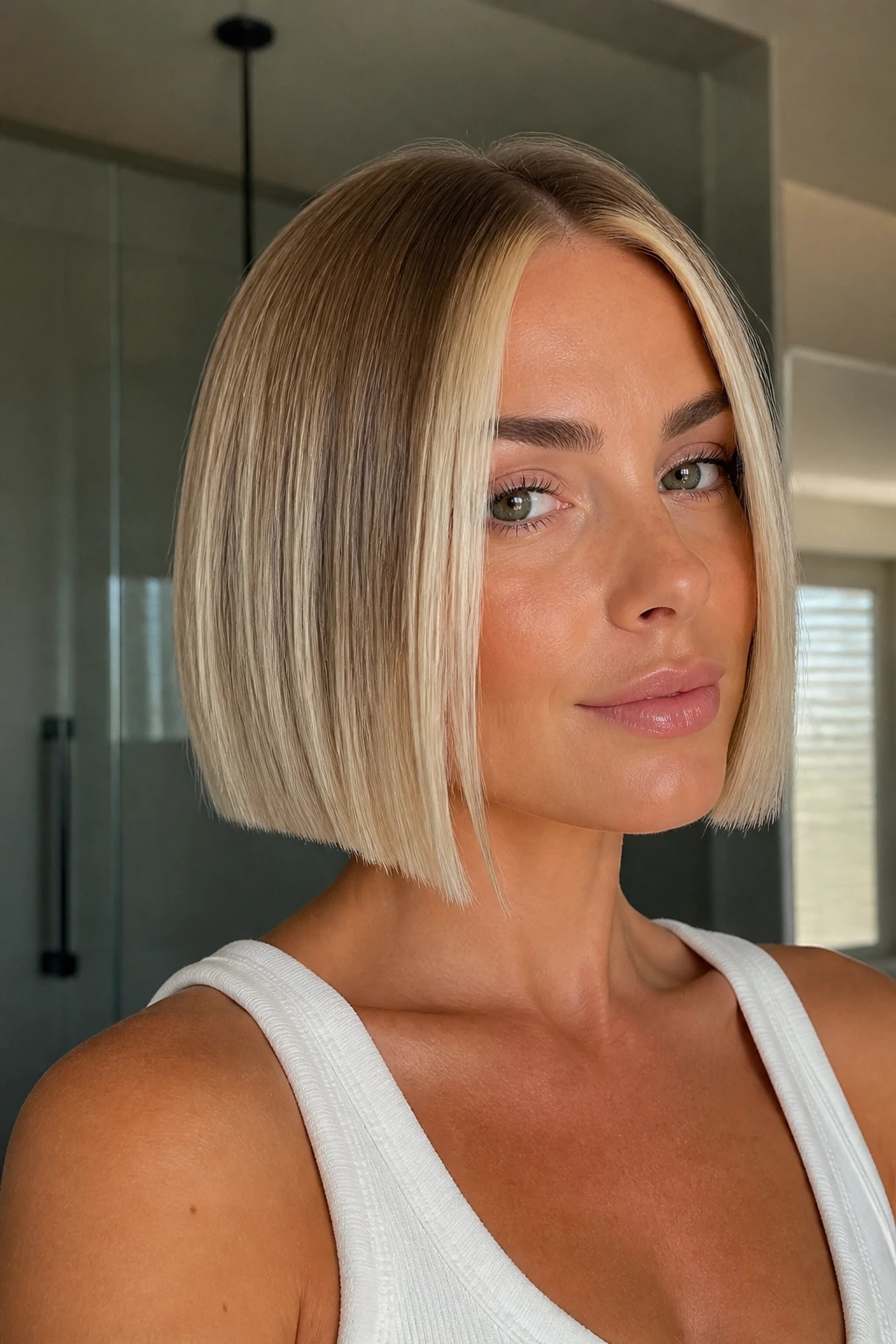
A glass-hair finish needs clean color. The blonde frame should be neat, glossy, and precise, because any roughness shows the second the hair gets straightened.
This is the look for someone who likes a polished outline. The front pieces should gleam, not frizz, and the color should be toned to stay reflective instead of chalky.
40. Worn-In French Girl Bob With Tiny Bright Ribbons
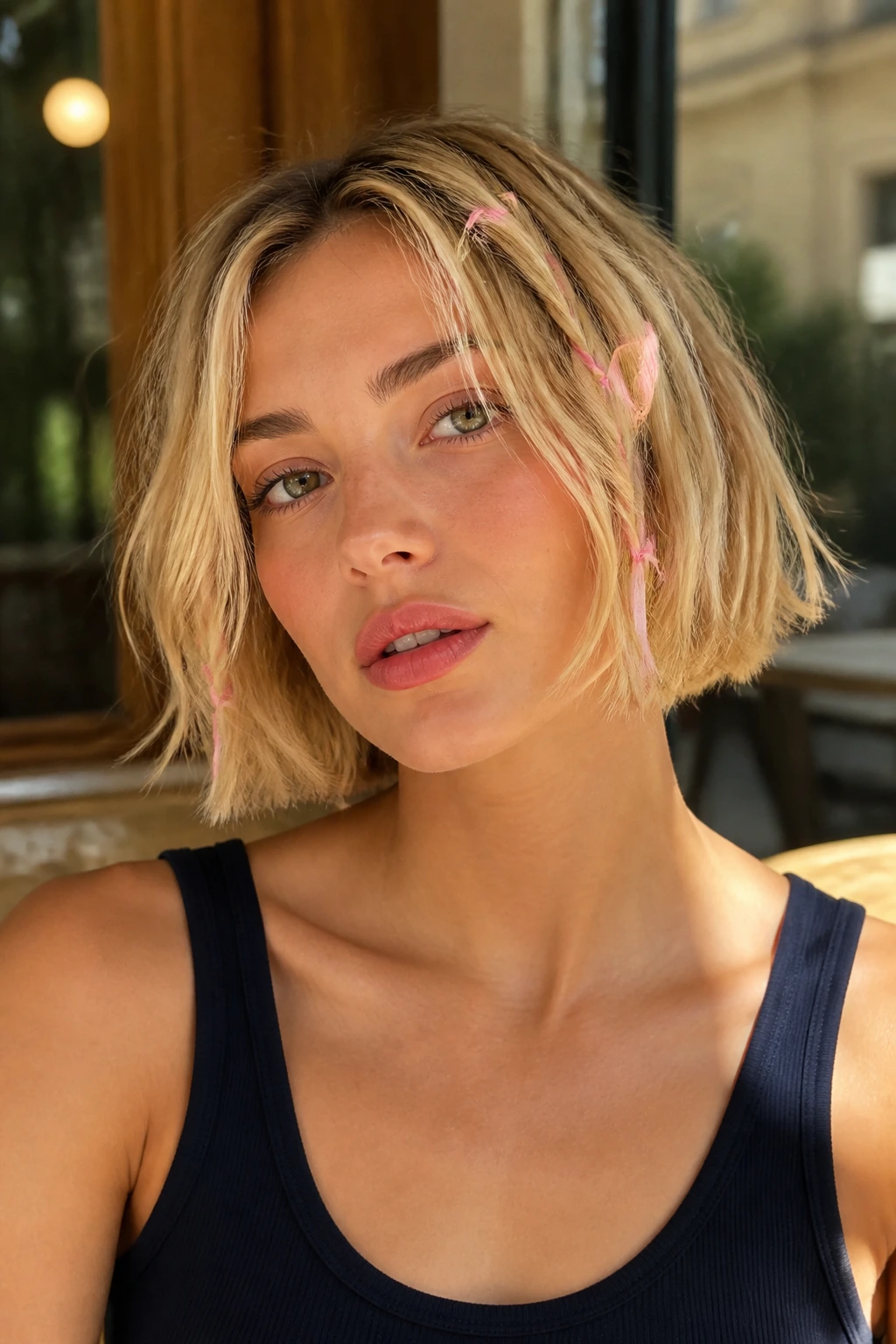
Tiny bright ribbons suit the undone charm of a French girl bob. You don’t want the front to feel too appointed; you want it to look like the sun just found the hair in the right spots.
These ribbons can sit just inside the hairline and around the cheekbone. The effect is small, but on a short bob, small is often enough.
41. Maximum-Impact Money Piece for a Short Blonde Bob
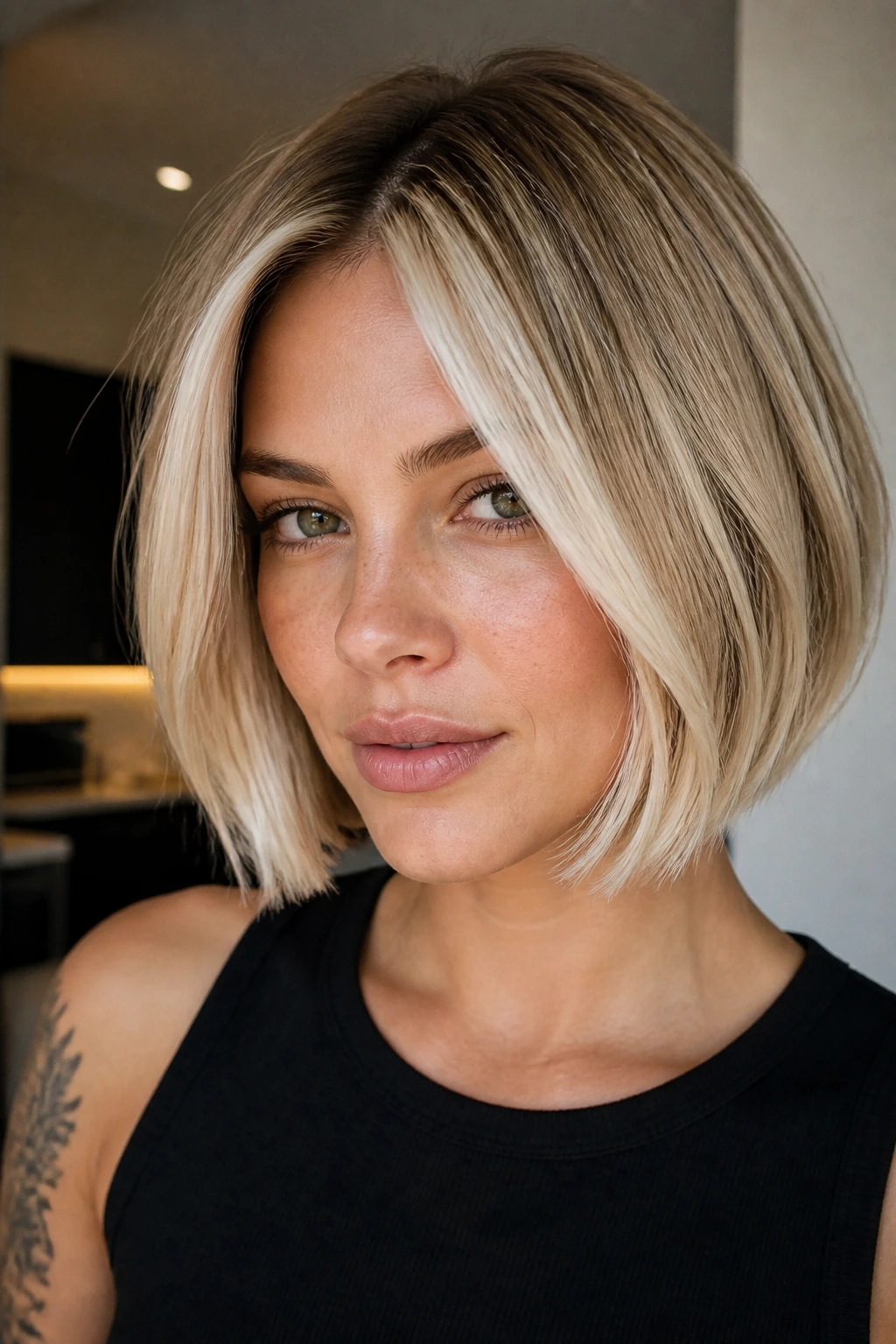
This is the one you choose when you want the front to speak first. The money piece is wider, brighter, and more obvious, but the root stays soft so it doesn’t read harsh.
It needs confidence and a good blow-dry. On a short blonde bob, this level of contrast can look fantastic if the cut is crisp and the tone is clean.
42. Underlayer Brightener That Peeks at the Chin
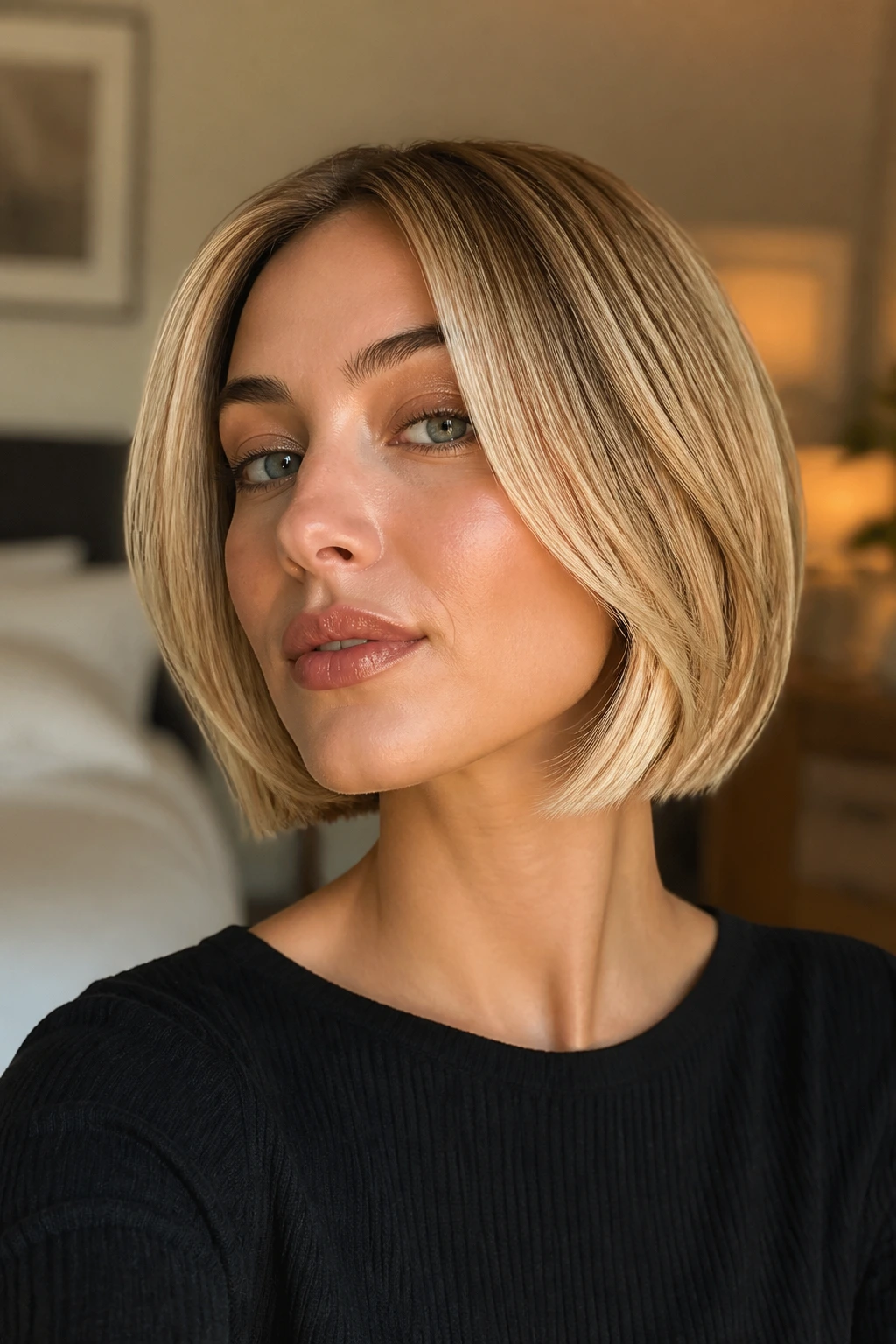
A hidden brightener under the top layer gives a short bob a little trickery. The color peeks out at the chin when the hair moves, so the highlight feels discovered rather than announced.
I love this for people who want the money piece effect without putting all the brightness in the front line. It is a smaller, smarter way to get dimension.
43. Flicked-Out Bob With Luminous Front Ends
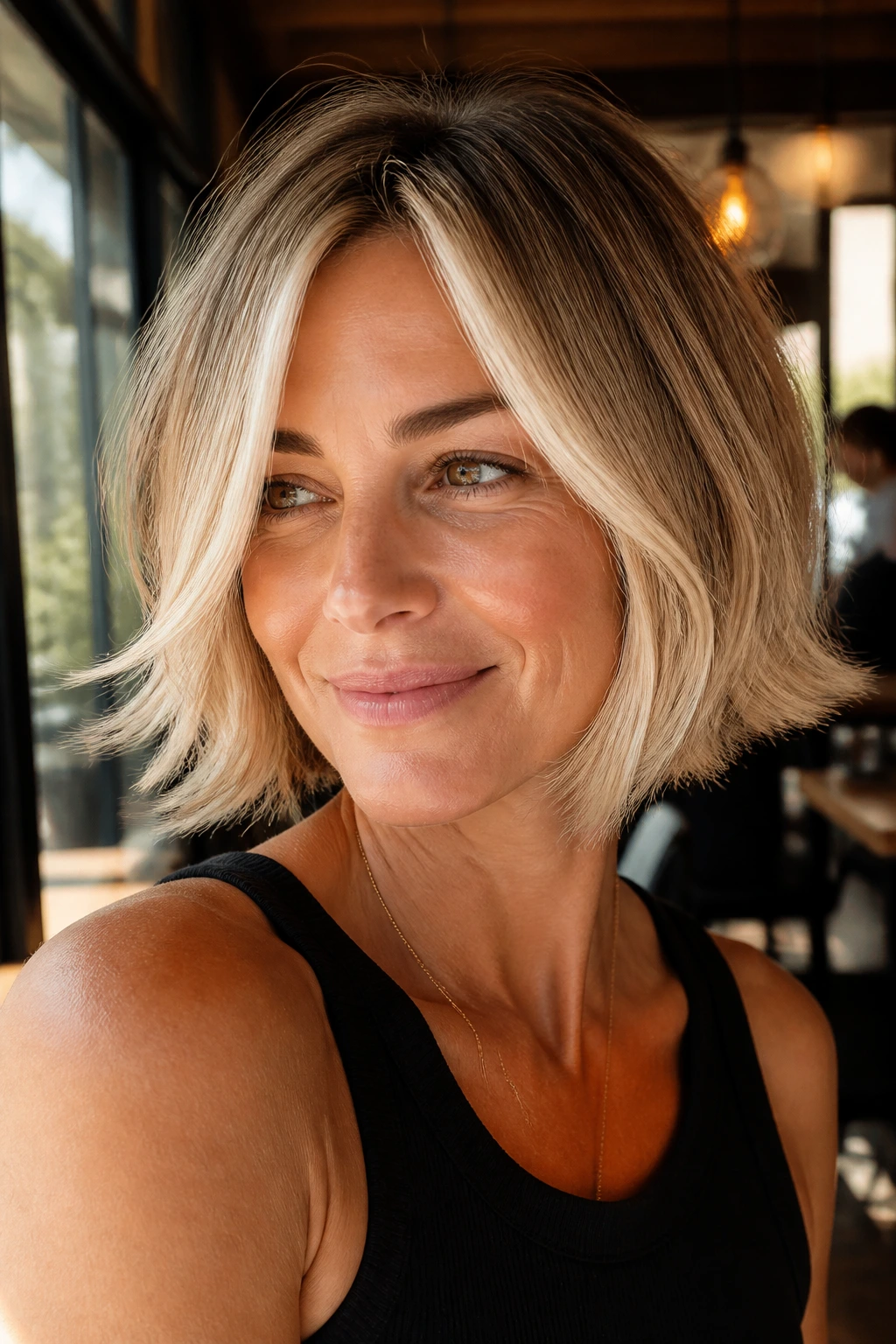
A flicked-out finish puts the color at the ends where everyone can see it. The front pieces catch light as they flip away from the jaw, which makes the bob feel lively and a little playful.
Keep the root softer and the ends a shade brighter. That contrast makes the flick look like part of the style rather than a separate feature.
44. Toned-Beige Frame for a Soft Blonde Bob
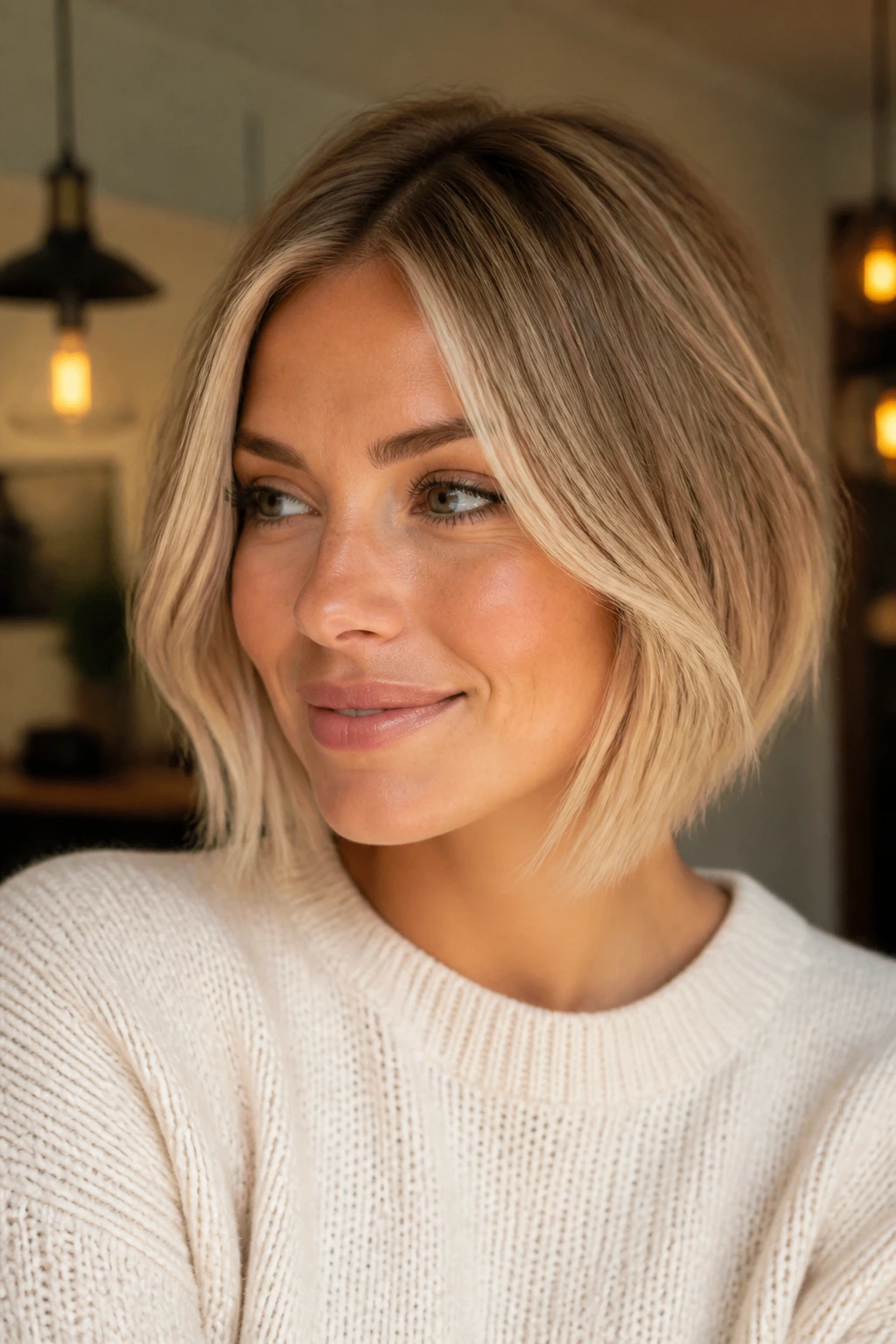
Beige blonde can be the nicest blonde of all when you want softness. A beige frame around a short bob gives enough brightness to define the face, but it doesn’t drag the color into icy territory.
This is the safe bet for most skin tones. It’s also the easiest blonde family to wear if you switch between straight styling and a loose wave.
45. High-Impact Face Frame for a Short Bob
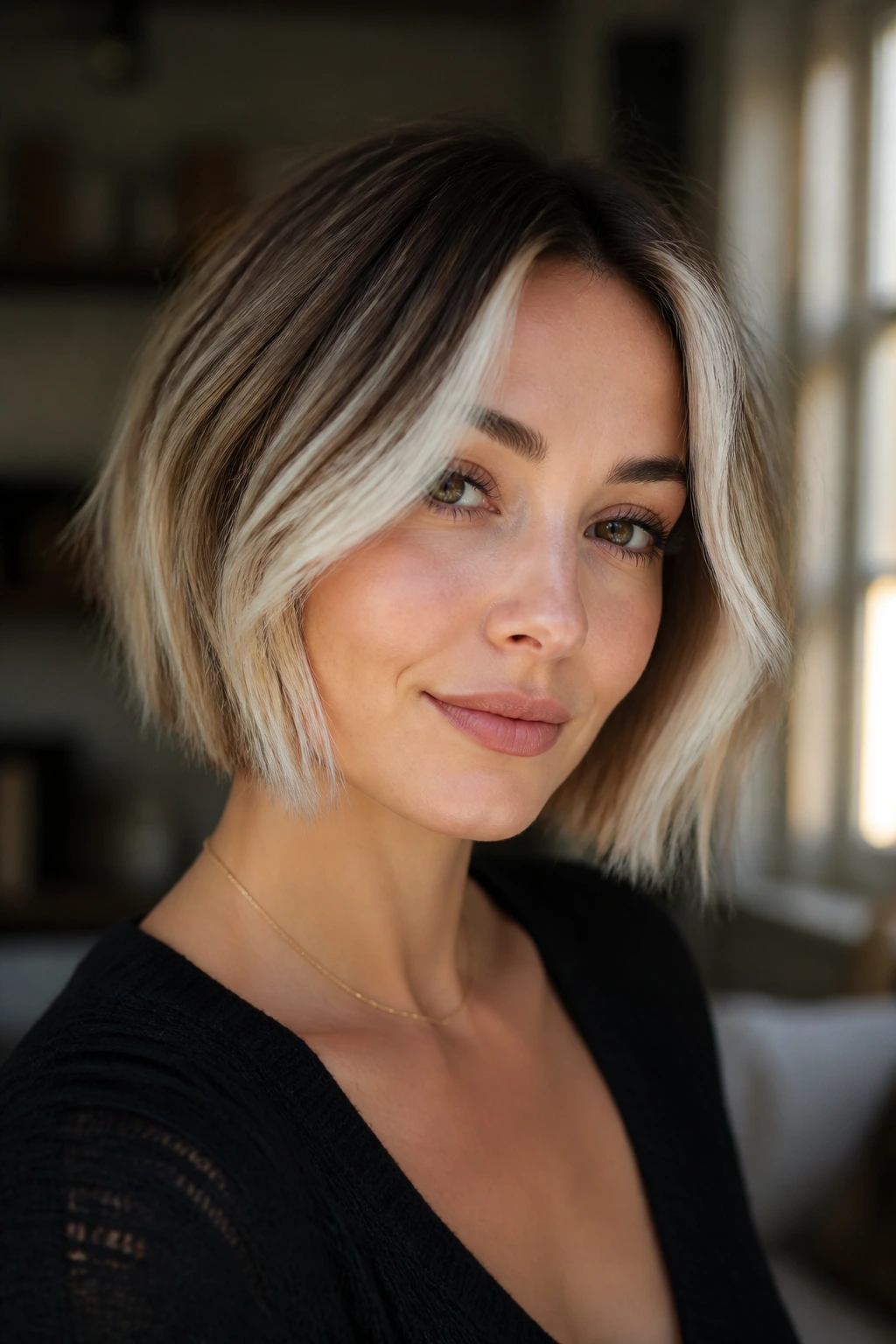
Sometimes the best choice is the clearest one. A high-impact face frame gives the short bob a strong front line, a bright focal point, and a shape that reads fast in photos and in real life.
The key is balance. If the front is bright, the rest of the bob needs either a rooted base or a soft blend so the color doesn’t look like it was dropped on top at the end.
Why Money Pieces Read Differently on a Short Blonde Bob

A long haircut can hide a highlight that is a little too thick, too pale, or too warm. A short bob cannot. The front pieces sit right in the center of the visual field, so the money piece becomes part of the haircut’s structure instead of a small extra detail.
The Front Section Carries More Weight
On a bob, the front strands frame the cheekbone, jaw, and sometimes even the edge of the mouth. That means the brightest pieces do more than decorate. They steer attention.
A narrow highlight near the temple looks delicate on one face and bold on another, which is why placement matters more than people think. On short blonde bobs, the front panel is the loudest part of the haircut whether you want it to be or not.
Placement Beats Quantity
A lot of people ask for more brightness when they really need better placement. A half-inch slice in the right spot can change the whole haircut. A bigger slice in the wrong spot can flatten the shape and make the bob look heavier.
The sweet spot is usually somewhere between the hairline and the cheekbone, with a soft transition into the side sections. That keeps the front pieces bright while the bob still looks like a haircut, not a strip of color.
Parting Changes the Mood
Center part? Clean and symmetrical. Side part? Softer and more lifted. Deep side part? The money piece can suddenly feel dramatic, even if the color itself hasn’t changed.
That is why a good colorist asks how you wear your hair most days. The highlight should follow your habits, not just the photo you brought in from a perfect hair day.
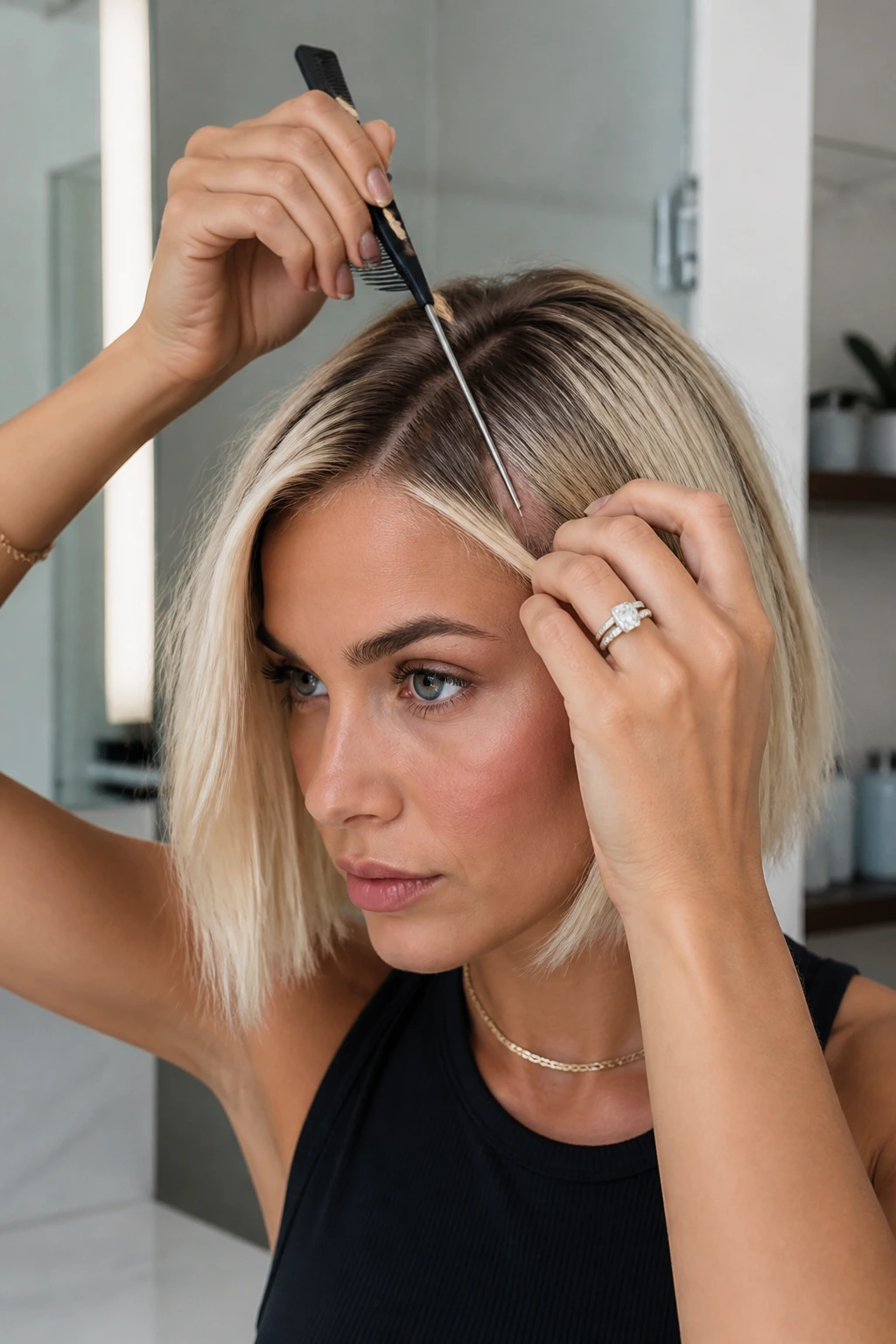
The Tools That Keep the Front Bright and Clean
-
Rat-tail comb: Essential for drawing a neat part and carving out narrow front sections without guesswork.
-
Sectioning clips: Keep the back and sides pinned away so the money piece stays crisp.
-
Foils or balayage board: Foils give sharper lift; a board can help keep the placement clean around the face.
-
Color-safe shampoo: Helps the blonde stay bright without stripping the toner out too fast.
-
Purple shampoo: Useful when the blonde starts drifting yellow, but use it sparingly or the front can turn flat and dull.
-
Heat protectant: Non-negotiable if you smooth the bob with a blow-dryer, flat iron, or round brush.
-
Lightweight serum: One small pump on the ends keeps the short layers from puffing up.
-
Satin pillowcase or bonnet: Reduces friction, which matters more when the front pieces are short and delicate.
-
Gloss or toner appointment: Not a tool, exactly, but a must-have service if you want the front to stay polished.
Choosing the Right Blonde Tone for Your Skin and Hair

Cool blondes, warm blondes, and neutral blondes do not read the same on a short bob. Cool tones — pearl, silver-beige, smoke — feel sharper and more polished. Warm tones — honey, butter, sand — feel softer and more sunlit. Neutral tones sit in the middle and are usually the least temperamental.
Cool, Neutral, or Warm?
If your skin runs rosy or you like silver jewelry, a cooler money piece often looks cleaner near the face. If your complexion is golden or olive, warmer beige and honey tones usually look easier and less stark. Neutral beige is the safe middle ground when you are not chasing a dramatic shift.
Short blonde bobs are forgiving, but only if the tone matches the cut. A blunt bob with a warm, brassy front piece can look louder than intended. A slightly smoky toner can calm it down fast.
Why the Base Level Matters
If your hair is already pale blonde, the money piece may only need a gloss and a few strategic foils. If the base is darker blonde, the front pieces may need stronger lift to stand apart. That does not mean more bleach everywhere. It means smarter placement and a tone that blends into your natural level.
Bring photos. Bring two if you can. One for the color, one for the finish. A glossy pearl blonde and a matte beige blonde are not the same thing once they hit a short bob.
The Root Shadow Question
A root shadow is not lazy color. It is what keeps the front from looking carved out. On short hair, that softened root line gives the bob a better grow-out and stops the face frame from feeling pasted on.
If you wear your bob sleek and change your part often, a root shadow becomes even more useful. The color can move with the cut instead of fighting it.
How to Wear the Brightness Without Fighting the Cut
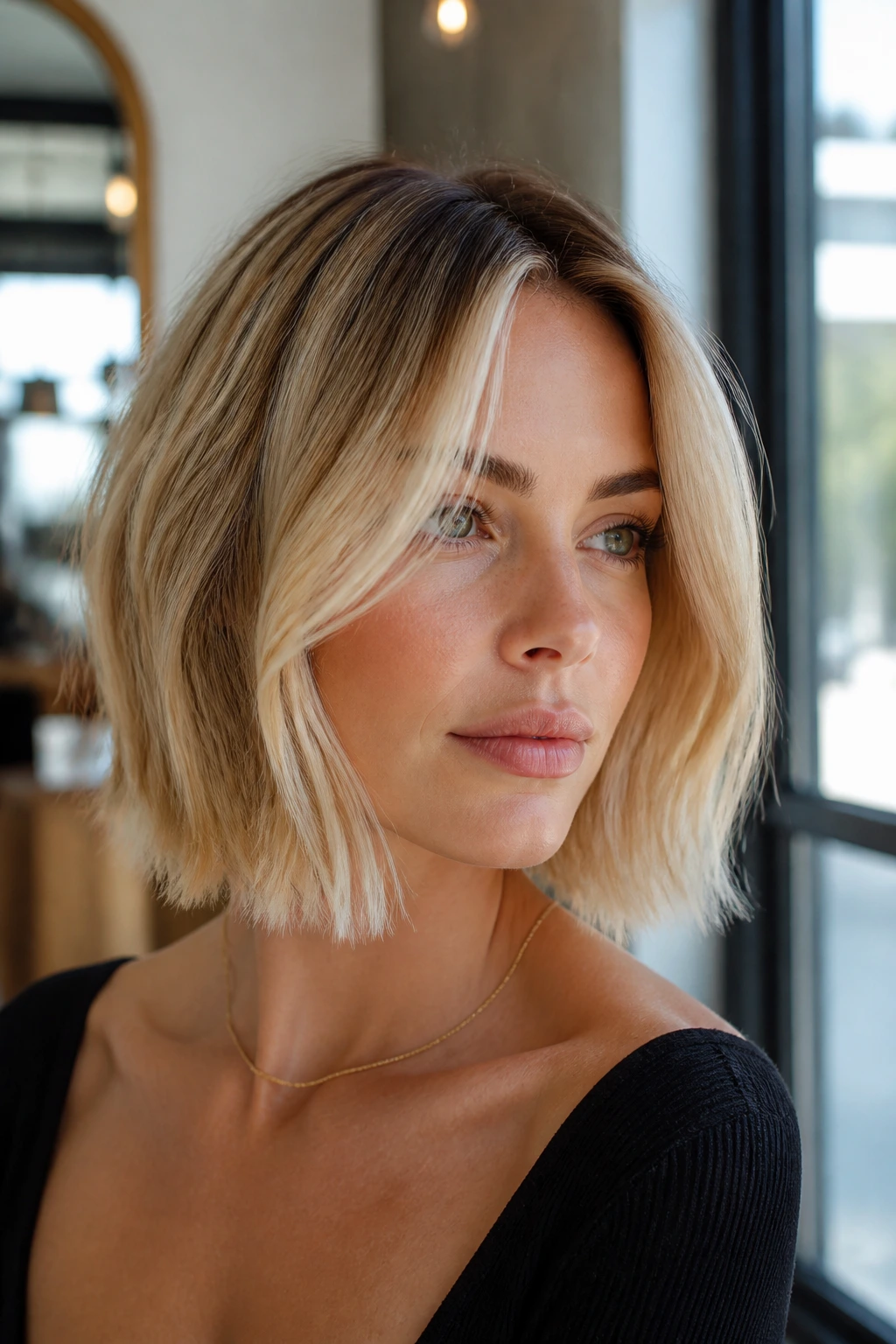
The front of a short blonde bob can look too loud when it is styled against the highlight pattern. That is why the finish matters. Same color, different mood.
Center Part: Keep the money piece narrow and balanced on both sides. A center part likes symmetry, and if one side is wider than the other, you will notice it immediately.
Side Part: Load a touch more brightness on the heavier side. That gives lift near the face and keeps the bob from looking flat where the hair naturally falls.
Straight Finish: This makes the front frame look crisp and graphic. If the pieces are too chunky, the straight finish will expose every line, so keep the sectioning clean.
Soft Bend or Wave: A bend softens the contrast and makes a chunkier money piece look more blended. On short hair, even a slight bend at the ends changes the whole read.
Tucked Behind the Ear: One of the cheapest styling tricks around. The highlight flashes when the hair is tucked, then settles back into the bob. Good color should look nice both ways.
Small Tweaks That Change the Whole Look
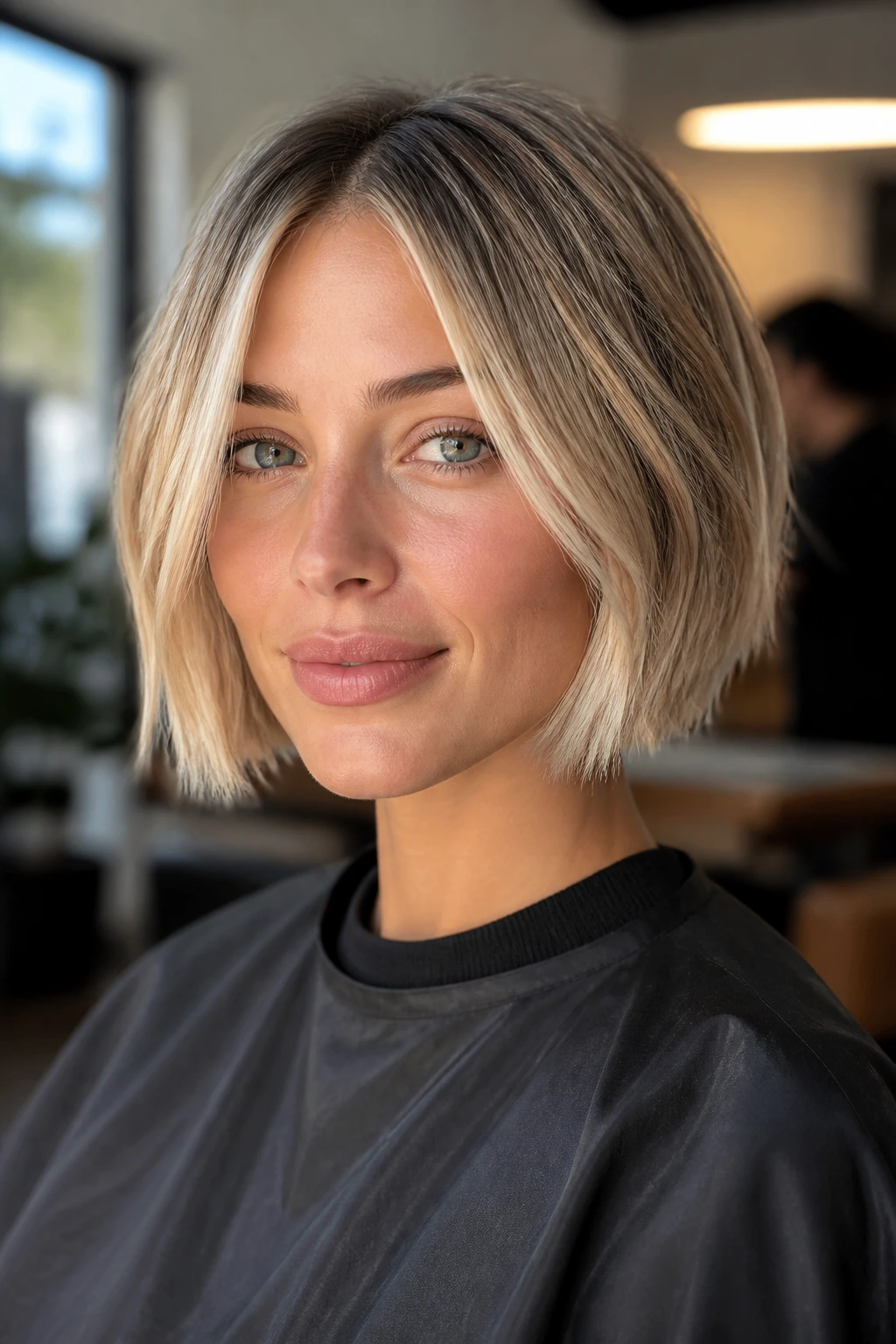
Thicker Panel: Use a wider front panel if you want a bolder 90s feel. It suits blunt bobs and strong brows, but it needs a soft root so it doesn’t look harsh.
Narrower Slice: Best for people who want contour more than contrast. A narrow money piece can make the eyes pop without turning the front into the main event.
Cooler Toner: Pearl, silver-beige, or smoke tones keep a short bob looking sharp and slightly more editorial.
Warmer Toner: Beige, butter, or honey softens the frame and can make the haircut feel friendlier and less severe.
Extra Texture: If the cut is layered or razor-cut, the money piece should be broken into tiny slices so it follows the movement instead of sitting like one block.
Keeping the Color Fresh Between Salon Visits
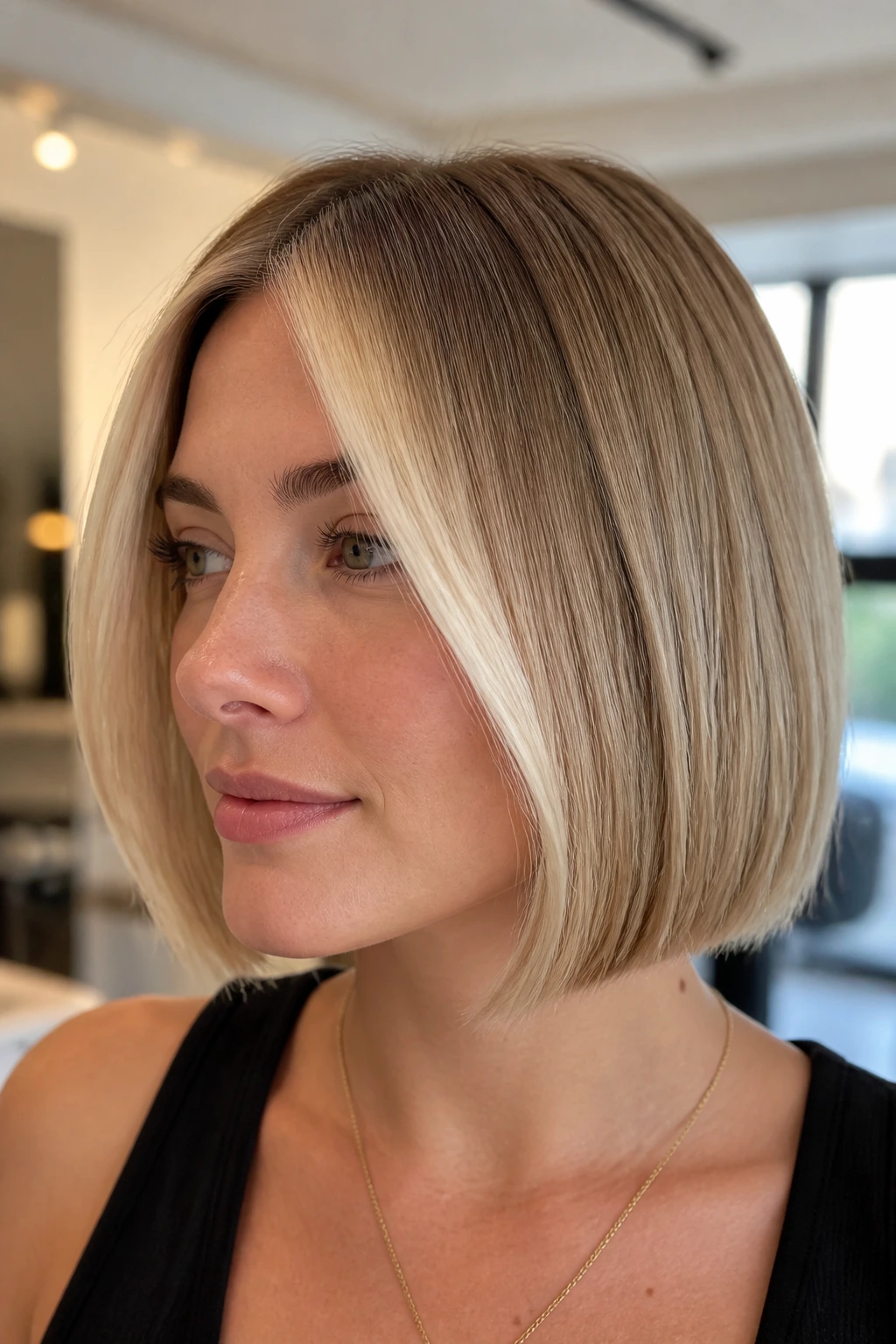
A short blonde bob shows growth faster than longer hair because the front frame is so close to the face. That does not mean you need to panic every time a root appears. It means you should plan for maintenance in a way that fits the tone you chose.
Wash with color-safe shampoo and keep the water cool when you can stand it. Hot water strips toner faster than people want to admit. If the blonde starts leaning yellow, use purple shampoo once a week, not every wash. Too much and the front can go flat, almost gray.
Glosses and toner refreshes matter. For a bright, cool money piece, a gloss every 4 to 6 weeks keeps the front clean. Softer beige or honey blondes can often stretch to 6 to 8 weeks if the color is rooted properly. If the bob is lightened heavily, a bond mask once a week helps the hair keep its slip and shine.
Heat is the other quiet culprit. A round brush, flat iron, or hot curling tool can dull the front if you skip protectant. Use it every time. Short blonde bobs look best when the ends stay smooth and the front pieces don’t fry out.
The Slip-Ups That Make Short Bob Highlights Look Choppy
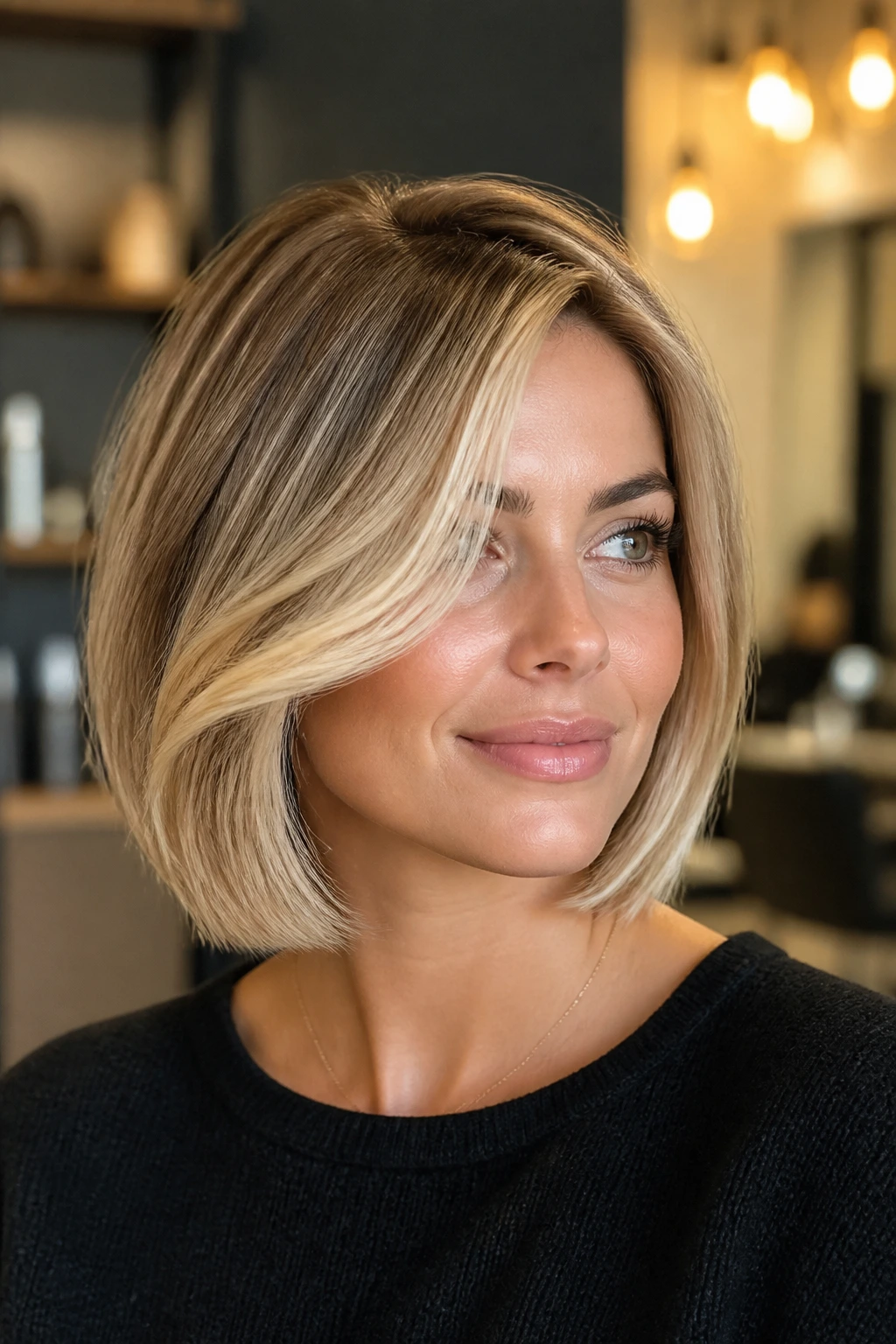
-
Too-wide front sections: The symptom is a stripe that looks pasted on. The fix is thinner foils and softer edges at the root.
-
Ignoring your part: If you switch from center to side part and the highlight falls in the wrong place, the whole haircut can look lopsided. Tell your colorist how you part your hair most days.
-
Going too ash on already pale hair: The front pieces can turn dull or muddy instead of bright. Ask for a beige or pearl gloss if you want reflection, not chalk.
-
Lifting too close to the scalp: This creates a hard line that shows every time the bob moves. Leaving a softer root makes the money piece feel built in.
-
Skipping shape maintenance: A grown-out bob with perfect color still looks messy if the cut has lost its line. Keep up with trims so the front frame has something to sit on.
-
Overloading with heavy oil or cream: The highlight disappears under shine products that are too rich. Use a small amount, then stop.
Questions People Ask Before They Book the Appointment
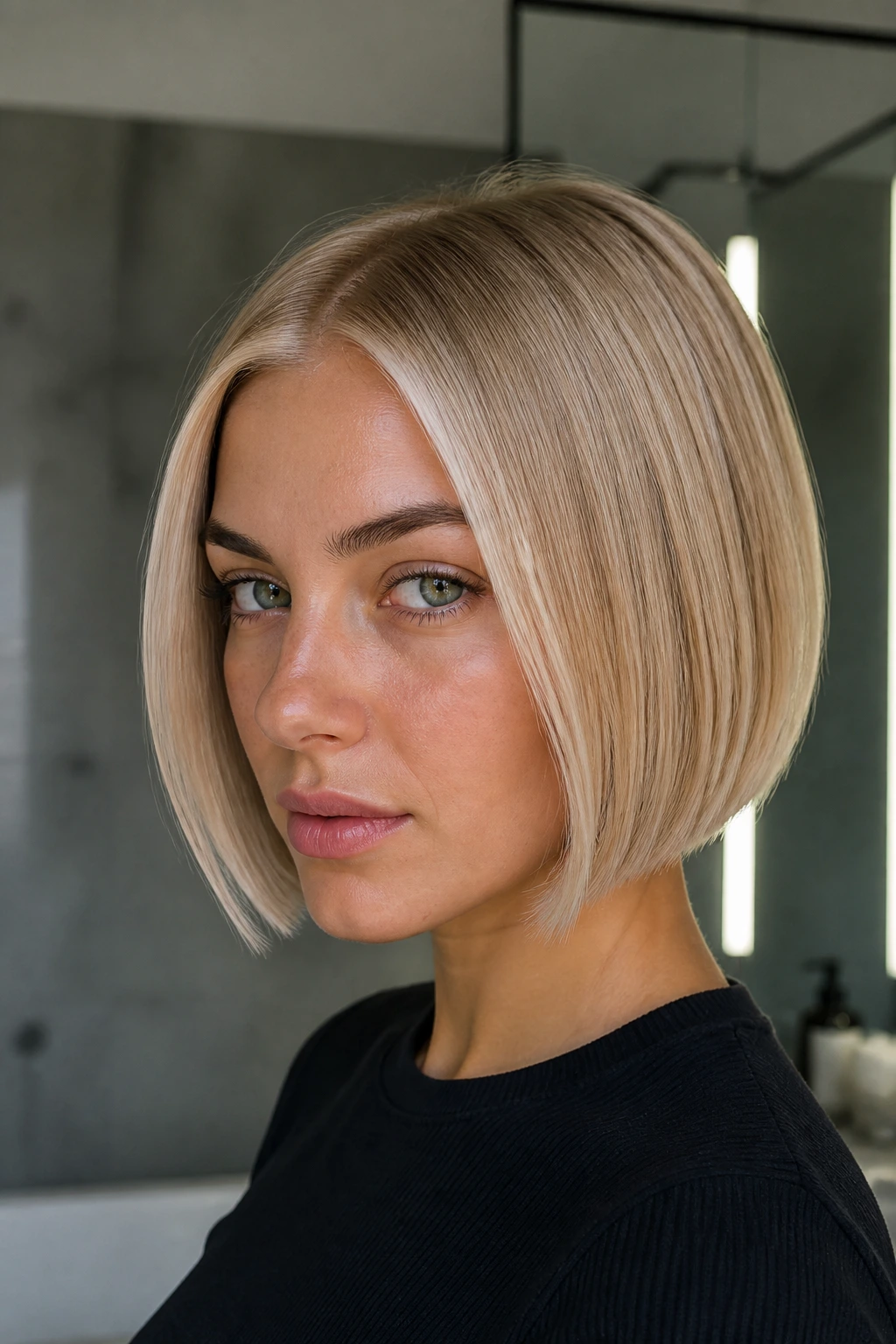
Can money piece highlights work on very short bobs?
Yes, and they can be especially effective on chin-length and jaw-length cuts. The trick is keeping the front section narrow enough that it frames the face instead of taking over the haircut.
Should the money piece be chunky or skinny?
Skinny gives you contour and softness. Chunky gives you more contrast and a stronger style statement. On a short blonde bob, skinny usually ages better, but chunky can be fun if the cut is blunt and the toner is smooth.
What blonde tone is easiest to maintain?
Neutral beige is the easiest for most people. It stays softer as it grows out and does not swing too icy or too brassy if the toner fades a little.
Will a money piece make fine hair look thinner?
Not if the placement is smart. Very wide, high-contrast front pieces can expose the scalp more, but thin foils placed at the hairline usually add brightness without making the hair look sparse.
How often do I need a toner refresh?
Usually every 4 to 8 weeks, depending on your shampoo, water, heat styling, and how cool or warm you want the blonde to stay. Pale platinum needs more attention than beige.
Can I do this without bleach?
If your hair is already light blonde, sometimes yes — a gloss, low-volume lift, or high-lift color can brighten the front. If your base is darker, true face-framing brightness usually needs lightener.
What if the front pieces look too stripey?
A softer root shadow, a gentler toner, or a few fine lowlights can blur the line fast. On short hair, a harsh stripe is usually a placement issue, not a color disaster.
Does this work on curly or wavy bobs?
Absolutely, but the foils need to follow the curl pattern or wave direction. If the hair springs up near the face, place the brightness where the curl naturally opens instead of where it would sit when stretched flat.
Why This Look Keeps Working
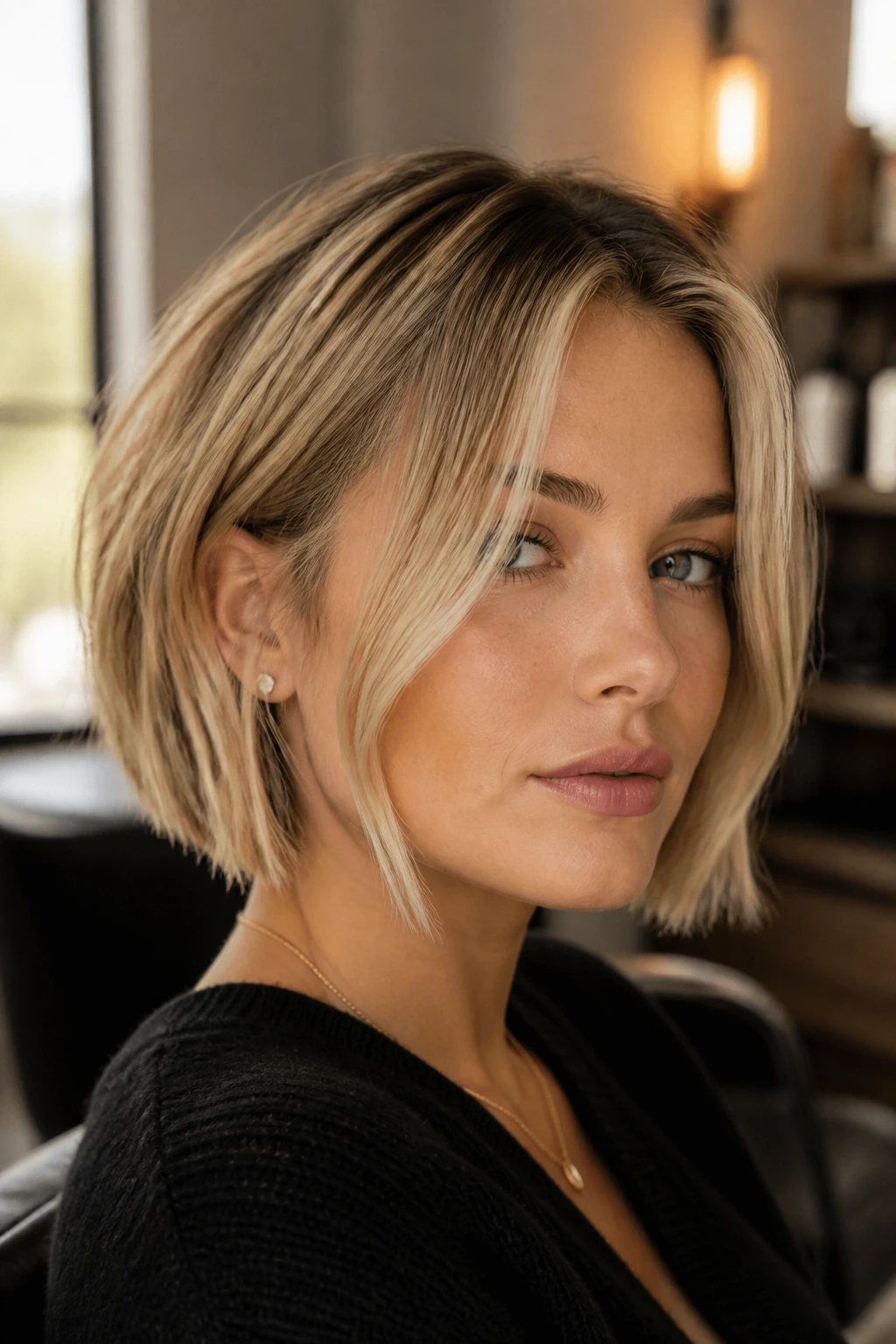
A short blonde bob is already a statement. The money piece just gives it a sharper edge, a little more light, and a reason for the eye to land exactly where you want it. That is the part people forget: good front framing is not decoration. It is structure.
If you want the look to stay fresh, think in small decisions — narrow or wide, cool or warm, soft root or crisp lift, center part or side part. Those choices matter more here than they do on longer hair. Bring a reference photo, but bring a clear opinion too. The best short blonde bob with money piece highlights always looks like someone decided something on purpose.
