



Fine hair gets blamed for falling flat far too quickly, but a good lob changes the whole argument. The right length sits where the hair can still swing a little, and that movement matters. A lob that lands around the collarbone or just above it can make the ends look denser, keep the crown from collapsing, and give you enough shape to work with even on a sleepy second-day morning. That’s why lob hairstyles with volume for fine hair keep coming back into the conversation: they do a lot of visual work without demanding a huge amount of hair.
The trick is not more hair. It’s smarter hair. A blunt edge can make a fine strand look fuller than it really is. A soft bend near the mid-lengths can fake thickness in a way that long, heavy layers never quite manage. And if you’ve ever watched a fresh blowout lose its nerve by lunch, you already know how much the cut matters before the styling even starts.
I’ve always liked lobs for fine hair because they’re honest about what the hair can do. They don’t fight the texture. They frame it, lift it, and keep it from dragging itself into a limp curtain. Some versions are sleek and sharp. Some lean airy and undone. Some borrow from a shag, some from a classic blowout, and some depend on a side part that does more for volume than another can of mousse ever will.
Why These Lobs Keep Fine Hair Looking Fuller
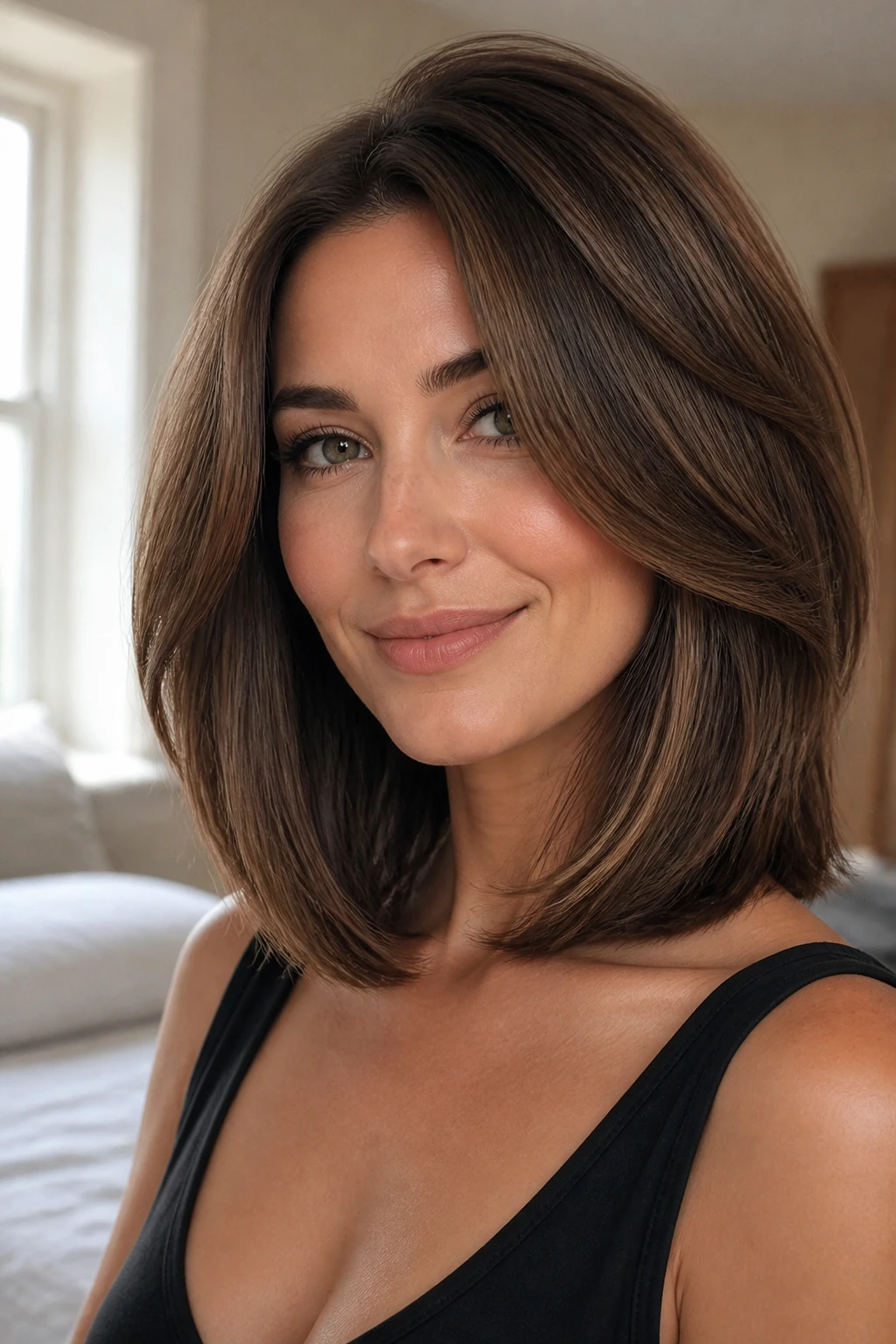
Shape does the heavy lifting here. Fine hair often looks thinner when it’s stretched too long, because every inch adds weight and pulls the root flatter. A lob stops that drag earlier, so the hair can bounce instead of just hang.
The perimeter line matters more than most people think. A clean edge around the collarbone or chin gives the eye a solid outline to read as density. Even when the strand itself is delicate, a strong line makes the whole cut look more deliberate and packed.
Volume comes from where the cut is removed, not from taking everything off. A few careful internal layers, a slight angle, or a tiny bit of face-framing can keep the crown from turning into a helmet while still protecting the ends. Go too soft, and the whole thing turns wispy. Go too shaggy, and you lose the line that makes fine hair look plentiful.
These styles also grow out well. That’s a practical detail, and I like practical details. Fine hair usually needs regular trimming to stay crisp, but these lobs keep their shape long enough that you’re not panicking the second the ends move half an inch.
- Collarbone length: This is the sweet spot for many fine-haired people because it keeps enough swing without letting the hair collapse under its own weight.
- Blunt edges: A sharp line at the bottom makes the hair look denser, especially when the ends are lightly beveled instead of thinned out.
- Root-friendly styling: A lift spray, a round brush, or a quick bend with a 1-inch iron can create height at the crown without looking stiff.
- Face-framing pieces: A few shorter front pieces keep the cut from feeling boxy and help the whole shape look lighter.
- Low-maintenance styling: These cuts look best when they’re touched, not fussed over. Too much brushing or too much oil can flatten all the good work.
1. The Airy Collarbone Lob
This is the lob I’d hand to someone who wants movement without the feathered, over-styled look that can make fine hair go limp by noon. The length lands right at the collarbone, where the hair gets a little natural bend as it hits the shoulders. That tiny collision gives the style lift in a way longer cuts never manage.
The best version has a blunt-ish bottom with just enough internal softness to keep the ends from feeling harsh. Ask for a clean perimeter, then a few invisible layers through the mid-lengths so the hair can lift when you blow-dry it. The goal is not to remove bulk; the goal is to keep the outline crisp while the inside stays light.
What to Ask Your Stylist For
- Collarbone length that skims the bone instead of sitting below it.
- A blunt bottom edge with minimal thinning.
- Soft face-framing pieces starting around the cheekbone.
- No heavy layering through the ends.
If you style it with a round brush and lift the roots at the crown, the whole cut takes on a bit of air. I like a side part with this one. It shifts the weight just enough to stop the top from lying flat against the scalp.
2. The Soft Blunt Lob
A blunt lob is the blunt answer, and I mean that in the nicest way. Fine hair often looks thicker when the ends are left in one clean line, because every strand has somewhere to land instead of tapering away into wisps. If your hair is straight or only slightly wavy, this cut can be a cheat code.
What makes it soft rather than severe is the finish. The perimeter stays solid, but the surface gets a little bevel from a round brush or a flat iron bend. That tiny curve at the ends keeps it from feeling helmet-like. You can tuck one side behind the ear and leave the other side loose; that little asymmetry helps the shape breathe.
Why the blunt line matters
The eye reads density at the edge first. A crisp edge looks fuller than a shredded one, even if the total amount of hair is the same.
Ask for a one-length base with very subtle internal movement only if your hair needs it. If you go too layered here, the whole point disappears. This is one of those cuts where restraint pays off.
3. The Curtain-Bang Lob
Curtain bangs and a lob are a strong pairing because they build lift where fine hair usually needs it most: around the front hairline and the crown. The bangs split away from the face, which creates a built-in vertical line down the center and makes the top look fuller. That’s a nice trick when the crown tends to go flat the second you leave the mirror.
The bangs shouldn’t be heavy or boxy. They need a soft center opening and enough length to blend into the lob without creating a shelf. I like them starting around the brow or just below it, then curving out toward the cheekbones. That shape gives movement without eating up too much forehead space.
Best for: people who want volume without constant teasing.
Style note: blow the bangs forward first, then sweep them apart with your fingers and a dab of lightweight cream. Too much product here turns them stringy fast.
4. The Deep Side-Part Lob

A deep side part can do more volume work than people give it credit for. Shift the hair over by a few inches, and suddenly one side gets lift at the root while the other side gains a soft drape over the cheekbone. Fine hair loves this asymmetry because it breaks up the flatness that a center part can lock in.
This version works especially well if your hair is naturally straight or if your waves tend to disappear when they’re cut too long. The longer side gives a little face frame, while the shorter side creates height. You get shape without needing obvious layers everywhere.
The part itself matters. If you carve it in while the hair is still damp and clip the heavier side up for a few minutes during blow-drying, the root will remember the lift. No miracle here. Just physics.
5. The Flipped-End Lob

There’s something a little cheeky about a lob with flipped ends, and that attitude helps fine hair look more alive. The outward bend makes the bottom edge feel wider, which is exactly what you want when the ends tend to taper and disappear. It also keeps the style from reading too polished or too flat.
You can flip the ends with a round brush, a flat iron, or a medium curling iron. I prefer a flat iron for this one because you can change direction fast and keep the bend light. The trick is to leave the last inch straighter so the flip doesn’t curl into a ringlet.
How to style it
- Blow-dry the hair smooth with a root-lifting mousse.
- Work in 1-inch sections.
- Bend the ends away from the face, alternating direction if you want a softer finish.
- Mist with flexible hairspray, then rake through once with your fingers.
If the flip looks too retro, pull a few face pieces forward and let them fall straighter. That keeps it from getting costume-y.
6. The Invisible-Layer Lob

This is the lob for someone who wants movement but hates obvious layers. Fine hair can look stringy when the layers are too visible, especially at the ends. Invisible layers solve that by taking a little weight out where it matters while keeping the perimeter intact.
The haircut still looks full from the outside. That’s the point. The stylist removes just enough internal bulk to help the hair lift at the root and move around the shoulders, but the eye keeps reading one smooth, solid line. If your hair is fine but dense, this is especially useful. You get motion without turning the ends into a scraggly mess.
It’s also a good choice if your styling routine is minimal. A quick blow-dry and a mist of texture spray can be enough. The cut does the work quietly, and I trust quiet haircuts more than loud ones.
7. The Choppy Textured Lob

A choppy lob has more bite than a blunt one, and that bite can help fine hair look thicker when the texture is controlled. The cut breaks up the ends into small, irregular pieces, which gives the hair a lived-in finish and keeps every strand from lying in the exact same place. Done well, it looks airy and modern. Done badly, it looks like someone took a thinning razor to it and got distracted.
The difference is precision. Ask for texture mainly through the mid-lengths, not a shredded bottom edge. The top should still have enough mass to support the shape. If your hair is stick-straight and hard to style, a little choppiness can help curls or bends hold better because the hair isn’t fighting to fall in one heavy sheet.
A little sea-salt spray or a dry texture mist gives this style a sandy feel that suits the cut. Use too much, though, and the hair can go crunchy and see-through. That’s the line to watch.
8. The Angled Lob
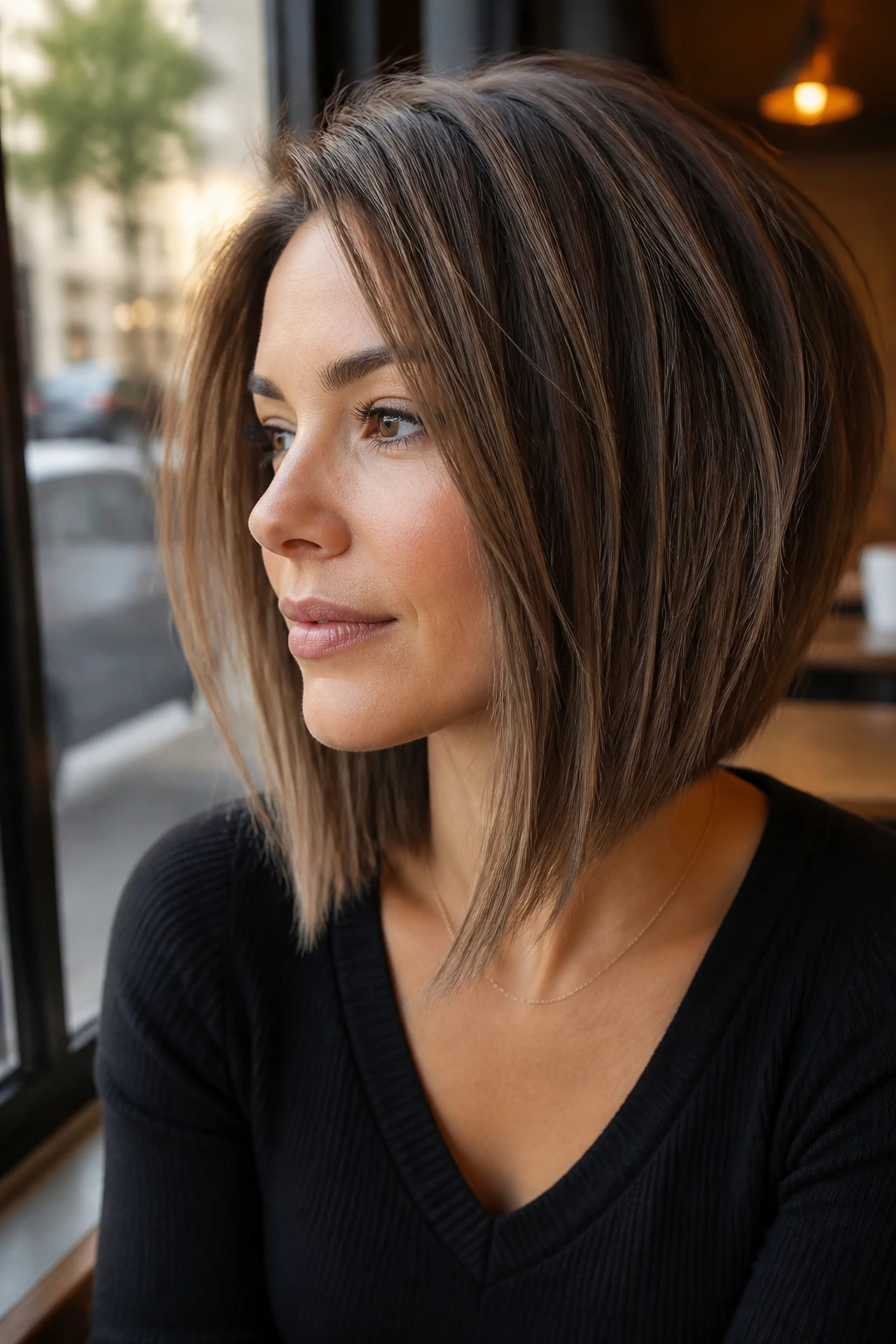
An angled lob is longer in front and slightly shorter in back, and that little slope can change the whole look of fine hair. The shorter back nudges the crown up. The longer front keeps the hair framing the face instead of sinking into the jawline.
I like this cut when the hairline is soft or the jaw needs a bit of visual structure. The angle draws the eye forward, which makes the front pieces feel intentional instead of limp. It also gives you an easy styling choice: smooth it for a polished shape or bend the front pieces outward for a less formal feel.
What makes it work
- The back needs to be short enough to support lift.
- The front should not get too long, or the whole thing starts to droop.
- A clean neckline keeps the cut from looking boxy when it grows.
If your hair tends to flatten at the crown, this is a smarter choice than a totally even cut. The slope creates a little tension in the shape. Hair loves a little tension.
9. The Root-Lift Blowout Lob
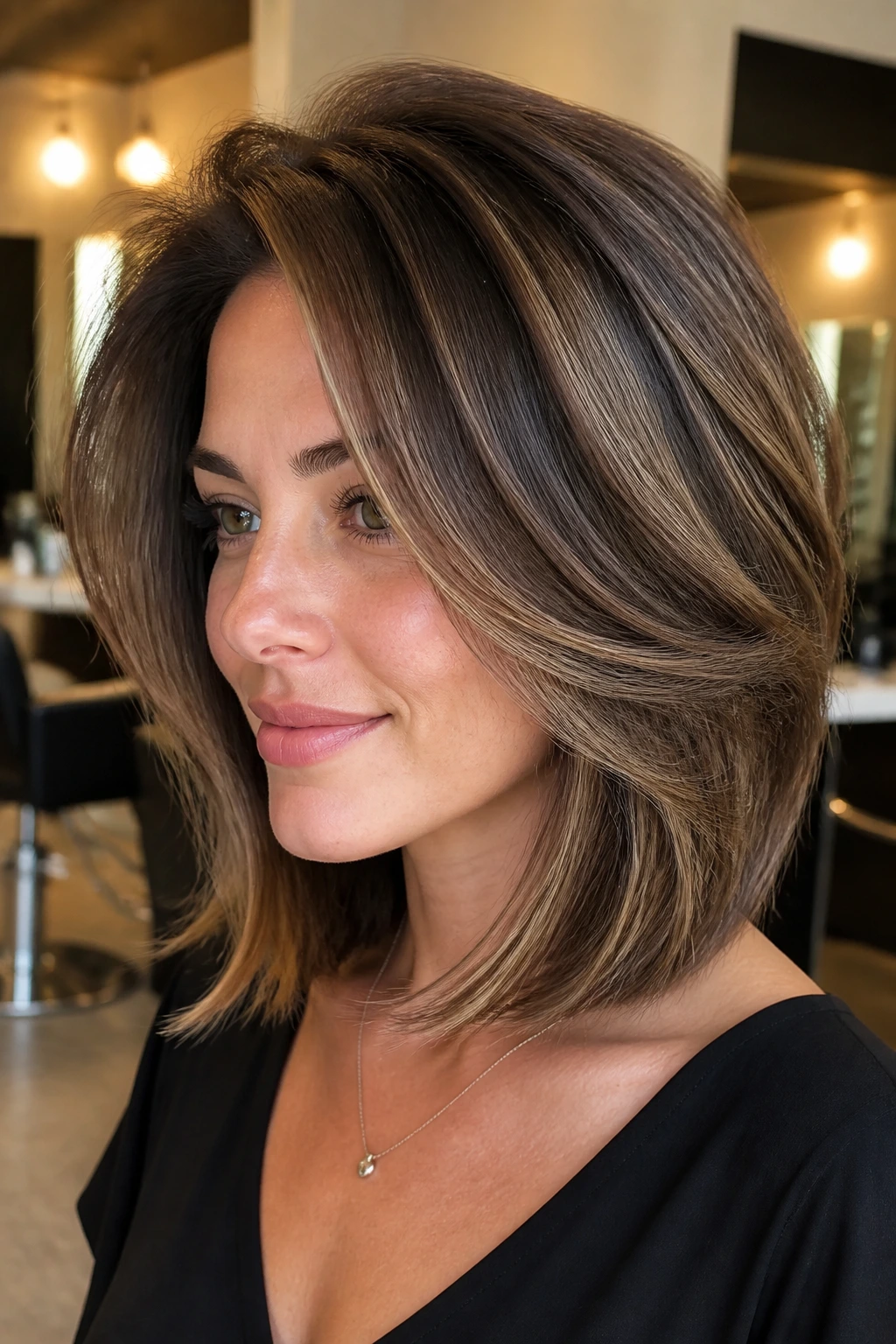
This is the lob that looks like you spent more time on your hair than you probably did. The cut itself is usually shoulder-grazing or collarbone length, but the real story is in the blow-dry. Root lift at the crown, a round brush through the top sections, and a soft bend under the ends give the whole style a bouncy, expensive-looking finish without any hard curls.
The method matters more than the products. Start with a volumizing mousse at the roots, not through the ends. Dry the hair about 80 percent with your head upside down if your scalp allows it, then switch to upright blow-drying with a nozzle and a medium round brush. Roll the top sections away from the face and clip them for five minutes while they cool. That cooling step is where a lot of the height sets.
This style is the closest thing fine hair has to a tailored jacket. It just fits.
10. The French-Girl Undone Lob

A French-girl lob isn’t about perfection. It’s about hair that looks like it has bent slightly while living a normal day. Fine hair can do this beautifully if the cut stays light at the ends and the styling uses soft bends instead of full curls.
The best version has a middle or slightly off-center part, a rough-dried texture, and a bit of piece separation near the front. I like this look because it doesn’t ask the hair to pretend it has more density than it does. It gives you movement, a little shadow at the root, and enough shape to make the length feel intentional.
You can style it with a 1-inch iron, wrapping each section away from the face and leaving the last inch out. Then mist with texture spray and shake it out with your fingers. The finished result should look touched, not fixed. If it looks overworked, start over. Seriously.
11. The Swoopy Face-Frame Lob

If your face needs a little softening, a swoopy face-frame lob does the job without sacrificing bulk at the back. The front pieces start around the cheekbone or jaw and curve inward, which creates movement near the face while the rest of the hair stays dense enough to look full. Fine hair usually benefits from this split personality.
This cut works especially well when the back is left a touch shorter than the front. That keeps the line from collapsing, and the longer front keeps the hair from turning into a triangle. If you wear glasses, the swoop can sit just outside the frame line and look neat without crowding your face.
A good sign: the front pieces move when you turn your head, but they do not vanish into stringy little tails. If they do, the layers went too deep.
12. The Stacked-Back Lob
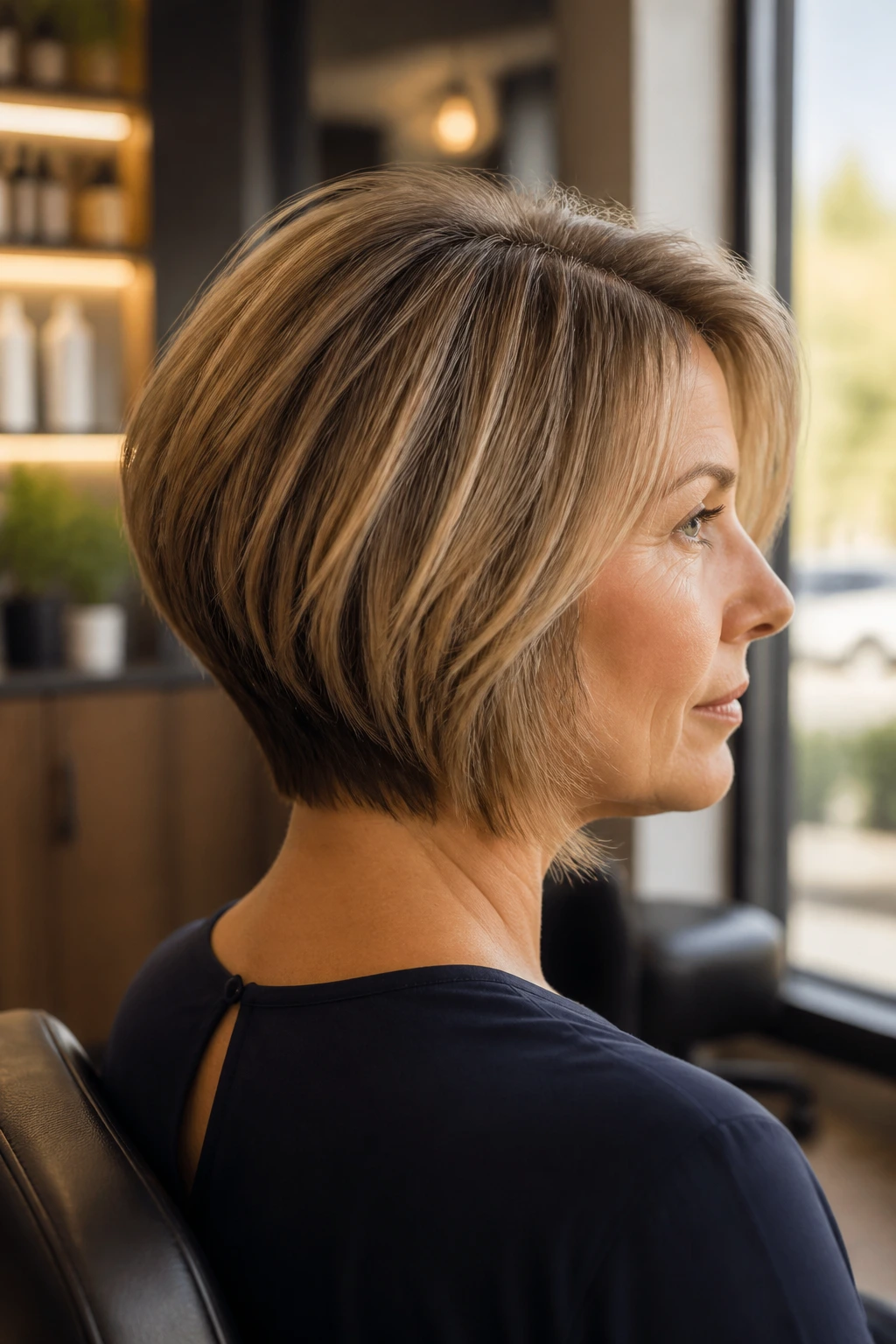
A stacked-back lob gives fine hair some much-needed lift through the crown and occipital area, which is the fancy way of saying the back of the head where hair often goes limp. The layers are shorter in the back and gradually longer toward the front, so the silhouette rises instead of sinking.
This is a stronger shape, not a softer one. I like it for fine hair that needs a little architecture. If your hair lies very close to the skull, the stacked back creates a pocket of volume without relying on teasing. You can still wear it smooth, too. The profile just looks fuller from the side.
Keep the stacking moderate. Too much and the back becomes puffy while the ends look sparse. The best stacked lobs still have a smooth transition, not an obvious ridge. That ridge is the enemy.
13. The Sleek Glossy Lob
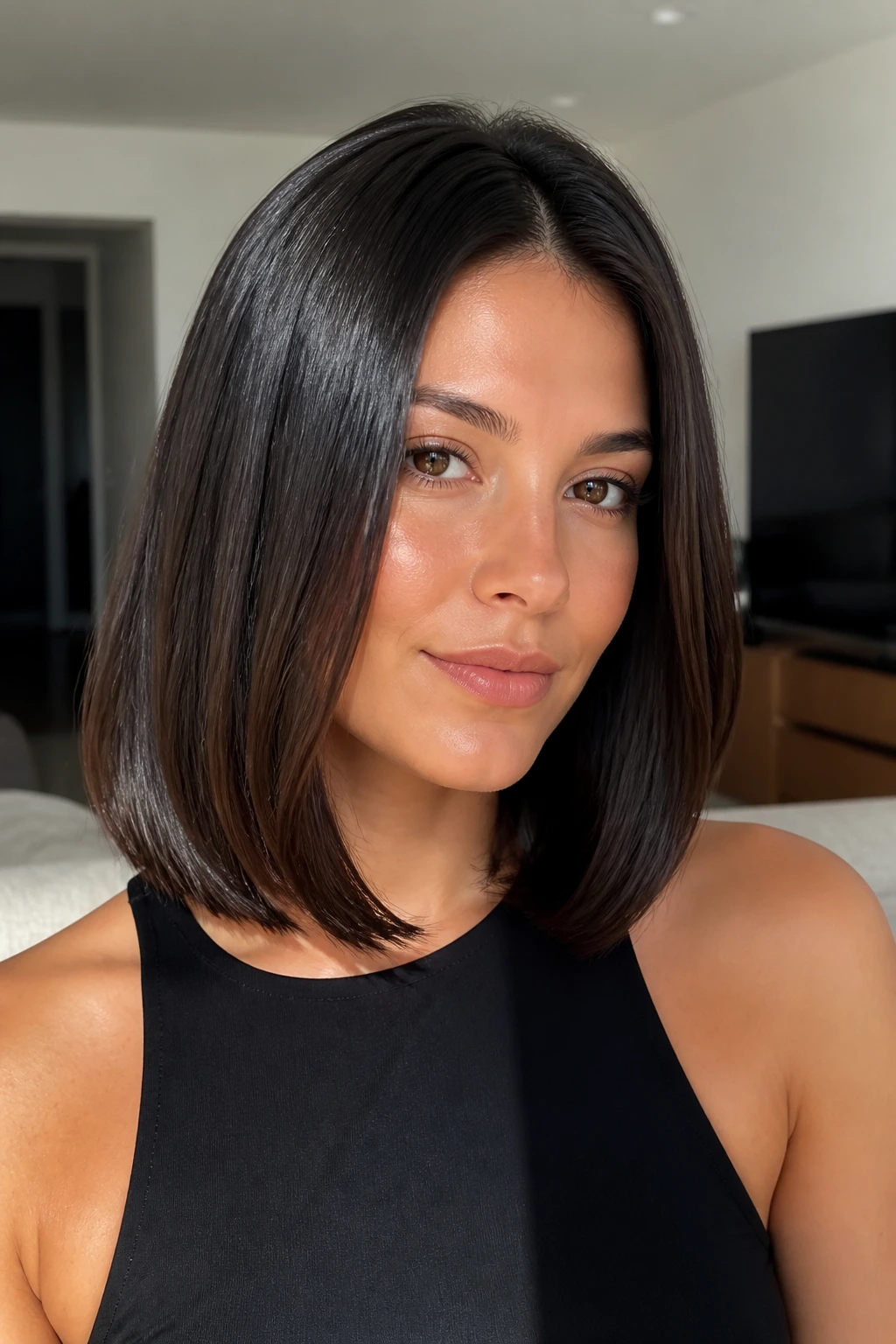
Sleek doesn’t have to mean flat, and that’s the part people miss. A glossy lob can look thick on fine hair if the cut has enough structure and the styling keeps the root lifted while the lengths stay smooth. The shine makes the perimeter look denser, almost like the hair has been polished into a clean edge.
The best version uses a center or slight off-center part, a blow-dry with tension, and a straightening pass only where needed. I would not chase pin-straight perfection here. Leave a tiny bend in the ends, or the hair can look too thin and severe. A drop of lightweight serum on the mid-lengths, not the roots, gives it that smooth finish without grease.
Who this suits best
- Straight hair that already wants to lie flat.
- Fine hair with decent density.
- People who like clean lines and low-fuss mornings.
If you want a shape that looks neat even when the day gets long, this one earns its keep.
14. The Piecey Wave Lob

Piecey waves are a fine-haired person’s friend because they create the illusion of more individual strands. Each bend catches light differently, so the hair looks larger and more dimensional than it does when it’s ironed smooth. A lob gives those waves a place to live without dragging them downward.
The trick is to keep the waves loose and separated, not tight and uniform. Use a curling wand or iron on alternating sections, leave the ends out on some pieces, then break the waves apart with a wide-tooth comb or your fingers after they cool. A little light-hold spray at the end helps the pieces stay defined without turning crunchy.
How to get the most from it
- Curl away from the face for the front sections.
- Change direction on the back sections.
- Leave the last inch straight on random pieces.
- Scrunch in a pea-sized amount of lightweight cream if the hair is frizzy.
This style looks especially good on collarbone-length cuts because the waves stack instead of hanging.
15. The Collarbone Shag Lob
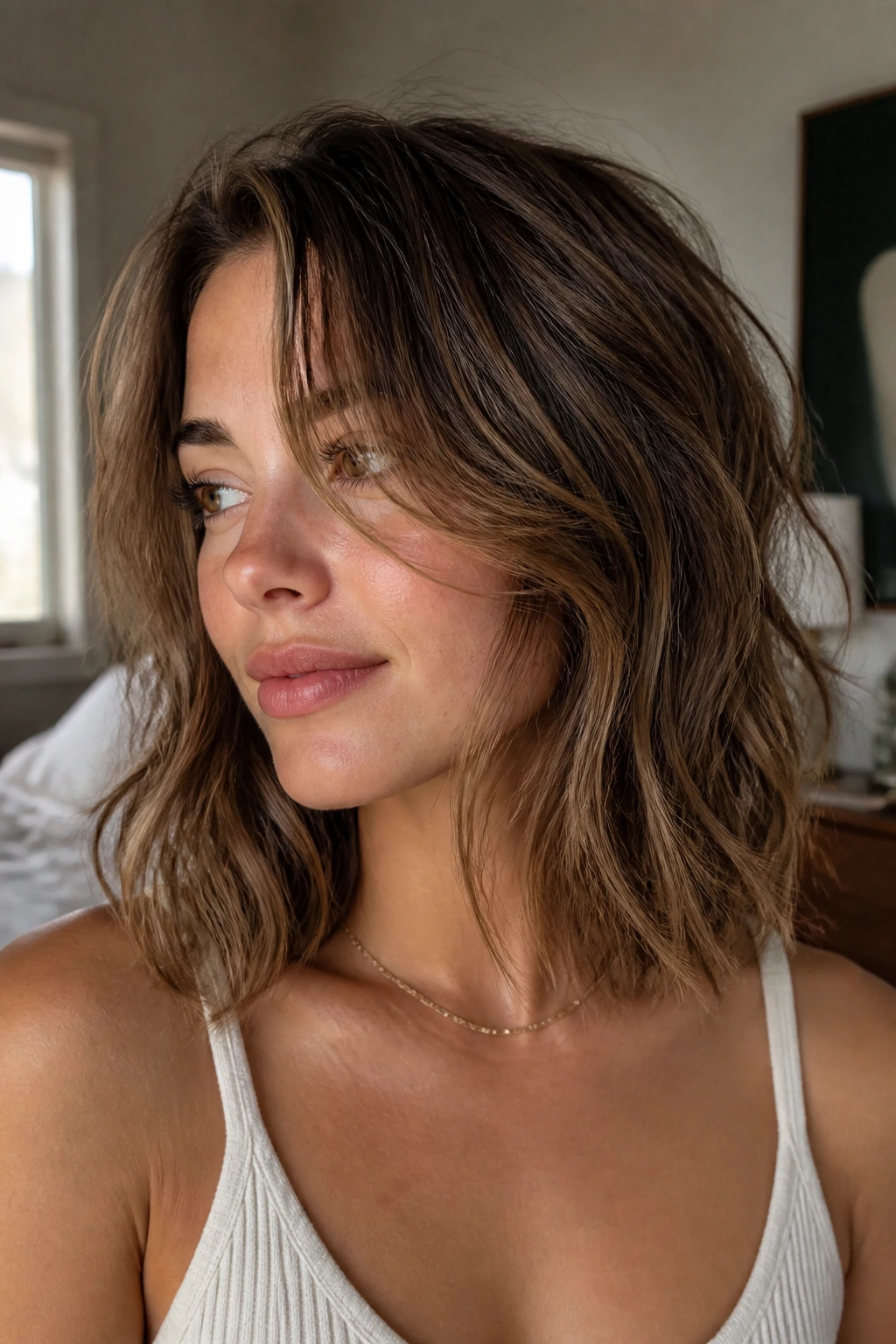
The collarbone shag lob has more texture and edge than the others here, but it still needs restraint. Fine hair can wear a shag if the layers are soft and controlled, not hacked up. The cut gives you movement through the top and sides, with enough length left at the bottom to keep the whole shape from going sparse.
I like this version on hair that has a little natural bend. The layers help the bend show up without needing a full heat routine, and the collarbone length keeps the shape from turning into a true shag mullet situation. Nobody asked for that. Nobody.
Use a diffuser if you diffuse at all, and stop before the hair is fully dry so the texture stays soft. Then scrunch in a little dry texture spray at the ends. The result should feel relaxed, not puffy.
16. The Off-Center Tuck Lob

Sometimes the best volume move is a small one. An off-center part plus one tucked side can make a fine-haired lob look fuller because it shifts the weight and shows off the line of the cut on the untucked side. One side gets a little lift, the other side gets length, and the whole shape looks more deliberate.
This is one of my favorite tricks for day-two hair. If the roots are starting to flatten, a quick shift in the part and a tuck behind one ear can hide the greasy side while exposing enough hair to create movement. Add a couple of loose bends near the front with a flat iron, and the style looks refreshed without a full reset.
It’s simple. It works. And it doesn’t ask much from the hair.
17. The Retro Volume Lob
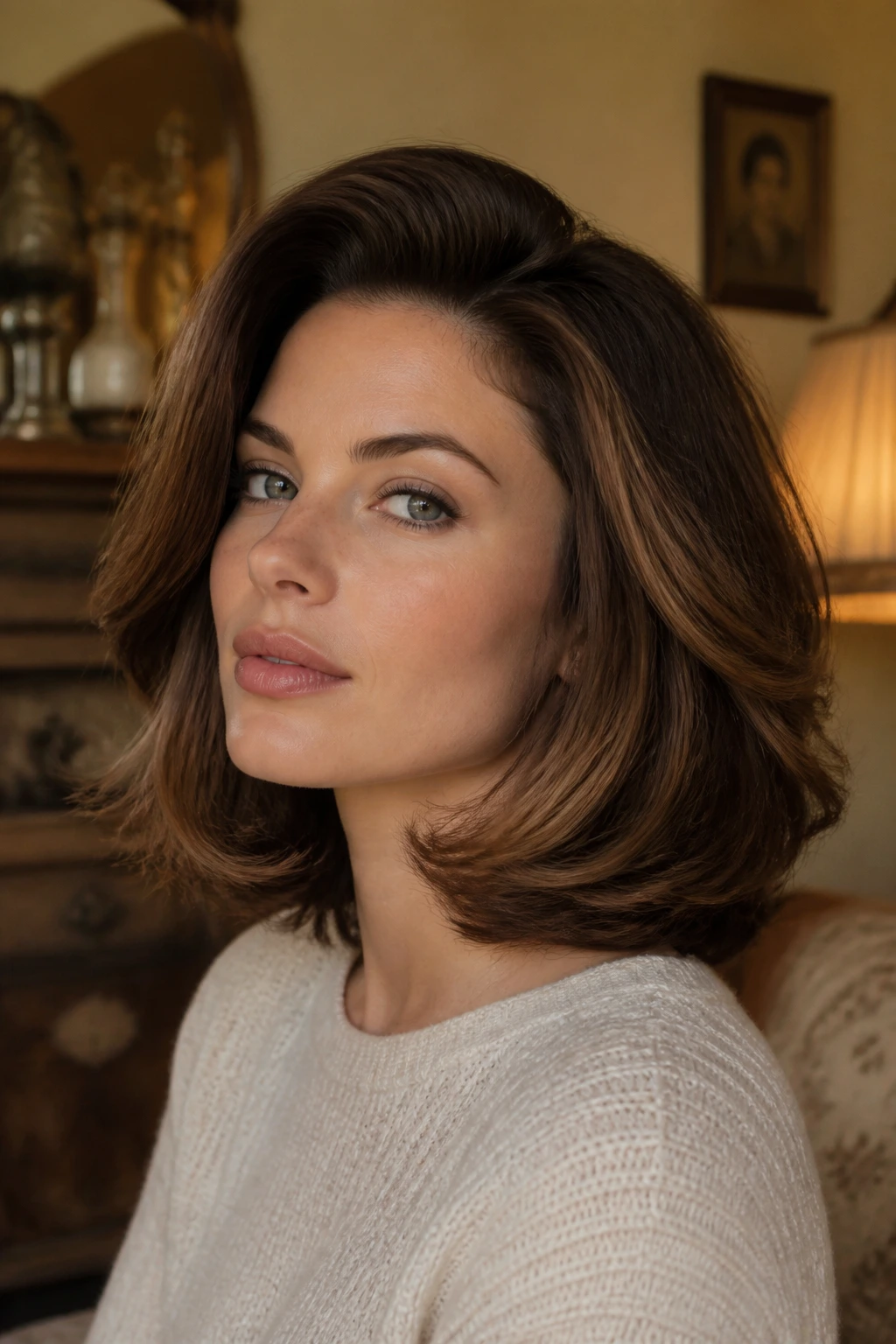
Retro volume suits fine hair better than people expect because the style is built on shape, not sheer density. Think lifted roots, soft outward movement at the ends, and a little body through the crown. The look borrows from old-school blowouts, but the length stays modern enough to avoid costume territory.
This lob usually sits around the shoulders or just above, with soft layers that support curl and lift. You can set it with medium velcro rollers while the hair is warm, or use a large round brush and clip the crown while it cools. The finished style should have a rounded silhouette rather than a flat sheet.
Best detail: keep the ends full. If the bottom gets too thin, the retro shape loses its charm fast.
For fine hair, this is one of the few big-volume looks that still feels wearable on a normal Tuesday. Not every blowout needs to look effortless. Some should look like the hair was actually styled, because that’s what gives the volume its staying power.
Why a Lob Gives Fine Hair More Shape Than Longer Cuts Do
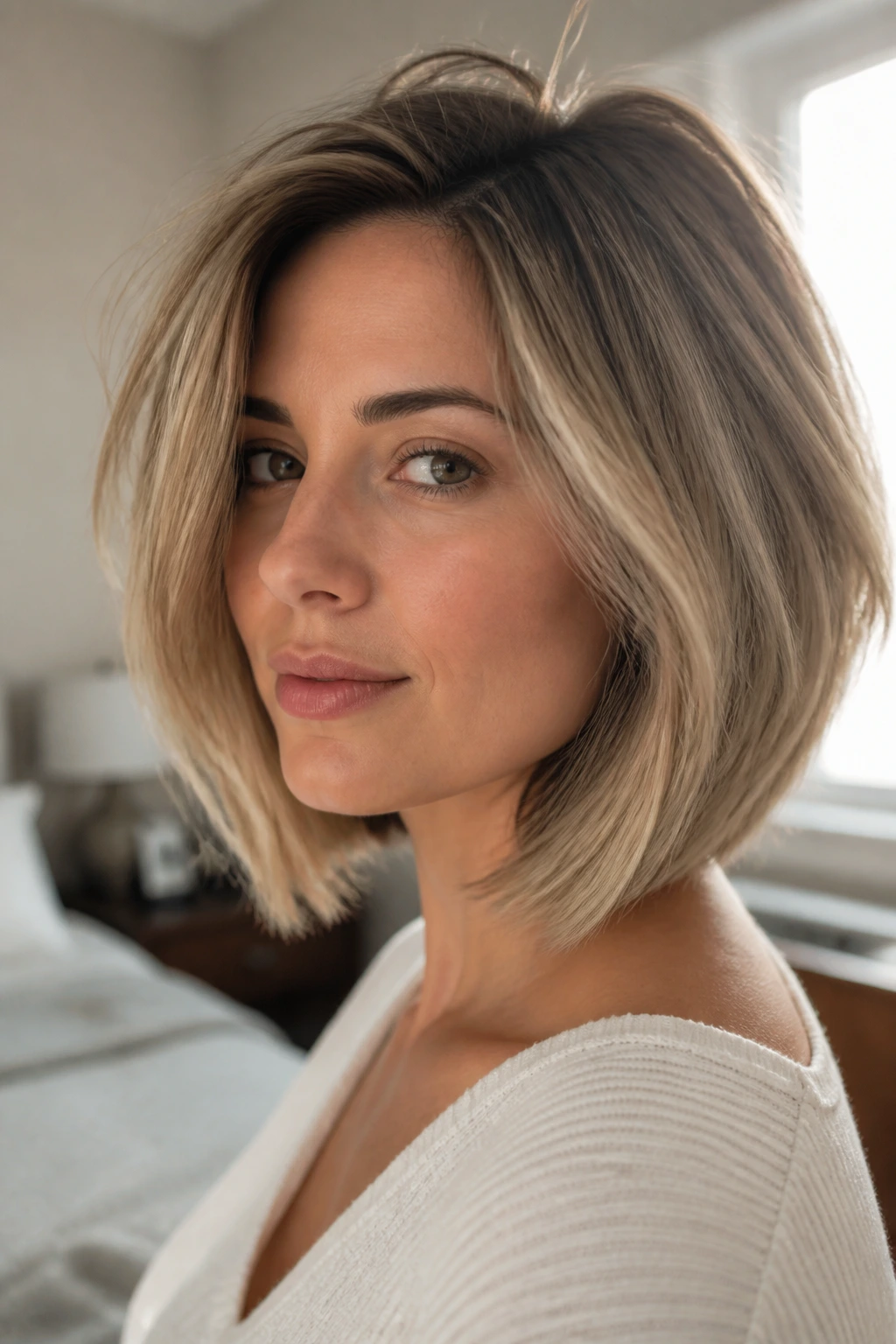
Fine hair and long length do not always get along. The longer the hair grows, the more weight it carries, and that weight often drags the root flat while making the ends look thinner than they are. A lob shortens the distance between scalp and tip, which means the hair can lift off the head instead of hanging straight down.
That shorter shape also gives styling tools more leverage. A round brush can bend the ends more easily. A curling iron can form a bend that lasts a little longer. Even dry shampoo works better when the hair isn’t overloaded with length, because the product can sit closer to the root and actually prop something up.
The cut also gives you flexibility. A blunt lob can create a strong line. A layered lob can add movement. A side-parted lob can fake volume at the crown in a way that long hair rarely manages without a lot of teasing. That’s why this haircut has staying power for fine hair. It solves more than one problem at once.
Essential Tools for Styling Volume Into a Lob
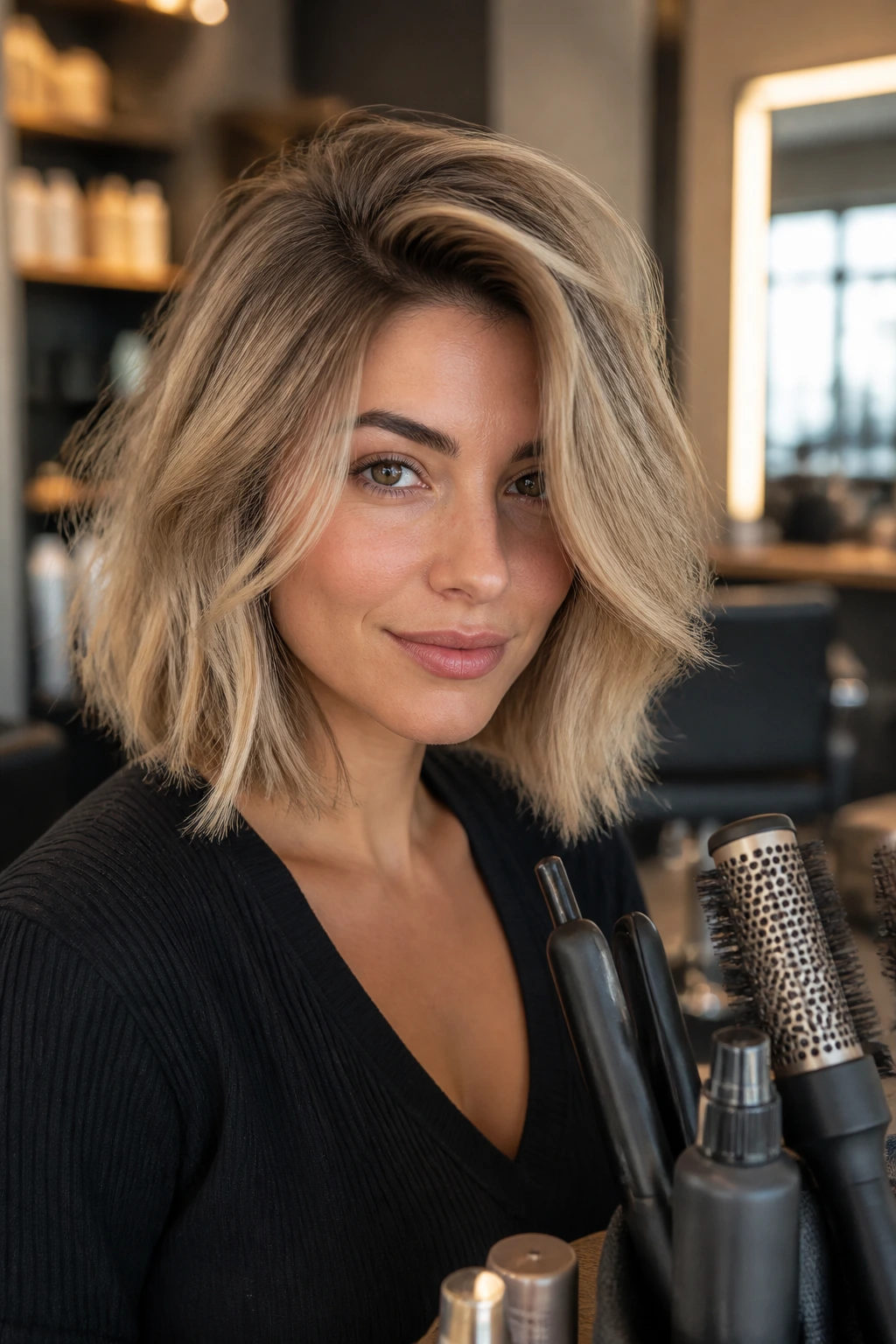
- Blow dryer with a nozzle attachment: Directs airflow so the cuticle lies smoother and the root gets lifted where you want it.
- Medium round brush, 1 to 1.5 inches: Small enough to create bend, large enough to keep the lob from looking curled into a ball.
- Volumizing mousse or root-lift spray: Best applied to damp roots before blow-drying; keep it away from the last few inches if your ends get dry.
- Lightweight heat protectant: Fine hair gets weighed down fast, so pick one with a thin spray or mist texture.
- Velcro rollers or clips: Useful for setting the crown and front pieces while they cool after a blowout.
- 1-inch curling iron or wand: Helps make soft bends and piecey waves without turning the cut into ringlets.
- Dry shampoo: Works on clean hair too; a little at the roots can give grip before styling.
- Flexible hairspray: Keeps volume in place without making the hair stiff or sticky.
- Tail comb: Handy for clean parts, root lift, and sectioning the hair without roughing it up.
- Wide-tooth comb or fingers: Better than a brush for breaking waves apart once they’ve set.
How to Choose the Right Lob for Your Hairline and Density

The right lob for fine hair depends on what the hair does when nobody is looking. Straight, slippery strands usually need a blunt edge or a soft angle to fake density. Wavy fine hair can carry a little more layering because the wave pattern fills in some of the space that a flat texture leaves behind. If the hair is fine and sparse, keep the perimeter fuller and avoid too much internal thinning. If the hair is fine but dense, you can afford a bit more movement through the middle.
Cowlicks matter, too. A strong crown cowlick often behaves better with a side part and a slightly shorter back, because the hair has less length to fight against. A stubborn front cowlick can work with curtain bangs or face-framing pieces that are cut to move in the same direction as the growth pattern. Fighting a cowlick with a dead-straight part usually ends in collapse. I’ve watched that movie too many times.
Face shape is part of the picture, but I would not overdo that advice. The better question is where you want the volume to live. Near the cheekbones? Choose curtain bangs or swoopy front pieces. At the crown? Go for a root-lift blowout lob or a stacked back. Around the jaw? An angled or flipped-end lob gives more width there. Match the cut to the place you want the eye to stop.
Smart Styling Tips That Keep the Shape From Falling Flat
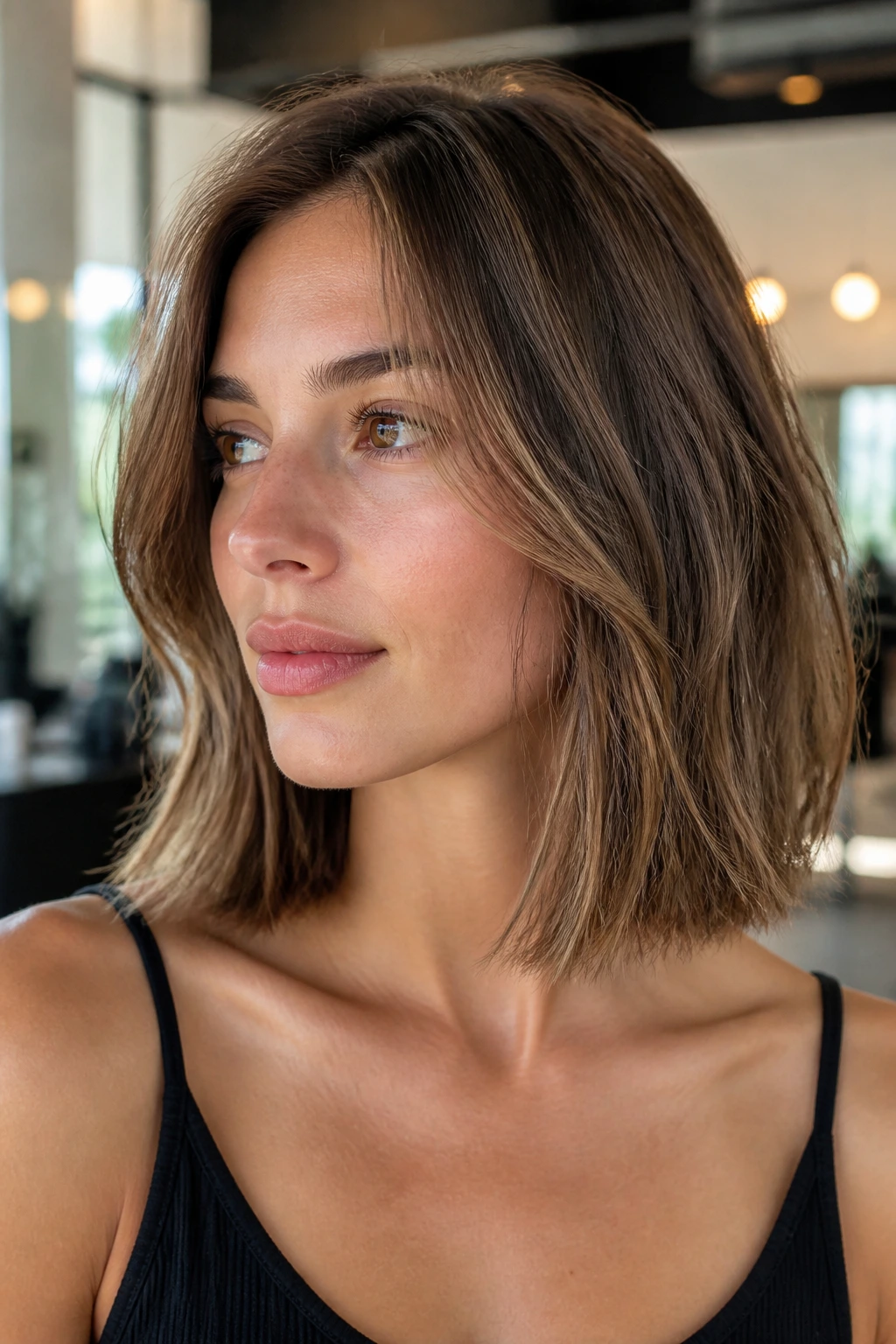
Start with less product than you think. Fine hair gets heavy fast. A mousse the size of a small egg is enough for a lob on most heads; pile on too much and the roots collapse before they’re dry.
Blow-dry the roots first. That sounds obvious, but people love rushing to the ends. Drying the crown early while lifting sections with your fingers or a brush sets the architecture before the hair has a chance to slump.
Change your part. A slight shift from the exact same part line can wake up the root in seconds. The first inch away from that part often has a little memory and will stand up better on a new side.
Use rollers on warm hair, not damp hair. Put velcro rollers or clips into hair that’s about 90 percent dry, then let it cool fully. That cooling time is what gives the lift a chance to stick.
Protect the ends from over-smoothing. A little texture at the bottom makes the whole cut look thicker. If you iron every strand pin-straight, the ends can go sparse and transparent.
Common Mistakes That Make a Lob Collapse
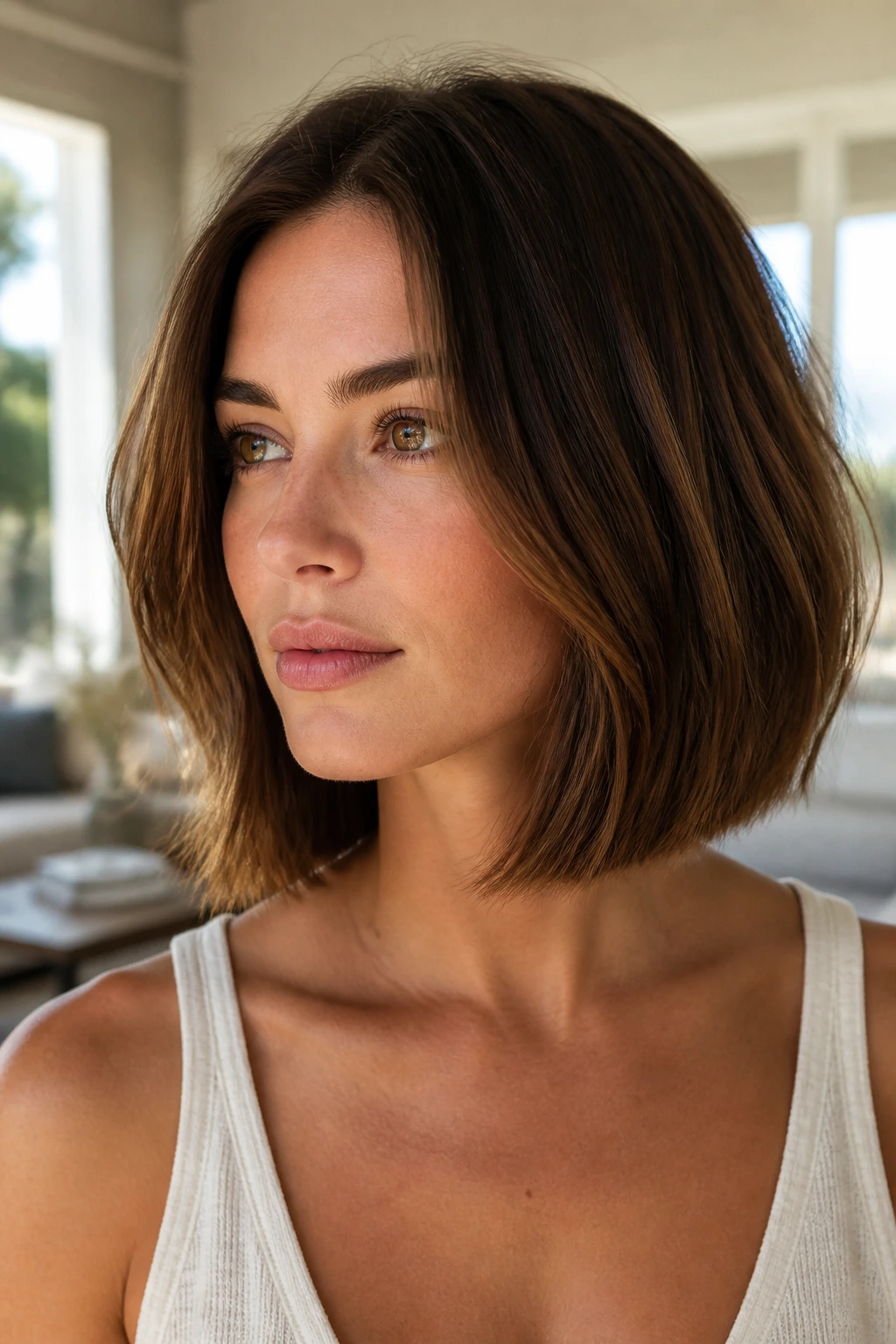
Over-thinning the ends is the fastest way to ruin a lob for fine hair. The cut might look airy in the chair, but once you leave, the bottom looks see-through. Ask for softness through the interior, not a shredded perimeter.
Using heavy oils near the root is another classic mistake. The hair may feel shiny for five minutes, then it starts sliding against the scalp and losing lift. Keep serums on the mid-lengths and ends only, and use the lightest formula you can find.
Cutting the length too long defeats the whole point. Once a fine-haired lob drifts below the collarbone, the weight starts tugging again. If the hair won’t hold volume, take it back up a half inch or an inch and see how much better it behaves.
Curling every section the same way can make the style fall into one direction and lose its body. Alternate directions, leave the ends out on some pieces, and break the pattern with your fingers after the hair cools.
Skipping a root lift at styling time leaves the cut looking like a smaller version of long hair. A lob needs lift at the base or it just lies there, which is a shame because the shape was doing the hard part for you.
Variations and Adaptations to Try

The Air-Dry Lob
Use a lightweight mousse on damp hair, scrunch lightly, and let it dry with as little touching as possible. This version works when your hair has a natural wave and you want volume without heat.
The Round-Brush Blowout Lob
This is the polished cousin of the whole group. Blow-dry with a round brush, clip the crown to cool, and finish with a flexible spray. It’s the cleanest option for office days or anything that wants a neater outline.
The Curly-Fine Lob
If your fine hair is curly, keep the shape rounded and avoid too much thinning. Diffuse with low heat, lift the roots at the crown, and let the curls cluster in a way that preserves density.
The Low-Heat Lob
Swap the iron work for rollers, twist setting, or a braid-out on damp hair. Fine strands often like this because they keep their softness and don’t lose as much moisture from repeated hot tools.
The Fringe-Forward Lob
Add curtain bangs, bottleneck bangs, or a soft side fringe to shift volume toward the face. That framing can make the whole style look fuller without needing to stack the back.
How to Keep a Lob Fresh Between Washes
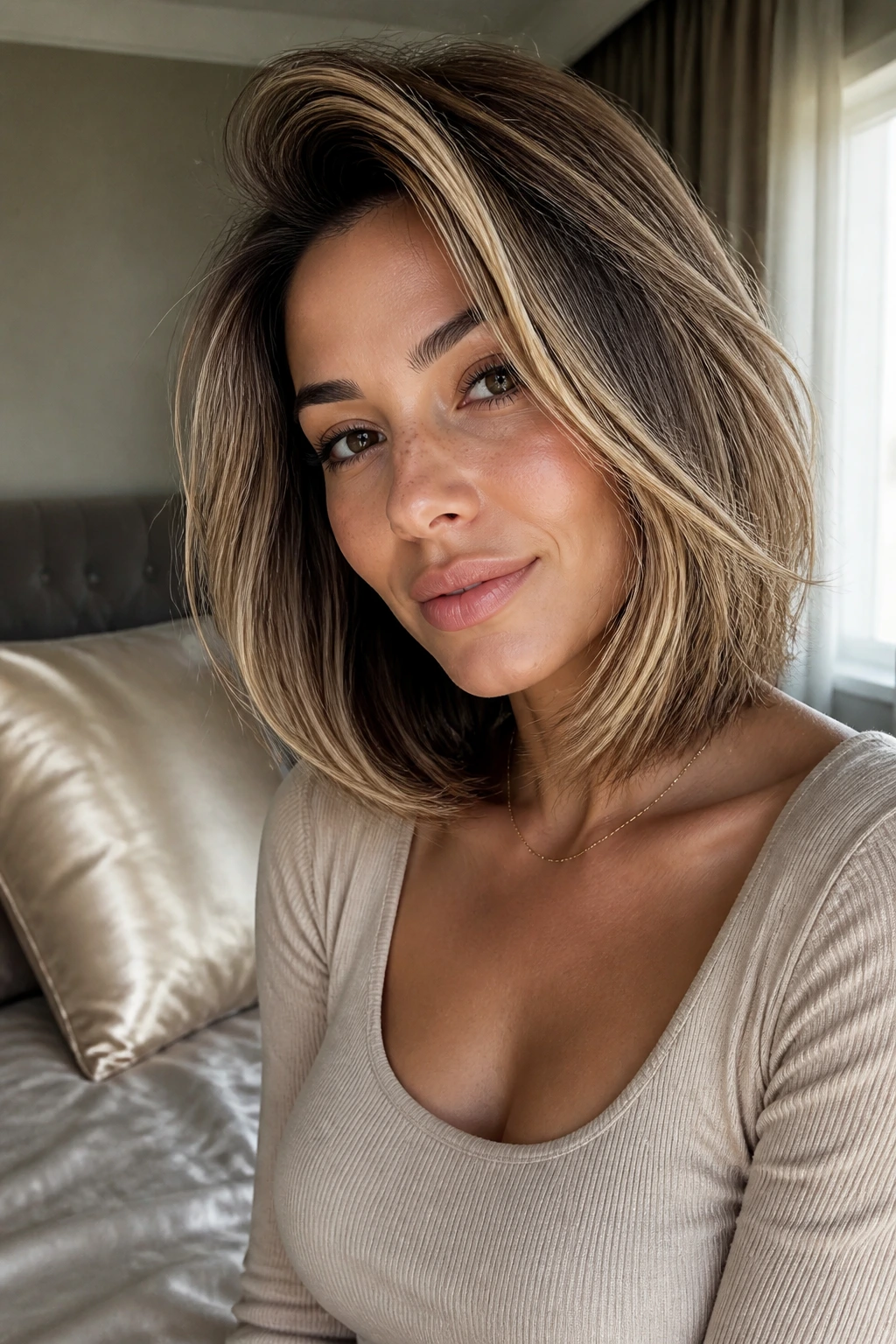
Fine hair usually does better with regular but not excessive washing. Many people land in a two- to four-day cycle, depending on scalp oil and how much product they use. If the roots get greasy fast, a dry shampoo at the crown on day two can buy you another day of lift. Spray it from a few inches away, wait a minute, then massage it in with your fingertips instead of brushing it straight out.
Night care matters more than people think. A loose topknot can leave a bend where you don’t want one, so a satin pillowcase is often the safer choice. If you like to preserve a blowout, clip the front sections up and away from the face before bed, or set a few Velcro rollers in the crown for 10 minutes the next morning while you make coffee.
Trims help a lot. Fine hair loses its shape faster when the ends split or fray, so a trim every 6 to 8 weeks keeps the outline looking crisp. That does not mean chopping off length constantly. It means protecting the line so the cut keeps doing its job.
Frequently Asked Questions

What lob length is best for fine hair?
The collarbone and just-above-the-collarbone range tends to work best because the hair still has swing without getting pulled flat by too much length. If your hair is very sparse, a slightly shorter lob often looks fuller than one that brushes the shoulders.
Should fine hair have layers in a lob?
A little, yes. Too many, no. Soft internal layers or face-framing pieces can keep the cut from looking blocky, but heavy layering makes the ends look wispy fast.
Does a blunt lob make fine hair look thicker?
Usually, yes. A blunt perimeter creates a clean visual edge, and the eye reads that line as density. The trick is to keep the underside from getting over-thinned.
Can I air-dry a lob and still get volume?
You can, if your hair has some natural bend or wave. Use a small amount of mousse or curl cream, scrunch lightly, and avoid touching it while it dries. Straight, slippery hair usually needs at least a little root support from a diffuser or a brush.
How do I keep my lob from going flat at the crown?
Dry the roots first, change your part now and then, and use a root-lift product on damp hair before you style. If the crown still collapses, ask your stylist for a bit more support in the back shape.
Are bangs a bad idea for fine hair?
Not automatically. Curtain bangs and soft side fringes often work well because they add movement and frame the face without taking too much density from the rest of the cut. Heavy, blunt bangs can work too, but they need enough hair to avoid looking see-through.
How often should I trim a lob on fine hair?
Every 6 to 8 weeks is a good rhythm if you want the shape to stay crisp. Let it go much longer, and the ends start to fray, which makes the whole cut look thinner than it really is.
What if my hair is fine but dense?
You can usually wear a little more texture than someone with sparse fine hair. A soft shaggy lob, angled lob, or layered blowout lob may suit you better than a strict blunt cut, because the density can support the movement.
Can I make a lob look fuller without heat tools?
Yes. Part-shifting, root clips, dry shampoo, and roller setting on slightly damp hair can all build lift with minimal heat. The result won’t look as polished as a blowout, but it often holds better in humid air.
A Lob That Holds Its Shape
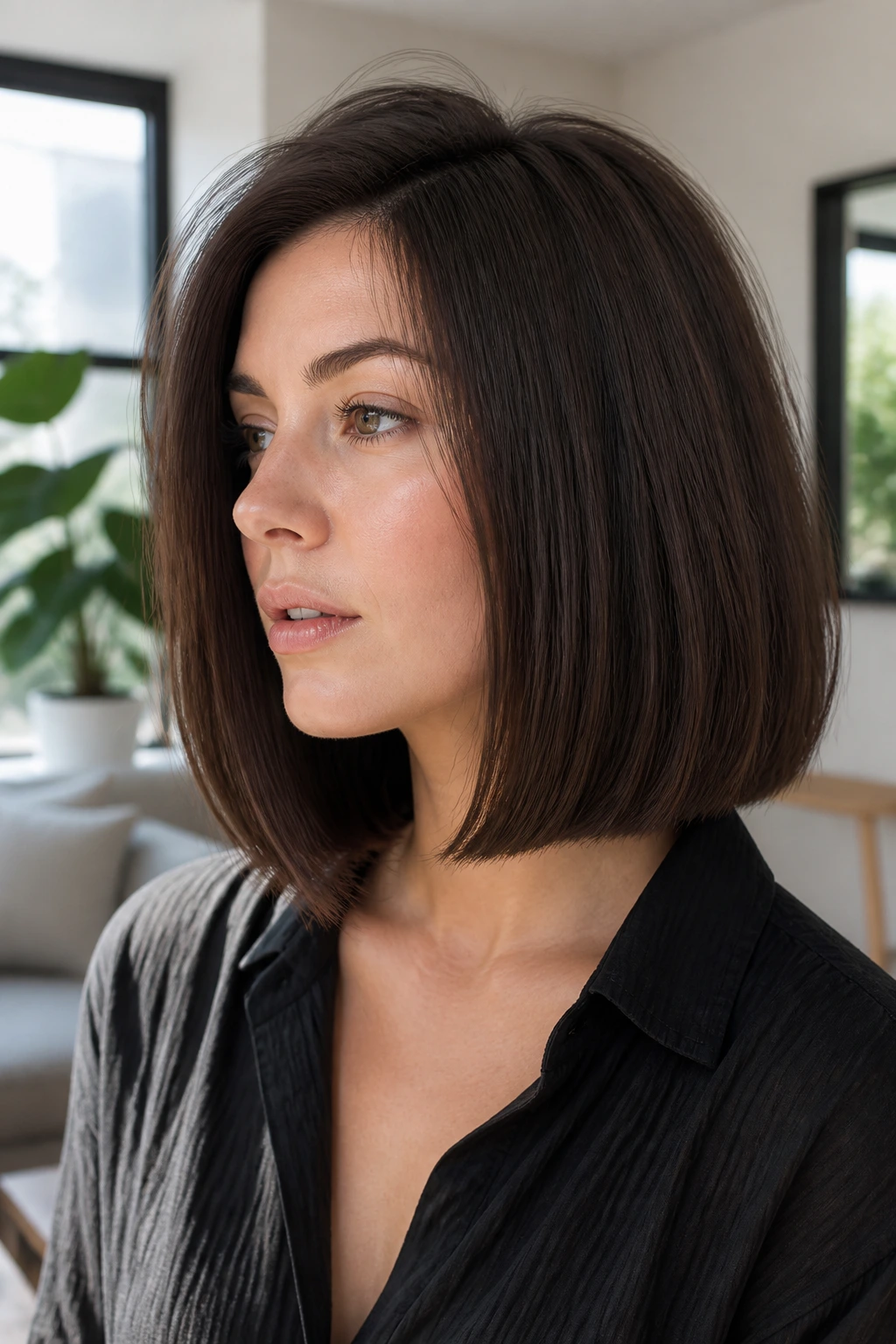
The best thing about a volume-friendly lob is that it doesn’t try to be more than it is. It gives fine hair a clean outline, a little breathing room, and enough structure that the style looks intentional even when the day gets messy. That’s a rare combination. Most haircuts either chase fullness and lose the line, or keep the line and flatten everything else. A good lob manages both.
If your hair has been acting like it wants to disappear, this is the length that gives it somewhere to land. Keep the ends blunt enough to read as dense, keep the crown lifted, and keep the styling light enough that the roots can breathe. The shape does not need to shout. It just needs to stay up long enough for people to notice.
